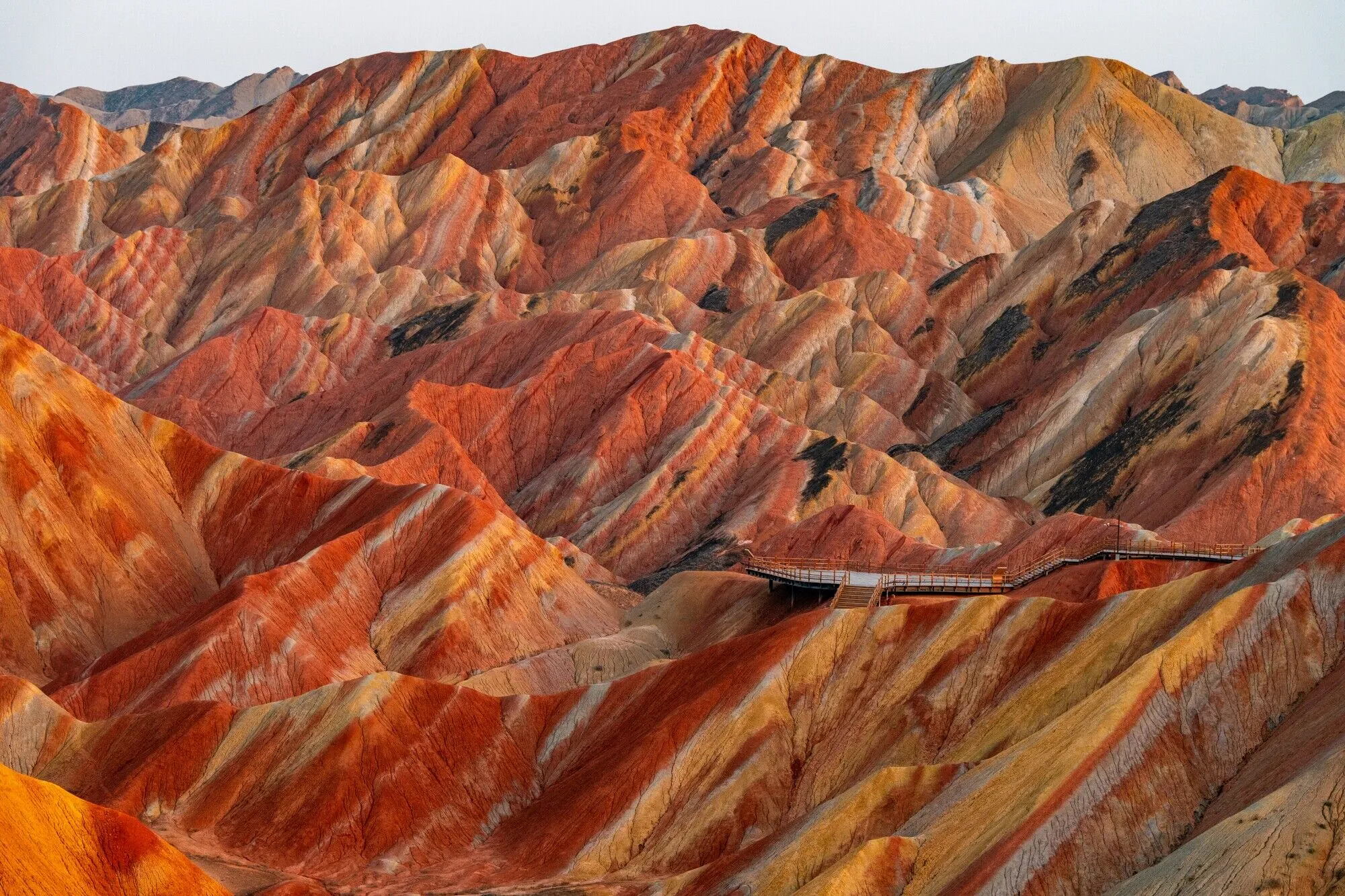


After exploring Dunhuang and Jiayuguan, I continued east along the Silk Road to Zhangye, a city I had been looking forward to visiting for one reason: the Rainbow Mountains. I’d seen plenty of photos before my trip and wondered whether the colors could really be that vivid in person. Well, they are! Seeing those bands of color stretch across entire hillsides at sunset was easily one of the highlights of my time in Gansu.
What surprised me was how much else there was to do around Zhangye. I squeezed through narrow passages and climbed a nearly vertical staircase at Pingshan Lake Grand Canyon, then spent another day exploring Buddhist grottoes carved into the cliffs at Mati Temple. Even in the city center, there are many awesome things to do!
In this guide, I’ll share my favorite things to do in Zhangye, how I got to the sights by shuttle, and how I managed to hike the canyon in the morning and see the Rainbow Mountains at sunset on the same day. If you have three full days, I’ll also show you how to fit in Mati Temple and give yourself some time to explore the city. Let’s begin!

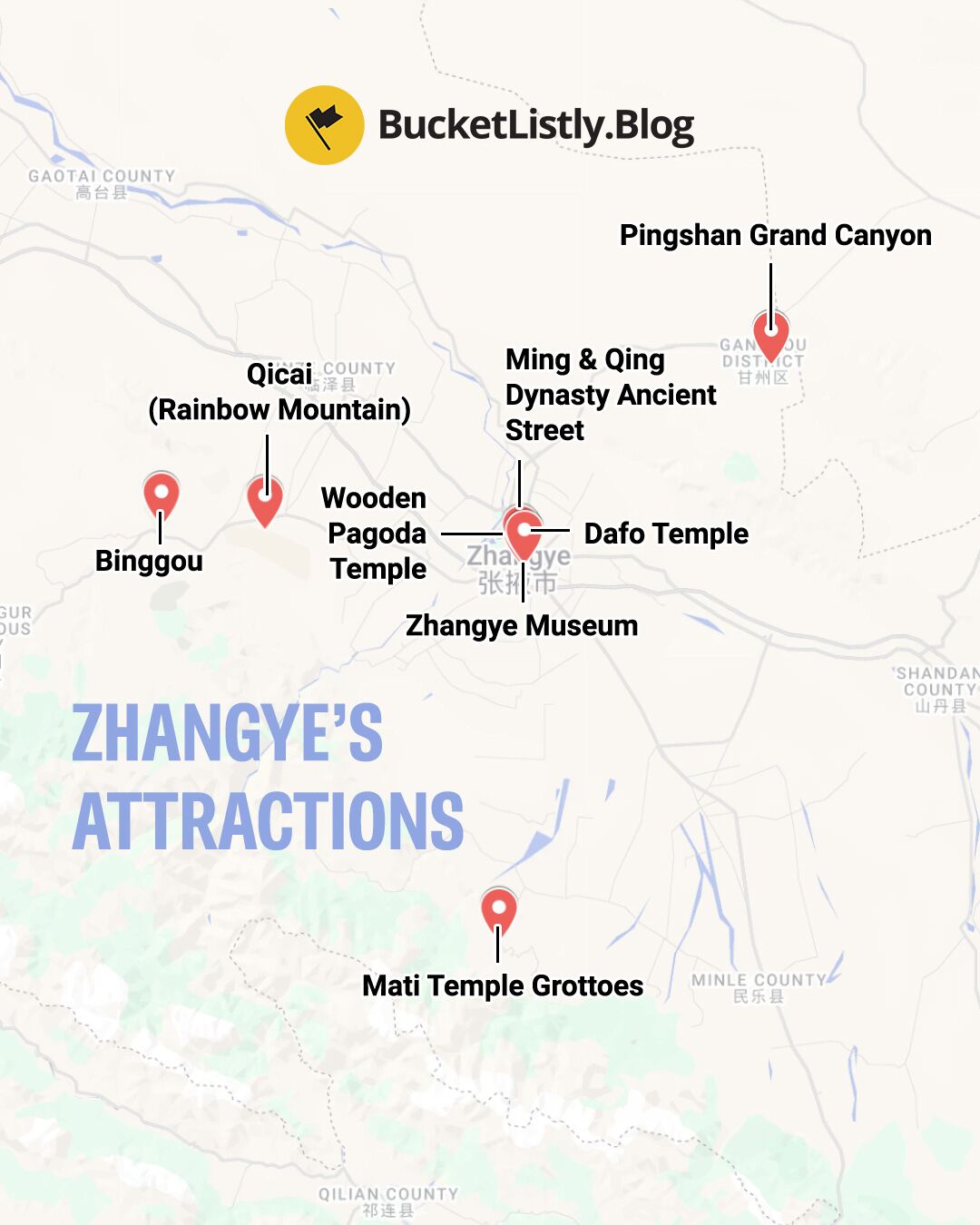
Map of Zhangye's Attractions
Quick Summary
| ♥️ Must See: | Qicai Danxia Scenic Area |
|---|---|
| 👍 Must Do: | Hike Through Pingshan Lake Grand Canyon |
| 💎 Hidden Gem: | Dafosi Temple |
| ☀️ Great Day Trip: | Mati Temple |
| 🥘 Place to Eat: | Ming and Qing Dynasty Ancient Street |
8 Best Things to Do in Zhangye
1. See the Rainbow Mountains at Qicai Danxia
- 📍 Location: Qicai Danxia Scenic Area [Map Link]
- 🕐 Opening Hours: 5:30 AM - 7 PM
- 💰 Entry Fees: 70 CNY (~10 USD)
- ⚡ Pete's Take: "If I could recommend just one place in Zhangye, it would be Qicai Danxia. It was one of the most surreal places I saw along the Silk Road in Gansu, and honestly, one of the most surreal I’ve seen anywhere."
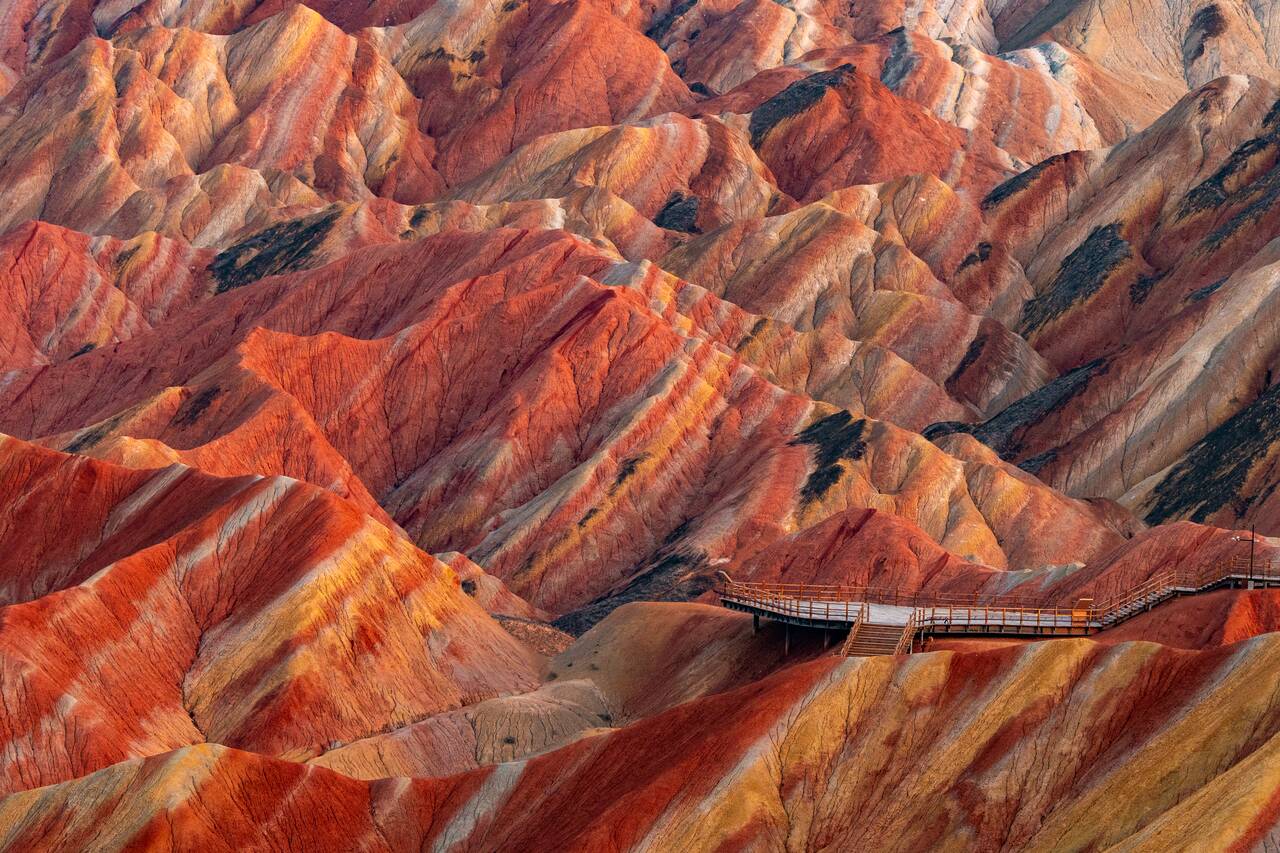
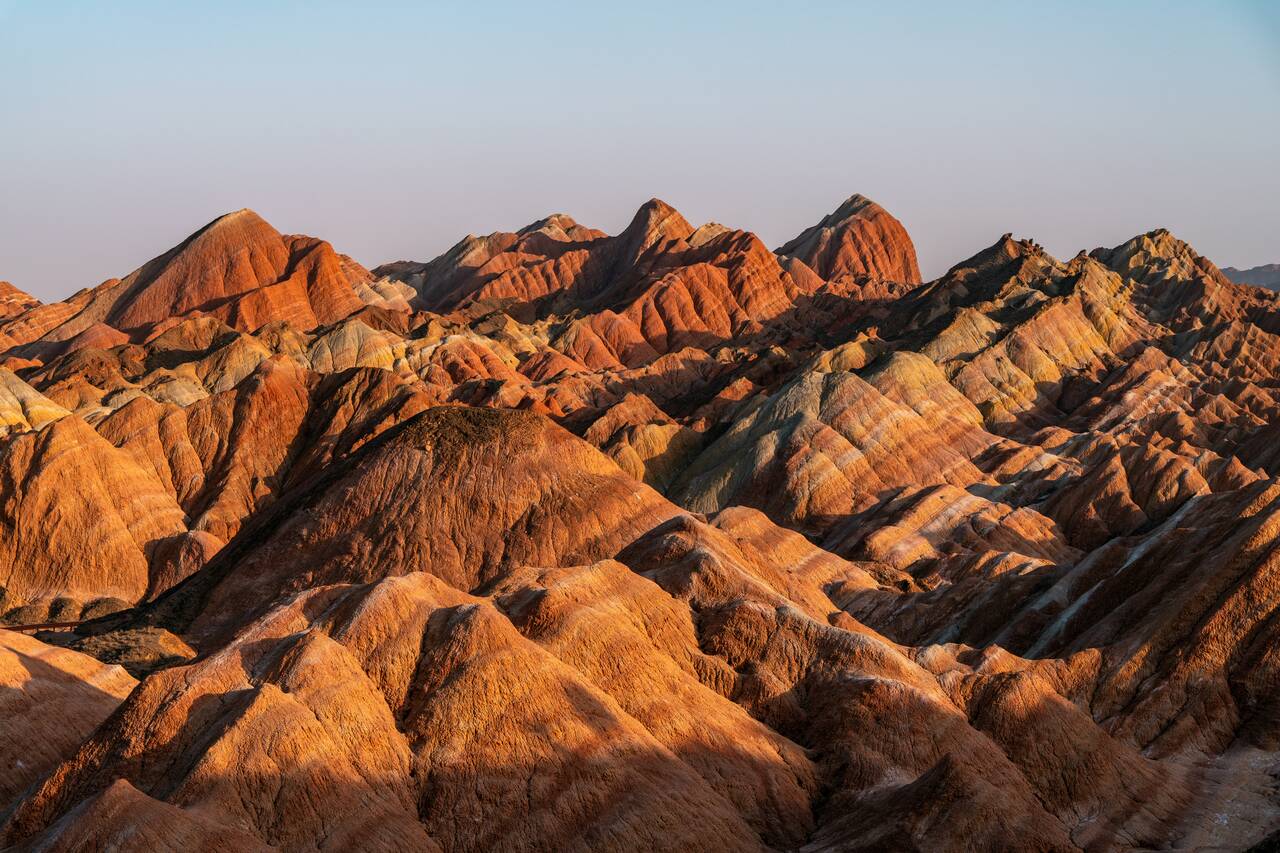
If there’s one place you absolutely have to see in Zhangye, it’s the Qicai Danxia Scenic Area, home to the famous Rainbow Mountains. I spent days exploring Gansu and the ancient Silk Road, and this was easily one of the most surreal and beautiful places I saw on the trip. Maybe in my life!
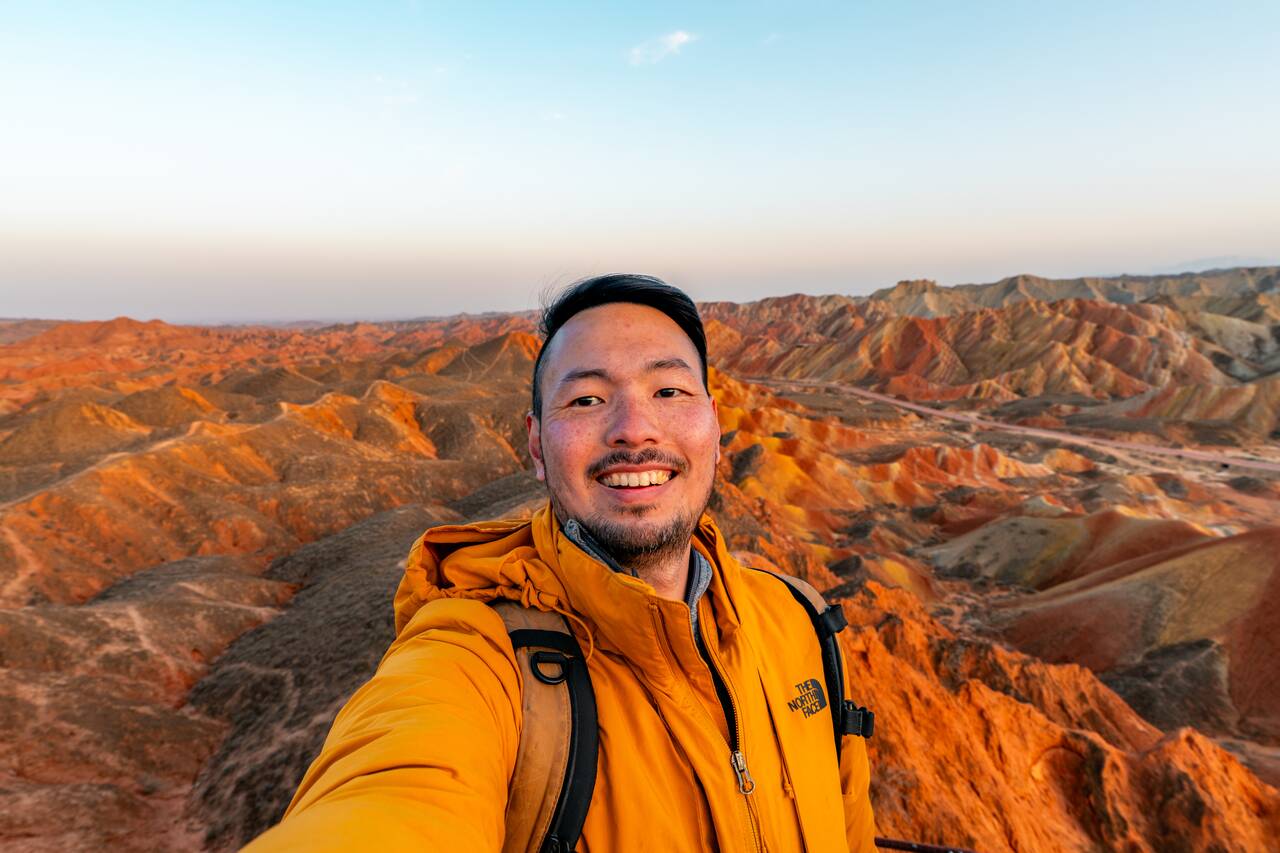
If you’ve been to Rainbow Mountain in Peru and were a little disappointed by the colors, you won’t be here. This place really does look like the photos! What surprised me most was how much of the landscape looked like this. It isn’t just one colorful patch on a hillside. You can see bands of red, orange, yellow, and gray running across whole valleys and over hills in every direction.
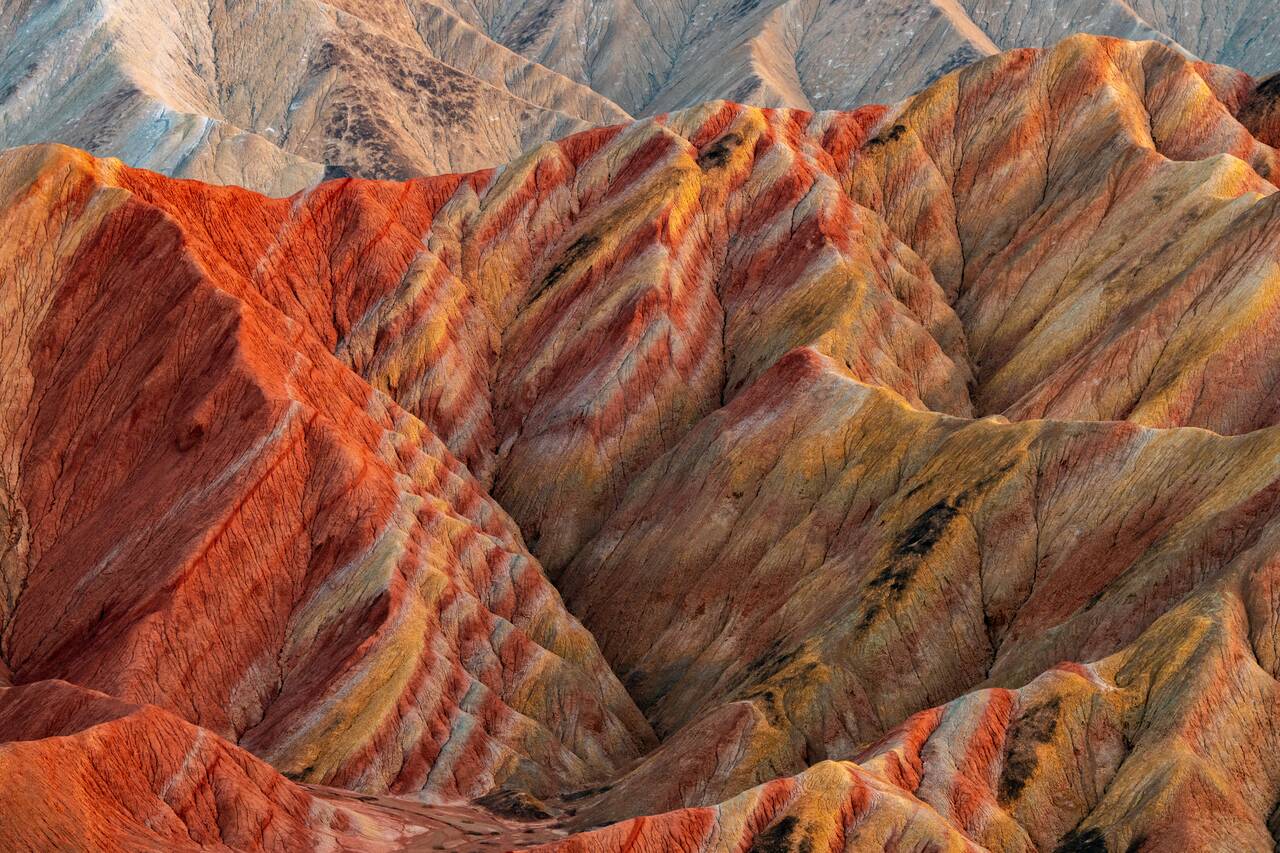
The colors come from layers of sediment that built up over millions of years and hardened into rock. Differences in the minerals in each layer, including iron compounds that give some of the rock its reddish tones, produced those stripes. As the land was pushed up and tilted, erosion exposed the layers and carved them into the ridges and gullies you see today.
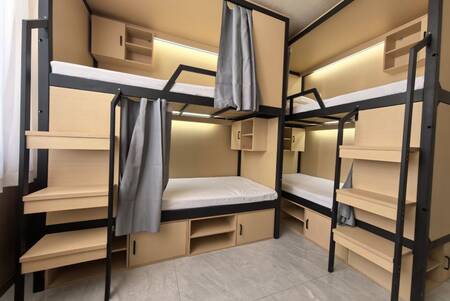
- XingYuan Hostel (Budget)
- Elong R.YUN Hotel (Zhangye West Railway Station Bell Tower Area) (Mid-Range) 👍 Top Pick
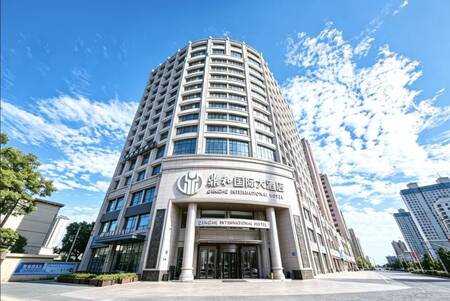
- Ding He International Hotel (High-End)
- Zhangye Rainbow Mountains (Qicai Danxia) Entry Ticket
- Pingshan Lake Grand Canyon Entry Ticket
- Mati Temple Grottoes Entry Ticket
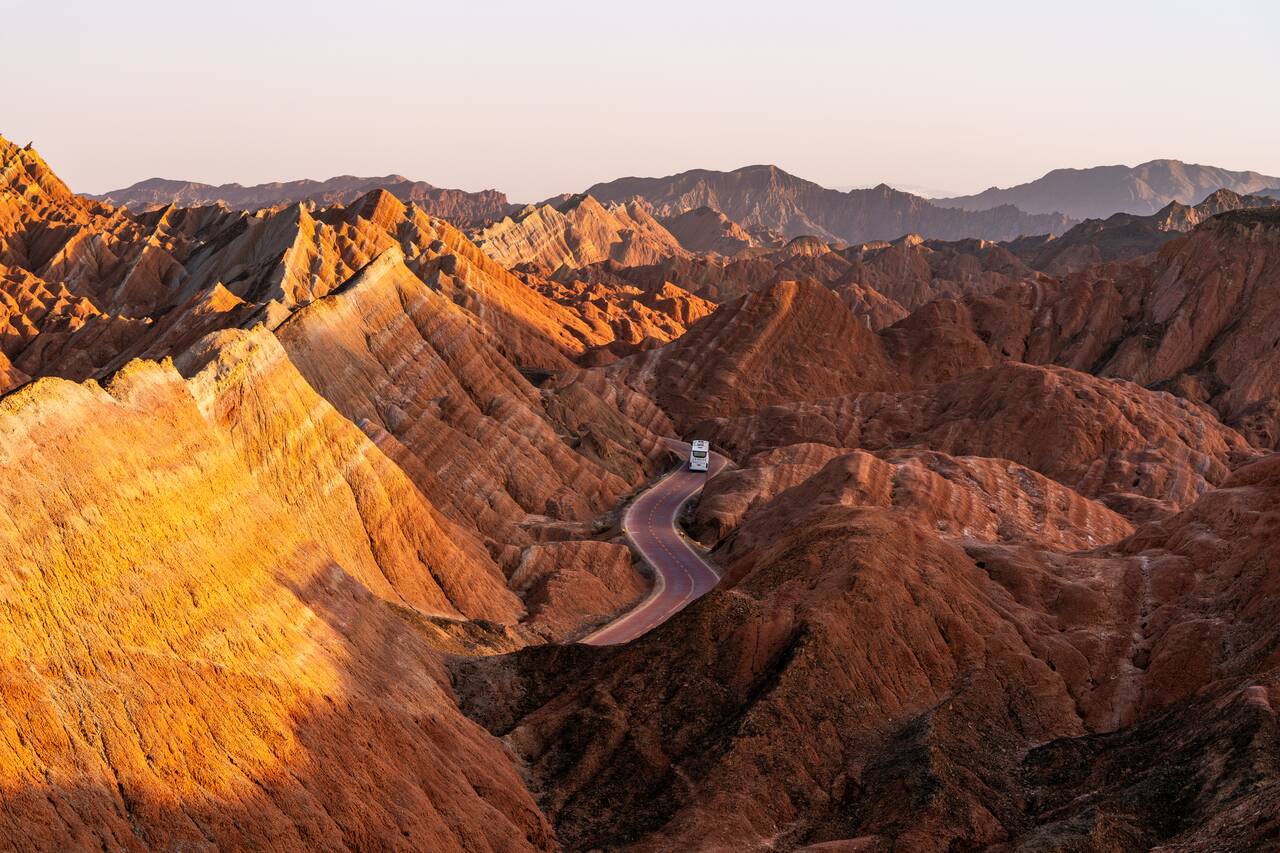
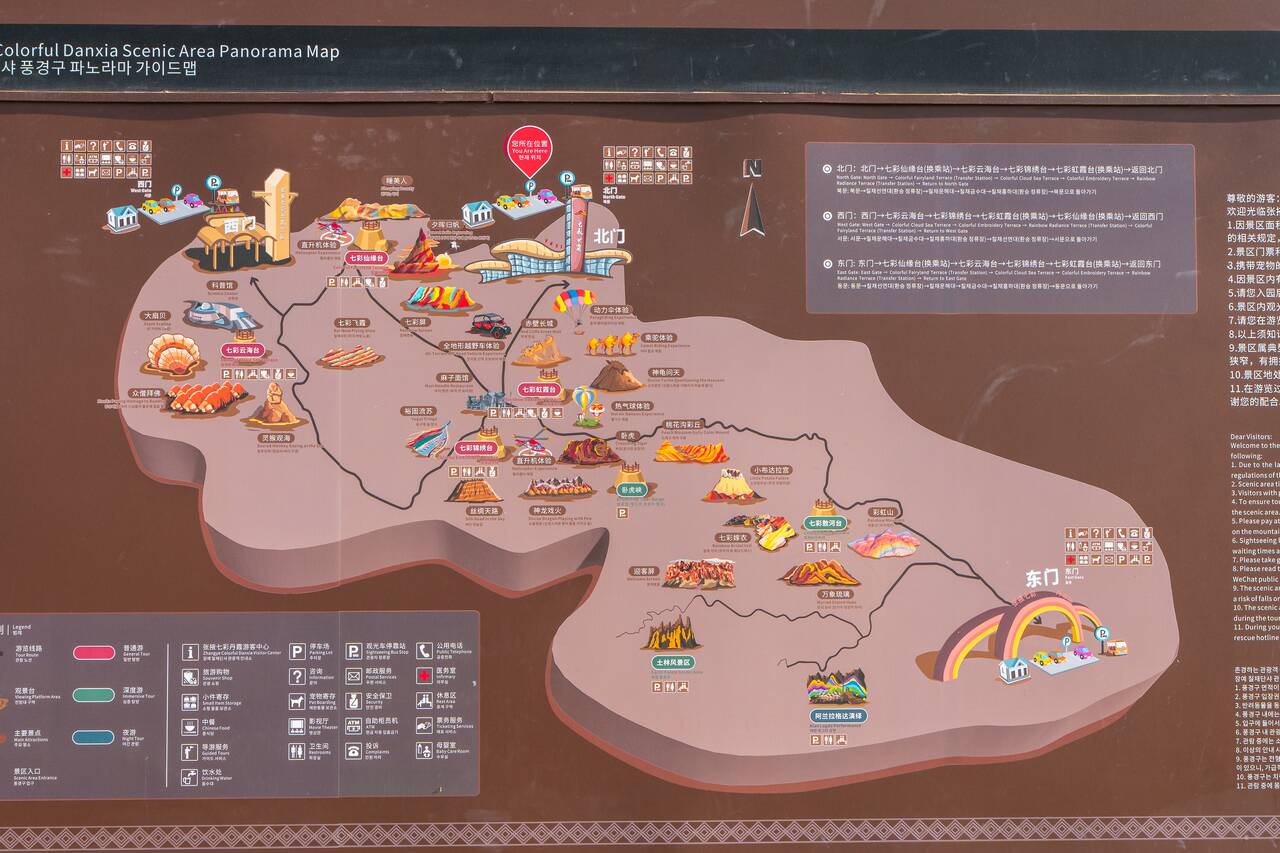
Like most popular scenic areas in China, this place gets crowded, especially around sunset. You’ll get around on the park’s sightseeing buses, which stop at four viewing areas. All four are definitely worth getting off for, and each gives you a different view of the hills. Here’s the order I visited them in:
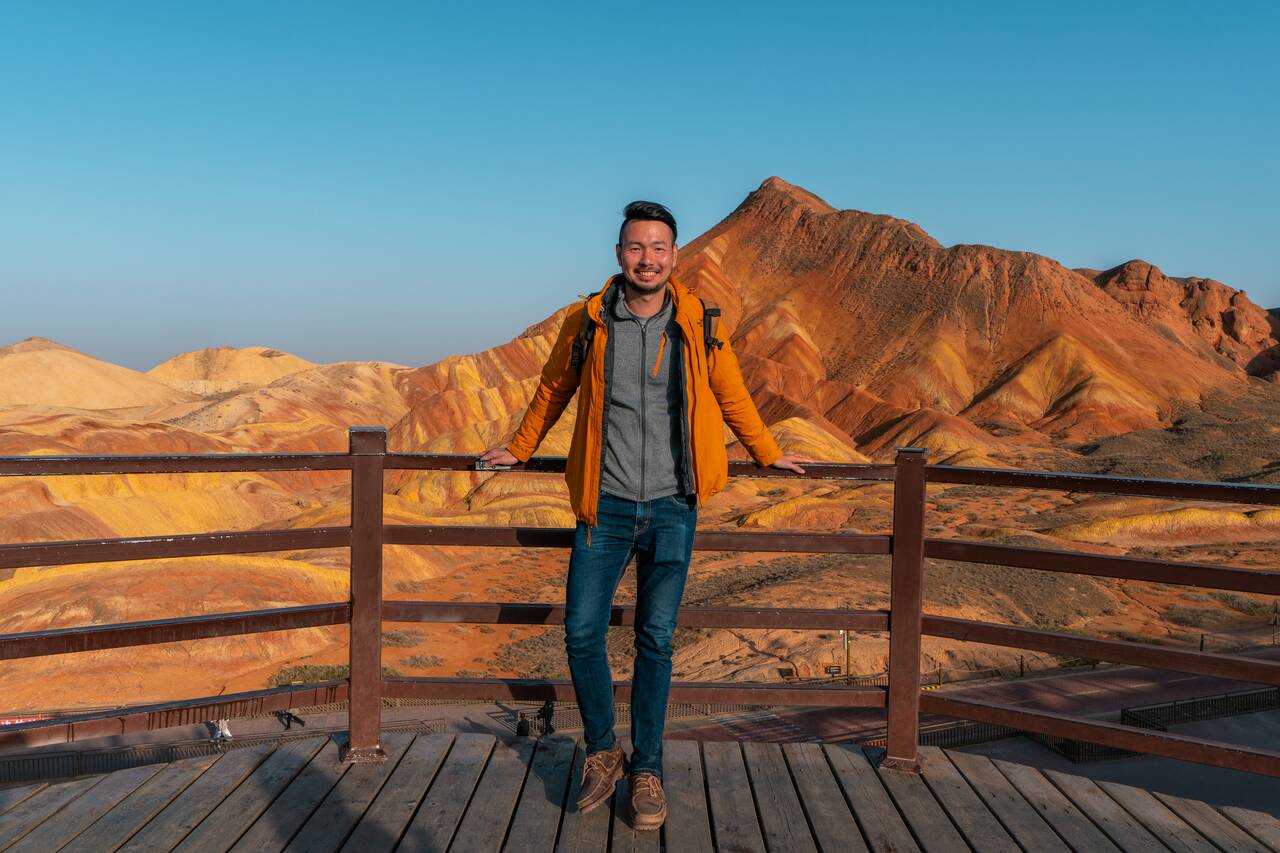
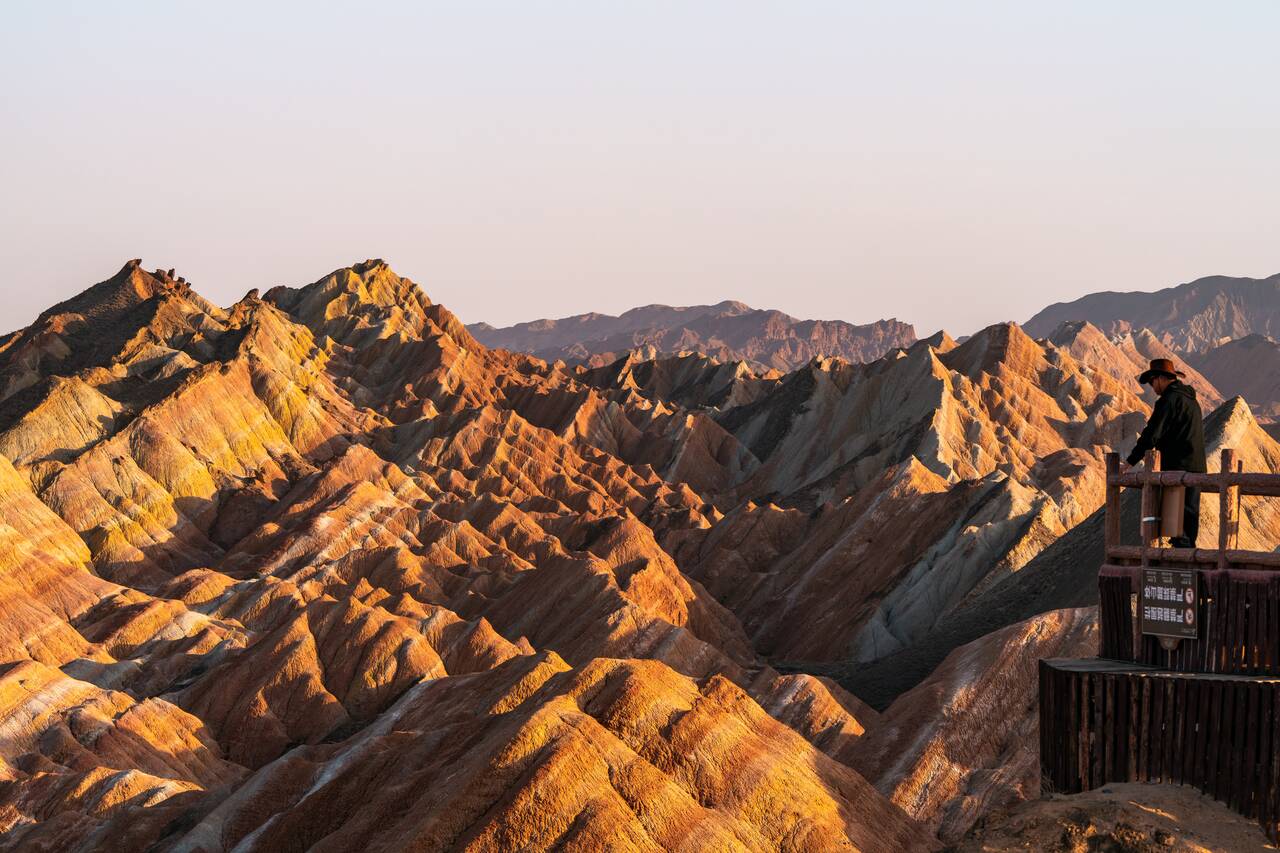
The bus first took me to this viewpoint, where I got my first glimpse of the Rainbow Mountains. There are a few viewing platforms perched on a hill, so be sure to climb the stairs for a wider view.
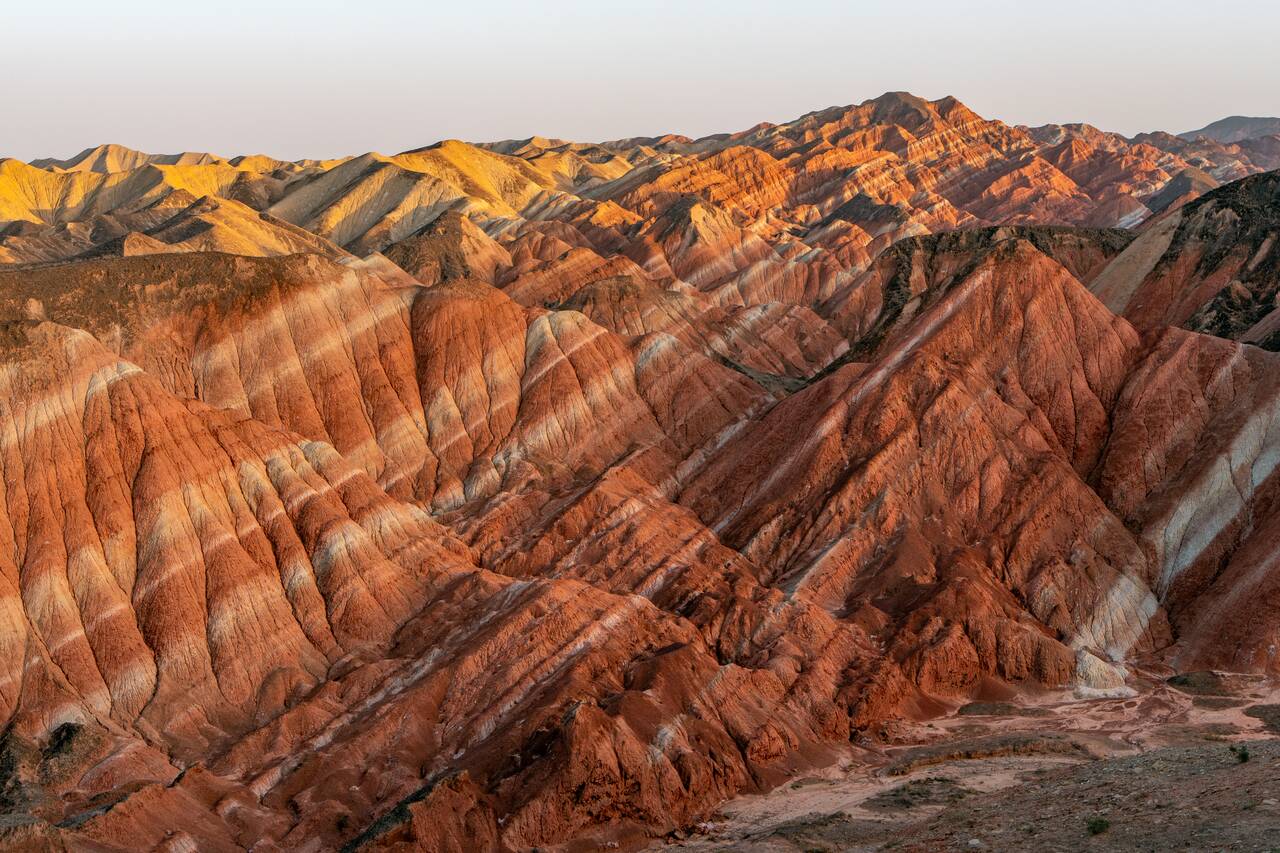
Next, we stopped at this viewpoint, where you can walk around and admire the rolling hills. Keep an eye out for a road that zig-zags its way around these rainbow mountains. It's pretty iconic!
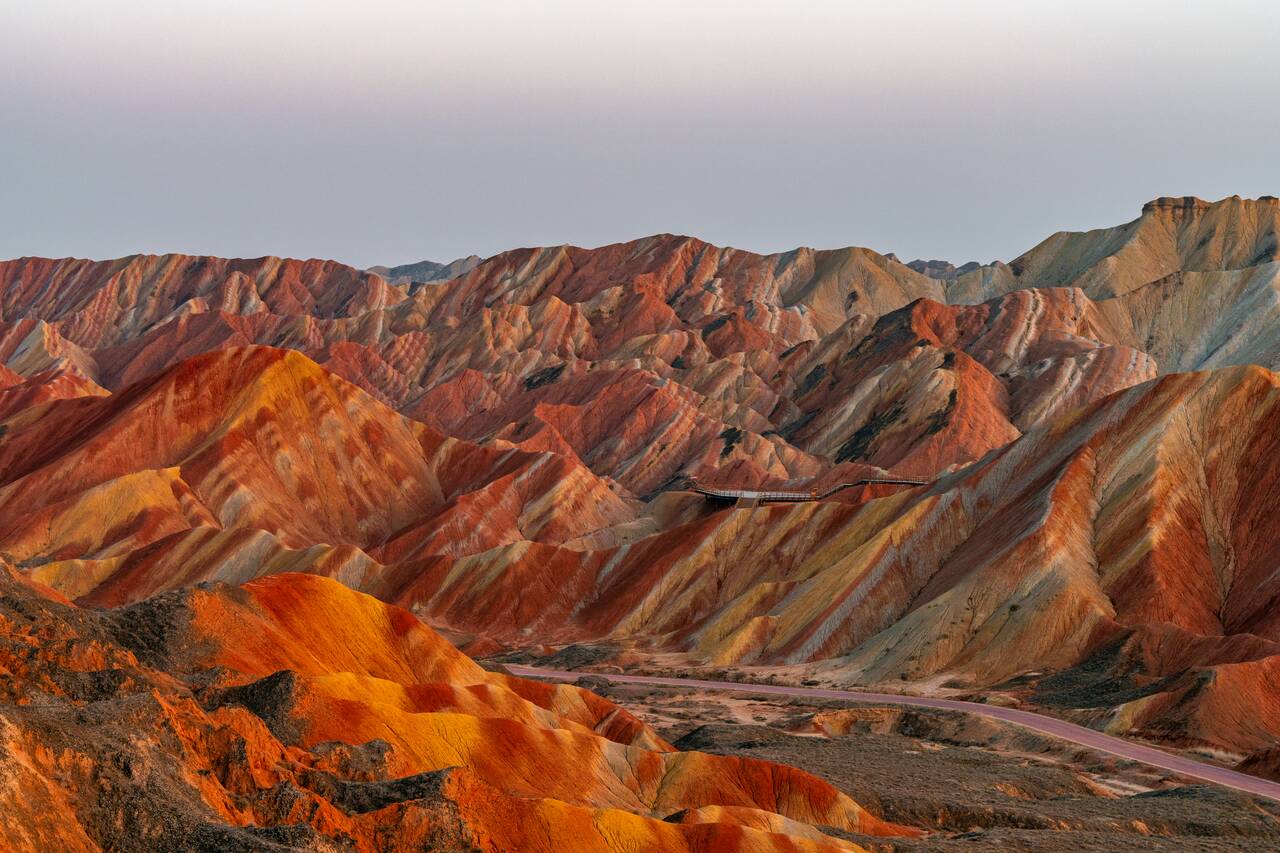
At the third stop, an elevated walkway takes you along the ridge. You’re sandwiched between gullies and rainbow-colored hills, so take your time and look around as you walk.
Last but not least, we stopped at the famous sunset viewpoint. I’d save the most time for this one so you can find a good spot and watch the colors change as the sun goes down.
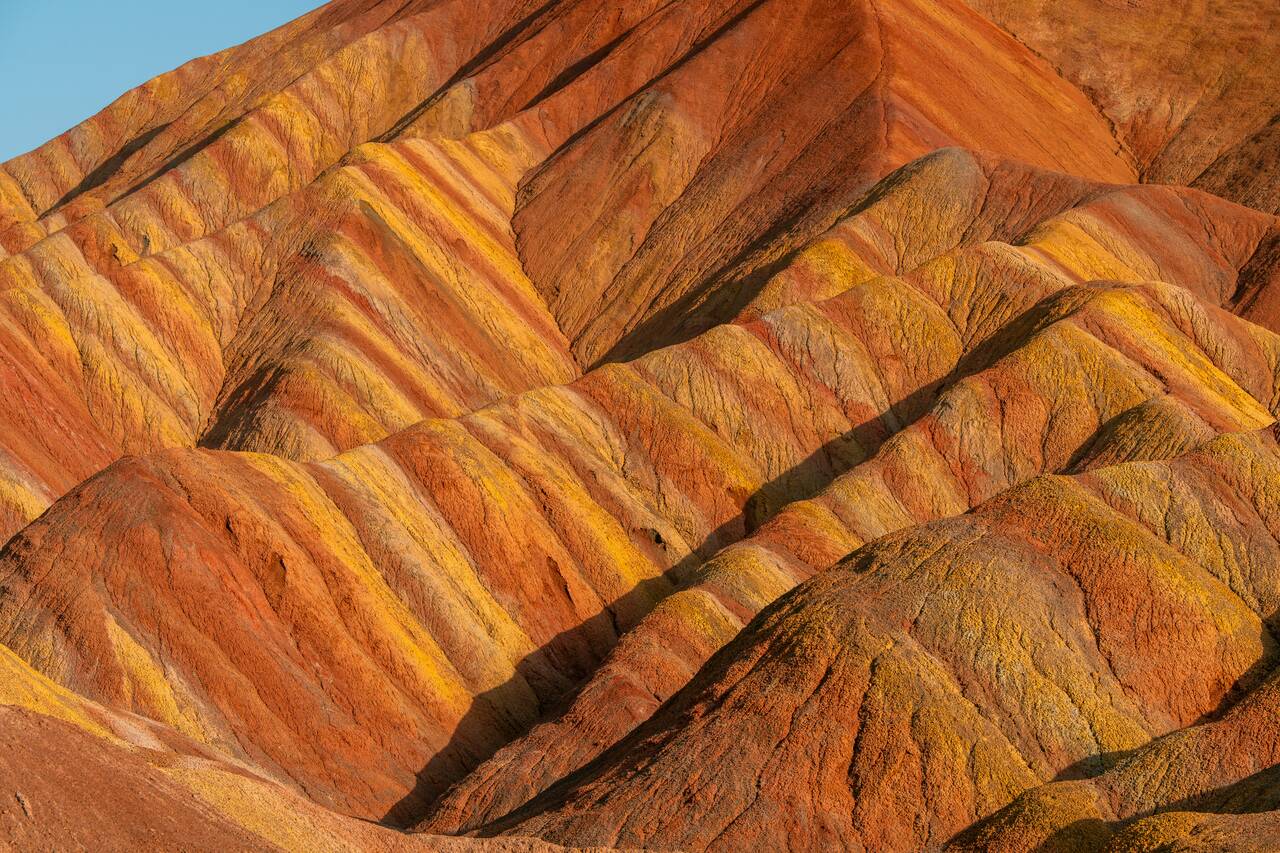
Speaking of sunset, I think this place is best seen in the evening. The low light brings out the colors and gives the ridges more depth. For my October visit, I took the 3:45 PM shuttle from Zhangye Bus Station, arrived around 4:45 PM, and had about 2.5 hours to explore before catching my 7:30 PM ride back. That worked out really well for sunset, but check the sunset time for your date and confirm the return with your driver before committing as sunset time vary drastically by season.
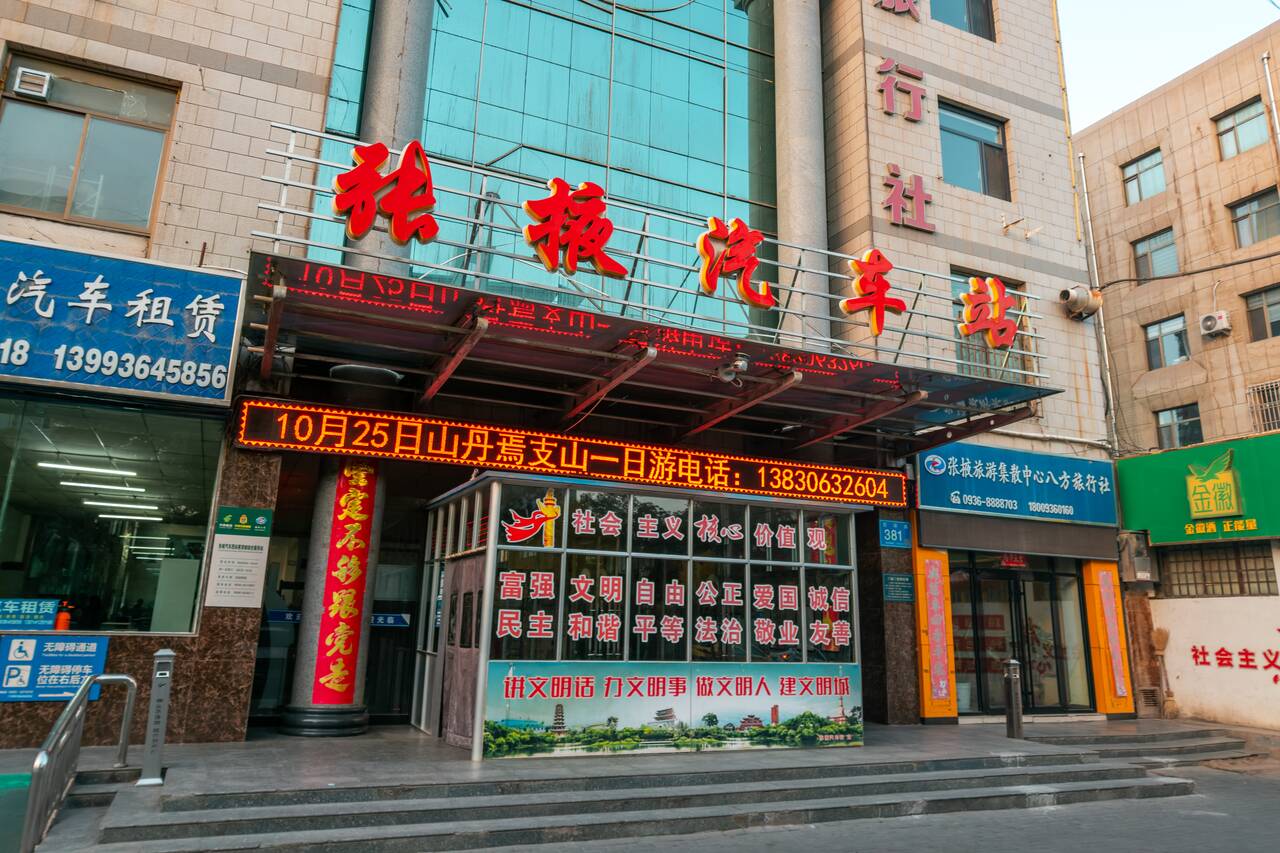
The timetable posted at Zhangye Bus Station in October 2026 listed departures at 7:45 AM, 9:20 AM, 10:15 AM, 11:20 AM, 12:45 PM, 1:45 PM, 2:45 PM, 3:45 PM, and 4:50 PM. The posted return times were 9 AM, 11 AM, 1 PM, 2 PM, 3:30 PM, 4:30 PM, 5:30 PM, and 6:30 PM. My 7:30 PM return was later than the posted timetable, so be sure to ask about the sunset trip at the bus station. You will find a customer service kiosk in the middle of the station hall and the friendly staff will help you figure it out. They can even help you buy the attraction tickets for you.
Qicai Danxia Scenic Area’s entry fee is 70 CNY on its own, but with the sightseeing bus, it should be around 100 CNY per person. The round-trip city shuttle from Zhangye Bus Station to Qicai should be around 40 CNY. In total, you will likely pay around 140 CNY to visit Qicai by shuttle bus. You can buy the attraction ticket on-site or buy it here.
Qicai is open from 5:30 AM to 7 PM during peak season, while in winter, it opens from 8:30 AM to 5 PM. Hours vary from season to season, so be sure to check them along with the bus schedule at the bus station.
Where to Stay in Zhangye?

2. Hike Through Pingshan Lake Grand Canyon
- 📍 Location: Pingshan Lake Grand Canyon [Map Link]
- 🕐 Opening Hours: 7:30 AM - 8:30 PM
- 💰 Entry Fees: 130 CNY (~19 USD)
- ⚡ Pete's Take: "The views here are absolutely incredible, but what I enjoyed most was squeezing through narrow passages and climbing the nearly vertical stairs back out of the canyon. After so many scenic parks in China that hold your hand the whole way, it was nice to find one that gave me a proper challenge!"
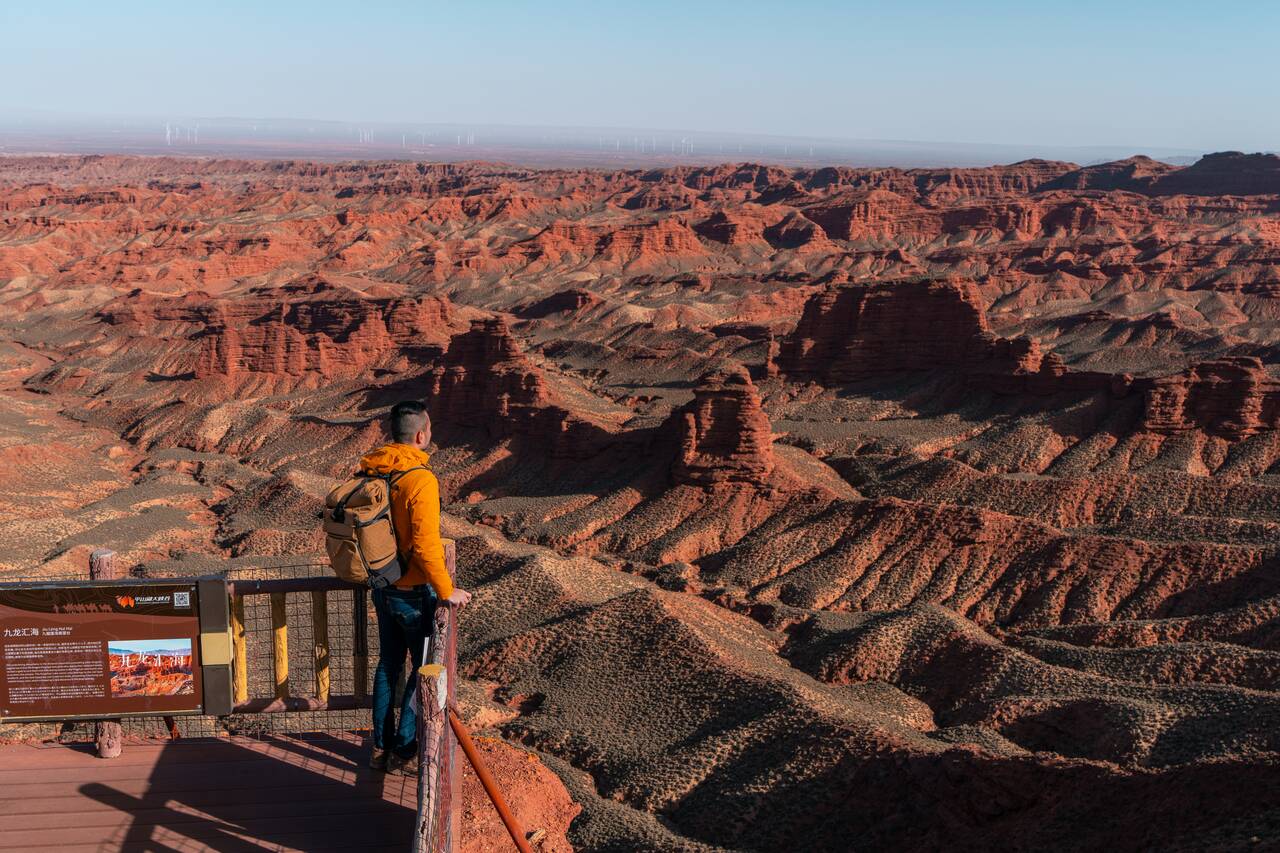
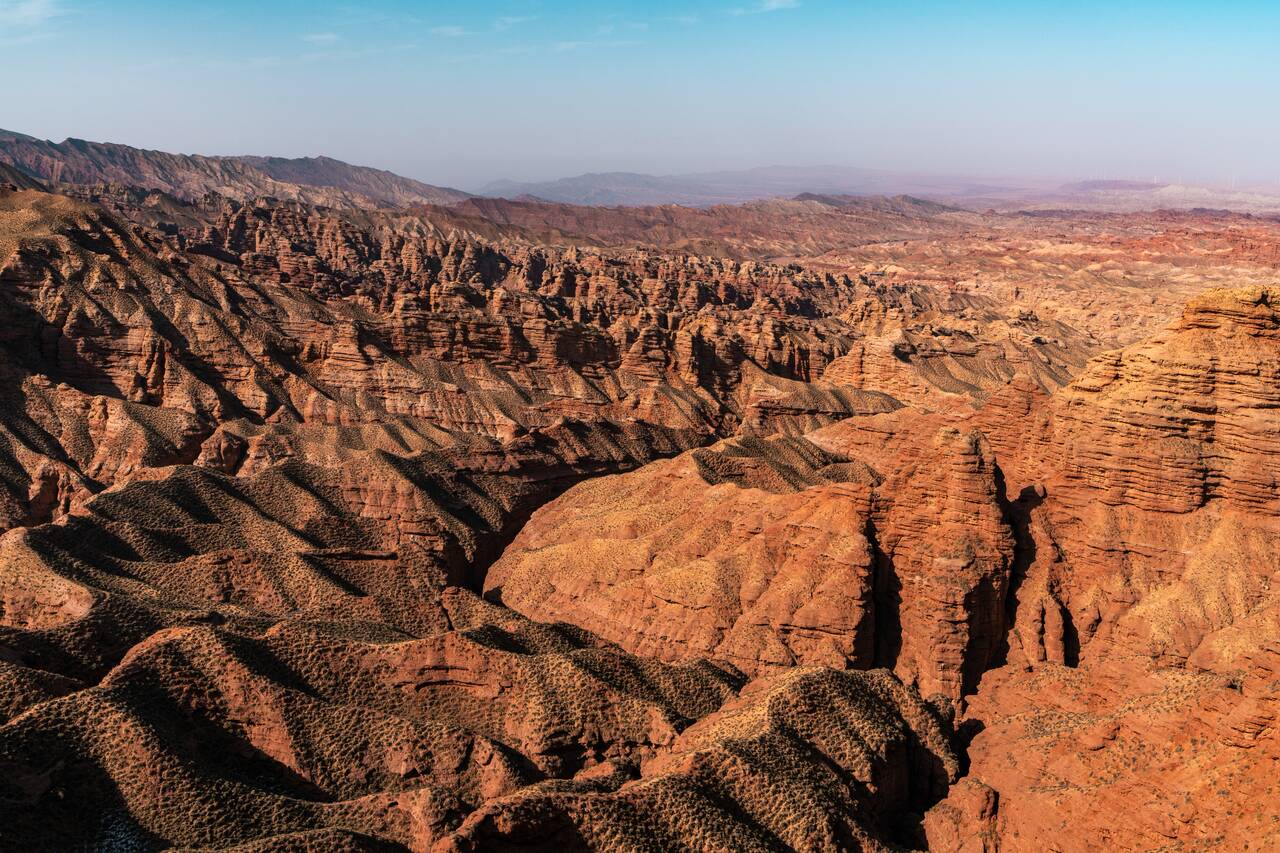
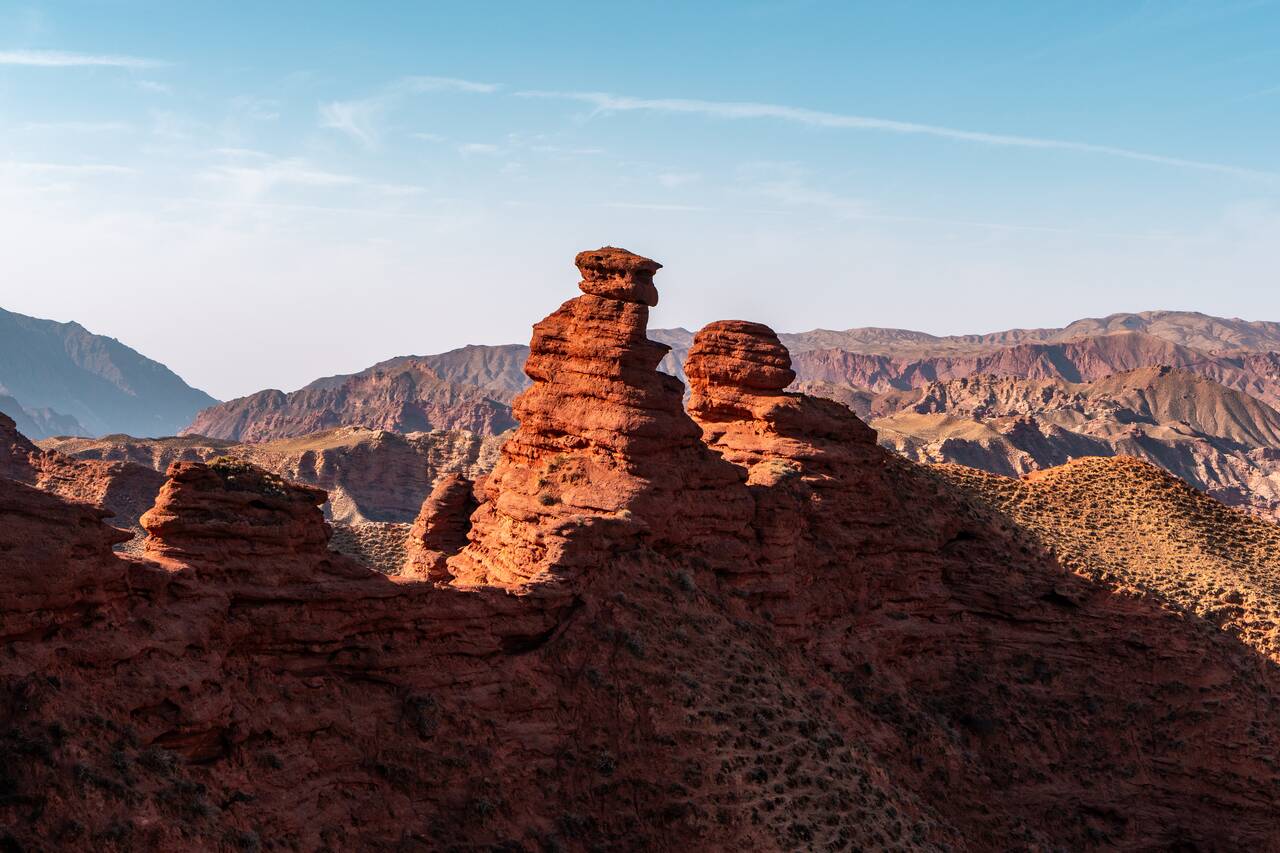
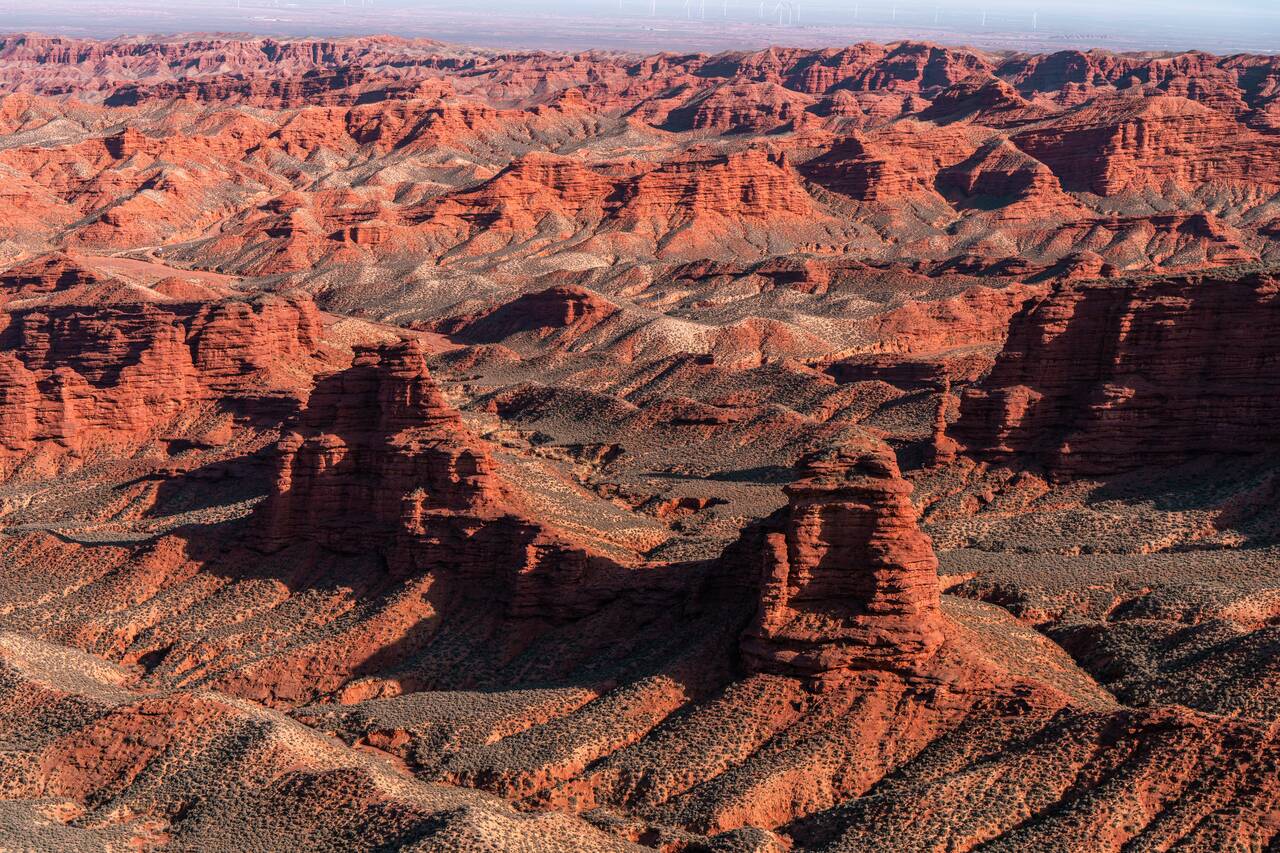
Another incredible place you absolutely have to see in Zhangye is Pingshan Lake Grand Canyon. It’s a maze of reddish cliffs, narrow ravines, and jagged rock towers, and the best part is that you can go all the way down to the canyon floor and hike your way back up. If you’ve spent most of your time in Gansu admiring the scenery from viewing platforms, this is a great chance to get right in the middle of it!
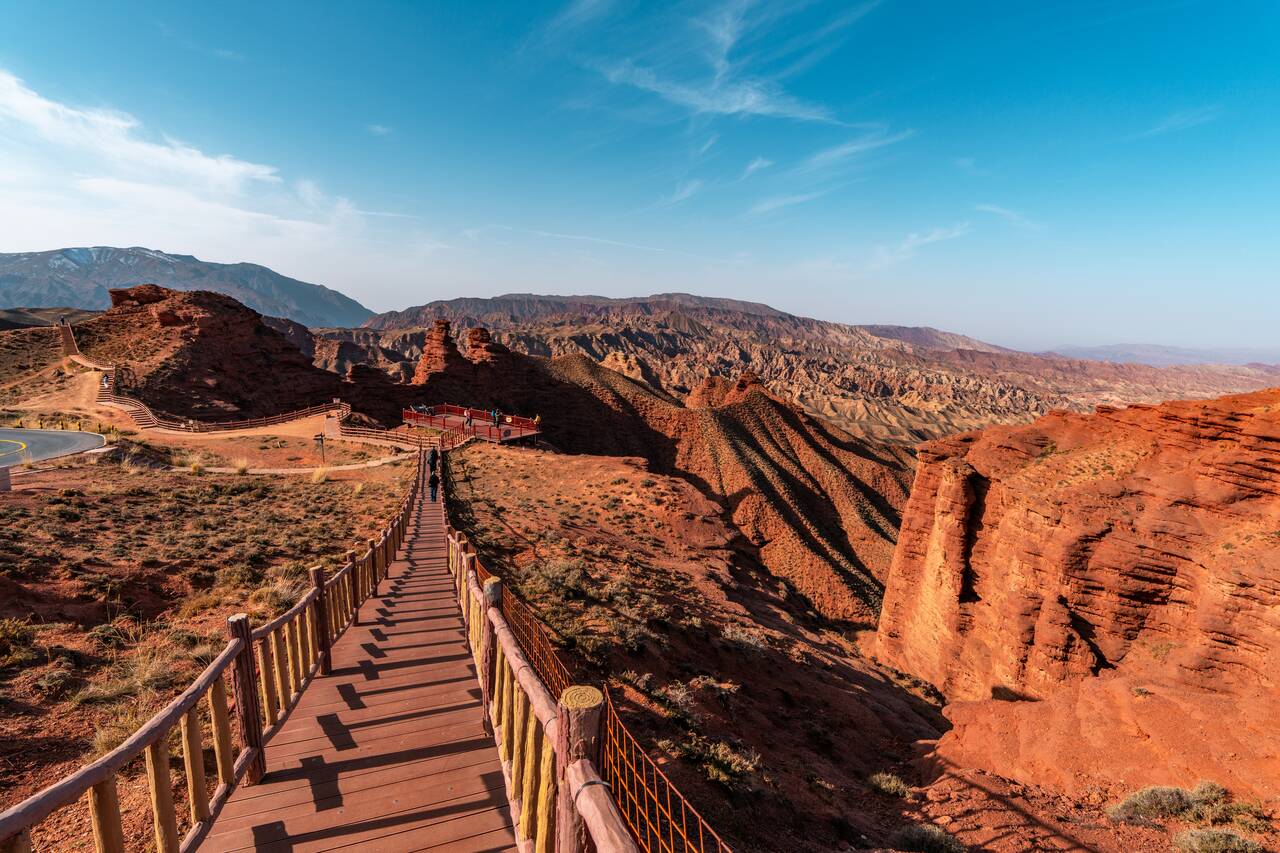
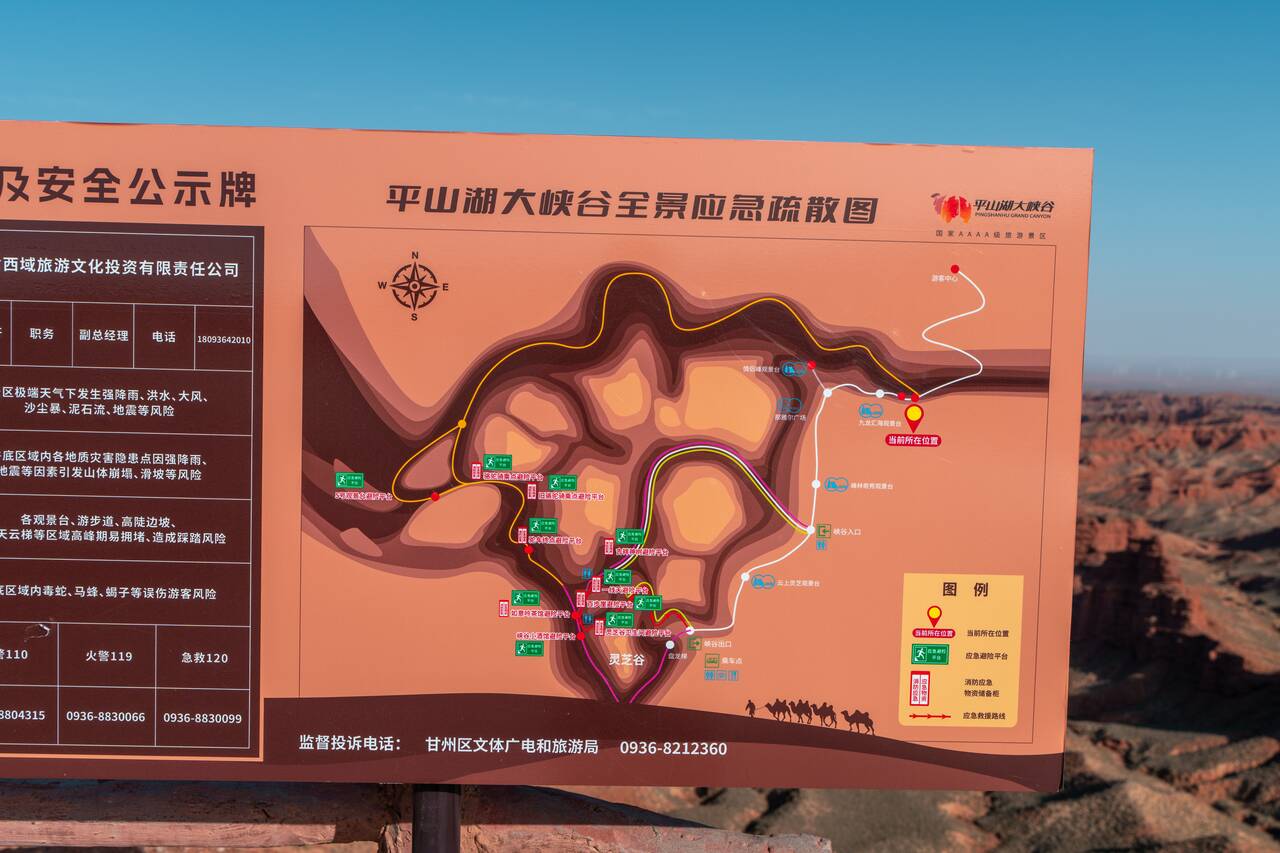
As you enter the park, you will have to take the park’s sightseeing shuttle which will put you right at the beginning of the ridge hike, which is a simple trail with few ups and downs. From there, you can start hiking along the rim and look down into the canyon. I recommend coming in the morning, when the low light casts shadows across the cliffs and gives the canyon so much more depth.
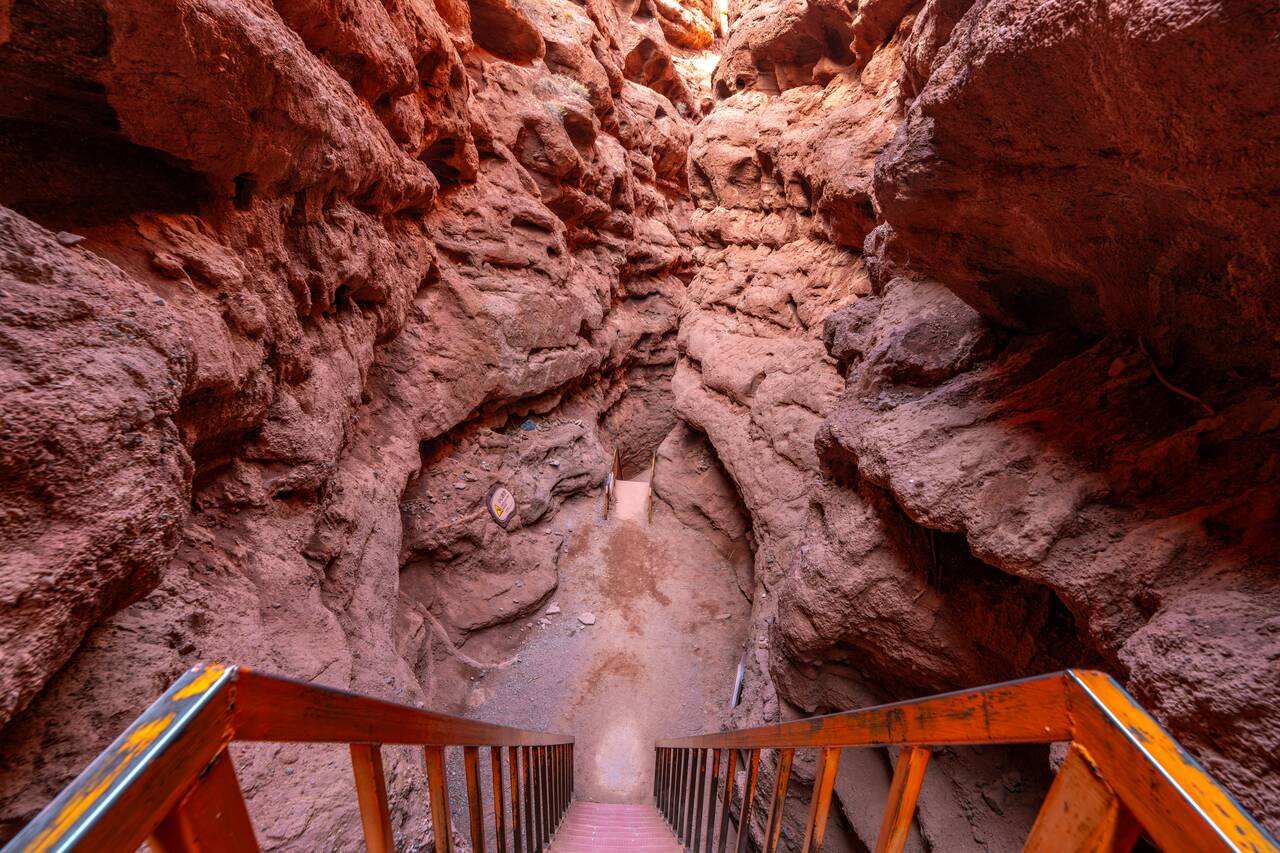
As you walk along the rim, you’ll come across a path leading down into the canyon. This is where you can take on the lower canyon trail, which involves squeezing through extremely narrow passages and climbing steep metal stairs to get back up. It was exhilarating and quite a challenge, especially when I looked up and saw how much farther I still had to climb.
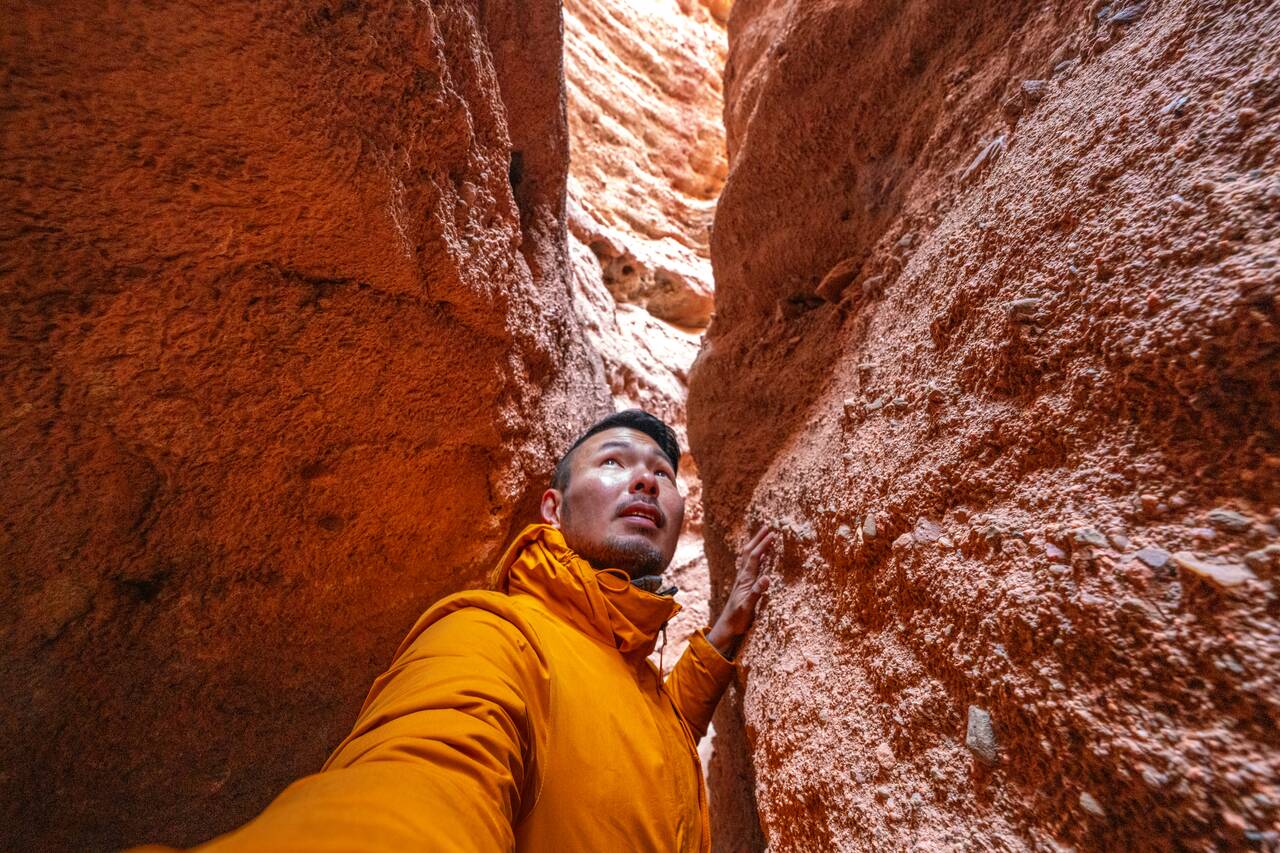
If you’re carrying a backpack, I’d move it to your front before climbing so it doesn’t catch on the safety metal rails behind you. Bring gloves, too. You’ll be gripping the metal rails for a good stretch, and they can get painfully cold or hot depending on the weather. I didn’t bring any, and my hands were freezing by the time I got to the top!
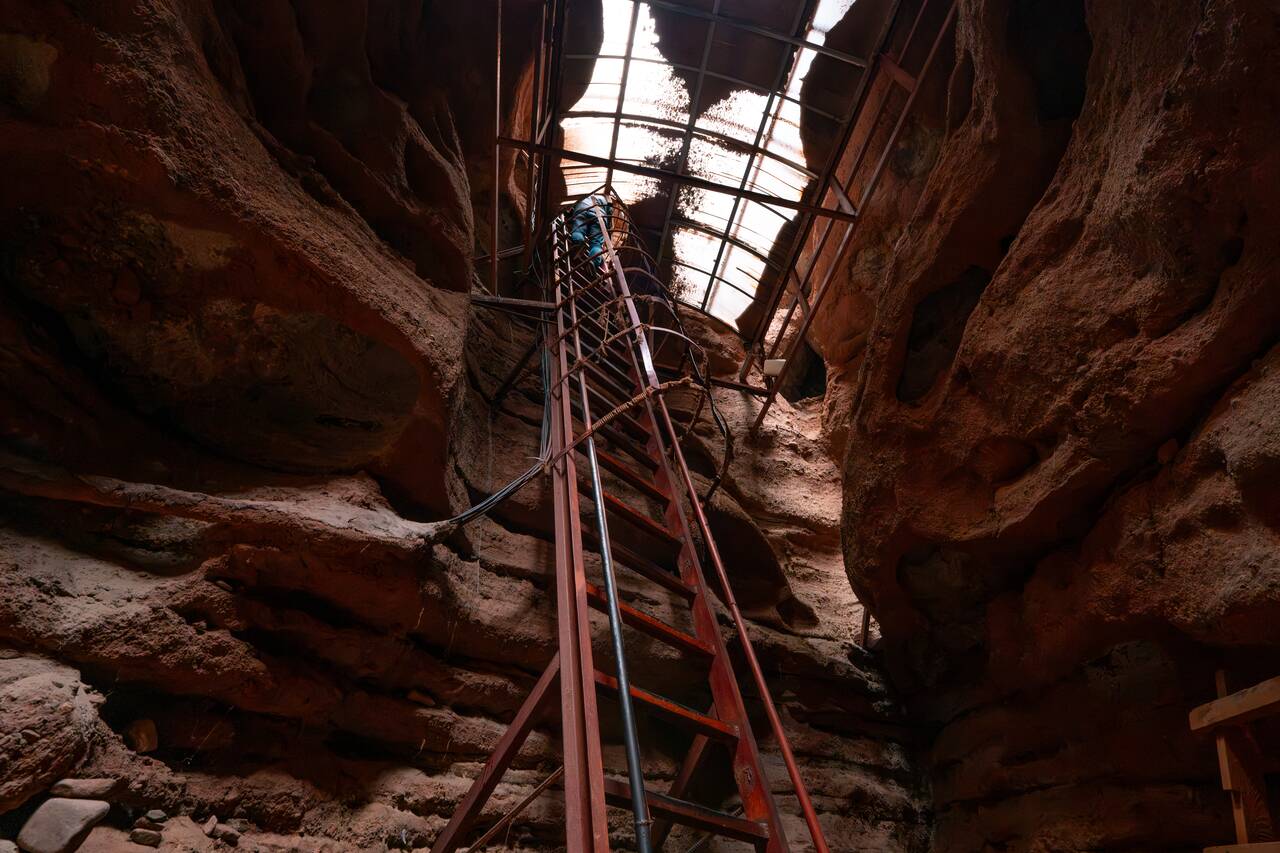
If steep stairs and tight spaces aren’t your thing, you can stay on the rim trail. Just keep walking past the turnoff for a few more minutes and you’ll reach the viewpoint. It makes it a pretty short stop, though without the climb, and for me, getting down into the canyon and figuring out how to get back up was half the fun!
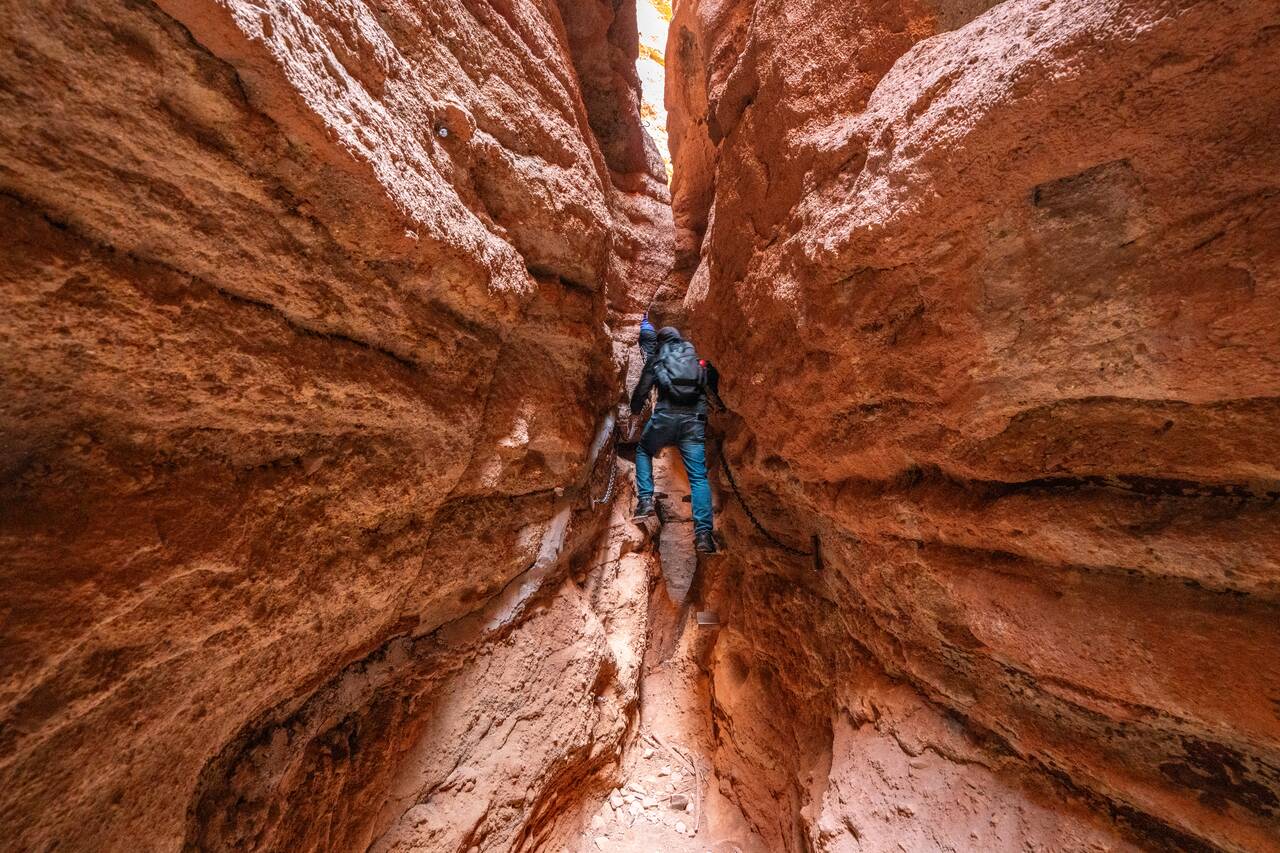
It took me about 1 hour to complete the lower canyon trail, but it might take you longer depending on how you fare on the stairs. Finally, a scenic park in China that actually gave me a proper challenge! So many of these parks love to hold your hand the whole way through, but not this one.
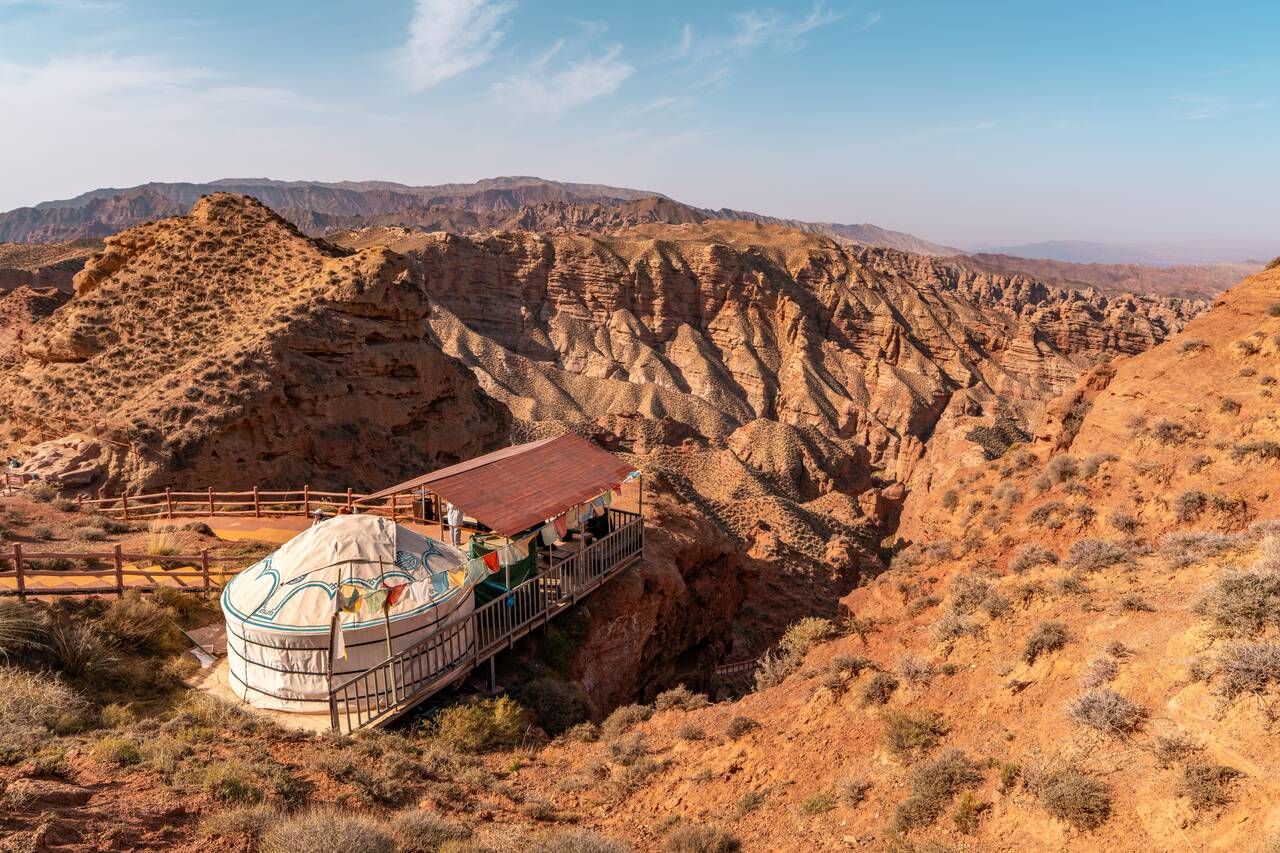
Allow around 3 hours for the whole park, including the sightseeing shuttle and stops for photos. Ask at the entrance whether the narrow passage and staircase are open that day, as trail access can change depending on the weather. You do not want to be down there when it rains, trust me!
To get here, head to Zhangye Bus Station and ask for the Pingshan shuttle at the customer service kiosk. When I visited in October 2026, there were two departures, one at 8:30 AM with a 2:30 PM return from the park, and another at 9:45 AM with a 3:30 PM return. I’d take the 8:30 AM shuttle for the morning light and plenty of time to hike before heading back.
I took the 2:30 PM return and got back to Zhangye around 3 PM, just in time to catch the 3:45 PM shuttle to Qicai Danxia for sunset. It was a long day, but it worked out really well and I got to see both places in the light I wanted! If you’re doing the same, confirm both shuttles at the station first, as there isn’t much room for delays.
The entrance ticket to the park is 130 CNY per person with the park’s sightseeing shuttle. The roundtrip shuttle from Zhangye Bus Station was 60 CNY per person. You can buy the attraction ticket on-site or book it here and buy the shuttle's ticket at the bus station.
Pingshan is open from 7:30 AM to 8:30 PM during peak season. In the low season, it opens at 8 AM, and the canyon entrance closes at 5 PM. If you buy a ticket after 4:30 PM in the low season, you can only visit the viewpoints. Hours vary by season, so be sure to check them along with the shuttle schedule at the bus station.
3. Take a Day Trip to the Mati Temple Grottoes
- 📍 Location: Mati Temple [Map Link]
- 🕐 Opening Hours: 8 AM - 6 PM
- 💰 Entry Fees: 39 CNY (~6 USD)
- ⚡ Pete's Take: "Mati Temple is worth setting aside an entire day for. There’s so much to see! It was also much less crowded than many of the other places I visited in China, which made exploring the cliffside grottoes at my own pace even more enjoyable. Highly recommended!"
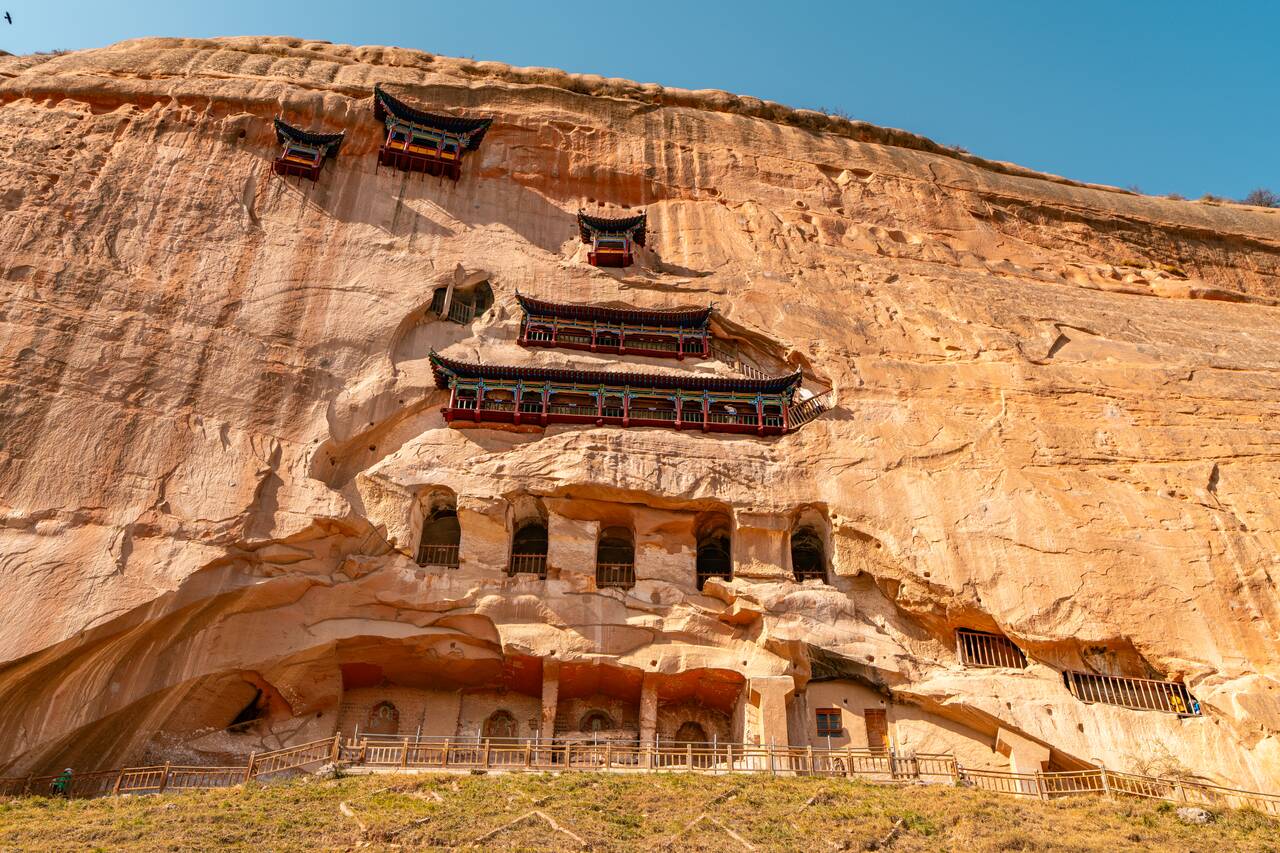
I hope you’re not tired of day trips yet, because there’s another place you’re going to want to see while you’re here. Mati Temple is a series of Buddhist grottoes carved into the cliffs at the foot of the Qilian Mountains, and trust me, you don’t want to miss it!
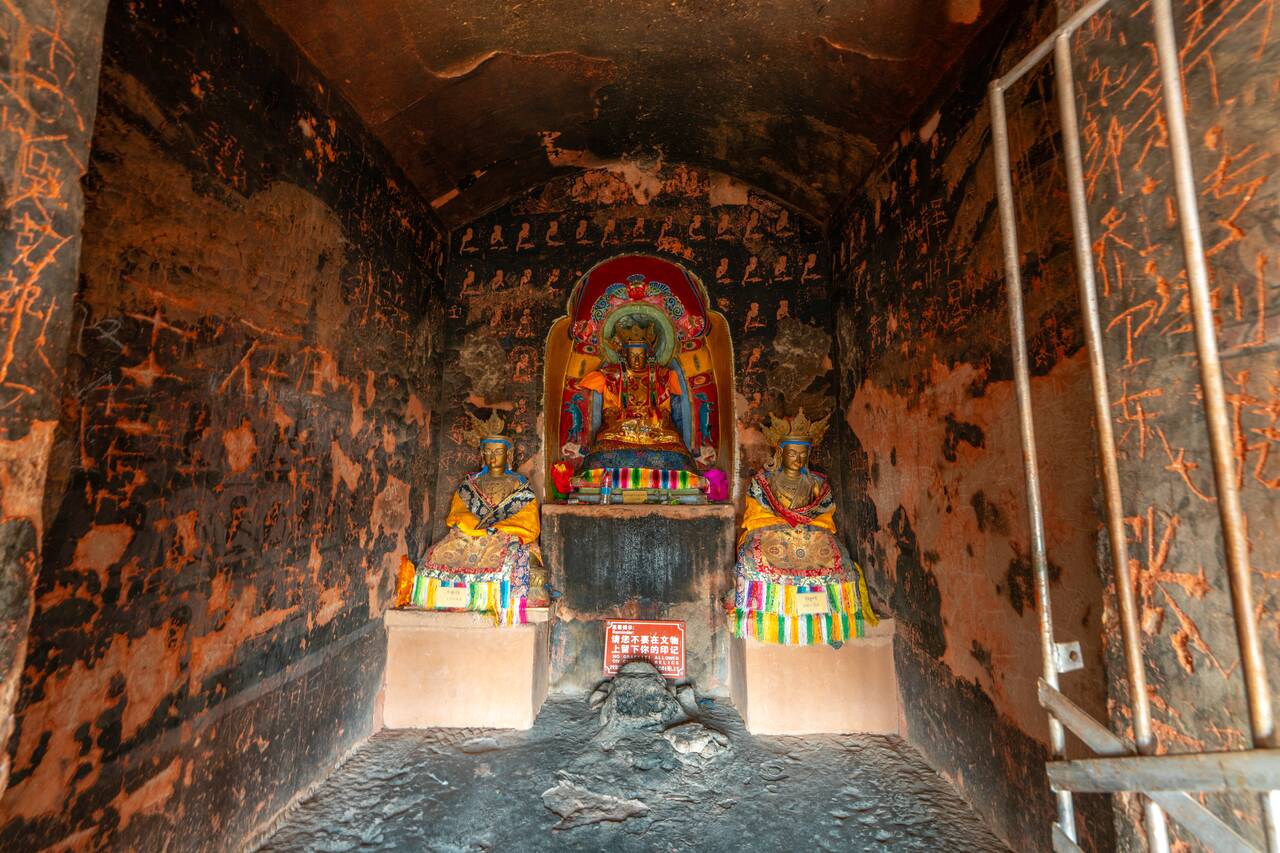
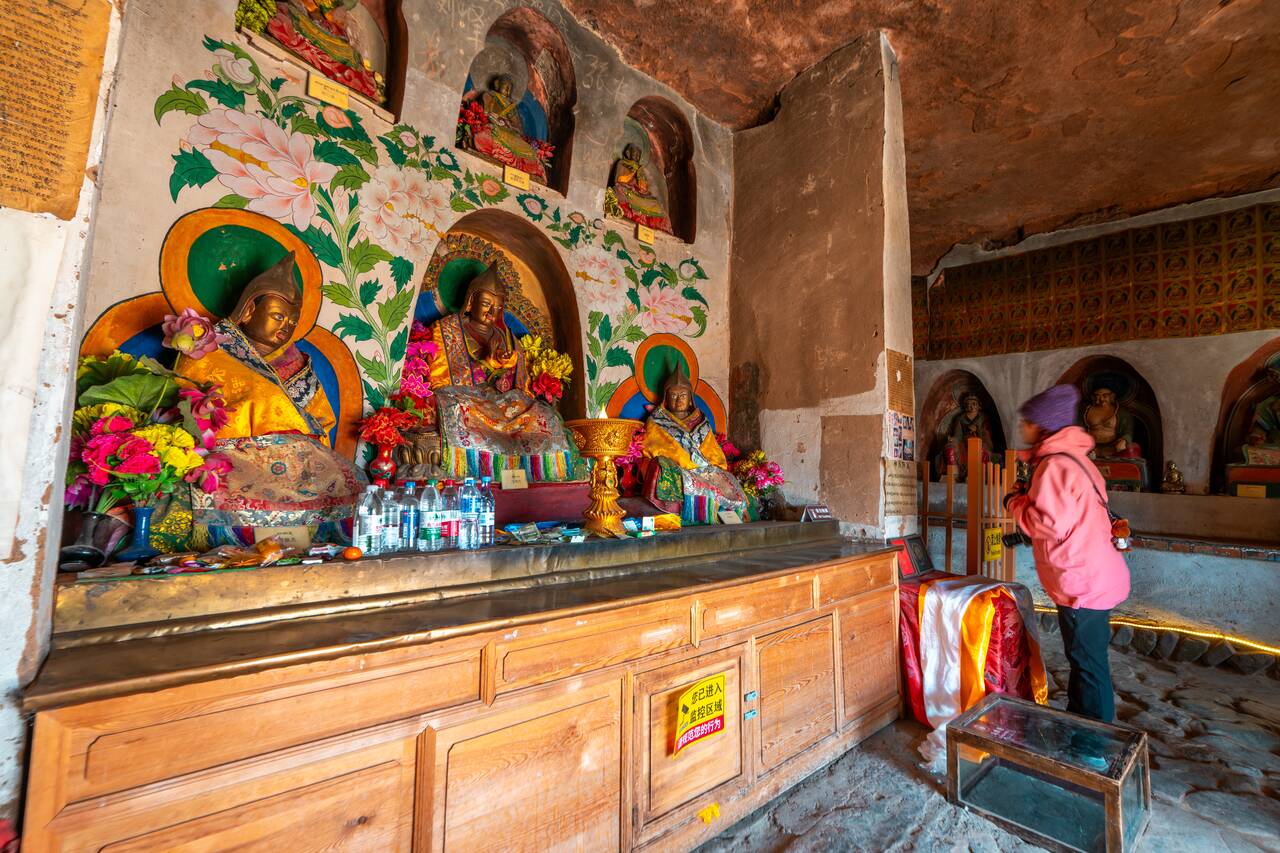
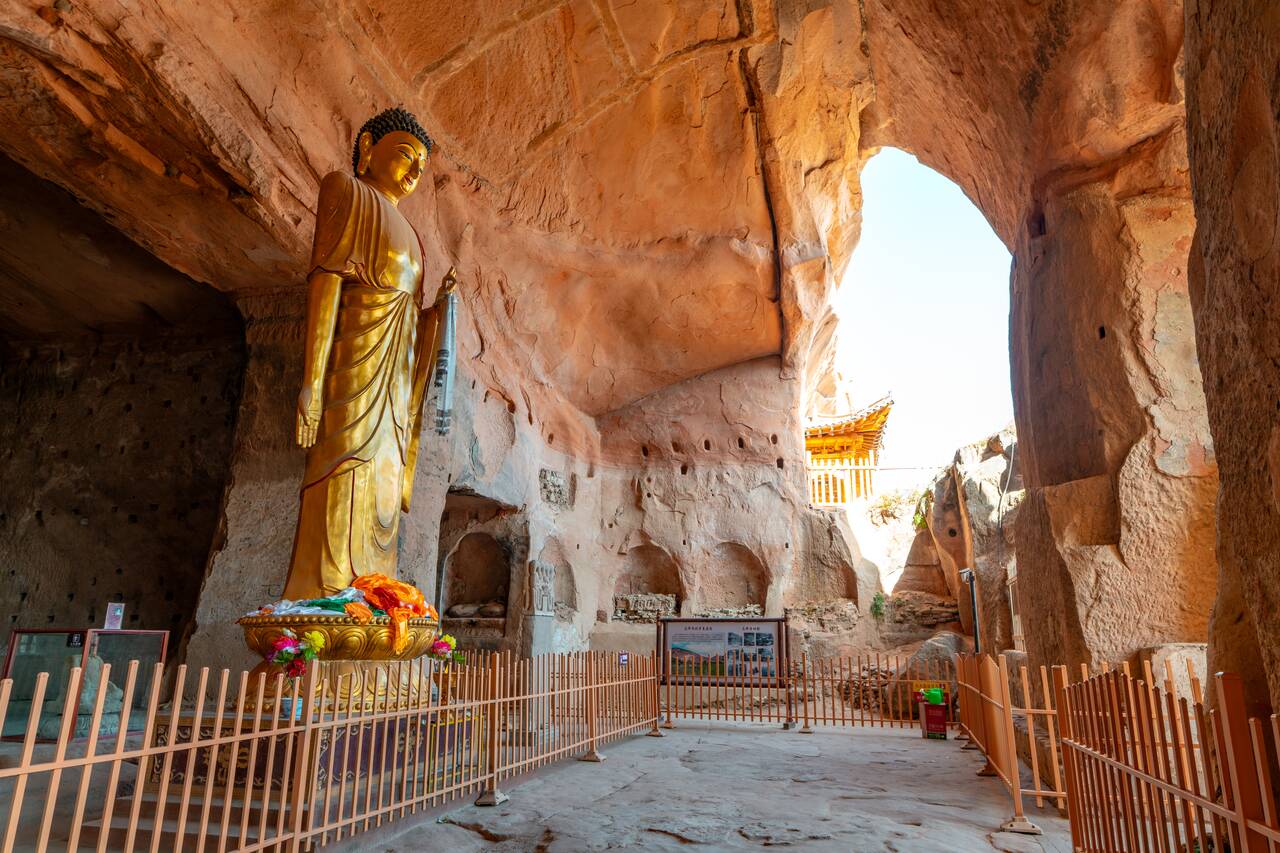
The earliest caves here date back more than 1,600 years to the Northern Liang period. Over the centuries, Mati became an important Buddhist site among pilgrims and travelers along the Hexi Corridor. Today, you’ll find Buddhist statues and murals inside the caves, along with a series of temples stacked up the cliff face. You can climb between them through narrow stairways carved into the rock and look out over the valley below.
I’d set aside a full day for Mati Temple as the place is quite far from the city, taking about 1.5 hours each way with the shuttle bus. Again, much like any other parks here, once you arrive, the park’s sightseeing bus will take you between the grottoes. The bus will stop at around 3 places and I found all of them worth dropping by.
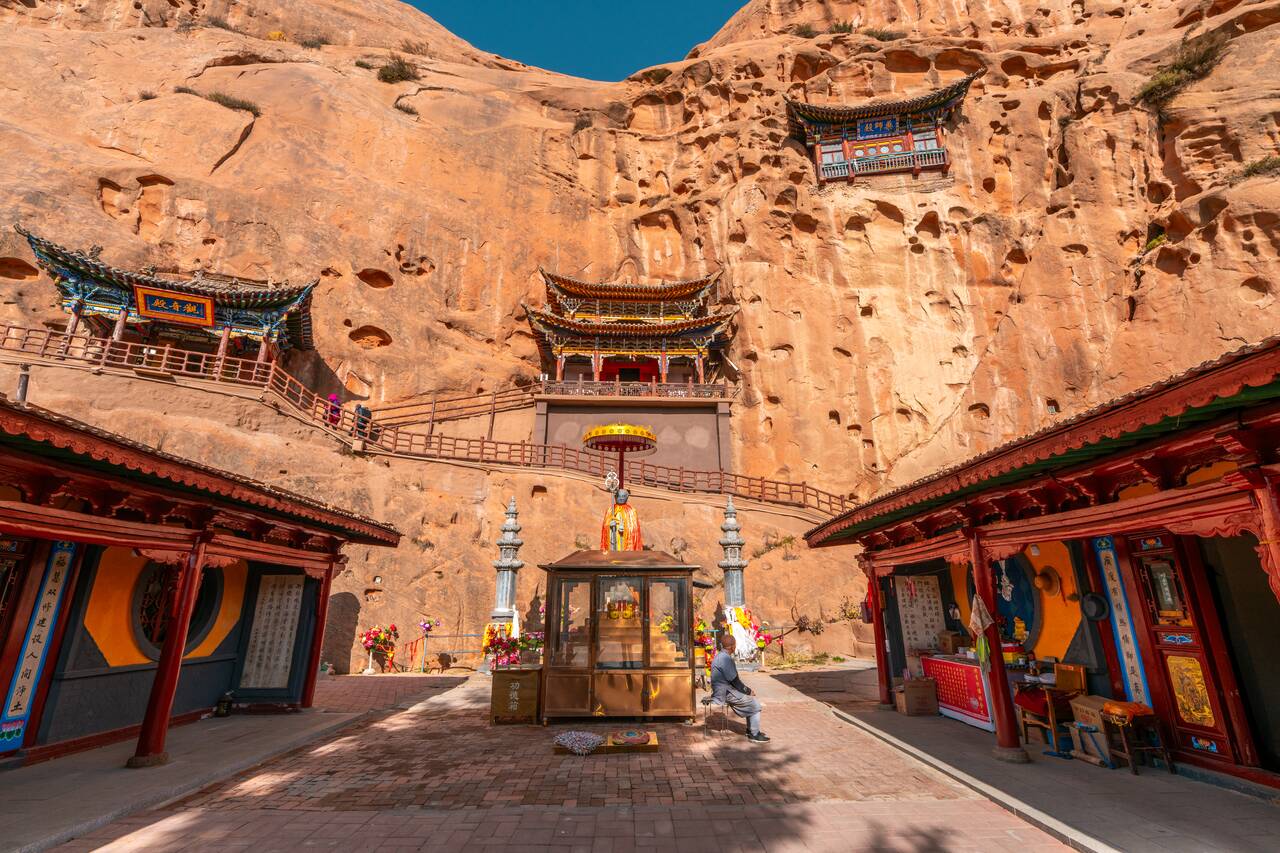
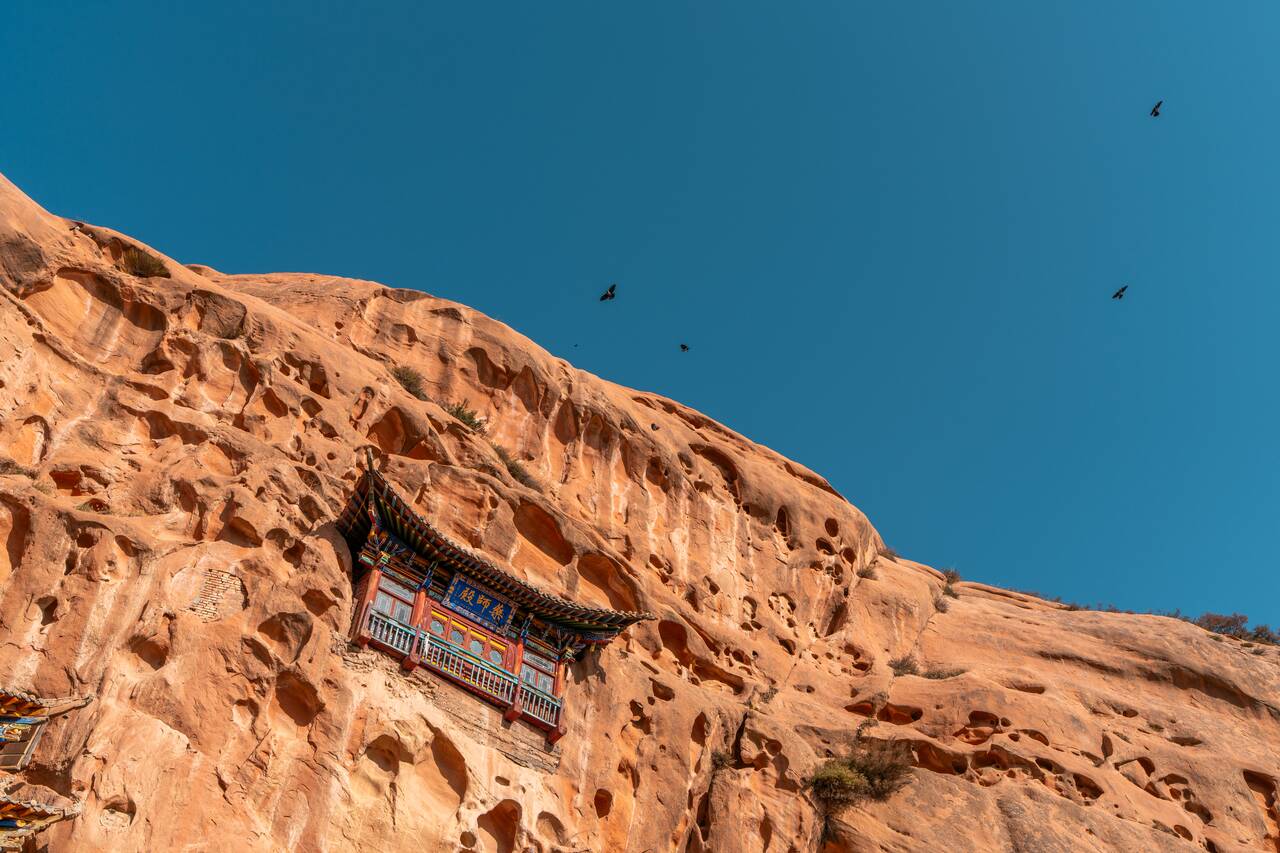
The first stop takes you to a group of hanging temples that reminded me of the Hanging Temple in Datong. These are smaller and sit lower on the cliff, but there were way, way fewer people when I visited! Give yourself around 30 minutes to an hour to look inside the caves and enjoy the view before catching the next bus.
The second stop is the highlight of the park, the Thirty-Three Heavens Grottoes. This is also the main rest area, with small restaurants and shops where you can grab a quick bite. I’d save lunch until after the hike, as there’s quite a bit to explore up there.
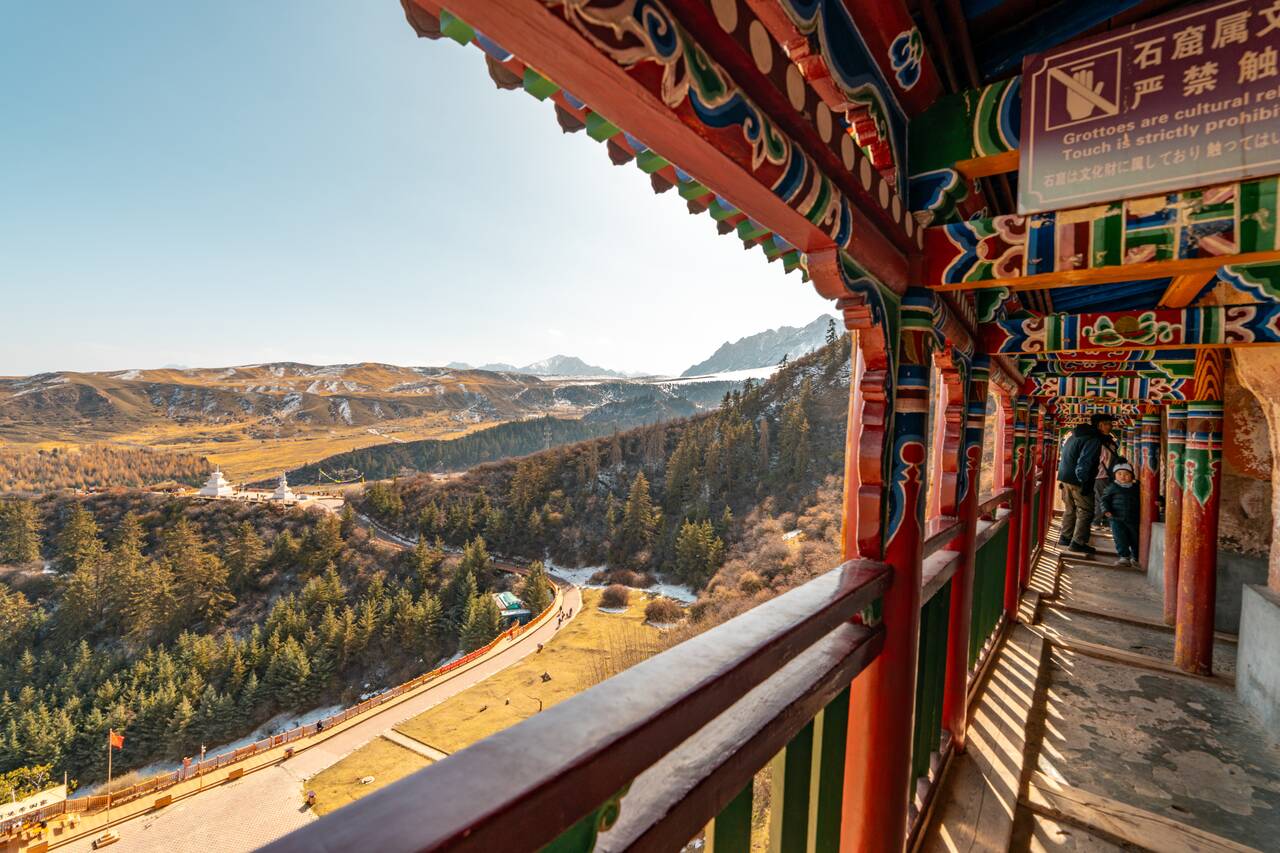
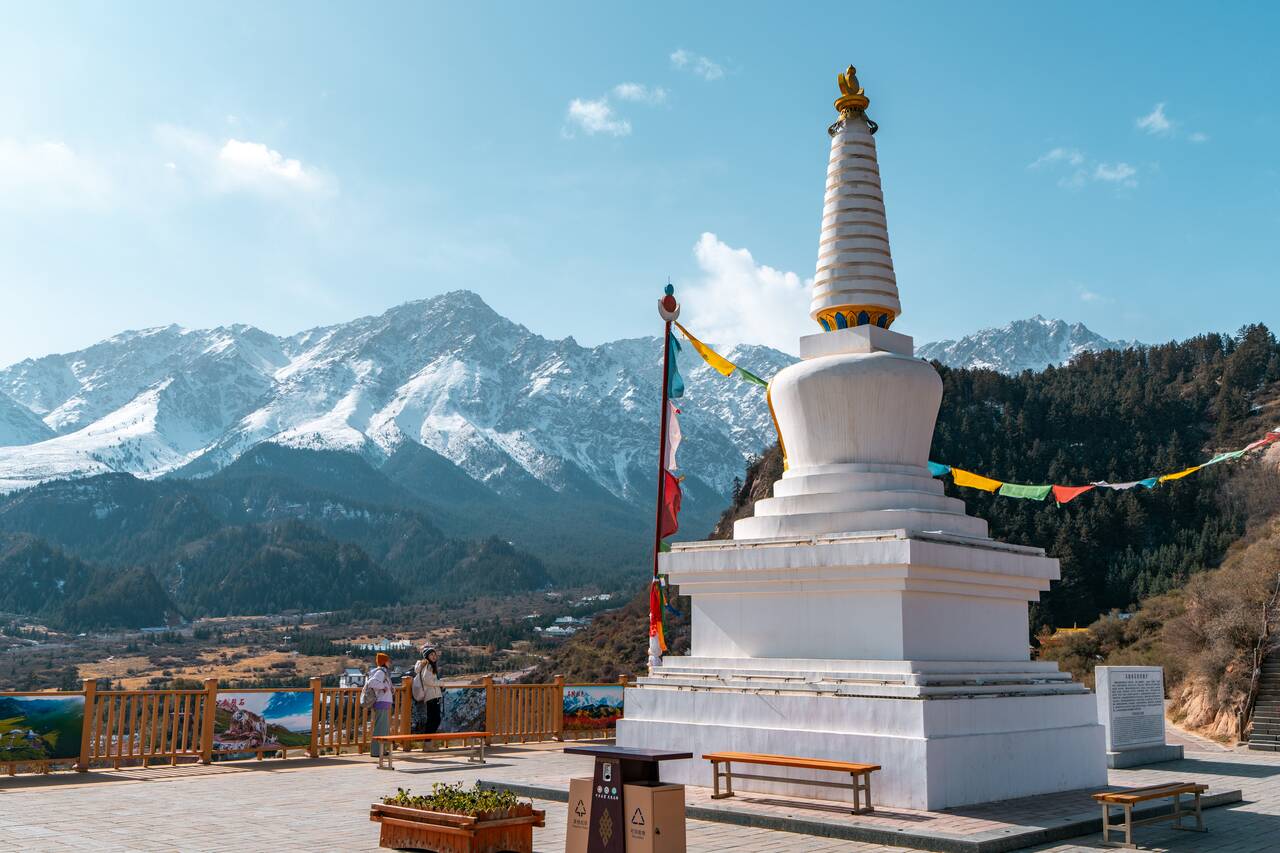
From the rest area, walk for about 10 minutes until you reach a viewpoint with white stupas and a grand view across the valley. Turn around and you’ll see the grottoes and their hanging temples stacked up the cliff behind you. It’s quite a sight to behold!
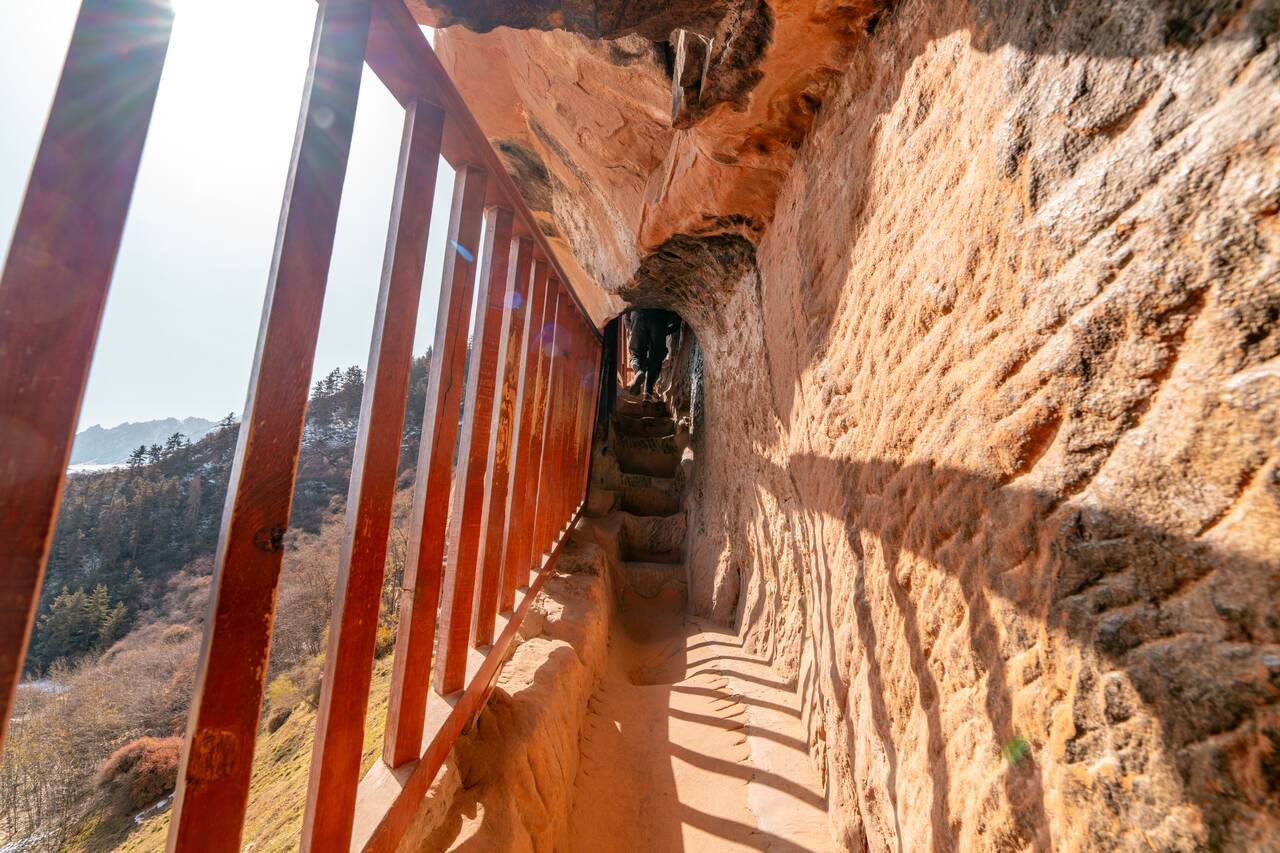
Give yourself 1 to 2 hours to explore the grottoes. The stairs are extremely narrow and steep in places, so be very, VERY careful as you climb between the caves. Thankfully, there were way fewer people here than at the Rainbow Mountains when I visited, so I didn’t have to squeeze past people on the stairs nearly as often.
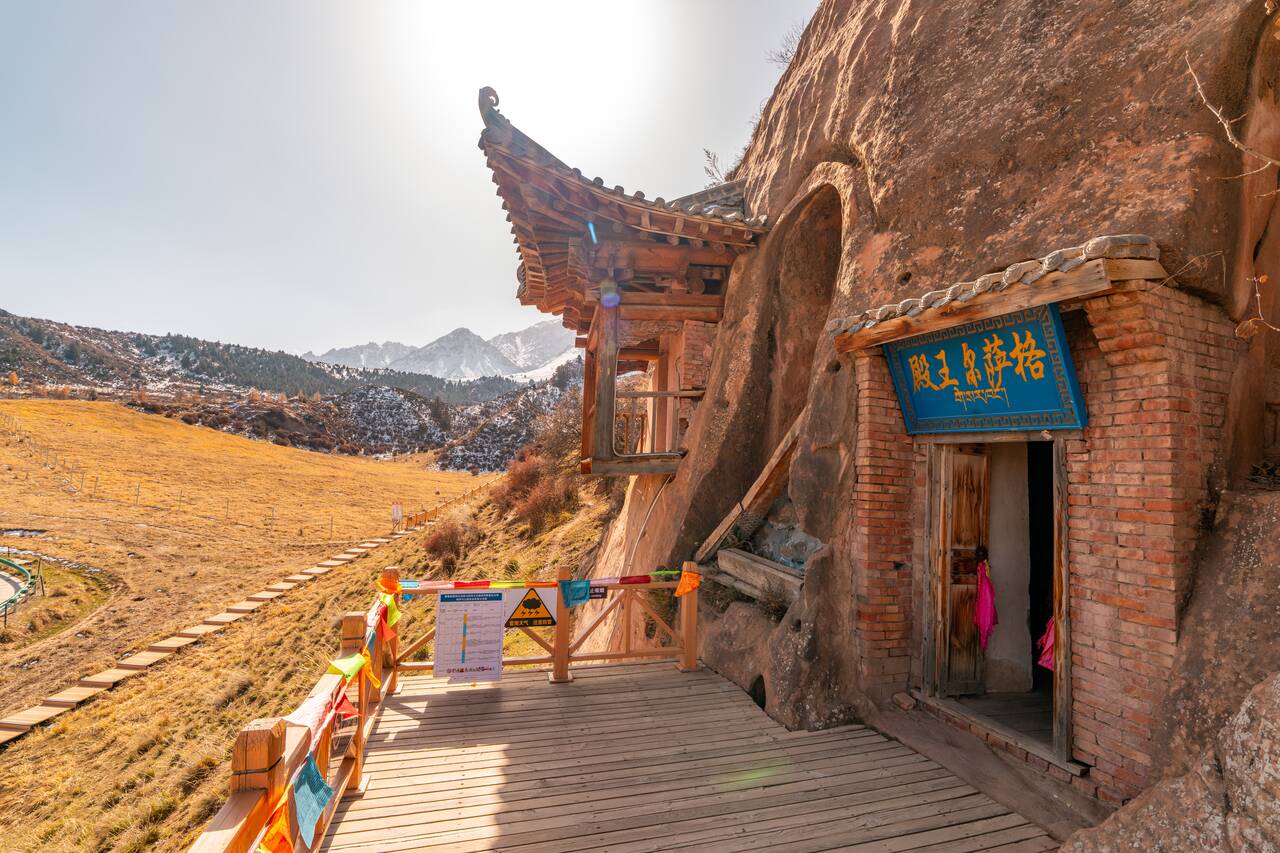
The third stop is a smaller hanging temple where you can enjoy one last look at the mountains before taking the sightseeing bus back to the visitor center. I got around the whole scenic area in about 3 hours, but I’d allow closer to 4 hours if you want to stop for lunch, take photos, and explore without rushing.
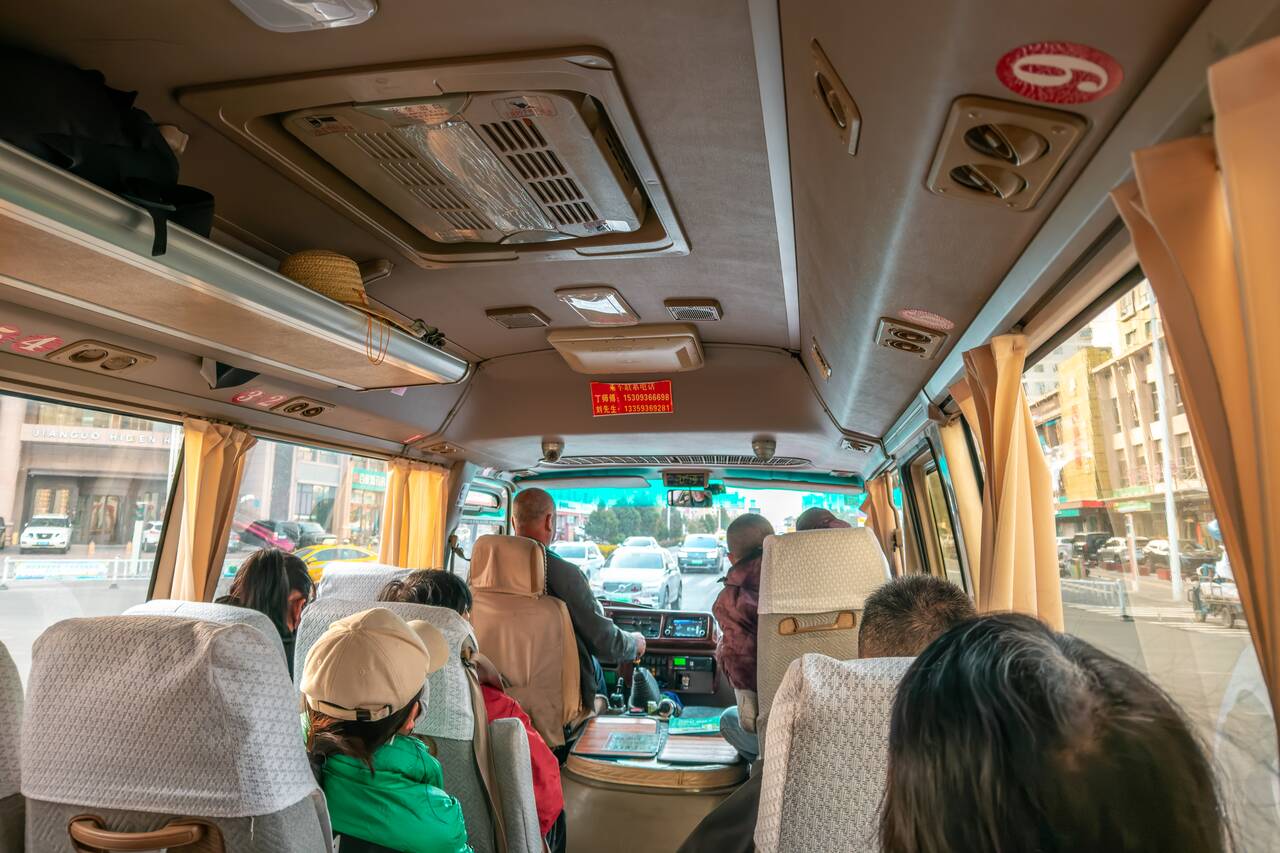
To get here independently, take the tourist shuttle from Zhangye Bus Station. When I visited in October 2026, it cost 49 CNY round trip, and there were two departures.
The first shuttle leaves Zhangye at 8:40 AM and picks you up at Mati Temple at 3 PM. The second leaves Zhangye at 9:15 AM and picks you up at Mati Temple at 3:30 PM. These times may change, so get to the bus station 30 minutes before departure and confirm both times at the customer service counter in the middle of the hall.
The main entrance ticket costs 39 CNY, the North Temple grottoes cost an extra 35 CNY, and the park’s sightseeing bus costs 13 CNY round trip. That comes to 87 CNY for the regular route with the grottoes and park bus, plus the shuttle from Zhangye. You can book your attraction ticket here or let the staff at the bus station do it for you. Make sure you choose an option that includes the North Temple grottoes if you want to climb up to the Thirty-Three Heavens.
Mati Temple is open from 8 AM to 6 PM during peak season (April to October), with last entry at 5 PM. In winter, it opens from 8:30 AM to 6 PM (November to March), with ticket sales ending at 4 PM and last entry at 4:30 PM. Hours may vary by season, so be sure to check them along with the shuttle schedule at the bus station.
4. See the Reclining Buddha at Dafosi Temple
- 📍 Location: Dafosi Temple [Map Link]
- 🕐 Opening Hours: 7 AM - 6:30 PM
- 💰 Entry Fees: 40 CNY (~6 USD)
- ⚡ Pete's Take: "This is an easy stop, especially if you’re staying in central Zhangye. Drop by on your first evening in the city or whenever you have a little downtime. Don’t miss it!"
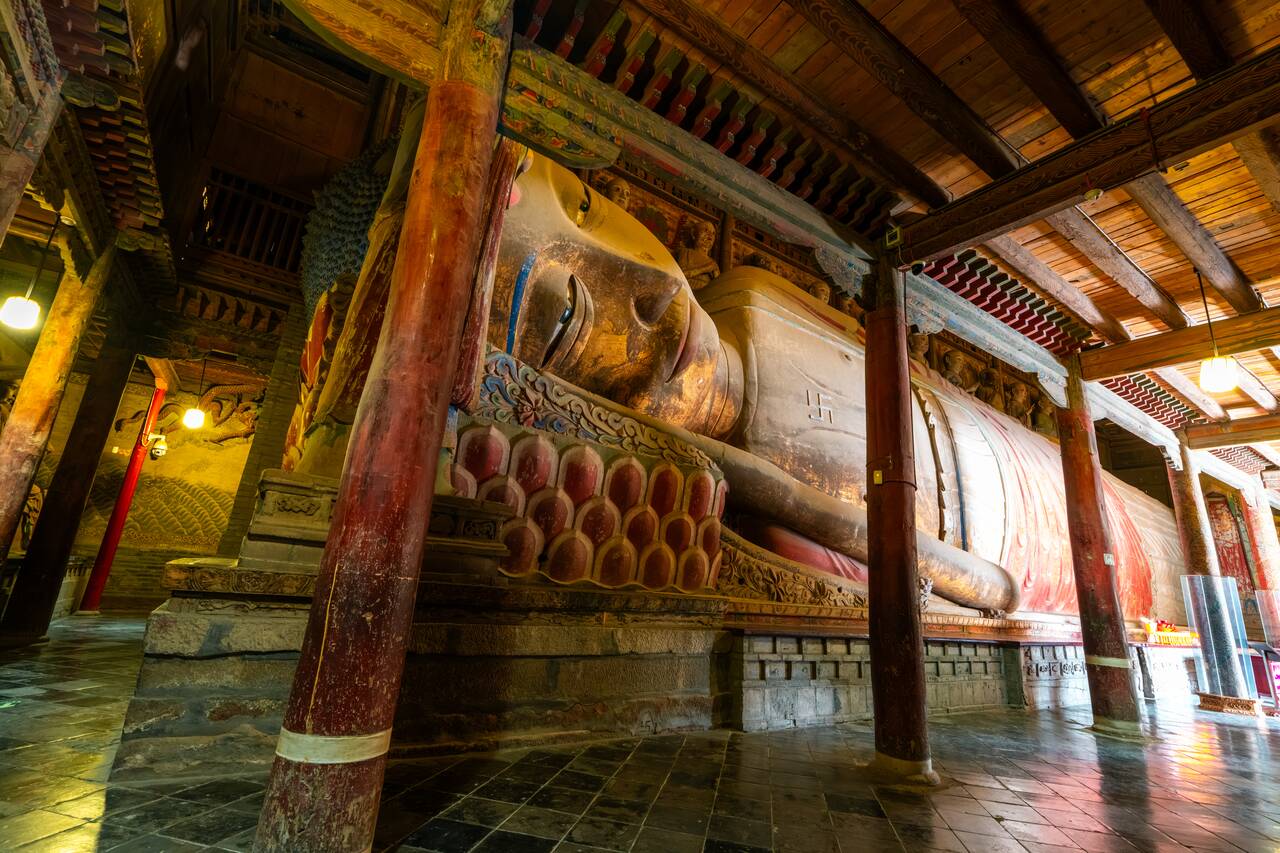
One of my favorite places to visit in Zhangye City was Dafosi Temple, also known as the Giant Buddha Temple. The temple dates back to the Western Xia dynasty and houses China’s largest indoor reclining Buddha made of clay over a wooden frame. I knew it was going to be big, but the sheer scale of it still blew my mind when I stepped into the hall!
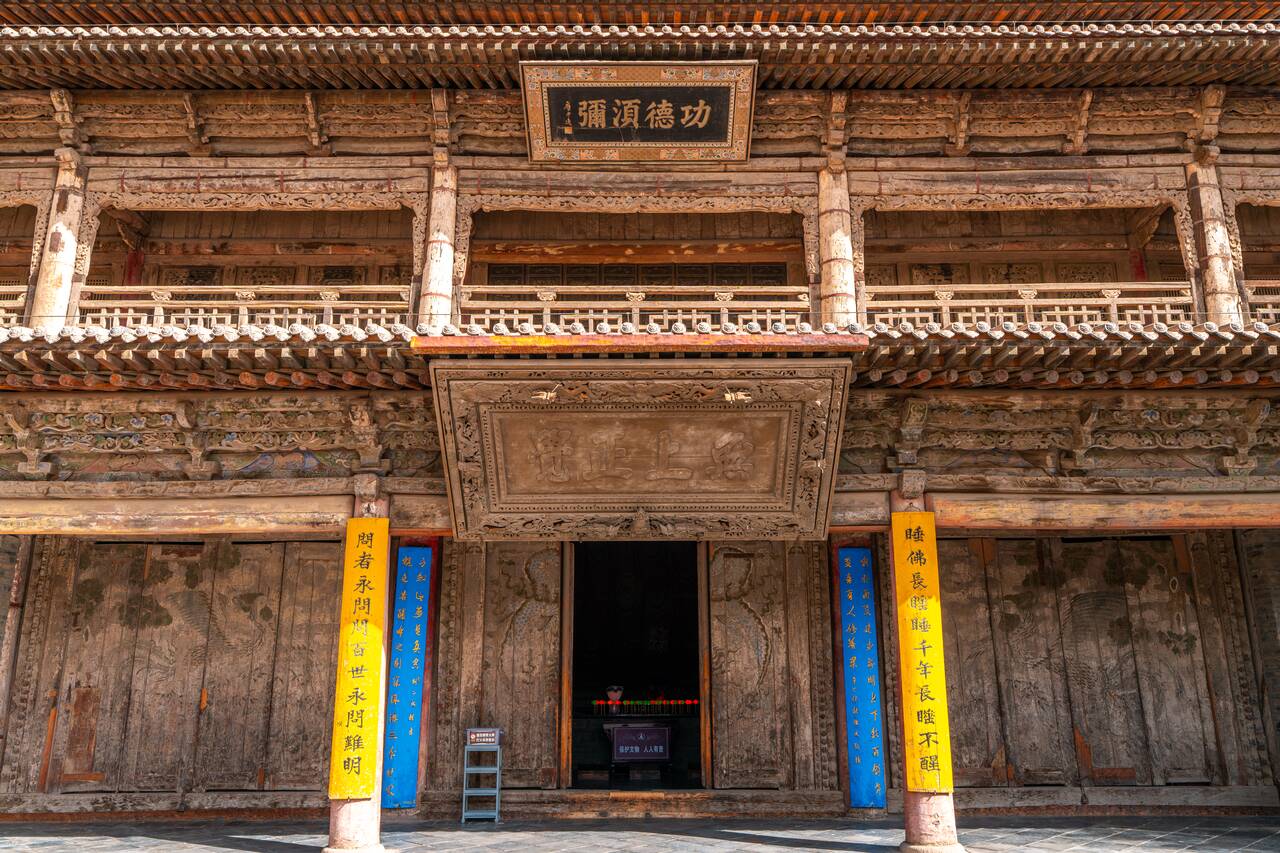
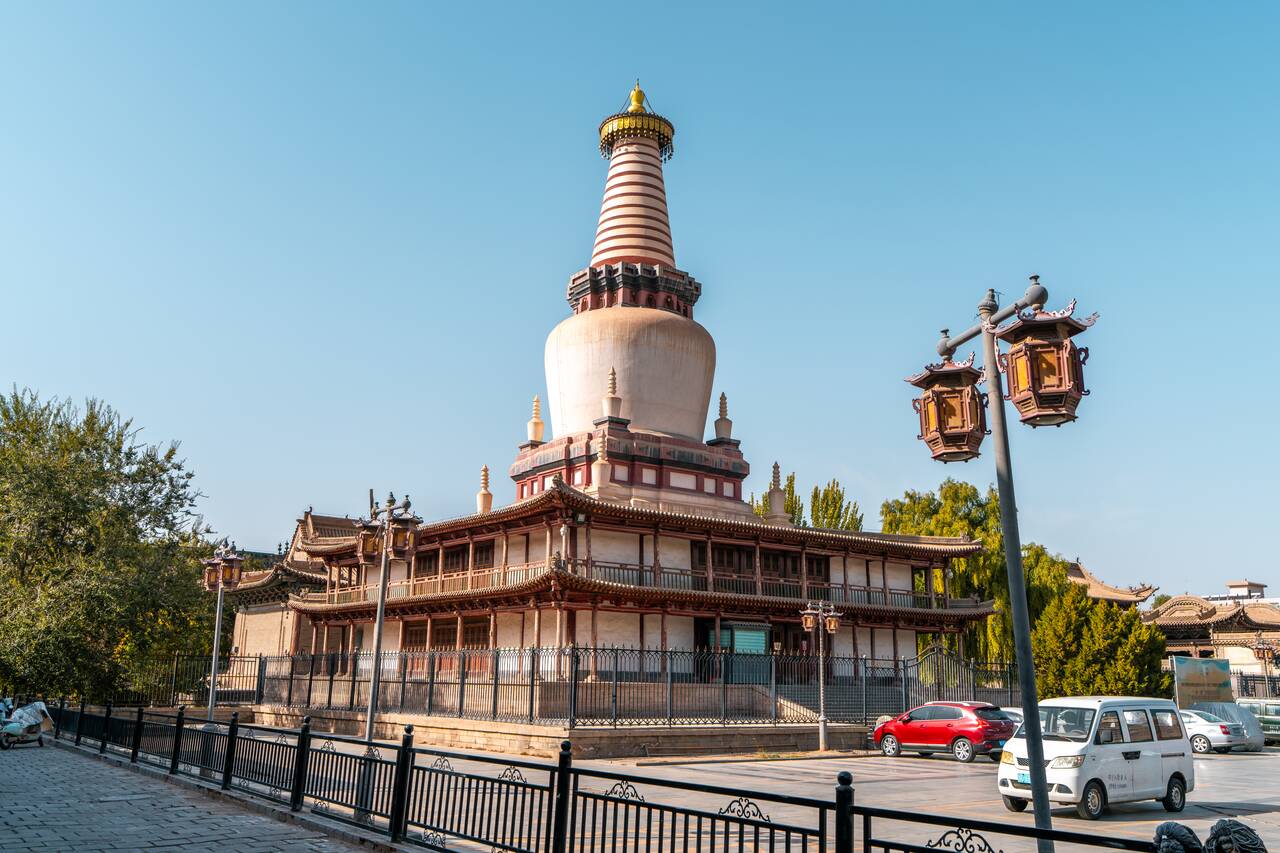
The hall itself is beautiful too, with its weathered wooden exterior and layered roofs. Take a moment to admire it from the courtyard before heading inside. There’s plenty to see beyond the main hall as well, with smaller shrines, museum displays, and a pagoda scattered around the grounds.
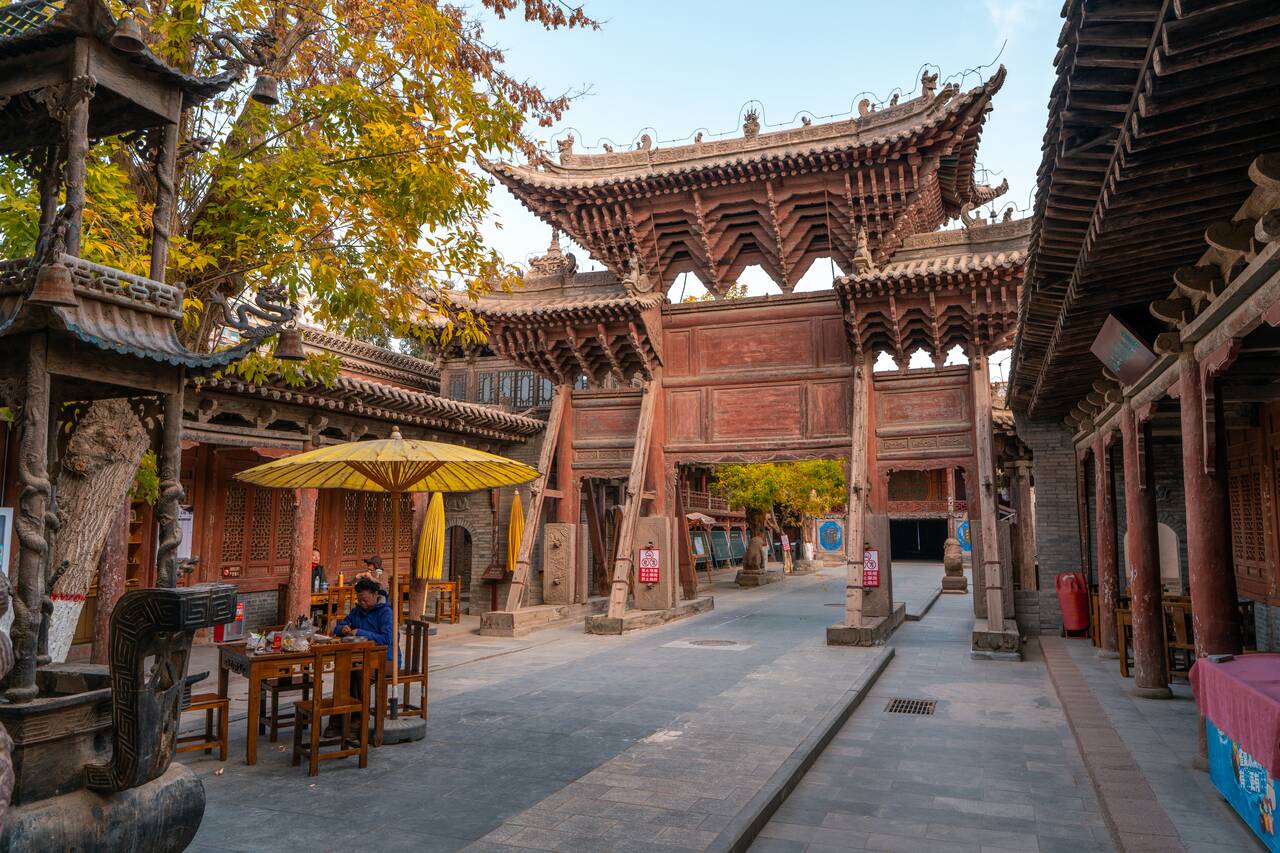
Since the temple is right in the city center, you can easily walk here and spend some time strolling around. I’d give yourself at least an hour so you have time to really admire the details of the reclining Buddha as well as the smaller buildings.
Dafosi Temple is open from 7 AM to 6:30 PM, although the temple can adjust its hours seasonally, so check before you go. The entrance ticket is 40 CNY and you can buy your ticket on-site or book it online here.
5. Stop by the Wooden Pagoda Temple
- 📍 Location: Wooden Pagoda Temple [Map Link]
- 🕐 Opening Hours: 8 AM - 5 PM
- 💰 Entry Fees: 26 CNY (~4 USD)
- ⚡ Pete's Take: "If you have time, be sure to climb the pagoda for a great view of the square and the city beyond."
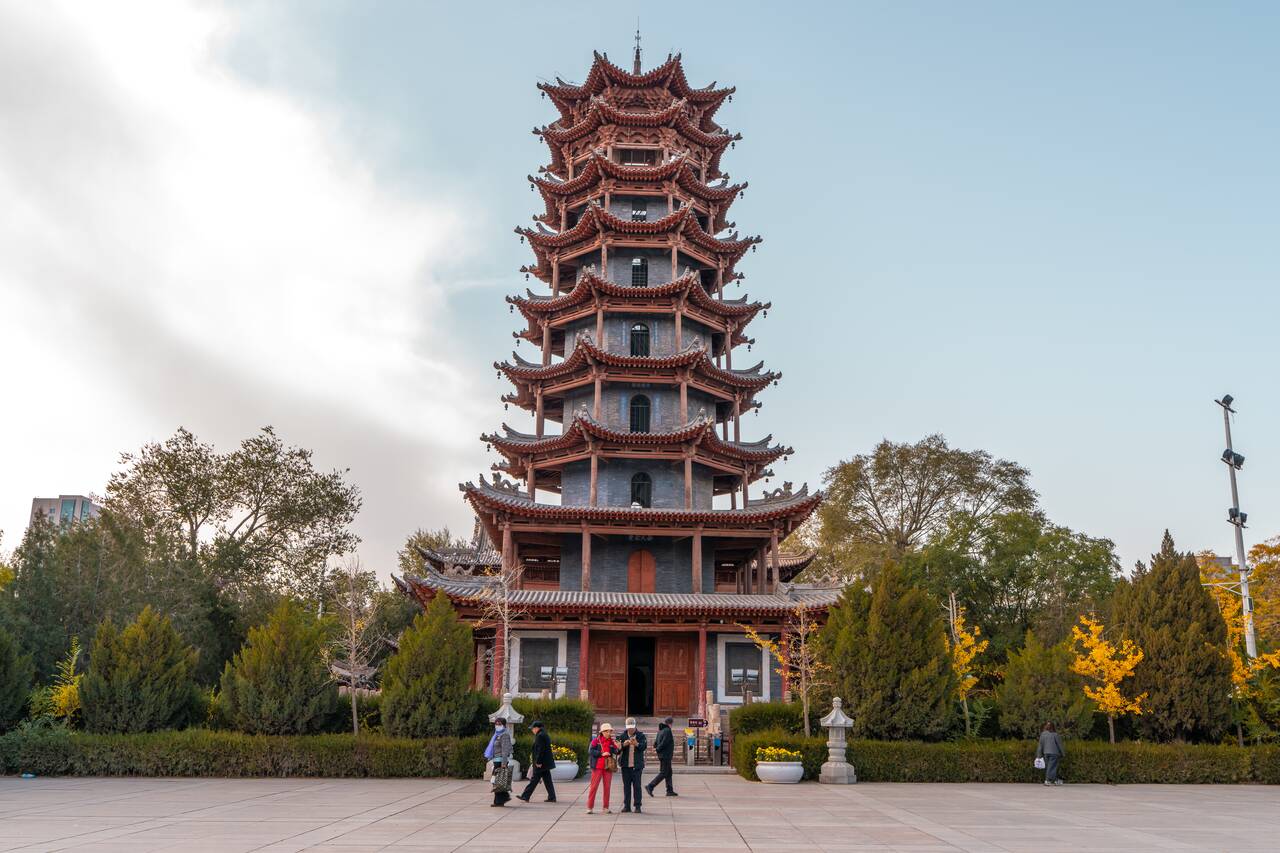
While you are exploring central Zhangye, be sure to stop by the Wooden Pagoda Temple, also known as the Xilai Wooden Pagoda. The original pagoda dates back to the Northern Zhou dynasty, although the nine-tiered brick and wooden tower you see today was rebuilt in 1926.
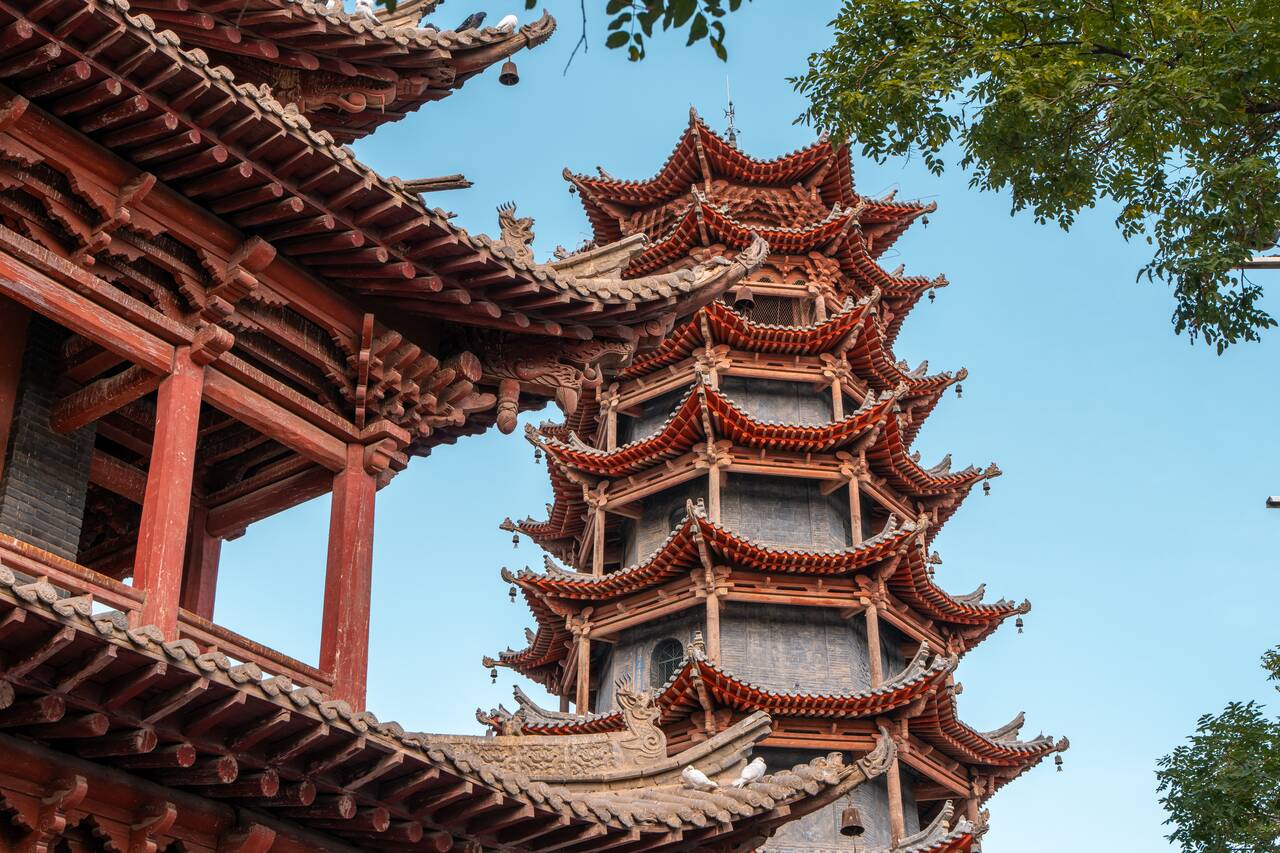
You can also climb the stairs inside the Wooden Pagoda for a view over Zhangye. The square is free to visit, and the climb costs around 26 CNY per person. The pagoda is open from 8 AM to 5 PM daily, with the last climb at 4:30 PM.
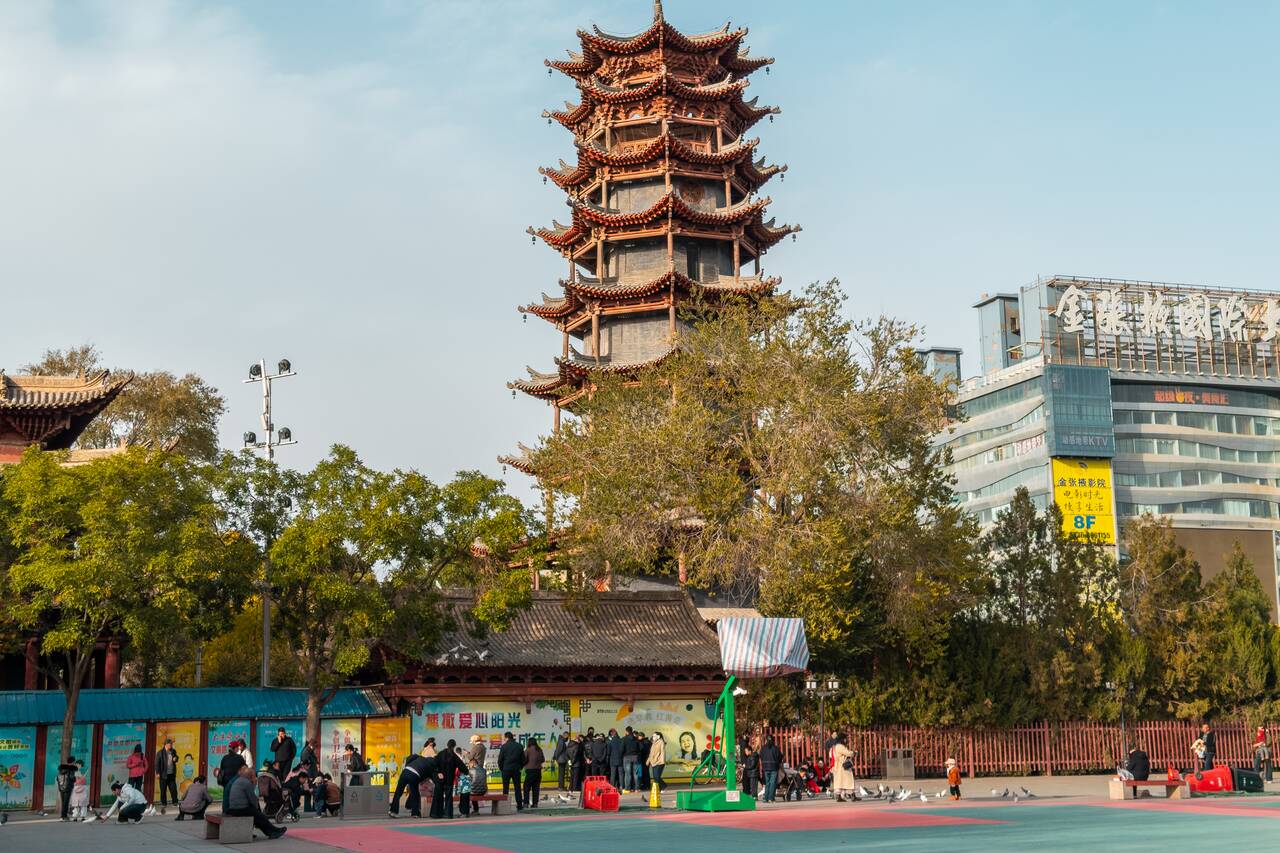
I’d make this a quick stop as you explore the city. You can easily pair it with Dafosi Temple and then head over to Ming and Qing Dynasty Ancient Street for dinner.
6. Grab Dinner on Ming and Qing Dynasty Ancient Street
- 📍 Location: Ming and Qing Dynasty Ancient Street [Map Link]
- ⚡ Pete's Take: "If you are looking for a place to eat and hang out in the evening in Zhangye, this is a good place to go."
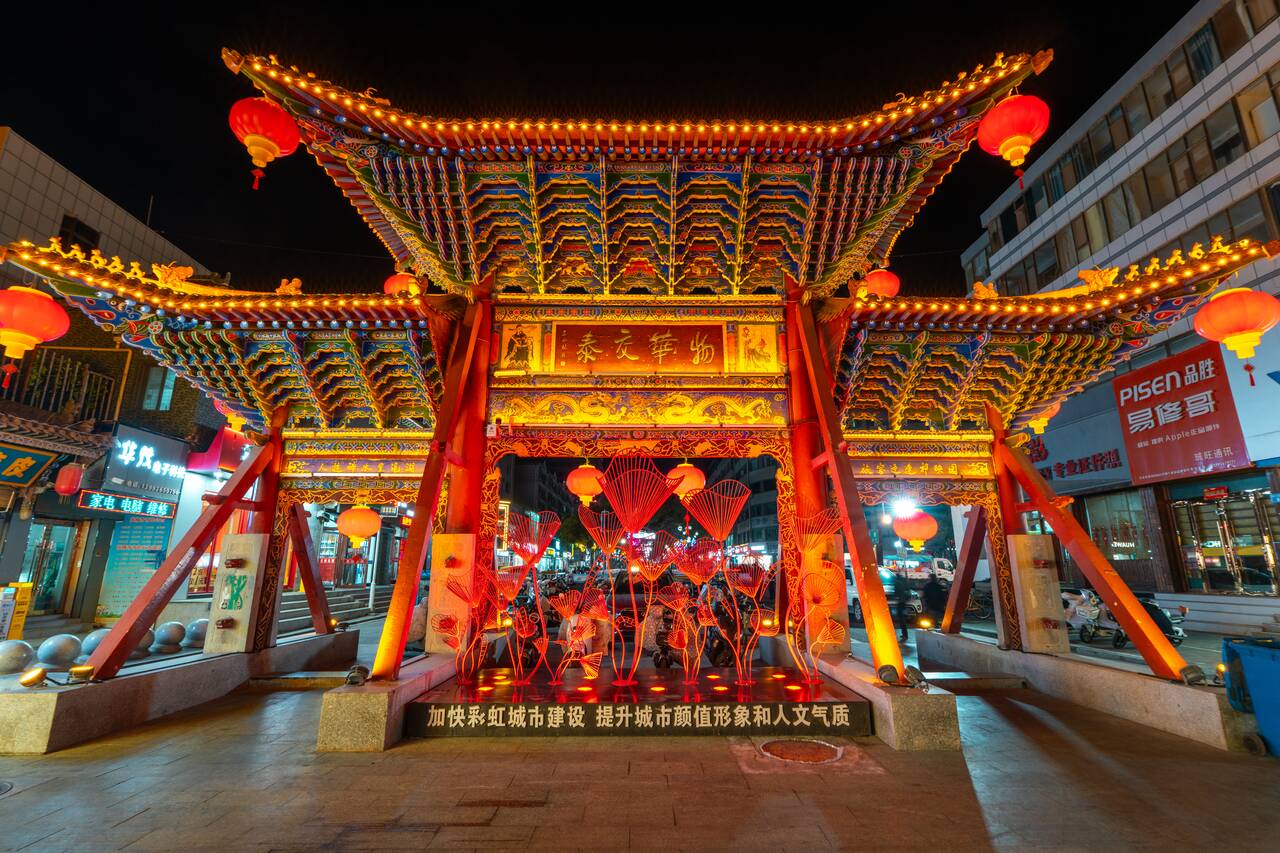
If you’re looking for somewhere to eat in the evening, head to Ming and Qing Dynasty Ancient Street, a night market lined with street food stalls and restaurants. It’s a good place to hang out in the evening and at night.
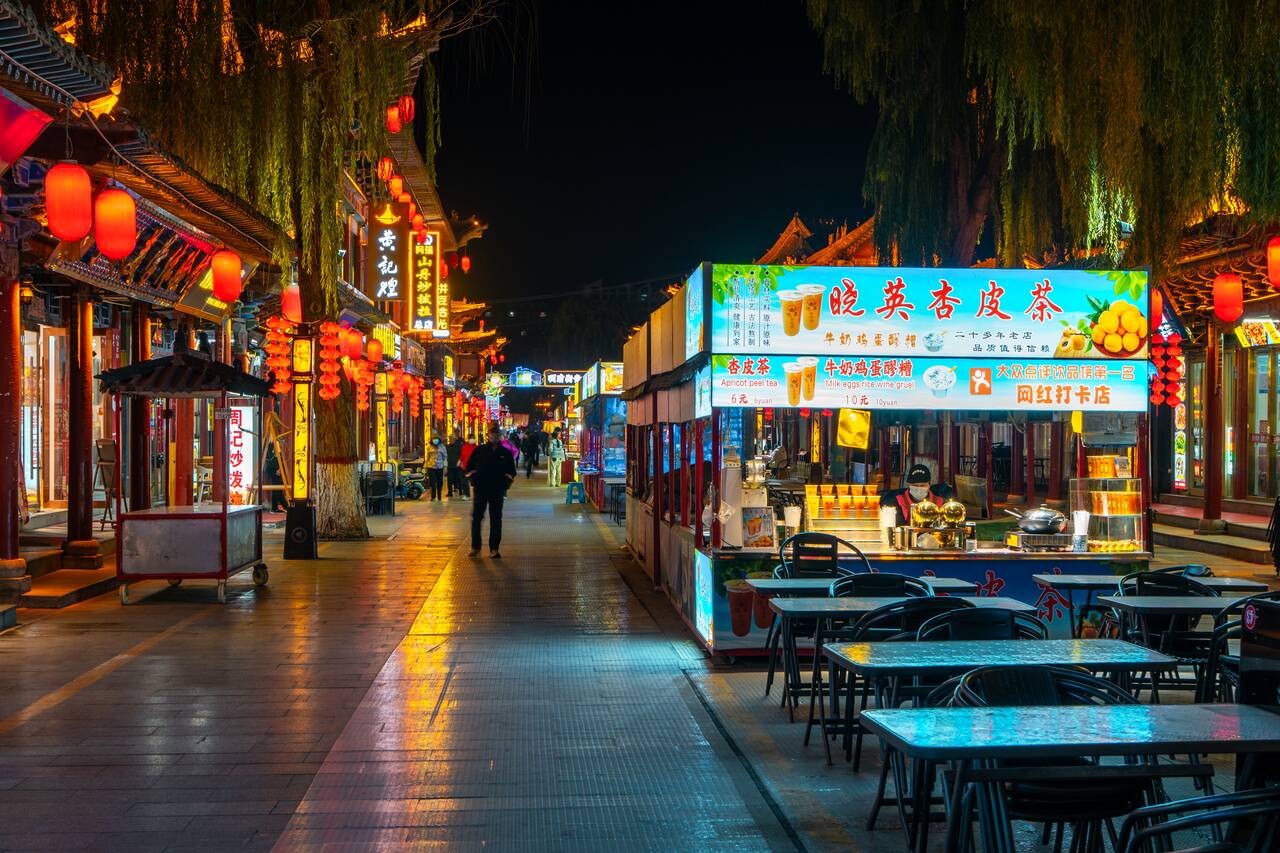
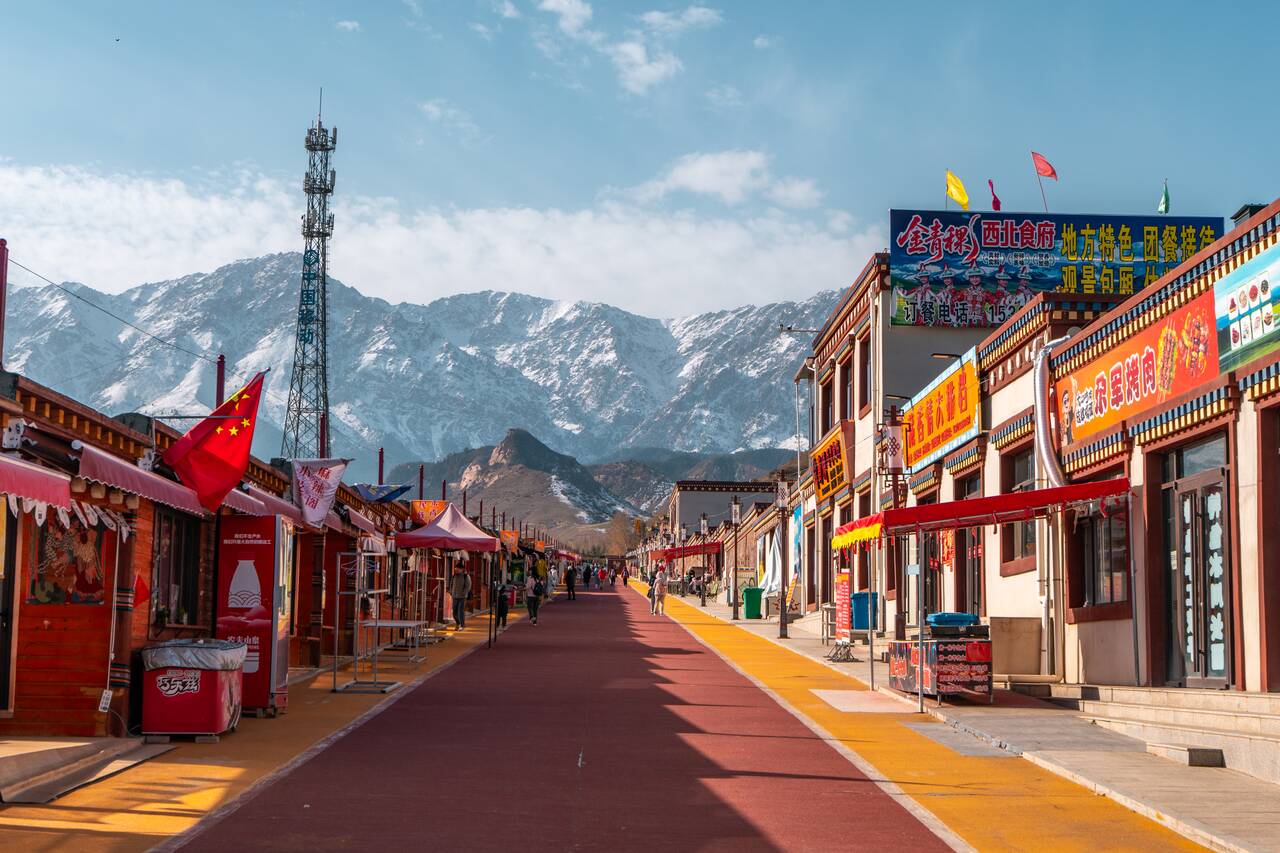
It wasn’t quite as lively as I’d expected when I visited, but winter was already approaching and it was pretty cold out. There was still plenty to choose from, though, and if you’re looking for something delicious to eat after a day out exploring Zhangye, this is where you want to be! It's not too far from the bus station, so you can drop by here after your day trips.
7. Explore the Rock Formations at Binggou Danxia
- 📍 Location: Binggou Danxia [Map Link]
- 🕐 Opening Hours: 6:30 AM - 6 PM
- 💰 Entry Fees: 58 CNY (~9 USD)
- ⚡ Pete's Take: "If you have time, you can visit Binggou Danxia and Qicai Danxia on the same day. I wouldn’t go out of my way for Binggou, though, especially if you’ve already seen the red cliffs and rock formations at Pingshan Lake Grand Canyon."
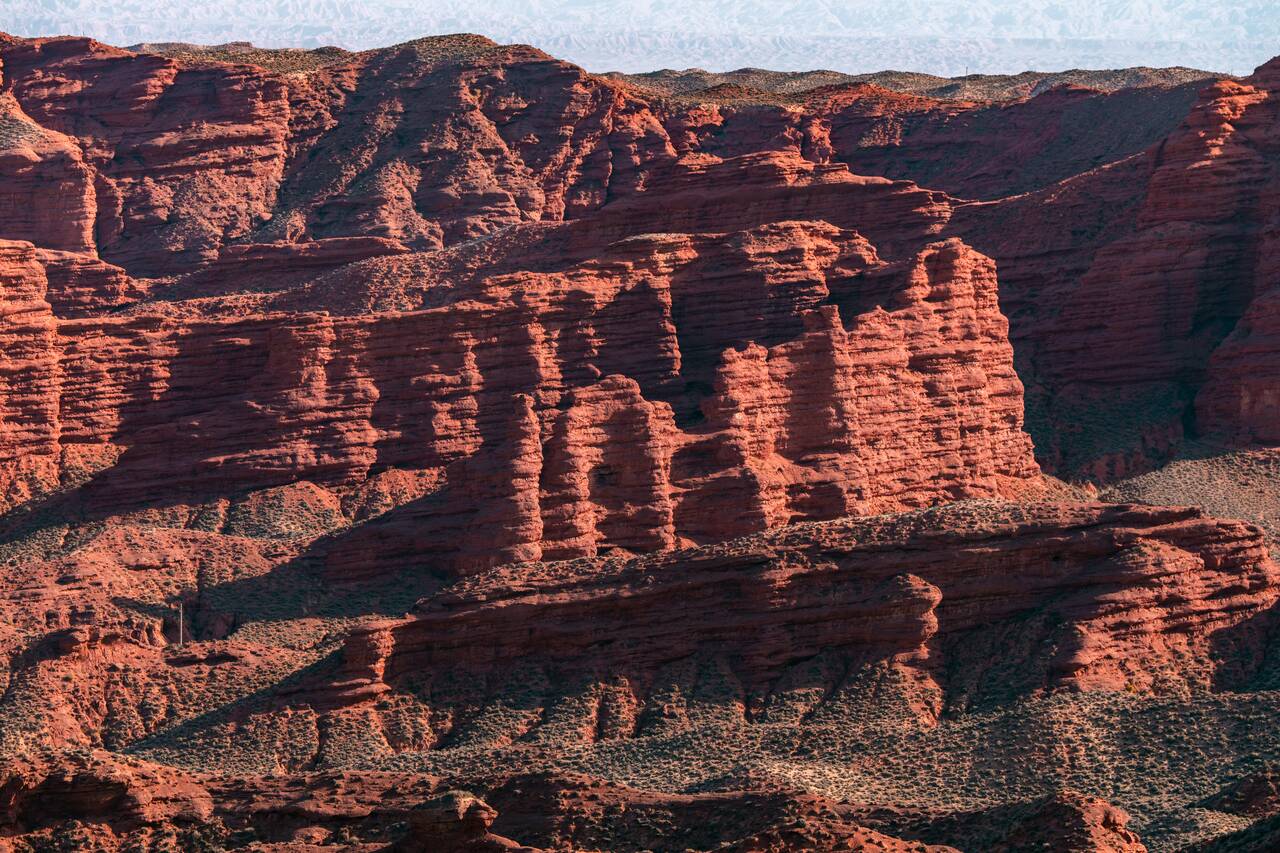
If you have a day to spare in Zhangye, you can head to Binggou Danxia, where you’ll find red sandstone cliffs, pillars, and rock formations that look like the towers of an ancient palace. From what I heard, the scenery is more similar to Pingshan Lake Grand Canyon than to the Rainbow Mountains, so I’d prioritize Pingshan, Qicai Danxia, and Mati Temple first.
Binggou is close to Qicai Danxia, so you can visit both on the same day, especially if you have your own car or a driver. I’d start at Binggou and save Qicai for sunset. If you’re relying on the city shuttles, ask at the station whether you can get between the two parks without having to go all the way back to Zhangye.
To get here, head to Zhangye Bus Station and ask about the shuttle bus at the customer service kiosk at the center of the hall. The timetable I noted in October 2026 listed departures from Zhangye at 7:30 AM, 8 AM, 9 AM, 10:30 AM, 11:40 AM, 1 PM, 2 PM, 3 PM, 4 PM, and 5:10 PM.
The listed returns from Binggou were at 9 AM, 11 AM, 1 PM, 2 PM, 3:30 PM, 4:30 PM, 5:30 PM, and 6:30 PM. I’d budget around 40 CNY or a little more for the round trip, based on the Qicai shuttle fare. Confirm you return time with the driver before you get off at Binggou Danxia.
Binggou Danxia is opened from 6:30 AM to 6 PM in peak season and 8:30 AM to 6 PM in the low season and the entry ticket including the park’s sightseeing bus should be around 58 CNY. You can check ticket prices and book here.
8. Learn About the Silk Road at Zhangye Museum
- 📍 Location: Zhangye Museum [Map Link]
- 🕐 Opening Hours: 9 AM - 5:30 PM
- 💰 Entry Fees: Free
- ⚡ Pete's Take: "If you have some time to kill, this museum is a nice way to learn more about the city's history. It's free too!"
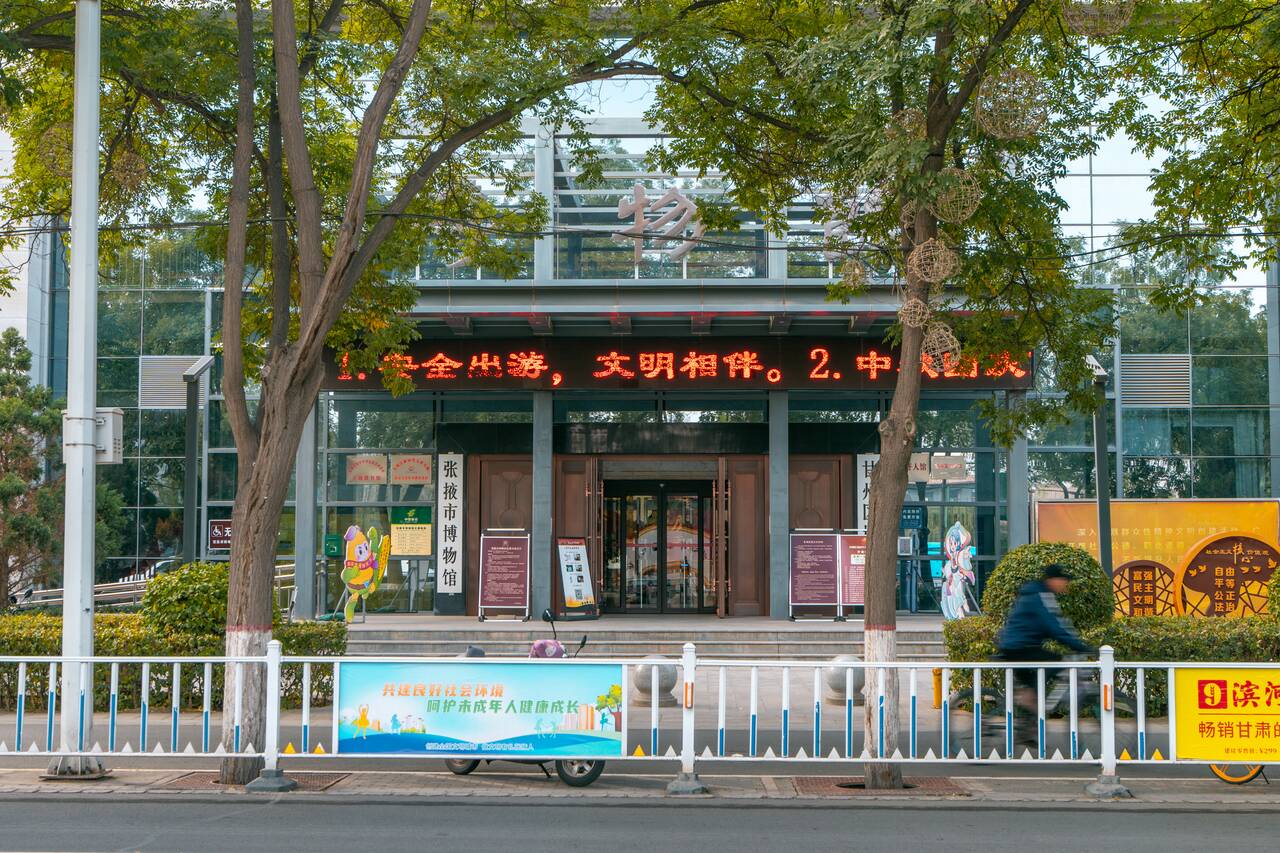
If you have some time to kill in Zhangye and want to learn a bit more about the history of the city, stop by Zhangye Museum. Its galleries take you from prehistoric settlements through the Ming and Qing dynasties and explain how Zhangye became a trading hub and military outpost along the Silk Road. The museum is right by Dafosi Temple, so you can easily visit both on the same day.
Admission is free and it is open from 9 AM to 5:30 PM, Tuesday to Sunday, with last entry at 5 PM. It usually closes on Mondays, except on public holidays.
Which Places Should You Prioritize?
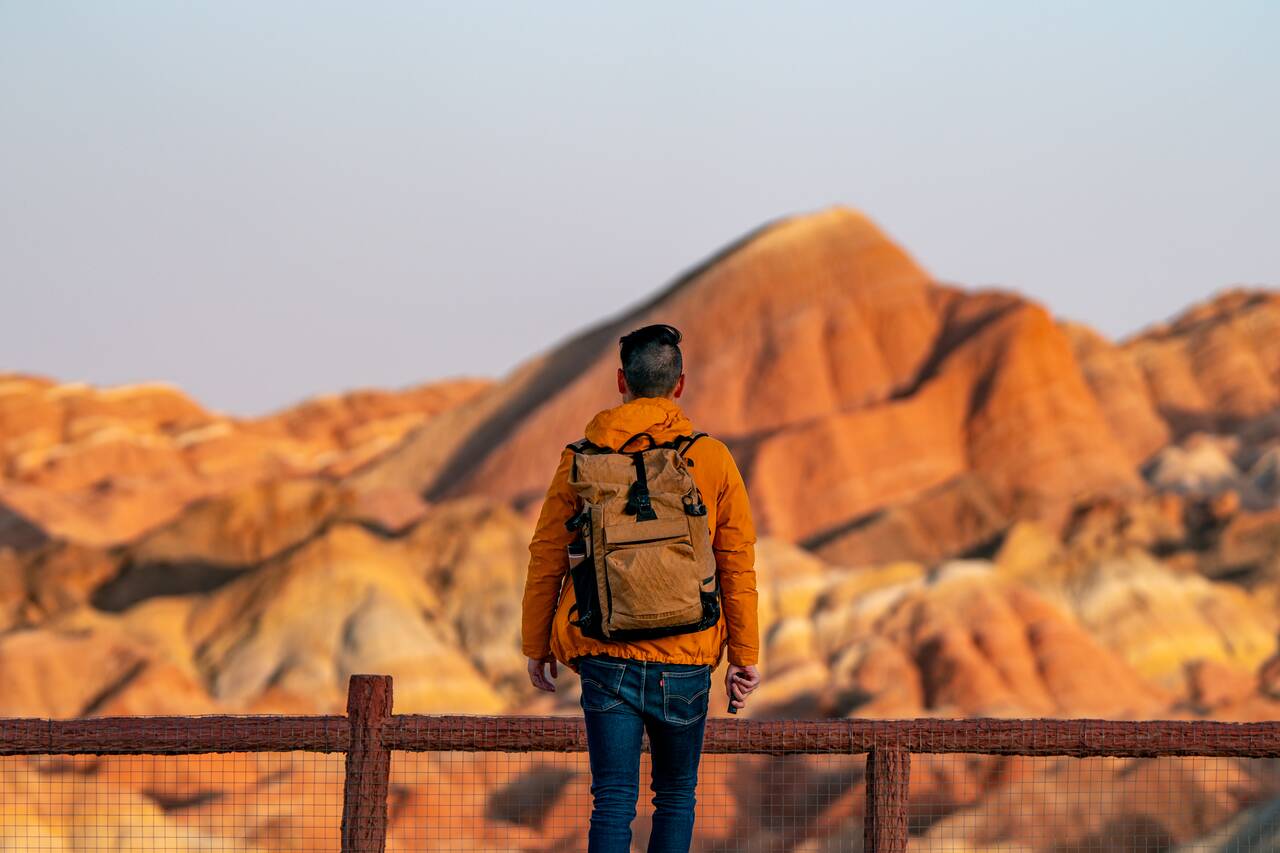
If you only have time for one place: Go to Qicai Danxia for sunset. The Rainbow Mountains were the highlight of Zhangye for me, and the colors really do look as incredible as they do in the photos! Give yourself time to see all four viewpoints before settling in for sunset at the last stop.
If you have one full day: Hike Pingshan Lake Grand Canyon in the morning, then head to Qicai Danxia for sunset. This is how I did it, and although it was a long day, I got to see both places in the best light. Confirm both shuttle times at Zhangye Bus Station first so you know you can make the connection.
If you have another full day: Go to Mati Temple. The Thirty-Three Heavens Grottoes were another highlight for me. There's quite a lot to see here, so expect a full-day activity.
While you’re in the city: I’d put Dafosi Temple first. The reclining Buddha alone is worth the visit, and you can easily pair it with the Wooden Pagoda or Zhangye Museum before grabbing dinner on Ming and Qing Dynasty Ancient Street.
If you have a day to spare: Consider Binggou Danxia, especially if you have a car or driver and can pair it with Qicai. If time is tight, I’d stick with the Rainbow Mountains, Pingshan Lake Grand Canyon, and Mati Temple.
When to Visit Zhangye?
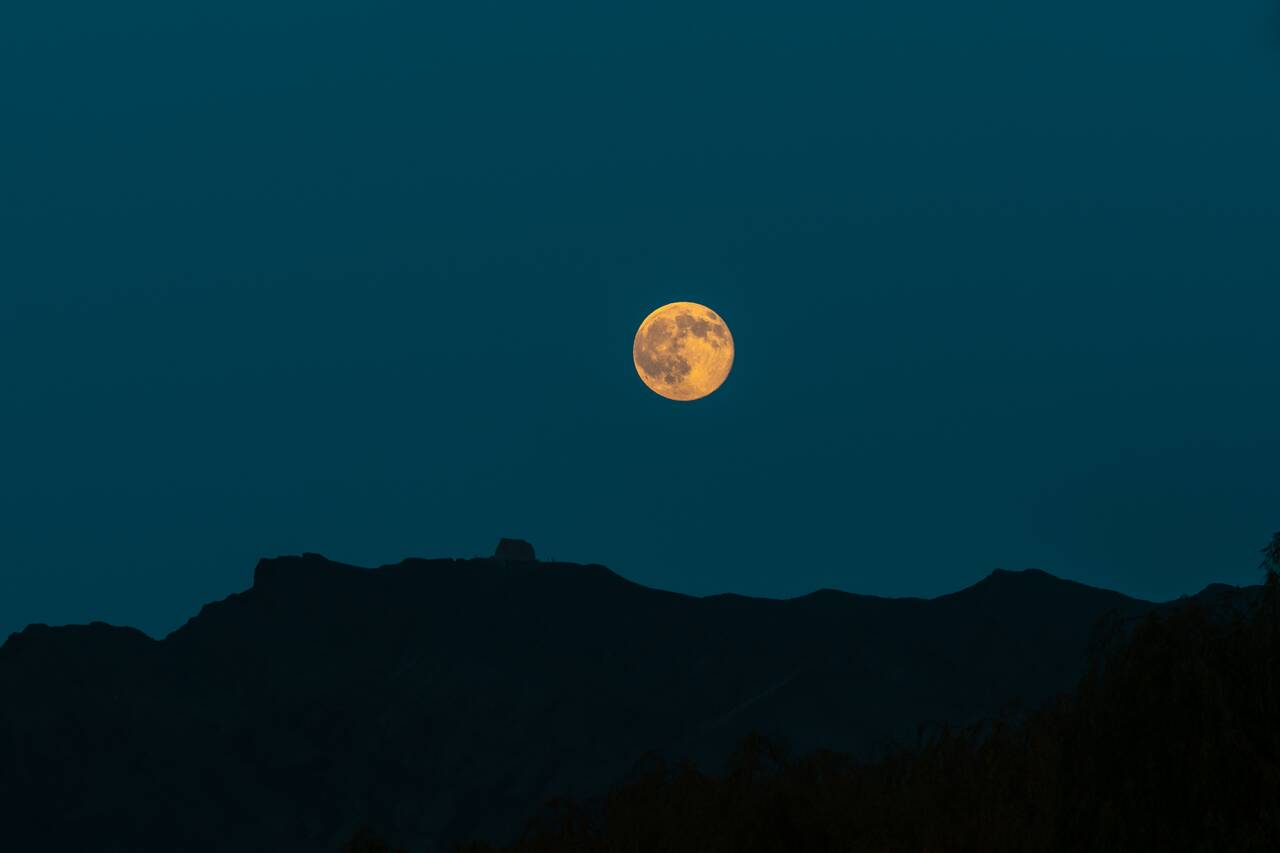
I’d aim for April to May or September to October. Most of the best things to do in Zhangye are outdoors, so cooler weather makes a difference, especially if you plan to hike through Pingshan Lake Grand Canyon or climb the stairs at Mati Temple. Autumn would be my first choice. Just bring layers, as mornings can be chilly and it can get windy while you’re waiting for sunset at the Rainbow Mountains.
If your dates are flexible, I’d avoid the Labor Day holiday in early May and Golden Week in early October. The Rainbow Mountains are the main draw here, and I’d rather have a little more space to enjoy the views and take photos from the platforms.
How to Get to Zhangye?
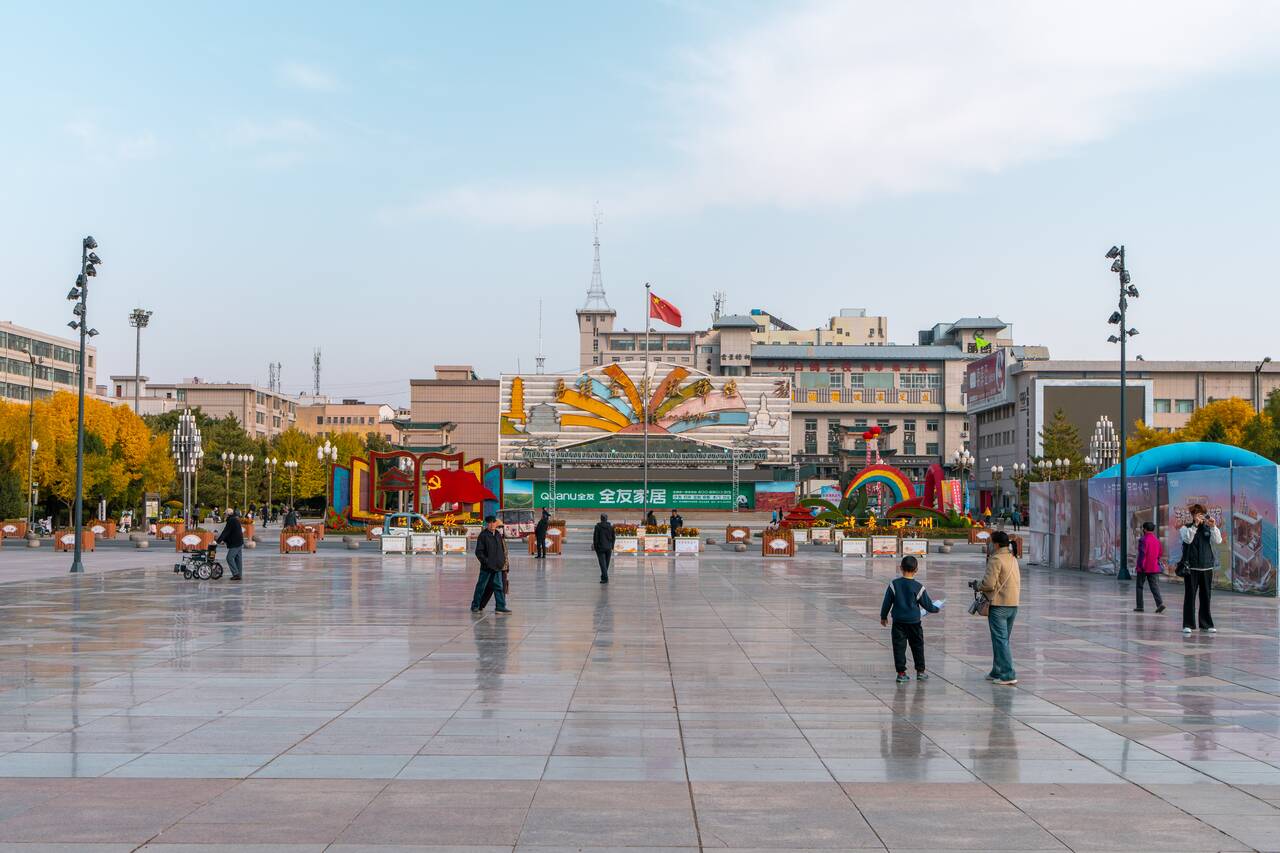
By Train: If you’re making your way east along the Silk Road like I was, Zhangye is an easy next stop after Jiayuguan. When searching for high-speed trains, look for Zhangye West Railway Station. Zhangye Railway Station is a different station and may only serve slow trains, so double-check! You can search for trains on Trip.com, then take a DiDi to your accommodation when you arrive.
By Air: You can also fly into Zhangye Ganzhou Airport (YZY), although this is only viable if you are traveling from afar in China. If you are already in Gansu, high-speed train is the best way to go. From the airport, you can take a taxi or DiDi into the city.
For finding flights, I would recommend browsing through Skyscanner or Expedia to find an affordable flight from your departure city to Dunhuang.
How to Get Around Zhangye?
On Foot: Central Zhangye is easy to explore on foot. The city is quite small, and you can often walk between attractions in the city like Dafosi Temple, the Wooden Pagoda, etc.
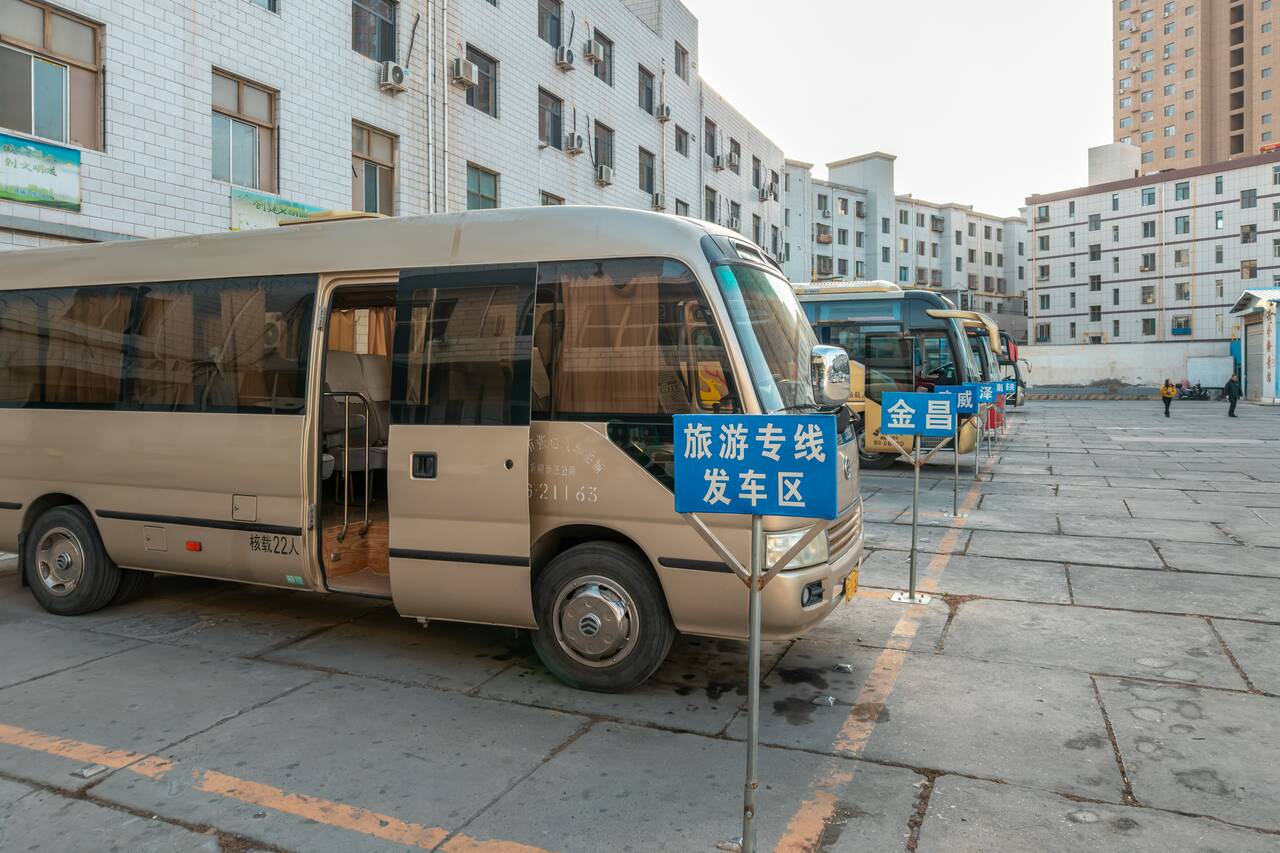
By Tourist Shuttle: For attractions outside the city, I recommend taking the government-run tourist shuttles from Zhangye Bus Station. They serve Qicai Danxia (the Rainbow Mountains), Pingshan Lake Grand Canyon, Mati Temple, and Binggou Danxia. There are several departures throughout the day across the network, but each attraction has its own schedule.
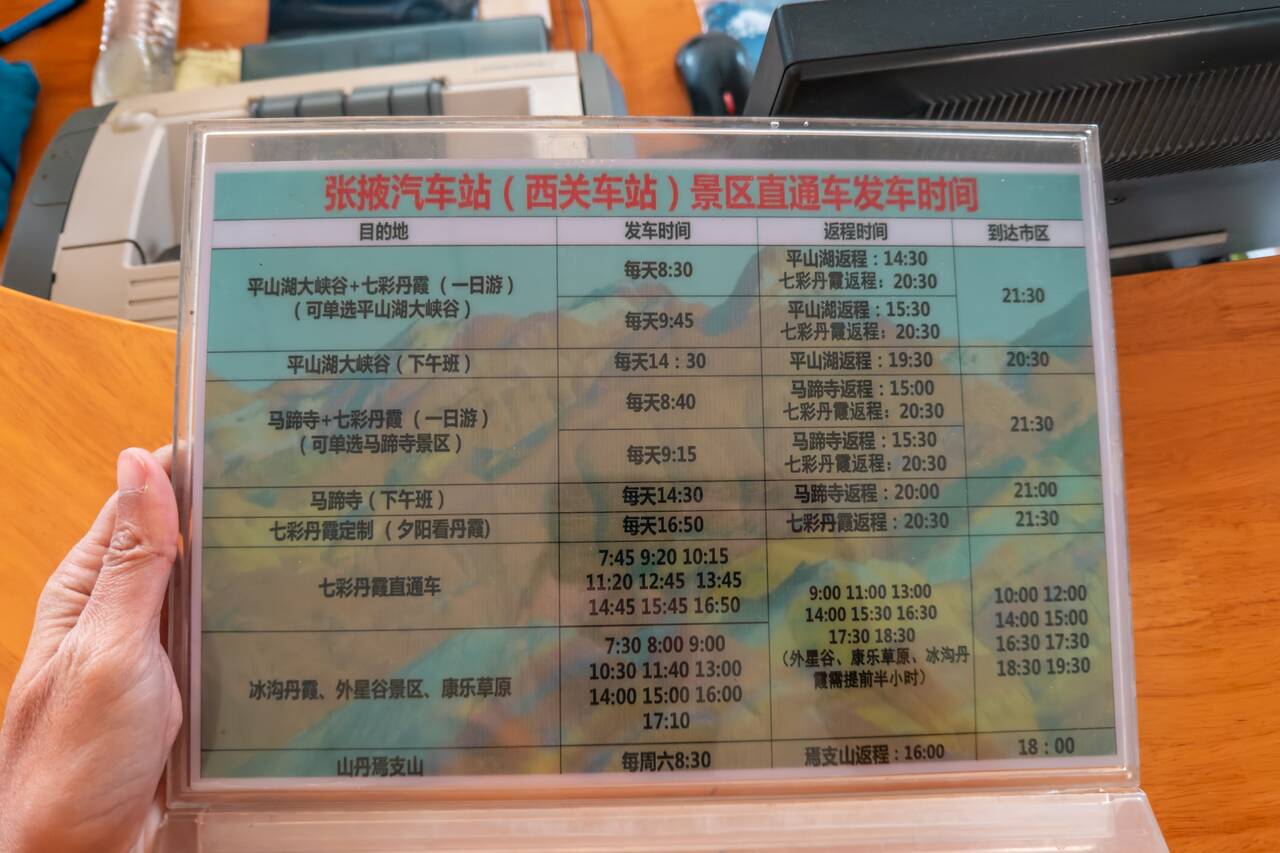
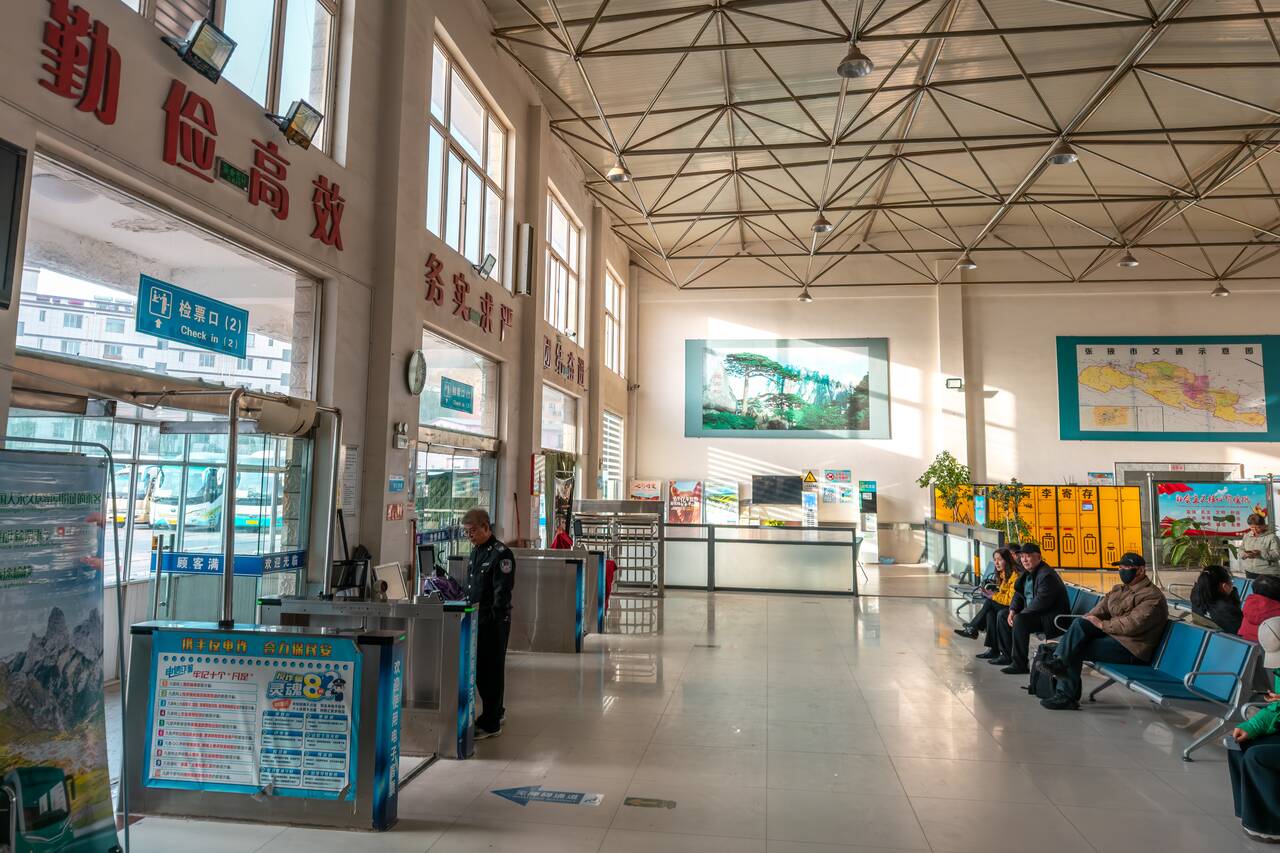
When you walk into the bus station, head to the customer service counter in the middle of the hall. The schedules are displayed there, and the staff were incredibly friendly. They helped me figure out the shuttle and could even arrange attraction tickets as well. Of course, as expected, the staff there do not speak English, but I got by just fine with a translation app.
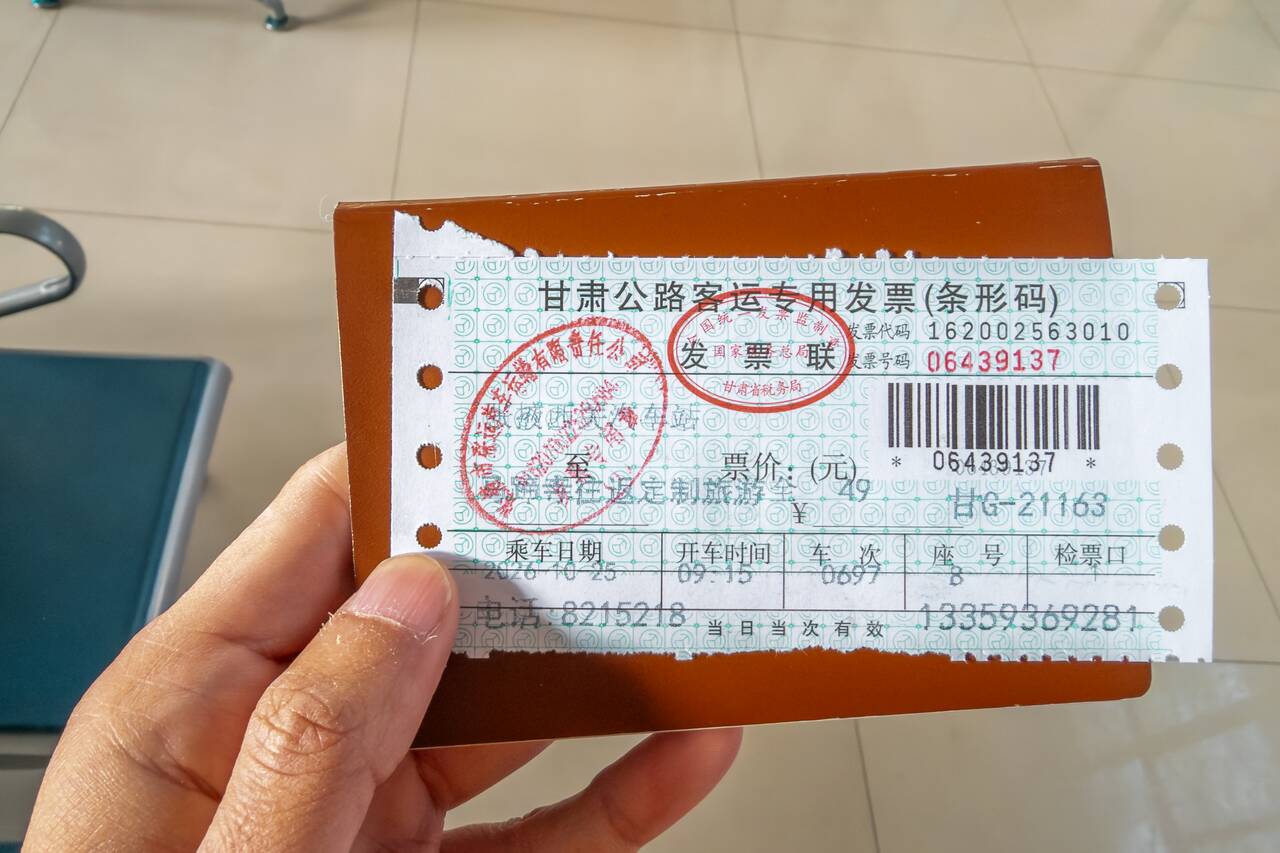
The shuttles often have a set return time, and you may be expected to ride back in the same vehicle. The staff at the station will tell you when to return, and the driver will remind you. I’d take a photo of the license plate before you get out. It makes finding the right vehicle much easier when you get back to the parking lot!
By Taxi or DiDi: Many of these attractions are roughly an hour from the city, so a private ride can get expensive, especially if you’re traveling solo. Getting there is the easy part. Finding a ride back can be trickier, so if you decide to go this route, make sure you agree on a pickup time and return fare with your driver before they drop you off. Drivers will often offer to pick you up anyway, as they know how hard it can be to find a ride back from these remote spots.
Personally, I took the tourist shuttles and it all went well. They were the cheapest and most convenient option for me. I’ve included the schedules in the individual attraction sections above, so check the one you’re heading to and confirm the return time at the station.
How Many Days to Spend in Zhangye?
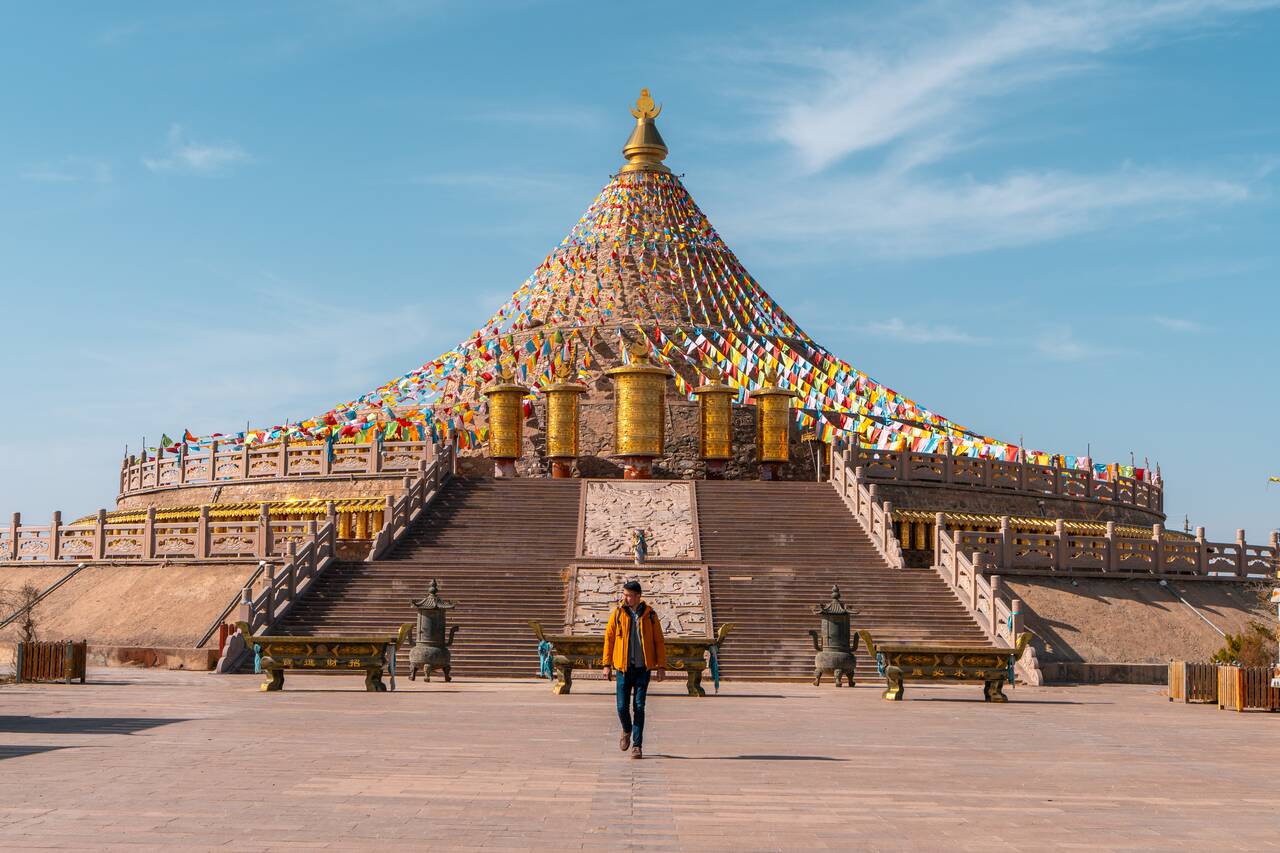
I recommend spending 3 full days and 4 nights in Zhangye. Arrive on the first day, give yourself three full days to explore, then catch your onward train the following morning.
Day 1: Explore Zhangye and take it easy. Visit Dafosi Temple and the Wooden Pagoda, then head to Ming and Qing Dynasty Ancient Street for dinner. It’s a good day to drop by the bus station and sort out your shuttles for the next two days.
Day 2: Take a day trip to Mati Temple. Give yourself time to explore the grottoes and enjoy the mountain setting. I’d leave the rest of the day flexible so you can take your time here.
Day 3: Hike Pingshan Lake Grand Canyon and see the Rainbow Mountains. Start at Pingshan Lake in the morning and aim to visit Qicai Danxia later in the day for the evening light. This is the busiest day, so prepare yourself.
If you have an extra day, go to Binggou Danxia for its rock towers and cliffs. If you’ve already split the canyon and the Rainbow Mountains across two days, treat Binggou as a bonus if you have more time.
Is Zhangye Worth Visiting?
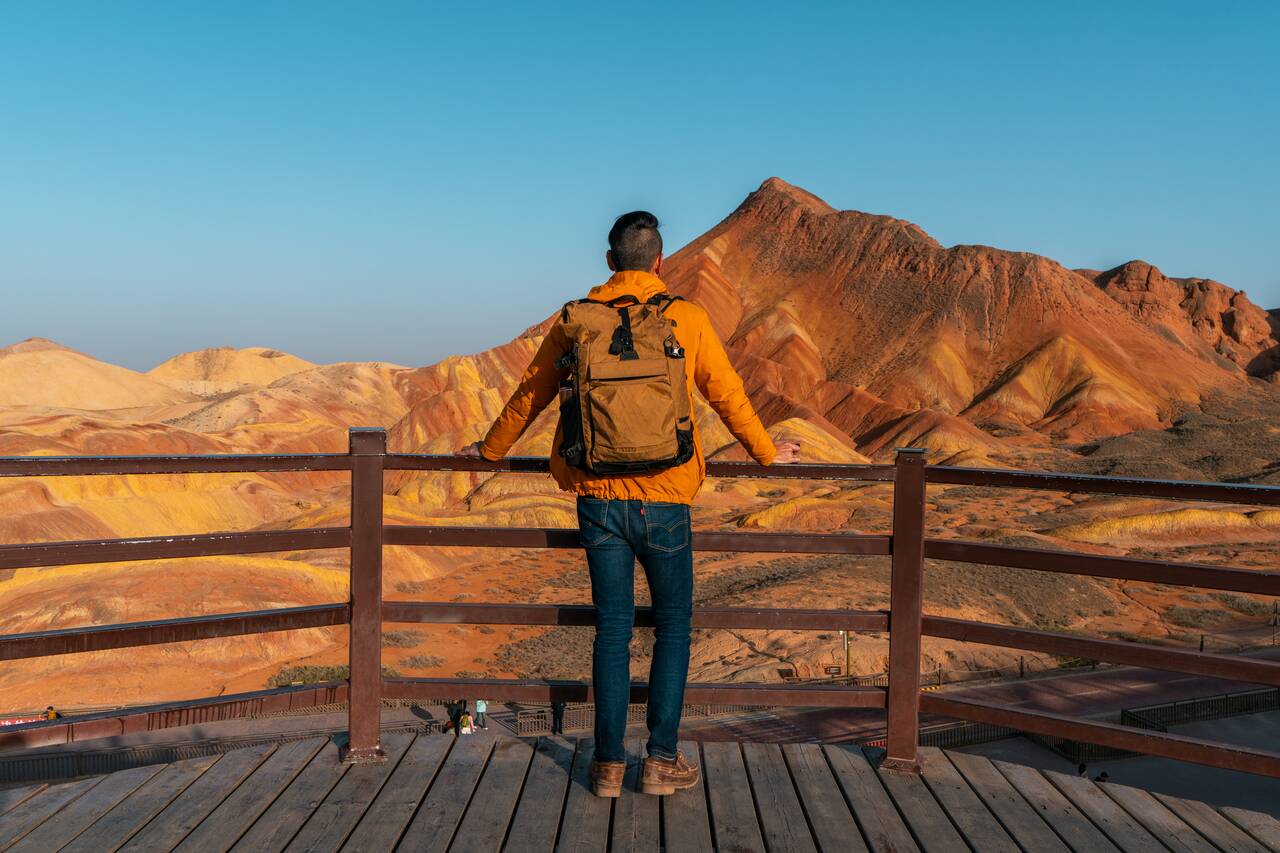
Definitely! There’s no doubt about it. Zhangye was one of my favorite stops along the Silk Road. The Rainbow Mountains should be enough of a reason to come and visit Zhangye. Seeing those bands of color stretch across entire hillsides at sunset was such an incredible experience it's hard to explain in words.
I also thoroughly enjoyed squeezing through narrow passages and scrambling over rocks at Pingshan Lake Grand Canyon, as well as exploring the cliffside grottoes and hanging temples at Mati Temple. I didn’t expect to find this much adventure in Zhangye!
If you only have one full day, I’d hike Pingshan Lake Grand Canyon in the morning and save the Rainbow Mountains for sunset, as I did. But if you can spare three full days, give Mati Temple a day of its own and spend the other day exploring the city at a slower pace. Do not rush through Zhangye!
Things to Know Before Visiting China
- Always Carry Your Passport: Everything revolves around your passport/ID in China, and it’s often used interchangeably as your main form of identification. Many major tourist attractions require you to show your passport when buying a ticket, and the ticket will then be linked to it. You’ll scan your passport again to enter. The same applies to high-speed trains. It’s best to carry your passport with you at all times while traveling in China.
- Get an eSIM: China’s cashless economy relies on constant internet access, so having a data connection is essential. I highly recommend getting an eSIM or a local SIM card for your trip. An eSIM is often better because the service is usually based in Hong Kong, which bypasses China’s Great Firewall, meaning you can access apps like Instagram and YouTube without a VPN. I suggest checking eSIM options on Klook or Trip.com, as they tend to be the most affordable.
- Use AMap to Navigate: Google Maps doesn’t work well in China, so local apps like AMap are much more informative and accurate for getting around. It even provides metro information, making it easy to navigate city subway systems. I used AMap throughout my entire trip, and it worked perfectly! In this guide, I’ll be linking locations with AMap links instead of Google Maps, so be sure to download it before your trip.
- Use VPN to Bypass the Great Firewall: As you may know, many major websites such as Google, Facebook, Instagram, TikTok, and more are blocked in China. To access them, you’ll need a VPN like LetsVPN installed on both your phone and laptop before you arrive in China. This is crucial as once you're in the country, you won’t be able to search for or download VPN apps. I used LetsVPN during my trip, and it worked very well throughout. The service is affordable too, with a free tier offering limited data or a basic unlimited plan for just 5.99 USD per month.
- Connect Alipay with Your Credit Card: First, download Alipay from the app store, set up your account, and link it to your credit card. This will be one of the two main ways you’ll pay for services in China. Alipay also has mini-apps built in, such as Didi (China’s version of Uber), so you don’t need to download separate apps, and you can use them directly through Alipay. Very convenient!
- Get a Transport Card Working in Alipay: Once you have Alipay set up, you’ll need to verify your account before you can activate a transport card for metro and bus rides. First, if you’re not currently in the city you want to use, tap the city name in the top-left corner and select the correct city. After that, tap the “Transport” button and request a transport card. You’ll be asked to upload a photo of your passport for verification. Once approved, your transport card will be issued, and you can use the QR code to scan and pay for buses and metro rides.
- Get WeChat Set Up: WeChat is another essential app for communicating with locals, thanks to its built-in translation feature. It’s also widely used for payments as Alipay only works about 70% of the time, while WeChat is commonly needed for paying individuals, buying entry tickets at certain attractions, and more. Setting up WeChat can be a bit tricky though because you need verification from an existing user. The easiest way is to ask your hotel’s reception to help verify your account when you arrive in China, which is how I got mine activated.
- Use Trip.com / Trip App: For hotels, day trips, attraction tickets, train tickets, flights, and everything in between, you can use Trip.com or the Trip app to book all your travel needs. It’s very convenient, offers a great user experience, and has a generous cancellation policy that gives you more flexibility when traveling in China.
Disclaimer: This post may contain affiliate links. See our disclosure policy.
First Published:


