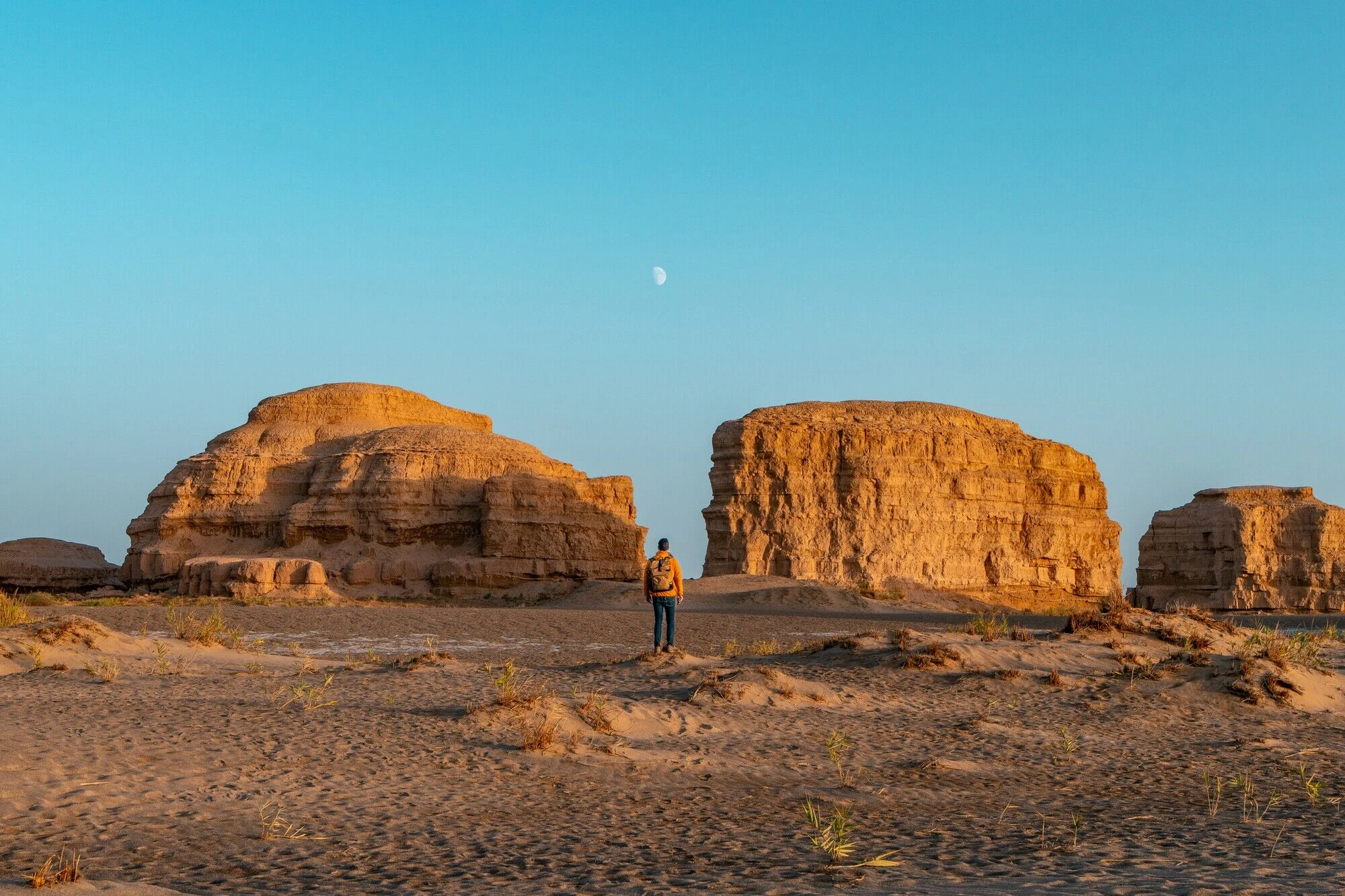


After exploring Xi’an, I flew to Dunhuang in Gansu to begin my journey exploring the ancient Silk Road. With its Buddhist caves, desert landscapes, and ruined frontier passes, this was a part of China I had been looking forward to seeing for a long time!
Mogao Caves were as impressive as I had hoped, but the landscapes around Dunhuang were what really blew me away. From watching Crescent Lake light up among enormous sand dunes to catching the sunset over the otherworldly formations at Yardang Geopark, who wouold have thougt a desert city like Dunhuang would have so many varied sceneries.
In this guide, I’ll take you through my favorite things to do in Dunhuang, along with practical tips on what to book ahead, how to get around, and which places to prioritize. Some sights require a little planning and a long day on the road, but trust me, they are worth the effort. Let’s begin!
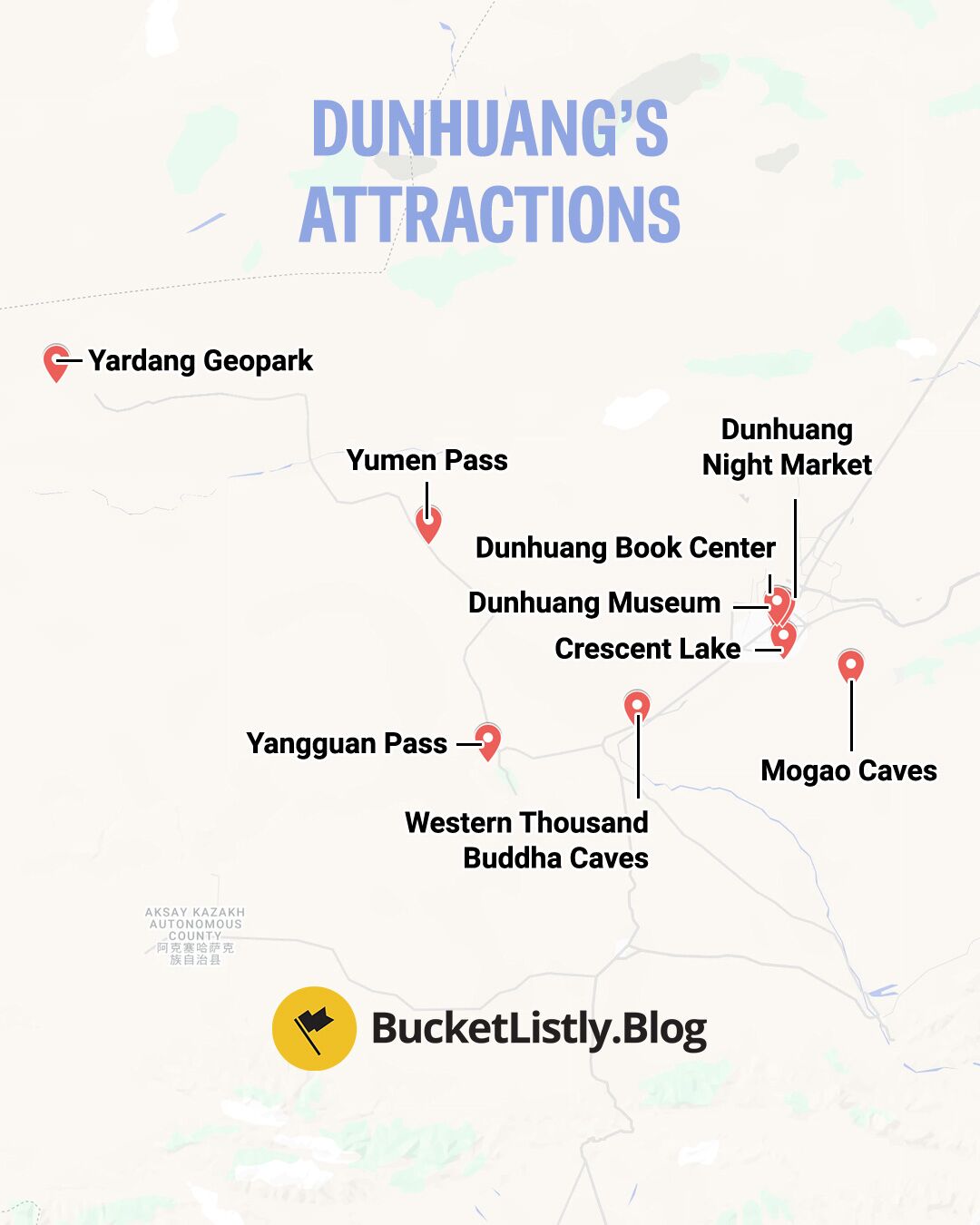
Map of Dunhuang's Attractions
Quick Summary
| ♥️ Must See: | Crescent Lake |
|---|---|
| 👍 Must Do: | Marvel at the Mogao Caves |
| 💎 Hidden Gem: | Dunhuang Yardang Geopark |
| ☀️ Great Day Trip: | Yumen Pass |
| 🥘 Place to Eat: | Dunhuang Night Market |
9 Best Things to Do in Dunhuang
1. Marvel at the Mogao Caves
- 📍 Location: Mogao Caves [Map Link]
- 🕐 Opening Hours: 8 AM - 6 PM
- 💰 Entry Fees: 238 CNY (~36 USD) (Apr-Nov)
- ⚡ Pete's Take: "This is a must-see. I’d check for tickets at least a week ahead and earlier during busy periods. Daily numbers are limited, so I wouldn’t count on getting a regular ticket by turning up on the day."
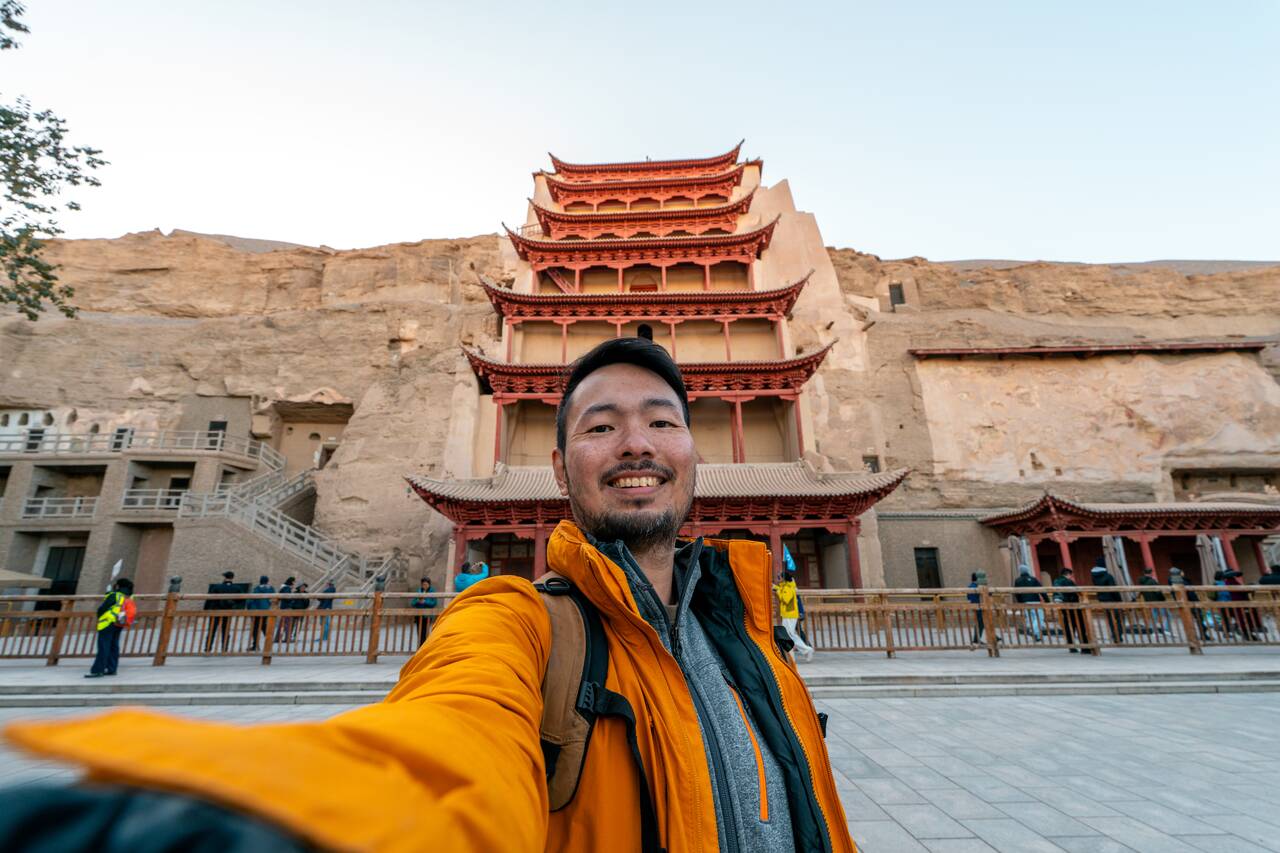
If there is one place you absolutely have to visit in Dunhuang, it is the Mogao Caves. This UNESCO World Heritage Site is one of the most historically significant places along the Silk Road, with beautifully painted Buddhist sculptures and incredibly detailed murals hidden inside its cliffside caves. It is the main reason many people, including me, come to Dunhuang, and once you step inside, you will understand why!
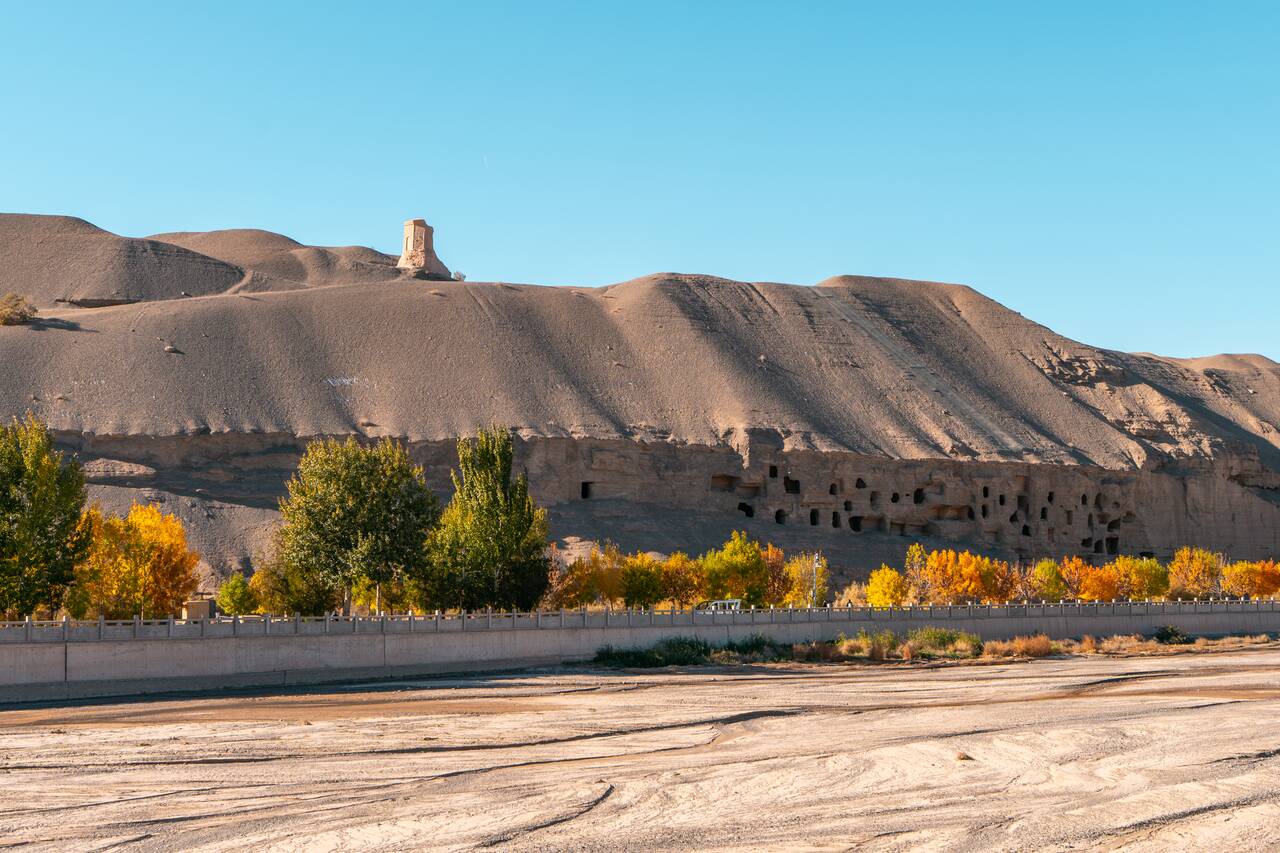
Construction began in 366 AD and continued for around a thousand years as Dunhuang flourished as a crossroads of trade, religion, and culture. Monks, merchants, and wealthy patrons supported the creation of these cave sanctuaries, leaving behind an extraordinary record of Buddhist art.
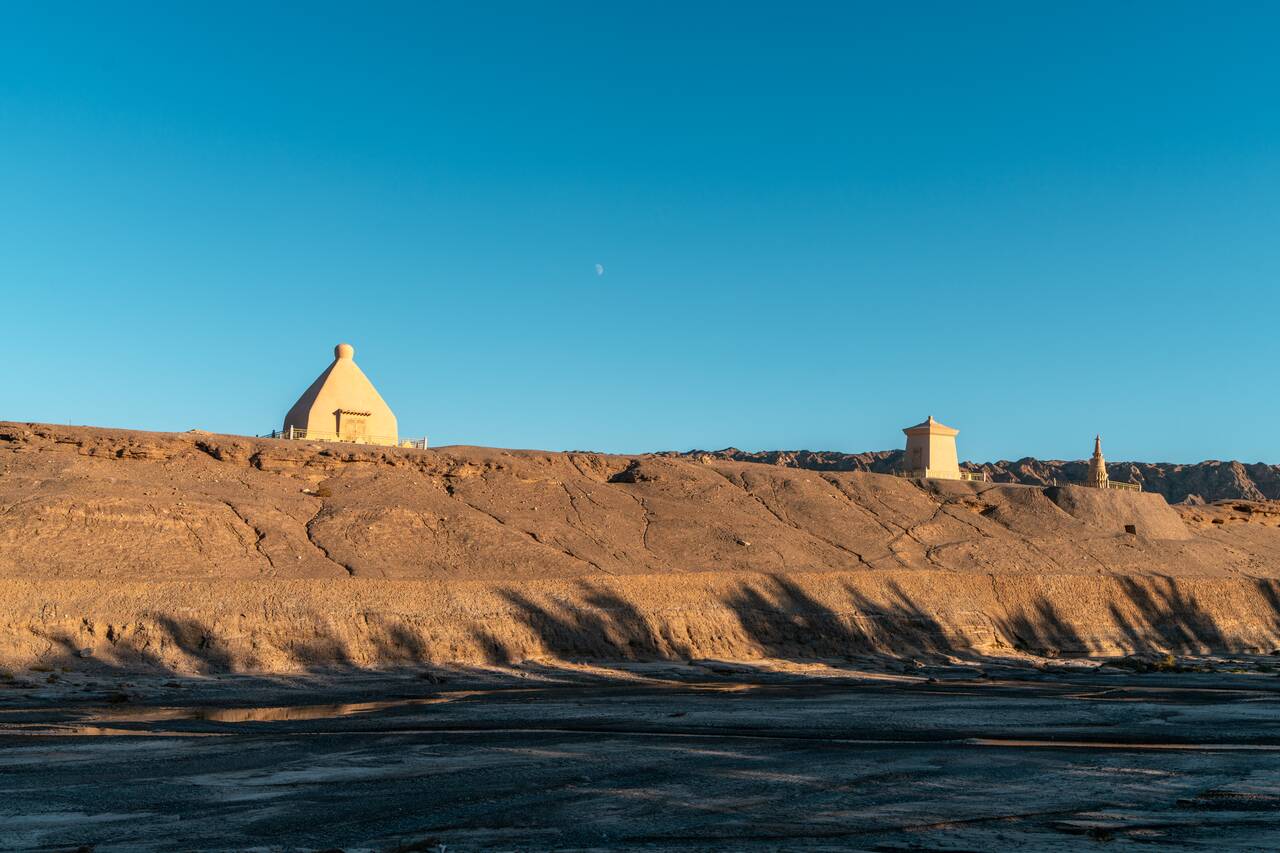
To this day, 492 decorated caves survive, and they contain more than 2,000 painted sculptures and vast expanses of murals you can see today. The details of the caves are absolutely incredible and you can really feel just how sacred and delicate they all are.
- Dunhuang Yuntian International Hotel (Shazhou Night Market) (Budget)
- Dunhuang Hotel (Mid-Range) 👍 Top Pick
- Dunhuang International Hotel (High-End)
- Mogao Caves Entry Ticket
- Crescent Lake and Singing Sand Dunes Entry Ticket
- Dunhuang Western Route Day Tour with Yumen Pass, Yangguan Pass, and Sunset at Yardang (13 hours)
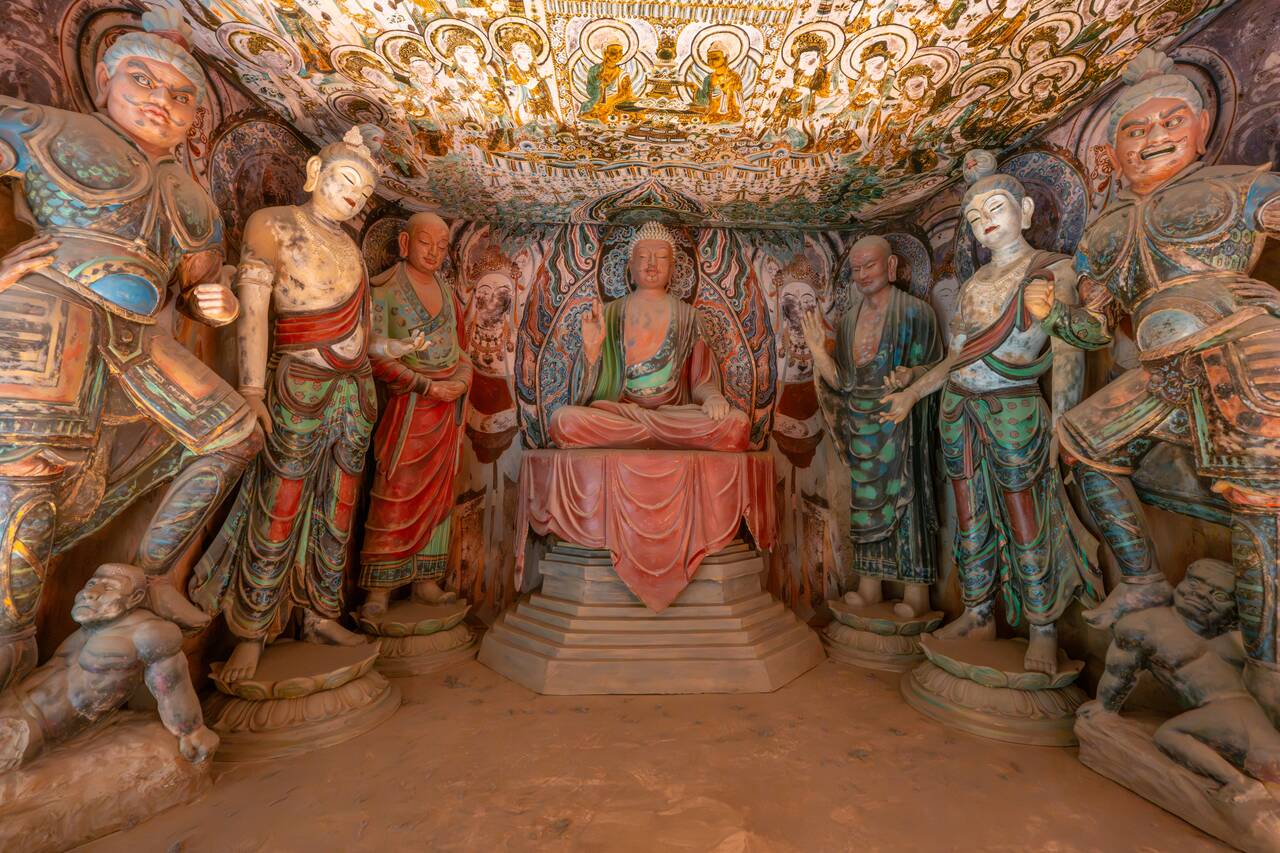
And because of that, unfortunately, photography and filming are strictly prohibited inside the caves, so the interior images I share here are of museum replicas or separately sourced reference images I found elsewhere. They should give you an idea of what to expect, but it is nothing quite like seeing it with your own eyes, trust me.
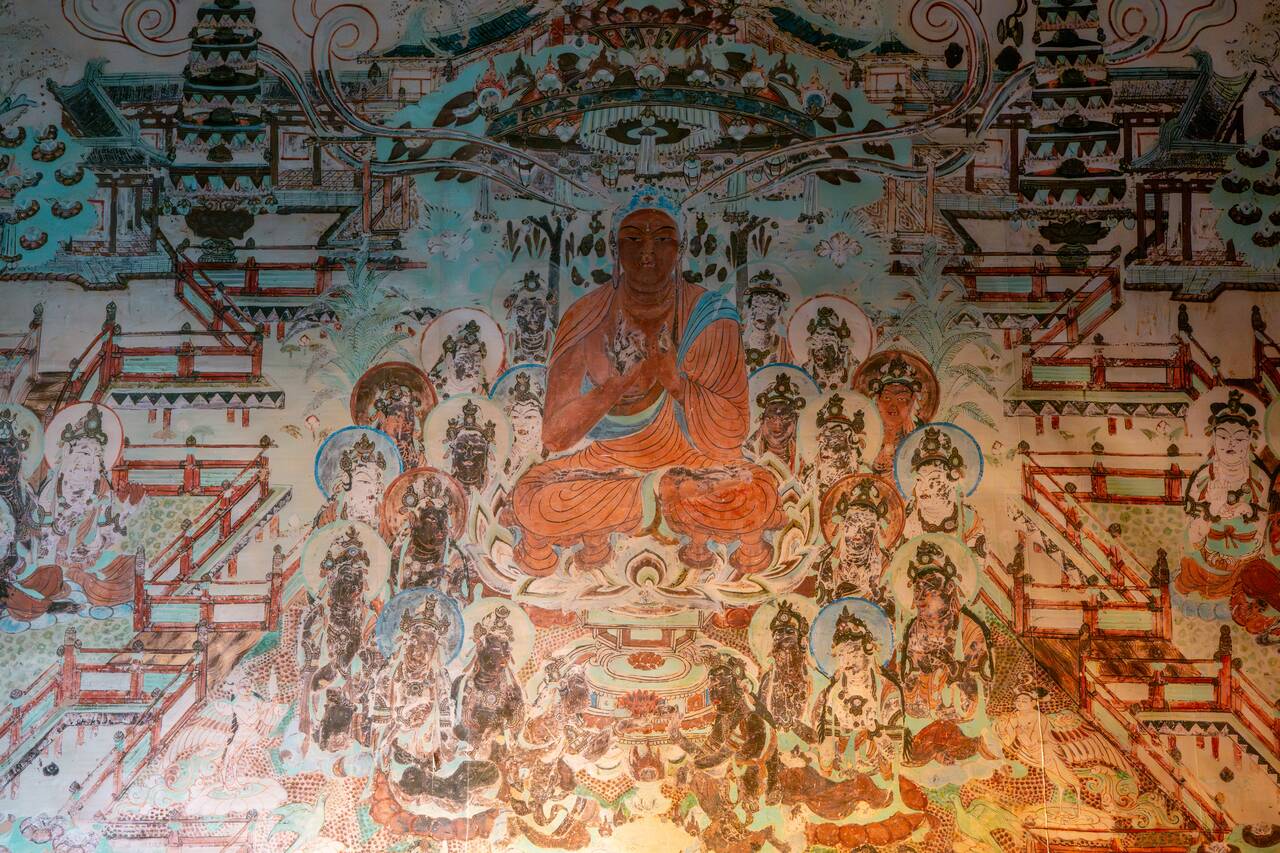
To protect these caves, you will have to go with a guide, which the attraction provides. The selection of caves can vary according to conservation requirements, visitor numbers, and the route assigned to your group.
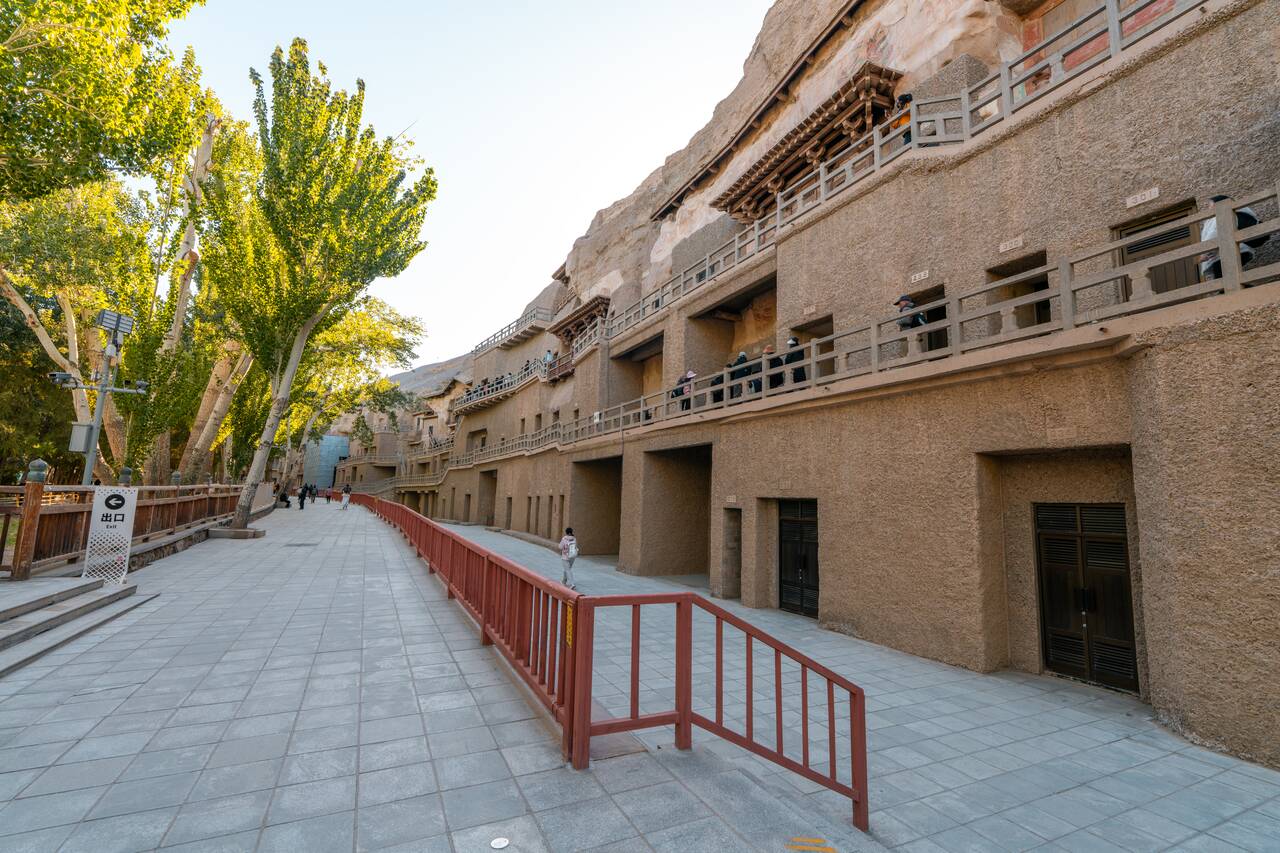
Book your time slot as early as possible, as daily visitor numbers are limited and popular sessions fill up quickly. I recommend checking at least a week before your visit, and earlier if you are traveling during a busy period. You can check ticket options on Trip.com here. Don’t rely on turning up and buying a regular ticket on the day.
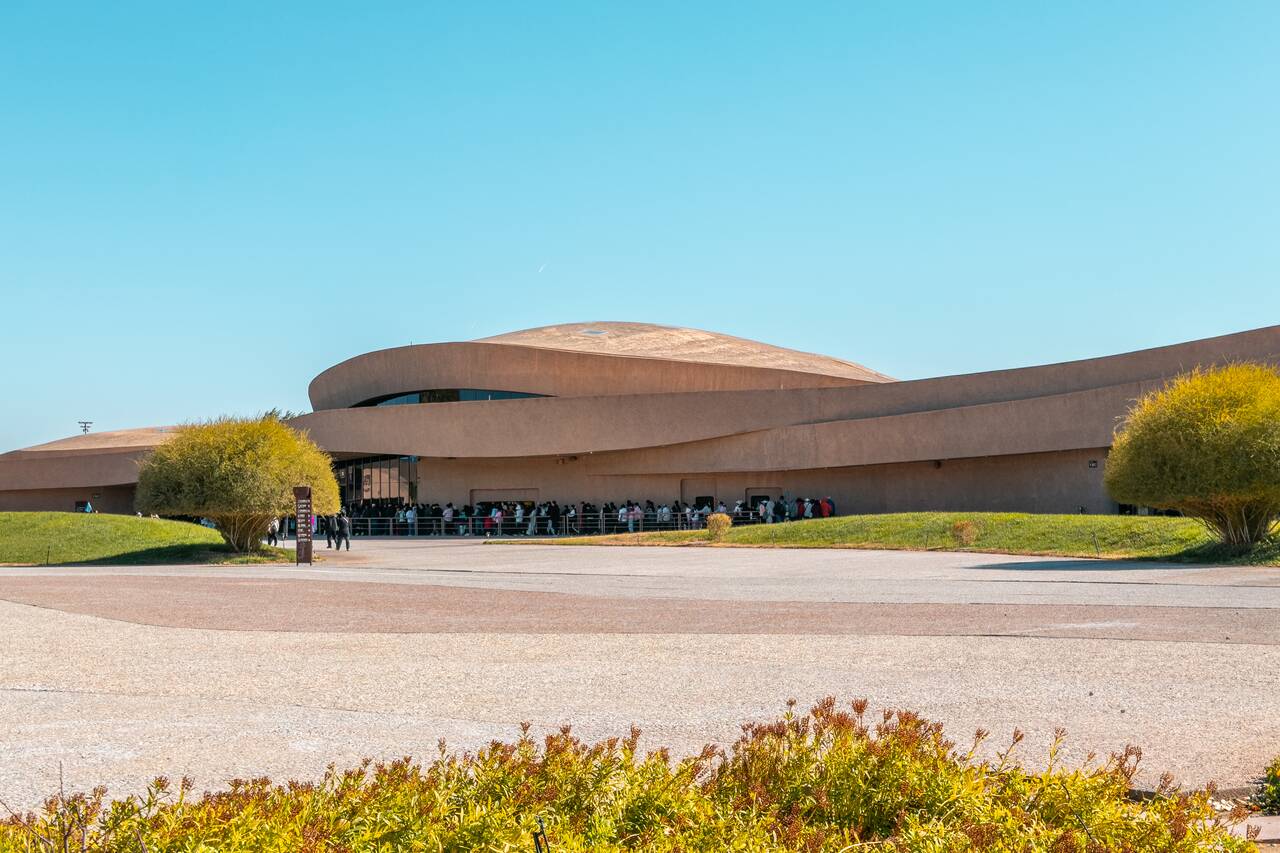
To get to the caves, you can take a DiDi. Just make sure you select the Mogao Caves Digital Exhibition Center, not the caves themselves, as this is where your visit begins before you board the park’s shuttle bus to the caves. Bring your passport and arrive at least 30 minutes before your reserved time to collect your paper ticket and find the correct entrance.
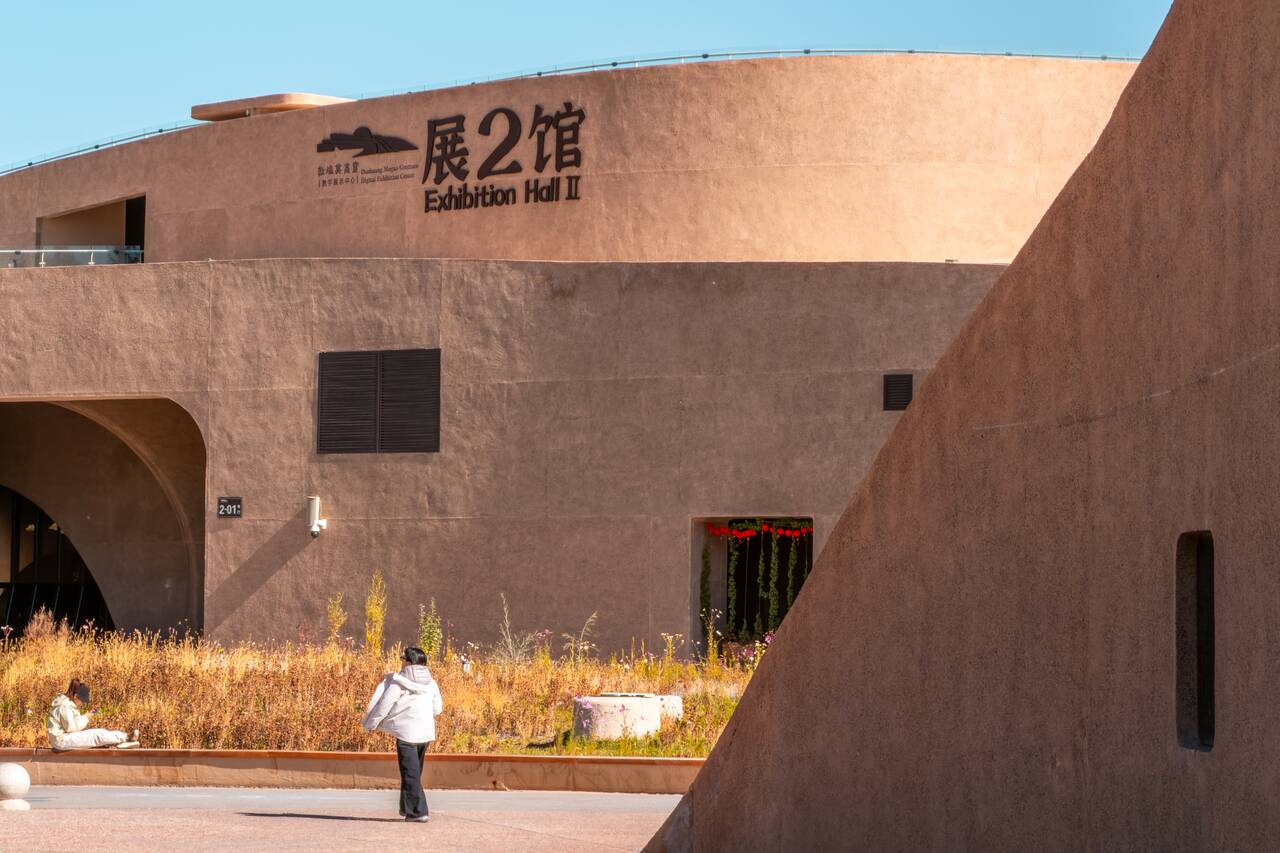
During my visit, I had to go collect my ticket at Exhibition Hall 2 first, and then lined up at Exhibition Hall 1 for admission. This may change, so make sure you follow the instructions on your ticket and ask the staff if you are unsure.
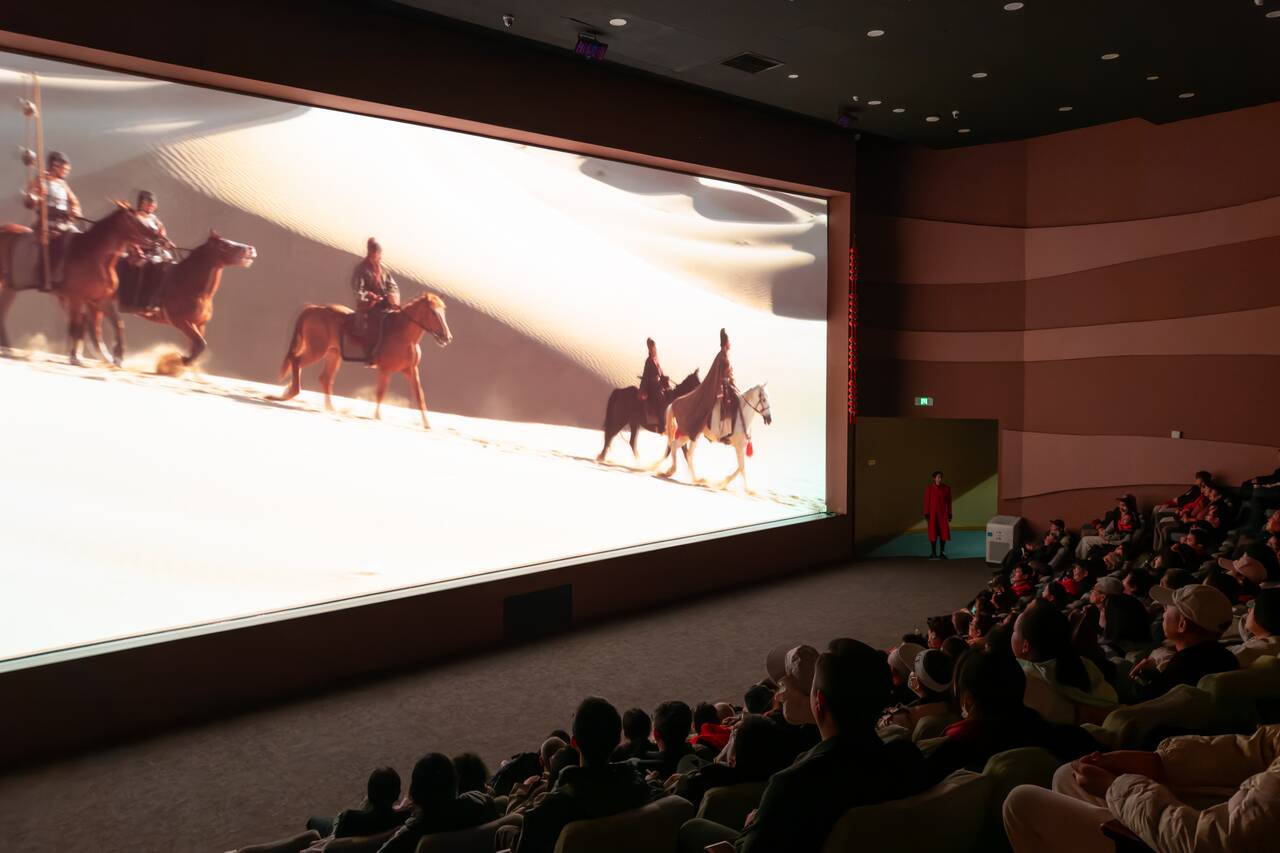
The visit began with two film presentations introducing Dunhuang and the caves’ history. The screenings are in Chinese, but foreign visitors are given audio devices with translations to follow along. The visuals were easy enough to understand as well. The films took around 30 minutes combined, although I also spent about 30 minutes queuing to enter, so an hour had already passed before I even headed toward the caves!
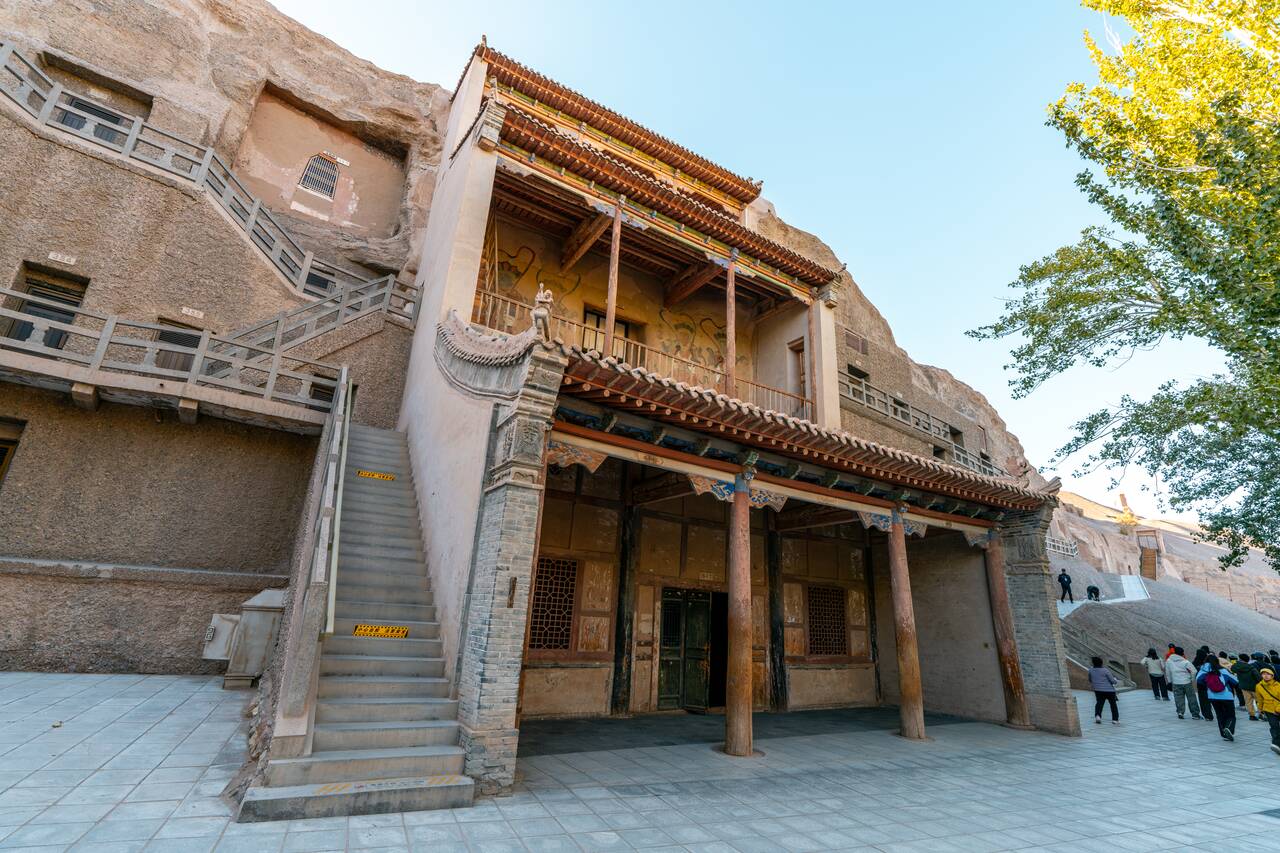
After the films, you will then board the park’s shuttle bus to get to the caves. It should take about 15 minutes to arrive. Once you are at the parking lot, walk to the caves, let the staff know that you need the English-language tour, and show them your booking. You will be grouped separately from the Chinese tourists, which was ideal, as the English-speaking groups are often much smaller than the Chinese-language groups, which made the experience much more enjoyable in my opinion.
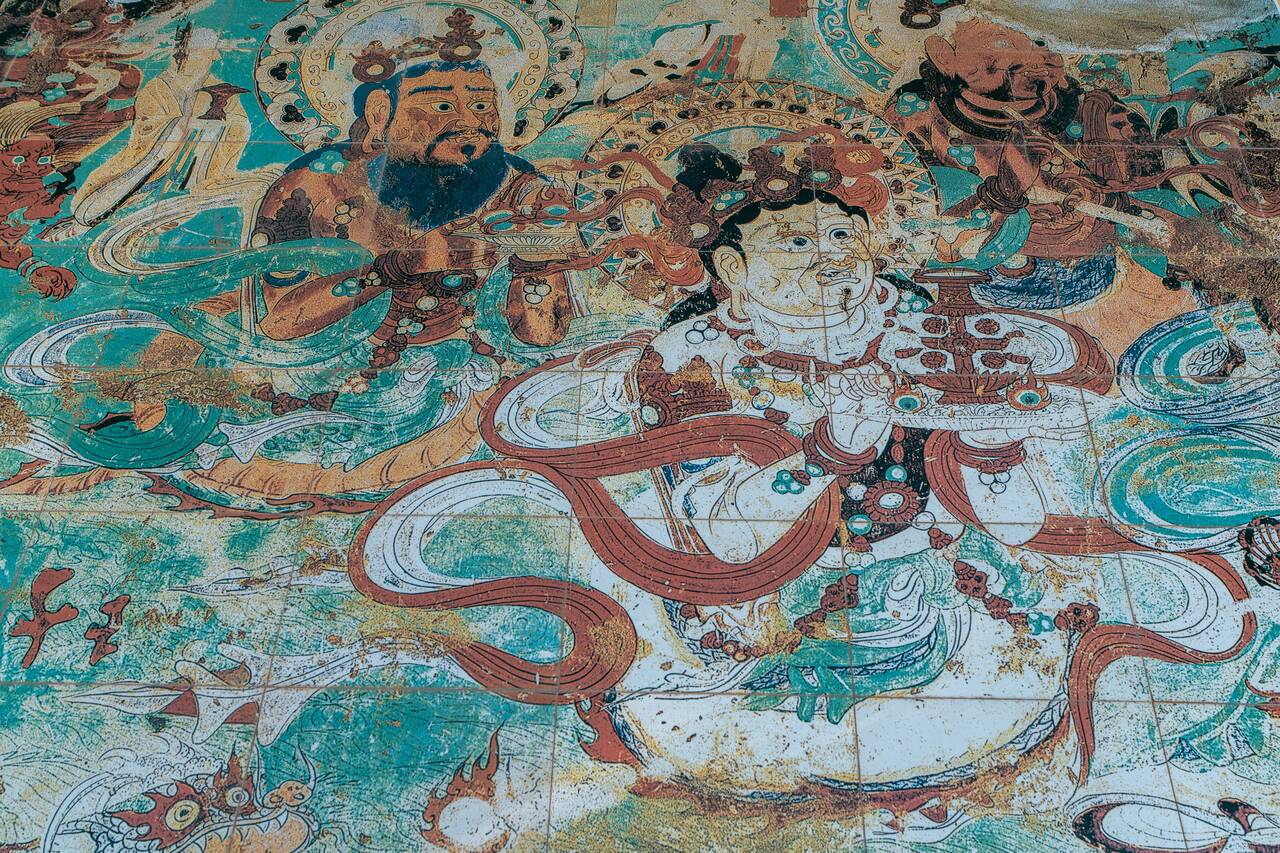
The guided cave visit took around 1.5 hours. One of the biggest highlights was Cave 96, housed behind the iconic nine-story pavilion, where an enormous 35.5-meter-tall Buddha towers above you. It is the largest statue at Mogao, and one you shouldn't miss.
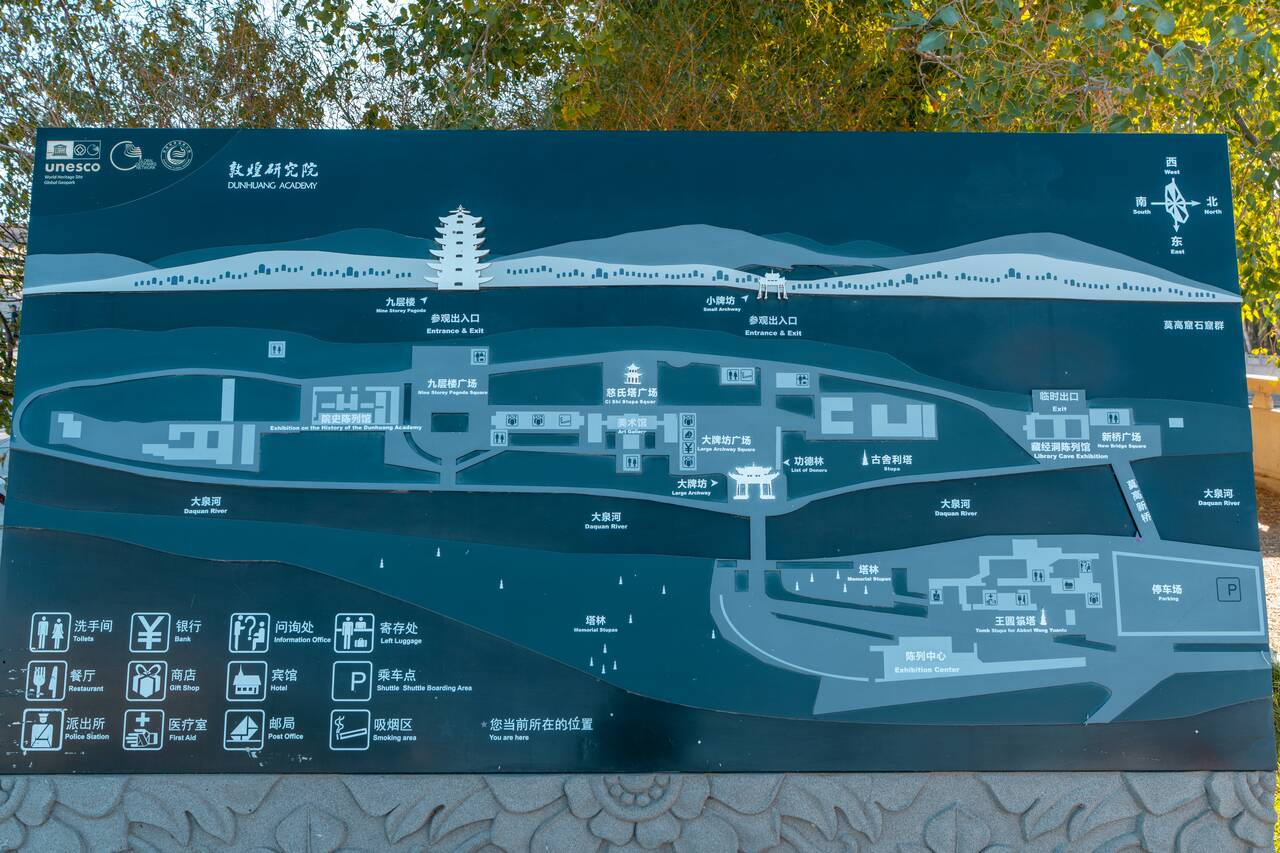
Allow at least 3 to 4 hours for the entire experience, including ticket collection, queues, films, shuttle journeys, and the cave tour. I recommend a morning session, which gives you more breathing room afterward and leaves the late afternoon free for Crescent Lake. The morning light is also lovely for photographing the cave façades outside.
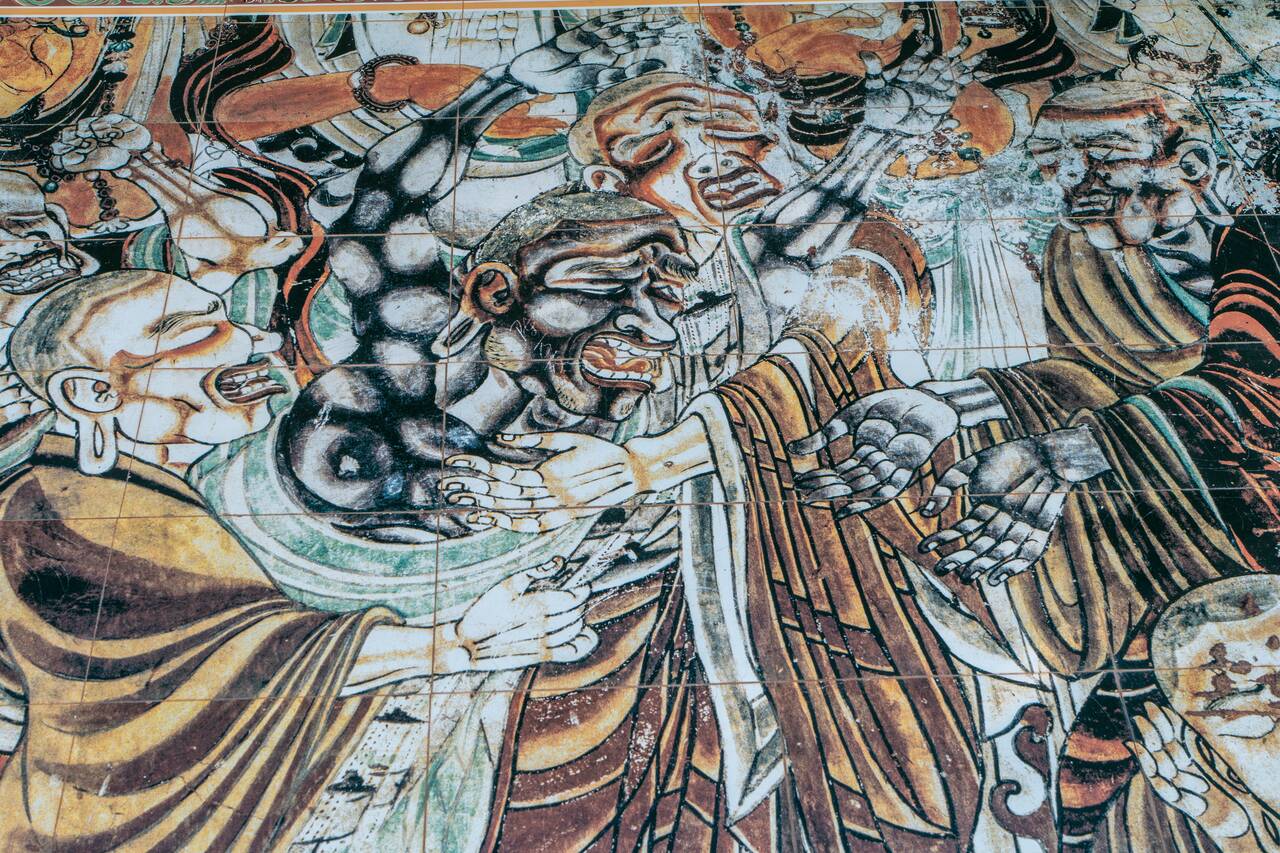
The ticket costs 238 CNY from April to November and 140 CNY from December to March, including the digital films, return shuttle, and regular guided cave visit and you can get the ticket here.
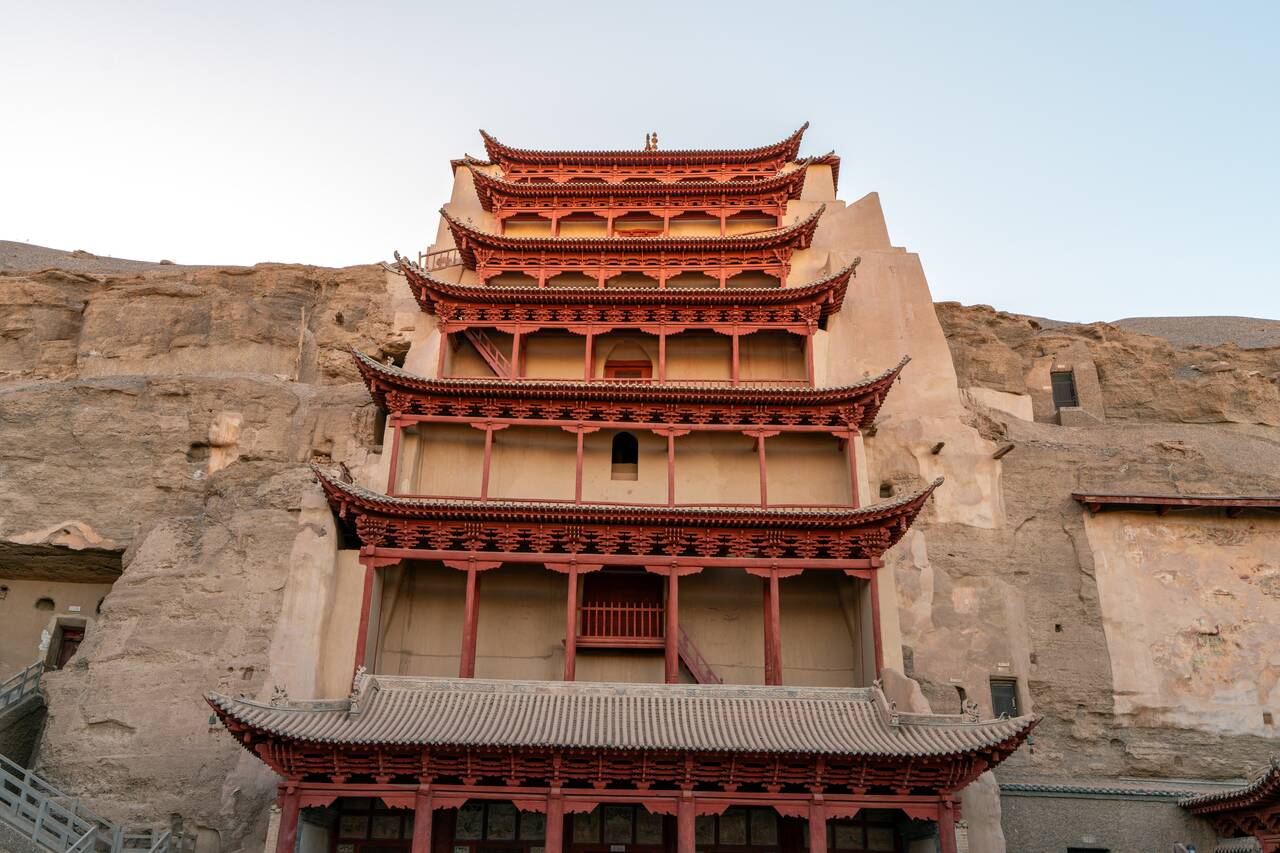
Mogao Caves is open from 8 AM to 6 PM from April 1 to November 30, with last check-in at 4:10 PM, and 9 AM to 5 PM from December 1 to March 31, with last check-in at 3:10 PM. Your reserved time slot still determines when you should arrive, so be sure to plan ahead.
Where to Stay in Dunhuang?



2. Watch the Sunset over Crescent Lake and the Singing Sand Dunes
- 📍 Location: Crescent Lake [Map Link]
- 🕐 Opening Hours: 6:30 AM - 6:30 PM
- 💰 Entry Fees: 110 CNY (~16 USD)
- ⚡ Pete's Take: "Climbing the dunes was the best part for me. There were loads of people up there, but that sunset was worth it. Be sure to stay until the lights are on."
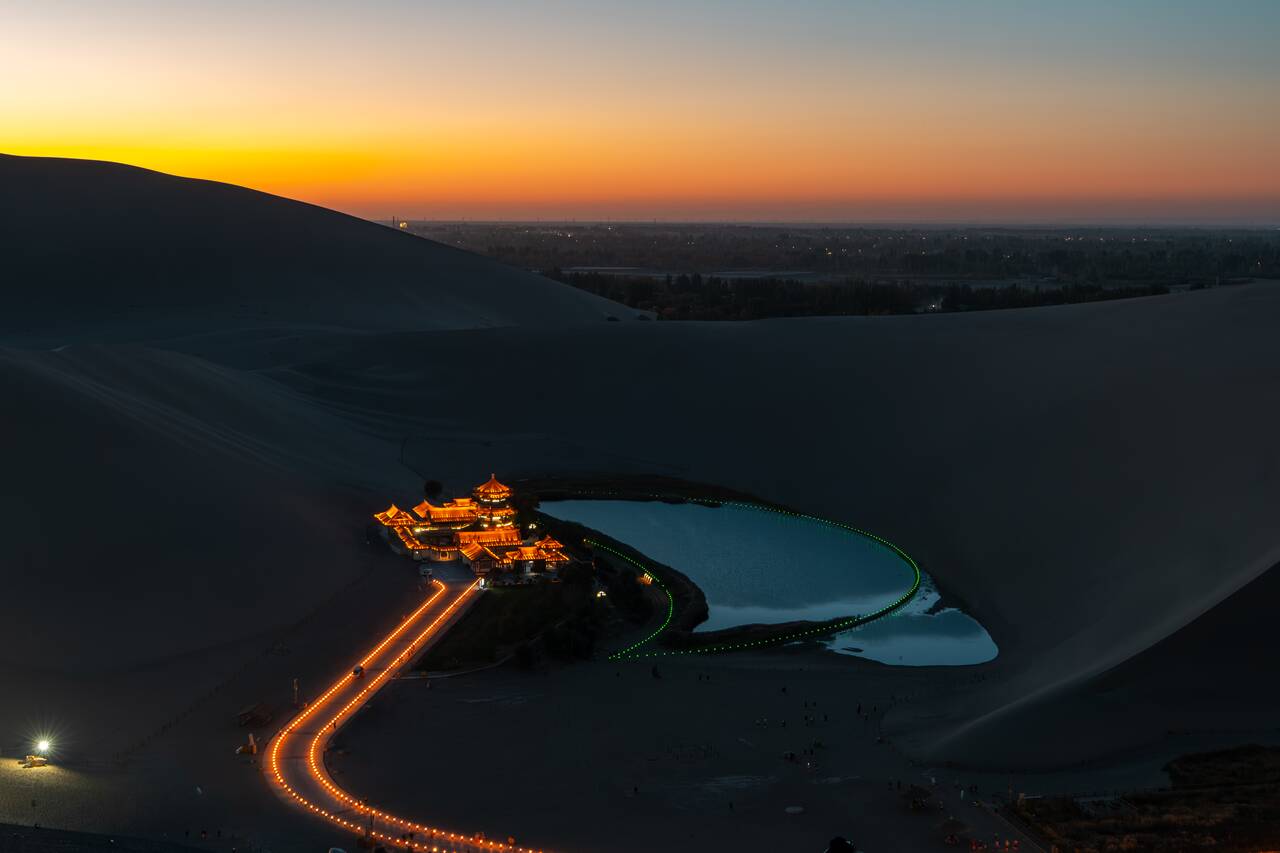
Another place you absolutely have to see in Dunhuang is Crescent Lake, a crescent-shaped spring nestled among the enormous dunes of the Singing Sand Mountains. This little desert oasis has existed for more than 2,000 years, and despite the barren landscape surrounding it, the spring holds water all year round. Pretty amazing to see in the middle of a desert!
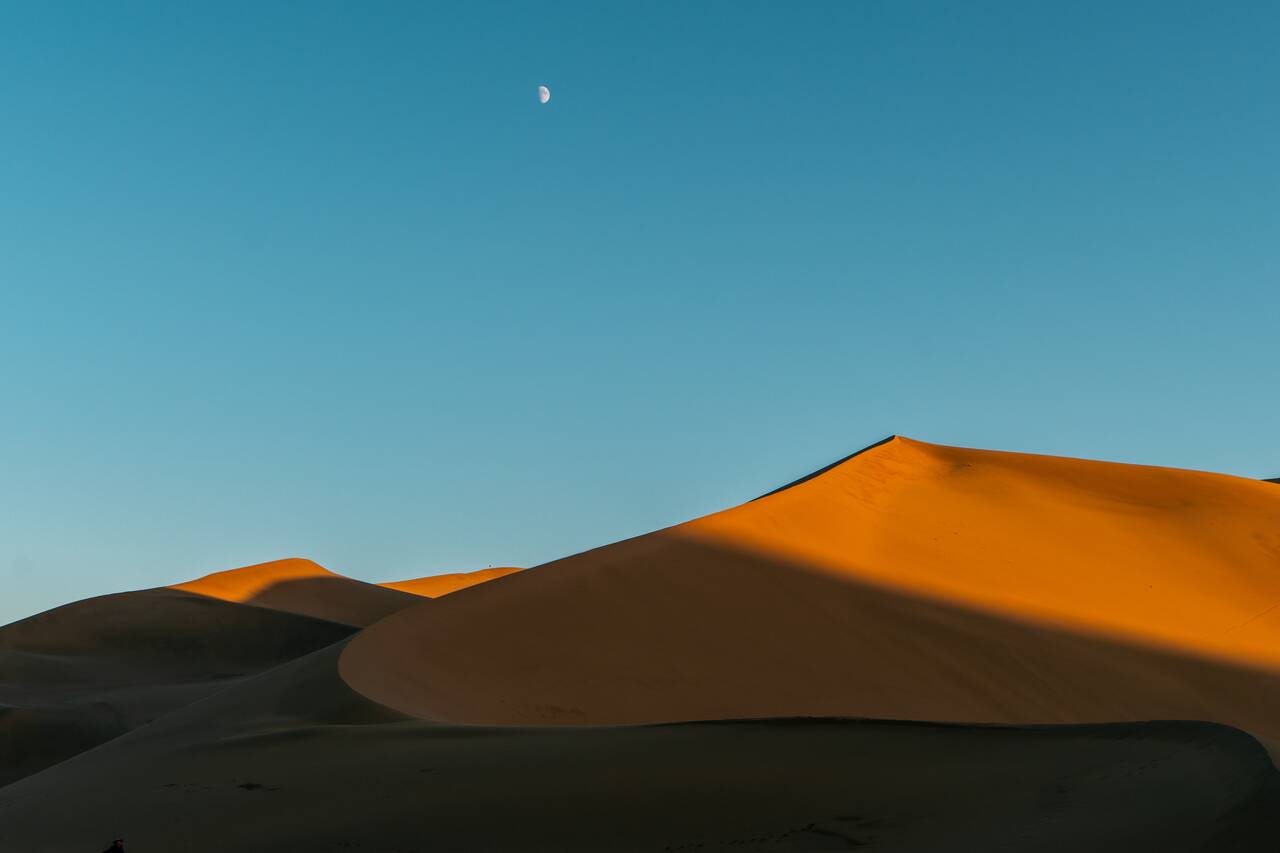
The surrounding dunes are also known as Mingsha Mountain, or the Singing Sand Mountains, named after the sounds the sand can produce as it moves. Together with the spring, they have long been among Dunhuang’s most famous attractions, thanks to its proximity to the city. That said, I think the experience today is far what ancient travelers would have encountered.
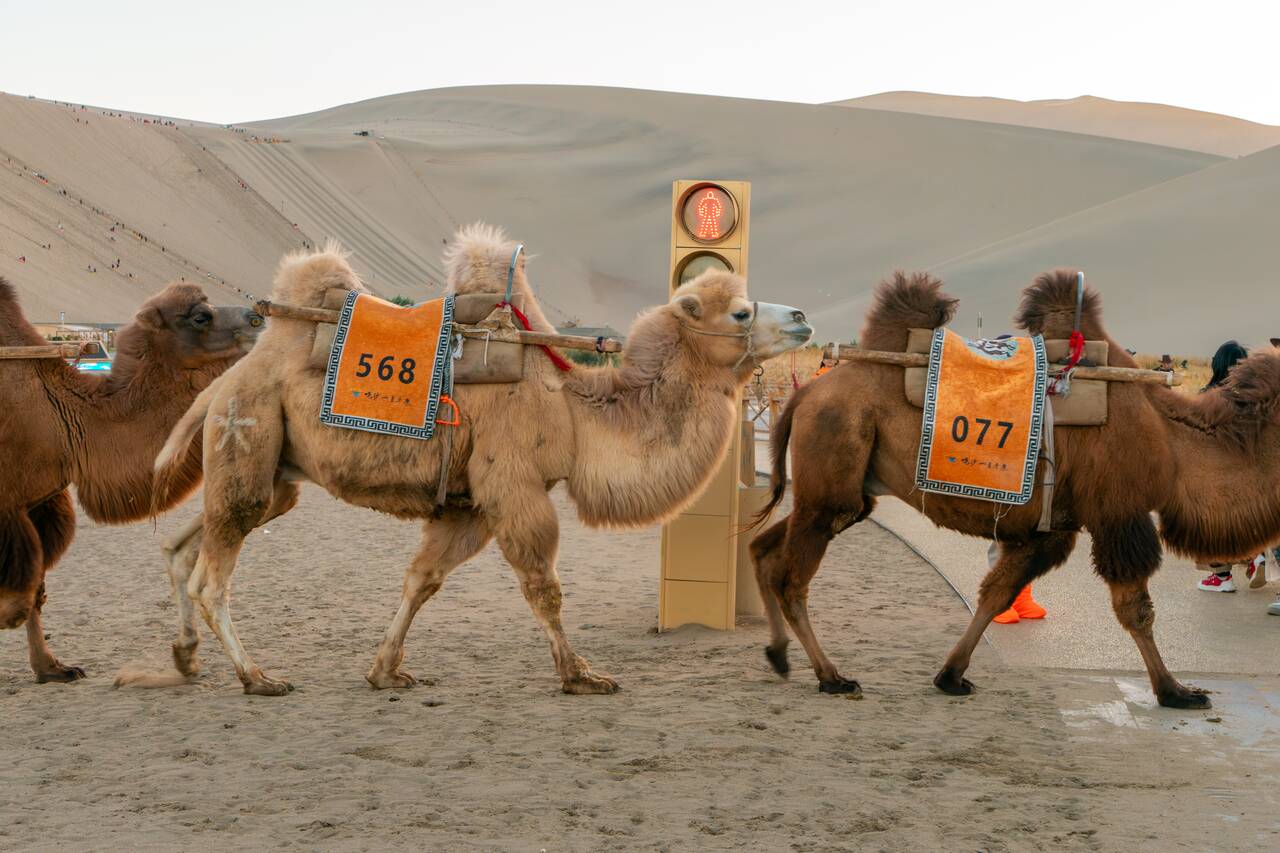
To be honest, this place is much like other highly commercialized tourist attractions in China, where they have turned a seemingly peaceful place into a massive amusement park, with camel rides, music, light shows, tons of souvenir shops, and street food stalls.
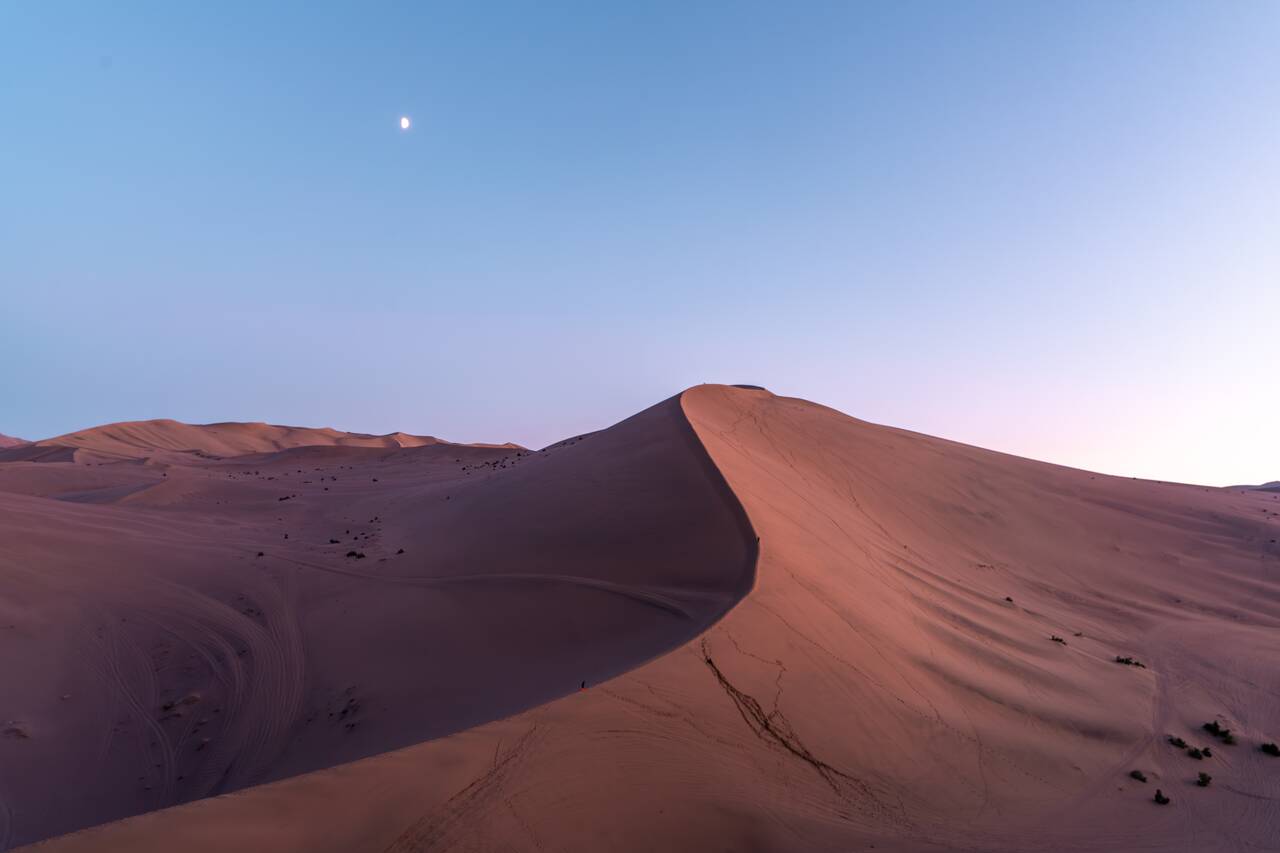
That said, the scenery is very unique and beautiful, with the crescent-shaped lake and temple-style buildings sitting right in the middle of the desert. If you have been to Huacachina in Peru, this has a similar feel to it.
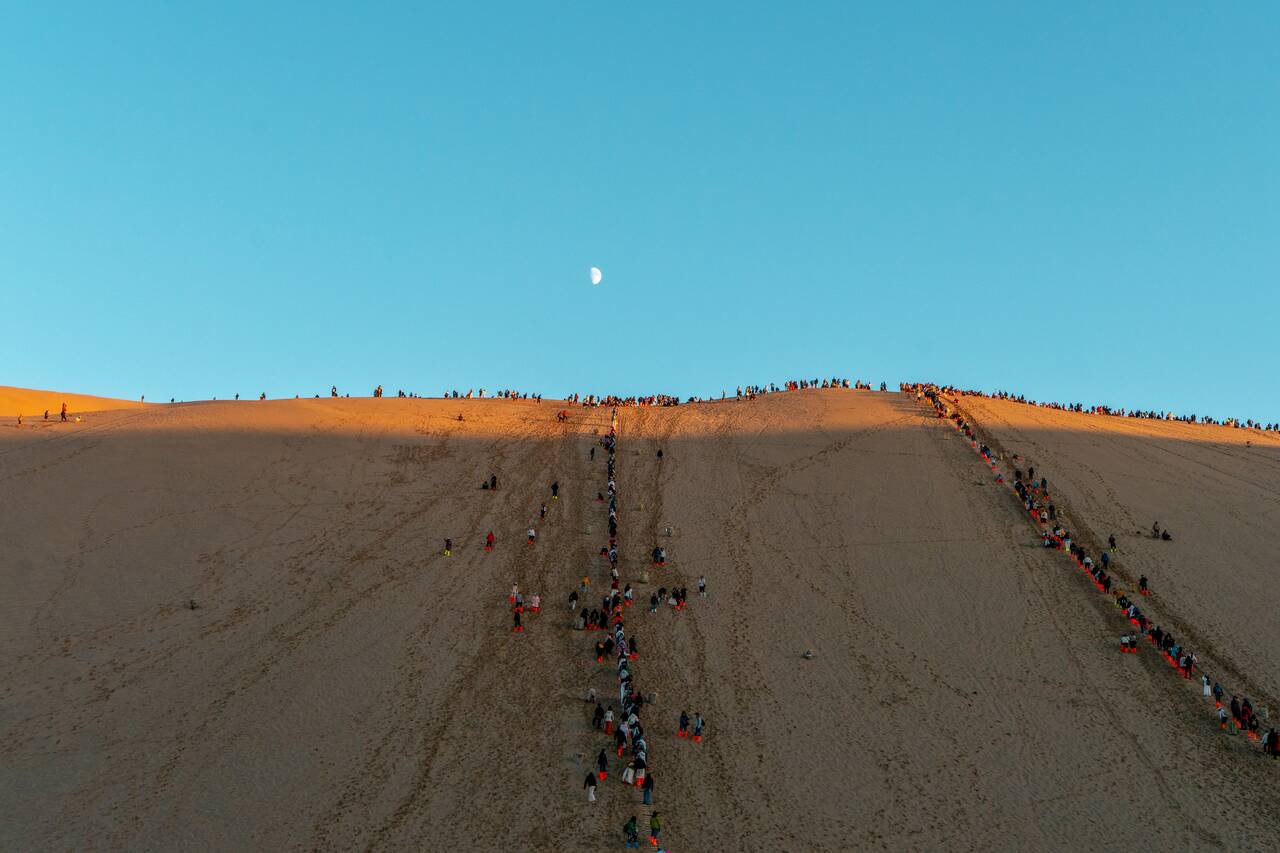
The best thing to do here is to climb up the sand dunes for a view over the lake. It is steep, but thankfully, they have installed ladders along the sand to make the climb much easier. Although, you will probably find yourself stuck in a line of people going up, and there are tons of them, especially around sunset!
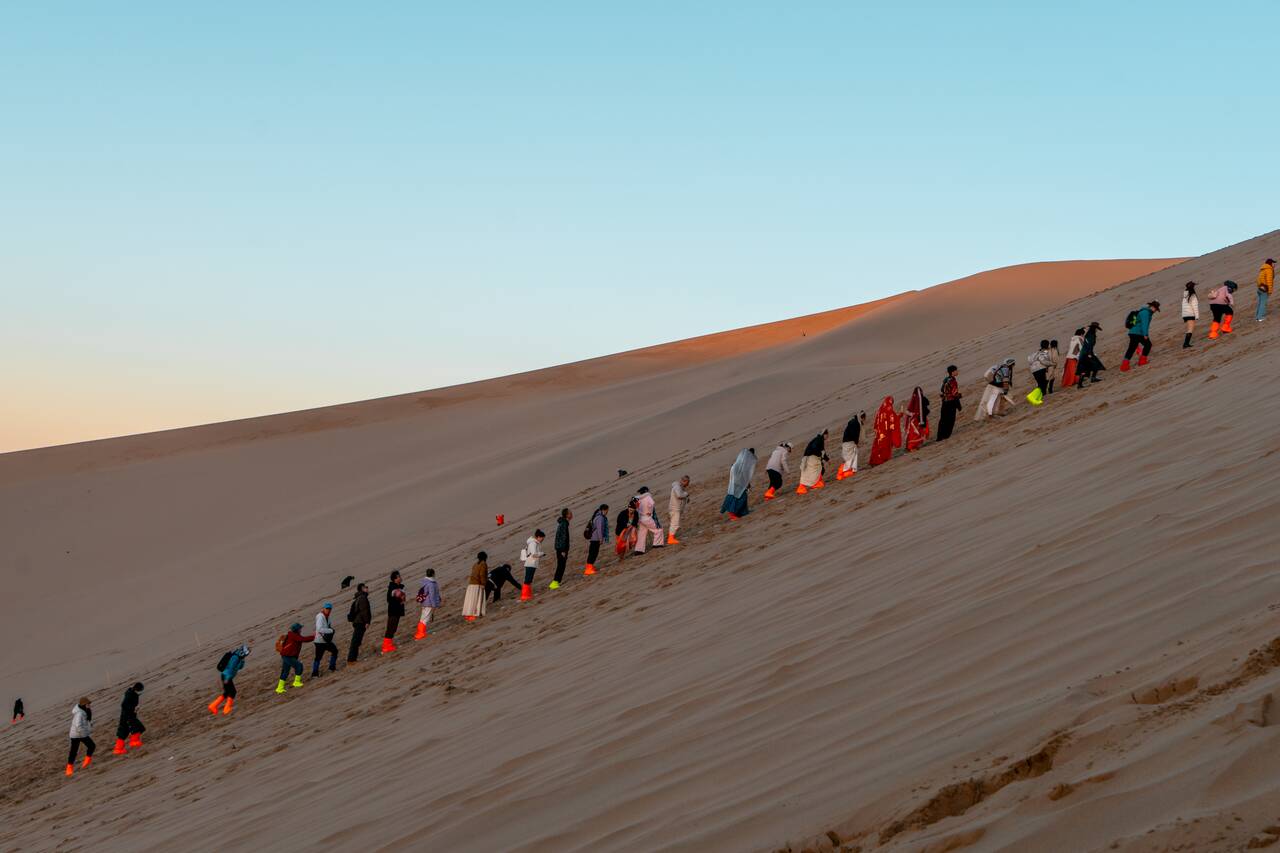
It is crowded, but the sunset up there is exceptional. Give yourself around 30 to 40 minutes to walk from the entrance and climb up, and longer if the queues are moving slowly. Once you reach a good spot, take a breather and enjoy the view as the light changes across the dunes.
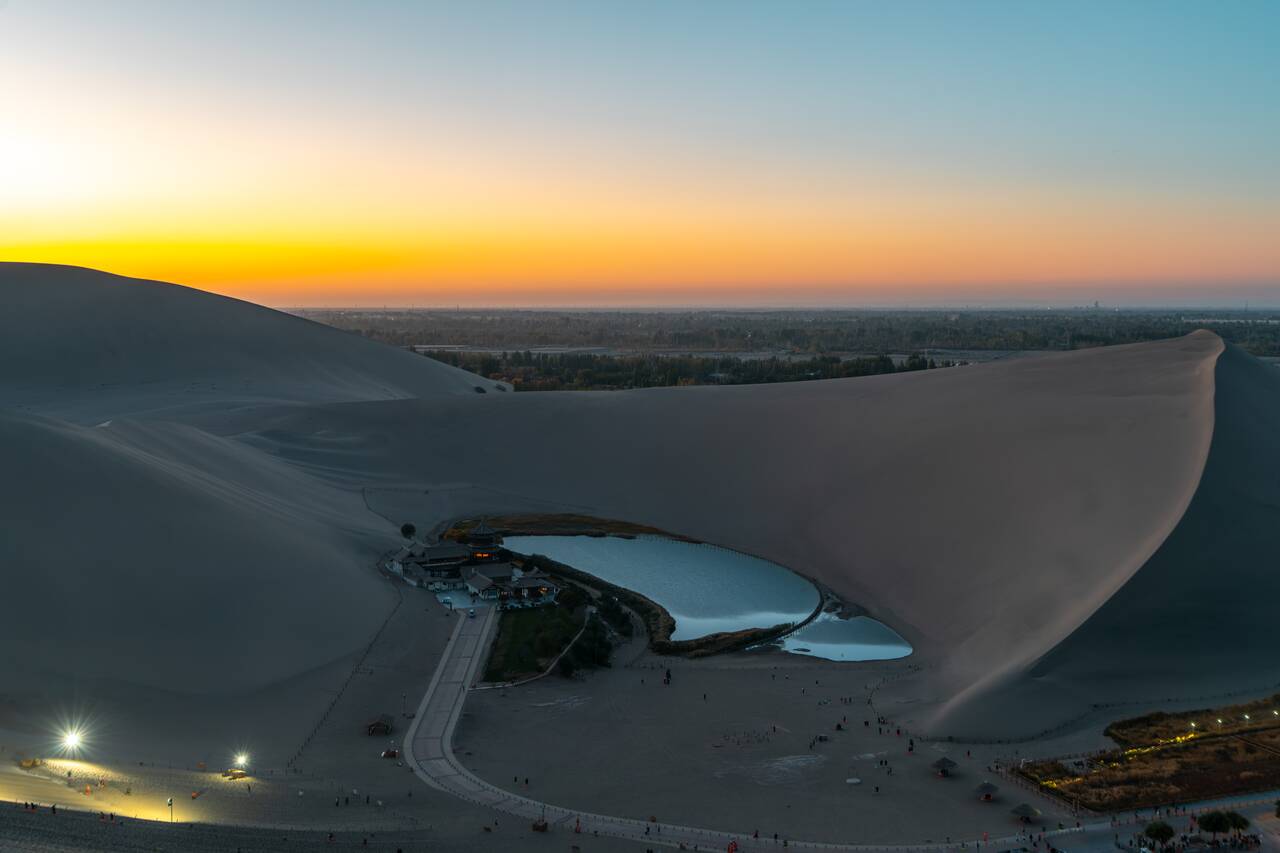
Be sure to stay until dark, when they turn on the lights around Crescent Lake. It is quite a sight to see! When I was there in mid-October, the lights came on around 7:30 PM, and the illuminated buildings against the dark dunes were absolutely beautiful. It was also very windy and cold up there, so pack layers!
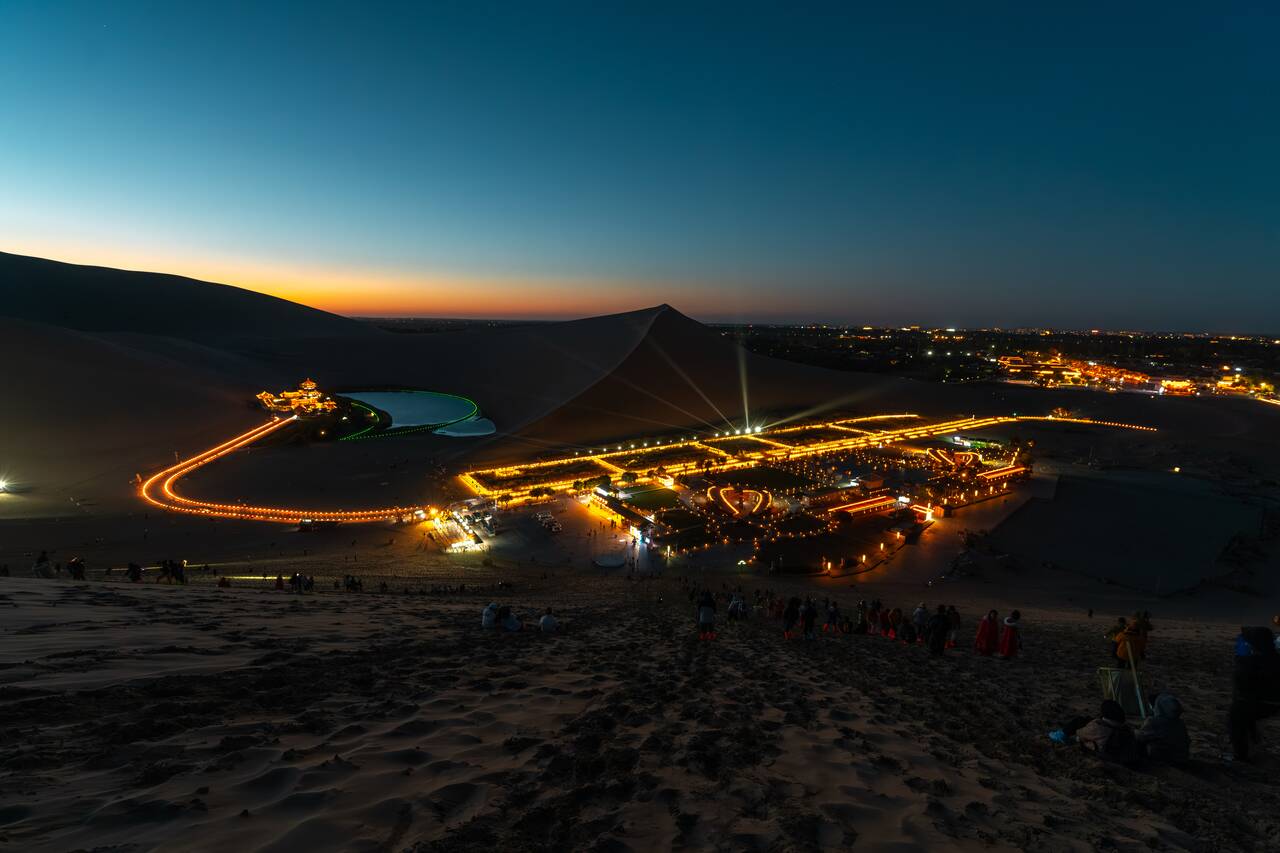
When booking, I recommend you choose a late-afternoon entry slot and be sure to check the sunset time and working backward, leaving enough time to get through the entrance and climb the dunes. Don’t cut it too close to last admission, as the queues and climb can take longer than expected.
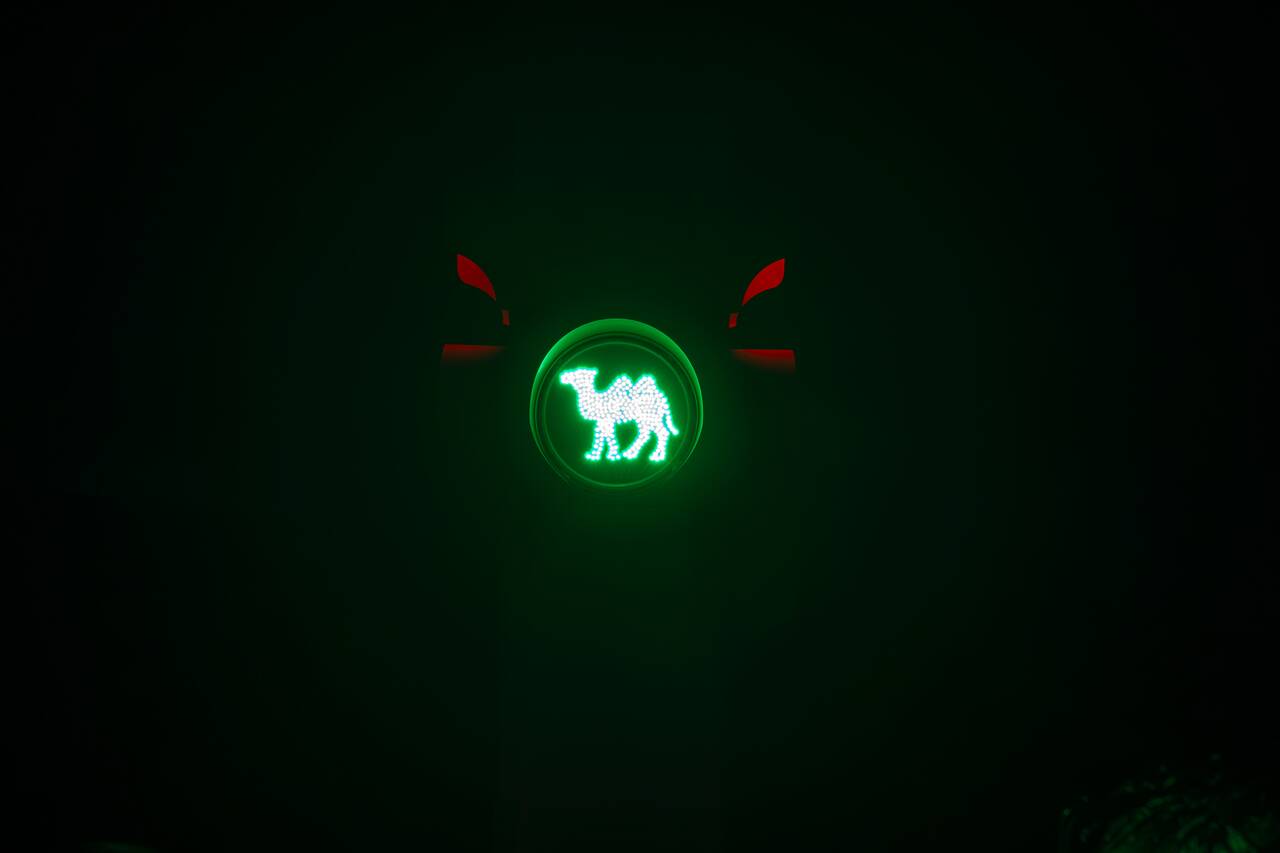
Also, be sure to keep an eye out for the camel traffic lights here. I don’t think I have ever seen a traffic light quite like this 🤣. With all the camels moving through the area and just how oblivious tourists can be to their surroundings, I guess they need them to keep everyone safe 😅!
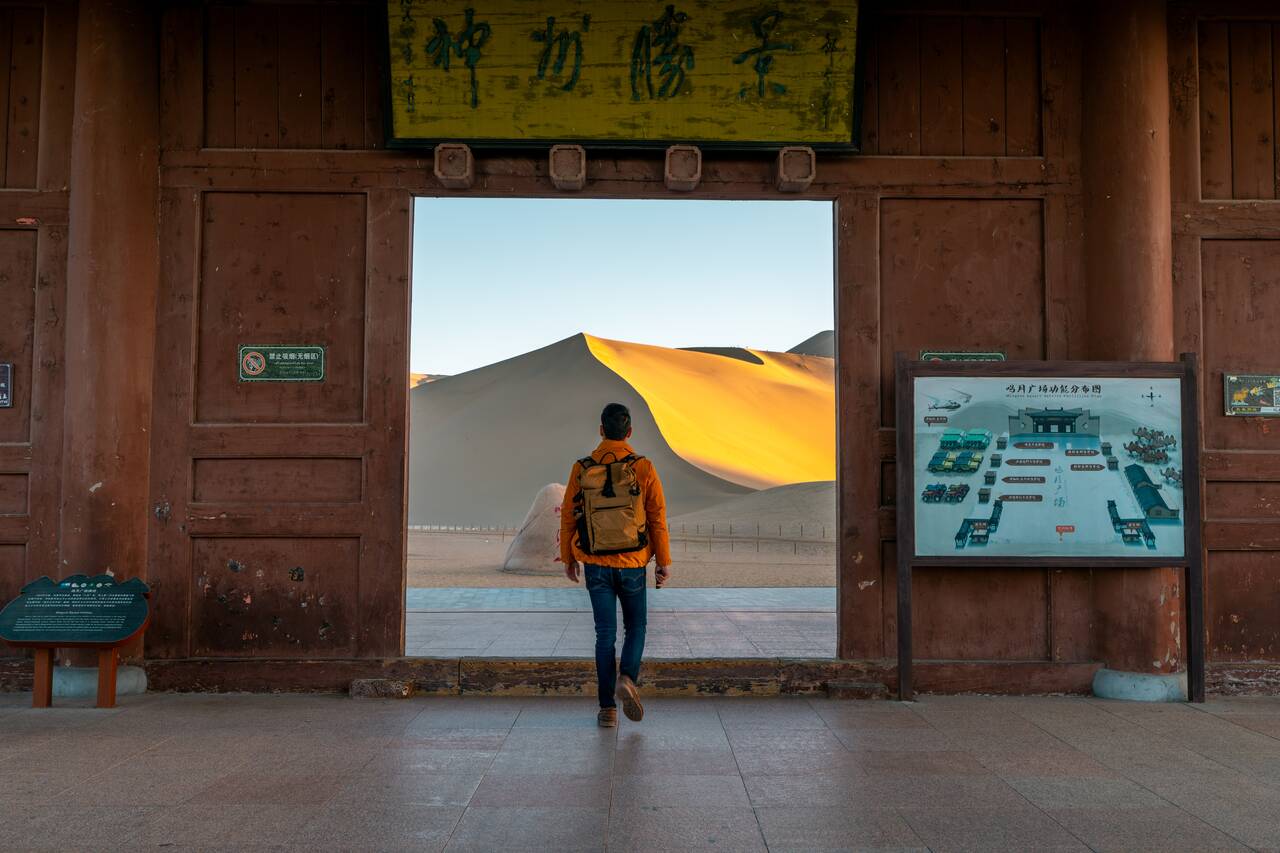
The entry ticket to the park costs 110 CNY, with activities like camel rides charged separately. You can book your ticket online here. The park’s opening hours vary by season, but when I was there, admission was open from 6:30 AM to 6:30 PM. This is the entry window, and you can stay inside later, as I did while waiting for the lights to come on. Since it’s not too far from the city center, you can easily take a DiDi to get here.
3. Explore the Otherworldly Landscapes of Dunhuang Yardang Geopark
- 📍 Location: Dunhuang Yardang Geopark [Map Link]
- 🕐 Opening Hours: 7:30 AM - 5:30 PM
- 💰 Entry Fees: 120 CNY (~18 USD)
- ⚡ Pete's Take: "Sunset here was the highlight of my entire western-route trip. It took a long time to get out there, but watching the light change across the rock formations was one of the most memorable moments of this trip. Definitely worth the long journey!"
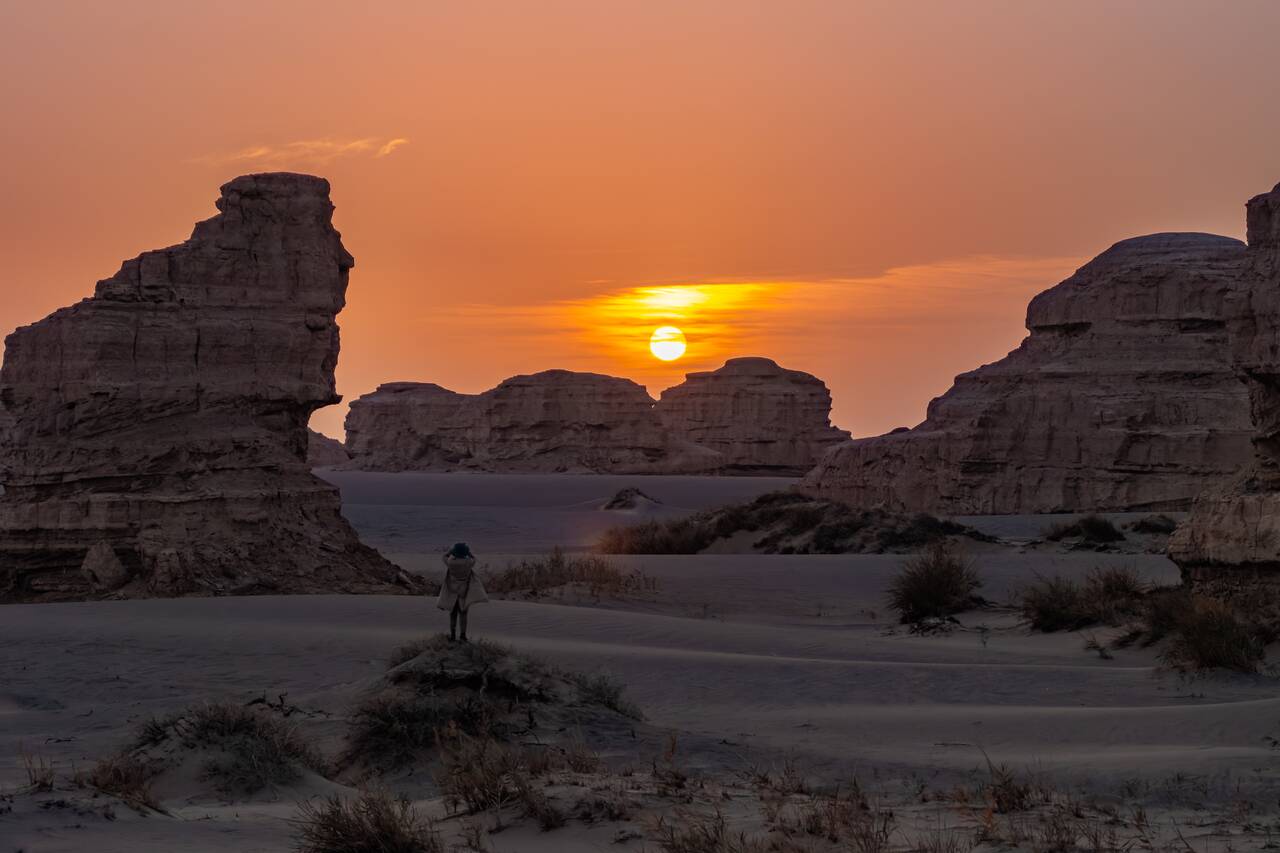
Located near the border between Gansu and Xinjiang, Dunhuang Yardang Geopark is one of the most surreal landscapes I have seen on this trip. With enormous wind-carved formations rising from the barren desert, the place looks almost like the ruins of an ancient city on another planet!
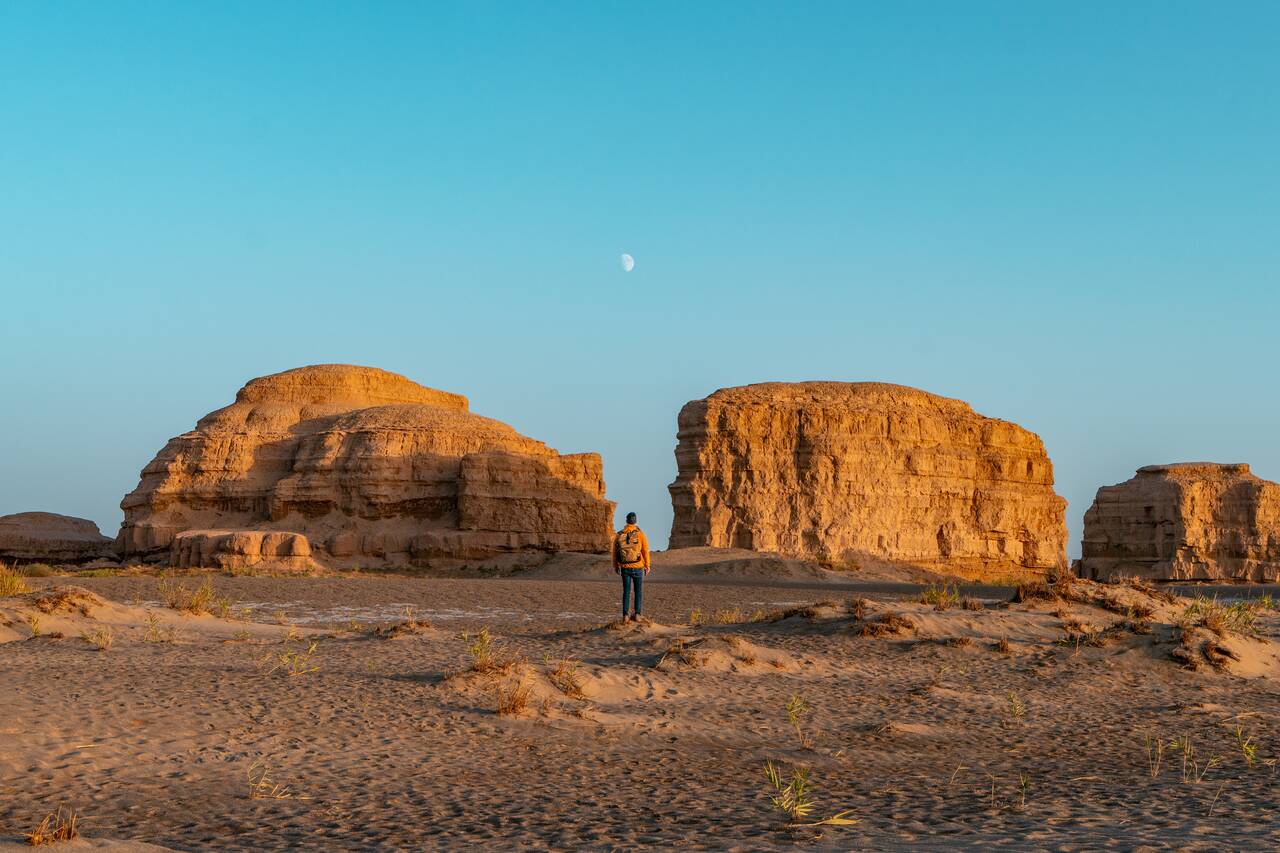
Unlike the historical ruins elsewhere along the western route, these formations are entirely natural. Over hundreds of thousands of years, erosion shaped the desert’s sedimentary deposits into ridges, towers, and unusual shapes known as yardangs. The place is also nicknamed “Devil City”, which seems pretty fitting when you find yourself surrounded by such a strange and desolate landscape.
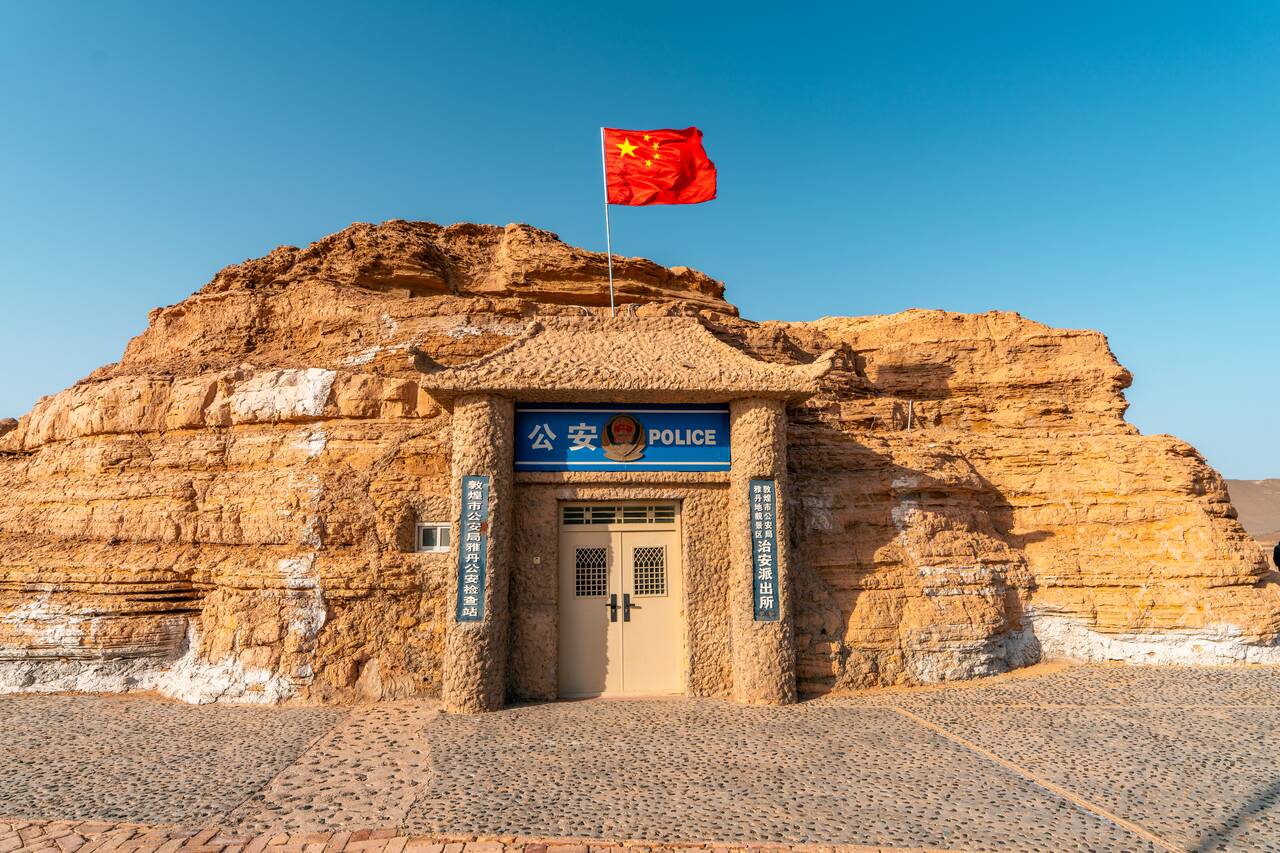
Once you arrive, you will board the park’s shuttle bus, which takes you from one viewing spot to another. During our visit, we stopped by a police station built into a rock formation, rocks resembling a sphinx and a peacock, and several other formations around the park.
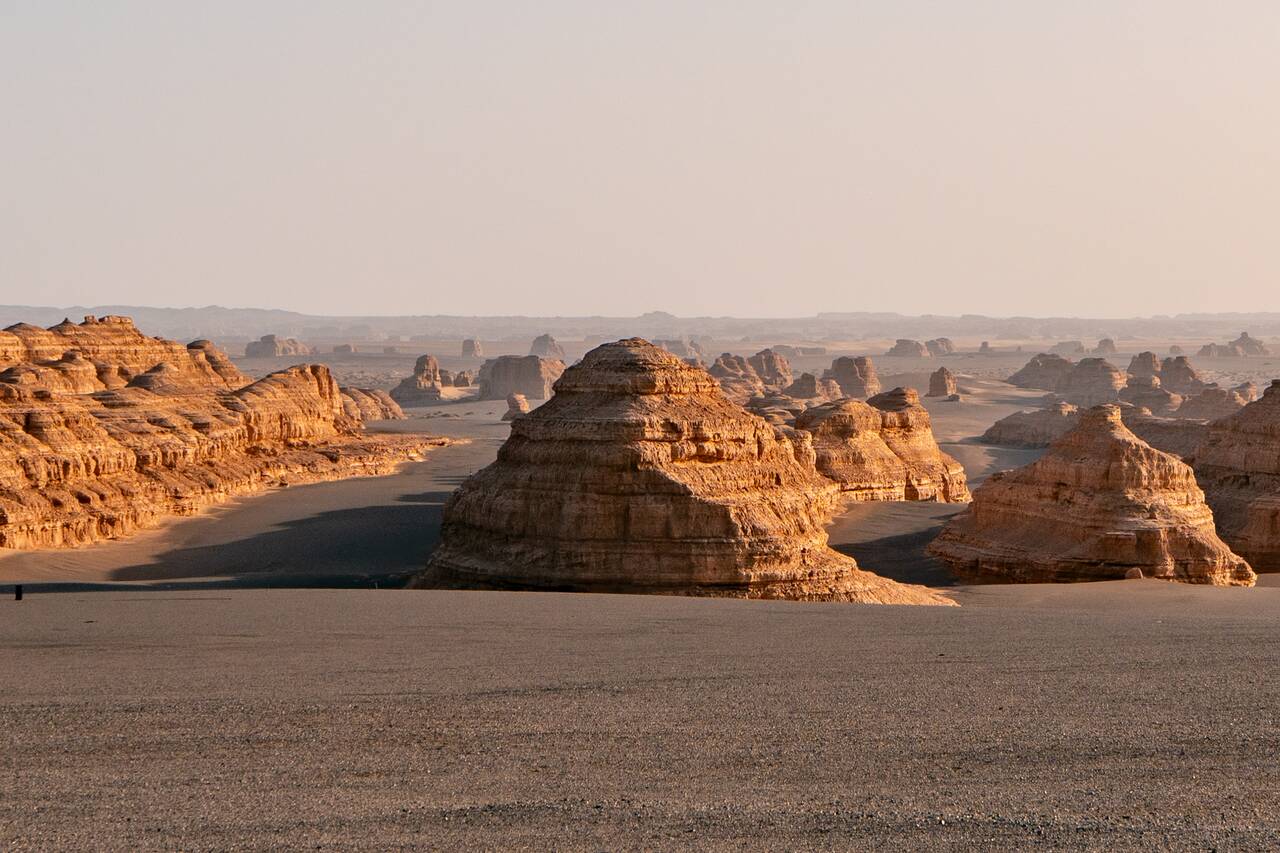
One of my favorite stops was the Western Sea Fleet, where rows of enormous formations stretch across the desert like a fleet of ships sailing through the sea. It was absolutely breathtaking to see, especially with the low evening light bringing out the shapes and shadows. Be sure to spend some time appreciating this one!
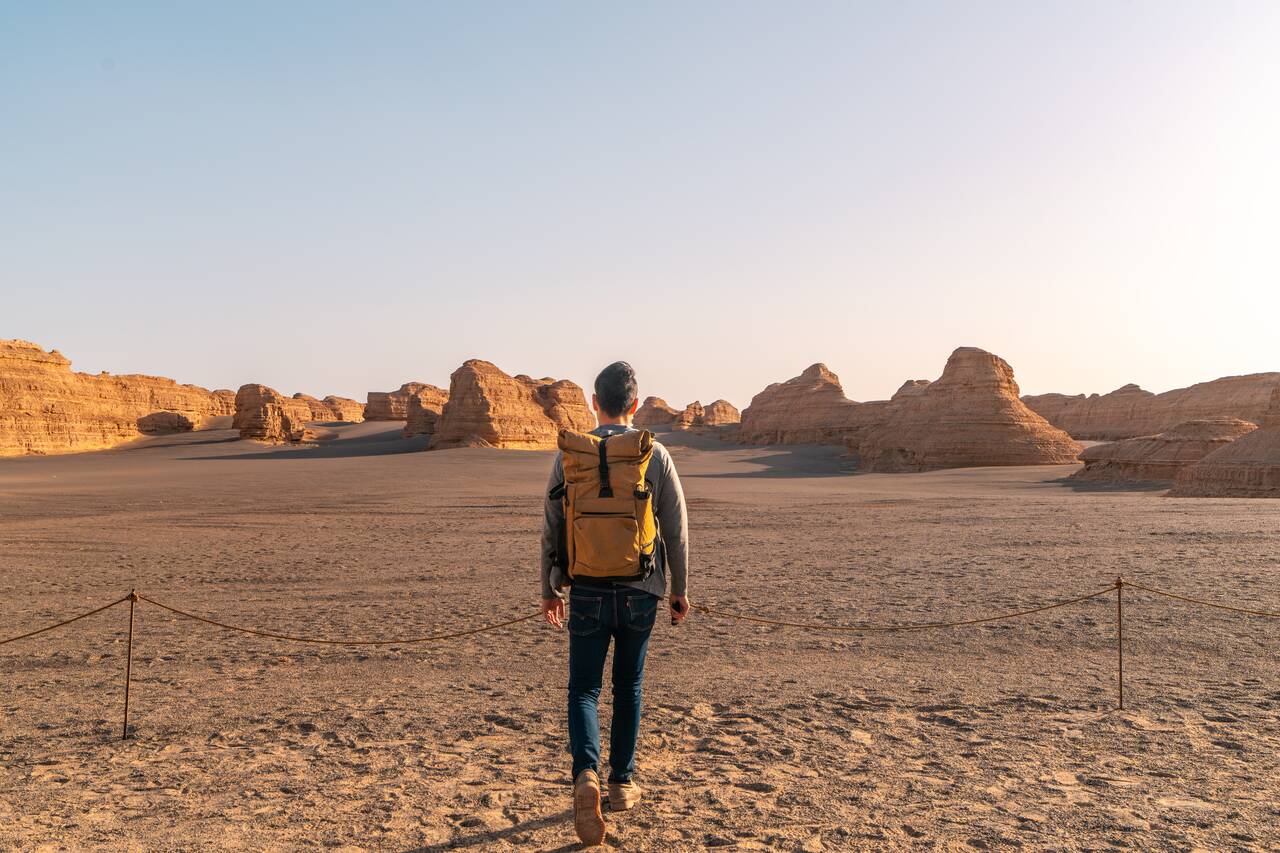
We also stopped at the Shengui Chuhai viewing platform, named after a formation resembling a turtle emerging from the sea, before heading to our final stop near the formation called the Statue of a Great Man. This is where you will be watching the sunset.
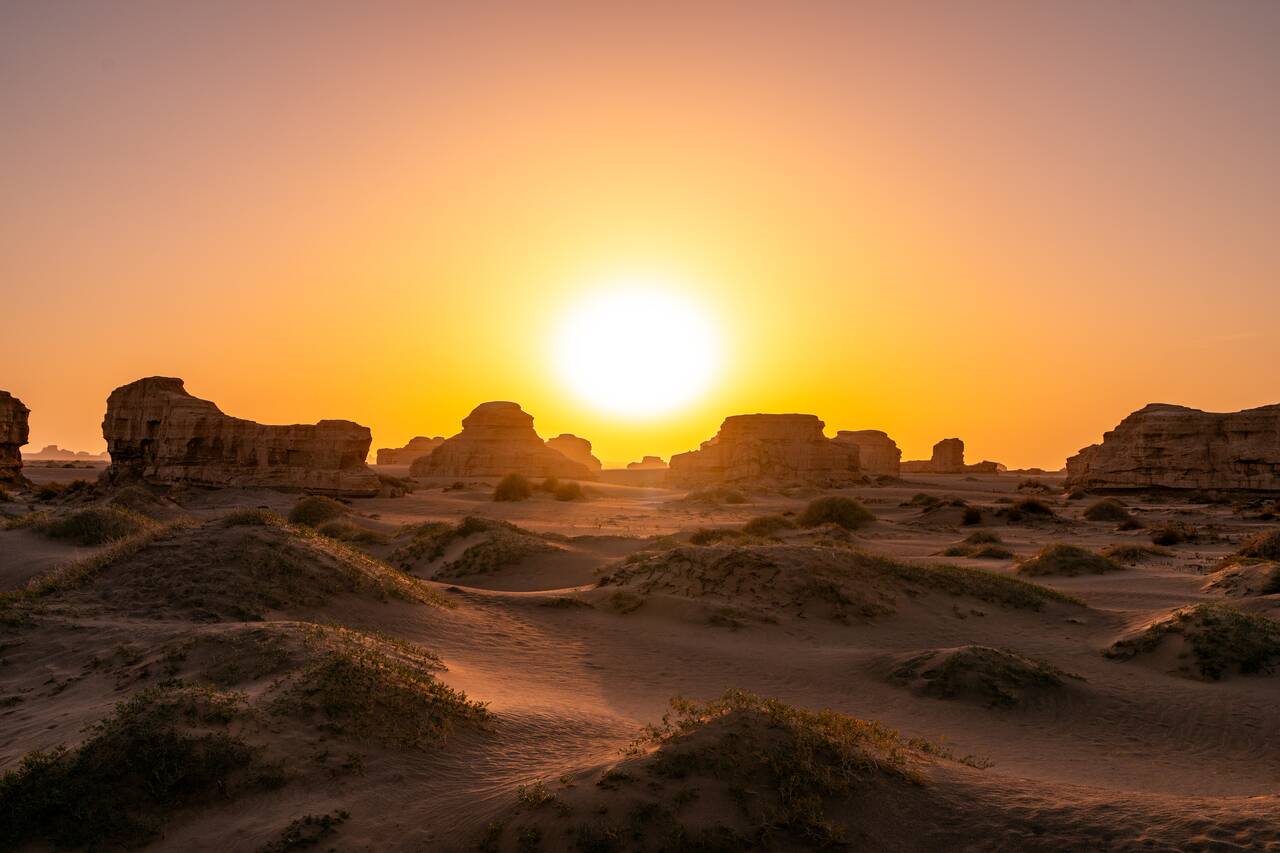
We were there from around 6 PM to 7 PM for sunset, and it was incredible! Watching the light change across those strange formations, with nothing but desert stretching into the distance, was definitely the highlight of the entire western-route trip for me. It is a long journey to get here, but the sunset alone made it worthwhile.
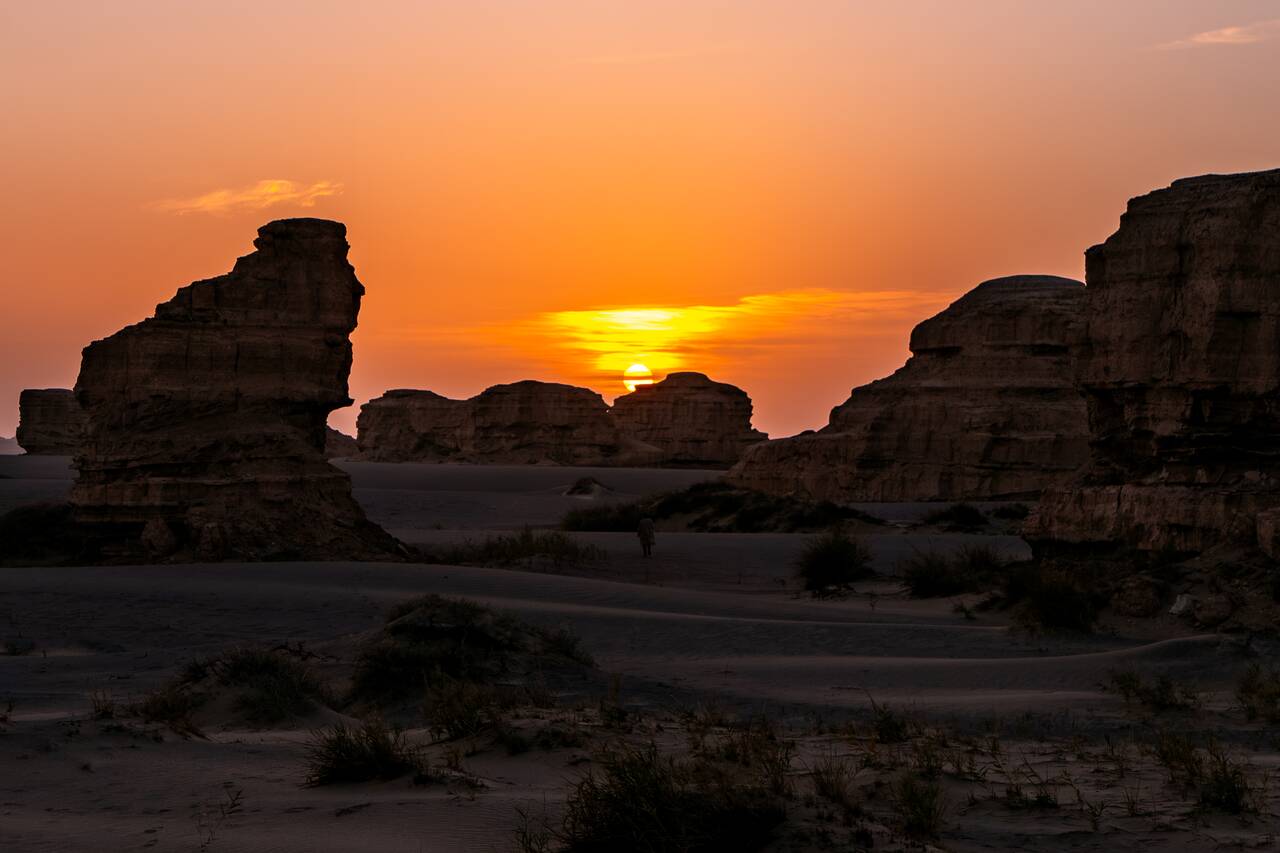
Dunhuang Yardang Geopark was the last stop on this western-route day tour I took, which also visits places like Yangguan Pass and Yumen Pass, which we will discuss next. For a solo traveler like me, it was an easy and affordable way to explore these widely scattered attractions without arranging a private car. Just be prepared for a long day, leaving around 8 AM and returning to Dunhuang late at night.
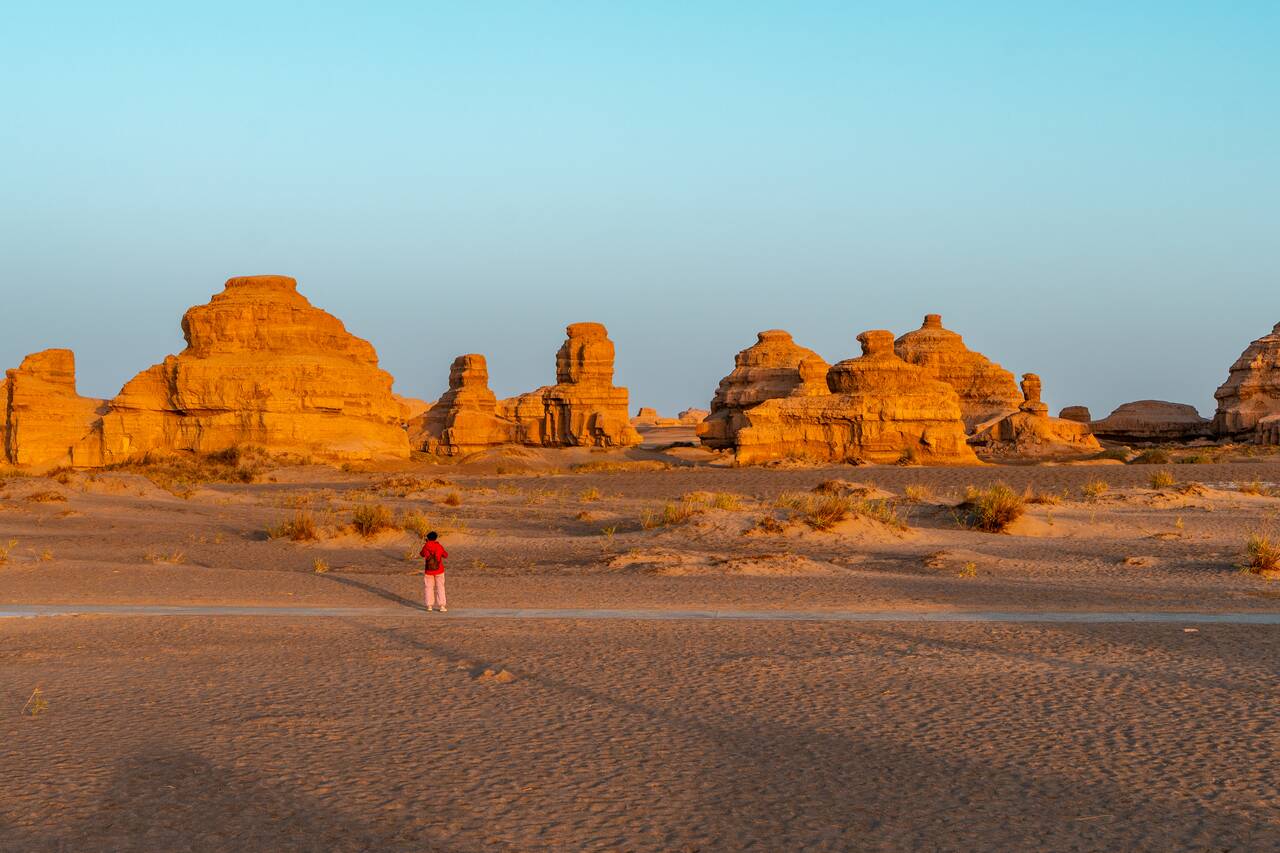
The entry ticket costs 50 CNY, plus 70 CNY for the park’s mandatory sightseeing bus, bringing the total to 120 CNY. This is separate from your tour from Dunhuang unless your tour package explicitly includes it, so check before booking.
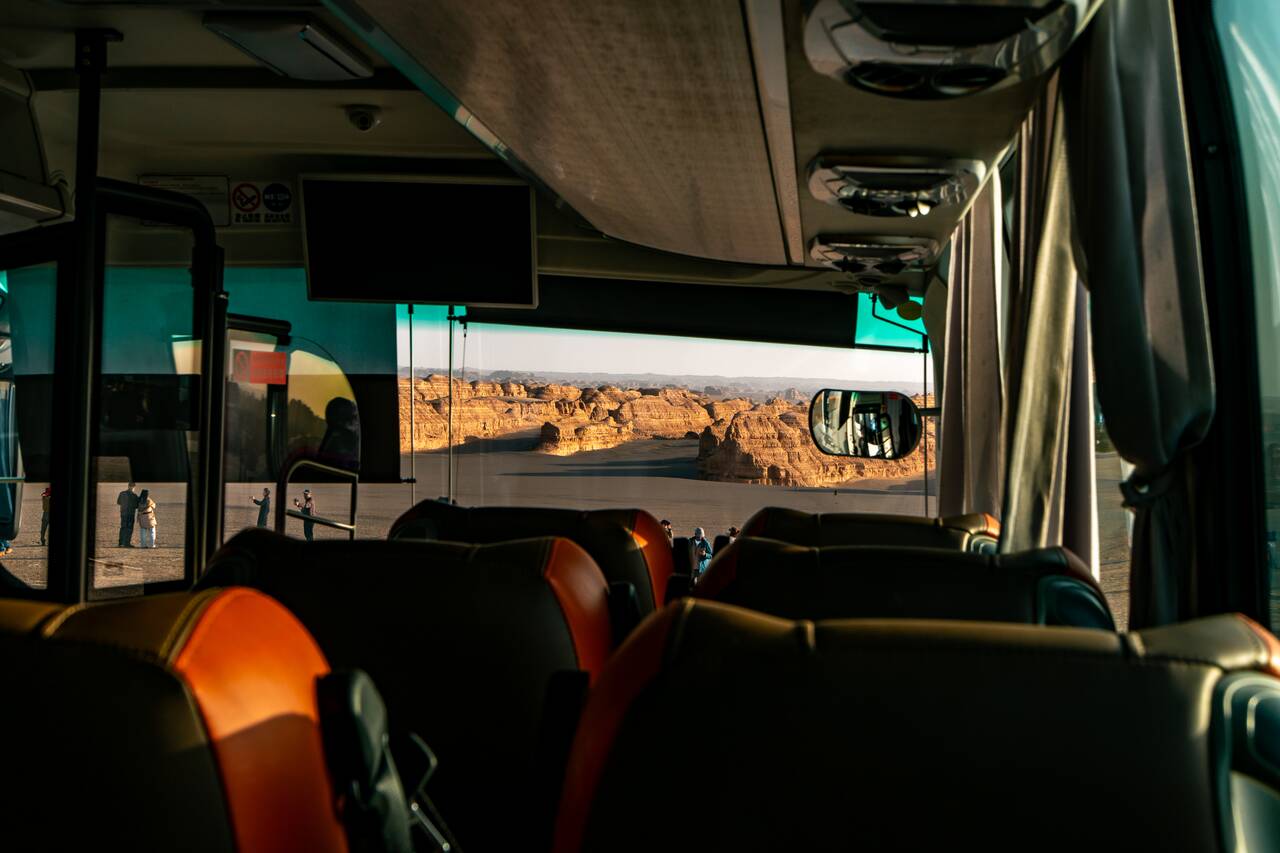
The park opening hours vary season by season but last I checked, it was open from 7:30 AM to 5:30 PM, with sunset buses departing between 4 PM and 5:30 PM. Summer hours extend later, so confirm the schedule for your travel date and make sure your tour includes the sunset visit. Pack layers as well, as it can get cold and windy out here!
4. Discover the Silk Road History of Yumen Pass
- 📍 Location: Yumen Pass [Map Link]
- 🕐 Opening Hours: 8:30 AM - 7 PM
- 💰 Entry Fees: 90 CNY (~13 USD)
- ⚡ Pete's Take: "For me, the appeal of Yumen Pass wasn’t seeing perfect buildings; it was seeing what’s left of these old Silk Road gateways and passes after over 2000 years."
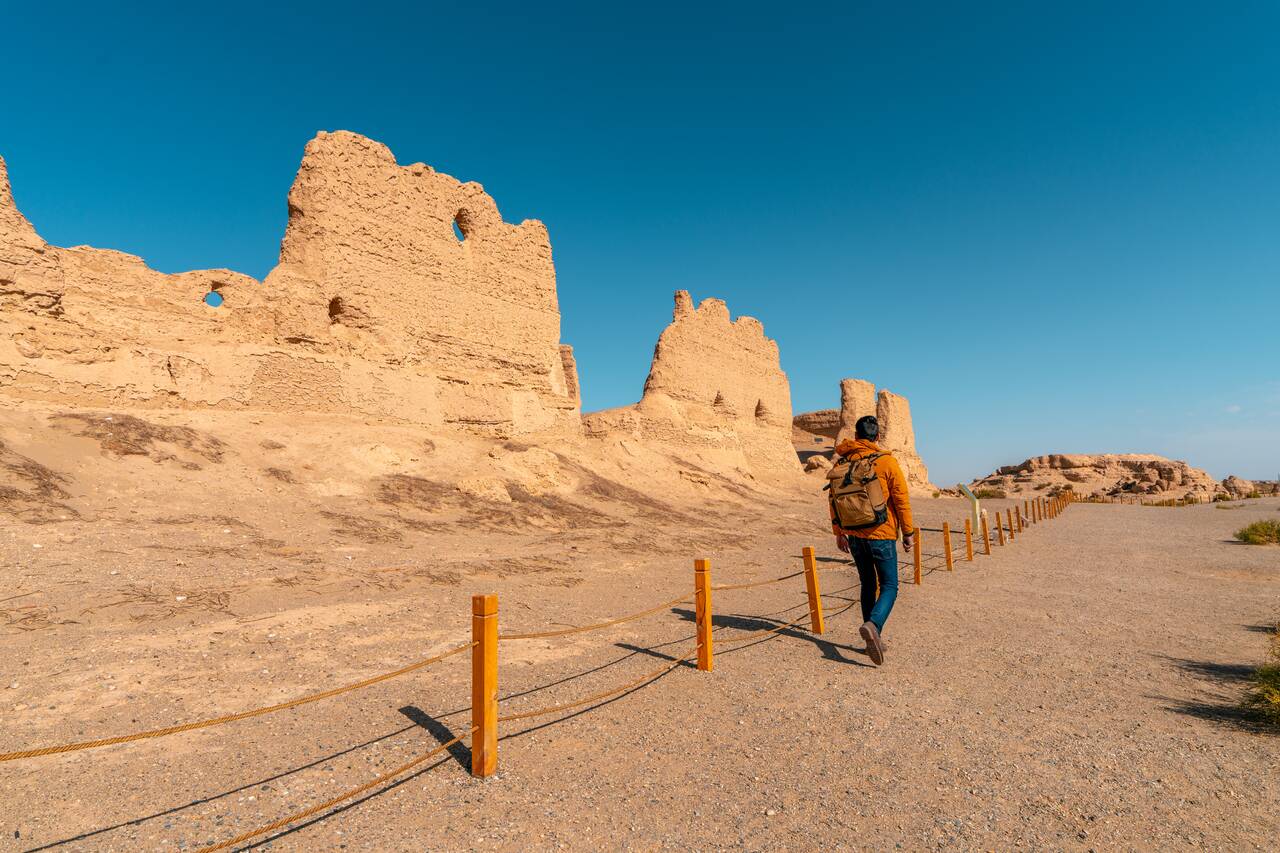
The third stop on this western-route tour was Yumen Pass, a great place to walk around and see historical sites dating back more than 2,000 years. Also known as the Jade Gate Pass, it was an important gateway between Han dynasty China and the Western Regions, modern day Central Asia, where merchants, soldiers, and travelers passed through along the Silk Road.
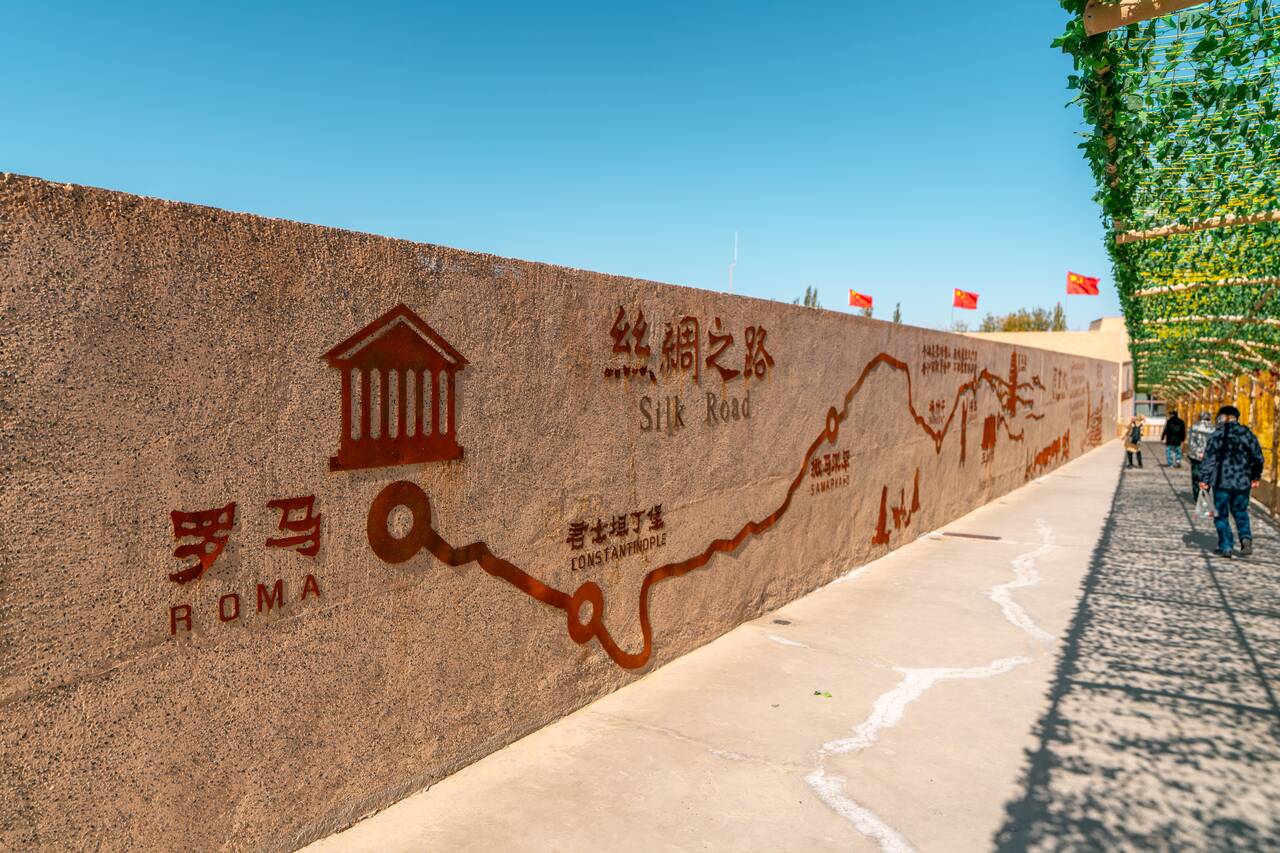
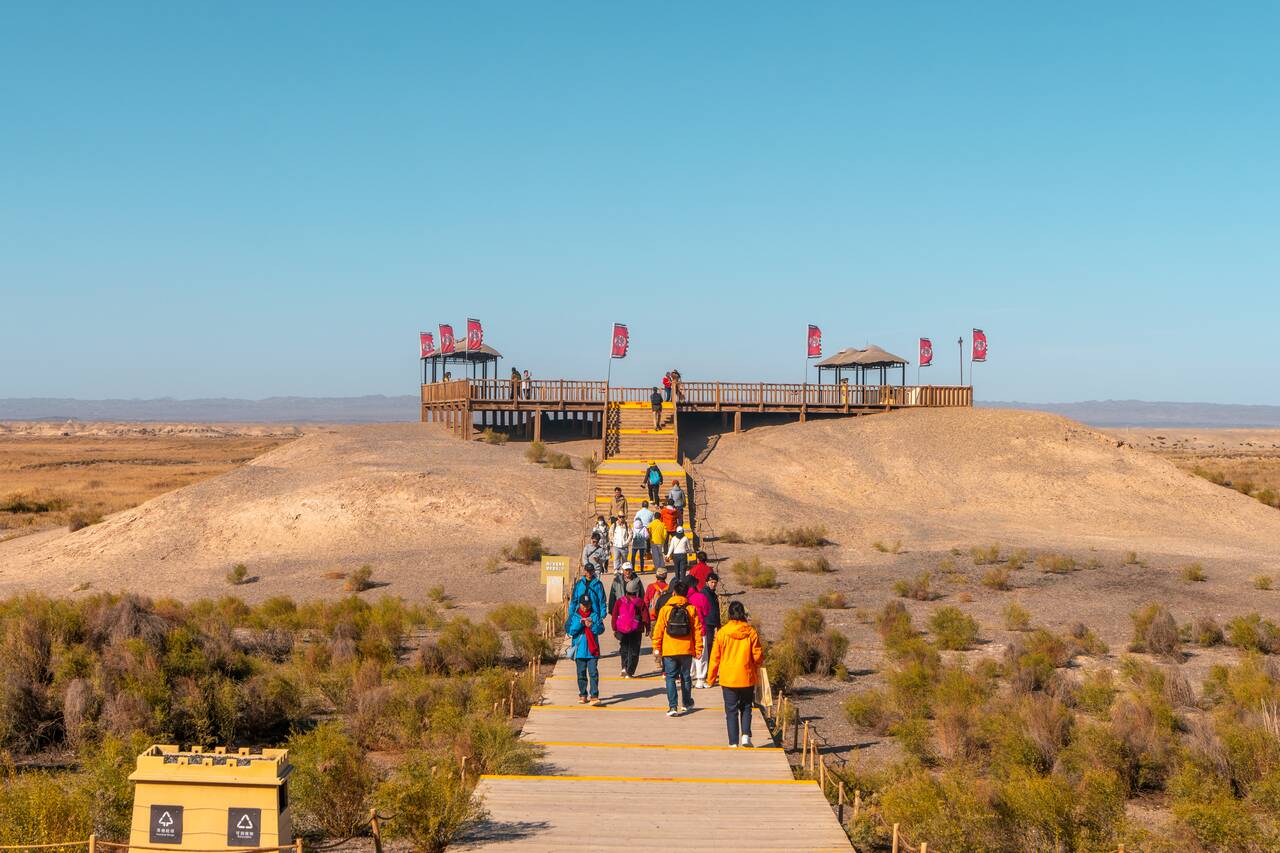
The scenic area has three main stops: Xiaofangpan Fortress, the Han Great Wall, and the Hecang granary ruins. They are spread quite far apart, so you will need to take the park’s sightseeing shuttle to explore them all.
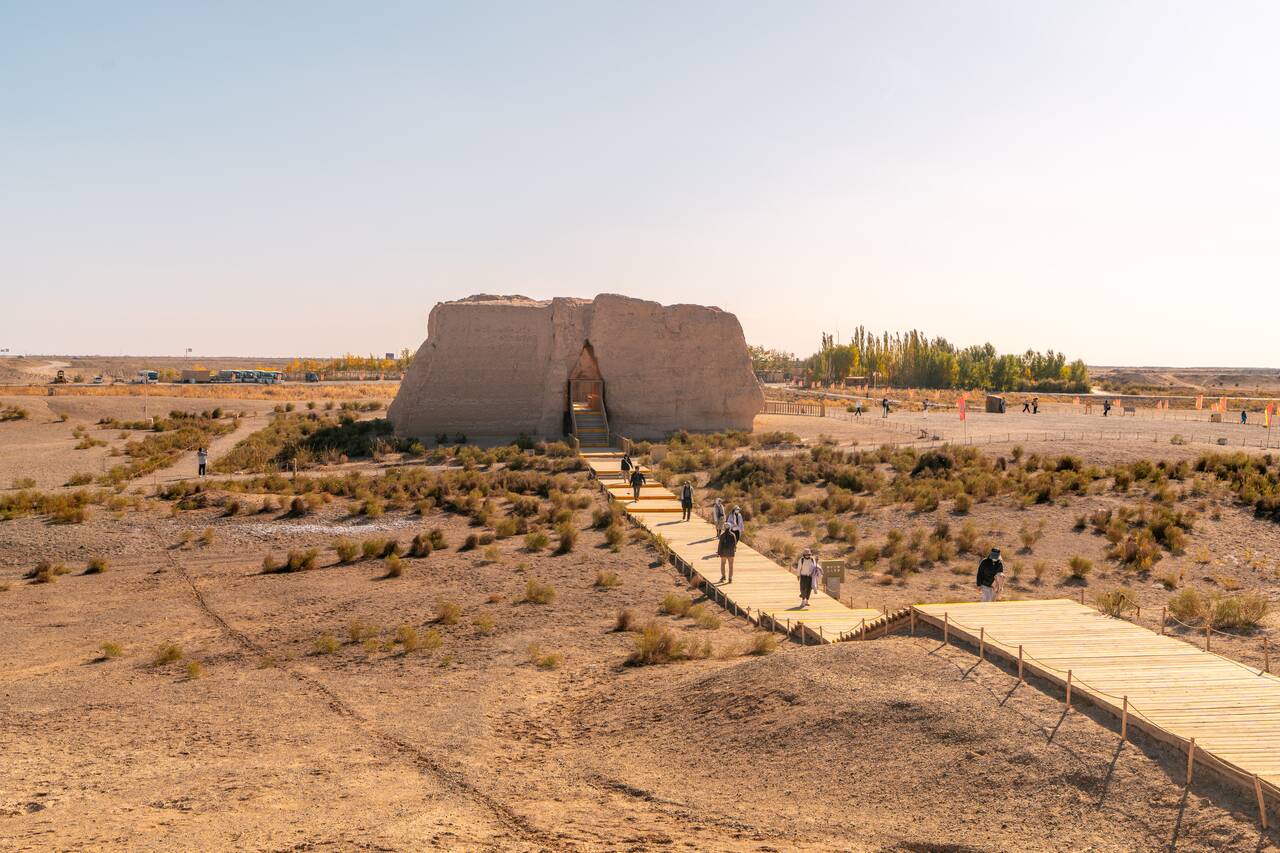
The first landmark is Xiaofangpan Fortress, the square rammed-earth structure commonly identified as Yumen Pass. This was part of the frontier system that controlled movement between the empire and the lands beyond it.
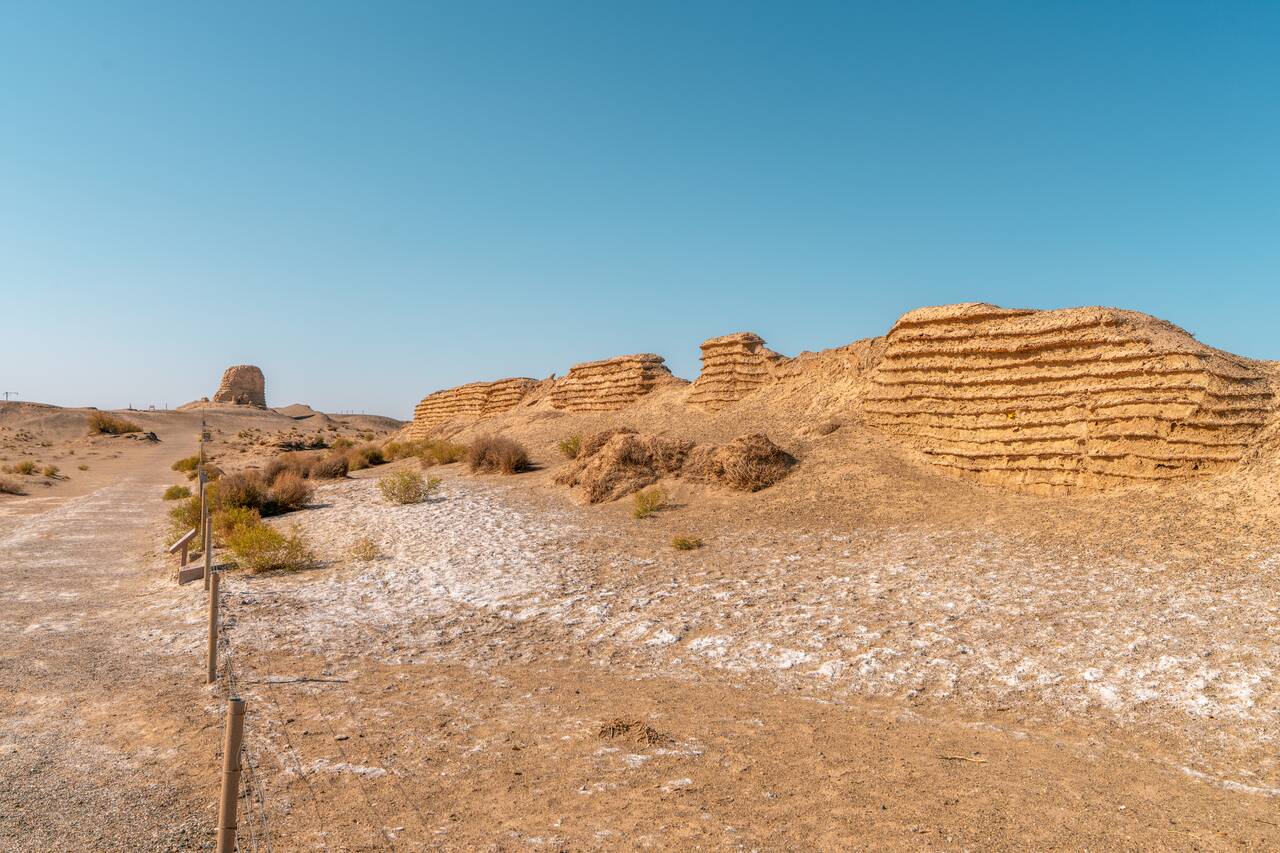
You will also stop at the Han Great Wall, which looks very different from the restored brick walls near Beijing of the Ming Dynasty. Instead of brinks, this one was built using layers of local materials such as earth, gravel, and reeds, and they were built to helped protect the frontier and the routes passing through it.
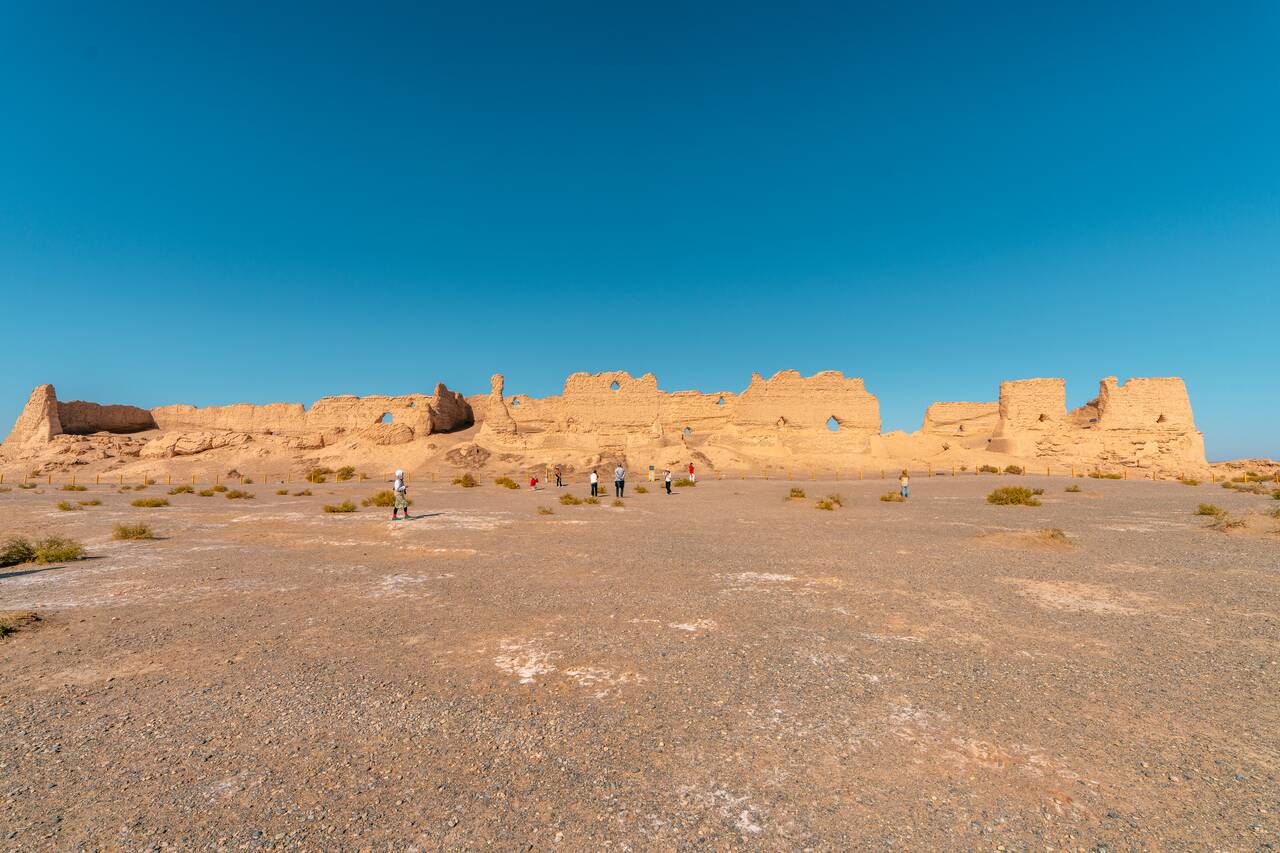
Last but not least is Hecang Granary Ruins, which was probably the most impressive ruin here for me. This was an important military granary, storing supplies for the soldiers stationed along the frontier. Large sections of its earthen walls are still standing, and you can make out the remains of the separate storage chambers as you walk around.
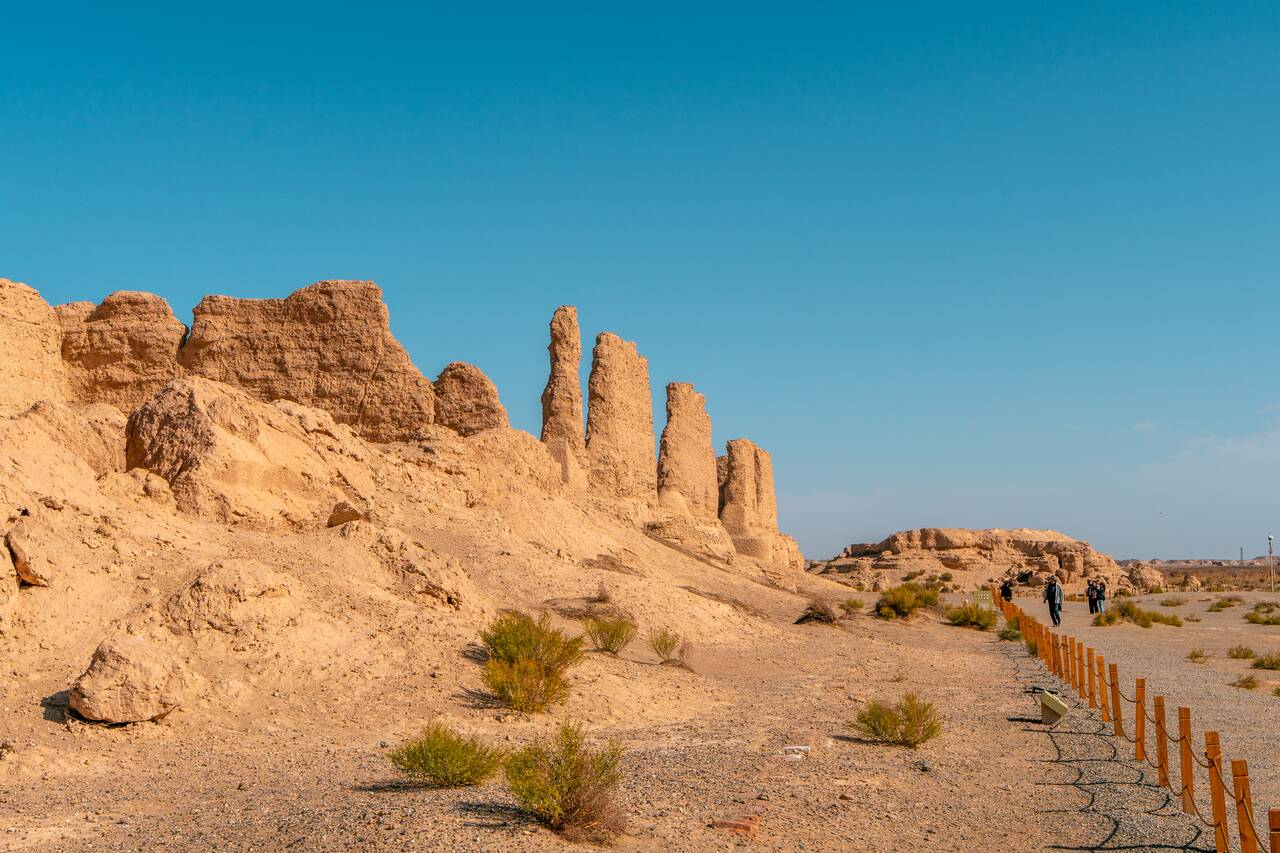
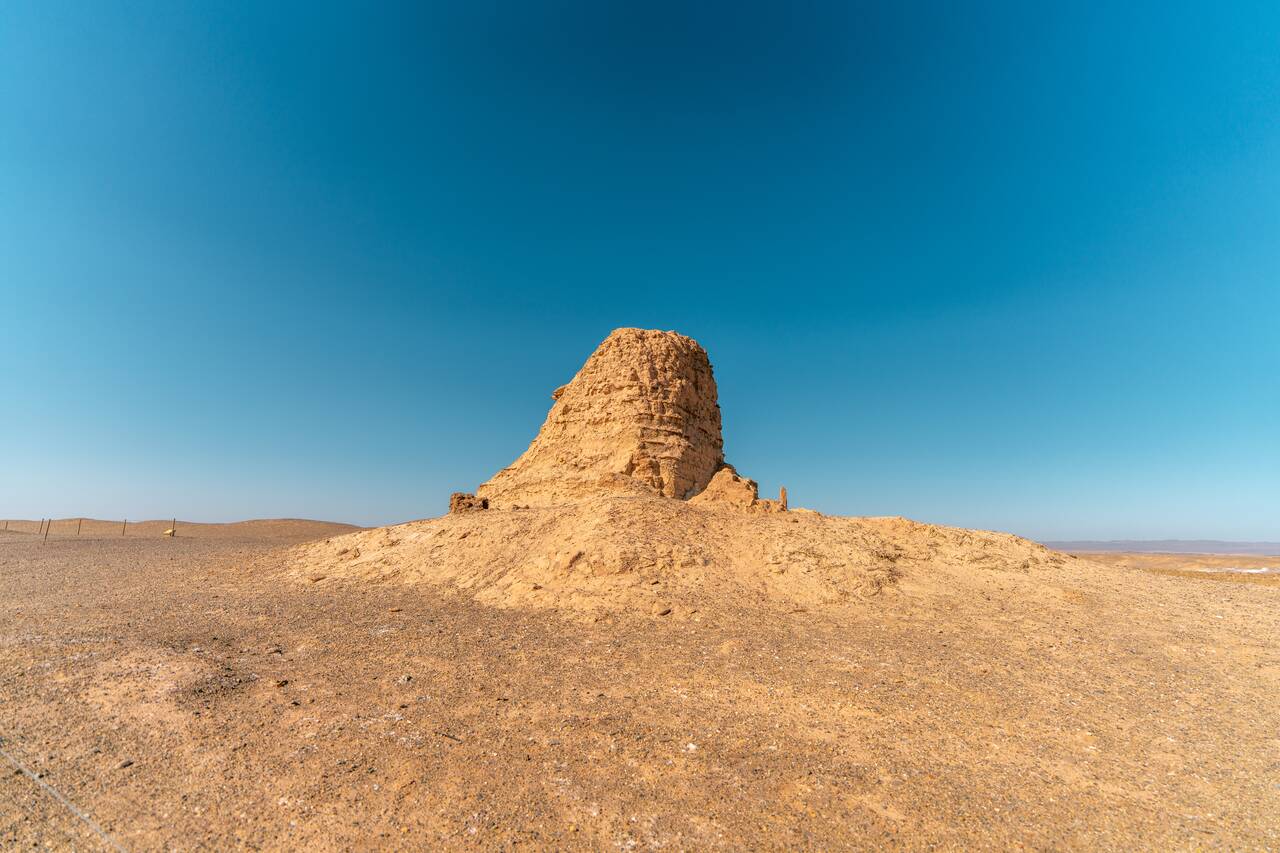
Keep in mind that these structures are more than 2,000 years old, so don’t expect complete buildings or grand reconstructed palaces. Much of what you see is weathered earth and crumbling walls. The appeal is in their history and the fact that they are still standing out here after all this time!
The easiest way to fit this into your trip is to join the western-route day tour here, combining it with Yangguan Pass, the Western Thousand Buddha Caves, and sunset at Yardang Geopark. That's how I was able to see all of these places in one day.
The entry fee to Yumen Pass is 40 CNY, with an additional 50 CNY for the park's shuttle, bringing the total to 90 CNY. Again, most tours from Dunhuang don't include entry tickets to attractions, so be sure to budget that in. The place is open from around 8:30 AM to 7 PM in spring to 8 AM to 8 PM in summer, but they can vary, so be sure to check beforehand if you are visiting independently.
5. Visit Yangguan Pass
- 📍 Location: Yangguan Pass [Map Link]
- 🕐 Opening Hours: 8:30 AM - 7 PM
- 💰 Entry Fees: 50 CNY (~7 USD)
- ⚡ Pete's Take: "Of the three sightseeing stops, the beacon tower was the only one I thought was really worth spending time at; you can skip the other two stops."
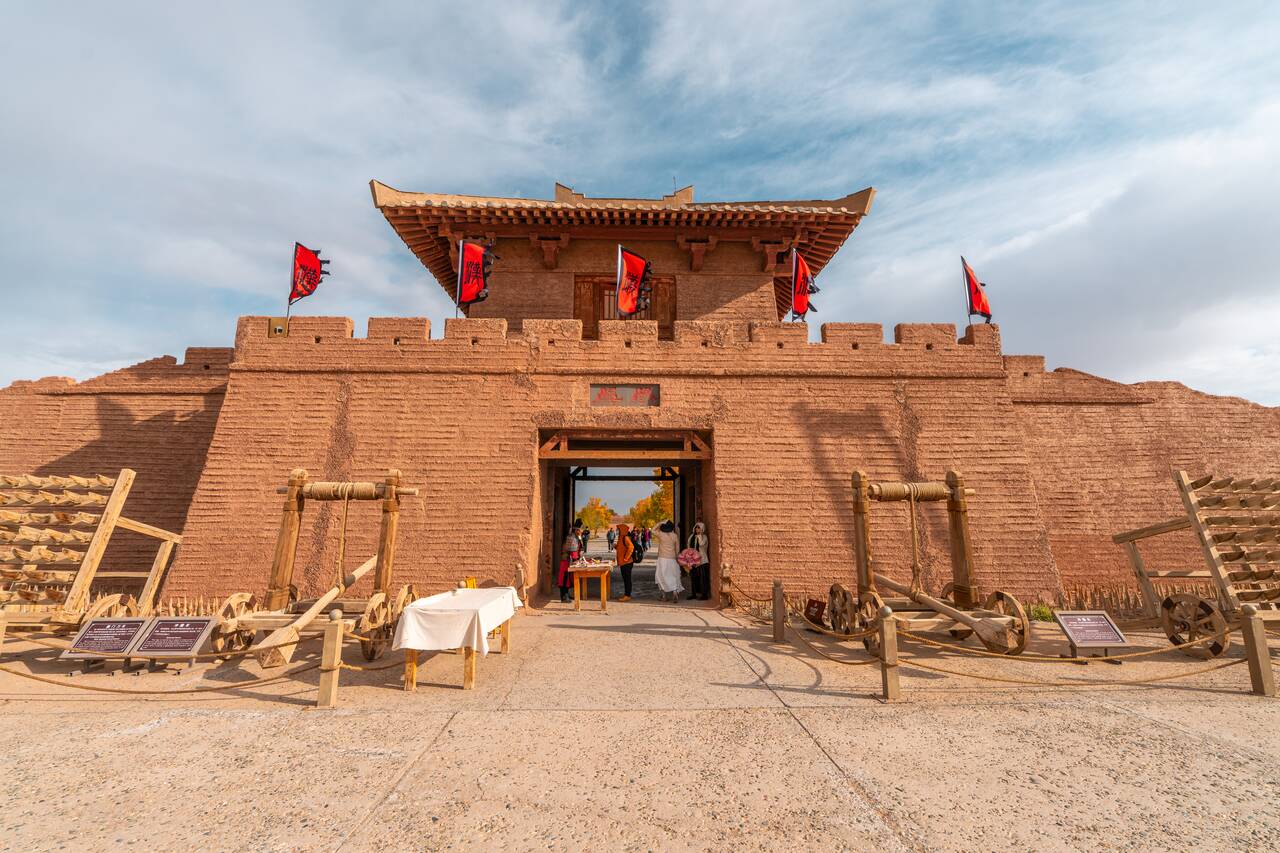
Yangguan Pass is another important gateway along the ancient Silk Road and the second stop if you decide to go with this tour, as I did. Established during the Western Han dynasty, it controlled access to the southern route heading west from Dunhuang, while Yumen Pass served the northern route. It is basically a sister pass to Yumen Pass.
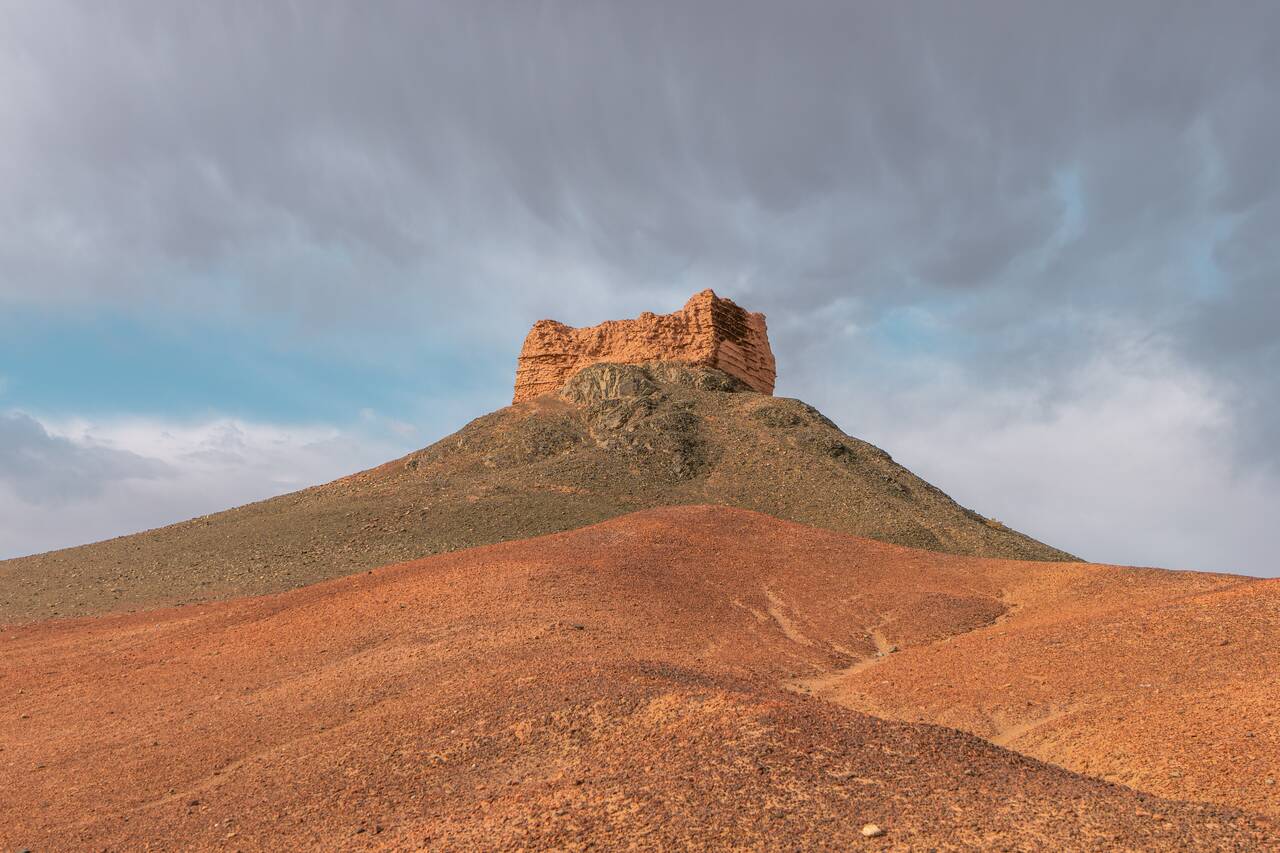
Much of what you see around the entrance today is reconstructed, so it might feel a little less authentic than the ruins at Yumen Pass. That said, the highlight here is the surviving Han dynasty beacon tower, standing on a hill overlooking the desert. It once formed part of a warning system that used smoke and fire to send signals between frontier outposts.
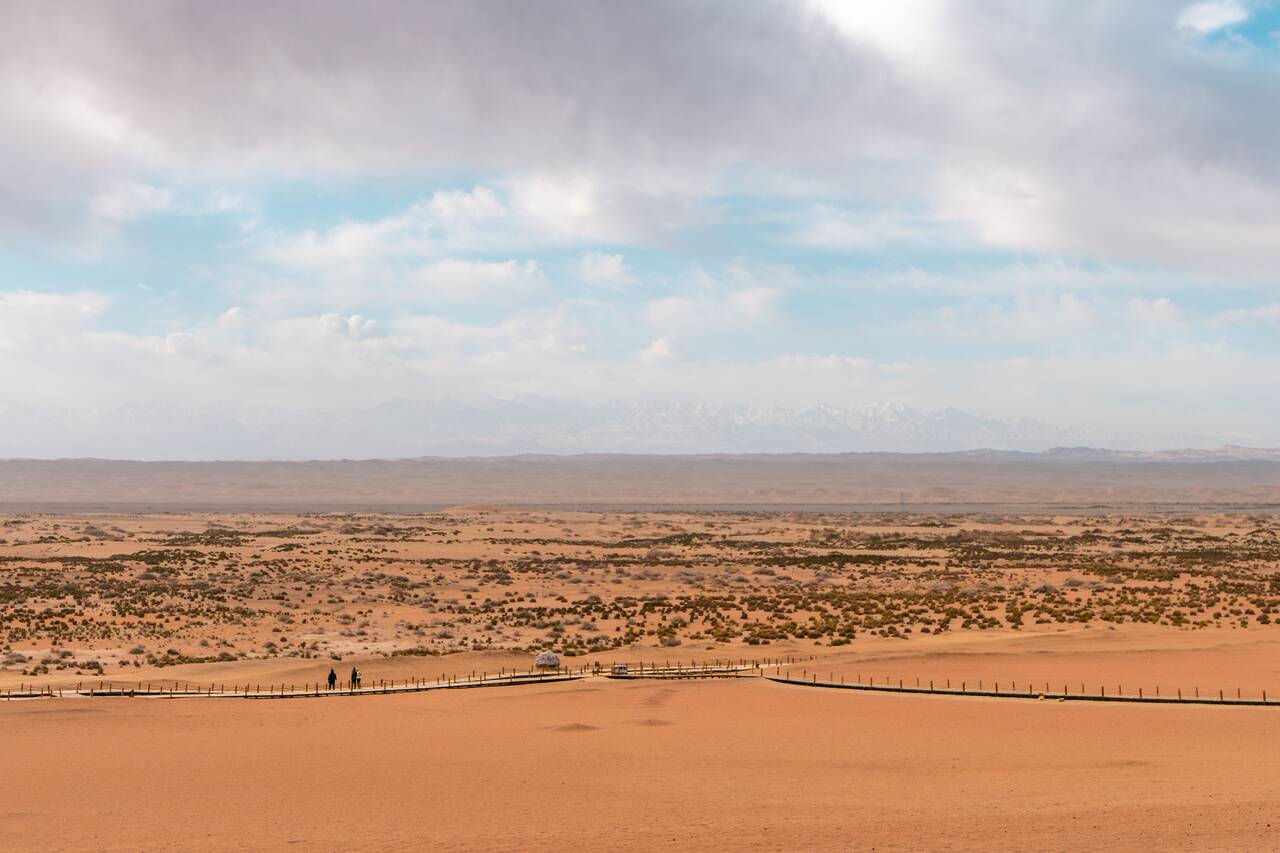
Seeing the ruined tower still standing after more than 2,000 years was pretty incredible. You can also walk along a stretch of the ancient Silk Road trail, which, as a history buff, I found particularly interesting. There isn’t much left to see along the path itself, but you can almost picture all the people and caravans that once traveled through this landscape as you walk. I love it!
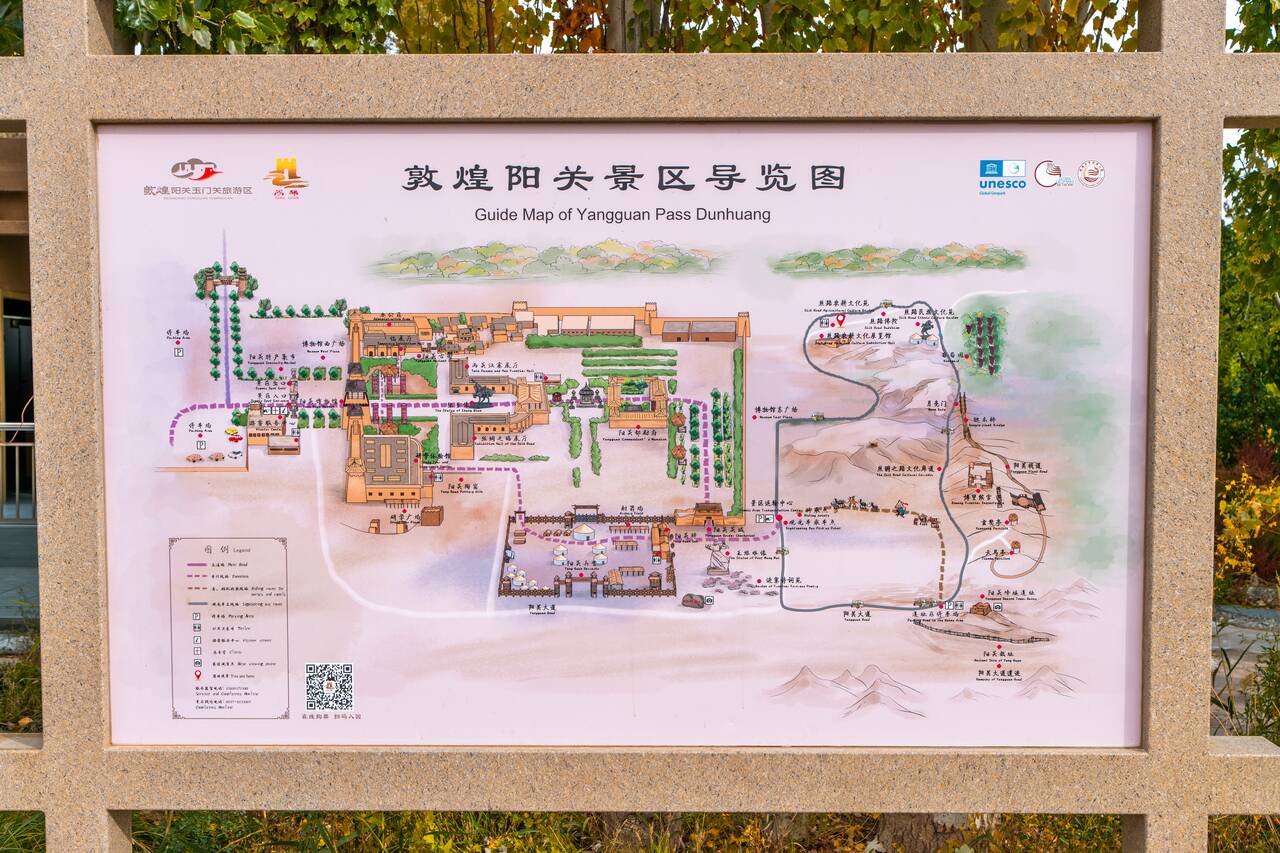
There are 3 main stops on the sightseeing route, but the only one I thought was really worth spending time at was the beacon tower. The other stops were a museum and a yurt, which you can skip if they don’t interest you. Personally, I would focus on the historical remains and the desert views around the tower.
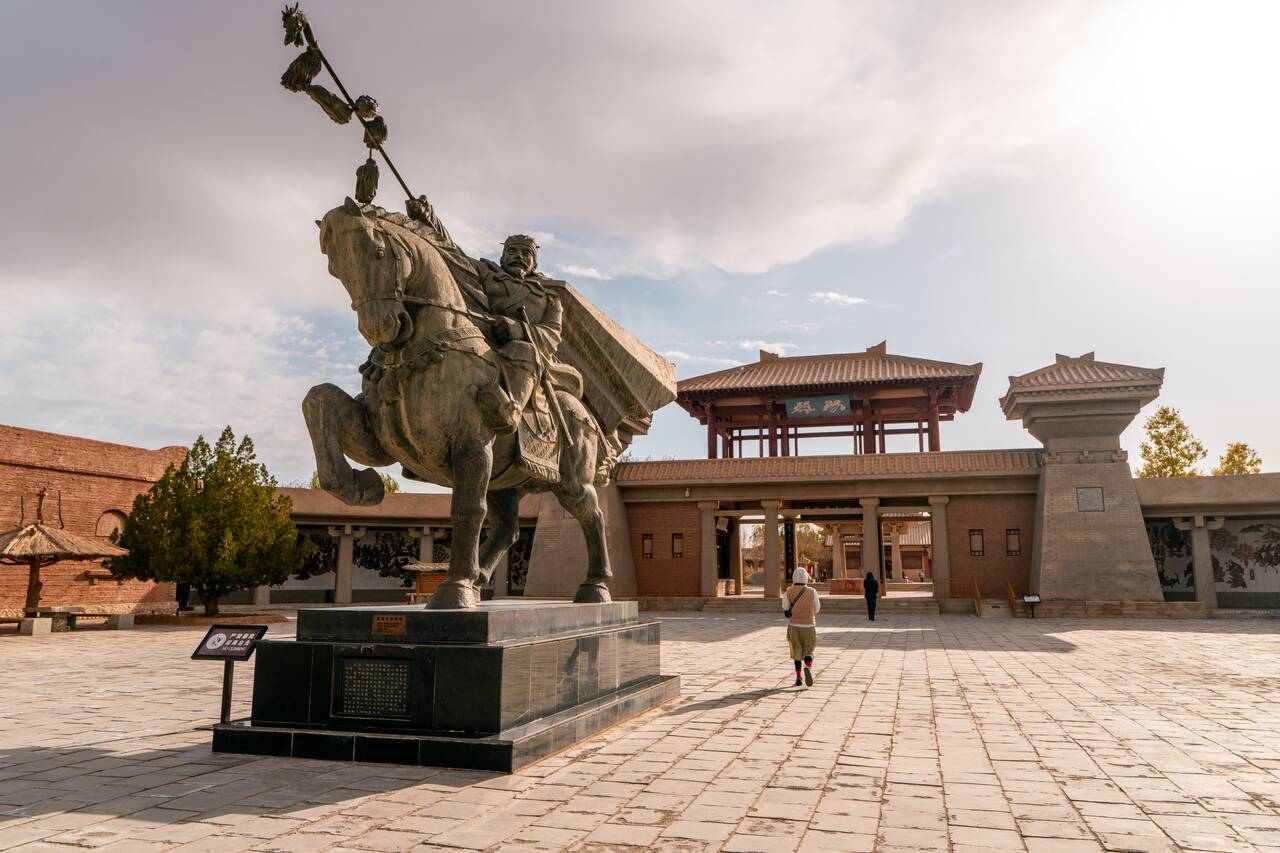
You can visit as part of this full-day western-route tour, combining it with the Western Thousand Buddha Caves, Yumen Pass, and sunset at Yardang Geopark. It makes getting between these faraway attractions much easier, especially if you are traveling solo as I do.
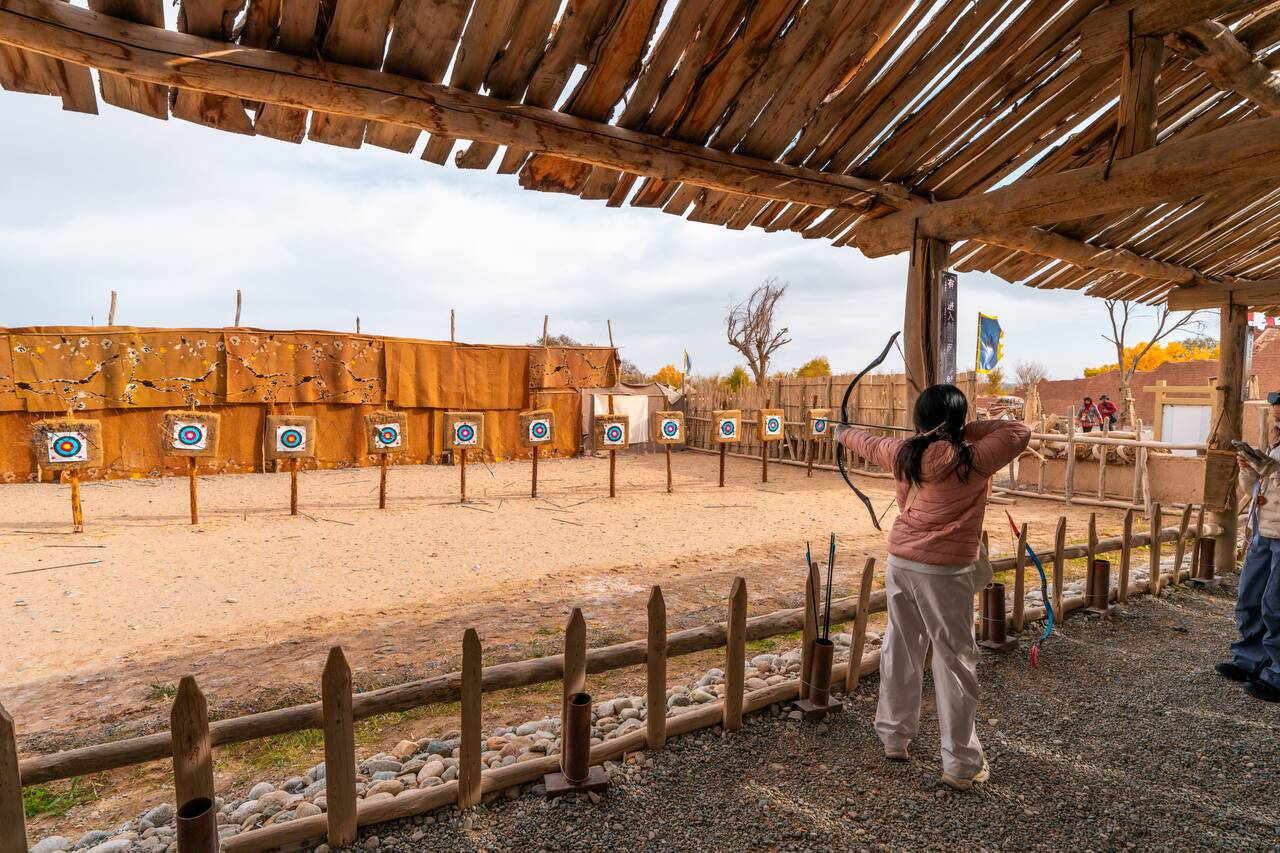
The entrance ticket here costs 50 CNY, with the park’s sightseeing vehicle charged separately at 10 CNY. It is open from 8:30 AM to 7 PM in spring and 8 AM to 8 PM in summer, although hours can change with the season, so keep that in mind if you are planning to visit independently.
6. Step Inside the Western Thousand Buddha Caves
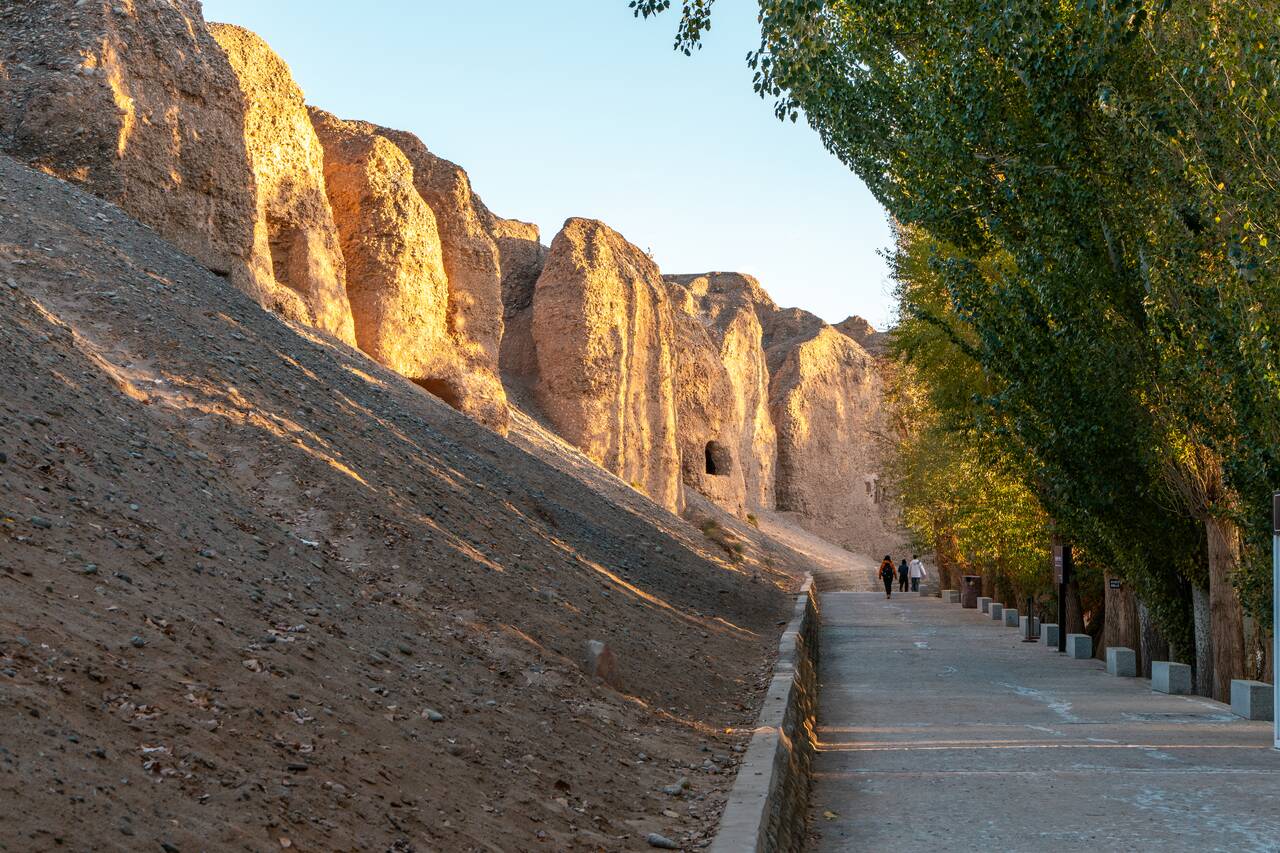
- 📍 Location: The Western Thousand Buddha Caves [Map Link]
- 🕐 Opening Hours: 8:30 AM - 5:30 PM
- 💰 Entry Fees: 30 CNY (~4 USD)
- ⚡ Pete's Take: "This is a great alternative to the Mogao Caves if you are unable to book it in time or are looking for a less crowded experience. You will have a pretty similar experience here."
The Western Thousand Buddha Caves is a cave complex with painted Buddhist sculptures and murals similar to those at Mogao, but with fewer caves to explore. It is also the first stop if you decide to go on the same Yumen Tour as I did.
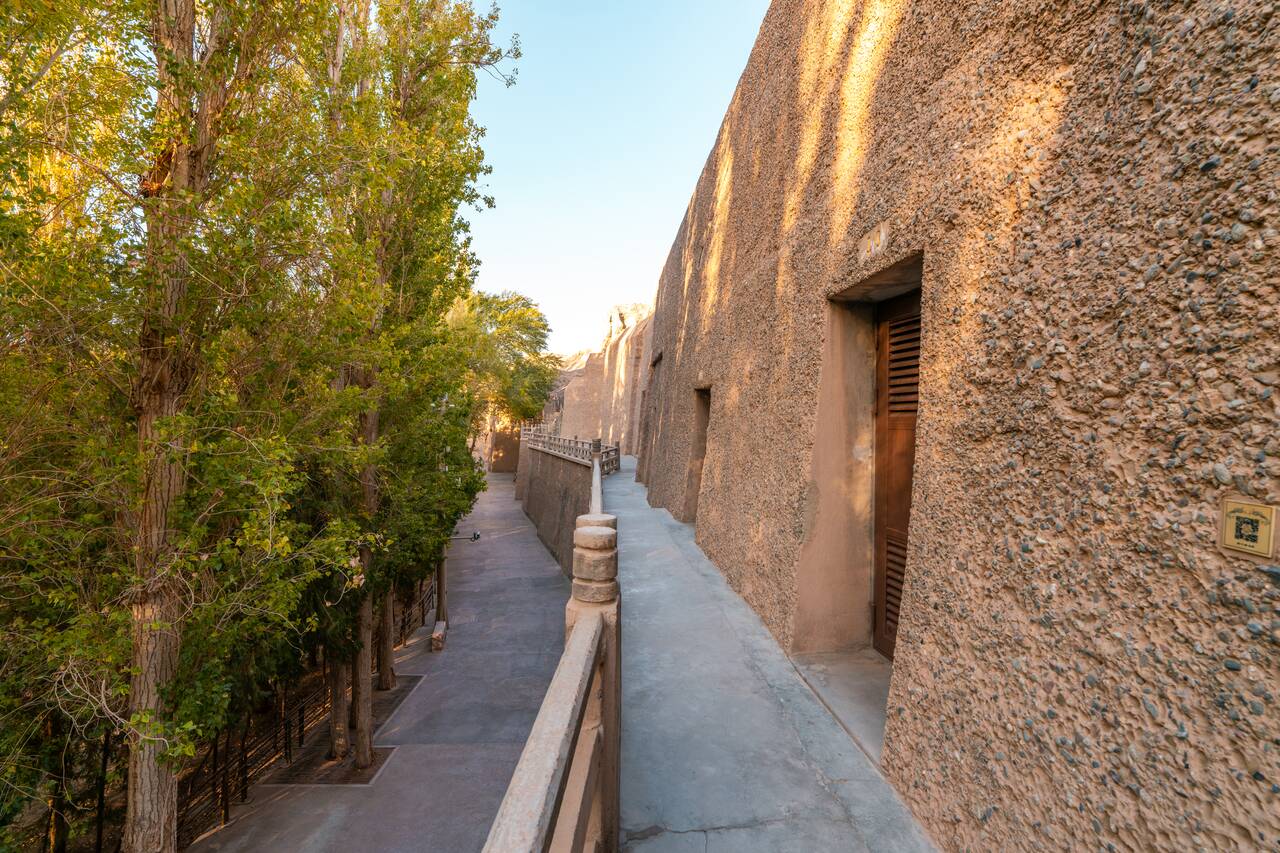
If Mogao Caves are fully booked during your visit, or you prefer somewhere quieter to appreciate these stunning sculptures and murals in peace, this is a great alternative. You won’t get the same extensive experience as at Mogao, with its presentations and films, but those felt more like distractions to me. The main highlights are the sculptures and murals, and there are plenty of those here too.
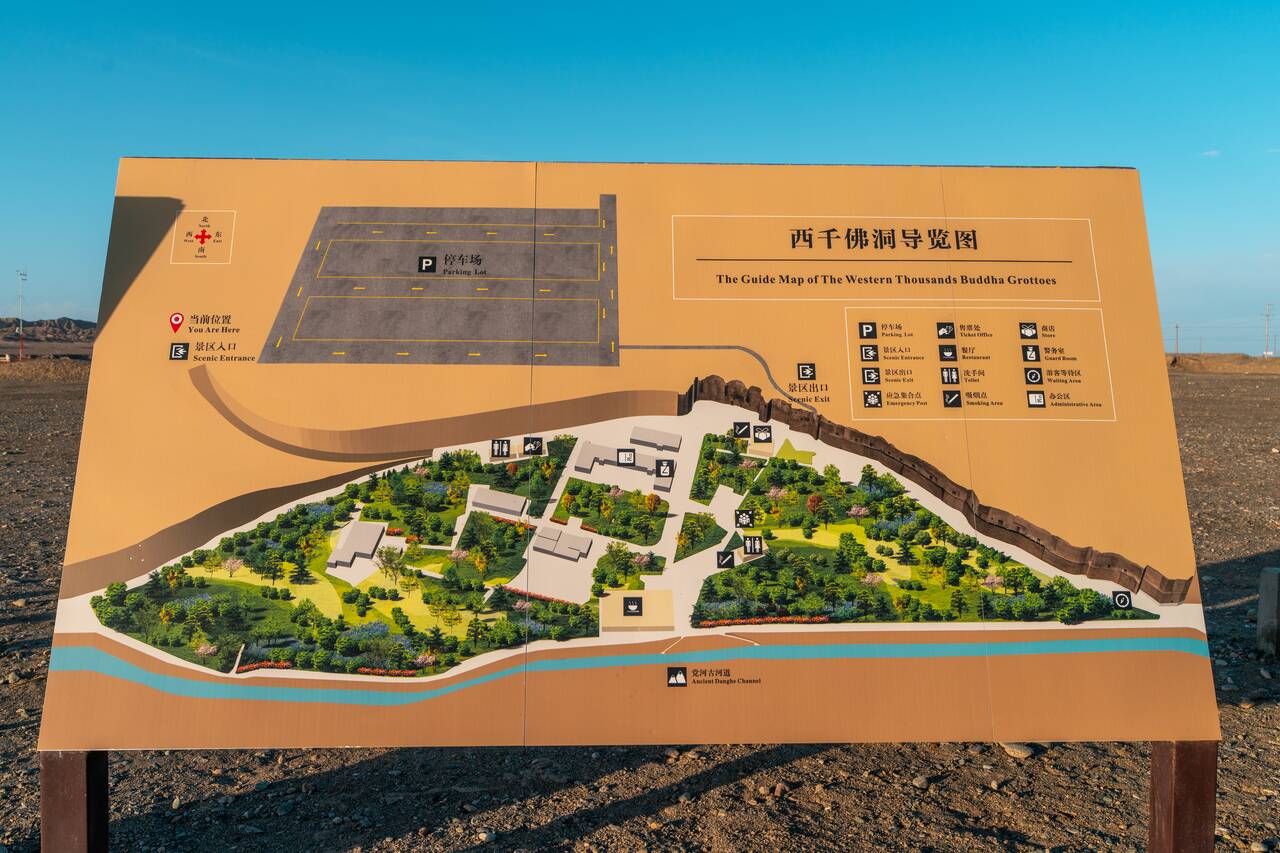
Like at Mogao, you will explore the caves with a guide who opens the rooms for your group. Unfortunately, there wasn’t an English-language tour available like Mogao, but I still enjoyed seeing it and being able to compare the two.
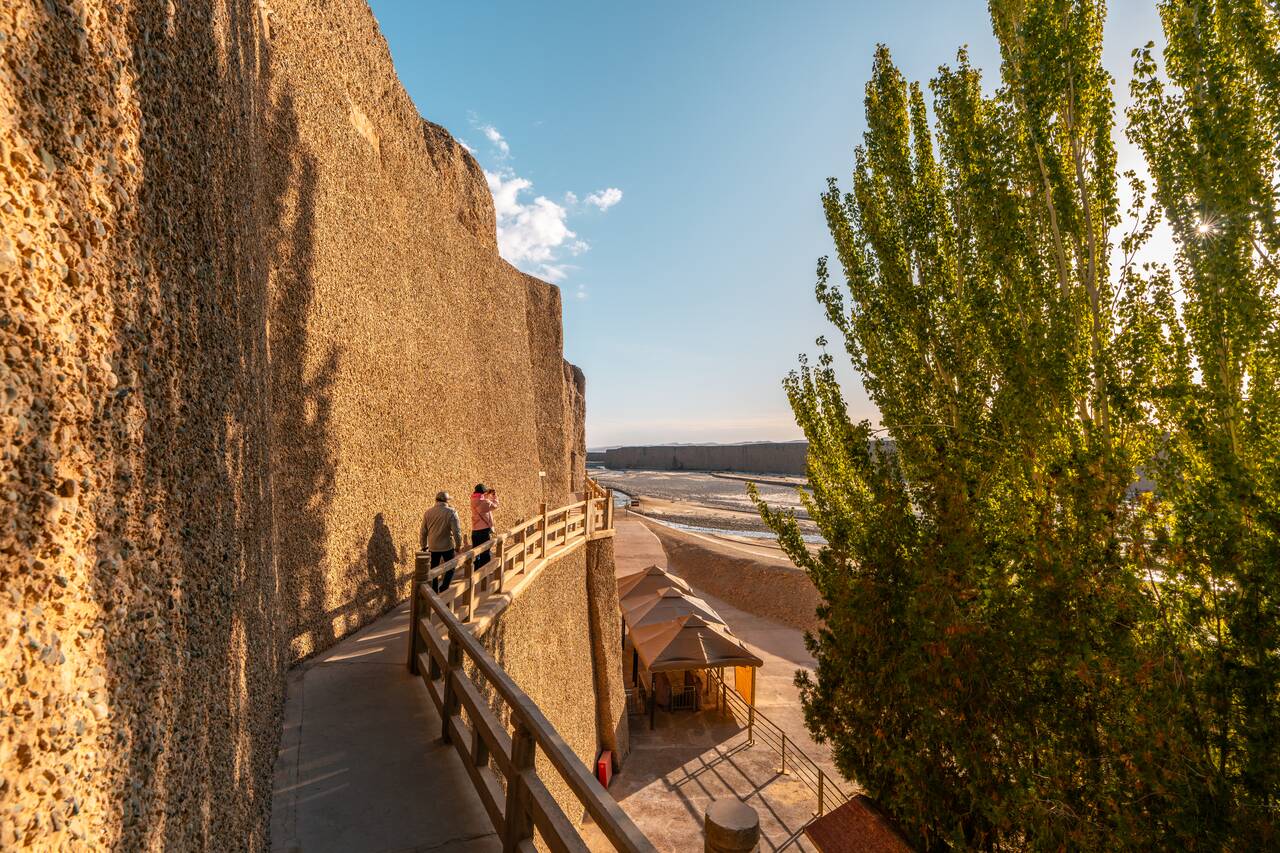
The caves are around 35 kilometers southwest of Dunhuang, so you can visit independently by DiDi. Getting one back might be more difficult, though, so arrange a return trip with your driver if you want to come here by yourself. Personally, I found it easier to come with this tour as they will stop here first, before continuing to Yangguan Pass, Yumen Pass, and Yardang Geopark.
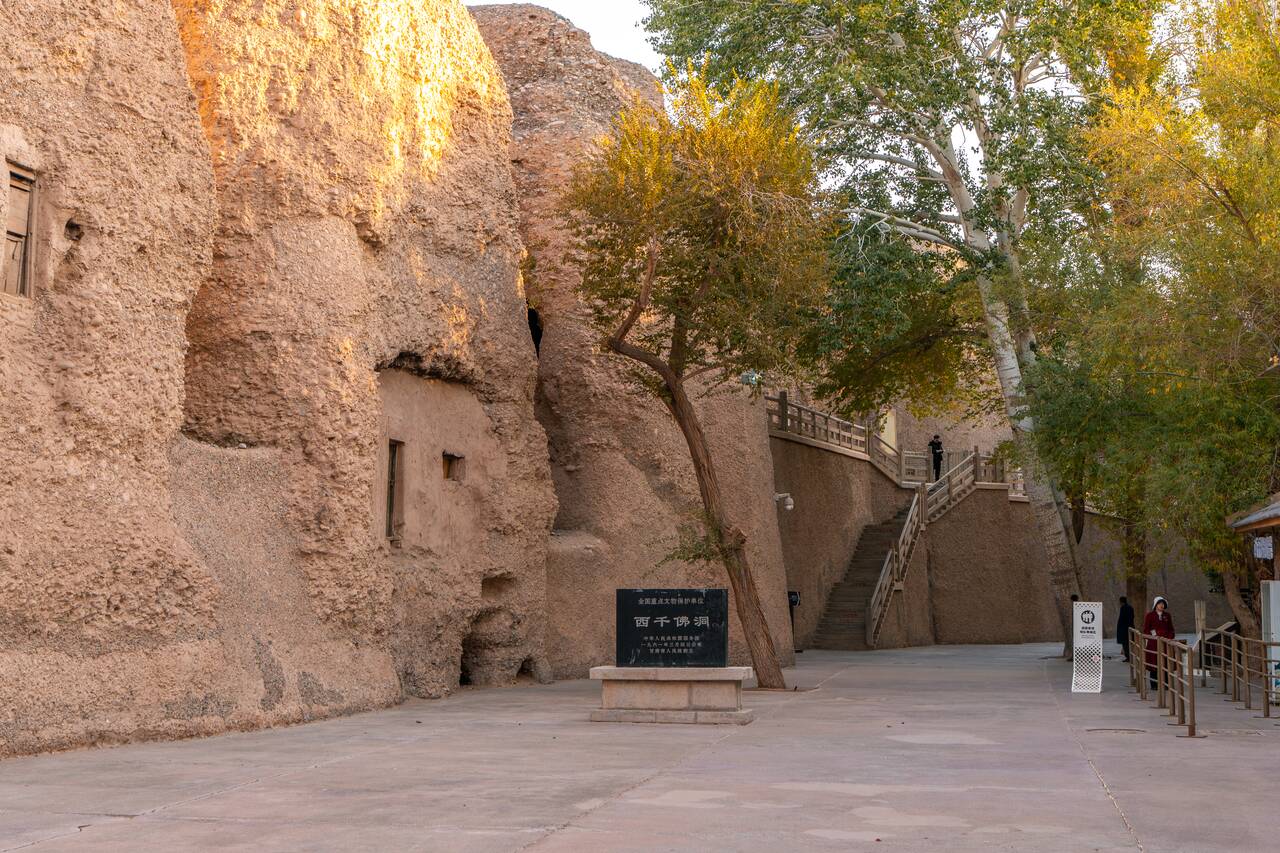
The caves open from 8:30 AM to 5:30 PM from April to November, and 9 AM to 5 PM from December to March and the ticket should cost you around 30 CNY per person.
7. Eat Your Way Around Dunhuang Night Market
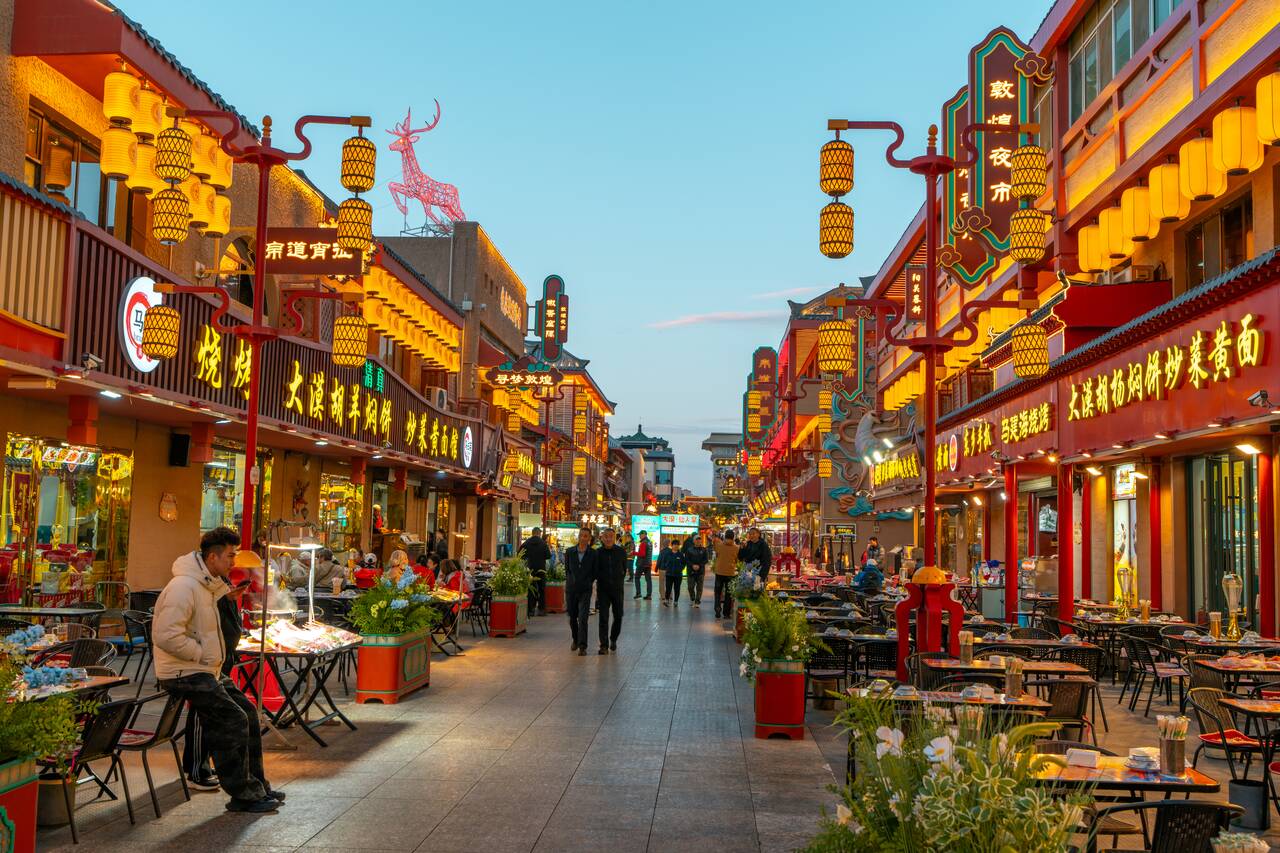
- 📍 Location: Dunhuang Night Market [Map Link]
- 🕐 Opening Hours: 7:30 PM onward
- 💰 Entry Fees: Expensive
- ⚡ Pete's Take: "It's a bit pricey, but you are here for the varied selection and the lively vibe. 😉"
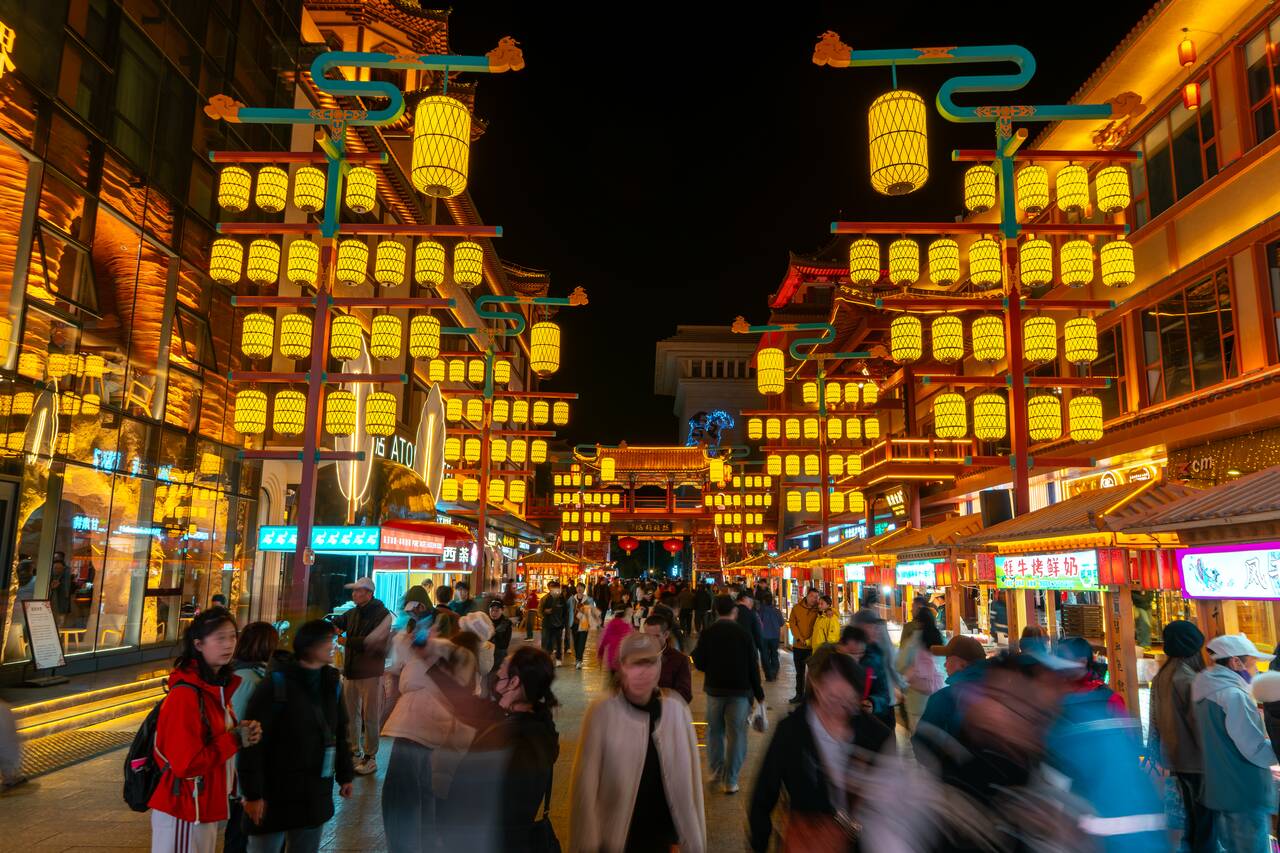
If you are looking for somewhere to eat in the evening in Dunhuang, head over to Dunhuang Night Market, also known as Shazhou Night Market. There is an awesome selection of food here, from regional specialties to the typical Chinese street food you will find elsewhere. With so many stalls to choose from, the hardest part is deciding what to eat!
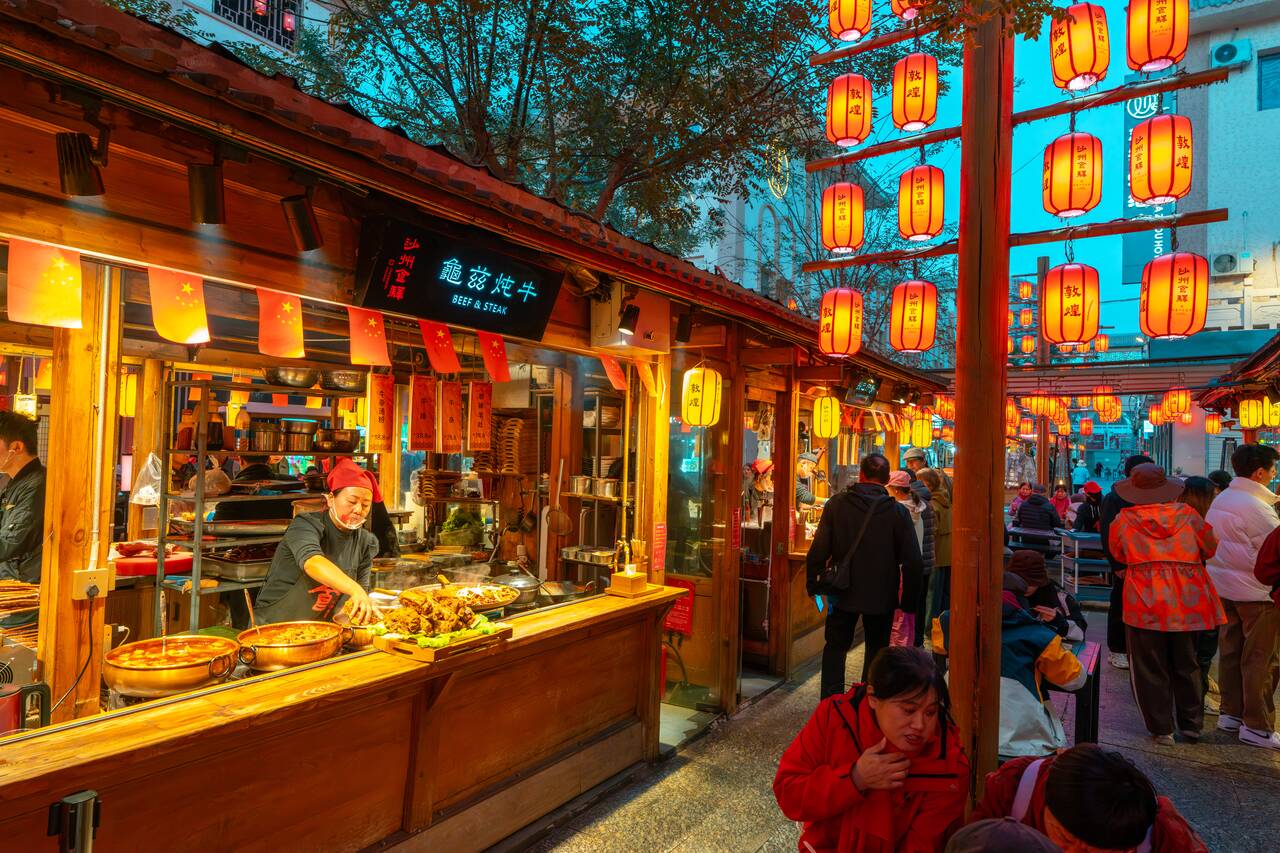
There are also shared tables and seats around the food area, so you can grab a bunch of things you want to try, find an available table, and enjoy them all together. It is especially convenient if you are traveling solo like me and want to try different dishes without committing to one restaurant.
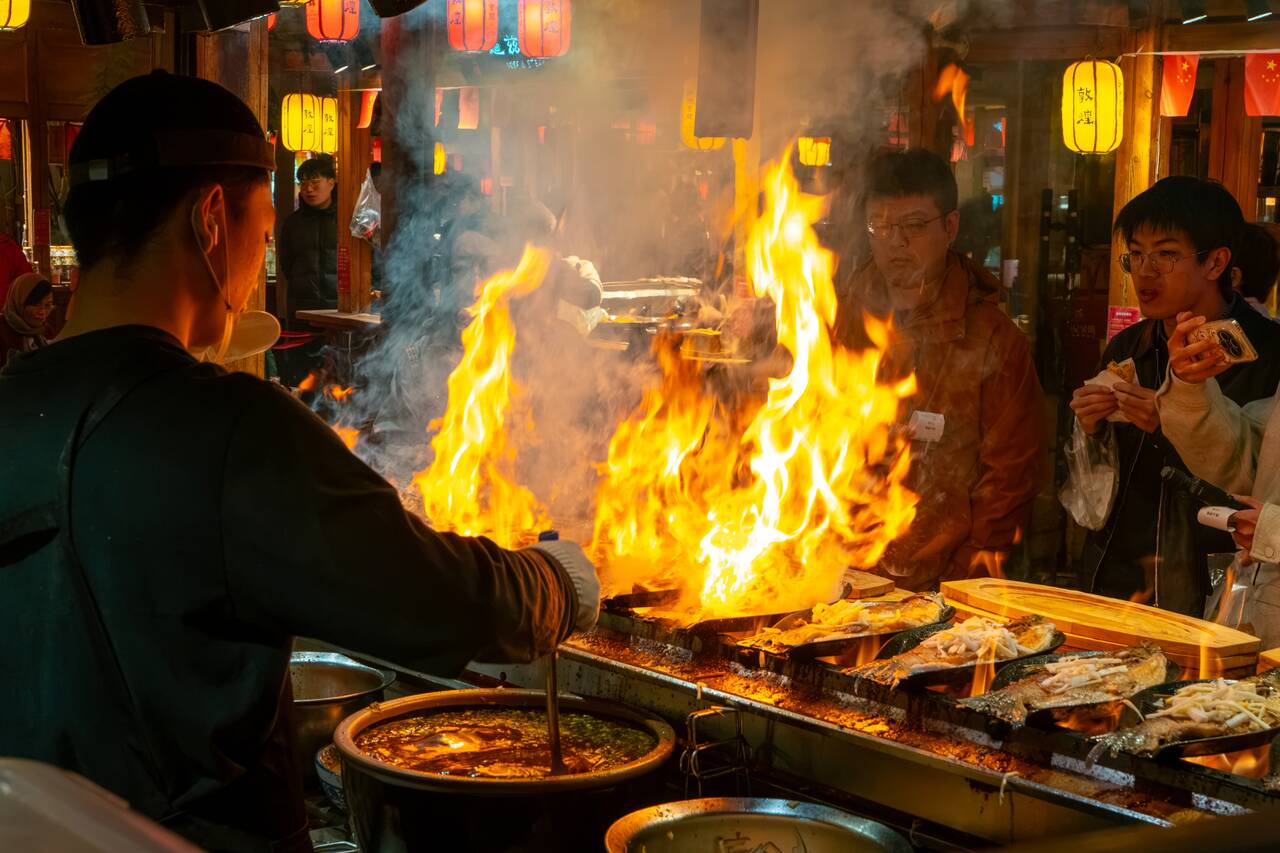
I found a stall grilling fish with spicy sauce and just couldn’t help myself. I had to try it, and it was great! Mind you, food here can get quite expensive. I mean, I’m eating fish in a desert, for crying out loud 🤣. Still, it was the selection and the lively atmosphere that I enjoyed most, so I didn’t mind spending a little more.
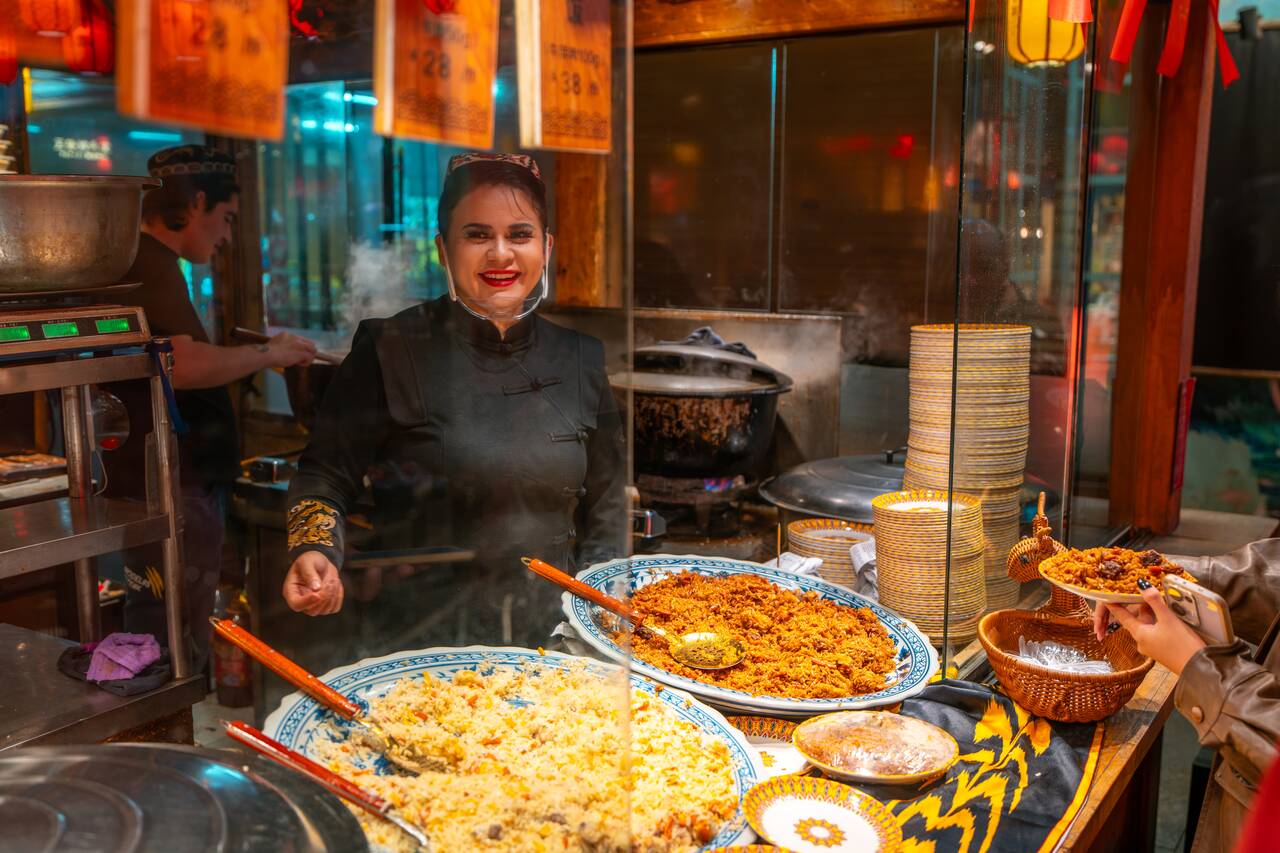
Also, be sure to try plov, if you haven’t had it before. This Central Asian staple is a rice dish commonly cooked with meat, carrots, and onions, and you will often see it called shouzhua fan here. I recommend coming around 7:30 PM onward. Stalls can stay open late during the busy season, while things tend to wind down earlier in the colder months.
8. Explore Dunhuang Museum
- 📍 Location: Dunhuang Museum [Map Link]
- 🕐 Opening Hours: 8:30 AM - 6:30 PM
- 💰 Entry Fees: Free
- ⚡ Pete's Take: "A great place to check out before your visit to the historical sights around Dunhuang and to kill some time."
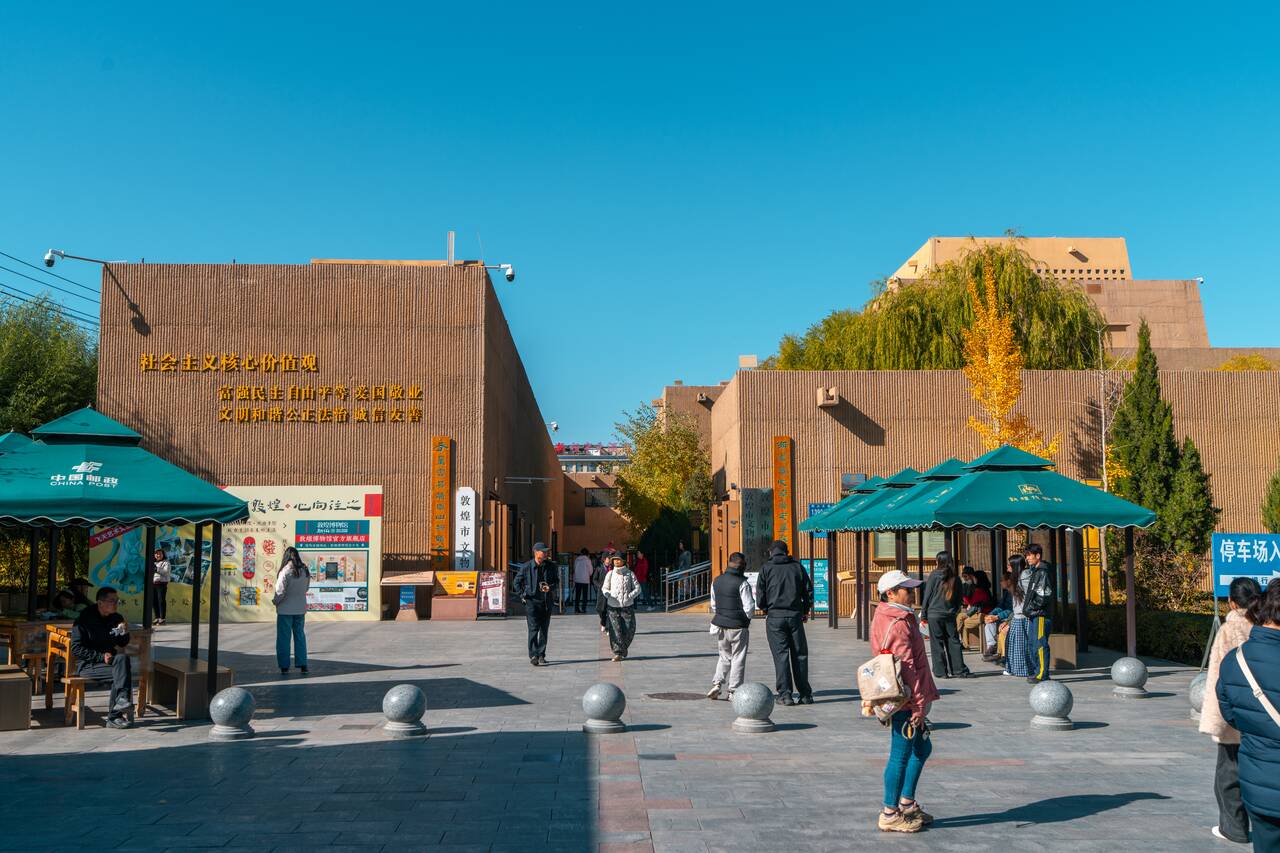
If you have just arrived in Dunhuang and are looking for something to do, stop by Dunhuang Museum, where you will find a great collection of artifacts giving you an overview of Dunhuang’s history and its importance along the Silk Road. It is a great place to visit before exploring the other attractions, as it gives you a little background on what you are about to see.
One of the highlights is the replica of a Mogao cave, where you can appreciate the sculptures and murals without the same restrictions as at the actual caves. This is where I took the photos I shared in the Mogao Caves section above, so if you want a closer look at what those interiors are like, be sure to check it out!
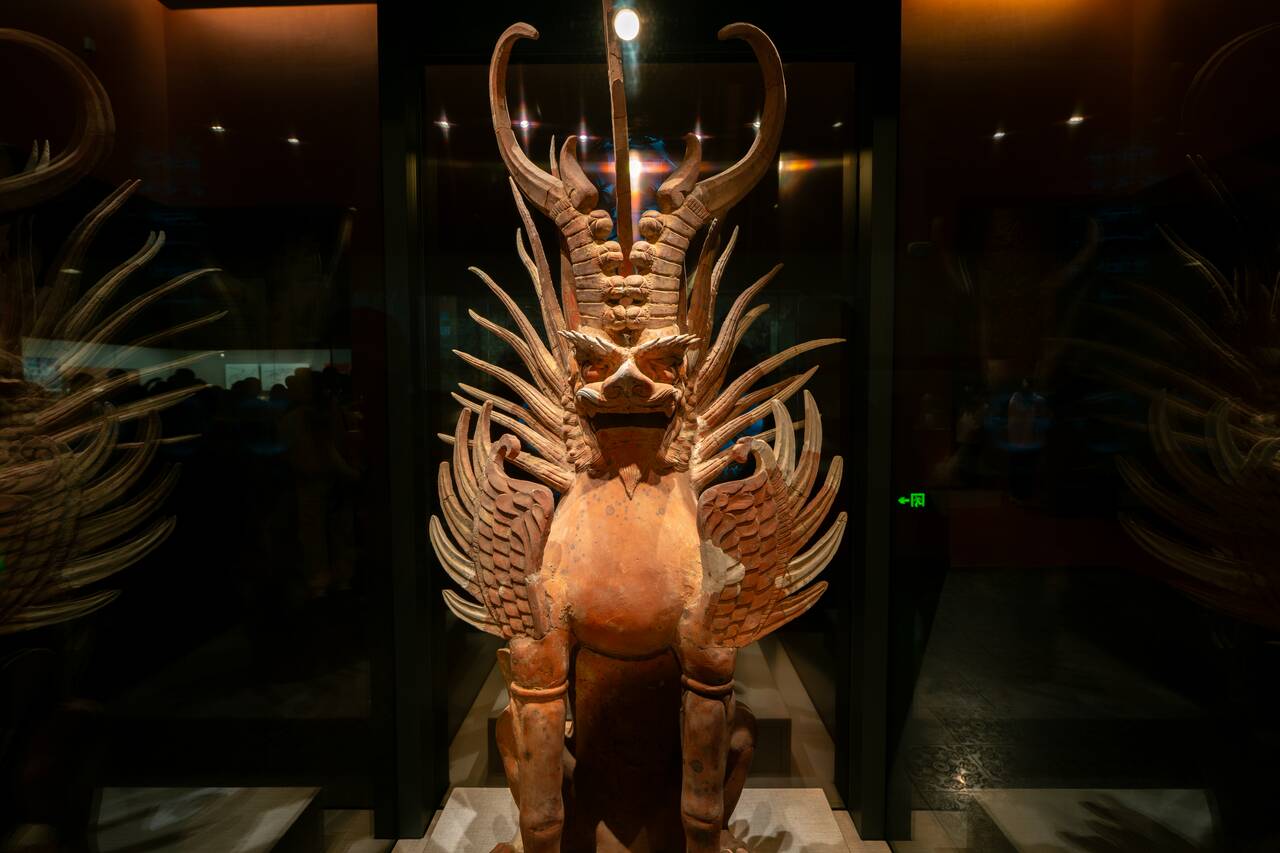
I would allow around 1 to 2 hours to explore the exhibitions. It is a great place to spend a slower morning or afternoon. The fact that entry is free is also a huge plus!
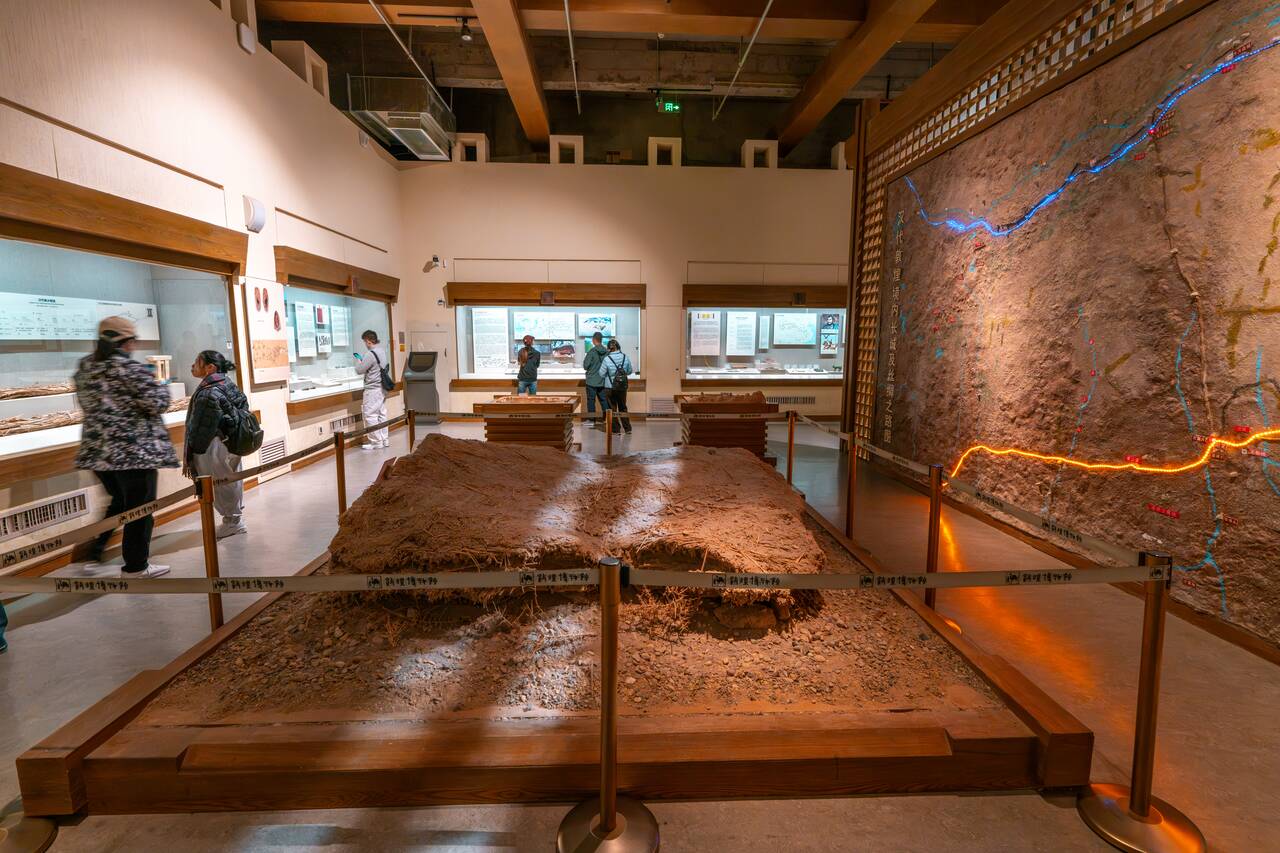
The museum opens from 8:30 AM to 6:30 PM from May to September, with last admission at 5:30 PM, and 9 AM to 6 PM from October to April, with last admission at 5 PM. It is closed on Mondays except public holidays, so plan accordingly. You are going to need your passport to enter.
9. Browse the Dunhuang Book Center
- 📍 Location: Dunhuang Book Center [Map Link]
- 🕐 Opening Hours: 9 AM - 9 PM
- 💰 Entry Fees: Free
- ⚡ Pete's Take: "This is a great place to drop by during your downtime in the city."
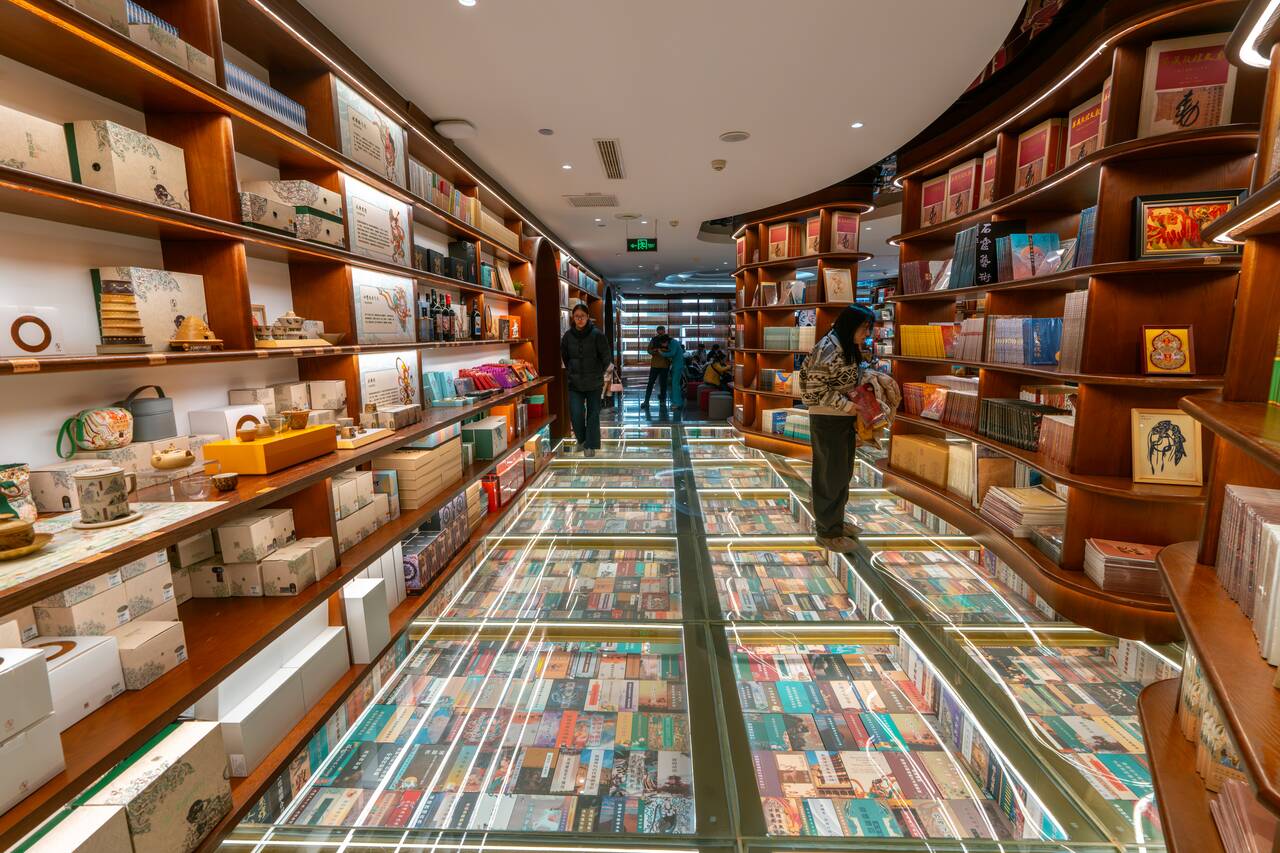
Last but not least, if you have some time to kill, stop by Dunhuang Book Center, a lovely bookstore where you can browse books, shop for gifts, or simply relax with a cup of coffee. It is a nice little break from all the historical sights you will see around Dunhuang.
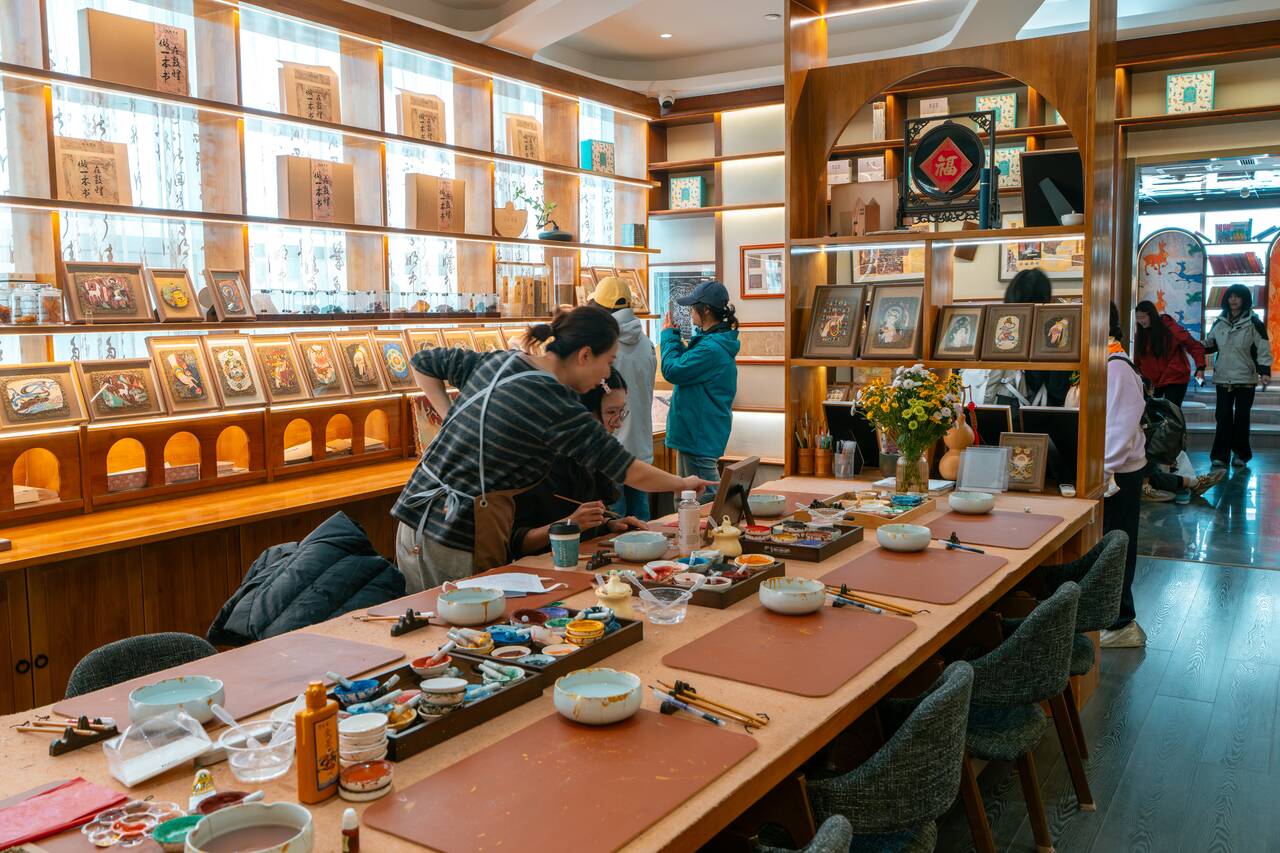
On the first floor, you will find plenty of gifts and souvenirs inspired by Dunhuang’s art and culture. Head upstairs for books about the region, seating areas, a café, and even painting workshops.
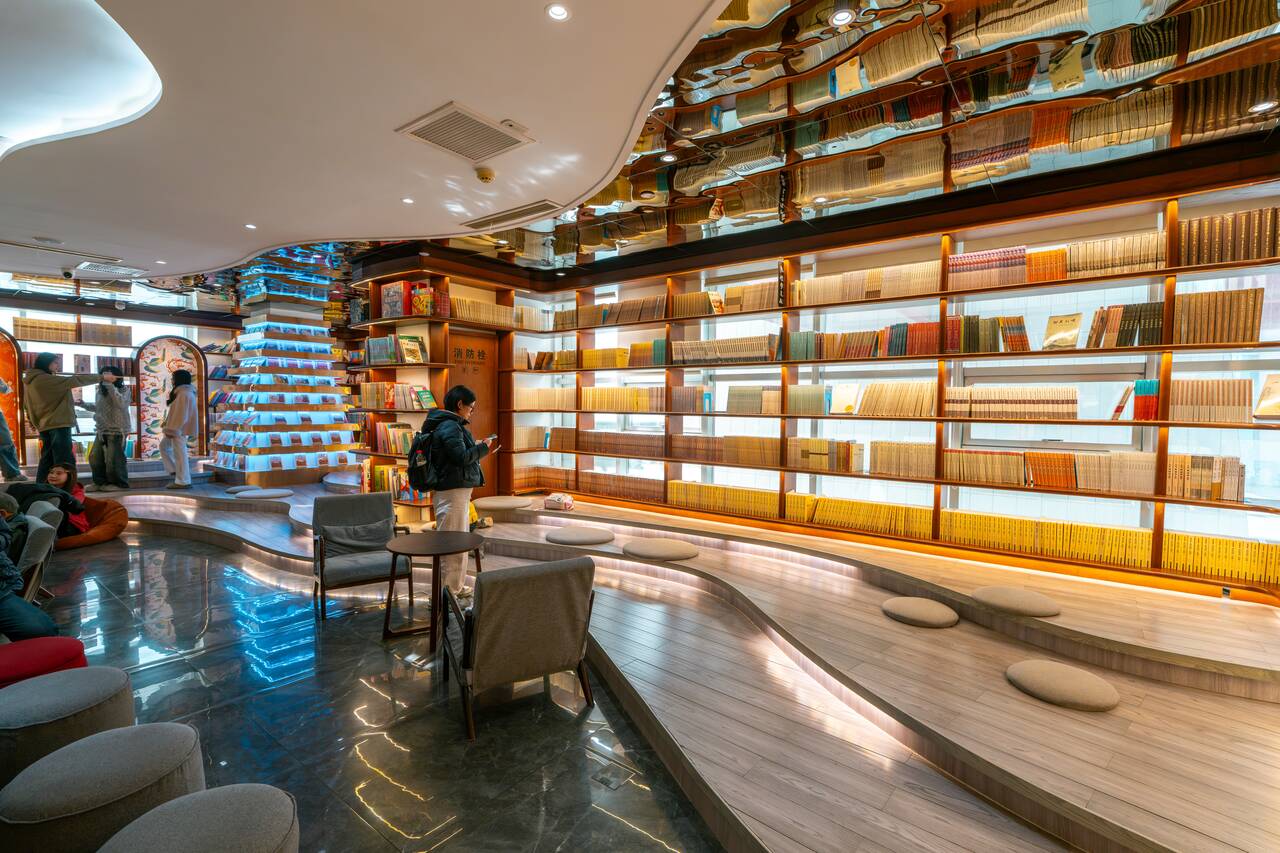
The bookstore is open from 9 AM to 9 PM daily and the entry is free, although they will ask you to put on a plastic bag around your shoes as you walk in. Not sure why though 🤔.
Which Places Should You Prioritize?
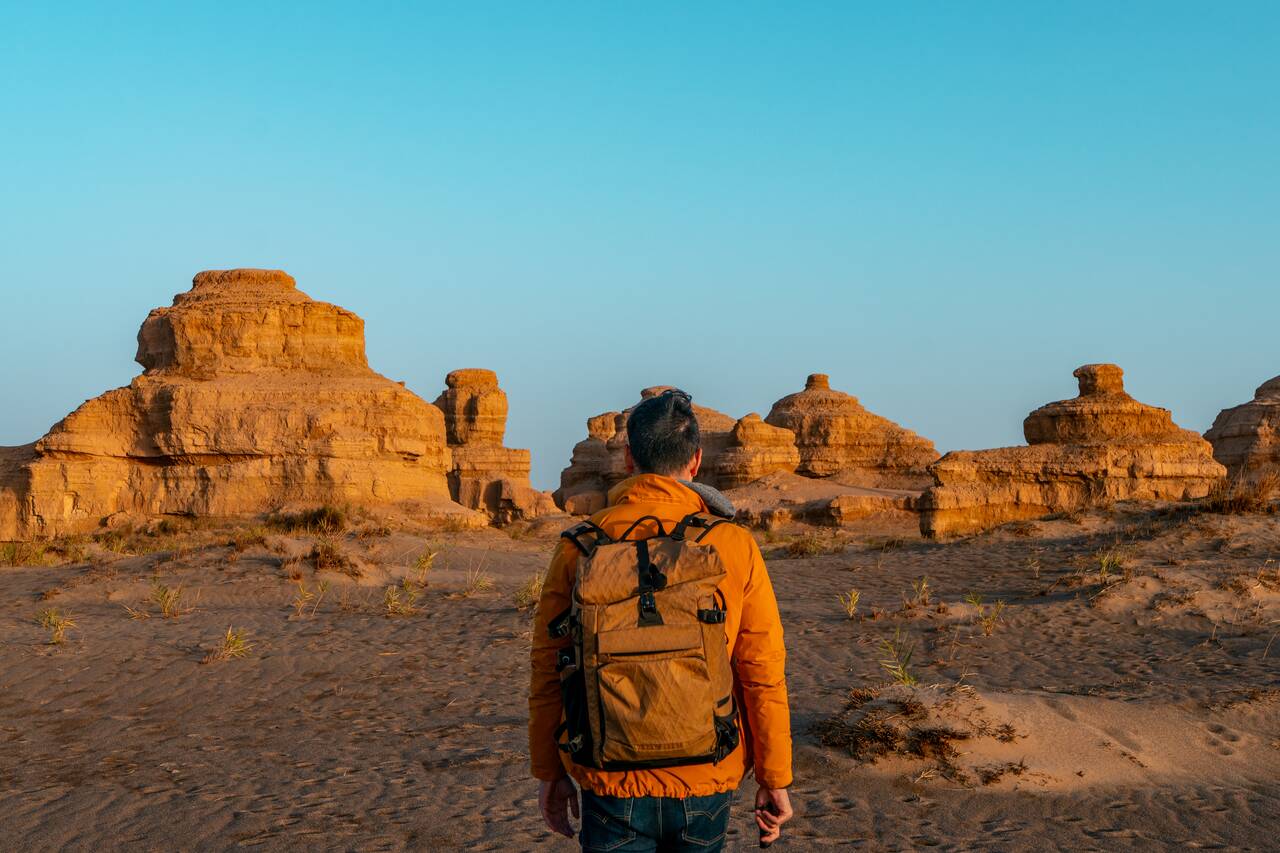
If you only have time for the highlights: Prioritize Mogao Caves and sunset at Crescent Lake and the Singing Sand Dunes. These are the two experiences I would build a first visit around, and you can fit both into one full day. Book a morning session at Mogao, then head to the dunes in the late afternoon and stay until the lights come on.
If you have another full day: Join the western-route tour to visit the Western Thousand Buddha Caves, Yangguan Pass, Yumen Pass, and Yardang Geopark. It is a long day, but sunset at Yardang was one of the highlights of my time in Dunhuang and made the journey well worth it!
If you love history: Make time for Dunhuang Museum, ideally before visiting the caves and passes, so you have some background on what you are about to see.
If Mogao Caves are fully booked: The Western Thousand Buddha Caves are a great alternative, with beautiful sculptures and murals and, during my visit, way fewer crowds. You can also see a replica cave at Dunhuang Museum, although it doesn’t replace seeing the real thing.
For your downtime: Head to Dunhuang Night Market for dinner, or browse the Dunhuang Book Center if you have some time to kill.
When to Visit Dunhuang?
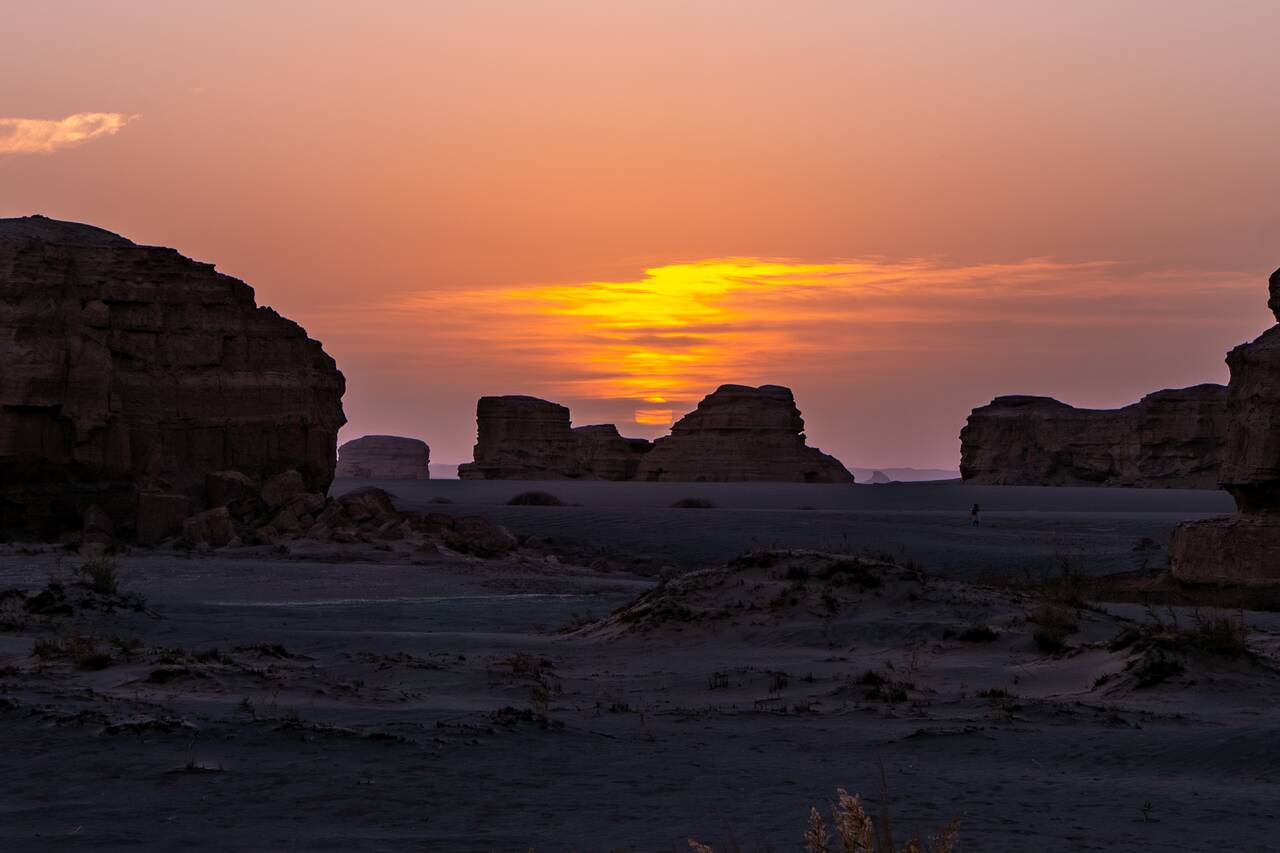
The best time to visit Dunhuang is during spring (April to May) and autumn (September to October), when temperatures are generally more comfortable for exploring the desert landscapes. Personally, I would lean toward autumn, as spring can bring strong winds and blowing sand. Bring layers whichever season you choose, as temperatures can drop considerably after sunset.
I was there in mid-October, and it was already very cold in the mornings and at night, with temperatures around -2 to 4°C. Once the sun came out, it warmed up to around 14 to 19°C, which was much more manageable. I often wore 3 to 4 layers in the mornings and evenings, while during the day, I could get by with 2 to 3 layers.
Summer can get very hot, especially when you are climbing sand dunes or exploring exposed historical sites, while winter can be bitterly cold. Try to avoid the Labor Day holiday in early May and Golden Week in early October if your dates are flexible, and reserve your Mogao Caves tickets early.
How to Get to Dunhuang?
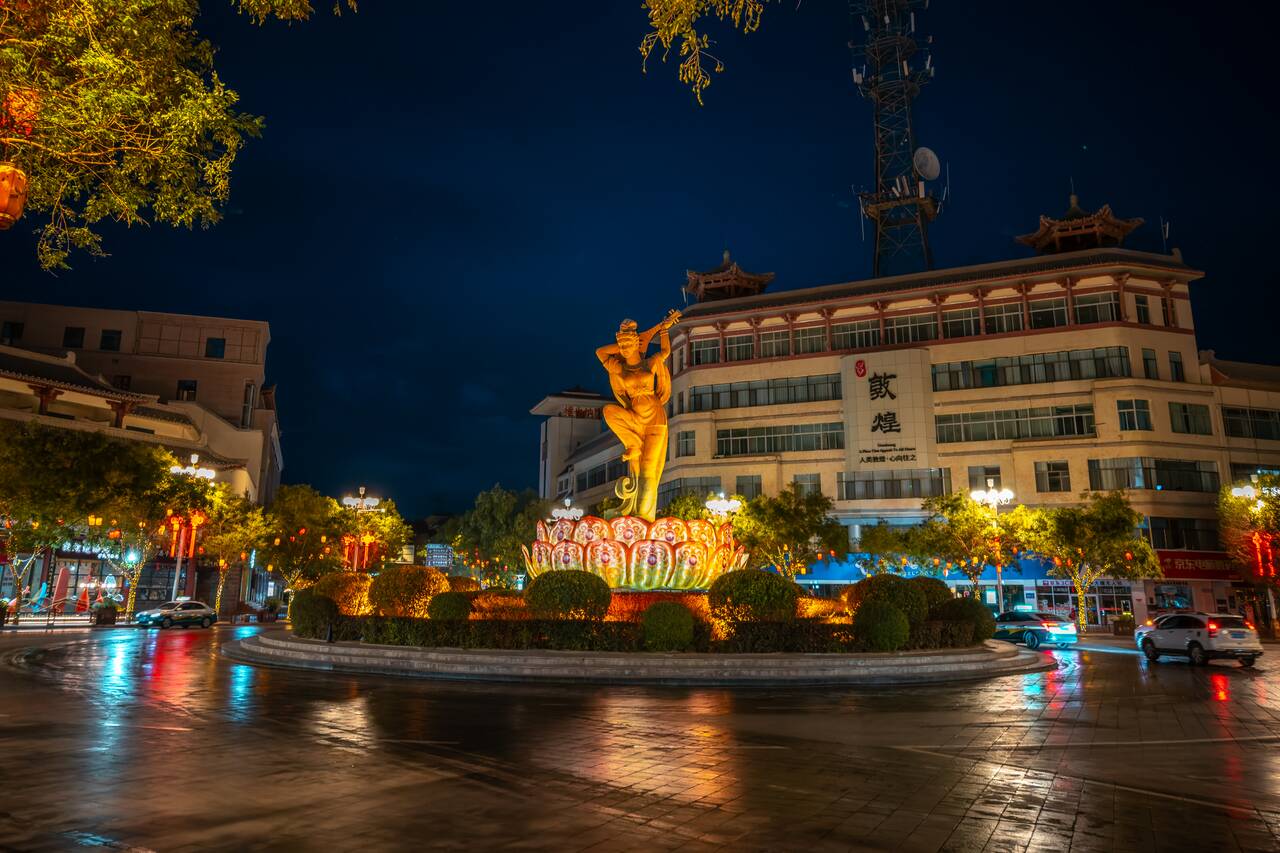
By Train: If you are already traveling around China, look for trains arriving at Dunhuang Railway Station, which is around 12 kilometers from the city center. From there, you can take a DiDi to your accommodation. You can search for routes and book through Trip.com.
By Air: You can also fly into Dunhuang Mogao International Airport (DNH), which is a short drive from the city. Flight availability varies by season, so compare the options for your travel dates. Once you arrive, taking a DiDi is a convenient way to reach your accommodation. I flew from Xi’an to Dunhuang, then made my way back east along the Silk Road by high-speed train, which worked very well for my itinerary.
For finding flights, I would recommend browsing through Skyscanner or Expedia to find an affordable flight from your departure city to Dunhuang.
How to Get Around Dunhuang?
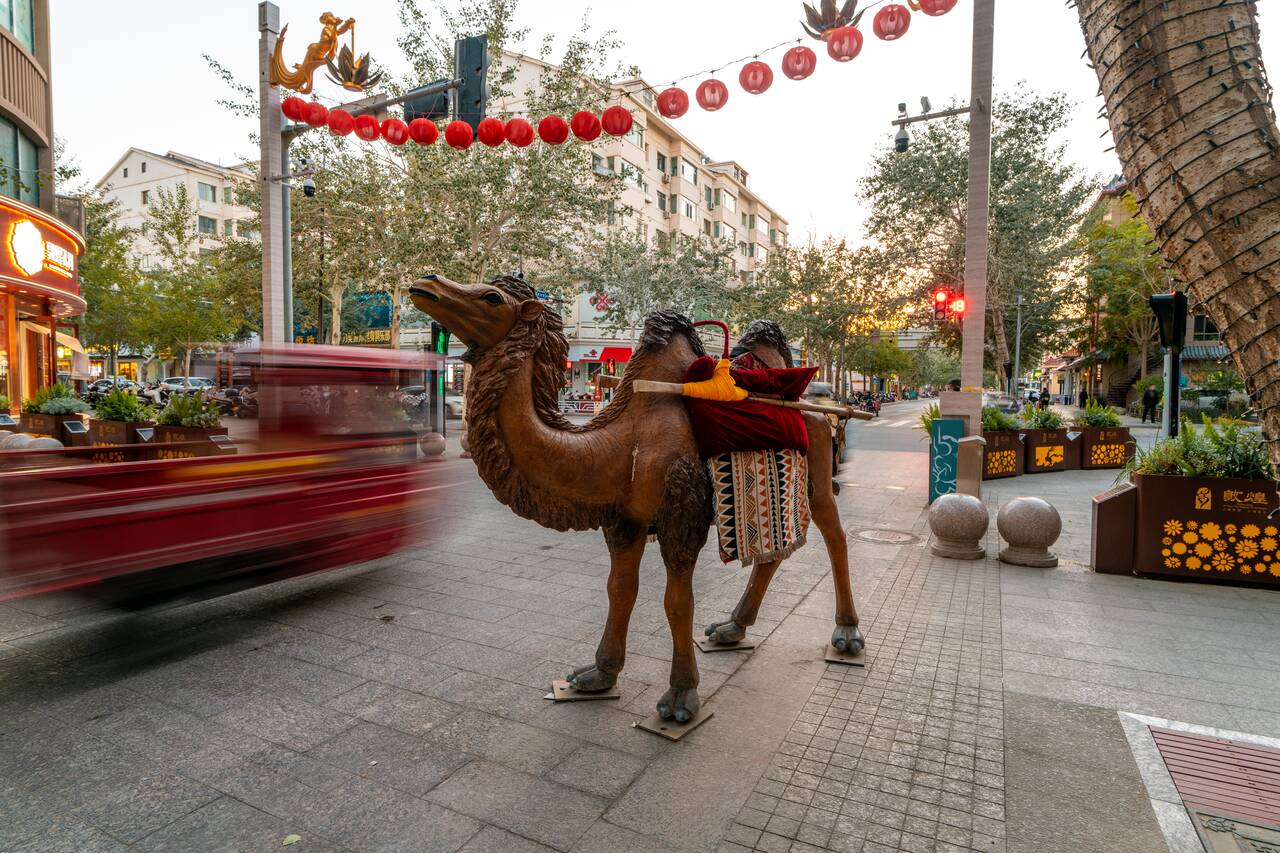
By Walking: Walking is a great way to explore central Dunhuang, especially around the night market, restaurants, and shops. However, the main attractions are spread beyond the city center, so you will need transport to reach most of them.
By DiDi: For nearby attractions like Crescent Lake and the Singing Sand Dunes, DiDi is a convenient option. You can also use it to reach the Mogao Caves Digital Exhibition Center, where you can board the attraction’s shuttle to the caves. Make sure you choose the exhibition center as your destination rather than the cave site itself when you are ordering DiDi!
For the Western Route: To explore farther-flung places like Yangguan Pass, Yumen Pass, the Western Thousand Buddha Caves, and Yardang Geopark, I recommend joining this full-day tour. It is one of the most affordable ways to visit these widely scattered places without arranging a private car yourself.
Expect a long day, starting around 8 AM and returning around 9 to 10 PM or later, depending on the season and itinerary and don't expect your driver to speak English. They will use WeChat to translate the schedule, so no need to worry about it. It is a lot of time on the road, but watching the sunset over the formations at Yardang was some of my favorite moments in Gansu, and definitely well worth the effort.
How Many Days to Spend in Dunhuang?
I recommend spending 2 full days in Dunhuang if you are happy with a busy itinerary, or 3 full days for a more relaxed pace. Two days will cover the main highlights, but the western-route excursion takes an entire day, so having a third gives you some breathing room.
Day 1: Mogao Caves and Crescent Lake. Reserve a morning visit to Mogao Caves, then return to the city for lunch and a break. Later in the afternoon, head to Crescent Lake and the Singing Sand Dunes, leaving enough time to climb to a viewpoint before sunset.
Day 2: Western-Route Day Trip. Set aside the entire day for the Western Thousand Buddha Caves, Yangguan Pass, Yumen Pass, and Yardang Geopark, depending on your tour’s itinerary. Finish with sunset at Yardang before the long drive back to Dunhuang.
Day 3: Explore the City. Visit Dunhuang Museum, browse the Dunhuang Book Center, and enjoy some downtime at a café. Finish with an evening eating your way around Dunhuang Night Market. If you only have two days, you can still fit the night market into your first evening, but I wouldn’t squeeze the museum into an already packed schedule.
Is Dunhuang Worth Visiting?
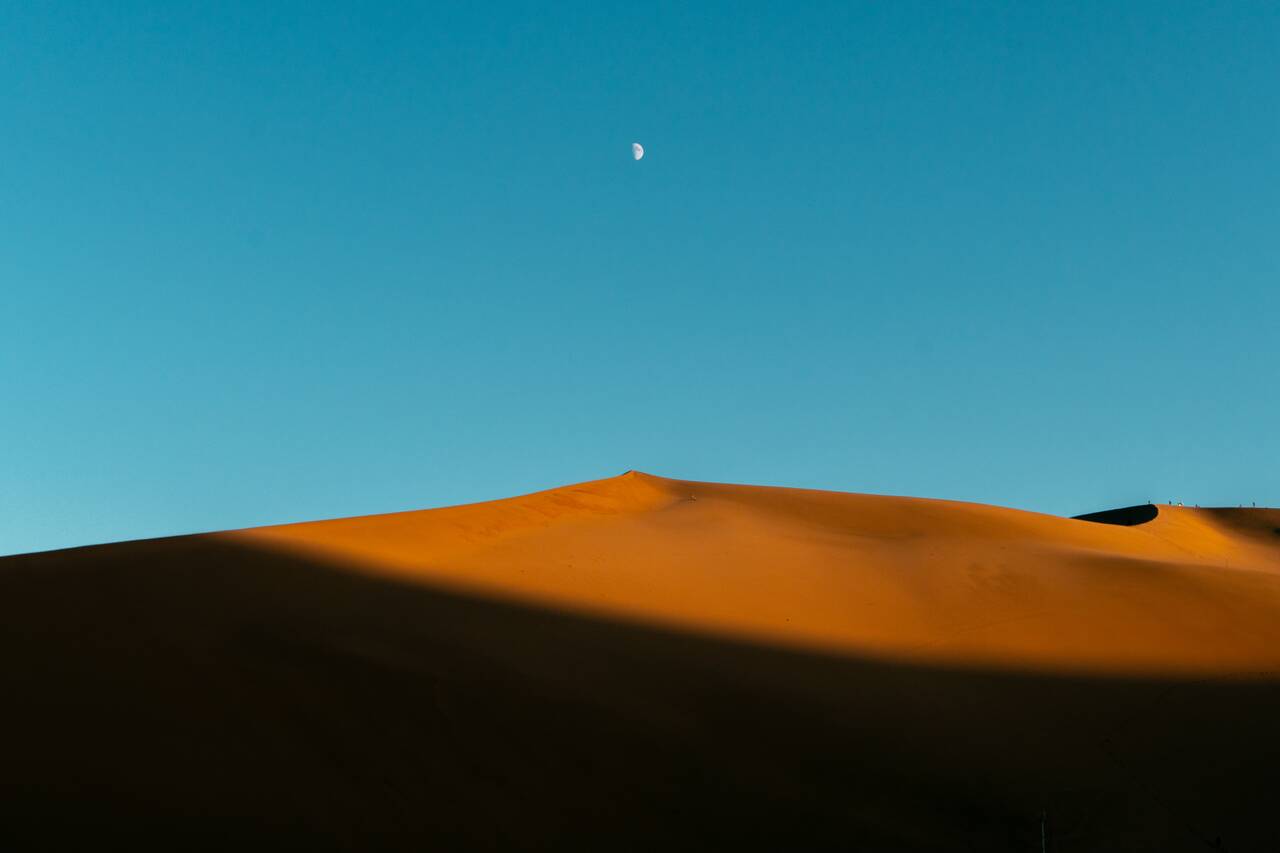
Absolutely! I came to Dunhuang for Mogao Caves, but if I had to pick one moment that made the trip worthwhile, it would be sunset at Yardang Geopark. It was a long day on the road, but watching the last light fall across those strange rock formations made me glad I’d set aside a whole day for the western route. Getting to walk a stretch of the ancient Silk Road at Yangguan Pass was a fun for the history buff in me as well!
Even with just two full days, you can see the Mogao Caves and climb the dunes above Crescent Lake on one day, then spend the next exploring the old frontier passes before catching sunset at Yardang. If you can spare a third day, I’d use it to slow down, visit Dunhuang Museum, and eat your way around the night market. For me, Dunhuang is a must-stop on the ancient Silk Road and, along with Zhangye, one of the places I’d set aside the most time for.
Things to Know Before Visiting China
- Always Carry Your Passport: Everything revolves around your passport/ID in China, and it’s often used interchangeably as your main form of identification. Many major tourist attractions require you to show your passport when buying a ticket, and the ticket will then be linked to it. You’ll scan your passport again to enter. The same applies to high-speed trains. It’s best to carry your passport with you at all times while traveling in China.
- Get an eSIM: China’s cashless economy relies on constant internet access, so having a data connection is essential. I highly recommend getting an eSIM or a local SIM card for your trip. An eSIM is often better because the service is usually based in Hong Kong, which bypasses China’s Great Firewall, meaning you can access apps like Instagram and YouTube without a VPN. I suggest checking eSIM options on Klook or Trip.com, as they tend to be the most affordable.
- Use AMap to Navigate: Google Maps doesn’t work well in China, so local apps like AMap are much more informative and accurate for getting around. It even provides metro information, making it easy to navigate city subway systems. I used AMap throughout my entire trip, and it worked perfectly! In this guide, I’ll be linking locations with AMap links instead of Google Maps, so be sure to download it before your trip.
- Use VPN to Bypass the Great Firewall: As you may know, many major websites such as Google, Facebook, Instagram, TikTok, and more are blocked in China. To access them, you’ll need a VPN like LetsVPN installed on both your phone and laptop before you arrive in China. This is crucial as once you're in the country, you won’t be able to search for or download VPN apps. I used LetsVPN during my trip, and it worked very well throughout. The service is affordable too, with a free tier offering limited data or a basic unlimited plan for just 5.99 USD per month.
- Connect Alipay with Your Credit Card: First, download Alipay from the app store, set up your account, and link it to your credit card. This will be one of the two main ways you’ll pay for services in China. Alipay also has mini-apps built in, such as Didi (China’s version of Uber), so you don’t need to download separate apps, and you can use them directly through Alipay. Very convenient!
- Get a Transport Card Working in Alipay: Once you have Alipay set up, you’ll need to verify your account before you can activate a transport card for metro and bus rides. First, if you’re not currently in the city you want to use, tap the city name in the top-left corner and select the correct city. After that, tap the “Transport” button and request a transport card. You’ll be asked to upload a photo of your passport for verification. Once approved, your transport card will be issued, and you can use the QR code to scan and pay for buses and metro rides.
- Get WeChat Set Up: WeChat is another essential app for communicating with locals, thanks to its built-in translation feature. It’s also widely used for payments as Alipay only works about 70% of the time, while WeChat is commonly needed for paying individuals, buying entry tickets at certain attractions, and more. Setting up WeChat can be a bit tricky though because you need verification from an existing user. The easiest way is to ask your hotel’s reception to help verify your account when you arrive in China, which is how I got mine activated.
- Use Trip.com / Trip App: For hotels, day trips, attraction tickets, train tickets, flights, and everything in between, you can use Trip.com or the Trip app to book all your travel needs. It’s very convenient, offers a great user experience, and has a generous cancellation policy that gives you more flexibility when traveling in China.
Disclaimer: This post may contain affiliate links. See our disclosure policy.
First Published:


