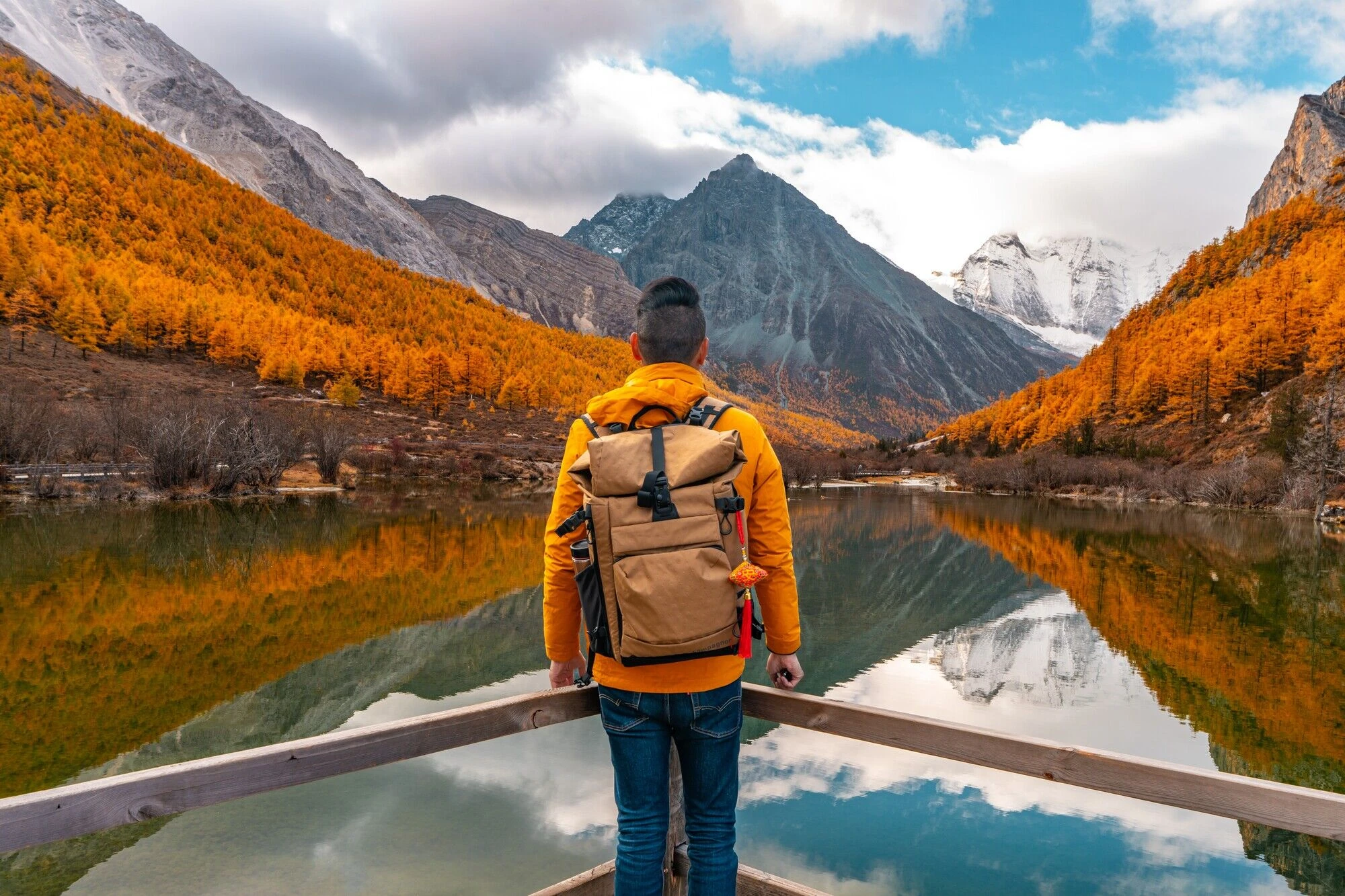


If you’re looking for a China itinerary that takes you to the usual tourist attractions like the Great Wall or the Terracotta Army in Xi’an, then this itinerary is NOT for you. This one is all about exploring China’s most breathtaking natural landscapes, with just a touch of cities and historical ancient towns along the way.
China is massive, and you can’t just visit once and expect to see it all. That’s why I created this one-month itinerary focused entirely on South and Southwest China, home to some of the country’s most spectacular scenery, from the iconic limestone mountains of Guilin to the Avatar-like pillars of Zhangjiajie and the snow-capped peaks around Lijiang and Yading. You can save the typical attractions for another trip; for this one, we’re going all in on nature! Allow five weeks for the full route: five days in Macau and Hong Kong, followed by 30 calendar dates in mainland China.
From the best places to visit, where to stay, how to get around, and more, this itinerary will provide you with all the information you need to plan an epic one-month trip through China's incredible landscape. So without further ado, here's a complete one-month itinerary to South & Southwest China!
South & Southwest China One-Month Itinerary Map
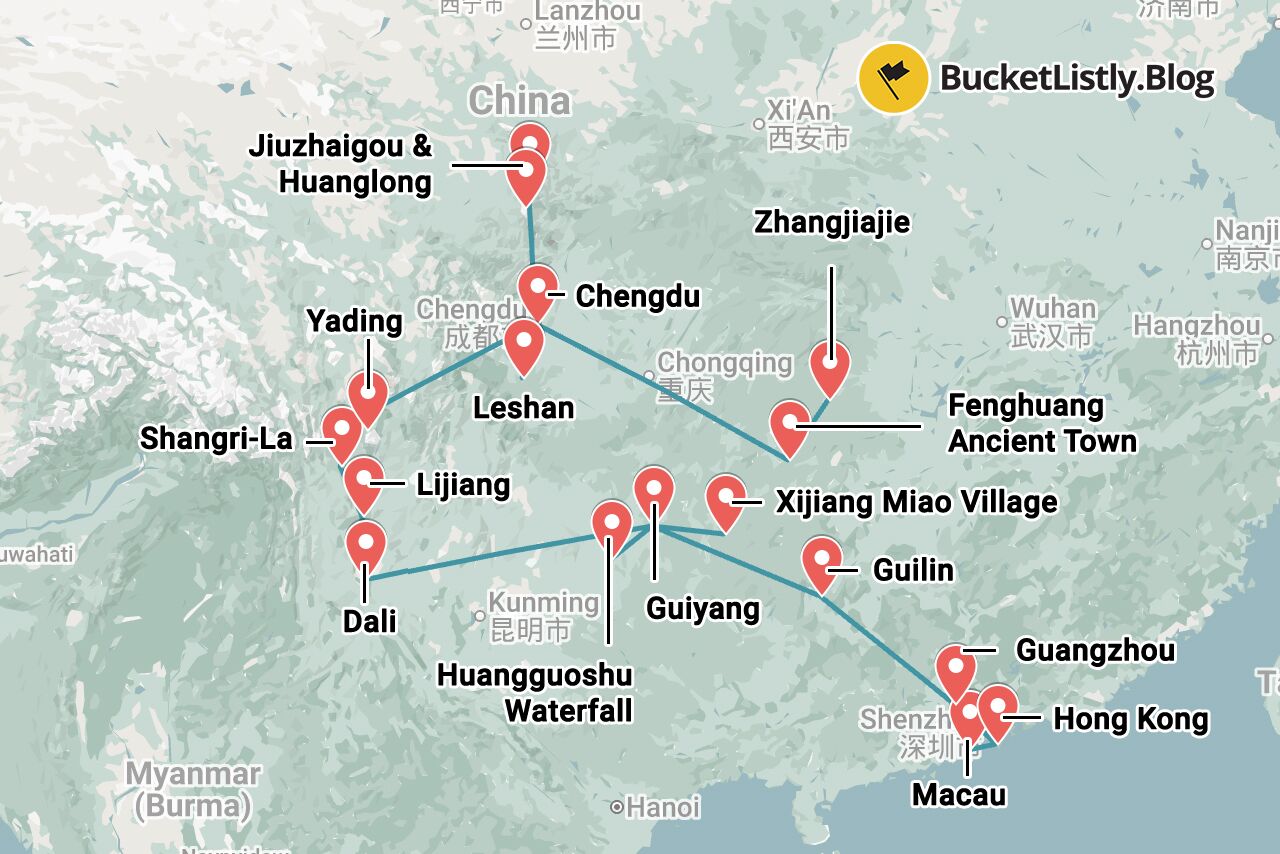
Quick Summary
| ☀️ Day 0-1: | Macau |
|---|---|
| ☀️ Day 2-4: | Hong Kong |
| ☀️ Day 5-7: | Guangzhou |
| ☀️ Day 8-9: | Guilin City |
| ☀️ Day 10-11: | Yangshuo |
| ☀️ Day 12: | Xingping Ancient Village |
| ☀️ Day 13: | Guiyang |
| ☀️ Day 14: | Huangguoshu Waterfall |
| ☀️ Day 15: | Xijiang Ancient Village |
| ☀️ Day 16-17: | Dali |
| ☀️ Day 18-20: | Lijiang |
| ☀️ Day 21-22: | Shangri-La |
| ☀️ Day 23-24: | Yading |
| ☀️ Day 25-26: | Chengdu |
| ☀️ Day 27: | Leshan |
| ☀️ Day 28: | Jiuzhaigou |
| ☀️ Day 29: | Huanglong |
| ☀️ Day 30: | Fenghuang Ancient Town |
| ☀️ Day 31-32: | Zhangjiajie National Park |
| ☀️ Day 33: | Tianmen Mountain |
| ☀️ Day 34: | Flying Back Home from Zhangjiajie City |
One Month Itinerary for South and Southwest China
Day 0-1: Macau (2 Nights)
- 📍 Stay: Caravel Hotel
- 🕐 Time: 2 Nights
- 📖 Full Guide: Discover Macau: 10 Cool Things to Do & More
This itinerary begins in Macau, and while many people talk about Hong Kong and its unique blend of Chinese and British influences, Macau also has its own distinct identity, shaped by Portuguese rather than British rule, and since we are already in this part of the world, we might as well come and check it out before we head over to Hong Kong next.

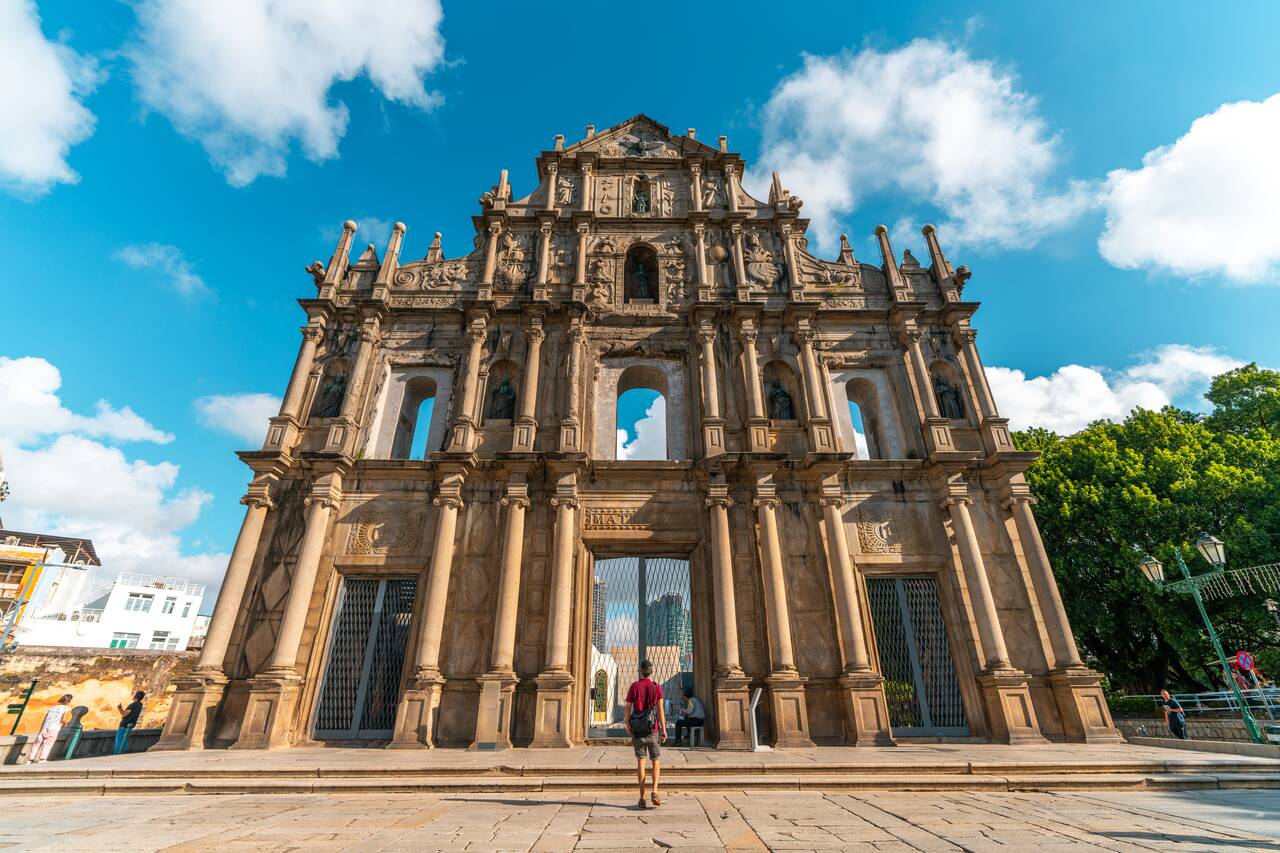
On the day of your arrival, you can explore the area around your hotel, get your bearings, and relax before we begin the next day with a visit to one of the finest remnants of the Portuguese presence here, which is the Ruins of Saint Paul's, probably the most iconic landmark in the city.
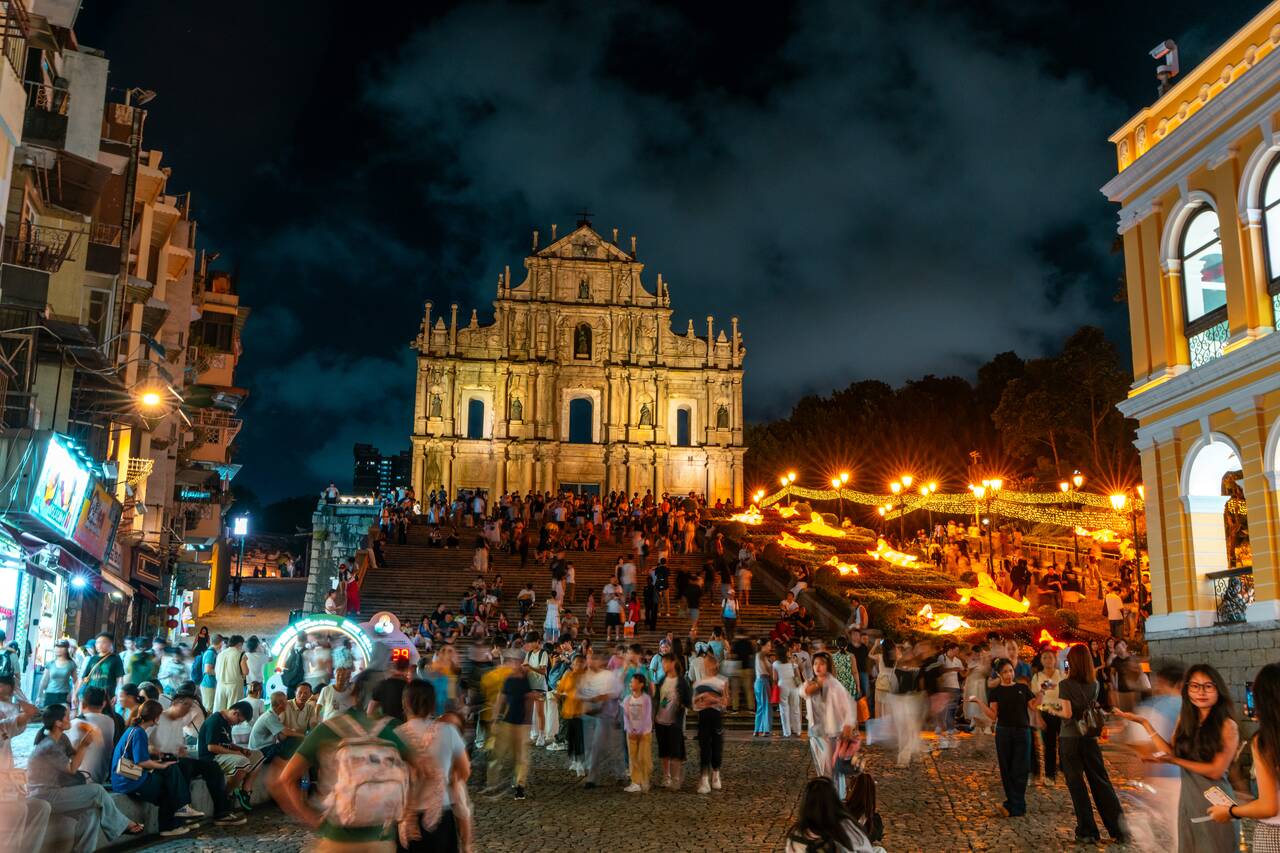
The place can get quite crowded during the day, which is why I recommend visiting early in the morning so you can stroll around, take photos, and enjoy the view in peace. Although it gets more and more crowded as the day goes on, you might also want to swing by here at night when the area is beautifully lit and many people gather on the steps, enjoying the lively city's vibe.
- China Highlights (8 days)
- 8-Day Best of China Tour: Luxury Small Group & High-end Hotels, All Inclusive (8 days)
- Real China Highlights (12 days)
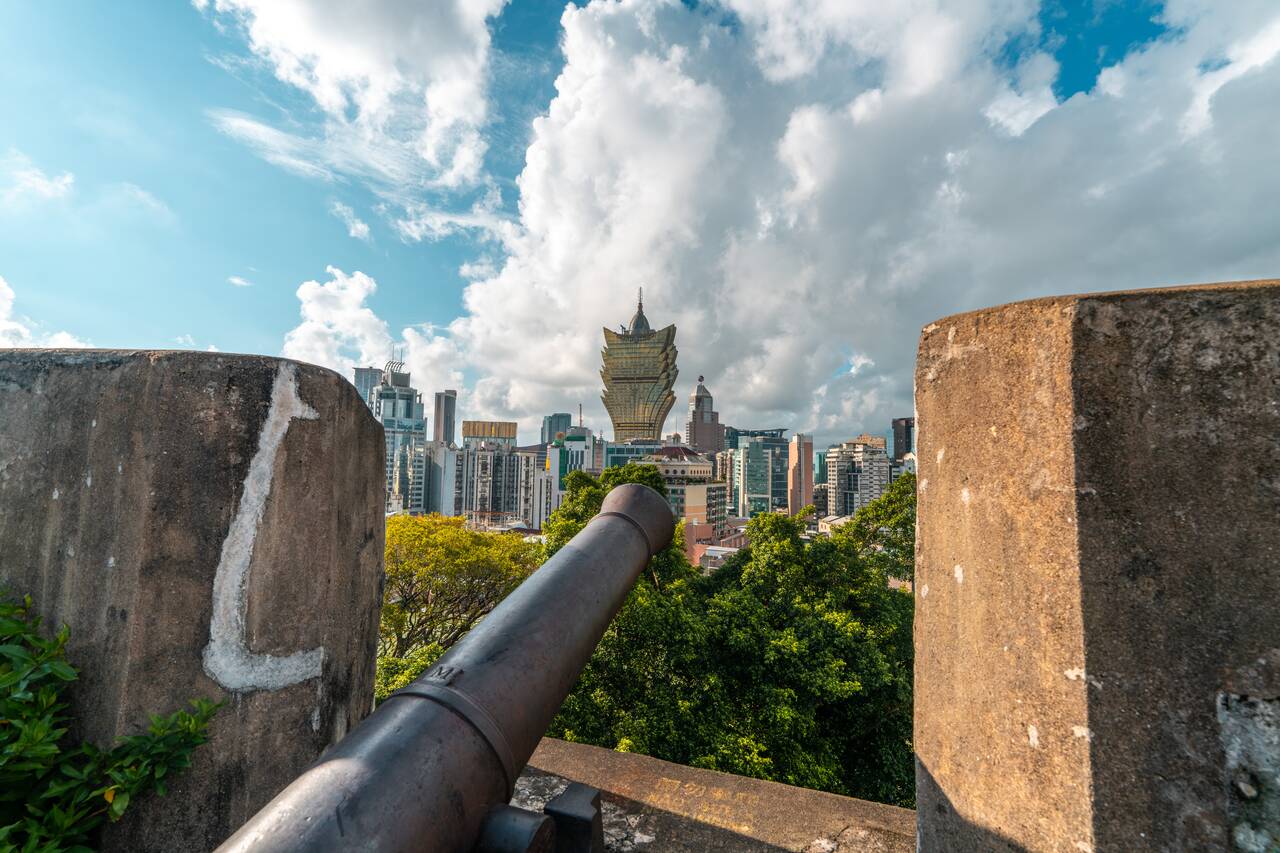
Located right next to the Ruins of Saint Paul's, you will find Monte Fort, a historic fortress built by the Portuguese in the early 17th century on top of a hill overlooking the entire old town area to protect Macau from invasions. Be sure to go and hike up to it in the morning when it is not too hot.
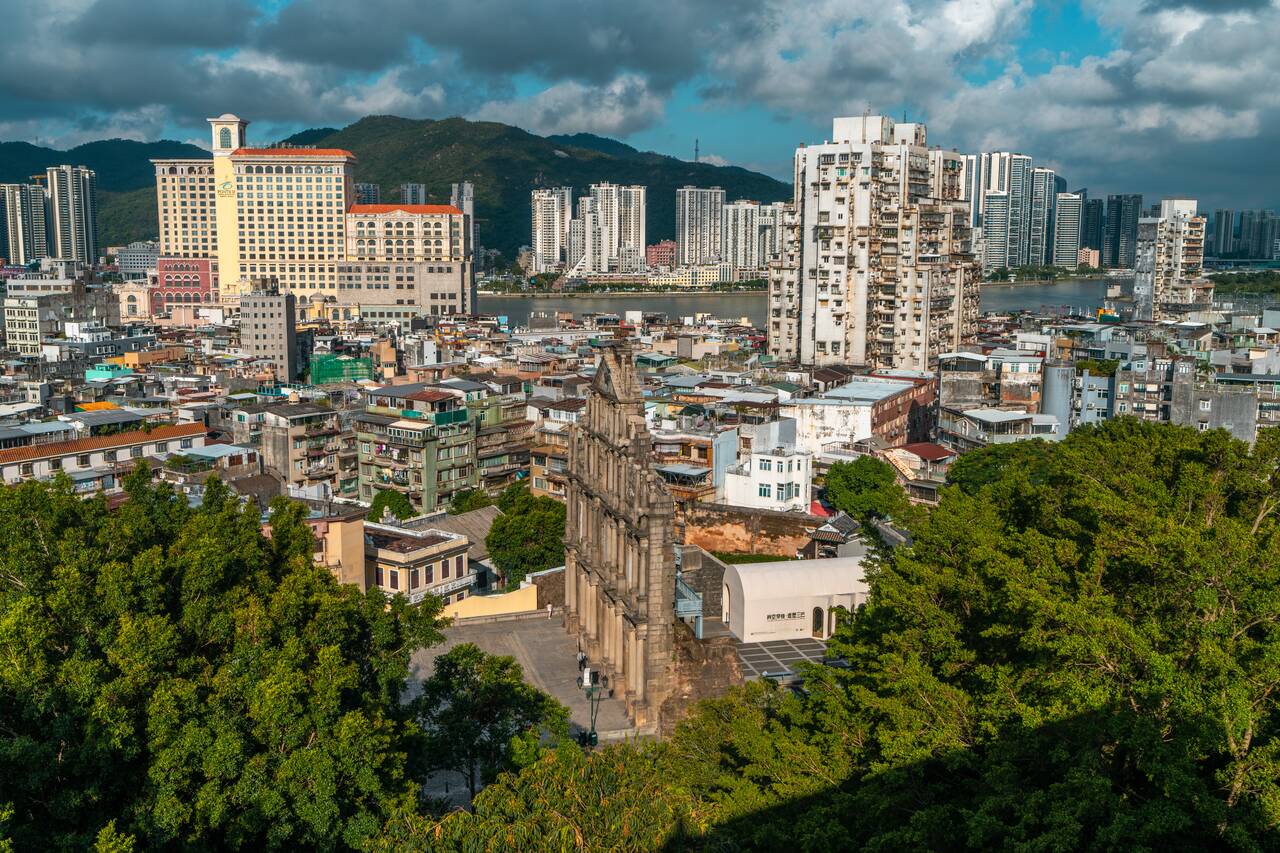
The fort is surrounded by a beautiful park, and it’s just a short hike up from the Ruins of Saint Paul’s before you reach its formidable gate, making it a perfect stop after visiting the ruins. Inside the fort, you’ll also find the Macao Museum, where you can learn all about the fort’s history as you explore.
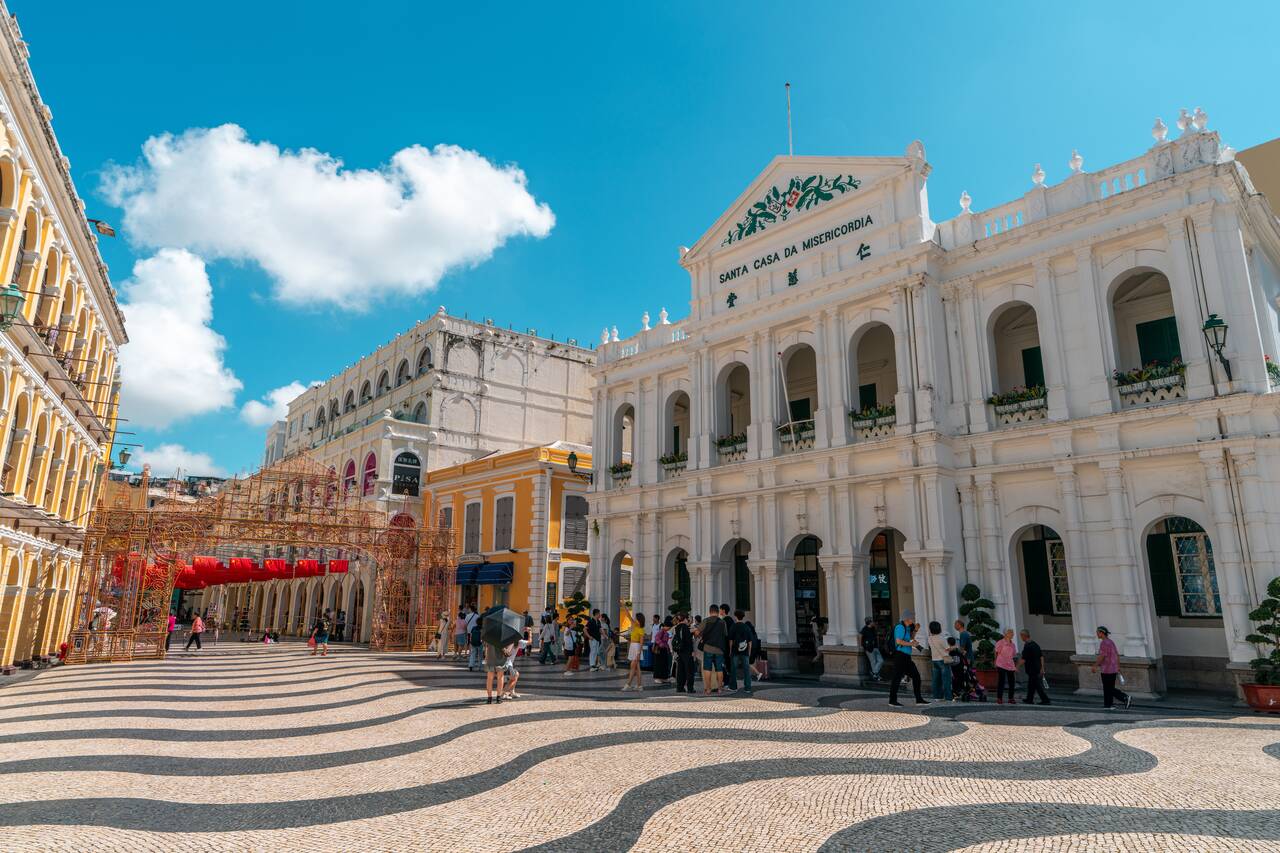
Next up, you can come and visit Sedano Square, a UNESCO World Heritage site that connects many of Macau’s top attractions, including the Ruins of Saint Paul’s and Monte Forte, via a lively shopping street.
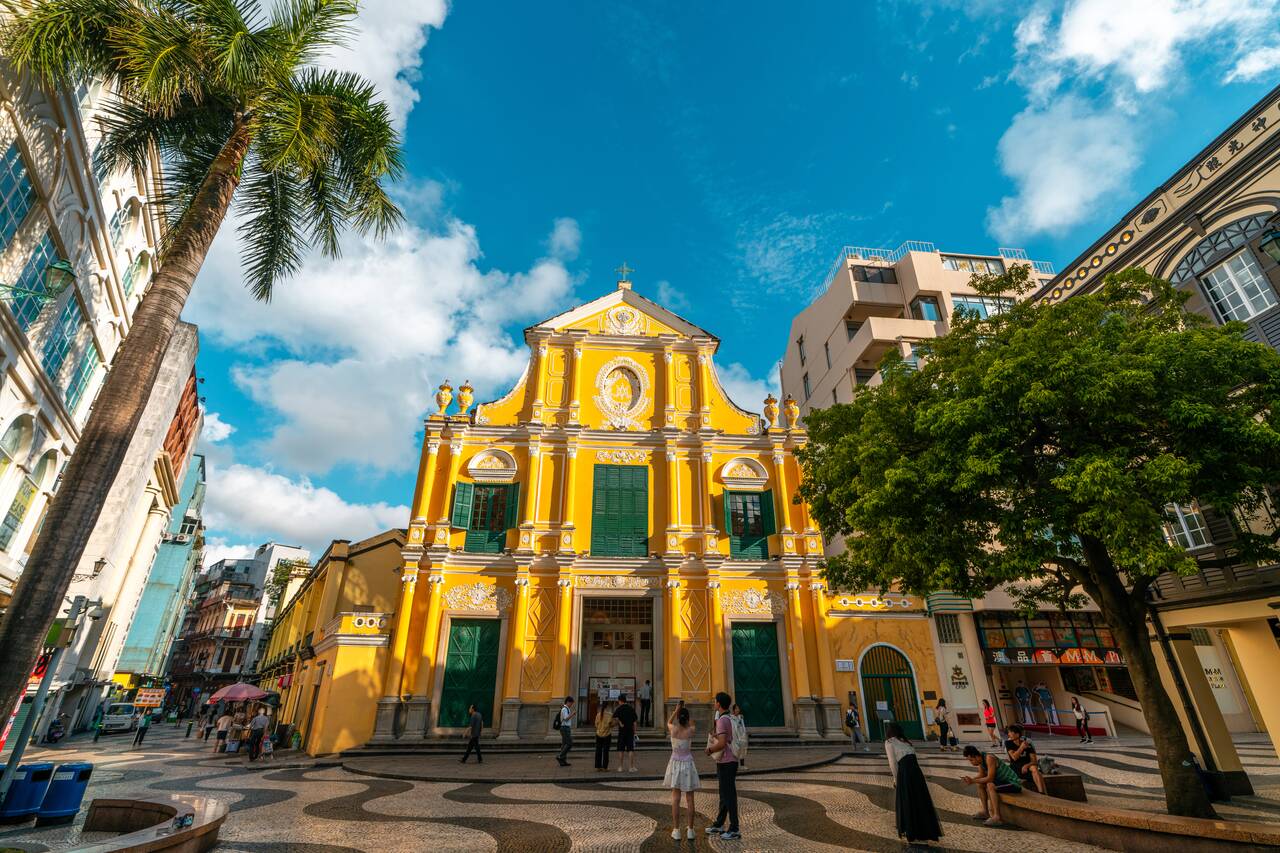
You can go for a stroll and explore the surrounding streets which should lead to other tourist attractions in the area like St. Dominic's Church, a stunning pastel-yellow Baroque-style church, Cathedral of the Nativity of Our Lady, and more.
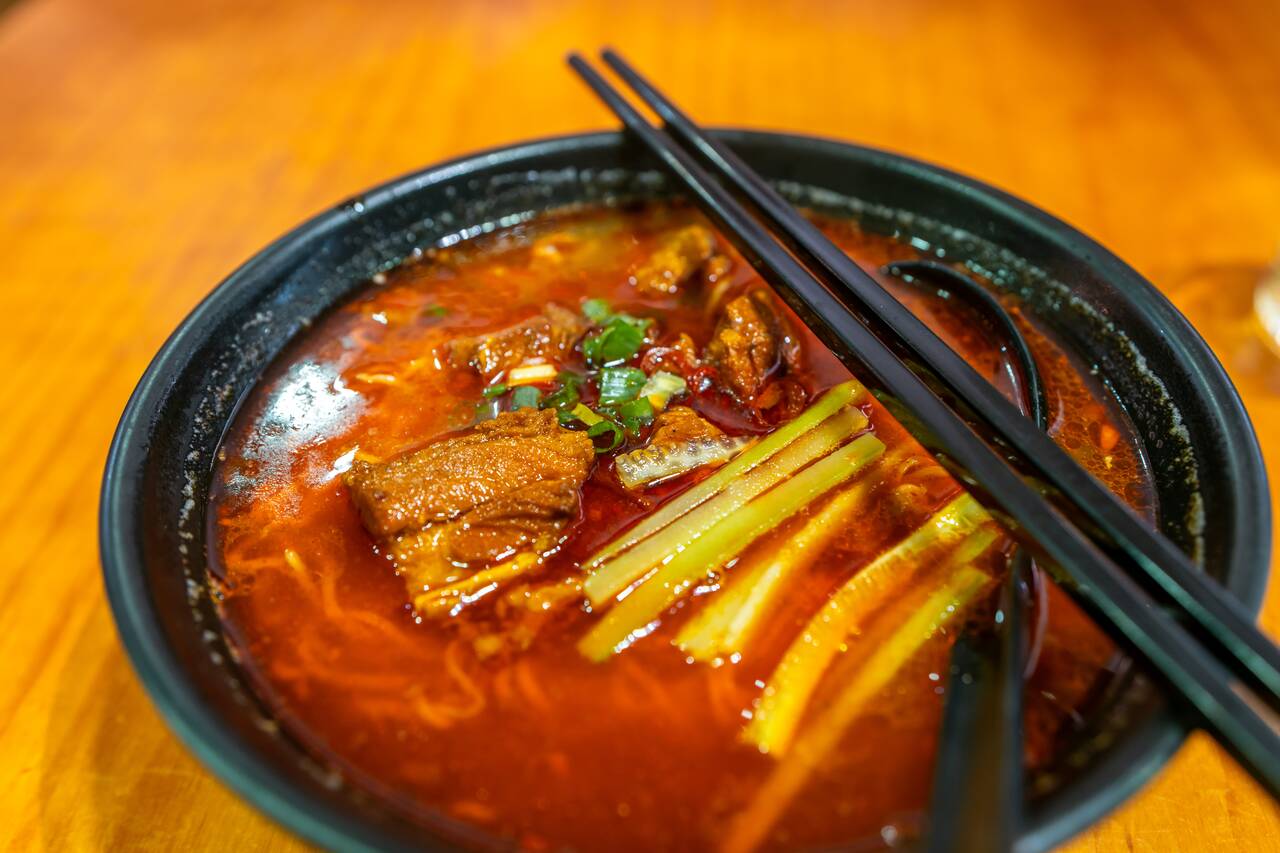
You can also stop by Ao Pu Restaurant for lunch, which is one of my favorite local restaurants located not too far from Senado Square, tucked away in a basement of a small street, and they serve all kinds of local dishes like spicy beef noodles, brisket sandwiches, egg tarts, and more.
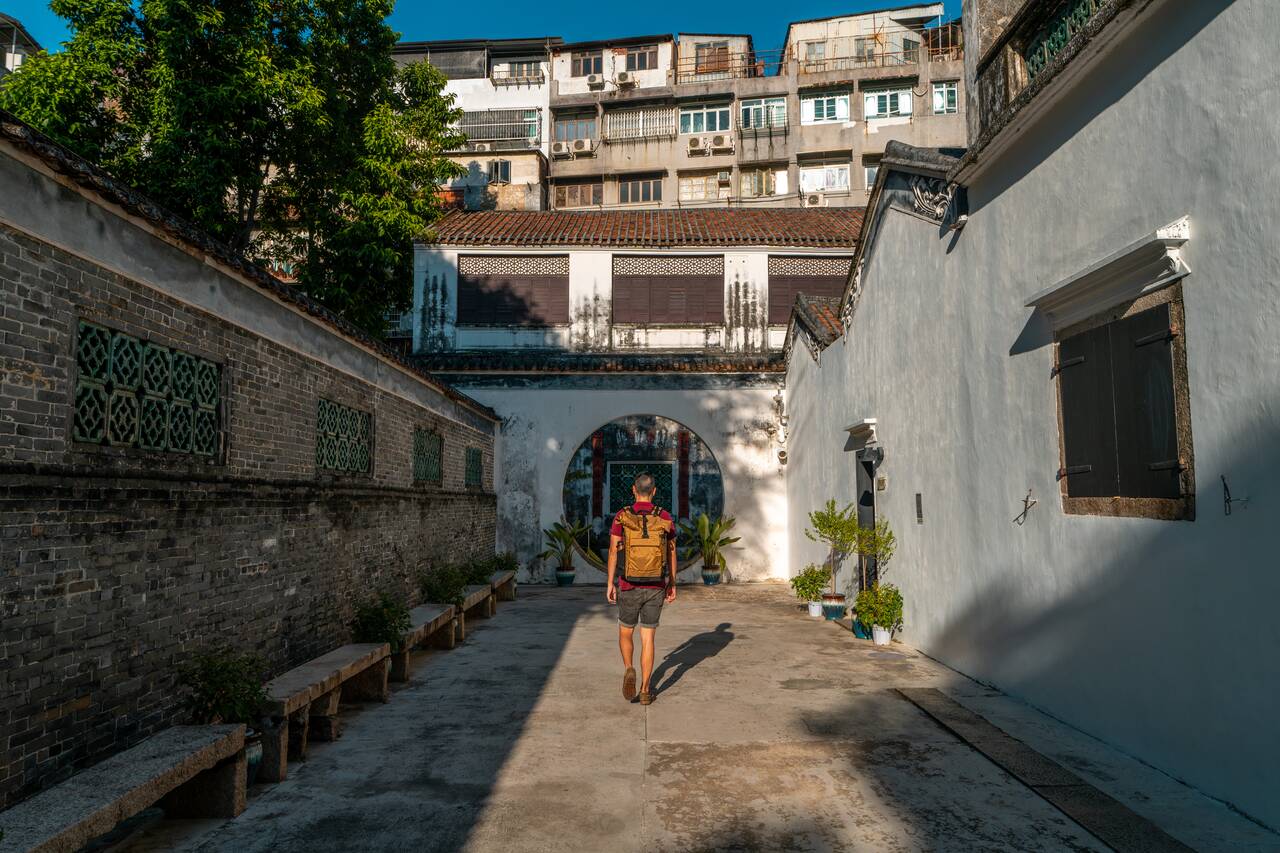
In the afternoon, you can continue south, and you will find Mandarin's House, a historic residential complex, once home to Zheng Guanying, a prominent 19th-century Chinese scholar and reformist, where you can stroll around and admire its beautiful decorations and artifacts.
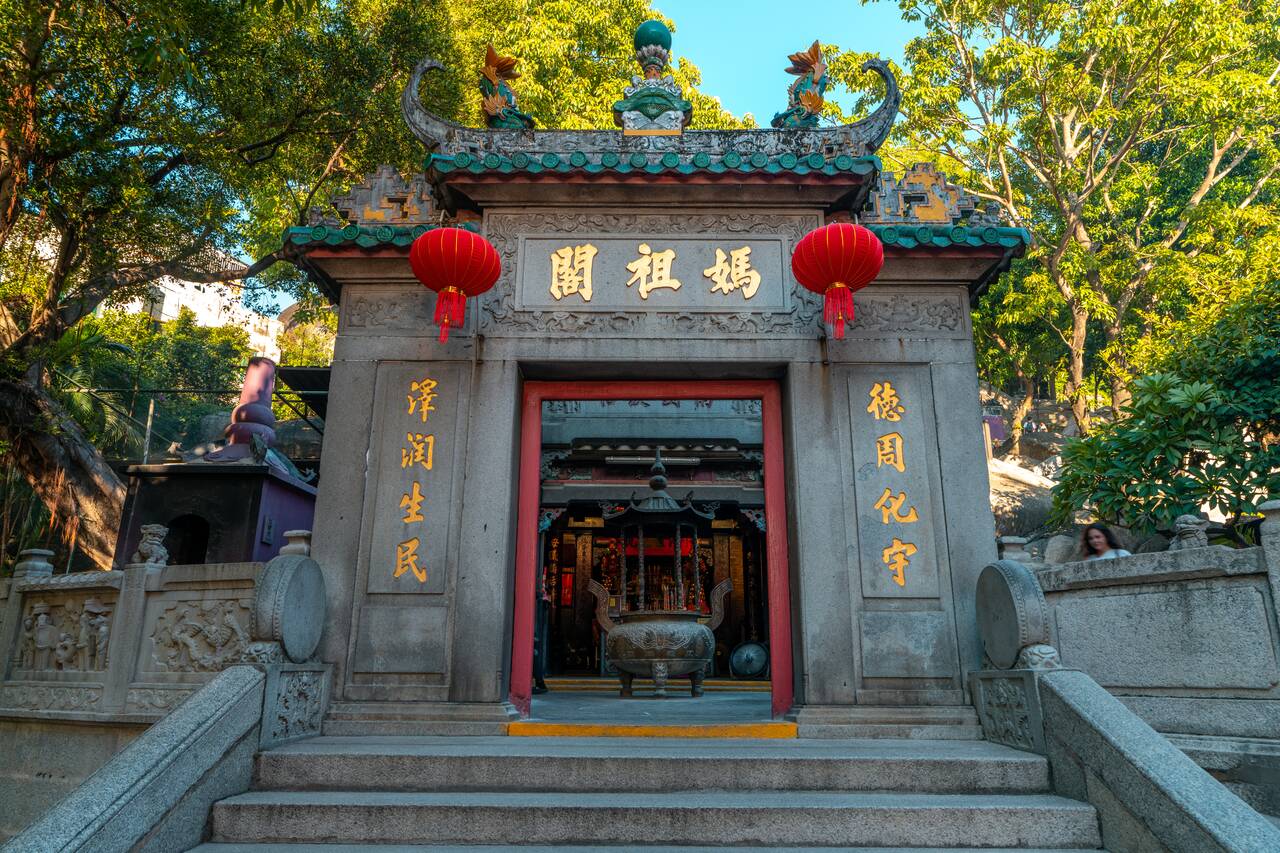
A little further south from Mandarin's House, you will find A-Ma Temple, one of Macau’s oldest and most famous temples, dating back to 1488. The temple has several shrines at different levels along the rocky hillside, so be sure to hike all the way to the shrine at the top!
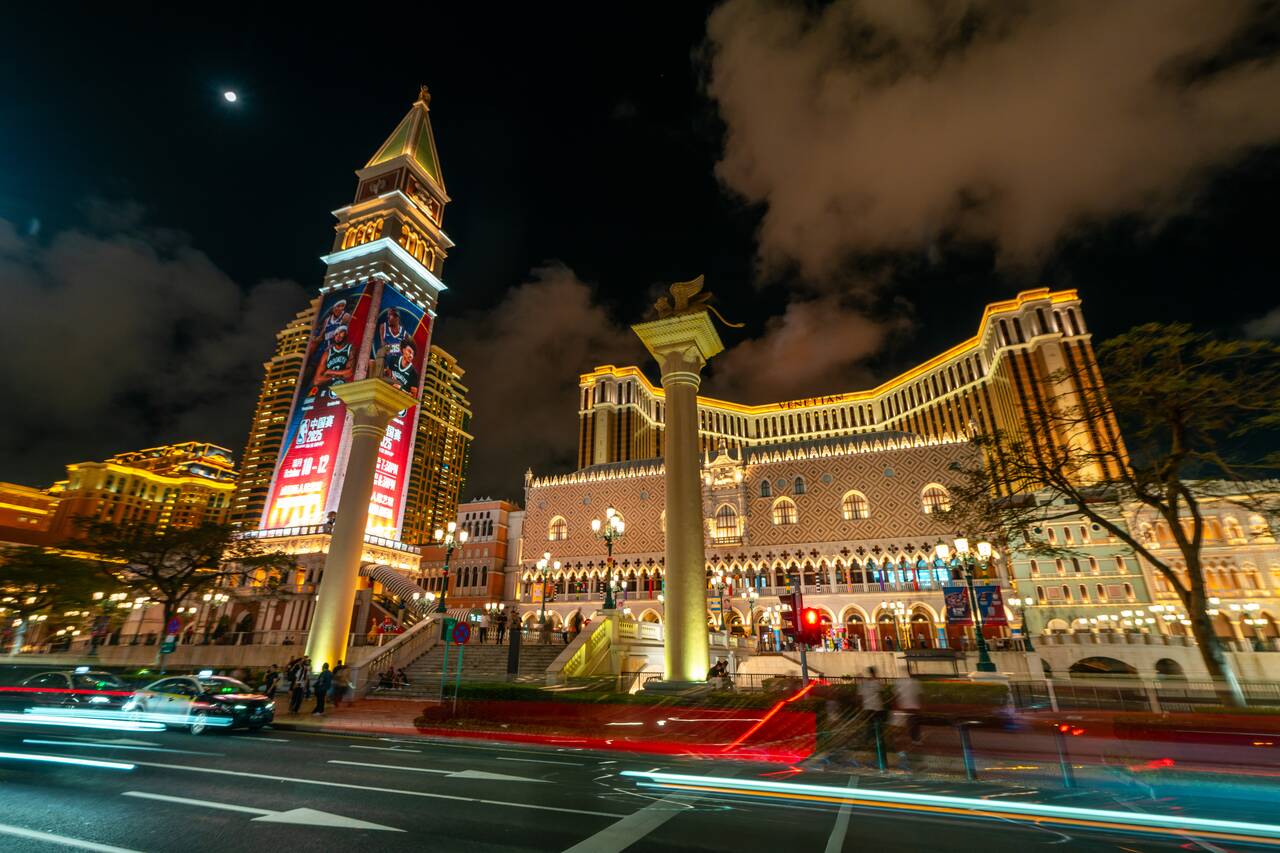
Of course, one of the biggest draws of Macau is its luxurious casinos and larger-than-life entertainment, featuring Las Vegas–style replicas of famous landmarks from around the world but with their own glamorous twists. Most of them are concentrated around the Cotai Strip, which is where I recommend you visit after sundown.
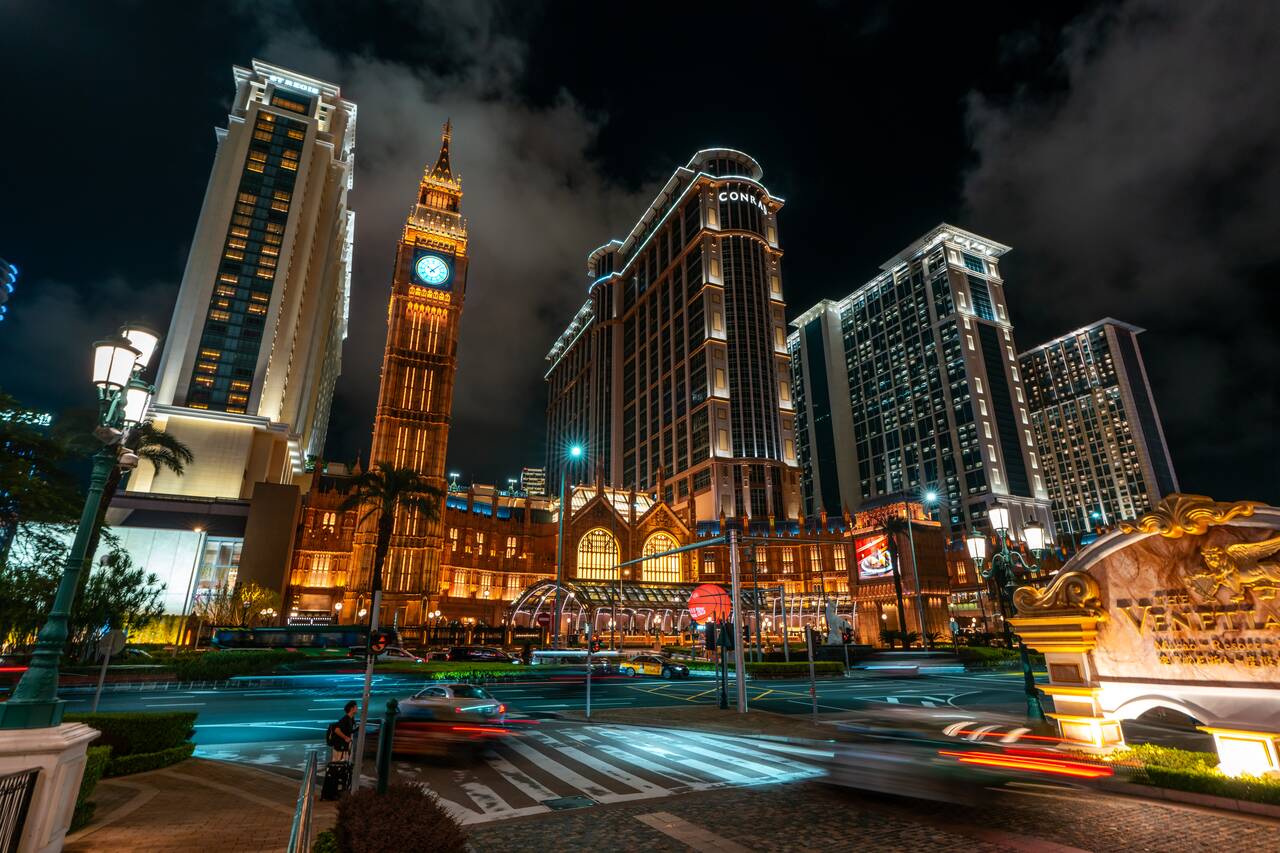
Even if you’re not into gambling (personally, I’m not interested in it either), you’ll still find the outrageous architecture and dazzling light shows fascinating to see. From the Eiffel Tower to Big Ben, from Venice-themed shopping malls to a replica of the Vatican’s Gallery of Maps, you’ll find them all along the Cotai Strip.

Don't forget to also drop by the Venice-themed shopping malls here, with the fake canals that you often see in photos and videos. You can even pay to be taken around in Venice-style boats along these canals. It’s very gimmicky, and I love it 😂. It’s so unapologetically over-the-top that you can’t help but be impressed by their determination!

You can expect to spend at least an hour or two walking around the Cotai Strip. Once you’re done, head back to your accommodation and rest for the night, as the next morning we’ll be taking an early ferry to Hong Kong, our next destination.


Getting From Macau to Hong Kong
From Macau, you can take a high-speed ferry from the Macau Outer Harbor to the Hong Kong Macau Ferry Terminal. From the city center, you can catch bus #3A to the Macau Outer Harbor, which takes about 25 minutes and costs 6 MOP/HKD. The ferry costs around 200 HKD and takes just under an hour. You can book your ticket in advance here.
Day 2-4: Hong Kong (3 Nights)

- 📍 Stay: Eco Tree Hotel Causeway Bay
- 🕐 Time: 3 Nights
- 📖 Full Guide: Visiting Hong Kong: 12 Awesome Things to Do & More
We will be spending 2 full days in Hong Kong, and so on the first day you arrive, you can leave your bags at the hotel and go explore Tsim Sha Tsui, a vibrant shopping district filled with casual eateries and eclectic local shops along neon-lit Nathan Road, as well as luxury malls lining nearby Canton Road. The area is also surrounded by many major tourist attractions, making it a great place to begin your journey in Hong Kong.
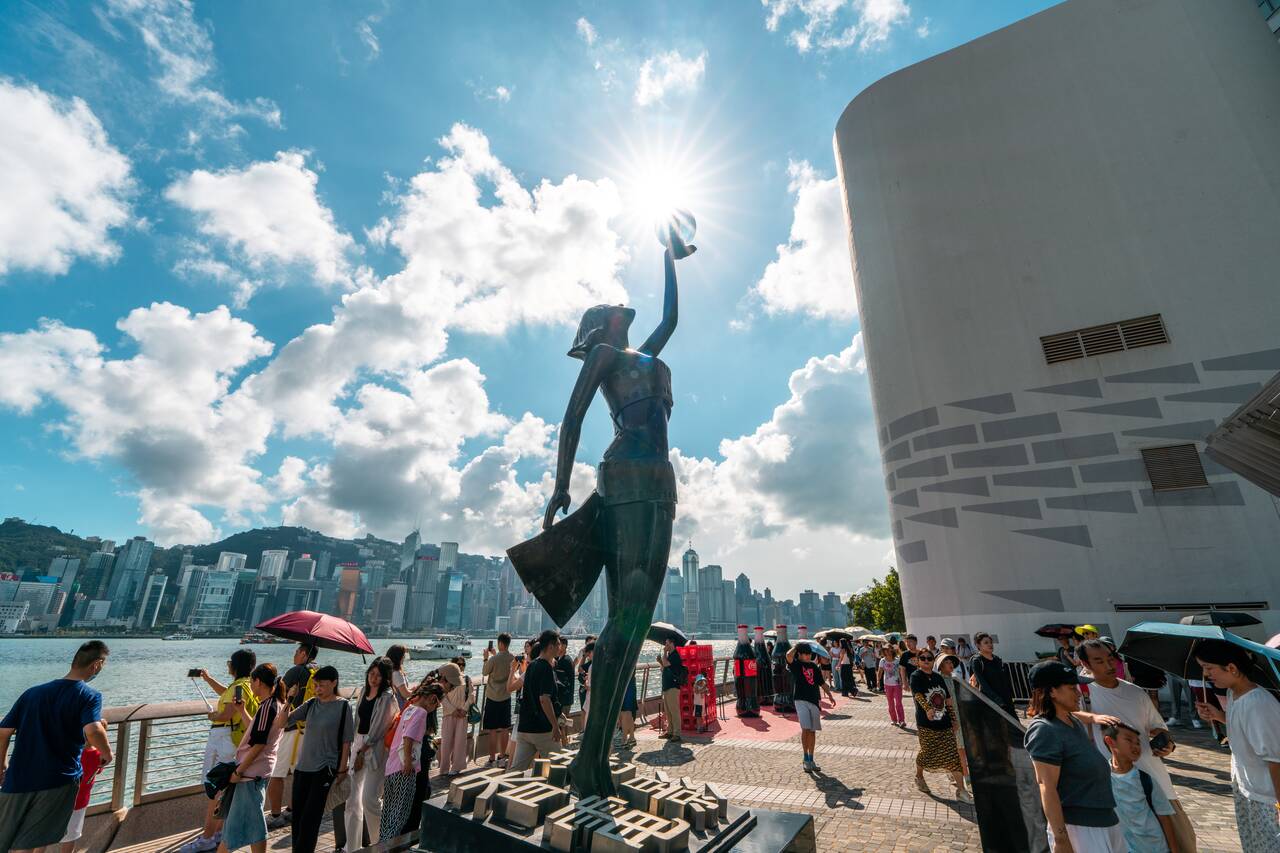
You can go and check out the Avenue of Stars HK, a famous promenade that runs along the Tsim Sha Tsui waterfront which was modeled after the Hollywood Walk of Fame. It celebrates Hong Kong’s rich film industry and honors legendary actors, directors, and filmmakers who have contributed to the city’s cinematic history.
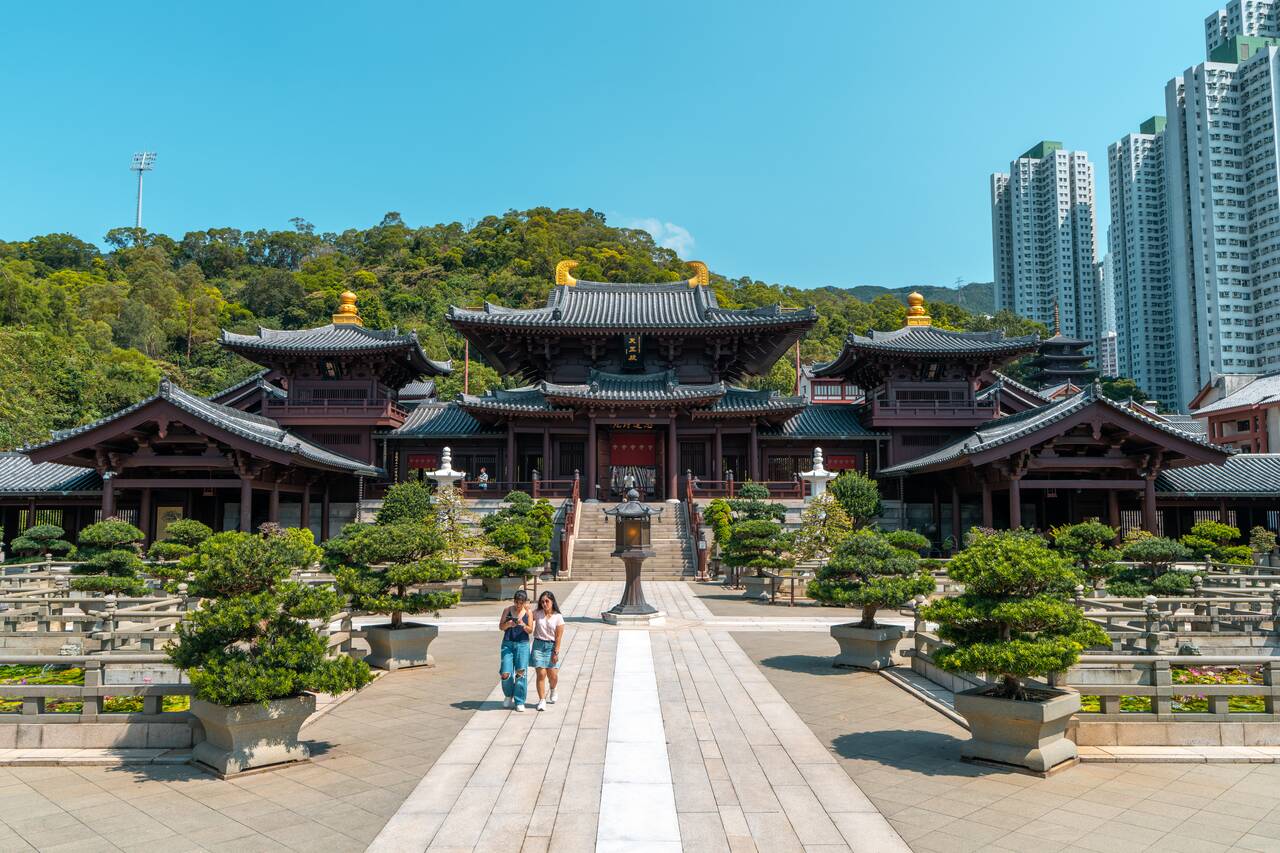
After you are done here, you can take the metro and go visit Nan Lian Garden, a beautiful Chinese garden with stunning temples located in the Wong Tai Sin District that feels more like Japan than Hong Kong.
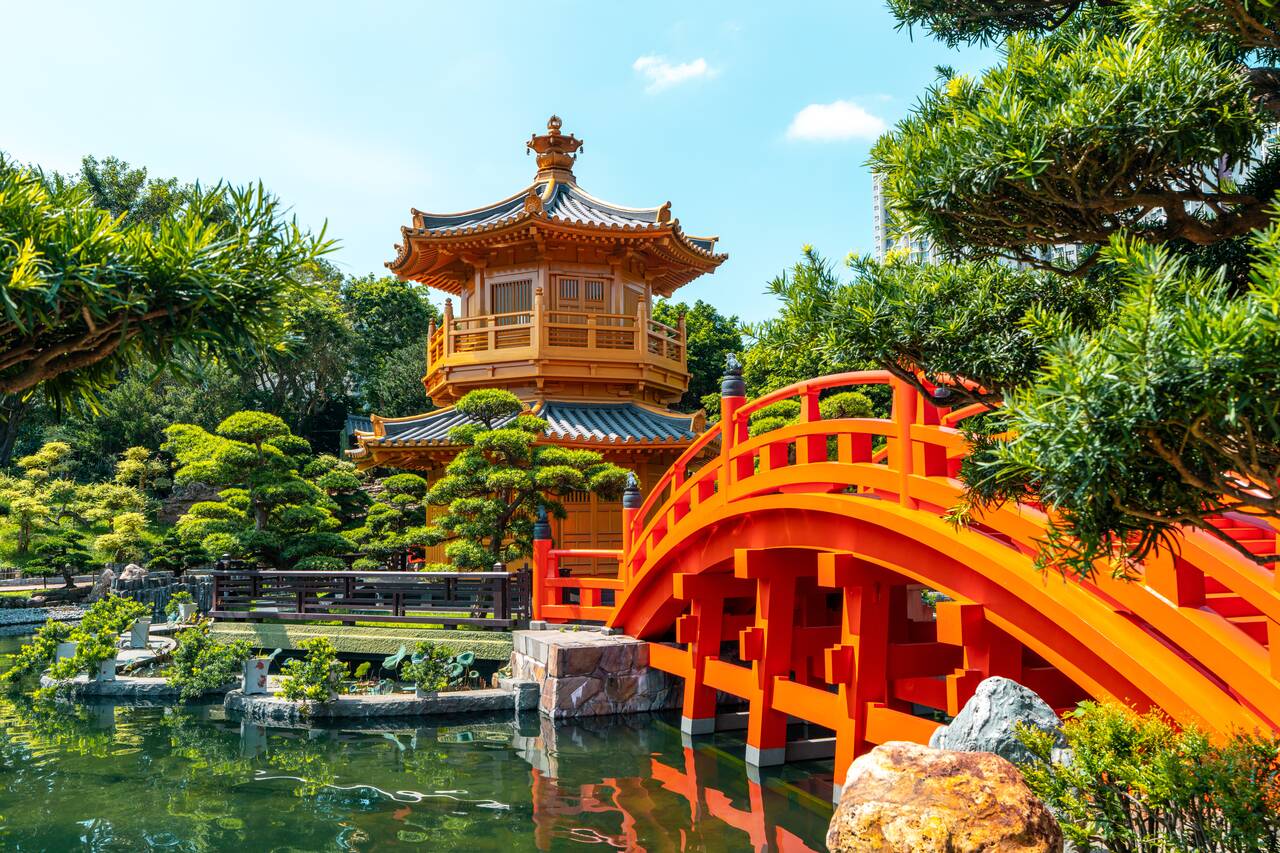
The temple is located at the foot of Diamond Hill and can be easily reached by metro or bus from Central. It’s one of my favorite places in Hong Kong because of how quiet it is compared to other places in the city. The garden is quite large, with plenty of photo spots, attractions, and walking paths to explore, so expect to spend at least an hour or two here.
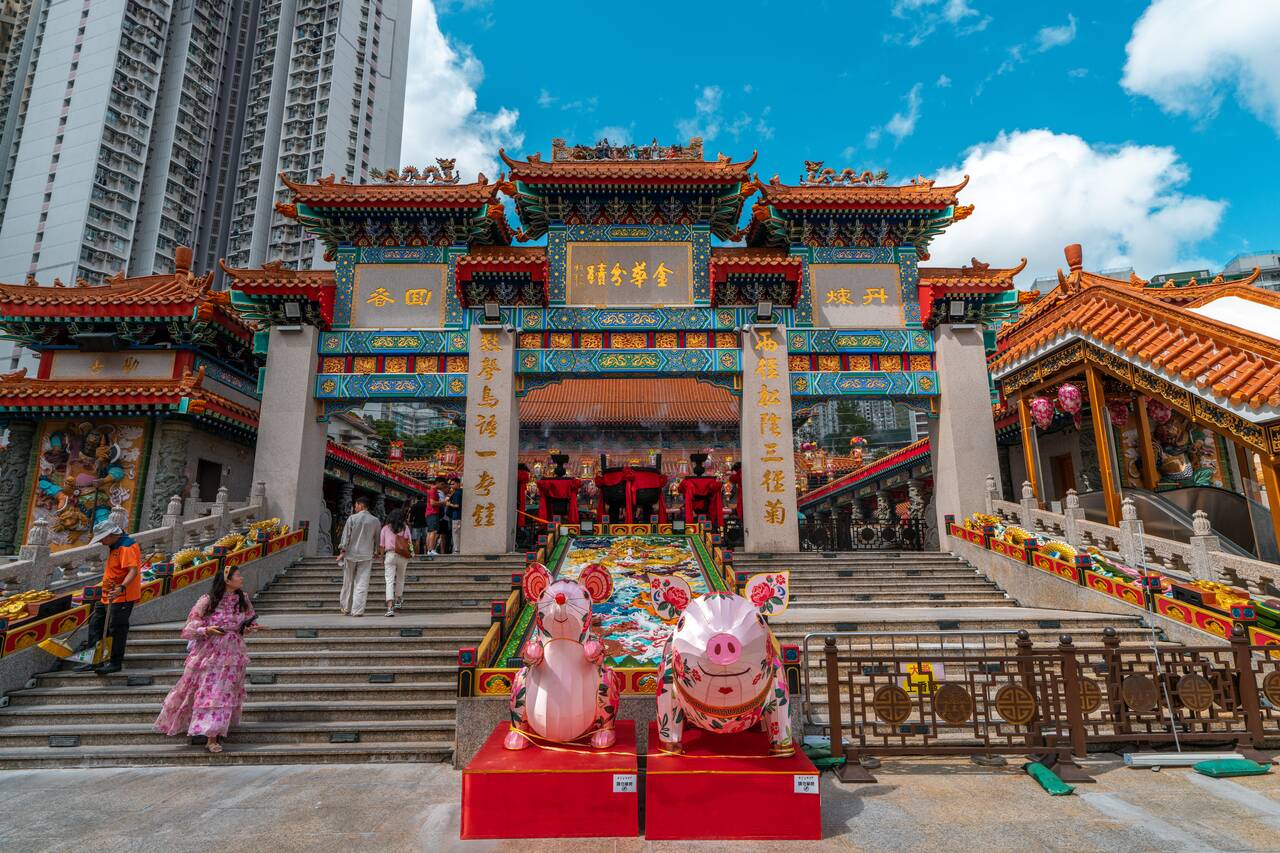
Once that is done, you can continue on to one of the most sacred temples you can visit in Hong Kong, which is Sik Sik Yuen Wong Tai Sin Temple, a large and highly revered temple where you’ll see both worshippers and tourists seeking blessings for health, fortune, and success.
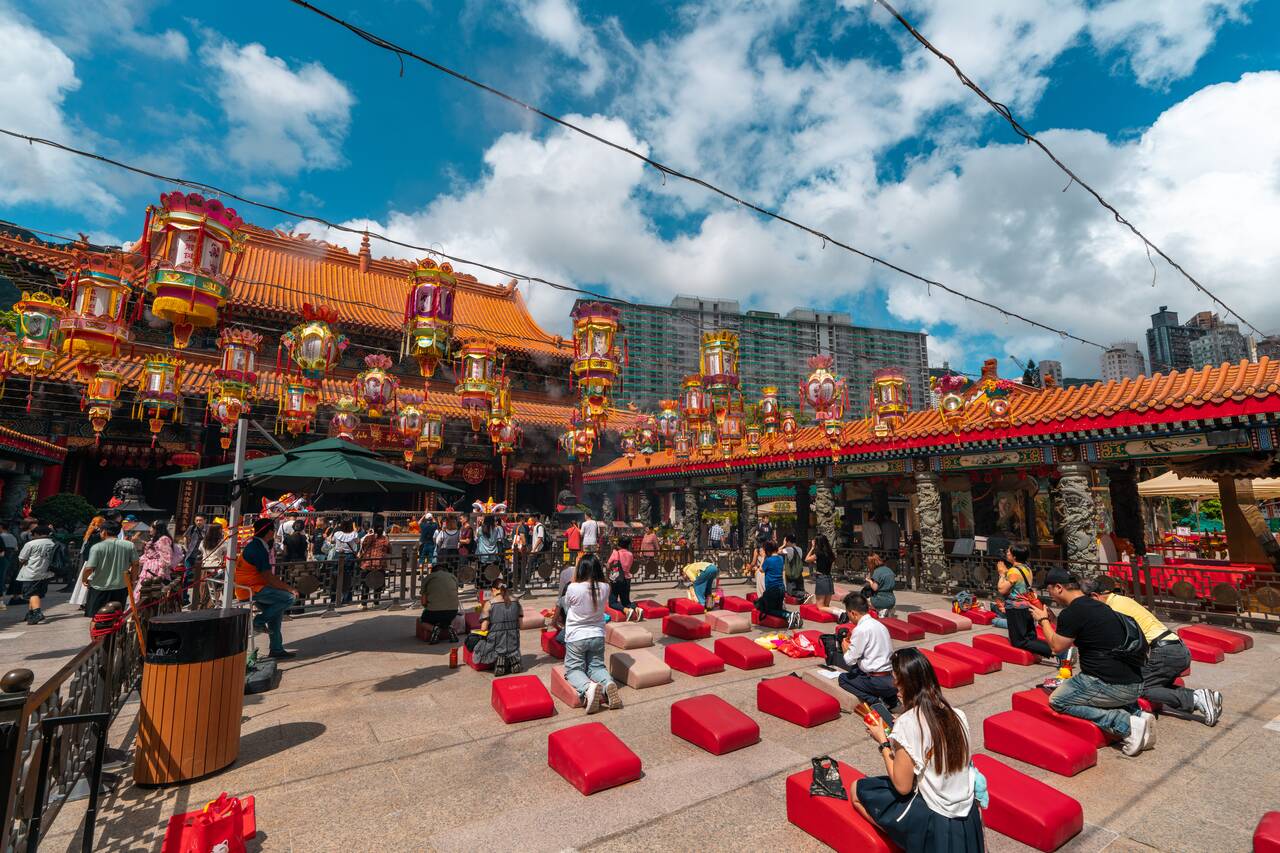
The complex features colorful traditional architecture, ornate carvings, and beautifully landscaped gardens where you can walk around while enjoying the lively atmosphere as people from all over the world pay respect to Wong Tai Sin, a legendary Taoist deity to whom this temple was dedicated. There's a shopping mall right next to the temple, so you can stop by there for lunch as well.
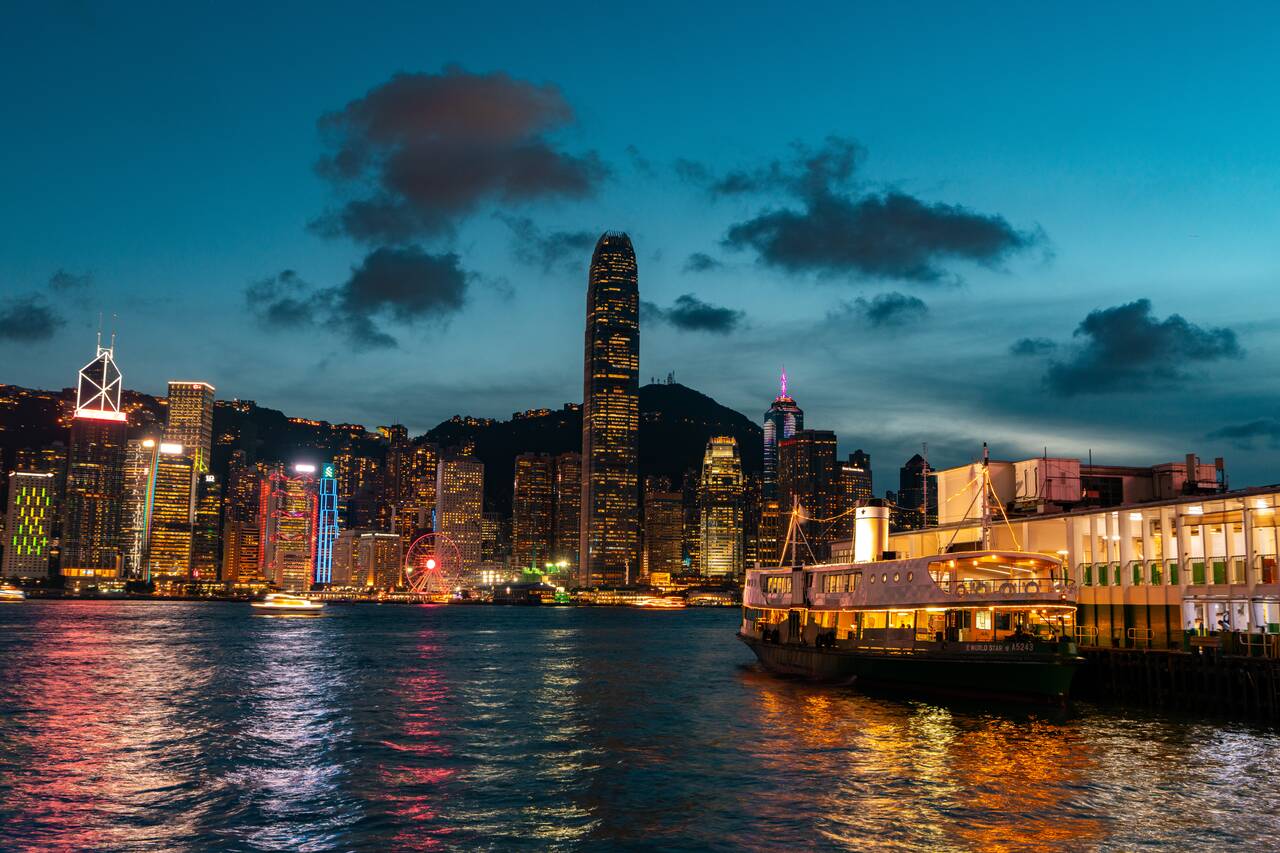
Once evening rolls around, come back to Victoria Harbour and watch the city lit up in dazzling lights as the sun sets behind the horizon. Hong Kong's skyline is legendary, and there’s no better place to enjoy it than here.
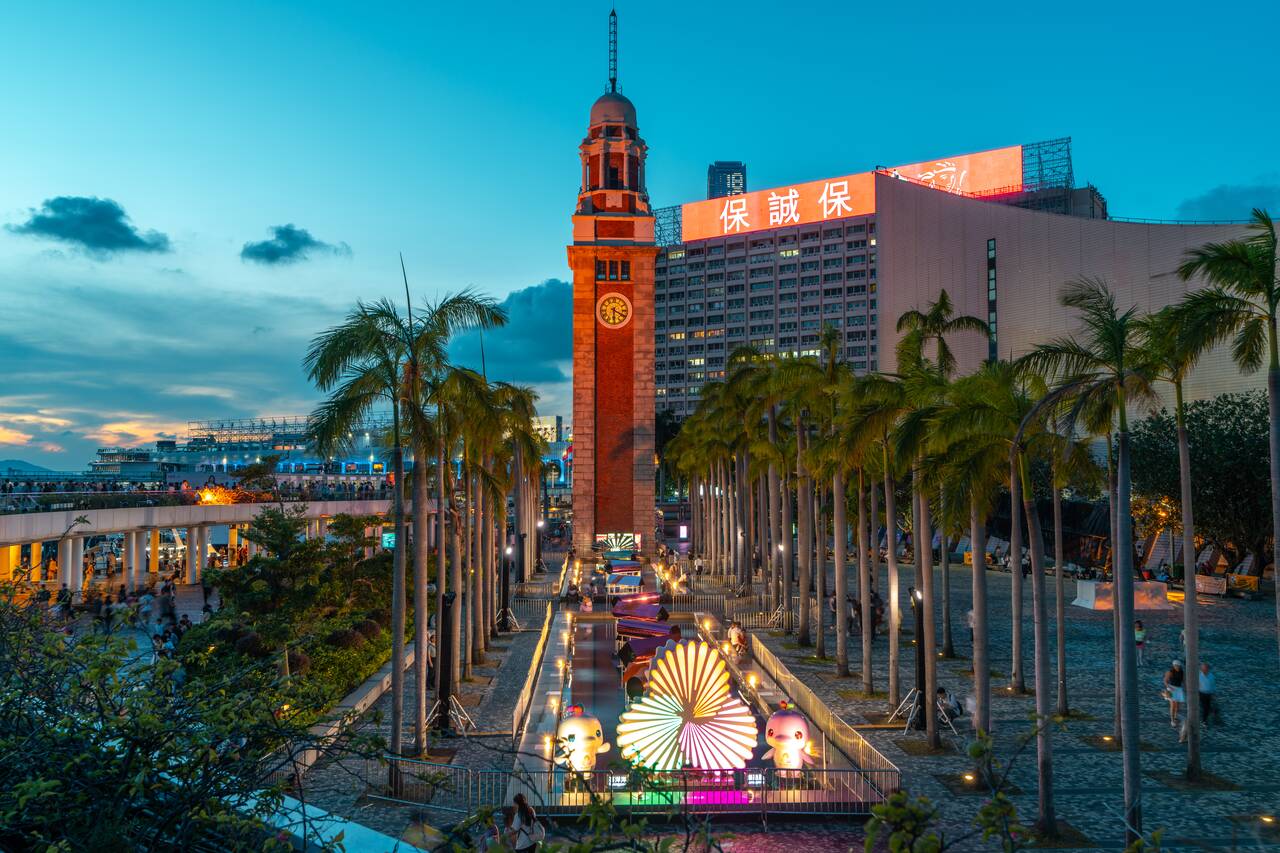
You can come to the harbour about an hour before sunset and go check out some of the tourist attractions nearby like the Kowloon-Canton Railway Clock Tower, one of Hong Kong's iconic landmarks. Once you are done, you can go up the elevated bridge over the pier, find a place to sit, and enjoy the wonderful light shows at sunset.
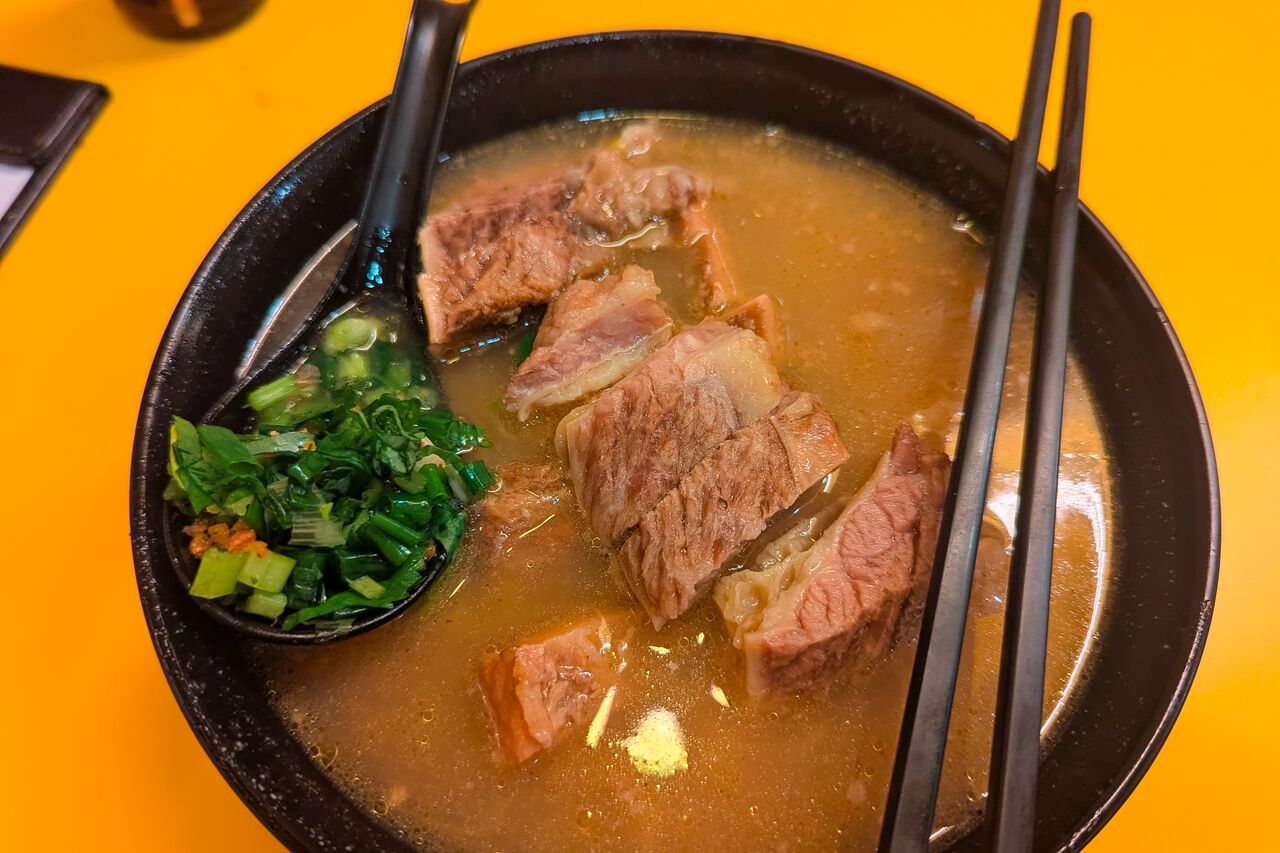
For dinner, I highly recommend trying the fish ball noodles from Aberdeen Fish Ball King. They have several branches around Hong Kong, and I visited the one near my hotel in Fortress Hill, and it was great. Find the branch closest to your accommodation and give it a try before calling it a day.
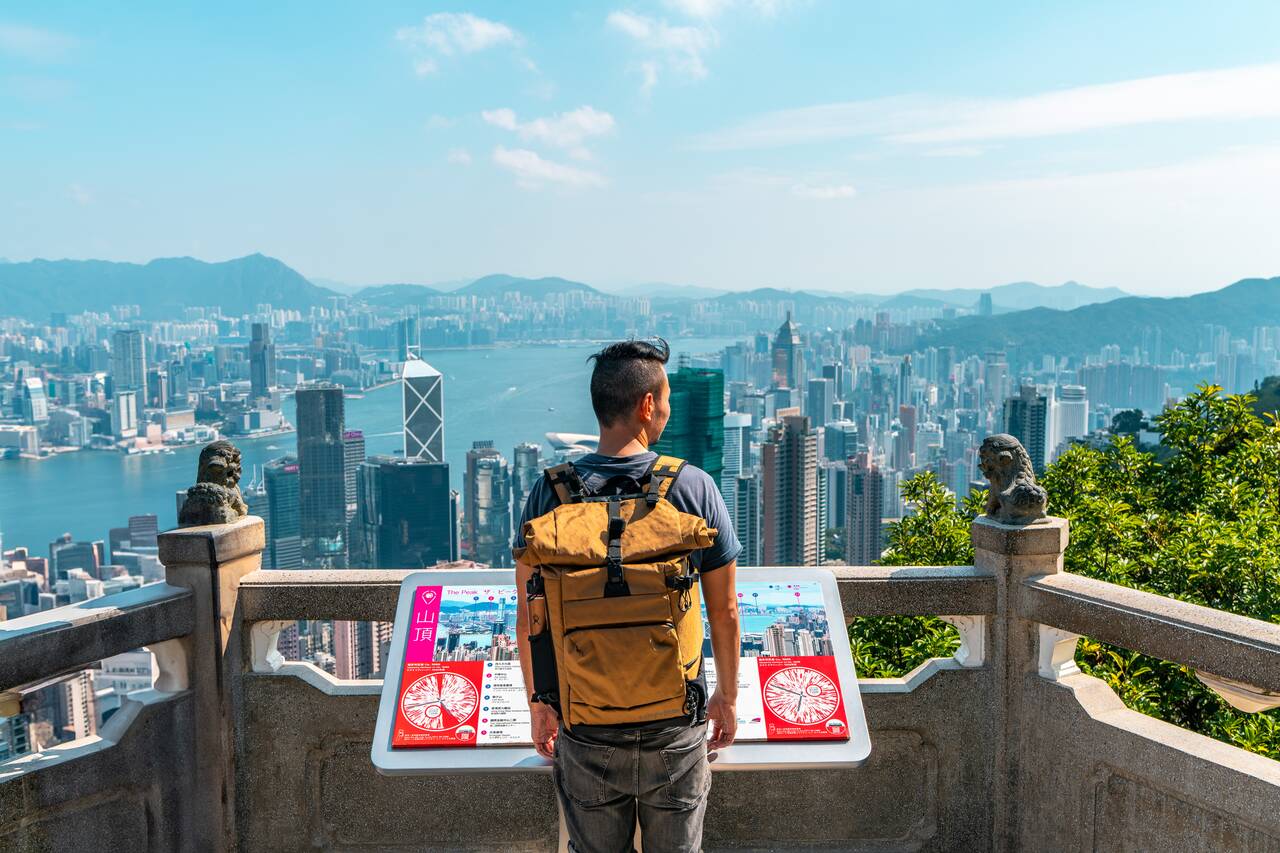
On your second day in Hong Kong, start the morning by heading up to Victoria Peak to enjoy the stunning view of the cityscape. You can take a taxi up instead of the tourist tram, and here’s why.

It’s simple: there are way too many people wanting to do it, and you might end up waiting hours just for a 10-minute ride to the top. In my opinion, it’s not worth the wait, and you can get up there by taxi in about 20 minutes and a bit cheaper if you are traveling as a couple or more.
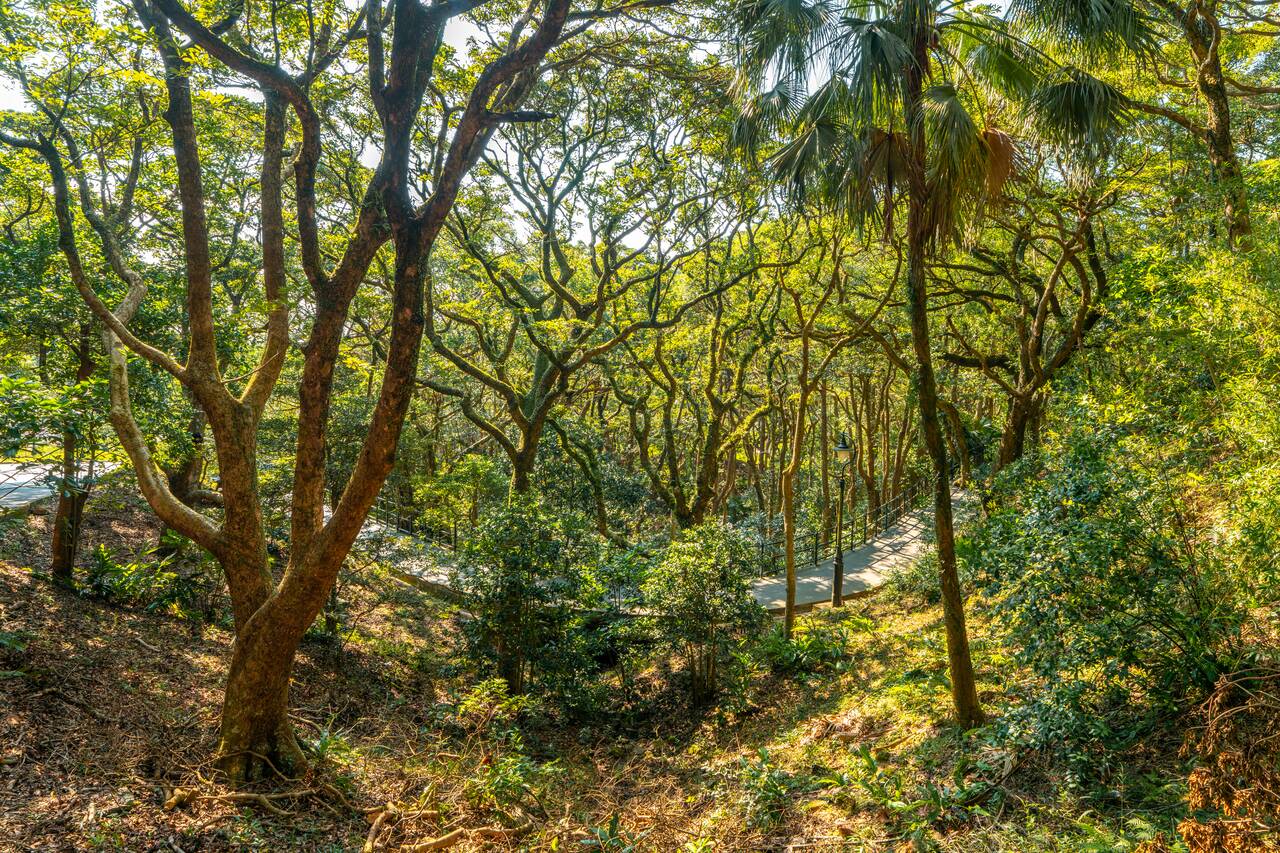
Also, skip the Sky Terrace 428. You can easily enjoy the same views for free at Victoria Peak's Lions Pavilion, just a short walk from the tram station. The views are just as stunning, and it won’t cost you a thing! For a quieter experience, you can also hike along the Peak Trail to escape the crowds and take in the scenery in peace.
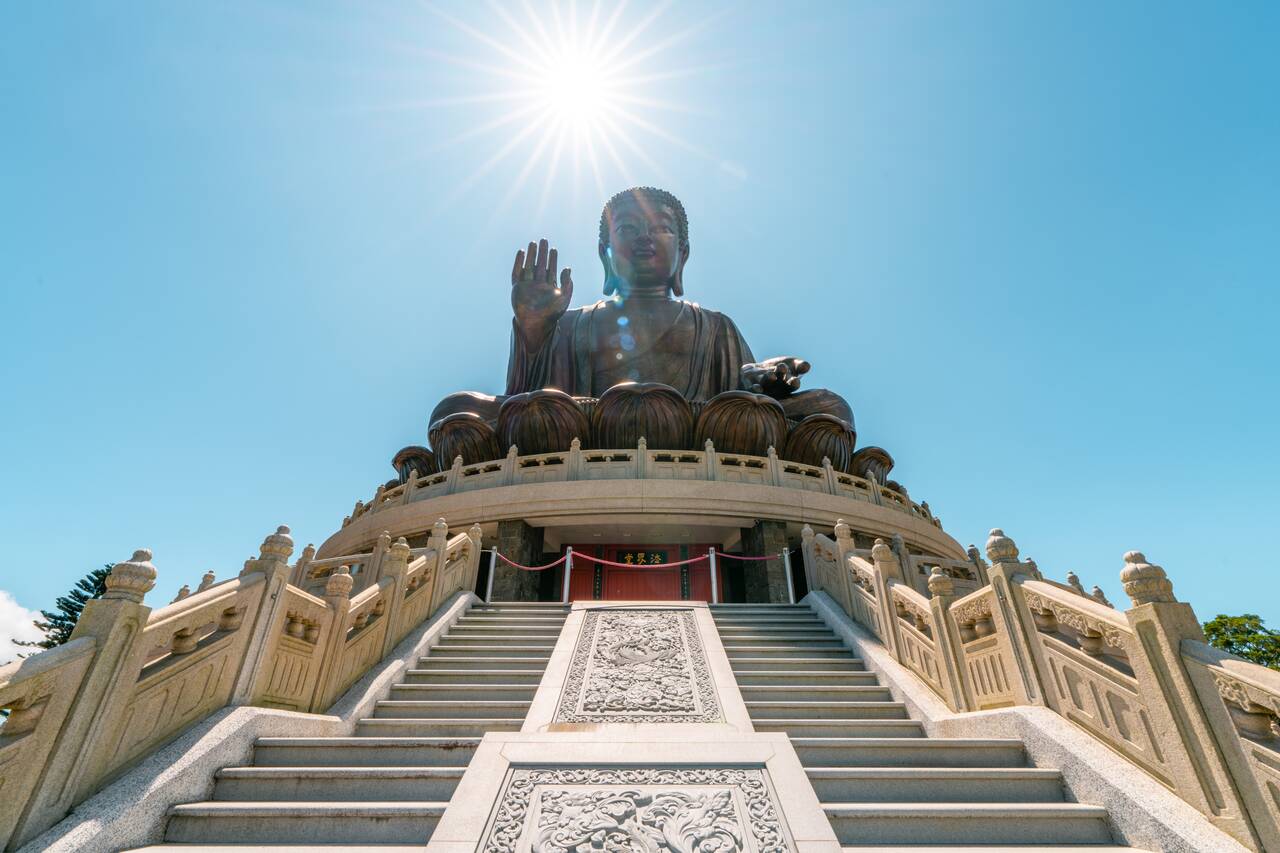
In the afternoon, you can go and visit one of the most impressive landmarks in Hong Kong, Tian Tan Buddha, also known as the Big Buddha. This monumental bronze statue on Lantau Island is about a two-hour metro and cable ride from Central, which makes for a great half-day trip.
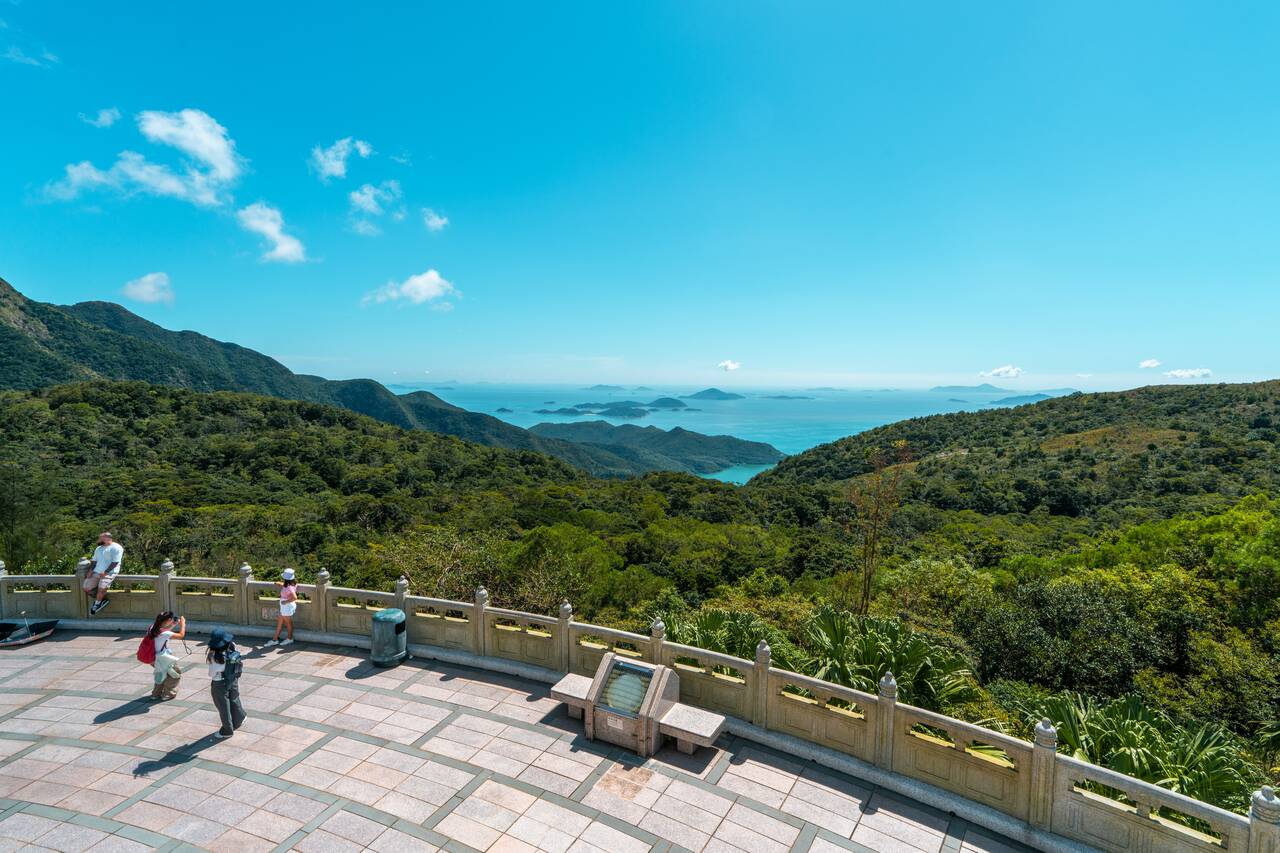
Standing 34 meters tall, it is one of the largest seated outdoor Buddha statues in the world. You can visit the temple and climb the statue for stunning views of Hong Kong’s beautiful mountain surroundings and the South China Sea.
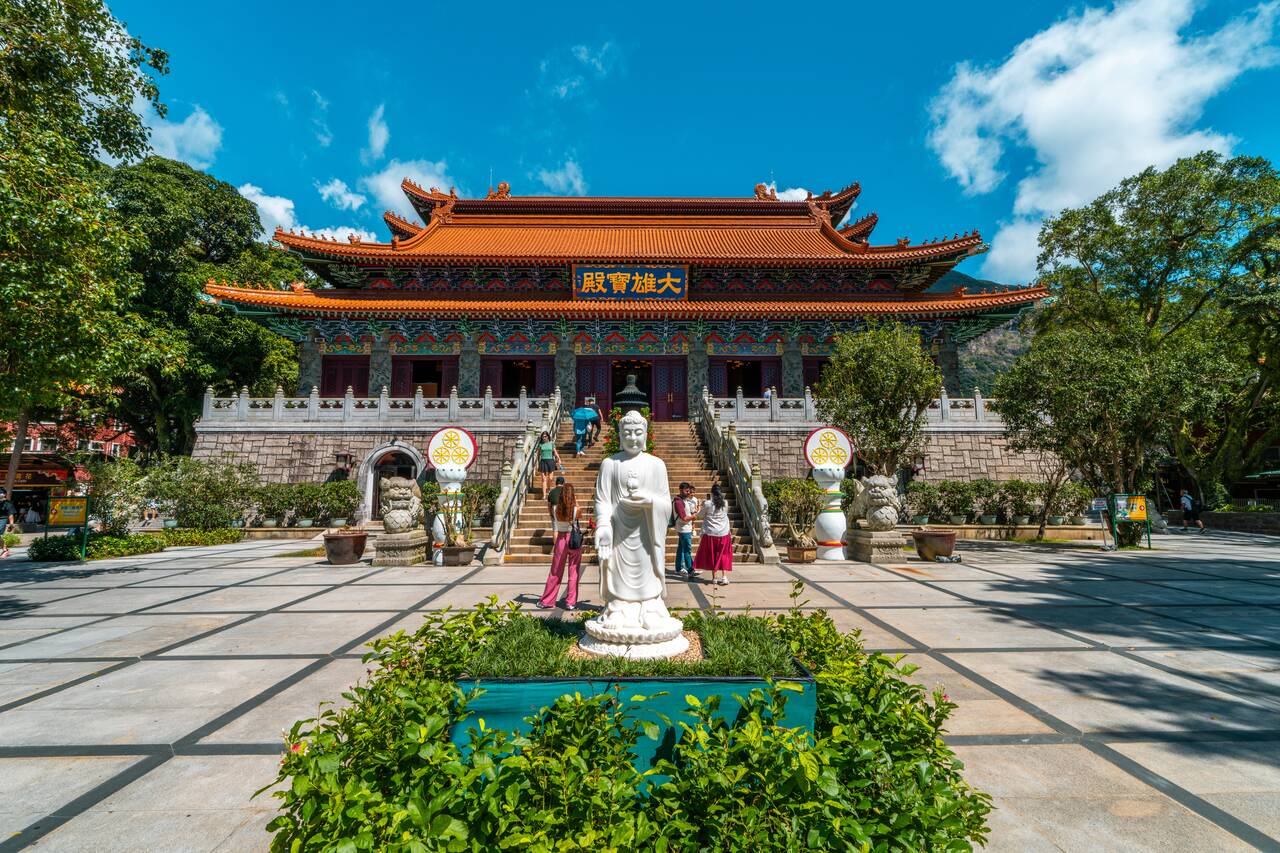
The site also includes the Po Lin Monastery with its beautiful temples, pavilions, and sacred Buddha statues to explore. There are restaurants and shops nearby to make your visit more comfortable. The area is quite large, and it will take some time to see all of its attractions. Expect to spend at least 2 hours here, not including travel time, which adds another 3–4 hours for a round-trip journey from Central.
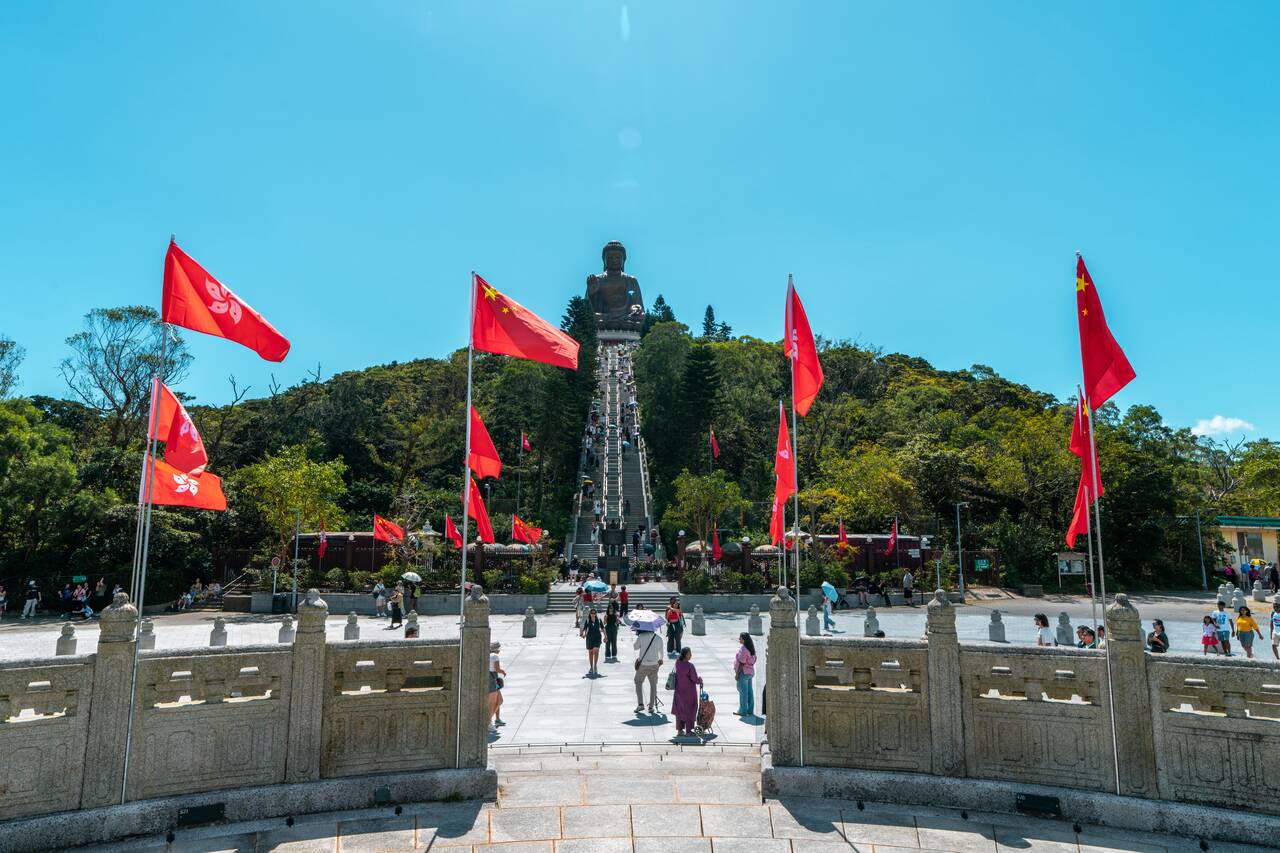
The metro will take you to the cable car station, where you will then have to purchase a separate ticket to get to the temple grounds. I highly recommend that you purchase the ticket in advance from here to avoid having to line up and queue at the ticket booth, which can be pretty long.
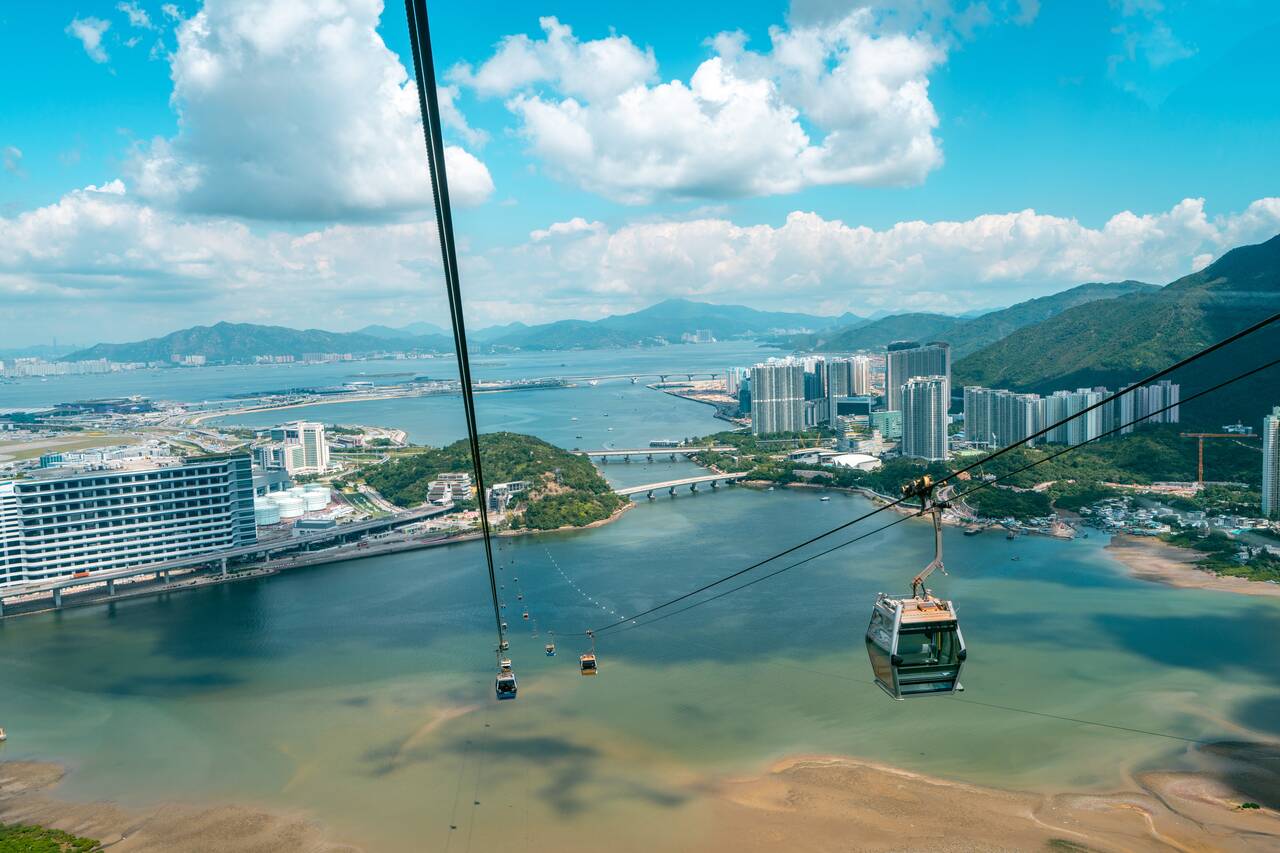
The views from the cable car are absolutely incredible! You can see the dramatic landscape of Hong Kong as you ascend up the mountain. You might even spot planes taking off and landing, as the cable car is not far from the airport. You can spend the entire day exploring the temple grounds before heading back to Central and enjoying a chill evening for the rest of the day.

Getting From Hong Kong to Guangzhou
From Hong Kong, you can take a high-speed train from West Kowloon Station to Guangzhou South Railway Station. It costs around 30 USD and takes a little over an hour. You can book the ticket in advance here.
Keep in mind that you will have to clear immigration for both China and Hong Kong at West Kowloon Station, so get there at least 2 hours in advance. Once you get past immigration, you are in China and there will be no further immigration check at Guangzhou. From Guangzhou South Railway Station, you should be able to take the metro to the city center.
Day 5-7: Guangzhou (3 Nights)
- 📍 Stay: Yizhi Hotel (Guangzhou Beijing Road )
- 🕐 Time: 3 Nights
- 📖 Full Guide: Explore Guangzhou: 12 Incredible Things to Do & More
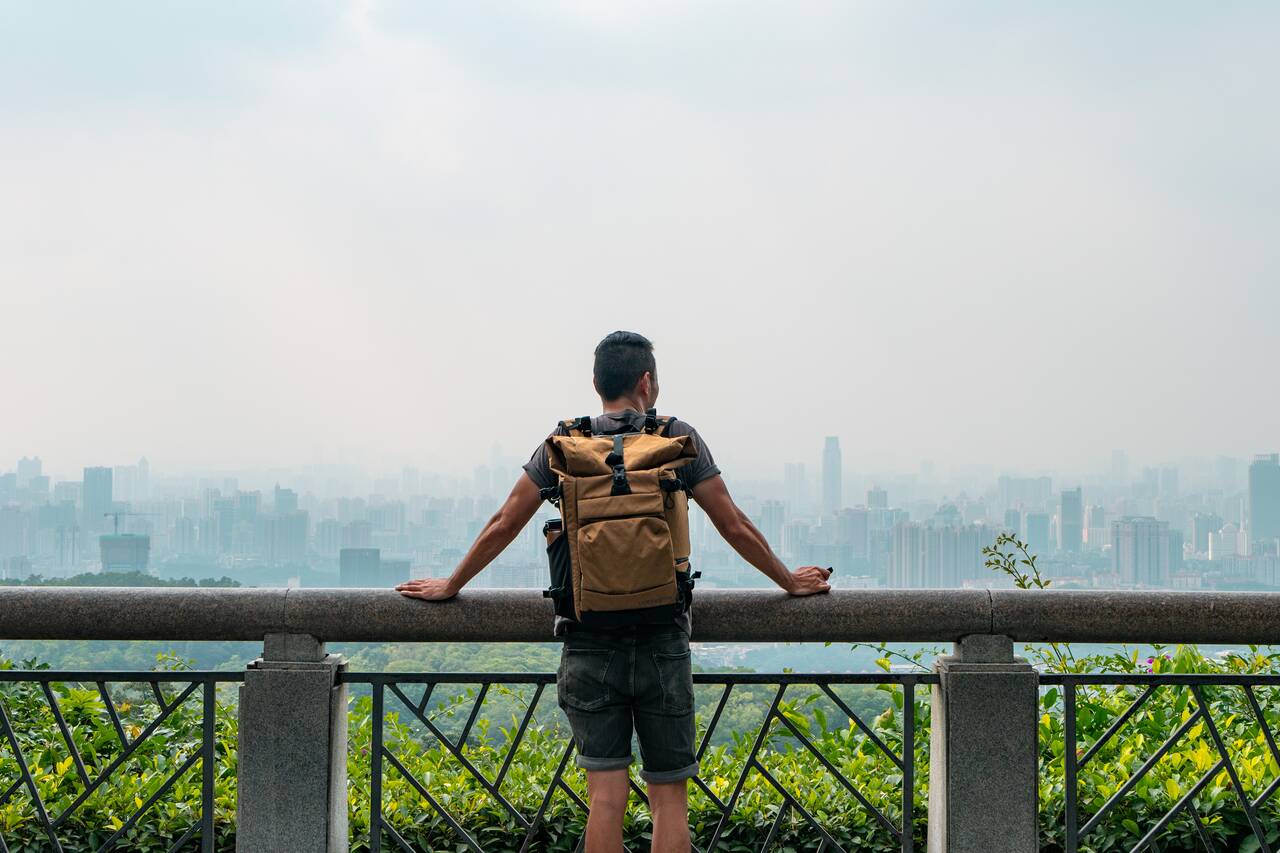
And now we have arrived in China proper. Depending on your visa and allowed duration, which is often 30 days, this is when your time officially begins. The mainland section covers Day 5 through Day 34, or 30 calendar dates. Your permitted stay depends on your passport and entry permission; check your allowed departure date before booking. We will be spending 2 full days in Guangzhou and you should arrive in the city in the afternoon.
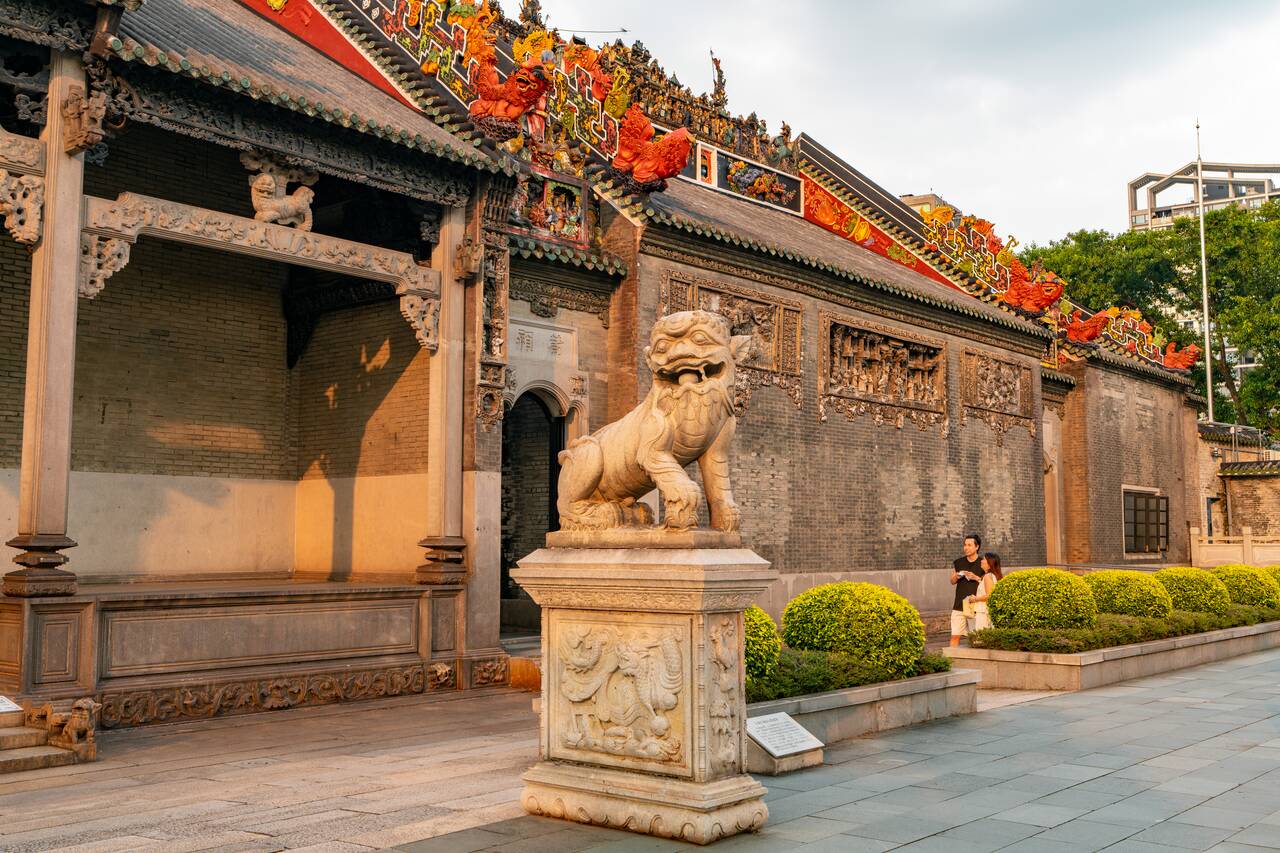
That afternoon, you can go and visit Chen Clan Academy, which is one of Guangzhou’s most remarkable historical and cultural sites. Built in 1894 during the Qing Dynasty, it originally served as an academic and ancestral hall for the Chen family. Today, it functions as the Guangzhou Folk Art Museum, showcasing traditional Cantonese craftsmanship.

While here, you can explore the beautifully preserved halls, admire the delicate carvings, and even see exhibitions of traditional folk art, including embroidery, pottery, and sculpture. I really like their colorful ceramic carvings on the roof of the academy. It's quite a sight to behold.
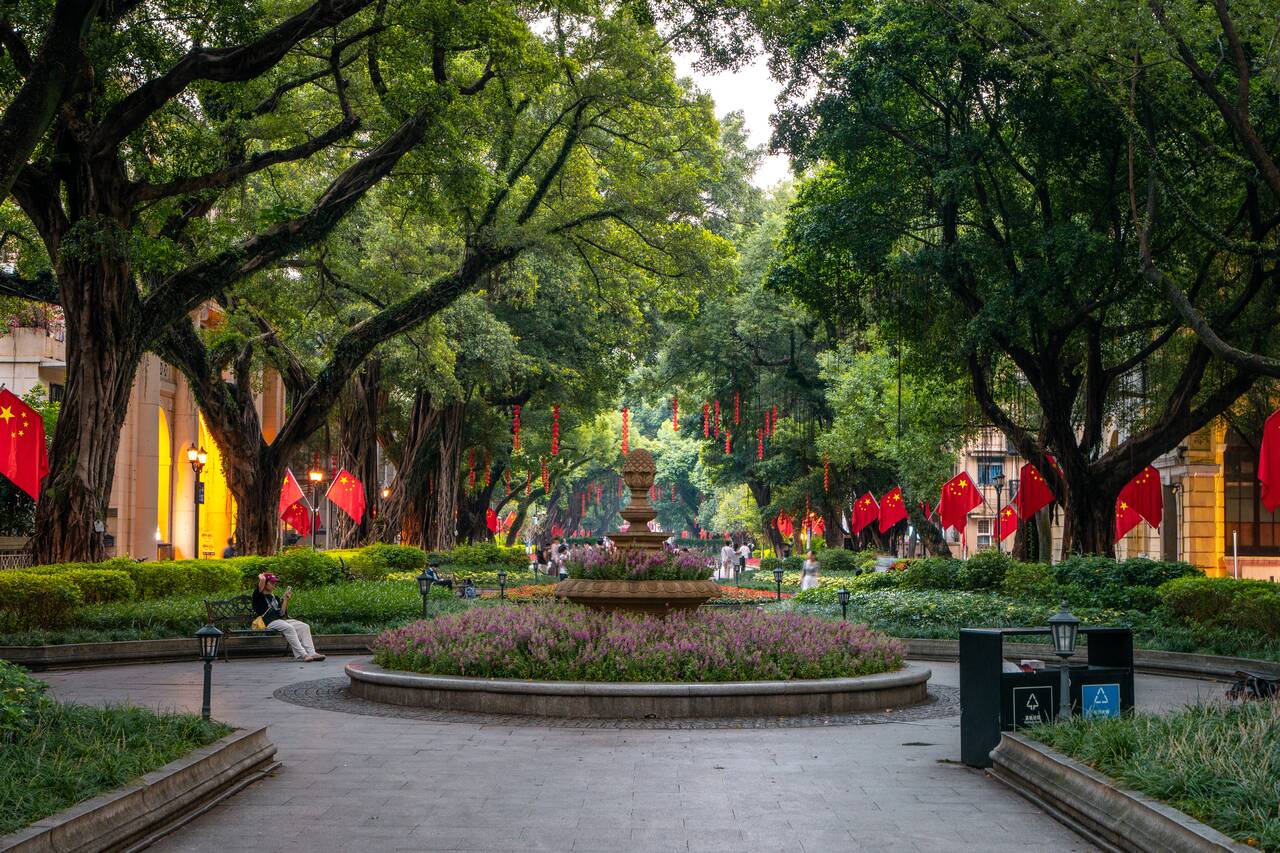
Once evening comes, you can go and check out another of my favorite places, Shamian Dao Island, a charming historic enclave in Guangzhou located along the Pearl River that offers a peaceful escape from the bustling city without having to travel far.
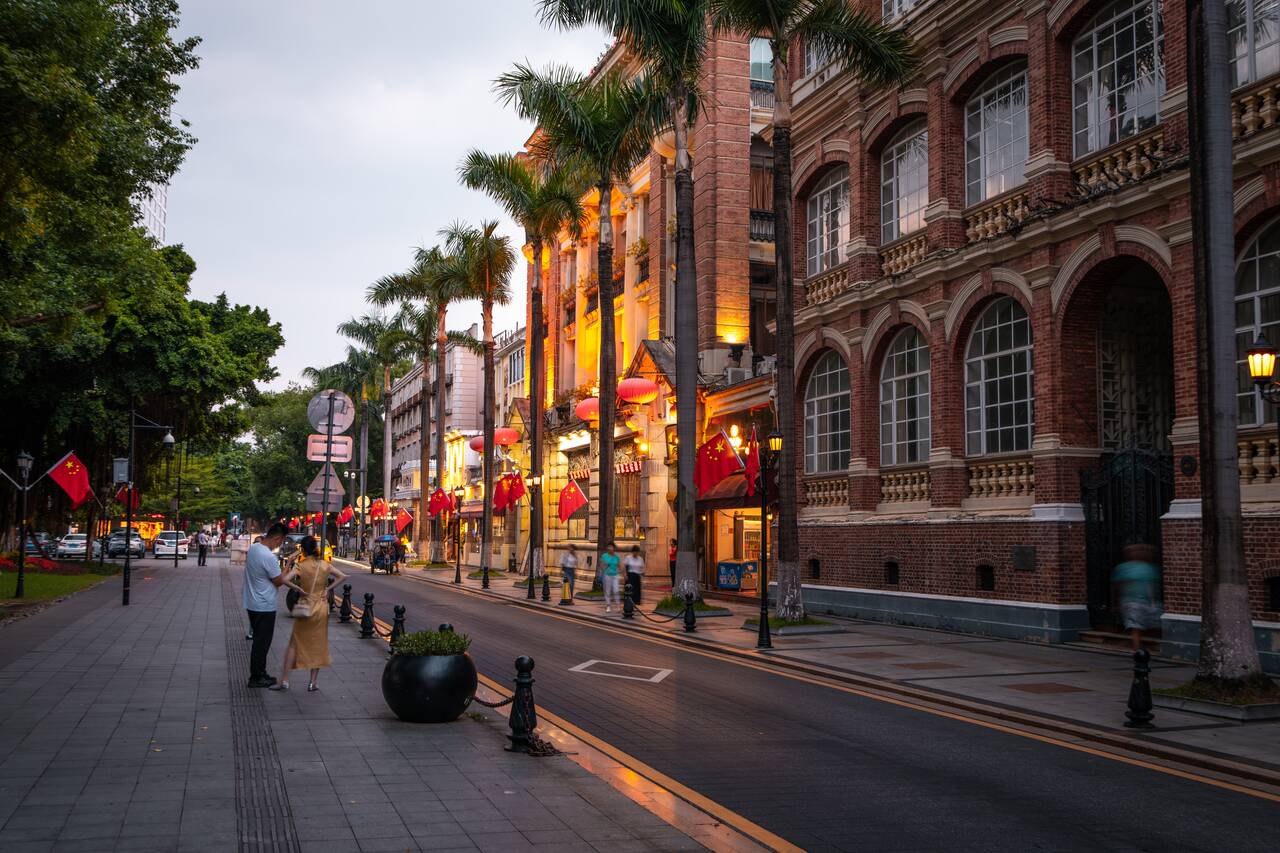
This small island was once a foreign concession during the 19th and early 20th centuries, which explains its distinctive European-style architecture, tree-lined avenues, and colonial-era mansions. Walking around Shamian Dao Island, you almost forget you are in China.
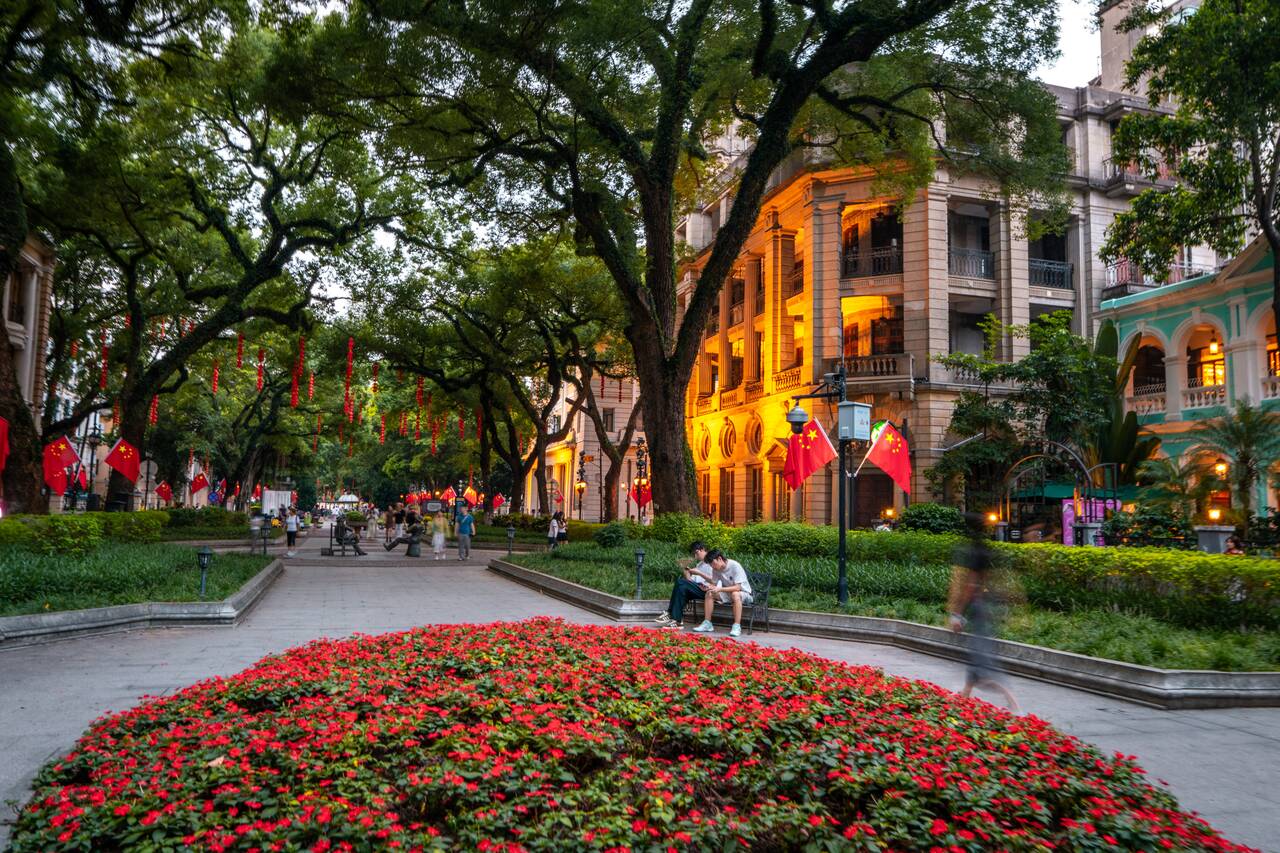
If you visit right after sunset, the streets will be very quiet, shaded by banyan and camphor trees, with soft light from roadside cafés and lamps around small gardens illuminating the way. You can stroll along its road peacefully, which is perfect as it is your first night in Guangzhou and China proper, and it can be quite jarring and overwhelming at first, especially coming from Hong Kong.
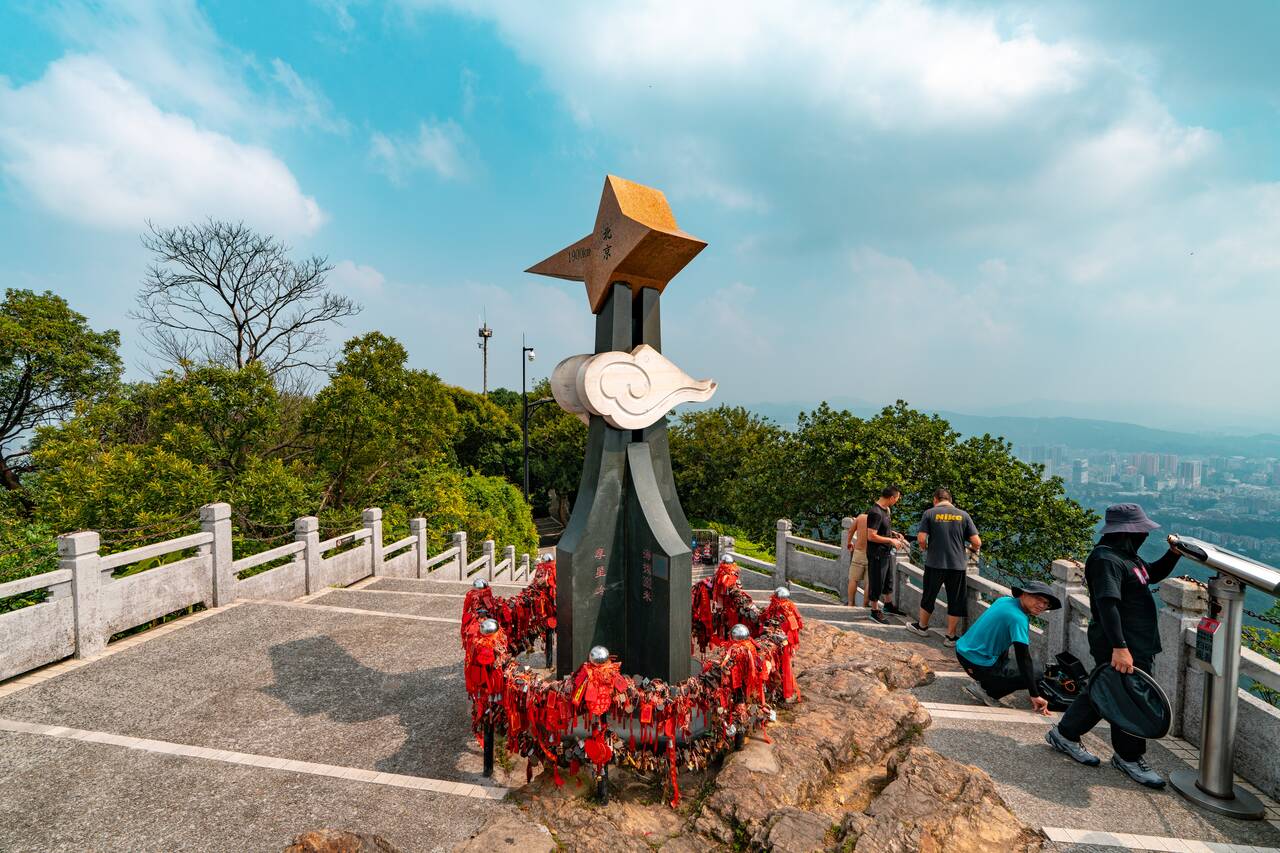
Enjoy the night stroll around the island before you head back to your hotel and retreat for the night. The next day, early in the morning, you can go up to Moxing Mountain, a 382-meter-high peak located north of Guangzhou City Center. It’s the highest point in the city, where you can spend half a day escaping the hustle and bustle while enjoying stunning panoramic views of the entire city.
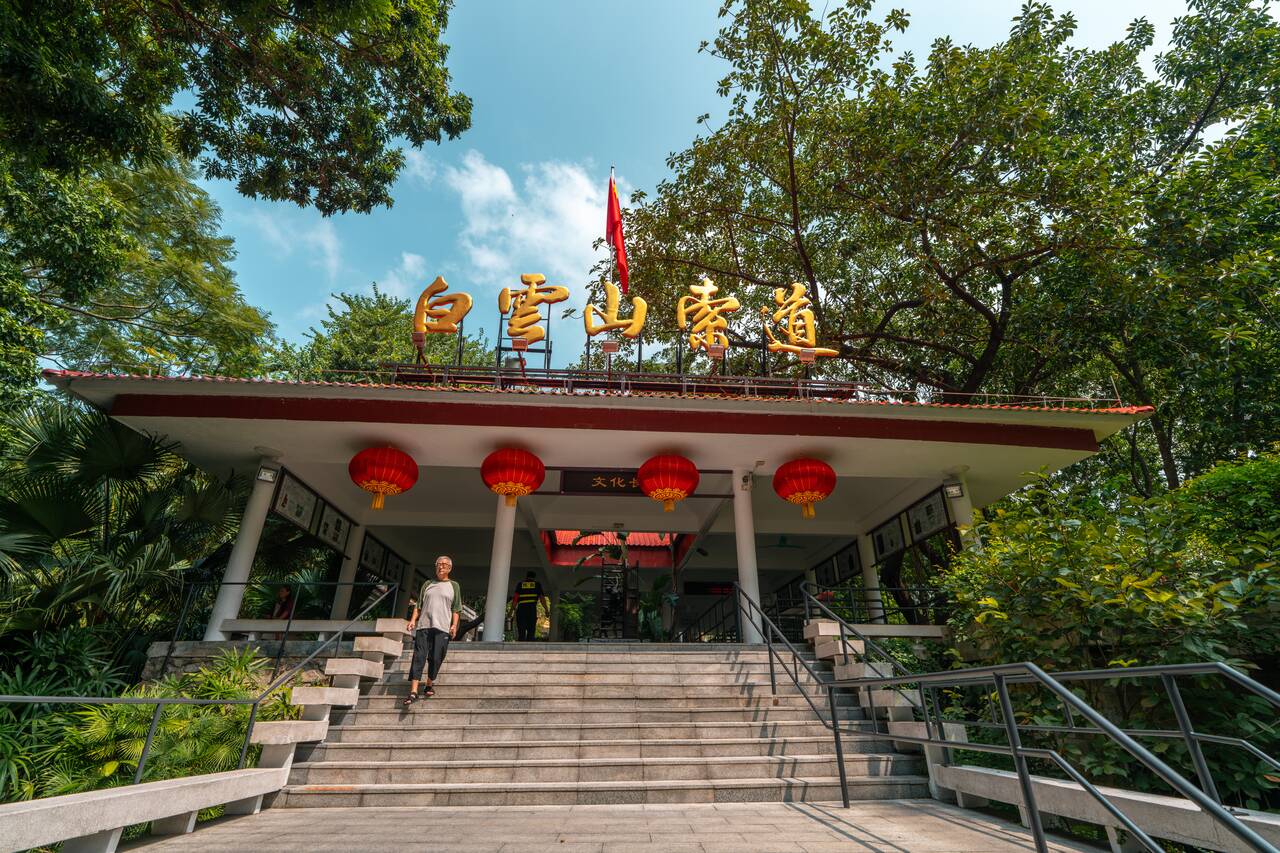
To get to the top of the mountain, you have a few options. If you want the fastest and most convenient way, you can hail a Didi to take you to Yuntai Garden, where you can catch a cable car to Baiyun Mountain Scenic Area.
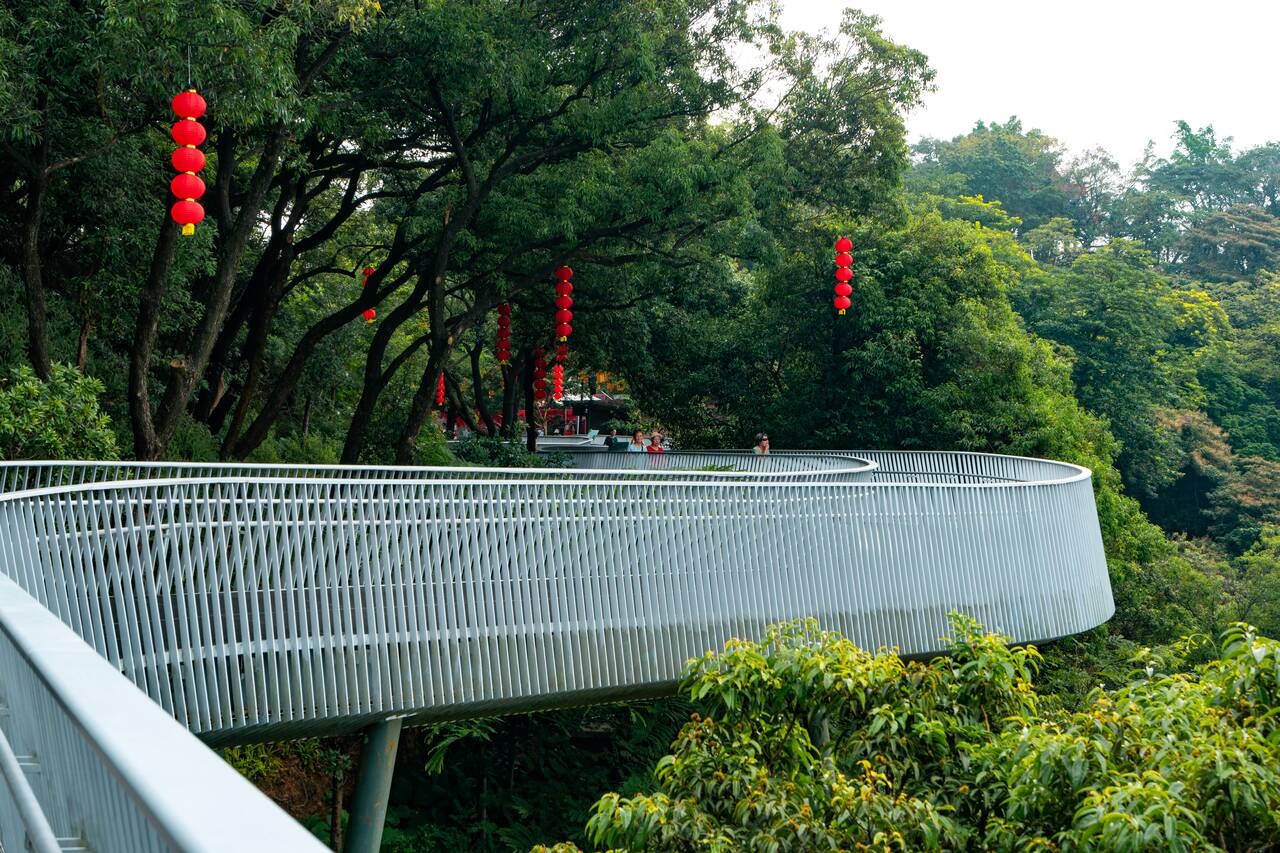
From there, you can catch a shuttle bus to the top of Moxing Mountain. The cable car should cost about 25 CNY going up and 20 CNY coming down, and the shuttle bus to Moxing Mountain costs about 10 CNY per way. You can buy the ticket on site.
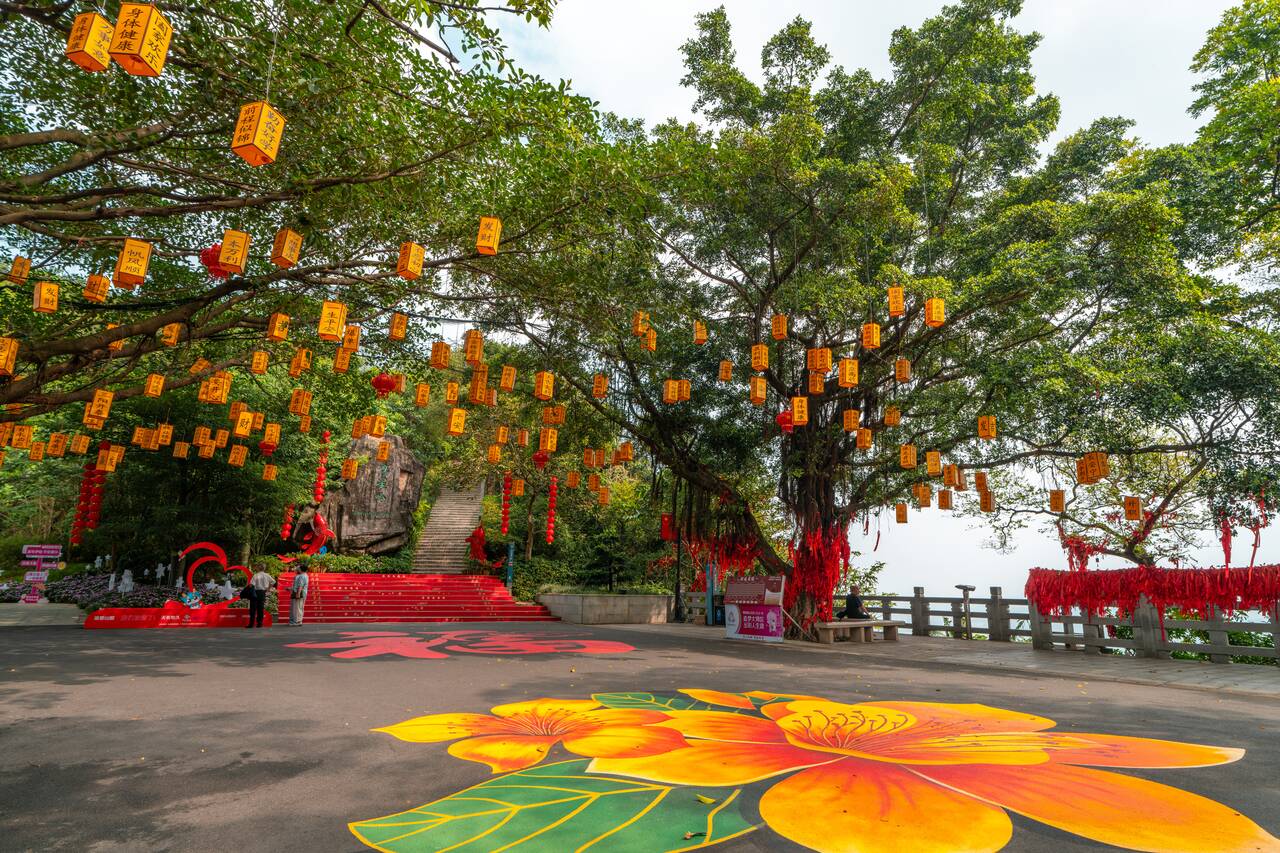
While at the top of Moxing Mountain, you will get an even better view of the city as well as the rolling hills and mountains surrounding it. The views are quite different from the first platform, and I highly recommend you make time to see them both. This whole experience took me half a day, so be sure to spare enough time for it.
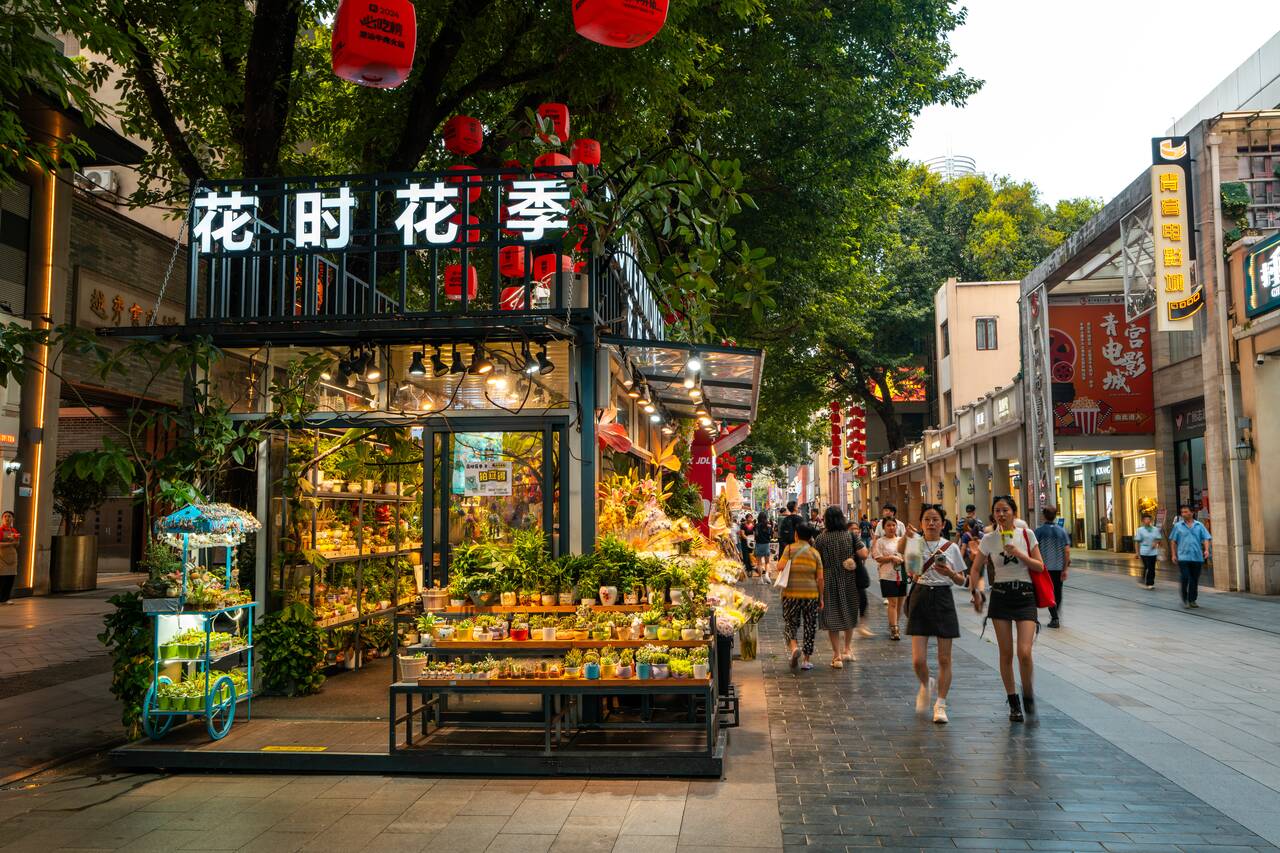
Once done, you can come down and visit Beijing Street, another of Guangzhou’s most famous shopping and cultural streets built atop layers of history, with archaeological ruins preserved beneath glass walkways that allow you to see roads and city foundations dating back to the Tang and Song dynasties.
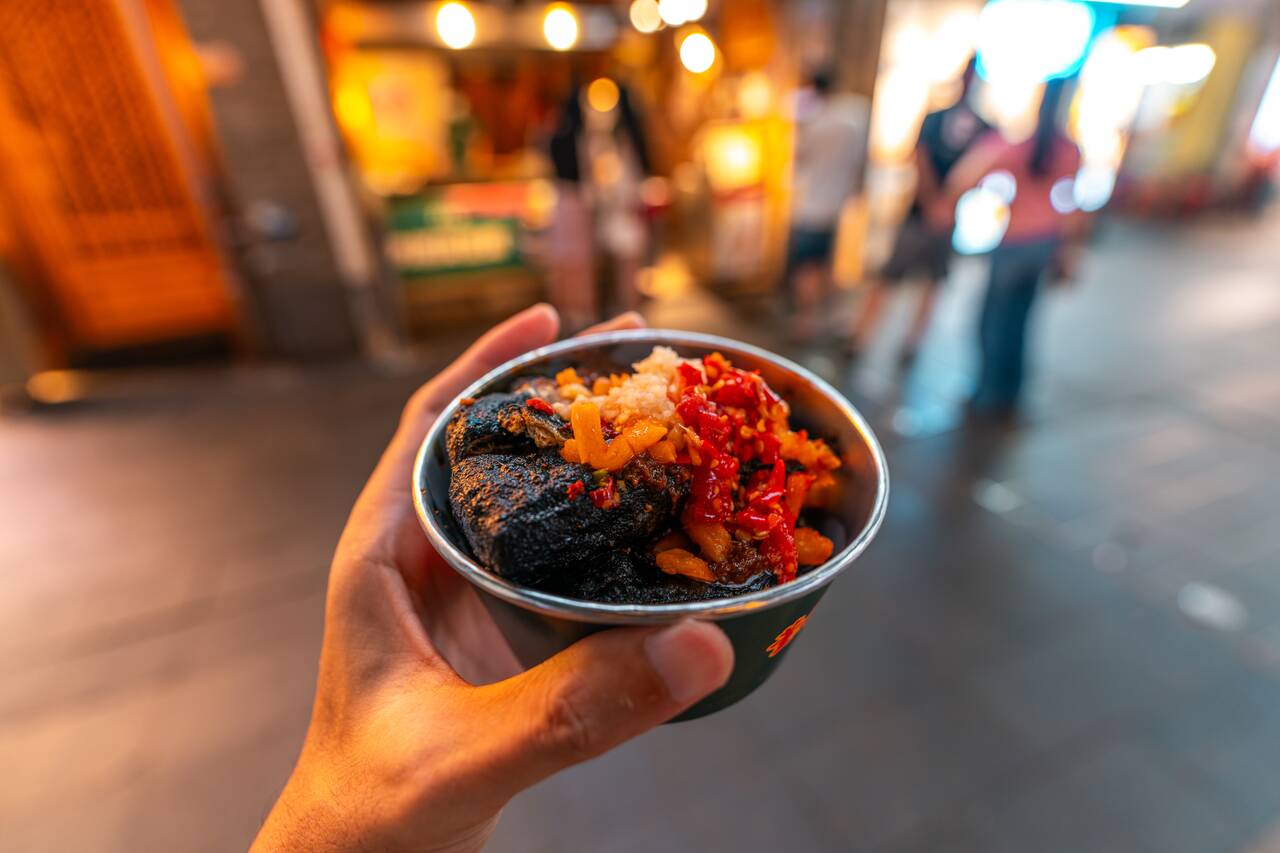
The street stretches for about 1.2 kilometers and is lined with shops, restaurants, and cafés, making it a popular spot for shopping, dining, and people-watching. You can find everything from high-street fashion to local specialty stores, as well as Cantonese snacks and street food along the way.

While you are exploring Beijing Street, be sure to drop by and check out Dafo Temple, one of Guangzhou’s most significant Buddhist sites located right in the middle of the city near Beijing Street. It is especially beautiful at sunset when they turn on the lights, so be sure to drop by here around that time.
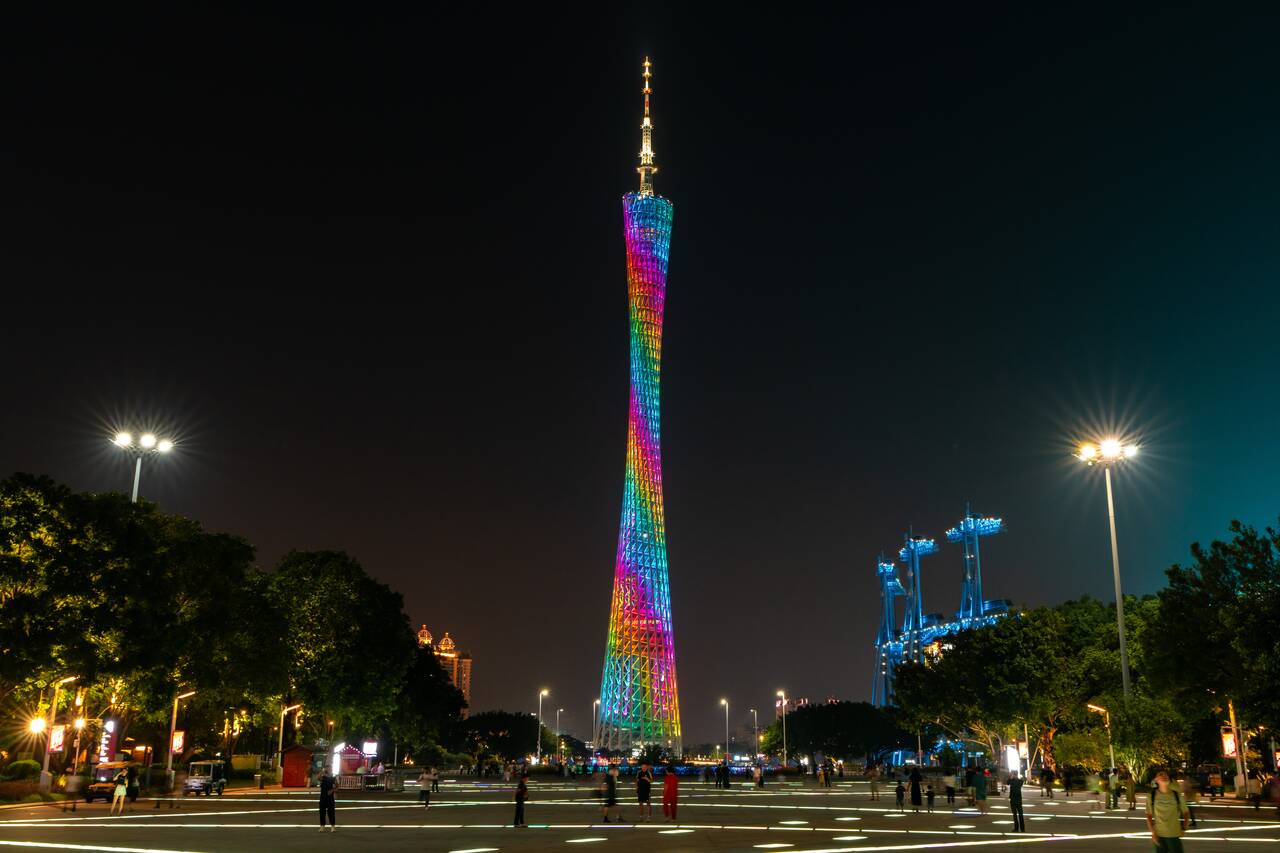
Before we end the second day in Guangzhou, be sure to go and check out one of the most famous landmarks in the city, the iconic Canton Tower. It is a beautiful 604-meter high tower with its unique, slender twisting design and beautiful light works that dazzle the cityscape at night. I found that one of the best places to see it is from Flower City Square located not too far from the Canton Tower.
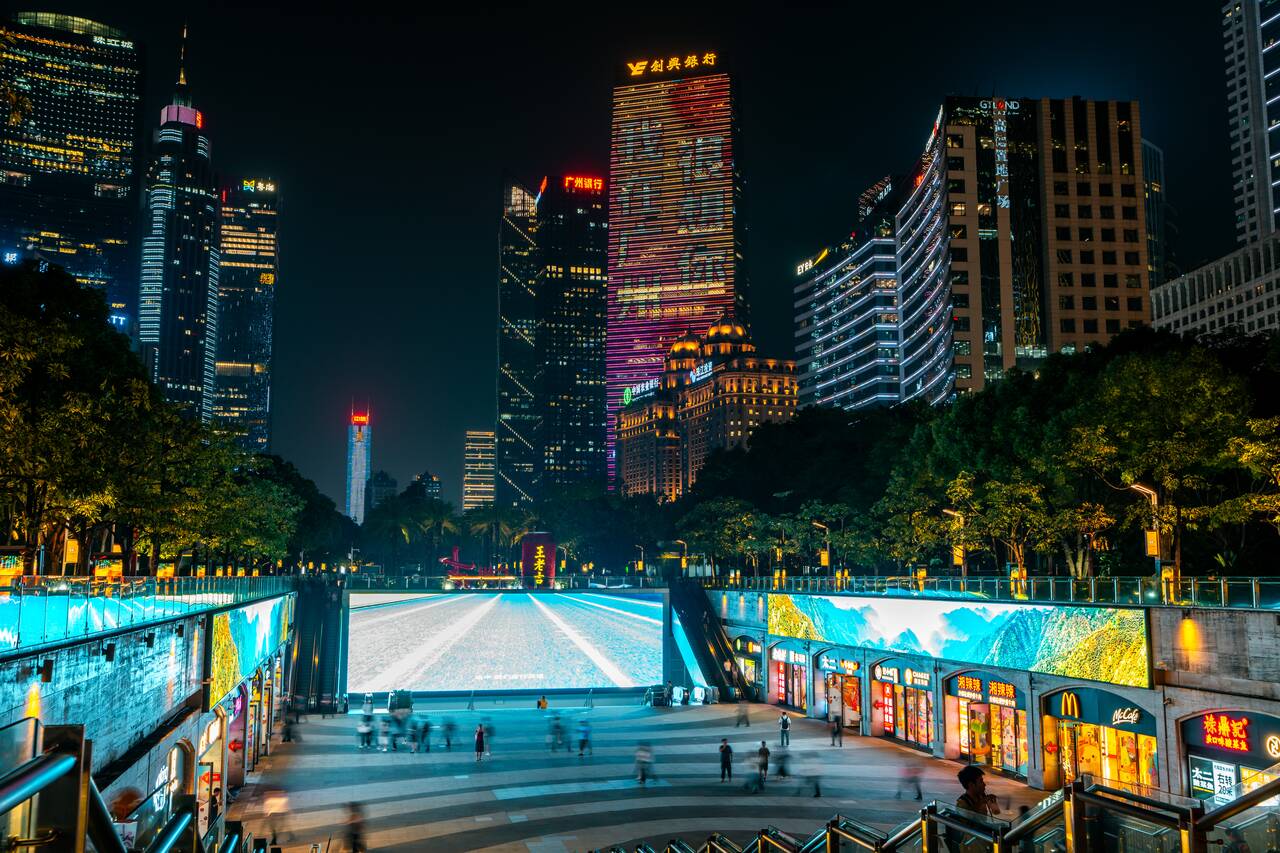
You can reach the square via the metro by getting off at Huacheng Avenue Metro Station, and you can make your way south to the Canton Tower. The square is massive, but with its open and spacious design, as well as all the beautiful lights reflecting from the surrounding skyscrapers, walking around is a breeze.
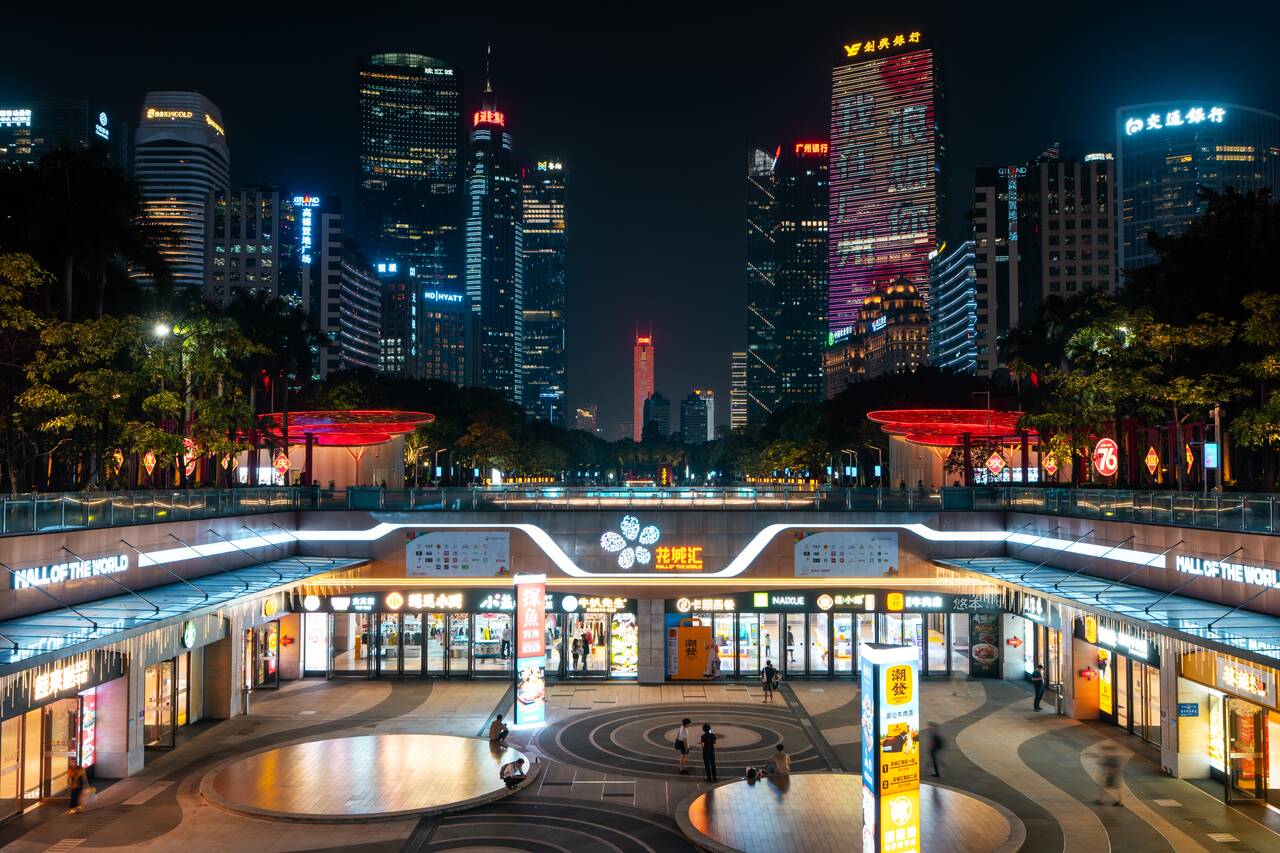
There is also an underground shopping mall called Mall of the World that stretches along the entire length of the square, where you can pop in and out to grab food or drinks while you explore the area. After you are done, you can head back to your accommodation and retreat for the night.

Where to Stay in Guangzhou?
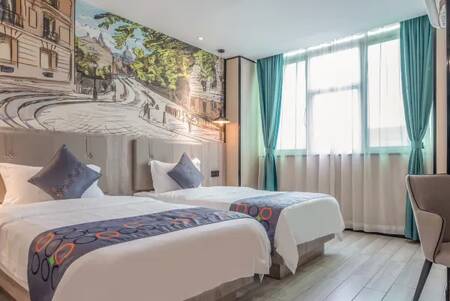
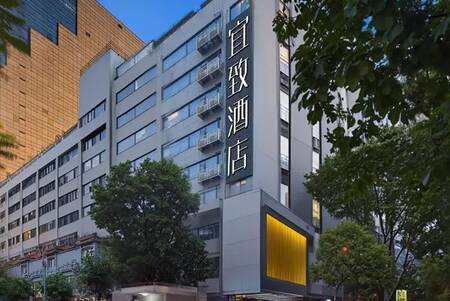
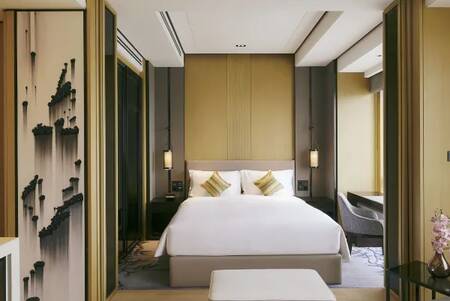
Getting From Guangzhou to Guilin
From Guangzhou, you can take a high-speed train from Guangzhou South Railway Station to Guilin North Railway Station. It costs around 20 USD and takes about 3 hours. You can book the ticket in advance here.
Once you arrive at Guilin North Railway Station, you can take the local bus to the city center or call a Didi taxi to go directly to your accommodation. The bus costs about 2 CNY and takes around an hour, while a taxi is faster, about 30 minutes, but slightly more expensive.
Day 8-9: Guilin City (2 Nights)
- 📍 Stay: GangShe Rooftop View Hotel l (Guilin Two Rivers And Four Lakes Elephant Trunk Hill)
- 🕐 Time: 2 Nights
- 📖 Full Guide: Visiting Guilin: A Complete Travel Guide
After taking the train from Guangzhou to Guilin, you will arrive at Guilin North (Guilinbei) Station. From there, you can take public bus #22 to the city center for 2 CNY, which takes about an hour, or simply hail a Didi to go directly to your hotel.
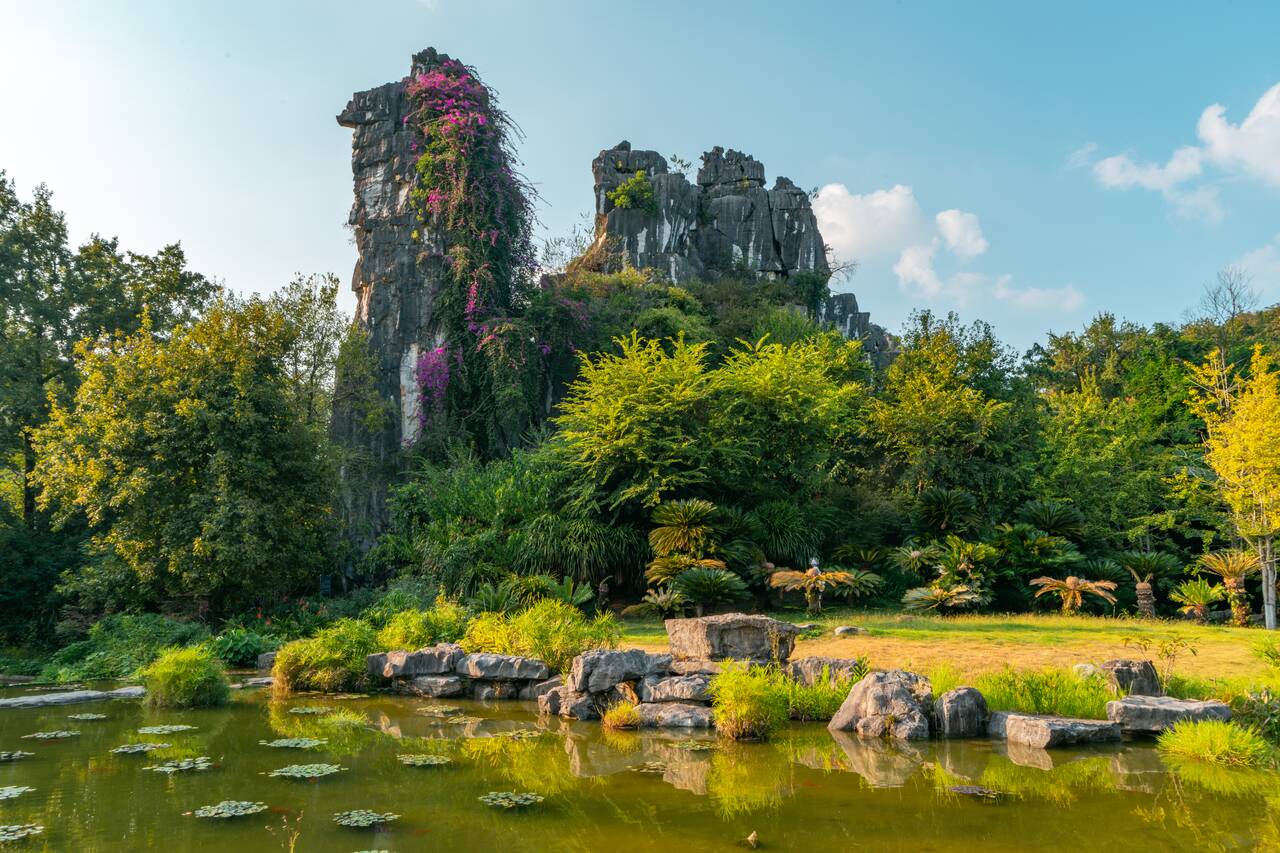
Once you arrive and settle into your hotel, you can spend the afternoon exploring Seven Star Park, the largest park in Guilin City, full of hidden hiking trails, unique-looking rock formations, and a beautiful cave to explore. It is the perfect place to escape the crowds for a bit in Guilin City. You can get here via Didi taxi.
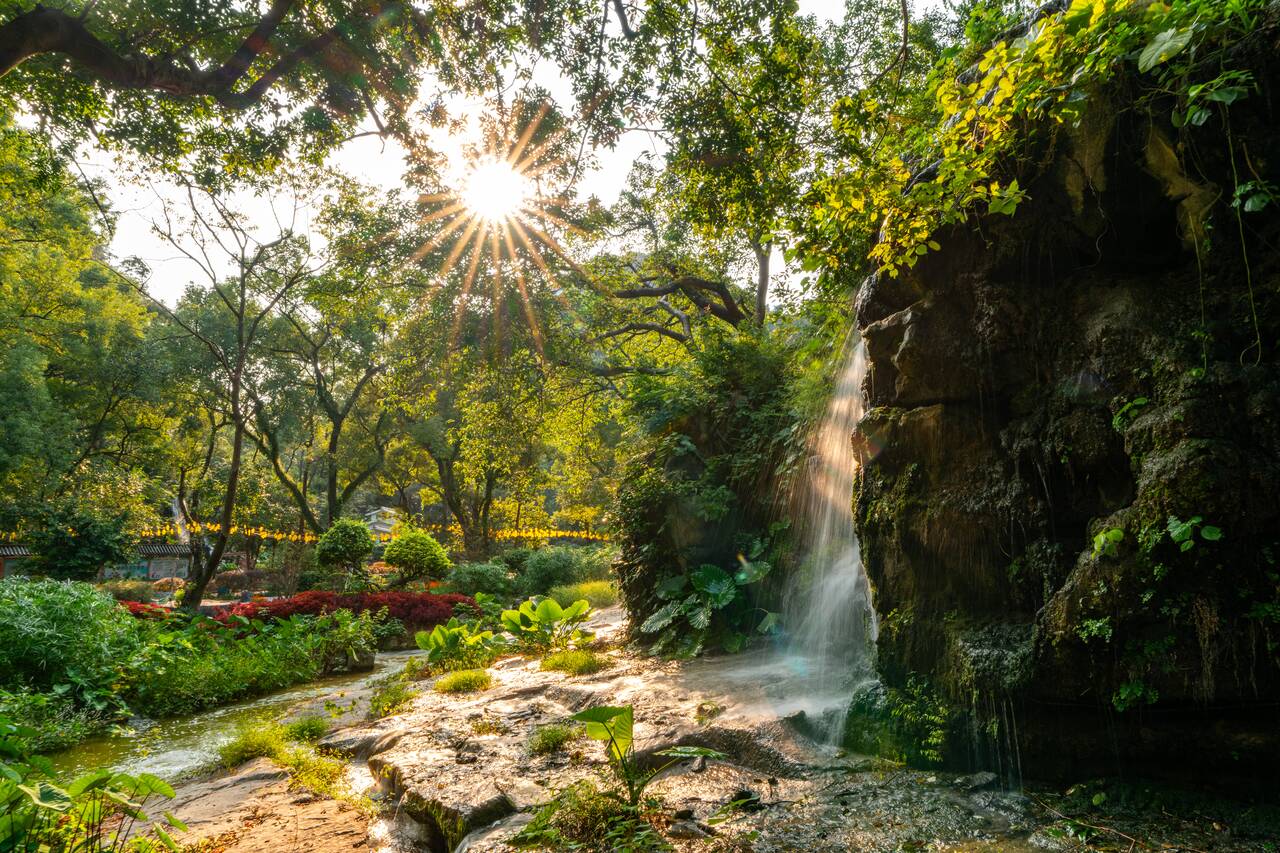
Some of the highlights in the park include the Seven Star Cave, known for its impressive stalactites and stalagmites, Camel Hill, a karst formation shaped like a camel, and my favorite of all, Star Pavilion, a beautiful pavilion located on top of the highest karst mountain in the park.
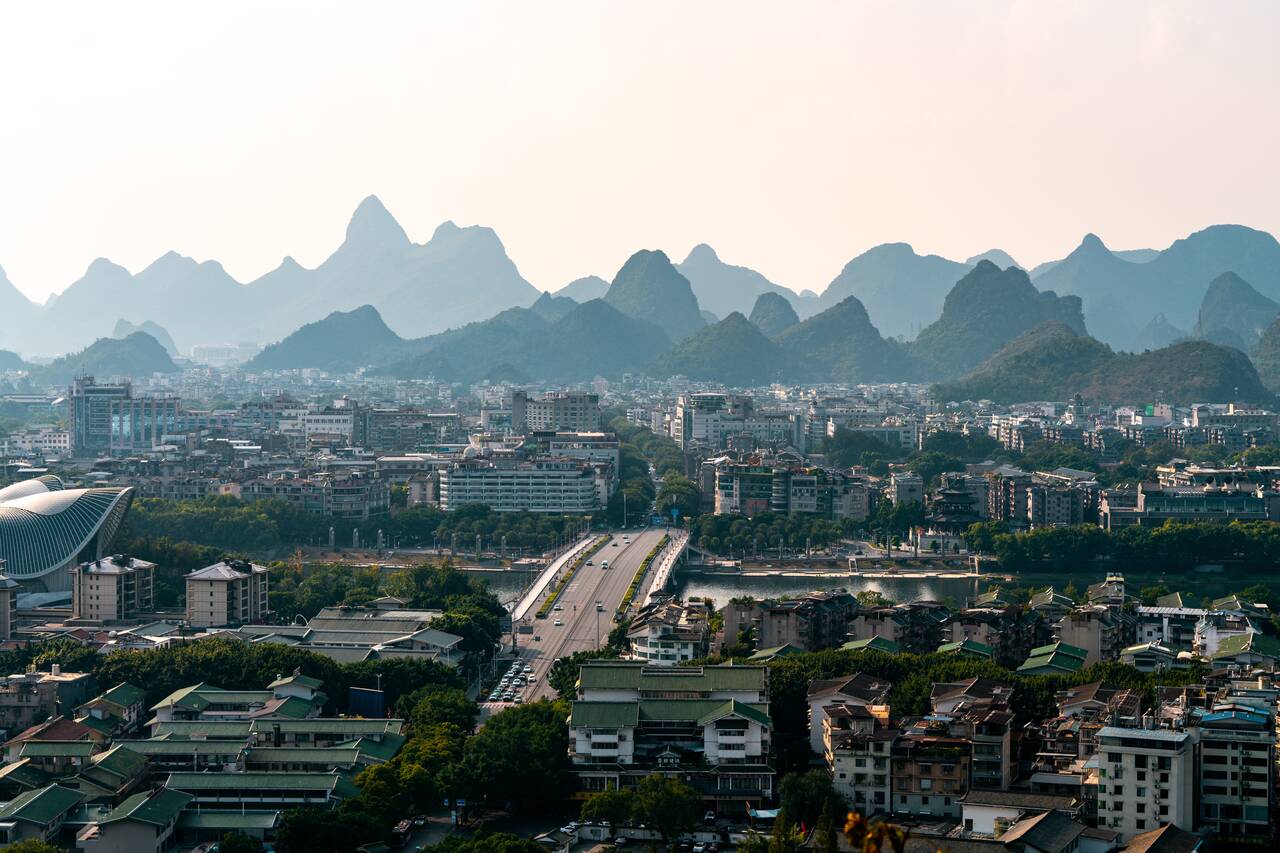
The moment you enter the park, you'll see a tall karst mountain with a pavilion at the top. This is Star Pavilion. You can hike up the staircases to reach the top for an incredible view of the surrounding area. I highly recommend hiking up here, as the view provides a fantastic glimpse of what's to come during your trip. It is absolutely stunning. The whole park should take you about 2-3 hours.
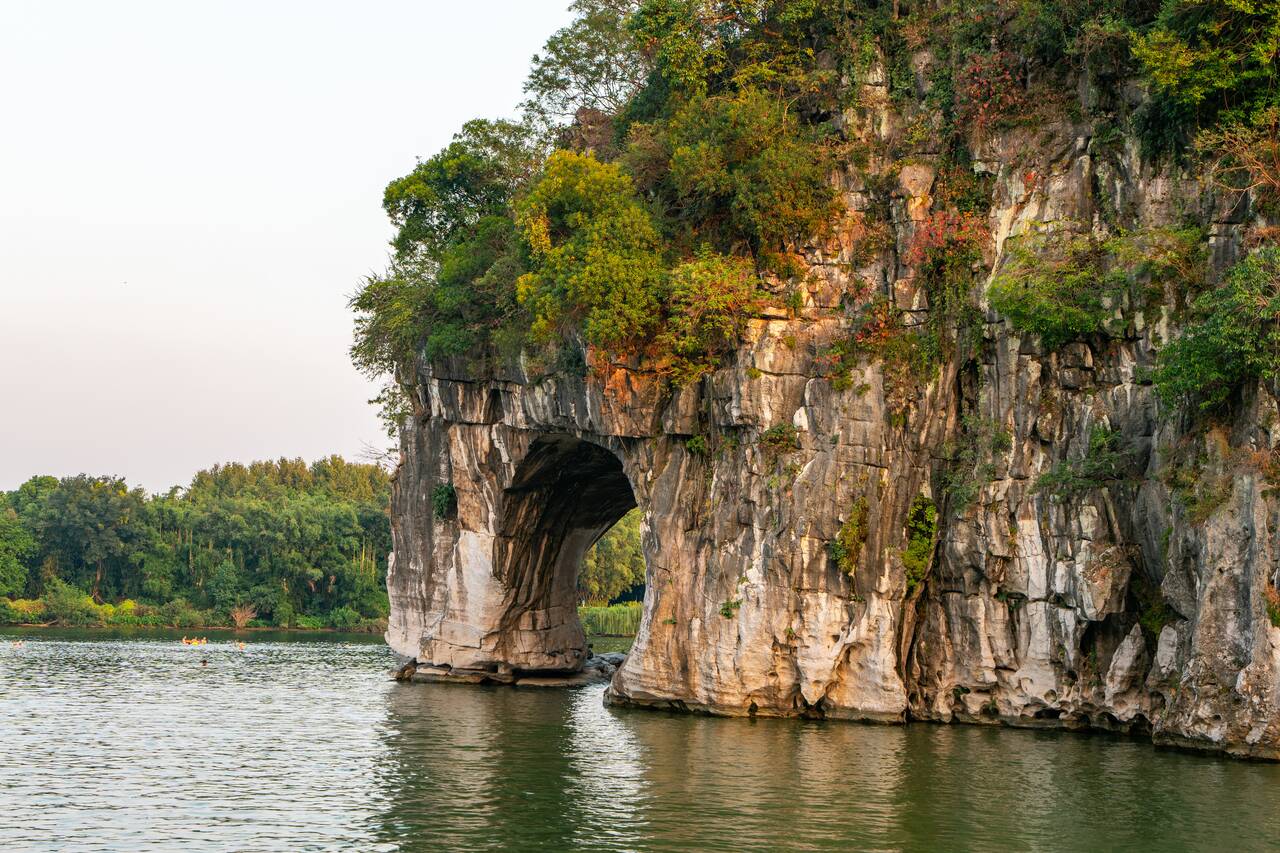
Once you're done, you can head over to Elephant Trunk Hill, one of Guilin’s most famous landmarks. It's named after its distinctive shape, which resembles an elephant dipping its trunk into the Li River. The hill itself is relatively small, but during evenings when the river is calm, the natural arch formed between the "trunk" and the hill creates a beautiful reflection on the river, forming a moon-like silhouette, which is pretty cool. The place gets very crowded in the evening, so make sure you prepare yourself mentally before visiting!
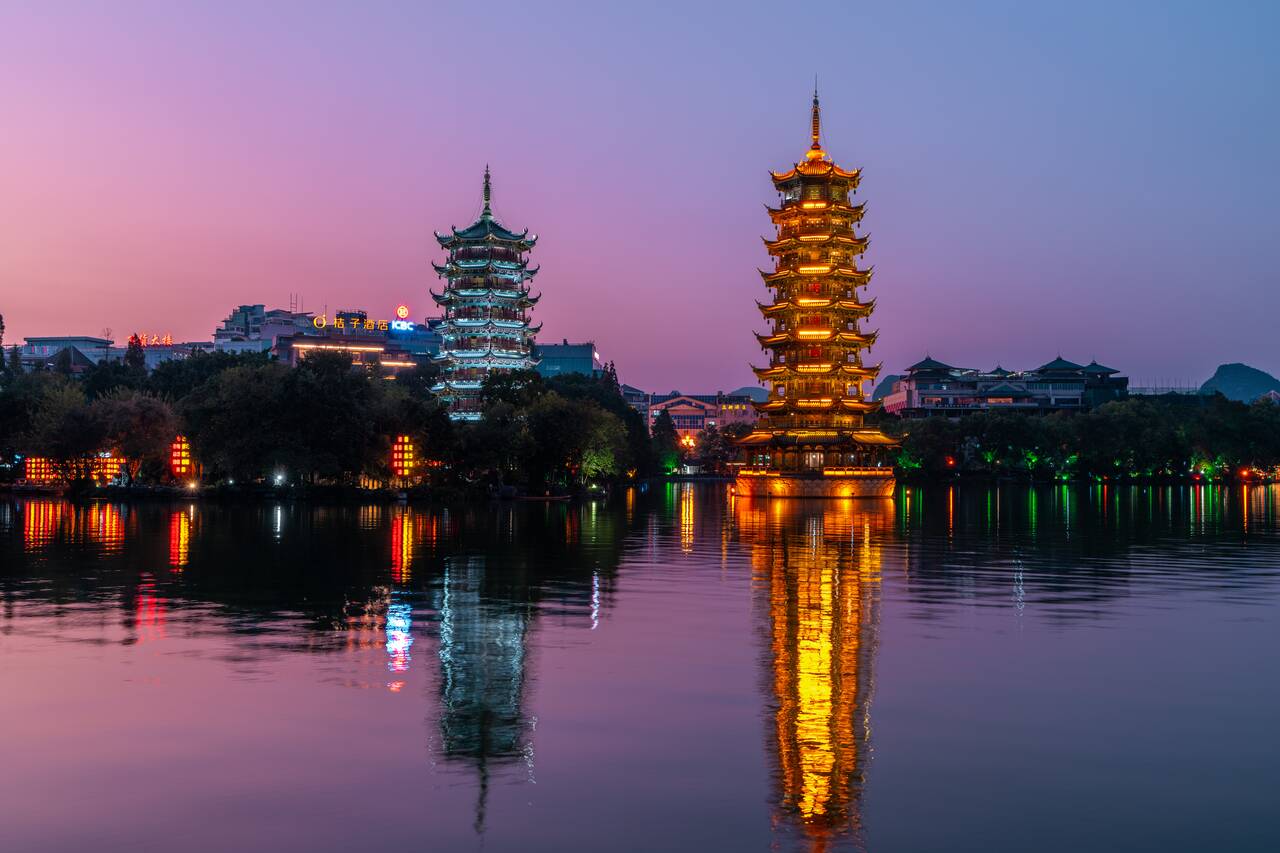
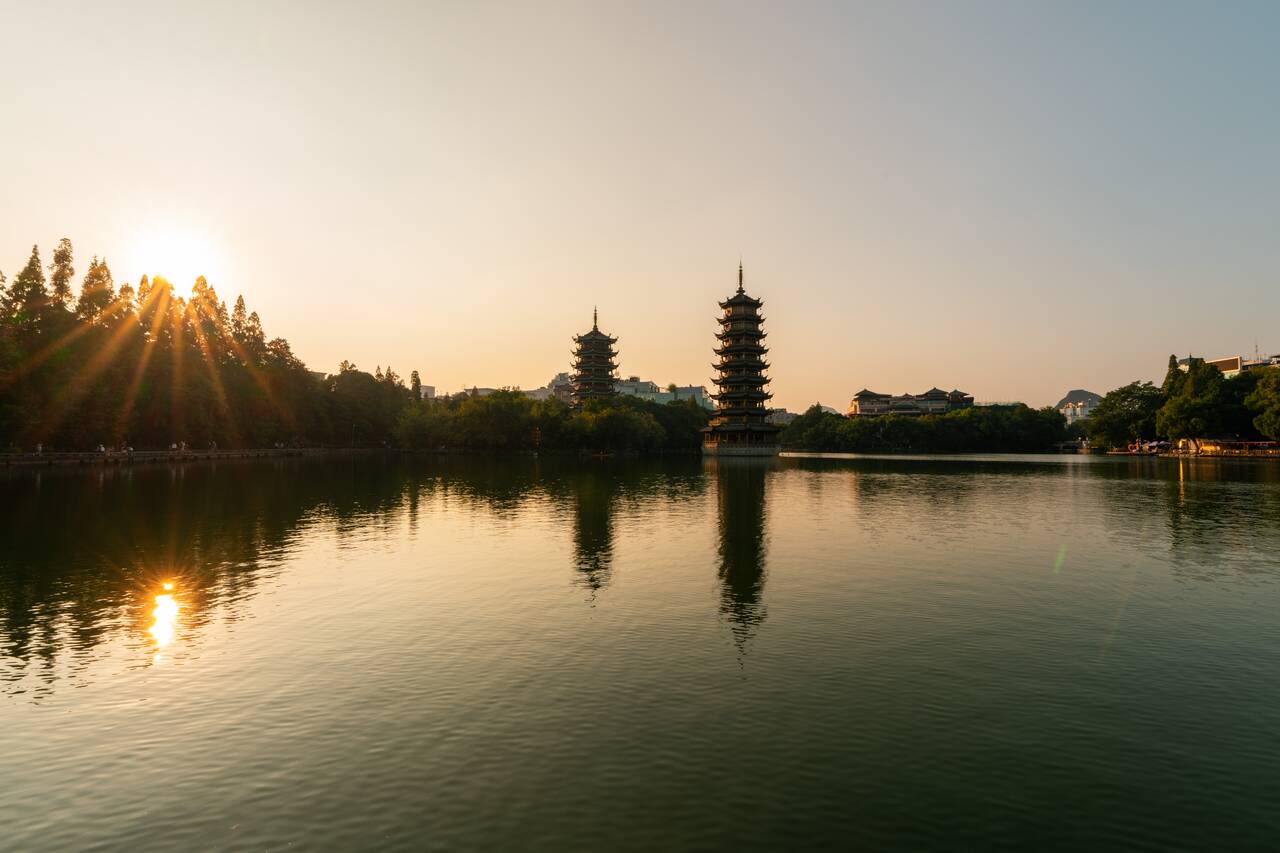
After you finish the walk, you can come and check out Sun and Moon Pagodas, also known as the Twin Pagodas, another of Guilin’s most iconic landmarks. Located in the middle of Shanhu (Shan Lake), right in the heart of the city, the pagodas are especially beautiful at night when they are illuminated and reflected on the still lake surface.
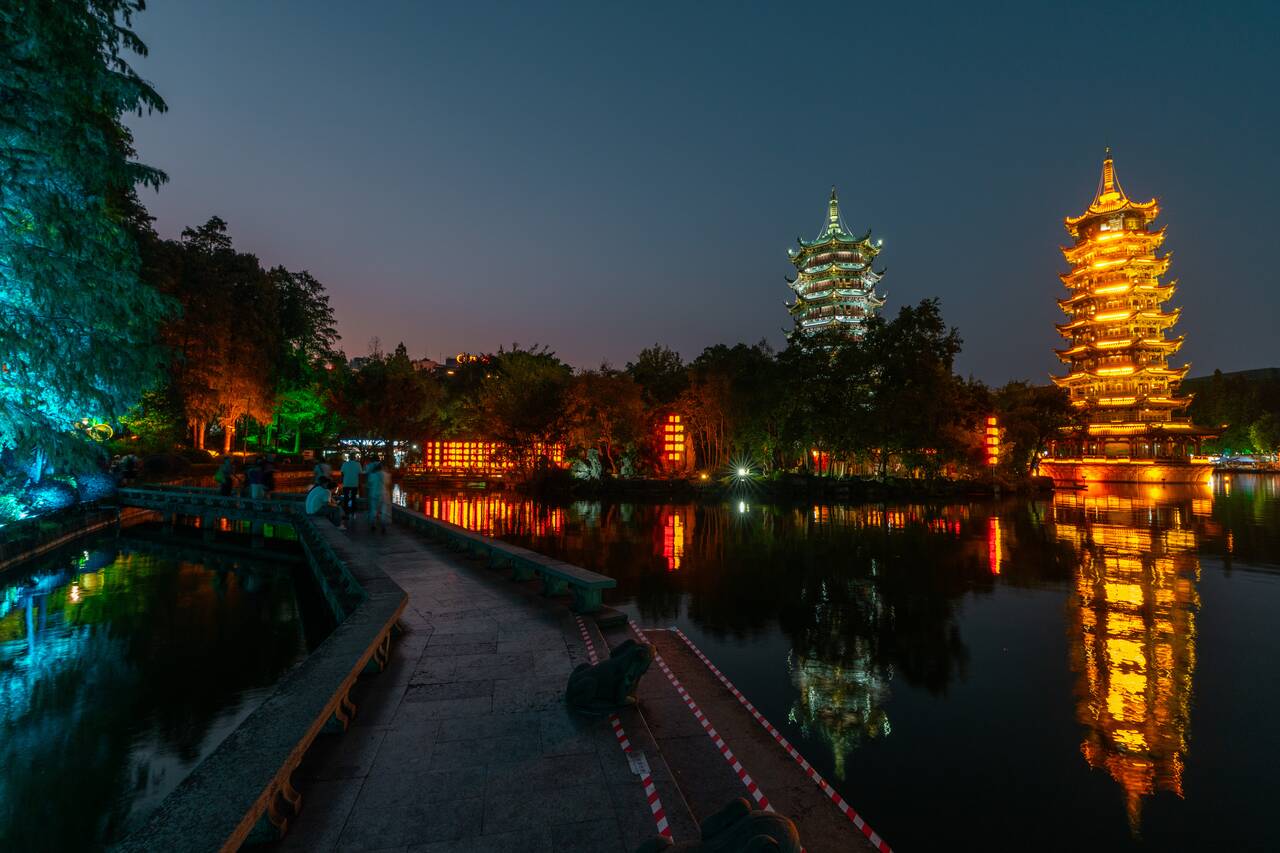
After a mini adventure we had on our first day in Guilin, you can spend the rest of the evening resting and organizing your day trip tomorrow to Longji Rice Terrace, which you can book here. And while you are at it, you might also want to book the Li River Cruise for our third day so that we can take the scenic route to Yangshuo. You can book the cruise here.
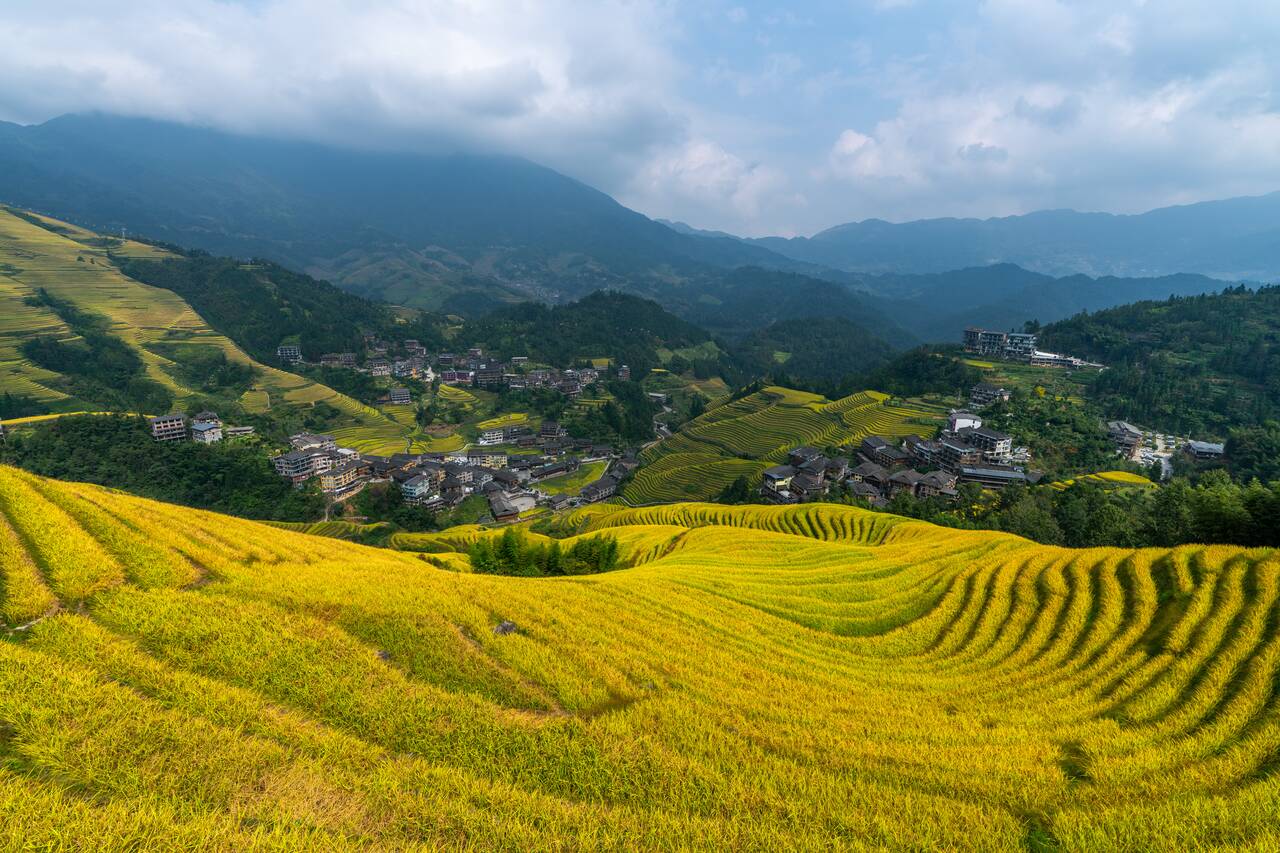
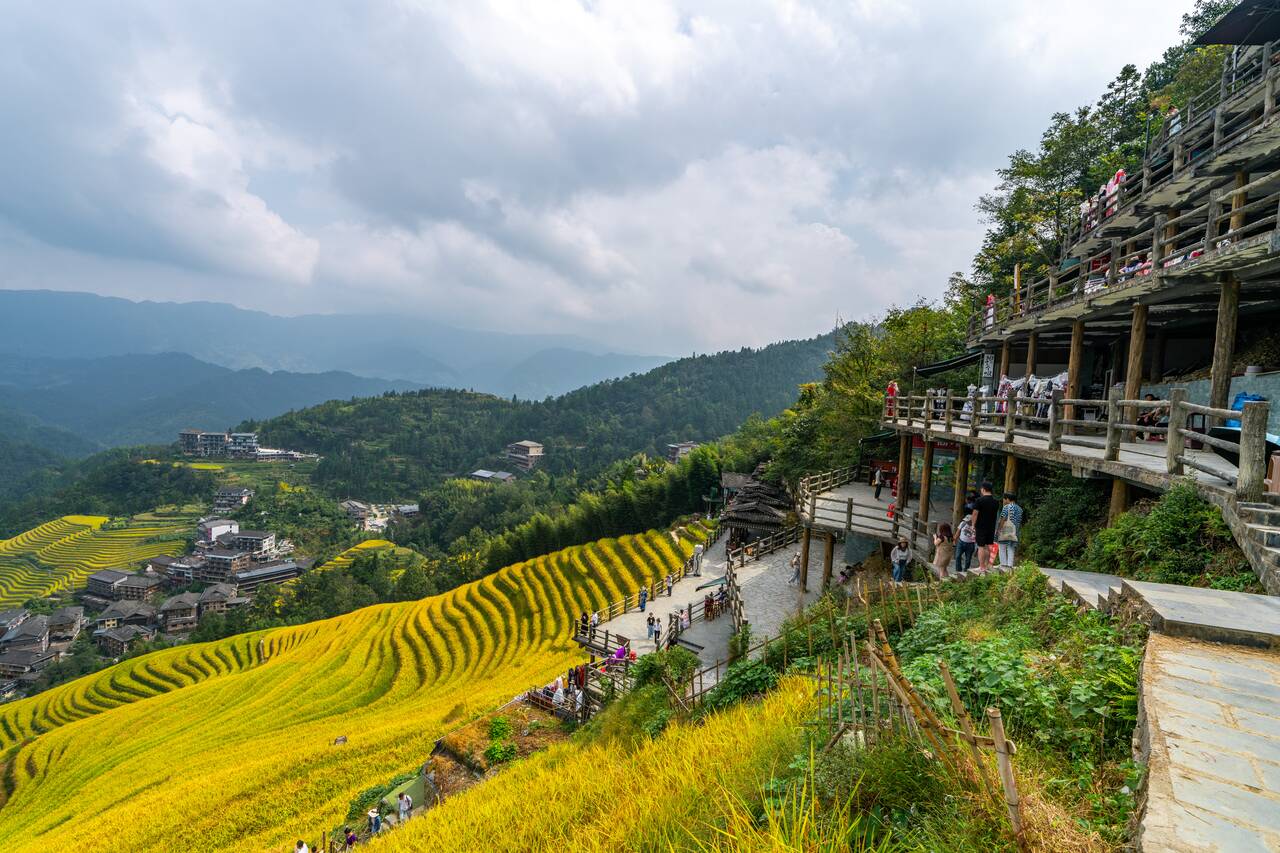
For the next day, we are going to go on a day trip to visit Longji Rice Terraces, which is another iconic attraction located about 2-3 hours away from Guilin City. Its beautiful rice paddies climb up the slopes of the karst mountains in intricate layers.
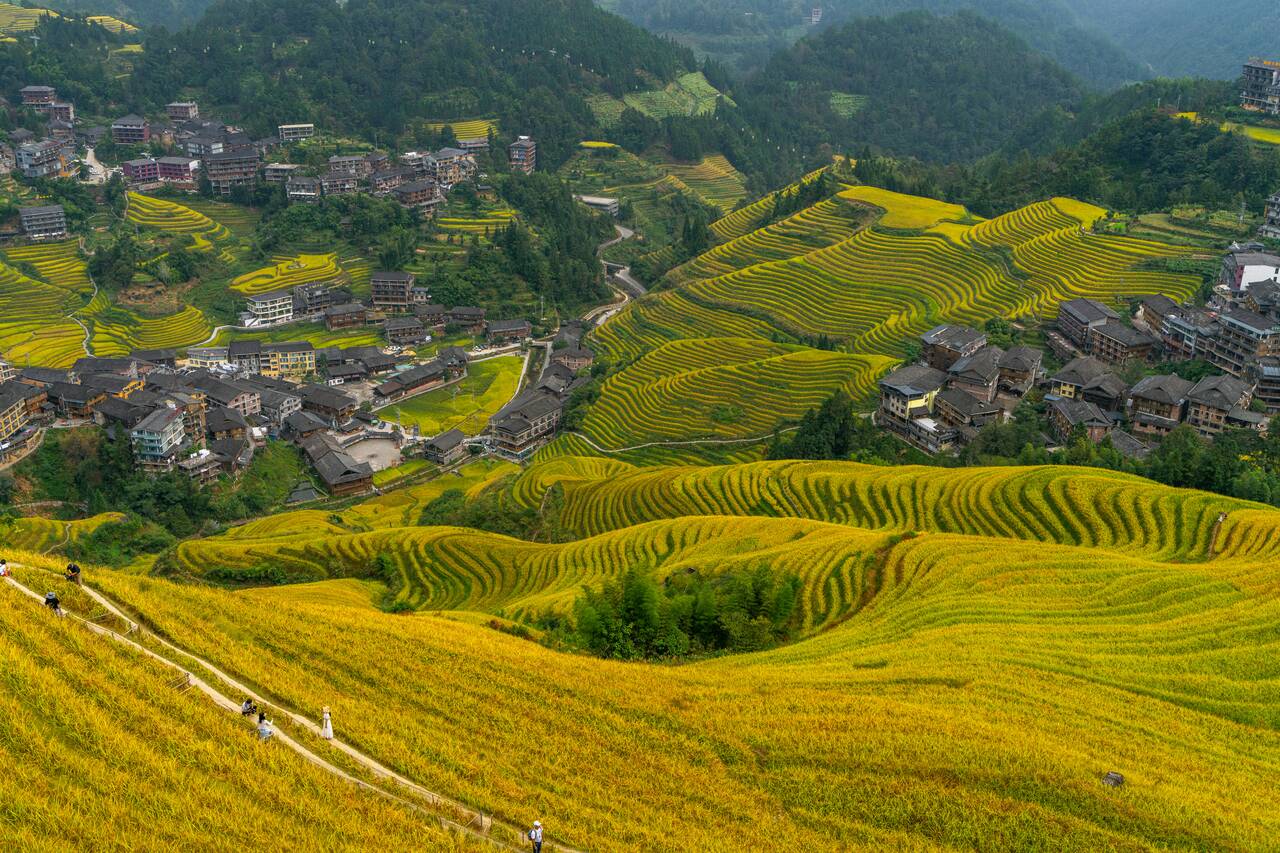
The scenery you’ll see here depends on the season you visit. In spring (April to June), the terraces are filled with water, creating mirror-like reflections. In summer (July to August), the rice is lush and green. In autumn (September to October), the fields turn golden as they approach harvest. In winter, the terraces offer a quiet, snow-dusted landscape.
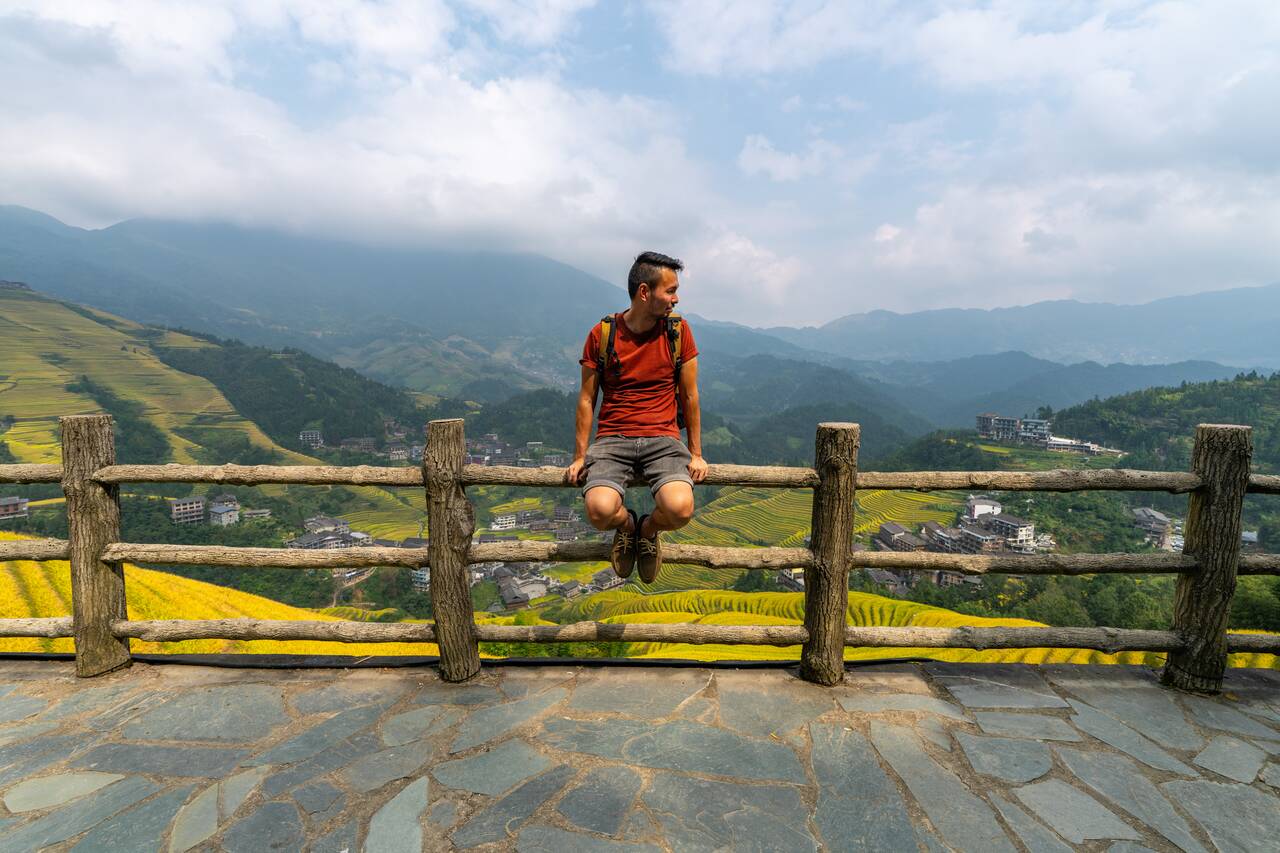
I visited the rice terrace in mid-October and the paddies were all in golden colors, which was beautiful to see. Even though it was a bit cloudy when I was there, the clouds moved fast and were able to let some sun rays through, which made the golden-colored rice paddies pop even more. It was truly quite a sight to behold.
The organized tour will pick you up from your hotel early in the morning, around 7 AM. From there, it’s about a 3-hour drive to Longji Rice Terrace. The tour company will text you on WeChat around 9 PM the night before with your exact pickup time and the bus’s license plate number so you don’t accidentally board the wrong bus.
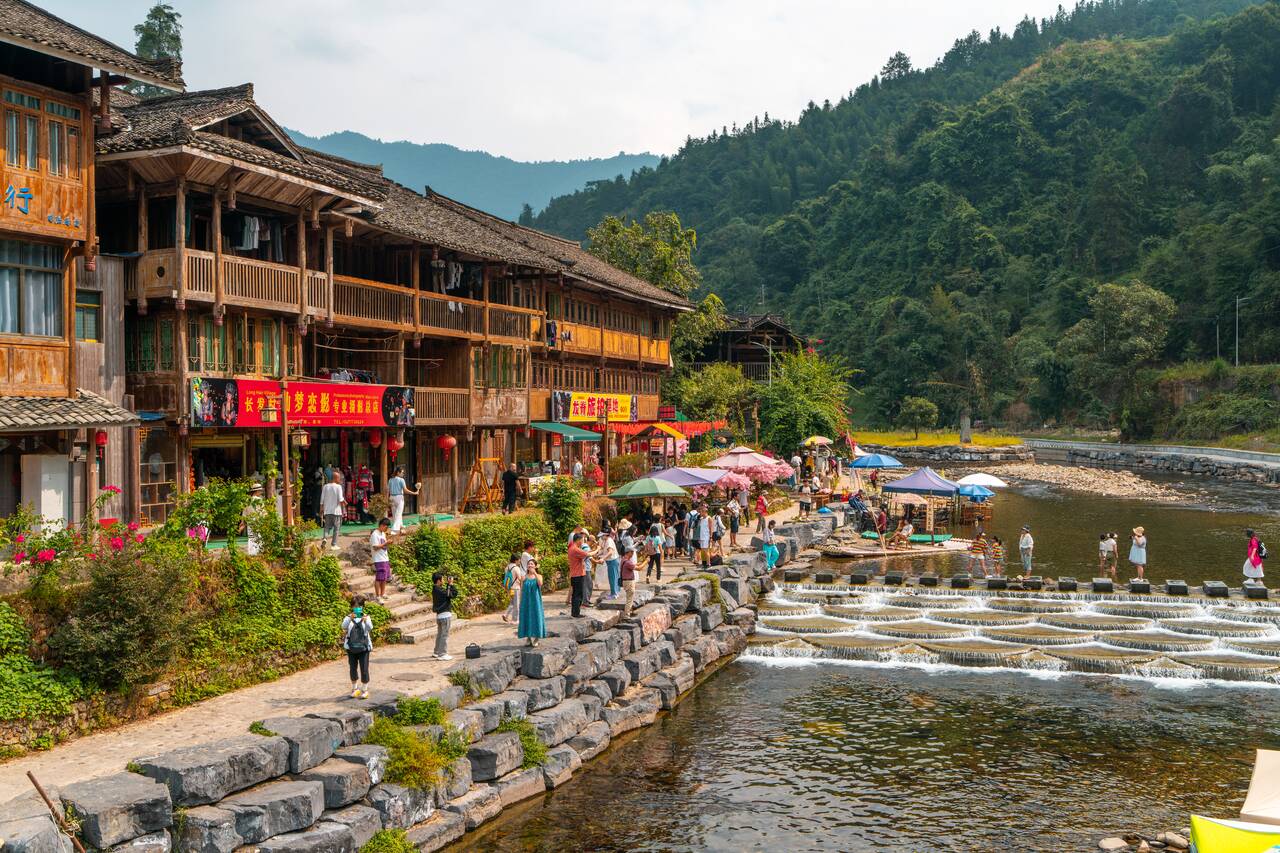
Along the way, you will also stop at Hongyao Stockaded Village, home to the Yao ethnic minority. The village is famous for its well-preserved stilt houses and traditional wooden architecture. Interestingly, it is also the birthplace of the woman with the longest hair in China, who holds the Guinness World Record with hair measuring 5.627 meters (18 ft 5.54 in) as of May 2004.
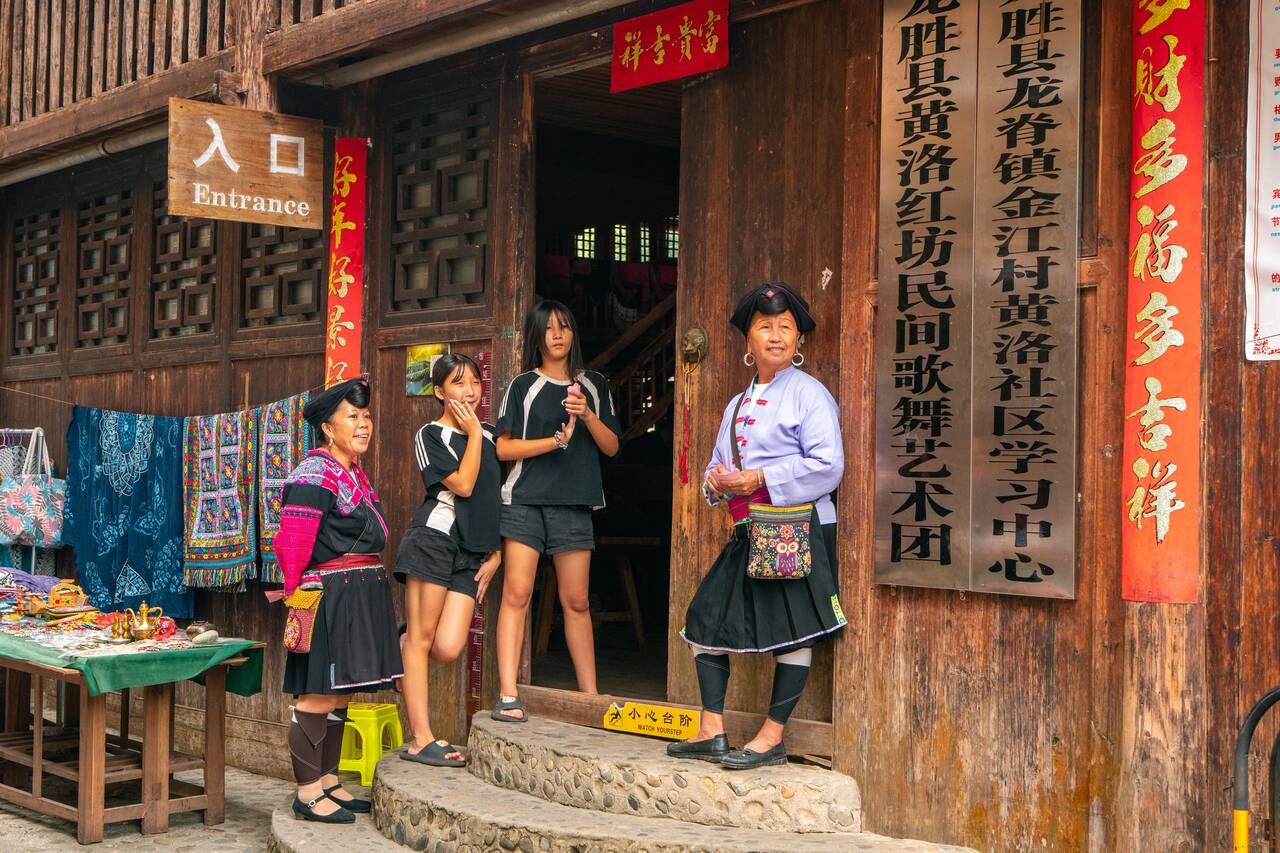
The town is highly commercialized nowadays, but you can still walk around the village and attend a show where the women display their long hair as part of the performance. We also stopped here for lunch before heading to the rice terraces. Personally, I found the village a bit too commercialized, but it's still a worthwhile stop if you're visiting Longji Rice Terrace.
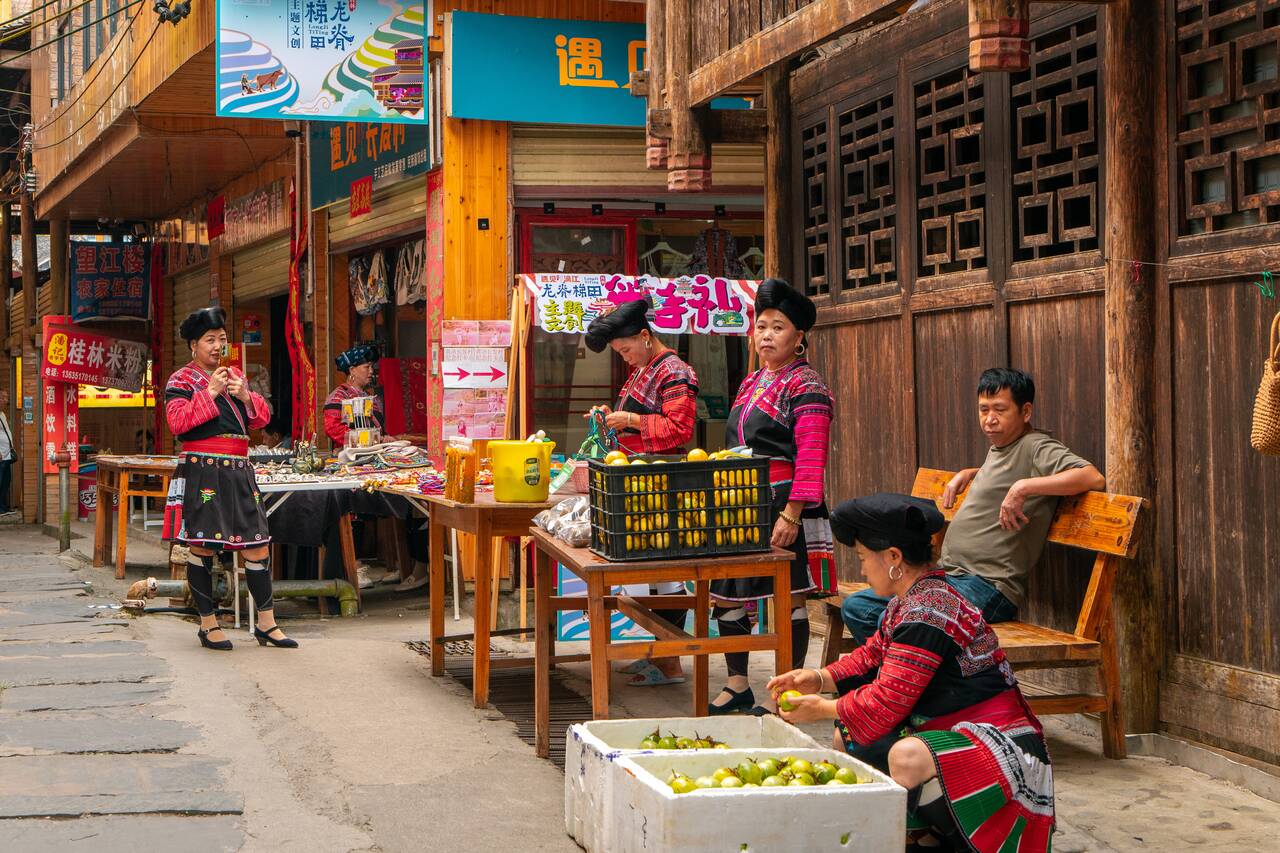
We left Guilin City at 7 AM and returned around 4 PM. It was a long drive, but the rice terraces are stunning, and we had plenty of time to explore them. I think the drive is definitely worth it. You can book an organized tour here. The rice terraces have an entry fee of 80 CNY, which you will need to pay separately from the tour. The tour itself costs around 288 CNY per person.

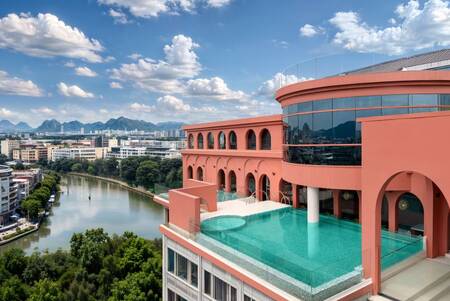
Where to Stay in Guilin City?
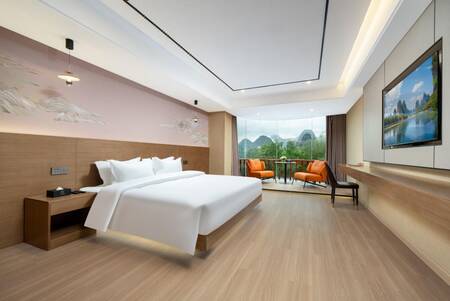
 👍 Top Pick
Getting From Guilin City to Yangshuo
From Guilin City, you can take a cruise to Yangshuo, so you can see some of Guilin's best views from the ferry. The cruise takes around six hours. You will have to book the cruise at least 2 days in advance. Your tour operator will usually pick you up at 7 or 8 AM from your hotel in Guilin City and transfer you to the pier, which is about an hour away. As with the other tours, the operator will text you the night before with your exact pickup time and the bus license plate number, so be sure to check your WeChat regularly.
There are several cruise types: 3 stars, 4 stars, and 5 stars, with varying quality and price. I found the difference between each level not enough to encourage me to pay a premium, so I went with 3 stars costing me about 64 USD, and it was actually very good.
Day 10-11: Yangshuo (2 Nights)
- 📍 Stay: Tingshan Guanshui Branch (Yangshuo Xijie Branch)
- 🕐 Time: 2 Nights
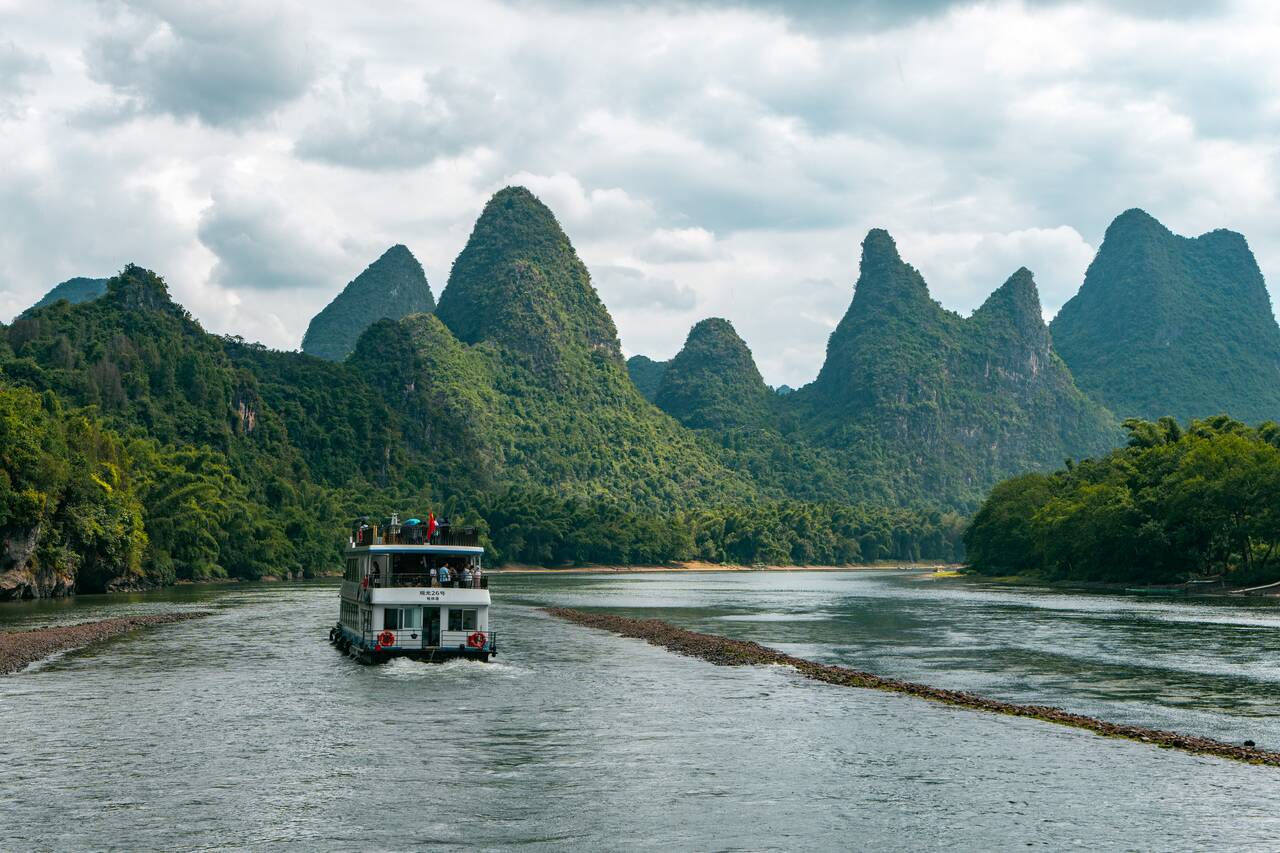
One of the highlights of visiting Guilin is taking a Li River cruise to admire the incredible karst scenery along the way. This is also how you’ll travel from Guilin City to Yangshuo, so be sure to book your cruise in advance.
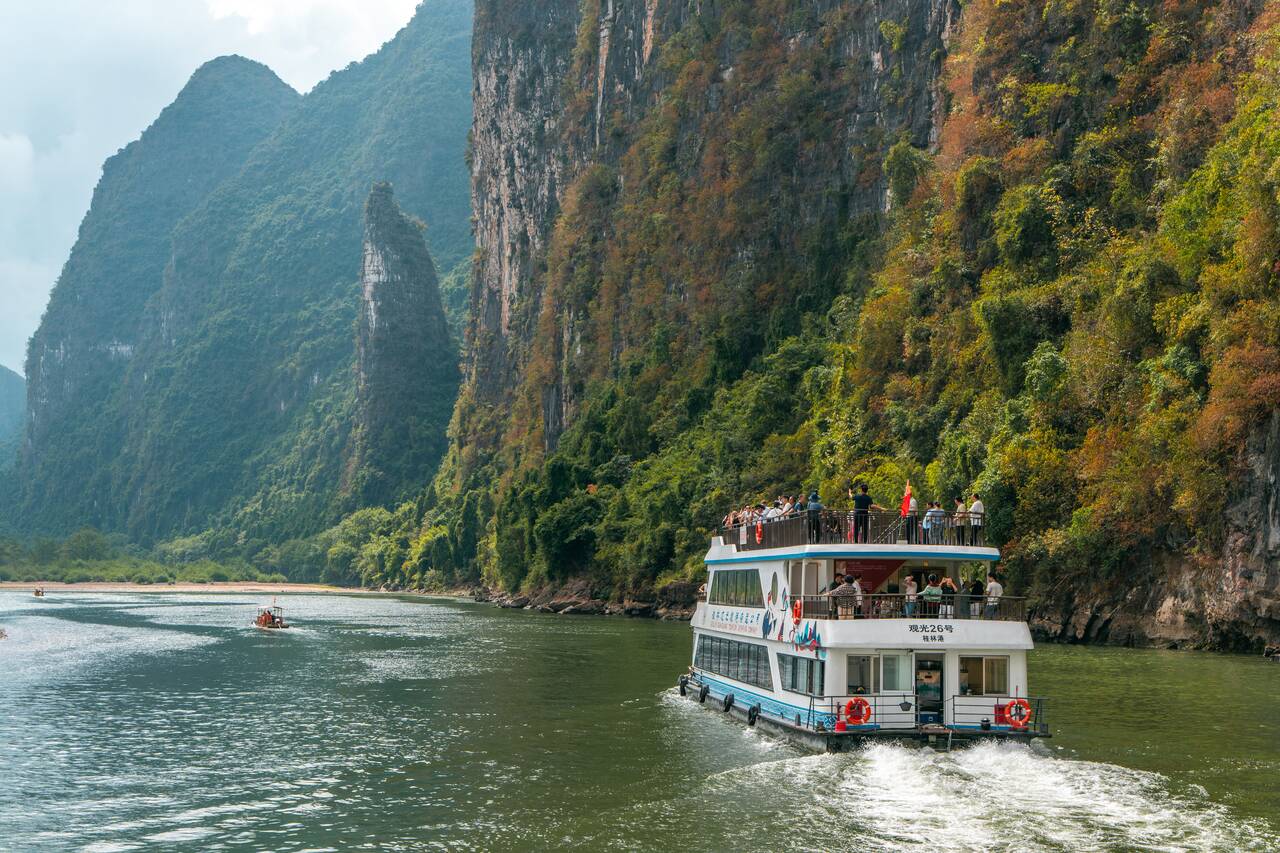
The cruise takes around six hours. Your tour operator will usually pick you up at 7 or 8 AM from your hotel in Guilin City and transfer you to the pier, which is about an hour away. As with the other tours, the operator will text you the night before with your exact pickup time and the bus license plate number, so be sure to check your WeChat regularly.
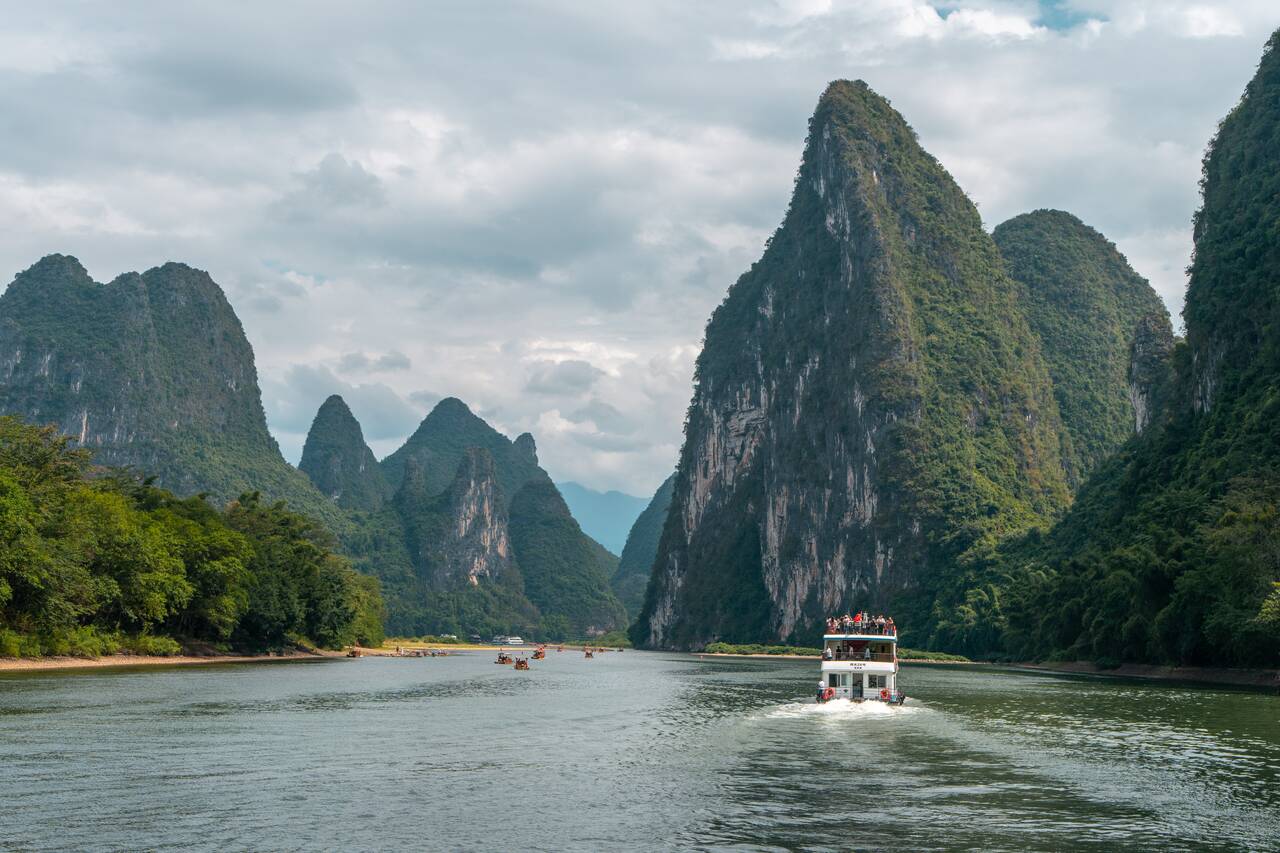
Once you arrive at the pier, your guide will purchase the ticket for you, and you can board the boat according to the boat and seat number provided. The boat usually departs around 10 AM, and you should arrive at Longtoshun Wharf by 2 PM, making the journey approximately four hours, six hours in total including bus transfers and boarding.
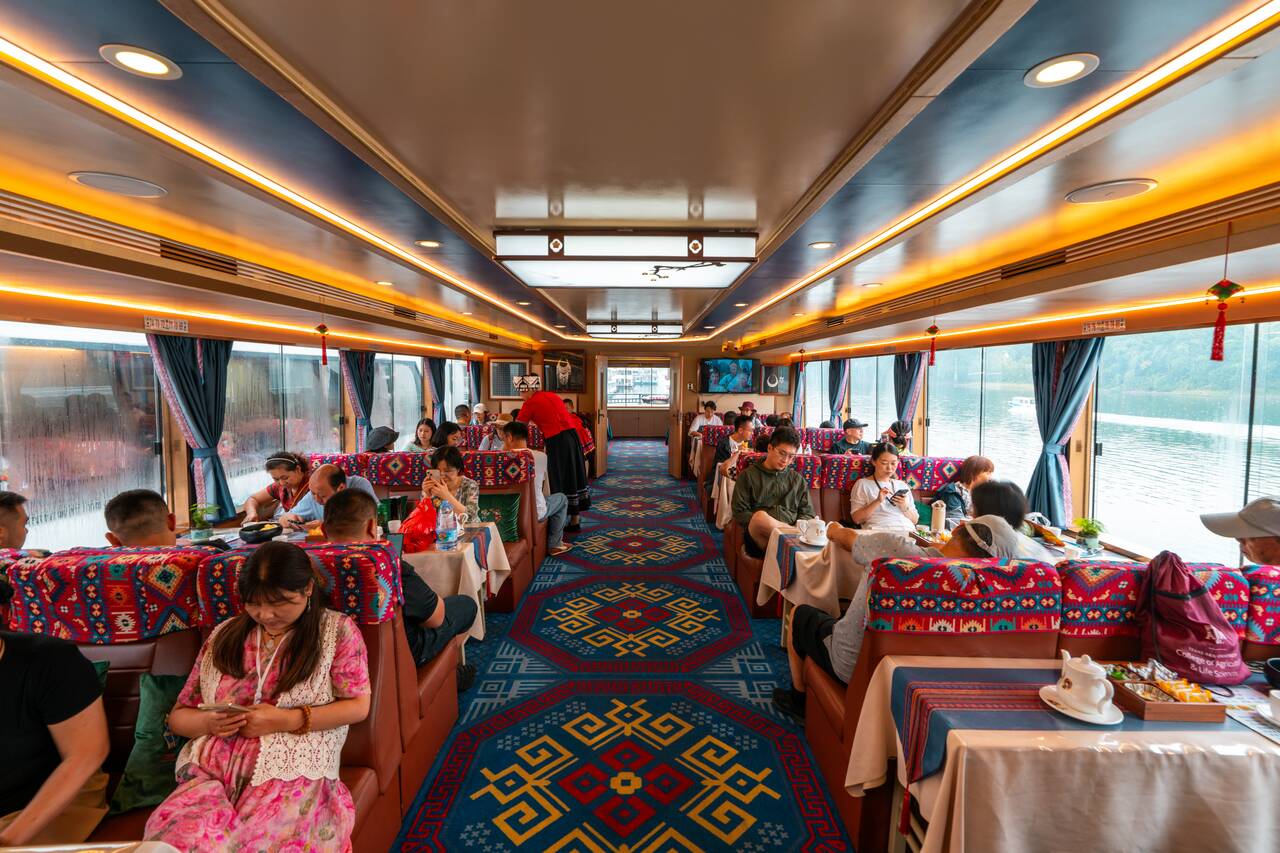
There are several cruise types: 3 stars, 4 stars, and 5 stars, with varying quality and price. I found the difference between each level not enough to encourage me to pay a premium, so I went with 3 stars costing me about 64 USD, and it was actually very good. With the 3-star cruise, you will get a very comfortable seating area accompanied by dry snacks and tea that you share with other passengers.
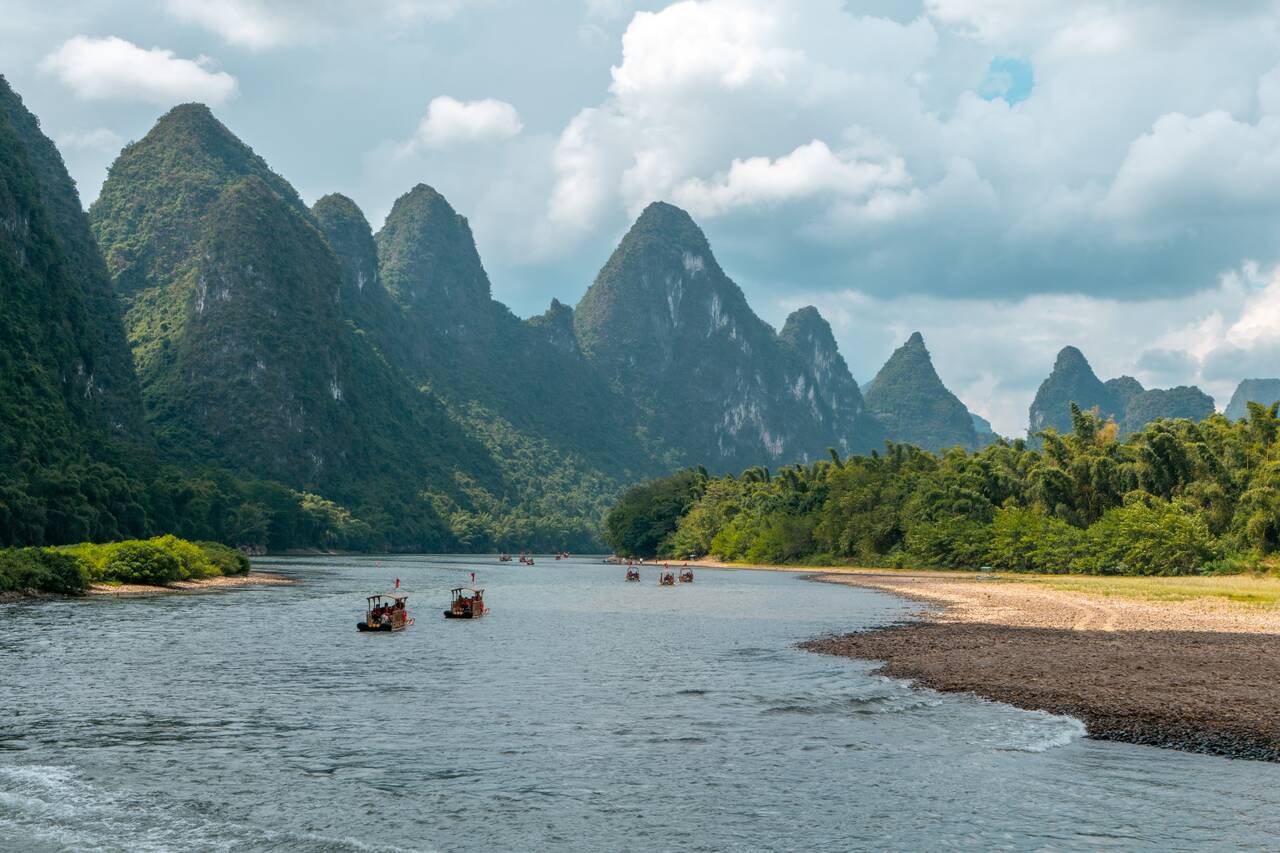
The views along the way are absolutely incredible. I thought I might get bored after a few hours, but I was completely wrong. I spent more than 70% of the four-hour Li River cruise on the deck, enjoying the scenery and taking photos of the countless karst mountains along the way. There are hundreds, if not thousands, of them, which is what surprises me most about Guilin.
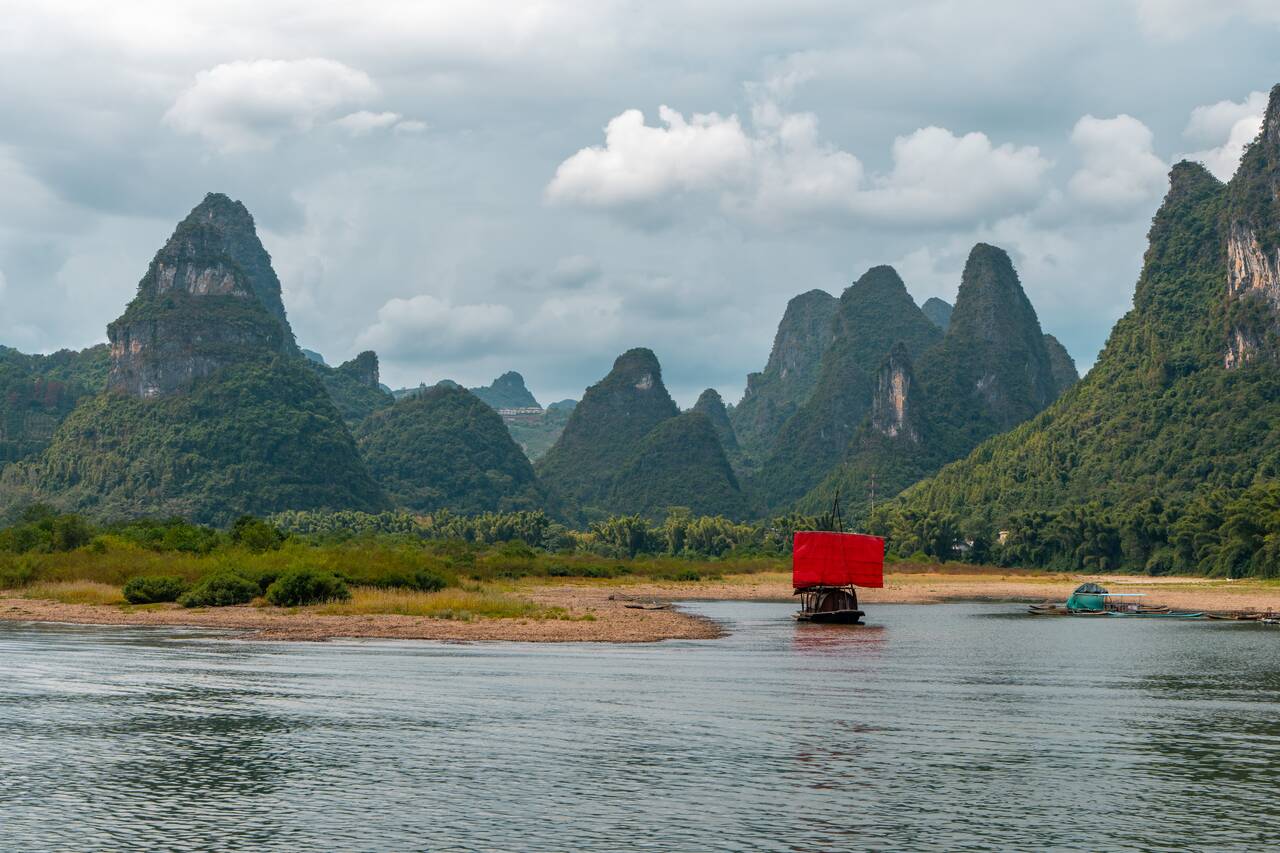
Once you arrive at Longtoshun Wharf, you can walk along the shaded road through the wharf area, and in about 20 minutes, you’ll reach Yangshuo West Street, the main tourist strip where most accommodations are located. From there, you can check in and get settled before heading out to explore Yangshuo.
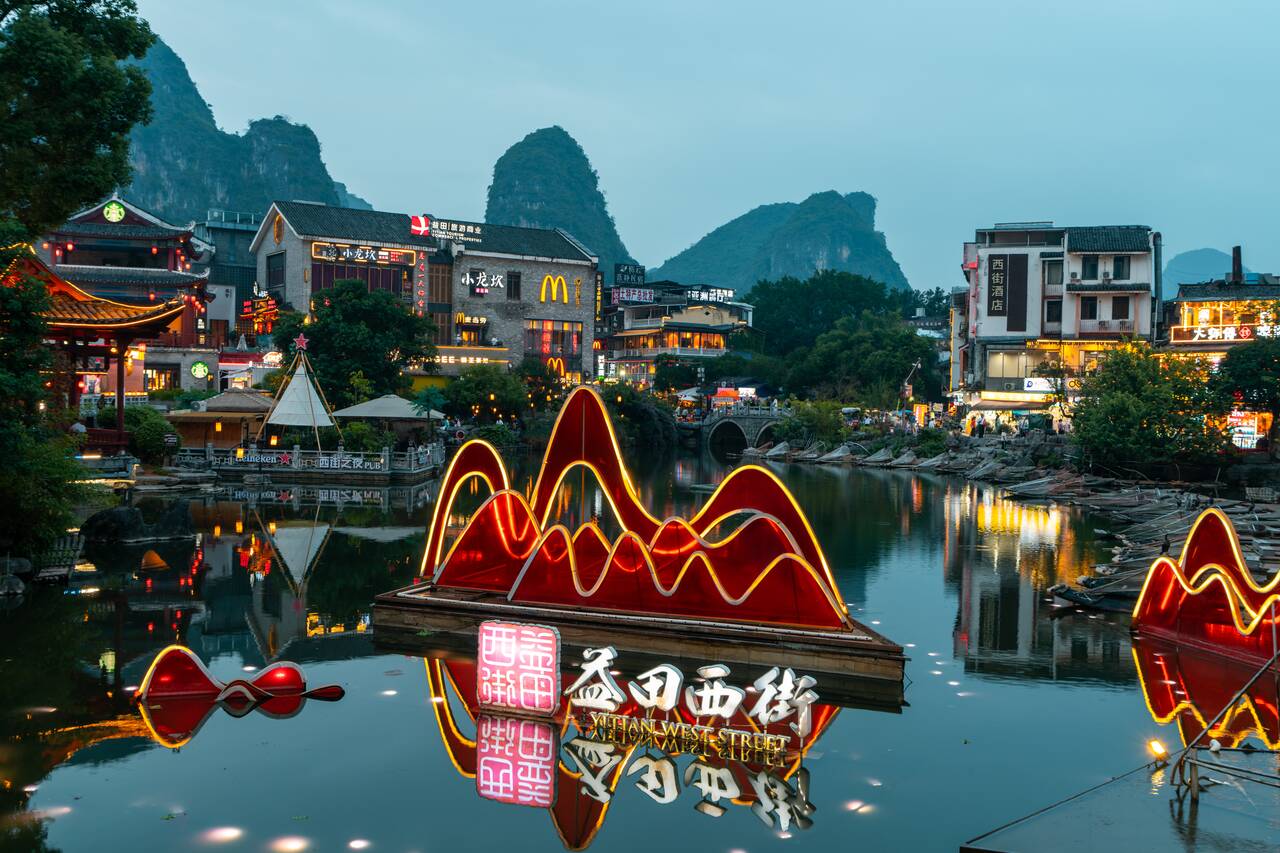
Although Yangshuo is highly commercialized and no longer the authentic ancient village it once was, it still has its charm. Yangshuo West Street is where all the action happens in Guilin, with the street lined with shops and restaurants to explore and enjoy.
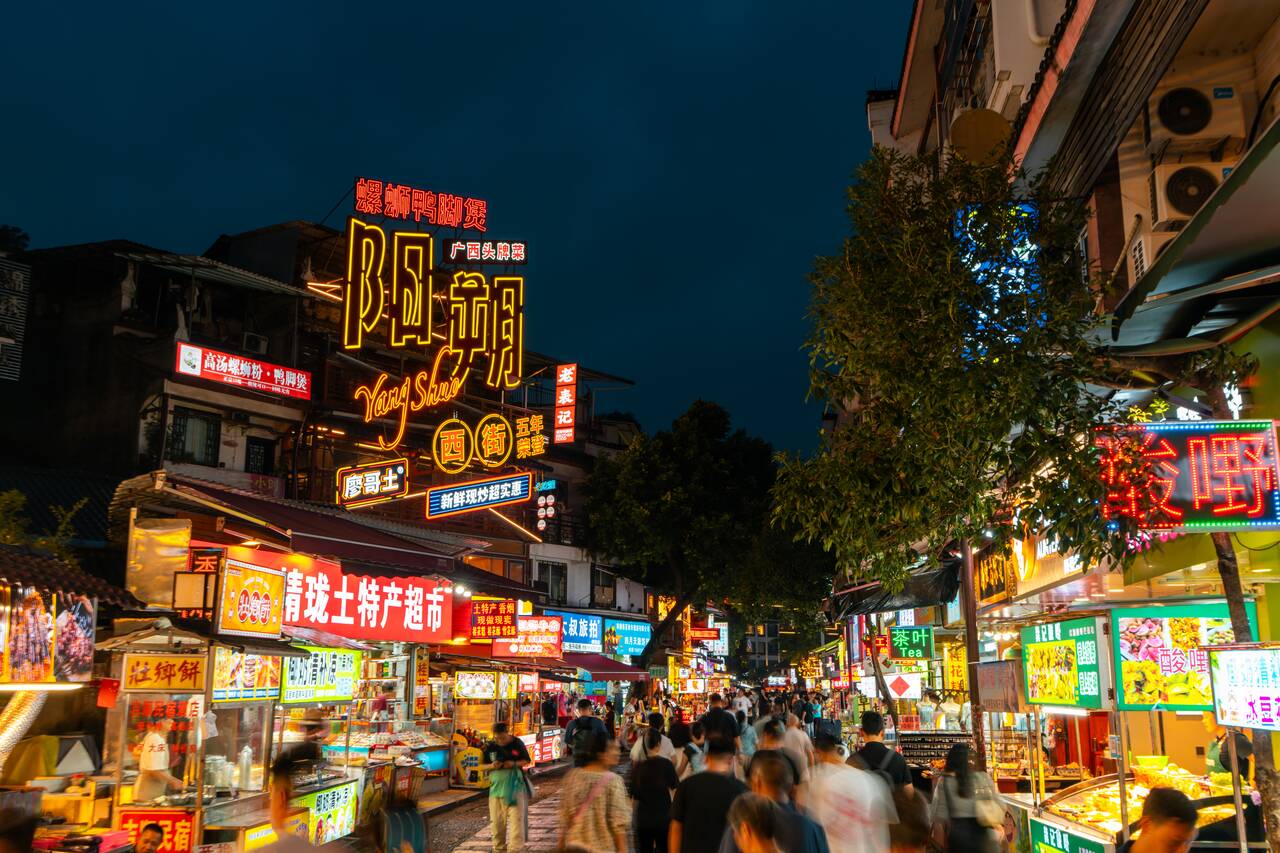
You can spend the afternoon and evening walking around its cobblestone streets and explore the town at your own leisure. At night, if you are looking for a lively place to hang out, Yangshuo West Street is probably the liveliest place to be in Guilin, with restaurants and street food stalls bustling with people, so be sure to also come and check it out at night.
The next morning, you can start the day by renting an e-scooter, which you can do from the place at the corner of Yangshuo West Street for about 60 CNY per day. Once you've got your vehicle, you can drive south across the river for about 45 minutes before you arrive at the cable car station of Ruyi Peak, one of my favorite spots in Yangshuo.
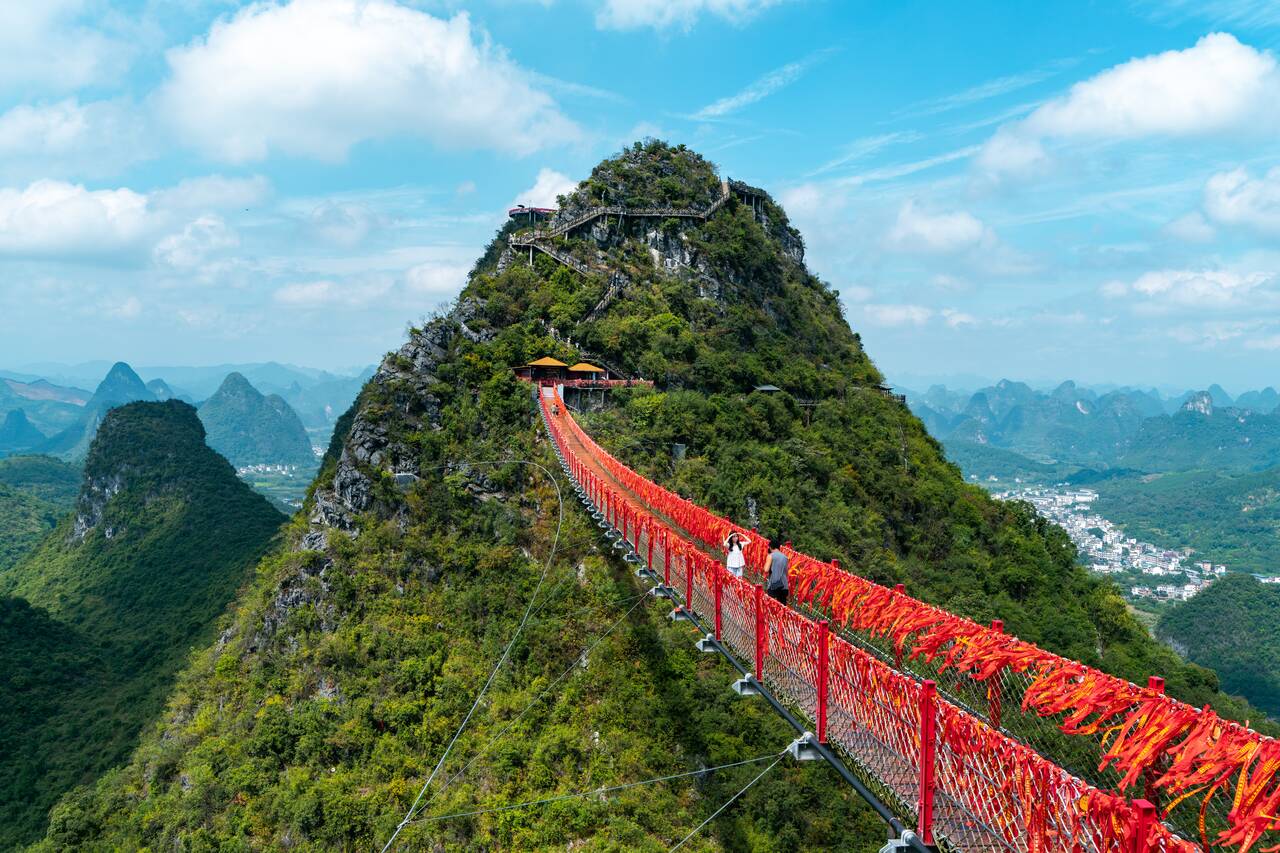
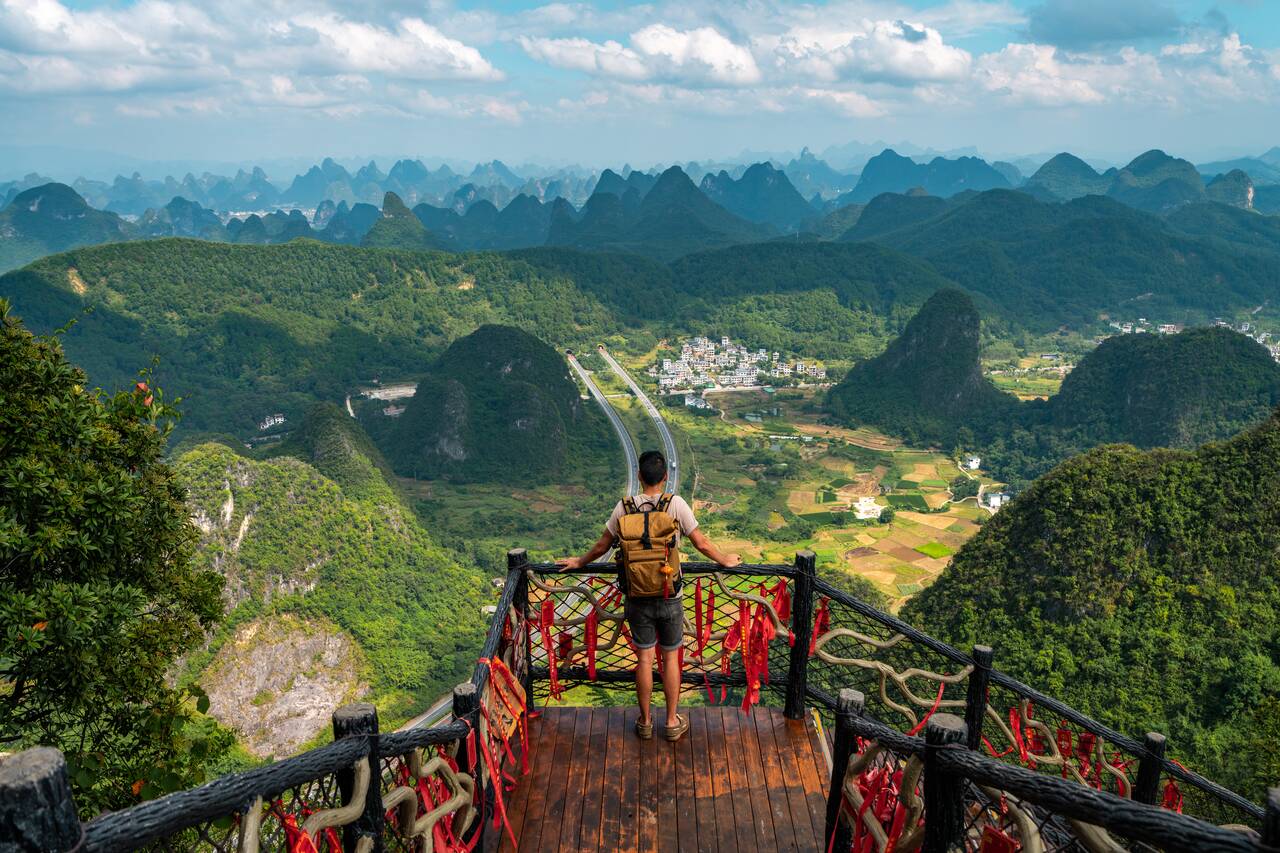
If there's one thing I recommend you do when you are in Yangshuo, it is to go and explore Ruyi Peak, where you can take a cable car up to one of the highest karst mountains in the area and enjoy a 360° panoramic view while being surrounded by hundreds of other karst peaks. Out of all the places I visited when I was in Yangshuo, this is my favorite.
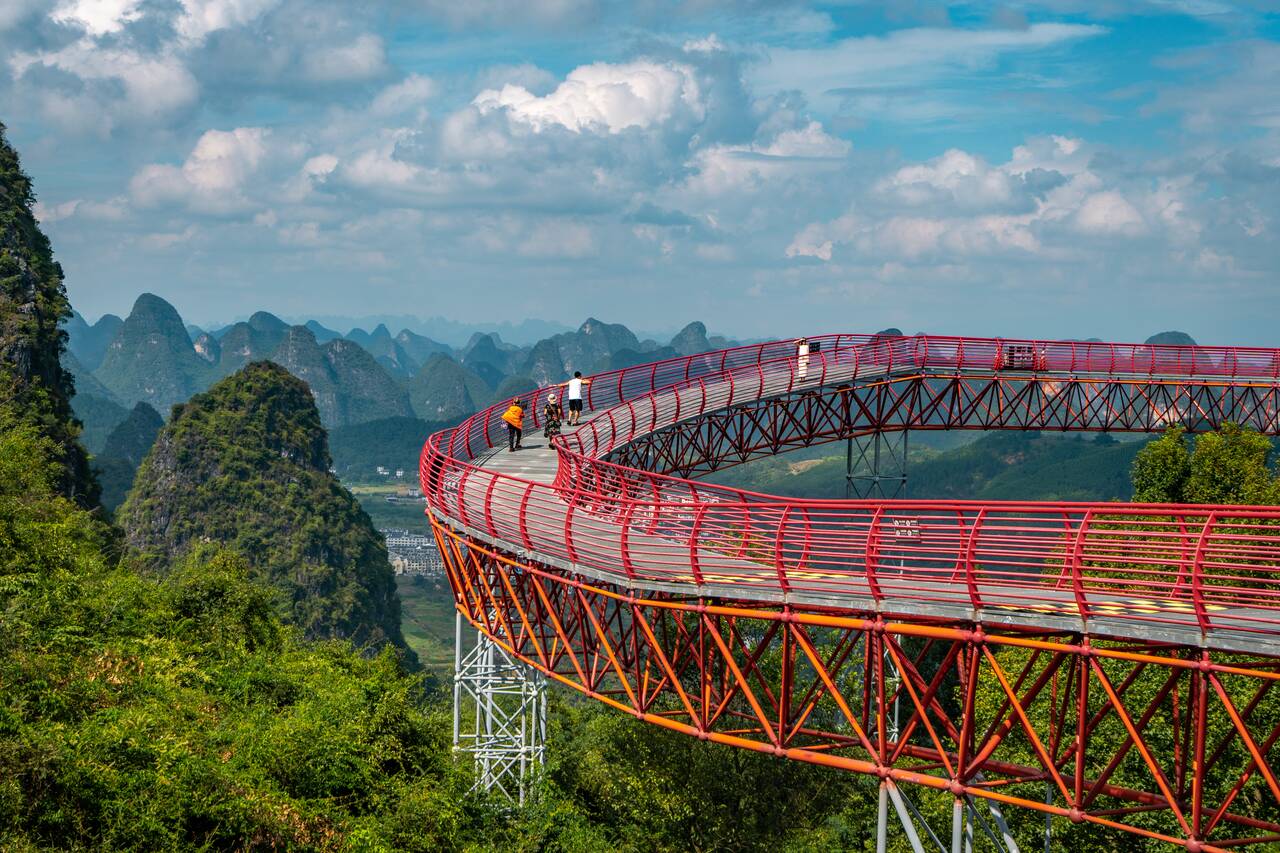
What makes it special is the stunning glass bridge that stretches between two karst peaks, where you can walk across, enjoy the valley views, and maybe even get a little freaked out by the massive drop beneath your feet. In addition to the glass bridge, there is also a suspension bridge connecting the peaks, as well as a large viewing platform at the top where you’ll be treated to sweeping panoramas of endless limestone mountains layered beautifully into the distance.
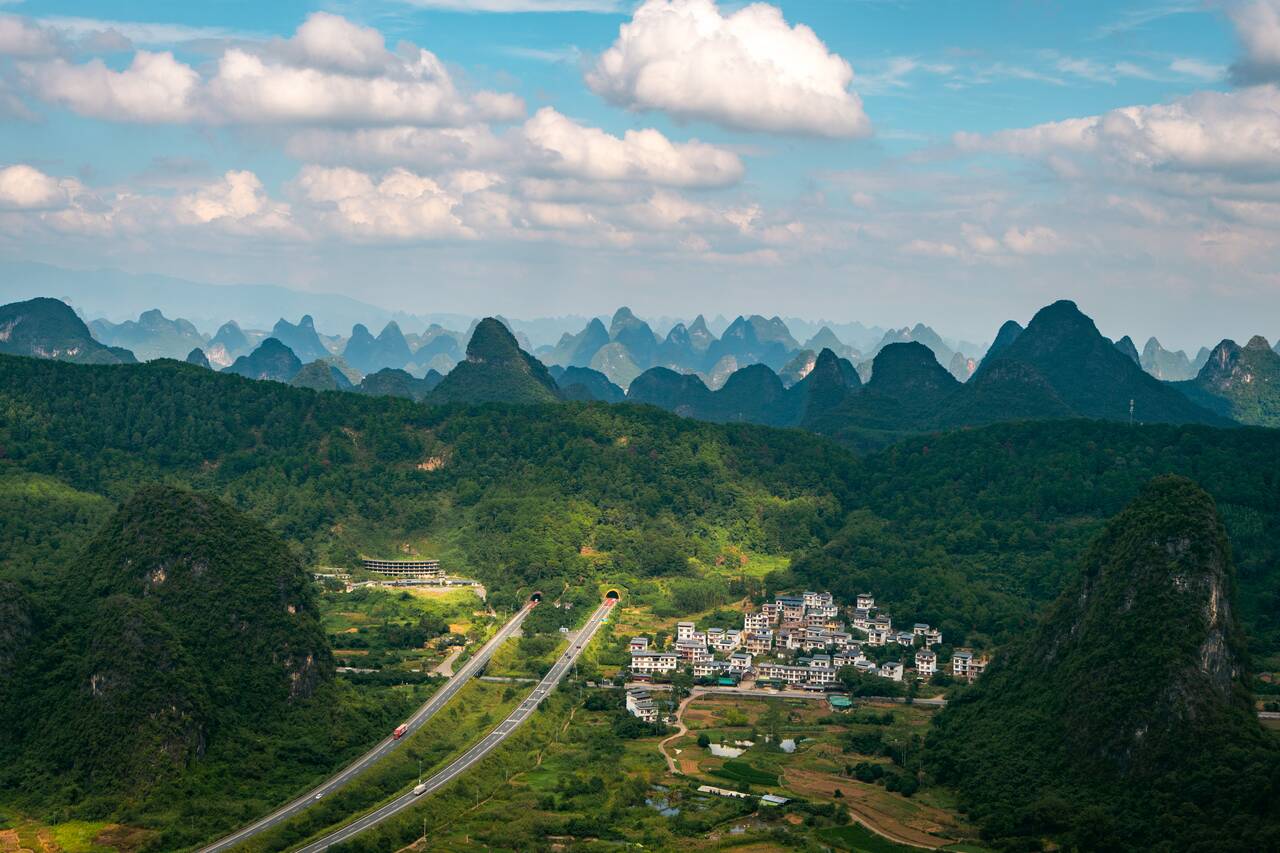
You can buy the ticket here or directly at the gate, and it should cost around 30 USD for a round-trip ticket. Depending on the time you visit, there may or may not be a long line for the cable car, which is why I recommend coming in the morning when the weather is nicer and there are fewer people.
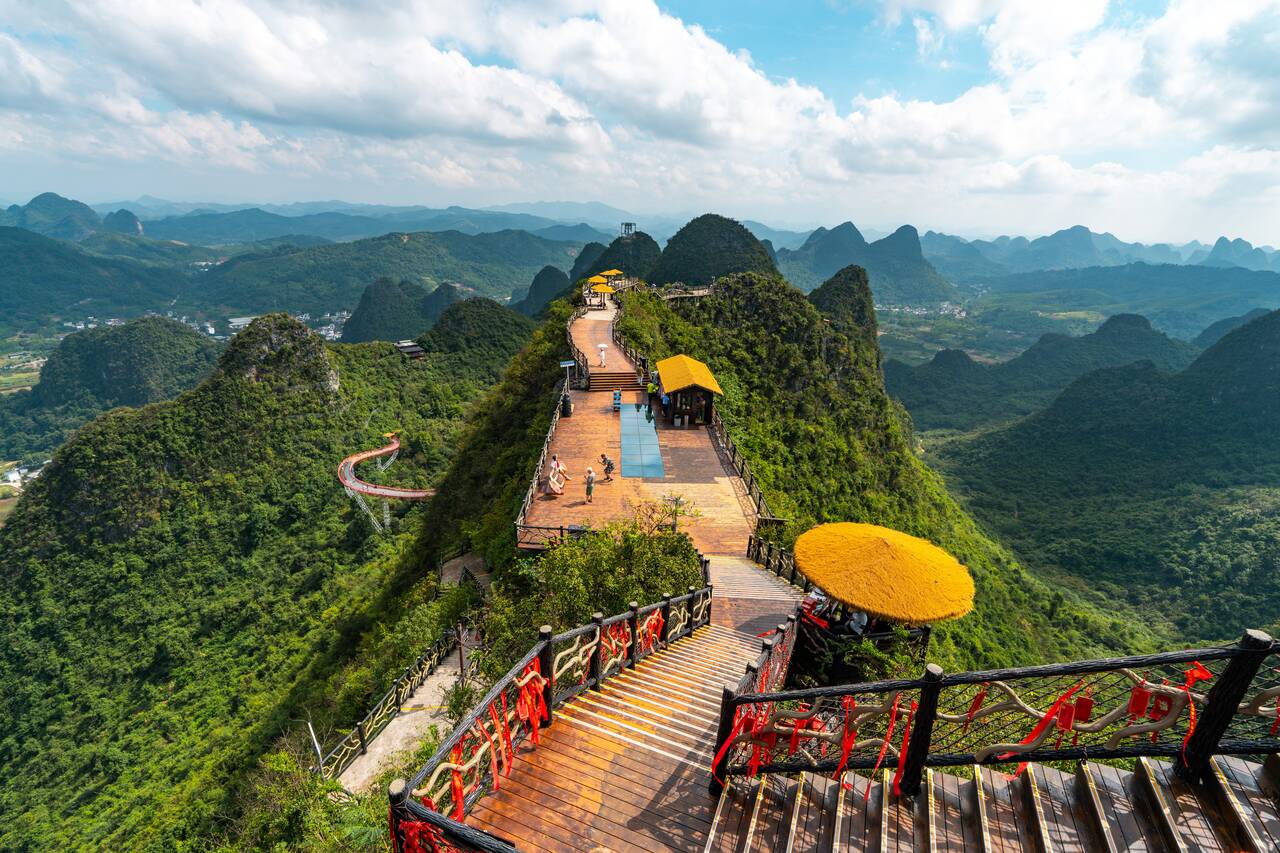
The area is quite large, with lots of walking and several flights of stairs, so expect to spend at least 2 to 3 hours at Ruyi Peak. Be sure to bring a bottle of water, as it can get pretty hot up there. There are a few cafes and shops scattered around where you can buy snacks, but expect to pay a premium if you decide to purchase anything on the mountain.
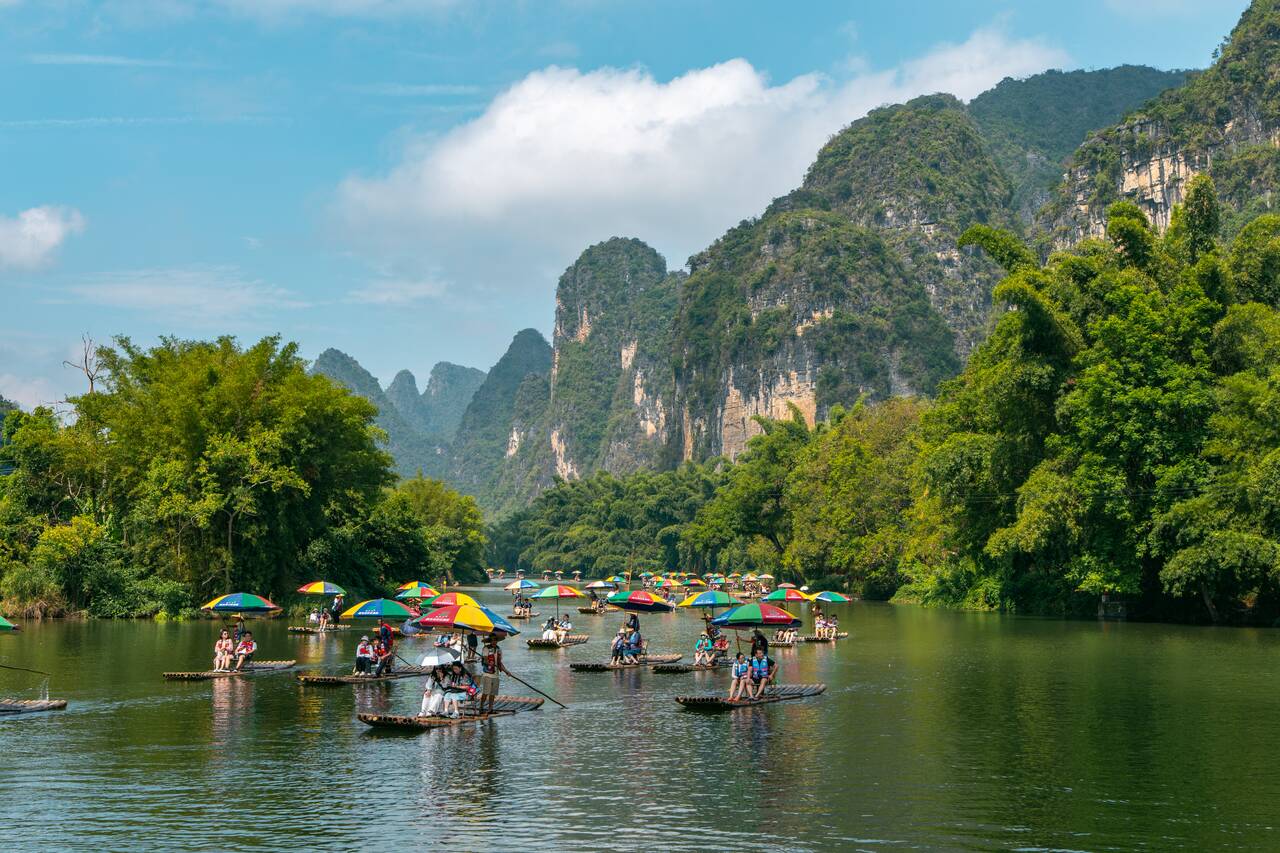
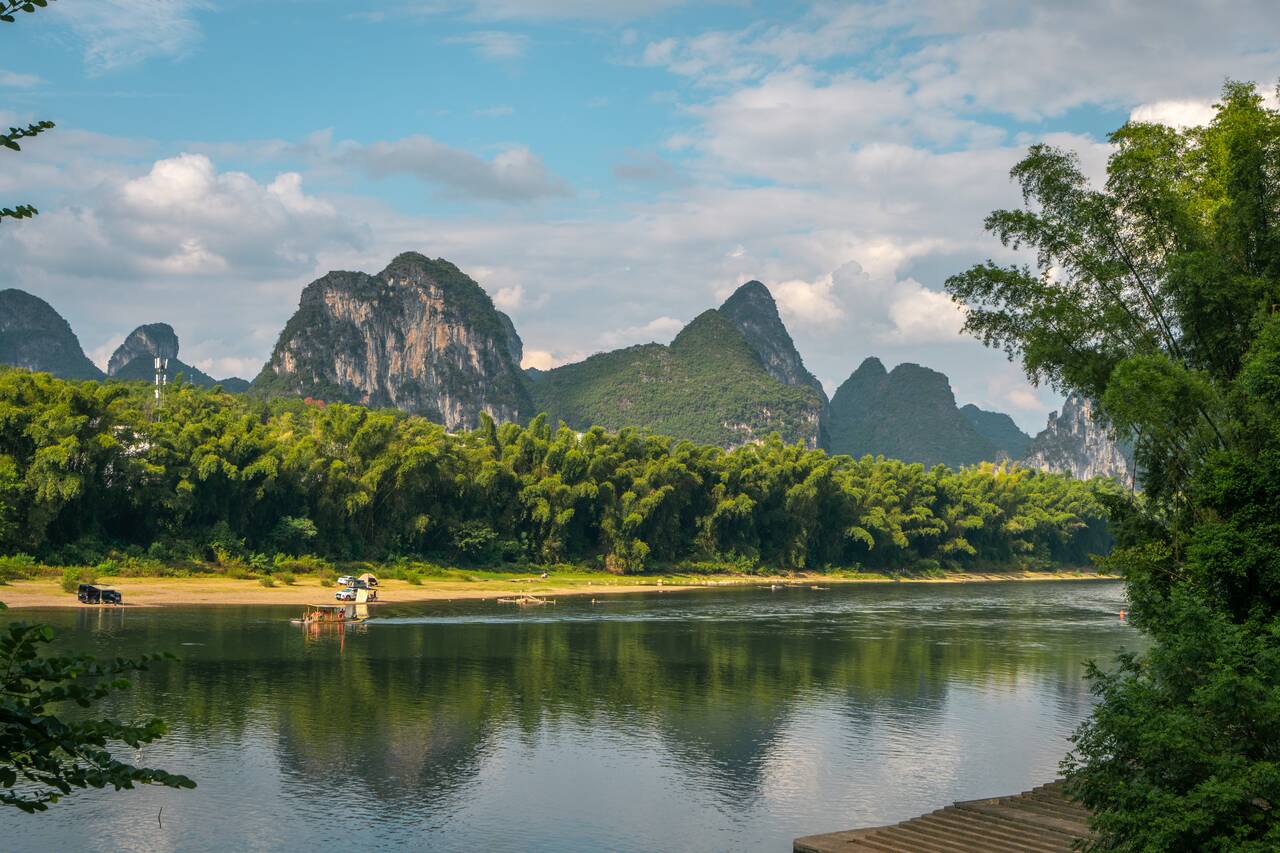
After you’re done, you can ride down the mountain and explore other attractions around Yangshuo on your e-scooter, such as Moon Hill, or go bamboo rafting from Shui'edi Pier to Gongnong Bridge.
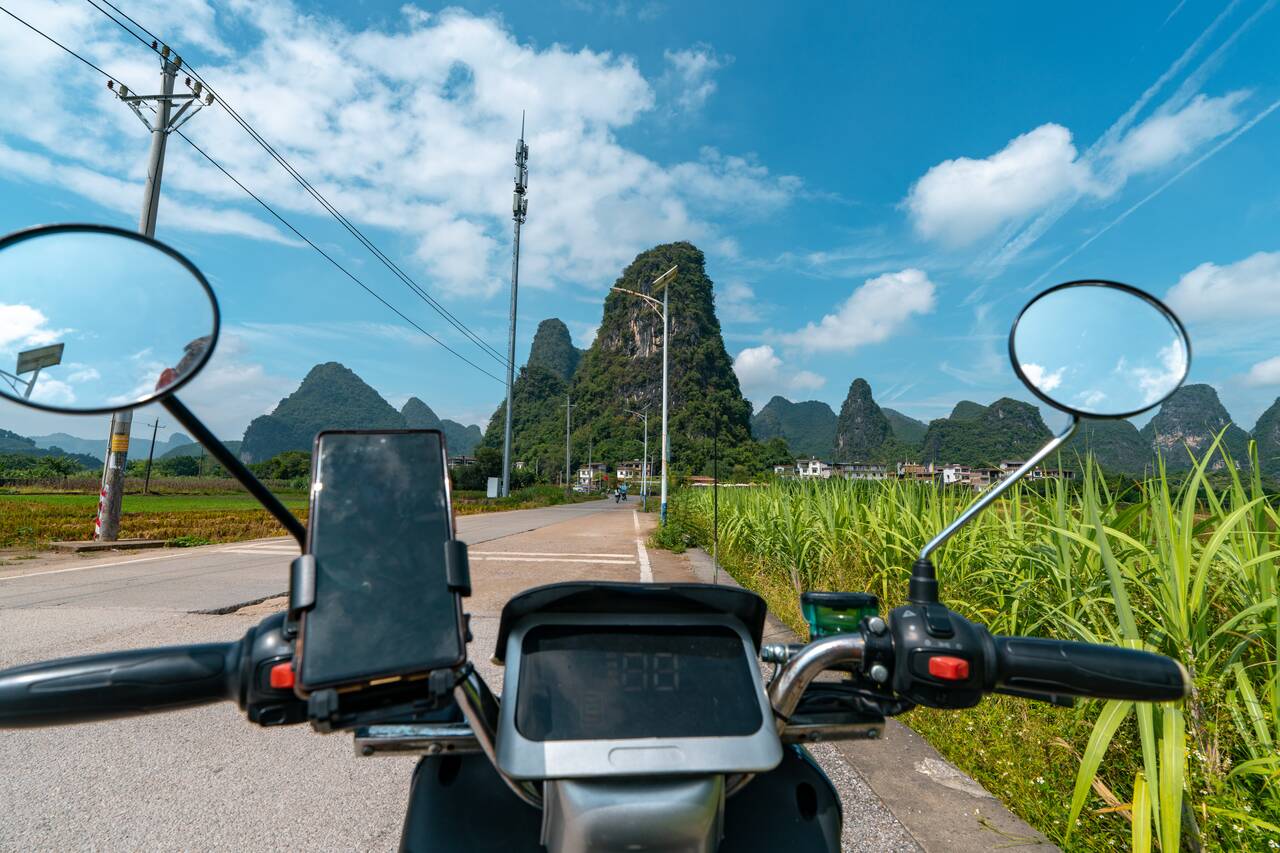
You can also simply enjoy the ride and explore the countryside and rivers at your own pace. Keep in mind that your e-scooter typically has a range of about 70 km, which should allow 3-4 hours of riding before needing a recharge, so plan accordingly.
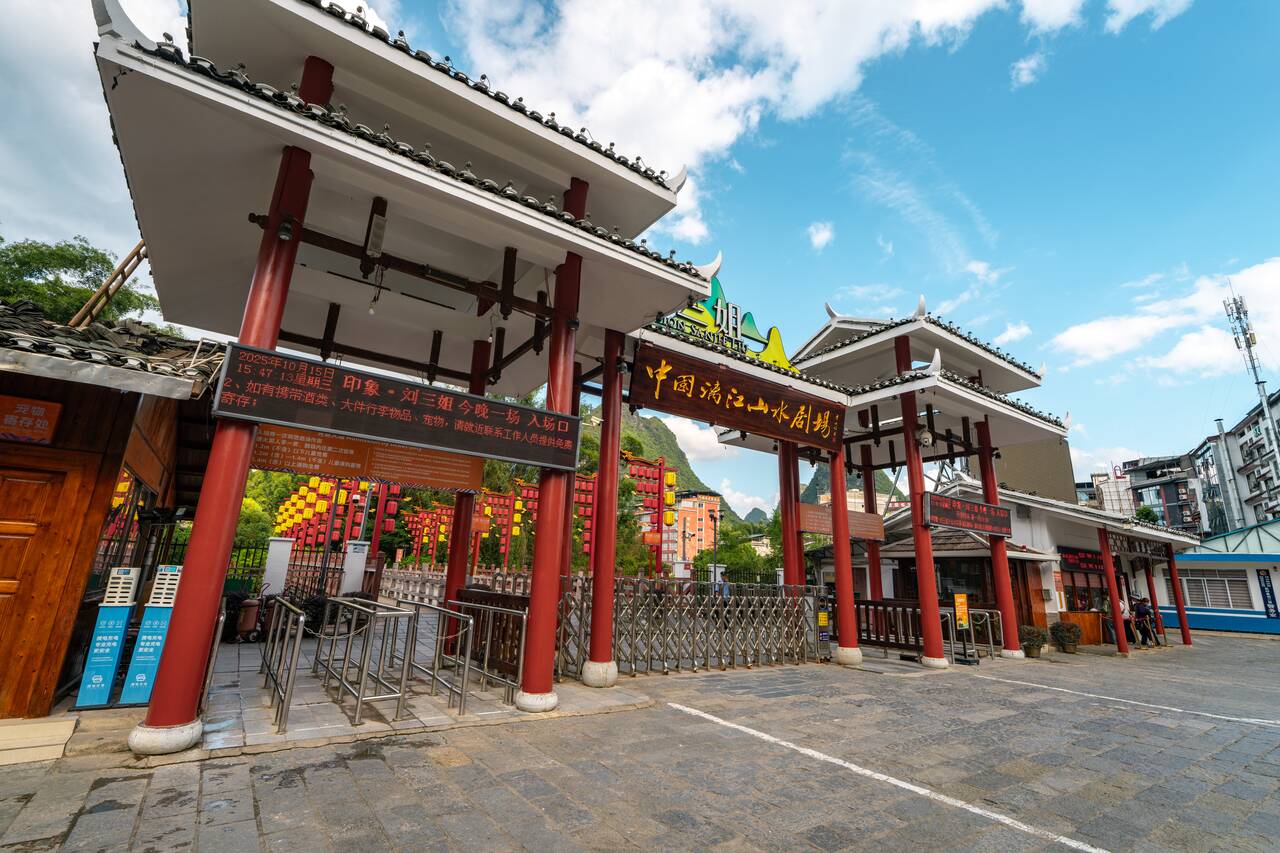
That should keep you busy for the entire day. In the evening, if you’re looking for something spectacular, consider watching the Impression Liu Sanjie show, a large-scale cultural performance featuring dances, lights, and music set against the stunning backdrop of Guilin’s karst mountains.
The show is held right by the river every evening, and you can book tickets here. After the show, head back early, as we’ll be departing for a sunrise trip at 4 AM the next day! Be sure to book the sunrise trip here in advance.
Where to Stay in Yangshuo?
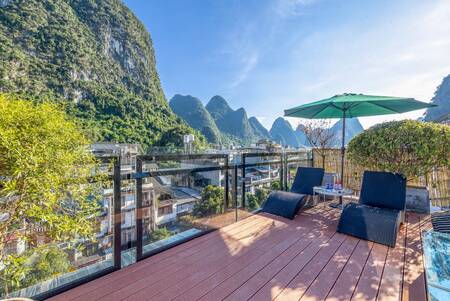
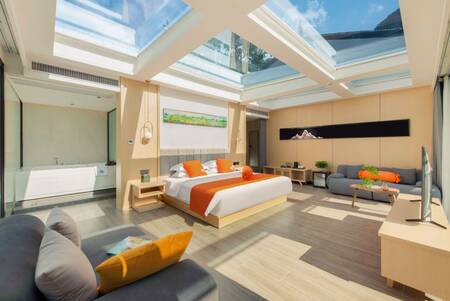
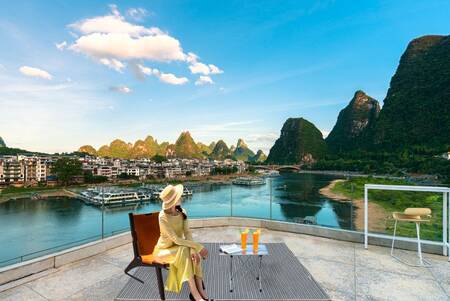
Getting From Yangshuo to Xingping Ancient Village
From Yangshuo, you can use Didi to find a taxi to take you to Xingping Ancient Village. The taxi should take about 30 minutes and cost around 20 - 30 CNY.
Day 12: Xingping Ancient Village (1 Night)
- 📍 Stay: Yangshuo Autumn Inn (Xingping Ancient Town Branch)
- 🕐 Time: 1 Night
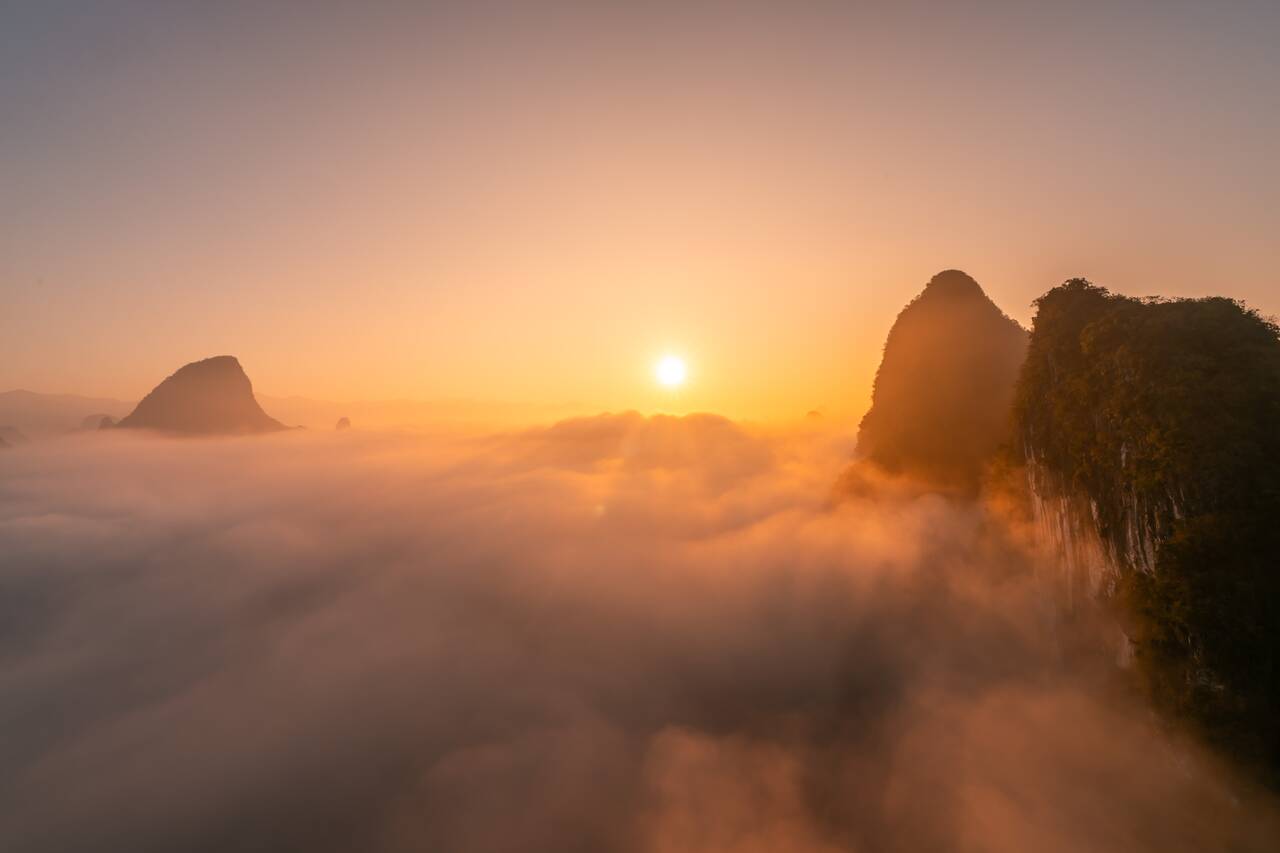
Today, before we head over to Xingping, we are going to wake up at 4 AM and visit Xianggong Viewpoint, one of the most iconic viewpoints in Guilin. It is famous for its unique view where you can see the river bend in a dramatic horseshoe shape, surrounded by countless karst peaks stretching into the distance.
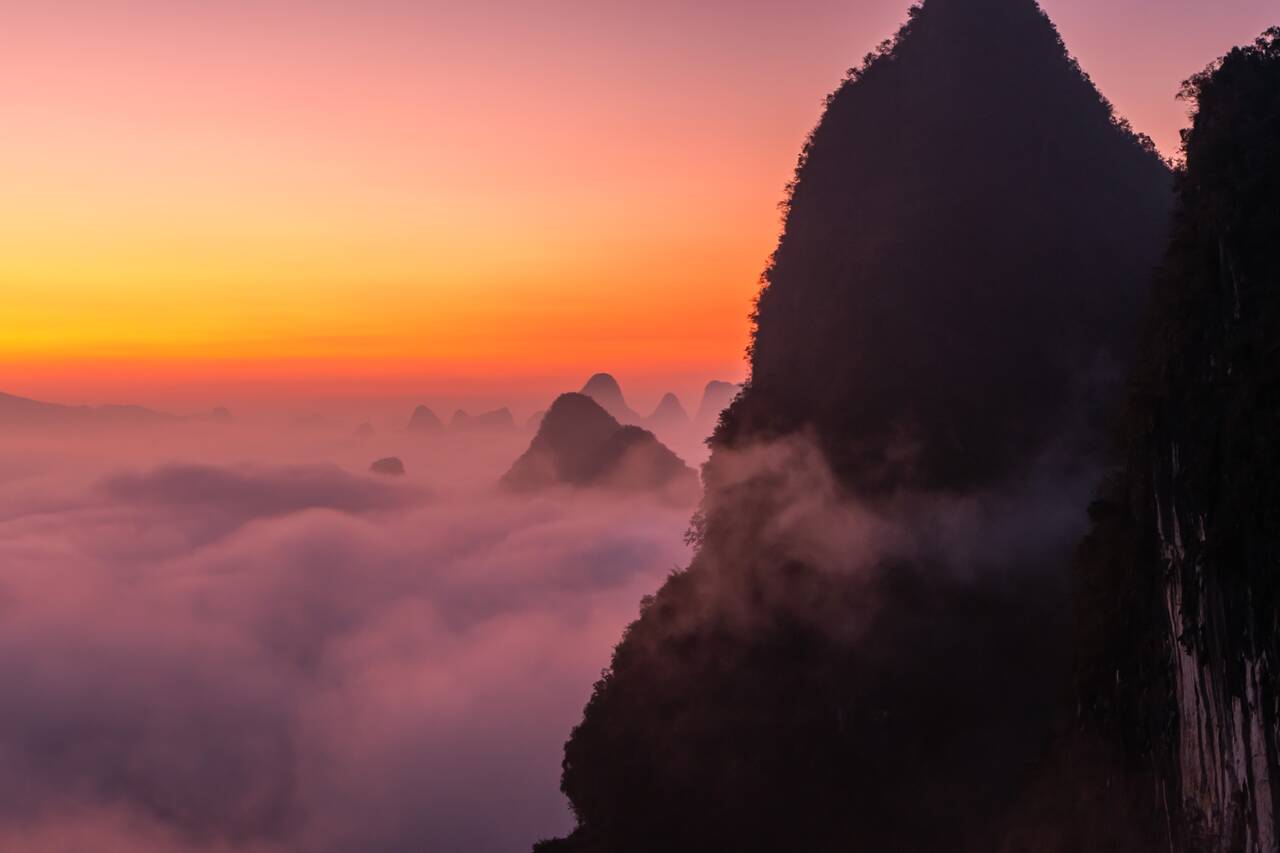
You can go with this organized tour and they will pick you up at your hotel around 4 AM. You should arrive at the viewpoint by 5 AM, just in time for the entrance gate to open. The tour should provide you with the ticket so you won't have to queue up and enter the gate right away. From the gate, it is a short 10-minute hike to the platforms where you can watch the sunrise.
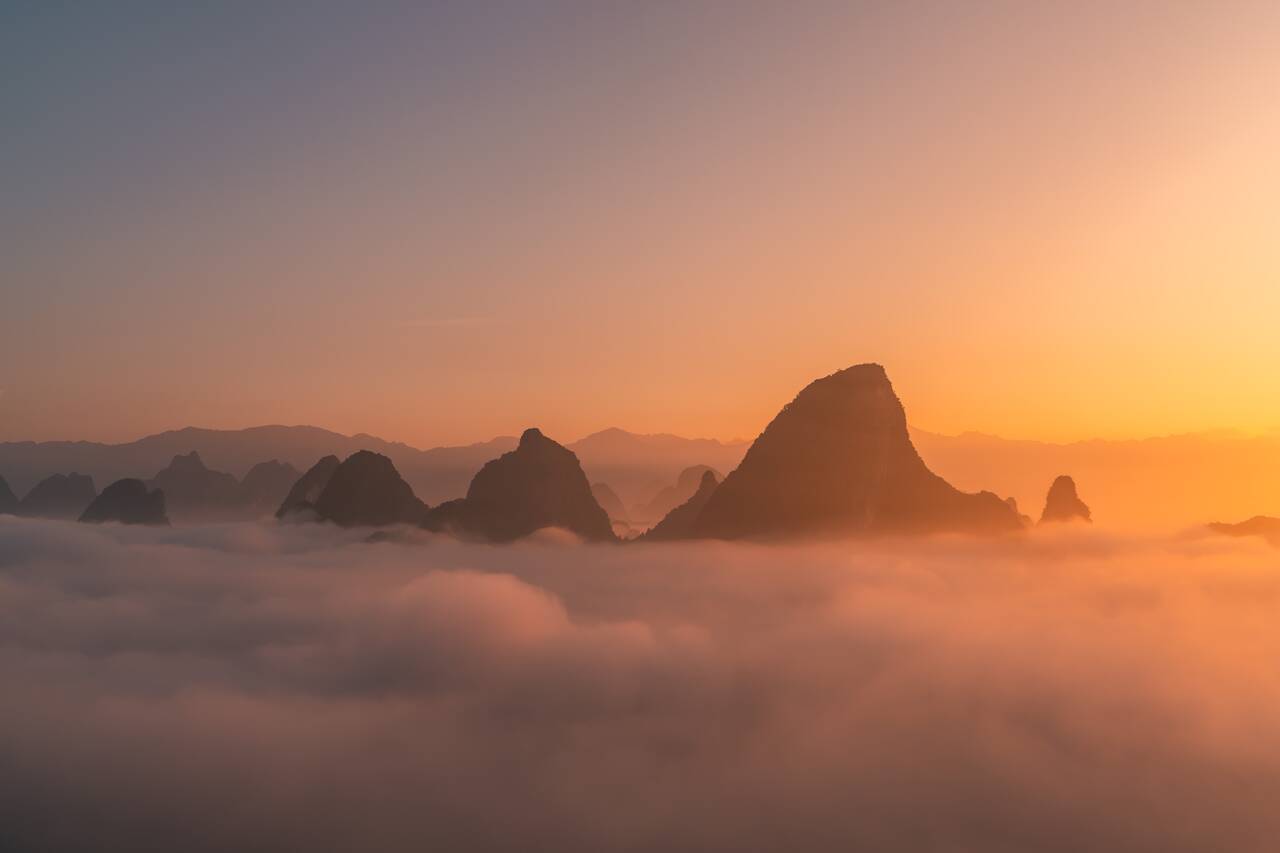
Depending on what time of year you visit, you can be waiting for the sunrise for an hour or two, so be sure to prepare to stand for a long time. Trust me, it will be worth it. The scenery, with rolling clouds below and countless karst peaks piercing through them, set against the purple and orange hues of the morning sky, felt almost like a Chinese painting. It’s no wonder that traditional Chinese paintings depict landscapes this way when places like this exist in reality!
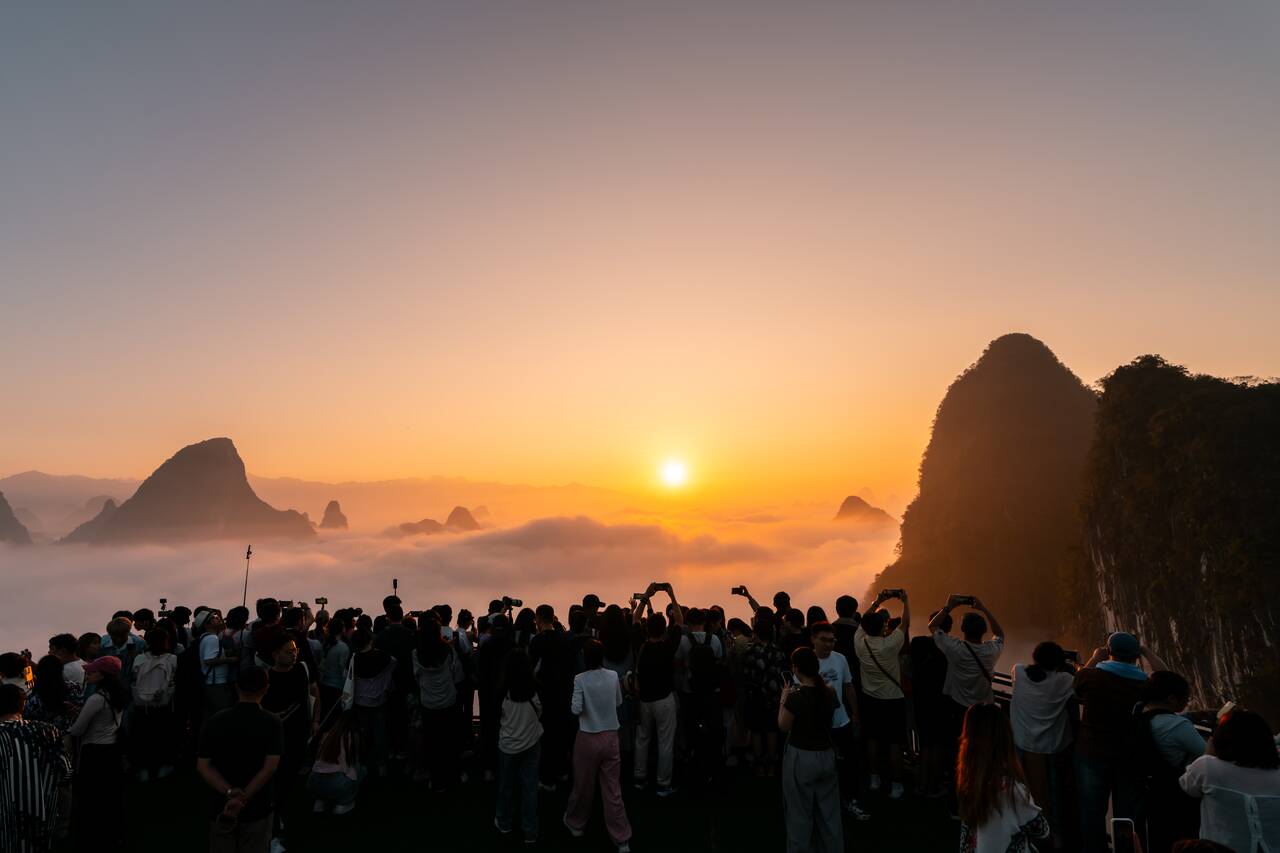
You should return to your shuttle around 7:30 AM, and it will take you back to your hotel in Yangshuo by 8:30 AM. This gives you time to rest before checking out of your hotel. Once you are checked out, you can hail a taxi to take you to Xingping Ancient Village, a charming riverside town where you will be spending the last night. The taxi should take about 30 minutes and costs around 20 - 30 CNY.
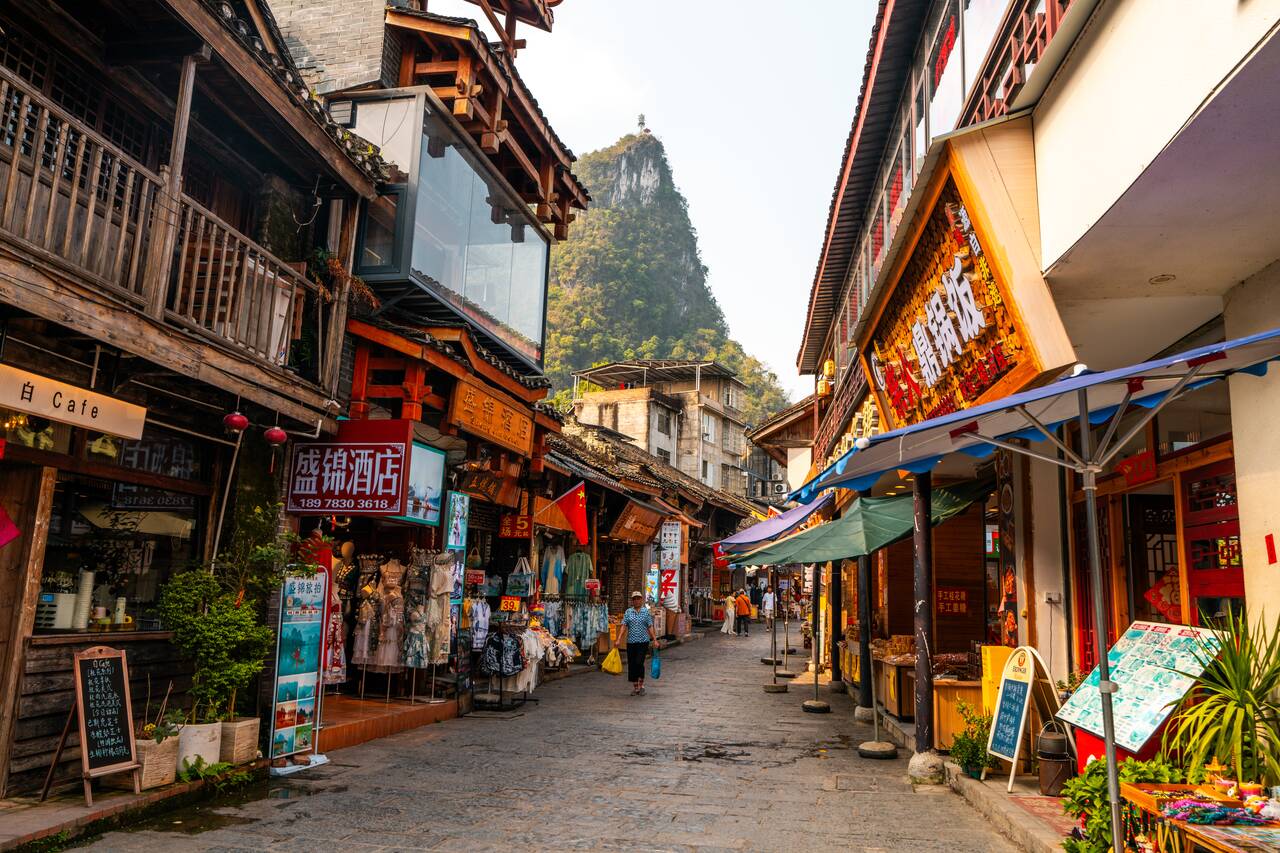
This village is famous for its well-preserved old streets, traditional architecture, and stunning views of the Li River winding through karst peaks, unlike Yangshuo, which has become heavily commercialized 😅. Xingping is smaller and quieter than Yangshuo, with traditional wooden houses lining its cobblestone streets, making it perfect for your last night in Guilin. The village is also closer to Yangshuo High-Speed Railway Station, so you can easily catch your train the next day.
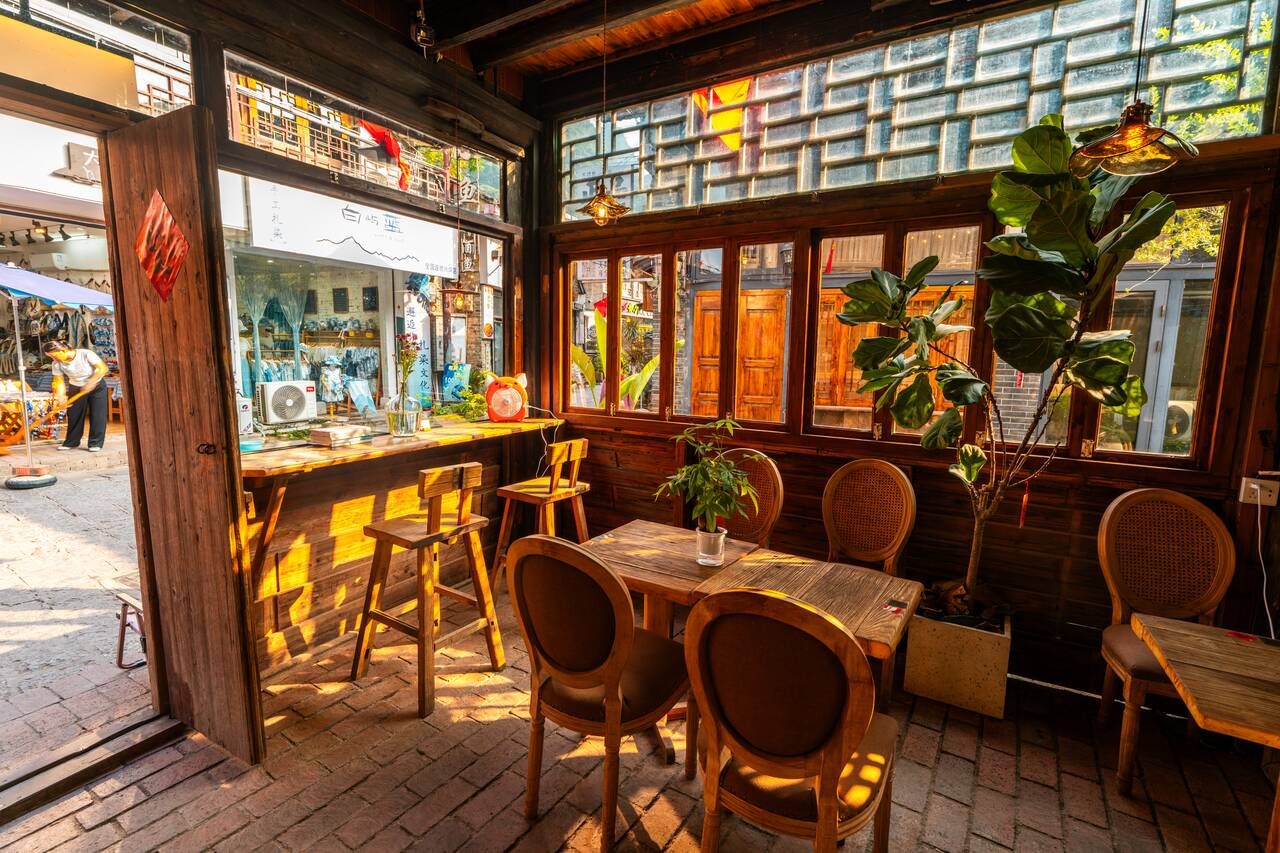
Along the cobblestone streets, you will find many lovely cafes and bakeries where you can sit back, relax, and soak in the atmosphere. The town does get crowded during the day with day trippers from Yangshuo, but if you stay overnight, the mornings and late evenings are my favorite times to explore when you can truly enjoy the peaceful quiet of the village.
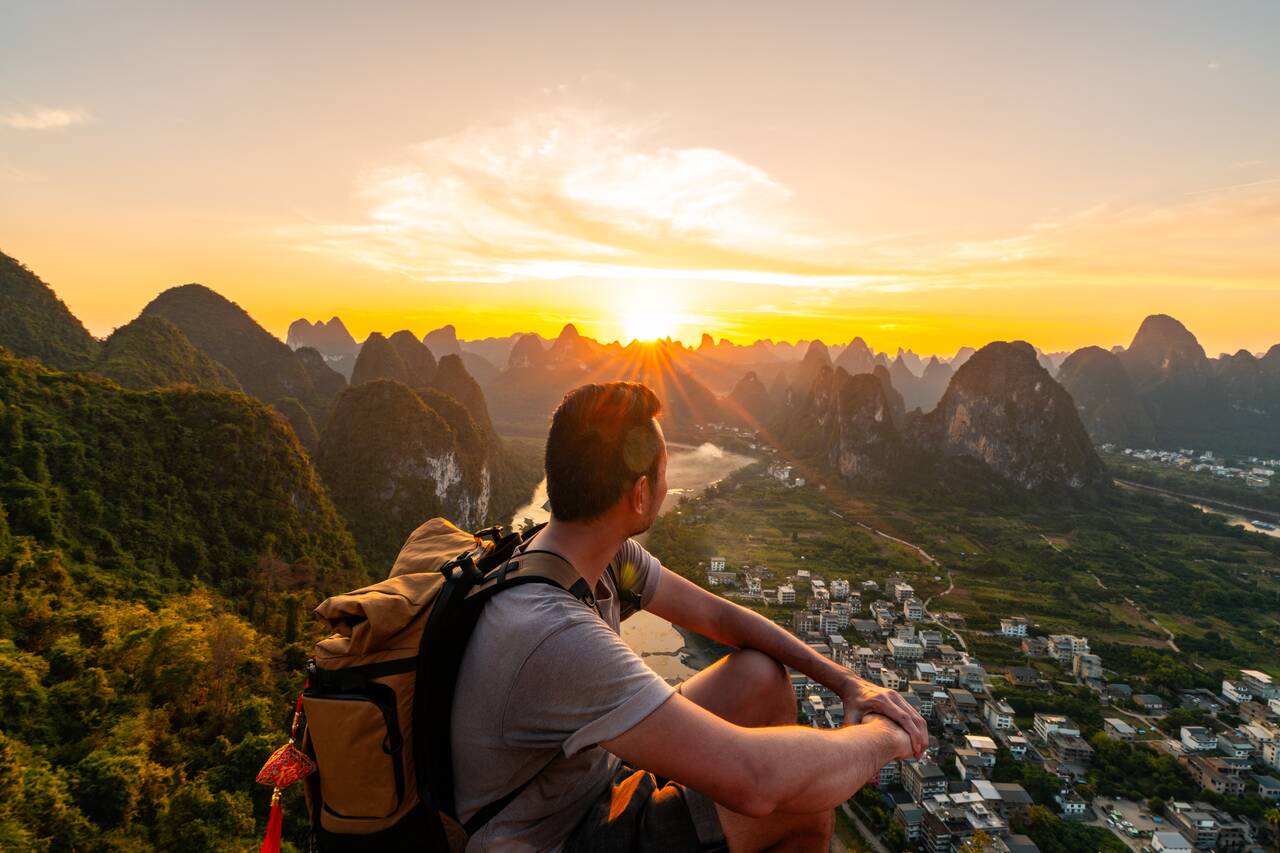
As sunset approaches, I highly recommend you go and hike up Lao Zhai Shan Hill, which is probably one of the most beautiful viewpoints in Guilin. It is the main reason why I recommend you stay overnight in Xingping instead of making a day trip from Yangshuo.
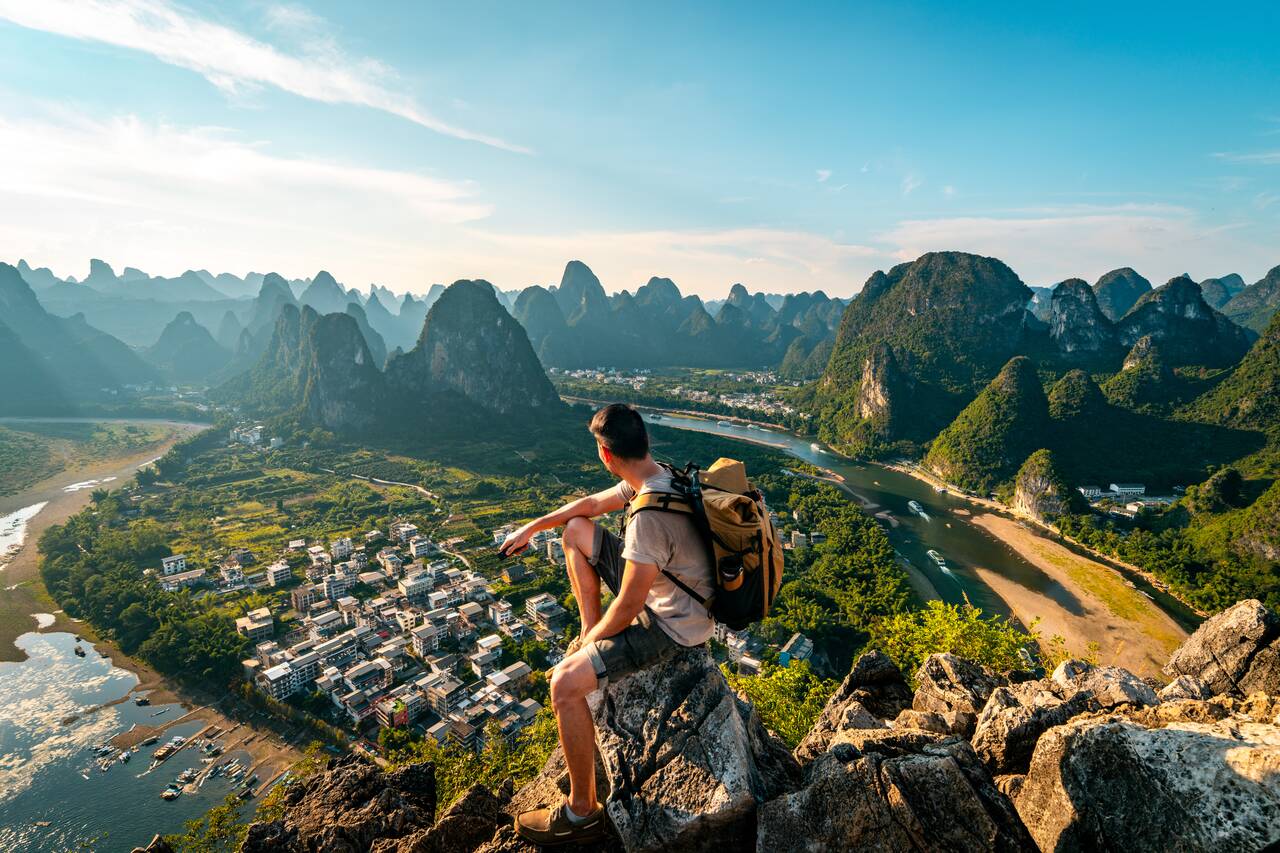
Lao Zhai Shan Hill is a steep karst mountain located right next to Xingping Ancient Village. You can hike up to see the stunning Li River winding around the jagged peaks of Guilin's karst landscape. Because of its proximity to the town, it is one of the most popular sunset spots and attracts large crowds, including both local and foreign tourists. The view from the top is absolutely breathtaking, truly unlike anything I’ve seen before.
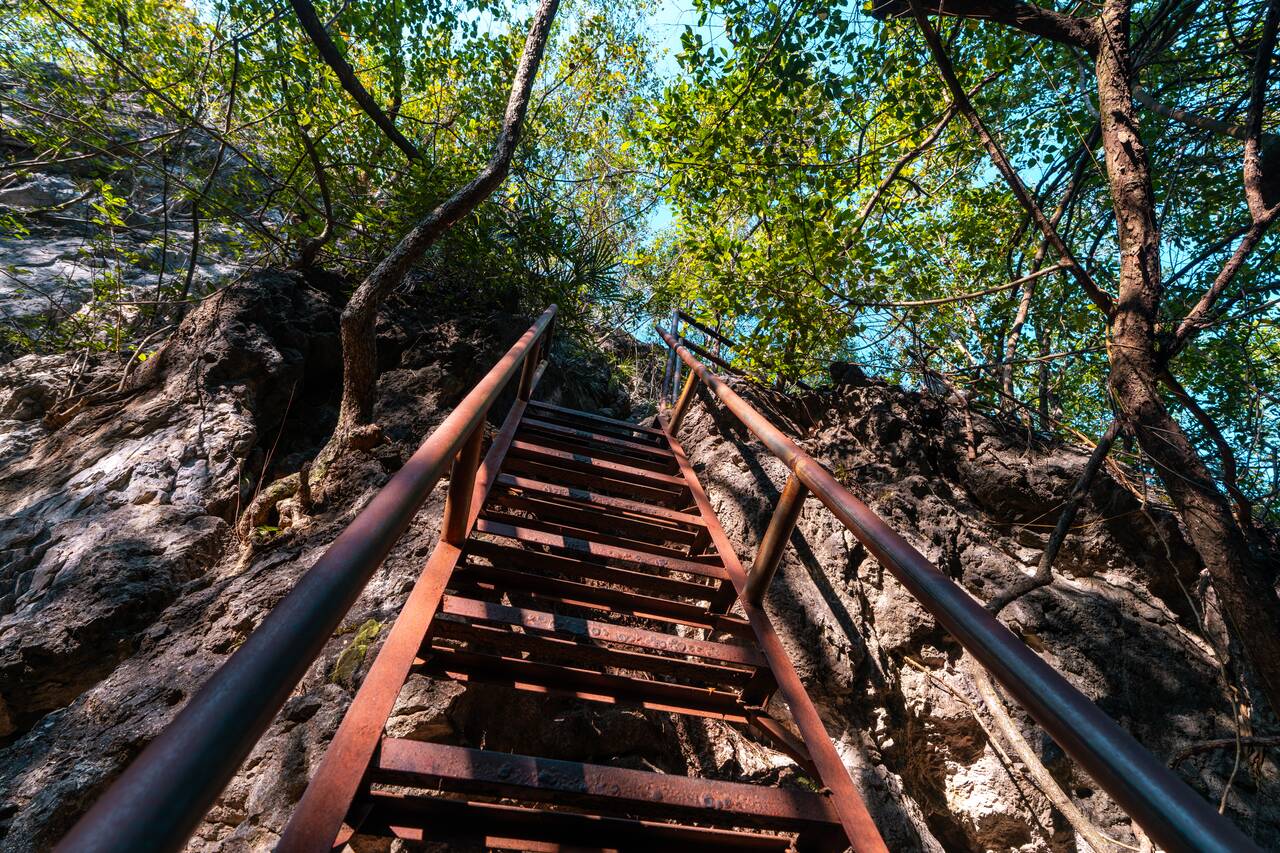
The hike is quite steep and can be challenging at times, mostly due to how hot and humid the weather is, even in mid-October. But once you reach the top, you will completely forget how tired you were and be blown away by its sheer scale and beauty.
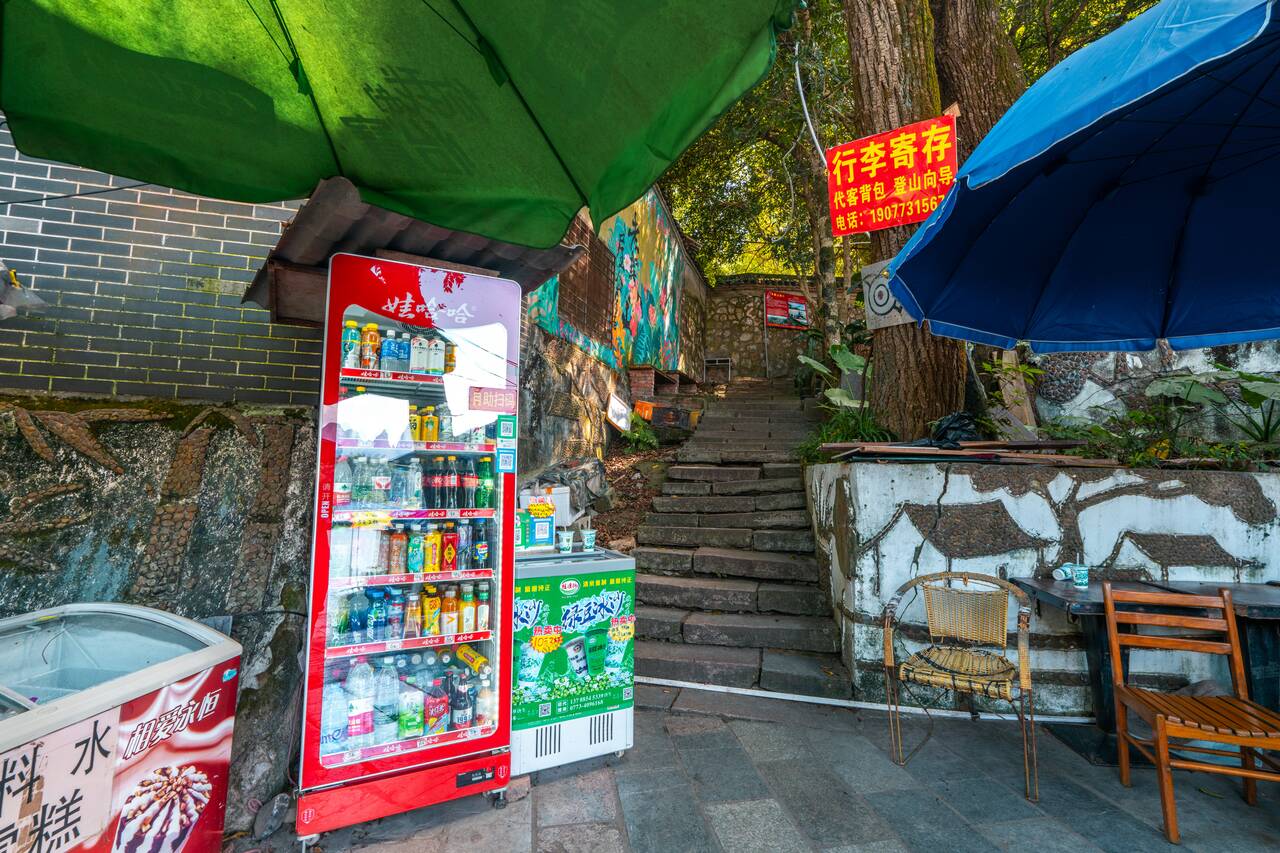
The hike starts from this spot shown in the photo above, and you should be able to walk there from Xingping Ancient Village. From the trailhead, the hike should take about 30 minutes without rest up an extremely steep trail.
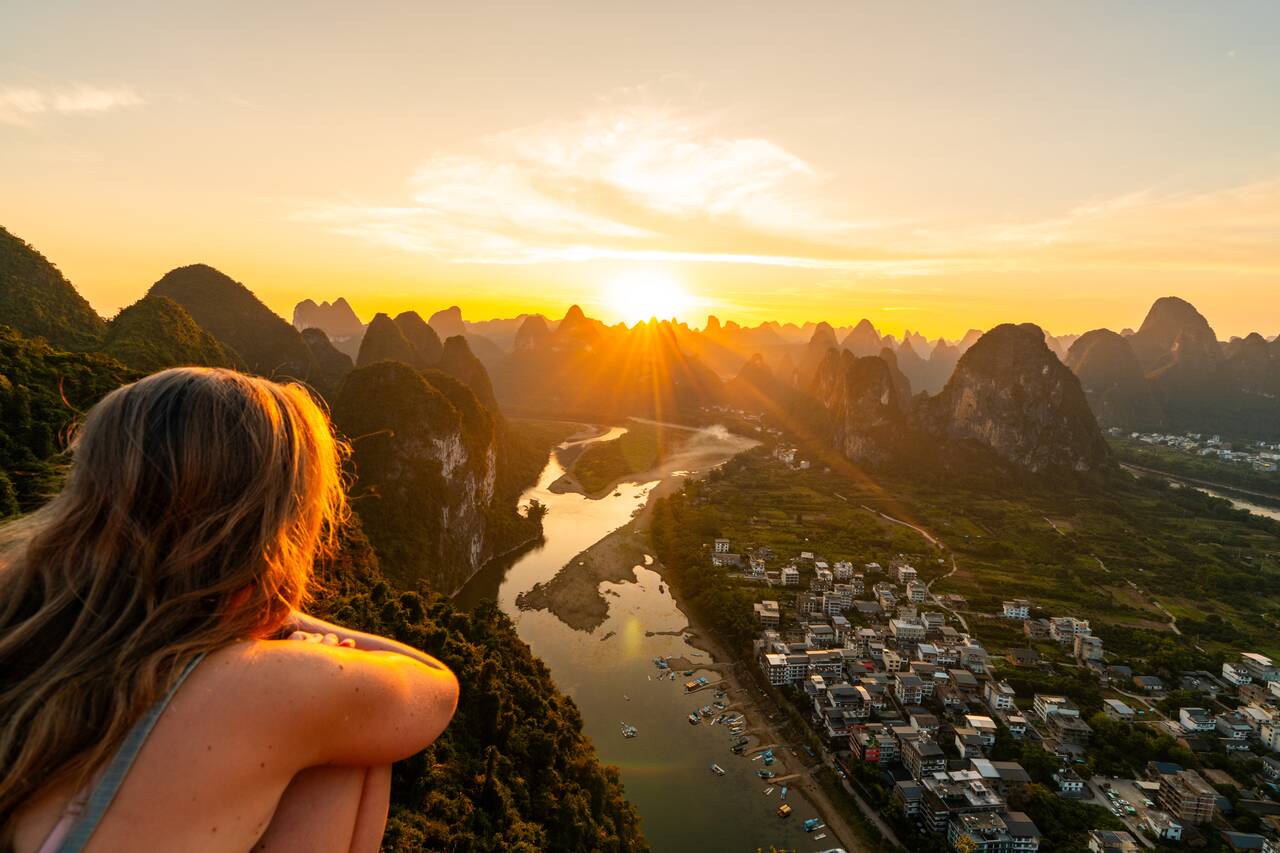
At the top, you will find a pavilion where you can rest from the hike and enjoy the view of Xingping from above. If you scramble a little further up a jagged karst peak, you will be able to see the view from the other side, where the river bends and snakes around the hundreds of karst peaks that Guilin is famous for. Just be careful when climbing higher, as the path is narrow and the rocks are sharp.
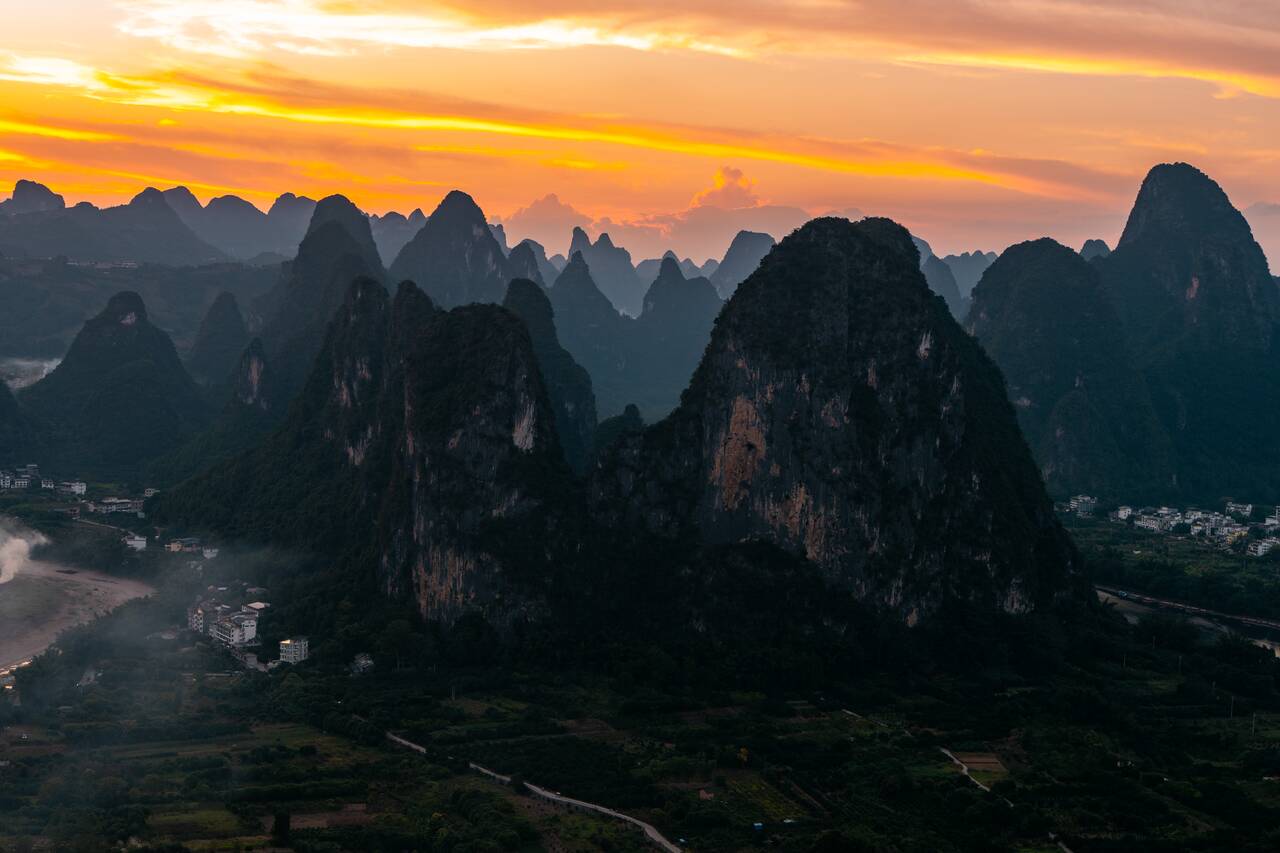
After sunset, you can head back down to Xingping, enjoy a quick dinner in the ancient town, and settle in for the night. The next day, you can either hail a Didi to take you to Yangshuo High-Speed Railway Station, which should take no more than 10 minutes, or use a free hotel shuttle if your accommodation offers one.
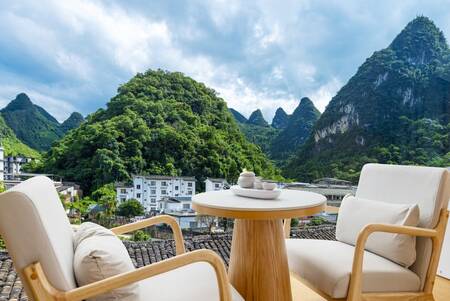
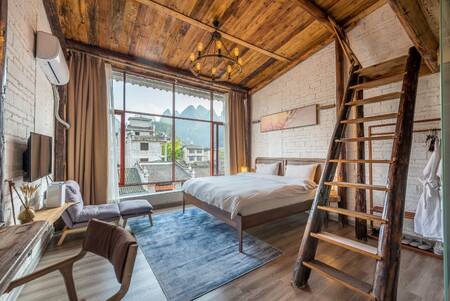
Where to Stay in Xingping Ancient Village?

Getting From Xingping Ancient Village to Guiyang
From Xingping Ancient Village, you can either get a taxi to Yangshuo Railway Station or ask if the hotel offers a free railway shuttle bus. You can catch the train to Guiyang. The ride from Xingping to Yangshuo should take about 15 minutes, while the trip from Yangshuo to Guiyang should take about 3 - 3.5 hours and costs 30 USD. You can book the train here.
Day 13: Guiyang (3 Nights)
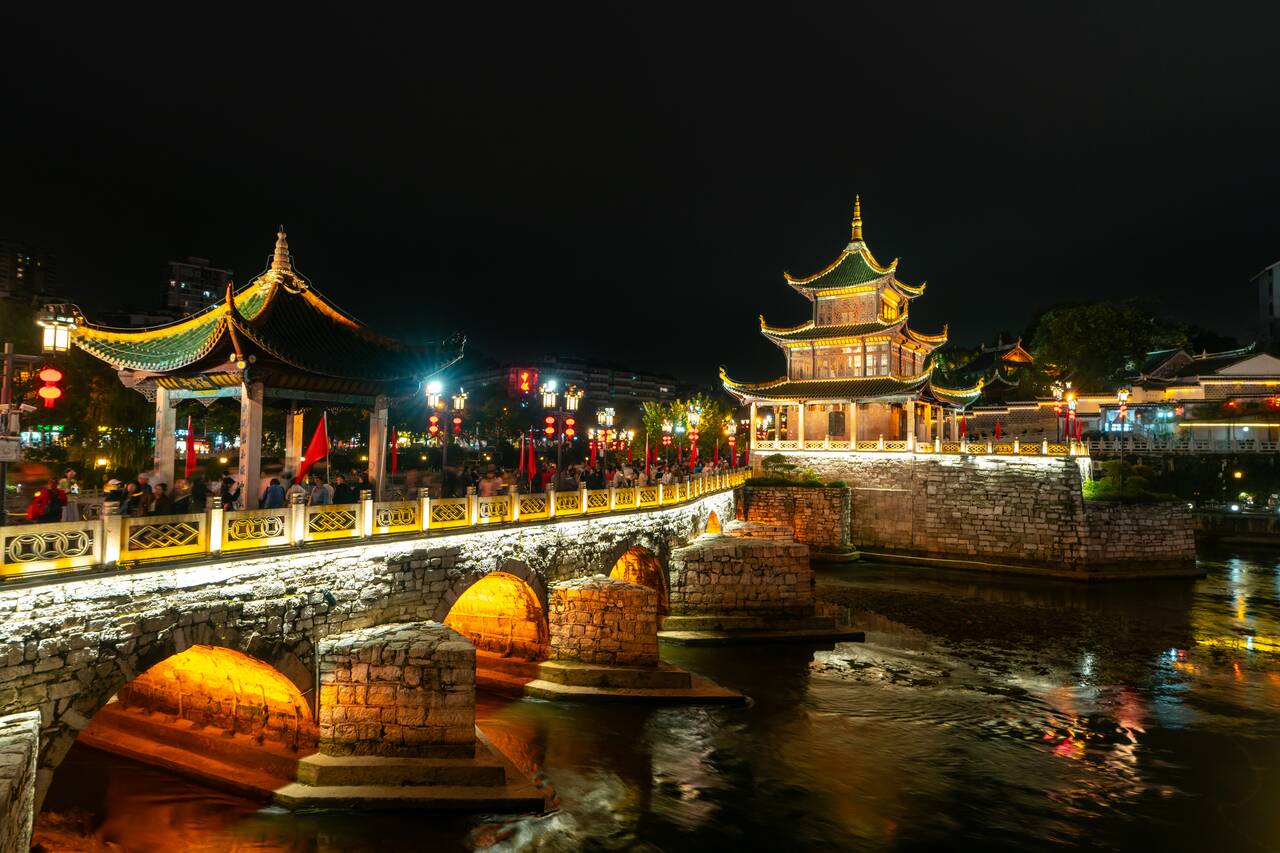
- 📍 Stay: Syria·Mangju Village Hotel (Guiyang White House Art Centre, Songhua Road Metro Station)
- 🕐 Time: 3 Nights
- 📖 Full Guide: A guide to a few days in Guiyang, Guizhou (via beingbuttons.com)
After spending several days in Guilin, we will head to Guiyang, the capital of Guizhou, one of China’s most underrated regions. We’ll use Guiyang as a base to explore the area’s stunning natural landscapes and rich cultural sites. The city itself is not particularly remarkable, but its slightly gritty character offers a glimpse of what life is like in a typical non-first-tier city in China.
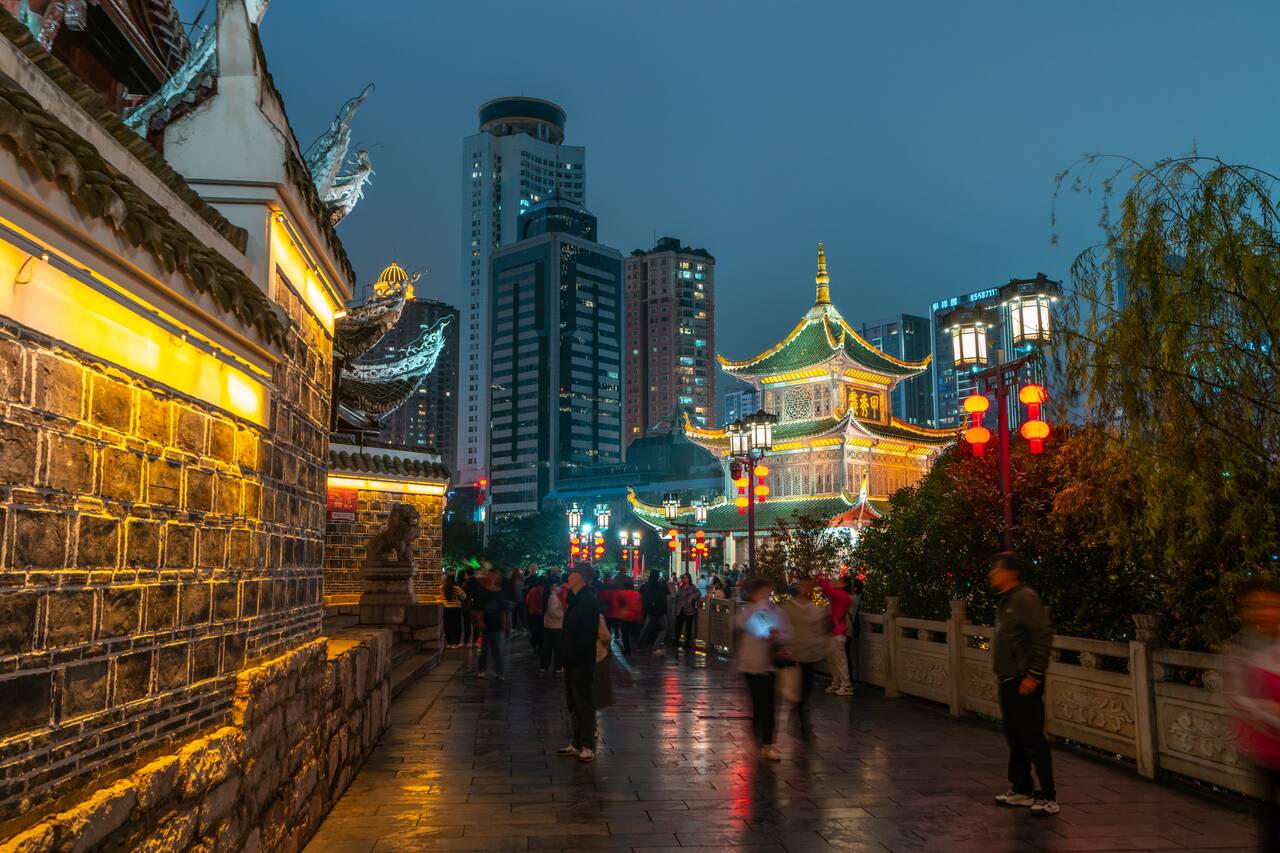
On the evening of your arrival, you can visit Jiaxiu Tower, a historic pavilion built over the Nanming River in central Guiyang. The tower is perched on a stone in the river and is connected to both banks by a scenic bridge.
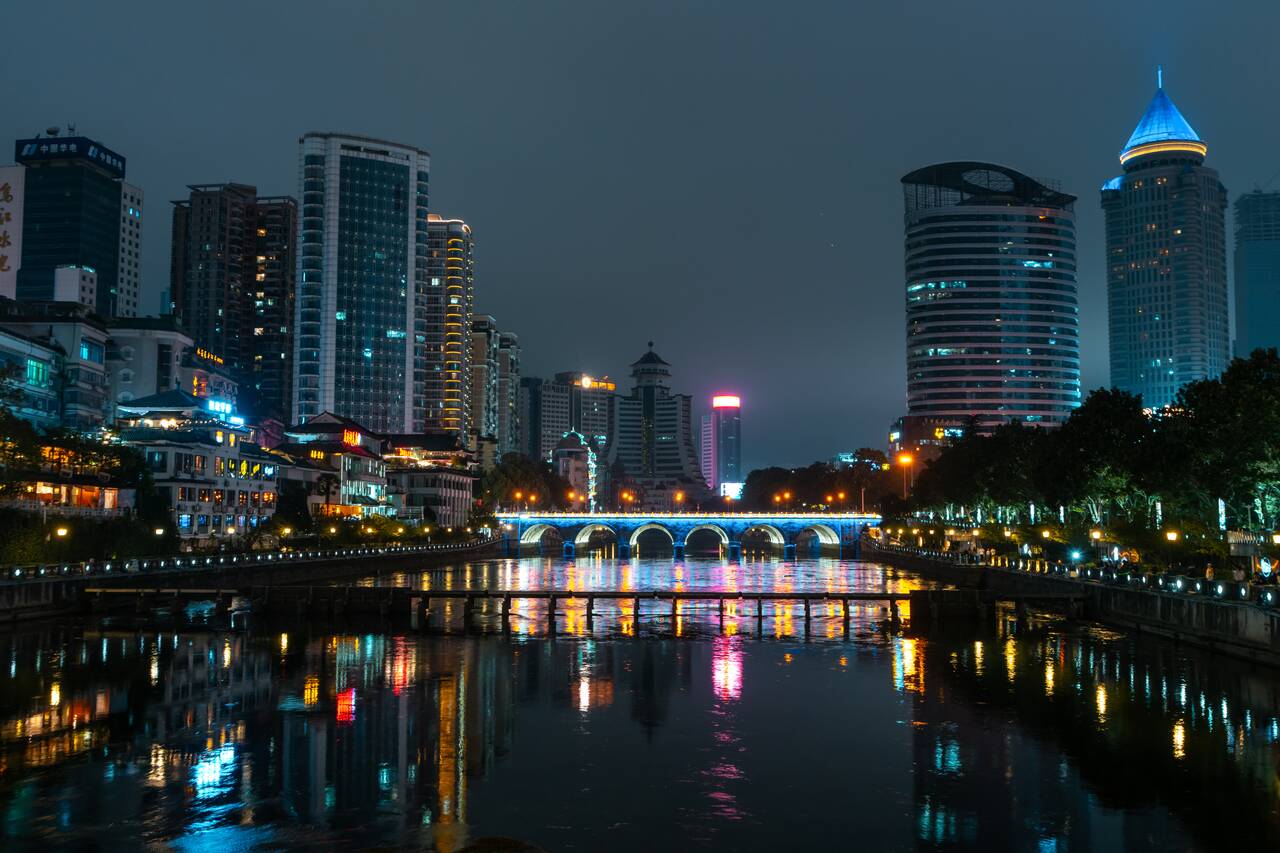
It is the city's main tourist attraction and is especially beautiful and lively at night. Beyond that, there is not much to see in Guiyang, so you can return to your hotel and rest, getting ready for the day trips planned over the next two days.
Where to Stay in Guiyang?
 👍 Top Pick
Getting From Guiyang to Huangguoshu Waterfall
From Guiyang, you can take a high-speed train from Guiyang North Railway Station to Anshunxi Railway Station, which should take about 30 minutes and cost 6.65 USD. You can book the train here.

Once you arrive at Anshunxi Railway Station, turn right the moment you exit the terminal and you will find a travel agency that provides frequent tourist shuttle buses between the railway station and Huangguoshu Waterfall. Simply follow the tourist crowds when you get off the train, and you should be on the bus to Huangguoshu in no time. That's how I did it without speaking a word of Chinese 😅.
The shuttle bus takes about 40-50 minutes and costs around 25 CNY one-way. You can pay with WeChat when you board. Once you arrive, the bus will drop you off at the entrance of the scenic area. For your return trip, make sure to note where the bus is parked, as this is the same spot where they pick up passengers for the ride back. The travel agency staff wear yellow vests, so keep an eye out for them.
Day 14: Huangguoshu Waterfall (Day Trip)
- 🕐 Time: Day Trip
- 📖 Full Guide: Huangguoshu Waterfall: A Complete Travel Guide
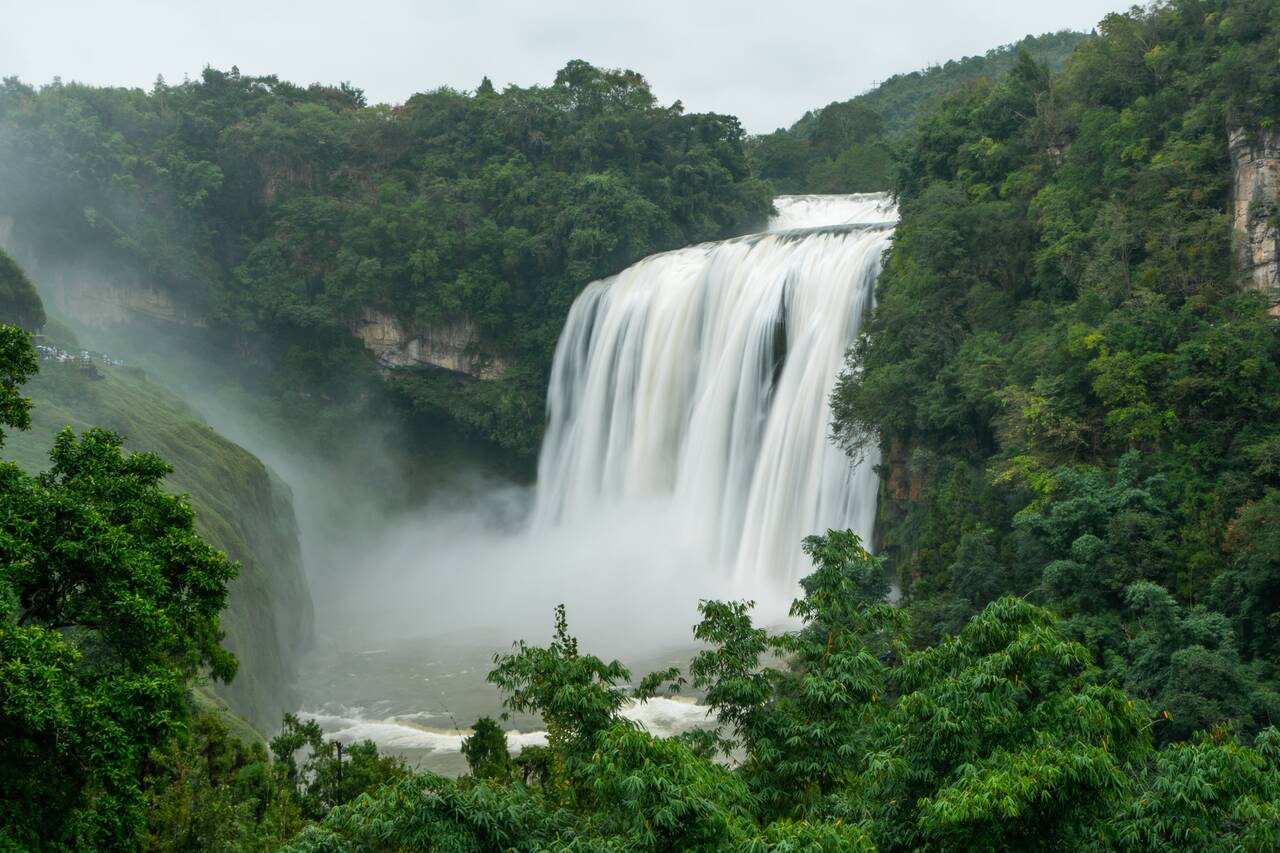
The next day, we will visit Huangguoshu Waterfall, the largest waterfall in Asia. It stands 77.8 meters high and spans 101 meters wide, covering over 120 square kilometers. The area includes not only the main waterfall but also several smaller waterfalls, caves, rivers, and lush karst landscapes.
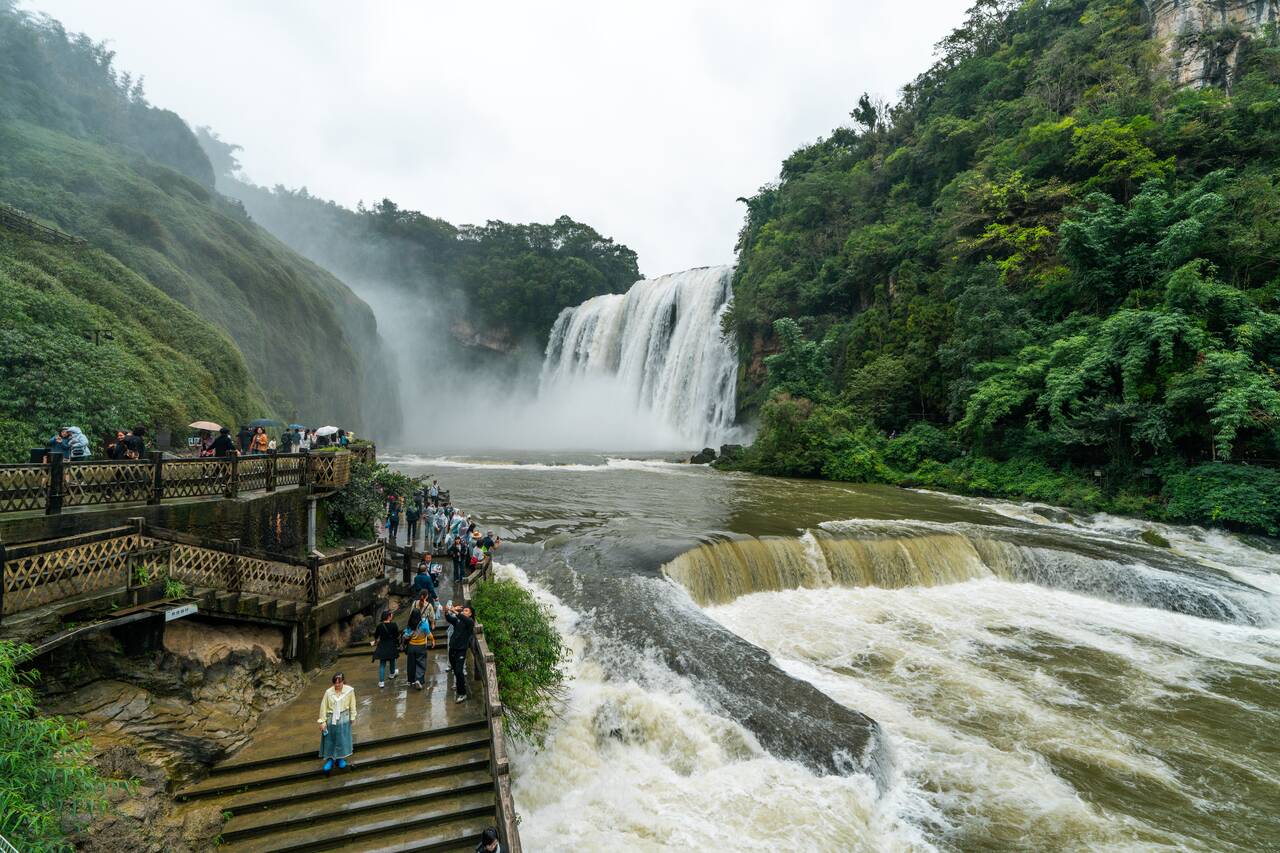
You can start at the Grand Waterfall Scenic Area, home to the crown jewel of the park, the magnificent Huangguoshu Waterfall. After purchasing your ticket and entering the scenic area, take the shuttle bus from the "Entrance to the Grand Waterfall Scenic Area Carriage Way" bus stop, which is located on the right-hand side.
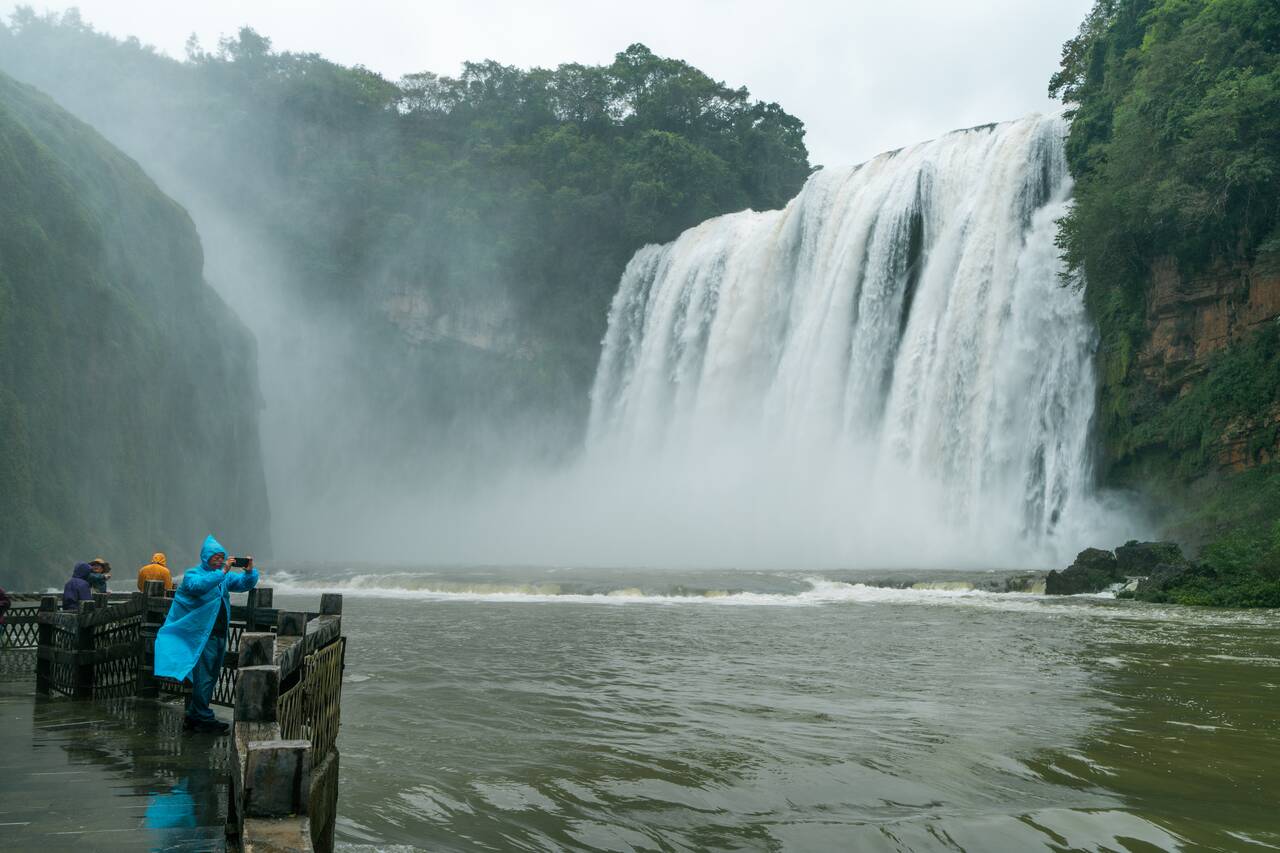
From there, you can follow the path which will lead you to the viewing platforms by the river. The hike takes about 15–20 minutes one way. Keep in mind that you will need to climb back up to catch the shuttle to the next area, which is much more strenuous, so make sure to bring plenty of water.

After you are done with the Grand Waterfall Area, you can take a shuttle bus to Doupotang Waterfall, which is located downstream towards the entrance of the park. This is a smaller, but equally charming waterfall within the Huangguoshu Scenic Area, and you can walk on its elevated path that runs along the river all the way to the waterfall.
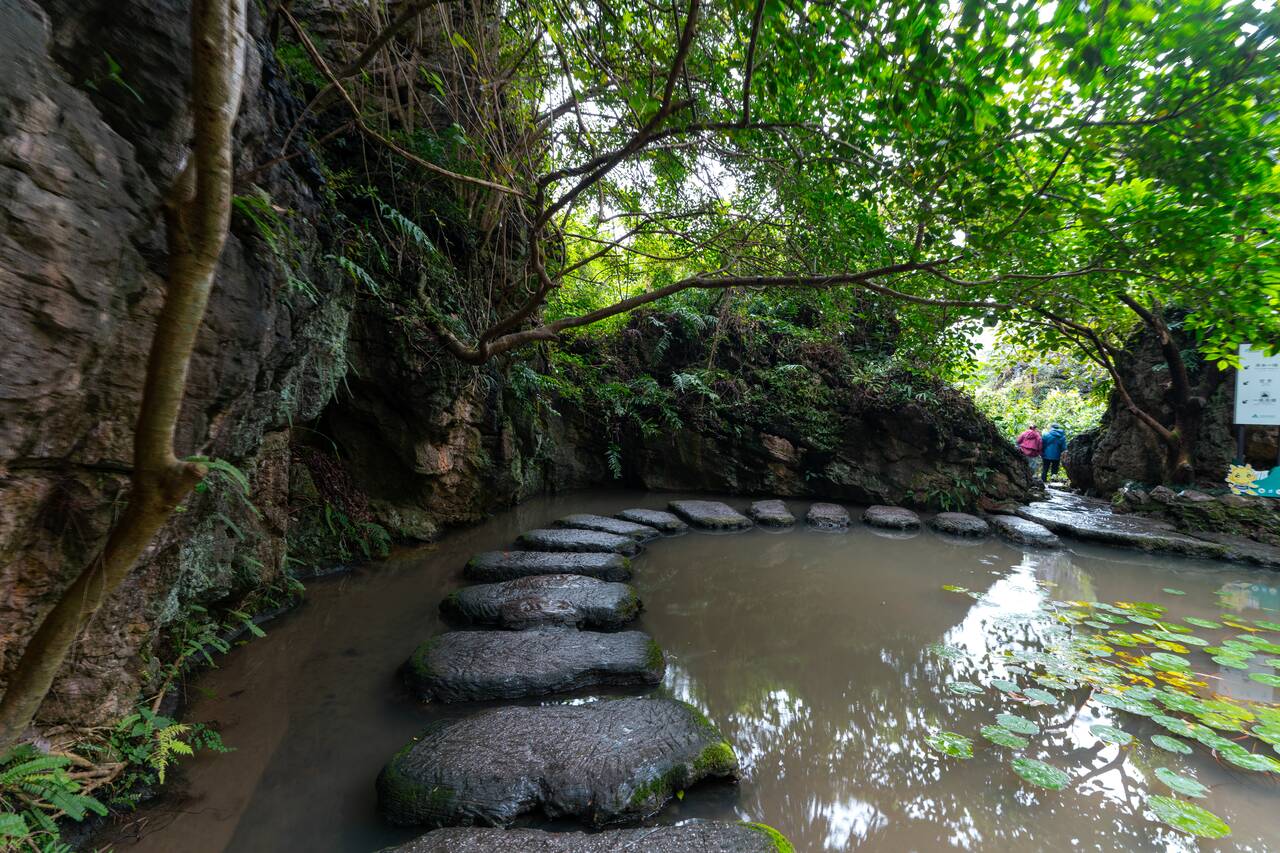
Once that is done, take the shuttle bus to Tianxingqiao Scenic Area, my personal favorite. Unlike the Grand Waterfall, which is all about sheer scale, Tianxingqiao is known for its dramatic karst formations, natural bridges, and clear rivers. The area offers a variety of landscapes and walking trails, which I absolutely love exploring.
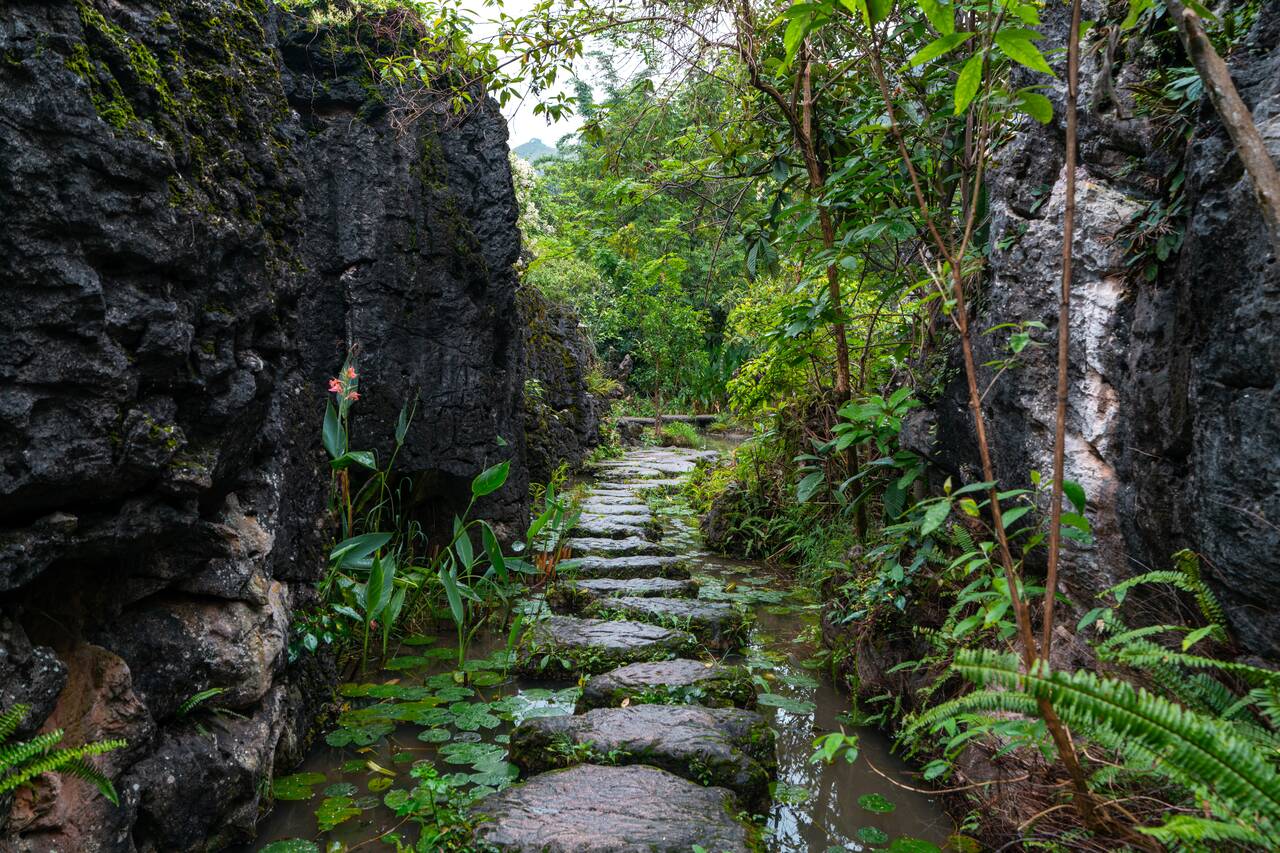
You can explore the area via well-marked paths and boardwalks, crossing rivers and streams along the way. The whole area feels like a massive Chinese Zen Garden with wonderful rock formations and my favorite part: its stone pathways where you have to hop around the stones to cross ponds and rivers.
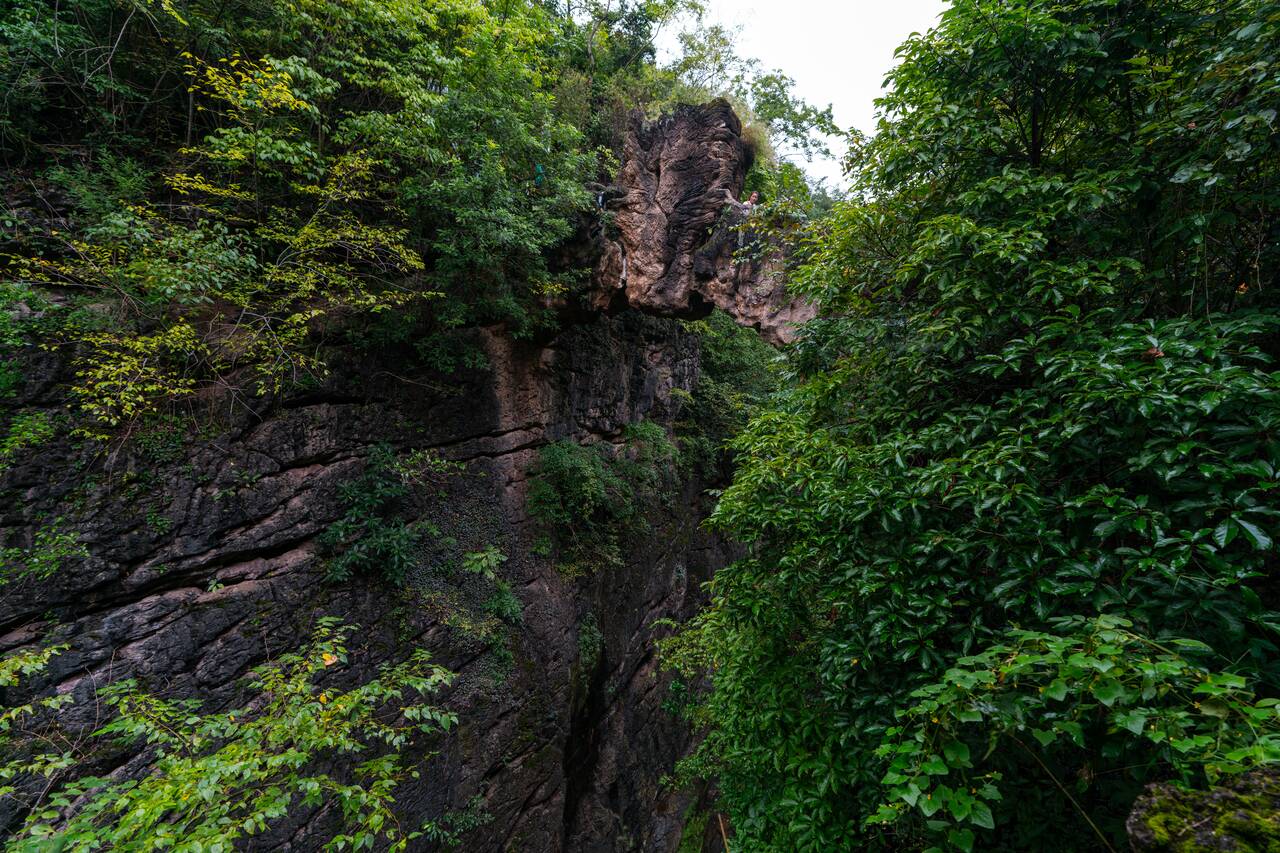
There is a lot to see in this scenic area, and it requires a bit more walking than Doupotang Waterfall. However, the effort is well worth it, as you’ll be rewarded with some of the most picturesque landscapes in the entire park. Along the trails, you’ll encounter many amazing attractions, including natural stone bridges that are absolutely mind-boggling to see.
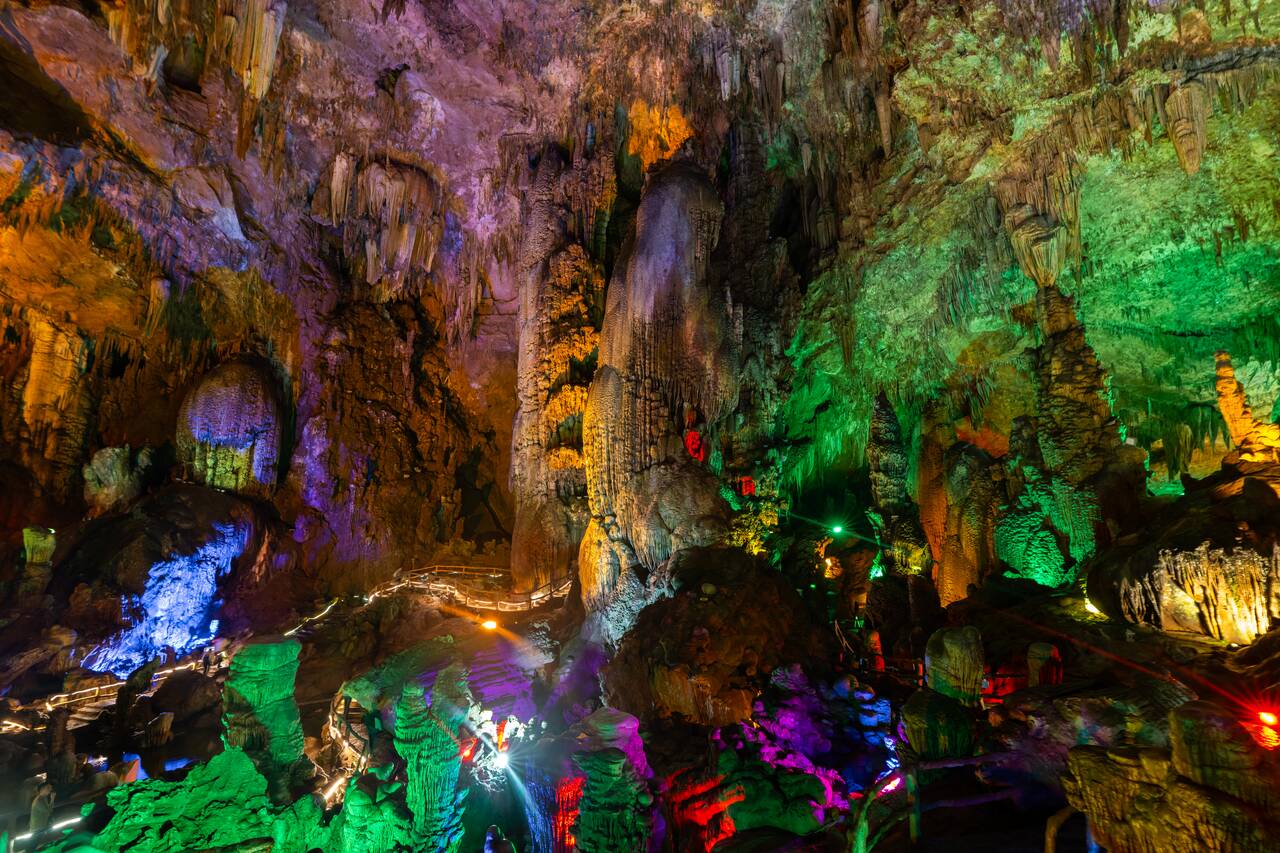
Tucked away among these karst mountains, you will also find a remarkable cave system with a cavern so large that it completely blew me away. From the outside, the cave looks small, but the further you go in, the larger it becomes. It’s truly awesome.
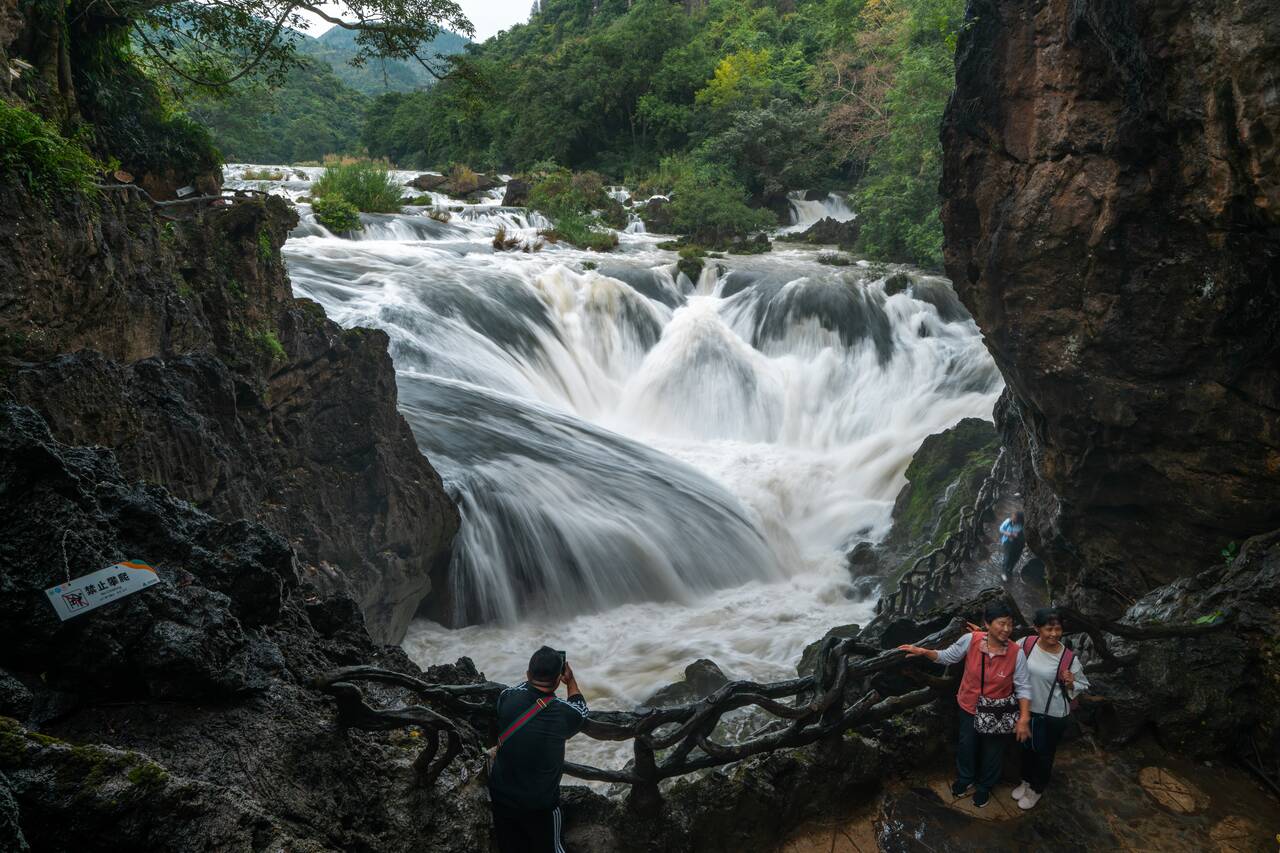
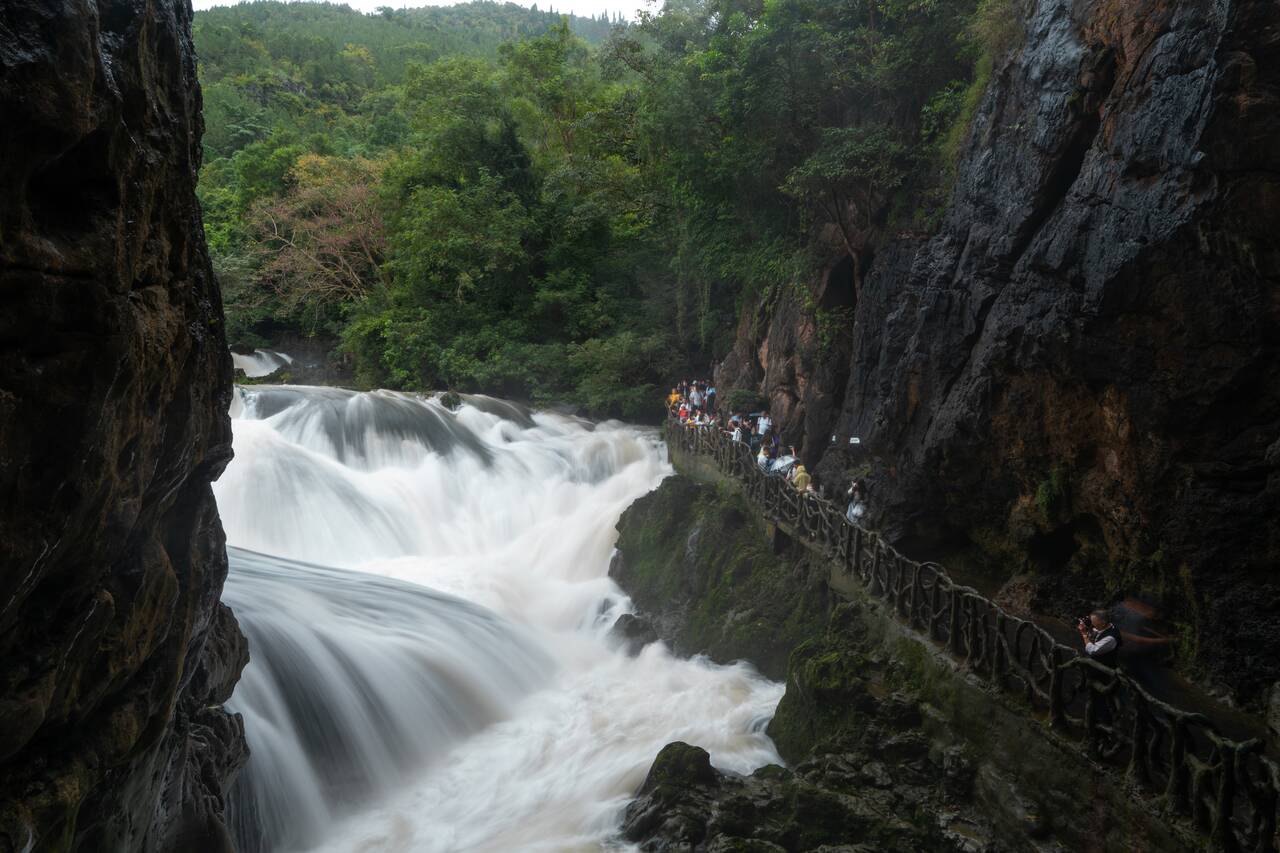
Toward the end of the trail, you will come across Yinlian Zhuitan Waterfall. While it’s not very large, the volume of water and the proximity you can get, since the walking trail hugs the cliffside above the drop, make it feel even more impressive than the larger Doupotang Waterfall. I personally prefer this one over Doupotang, without a doubt.
It took me around five hours to explore the entire scenic area, and that was at a fairly quick pace. I arrived at Anshunxi at 9 AM, started exploring the park by 10 AM, and made it back to the exit around 4 PM. Huangguoshu is essentially a full-day experience, so make sure to set aside enough time to enjoy it fully. Once you're finished, simply exit the park, hop on the same shuttle bus back to Anshunxi Railway Station, and return to Guiyang for the night.

Getting From Guiyang to Xijiang Ancient Village
From Guiyang, you can take a high-speed train from Guiyang North Railway Station to Kaili South Railway Station, which should take about 30 minutes and cost 8.20 USD. You can book the train here.
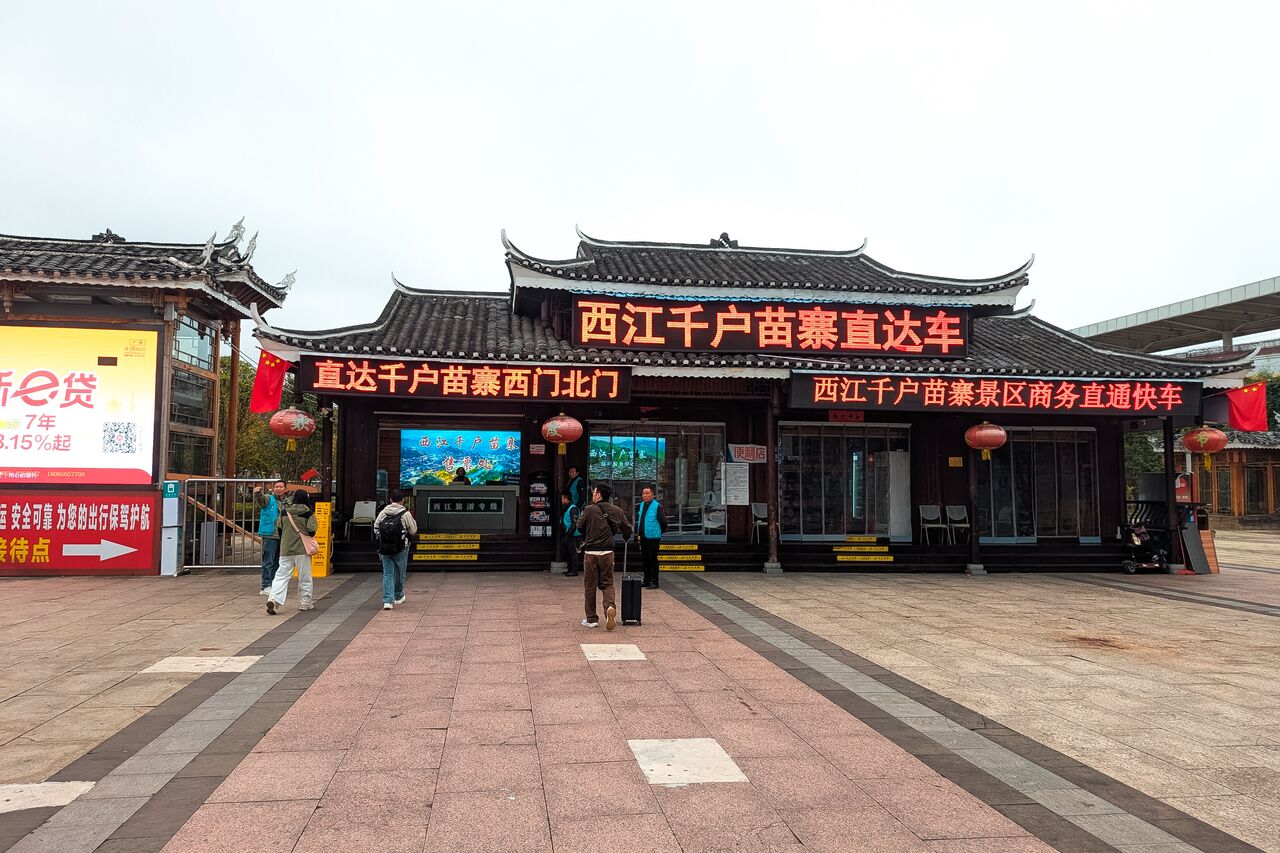
Once you arrive at Kaili South Railway Station (Kailionan), turn right the moment you exit the terminal and you will find a travel agency that provides frequent tourist carpool between the railway station and Xijiang Village. Simply find the place in the photo above, and they will take you to the car, and you will be on your way in no time. That's how I did it without speaking a word of Chinese 😅.
The carpool taxi takes about 1 hour and costs around 30–35 CNY one way. You can pay the driver with WeChat. Once you arrive, the taxi will drop you off at the village entrance. For your return trip, simply head back to the entrance and you’ll usually find drivers looking to fill their carpool to the train station.
Make sure they are going to Kailinan before getting in and stand firm on the price of around 30–35 CNY. You should be able to get back in no time.
Day 15: Xijiang Ancient Village (Day Trip)
- 🕐 Time: Day Trip
- 📖 Full Guide: Xijiang Village: A Complete Travel Guide
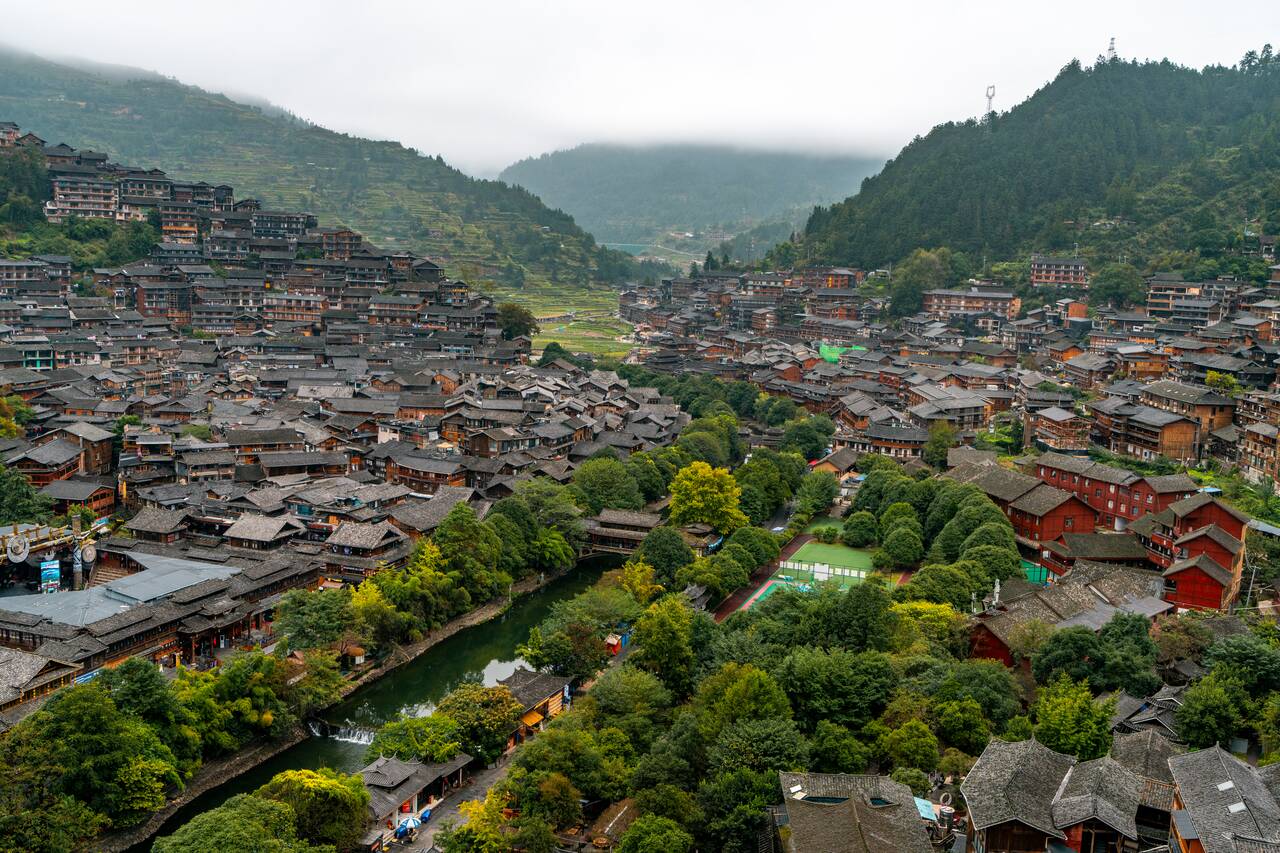
Today, we’re heading out on another day trip from Guiyang to visit Xijiang Ancient Village, a traditional Miao settlement and one of the largest, and arguably most beautiful in the region. Perched along the hillsides of Leishan County, about an hour from Kaili, this village offers a fascinating glimpse into the culture of the Miao ethnic group. Here, you can learn about their history, see how they live, and observe their unique traditions, craftsmanship, and way of life.
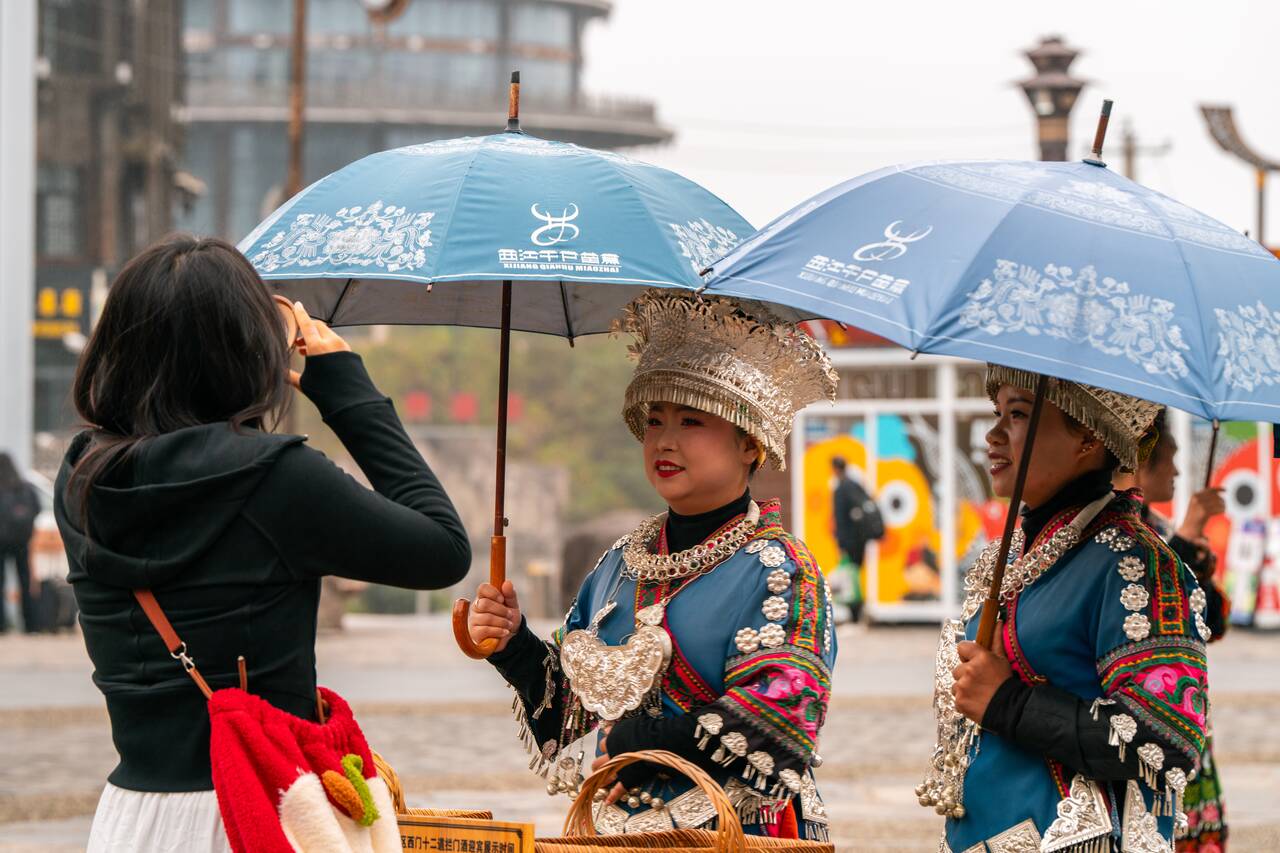
One of the first experiences you will witness is the Welcome Wine-Drinking Ceremony, also called "Twelve Rounds of Welcome Wine", held at the Visitor Center. It begins around 10:30 AM in the front courtyard. I just happened to arrive around that time and was able to see the Miao people performing music with traditional instruments and dances in their full attire.
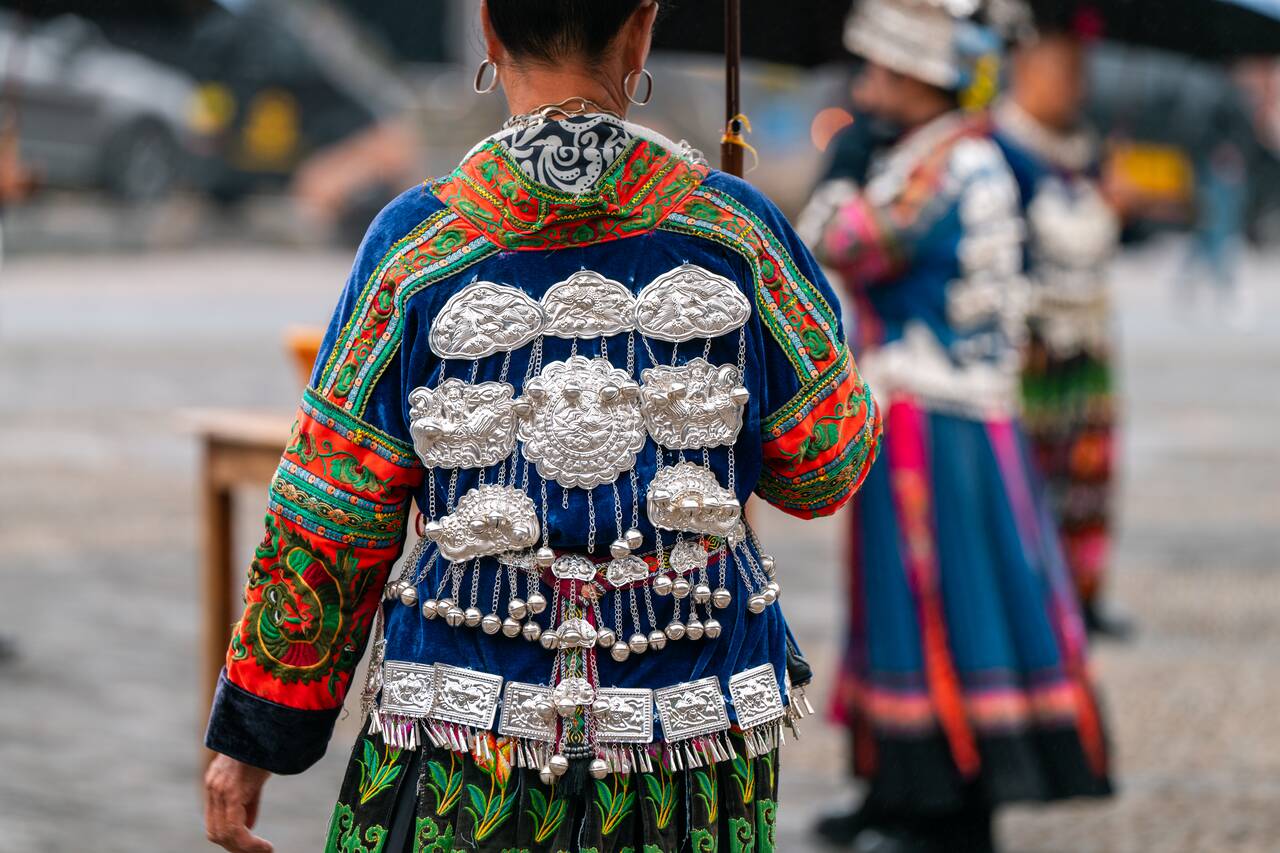
During the event, Miao villagers dressed in traditional clothing set up 12 tables, essentially serving as 12 wine stations or "rounds". You can go to each station in order and drink the rice wine offered by the villagers. This is especially enjoyable when it’s freezing cold outside, as it was when I visited in October 🥶.
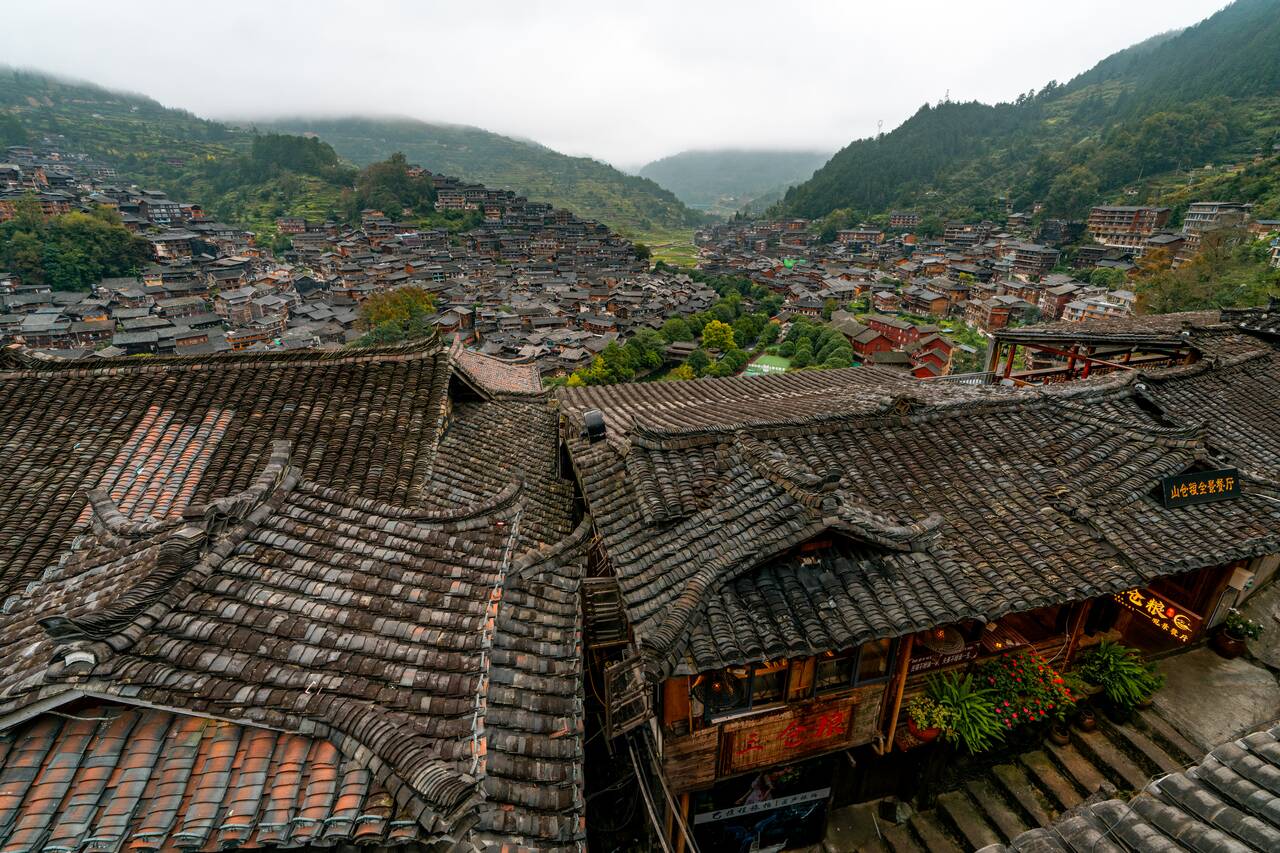
Once you are done with the ceremony, you can proceed to the gate, enter the village, and catch the sightseeing shuttle bus before getting off at the first stop, which is where you will get an incredible vantage point of the Miao Stockaded Village from this viewing platform located on the side of the hill.
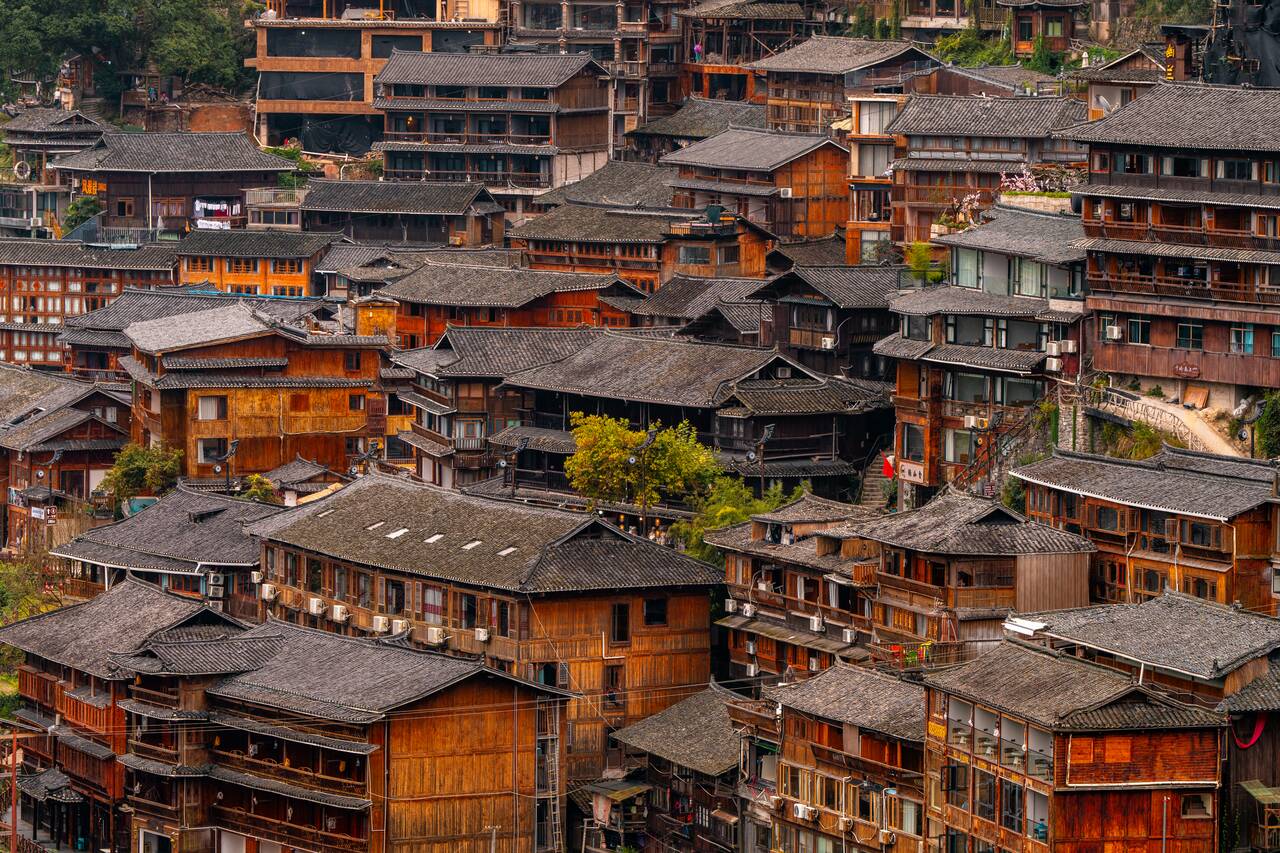
From this viewpoint, you’ll get an incredible panoramic view of the entire village from above, with its beautiful old rooftops, wooden houses stacked along the hillside, and the sheer scale of the place, all surrounded by lush green hills. I’ve never seen such a photogenic ancient village before. It’s no wonder it’s considered the largest and most beautiful Miao village out there.
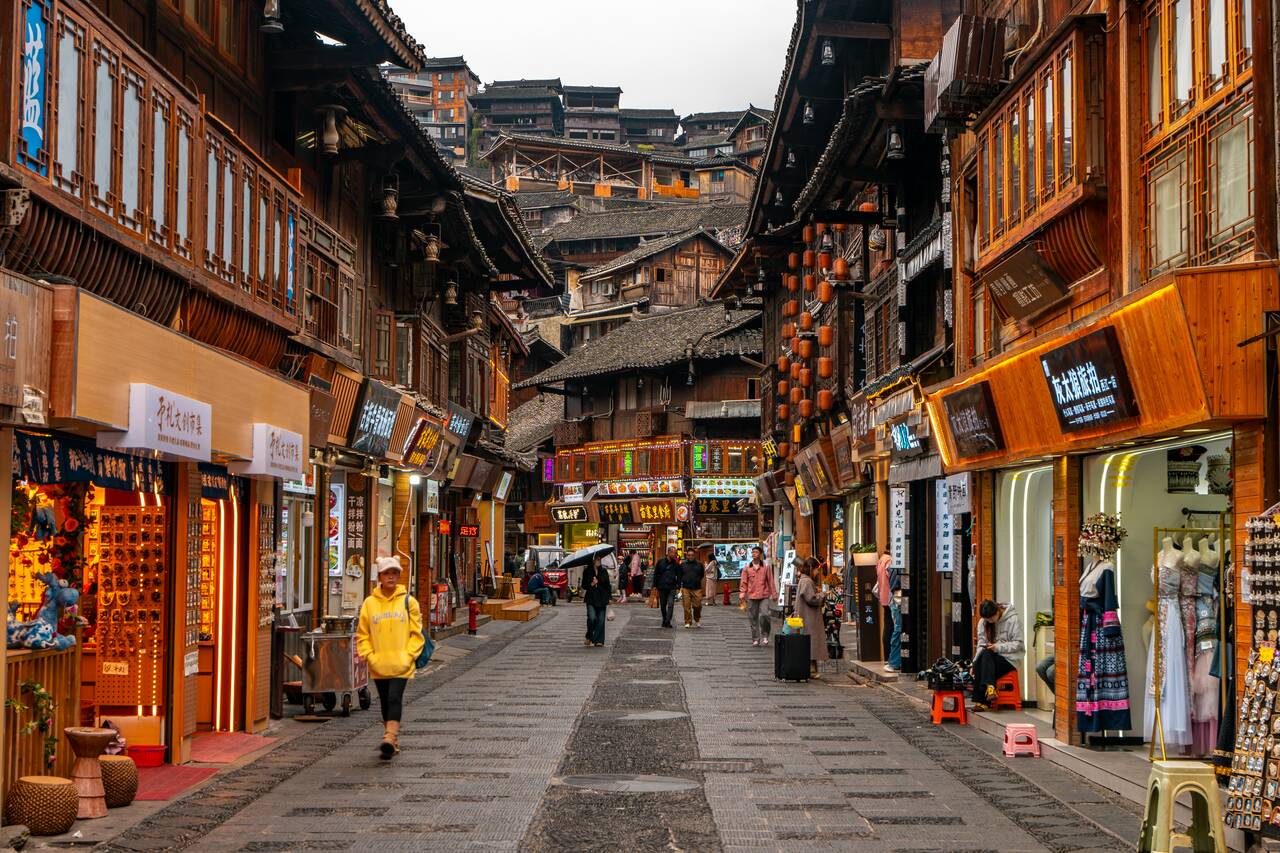
After that, you can take another shuttle bus down to the bottom, where it will drop you off at No. 1 Wind & Rain Bridge. From here, you can begin exploring the village itself. The view from above is beautiful, but if you really want to immerse yourself, you need to be at street level, looking up at the wooden houses stacked along the hillside, towering above you.
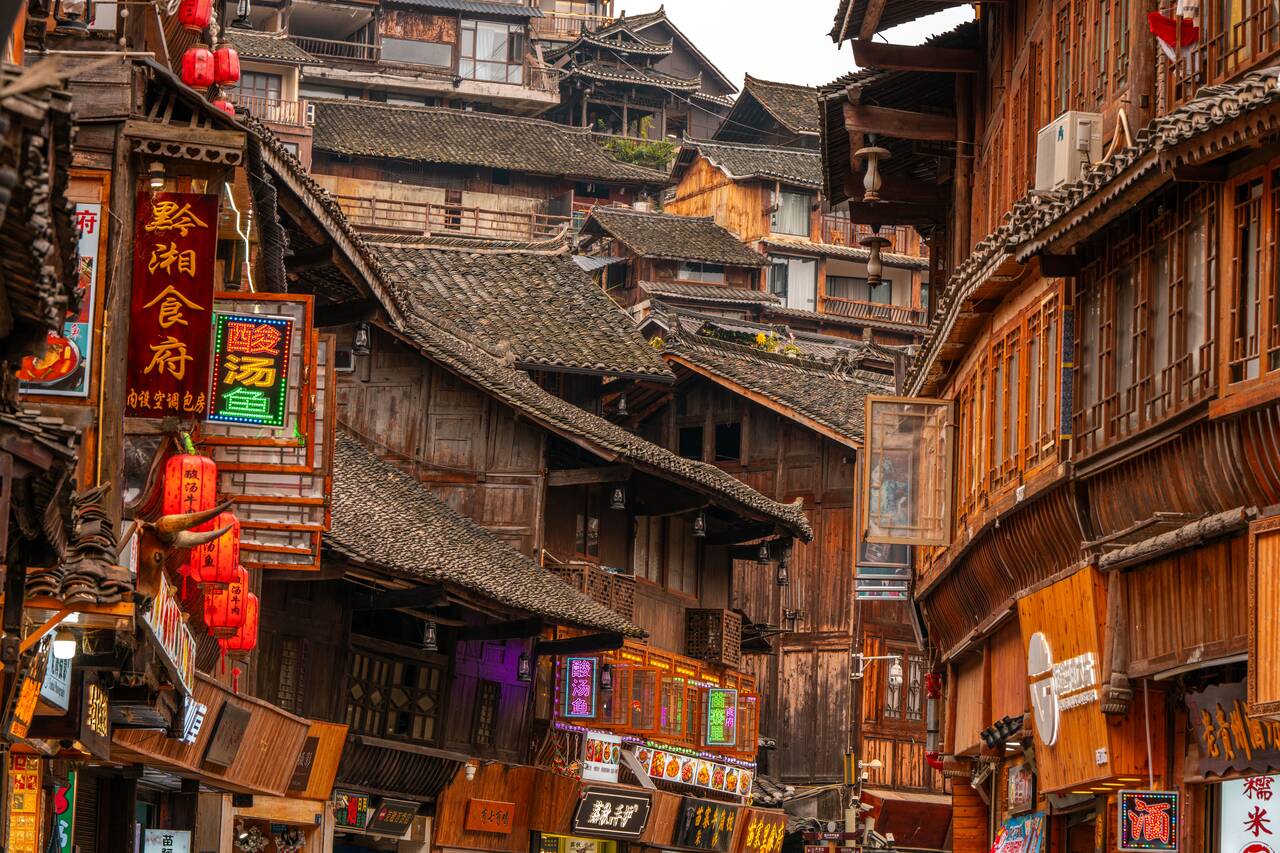
There are basically 3 main streets you can take, one running through the village and the other 2 running along the river. On these streets, you will find the usual commercialized shops, cafes, and restaurants where you can enjoy. You will also find museums, town squares, and other points of interest to keep you busy for several hours.
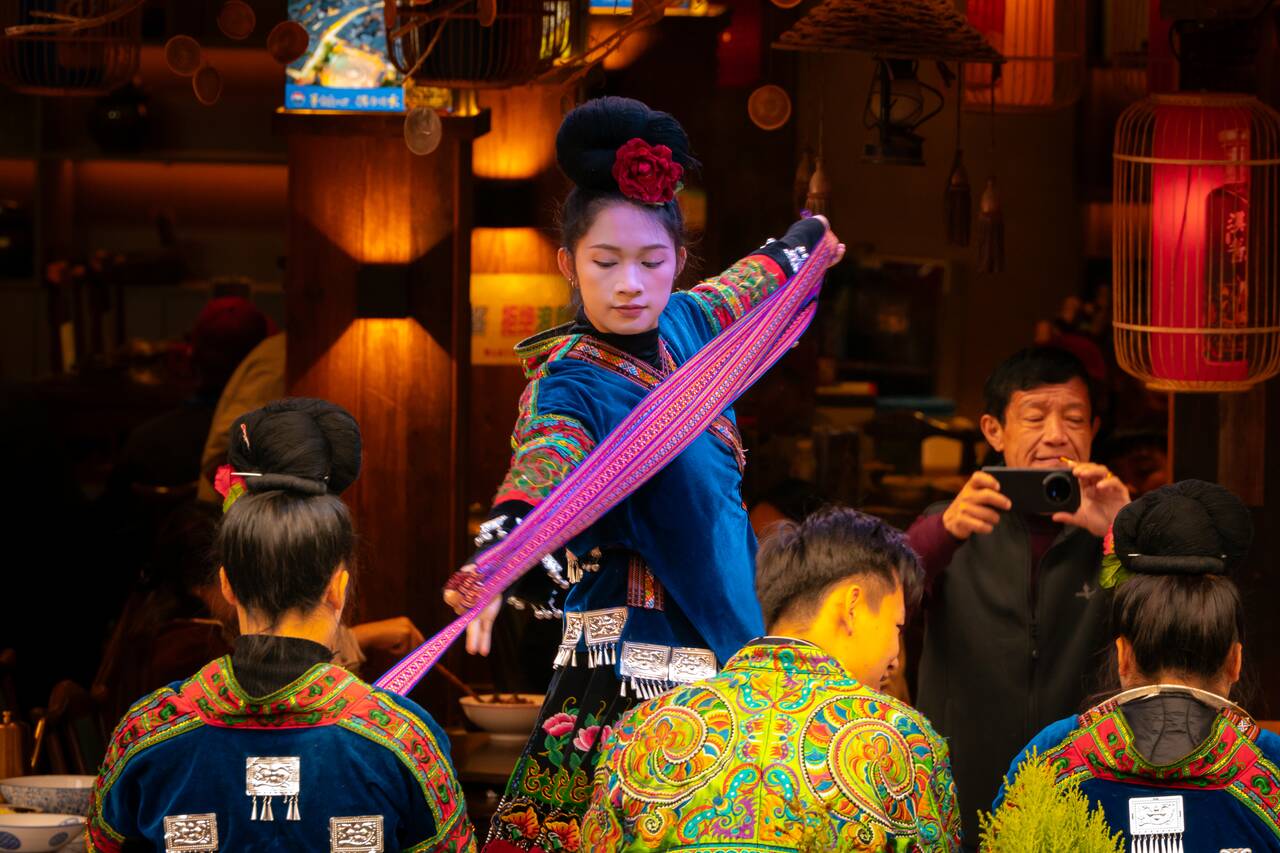
The Miao people are famous for their vibrant performances, with numerous festivals and events held throughout the year. If you happen to visit during one of these times, you will be treated to traditional dances and music. I once read that the Miao have more events than there are days in a year, which is probably an exaggeration, but it does highlight just how rich and lively their culture is.
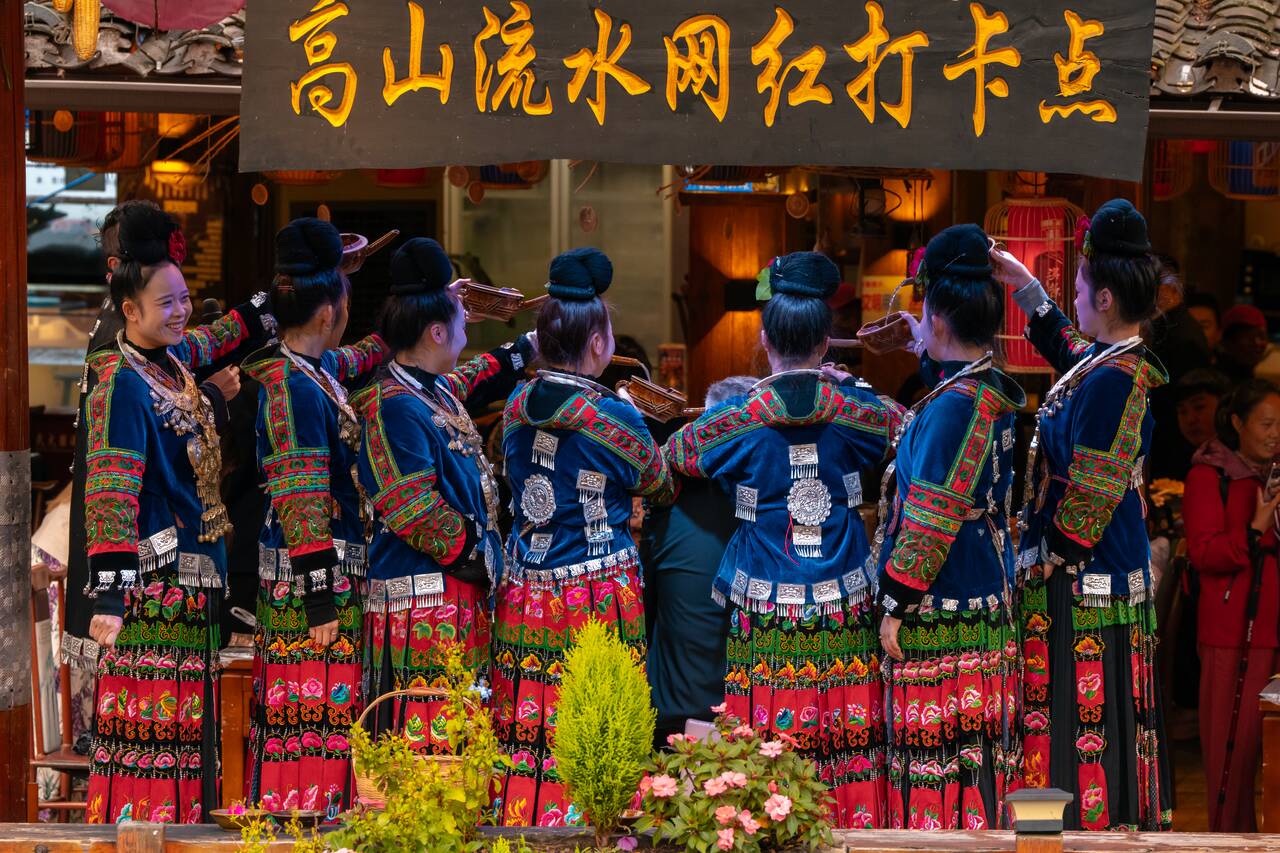
For example, you might stumble upon a traditional singing performance at No. 2 Wind and Rain Bridge in the morning around 11:30 AM. You might also catch the Lusheng performance at Old Lusheng Square, Miao batik demonstrations, traditional singing by the elders at Tonggu Lusheng Square, as well as cockfighting and bird-flying events on market days while you are here.

You can spend the entire day exploring the village before taking the shuttle bus back up to the entrance. From there, find a car-pool taxi to Kaili South Railway Station, which should take about an hour and cost 30 - 35 CNY, and catch the next high-speed train back to Guiyang, wrapping up the day and your brief trip through Guizhou.

Getting From Guiyang to Dali
From Guiyang, you can catch a high-speed train from Guiyang North Railway Station to Dali Railway Station.
The journey takes around 5 hours and costs approximately 51 USD. You can book your ticket here. Once you arrive, simply use Didi to get a taxi to your accommodation in Dali Ancient Town, which is about a 30-minute drive from Dali City. You can also take a 5-CNY shuttle service to the ancient city straight from the railway station following the yellow sign and staff wearing yellow jackets.
Day 16-17: Dali (2 Nights)
- 📍 Stay: Yunbo Light Luxury Homestay (Dali Ancient City South Gate Branch)
- 🕐 Time: 2 Nights
- 📖 Full Guide: Exploring Dali: A Complete Travel Guide
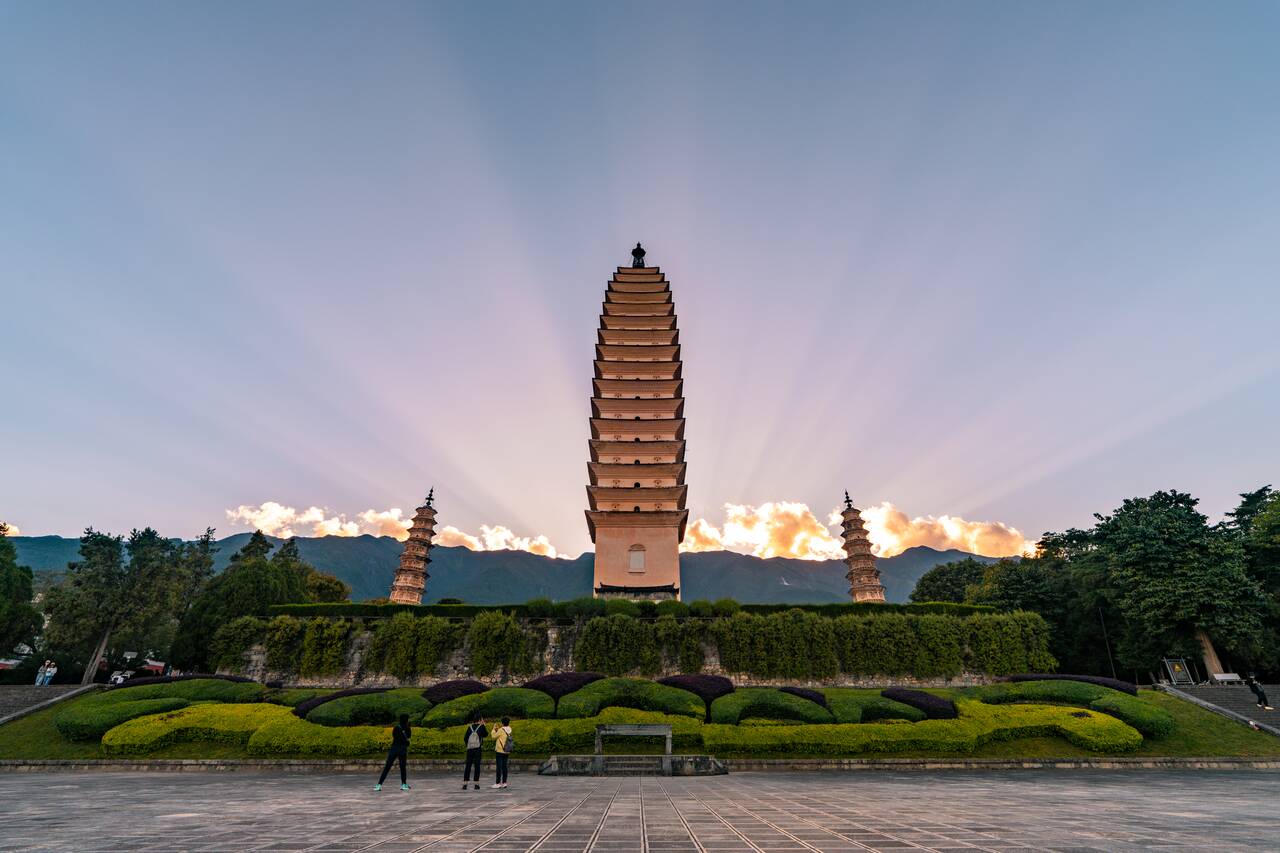
And now, we have arrived in Yunnan, one of the most beautiful and culturally rich regions in China, and Dali is a great place to begin our journey through one of my favorite provinces. On the day you arrive, you can check into your hotel and, by late afternoon, head out to explore the Chongsheng Temple and Three Pagodas Cultural Area, one of the most iconic landmarks in Dali, located just a short Didi ride from Dali Ancient Town.
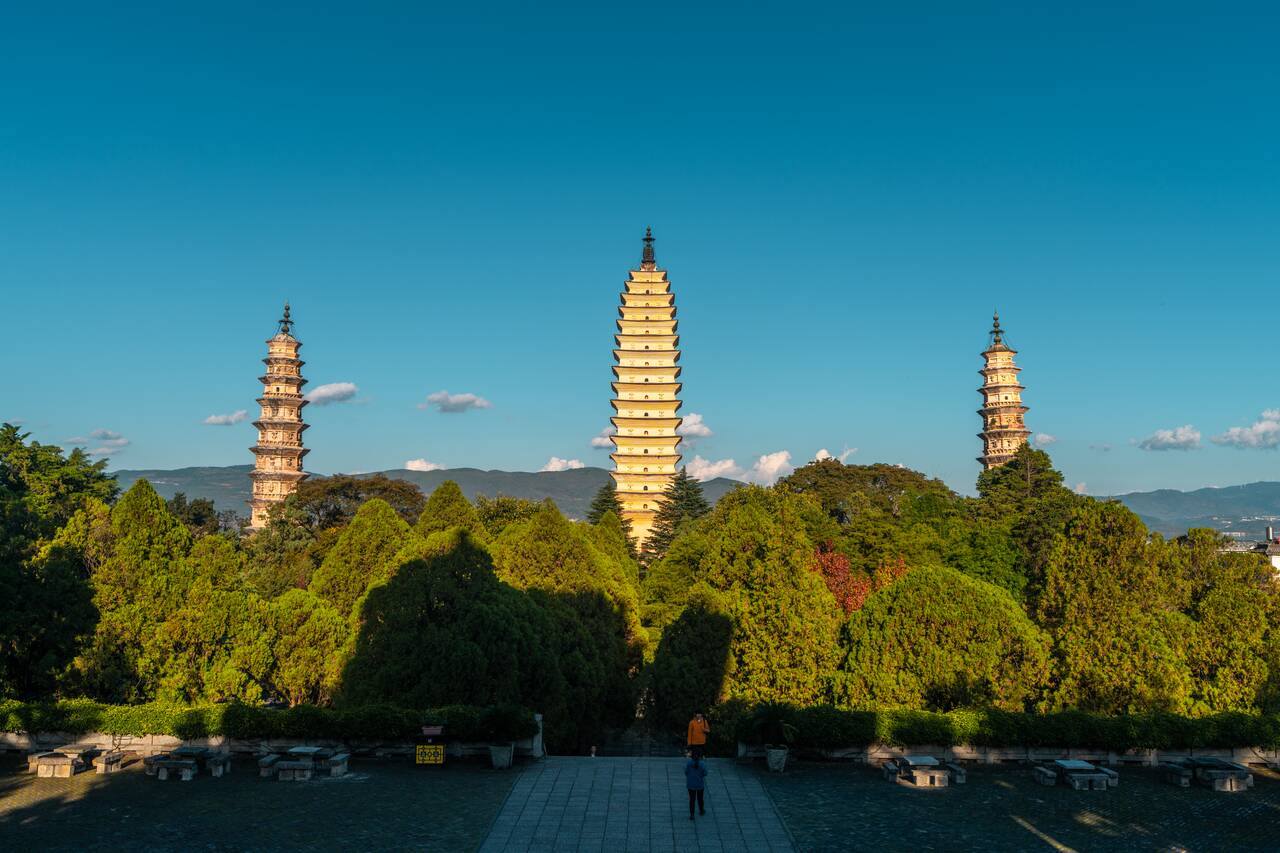
There are three pagodas of varying heights and ages located at the entrance of the temple, visible from across Dali. The central pagoda, Qianxun Pagoda, stands an impressive 69 meters tall and dates back over 1,000 years. The two smaller pagodas are 42.19 meters each, built later, and are octagonal with 10 stories.
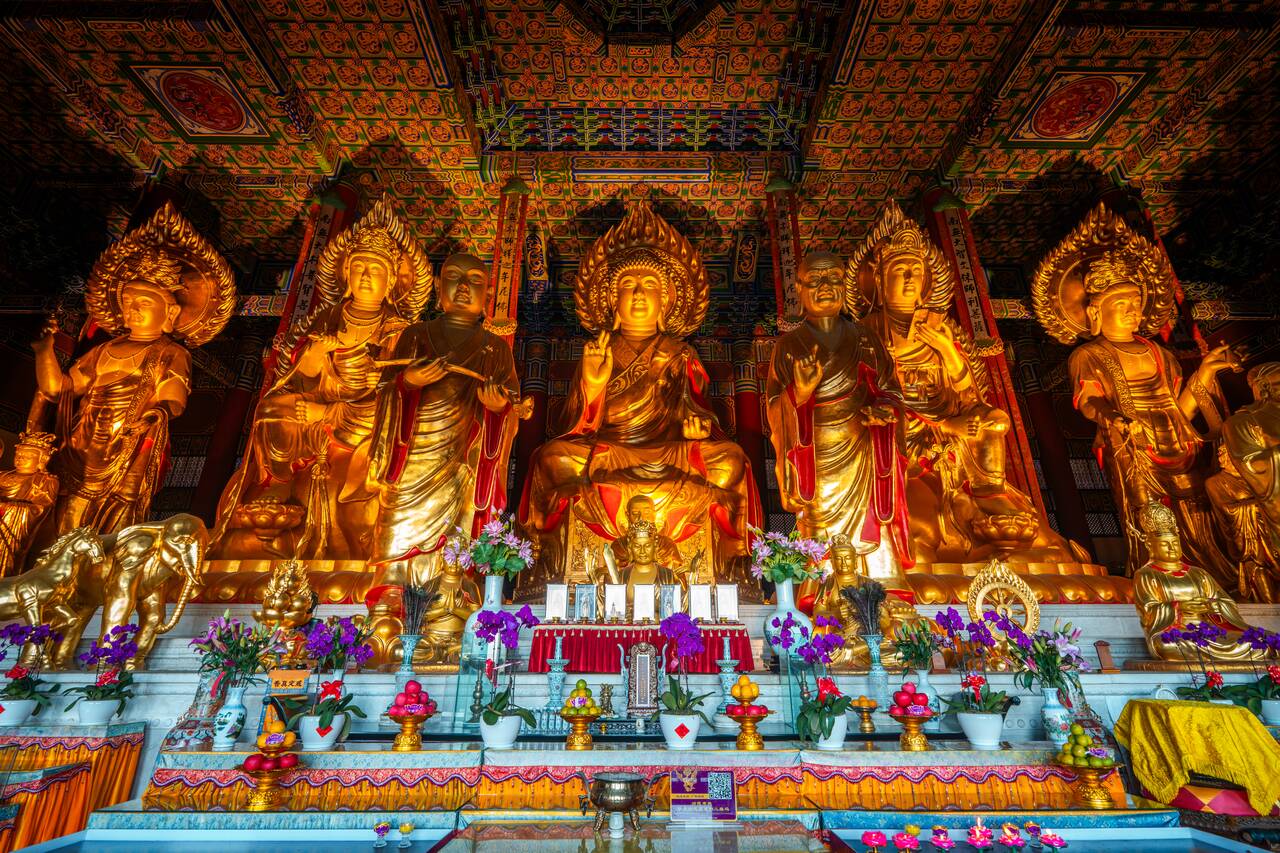
The moment you walk past the Three Pagodas, you’ll get a glimpse of the true scale of the Chongsheng Temple Complex, which is massive, consisting of several temples and levels all aligned, facing east. It took me about 30 minutes to walk all the way up to the upper temple. While there wasn’t a grand panoramic view from the top, the Buddha statues inside are some of the finest you’ll see here.

You can easily spend an hour or 2 here, hiking all the way to the top and back down. If you are there in the evening, be sure to calculate your time carefully so that you can visit everything before its closing time at 6:30 PM.
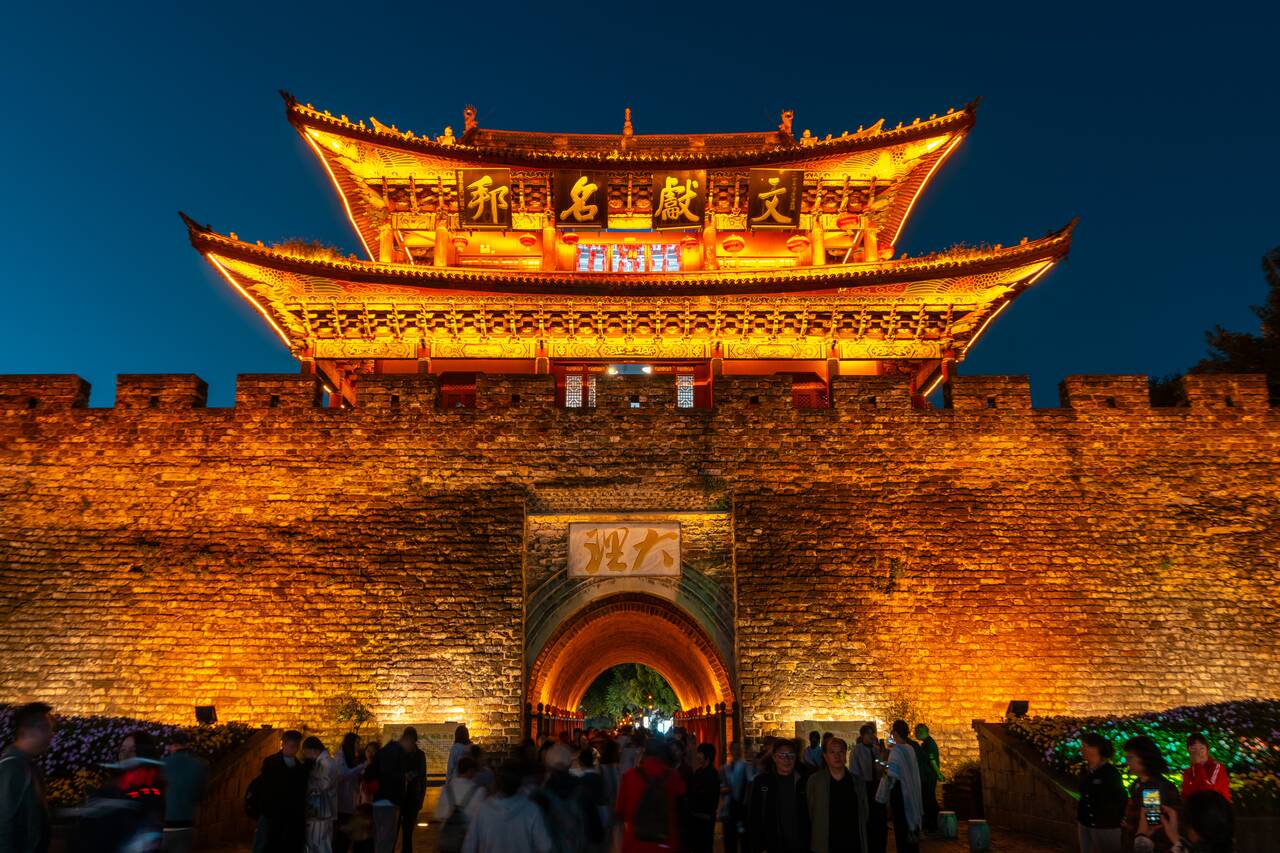
Of course, when you are in Dali, you gotta visit Dali Ancient Town, which I recommend you do so after sundown. The town has a long and rich history, having served as the capital of both the Nanzhao Kingdom and the Dali Kingdom. Today, the place has been converted into a commercialized town like many other ancient villages in China, but it still preserves much of its traditional Bai architecture, which is wonderful to explore.
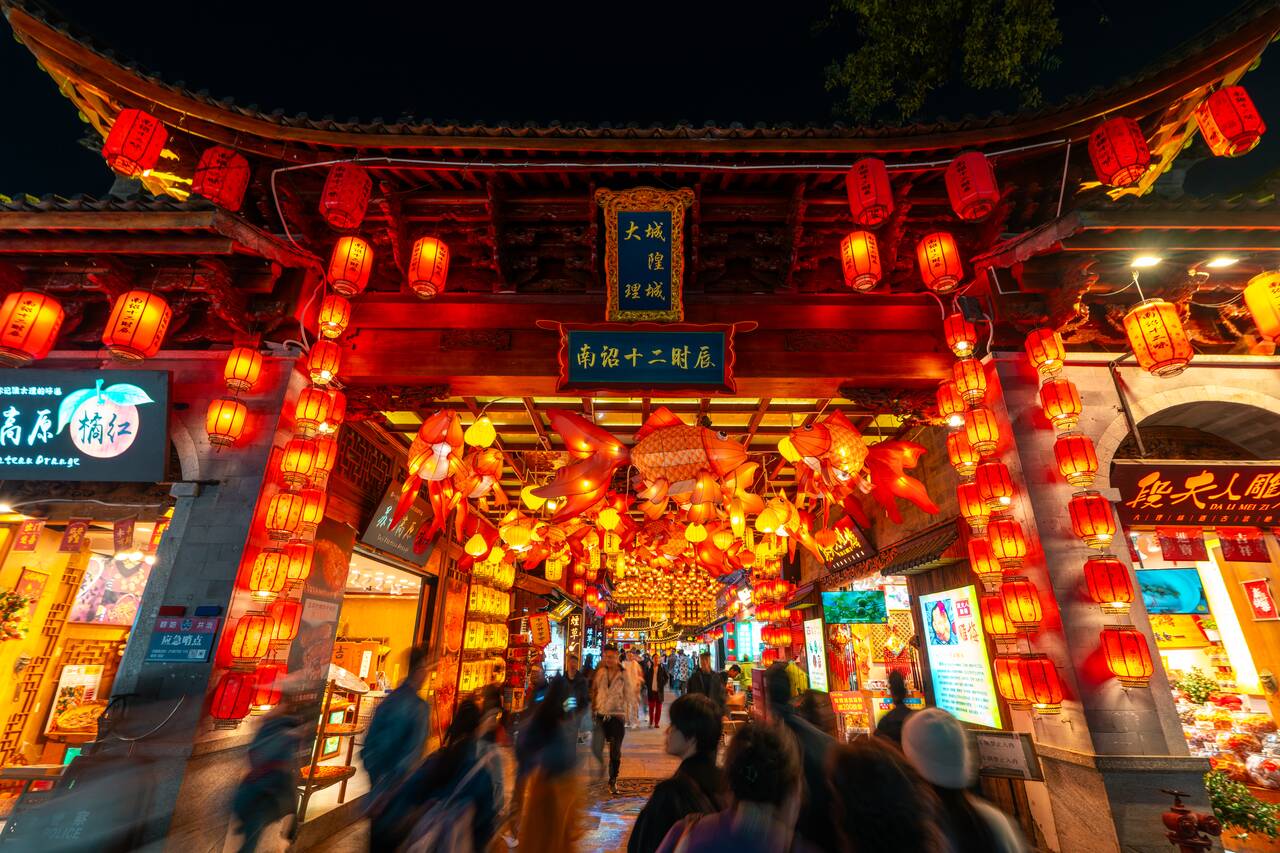
The town’s main streets, such as Fuxing Road and Renmin Road, are lined with Ming- and Qing-style buildings, stone-paved lanes, and rivers running alongside. Foreigner Street, also known as Huguo Road, is a lively pedestrian street full of cafés, bars, art galleries, tie-dye shops, and antique stores.
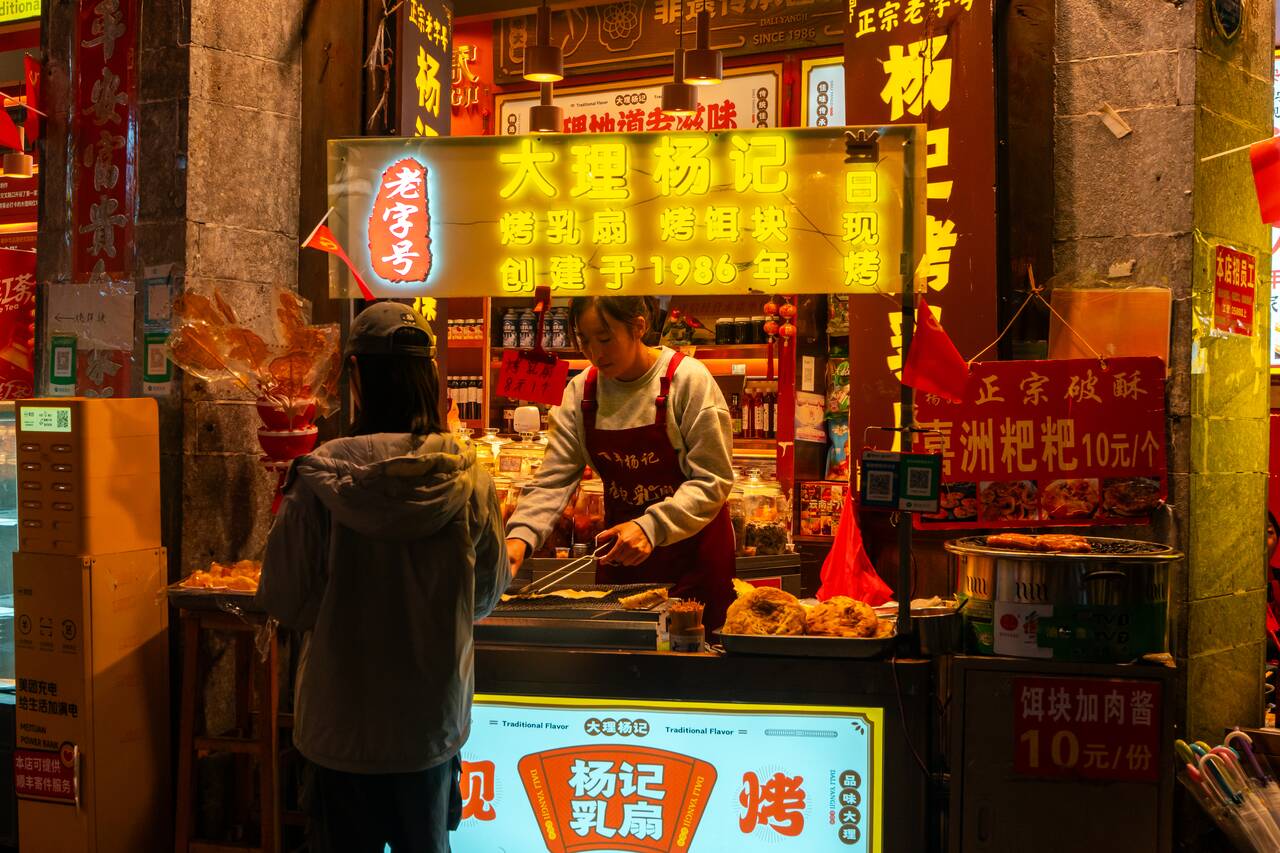
If you are looking for something to eat, the street in front of the South Gate turns into a street food haven, with both sides lined with food carts. I often take an evening walk here to enjoy dinner and soak in the vibrant atmosphere.
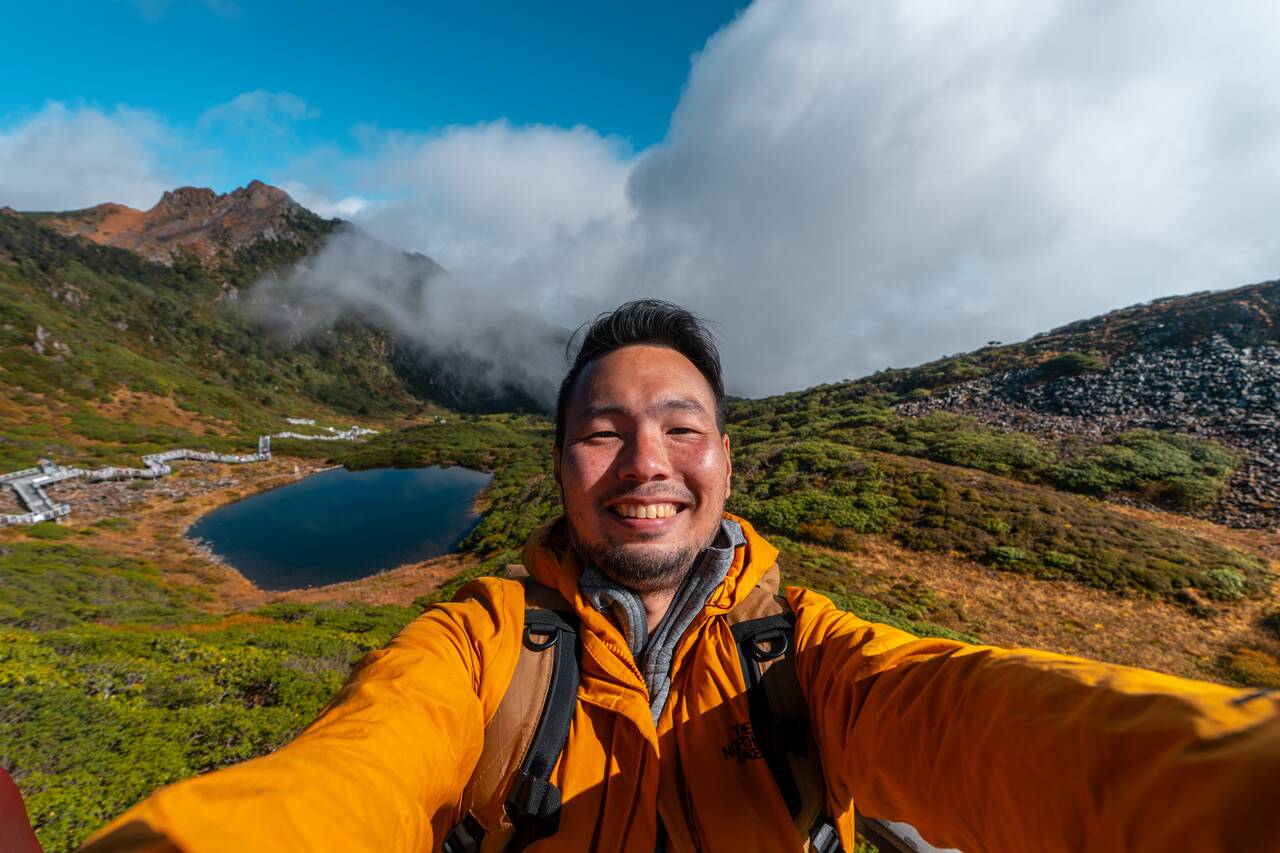
The next morning, we will go for a high-altitude hike to start acclimatizing, as we’ll be heading even higher into the mountains over the next few days. One of the best places to explore is Cangshan Mountain, a majestic range rising over 4,000 meters above sea level, located just west of Dali City. You can easily reach it via the cable car station.
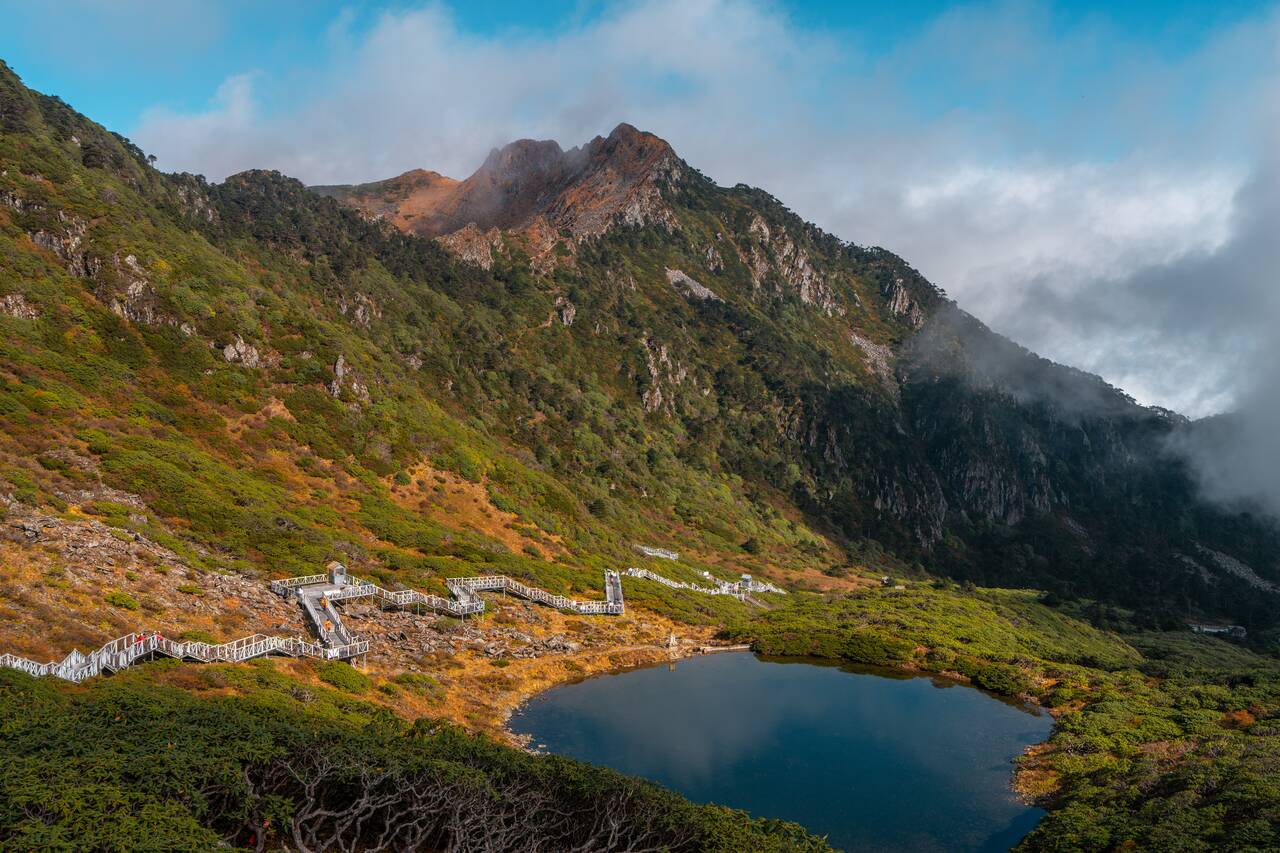
Cangshan is best known for its dramatic peaks, deep valleys, and lush forests with well-marked high-altitude trails that will take you through beautiful scenery, including crystal-clear streams, cascading waterfalls, and misty mountain views. At the top, you’ll reach a stunning viewpoint with panoramic vistas of an alpine lake and breathtaking views of the surrounding mountains.
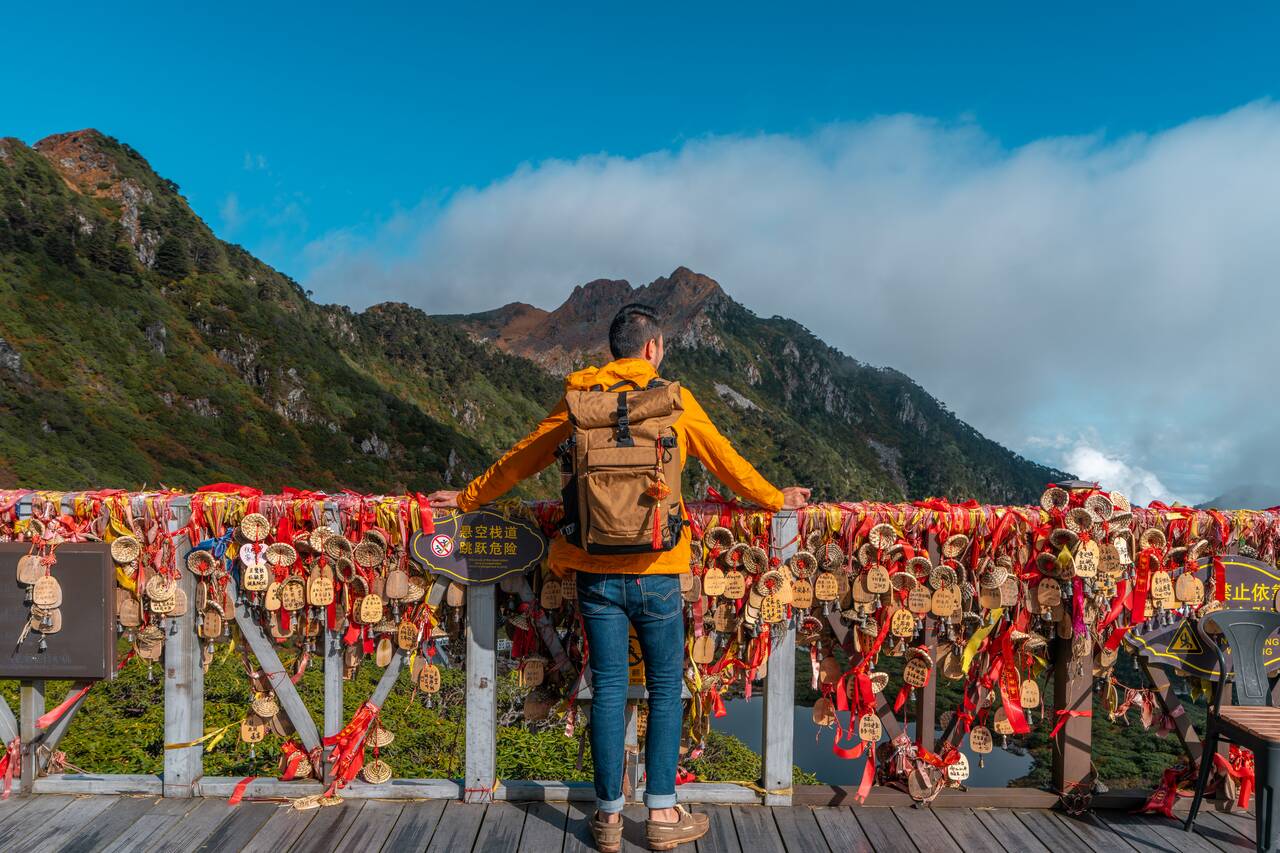
It took me about half a day to visit Cangshan with the Ximatan cable car ride taking about 20 minutes one way. Once you arrive at Ximatan Upper Station, you can then begin the hike to the highest viewpoint platform at about 3966 meters above sea level.
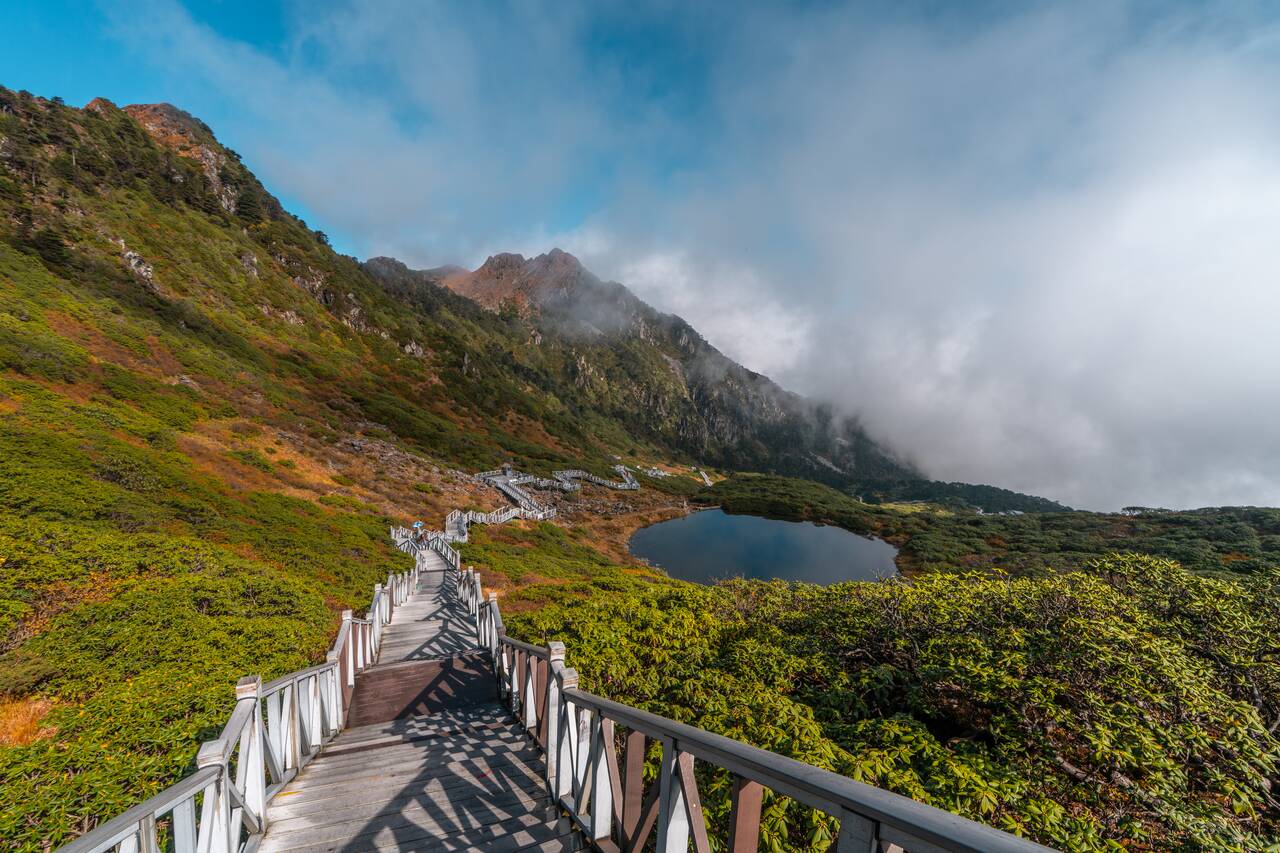
The hike itself isn’t very long, taking only about 30 minutes, but the altitude can be challenging, especially if you’ve just arrived from sea-level cities or haven’t experienced high elevations before. At the lower cableway station, you can buy an oxygen canister and rent a jacket.
The whole hike should take you around half a day to complete, so be sure to get up there as early as you can. We will be spending the afternoon exploring Xizhou Ancient Town and the famous Erhai Lake.

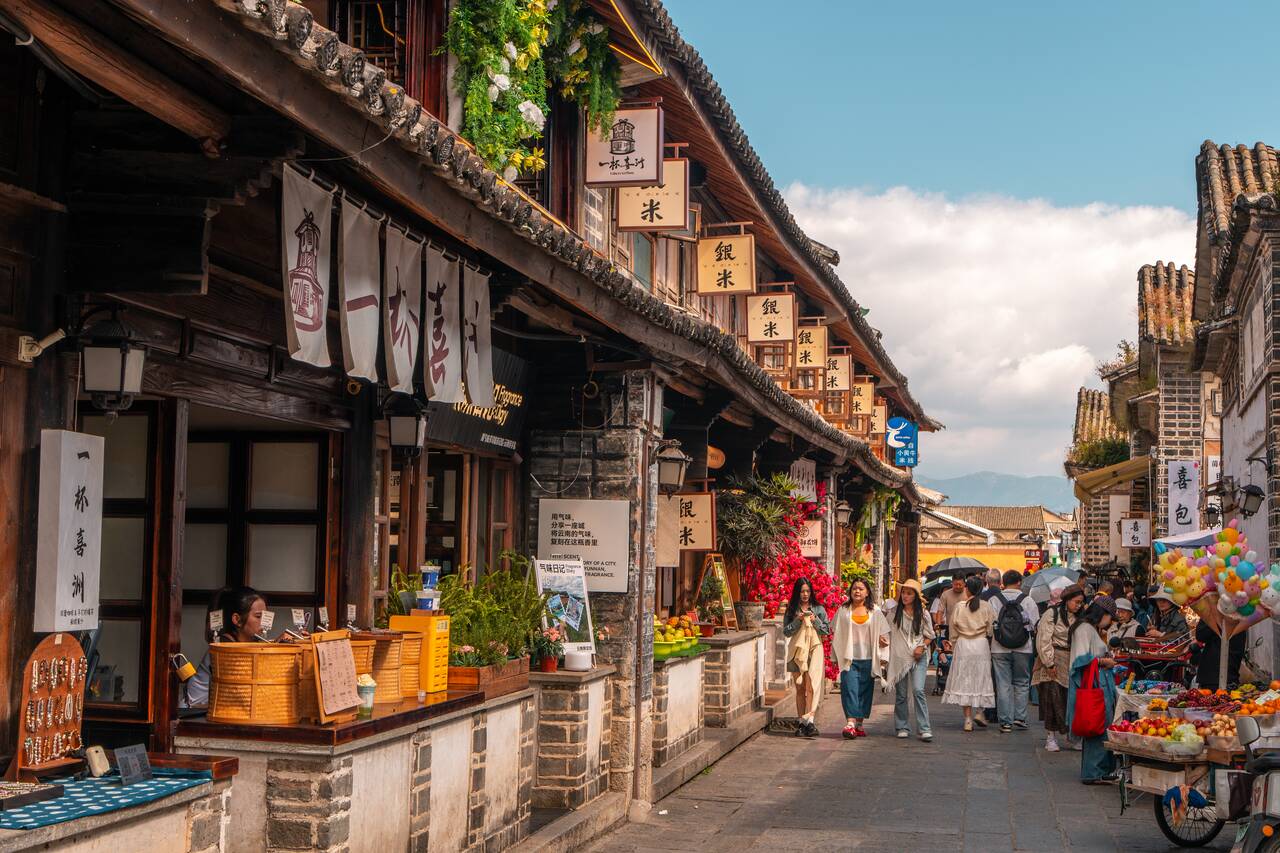
Xizhou is a smaller, but more rustic ancient town that feels like you are stepping back in time when you walk around its narrow streets. Over 100 well-preserved Bai courtyard homes line its cobbled streets. Many of these traditional dwellings use the distinctive Bai layout, where a decorative wall faces the entrance.

The main street running through Xizhou Central Square is Sifang Street. Along both sides of this narrow street, you’ll find small shops, local snacks like Xizhou Baba (a type of local dough pie), cafes, and handicraft workshops. To me, it feels more like a market than the typical street of a highly commercialized ancient village like at Dali Ancient Town, giving it a slightly more authentic atmosphere, in my opinion.
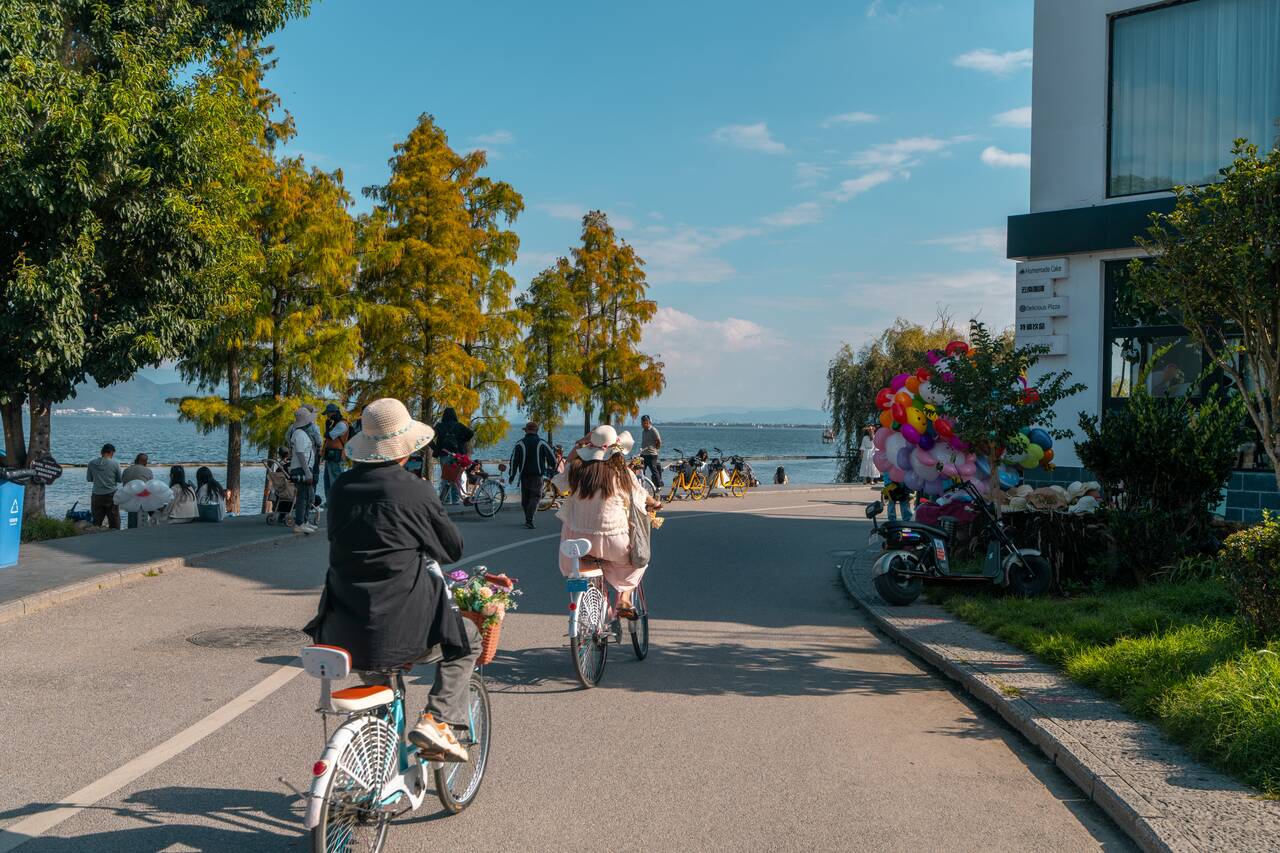
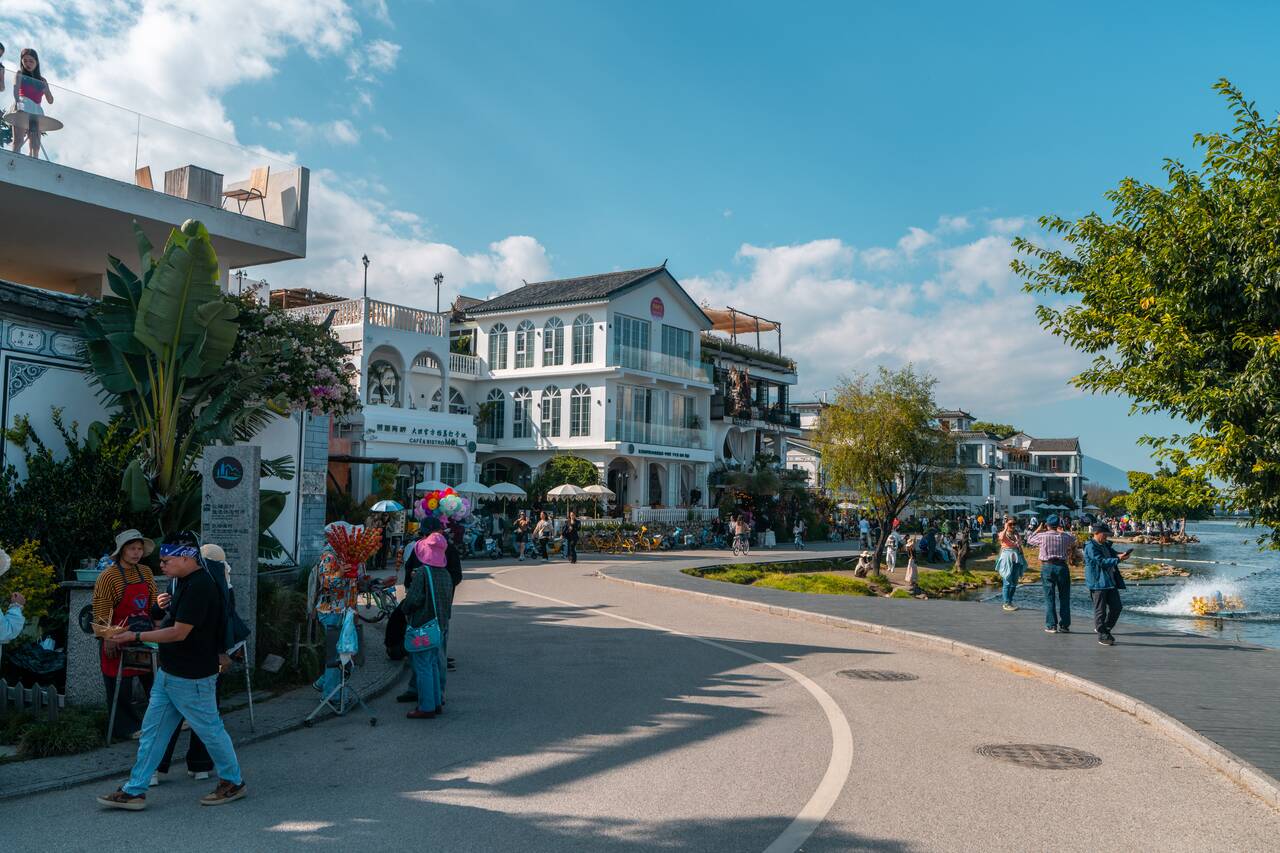
Spend around 2-3 hours here before taking a taxi to Erhai Lake, a stunning freshwater lake that stretches about 42 kilometers from north to south, and rent a bike and ride around the area until sunset.

The lake is pretty big, with some areas more developed to facilitate tourism than others. The best area to begin your exploration is from Panxi S Bay, where you can rent a bicycle and explore the lake's bank at your own leisure. You can take a Didi there and rent a bike for around 30 - 40 CNY per day.
After sunset, return to Dali Ancient Town for another stroll through the beautifully lit streets. Enjoy some street food before heading back to your accommodation, concluding your day in Dali. Tomorrow, we will continue our journey to Lijiang!

Where to Stay in Dali?
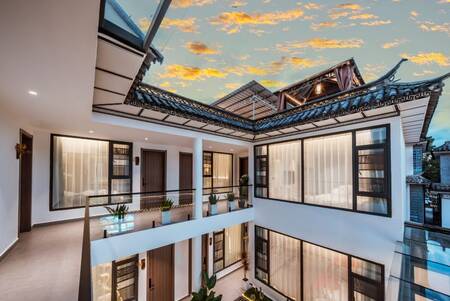
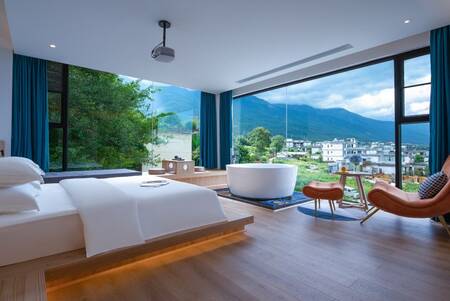
Getting From Dali to Lijiang
From Dali, you can catch a high-speed train from Dali Railway Station to Lijiang Railway Station. The ride should take about 2 - 3 hours and cost 11 USD. You can book the train here.
Day 18-20: Lijiang (3 Nights)
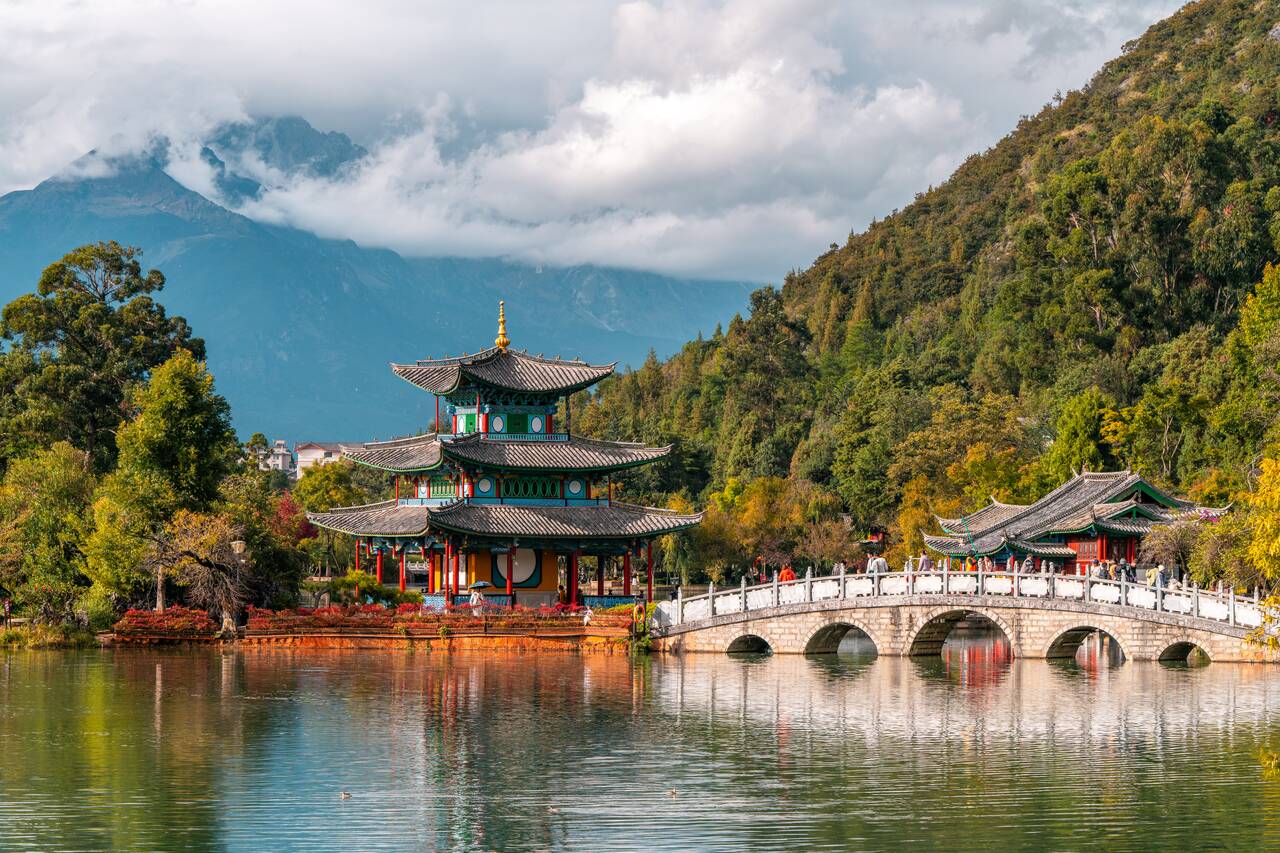
- 📍 Stay: YinYue·Sifu Designer Scenic Inn (Lijiang Flagship Store)
- 🕐 Time: 3 Nights
- 📖 Full Guide: Exploring Lijiang: 10 Best Things to Do & more
Lijiang is another of my favorite towns in Yunnan, with its beautiful cobbled lanes, wooden courtyard homes, and flowing canals, surrounded by dramatic snow-capped mountains. We will be spending 2 full days with day trips to some of Yunnan's finest attractions like Yulong Snow Mountain and Tiger Leaping Gorge.
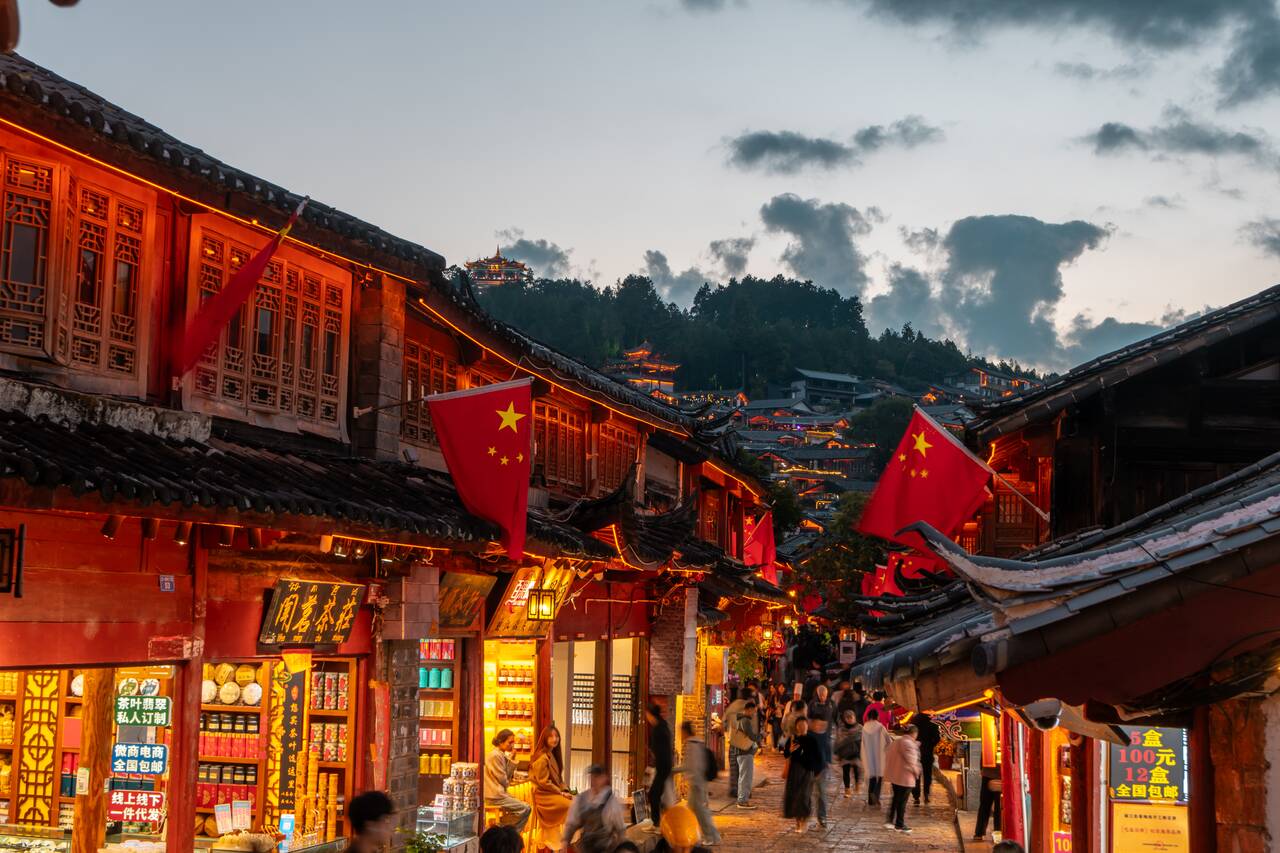
After you have checked in to your hotel and settled, you can come and explore Lijiang Old Town, one of the best-preserved ancient towns in China. With its cobbled streets, traditional Naxi architecture, and flowing canals, it feels like you are stepping back in time. The town has a maze-like layout, full of narrow alleyways, small bridges, and quaint courtyards, and you never know what beautiful hidden corners lie beyond them. It’s truly a wonderful place to explore.
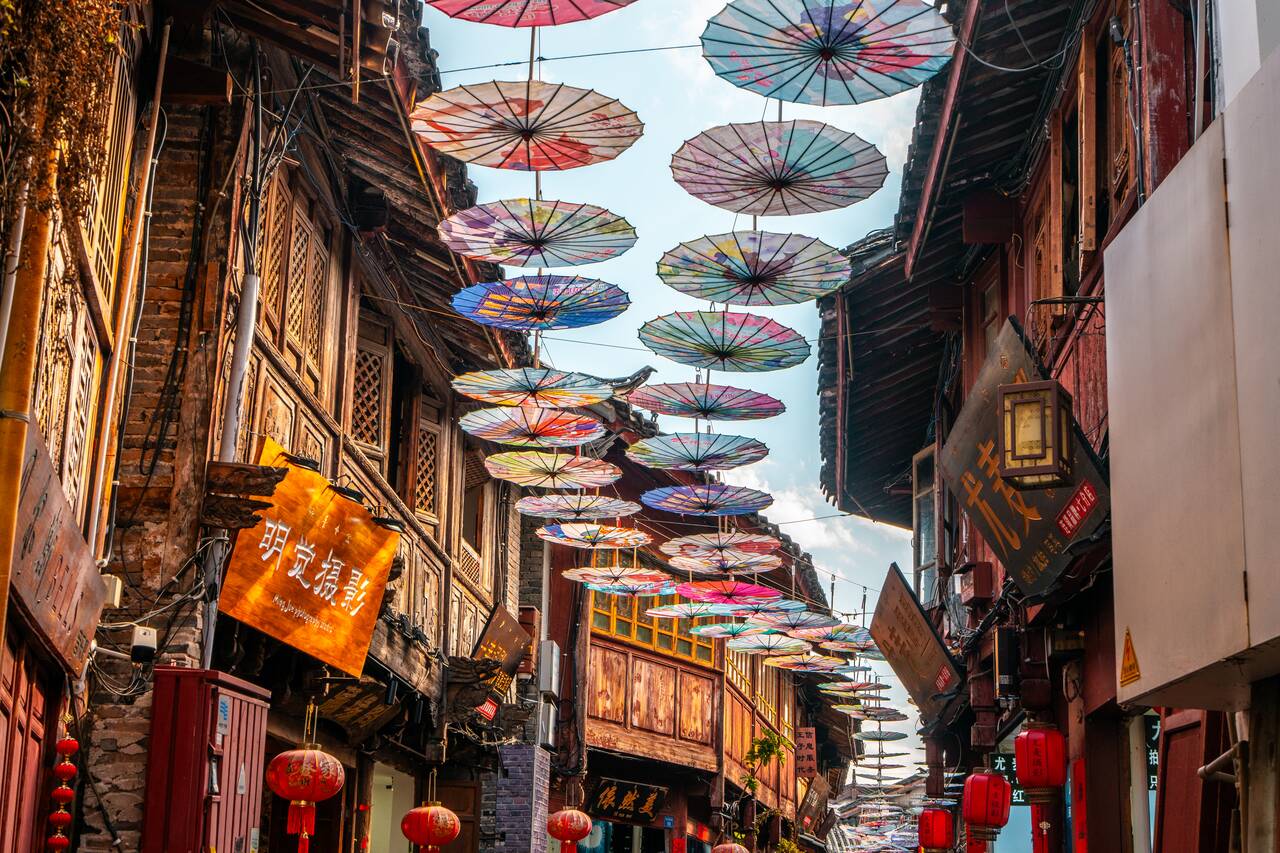
While here, you can explore local markets, taste traditional Naxi snacks, and enjoy performances of ancient Naxi music, which have been passed down for generations. Key attractions include Sifang Street, Wangu Tower, and Mu Fu Mansion, each offering a glimpse into the town’s history, architecture, and unique Naxi culture.
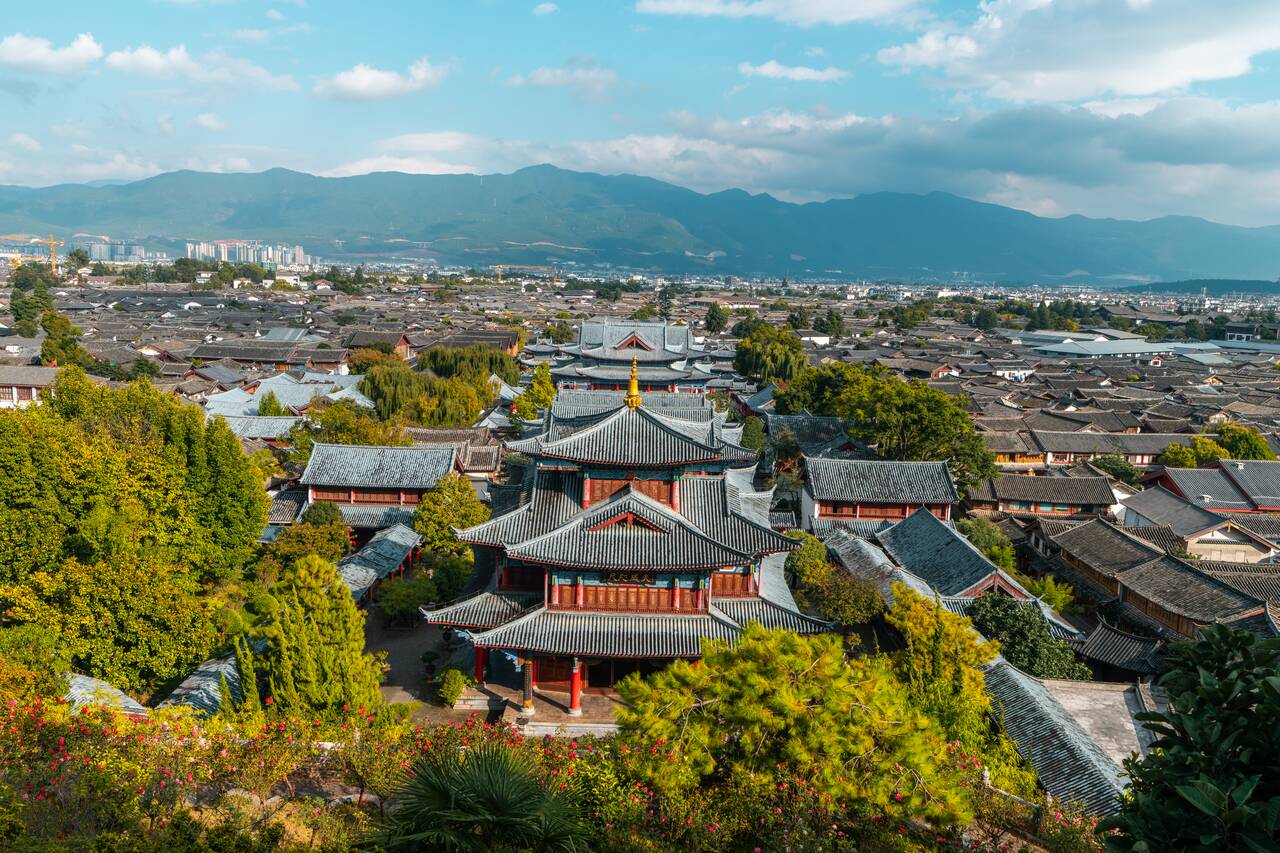
Be sure to also visit Mu Fu Mansion, the beautiful residence of the Mu Family, the hereditary Naxi chieftains who ruled Lijiang for about 470 years through the Yuan, Ming, and Qing dynasties. Located at the foot of Lion Mountain in the center of Lijiang Old Town, the mansion offers a climb to enjoy a fantastic view of the city from above.
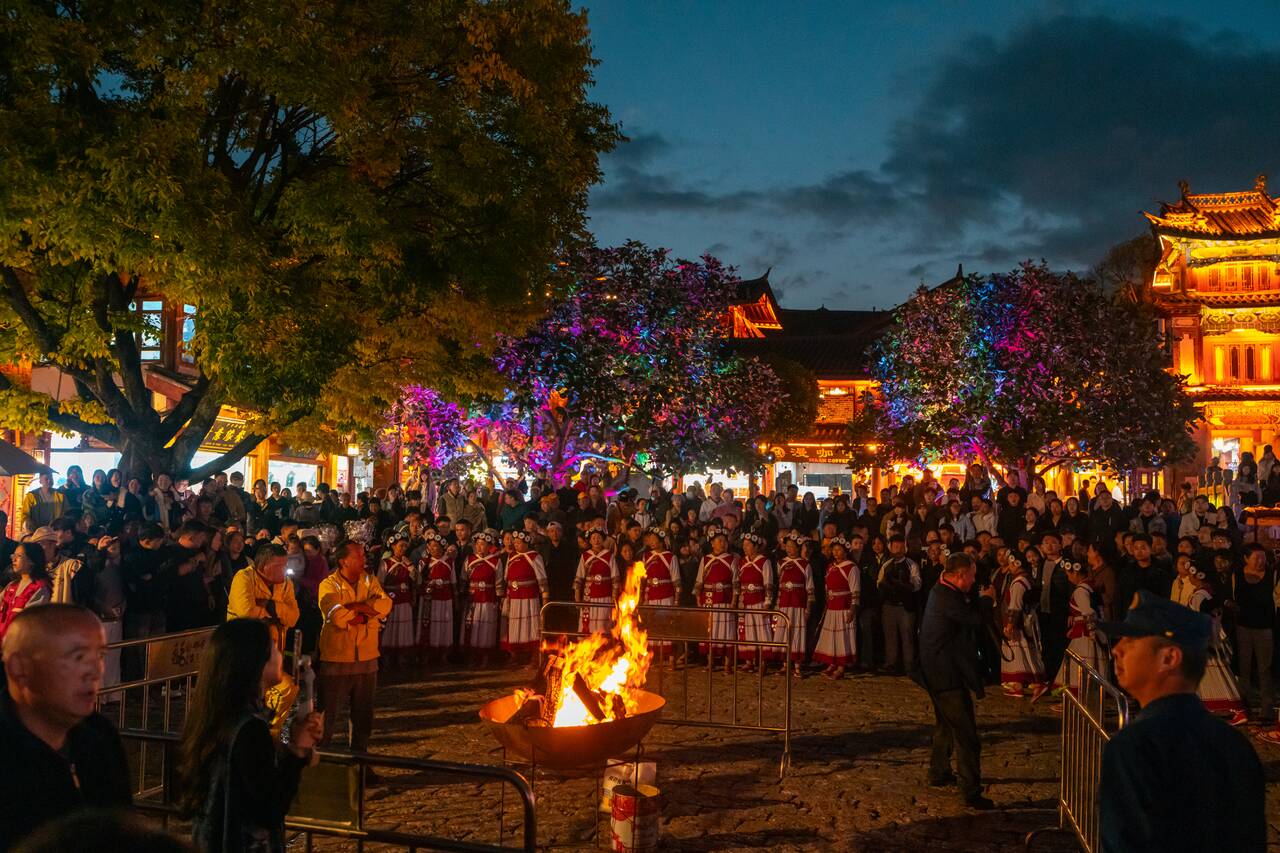
The Old Town is particularly beautiful at night, with its crisscrossing streets illuminated by lights. Various performances and shows come to life after dark, including the famous campfire dance ritual, one of the most fascinating traditions of the Naxi people.
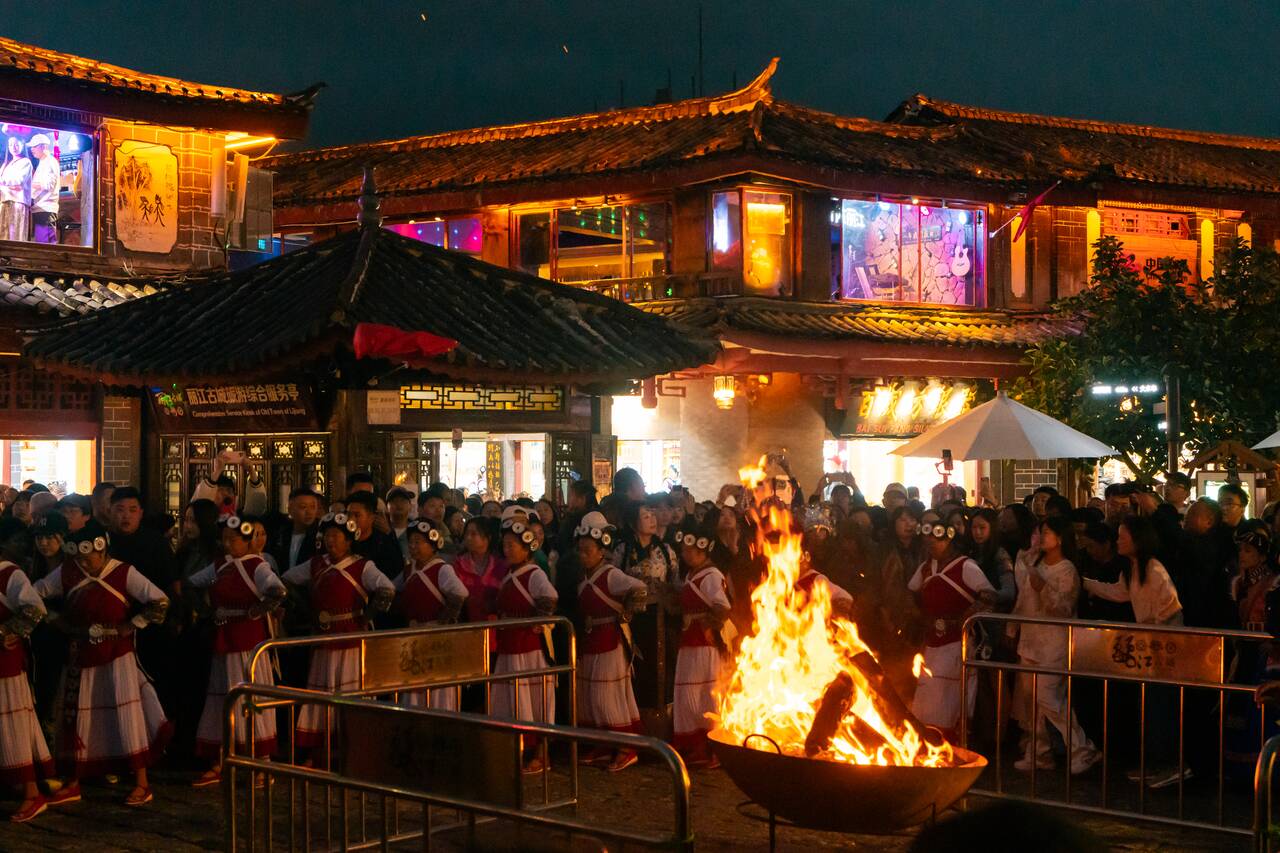
Every evening, Sifang Street Square comes alive as locals and travelers gather in a warm, open-air circle around the bonfire, dancing together beneath the lantern-lit sky. While you explore the ancient village, be sure to come and check out the square and witness the ritual before retreating for the day!
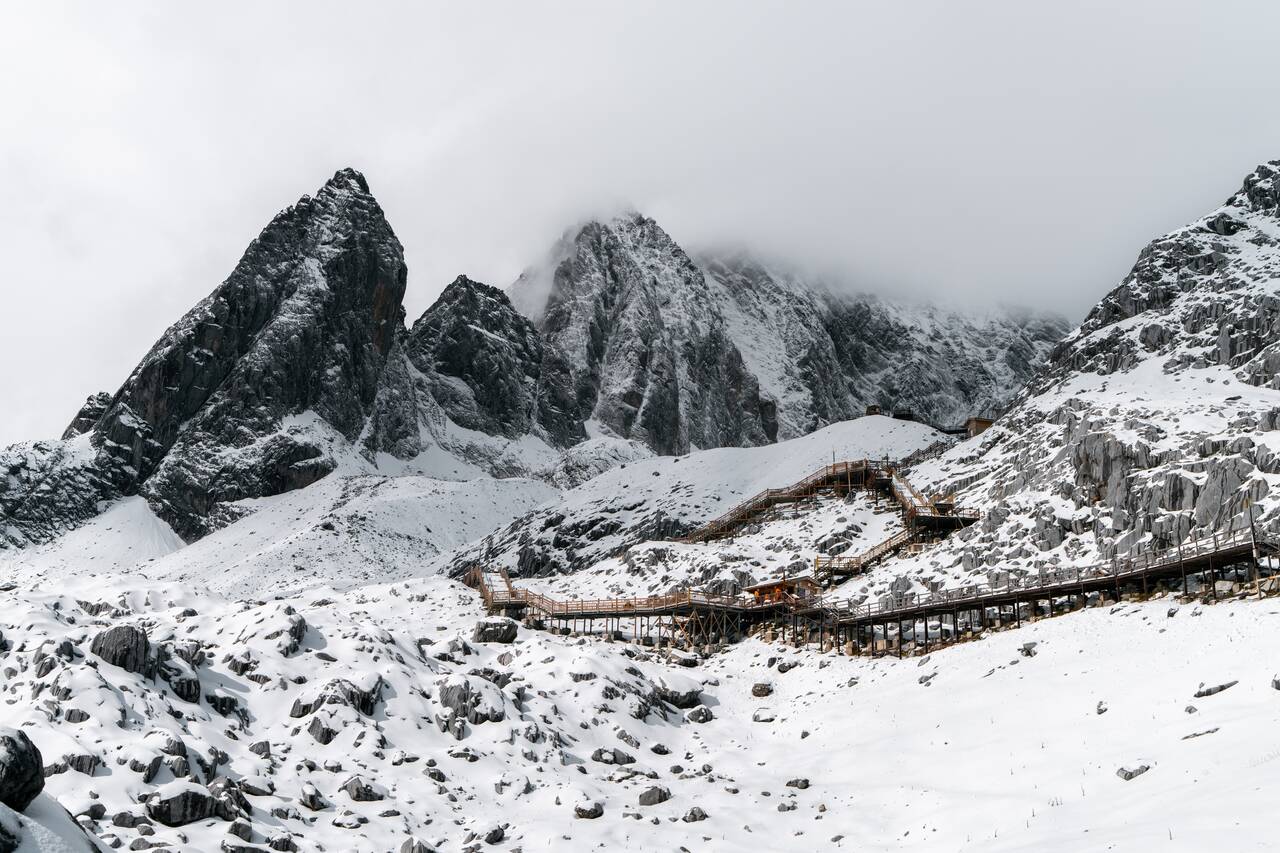
The next day, you can go on a day trip and visit one of my favorite spots in Lijiang, Yulong Snow Mountain, also known as Jade Dragon Snow Mountain. Rising to 5,596 meters, it is one of Yunnan's most iconic natural landmarks, and its dramatic peak can often be seen from Lijiang on a clear day.

It is one of the first few snow-capped mountains you will see as you travel higher and higher into the mountains in Yunnan, and one that offers you a full day worth of adventure, with an organized shuttle bus taking you to the scenic area and a cable car that carries you all the way up to the 4,000+-meter viewing platform.
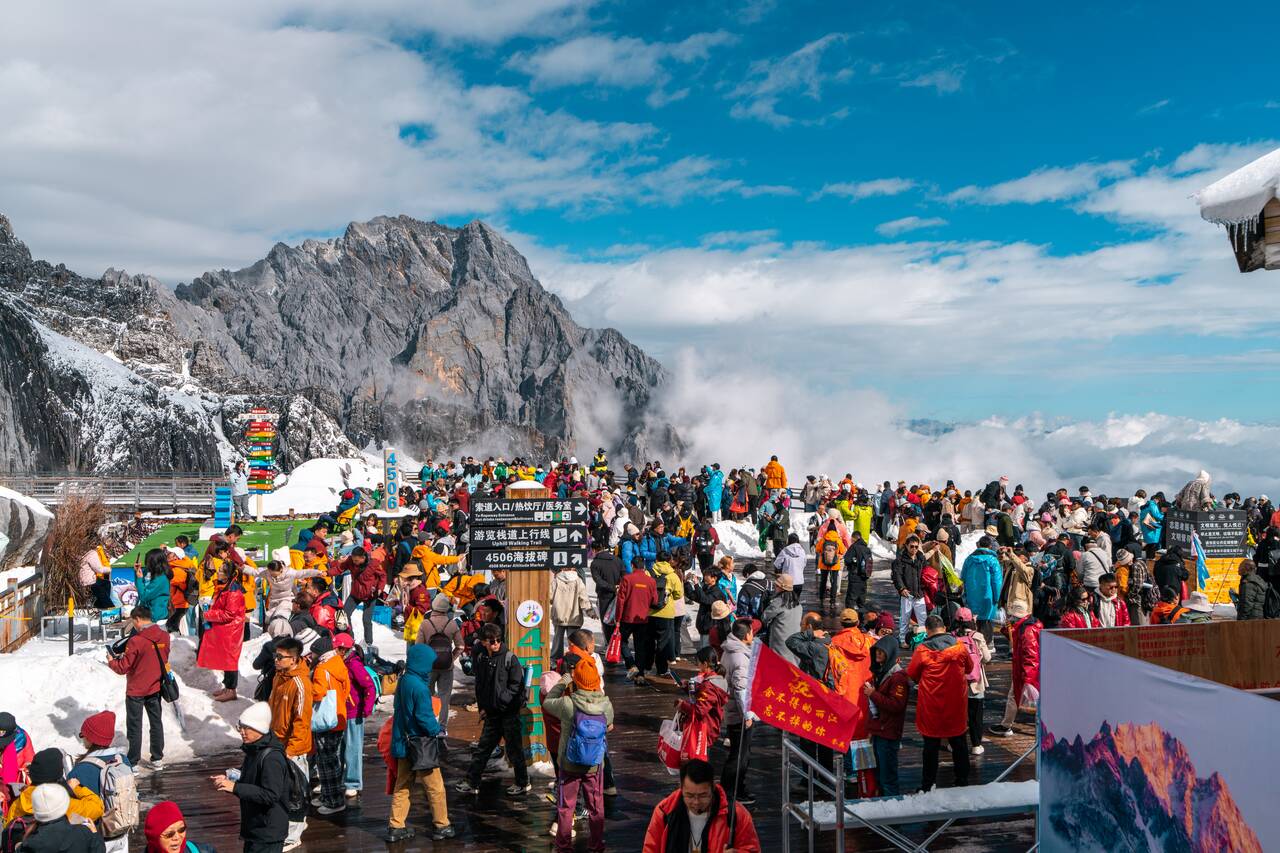
Due to the high demand and limited capacity of the cable car, the scenic area has a daily limit cap, and tickets are assigned in time slots to prevent overcrowding. The tickets are often released up to 7 days in advance and can be booked out quite fast during peak season, so you have to plan your trip beforehand.
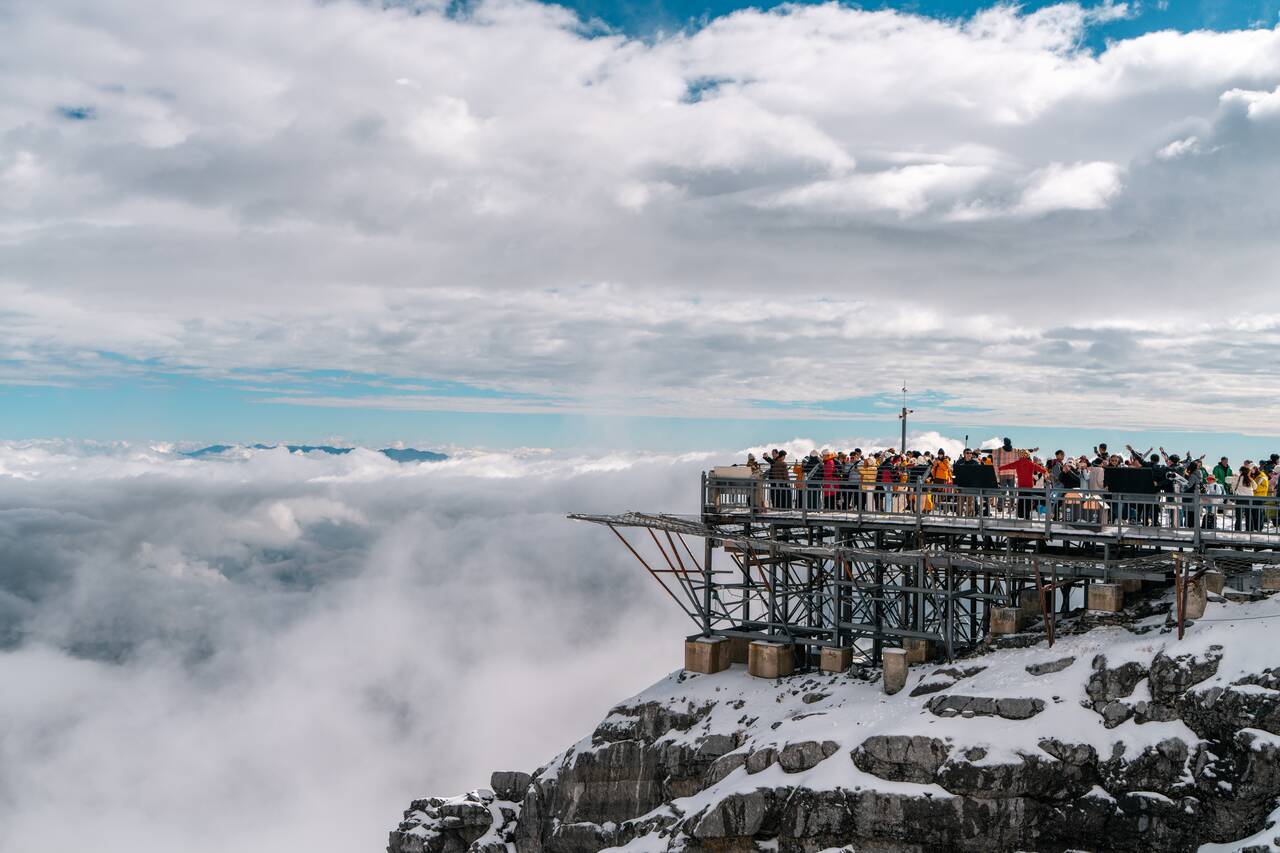
To secure your spot, I highly recommend booking the Yulong Snow Mountain cable car ticket at least three days in advance. You can book it through the Trip app under the label "Glacier National Park Cableway (with Shuttle Bus inside the park) + Lijiang Impressions Show (Adult)", which costs around 285 CNY. The ticket is usually issued within a few minutes and includes a time slot for the cable car. Keep in mind that this does not include the park entry fee of 100 CNY, which your guide will purchase for you upon arrival.
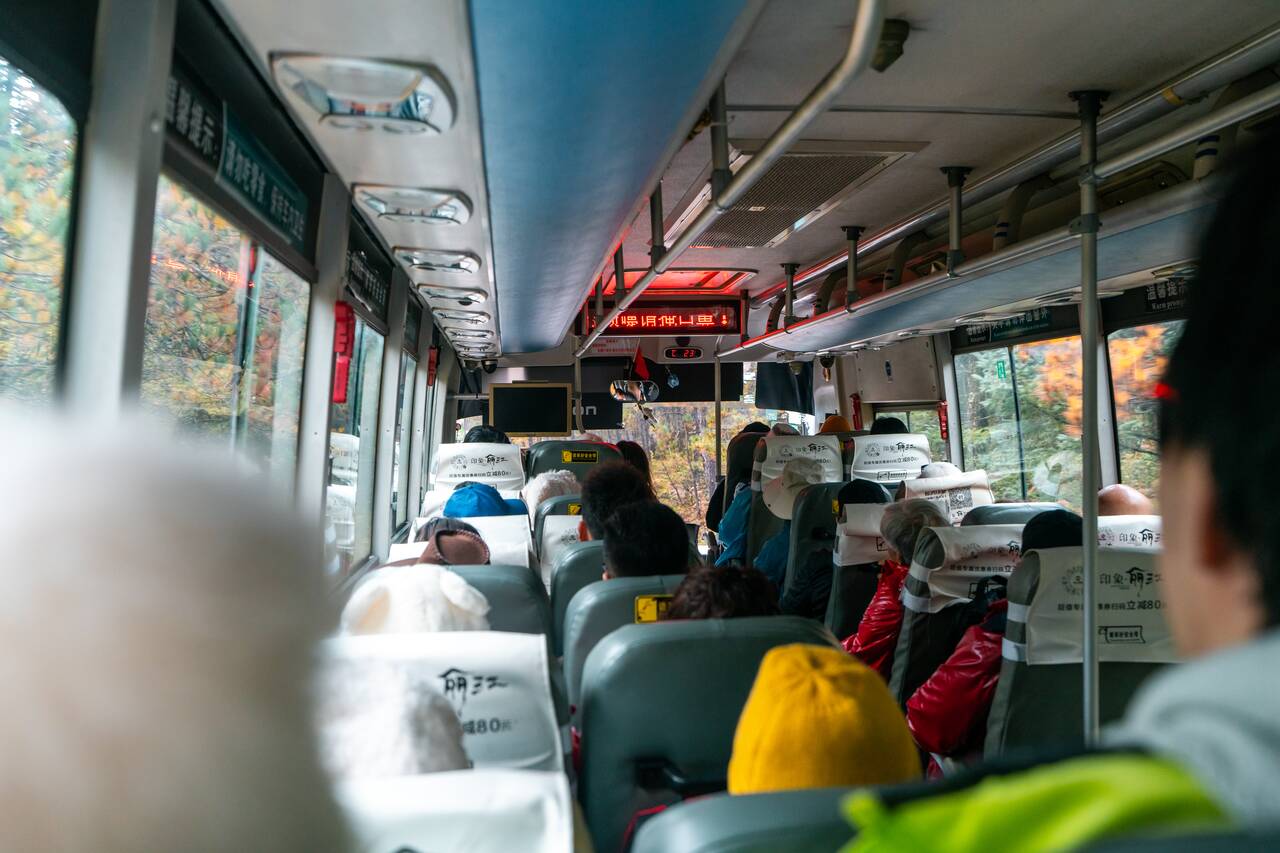
Once your tickets are secured, you will need to book a shuttle bus service from Lijiang to Yulong Snow Mountain and back that matches your chosen time slot. The service is listed as "Round-trip shuttle bus between Old Town of Lijiang and Yulong Snow Mountain + 1 oxygen bottle" and costs 46 CNY for a round trip.
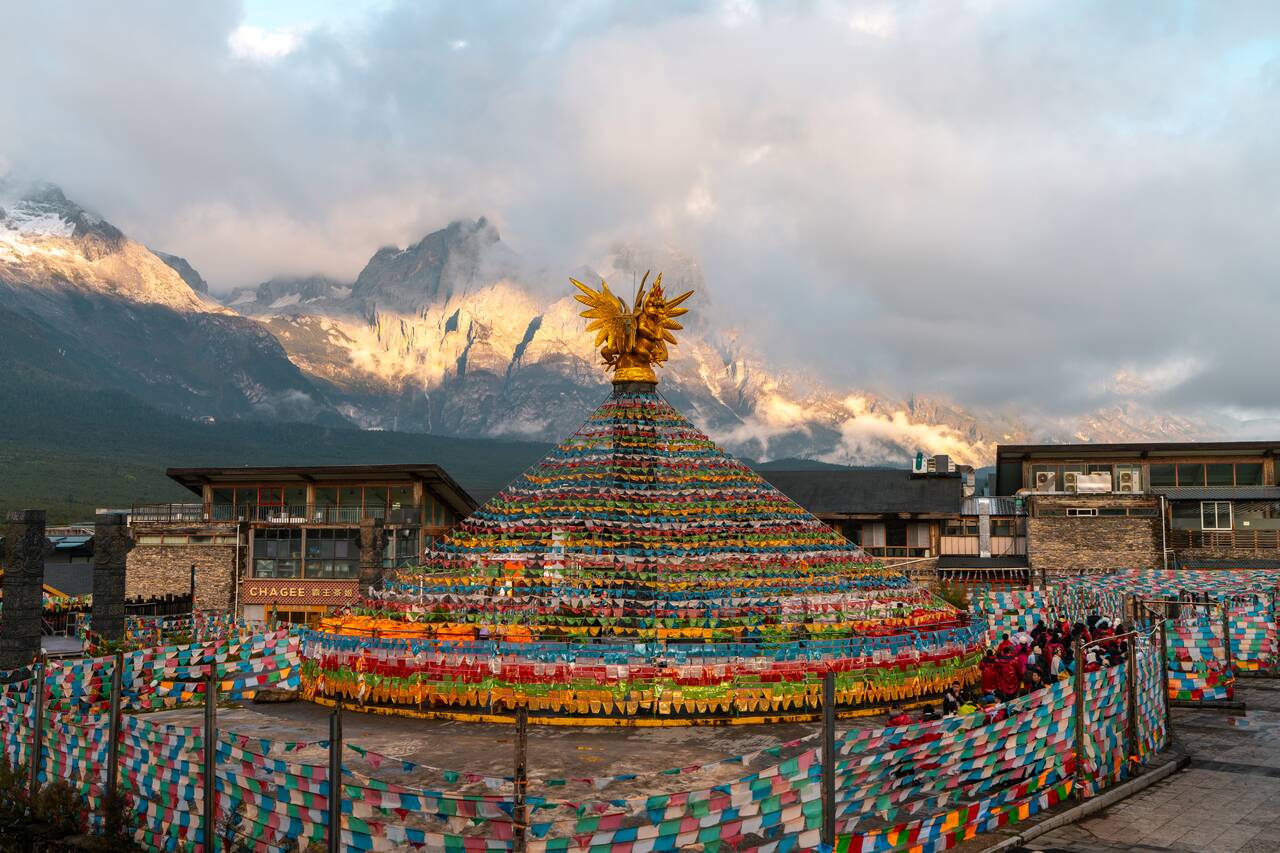
You can choose between two departure times: 6:00–6:30 AM or 8:00–8:30 AM. The bus will pick you up near Lijiang Old Town, with the exact location usually confirmed the night before via WeChat, including the bus license plate, so be sure to check for the message. The return bus leaves Yulong Snow Mountain around 3:00 PM back to Lijiang, giving you plenty of time to visit the viewpoint, Blue Moon Valley, and watch the Impression Lijiang performance, all of which are recommended.
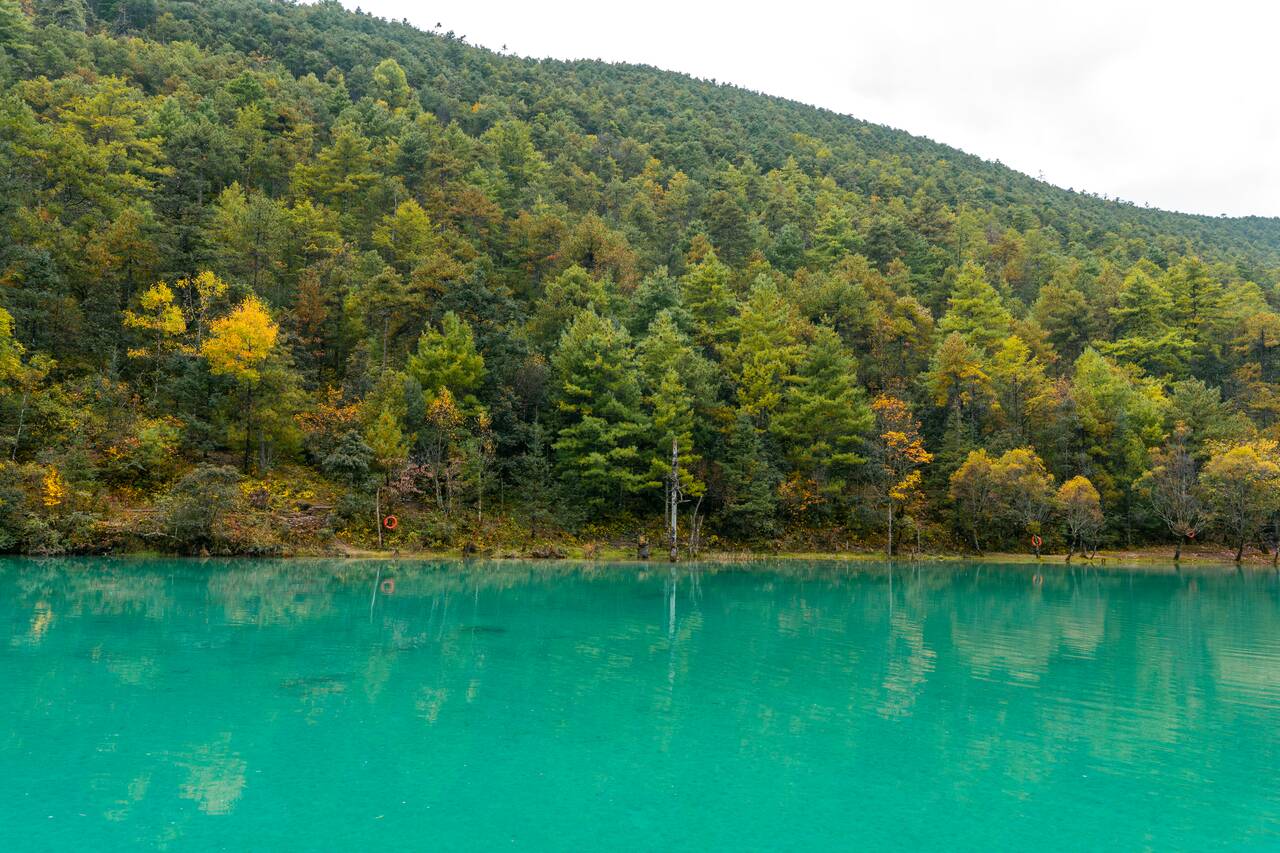
It should take about 2 to 3 hours to hike around Yulong Snow Mountain. Once you are done, take the cable car down and visit Blue Moon Valley, located at the foot of the mountain. You can easily reach it from the Yulong Cable Car Station via a free shuttle bus within the park.
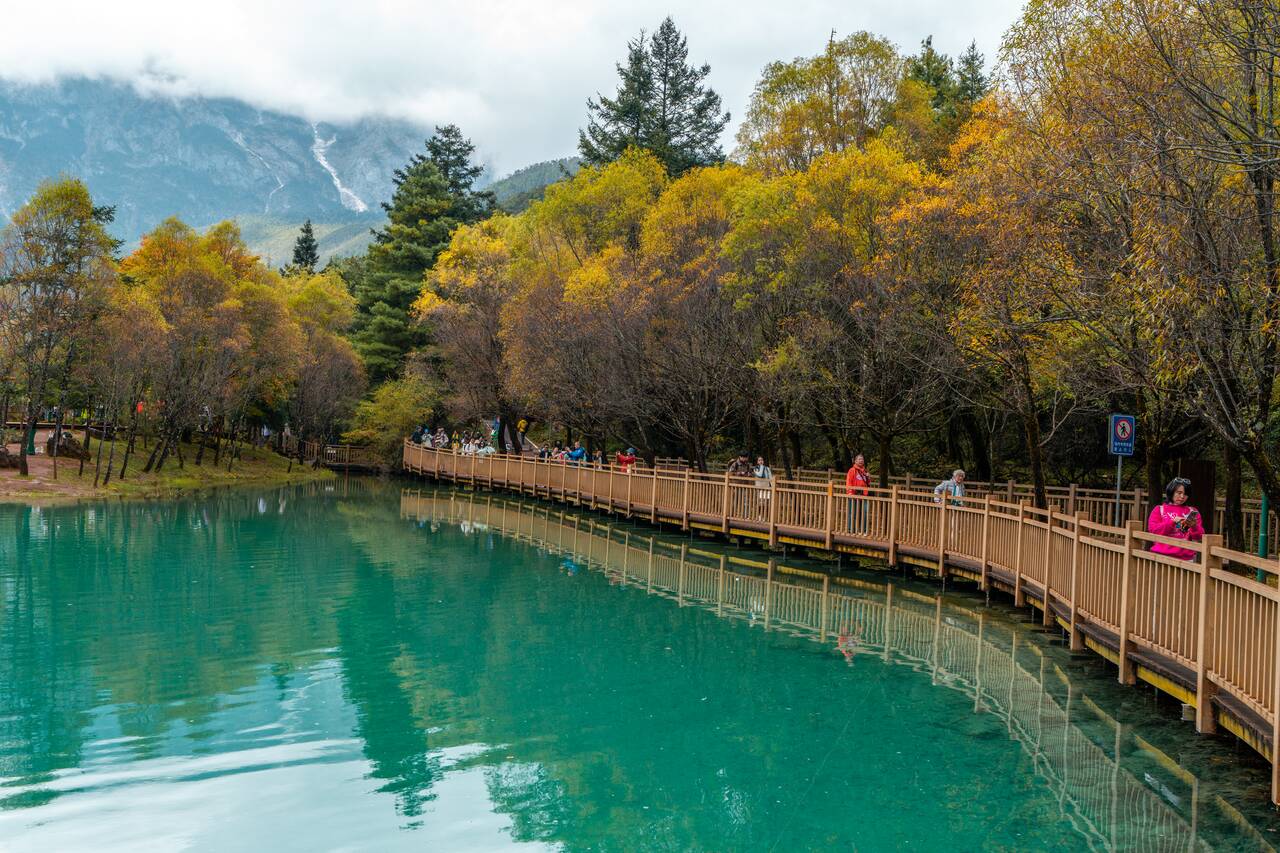
Blue Moon Valley is a breathtaking natural attraction that is famous for its vivid turquoise rivers and wonderful mountain surroundings. The valley's name comes from the deep blue color of its water, which contrasts beautifully with the surrounding green forests and snow-capped peaks.
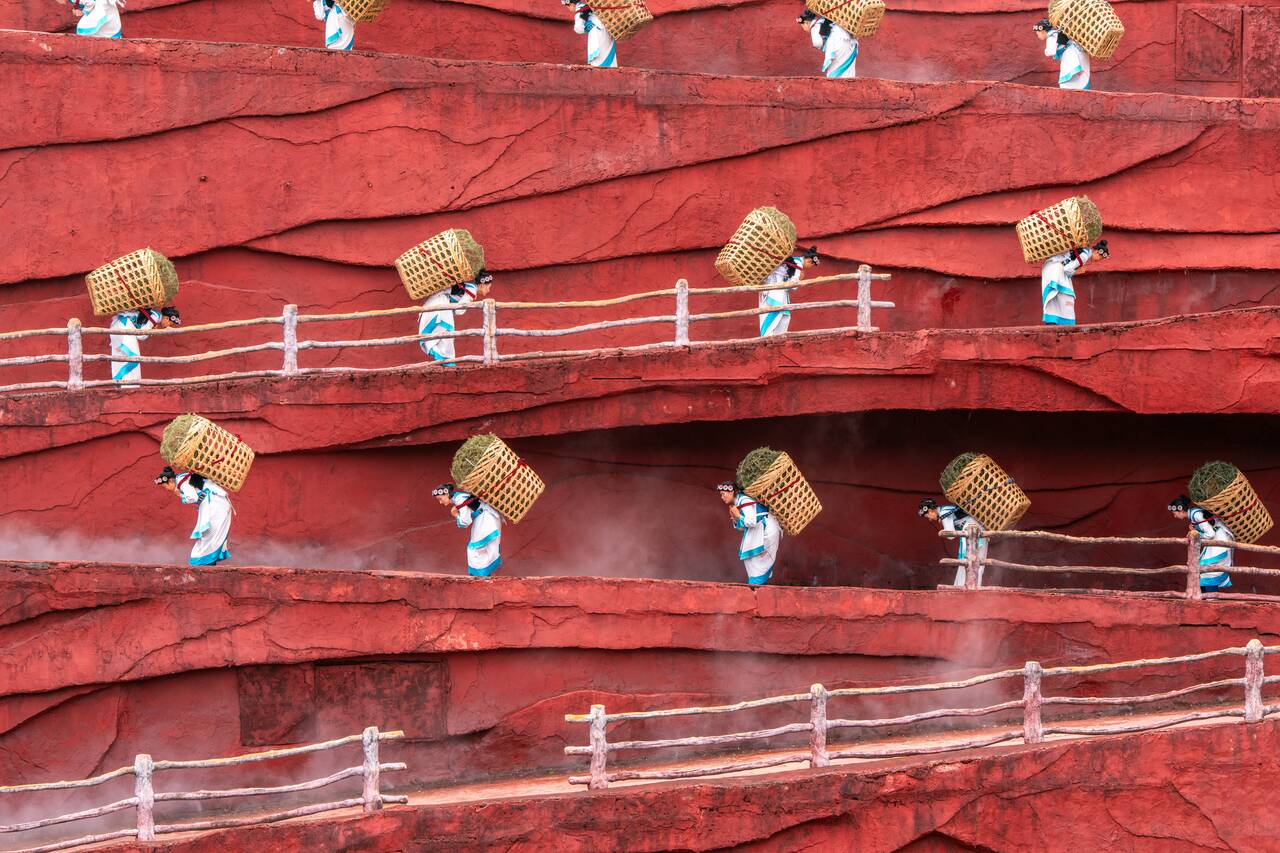
With the ticket I recommended, it also includes a ticket to see Impression Lijiang, an outdoor one-hour large-scale show performed by the local Naxi people, set against the dramatic backdrop of Yulong Snow Mountain.
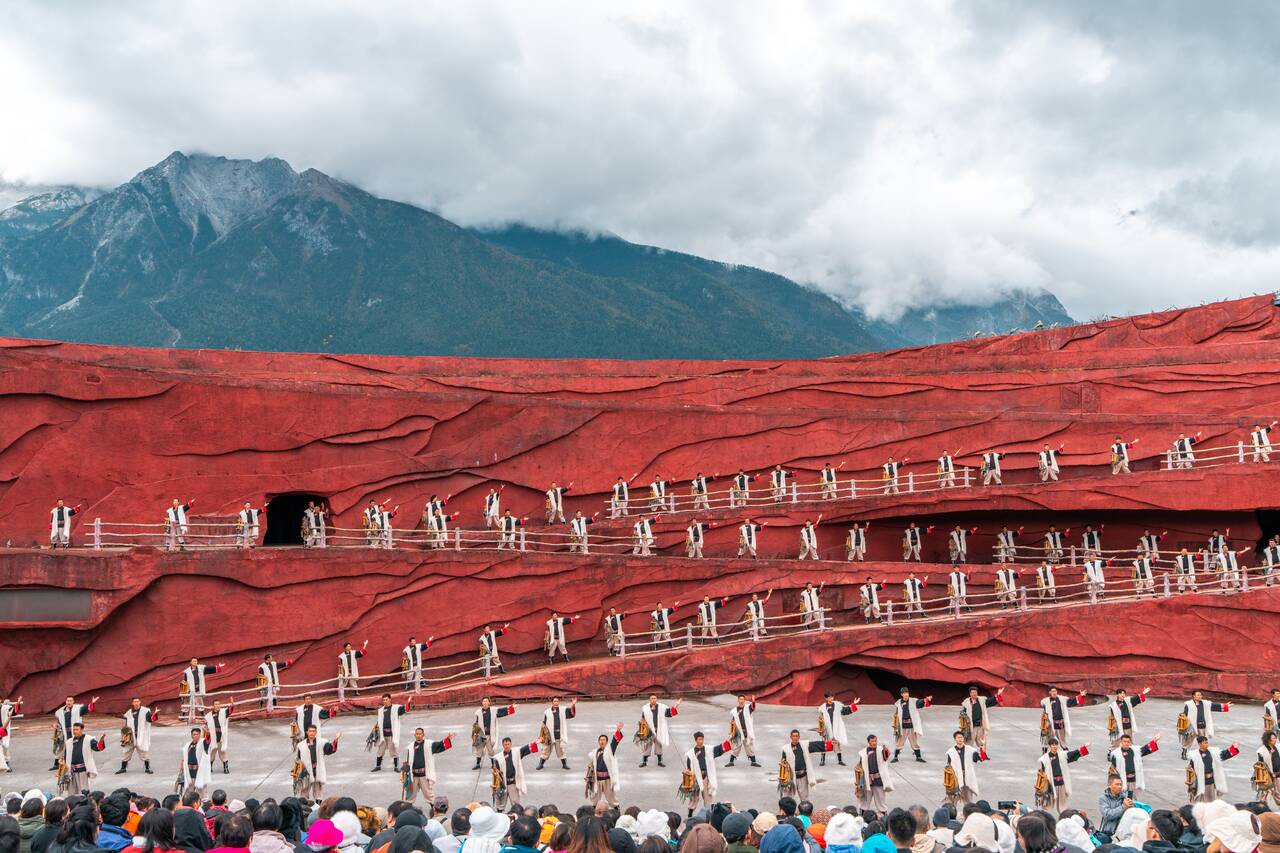
The show runs twice a day, at 1:20 PM and 2:50 PM, and lasts about an hour. In my opinion, the performance itself is nothing extraordinary, but the setting, with the stage painted red against the backdrop of snow-capped mountains and a clear blue sky, is absolutely stunning and makes the visit worthwhile. It also should occupy you until the shuttle bus service leaves at 3 PM, concluding the day.
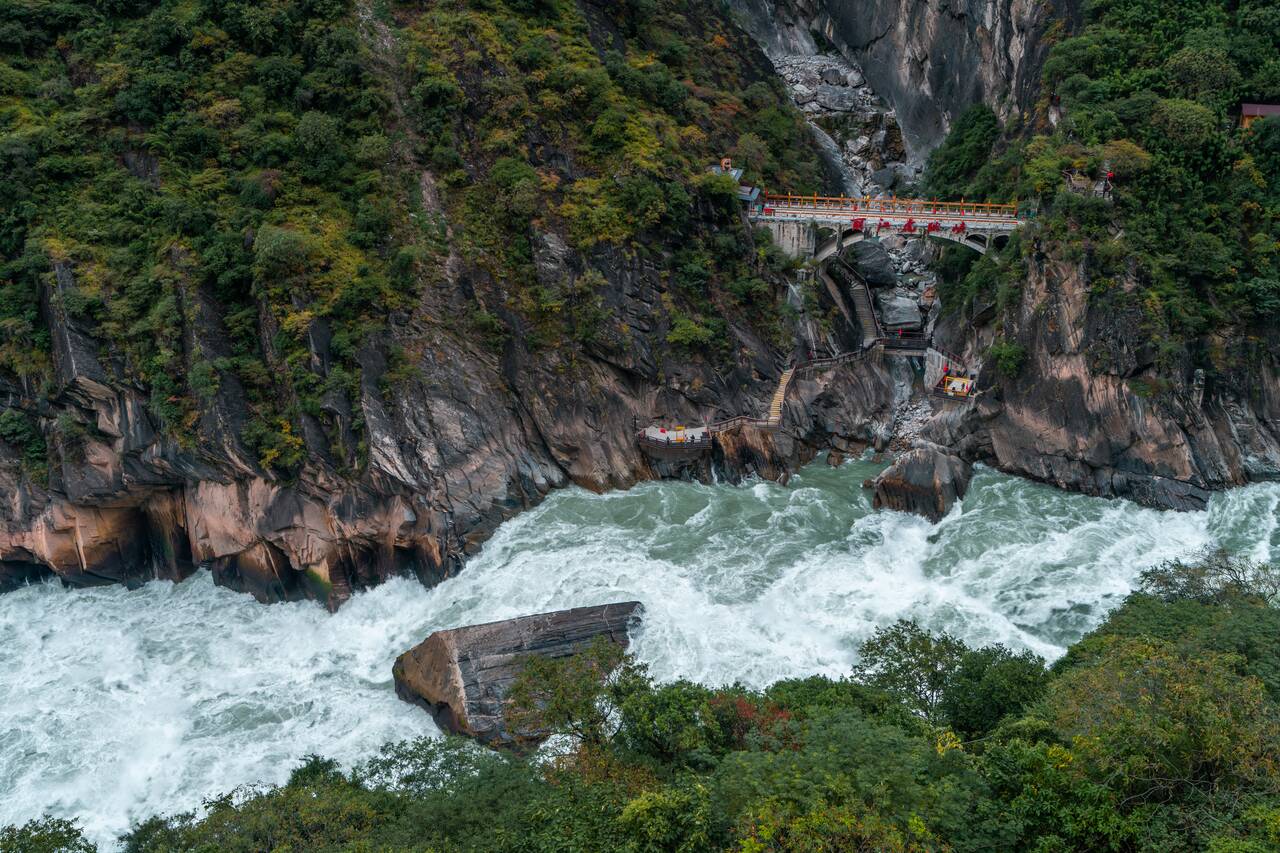
The next morning, we can take a half-day trip to visit Tiger Leaping Gorge, a stunning rapid gorge located about a two-hour drive from Lijiang. To get there, you will need to use an organized shuttle service, which provides transportation between Lijiang and the gorge. You can book a one-way ticket for 47 CNY if you plan to hike and stay overnight, or a round-trip ticket for 93 CNY.
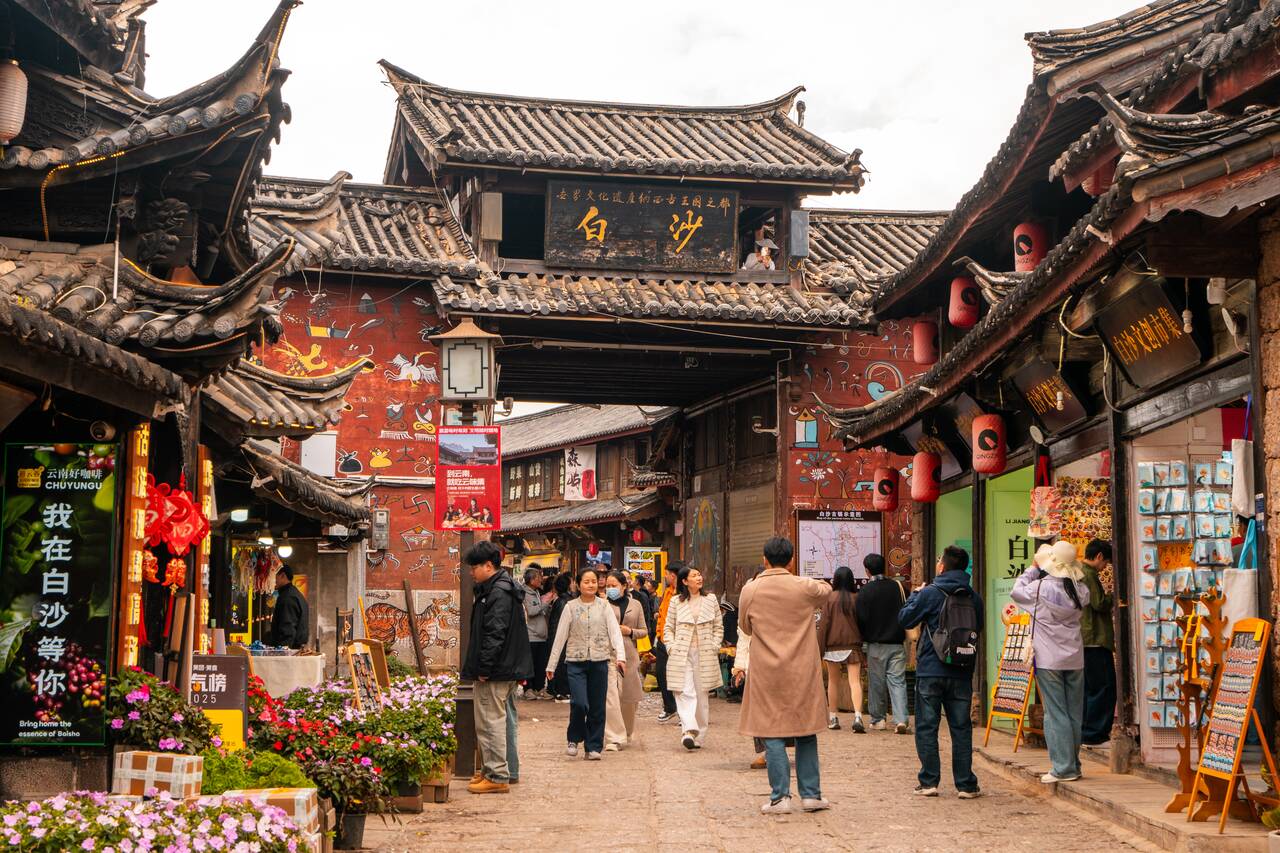
The whole trip should take about half a day, which is perfect because we can spend the rest of the evening exploring Baisha Ancient Town, one of the oldest Naxi settlements in the region, located about 20 minutes north of Lijiang Old Town. It is a smaller, more rustic, and more authentic version of Lijiang Ancient Town, and I highly recommend you spend the rest of the afternoon there.
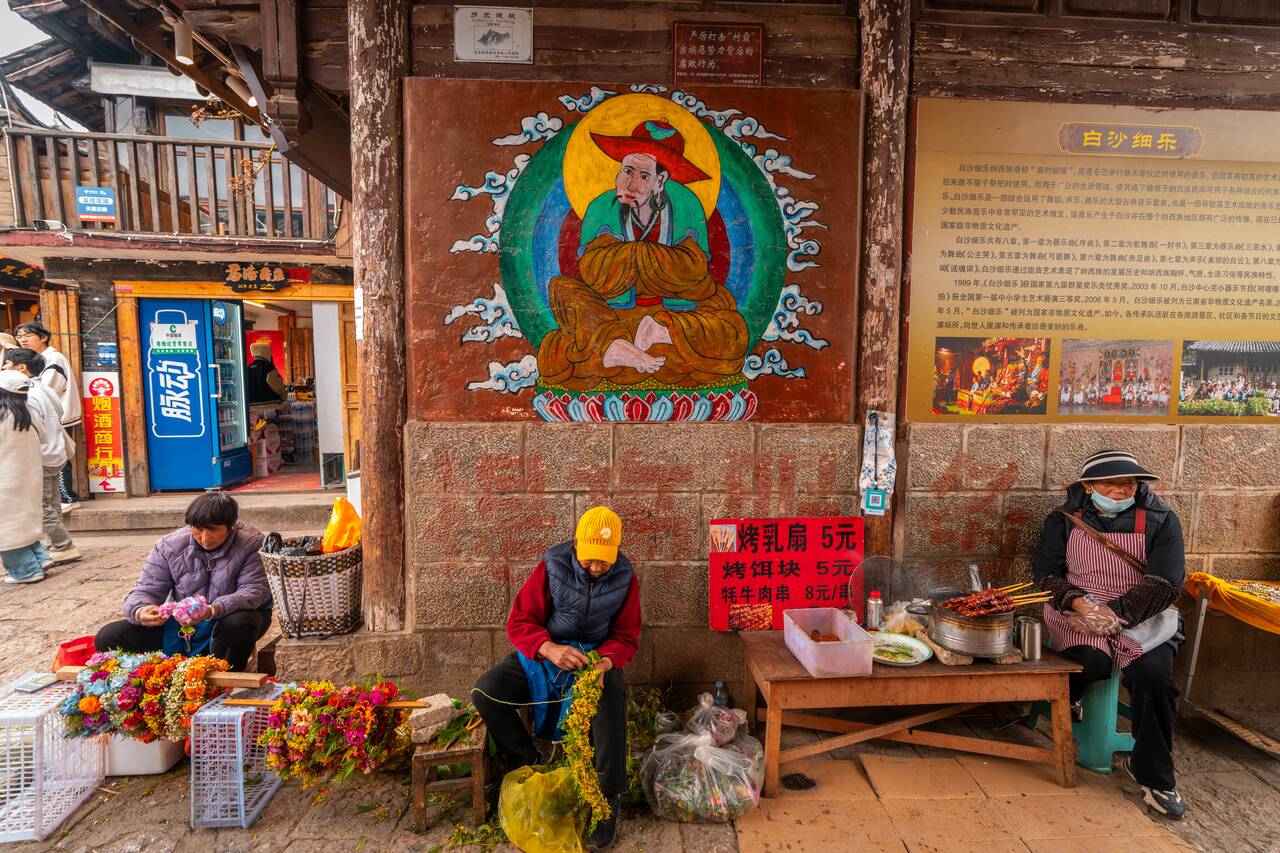
One of the most remarkable features of Baisha is its frescoes. The murals in Dabaoji Palace and Liuli Temple date back to the Ming and Qing dynasties and blend themes from Tibetan Buddhism, Taoism, and the Naxi Dongba religion. While you explore the ancient town, be sure to keep an eye out for them!
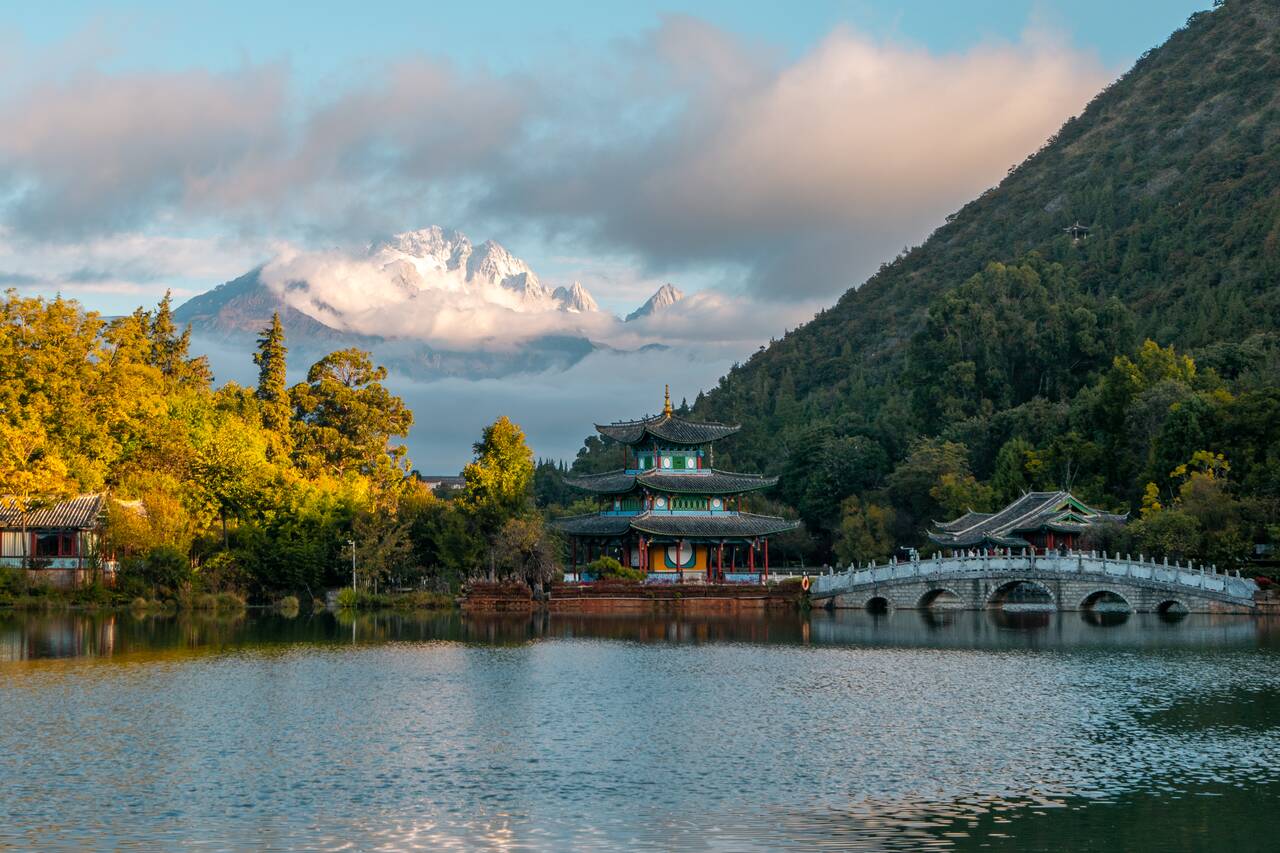
After you are done with Baisha Ancient Town, you can come back to Lijiang Old Town and go check out Black Dragon Pool Park, a beautiful park famous for its crystal-clear lake that perfectly reflects the Jade Dragon Snow Mountain on clear days.
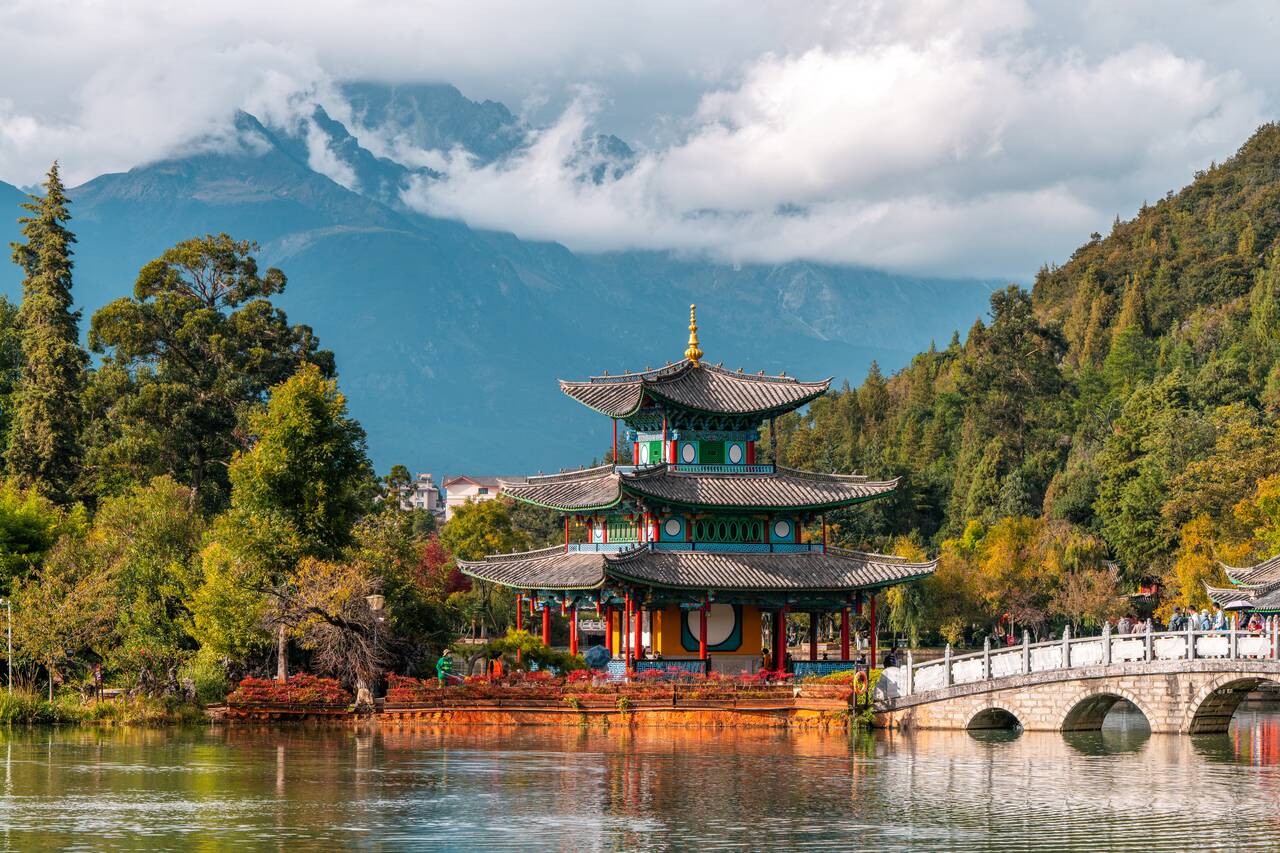
This park is located at the northern edge of Lijiang Old Town and is easily accessible via the riverside walking path that takes you straight from the Old Town to the park. Simply follow the river along the cobblestone street, pass through an underpass beneath a road, and you’ll be greeted by a beautiful green space before the scenery opens up to a stunning lake with Yulong Snow Mountain rising majestically in the background.
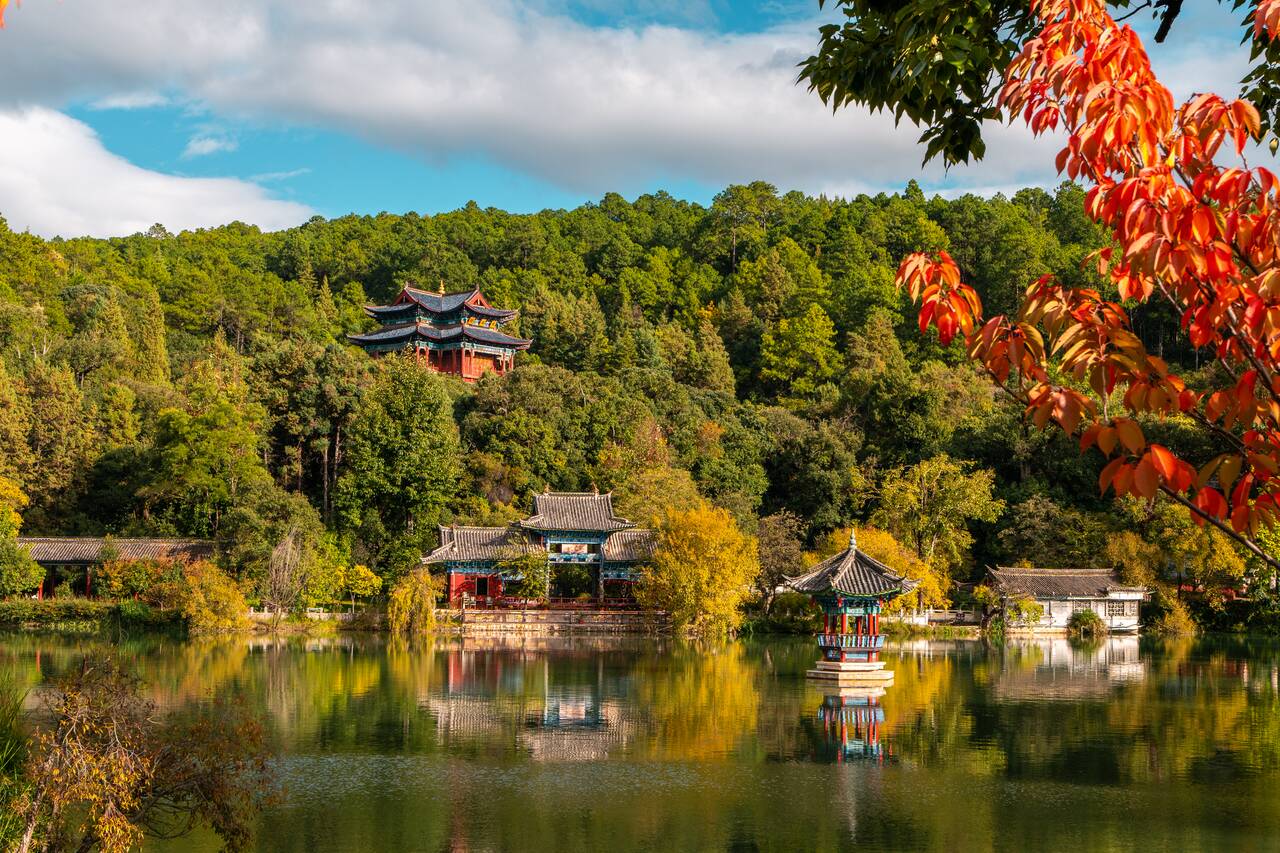
You can enjoy a peaceful evening stroll around the lake and relax at one of the many pavilions before concluding your time in Lijiang. Tomorrow, we will continue our journey to Shangri-La.

Where to Stay in Lijiang?

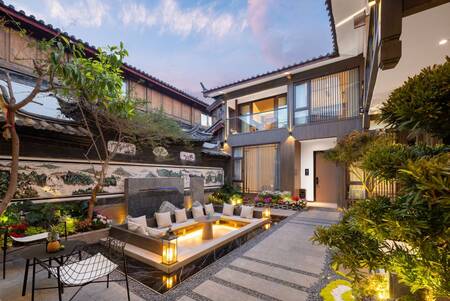
Getting From Lijiang to Shangri-La
From Lijiang, you can catch a high-speed train from Lijiang Railway Station to Shangri-La Railway Station. The ride should take about 1.5 hours and cost 10 USD. You can book the train here.
Day 21-22: Shangri-La (2 Nights)
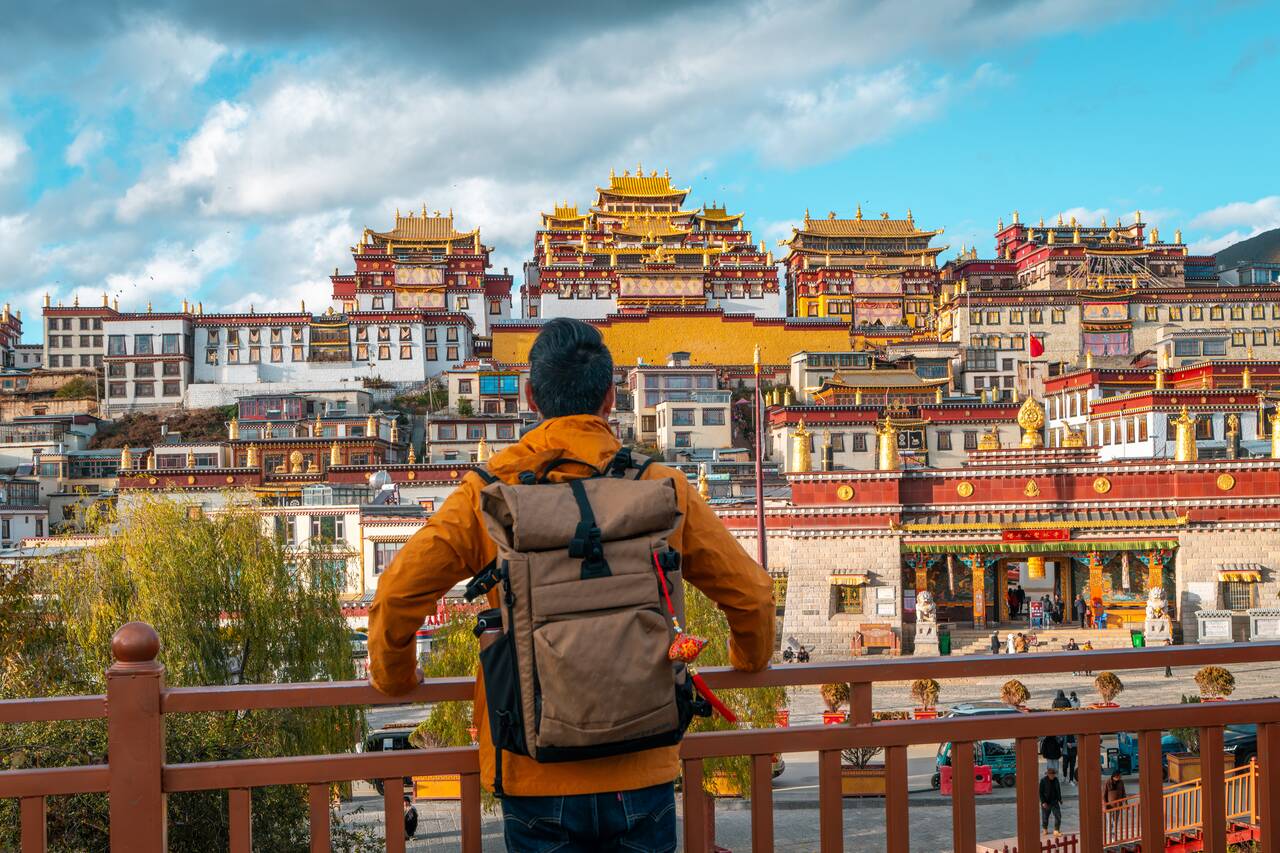
- 📍 Stay: Shangri-La Yunbian View Homestay
- 🕐 Time: 2 Nights
- 📖 Full Guide: How to Get to Yading
Next, we will visit Shangri-La, formerly known as Zhongdian, where Tibetan culture, dramatic landscapes, and centuries-old legends converge. Here, you will start to see architecture and cultural elements that closely resemble those of the Himalayan region, particularly Tibet.
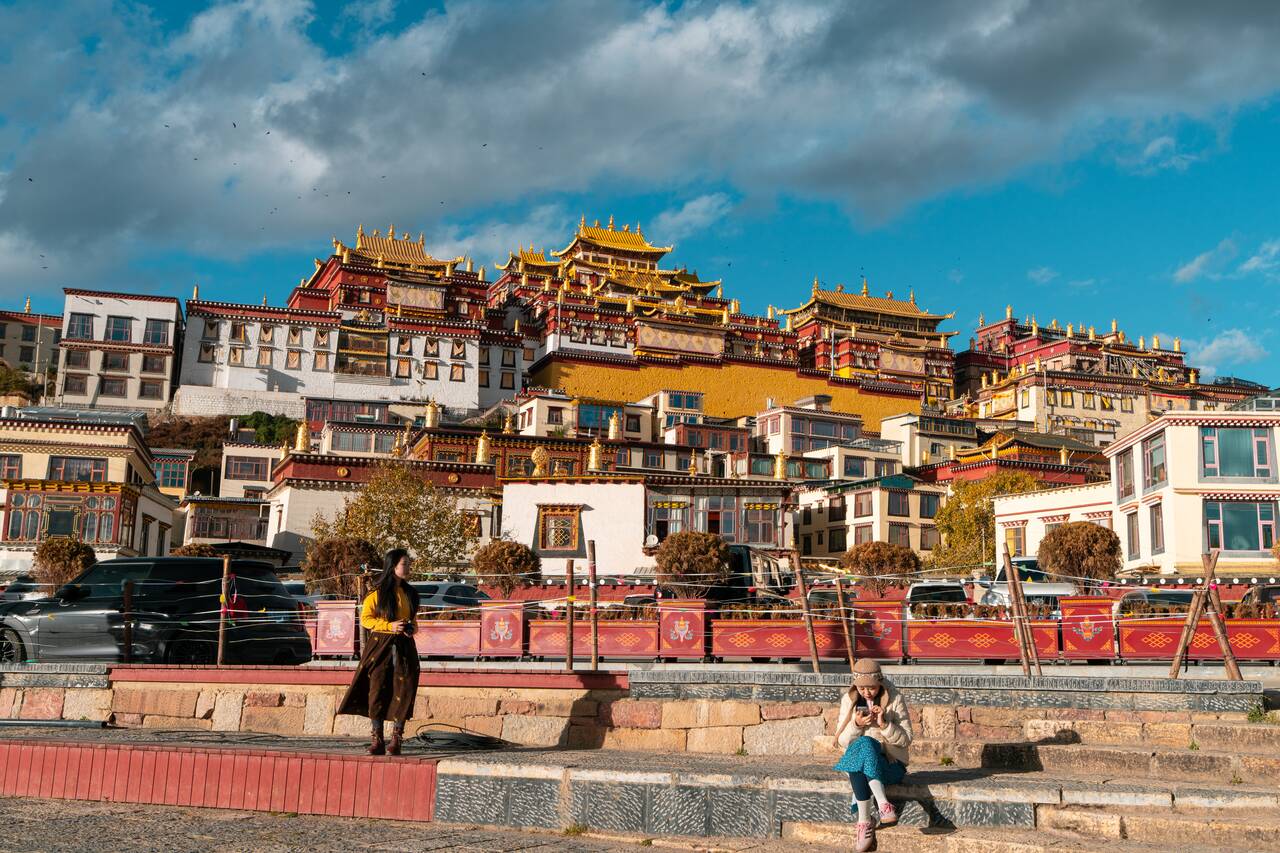
You should arrive in town in the afternoon, which you can then proceed to Songzanlin Monastery, probably one of the most famous landmarks in Shangri-La and one of my favorite places in the city. This beautiful monastery sits about 5 km north from Shangri-La at an elevation of roughly 3,380 meters and is considered the largest Tibetan Buddhist monastery in Yunnan, so much so that some people often refer to it as the "Little Potala Palace".

There are several highlights within the temple complex, which covers more than 16,000 square meters (about 1.6 hectares). This includes the main temple, surrounding halls, courtyards, monks’ quarters, and the connecting paths and courtyards across the hillside, with the main highlights being Zhacang Hall, the main temple at the highest point, Jikang Hall, featuring murals and traditional thangka art, and more.

To get here, you will first have to take a Didi taxi to the Songzanlin Monastery Ticket Office, and then you can get the ticket at the ticket office for 75 CNY per person. The ticket should also include the shuttle bus taking you to and from the monastery entrance. Once you have the ticket, you can proceed to the shuttle bus, and it will take you there in 10 minutes.
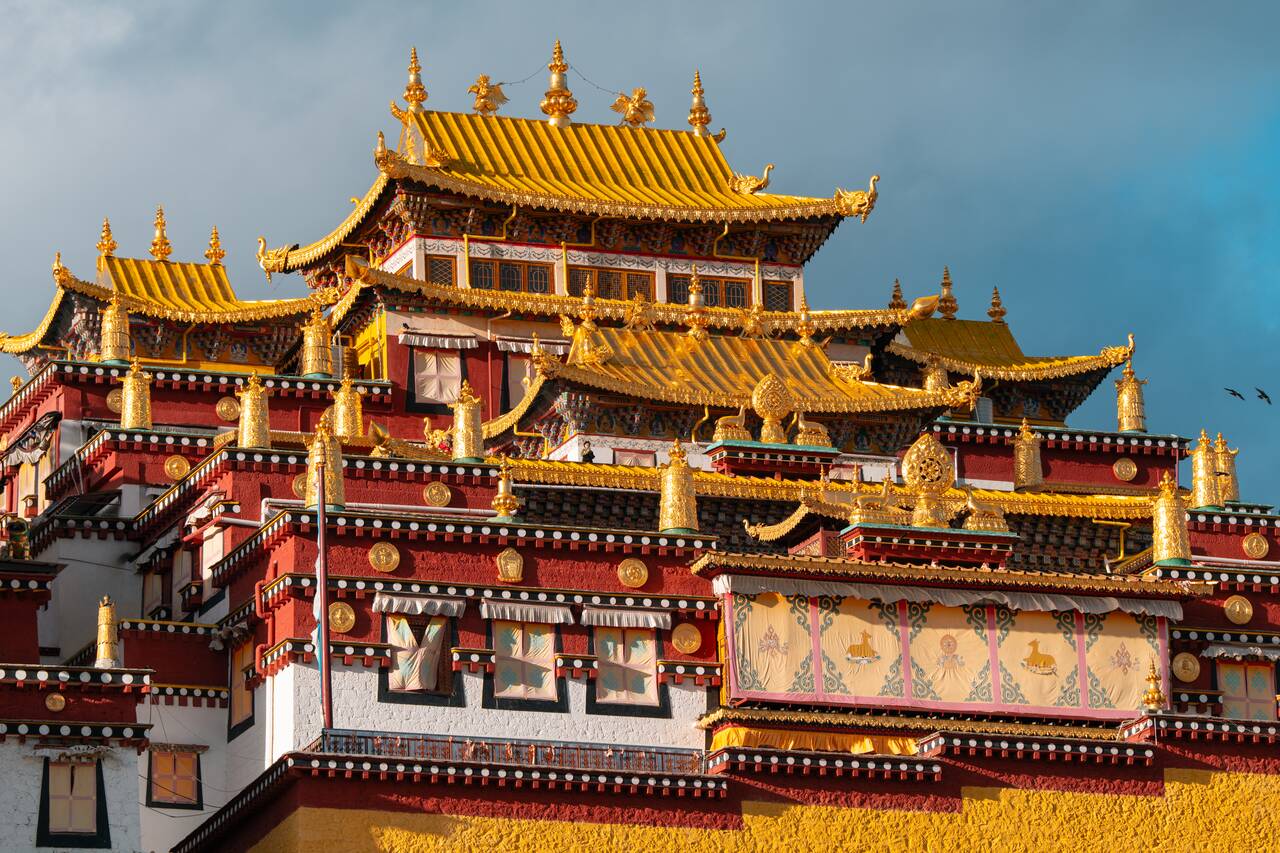
Once you arrive, you can take photos of the monastery from the elevated platform outside and hike up to the top of the monastery for an incredible view of the surroundings. With so many buildings to see and viewpoints to visit, you can expect to spend at least 1.5 to 2 hours here. The monastery is open from 7:40 AM to 6:30 PM with the last admission at 4:00 PM, so be sure to go there before 4 PM.
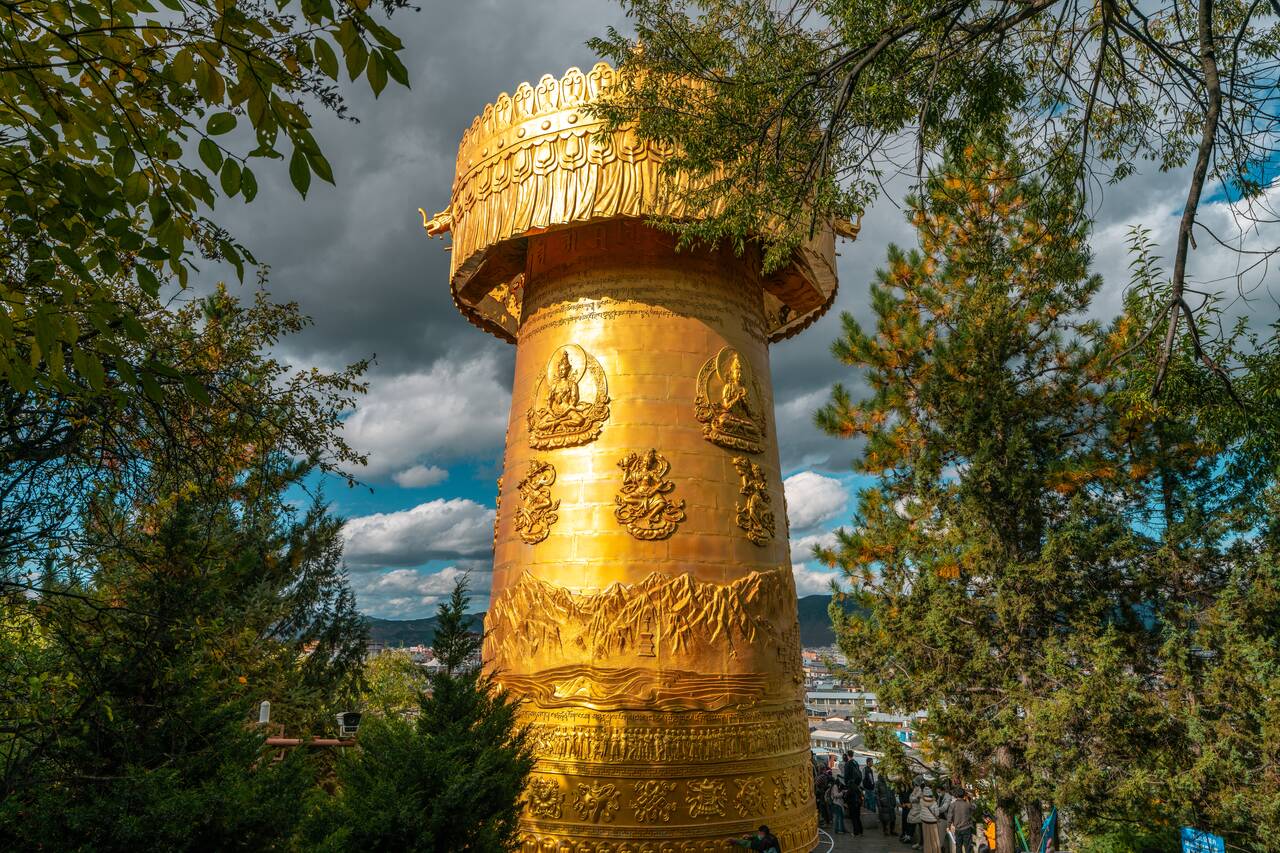
After you are done with the monastery, you can come back to Dukezong Ancient Town, and explore some of its tourist attractions like Guishan Park and one of the most well-known landmarks of all, the Great Prayer Wheel, the largest prayer wheel in the world.

Because of its size and weight, turning the wheel is not a solo task. I tried it myself, and trust me, it will humble you instantly, as it did for me 🤣, since I couldn’t even move it alone. Moving the wheel requires several people, and you can join in when there are enough participants.
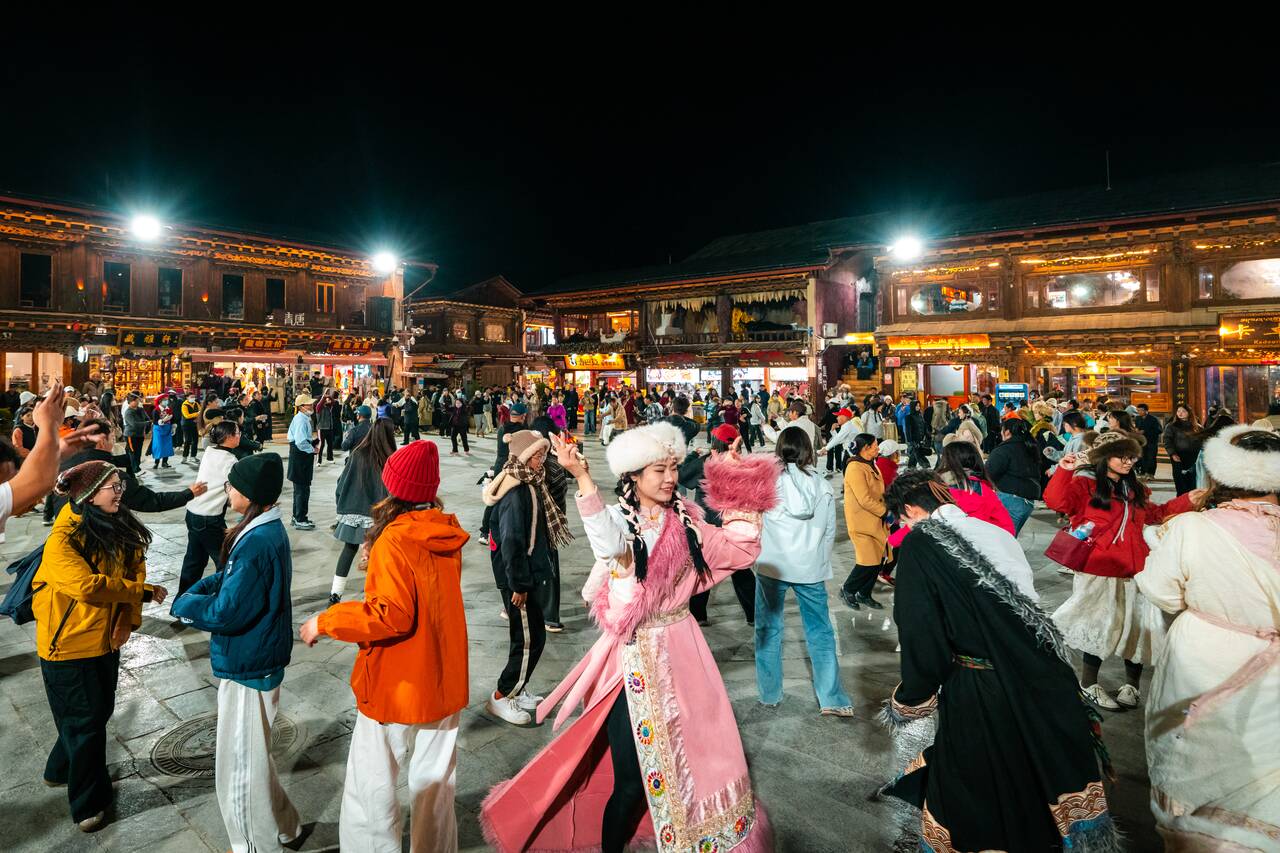
One of the stranger, albeit extremely cool, traditions you will see here, as well as in other villages around this region of China, is that locals like to gather together at night around town squares like Sifang Street Square and Moonlight Square, and perform guōzhuāng wǔ, a traditional Tibetan-style circle dance.
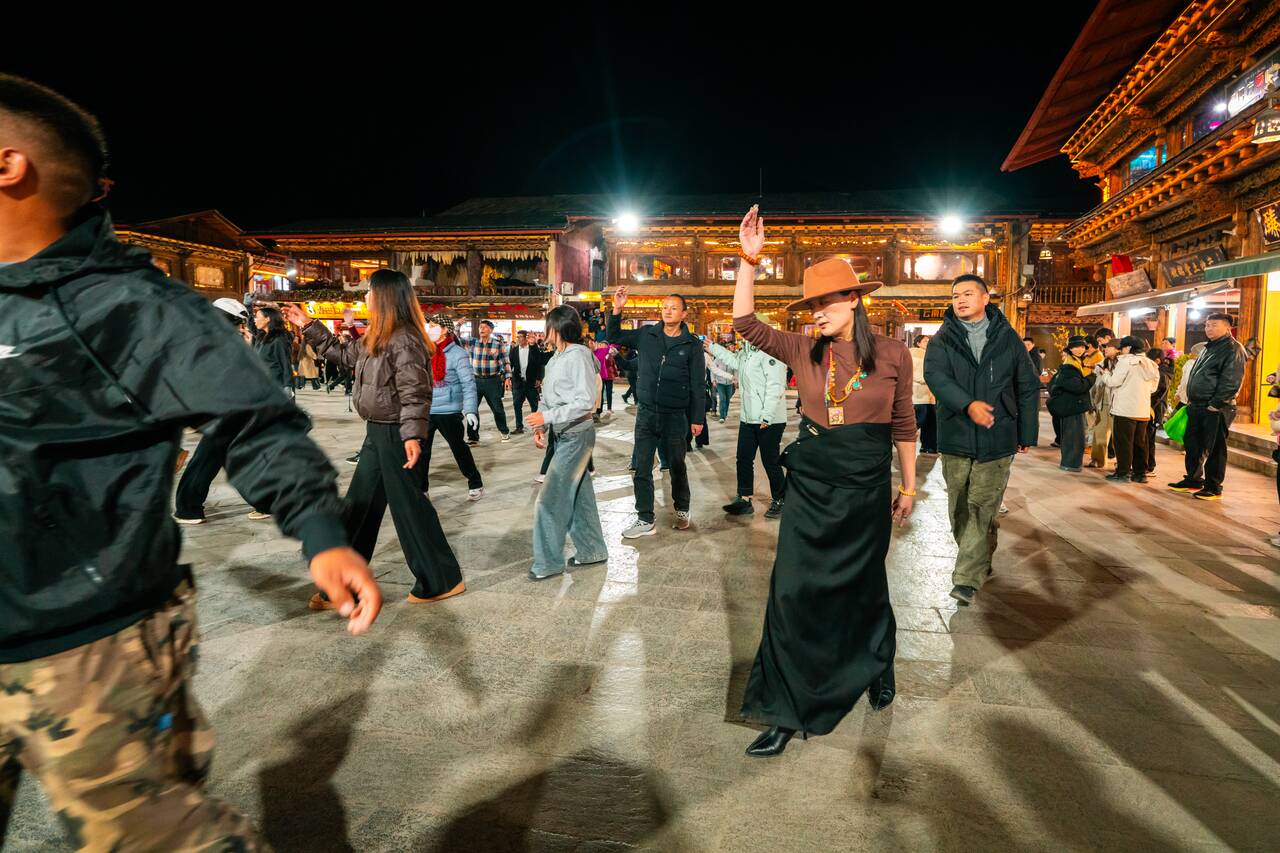
What's cool is that this dancing is not a staged tourist performance, but part of the town's evening social ritual. It reflects a strong sense of ethnic unity, with people from various local groups, Tibetan, Han, and others, celebrating together. You can join in and dance with the locals, or simply observe and enjoy the lively atmosphere before ending your day.

The next day, you can spend an entire day and go explore Potatso National Park, also known as Pudacuo National Park. This breathtaking nature reserve is located about 22 km northeast of Shangri-La at an elevation of roughly 3,500 meters, where beautiful alpine lakes, wetlands, forests, and grasslands are waiting for you to explore.
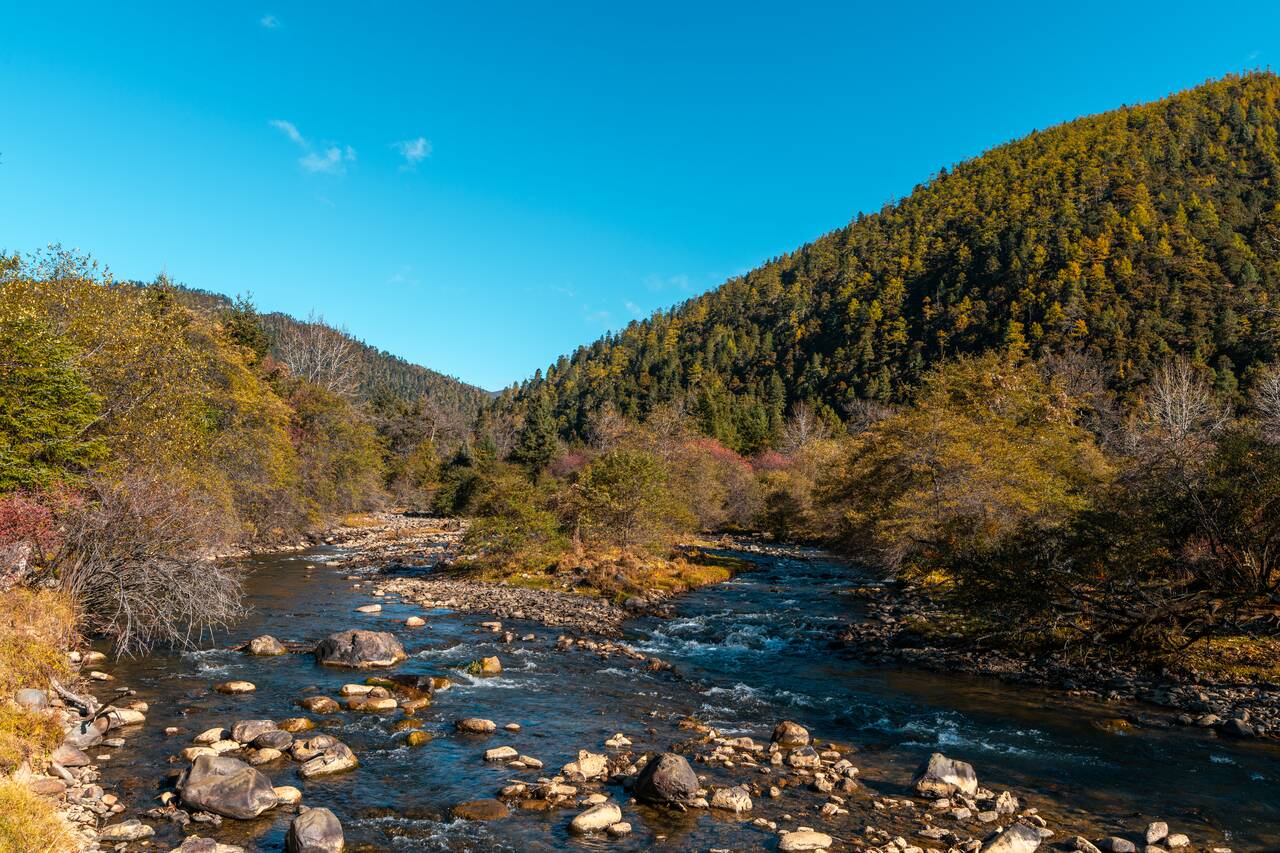
There are three main stops inside the park, with the first being the Youyou Budao Trail, a riverside walking path. While it may not feature any major attractions, it is a peaceful way to escape the crowds and offers the chance to spot yaks and horses along the route.

It's not a must-stop, but if you have time to spare and you want to be around peaceful nature, it is worth it. The trail takes about 45 minutes before you arrive at a man-made waterfall where you can catch the shuttle bus to the next stop.
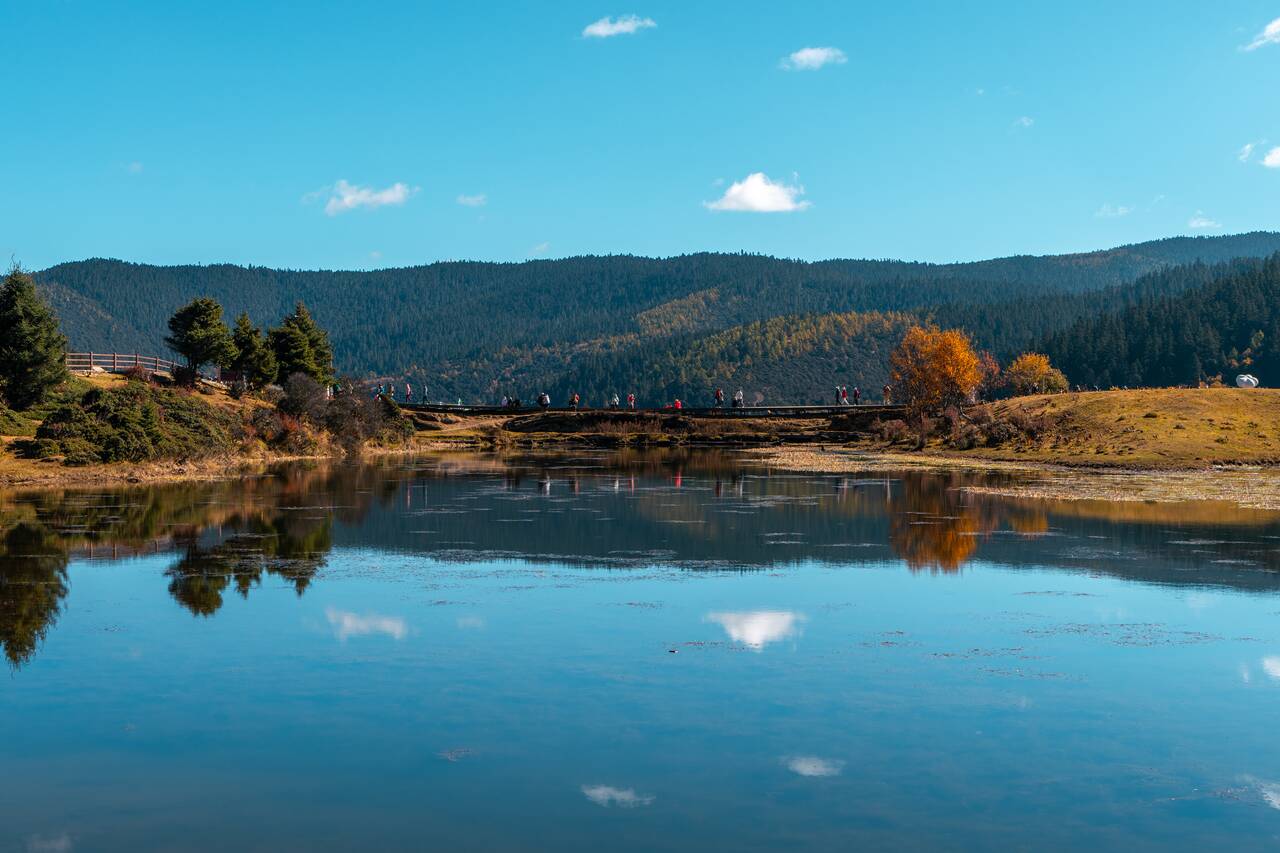
The second stop is one of the park’s most stunning features, which is Shudu Lake, an alpine lake perched at around 3,705 m above sea level. The lake is surrounded by raised wooden boardwalks that you can stroll around and enjoy the peaceful nature and mountain views.
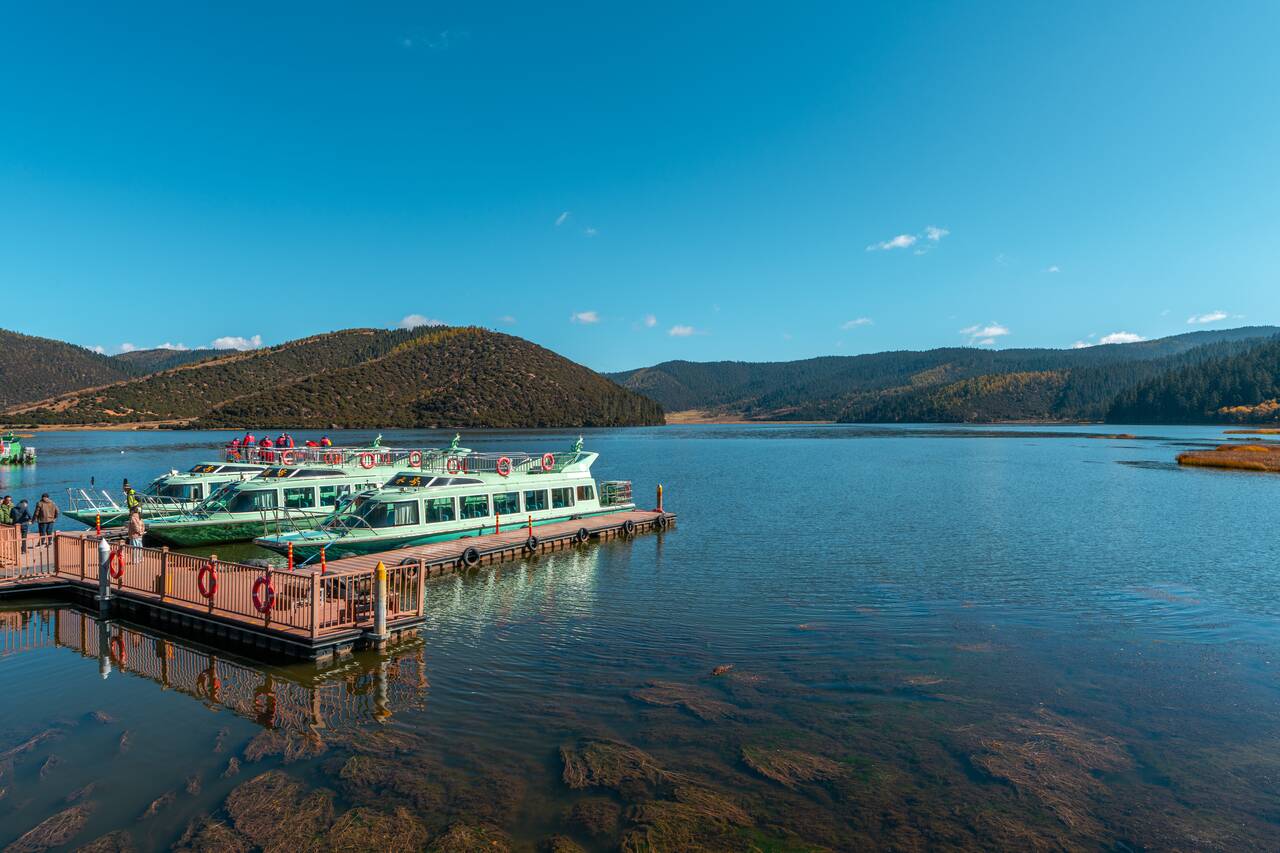
At the lake, you can either choose to hike around the lake for 2 hours to the next stop or take a 15-minute boat ride across the river and enjoy the stunning view at your own leisure. The boat should cost around 50 CNY extra while the hiking is free, and you get to see some of the rare and unique flora and fauna along the way.
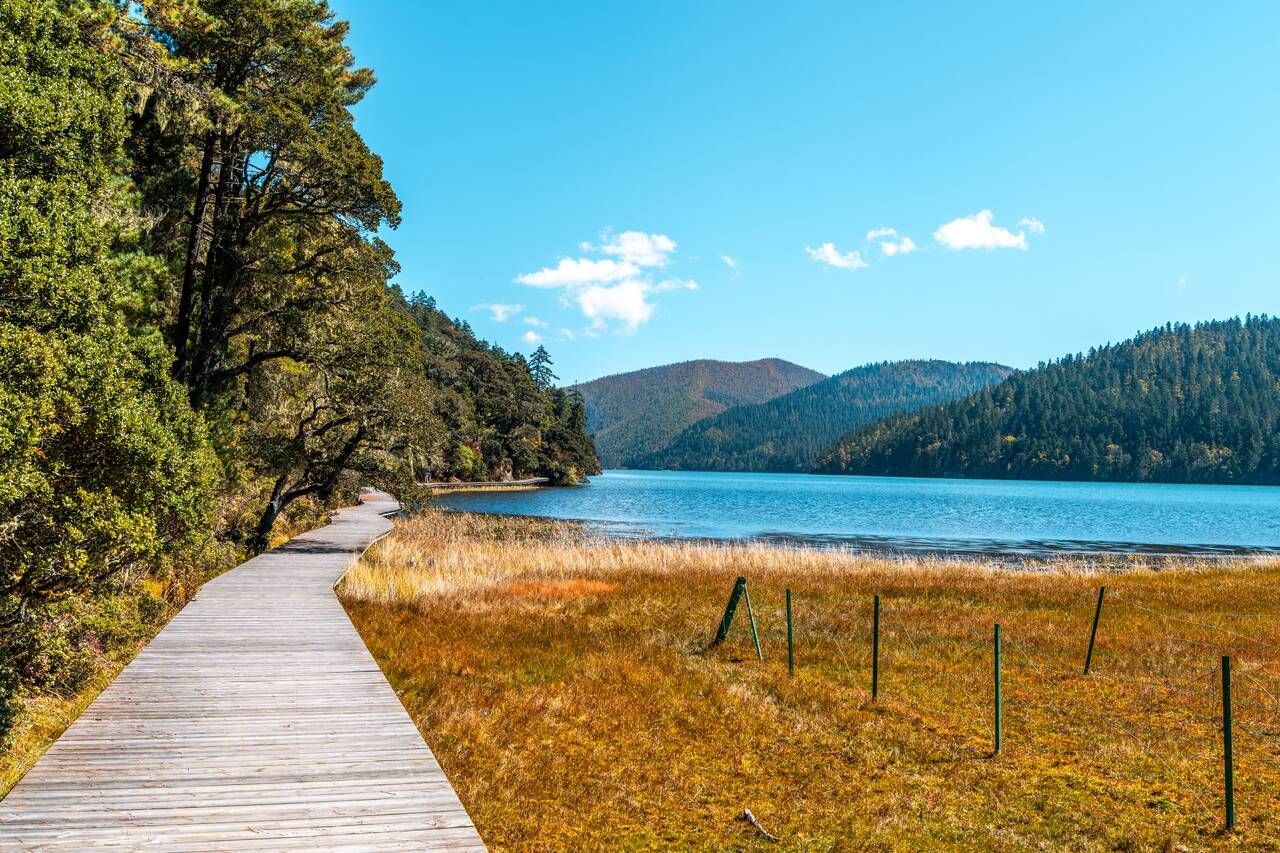
The last stop is Bitahai Lake. The bus will need to backtrack to the entrance and take another route around the mountain, so be sure not to get off at the first stop. Once you arrive, you will walk along an elevated walkway for about 15 minutes to reach the lake.
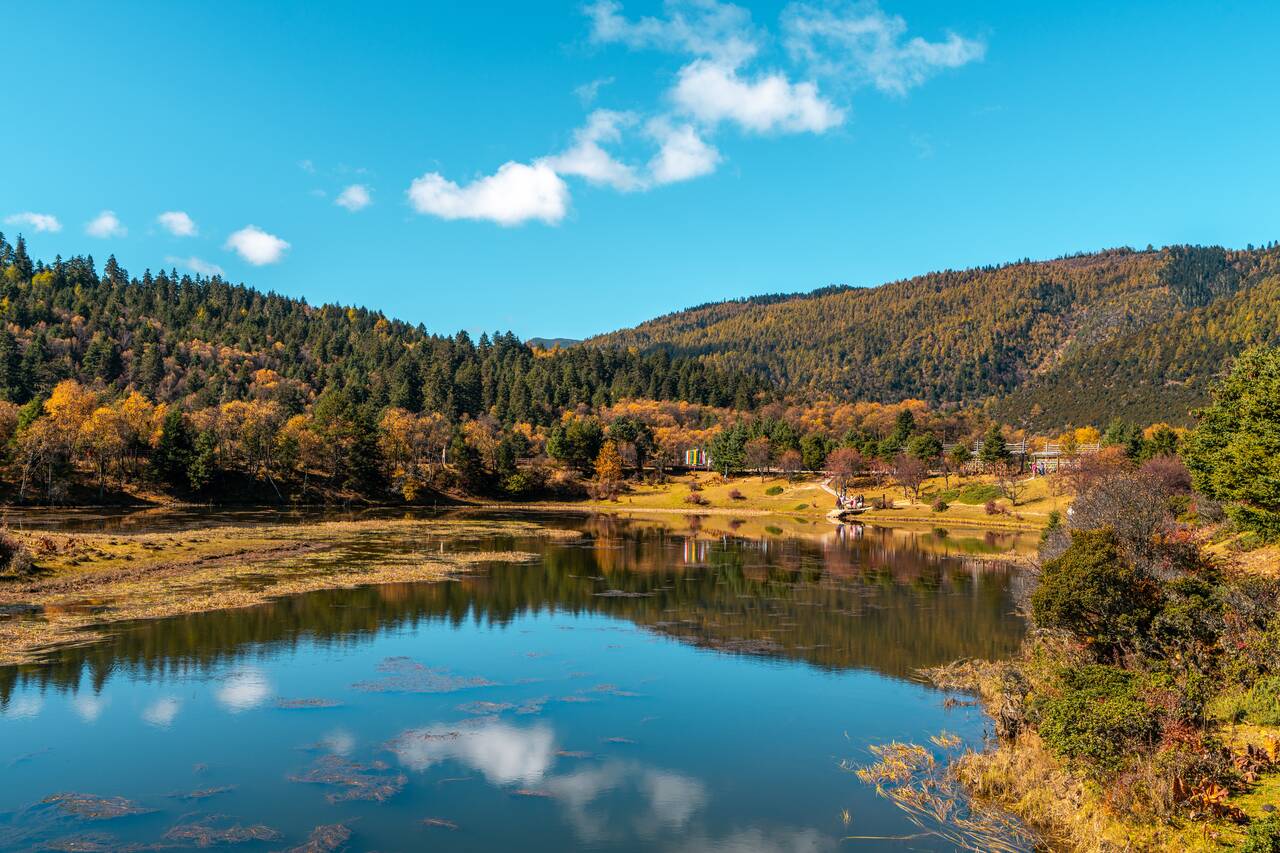
To get to and from Potatso National Park, you will need to take the scenic shuttle bus service, which you can book here. The shuttle costs around 243 CNY per person. Once you receive your email receipt, you must exchange it at the scenic bus stop located here, where the staff will direct you to the correct bus to the park. Buses depart from 8:40 AM to 1:00 PM at roughly 30-minute intervals, and return trips from Potatso leave after 1 PM from the same location they drop you off, every 30 minutes.
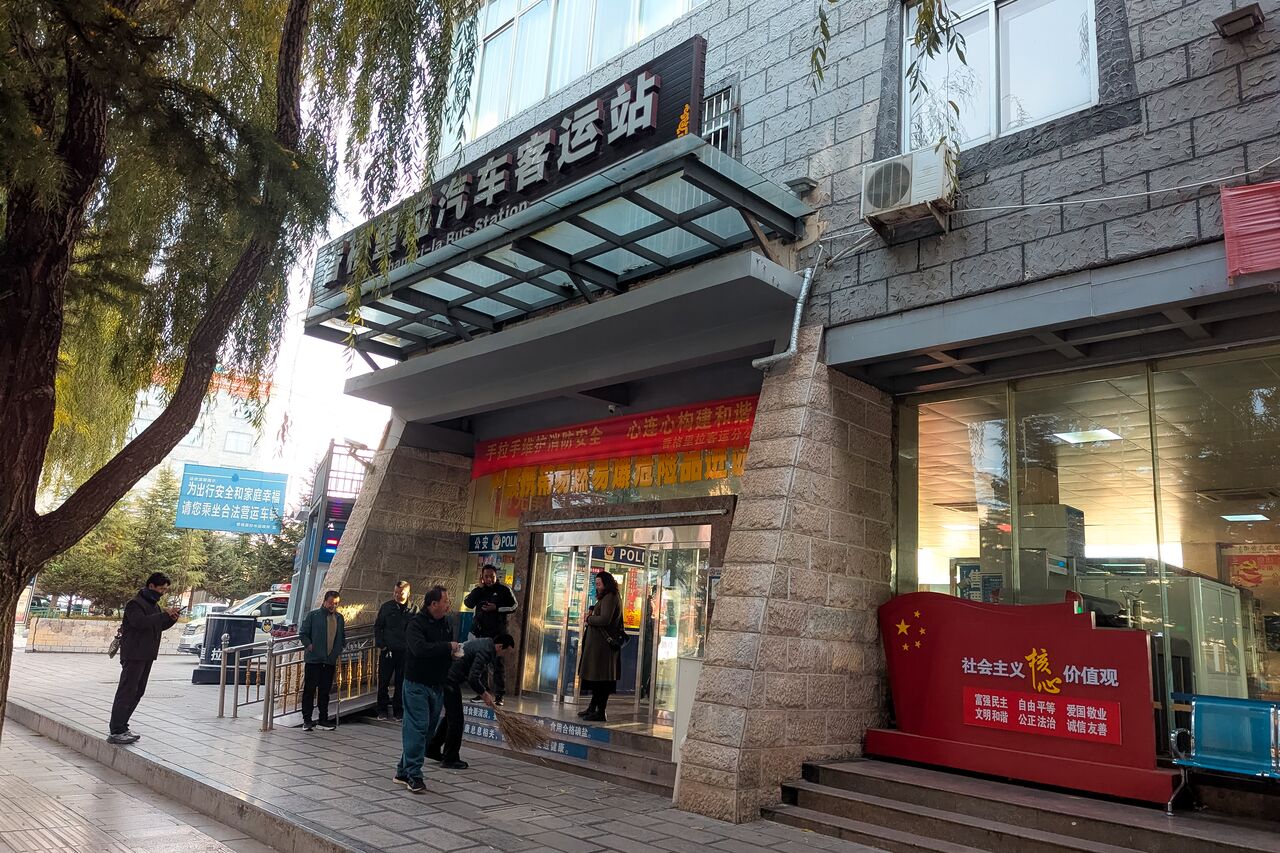
After you are done, you should be back in Shangri-La by 3 PM. I recommend heading to the Shangri-La bus station to purchase a ticket to Yading for the following day. These tickets cannot be booked online unless you are a local, so be sure to get yours in advance, as we will be leaving early the next morning.

Where to Stay in Shangri-La?

Getting From Shangri-La to Yading
From Yunnan's Shangri-La City, you will have to go to the bus station the day prior to get the physical ticket. There should be 2 buses leaving in the morning and the afternoon, and it should cost around 21 USD. I got the one at 8:20 AM, but there should also be one at around 2 PM.
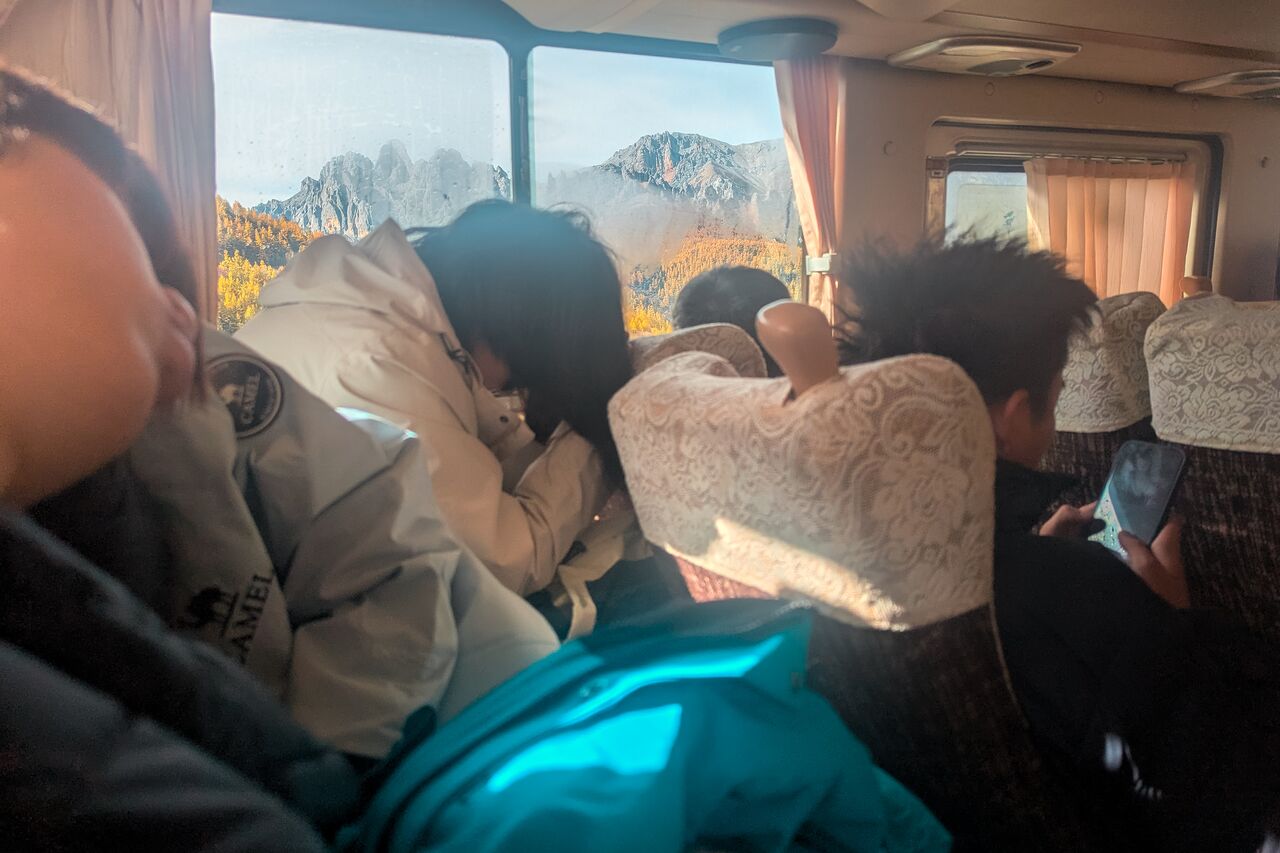
The journey takes about six hours, with one toilet break roughly an hour before arrival, so be sure to pack some food for the journey and avoid drinking too much! When I took the bus, it was jam-packed, and I was seated at the very back, which was hella shaky at times since parts of the road were unpaved and winding. I was fine, but my seatmate wasn’t doing so well, spending much of the time with a plastic bag at hand 😅. If you have a weak stomach, avoid sitting at the back!
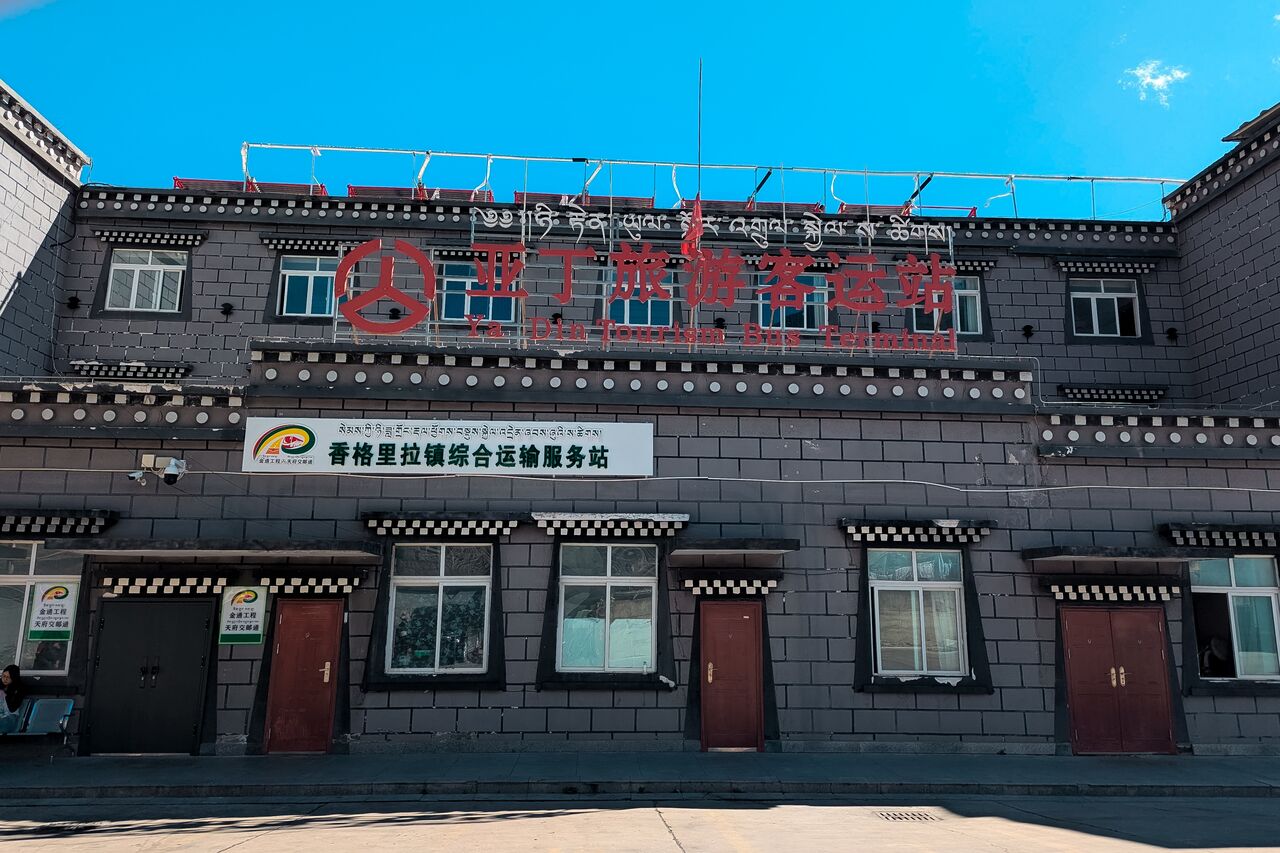
After about 6.5 hours, you should arrive at Yading Bus Station around 2:30 PM, and you should be able to walk to your accommodation from here.

Day 23-24: Yading (2 Nights)
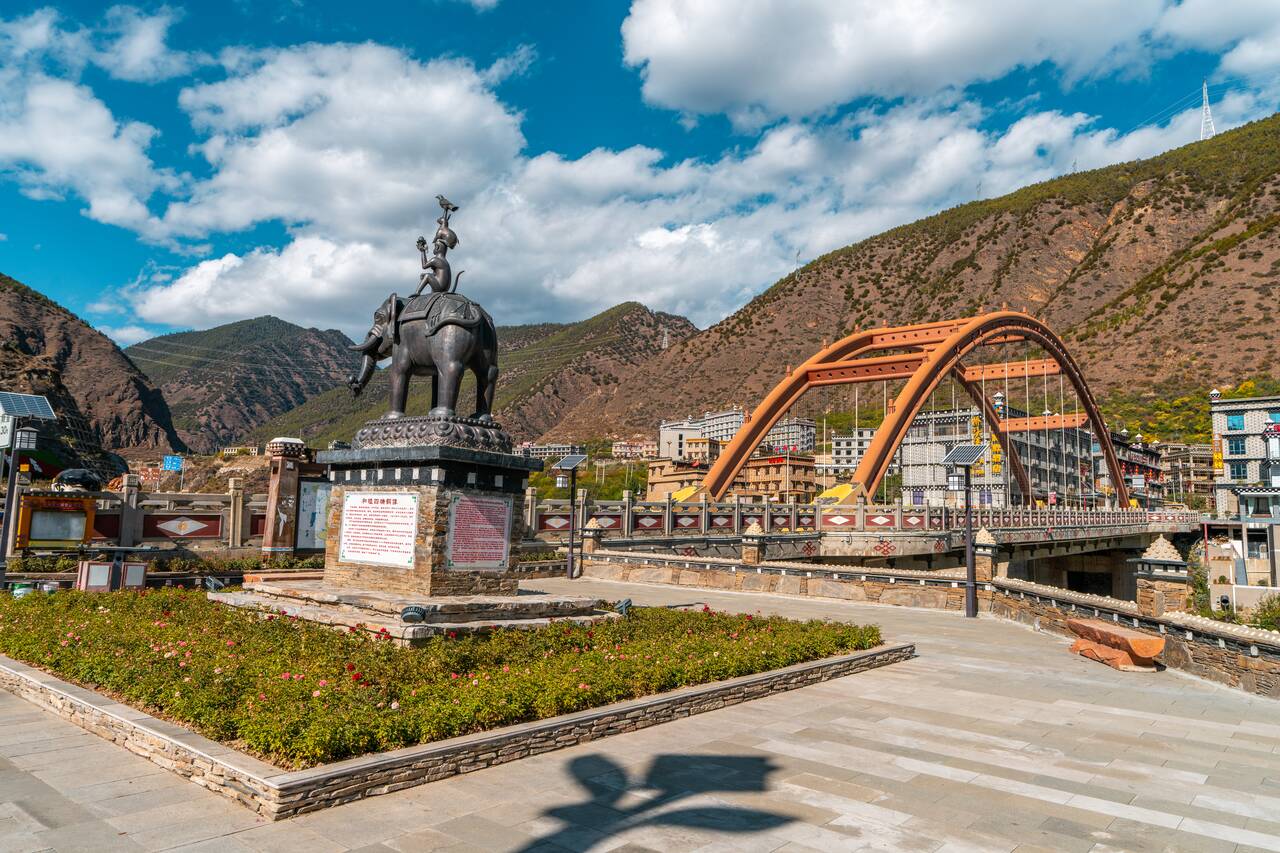
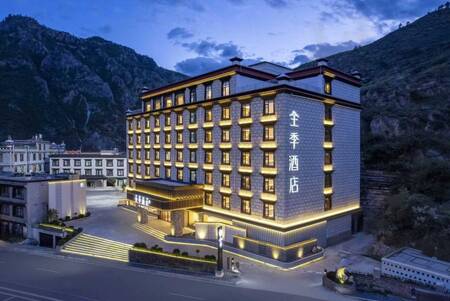
- 📍 Stay: Baiyue Mountain Lodge Hotel (Shangri-La Town Daocheng Yading Scenic Area)
- 🕐 Time: 2 Nights
- 📖 Full Guide: Visiting Yading: A Complete Travel & Hiking Guide
Out of all the places on this itinerary, Yading is my favorite. The area is best known for its snow-capped peaks, open grasslands, and pristine lakes that are perfect for hiking. After arriving in Shangri-La (Riwa), not to be confused with the Shangri-La we visited in Yunnan, you can settle in and rest for the remainder of the day. After a 6.5-hour bus ride, you will definitely need it. Plus, tomorrow we will be hiking all day from morning until evening, so you'll want to conserve as much energy as possible.
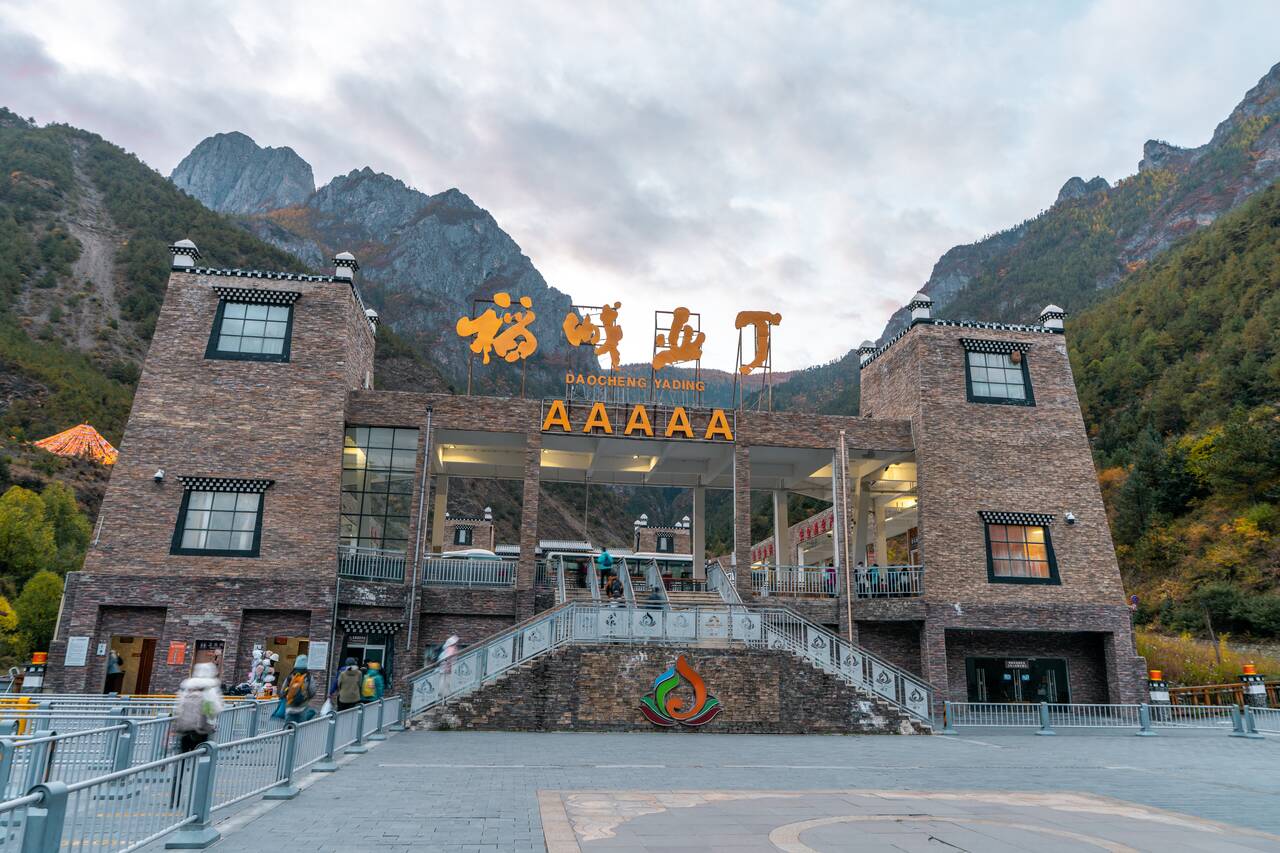
The next morning, you can wake up at 6 AM and walk to the main road to find a taxi to Yading Nature Reserve. You should be able to find a carpool taxi in no time as they will be looking for people to fill up their car before leaving for the park. The ride should take about 15 minutes and cost 10 CNY per person. The taxi should drop you off at the ticket office at the entrance. Be sure to book Yading in advance as they have recently introduce a daily limit of 15,000 visitors. You can book the ticket on Trip app.
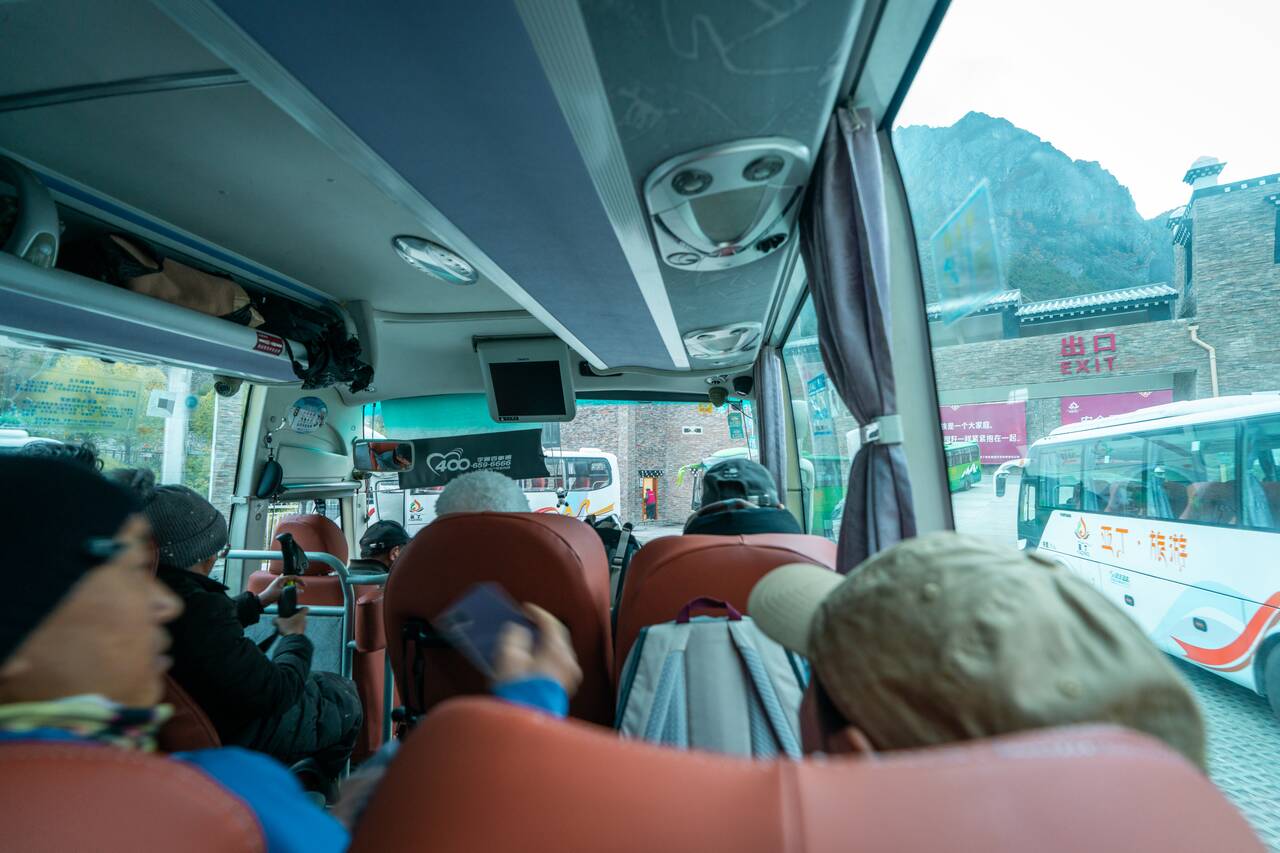
You will have to pay 266 CNY for the entrance ticket, which includes the mandatory one-day unlimited scenic bus rides. If you get there in the morning, there shouldn't be any queue and you should be on the shuttle bus on your way to the trailhead in no time. While on the bus, be sure to sit on the left side to enjoy the stunning views along the way.
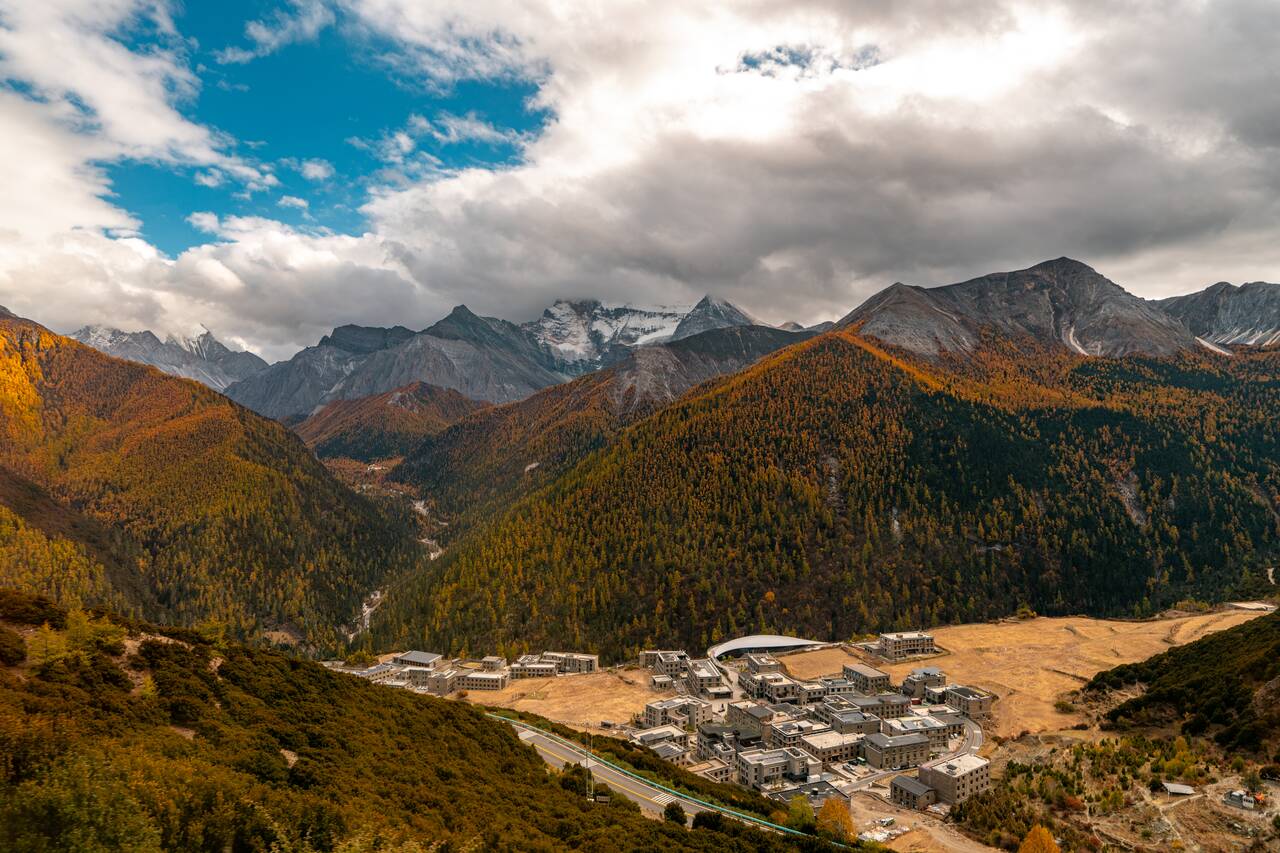
The journey should take about 45 minutes, passing through Yading Village and ending at Zhaguanbeng. From there, you can walk about 20 minutes to reach Chonggu Grasslands and the temple, where you will find a beautiful Tibetan temple and a hiking trail leading to Pearl Lake, another scenic attraction.
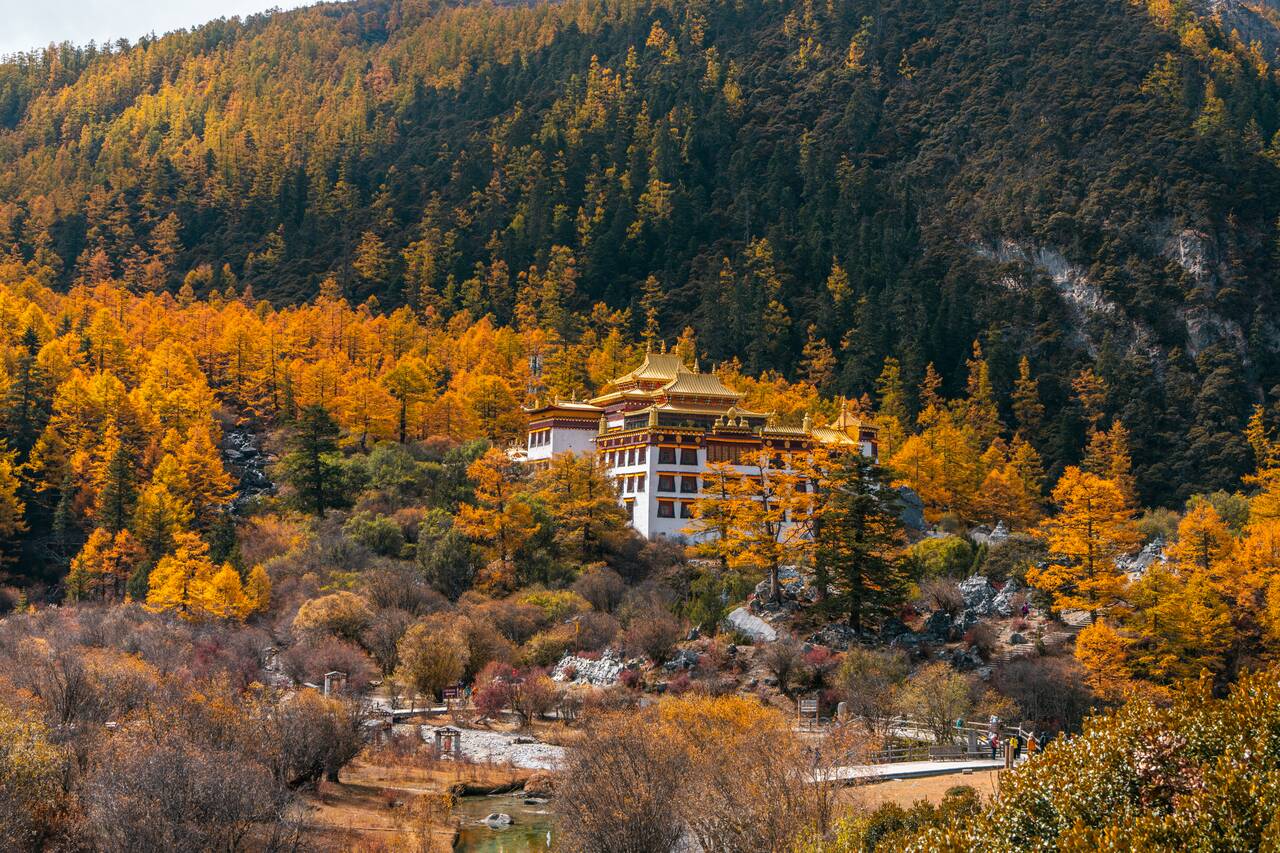
You can save this area for the afternoon on your way back and go straight to the electric shuttle, buy a round-trip ticket for 70 CNY, and set off for Luorong Cattle Farm.
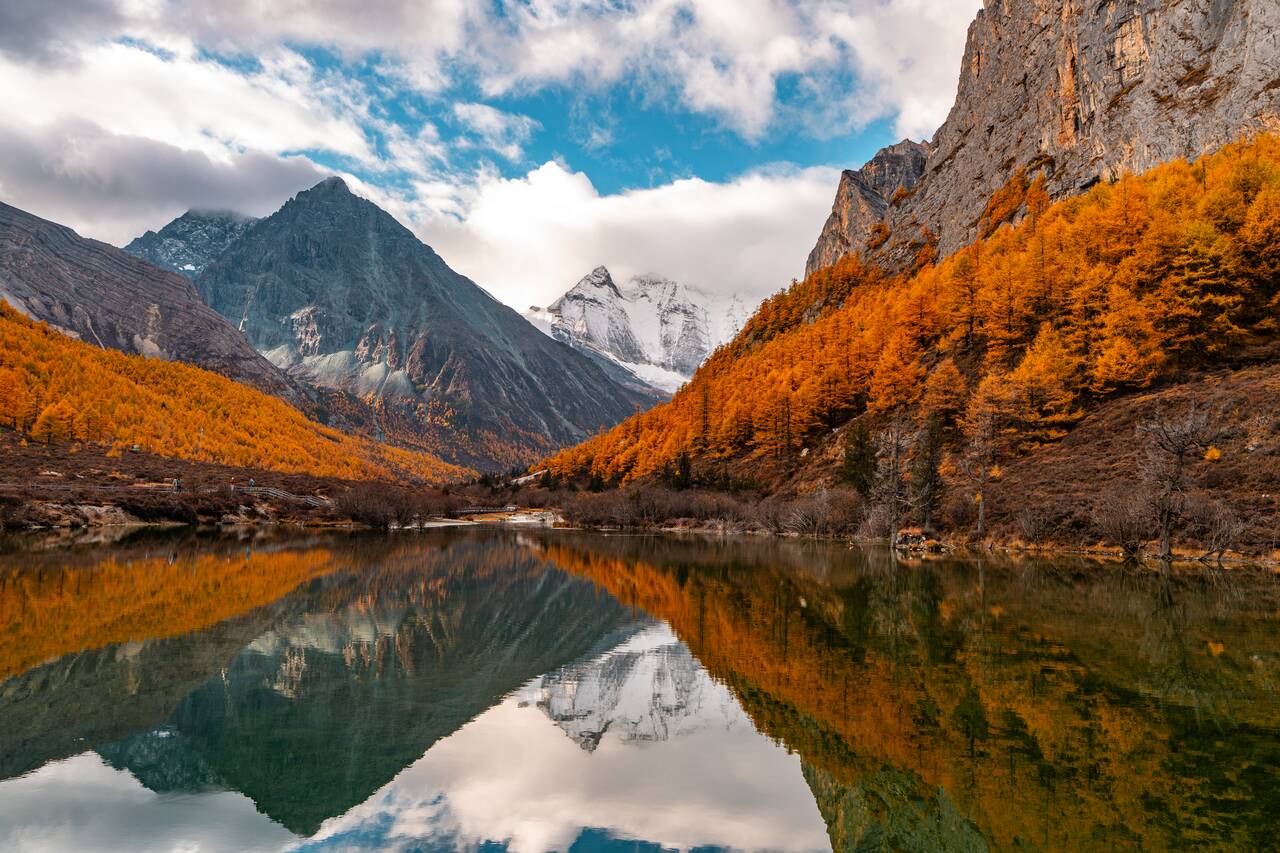
There is also another stop at Shengshui Lake, a great photo spot where you can see the snowy peaks of Yading. In the morning, the water is usually calm, making it a perfect place for a quick stop before continuing to Luorong Cattle Farm. You can get off here to take a few photos and then catch the next shuttle to Luorong Cattle Farm when you’re done.
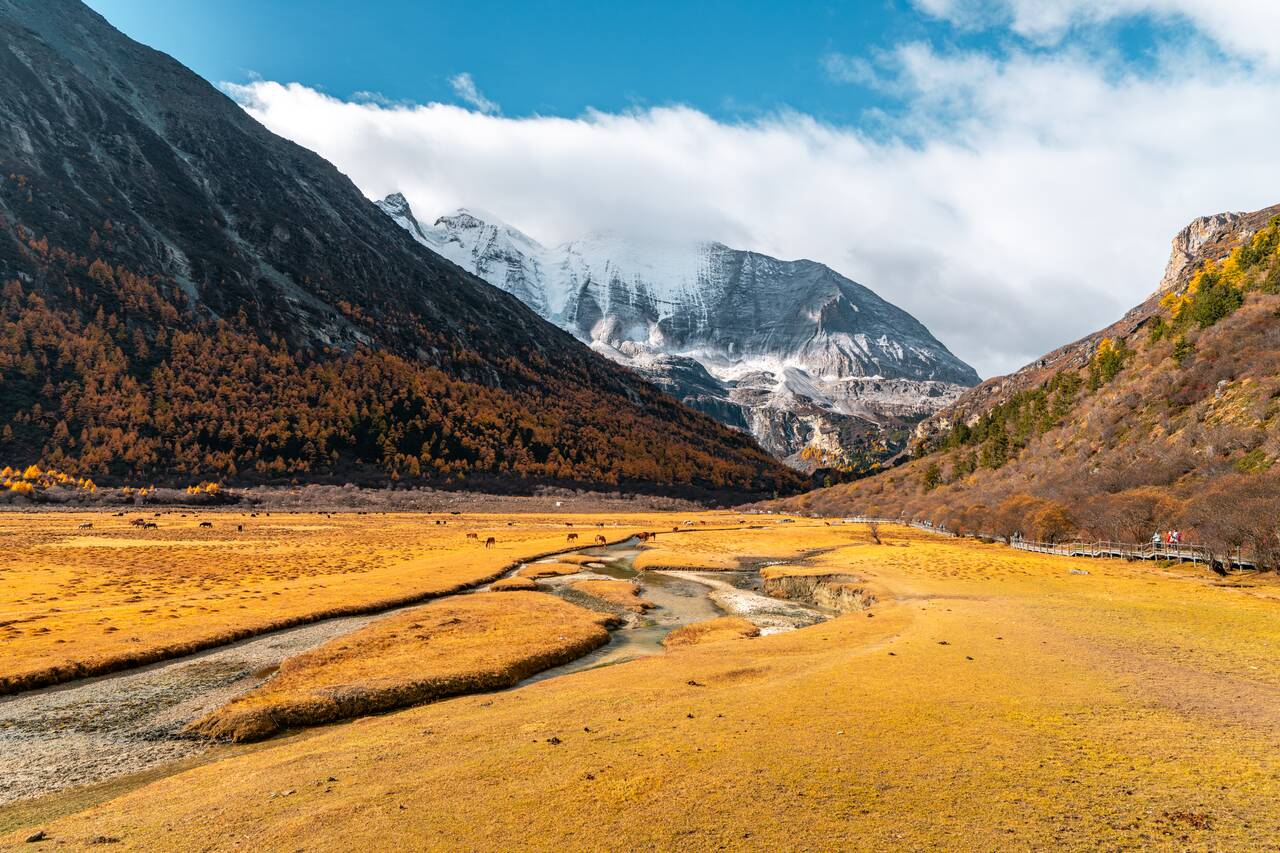
Once you arrive at Luorong Cattle Farm, you will be greeted by beautiful open grasslands where horses and cattle roam freely, with the snow-capped peaks of Yading towering all around.
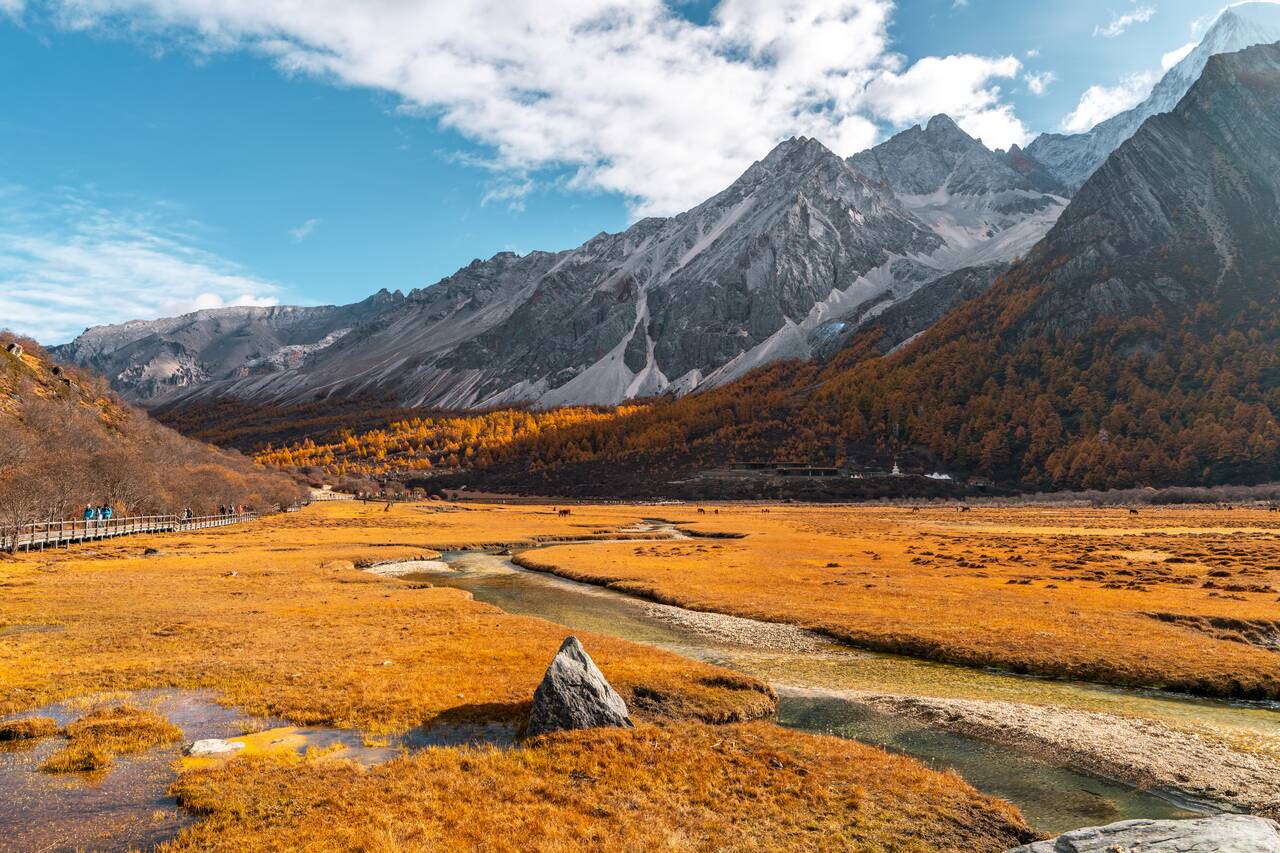
By the time you reach this area, the sun should be high enough to shine directly on the grasslands. Depending on the time of year, you will see either lush green fields or golden-colored grass beautifully illuminated by the sun. I visited in October, and it was incredible with golden-colored grass all over!
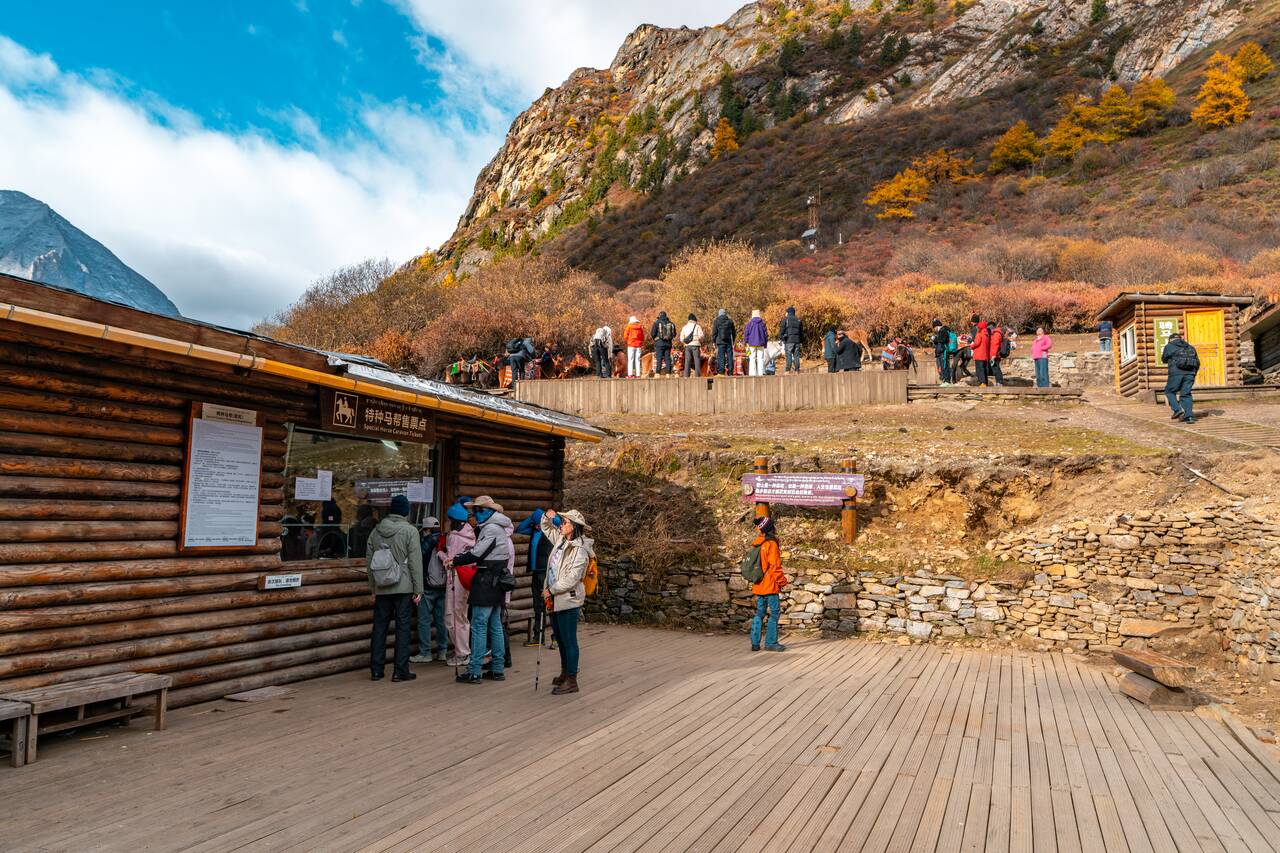
From Luorong Cattle Farm, you have the option to begin hiking the main trail or hire a horse for 300 CNY per person to take you to Gongacuo Lake, which is roughly halfway to Milk Lake and Five-Color Lake. In my opinion, this is unnecessary, as the trail from the cattle farm to Gongacuo Lake is flat, scenic, and enjoyable, and you would miss much of it if you take the horse.
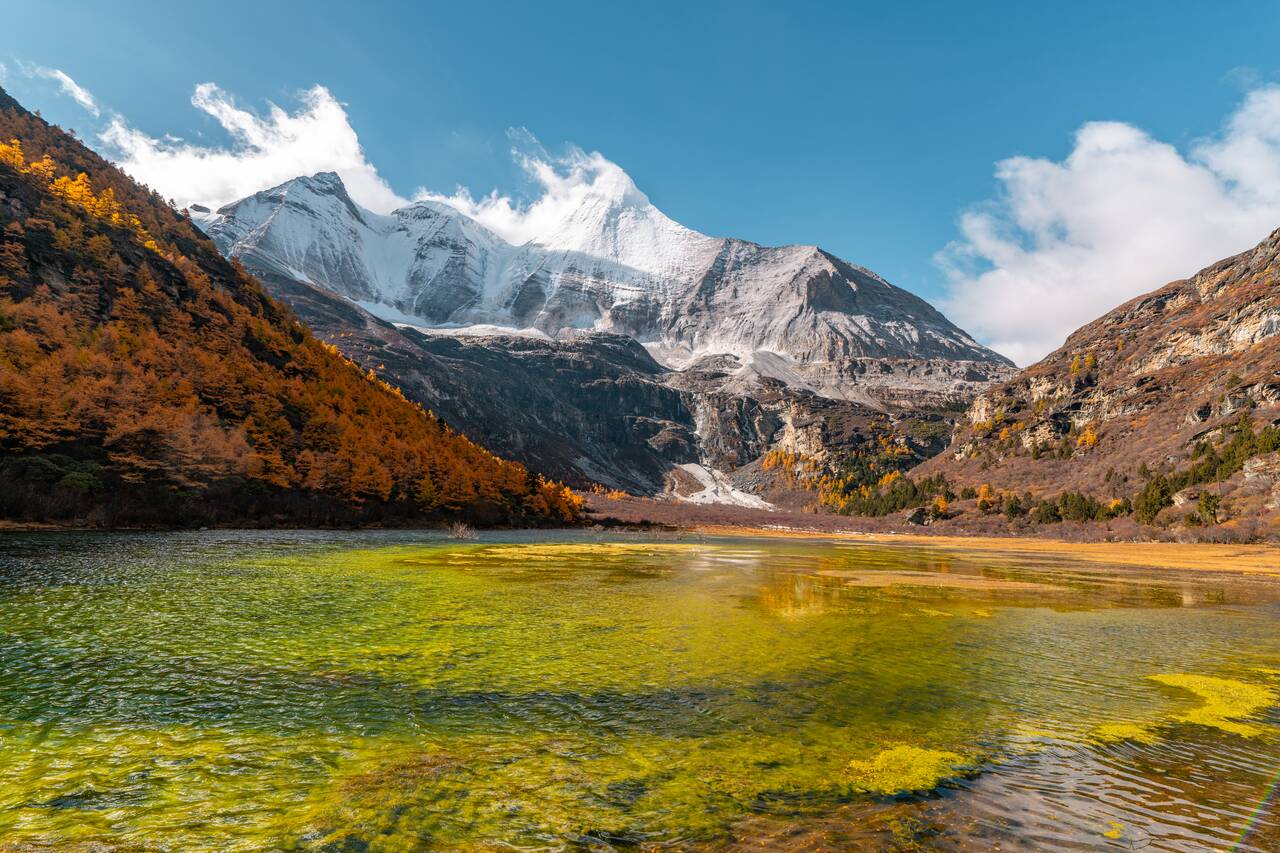
Gongacuo Lake is where you can capture the iconic postcard shot of Yading’s snow-capped mountains, featuring the almost-perfect triangular peak reflected in the beautiful green lake below. The hike from the cattle farm to Gongacuo Lake takes about 45 minutes along an elevated boardwalk. The views along the way are absolutely breathtaking, so be sure to take your time and enjoy them.
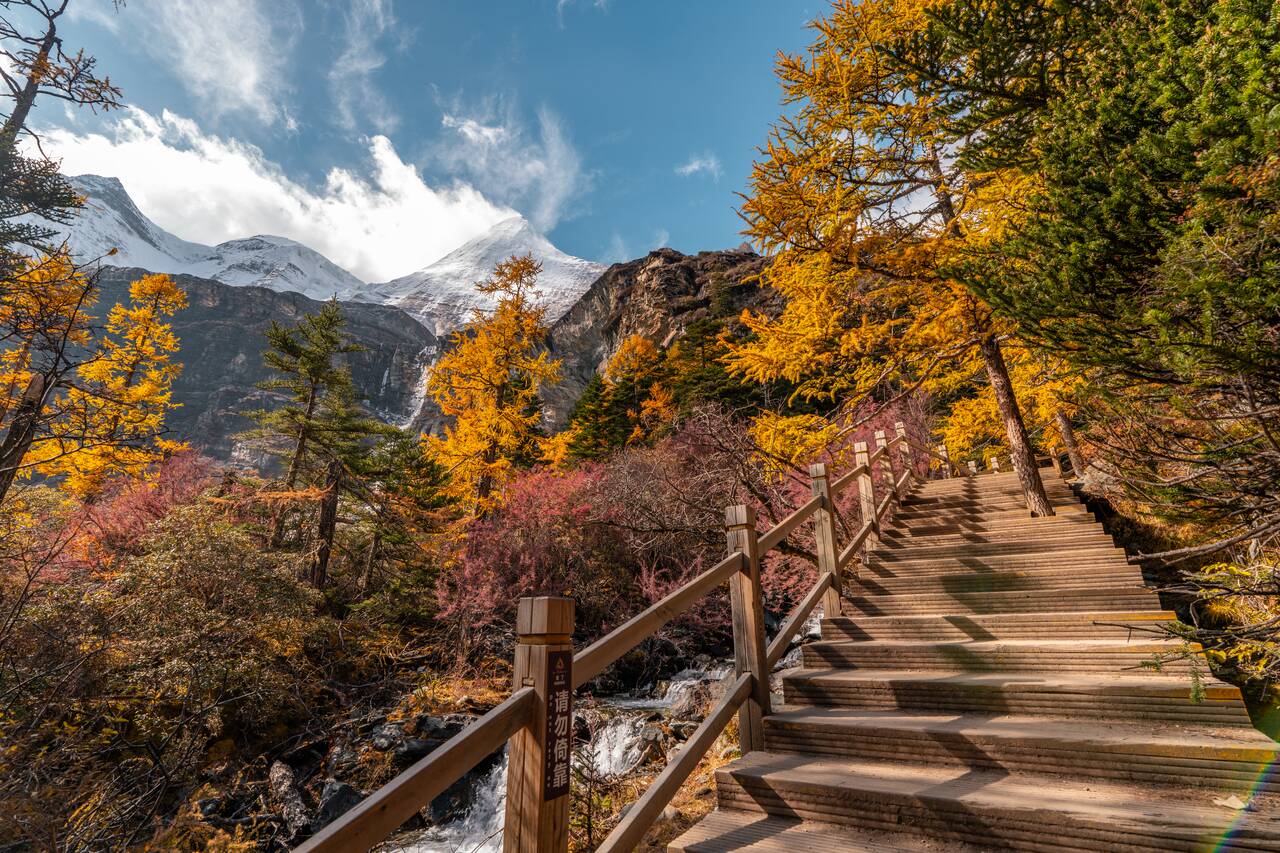
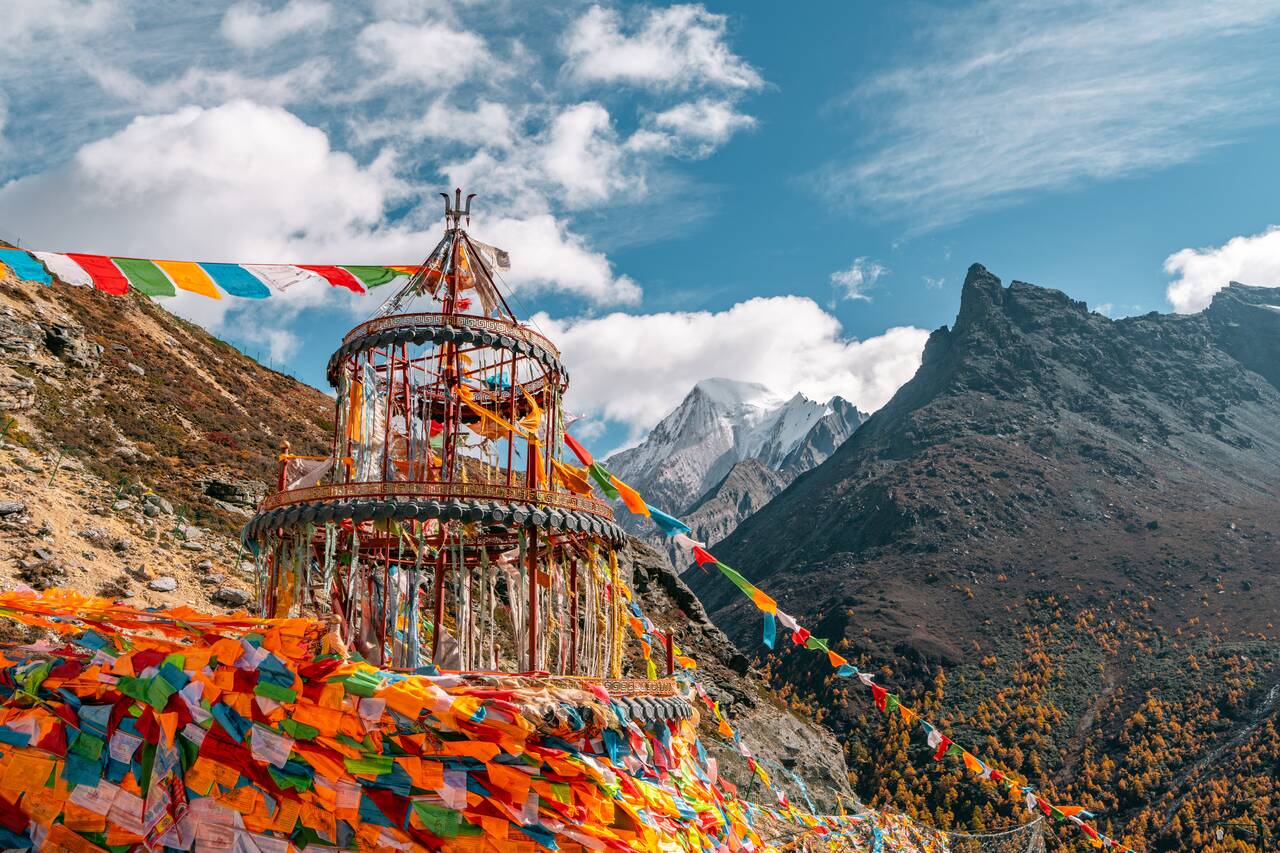
Now, this is where the real challenge begins as the trail started ascending the mountain pass. From here, you will be going up from around 4,000 meters to 4,600 meters above sea level along steep staircases that seem to never end. There are some rest stops along the way where you can take a break, get your oxygen supply refilled, and enjoy the view.
It took me about 45 minutes to hike the steep section before arriving at the Qujiuzhaga Rest Stop and an intersection where you can choose to visit Milk Lake or Five-Color Lake. The trails are connected in a triangle shape, so you can choose either way and continue to the next one before the trail loops back to this intersection.
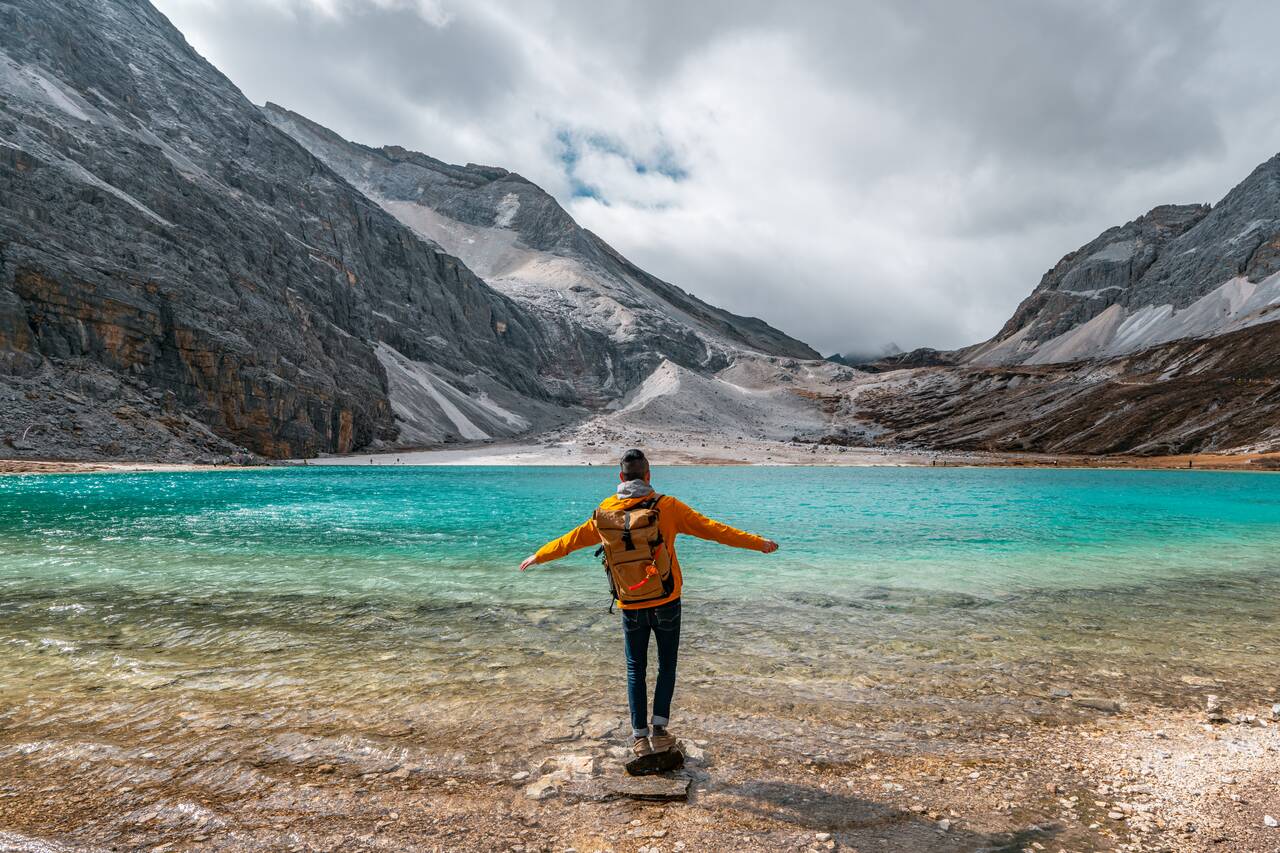
You can head over to Milk Lake first, which is the larger and more photogenic one. From the intersection, it should be about 1 km flat trail until you arrive at Milk Lake. The lake is beautiful and a great place to rest before you continue to visit Five-Color Lake.
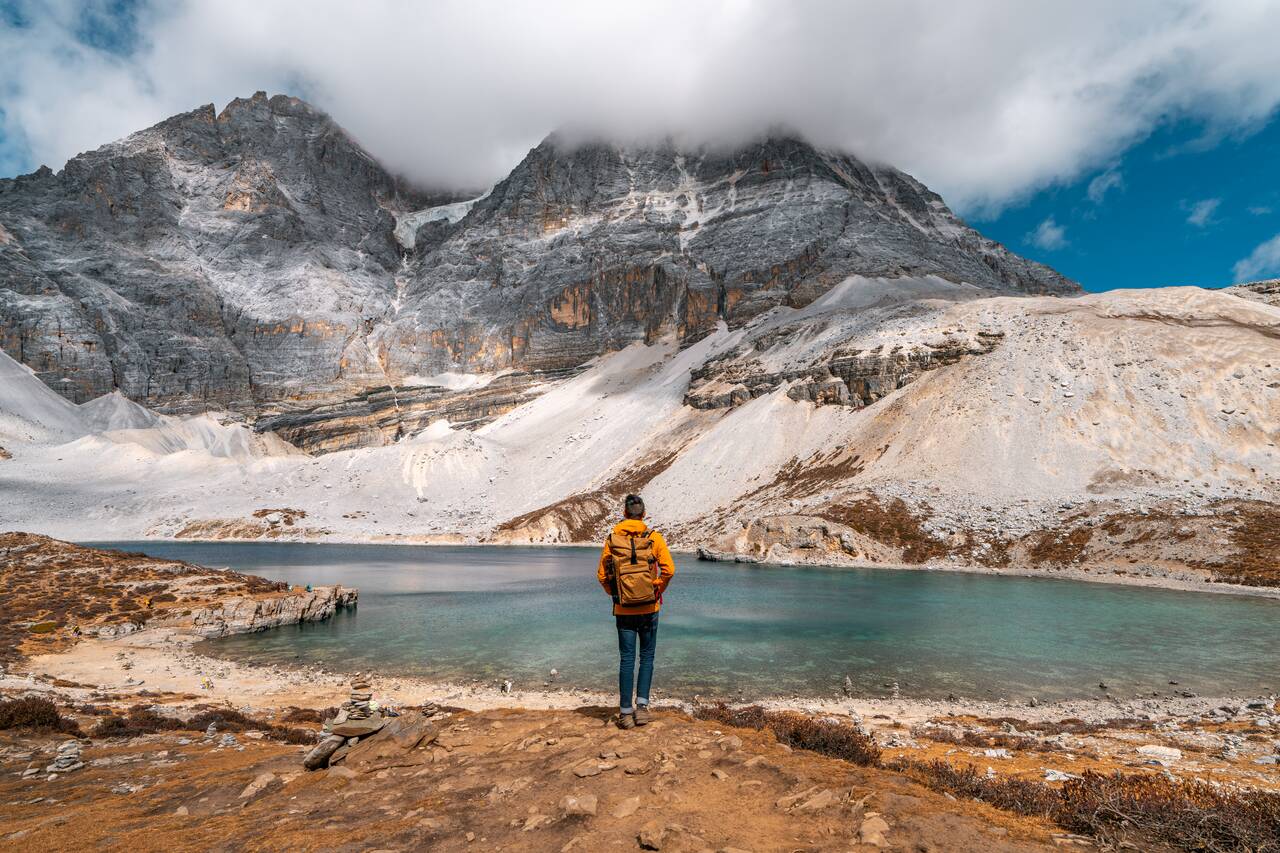
The Five-Color Lake is pretty cool as well, and you can get a really nice view of the trail you just hiked from above, and a stunning view of the whole valley. I spent another 20 minutes here before I started heading back down to Qujiuzhaga Rest Stop and made my way back to the Cattle Farm.
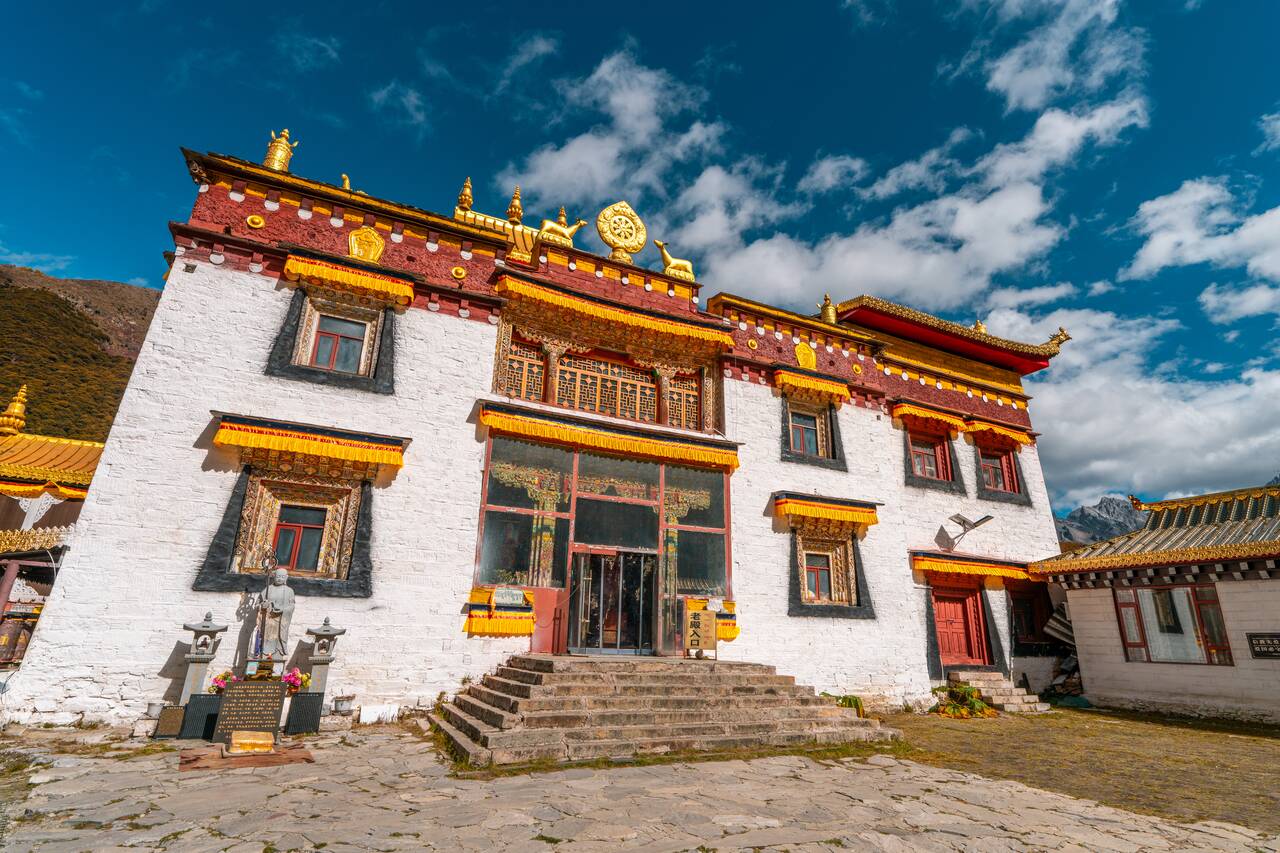
Once you arrive at the cattle farm, you can take the electric cart back to Chonggu Temple and explore the temple grounds. It is a beautiful Tibetan-style monastery with a stunning courtyard where you can see the iconic white exterior of the monastery set against the snow-capped mountains of Yading. This is also where you can begin your last hike in Yading, the hike to Pearl Lake.
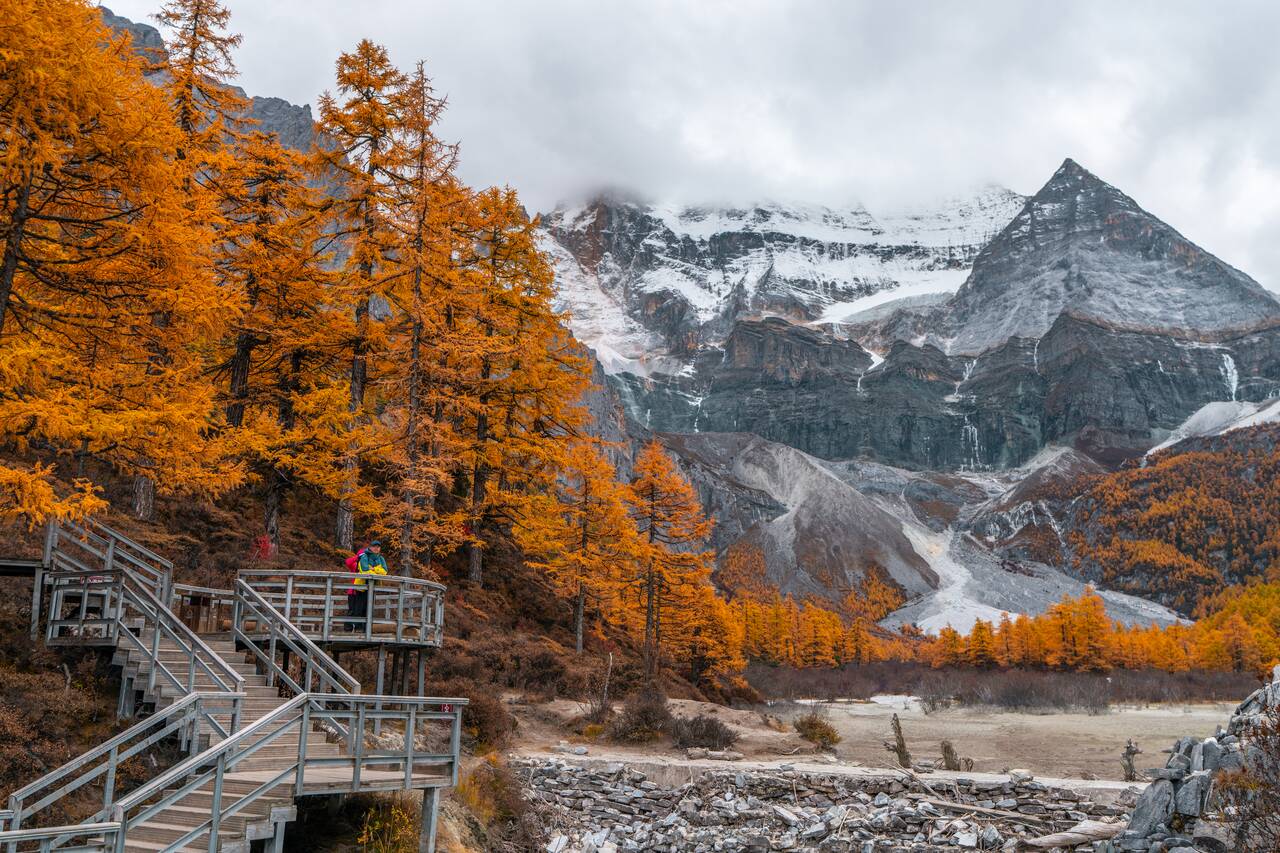
After exploring the beautiful Chonggu Temple, hike to Pearl Lake, the lowest holy lake in Yading at 4,100 meters above sea level. Covering 0.75 acres, it is formed by the melting snow of Xiannairi Mountain. This hike should take about an hour, and you can expect to finish your Yading visit around 3:30 PM.
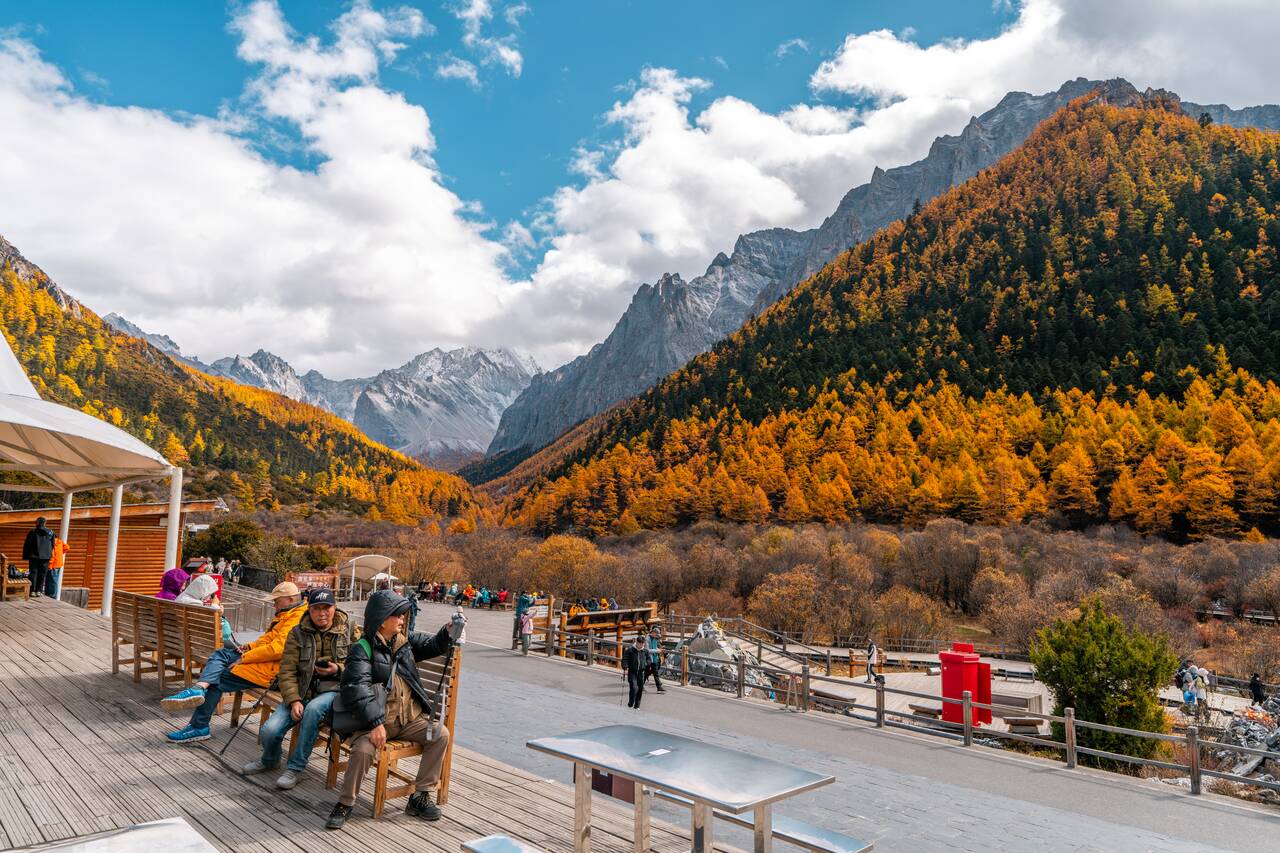
From there, take the shuttle bus back to the entrance and a taxi back to Shangri-La (Riwa) to rest for the night. The next morning, you will need to wake up early to catch a flight to Chengdu.

Where to Stay in Yading?
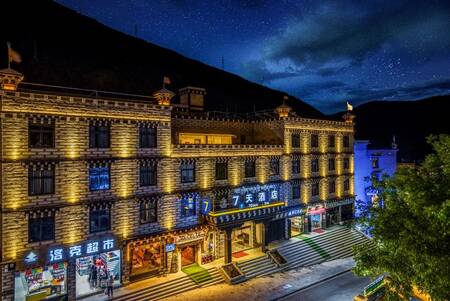
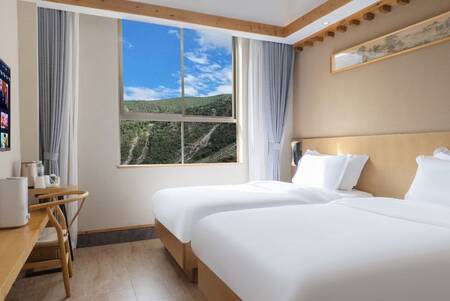 👍 Top Pick
Getting From Yading to Chengdu
Since we already did the long bus ride on our way here, I recommend you fly out of Yading instead. It is the fastest and most convenient way to get to Chengdu, our next destination, and you can do so from Daocheng Yading Airport (DCY), one of the highest airports in the world at 4,411 meters above sea level. The flight should take between 1 - 2 hours and cost around 261 USD. You can book the flight here.
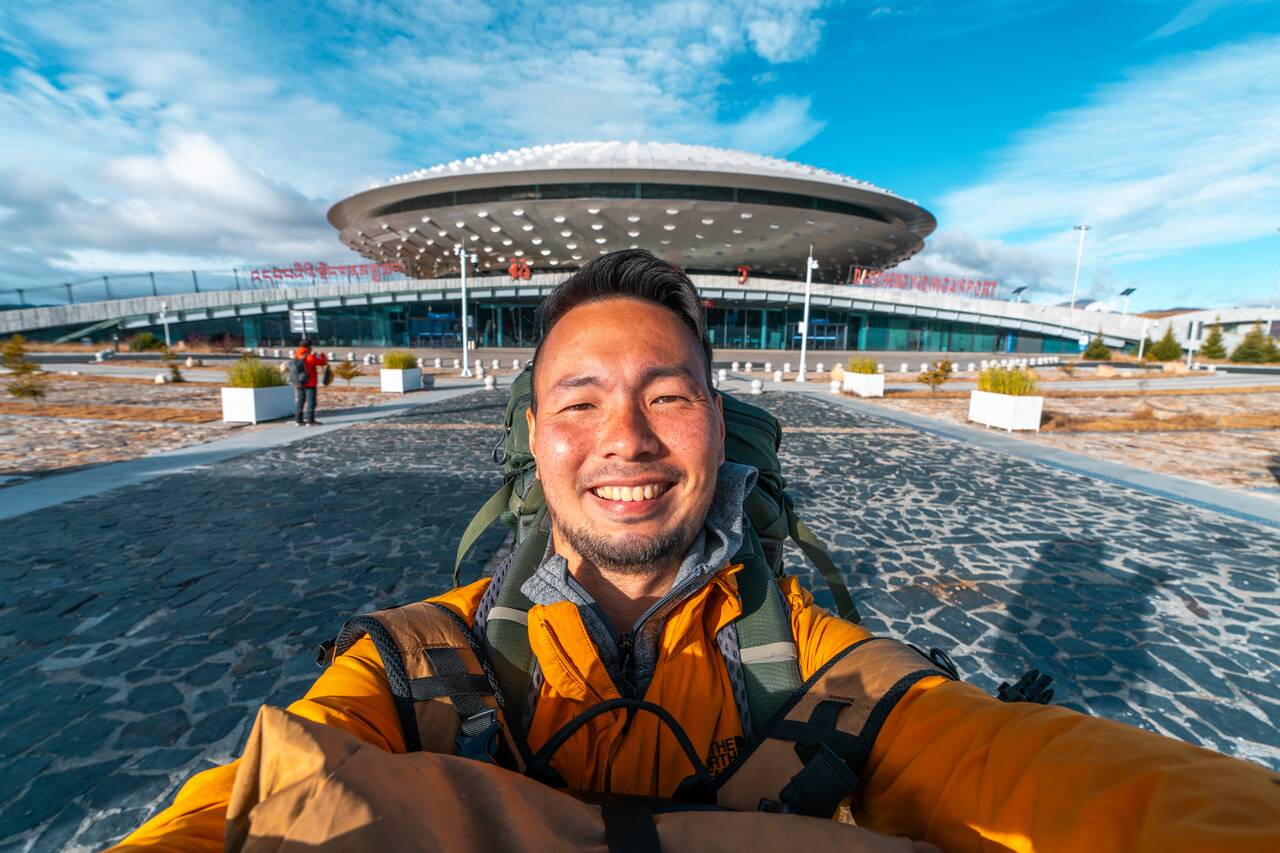
From Shangri-La Town, it takes about two hours to reach the airport, and you will need to arrange a pick-up with your accommodation the day before. A taxi from Shangri-La Town to the airport typically costs around 400 CNY per car. If you are traveling with other people, you can share that cost. Unfortunately, I couldn't find any people to share it with, so I had to pay the full price.
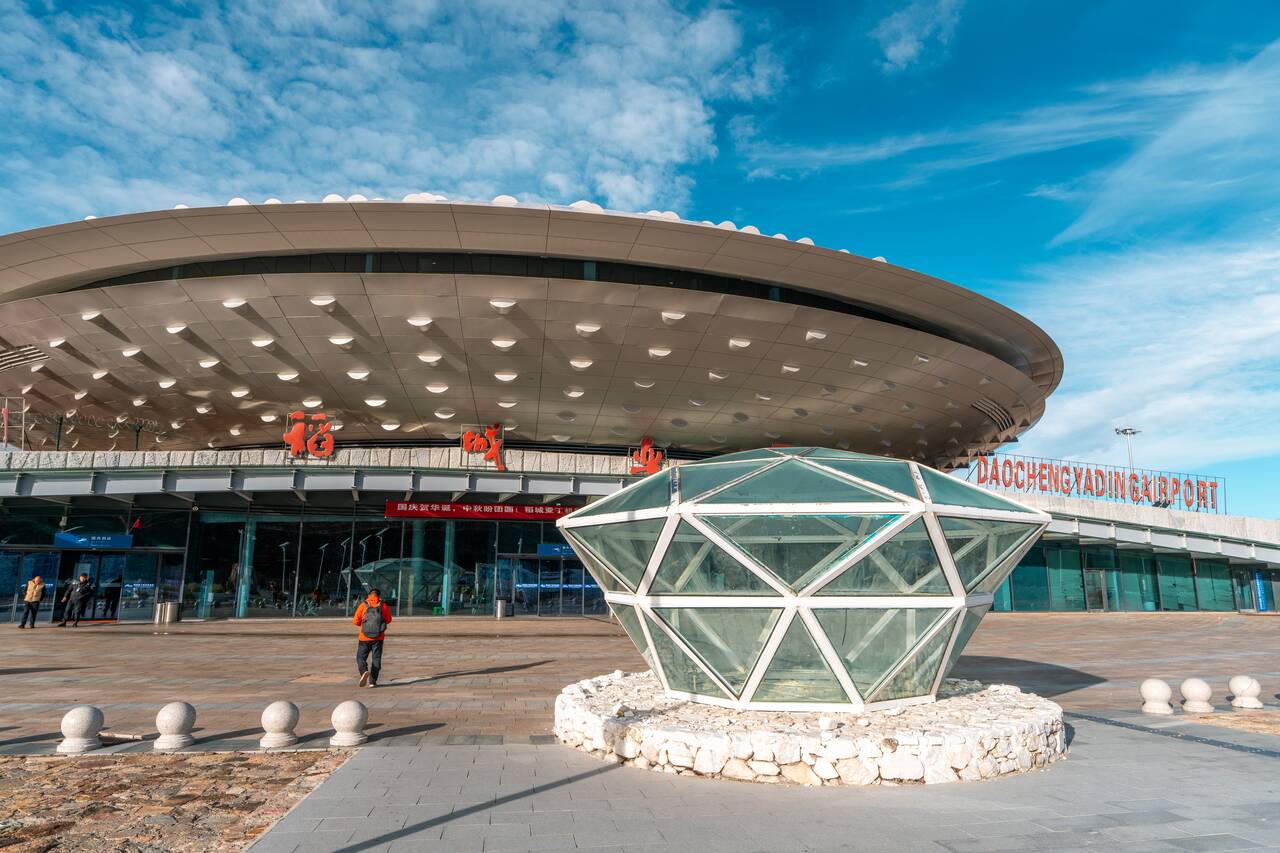
If you book the 10:30 AM flight, the taxi will pick you up at 7 AM from your hotel, and the drive will take about two hours to reach Yading Airport. Despite the unexpected cost, flying out of Yading is an amazing experience. Yading Airport is considered one of the highest commercial airports in the world, standing at 4,111 meters above sea level, so you can check "flying out from the highest airport in the world" off your bucket list. Its unique UFO-like exterior is also pretty cool to see.
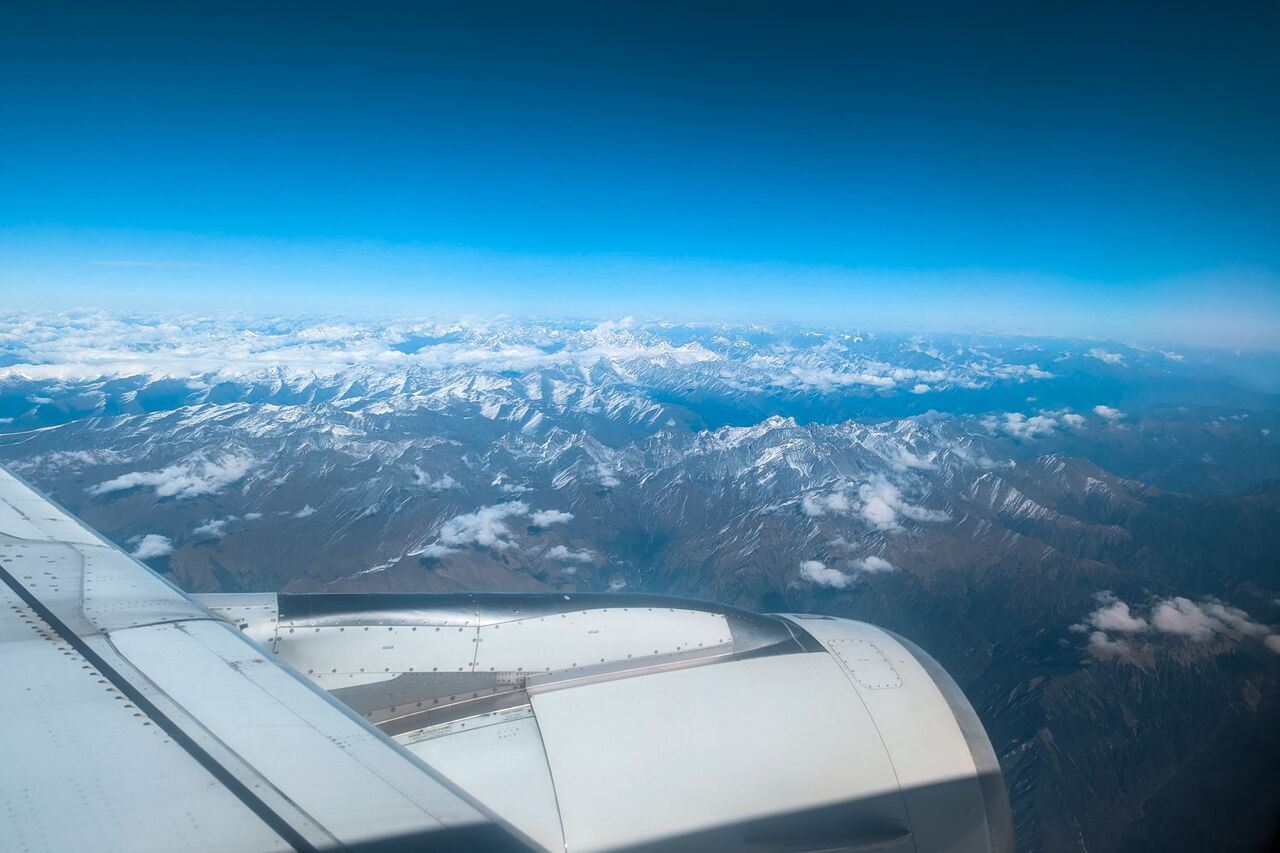
Another perk of flying from Yading to Chengdu is the incredible aerial views of Sichuan’s mountains. I believe I saw Hailuogou Glacier Forest Park and even Siguniangshan Scenic Area as we flew over the mountain range, and the scenery was breathtaking. If you want to avoid the long bus ride out of Yading, flying is a great option. Just be aware of the extra cost. Personally, the views alone made the experience completely worth it.
Day 25-26: Chengdu (5 Nights)
- 📍 Stay: Orange Fruit Hotel (Chengdu Kuanzhai Alley, Tonghuimen Metro Station)
- 🕐 Time: 5 Nights
- 📖 Full Guide: Chengdu Travel Guide: 10 Best Things to Do & More
Chengdu will be our base for the next four days as we explore the city and take an overnight trip to Jiuzhaigou and Huanglong, as well as a day trip to Leshan. I recommend booking a hotel for five nights so you can leave your belongings here while you go on the two-day, one-night trip to Jiuzhaigou and Huanglong. This way, you won’t have to carry your backpack around. Although you’ll be paying for one overlapping night, it’s worth it for the convenience of not having to lug your things while exploring the Sichuan province.

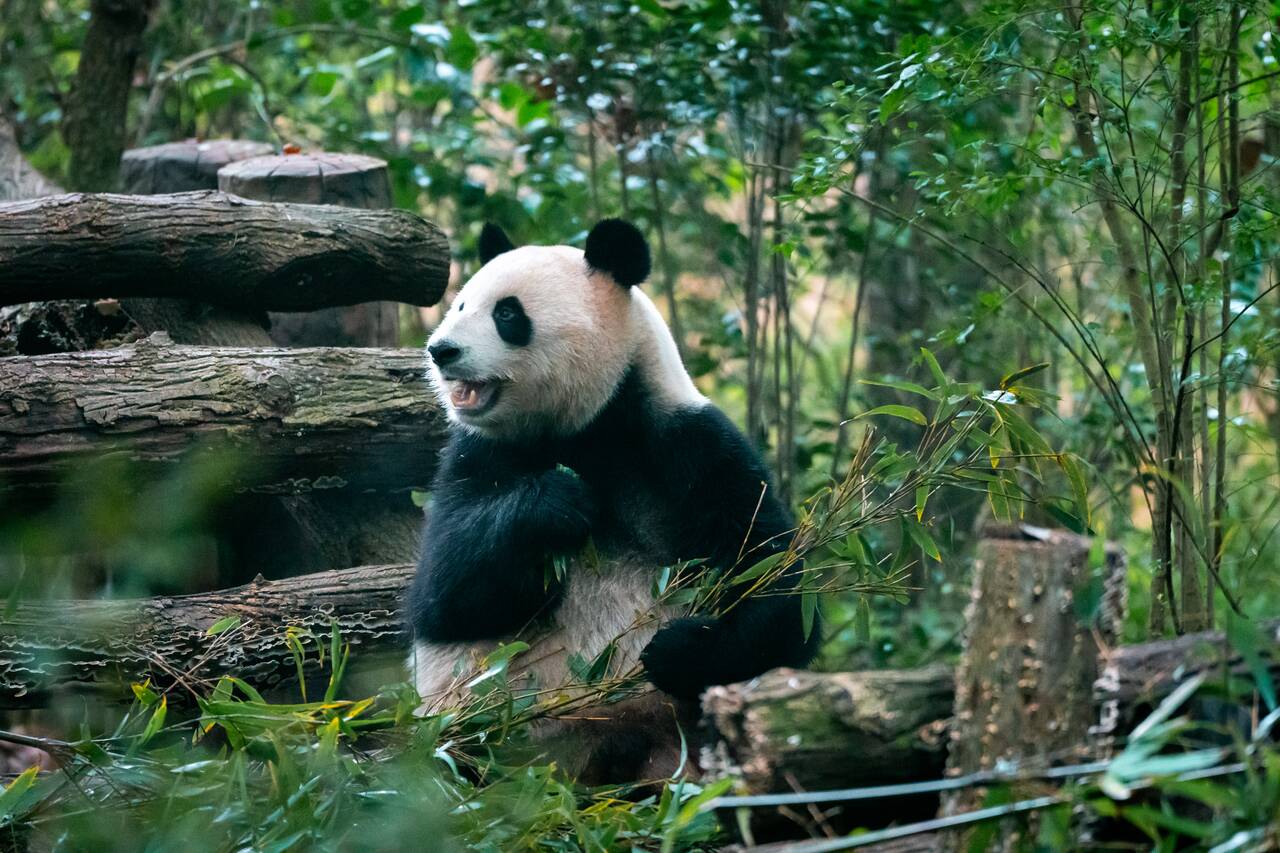
Of course, when you visit Chengdu, one of the few pandas' natural habitats, you gotta come and see the Giant Pandas with your own eyes, and one of the best places to do so is at Giant Panda Research Base, located about 10 kilometers north of downtown Chengdu, and you can do that first thing in the morning.
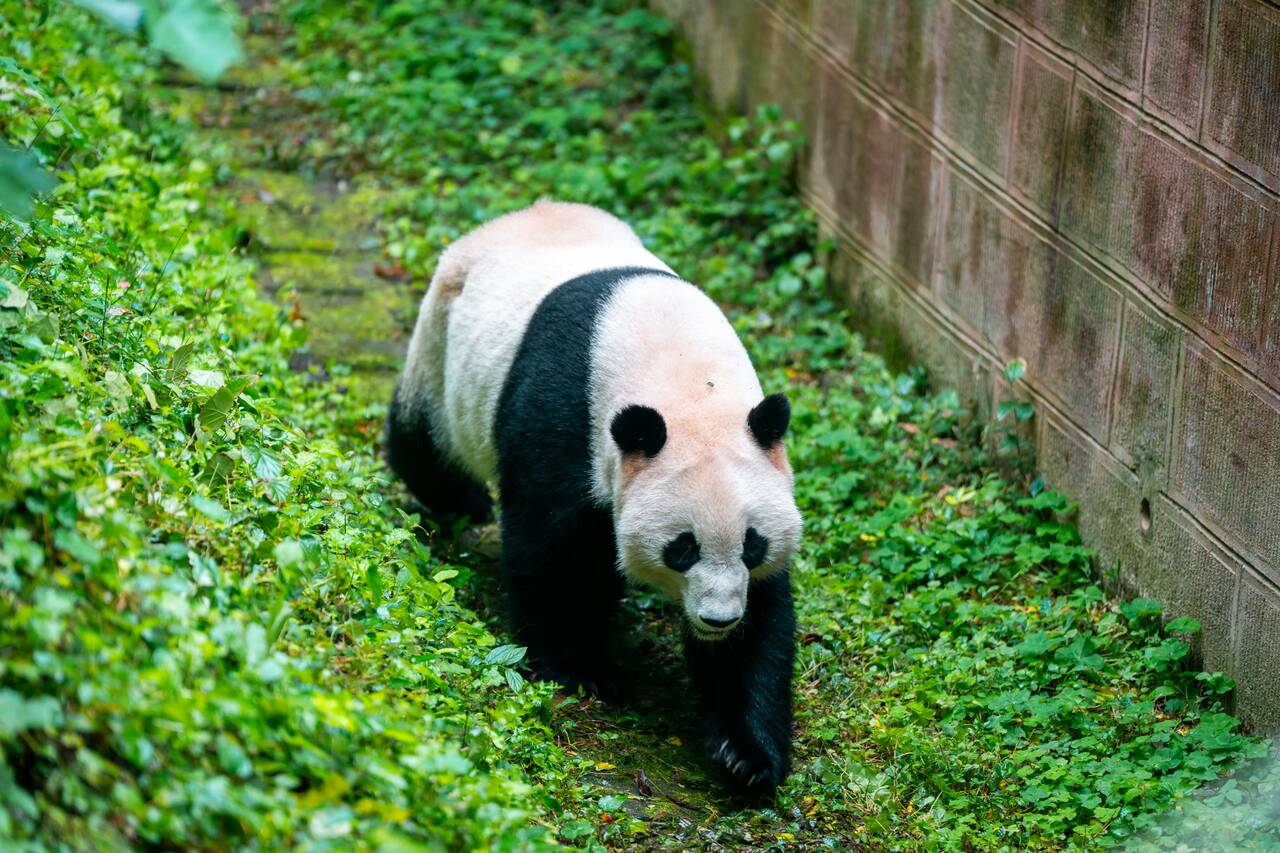
The best time to visit is in the morning, especially between 8:00 and 10:00 AM, when the pandas are most active and feeding. Besides giant pandas, the base is also home to red pandas, black-necked cranes, and other rare species, all spread out in a large area you can explore on foot.
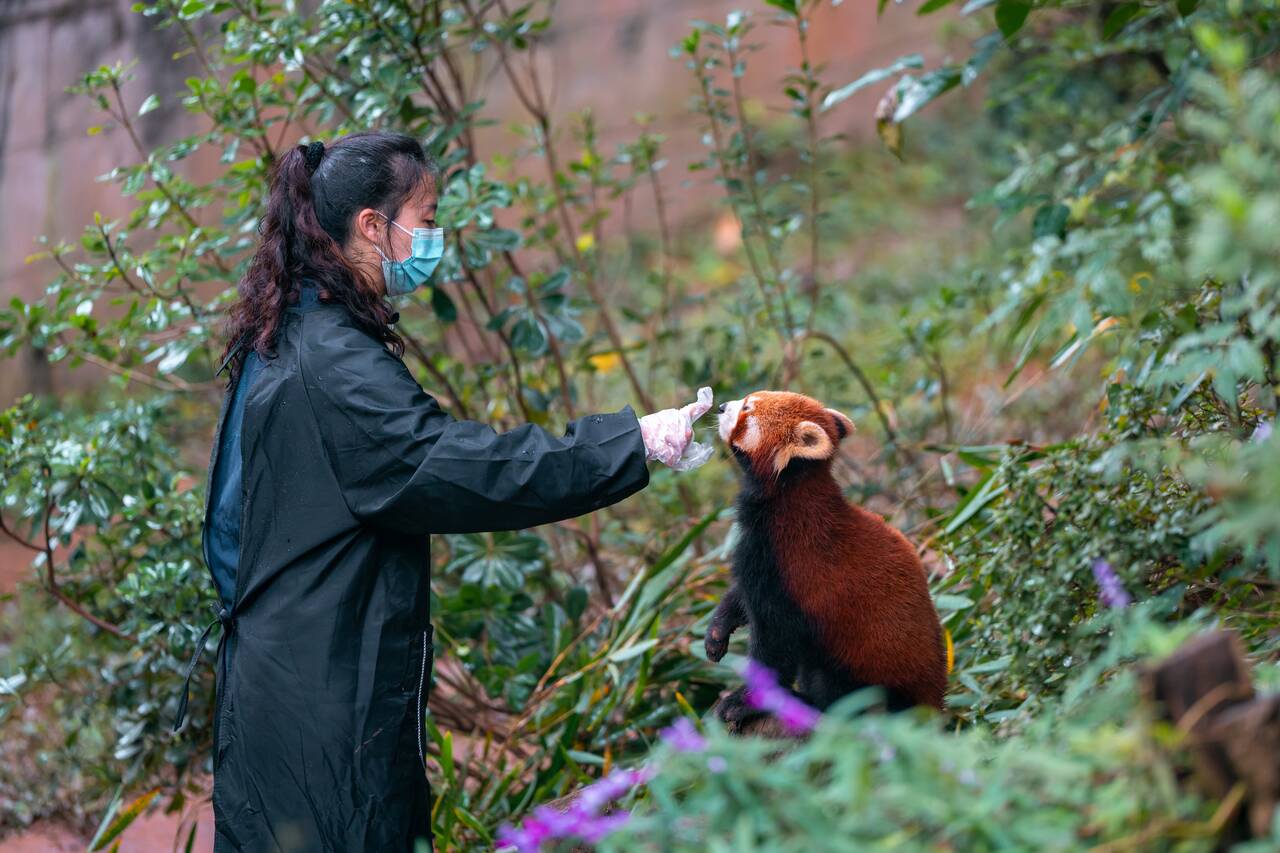
The base is accessible by metro, bus, or Didi, and museums and guided tours are available for those who want to learn more about panda conservation and the history of the facility. The place is quite big and can be crowded later in the day, especially around the Giant Panda enclosures, so I recommend you come as early as you can.
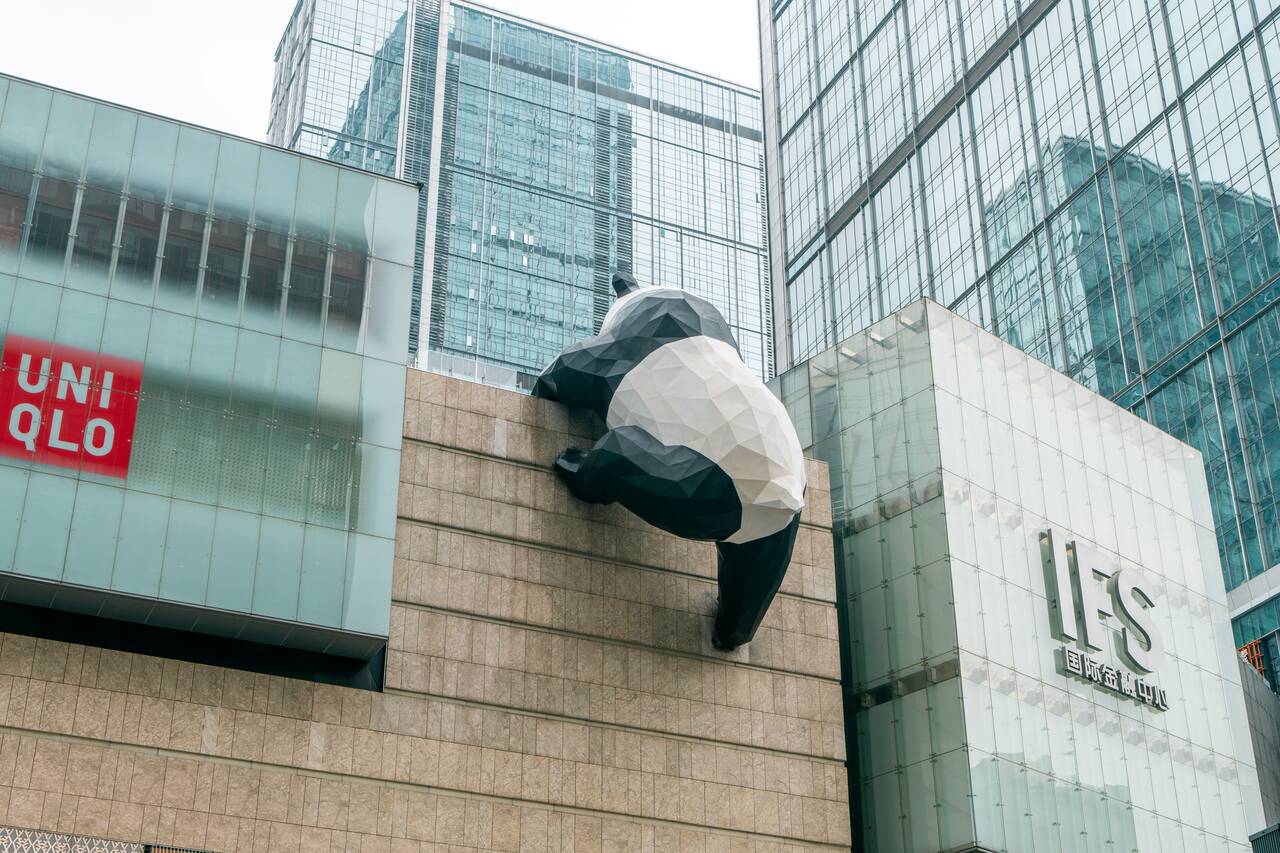
After visiting the Panda Base, you can come and visit Chunxi Road, Chengdu’s most famous shopping street and a must-visit for those looking to experience the city’s modern vibe. Located in the city center and reachable by the metros, it is a bustling pedestrian street lined with shopping malls, international and local brands, boutiques, and plenty of street food stalls you can enjoy.
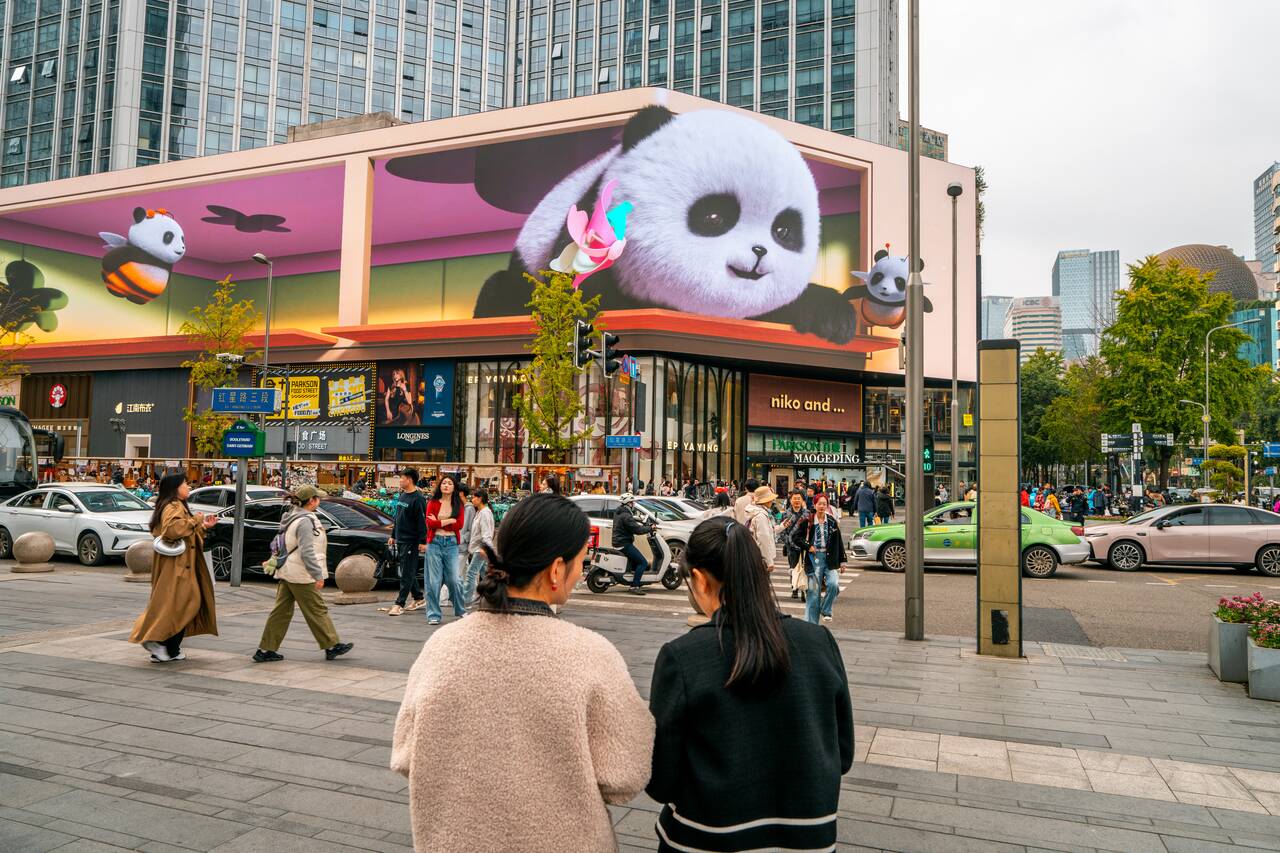
The area is always lively, with crowds of locals and tourists, bright neon signs, and a vibrant atmosphere that perfectly captures Chengdu’s urban energy. Here, you can also see the famous panda climbing a building art installation, as well as the massive LED screen that makes everything look 3D. It’s definitely a cool sight to experience.
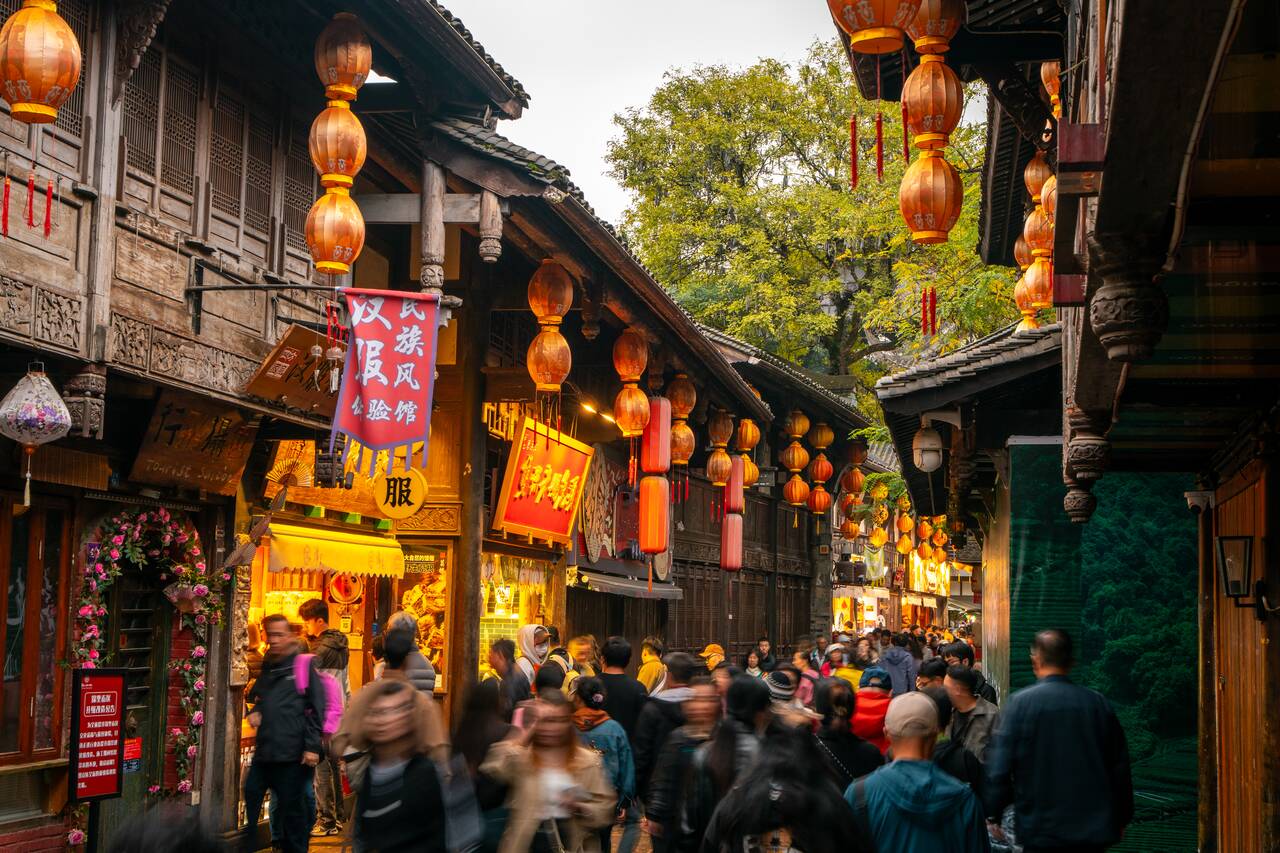
You can spend the afternoon visiting Wenshu Monastery, one of the oldest and most important Buddhist temples in the city, dating back more than 1,400 years. Walk around Jinli Old Street, a newly renovated historical area featuring beautiful lanterns and lights, plenty of recreational spaces with outdoor restaurants, and tons and tons of street food to try. Or check out Kuanzhai Alley Scenic Area, one of the best-preserved traditional street districts in Chengdu.
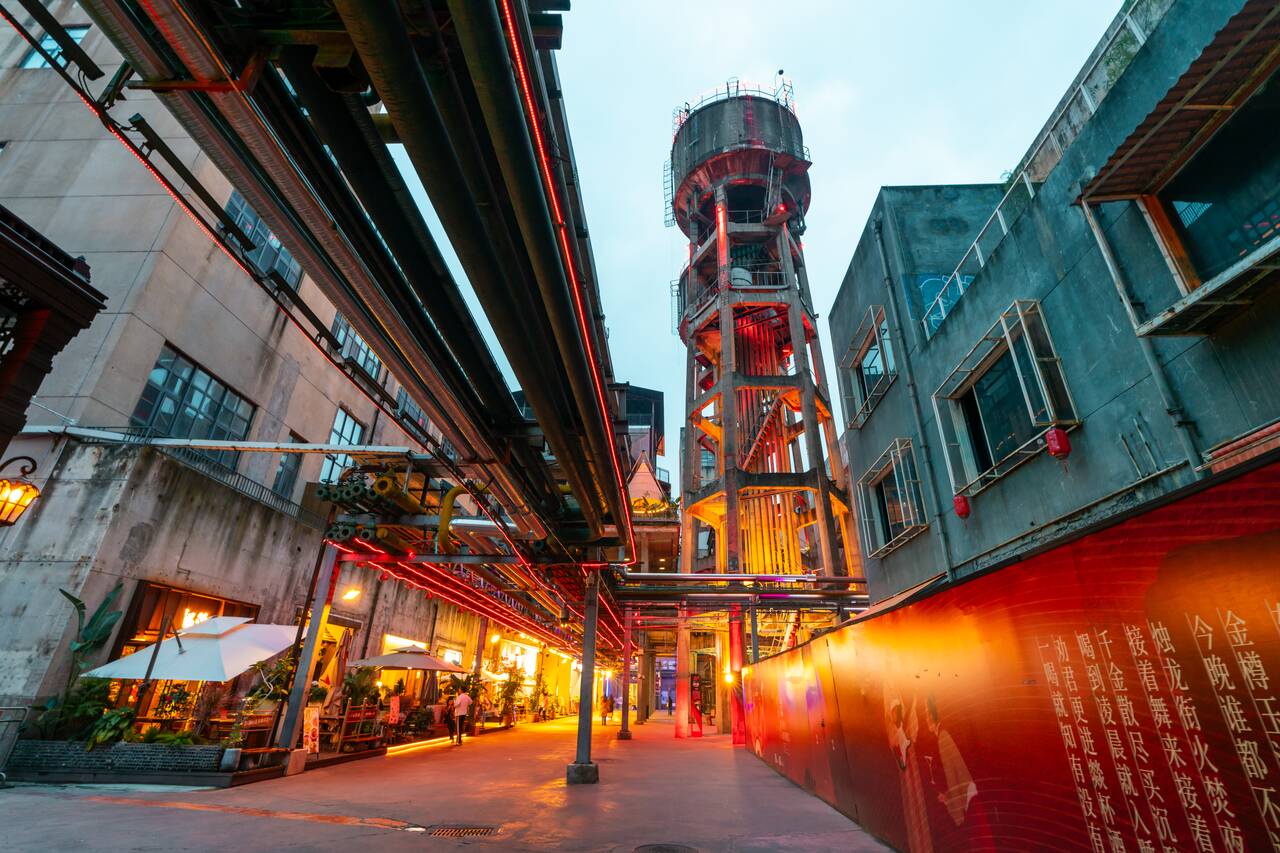
In the evening, be sure to drop by and check out Eastern Suburb Memory, one of my favorite areas to visit in Chengdu. It is a former industrial zone, once home to the state-owned Hongguang Electronic Tube Factory, that has been transformed into one of Chengdu's most creative and cultural hotspots.
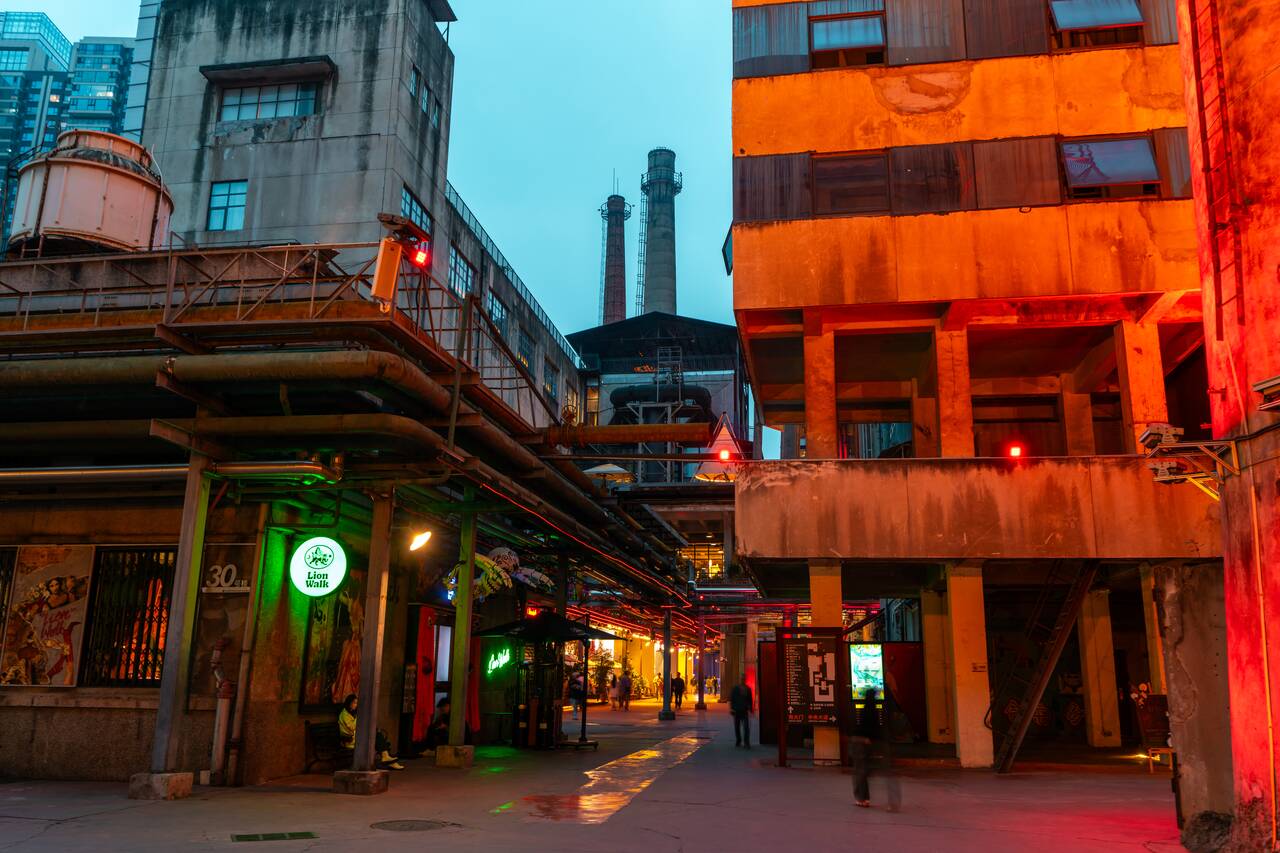
Instead of factories and production lines, you’ll now find preserved red-brick warehouses, old chimneys, steel frameworks, and even vintage railway tracks repurposed as part of a living “industrial heritage” landscape. You can come here for a stroll in the evening and try out some of the spiciest Sichuan dishes at one of the many local restaurants here before retreating for the night.

Where to Stay in Chengdu?
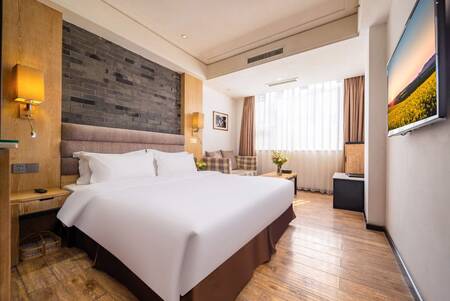
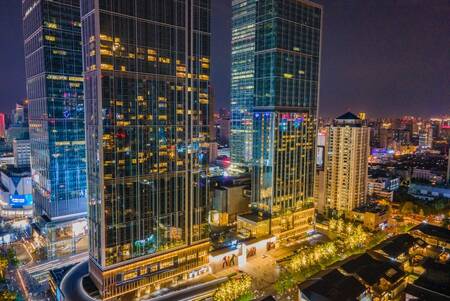
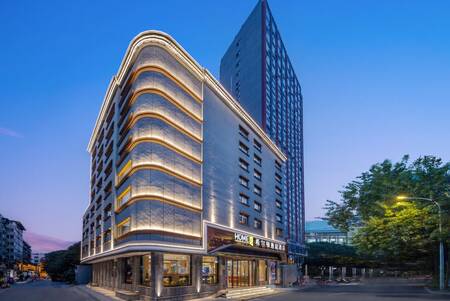
Getting From Chengdu to Leshan
From Chengdu, you can catch a high-speed train from either Chengdu East, Chengdu South, or Chengdu West Stations, and it will take you to Leshan Railway Station in about 30 minutes and costs 5 USD. You can book the train here
Once you arrive, you can take a local bus or taxi to the Leshan Giant Buddha Scenic Area. A Didi ride takes about 20 minutes, while the bus takes around 40 minutes depending on traffic.
Day 27: Leshan (Day Trip)
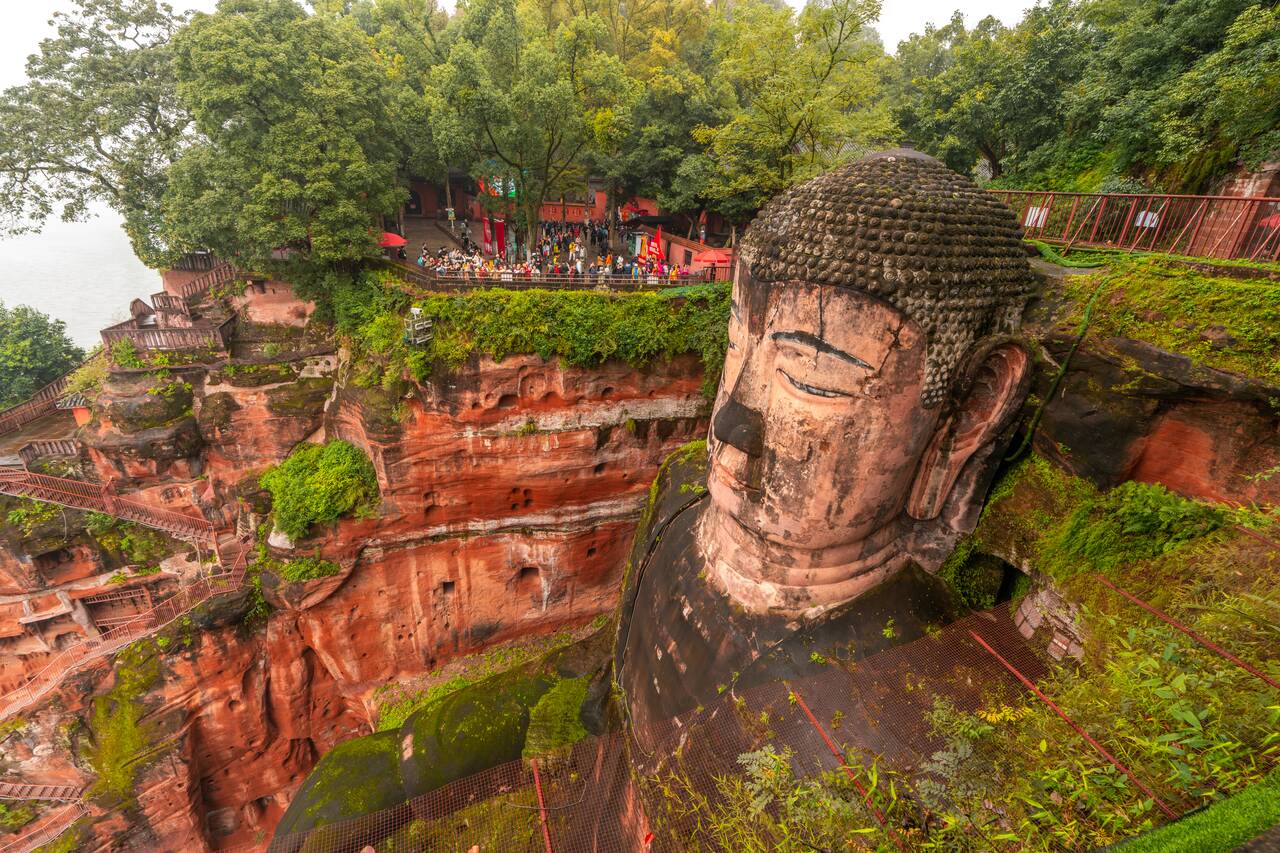
- 🕐 Time: Day Trip
- 📖 Full Guide: How to Get to Jiuzhaigou
For today, we can go on a day trip to visit the Leshan Giant Buddha, one of Sichuan’s most iconic landmarks. The massive Buddha statue stands over 71 meters tall, making it the largest in the world, and is carved directly into a cliff face at the confluence of the Min, Dadu, and Qingyi Rivers.
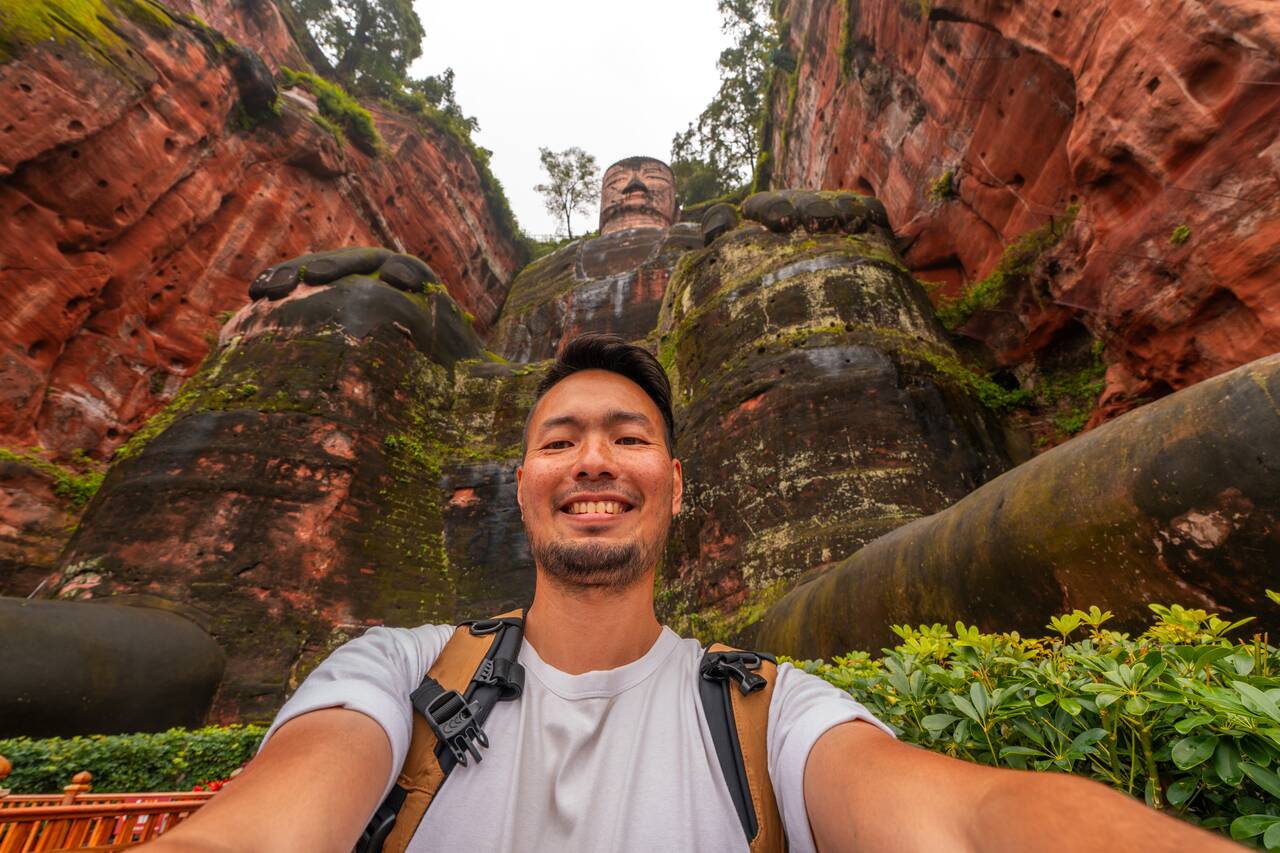
The history of the Leshan Giant Buddha is fascinating. Construction began during the Tang Dynasty over 1,200 years ago and took about 90 years to complete. It was designed by the monk Hai Tong, who hoped that the Buddha would calm the turbulent waters at the river confluence and make the area safer for passing ships. Interestingly, some suggested that the large amount of rock deposited into the river during construction actually helped reduce the water’s turbulence, making navigation safer as intended! How awesome is that?
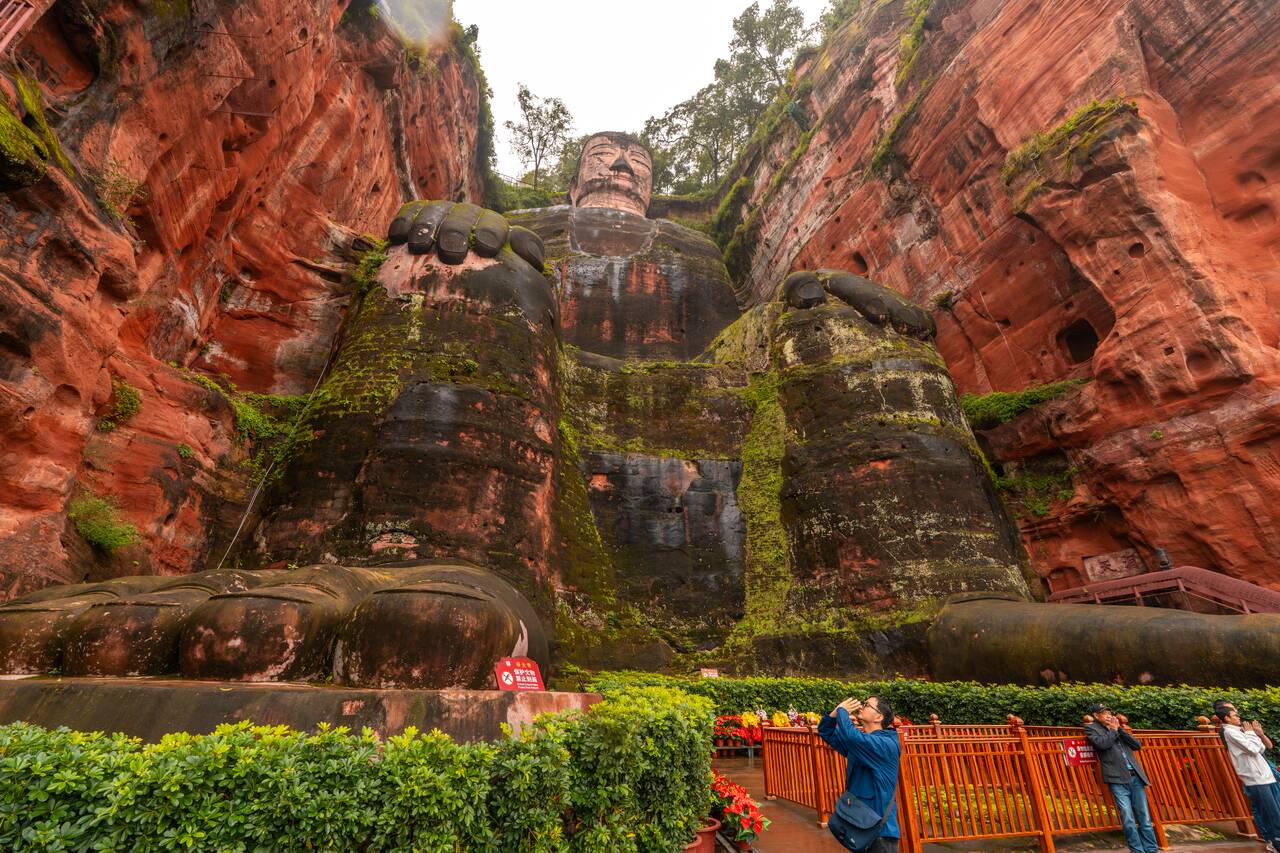
Which is why you can choose whether to take a boat and see the Leshan Giant Buddha from the river, which will give you a great sense of the true scale of the statue as well as see some hidden stone carvings on cliffs that you can only see from the boat, or you can hike around the Buddha statue and down to its foot. You can do both if you have the time.
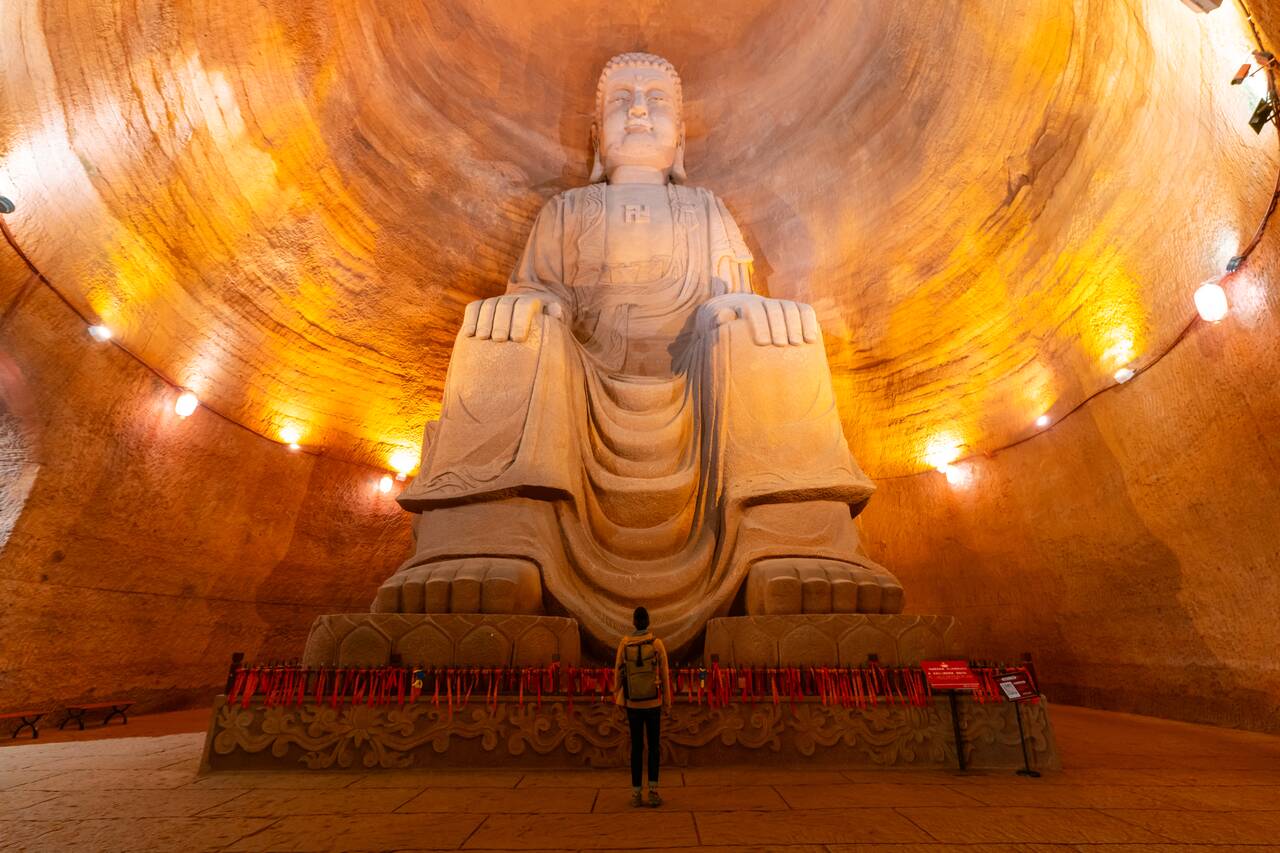
The boat option does not take very long, around 20 minutes, and does not require you to be as active as the hiking option. For hiking, you can expect to spend at least 2 hours exploring Leshan Giant Buddha and its other on-land attractions, like Buddha Park. Additionally, you will go down to the statue's foot to admire the statue from below.
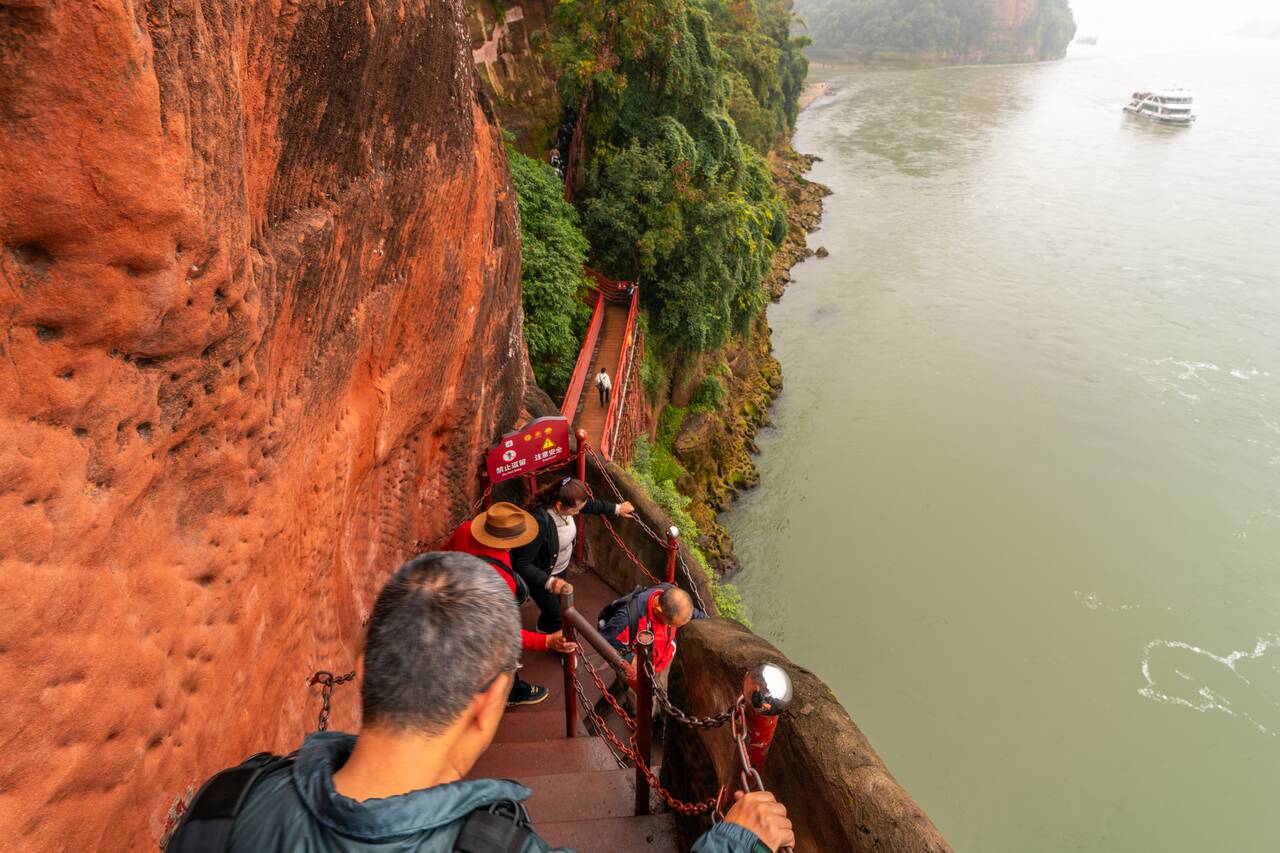
Keep in mind that to reach the bottom, you must descend extremely narrow staircases, which can become a major bottleneck, especially during peak season. You might have to wait in line to get down. I visited in November on a slightly rainy day, so the wait was short, but you will often encounter aunties and uncles stopping mid-way to take photos, oblivious to others trying to pass... several times as they carefully make their way down. 😅 It’s all part of the experience, I guess!
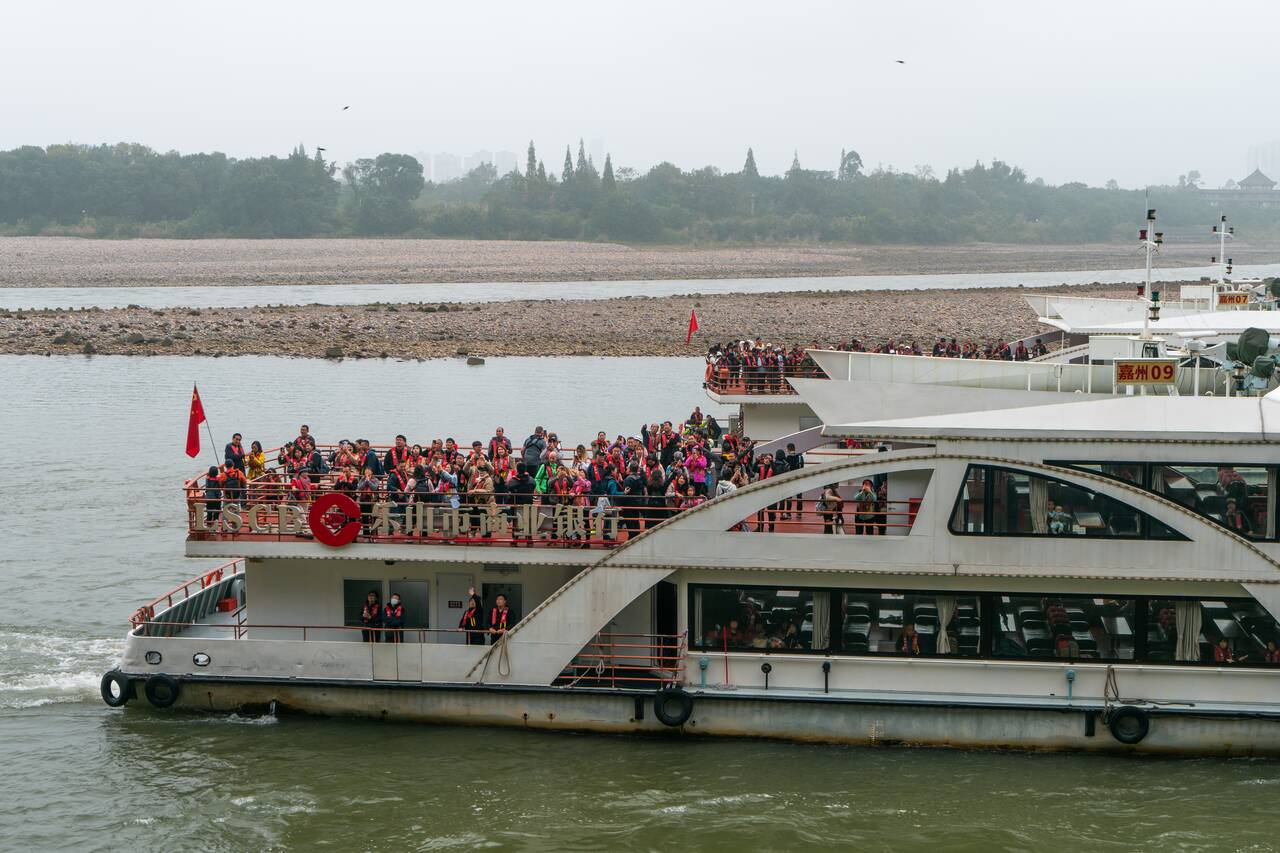
Once you are done, you can take a taxi back to Leshan Railway Station and take the train back to Chengdu East Railway Station. The journey takes about 45 minutes and costs around 65 CNY. You can book the train here.

Getting From Chengdu to Jiuzhaigou-Huanglong
From Chengdu, you can take a train from Chengdu East Railway Station to Huanglong–Jiuzhai Railway Station, which takes about two hours and costs 20 USD. Be sure to book your train tickets together with your Jiuzhaigou entrance ticket at least three days in advance, as both sell out very quickly. You do not want to secure your park ticket but then find that the trains are fully booked, leaving you without a way to get there and back.
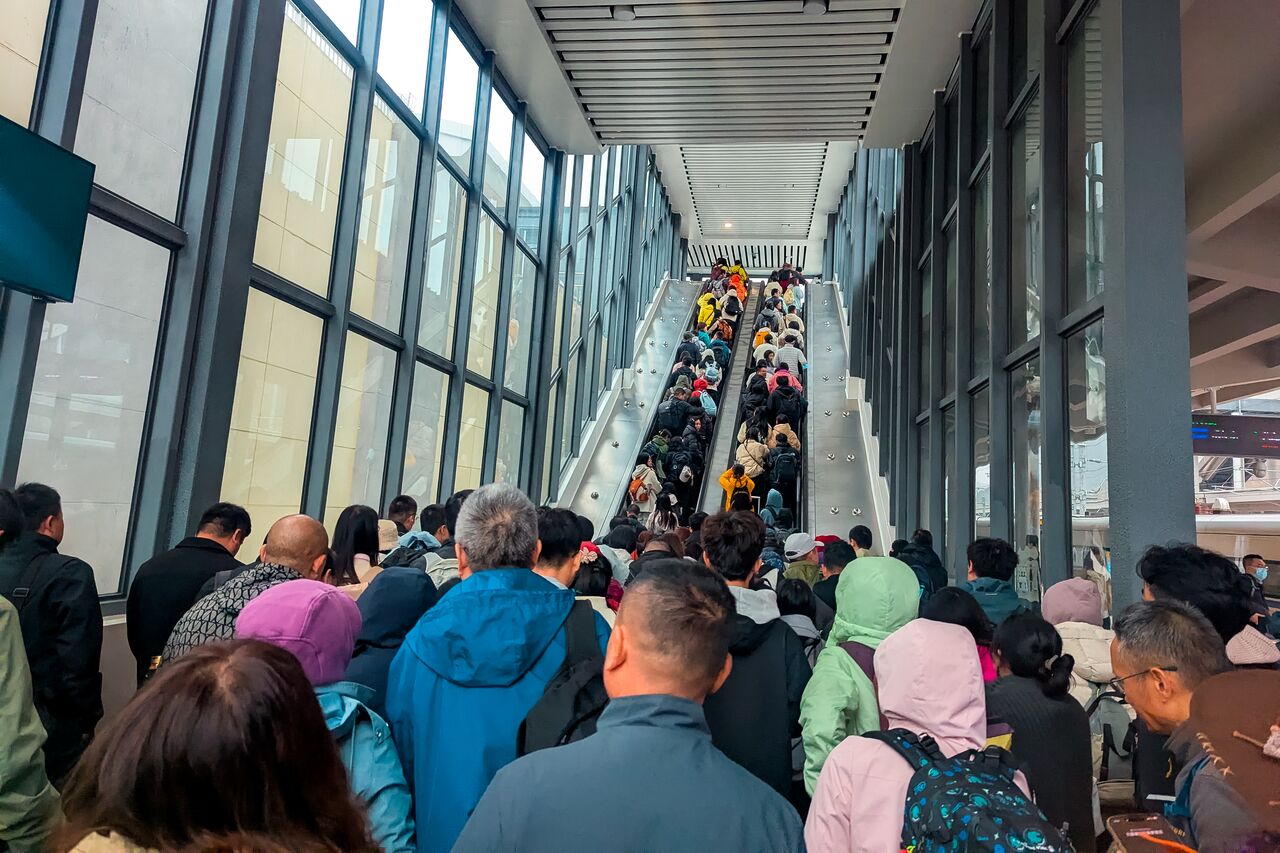
Once you arrive at Huanglong–Jiuzhai Railway Station, you can walk to the parking lot on the right-hand side from the exit where there will be bus drivers asking you where you want to go. Tell them you want to go to Jiuzhaigou, and they will direct you to the right bus. The bus should take about 2 hours and cost 7.21 USD. You can buy it from the bus driver.
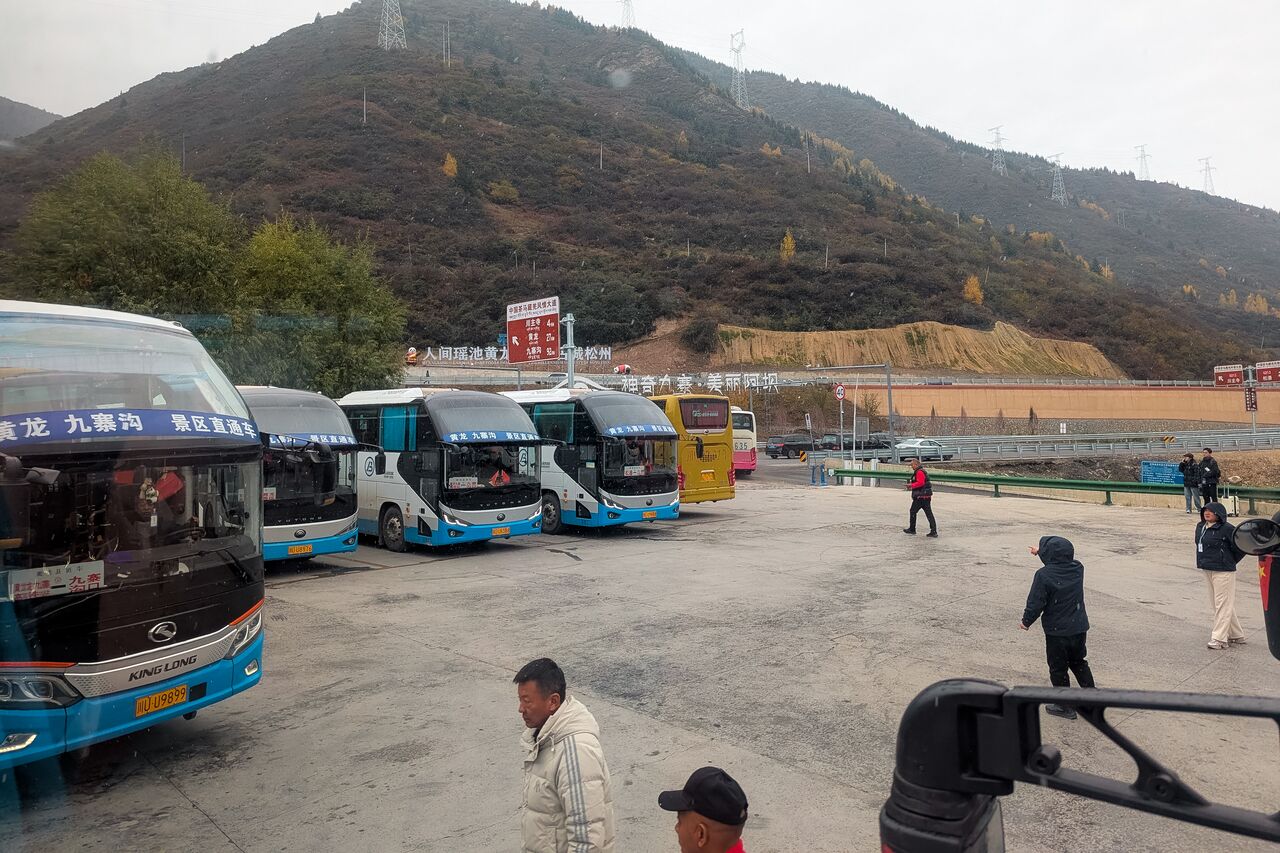
You will be dropped off at a bus stop located right next to the entrance of Jiuzhaigou Scenic Area. Most of the hotels I recommend are in this area as well, so you can check in first, and it is only a few minutes’ walk to the park entrance.

Day 28: Jiuzhaigou (1 Night)
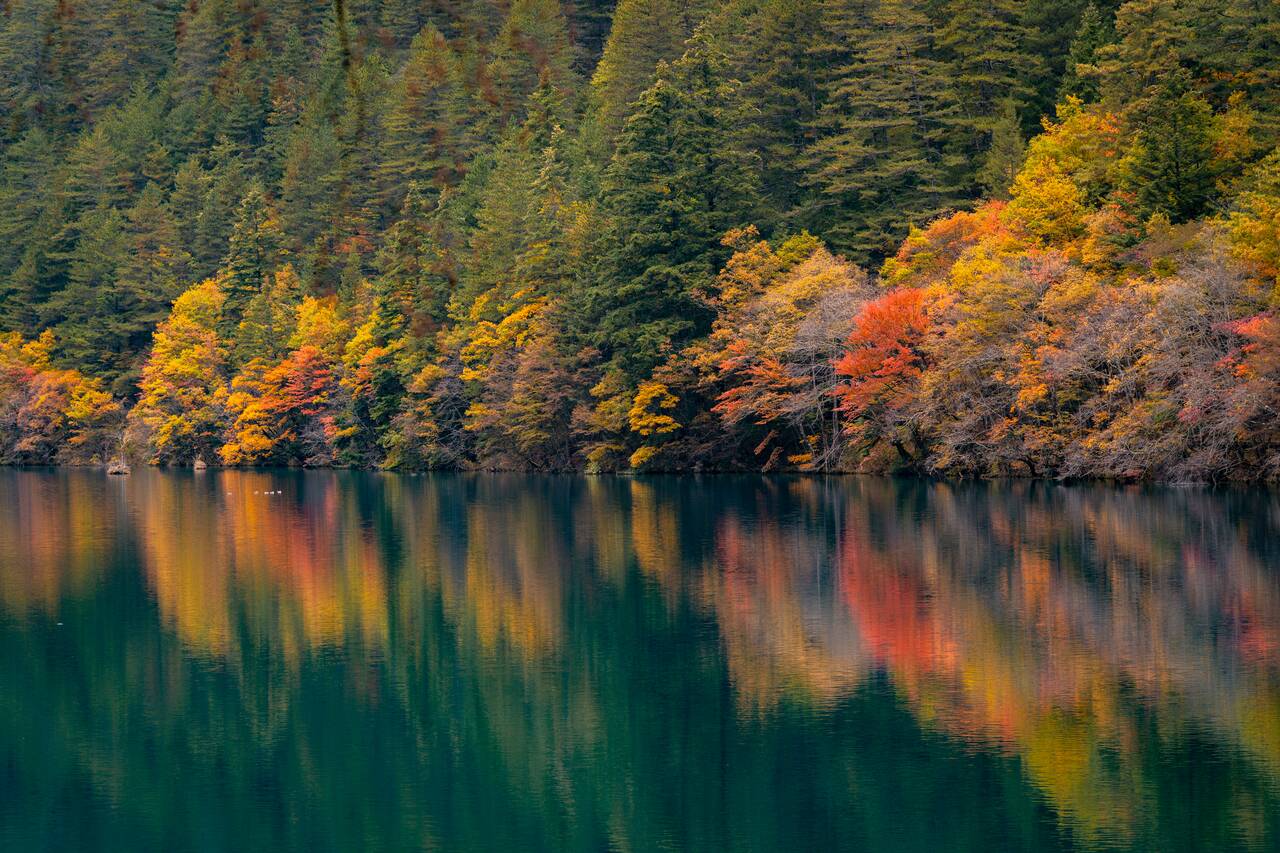
- 📍 Stay: Starry Sky Hotel
- 🕐 Time: 1 Night
- 📖 Full Guide: Exploring Jiuzhaigou: A Complete Travel Guide
Over the next two days, we will visit Jiuzhaigou and spend a night there, then hike around Huanglong before returning to Chengdu to spend our final night in the city before moving on to the next destination. I highly recommend taking the earliest train at 6:15 AM from Chengdu East to the Huanglong–Jiuzhai Railway Station, a journey of about 2 hours. Be sure to book your train tickets along with your Jiuzhaigou entrance ticket at least 3 days in advance, as both tend to sell out quickly.
Once you arrive at Huanglong–Jiuzhai Railway Station, you can walk to the parking lot on the right-hand side from the exit where there will be bus drivers asking you where you want to go. Tell them you want to go to Jiuzhaigou, which is where we will visit on our first day here, and they will direct you to the right bus. The bus should take about 2 hours and cost 51 CNY. You can buy it from the bus driver.
You’ll arrive at a bus stop right next to the entrance of Jiuzhaigou Scenic Area at around 10:15 AM. Most of the recommended hotels are in this area as well, so you can check in, drop off your backpack, and then walk to the Jiuzhaigou entrance as it is only a few minutes away.
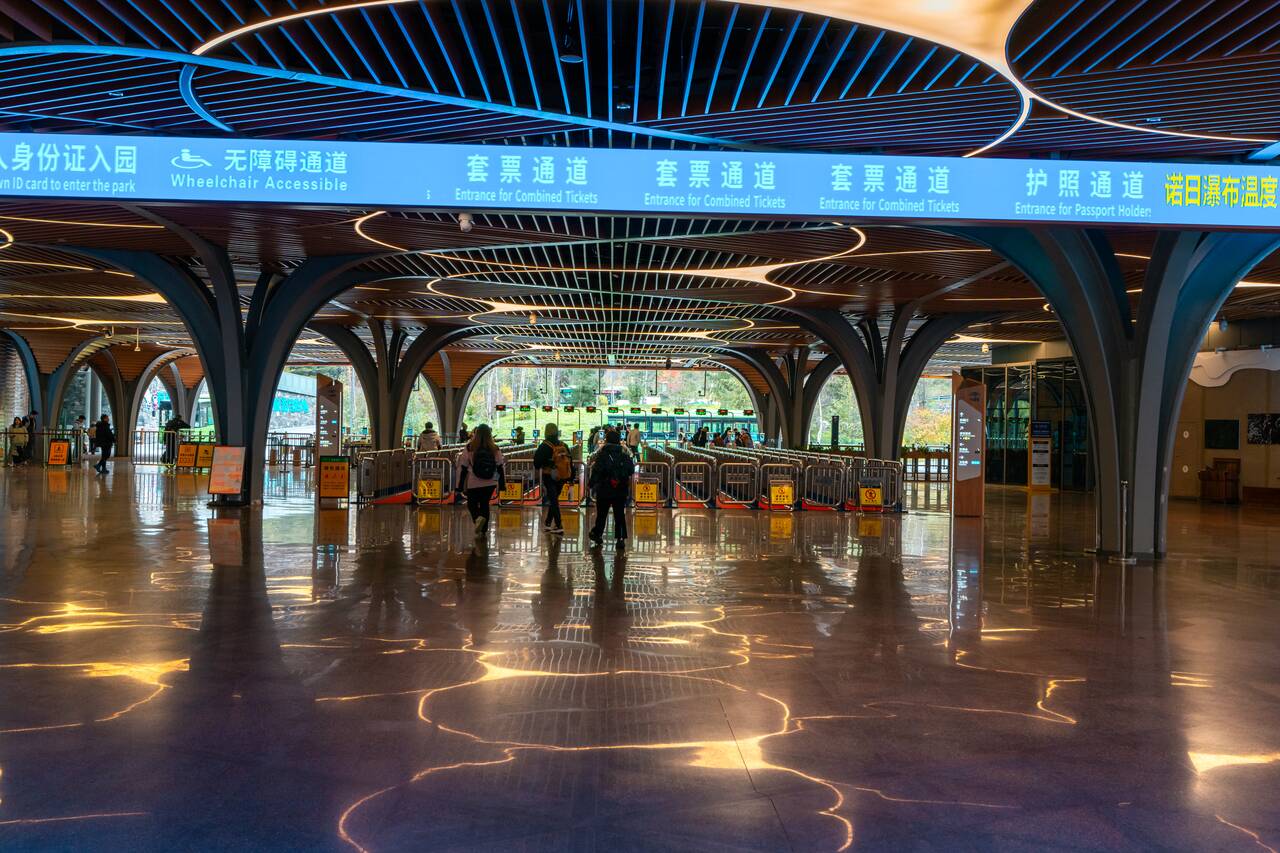
You will need your passport to enter the park as your ticket is associated with it. Once you get into the park, you can line up to take the scenic shuttle bus into the park. Jiuzhaigou is laid out in a Y shape with the entrance at the bottom, and when you board the park bus from the entrance, there is an equal chance you might be heading to either the left or right side of the Y.
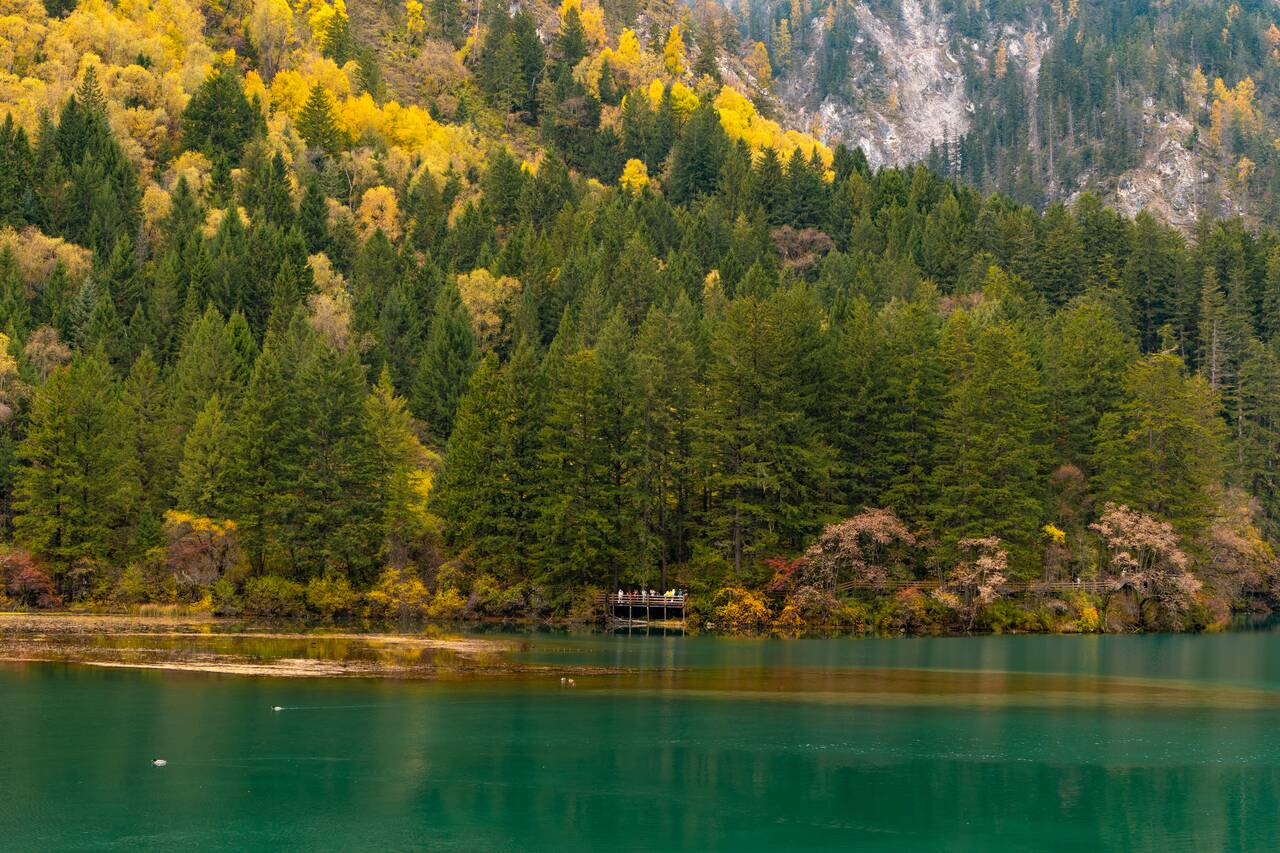
Either way, the bus will first take you to the central station, and then continue to the end of that branch without any stops. I recommend starting from the right branch over the left because there are more attractions to see there, beginning at the top with Swan Lake.
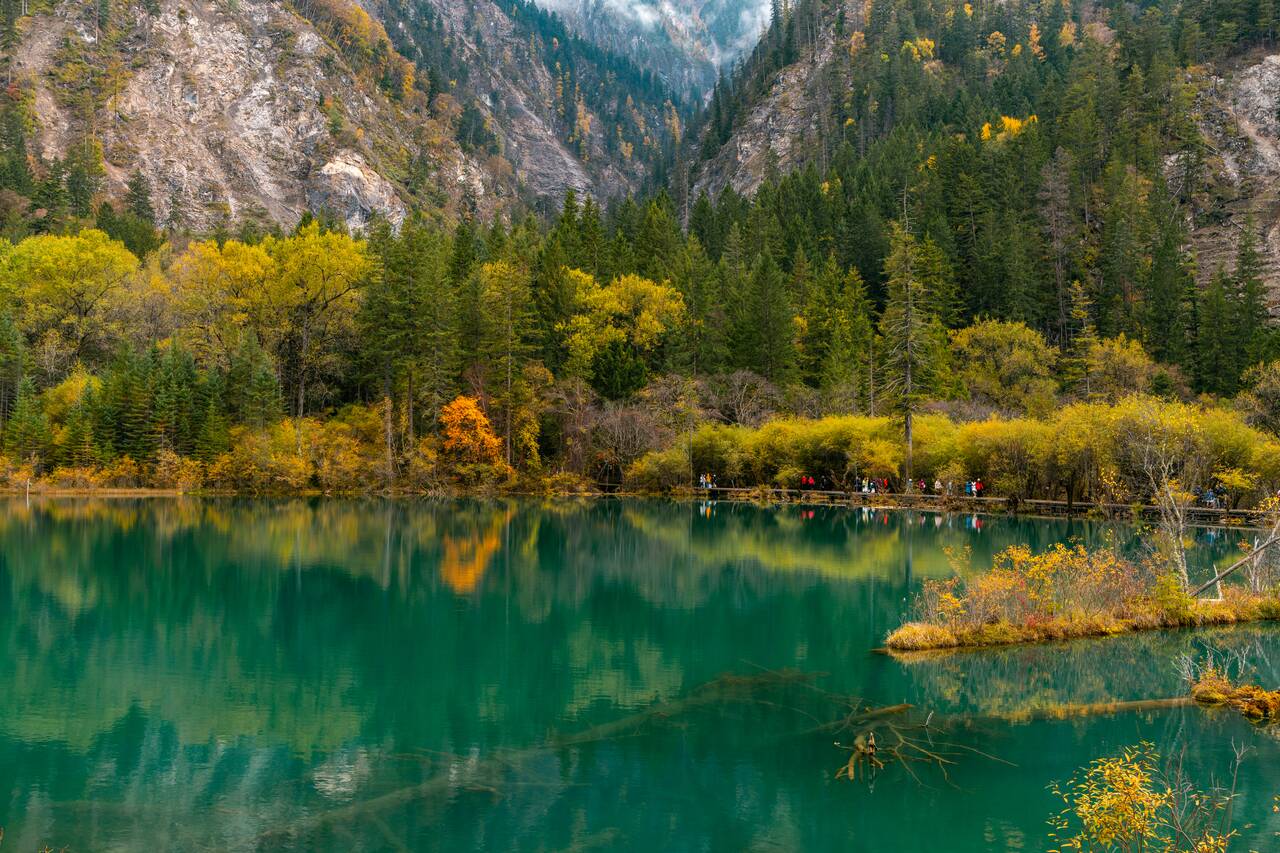
After a short ride from Swan Lake, you will arrive at Arrow Bamboo Lake and its beautiful waterfall. The lake sits at an altitude of about 2,629 m and covers roughly 151,000 m². The lake is relatively shallow (around 5–10 m deep) and is known for its stable water level throughout the year; it doesn’t fully freeze even in winter.
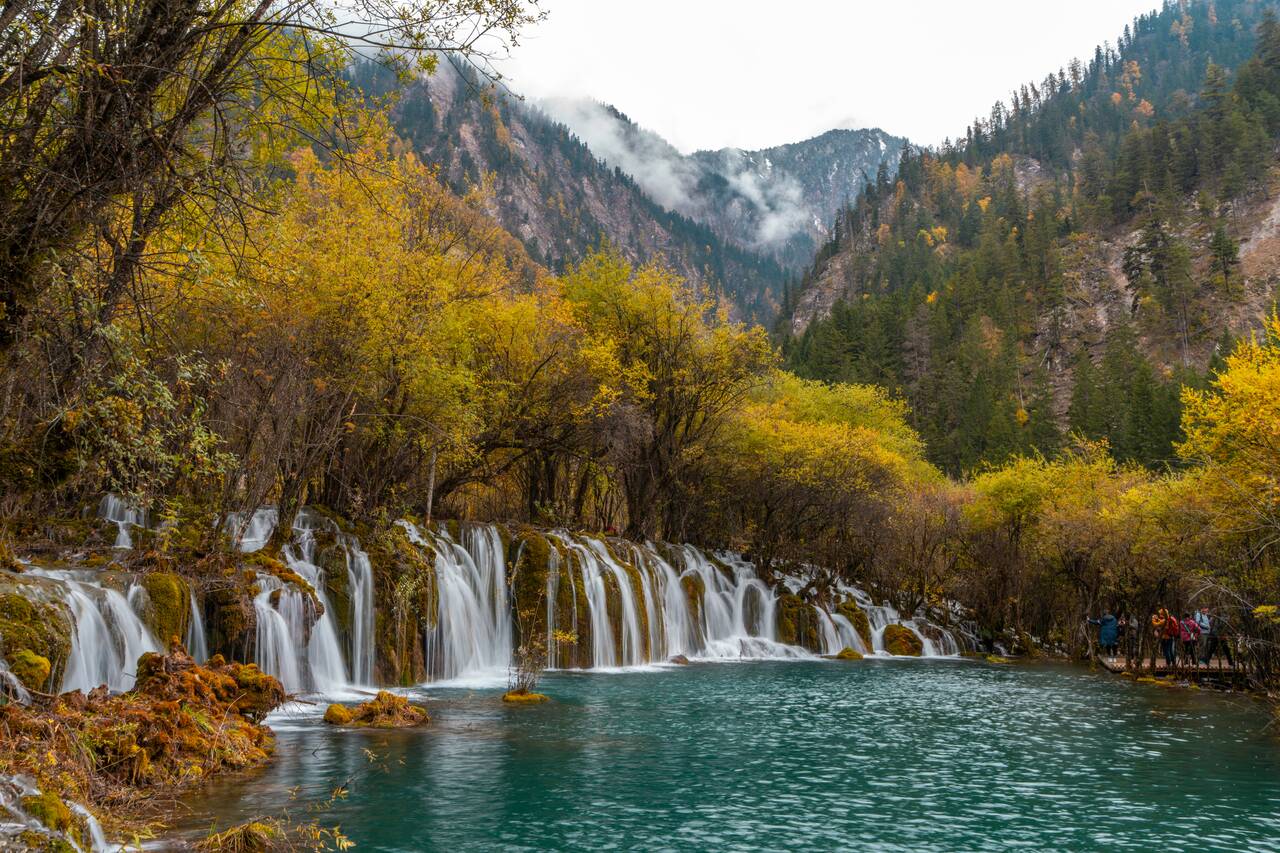
It is a lovely walk that takes you right up to the water of the lake so you can appreciate it closely, but it can get crowded at times, and there is no railing protecting you from falling into the water in case you bump into someone, so be very careful. You can spend about 30 minutes here before.
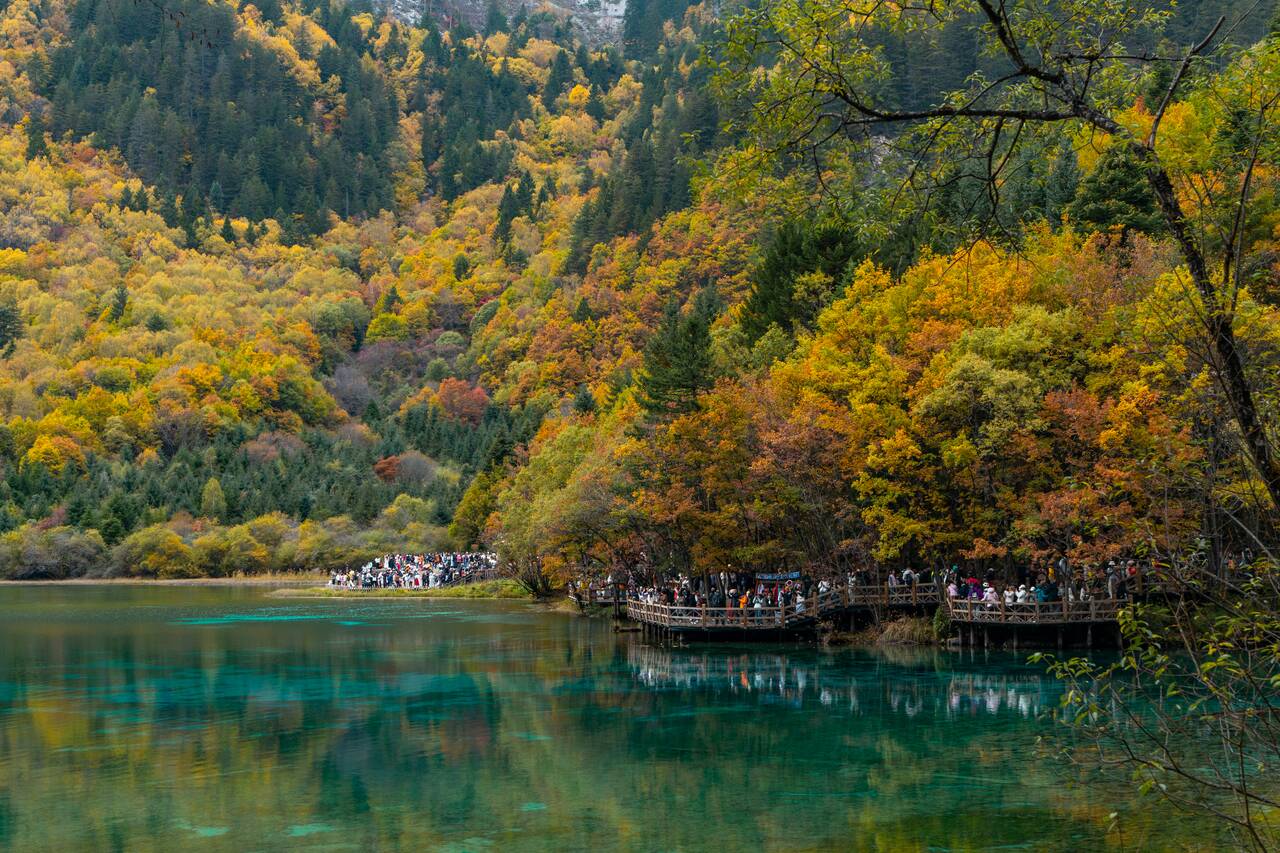
Next up is Five Flower Lake, the most beautiful multi-colored lake in Jiuzhaigou in my opinion, and definitely the highlight of my trip here. It sits at an altitude of about 2,472 m. The lake is relatively shallow (around 5 m deep) and covers roughly 90,000 m². Its magical, multicolored water comes from a combination of calcium‑carbonate deposits, algae, and submerged water plants.
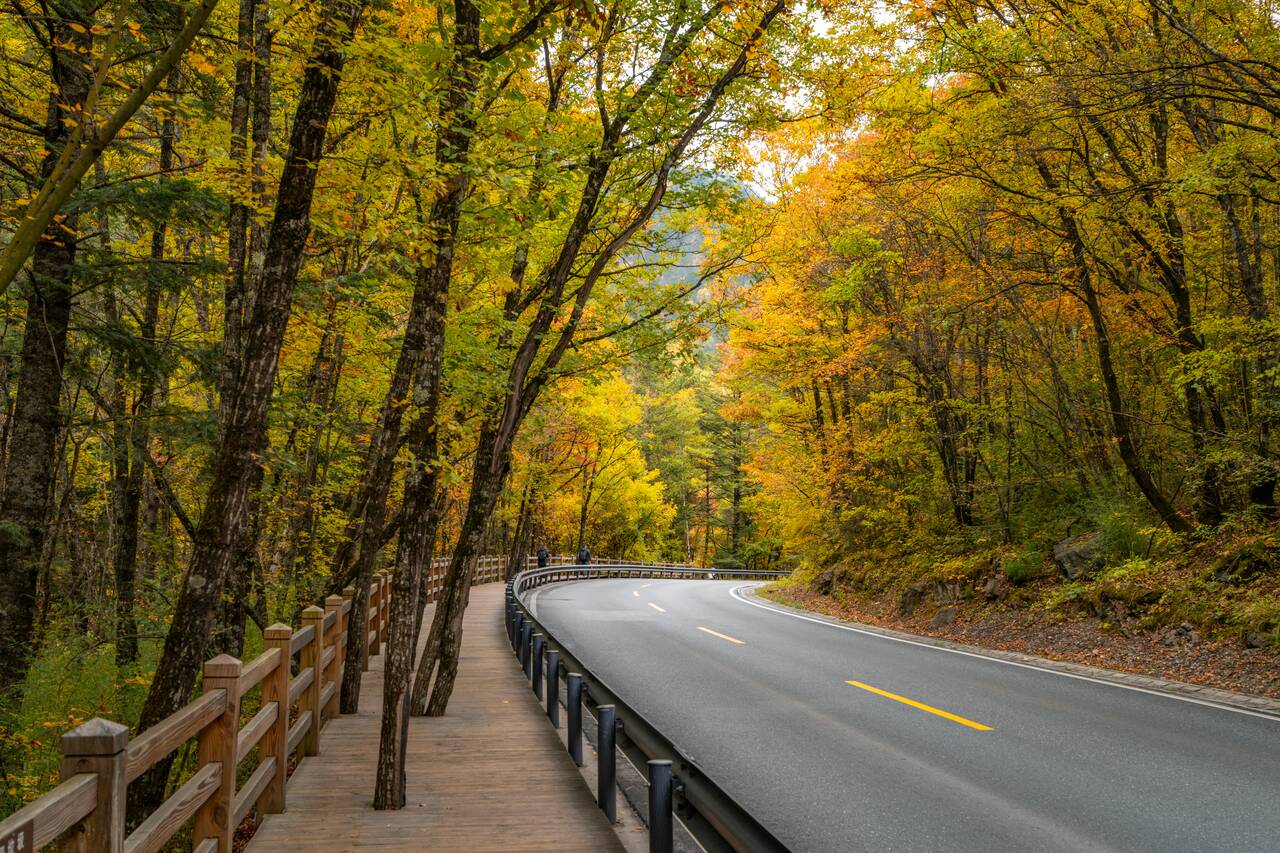
From here, instead of taking the shuttle bus to Central Station, you can opt to walk instead so you can actually enjoy Jiuzhaigou and its wonderful nature in peace without having to shove and be shoved by others in crowded places. The walk from here to Nuorilang Waterfall takes about 30 minutes along an easy and flat boardwalk.
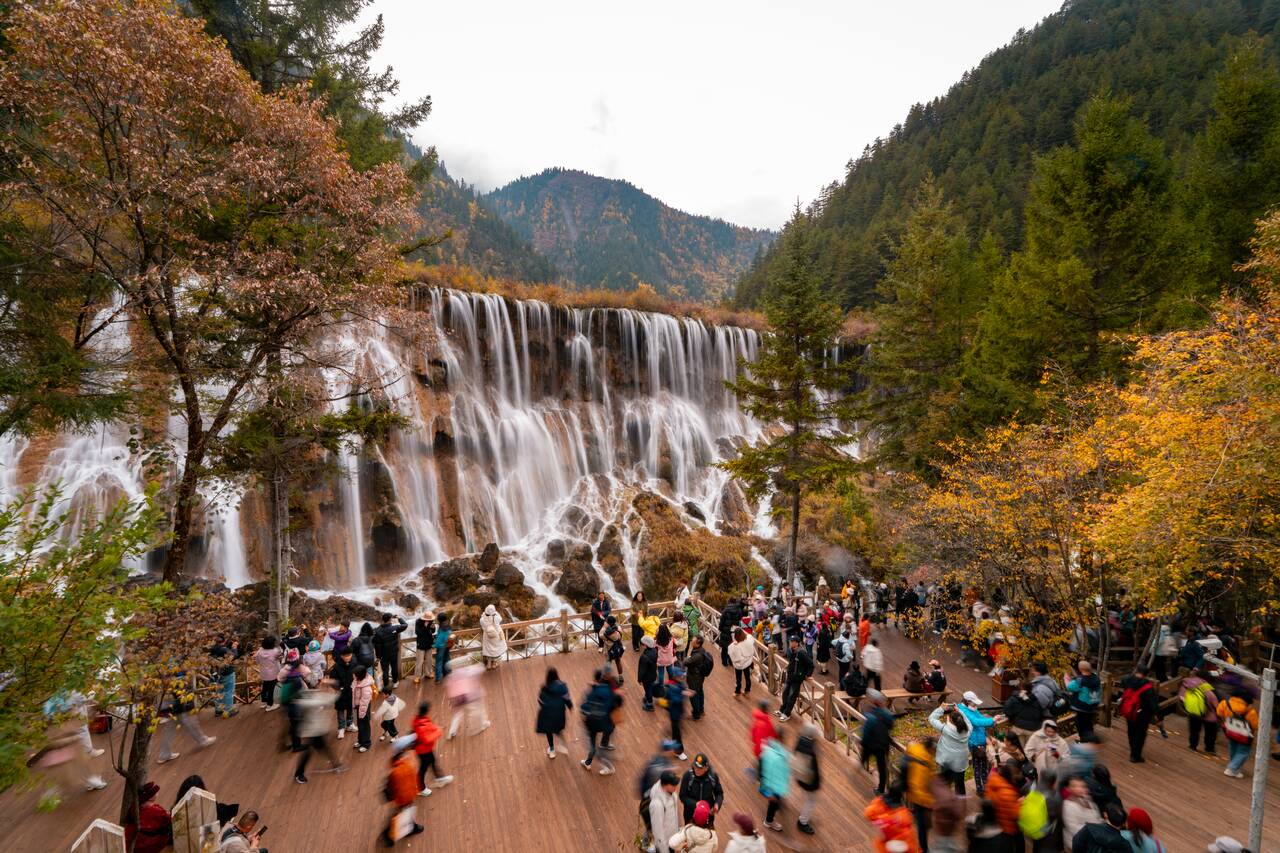
Nuorilang Waterfall is one of Jiuzhaigou’s most iconic sights and also one of the most crowded areas in the park. Located at an elevation of about 2,365 meters, it spans 320 meters in width and plunges roughly 24.5 meters. Its Chinese name comes from Tibetan, meaning “majestic and splendid”, which perfectly describes how I felt when I first saw it in person.
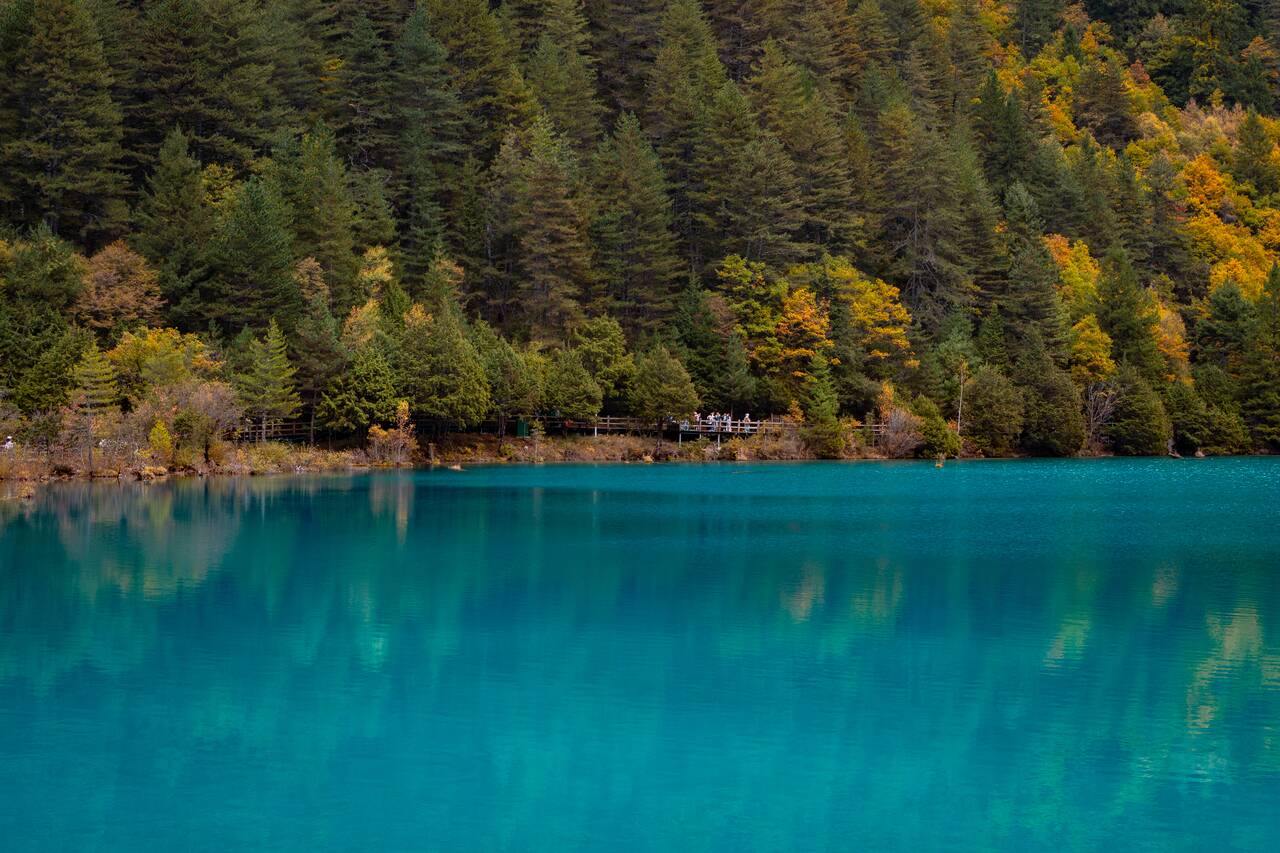
After visiting the waterfall, you can take the shuttle bus to Rhinoceros Lake, located at the lower end of the Y. If time allows, you could instead take a shuttle from the Central Station to the other branch of the Y and explore sights like Long Lake and Five-Color Pond. I didn’t have time to visit that branch, so I chose to continue down toward the exit, stopping at Rhinoceros Lake along the way.
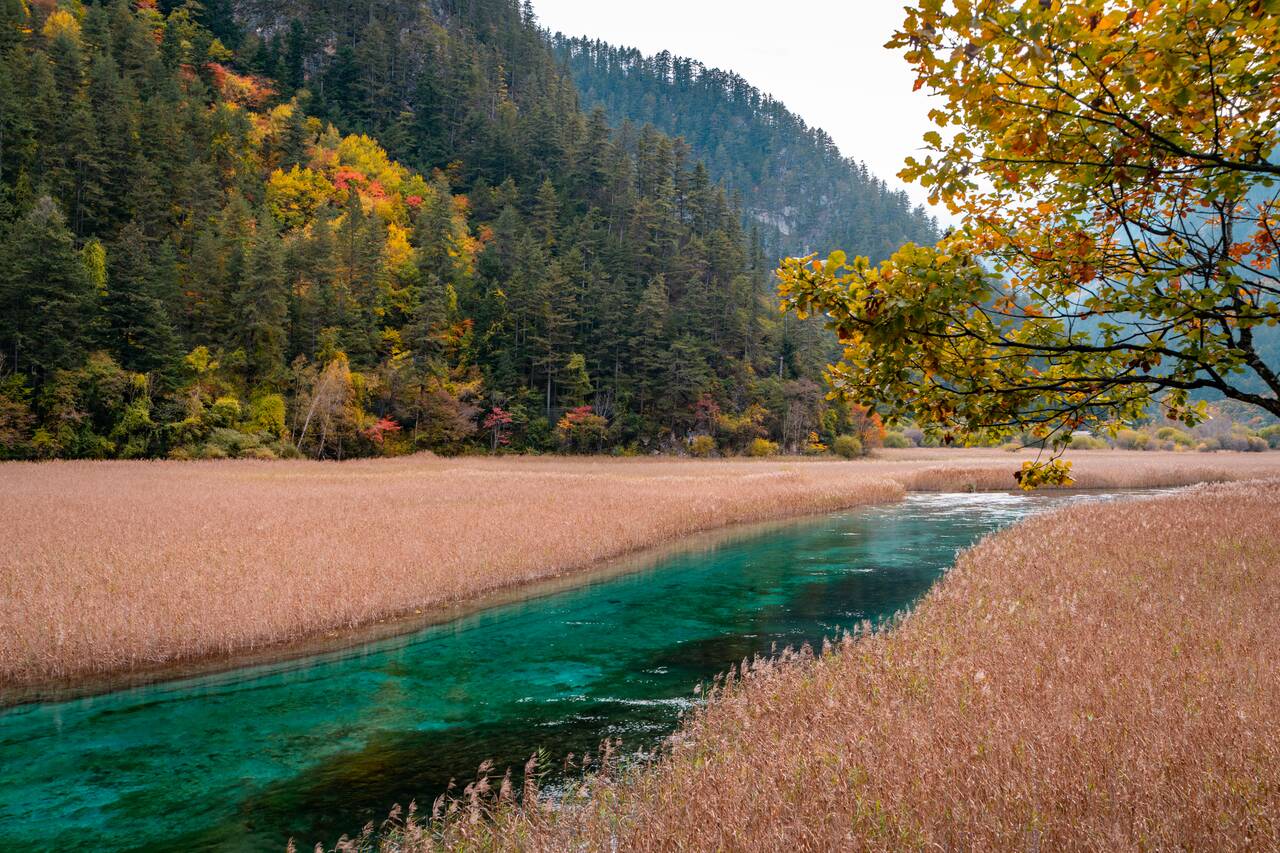
Before exiting the park, you can stop by Reed Lake, a beautiful lake known for its dense beds of reeds that sway gently in the wind. A clear, jade-colored brook, which is often called the “Jade Ribbon”, meanders through the reeds and divides the lake into two halves.
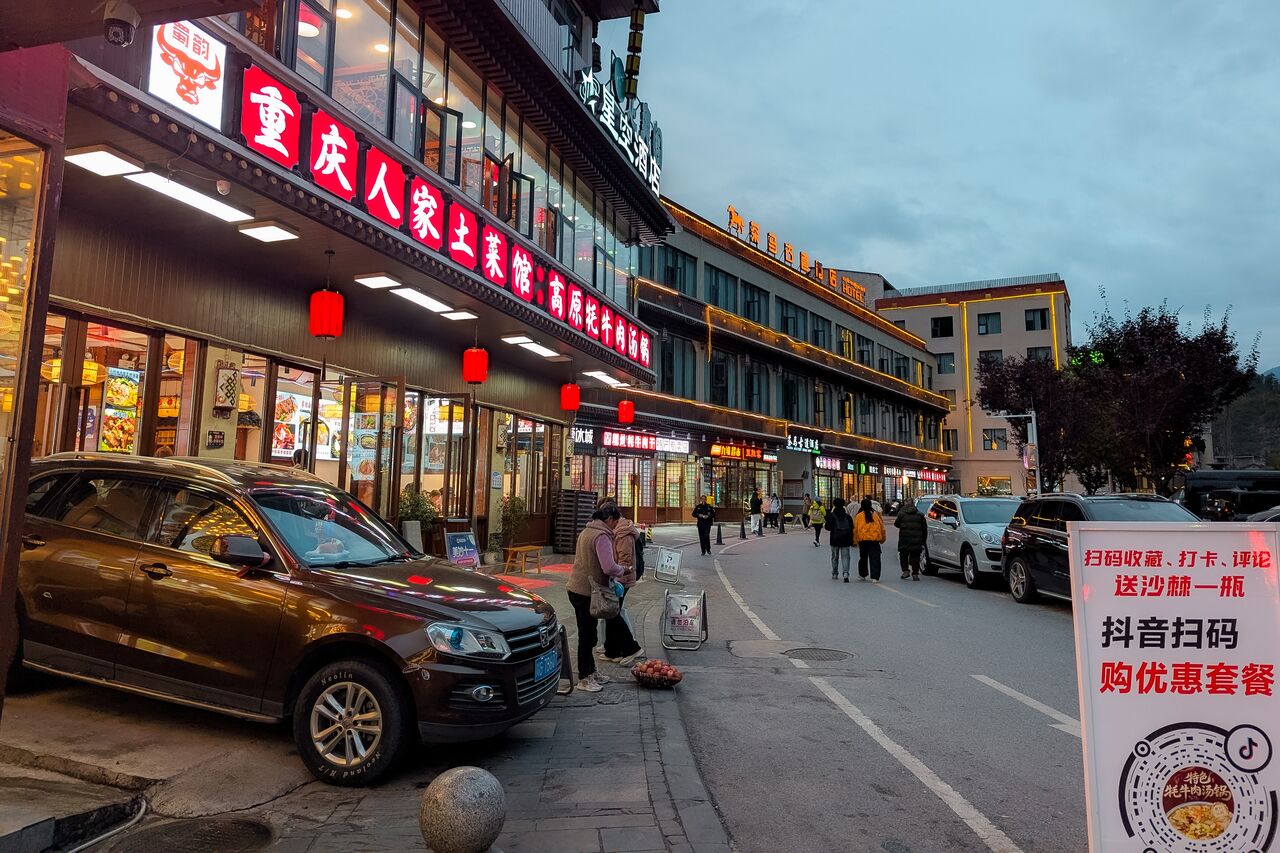
After walking along Reed Lake, you can take the shuttle bus and exit the park, completing your first day of the trip. You can relax, find a nice restaurant for dinner, and call it a night. Before going to bed, make sure to book a shuttle bus from Jiuzhaigou to Huanglong for the next morning, which you can book here under “Jiuzhaigou- Huanglong Attraction Shared Transfer.” It costs around 8 USD per person one way, with departures from 7 AM to 1 PM almost every hour, usually from the Moon Bay Parking Lot.

Where to Stay in Jiuzhaigou?

Getting From Jiuzhaigou to Huanglong
From Jiuzhaigou, you can book a shuttle service here under "Jiuzhaigou-Huanglong Attraction Shared Transfer" and take it to Huanglong in the morning. It costs around 8 USD per person one-way, with departures from 7 AM to 1 PM almost every hour, usually from Moon Bay Parking Lot.
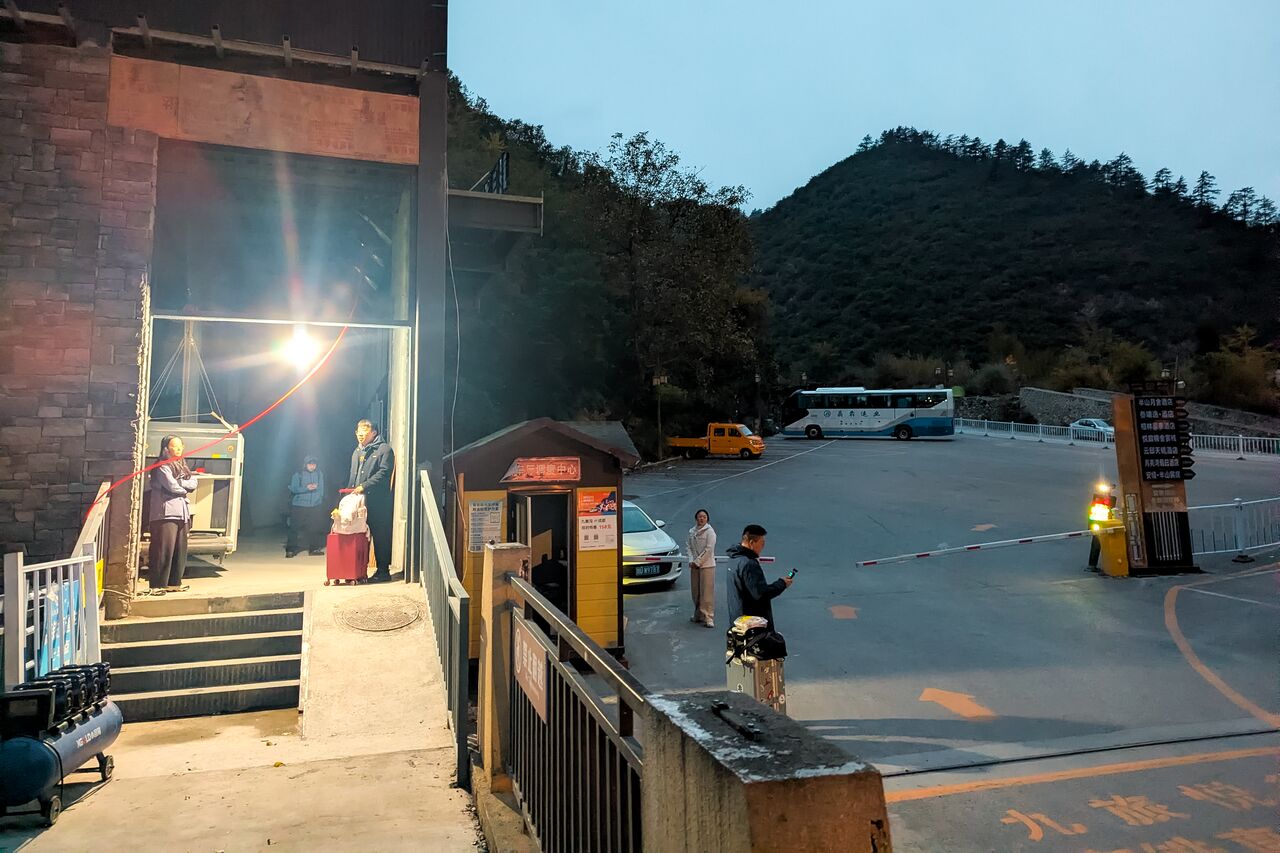
Once you book, the travel agency will send you the exact pickup location and vehicle license plate via WeChat, so keep an eye out for the message. The bus will drop you off at the entrance to the scenic area, and you can begin exploring right away.
Day 29: Huanglong (Stay the night in Chengdu)
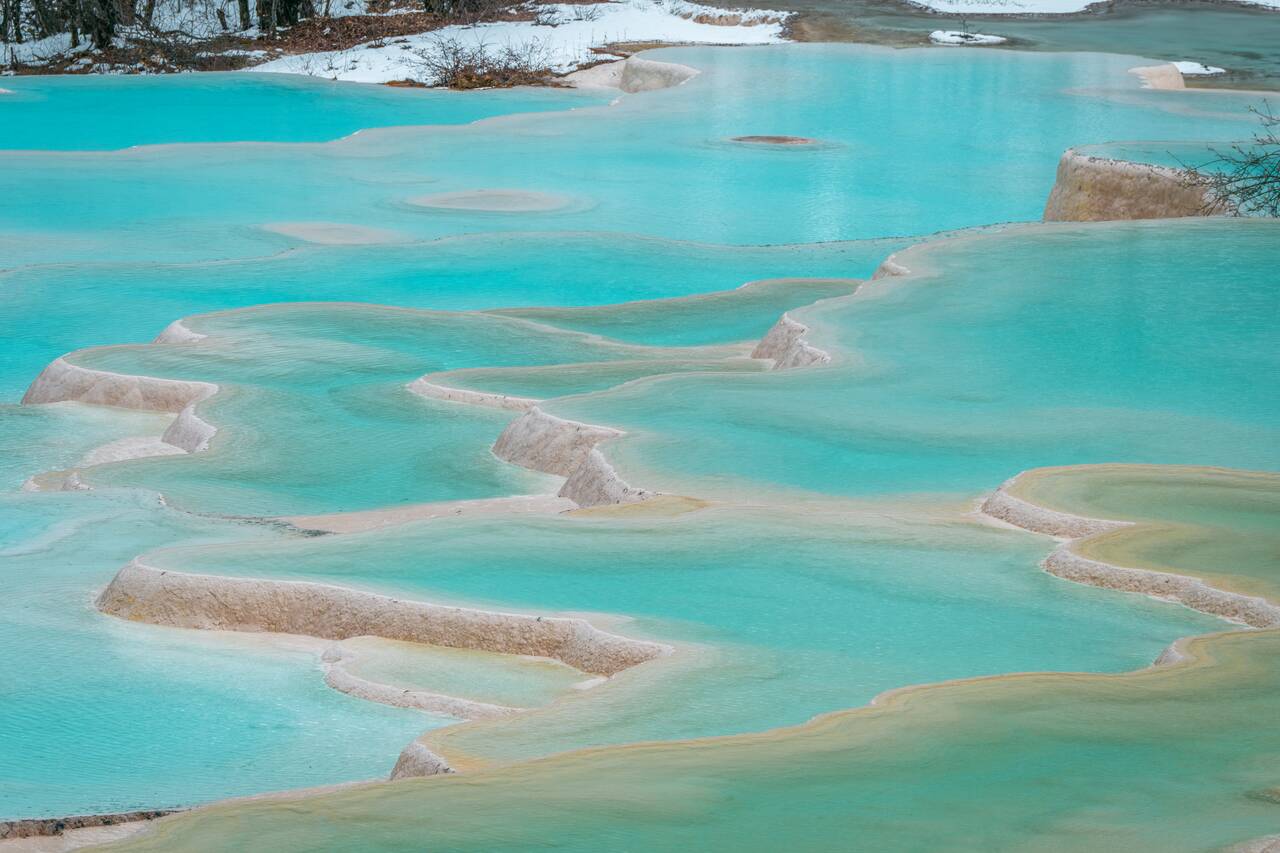
- 🕐 Time: Day Trip
- 📖 Full Guide: Visiting Huanglong: A Complete Travel Guide
The next morning, you can wake up and catch the bus you booked the day before to go to Huanglong, where you’ll be spending the second day exploring. The bus usually departs from the Moon Bay Parking Lot at 7 AM, but make sure to double-check your booking. The travel agency should text you the night before after you book your bus ticket.
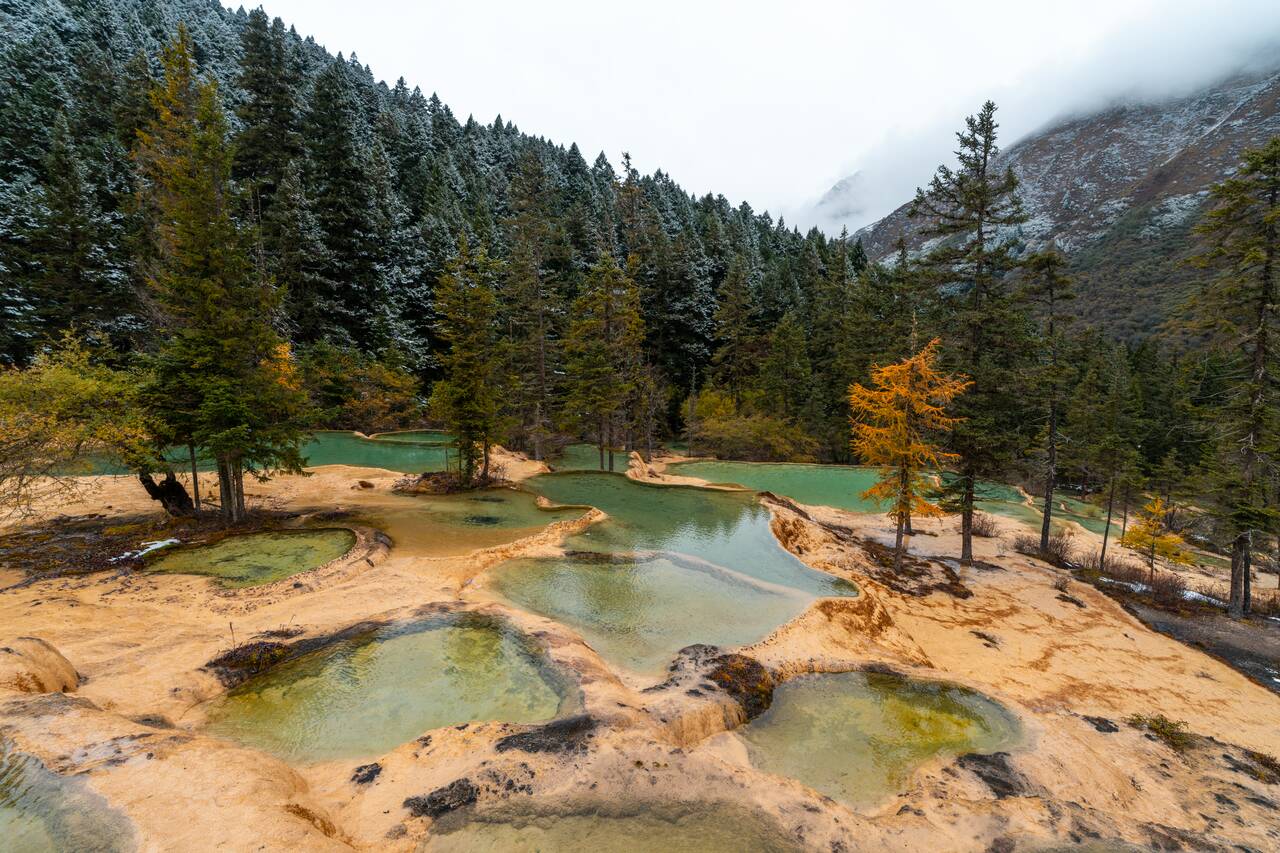
The transfer should take about 2-3 hours, but before you arrive, you can also book the Huanglong entry ticket online in advance, so you can hit the ground running when you arrive. It should cost around 170 CNY for the hiking ticket. Once you get there, you can just use your passport and begin hiking Huanglong.
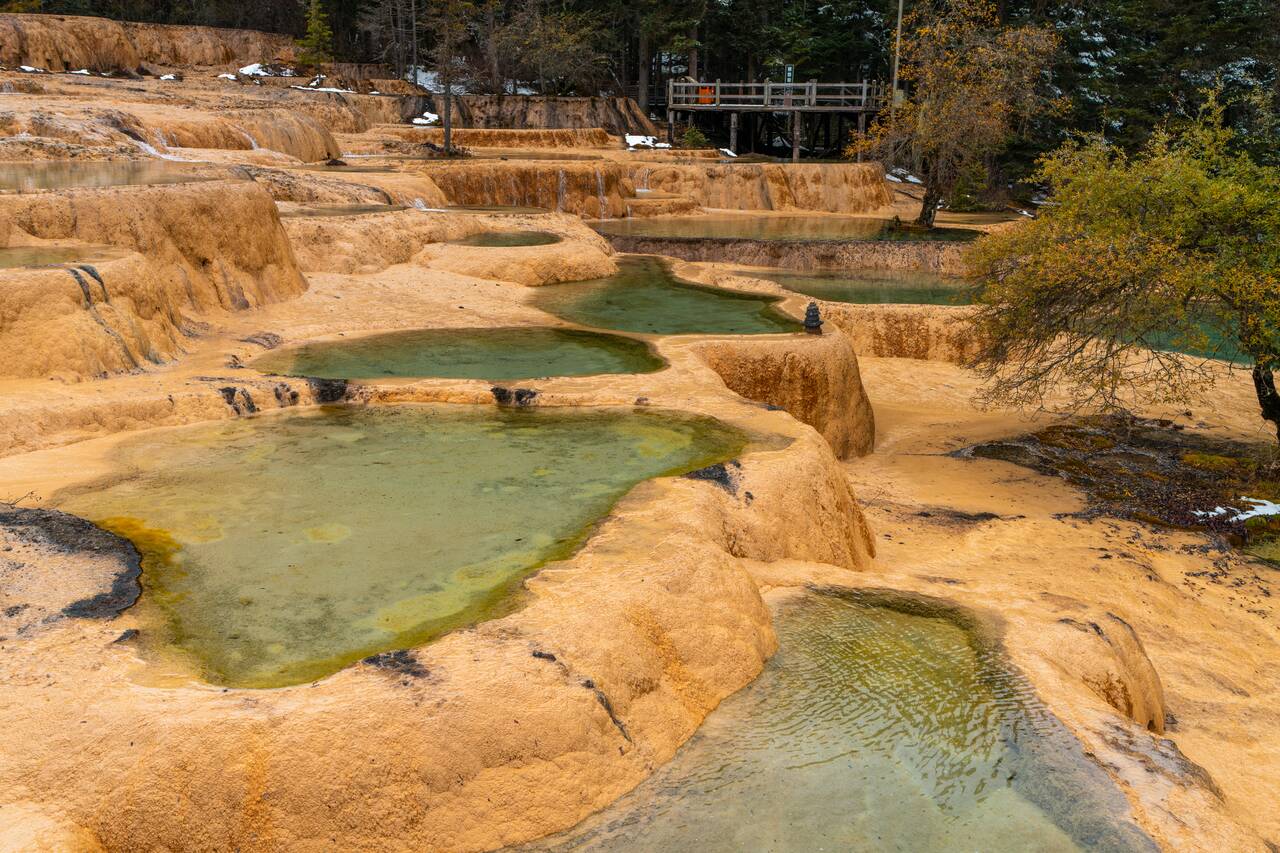
Right from the start, after hiking through a thick forested area, you will arrive at the Welcome Pond, a collection of beautiful pools with crystal-clear water located around 3,230 meters above sea level. This gives you a glimpse of the stunning scenery to come as you continue hiking upward. There is plenty more to see along the way!
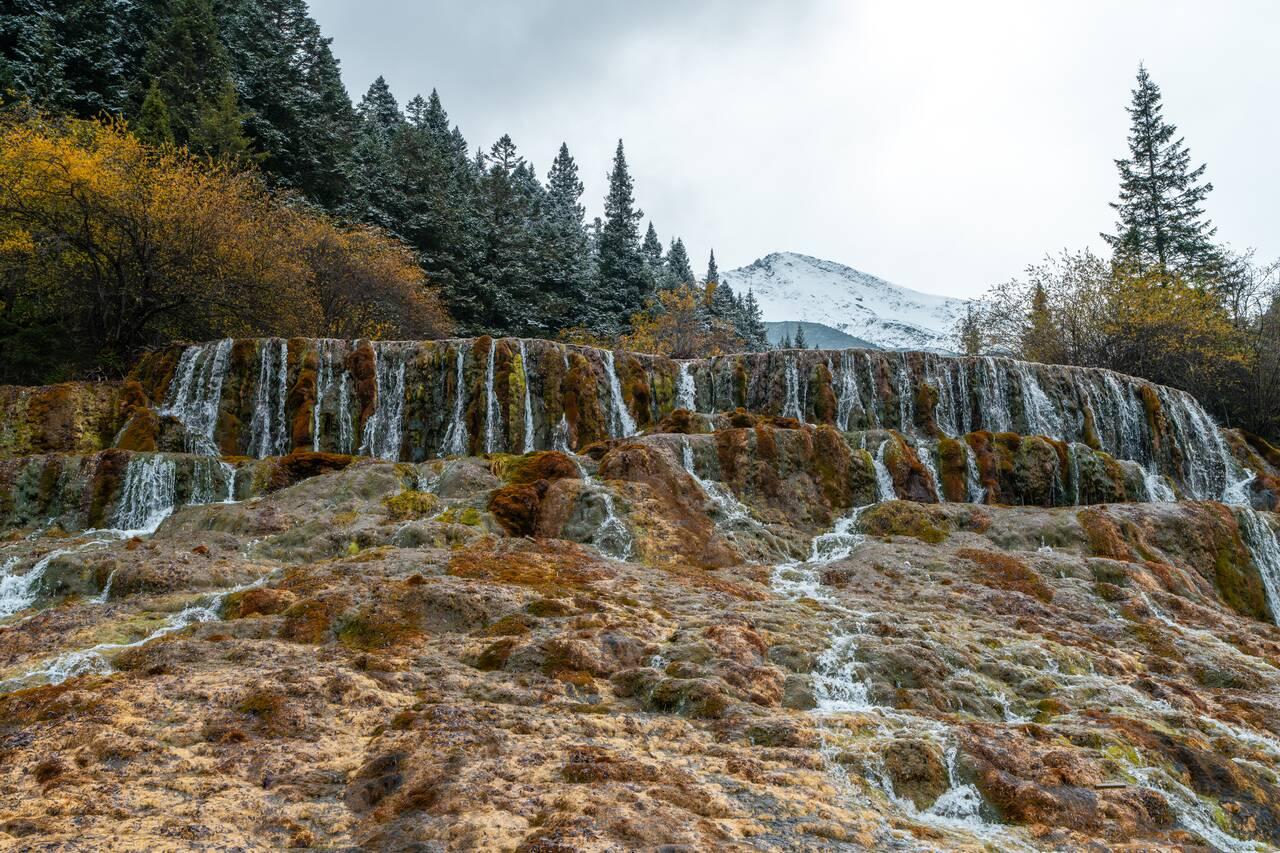
As you follow the winding boardwalk upward, you will come across the Glowing Waterfall, a stunning cascade where water tumbles down a rocky ledge about 10 meters high and 60 meters wide. It forms dozens of tiered waterfalls that shimmer like silver pearls rolling down, resembling a sparkling curtain of water suspended high above.
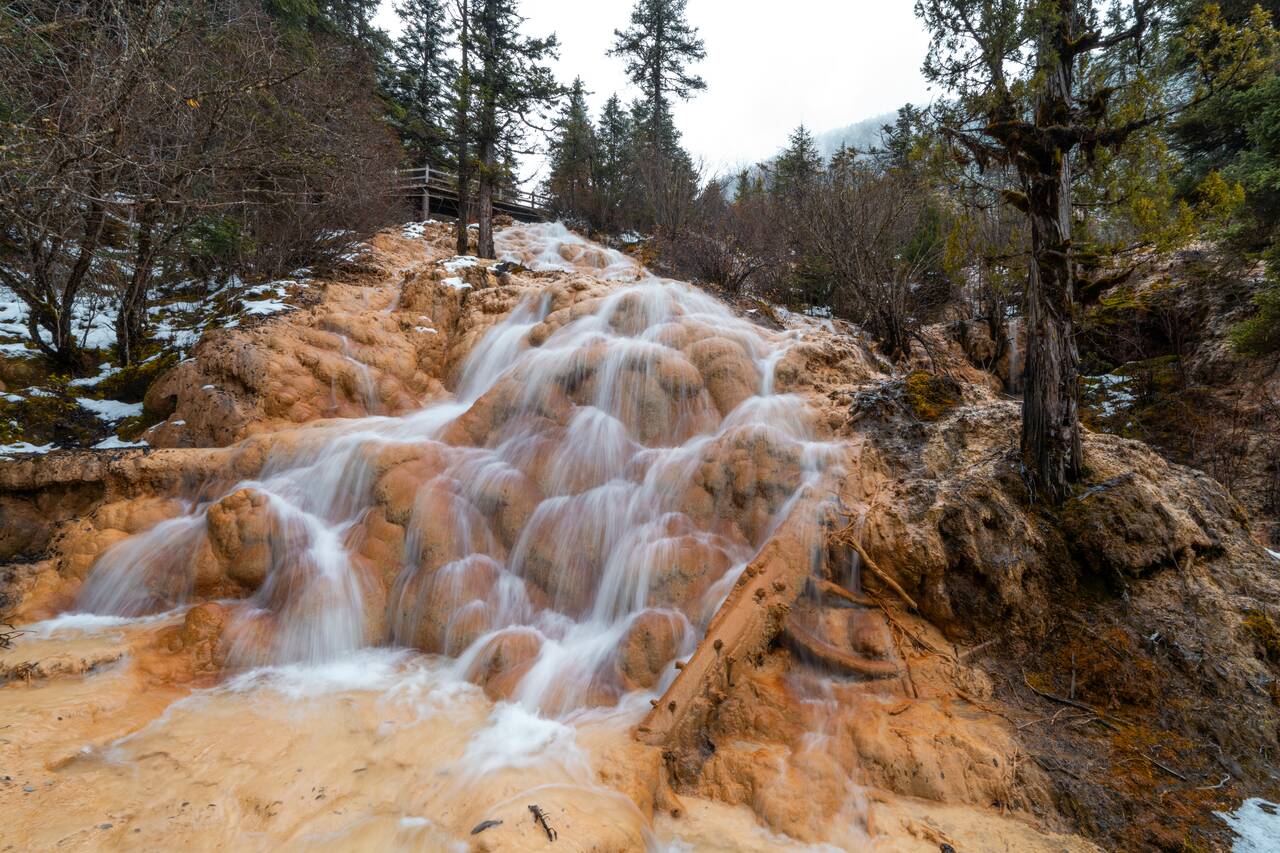
The Lotus Terrace Waterfall is another beautiful waterfall you will encounter while hiking up the trail. It is located at around 3,240 to 3,270 meters above sea level, spans 167 meters in length, 19 meters in width, and has a vertical drop of 25 meters.
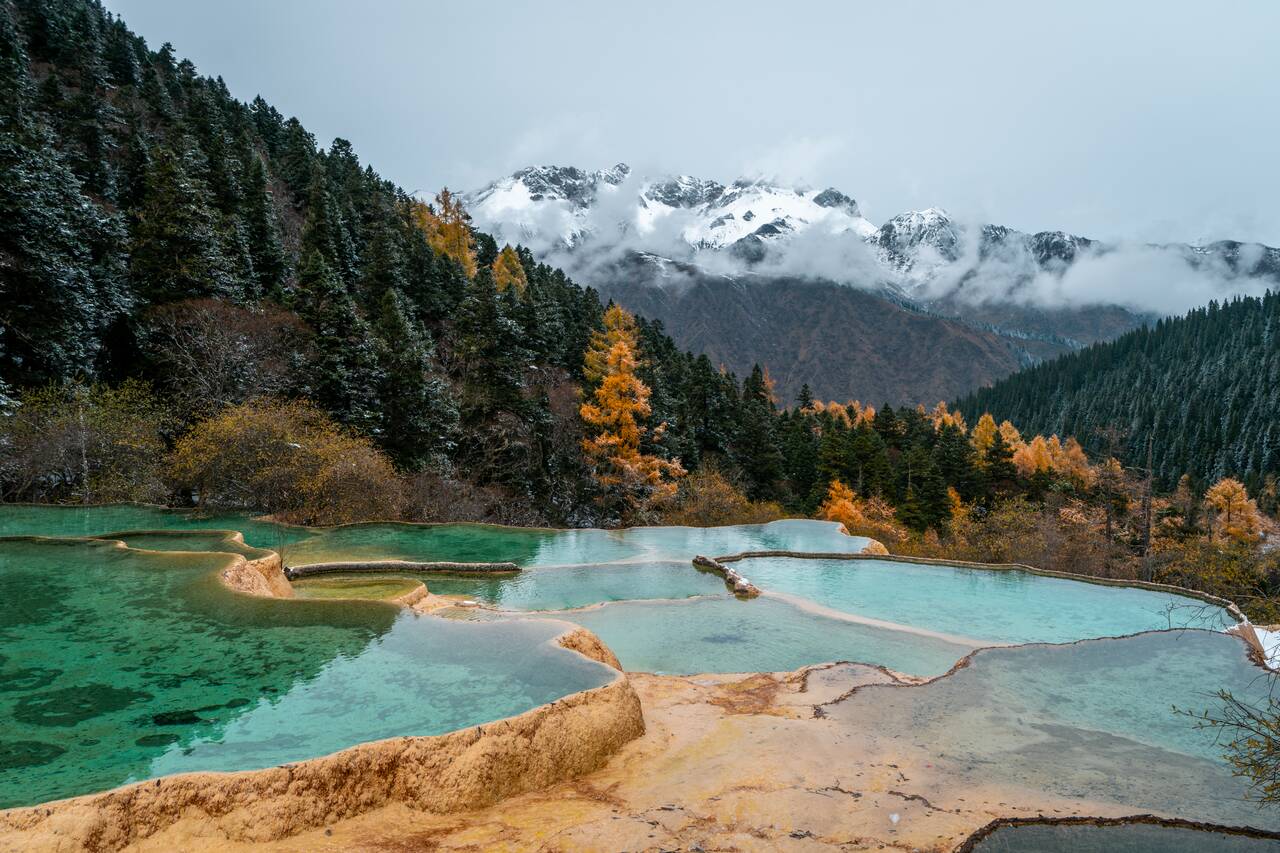
Next, you will find the Mirror Reflection Pool, a smooth and beautiful pool located around 3,400 meters above sea level. The water is so calm and still that it earned the name Mirror Reflection Pool, and you will find a collection of over 180 pools in this area.
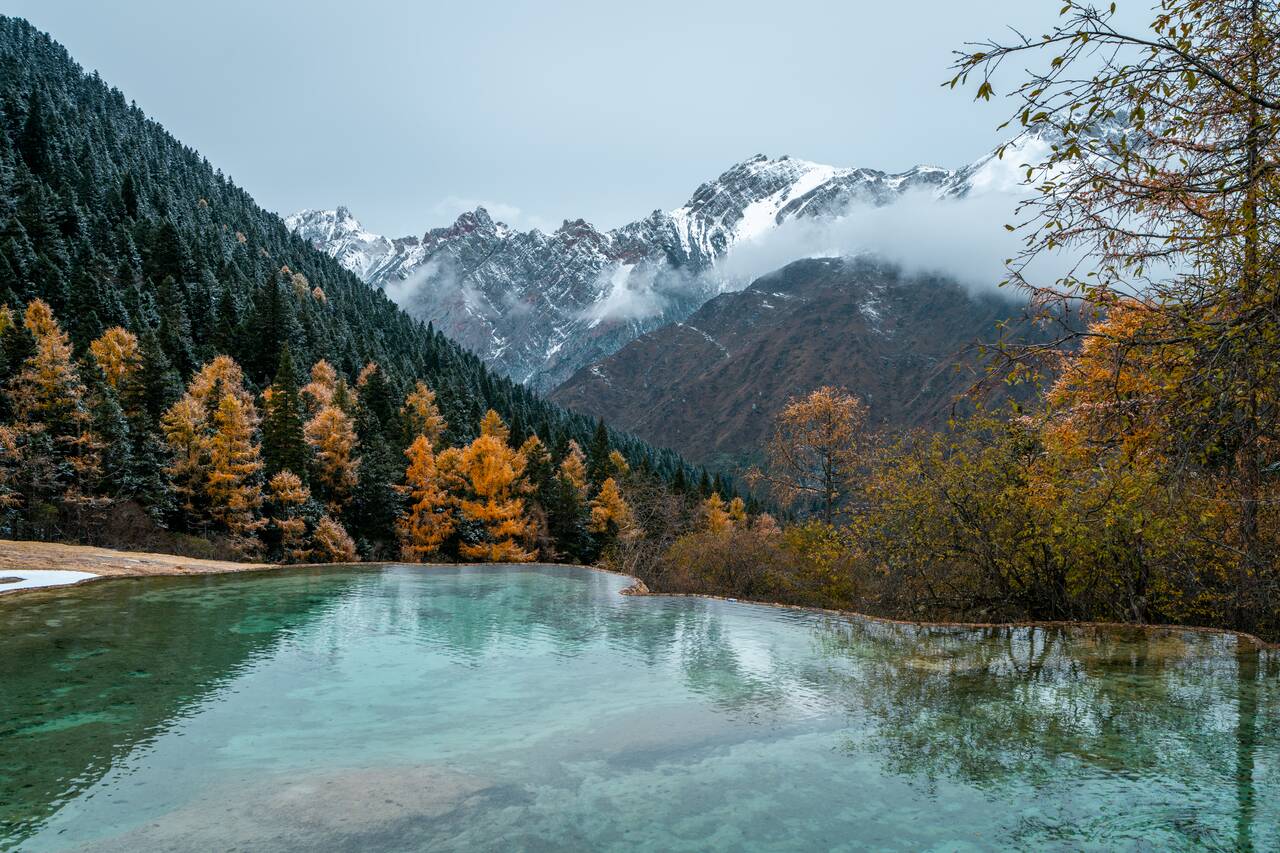
There is a pavilion that extends over the travertine, where you can rest from the hike and enjoy the stunning Mirror Pools. The water reflects the snowy forest and mountain peaks behind, creating a perfectly symmetrical image, which makes for excellent photo opportunities.
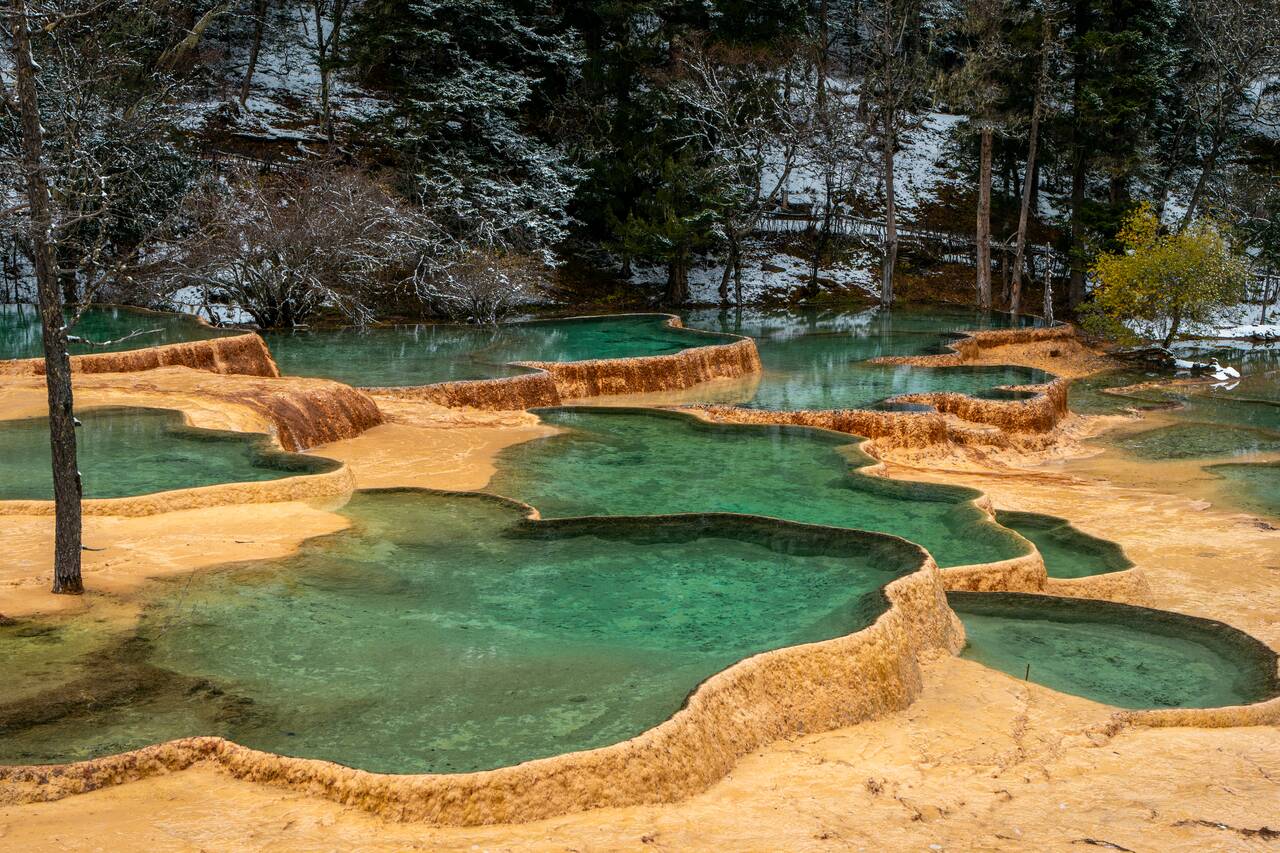
As you continue up the mountain, you will come across the Zhengyan Pools, a collection of over 658 colorful pools situated at an altitude of 3,454 meters. It is the second-largest pool cluster in Huanglong Valley and one of my favorites, with its stunning orange-colored travertine contrasting perfectly against the snowy forest and mountains in the background.
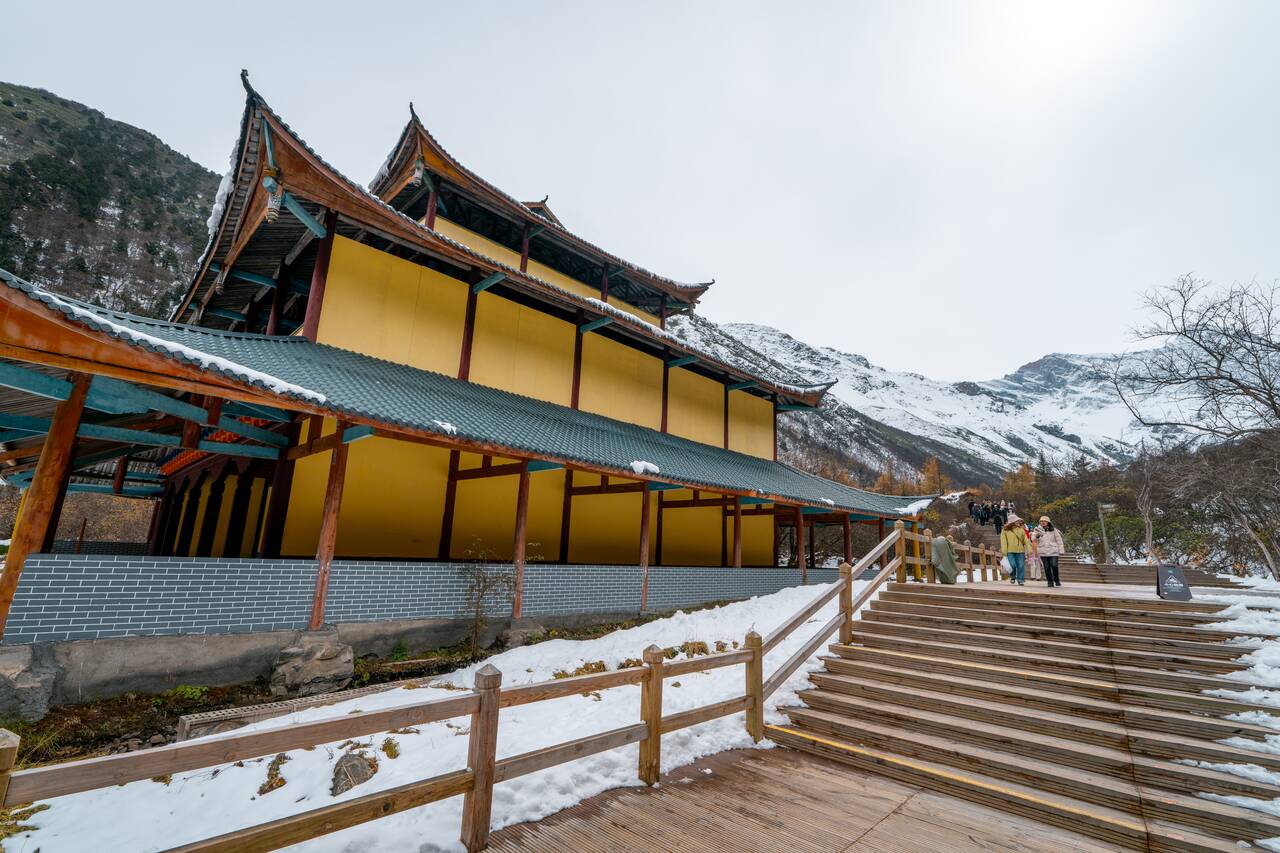
After about two hours of hiking, you should arrive at the Middle Temple, an inaccessible temple that also serves as a rest stop. You can take a break here, as there are many seating areas and a few shops selling snacks to keep you going. Since it is so close to Huanglong Temple, the next stop, I suggest you push through this rest stop and rest at Huanglong Temple for a better view of the place.
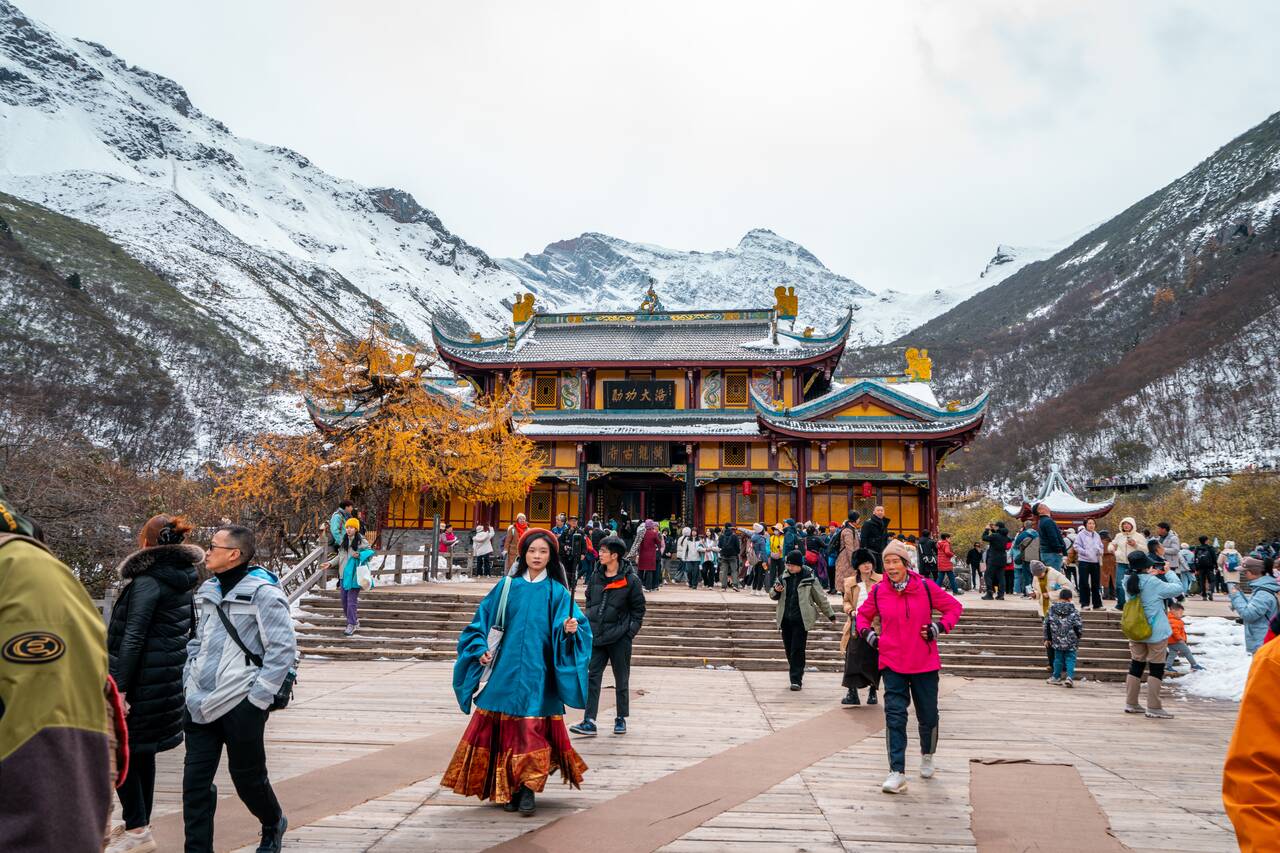
From Middle Temple, you can continue for another 15 minutes to reach the Huanglong Temple, a larger rest stop located just before the Five Colored Pool. It offers a much better view of the surrounding mountains compared to Middle Temple.
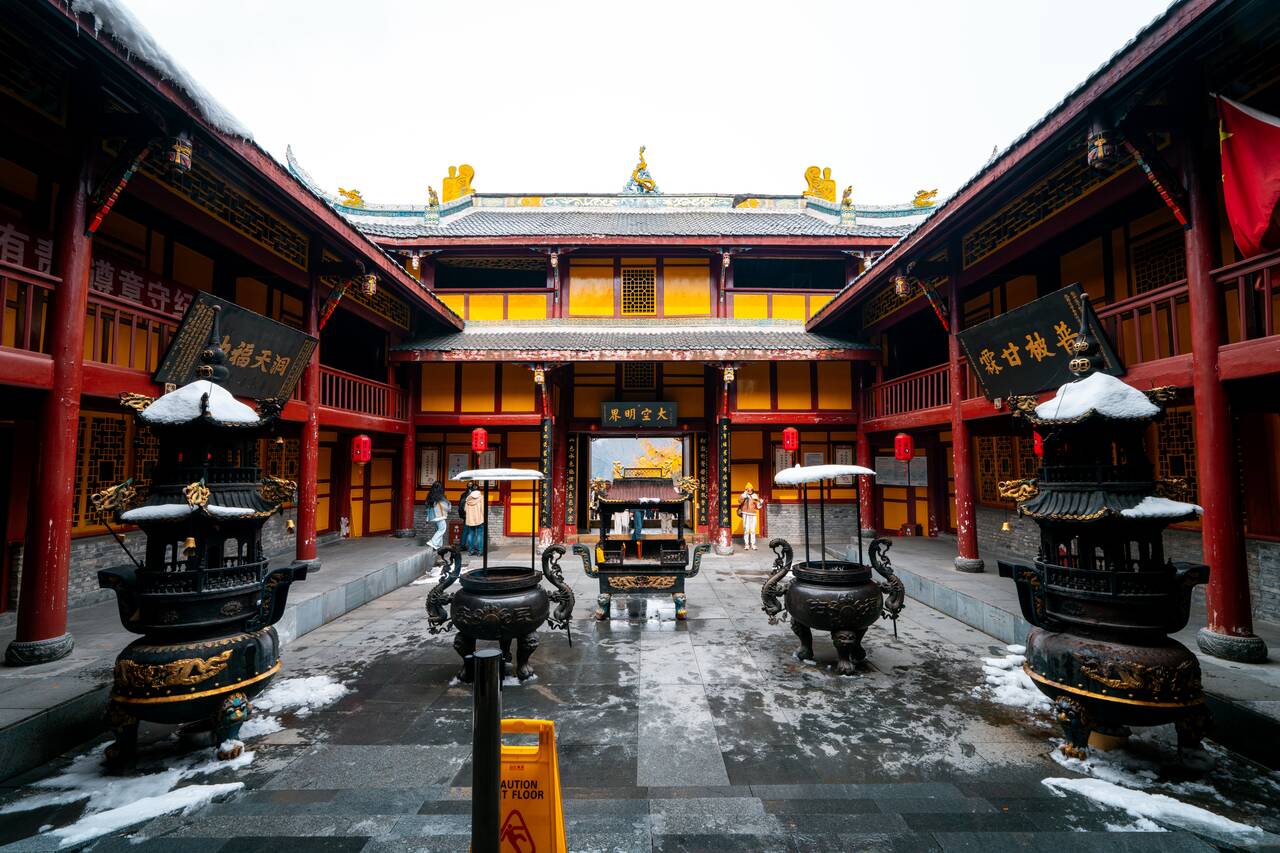
Unlike the Middle Temple, you can actually go inside it and see its beautiful courtyard and Buddha images and statues. It is not often that you see a Chinese temple being surrounded by a snowy landscape, so be sure to spend some time and explore the temple.
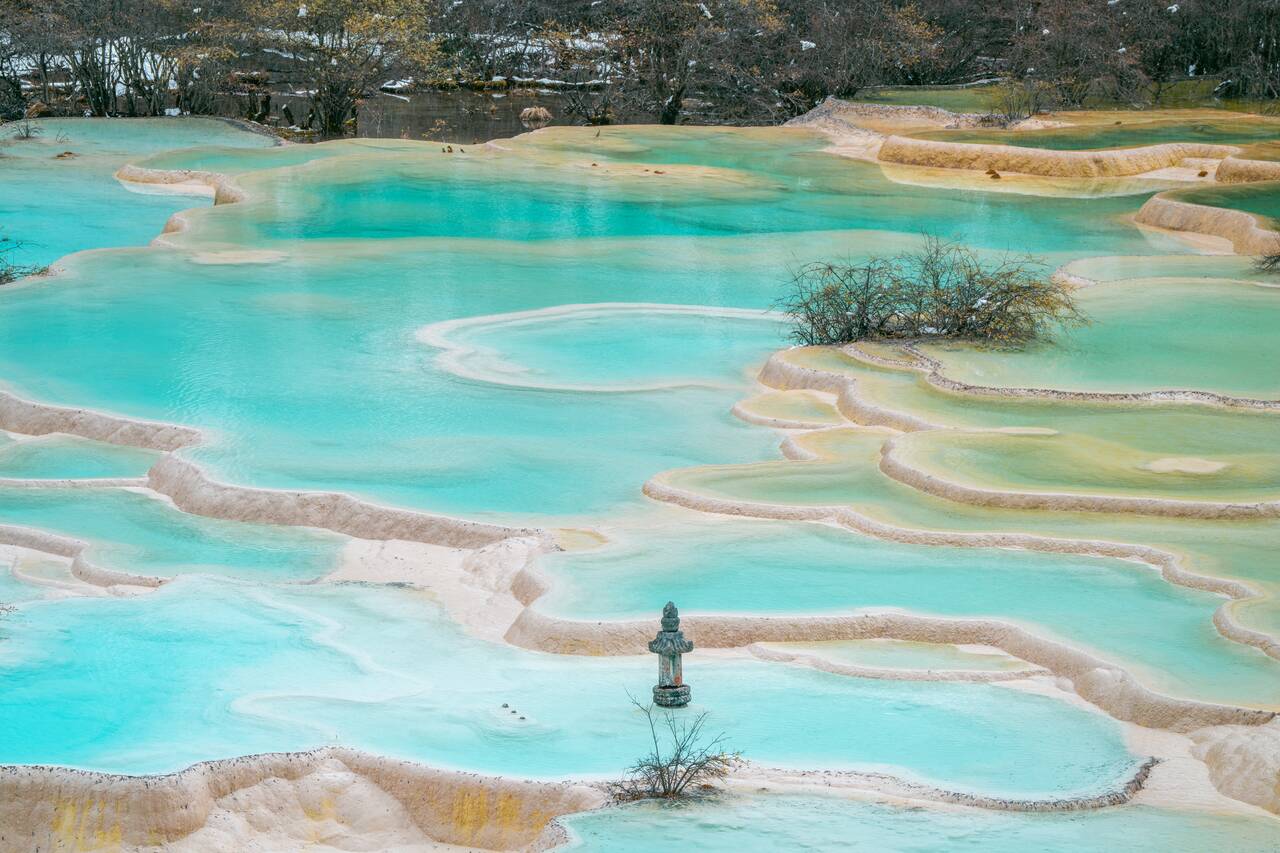
From the temple, it is only a few minutes' walk to the Five-Colored Pond, arguably the most beautiful attraction in Huanglong Scenic Park. The pool sits high in the valley at about 3,576 meters above sea level and is considered the largest and highest outdoor travertine pond cluster in the world. It is also one of the most surreal sights in China, a place that made me wonder, "How is this even real?"
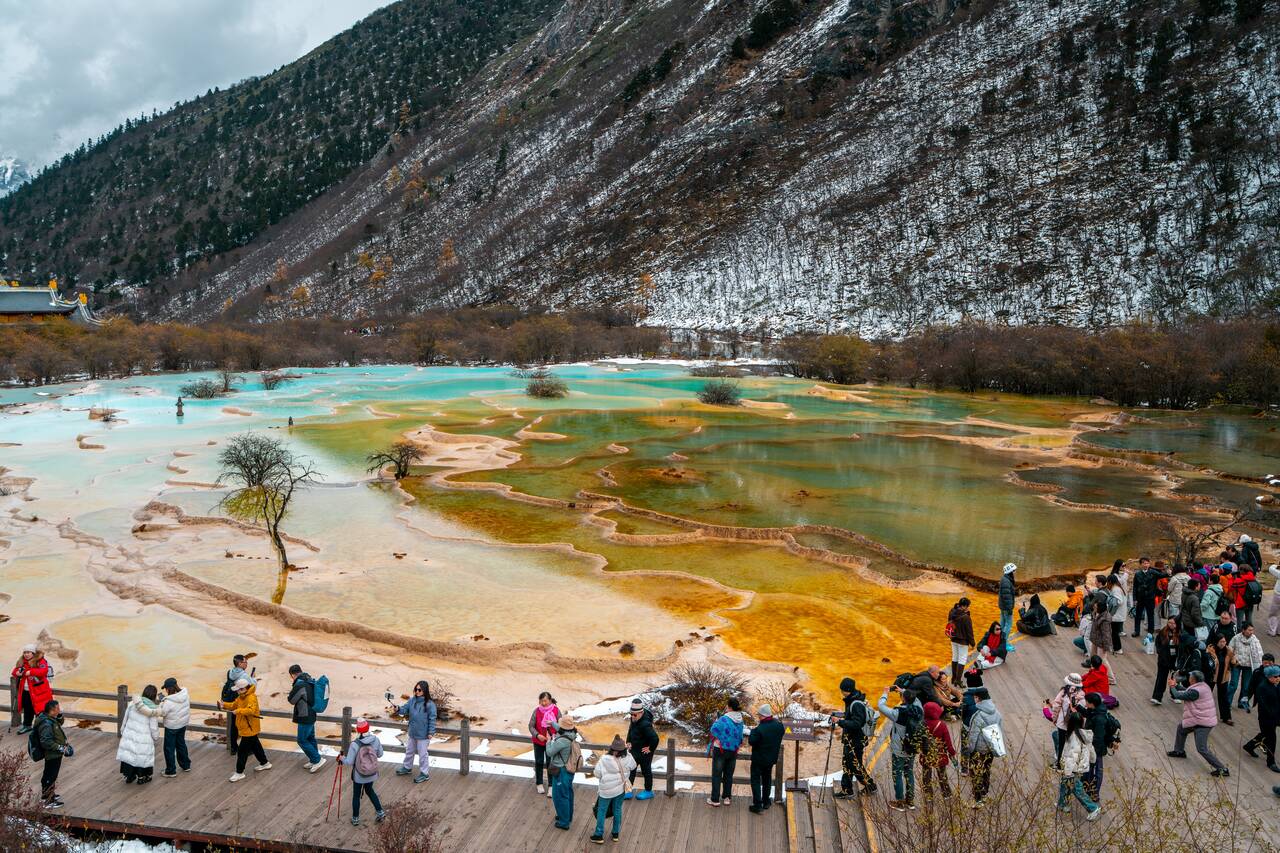
After you are done, you can either hike back the same way, which should take about two hours, or take the electric shuttle near Huanglong Temple to the Upper Cable Car Station. From there, you can buy a ticket and ride the cable car down. The ride should take no more than 30 minutes, which is very convenient and saves time, giving you plenty of time to catch the carpool taxi to the railway station.
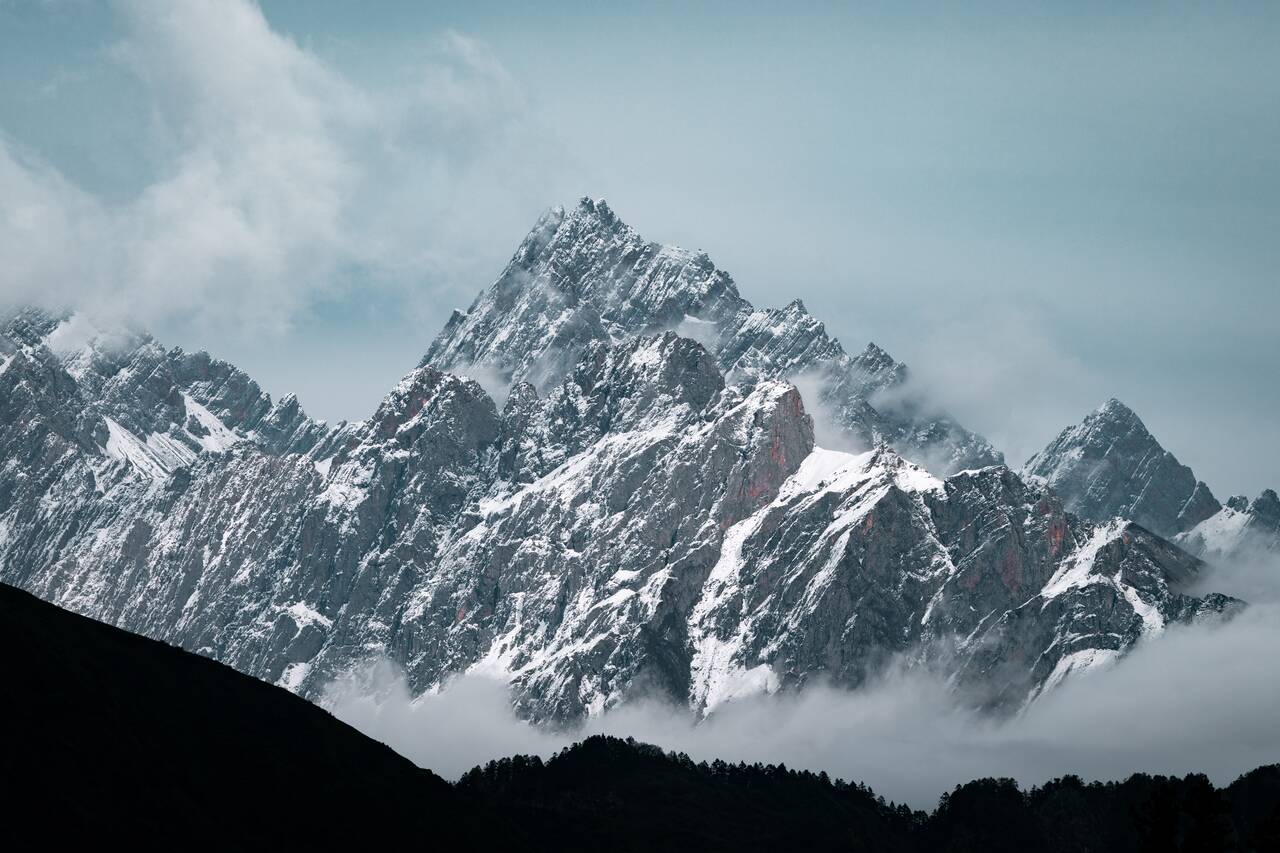
Once you exit the park, you can relax for a bit, find something to eat, rest up, and then go around the area to find a carpool taxi to take you to the Huanglong-Jiuzhai Railway Station so you can head back to Chengdu in the evening. The carpool taxi should cost around 30 CNY per person, and it will take you around 30 minutes to get from Huanglong to the railway station.
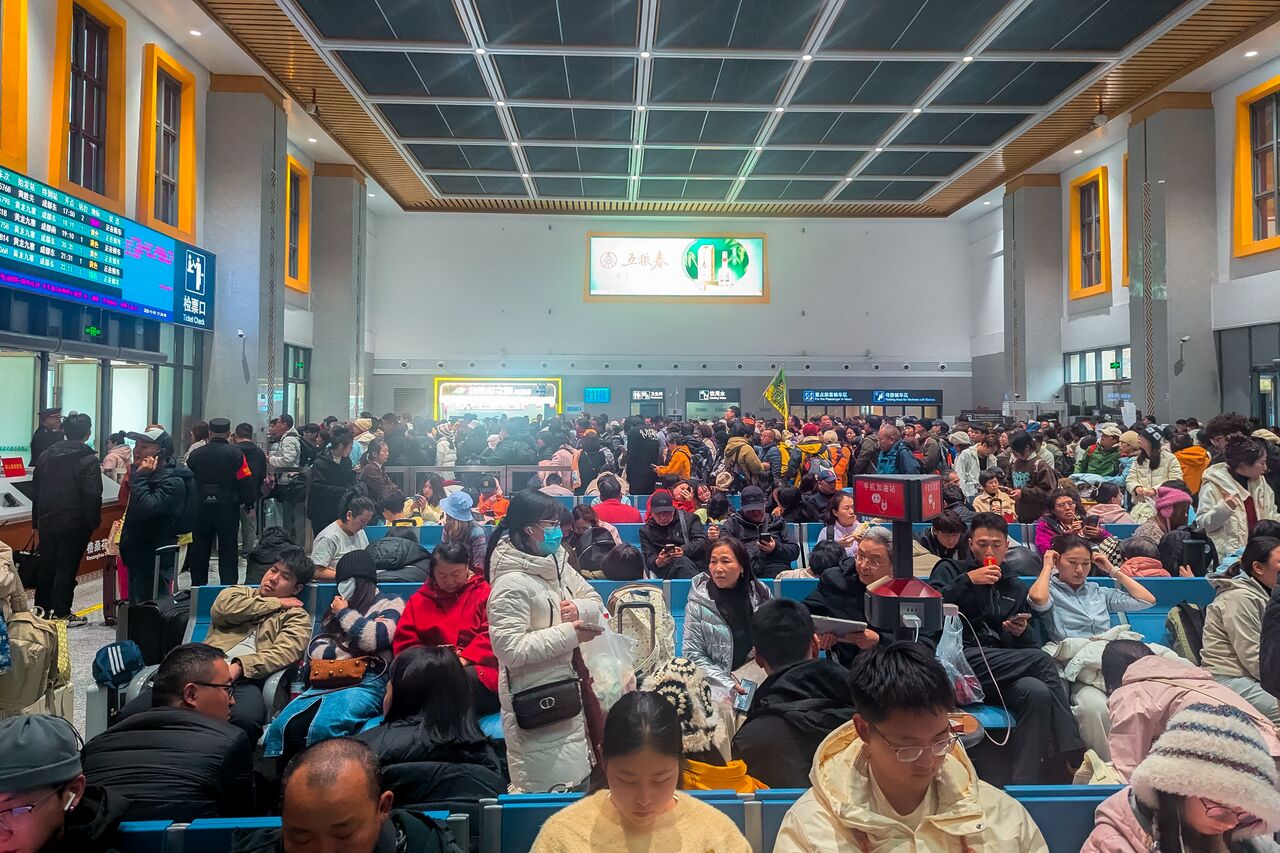
For the return trip, I recommend booking your return train for around 6 PM on the second day, just in case you want to spend more time in Huanglong. I arrived in Huanglong and began hiking around 10 AM, and I finished everything and got back down by 2:30 PM, with plenty of time to relax before my 6 PM train.
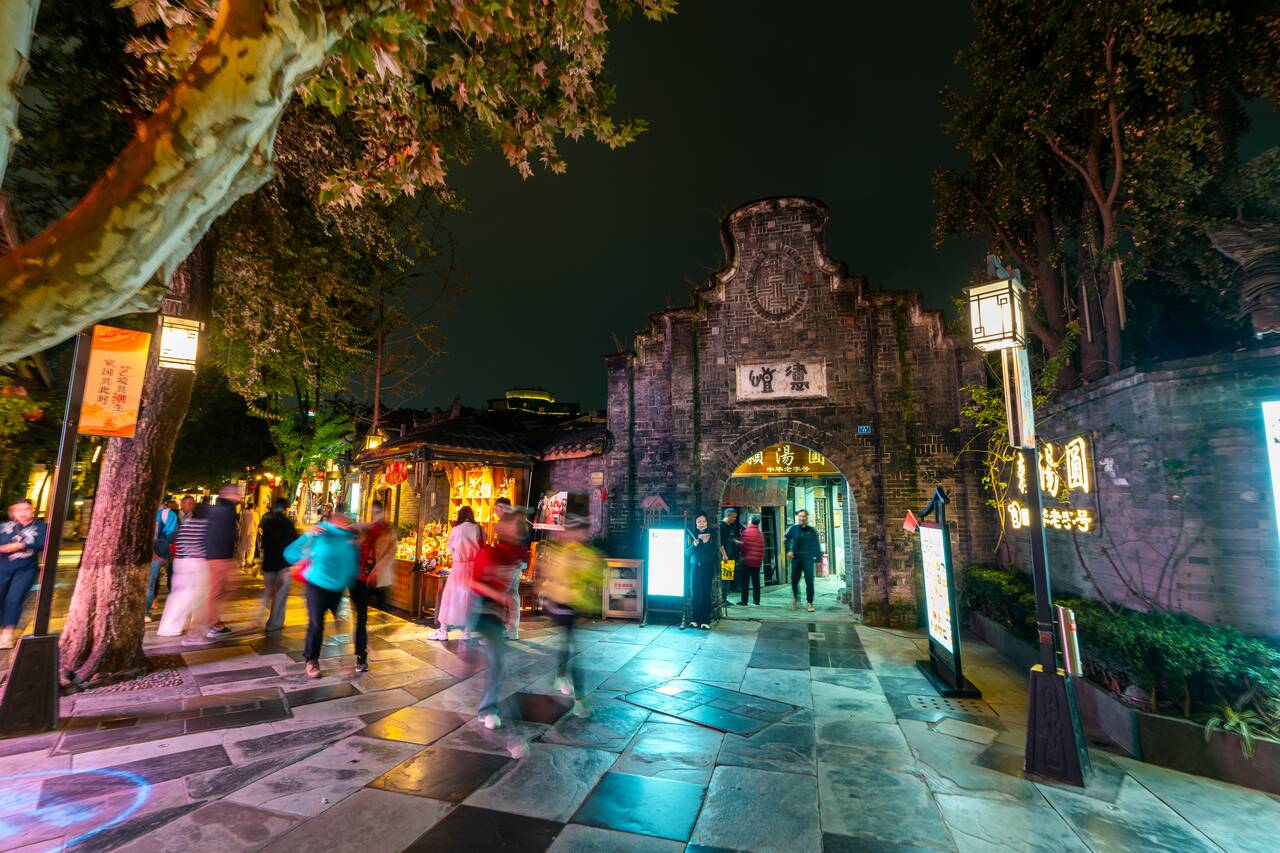
Keep in mind that this train also sells out quickly, so be sure to book it at least three days in advance, ideally together with your outbound train and Jiuzhaigou ticket, unless you want to be standing on a two-hour train after two full days of hiking. You should be back in Chengdu by 8 - 9 PM.

Getting From Huanglong to Fenghuang Ancient Town
From Huanglong, you will first have to get back to Huanglong–Jiuzhai Railway Station that same evening so you can catch the train back to Chengdu and spend the night there. The next morning, you can then catch a high-speed train from Chengdu East to Fenghuang Railway Station.
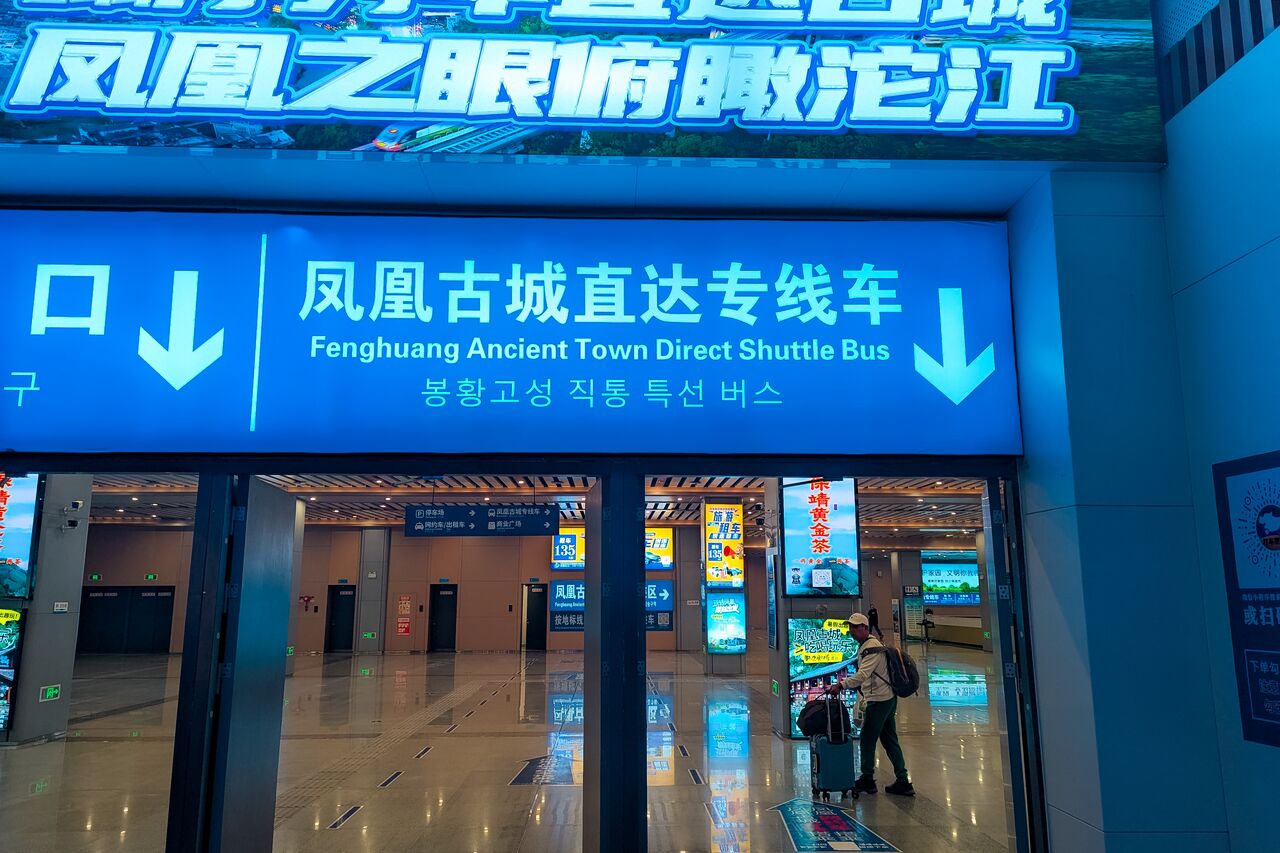
There is 1 direct train daily at 10:20 AM, and it should take about 6.5 hours and cost 70 USD. You will arrive around 4:46 PM. Once you are here, there are a couple of convenient ways to reach Fenghuang Ancient Town. A taxi (Didi) from the station to the town takes about 17–20 minutes and costs around 20–25 CNY. If you prefer public transport, you can take a shuttle bus, sometimes called a “special line,” from the station.
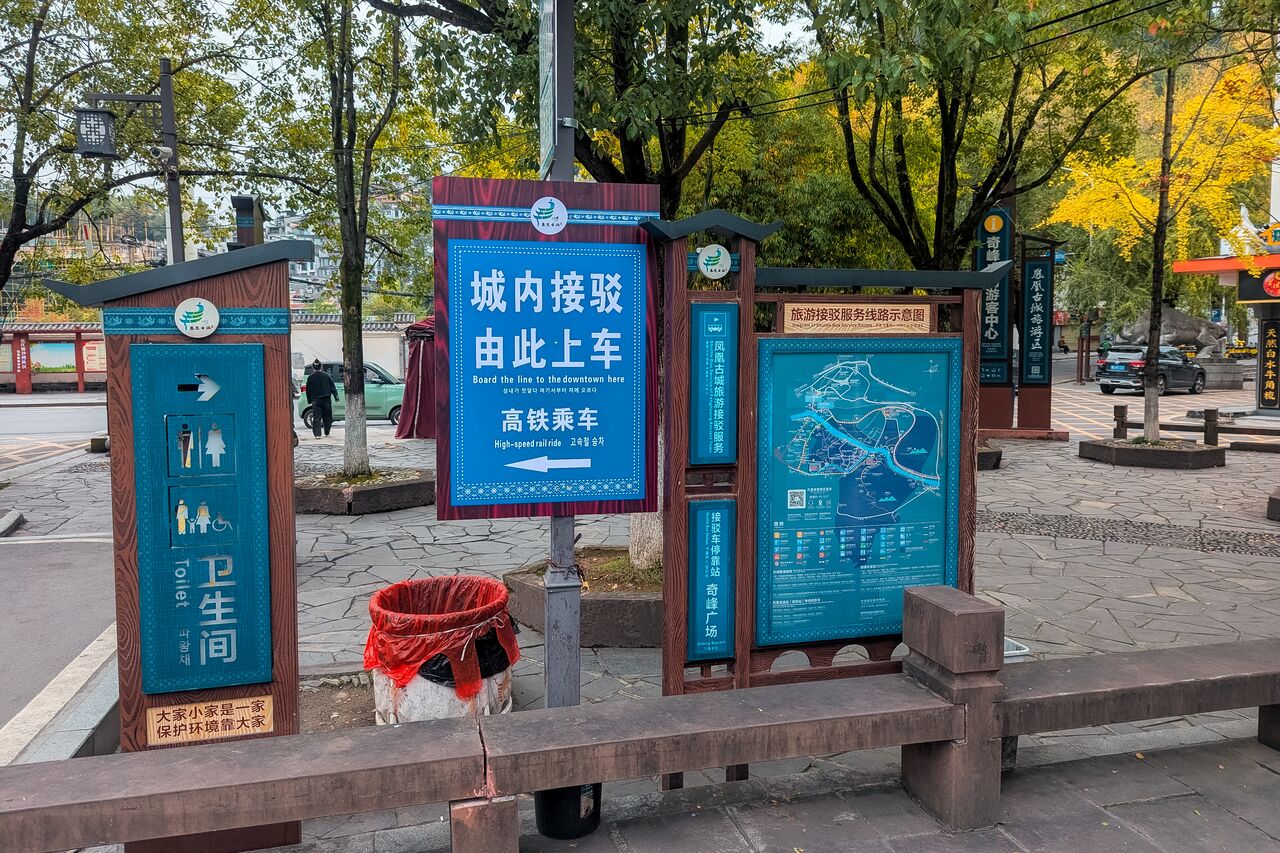
There should be a clear sign as soon as you exit the terminal directing you to the shuttle bus area. You can buy a ticket from the kiosk inside the railway station, then proceed straight to the bus stop and board the shuttle. The ride costs about 7 CNY per person and drops you off at Qifeng Square, from where you can walk to the ancient town.
Day 30: Fenghuang Ancient Town (1 Night)
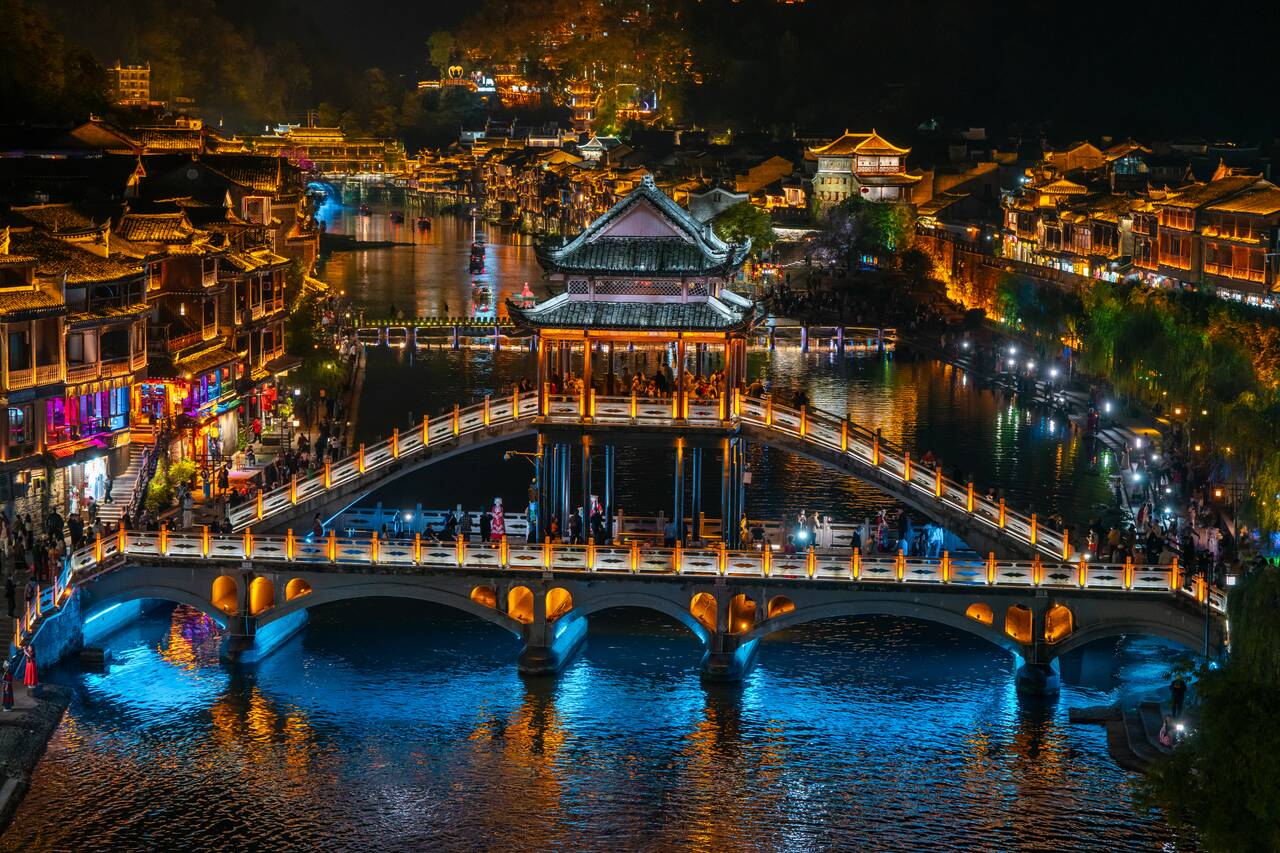
- 📍 Stay: JI Hotel (Xiangxi Phoenix Ancient City Hongqiao)
- 🕐 Time: 1 Night
- 📖 Full Guide: Discover Fenghuang Ancient Town: A Complete Travel Guide
After spending almost a week in Sichuan, it is time to move on to Hunan province, and you can take the high-speed train from Chengdu to Fenghuang Ancient Town, a charming riverside town about 20–25 minutes from its railway station after the much longer train journey from Chengdu. Here, you can explore the beautiful wooden stilt houses, enjoy a peaceful walk along the river, and admire the city at night when the entire riverside is illuminated with lanterns and lights.
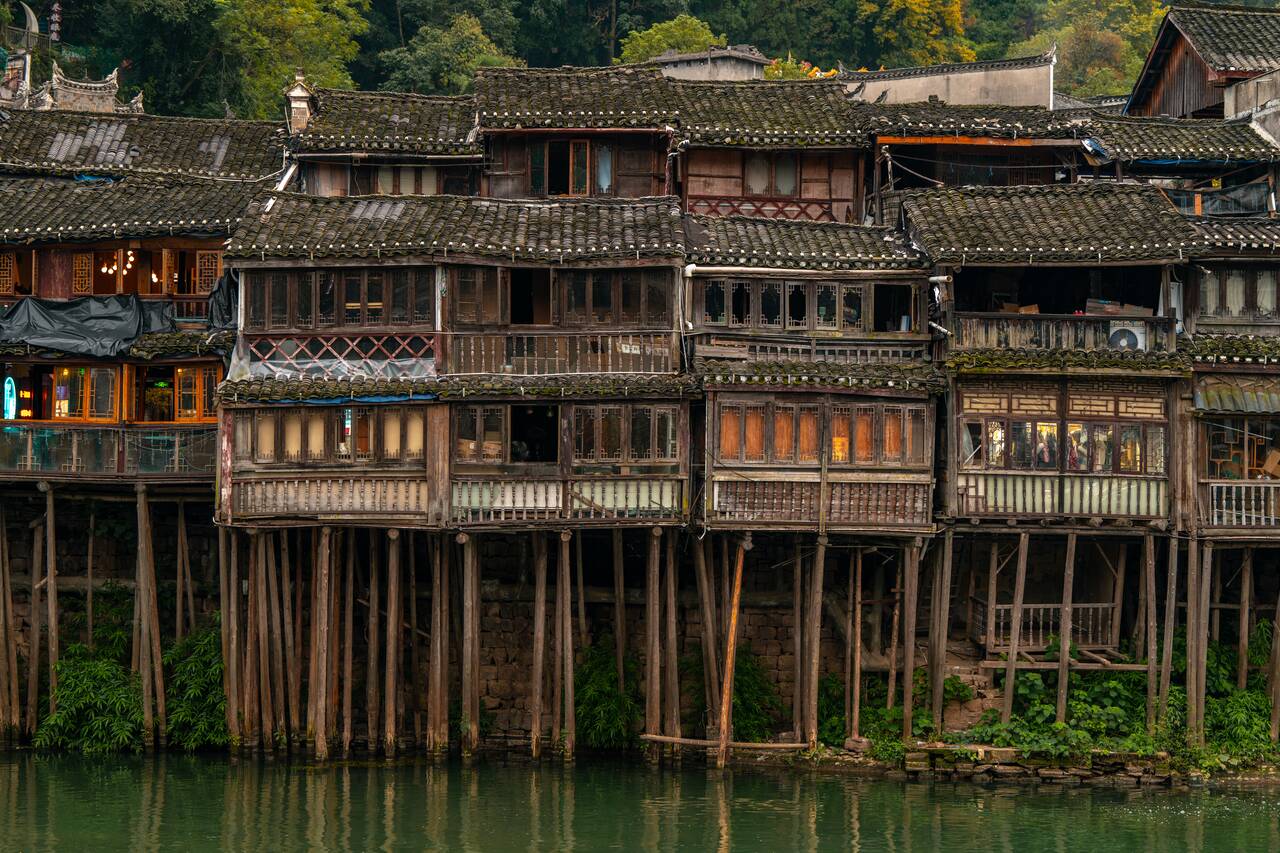
One of the town's defining features is the wooden stilt houses (diaojiaolou) lining the riverbank, many of which are over a hundred years old, showcasing the impressive traditional craftsmanship. While here, you can explore the maze of cobblestone streets, narrow alleys, stone-paved lanes, and ancient houses dating back to the Ming and Qing dynasties. Walking through them feels like stepping back in time.

When visiting Fenghuang Ancient Town, make sure to stay until sunset and beyond, as the town's true beauty comes alive at night. As the sun sets, the town transforms into a fairy-tale-like scene reminiscent of Studio Ghibli animations. Lanterns and lights reflect on the river, wooden houses glow softly, and the atmosphere becomes truly magical.
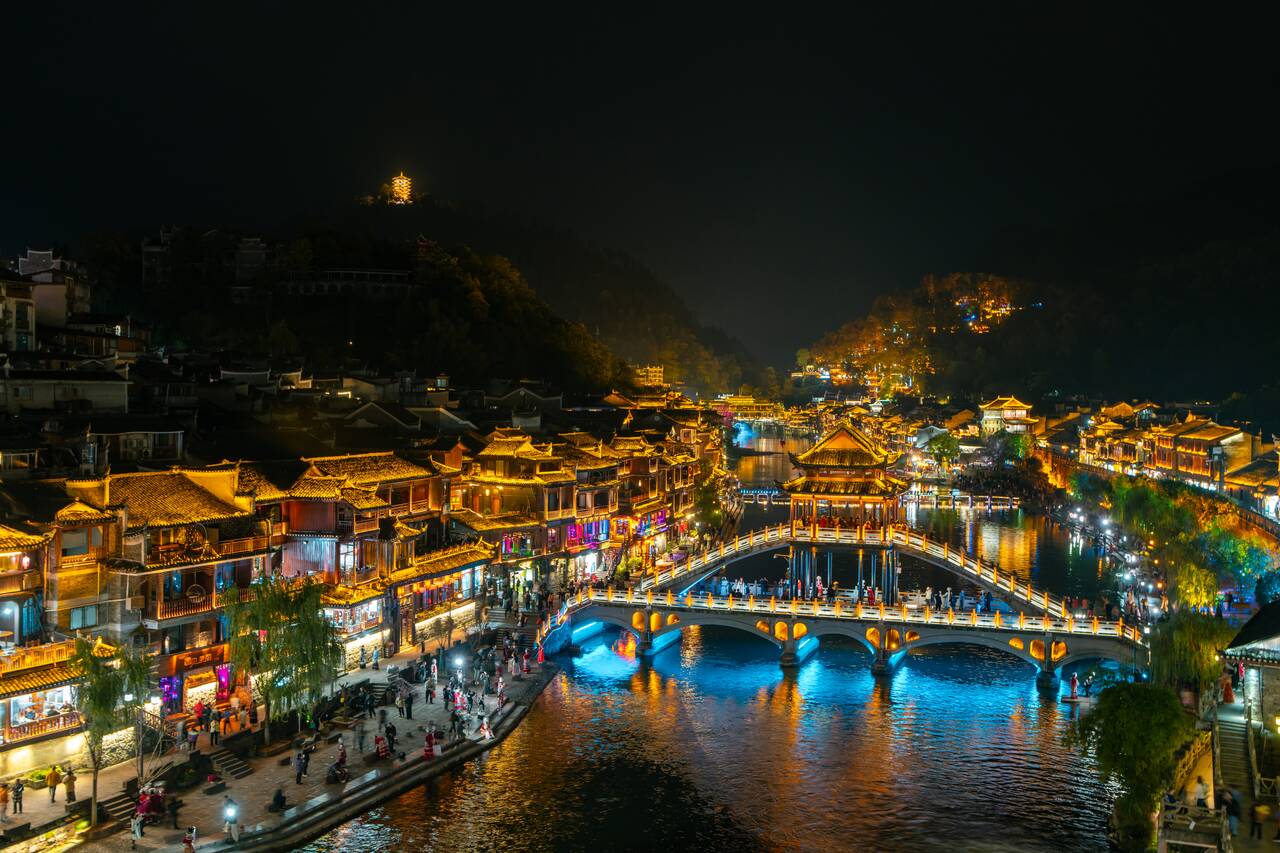
When I visited, the lights were turned on around 6:30 PM, and I found the best view was from Nanhua Bridge, overlooking the entire town. People start gathering here and throughout the town to watch the lights come on, so be sure to be ready when it happens.
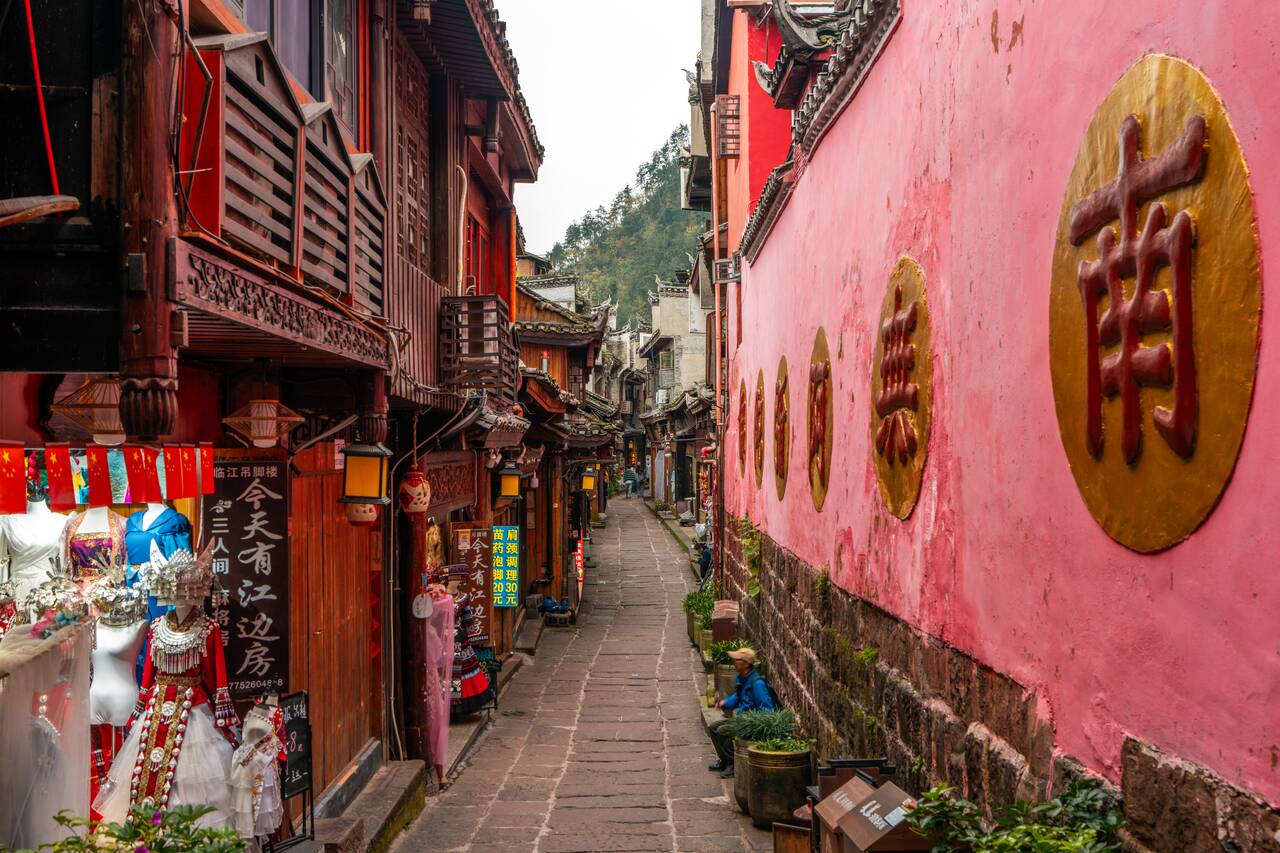
Once the lights are on, spend the rest of the evening strolling around the town, taking a nighttime boat ride on the river to enjoy the beautiful scenery, and finding a place to eat before ending the day. The next day, we will continue our journey to Zhangjiajie!

Where to Stay in Fenghuang Ancient Town?
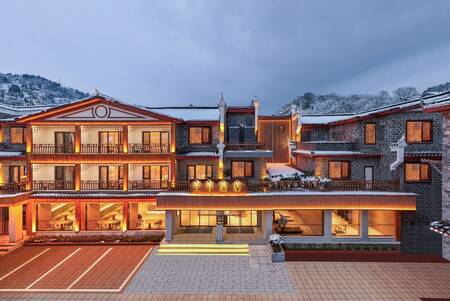
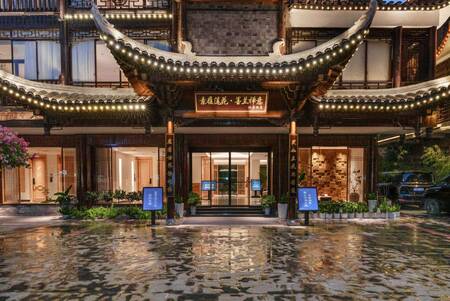
Getting From Fenghuang Ancient Town to Wulingyuan
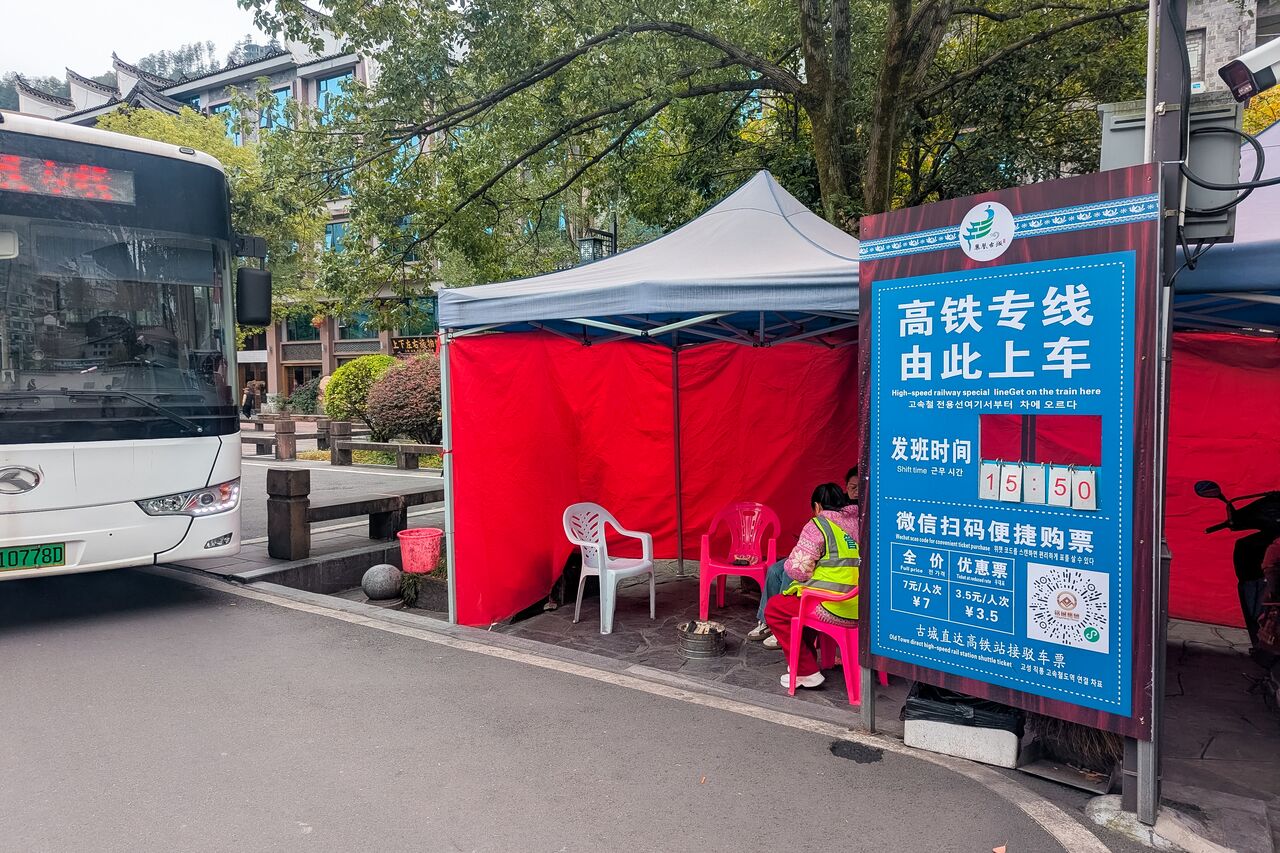
To return to Fenghuang Train Station, you can head back to Qifeng Square and check the schedule for the next shuttle, which is usually posted at the bus stop. You can also use Didi to get to Fenghuang Railway Station, so you do not miss your train to Zhangjiajie.
From Fenghuang Ancient Station, you can catch one of the many daily trains to Zhangjiajie West Railway Station. It will take you no more than an hour and costs 14 USD. You can book the ticket here.
When you arrive, you should be able to find a taxi carpool to take you to Wulingyuan for 30 CNY per person. At the exit, you will see people approaching you to find out where you are heading and then they will direct you to the carpool taxi. The ride from Zhangjiajie West Railway Station to Wulingyuan is around 40 minutes. You can also call a taxi via Didi to take you to Wulingyuan for around 90 CNY per car.
Day 31-32: Zhangjiajie National Park (2 Nights)
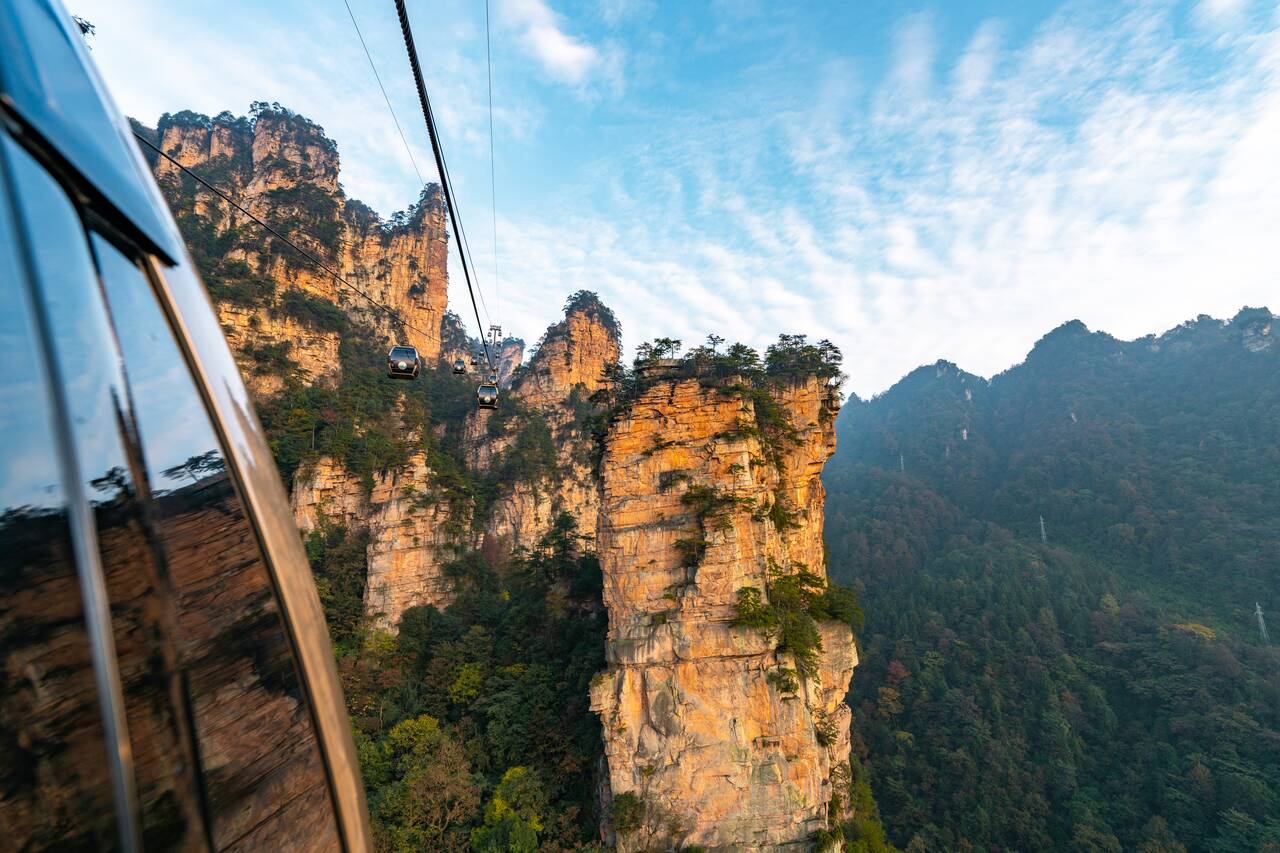
- 📍 Stay: A Journey with Mountain , Wind & Hope
- 🕐 Time: 2 Nights
- 📖 Full Guide: A Complete Guide to Zhangjiajie: The Avatar Mountains
After you arrive in Wulingyuan, you can check yourself into your hotel and relax for the rest of the evening. The next day, I recommend beginning the day as early as 7 AM, right when the national park opens, so we can beat the crowds and dedicate the entire day to exploring Zhangjiajie and its wonderful peaks.
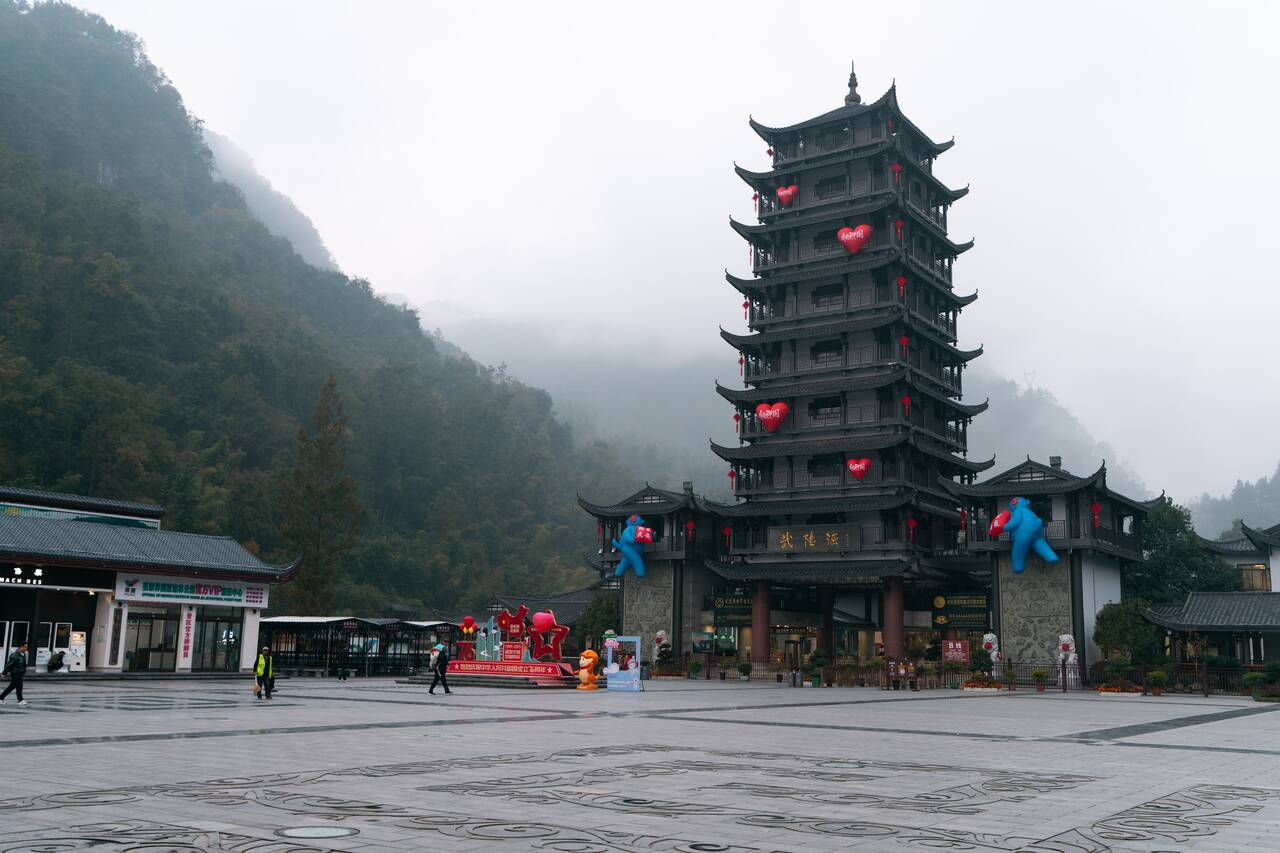
First and foremost, be sure to get the entry ticket and the cable car ticket prior to your arrival at the gate so you can scan your passport and go right in. You can book both tickets from here. Since Wulingyuan is on the East Gate of Zhangjiajie Park, you can walk there in about 5 minutes and be the first to enter the park.
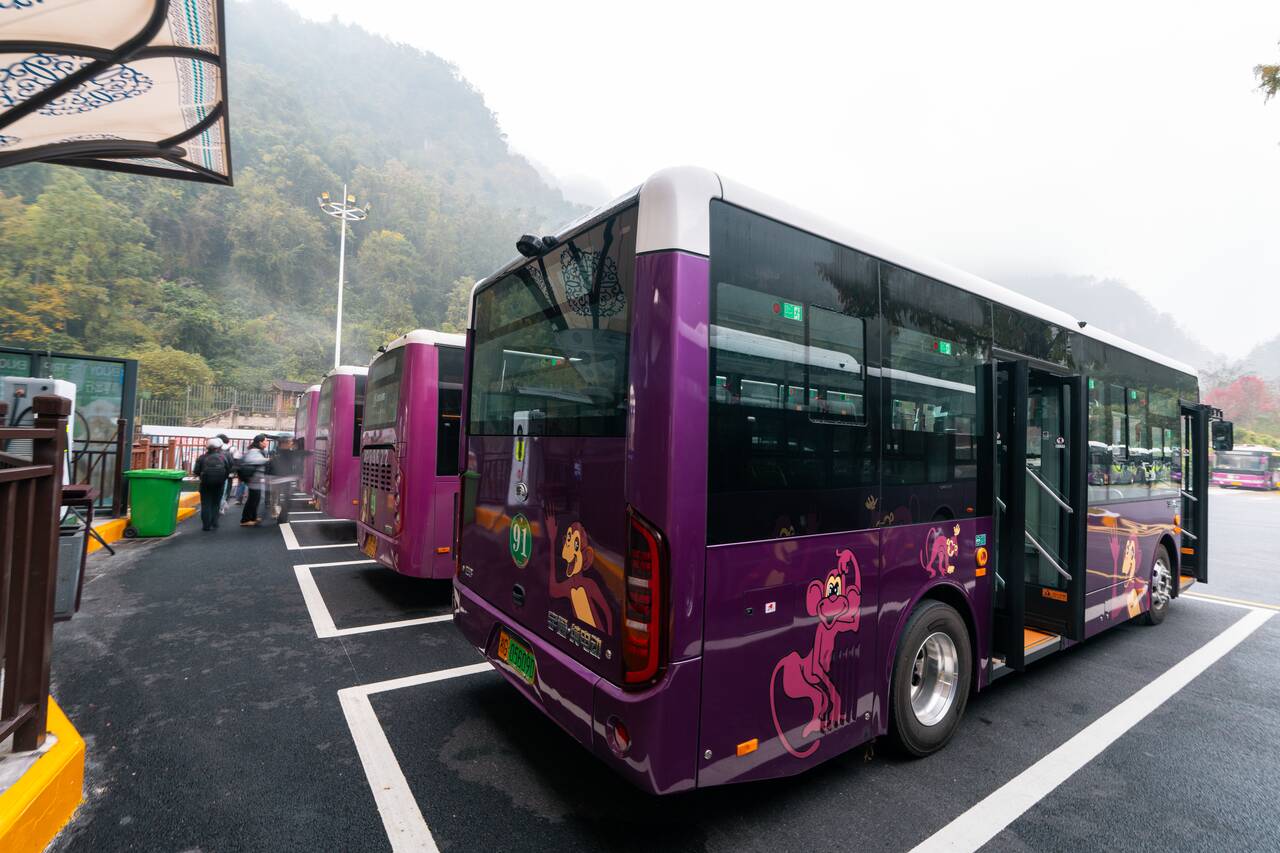
Once inside, you can choose whether to take the shuttle bus to the cable car or the Bailong Elevator. I personally took the cable car first, but you can begin with the Bailong Elevator as well. The overall route remains the same, just in the opposite direction.
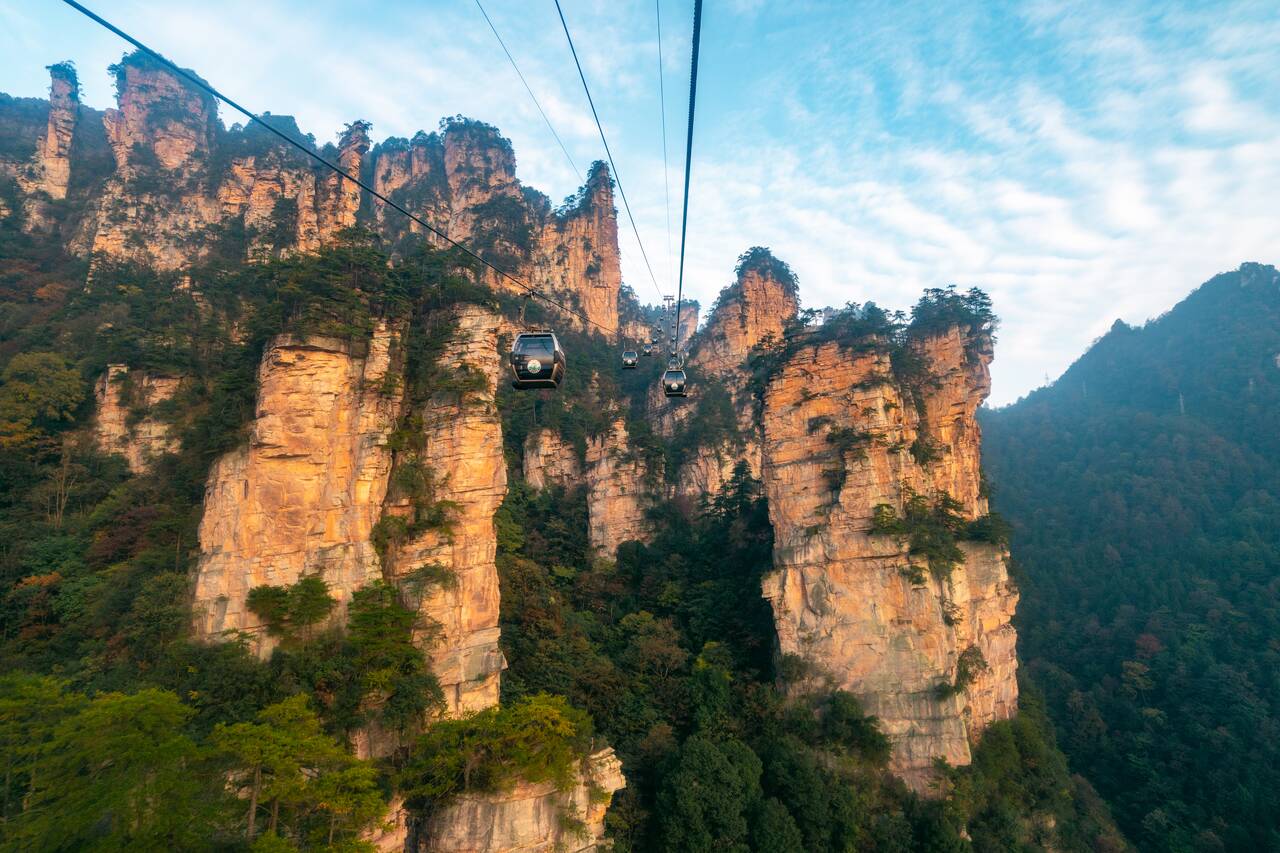
The cable car should take about 25 minutes before you arrive at the upper station. You can walk around and check out the view first before heading to the bus stop and catching the first bus heading to Helong Park, our next stop.
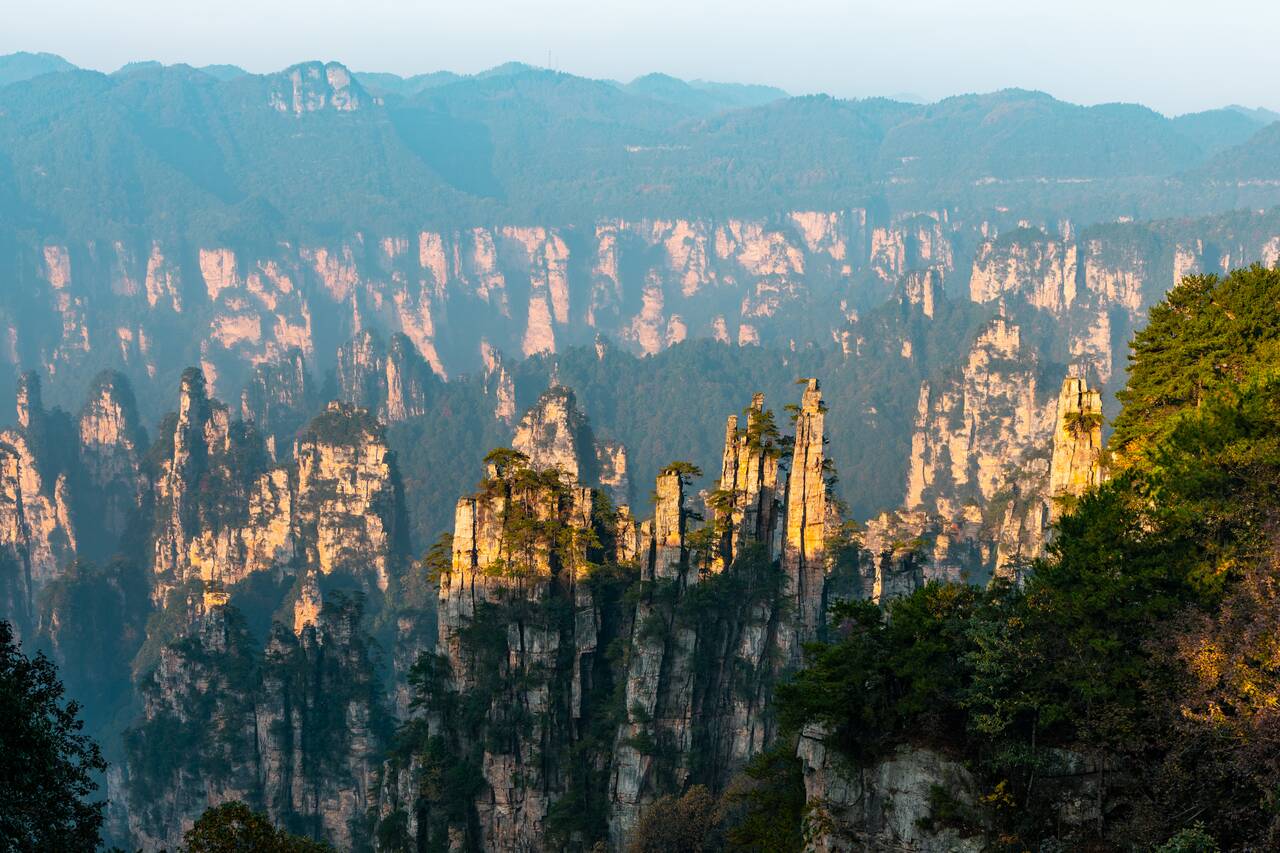
The main highlight of Tianzi Mountain is Helong Park, which offers several incredible viewpoints where you can see some of the mountain’s most unique formations. One of the most famous is the Imperial Brush Peak, a pillar that resembles the tip of a paintbrush and looks especially surreal in the soft morning light.
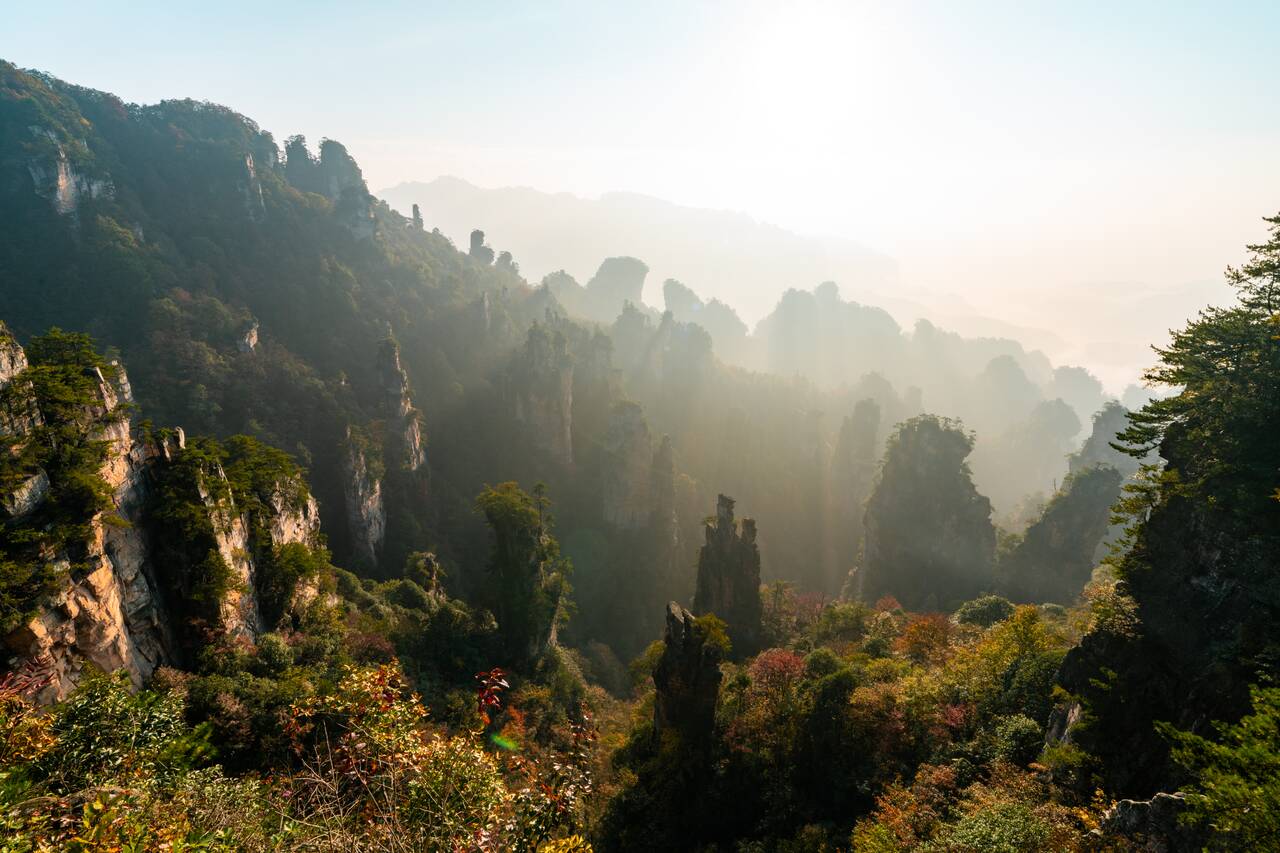
On the opposite side, you will find the Fairy Scattering Flower Mountains, which face east and are a perfect spot to catch a stunning sunrise if you arrive early enough. Many photographers gather here in the morning to capture the dramatic sunrise views.
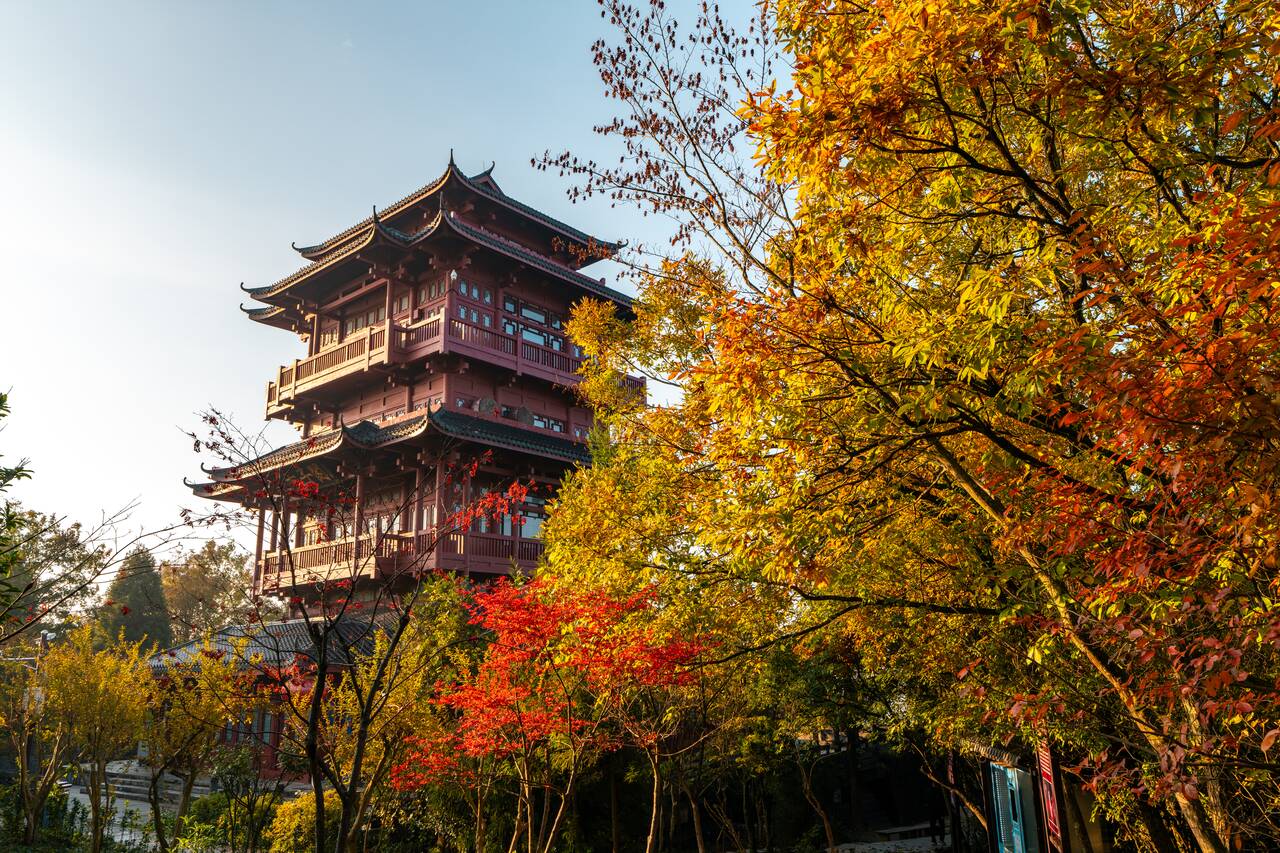
Other than these two viewpoints, there is not much else to see here, aside from a few spots where you can stop for breakfast before continuing to other parts of the park. One thing to note is that this is also where you can start the hike down to the 10-Mile Gallery. You can choose to do this hike after visiting the other areas on the mountain, so it’s best to skip it for now.

After Helong Park, you can head over to the same shuttle bus stop and get on another one to go to Yangjiajie Mountain. After about 20 minutes, the shuttle bus will stop first at Daguantai Bus Stop, which is where all the accommodations inside the park are located. Do not get off here as there is not much to see except a few accommodations and maybe one or two viewpoints that are not particularly impressive.
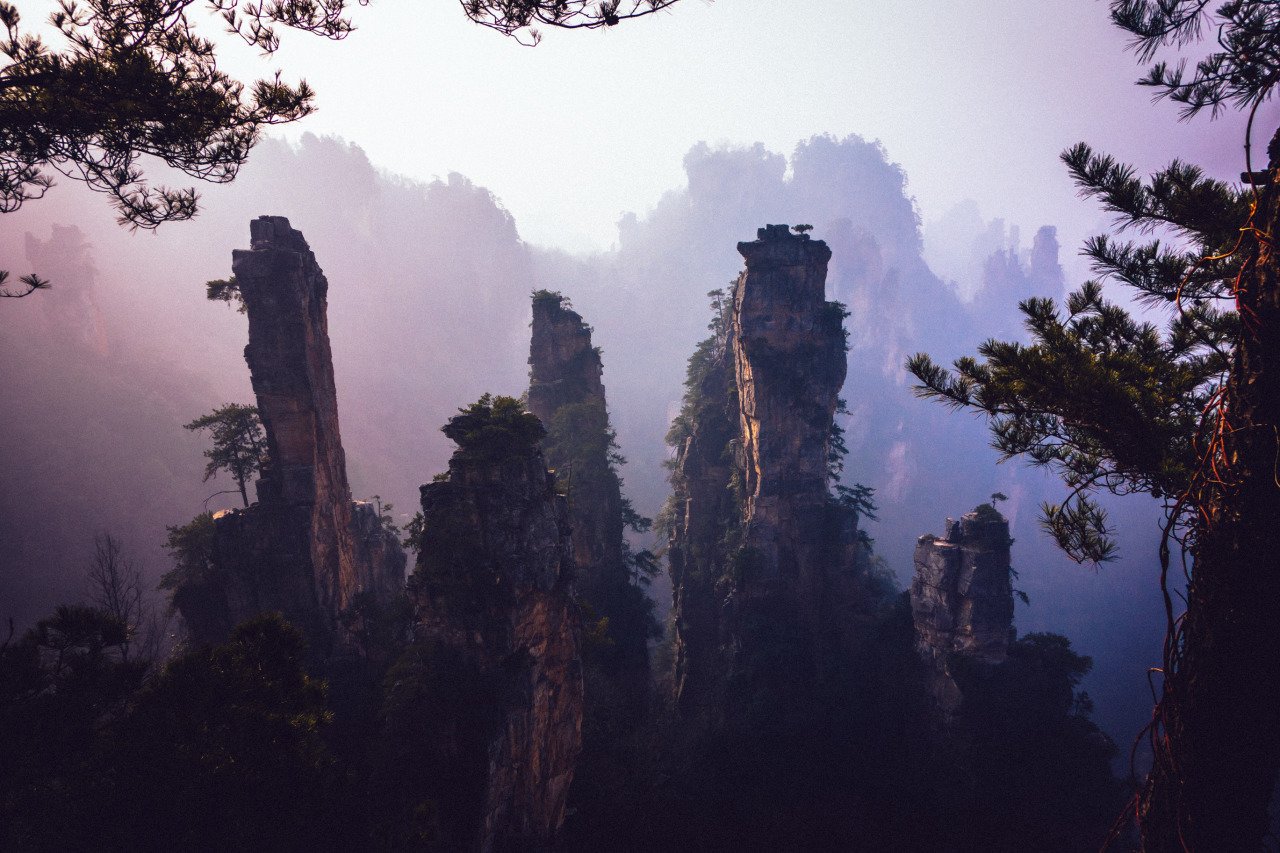
After this stop, the bus will continue for about 10 minutes to the next stop, which is Yangjiajie, where you can hike around a bit and visit places like Tianbo Mansion, which is my favorite viewpoint here. From there, you can see ten parallel stone wall peaks rising among the green trees, resembling city walls, hence the given name.
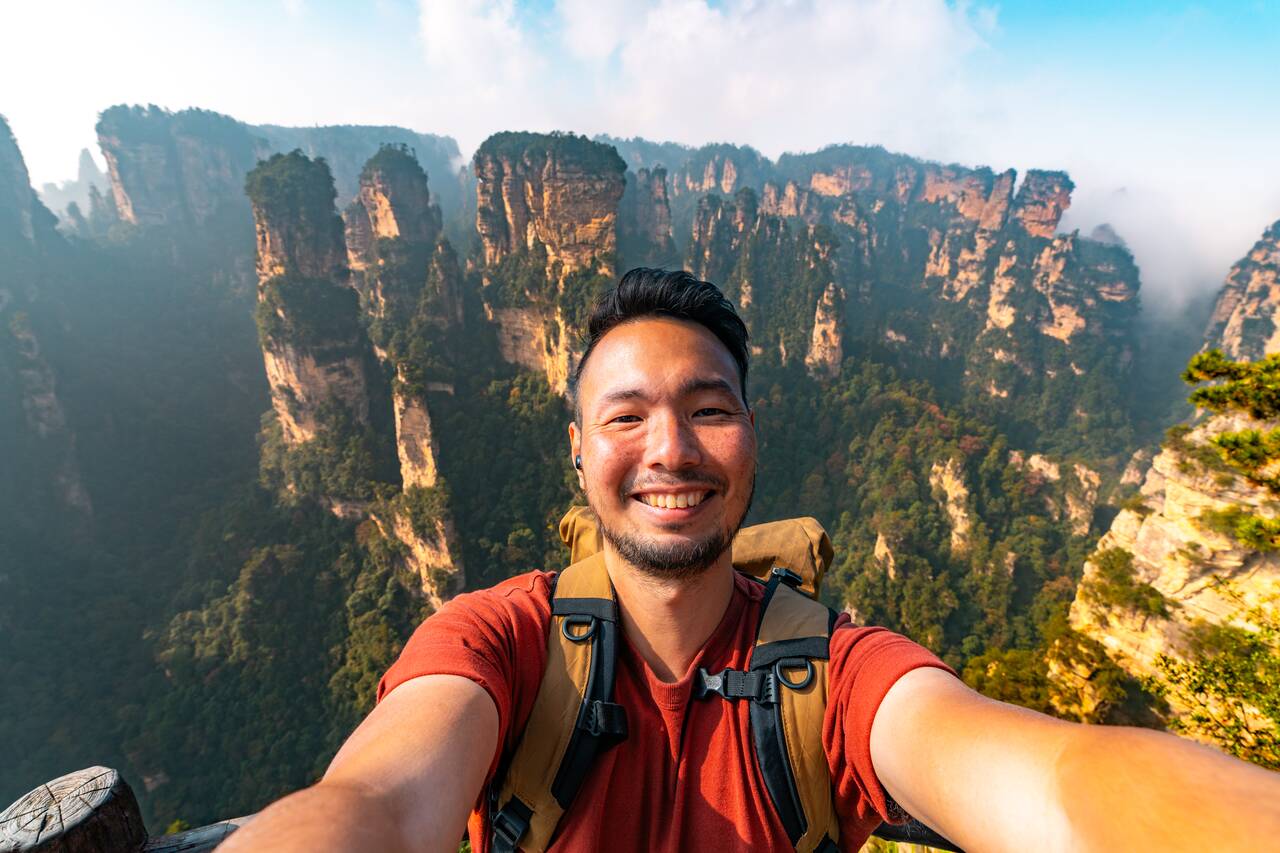
After exploring Yangjiajie, you can take another shuttle bus to Yuanjiajie Mountain, which is arguably the most scenic area of the park and offers much more to see and do compared to other parts. If you are short on time, you could even skip Tianzi and Yangjiajie altogether and focus solely on Yuanjiajie Mountain.
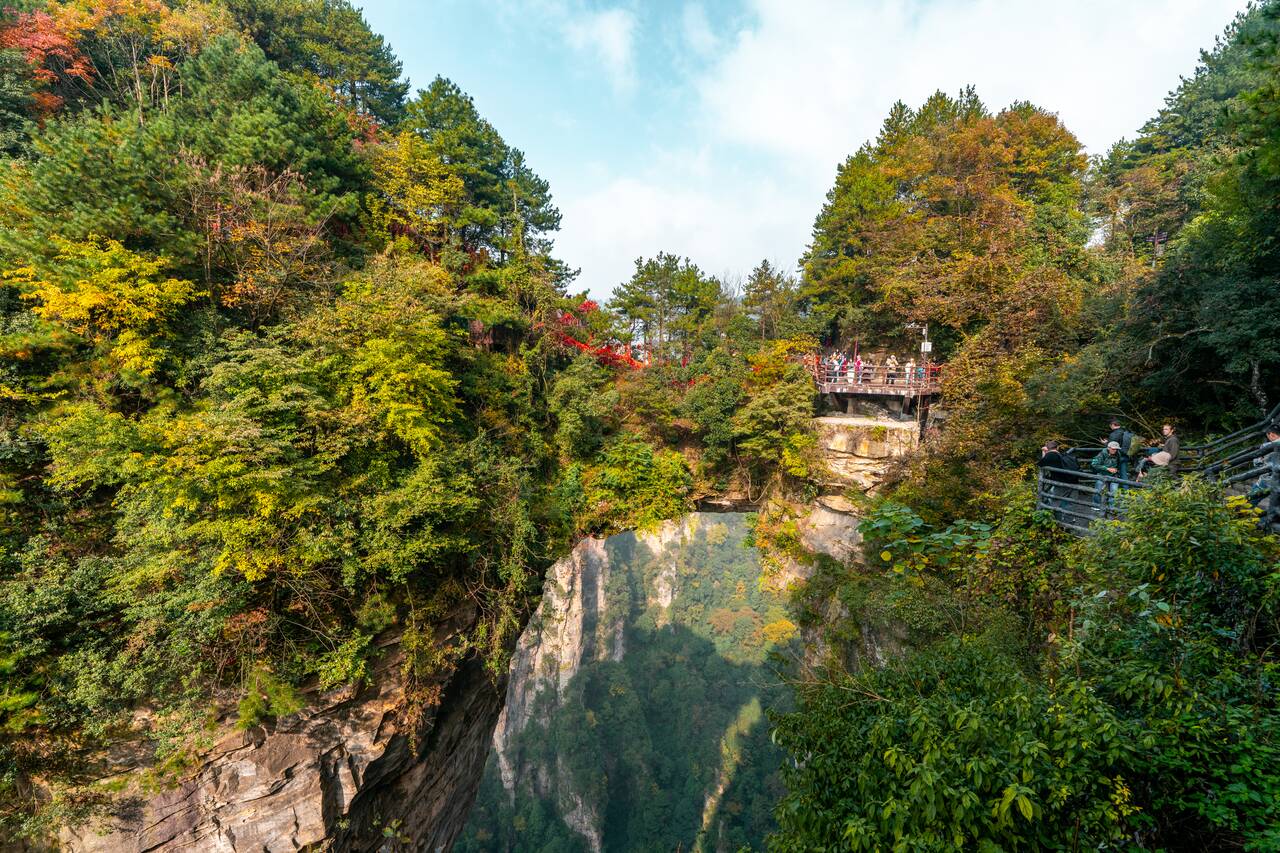
The shuttle bus will drop you off at Tianqiao Bus Stop, and from there, you can begin exploring Yuanjiajie Mountain starting with the Greatest Natural Bridge, a rocky natural bridge that connects 2 mountain peaks together with a vertical drop of a whopping 400 meters!
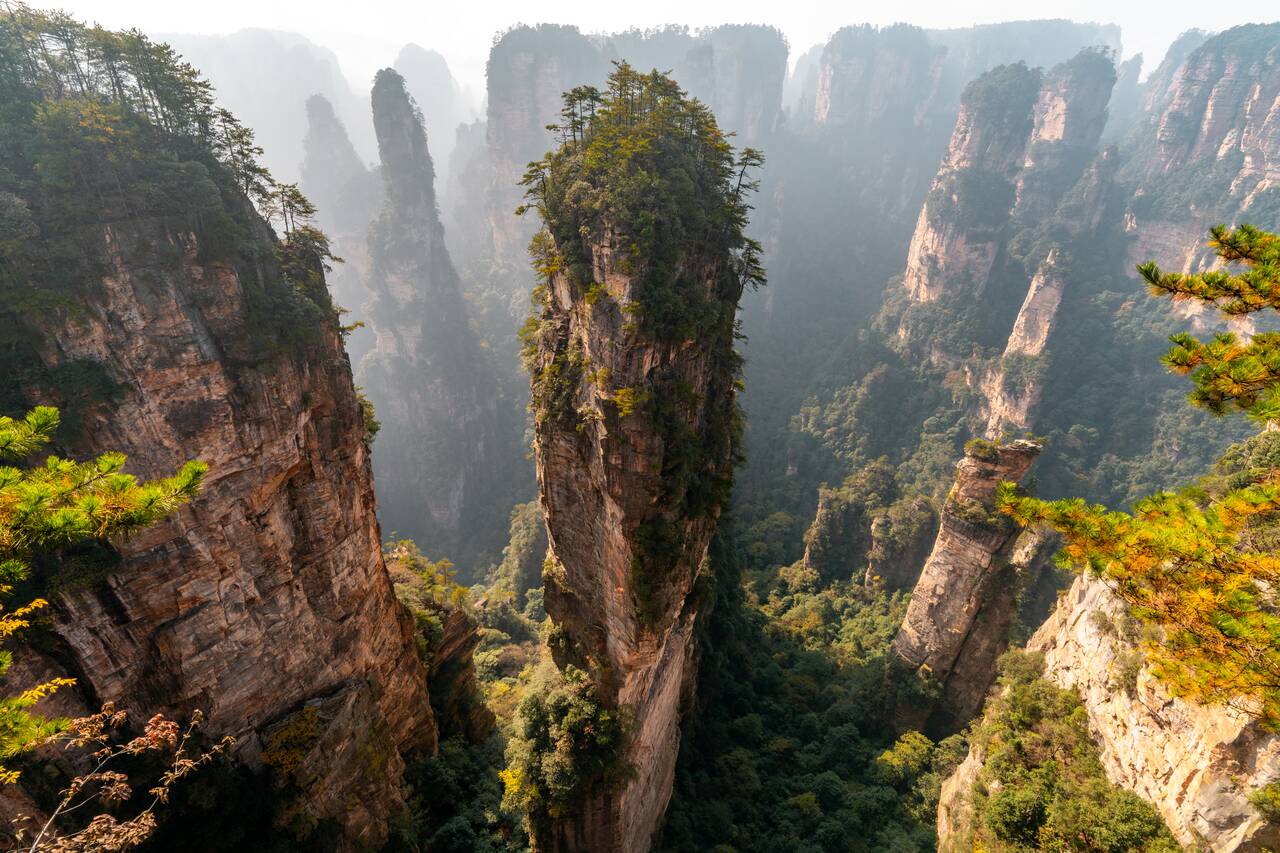
Afterwards, you can continue along the cliffside path, taking in stunning views such as the Five Ladies Expedition Rocks and many others. One of my favorite viewpoints here is the Hallelujah Mountain, which inspired the dreamy landscapes in the movie Avatar. The solitary vertical pillar rising amidst the picturesque scenery is truly a sight to behold.
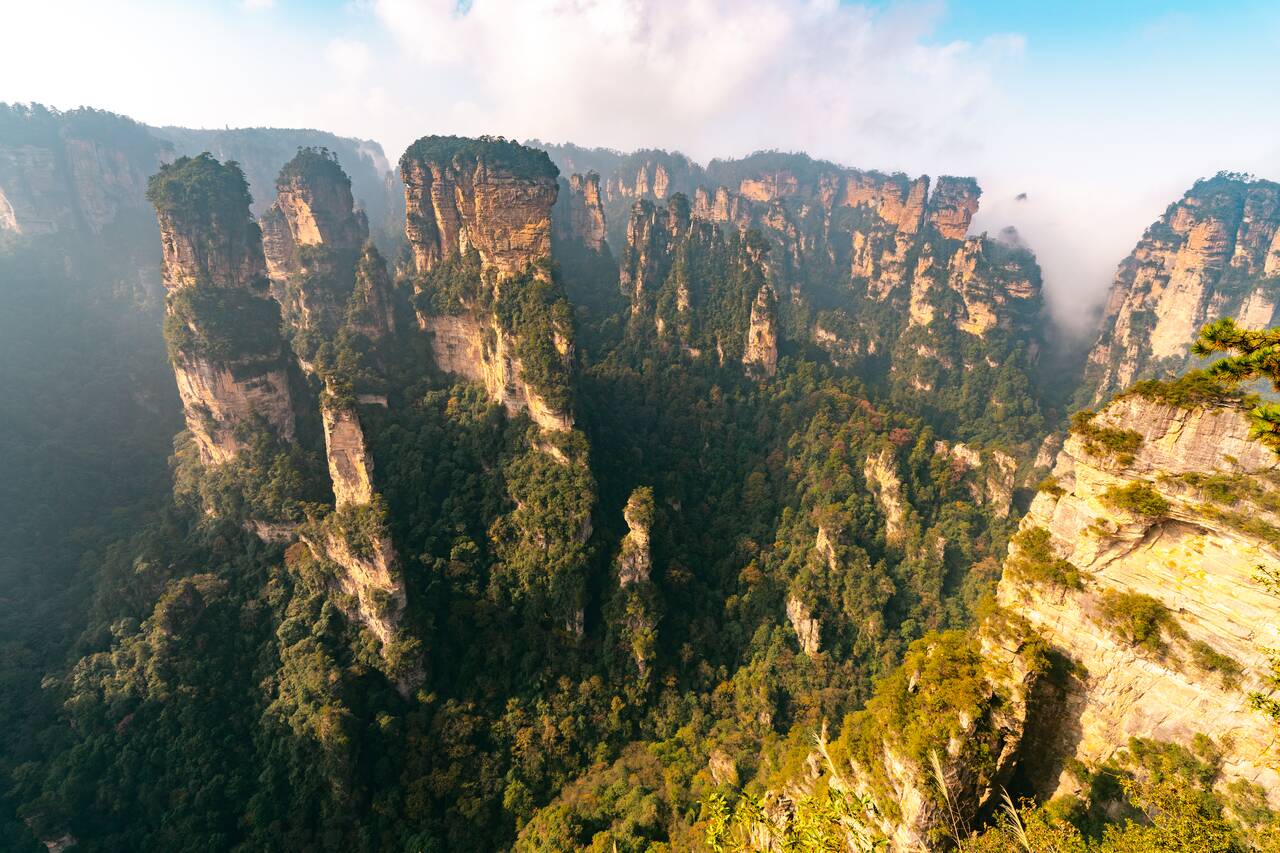
There are countless viewpoints along the way, and you could easily spend at least an hour or two exploring Yuanjiajie Mountain alone. When you reach the end of the trail, you have a few options for getting down. The fastest way is to take the Bailong Elevator, which is quick but often crowded. However, this means you might miss one of the best parts of Zhangjiajie: the peaceful trails where you can hike down and escape the crowds.
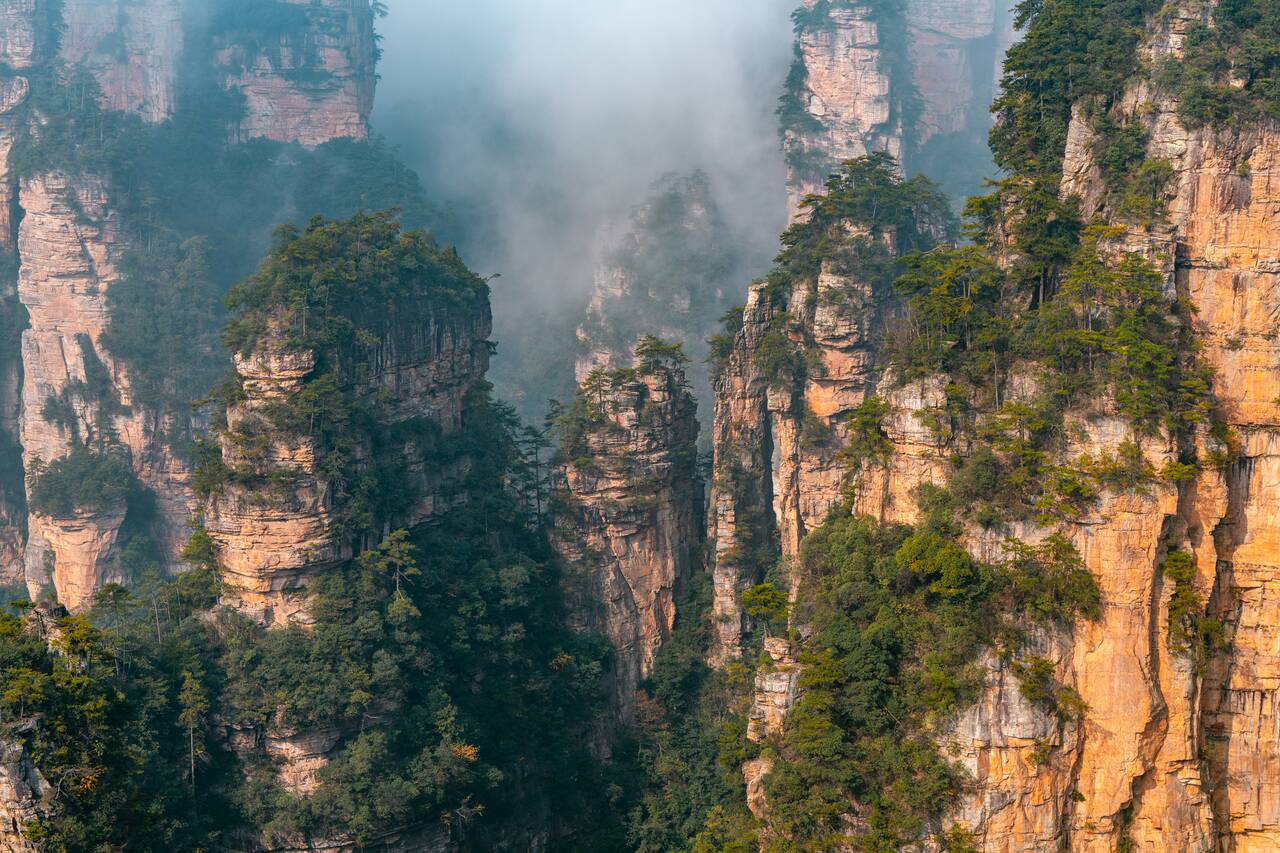
For those who want to hike down, make sure you have at least 2–3 hours to spare, as it will take that long to descend the mountain. You can choose between two trails. One is the Golden Whip Stream, a beautiful path that follows a peaceful river, with pavilions along the way where you can rest. This route starts right at the end of Yuanjiajie Mountain, making it perfect if you are following my suggested route beginning with the cable car.
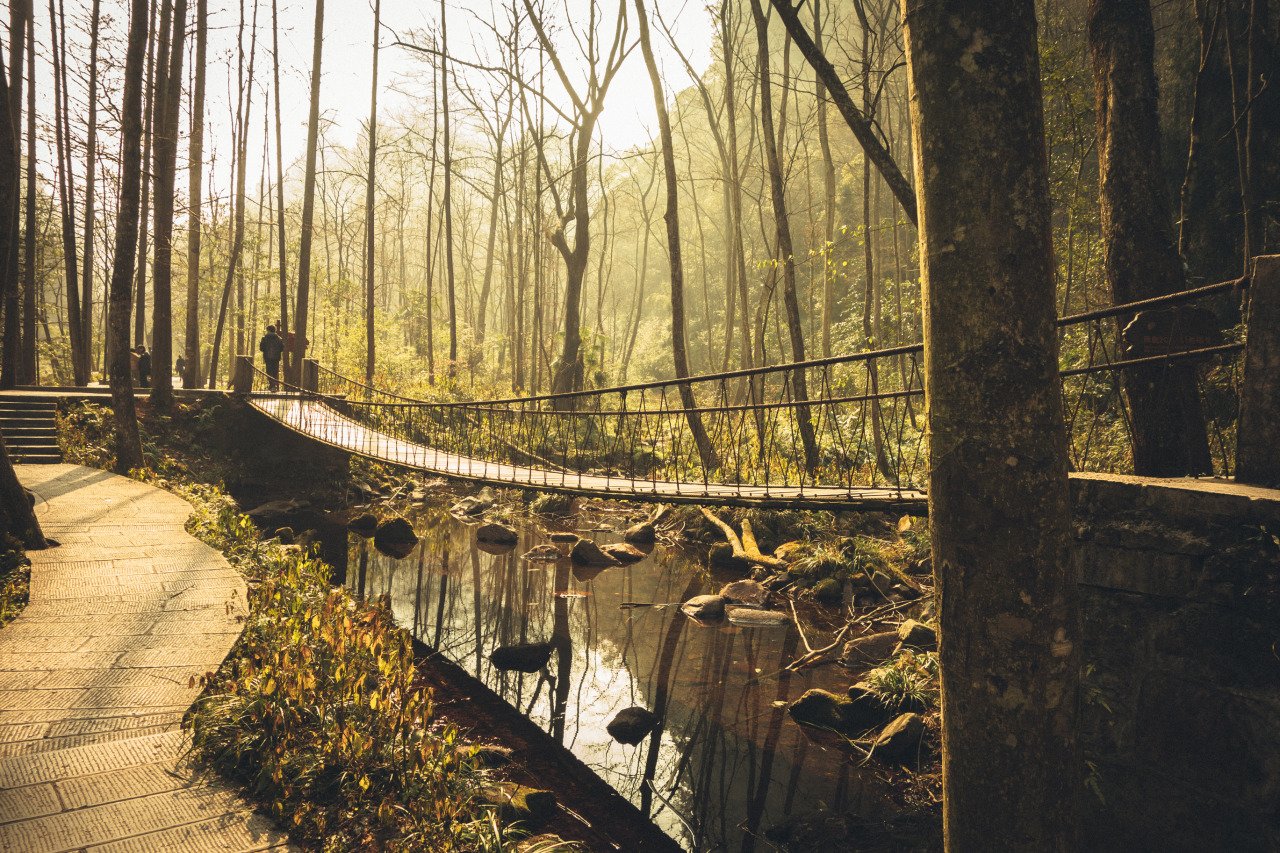
Once you hike down to the river, make sure you follow the river east so that you will end up near the lower station of the Bailong Elevator and you can take the shuttle bus back to the East Gate. Otherwise, you might end up at the South Gate, and you will have to find a bus to take you back to Wulingyuan yourself.
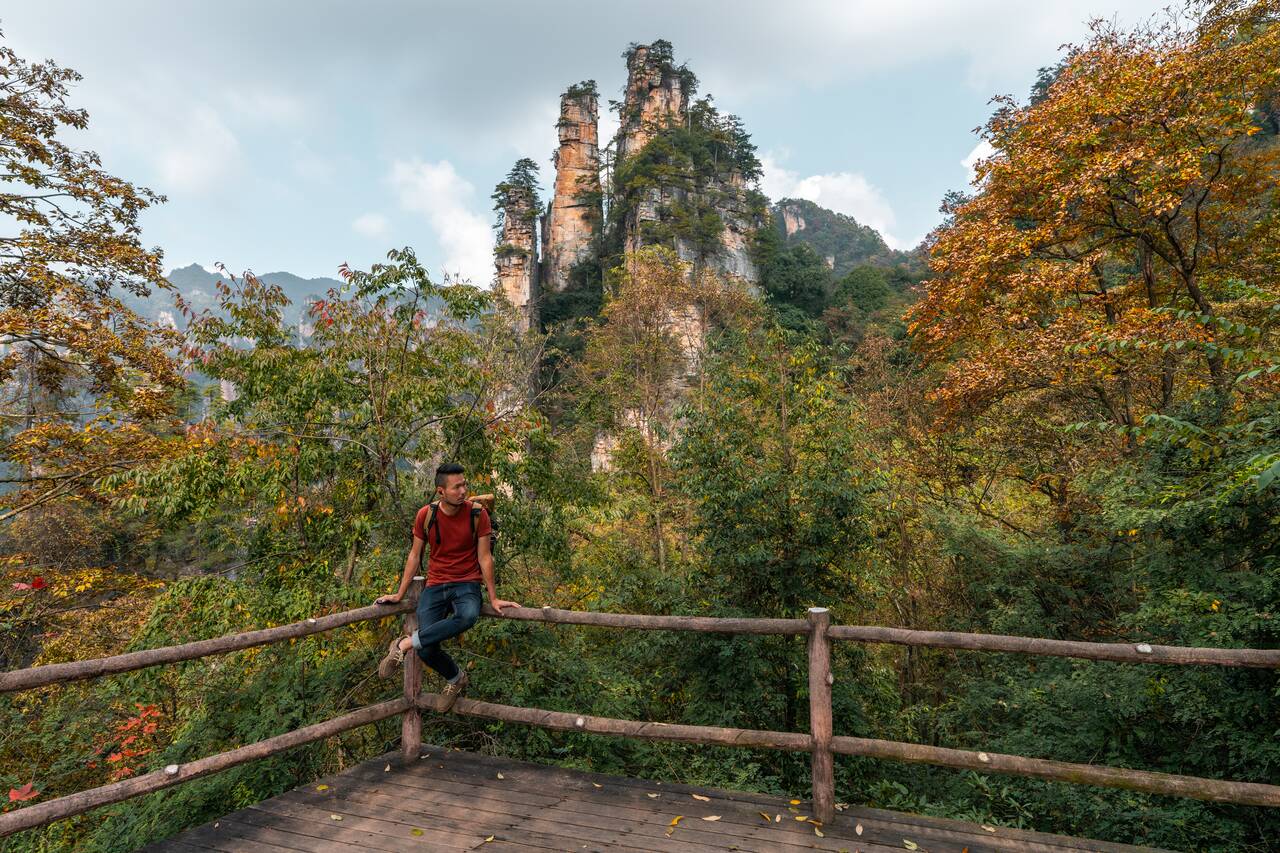
The second option is to hike down from Helong Park, the first stop on our route. This trail takes about 2.5 hours and leads to the 10-Mile Gallery, a beautiful area surrounded by stunning sandstone spires. Hiking here allows you to admire the formations from the ground rather than from above.
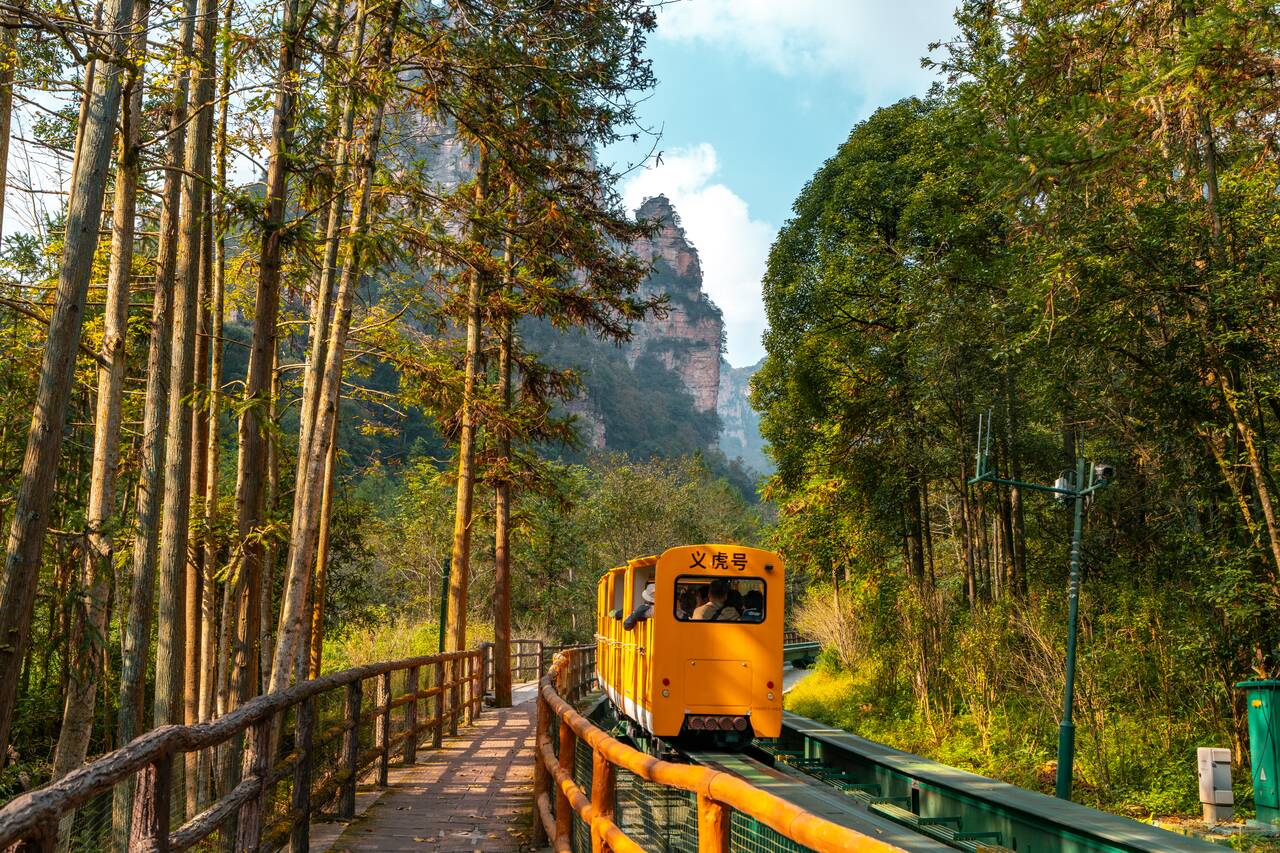
From the 10-Mile Gallery, you can either take the light rail to the bus stop to catch a shuttle out, or you can walk along the light rail and enjoy the scenery at your own pace. The walk is very easy, and I highly recommend taking it instead of the light rail.
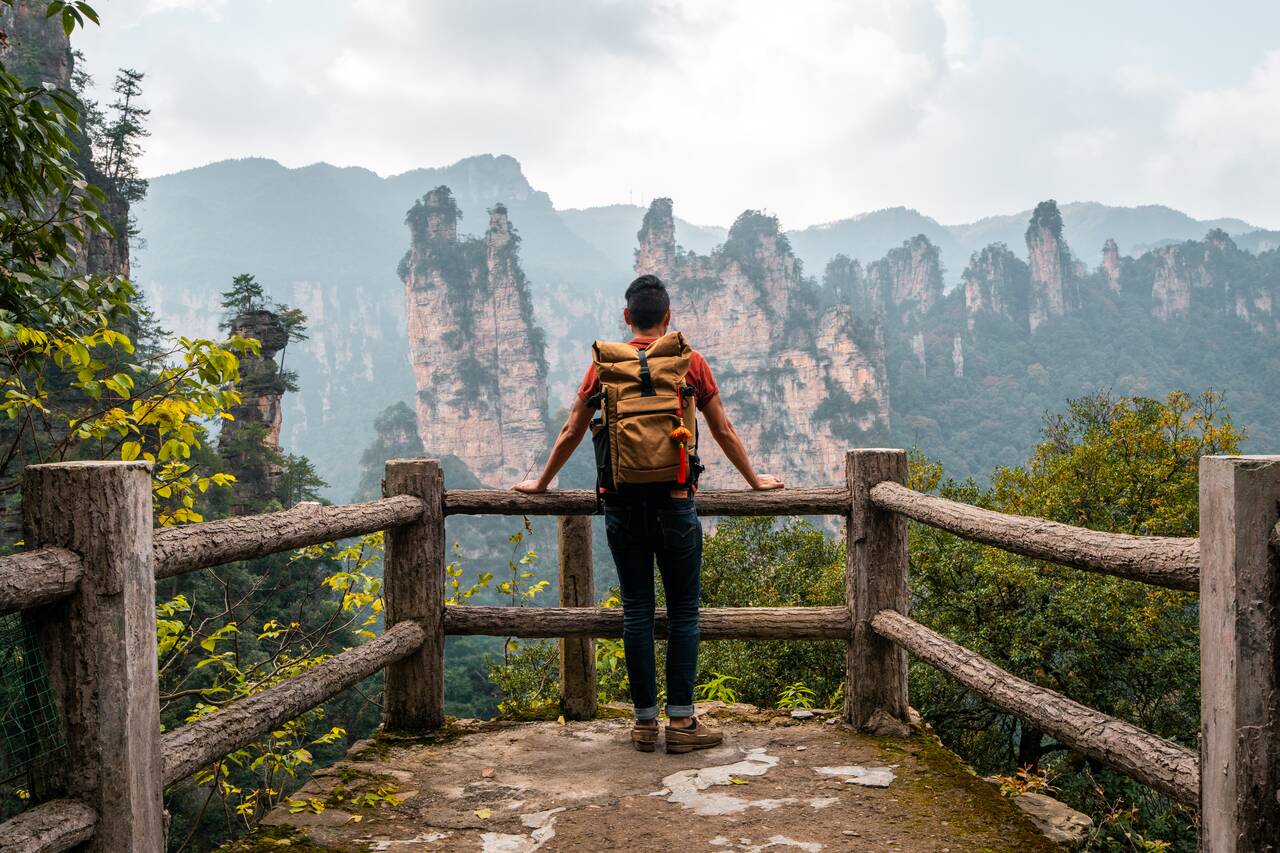
Hiking down the 10-Mile Gallery is ideal for those who start their journey from the Bailong Elevator and want to avoid paying extra for the cable car. Even if you begin at the cable car, you can take the shuttle bus back to Helong Park in about 30 minutes and start your hike down from there.
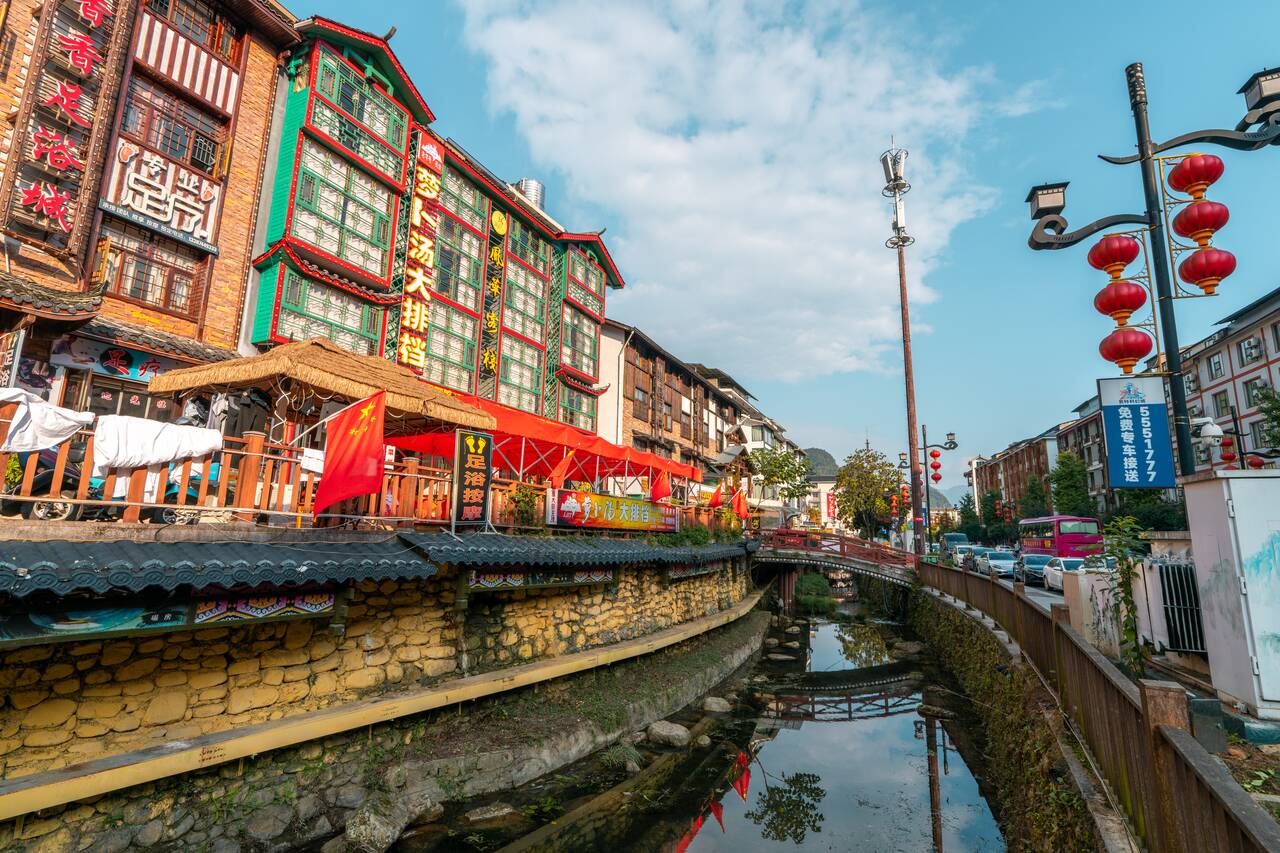
You don’t need to do both trails; one is enough to experience on the way down. Once you finish the hike, you can take the shuttle bus to the East Gate, exit the park, and head back to your accommodation, wrapping up your day here.

Where to Stay in Wulingyuang?
Getting From Wulingyuan to Zhangjiajie City
From Wulingyuan, you can either take a carpool taxi to Zhangjiajie City in the morning or use Didi for a more direct ride. The trip takes about 40 minutes, costing around 30 CNY by carpool taxi or 90 CNY by Didi. It’s best to travel in the morning so you can drop your bag at your hotel in Zhangjiajie City and still have time to explore Tianmen Mountain the same day.
Day 33: Tianmen Mountain (1 Night)
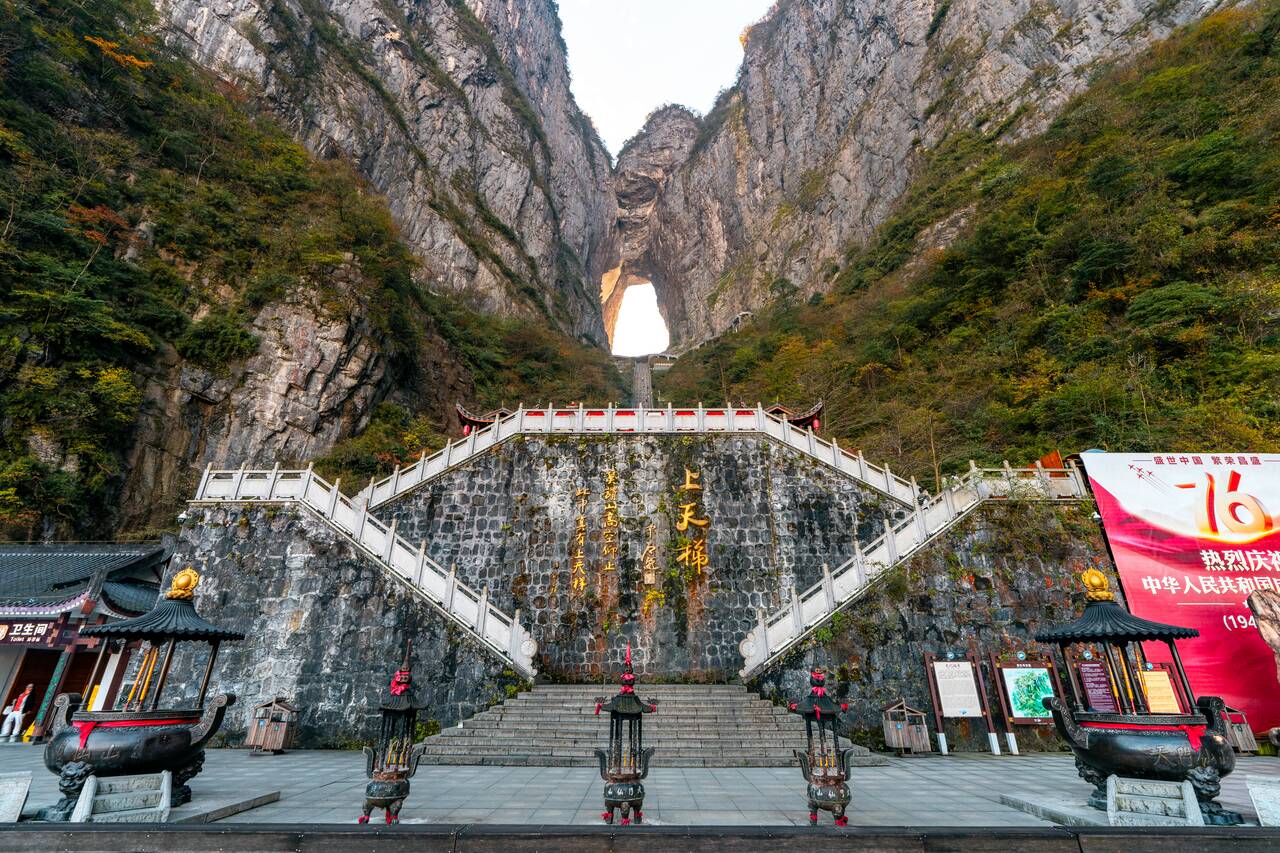
- 📍 Stay: YICenXinSu Guesthouse(Zhangjiajie Tianmen Mountain Ropeway)
- 🕐 Time: 1 Night
- 📖 Full Guide: Visiting Tianmen Mountain: A Complete Travel Guide
On Day 33, after your two nights in Wulingyuan, you can wake up as early as 6:30 AM and use Didi to get yourself a taxi to Zhangjiajie City, where we will be spending our second day. It should take about 40 minutes to get to the city, and you can head over to your hotel early, drop your bags, and head out to catch a cable car to Tianmen Mountain.
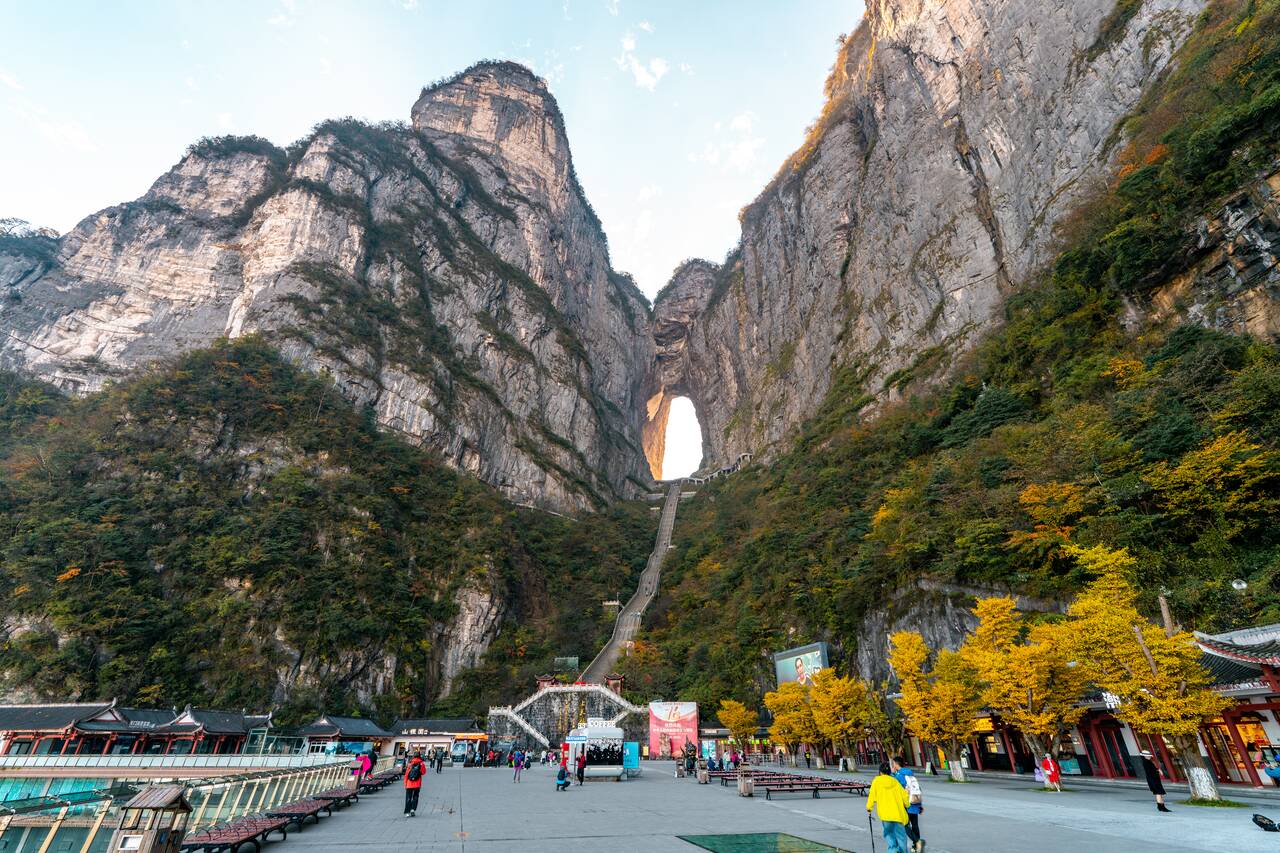
Tianmen Mountain is absolutely incredible and definitely a must-visit while you are in Zhangjiajie. Even if you thought you had seen all the awesome sights in Zhangjiajie Forest Park already, you will still be blown away by Tianmen Mountain and its iconic cave, also known as the “Heaven’s Gate,” a massive natural archway that rises nearly 130 meters above the ground.
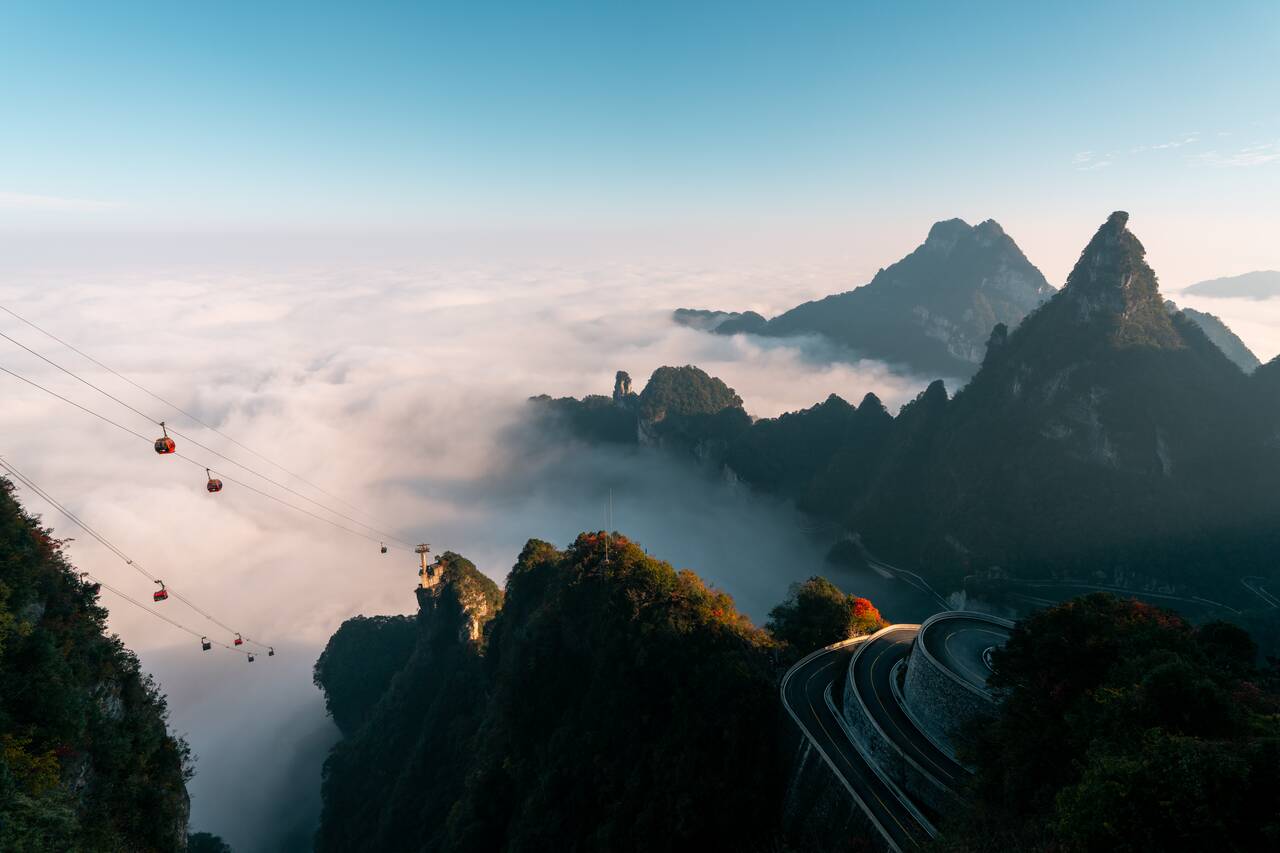
The mountain is also known for its glass skywalks, perched along cliff edges, as well as its cable car ride to the top, which is considered one of the longest in the world and provides panoramic views of the surrounding peaks, forests, and cityscape. While you are up there, there are tons of hiking trails that wind through lush forests and past stunning viewpoints that you can take. It is a perfect place to visit, especially on a nice clear day.
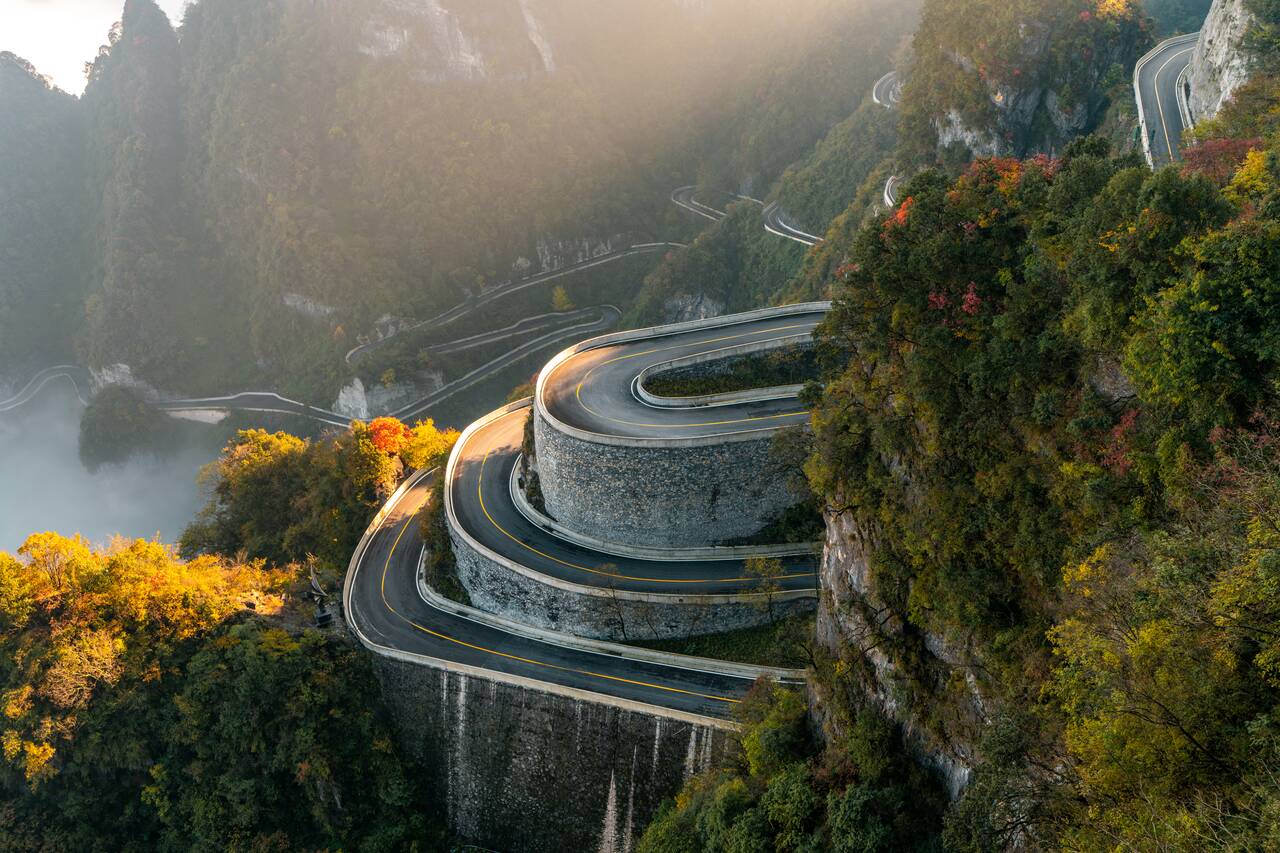
Due to the ongoing cable car upgrade, you will have to take Route C to get to Tianmen Mountain, as Route A and B are no longer operational. Be sure to reserve your ticket early.
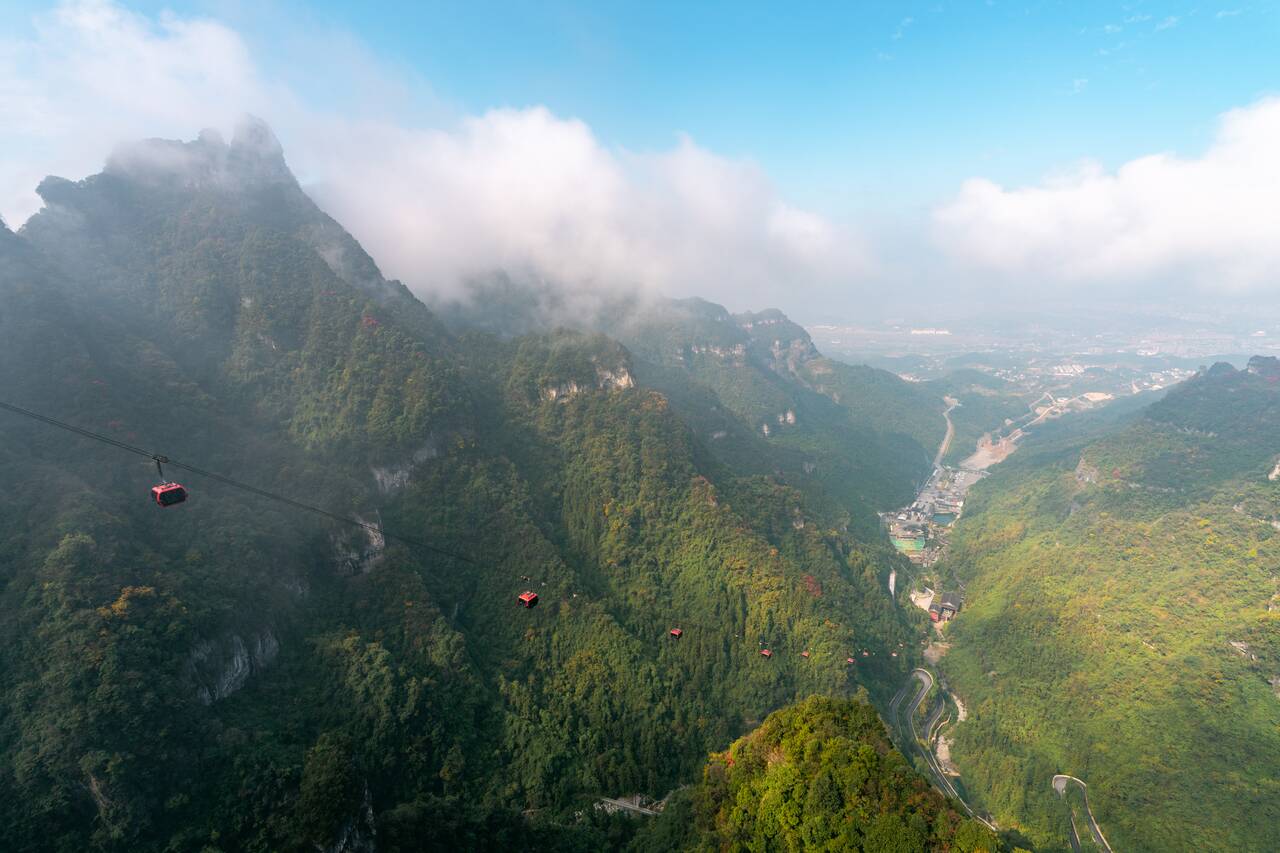
For Route C, you can catch the shuttle bus from the cable car station in the city, take the fast cable car to Tianmen Cave, use the upper escalators to reach the summit, and return the same way.
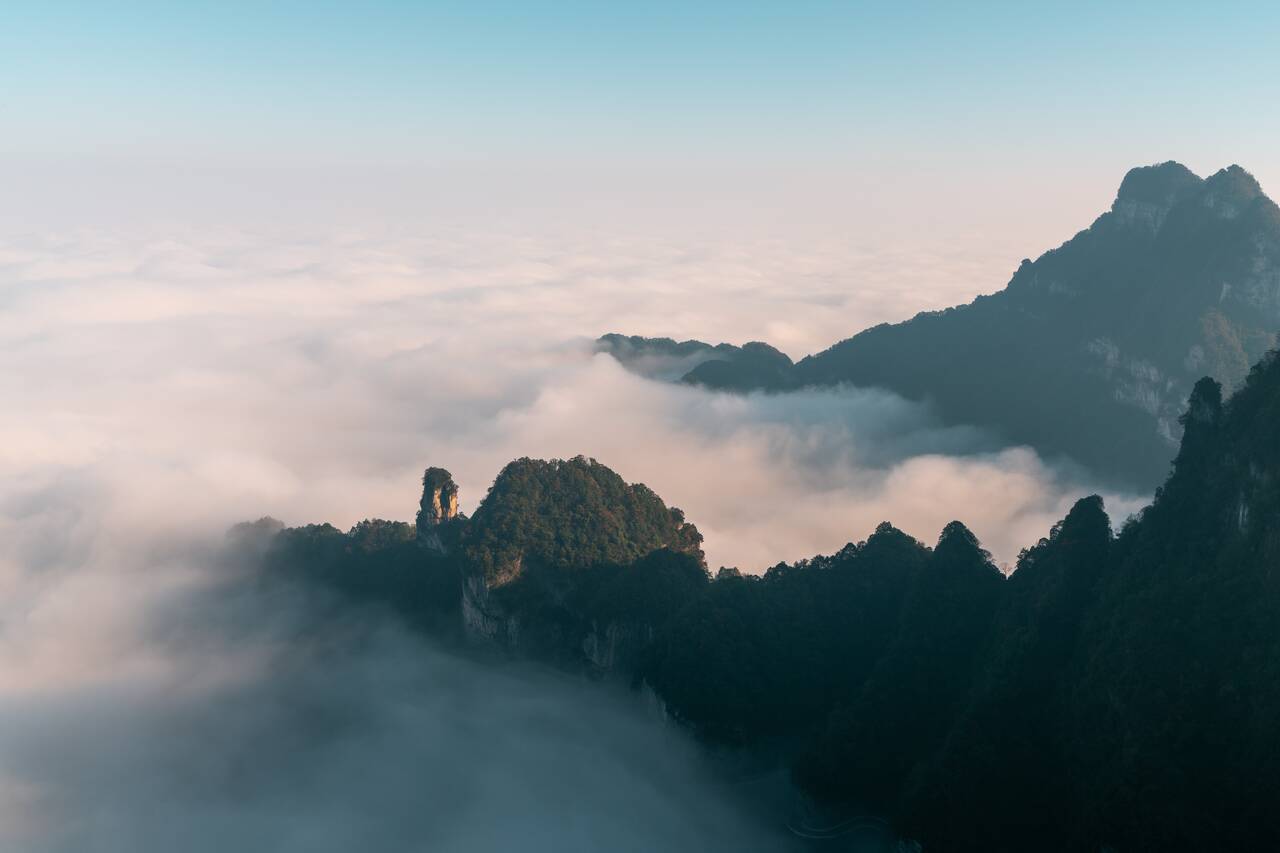
Before the cable car was under construction, Route A and B used to go in loops but in a different direction to help ease the crowds. Essentially, taking Route A means that you would catch the cable car (that is currently under renovation) straight from the city, all the way up to Upper Level and make your way down to Middle Station, before you take the newer faster cable car down to the shuttle station and take the bus down to the city.
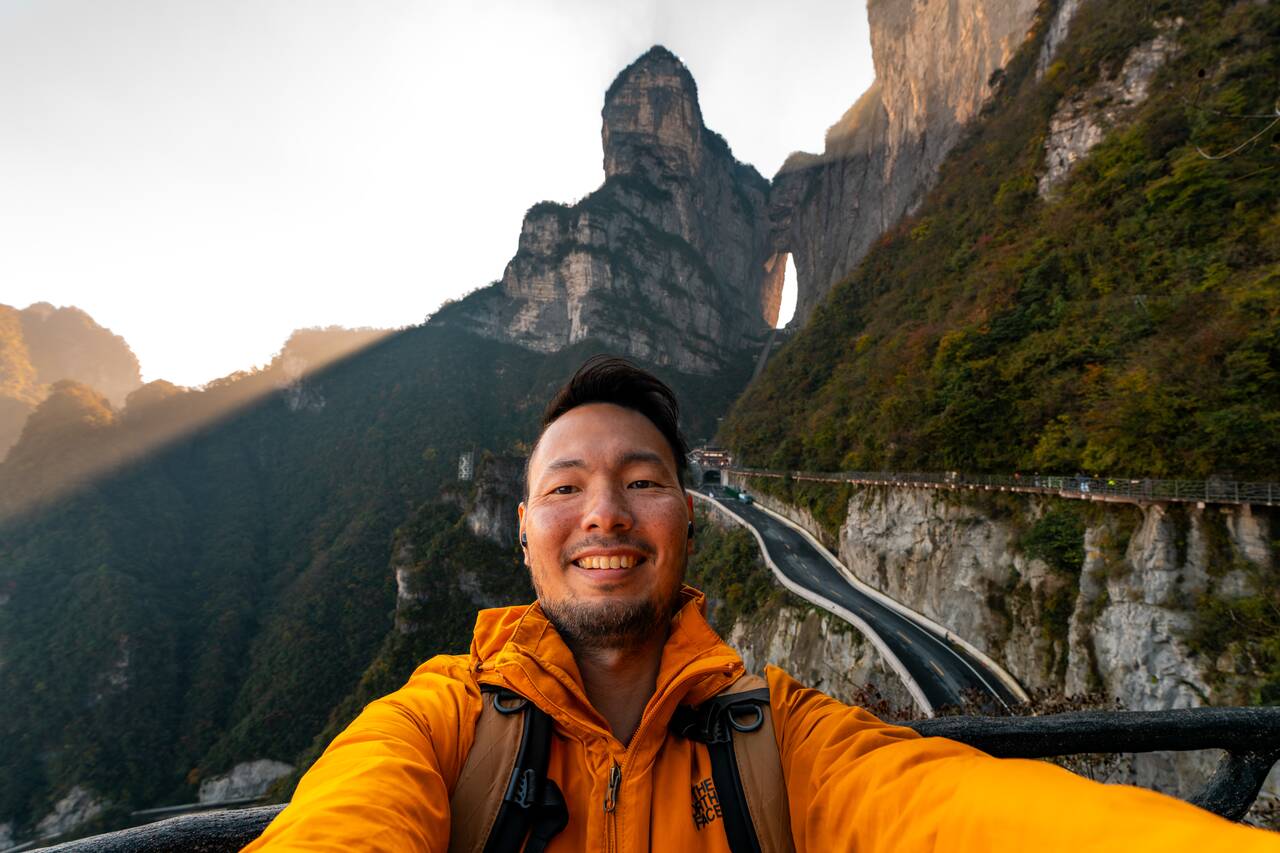
Route B, which was the one I took was basically Route A but in a opposite direction. It was great because I didn't have to backtrack. With Route C, you will be taking the shuttle and the new cable car both ways, so in a way, it's kinda the same experience as I had, but you are just going back the same way you came from.
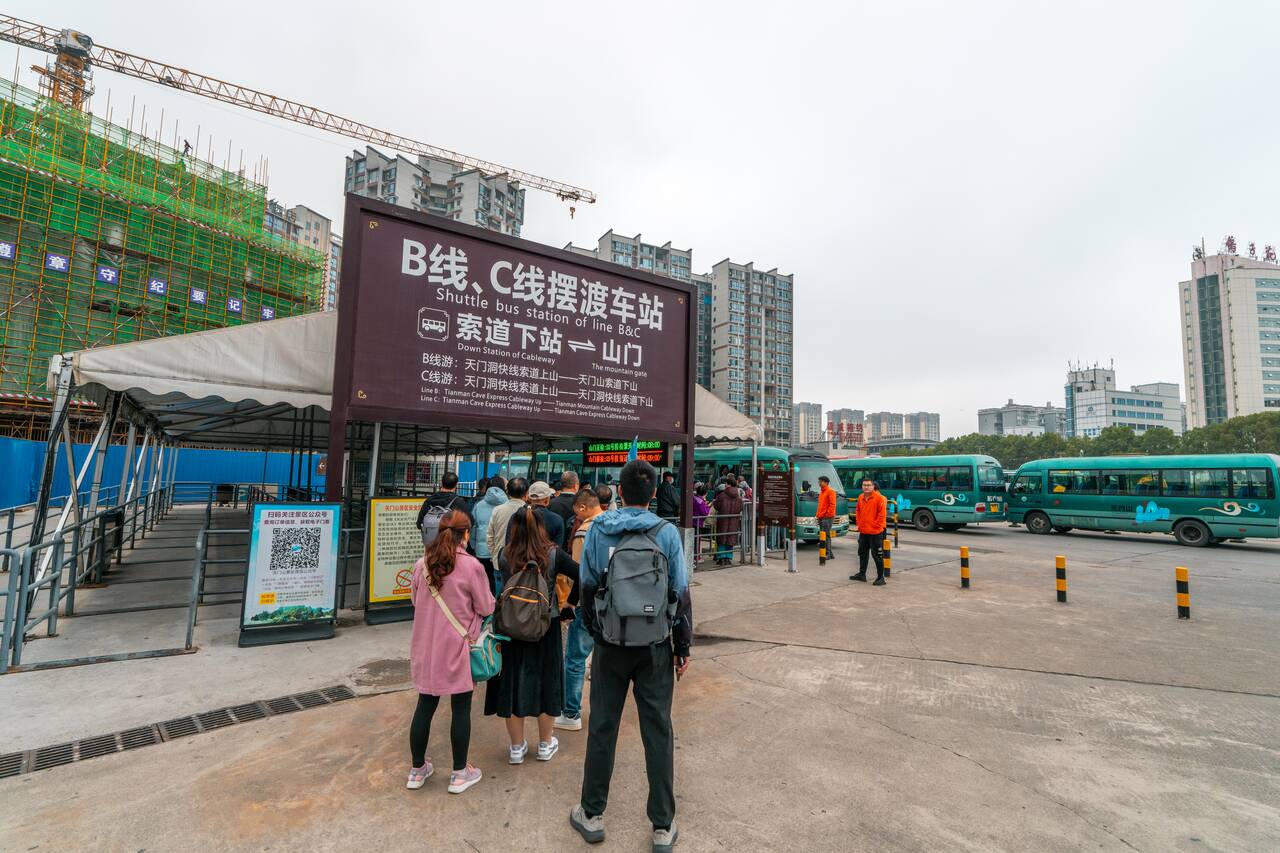
From the cable car station in the city center, follow the signs for the Route C shuttle and you’ll be boarding the bus in no time. The ride takes about 30 minutes to reach the new cable car station. From there, take the cable car up to the Middle Station, where you can begin the hike.
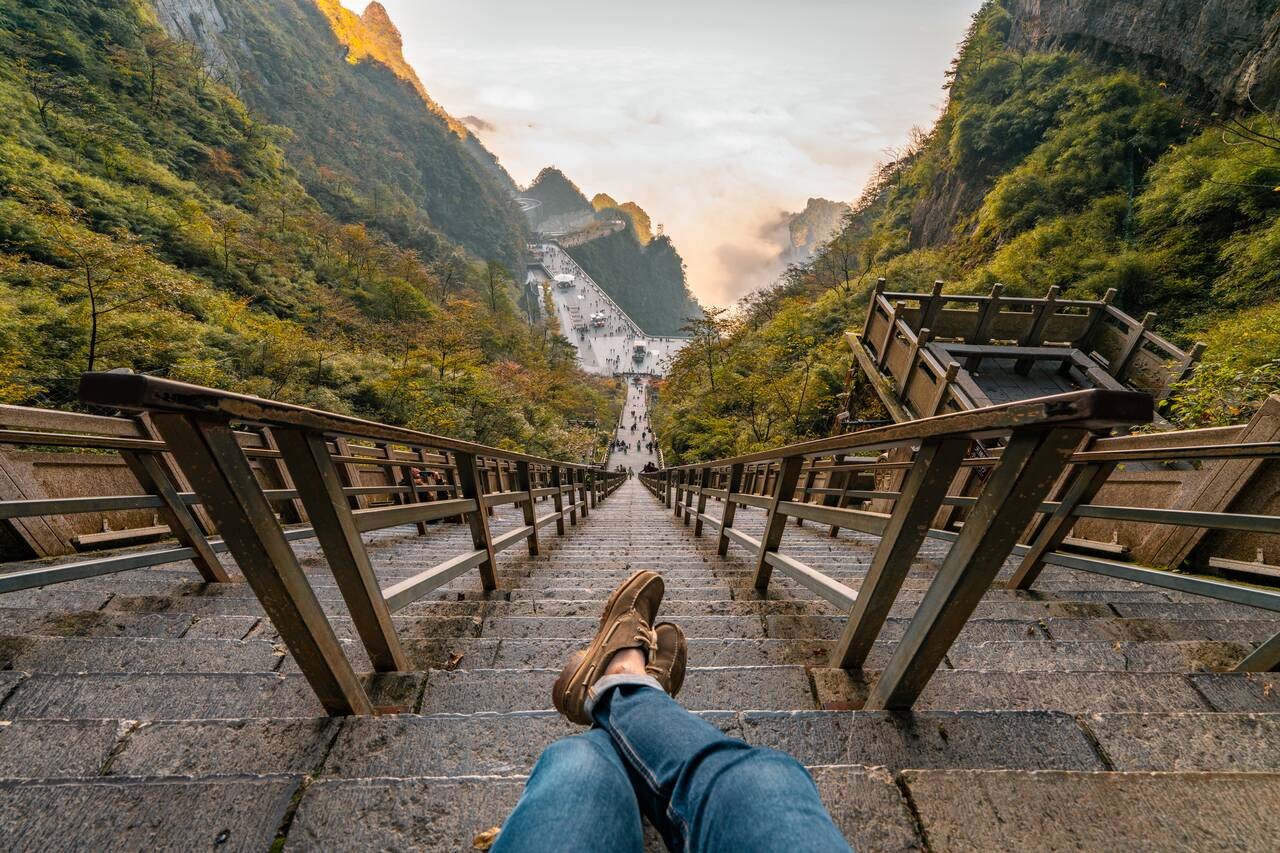
Continuing along Route C, you’ll eventually arrive at the base of the iconic Tianmen Cave. Here, you can either climb the 999 steps to the top or pay a bit extra to take the escalator. But honestly, you’re not here every day, so you might as well climb the stairs! They’re extremely steep, so pace yourself and take it slow.
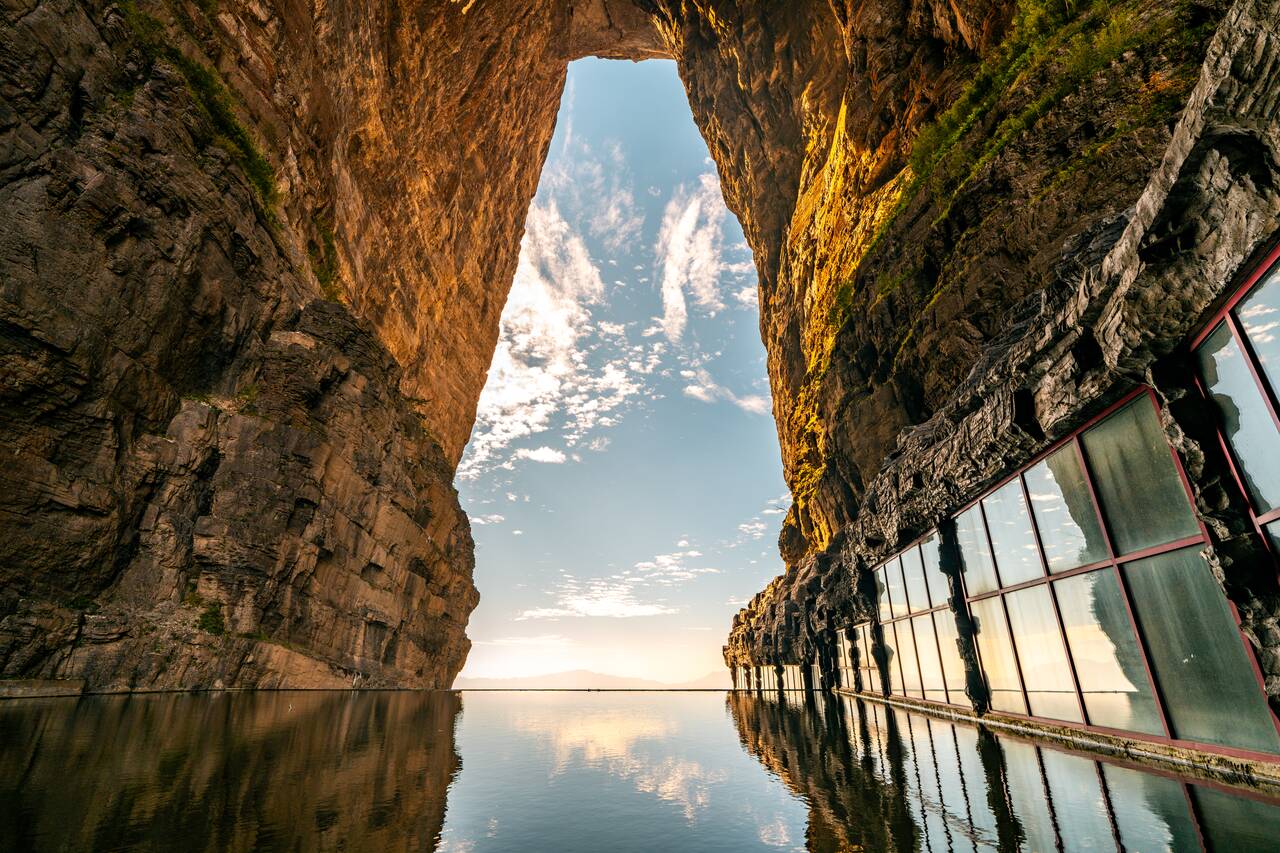
Once you reach the top, you’ll be greeted by a stunning cavern, a pristine reservoir at its center, and beautiful views of the mountains on the opposite side. You can rest here for a bit and enjoy the cold breeze before you continue up the mountain to the Upper Station.
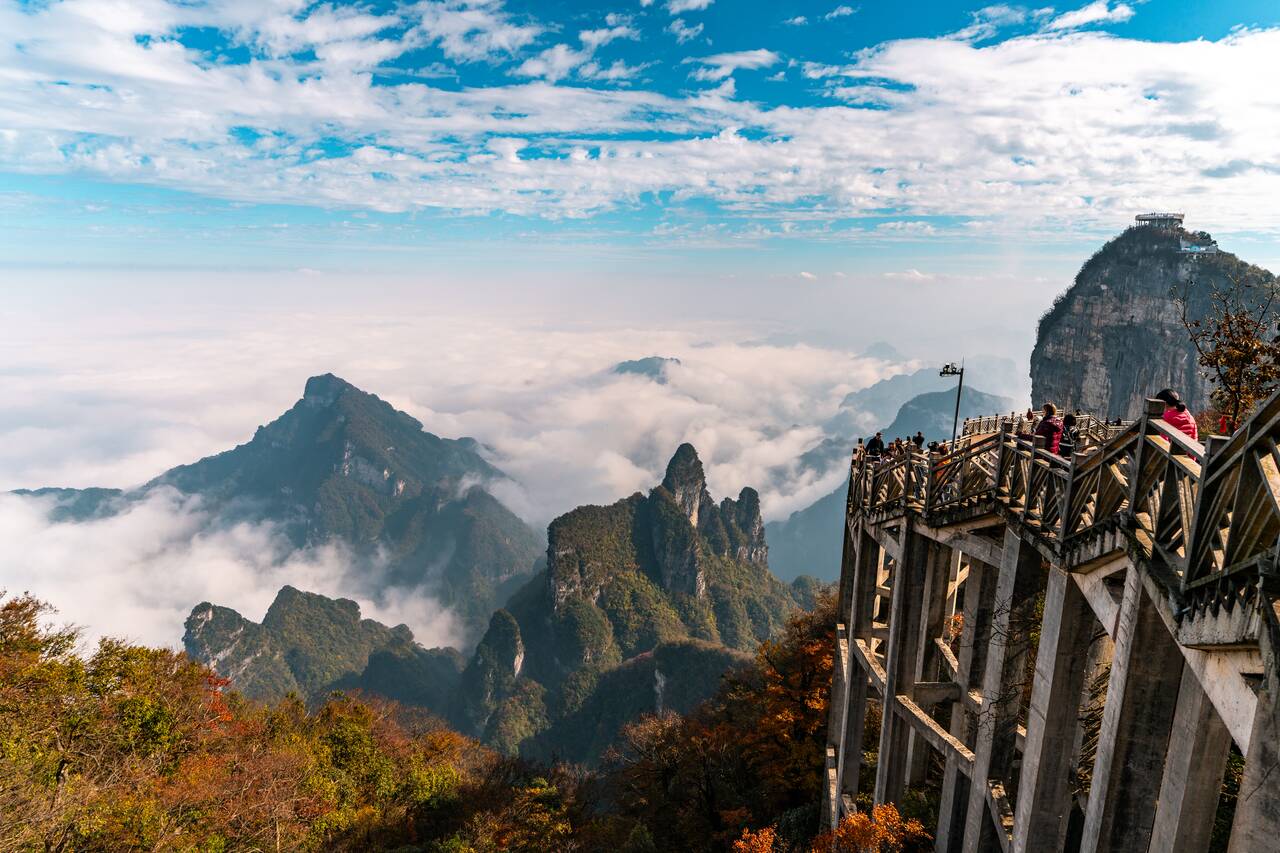
At the Upper Station, the entire mountain opens up to you with winding trails and attractions such as Tianmen Temple, the Glass Bridge, and more that you can check out. You could easily spend 2-3 hours exploring the Upper Station alone. Be sure to spend some time and explore all the wonderful attractions up here.
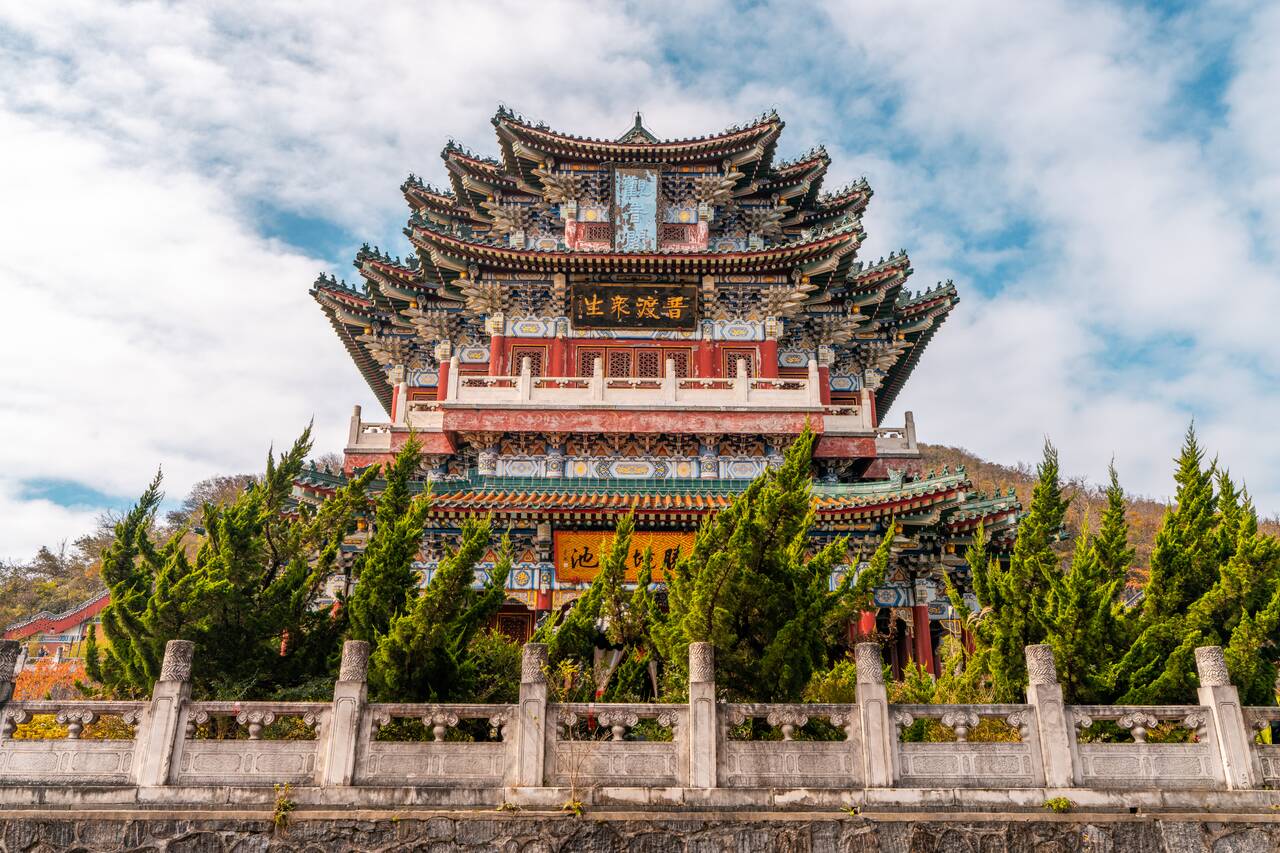
Once you’ve finished exploring the Upper Station, return via the upper escalators, fast cable car and shuttle to the city center, completing your trip to Tianmen Mountain. The experience is truly incredible and well worth spending at least half a day, if not a full day, here. Be sure to book your tickets in advance here.

Before you retreat for the night, be sure to come and check out one of the weirdest attractions in Zhangjiajie, which is 72 Strange Buildings, also known as the 72 Wonder Towers, a large cultural and tourism complex where you can see all kinds of lights and sounds shows throughout the day. It is a great place to visit at night if you are looking for a place to hang out in Zhangjiajie after sundown.
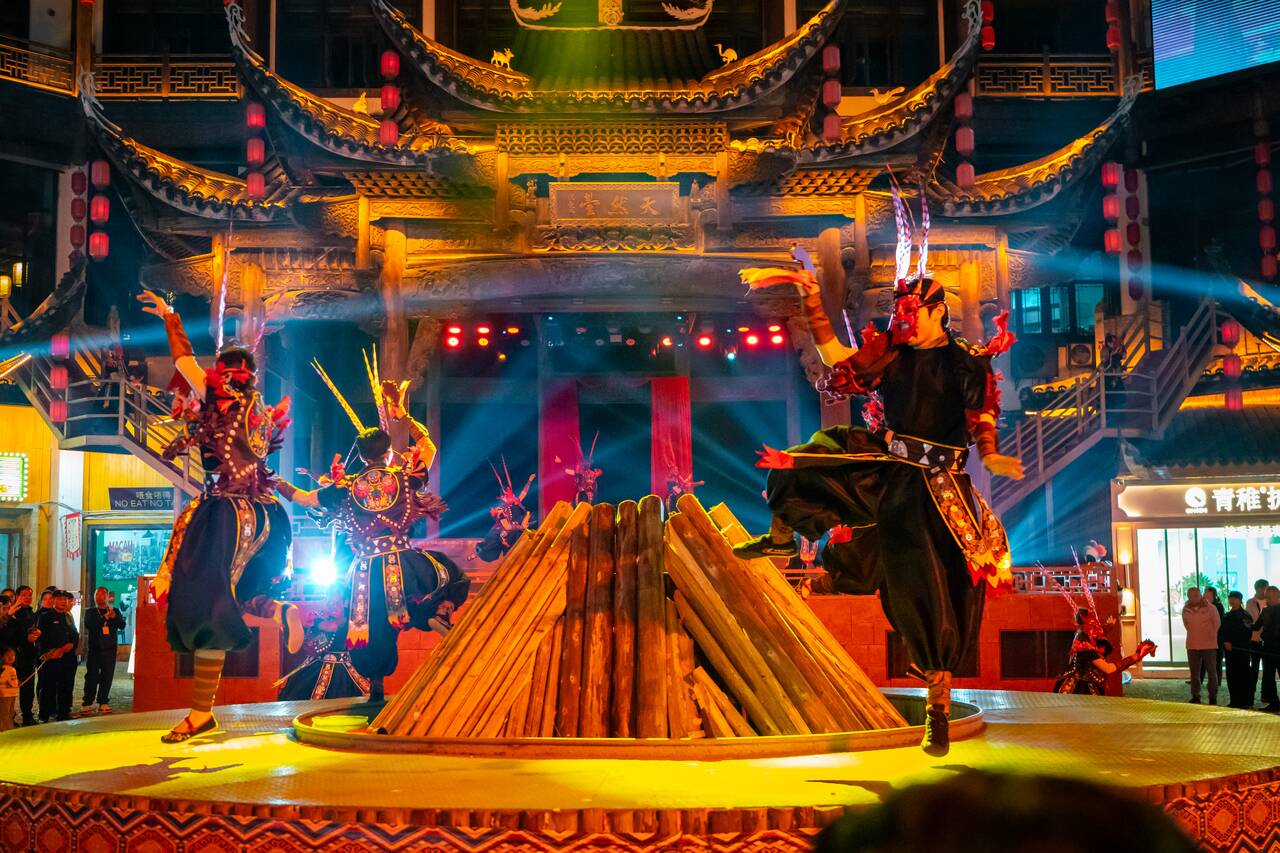
The centerpiece of the complex is the main tower, which stands 109.9 meters tall and holds the record as the world’s tallest stilted building. Its central arch reaches approximately 38 meters in height and becomes especially dramatic when illuminated at night.

The complex hosts cultural shows and folk performances, including traditional dances, drum shows, and martial arts displays, providing a glimpse into Tujia culture and traditions, which are arguably the highlights of 72 Strange Buildings, in my opinion. You have to come here and visit at night when the entire area is illuminated with tens of thousands of lights, and there will be all kinds of shows happening throughout the night from 4:30 PM onwards to 10:30 PM.
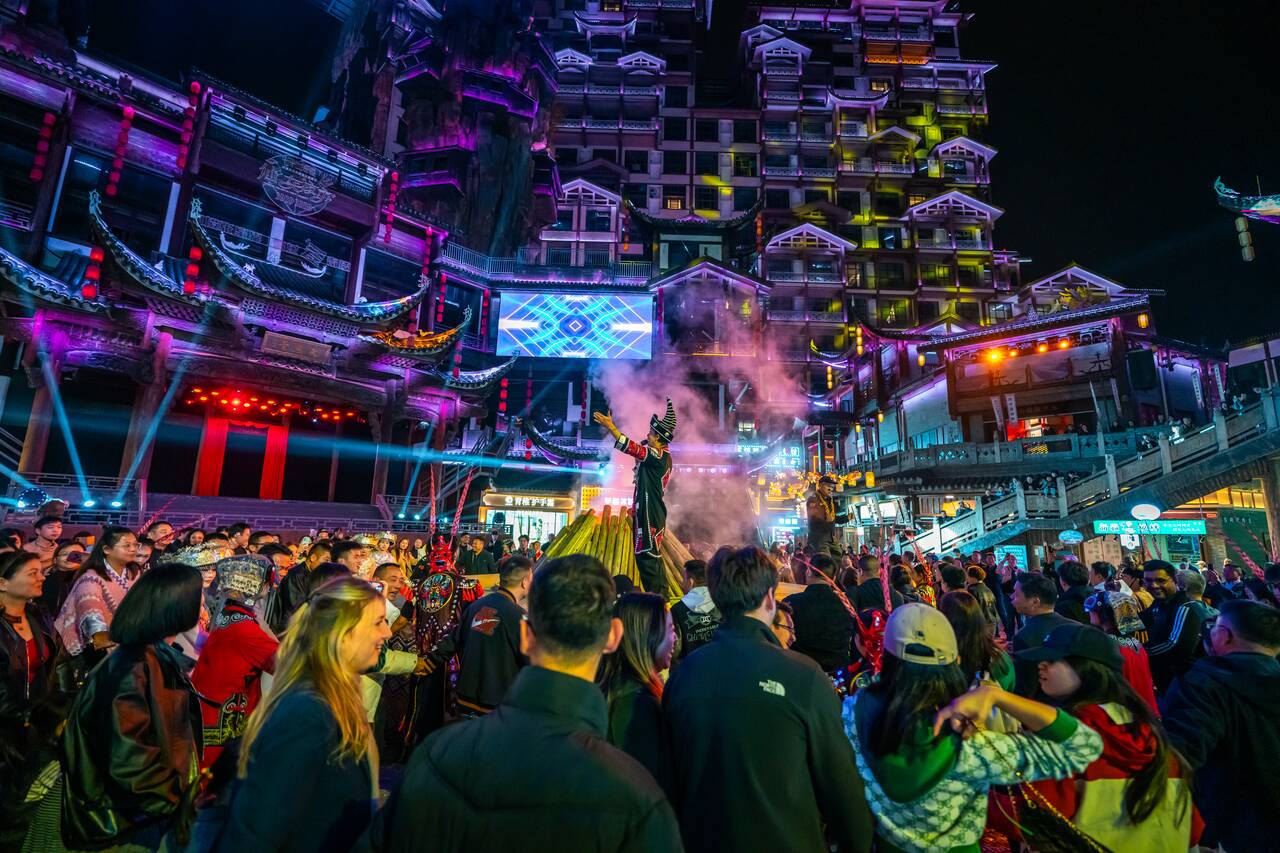
To get inside, you will have to pay the entry fee of 88 CNY for a night visit later than 4:30 PM or 48 CNY if you visit before 4 PM and you can book the ticket here. You can also visit this place during the day, but it won't be as impressive or fun as if you were to visit at night. The place is open from 8 AM to 10:30 PM daily.
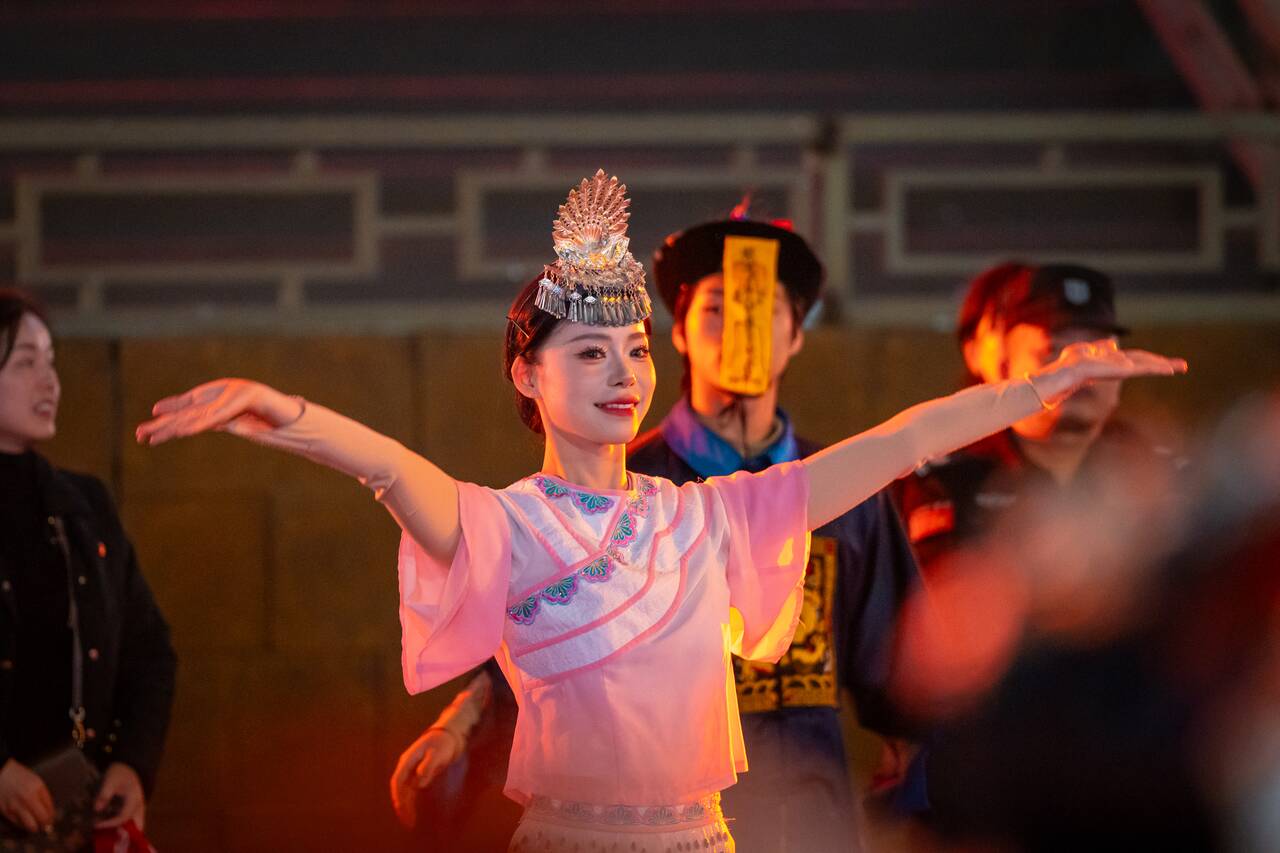
I recommend arriving around 6–7 PM to enjoy the performances and shows and soak in the lively atmosphere until about 10:30 PM. Afterwards, take a taxi back to your accommodation in Zhangjiajie City, bringing this one-month itinerary through South and Southwest China to a close. There is no better way to end a long trip in China than celebrating with the locals!

Where to Stay in Zhangjiajie City?
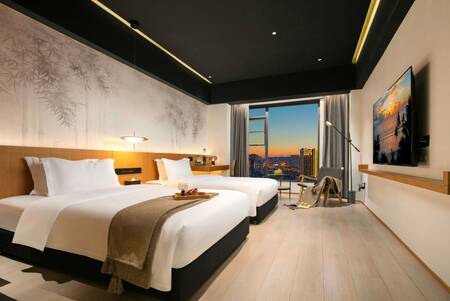

Day 34: Flying Back Home from Zhangjiajie City
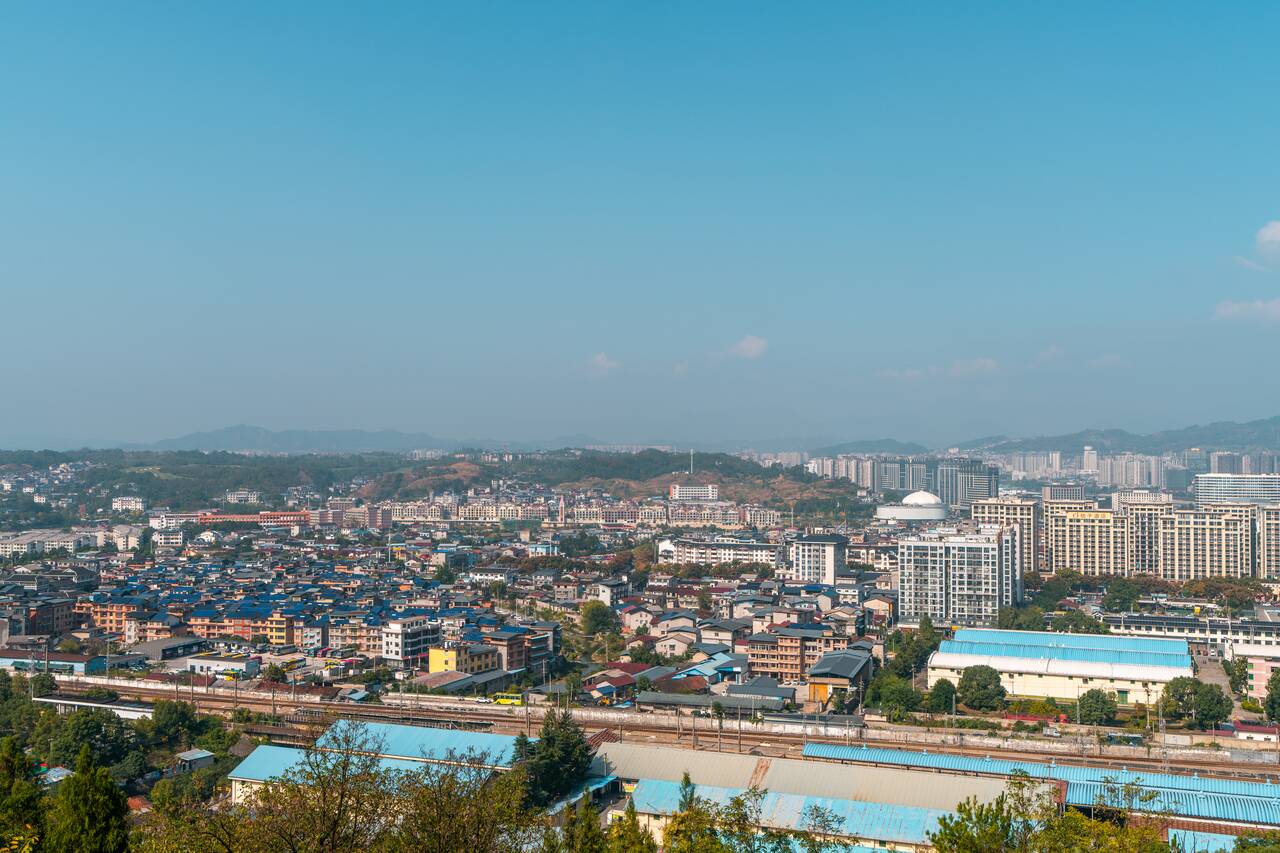
After you're done exploring Zhangjiajie, you can head to Zhangjiajie Airport and fly home from there. Your flight will likely transit through a major southern city like Guangzhou or another hub, and you'll be on your way home in no time. Congratulations, you've completed this epic one-month journey through South and Southwest China!
Things to Know Before Visiting China
- Always Carry Your Passport: Everything revolves around your passport/ID in China, and it’s often used interchangeably as your main form of identification. Many major tourist attractions require you to show your passport when buying a ticket, and the ticket will then be linked to it. You’ll scan your passport again to enter. The same applies to high-speed trains. It’s best to carry your passport with you at all times while traveling in China.
- Get an eSIM: China’s cashless economy relies on constant internet access, so having a data connection is essential. I highly recommend getting an eSIM or a local SIM card for your trip. An eSIM is often better because the service is usually based in Hong Kong, which bypasses China’s Great Firewall, meaning you can access apps like Instagram and YouTube without a VPN. I suggest checking eSIM options on Klook or Trip.com, as they tend to be the most affordable.
- Use AMap to Navigate: Google Maps doesn’t work well in China, so local apps like AMap are much more informative and accurate for getting around. It even provides metro information, making it easy to navigate city subway systems. I used AMap throughout my entire trip, and it worked perfectly! In this guide, I’ll be linking locations with AMap links instead of Google Maps, so be sure to download it before your trip.
- Use VPN to Bypass the Great Firewall: As you may know, many major websites such as Google, Facebook, Instagram, TikTok, and more are blocked in China. To access them, you’ll need a VPN like LetsVPN installed on both your phone and laptop before you arrive in China. This is crucial as once you're in the country, you won’t be able to search for or download VPN apps. I used LetsVPN during my trip, and it worked very well throughout. The service is affordable too, with a free tier offering limited data or a basic unlimited plan for just 5.99 USD per month.
- Connect Alipay with Your Credit Card: First, download Alipay from the app store, set up your account, and link it to your credit card. This will be one of the two main ways you’ll pay for services in China. Alipay also has mini-apps built in, such as Didi (China’s version of Uber), so you don’t need to download separate apps, and you can use them directly through Alipay. Very convenient!
- Get a Transport Card Working in Alipay: Once you have Alipay set up, you’ll need to verify your account before you can activate a transport card for metro and bus rides. First, if you’re not currently in the city you want to use, tap the city name in the top-left corner and select the correct city. After that, tap the “Transport” button and request a transport card. You’ll be asked to upload a photo of your passport for verification. Once approved, your transport card will be issued, and you can use the QR code to scan and pay for buses and metro rides.
- Get WeChat Set Up: WeChat is another essential app for communicating with locals, thanks to its built-in translation feature. It’s also widely used for payments as Alipay only works about 70% of the time, while WeChat is commonly needed for paying individuals, buying entry tickets at certain attractions, and more. Setting up WeChat can be a bit tricky though because you need verification from an existing user. The easiest way is to ask your hotel’s reception to help verify your account when you arrive in China, which is how I got mine activated.
- Use Trip.com / Trip App: For hotels, day trips, attraction tickets, train tickets, flights, and everything in between, you can use Trip.com or the Trip app to book all your travel needs. It’s very convenient, offers a great user experience, and offers cancellation terms that vary by booking, so check the refund deadline and fees before paying.
When to Visit South & Southwest China?
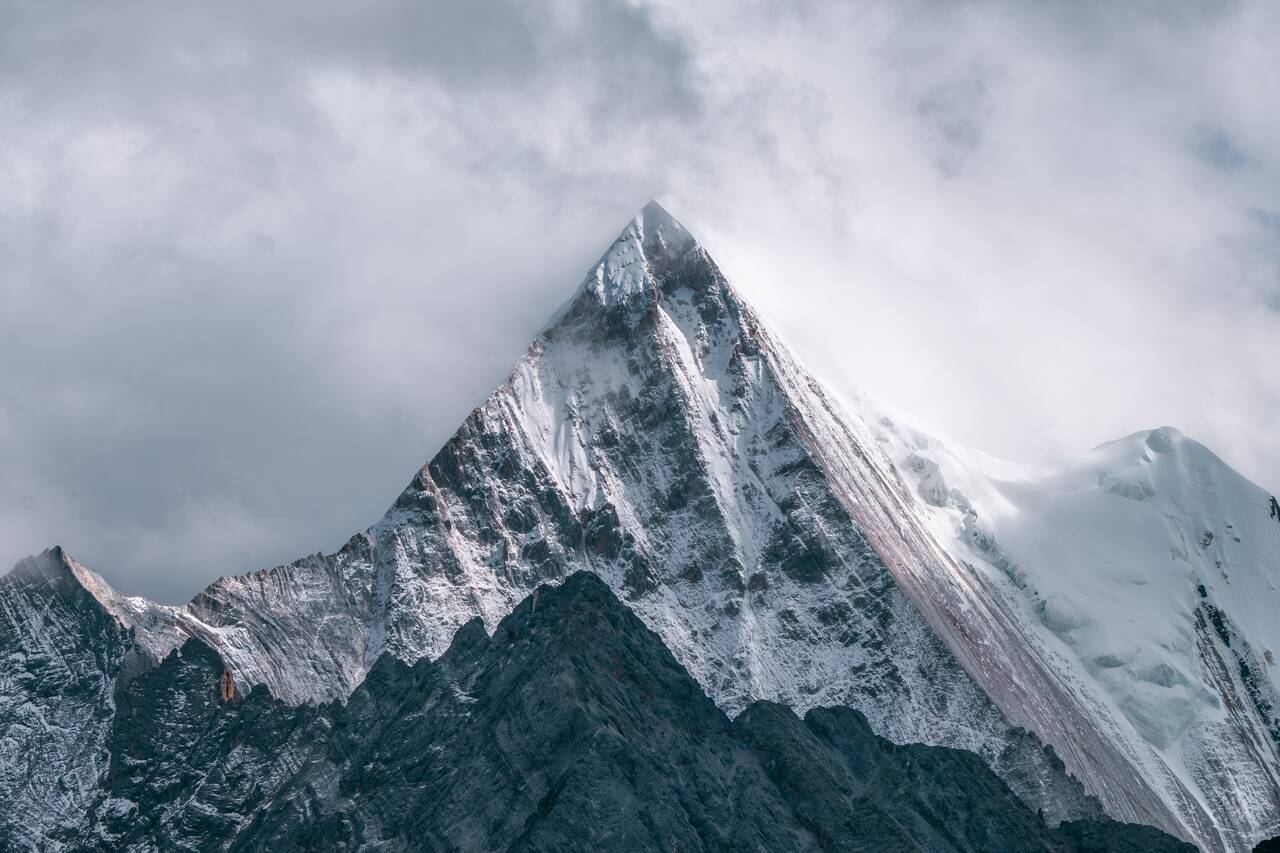
For an itinerary focused on nature, mountains, and outdoor exploration, the best months to visit are spring and autumn. During these seasons, the weather is comfortable, the skies are clear, and the landscapes are at their most scenic, allowing you to enjoy South and Southwest China at its best.
From March to May, the weather is generally mild and pleasant after the winter chill. The landscapes come alive with blooming flowers and green valleys, making it an ideal season for sightseeing, hiking, and enjoying nature. Areas like Yunnan, including Lijiang, are particularly beautiful during this time, with comfortable temperatures and vibrant scenery.
Autumn, from September to November, is another excellent period to explore the region. The weather is cooler, rainfall is lower, and the skies are usually clear. This makes it perfect for outdoor adventures and trekking, which we will do a ton of in this itinerary. It does get quite crowded sometimes, though, as the region does have some of the most beautiful autumn nature, and it may attract a lot of autumn crowds.
Summer, from June to August, brings higher temperatures and heavy rainfall, especially in southern and low-lying areas. While the landscape is lush and green, frequent rain or storms can disrupt travel plans.
Winter, from December to February, can be mild in lower-altitude regions but cold and sometimes damp in mountainous areas. Snow-capped peaks can be beautiful, but access to certain scenic areas may be limited, and some roads may be more difficult to navigate. I wouldn't recommend visiting in winter.
I followed this exact itinerary in October and November, and the natural scenery was absolutely stunning. Some places, like Jiuzhaigou, did get quite crowded, but the autumn colors were at their peak, which made it all worthwhile despite the crowds, in my opinion. If you prefer fewer people, spring is a better option, so you might want to consider visiting during that season.
How to Get to South & Southwest China?
Since this itinerary begins in Macau, you can either fly directly to Macau International Airport (MFM), which is served by airlines like AirAsia, which has great coverage in Asia.
For those flying from Europe or the US, you can also fly into Hong Kong via Cathay Pacific, and you can transit to Macau inside the airport via the Hong Kong–Zhuhai–Macau Bridge (HKZMB). It's well-signed throughout and very straightforward. When I was there, it was free as it was during the Golden Week, but usually, the transit will cost you about 65 HKD and take 45 minutes.
You can find cheap flights to Macau or Hong Kong from Trip.com, Skyscanner, or Expedia.
How to Get Around South & Southwest China?
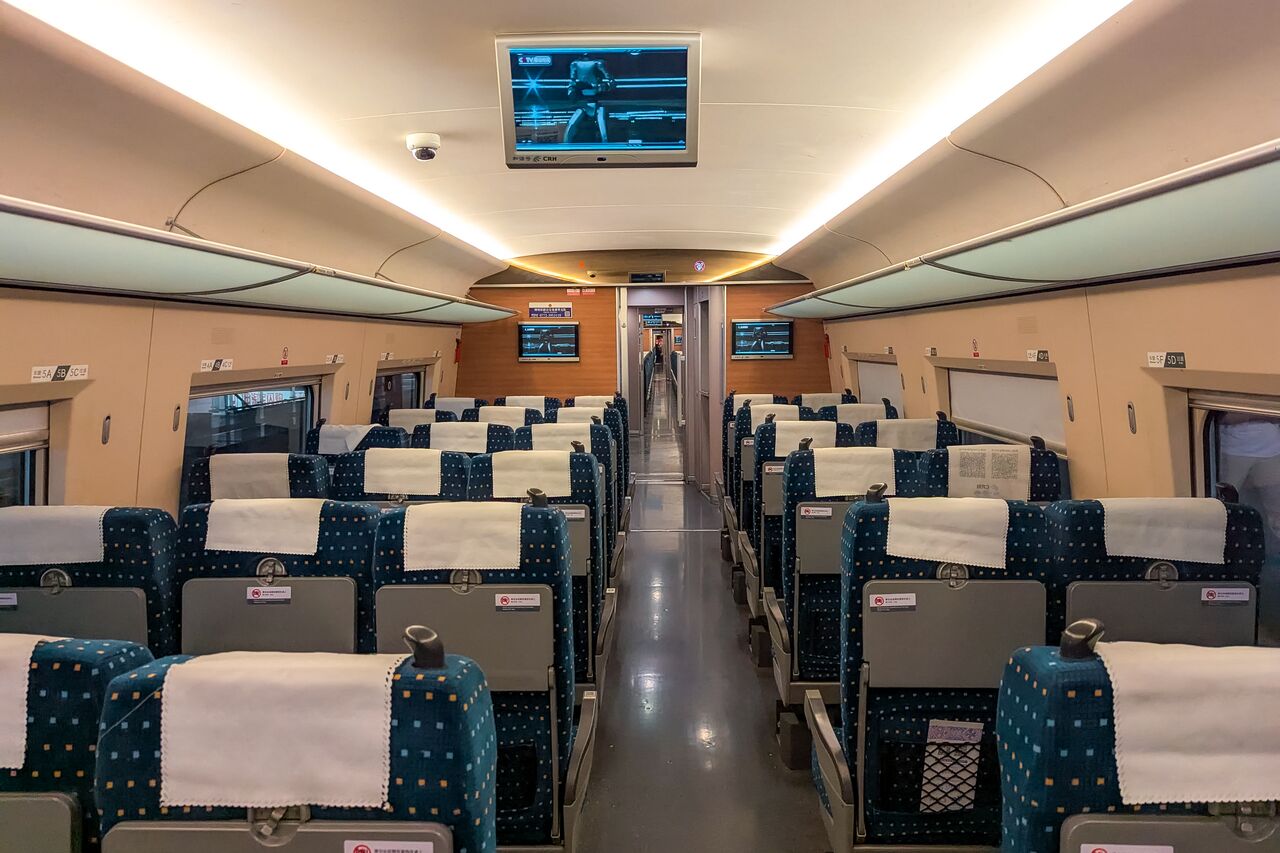
By High-Speed Train: For this itinerary, we will be using the excellent railway network in China to get around the region most of the time. China’s high-speed rail network is often the fastest, most reliable choice. Trains connect many cities across South and Southwest China, making it easy to cover long distances comfortably. You can also book them easily from here.
By Bus: For this itinerary, we will be relying on a long-distance bus only once, to travel from Shangri-La to Yading, which is the only route not covered by high-speed trains. Buses in China are cheap, slow, basic, and a bit crowded, but usually not overcrowded. You generally cannot book tickets online unless you are a local, so it’s best to purchase your ticket the day before departure.
By Domestic Flights: We will also take a domestic flight on this itinerary to travel from Yading to Chengdu. Domestic flights are a great alternative to high-speed trains or long-distance buses, helping you save time. However, they can be a bit expensive, and any power banks without CCC certification will be confiscated, no matter how well you try to hide them. Trust me, they will find it eventually!
How Much Money Do I Need For One month in South & Southwest China?
From this one-month itinerary, we can calculate approximately how much money you will be spending here on average as follows:
| 🛌 Lodging: | 1,007 USD (28.7 USD/Day) |
|---|---|
| 🥘 Food: | 280 USD (8.25 USD/Day) |
| 🚗 Transportation: | 752.13 USD (22.12 USD/Day) |
| 🧗 Activities: | 694.24 USD (20.42 USD/Day) |
| 💰 Total Budget: | 2,733.37 USD (80.39 USD/Day) |
Is it Safe in China?
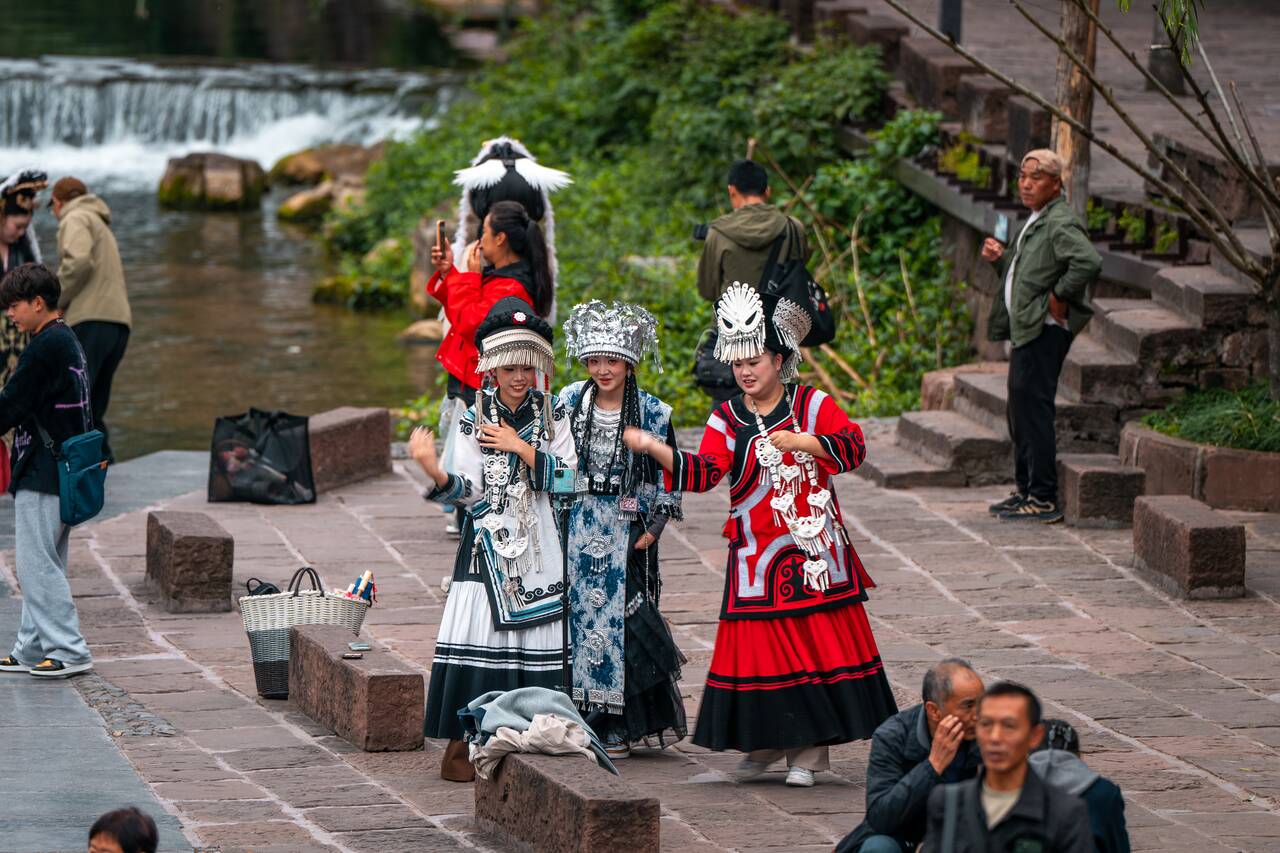
China is very safe and considered one of the safest countries in the world to visit. Petty theft is rare, even in crowded areas like buses and trains, unlike in many parts of Europe. I met several solo female travelers, and all of them agreed that it is very safe to travel alone here. You should have no trouble at all during your time in China.
That said, it is always a good idea to be aware of your surroundings when you are out and about and keep your belongings close at all times. Petty theft is rare, but not non-existent, so it’s better to be safe than sorry. Just take the same precautions you would in any other city, and you should be fine.
Which tourist SIM card is best for China?
China’s cashless economy relies on constant internet access, so having a data connection is essential. I highly recommend getting an eSIM or a local SIM card for your trip. An eSIM is often better because the service is usually based in Hong Kong, which bypasses China’s Great Firewall, meaning you can access apps like Instagram and YouTube without a VPN. I suggest checking eSIM options on Klook or Trip.com, as they tend to be the most affordable.
Disclaimer: This post may contain affiliate links. See our disclosure policy.
First Published:
Last updated: