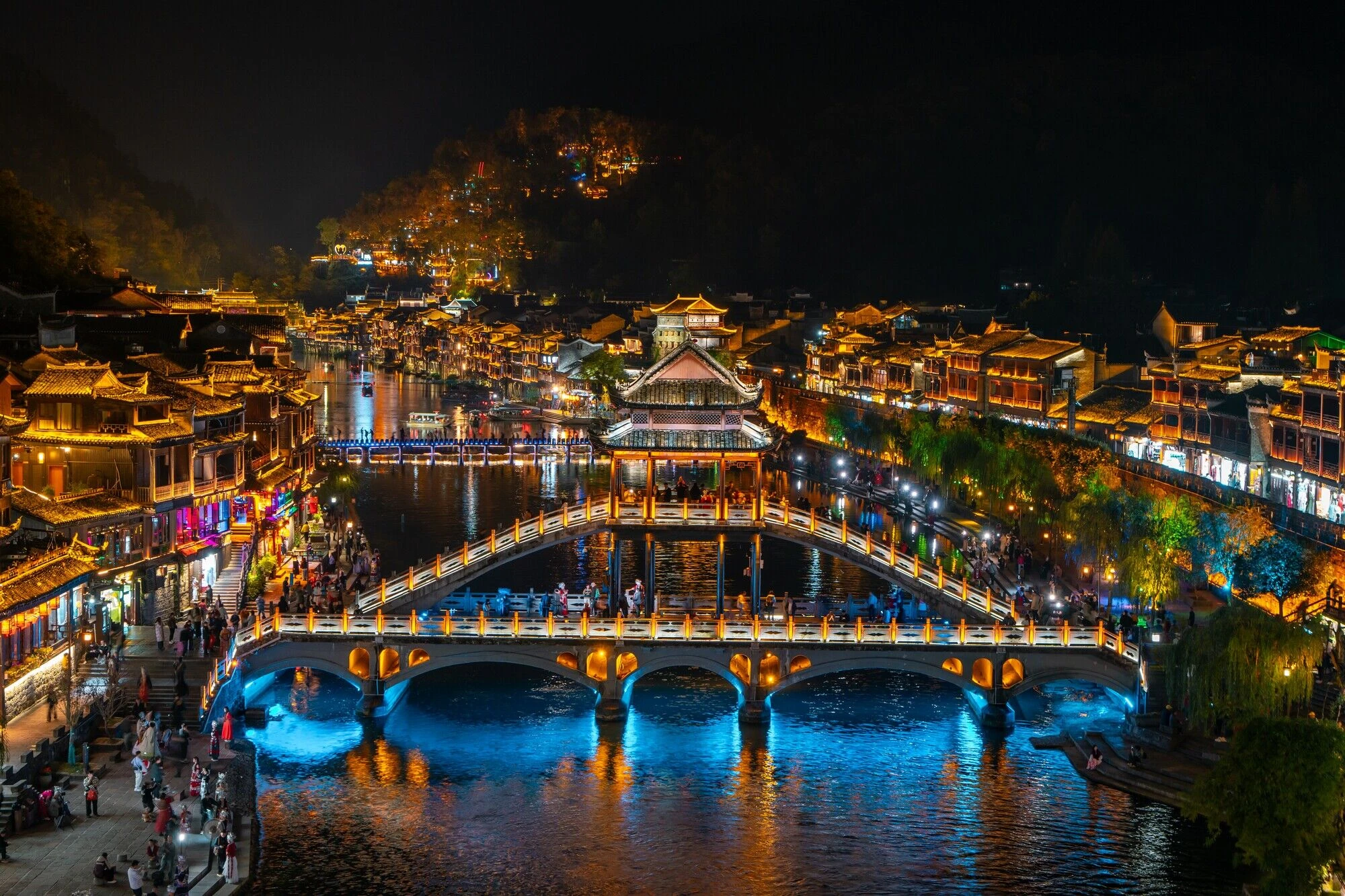



Due to its close proximity to Zhangjiajie, many travelers visiting the area often stop by Fenghuang Ancient Town, also famously known as Phoenix Ancient Town. This beautiful and photogenic riverside town, with its winding cobblestone streets, iconic wooden stilt houses, and charming atmosphere, makes for a perfect overnight stay before or after a trip to Zhangjiajie.
If you're planning to visit Fenghuang Ancient Town, you're in the right place. When I was traveling in Zhangjiajie, I decided to stop by this charming riverside town for a night, and I've compiled everything I learned to help you plan the perfect trip. From how to get to the town and the cost of the shuttle bus from the train station to the best things to do and more, here is a complete travel guide to Fenghuang Ancient Town:

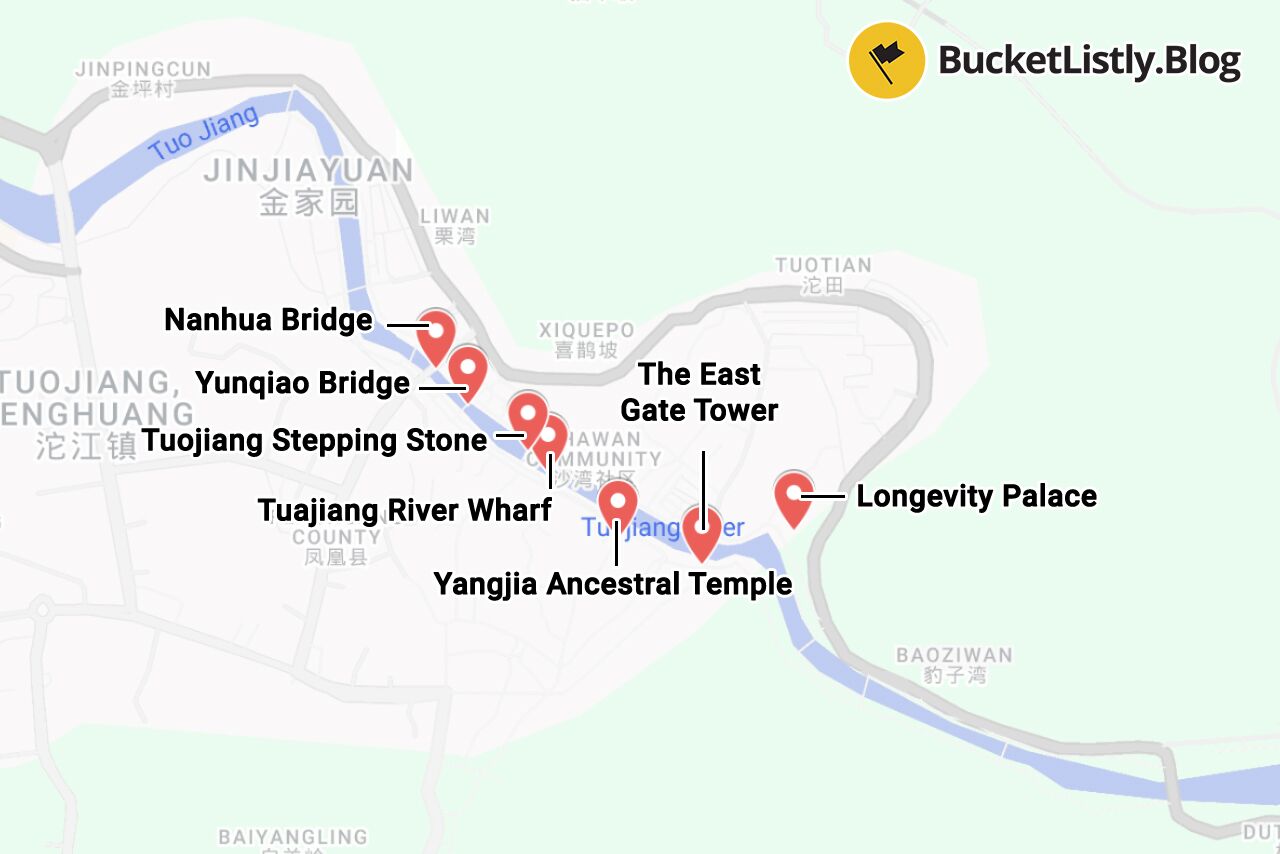
Fenghuang Ancient Town Things to Do Map
Quick Summary
| 👍 Must Do: | Nanhua Bridge |
|---|---|
| 🏛️ Best Museum: | Longevity Palace, Shawan Area |
| 🛌 Place to Stay: | JI Hotel (Xiangxi Phoenix Ancient City Hongqiao) |
| 🌤️ When to visit: | All year round |
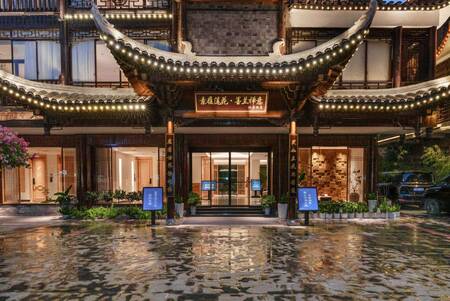
Where to Stay in Fenghuang Ancient Town?


8 Best Things to Do in Fenghuang Ancient Town
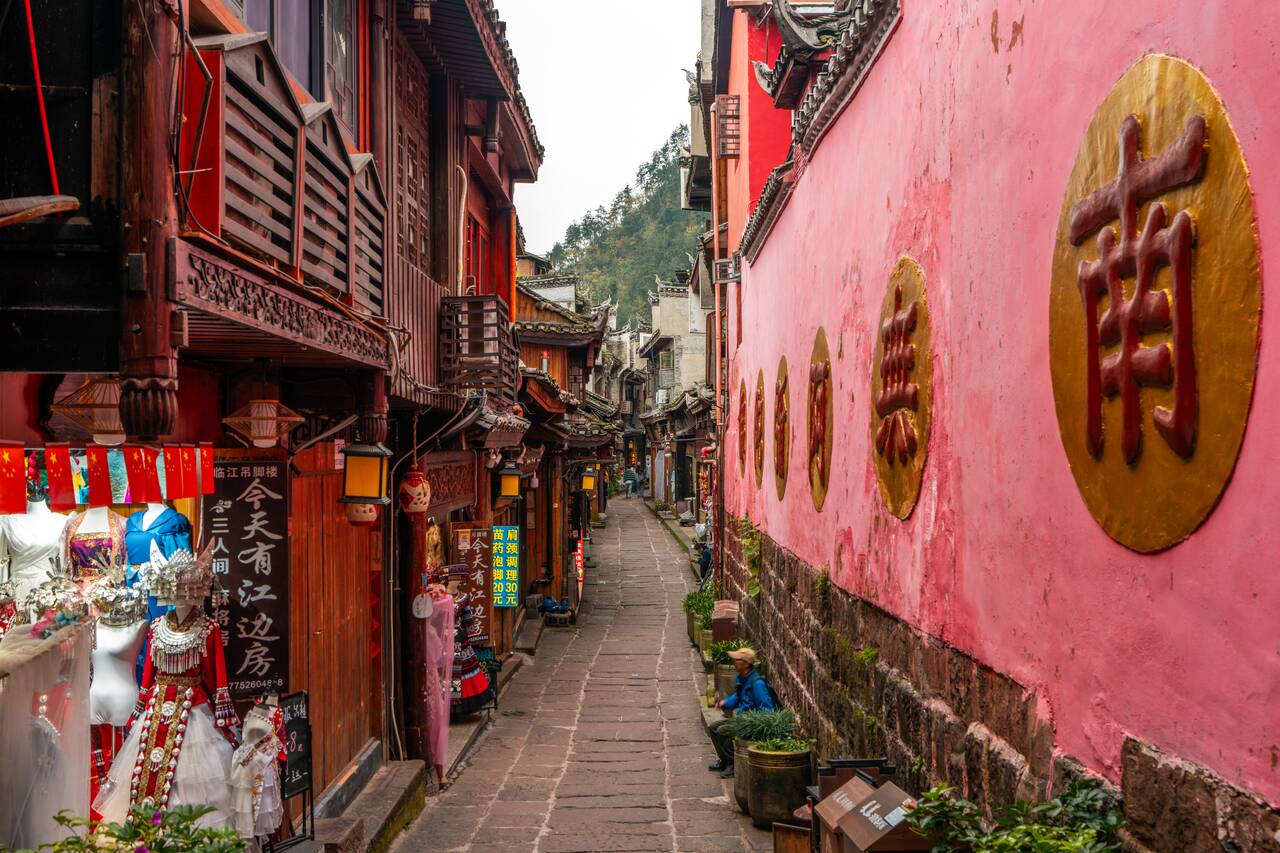
1. Explore the Winding Cobblestone Streets
- 📍 Location: Explore the Winding Cobblestone Streets [Map Link]
- ⚡ Pete's Take: "I spent over five hours exploring Fenghuang Ancient Town and still only scratched the surface."
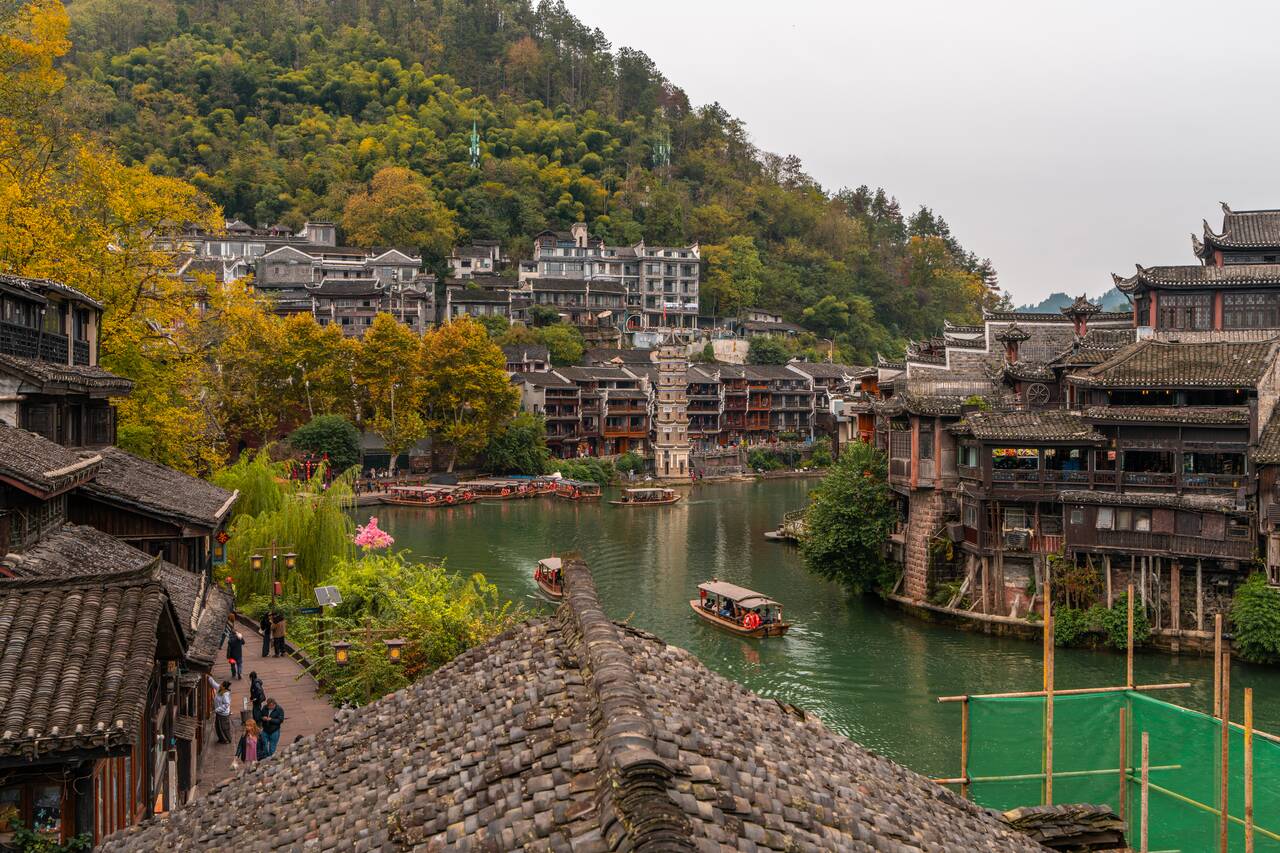
Founded in 1556 during the Ming Dynasty, Fenghuang Ancient Town is home to the Miao and Tujia ethnic minorities. It is built along the banks of the Tuo River and nestled among green hills and mountains, making it one of the most photogenic ancient towns in the region, and there is no better way to see it than to explore its cobblestone streets on foot.
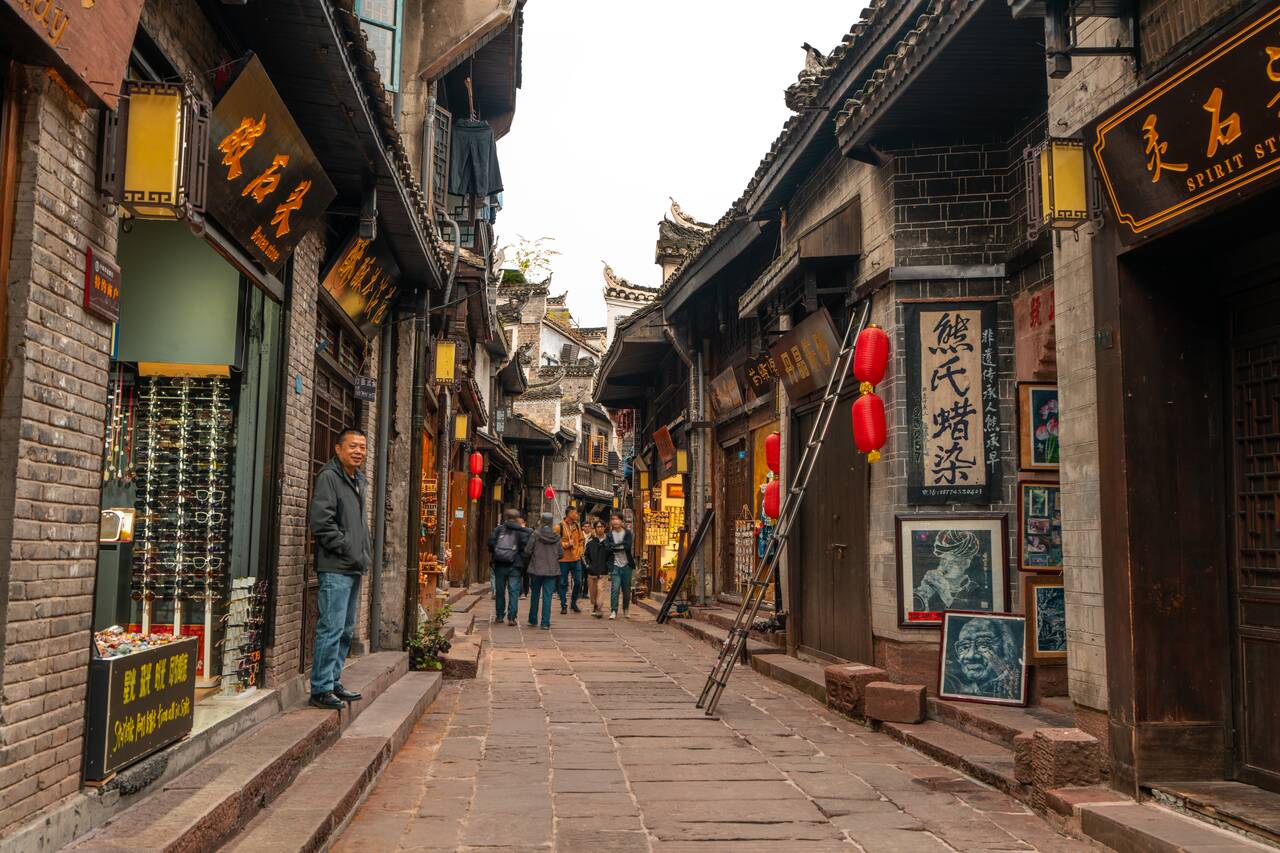
One of the town's defining features is the wooden stilt houses (diaojiaolou) lining the riverbank, many of which are over a hundred years old, showcasing the impressive traditional craftsmanship. While here, you can explore the maze of cobblestone streets, narrow alleys, stone-paved lanes, and ancient houses dating back to the Ming and Qing dynasties. Walking through them feels like stepping back in time.
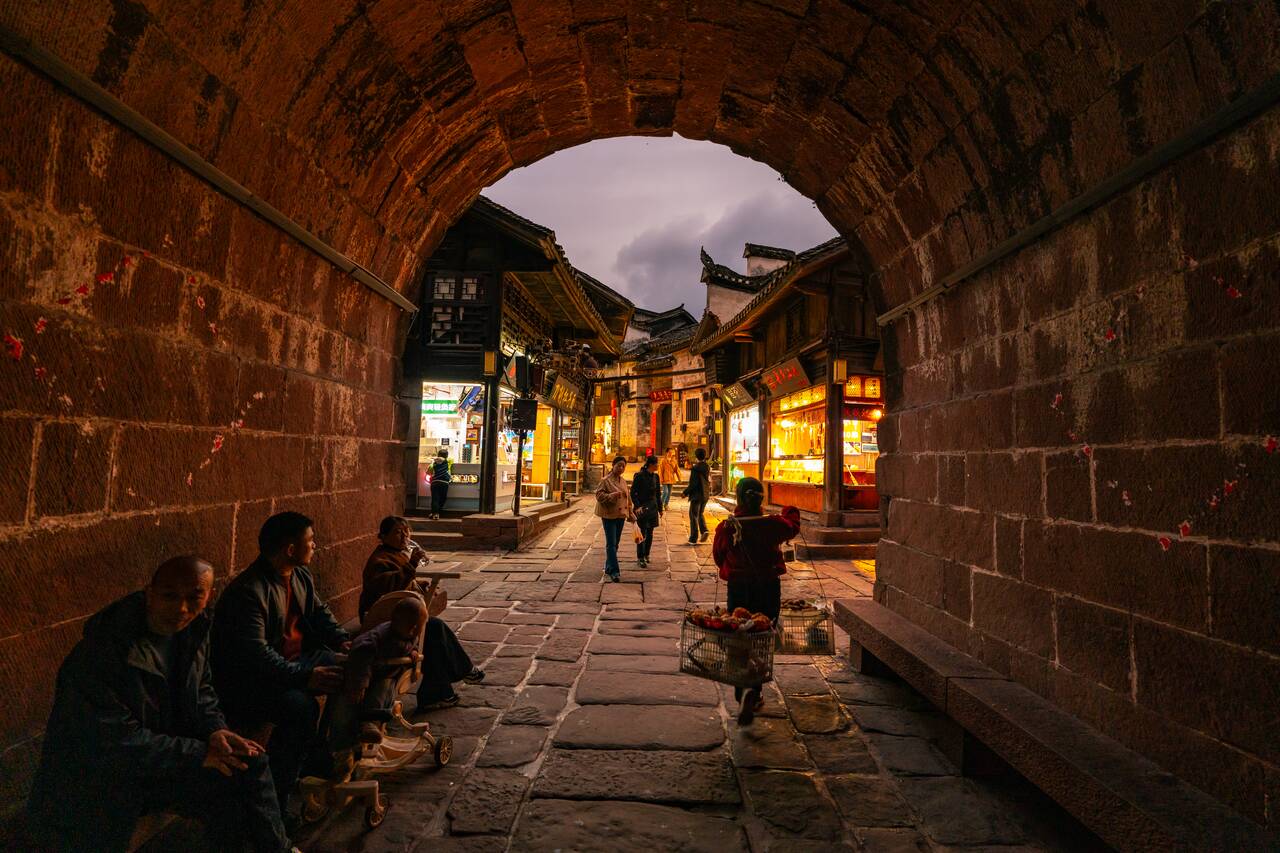
You can walk along both sides of the river and admire the city’s stunning architecture from different perspectives. You can also hike up the hillside that flanks the river to enjoy a breathtaking vantage point over the town. I spent over five hours exploring Fenghuang Ancient Town and still only scratched the surface.
- Fenghuang Boat Ride Tickets 🏅 Top Pick
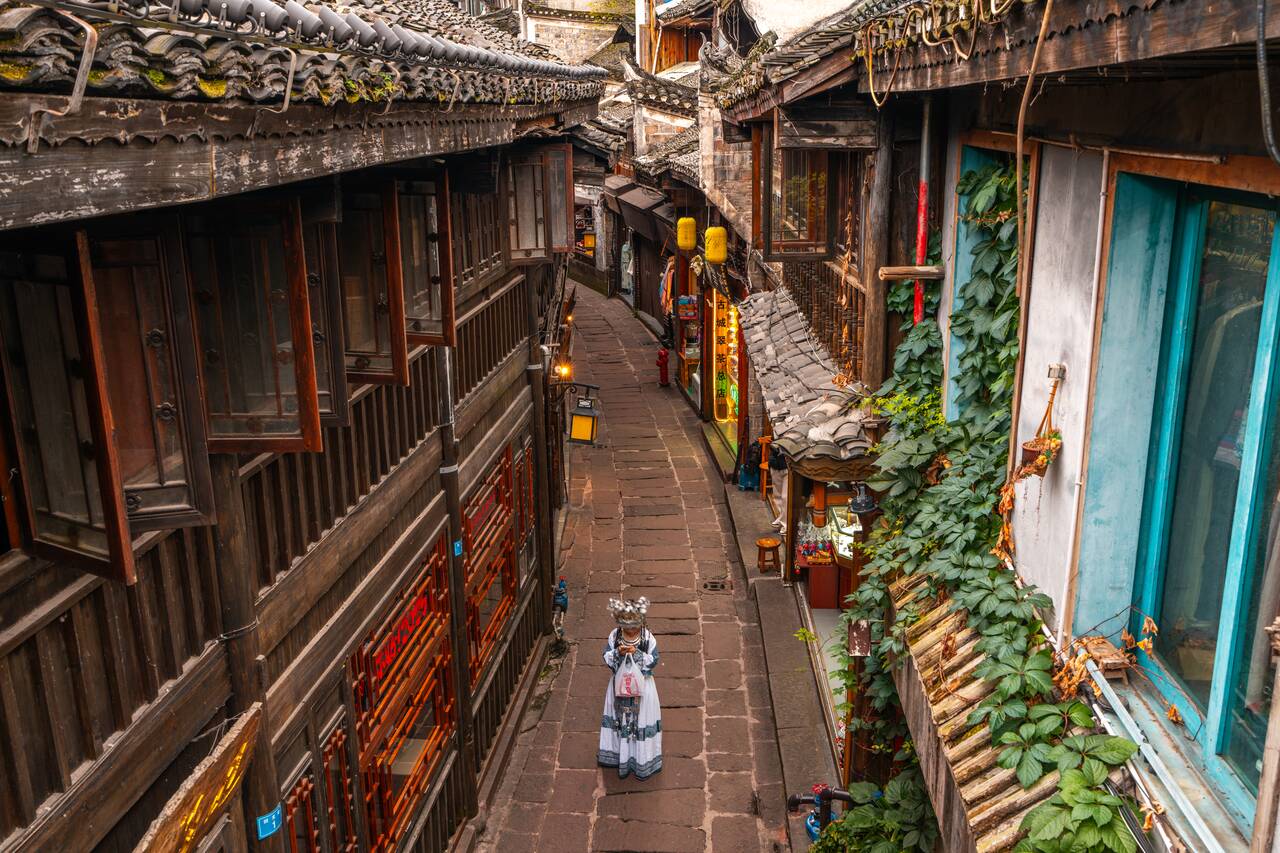
There are countless hidden corners and photogenic spots waiting to be discovered here, so be sure to explore the streets thoroughly. You never know what hidden gems you might find around the next corner!
2. Watch the Town Light Up from Nanhua Bridge at Night
- 📍 Location: Nanhua Bridge [Map Link]
- 🕐 Opening Hours: 6:30 PM
- ⚡ Pete's Take: "I recommend being at Nanhua Bridge by 6:30 PM to see the lights turn on."
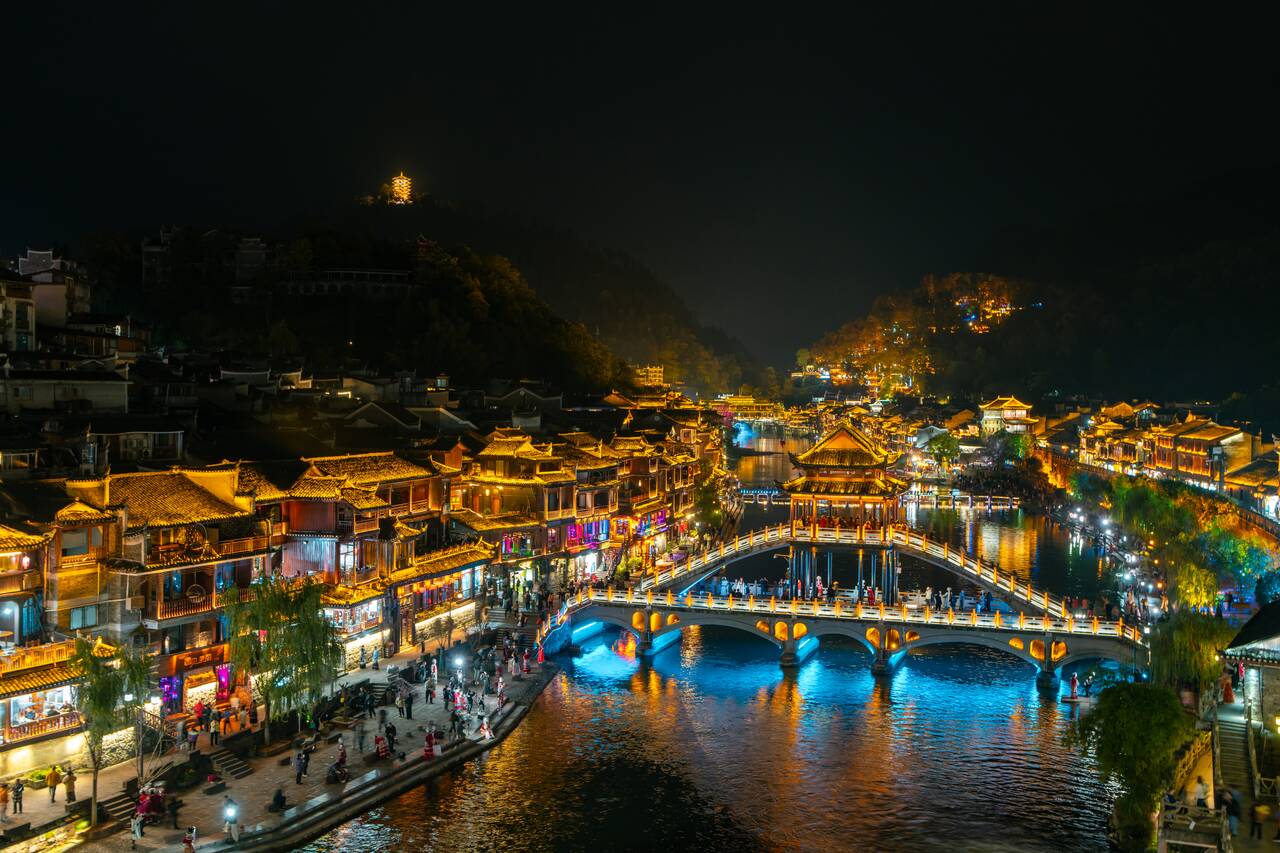
One of the main reasons I highly recommend staying overnight in Fenghuang Ancient Town is to experience the town’s true beauty, which comes alive after dark. As the sun sets, the town transforms into a fairy-tale scene reminiscent of Studio Ghibli animations.
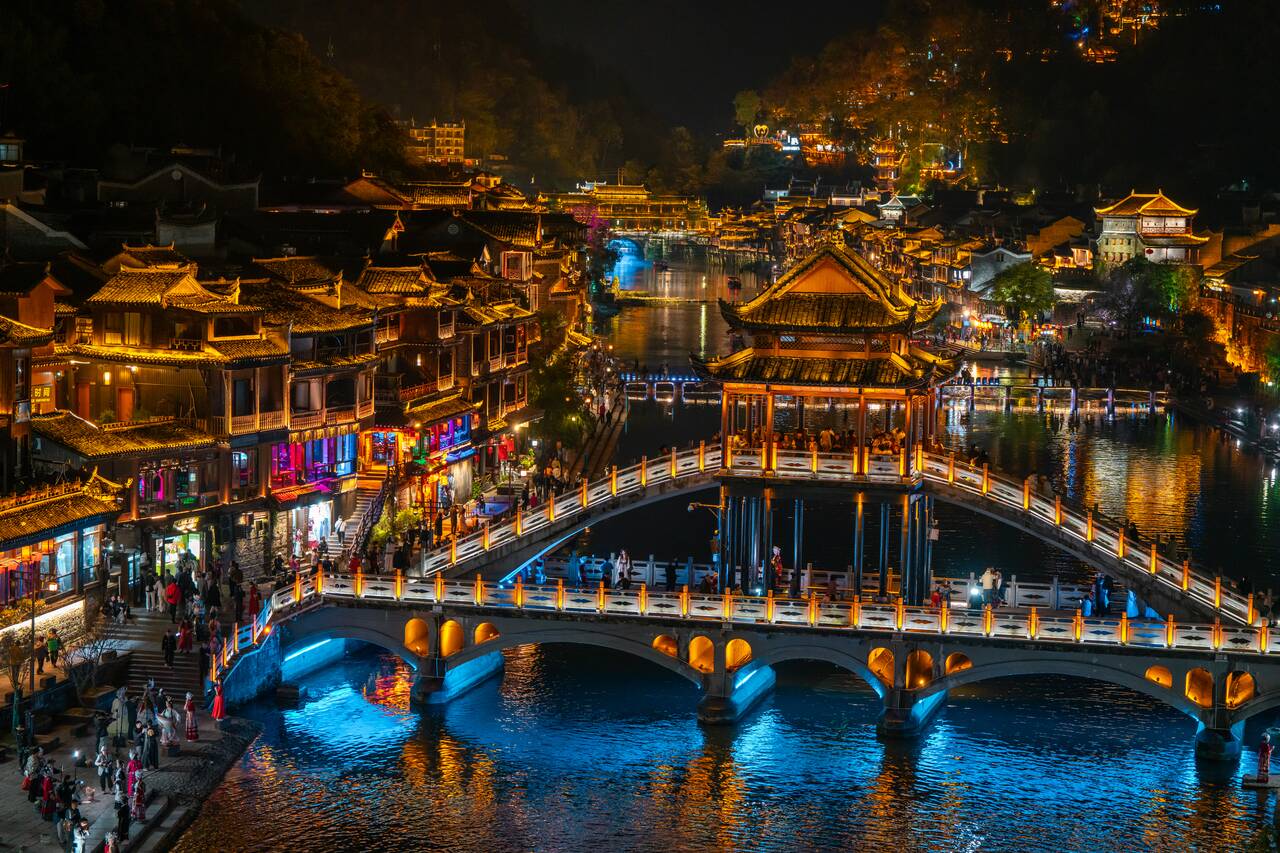
Lanterns and lights reflect on the river, wooden houses glow softly, and the atmosphere becomes truly magical and alive, with people, some dressed in traditional clothes, coming out in droves to enjoy the lively and beautiful atmosphere.

When I visited, the lights were turned on around 6:30 PM, and I found the best view was Nanhua Bridge, overlooking the entire town. People start gathering here and throughout the town to watch the lights come on, so be sure to be ready when it happens.
3. Check Out All the Wonderful Ancient Bridges
- 📍 Location: Snow Bridge [Map Link]
- ⚡ Pete's Take: "Visit Snow Bridge for great views and to see it light up at night."
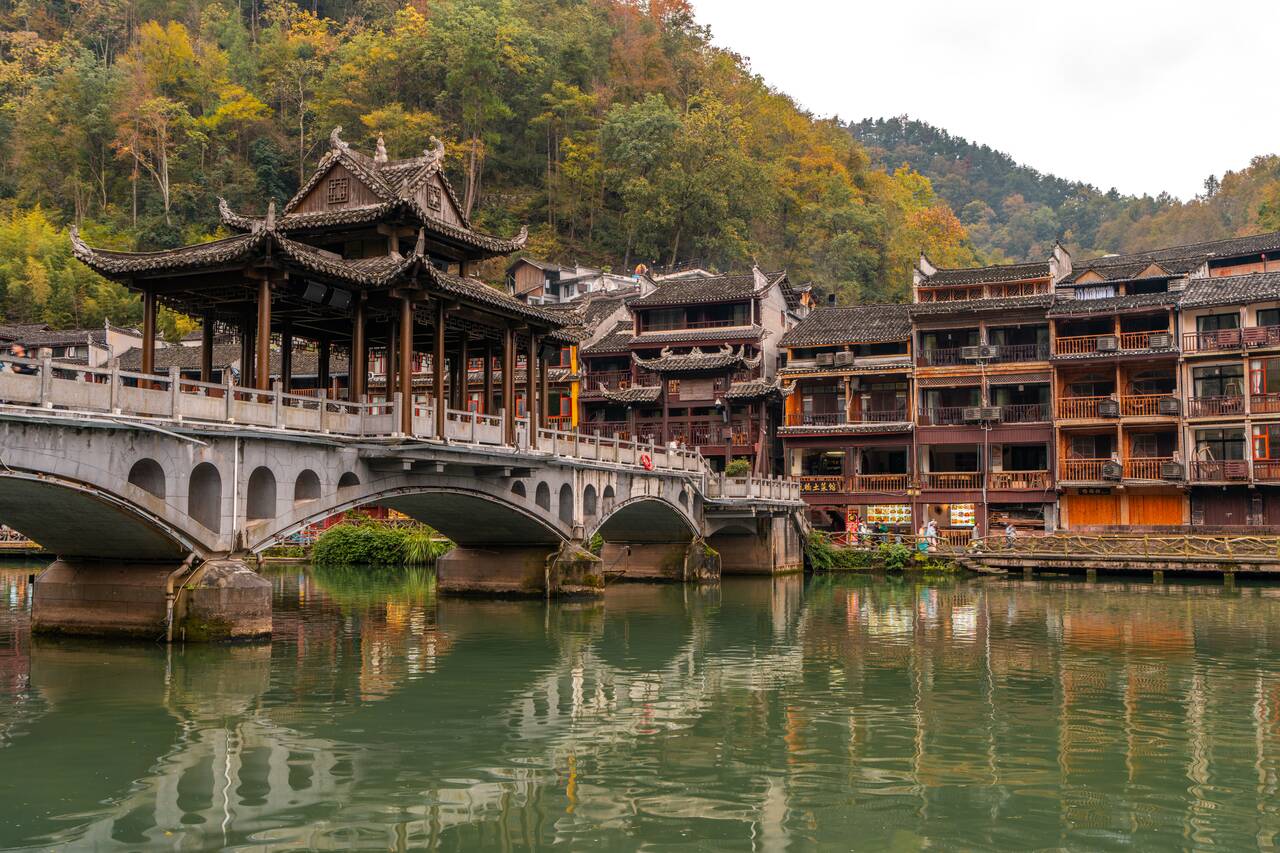
The ancient bridges of Fenghuang are much more than simple crossings; they are a living history that has connected both sides of the river for centuries, with many of them being hundreds of years old. The architecture on these bridges is exceptional and definitely worth seeing in and of itself.
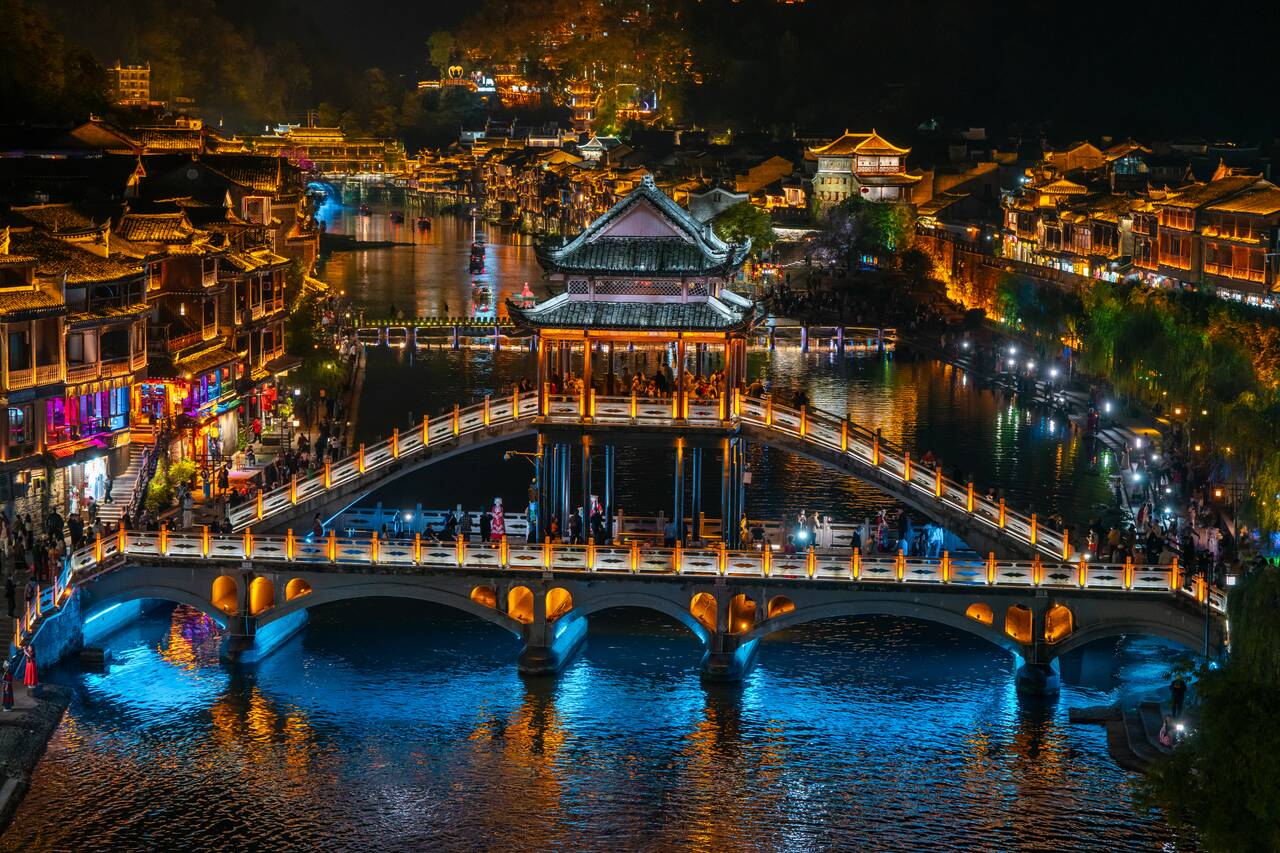
One of my favorite bridges here is Snow Bridge, which is located right next to Nanhua Bridge. It is one of the most recognizable landmarks here with its beautiful arch design and the 2-level pavilion that you can also climb for a great viewpoint over the river. This is also a good place to watch the town light up if you do not want to climb up Nanhua Bridge.
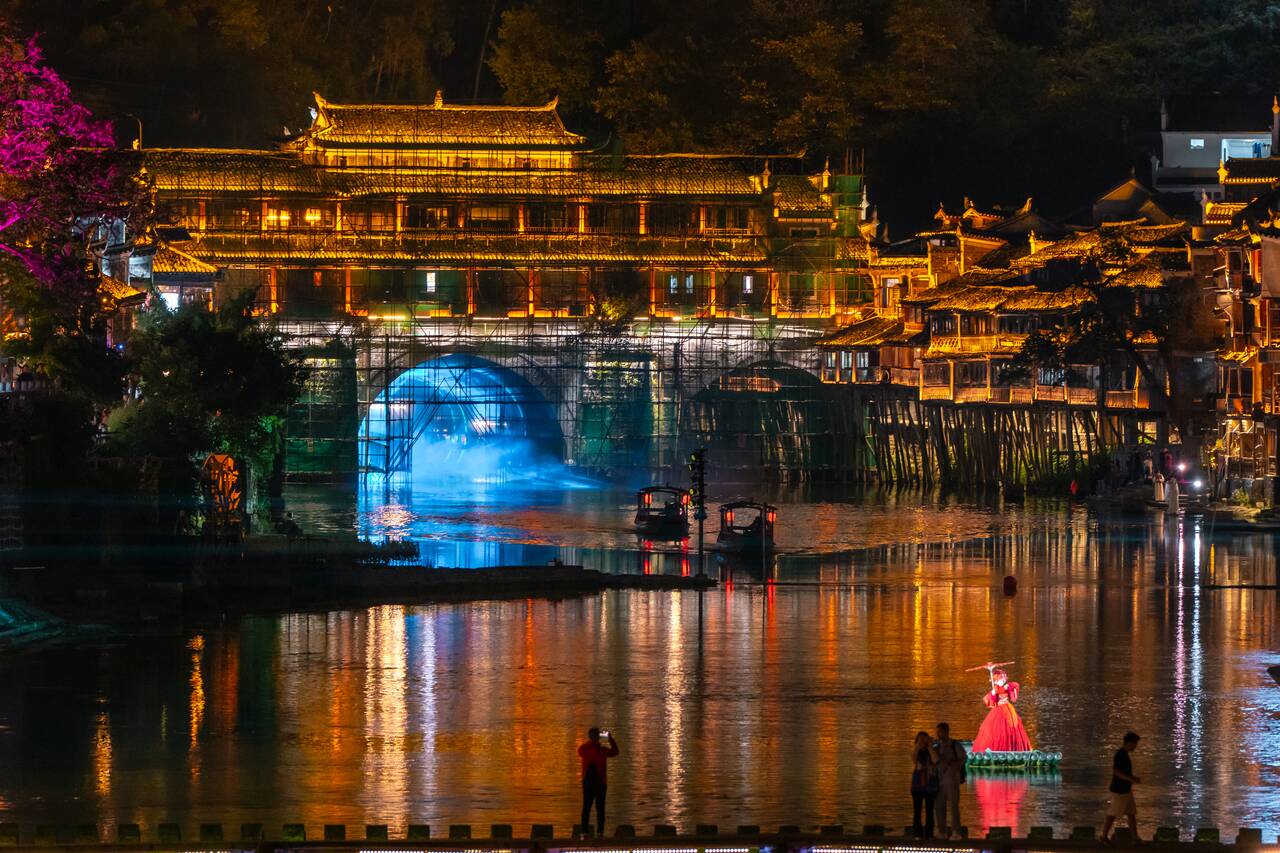
Another bridge I really like is Rainbow Bridge, which is likely the first bridge you will cross as it serves as a gateway between the newer part of the city and the old town. When I visited, the bridge was under renovation, but I was still able to walk across it and enjoy views of the lively shops and streets inside the old town.
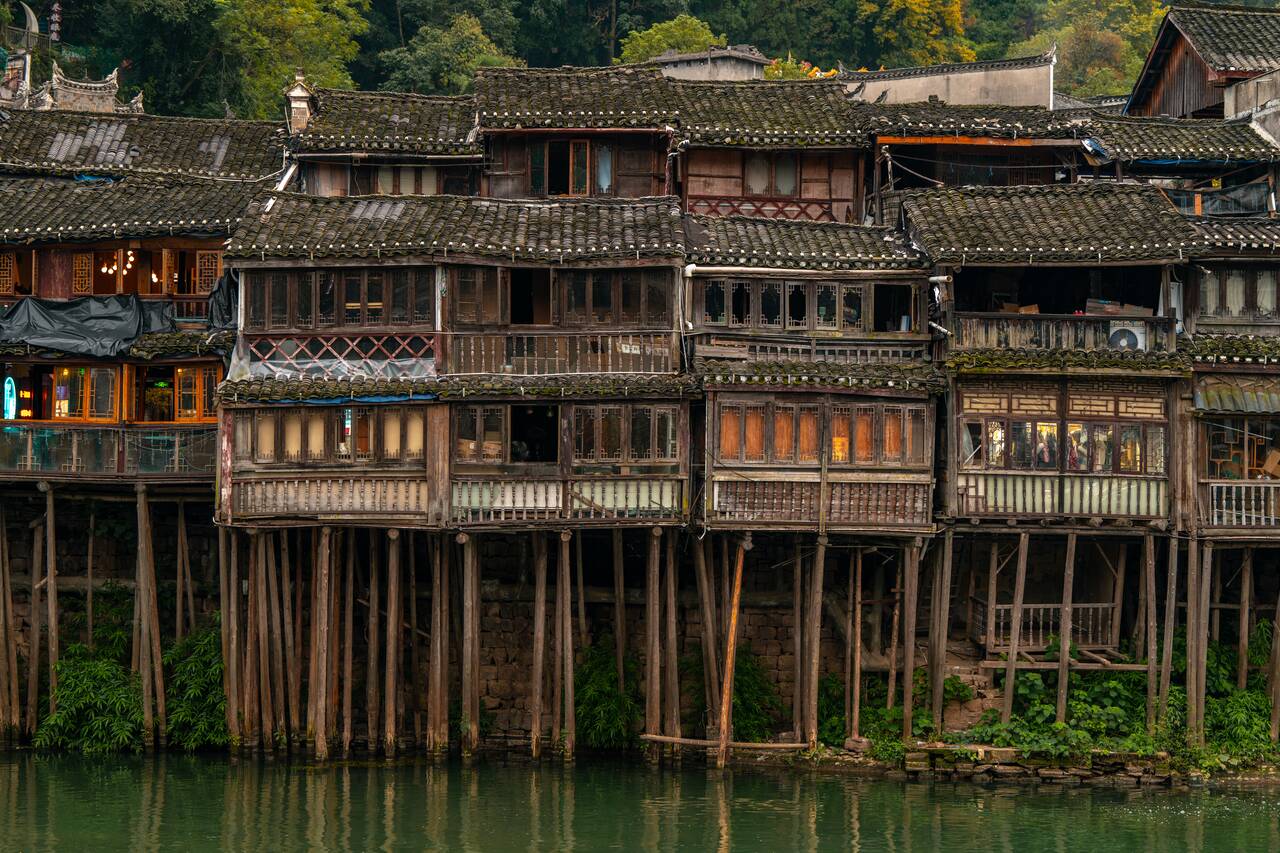
You will also find a series of beautiful old wooden stilt houses concentrated in this part of town, so be sure to explore them as well. The bridge was built in 1368 AD, and it is particularly stunning at night when the lights illuminate the stone structure, so be sure to come check it out after sundown.
4. Cross the River via Tuojiang Stepping Stone
- 📍 Location: Tuojiang Stepping Stone [Map Link]
- ⚡ Pete's Take: "You'll want to be careful crossing since it can get crowded with people jumping from stone to stone."
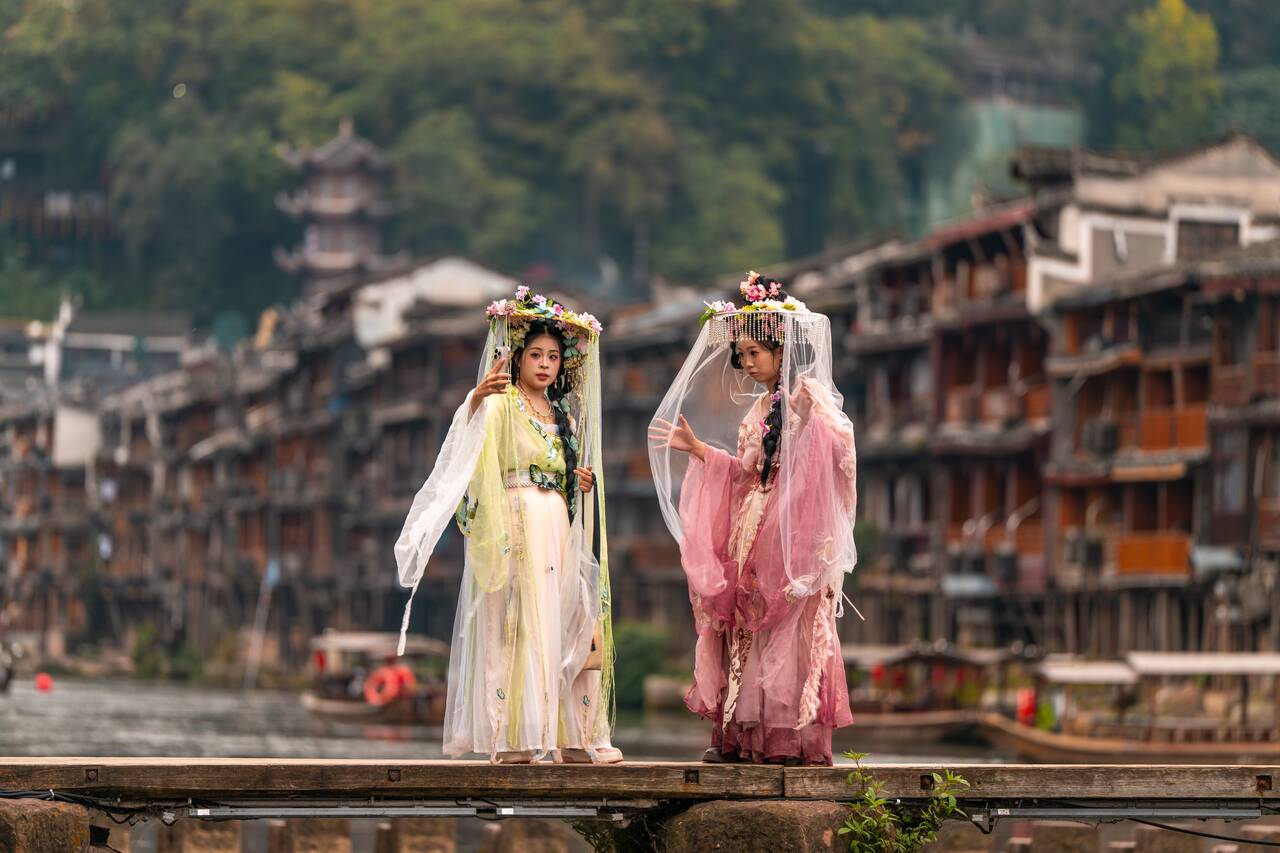
Not far from Snow Bridge, you will find the Tuojiang Stepping Stone, a unique crossing that connects the two sides of the river with two rows of independent square stone piers. True to its name, crossing the river requires stepping from one stone to the next, with the crystal-clear Tuojiang River flowing beneath your feet, making it both fun and scenic.
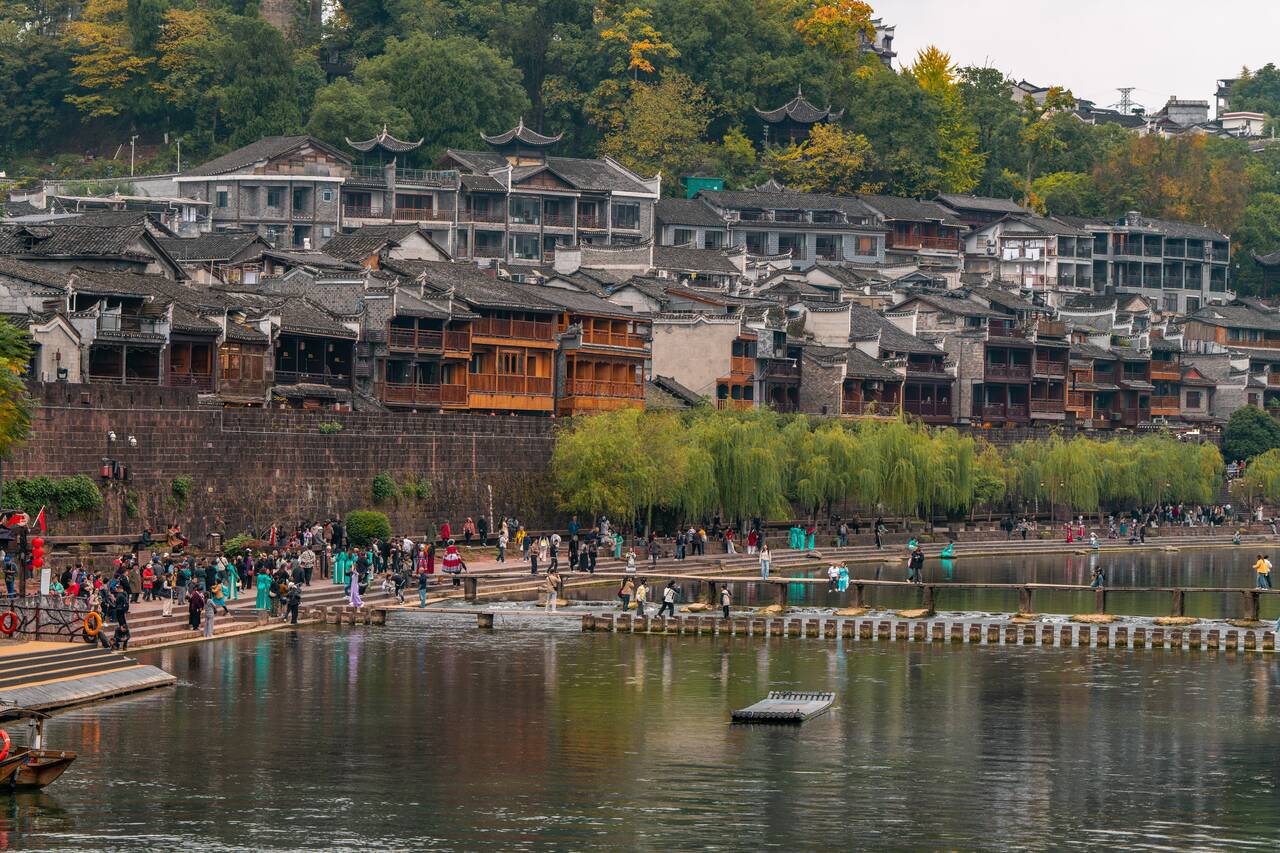
Historically, or at least in its more modern form, the Tuojiang Stepping Stone has been one of the ways people traditionally crossed the river before modern bridges were built. Today, it has become one of the most photographed spots in the town, with people posing as they jump from one stone to the next.

With the wooden stilt houses as a backdrop, it’s easy to see why this is such a popular photo spot. If you’re looking for something fun and exciting, why not try crossing the river the traditional way while you’re here? Just be mindful of others, as many people will be doing the same at the same time.
5. Walk the City's Ancient Wall
- 📍 Location: East Gate Tower [Map Link]
- 💰 Entry Fees: 5 CNY (~0.7 USD)
- ⚡ Pete's Take: "You’ll find the views from the old walls are especially enchanting in the evening."
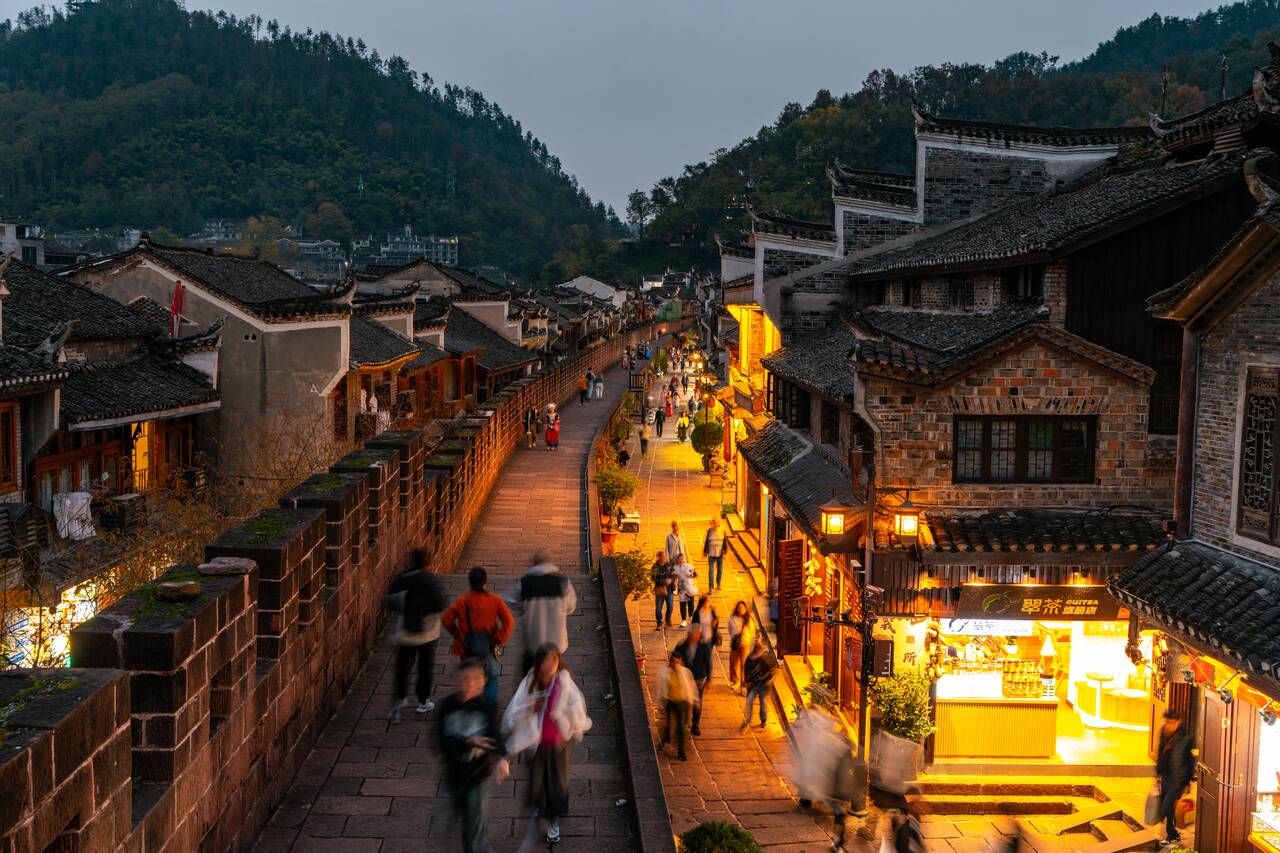
Another fascinating feature of Fenghuang Ancient Town you should check out is its old fortifications. The town once had four gate towers connected by walls that ran along the river, which marked the town’s borders and helped protect it from invasion.
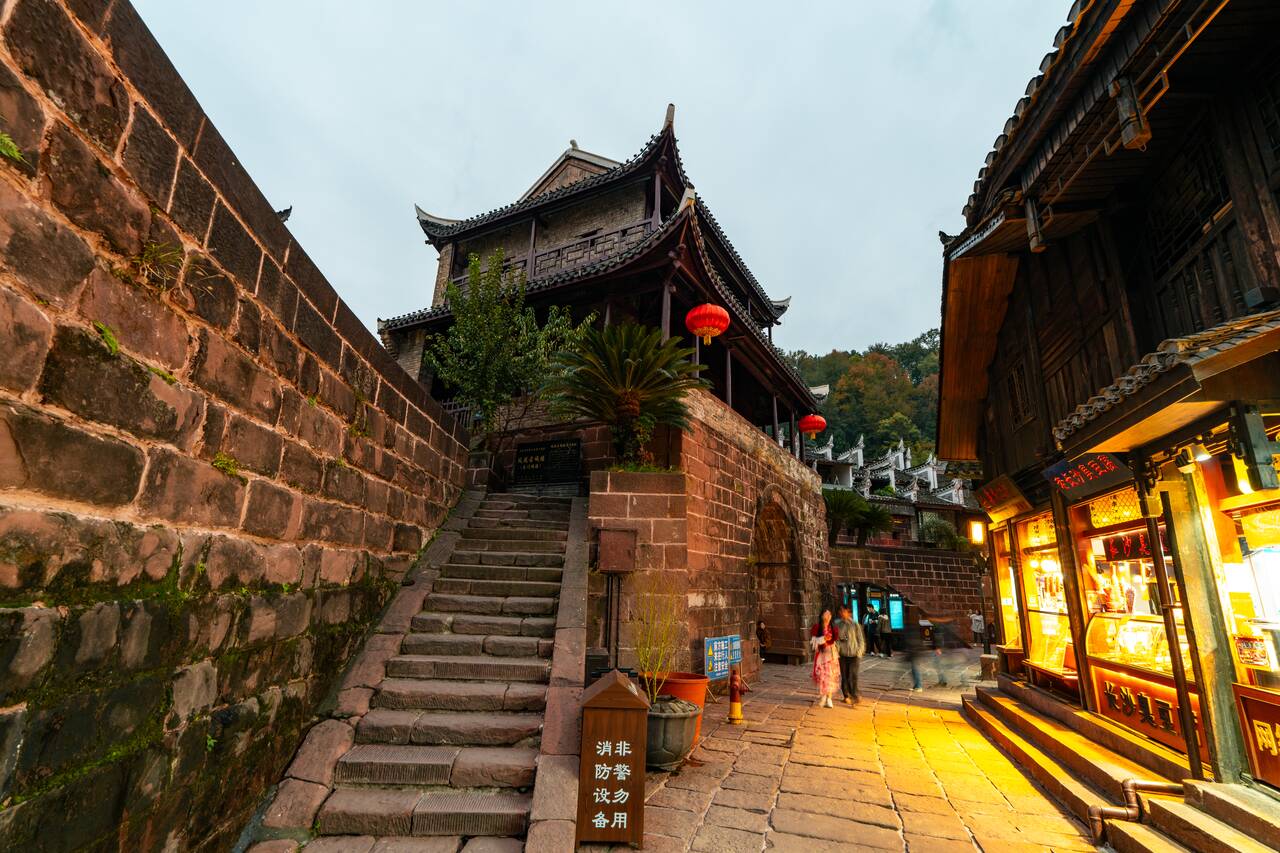
Today, only the east, north, and west gate towers remain, and you’ll find only parts of the old wall remain as there is no continuous intact ring of walls surrounding the town you can walk around. Many of the remaining parts of the walls are located along the south bank of the river, so you can start from there.
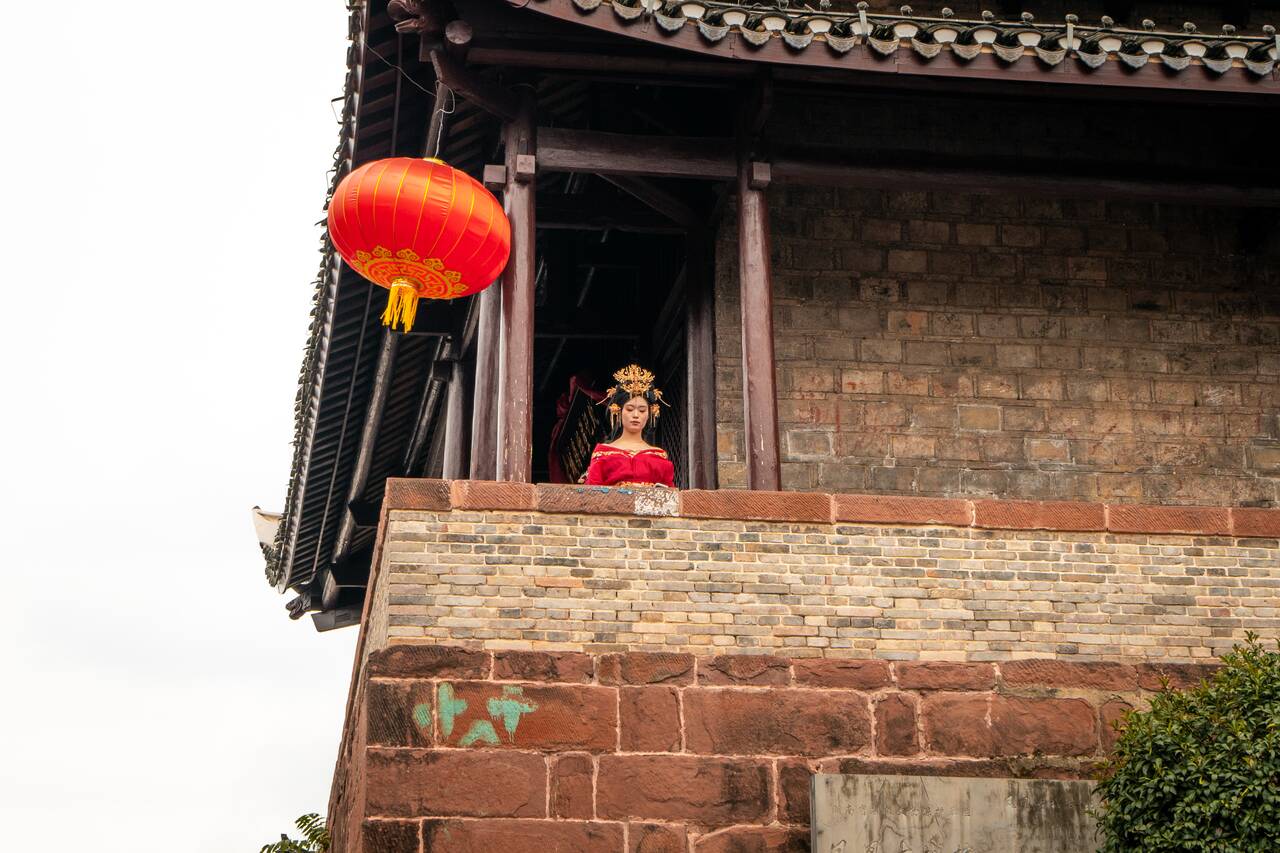
You can start your visit from the East Gate Tower, the oldest and most popular of the three remaining gates. From there, you can climb the tower and access the old walls. Once on the walls, you can enjoy views of the cobblestone streets below, which are especially enchanting in the evening. Entry to the tower itself costs 5 CNY, but walking along the walls does not require a fee.
6. Boat Along the Tuojiang River
- 📍 Location: North Gate Wharf [Map Link]
- 🕐 Opening Hours: 8 AM - 11 PM
- 💰 Entry Fees: 76 CNY (~11 USD) - 138 CNY
Another excellent way to explore Fenghuang Town is by taking a boat ride along the Tuojiang River, which you can do from the North Gate Wharf or Wanshou Wharf. The river winds through the heart of the town, and you will be floating on a small wooden boat which will provide you with a unique perspective of the ancient town.
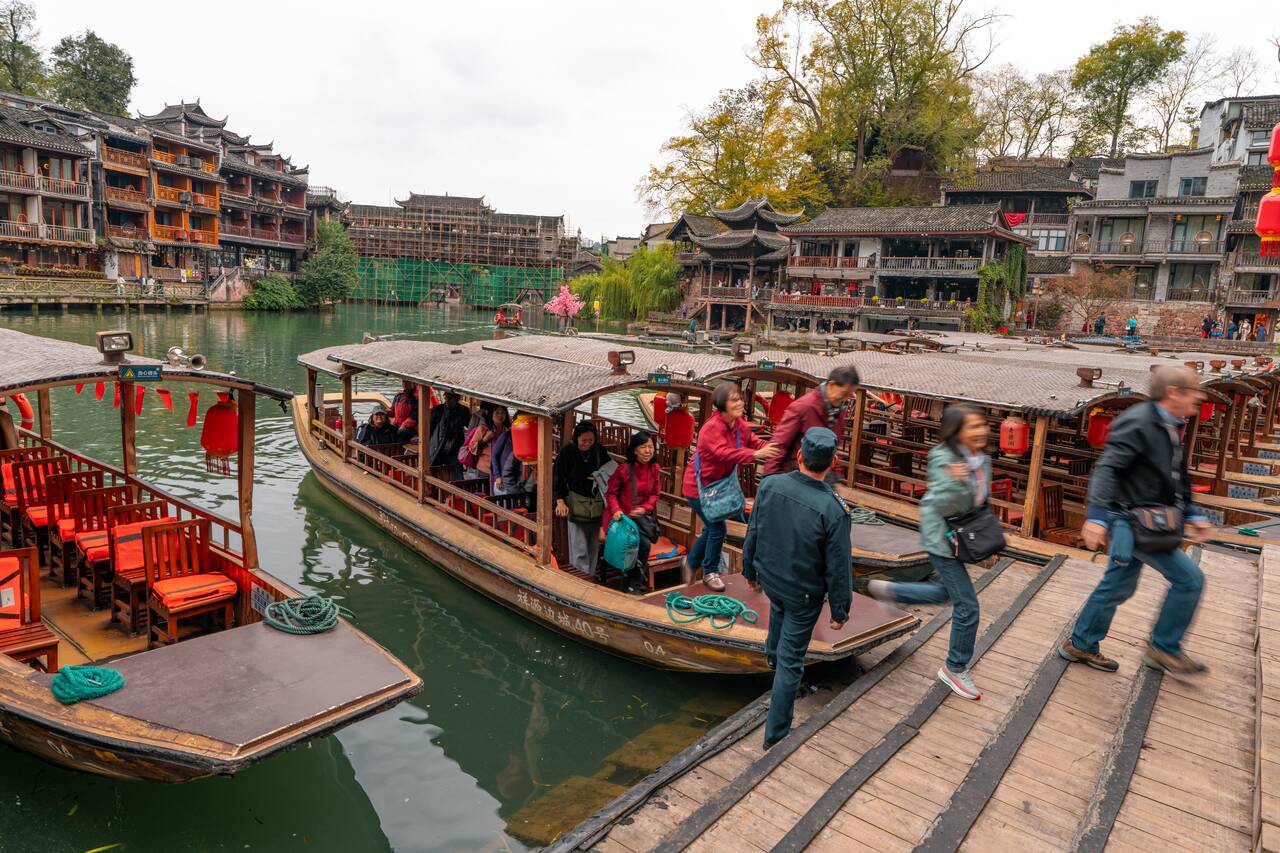
From the water, you can enjoy panoramic views of the old stilt houses, historic bridges, riverside alleys, and the soft glow of lanterns reflecting on the river. I highly recommend taking the boat ride at dusk or at night.
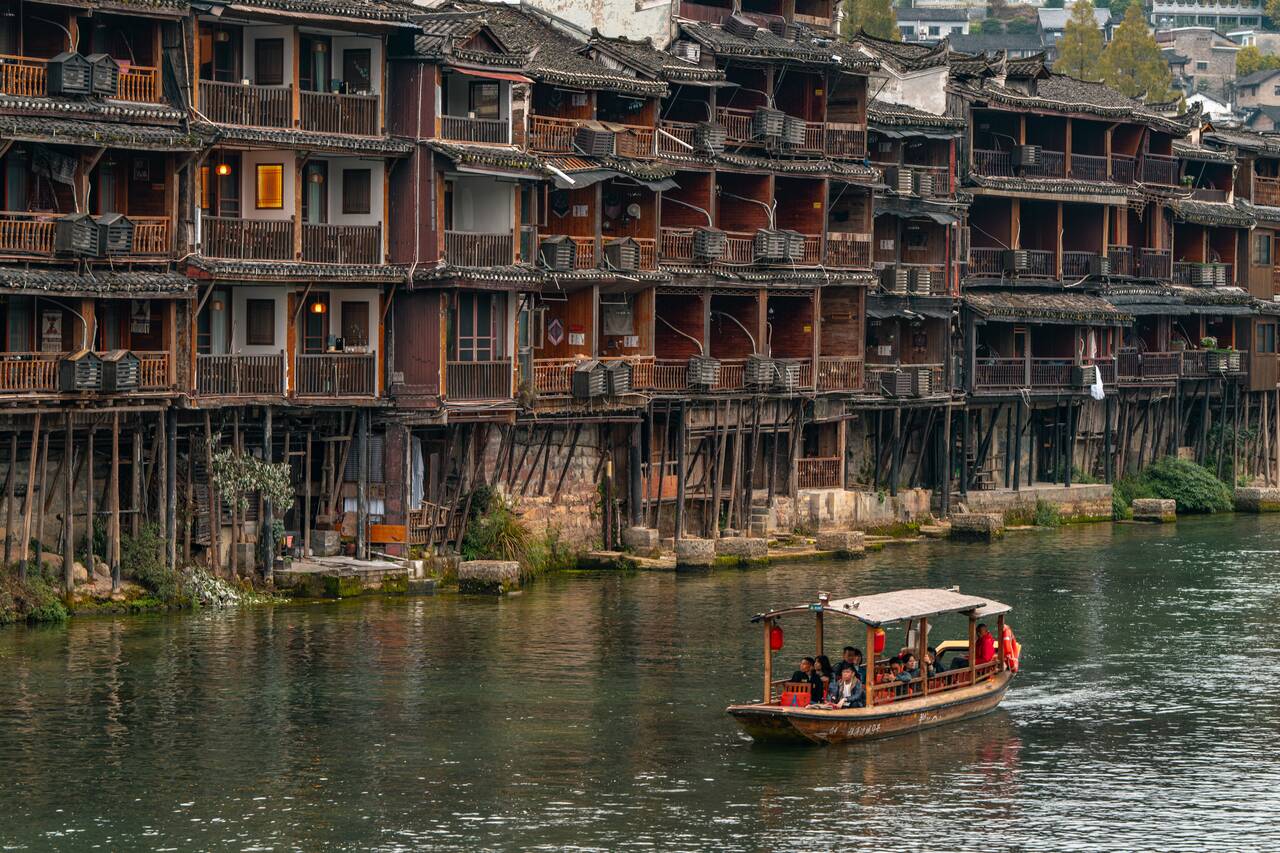
The combination of traditional architecture and shimmering reflections makes the town feel like a painting, providing excellent opportunities for photography.
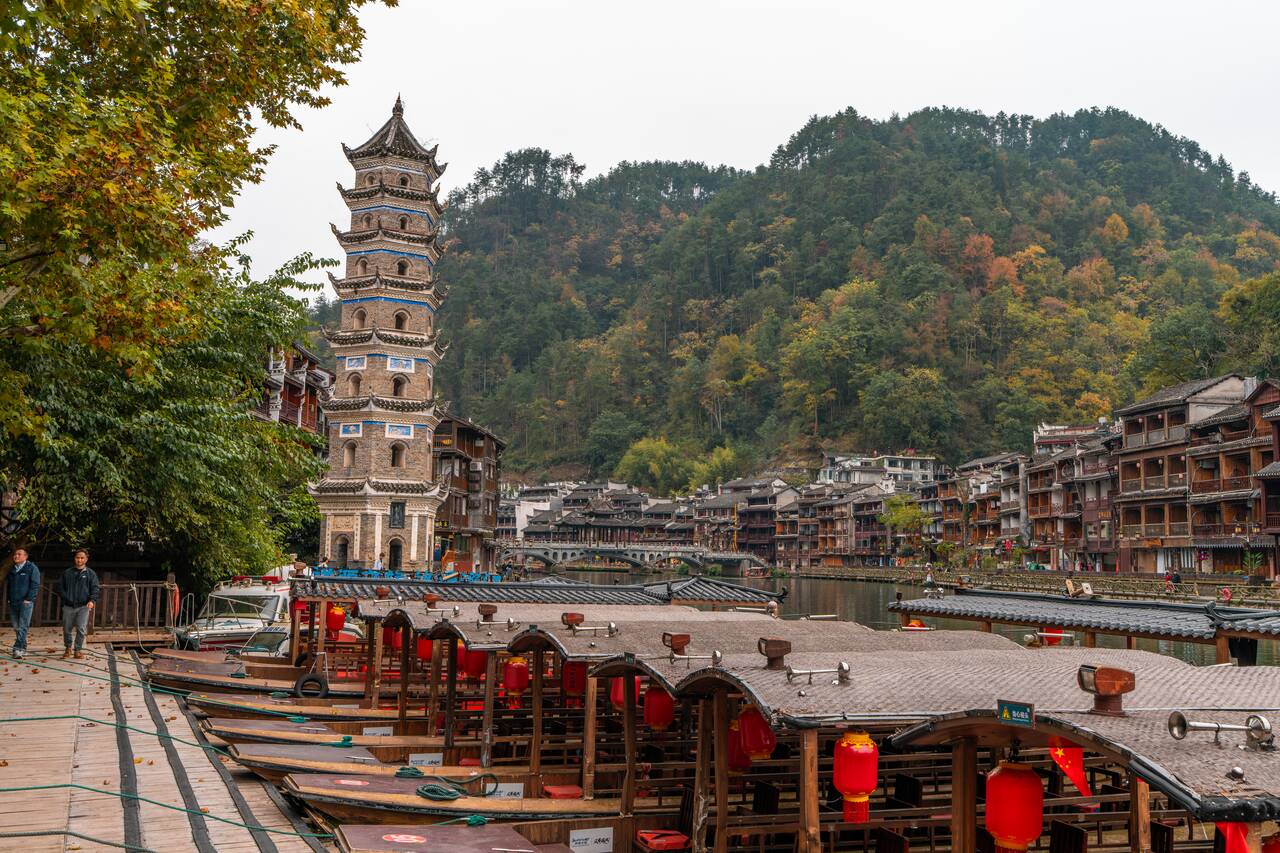
To go boating along the Tuojiang River, you can book your ticket here under "Boat ticket." You can choose a day cruise for 76 CNY or a night cruise for 138 CNY, and board from either the North Gate Wharf or the Wanshou Wharf. The ride takes about 25 minutes. The day cruise runs from 8 AM to 5:50 PM, while the night cruise operates from 6:30 PM to 11 PM.
7. Visit Yangjia Ancestral Temple
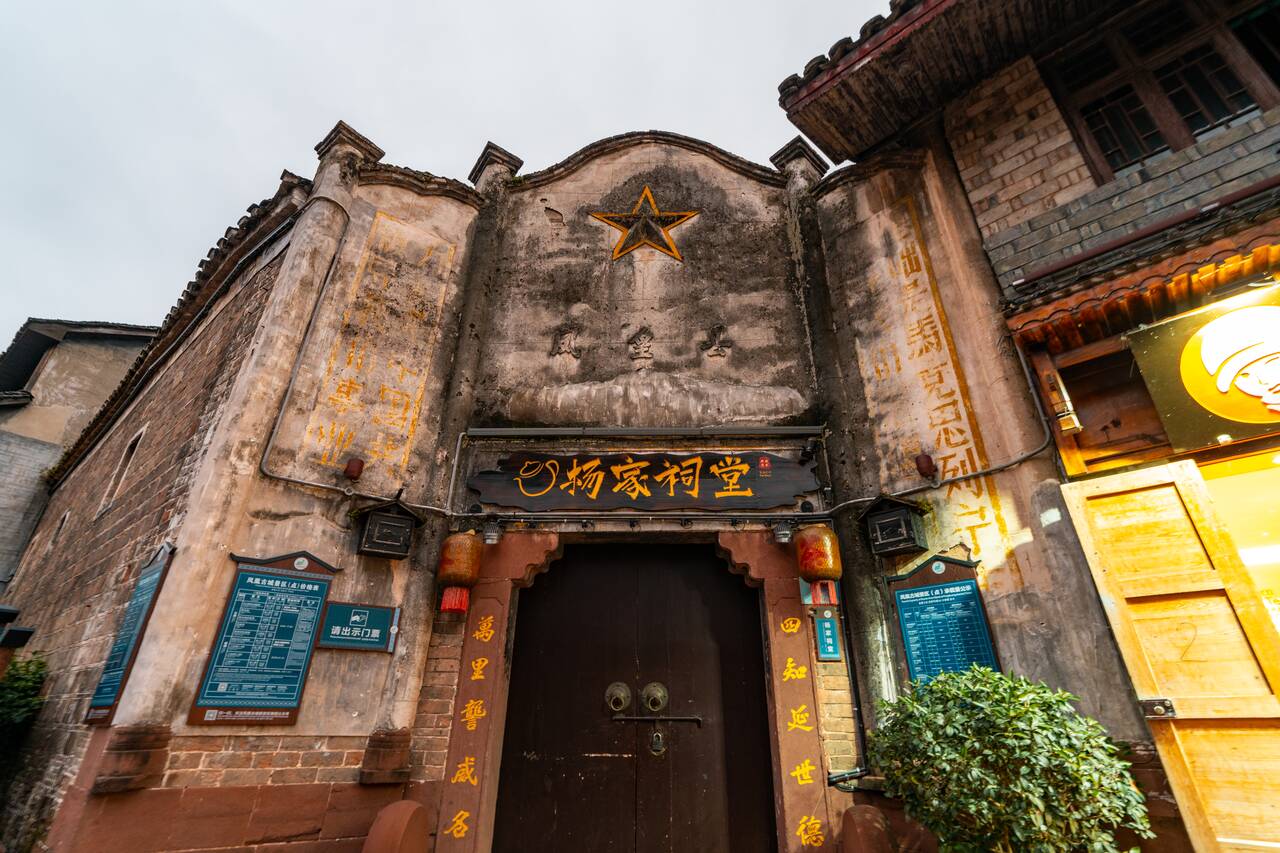
- 📍 Location: Yangjia Ancestral Temple [Map Link]
- 🕐 Opening Hours: 7:30 AM - 6 PM
- 💰 Entry Fees: 5 CNY (~0.7 USD)
While you are exploring the winding streets of Fenghuang, be sure to drop by and check out Yangjia Ancestral Temple, a beautiful traditional temple located between the East Gate and North Gate, on the northeast side of the old town, beside the river.
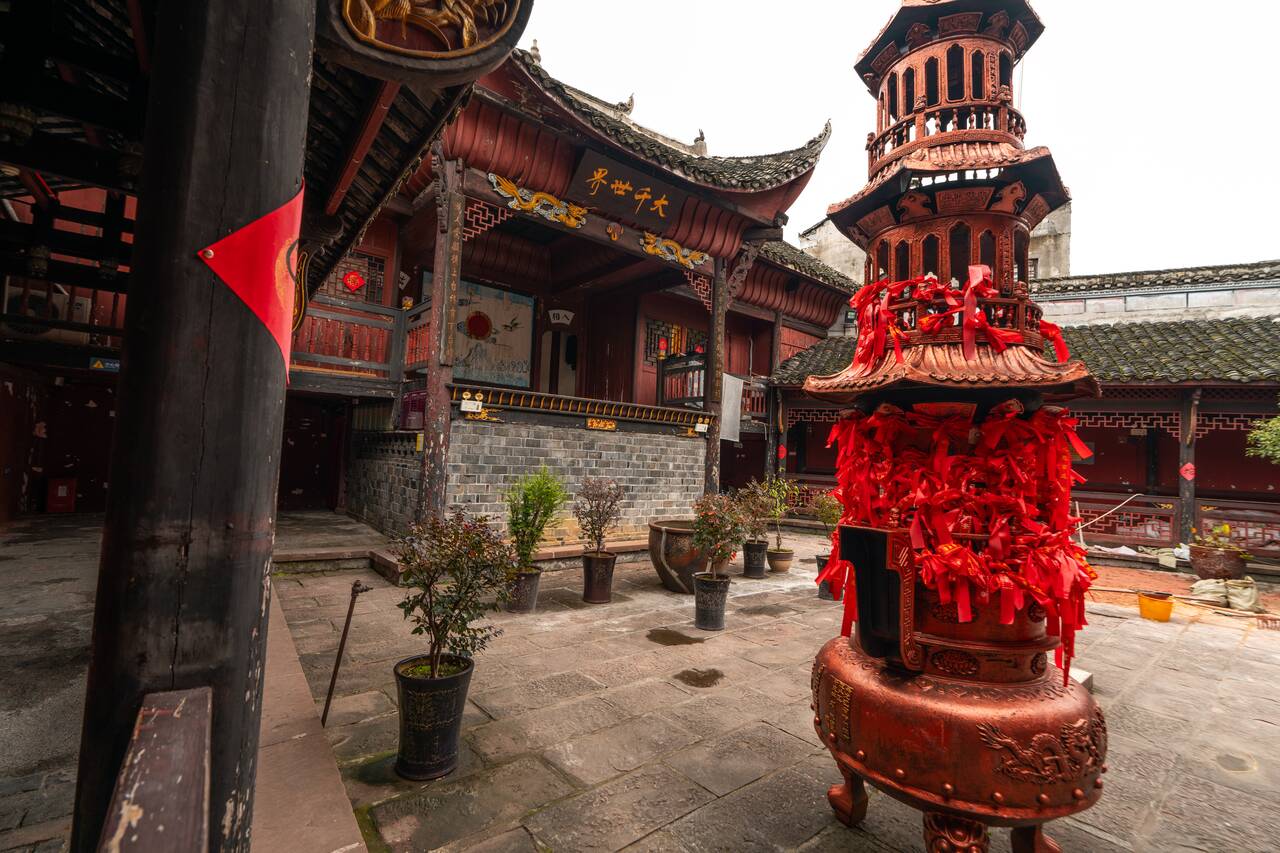
It was originally built in 1836 during the reign of the Daoguang Emperor in the Qing Dynasty by a wealthy local clan, the Yang family. The structure is a fine example of traditional Chinese courtyard-style architecture, featuring distinct local and ethnic elements that you can observe throughout the hall.
Historically, the hall was used by the Yang family to honor ancestors, hold clan ceremonies, and mark important family occasions, and visiting the place should give you a glimpse of what it must have been like to live here back in the day. The place is open from 7:30 AM to 6 PM daily, and the entry fee is 5 CNY per person.
8. Check Out Longevity Palace
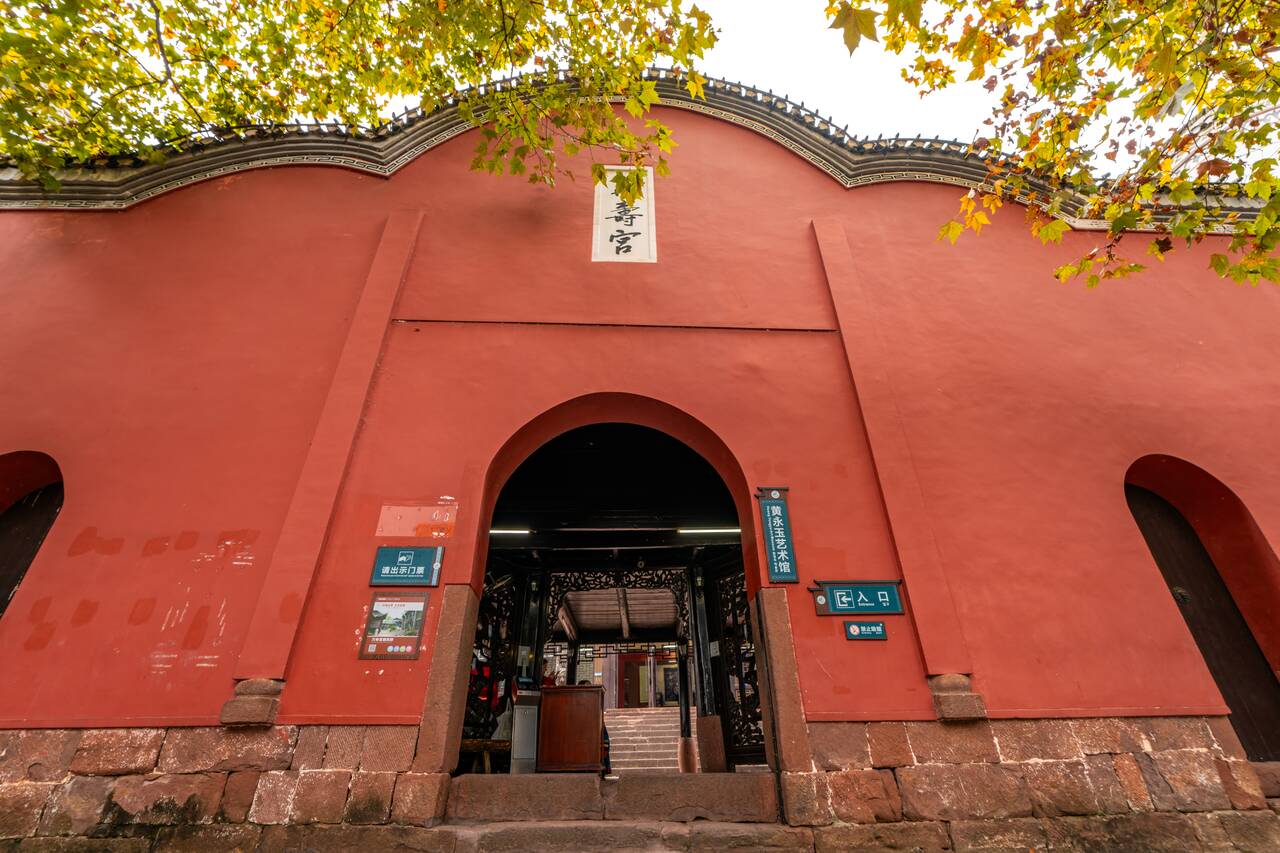
- 📍 Location: Longevity Palace, Shawan Area [Map Link]
- 🕐 Opening Hours: 8 AM - 8 PM
- 💰 Entry Fees: 45 CNY (~7 USD)
Last but not least, be sure to visit the Longevity Palace, located in the Shawan area just outside the East Gate of Fenghuang Ancient Town. The palace faces the river and is backed by hills, and you will immediately notice its iconic red building behind a tall pagoda as you enter the ancient town.
Originally constructed in 1755 during the Qing Dynasty by merchants from Jiangxi province, the building served as a guild hall for traders doing business in Fenghuang. Over the years, it expanded to include additions such as the "Xiachang Pavilion" to the west (added in 1854) and a tower on the north side of the main gate (built in 1928), forming a large and beautifully arranged architectural complex you can explore.
You can walk through the gates and halls, admire the ornate woodwork and historic layout, and get a glimpse of the once-prosperous merchant life along the Tuojiang River. It is a welcome change from the busy riverside streets and wooden stilt houses. The entry ticket costs 45 CNY, which you can buy at the entrance, and the palace is open daily from 8 AM to 8 PM.
Things to Know Before Visiting China
- Always Carry Your Passport: Everything revolves around your passport/ID in China, and it’s often used interchangeably as your main form of identification. Many major tourist attractions require you to show your passport when buying a ticket, and the ticket will then be linked to it. You’ll scan your passport again to enter. The same applies to high-speed trains. It’s best to carry your passport with you at all times while traveling in China.
- Get an eSIM: China’s cashless economy relies on constant internet access, so having a data connection is essential. I highly recommend getting an eSIM or a local SIM card for your trip. An eSIM is often better because the service is usually based in Hong Kong, which bypasses China’s Great Firewall, meaning you can access apps like Instagram and YouTube without a VPN. I suggest checking eSIM options on Klook or Trip.com, as they tend to be the most affordable.
- Use AMap to Navigate: Google Maps doesn’t work well in China, so local apps like AMap are much more informative and accurate for getting around. It even provides metro information, making it easy to navigate city subway systems. I used AMap throughout my entire trip, and it worked perfectly! In this guide, I’ll be linking locations with AMap links instead of Google Maps, so be sure to download it before your trip.
- Use VPN to Bypass the Great Firewall: As you may know, many major websites such as Google, Facebook, Instagram, TikTok, and more are blocked in China. To access them, you’ll need a VPN like LetsVPN installed on both your phone and laptop before you arrive in China. This is crucial as once you're in the country, you won’t be able to search for or download VPN apps. I used LetsVPN during my trip, and it worked very well throughout. The service is affordable too, with a free tier offering limited data or a basic unlimited plan for just 5.99 USD per month.
- Connect Alipay with Your Credit Card: First, download Alipay from the app store, set up your account, and link it to your credit card. This will be one of the two main ways you’ll pay for services in China. Alipay also has mini-apps built in, such as Didi (China’s version of Uber), so you don’t need to download separate apps, and you can use them directly through Alipay. Very convenient!
- Get a Transport Card Working in Alipay: Once you have Alipay set up, you’ll need to verify your account before you can activate a transport card for metro and bus rides. First, if you’re not currently in the city you want to use, tap the city name in the top-left corner and select the correct city. After that, tap the “Transport” button and request a transport card. You’ll be asked to upload a photo of your passport for verification. Once approved, your transport card will be issued, and you can use the QR code to scan and pay for buses and metro rides.
- Get WeChat Set Up: WeChat is another essential app for communicating with locals, thanks to its built-in translation feature. It’s also widely used for payments as Alipay only works about 70% of the time, while WeChat is commonly needed for paying individuals, buying entry tickets at certain attractions, and more. Setting up WeChat can be a bit tricky though because you need verification from an existing user. The easiest way is to ask your hotel’s reception to help verify your account when you arrive in China, which is how I got mine activated.
- Use Trip.com / Trip App: For hotels, day trips, attraction tickets, train tickets, flights, and everything in between, you can use Trip.com or the Trip app to book all your travel needs. It’s very convenient, offers a great user experience, and has a generous cancellation policy that gives you more flexibility when traveling in China.
When to Visit Fenghuang Ancient Town?
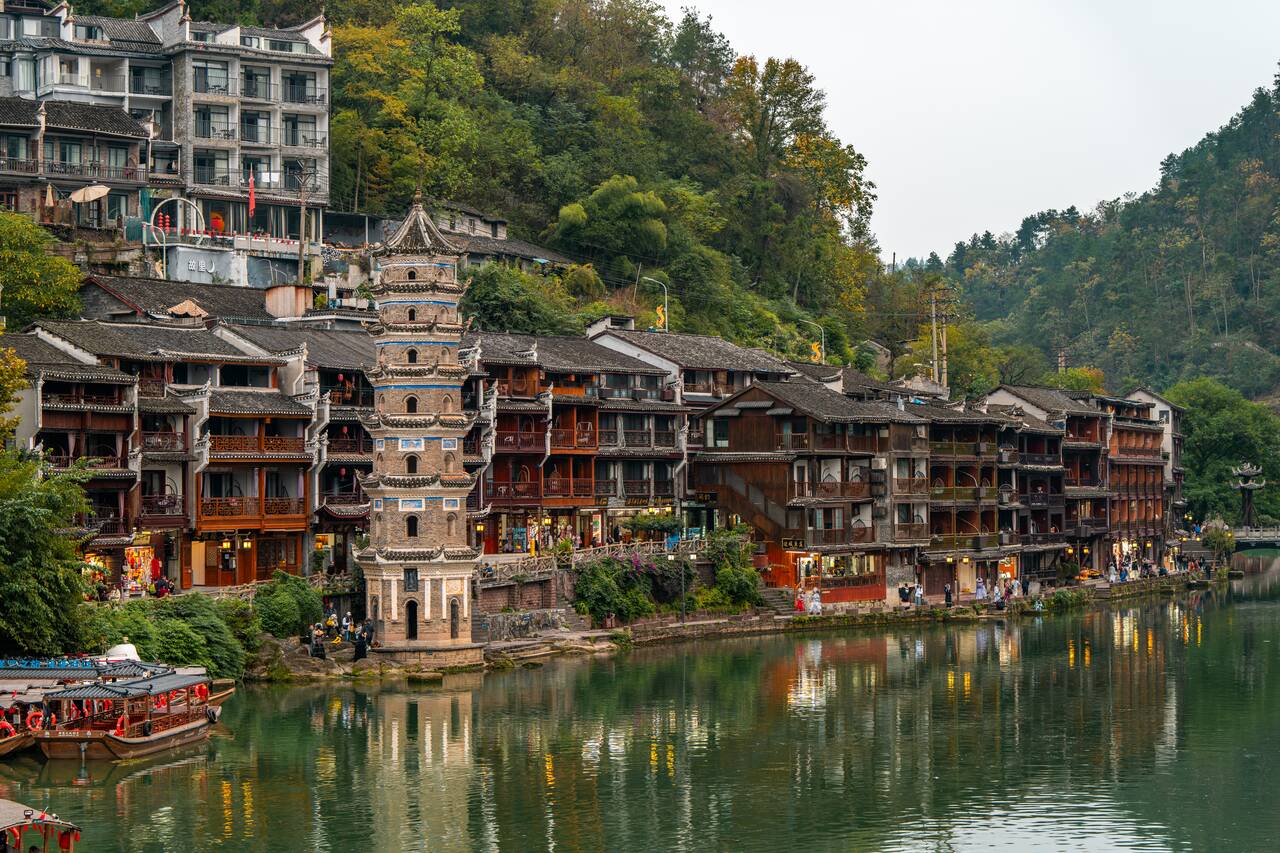
Fenghuang enjoys four distinct seasons and can be visited year-round, but many travelers find spring (March–May) the ideal time to go. The weather is mild and pleasant, typically around 15–25 °C (59–77 °F), and early-morning mist often floats over the Tuojiang River, creating quite a setting for a boat ride.
Autumn (September–November) is often considered the most comfortable and scenic season. The summer heat and rains have subsided, leaving moderate temperatures and clear skies. Mild days and cool nights make walking through the ancient lanes, exploring stilt houses, or boating along the river especially pleasant. Autumn’s soft, golden light also provides a perfect backdrop for a lovely stroll or photography.
If you visit in summer (June–August), you will experience lush greenery, vibrant local life, and the possibility of festivals or cultural performances. However, summer is also the busy tourist season. The weather tends to be hot and humid, and afternoon rain showers are common, which may affect outdoor plans.
Visiting in winter (December–February) offers a very different experience. The town is quieter and far less crowded. On rare occasions, snow may dust the streets and rooftops, giving the town a peaceful, almost magical vibe. If you prefer a peaceful, slow-paced trip and do not mind colder weather, winter can be worthwhile.
I visited in early November, and even though it was overcast much of the time, the temperature was very comfortable for walking around. Whether it was cloudy or clear, the town looked stunning at night, with lights and lanterns illuminating the streets nonetheless. I had an amazing time exploring Fenghuang.
How to Get to Fenghuang Ancient Town?
The town is served by China's high-speed rail network via Fenghuang Ancient Town Station, and you should be able to get here from most major cities like Zhangjiajie City, Chengdu, Chongqing, and more.
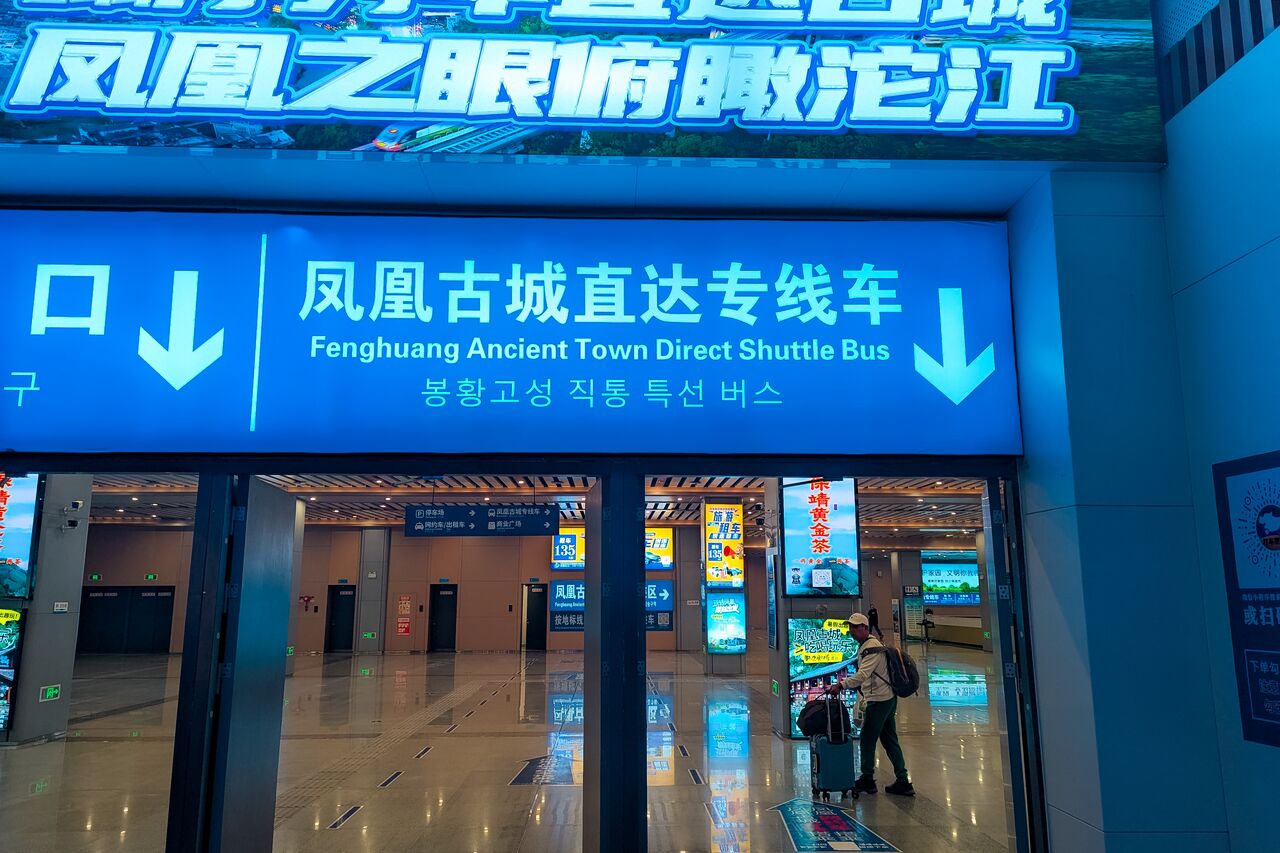
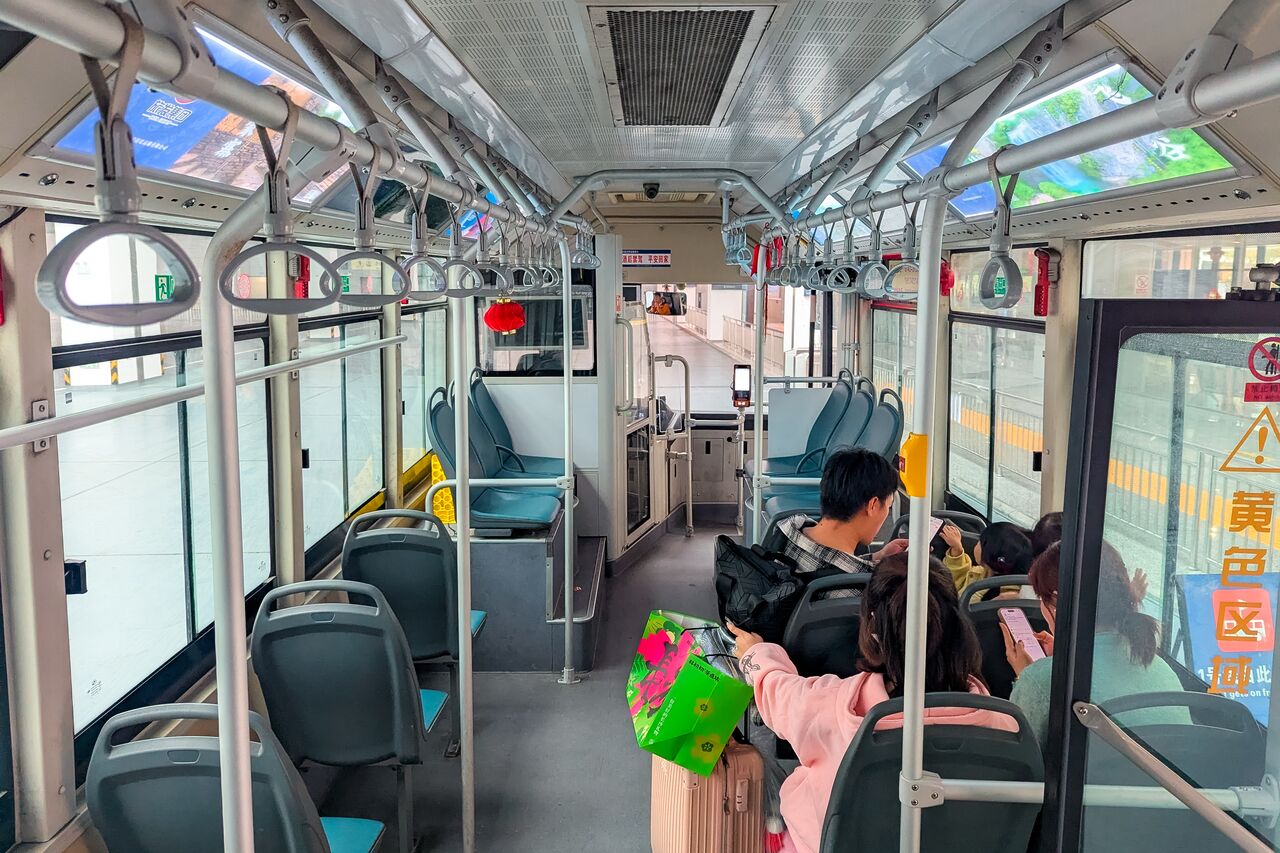
Once you arrive at the railway station, there are a couple of convenient ways to reach Fenghuang Ancient Town. A taxi (Didi) from the station to the town takes about 17–20 minutes and costs around 20–25 CNY. If you prefer public transport, you can take a shuttle bus, sometimes called a “special line,” from the station.
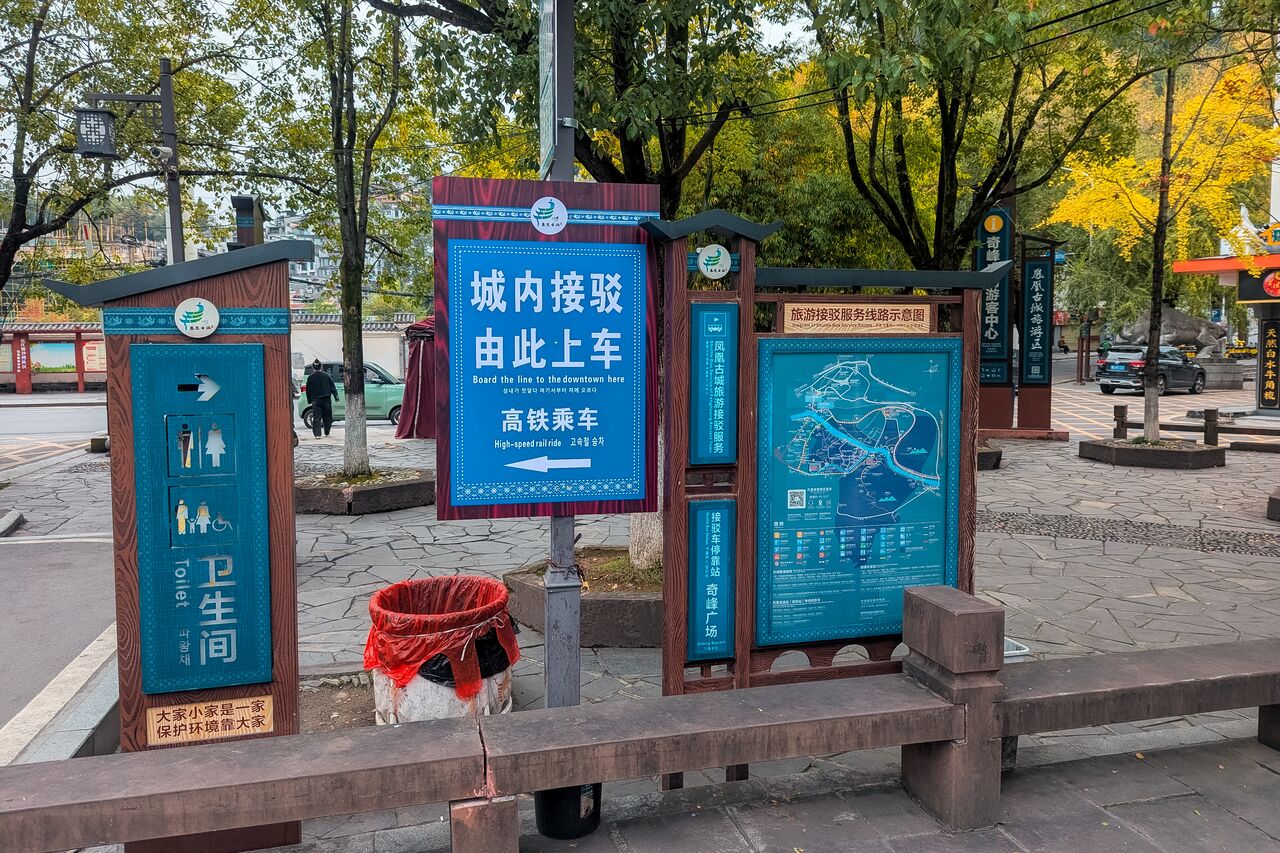
There should be a clear sign as soon as you exit the terminal directing you to the shuttle bus area. You can buy a ticket from the kiosk inside the railway station, then proceed straight to the bus stop and board the shuttle. The ride costs about 7 CNY per person and drops you off at Qifeng Square, from where you can walk to the ancient town.
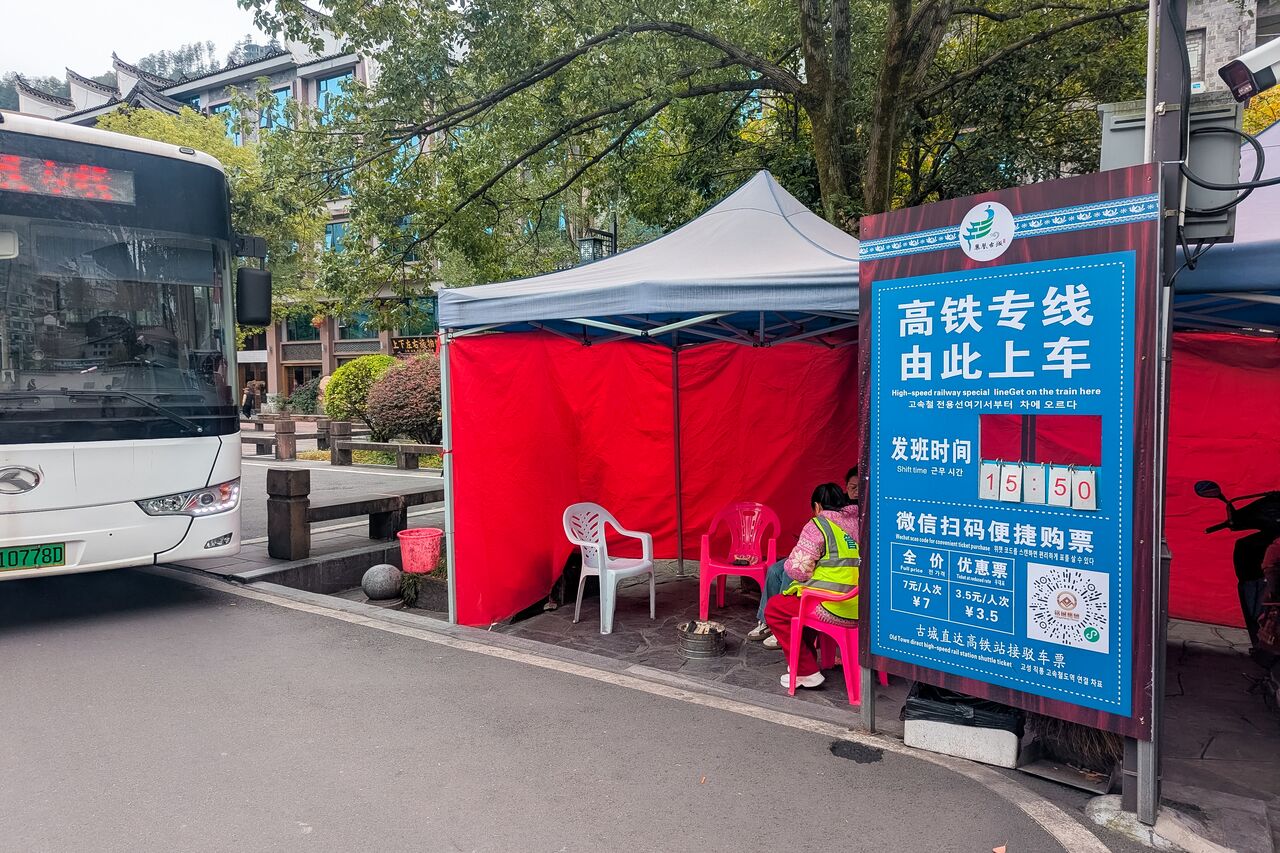
To return, head back to the square and check the schedule for the next shuttle, which is usually posted at the bus stop.
How to Get Around Fenghuang Ancient Town?
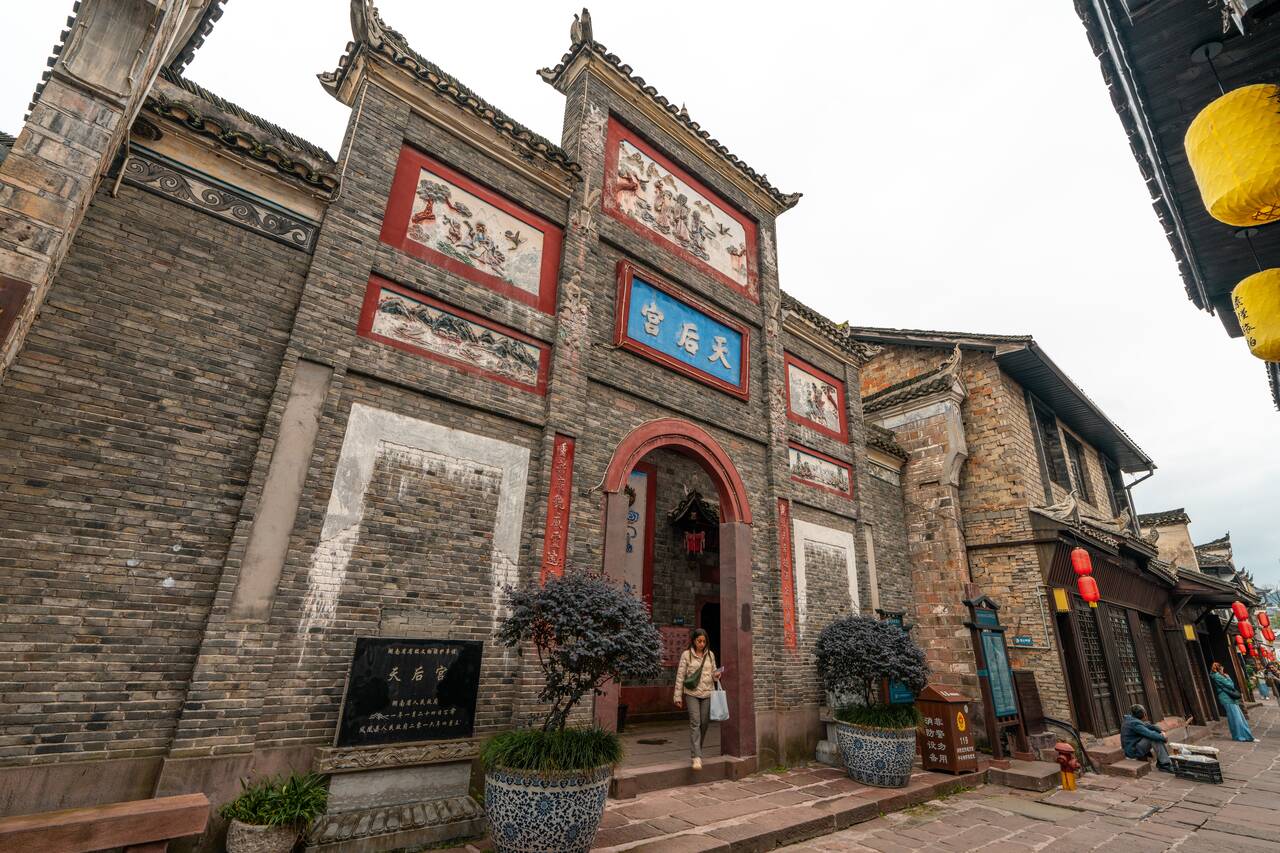
By Walking: Because the old town area of Fenghuang is compact, with narrow alleys, historic cobblestone streets, and riverside paths, the easiest, and often the best, way to explore is on foot. There will be a lot of walking here, so be sure to wear comfortable walking shoes.
By Boat: Another great way to see Fenghuang from a different perspective is via boat on the Tuojiang River. You can admire the beautiful stilt houses, old wooden houses, bridges, and the riverside skyline from the river, which is especially lovely in the late afternoon or at night when lanterns and lights reflect on the water. You should be able to catch the boat from here.
How Many Days to Spend at Fenghuang Ancient Town?
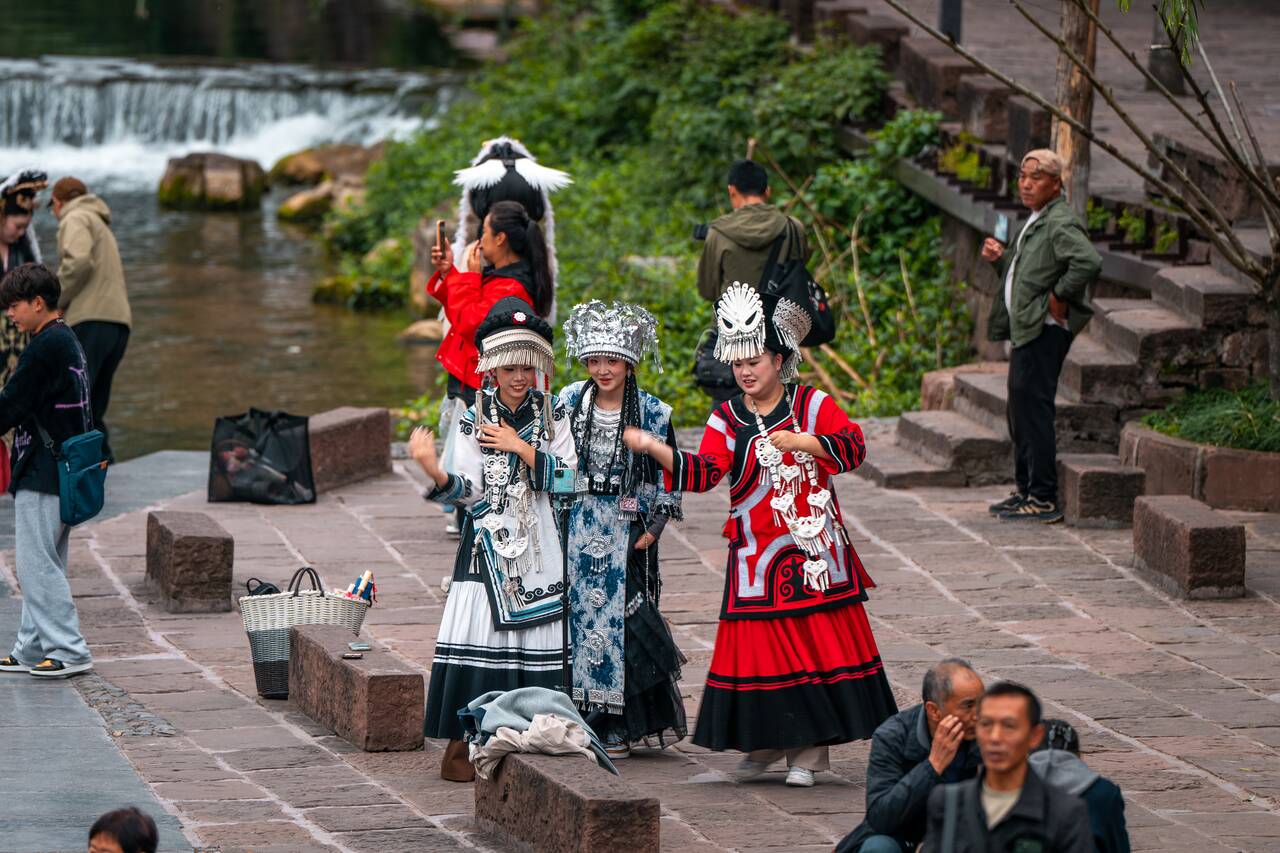
I recommend staying at least one night in Fenghuang so you can enjoy the beautiful lights and lanterns that the town is famous for while having enough time to explore its main attractions. If you have more time, consider spending two nights here to take things at a slower pace and explore the rest of the town at your own leisure.
Disclaimer: This post may contain affiliate links. See our disclosure policy.
First Published:
Last updated: