



Want to visit Guilin in China but not sure where to begin? You’re in the right place! I spent over a week exploring Guilin’s breathtaking viewpoints, incredible attractions, and charming ancient towns along the Li and Yu Rivers, and if I were to do it all over again, this is exactly how I’d plan it.
In this guide, I’ve put together the perfect 5-day itinerary for Guilin that covers the very best the region has to offer, from stunning mountain viewpoints to ancient towns like Xingping and Yangshuo, as well as the highlights of Guilin City and its top day trips. So, without further ado, here’s the complete 5-day itinerary for Guilin, packed with everything you need to plan the perfect trip to one of the most beautiful places in China.

5-Day Guilin Itinerary Map
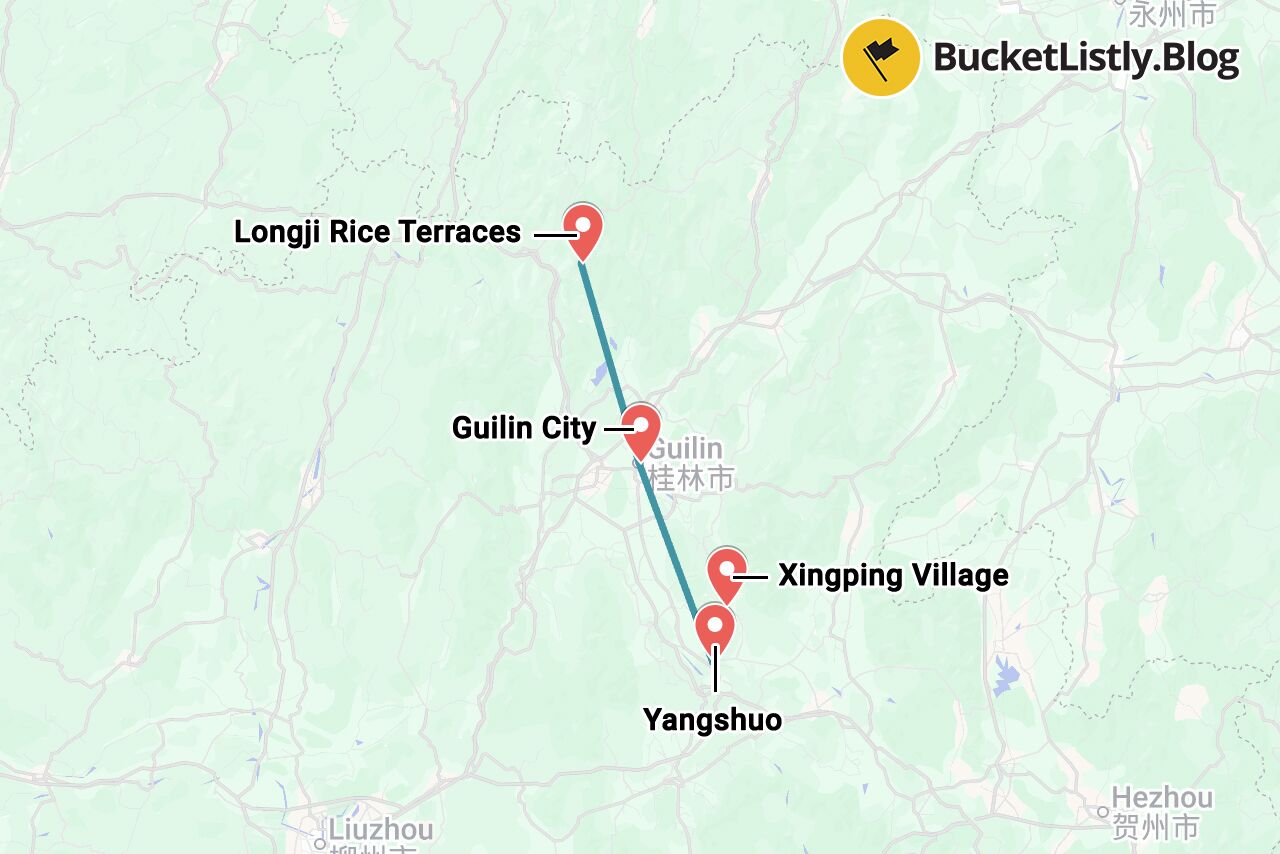
Quick Summary
| ☀️ Day 1: | Guilin City |
|---|---|
| ☀️ Day 2: | Longji Rice Terraces |
| ☀️ Day 3-4: | Yangshuo & Ruyi Peak |
| ☀️ Day 5: | Xingping Ancient Village |
5 Days Itinerary for Guilin
Day 1: Guilin City (3 Nights)

- 📍 Stay: GangShe Rooftop View Hotel l (Guilin Two Rivers And Four Lakes Elephant Trunk Hill)
- 🕐 Time: 3 Nights
- 📖 Full Guide: Visiting Guilin: A Complete Travel Guide
This itinerary begins in Guilin City, which is well-connected by China’s high-speed rail network. High-speed trains run from major cities like Guangzhou, Shenzhen, Chengdu, and Shanghai, with travel times ranging from a few hours to overnight depending on your departure point.

The main high-speed rail hub is Guilin North (Guilinbei) Station, and once you arrive, you can take public bus #22 from the station, it costs 2 CNY and takes about an hour to reach the city center, or simply hail a Didi directly to your hotel.

Once you arrive and settle into your hotel, you can spend the afternoon exploring Seven Star Park, the largest park in Guilin City, full of hidden hiking trails, unique-looking rock formations, and a beautiful cave to explore. It is the perfect place to escape the crowds for a bit in Guilin City. You can get here via Didi taxi.
- Longji Rice Terraces Day Trip
- Yangshuo Xiangong Mountain Day Trip [Sunrise/Scenic View Tour Available] 🏅 Top Pick
- Li River Cruise

Some of the highlights in the park include the Seven Star Cave, known for its impressive stalactites and stalagmites, Camel Hill, a karst formation shaped like a camel, and my favorite of all, Star Pavilion, a beautiful pavilion located on top of the highest karst mountain in the park.

The moment you enter the park, you'll see a tall karst mountain with a pavilion at the top. This is Star Pavilion. You can hike up the staircases to reach the top for an incredible view of the surrounding area. I highly recommend hiking up here, as the view provides a fantastic glimpse of what's to come during your trip. It is absolutely stunning. The whole park should take you about 2 - 3 hours.
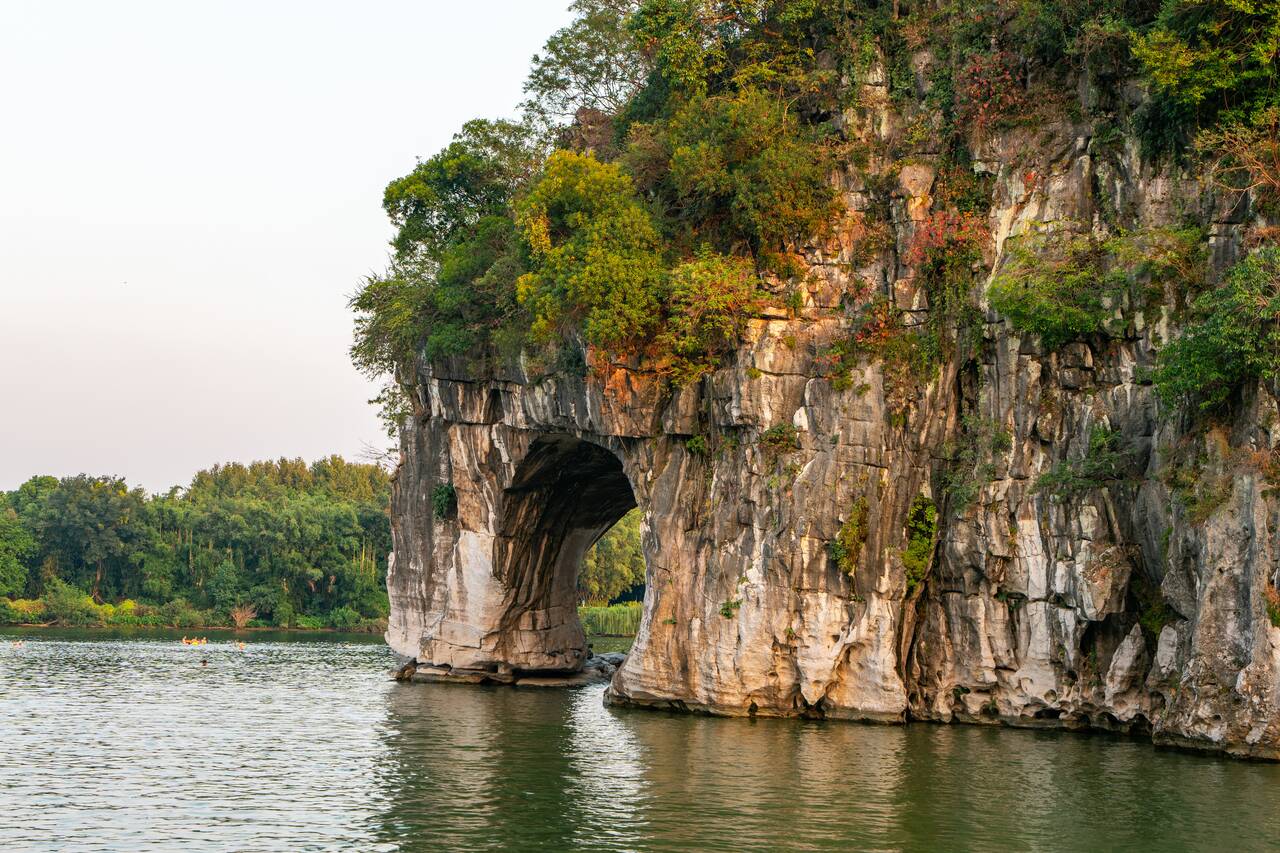
Once you’re done, you can head over to Elephant Trunk Hill, one of Guilin’s most famous landmarks. It’s named after its distinctive shape, which resembles an elephant dipping its trunk into the Li River. The hill itself is relatively small, but during evenings when the river is calm, the natural arch formed between the “trunk” and the hill creates a beautiful reflection on the river, forming a moon-like silhouette, which is pretty cool. The place gets very crowded in the evening, so make sure you prepare yourself mentally before visiting!

After you finish the walk, you can come and check out Sun and Moon Pagodas, also known as the Twin Pagodas, another of Guilin’s most iconic landmarks. Located in the middle of Shanhu (Shan Lake), right in the heart of the city, the pagodas are especially beautiful at night when they are illuminated and reflected on the still lake surface.

To enter the complex, you will have to pay an entry fee of 35 CNY, and you can get the ticket here. If not, you can also just go for a stroll around the lake along the elevated pathway and watch the pagodas light up at sunset. You should be here just in time for the golden hour!

After a mini adventure we had on our first day in Guilin, you can spend the rest of the evening resting and organizing your day trip tomorrow to Longji Rice Terrace, which you can book here. And while you are at it, you might also want to book the Li River Cruise for our third day so that we can take the scenic route to Yangshuo. You can book the cruise here.
Where to Stay in Guilin City?

 👍 Top Pick

Day 2: Longji Rice Terraces (Day Trip)

For the second day, we are going to go on a day trip to visit Longji Rice Terraces, which is another iconic attraction located about 2-3 hours away from Guilin City, with its beautiful rice paddies climbing up the slopes of the karst mountains in intricate layers.

The scenery you’ll see here depends on the season you visit. In spring (April to June), the terraces are filled with water, creating mirror-like reflections. In summer (July to August), the rice is lush and green. In autumn (September to October), the fields turn golden as they approach harvest. In winter, the terraces offer a quiet, snow-dusted landscape.
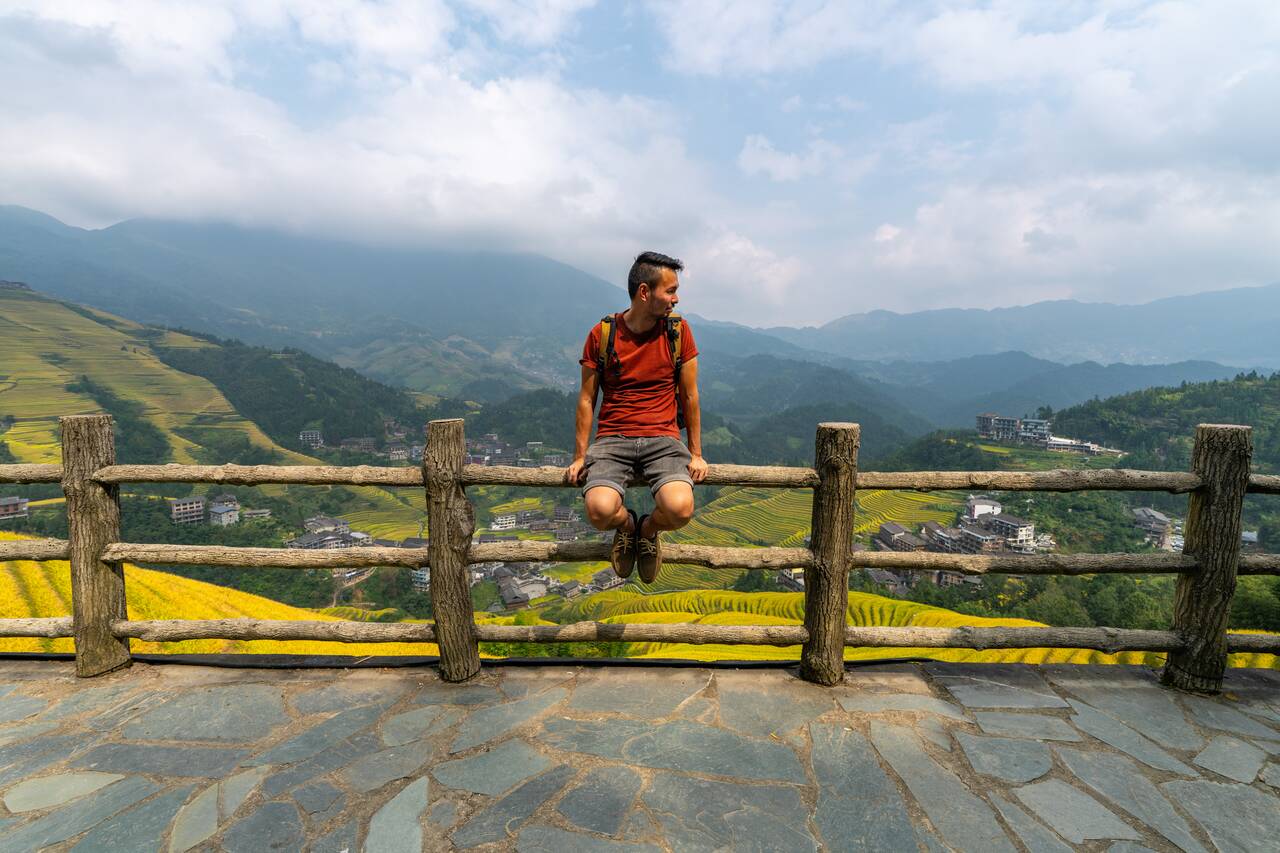
I visited the rice terrace in mid-October and the paddies were all in golden colors, which was beautiful to see. Even though it was a bit cloudy when I was there, the clouds moved fast and were able to let some sun rays through, which made the golden-colored rice paddies pop even more. It was truly quite a sight to behold.
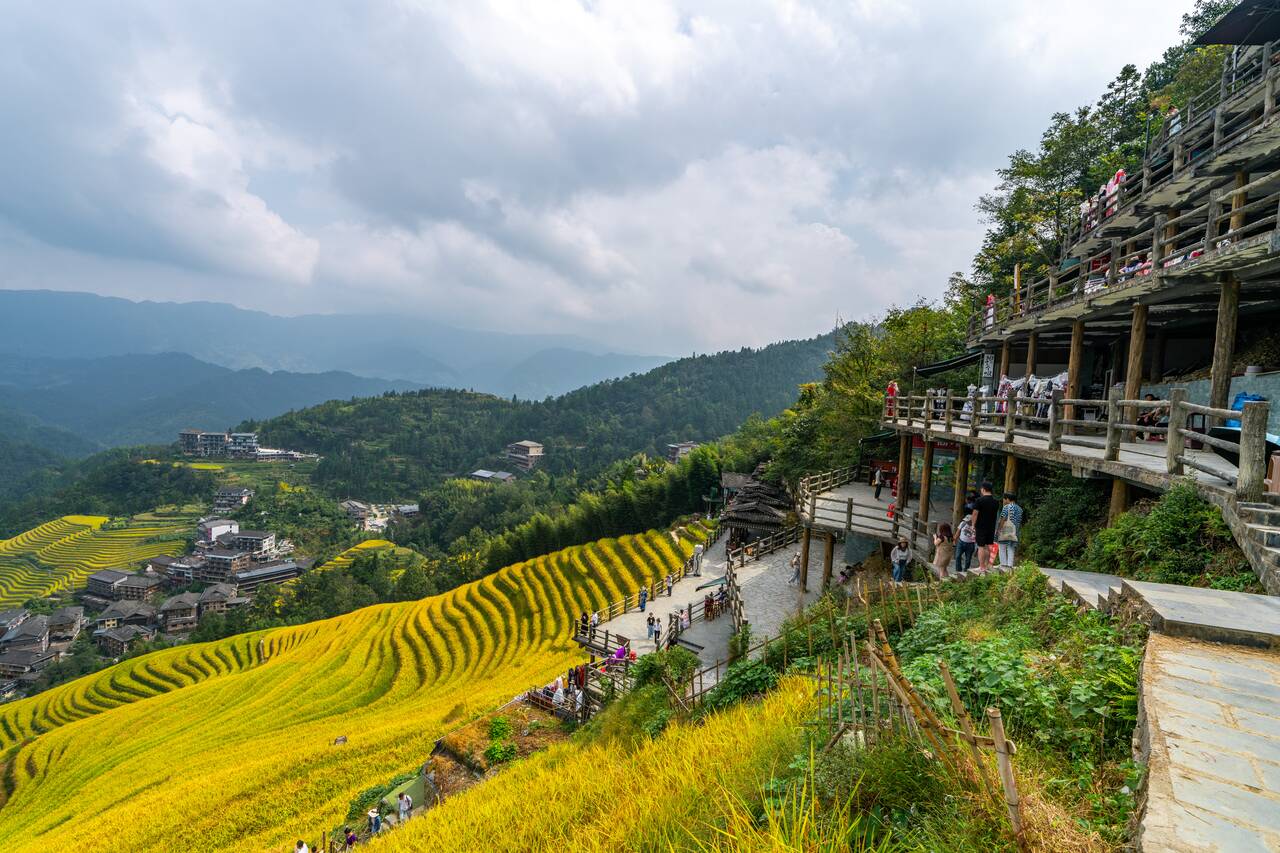
The organized tour will pick you up from your hotel early in the morning, around 7 AM. From there, it’s about a 3-hour drive to Longji Rice Terrace. The tour company will text you on WeChat around 9 PM the night before with your exact pickup time and the bus’s license plate number so you don’t accidentally board the wrong bus.
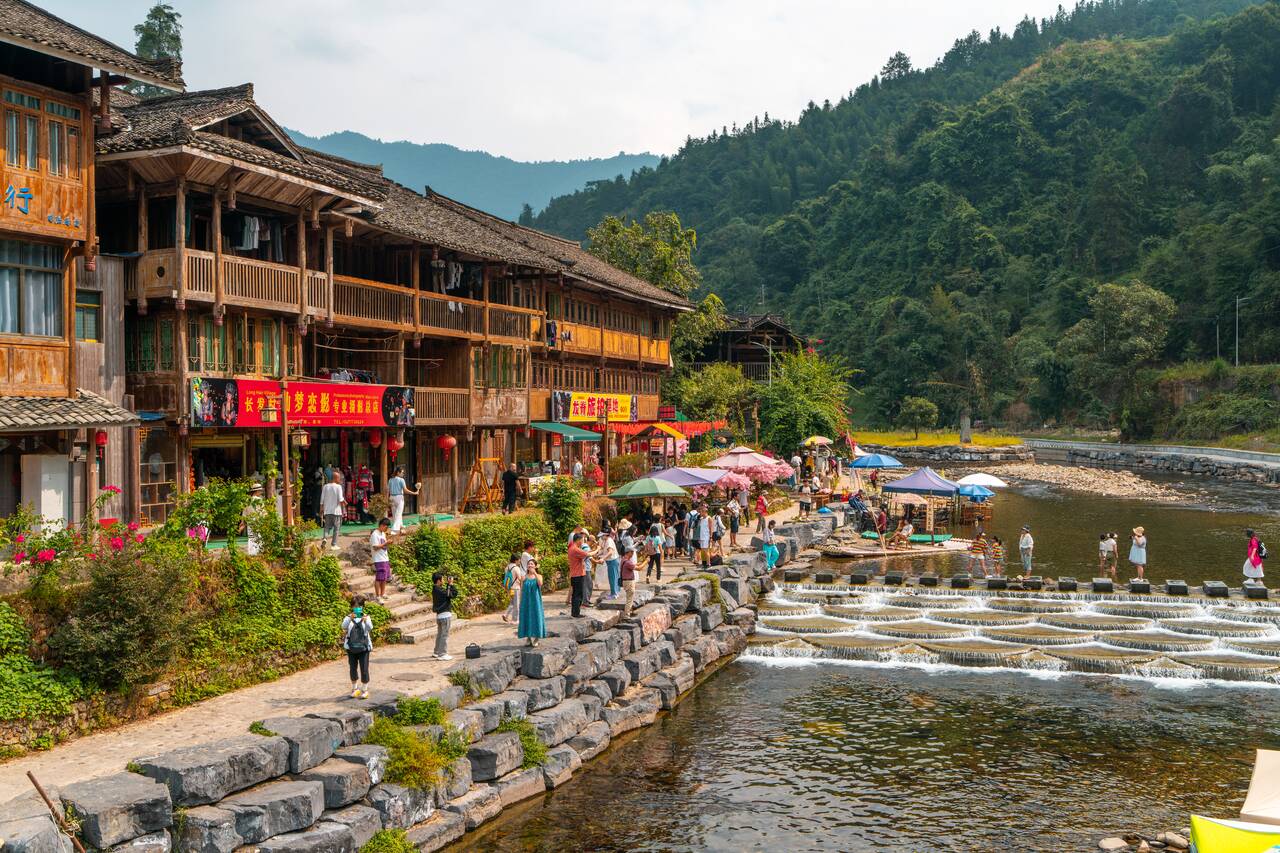
Along the way, you will also stop at Hongyao Stockaded Village, home to the Yao ethnic minority. The village is famous for its well-preserved stilt houses and traditional wooden architecture. Interestingly, it is also the birthplace of the woman with the longest hair in China, who holds the Guinness World Record with hair measuring 5.627 meters (18 ft 5.54 in) as of May 2004.

The town is highly commercialized nowadays, but you can still walk around the village and attend a show where the women display their long hair as part of the performance. We also stopped here for lunch before heading to the rice terraces. Personally, I found the village a bit too commercialized, but it’s still a worthwhile stop if you’re visiting Longji Rice Terrace.

We left Guilin City at 7 AM and returned around 4 PM. It was a long drive, but the rice terraces are stunning, and we had plenty of time to explore them. I think the drive is definitely worth it. You can book an organized tour here. The rice terraces have an entry fee of 80 CNY, which you will need to pay separately from the tour. The tour itself costs around 288 CNY per person.
Day 3-4: Yangshuo & Ruyi Peak (3 Nights)

- 📍 Stay: Tingshan Guanshui Branch (Yangshuo Xijie Branch)
- 🕐 Time: 3 Nights
One of the highlights of visiting Guilin is taking a Li River cruise and admiring the incredible karst scenery along the way. On the third day of this itinerary, this is how you’ll travel from Guilin City to Yangshuo, so make sure you have booked the cruise beforehand.
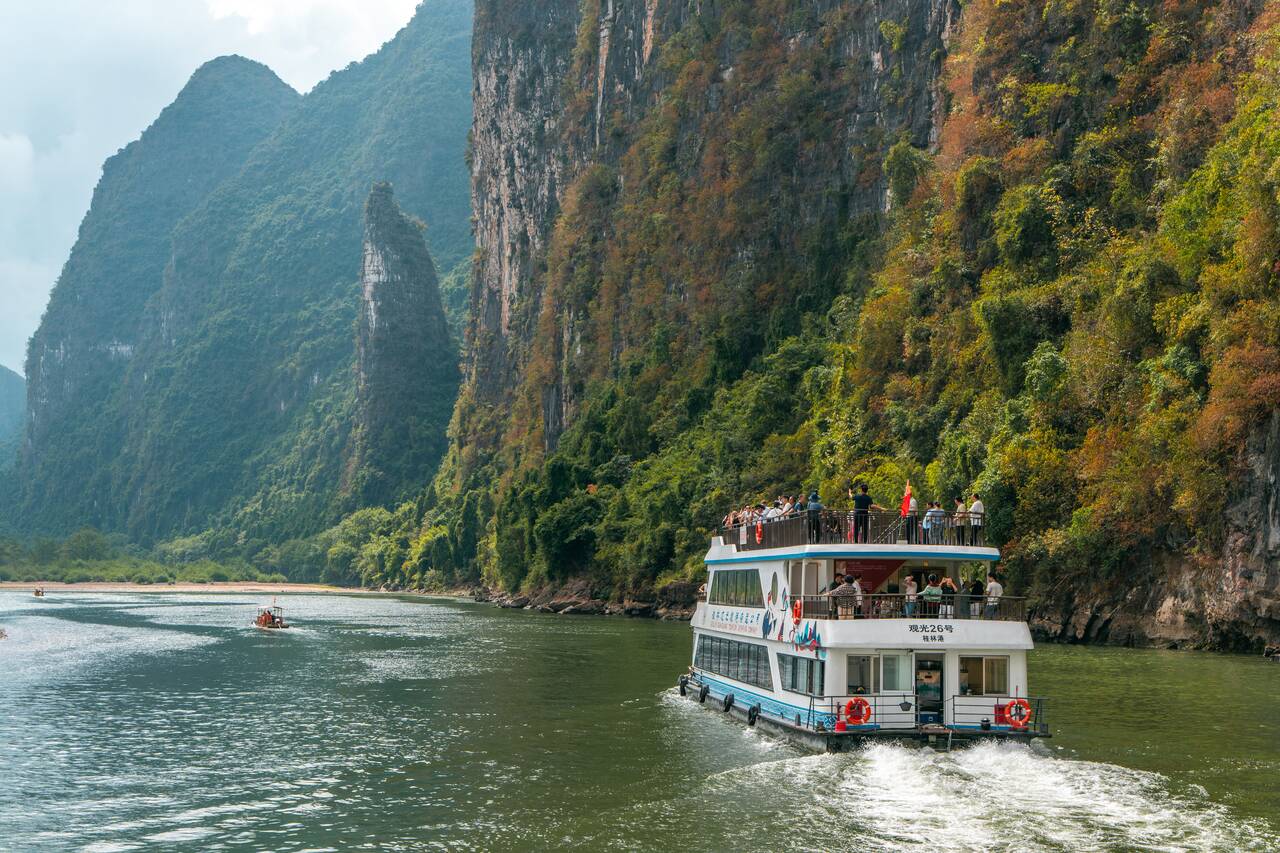
The cruise takes around six hours. Your tour operator will usually pick you up at 7 or 8 AM from your hotel in Guilin City and transfer you to the pier, which is about an hour away. As with the other tours, the operator will text you the night before with your exact pickup time and the bus license plate number, so be sure to check your WeChat regularly.
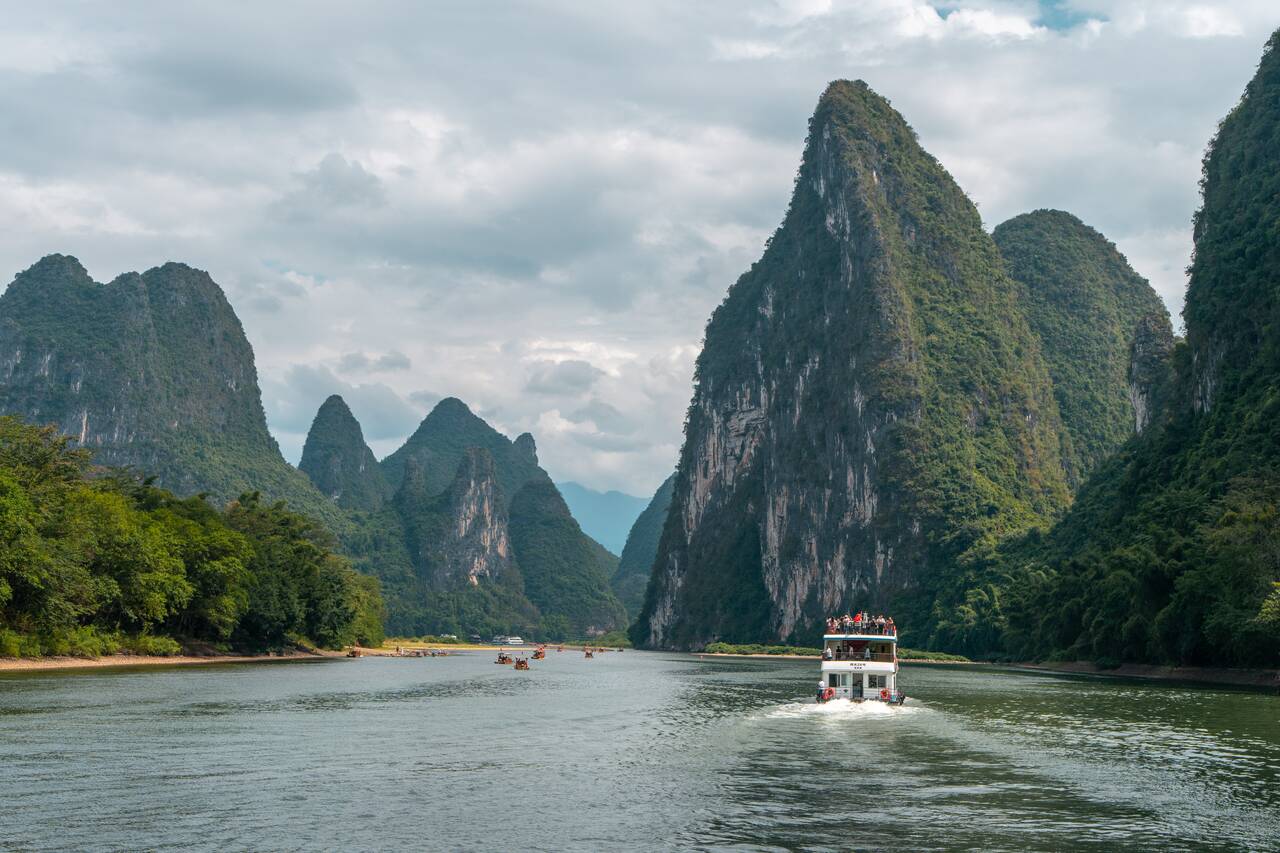
Once you arrive at the pier, your guide will purchase the ticket for you, and you can board the boat according to the boat and seat number provided. The boat usually departs around 10 AM, and you should arrive at Longtoshun Wharf by 2 PM, making the journey approximately four hours, six hours in total including bus transfers and boarding.
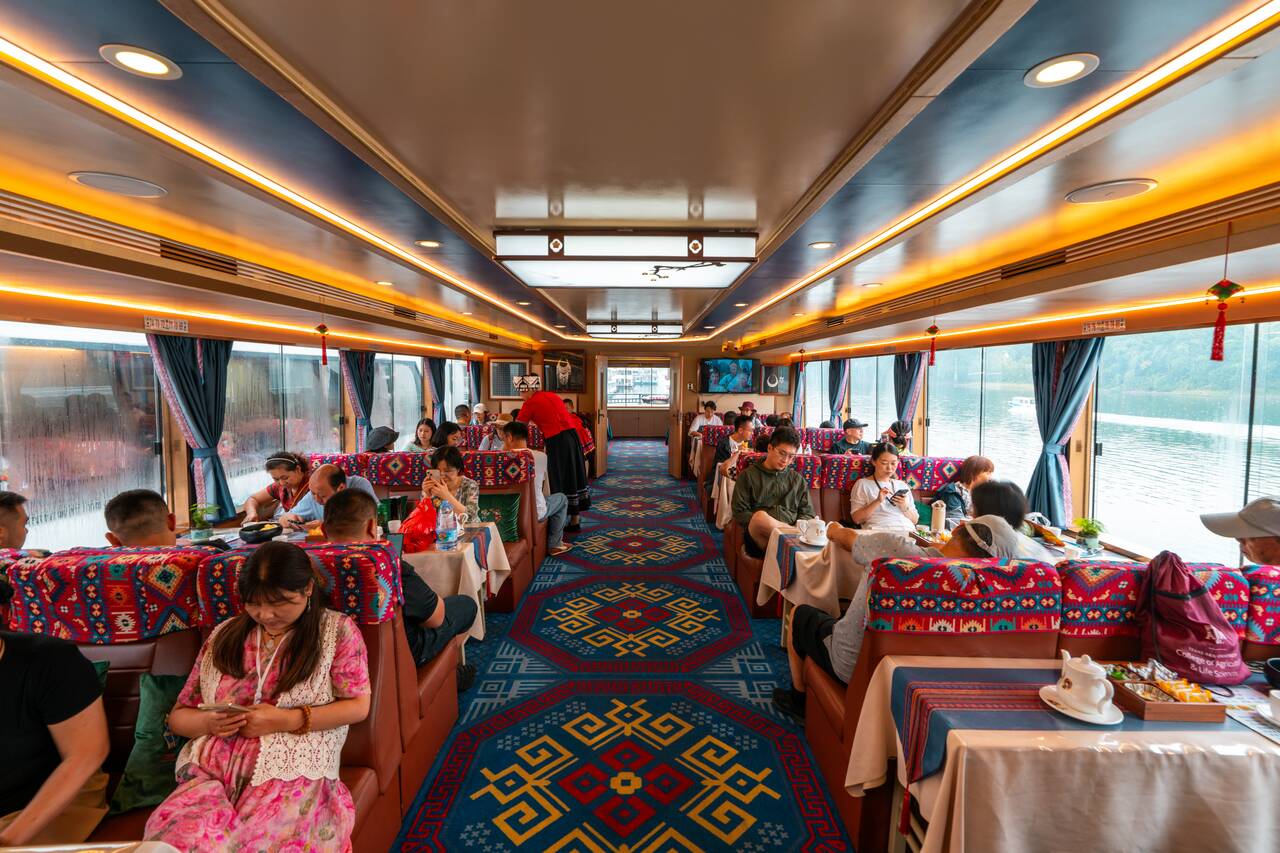
There are several cruise types: 3 stars, 4 stars, and 5 stars, with varying quality and price. I found the difference between each level not enough to encourage me to pay a premium, so I went with 3 stars costing me about 64 USD, and it was actually very good. With the 3-star cruise, you will get a very comfortable seating area accompanied by dry snacks and tea that you share with other passengers.
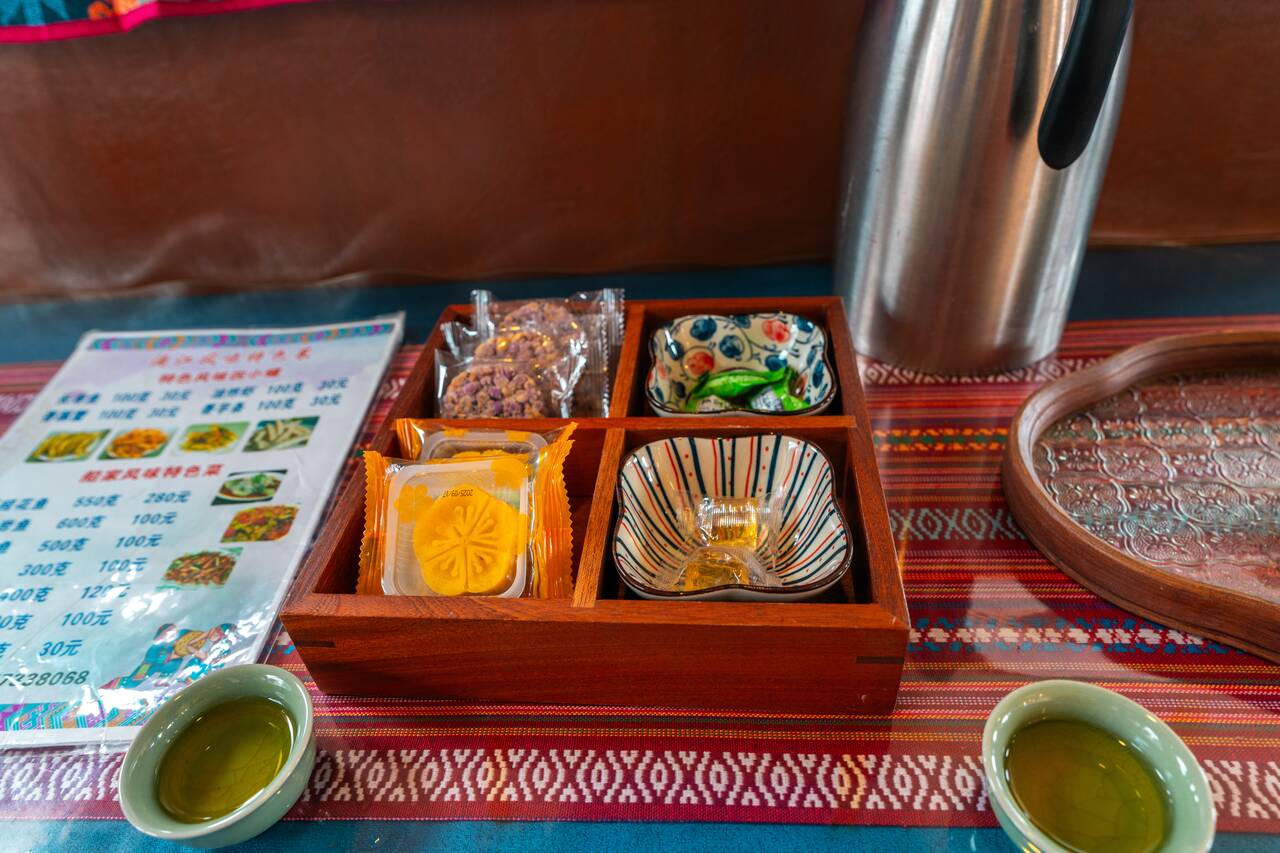
You do not get lunch with the 3 stars, but you have dried snacks to help sustain you until you arrive in Yangshuo for late lunch. I thought the whole cruise was great and not crowded at all, as some travel guides suggested. I highly recommend you go with a 3-star cruise if you want to travel from Guilin to Yangshuo.
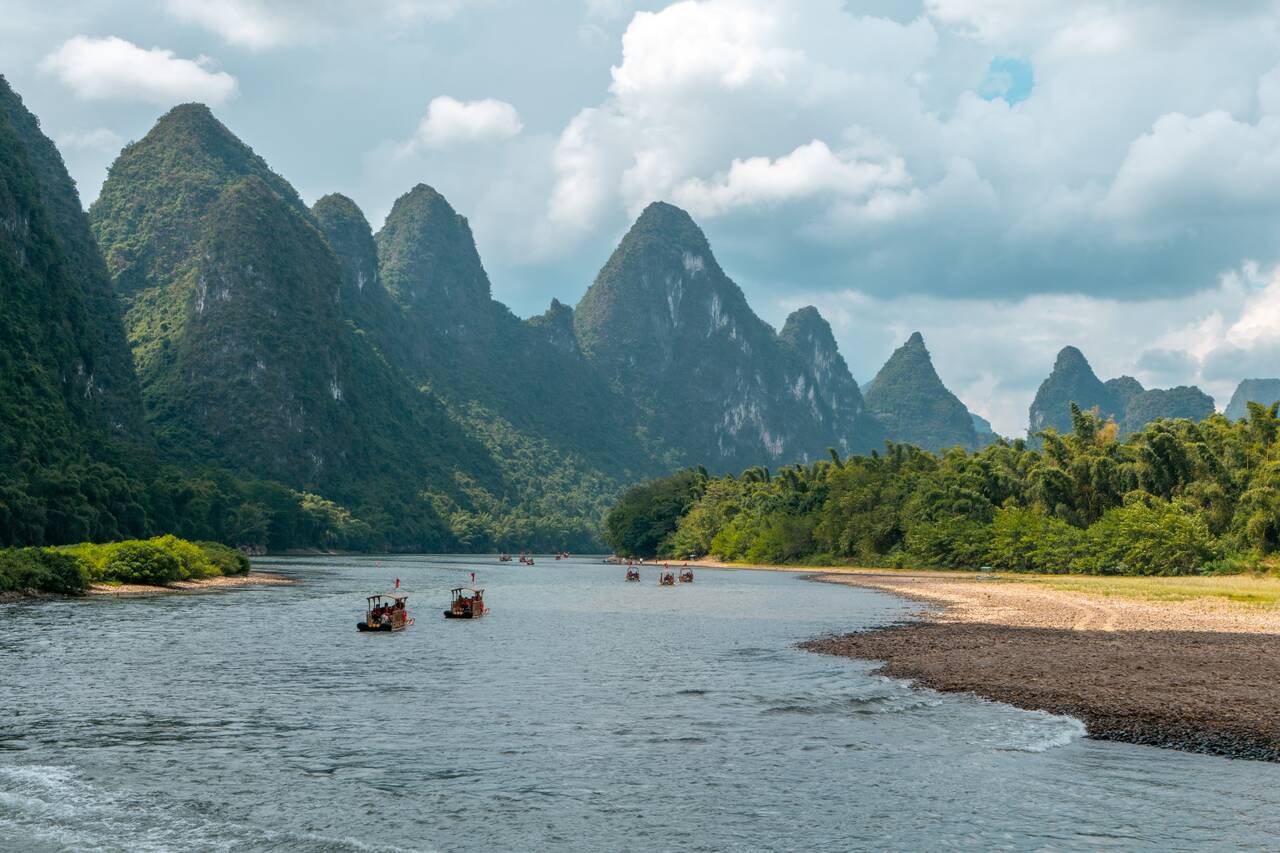
The views along the way are absolutely incredible. I thought I might get bored after a few hours, but I was completely wrong. I spent more than 70% of the four-hour Li River cruise on the deck, enjoying the scenery and taking photos of the countless karst mountains along the way. There are hundreds, if not thousands, of them, which is what surprises me most about Guilin.

Once you arrive at Longtoshun Wharf, you can walk along the shaded road through the wharf area, and in about 20 minutes you’ll reach Yangshuo West Street, the main tourist strip where most accommodations are located. From there, you can check in and get settled before heading out to explore Yangshuo.

Although Yangshuo is highly commercialized and no longer the authentic ancient village it once was, it still has its charm. Yangshuo West Street is where all the action happens in Guilin, with the street lined with shops and restaurants to explore and enjoy.

You can spend the afternoon and evening walking around its cobblestone streets and explore the town at your own leisure. At night, if you are looking for a lively place to hang out, Yangshuo West Street is probably the liveliest place to be in Guilin, with restaurants and street food stalls bustling with people, so be sure to also come and check it out at night.

The next morning, you can start the day by renting an e-scooter, which you can do from the place at the corner of Yangshuo West Street for about 60 CNY per day. Once you've got your vehicle, you can drive south across the river for about 45 minutes before you arrive at the cable car station of Ruyi Peak, one of my favorite spots in Yangshuo.
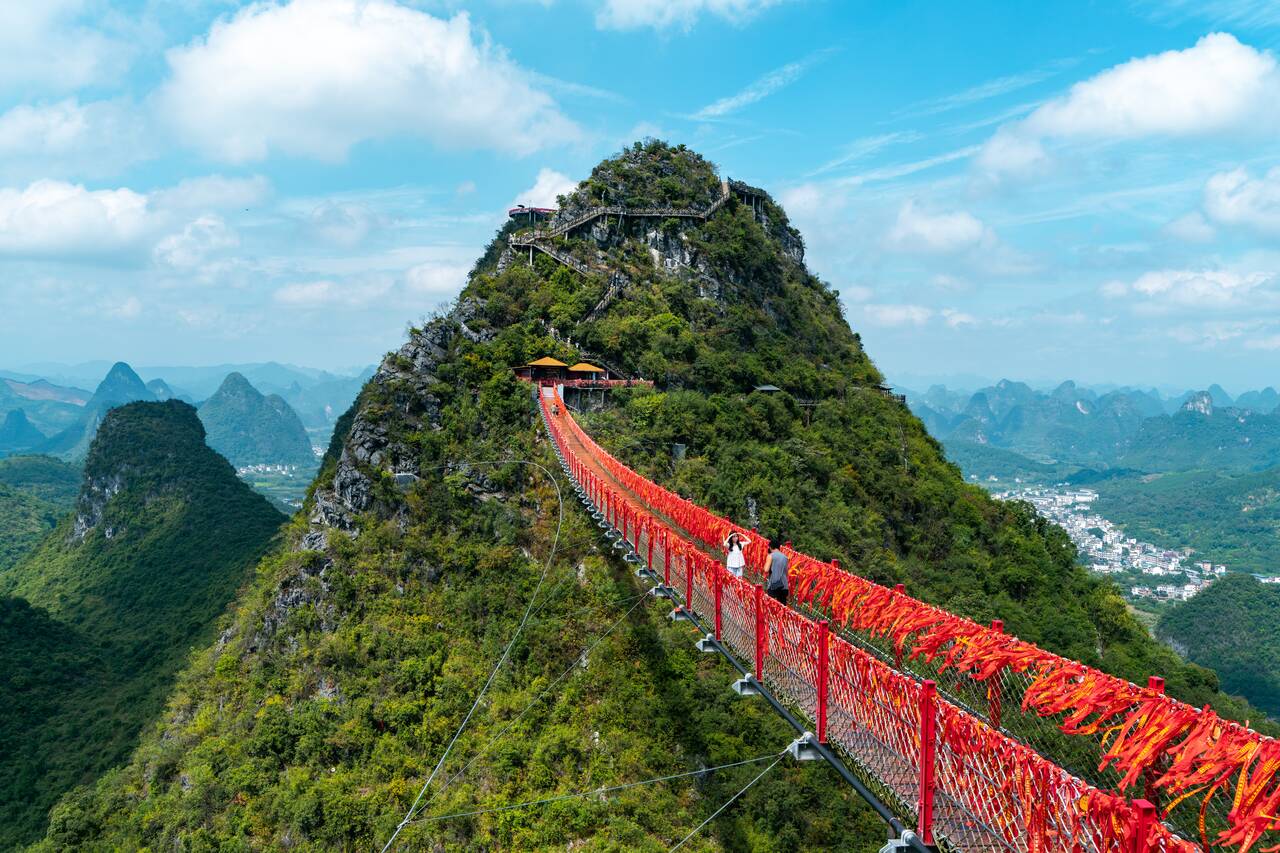
If there's one thing I recommend you do when you are in Yangshuo, it is to go and explore Ruyi Peak, where you can take a cable car up to one of the highest karst mountains in the area and enjoy a 360° panoramic view while being surrounded by hundreds of other karst peaks. Out of all the places I visited when I was in Yangshuo, this is my favorite.
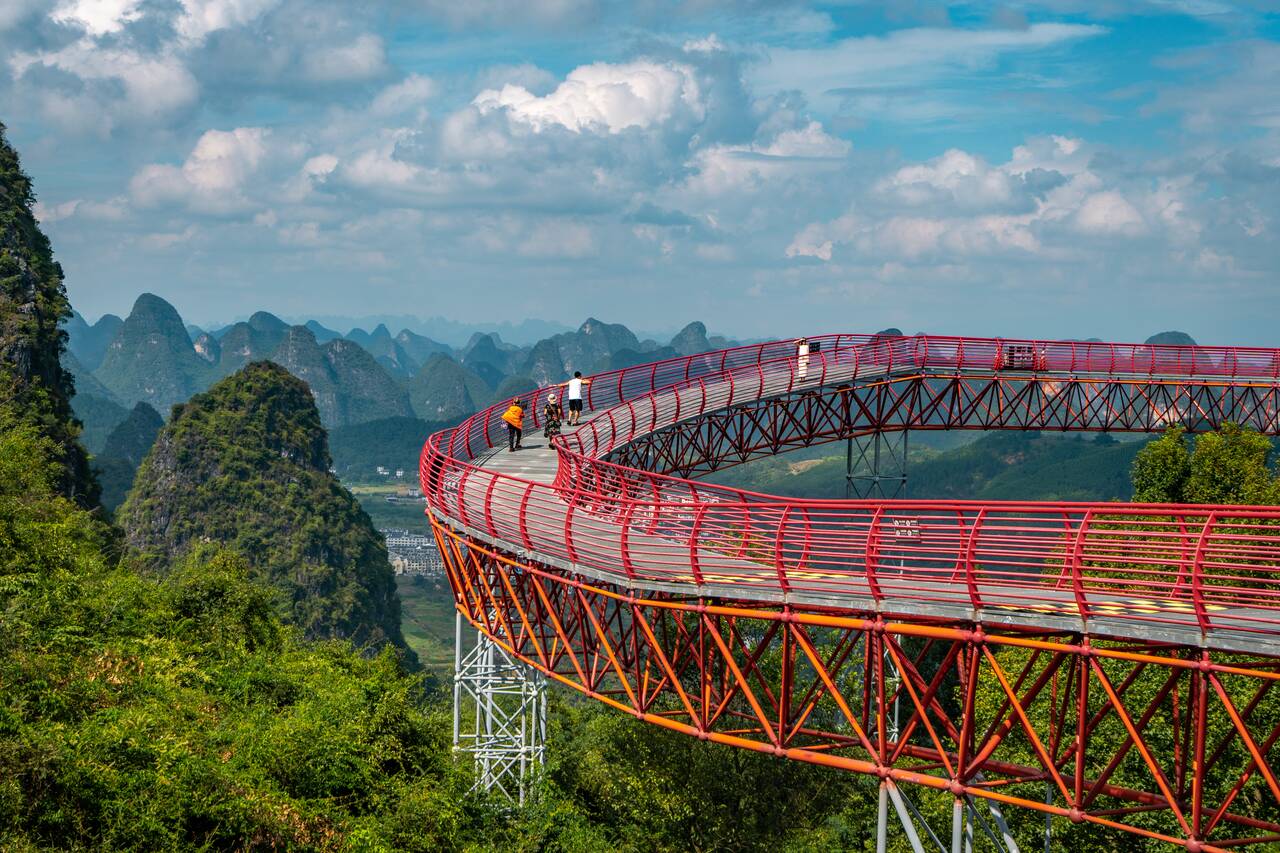
What makes it special is the stunning glass bridge that stretches between two karst peaks, where you can walk across, enjoy the valley views, and maybe even get a little freaked out by the massive drop beneath your feet. In addition to the glass bridge, there is also a suspension bridge connecting the peaks, as well as a large viewing platform at the top where you’ll be treated to sweeping panoramas of endless limestone mountains layered beautifully into the distance.

You can buy the ticket here or directly at the gate, and it should cost around 30 USD for a round-trip ticket. Depending on the time you visit, there may or may not be a long line for the cable car, which is why I recommend coming in the morning when the weather is nicer and there are fewer people.
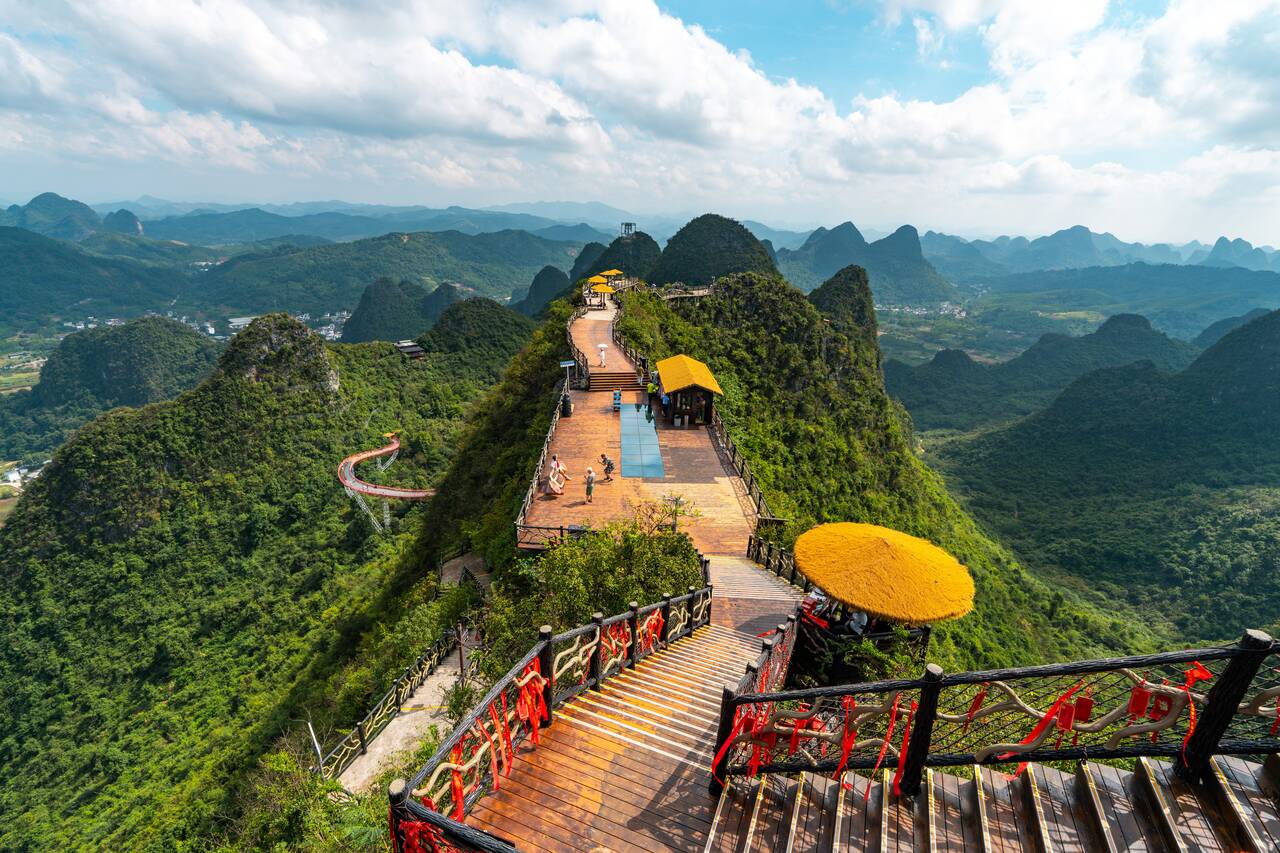
The area is quite large, with lots of walking and several flights of stairs, so expect to spend at least 2 to 3 hours at Ruyi Peak. Be sure to bring a bottle of water, as it can get pretty hot up there. There are a few cafes and shops scattered around where you can buy snacks, but expect to pay a premium if you decide to purchase anything on the mountain.

After you’re done, you can ride down the mountain and explore other attractions around Yangshuo on your e-scooter, such as Moon Hill, or go bamboo rafting from Shui'edi Pier to Gongnong Bridge.
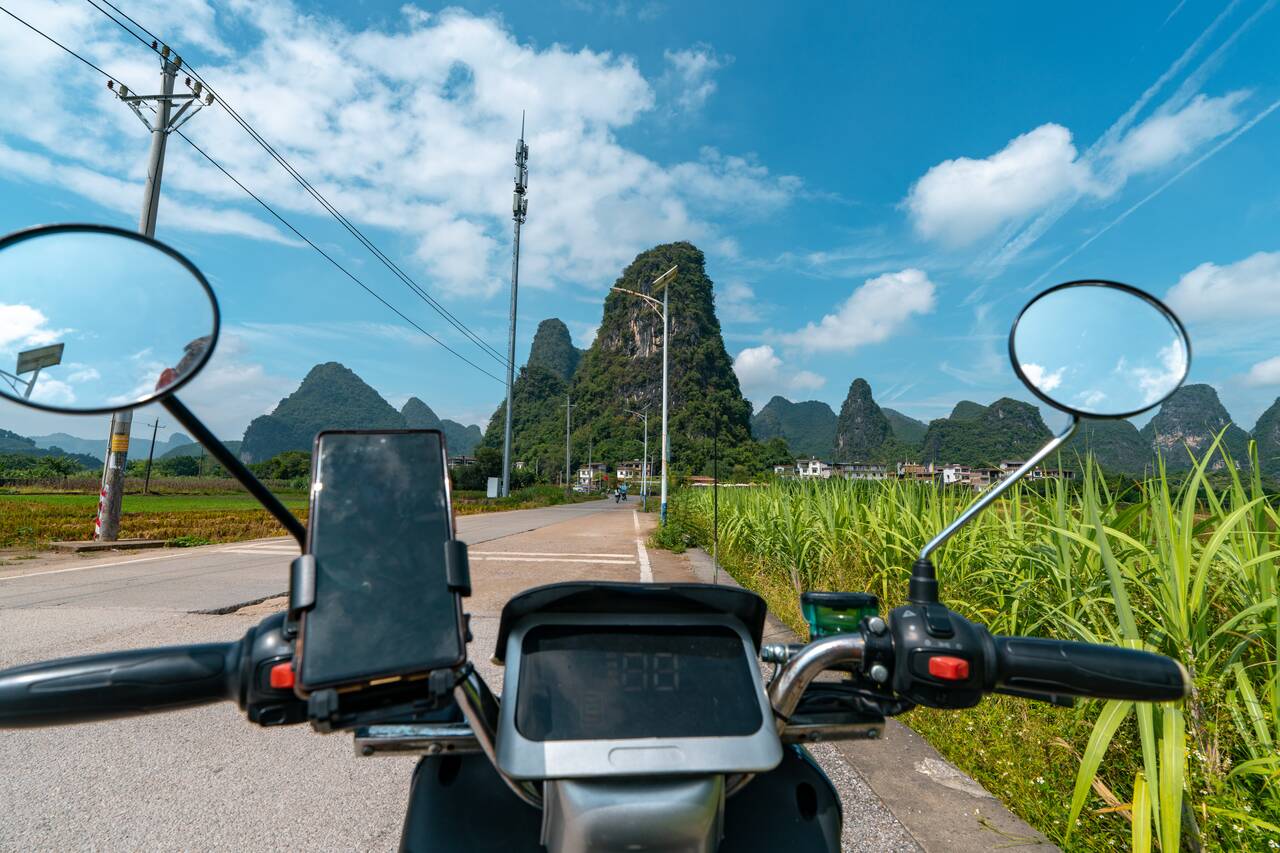
You can also simply enjoy the ride and explore the countryside and rivers at your own pace. Keep in mind that your e-scooter typically has a range of about 70 km, which should allow 3-4 hours of riding before needing a recharge, so plan accordingly.
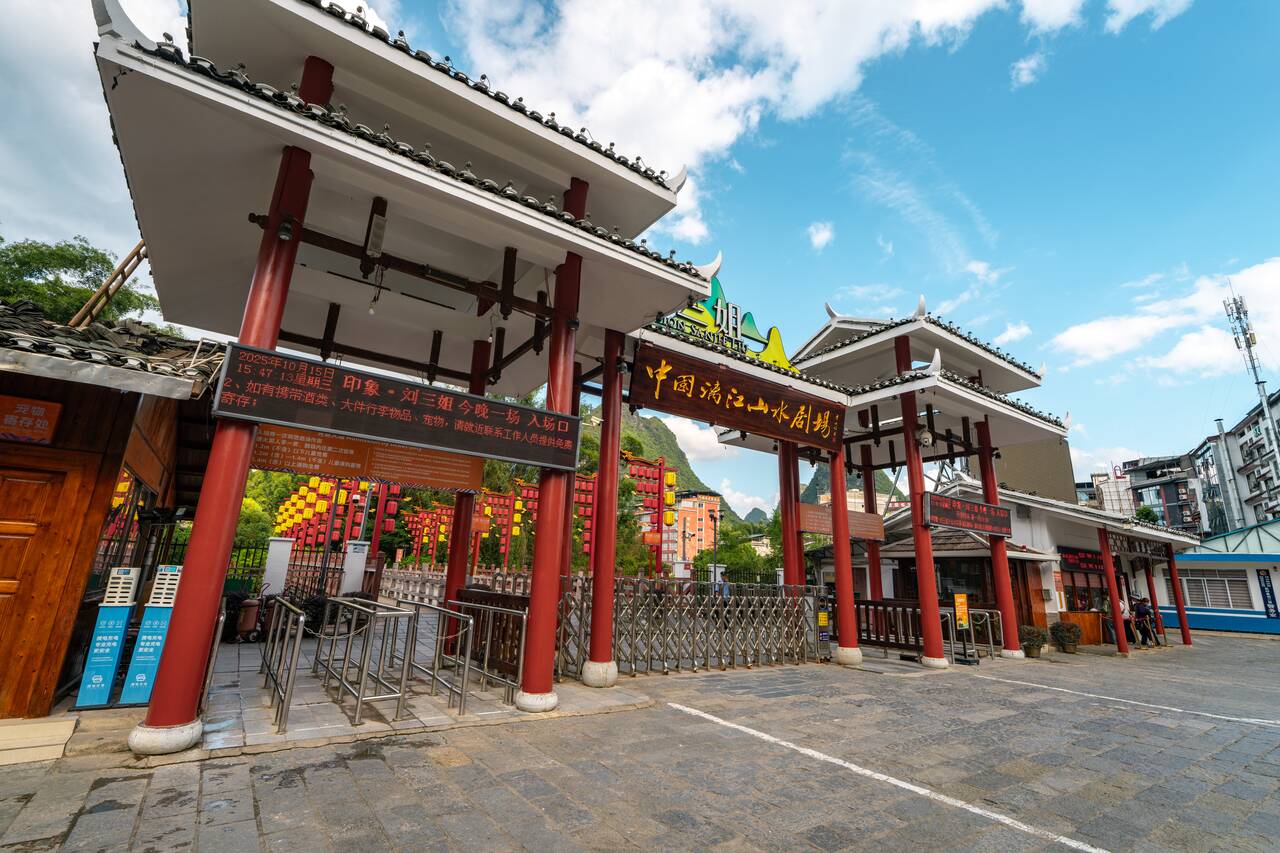
That should keep you busy for the entire day. In the evening, if you’re looking for something spectacular, consider watching the Impression Liu Sanjie show, a large-scale cultural performance featuring dances, lights, and music set against the stunning backdrop of Guilin’s karst mountains.

The show is held right by the river every evening, and you can book tickets here. After the show, head back early, as we’ll be departing for a sunrise trip at 4 AM the next day! Be sure to book the sunrise trip here in advance.
Where to Stay in Yangshuo?



Day 5: Sunrise at Xianggong Viewpoint & Xingping Ancient Village (1 Night)

- 📍 Stay: Yangshuo Autumn Inn (Xingping Ancient Town Branch)
- 🕐 Time: 1 Night
Today, we are going to wake up at 4 AM and visit Xianggong Viewpoint, one of the most iconic viewpoints in Guilin, famous for its unique view where you can see the river bend in a dramatic horseshoe shape, surrounded by countless karst peaks stretching into the distance.

With its vantage point and unique scenery, Xianggong Viewpoint is probably the most famous place to watch the sunrise in Guilin, with the morning light casting beautiful shadows and creating depth and layers across the mountains. You can find many organized tours that will take you to Xianggong Viewpoint as early as 4 AM so you can catch the sunrise in time.

You can go with this organized tour and they will pick you up at your hotel around 4 AM. You should arrive at the viewpoint by 5 AM, just in time for the entrance gate to open. The tour should provide you with the ticket so you won't have to queue up and enter the gate right away. From the gate, it is a short 10-minute hike to the platforms where you can watch the sunrise.

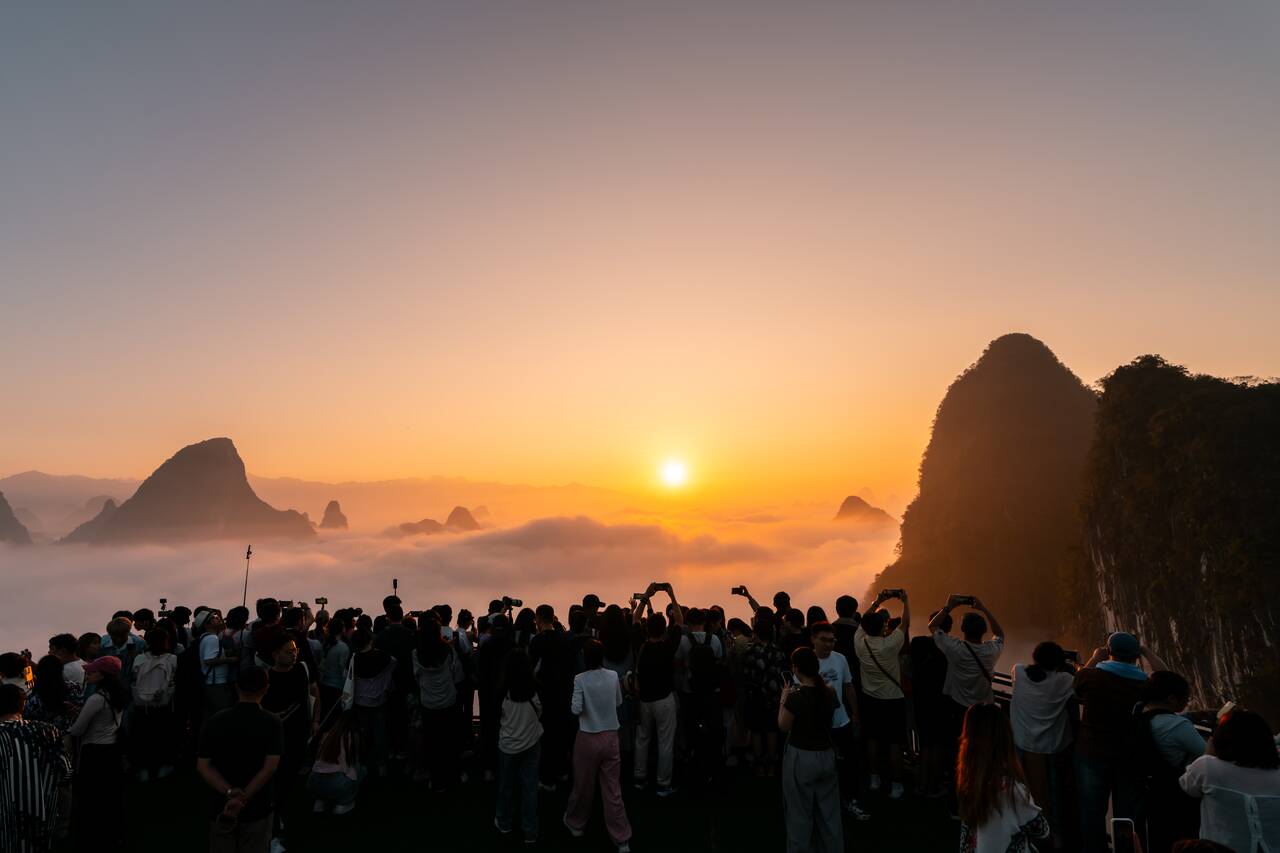
There are about three levels of platforms you can choose from, and you’ll need to act quickly to secure your spot. It gets crowded very fast, and the best front-row spots with an unobstructed view can be taken within minutes. If you find one, stay there and stand your ground. Trust me, if there is even a slight space next to you, someone will squeeze themselves in.

Depending on what time of year you visit, you can be waiting for the sunrise between an hour or 2, so be sure to prepare to stand for a long time. Trust me, it will be worth it. The scenery, with rolling clouds below and countless karst peaks piercing through them, set against the purple and orange hues of the morning sky, felt almost like a Chinese painting. It’s no wonder that traditional Chinese paintings depict landscapes this way when places like this exist in reality!
You should return to your shuttle around 7:30 AM, and it will take you back to your hotel in Yangshuo by 8:30 AM. This gives you time to rest before checking out of your hotel by 12 PM. Once you are checked out, you can hail a taxi to take you to Xingping Ancient Village, a charming riverside town where you will be spending the last night. The taxi should take about 30 minutes and costs around 20 - 30 CNY.
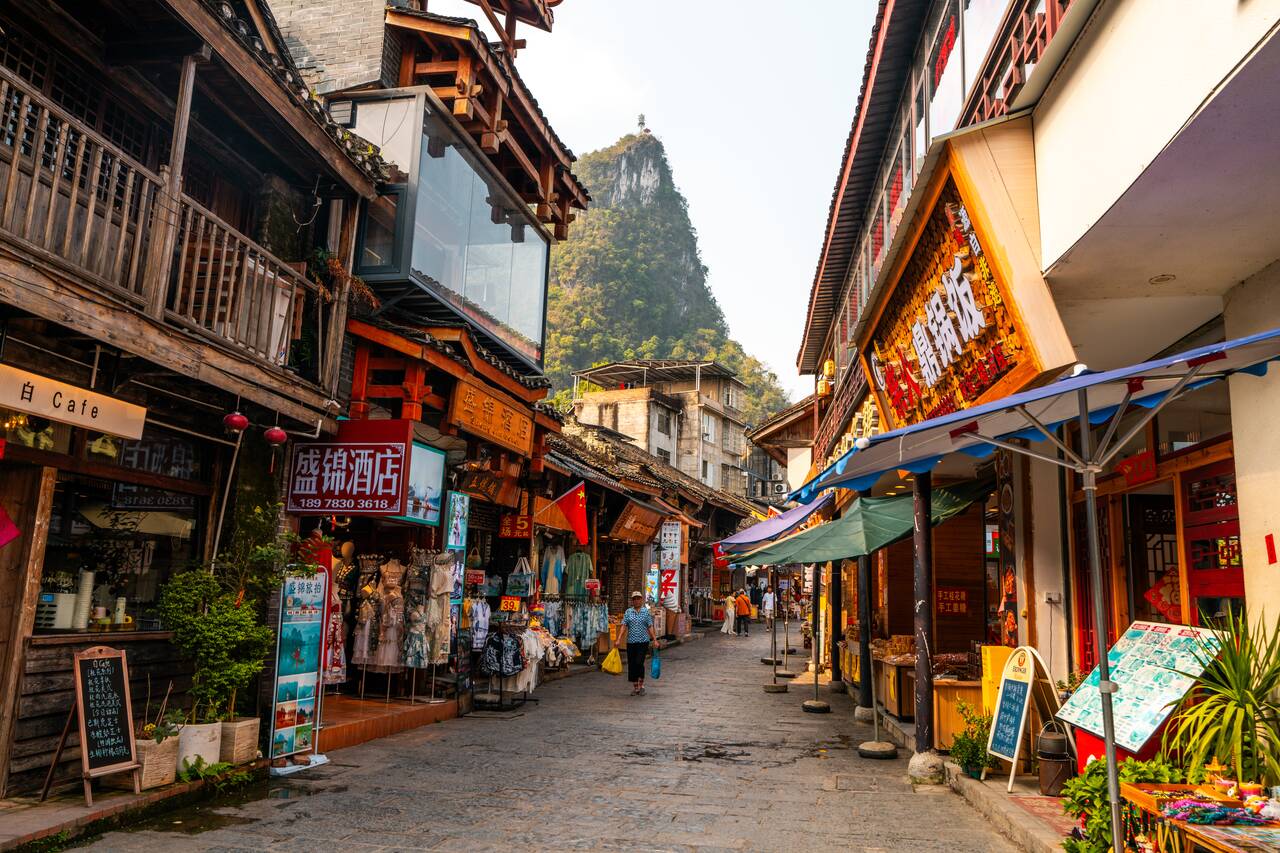
This village is famous for its well-preserved old streets, traditional architecture, and stunning views of the Li River winding through karst peaks, unlike Yangshuo, which has become heavily commercialized 😅. Xingping is smaller and quieter than Yangshuo, with traditional wooden houses lining its cobblestone streets, making it perfect for your last night in Guilin. The village is also closer to Yangshuo High-Speed Railway Station, so you can easily catch your train the next day.
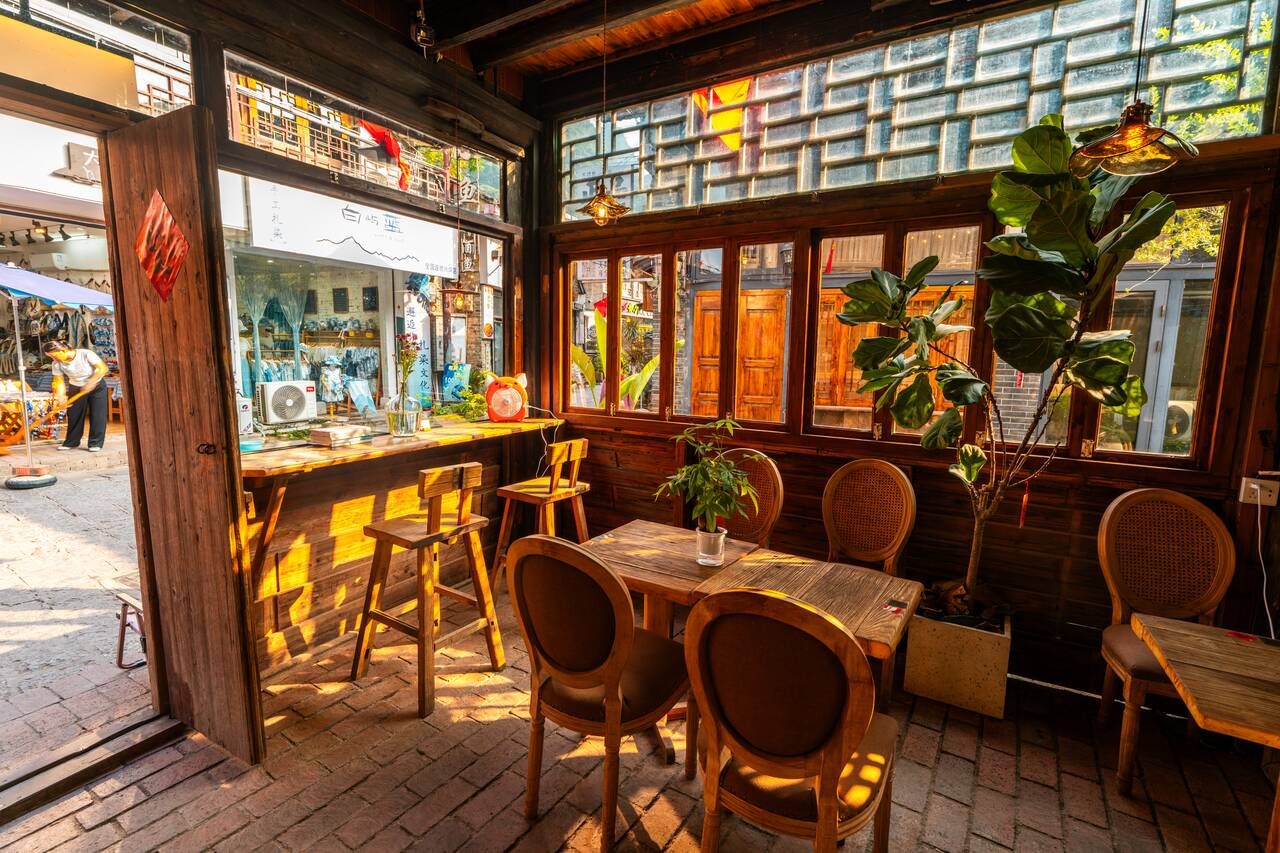
Along the cobblestone streets, you will find many lovely cafes and bakeries where you can sit back, relax, and soak in the atmosphere. The town does get crowded during the day with day trippers from Yangshuo, but if you stay overnight, the mornings and late evenings are my favorite times to explore when you can truly enjoy the peaceful quiet of the village.

As sunset approaches, I highly recommend you go and hike up Lao Zhai Shan Hill, which is probably one of the most beautiful viewpoints in Guilin. It is the main reason why I recommend you stay overnight in Xingping instead of making a day trip from Yangshuo.

Lao Zhai Shan Hill is a steep karst mountain located right next to Xingping Ancient Village. You can hike up to see the stunning Li River winding around the jagged peaks of Guilin's karst landscape. Because of its proximity to the town, it is one of the most popular sunset spots and attracts large crowds, including both local and foreign tourists. The view from the top is absolutely breathtaking, truly unlike anything I’ve seen before.
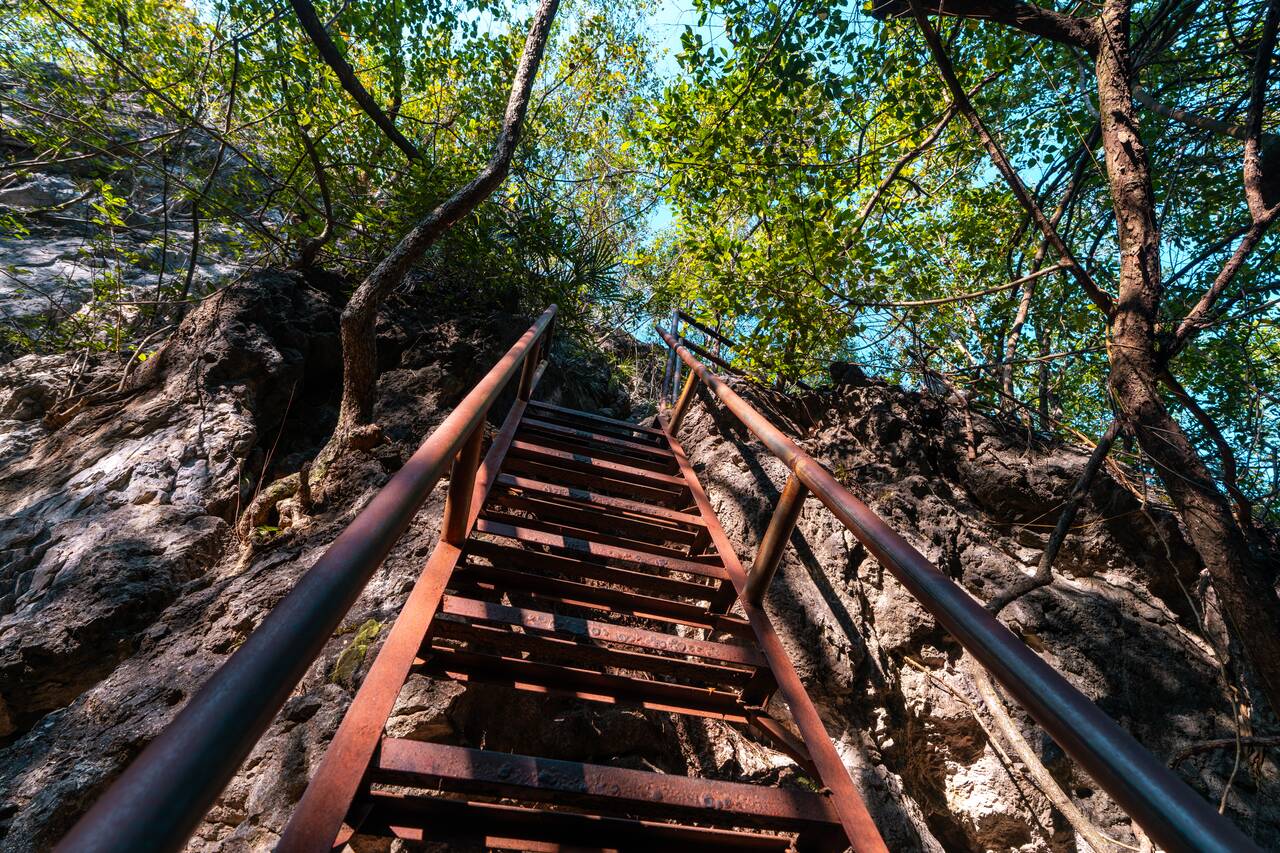
The hike is quite steep and can be challenging at times, mostly due to how hot and humid the weather is, even in mid-October. But once you reach the top, you will completely forget how tired you were and be blown away by its sheer scale and beauty.
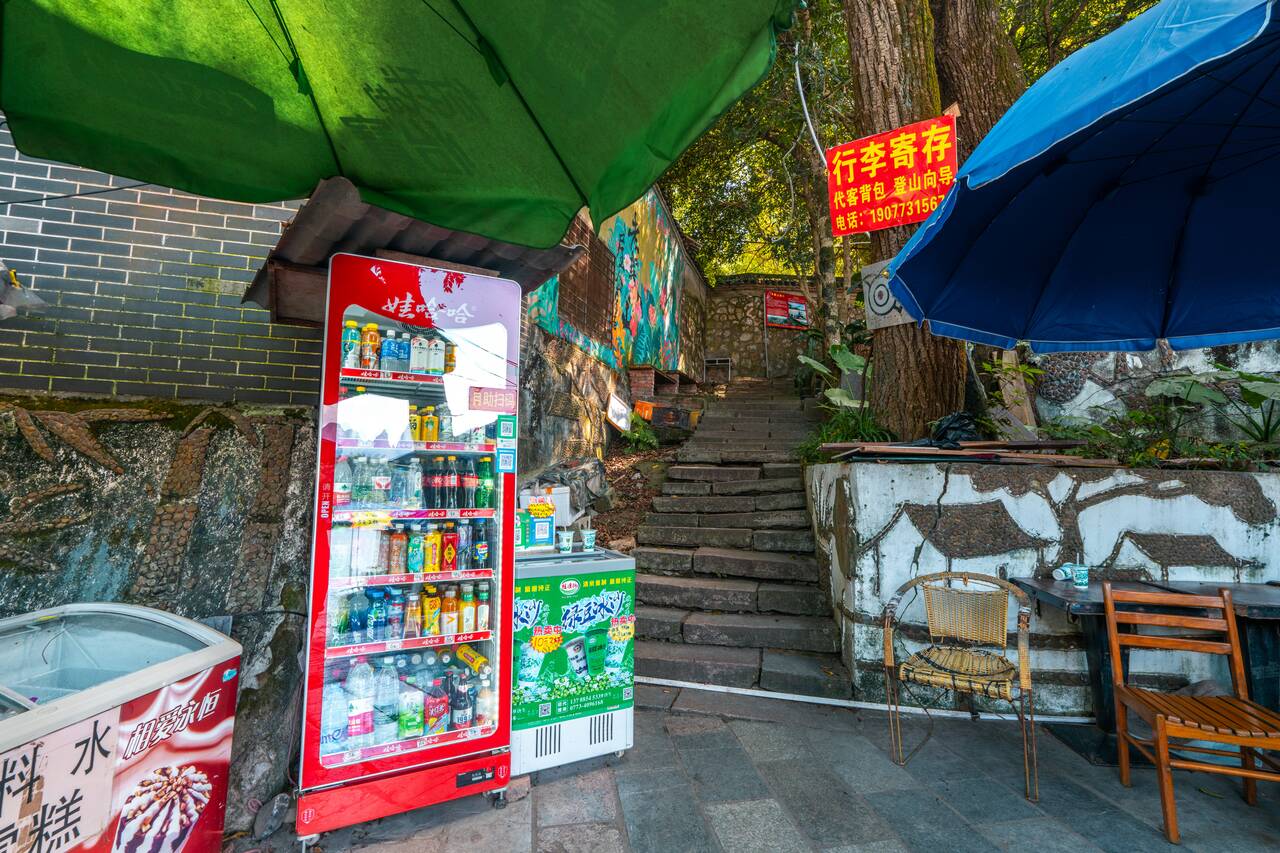
The hike starts from this spot shown in the photo above, and you should be able to walk there from Xingping Ancient Village. From the trailhead, the hike should take about 30 minutes without rest up an extremely steep trail.

I started around 4 PM and reached the top by 4:30 PM, finding only a few people at the viewpoint. The area becomes much more crowded as sunset approaches, making it harder to find a good spot to sit and enjoy the view. I highly recommend arriving an hour or two before sunset and staying until nightfall to fully experience the sunset.

At the top, you will find a pavilion where you can rest from the hike and enjoy the view of Xingping from above. If you scramble a little further up a jagged karst peak, you will be able to see the view from the other side, where the river bends and snakes around the hundreds of karst peaks that Guilin is famous for. Just be careful when climbing higher, as the path is narrow and the rocks are sharp.

I sat there for two hours, enjoying the golden and blue hours with another fellow solo traveler. Shout out to you, Lisa. It was magical. The sun’s rays lit up hundreds, if not thousands, of the vertical karst peaks, creating depth and shadows that shifted as the sun dipped behind the horizon. Set against the changing colors of the sky, from blue to orange to purple, life just doesn’t get better than this!

After sunset, you can head back down to Xingping, enjoy a quick dinner in the ancient town, and settle in for the night. The next day, you can either hail a Didi to take you to Yangshuo High-Speed Railway Station, which should take no more than 10 minutes, or use a free hotel shuttle if your accommodation offers one. With that, you’ve completed this 5-day Guilin itinerary. Congratulations!
Where to Stay in Xingping?



Things to Know Before Visiting China
- Always Carry Your Passport: Everything revolves around your passport/ID in China, and it’s often used interchangeably as your main form of identification. Many major tourist attractions require you to show your passport when buying a ticket, and the ticket will then be linked to it. You’ll scan your passport again to enter. The same applies to high-speed trains. It’s best to carry your passport with you at all times while traveling in China.
- Get an eSIM: China’s cashless economy relies on constant internet access, so having a data connection is essential. I highly recommend getting an eSIM or a local SIM card for your trip. An eSIM is often better because the service is usually based in Hong Kong, which bypasses China’s Great Firewall, meaning you can access apps like Instagram and YouTube without a VPN. I suggest checking eSIM options on Klook or Trip.com, as they tend to be the most affordable.
- Use AMap to Navigate: Google Maps doesn’t work well in China, so local apps like AMap are much more informative and accurate for getting around. It even provides metro information, making it easy to navigate city subway systems. I used AMap throughout my entire trip, and it worked perfectly! In this guide, I’ll be linking locations with AMap links instead of Google Maps, so be sure to download it before your trip.
- Use VPN to Bypass the Great Firewall: As you may know, many major websites such as Google, Facebook, Instagram, TikTok, and more are blocked in China. To access them, you’ll need a VPN like LetsVPN installed on both your phone and laptop before you arrive in China. This is crucial as once you're in the country, you won’t be able to search for or download VPN apps. I used LetsVPN during my trip, and it worked very well throughout. The service is affordable too, with a free tier offering limited data or a basic unlimited plan for just 5.99 USD per month.
- Connect Alipay with Your Credit Card: First, download Alipay from the app store, set up your account, and link it to your credit card. This will be one of the two main ways you’ll pay for services in China. Alipay also has mini-apps built in, such as Didi (China’s version of Uber), so you don’t need to download separate apps, and you can use them directly through Alipay. Very convenient!
- Get a Transport Card Working in Alipay: Once you have Alipay set up, you’ll need to verify your account before you can activate a transport card for metro and bus rides. First, if you’re not currently in the city you want to use, tap the city name in the top-left corner and select the correct city. After that, tap the “Transport” button and request a transport card. You’ll be asked to upload a photo of your passport for verification. Once approved, your transport card will be issued, and you can use the QR code to scan and pay for buses and metro rides.
- Get WeChat Set Up: WeChat is another essential app for communicating with locals, thanks to its built-in translation feature. It’s also widely used for payments as Alipay only works about 70% of the time, while WeChat is commonly needed for paying individuals, buying entry tickets at certain attractions, and more. Setting up WeChat can be a bit tricky though because you need verification from an existing user. The easiest way is to ask your hotel’s reception to help verify your account when you arrive in China, which is how I got mine activated.
- Use Trip.com / Trip App: For hotels, day trips, attraction tickets, train tickets, flights, and everything in between, you can use Trip.com or the Trip app to book all your travel needs. It’s very convenient, offers a great user experience, and has a generous cancellation policy that gives you more flexibility when traveling in China.
When to Visit Guilin?

The best time to visit Guilin is generally in spring (March to May) and autumn (September to November). During spring, temperatures are mild, ranging from 15–25°C (59–77°F), and the landscape comes alive with lush greenery, perfect for photography. Early spring is especially ideal before the rainfall starts to pick up later in the season.
Autumn is another excellent time to visit, with cooler and comfortable temperatures of 18–28°C (64–82°F) and often clear skies. This season is perfect for cruising along the Li River, exploring the karst peaks, or hiking around Yangshuo, and it’s generally less crowded than the busy summer months.
Summer (June to August) can be hot, humid, and rainy, with occasional typhoons. While the scenery is still beautiful, the crowds and unpredictable weather can make travel less enjoyable. Winter (December to February) is cooler, ranging from 5–15°C (41–59°F), and is much quieter. Mornings can be foggy and misty, which can create atmospheric photos, though some riverside activities may be limited.
I visited Guilin in mid-October, and while it was still quite hot and humid during the day, the mornings and evenings were pleasantly cool with refreshing breezes. It rained on a few days, as the typhoon season extended slightly into October that year, but I experienced more clear days than rainy ones during my week-long stay. So, if you want to see the same scenery as in my photos, October is a great time to go.
That said, it’s best to avoid traveling anywhere in China during the first week of October (Golden Week) or during Chinese New Year, as these are the busiest periods, and China’s crowds are no joke. If possible, also try to avoid weekends, when local tourists tend to visit popular sites.
How to Get to Guilin?
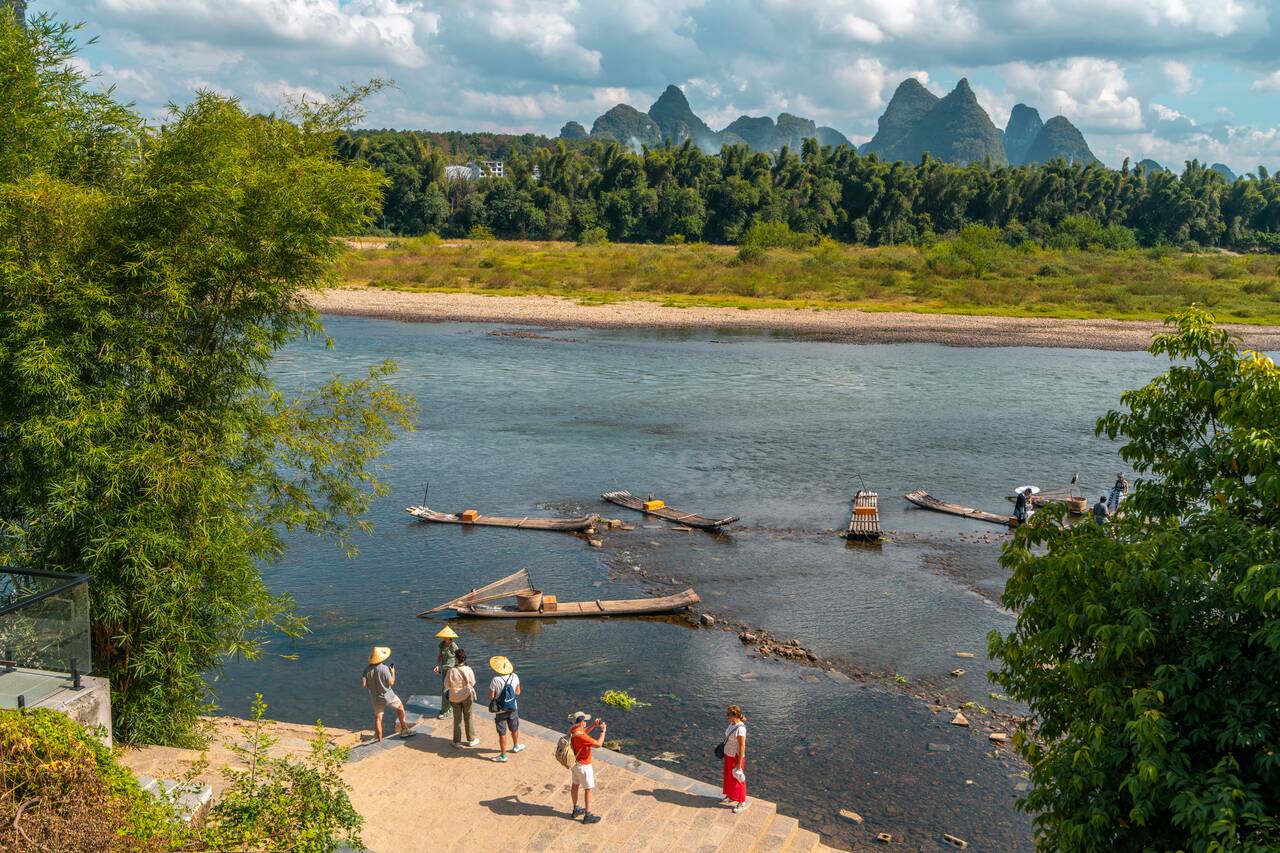
By Plane: Guilin Liangjiang International Airport is the main gateway for flyers. The airport has frequent domestic flights from major cities like Beijing, Shanghai, Guangzhou, and Chengdu, as well as a few direct international flights from countries such as Thailand, Singapore, Malaysia, and South Korea. From the airport, it’s about 30 km to Guilin city center. You can take a taxi, which usually takes around 40–50 minutes, or hop on an airport shuttle bus for a more budget-friendly option.
You can find cheap flights to Guilin from Trip.com, Skyscanner, or Expedia.
By High-Speed Train: Guilin is also well-connected by China’s high-speed rail network. High-speed trains arrive from cities like Guangzhou, Shenzhen, Chengdu, and Shanghai, with travel times ranging from a few hours to overnight depending on your departure point. The main high-speed hub is Guilin North (Guilinbei) Station, while other stations serve different routes. You can book the ticket in advance here.
How to Get Around Guilin?
By Cruise: One of the highlights of Guilin is cruising along its rivers, and a popular option is traveling from Guilin City to Yangshuo by boat. The cruise and the shuttle service take about 6 hours, departing at around 8 AM and arriving in Yangshuo around 2 PM. The views along the way are absolutely breathtaking; I spent more than 70% of the time out on the deck! Seeing Guilin from the water truly shows its beauty in a way you can’t from land. You can book the cruise in advance here or arrange it through your accommodation in Guilin City. The cruise typically costs around 64 USD.
By E-Scooter: If you want to get around Yangshuo, you can rent an e-scooter for about 50 to 60 CNY per day, usually available until 6 PM when the rental shops close, with a deposit of 200 CNY. I rented mine from one of the local rental spots (location here), and everything went smoothly. The e-scooter only goes at a maximum speed of about 25 km/h and typically has a range of around 70 km. This means you can comfortably explore Yangshuo and its attractions for 4 to 5 hours on a single charge. It's an awesome and affordable way to get around Yangshuo. You can also rent one to get around Guilin City as well, but you don't really need it.
By Didi: Didi is China’s version of Uber, more reliable and much more affordable. It’s an easy and comfortable way to travel between places within Guilin City as well as between Yangshuo and Xingping. The latter is how I travel between the 2 places. You can see the price in advance and hail a ride using the Didi mini-app inside Alipay, with all payments handled directly through Alipay. It’s an efficient, fast, and budget-friendly way to travel around here.
By High-Speed Train: If you want to travel from Guilin to Xingping directly and visit Yangshuo after, you can also take the high-speed train from Guilinxi or Guilinbei train station to Yangshuo High-Speed Train Station. It should take about 23 minutes, costs 3 USD and you can book it here.
How Much Money Do I Need For 5 Days in Guilin?
From this 5-day itinerary, we can calculate approximately how much money you will be spending here (on average) as follows:
| 🛌 Lodging: | 84 USD (16.8 USD/Day) |
|---|---|
| 🥘 Food: | 40 USD (8 USD/Day) |
| 🚗 Transportation: | 15 USD (3 USD/Day) |
| 🧗 Activities: | 123 USD (24.6 USD/Day) |
| 💰 Total Budget: | 262 USD (52.4 USD/Day) |
Disclaimer: This post may contain affiliate links. See our disclosure policy.
First Published:
Last updated:


