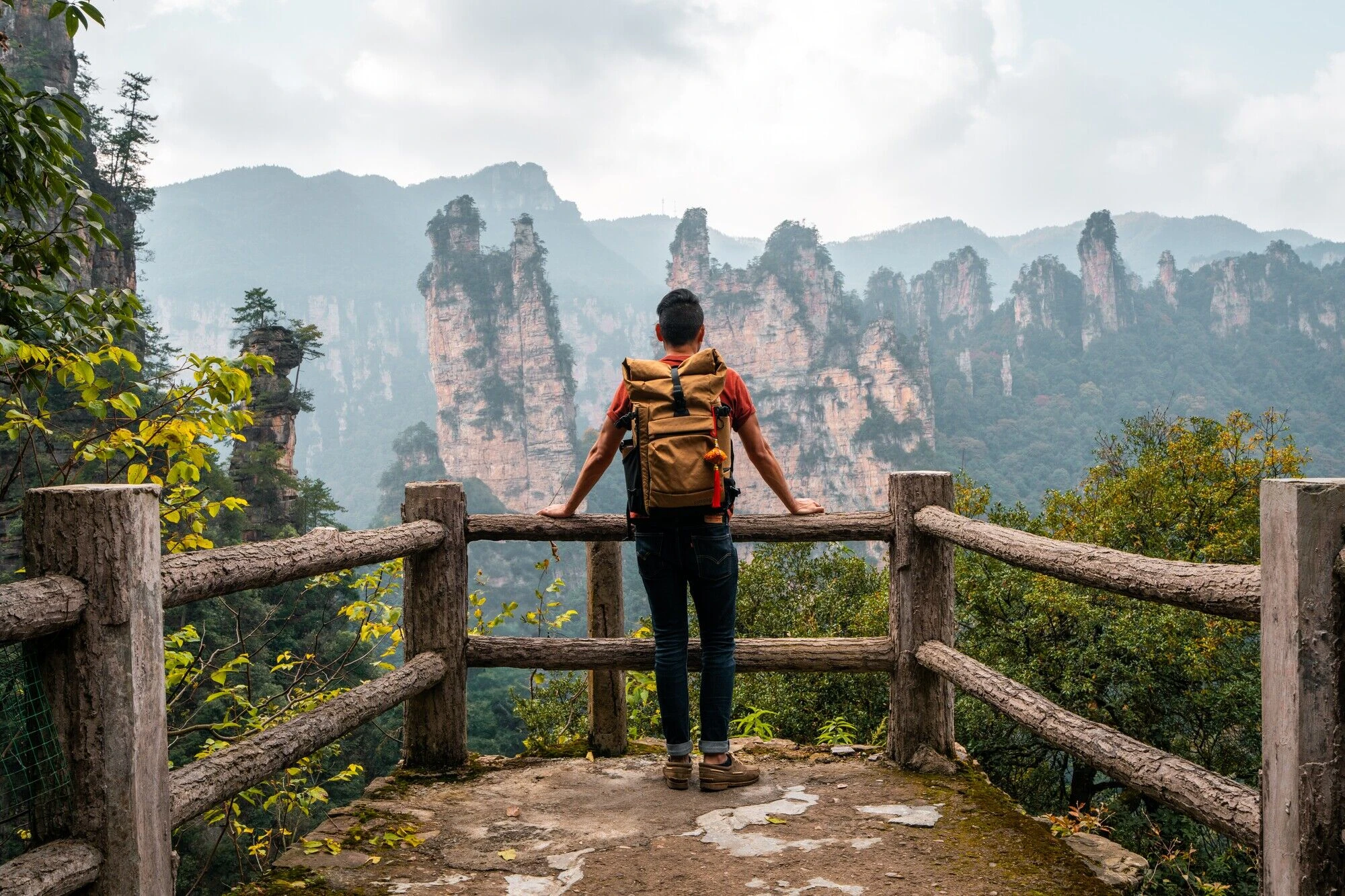



Want to visit Zhangjiajie but don’t know where to start? You’re in the right place. I’ve explored Zhangjiajie twice, once nearly a decade ago, and again recently, and I’ve put together a complete 3-day itinerary to help you make the most of your time in this incredible destination.
From wandering among towering sandstone pillars and hiking through misty mountains in Zhangjiajie National Forest Park, to exploring the charming riverside streets of Fenghuang Ancient Town and Tianmen Mountain, this itinerary will show you how to make the most of every moment in one of China’s most stunning natural destinations. So, without further ado, here’s a complete 3-day itinerary for Zhangjiajie!

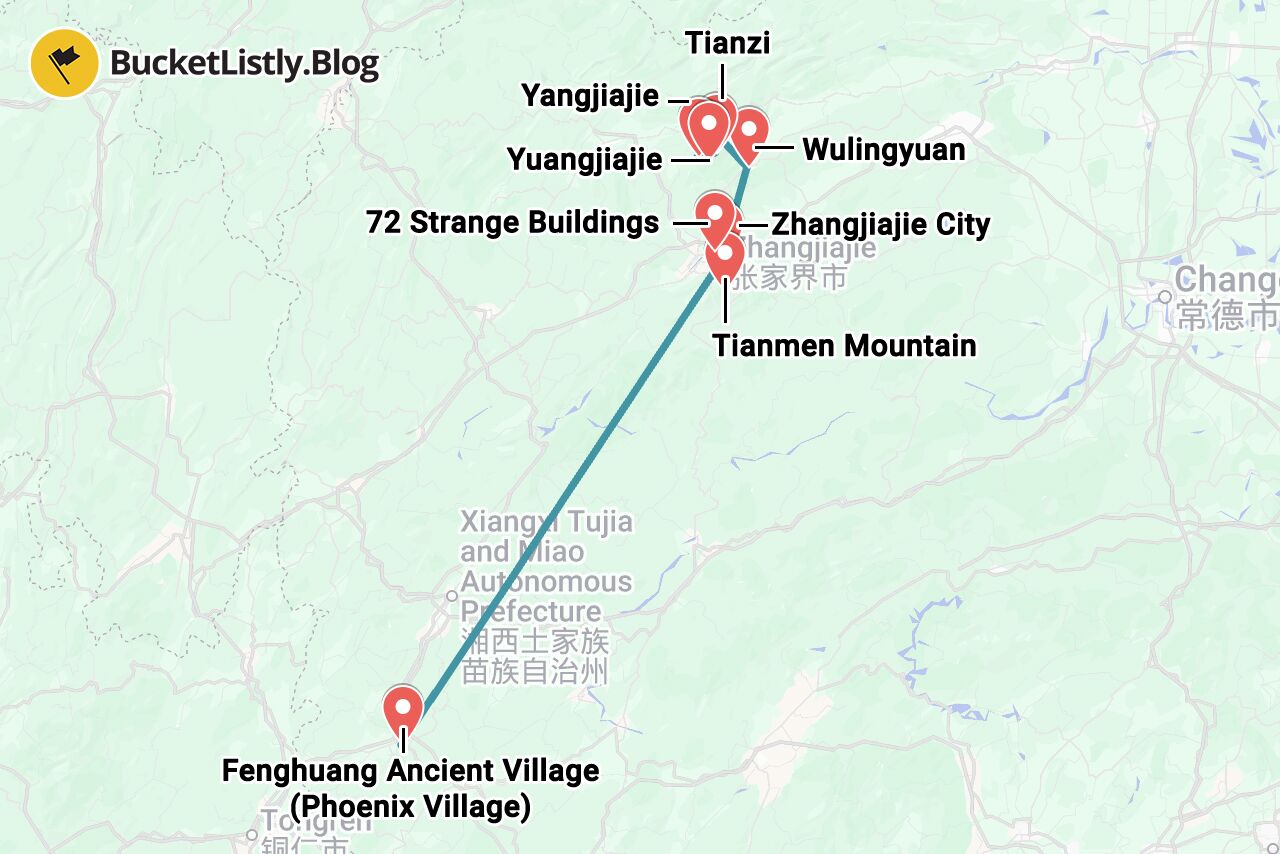
Zhangjiajie 3-Day Itinerary Map
Quick Summary
| ☀️ Day 1: | Exploring Zhangjiajie Forest Park |
|---|---|
| ☀️ Day 2: | Visit Tianmen Mountain |
| ☀️ Day 3: | Spend a Night at Fenghuang Ancient Town |
3 Days Itinerary for Zhangjiajie
Day 1: Exploring Zhangjiajie Forest Park (2 Nights)
- 📍 Stay: A Journey with Mountain , Wind & Hope
- 🕐 Time: 2 Nights
- 📖 Full Guide: A Complete Guide to Zhangjiajie: The Avatar Mountains
This itinerary begins in Wulingyuan, which is the closest town to Zhangjiajie National Forest Park, where we will be spending an entire day exploring. For this itinerary, I highly recommend you begin the day as early as 7 AM, right when the national park is open, so we can beat the crowds and dedicate the entire day to exploring Zhangjiajie and its wonderful peaks.
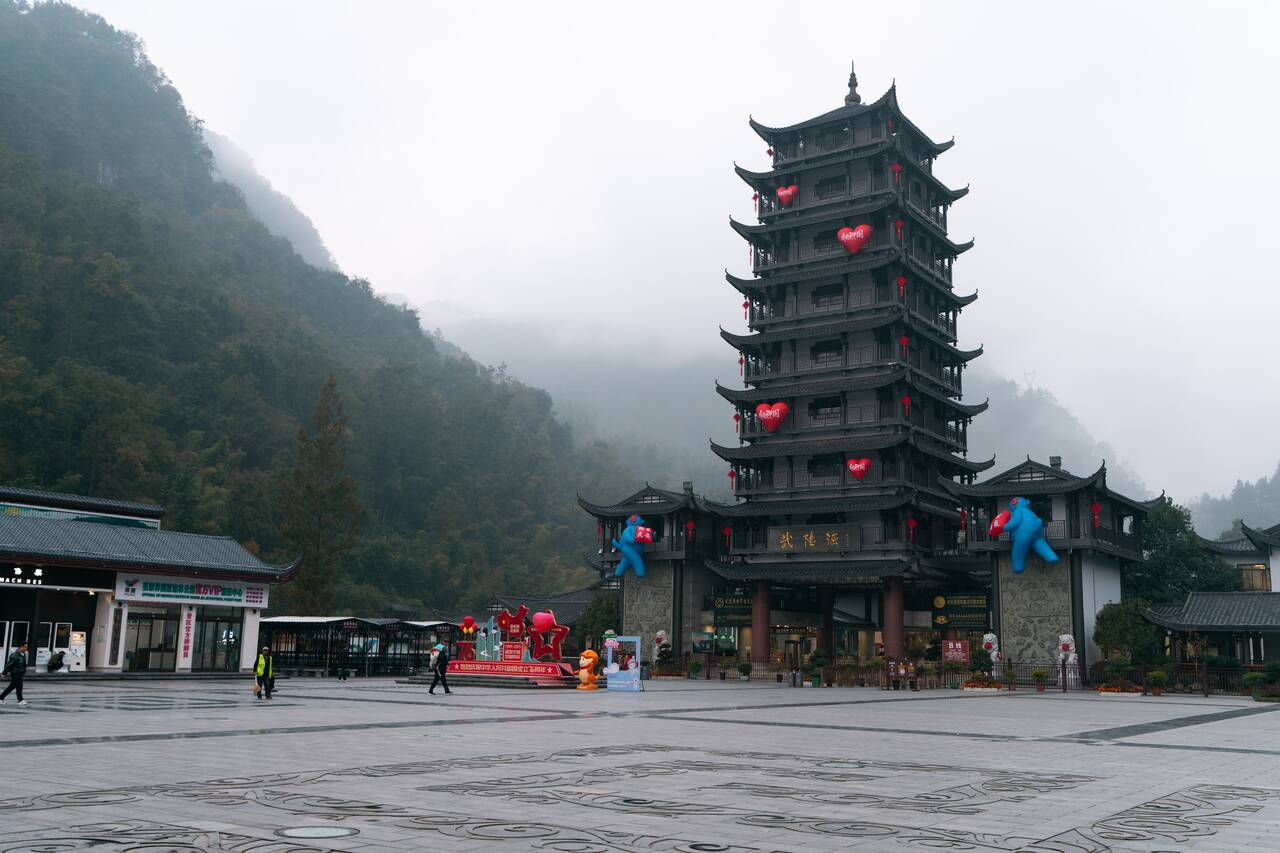
First and foremost, be sure to get the entry ticket and the cable car ticket prior to your arrival at the gate so you can scan your passport and go right in. You can book both tickets from here. Since Wulingyuan is on the East Gate of Zhangjiajie Park, you can walk there in about 5 minutes and be the first to enter the park.
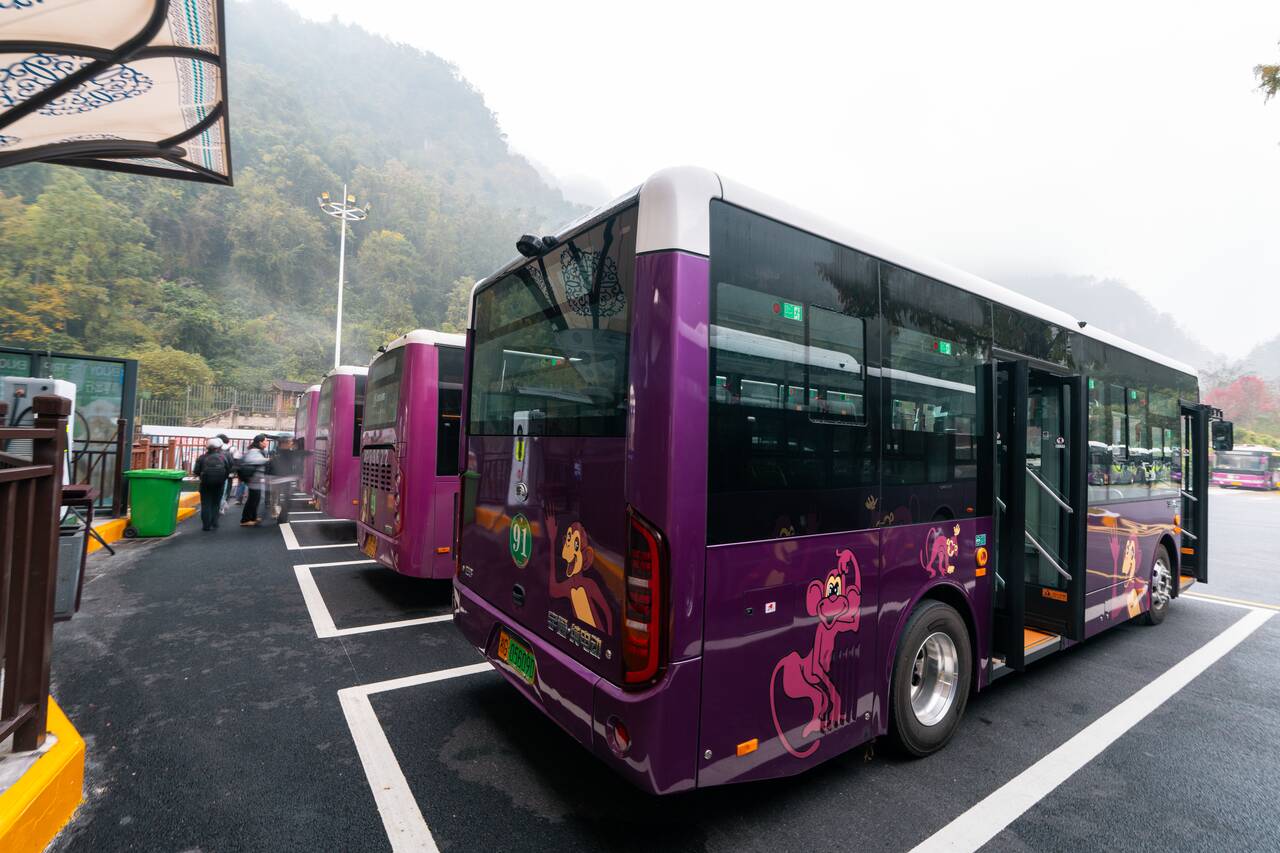
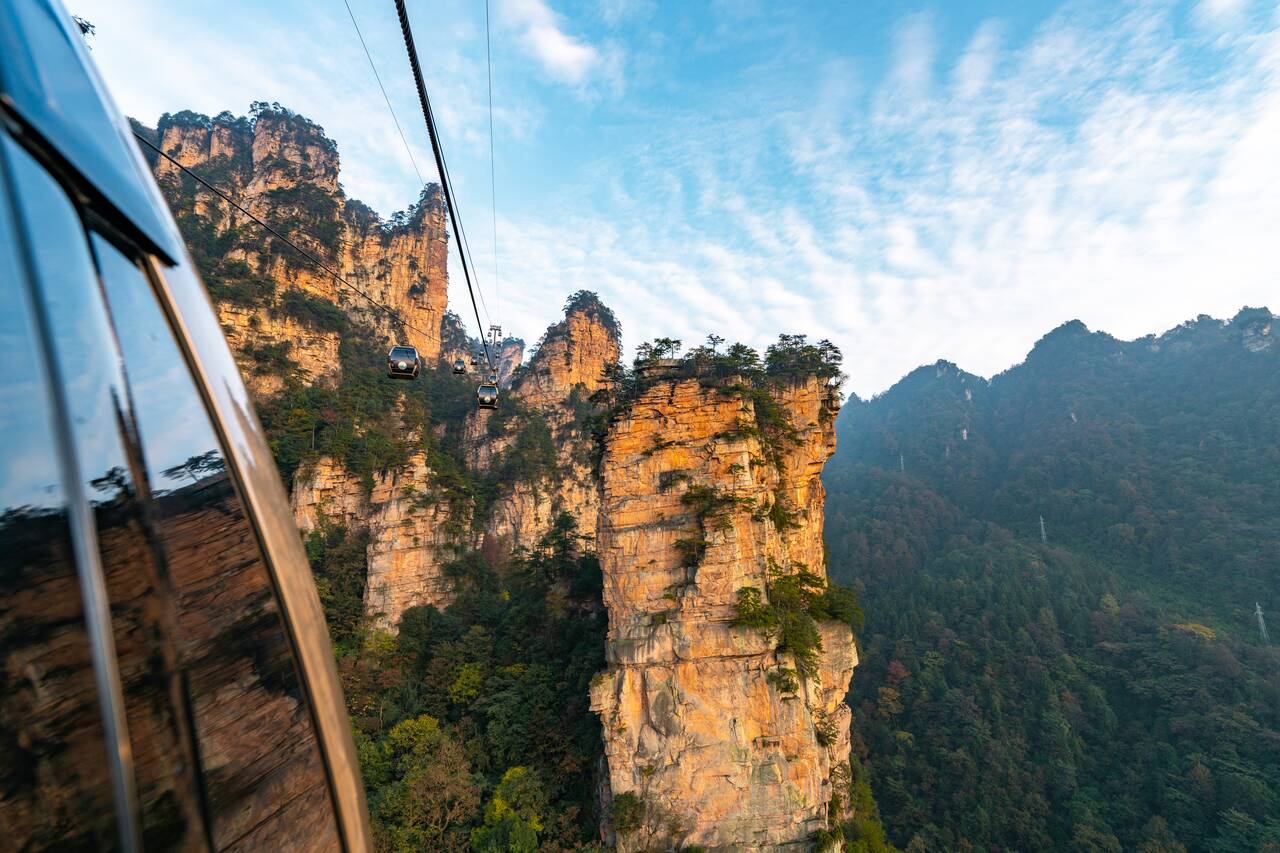
Once inside, you can choose whether to take the shuttle bus to the cable car or the Bailong Elevator. I personally took the cable car first, but you can begin with the Bailong Elevator as well. The overall route remains the same, just in the opposite direction.
- Zhangjiajie Entry Tickets 🏅 Top Pick
- Tianmen Mountain Entry Tickets
- 72 Strange Buidlings Entry Tickets
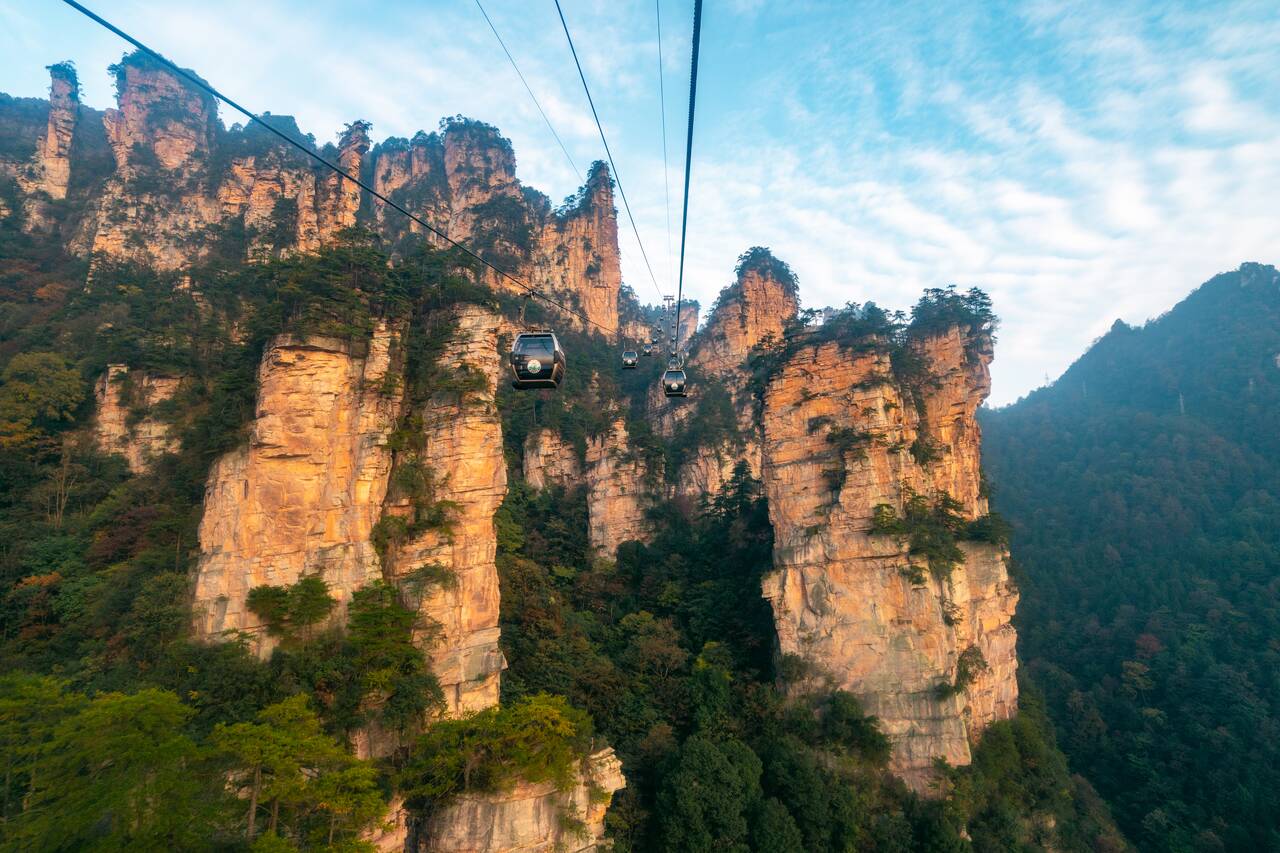
The cable car should take about 25 minutes before you arrive at the upper station. You can walk around and check out the view first before heading to the bus stop and catching the first bus heading to Helong Park, our next stop.
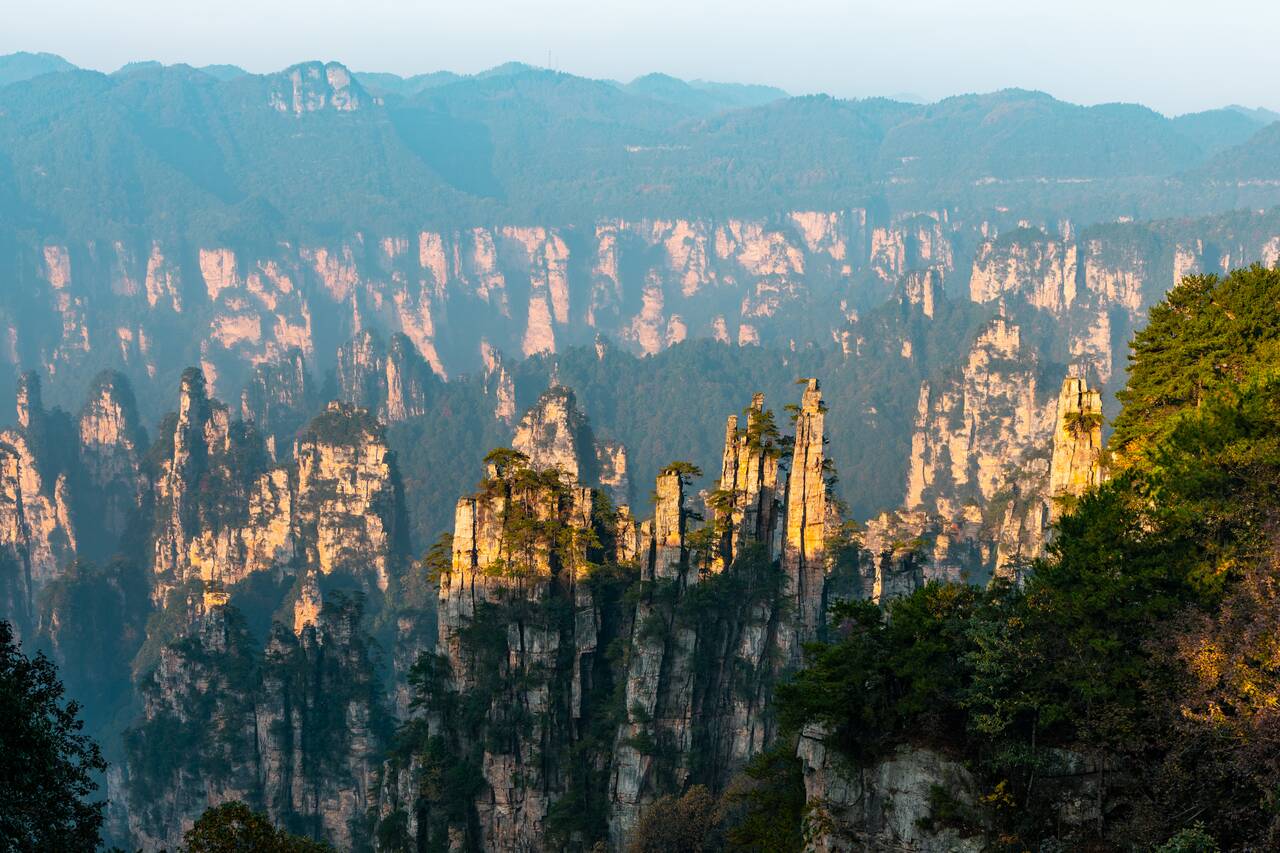
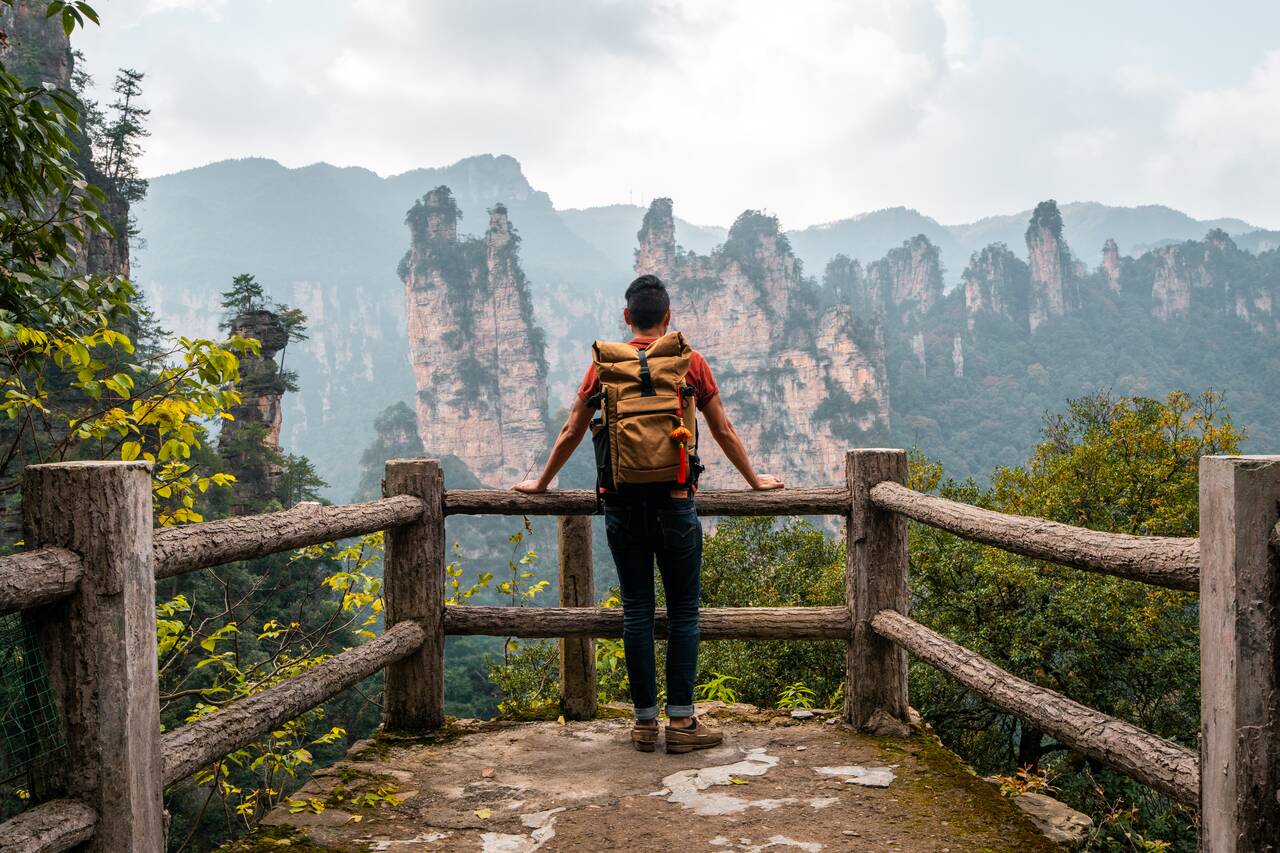
The main highlight of Tianzi Mountain is Helong Park, which offers several incredible viewpoints where you can see some of the mountain’s most unique formations. One of the most famous is the Imperial Brush Peak, a pillar that resembles the tip of a paintbrush and looks especially surreal in the soft morning light.
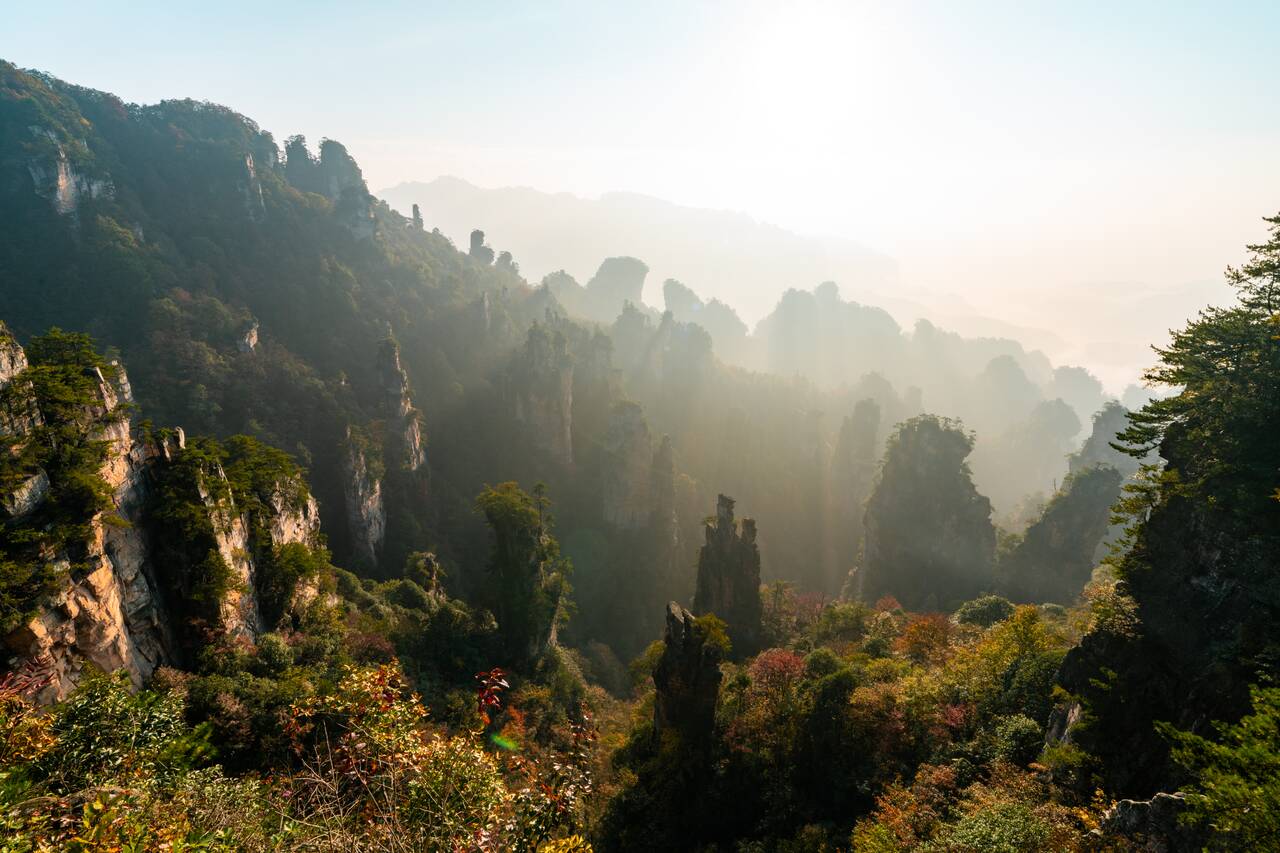
On the opposite side, you will find the Fairy Scattering Flower Mountains, which face east and are a perfect spot to catch a stunning sunrise if you arrive early enough. Many photographers gather here in the morning to capture the dramatic sunrise views.
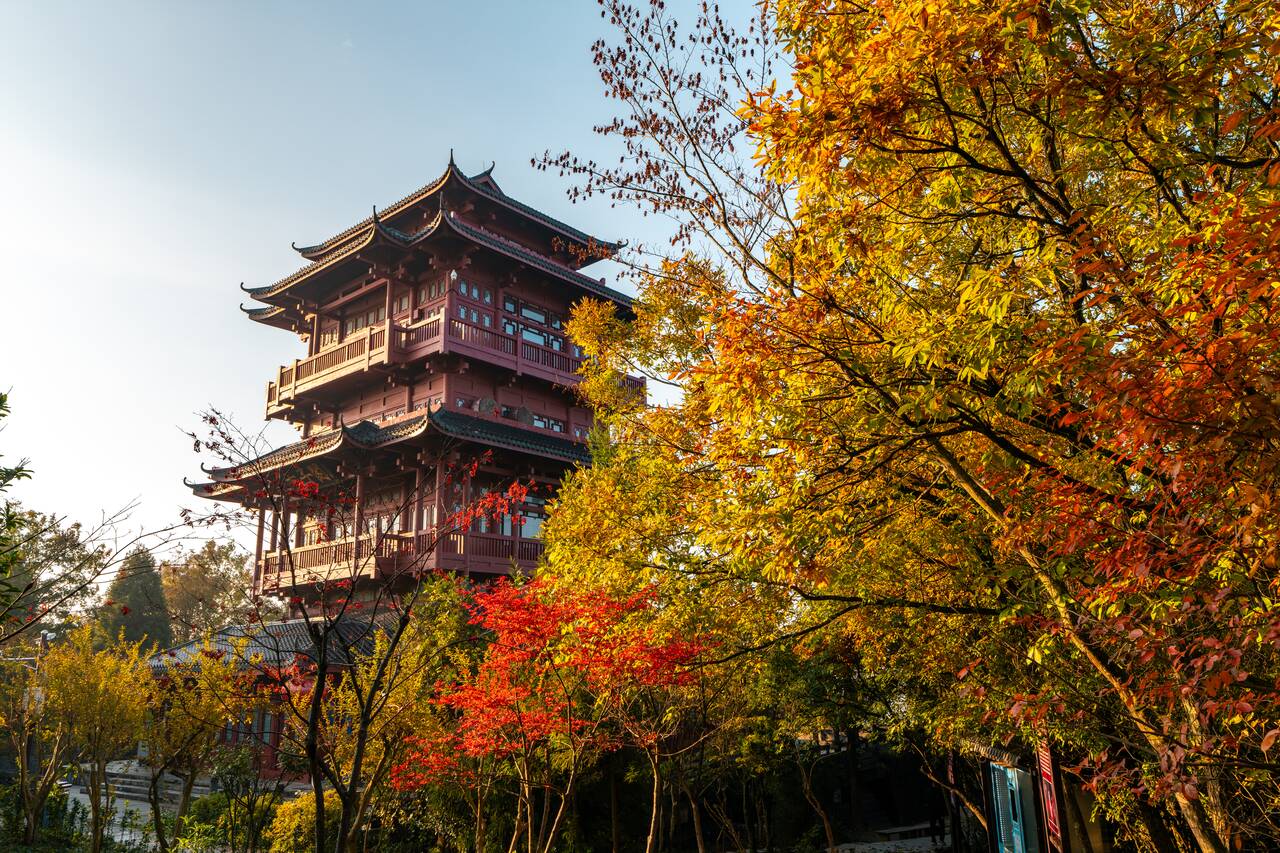
Other than these two viewpoints, there is not much else to see here, aside from a few spots where you can stop for breakfast before continuing to other parts of the park. One thing to note is that this is also where you can start the hike down to the 10-Mile Gallery. You can choose to do this hike after visiting the other areas on the mountain, so it’s best to skip it for now.

After Helong Park, you can head over to the same shuttle bus stop and get on another one to go to Yangjiajie Mountain. After about 20 minutes, the shuttle bus will stop first at Daguantai Bus Stop, which is where all the accommodations inside the park are located. Do not get off here as there is not much to see except a few accommodations and maybe one or two viewpoints that are not particularly impressive.
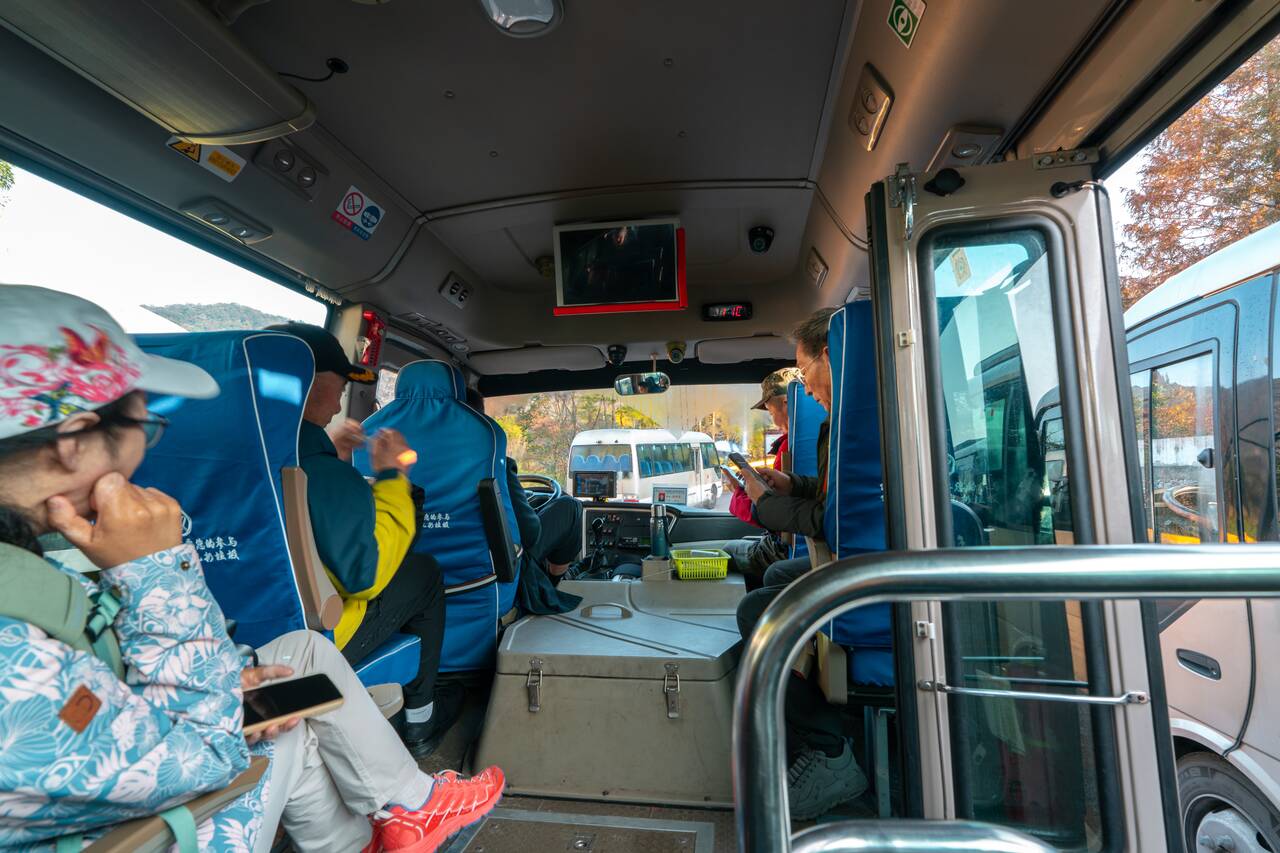
After this stop, the bus will continue for about 10 minutes to the next stop, which is Yangjiajie, where you can hike around a bit and visit places like Tianbo Mansion, etc.
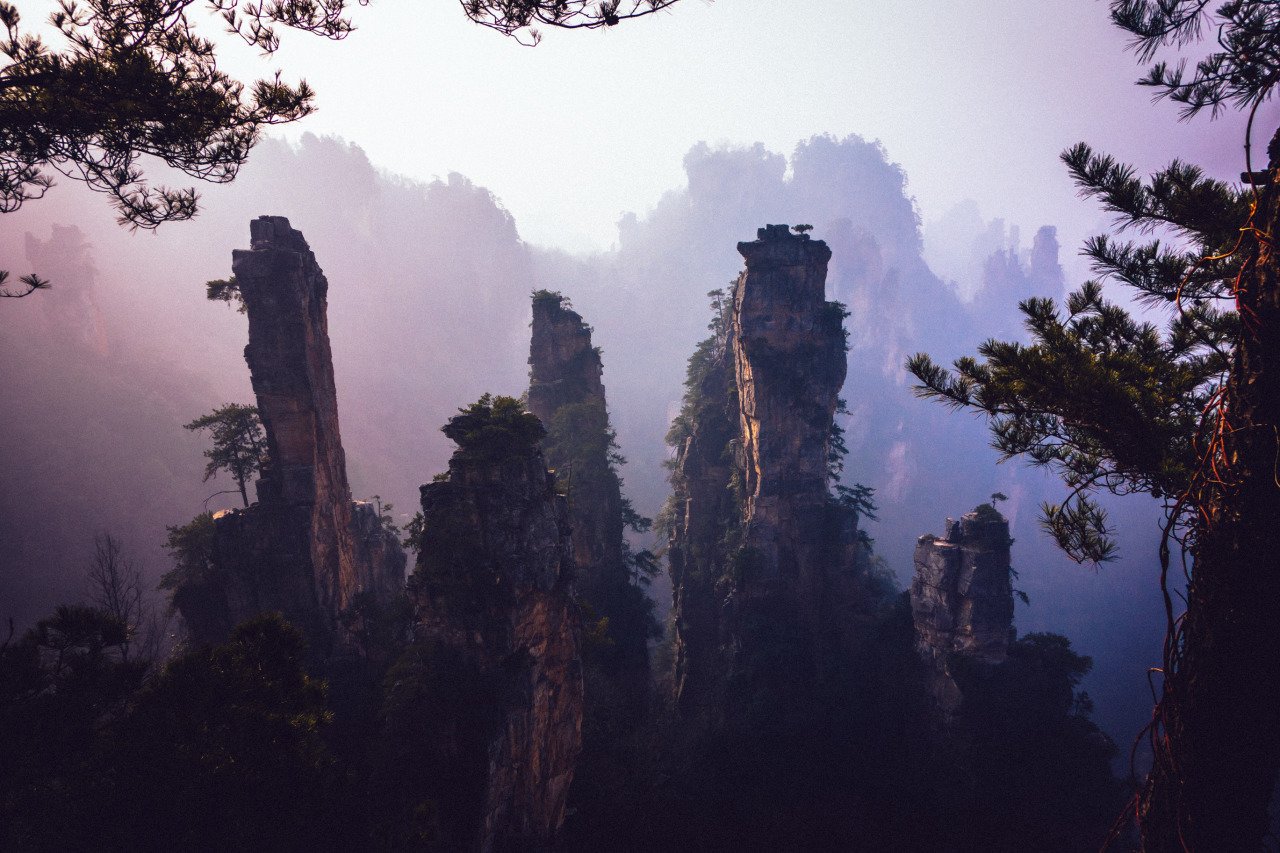
Tianbo Mansion is an excellent viewing platform for taking in the stunning scenery. From there, you can see ten parallel stone wall peaks rising among the green trees, resembling city walls. If you have a fear of heights, I would not recommend visiting, as reaching the viewpoint requires climbing down a narrow railing and ascending a separate peak. Beyond the viewpoint, there isn’t much else to explore, so you can head to Yuanjiajie next once you’re done.
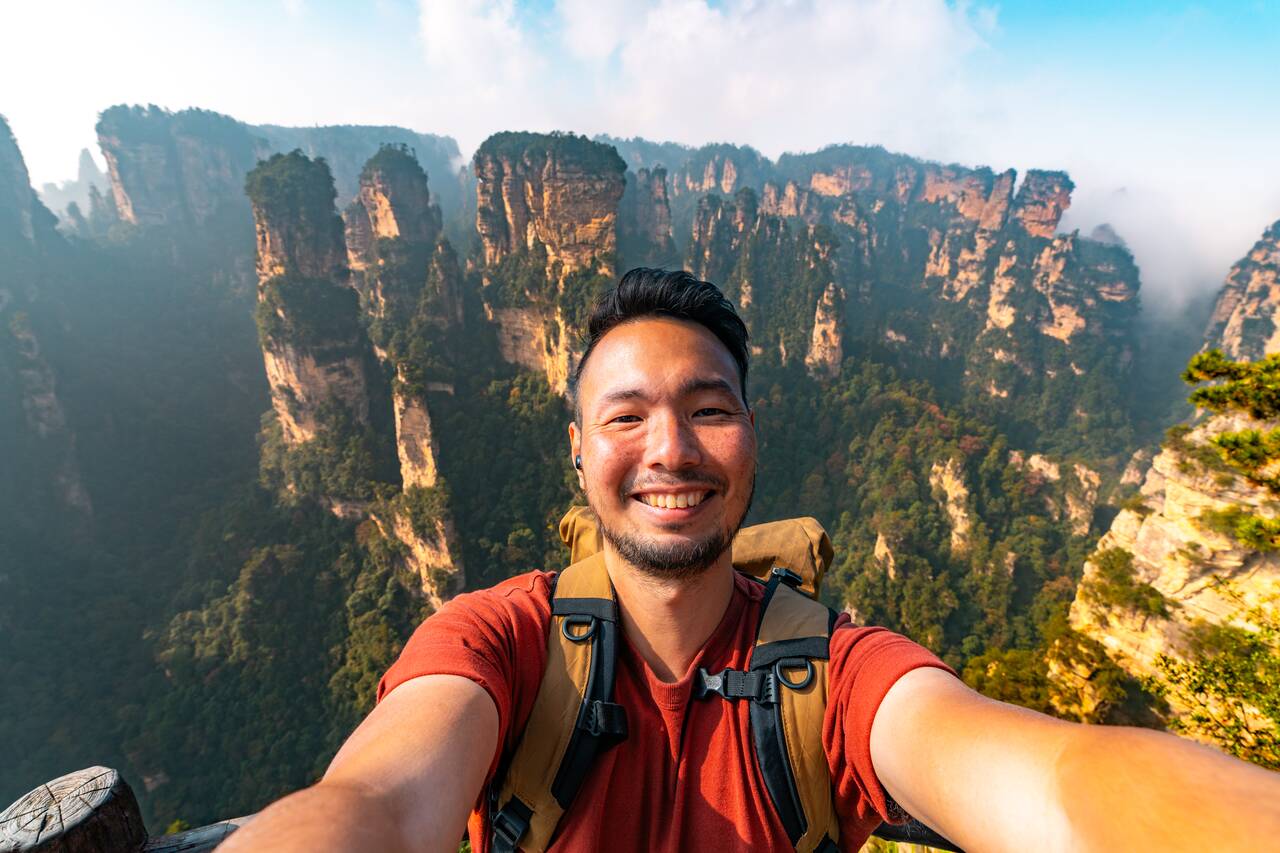
After exploring Yangjiajie, you can take another shuttle bus to Yuanjiajie Mountain, which is arguably the most scenic area of the park and offers much more to see and do compared to other parts. If you are short on time, you could even skip Tianzi and Yangjiajie altogether and focus solely on Yuanjiajie Mountain.
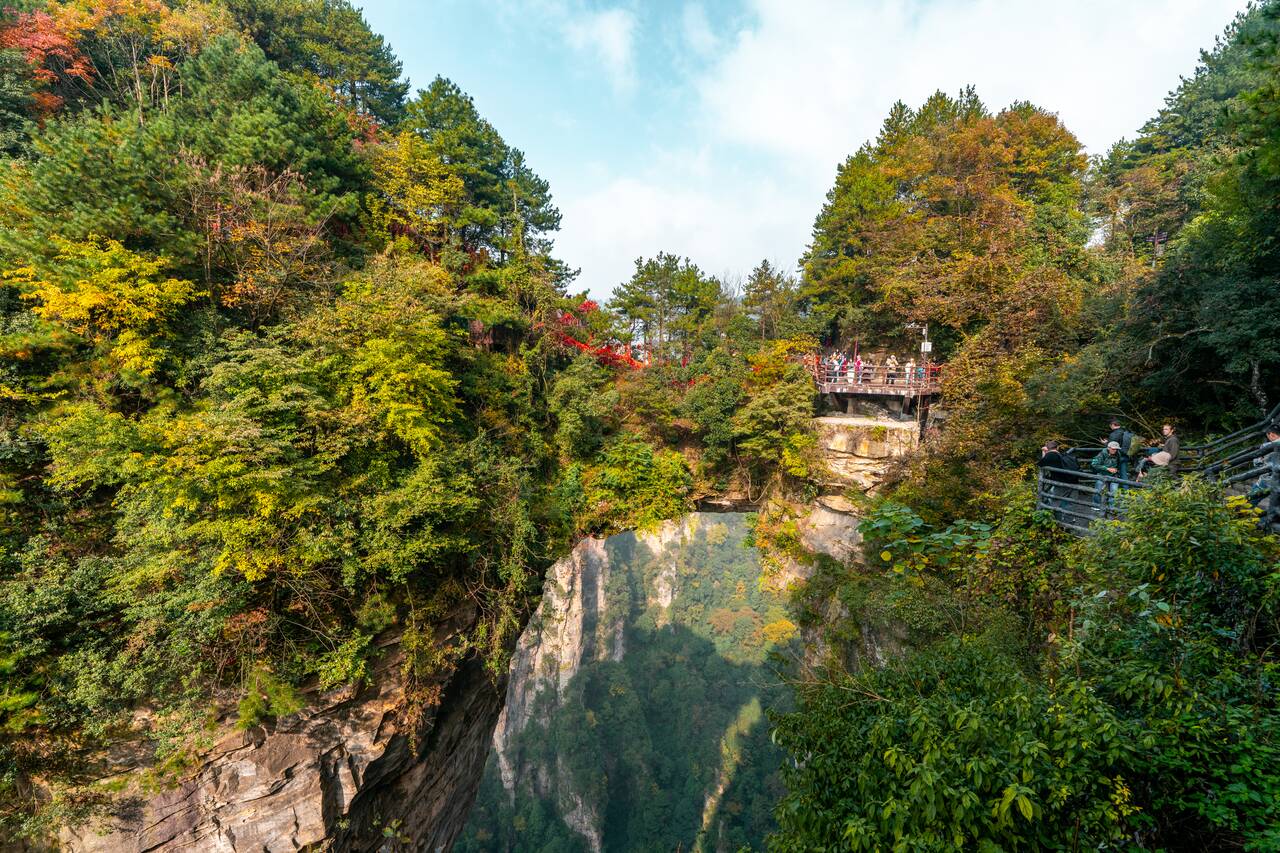
The shuttle bus will drop you off at Tianqiao Bus Stop, and from there, you can begin exploring Yuanjiajie Mountain starting with the Greatest Natural Bridge, a rocky natural bridge that connects 2 mountain peaks together with a vertical drop of a whopping 400 meters!
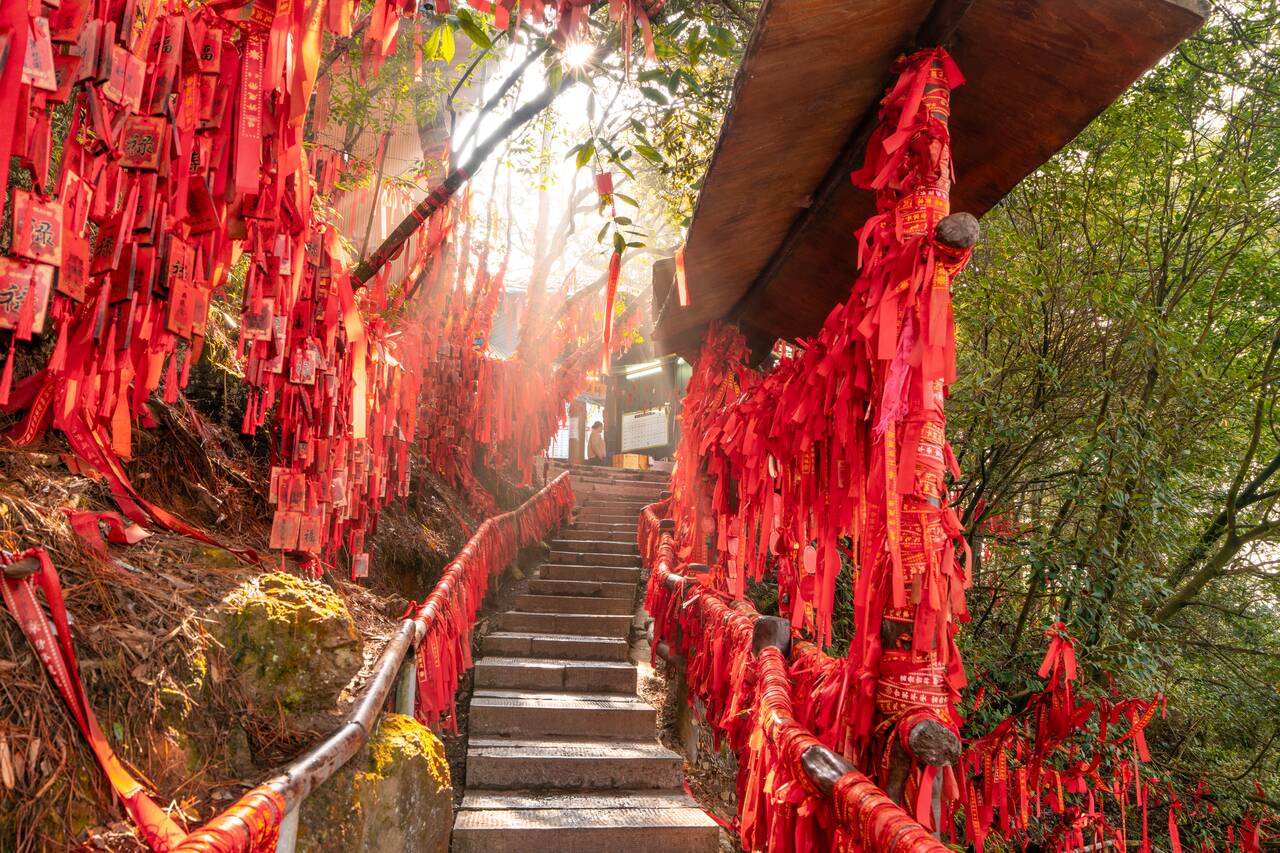
After crossing the bridge to the next peak, you’ll find a small shrine where you can pay your respects and enjoy the viewpoints along the walking path that wraps around the sandstone peak. The path forms a loop, allowing you to circle the peak and continue on to the next viewpoint.
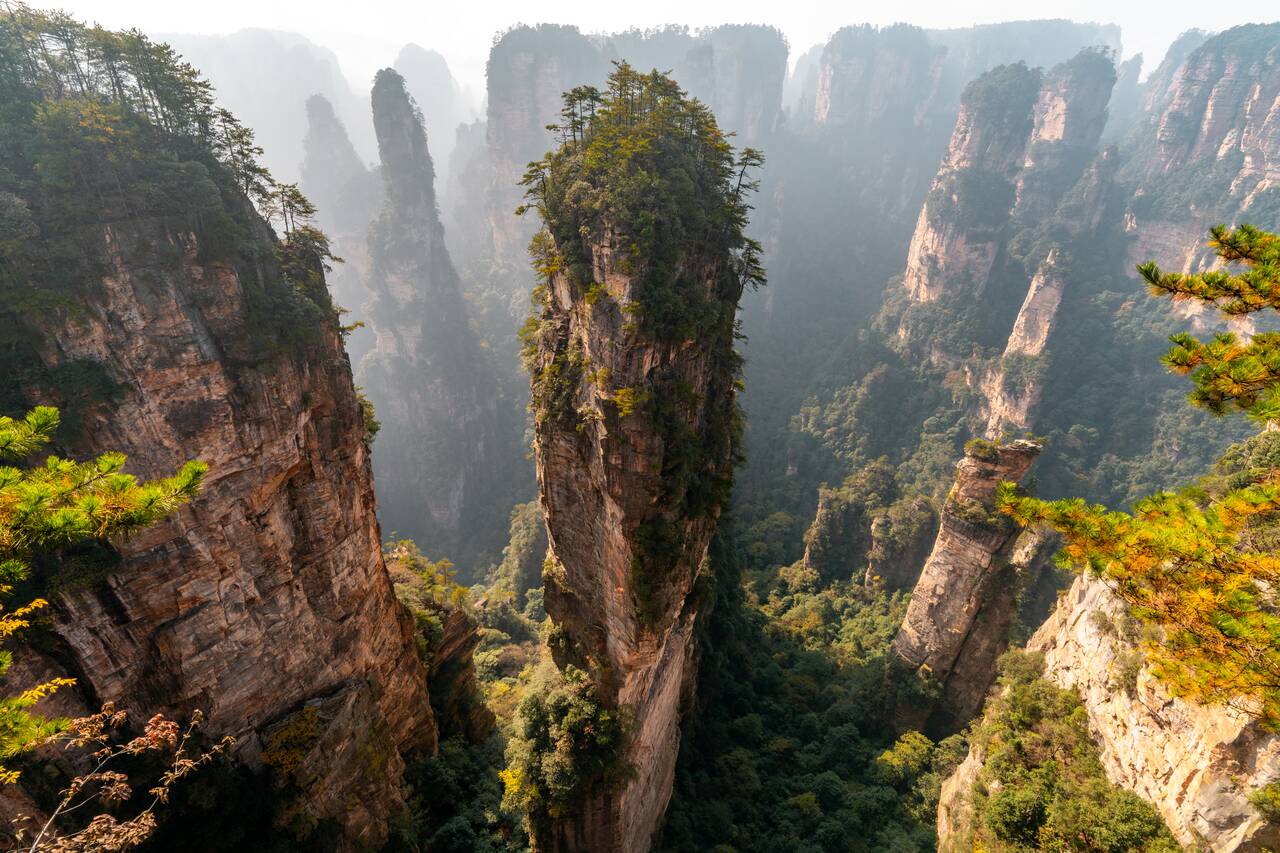
Afterwards, you can continue along the cliffside path, taking in stunning views such as the Five Ladies Expedition Rocks and many others. One of my favorite viewpoints here is the Hallelujah Mountain, which inspired the dreamy landscapes in the movie Avatar. The solitary vertical pillar rising amidst the picturesque scenery is truly a sight to behold.
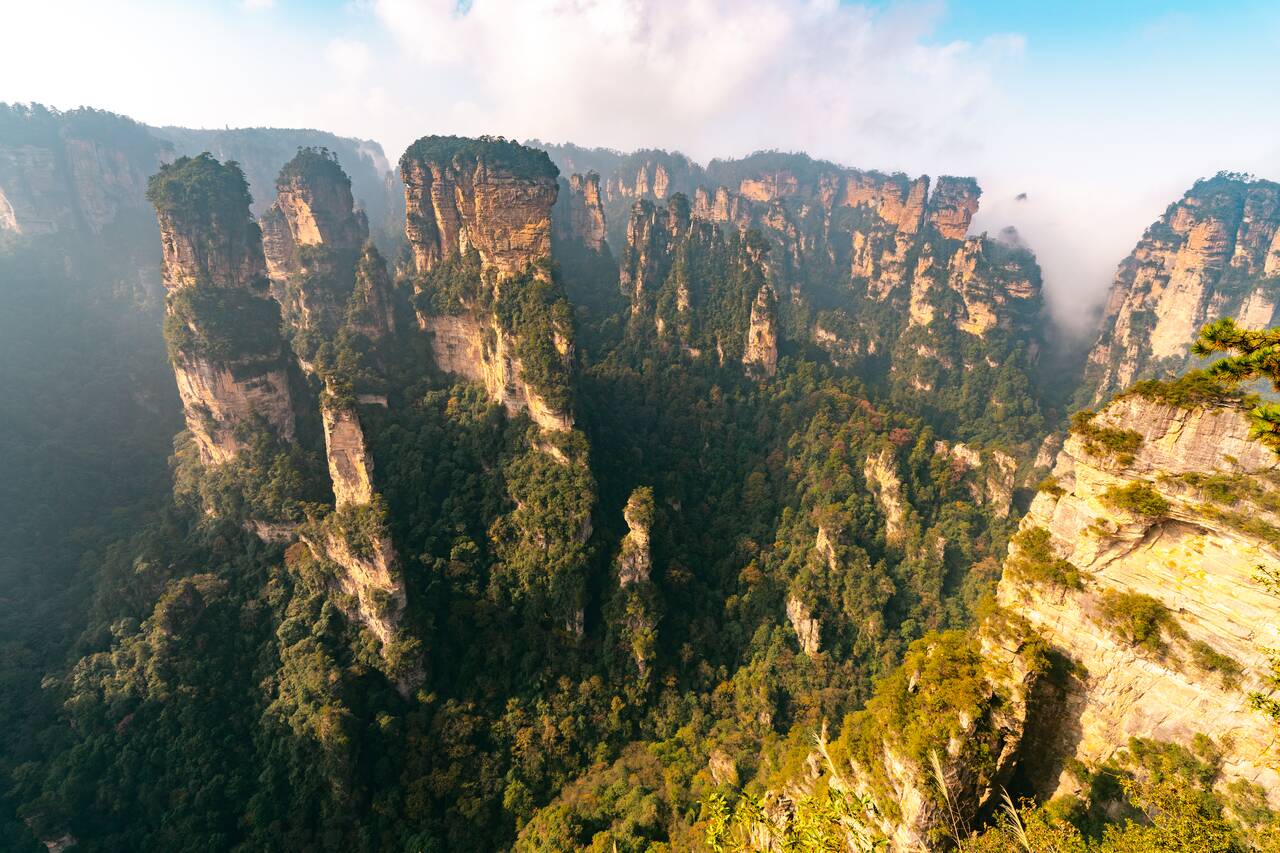
There are countless viewpoints along the way, and you could easily spend at least an hour or two exploring Yuanjiajie Mountain alone. When you reach the end of the trail, you have a few options for getting down. The fastest way is to take the Bailong Elevator, which is quick but often crowded. However, this means you might miss one of the best parts of Zhangjiajie: the peaceful trails where you can hike down and escape the crowds.
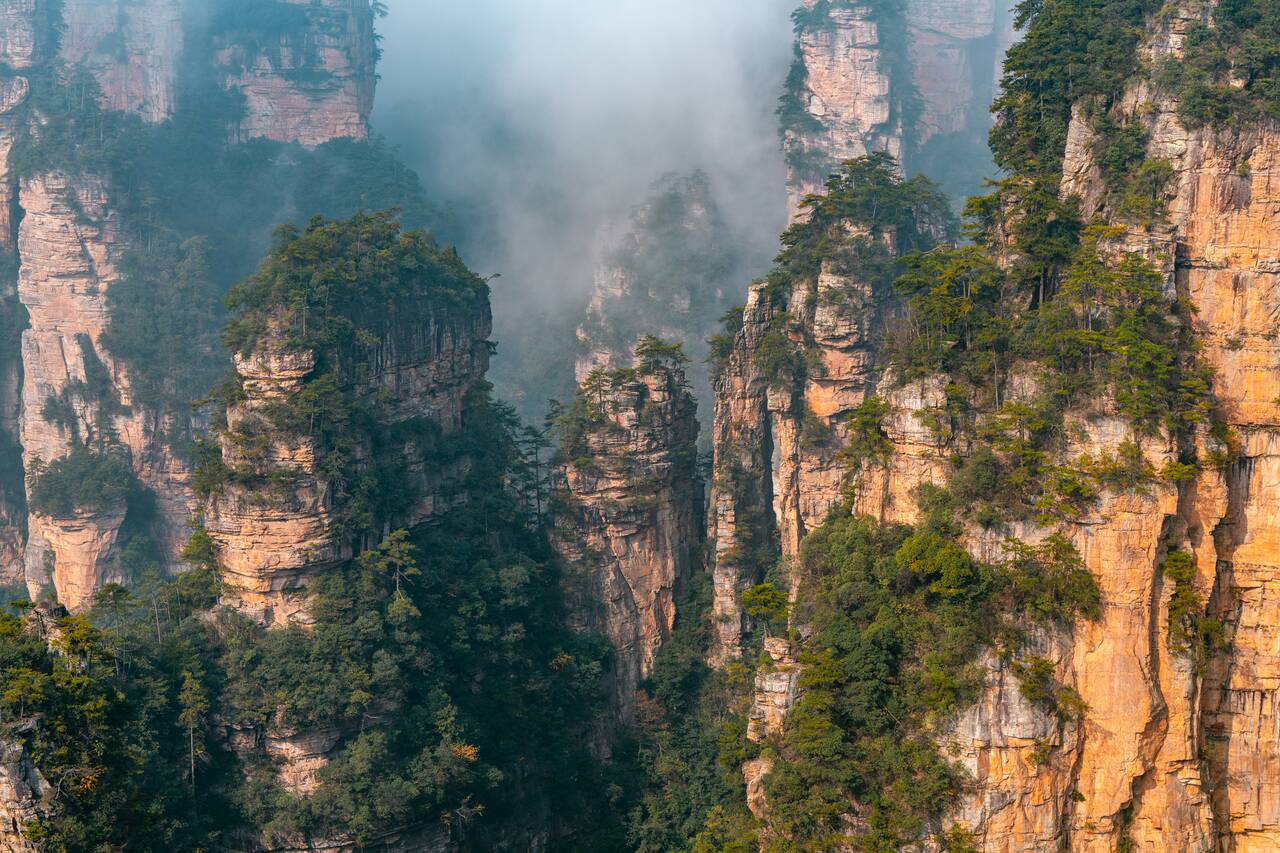
For those who want to hike down, make sure you have at least 2–3 hours to spare, as it will take that long to descend the mountain. You can choose between two trails. One is the Golden Whip Stream, a beautiful path that follows a peaceful river, with pavilions along the way where you can rest. This route starts right at the end of Yuanjiajie Mountain, making it perfect if you are following my suggested route beginning with the cable car.
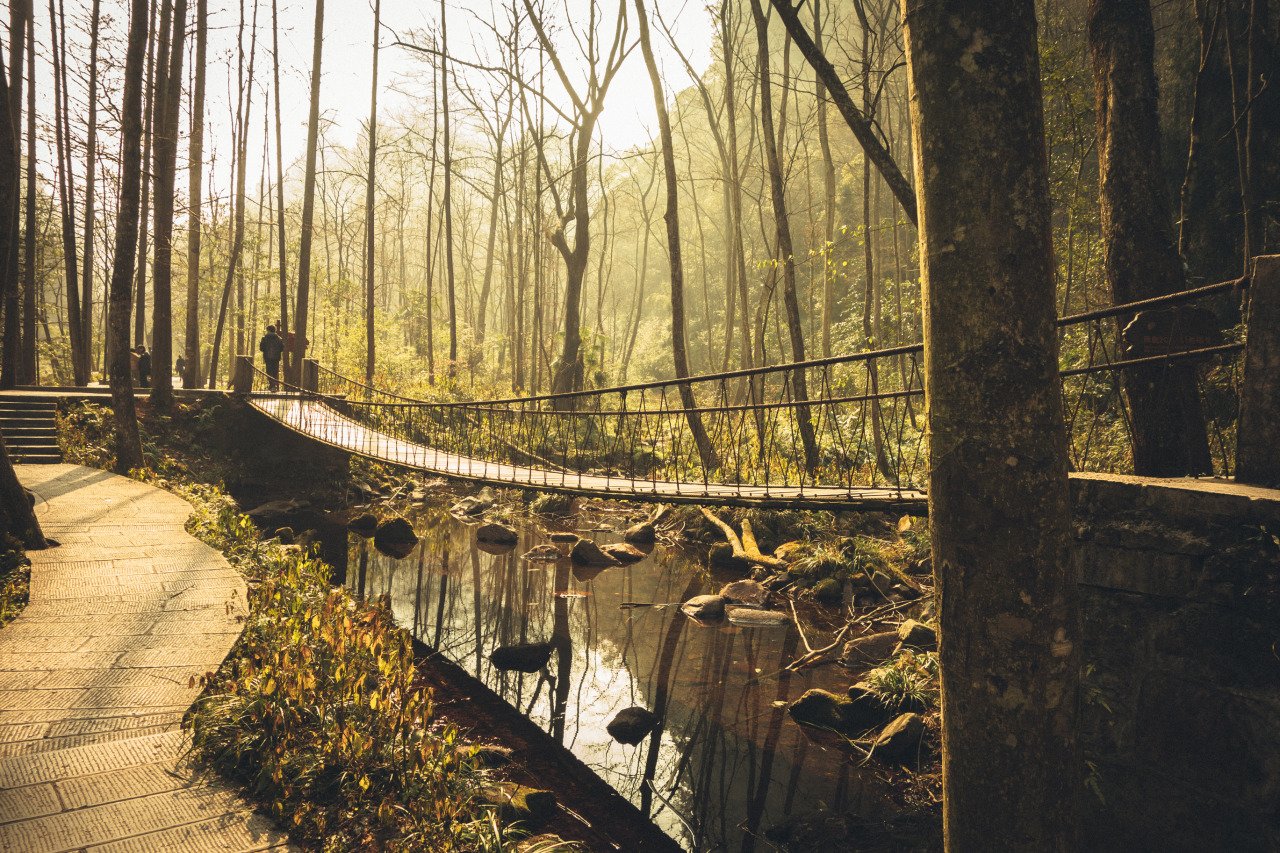
Once you hike down to the river, make sure you follow the river east so that you will end up near the lower station of the Bailong Elevator and you can take the shuttle bus back to the East Gate. Otherwise, you might end up at the South Gate and you will have to find a bus to take you back to Wulingyuan yourself.
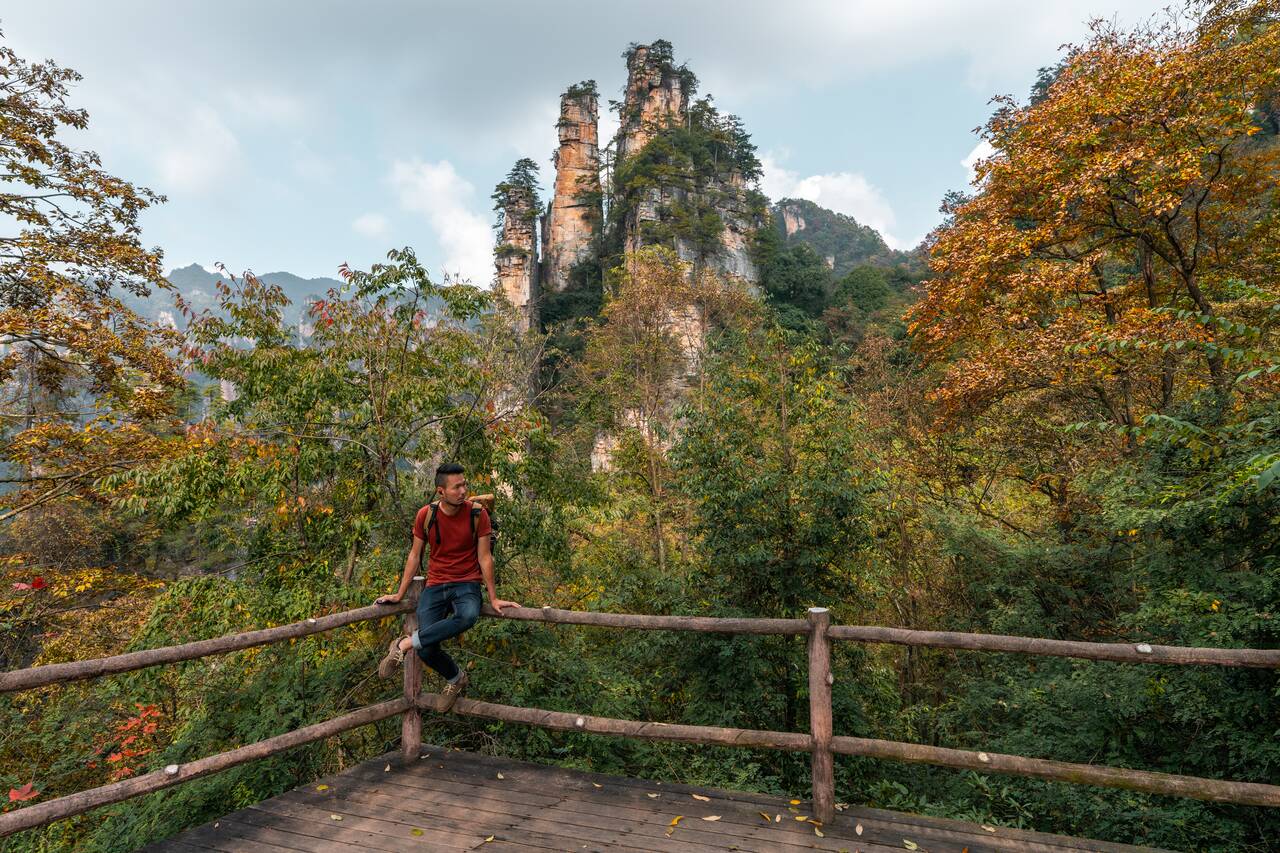
The second option is to hike down from Helong Park, the first stop on our route. This trail takes about 2.5 hours and leads to the 10-Mile Gallery, a beautiful area surrounded by stunning sandstone spires. Hiking here allows you to admire the formations from the ground rather than from above.
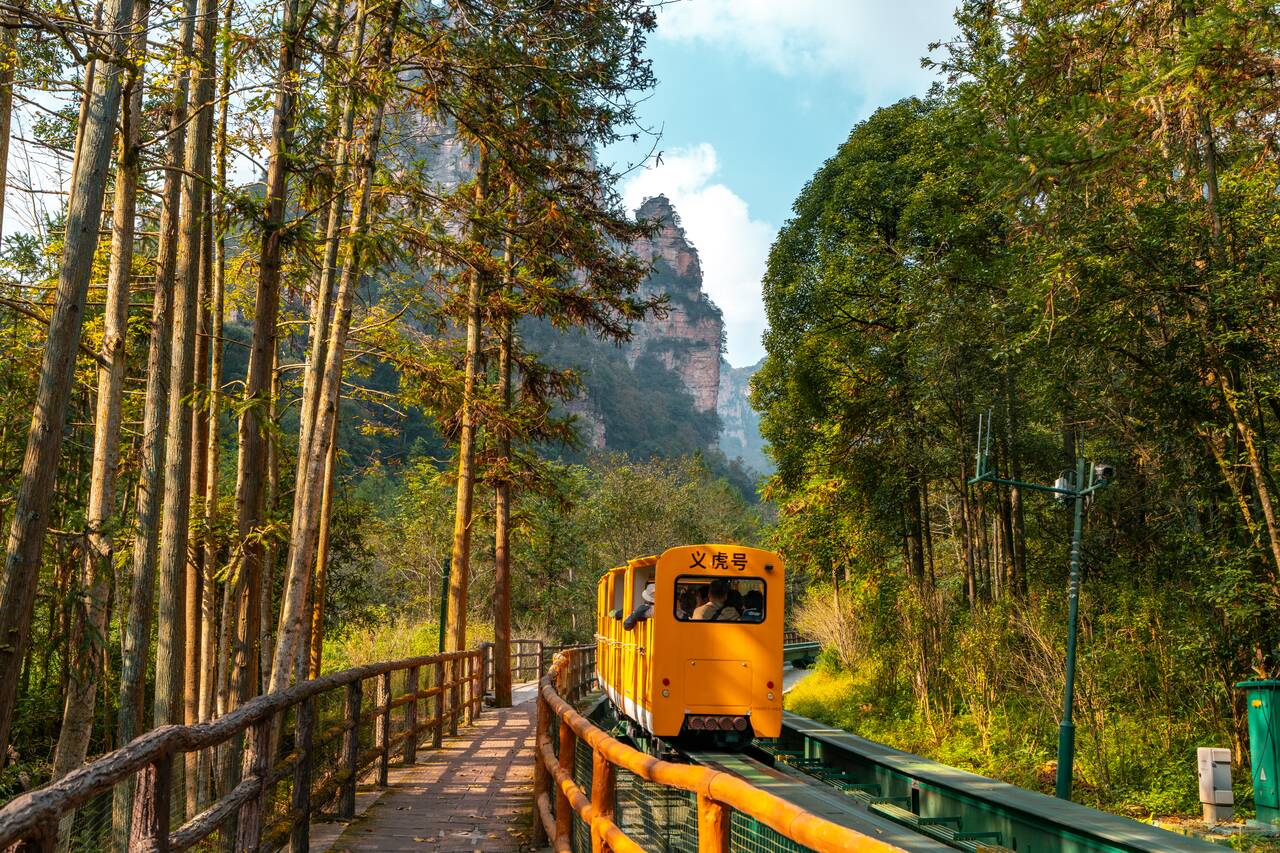
From the 10-Mile Gallery, you can either take the light rail to the bus stop to catch a shuttle out, or you can walk along the light rail and enjoy the scenery at your own pace. The walk is very easy, and I highly recommend taking it instead of the light rail.
Hiking down the 10-Mile Gallery is ideal for those who start their journey from the Bailong Elevator and want to avoid paying extra for the cable car. Even if you begin at the cable car, you can take the shuttle bus back to Helong Park in about 30 minutes and start your hike down from there.
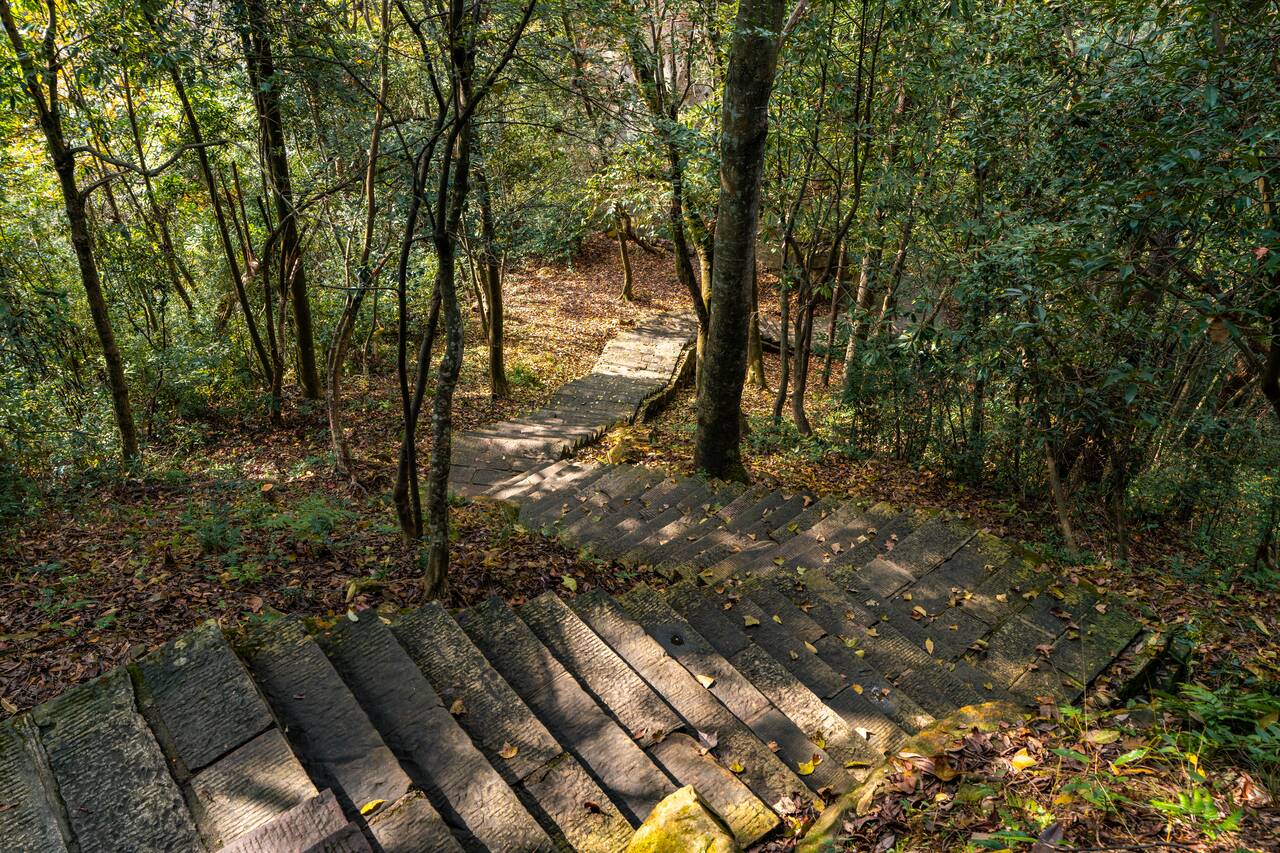
The first time I visited, I hiked the Golden Whip Stream, and the second time, I went down to the 10-Mile Gallery. Both trails were beautiful in their own way and offered a perfect escape from the crowds. I remember seeing fewer than ten people during the entire 2.5-hour hike on each trail, and there are several amazing viewpoints along the way that many people miss.
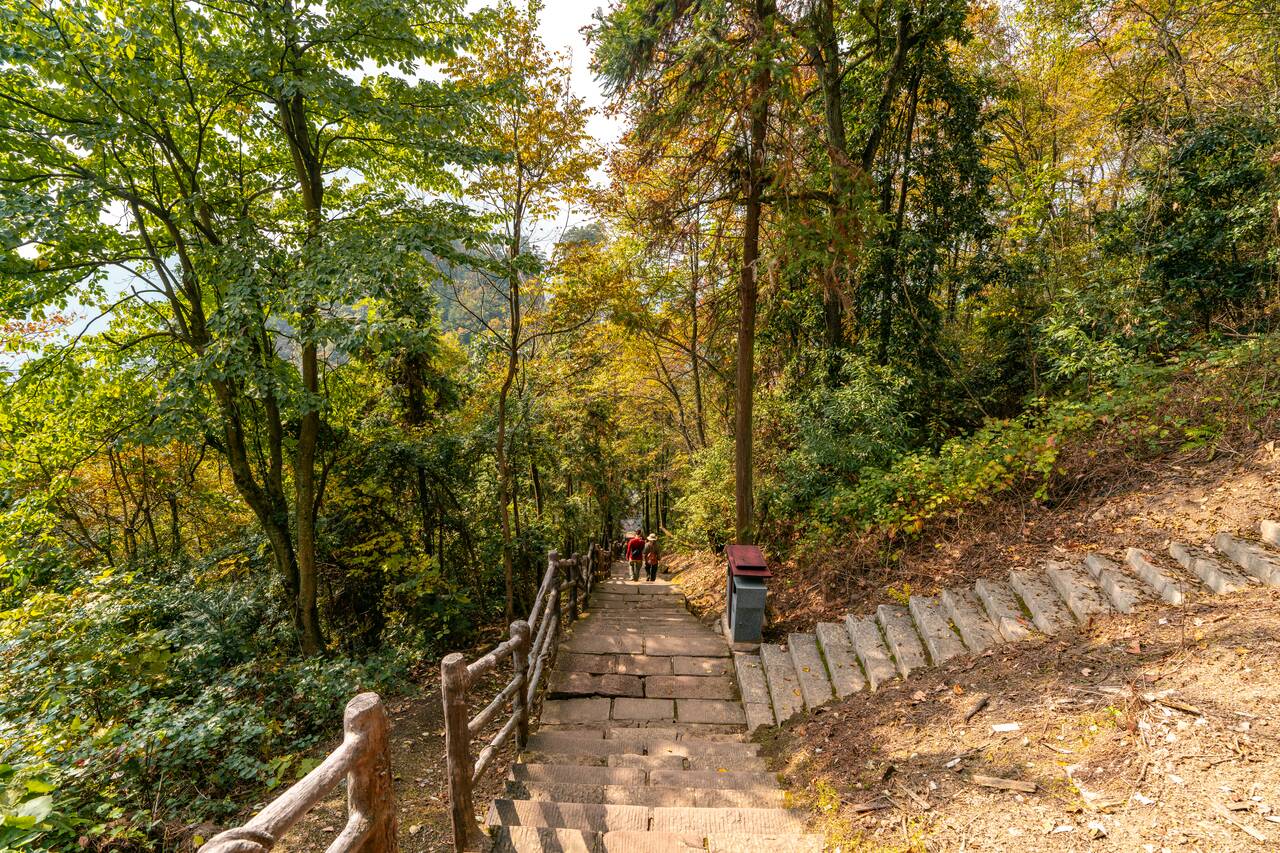
Personally, hiking down was my favorite part of Zhangjiajie National Forest Park. It let me enjoy the scenery in peace, away from the crowds that can sometimes feel overwhelming.
You don’t need to do both trails, one is enough to experience on the way down. Once you finish the hike, you can take the shuttle bus to the East Gate, exit the park, and head back to your accommodation, wrapping up your first day here.

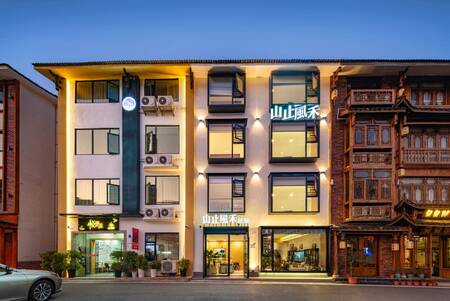
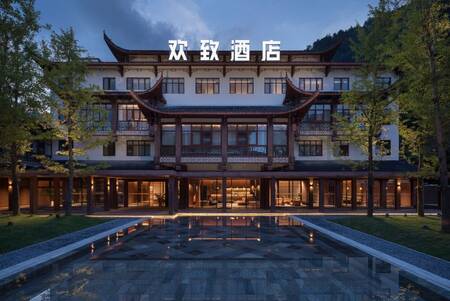
Where to Stay in Wulingyuan?

Day 2: Visit Tianmen Mountain (1 Night)
- 📍 Stay: YICenXinSu Guesthouse(Zhangjiajie Tianmen Mountain Ropeway)
- 🕐 Time: 1 Night
- 📖 Full Guide: Visiting Tianmen Mountain: A Complete Travel Guide
On your second day, you can wake up as early as 6:30 AM and use Didi to get yourself a taxi to Zhangjiajie City, where we will be spending our second day. It should take about 40 minutes to get to the city, and you can head over to your hotel early, drop your bags, and head out to catch a cable car to Tianmen Mountain.
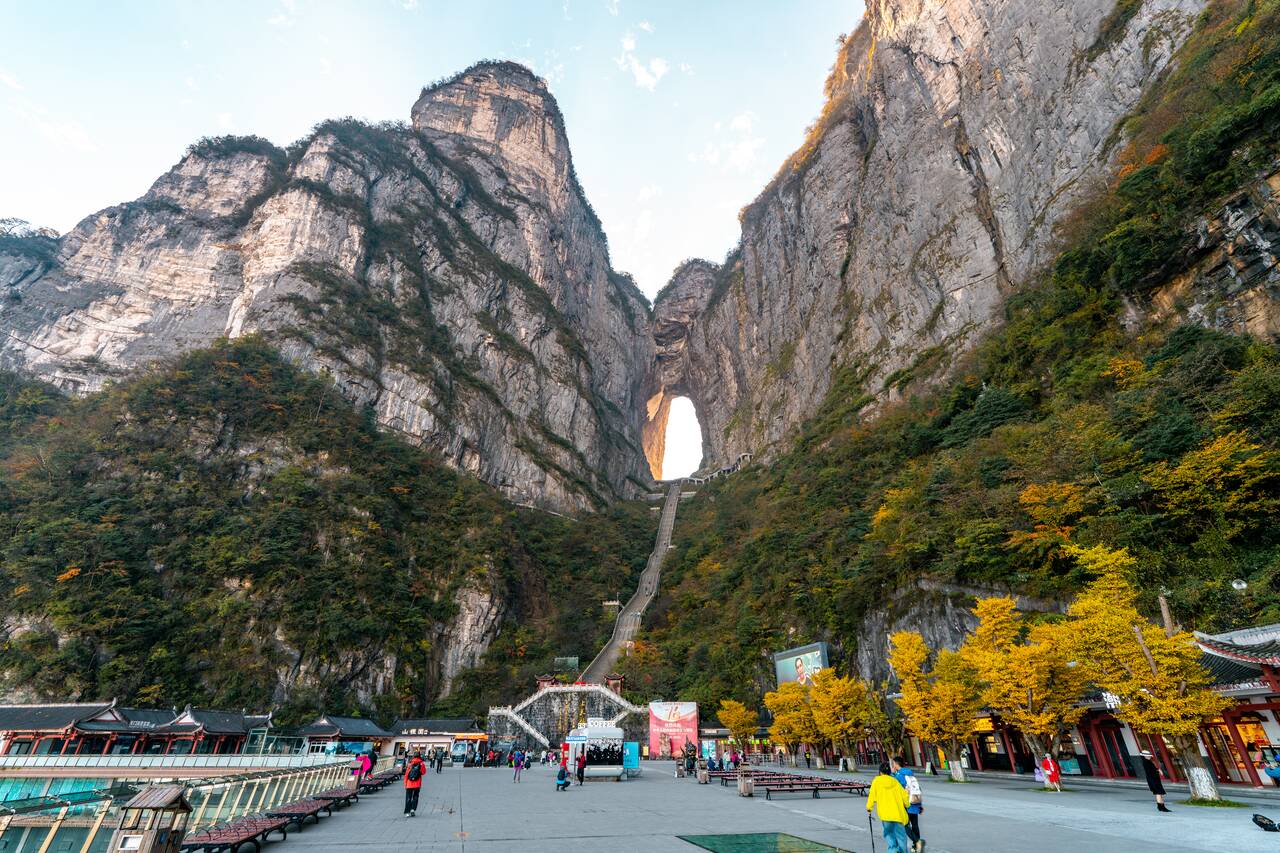
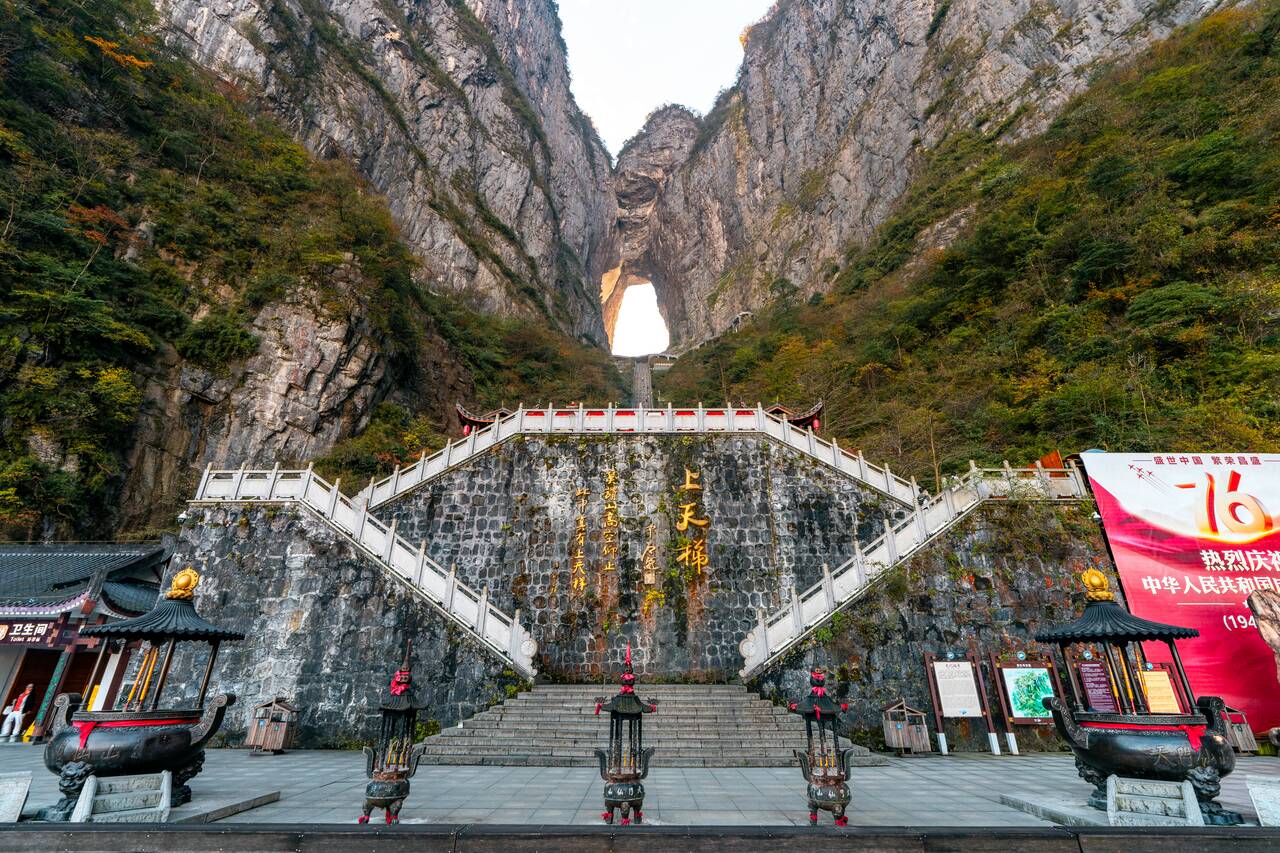
Tianmen Mountain is absolutely incredible and definitely a must-visit while you are in Zhangjiajie. Even if you thought you had seen all the awesome sights in Zhangjiajie Forest Park already, you will still be blown away by Tianmen Mountain and its iconic cave, also known as the “Heaven’s Gate”, a massive natural archway that rises nearly 130 meters above the ground.
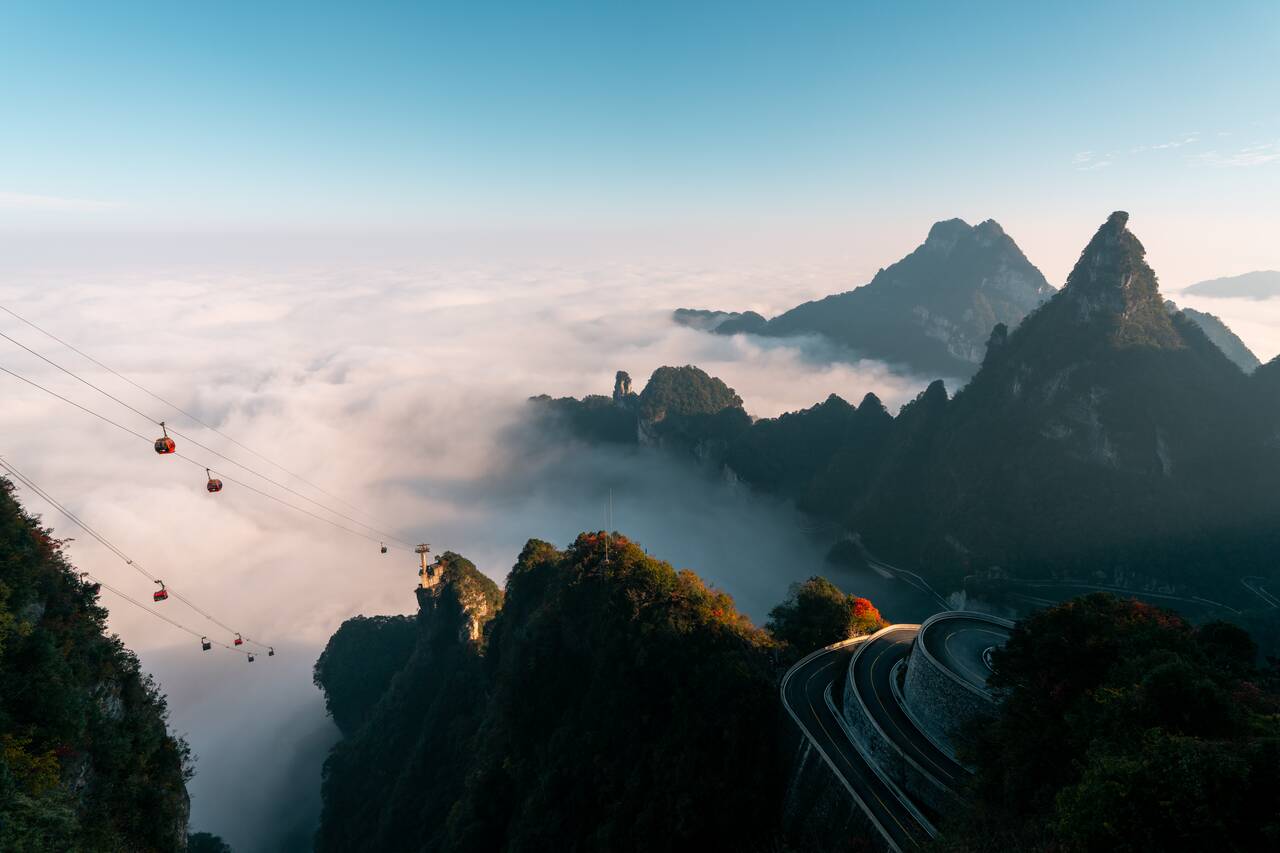
The mountain is also known for its glass skywalks, perched along cliff edges, as well as its cable car ride to the top, which is considered one of the longest in the world and provides panoramic views of the surrounding peaks, forests, and cityscape. While you are up there, there are tons of hiking trails that wind through lush forests and past stunning viewpoints that you can take. It is a perfect place to visit, especially on a nice clear day.
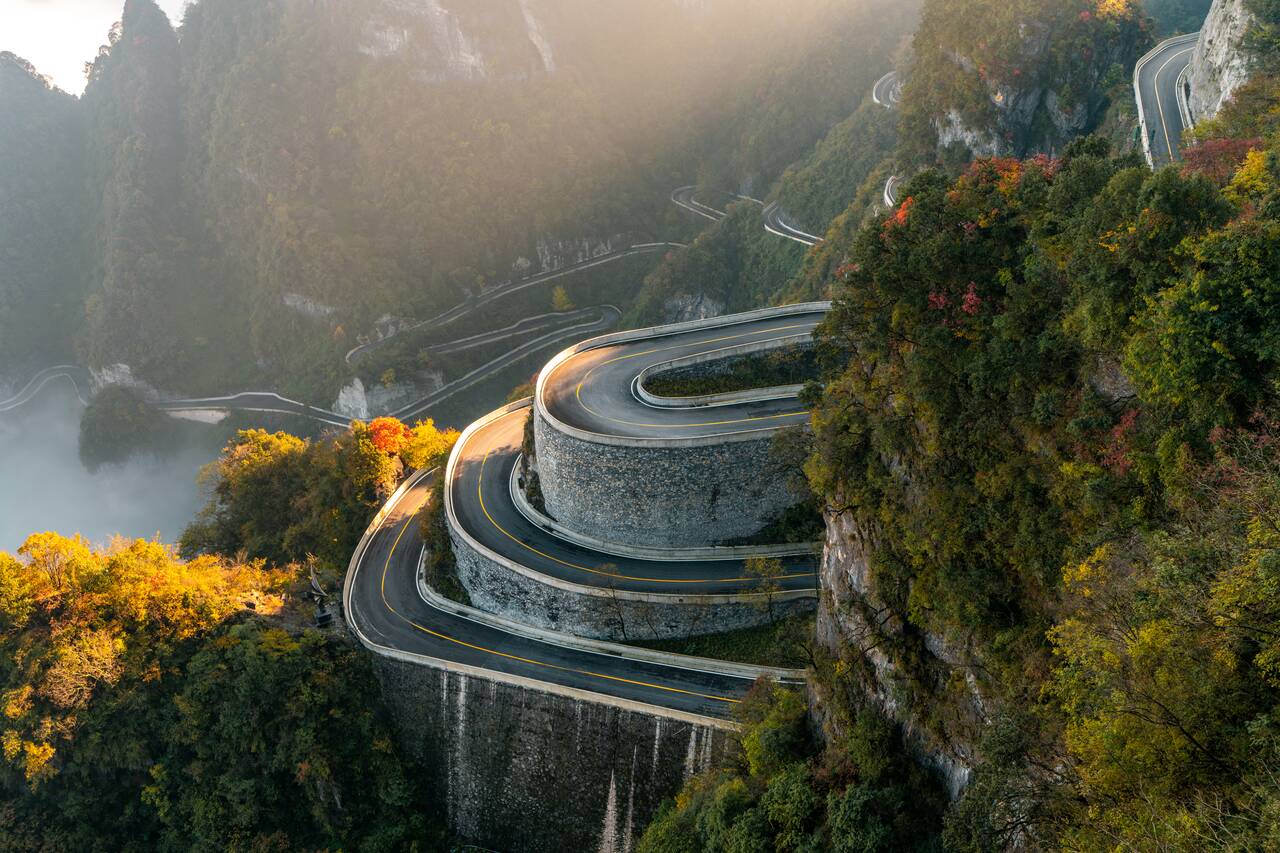
Getting there is also very easy with a well established route you can easily follow. First and foremost, you will have to reserve your ticket.
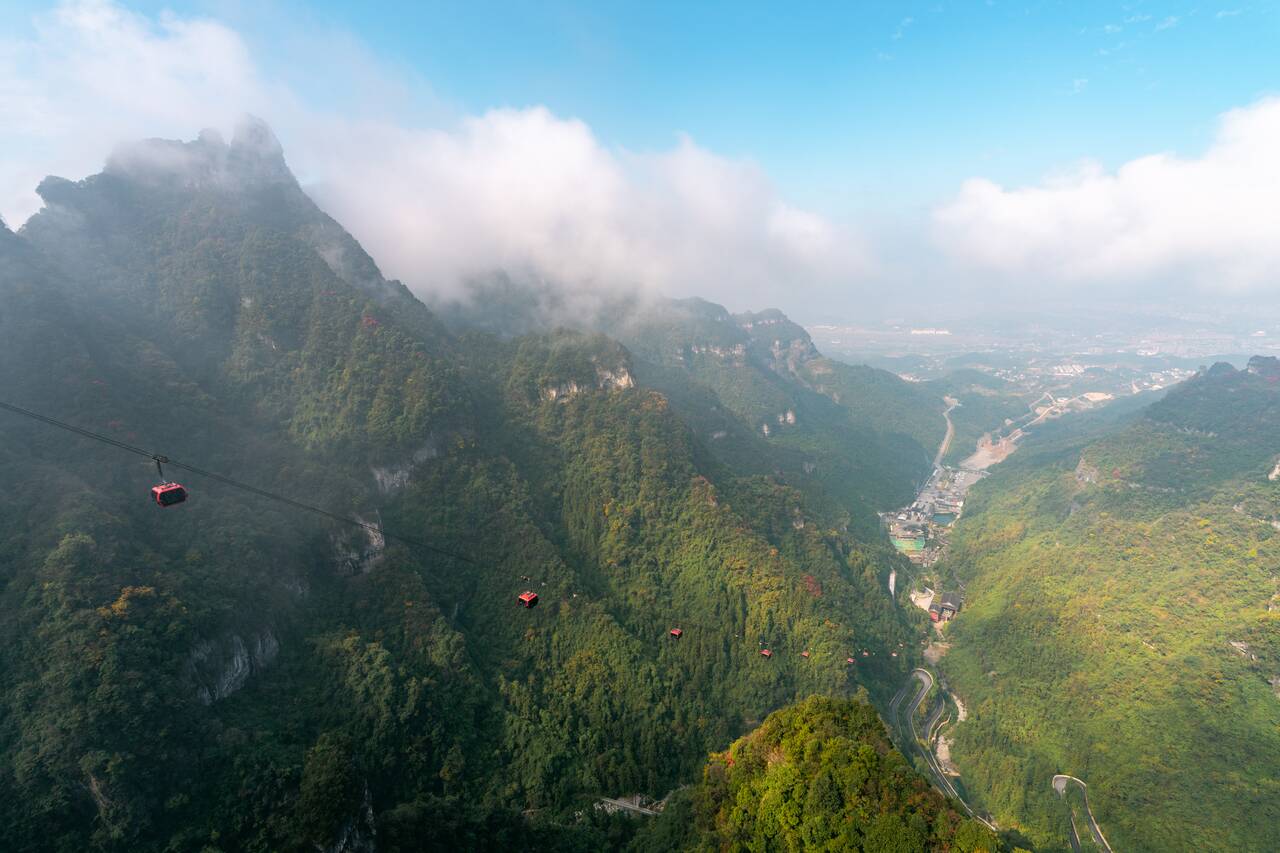
Important 2026 update: The upper section of the original Tianmen Mountain Cableway, between the Middle Station and summit, has been closed for reconstruction since November 2025. As of 2026, only Route C is operational, so make sure to confirm the available route and entry time before booking.
Basically, there were three main routes to explore Tianmen Mountain. Route A involved taking the cable car up to the Upper Station, then making your way to the Middle Station via escalators, taking another cable car down, and finally catching a bus back to the city center. Route B followed the same plan but in the opposite direction. Route C is slightly different: you take a bus to the cable car at the Middle Station and then return down the same way.
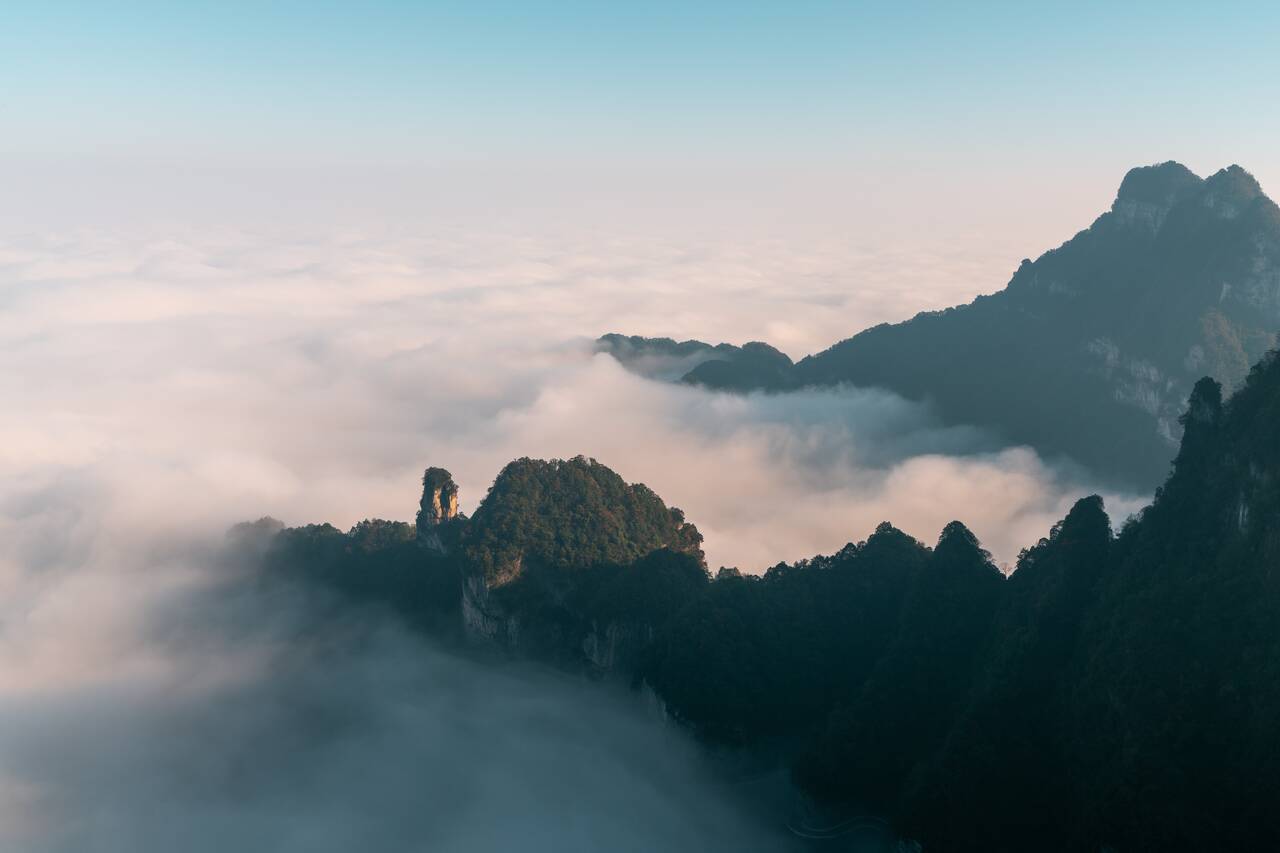
Since Route A and B used the old cable car that is being renovated, you can only buy the Route C ticket, which means you will no longer be going in a loop as I did when the old cable car was still functioning.
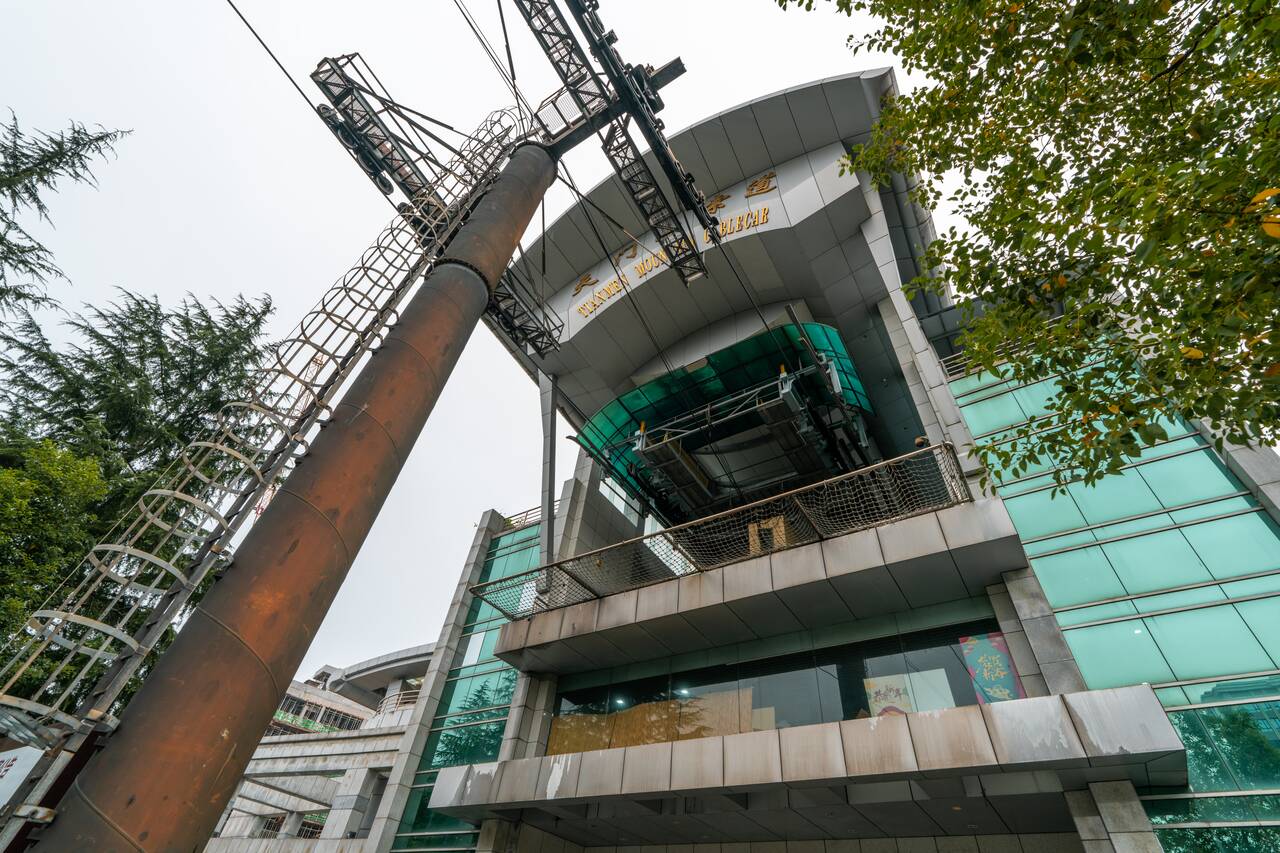
With Route C, you will have to make your way to the old cable car station located in the city. There will be a sign you can follow and you will be boarding the bus in no time. The ride takes about 30 minutes before you arrive at the new cable car station. From there, the cable car will take you to Middle Station where you can begin exploring.
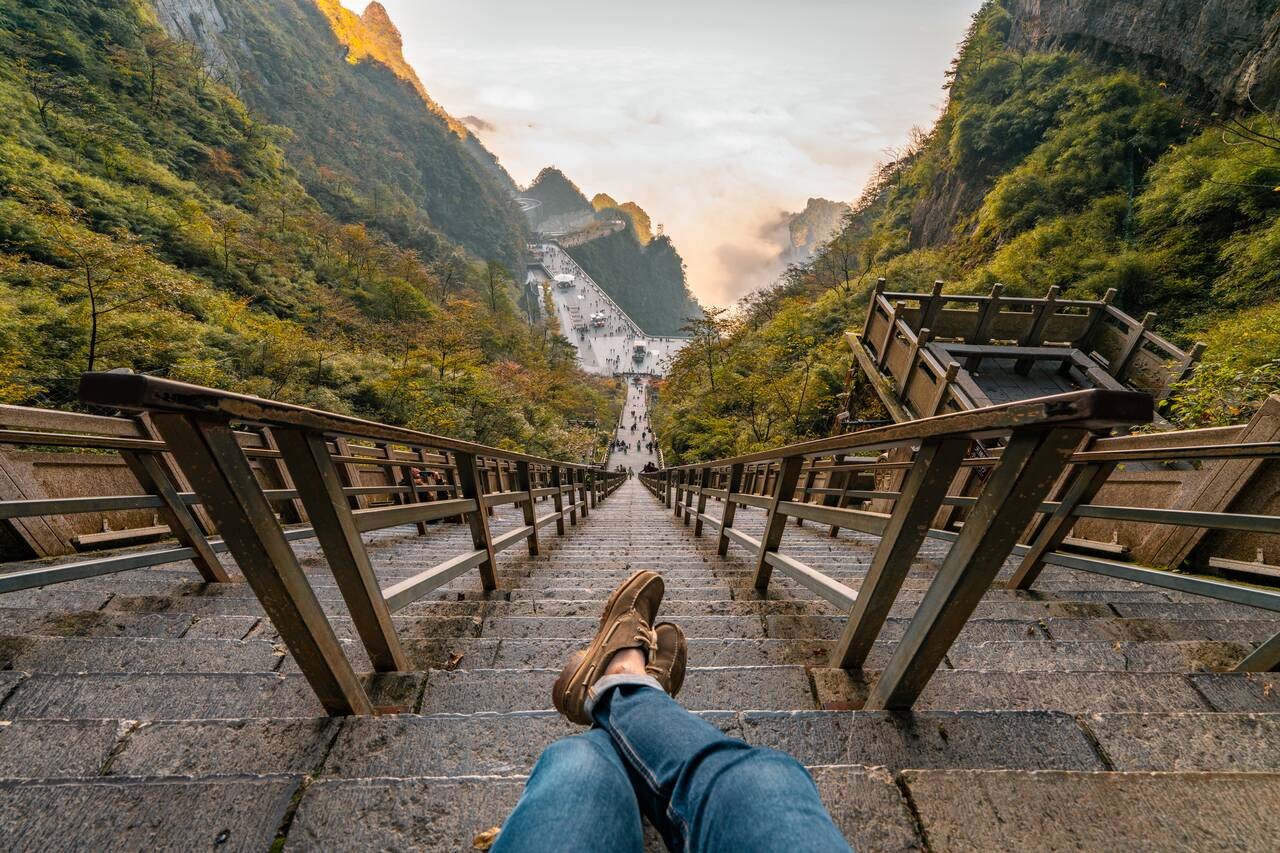
Continuing along Route C, you’ll eventually arrive at the base of the iconic Tianmen Cave. Here, you can either climb the 999 steps to the top or pay a bit extra to take the escalator. But honestly, you’re not here every day, so you might as well climb the stairs! They’re extremely steep, so pace yourself and take it slow.
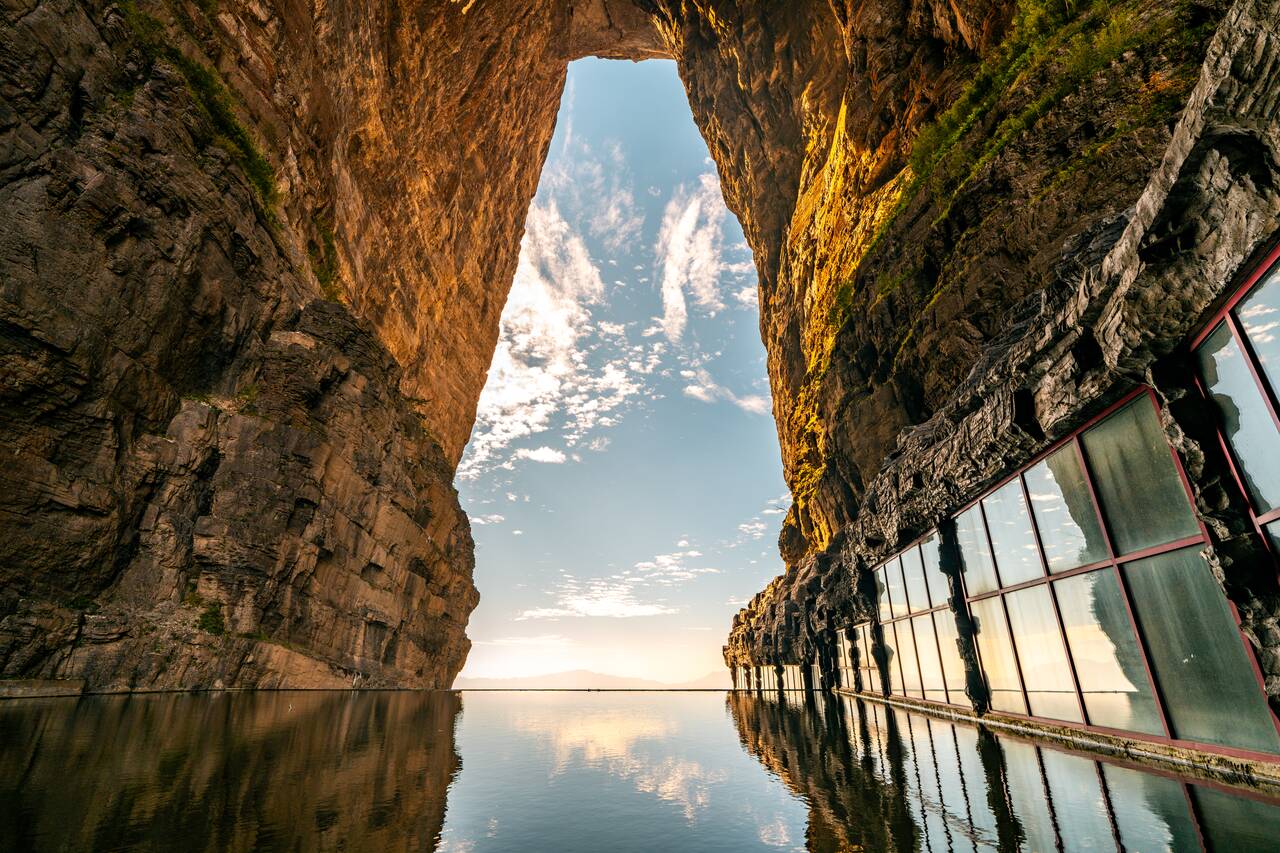
Once you reach the top, you’ll be greeted by a stunning cavern, a pristine reservoir at its center, and beautiful views of the mountains on the opposite side. You can rest here for a bit and enjoy the cold breeze before you continue up the mountain to the Upper Station.
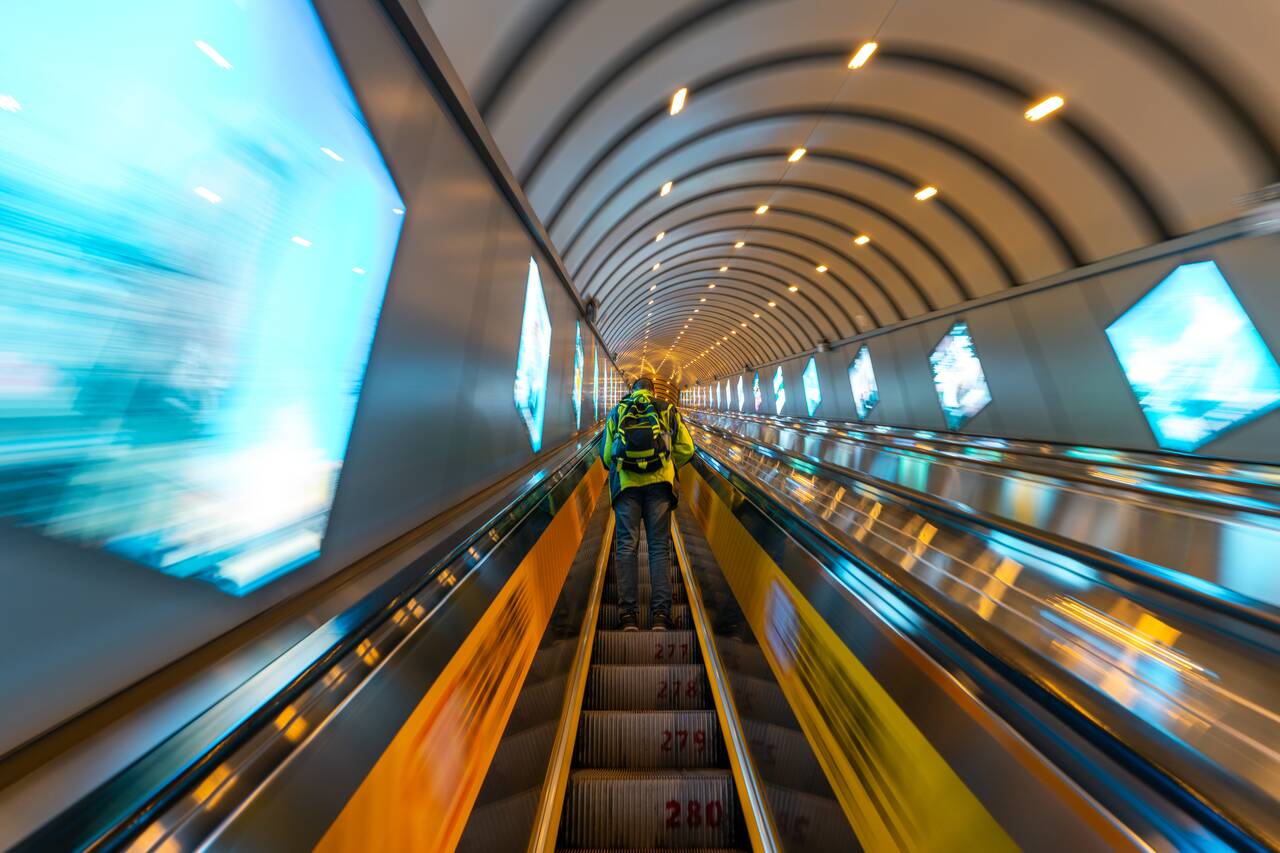
From here, you can take a series of escalators all the way up to the Upper Station, without needing to hike any further. After those 999 steps, this was definitely a much-needed assist 😂 and I welcomed it with open arms. Trust me, you will too 🤣.
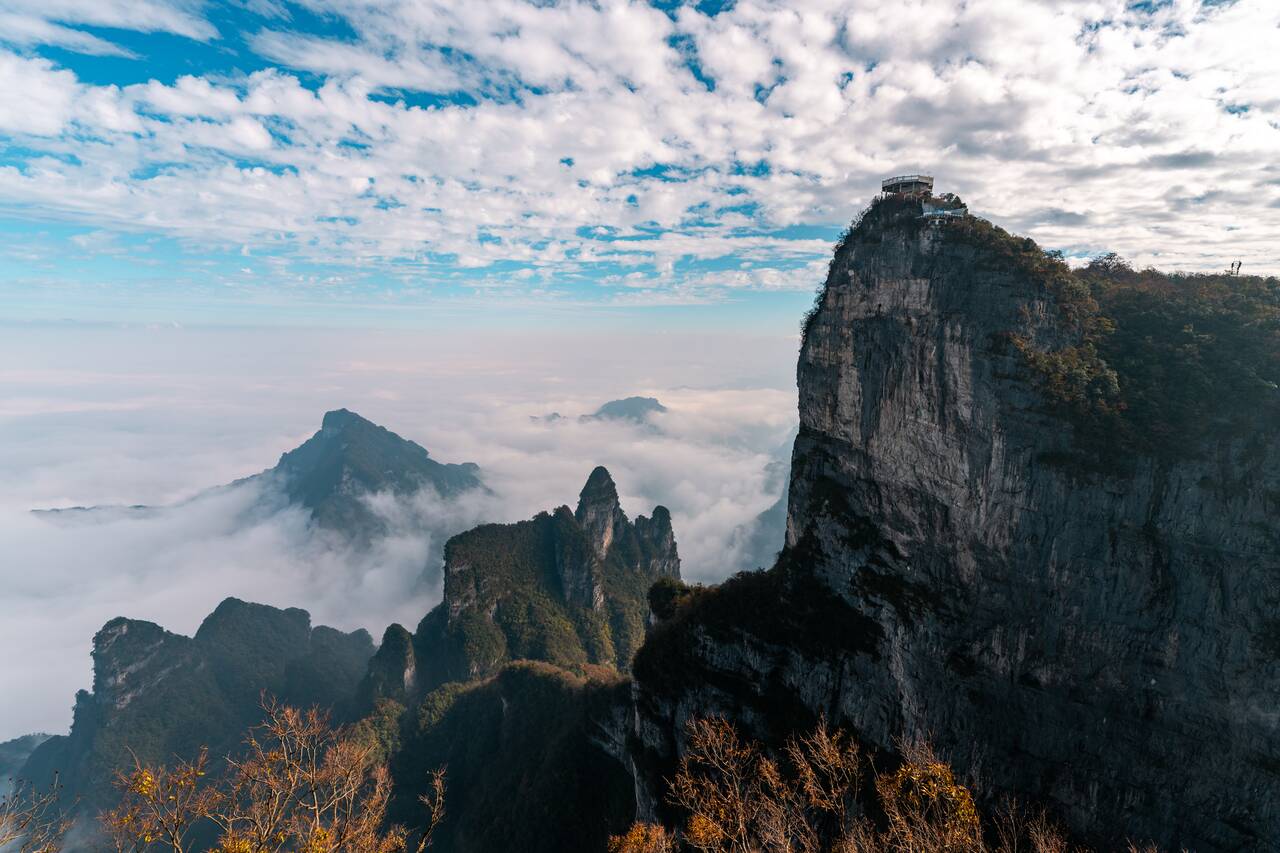
At the Upper Station, the entire mountain opens up to you with countless hiking opportunities, along with plenty of amenities like restaurants, street food stalls, and cafes, to keep you fueled and ready for all the adventures ahead.
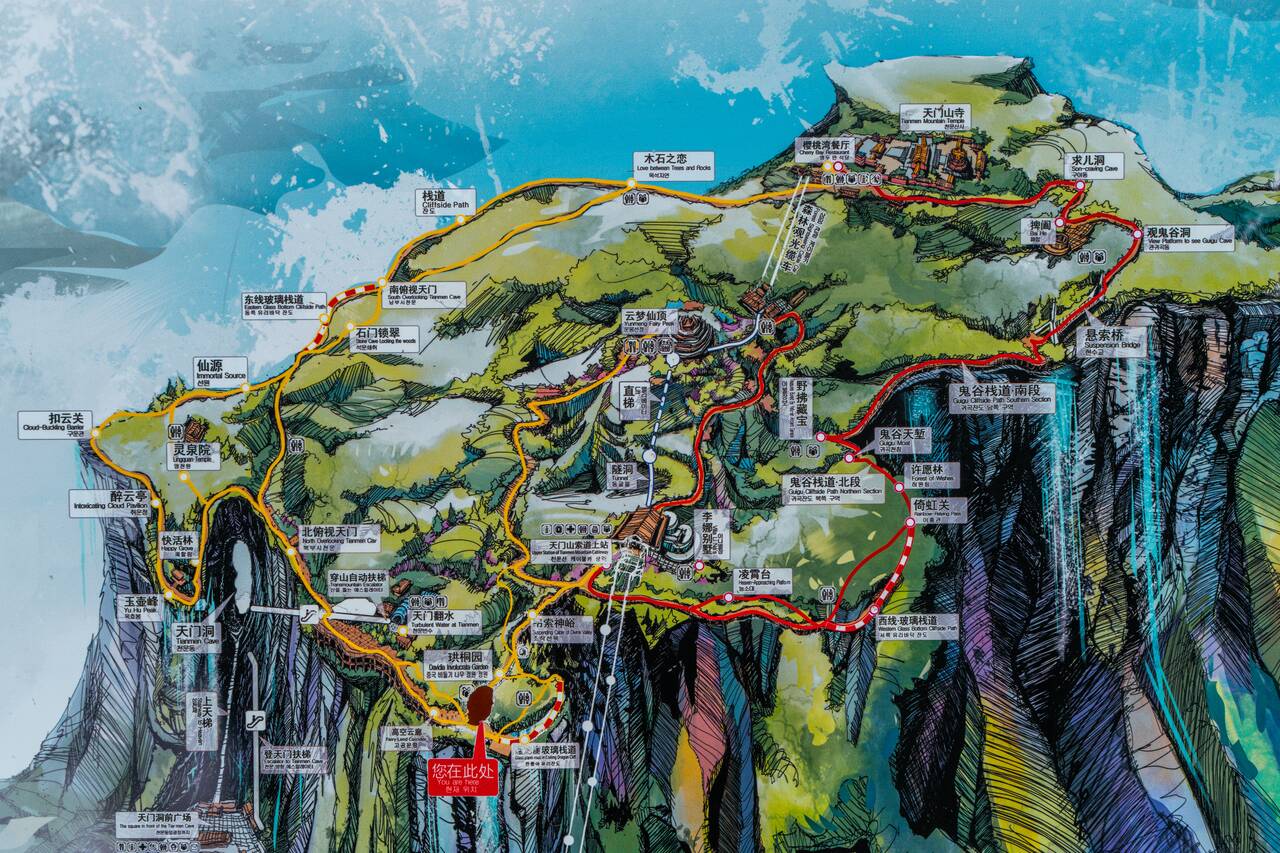
From the Upper Station, you have two options for hiking trails: head left to follow the yellow trail or go right to take the red trail. If you’re following Route C as I recommended, choose the red trail and start your hike from the Upper Station.
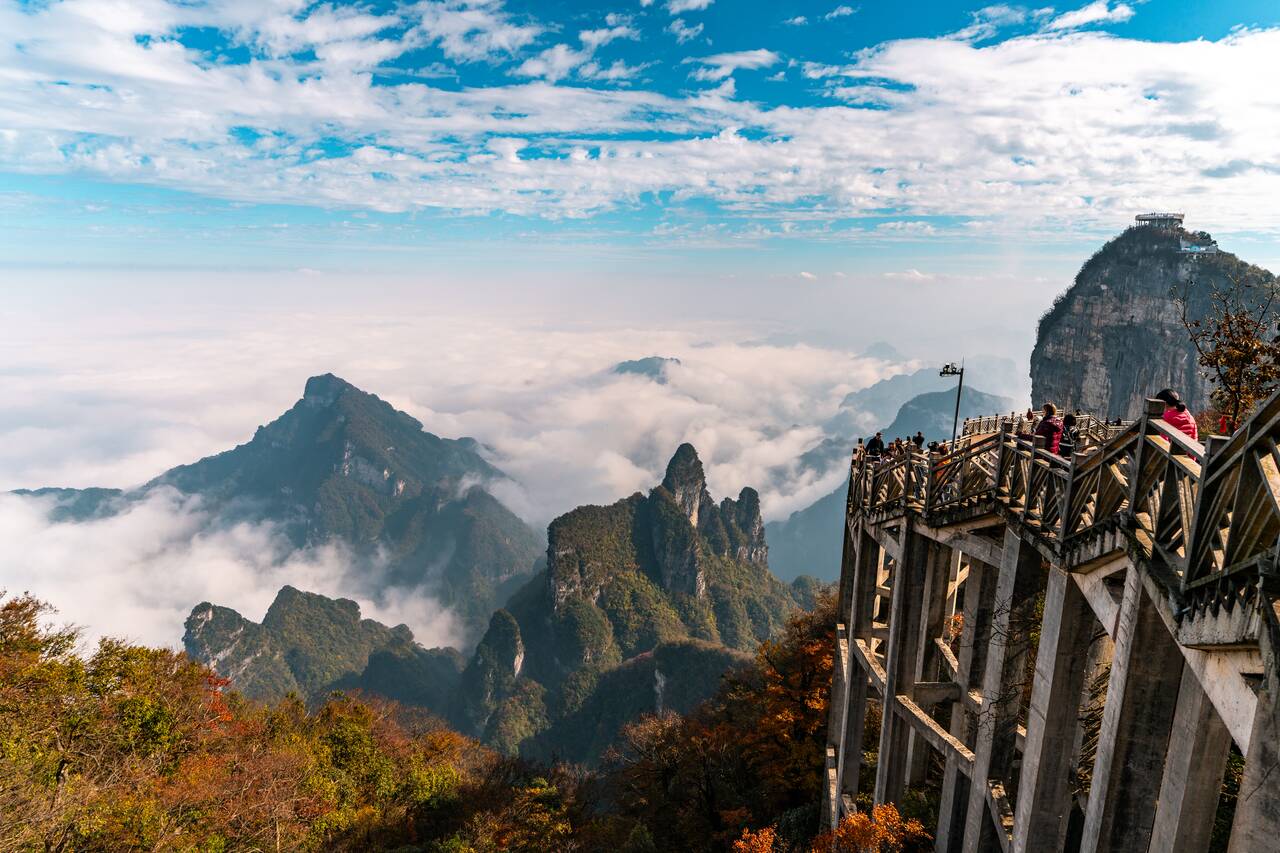
You can take the longer route first, which loops around the hill toward Tianmen Temple and leads you past several scenic spots, including the Glass Walkways, the suspension bridge, and plenty of stunning viewpoints along the way. Once you arrive at Tianmen Temple, you can take the open-air cable car to Yunmeng Fairy Peak, enjoy the view from there, take the elevator down, and you will arrive back at the Upper Station.
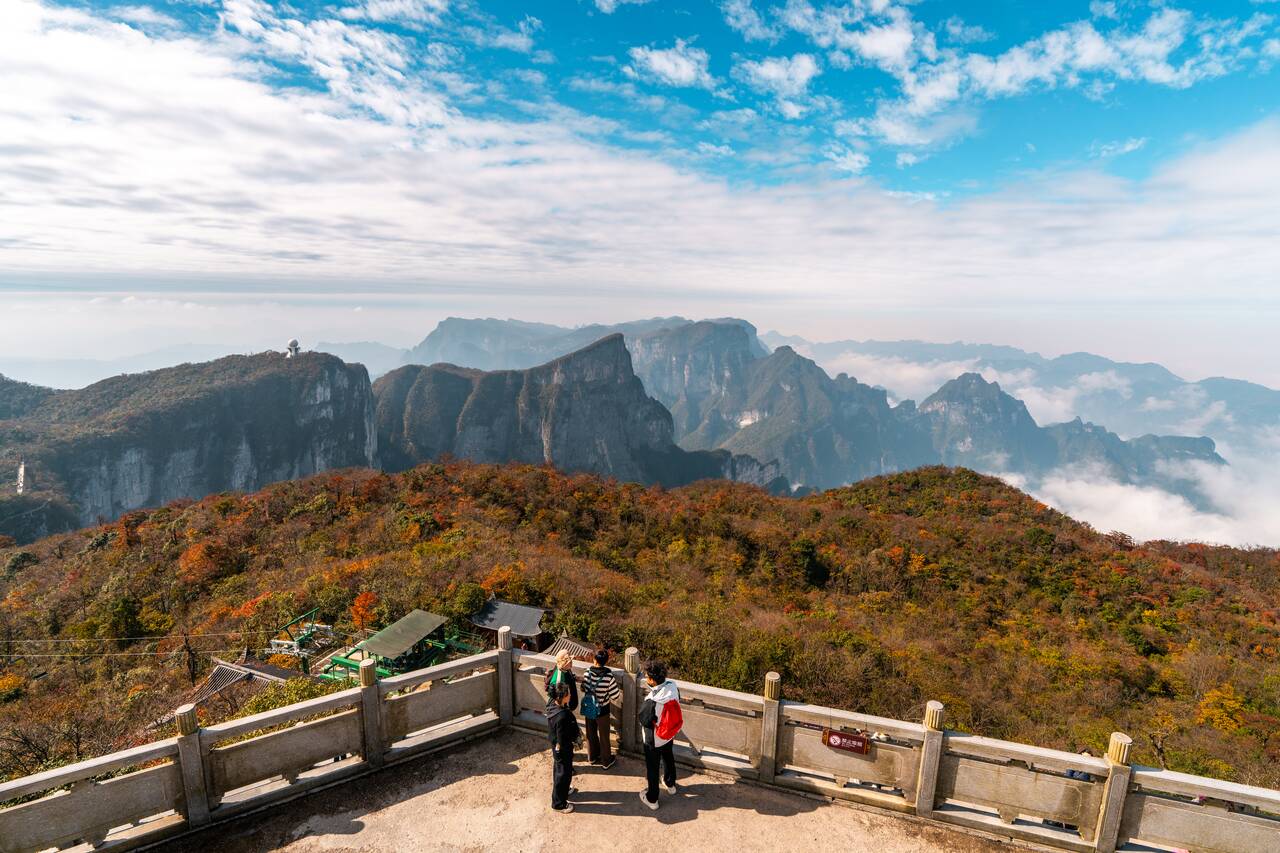
Or you can start by taking the elevator up to Yunmeng Fairy Peak, enjoy the view, then take the open-air cable car to Tianmen Temple and walk the long way back. For the shortest and easiest route, you can do the same, but instead of returning the long way, simply go back the same way using the cable car and elevator. Keep in mind that the cable car costs 25 CNY one way.
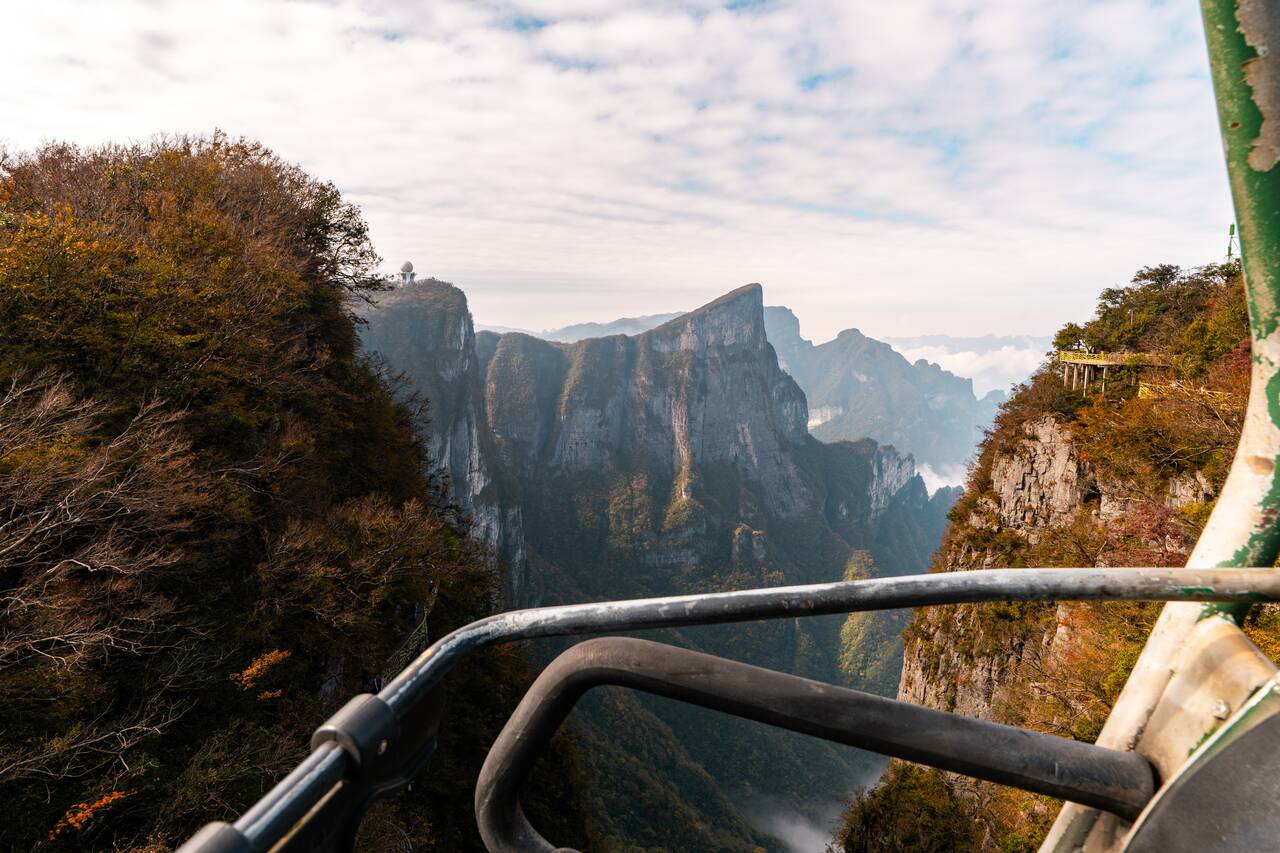
There is so much to see and do here, and I highly recommend dedicating the entire second day to exploring Tianmen Mountain. If you’re in a hurry, you can visit both the Middle Station and Upper Station in about half a day by taking the shortcuts mentioned above, but you definitely don’t want to rush your time here.
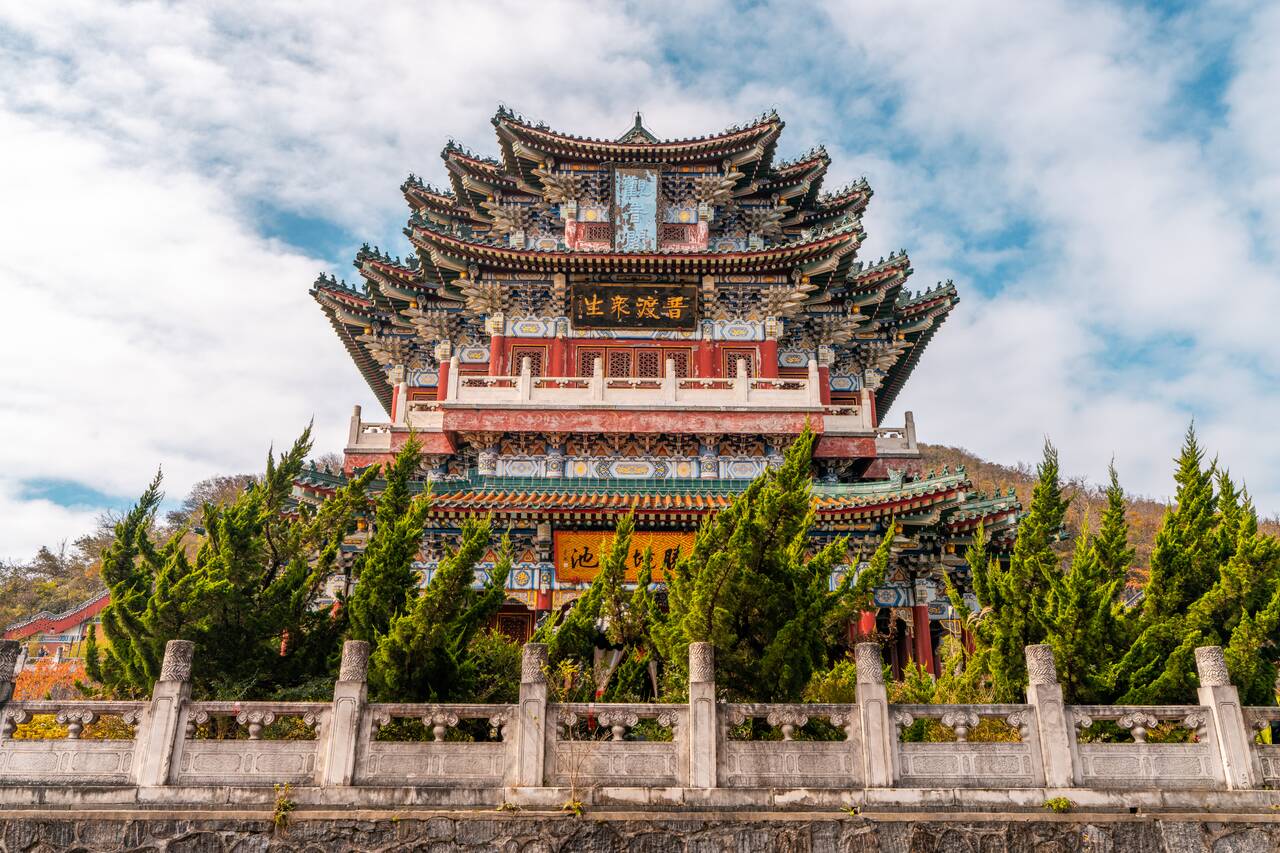
Once you’ve finished exploring the Upper Station, you will have to backtrack your way to middle station again and come down the same way. When I was here, I took Route B, which is essentially the same as Route C during the first half, but instead of backtracking, I just took the old cable car straight down from Upper Station all the way to the city. With Route C, you will get the same experience as I did except the coming down part, so don't sweat it 😉.
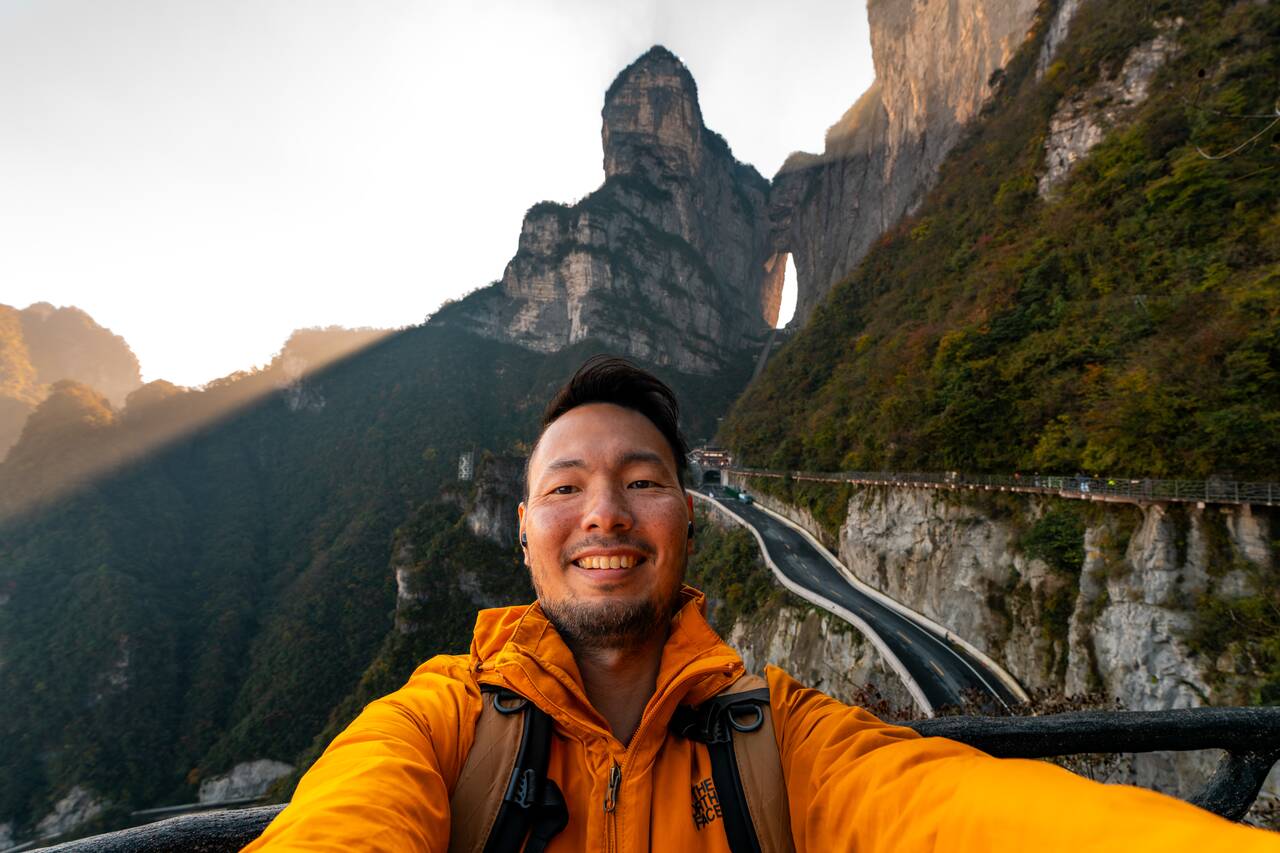
The experience is truly incredible and well worth spending at least half a day, if not a full day, here. Be sure to book your tickets in advance here. The park is open daily from 8 AM to 7 PM, and entry costs 288 CNY per person for all routes.


Before you retreat for the night, be sure to come and check out one of the weirdest attractions in Zhangjiajie, which is 72 Strange Buildings, also known as the 72 Wonder Towers, a large cultural and tourism complex where you can see all kinds of lights and sounds shows throughout the day. It is a great place to visit at night if you are looking for a place to hang out in Zhangjiajie after sundown.
The centerpiece of the complex is the main tower, which stands 109.9 meters tall and holds the record as the world’s tallest stilted building. Its central arch reaches approximately 38 meters in height and becomes especially dramatic when illuminated at night.
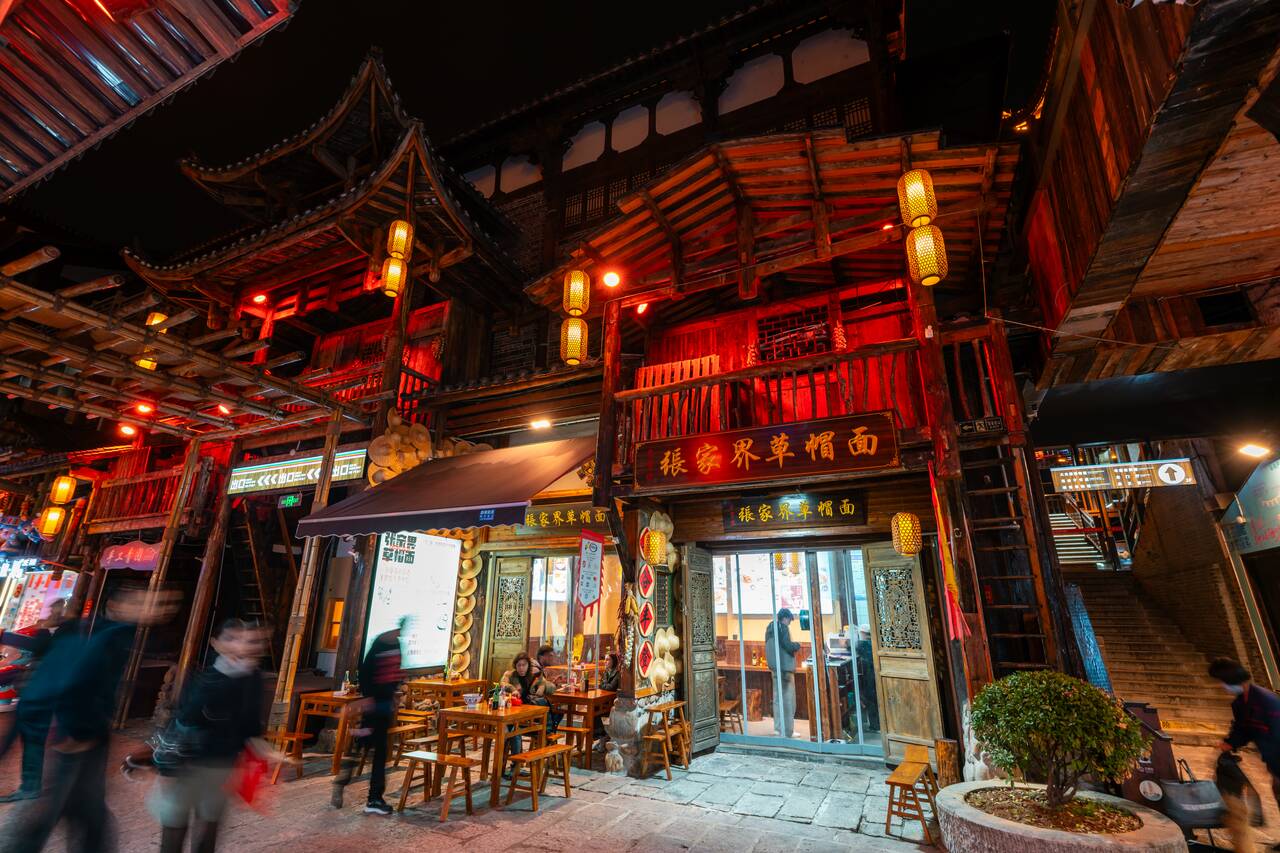
Around the main tower are multiple connected buildings, alleys, and recreated streets that resemble a historical ethnic village. You can walk around, try some street food, and take part in themed activities and workshops that are often held in the shops lining the streets.

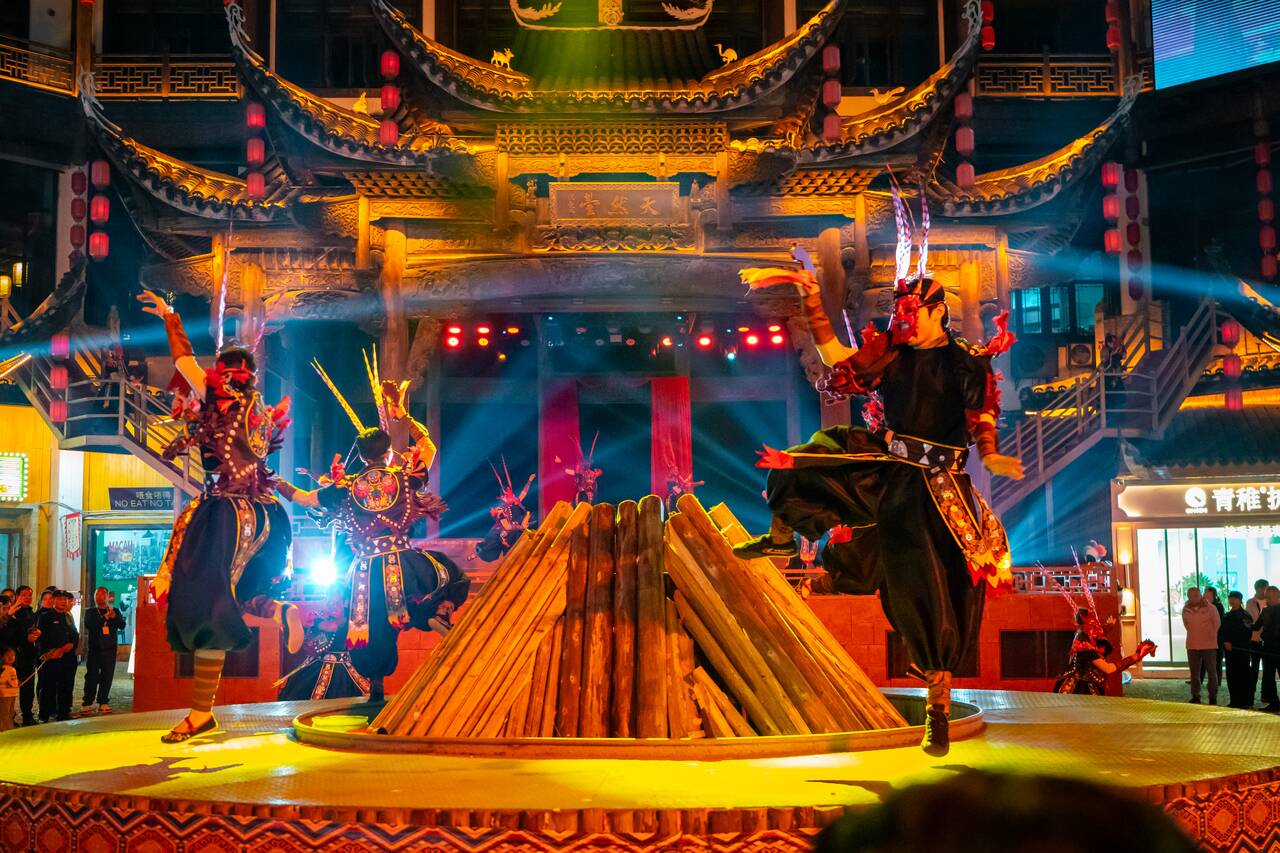
The complex also hosts cultural shows and folk performances, including traditional dances, drum shows, and martial arts displays, providing a glimpse into Tujia culture and traditions, which are arguably the highlights of 72 Strange Buildings, in my opinion. You have to come here and visit at night when the entire area is illuminated with tens of thousands of lights, and there will be all kinds of shows happening throughout the night from 4:30 PM onward to 10:30 PM.
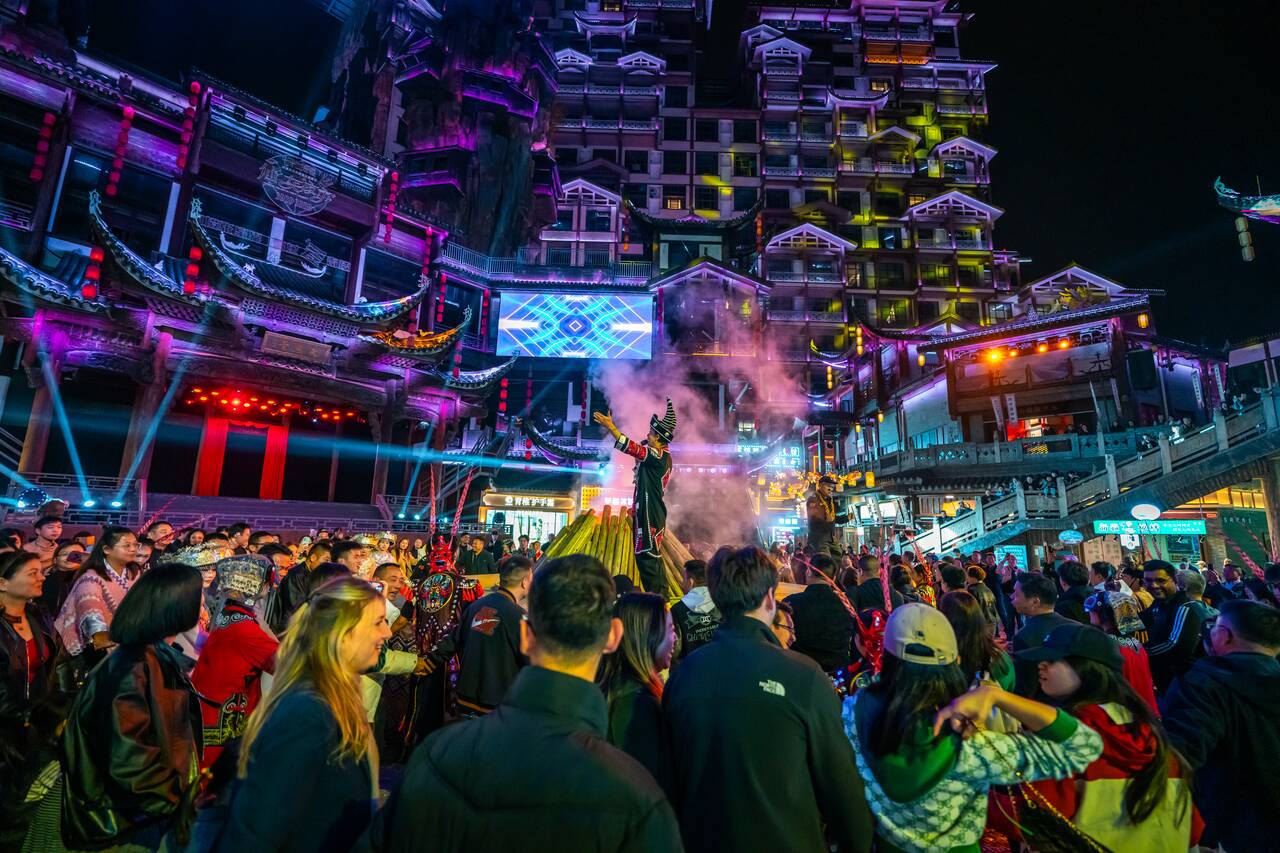
To get inside, you will have to pay the entry fee of 88 CNY for a night visit later than 4:30 PM or 48 CNY if you visit before 4 PM and you can book the ticket here. You can also visit this place during the day, but it won't be as impressive or fun as if you were to visit at night. The place is open from 8 AM to 10:30 PM daily.
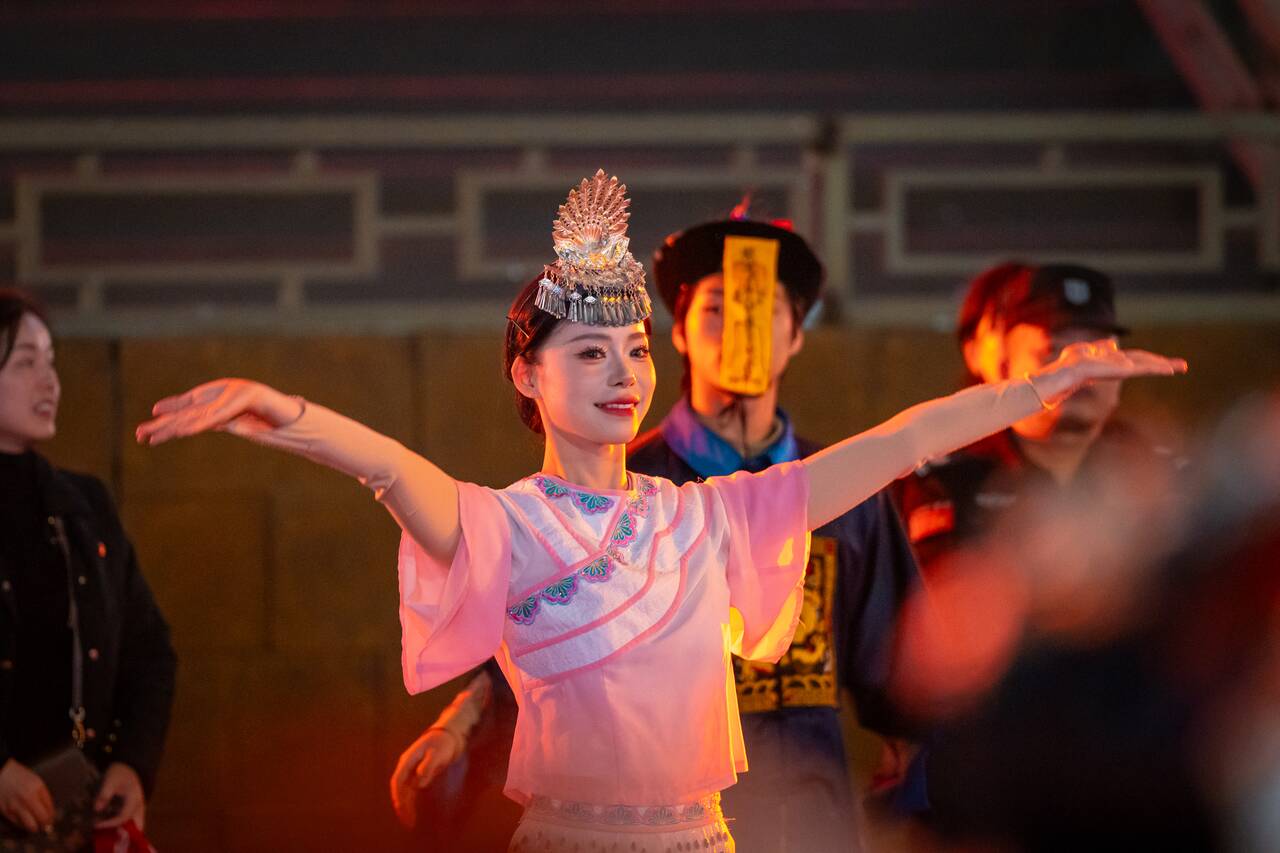
I arrived around 8:30 PM, just in time for the last series of shows, and I had an amazing time. It felt like a big open-air party, with performances and shows appearing from every corner while the massive building complex lit up with lasers and colorful lights.
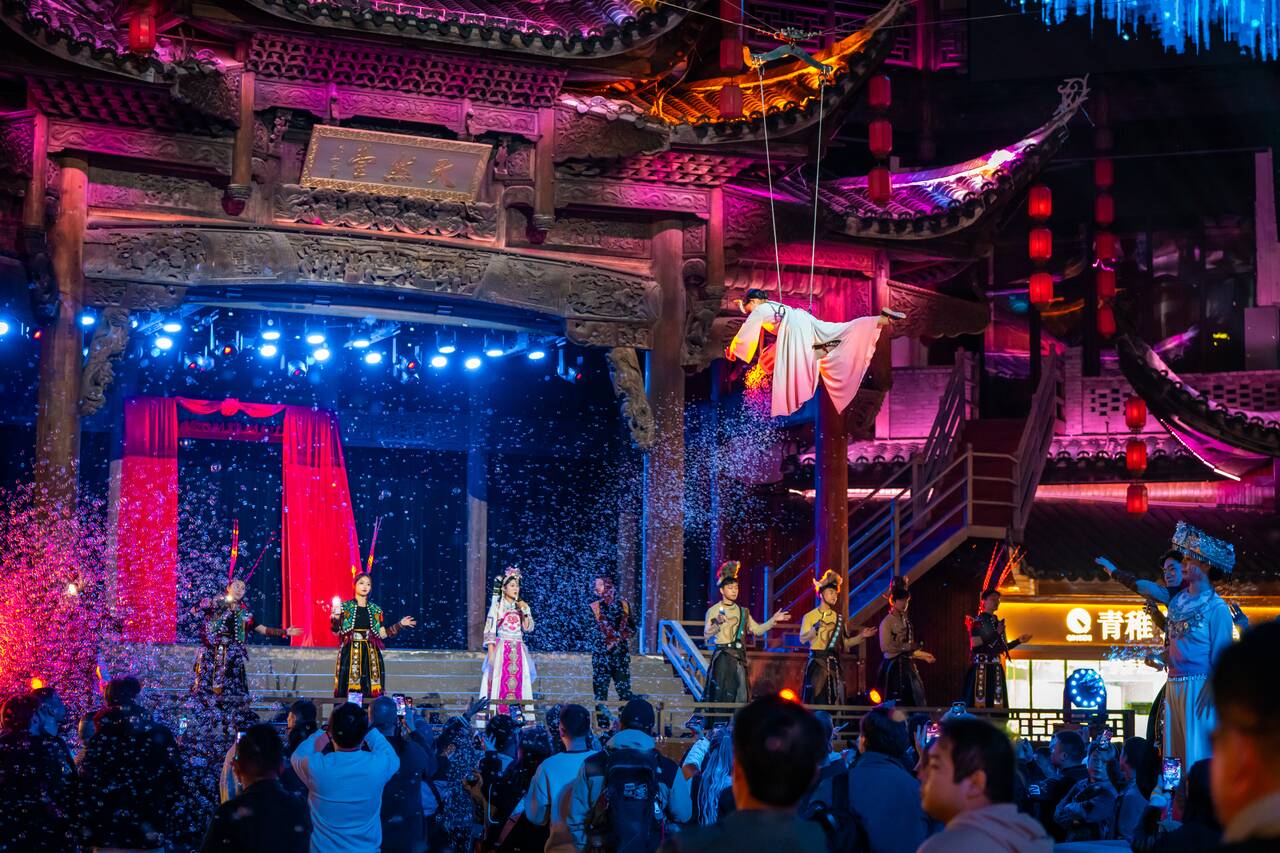
I also recommend arriving around 6–7 PM to hang out here, check out the performances and shows, and just enjoy the lively atmosphere until 10:30 PM, before taking a taxi back to your accommodation in Zhangjiajie City, wrapping up your second day.
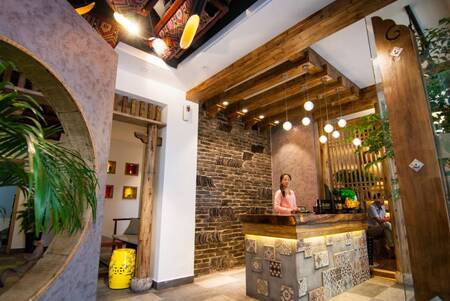
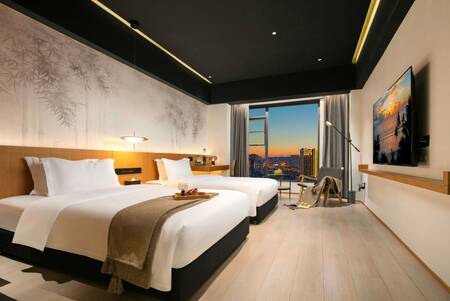
Where to Stay in Zhangjiajie City?

Day 3: Spend a Night at Fenghuang Ancient Town (1 Night)
- 📍 Stay: JI Hotel (Xiangxi Phoenix Ancient City Hongqiao)
- 🕐 Time: 1 Night
- 📖 Full Guide: Discover Fenghuang Ancient Town: A Complete Travel Guide
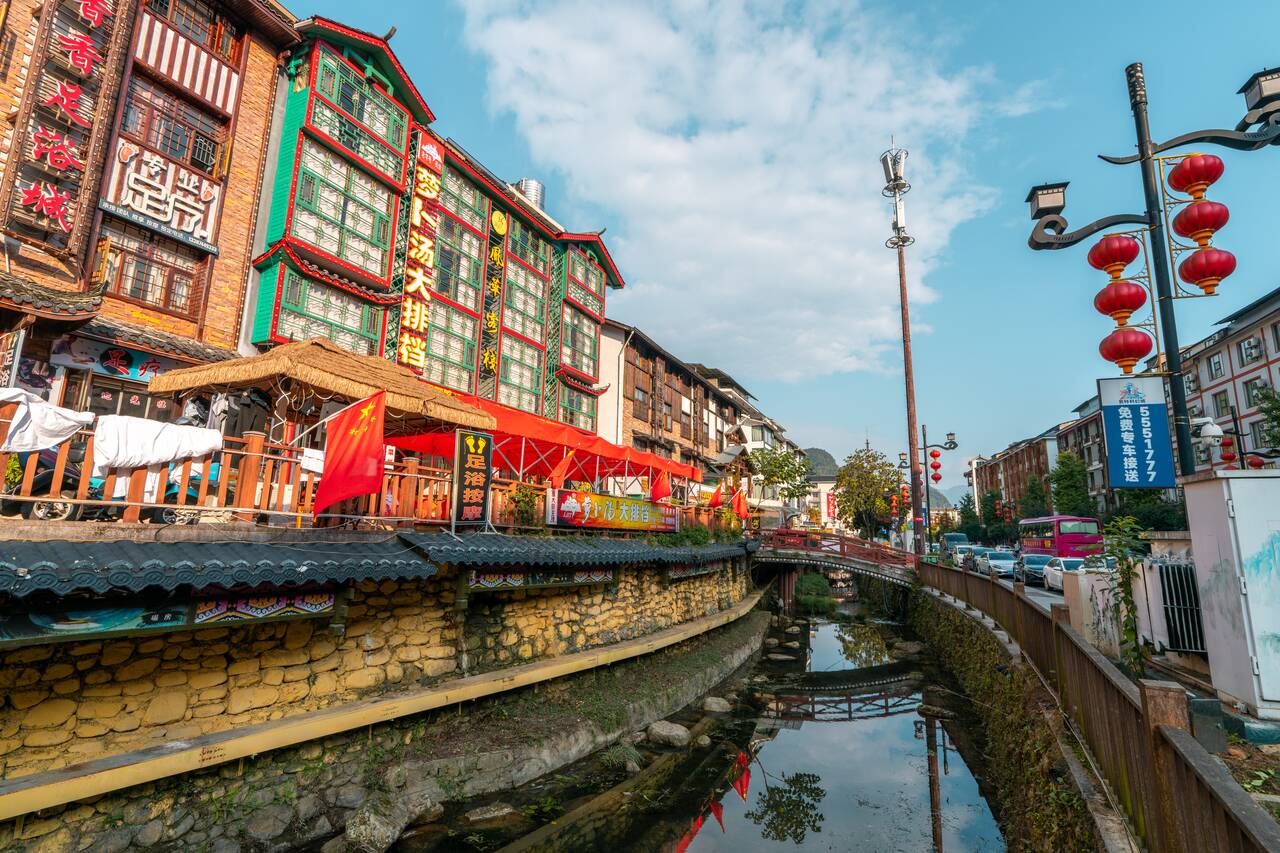
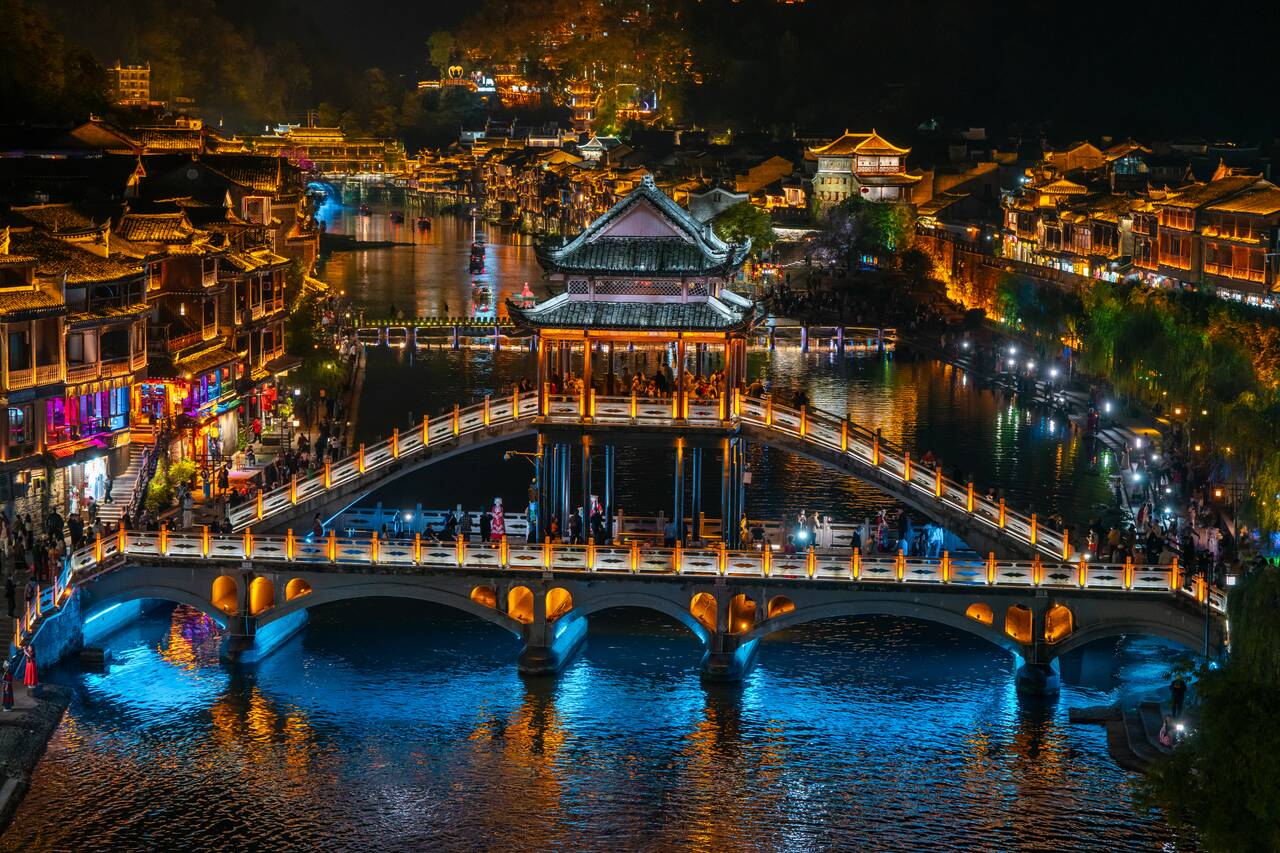
On your third day, you can start a bit later to recover from the previous night before taking the high-speed train from Zhangjiajie West Railway Station to Fenghuang Ancient Town, a charming riverside town just about 25 minutes away. Here, you can explore the beautiful wooden stilt houses, enjoy a peaceful walk along the river, and admire the city at night when the entire riverside is illuminated with lanterns and lights.
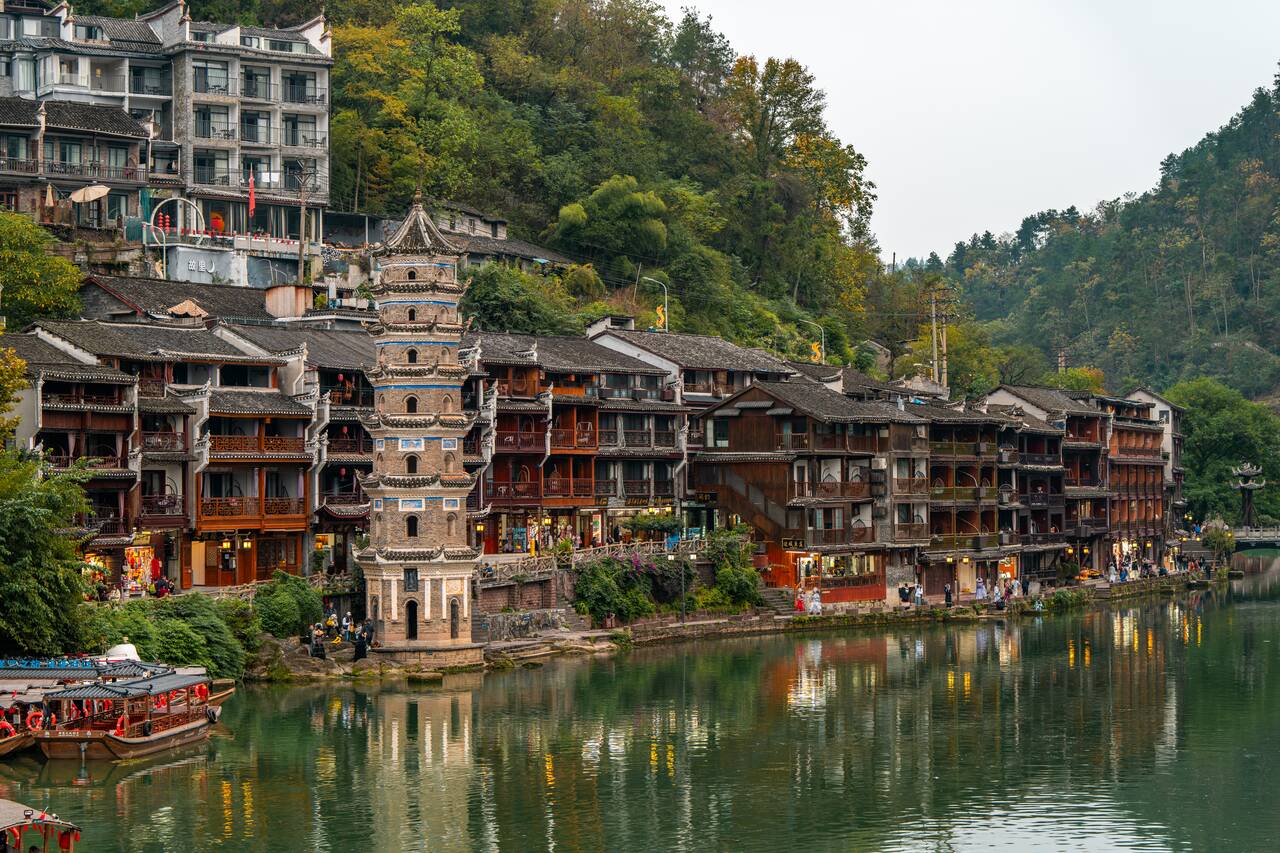
Founded in 1556 during the Ming Dynasty, the town is home to the Miao and Tujia ethnic minorities. It is built along the banks of the Tuo River and nestled among green hills and mountains, making it one of the most photogenic ancient villages in the region.
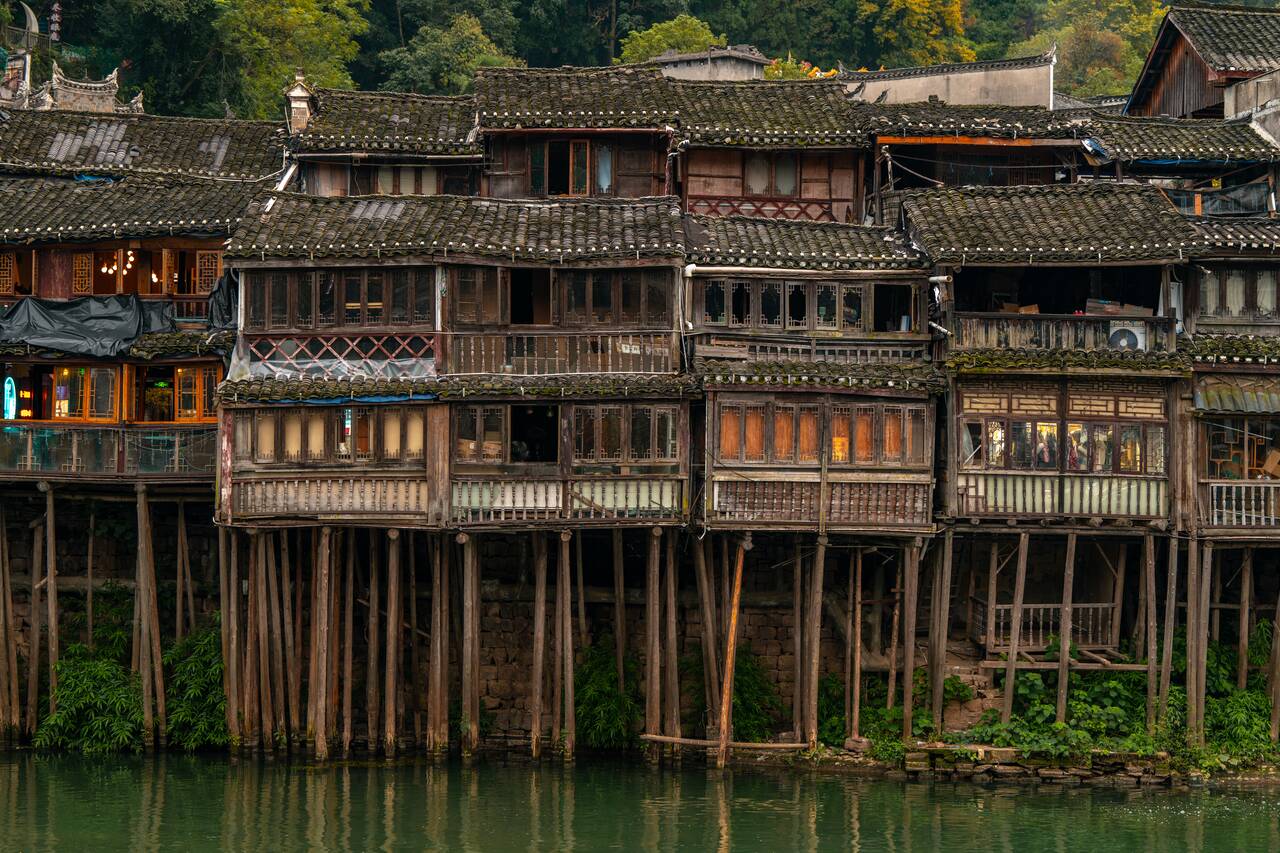
One of the town’s defining features is the wooden stilt houses (diaojiaolou) lining the riverbank, many of which are over a hundred years old, showcasing the impressive traditional craftsmanship. While here, you can explore the maze of cobblestone streets, narrow alleys, stone-paved lanes, and ancient houses dating back to the Ming and Qing dynasties. Walking through them feels like stepping back in time.

When visiting Fenghuang Ancient Town, be sure to stay until sunset and beyond, as the town's true beauty comes alive at night. As the sun sets, the town transforms into a fairy-tale-like scene reminiscent of Studio Ghibli animations. Lanterns and lights reflect on the river, wooden houses glow softly, and the atmosphere becomes truly magical.
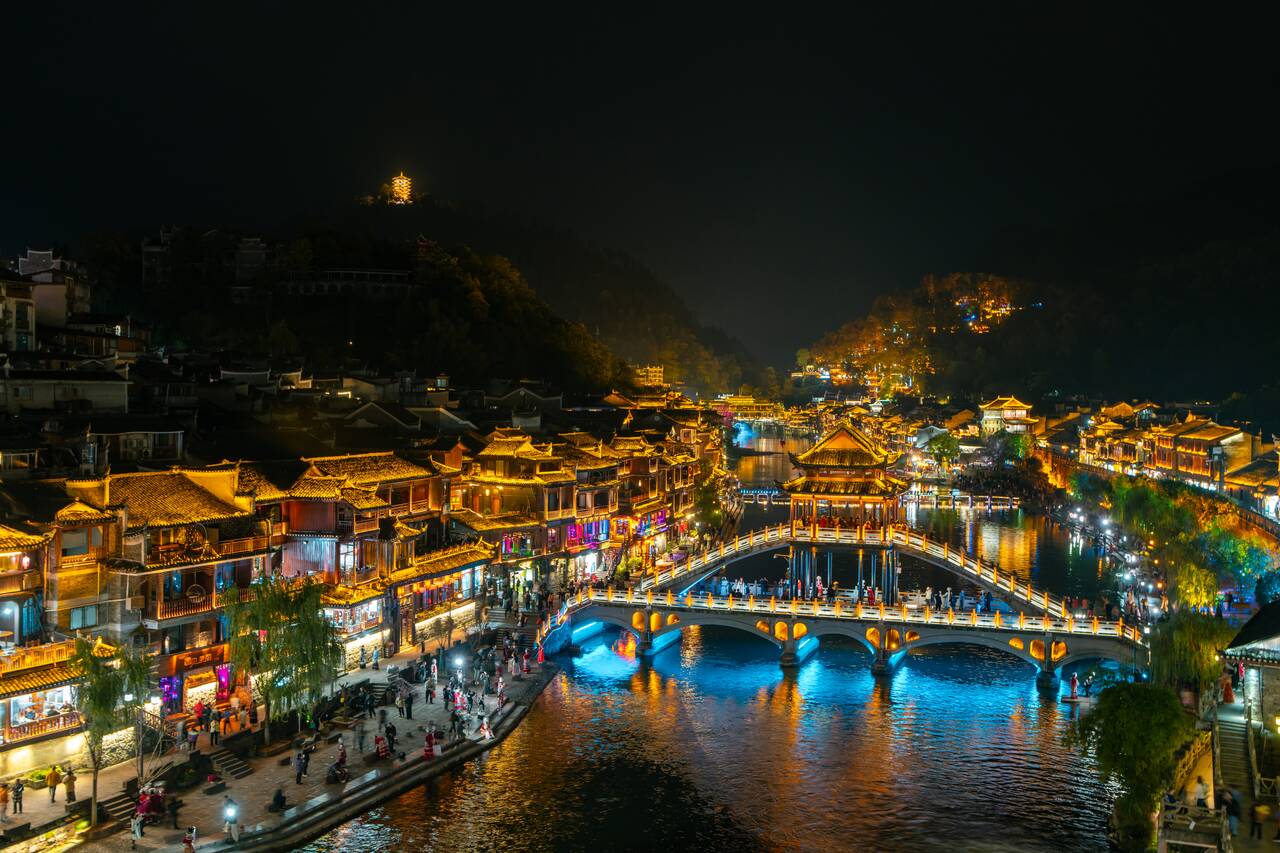
When I visited, the lights were turned on around 6:30 PM, and I found the best view was from Nanhua Bridge, overlooking the entire town. People start gathering here and throughout the town to watch the lights come on, so be sure to be ready when it happens.
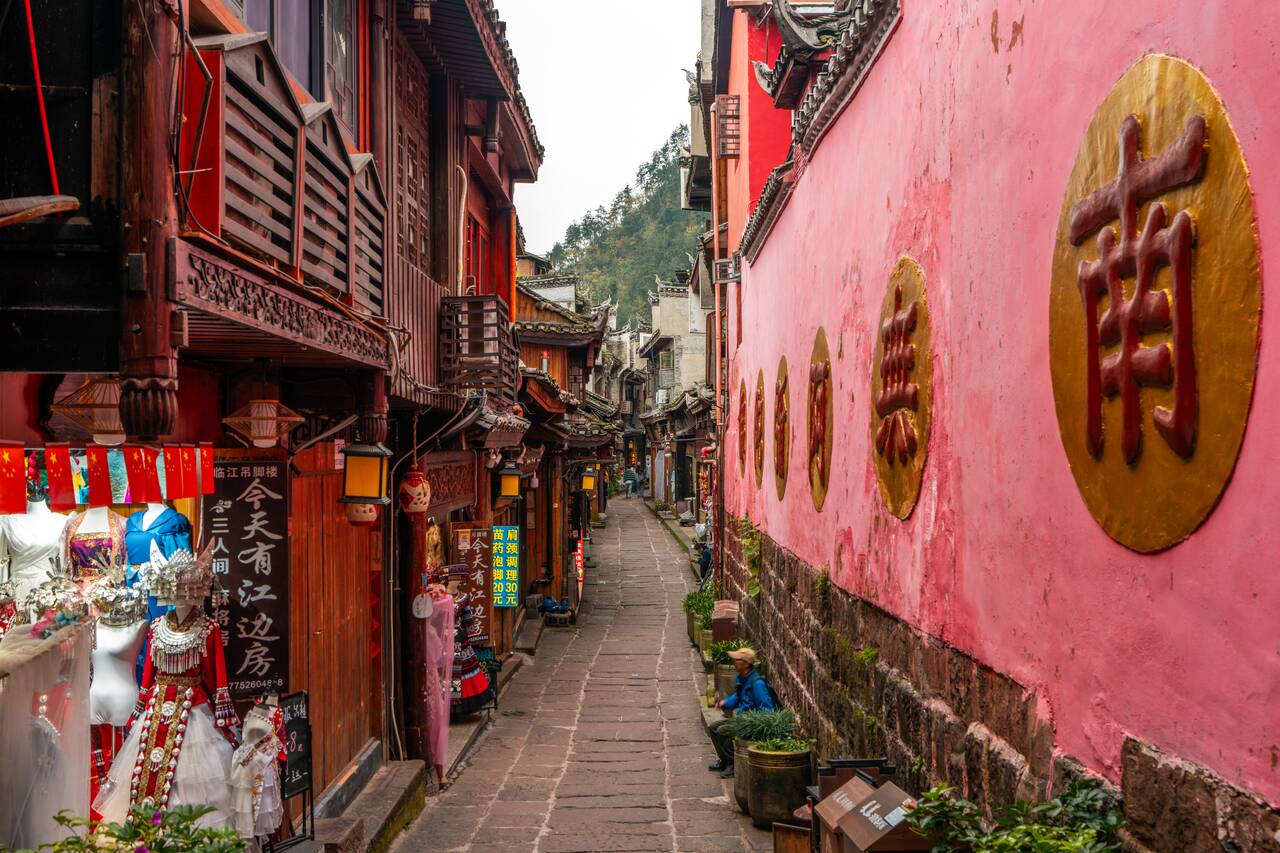
From the train station, you can take a 7-CNY shuttle service that drops you off at Qifeng Square, from where it’s a short walk to the ancient town. The town is quite large, so I recommend spending the afternoon exploring the crisscrossing streets until late at night before heading back to your accommodation to rest, thus concluding our 3-day itinerary in Zhangjiajie! Congratulations! From here, you can continue to travel further to Chengdu, Guilin, or fly home.

Where to Stay in Fenghuang Ancient Town?

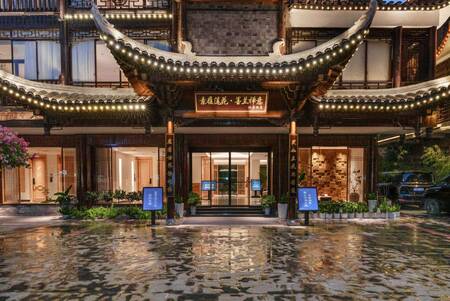
Things to Know Before Visiting China
- Always Carry Your Passport: Everything revolves around your passport/ID in China, and it’s often used interchangeably as your main form of identification. Many major tourist attractions require you to show your passport when buying a ticket, and the ticket will then be linked to it. You’ll scan your passport again to enter. The same applies to high-speed trains. It’s best to carry your passport with you at all times while traveling in China.
- Get an eSIM: China’s cashless economy relies on constant internet access, so having a data connection is essential. I highly recommend getting an eSIM or a local SIM card for your trip. An eSIM is often better because the service is usually based in Hong Kong, which bypasses China’s Great Firewall, meaning you can access apps like Instagram and YouTube without a VPN. I suggest checking eSIM options on Klook or Trip.com, as they tend to be the most affordable.
- Use AMap to Navigate: Google Maps doesn’t work well in China, so local apps like AMap are much more informative and accurate for getting around. It even provides metro information, making it easy to navigate city subway systems. I used AMap throughout my entire trip, and it worked perfectly! In this guide, I’ll be linking locations with AMap links instead of Google Maps, so be sure to download it before your trip.
- Use VPN to Bypass the Great Firewall: As you may know, many major websites such as Google, Facebook, Instagram, TikTok, and more are blocked in China. To access them, you’ll need a VPN like LetsVPN installed on both your phone and laptop before you arrive in China. This is crucial as once you're in the country, you won’t be able to search for or download VPN apps. I used LetsVPN during my trip, and it worked very well throughout. The service is affordable too, with a free tier offering limited data or a basic unlimited plan for just 5.99 USD per month.
- Connect Alipay with Your Credit Card: First, download Alipay from the app store, set up your account, and link it to your credit card. This will be one of the two main ways you’ll pay for services in China. Alipay also has mini-apps built in, such as Didi (China’s version of Uber), so you don’t need to download separate apps, and you can use them directly through Alipay. Very convenient!
- Get a Transport Card Working in Alipay: Once you have Alipay set up, you’ll need to verify your account before you can activate a transport card for metro and bus rides. First, if you’re not currently in the city you want to use, tap the city name in the top-left corner and select the correct city. After that, tap the “Transport” button and request a transport card. You’ll be asked to upload a photo of your passport for verification. Once approved, your transport card will be issued, and you can use the QR code to scan and pay for buses and metro rides.
- Get WeChat Set Up: WeChat is another essential app for communicating with locals, thanks to its built-in translation feature. It’s also widely used for payments as Alipay only works about 70% of the time, while WeChat is commonly needed for paying individuals, buying entry tickets at certain attractions, and more. Setting up WeChat can be a bit tricky though because you need verification from an existing user. The easiest way is to ask your hotel’s reception to help verify your account when you arrive in China, which is how I got mine activated.
- Use Trip.com / Trip App: For hotels, day trips, attraction tickets, train tickets, flights, and everything in between, you can use Trip.com or the Trip app to book all your travel needs. It’s very convenient, offers a great user experience, and has a generous cancellation policy that gives you more flexibility when traveling in China.
When to Visit Zhangjiajie?
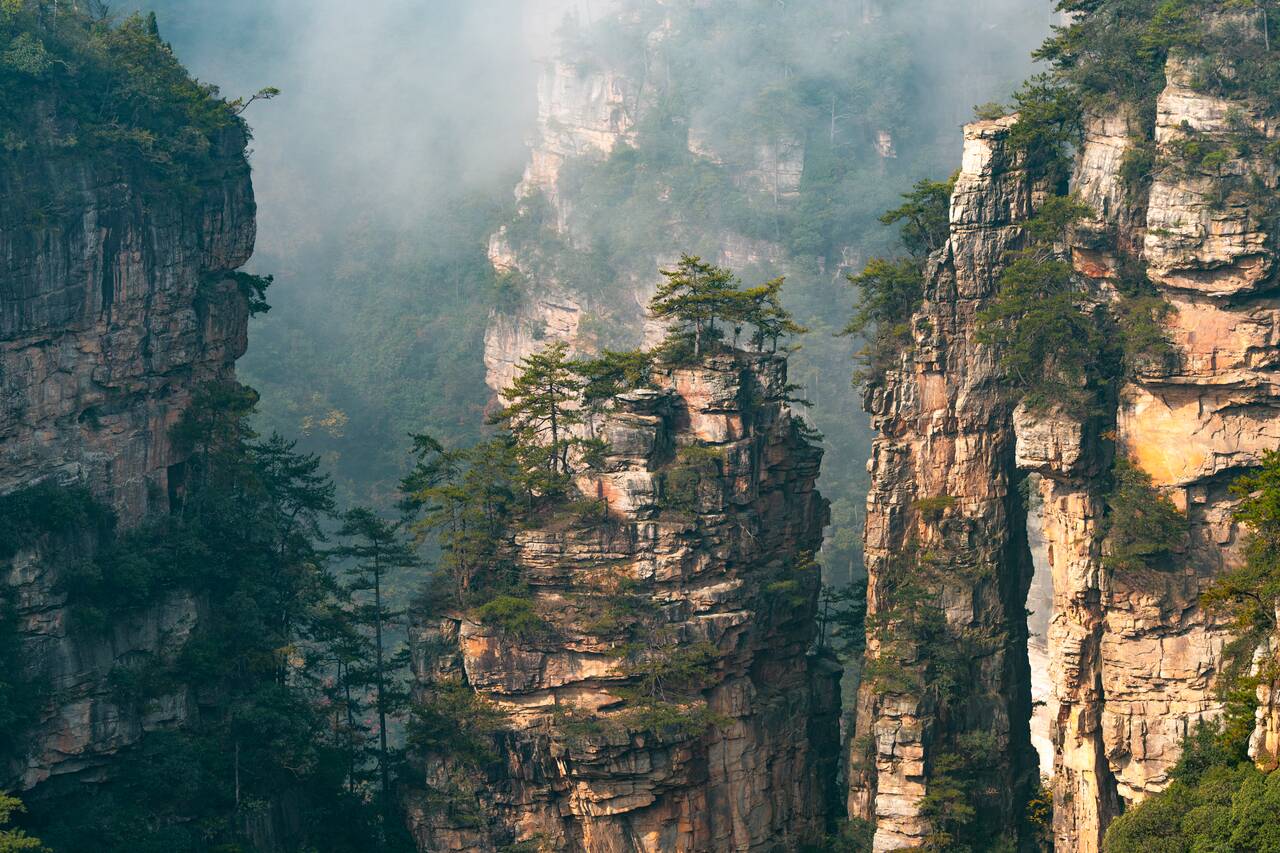
Zhangjiajie can be visited year-round, but the experience varies depending on the season. Spring, from March to May, is a beautiful time to visit as the mountains and forests turn lush green and flowers bloom. Mist often drifts among the sandstone pillars, creating a dreamy atmosphere, and temperatures are mild, making it comfortable for hiking. Crowds are generally smaller than in summer, though occasional rain or fog can occur.
Summer, from June to August, brings warm weather and full greenery. Waterfalls and streams are at their peak, and long daylight hours allow more time to explore. However, this is also peak tourist season, so trails and attractions can be crowded. Humidity and occasional rain may make hiking slightly more challenging.
Autumn, from September to November, is widely regarded as the best season to visit Zhangjiajie. The weather is cool and dry, visibility is excellent, and the forests display stunning red, orange, and gold foliage. Trails are more comfortable for hiking, and the crowds are smaller outside of national holidays, making it ideal for photography and enjoying nature.
Winter, from December to February, transforms Zhangjiajie into a quiet, snow-dusted wonderland. It is the least crowded time of the year, offering peaceful hikes and dramatic, snowy landscapes. However, temperatures can be low, trails may be icy, and some attractions might be closed, so careful planning is needed.
The first time I visited, it was winter. Although there were no crowds, some areas, like the Gateway to Heaven on Tianmen Mountain, were closed because ice had formed along the stairs, making certain sections hazardous. It was very cold, the trails were slippery, and conditions were not ideal for hiking.
The second time I visited in late autumn and it was perfect. The weather was ideal, with clear blue skies, low clouds drifting among the sandstone pillars, and vibrant autumn colors everywhere. There were some crowds, but far fewer than I expected, and I had a wonderful time. I highly recommend visiting in autumn if you want the best weather and scenery.
How to Get to Zhangjiajie?
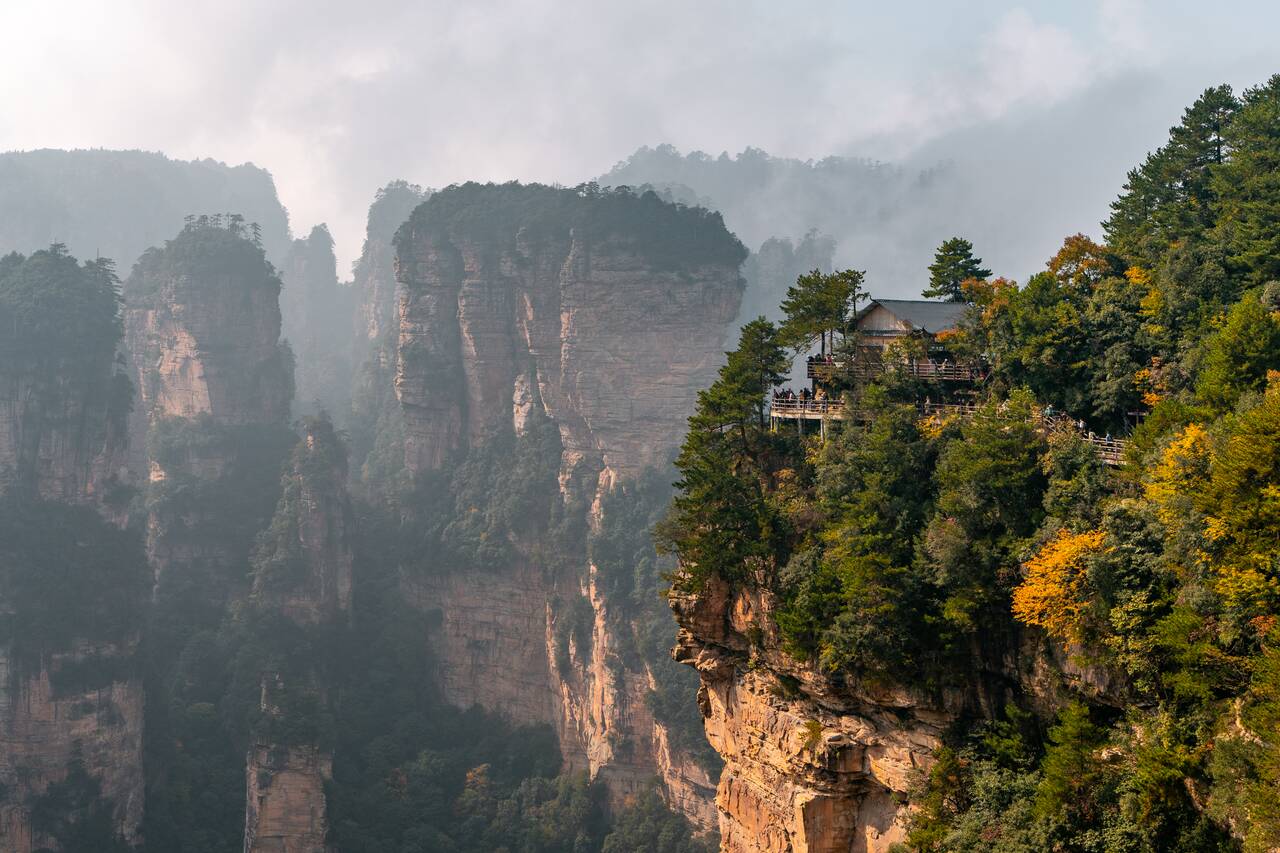
By Air: The fastest way is by flying into Zhangjiajie Hehua Airport, which has direct flights from cities such as Beijing, Shanghai, Guangzhou, Chengdu, and Changsha. From the airport, it takes around 30–40 minutes by taxi or shuttle bus to reach Zhangjiajie City or Wulingyuan, the town closest to Zhangjiajie National Forest Park.
You can find cheap flights to Zhangjiajie from Trip.com, Skyscanner, or Expedia.
By Train: For those who prefer traveling by train, Zhangjiajie West Railway Station connects the city to several major cities, including Changsha, Chongqing, and Guangzhou. High-speed trains from Changsha usually take around 4–5 hours. From the train station, local buses or taxis can take you to Wulingyuan or the city center. You can book the train here.
When I arrived late in the evening, I was able to find a carpool taxi to take me to Wulingyuan for 30 CNY per person. When you arrive, there will be people approaching you to find out where you are heading and then they will direct you to the carpool taxi. The ride from Zhangjiajie West Railway Station to Wulingyuan is around 40 minutes. You can also call a taxi via Didi to take you to Wulinghuan for around 90 CNY per car.
By Bus: Long-distance buses are another option, especially from nearby provinces and cities like Changsha, Fenghuang, and Chongqing. Buses typically arrive at Zhangjiajie Central Bus Station or Wulingyuan Bus Station, from where taxis or local buses can take you to your accommodation.
How to Get Around Zhangjiajie?
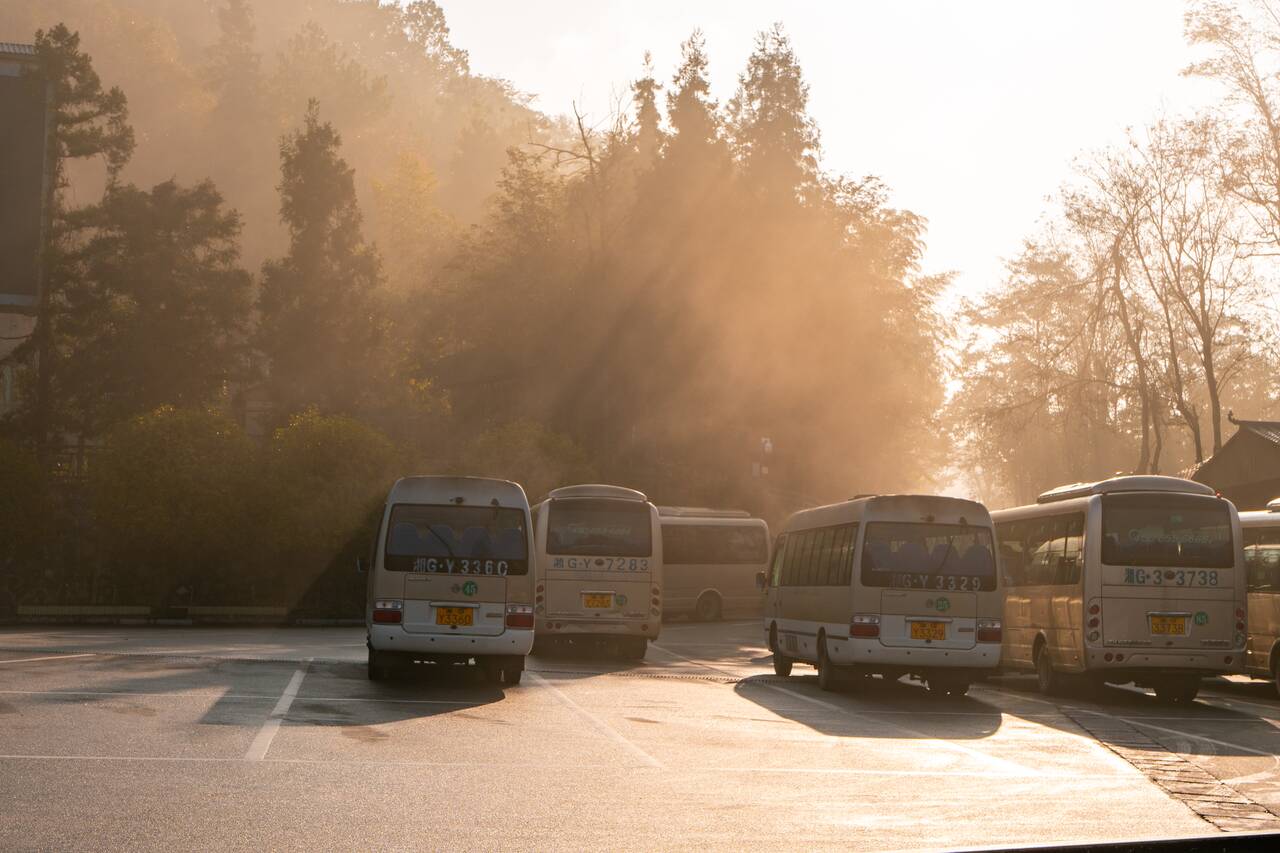
By Shuttle Buses: If you are visiting Zhangjiajie National Forest Park, you can rely on the shuttle buses, which are included with your park ticket. These internal buses connect the entrances, scenic spots, and cable car stations, running frequently to help save time and energy as you travel from one area to another.
By Cable Cars: Cable cars and elevators are essential for exploring the mountainous areas of the park efficiently. Attractions such as Tianmen Mountain and Yuanjiajie are accessible via cable cars, while the Bailong Elevator provides a quick way to descend from Yuanjiajie’s high sandstone pillars. Tickets for these must be purchased in addition to the park entrance fee, and you can book them all here.
By Didi: Didi is widely available in the city and around tourist areas outside the forest park. They are convenient for short distances or when you want a more direct route, for example, getting to and from the railway station, etc. Prices are reasonable, and using ride-hailing apps like Didi allows you to avoid language barriers. You can access Didi directly through the mini app inside the Alipay app, so there is no need to download a separate application.
Opening Hours and Entrance Tickets?
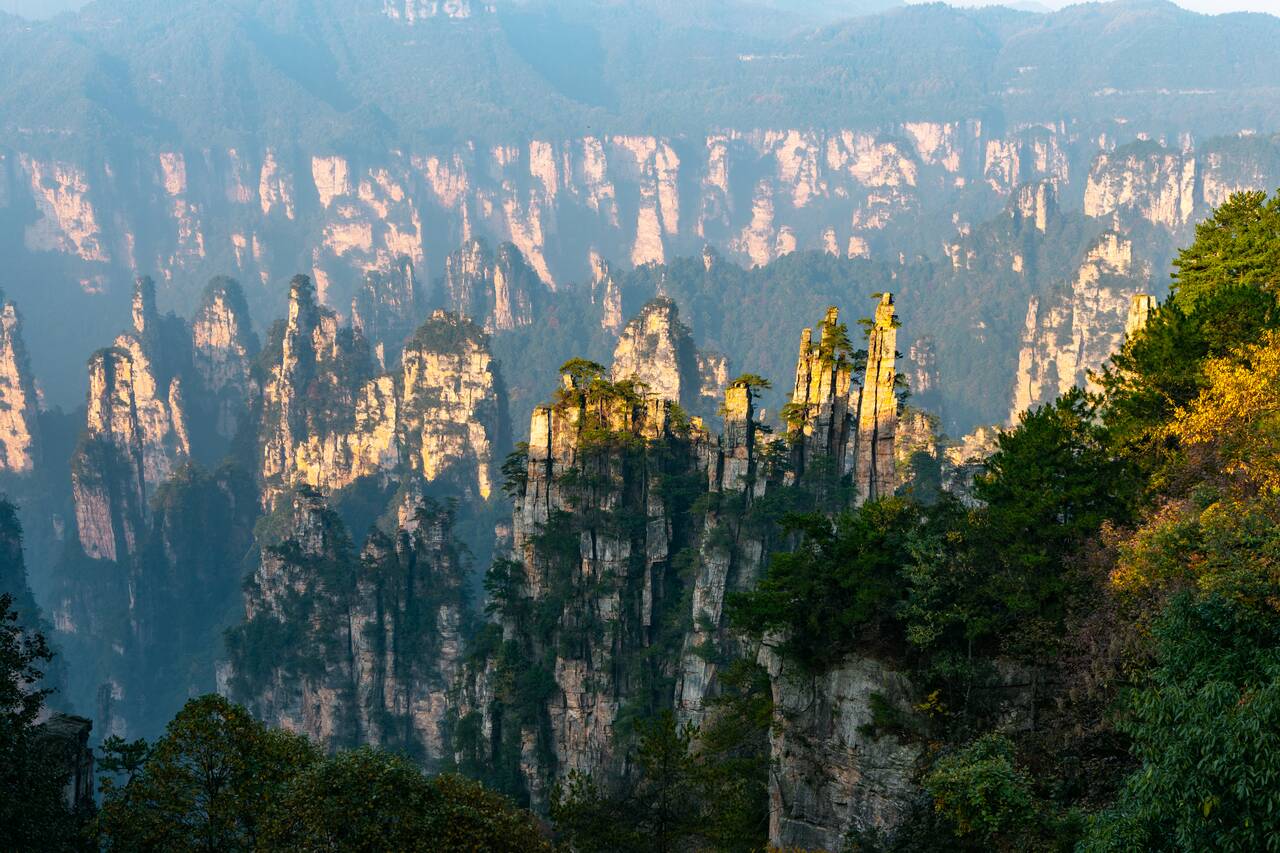
For Zhangjiajie National Forest Park: The park generally opens around 07:00, though some gates may vary slightly, and closes between 17:00 and 18:00 depending on the season. Entrance is sold via a 4‑day pass, as single‑day tickets are usually not available. This pass covers access to the main scenic zones, including mountain areas, forest trails, and the eco‑bus network. The typical adult 4‑day pass costs around 224–228 CNY, and you can book it here.
This entrance ticket does not include cable cars, elevators, or other paid transport within the park. Tickets for these are extra, with the Bailong Elevator costing about 62 CNY and the cable car around 75 CNY on top of the entry fee.
For Tianmen Mountain: During the high and shoulder seasons (March 1 – November 30), opening hours are roughly 06:30 to 18:00. In the off-season (winter), opening hours may shift to 08:00 with adjusted closing times. The entry ticket, which may include some transport within the mountain depending on the route you choose, costs around 288 CNY for adults.
How to Avoid Crowds in Zhangjiajie?
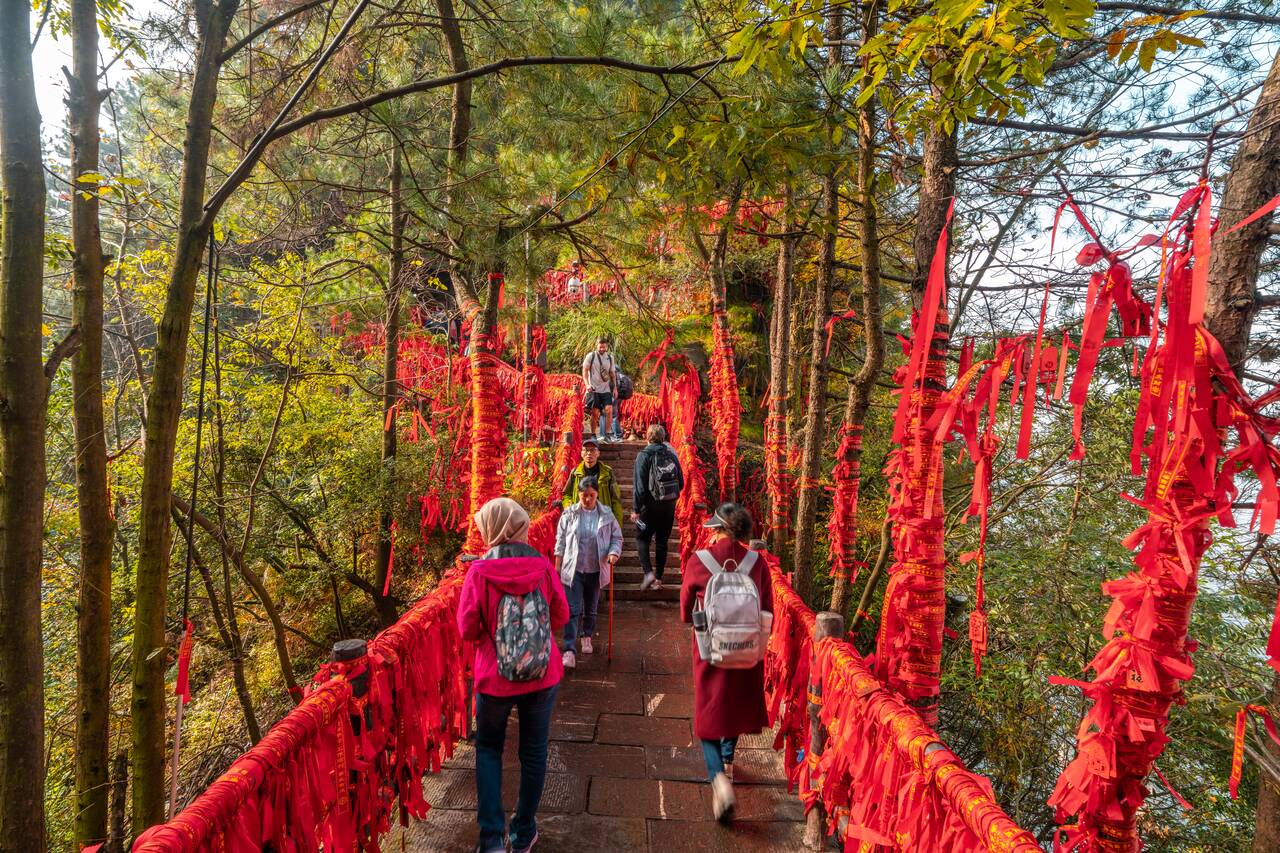
Zhangjiajie National Forest Park and Tianmen Mountain are very popular with both domestic and international tourists, so planning ahead is key to avoiding crowds. The best approach is to visit during the shoulder seasons, around late March to May or late September to November, when the weather is still pleasant but the majority of tourists have not yet arrived or have already left.
Arriving early in the morning is another effective strategy. The park gates generally open around 7 AM, and if you get there right at opening, you can often enjoy the first shuttle bus or cable car ride with minimal waiting.
Within the park, you can choose hiking trails instead of elevators or cable cars whenever possible. Popular transport options like the Bailong Elevator and Tianzi Mountain Cable Car often attract the most tourists and can be very crowded.
I recommend taking one of these options and then hiking down via either the Golden Whip Stream or the 10-Mile Gallery trails. I did this myself and found that there were barely any people around during the two-hour hike, allowing me to enjoy many of the viewpoints along the way almost entirely to myself.
Finally, try to avoid major Chinese holidays, such as Golden Week in early October or Chinese New Year, when domestic tourism peaks. Planning your trip mid-week rather than on weekends can also make a noticeable difference in crowd levels.
How Much Money Do I Need For 3 Days in Zhangjiajie?
From this 3-day itinerary, we can calculate approximately how much money you will be spending here (on average) as follows:
| 🛌 Lodging: | 64 USD (16 USD/Nights) |
|---|---|
| 🥘 Food: | 24 USD (8 USD/Day) |
| 🚗 Transportation: | 38 USD (12.67 USD/Day) |
| 🧗 Activities: | 95 USD (31.65 USD/Day) |
| 💰 Total Budget: | 221 USD (73.67 USD/Day) |
Disclaimer: This post may contain affiliate links. See our disclosure policy.
First Published:
Last updated:

