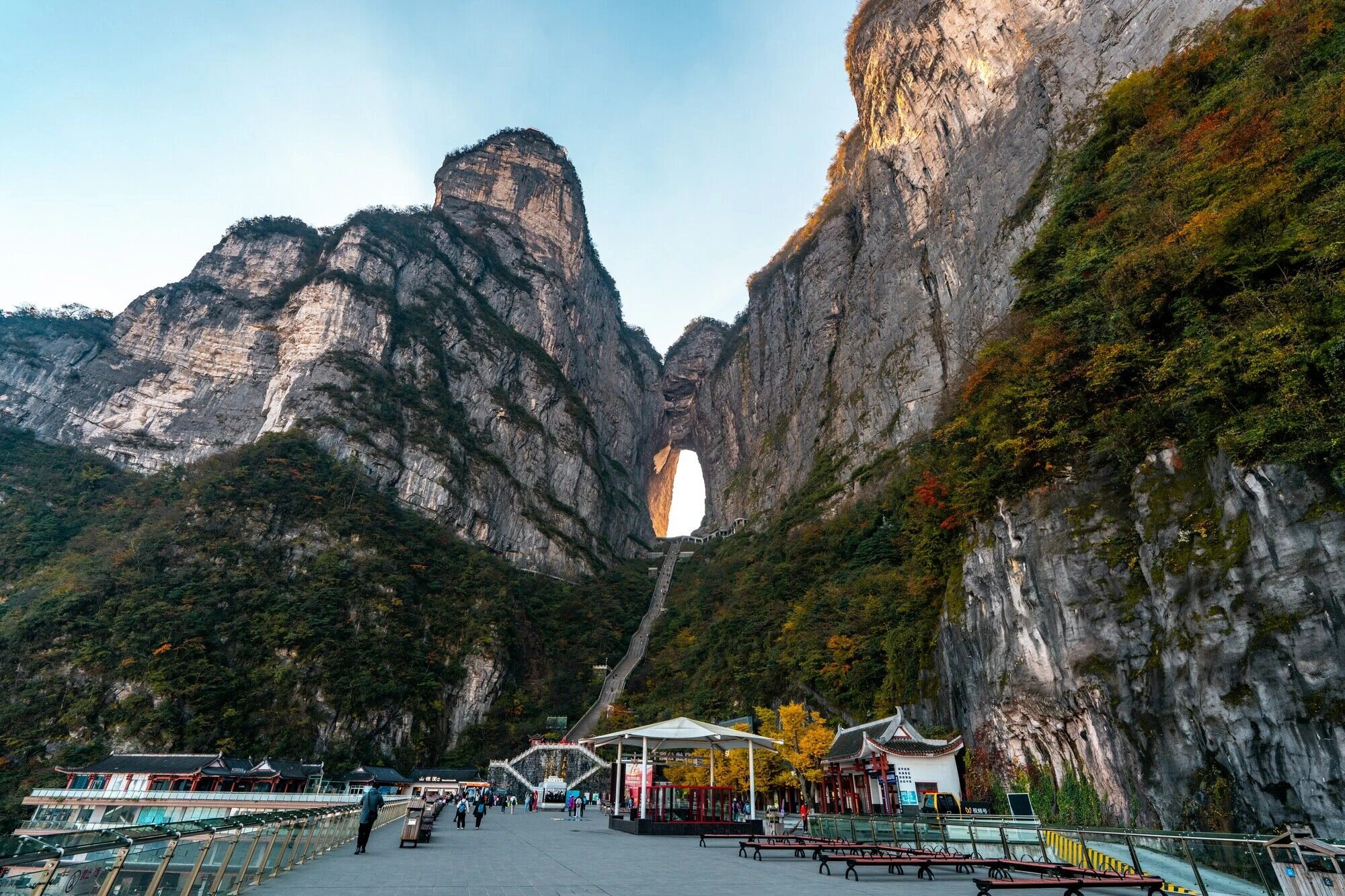



If you are planning to visit Zhangjiajie, you definitely do not want to miss Tianmen Mountain, one of the most beautiful mountains in the region, famous for its iconic cave known as the Gateway to Heaven. It’s a full-day experience with plenty of winding hiking trails, glass skywalks perched along the cliffs, and a cable car ride considered one of the longest in the world.
There’s so much to see and explore here, which is why I decided to write this travel guide, to give you all the information you need and help you plan the best possible trip to Tianmen Mountain. From the top things to do, to choosing the best route, to tips on avoiding crowds, here is a complete travel guide to Tianmen Mountain. Let’s begin planning, shall we?

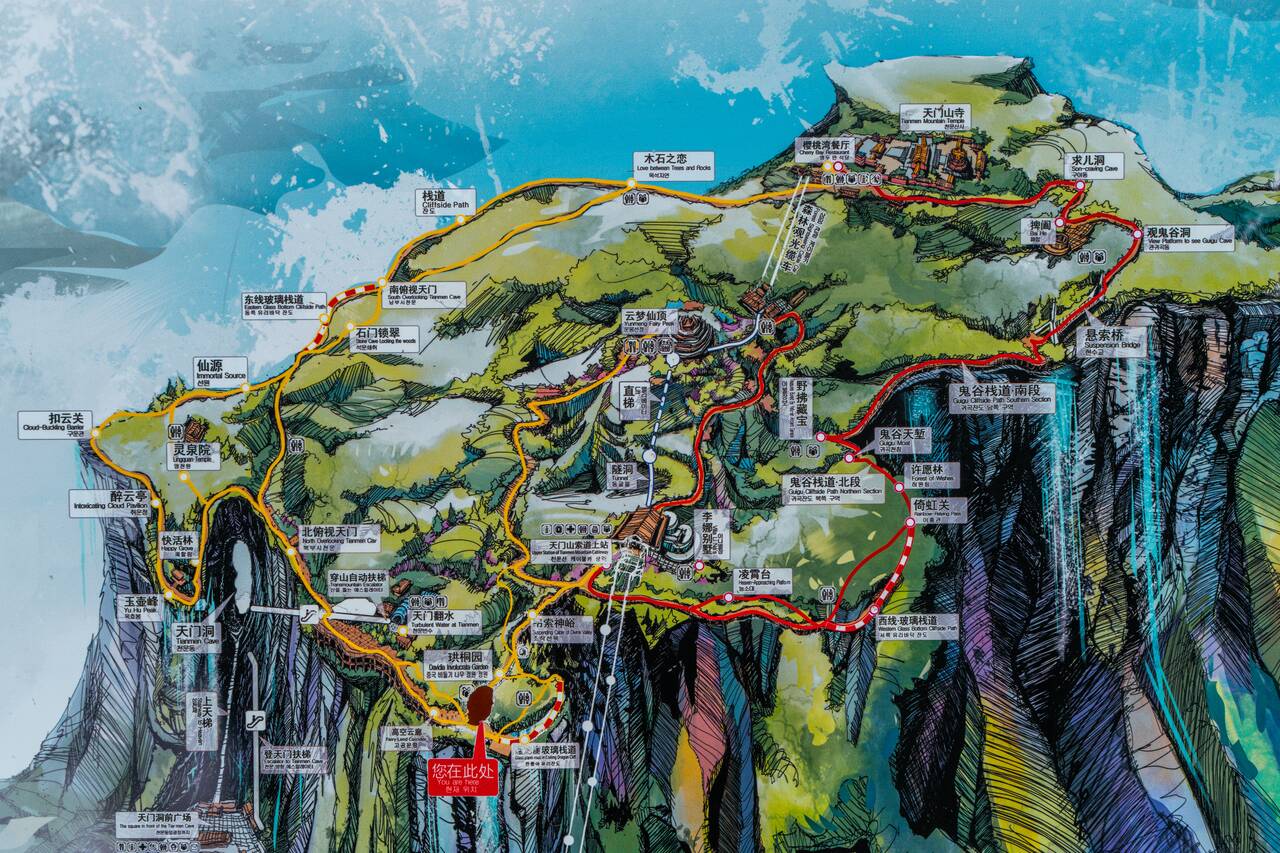
Tianmen Mountain Places to Visit Map
Quick Summary
| ♥️ Must Visit: | Middle Station |
|---|---|
| 👍 Must Do: | Hike Up the Gateway to Heaven |
| 🛌 Place to Stay: | YICenXinSu Guesthouse(Zhangjiajie Tianmen Mountain Ropeway) |
| 🌤️ When to visit: | All year round |
Where to Stay in Zhangjiajie City?



8 Best Things to Do in Tianmen Mountain
1. Admire the View from the Middle Station
- 📍 Location: Middle Station [Map Link]
- ⚡ Pete's Take: "I recommend going early to avoid crowds and enjoy the best visibility."
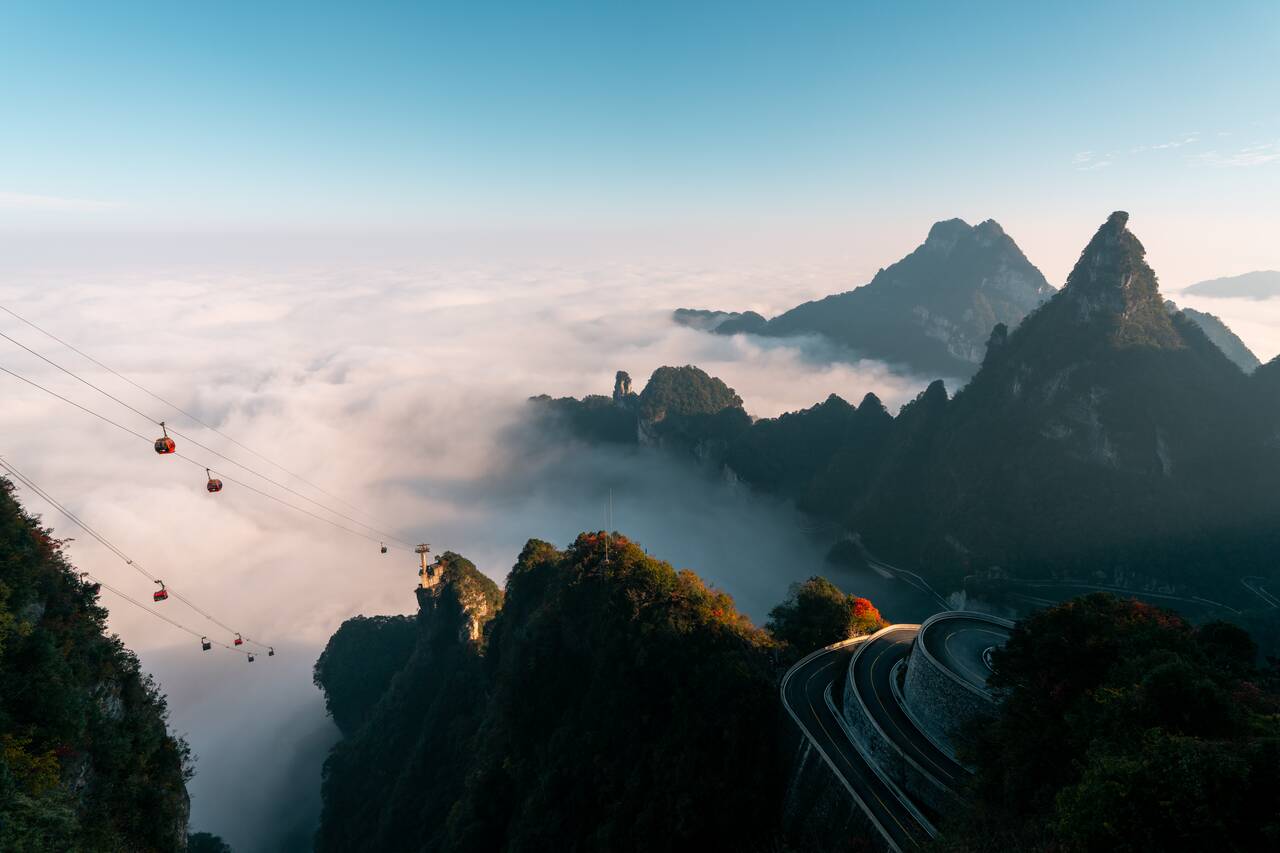
One of the main reasons why Route B and C is best is because of the stunning view you can see from the Middle Station, especially if you arrive early in the morning. I highly recommend going early to avoid crowds and enjoy the best visibility, as fog tends to build up later in the day, especially during summer.
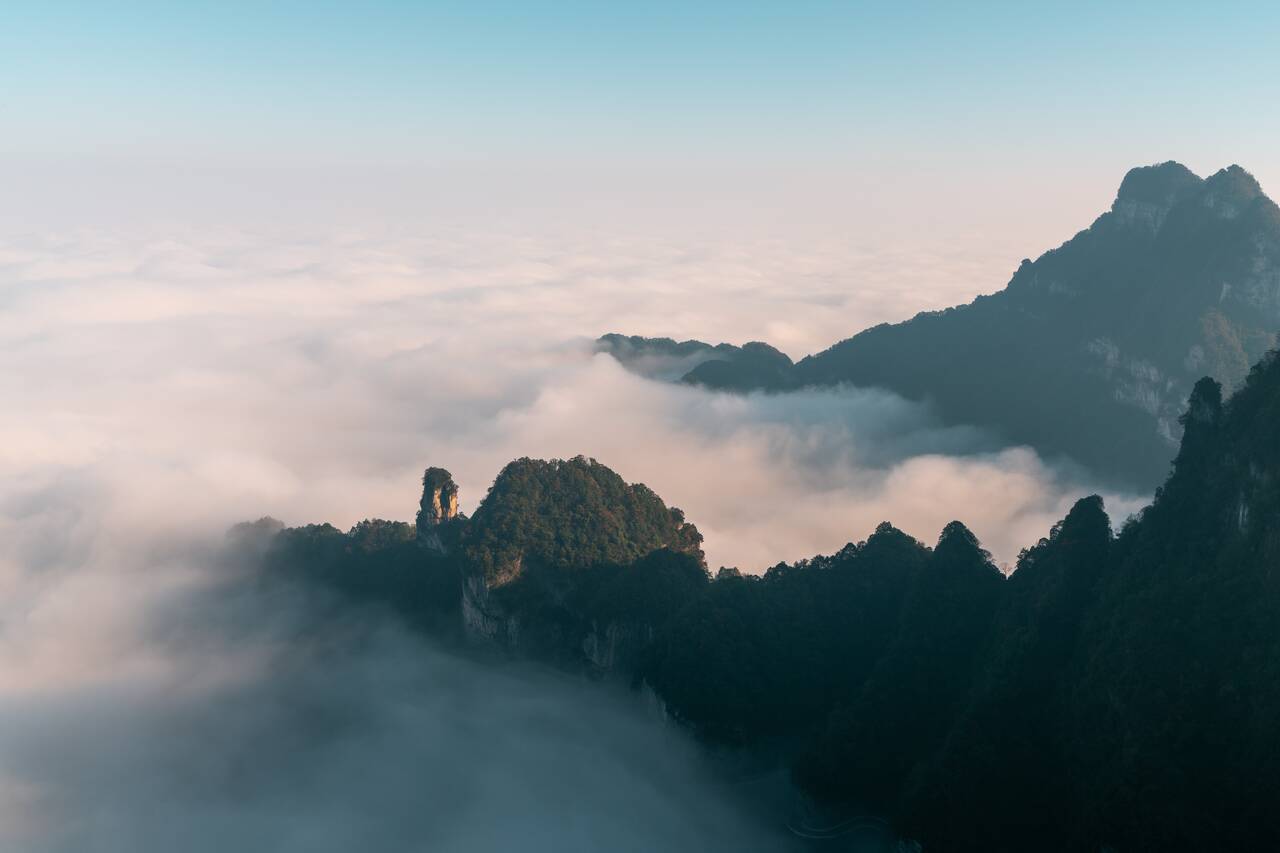
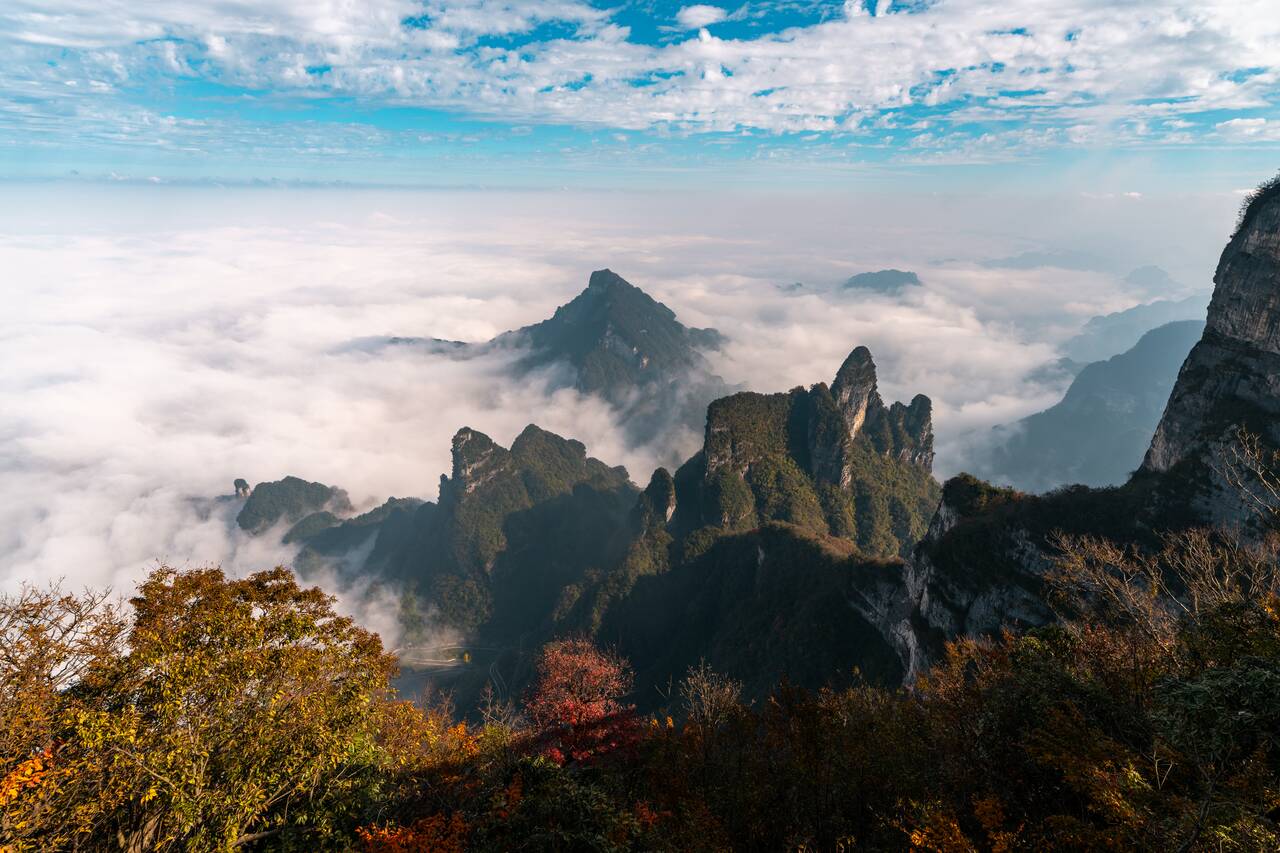
I was there in early November, and although it was cloudy at the city level, the cable car broke through the clouds, revealing the stunning view of the Middle Station with Tianmen’s mountain peaks rising above a drifting sea of clouds. It was quite a sight to behold.
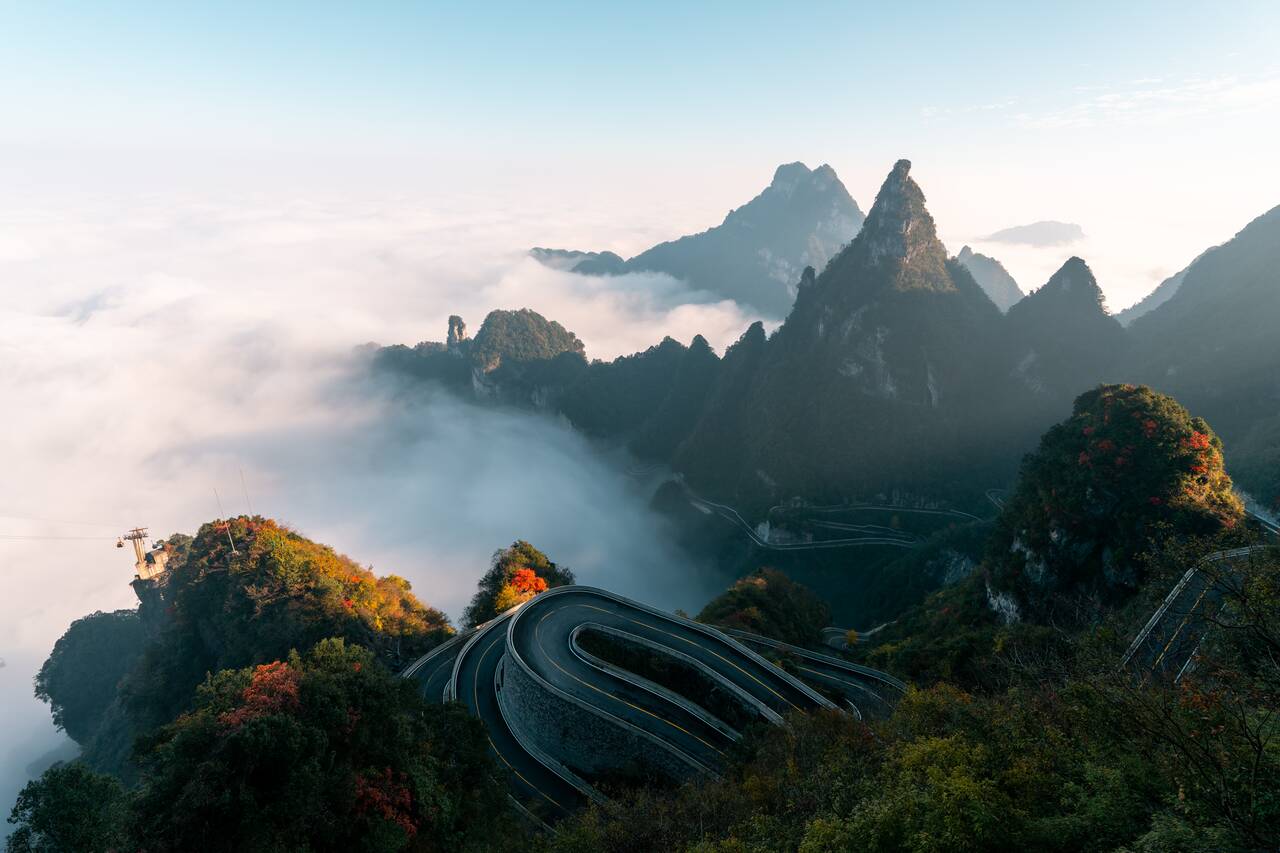
Once you arrive at the Middle Station, you can walk along the cliffside walkway, where you’ll be greeted by a distant view of the stunning Gateway to Heaven. From here, you can truly appreciate just how massive and impressive the cave is, giving you a real sense of scale.
- Tianmen Mountain Entry Tickets 🏅 Top Pick
2. Check Out the 99 Bends Road
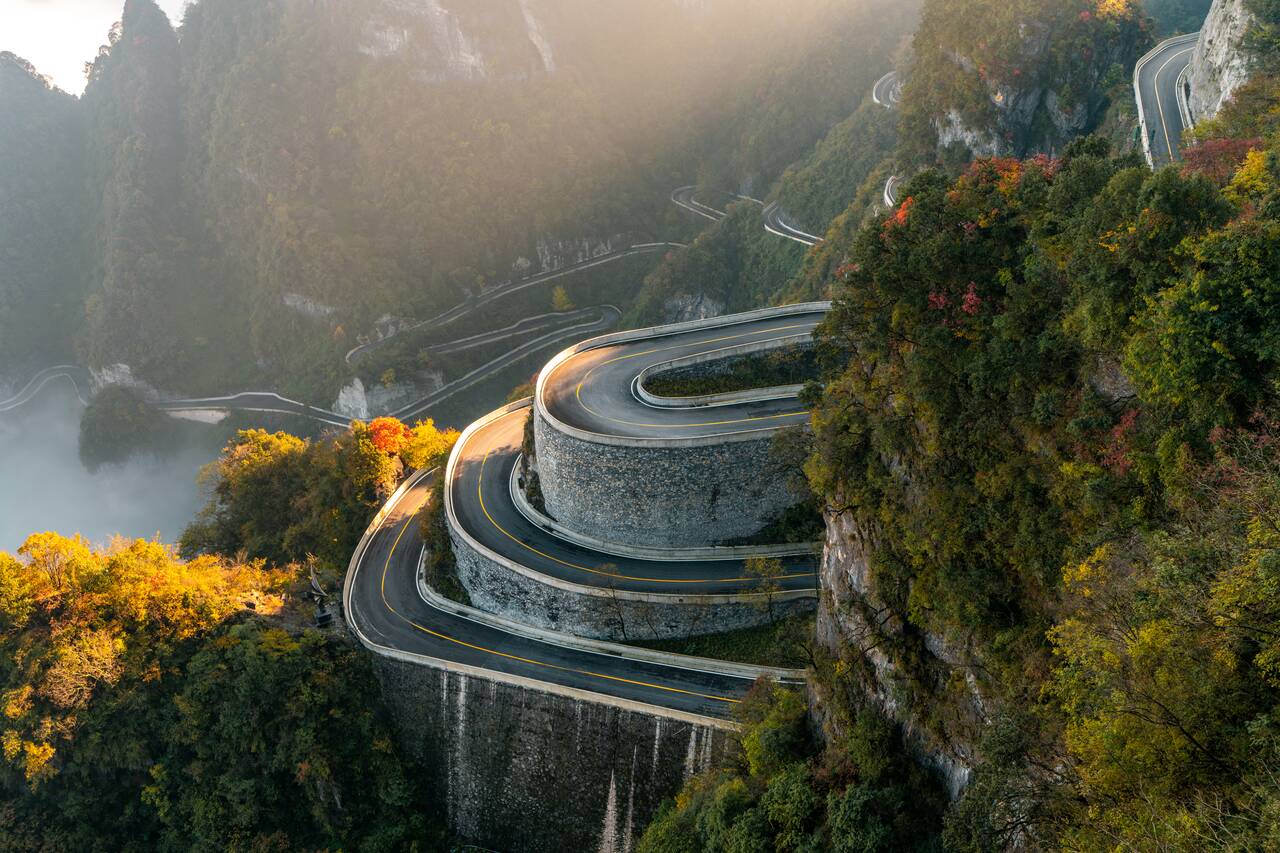
- 📍 Location: 99 Bends Road [Map Link]
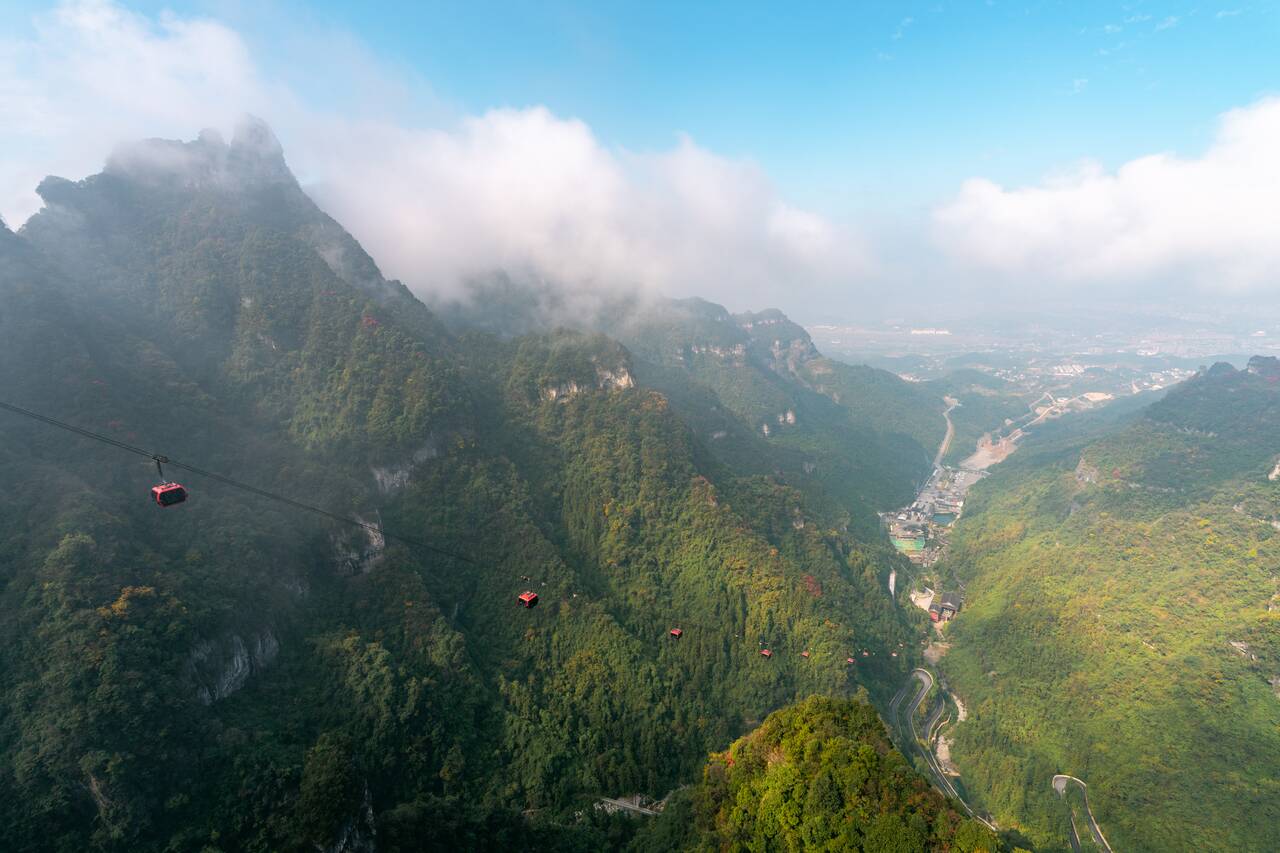
While at the Middle Station, be sure to look over the cliff and check out 99 Bends Road, a winding mountain road that stretches over 10 km and rises from roughly 200 meters above sea level to about 1,300 meters, with a total elevation gain of a whopping 1,100 meters.
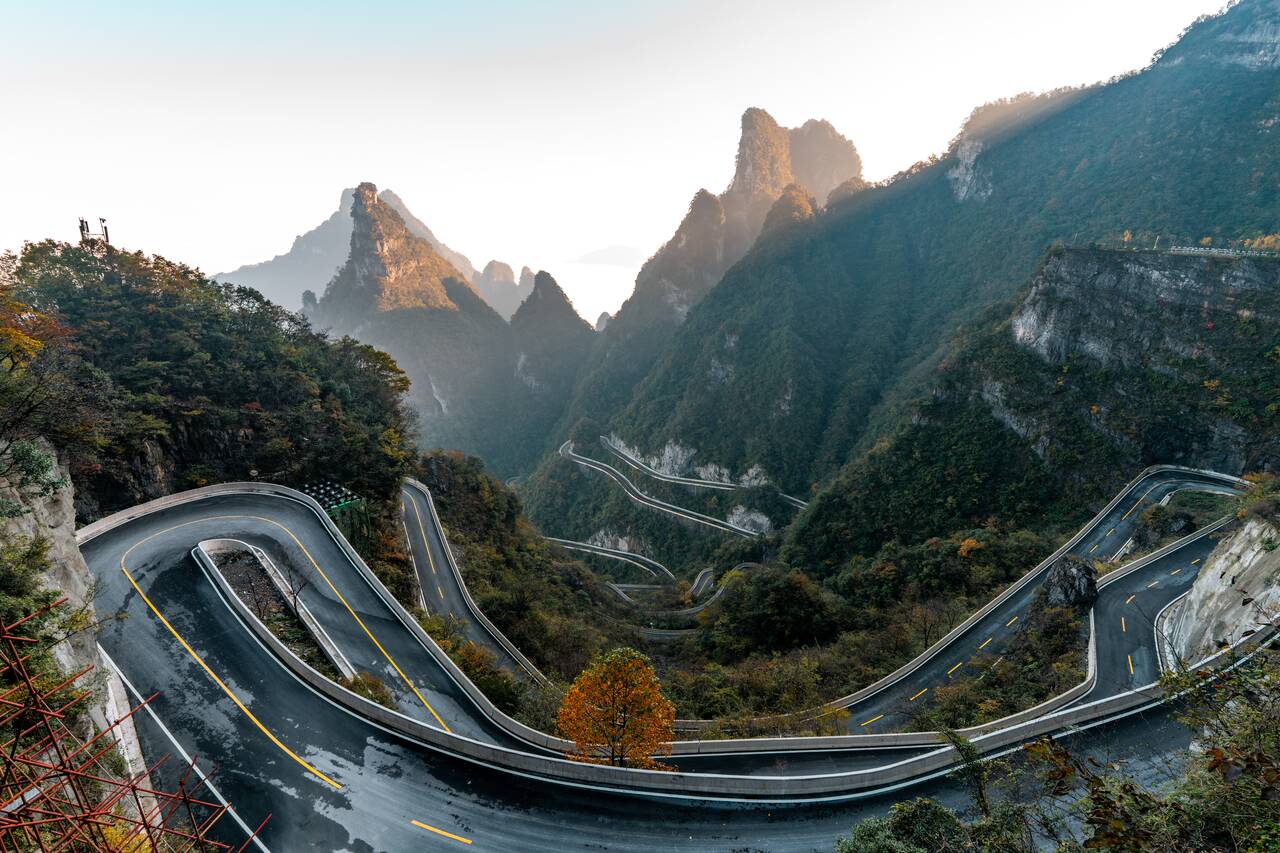
The road features 99 sharp bends (hairpin turns), many of them nearly 180°, twisting upward along the mountain like a dragon, that’s how it got its name. Buses used to take tourists from the city to the Gateway to Heaven along this daring road before the two cable cars were built.
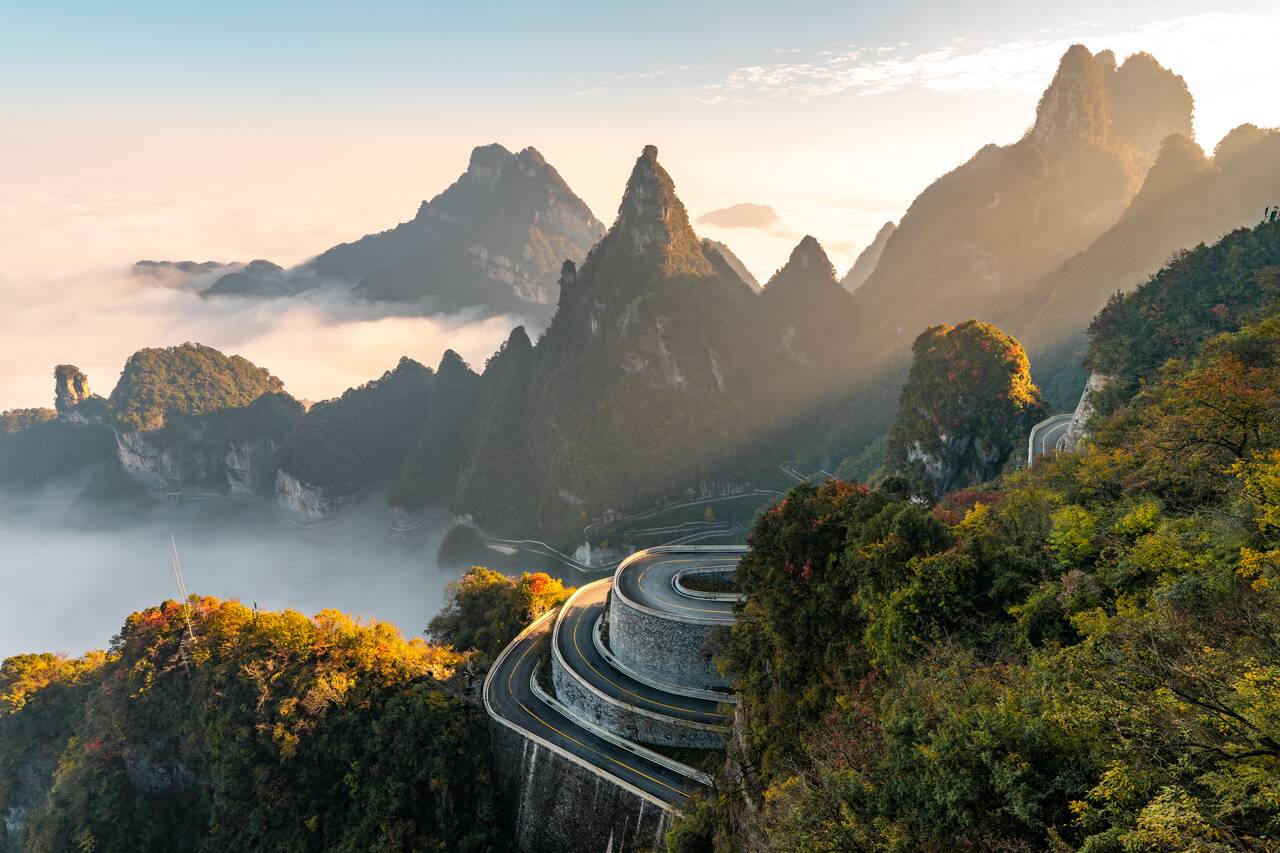
Now, you don’t have to brave the road yourself, you can enjoy the view at your own leisure from the Middle Station 😉. Fun fact: the road gained worldwide fame when Fabio Barone, an Italian driver, conquered it in a specially modified Ferrari 458, climbing all 99 bends in under 11 minutes. Since then, the road has often been used for extreme sports and has been featured several times in Western media.
3. Hike Up the Gateway to Heaven
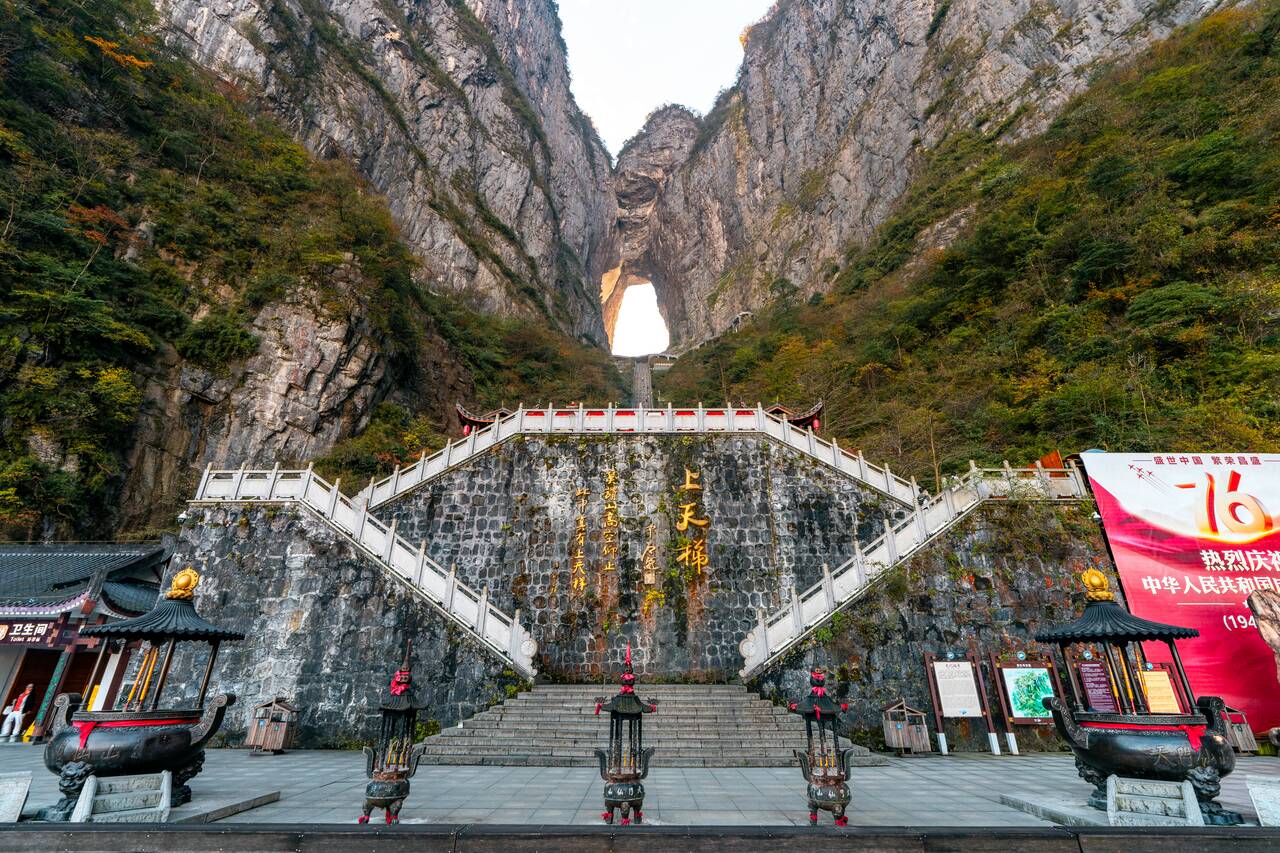
- 📍 Location: Gateway to Heaven [Map Link]
- 💰 Escalator Fees: 32 CNY (~5 USD) (escalator)
- ⚡ Pete's Take: "I recommend hiking the staircase if you are able since it's challenging but fun and extremely rewarding once you reach the top."
One of the most iconic features of Tianmen Mountain, which is probably the main reason why many travelers decided to visit, is the natural arch carved into the cliff face called Tianmen Cave, or popularly known as the “Gateway to Heaven”. This enormous rock‑arch stands about 131.5 metres tall and around 57 metres wide, making it one of the largest natural arches at high altitude in the world.
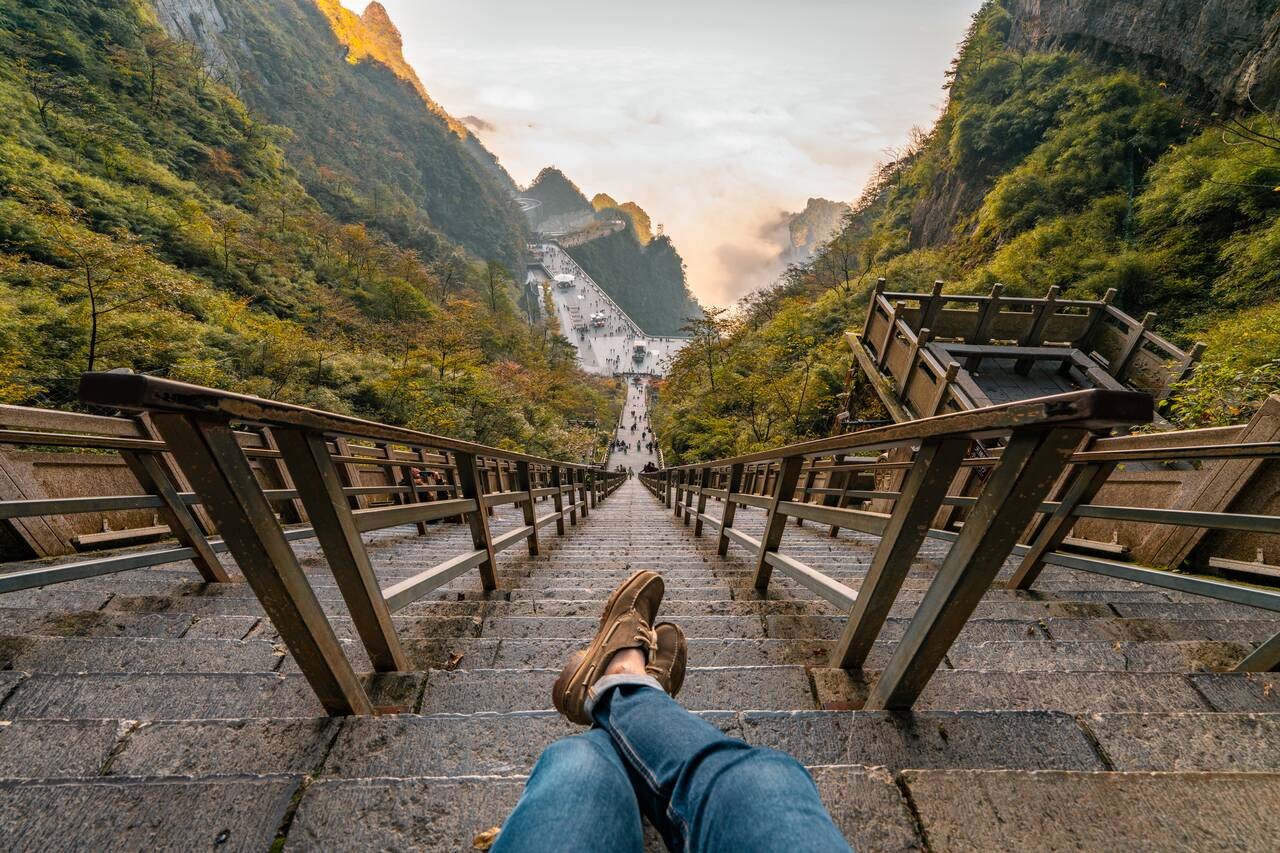
One of the best experiences here is hiking the challenging stairs to the top. Once you reach the Gateway to Heaven, you can climb the famous 999 stone steps, often called the “stairway to heaven”, which ascend from the lower plateau up to the arch’s entrance.
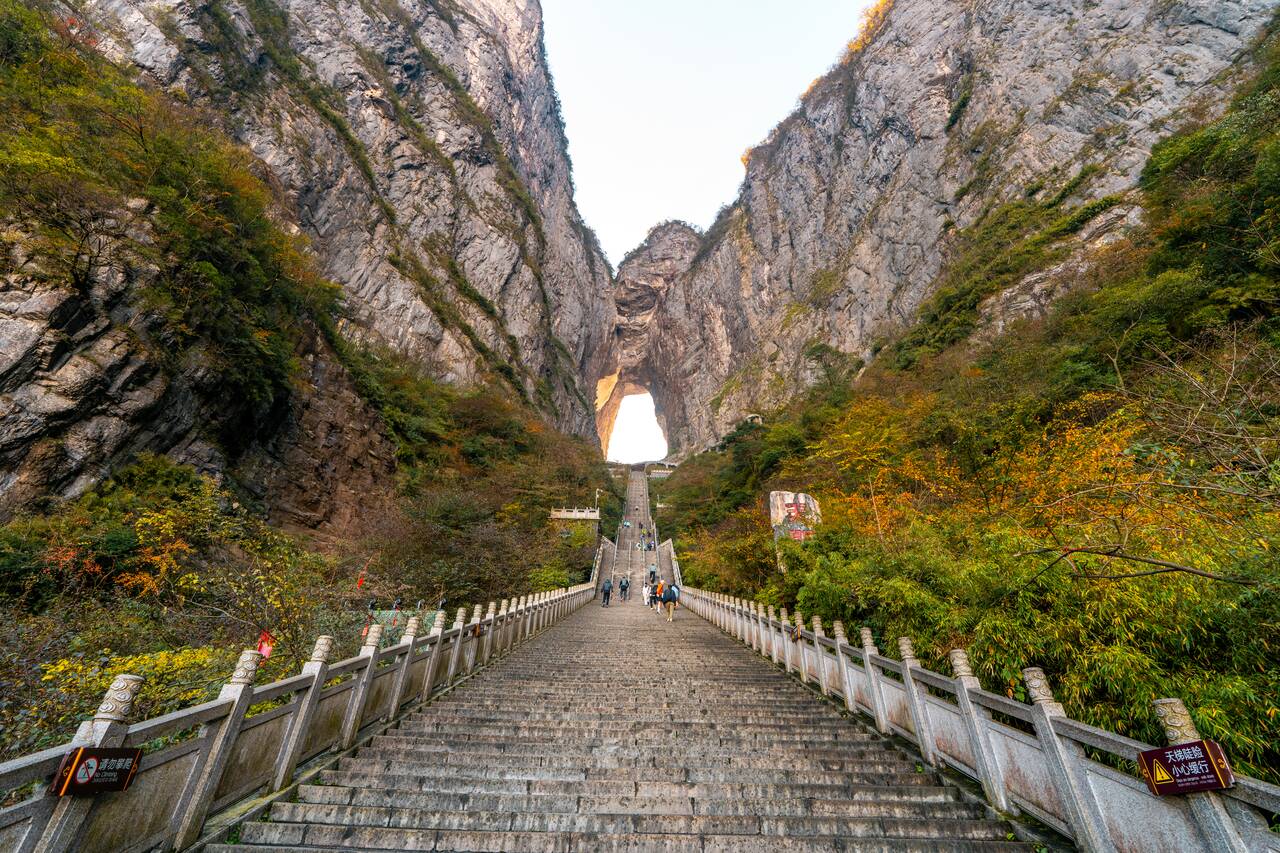
The staircase is extremely steep, and it can be very tiring to hike, so be sure to pace yourself and take it slow. I did it without rest in about 15 minutes, and my knees were throbbing like crazy when I arrived at the top. If you haven't had anything to eat yet, you can stop by one of the many shops at the bottom and get energized before the hike.
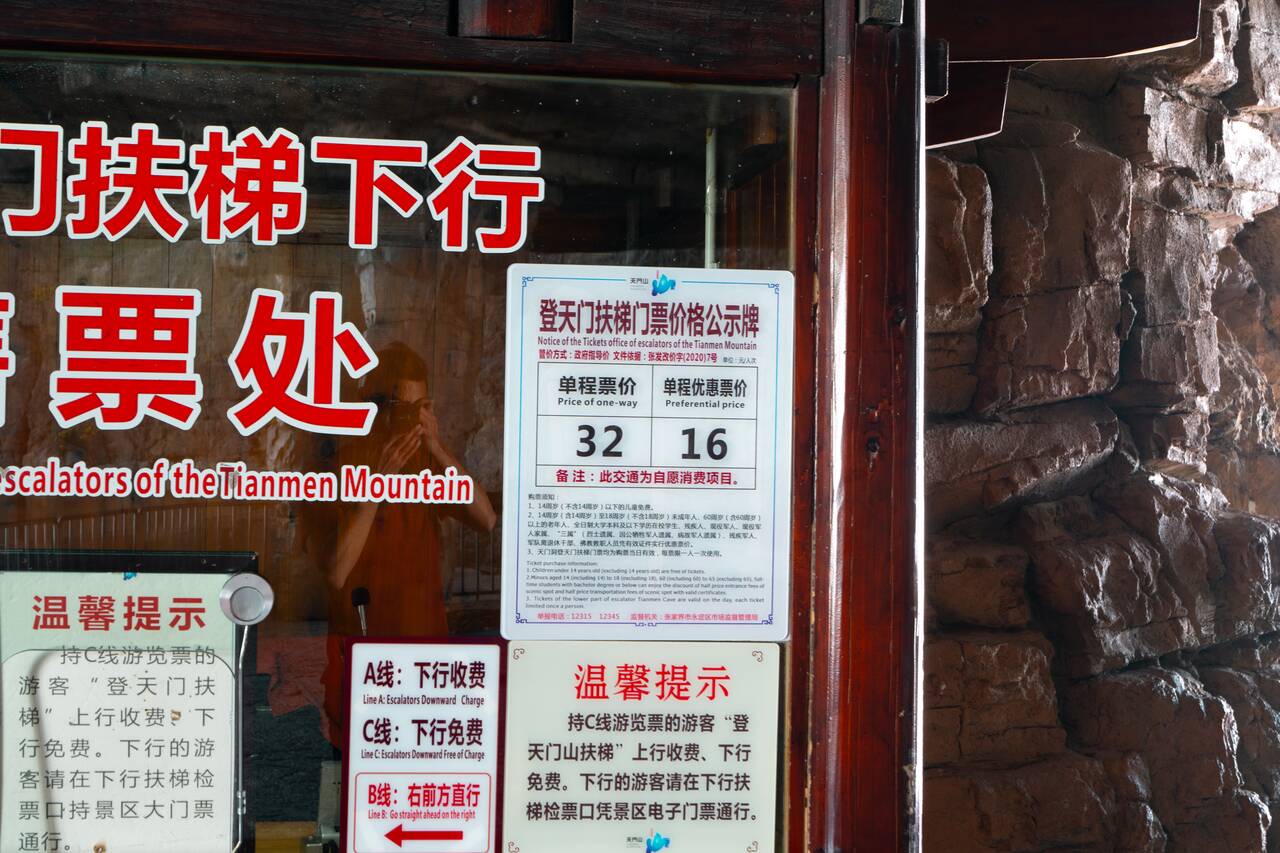
If hiking is not for you, you can also take the escalators, which will get you to the top in less than 5 minutes, although there is an extra fee of 32 CNY for a one-way ride. Personally, since visits like this are rare, I recommend hiking the staircase if you are able. It’s challenging, but fun and extremely rewarding once you reach the top.

Once you arrive, all your tiredness will disappear as you reach a stunning vantage point, where you can watch clouds and mist swirl around the cliff, giving the impression of truly standing at a heaven’s gate. At the top, you will also find a reservoir and a great view of the mountains from the other side.
4. Hike Around the Upper Station
- 📍 Location: the Upper Station [Map Link]
- 💰 Chairlift Fees: 25 CNY (~4 USD) one way
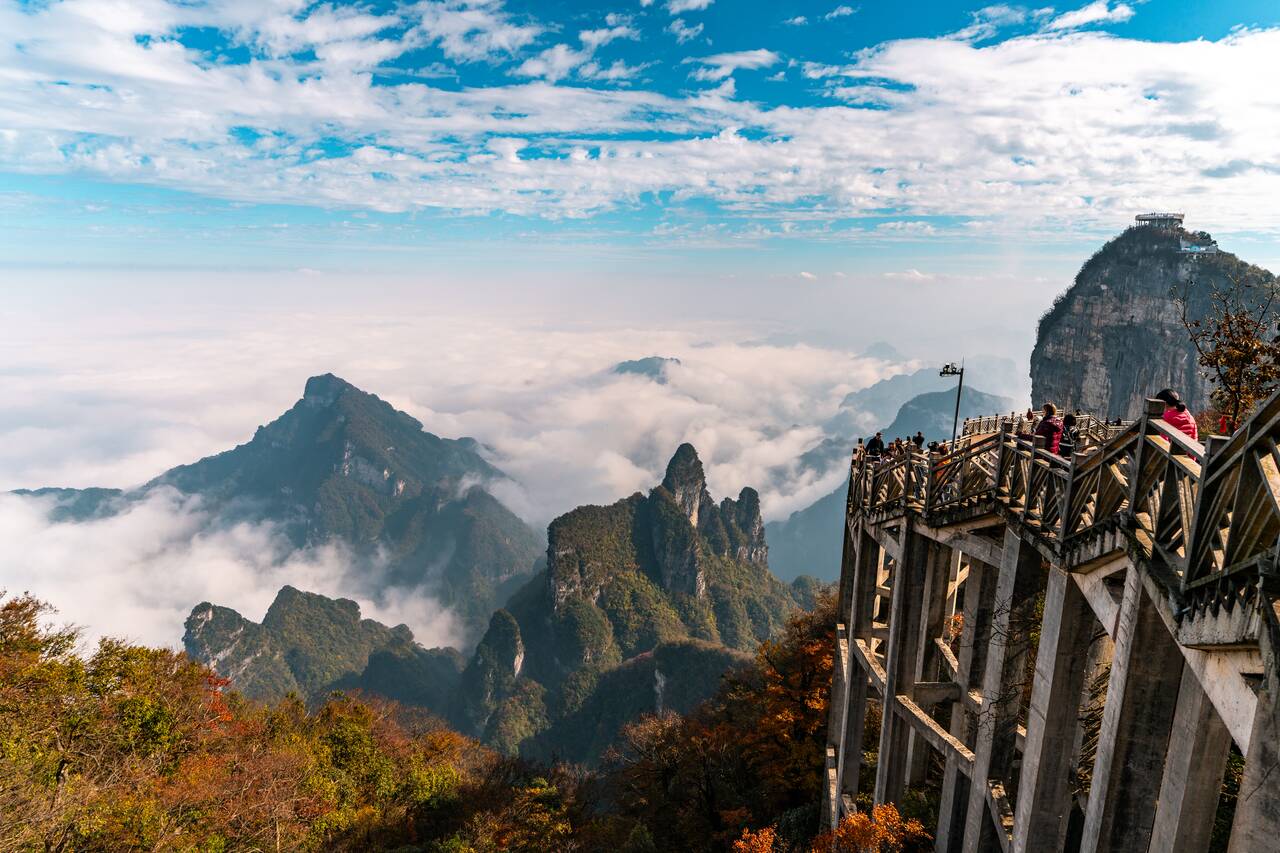
- ⚡ Pete's Take: "When I visited in November 2025, I followed Route B and started with the red trail. The cableway routing has since changed, but I still recommend using the summit map to combine the cliffside trails, Tianmen Temple, and Yunmeng Fairy Peak."
After a series of escalators from the Gateway to Heaven, you will arrive at the Upper Station, where the entire mountain opens up to you with countless hiking opportunities, along with plenty of amenities like restaurants, street food stalls, and cafes to keep you fueled and ready for all the adventures ahead.
From the Upper Station area, you can explore the summit via the interconnected east and west cliffside trails. When I visited, I started along the red trail and continued toward Tianmen Temple, which worked well for combining the viewpoints, Glass Walkways, and temple into one loop. Check the current summit map when you arrive, as individual paths can occasionally close for weather or maintenance.
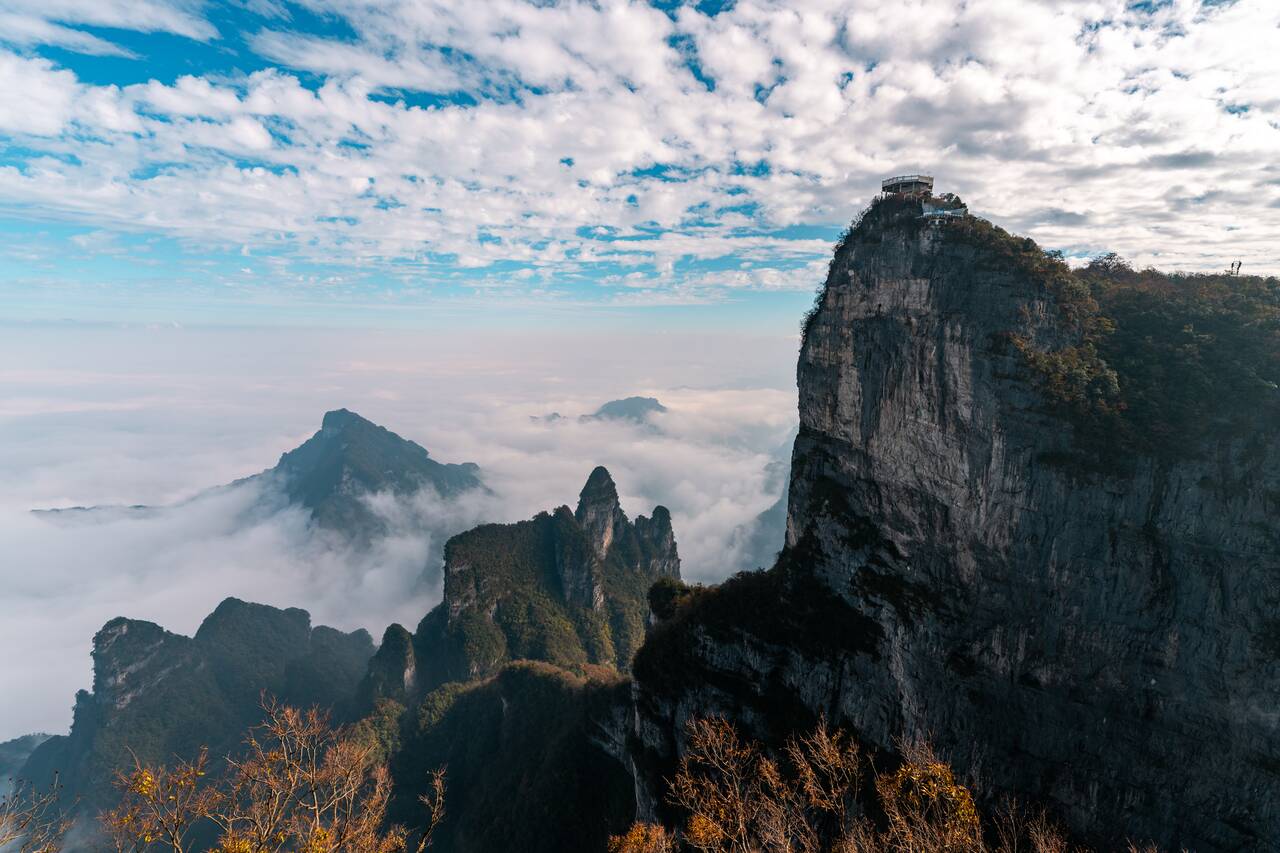
You can take the longer route first, which loops around the hill toward Tianmen Temple and leads you past several scenic spots, including the Glass Walkways, the suspension bridge, and plenty of stunning viewpoints along the way. Once you arrive at Tianmen Temple, you can take the open-air cable car to Yunmeng Fairy Peak, enjoy the view from there, take the elevator down, and you will arrive back at the Upper Station.
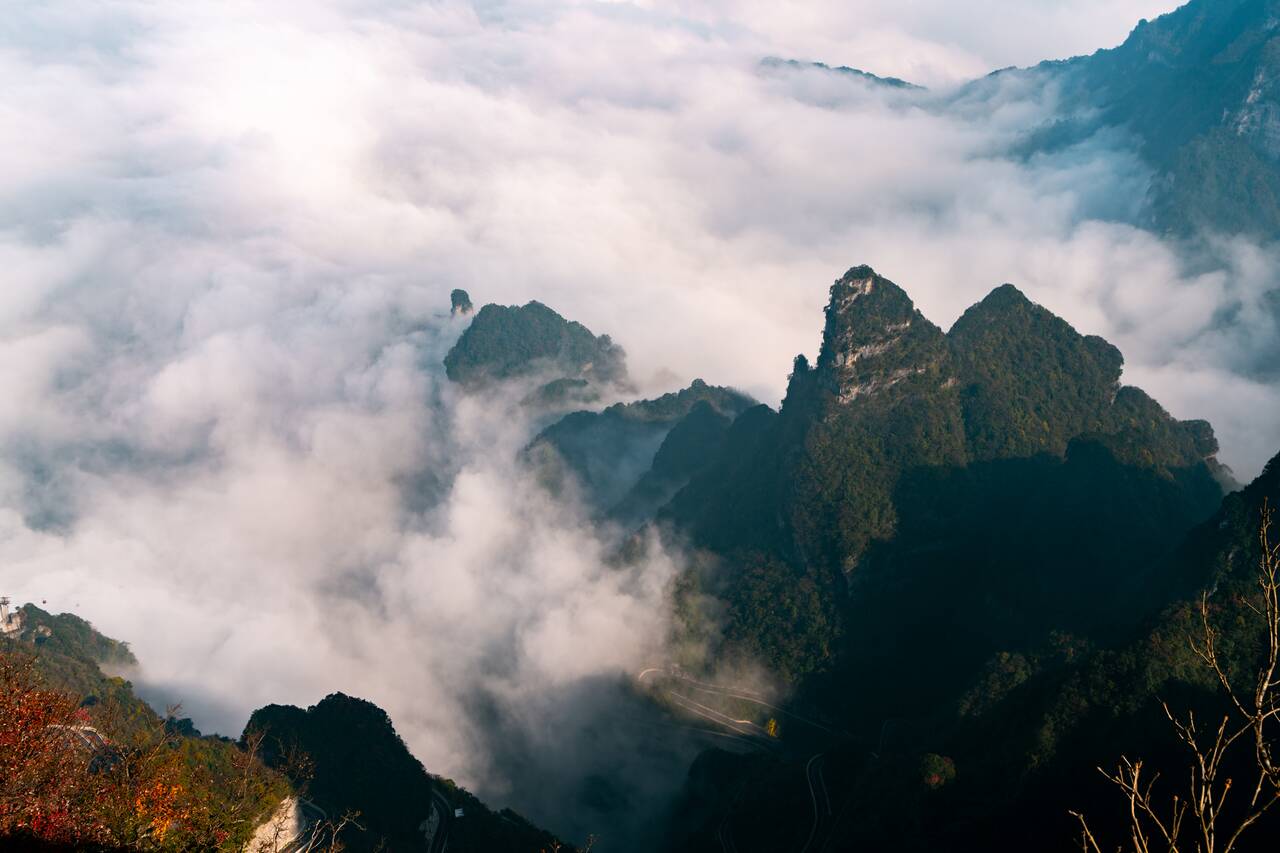
Or you can start by taking the elevator up to Yunmeng Fairy Peak, enjoy the view, then take the open-air cable car to Tianmen Temple and walk the long way back. For the shortest and easiest route, you can do the same, but instead of returning the long way, simply go back the same way using the cable car and elevator. Keep in mind that the cable car costs 25 CNY one way.
5. Walk the Glass Skywalk
- 📍 Location: Glass Skywalk, Tianmen Mountain [Map Link]
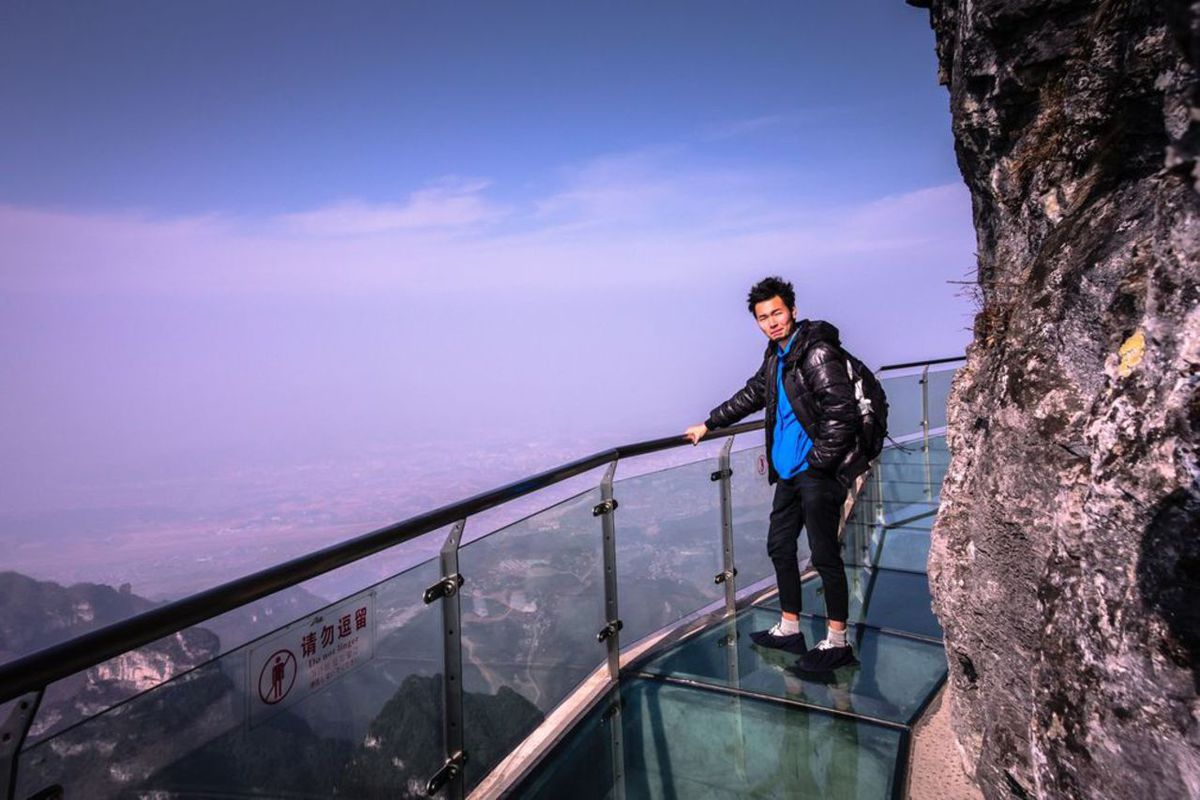
Another exciting activity is walking the Glass Skywalk, a transparent walkway that clings to the cliff face, allowing you to look straight down at the valleys hundreds of meters below. It’s definitely not for the faint of heart.
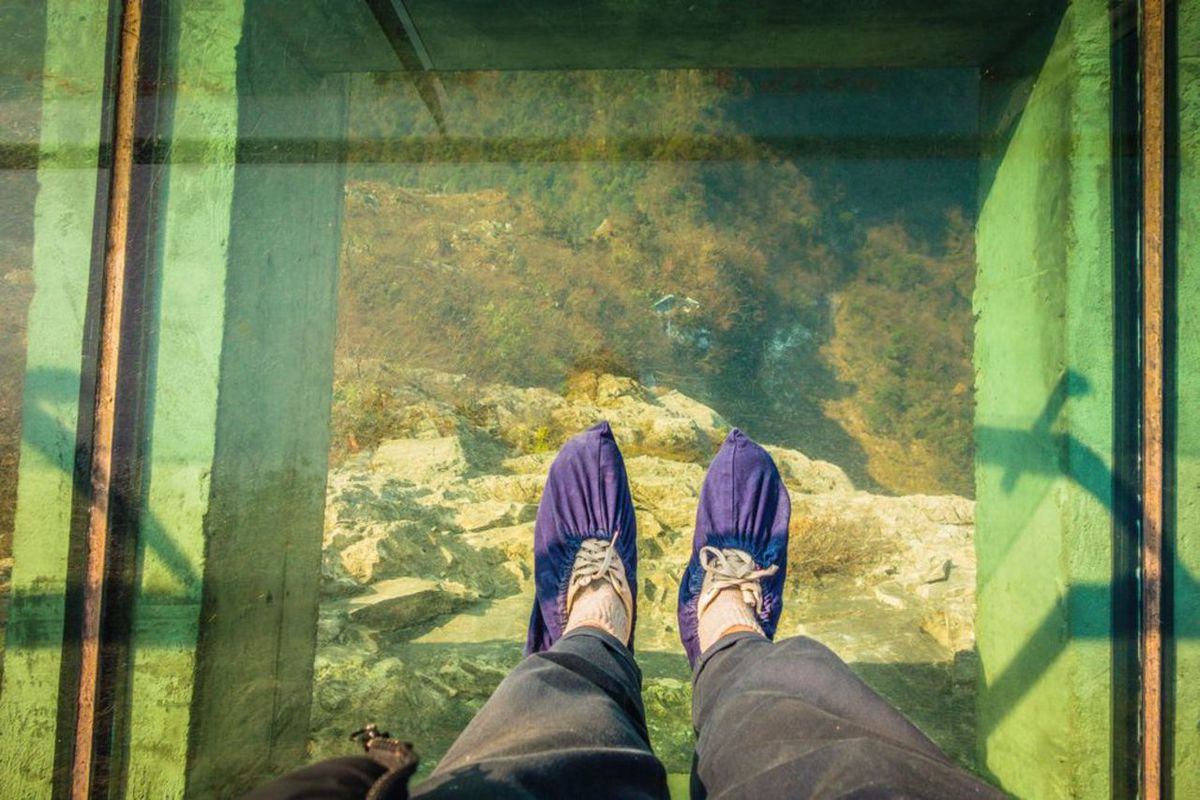
There are three glass skywalks at the top of Tianmen Mountain: the East Line Glass Skywalk, the West Line Glass Skywalk, and the Coiling Dragon Cliff Glass Skywalk. The longest of them is the Coiling Dragon Cliff, which stretches 100 meters long and 1.6 meters wide, and provides a great viewpoint over the 99 Bends Road.
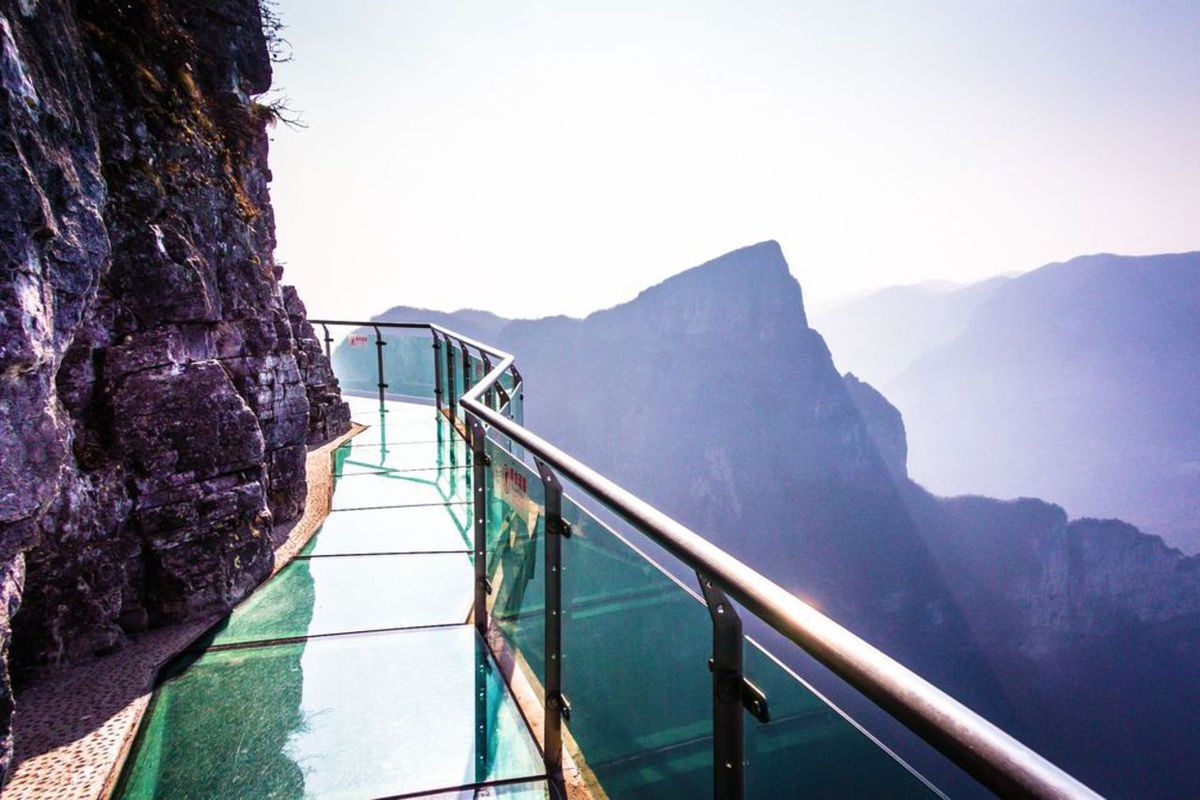
If you want to experience the skywalk, I highly recommend coming early in the morning to avoid crowds, which can form quickly as the day progresses. Morning also offers much better visibility, allowing you to fully appreciate the view from the skywalk before clouds roll in.
6. Admire the View from Yunmeng Fairy Peak

- 📍 Location: Yunmeng Fairy Peak [Map Link]
- ⚡ Pete's Take: "You can hike up or take an elevator and save your energy for hiking in other areas."
The highest point on Tianmen Mountain is Yunmeng Fairy Peak, which rises to 1,518.6 meters above sea level. This makes it a perfect vantage point to take in the entire upper part of Tianmen Mountain, and it is definitely an amazing spot to visit.
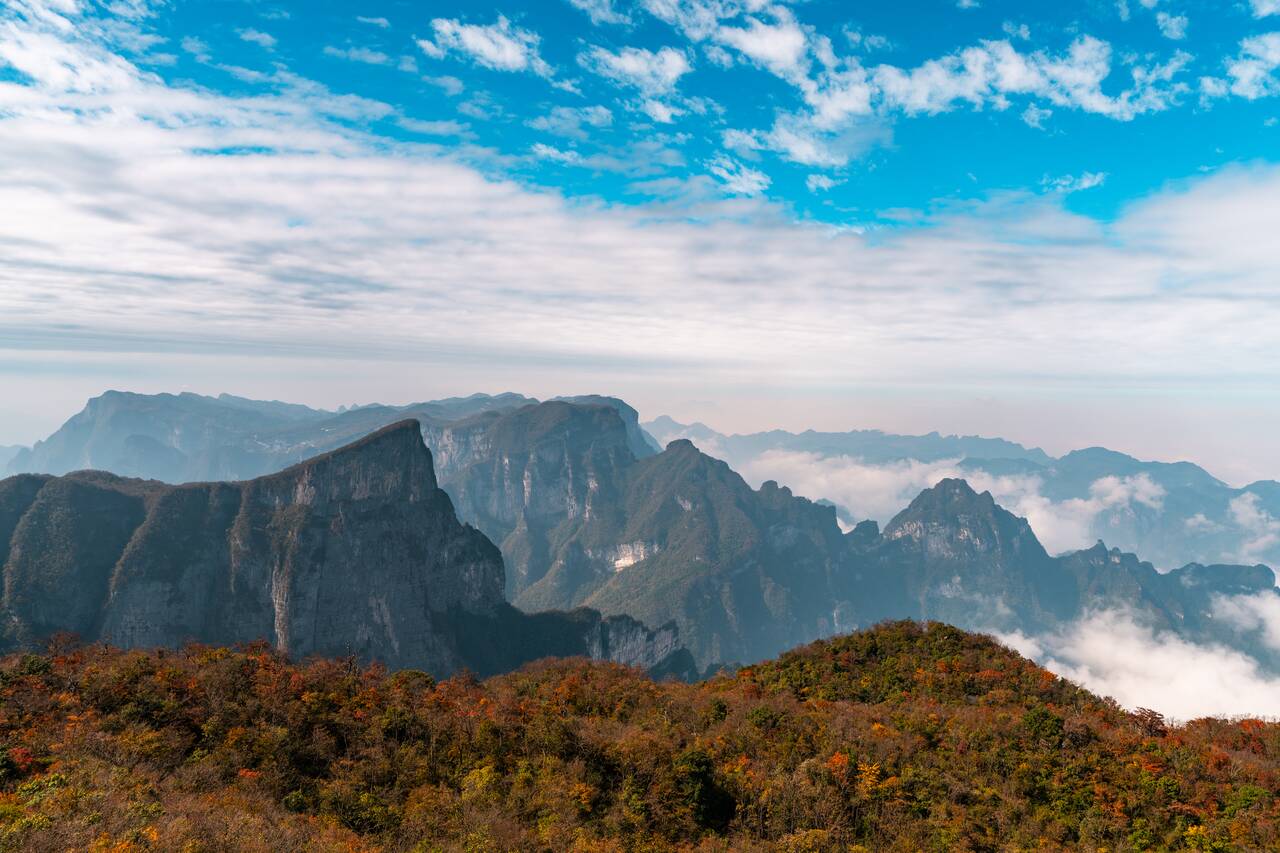
From the summit of Yunmeng Fairy Peak, you will find a multi-tiered pavilion with panoramic, 360-degree vistas. On a clear day, you can see the various other peaks of Tianmen Mountain, the distant valley ranges, and sometimes even views extending toward the wider region around Zhangjiajie.
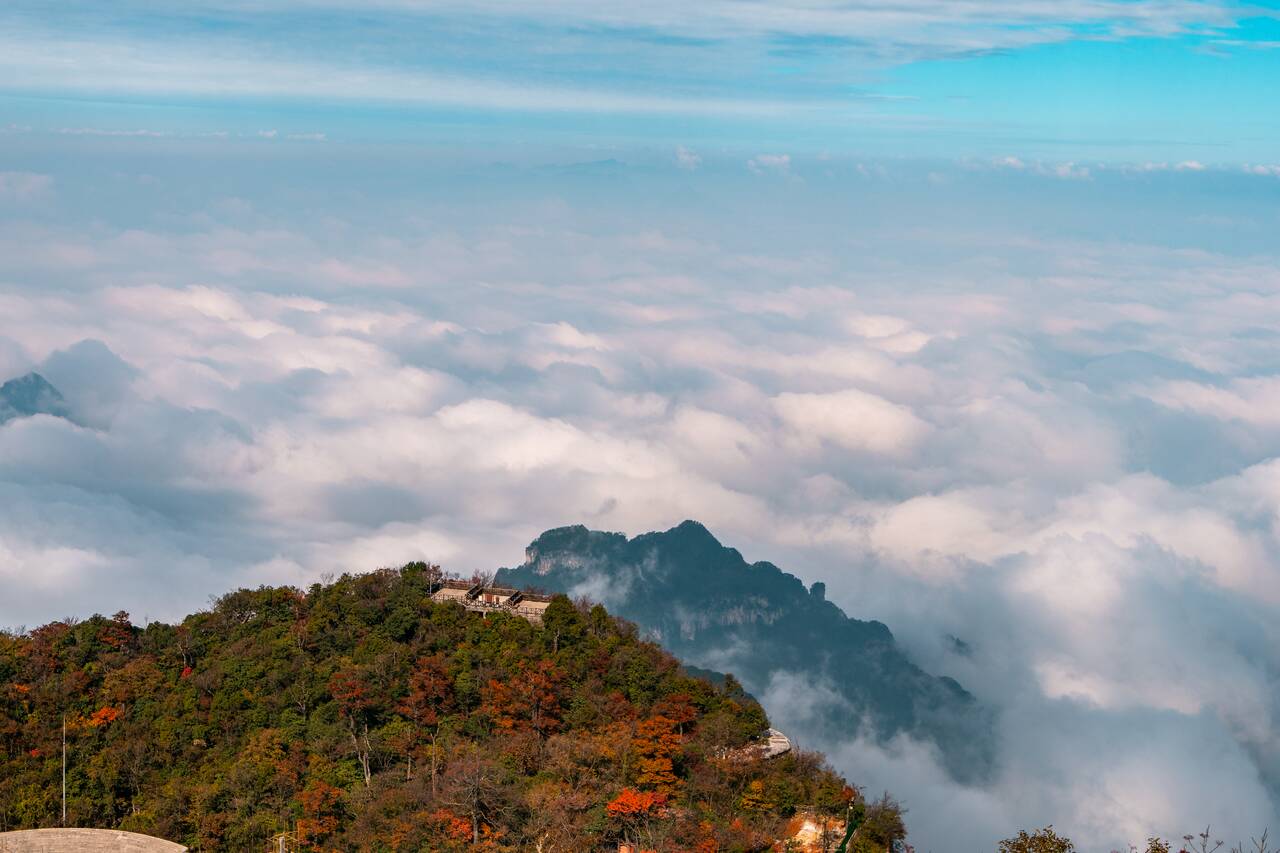
From above, you’ll also get views of some of the signature attractions on the mountain, including the glass walkways, a suspension bridge, and Tianmen Temple, which we will discuss later. This vantage point gives you a sense of how expansive the upper part of Tianmen Mountain is, helping you decide whether to hike or take one of the many shortcuts to Tianmen Temple.

There are two ways to reach Yunmeng Fairy Peak. You can either hike up from the Upper Station along the red hiking path or take a free elevator to the pavilion and then walk up the stairs to the top. Many visitors choose the elevator so they can save their energy for hiking other areas, as there is not much to see between the Upper Station and Yunmeng Fairy Peak.
7. Hang Your Legs Over a Cliff on the Forest Sightseeing Cable Car
- 📍 Location: Forest Sightseeing Cable Car [Map Link]
- 💰 Chairlift Fees: 25 CNY (~4 USD) one way
- ⚡ Pete's Take: "You can also hike this route, but what's the fun in that? Hanging your legs over cliffs as you glide along is so much more exciting! You can hike back if you want to."
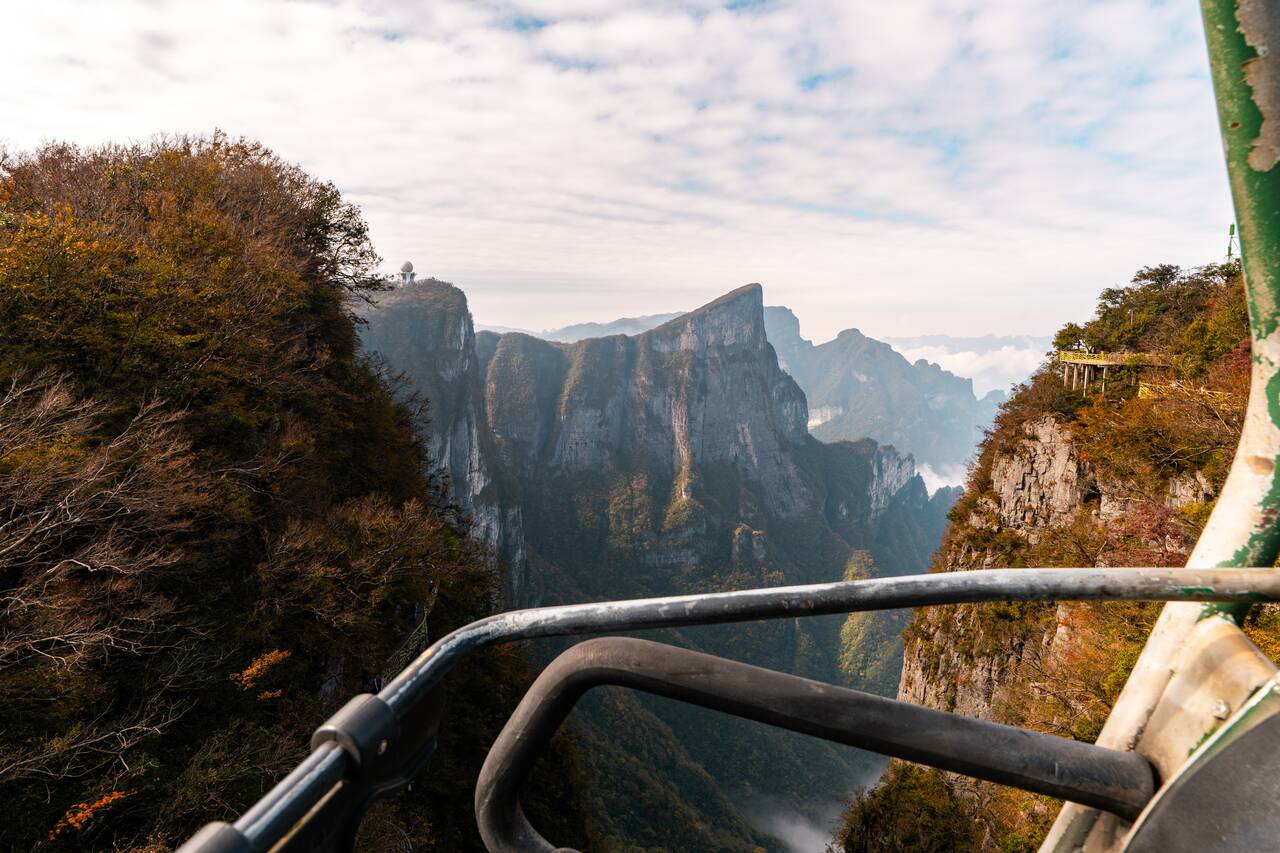
From Yunmeng Fairy Peak, you can either hike the longer route to Tianmen Temple or take the Forest Sightseeing Cable Car, an open-air, ski-style cable car that lets your feet dangle over cliffs and mountains. Riding it is an exciting experience in itself, in my opinion, and I highly recommend it.
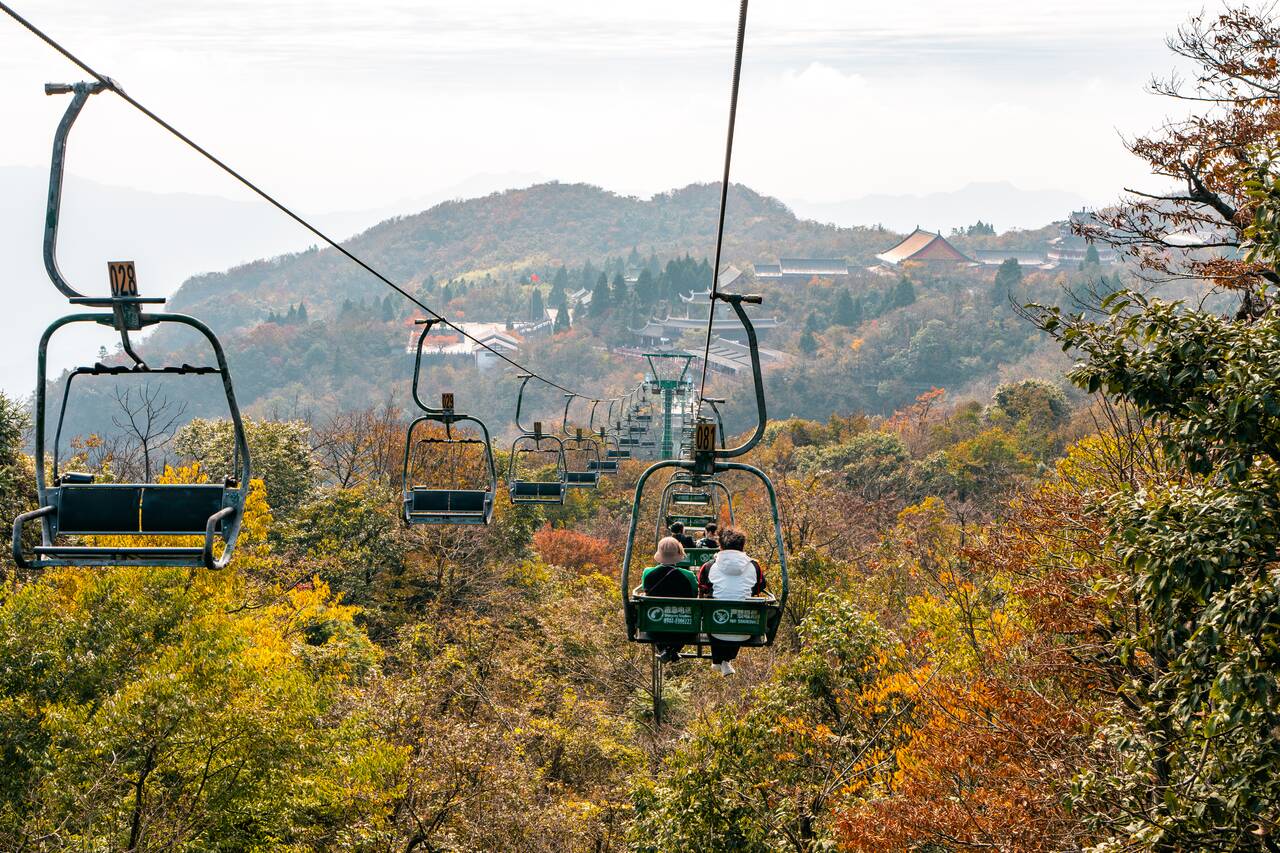
The cable car will cut across valleys as you float slowly over them, allowing you to have a unique perspective that you can't see if you hike. The ride should take about 10 - 15 minutes, and you will arrive right at Tianmen Temple, my last destination.

If you love hiking, don’t worry. You can take the cable car to Tianmen Temple first and then hike the longer route back to the Upper Station, or do it the other way around, allowing you to see some of the attractions along the way. The cable car is not free, with tickets costing about 25 CNY one way, so you can save money by hiking one way and taking the cable car the other way.
8. Explore Tianmen Temple

- 📍 Location: Tianmen Temple at Tianmen Mountain [Map Link]
Last but not least, you haven't seen Tianmen Mountain unless you make your way to Tianmen Temple, a stunning Buddhist temple located at the summit of Tianmen Mountain where you will find a series of halls, pavilions, and other traditional Buddhist-temple buildings you can explore.
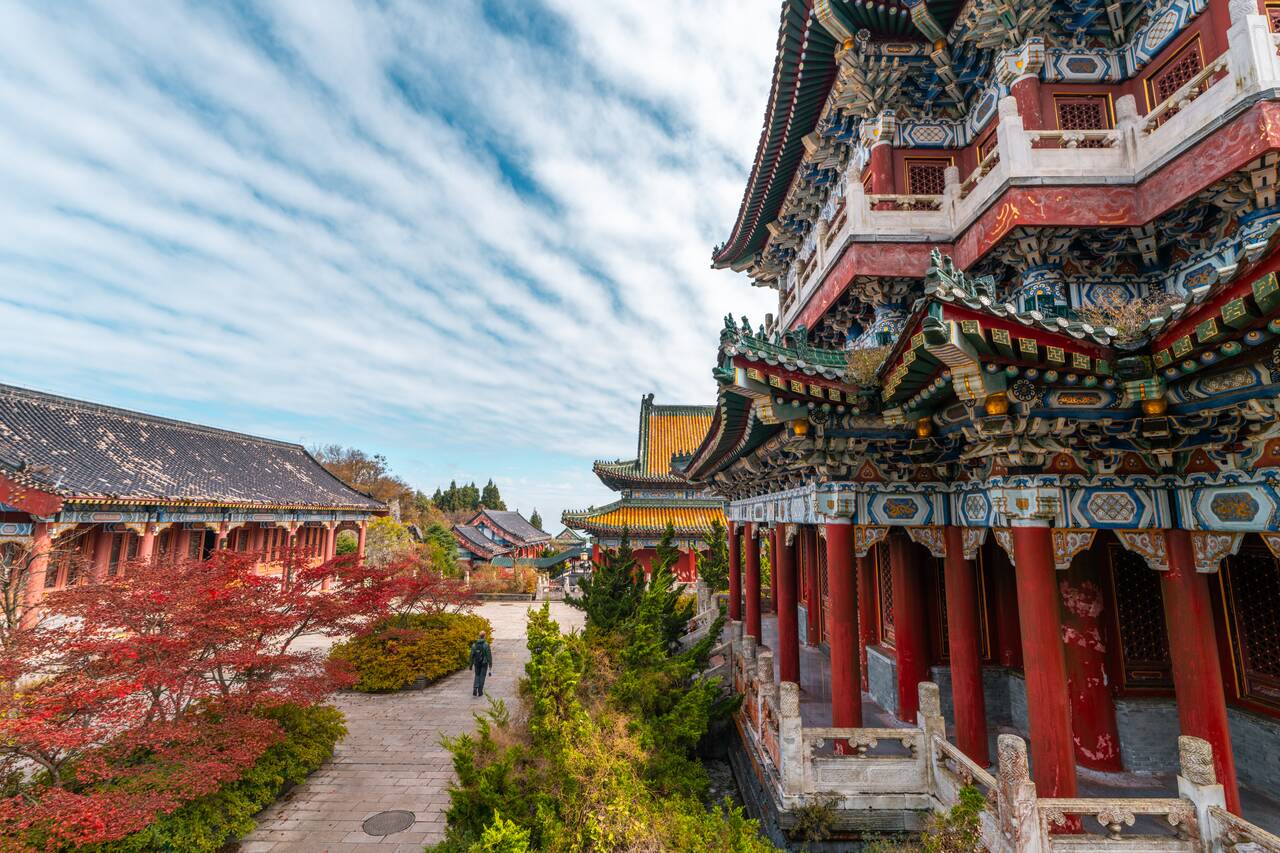
The temple was originally built during the Tang Dynasty but was destroyed during turmoil in the 20th century. The current structure is a modern reconstruction completed after 2002, featuring classical Chinese-style architecture that combines traditional temple design with elements that preserve the historical aesthetics.
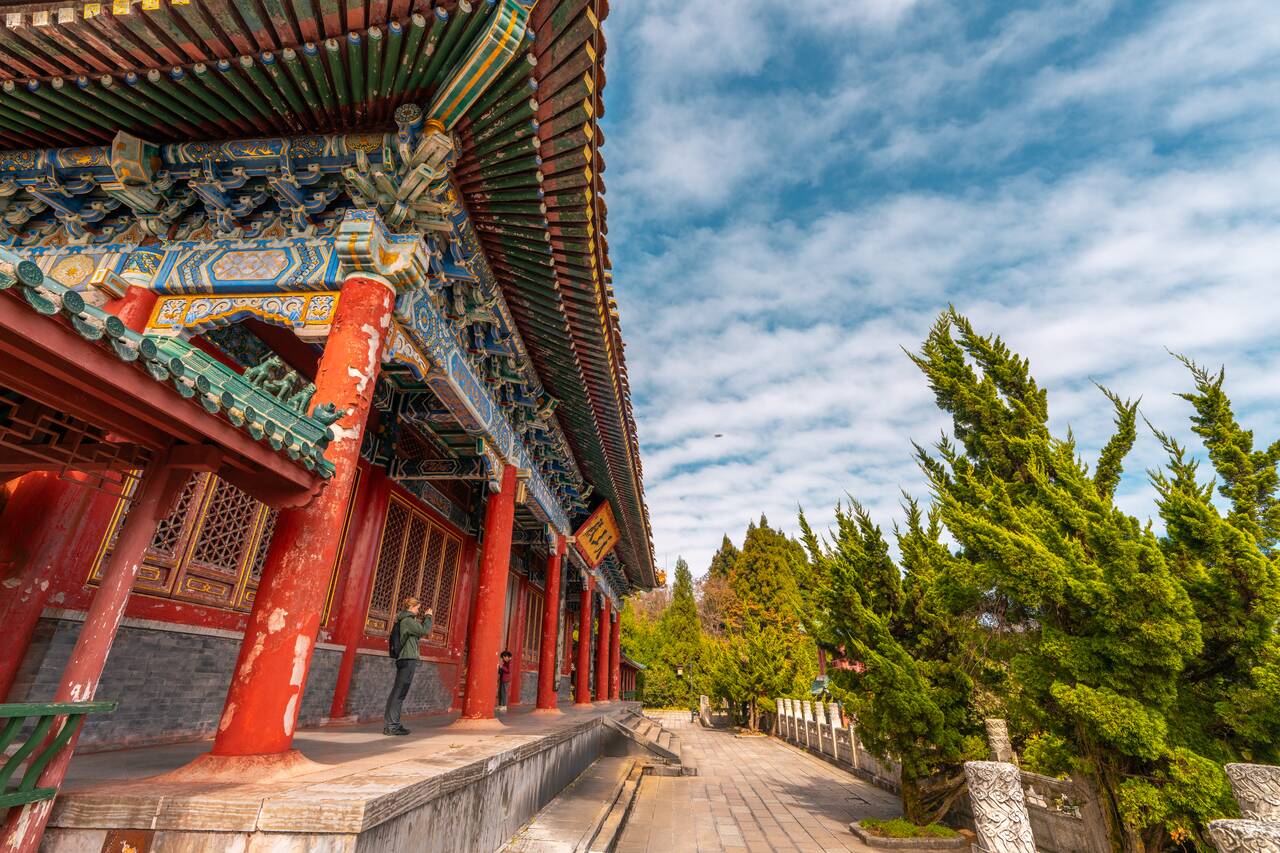
While you are here, you will be surrounded not only by beautiful Chinese architecture but also by ancient trees and stunning mountains that frame the temple grounds. As an active, functioning temple, you will often hear monks chanting and see believers coming to pray, creating a peaceful and quiet atmosphere that is absent in the more crowded areas of the mountain.
Things to Know Before Visiting China
- Always Carry Your Passport: Everything revolves around your passport/ID in China, and it’s often used interchangeably as your main form of identification. Many major tourist attractions require you to show your passport when buying a ticket, and the ticket will then be linked to it. You’ll scan your passport again to enter. The same applies to high-speed trains. It’s best to carry your passport with you at all times while traveling in China.
- Get an eSIM: China’s cashless economy relies on constant internet access, so having a data connection is essential. I highly recommend getting an eSIM or a local SIM card for your trip. An eSIM is often better because the service is usually based in Hong Kong, which bypasses China’s Great Firewall, meaning you can access apps like Instagram and YouTube without a VPN. I suggest checking eSIM options on Klook or Trip.com, as they tend to be the most affordable.
- Use AMap to Navigate: Google Maps doesn’t work well in China, so local apps like AMap are much more informative and accurate for getting around. It even provides metro information, making it easy to navigate city subway systems. I used AMap throughout my entire trip, and it worked perfectly! In this guide, I’ll be linking locations with AMap links instead of Google Maps, so be sure to download it before your trip.
- Use VPN to Bypass the Great Firewall: As you may know, many major websites such as Google, Facebook, Instagram, TikTok, and more are blocked in China. To access them, you’ll need a VPN like LetsVPN installed on both your phone and laptop before you arrive in China. This is crucial as once you're in the country, you won’t be able to search for or download VPN apps. I used LetsVPN during my trip, and it worked very well throughout. The service is affordable too, with a free tier offering limited data or a basic unlimited plan for just 5.99 USD per month.
- Connect Alipay with Your Credit Card: First, download Alipay from the app store, set up your account, and link it to your credit card. This will be one of the two main ways you’ll pay for services in China. Alipay also has mini-apps built in, such as Didi (China’s version of Uber), so you don’t need to download separate apps, and you can use them directly through Alipay. Very convenient!
- Get a Transport Card Working in Alipay: Once you have Alipay set up, you’ll need to verify your account before you can activate a transport card for metro and bus rides. First, if you’re not currently in the city you want to use, tap the city name in the top-left corner and select the correct city. After that, tap the “Transport” button and request a transport card. You’ll be asked to upload a photo of your passport for verification. Once approved, your transport card will be issued, and you can use the QR code to scan and pay for buses and metro rides.
- Get WeChat Set Up: WeChat is another essential app for communicating with locals, thanks to its built-in translation feature. It’s also widely used for payments as Alipay only works about 70% of the time, while WeChat is commonly needed for paying individuals, buying entry tickets at certain attractions, and more. Setting up WeChat can be a bit tricky though because you need verification from an existing user. The easiest way is to ask your hotel’s reception to help verify your account when you arrive in China, which is how I got mine activated.
- Use Trip.com / Trip App: For hotels, day trips, attraction tickets, train tickets, flights, and everything in between, you can use Trip.com or the Trip app to book all your travel needs. It’s very convenient, offers a great user experience, and offers cancellation terms that vary by booking, so check the refund deadline and fees before paying.
When to Visit Tianmen Mountain?
Tianmen Mountain can be visited year-round, but the experience varies depending on the season. Spring, from March to May, is a great time to visit. Temperatures are mild, visibility is usually good, and the mountain starts turning lush and green. Ideal for hiking and photography.
Summer, from June to August, is the warmest and also the busiest season. Expect larger crowds and occasional rain or fog, which can reduce visibility, but the misty mountains can also look incredibly atmospheric.
Autumn, from September to November, is the best overall season. Clear skies, comfortable temperatures, and vibrant autumn colors make this the most scenic time to visit. It’s also less humid than summer.
Winter, from December to February, is cold but beautiful. Snow sometimes covers the mountain, which makes it almost like a winter wonderland. Keep in mind that some paths or sections, like the Glass Walkways and the Gateway to Heaven, may close if there’s heavy snow, so check ahead before you go.
The first time I visited, it was winter. Although there were no crowds, some areas like the Gateway to Heaven were closed because ice had formed along the stairs, making certain sections hazardous. It was very cold, the trails were slippery, and conditions were not ideal for hiking.
The second time I visited in late autumn and it was perfect. The weather was ideal, with clear blue skies, low clouds drifting among the sandstone pillars, and vibrant autumn colors everywhere. There were some crowds, but far fewer than I expected, and I had a wonderful time. I highly recommend visiting in autumn if you want the best weather and scenery.
How to Get to Tianmen Mountain?
By Air: The fastest way is by flying into Zhangjiajie Hehua Airport, which has direct flights from cities such as Beijing, Shanghai, Guangzhou, Chengdu, and Changsha. From the airport, it takes around 30–40 minutes by taxi or shuttle bus to reach Zhangjiajie City.
You can find cheap flights to Zhangjiajie from Trip.com, Skyscanner, or Expedia.
By Train: For those who prefer traveling by train, Zhangjiajie West Railway Station connects the city with major destinations including Changsha, Guangzhou, Shanghai, Beijing, and Hong Kong. In 2026, direct trains between Changsha and Zhangjiajie West generally take about 1 hour 45 minutes to 3.5 hours, depending on the service. From Zhangjiajie West, a Didi to central Zhangjiajie usually takes around 15 minutes. You can check current train schedules here.
By Bus: Long-distance buses are another option, especially from nearby provinces and cities like Changsha, Fenghuang, and Chongqing. Buses typically arrive at Zhangjiajie Central Bus Station, from where taxis or local buses can take you to your accommodation.
How to Get Around Tianmen Mountain?

During the long cable car’s upgrade, only Route C is operating. Confirm the available route and entry time before booking.
Important 2026 update: The upper section of the original Tianmen Mountain Cableway, between the Middle Station and summit, has been closed for reconstruction since November 2025. As of 2026, only Route C is operational, so make sure to confirm the available route and entry time before booking.
There are three ways you can get around Tianmen Mountain, and which one you pick will depend on the availability of the tickets associated with the designated routes that you have to follow.
Route A: Unavailable during the long cable car’s upgrade. Check reopening before planning a visit through the entry gate.
Route B: Also unavailable during the upgrade. The operating Route C starts at the entry gate.
Route C: For this route, you take the shuttle between the city station and the mountain gate in both directions, and you’ll need to backtrack between the Middle Station and the Upper Station. Essentially, you take the bus to the entry gate, ride the new cable car up to the Middle Station, explore the area, then continue up to the Upper Station via the escalators. After exploring the Upper Station, you’ll return the same way you came.
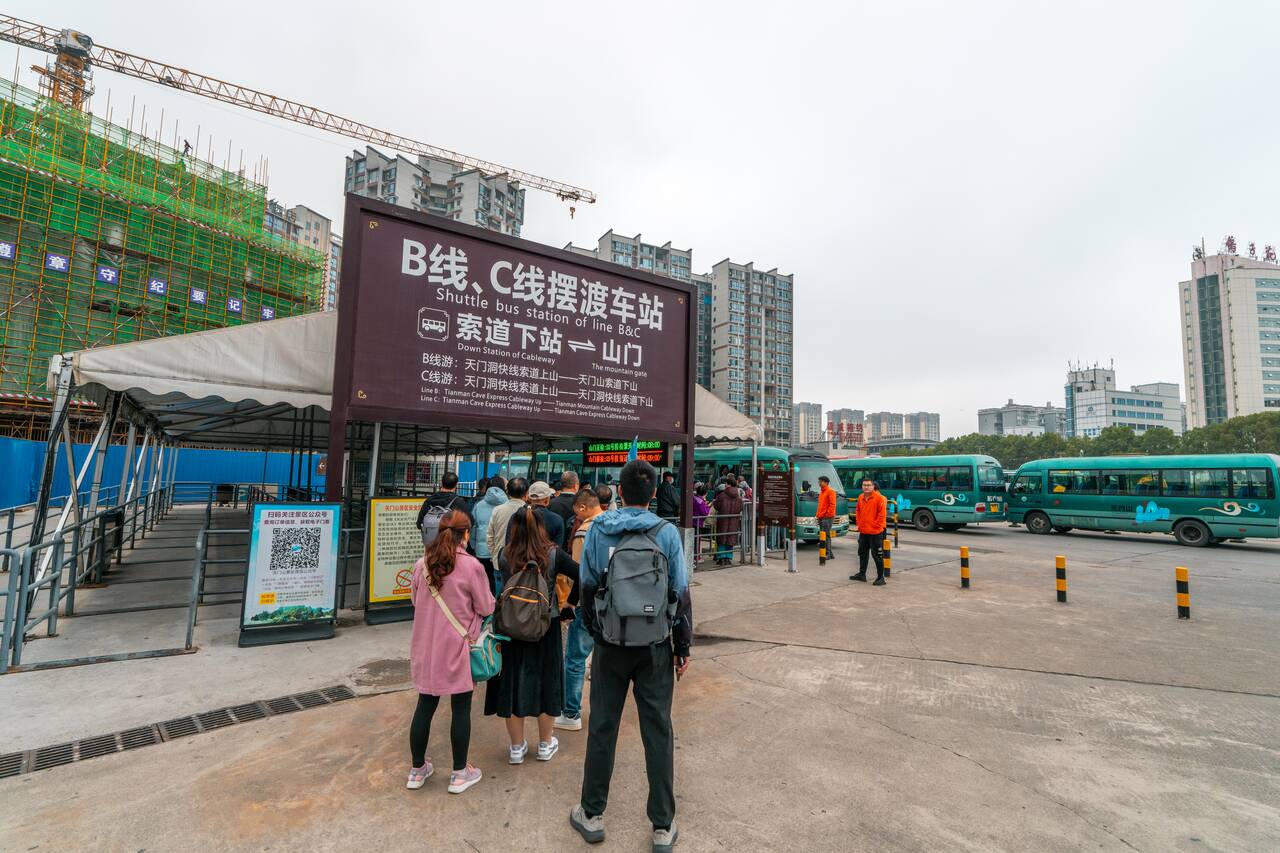
Because the cableway is being reconstructed, on Route C is available for you to choose as of 2026, so be sure to book that one.
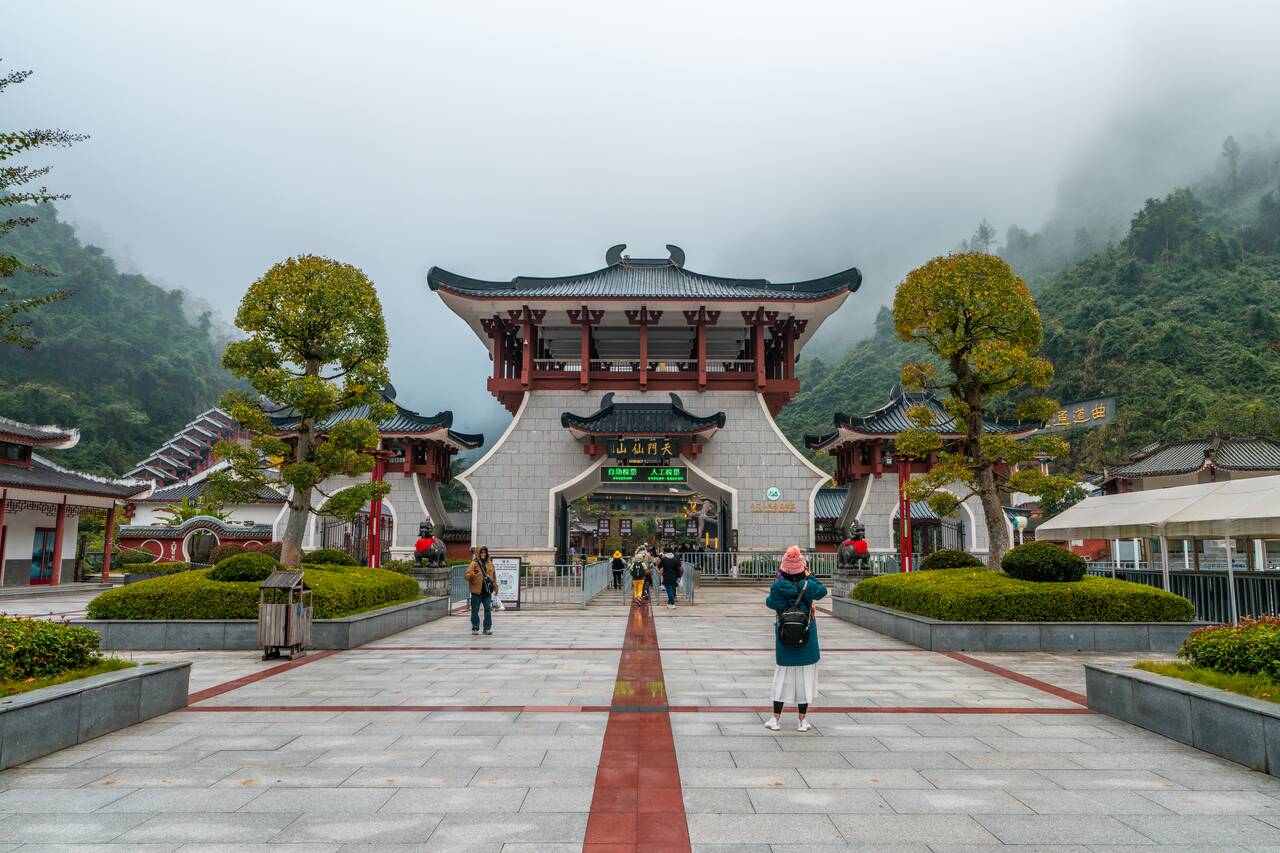
When I visited in November 2025, I personally chose Route B because it took me through the Middle Station first, where I was there just in time to catch the stunning sea of clouds around Tianmen Cave that often appear early in the morning, and I didn't have to backtrack to go back. Since Route B is no longer operational, you are now left with only Route C, but don't sweat it. It is pretty much the same as Route B that I took, except that you just have to backtrack to Middle Station to go back down. That's it!
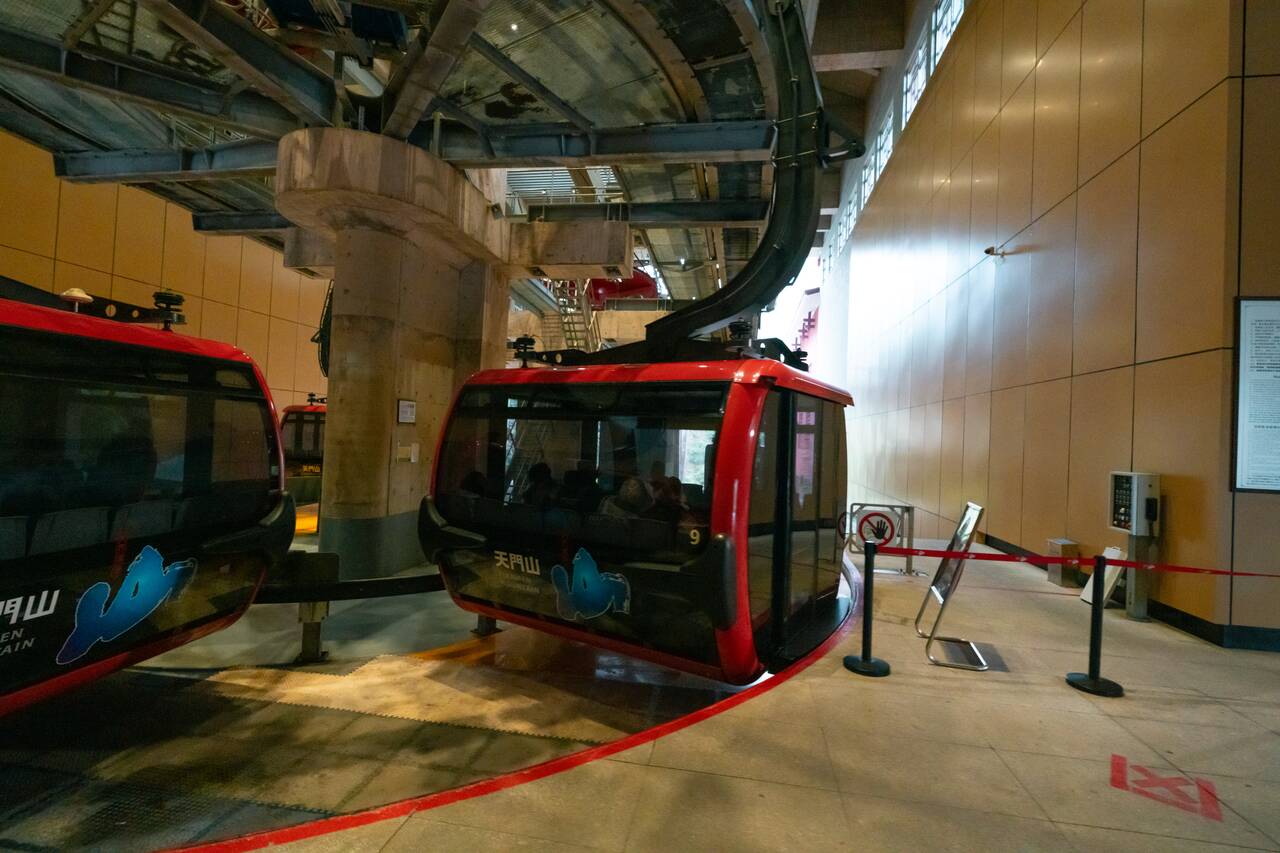
No matter what route is available, be sure to book ahead and select an early timed entry if possible. Tianmen Mountain is extremely popular, and the most convenient routes and morning slots can sell out first, especially on weekends and Chinese public holidays. You can check current route availability and tickets here.
Opening Hours and Entrance Tickets?
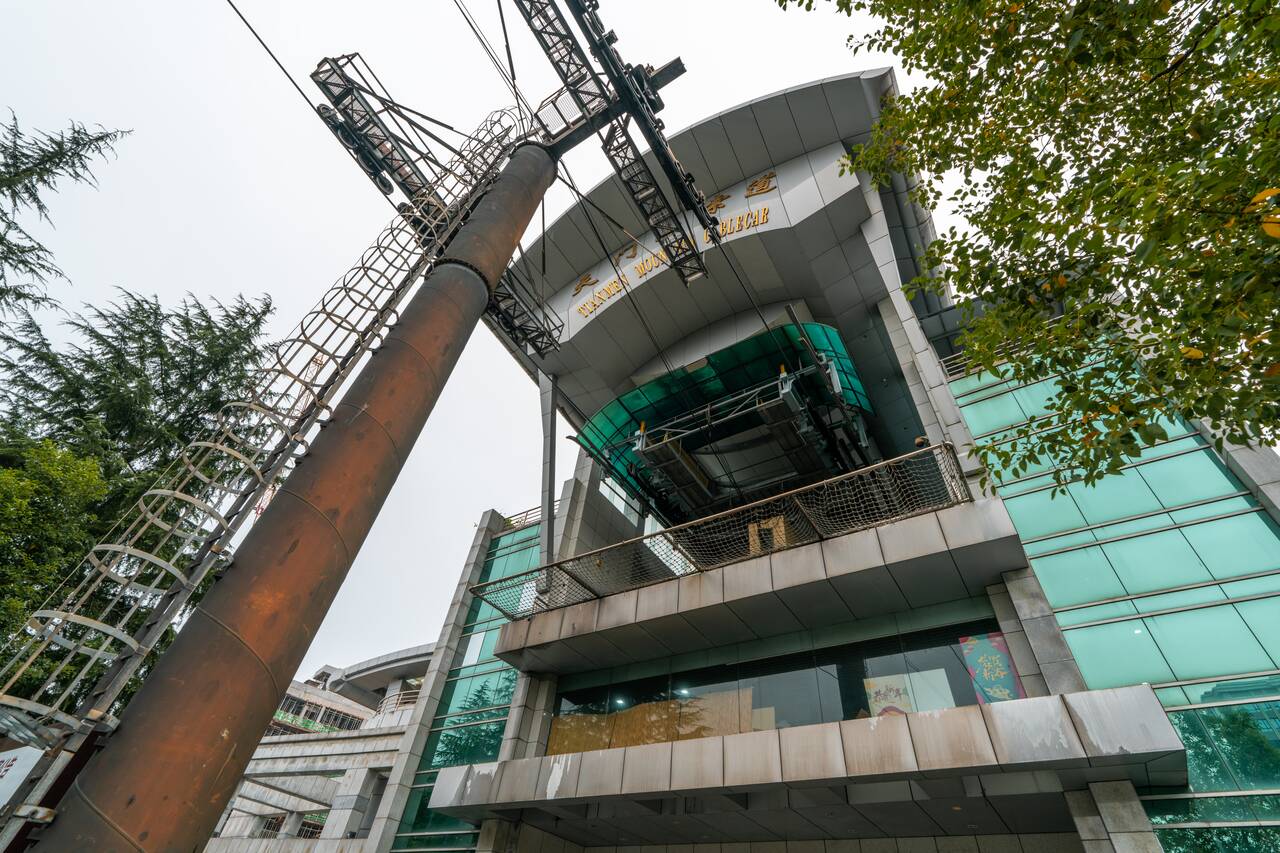
As of late 2026, Tianmen Mountain generally begins operations at 8 AM, with last entry around 4 PM; operating hours can be adjusted for maintenance, weather, or peak periods, so check your dated booking before you go. Standard adult A/B/C packages are currently listed at around 288 CNY and include the core transport assigned to your route. Optional extras remain separate, including the lower escalator beside the 999 steps (32 CNY uphill), the Forest Sightseeing Cable Car (25 CNY one way), and protective shoe covers for each Glass Skywalk (5 CNY). You can check the latest ticket options here.
How to Avoid Crowds in Tianmen Mountain?

The best way to reduce your time in the biggest queues is to book one of the earliest available timed-entry slots and arrive before your assigned entry window. Tianmen Mountain can still become very busy around the cableway stations, Tianmen Cave, and Glass Walkways, particularly later in the morning.
Weekdays outside Chinese public holidays are generally easier than weekends and holiday periods. Avoid major Chinese holidays such as the May Day and National Day breaks if you can, and book well ahead if your dates overlap with them.
Once you reach the summit, walking the longer cliffside trails is a good way to spread out from the busiest transport hubs. However, you still need to follow the transport sequence assigned to your A, B, or C ticket; hiking is mainly an option for exploring the summit trails and the 999 steps rather than a substitute for the designated cableway and shuttle connections.
How Many Hours to Spend at Tianmen Mountain?
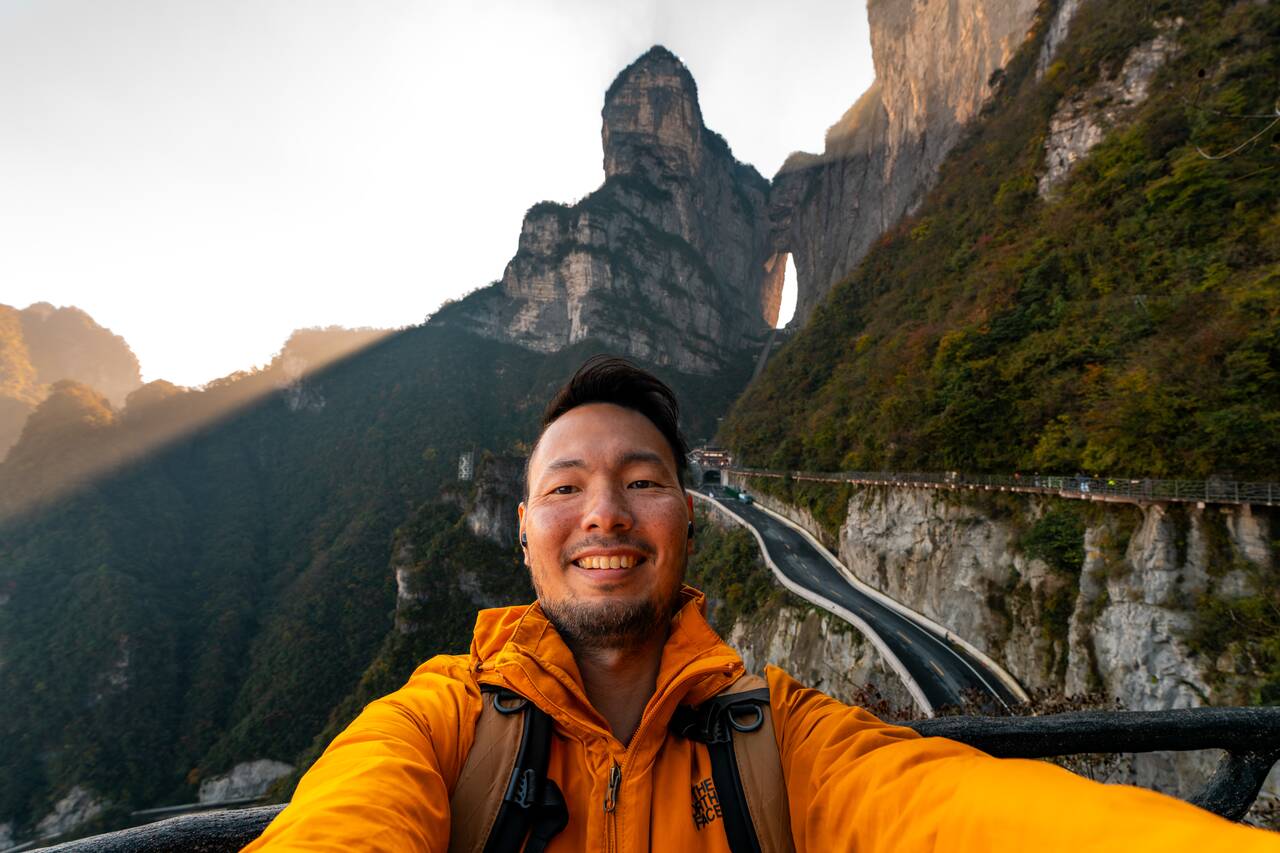
Visiting Tianmen Mountain is typically a full-day experience. Most travelers spend 5 to 7 hours exploring the major attractions, depending on how much hiking you plan to do.
If you take the cable cars and focus only on key highlights like the Glass Skywalk, the 99 Bends Road viewpoint, Yunmeng Fairy Peak, and Tianmen Temple, you could manage in about 5 hours. However, if you want to hike sections of the mountain, take your time on cliff-side walkways, or enjoy taking lots of photos, it’s best to allow 6 to 7 hours.
Book an early entry if you want the most flexibility. With the current cableway reconstruction and timed-entry system, allow extra time for transfers and queues and follow the transport sequence printed on your ticket rather than planning around the old Upper Station/Middle Station order.
Disclaimer: This post may contain affiliate links. See our disclosure policy.
First Published:
Last updated:


1 Comments
Hi! I'm gonna stay in furong town the night before visiting tianmen mountain. I have to be at Zhangjiajie train station at 4pm. If I leave early furong town, is it enough time to visit tianmen mountain?