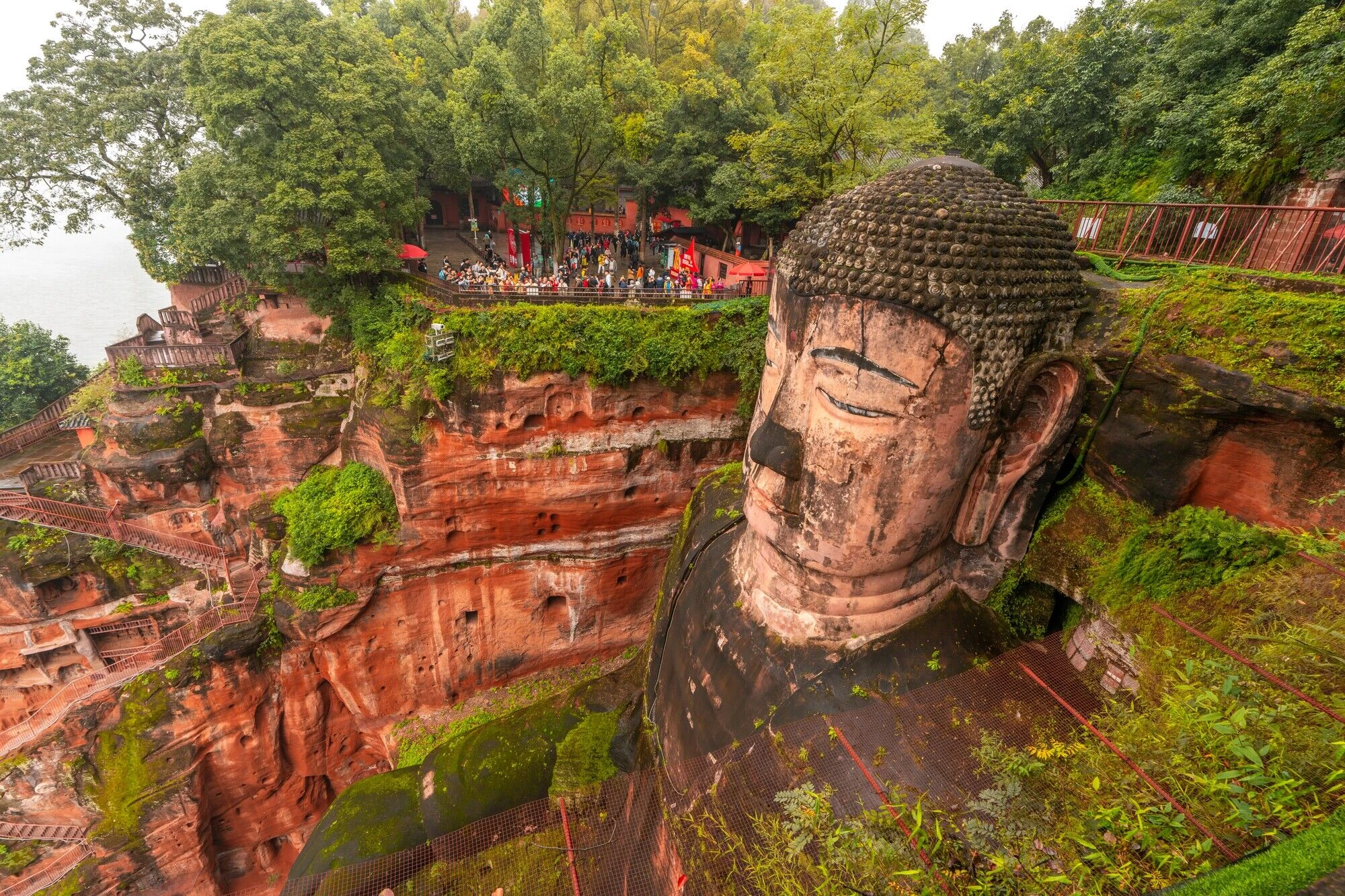


One of the best day trips you can take from Chengdu is a visit to Leshan, home to the world-famous Leshan Giant Buddha, a towering stone statue carved directly into a cliff face where the Min, Qingyi, and Dadu Rivers meet. Beyond its iconic landmark, Leshan offers a window into Sichuan’s spiritual heritage, ancient engineering, and slow-paced riverside life.
This guide will give you everything you need to plan an awesome day trip from Chengdu, including the best places to visit, how to get here, ways to get around, and more. So without further ado, here is a complete travel guide to Leshan.

Leshan Points of Interest Map

Where to Stay in Chengdu?
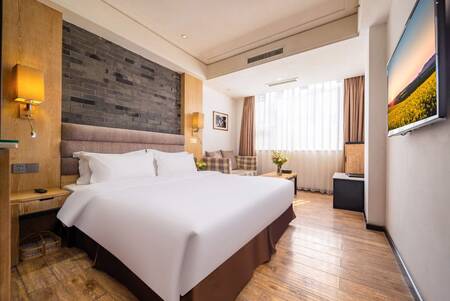
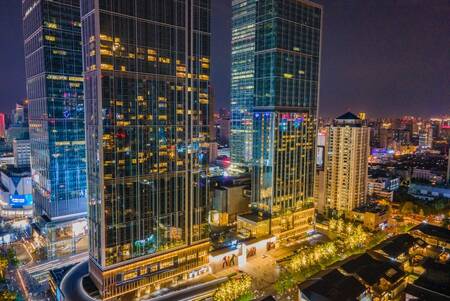
Since this is a day trip guide to the Leshan Giant Buddha, I recommend staying in Chengdu, which is only about 25 minutes away by high-speed train. Here are some recommended accommodation options:

Half-Day Itinerary for Leshan
Exploring Oriental Buddha Park
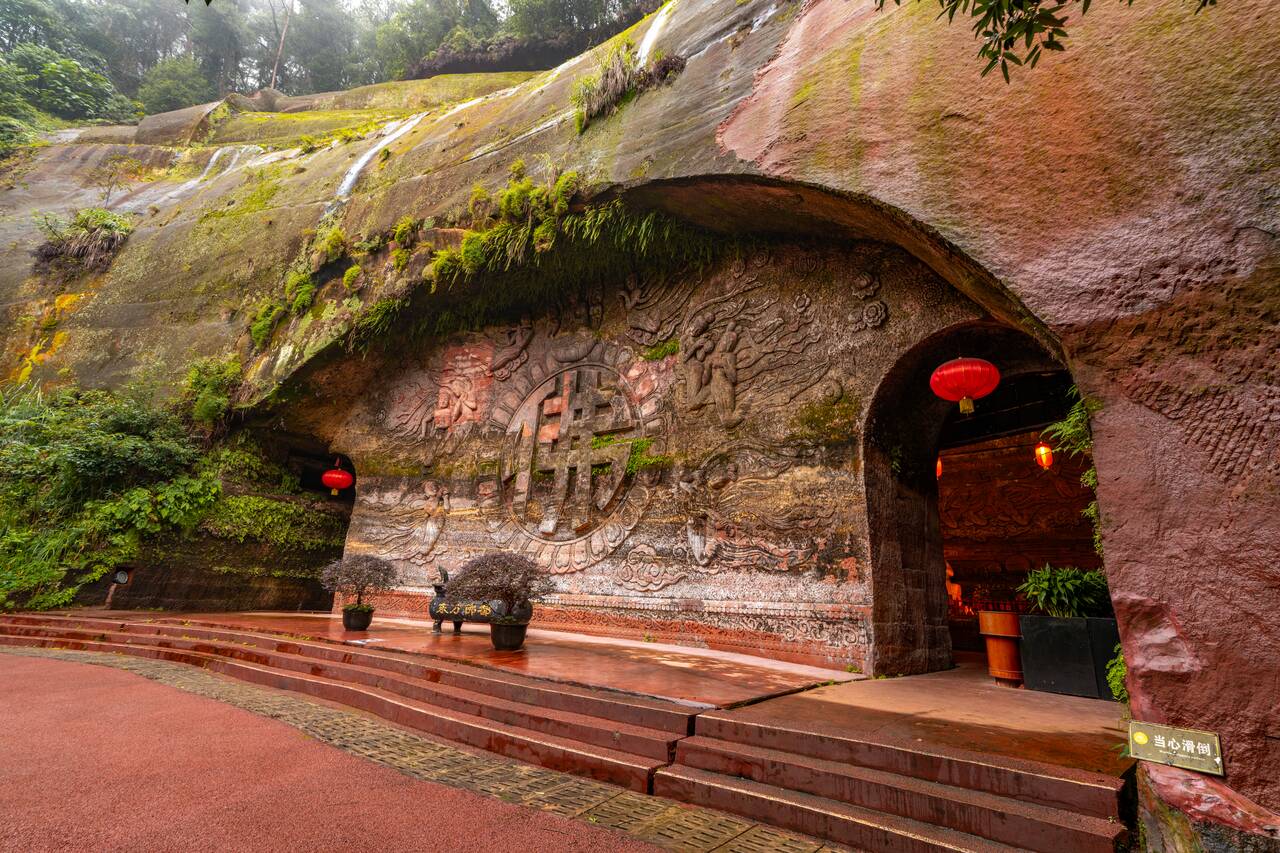
For this itinerary, we are going to spend half a day not only visiting the Giant Leshan Buddha but also exploring Oriental Buddha Park, a lush green park full of incredibly beautiful and stunning rock-carving Buddha statues scattered across the mountains. This is where we will start this itinerary before we head over to the Giant Leshan Buddha.
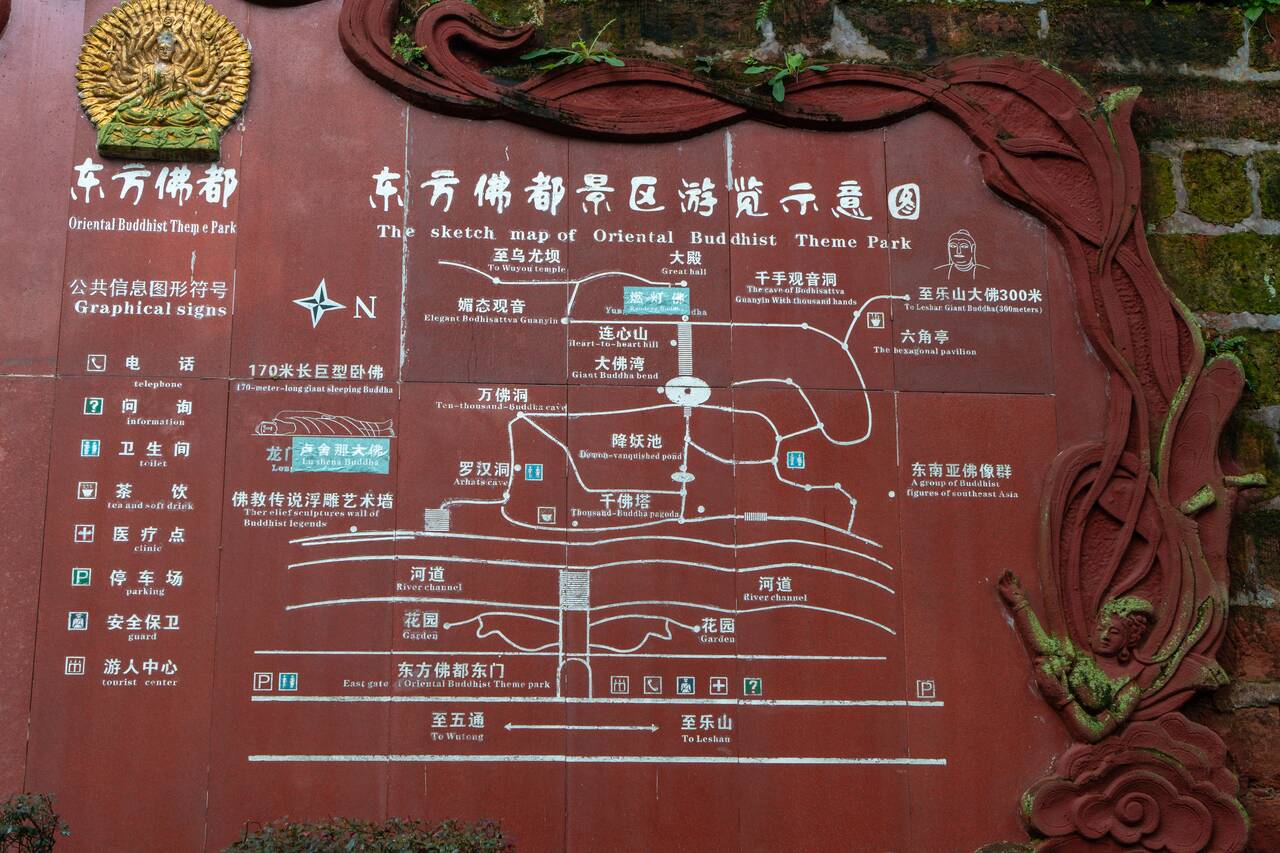
From Leshan Train Station, you can use Didi or a taxi to reach the Oriental Buddha Park East Gate, where you can purchase a combined ticket for both the Oriental Buddha Park and the Giant Leshan Buddha. The total cost is around 160 CNY.
If you prefer to skip the Oriental Buddha Park, you can take a taxi directly to the Giant Buddha North Gate and pay only 80 CNY for the Giant Buddha ticket. You can also buy tickets online here before your arrival. Be sure to bring your passport when purchasing or collecting tickets.
- Leshan Ticket Entry 🏅 Top Pick
While the carvings inside Oriental Buddha Park are relatively new, they were created using the same traditional stone carving techniques used for the Giant Leshan Buddha. Some people may feel it is not worth a visit since it lacks the long history of the Giant Buddha, but I found it beautiful, peaceful, and much less crowded. If you have the time, the Oriental Buddha Park is definitely worth exploring.
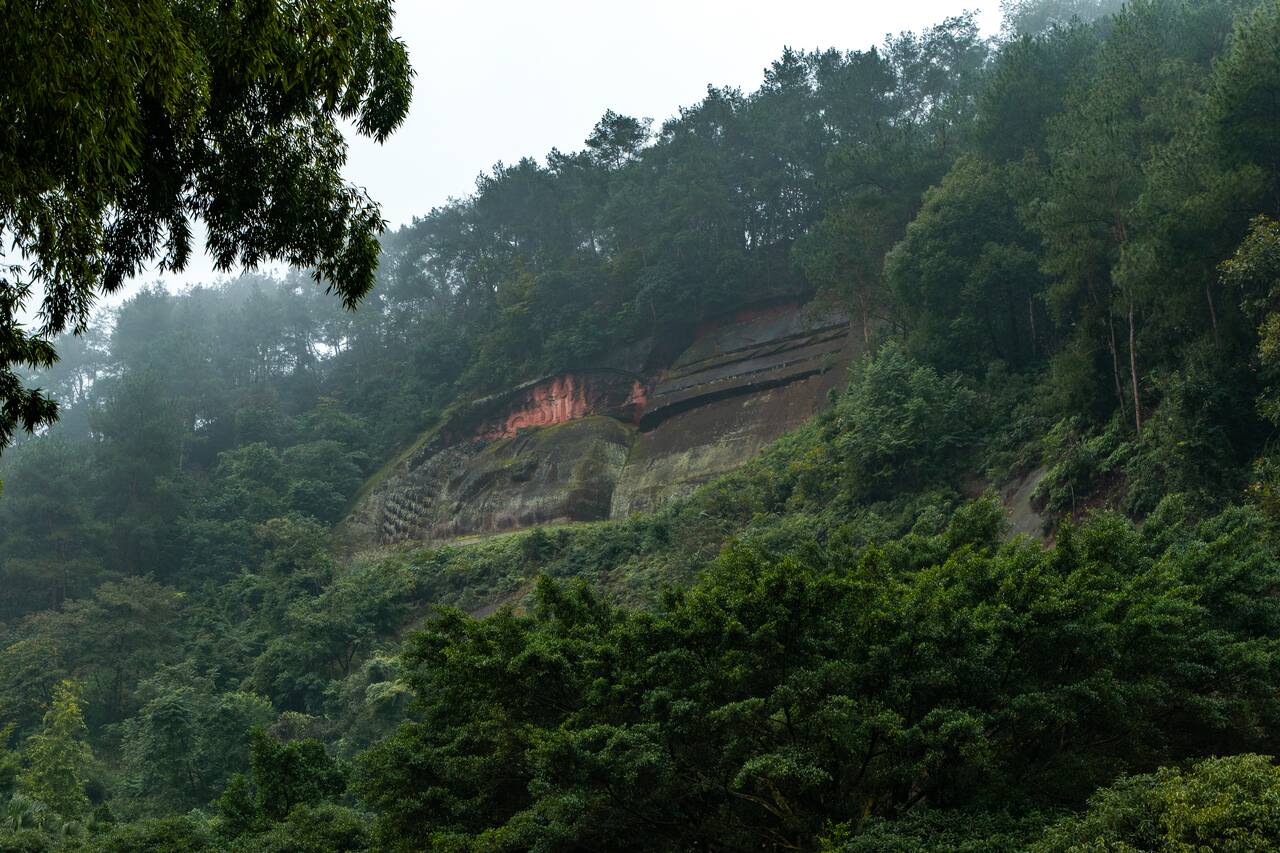
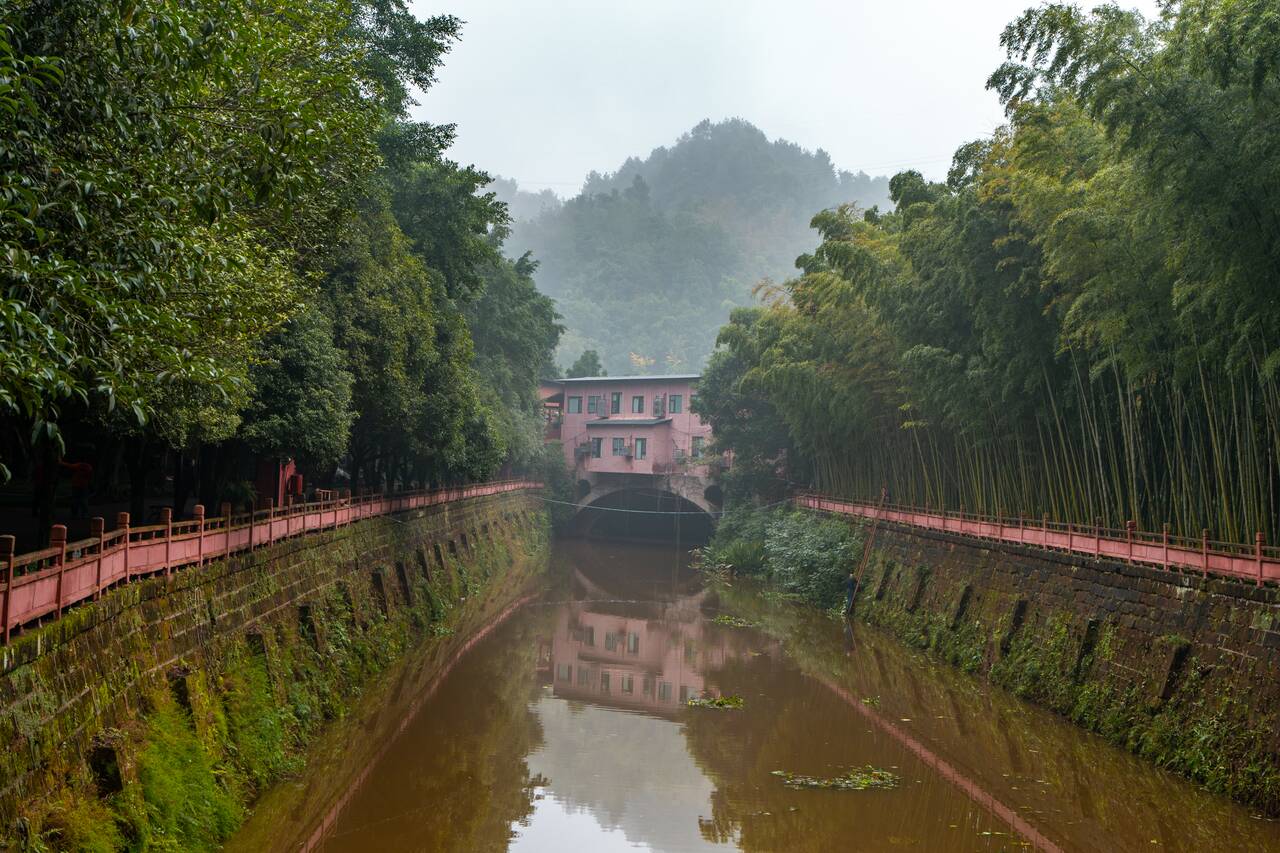
After you enter the Oriental Buddhist Park, you can walk across the bridge and look up at the mountain to your left and you will find a giant 170-meter long reclining Buddha image carved out of the mountain. I almost missed it because it was a little foggy when I was there, but apparently, it is the largest stone reclining Buddha image in the region.
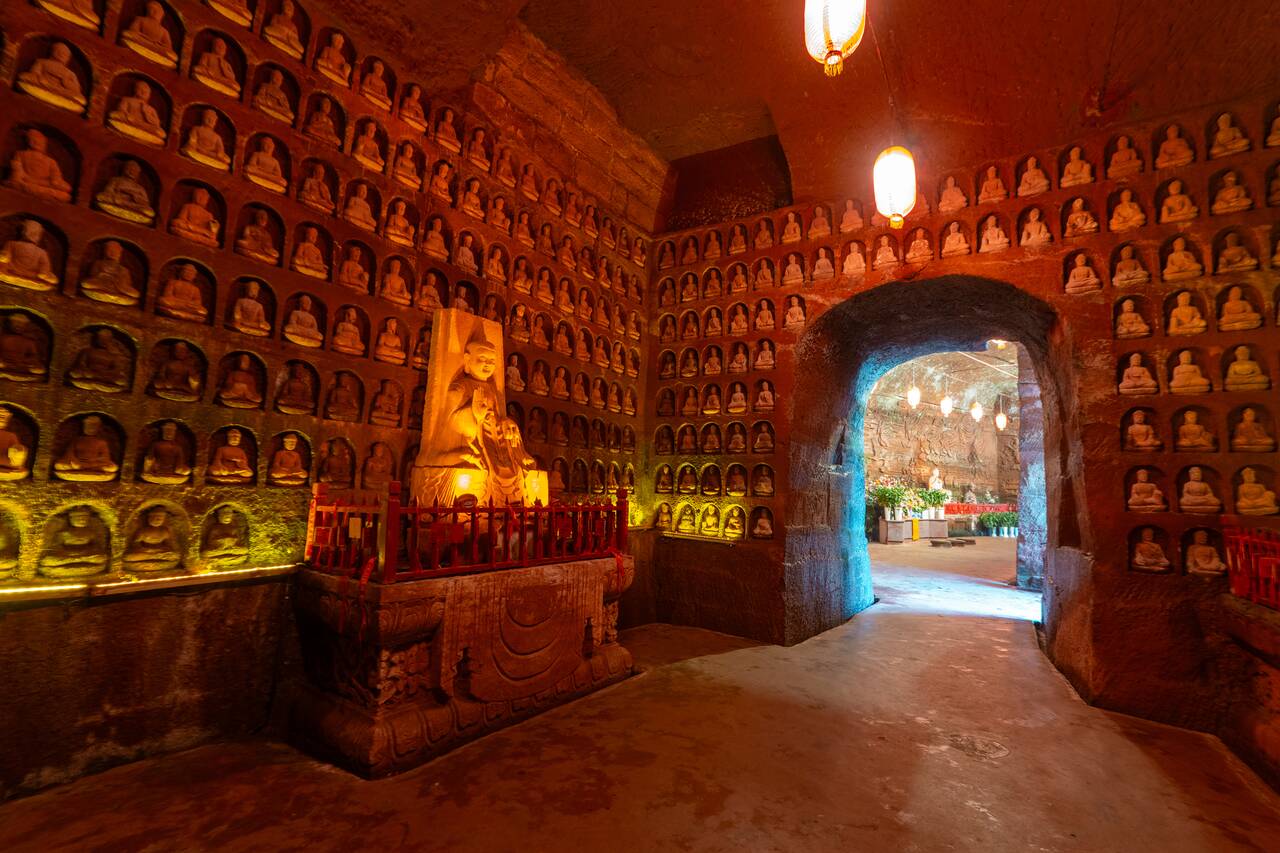
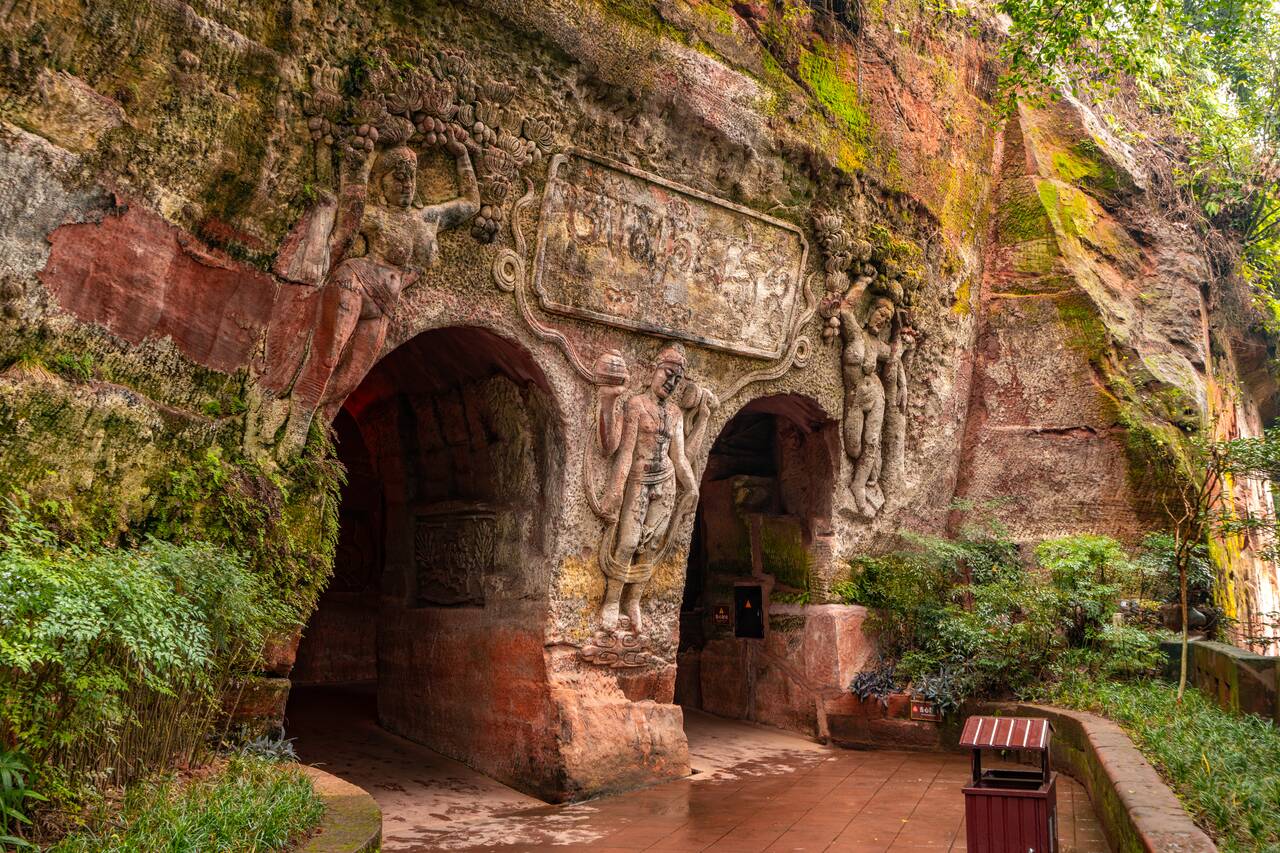
After taking photos of the reclining Buddha image, you can turn left along the river to visit Arhats Cave, where you will be surrounded by countless Buddha carvings and sculptures. You can continue through the cave and follow the route until you arrive at another cave, where all the cool Buddha images are, as well as a connection to the Giant Buddha you are here to see.
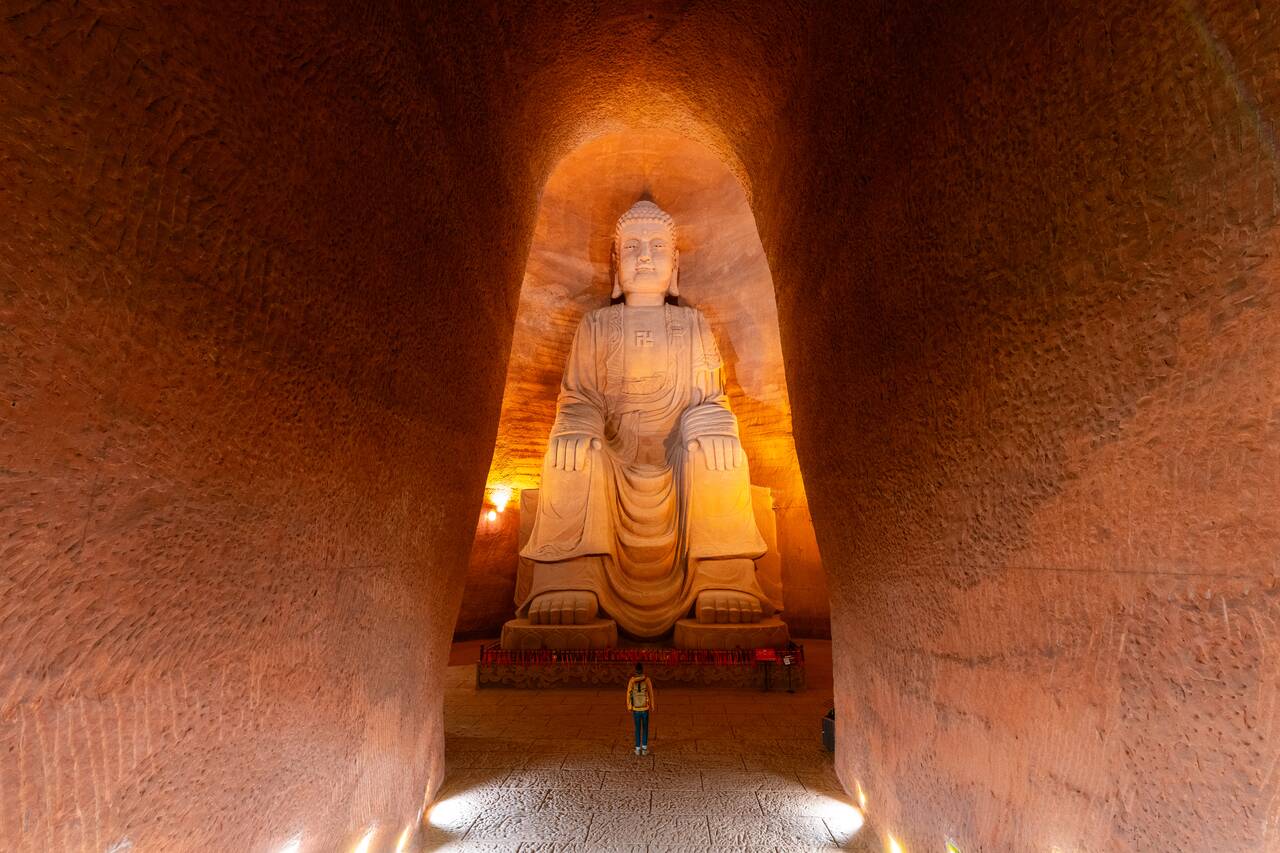
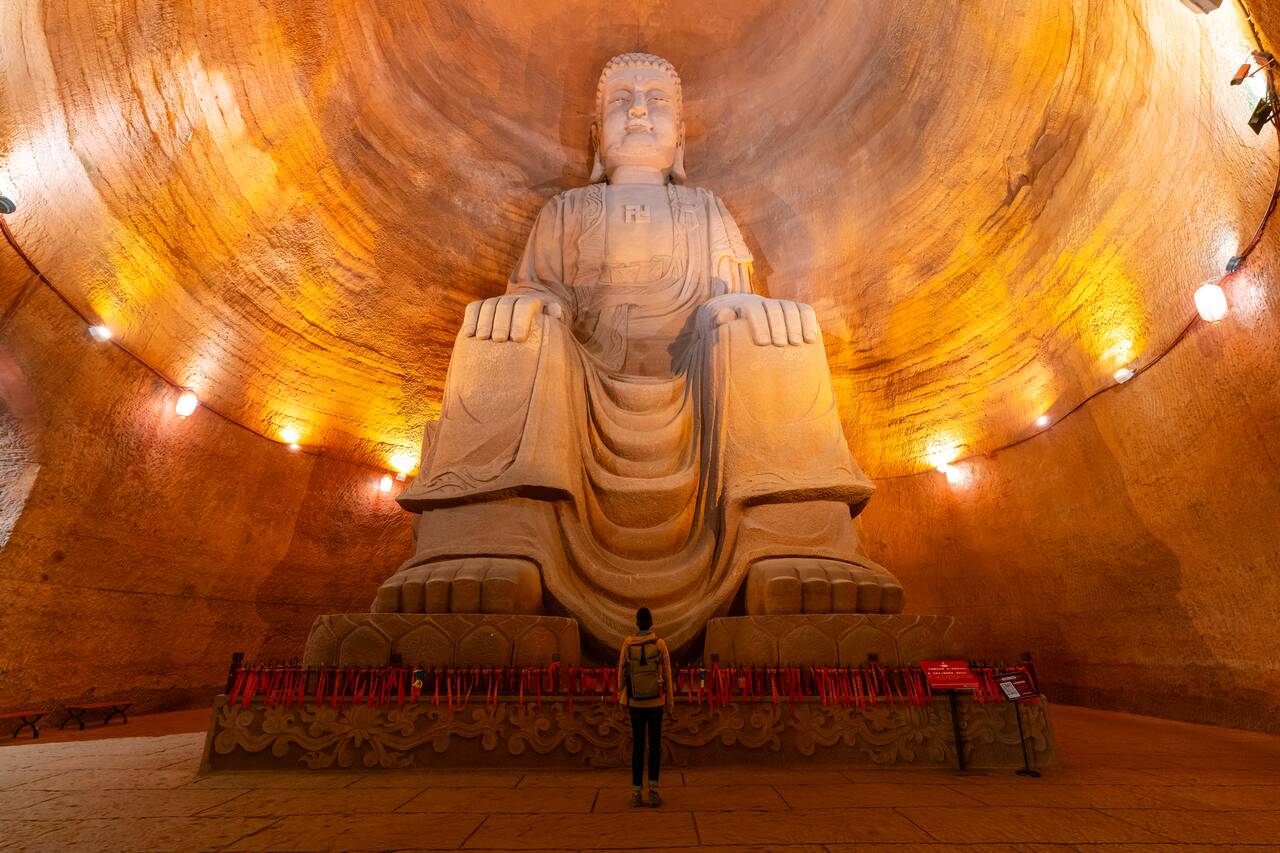
Inside this second cave, you will see tons and tons of epic sculptures of all sorts of gods and mythical creatures running along both sides of the cave. As you walk further and further in, you will find yourself at an opening where the giant seated Buddha stone carving is located. I was completely floored the moment I saw the statue inside the cave, and we haven't even arrived at the real Leshan Giant Buddha!
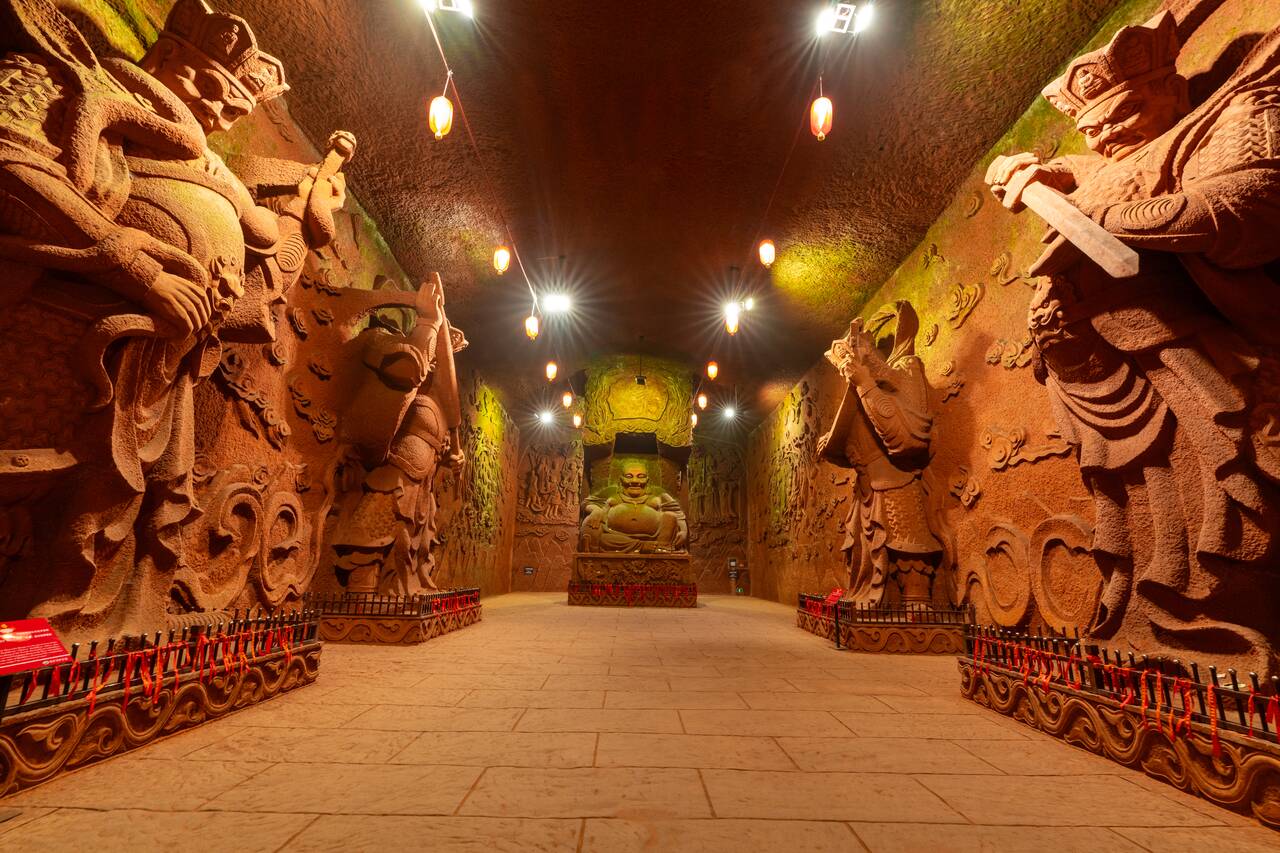
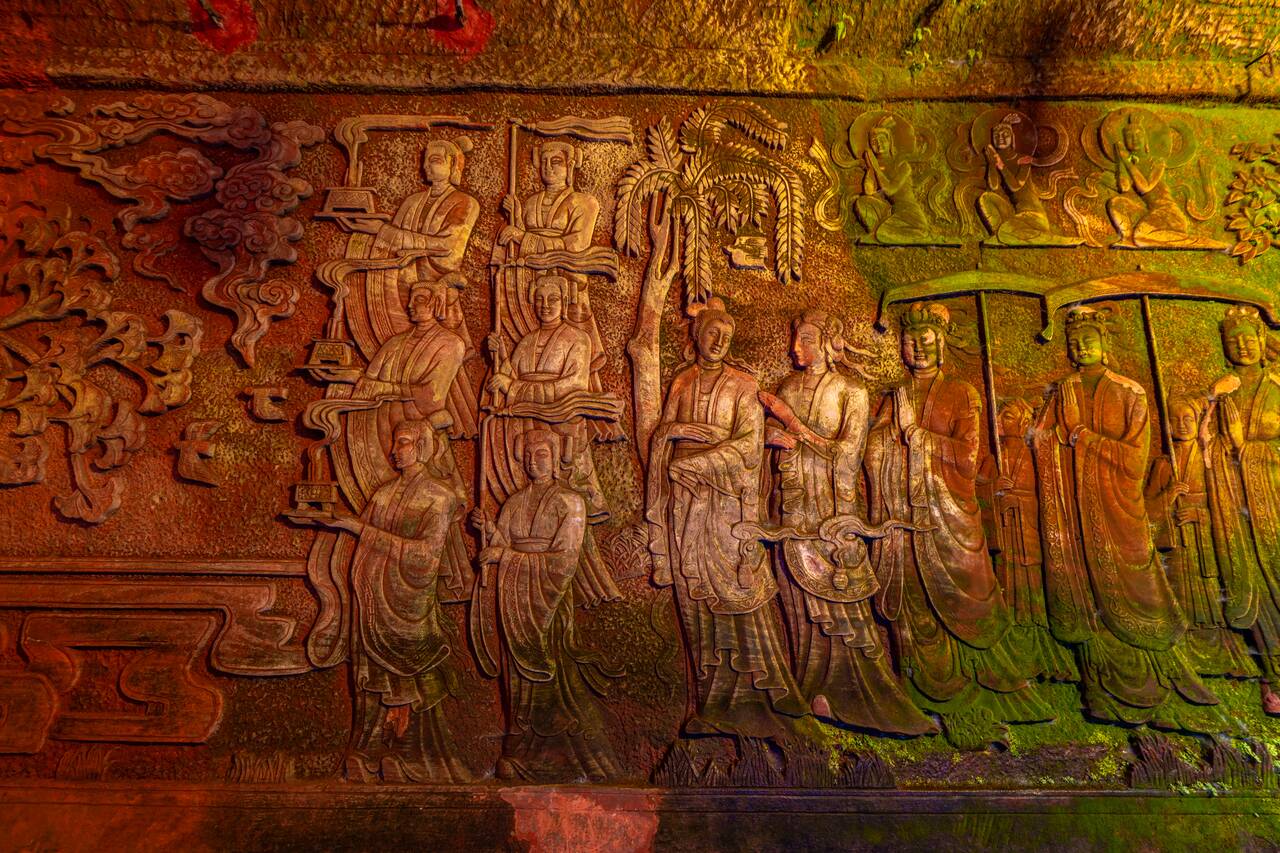
From there, you will encounter more and more carvings of various Buddhas, arranged in a stunning artistic display that forms wall-to-wall murals. These carvings showcase the diversity of Buddha figures and reflect Buddhist concepts of the life cycle and more. Be sure to take your time to explore and appreciate these beautiful works of art.
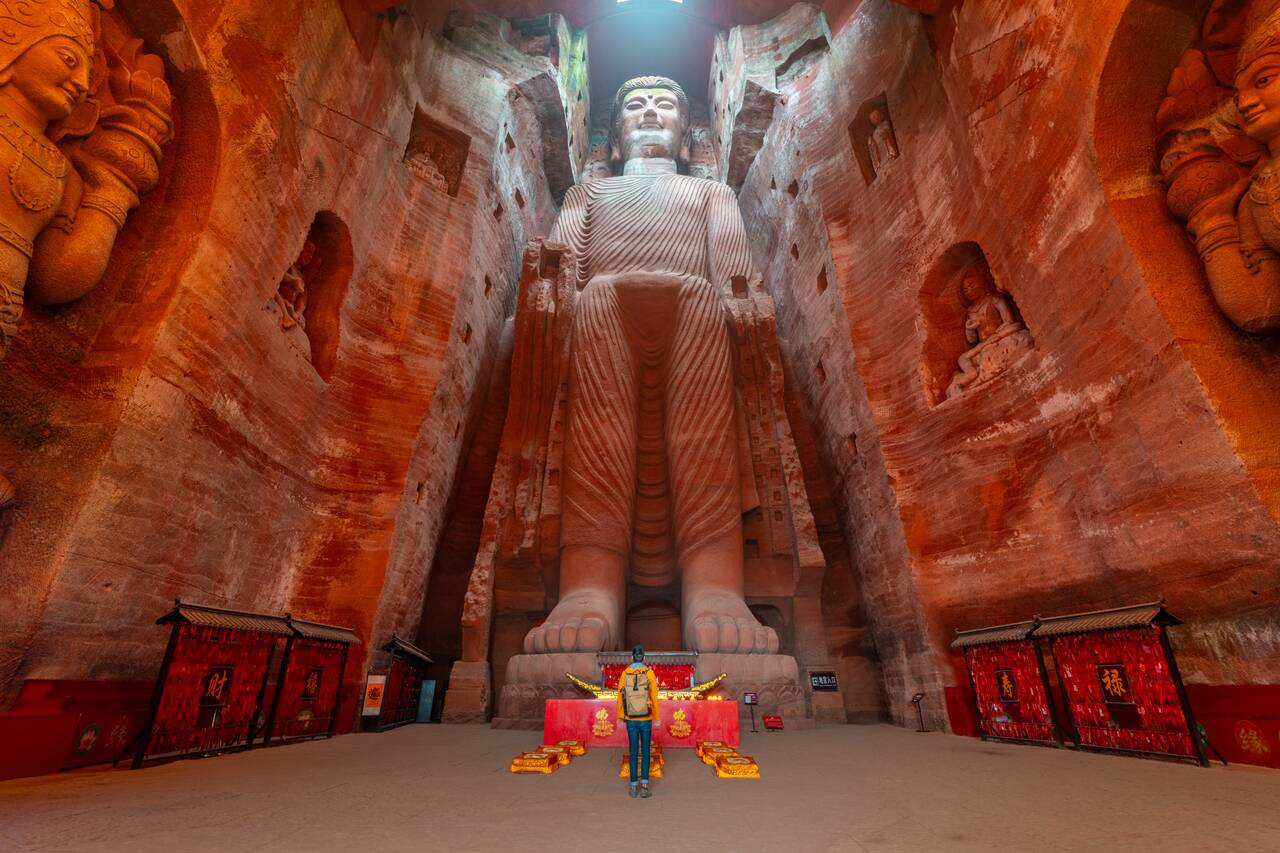
Toward the exit, you will be blown away by an even larger Buddha stone sculpture that stretches from the floor all the way to the top of the cavern. I was completely caught off guard by the sheer size of this Buddha, especially inside a cave that seemed narrow and small until I stepped into the open and saw the statue towering above me.
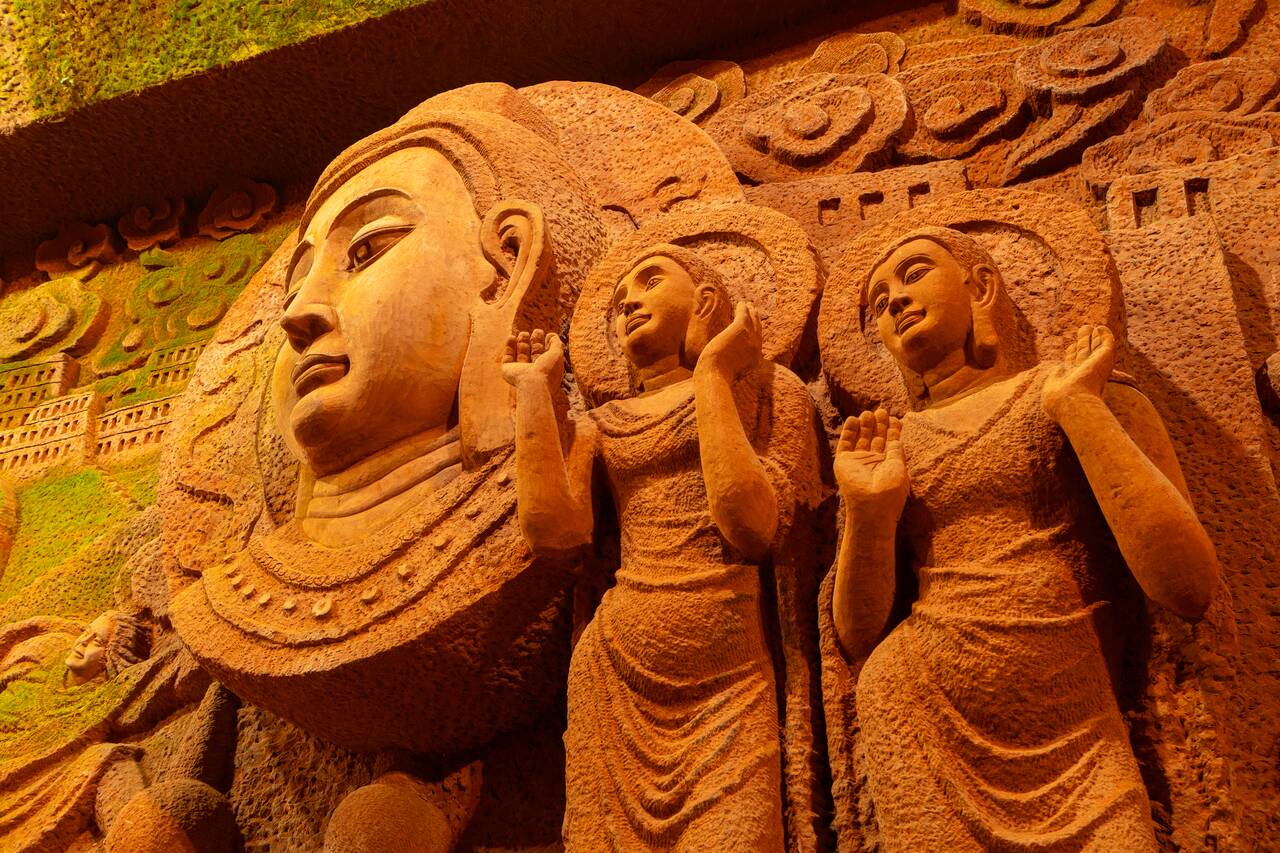
From this Buddha image, you will reach the cave exit where you can choose to continue hiking up and around the mountain to explore more of the Oriental Buddha Park, or start the trail to the Giant Leshan Buddha.
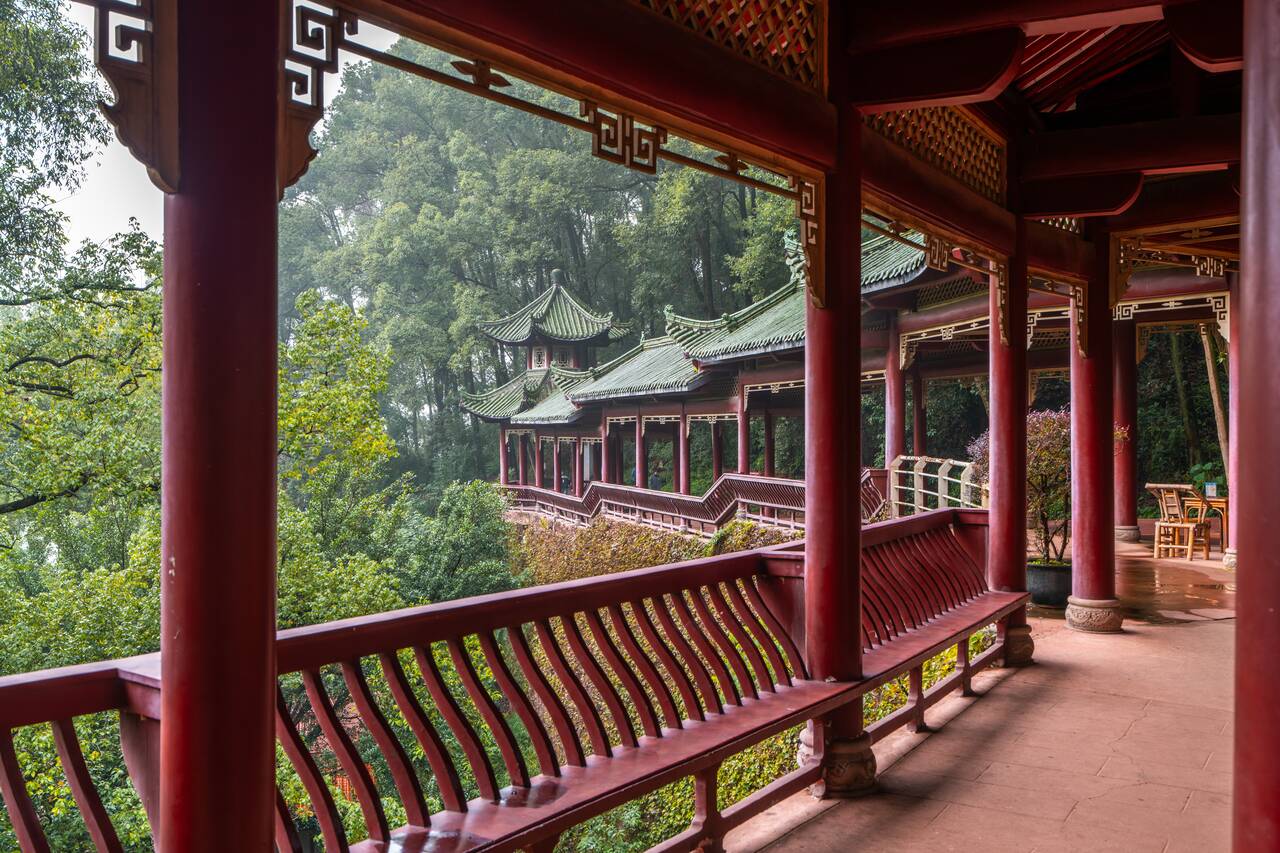
When I visited, it began raining and the visibility was very poor, so I decided to skip the rest of the park and head straight to the Giant Leshan Buddha. If you have the time and the weather is clear, I recommend continuing to explore the Oriental Buddha Park, as there are several more incredible spots higher up on the mountain.
Visiting Giant Leshan Buddha
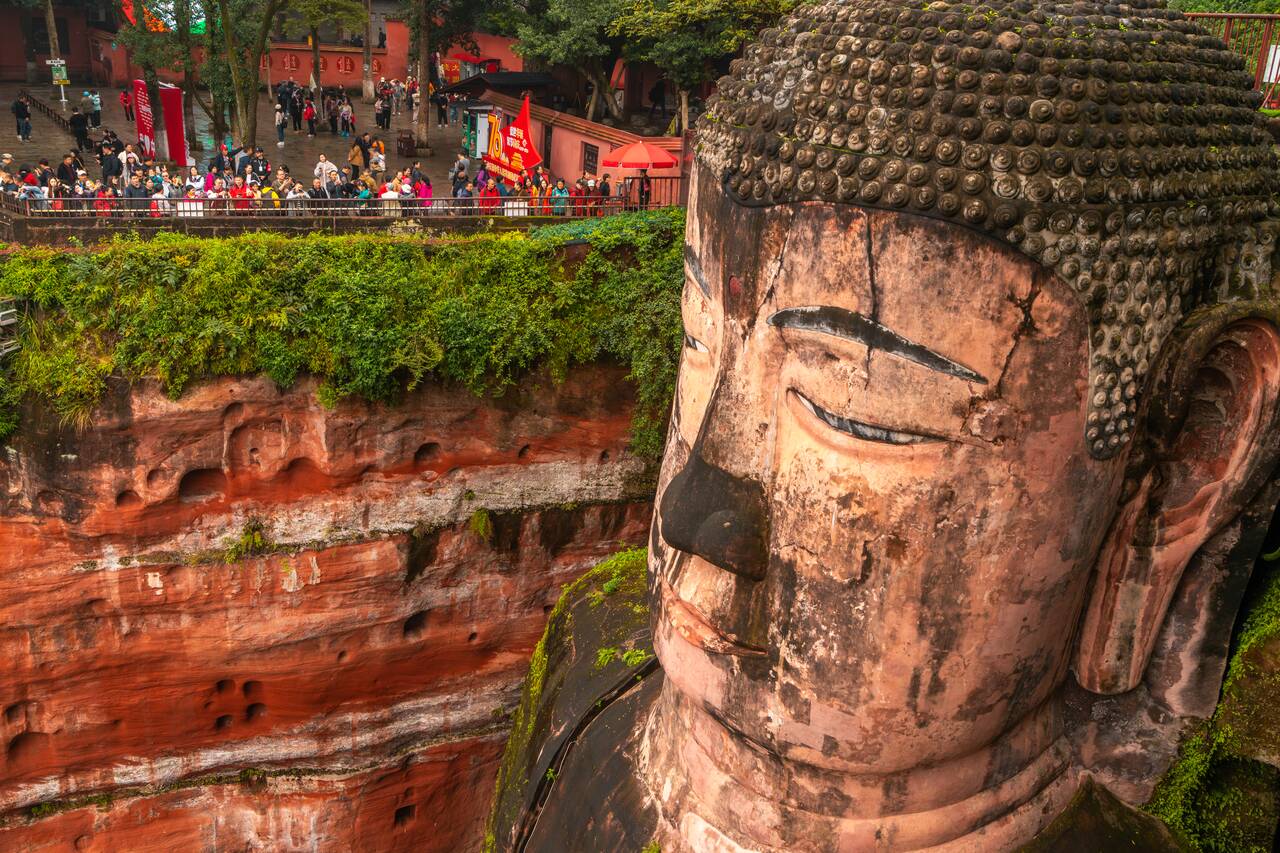
From Oriental Buddha Park, you should be able to hike straight to Giant Leshan Buddha, which is connected via a set of stairs that you will have to hike to get to. It's very long, and you should arrive at the viewpoint where you can see Giant Leshan Buddha from above in no time.
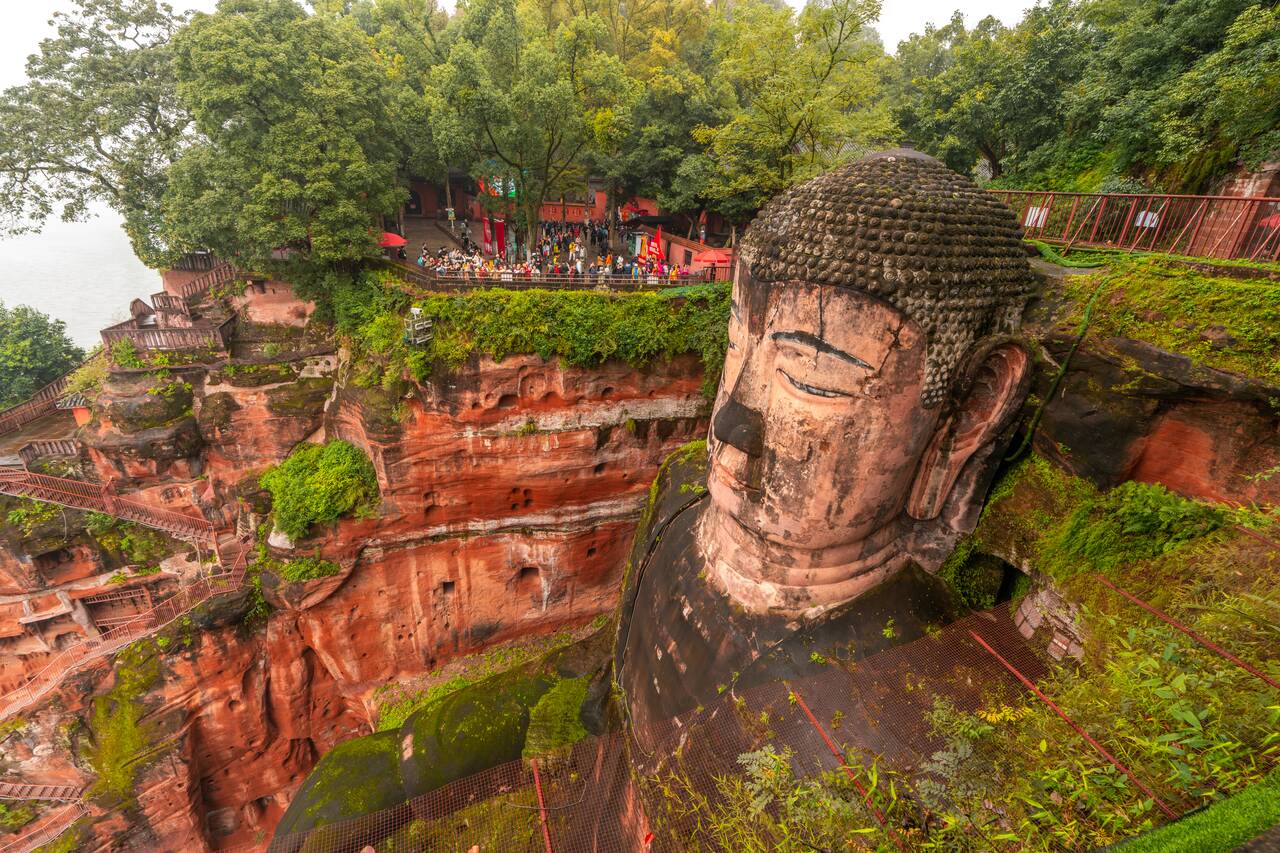
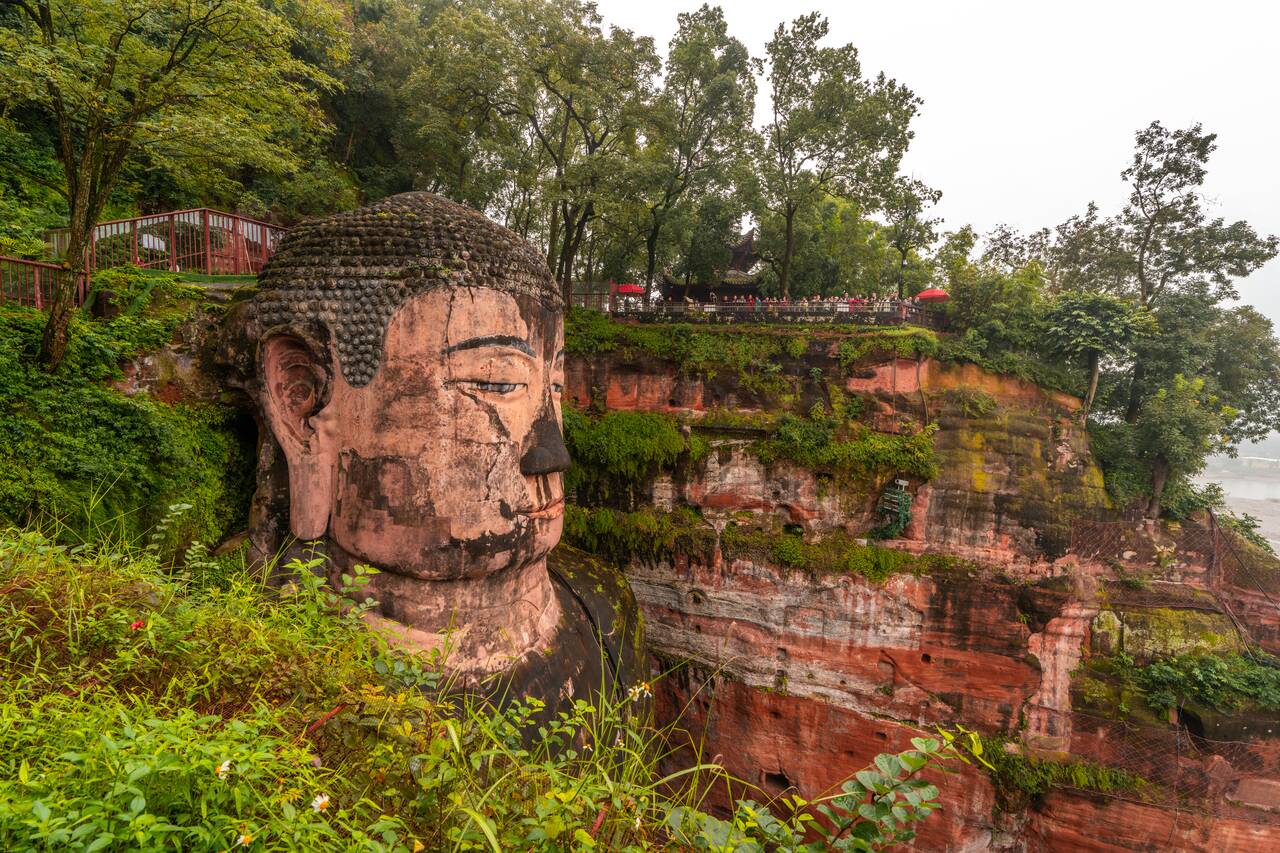
This is where you can see the head of the Giant Buddha up close and really witness the massive scale of the statue, in relation to all the people on the platform surrounding the head. You can walk behind the Buddha head and check out the view from the other side as well.
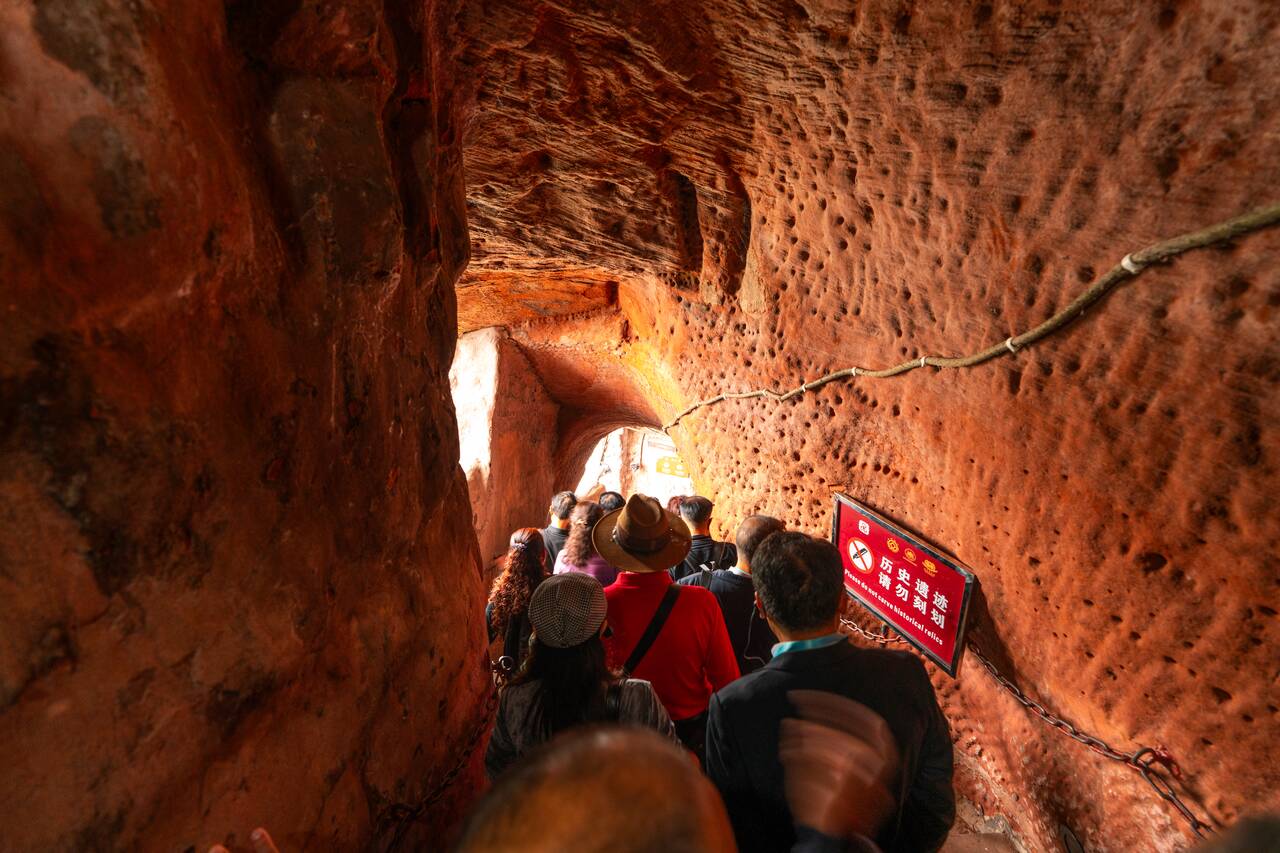
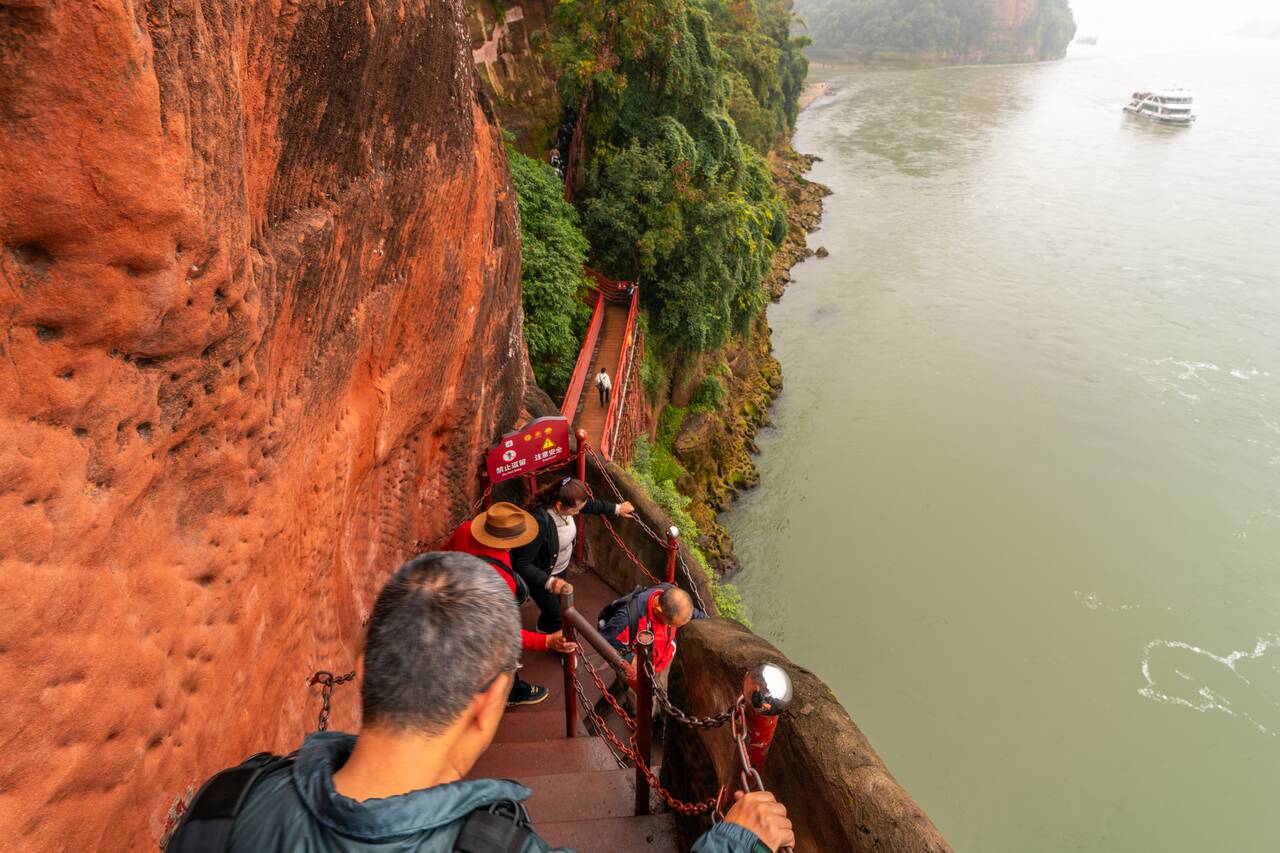
From here, you can begin hiking down to the foot of the Giant Leshan Buddha via extremely narrow staircases and caves, which can become a bottleneck when it’s crowded. If you arrive early in the morning, make sure to reach this staircase before the crowds, so you don’t get stuck behind all the aunties and uncles who love to stop every few steps to take photos, completely oblivious about the line behind them 😅😅.
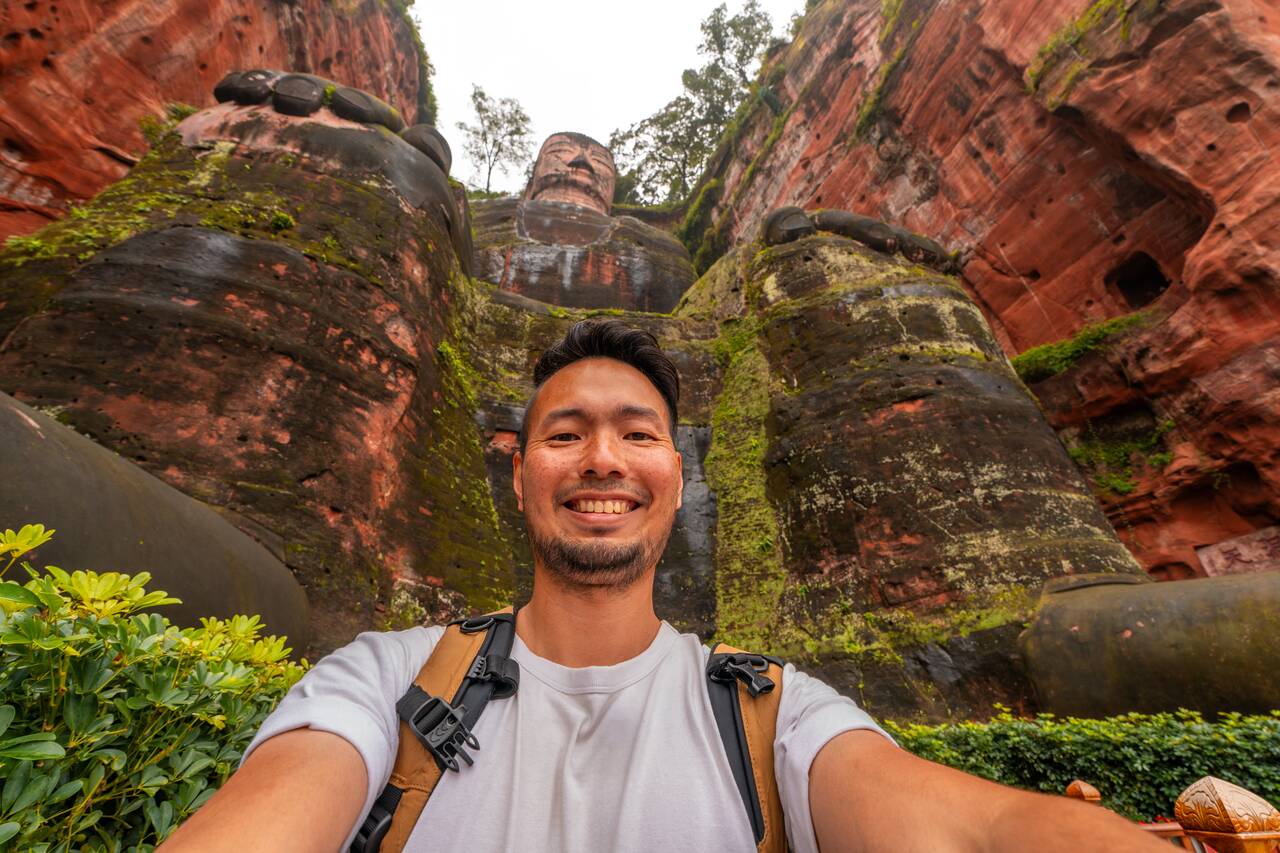
I had to wait a good 20 minutes to reach the foot of the Buddha statue, and that was not even during peak season. I can only imagine how chaotic it would be on weekends or during the summer peak months. If you are visiting during a busy period, consider seeing the Giant Leshan Buddha first before the Oriental Buddha Park and try to arrive right at opening time. This way, you might have a chance to climb down before the crowds arrive.
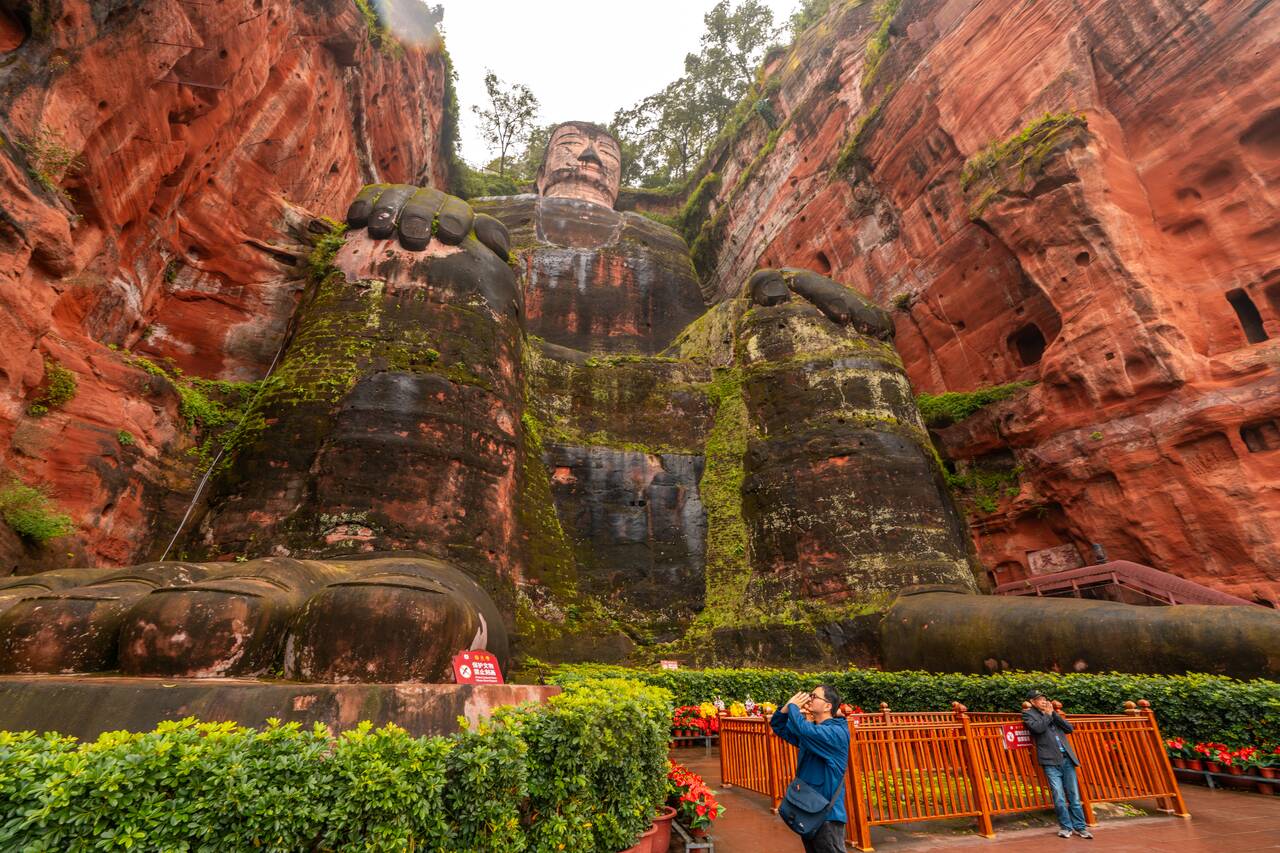
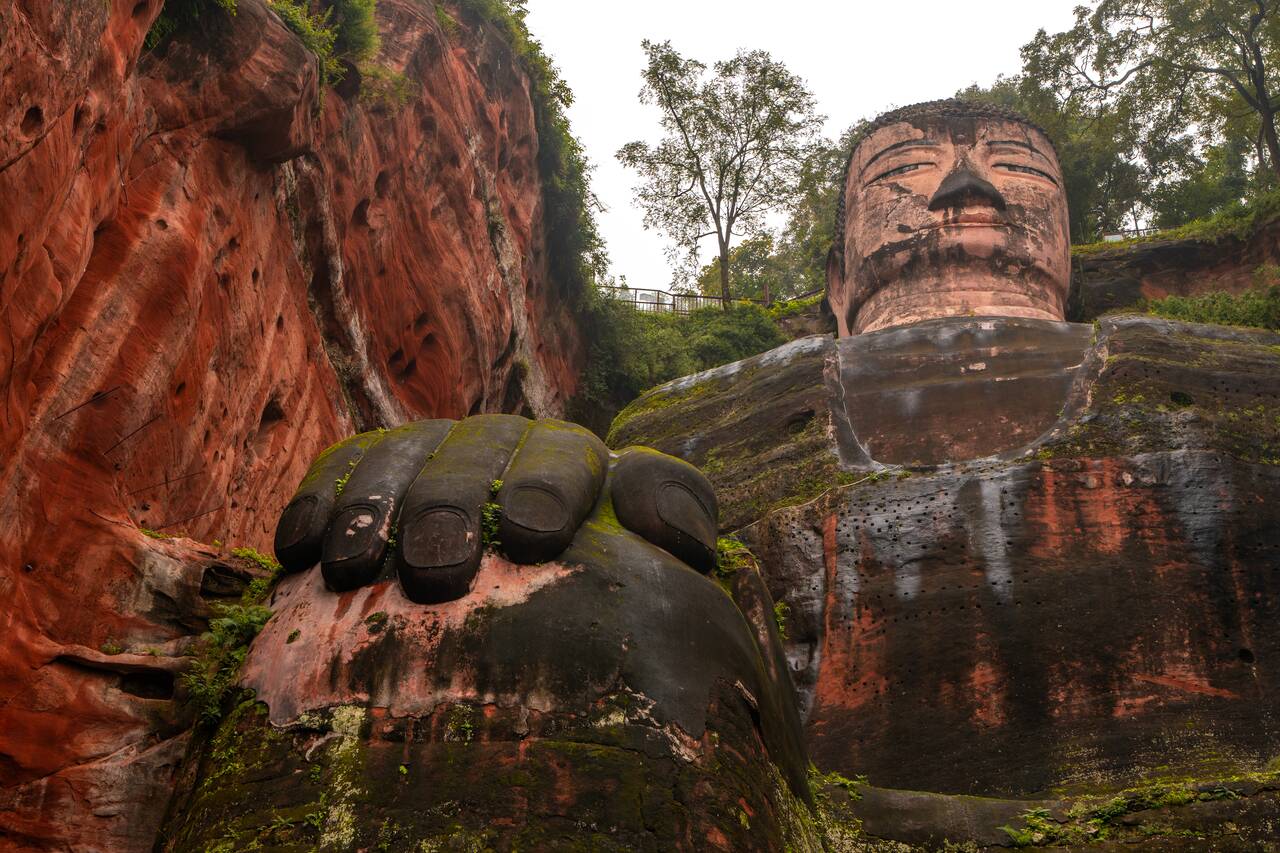
Once you get down, you will be blown away by the sheer size of the Giant Leshan Buddha. Spend some time taking photos of the Giant Buddha, checking out the view of the rivers around it, or paying respect at the altar at the foot of the Buddha image.
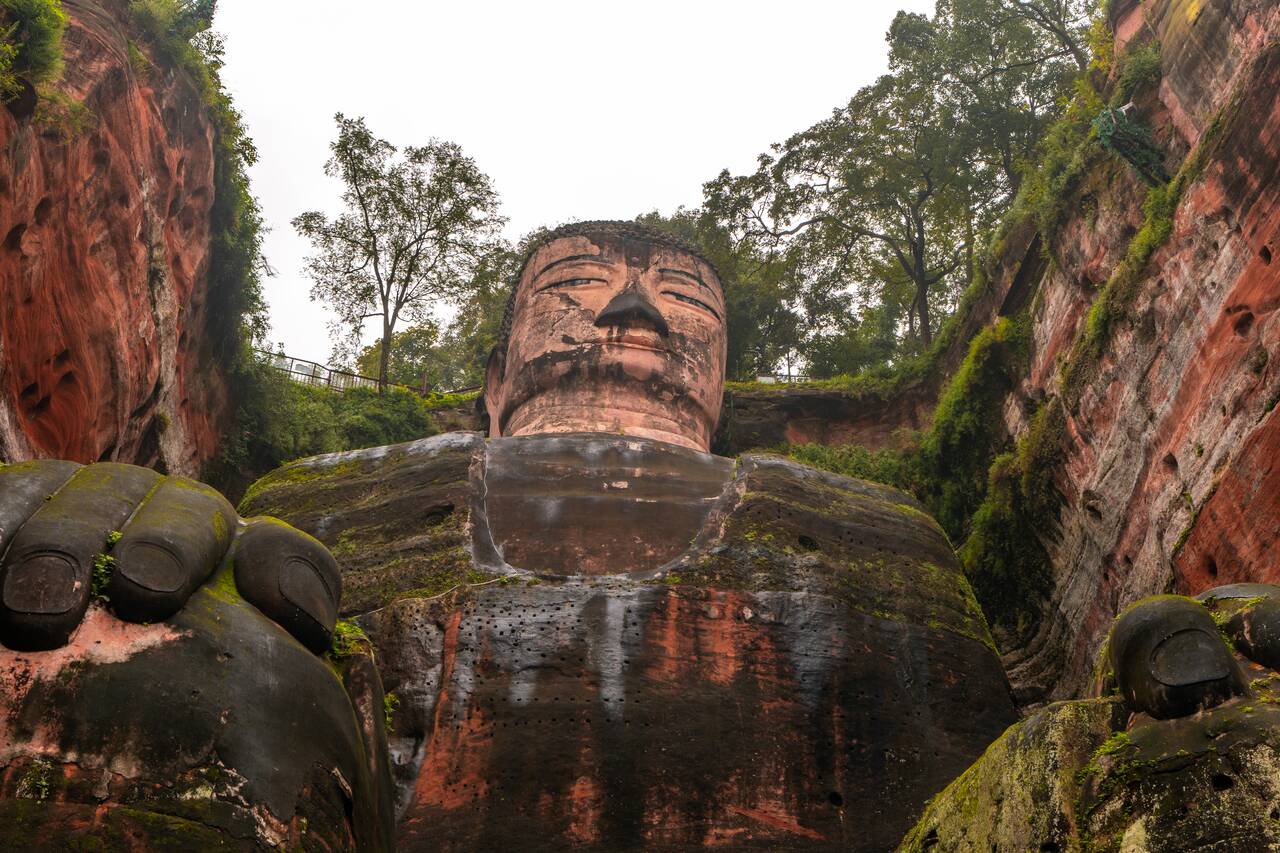
The trail to go up and down operates in one direction, so make sure you take the correct exit to return to the top, where you can continue exploring other attractions around the Giant Leshan Buddha. The hike down and back up can be steep in some sections, but it is not difficult since the trail is short. The crowds also give you plenty of time to rest as you slowly make your way along the narrow pathway.
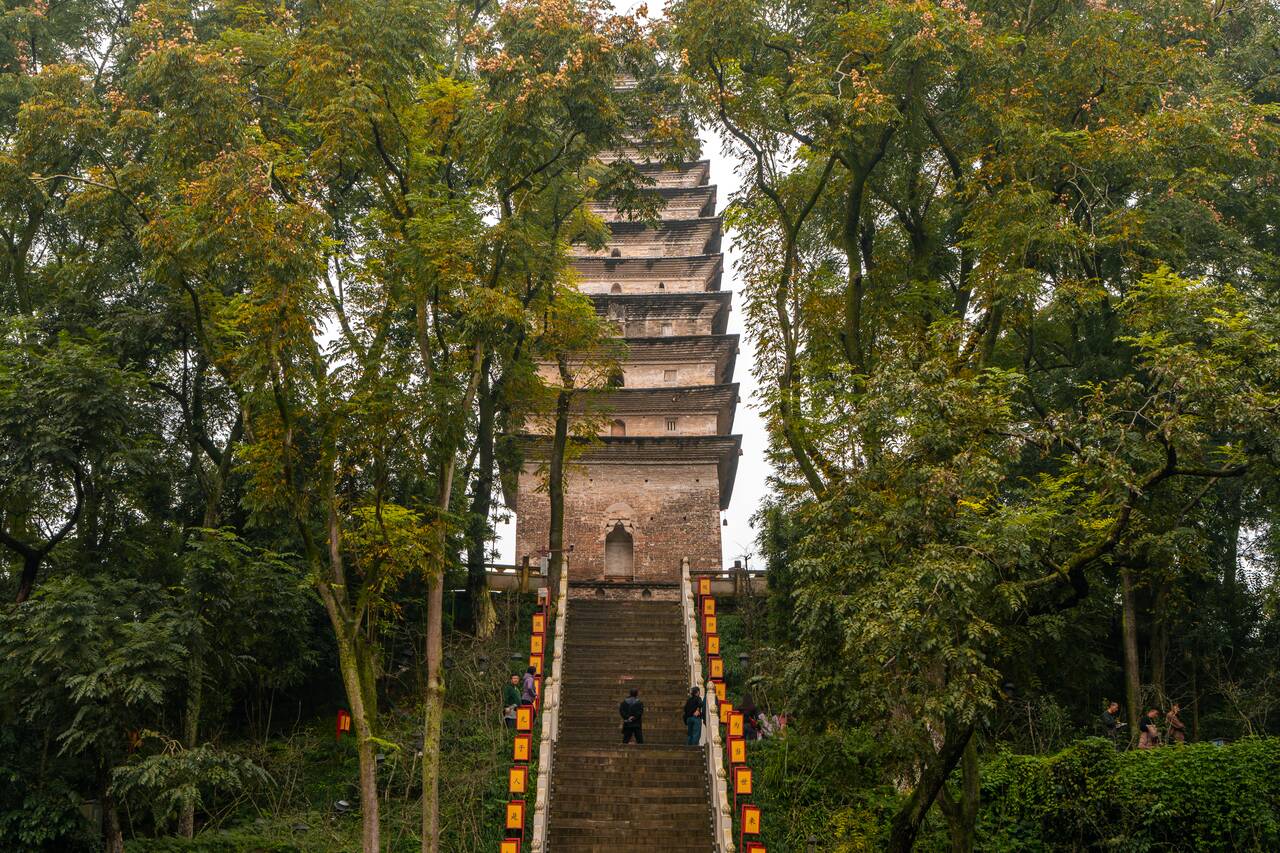
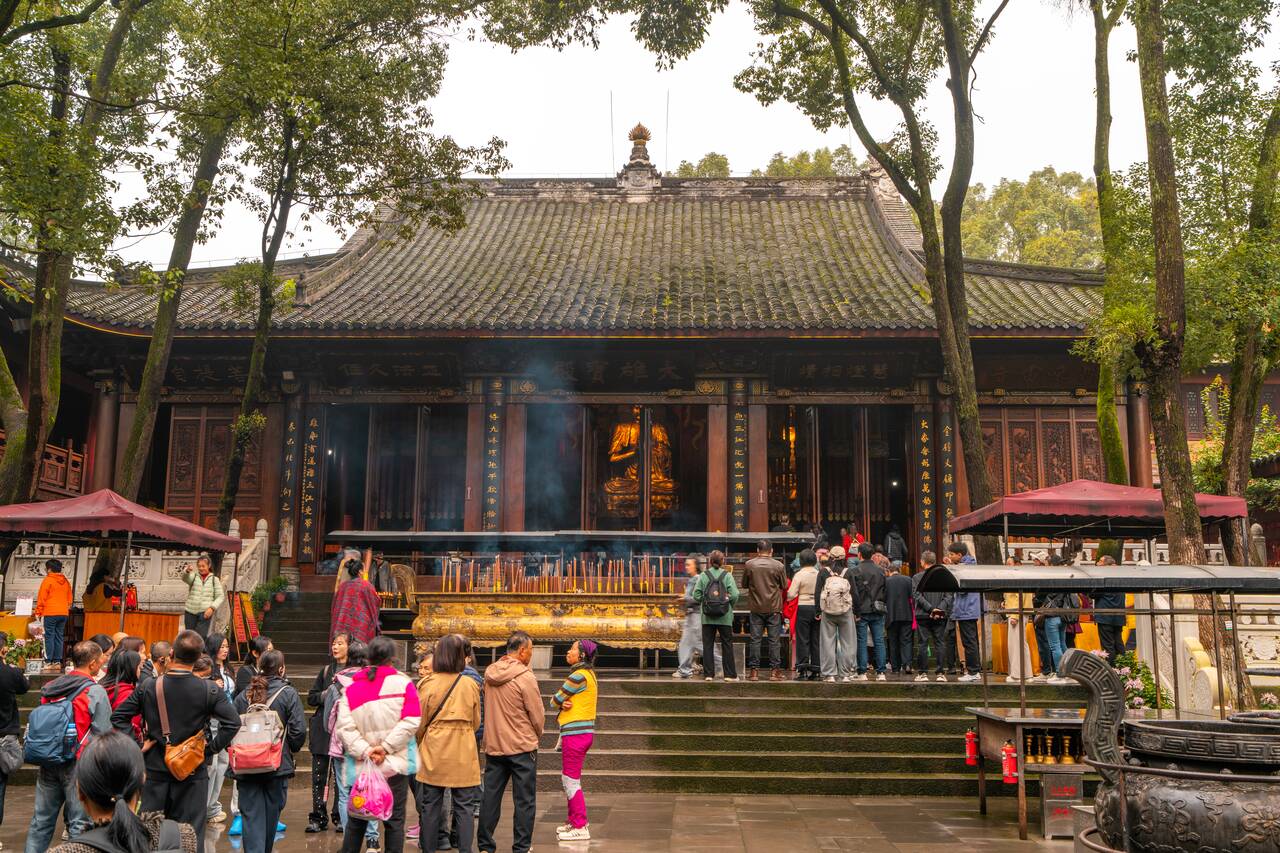
Once you arrive back at the top, you can spend the rest of your time exploring the temples and shrines around Giant Leshan Buddha like the beautiful Lingbao Pagoda, Lingyun Temple, and more. You can also go and take a cruise along the river to see the Giant Leshan Buddha from the river, if you have the time.
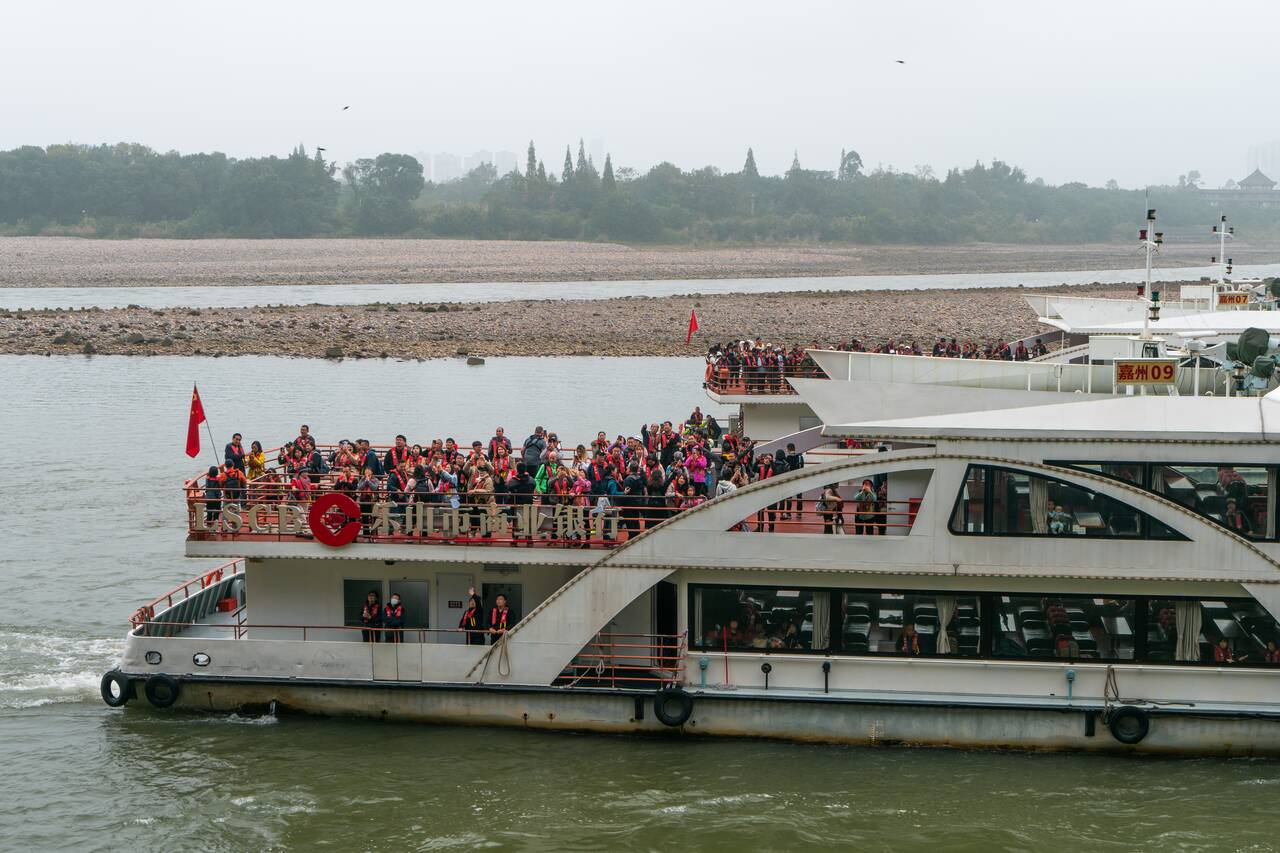
To take the cruise along the river to see the Giant Leshan Buddha, you can buy the ticket and board the boat from Baxiandong Wharf. The boat operates from 7:30 AM to 6:30 PM, and it will take you about 30 minutes with a photo stop at the Giant Leshan Buddha for you to take photos. It should cost around 80 CNY per person, and you can get the ticket from the wharf.
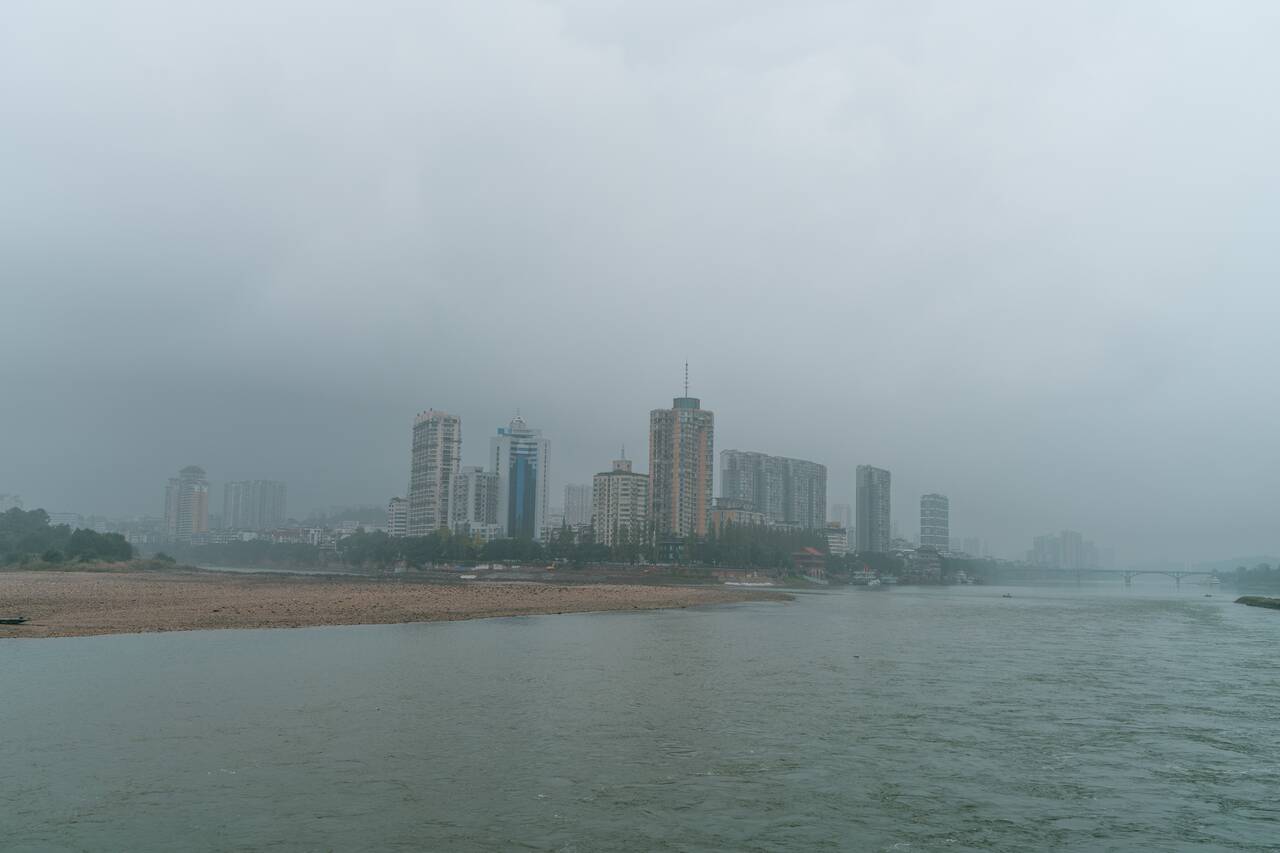
I decided not to take the boat cruise when I visited because the visibility was very poor and it started raining after I finished the hike. However, if you have the time and the weather is good, be sure to do both the hike and the cruise, as the boat offers views of some hidden stone carvings that can only be seen from the river.
Once you are done, you can head to the exit, take a Didi back to the railway station, and begin your journey back to Chengdu. The whole visit usually takes between 3 to 5 hours, depending on what you choose to do. It should take no more than half a day, leaving plenty of time to explore Chengdu once you return.

Things to Know Before Visiting China
- Always Carry Your Passport: Everything revolves around your passport/ID in China, and it’s often used interchangeably as your main form of identification. Many major tourist attractions require you to show your passport when buying a ticket, and the ticket will then be linked to it. You’ll scan your passport again to enter. The same applies to high-speed trains. It’s best to carry your passport with you at all times while traveling in China.
- Get an eSIM: China’s cashless economy relies on constant internet access, so having a data connection is essential. I highly recommend getting an eSIM or a local SIM card for your trip. An eSIM is often better because the service is usually based in Hong Kong, which bypasses China’s Great Firewall, meaning you can access apps like Instagram and YouTube without a VPN. I suggest checking eSIM options on Klook or Trip.com, as they tend to be the most affordable.
- Use AMap to Navigate: Google Maps doesn’t work well in China, so local apps like AMap are much more informative and accurate for getting around. It even provides metro information, making it easy to navigate city subway systems. I used AMap throughout my entire trip, and it worked perfectly! In this guide, I’ll be linking locations with AMap links instead of Google Maps, so be sure to download it before your trip.
- Use VPN to Bypass the Great Firewall: As you may know, many major websites such as Google, Facebook, Instagram, TikTok, and more are blocked in China. To access them, you’ll need a VPN like LetsVPN installed on both your phone and laptop before you arrive in China. This is crucial as once you're in the country, you won’t be able to search for or download VPN apps. I used LetsVPN during my trip, and it worked very well throughout. The service is affordable too, with a free tier offering limited data or a basic unlimited plan for just 5.99 USD per month.
- Connect Alipay with Your Credit Card: First, download Alipay from the app store, set up your account, and link it to your credit card. This will be one of the two main ways you’ll pay for services in China. Alipay also has mini-apps built in, such as Didi (China’s version of Uber), so you don’t need to download separate apps, and you can use them directly through Alipay. Very convenient!
- Get a Transport Card Working in Alipay: Once you have Alipay set up, you’ll need to verify your account before you can activate a transport card for metro and bus rides. First, if you’re not currently in the city you want to use, tap the city name in the top-left corner and select the correct city. After that, tap the “Transport” button and request a transport card. You’ll be asked to upload a photo of your passport for verification. Once approved, your transport card will be issued, and you can use the QR code to scan and pay for buses and metro rides.
- Get WeChat Set Up: WeChat is another essential app for communicating with locals, thanks to its built-in translation feature. It’s also widely used for payments as Alipay only works about 70% of the time, while WeChat is commonly needed for paying individuals, buying entry tickets at certain attractions, and more. Setting up WeChat can be a bit tricky though because you need verification from an existing user. The easiest way is to ask your hotel’s reception to help verify your account when you arrive in China, which is how I got mine activated.
- Use Trip.com / Trip App: For hotels, day trips, attraction tickets, train tickets, flights, and everything in between, you can use Trip.com or the Trip app to book all your travel needs. It’s very convenient, offers a great user experience, and has a generous cancellation policy that gives you more flexibility when traveling in China.
When to Visit Leshan?
You can visit Leshan all year round, but the best time to visit is from March to June and September to November. These months offer mild temperatures, clearer skies, and more comfortable conditions for climbing the stairways around the Giant Buddha.
In spring, expect pleasant weather, blooming greenery, and good visibility. It is one of the best seasons for photography and exploring the surrounding temples and viewpoints.
Autumn is another great time to visit, with cool temperatures and stable weather. The river area feels especially peaceful, and the lighting around the Buddha is often excellent.
I do not recommend visiting in the summer as it can be hot, humid, and crowded. Afternoon rain is common, and the walkways can become slippery. If you visit in the summer, go early in the morning to avoid the worst heat and crowds.
In winter, it will be cold and sometimes foggy, which makes it harder to see all the stone sculptures that are faraway, but crowds are smaller.
I visited in November and even though it was rainy with poor visibility, the crowd was much more manageable. It only took around 15 minutes to reach the foot of the Buddha statue. During peak season, this line can take hours, as the trail leading down is extremely narrow and there is limited space at the base of the statue.
How to Get to Leshan?
By Air: Chengdu is the place I recommend you stay while you make a day trip to visit Leshan. Getting to Chengdu is easy since it is one of the major transportation hubs in western China, and you should be able to find flights here whether you are traveling domestically or internationally. Most travelers arrive by air through Chengdu Tianfu International Airport, the city’s main gateway.
It handles a wide range of international flights as well as frequent connections from major Chinese cities like Beijing, Shanghai, Guangzhou, and Xi’an. From the airport, you can reach the city center by metro, airport bus, or taxi, with the metro being the most convenient and budget-friendly option.
By High-Speed Train: High-speed trains depart from Chengdu East, Chengdu South, and Chengdu West Stations, arriving at Leshan Railway Station. Once you arrive, you can take a local bus or taxi to the Leshan Giant Buddha Scenic Area. A Didi ride takes about 20 minutes, while the bus takes around 40 minutes depending on traffic.
By Bus: Direct buses also run from Chengdu’s Xinnanmen Bus Station to Leshan, but they are slower and less convenient. The ride usually takes 2 hours or more, so this option is only recommended if train tickets are sold out.
How to Get Around Leshan?
Getting around Leshan is straightforward, especially if you are visiting the Giant Buddha as a day trip from Chengdu. Most travelers will only need to move between the train station and the scenic area, plus a few short transfers within the park.
By Didi: You can easily use Didi, the Chinese version of Uber, to get around Leshan. From Leshan Railway Station to the Leshan Giant Buddha Scenic Area, the ride takes about 20 minutes. Prices are reasonable, and drivers are used to taking tourists to the Buddha entrance. You can access Didi directly through the mini app inside the Alipay app, so there is no need to download a separate application.
By Walking: Once you enter the Leshan Giant Buddha Scenic Area, everything is explored on foot. Expect steep staircases, narrow walkways, and some uphill sections. The park is linear, so most visitors walk a loop starting from the main entrance, down to the foot of the Buddha, and back up on the opposite side.
By Boat: If you want a full view of the Giant Buddha without the long wait for the stairway, you can take a boat tour from the river. These boats leave from a pier a short drive from the main entrance and offer a unique front-facing perspective of the statue, allowing you to really see the true scale of the statue. You can get the boat tour ticket here.
Opening Hours and Entrance Tickets?
The Leshan Giant Buddha Scenic Area is open all year, although the hours change slightly by season. From April to October, the park is usually open from 8:00 AM to 6:00 PM. From November to March, it typically opens from 8:30 AM to 5:30 PM. It is best to arrive early in the morning to avoid long lines for the narrow stairway that leads down to the feet of the Buddha.
The entrance ticket to the Leshan Giant Buddha Scenic Area costs around 80 CNY per person. If you want to see the statue from the river, boat tours are available for about 70 to 90 CNY, and these tickets are sold separately from the main entrance fee. You can buy tickets at the gate or through here. Remember to bring your passport when purchasing or picking up tickets.
How to Avoid Crowds in Leshan?
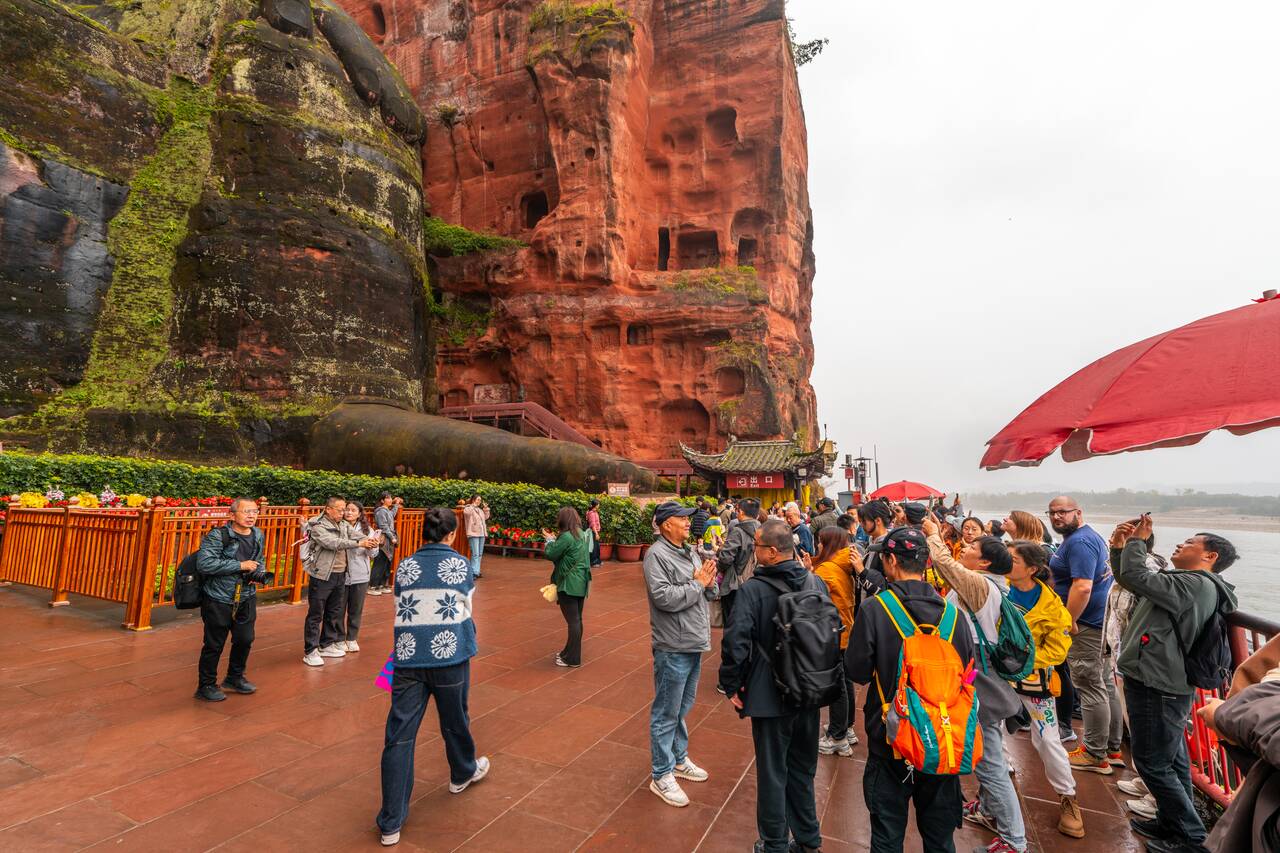
The best way to avoid crowds is to arrive as early as possible, ideally right when the park opens. The narrow cliffside stairway that leads down to the feet of the Buddha is the main bottleneck, and wait times can stretch for hours during peak season.
Visiting on a weekday instead of a weekend or public holiday also helps reduce crowd levels. If your schedule is flexible, avoid national holidays such as Golden Week in October and Labor Day in May, as these periods are extremely busy.
Another effective way to skip the long line entirely is to take a boat tour from the river. The boats give you a full frontal view of the Buddha without the need to queue for the stairway. This is a great option if you are short on time or visiting during peak season.
If you are traveling in winter, crowd levels are noticeably lower, even though the weather can be cold or foggy. When I visited in November, it only took about 15 minutes to reach the foot of the statue, compared to the hours-long wait you may face in summer.
How Many Hours to Spend in Leshan?
A visit to Leshan is usually a half-day trip from Chengdu. Most travelers spend about 3 to 4 hours exploring the Giant Buddha Scenic Area, including walking down the cliffside stairway, enjoying the river views, and taking photos.
If you plan to take a boat tour, add another 30 to 60 minutes for the ride and waiting time. You may also want extra time to explore the surrounding park, nearby temples, or the old town area, which could extend your visit to 5 to 6 hours.
For a more relaxed pace, especially if you want to avoid rushing and take lots of photos, allocating half a day to a full day is ideal. This also allows for breaks and enjoying some local snacks along the way.
Disclaimer: This post may contain affiliate links. See our disclosure policy.
First Published:
Last updated:


