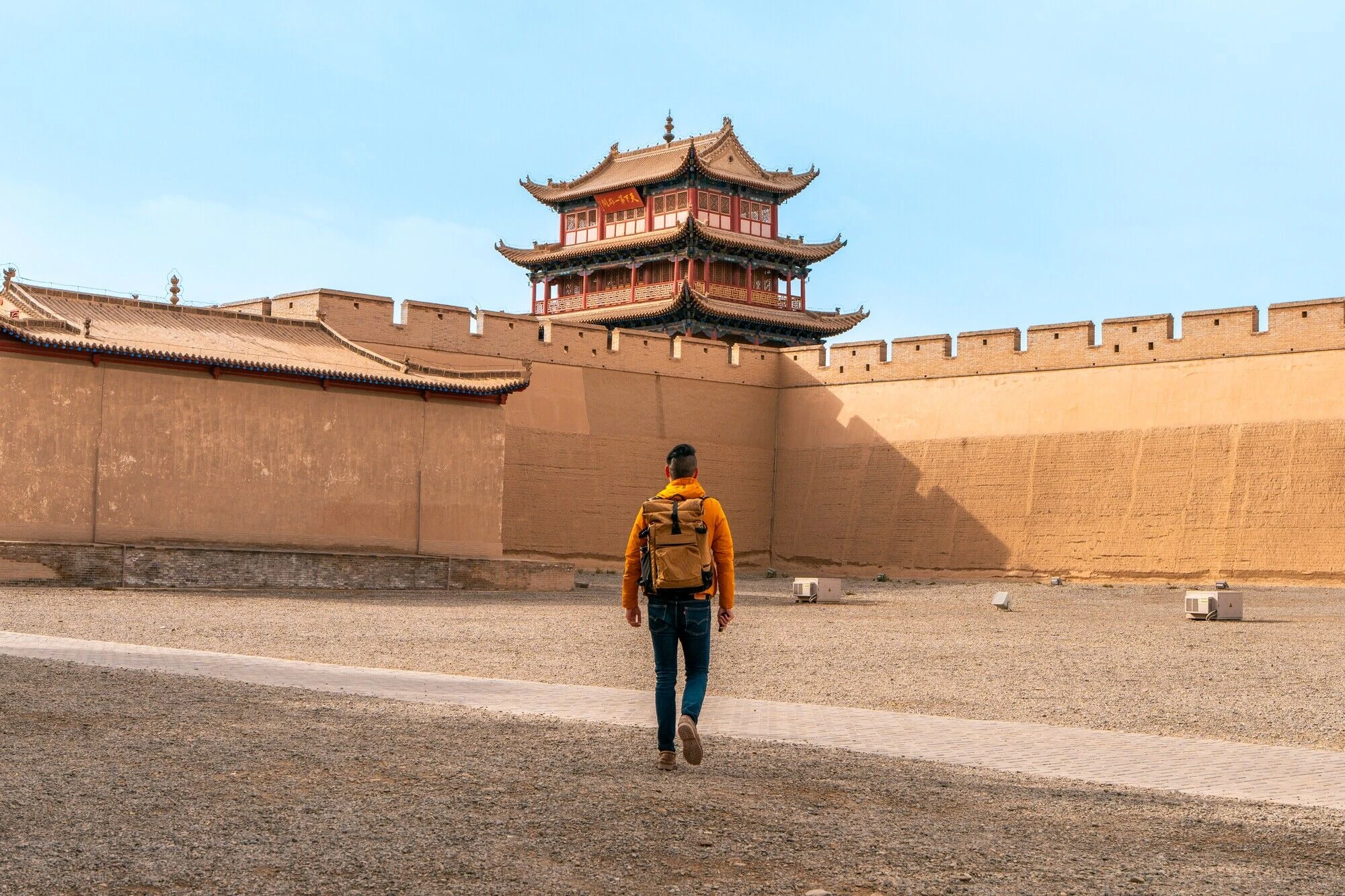



After exploring Dunhuang, I decided to break up the journey to Zhangye with a stop in Jiayuguan. I had already hiked the Great Wall at Mutianyu near Beijing, but I was curious to see what it looked like at the other end of the Ming defenses, way out here in the Gobi Desert.
The fortress set against the snowy mountains was the highlight for me, but I also loved climbing the steep steps of the Overhanging Great Wall and seeing the First Beacon Tower with my own eyes. It was pretty cool to finally say I’d found the western end of the Ming Great Wall and stood right there!
In this guide, I’ll show you how to visit all three sights in one day, where I found my favorite photo spots, and what I’d prioritize if you’re short on time. If you’re making your way along the Silk Road through Gansu, here’s how to fit Jiayuguan into your trip. Let’s begin!
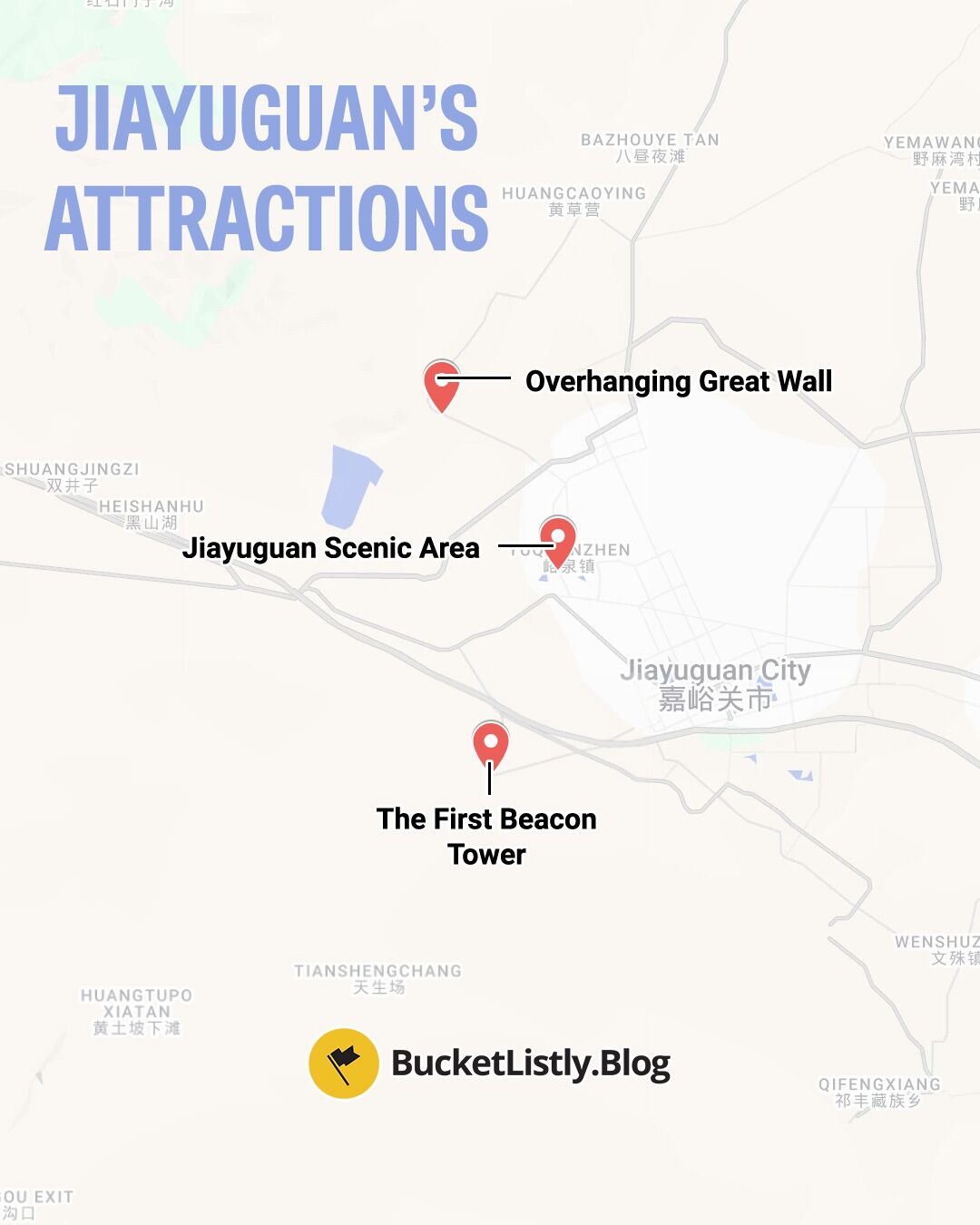
Map of Jiayuguan's Attractions
Quick Summary
| ♥️ Must See: | Jiayuguan Cultural Relics Scenic Area |
|---|---|
| 👍 Must Do: | Climb the Overhanging Great Wall |
| 🛌 Place to Stay: | Jiayuguan Pass Fantawild Flagship Hotel |
| 🌤️ When to visit: | Apr - May & Sep - Oct |
3 Best Things to Do in Jiayuguan
1. Explore Jiayuguan Fortress
- 📍 Location: Jiayuguan Cultural Relics Scenic Area [Map Link]
- 🕐 Opening Hours: 8 AM - 7 PM
- 💰 Entry Fees: 110 CNY (~16 USD) / 90 CNY
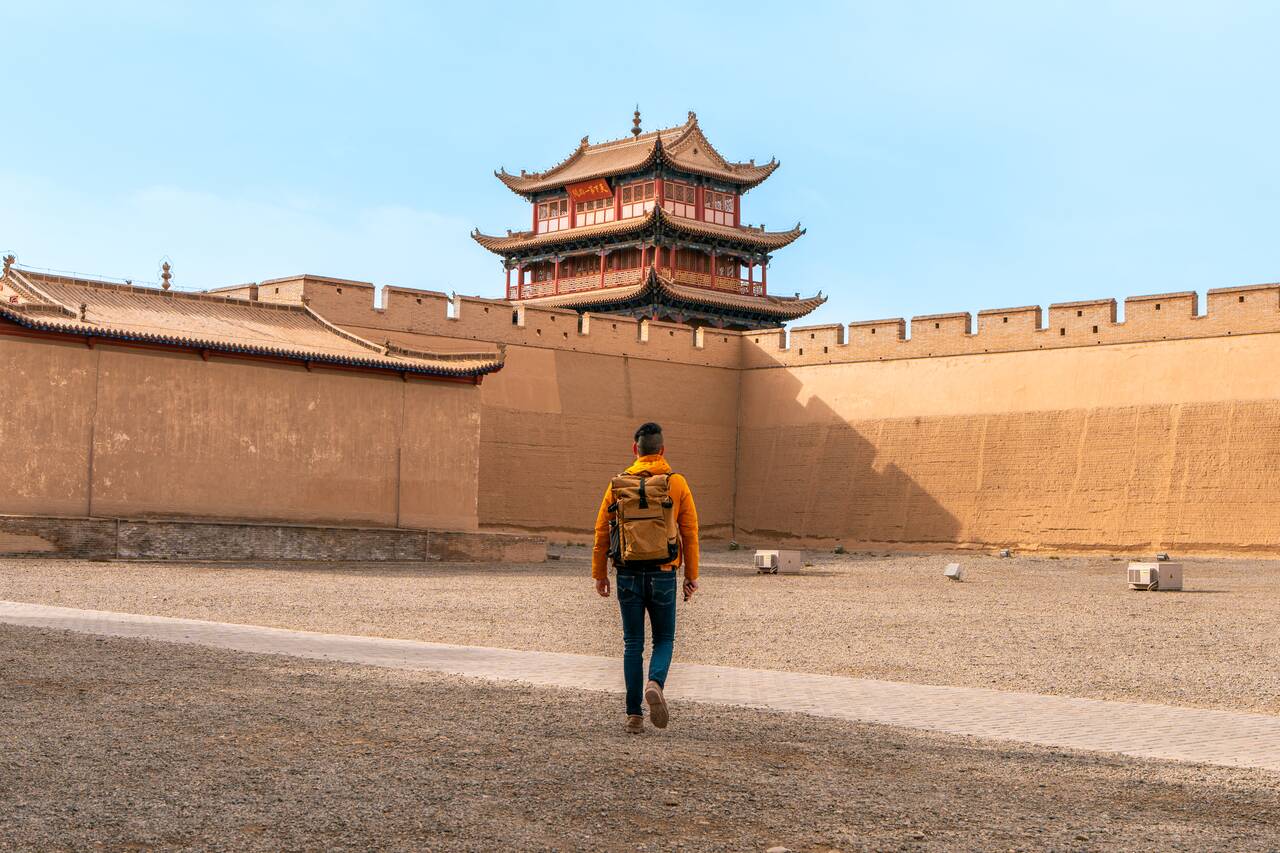
- ⚡ Pete's Take: "The view from the ramparts was one of my favorite parts: towers and courtyards below me, snowy mountains behind them. Quite a sight"
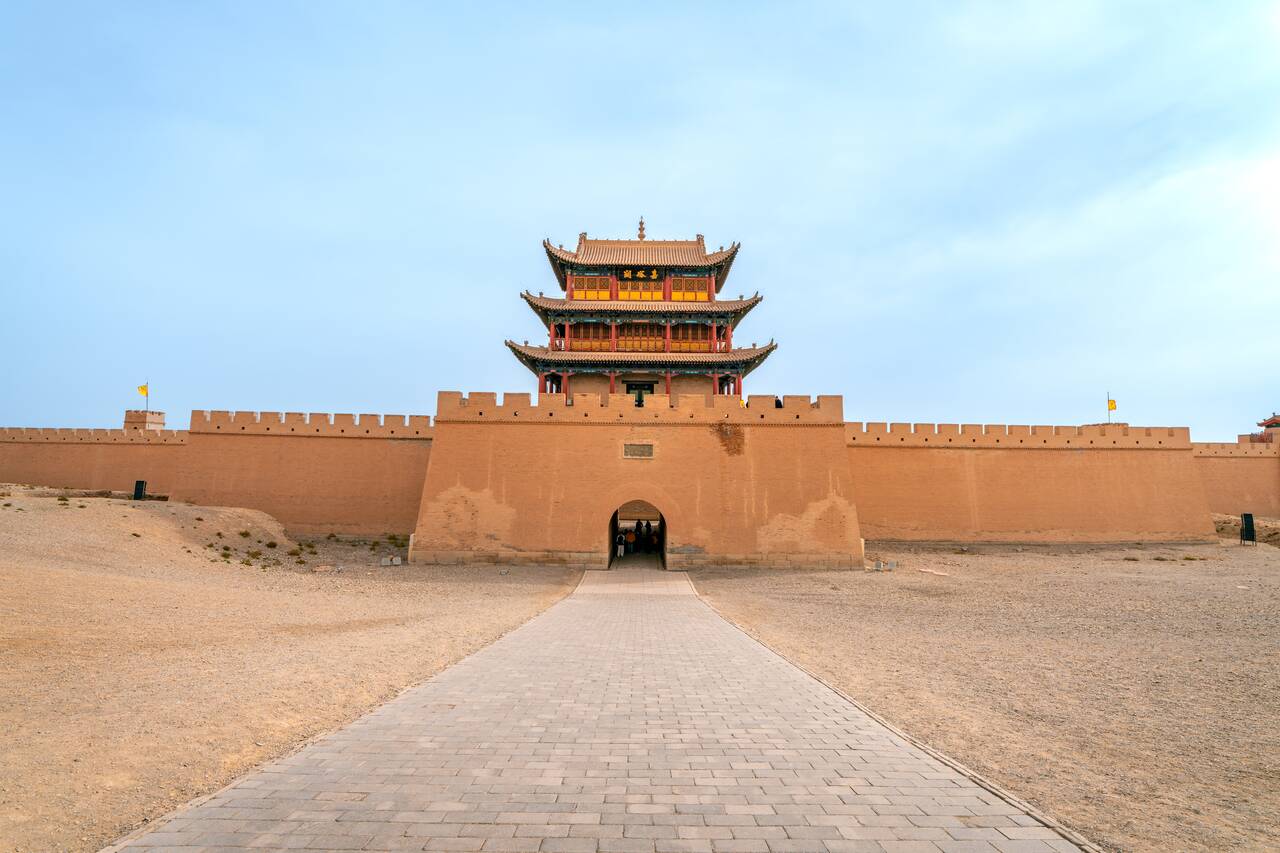
The Jiayuguan Cultural Relics Scenic Area is the main attraction in the city and one of the reasons I decided to stop here while traveling along the Silk Road. Construction of the fortress began way back in 1372, during the Ming dynasty. It guarded a narrow stretch of the Hexi Corridor at the western end of the Ming Great Wall, a key passage for merchants and travelers heading west along the Silk Road.
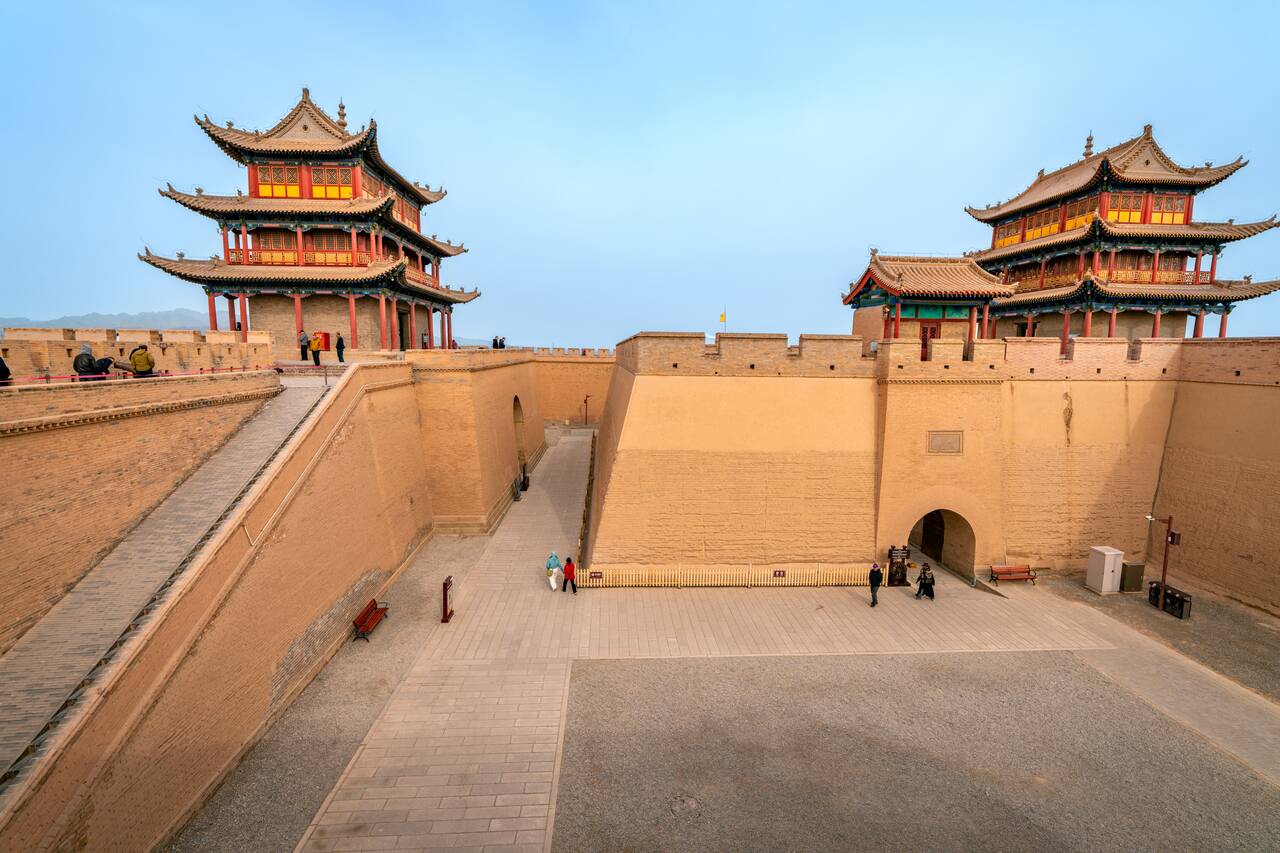
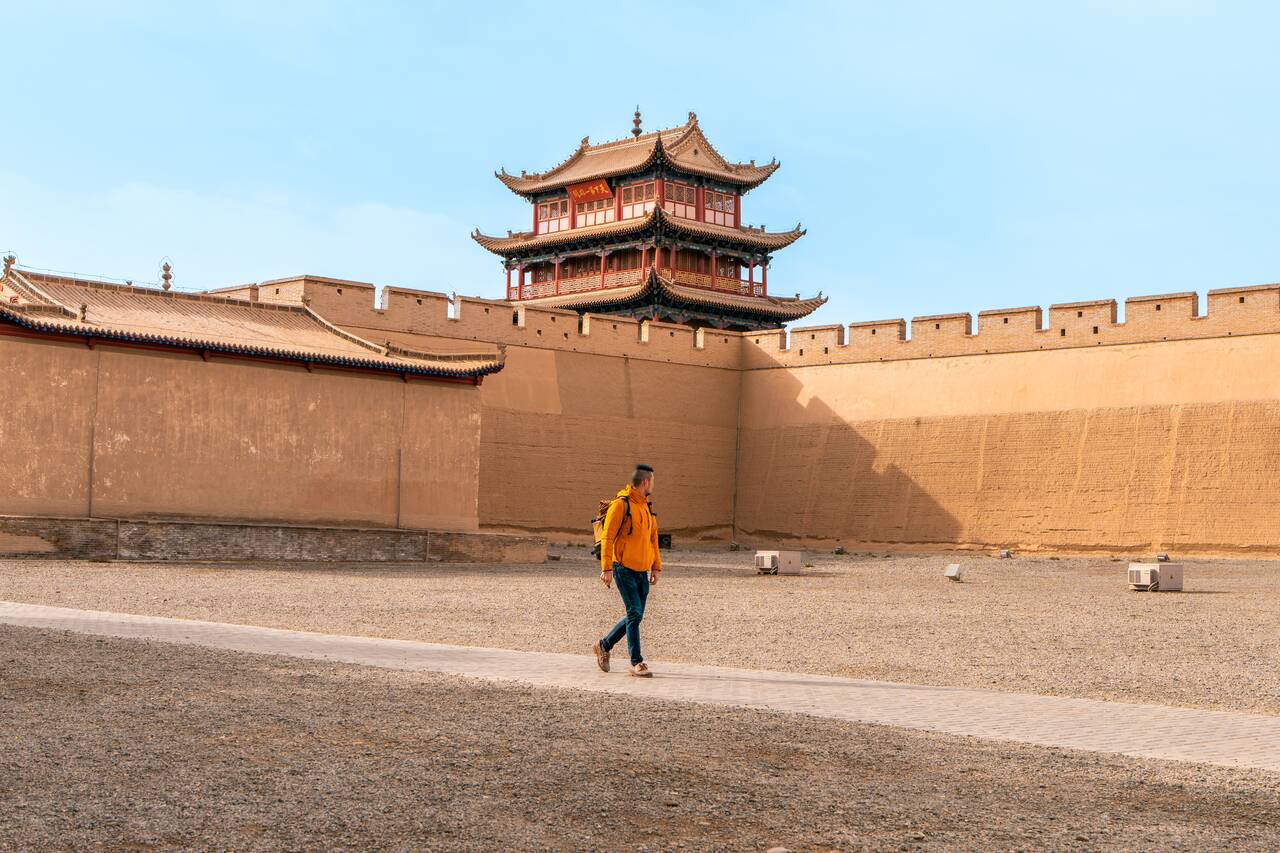
One of the coolest things about this fortress and I found most interesting was how many layers of defenses there were. You pass through an outer wall, then through smaller enclosed courtyards and another set of gates before reaching the inner fortress.
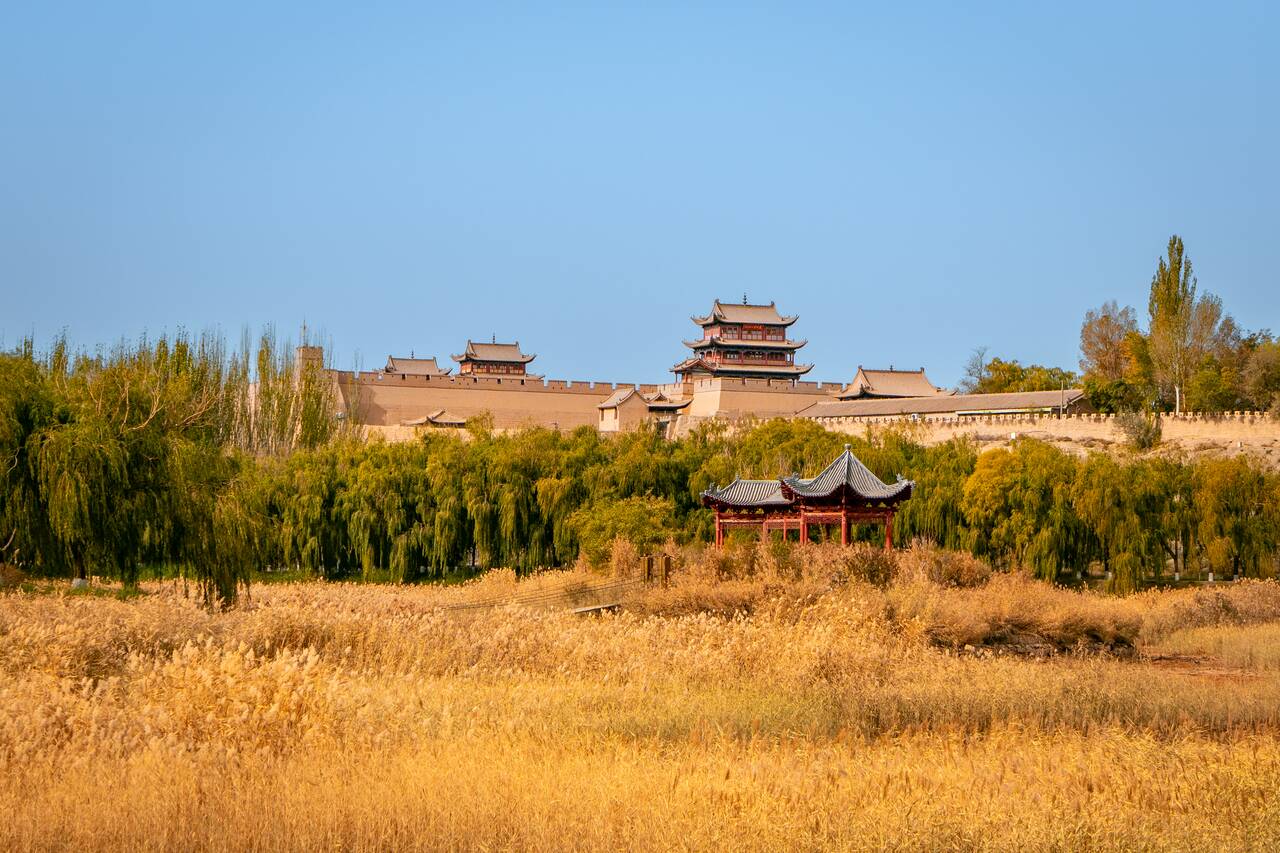
The scenic area is quite large, and it takes around 30 minutes just to walk from the visitor center to the fortress. If you want to save some time, you can pay extra for the sightseeing shuttle, which leaves from the visitor center and drops you off here. From there, it is a short stroll of around 5 minutes to the fortress. You can also take the shuttle back from here as you exit.
- Jiayu Guanxiyu Inn (Mingjiahui Branch) (Budget)
- Jiayuguan Pass Fantawild Flagship Hotel (Mid-Range) 👍 Top Pick
- Grand Madison Hotel Jiayuguan (High-End)
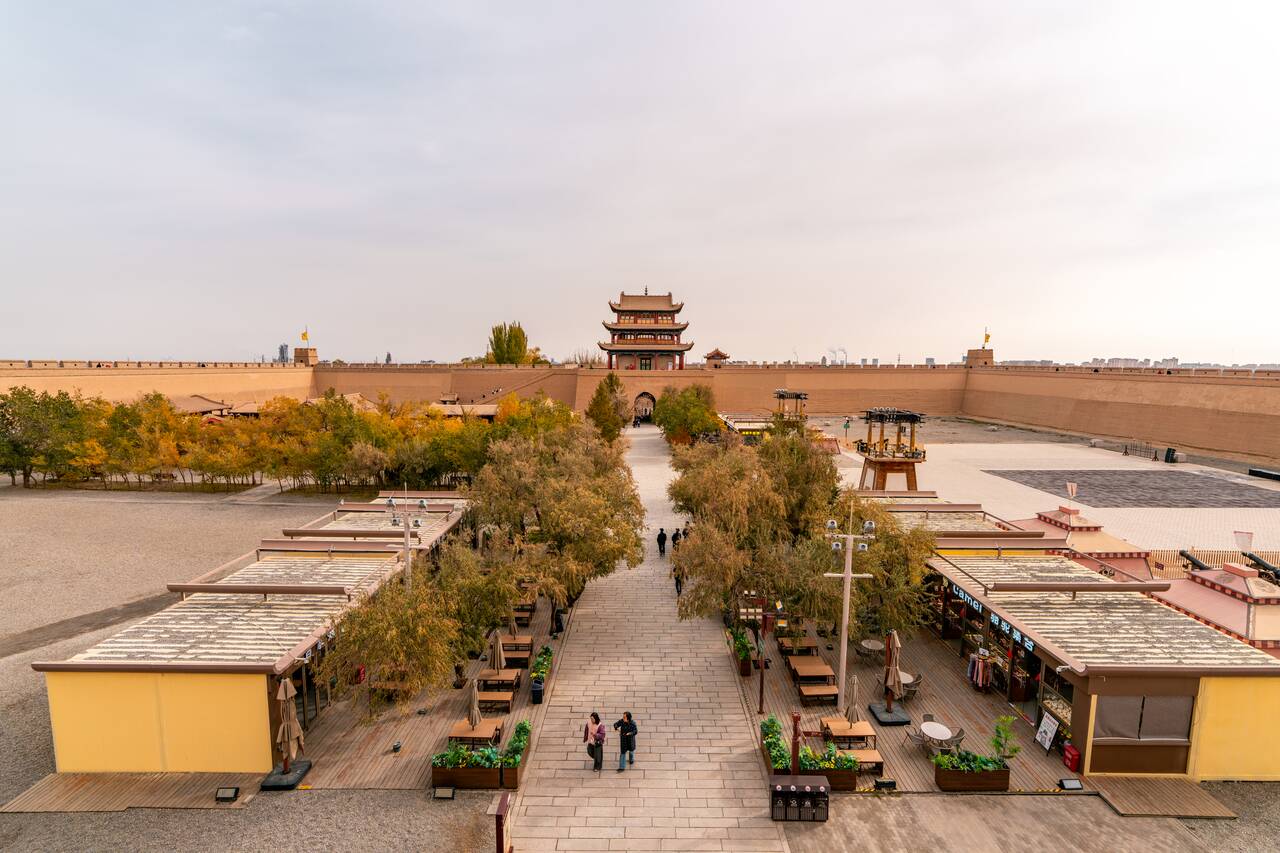
Once you arrive, take your time admiring the gates and towers as you walk through each layer of the fortifications. Be sure to find the stairs up to the ramparts and walk along the walls. The view from up there was one of my favorite parts of the visit. You can see the towers and courtyards below, with the snowy mountains rising behind them. Quite a sight to see!
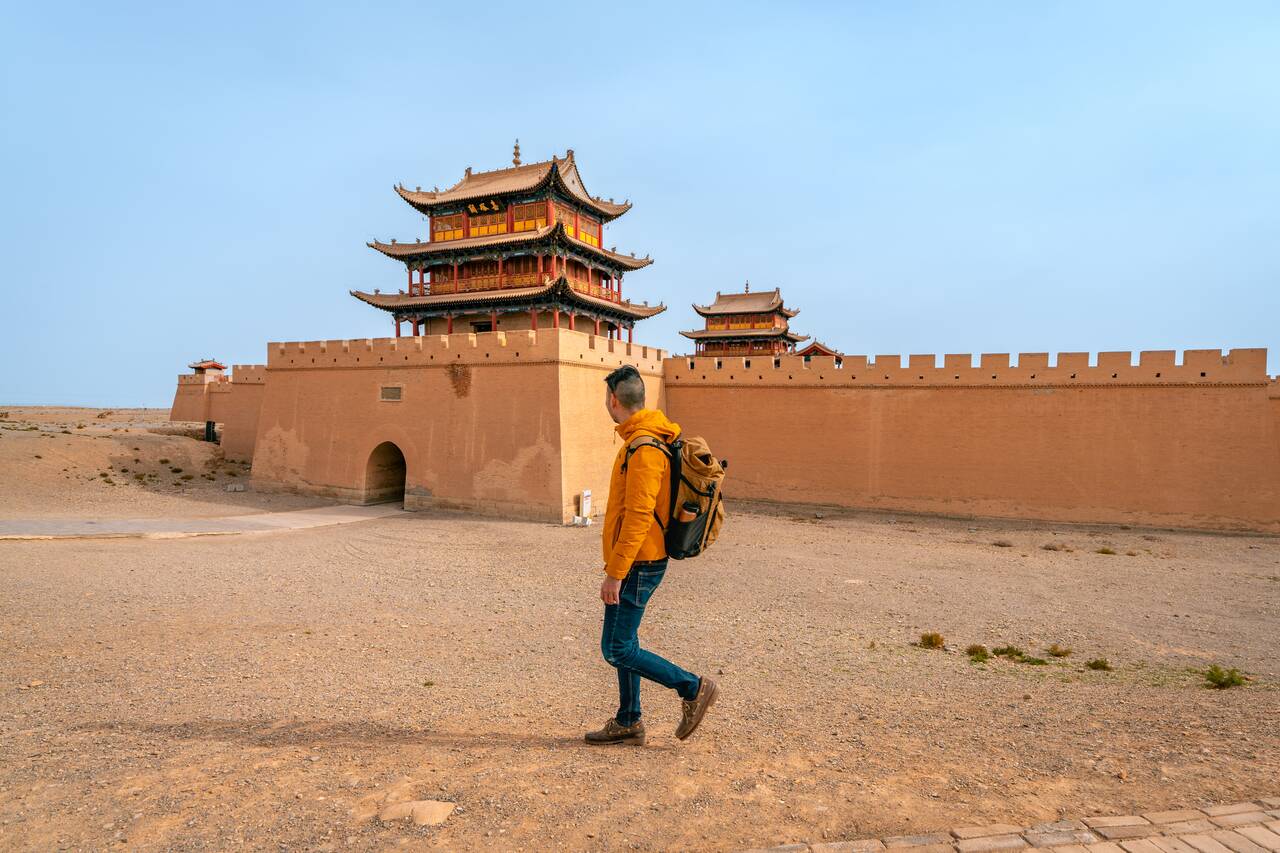
I have also spend hours walking around the park, trying to find the best photo spots, and I found two I’d recommend. The first is out in the desert beyond the west gate. Walk a little farther than where the crowds tend to gather, then turn around. From there, you can see the fortress much as a merchant approaching along the Silk Road might have seen it. Pretty formidable, if you ask me!
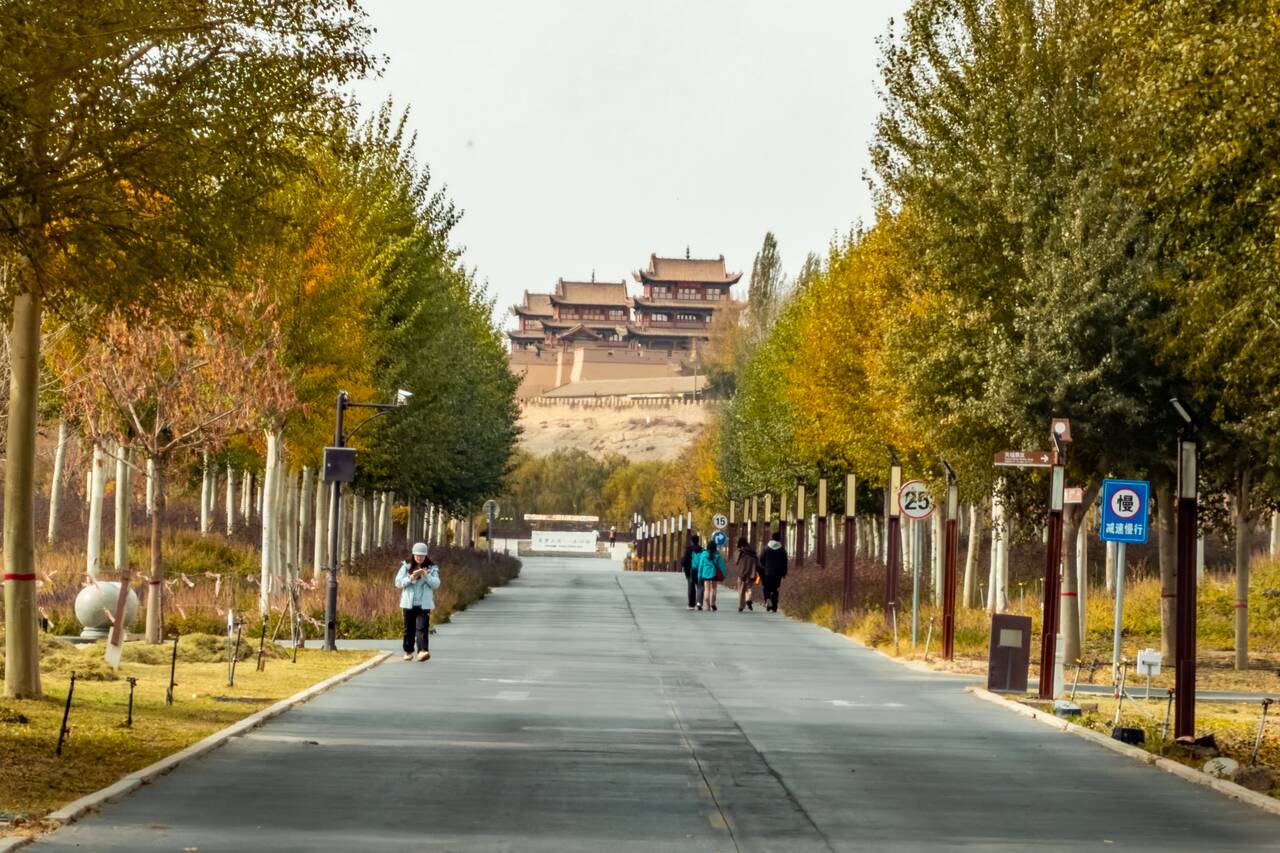
The other spot is inside the park, along this road back to the visitor center. I spotted it by accident from the shuttle on the way back and immediately wished I’d walked instead 😬. If you want to save some energy, I’d take the shuttle to the fortress and walk back so you can stop for photos along the way.
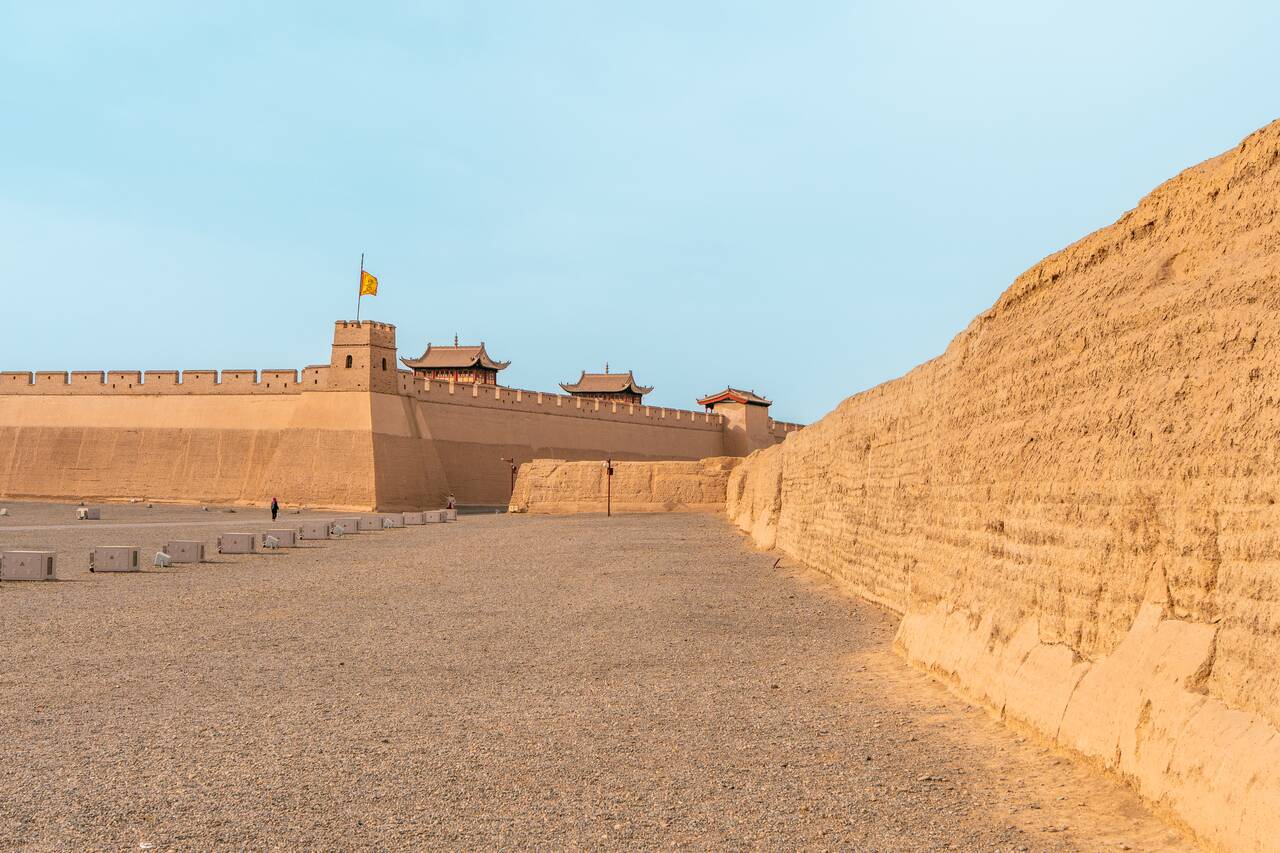
There is quite a lot of ground to cover, so allow around 2 to 3 hours, or longer if you plan to walk both ways and spend as much time looking for photo spots as I did. This was the highlight of Jiayuguan for me, so I’d give yourself plenty of time to explore it.
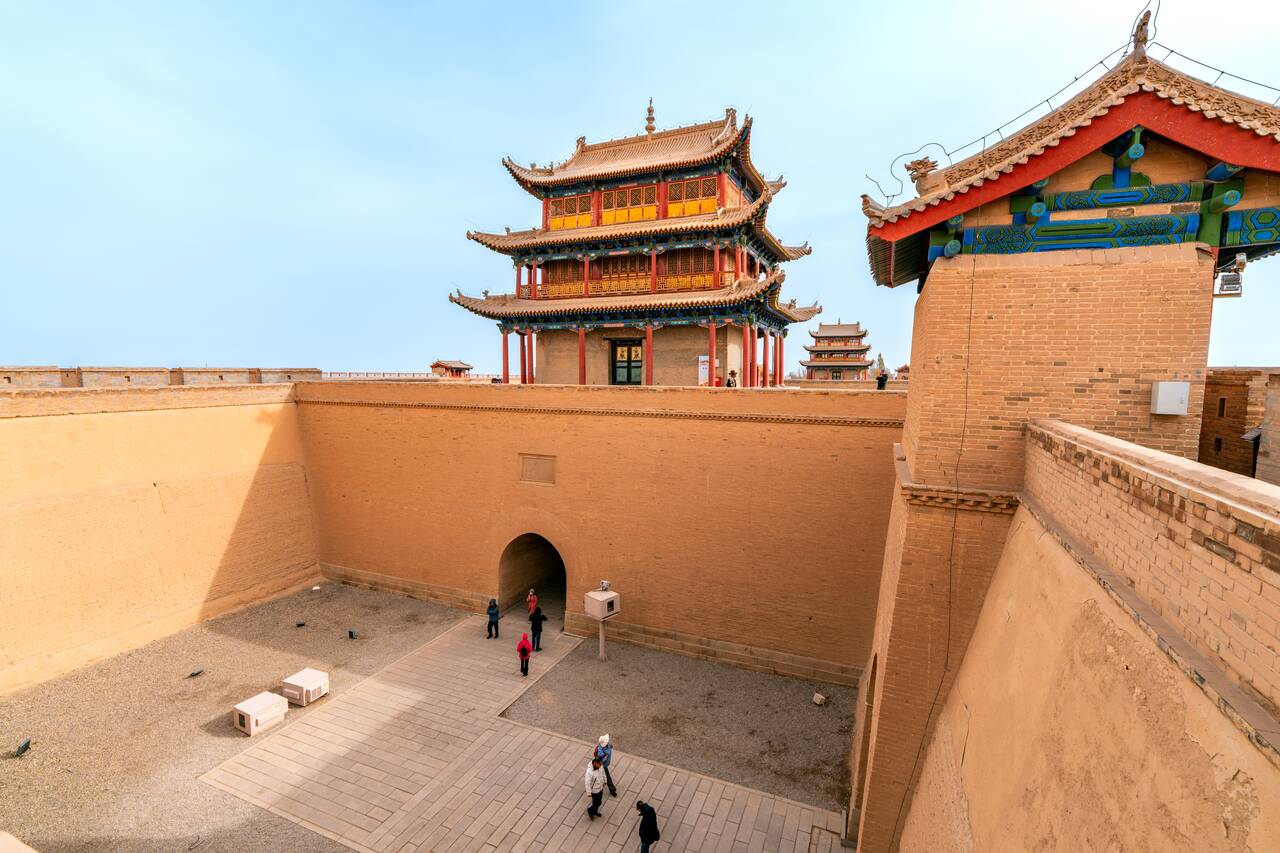
Jiayuguan Fortress is generally open from 8 AM to 7 PM, but the hours vary by season, so make sure you check before you go. A ticket to Jiayuguan Fortress costs 110 CNY in peak season or 90 CNY in the low season, and the sightseeing shuttle costs extra. You can book your ticket online here.
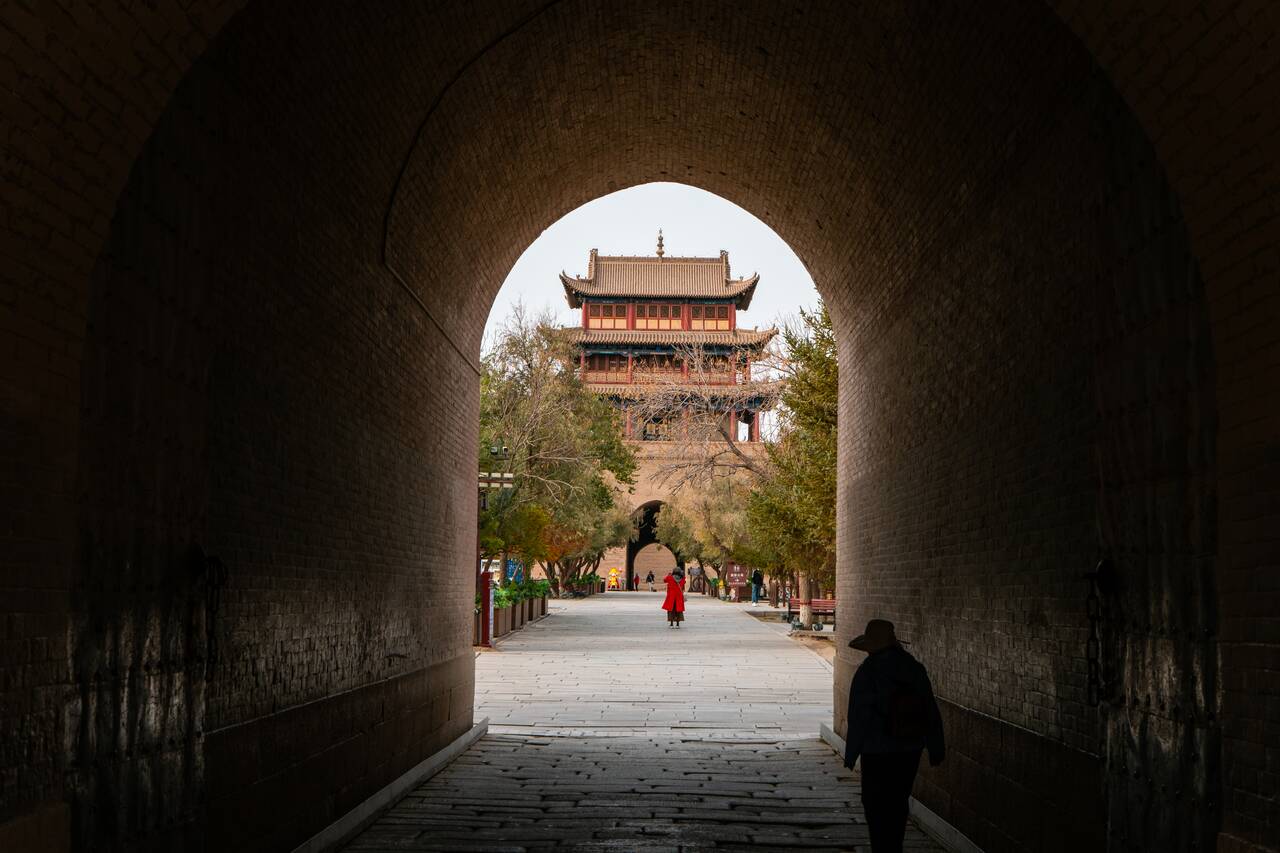
The coolest thing about Jiayuguan is that your fortress ticket also includes entry to the Overhanging Great Wall and the First Beacon Tower, so you only need one ticket to visit all three!
Where to Stay in Jiayuguan?


2. Climb the Overhanging Great Wall
- 📍 Location: Overhanging Great Wall [Map Link]
- 🕐 Opening Hours: 8 AM - 8 PM
- 💰 Entry Fees: 110 CNY (~16 USD) / 90 CNY
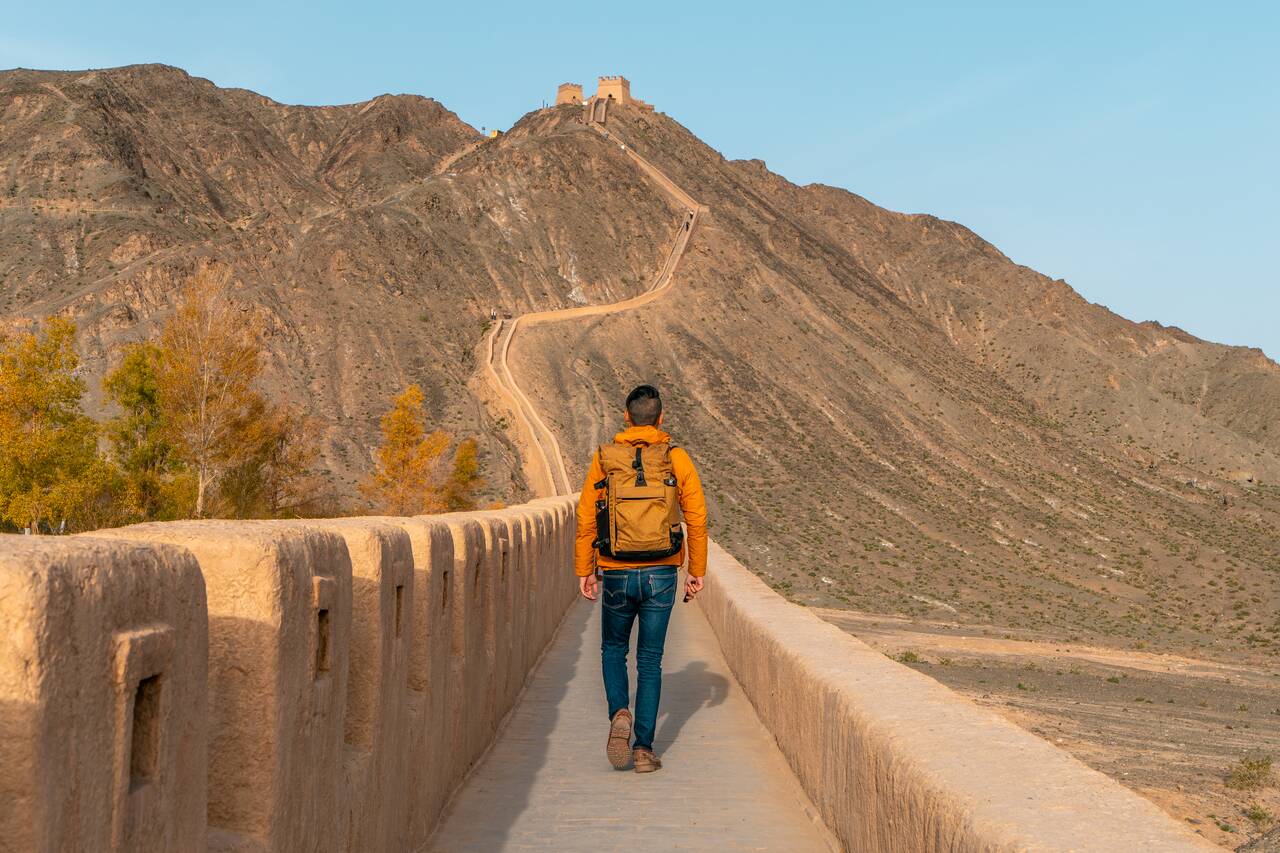
- ⚡ Pete's Take: "The moment you see the wall and start climbing the steep steps, you will know exactly why they called it the Overhanging Wall. Either that, or you will feel it in your knees 🤣!"
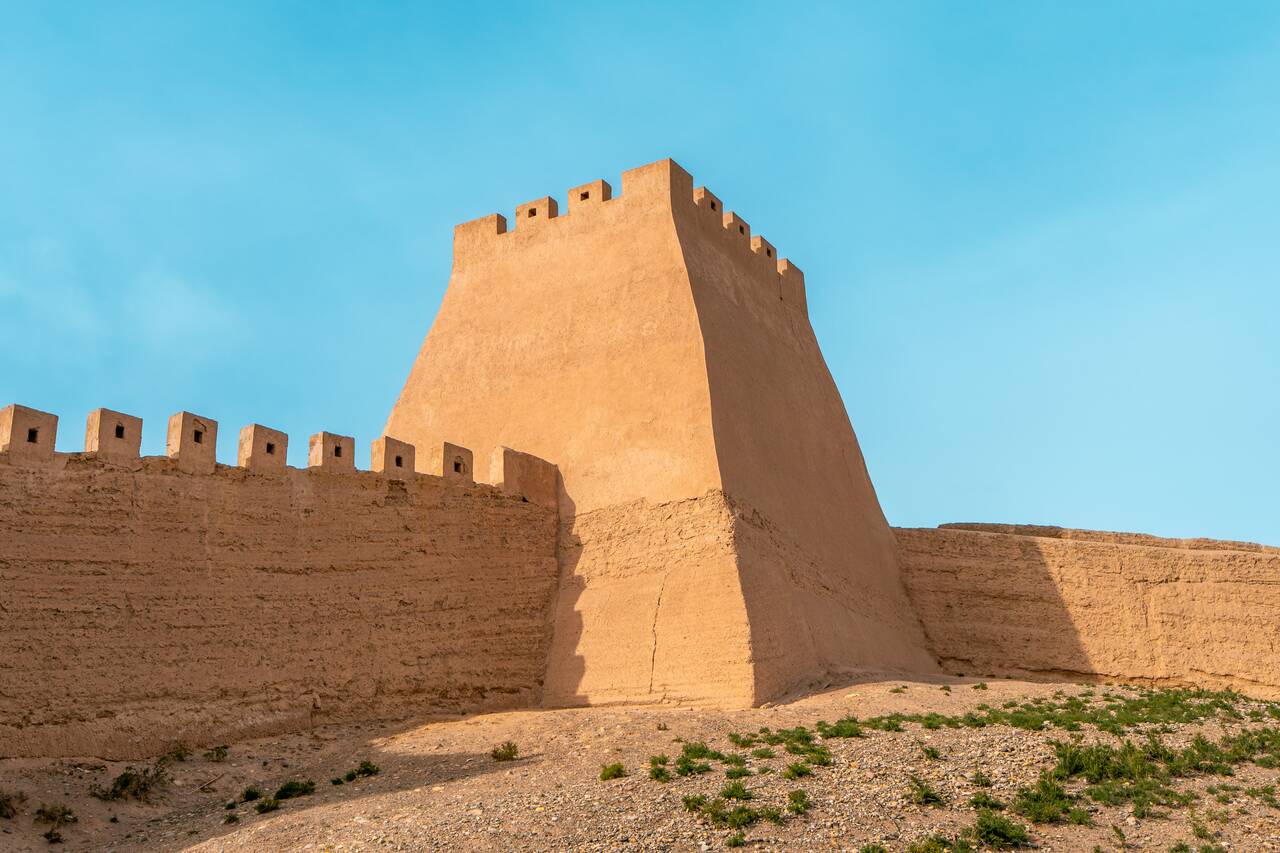
If you are up for a bit of a climb, head over to the Overhanging Great Wall, also known as Xuanbi Great Wall. The Ming dynasty built this section in the 16th century to reinforce Jiayuguan’s defenses and block a route through the Black Mountains.
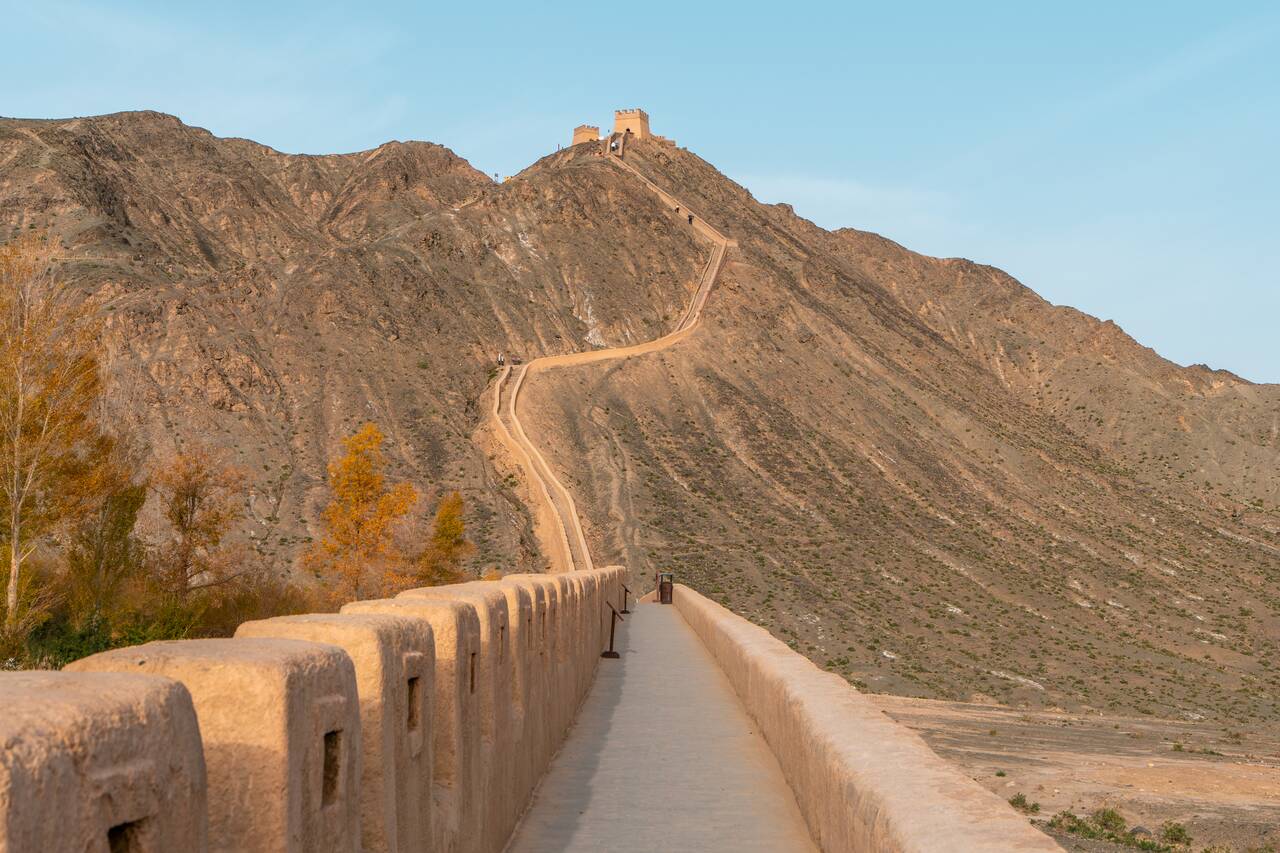
The wall you climb today was rebuilt along the original foundations. When you see it from below, you can see how it got its name, "the Overhanging Great Wall". The wall climbs the mountainside at such a steep angle that it almost looks like it is hanging off the slope!
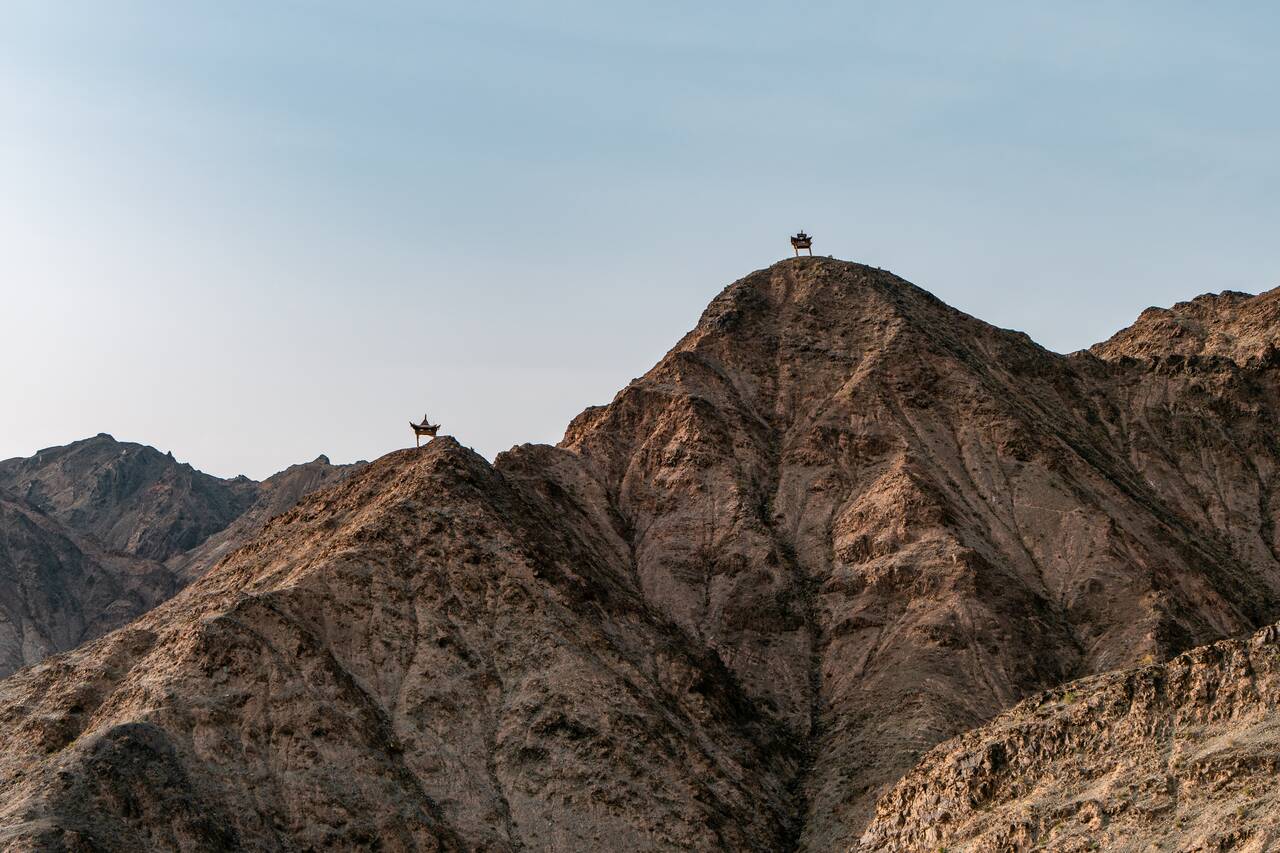
I recommend climbing the steps along the wall to the top, then coming down the other way. The climb is steep, so pace yourself! You will pass two beacon towers on the way up, and they make great spots to catch your breath and look back at how far you have climbed.
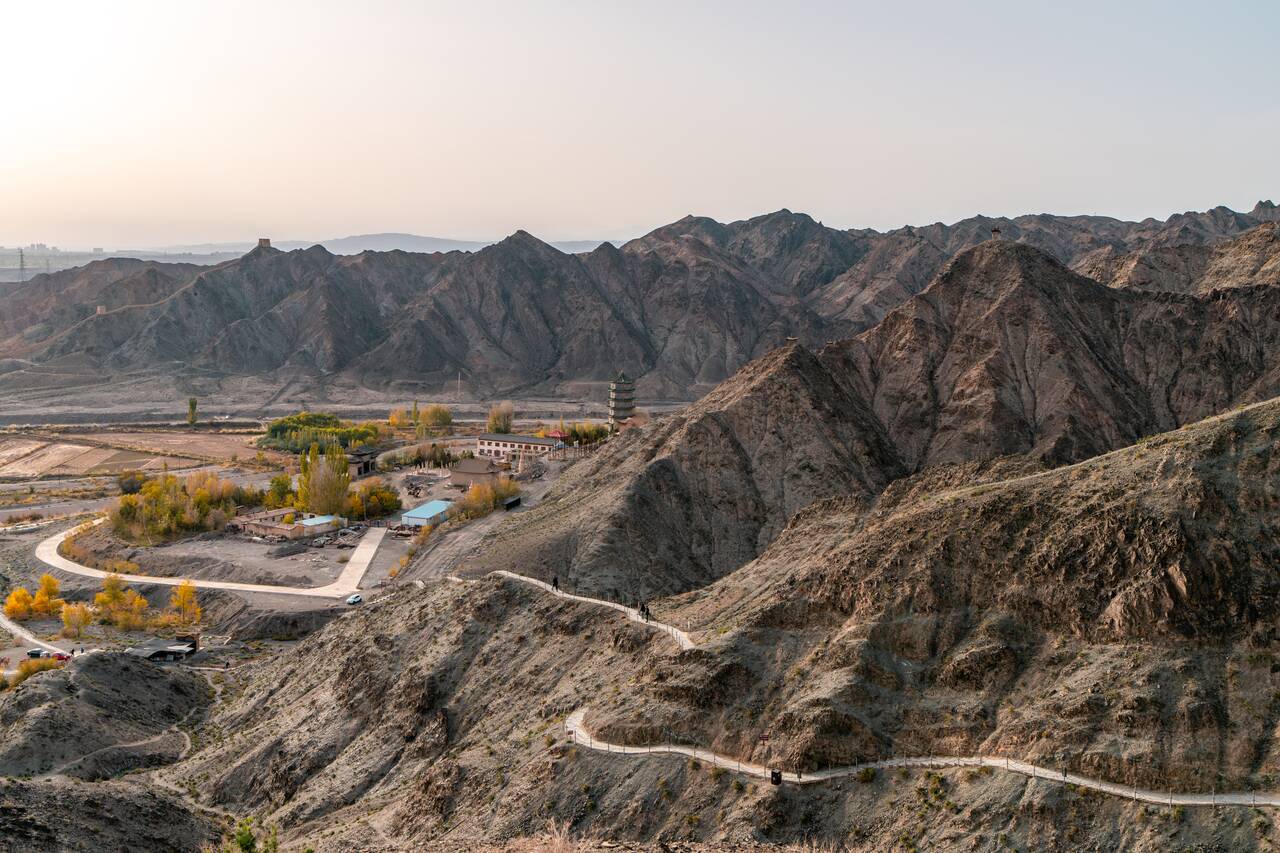
The scenery up there is completely different from what you see at other sections of the Great Wall, like the Mutianyu section I went in Beijing. Instead of lush green hills, you are surrounded by barren slopes and desert.
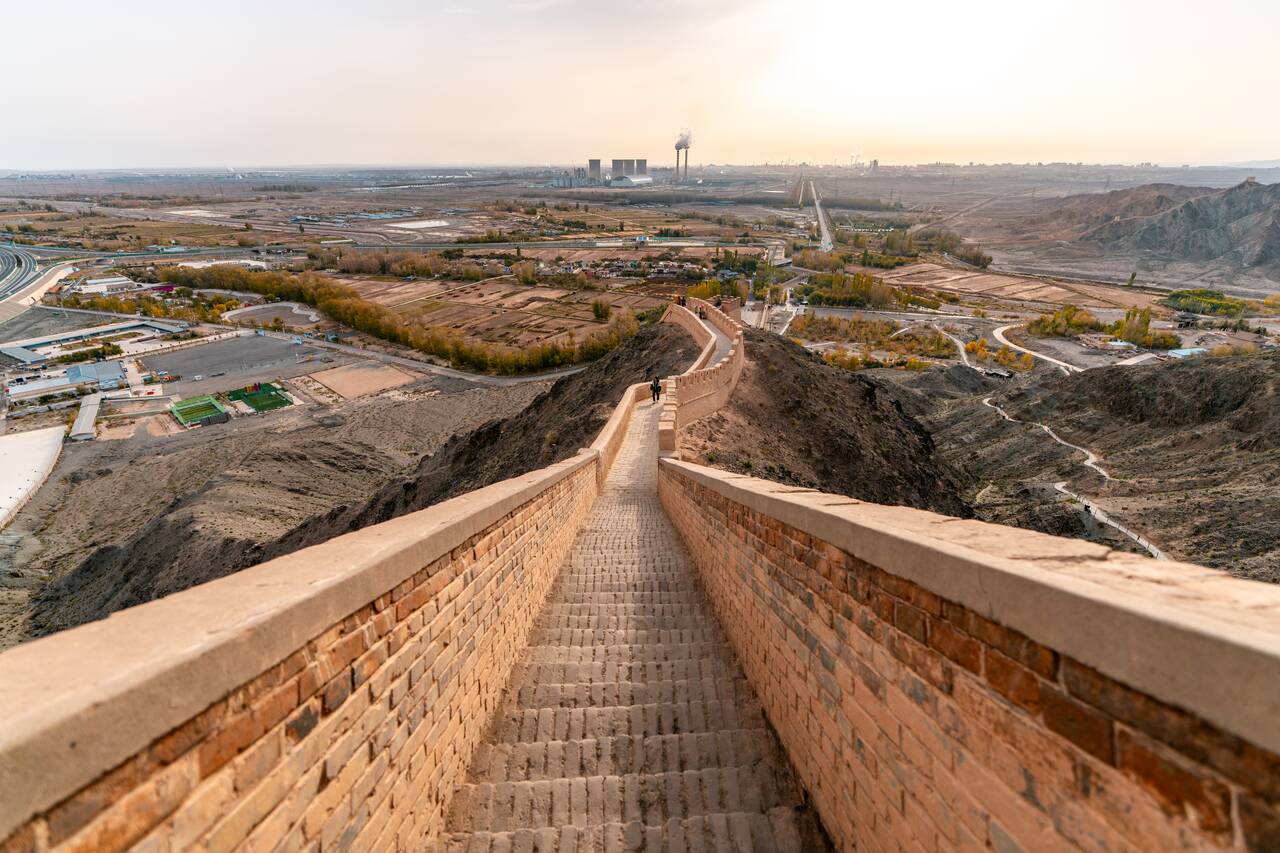
And since Jiayuguan is an industrial city, once you get to the top, you can see power plants and factories dotting the desert in the distance. It’s quite a contrast to see all that industry alongside the old wall, seemingly in the middle of nowhere. It really goes to show what Chinese engineers can build out here!
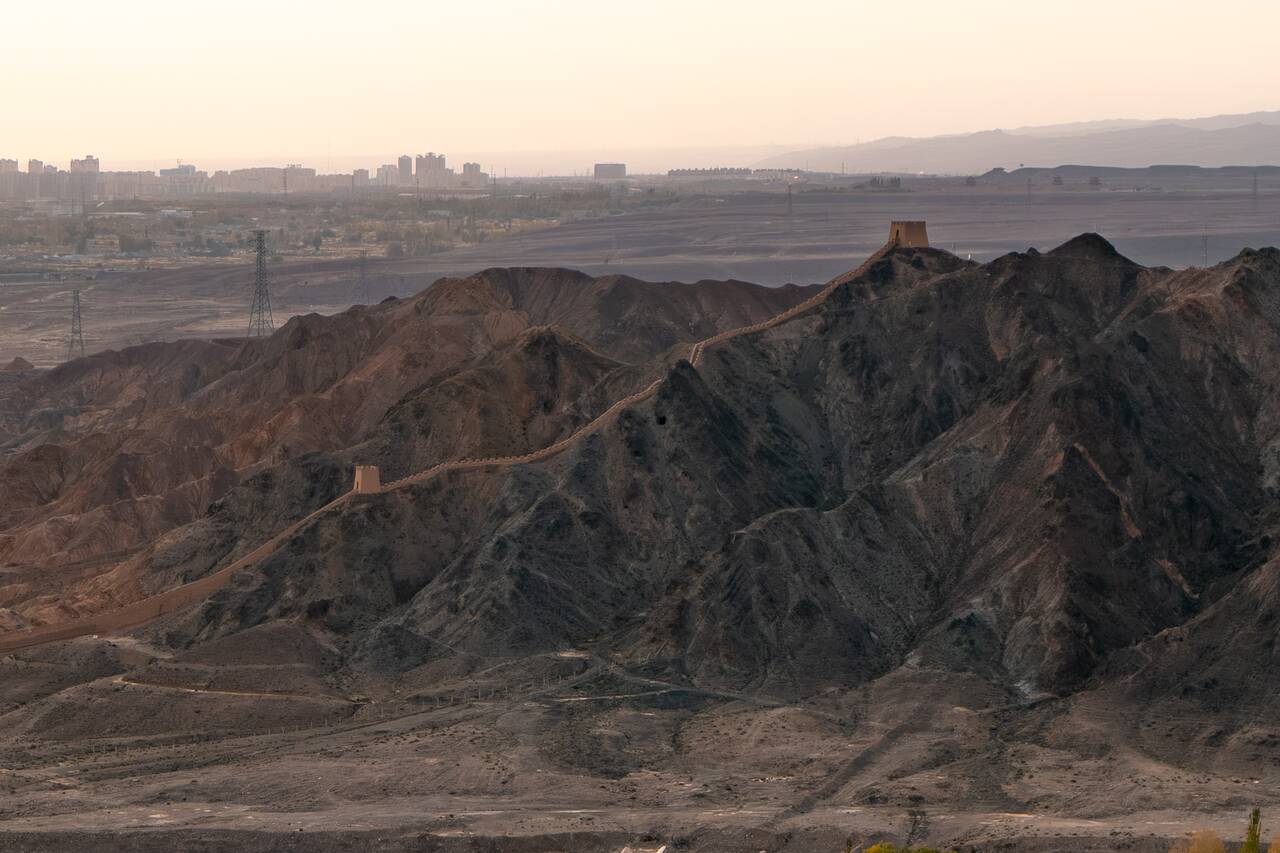
The trail down the other side is much more relaxed, and you can see other stretches of the Great Wall from afar along the way. I would set aside around 2 - 3 hours for the whole visit, especially if you want to take your time on the steps and stop for photos.
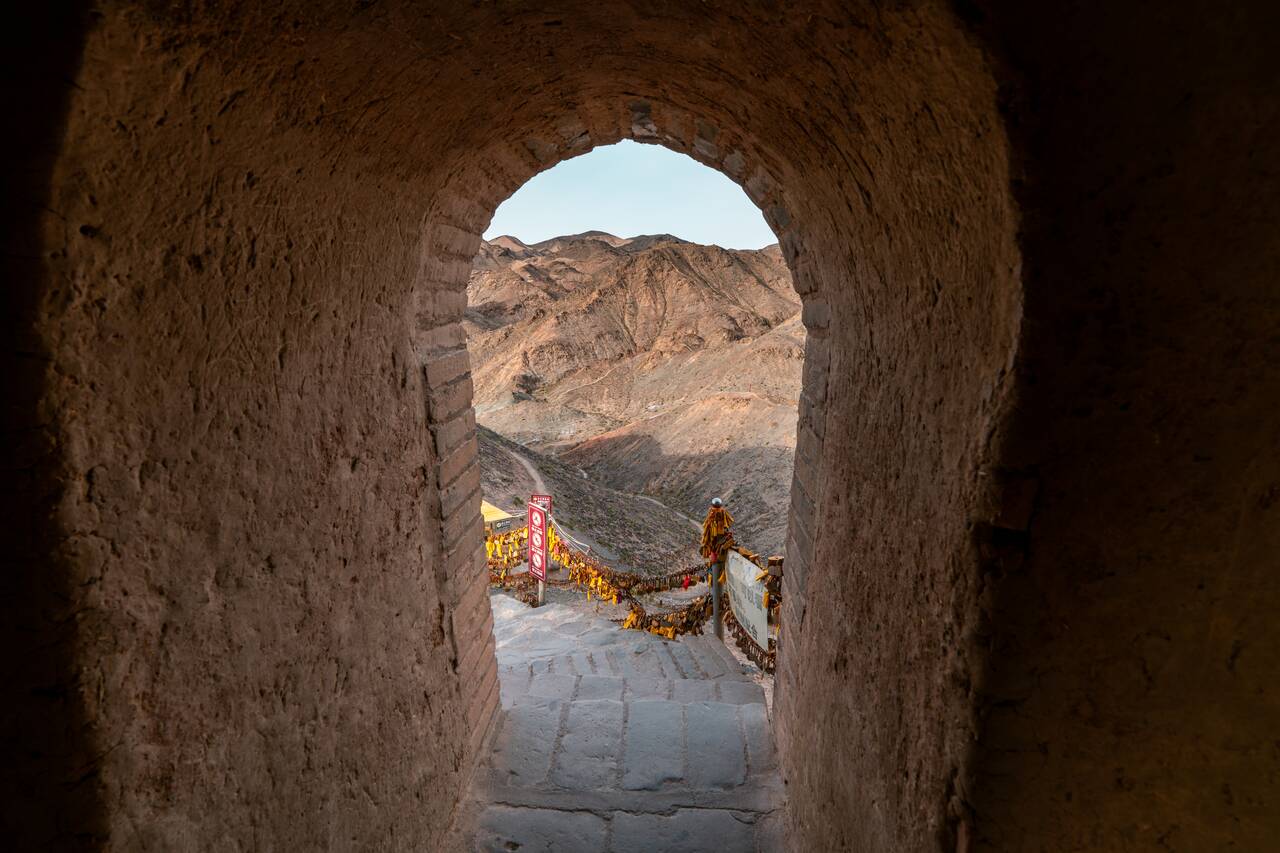
Entry is included in the Jiayuguan Fortress combo ticket, which costs 110 CNY in peak season or 90 CNY in the low season and also covers the First Beacon Tower. You can book the combo ticket online here. The Overhanging Great Wall is open from 8 AM to 8 PM in peak season. Hours can vary, so check before you go and give yourself enough time for the climb.
3. See the First Beacon Tower of the Great Wall
- 📍 Location: First Beacon Tower of the Great Wall Scenic Area [Map Link]
- 🕐 Opening Hours: 8 AM - 8 PM
- 💰 Entry Fees: 110-90 CNY (~16-13 USD)
- ⚡ Pete's Take: "There isn’t much left of the tower, but standing at the western end of the Ming Great Wall was enough of a reason for me to come."
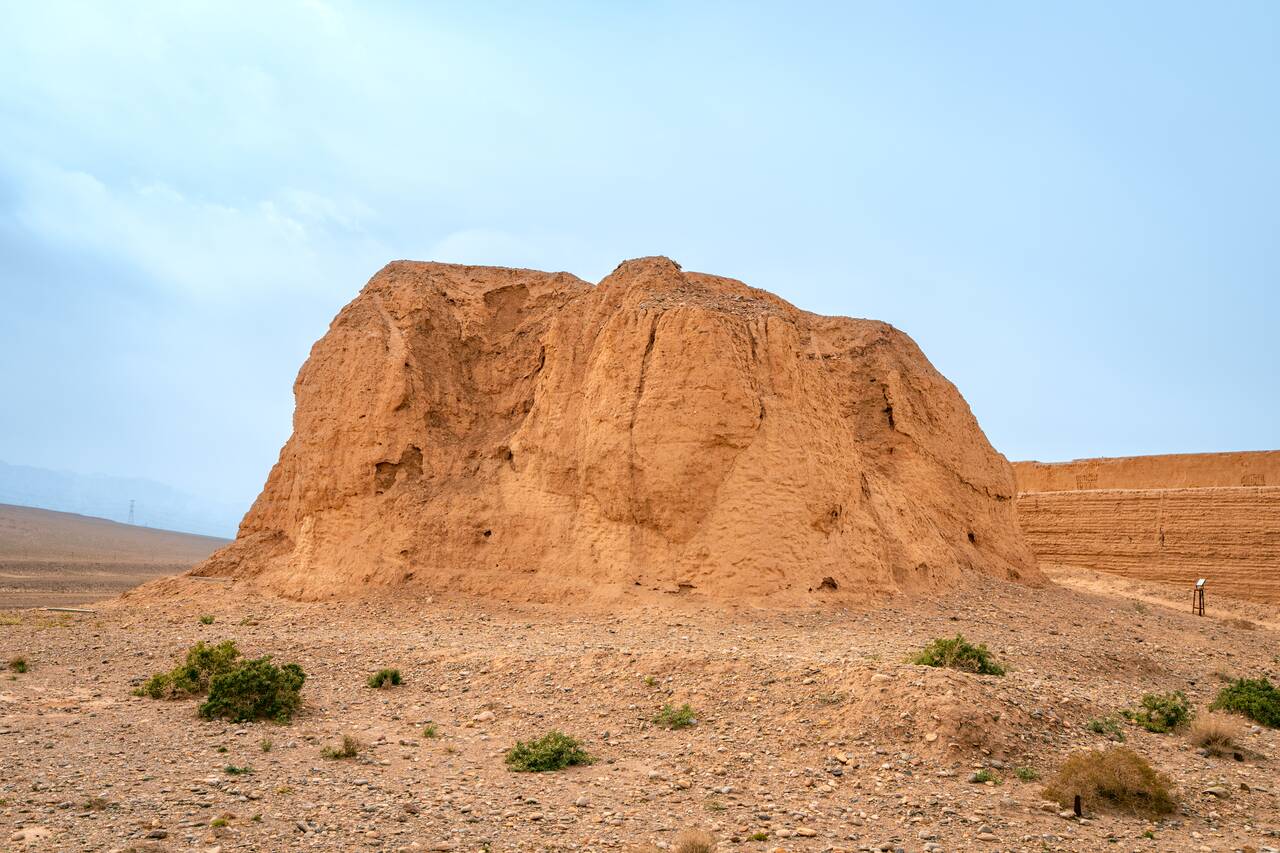
The First Beacon Tower of the Great Wall Scenic Area is where you can see the remains of a Ming dynasty signal tower built in 1539. It stands right on the edge of a cliff overlooking the Taolai River. Soldiers used towers like this to relay warnings along the frontier, and once you see how far you can look out from here, it’s easy to understand why they picked this spot. You can even see Jiayuguan Fortress from here.
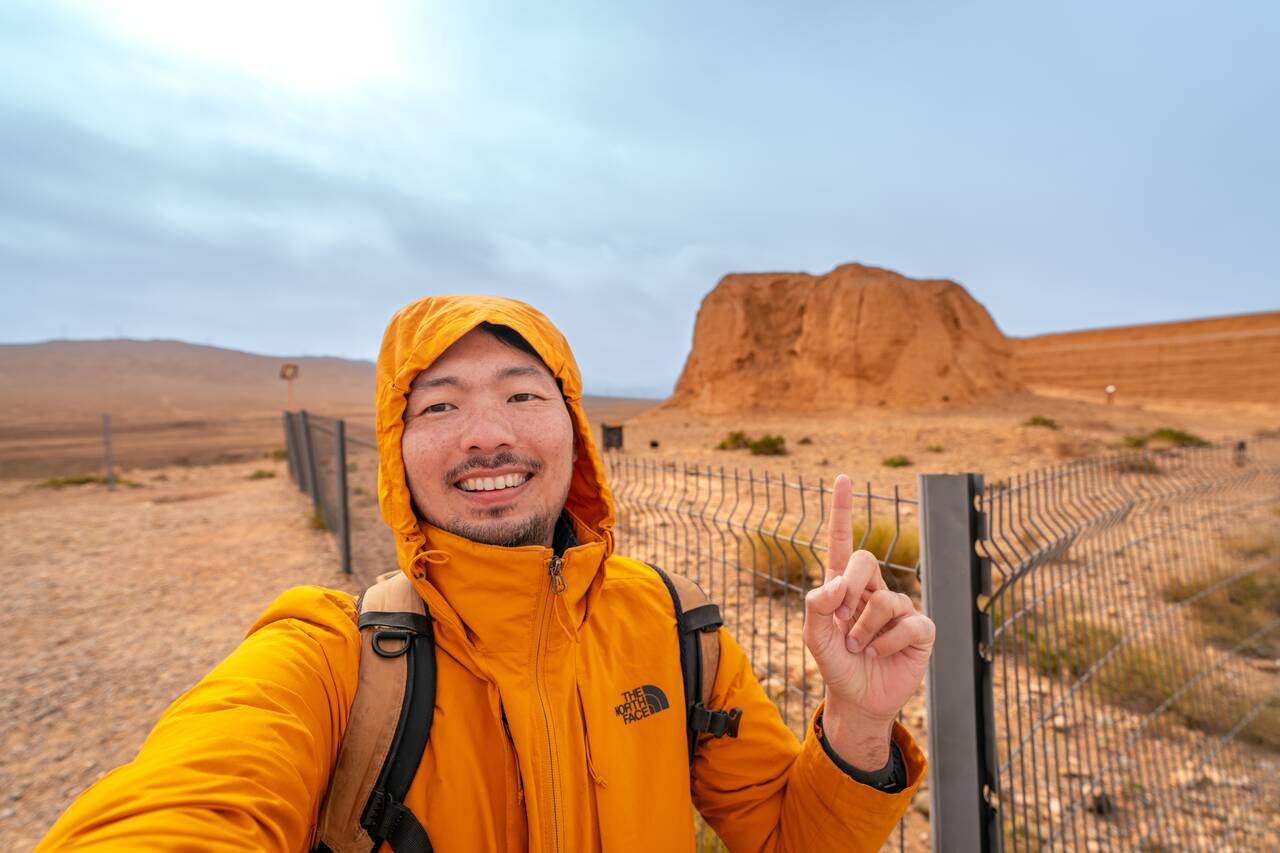
This is a quick stop, and there isn’t a whole lot left of the tower itself. But the fact that you are standing right at the western end of the Ming Great Wall was enough of a reason for me to come! From Jiayuguan, the Ming defenses stretched east all the way toward what is now the border with North Korea.
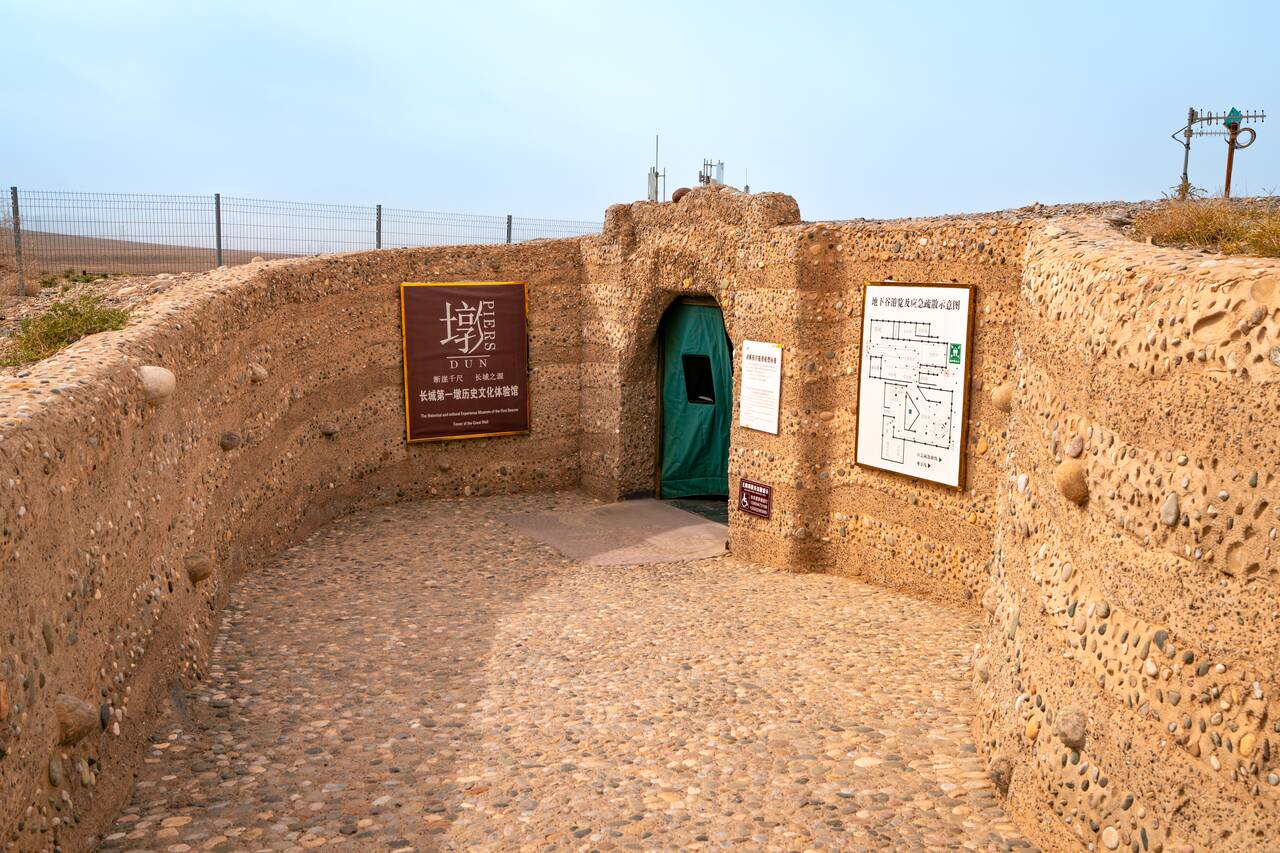
Be sure to check out the underground museum while you are here. They have a fascinating collection of old photos from around 1900, showing the beacon tower, Jiayuguan Fortress, and other sites in the area. I loved comparing the photos of the fortress with what I had just seen in person. It was pretty awesome to see how closely some of the reconstructed buildings resemble the ones in those old photos!

The scenic area is open from 8 AM to 8 PM in peak season, but keep in mind that hours can vary from season to season, so check before you go. Again, entry to the beacon tower is included in the Jiayuguan Fortress combo ticket, which costs 110 CNY in peak season or 90 CNY in the low season and also covers the Overhanging Great Wall. If you already bought that ticket for the fortress, you can use it here too. You can book the combo ticket online here.
Which Places Should You Prioritize?
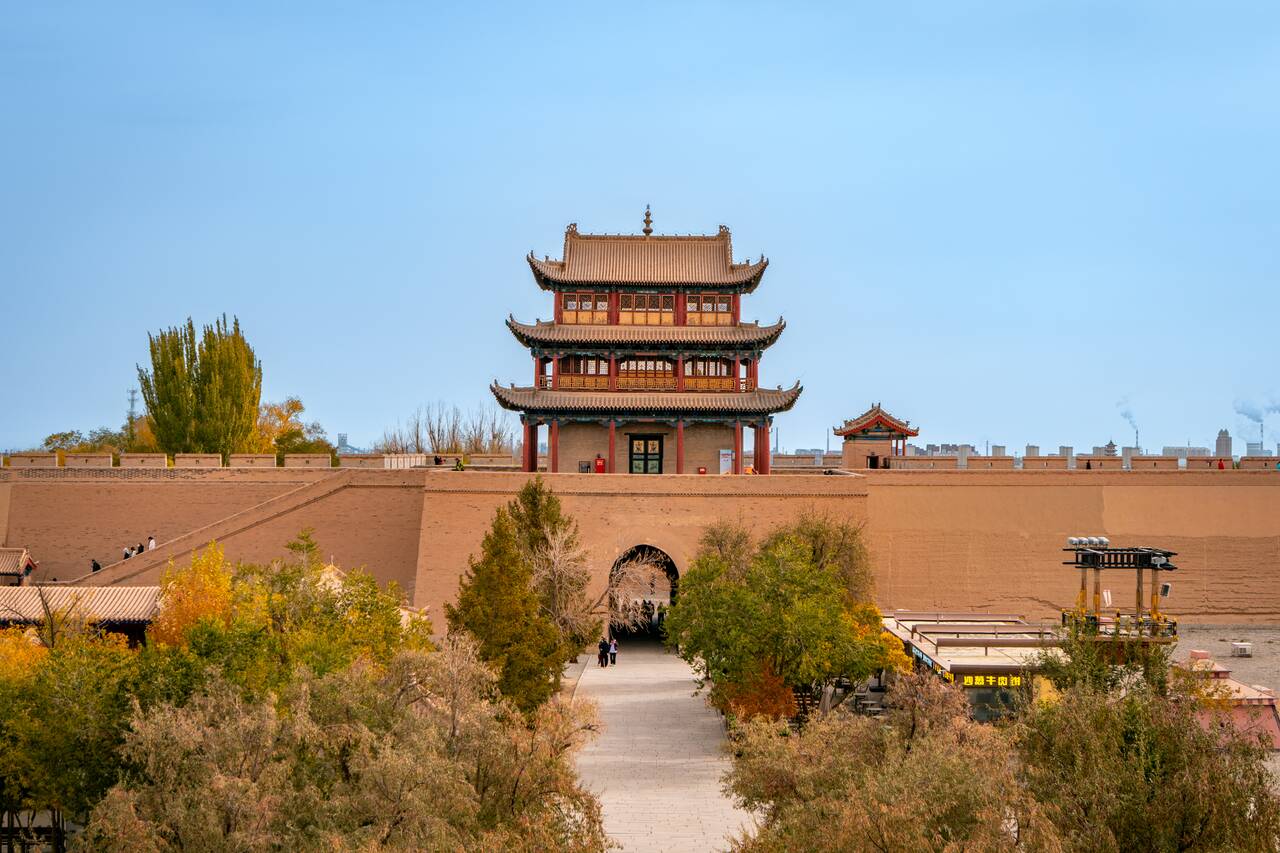
If you only have time for one stop: Go to Jiayuguan Fortress. This was the highlight for me, especially once I got up onto the walls and saw the gate towers set against the snowy mountains. Give yourself enough time to walk out beyond the west gate for a photo of the fortress from the desert.
If you have half a day: Add the Overhanging Great Wall if you have time for the climb. The steps are steep, but the views over the barren hills are so different from what you see at Mutianyu. I’d climb up along the wall and take the gentler trail back down.
If you have a full day: Visit all three. Start at the fortress, climb the Overhanging Great Wall, then finish at the First Beacon Tower. The tower itself is a quick stop, but standing at the western end of the Ming Great Wall is pretty cool! Be sure to leave a little time for the underground museum and its old photos of the fortress.
When to Visit Jiayuguan?
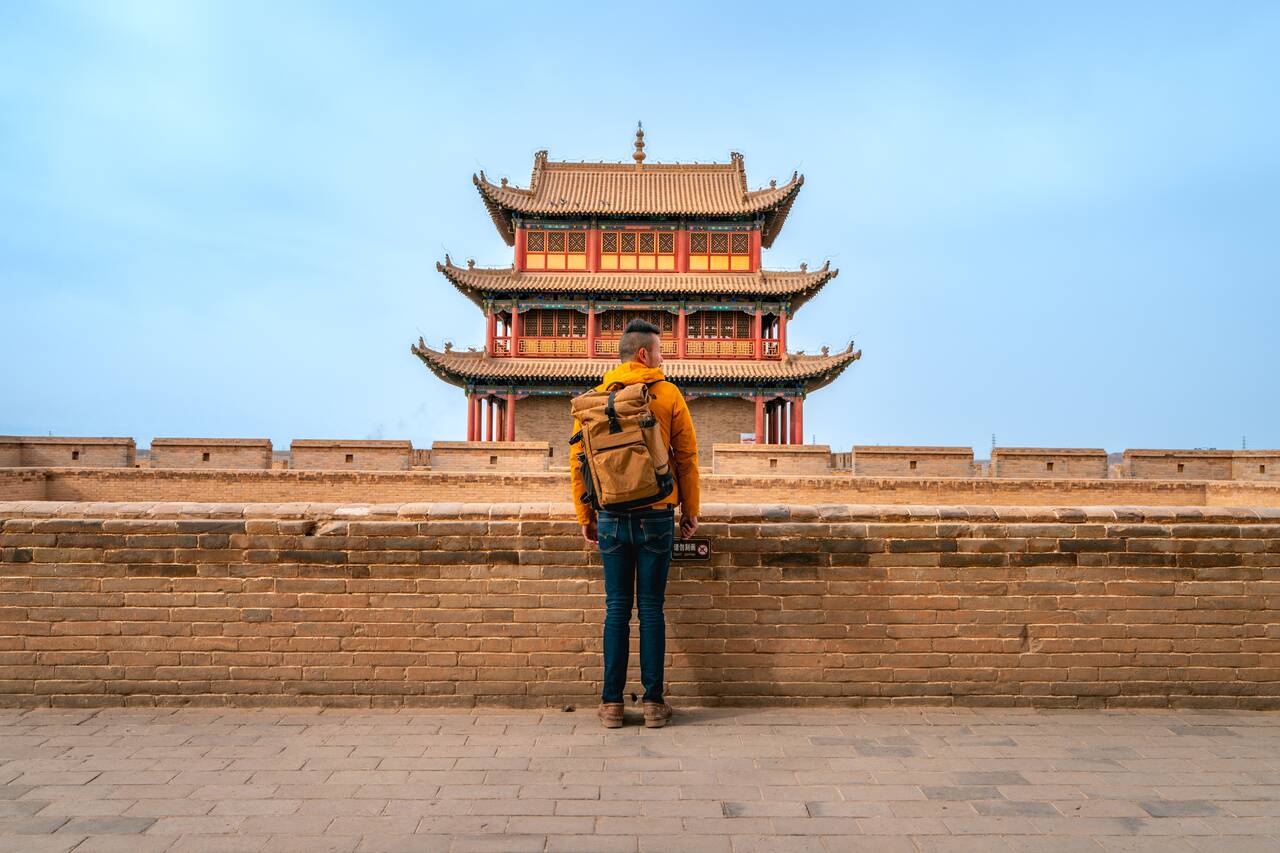
The best time to visit Jiayuguan is during spring (April to May) or autumn (September to October). Almost everything you’ll be doing here is outdoors, from walking around the fortress to climbing the Overhanging Great Wall, so I’d go when the weather is mild enough to enjoy both.
Autumn would be my first choice, although when I was there in mid october, it was already starting to get cold so, bring layers and a windproof layer, especially for the exposed stretches of the wall and the gorge by the First Beacon Tower.
How to Get to Jiayuguan?

By Train: If you’re traveling along the Silk Road from Dunhuang to Zhangye, Jiayuguan makes a convenient stop in between. You can search for both legs on Trip.com. Pay attention to the station on your ticket, as Jiayuguan Railway Station and Jiayuguan South Railway Station are two different stations. Once you arrive, you can take a DiDi to your accommodation.
How to Get Around Jiayuguan?
By DiDi: This is the easiest way to get around Jiayuguan, especially if you want to visit all three attractions in one day. The fortress, the Overhanging Great Wall, and the First Beacon Tower are at separate sites, and they are no where near close to each other, so you are going to jump around quite a lot here. I’d start at the fortress, then take a DiDi to the other two sites.
How Many Days to Spend in Jiayuguan?
One full day and two nights should be enough to see all three attractions. Arrive the first evening, spend the next day exploring the fortress, the Overhanging Great Wall, and the First Beacon Tower, then catch your onward train the following morning. That gives you a full day to look around without having to keep an eye on the time for your train.
Is Jiayuguan Worth Visiting?
Yes, especially if you’re traveling from Dunhuang to Zhangye. It’s quite a long journey, and Jiayuguan is a great place to break it up for a day. Despite being the bigger city of the three, I was surprised by how few sights there were compared with Dunhuang and Zhangye.
I still really enjoyed it, though. The fortress set against the snowy mountains, the steep climb up the Overhanging Great Wall, and the First Beacon Tower at the western end of the Ming Great Wall were all highlights for me.
If you’re really, REALLY short on time, though, I’d either spend one night in Jiayuguan and prioritize the fortress or skip it entirely and give yourself more time in Dunhuang and Zhangye. That’s where I found the most surreal landscapes along this stretch of the Silk Road.
Things to Know Before Visiting China
- Always Carry Your Passport: Everything revolves around your passport/ID in China, and it’s often used interchangeably as your main form of identification. Many major tourist attractions require you to show your passport when buying a ticket, and the ticket will then be linked to it. You’ll scan your passport again to enter. The same applies to high-speed trains. It’s best to carry your passport with you at all times while traveling in China.
- Get an eSIM: China’s cashless economy relies on constant internet access, so having a data connection is essential. I highly recommend getting an eSIM or a local SIM card for your trip. An eSIM is often better because the service is usually based in Hong Kong, which bypasses China’s Great Firewall, meaning you can access apps like Instagram and YouTube without a VPN. I suggest checking eSIM options on Klook or Trip.com, as they tend to be the most affordable.
- Use AMap to Navigate: Google Maps doesn’t work well in China, so local apps like AMap are much more informative and accurate for getting around. It even provides metro information, making it easy to navigate city subway systems. I used AMap throughout my entire trip, and it worked perfectly! In this guide, I’ll be linking locations with AMap links instead of Google Maps, so be sure to download it before your trip.
- Use VPN to Bypass the Great Firewall: As you may know, many major websites such as Google, Facebook, Instagram, TikTok, and more are blocked in China. To access them, you’ll need a VPN like LetsVPN installed on both your phone and laptop before you arrive in China. This is crucial as once you're in the country, you won’t be able to search for or download VPN apps. I used LetsVPN during my trip, and it worked very well throughout. The service is affordable too, with a free tier offering limited data or a basic unlimited plan for just 5.99 USD per month.
- Connect Alipay with Your Credit Card: First, download Alipay from the app store, set up your account, and link it to your credit card. This will be one of the two main ways you’ll pay for services in China. Alipay also has mini-apps built in, such as Didi (China’s version of Uber), so you don’t need to download separate apps, and you can use them directly through Alipay. Very convenient!
- Get a Transport Card Working in Alipay: Once you have Alipay set up, you’ll need to verify your account before you can activate a transport card for metro and bus rides. First, if you’re not currently in the city you want to use, tap the city name in the top-left corner and select the correct city. After that, tap the “Transport” button and request a transport card. You’ll be asked to upload a photo of your passport for verification. Once approved, your transport card will be issued, and you can use the QR code to scan and pay for buses and metro rides.
- Get WeChat Set Up: WeChat is another essential app for communicating with locals, thanks to its built-in translation feature. It’s also widely used for payments as Alipay only works about 70% of the time, while WeChat is commonly needed for paying individuals, buying entry tickets at certain attractions, and more. Setting up WeChat can be a bit tricky though because you need verification from an existing user. The easiest way is to ask your hotel’s reception to help verify your account when you arrive in China, which is how I got mine activated.
- Use Trip.com / Trip App: For hotels, day trips, attraction tickets, train tickets, flights, and everything in between, you can use Trip.com or the Trip app to book all your travel needs. It’s very convenient, offers a great user experience, and has a generous cancellation policy that gives you more flexibility when traveling in China.
Disclaimer: This post may contain affiliate links. See our disclosure policy.
First Published:


