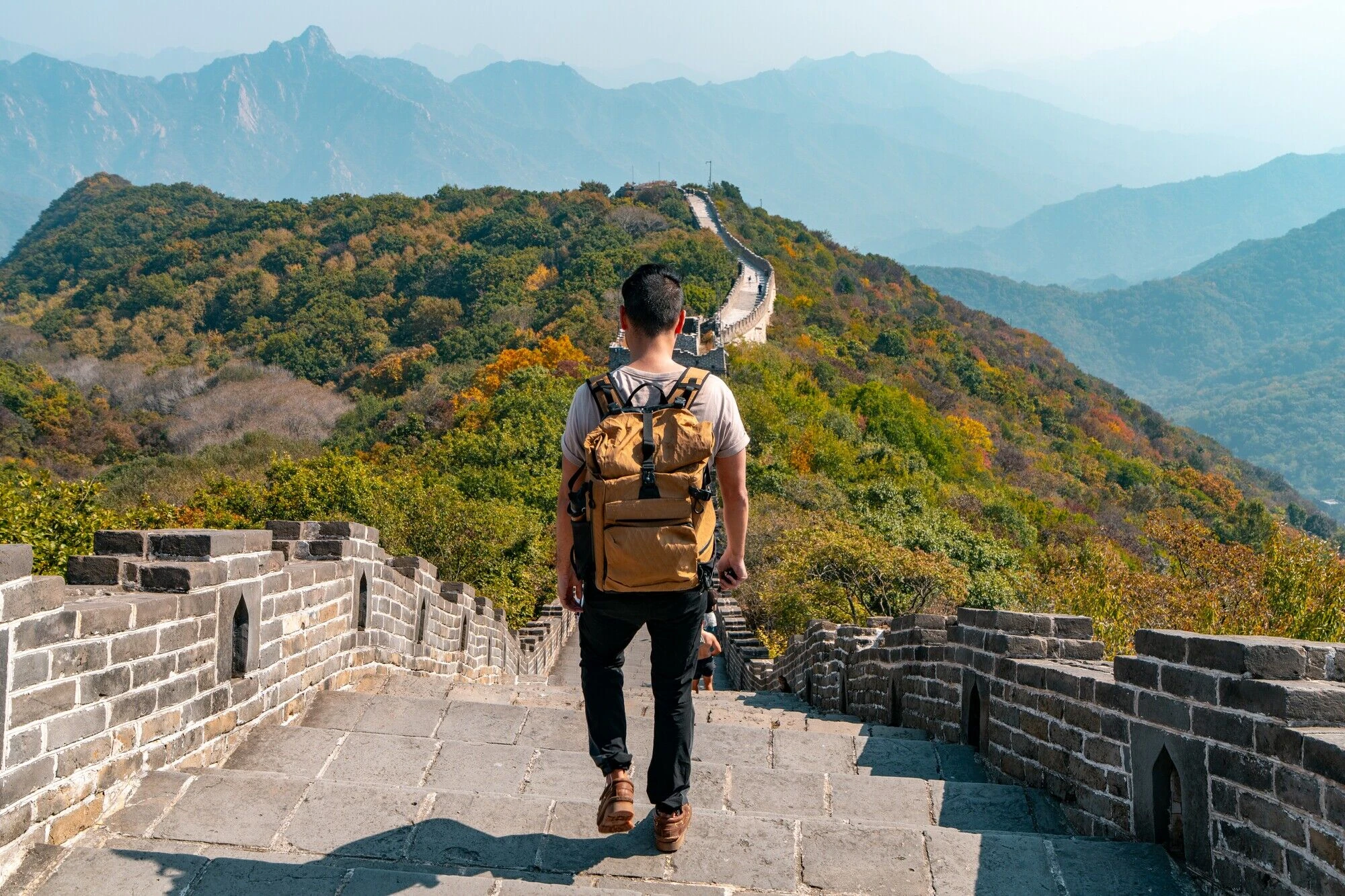



Visiting the Great Wall was one of the experiences I was most looking forward to on my return to Beijing. After traveling for over 13 years, the Great Wall was one of the last 7 wonders of the world that I had yet to crossed off my bucket list, so on this trip, i made it my main goal to get to the great wall and finally hike it.
I wanted mountain views, a proper hike, and enough space to enjoy the place without spending the entire day shuffling through crowds and after days of research, I have settled at the Mutianyu section of the Great Wall.
In this guide, I’ll walk you through exactly how I got there, what I paid, how to choose between the cable car and chairlift, and where to walk once you reach the wall. Transport arrangements and prices below reflect my October 2026 visit unless stated otherwise.
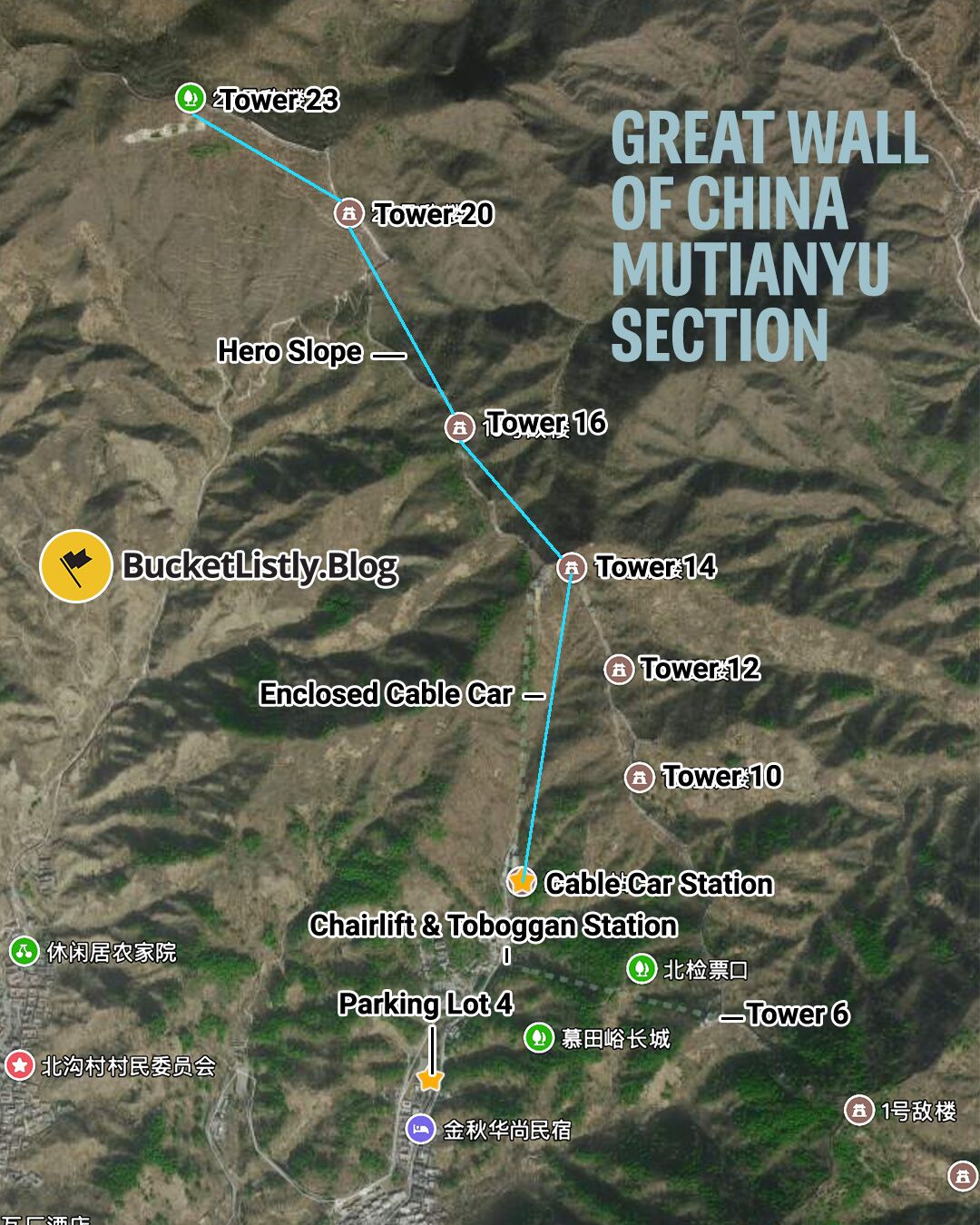
Map of Mutianyu Great Wall
Quick Summary
| 🌤️ Best time: | Spring and autumn; avoid major public holidays |
| 🚌 Getting there: | Direct tourist bus from Qianmen, Beijing |
| 💰 Cost: | 260 CNY for return bus, admission, and return cable car |
| 🕓 Time to spend: | Full day, including around 4 hours of return travel |
| 🥾 Hiking time: | Around 3 hours for my Tower 15–23 return walk |
| 🚶♂️ Difficulty: | Depends on your route; steep and strenuous toward Hero Slope |
Important: The enclosed cable car serves Tower 14 while the chairlift and toboggan serve Tower 6. Their tickets are separate.
Why I Chose Mutianyu over Badaling
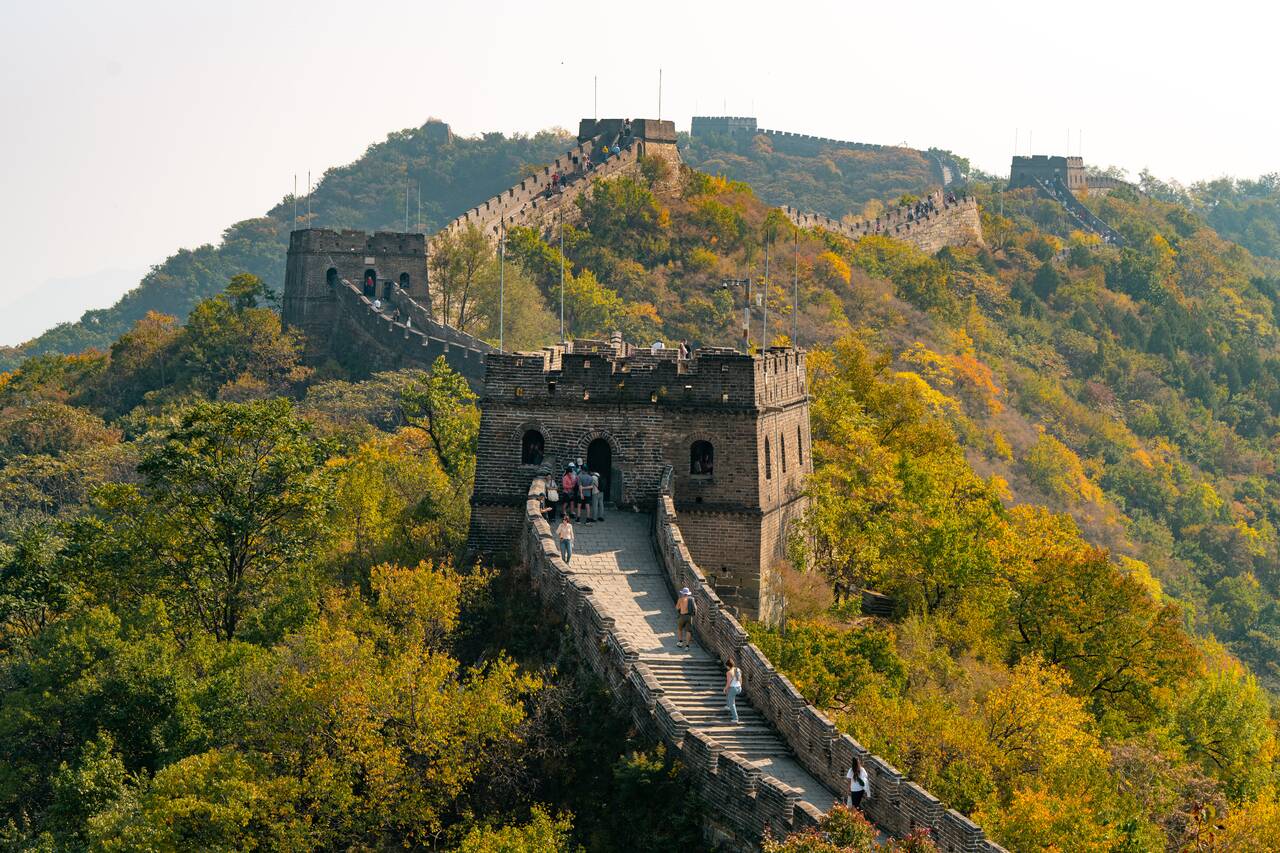
The Great Wall of China is actually a network of fortifications spanning more than 21,000 km across 15 provinces, autonomous regions, and municipalities. Not every section has survived the test of time or is accessible to visitors, but several impressive stretches are within reach of Beijing.
When I was researching which section to visit, I came across three popular options: Badaling, Mutianyu, and Simatai. All three looked incredible, but choosing between them came down to transport, travel time, and crowds.
Of these three places, Badaling is the most accessible, with a high-speed train station right next to it, which in turn attracts the most tourists. Simatai is the most difficult to reach, requiring a car or tour, but that also means fewer crowds.
To balance both budget and travel time, I decided to go with Mutianyu for the best of both worlds. It takes about 2 hours to get there from Beijing, but the shuttle services running between the city and Mutianyu make it much easier and cheaper to visit than Jinshanling.
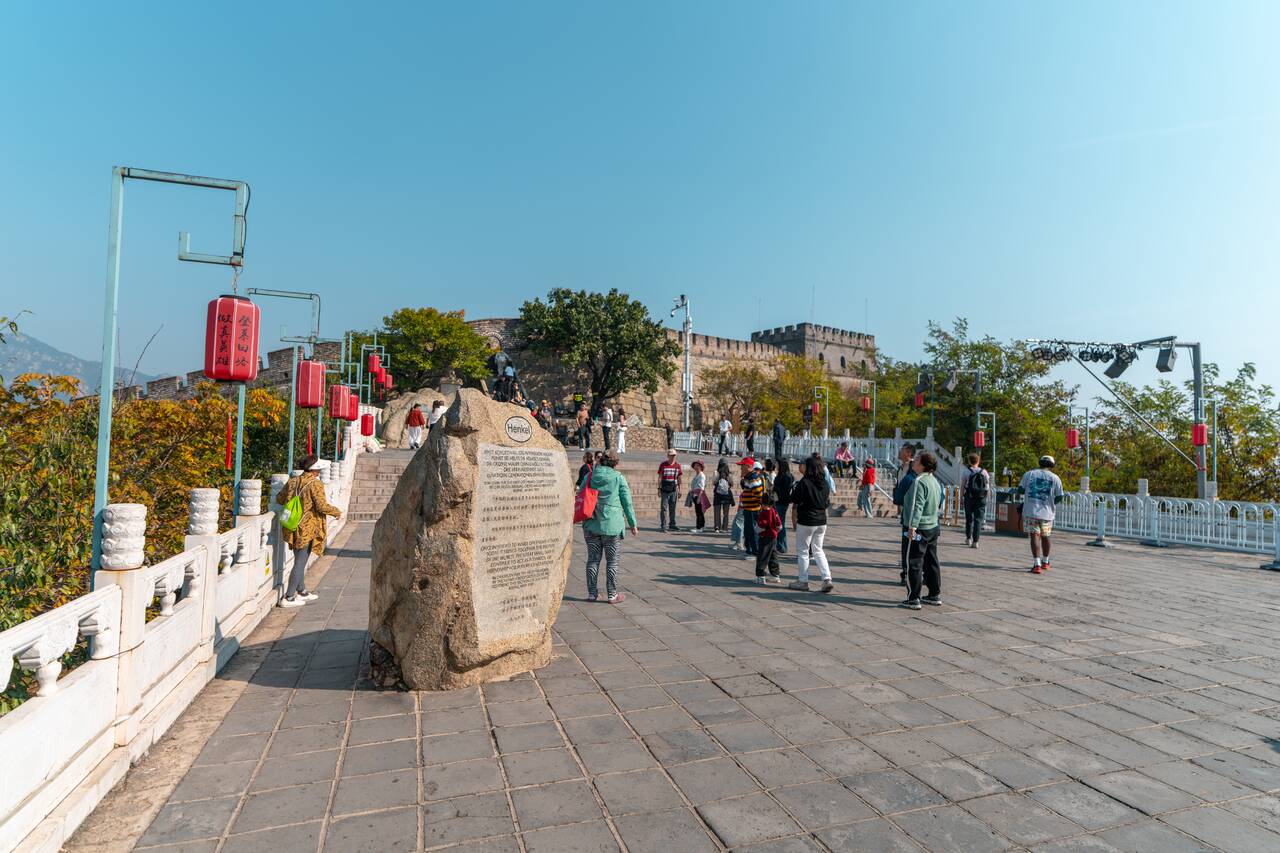
Mind you, Mutianyu is still a popular attraction, so don’t expect an empty wall. However, during my visit, most people seemed to congregate near the lift access points. The farther uphill I walked, the fewer people I encountered. For me, being able to hike away from the busiest areas was the best part!
I didn’t visit Badaling or Simatai on this trip, so this is my reason for choosing Mutianyu rather than a firsthand comparison of all three. But if you enjoy hiking and mountain views, and want a chance to get beyond the busiest viewpoints, I highly recommend it. I certainly didn’t regret my choice, for sure.
How to Get to Mutianyu Great Wall from Beijing?
Take the Direct Tourist Bus from Qianmen
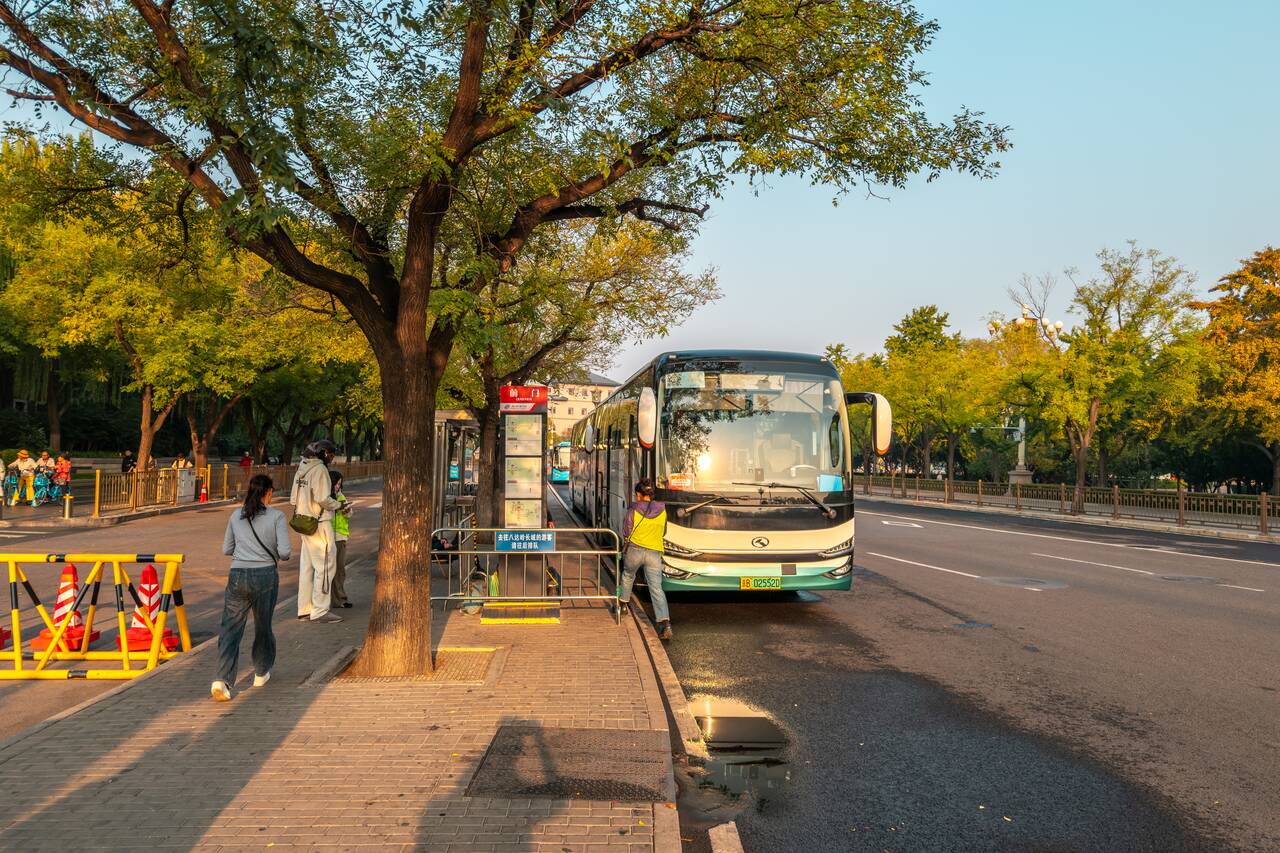
I took the direct tourist bus from the Beijing Tourist Distribution Center (Qianmen Branch). This is the option I used, and it worked well for a straightforward day trip without having to arrange a private car.

When you arrive, look for the large buses and staff wearing vests. Different buses go to different sections of the Great Wall, so ask which one goes to Mutianyu before boarding. Don’t just get on the first Great Wall bus you see!
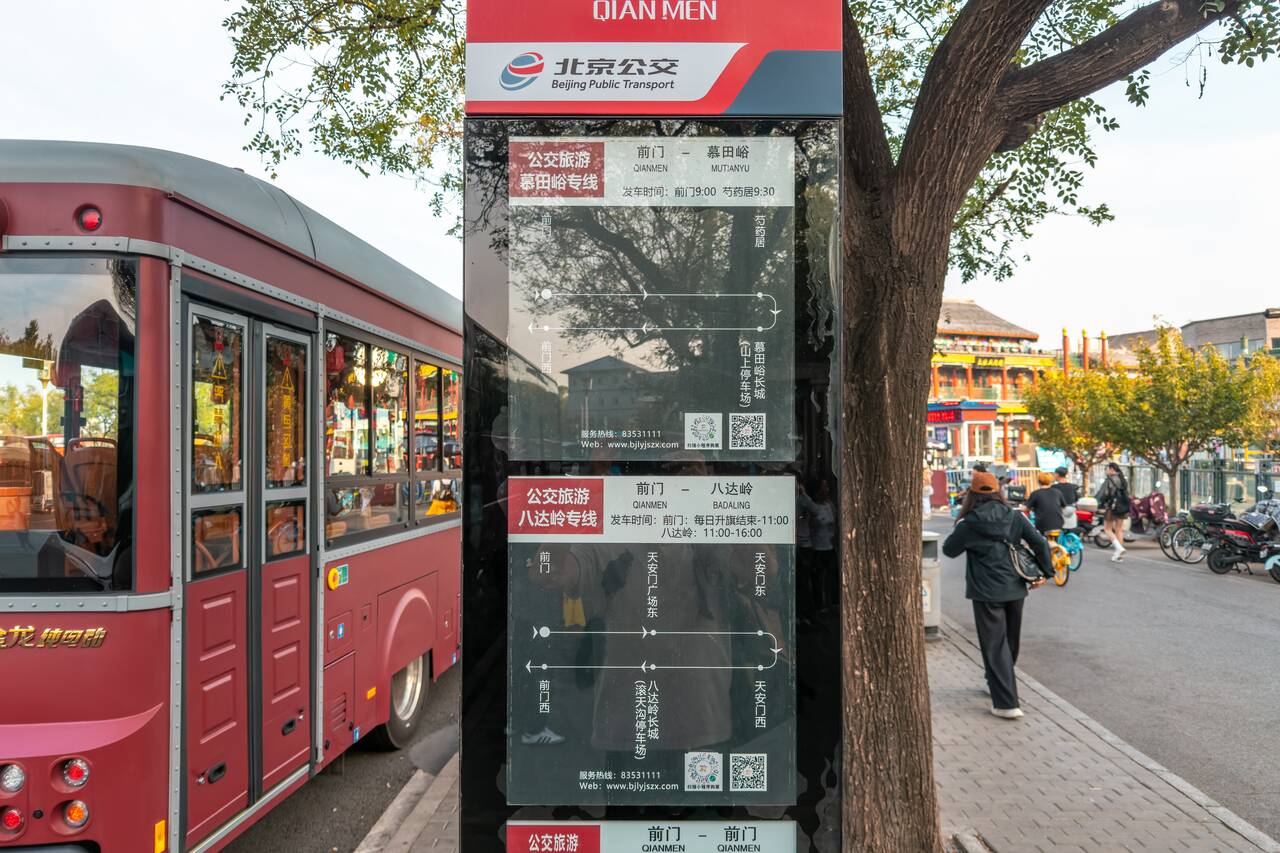
During my visit, departures were roughly between 7 AM and 10 AM. I arrived at 8 AM without a reservation and got on a bus straight away. Staff assigned passengers to available buses, so I didn’t need to book ahead. Departure times and availability can change with the season and demand, so check the arrangements before your trip, especially during holidays.
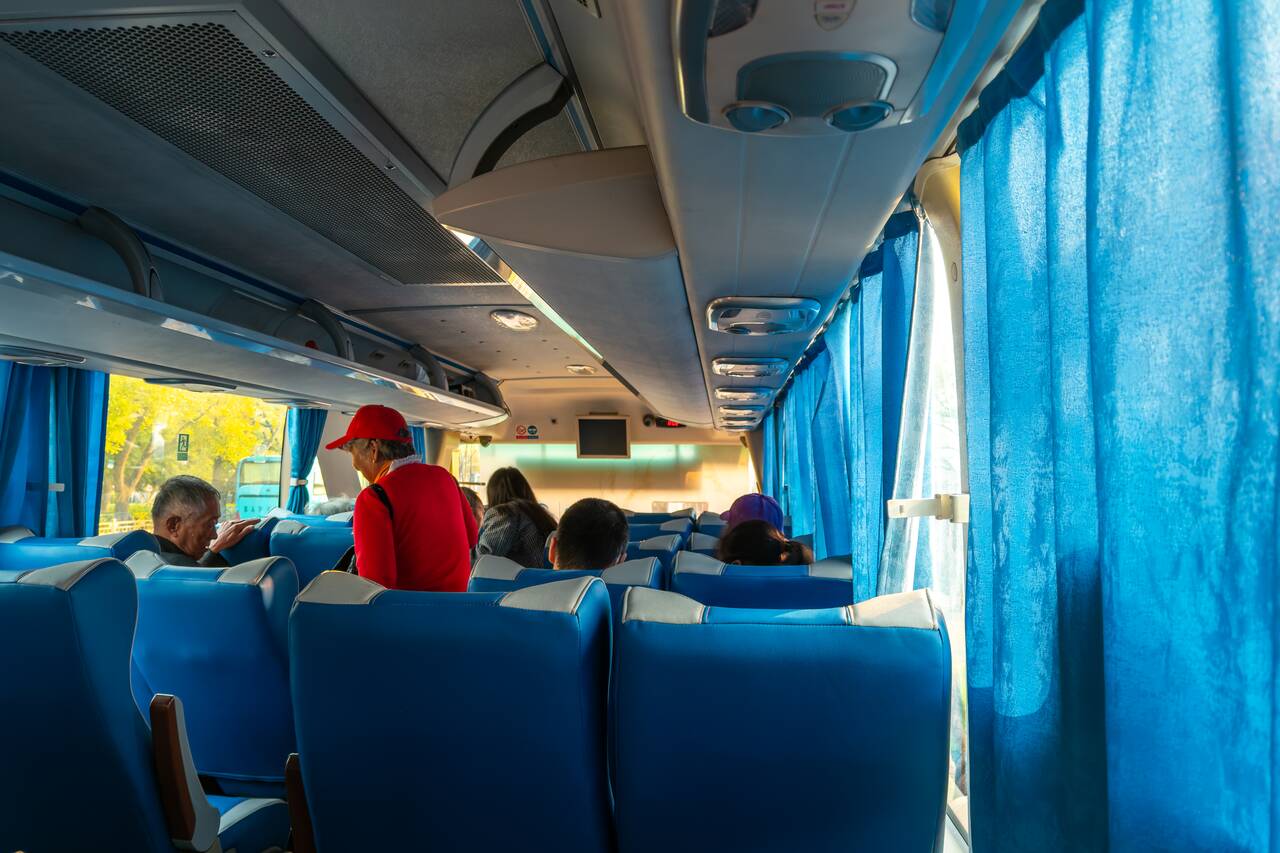
The return bus cost 80 CNY, and the journey took around 2 hours each way. I also bought my admission and cable car tickets from the staff at the departure point. The total worked out slightly cheaper than the option I had found on Trip.com at the time at about 260 CNY for this trip.
Where the Bus Drops You Off
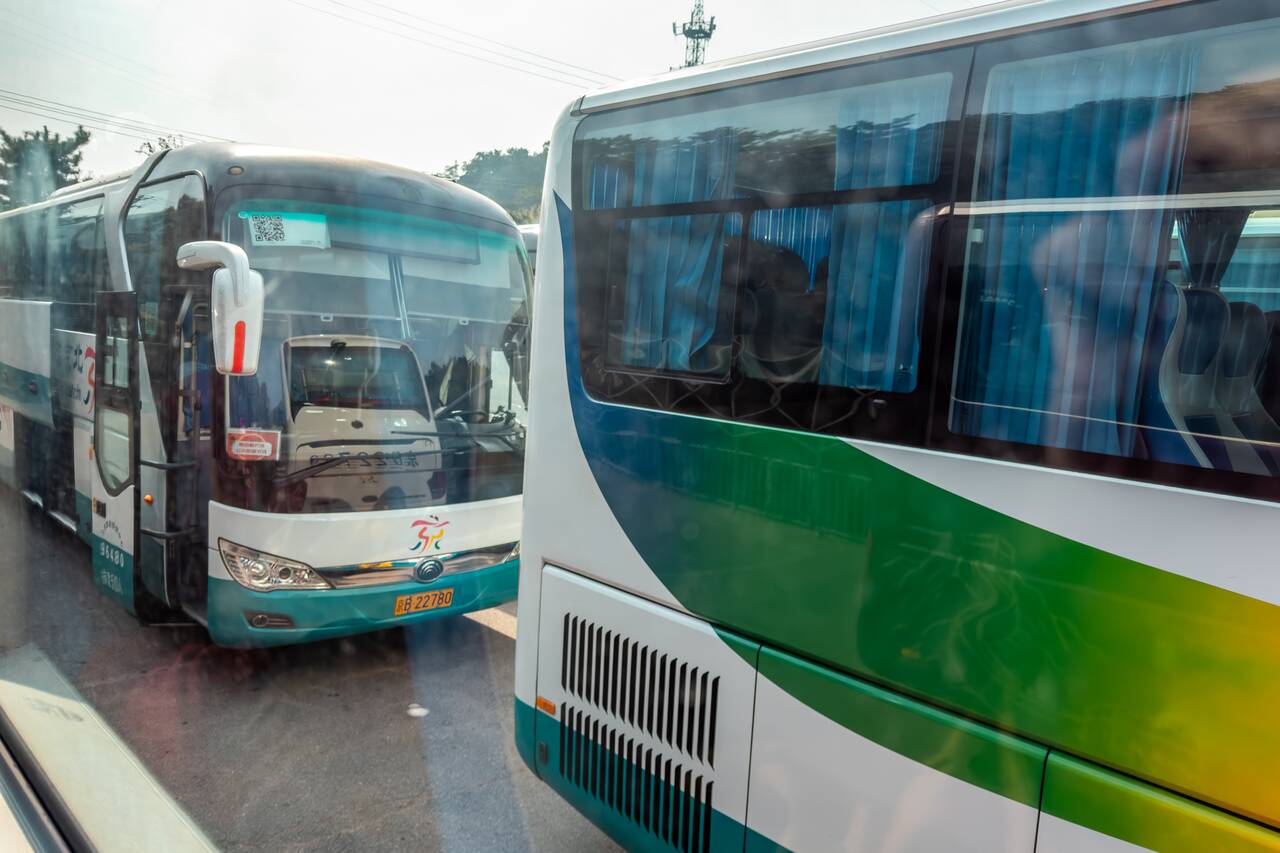
Our bus parked at P4, about a 5-minute walk from the cable car station. That meant I didn’t need to pay for the park’s separate shuttle bus, which is often bundled with admission tickets on platforms like Trip.com. This was another reason I preferred buying my tickets from the staff at the bus stop rather than booking online.
Return buses generally run between 1 PM and 4 PM. I left Beijing around 8:30 AM and arrived around 10 AM, which gave me enough time to explore the wall and catch the 2 PM bus back without rushing. That said, be sure to confirm the return schedule and meeting point before leaving the bus, as departure times may vary depending on the season and operator.
Arrange Your Own Transport with DiDi

If you prefer more flexibility, you can arrange a private ride, such as DiDi, and book your attraction tickets through Trip.com. Check the fare in the app before committing, as a private transfer can cost considerably more than the 80 CNY return tourist bus.
Arrange how you will get back to Beijing as well. If you plan to hike for longer than the tourist bus schedule allows, having a confirmed return arrangement is a must, as you may not find many DiDi drivers available around the scenic area. Your driver may offer a return trip, in which case you can agree on the price, pickup time, and meeting point beforehand so you have a way back to Beijing.
How Much Does a Mutianyu Day Trip Cost?
I paid 260 CNY in total for transport, admission, and the return enclosed cable car. Here is the breakdown:
| 🚌 Return Bus: | 80 CNY |
| 🎟️ Admission: | 40 CNY |
| 🚡 Return Cable Car: | 140 CNY |
| 💰 Total Budget: | 260 CNY (excluding food and drinks) |
Which Tickets Should You Buy?
Admission gets you into the scenic area, but it does not automatically include transport up to the wall. The enclosed cable car, open-air chairlift, toboggan, and park shuttle are different services. Choose your walking route first, then buy the tickets that match it.
Enclosed Cable Car to Tower 14
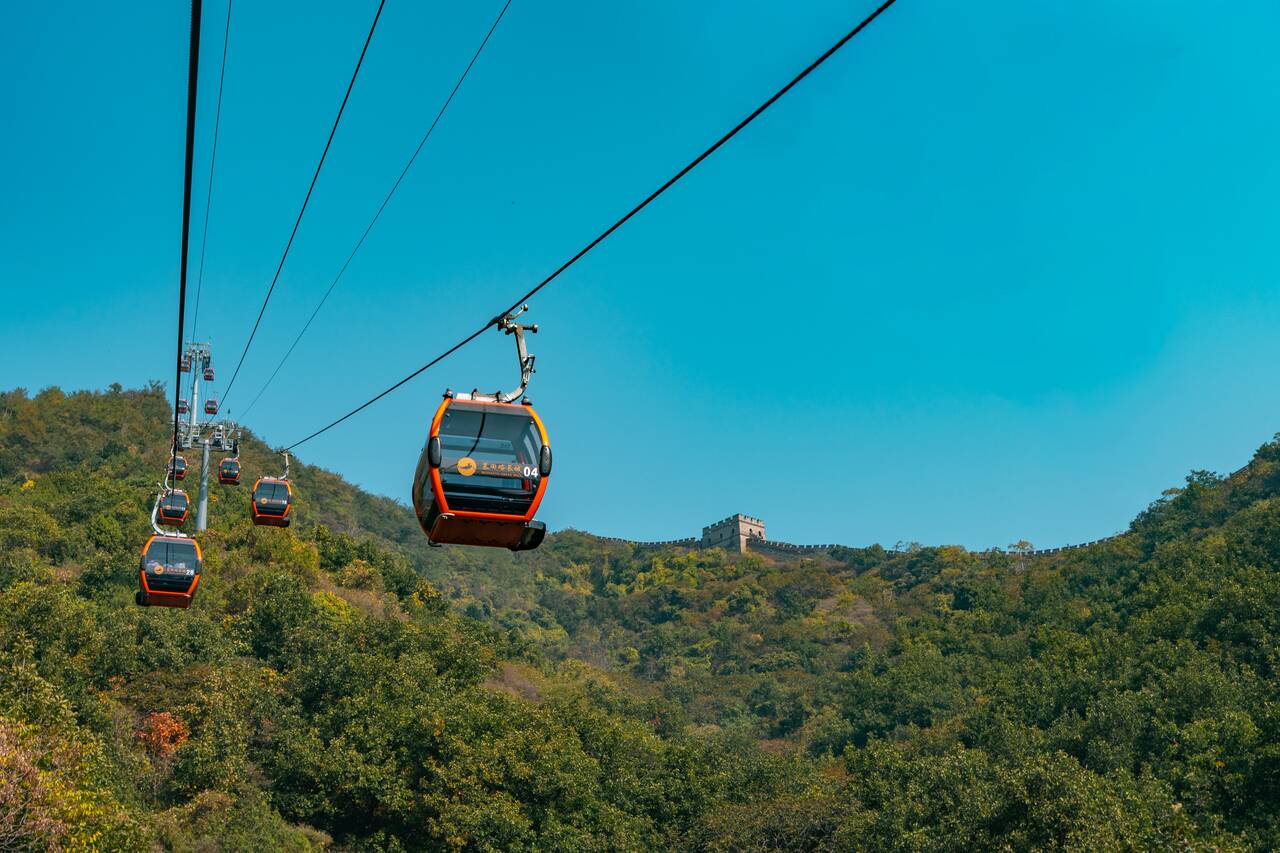
This is the option I chose. The enclosed cable car takes you to Tower 14, a convenient starting point for walking west toward Hero Slope. My return ticket cost 140 CNY, meaning I went up and came back down using the same cable car.

It is also a good option if you want a shorter walk around the arrival point. Taking the cable car saves you the initial climb from the valley, but if you plan to tackle Hero Slope, you will still have quite a walk ahead of you, and it’s a hell of a climb to the top! I would save your energy for that.
Chairlift and Toboggan at Tower 6
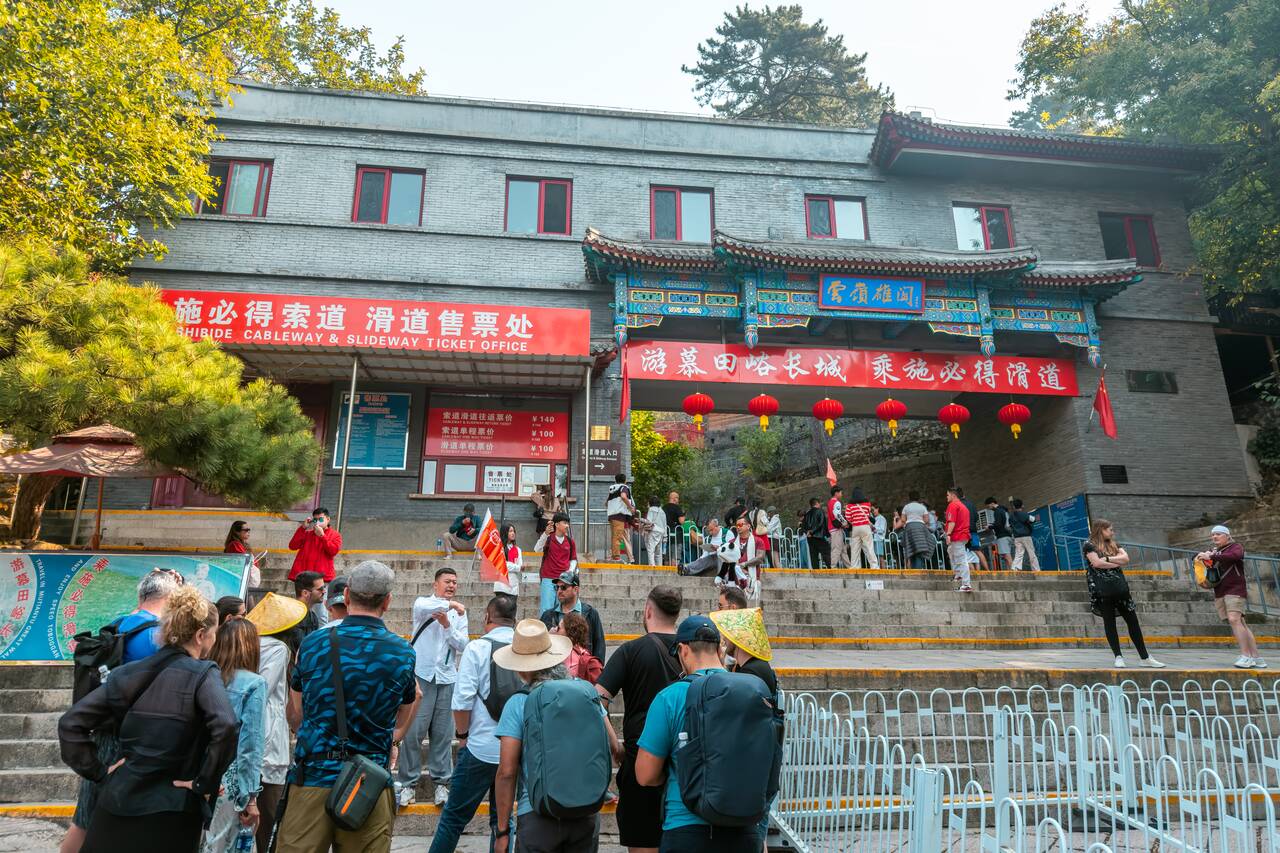
The open-air, ski-style chairlift and the toboggan serve Tower 6. During my visit, the chairlift-up and toboggan-down combination cost 140 CNY. This is a separate system from the enclosed cable car at Tower 14, so you will need to buy a separate ticket at the chairlift station, which you will pass just before reaching the enclosed cable car station.
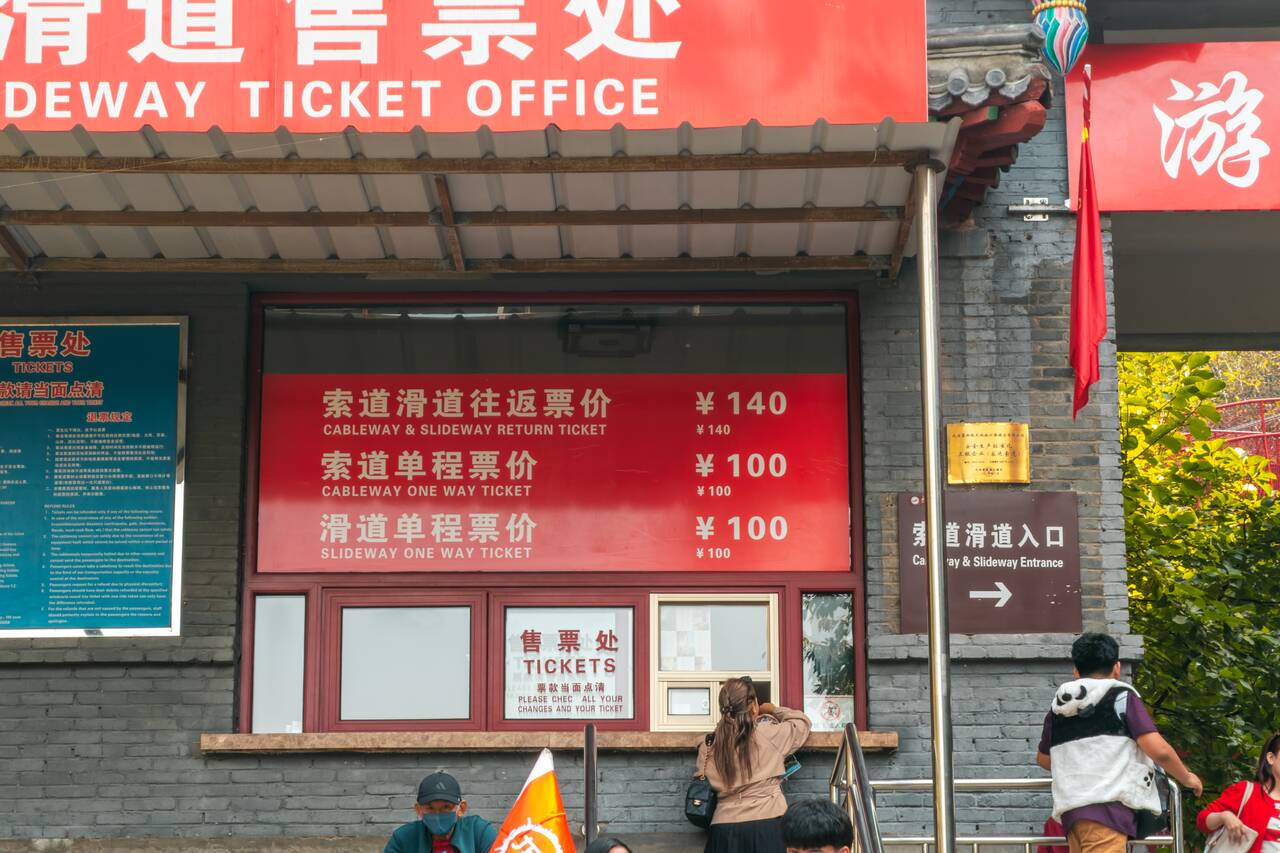
If you want to take the enclosed cable car up and the toboggan down, you will need separate tickets and enough time to walk between Towers 14 and 6. Adding a toboggan descent to my cable car plan would have cost an additional 100 CNY. I chose the return cable car instead because, judging by the number of people on the toboggan and how slowly they were crawling down, it didn’t look quite as fun as it sounded 😅.
Where Should You Walk at Mutianyu?
A Shorter Walk Around Towers 14 and 15
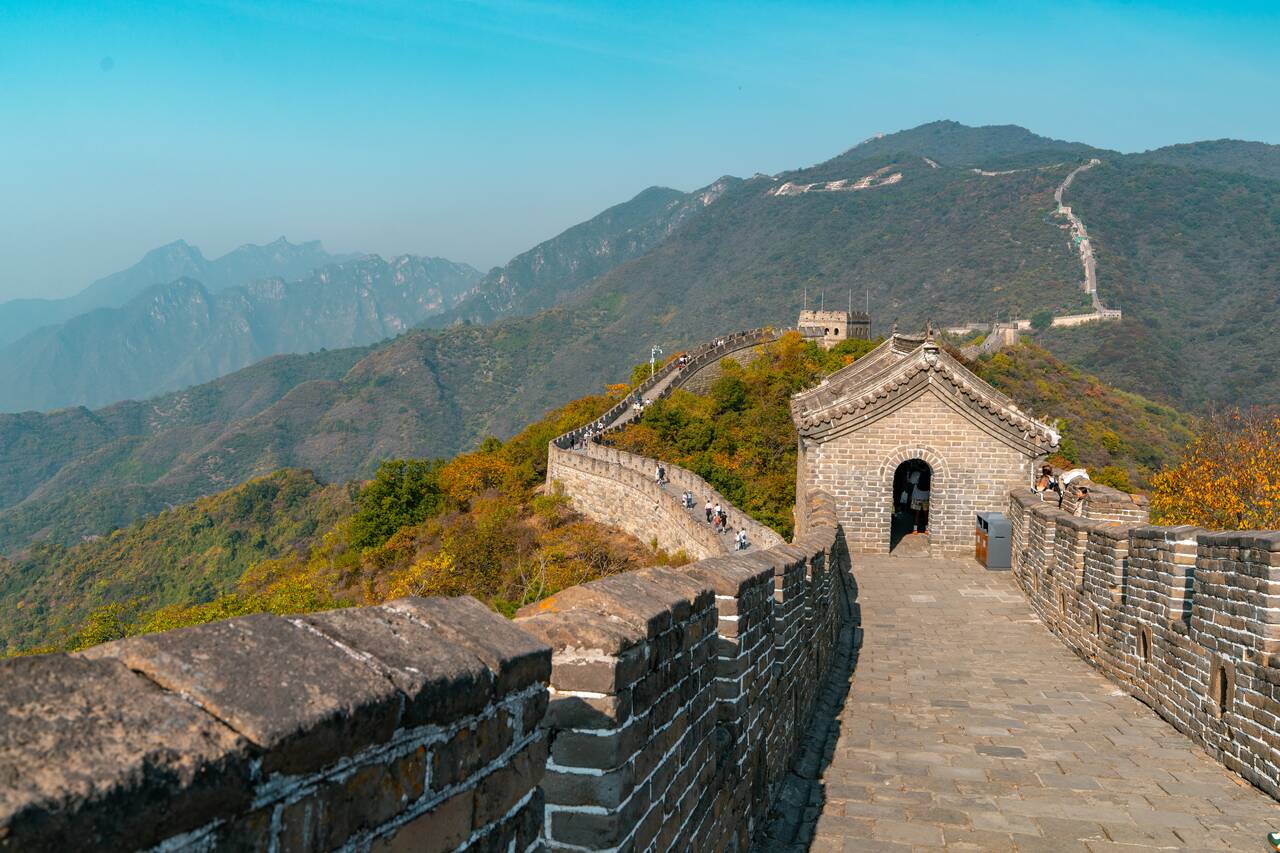
If you mainly want to see the wall and enjoy the scenery without committing to a long hike, take the cable car to Tower 14 and explore toward Tower 15 before returning. You can decide how far to continue based on your energy and the time available.
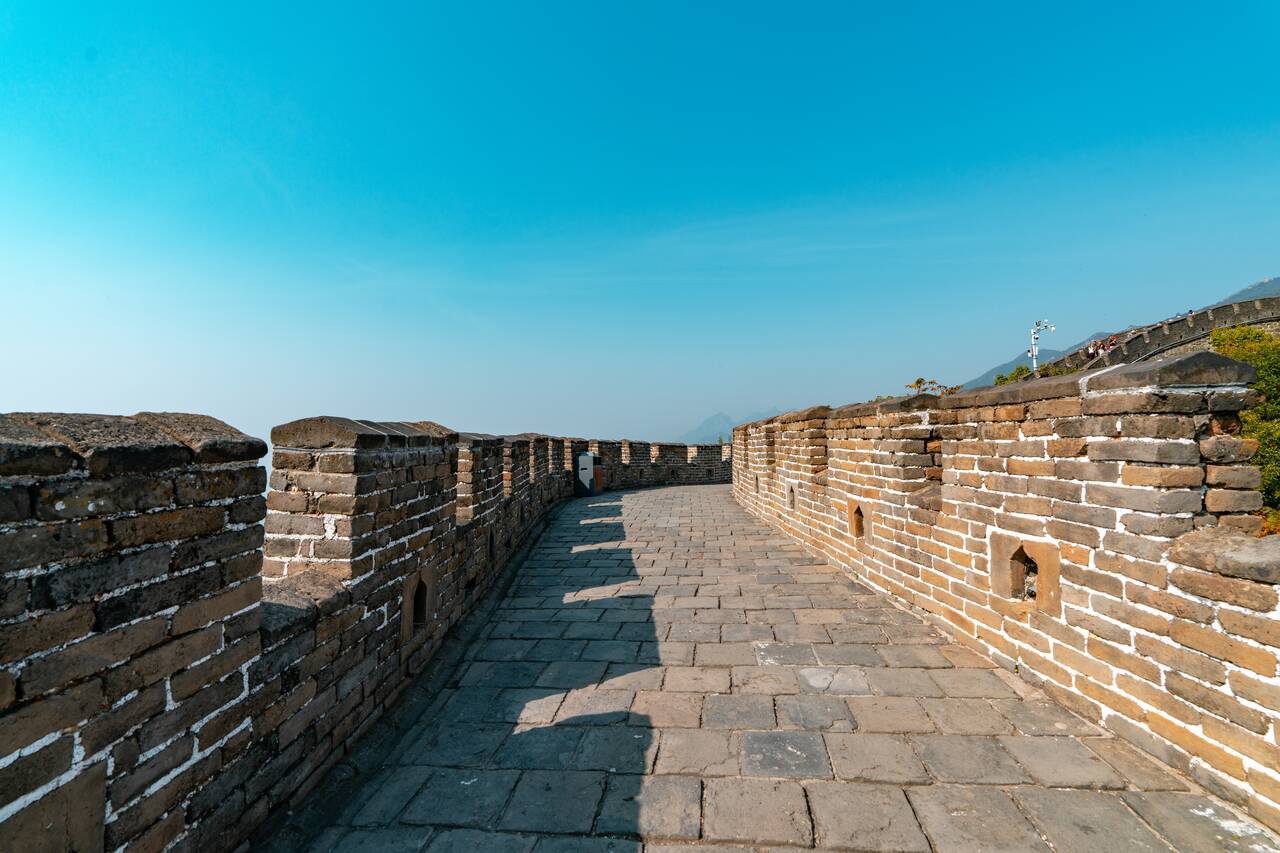
You will still encounter stairs and uneven surfaces, so don’t expect a leisurely stroll along a flat path. However, this route is short and less demanding than the other options, giving you time to enjoy the views and relax a little.

Personally, I felt it would leave me with too much time to kill before the return shuttle bus, so I decided to tackle Hero Slope instead.
Hike Toward Tower 20 and Hero Slope
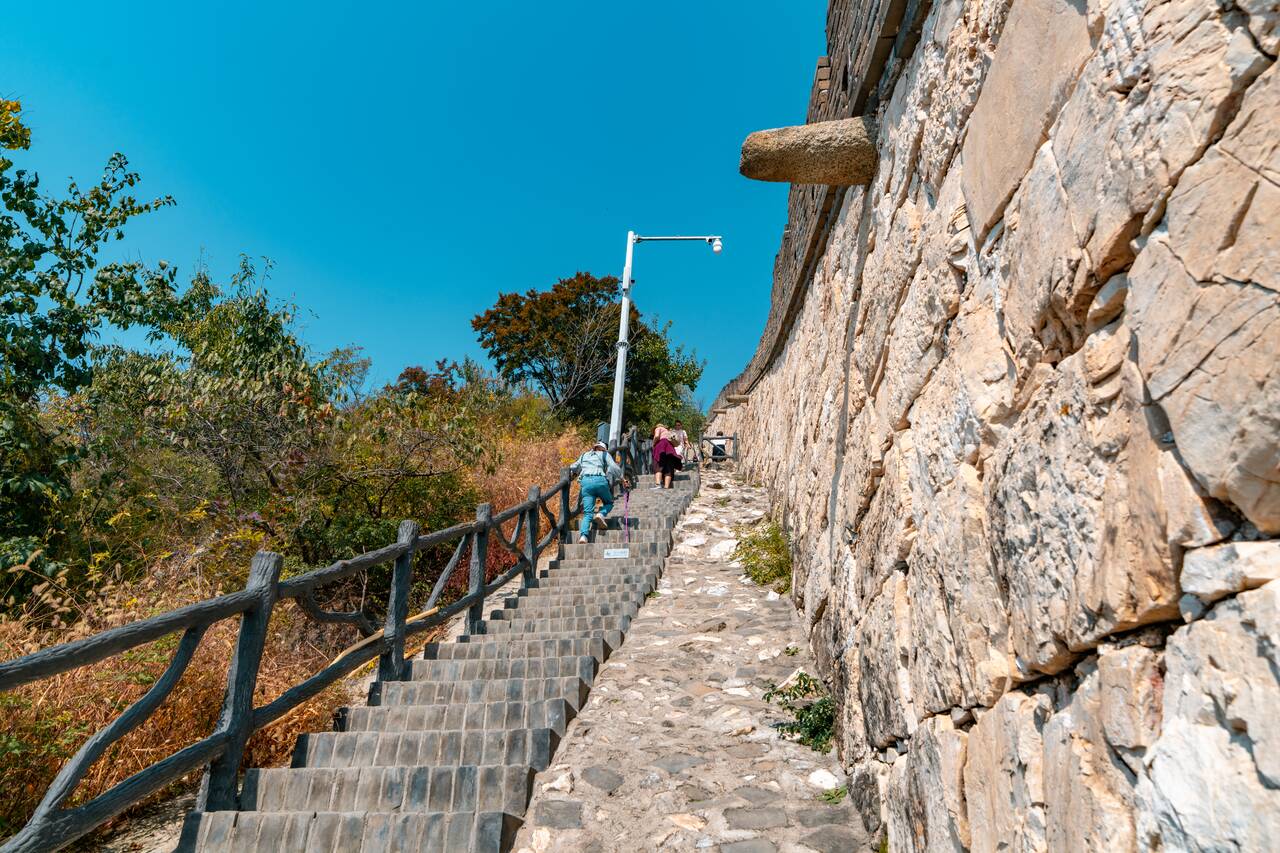
For more of a challenge, head west from Tower 14 toward Tower 20. This route takes you toward the steep climb known as Hero Slope, with some seriously demanding stairs near the top.
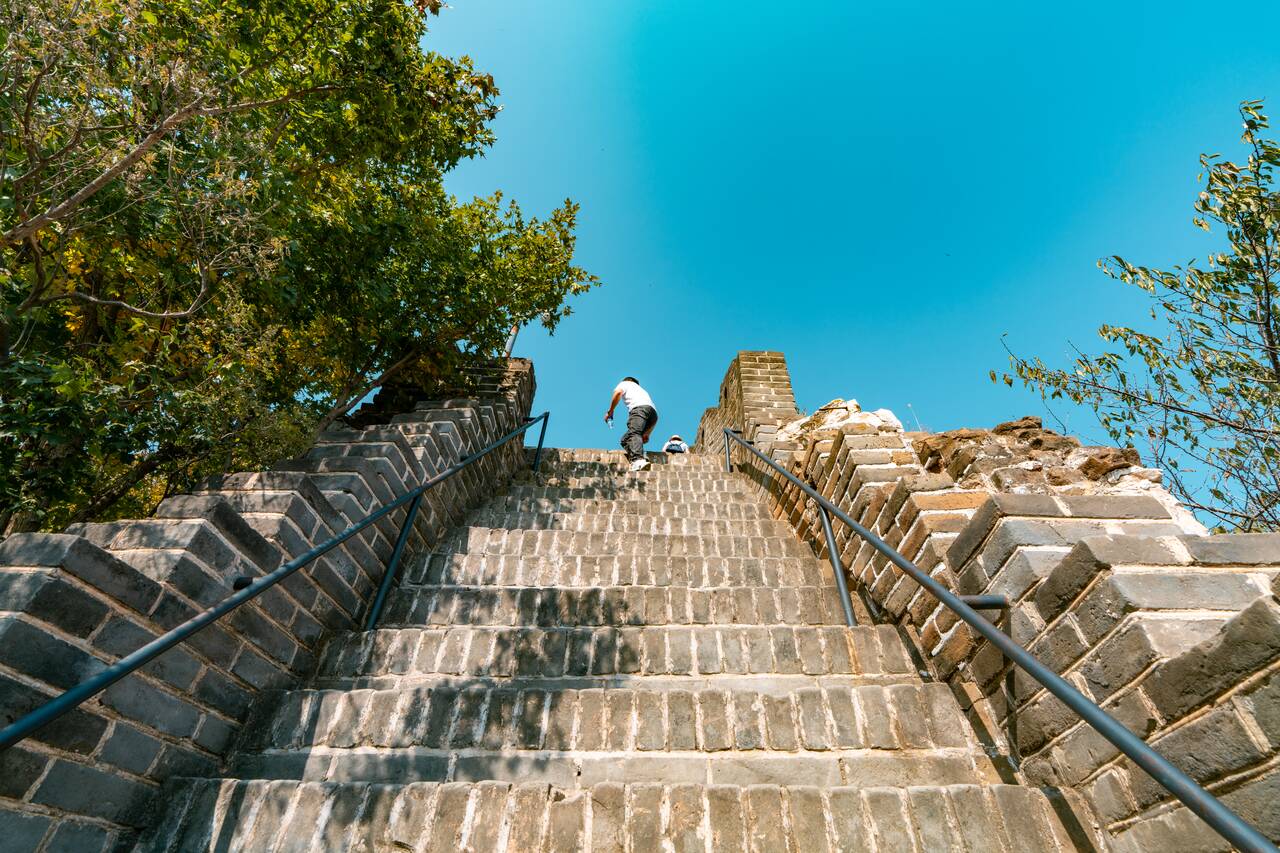
It’s extremely popular among Chinese tourists, so you will see people of all ages tackling it. Nothing motivates you quite like seeing aunties and uncles blazing up the stairs faster than you 🤣. Take your time, stop when you need to, and remember that you also have to get back down!
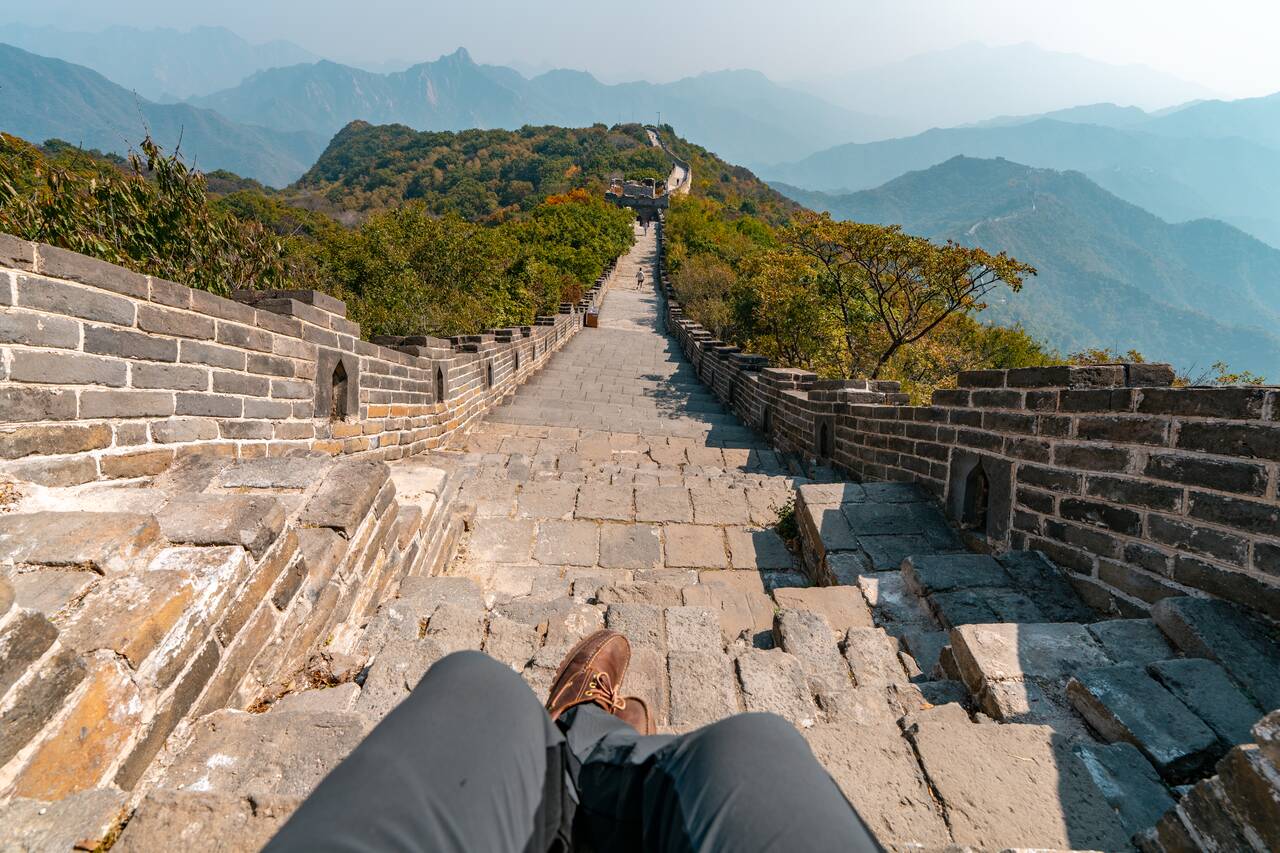
This was the kind of Great Wall experience I had come for: watchtowers following the mountain ridges, a proper workout, and views that kept getting better as I climbed. If you have the energy, I would definitely recommend you climb all the way to the highest point.
My Longer Walk Toward Tower 23
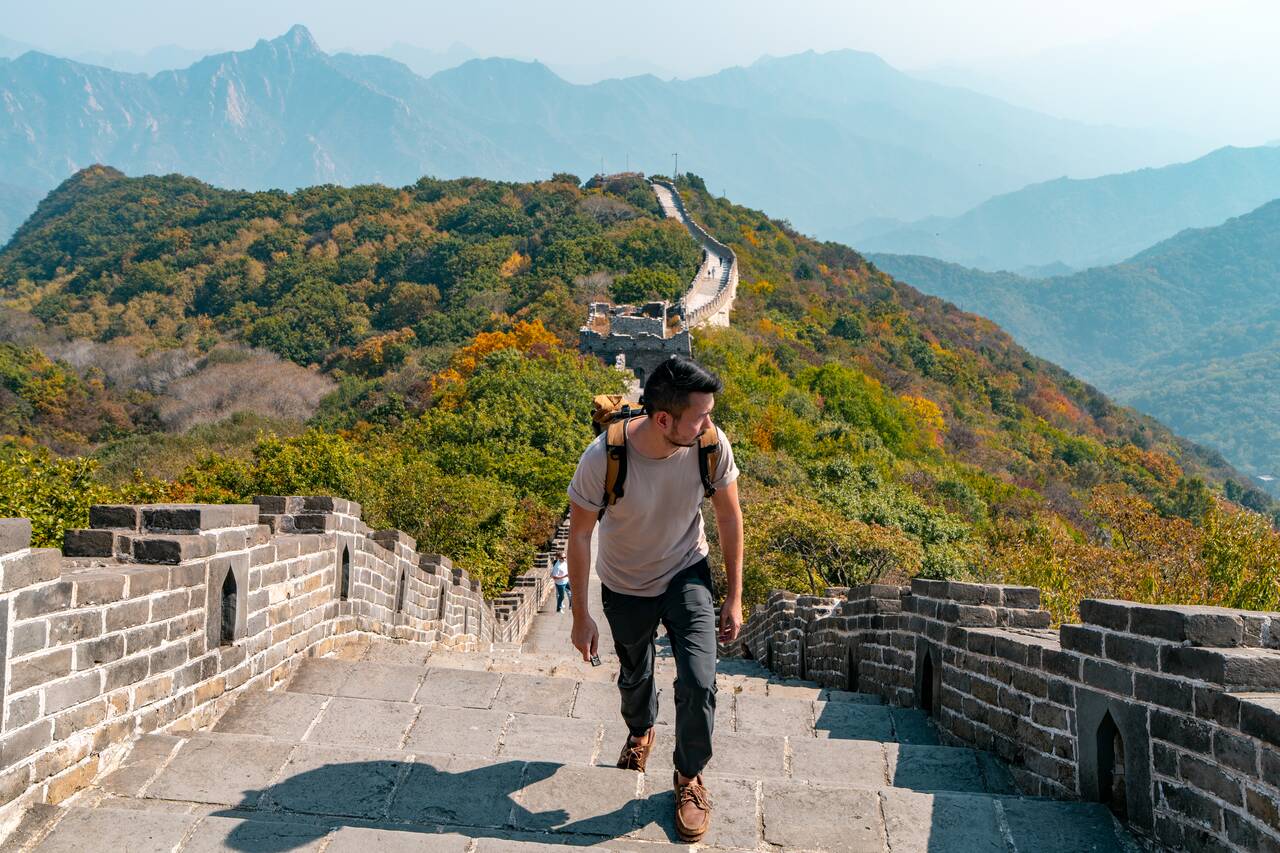
My own walk from Tower 15 toward Tower 23 took around 1.5 hours each way, or 3 hours in total at a very relaxed pace and tons of photo stops, so you can expect to spend around the same amount of time.
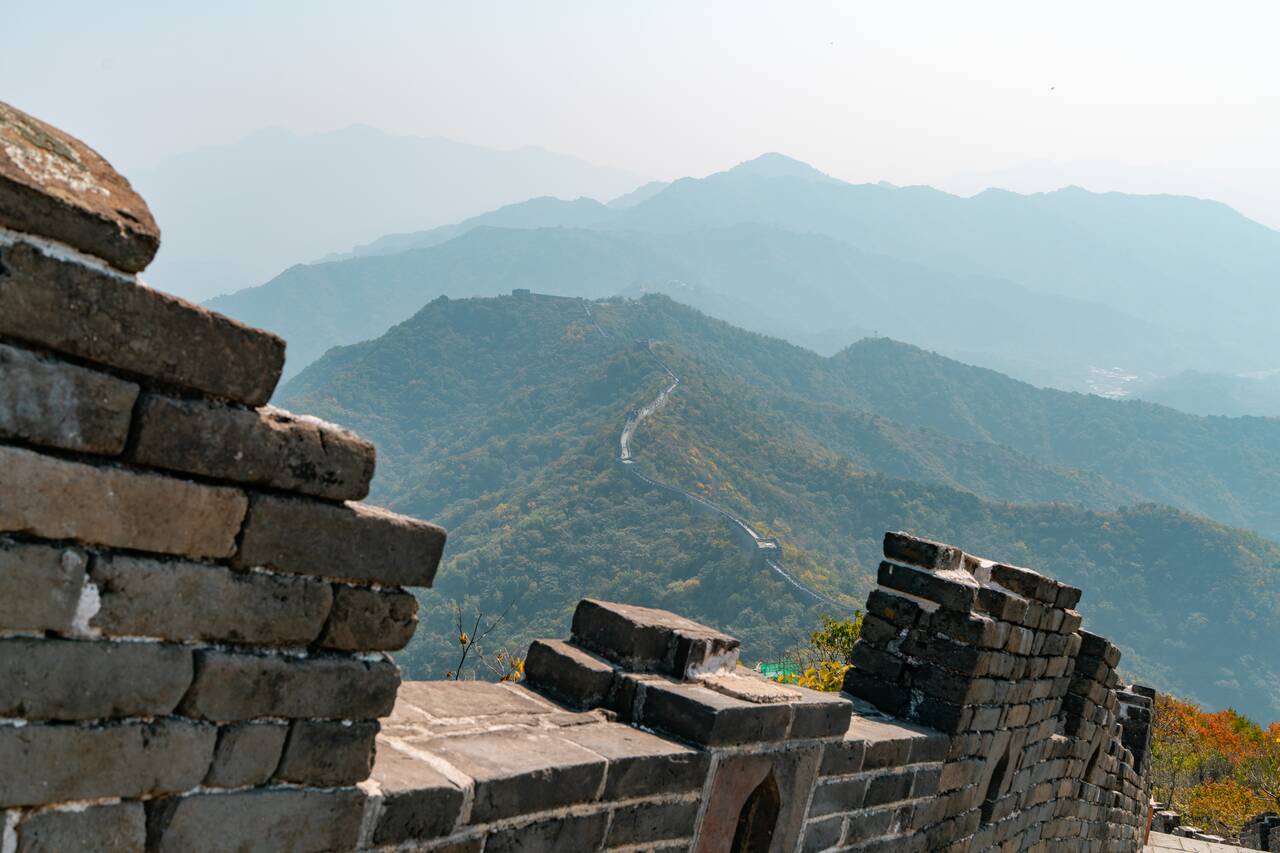
Before setting off, work backward from your bus departure: leave enough time to retrace your route, descend on the cable car, and walk back to the meeting point. If you want to try the toboggan as well, remember that reaching Tower 6 adds another walk to your plan.
How Crowded Is Mutianyu?
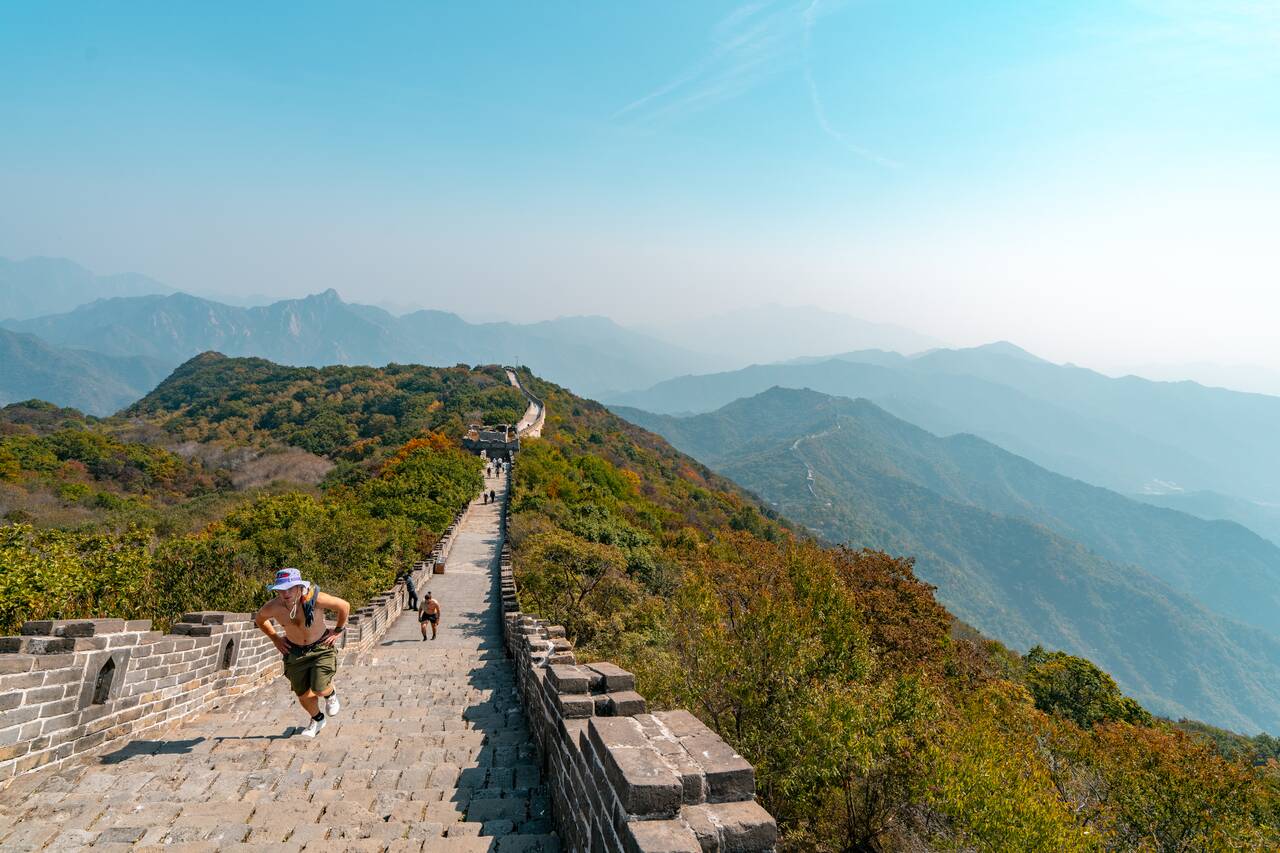
I visited the day after Golden Week ended and was surprised by how much quieter it was than I had expected. There were still plenty of people around the cable car and chairlift access points, but the crowds thinned as I walked farther uphill.
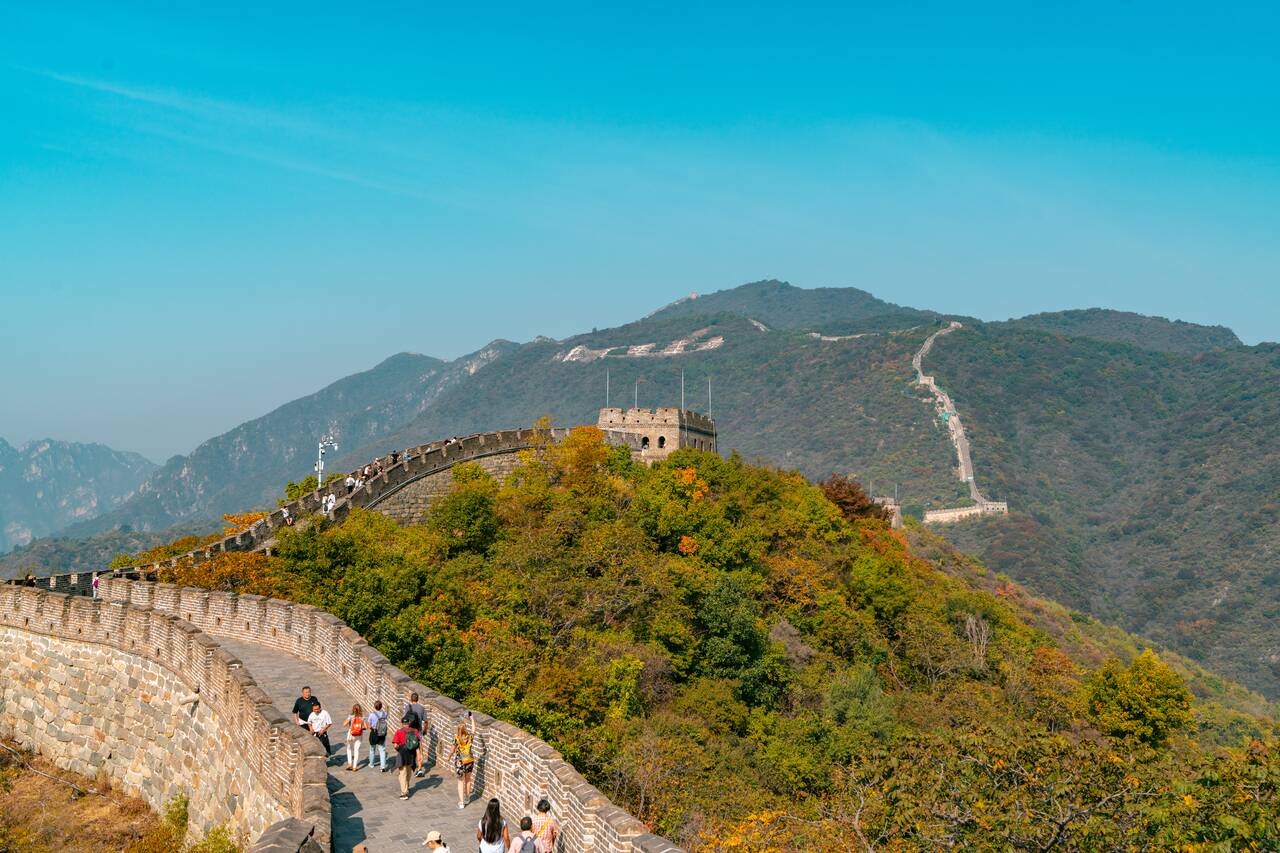
That does not mean Mutianyu is always quiet, especially during major holidays. My main advice is to arrive early and, if you are able, leave yourself time to hike beyond the first viewpoint. For me, the walking made a huge difference to the experience and I'm glad I hiked all the way up to Tower 23.
When to Visit Mutianyu Great Wall?
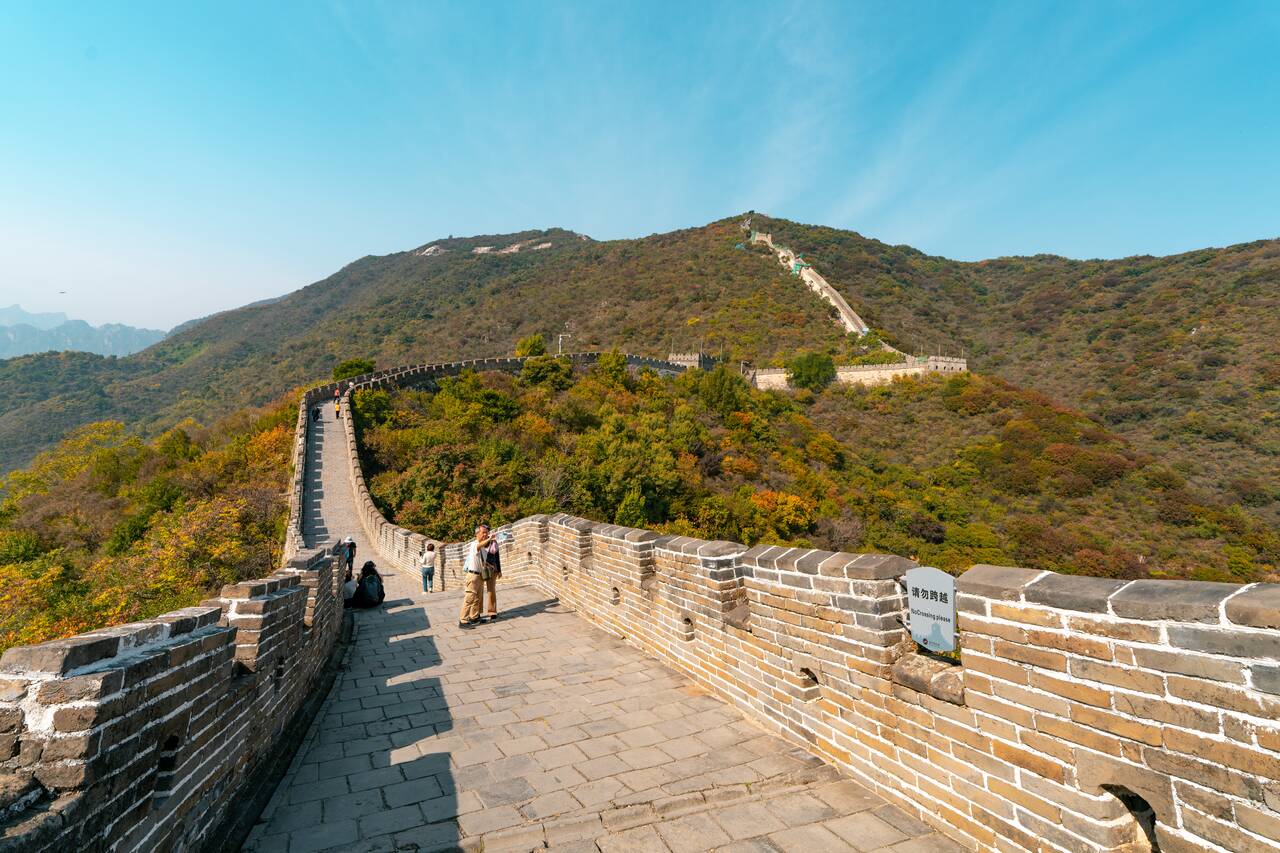
For a first visit, I would go with either spring or autumn, when a long outdoor walk is generally more comfortable than in summer heat or winter cold. Autumn would be my personal choice, as I prefer the autumn colors and my visit just after Golden Week worked out well for avoiding the holiday rush.
Try to avoid major public holidays, including May Day, Chinese New Year, and Golden Week in early October, if your dates are flexible, and check the forecast before setting off. Clear visibility makes a big difference when the mountain views are such a large part of the experience. Bring layers, as it can get very windy up on the wall.
Mutianyu Great Wall Opening Hours
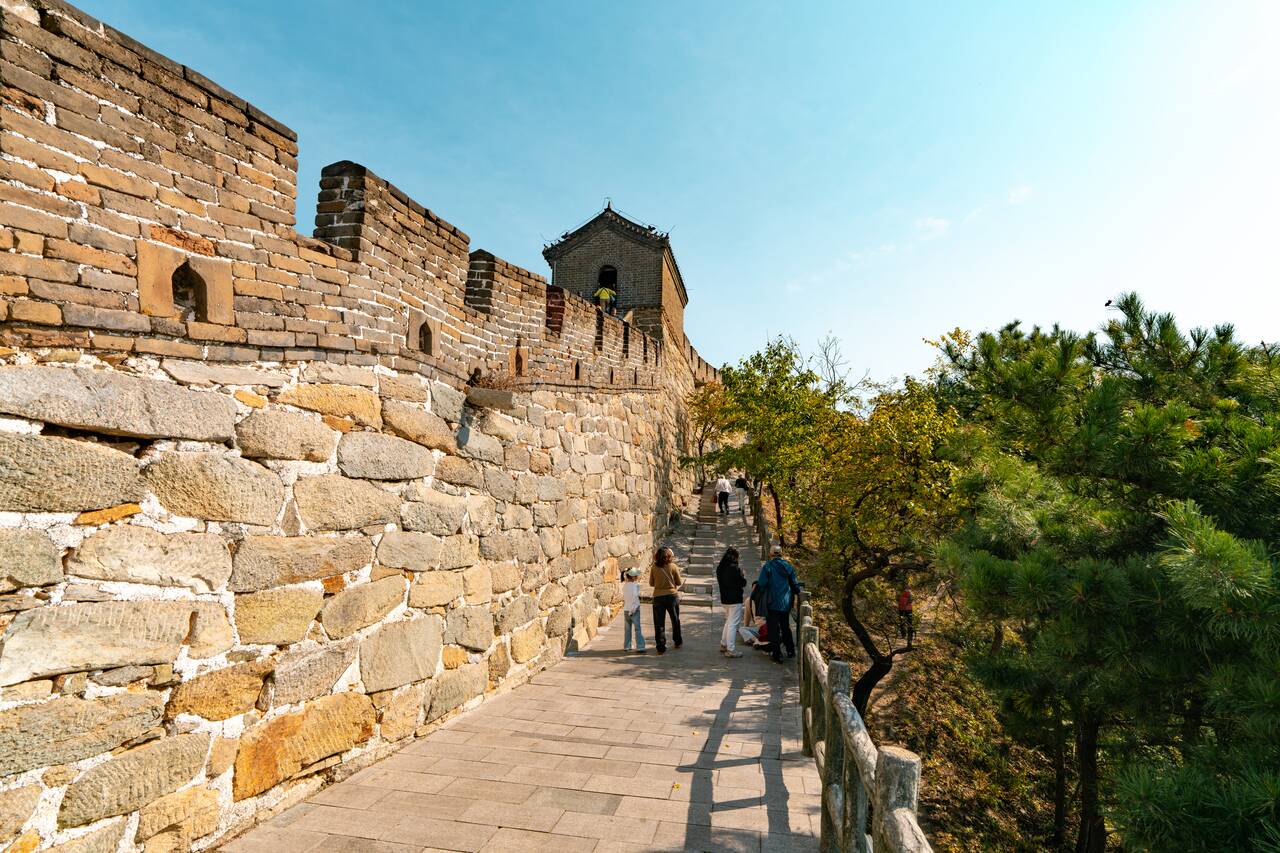
During peak season, Mutianyu Great Wall is open from 7:30 AM to 6 PM on weekdays, with ticket sales ending at 5 PM and last entry at 5:30 PM. On weekends, it stays open until 6:30 PM, with ticket sales ending at 5:30 PM and last entry at 6 PM.
Check the official Mutianyu website for your travel dates, particularly outside this season. If you are using a tourist bus, its return departure may be much earlier than the park’s closing time.
Suggested Mutianyu Day Trip from Beijing
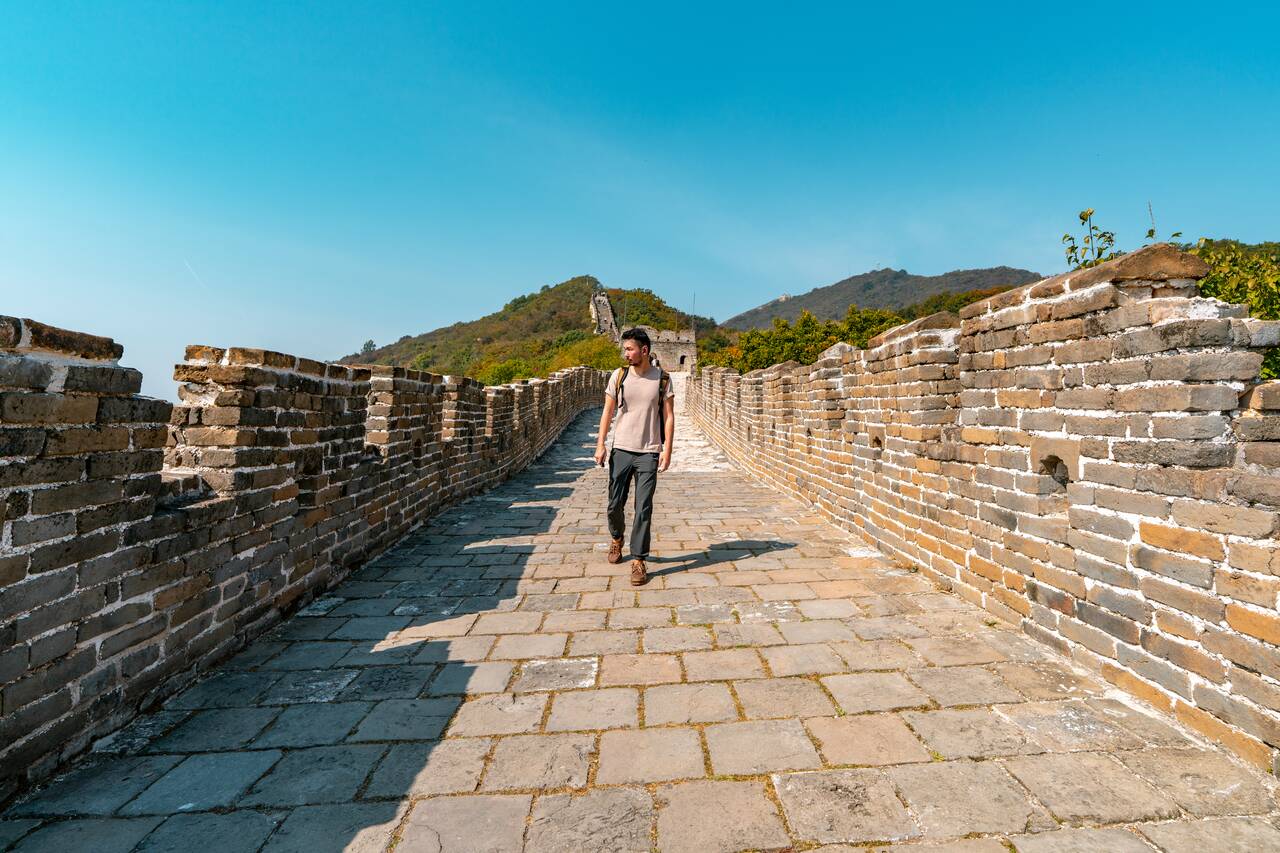
Here’s a rough day-trip itinerary based on my experience:
- 8 AM: Arrive at the Qianmen departure point, find the Mutianyu bus, and arrange your tickets.
- Around 10 AM: Arrive at Mutianyu, confirm your return departure time and meeting point, and head to the cable car.
- Late morning to early afternoon: Explore the wall, leaving enough time to descend and walk back to your bus.
- 2 PM or 2:30 PM: Be back at the parking lot in time to catch your return bus to Beijing.
- Around 4 PM to 4:30 PM: Arrive back in Qianmen, Beijing, depending on traffic.
And that is it for a full-day trip to the Great Wall of China from Beijing. After all those stairs, I would keep your evening flexible! If you still have some energy, explore Qianmen Street and enjoy its lively atmosphere. If you’re starving, there are plenty of cafés, street food stalls, and restaurants where you can grab something to eat here.
What to Bring and Know Before You Go?
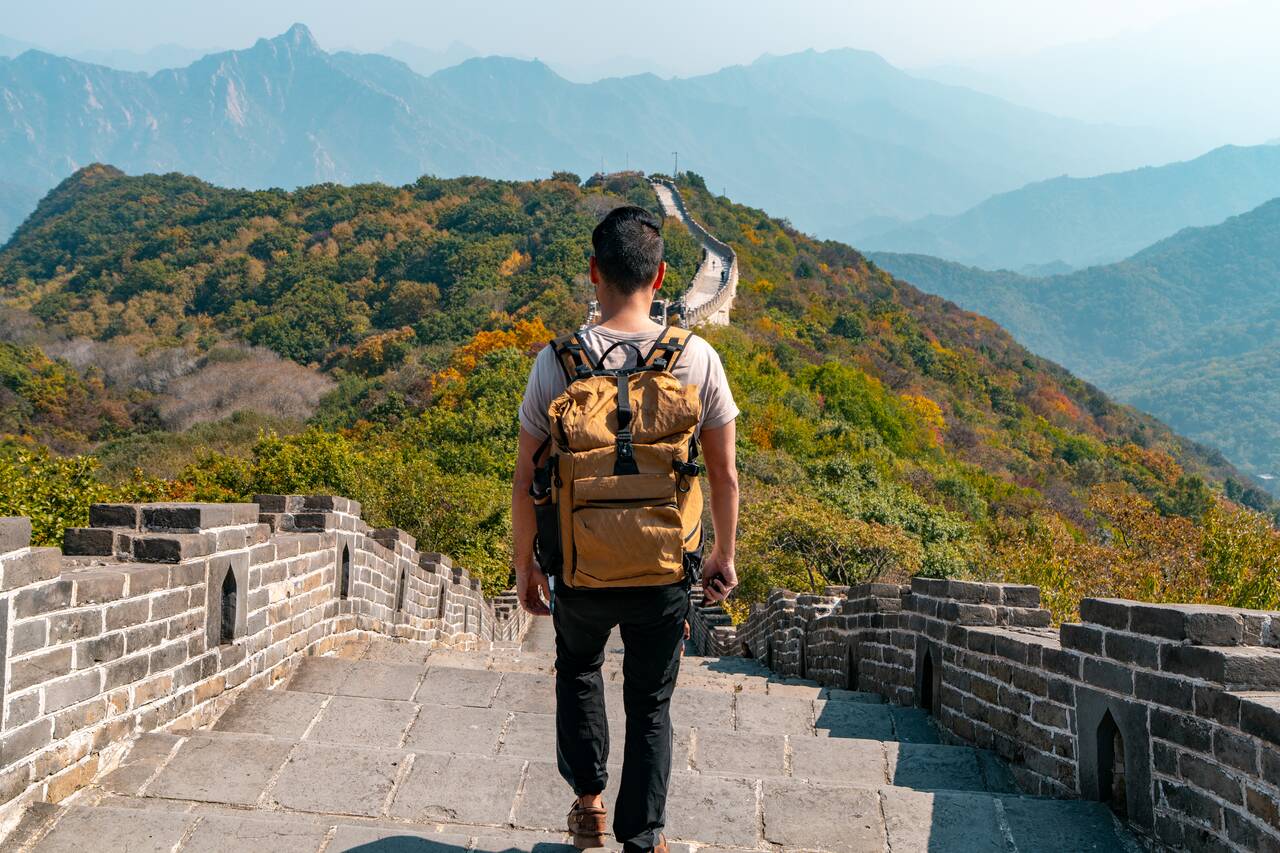
- Comfortable shoes: There are plenty of stairs, including steep sections to climb here, so make sure you are ready.
- Water and snacks: Bring enough for the entire day. You may find locals selling snacks and drinks at some of the watchtowers, but prices can be high and vendors may not be there depending on the season, so don’t rely on them.
- Layers and weather protection: It can get quite windy up on the wall, so bring an extra layer and a windproof jacket, even if it feels warm when you leave Beijing.
- Your passport: Keep it with you for travel and any ticket checks that require identification.
- A charged phone: You will want it for navigation, payments, and contacting your transport provider if needed.
- Your return meeting details: Remember the drop-off location and confirm the departure time with the staff before you leave the bus.
Is Mutianyu Great Wall Worth Visiting?
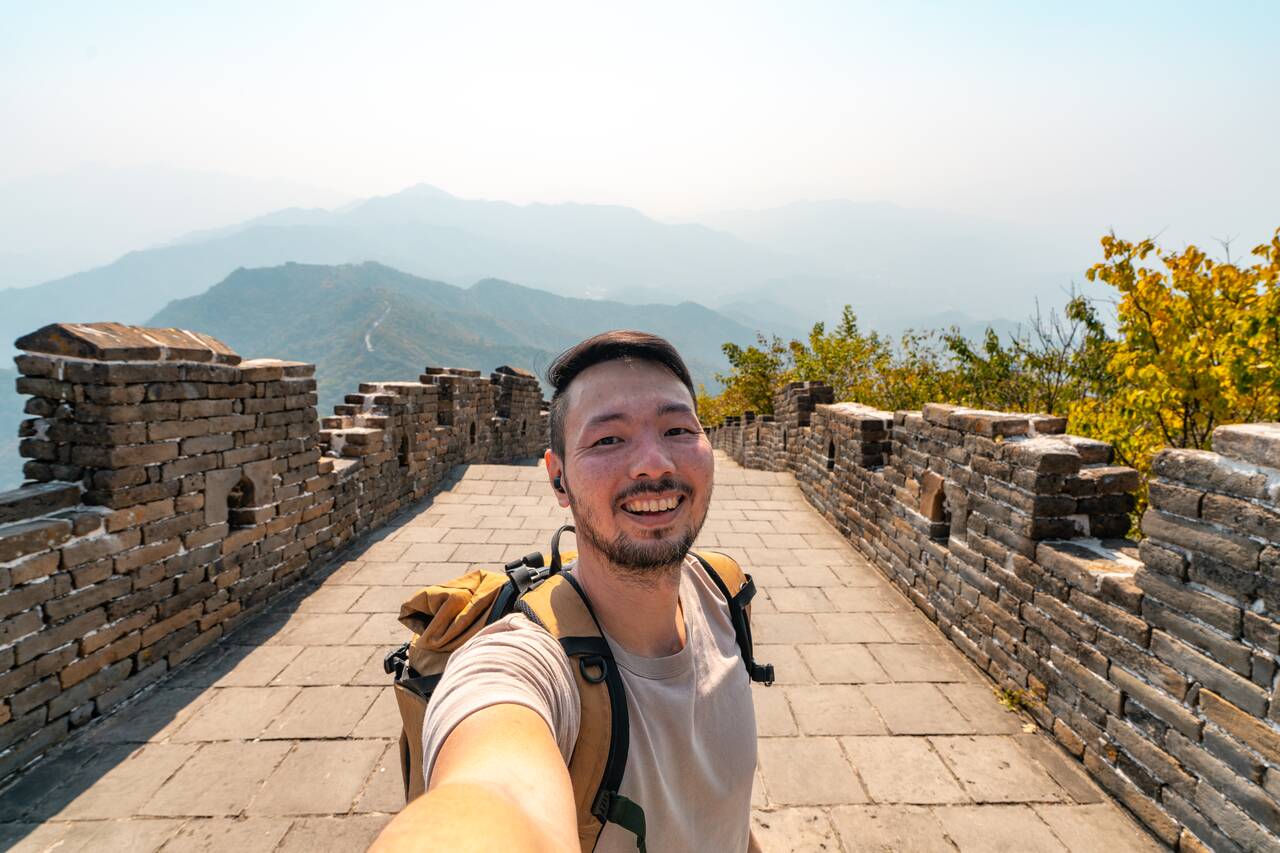
Absolutely! The mountain scenery, the watchtowers stretching into the distance, and the opportunity to get away from the busiest arrival areas made this one of the highlights of my Beijing trip. The tourist bus also made getting there super easy and affordable.
You don’t have to do the longest hike to enjoy it. Choose a route that suits your energy, buy the right tickets, and give yourself time to appreciate where you are. The Great Wall of China is worth all the hype in the world!

Things to Know Before Visiting China
- Always Carry Your Passport: Everything revolves around your passport/ID in China, and it’s often used interchangeably as your main form of identification. Many major tourist attractions require you to show your passport when buying a ticket, and the ticket will then be linked to it. You’ll scan your passport again to enter. The same applies to high-speed trains. It’s best to carry your passport with you at all times while traveling in China.
- Get an eSIM: China’s cashless economy relies on constant internet access, so having a data connection is essential. I highly recommend getting an eSIM or a local SIM card for your trip. An eSIM is often better because the service is usually based in Hong Kong, which bypasses China’s Great Firewall, meaning you can access apps like Instagram and YouTube without a VPN. I suggest checking eSIM options on Klook or Trip.com, as they tend to be the most affordable.
- Use AMap to Navigate: Google Maps doesn’t work well in China, so local apps like AMap are much more informative and accurate for getting around. It even provides metro information, making it easy to navigate city subway systems. I used AMap throughout my entire trip, and it worked perfectly! In this guide, I’ll be linking locations with AMap links instead of Google Maps, so be sure to download it before your trip.
- Use VPN to Bypass the Great Firewall: As you may know, many major websites such as Google, Facebook, Instagram, TikTok, and more are blocked in China. To access them, you’ll need a VPN like LetsVPN installed on both your phone and laptop before you arrive in China. This is crucial as once you're in the country, you won’t be able to search for or download VPN apps. I used LetsVPN during my trip, and it worked very well throughout. The service is affordable too, with a free tier offering limited data or a basic unlimited plan for just 5.99 USD per month.
- Connect Alipay with Your Credit Card: First, download Alipay from the app store, set up your account, and link it to your credit card. This will be one of the two main ways you’ll pay for services in China. Alipay also has mini-apps built in, such as Didi (China’s version of Uber), so you don’t need to download separate apps, and you can use them directly through Alipay. Very convenient!
- Get a Transport Card Working in Alipay: Once you have Alipay set up, you’ll need to verify your account before you can activate a transport card for metro and bus rides. First, if you’re not currently in the city you want to use, tap the city name in the top-left corner and select the correct city. After that, tap the “Transport” button and request a transport card. You’ll be asked to upload a photo of your passport for verification. Once approved, your transport card will be issued, and you can use the QR code to scan and pay for buses and metro rides.
- Get WeChat Set Up: WeChat is another essential app for communicating with locals, thanks to its built-in translation feature. It’s also widely used for payments as Alipay only works about 70% of the time, while WeChat is commonly needed for paying individuals, buying entry tickets at certain attractions, and more. Setting up WeChat can be a bit tricky though because you need verification from an existing user. The easiest way is to ask your hotel’s reception to help verify your account when you arrive in China, which is how I got mine activated.
- Use Trip.com / Trip App: For hotels, day trips, attraction tickets, train tickets, flights, and everything in between, you can use Trip.com or the Trip app to book all your travel needs. It’s very convenient, offers a great user experience, and has a generous cancellation policy that gives you more flexibility when traveling in China.
Disclaimer: This post may contain affiliate links. See our disclosure policy.
First Published:


