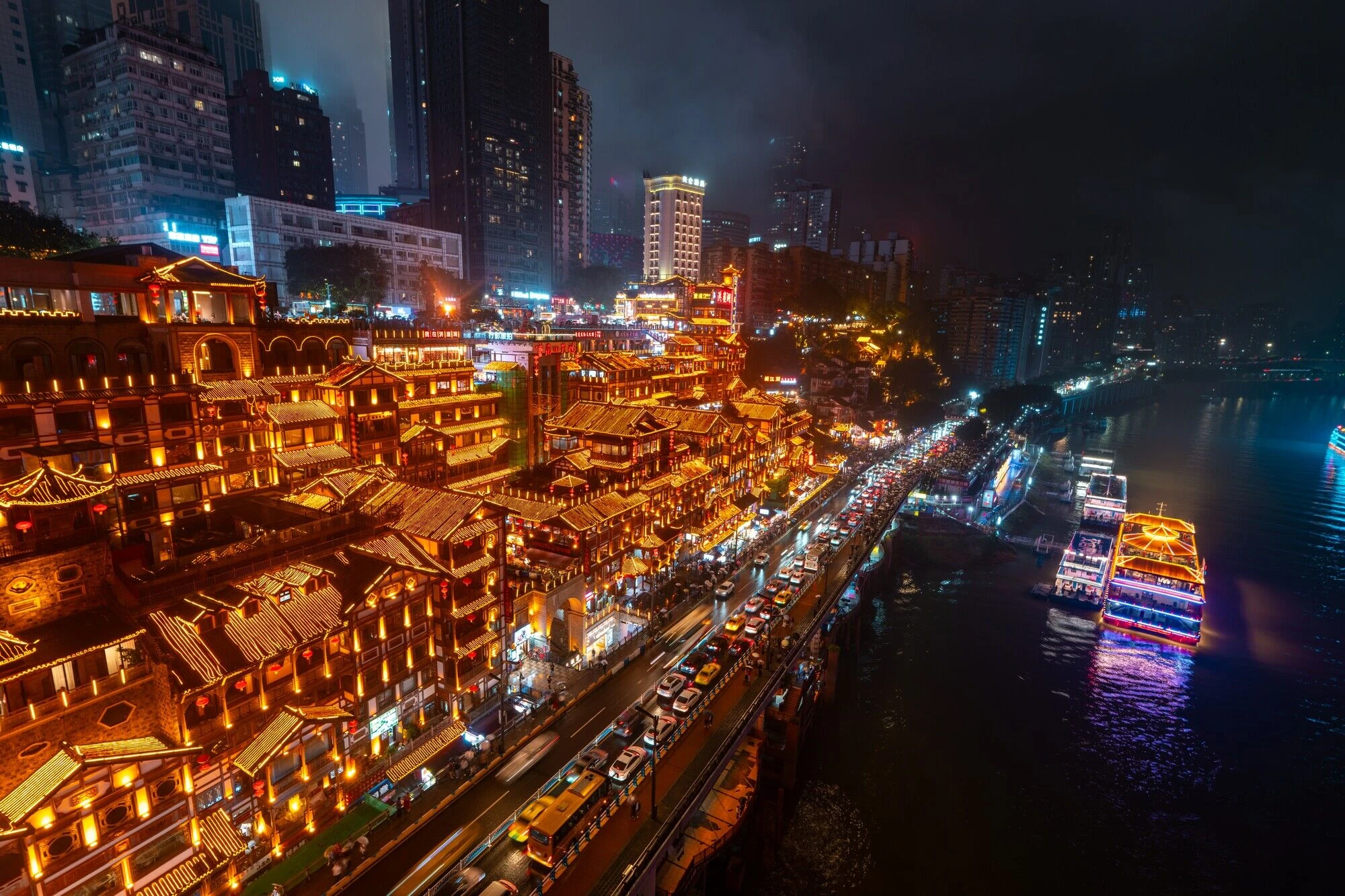


After making my way along the Silk Road through Gansu, I arrived in Chongqing to a photographer’s nightmare. The forecast called for 60 straight days of rain! 🤣 Thankfully, Chongqing is the kind of city that looks best at night, and the rain actually added a bit of atmosphere, with all those lights reflecting off the wet streets. I ended up having a blast exploring the famous spots, finding a few hidden gems, and finally taking a day trip to Wulong, which had been on my list for the longest time.
Here, I’ll share my favorite things to do in Chongqing, where I’d go for the best night views, and how I’d spend three full days here, including a day trip to the Three Natural Bridges in Wulong. I’ll also tell you how I missed my train back by one minute so you don’t have to learn that lesson the hard way 😅. Let’s begin!
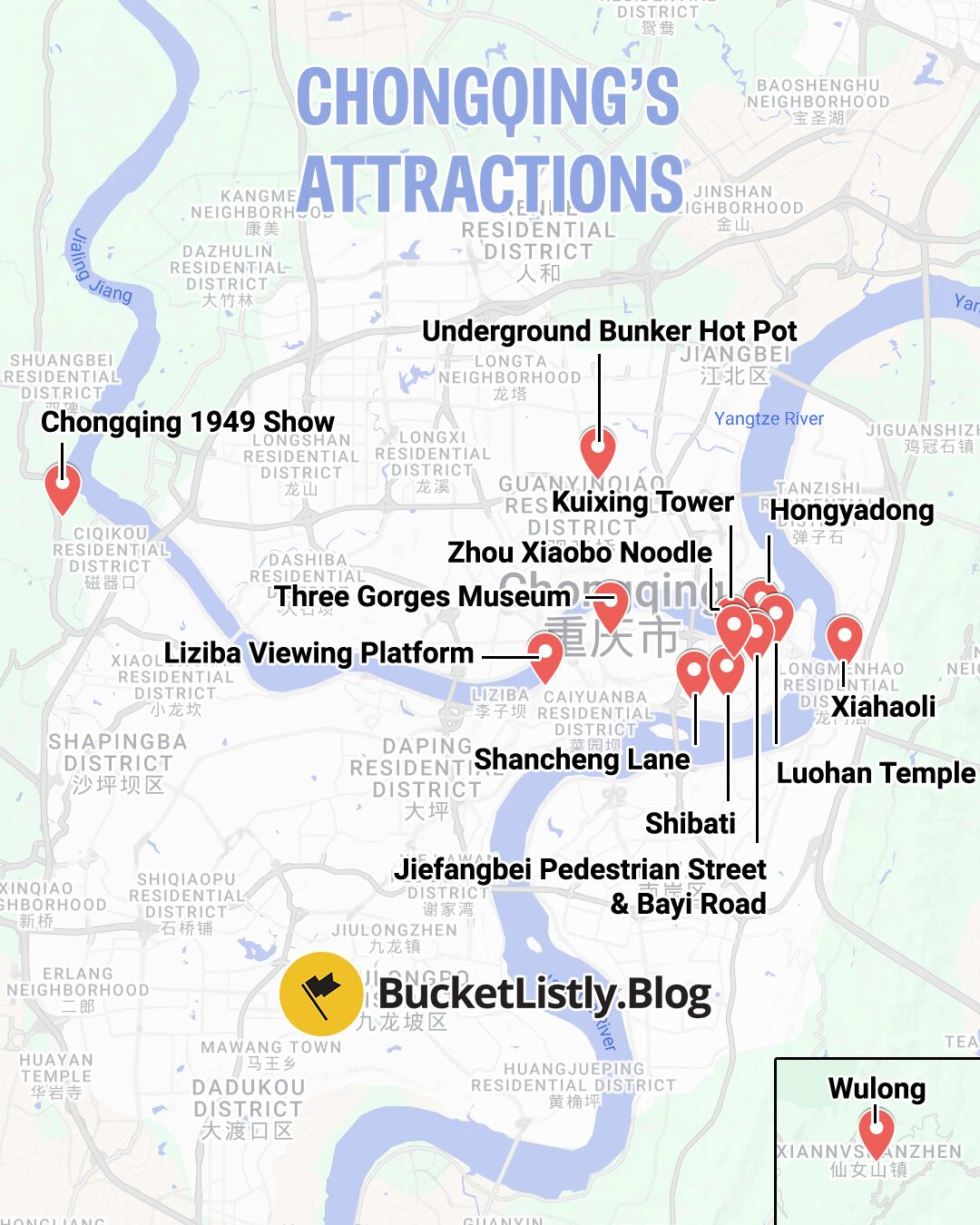
Map of Chongqing's Attractions
Quick Summary
| ♥️ Must See: | Hongyadong |
|---|---|
| 💎 Hidden Gem: | Shancheng Mountain City Trail |
| 🥘 Place to Eat: | Zhou Xiaobo Chongqing Noodles |
| 🏛️ Best Museum: | Chongqing China Three Gorges Museum |
| ☀️ Great Day Trip: | Wulong |
14 Best Things to Do in Chongqing
1. See Hongyadong Light Up at Night
- 📍 Location: Hongyadong [Map Link]
- ⚡ Pete's Take: "No place is as hyped in this city as Hongyadong, but I still think it is worth seeing. Just keep in mind that there will always be crowds here, so manage your expectations."
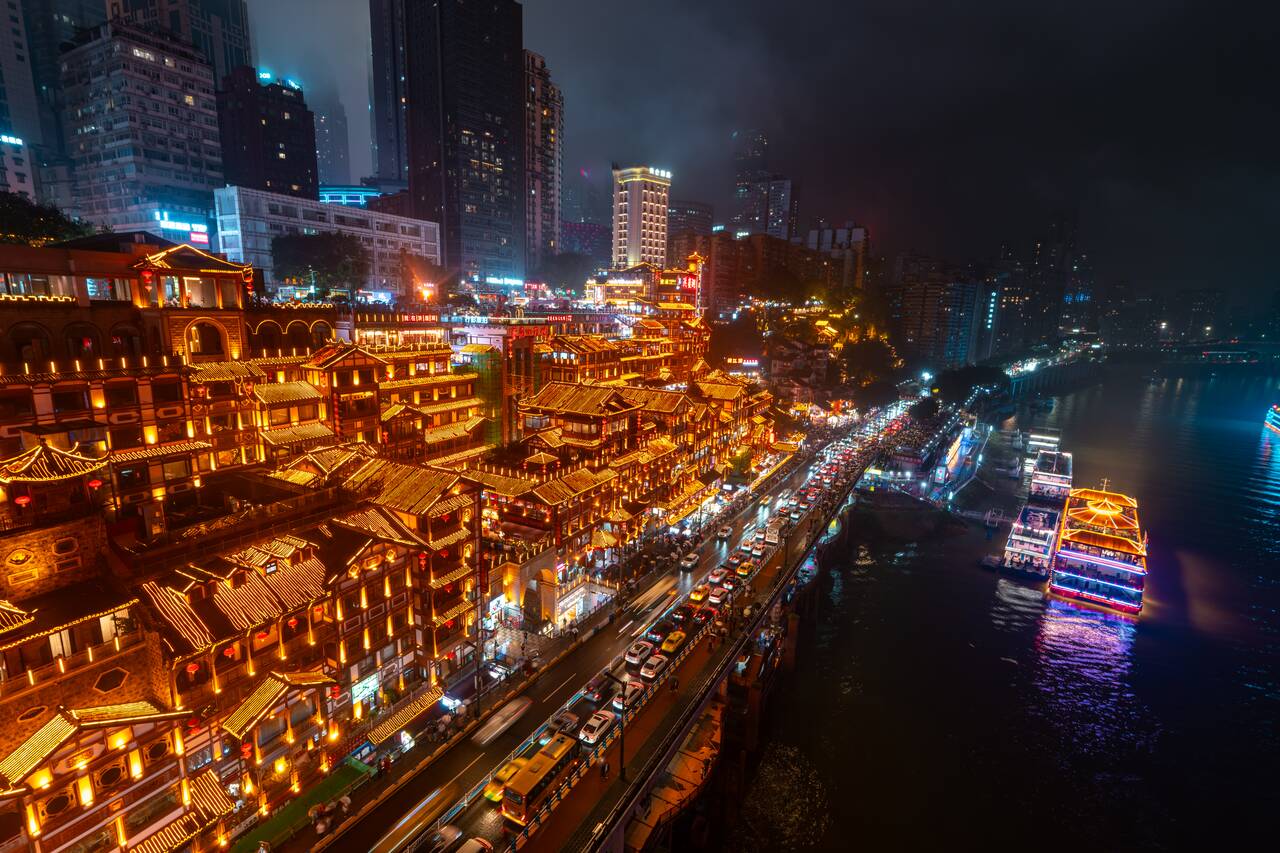
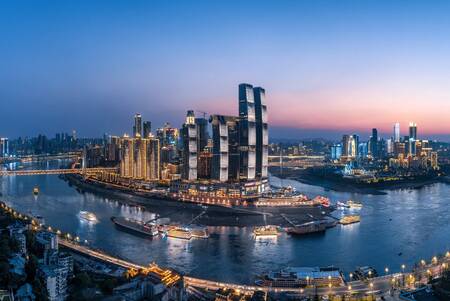
If you’ve seen photos of Chongqing at night, chances are you’ve already seen Hongyadong. It’s the enormous riverside complex with layers of wooden balconies and tiled roofs stacked up the hillside.
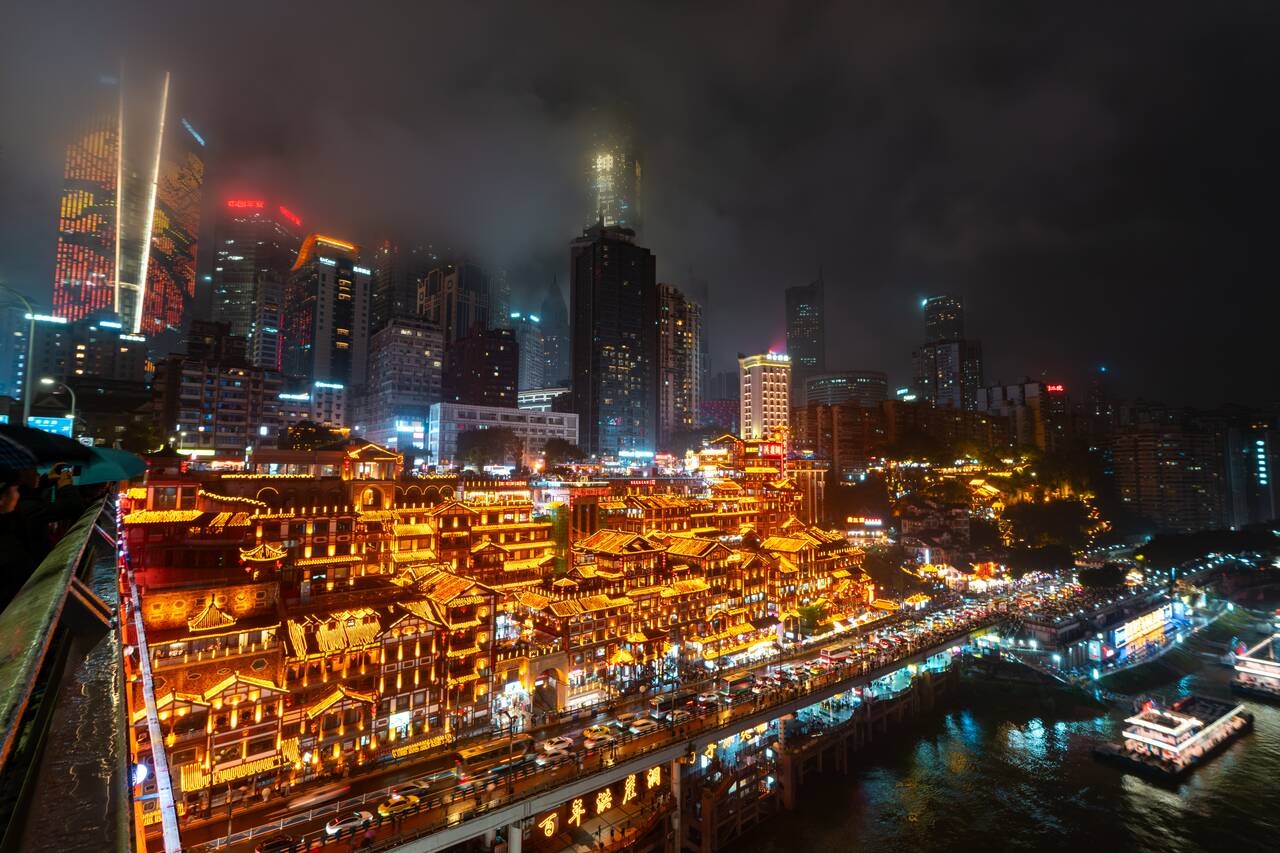
The site takes its name from Hongya Gate, one of old Chongqing’s city gates. The complex you see today opened in 2006 and was modeled on diaojiaolou, the traditional stilt houses built on steep slopes in this part of China. Except these days, those stilt houses are full of shops and restaurants. Talk about extreme commercialization! 🤣
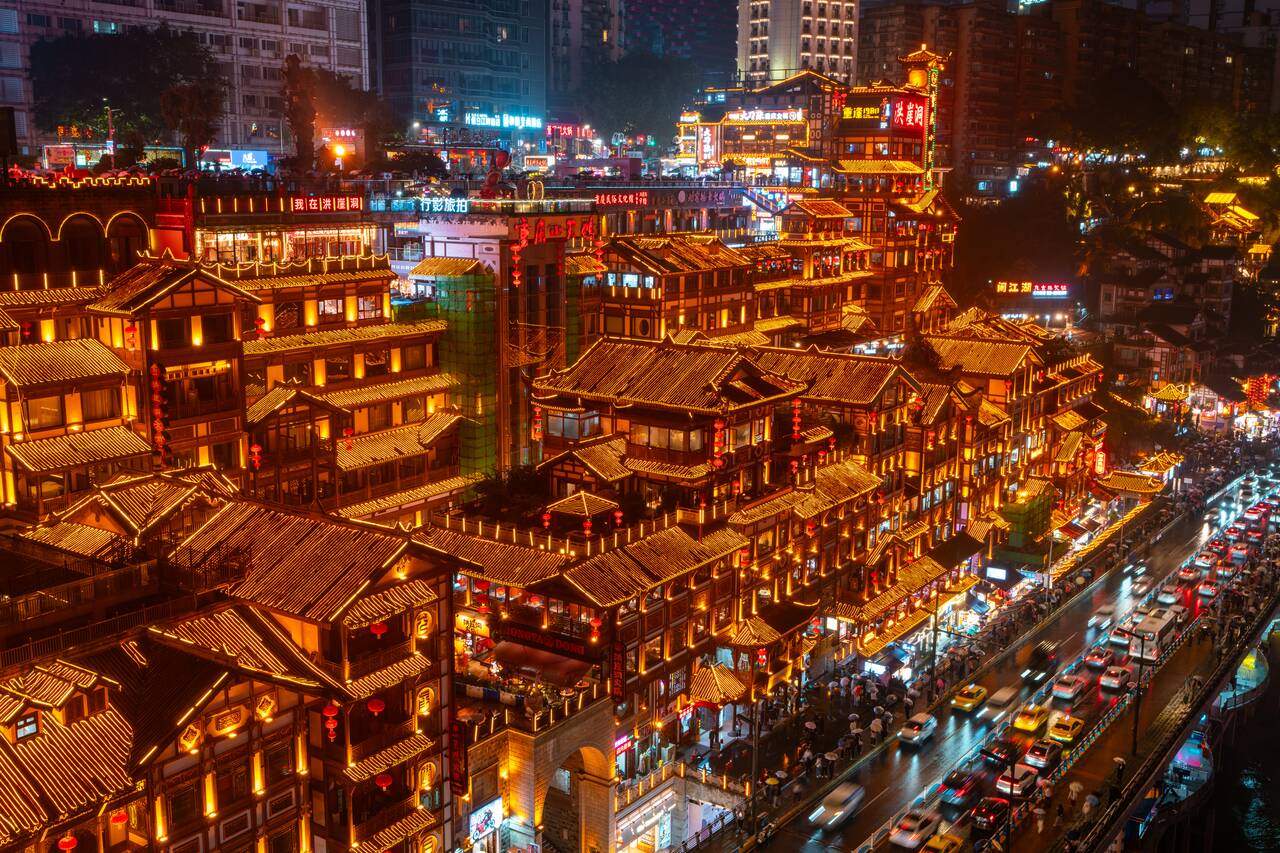
There’s no doubt it’s beautiful in the evening, when the lights come on and all those layers of balconies glow above the Jialing River. It’s also one of the most famous photo spots in the city, so expect crowds even on a regular evening.
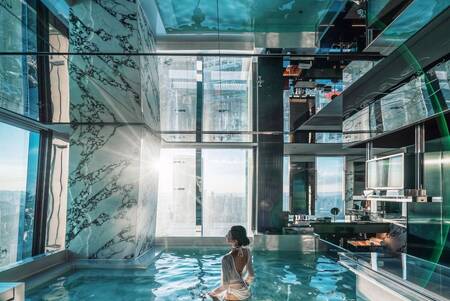
- Qianhe Zhixuan High-View Hotel (Jiefangbei Hongyadong) (Budget)
- Asiam International Hotel in Hongyadong,Jiefangbei,Chongqing (Mid-Range) 👍 Top Pick
- SEYA Panoramic Hotel - Chongqing Jiefangbei Flagship (Managed by SEYA GROUP) (High-End)
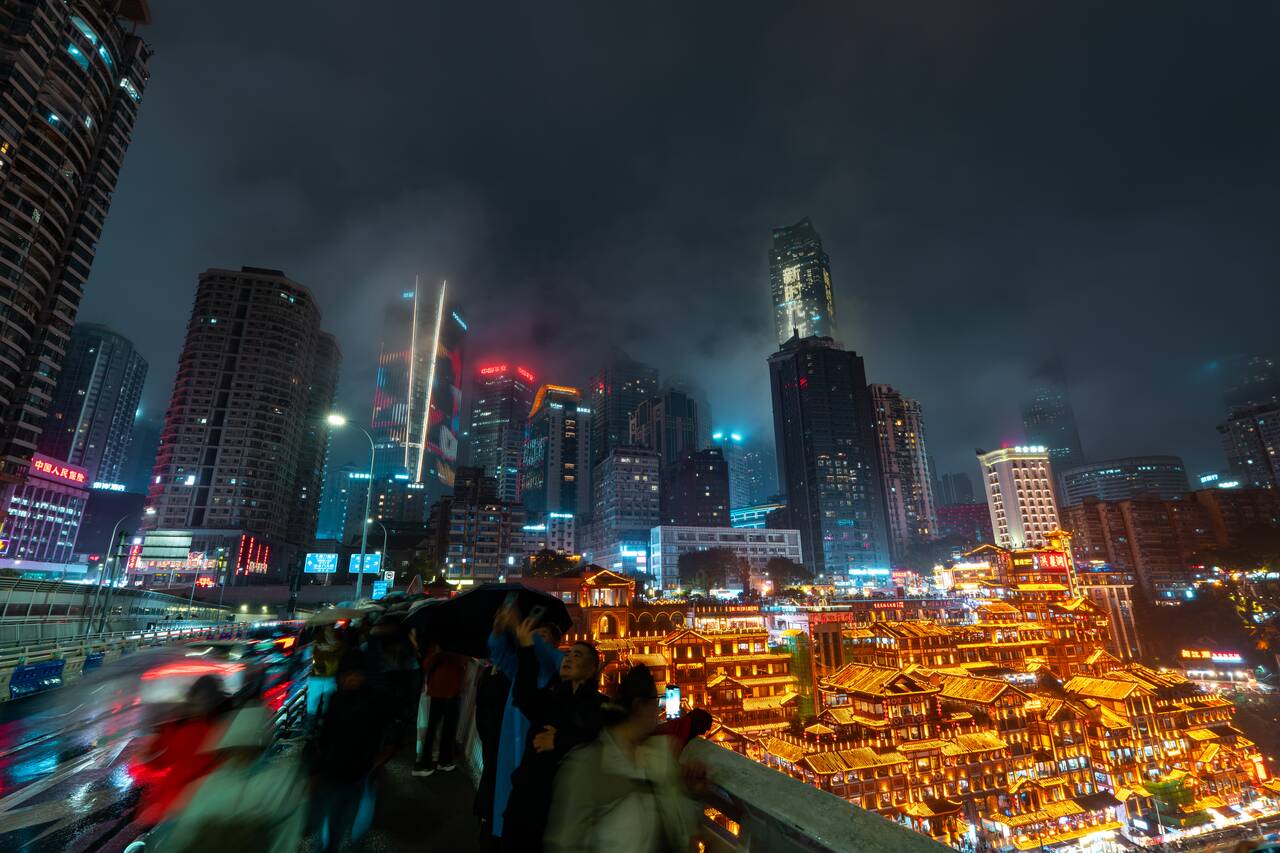
If you can, avoid visiting during public holidays. The lines can get so long that they wind around the surrounding streets and reach all the way up to the bridge! You will be stuck in line for hours getting there and back.
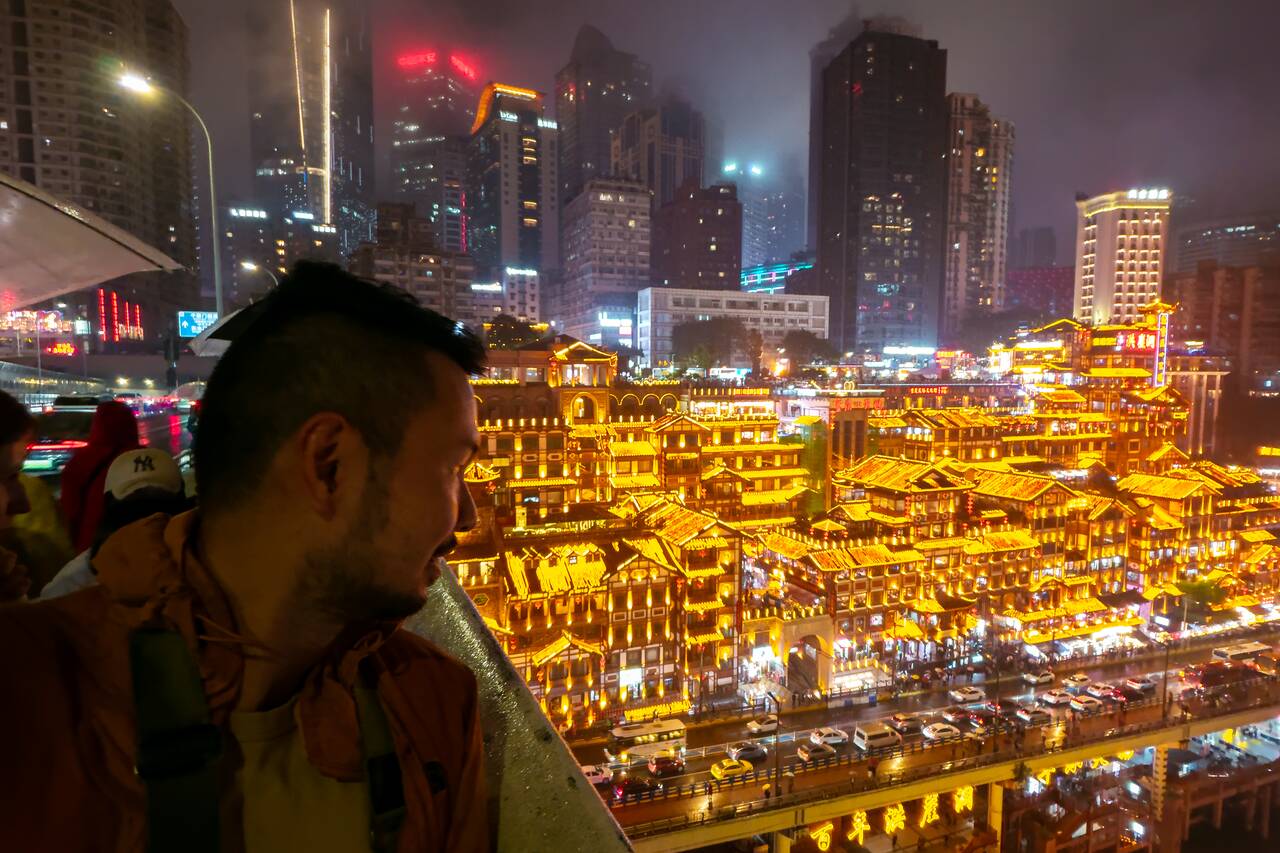
For a good view of the whole complex, head up to Qiansimen Bridge. From up there, you can see how the buildings are stacked against the hillside, with the modern skyline rising behind them. Getting a photo without someone stepping into the frame is another matter 😅. Give yourself a little time to find a spot, and enjoy the view while you wait!
Where to Stay in Chongqing?
 👍 Top Pick
2. Watch the Train Pass Through a Building at Liziba Station
- 📍 Location: Liziba Station [Map Link]
- ⚡ Pete's Take: "Sure, the architecture and engineering feat is interesting, but I found more entertainment in looking at people posing here than at the train, haha."
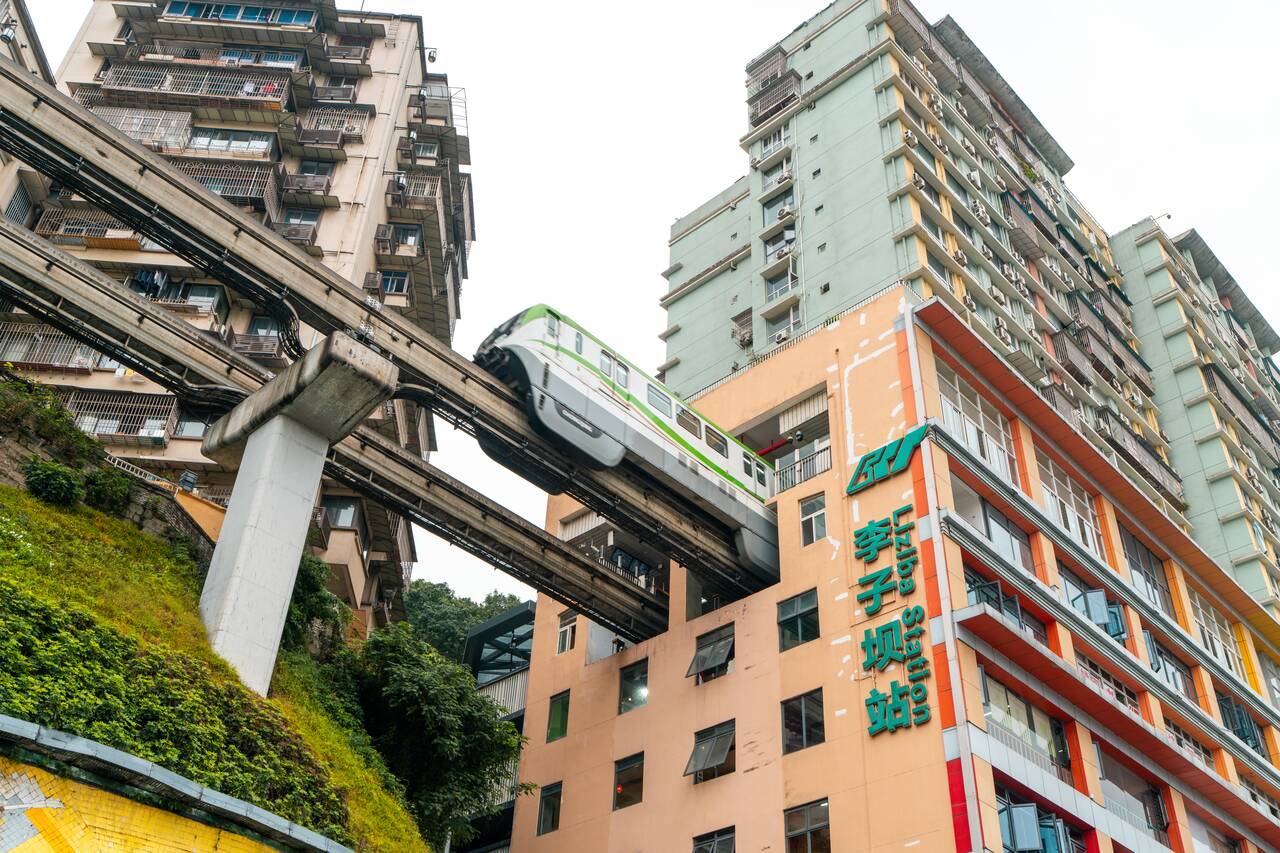
One of the coolest things you can see in Chongqing is the train passing straight through a building at Liziba Station. Again, this is a very popular spot, so expect tons of crowd right as soon as you get off the train. Make your way down to street level and cross the road to the viewing platform, where you can see the whole thing from below.
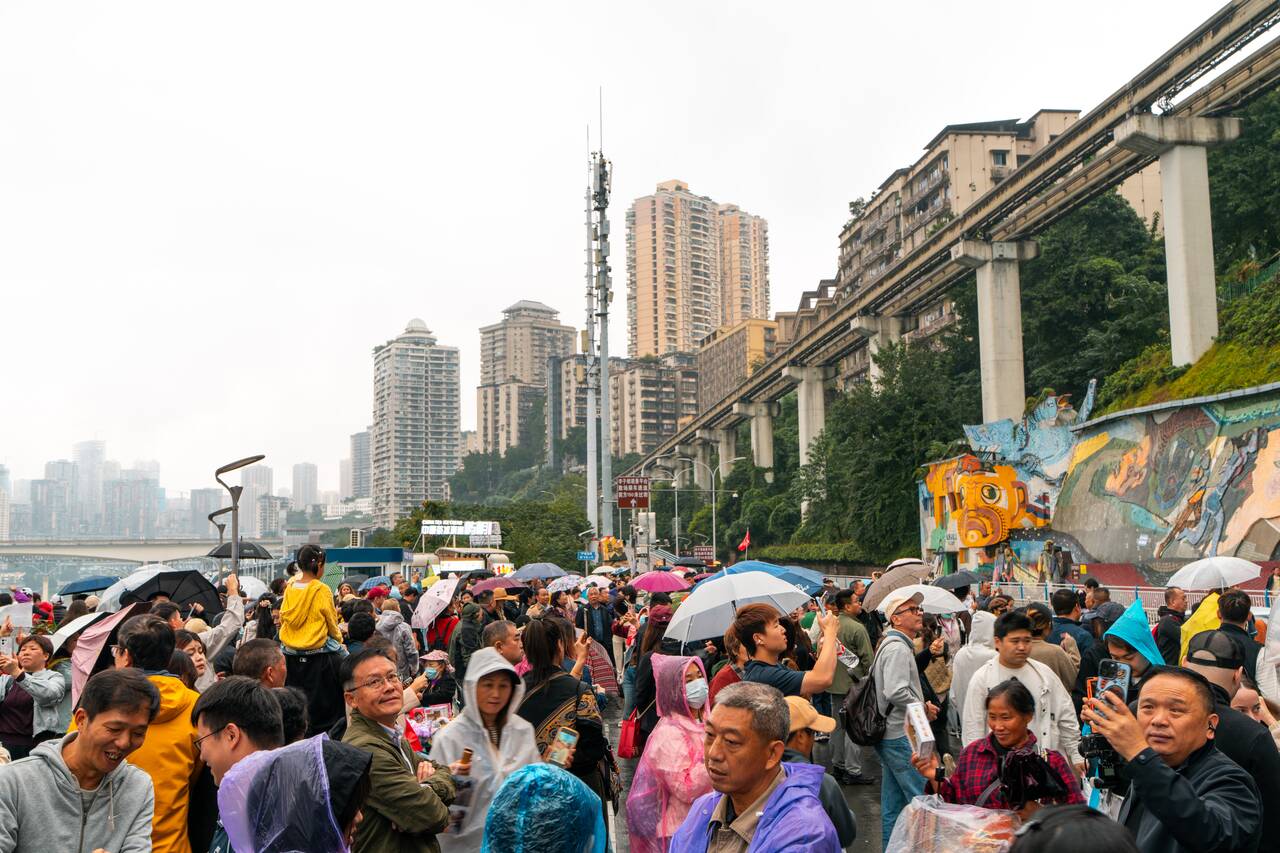
Once you get there, you’ll see tons of people posing with a traditional Chinese fan in hand and their mouths wide open, trying to get that iconic photo of a train going straight into their mouths 😮🚝.
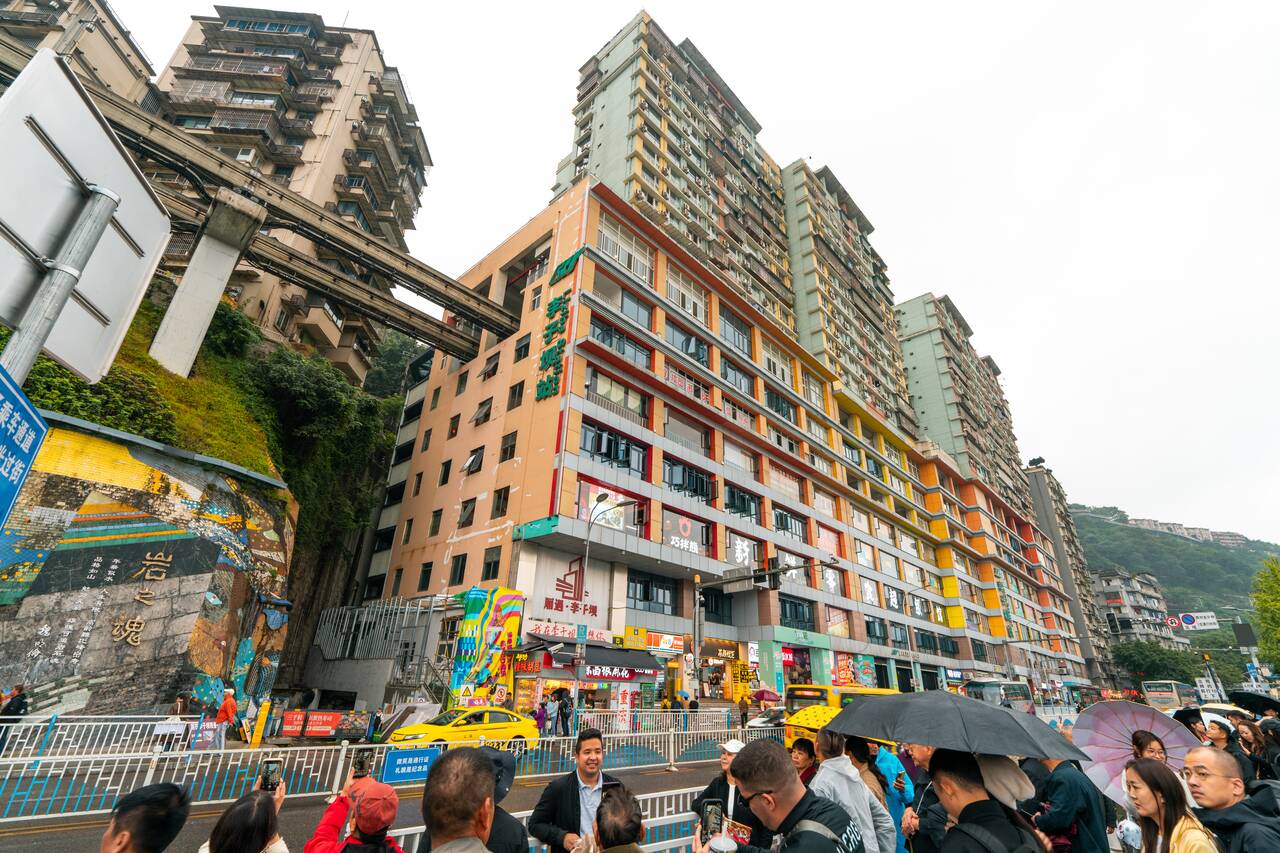
I mean, seeing a train go through a building was pretty cool and all, but for me, the highlight was watching everyone pose for the same photo. If you take the train out of the picture, the whole thing just looks absolutely bizarre. Haha! 🤣
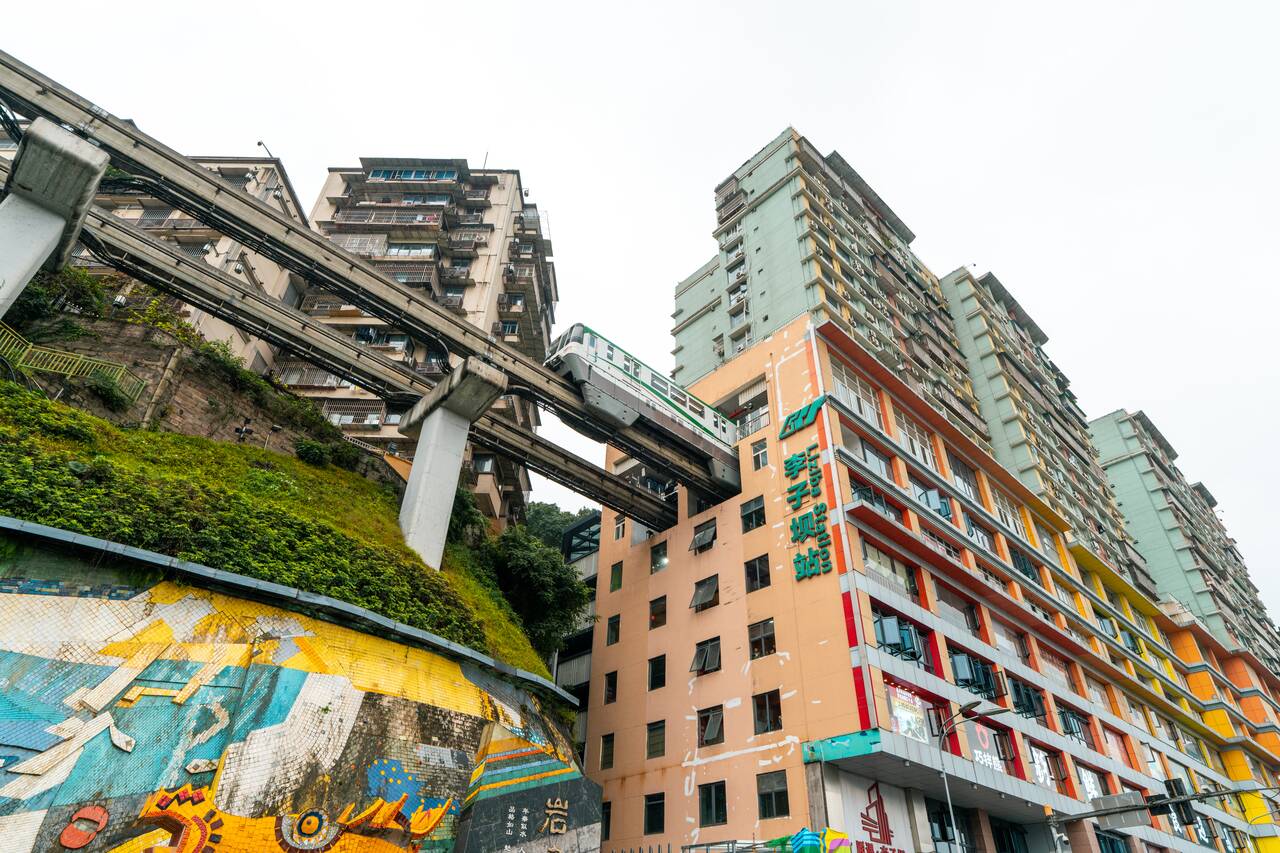
When I was there, a train came through about every 10 minutes. You’ll probably catch one without waiting too long, but if you want that iconic photo, you might have to wait a while for your turn.
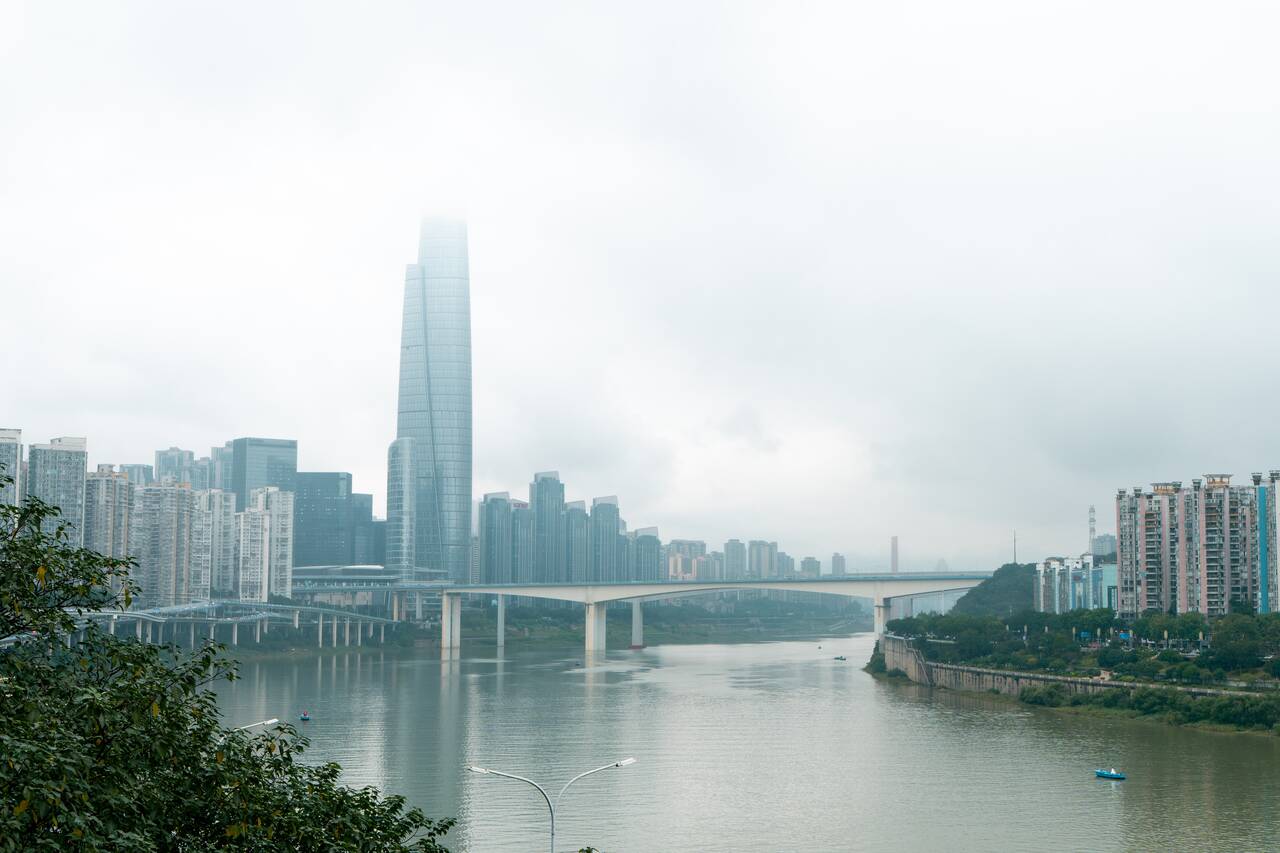
Setting up a tripod to do it yourself is pretty much impossible with all the crowds, so either ask a friend to take it for you or hire one of the local photographers there. They’ve taken this shot so many times that you can bet they know how to get it in one go!
3. See How Chongqing Is Built on Different Levels at Kuixing Tower
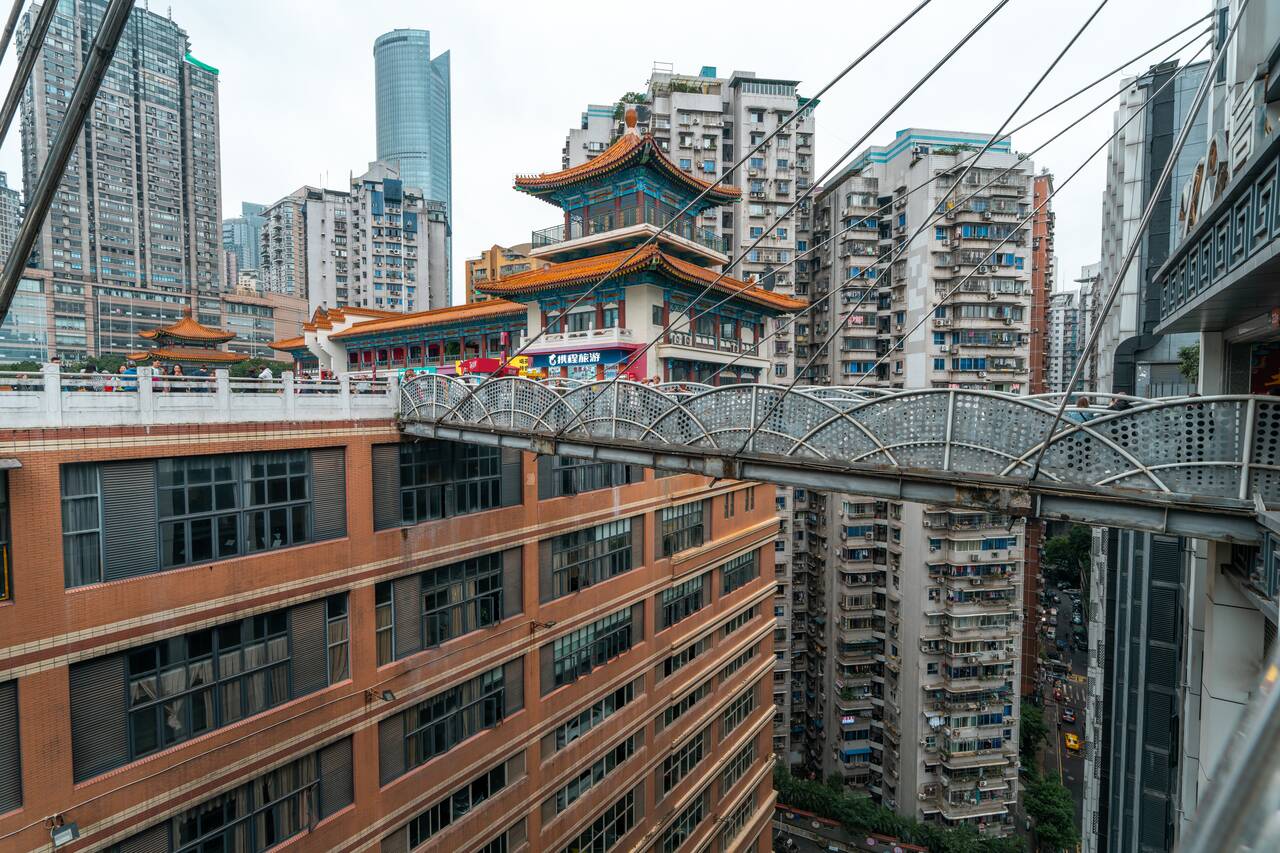
- 📍 Location: Kuixing Tower [Map Link]
- ⚡ Pete's Take: "It’s pretty freaky to walk a few steps from what you thought was the ground floor and realize you’re actually on the 22nd floor!"
If you want to see why people joke that you never know what floor you’re on in Chongqing, go to Kuixing Tower. You can walk straight into the plaza from street level, as if you’re on the ground floor. Then you walk over to the edge, look down, and realize you’re standing 22 floors above another street. So which one is the ground floor? Both, apparently 🤣.
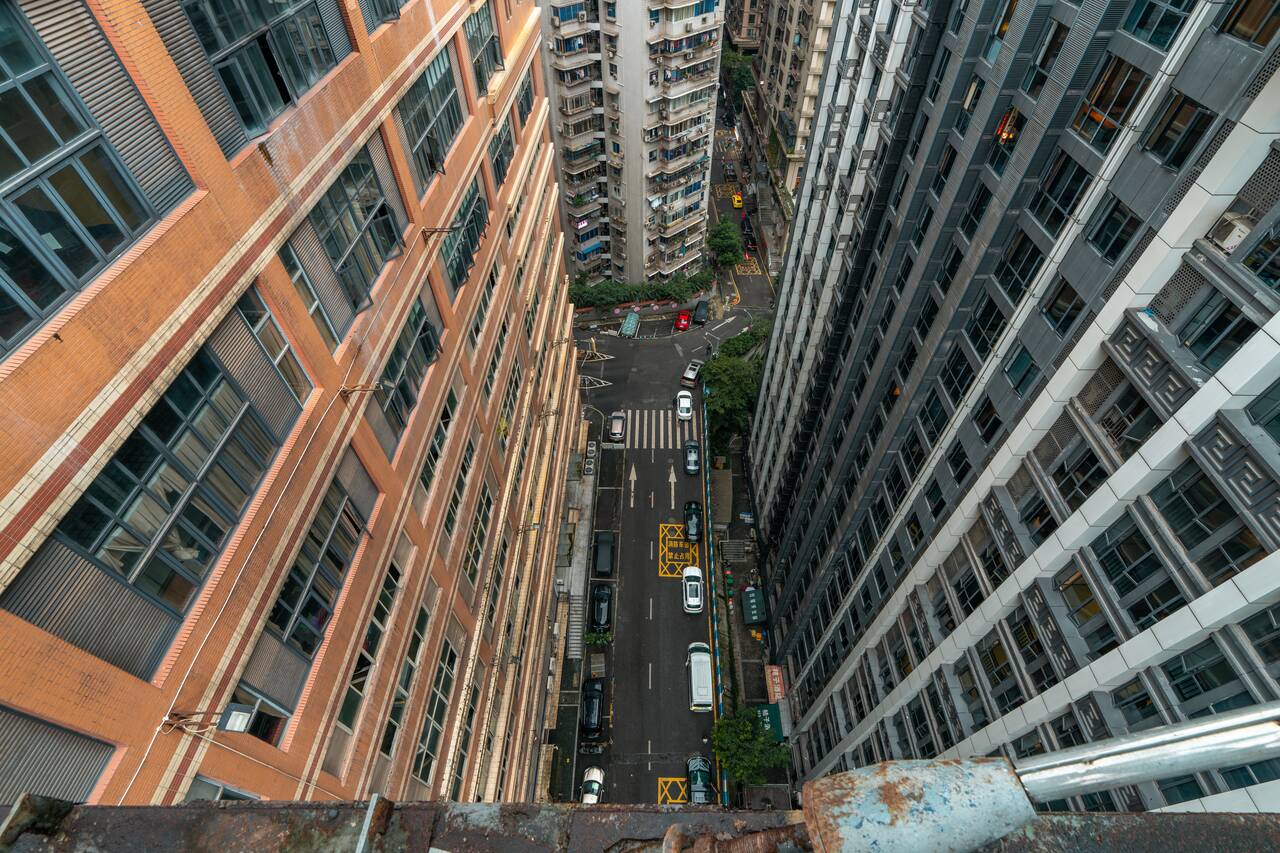
It all makes a little more sense once you see how steep the hillside is. The plaza meets the street uphill, while a pair of footbridges connects it to the top of the building on the downhill side. Walk across one of the bridges and look down at the road below. The drop is a lot more impressive in person!
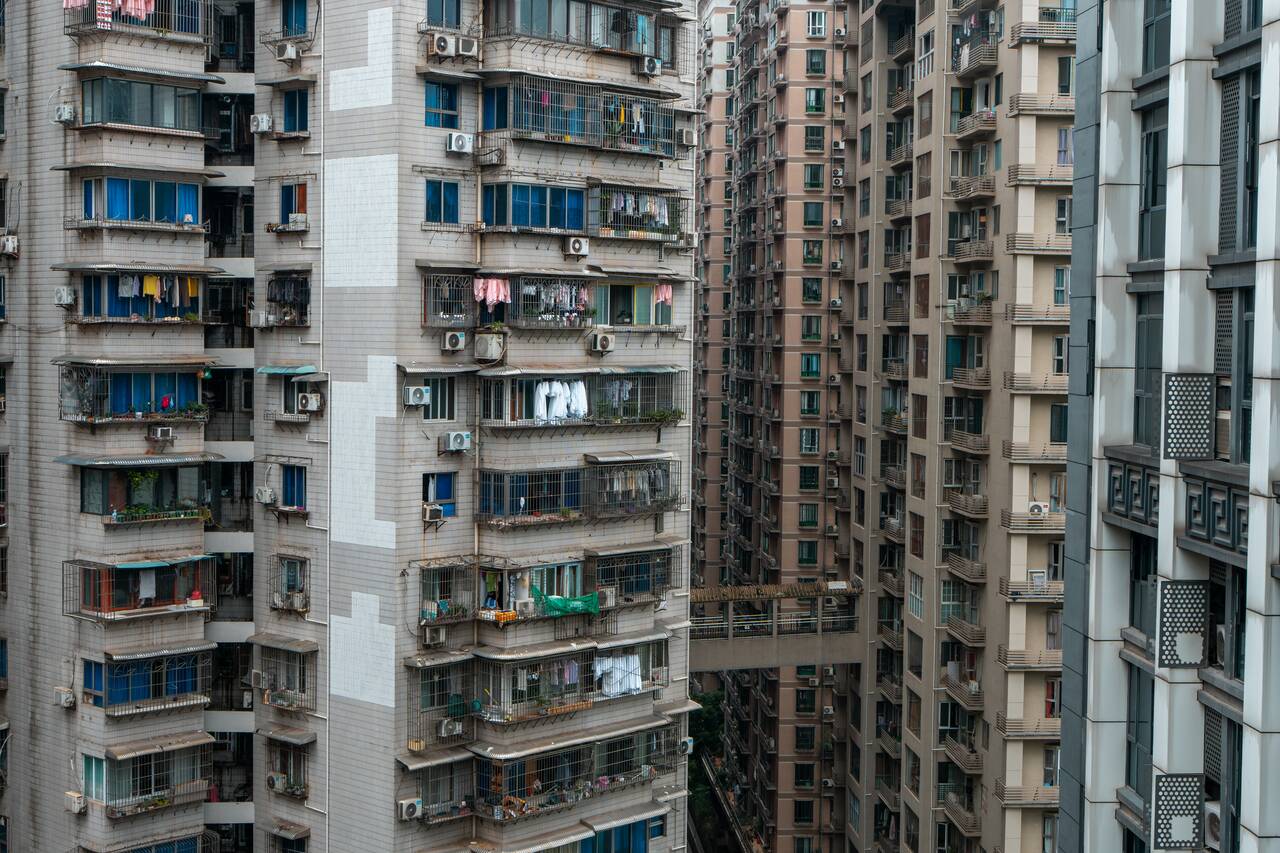
It’s a quick stop, but I’d make time for it while you’re around Jiefangbei. You can look at photos of Chongqing’s stacked streets all day, but it's nothing like seeing the drop yourself. Definitely not for those who have acrophobia! If you are interested to learn why buildings like these exists here, I recommend you watch this Youtube Video explaining why they were built the way they do.
4. Walk the Shancheng Mountain City Trail
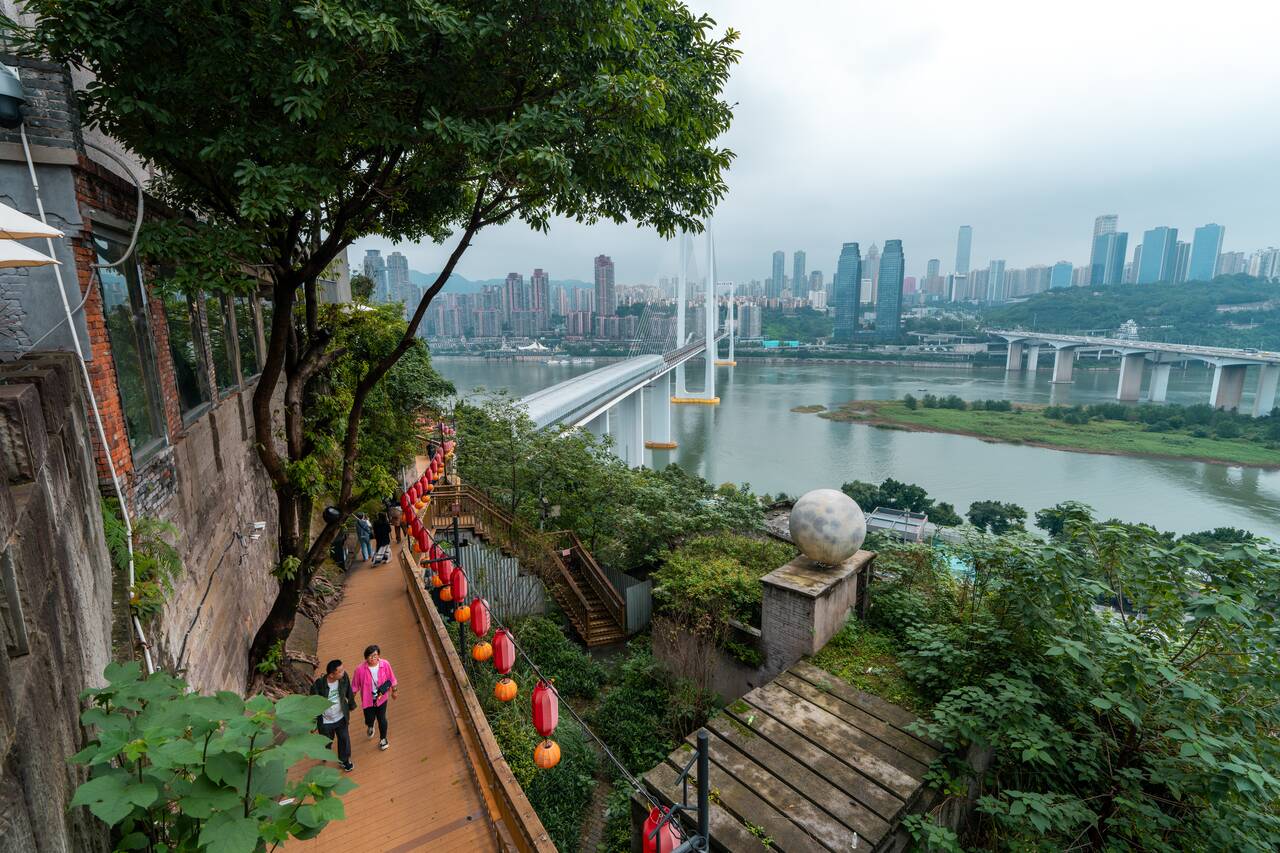
- 📍 Location: Shancheng Mountain City Trail [Map Link]
- ⚡ Pete's Take: "Be sure to keep an eye out for an old school turned open-air museum/creative space. It was one of my favorite places here and really brought me back to when I was in school in Thailand, which has a pretty similar setup."
One of my favorite places to wander around in Chongqing was the Shancheng Mountain City Trail. It takes you through Shancheng Lane, an old cliffside neighborhood where stone steps and narrow alleyways connect homes built at different heights.
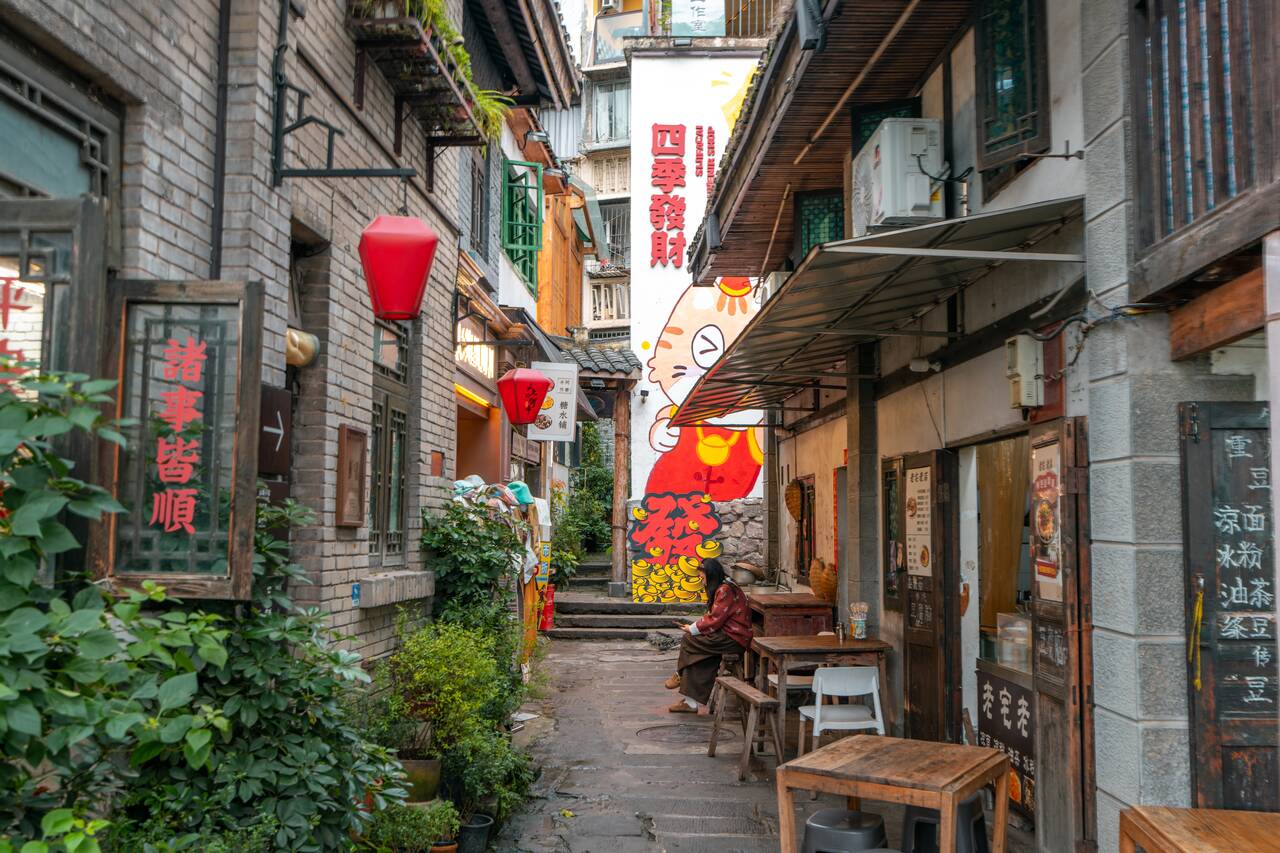
You can still see traditional stilt houses and old courtyard homes along the way, as well as traces of the former French mission, which built a church and hospital here around 1900.
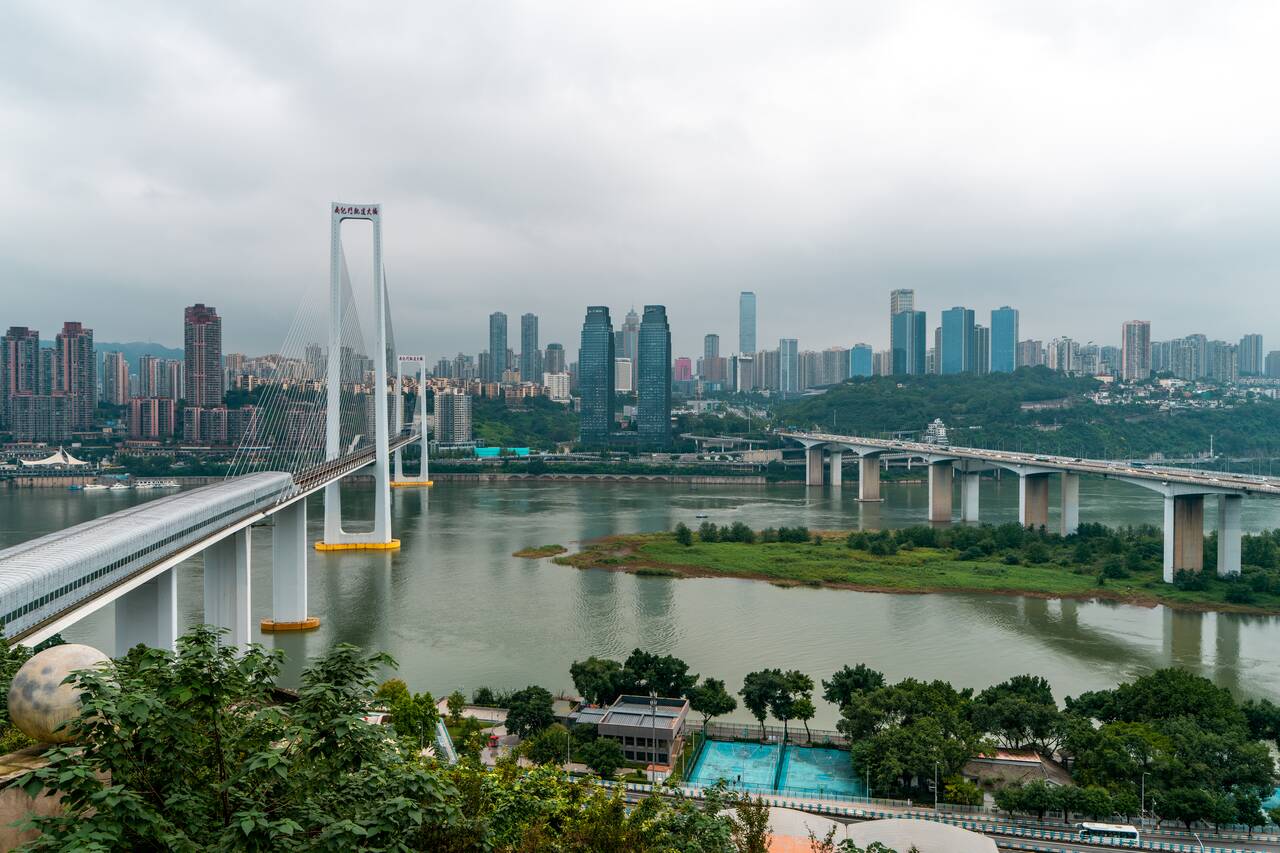
I loved the vibe here. One minute you’re walking past old wooden buildings, and the next you’re looking out over the river from a viewpoint you didn’t even know was there. The alleyways crisscross all over the hillside, so you never quite know what you’ll stumble upon. That was the best part of Shancheng for me!
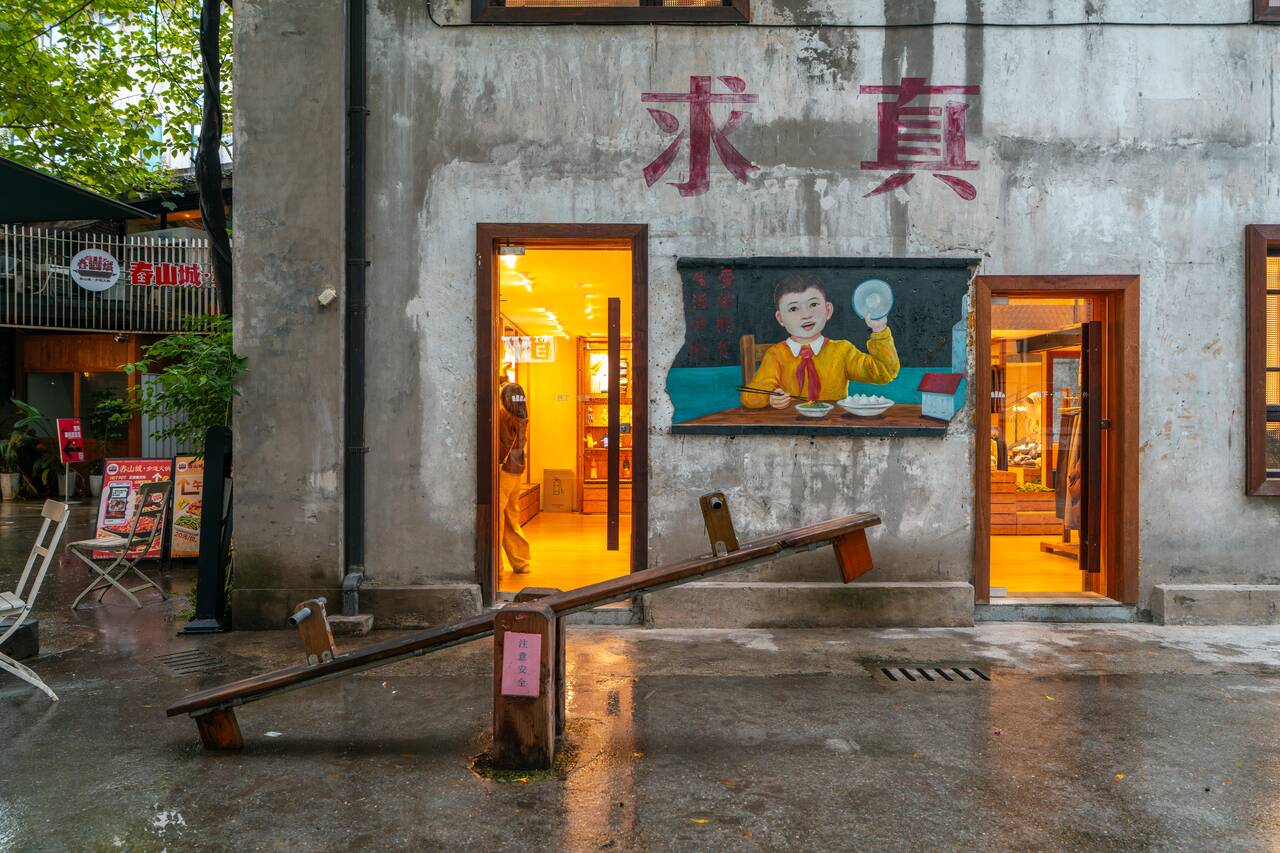
At one point, I stumbled upon an old school courtyard that had been turned into a creative space. The school buildings were still there, and I even found a few classrooms that looked as though the students had just stepped out.
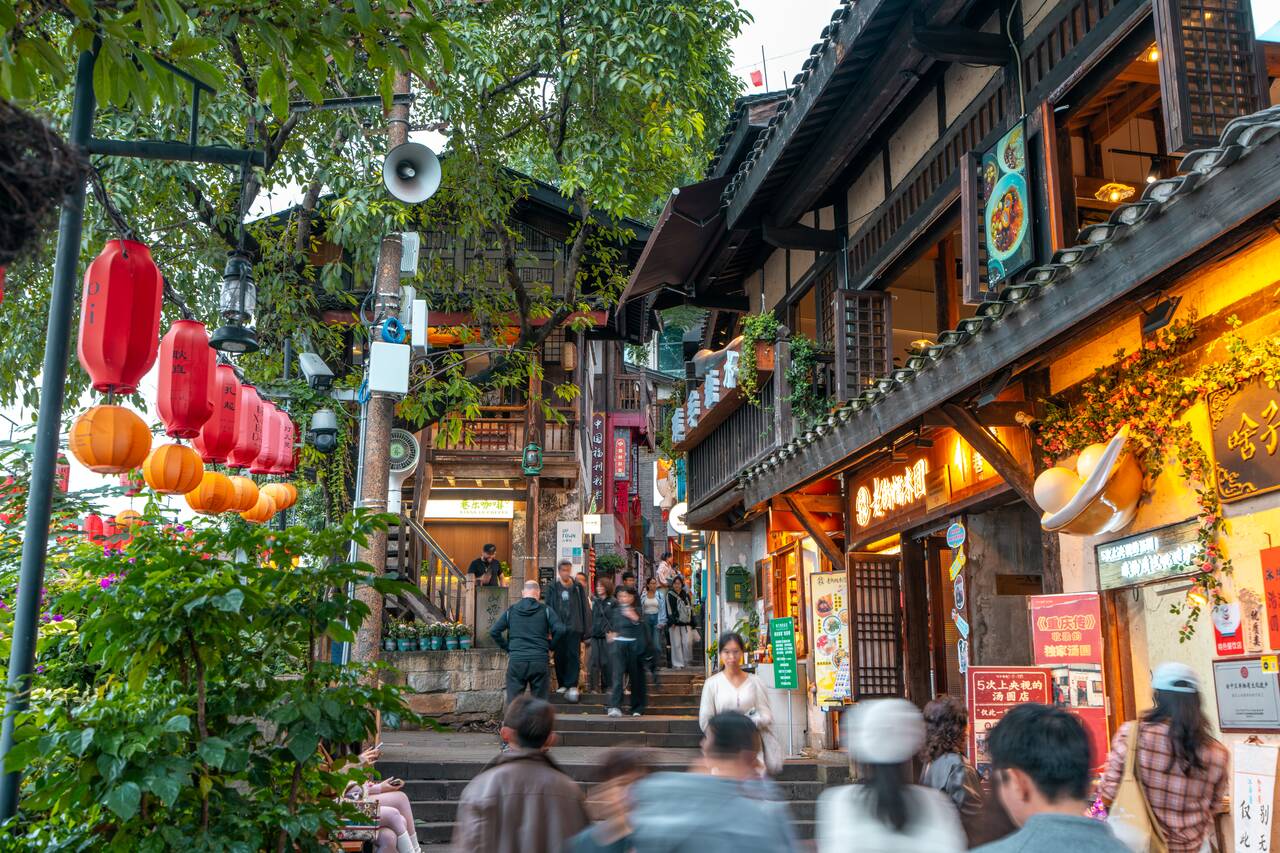
With artwork scattered around the courtyard, it felt a bit like an open-air museum where you could get a glimpse of what it must have been like to go to school in this cliffside neighborhood. Very cool!
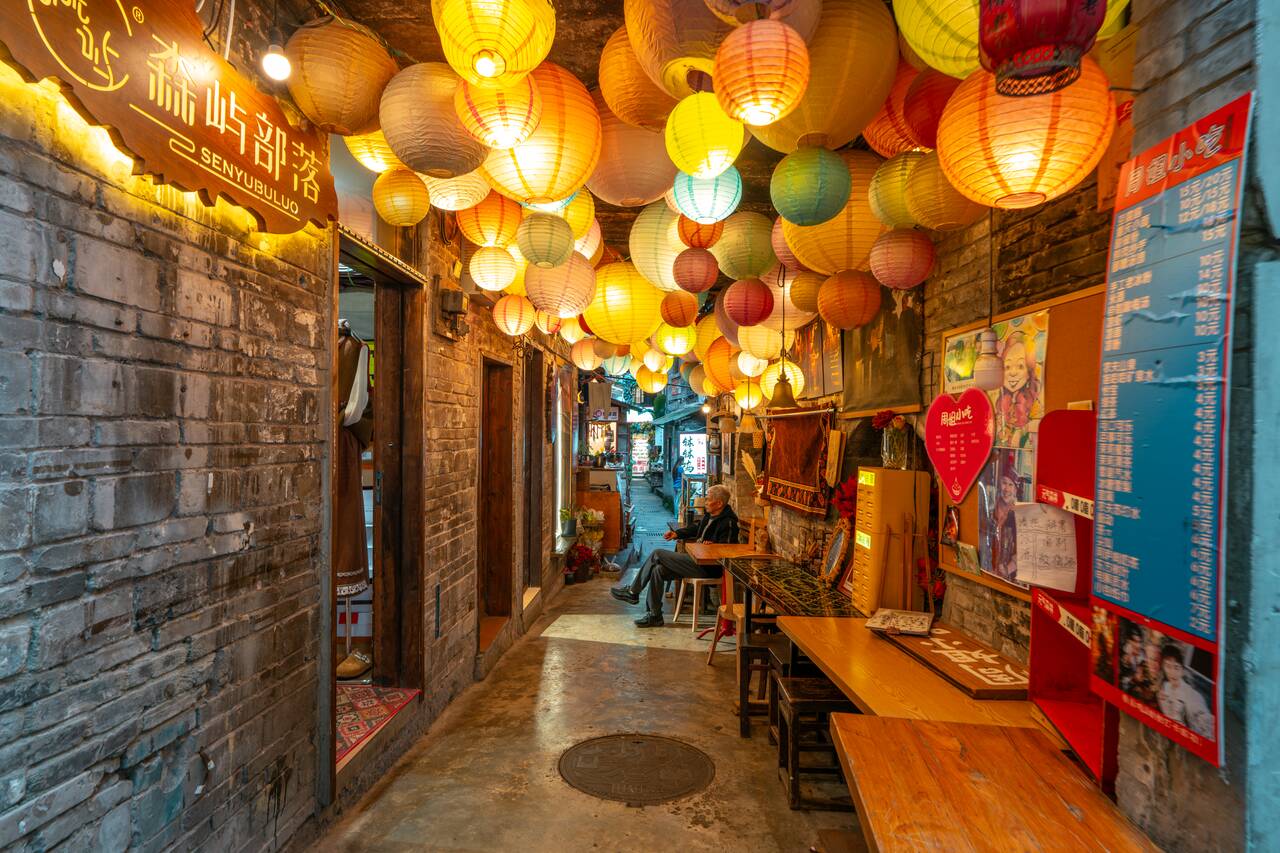
There are also plenty of cafés and restaurants along the trail, some with lovely views, so give yourself time to sit down for a drink or something to eat. I’d start at the upper end of the neighborhood and work your way downhill to save yourself a lot of stairs. I also recommend coming in the evening, when the alleyways are at their liveliest.
5. Explore the Stairways and Alleyways of Shibati
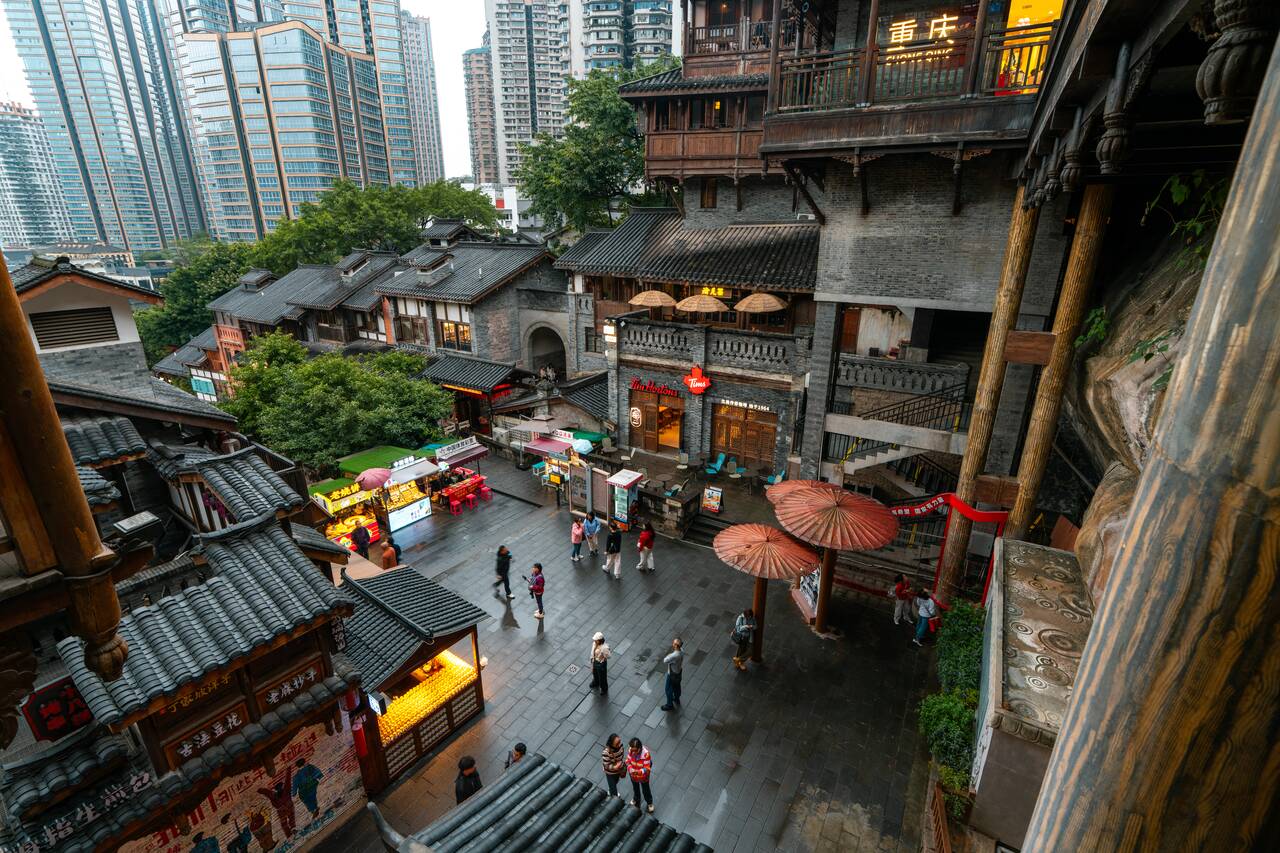
- 📍 Location: Shibati [Map Link]
- 💰 Entry Fees: Free
- ⚡ Pete's Take: "It's a great place to hang out in the afternoon. There are some really nice cafes here, as well as the old bunker turned museum that you can check out. You can visit this together with Shancheng."
Another popular neighborhood to explore in Chongqing is Shibati, which means “Eighteen Steps.” Its old stone stairway once connected the shops of the upper city with the docks of the lower city.
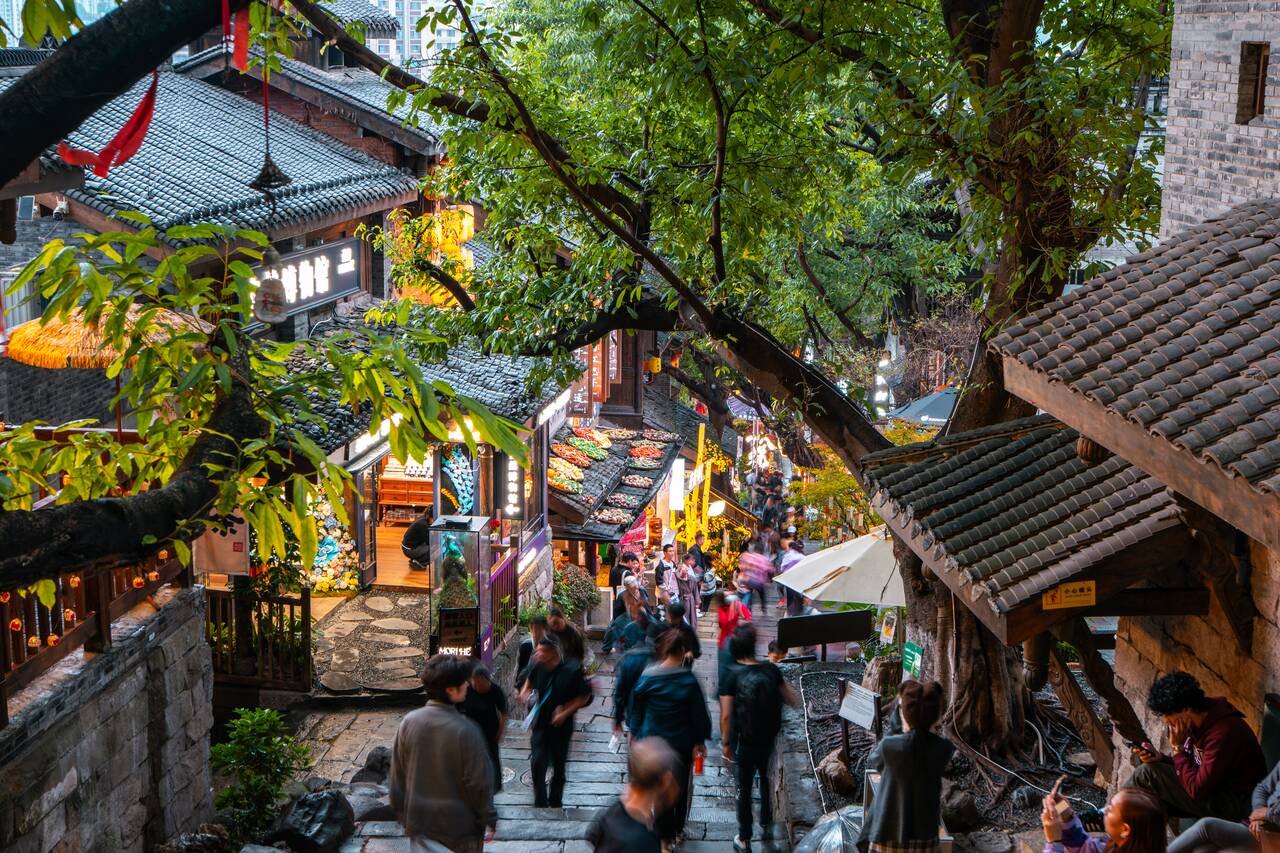
Compared with the narrow alleyways along the Shancheng Mountain City Trail, the main walkways here are much wider, and I found the neighborhood lively even during the day.
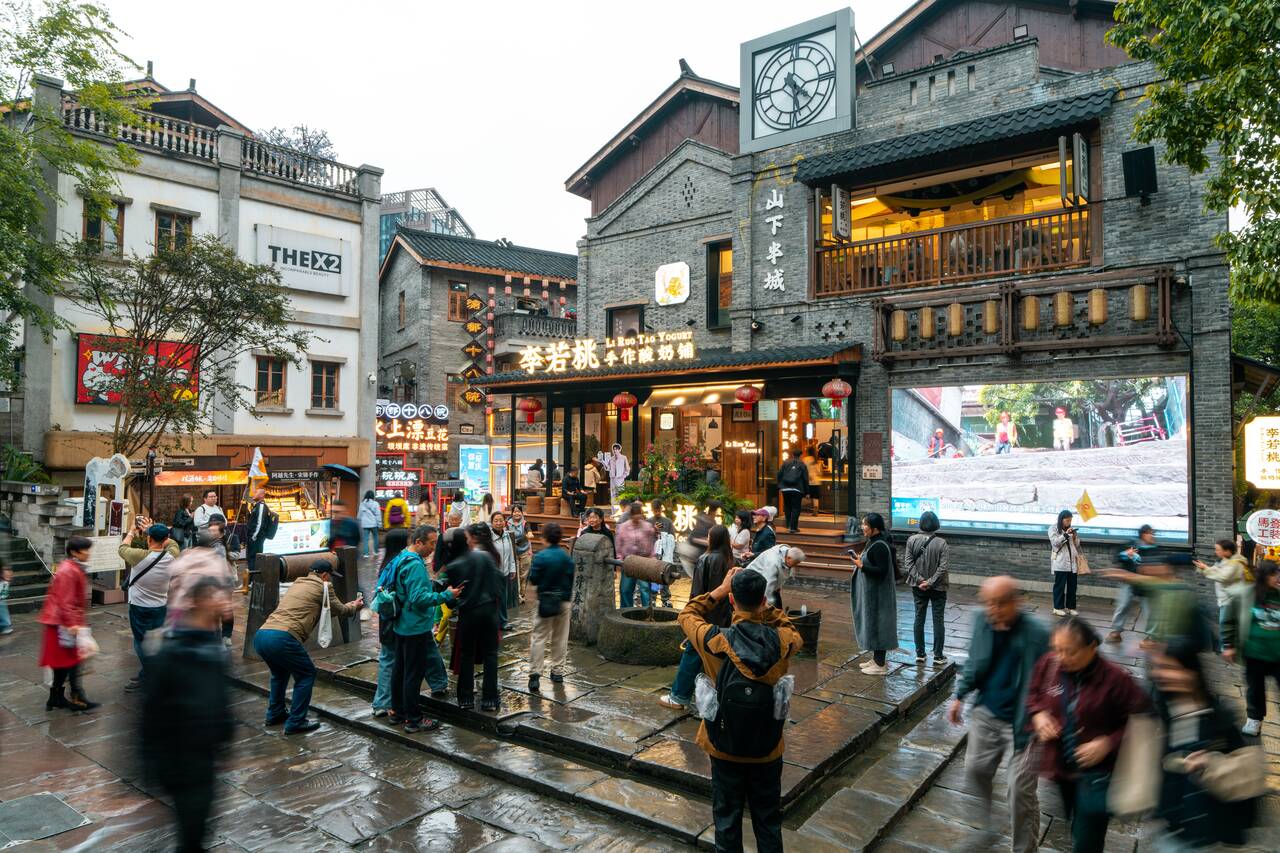
Keep an eye out for the old well in Water Well Square. One local story says that residents had to climb 18 stone steps to fetch water from the well, which is how Shibati got its name. Another says the name came from the 18 separate flights that made up the old stairway.
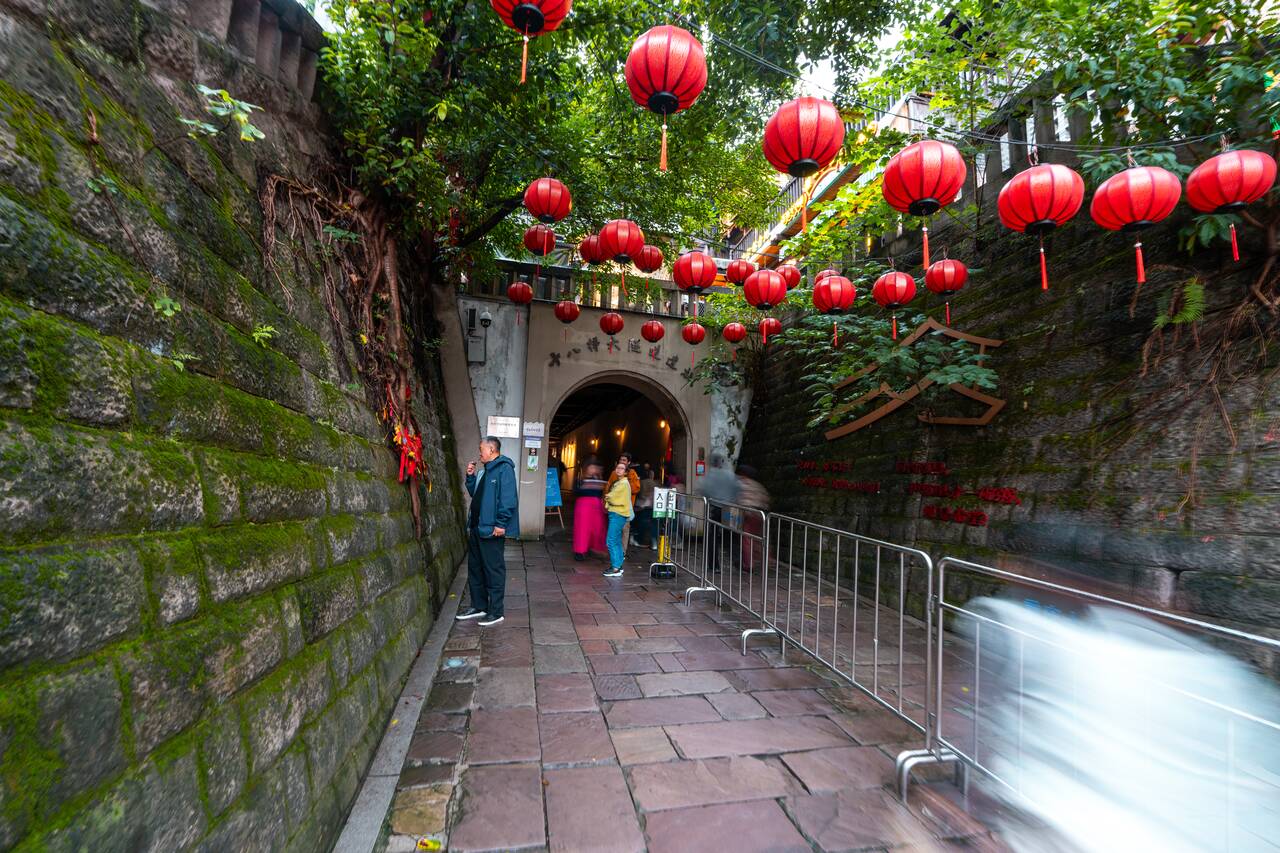
There’s also a free museum inside a former air-raid shelter. During World War II, when Chongqing was China’s wartime capital, residents took refuge in tunnels like this during Japanese bombing raids. The museum tells the story of the June 5, 1941 tragedy, when overcrowding and poor ventilation in the shelter led to many deaths. Quite a contrast to the lively street outside, if I'm being honest.
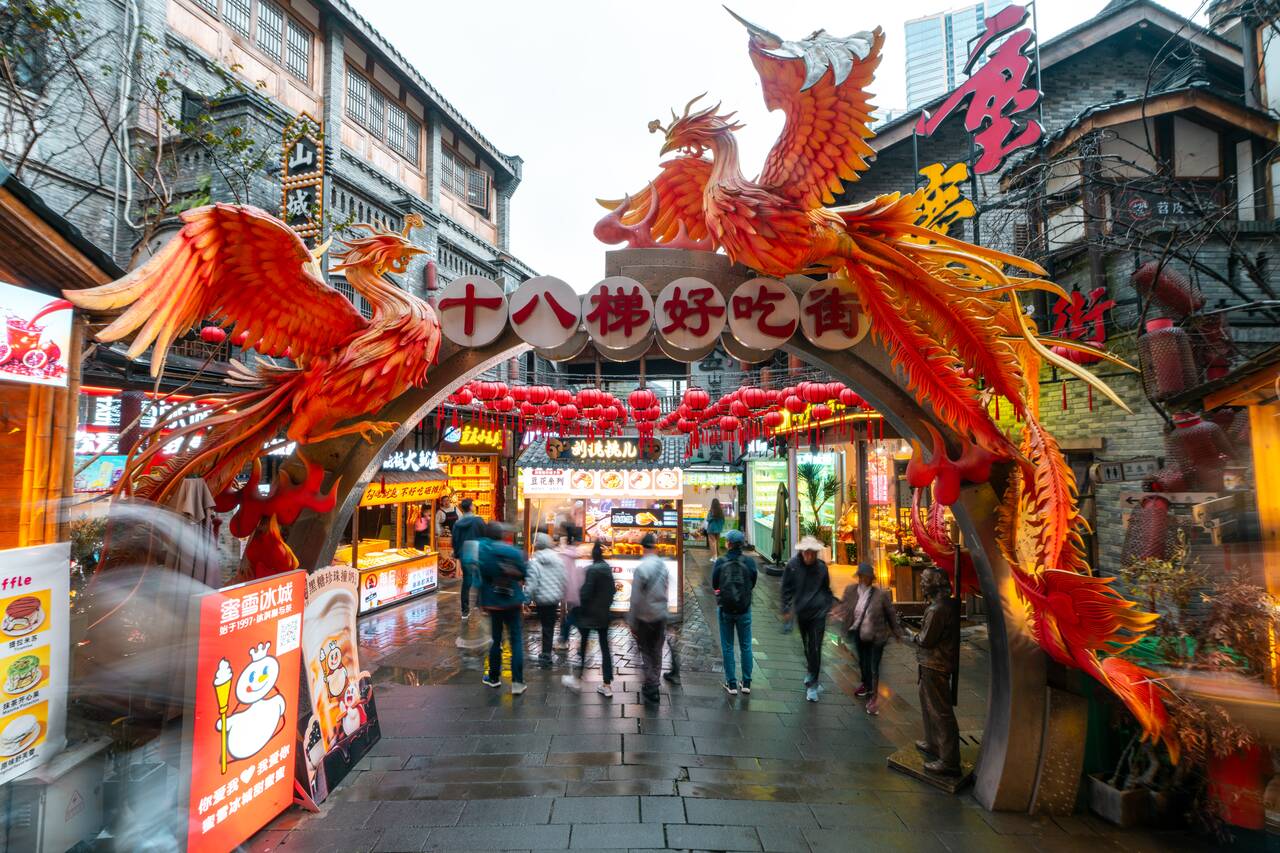
Much like Shancheng, there are plenty of shops and cafés to check out, as well as some nice viewpoints over the city. I’d take your time wandering down the main stairway and duck into the side streets whenever something catches your eye. If you’re looking for somewhere to hang out during the day, this is a great place to be!
6. Wander Around Xiahaoli
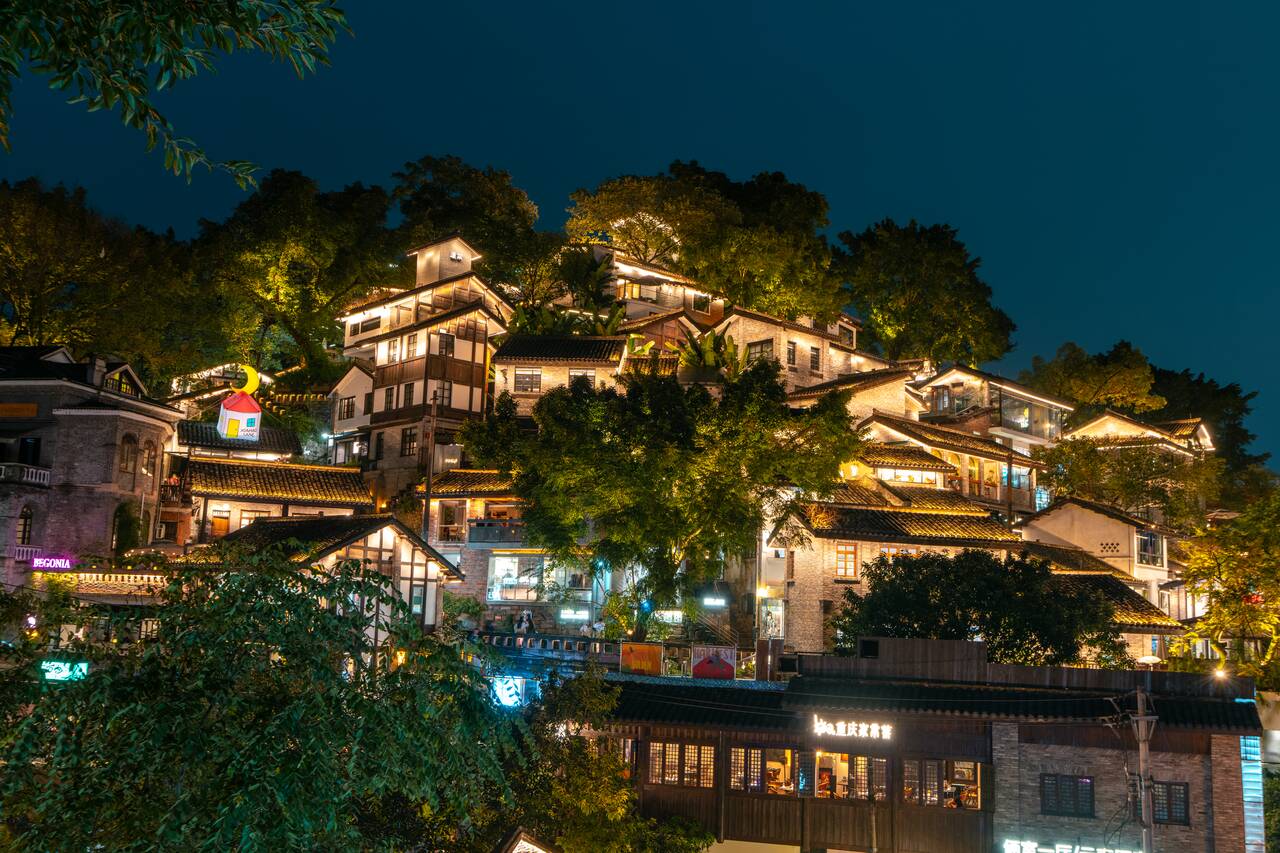
- 📍 Location: Xiahaoli [Map Link]
- ⚡ Pete's Take: "Very nice place to explore in the late evening. The cafes and restaurants here feel more interesting than those in other historical districts that have turned commercial. I love them."
Across the Yangtze River from central Chongqing, you’ll find Xiahaoli, a restored hillside neighborhood in the historic Longmenhao district. After Chongqing opened as a treaty port in 1891, foreign businesses set up in the area, and Western-style villas and commercial buildings sprang up alongside traditional wooden homes. You can still see that mix of architecture as you wander up and down the stone steps.
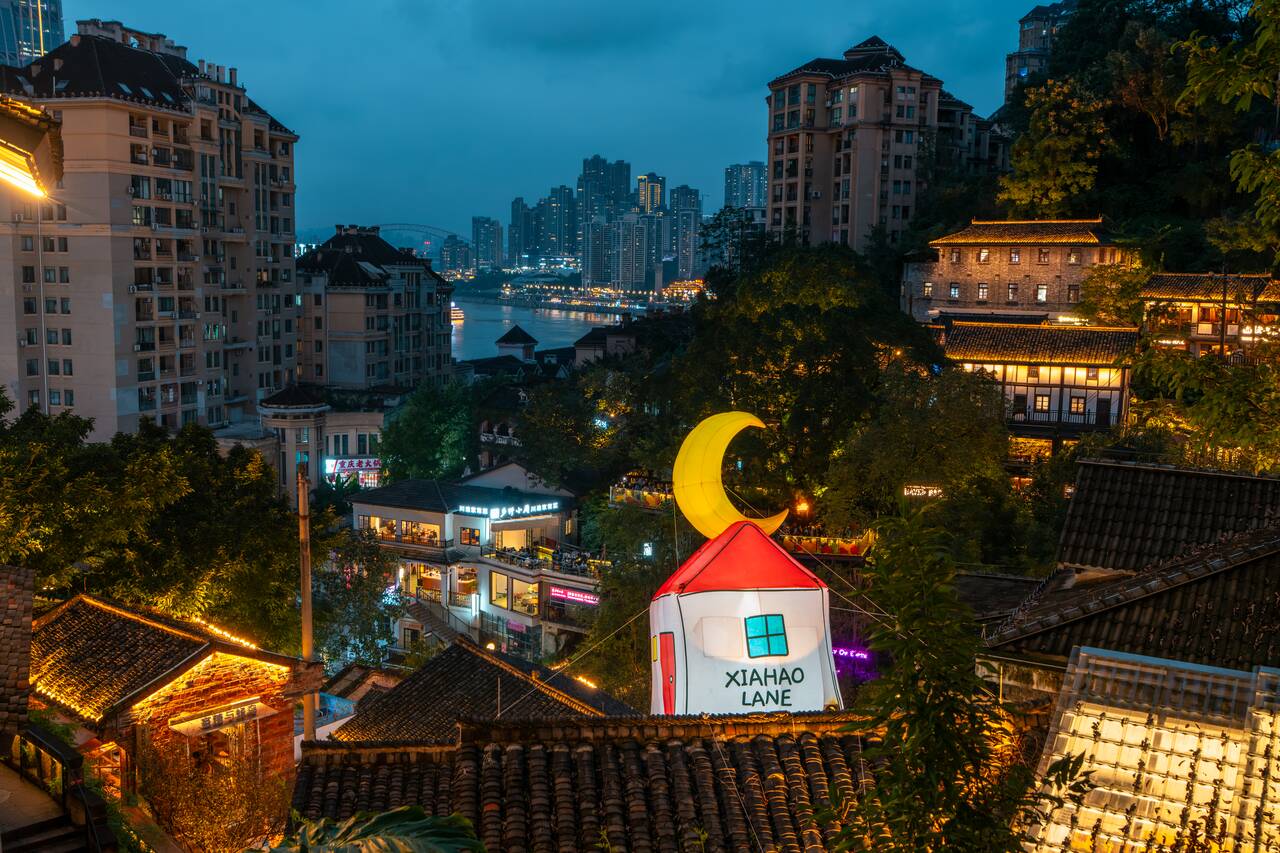
I recommend coming in the late evening, when the skyline across the river is all lit up. I loved wandering through the alleyways and catching glimpses of the city between the old buildings. The restaurants and bars here also felt a little more indie and laid-back, so it’s a lovely place to stop for a drink or dinner and take your time.
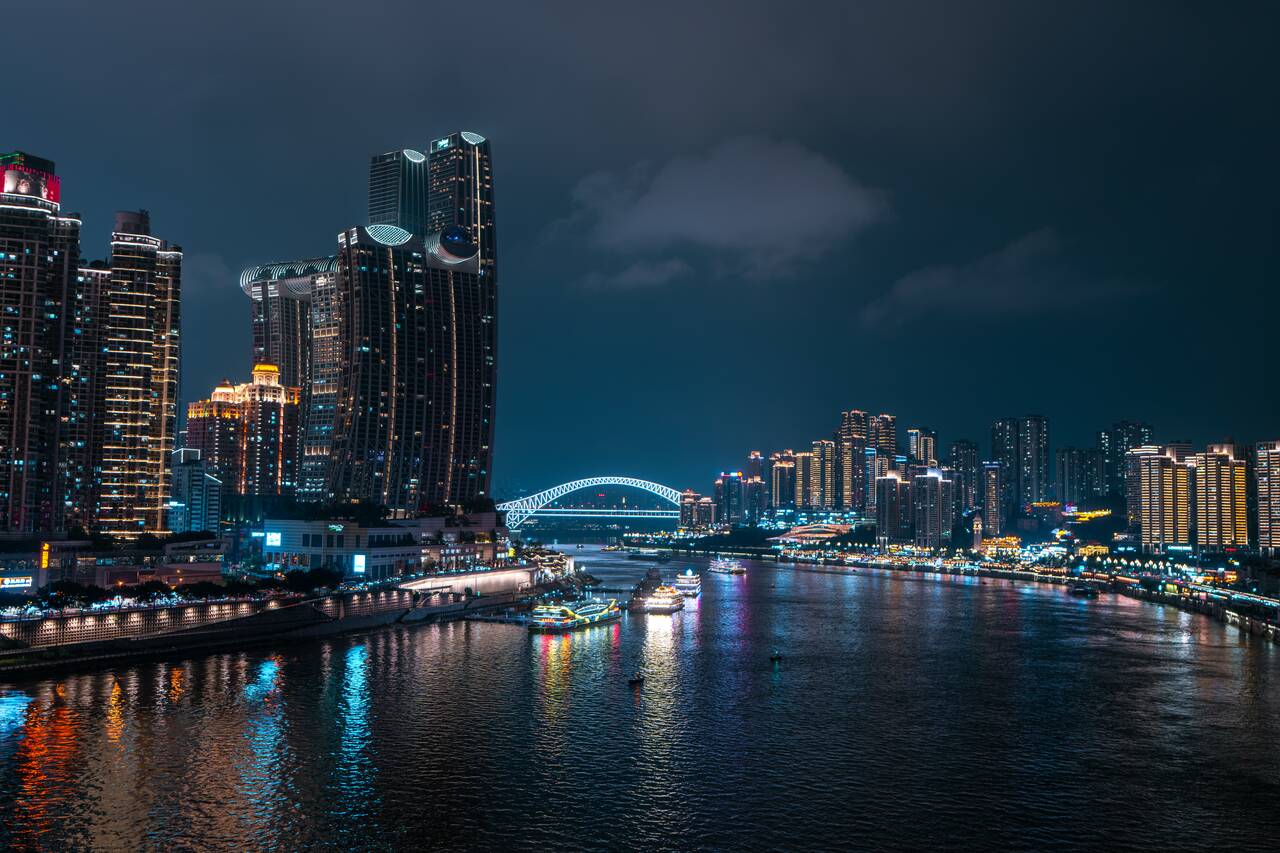
Once you’re done, I recommend walking back across the Dongshuimen Yangtze River Bridge. I went around 7:30 PM, just as the city lights came on, and the view was spectacular! There was barely anyone around, and I much preferred the quieter walk here to the crowded bridge by Hongyadong.
7. Step Inside Luohan Temple
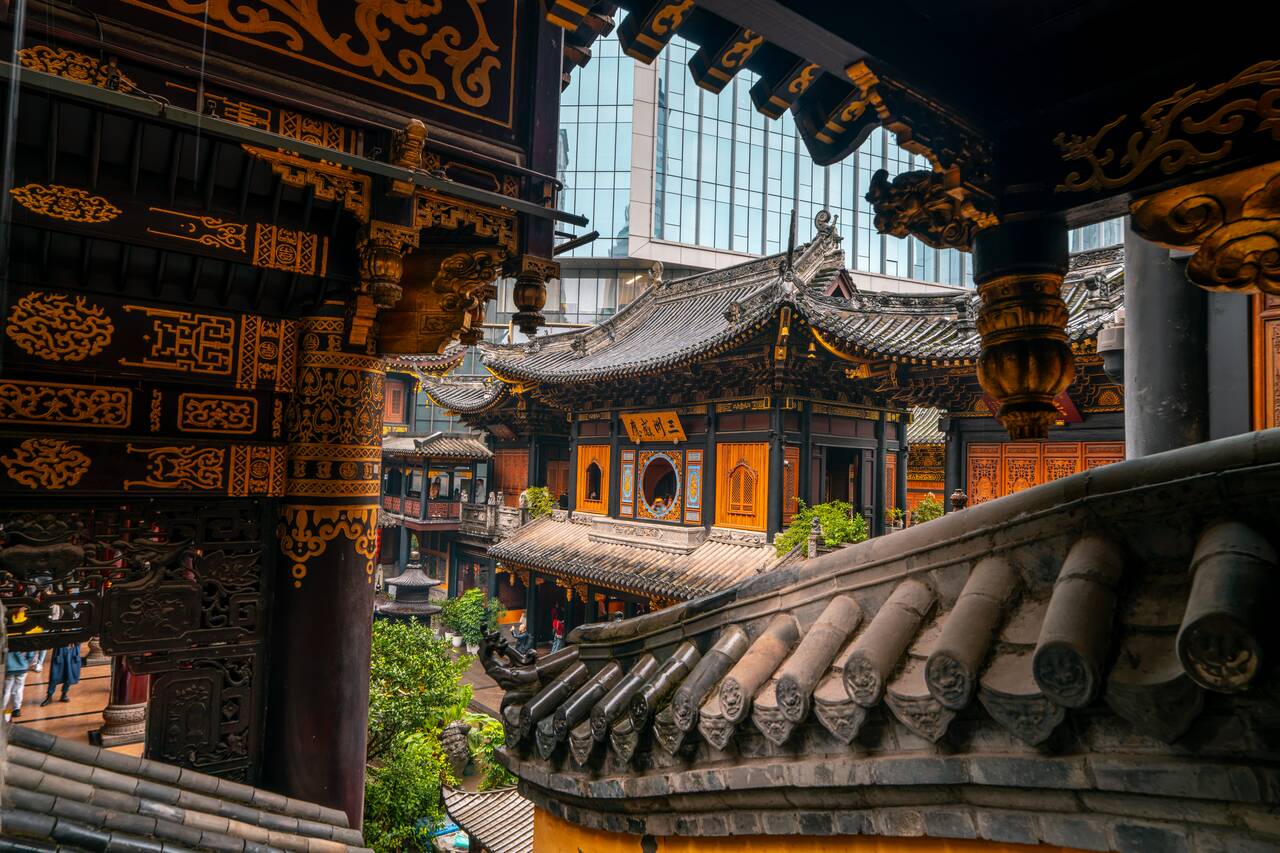
- 📍 Location: Luohan Temple [Map Link]
- 🕐 Opening Hours: 8 AM - 6 PM
- 💰 Entry Fees: 20 CNY (~3 USD)
- ⚡ Pete's Take: "This is an easy recommendation. It’s right in the city center, and there’s nearly 1,000 years of history here. Nowhere did the contrast between old and new Chongqing stand out more to me than here."
Right in the heart of Jiefangbei, tucked between modern skyscrapers, you’ll find Luohan Temple, a beautiful old temple first built way back in the 11th century. It’s a must-visit when you’re in Chongqing. I mean, in a city this futuristic, who would have thought you’d find a temple with nearly a thousand years of history in the middle of it all?
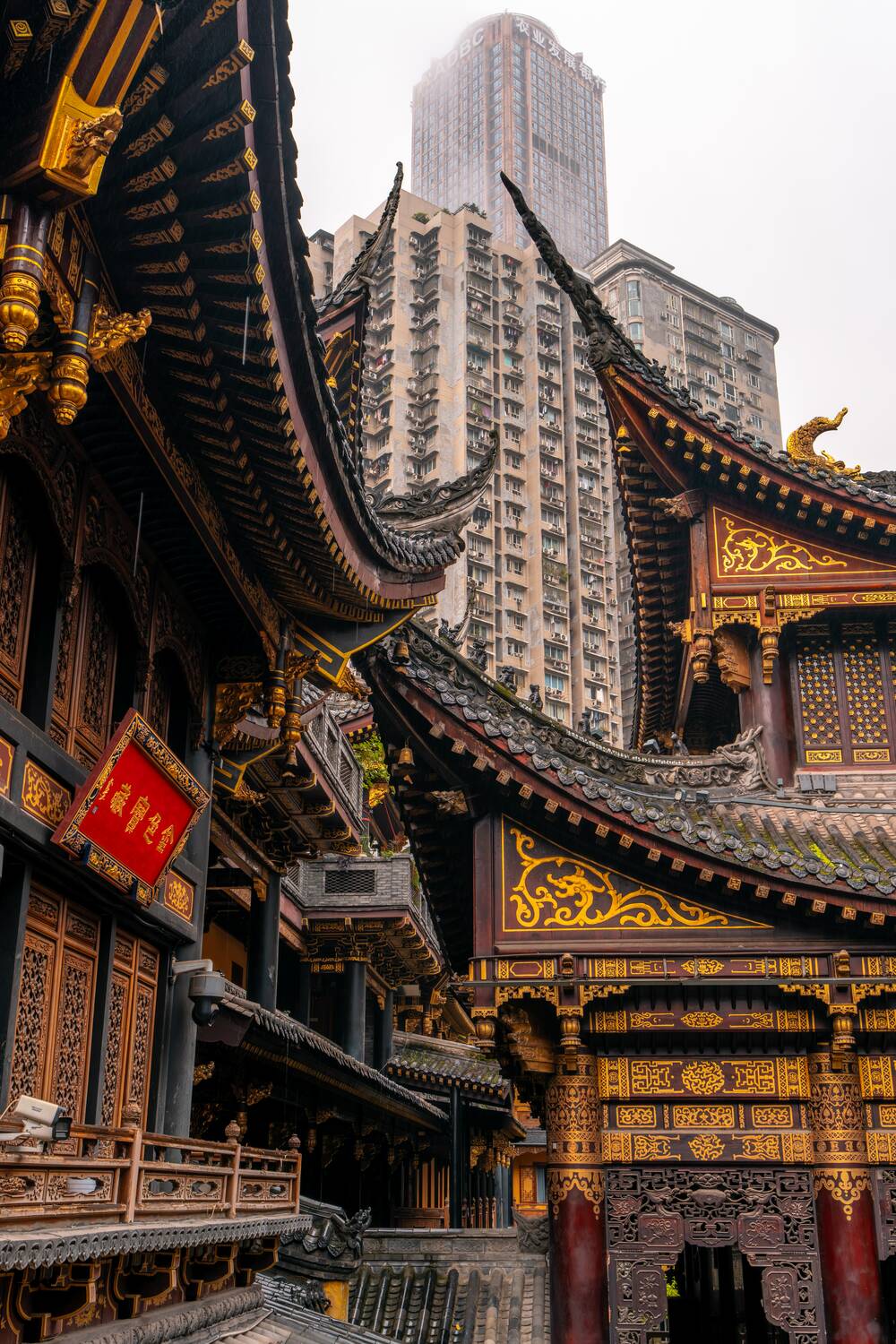
One of my favorite things about this place was looking up at those intricate temple roofs with modern skyscrapers towering right behind them. It’s quite a sight! I also loved the smaller details, especially the beautiful circular window and the ornamentation along the roof ridges.
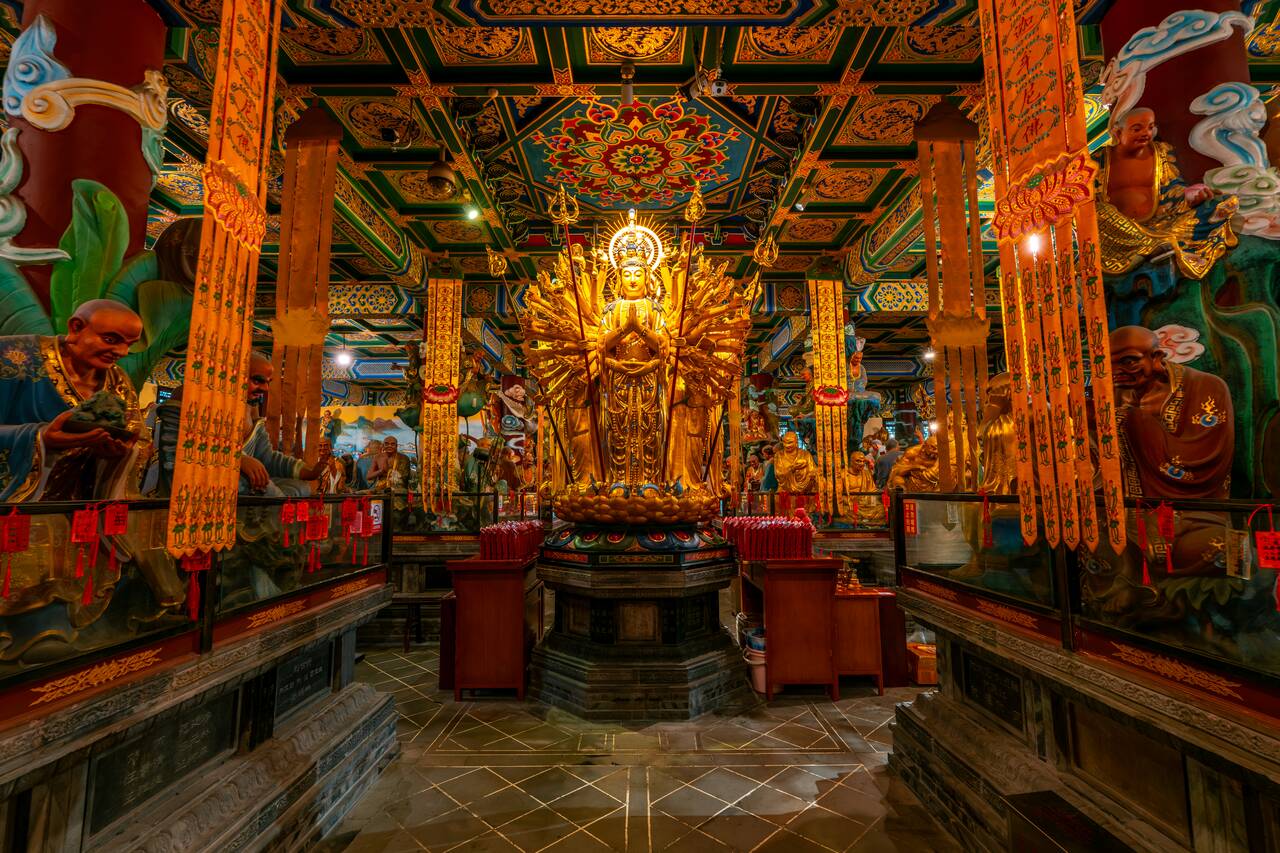
It can get crowded during the day, but I didn’t find it nearly as hectic as some of the other popular spots in Chongqing. Since it’s right in Jiefangbei, it’s easy to fit in while you’re exploring the pedestrian street or looking for somewhere to eat around Bayi Road. If you’re staying in the area, it’s an easy stop to make before heading out for the rest of the day.
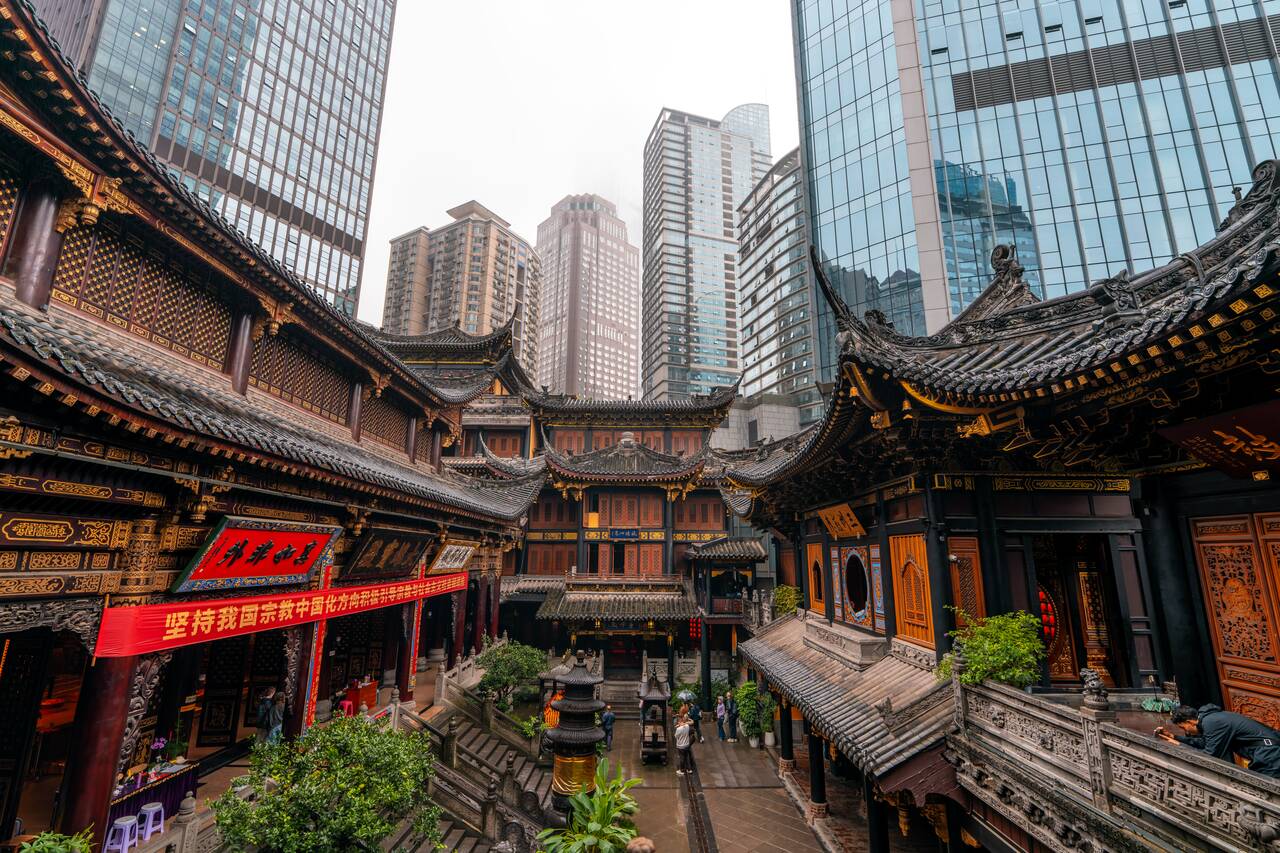
Luohan Temple is open from 8 AM to 6 PM from May 1 to October 7, with last admission at 5:20 PM. From October 8 to April 30, it opens from 8 AM to 5:30 PM, with last admission at 4:50 PM. The ticket is 20 CNY, and you can pay at the gate. There’s quite a lot to see inside, so expect to spend around an hour here.
8. Walk Around Jiefangbei Pedestrian Street
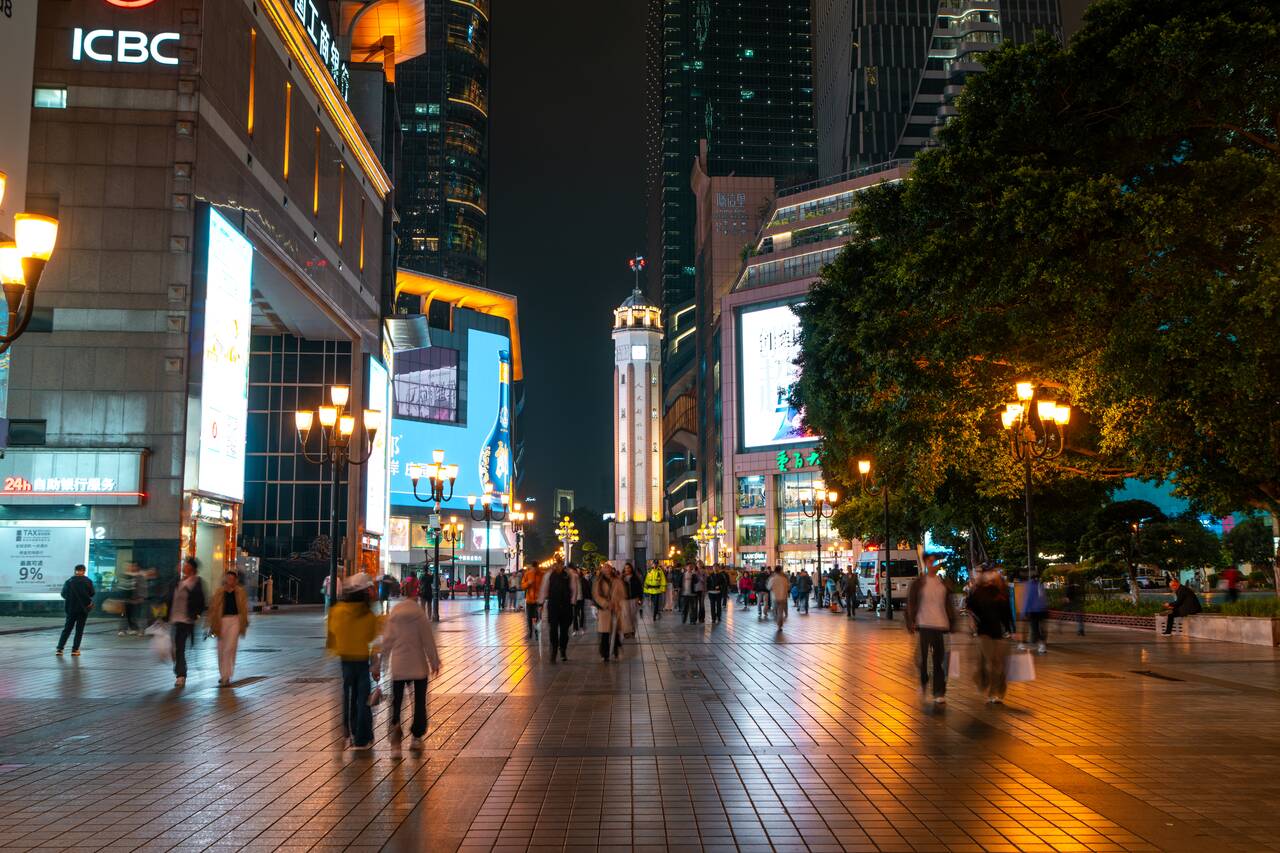
- 📍 Location: Jiefangbei Pedestrian Street [Map Link]
- ⚡ Pete's Take: "I recommend staying somewhere in this area as it will give you easy access to everything: food, shopping malls, tourist attractions, etc."
Jiefangbei Pedestrian Street is a shopping district in central Chongqing, with pedestrian streets branching out from the Liberation Monument. The area is full of restaurants, cafés, and shopping malls, with some of the city’s most impressive skyscrapers rising above them.
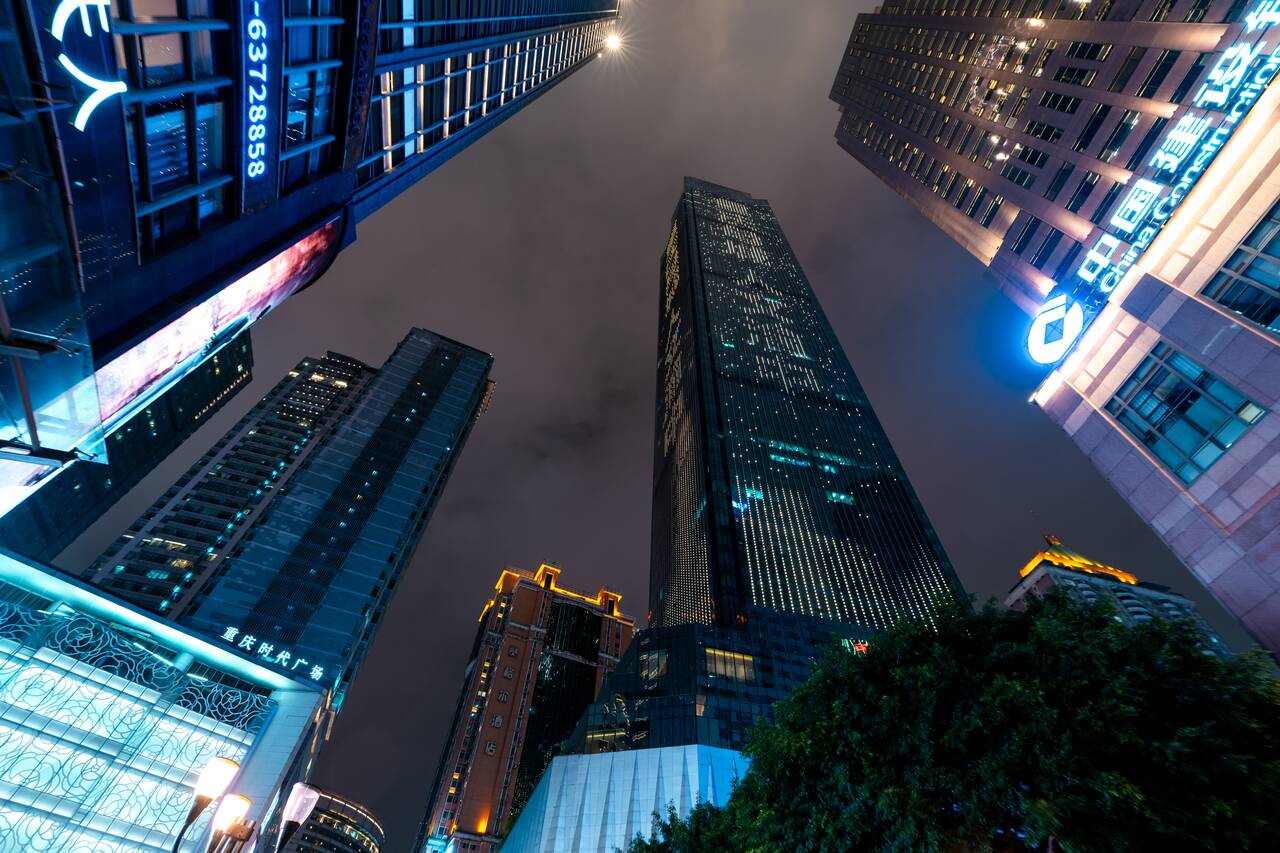
It’s lively both during the day and at night, but I think it’s definitely more beautiful after dark. It’s really cool to see all those skyscrapers lit up as you walk around. If you’re already in the area for Luohan Temple or dinner on Bayi Road, be sure to stick around until the lights come on!
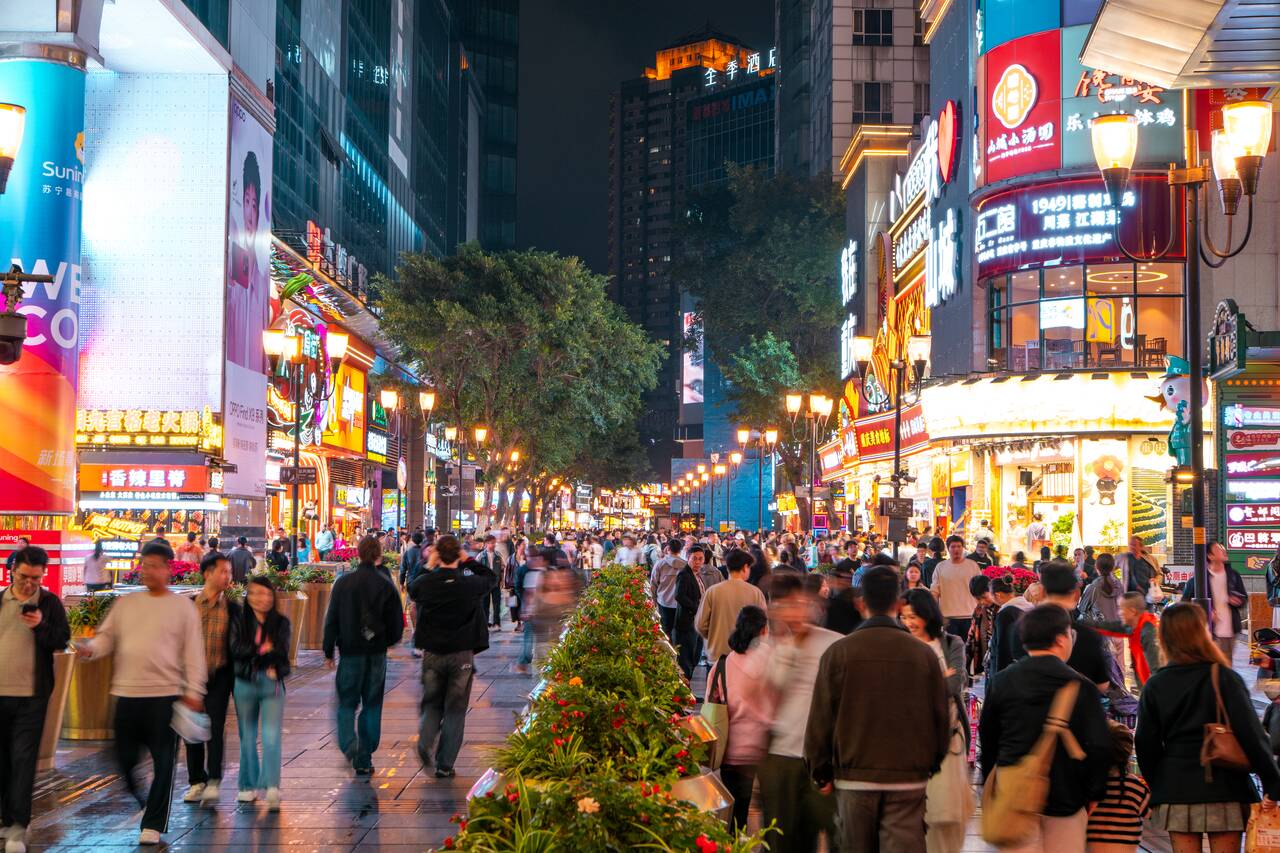
If you want maximum convenience, I’d recommend staying in or around Jiefangbei. With so many places to eat, shop, and grab a coffee within walking distance, it’s easy to find whatever you need right outside your hotel at all hours of the day. And if all that walking has made you hungry, Bayi Road is just around the corner. That’s where we’re heading next!
9. Eat Your Way Along Bayi Road
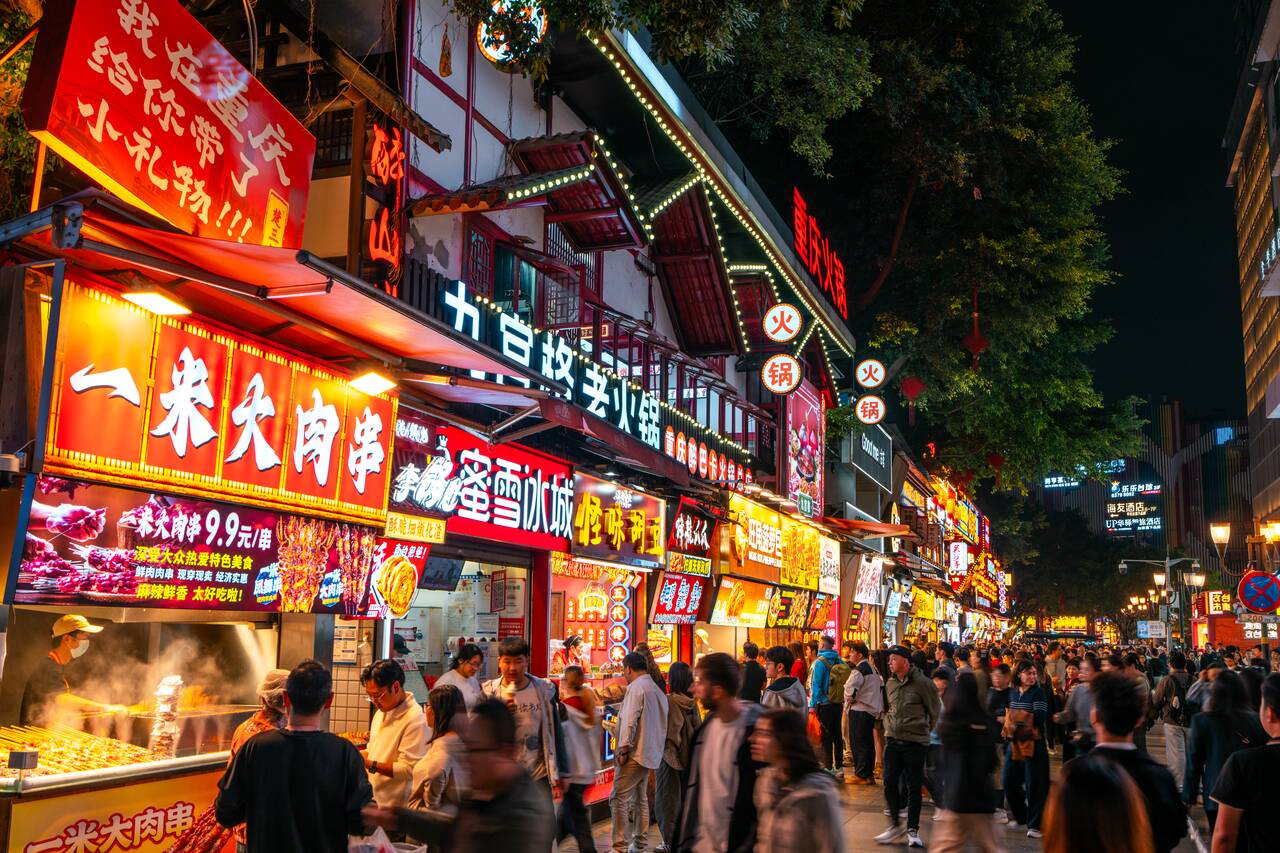
- 📍 Location: Bayi Road [Map Link]
- 💰 Price Range: pricier than usual
- ⚡ Pete's Take: "It's a little pricier here than elsewhere, but you are mostly here for the wide selection and the vibes!"
Bayi Road is a street food strip in Jiefangbei lined with snack stalls, restaurants, and indoor food courts. There’s a ton of food to choose from, which can be overwhelming, but my golden rule is that if a stall has a long line, the food is probably good.
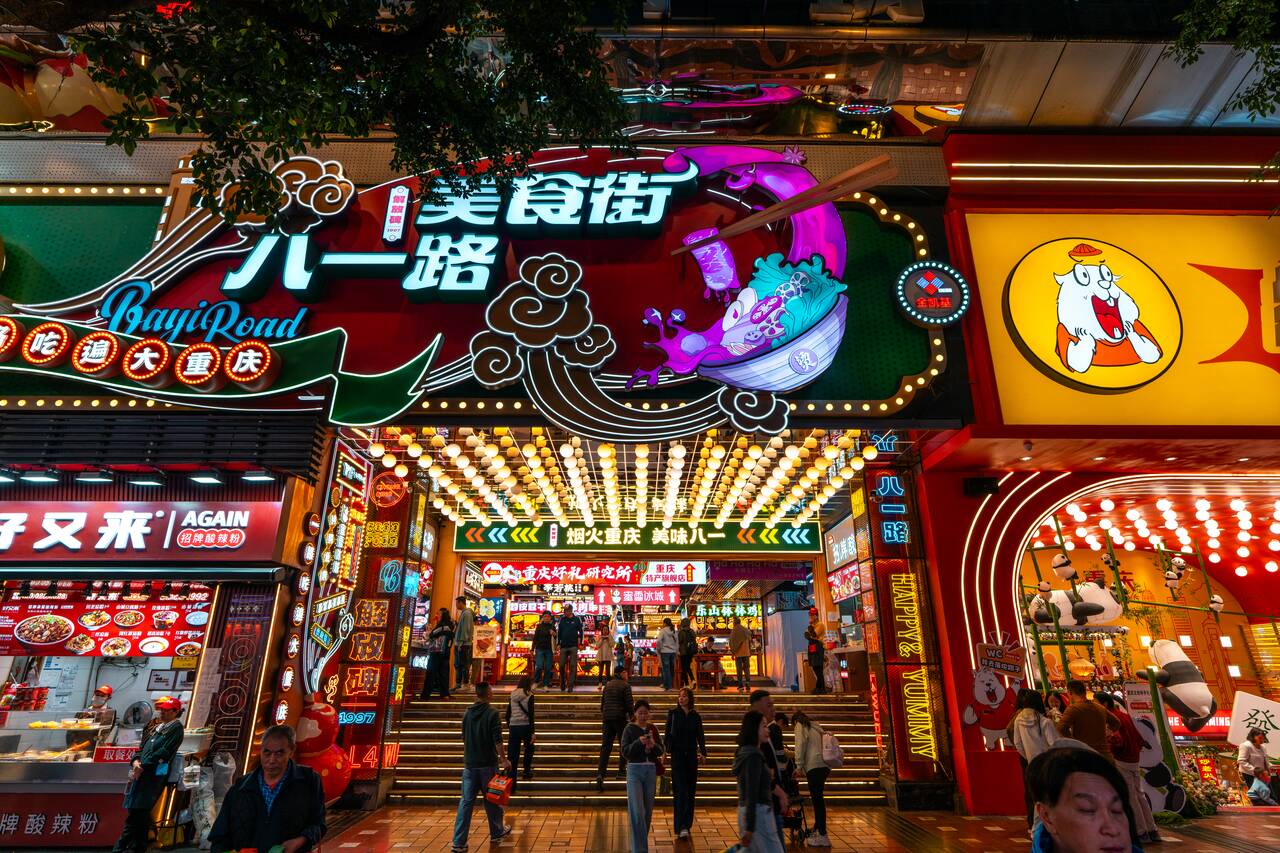
I found the food here a little pricier than at regular restaurants elsewhere, but that’s to be expected in one of the busiest tourist areas in the city center. Personally, I came mostly for the wide selection and the vibes. It’s a fun place to hang out at night!
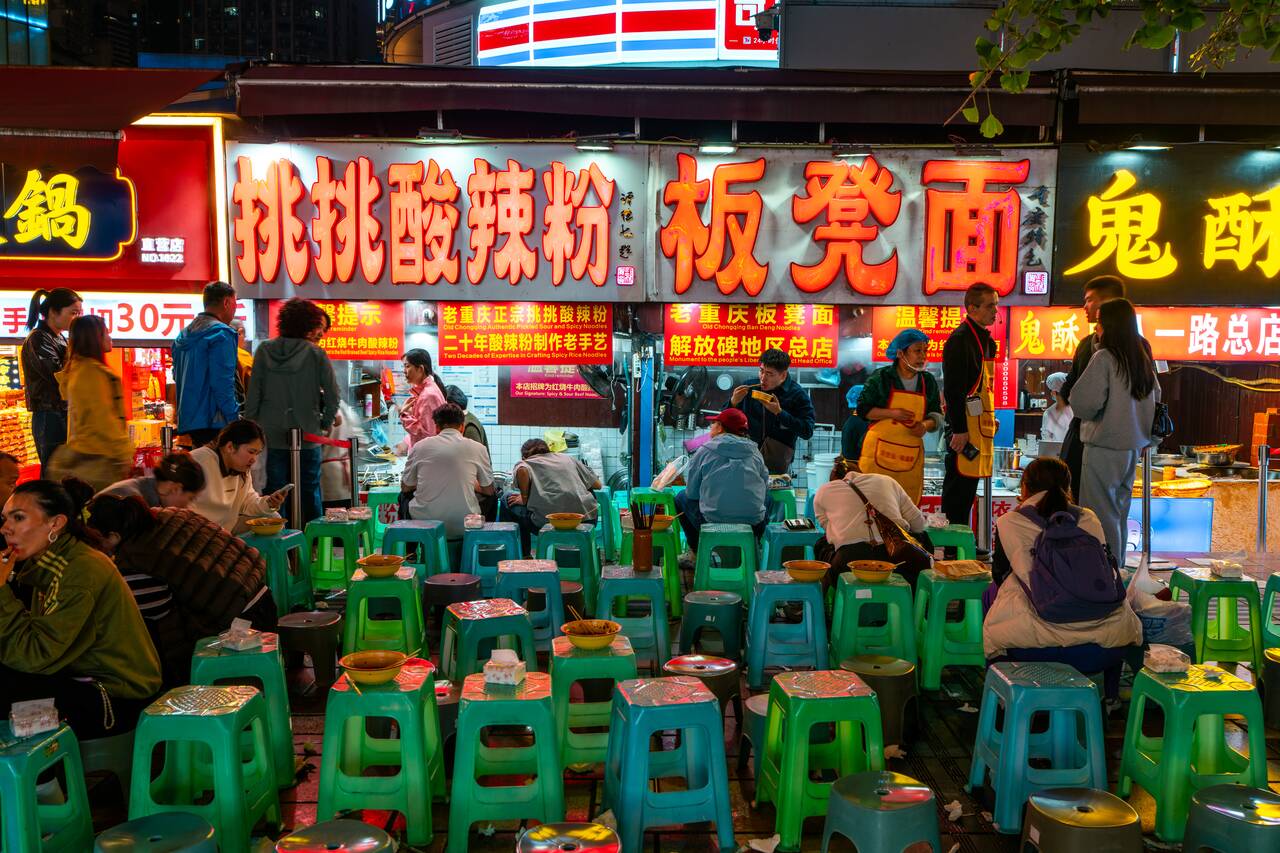
You can pick up whatever catches your eye from the stalls along the street, then find somewhere to sit and eat it all. If you’d rather have a proper table, head into one of the indoor food courts, where you’ll find plenty of seats and food stalls under one roof.
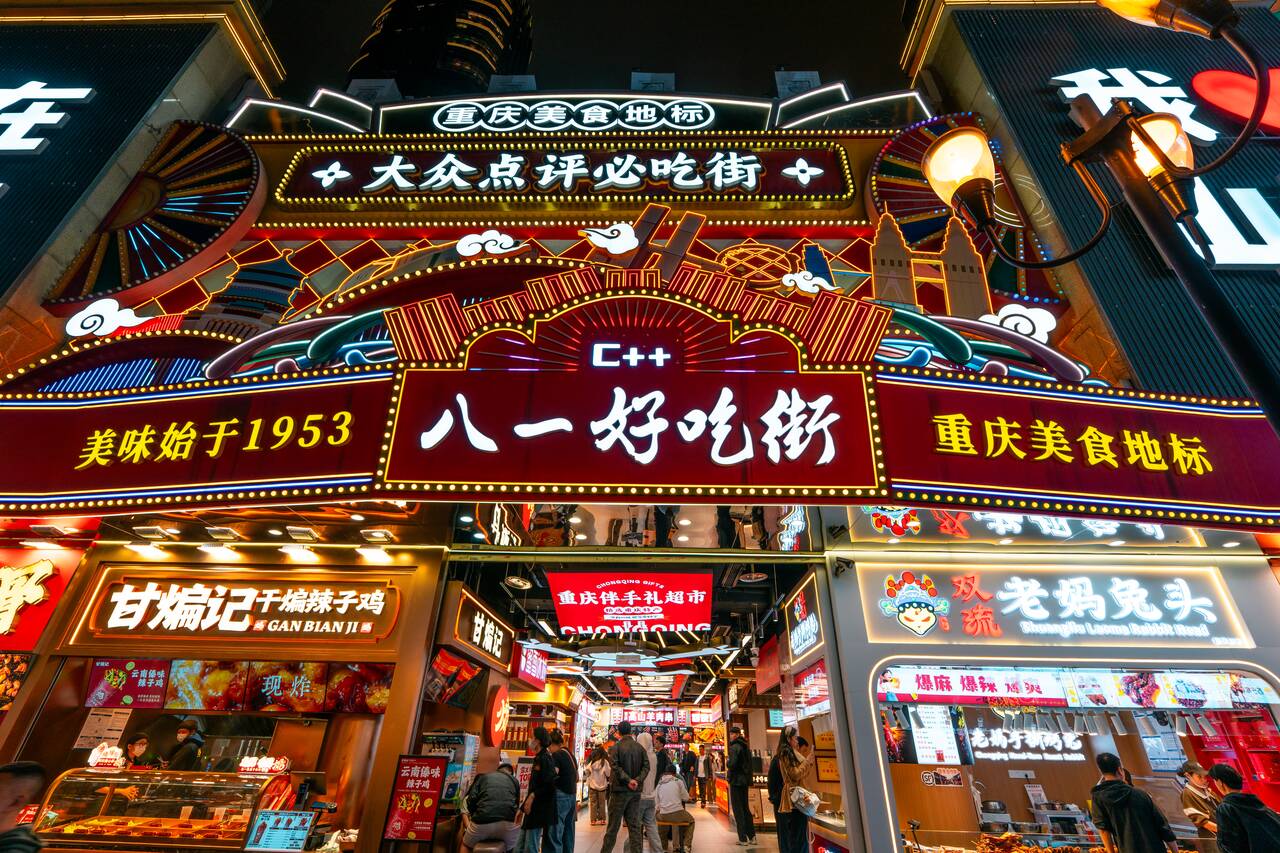
You can visit during the day, but I recommend coming after sundown, when the street is at its liveliest. If you’re already exploring Jiefangbei, this is an easy place to stop for dinner.
10. Grab a Bowl of Chongqing Noodles at Zhou Xiaobo
- 📍 Location: Zhou Xiaobo Chongqing Noodles [Map Link]
- 🕐 Opening Hours: 6 AM - 2 AM
- 💰 Price Range: Reasonable prices
- ⚡ Pete's Take: "A great spot for a quick lunch as you explore the city center is to try the famous Chongqing xiaomian."
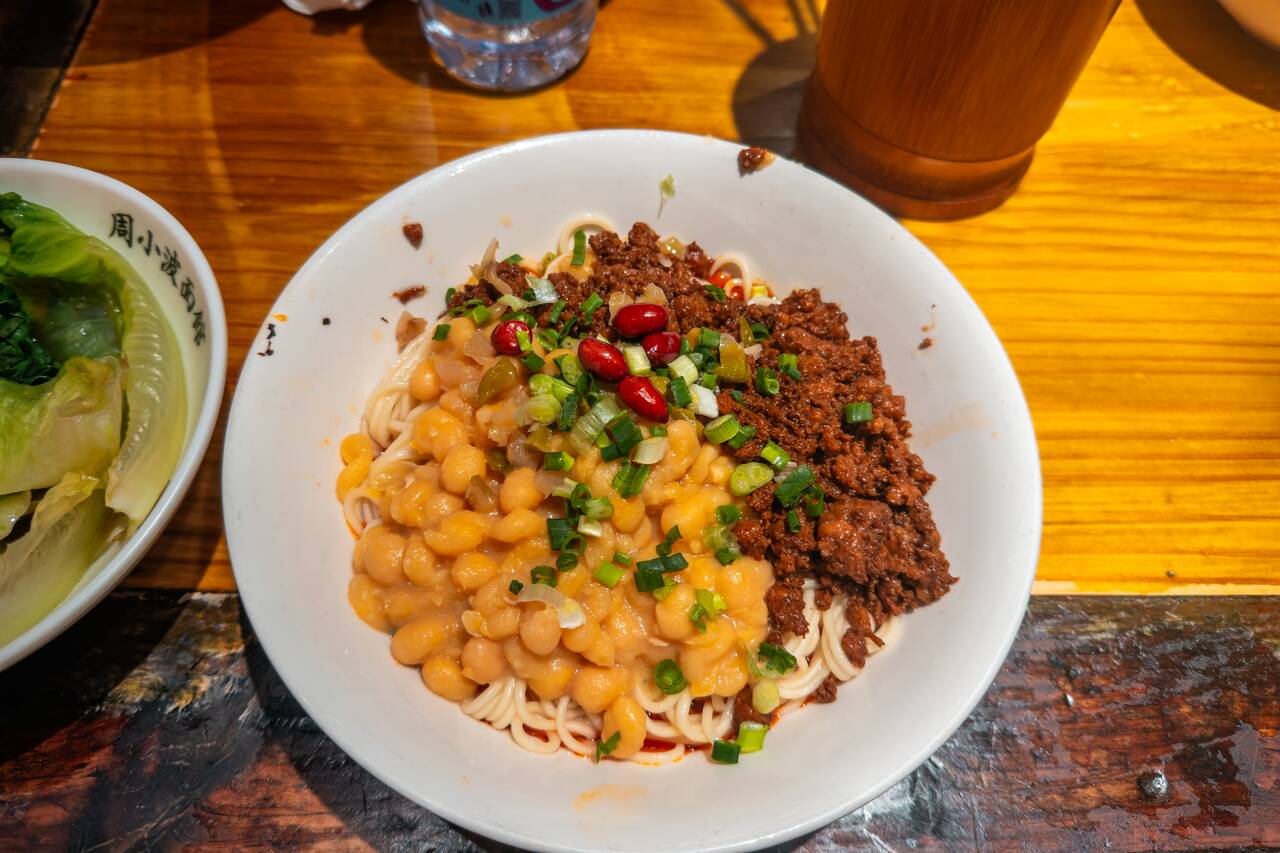
If you are looking for a great place to have lunch as you explore Jiefangbei, I recommend you check out Zhou Xiaobo Chongqing Noodles, a famous noodle shop on Zourong Road that serves Chongqing xiaomian, one of the city’s signature dishes.
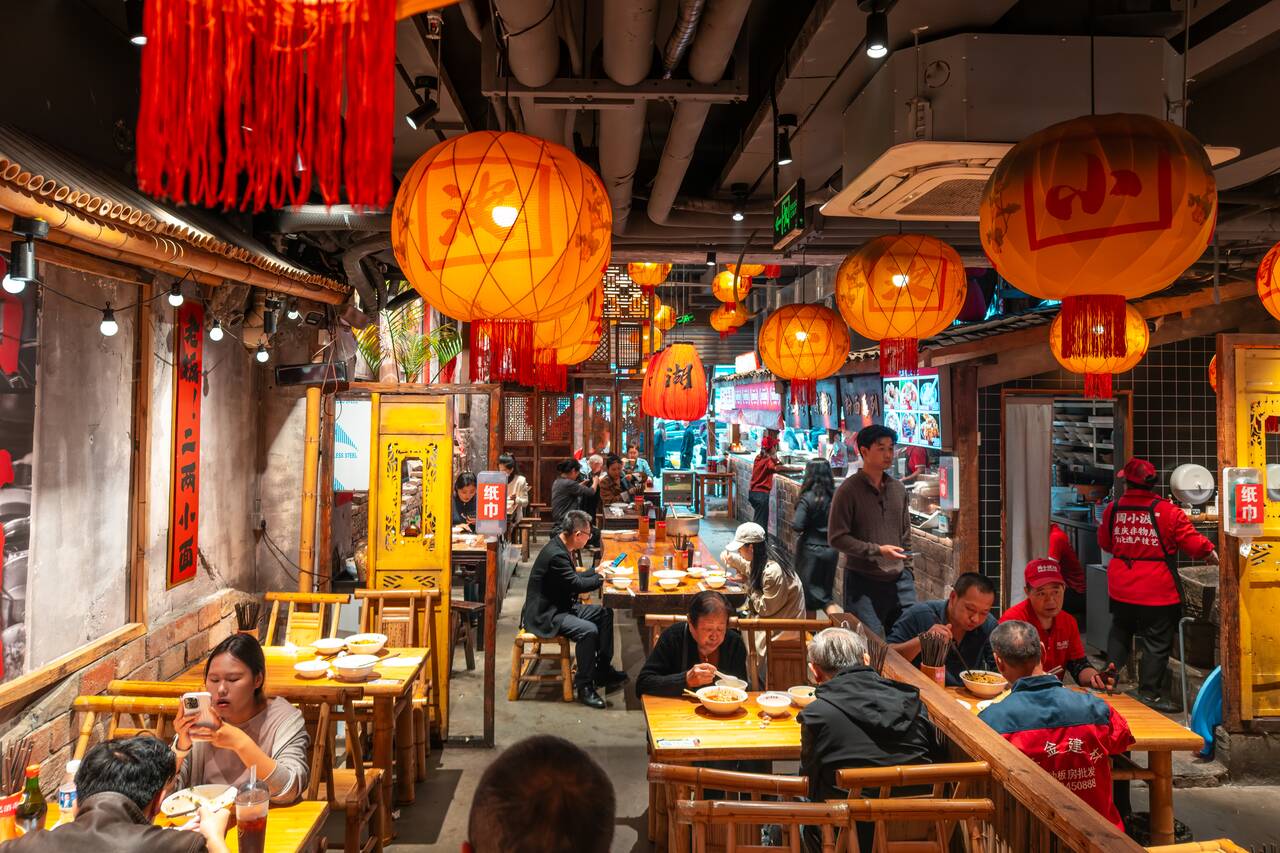
It’s a bowl of wheat noodles tossed with seasonings like chili oil, Sichuan pepper, and garlic. The chili brings the heat, while the Sichuan pepper gives you that tingly, numbing sensation it's famous for.
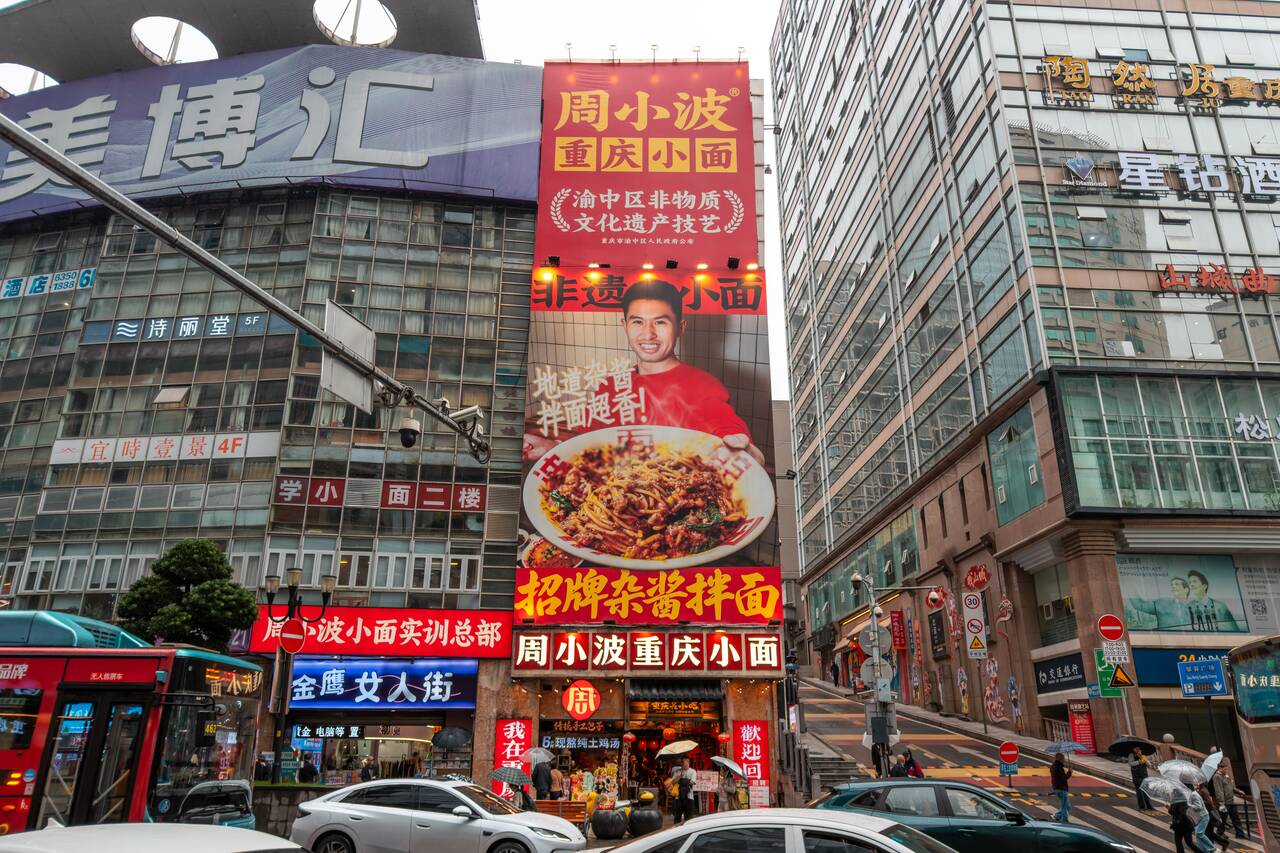
This place was recommended to me by my friend Dana, who's a china expert and it was delicious. The prices are pretty reasonable, and a bowl of noodles makes for a quick an easy meal in between your exploration. The restaurant is open from 6 AM to 2 AM, so you can also come for breakfast or a late-night meal.
11. Try Chongqing Hot Pot Underground
- 📍 Location: Underground Hot Pot [Map Link]
- 🕐 Opening Hours: 10 AM - 10 PM
- ⚡ Pete's Take: "If you want to try the famous Chongqing hot pot, this is the place to go."
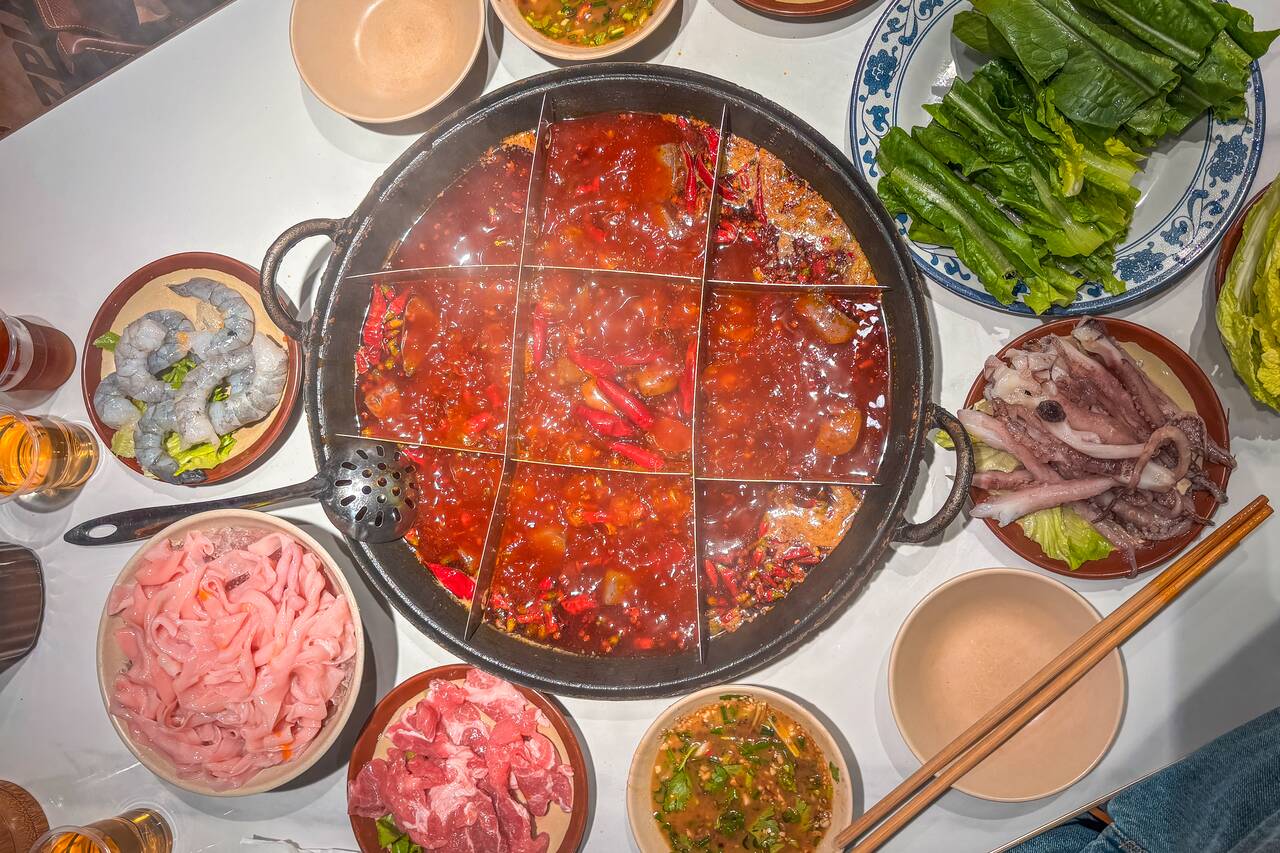
Chongqing is famous for its hot pot and its history as China’s wartime capital, so what better way to combine the two than to sit down for a bubbling pot of spicy broth inside a World War II-era bunker? If that sounds like your kind of dinner, check out Underground Hot Pot!
Why is hot pot so famous here? Well, its exact origins are hard to pin down, but one popular story traces Chongqing hot pot back to the city’s docks, where boatmen and laborers cooked cheap cuts of meat and offal in a shared pot of spicy broth. It went from a cheap meal by the river to one of Chongqing’s signature dishes. Today, you cook your own meat, vegetables, and whatever else you order right at the table.
This is definitely more fun with a group, since you can order a bunch of things and share them. It’s a little trickier if you’re traveling solo like me, but I still think it’s a must-try! Just make sure you can handle the spice. The mala broth is my favorite. The chilies bring the heat, and the Sichuan peppercorns make your mouth tingle. Oh, it’s so good!
If you want to give it a go, be sure to check out this underground hot pot spot. There are plenty of similar places in the city center, but this one felt like the real deal to me! The restaurant is open daily from 10 AM to 10 PM.
12. Explore the Three Gorges Museum
- 📍 Location: Chongqing China Three Gorges Museum [Map Link]
- 🕐 Opening Hours: Tue-Sun 9 AM-5 PM
- 💰 Entry Fees: Free
- ⚡ Pete's Take: "If you want to learn more about the city's rich history, or if you are stuck on a rainy day and want to find something to do indoors, you might want to give this museum a go."
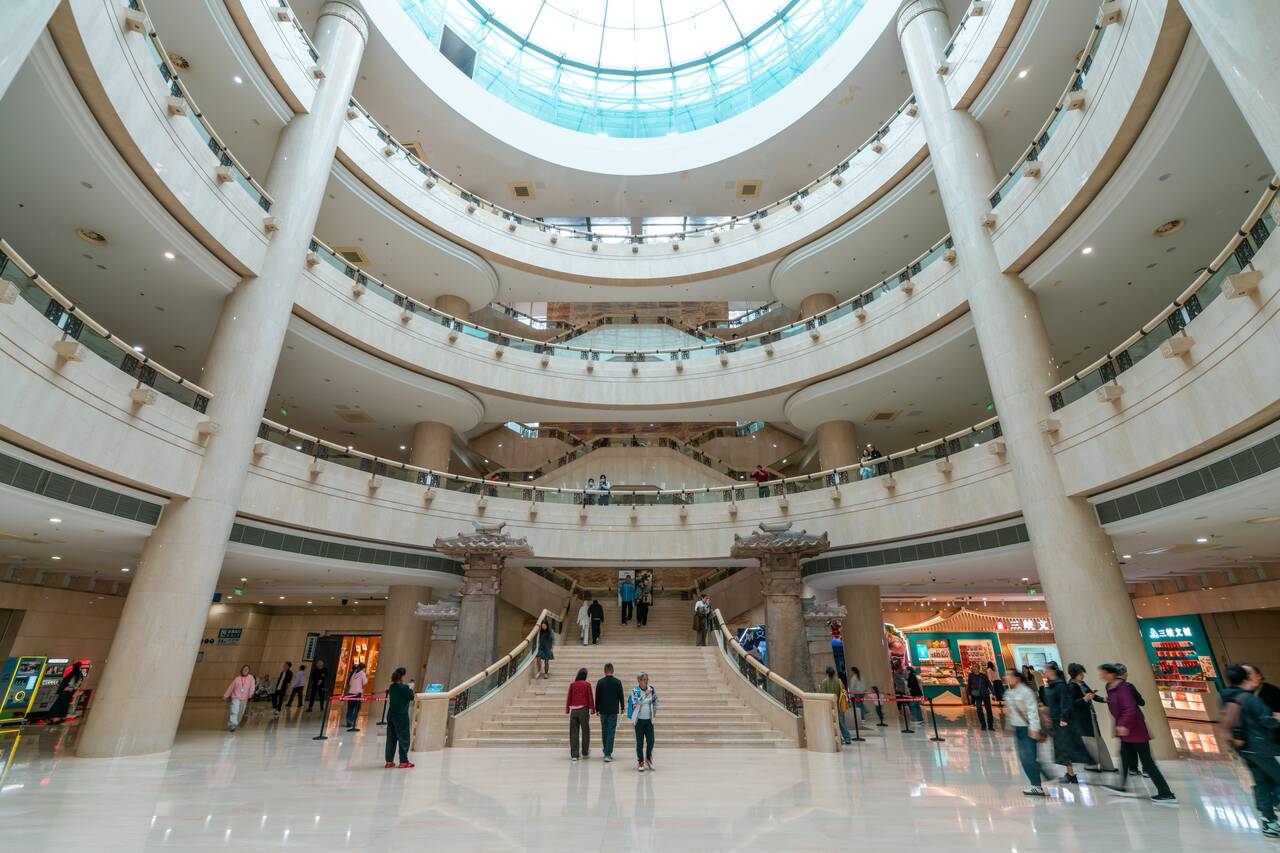
The Chongqing China Three Gorges Museum is a history and art museum that covers the Three Gorges region and the story of Chongqing itself. I learned a lot about how the city grew and what life was like when it served as China’s wartime capital.
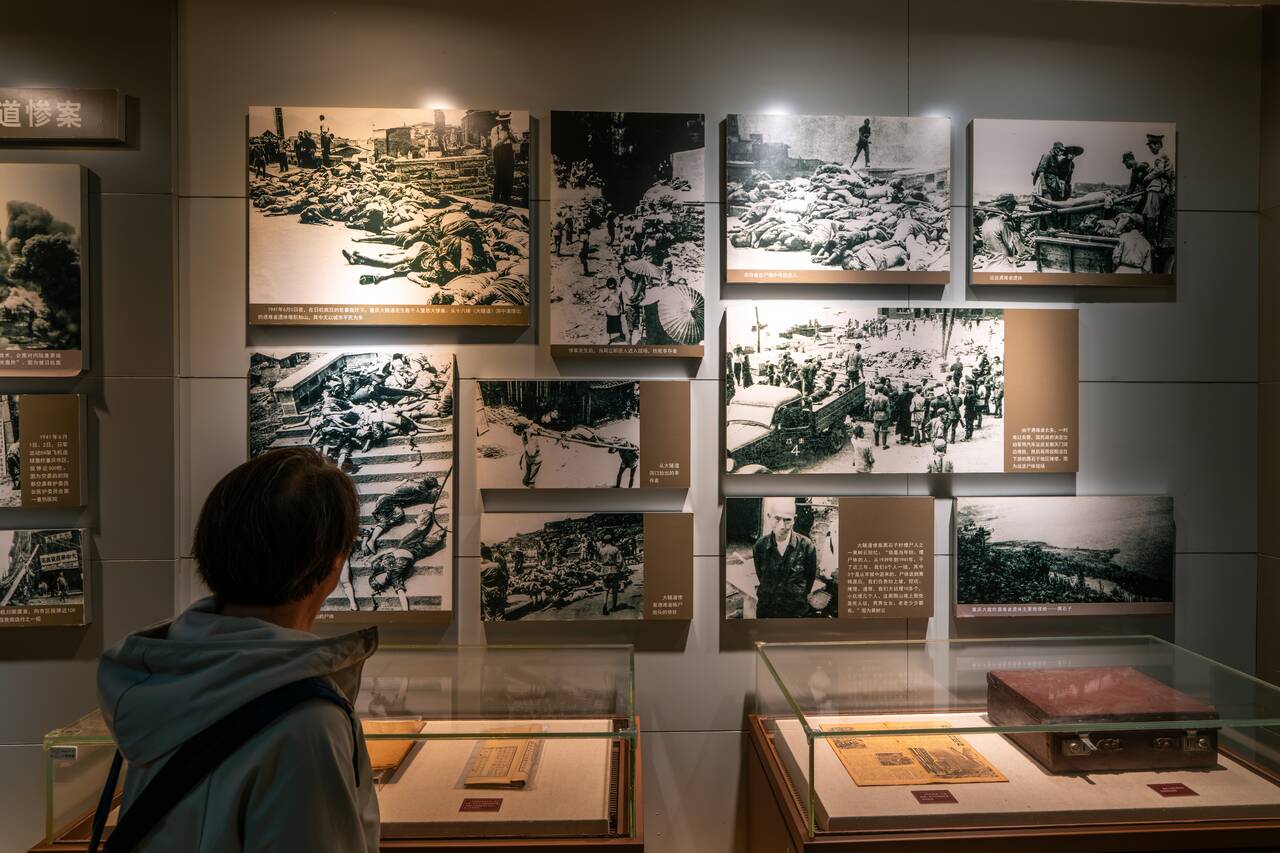
My favorite exhibition was “The War Years” on the third floor. It covers the Japanese invasion, the bombing of Chongqing, and how the city resisted. The exhibition goes into a lot of detail, and some of the archival photos are pretty gruesome. It was hard to look at some of them, but they gave me a much clearer sense of what people here lived through. If you love history, I’d call this a must-visit. It’s also a great place to spend a rainy afternoon in Chongqing.
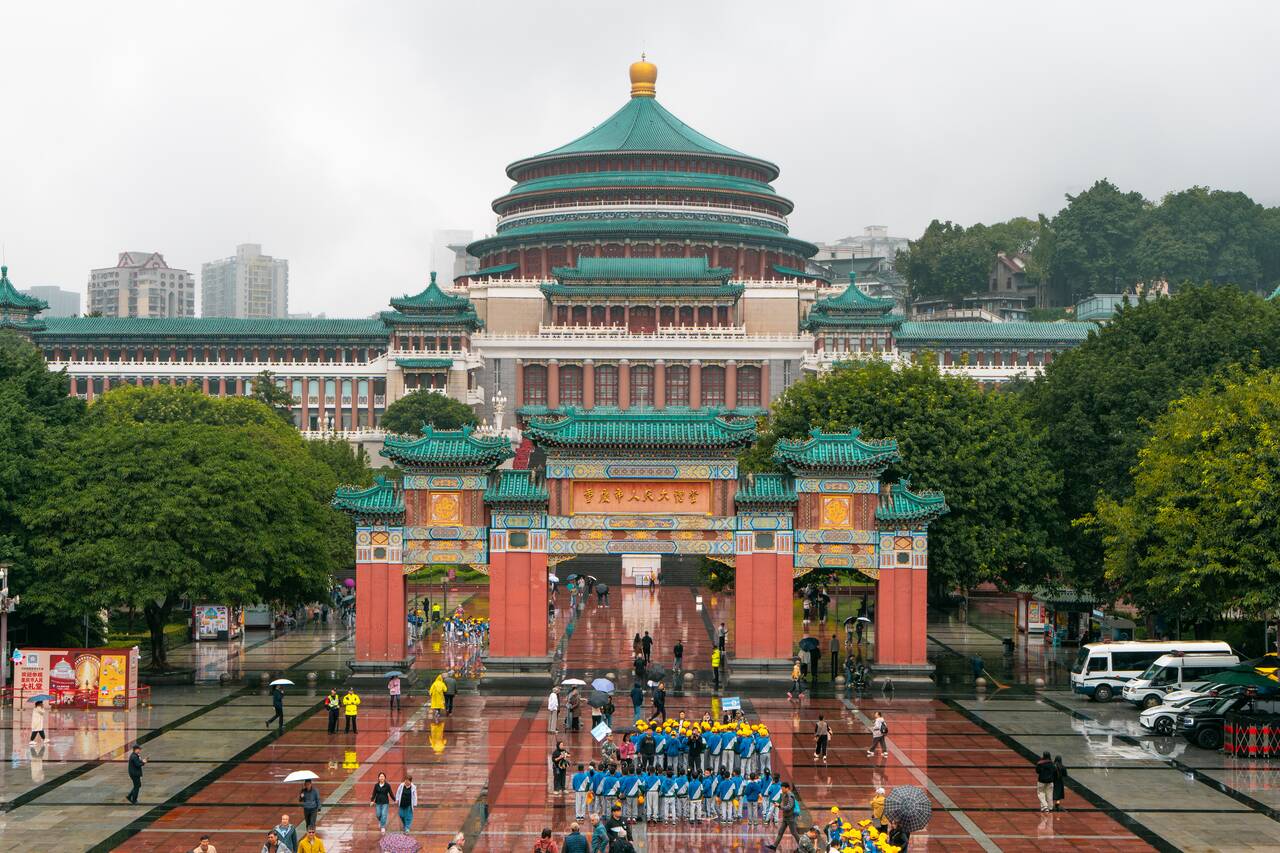
Before you go inside, turn around and take in the view across Chongqing People’s Square. The Great Hall of the People sits directly opposite the museum, and the museum steps give you a great spot to photograph the whole building.
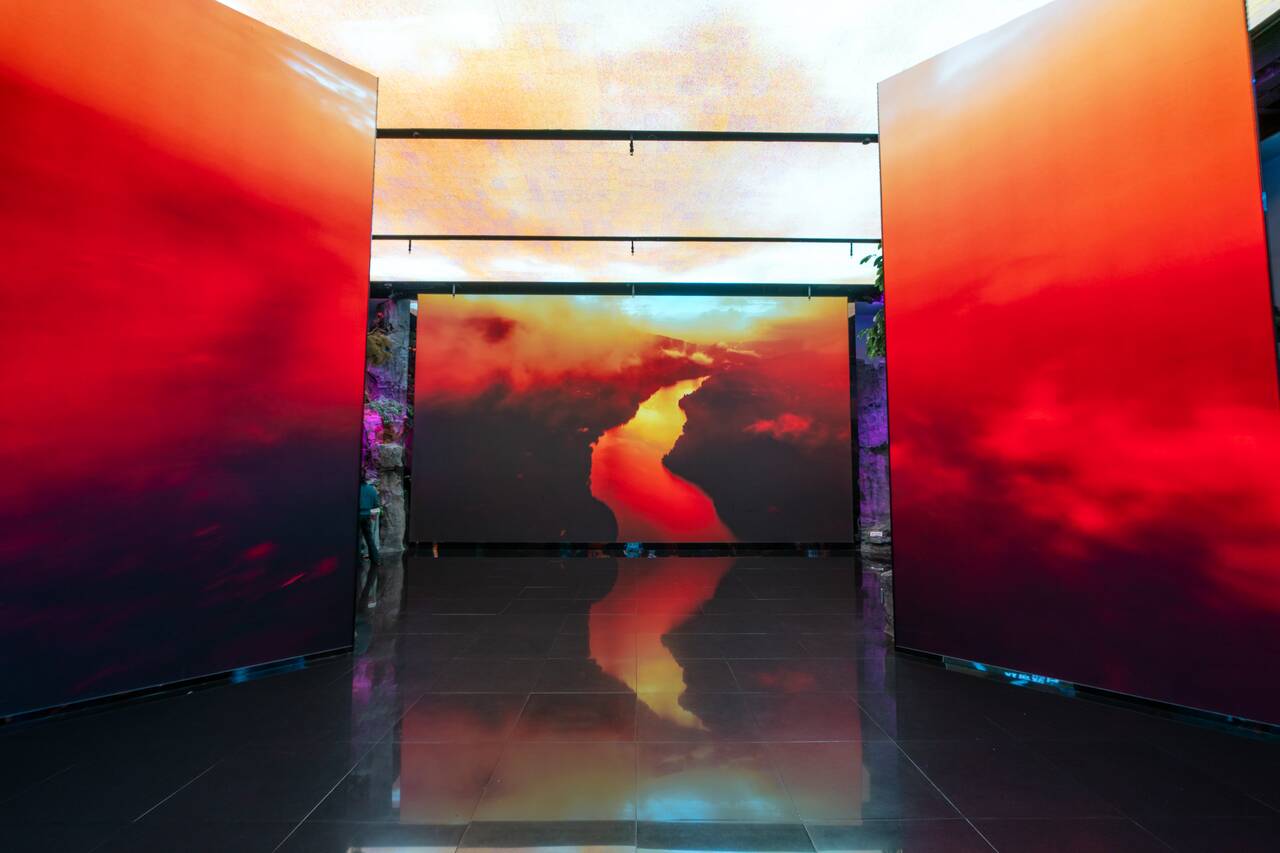
Admission to the main museum is free. When I visited, I used the QR code at the entrance to register, and I got it right away. It took me less than 5 minutes to do it, so you can do that too. Just make sure you bring your passport and follow the instructions at the entrance. The museum is open Tuesday to Sunday from 9 AM to 5 PM, with last entry at 4:30 PM. It closes on Mondays except on public holidays.
13. Watch Chongqing 1949 and Its Moving Stage
- 📍 Location: Chongqing 1949 [Map Link]
- 🕐 Opening Hours: Afternoon to evening
- 💰 Entry Fees: 199-588 CNY (~30-88 USD)
- ⚡ Pete's Take: "A great show with an awesome moving stage and audience section. You've never seen a show quite like this one."
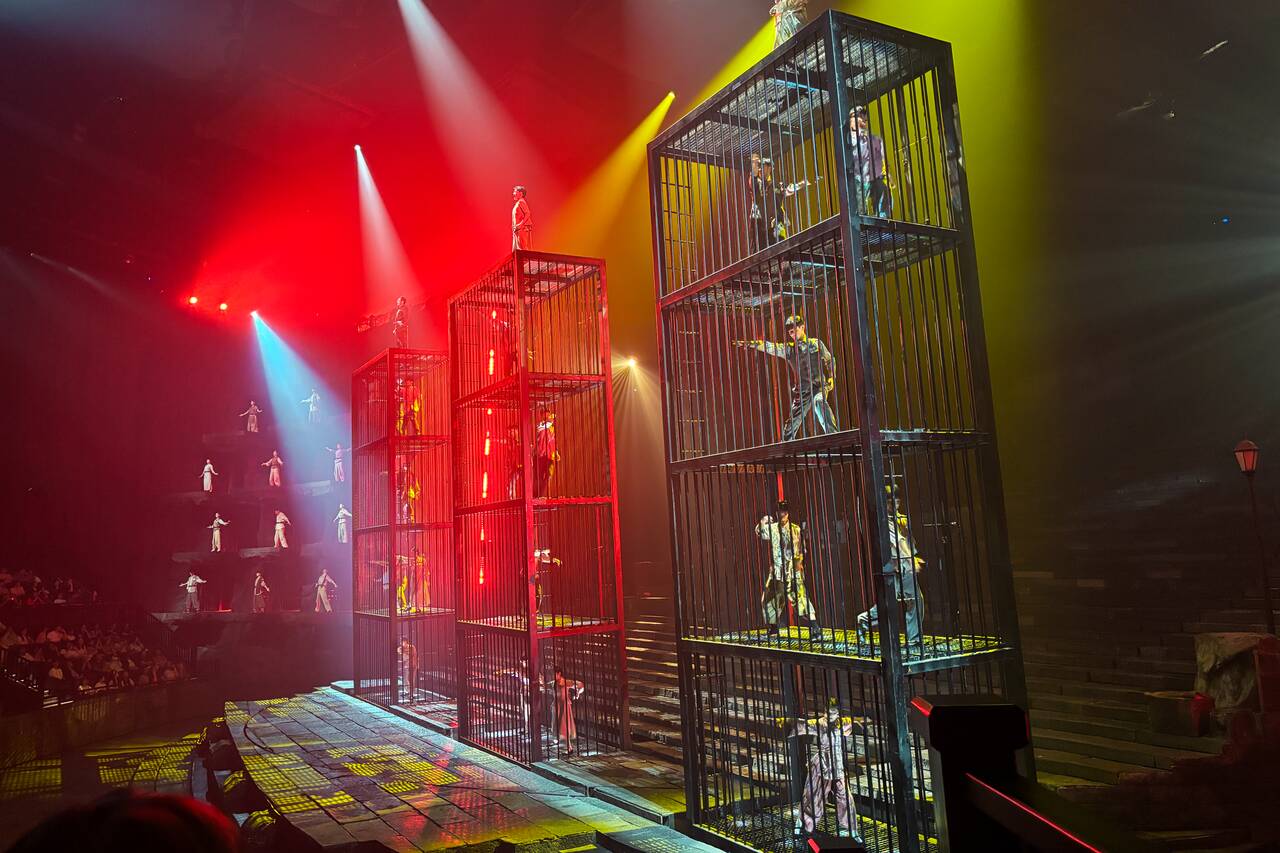
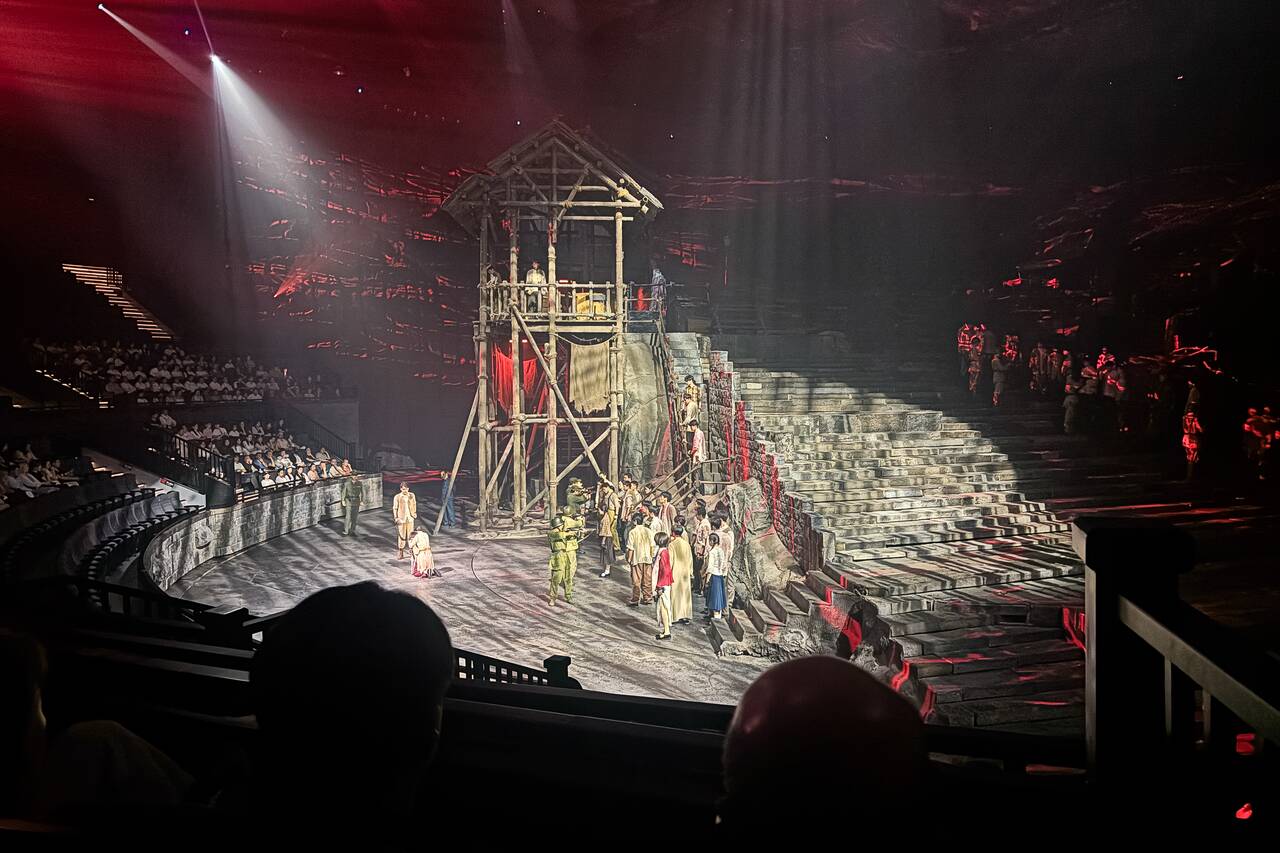
Chongqing 1949 is a live historical drama set in the final months of 1949, as Communist forces closed in on Chongqing during the Chinese Civil War. The story follows underground resistance fighters and political prisoners, showing what was happening inside the city just before it changed hands.
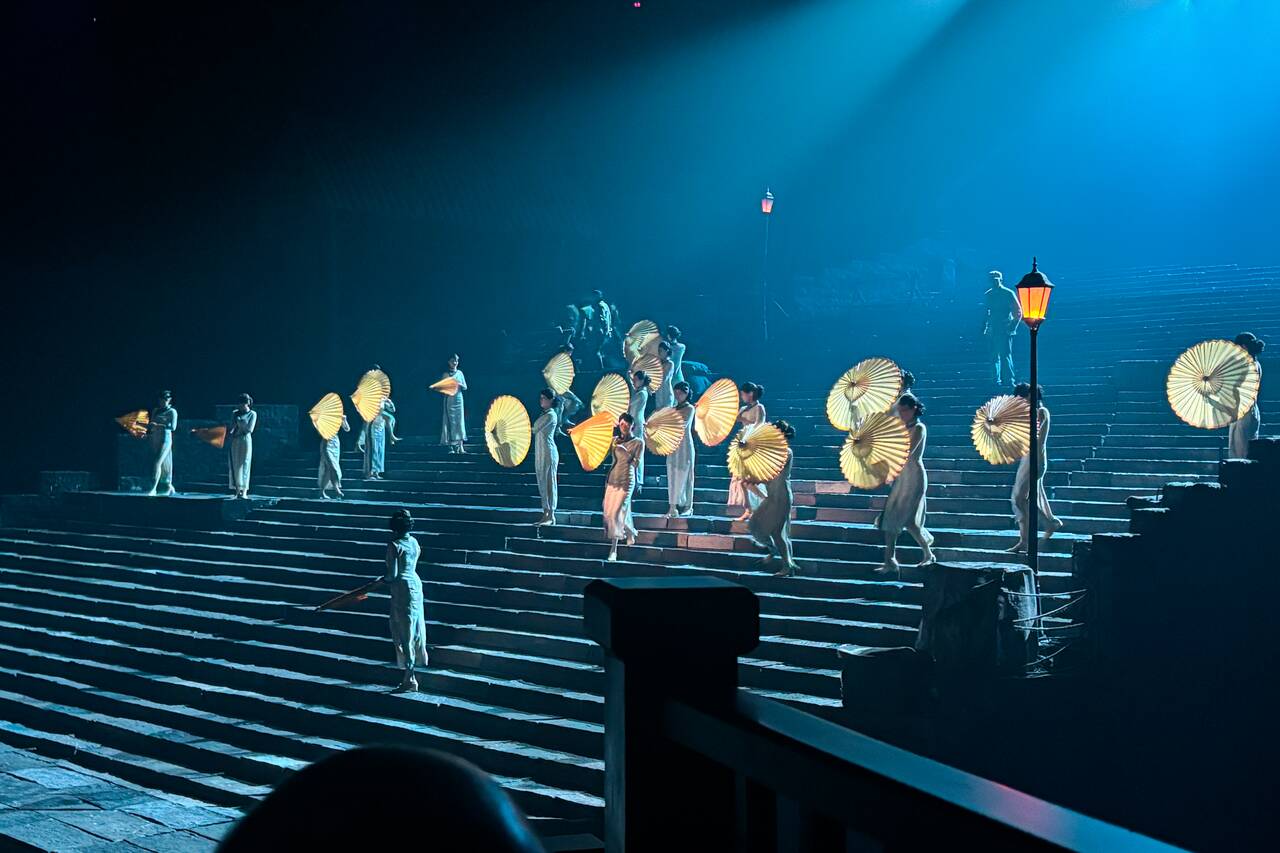
What makes the show so impressive is that the stage moves and parts of the audience move with it! The theater was built specifically for the production, with rotating seating sections and enormous sets that move into place as the story unfolds. One minute you’re facing a street scene, and the next your seat turns toward the action somewhere else in the theater. If that’s what you’re coming for, make sure you book a seat in one of the rotating sections.
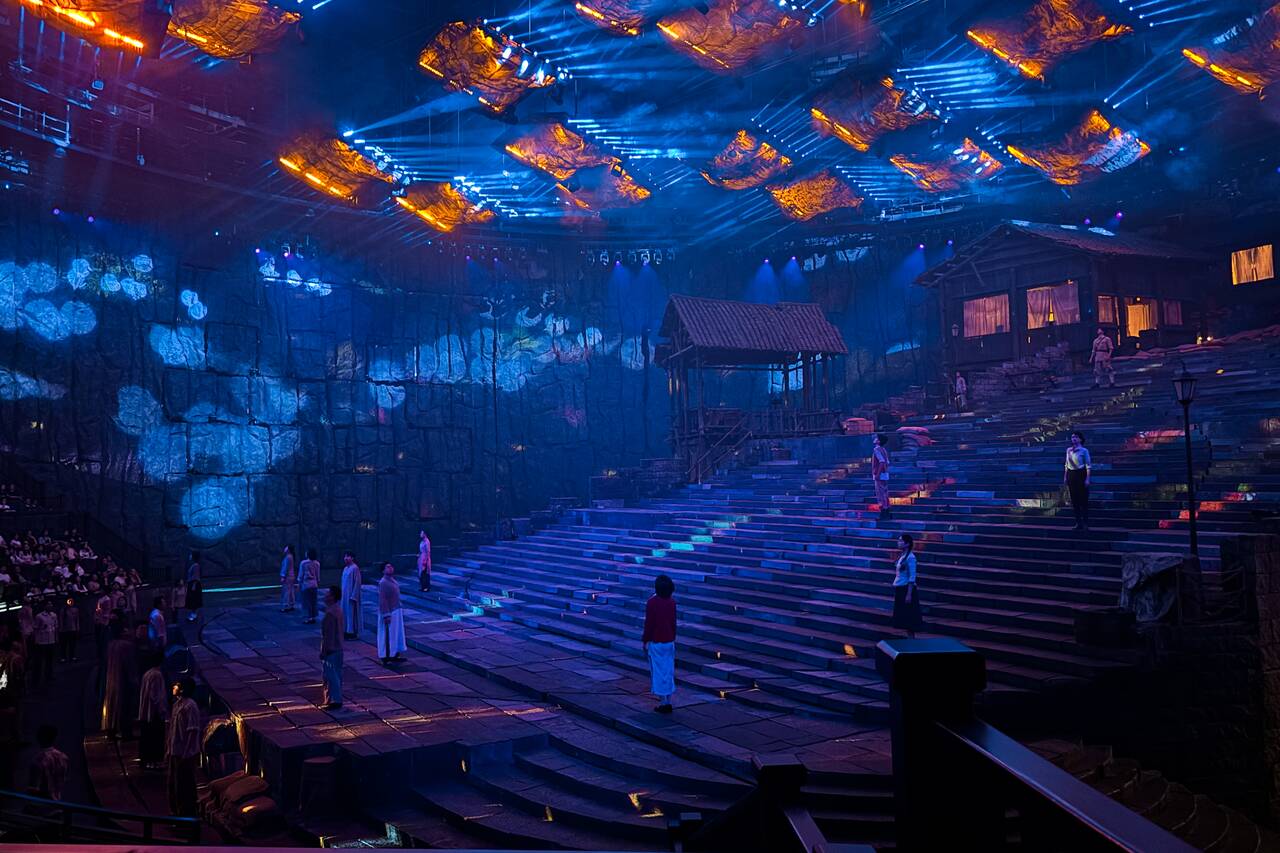
The show lasts around 75 minutes without an intermission. It’s performed in Chinese, but you can pick up an English audio translation device at the lobby service desk with a refundable deposit. I’d arrive around 30 minutes early to give yourself time to pick one up and find your seat.
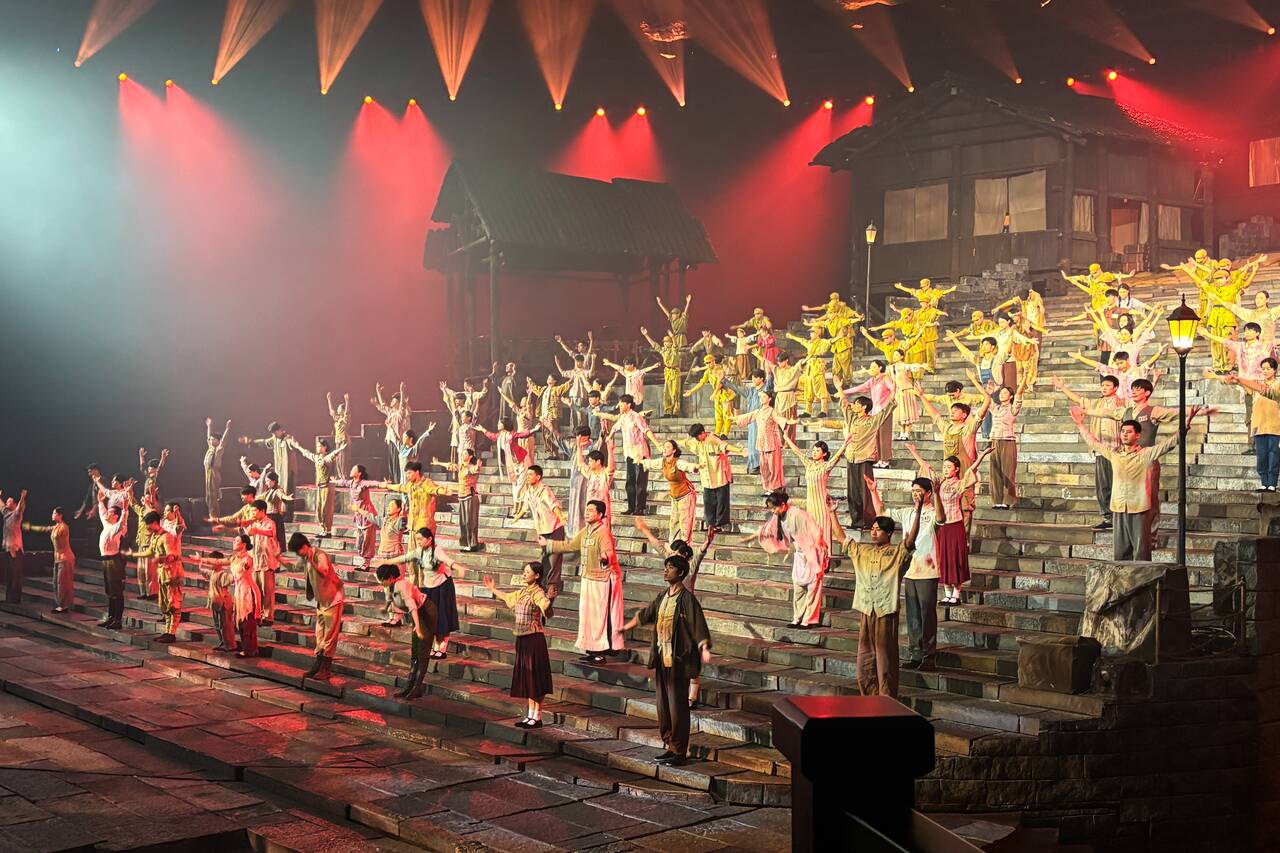
The ticket prices range from around 199 to 588 CNY, depending on your seat section. Performances run from the afternoon into the evening, with showtimes such as 2 PM, 4 PM, and 7:30 PM. This may change at any time, so be sure to check the schedule and seating options for your date when you book your ticket here.
And while you’re here, don’t forget to explore Ciqikou Ancient Town! It’s right by the theater, so give yourself time to wander through the old streets and grab something to eat before the show.
14. Take a Day Trip to Wulong
- 📍 Location: Wulong [Map Link]
- 🕐 Opening Hours: 8 AM - 5 PM
- 💰 Entry Fees: 70 CNY (~10 USD)
- 📖 Full Guide: How to Visit Wulong from Chongqing by Train
- ⚡ Pete's Take: "This is a must-do; just make sure you time your train back carefully and book in advance, as the seats often fill up fast. Also, factor in travel time between the railway station and Wulong and back. I'd spare at least 1.5 to 2 hours from leaving the visitor center to the railway station."
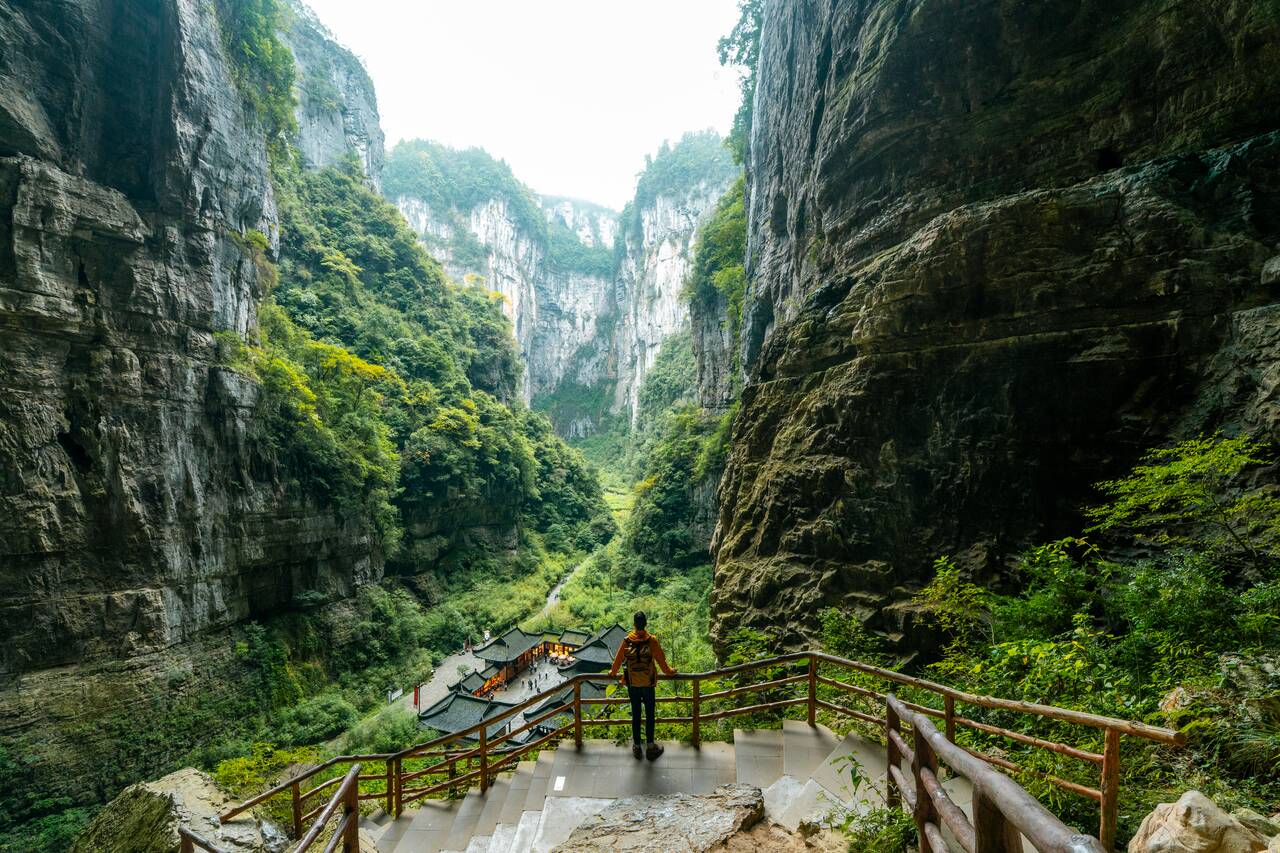
One of the best day trips you can make from Chongqing is to Wulong, a mountainous district known for its limestone gorges, caves, and enormous natural arches. The main reason I came was to see the Three Natural Bridges, part of the UNESCO-listed South China Karst.
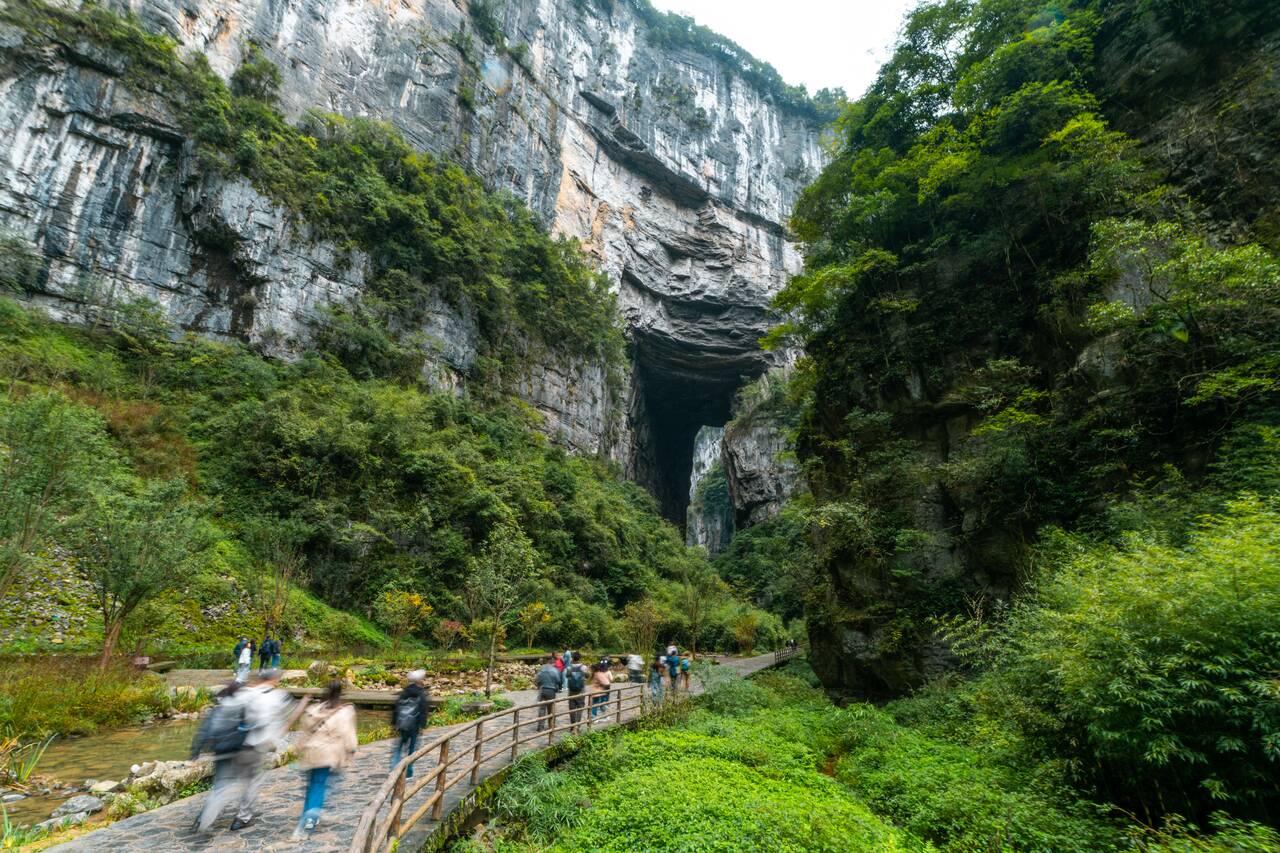
How these bridges formed is pretty fascinating too. It is formed by rainwater that absorbs carbon dioxide in the air, making it slightly acidic as it passes through the soil. Over time, that water seeped into cracks and slowly dissolved the limestone, carving out underground passages.
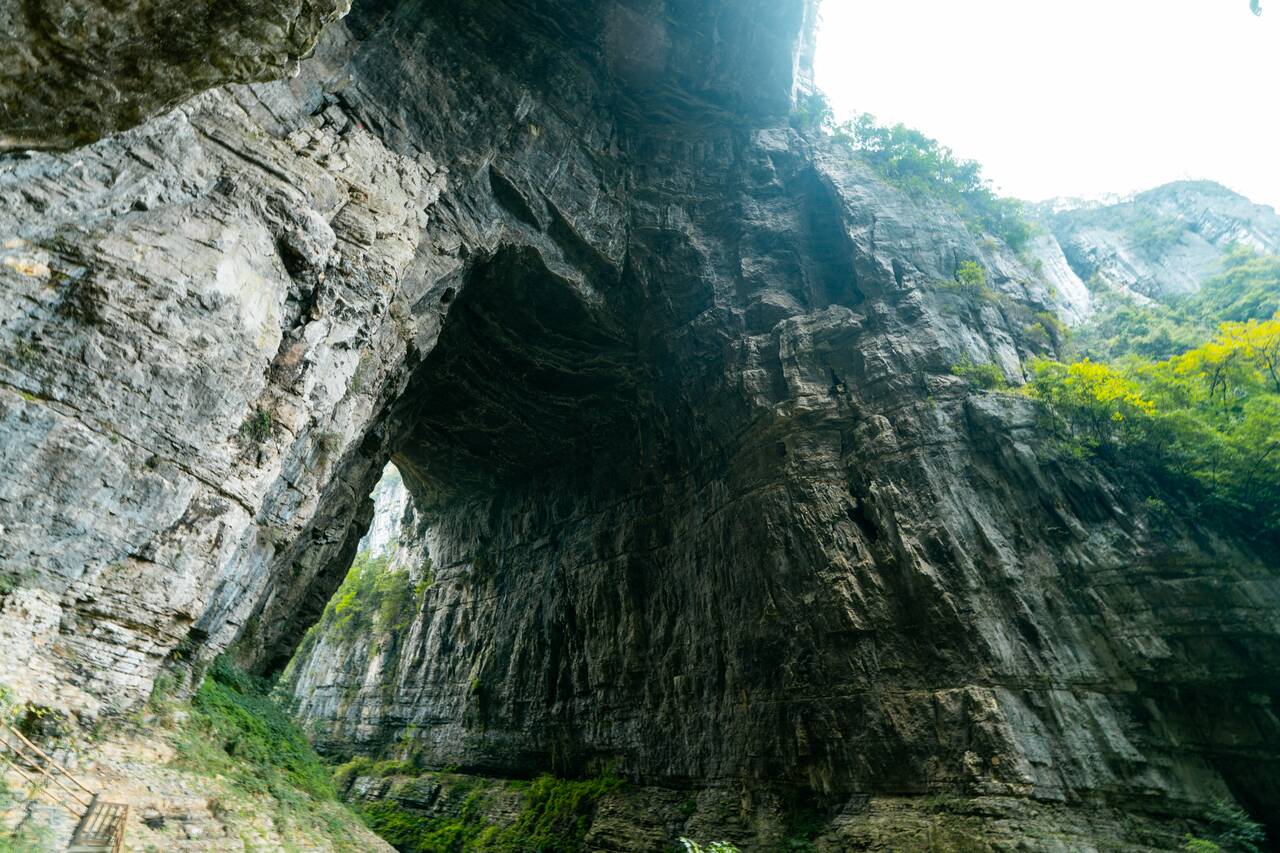
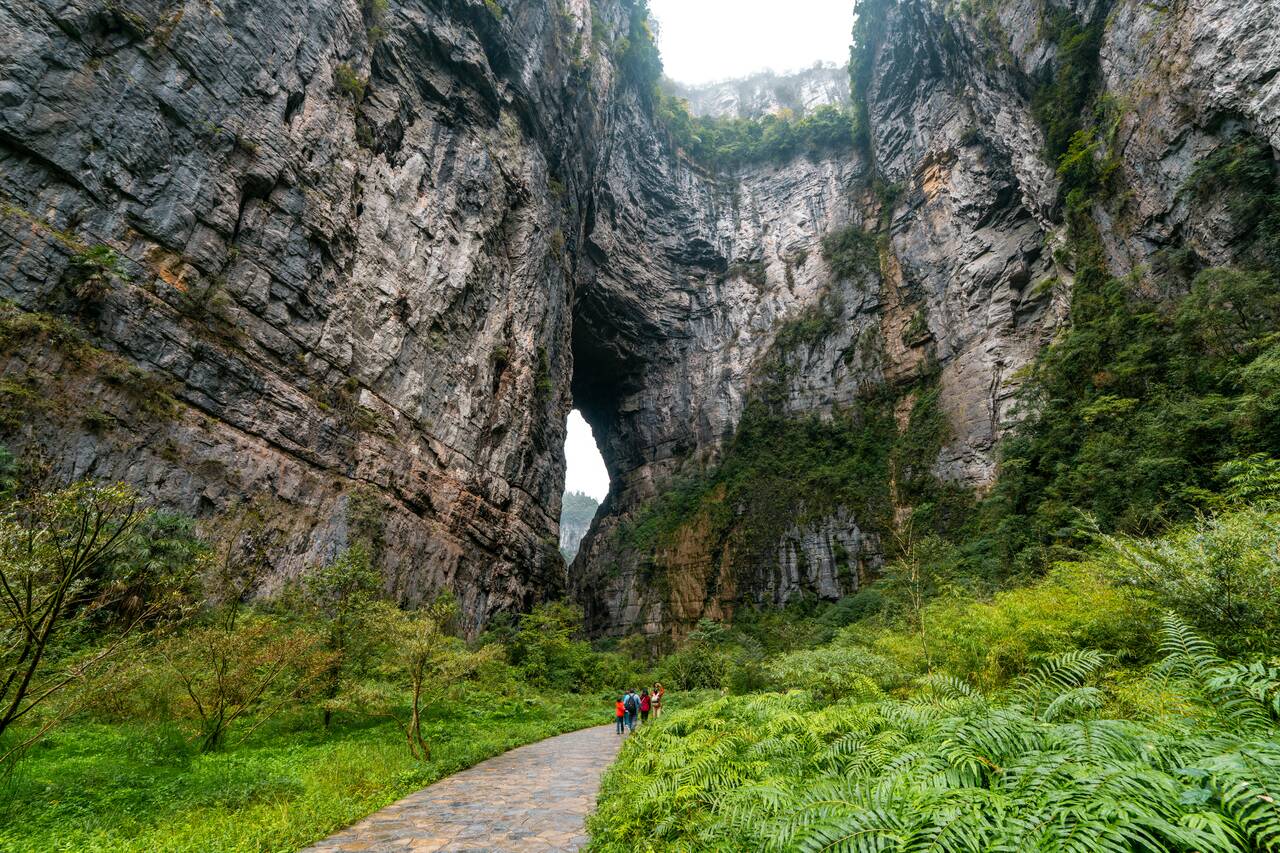
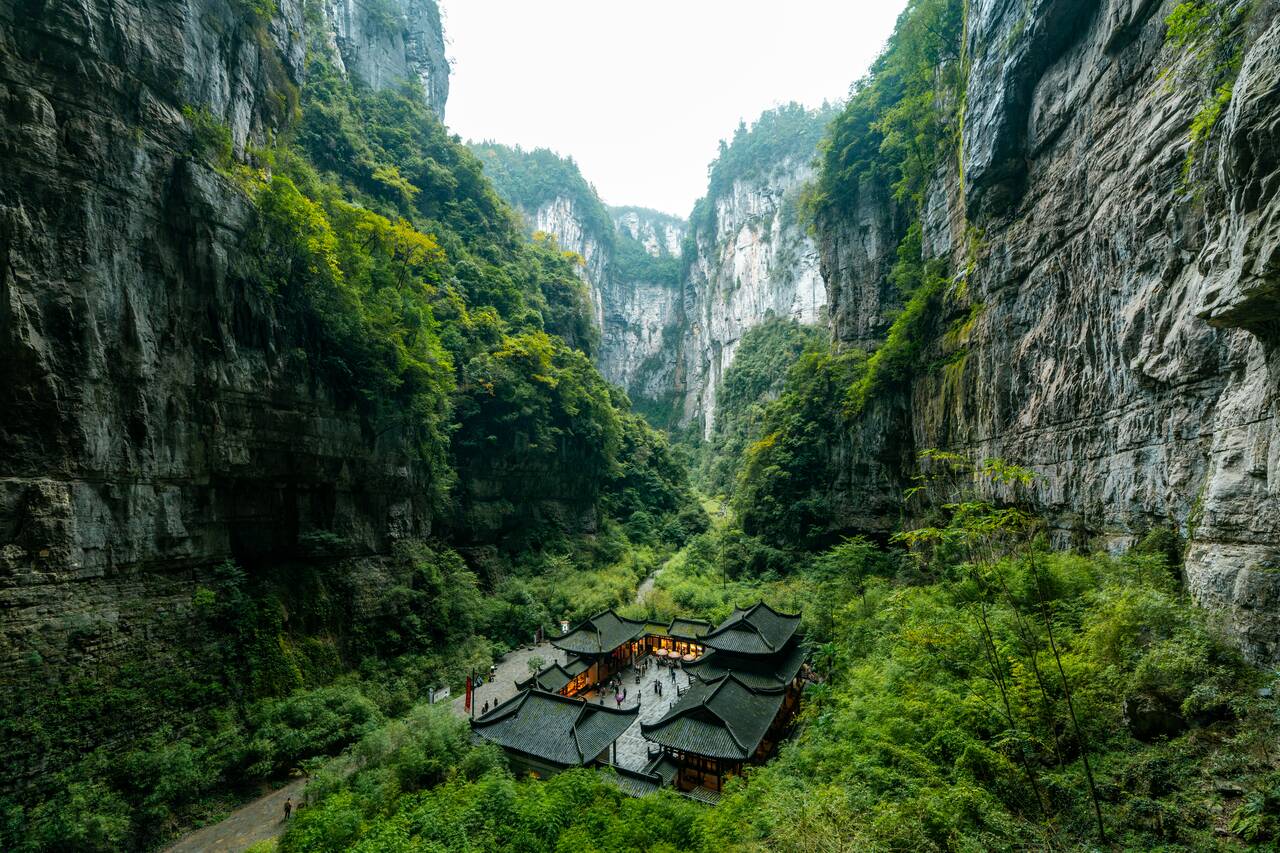
As parts of the cave roofs collapsed, sections of rock remained, forming the three massive arches you see today. It’s an incredible sight from above, but you don’t really get a sense of how big they are until you’re standing underneath one!
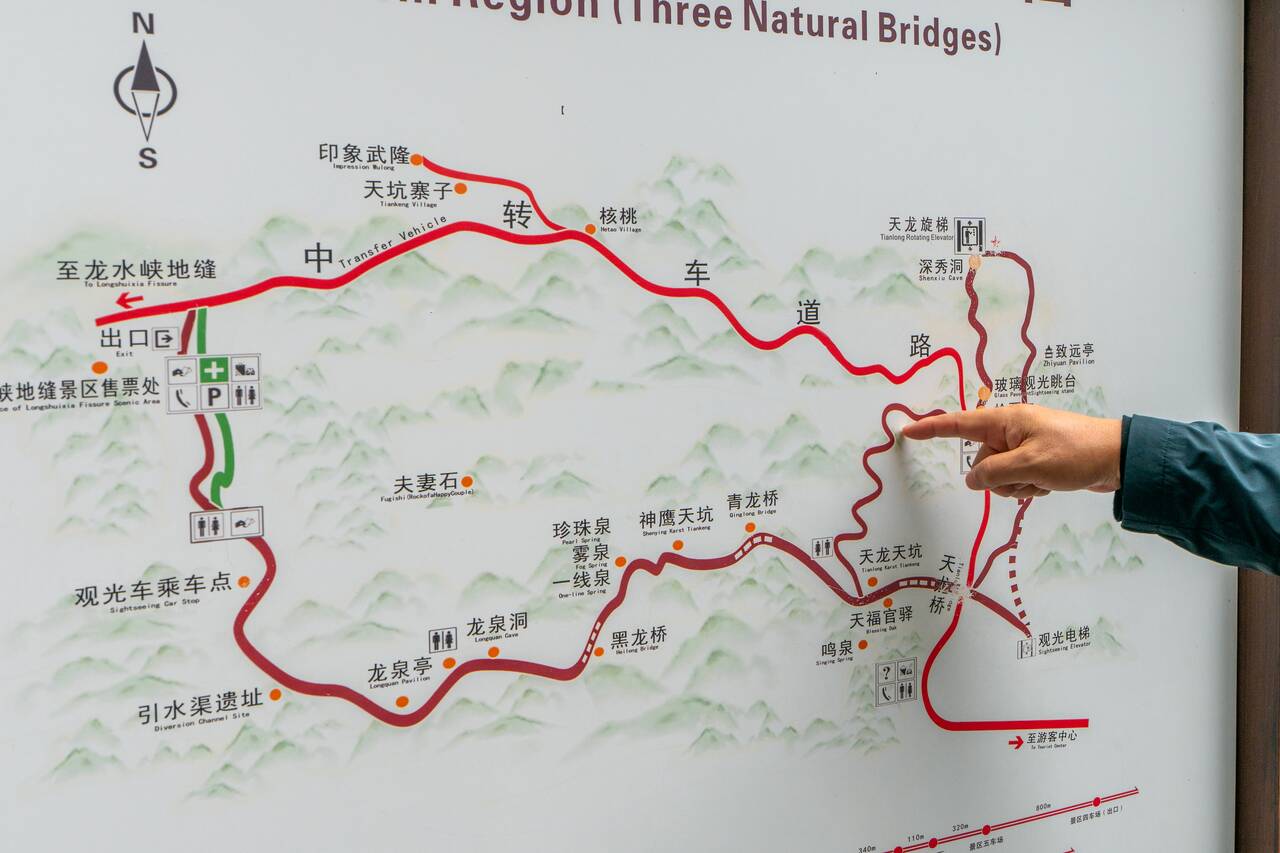
Allow at least 3 to 4 hours for the visit, excluding travel from Chongqing and back. There’s a lot to cover on foot, and I spent about 2 hours just walking from the elevator to the exit.
To get here, take a high-speed train from Chongqing East to Wulong South. The ride took around 40 minutes. You can also take a slower train to Wulong Railway Station in town, but the journey will take 2.5 hours. These are two different stations, so double-check the name when you book.
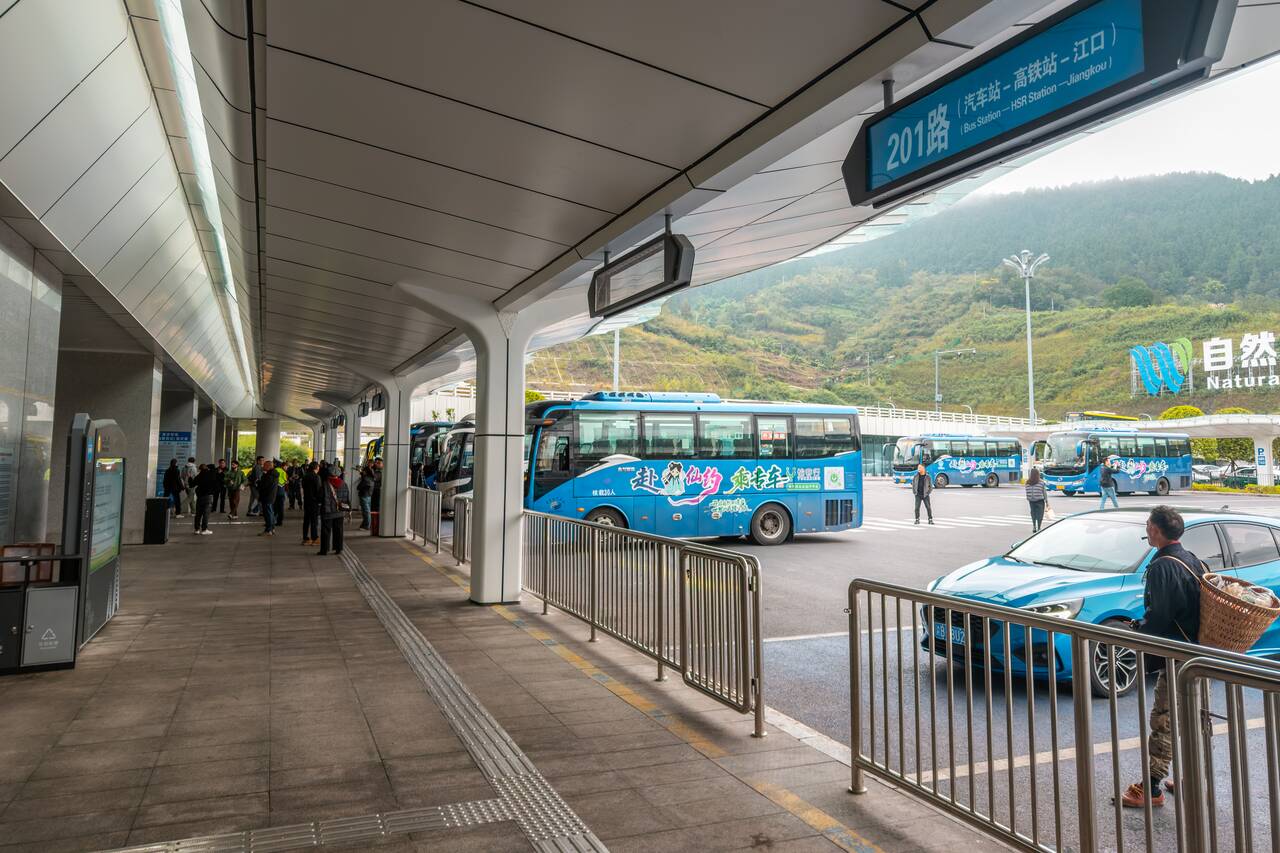
Either way, once you get to the station, you’ll need to make your way to the Wulong Scenic Area Visitor Center in Fairy Mountain Town. This is pretty easy as there will be shuttle buses waiting for train passengers at the station and they will take you to Wulong for about 16 CNY each way. Allow about an hour each way between the station and the visitor center.
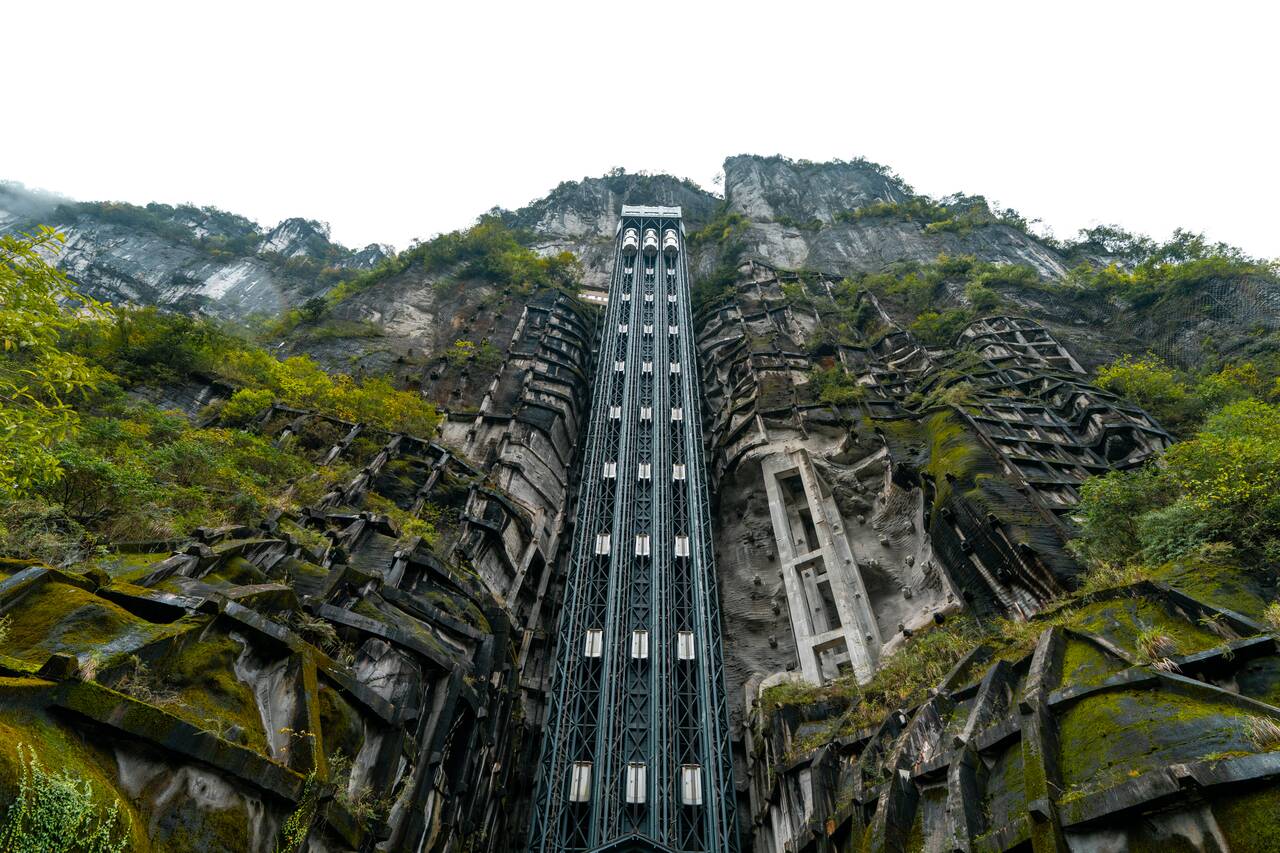
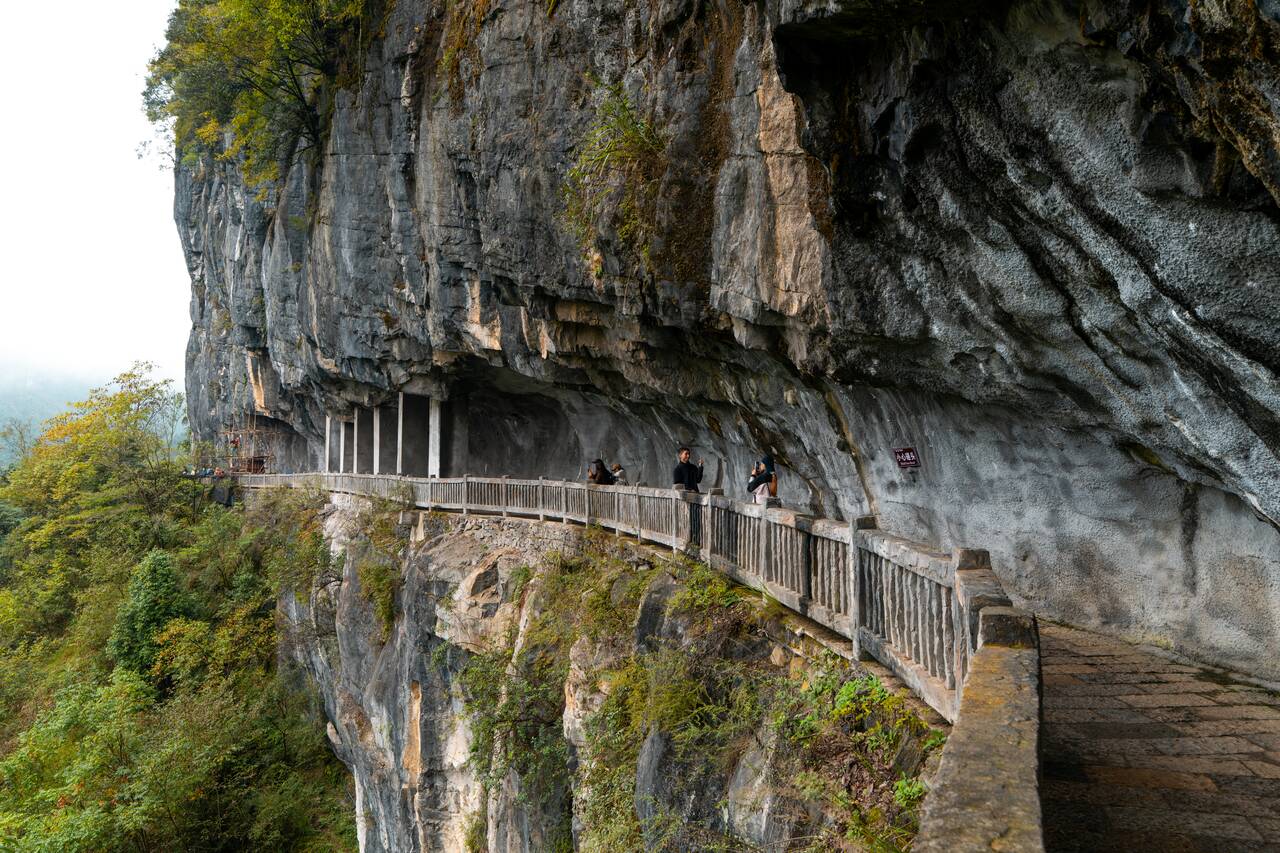
At the visitor center, you’ll switch to the park’s sightseeing shuttle which should take another 10 minutes. Once it drops you off, follow the cliffside path for a grand view of the gorge and one of the natural bridges from above. After a short walk, you’ll reach the elevator that takes you down to the valley floor, where the best part of the visit begins.
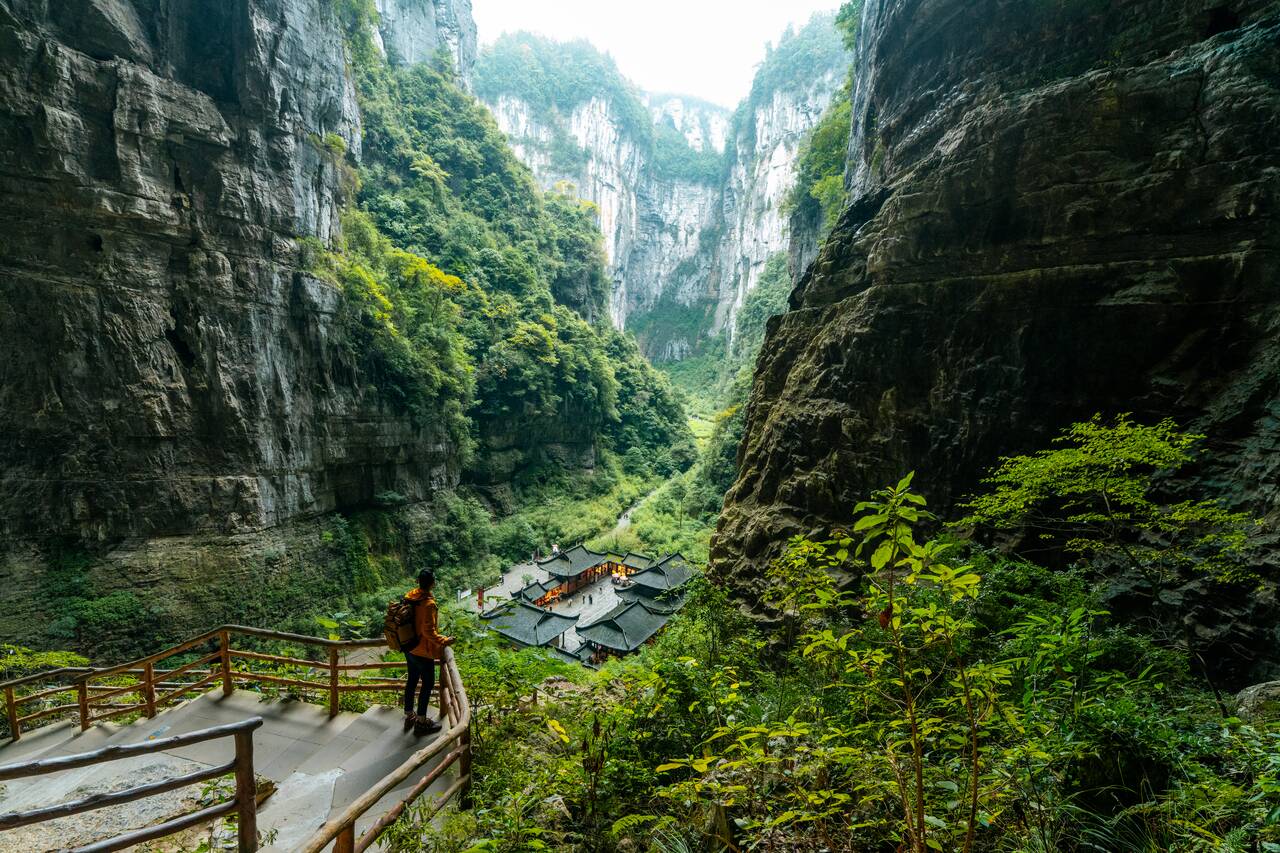
The trail down there is absolutely incredible. Nothing will make you feel more humble than being surrounded by these massive limestone cliffs rising on both sides! The first arch you’ll walk under is Tianlong Bridge, where you’ll find the famous Tianfu Official Post, a Tang-style reconstruction of a historic postal station. Be sure to walk up to the viewpoint behind it for a photo of the tiled roofs tucked beneath the enormous arch. Absolutely breathtaking!
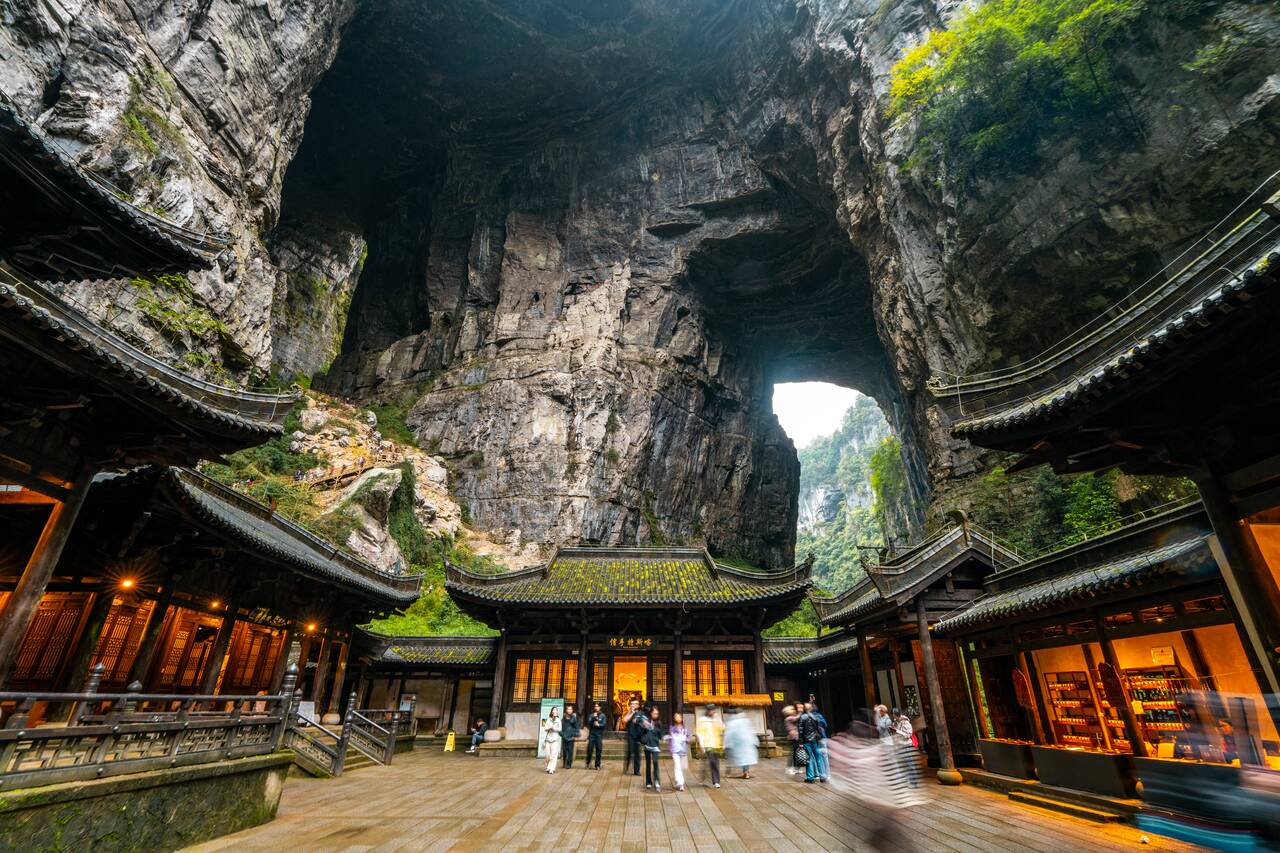
From there, continue under Qinglong Bridge and Heilong Bridge. Keep an eye out for the rock shapes along the way. At Qinglong Bridge, the opening looks like the blade of Guan Yu’s Green Dragon Crescent Blade from the right angle. After Heilong Bridge, look up for the formation that resembles a gorilla peering down from the cliff.
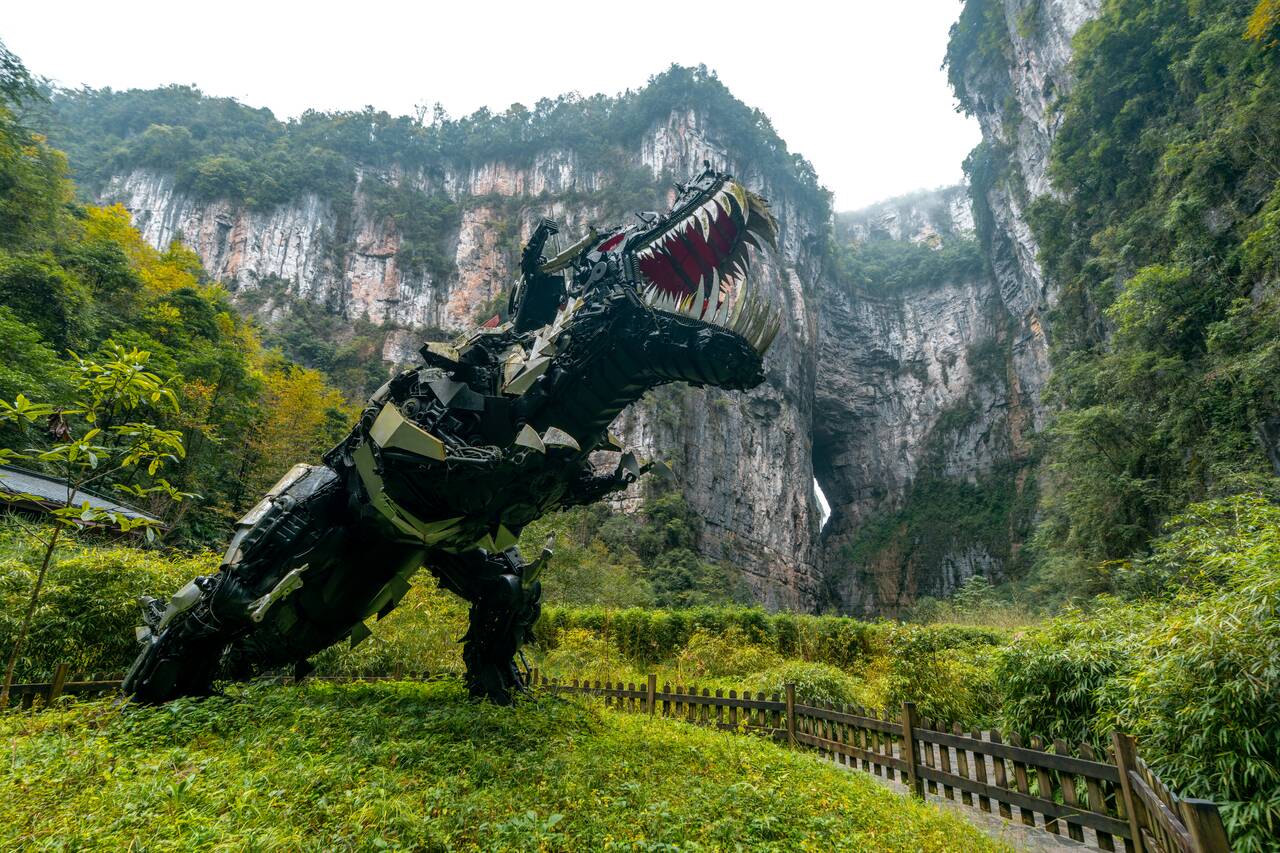
And if you stumble upon a massive metallic dinosaur, there’s a reason for that 🤣. Wulong was a filming location for Transformers: Age of Extinction, released in 2014. It’s pretty easy to see why they picked this place once you’ve walked through the gorge yourself!
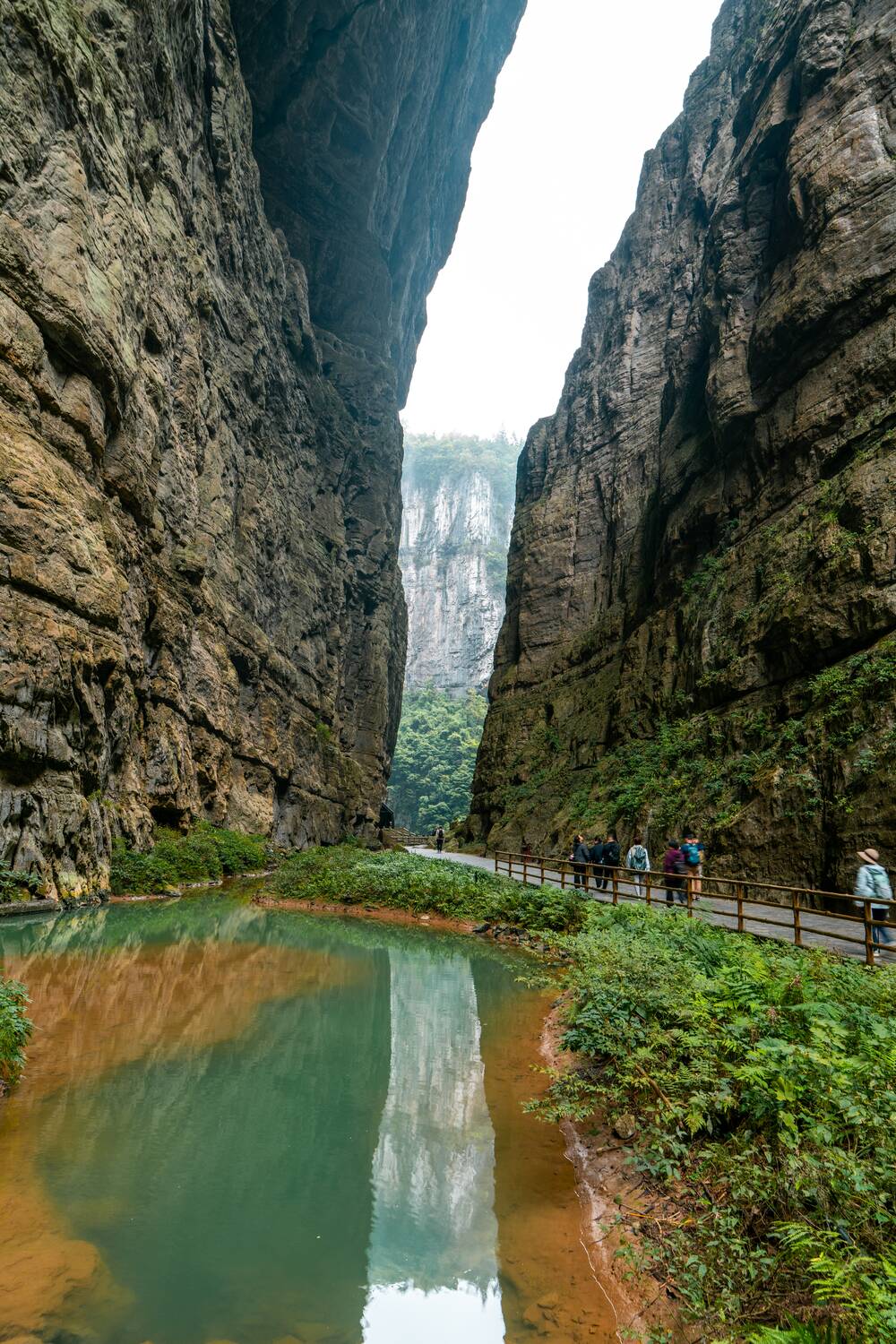
It took me about 2 hours to walk from the elevator to the exit. From the end of the trail, you can walk uphill to the shuttle stop or pay extra for the electric cart. From there, take the sightseeing bus back to the visitor center or continue to Longshuixia Gorge, a separate ticketed attraction. If you want to see both, leave yourself more time before your return train.
Book your return train in advance! When I checked late in the morning, the afternoon high-speed trains between roughly 2 PM and 6 PM were already sold out, even the standing tickets. I’d managed to grab the last first-class seat on a train around 2 PM the night before. Unfortunately, that didn’t quite go to plan 😅.
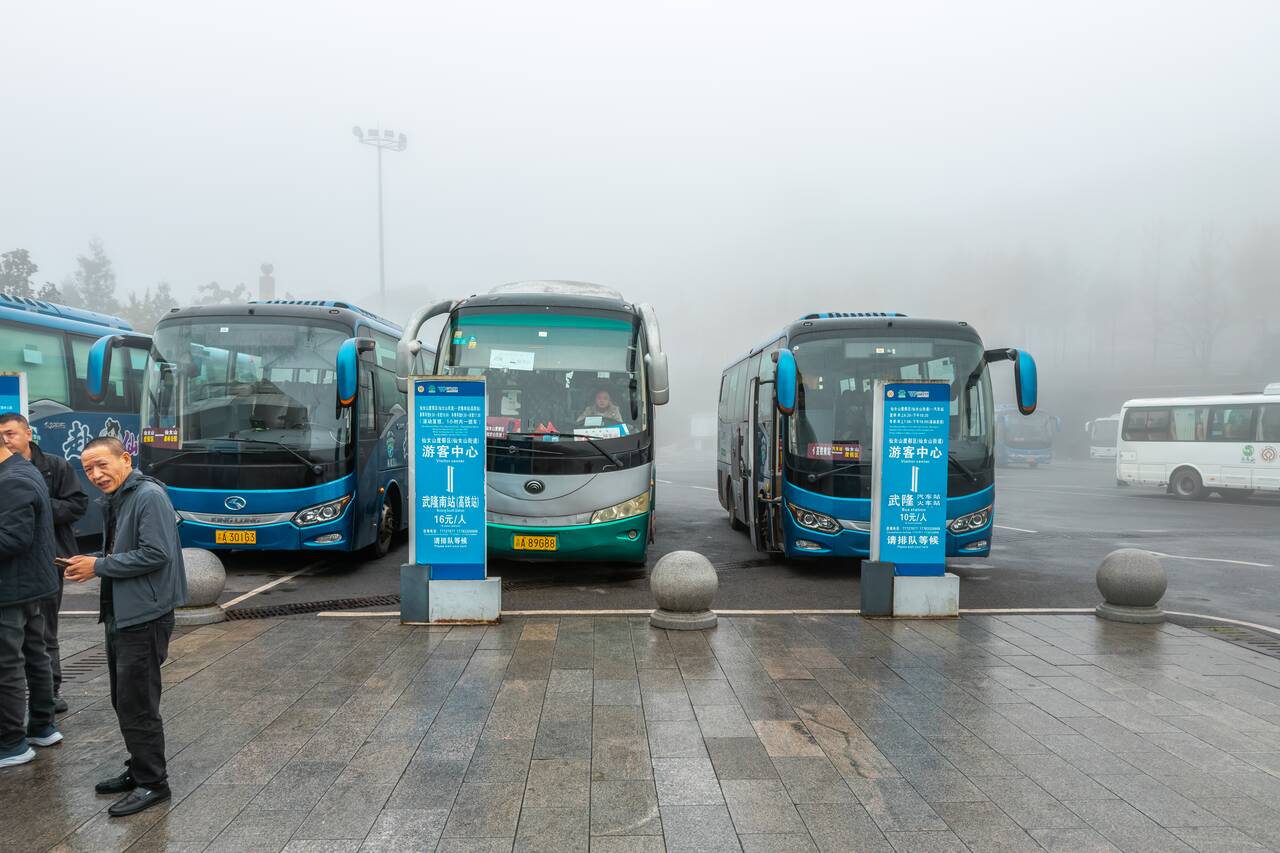
I got to the return shuttle about an hour before my train, thinking that would be enough. The bus waited to fill up, then made other stops before reaching Wulong South. Add traffic to that and I ended up missing my train by literally one minute! The shuttle doesn’t leave based on your train time, so get to the shuttle stop at least 1.5 hours before departure. Personally, I’d give myself 2 hours to allow for the wait, the ride, and getting through the station.
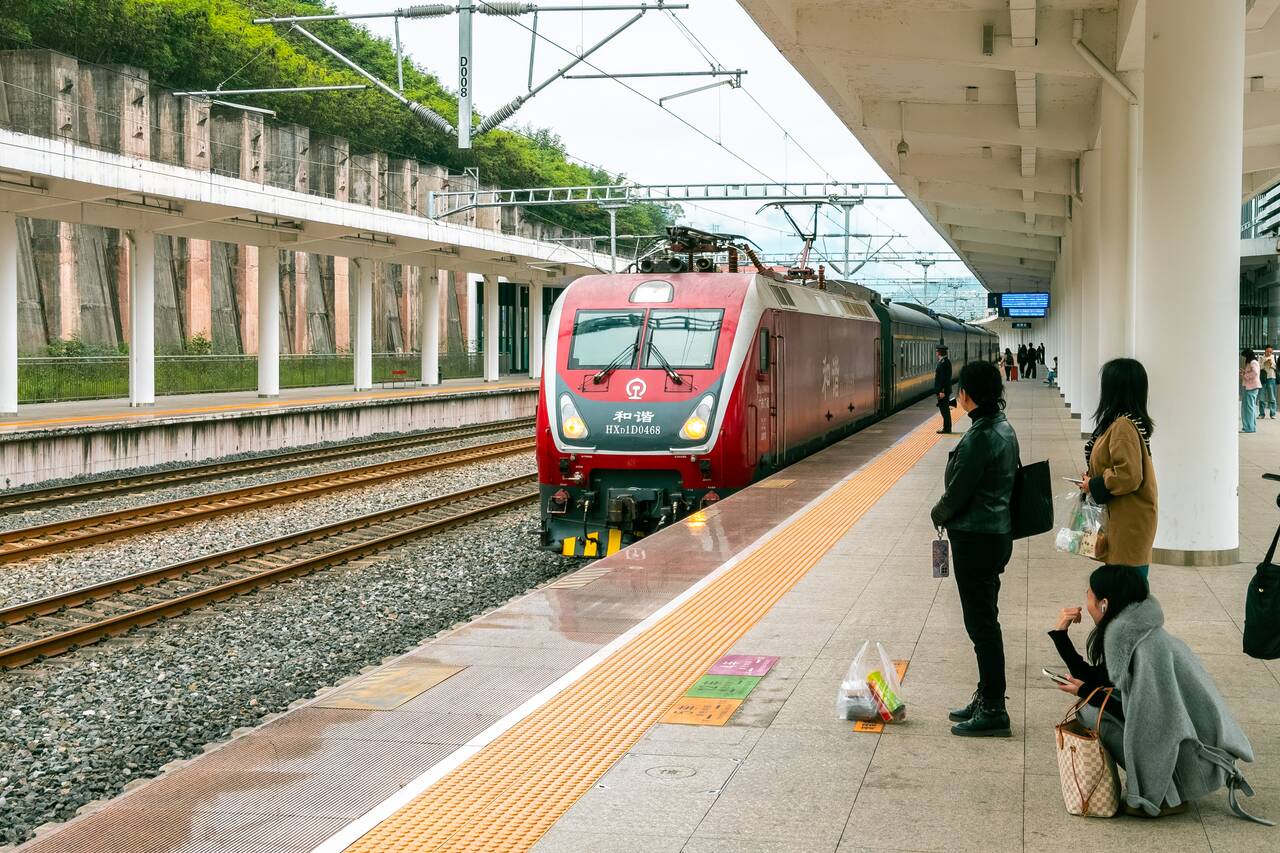
To make matters even worse, the next high-speed trains, one around 4 PM and another around 6 PM, were already full. The only one with seats left was at 9 PM. That was another seven hours! Ain’t nobody got time for that, so I ended up booking a 3 PM slow train from Wulong Railway Station in town. It still had plenty of spots available. Well, mine was more of a hard sleeper bunk than a seat. 🤣
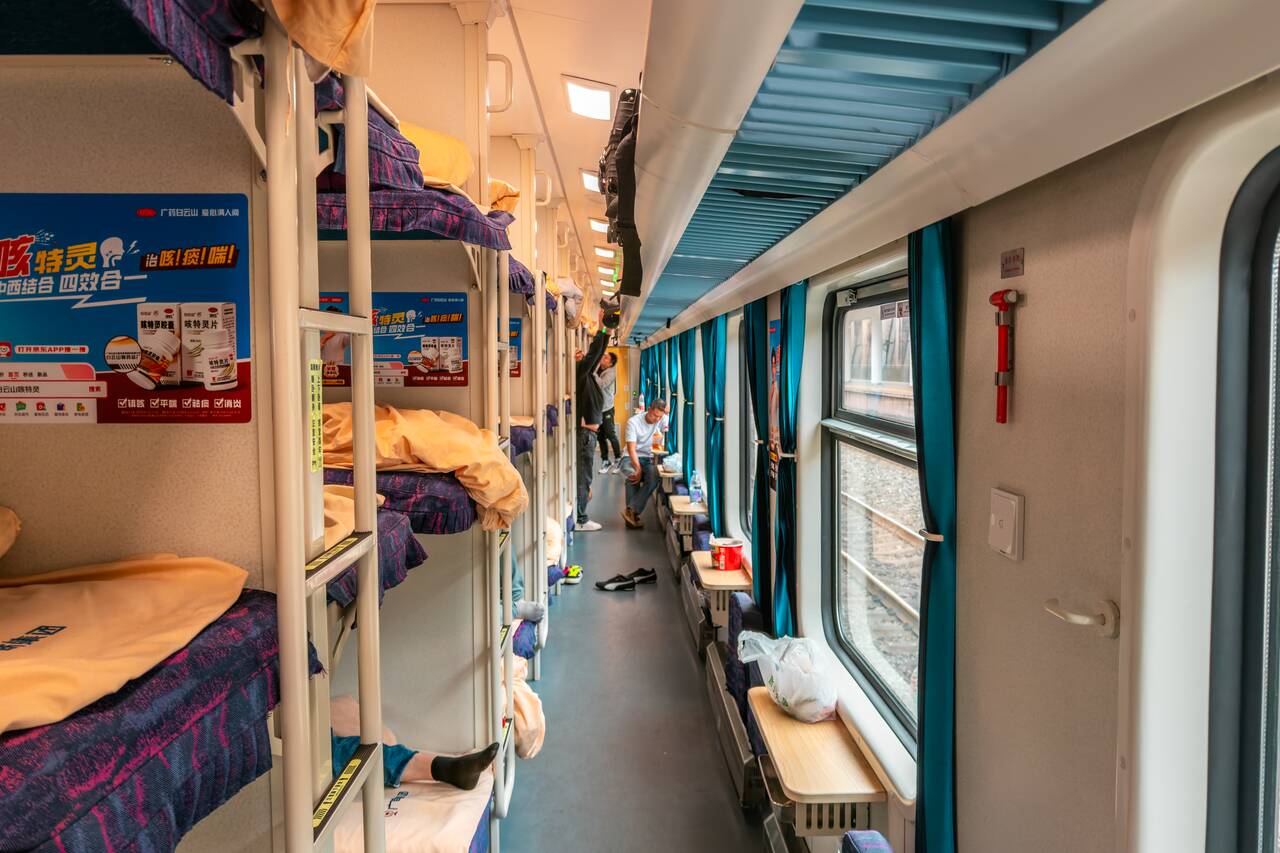
It took around 2.5 hours to get back to Chongqing instead of 40 minutes. I ended up with a hard sleeper bunk, and the bunks were stacked three high 😅. There wasn’t enough room to sit upright on mine, so I just lay down and took a much-needed nap after all that scrambling to find a way back 🤣.
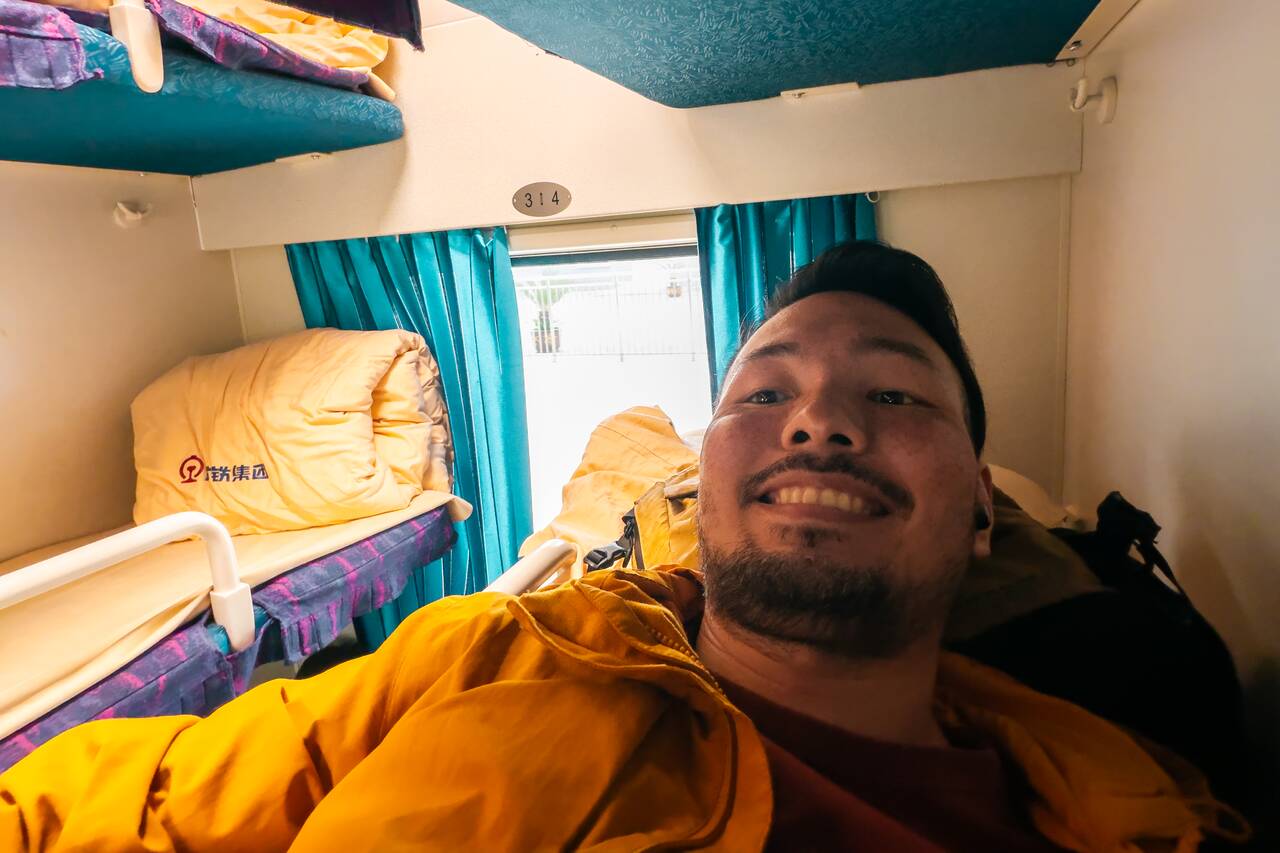
I got back only about half an hour later than I would have on the late-afternoon high-speed train, so it all worked out in the end! Don’t make the same mistake I did. Book your return train ahead and give yourself 1.5 to 2 hours to get from the visitor center to the station.
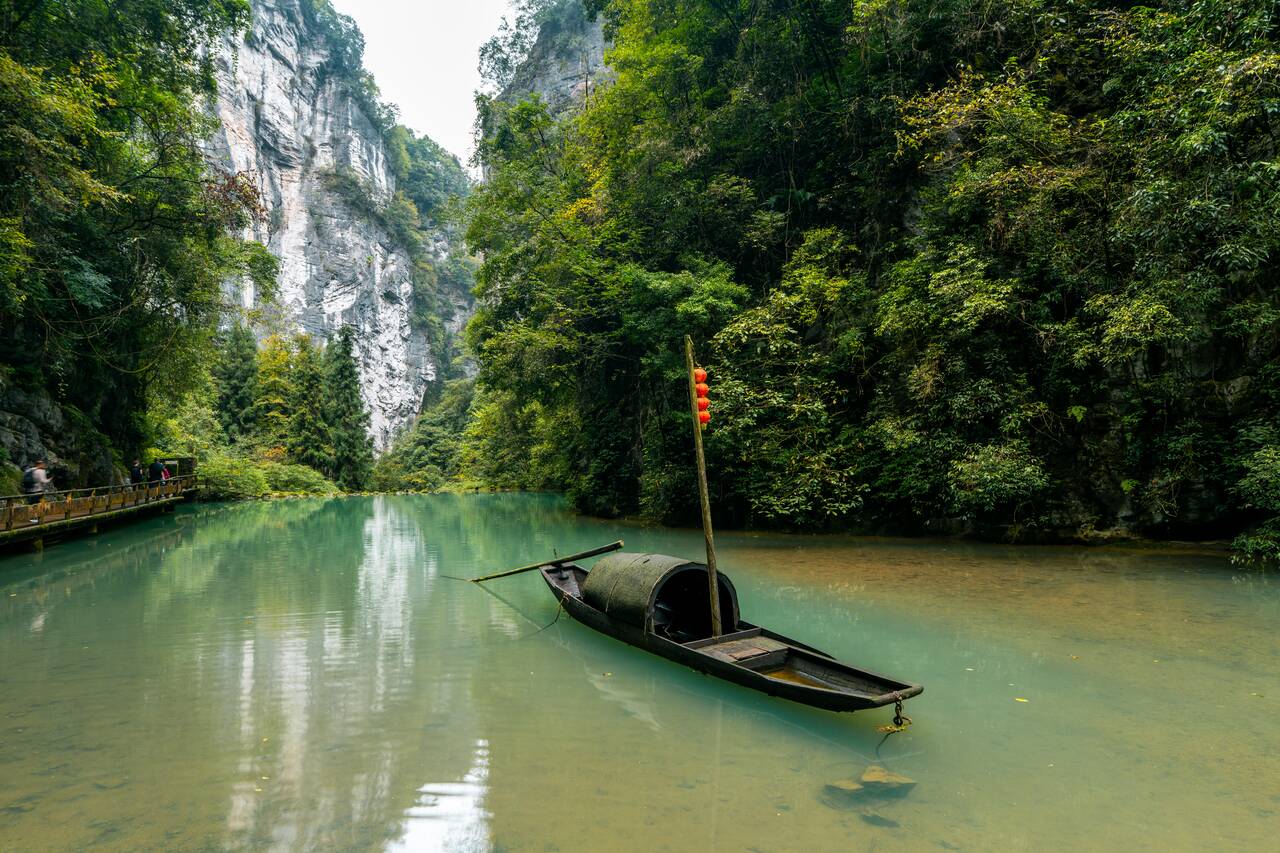
The Three Natural Bridges are open from 8 AM to 5 PM from June to August, 8:30 AM to 5 PM in May, and 8:30 AM to 4:30 PM from September to April. The entry ticket is 70 CNY in peak season and 40 CNY in the low season. The park transfer and descent can be bundled into a combo ticket and you can book your ticket here.

Which Places Should You Prioritize?
If you only have one day: Start with the Shancheng Mountain City Trail and Shibati, then head to Jiefangbei for Luohan Temple and Kuixing Tower. Grab dinner on Bayi Road and finish at Hongyadong after dark. The view from Qiansimen Bridge is worth seeing, but be ready for the crowds!
If you have a second day: Watch the train pass through the building at Liziba, then spend some time at the Three Gorges Museum, especially if you’re interested in Chongqing’s wartime history. For a quieter evening, explore Xiahaoli and walk back across Dongshuimen Bridge once the skyline lights up. I much preferred taking photos here to trying to find a spot on the bridge by Hongyadong.
If you have a third day: Set it aside for Wulong. Walking underneath those enormous limestone arches was one of my favorite experiences on the trip.
If you’re deciding how to spend an evening: I’d go for underground hot pot if you’re traveling with friends and want to share a bunch of dishes. If you’re more in the mood for a show, visit Ciqikou and watch Chongqing 1949.
When to Visit Chongqing?
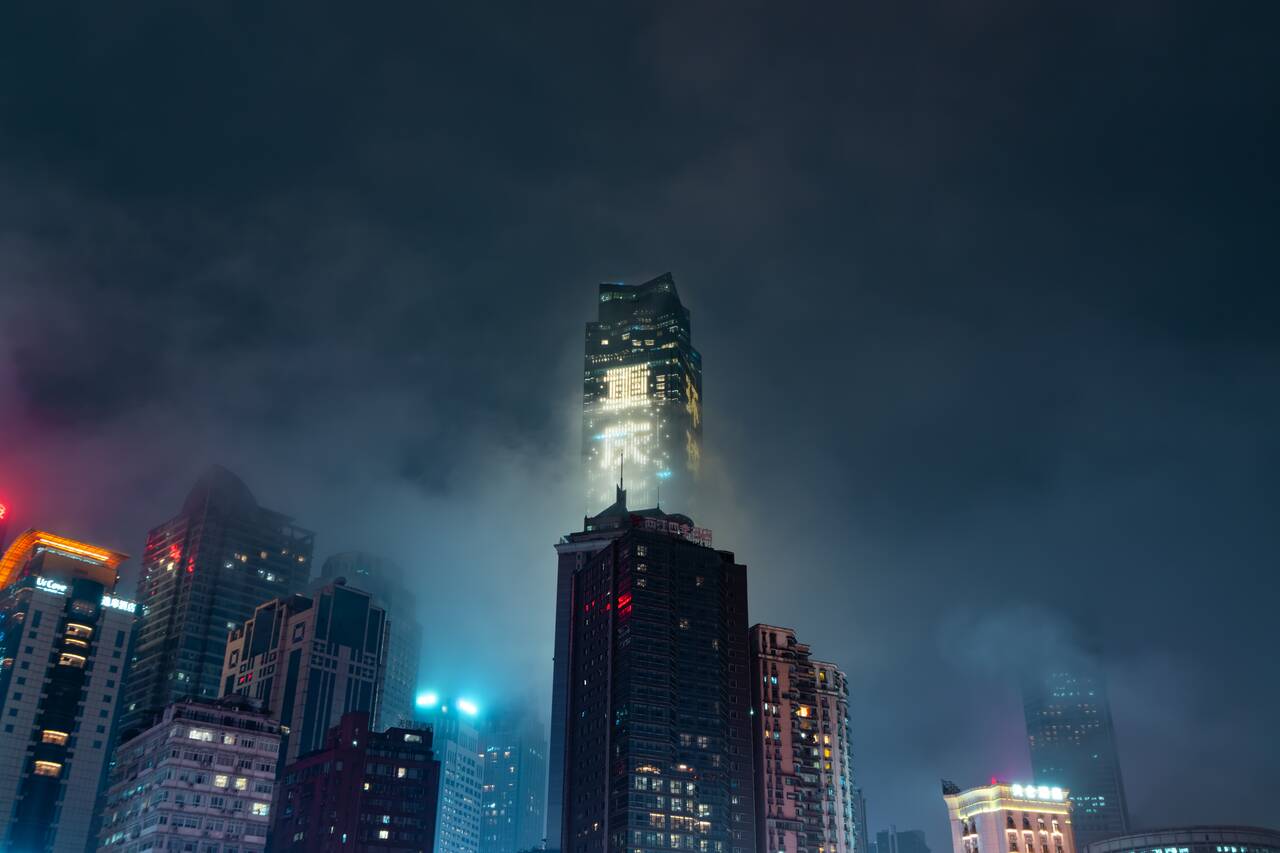
I’d visit Chongqing in April to May or September to October, when the weather is generally more comfortable for walking around. Between the hills, stairways, and riverside paths, you’ll spend a lot of time on your feet here. Summer can be very hot and humid, while winter tends to be cool and gray. I’d bring a light rain jacket either way, especially if you’re heading out to Wulong as it rains a lot here despite the season.
I was here in October, and the forecast made it look like it was going to rain for 60 days straight 🤣. Thankfully, it only rained on the first few days, and even then, it was mostly cloudy with a bit of drizzle. That said, Chongqing is best seen at night with all the lights anyway, so it all worked out in the end 😉.
Also, if you can line up your visit with a Saturday, you might get to see Chongqing’s famous drone show! The schedule can change, and the show may be canceled if the weather is bad, which is what happened when I was there. I mean, a forecast with 60 days of rain is insane 🤣.
If your dates are flexible, try to avoid the Labor Day holiday in early May and Golden Week in early October. Many places here like Hongyadong gets crowded even on an ordinary evening, and I couldn't imagine what a nightmare it would be during these long holidays. Avoid them if you can!
How to Get to Chongqing?
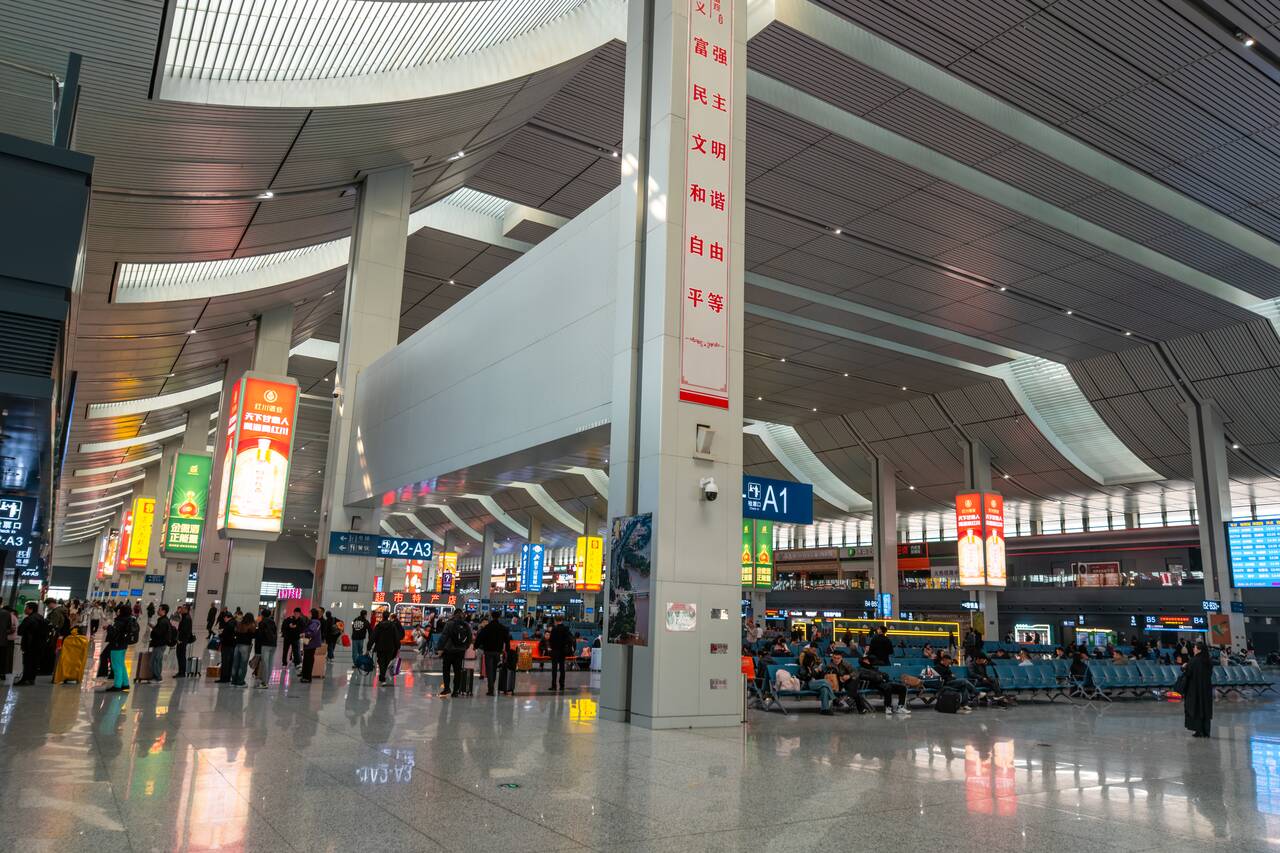
By Air: Fly into Chongqing Jiangbei International Airport (CKG). From there, you can take the metro into the city or book a DiDi if you’re carrying luggage and want to go straight to your hotel. If you’re taking the metro, use AMap to check the route from your arrival terminal to your accommodation.
For finding flights, I would recommend browsing through Skyscanner or Expedia to find an affordable flight from your departure city to Dunhuang.
By Train: If you’re already traveling around China, you can search for trains to Chongqing on Trip.com. Chongqing has several major railway stations, including Chongqing North, West, and East, and they’re in different parts of the city, so be sure to double-check where you would be arriving.
How to Get Around Chongqing?
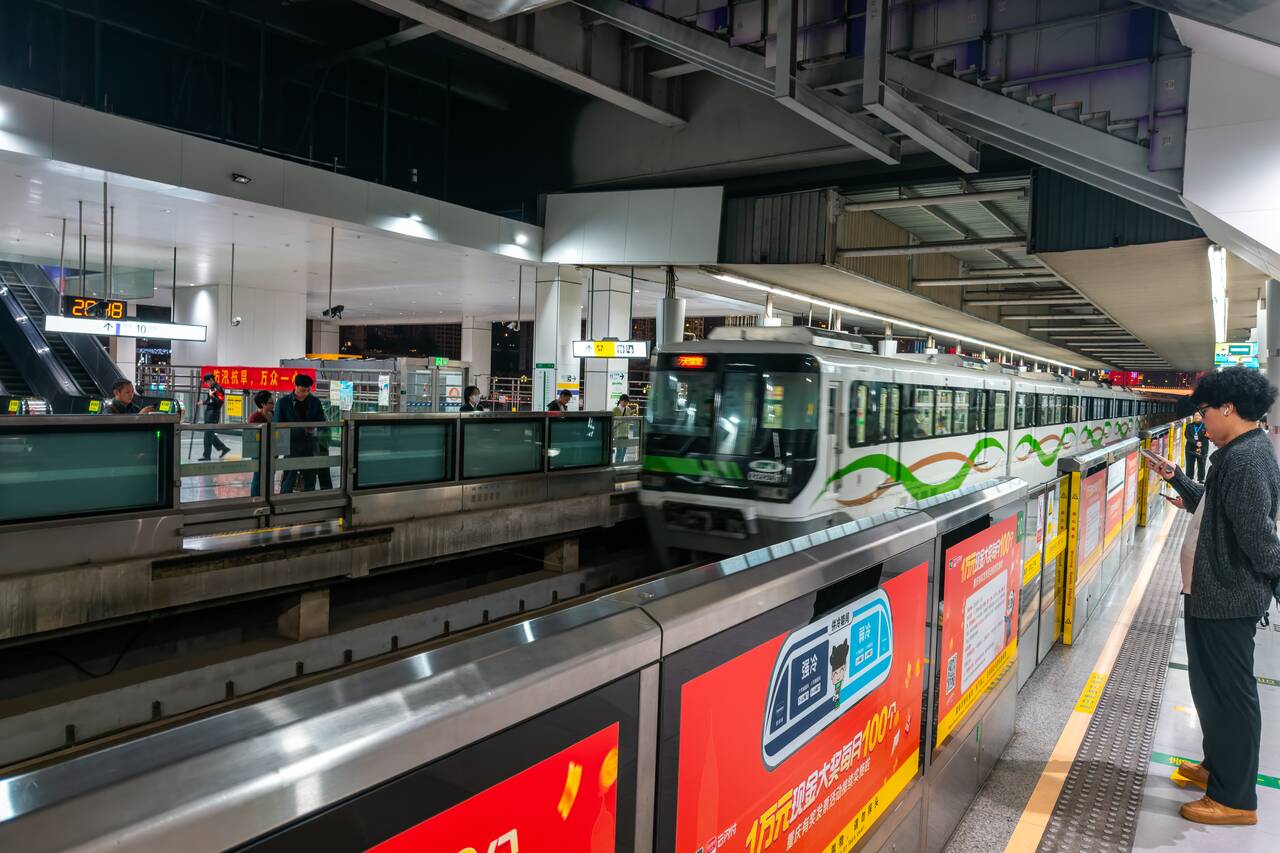
By Walking: Walking is the best way to explore individual neighborhoods like Jiefangbei, Shibati, and Xiahaoli. Just don’t let the map fool you. Two places can look right next to each other and still be separated by several flights of stairs! Pay attention to which level you’re on, especially around Hongyadong and Kuixing Tower.
By Metro: The metro is an easy and affordable way to get between neighborhoods. Use AMap to check which exit you need, as coming out on the wrong side can mean a surprising amount of extra walking. You can also set up Chongqing’s transport QR code in Alipay before your first ride. And if you’re going to Liziba, take Line 2 so you can ride through the building yourself before watching the train from below.
By DiDi: DiDi is handy when you’re tired of climbing stairs or when a metro trip involves several transfers. Make sure the pickup pin is on the same road level as you. A driver can be right next to you on the map and still be on a road above or below you!
By Train to Wulong: For a day trip, look for a high-speed train from Chongqing East to Wulong South. Wulong and Wulong South are different stations, so check which one you’re booking in both directions.
Either way, you’ll still need to get to the visitor center in Fairy Mountain Town if you’re visiting the Three Natural Bridges. When I visited, there were shuttles waiting for train passengers, and the ride cost 16 CNY each way. Allow about an hour each way between the station and the visitor center.
On the way back, I’d get to the shuttle stop next to the visitor center at least 1.5 hours before your train departs. The bus may wait until it fills up, and it can make other stops before reaching Wulong South Railway Station.
Throw in a bit of traffic and an hour goes by fast. Trust me, I learned this the hard way. I left an hour before departure and missed my train by just one minute! The shuttle doesn’t time its departure around your train, so give yourself a buffer.
How Many Days to Spend in Chongqing?
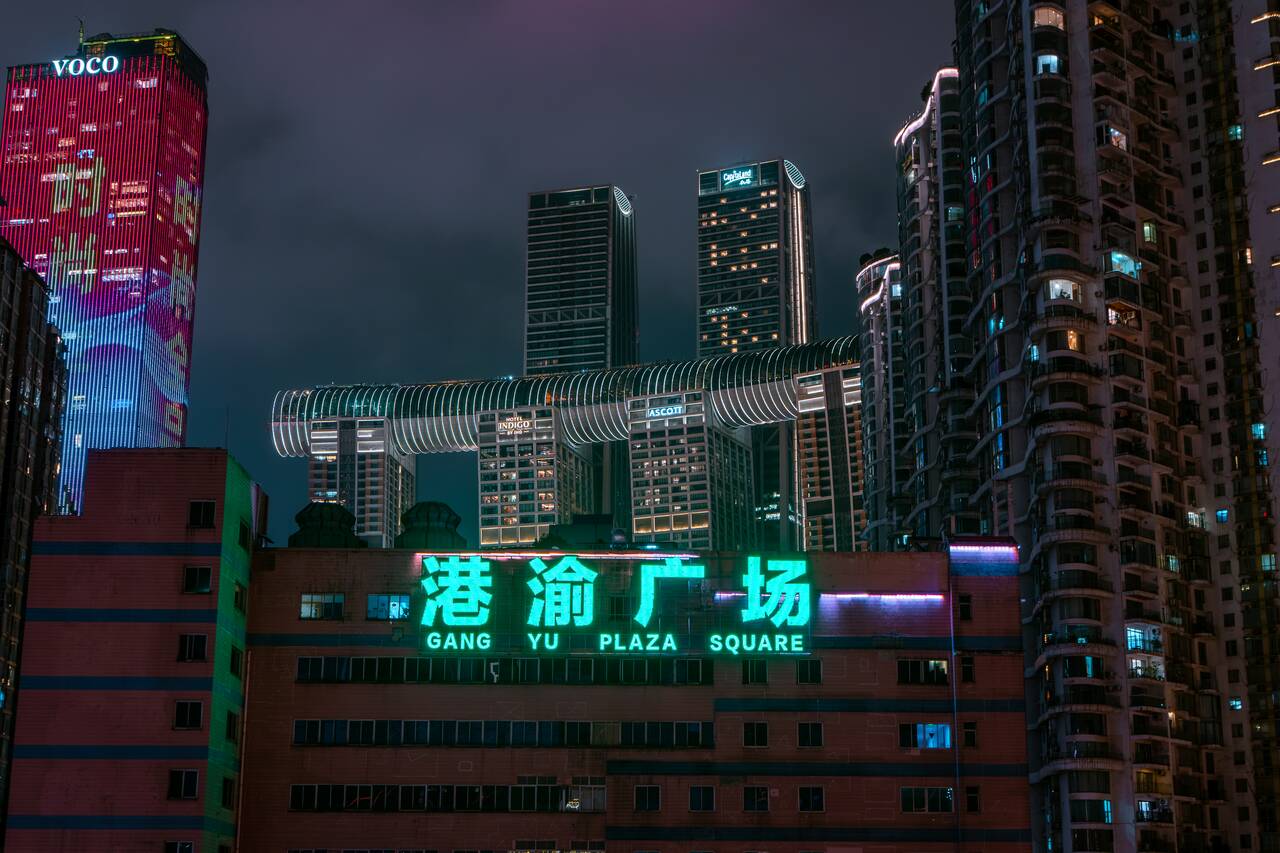
I’d spend at least 3 full days in Chongqing. That gives you two days for the city and one full day for Wulong. If you’re arriving in the evening and leaving the morning after your last sightseeing day, that means booking 4 nights.
Day 1: Explore central Chongqing and see Hongyadong at night. Start with the Shancheng Mountain City Trail and Shibati, then make your way to Jiefangbei for something to eat on Bayi Road. Visit Luohan Temple and Kuixing Tower before heading to Hongyadong after dark.
Day 2: Ride through Liziba and see another side of the city. Visit Liziba Station and the Three Gorges Museum, then spend some time wandering around Xiahaoli. I’d finish with underground hot pot or a performance of Chongqing 1949. If you want to do both, pick your showtime first and plan dinner around it.
Day 3: Take a day trip to Wulong. Catch an early train and make the Three Natural Bridges your main stop. Between the trains, road transfers, and time spent walking through the gorge, I’d keep the entire day free for this one.
Is Chongqing Worth Visiting?
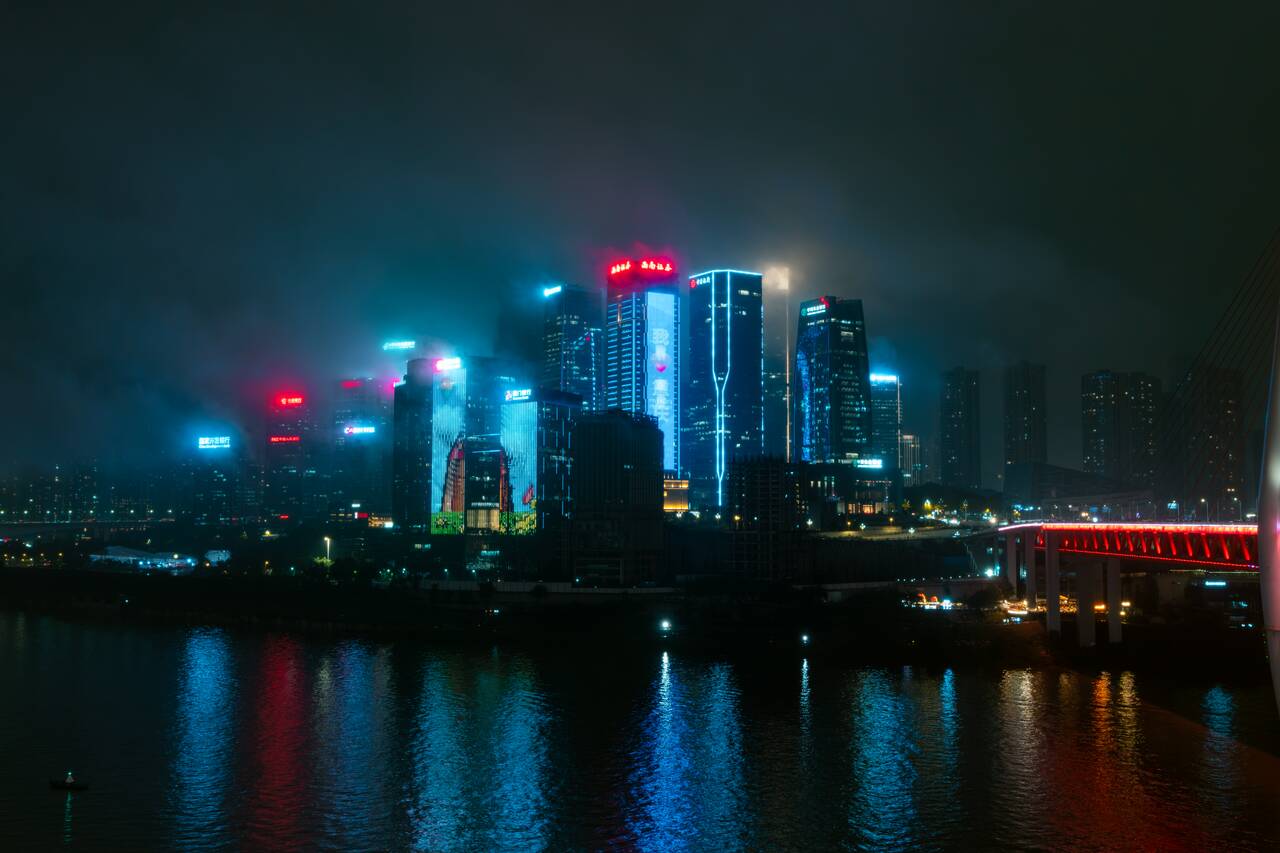
Absolutely! I knew Chongqing would look incredible at night, but I didn’t expect to have this much fun just walking around. One minute I was looking over the edge of a plaza that somehow doubles as the 22nd floor, and the next I was sitting down for spicy hot pot in an old air-raid shelter.
Hongyadong gets a lot of the hype, but some of my favorite moments were elsewhere, like walking back from Xiahaoli across Dongshuimen Bridge with the whole skyline lit up and barely anyone around and exploring the stunning Shancheng Mountain City Trail.
If you’re on the fence about adding Chongqing to your itinerary because of all the social media hype, I completely get it. Influencers can go a little overboard with trendy places. But after spending time here myself, I’d say go ahead and add it to your trip. You won’t regret it!
Things to Know Before Visiting China
- Always Carry Your Passport: Everything revolves around your passport/ID in China, and it’s often used interchangeably as your main form of identification. Many major tourist attractions require you to show your passport when buying a ticket, and the ticket will then be linked to it. You’ll scan your passport again to enter. The same applies to high-speed trains. It’s best to carry your passport with you at all times while traveling in China.
- Get an eSIM: China’s cashless economy relies on constant internet access, so having a data connection is essential. I highly recommend getting an eSIM or a local SIM card for your trip. An eSIM is often better because the service is usually based in Hong Kong, which bypasses China’s Great Firewall, meaning you can access apps like Instagram and YouTube without a VPN. I suggest checking eSIM options on Klook or Trip.com, as they tend to be the most affordable.
- Use AMap to Navigate: Google Maps doesn’t work well in China, so local apps like AMap are much more informative and accurate for getting around. It even provides metro information, making it easy to navigate city subway systems. I used AMap throughout my entire trip, and it worked perfectly! In this guide, I’ll be linking locations with AMap links instead of Google Maps, so be sure to download it before your trip.
- Use VPN to Bypass the Great Firewall: As you may know, many major websites such as Google, Facebook, Instagram, TikTok, and more are blocked in China. To access them, you’ll need a VPN like LetsVPN installed on both your phone and laptop before you arrive in China. This is crucial as once you're in the country, you won’t be able to search for or download VPN apps. I used LetsVPN during my trip, and it worked very well throughout. The service is affordable too, with a free tier offering limited data or a basic unlimited plan for just 5.99 USD per month.
- Connect Alipay with Your Credit Card: First, download Alipay from the app store, set up your account, and link it to your credit card. This will be one of the two main ways you’ll pay for services in China. Alipay also has mini-apps built in, such as Didi (China’s version of Uber), so you don’t need to download separate apps, and you can use them directly through Alipay. Very convenient!
- Get a Transport Card Working in Alipay: Once you have Alipay set up, you’ll need to verify your account before you can activate a transport card for metro and bus rides. First, if you’re not currently in the city you want to use, tap the city name in the top-left corner and select the correct city. After that, tap the “Transport” button and request a transport card. You’ll be asked to upload a photo of your passport for verification. Once approved, your transport card will be issued, and you can use the QR code to scan and pay for buses and metro rides.
- Get WeChat Set Up: WeChat is another essential app for communicating with locals, thanks to its built-in translation feature. It’s also widely used for payments as Alipay only works about 70% of the time, while WeChat is commonly needed for paying individuals, buying entry tickets at certain attractions, and more. Setting up WeChat can be a bit tricky though because you need verification from an existing user. The easiest way is to ask your hotel’s reception to help verify your account when you arrive in China, which is how I got mine activated.
- Use Trip.com / Trip App: For hotels, day trips, attraction tickets, train tickets, flights, and everything in between, you can use Trip.com or the Trip app to book all your travel needs. It’s very convenient, offers a great user experience, and has a generous cancellation policy that gives you more flexibility when traveling in China.
Disclaimer: This post may contain affiliate links. See our disclosure policy.
First Published:


