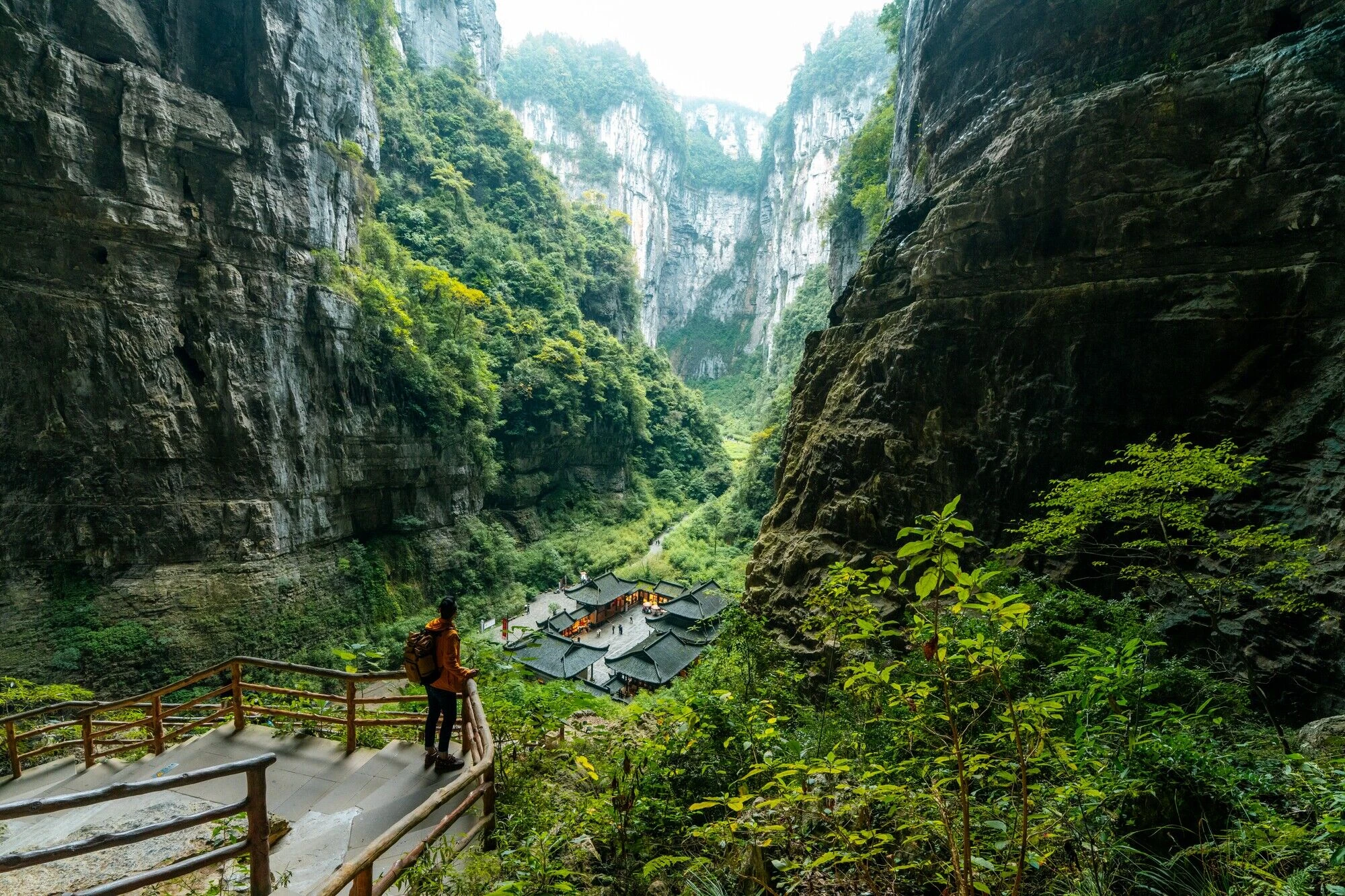


Wulong had been on my ever-growing list of places to visit in China for the longest time, so when I finally made it to Chongqing, I decided to dedicate an entire day to exploring Wulong’s scenic area and seeing its main highlight with my own eyes, the Three Natural Bridges. I knew these three limestone arches would be huge, but standing beneath them at the bottom of the gorge, with cliffs towering on both sides, was something else!
I also learned the hard way that an hour isn’t enough to get from Wulong’s visitor center back to the train station. Between waiting for the shuttle to fill up, a few stops along the way, and traffic, I missed my high-speed train by exactly one minute. What should’ve been a 40-minute ride back to Chongqing turned into a 2.5-hour trip on a slow train, where I spent most of the ride laying down on a hard sleeper bunk with strangers 🤣.
If you do not want to make the same mistake as I did and have your plan go smoothly, this guide is for you! Here’s how I got to Wulong, where to find the best views along the Three Natural Bridges trail, and how much time I’d leave for the trip back if I did it again.
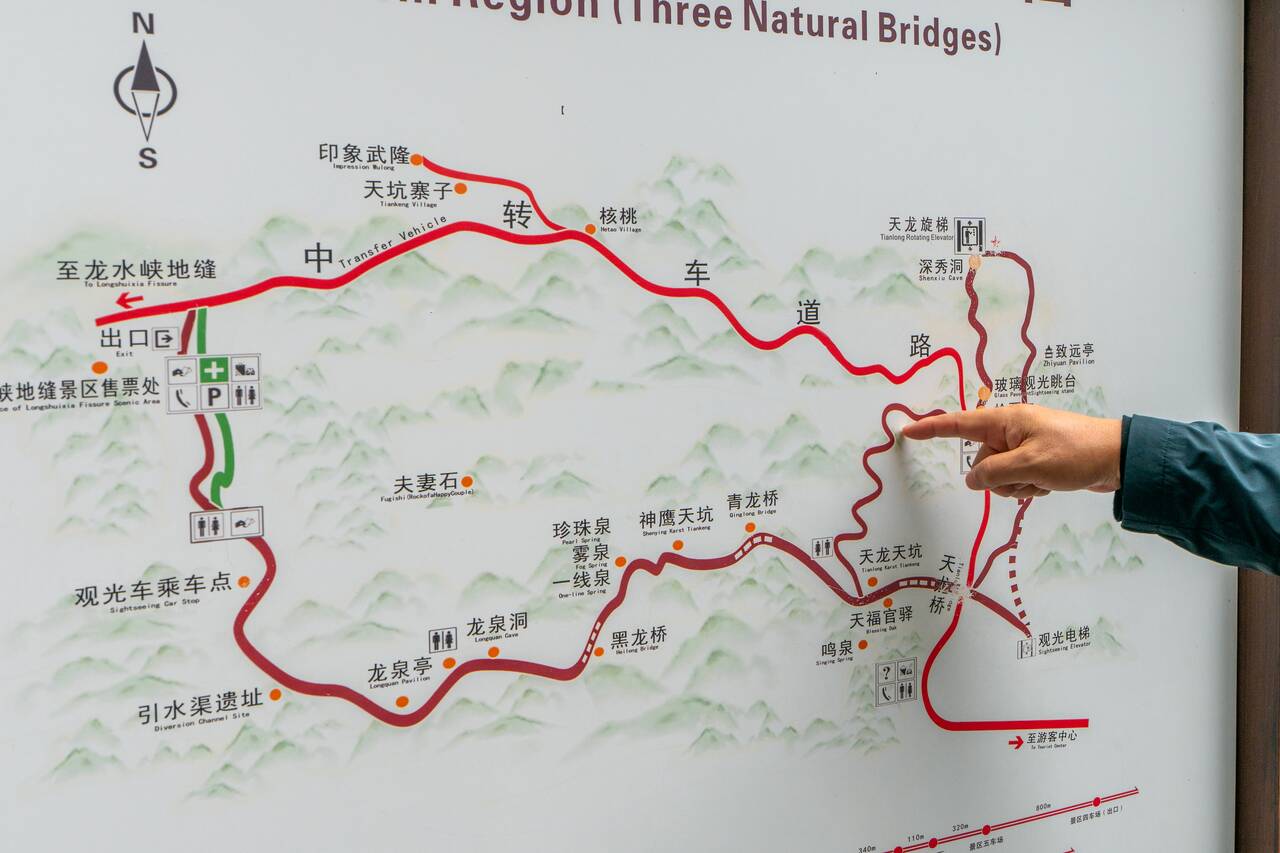
Map of Wulong's Attractions
Quick Summary
| 🌤️ Best time: | April–May and September–October |
| 🚆 Get there: | High-speed train |
| 💰 Cost: | About 157–187 CNY |
| 🕓 Time to spend: | One full day (3 - 4 hours at the park) |
| 🥾 Trail: | Mostly flat with some uphill stretches |
What Are the Three Natural Bridges?
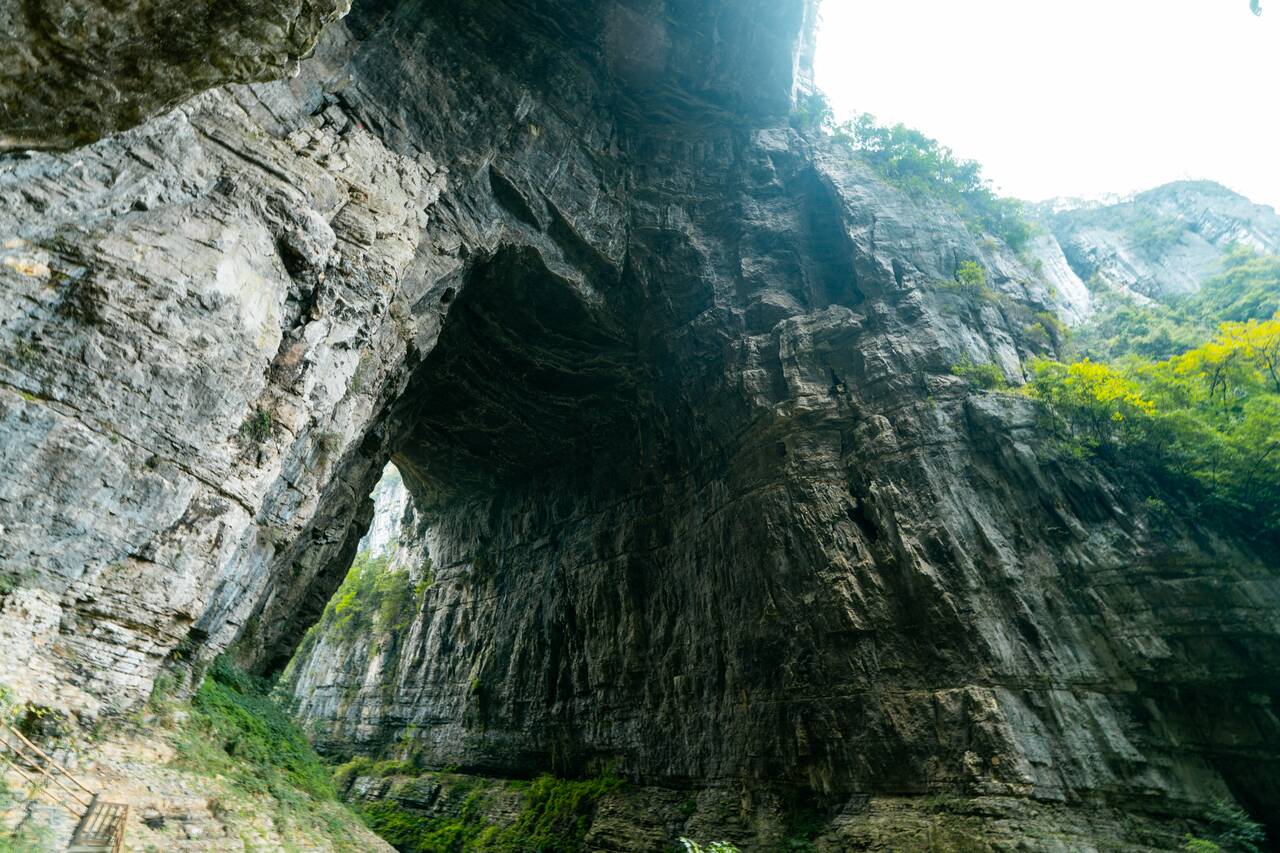
One of the best day trips you can take from Chongqing is to Wulong, a mountainous area known for its limestone gorges and caves. The main reason I came was to see the Three Natural Bridges, three enormous limestone arches spanning a gorge. It was some of the most beautiful scenery I’ve seen in China, and I’ve seen quite a lot!
How these bridges formed is pretty fascinating too. Rainwater picks up carbon dioxide as it moves through the air and soil, making it slightly acidic. Over time, that water seeped into cracks and slowly dissolved the limestone, carving out underground passages.
As parts of the cave roofs collapsed, sections of rock remained, forming the three massive arches you see today. They’re an incredible sight from above, but you don’t really get a sense of how big they are until you’re standing underneath one. And that’s exactly where this guide will take you!
When to Visit Wulong?
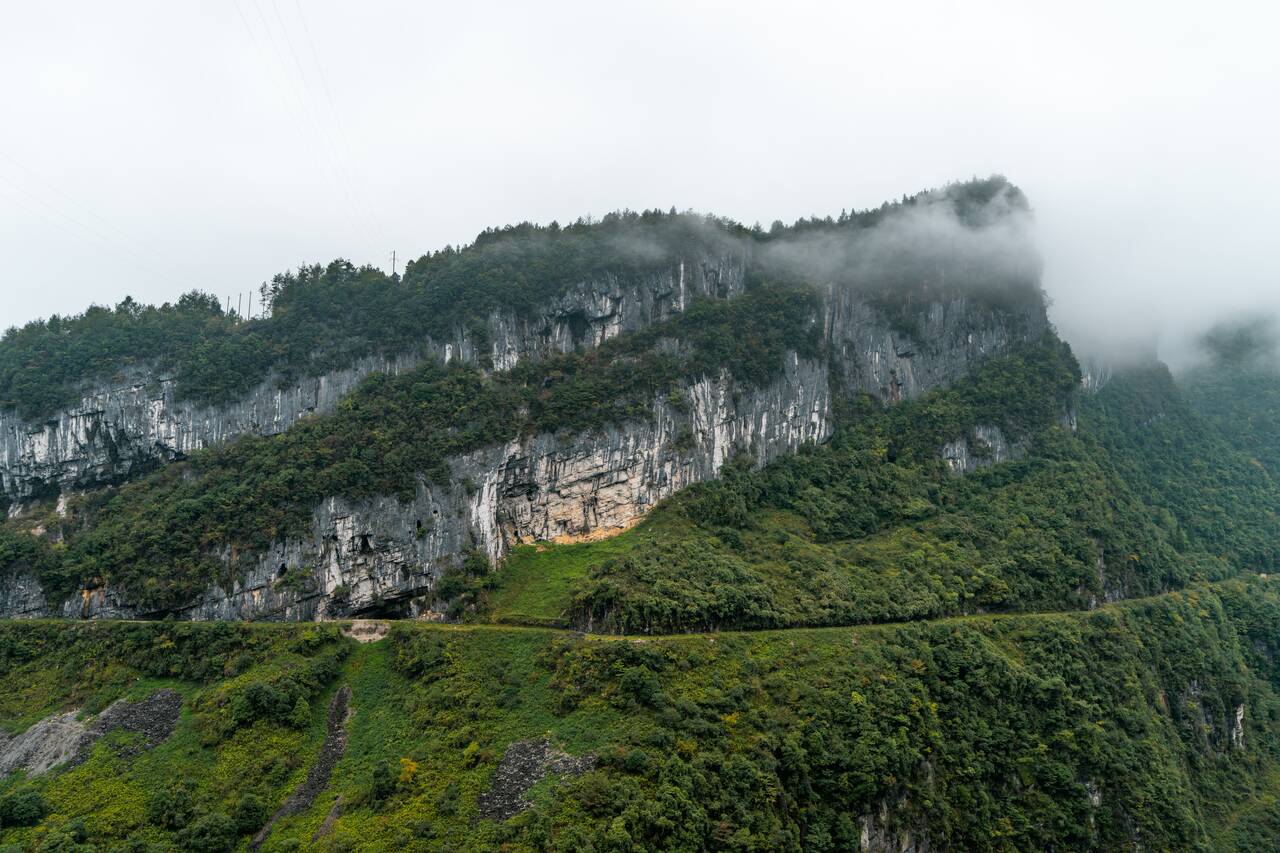
The best time to visit Wulong is during spring (April to May) and autumn (September to October), when temperatures are generally more comfortable for walking. You’ll spend a good couple of hours down in the gorge at the Three Natural Bridges, so I’d pick a mild day and go on a weekday if you can as it tends to be less crowded. I’d also avoid the Labor Day holiday in early May and Golden Week in early October if your dates are flexible.
That said, don’t count on sunshine and blue skies here. Wulong gets plenty of rain throughout the year. In fact, when I visited in October, the forecast called for 60 days of rain straight 🤣. If you’re heading to Wulong, check the forecast for Fairy Mountain Town before you go.
Mind you, the gorge is still absolutely beautiful on a cloudy day, but if the clouds hang low enough, you might barely see the arches from above. I think it’s still worth making the trip as long as it isn’t pouring cats and dogs out there. When I was there, it was cloudy, but the rain held off, which made walking through the gorge much more enjoyable.
How to Get to Wulong from Chongqing
Take the Train to Wulong South
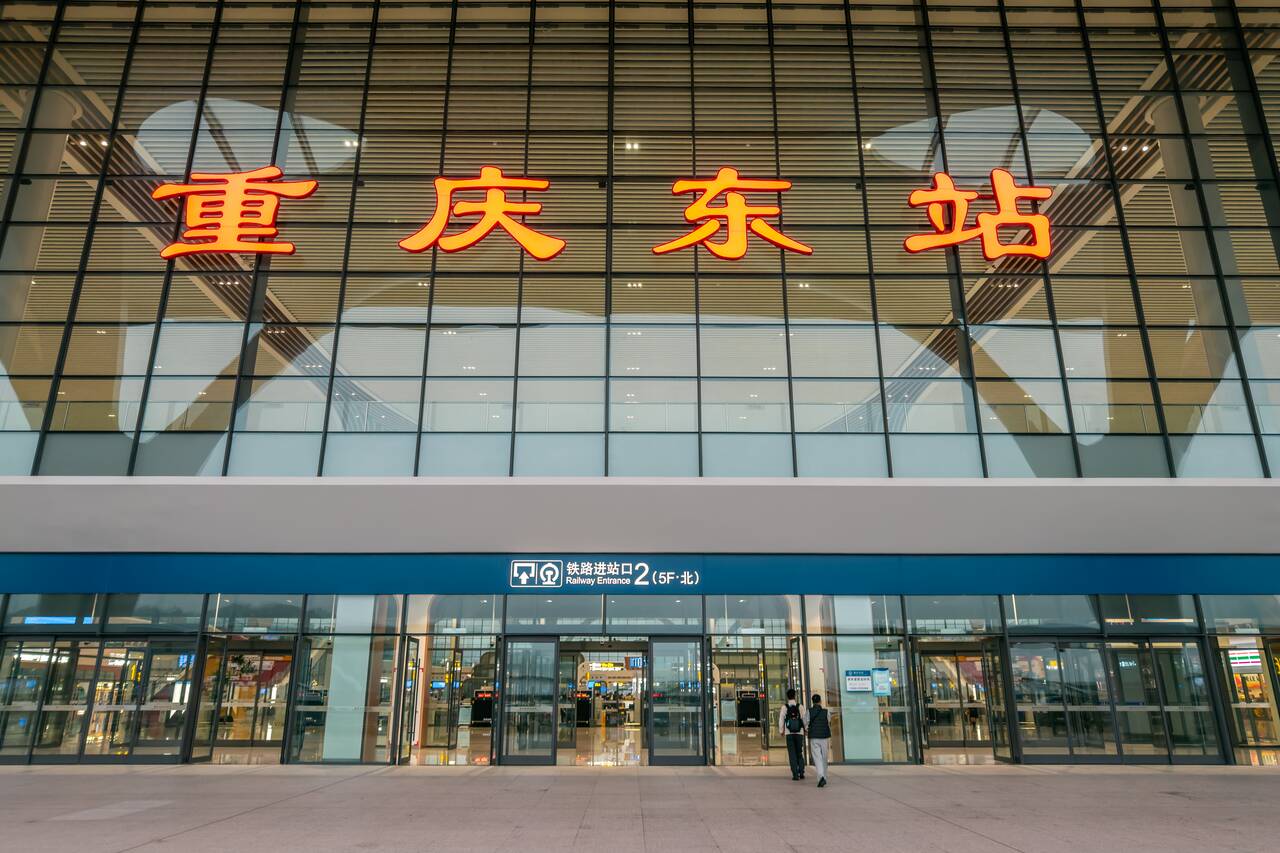
By Train: The easiest way to get to Wulong for a day trip is to take a high-speed train from Chongqing East to Wulong South. My train took around 40 minutes. There’s also a slower train that stops at Wulong Railway Station in town. Wulong and Wulong South are two different stations, so double-check which one you’re booking in both directions. You can Trip.combook the train here.
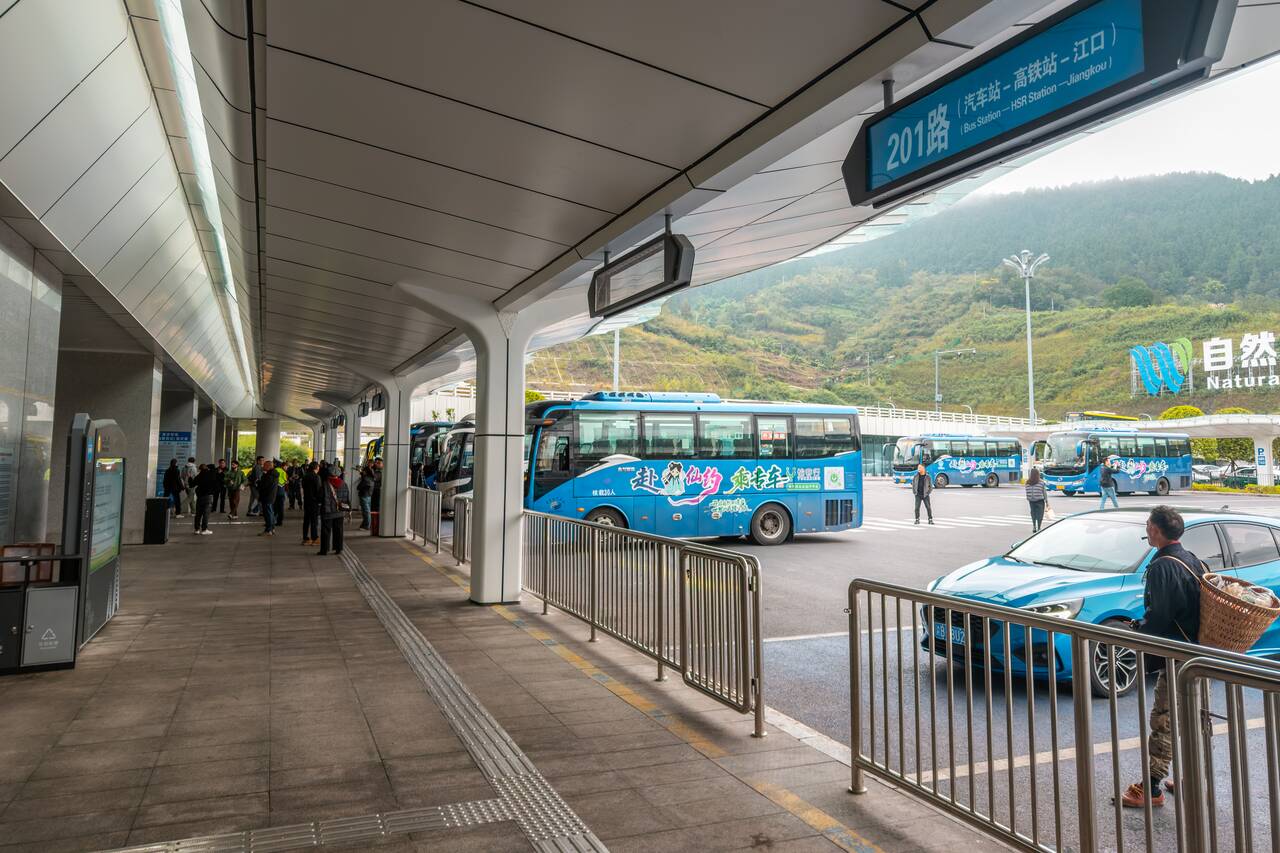
From the Station to the Visitor Center: Once you arrive, take a shuttle to the Wulong Scenic Area Visitor Center in Fairy Mountain Town. This is pretty easy as there will be shuttle buses waiting for train passengers at the station and they will take you to Wulong for about 16 CNY each way.
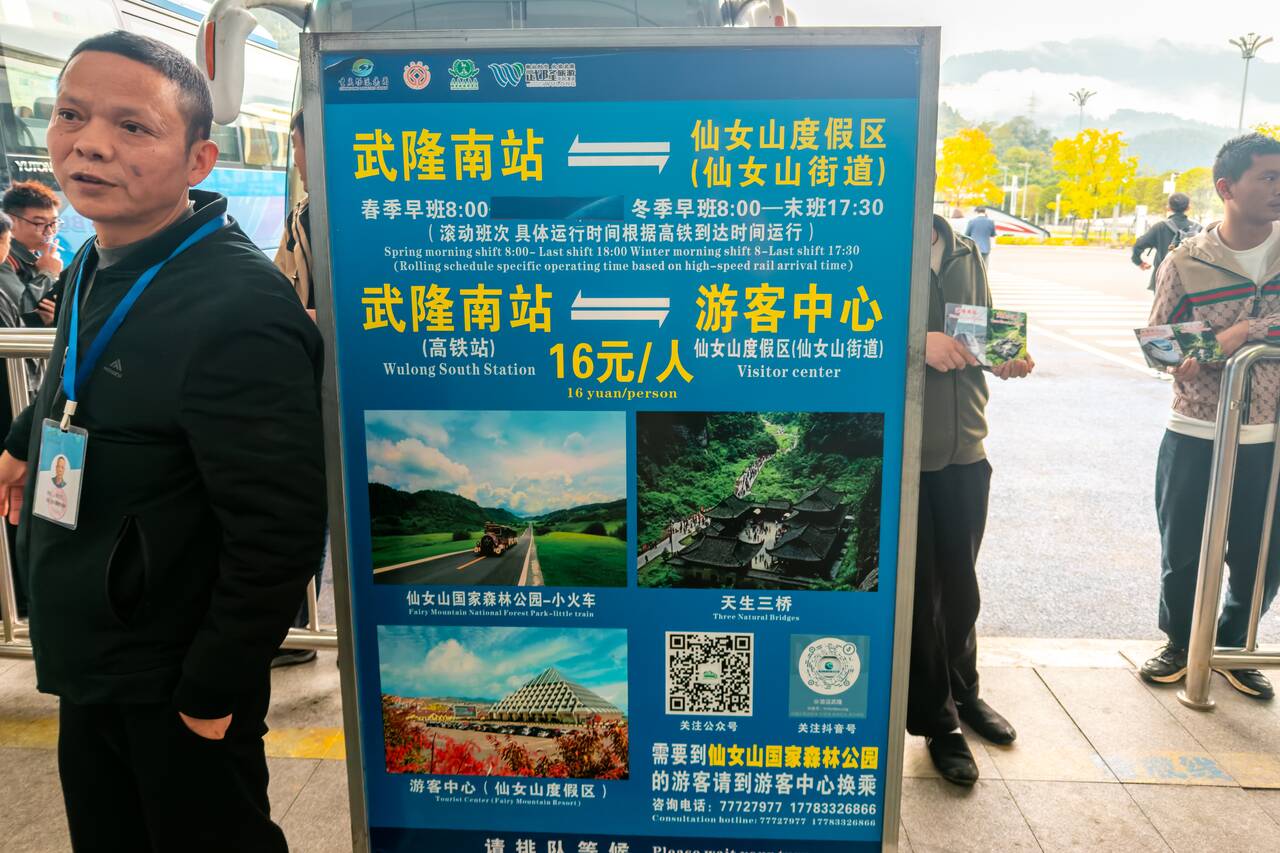
Allow about an hour each way between the station and the visitor center. Once you arrive at the visitor center, you’ll then have to switch to the park’s sightseeing shuttle, which takes you to the Three Natural Bridges.
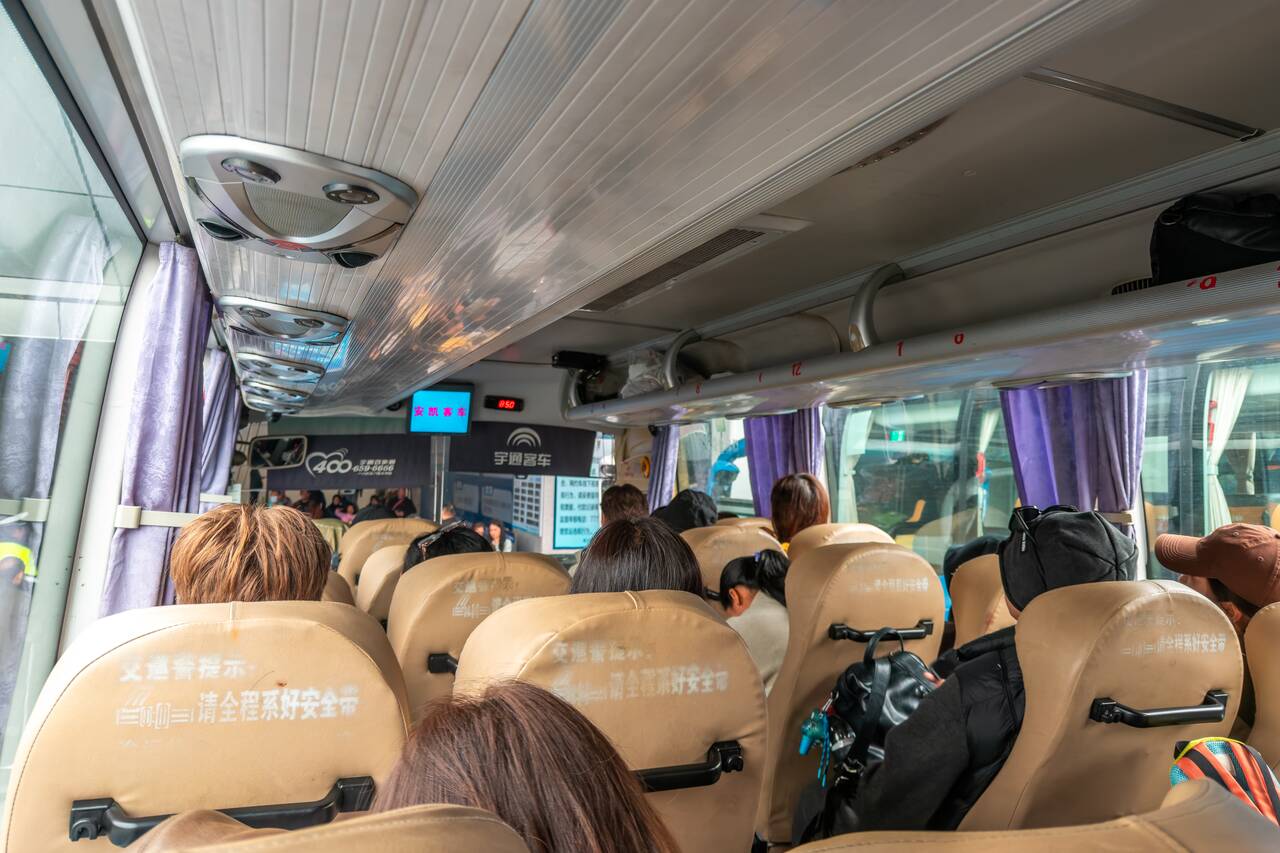
Before heading into the park, make sure you remember where the bus drops you off, usually at the parking lot of the Visitor Center, because that's where you will have to catch the bus back to the train station so you can go back to Chongqing.
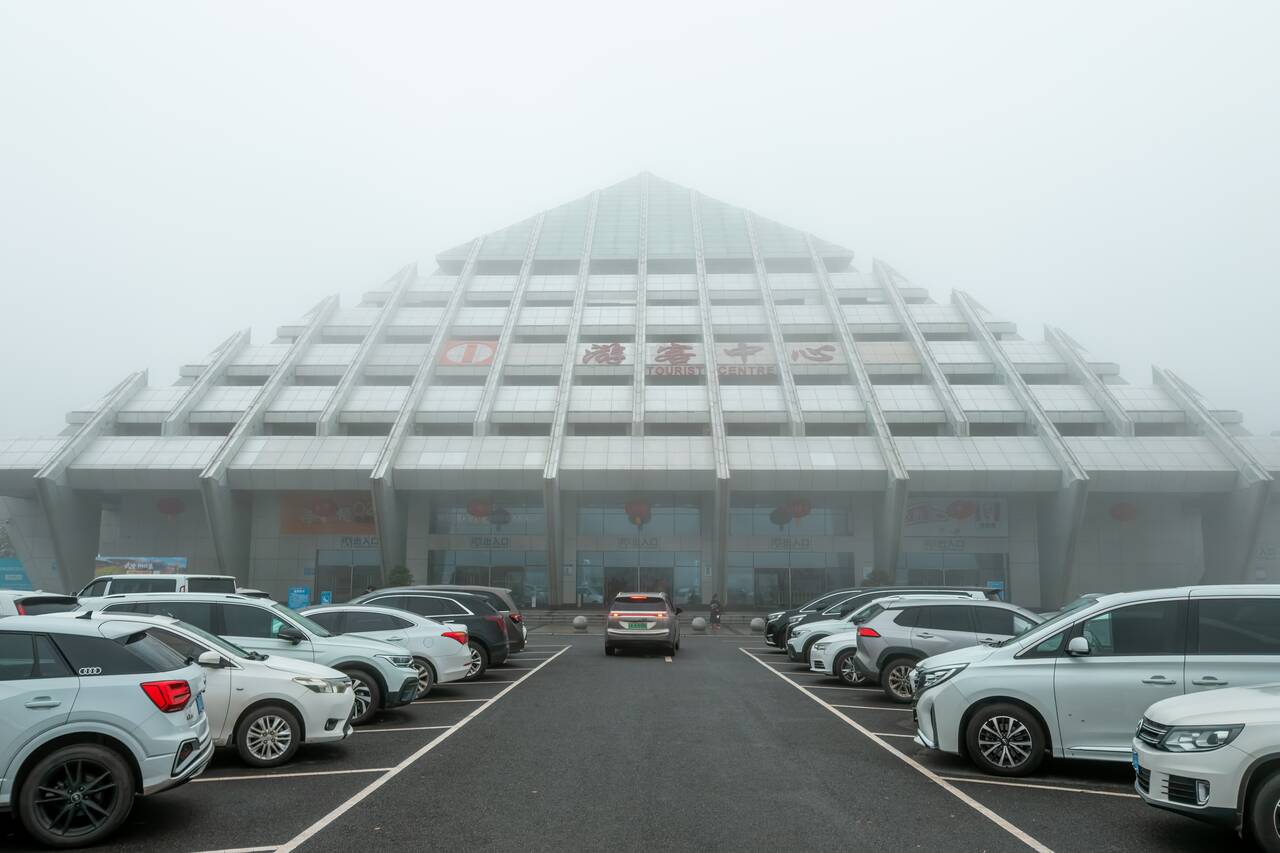
I’d aim to be at the shuttle stop by the visitor center two hours before your train leaves, with 1.5 hours as the absolute minimum. I gave myself an hour and missed my train by one minute. Lesson learned 😅. Remember to allow extra time to get back to the visitor center from the trail, too.
By Private Car or Guided Tour
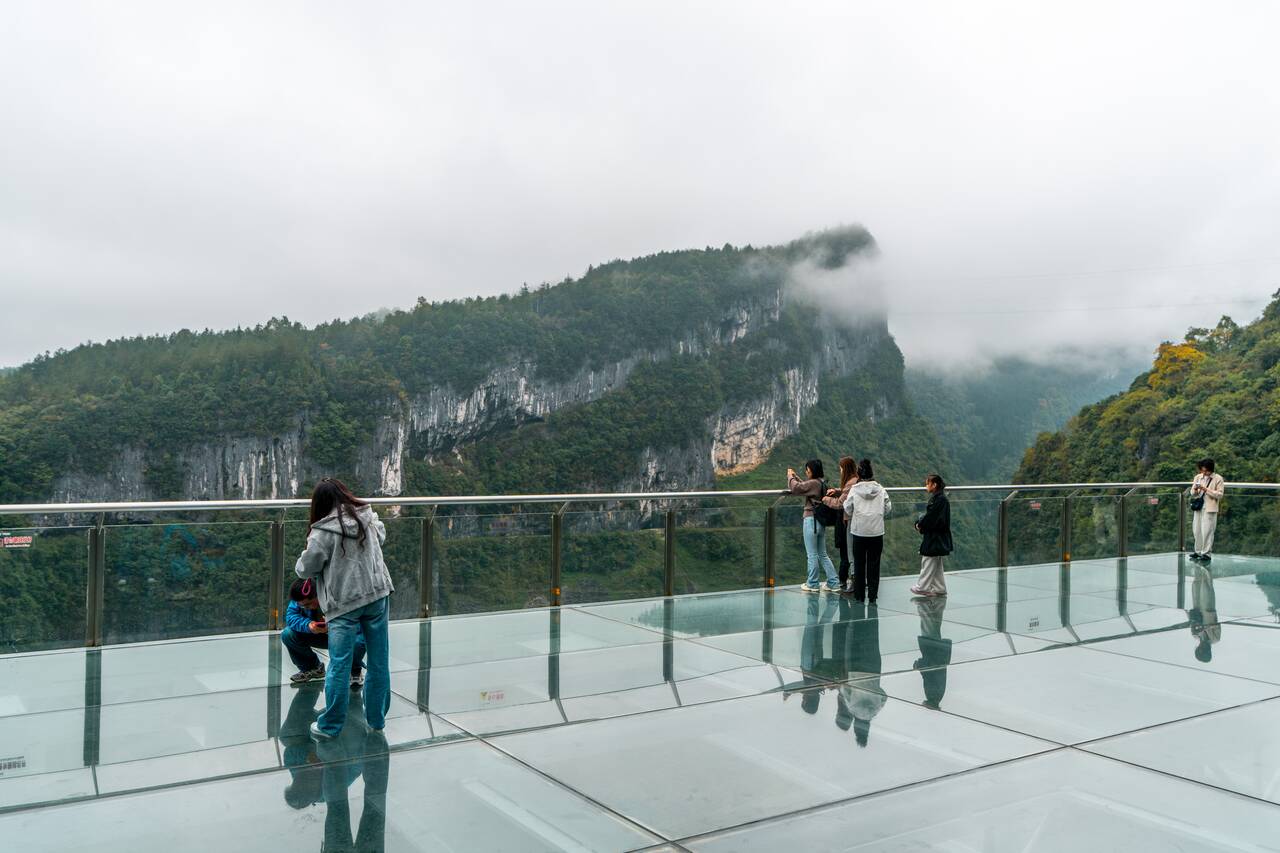
If you’d rather have your transfers handled for you, look for a round-trip tour or arrange a driver from Chongqing. You can find and book the day trip here.
Three Natural Bridges Opening Hours and Ticket Prices
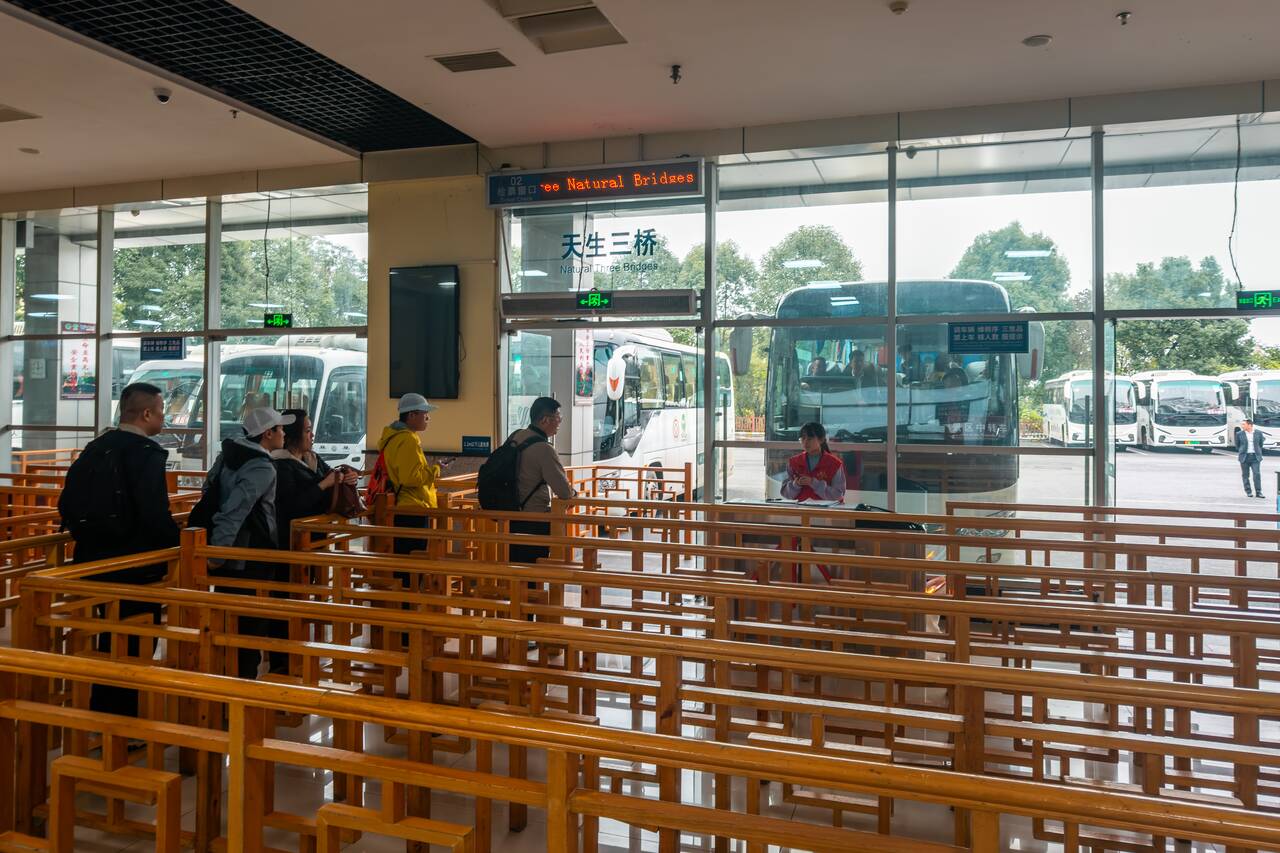
The Three Natural Bridges are open from 8 AM to 5 PM from June to August, 8:30 AM to 5 PM in May, and 8:30 AM to 4:30 PM from September to April although this may vary. To make sure, I recommend you check the official published hours here.
The entry to the Three Natural Bridges should costs around 70 CNY in peak season and 40 CNY in low season. If you’re following the route in this guide, look for the bundle ticket that includes admission, the park shuttle, and the elevator. It costs 155 CNY in peak season and 125 CNY in low season. You can book the ticket here.
The shuttle between the railway station and the visitor center is separate. I paid 16 CNY each way, or 32 CNY round trip. Adding that to the park bundle, you’re looking at around 187 CNY in peak season or 157 CNY in low season, excluding the train fare between Wulong and Chongqing.
What to Expect When Visiting Wulong?
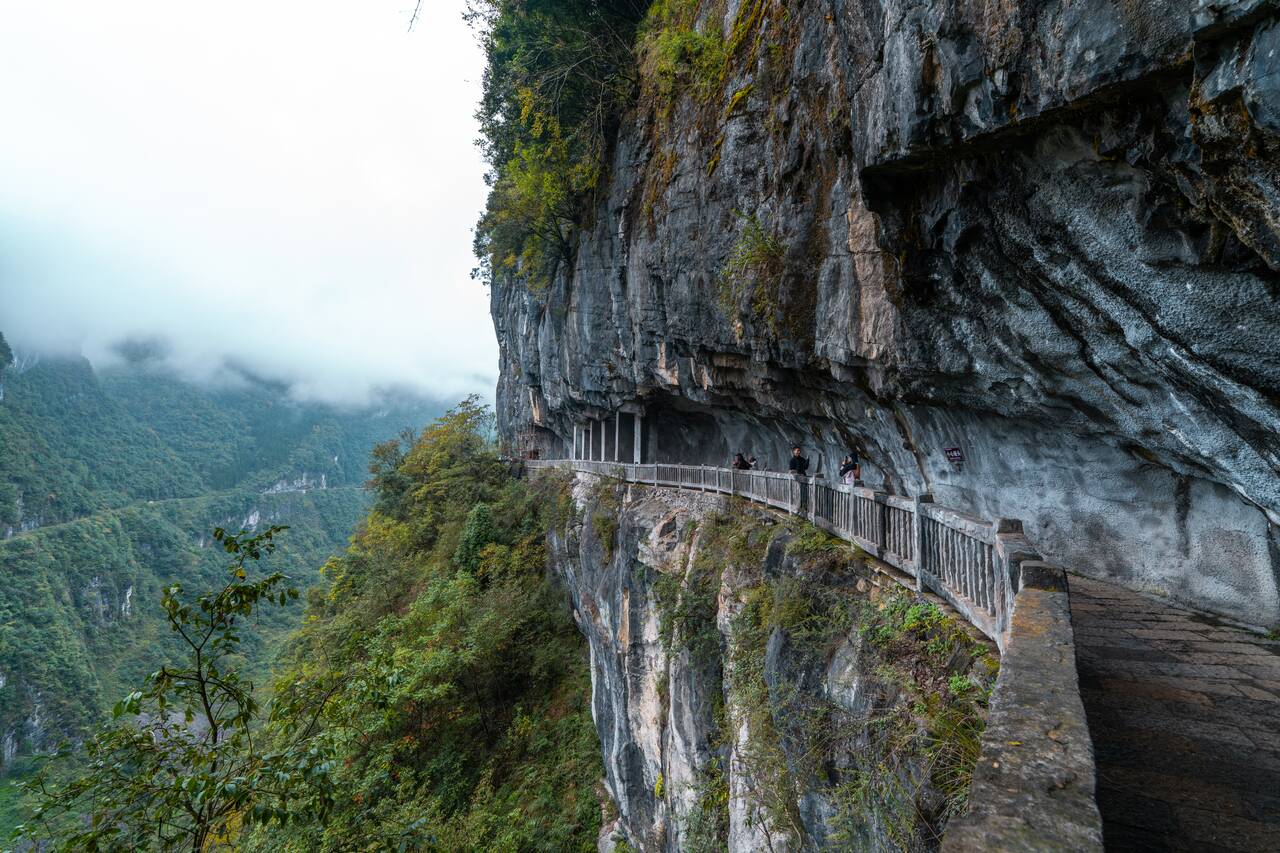
Allow 3 to 4 hours for the visit, from the time you reach the visitor center to the time you get back there. There’s a lot to cover on foot. It took me about 2 hours just to get from the elevator to the exit, and I walk incredibly fast!
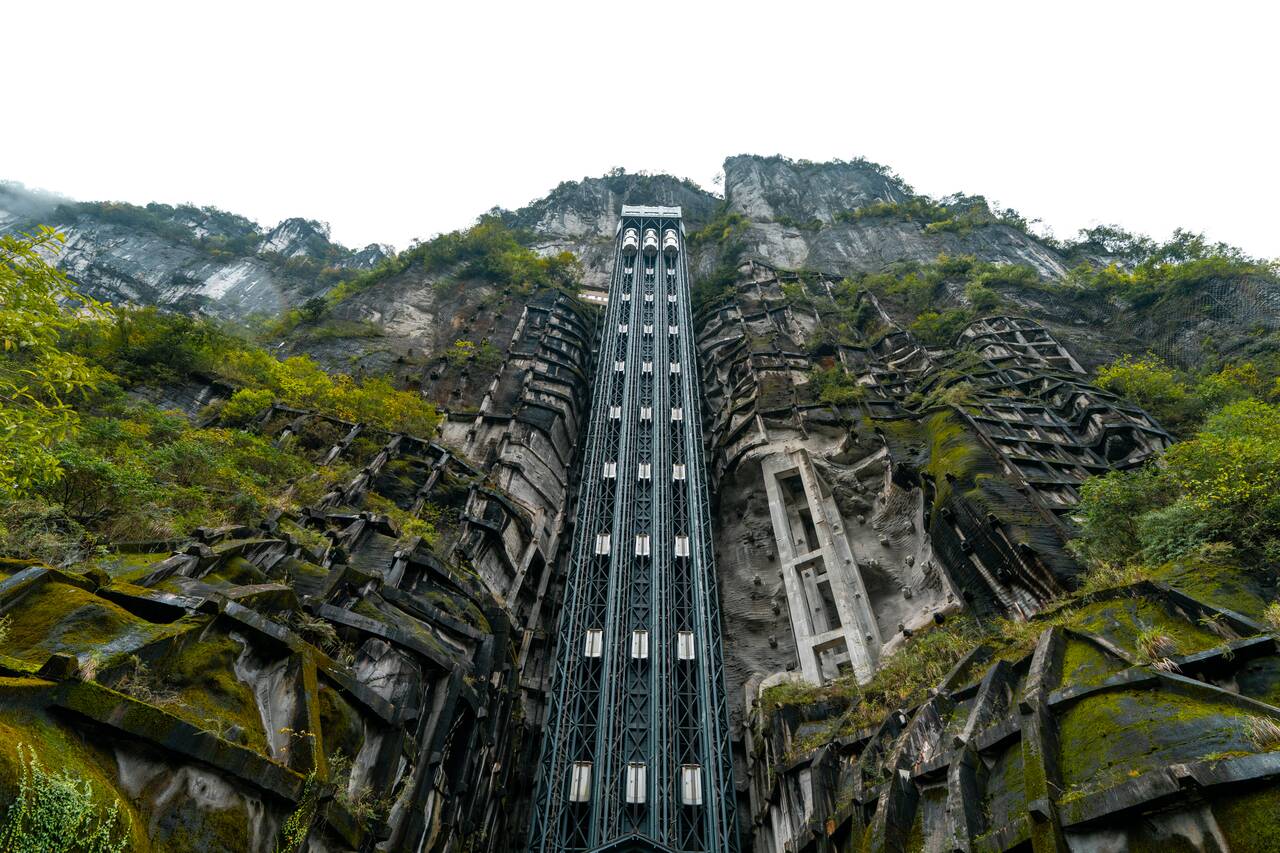
The trail down there is absolutely incredible. Nothing will make you feel more humble than being surrounded by these massive limestone cliffs rising on both sides!
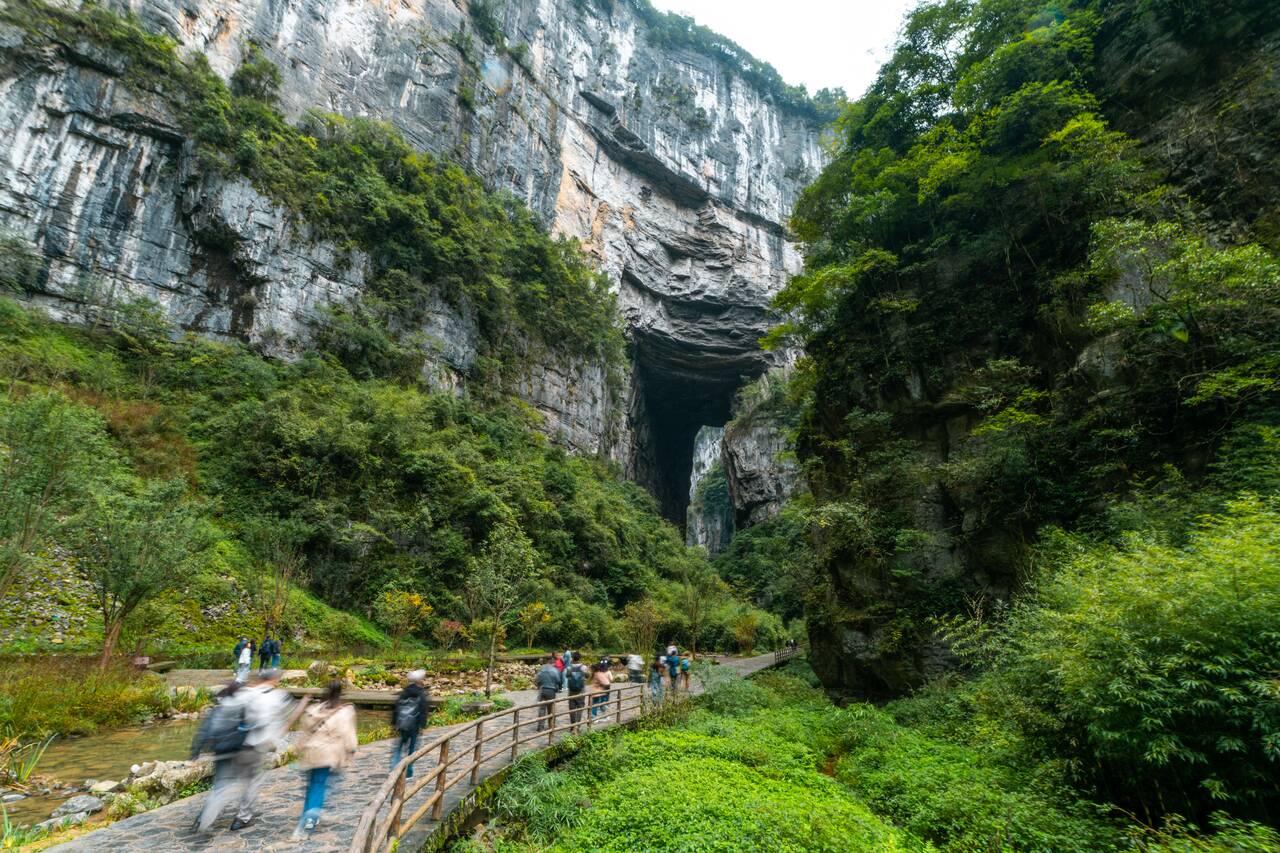
The first arch you’ll walk under is Tianlong Bridge, where you’ll find the famous Tianfu Official Post, a Tang-style reconstruction of a historic postal station.
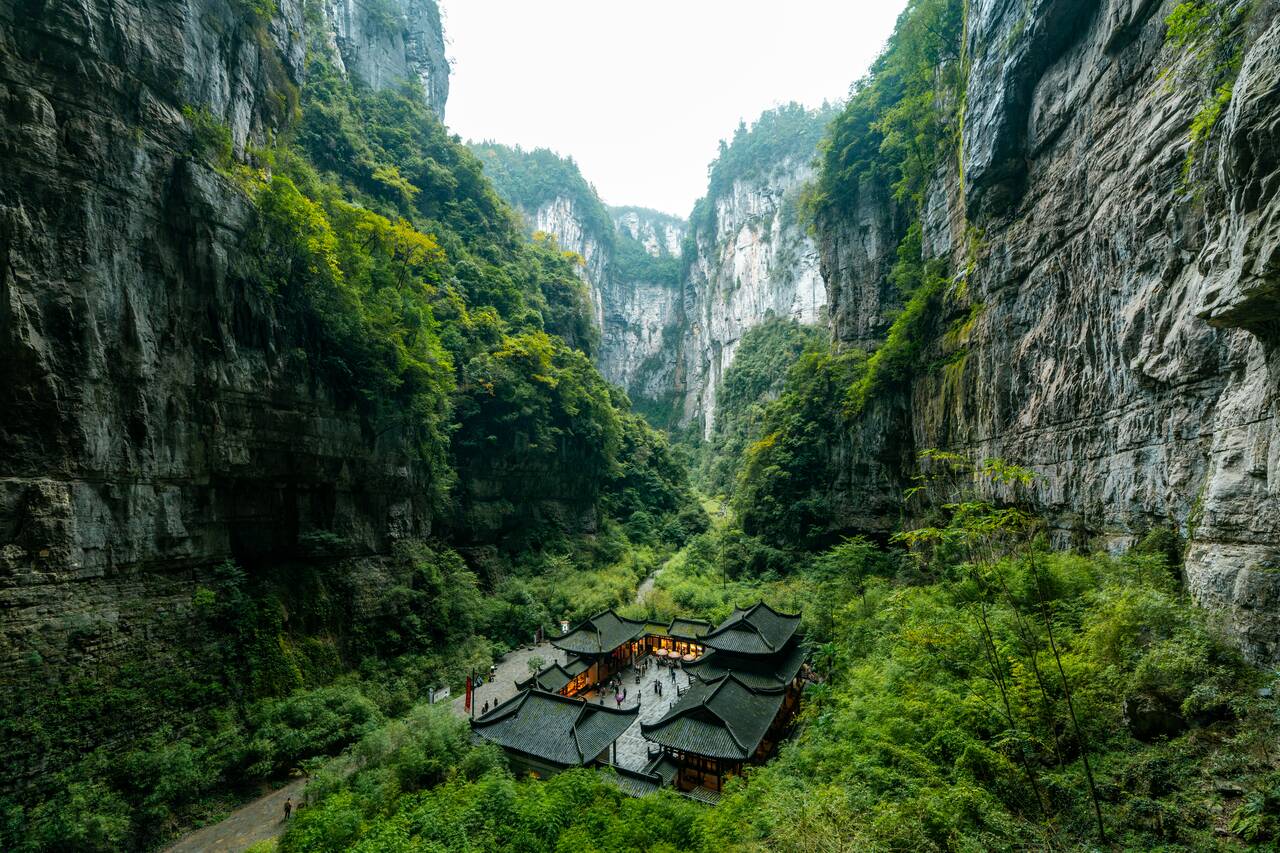
Be sure to walk up to the viewpoint behind the post station for a photo of the tiled roofs tucked beneath the enormous arch. It's a bit of a climb, but the crowds will be thinner up there and views are absolutely breathtaking!
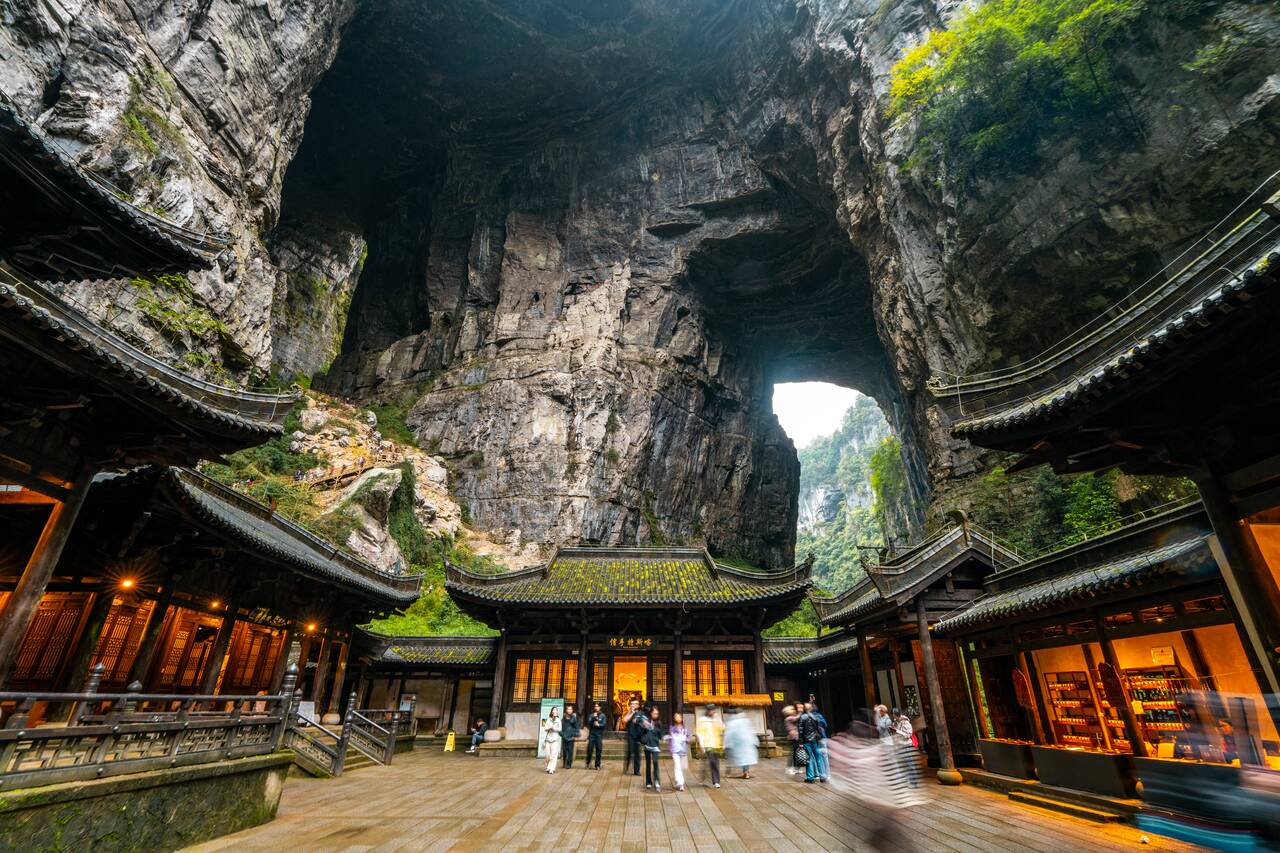
Once you are done at the viewpoint, make your way down and don't forget to check out the post office itself. While there are just small shops inside, the view of the arch seen from the courtyard is pretty mind boggling too. The scale of these arches is just mind blowing to see.
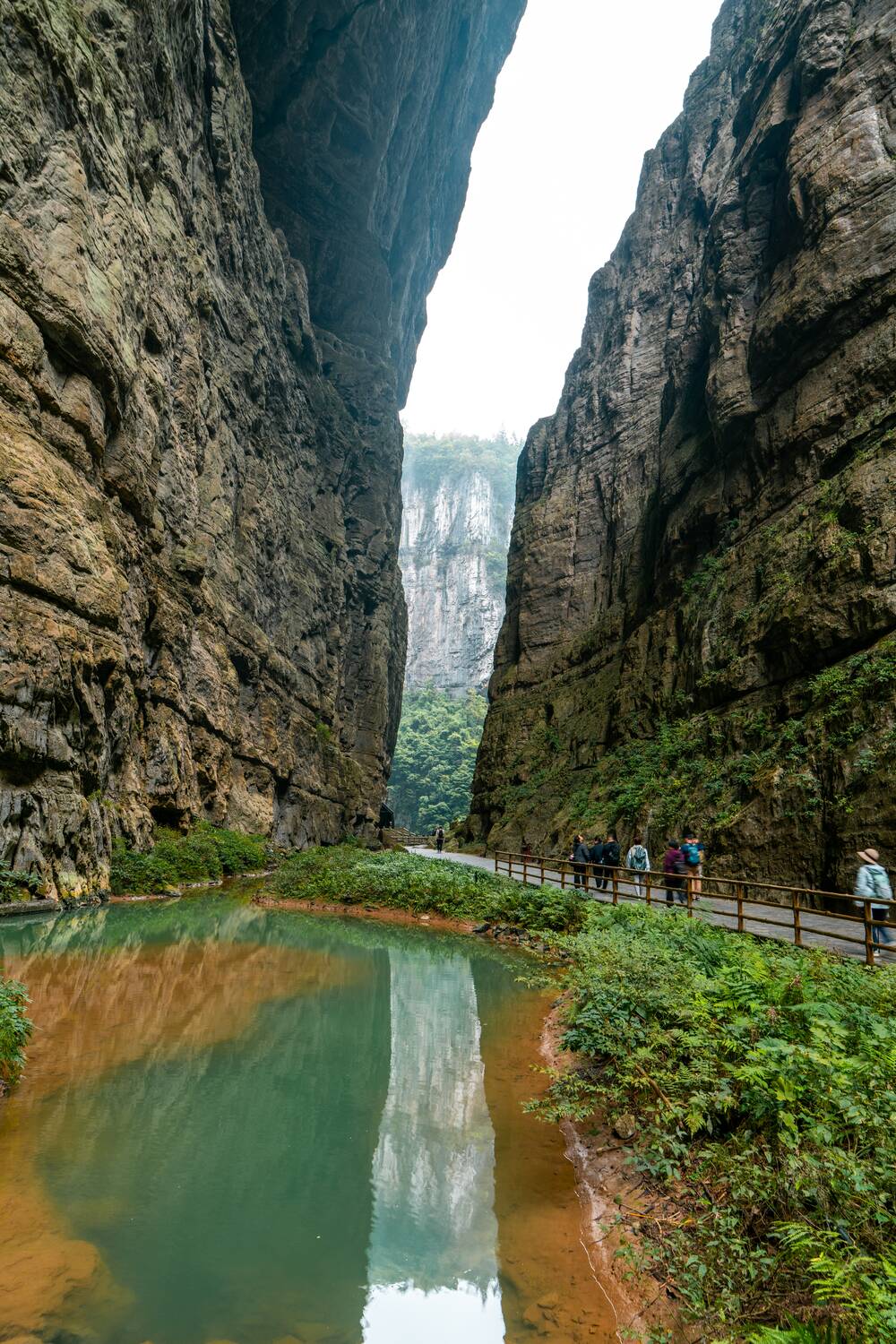
From there, continue under Qinglong Bridge and Heilong Bridge. Keep an eye out for the rock shapes along the way. At Qinglong Bridge, the opening looks like the blade of Guan Yu’s Green Dragon Crescent Blade from the right angle. After Heilong Bridge, look up for the formation that resembles a gorilla peering down from the cliff.
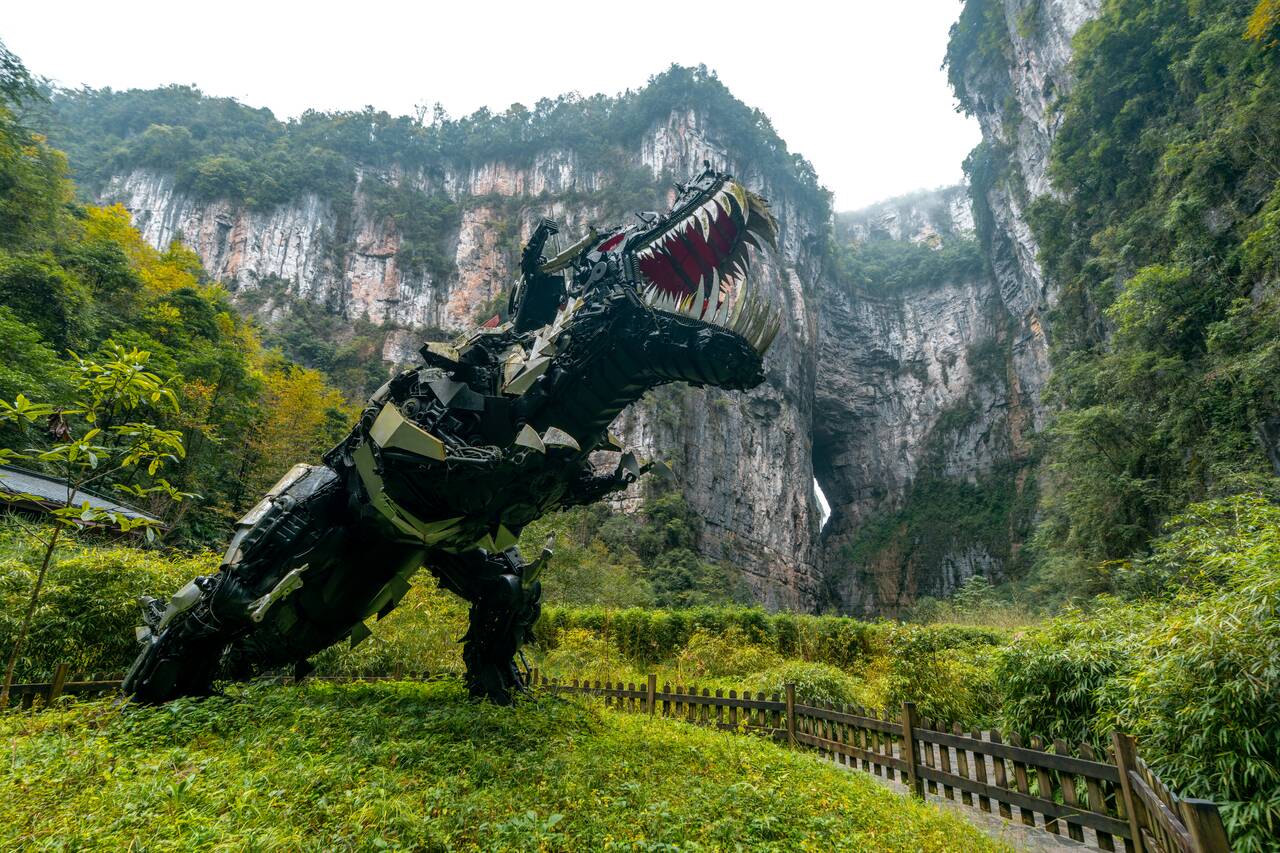
And if you stumble upon a massive metallic dinosaur, there’s a reason for that 🤣. Wulong was a filming location for Transformers: Age of Extinction, released in 2014. It’s pretty easy to see why they picked this place once you’ve walked through the gorge yourself!
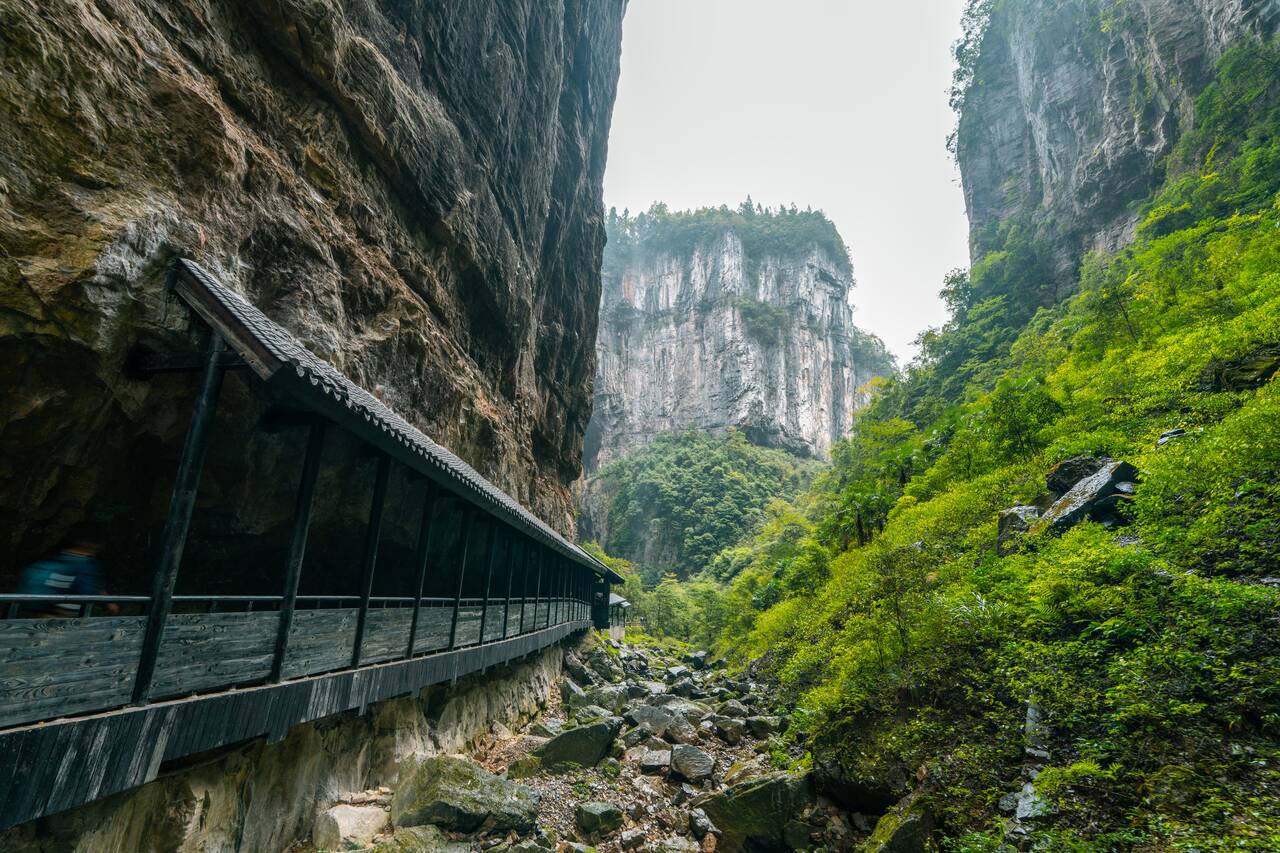
It took me about two hours to walk from the elevator to the end of the trail, including photo stops. From there, follow the uphill path to the park shuttle stop or take the electric cart if it’s running. The cart is listed at 15 CNY.
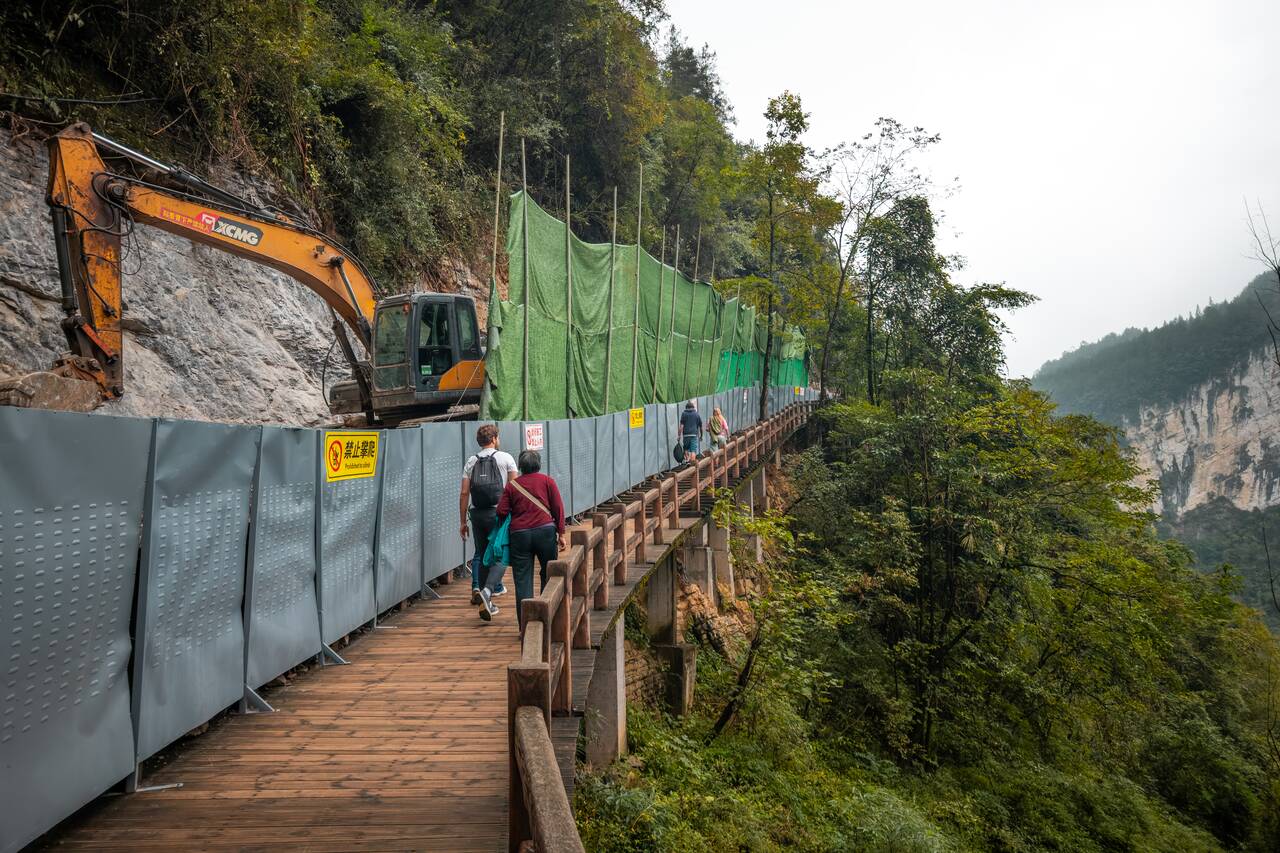
At the shuttle stop, check which bus goes back to the visitor center. If you’re continuing to Longshuixia Fissure Gorge, ask staff where to make that connection. The bus queue is clearly divided though so you can just follow the sign.
How to Get Back to Chongqing Without Missing Your Train
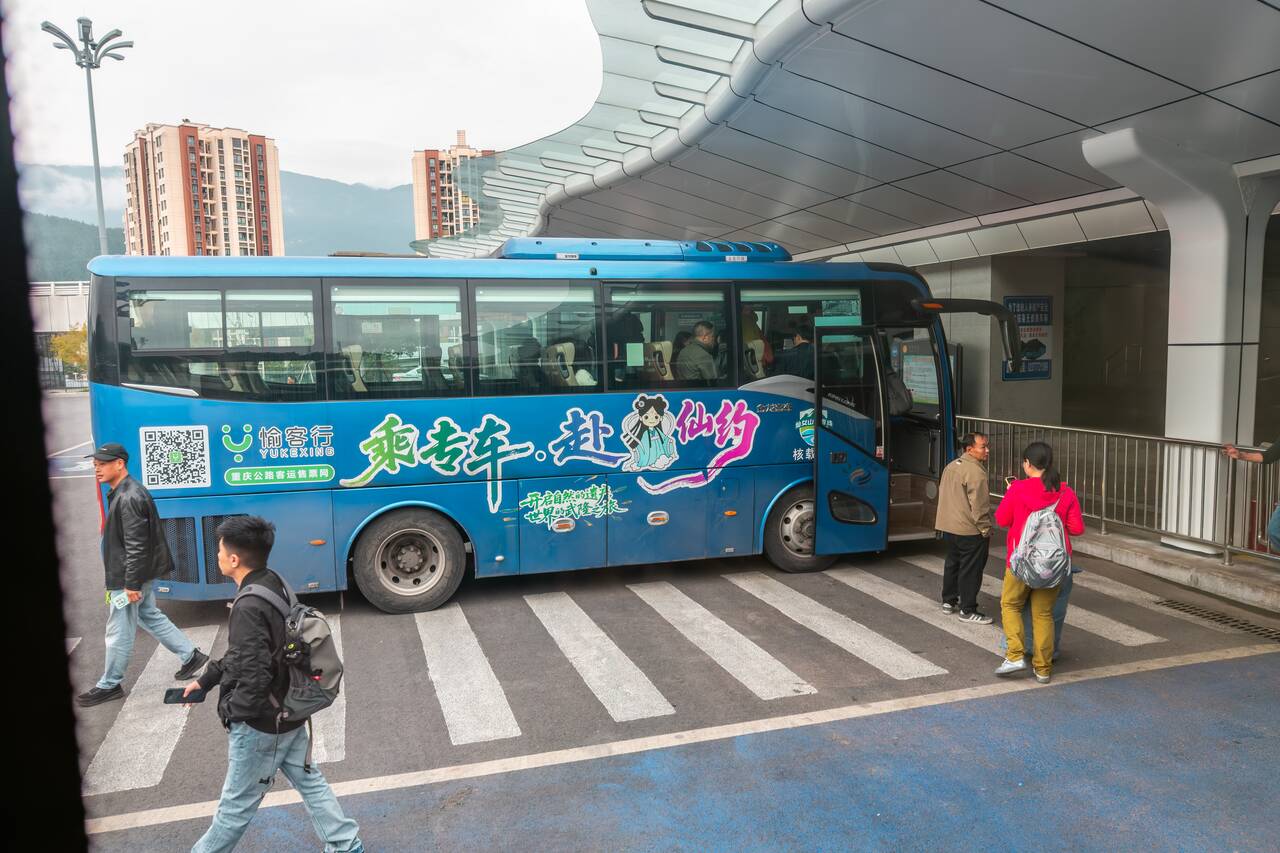
Once you’re done at the Three Natural Bridges, take the park shuttle back to the Wulong Scenic Area Visitor Center. From there, switch to the shuttle bus and make sure it’s going to the train station on your ticket. Wulong South is for the high-speed train, while the slower trains use Wulong Railway Station located in town.
Book your return train in advance! When I checked late in the morning, the afternoon high-speed trains between roughly 2 PM and 6 PM were already sold out, even the standing tickets. I’d managed to grab the last first-class seat on a train around 2 PM the morning just before I got on the train to Wulong. Unfortunately, that didn’t quite go to plan 😅.
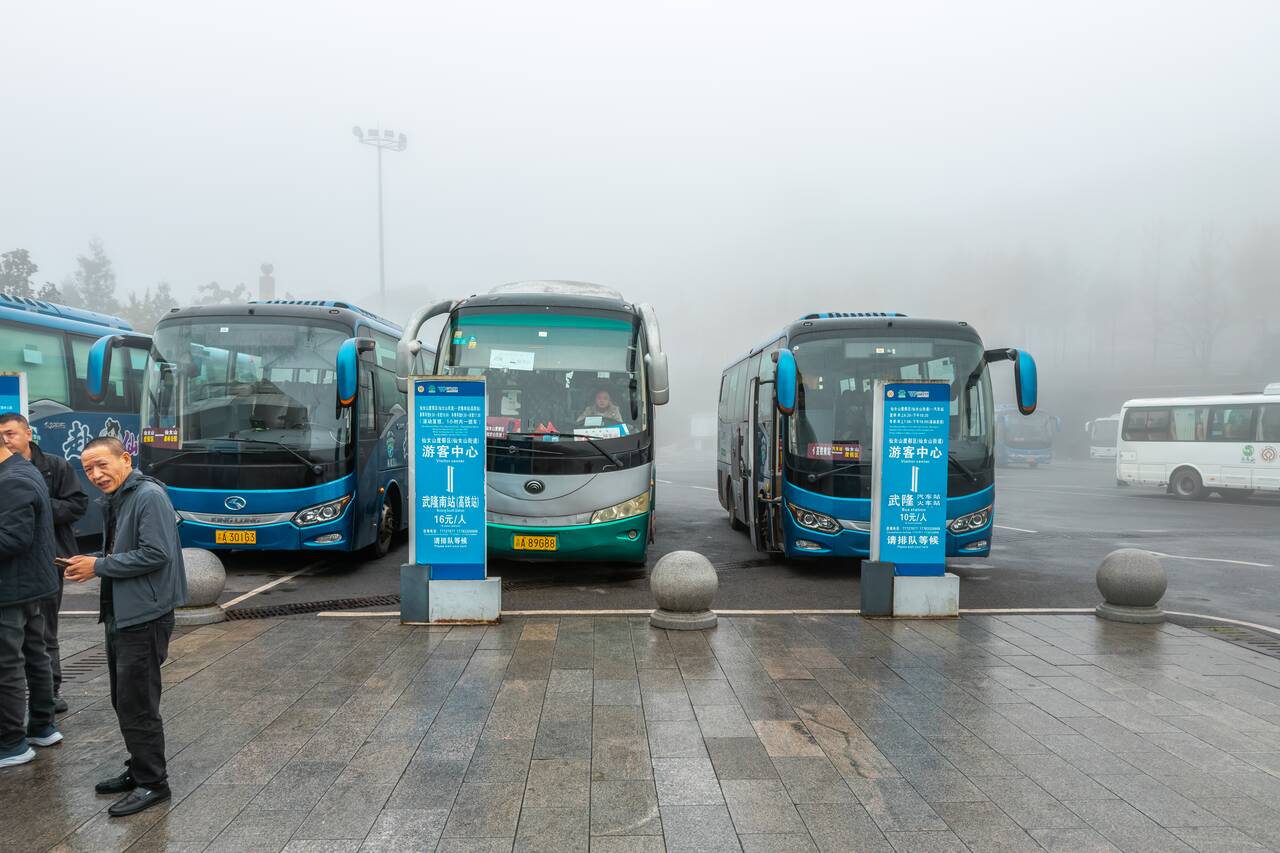
So, I got myself to the bus stop next to Wulong Scenic Area Visitor Center about an hour before my train, thinking that would be enough time to get to Wulong South. Unfortunately, the bus waited a good 20 minutes to fill up before leaving, then made two more stops on the way to the station. Add a bit of traffic, and I ended up missing my train by literally one minute!
The shuttle doesn’t leave based on the train schedule; they leave when it's full, so make sure you plan ahead and be at the bus stop at least 1.5 hours before departure. Personally, I’d give myself 2 hours to allow for the wait, the ride, and getting through the station. It's better to arrive early than to miss the train 😬.
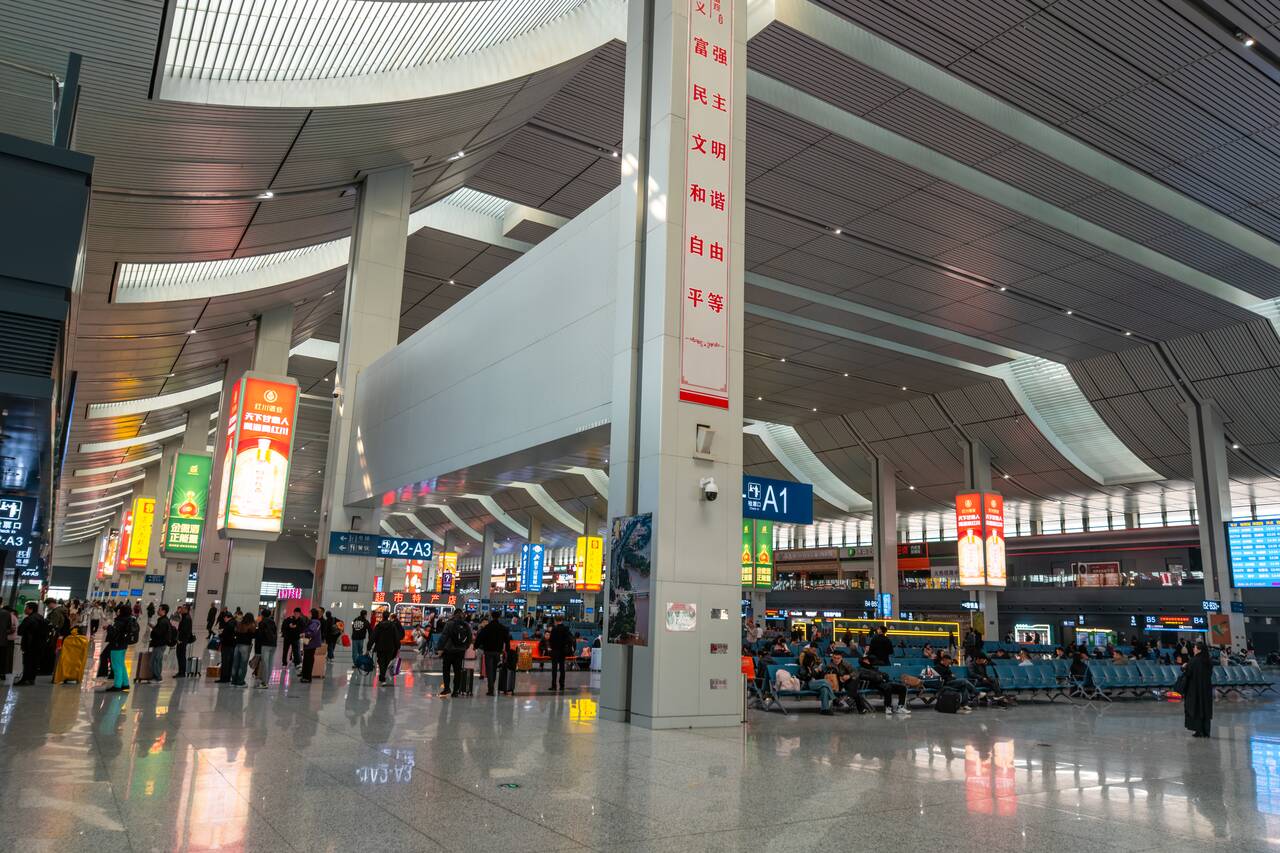
To make matters even worse for me, the next high-speed trains, one around 4 PM and another around 6 PM, were already full. The only one with seats left was at 9 PM. That was another seven hours! Ain’t nobody got time for that!
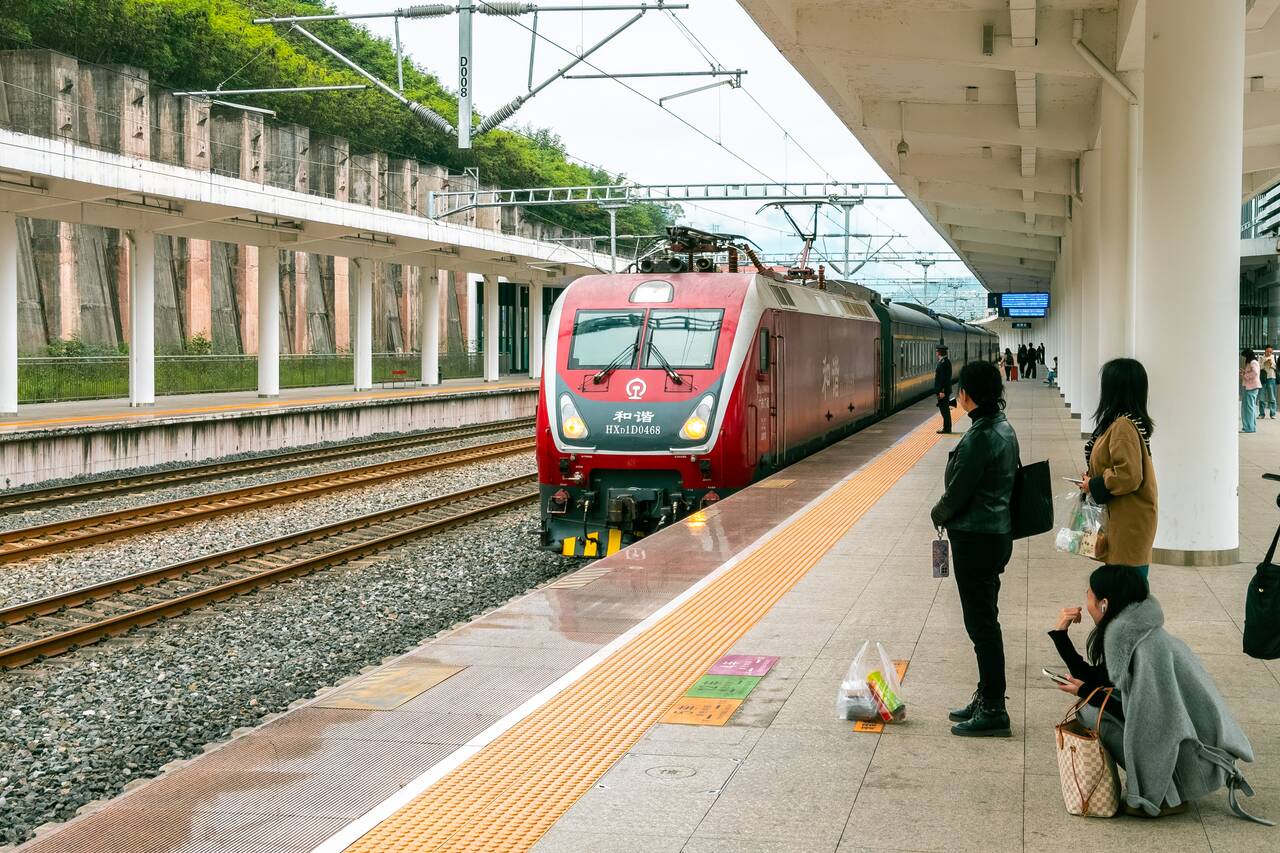
Eventually, I found a way back, but instead of taking the high-speed train, I ended having to take the slow train, which leaves around 3:15 PM from Wulong Railway Station located in town. Thankfully, plenty of tickets were available, so at least I had my way back to the city.
Once I’d booked the ticket, I scrambled to get a DiDi from Wulong South to Wulong Railway Station. The ride took about 15 minutes, and I made it with plenty of time to spare, thank God! The train was a bit delayed, but alas, I was able to find my way back without having to wait another 7 hours for the 9 PM train.
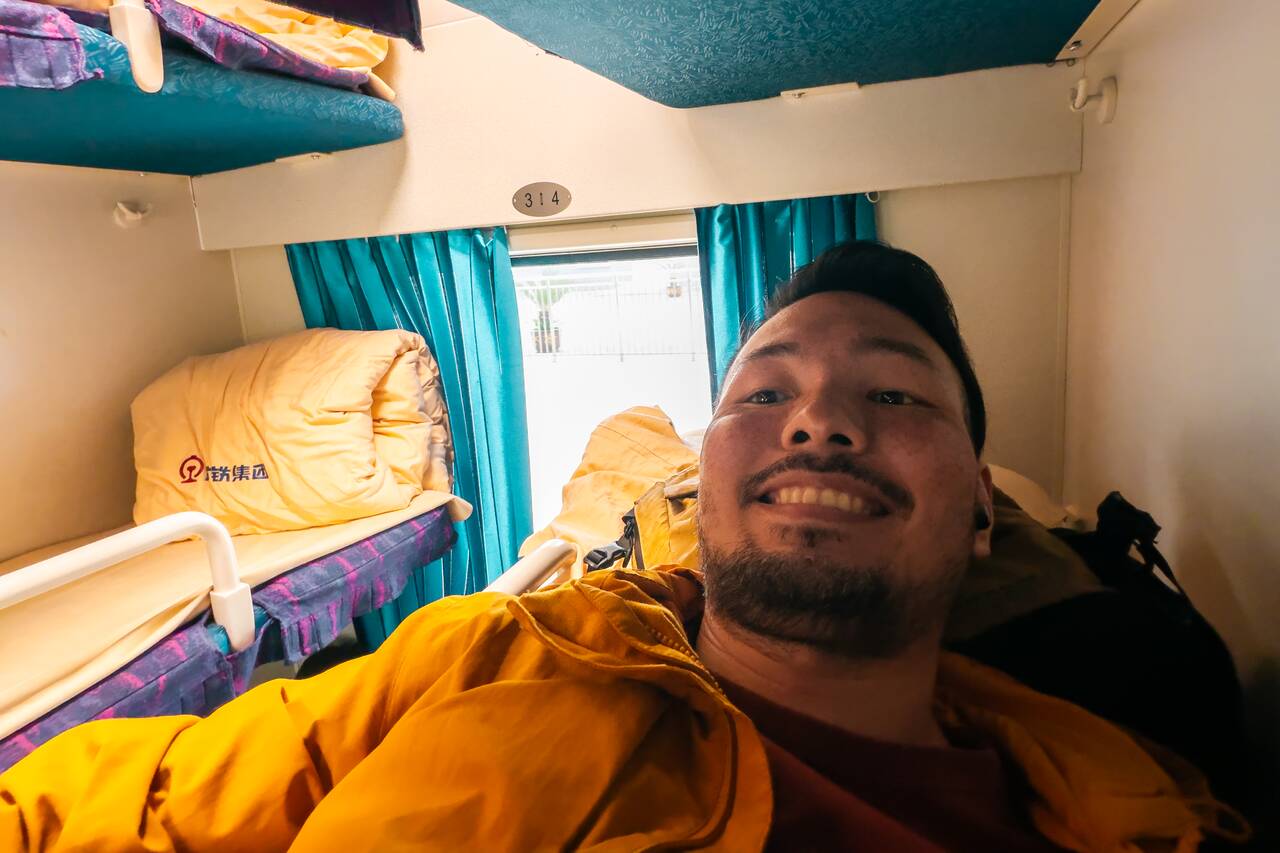
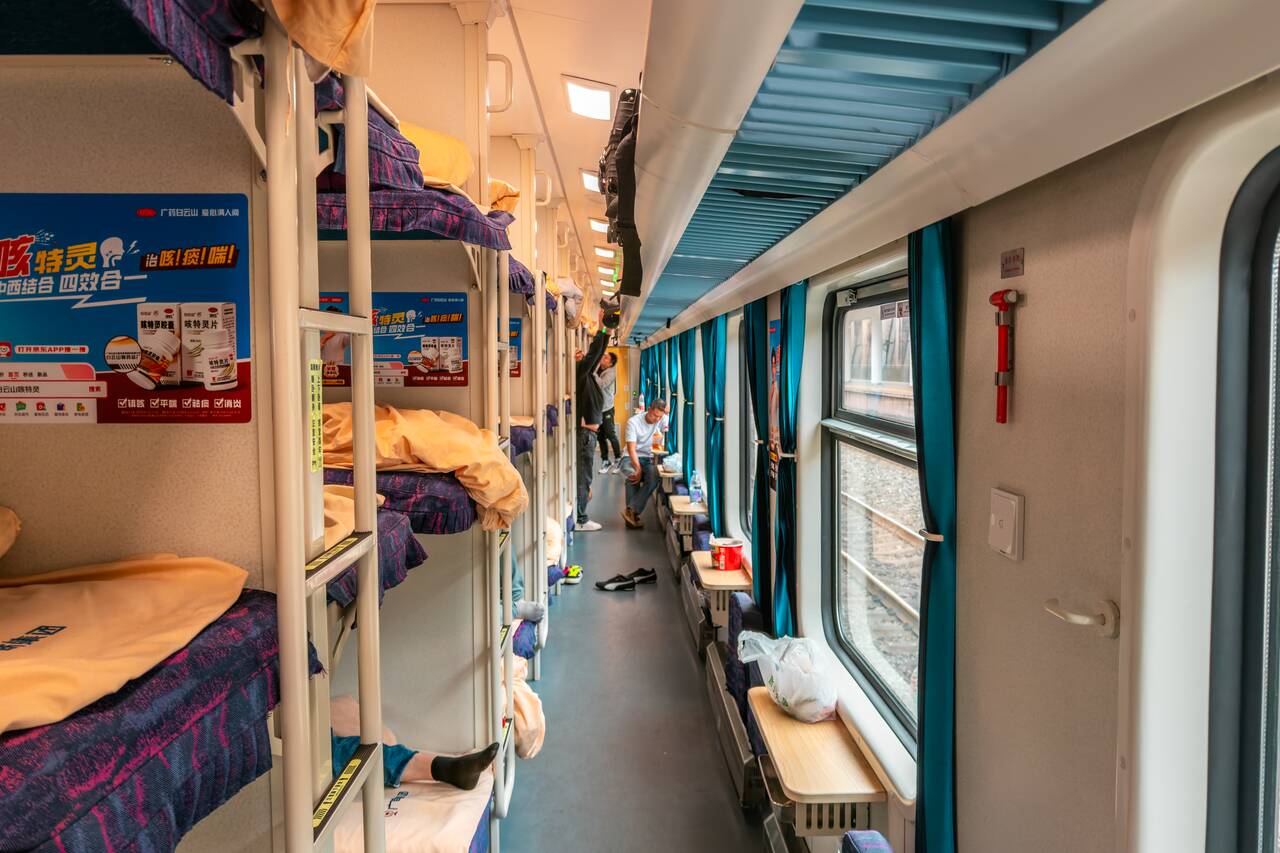
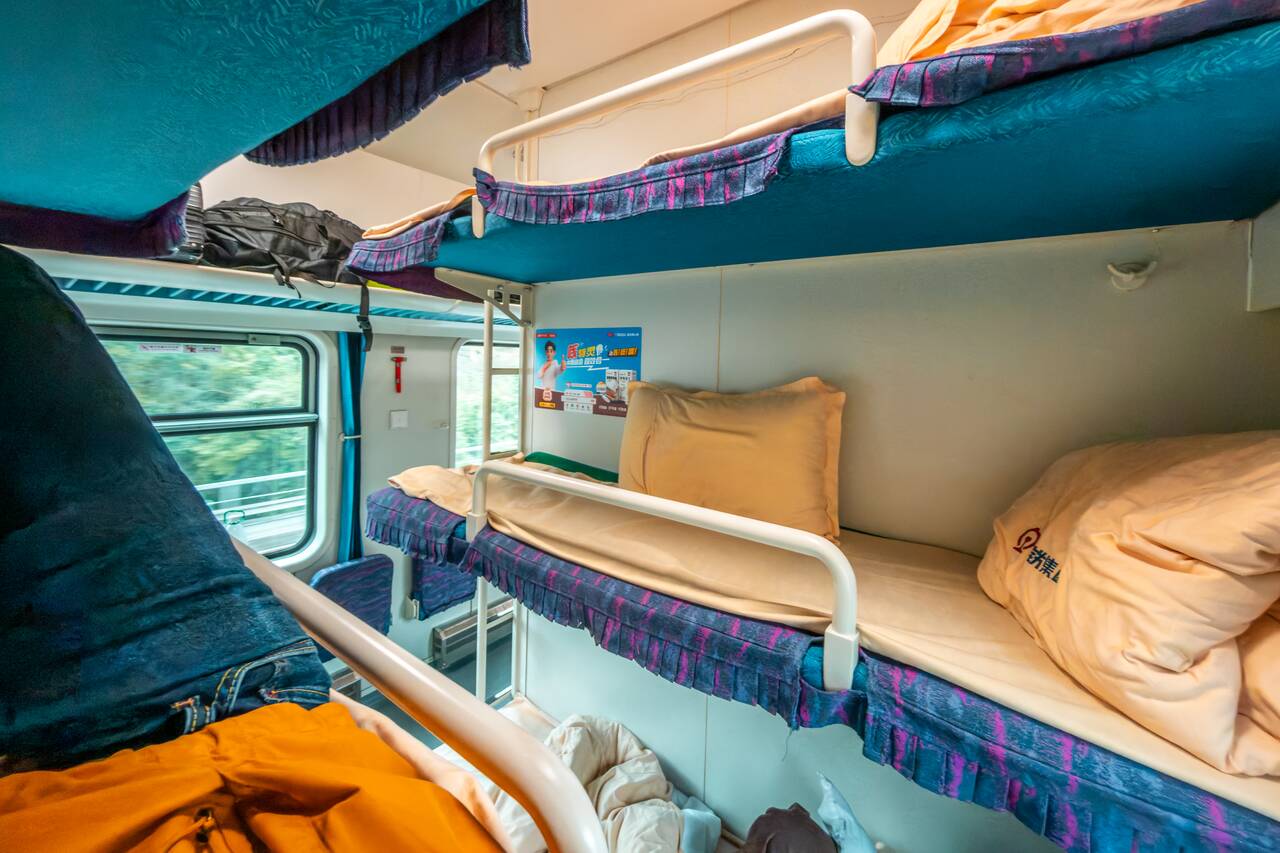
The slow train took around 2.5 hours to get back to Chongqing instead of 40 minutes. The only ticket I could get was for a hard sleeper bunk, and the bunks were stacked three high, which was quite an experience 😅. There wasn’t even enough room to sit upright on mine, so I accepted my fate, lay down, and took a much-needed nap after all that scrambling to find a way back 🤣.
I got back to Chongqing only about half an hour later than I would’ve on the 4 PM high-speed train, assuming I could’ve even booked a seat. So I think it all worked out in the end! Don’t make the same mistake I did. Book your return train in advance and give yourself 1.5 to 2 hours to get from the visitor center to the station.
A One-Day Wulong Itinerary
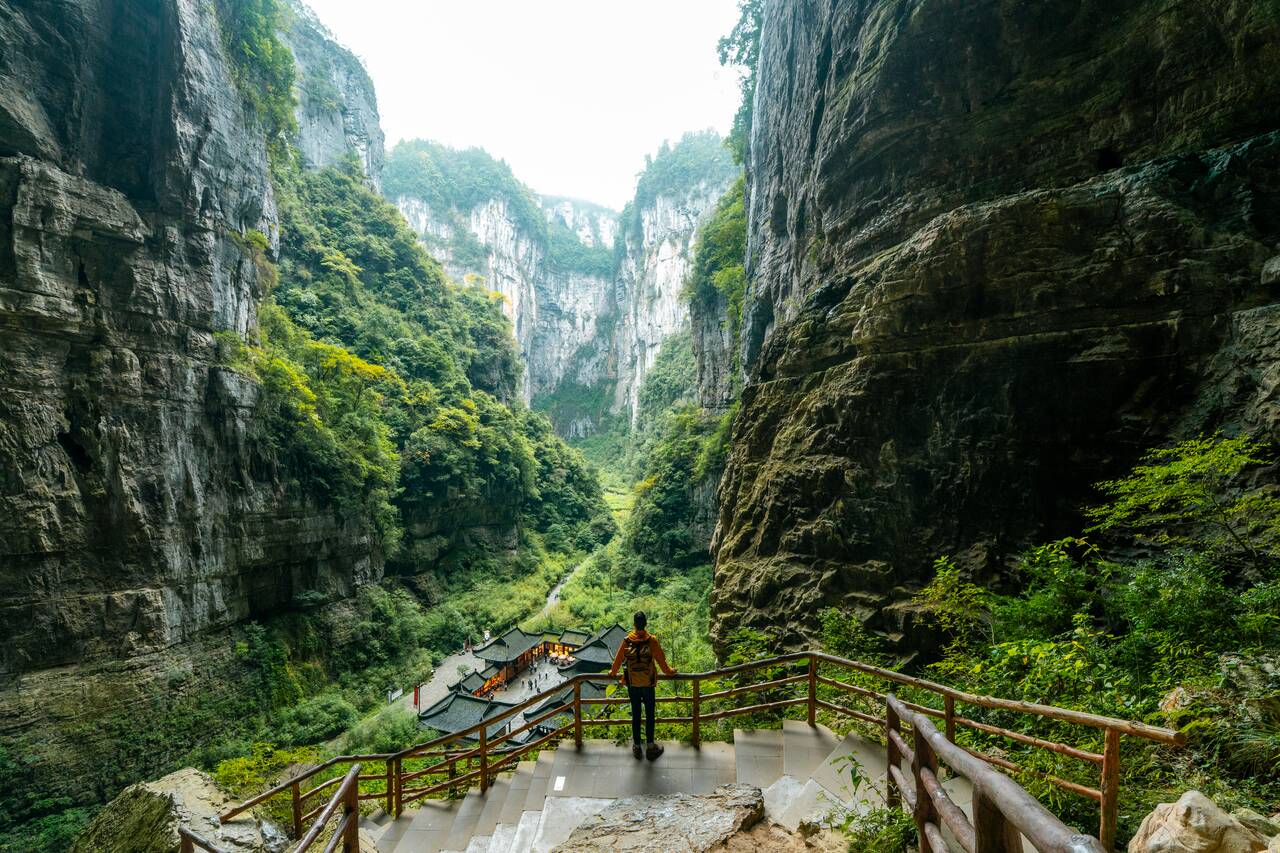
Morning: Aim for a train around 8 AM from Chongqing East to Wulong South. Once you arrive in Wulong, catch the shuttle outside the station exit to the Wulong Scenic Area Visitor Center. Once you’ve sorted out your ticket, enter the park, and take the sightseeing shuttle to the Three Natural Bridges.
Late morning to early afternoon: Take the elevator down into the gorge and follow the lower trail beneath all three natural bridges. Be sure to hike up to the viewpoint above Tianfu Official Post for a great view of the tiled roofs beneath Tianlong Bridge. Allow 3 to 4 hours from the time you reach the visitor center to the time you get back there, including both park shuttle rides.
Late afternoon: Take the park shuttle back to the visitor center, grab something to eat if you have time, and catch the shuttle to the railway station. Work backward from your train’s departure time. If your train leaves at 5:30 PM, aim to be at the railway shuttle stop by 3:30 PM so you don’t miss your train like I did!
What Else Can You See in Wulong?
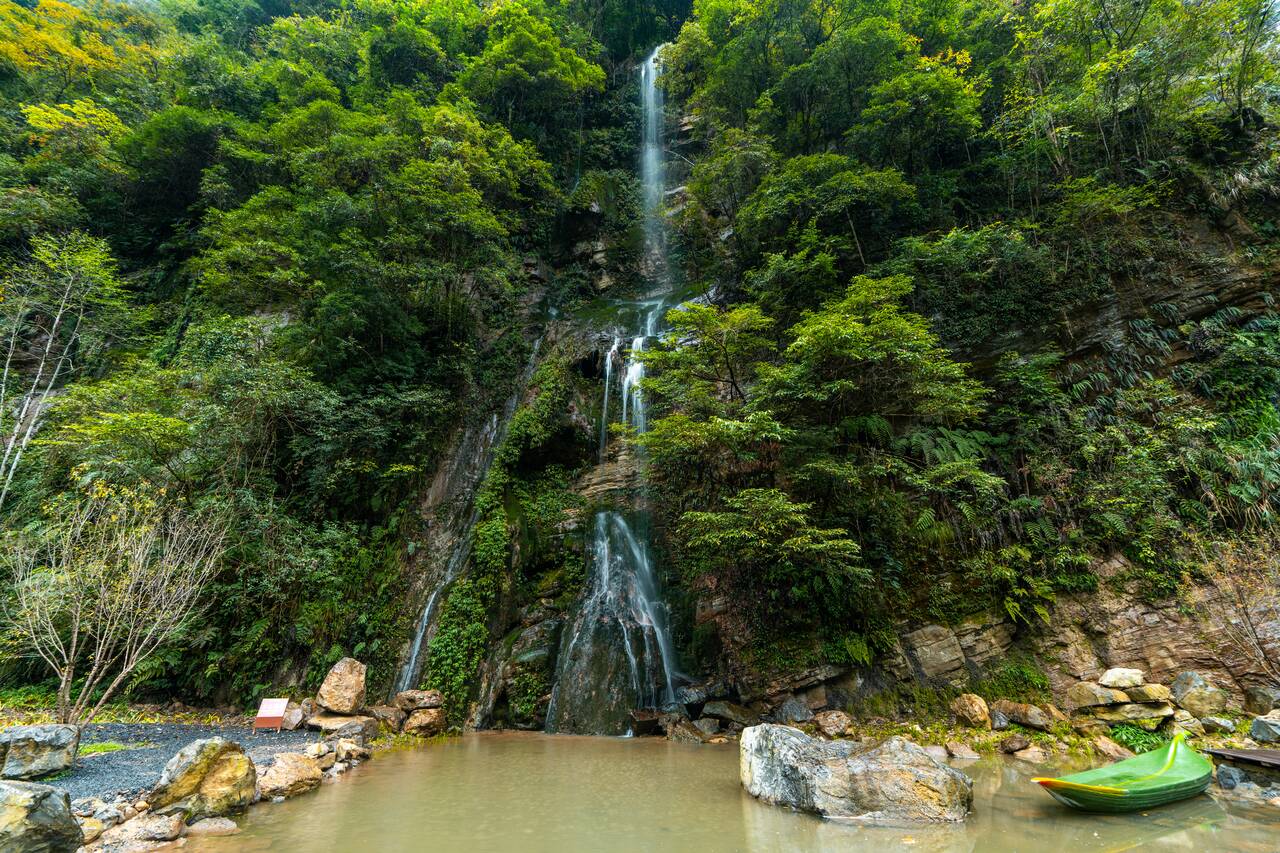
Longshuixia Fissure Gorge: If you have an early start and a later train, this is the add-on I’d consider first. It’s a separate scenic area with a trail along a narrow gorge, past waterfalls and steep rock walls. Buy the separate ticket and confirm the shuttle connection and the last return before committing to it.
Fairy Mountain National Forest Park: If you’re staying overnight, you can spend part of the next day up here among the open grasslands and forests. Fairy Mountain Town is a practical base if you want to stay near the visitor center.
Furong Cave: The cave is another part of Wulong’s karst landscape, with large chambers and limestone formations. It’s in a different direction from the Three Natural Bridges, so you should only do this if you have another day to spare.
What to Bring to Wulong
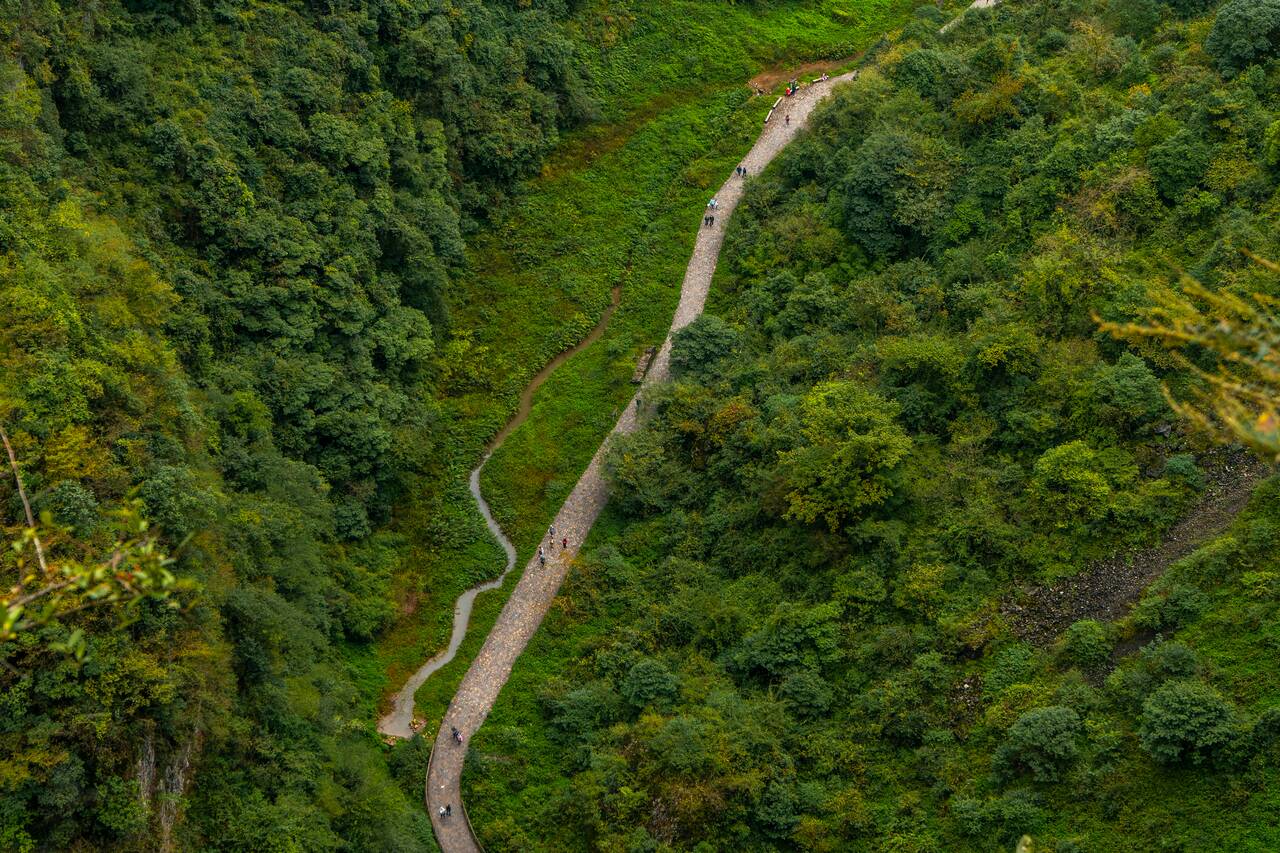
Bring your passport for your train and ticket checks, shoes with good grip for the stairs and damp paths, and a light rain jacket. I’d also pack some water and a snack so you can take your time on the trail.
Is Wulong Worth a Day Trip from Chongqing?
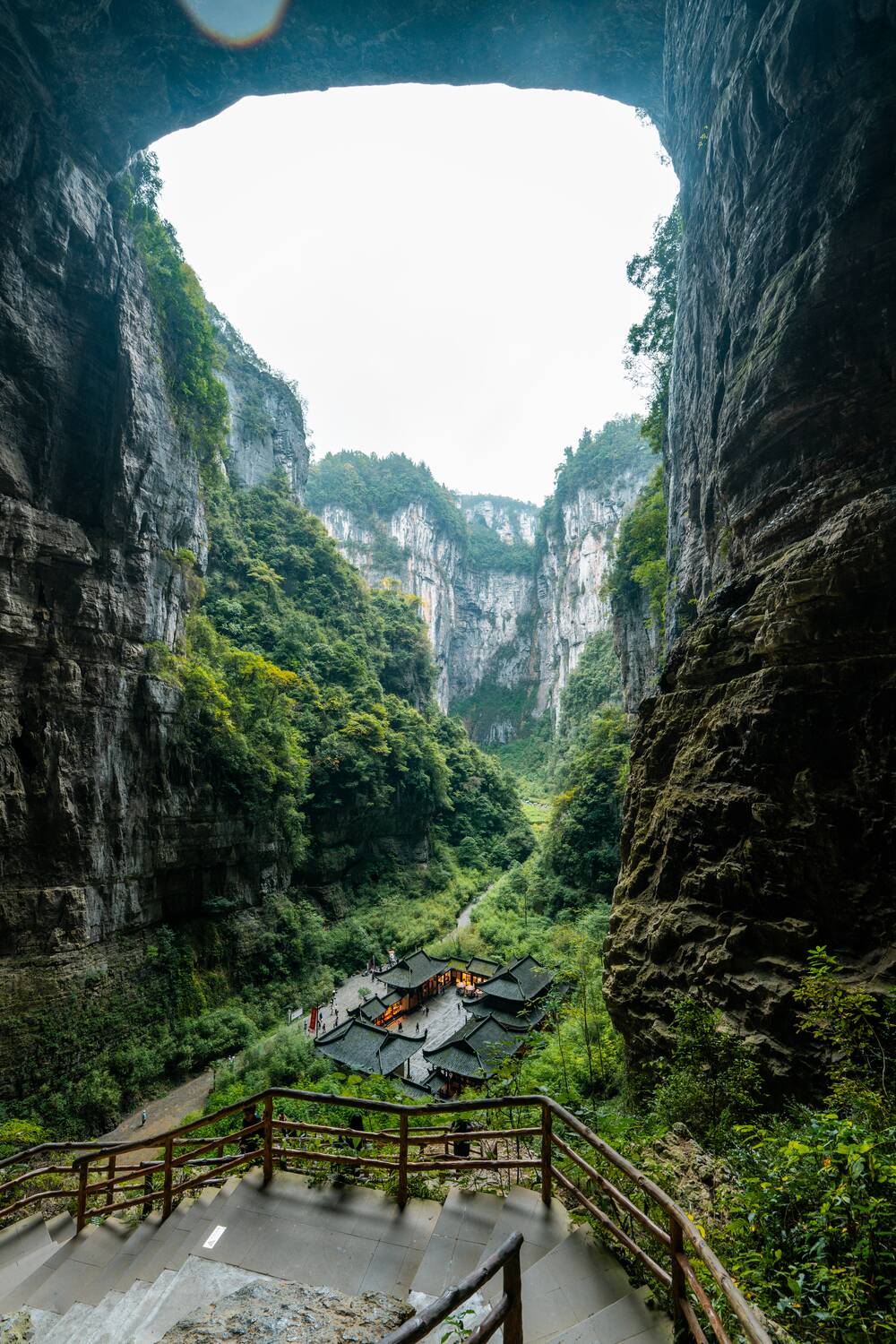
Absolutely! The view over Tianfu Official Post was the highlight for me, but I loved the entire walk through the gorge. After a few days among Chongqing’s skyscrapers and crowds, it was pretty incredible to spend a day in nature. Nothing makes you feel quite as small as standing on the lower trail with those massive arches overhead and limestone cliffs towering on both sides!
If you have an extra day in Chongqing, I’d highly recommend spending it in Wulong exploring the Three Natural Bridges. Just make sure you book your train tickets in advance and give yourself plenty of time to get back to the station, and you should be golden!
Things to Know Before Visiting China
- Always Carry Your Passport: Everything revolves around your passport/ID in China, and it’s often used interchangeably as your main form of identification. Many major tourist attractions require you to show your passport when buying a ticket, and the ticket will then be linked to it. You’ll scan your passport again to enter. The same applies to high-speed trains. It’s best to carry your passport with you at all times while traveling in China.
- Get an eSIM: China’s cashless economy relies on constant internet access, so having a data connection is essential. I highly recommend getting an eSIM or a local SIM card for your trip. An eSIM is often better because the service is usually based in Hong Kong, which bypasses China’s Great Firewall, meaning you can access apps like Instagram and YouTube without a VPN. I suggest checking eSIM options on Klook or Trip.com, as they tend to be the most affordable.
- Use AMap to Navigate: Google Maps doesn’t work well in China, so local apps like AMap are much more informative and accurate for getting around. It even provides metro information, making it easy to navigate city subway systems. I used AMap throughout my entire trip, and it worked perfectly! In this guide, I’ll be linking locations with AMap links instead of Google Maps, so be sure to download it before your trip.
- Use VPN to Bypass the Great Firewall: As you may know, many major websites such as Google, Facebook, Instagram, TikTok, and more are blocked in China. To access them, you’ll need a VPN like LetsVPN installed on both your phone and laptop before you arrive in China. This is crucial as once you're in the country, you won’t be able to search for or download VPN apps. I used LetsVPN during my trip, and it worked very well throughout. The service is affordable too, with a free tier offering limited data or a basic unlimited plan for just 5.99 USD per month.
- Connect Alipay with Your Credit Card: First, download Alipay from the app store, set up your account, and link it to your credit card. This will be one of the two main ways you’ll pay for services in China. Alipay also has mini-apps built in, such as Didi (China’s version of Uber), so you don’t need to download separate apps, and you can use them directly through Alipay. Very convenient!
- Get a Transport Card Working in Alipay: Once you have Alipay set up, you’ll need to verify your account before you can activate a transport card for metro and bus rides. First, if you’re not currently in the city you want to use, tap the city name in the top-left corner and select the correct city. After that, tap the “Transport” button and request a transport card. You’ll be asked to upload a photo of your passport for verification. Once approved, your transport card will be issued, and you can use the QR code to scan and pay for buses and metro rides.
- Get WeChat Set Up: WeChat is another essential app for communicating with locals, thanks to its built-in translation feature. It’s also widely used for payments as Alipay only works about 70% of the time, while WeChat is commonly needed for paying individuals, buying entry tickets at certain attractions, and more. Setting up WeChat can be a bit tricky though because you need verification from an existing user. The easiest way is to ask your hotel’s reception to help verify your account when you arrive in China, which is how I got mine activated.
- Use Trip.com / Trip App: For hotels, day trips, attraction tickets, train tickets, flights, and everything in between, you can use Trip.com or the Trip app to book all your travel needs. It’s very convenient, offers a great user experience, and has a generous cancellation policy that gives you more flexibility when traveling in China.
Disclaimer: This post may contain affiliate links. See our disclosure policy.
First Published:


