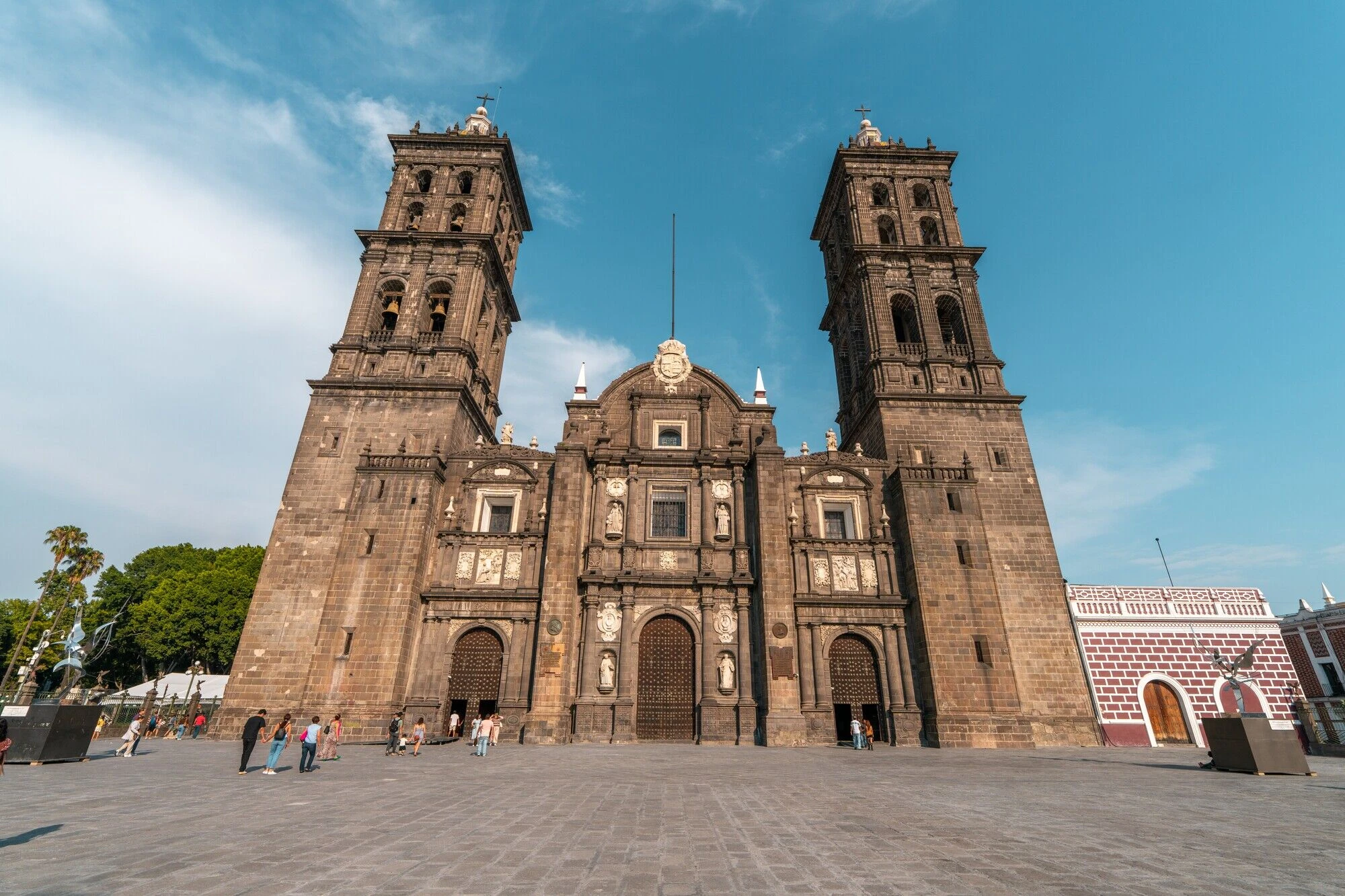



Puebla wasn't really on my radar when I was planning my route through Mexico, but since it was on the way between Oaxaca and Mexico City, I decided to give it a go without much thought. Then, when I arrived, I realized that I had somehow managed to be here during Puebla's biggest celebrations, Cinco de Mayo, and I had an absolute blast!
I walked straight into the crowds and found concerts, events, and marching bands from Puebla and neighboring states filling the Zócalo. The historic center is also packed with incredible colonial architecture, beautiful churches, colorful streets, art, museums, and little markets where you can spend hours browsing. It was such a great surprise, and Puebla has since become one of my favorite places in Mexico.
In this Puebla travel guide, I'll cover the best things to do, where to stay, how to get around, when to visit, how many days to spend, where to eat, and the best day trips from Puebla, based on my own experience exploring the city and surrounding area.

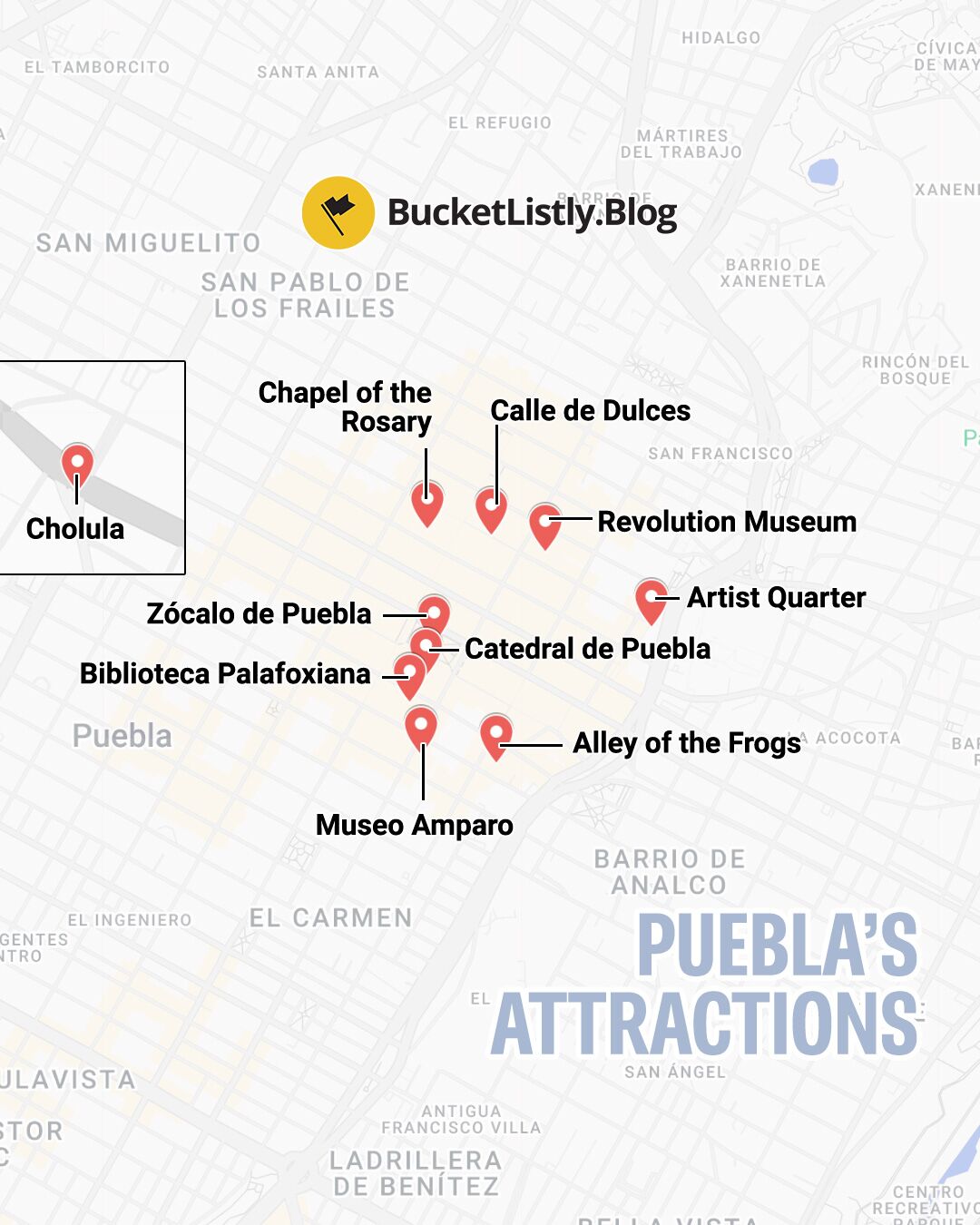
Map of Puebla's Attractions
Quick Summary
| ♥️ Must See: | Chapel of the Rosary at St. Dominic’s Temple |
|---|---|
| 👍 Must Do: | Zócalo de Puebla |
| 🏛️ Best Museum: | Museo Amparo |
| ☀️ Great Day Trip: | Cholula |
10 Experiences I Think Are Worth It in Puebla
1. Wander Around Puebla's Historic Center
- 📍 Location: Zócalo de Puebla [Map Link]
- ⚡ Pete's Take: "Align your visit with the beginning of May for Cinco de Mayo celebrations"
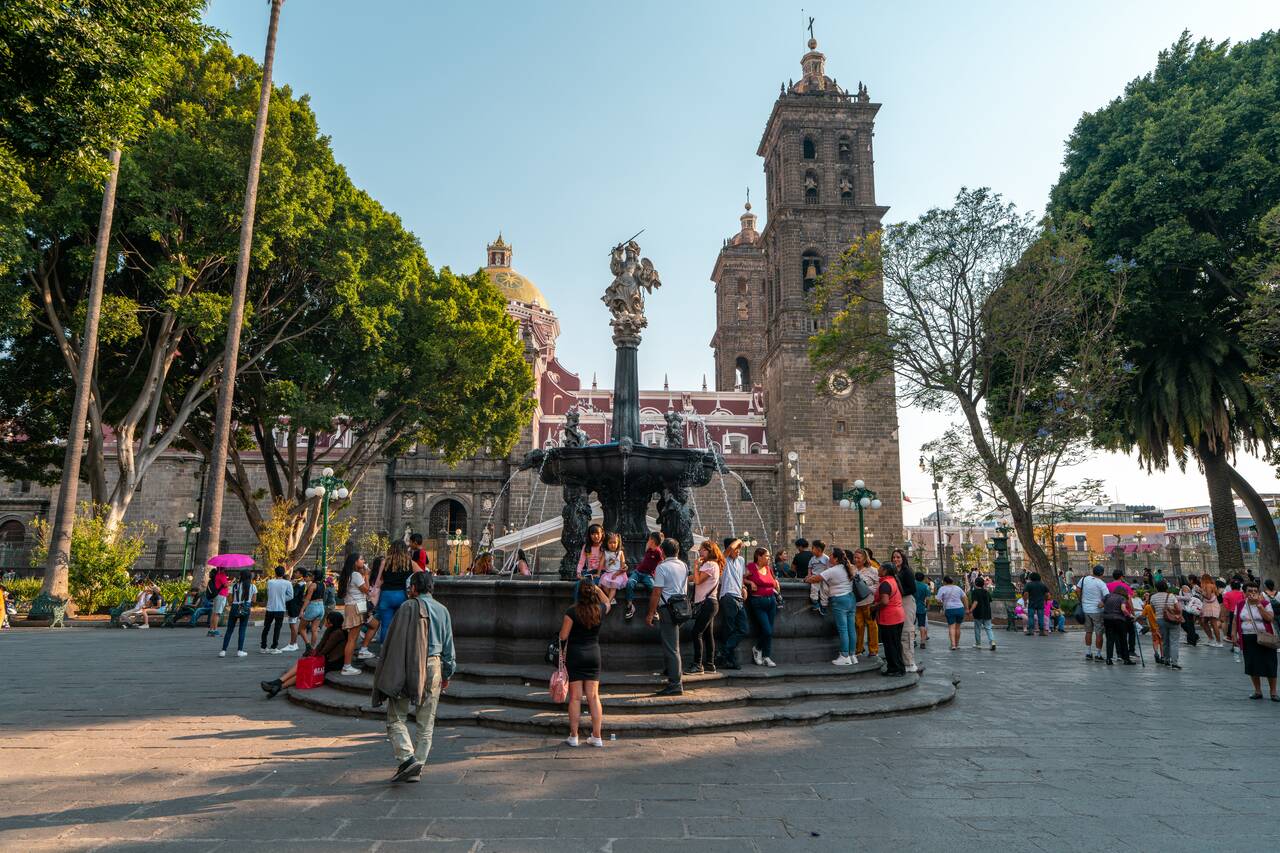
I'd recommend starting your exploration of Puebla at Zócalo de Puebla, the city's main plaza and the beating heart of the historic center. It's a spacious, beautifully shaded square surrounded by impressive colonial buildings, restaurants, cafés, and some of Puebla's most important landmarks. From here, many of the main streets branch out toward other attractions, which makes for a great starting point for exploring the city on foot.
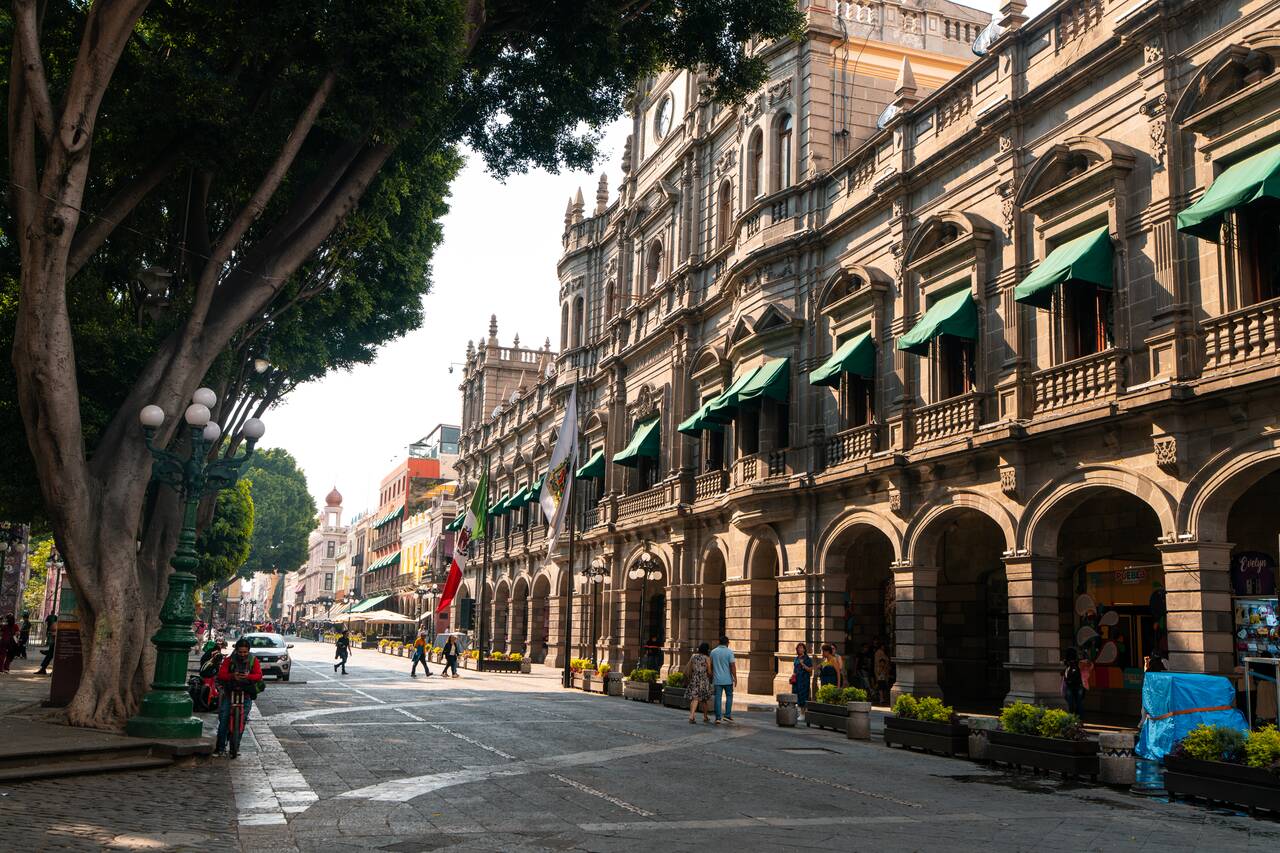
From the Zócalo, you can easily walk to Puebla Cathedral, Capilla del Rosario, Biblioteca Palafoxiana, Calle de los Sapos, and many of the city's other historic sights, which we will discuss later in the guide. Puebla's historic center is at its best when you take your time and let the place naturally unfold before your eyes.
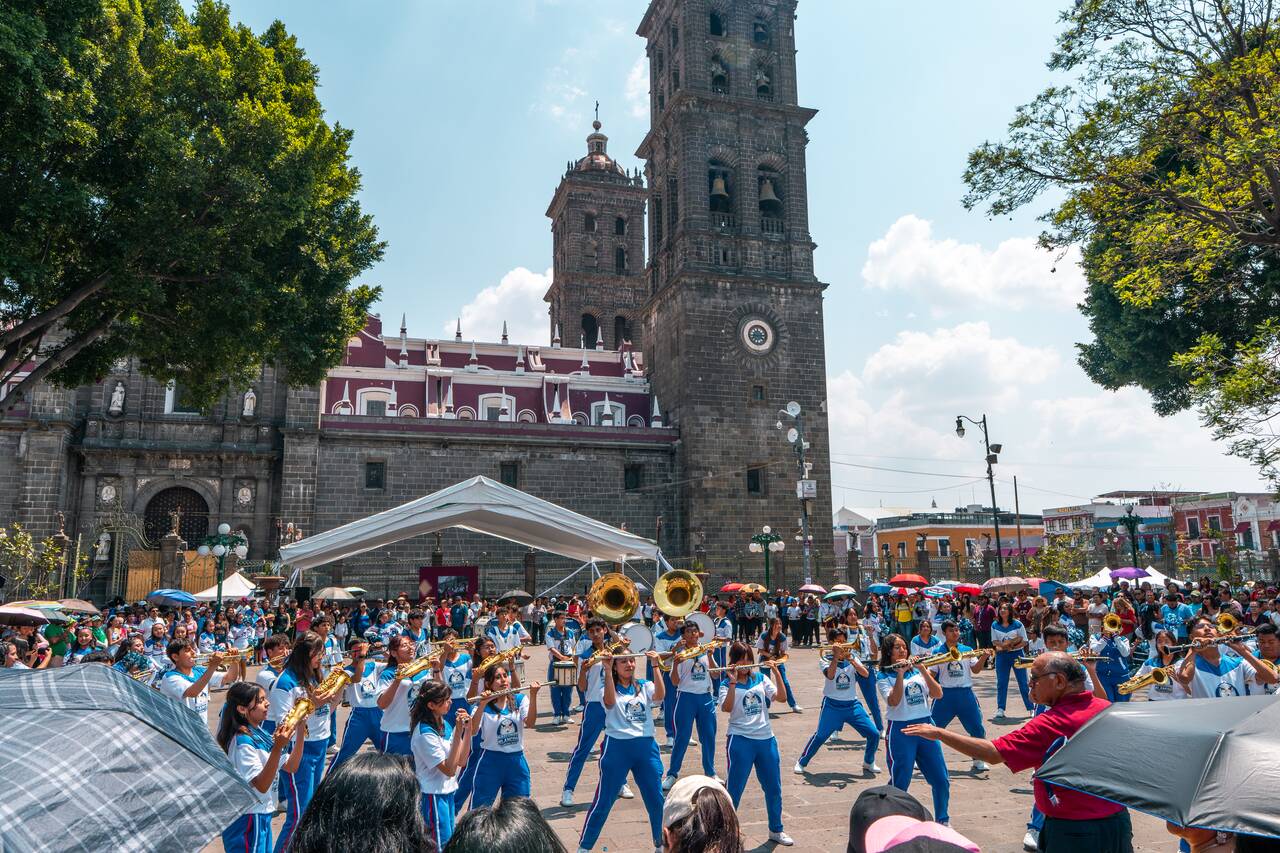
That's exactly what happened when I was here around the beginning of May, just as Puebla was gearing up for the Cinco de Mayo celebrations. I stumbled upon all kinds of events happening around the Zócalo, and it turned out to be one of the highlights of my time in the city.
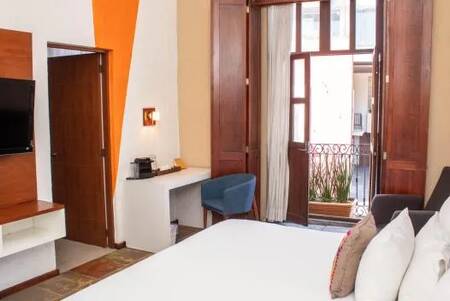
- Casa Pepe (Budget)
- Hotel Isabel (Mid-Range) 👍 Top Pick
- Cartesiano Boutique & Wellness Hotel (High-End)
- Guided Tour to Cholula from Puebla (Full-day)
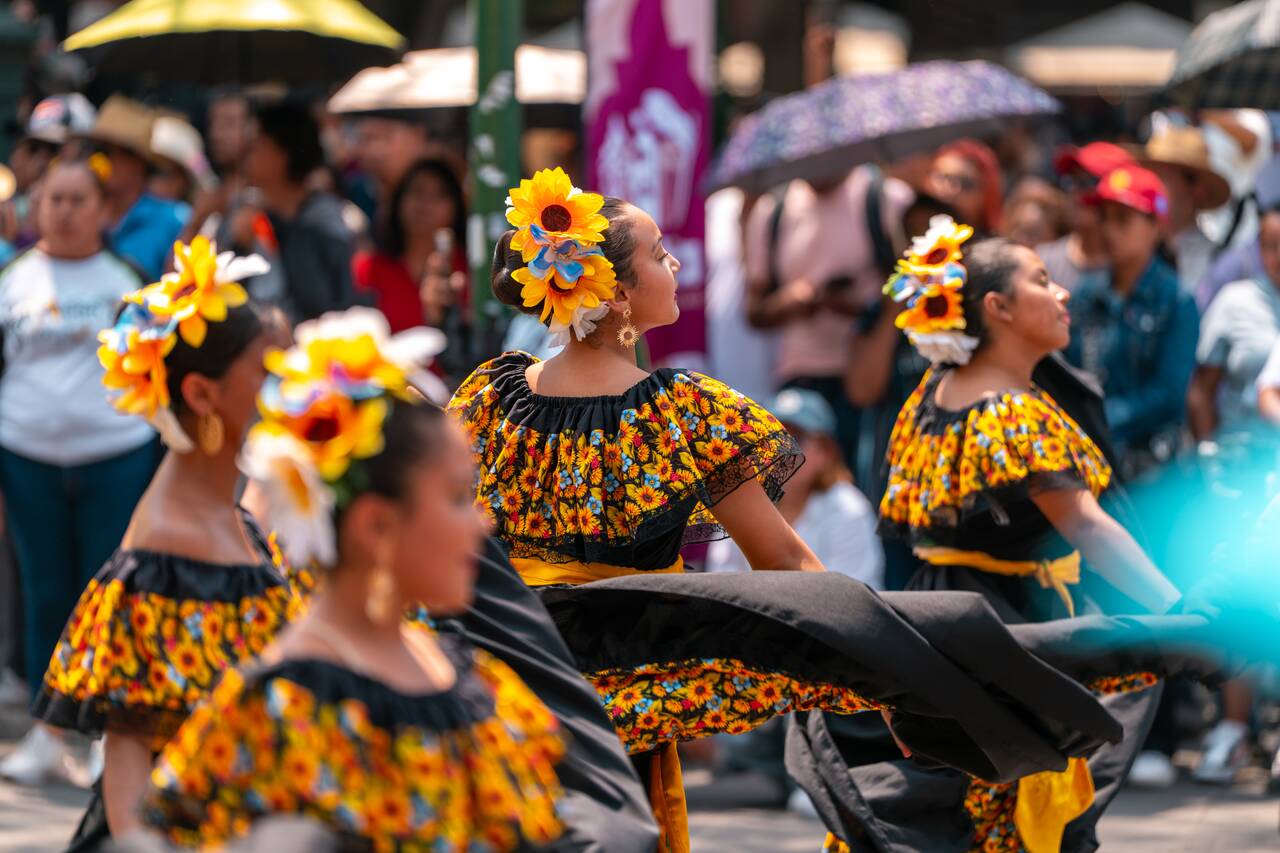
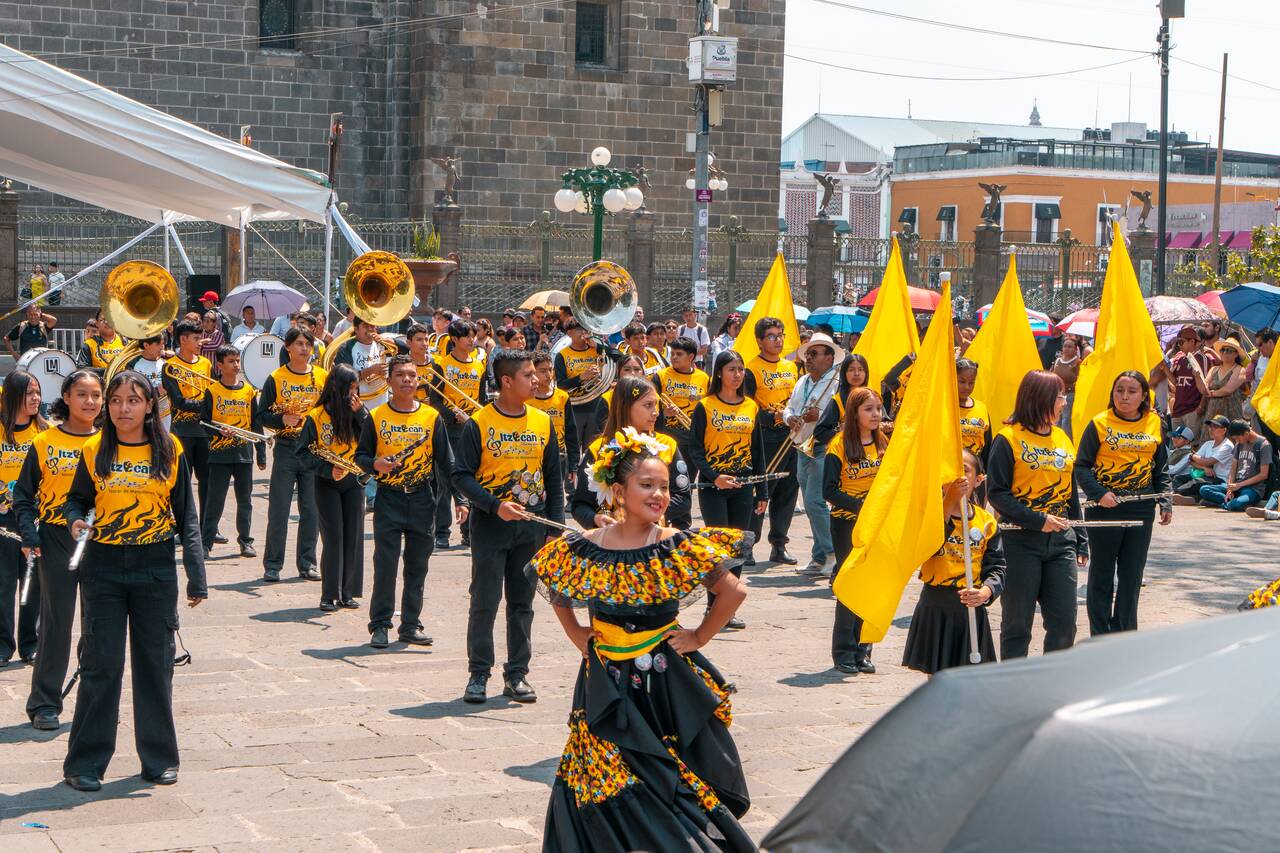
I was here in 2026, and the celebrations included a Band Fest in the Zócalo featuring marching bands from Puebla and neighboring states, followed by a marching-band parade through the historic center. I hadn't planned any of this, so imagine how surprised I was when I stumbled upon all these festivities. God, I love my luck sometimes! 😆

Tons of school and marching bands were performing in the square from midday until late at night, taking turns throughout the day. There were crowds of locals and tourists everywhere, and concerts were being held right next to Puebla Cathedral, so there was no way you could miss them. The whole place was incredibly lively, and I had an absolute blast just hanging around and taking the photos of the incredible atmosphere.
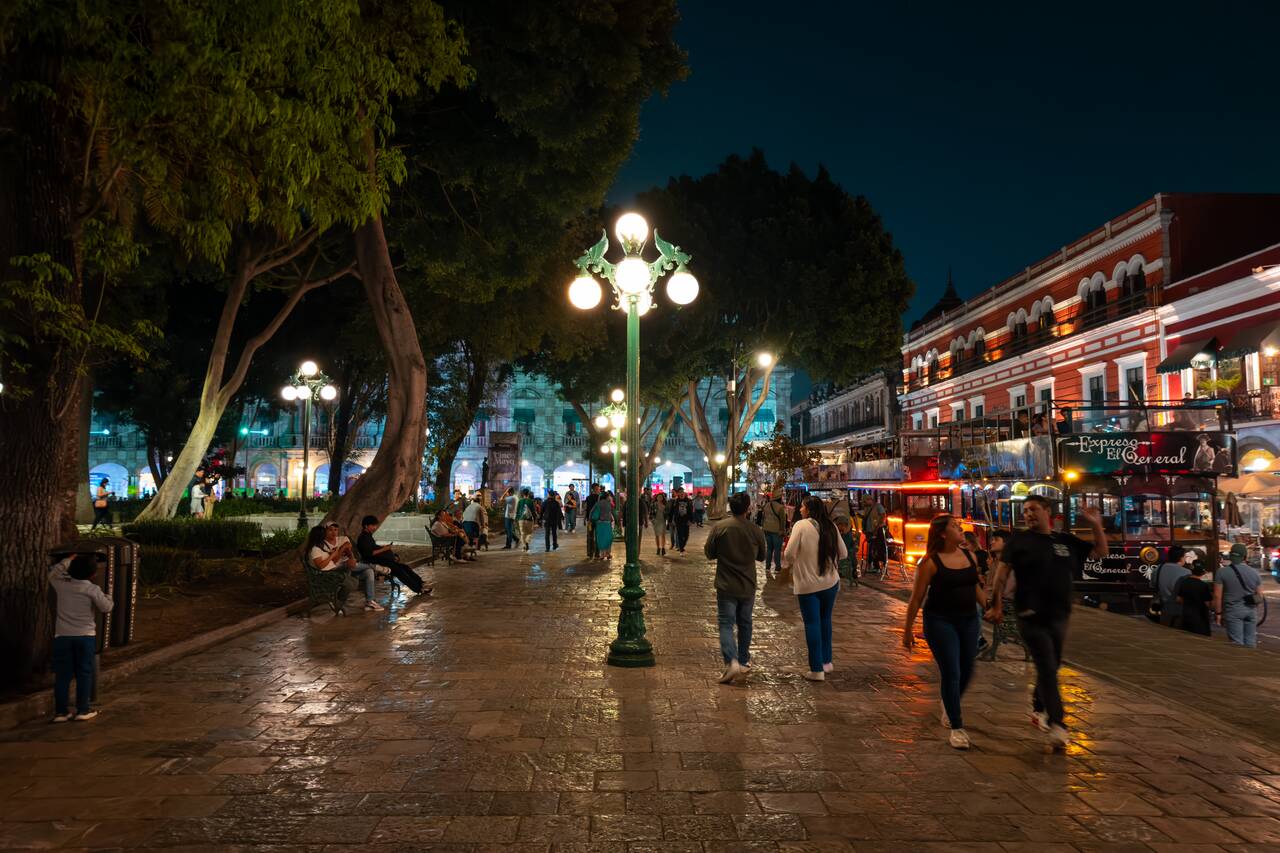
I was coming from Oaxaca, which is chill and laid-back, so arriving in Puebla during its biggest celebrations was definitely a big surprise. The city was incredibly lively, and I had an absolute blast just hanging around the plaza and taking in the atmosphere. If you can align your visit with the beginning of May, I highly recommend it!
Where to Stay in Puebla?

2. Admire the Scale of Catedral de Puebla
- 📍 Location: Catedral de Puebla [Map Link]
- 🕐 Opening Hours: 8 AM - 12:30 PM, 4:30 PM - 7 PM
- 💰 Entry Fees: Free
- ⚡ Pete's Take: "Admire both the exterior and its interior. Also come see it at night. It's rather stunning!"
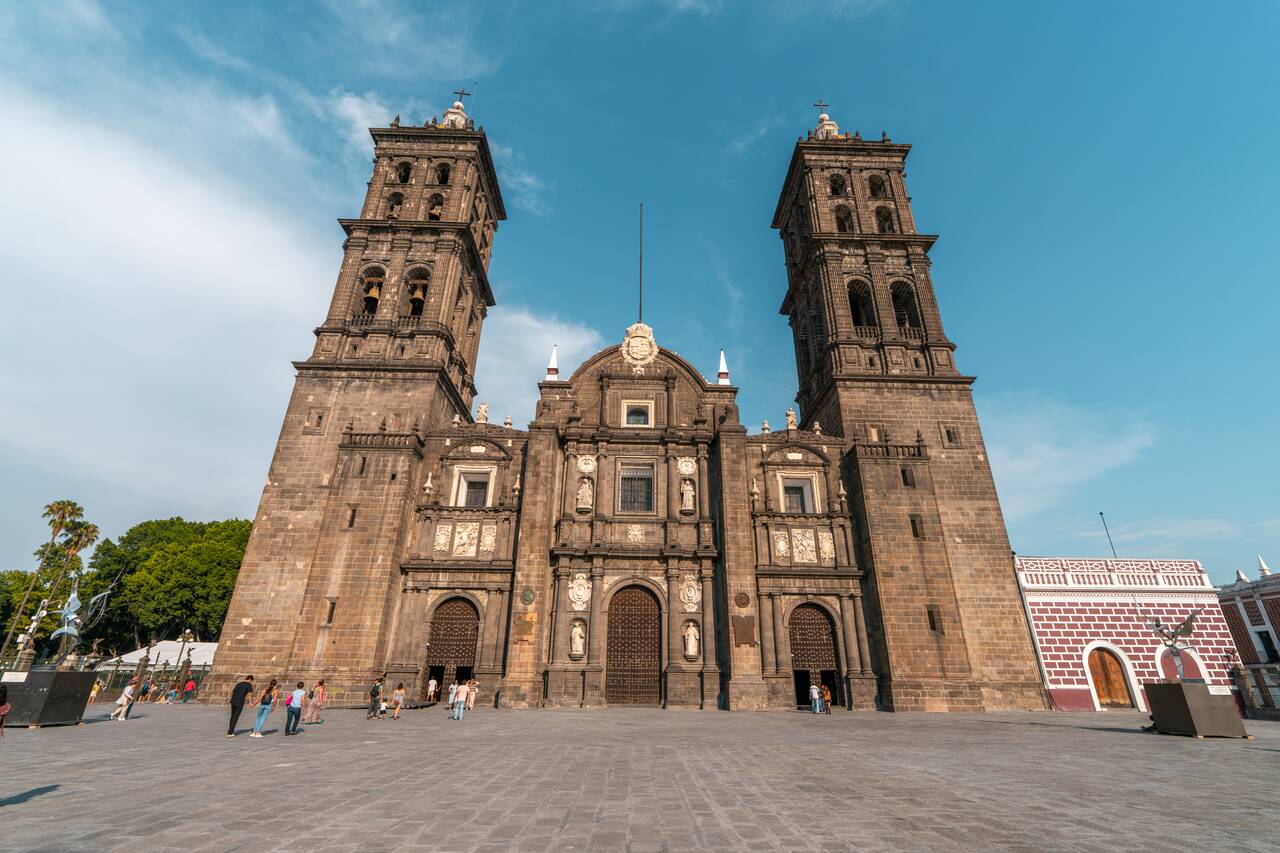
Located right beside the Zócalo, the Catedral de Puebla is one of the first buildings you'll notice when exploring the historic center. If you don't know what to look out for, just find the largest structure in the plaza, as the cathedral occupies an enormous footprint in the square, with its twin towers rising high above the surrounding colonial buildings.
The cathedral was built over several centuries, beginning in the 16th century and finally being consecrated in 1649. Its long construction period resulted in a fascinating mix of architectural influences, combining beautiful Renaissance and early Baroque styles with an imposing stone façade, towering bell towers, and an enormous central dome.
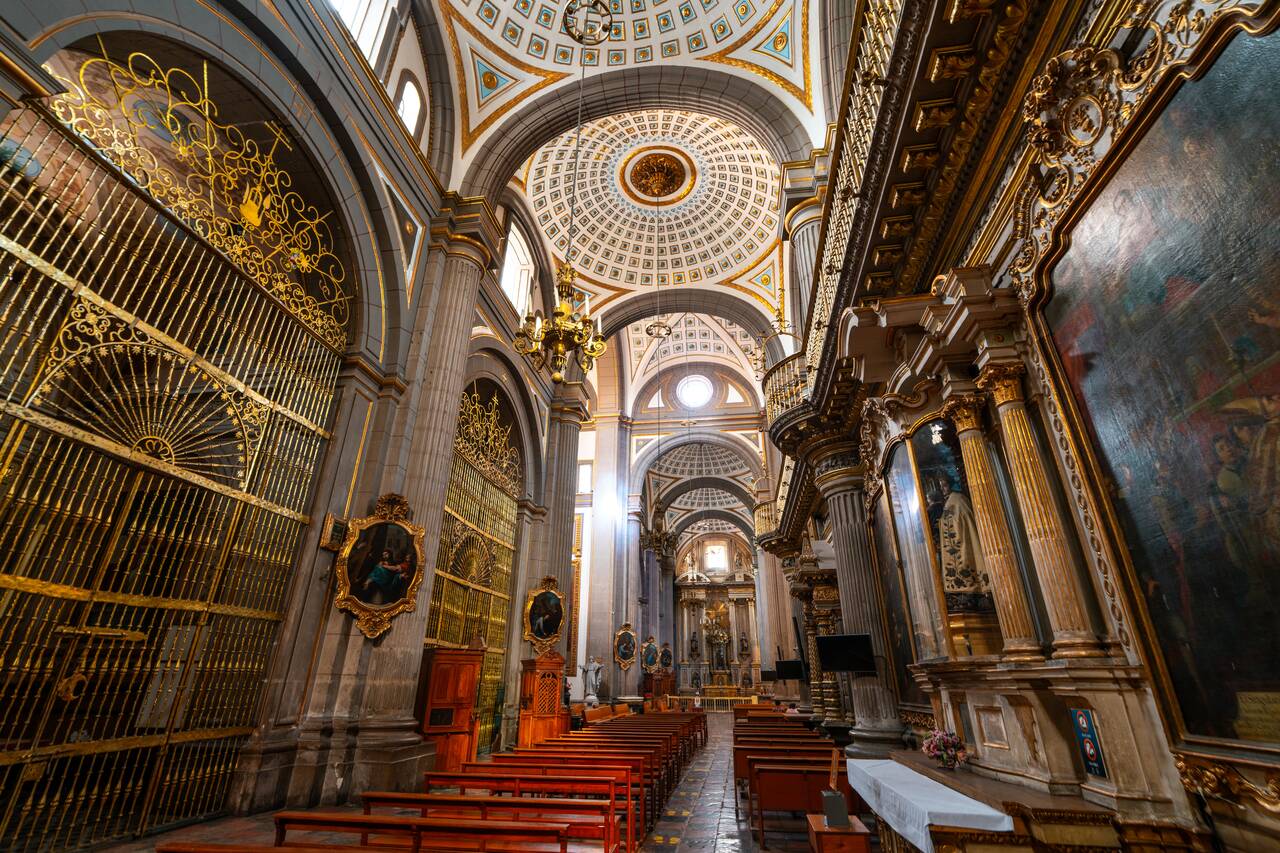
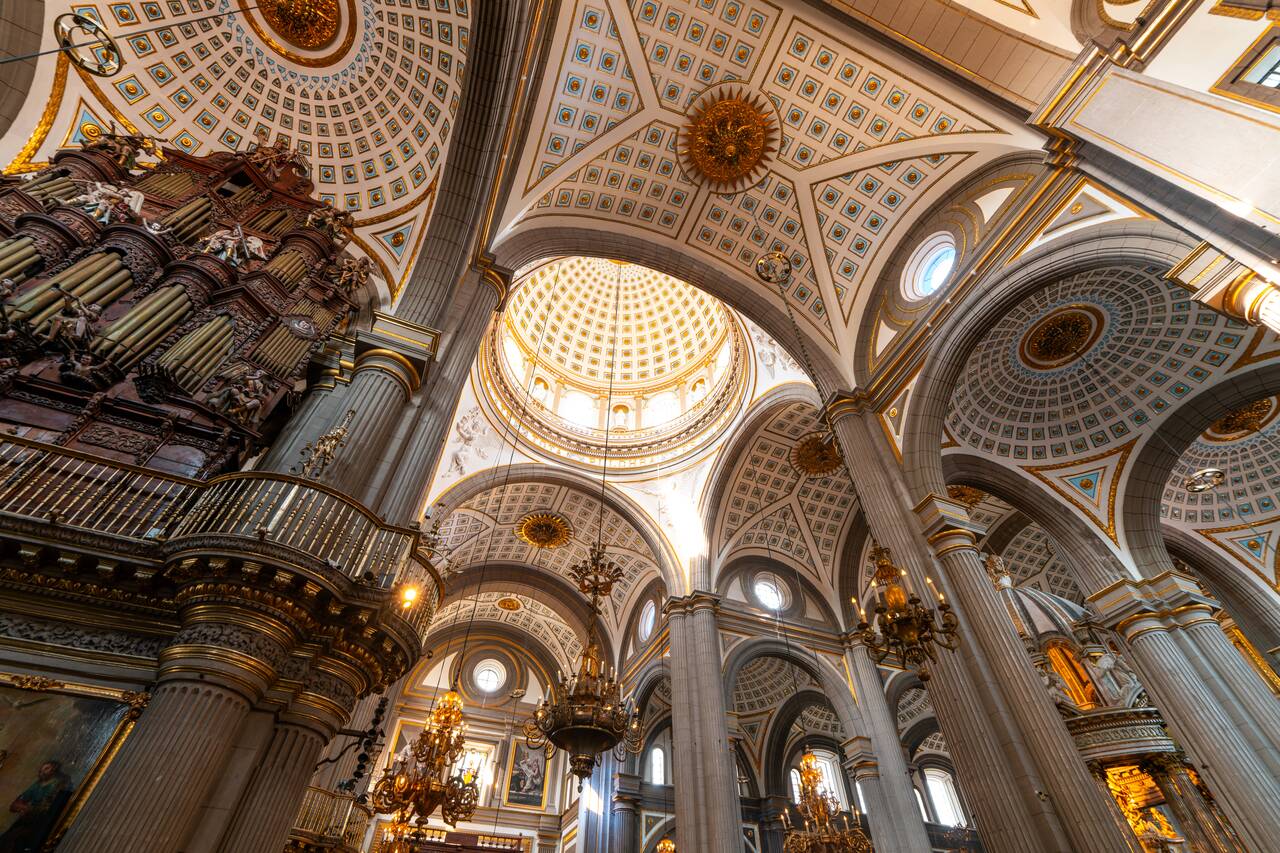
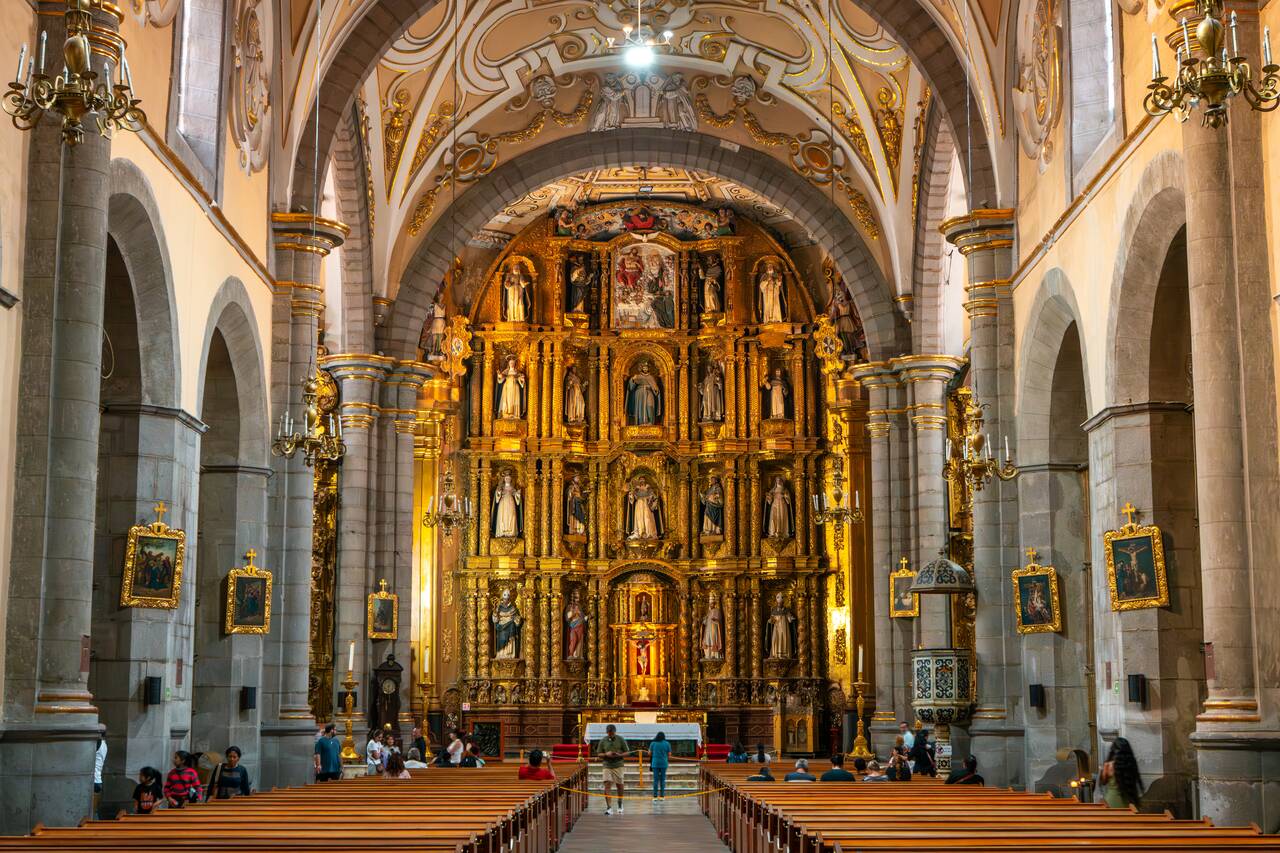
Inside, the scale becomes even more impressive. The vast nave is lined with enormous columns and soaring arches, while the interior is filled with elaborate golden altarpieces, religious paintings, sculptures, and ornate chapels. The highlight for me was seeing the main altar beneath the massive dome, surrounded by intricate Baroque decoration. What a sight to see!
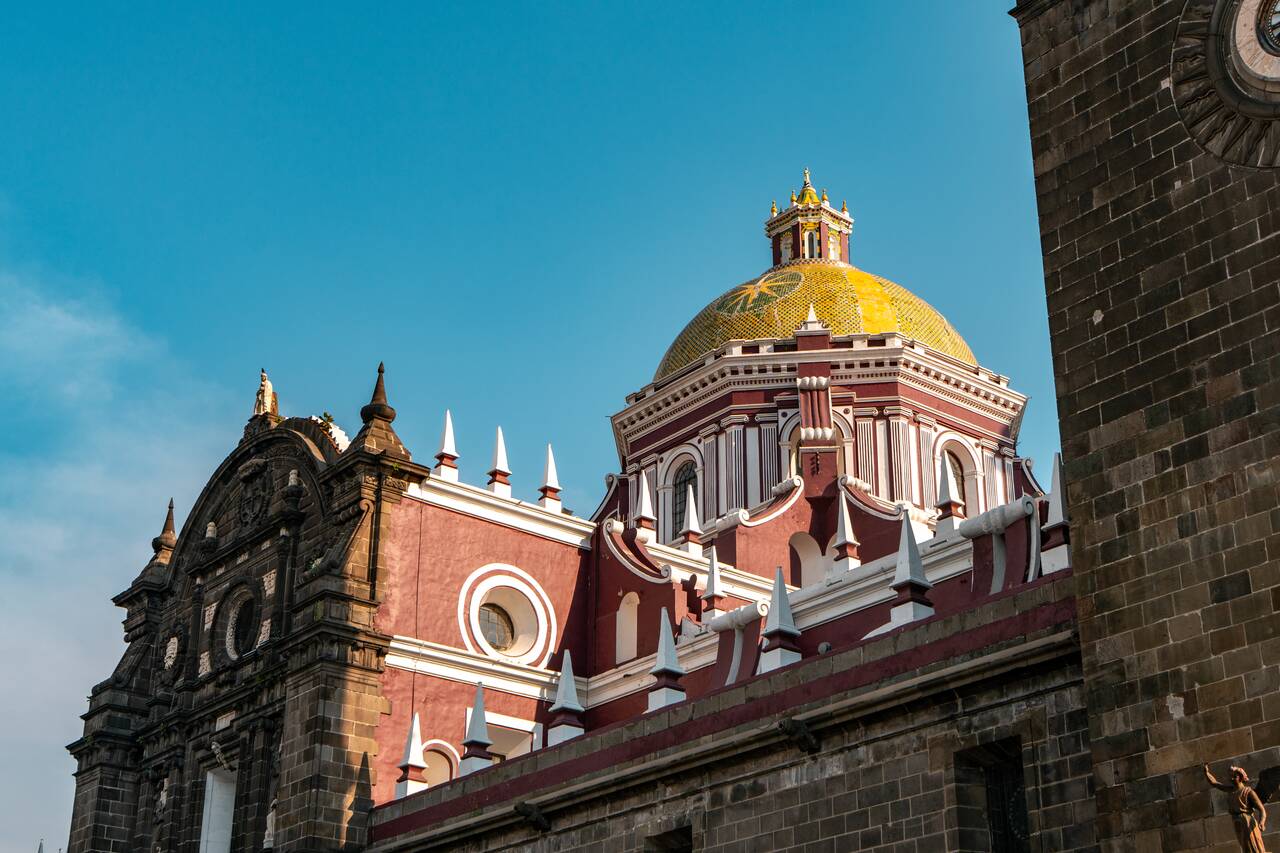
Be sure to check out the cathedral both during the day and in the evening. During the day, you can really appreciate the details of its façade, while after sunset, the towers and massive exterior are beautifully illuminated against the backdrop of the lively surroundings. The cathedral is generally open from 8 AM to 12:30 PM in the morning and again from 4:30 PM to 7 PM in the afternoon and evening. Entry is free for general sightseeing.
3. Be Completely Blown Away by the Chapel of the Rosary at St. Dominic’s Temple
- 📍 Location: Chapel of the Rosary at St. Dominic’s Temple [Map Link]
- 🕐 Opening Hours: 10 AM - 12 PM, 4:30 PM - 6 PM
- 💰 Entry Fees: Free
- ⚡ Pete's Take: "You'll appreciate the chapel more if you visit during the morning hours when it's less crowded."
If you thought Puebla Cathedral was impressive, wait until you step inside the Chapel of the Rosary located inside St. Dominic’s Temple. This small chapel is often described as one of the finest examples of Mexican Baroque, and the moment you walk through the doorway, you'll understand why.
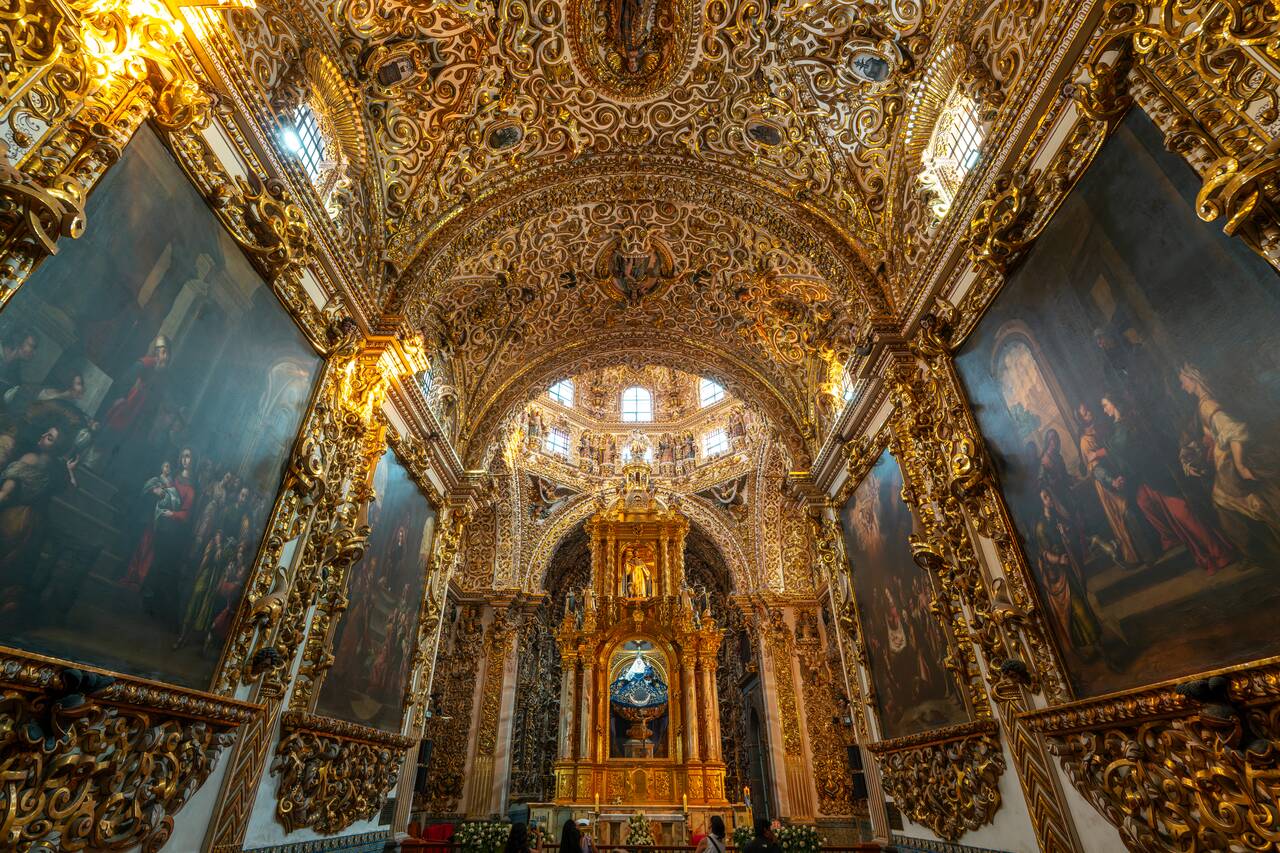
Almost every surface is covered in intricate decoration, with elaborate golden details stretching from the walls all the way up to the ceiling. I was completely floored by this place as I looked up at the incredibly detailed golden décor surrounding me the moment I walked in.
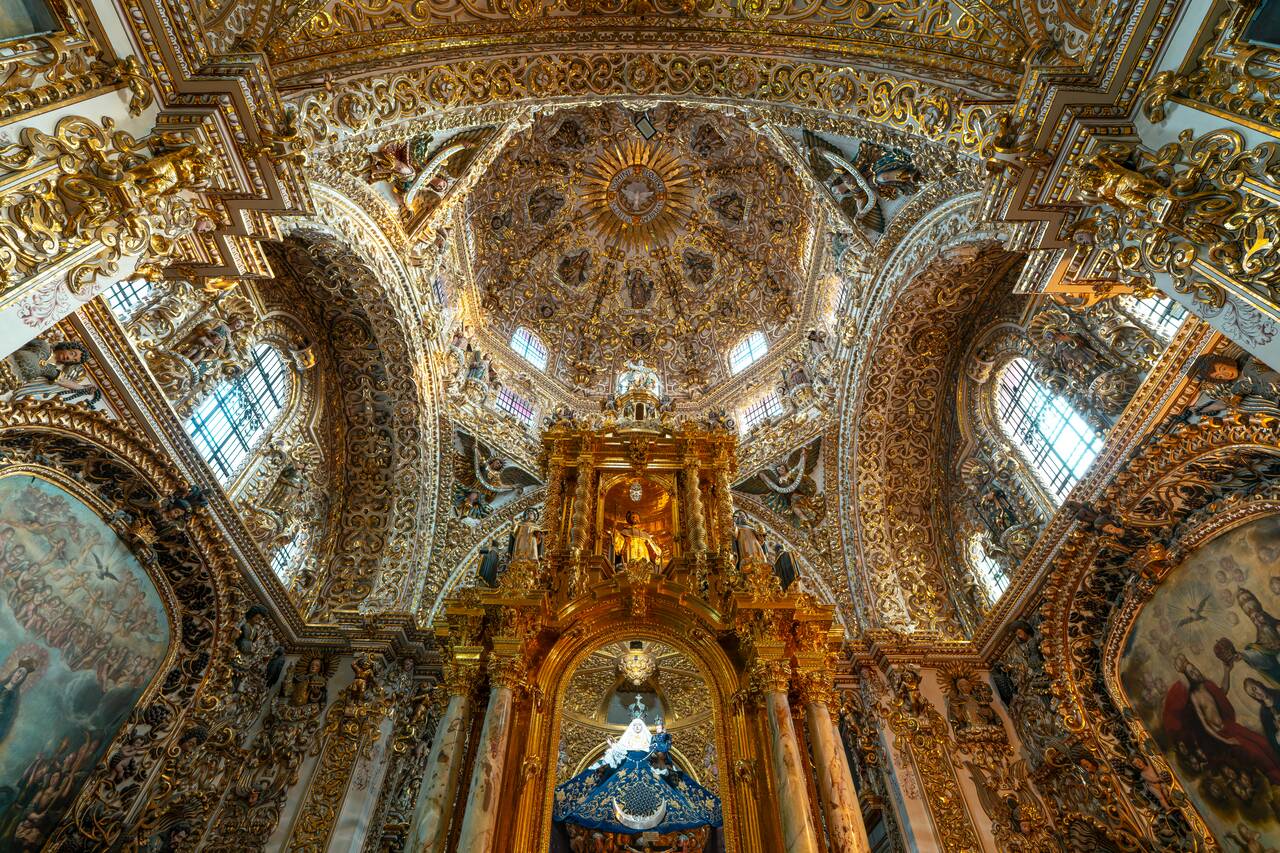
The sheer amount of detail packed into such a relatively small space is absolutely bonkers to me. The walls are covered with carved stucco, gilded ornaments, paintings, sculptures, and elaborate religious motifs from top to bottom and left to right, with barely any empty space.
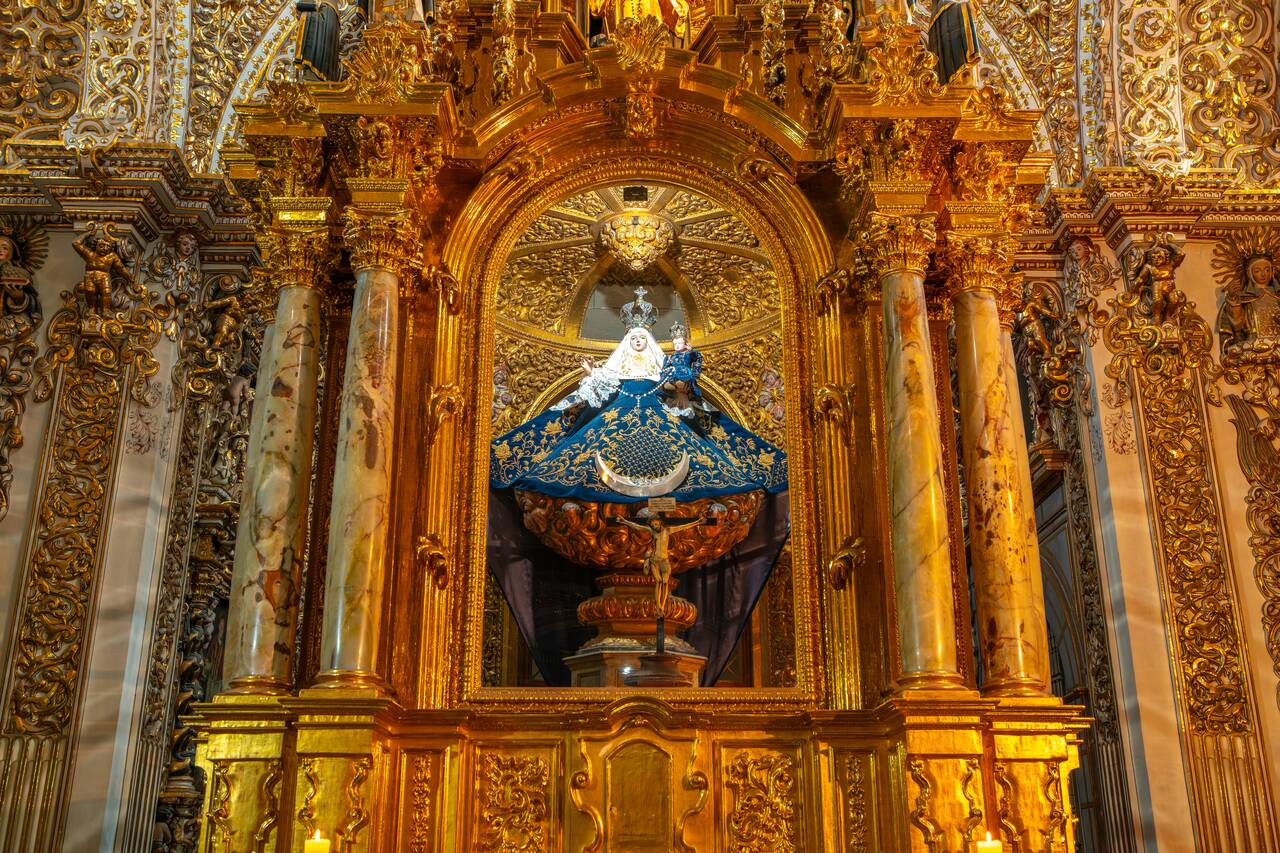
The centerpiece is the magnificent golden altar at the far end of the chapel. Above it, the ornate dome is decorated with figures and celestial imagery, while sunlight filtering through the windows makes the gold seem to glow. My photos really don't do this place justice, you need to stand inside and look around slowly to appreciate just how incredible the place is.
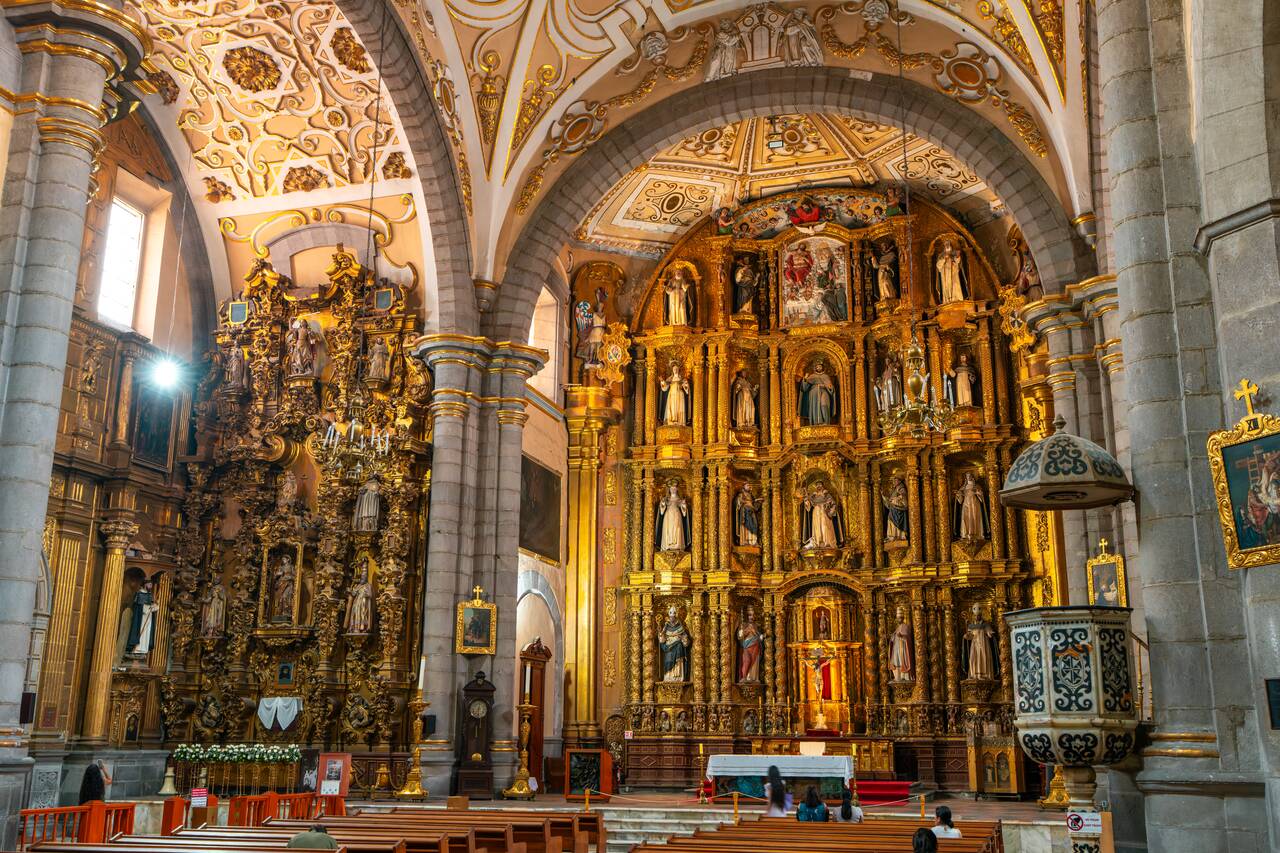
St. Dominic’s Temple isn't too shabby either with its massive piece behind the altar full of colorful religious figures, so make sure you spend some time to explore it thoroughly. The chapel is open daily from 10 AM to 12 PM and again from 4:30 PM to 6 PM. Entry is free.
4. Explore the Calle De Los Dulces
- 📍 Location: Calle De Los Dulces [Map Link]
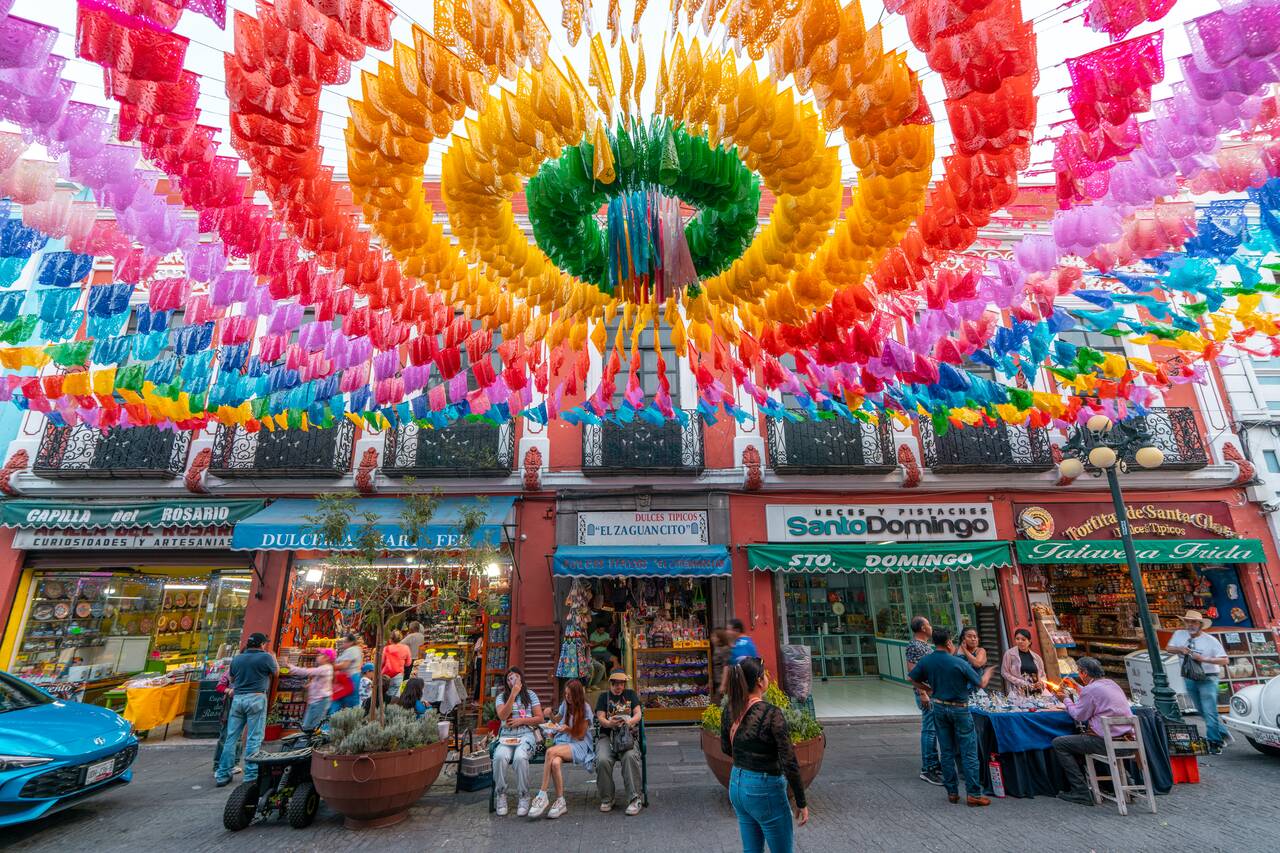
After you are done with the Chapel of the Rosary, you can come and explore Calle De Los Dulces next, as it is located right next to the church. Calle De Los Dulces is one of the most colorful streets in Puebla. It is also famous for its traditional sweet shops selling all kinds of traditional sweets lining both sides of the streets.
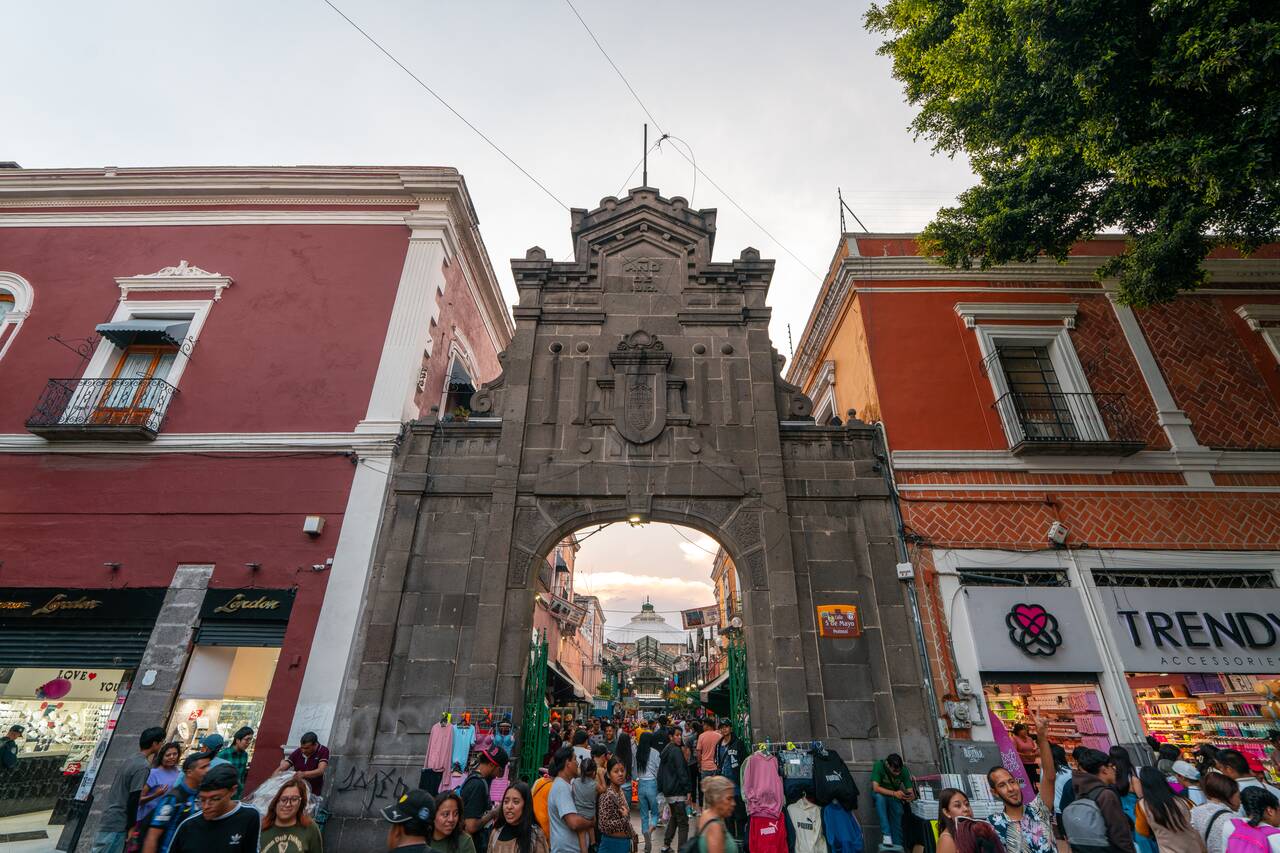
Here you will find camotes, a traditional sweet made from sweet potato and sugar, as well as tortitas de Santa Clara, small round cookies topped with a sweet pumpkin-seed and sugar filling. You'll also find borrachitos, muéganos, cocadas, marzipan, and plenty of other traditional sweets that you probably won't see as commonly outside Puebla.
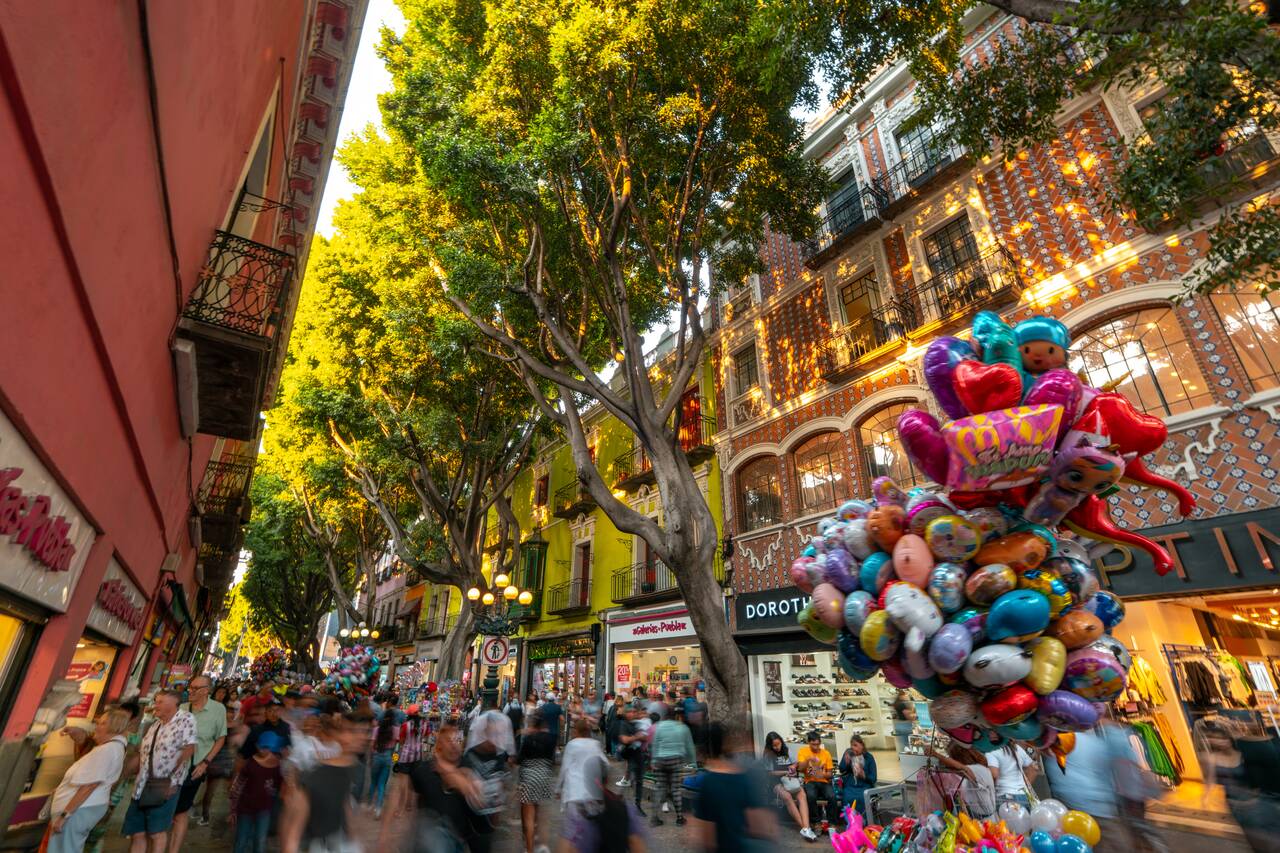
It's a fun place to wander even if you're not planning to buy anything, as the shop windows are packed with colorful sweets and treats. It's always fun to stroll around here and take photos of colorful decors they often put up around here.
5. Shop for Souvenir at the Artist Quarter
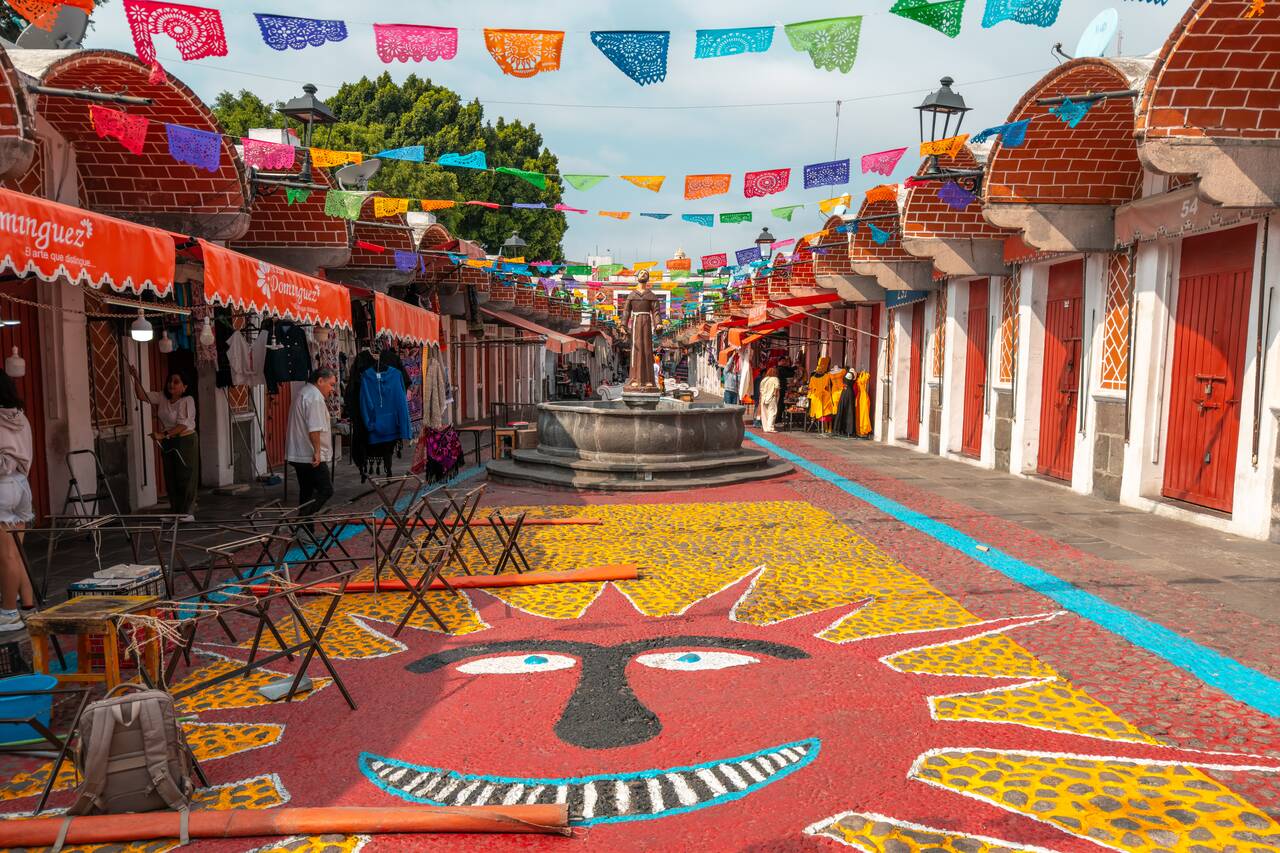
- 📍 Location: Barrio del Artista [Map Link]
- 🕐 Opening Hours: 10 AM - 6 PM
- ⚡ Pete's Take: "If you're not careful, you'll end up with more souvenirs than you planned to carry home."
If you're looking for unique souvenirs in Puebla, head over to the Barrio del Artista, or Artist Quarter, where you'll find a collection of small galleries, studios, craft shops, and stalls displaying Puebla's unique craftsmanship. Puebla is particularly famous for its Talavera pottery and colorful ceramics, so you'll find plenty of beautiful handmade pieces here, from plates and bowls to cups, vases, tiles, and decorative ornaments.
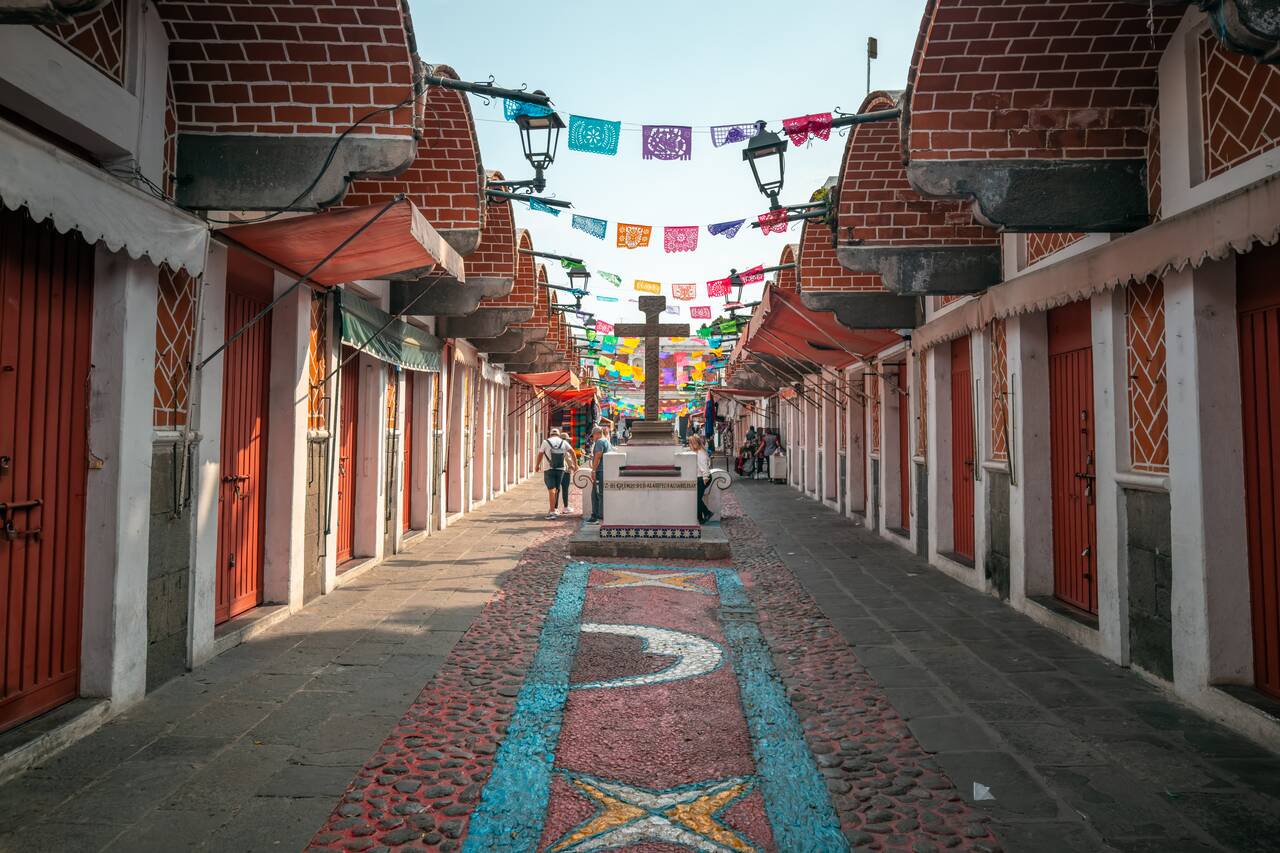
I was not much of a souvenir guy after more than a decade of traveling, but ever since I bought my home in Bangkok in 2024, that has since changed completely. It has added another layer to my travels. Now, I find myself scouring the world for little pieces from each trip to bring back home, and I found tons of them here.
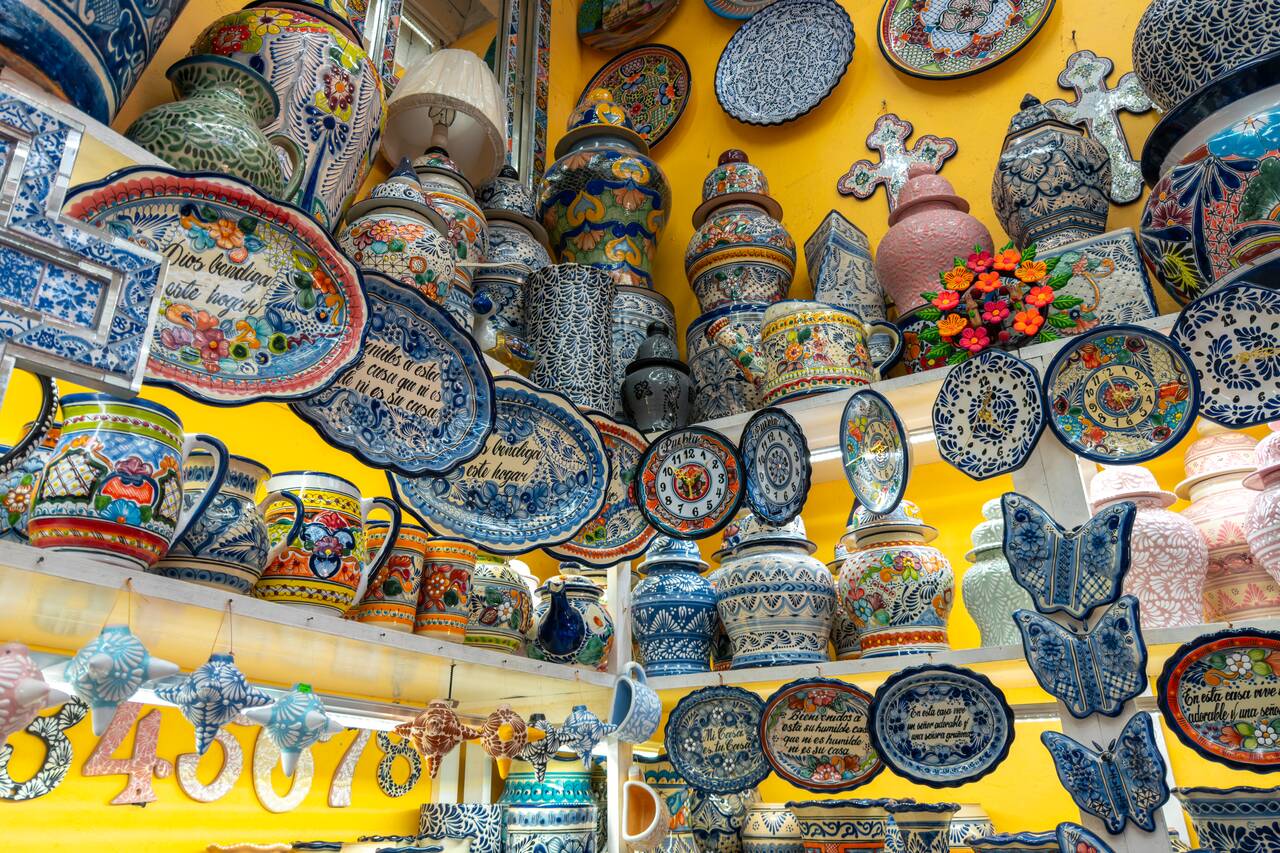
I ended up buying so many colorful Talavera pottery pieces here that they have now found their way into my home in Bangkok, where they add a little bit of Puebla's color and character to my space. 😆 Honestly, this was one of my favorite places to shop because the souvenirs felt much more personal than the generic stuff you find in tourist shops.
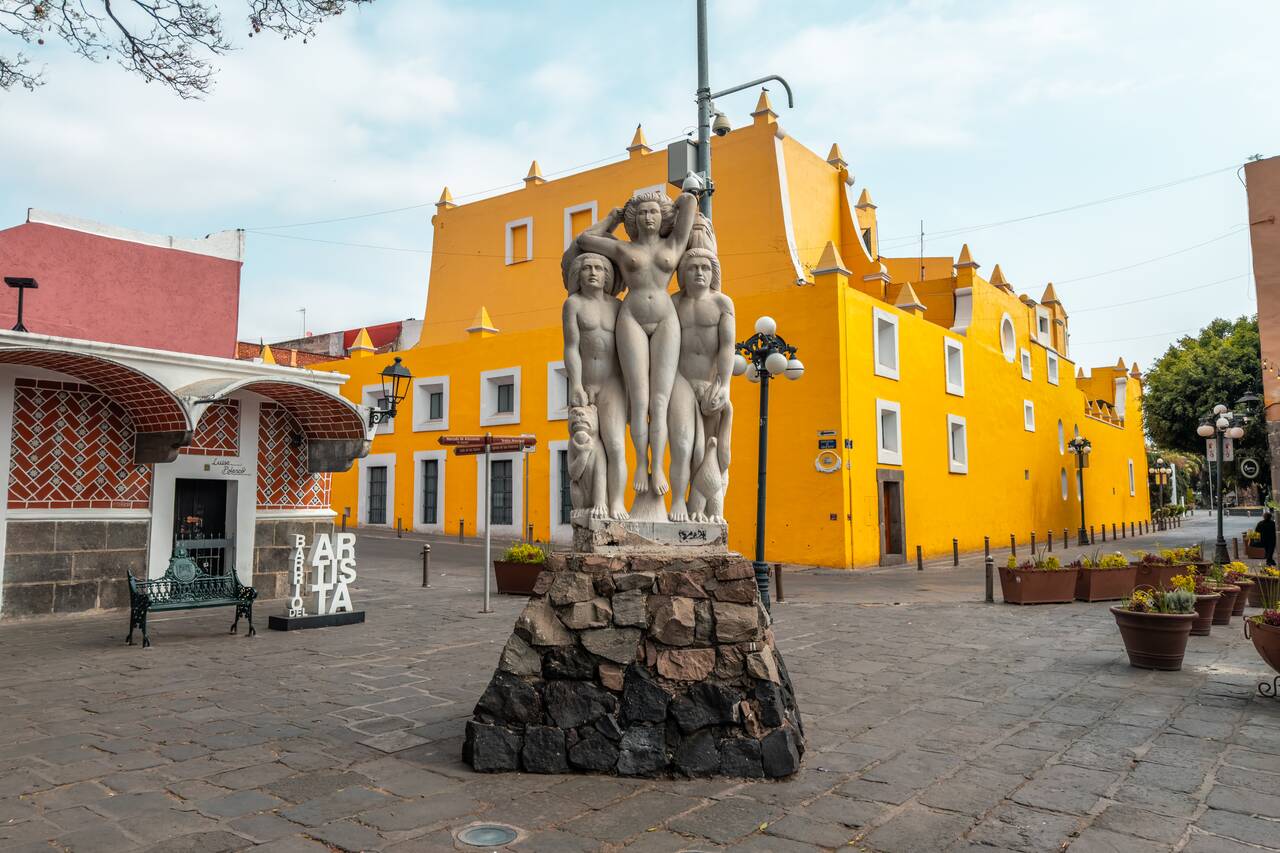
Keep an eye out for hand-painted Talavera tiles, textiles, embroidered pieces, jewelry, paintings, prints, and other locally made crafts. Many of the shops are small and independently run, so you can spend some time browsing, chatting with artists, and finding something that catches your eye.
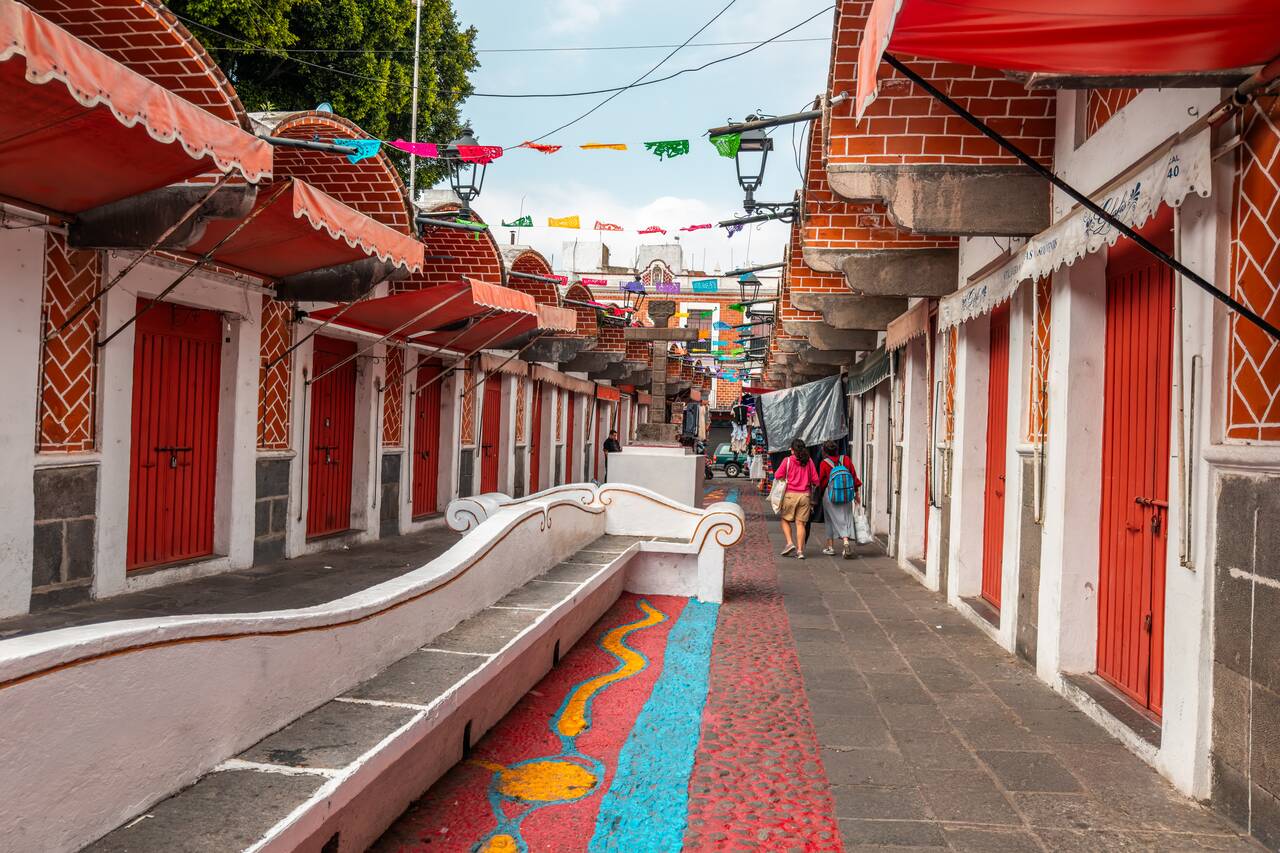
Even if you're not planning to buy anything, the Artist Quarter is worth wandering through. But if you're anything like me, don't be surprised if you end up carrying a few more souvenirs home than you planned. 😂 I actually packed two plant pots and a bunch of small ceramic pieces I bought here into my backpack, loaded them all onto a plane, and, after almost 22 hours of travel, they arrived safe and sound in Bangkok. I'll be honest, I was expecting the worst 🤣! The shops here are generally open from around 10 AM to 6 PM daily.
6. Explore the Alley of the Frogs
- 📍 Location: Callejón de los Sapos [Map Link]
- 🕐 Opening Hours: 11 AM - 5 PM on weekends (Flea Market)
- ⚡ Pete's Take: "Go on a weekend for the flea market; you'll find unique treasures and a lively atmosphere."
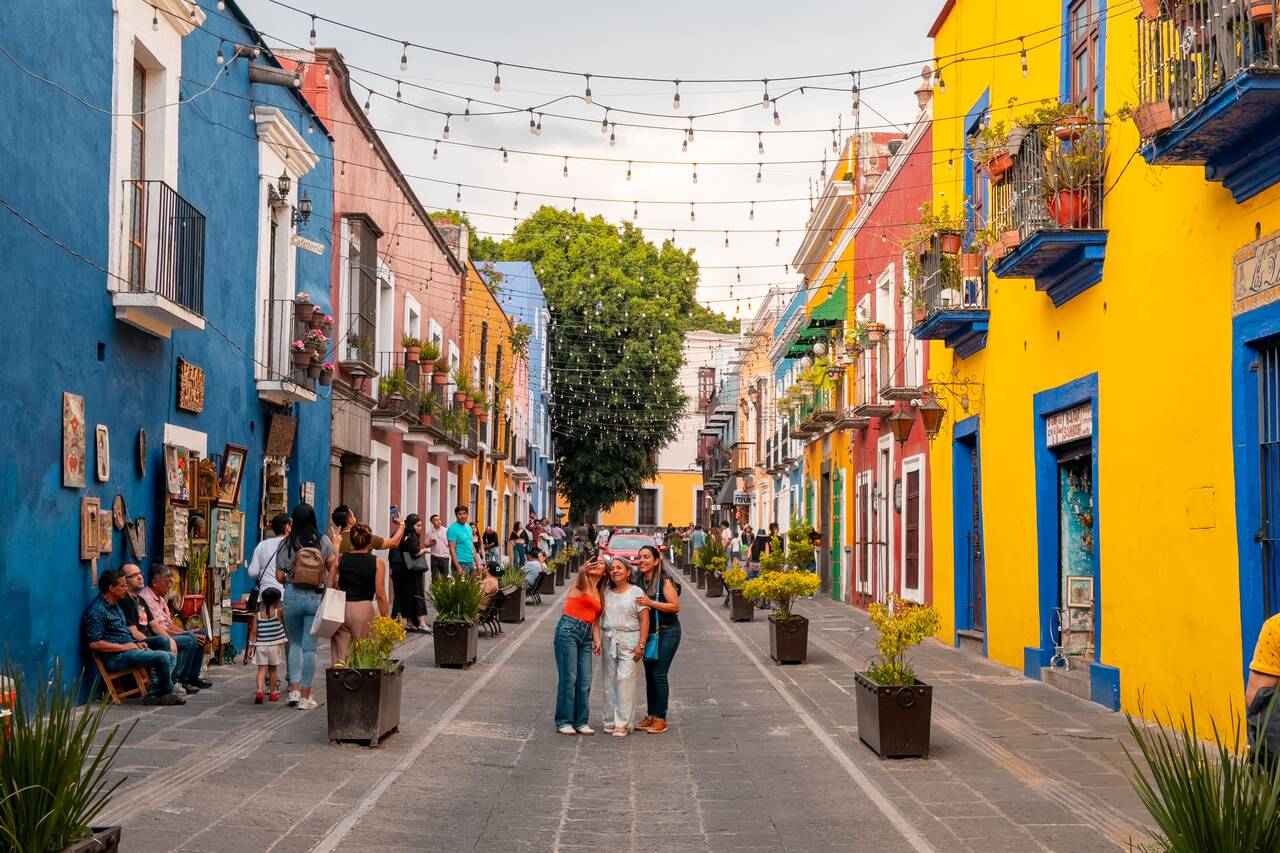
One of my favorite areas to explore in Puebla's historic center is Callejón de los Sapos, also known as the Alley of the Frogs. This colorful little street is surrounded by beautiful colonial buildings with brightly painted façades, traditional balconies, and charming doorways, which are perfect for photography.
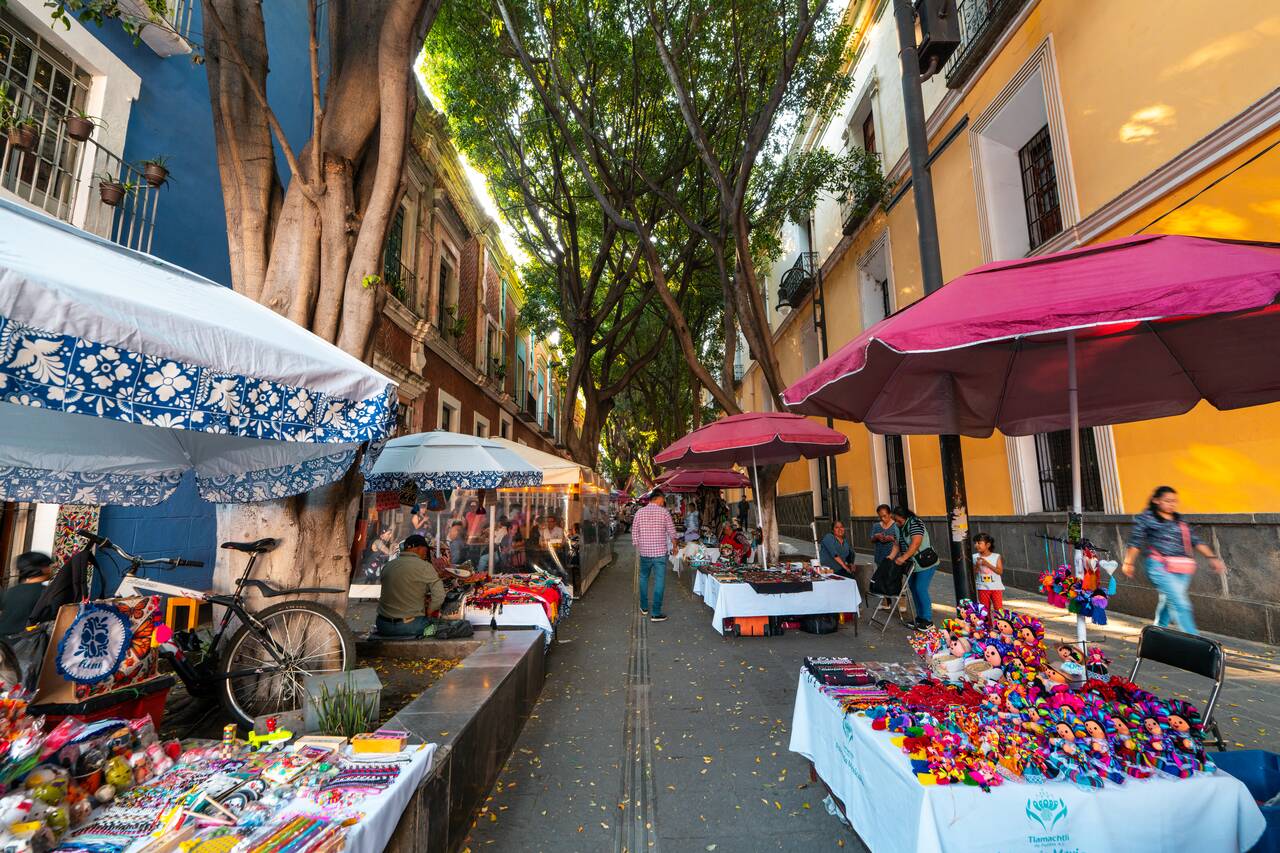
The area is already worth visiting just to see its beautiful architecture, but what really makes it special are all the antique shops and the flea market that takes over the street on weekends. The market is often held on Saturdays and Sundays from around 11 AM to 5 PM.
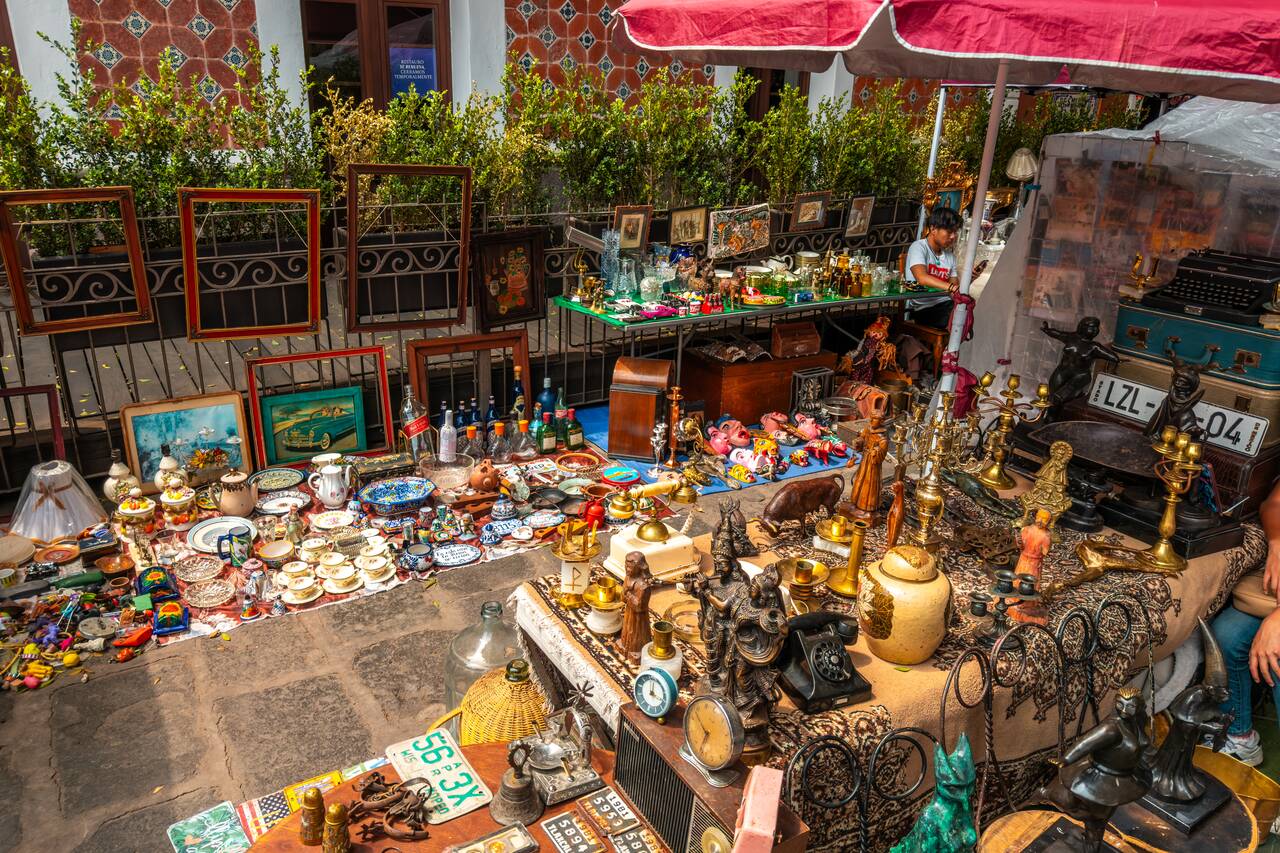
Sundays are particularly popular, and you'll find all kinds of treasures spread out across the stalls, from antiques and vintage home décor to paintings, sculptures, ceramics, old toys, coins, furniture, and other quirky collectibles. It's essentially a giant treasure hunt, and you never quite know what you're going to find.
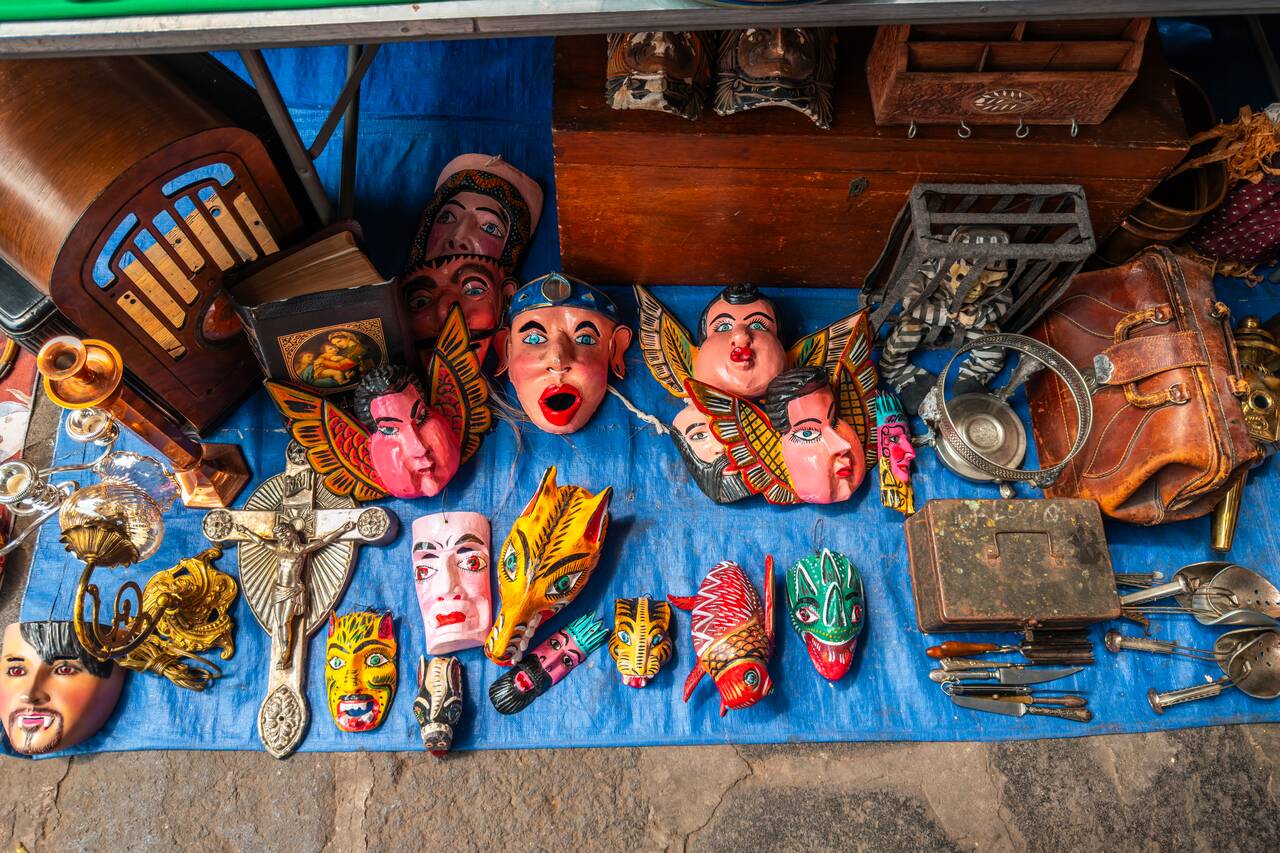
I had an absolute blast browsing through everything here. I wasn't even looking for anything in particular, but I kept finding interesting pieces that I could imagine decorating my home with. At one point, I almost walked away with this beautiful hand-painted jaguar head sculpture for my home in Bangkok. 😂 It was exactly the kind of wonderfully weird souvenir I love finding while traveling. Even though I didn't buy the jaguar head here, I ended up buying one in Cholula anyway, and now it is proudly displayed on the wall of my home. 🤣
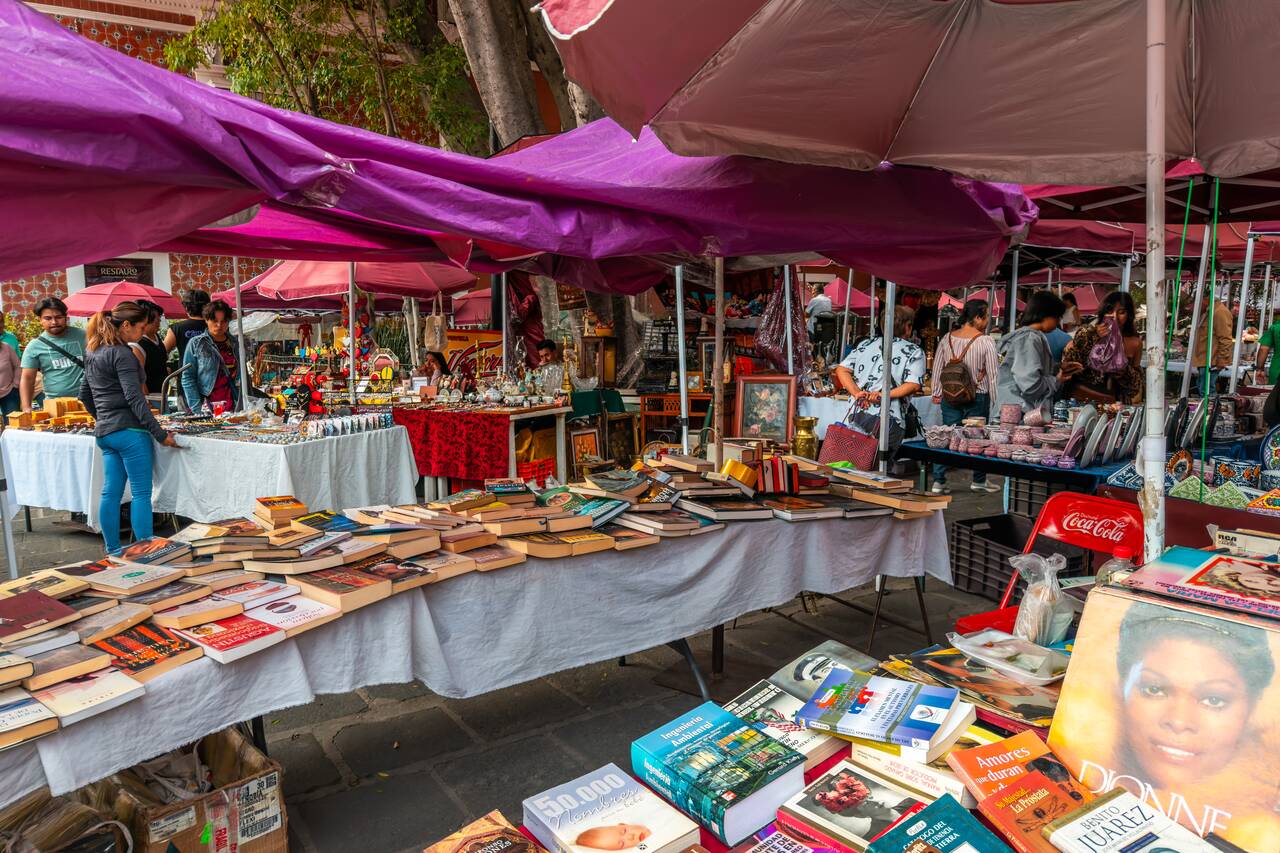
Even if you're not shopping, I'd still recommend coming on a weekend just to see the Callejón come alive. The combination of colorful colonial architecture, antique stalls, art, cafés, and people browsing the market makes it one of the most fun places to wander around Puebla. If you're into vintage décor, art, or quirky souvenirs like me, don't skip this place.
7. Visit the Revolution Museum
- 📍 Location: Museo Regional de la Revolución Mexicana, Casa de los Hermanos Serdán [Map Link]
- 🕐 Opening Hours: Tue-Sun, 10 AM-6 PM
- 💰 Entry Fees: 50 MXN (~3 USD)
- ⚡ Pete's Take: "If you want to learn more about the city's history, it's definitely worth dropping by"
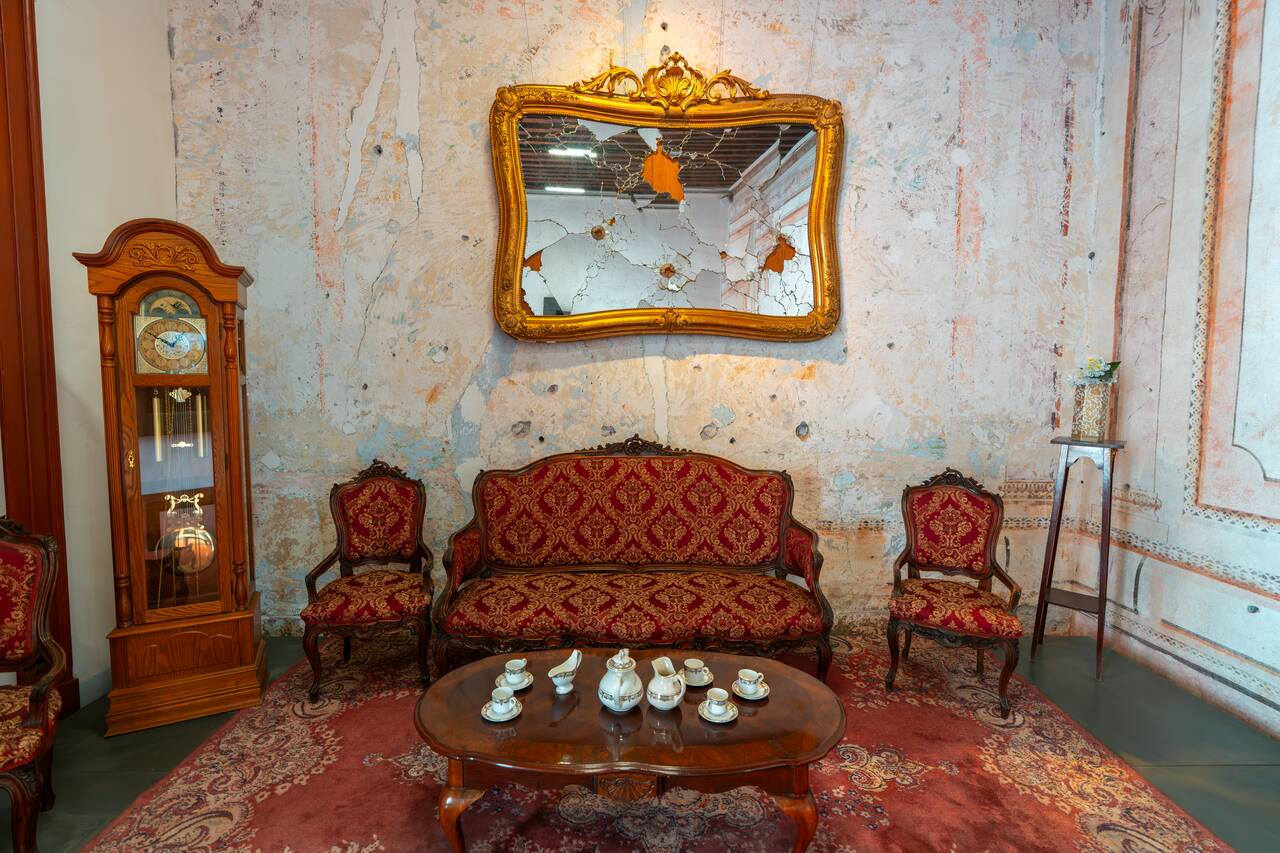
If you're interested in Mexican history, the Museo Regional de la Revolución Mexicana, Casa de los Hermanos Serdán is a fascinating place to visit. The museum is housed in the former home of the Serdán family, whose members played an important role in the early stages of the Mexican Revolution.
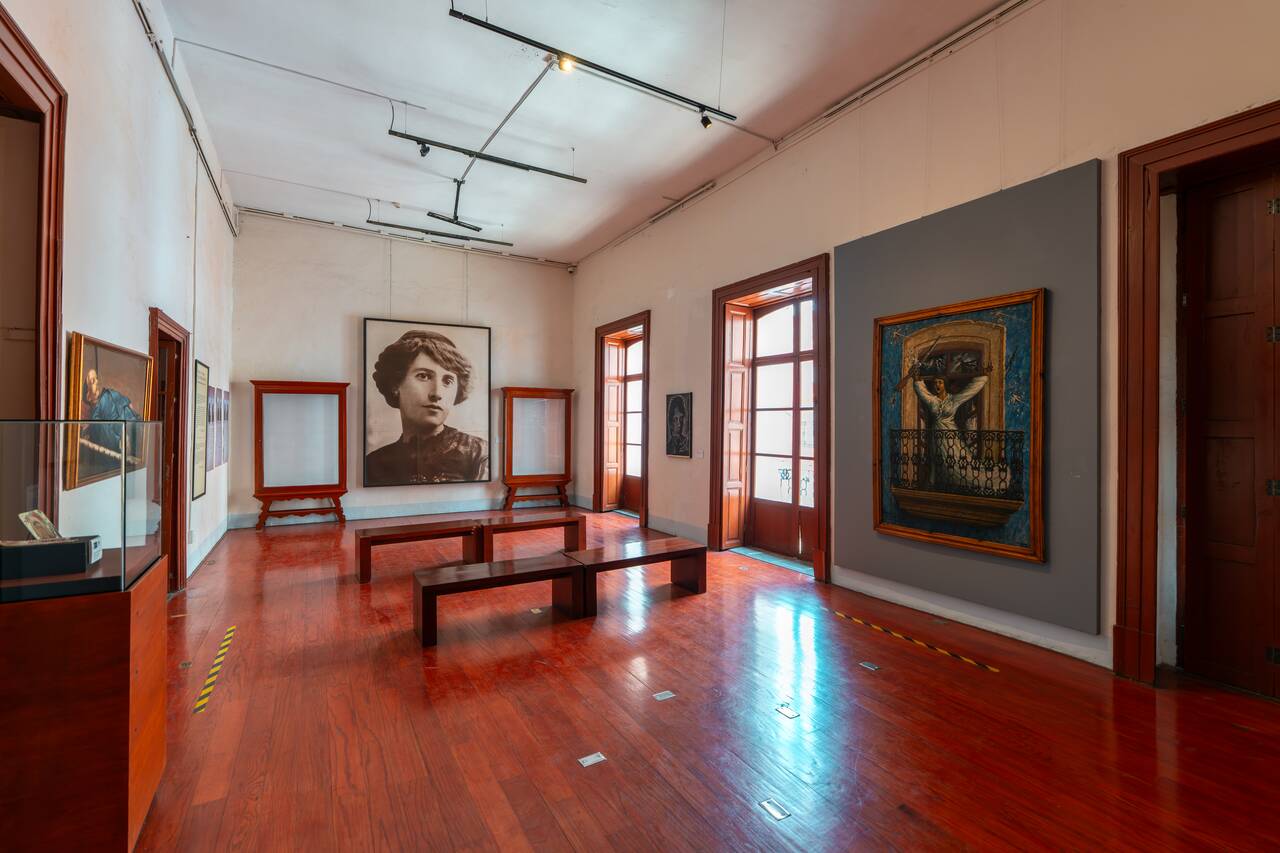
On November 18, 1910, the house became the site of a violent confrontation after authorities discovered that the family was preparing to support Francisco I. Madero's uprising against the dictatorship of Porfirio Díaz. The authorities surrounded the house and a shootout broke out, killing several members of the Serdán family, including Aquiles Serdán.
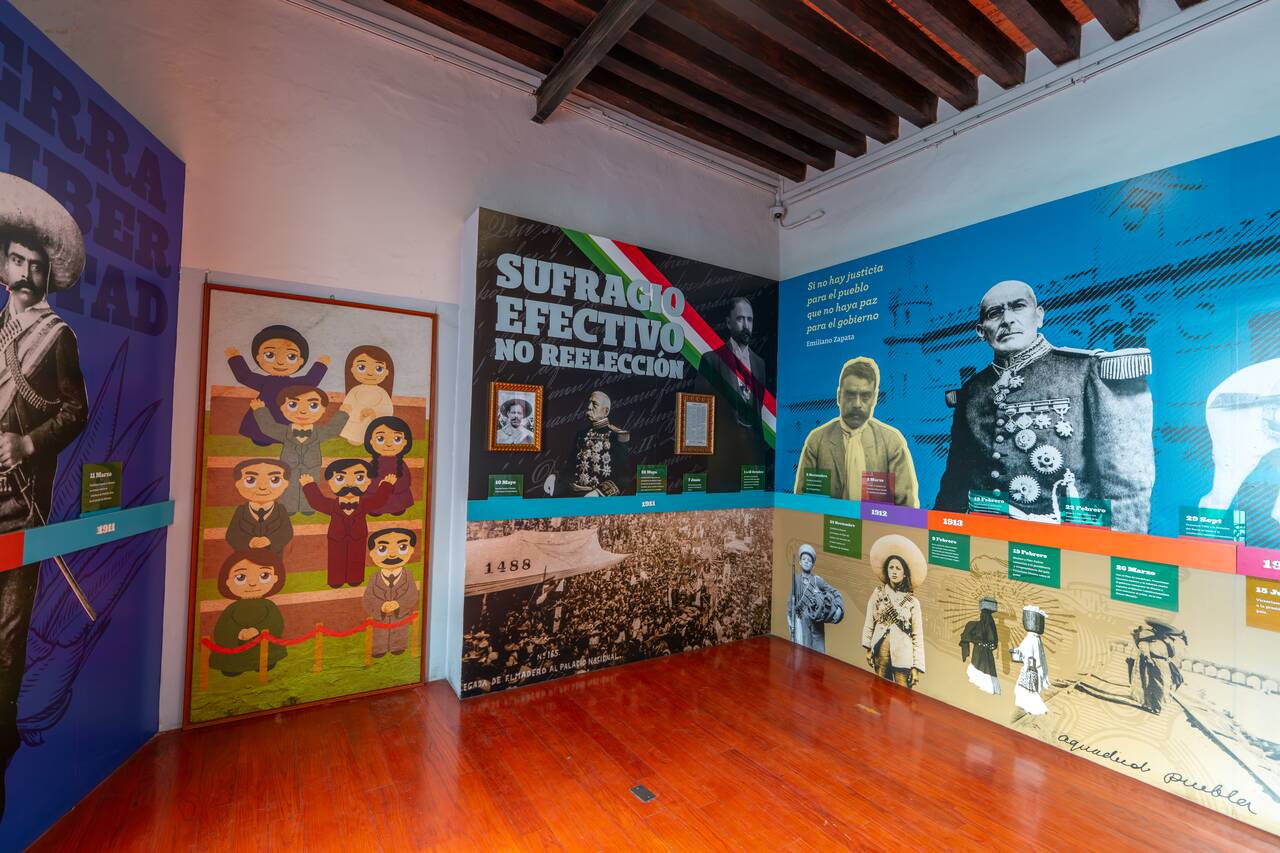
The event is remembered as one of the earliest armed actions of the Mexican Revolution, just two days before the date Madero had called for his nationwide uprising. It is often regarded as one of the key early sparks that helped ignite the Mexican Revolution. Today, the house has been preserved as a museum, with photographs, documents, weapons, and personal belongings telling the story of the family and the events that took place here.
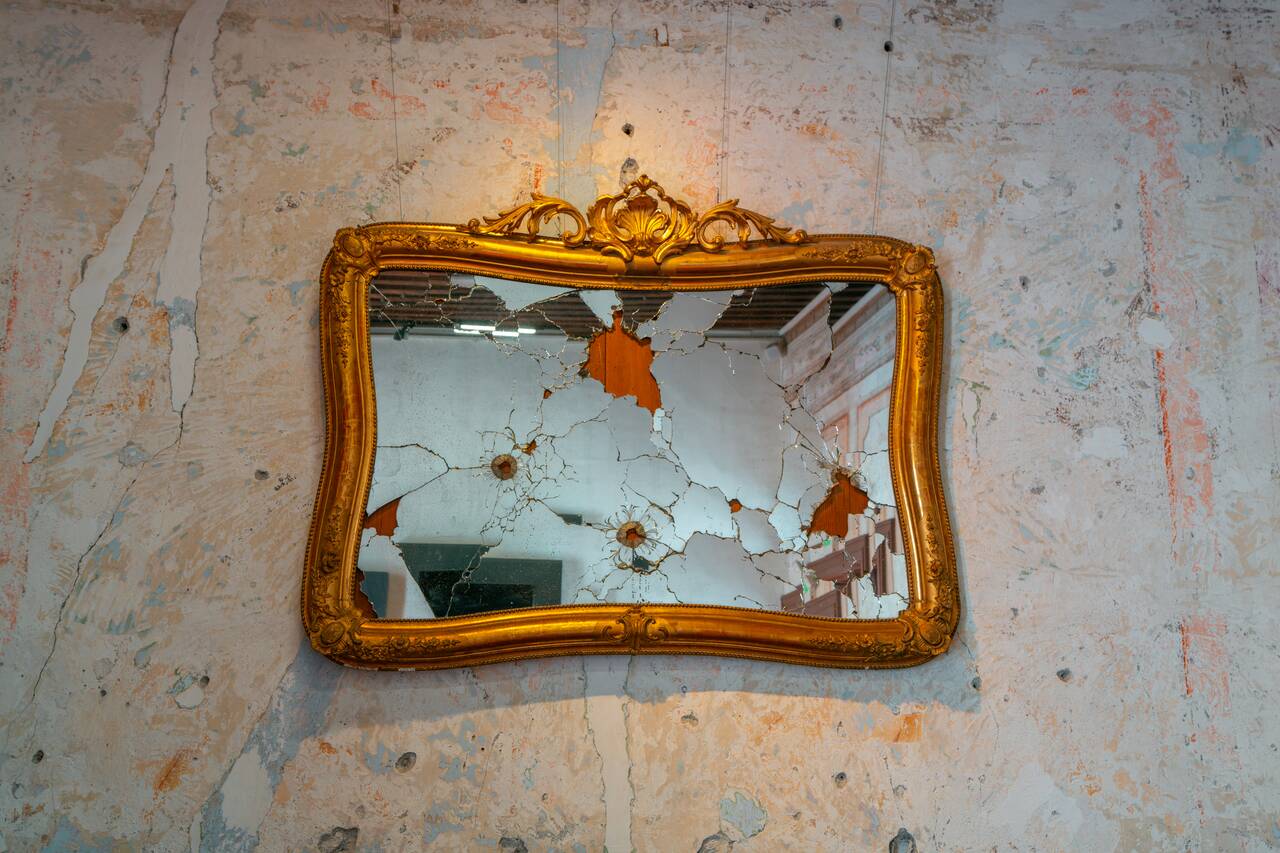
As you walk through the museum, be sure to keep an eye out for the bullet holes in the walls of one of the rooms. They are physical evidence of the shootout that happened here, and the fact that you can still see them today makes for such an immersive way to learn about the history of this city. You can walk through the rooms where the Serdán family lived and imagine what it must have been like when their home suddenly became a battlefield.
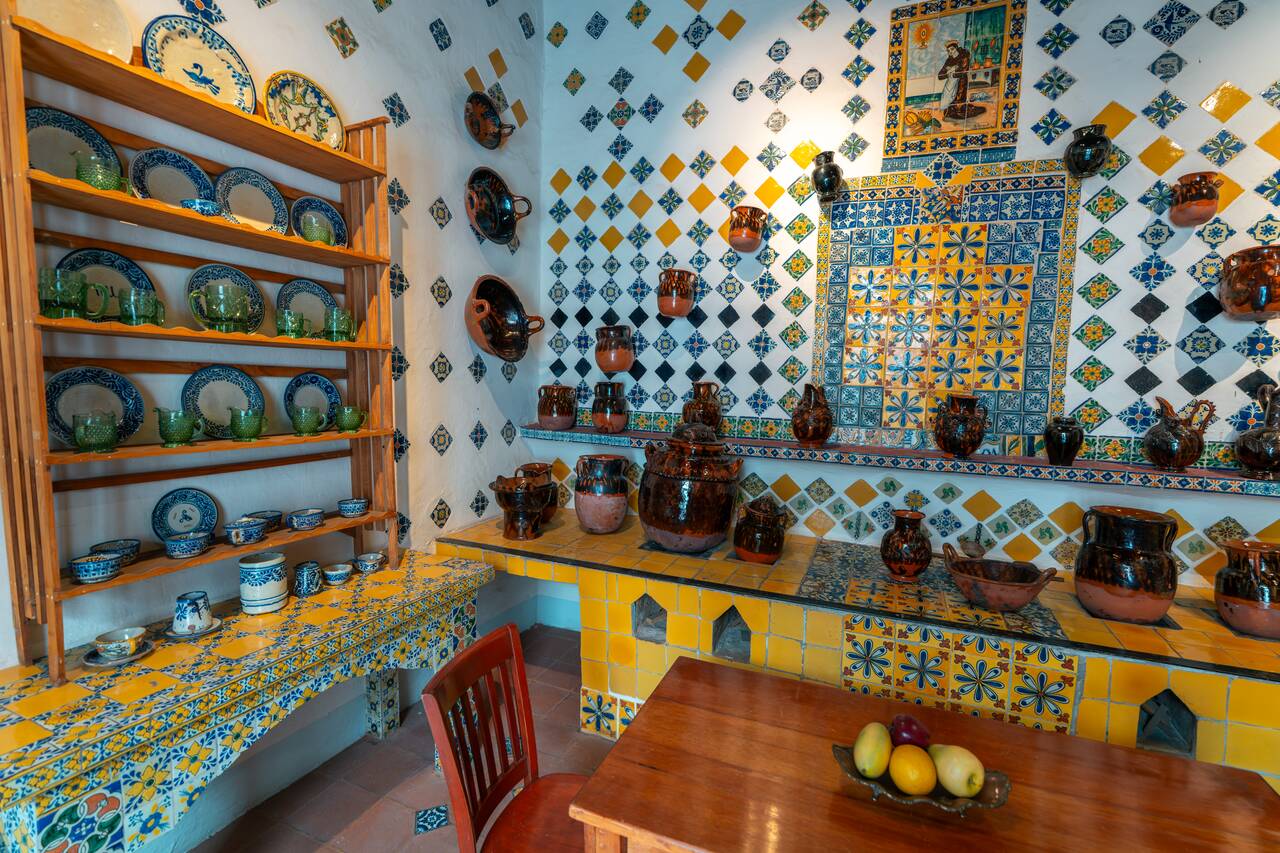
The museum is currently open Tuesday to Sunday, 10 AM to 5 PM from Tuesday to Thursday and 10 AM to 6 PM from Friday to Sunday. Entry is 50 MXN for general admission.
8. Stroll Around Biblioteca Palafoxiana
- 📍 Location: Biblioteca Palafoxiana [Map Link]
- 🕐 Opening Hours: 10 AM - 5 PM
- 💰 Entry Fees: 40 MXN (~2 USD)
- ⚡ Pete's Take: "If you love libraries, it's worth the 40 MXN entry, but skip Mondays when it's closed."
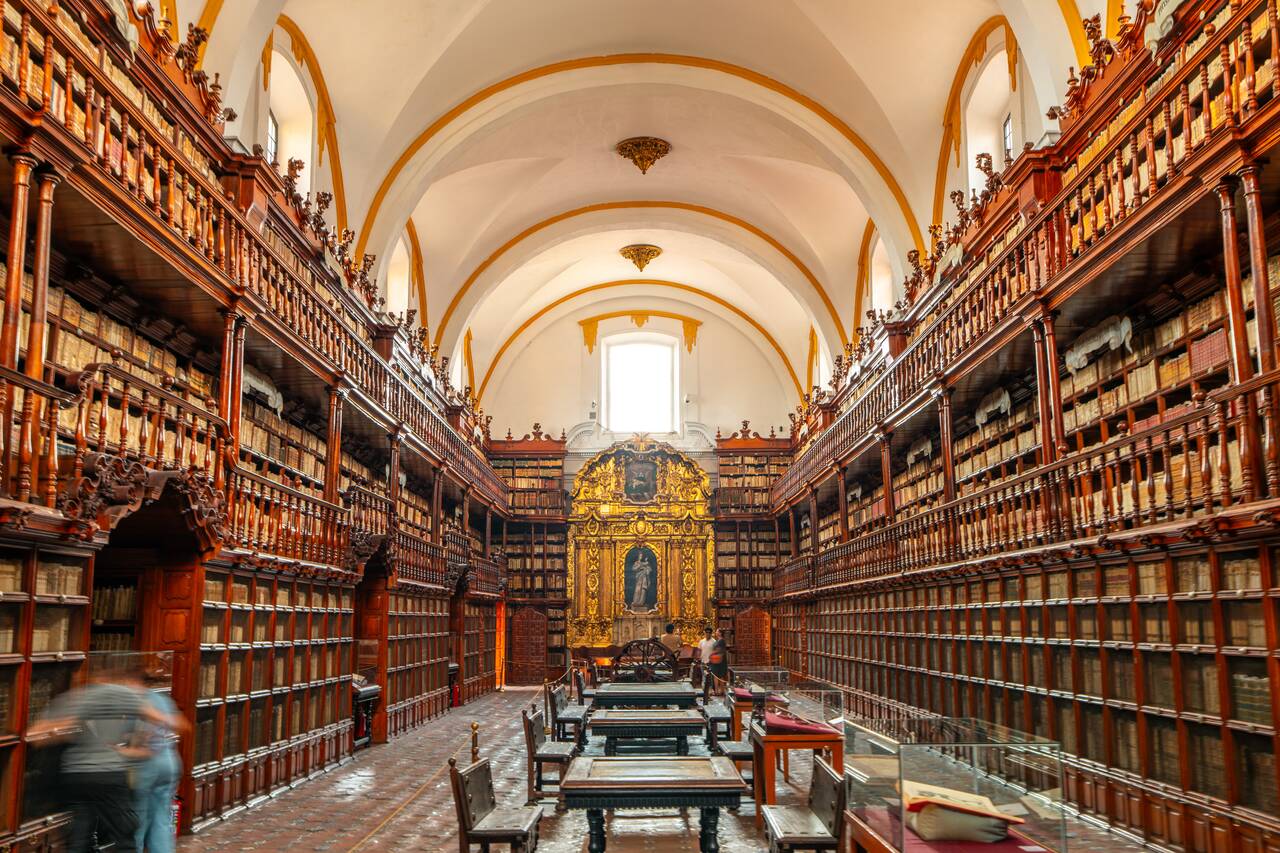
If you love historic libraries as much as I do, don't miss the Biblioteca Palafoxiana, one of the most beautiful libraries in Puebla. Founded in 1646 by Bishop Juan de Palafox y Mendoza, it is considered the first public library in the Americas, created when Palafox donated his personal collection of more than 5,000 books to the city.
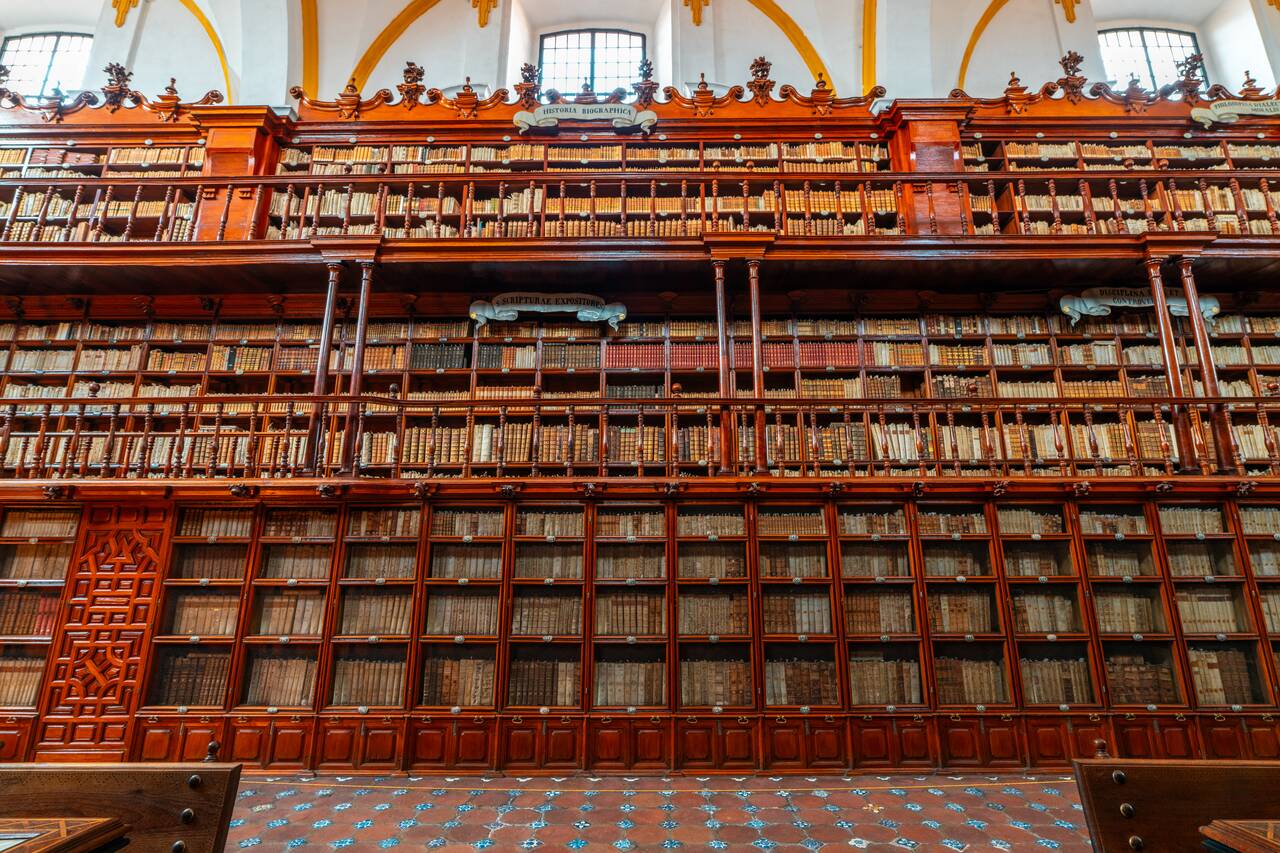
The library is housed inside the historic Colegio de San Juan and is absolutely stunning. The room is lined from floor to ceiling with wooden bookshelves filled with thousands of old books, while the center is dominated by long wooden tables and a beautiful carved lectern.
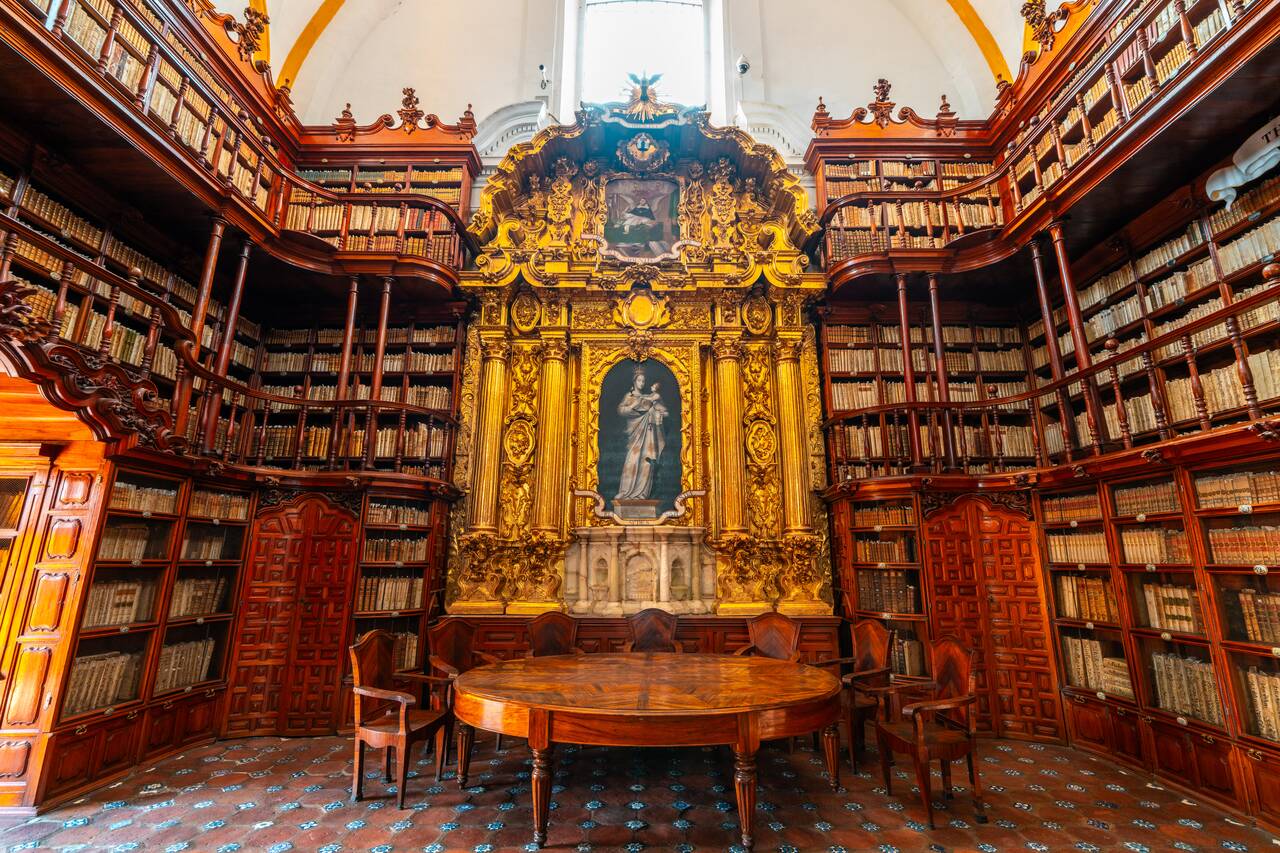
The library was declared a UNESCO Memory of the World site in 2005 in recognition of its historic collection. You can drop by for a quick stroll around the library as you explore Puebla's historic center. The place is open from 10 AM to 5 PM every day except Mondays, and entry costs 40 MXN (~2 USD).
9. Explore Museo Amparo
- 📍 Location: Museo Amparo [Map Link]
- 🕐 Opening Hours: 10 AM - 6 PM
- 💰 Entry Fees: 85 MXN (~5 USD)
- ⚡ Pete's Take: "Allow 1.5 to 2 hours to explore the permanent collection; it's worth the 85 MXN admission fee."
If you're into art and history, be sure to make time for Museo Amparo, one of Puebla's most impressive museums. The museum houses a massive collection spanning pre-Hispanic, Viceregal, 19th-century, modern, and contemporary Mexican art, so there is a lot to see here. The permanent collection alone covers everything from ancient sculptures and ceramics to religious artwork and contemporary pieces.
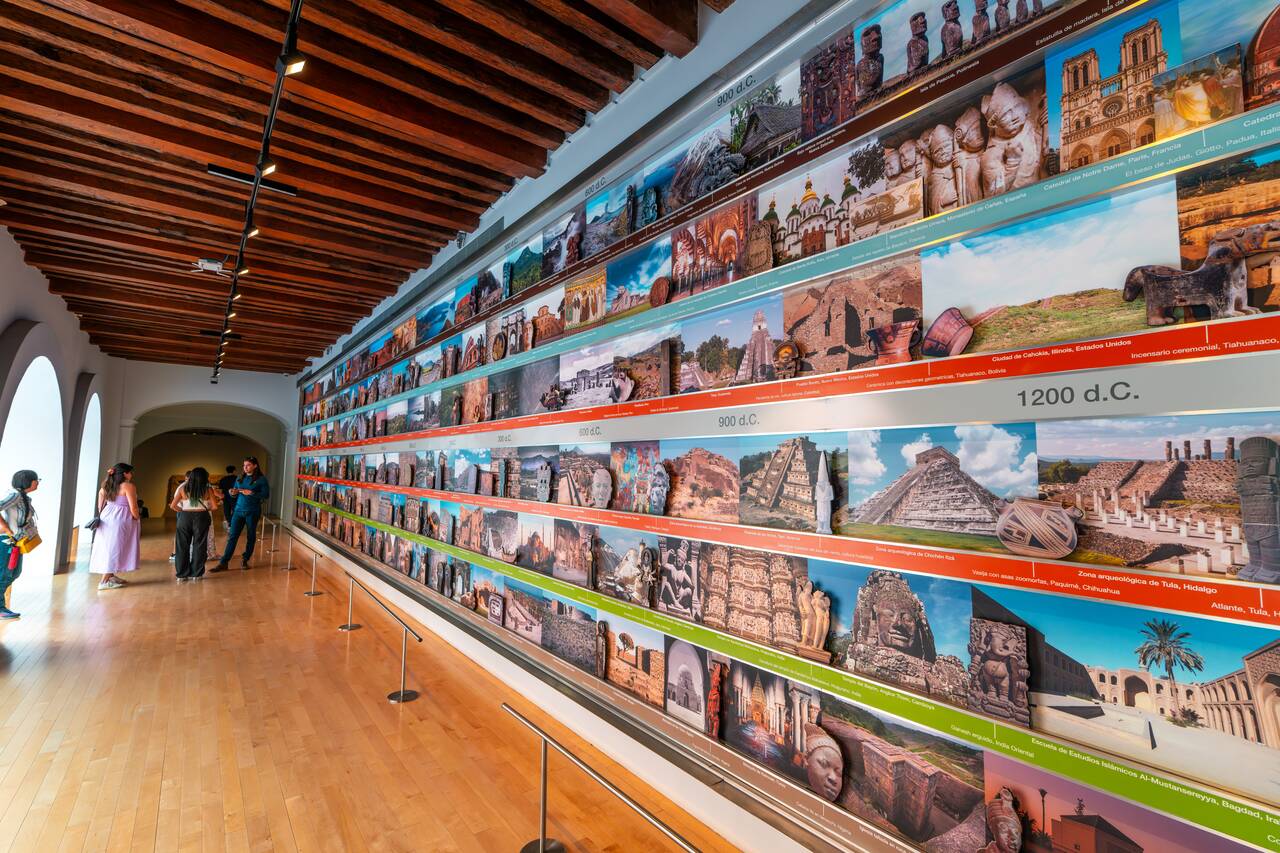
Because of the sheer amount of artwork on display, don't expect to breeze through it in 30 minutes. I recommend allowing around 1.5–2 hours to see the permanent collections, while the temporary exhibitions can add another 30 minutes or more depending on how much time you spend looking around.
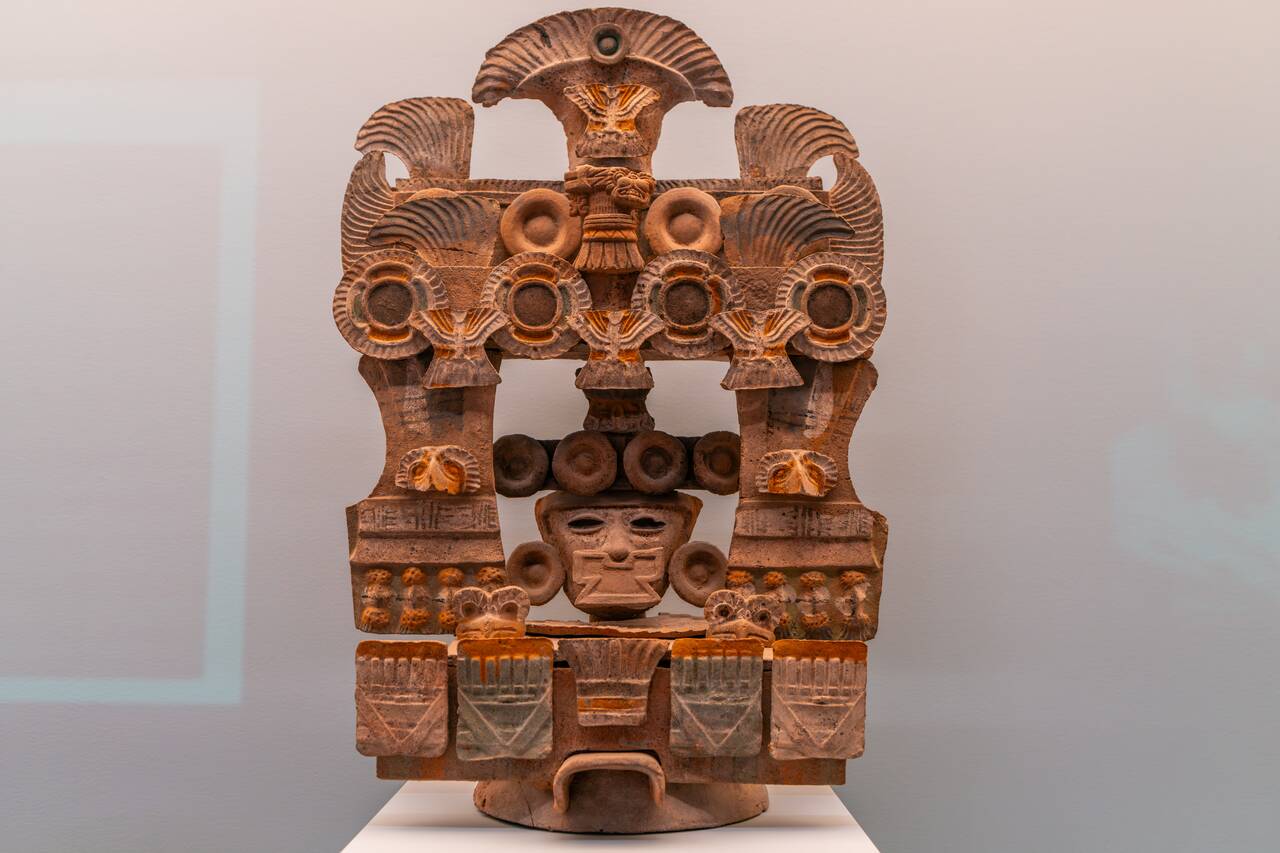
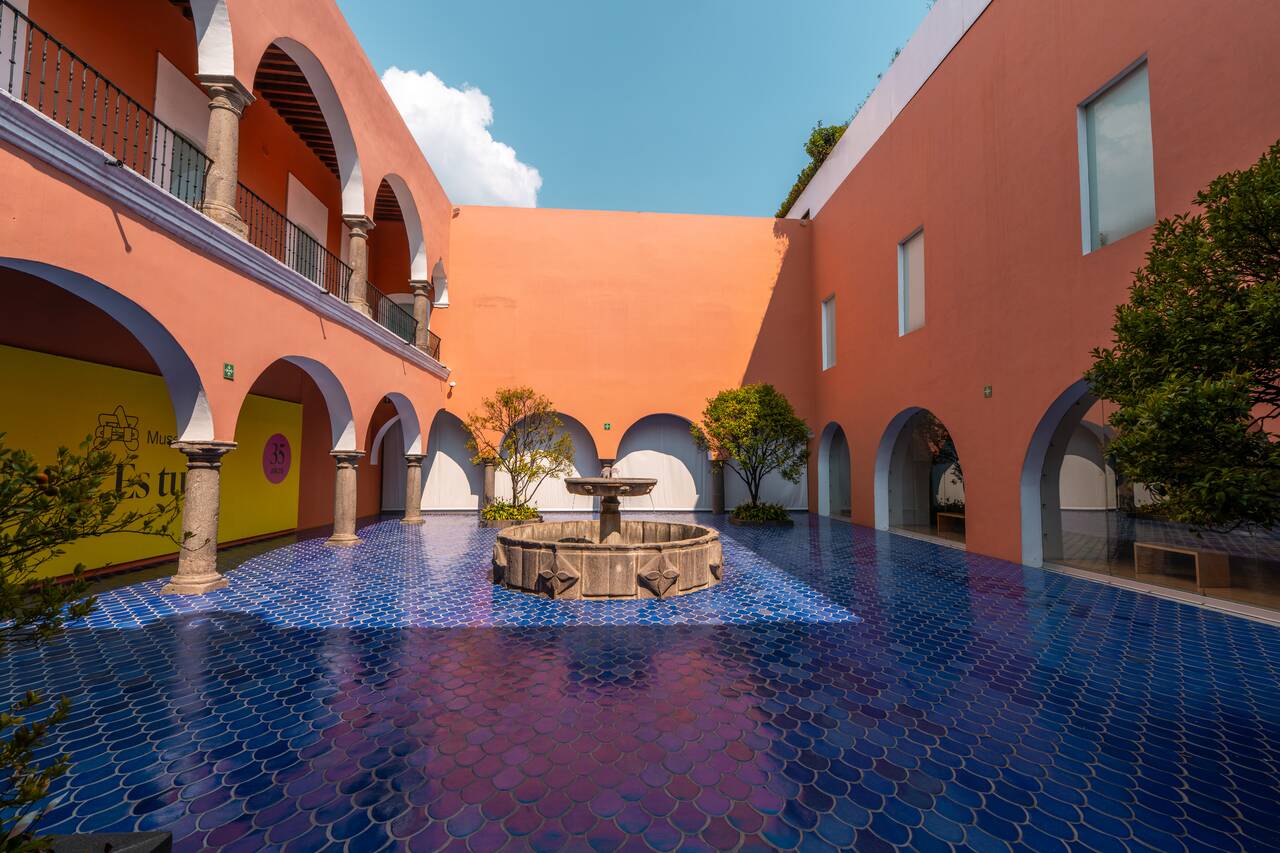
The museum is also housed in a beautiful collection of historic buildings in the heart of Puebla's historic center. I especially loved its beautifully painted pastel pink courtyard with blue tiles. I've never seen this combination of colors used in a building's décor before, and somehow, it works beautifully!
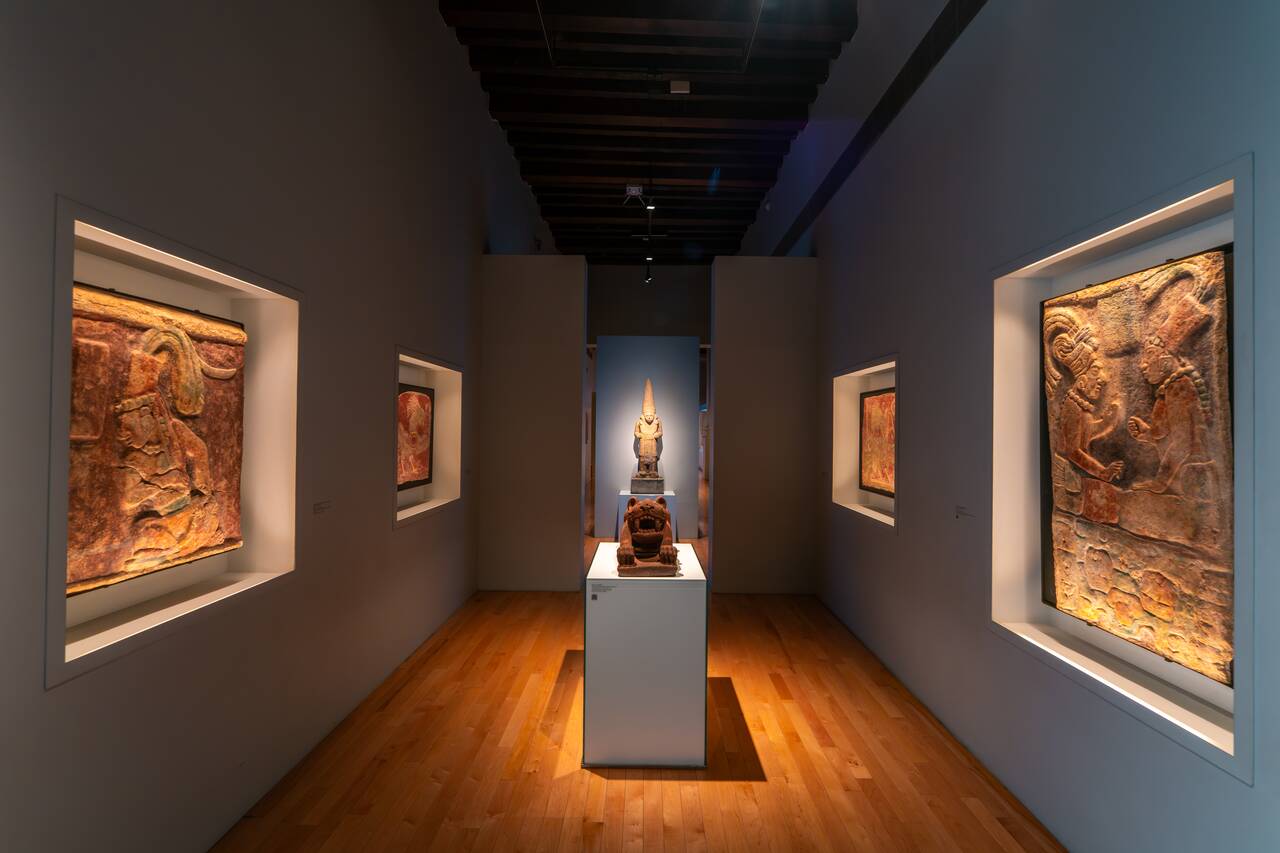
Museo Amparo is open from 10 AM to 6 PM Wednesday to Monday and is closed on Tuesdays. General admission is 85 MXN (5 USD), although admission is free on Sundays and public holidays.
10. Spend a Day at Cholula
- 📍 Location: Cholula [Map Link]
- 💰 Entry Fees: 10 MXN (~0.6 USD)
- 🏄 Tour: guided tour to Cholula from Puebla here
- ⚡ Pete's Take: "Dedicate a full day to exploring Cholula rather than just stopping by the pyramid."
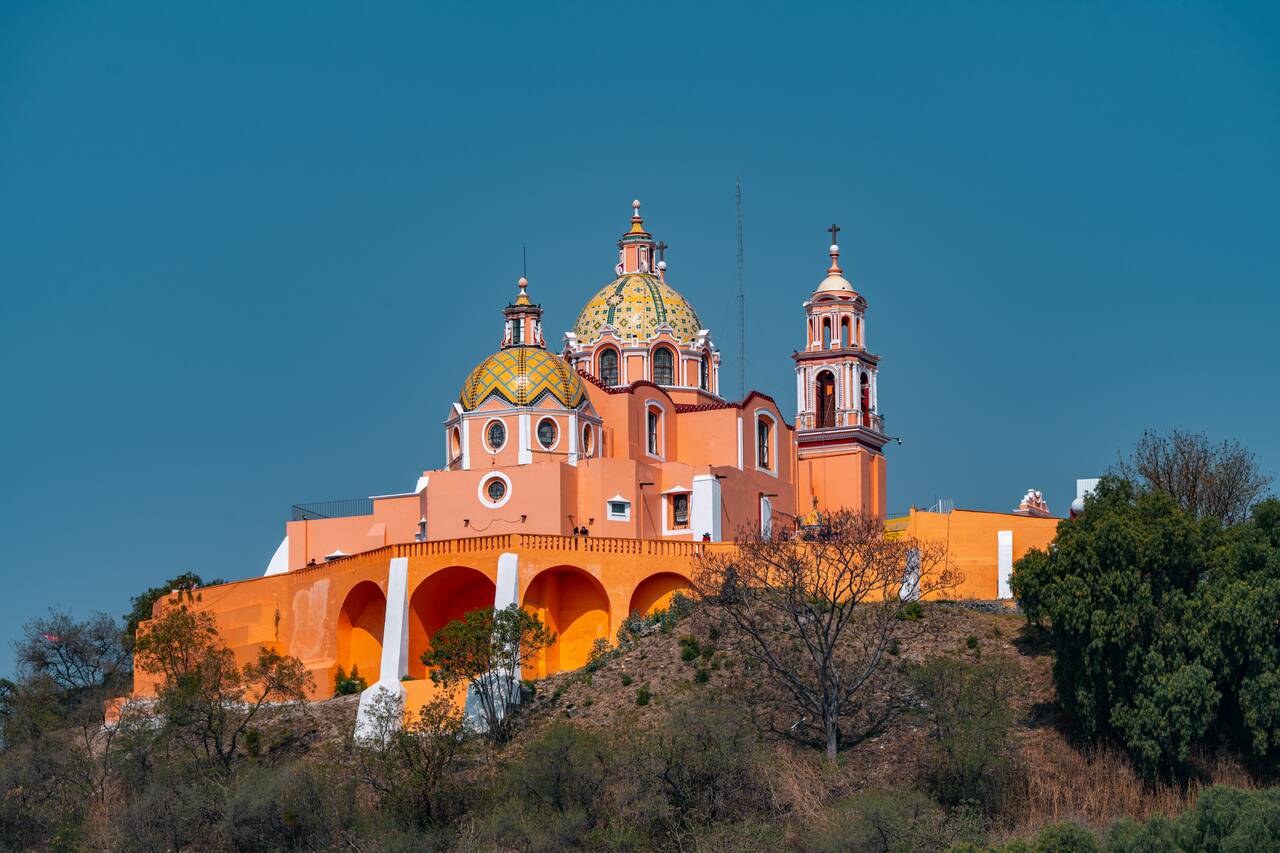
One of the best day trips you can take from Puebla is to Cholula, a colorful and historic town famous for its enormous pyramid, beautiful churches, lively plazas, and incredible views of the surrounding volcanoes. I highly recommend dedicating a full day to exploring it rather than just stopping by the pyramid, as there is plenty to see and the town itself is a big part of the experience.
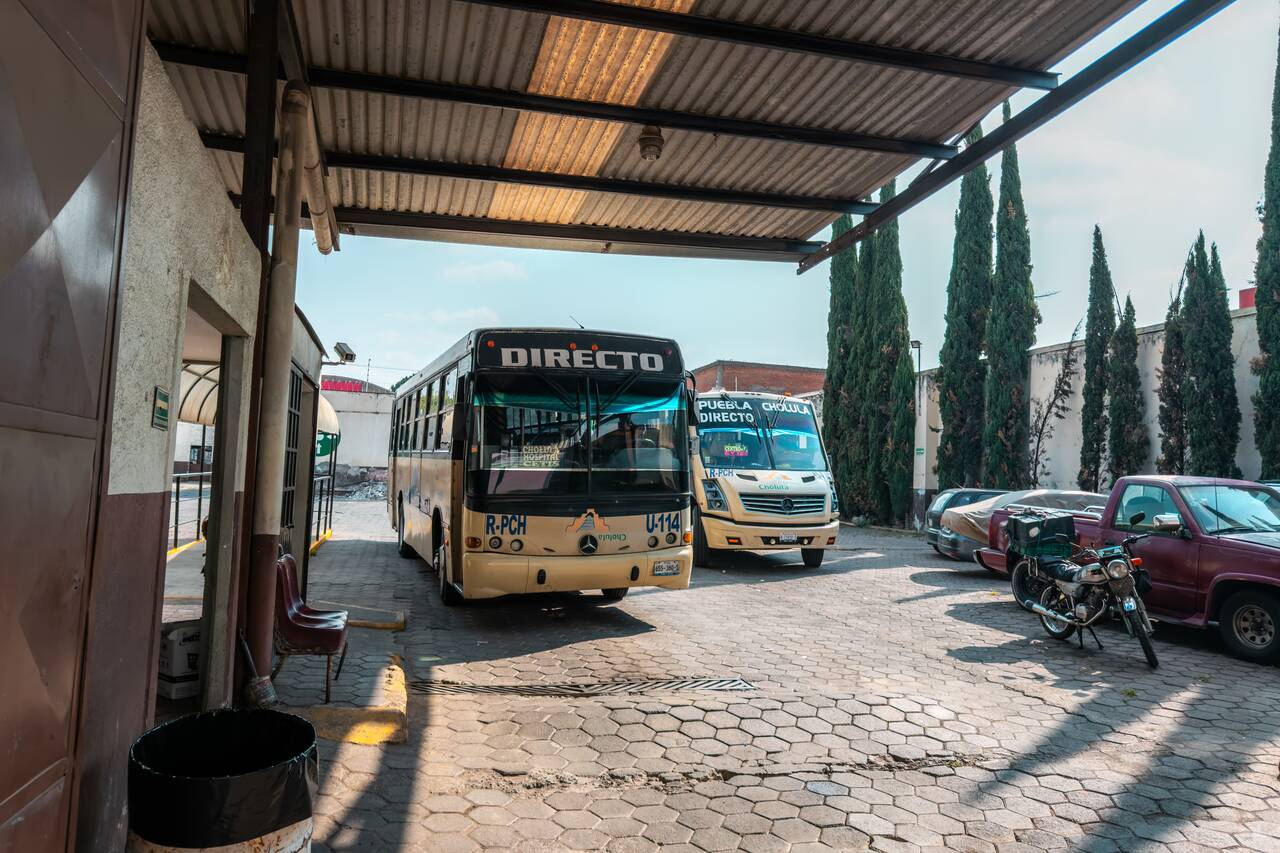
To get there from Puebla, you can easily take the local bus by heading to Autobuses Puebla - Cholula y Anexas in Puebla in the morning, and catch the one leaving around 9 AM. They do run every 15 minutes during daylight hours, so you shouldn't have to wait long.
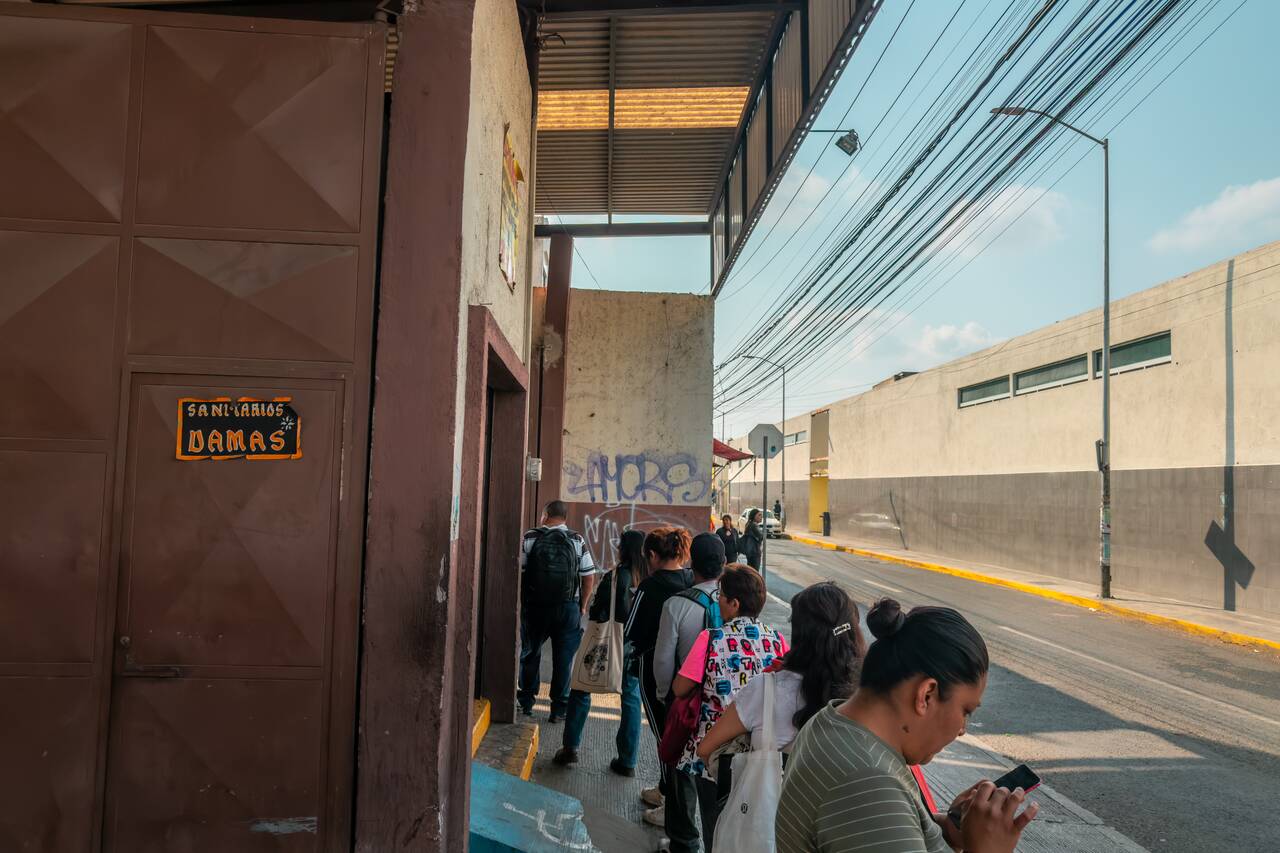
There will be a queue going out of the platform, so that's where you should line up. Once you get on the bus, you will have to pay the bus driver in cash of 10 MXN (0.5 USD) one way. The journey will take between 30 - 45 minutes, depending on the traffic.
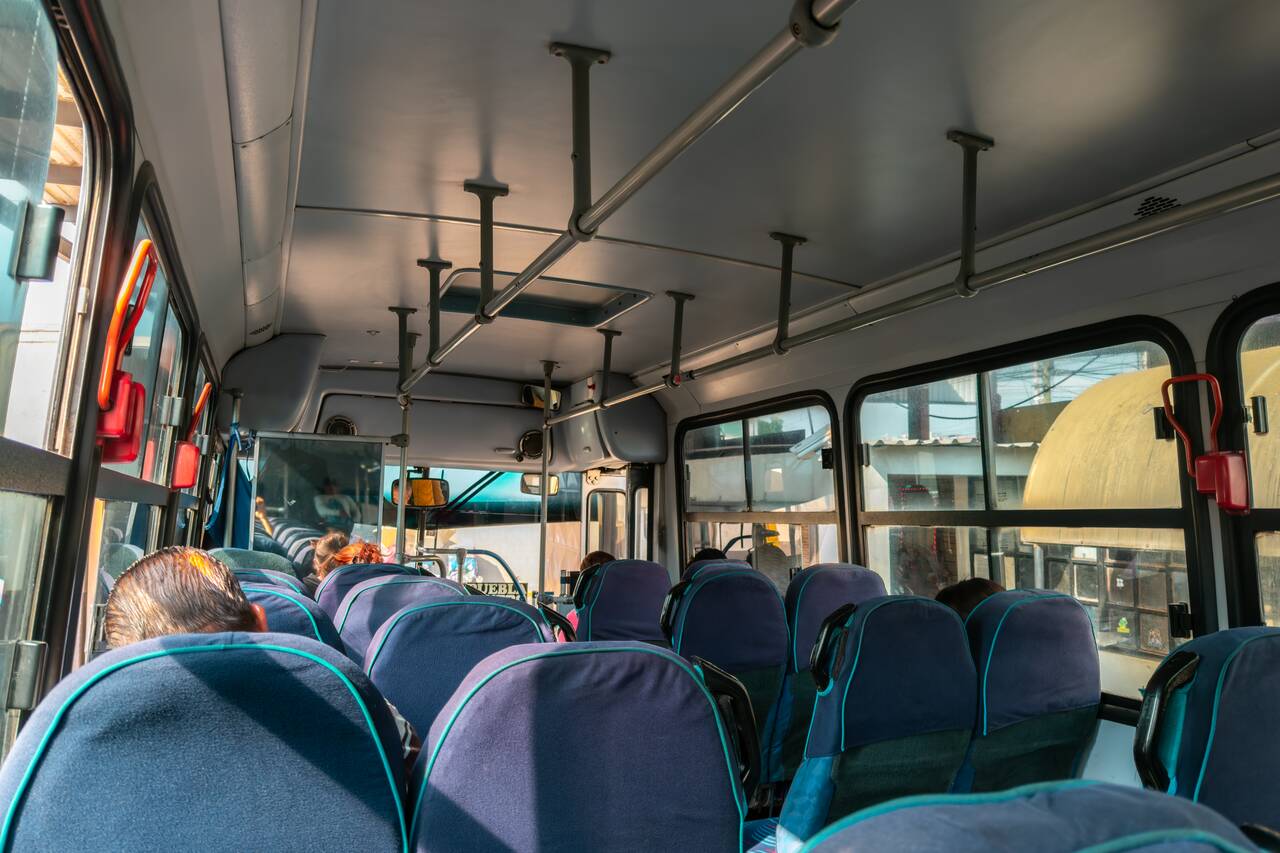
This is a regular local service, so don't expect a fancy tourist bus, but it's straightforward and incredibly cheap. If you don't want to deal with the logistics or you prefer a guided tour, you can check out the guided tour to Cholula from Puebla here.
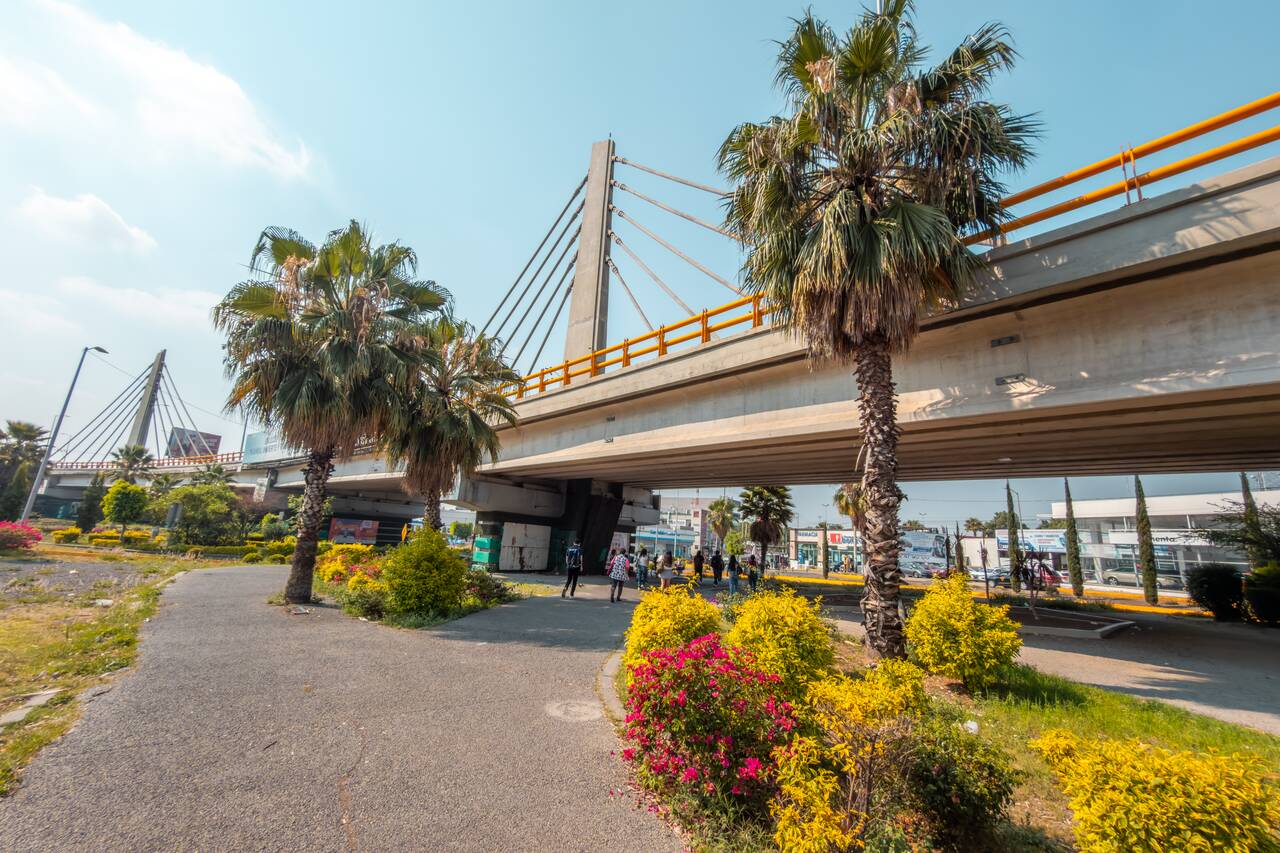
If you take the public transportation as I did, one important thing is knowing where to get off. I recommend getting off at this roundabout, which puts you within easy walking distance of Cholula's historic center and the pyramid area.
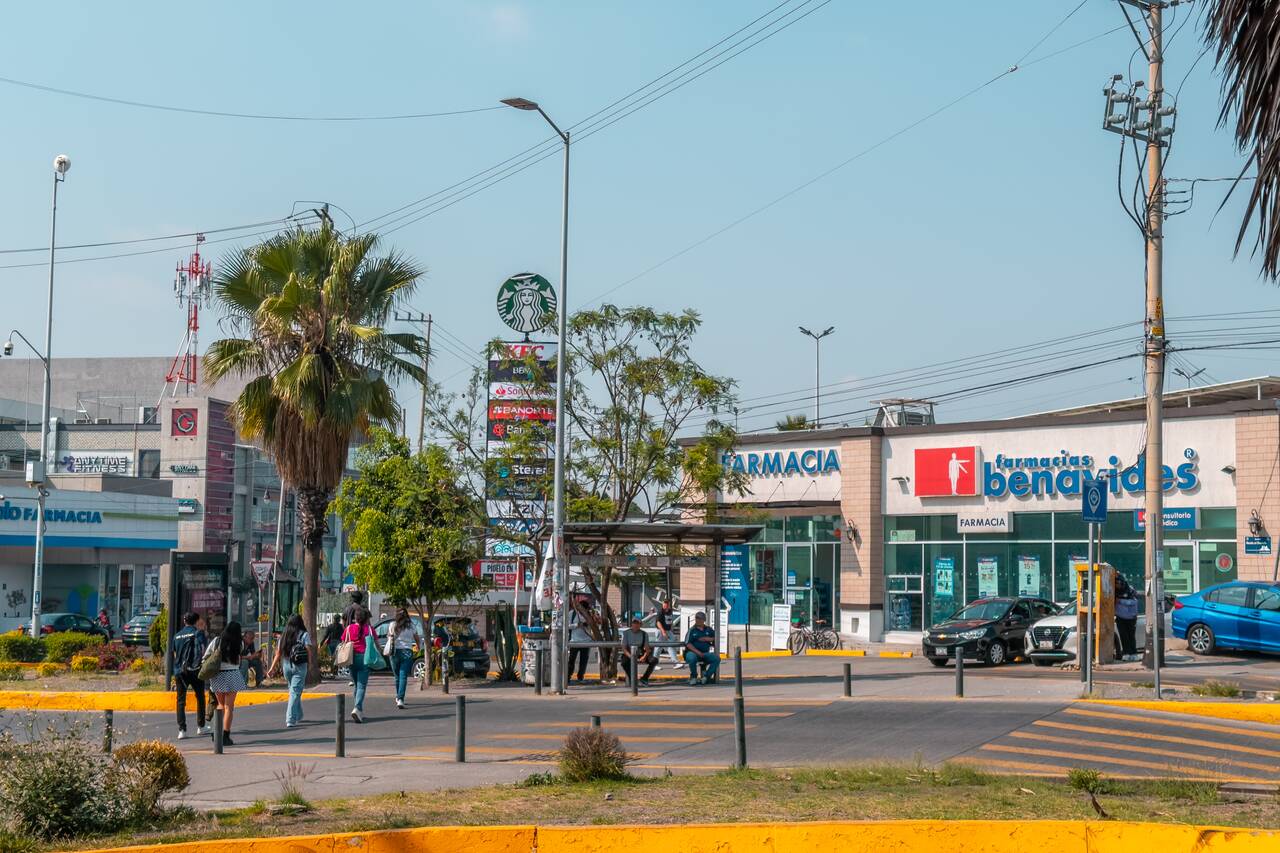
From there, you can simply walk toward the center and start exploring on foot. For the journey back to Puebla, cross to the other side of the road and catch the bus from this bus stop. Make sure you're taking a bus heading toward Puebla rather than one continuing farther into Cholula or the surrounding towns. If you're unsure, simply ask the driver "Puebla?" before boarding.
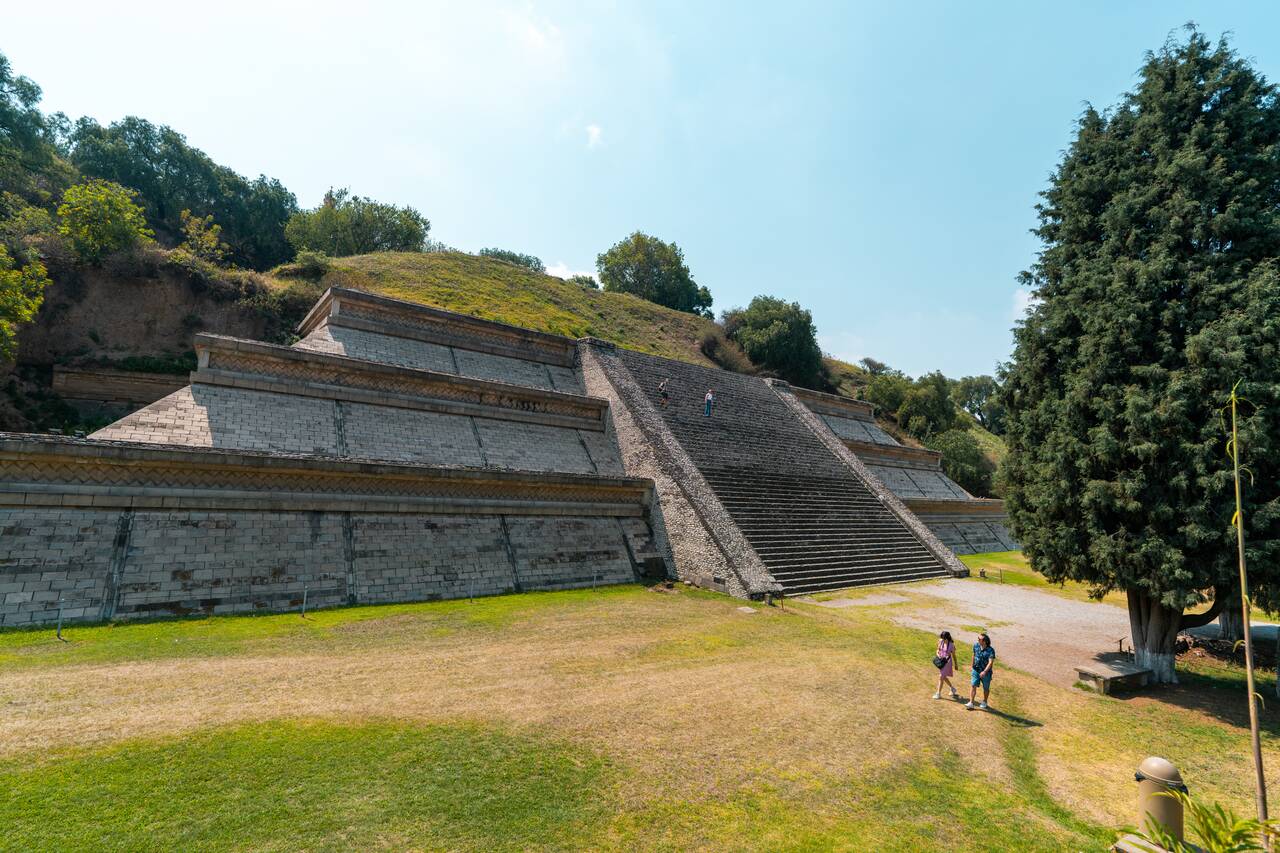
Once you're in Cholula, these are the highlights I'd recommend fitting into your day: Great Pyramid of Cholula: Explore the enormous archaeological complex and climb up toward the church on top for the famous views.
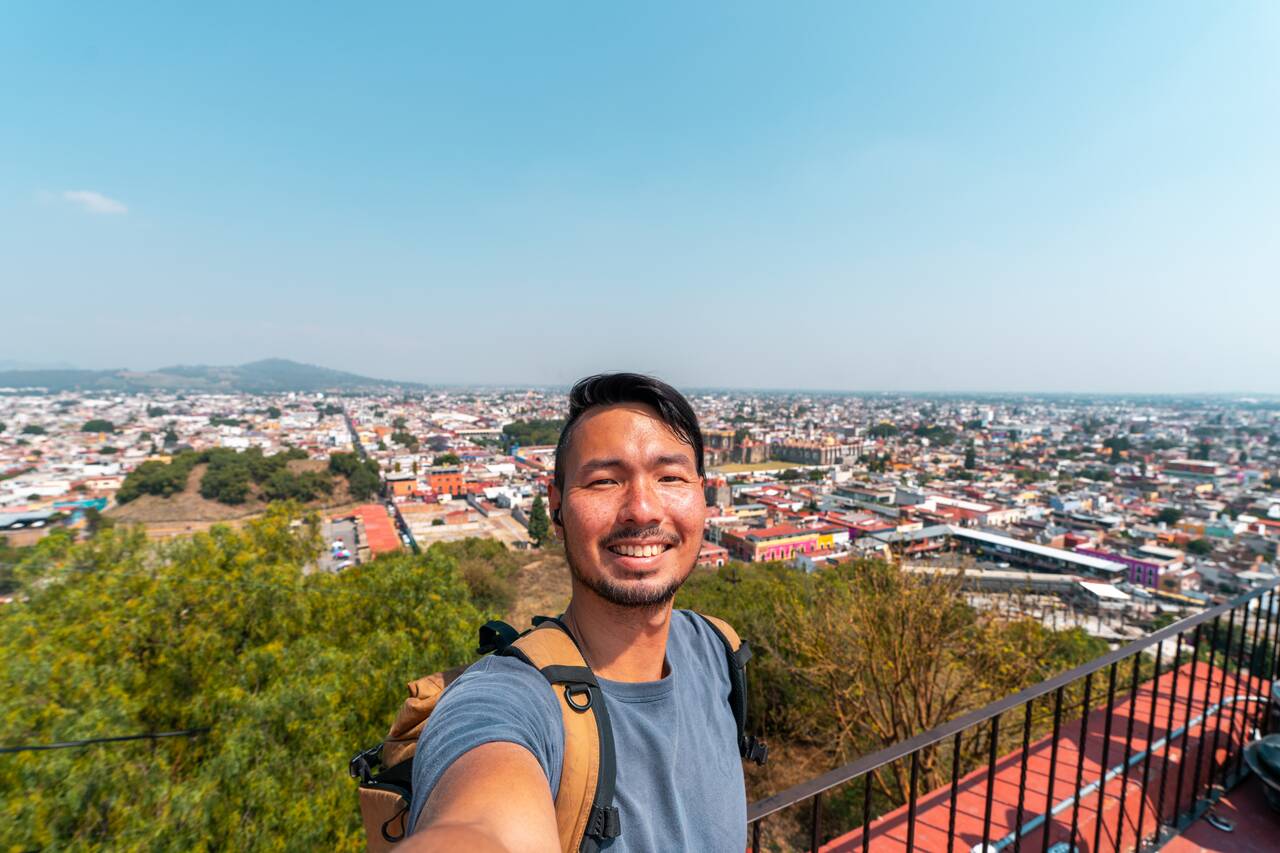
Iglesia de Nuestra Señora de los Remedios: Visit the beautiful yellow church sitting dramatically on top of the pyramid. Enjoy the view of Cholula from up there.
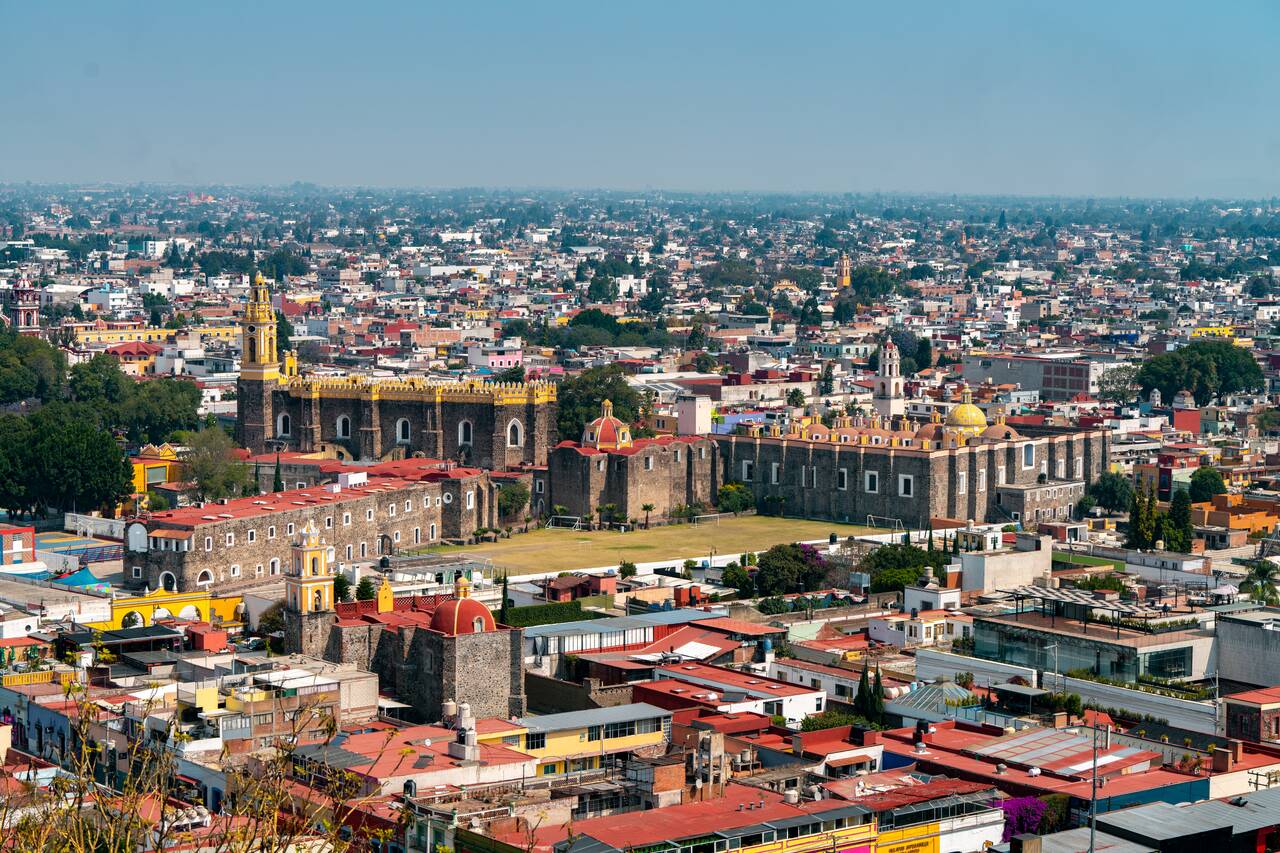
Cholula Historic Center: Wander around the colorful streets, colonial buildings, plazas, and countless churches.
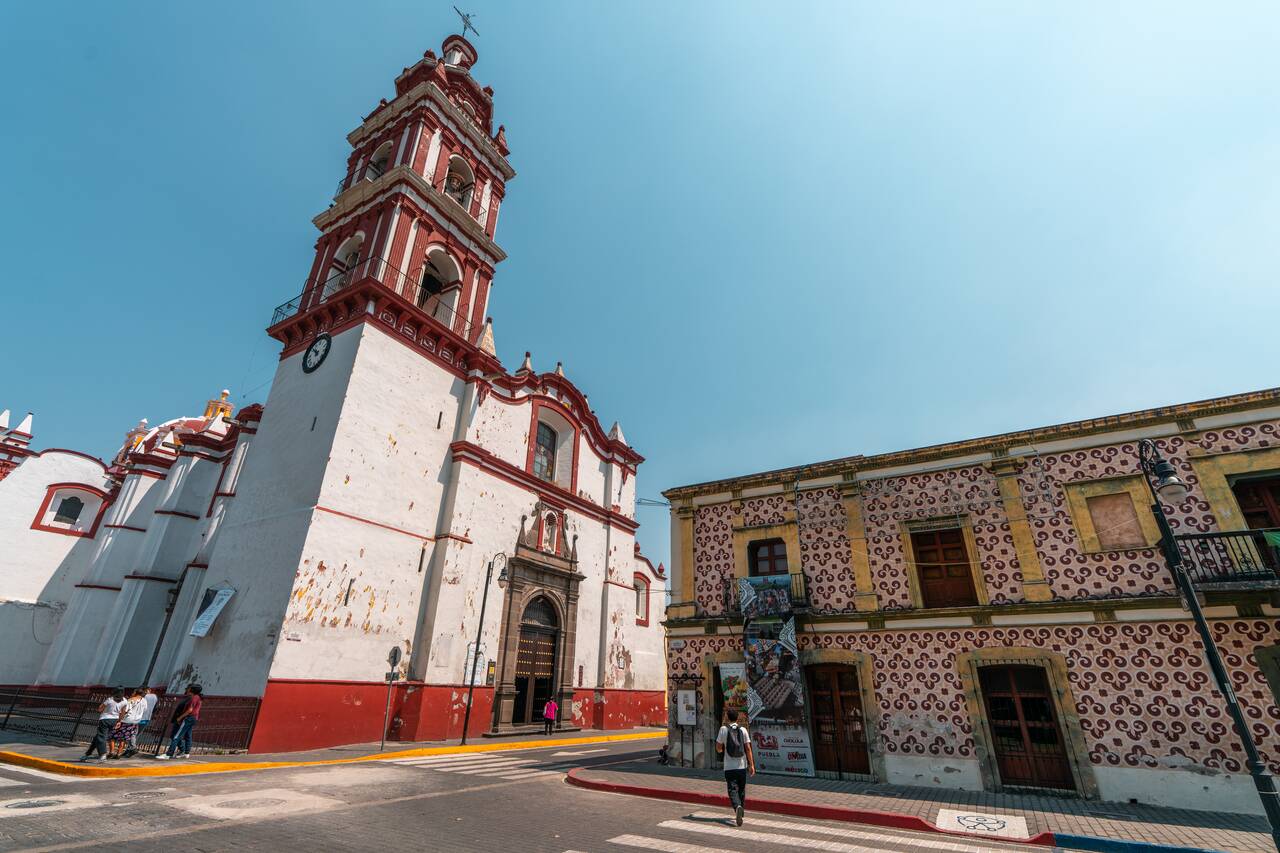
Plaza de la Concordia: Stop by the main square to sit, people-watch, and take a break at its beautiful green space.
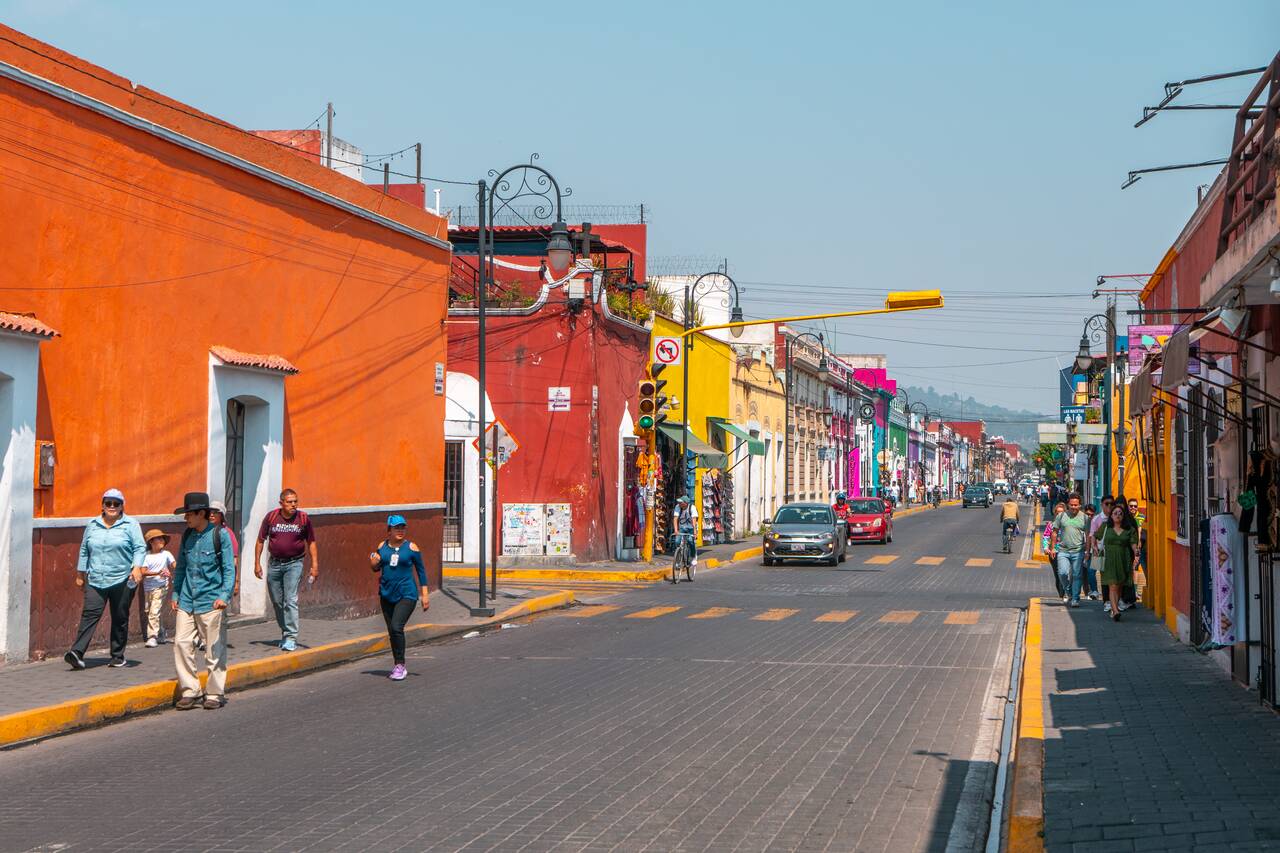
Artisan and souvenir shops along Av Morelos: This is where I ended up finding some of the colorful pieces I brought back to decorate my home in Bangkok, including, eventually, the jaguar head sculpture I nearly bought in Puebla! 😂
When to Visit Puebla?
The best time to visit Puebla is generally between October and April, when the weather is cooler, drier, and much more comfortable for walking around the historic center. Puebla sits at around 2,100 meters above sea level, so temperatures are noticeably milder than in many other parts of Mexico, especially in the mornings and evenings.
The rainy season runs roughly from May to October, with the heaviest rain typically falling in the afternoon. You can still visit during these months, and the mornings can be beautiful, but you'll want to plan your sightseeing around the weather. The upside is that the surrounding landscape becomes much greener, and you'll generally encounter fewer tourists.
If you're interested in experiencing Puebla's biggest celebrations, Cinco de Mayo on May 5 is particularly significant here because Puebla was the site of the Mexican victory over the French at the Battle of Puebla in 1862. The city holds commemorations and festivities around the date, but expect larger crowds and busier accommodation during this period.
I was here around the beginning of May, and the city was gearing up for a week-long celebration, with live band performances happening all over Zócalo de Puebla and beyond. It was really lively, with lots of fun events happening throughout the city. The weather was great too, with no rain and sunny days throughout my stay. I highly recommend visiting around the beginning of May.
How to Get to Puebla?
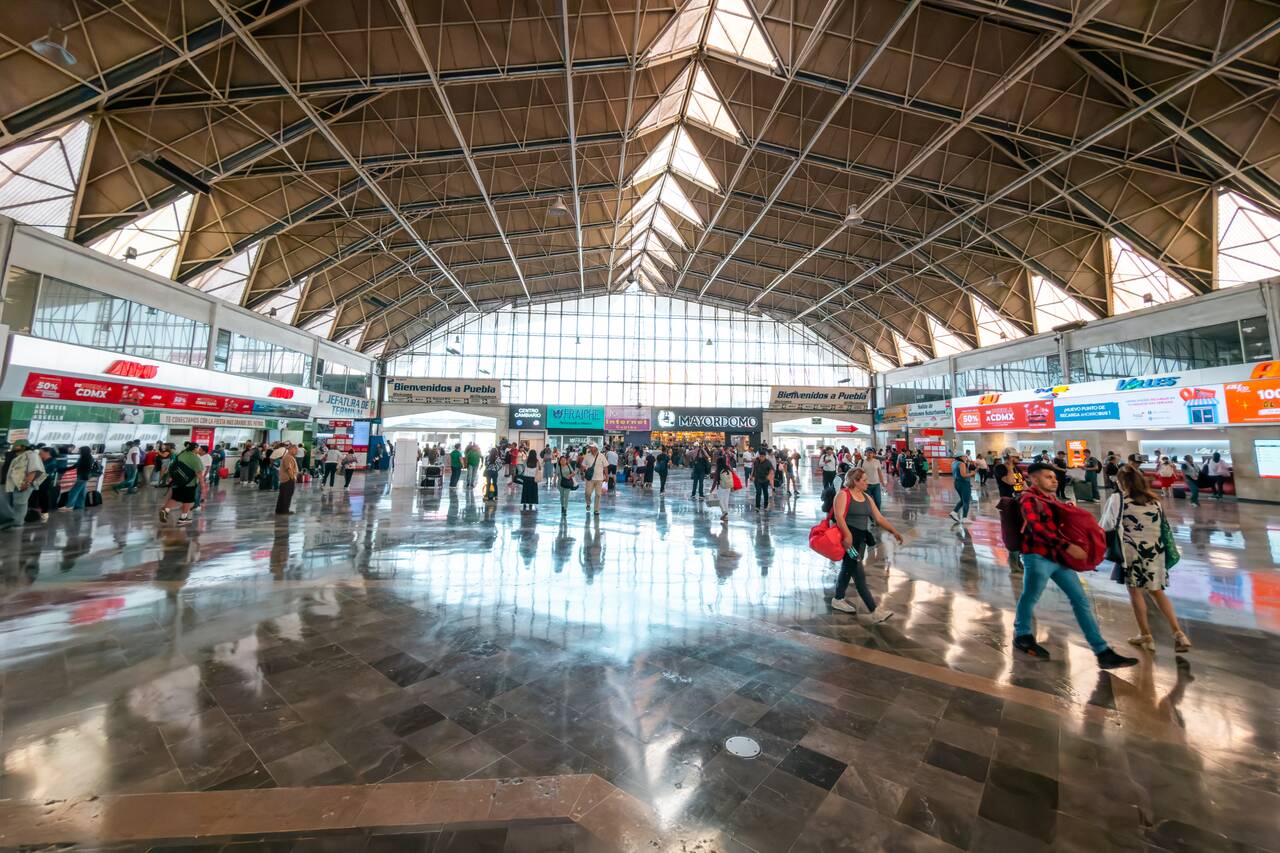
By Bus: If you're coming from Mexico City, taking a bus is by far the easiest option. Buses run frequently from Mexico City's TAPO bus terminal to CAPU bus terminal in Puebla, with the journey usually taking around 2–2.5 hours depending on traffic. You can book the bus here. From CAPU bus terminal, you can easily take an Uber to your accommodation in town in about 20 minutes.
By Plane: Puebla is served by Hermanos Serdán International Airport (PBC), located roughly 30 km northwest of the city center. The airport has domestic and limited international connections, but flight options are much more limited than those at Mexico City's airport. Unless you find a convenient direct flight, I would recommend flying into Mexico City and taking a bus to Puebla instead.
From Oaxaca: If you're traveling through southern Mexico, you can also reach Puebla directly from Oaxaca by long-distance bus. The journey takes roughly 4.5–6 hours, depending on traffic. I took this route myself, and it took me about 6 hours on an ADO bus, which was comfortable and reliable as always. I've never had a problem with ADO. You can book the bus here.
By Car: Puebla is connected to Mexico City by a major toll highway, so you should be able to easily drive between the two cities. However, if you're only visiting Puebla, I wouldn't recommend renting a car. The historic center is very walkable, and buses, taxis, and ride-hailing apps make getting around without a car much easier. If you insist, you can rent the car here.
How to get Around Puebla?
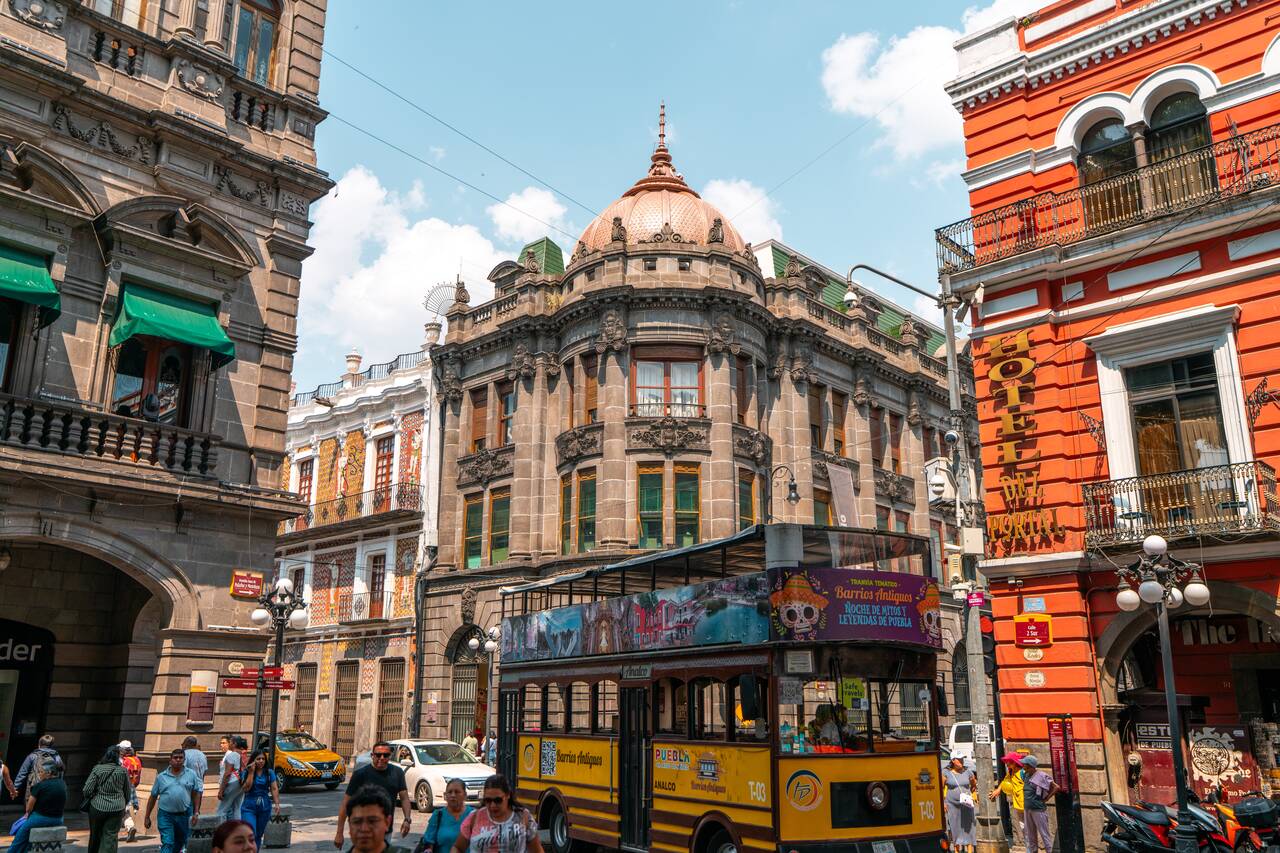
By Walk: Walking is easily the best way to explore the historic center. You'll be able to take your time admiring the colonial architecture, Talavera-covered buildings, colorful streets, and little shops that you might otherwise miss from a vehicle. I rarely needed any form of transportation while exploring Puebla's center.
By Uber/Didi: For places further away like coming from the CAPU bus terminal, ride-hailing apps are the easiest option. Uber and Didi are available in Puebla and are particularly useful for getting to placesoutside the historic center. I prefer using an app because you can see the fare before you book and don't have to worry about negotiating with taxi drivers.
By Bus: Puebla has an extensive local bus network, and buses are inexpensive if you want to travel like a local. However, they can be confusing if you're unfamiliar with the routes, so for most visitors, walking and ride-hailing apps are more convenient.
That said, for this guide, I recommend taking the local bus to Cholula and back, as it is easy, straightforward, and very cheap. I explain exactly how to use the bus in the "Spend a Day at Cholula" section.
How many days to spend in Puebla?
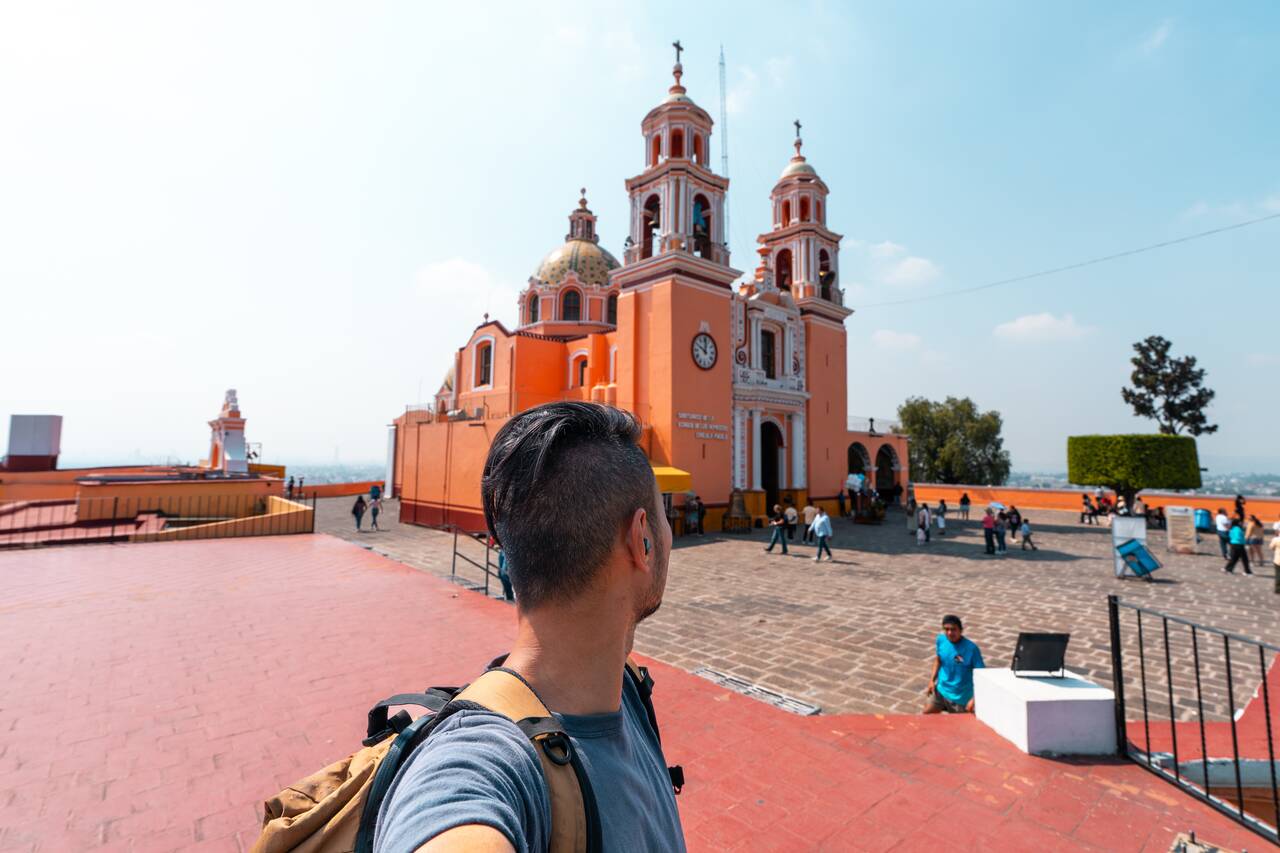
I recommend spending 2–3 days in Puebla to experience what this city has to offer without rushing. The historic center is compact, so you can see most of the main sights in a day, but you'll want another day to explore Cholula and enjoy Puebla's food, cafés, and whatever event that is happening in town.
Day 2: Take the local bus from Puebla to Cholula and spend the day exploring the Great Pyramid, Iglesia de Nuestra Señora de los Remedios, colorful streets, churches, cafés, and local restaurants. Come back to Puebla in the evening and enjoy another night in the historic center.
Day 3 (optional): Explore Puebla's museums and attractions you missed, shop for Talavera pottery, and eat your way through the city. You can also use the extra day for a nearby day trip if you're interested in exploring beyond Puebla.
Is it Safe in Puebla?
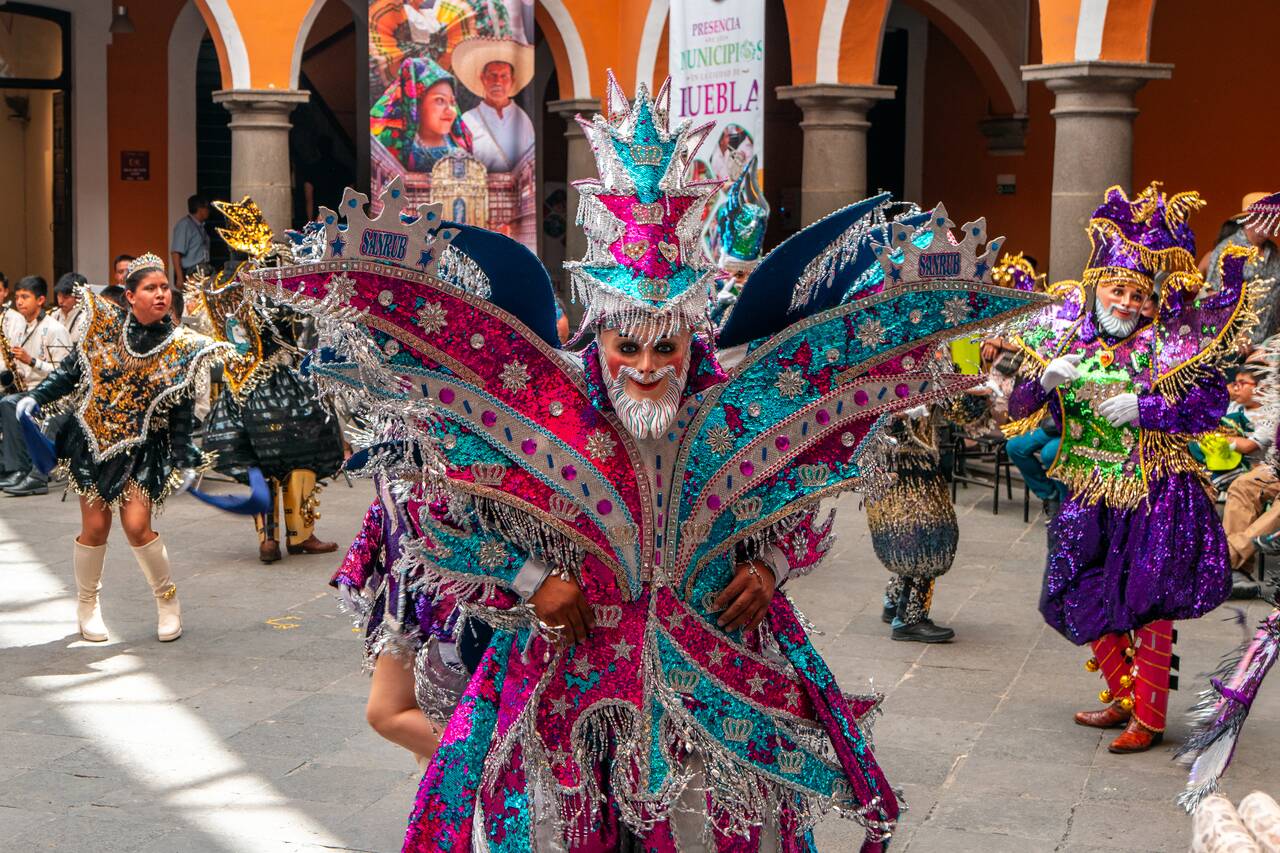
Yes, I felt generally safe while exploring Puebla, especially around the historic center and the main tourist areas. Like any large Mexican city, though, Puebla has areas where you should be more cautious, and it's still important to use common sense, particularly after dark. Thankfully, those places aren't anywhere near tourist areas so you should be fine.
The historic center is busy and well-populated throughout the day, and I had no issues walking around on my own. I also found the atmosphere to be relaxed and welcoming, with plenty of locals out shopping, eating, and hanging out in the plazas. At night, I would stick to the busier, well-lit streets around the historic center rather than wandering into unfamiliar neighborhoods.
If you're planning to visit Cholula, I also found it easy to explore independently and felt comfortable walking around during the day. Overall, I wouldn't let safety concerns stop you from visiting Puebla. Stay around the main tourist areas, use common sense, and you'll likely have a great time.
Disclaimer: This post may contain affiliate links. See our disclosure policy.
First Published:


