



Ever since Sony acquired Minolta back in 2006, the company has released countless camera models non-stop and has continuously innovated itself to become one of the leading camera manufacturers in the world. The camera lineup that made it all happen for Sony was the full-frame camera lineup: the a7 series.
Sony won our hearts with the a7 feature-packed cameras, their constant support for the creator communities, and the slew of amazing high-quality E-mount camera lenses that keep on growing every year.
For those of you who are currently starting out with your first Sony full-frame cameras, the sheer number of lenses available can be quite intimidating and confusing to browse through.
With this guide, I have decided to compile a list of the best travel E-mount lenses for your new Sony full-frame cameras that will handle whatever situation the world throws at you. The list is based solely on my experience shooting and traveling with Sony mirrorless cameras for more than a decade.
Without further ado, let's begin with the most important category of all: the All-Around travel lens that you will likely have mounted on your camera most of the time when you travel.

📸 Quick Summary: The best lenses for the Sony full-frame cameras




👍 What Makes for a Good Travel Lens for Sony Full-Frame Cameras?

For me, what makes a good travel lens is the lens that strikes the perfect balance between high-quality glass, weight, and features that will help me take great photos in any situation I might find myself in without hindering my ability to travel around effectively.
I'll be including lenses for different travel situations and shooting styles that reflect the type of traveler you are, like street photography, wildlife, and general purpose. I'll also provide budget alternatives to help your Sony full-frame camera reach its full potential.
Of course, feel free to mix and match and see which travel lenses fit your needs the most. Let's begin with the most essential travel lens of all, the best all-around general-purpose lens that every travel photographer should have in their kit:
🌎 Best All-Around Lens For Travel
- Extremely Light & Compact
- Packed with Features
- Very sharp at almost every focal length
- Expensive
- Distortion
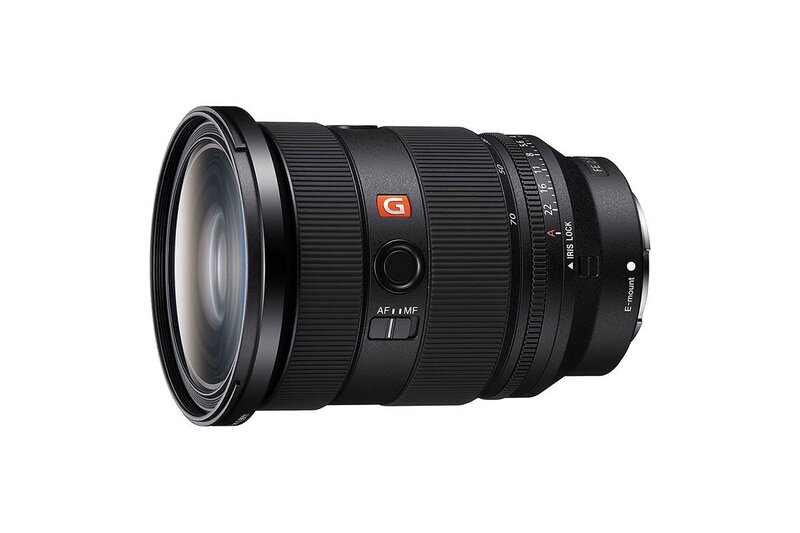
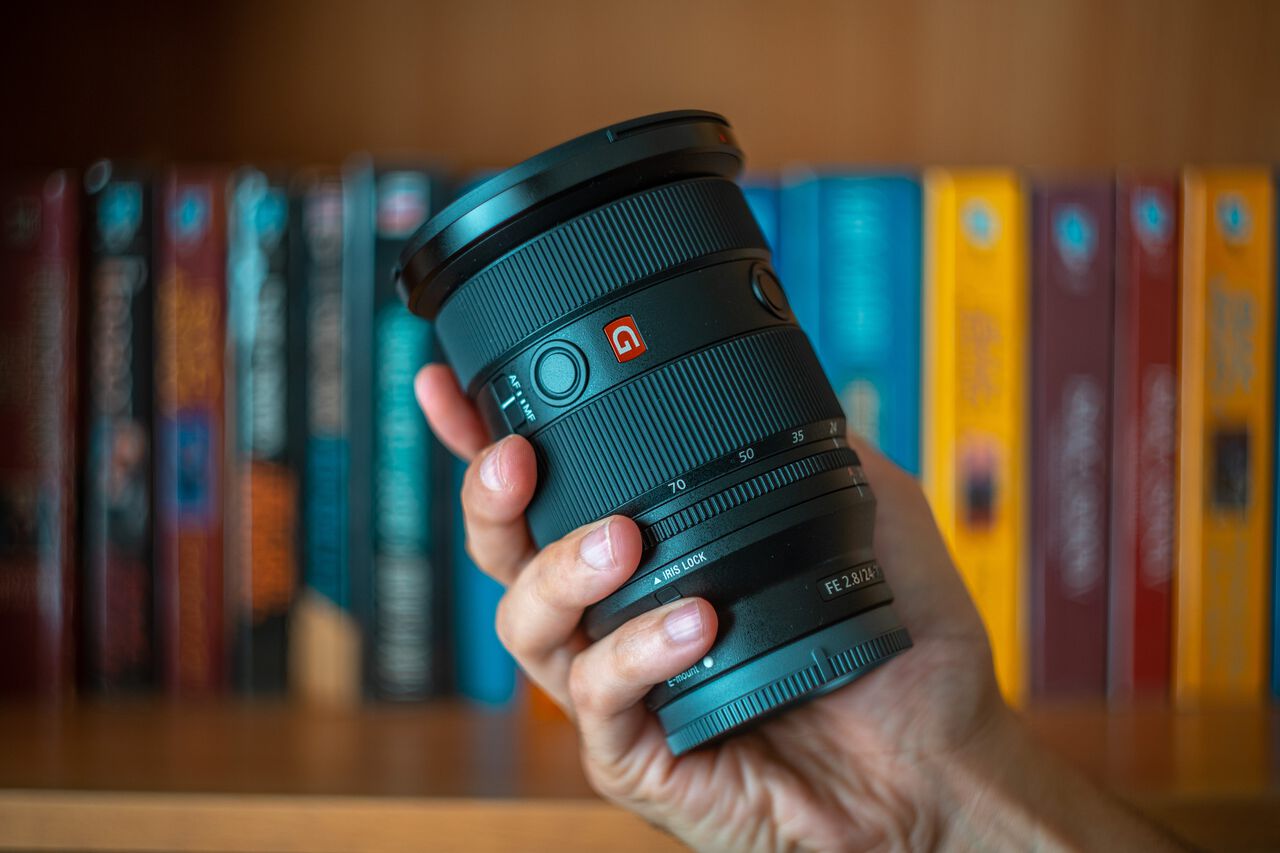
Sony FE 24-70mm f2.8 GM II Lens: This is, hands down, one of the best lenses you can get for travel for your Sony full-frame camera. The Sony FE 24-70mm F2.8 GM II lens is an updated version of the wildly popular but old Sony FE 24-70mm F2.8 GM lens (review), bringing new features and technologies to an all-purpose lens while keeping it light and small.
The focal range of this lens is also extremely versatile, allowing you to go wide at 24mm, which is great for architecture and landscape, while you have the option to zoom in at 70mm and shoot portraits.
The Sony FE 24-70mm f2.8 GM II lens's optical performance is also outstanding, with its corner-to-corner sharpness, excellent build quality, and fast aperture at F2.8. The lens can produce stunning bokeh and subject separation, allowing you to capture sharp footage even in poor lighting conditions.
The best part about this lens is its form factor. The Sony FE 24-70mm F2.8 GM II weighs only 695g, making it remarkably light and compact for a professional constant-F2.8 standard zoom.
For those of you who are looking for a premium, lightweight all-around travel lens for a Sony full-frame camera, this is the one to get. It is a little expensive, but considering the impressive quality-to-size ratio, I think it is worth the price. This lens is truly the one lens that rules them all.
This lens is recommended for all Sony Full-Frame cameras.
- ⚡ Pete's Take: "If I could only bring one lens on my trip, this would be it. It is one of the most versatile lenses you can buy. It also weighs considerably less than its previous version. Highly recommended!"

🌎 Best Budget All-Around Lens For Travel

- Lightweight
- Affordable
- Fast aperture
- 28mm might not be wide enough
- Not as compact
Tamron 28-75mm f2.8 G2 Lens: For a cheaper alternative, the Tamron 28-75mm F2.8 G2 lens is also highly recommended for those of you who are looking for a great all-around travel lens at a more affordable price point.
The Tamron 28-75mm F2.8 G2 is the second-generation version of Tamron's popular 28-75mm F2.8, with an updated optical design and VXD autofocus system that improve image quality and autofocus performance while retaining the compact, affordable approach that made the original so popular.
Even though the focal range is not as wide as the Sony 24-70mm F2.8 lens, you are ultimately paying less than half the price of the Sony lens. If you do not shoot at 24mm as often, there is no better option than the Tamron lens.
This lens is recommended for all Sony Full-Frame cameras.
- ⚡ Pete's Take: "I honestly think it is one of the best value all-around lenses for Sony shooters right now."

🏔️ Best Lens For Landscape & Architecture

- Light & Compact
- Extremely fast autofocus
- Very sharp at almost every focal length
- Stunning sunstar
- Expensive
- Vignette & Distortion
Sony FE 16-35mm f2.8 GM II Lens: If you are looking for a lens for your Sony full-frame camera to film landscapes and architectures on your travel, the Sony FE 16-35mm F2.8 GM II, the latest iteration of its beloved versatile wide angle lens, is just hard to beat.
With the super-wide focal length of 16mm, you will be able to capture more of the landscape and architecture you are seeing, allowing you to get a perspective that you wouldn't be able to replicate with other lenses, not even the all-purpose lenses like the Sony 24-70mm F2.8 GM II lens.
As you could expect with the new Sony GM lenses, the image quality produced with this lens is extremely sharp from corner to corner at almost all the focal range. The F2.8 aperture allows you to use the lens in any condition, which is great for travel as you often shoot in an uncontrolled environment. This lens is also perfect if you like shooting during sunrise or sunset, as well as astrophotography. Really, a one lens to rule them all.
Not to mention the fact that Sony reduced the weight from about 680g on the original GM to 547g on the GM II, a reduction of roughly 20%, while also improving autofocus performance and minimum focusing distance. It is a better lens than its previous version that I used to recommend in almost every way.
This lens allows you to cover the ranges the general all-purpose lens like the Sony 24-70mm F2.8 GM II lens can't capture, making it a perfect secondary lens for your all-around lens.
This lens is recommended for all Sony Full-Frame cameras.
- ⚡ Pete's Take: This is a great upgrade from the previous version, with a lighter weight, a more compact body, and much faster autofocus. Definitely one of the best wide-angle lenses you can get.
🏔️ Best Budget Lens For Landscape & Architecture

- Light & Compact
- Affordable
- Fast Aperture
- Not the fastest autofocus
- Distortion
- Doesn't zoom to 35mm
Sigma 16-28mm F2.8 DG DN Lens: Again, the G Master lenses are not cheap, and it might not be reasonable to buy them, especially if you are just starting out. So, for those of you who are looking for an excellent but affordable architecture/landscape wide-angle lens for your travel, I highly recommend you take a look at the Sigma 16-28mm F2.8 DG DN lens.
Even though the Sigma 16-28mm F2.8 DG DN lens is cheaper than the Sony 16-35mm lens, the Sigma lens delivers excellent image quality that is quite comparable to Sony's GM lens in most situations, but in a much lighter and compact package, making it perfect for travel.
Unlike the Tamron 17-28mm F2.8 lens that I used to recommend, the Sigma lens goes all the way to 16mm, making it great for many travel applications. The lens doesn't go as tight as the Sony GM with its 35mm focal range, but I am happy to sacrifice the tight focal range for a more compact and lightweight lens.
Best of all, the Sigma is considerably more affordable than Sony's 16-35mm F2.8 GM II while still delivering excellent image quality in a compact 450g body. The value is strong enough to make even an avid Sony fan like myself think twice about paying the premium for the GM lens. If you are looking for an affordable landscape/architecture lens for your Sony camera, this lens is a great option to consider.
This lens is recommended for all Sony Full-Frame cameras.
- ⚡ Pete's Take: "I’d happily give up a bit of zoom range for a lens that’s smaller, lighter, and easier to pack."

🔎 The Best Telephoto Lens

- Extremely sharp
- Very fast autofocus for a telephoto lens
- Optical Stabilization
- Relatively lightweight
- Support teleconverter
- Very expensive
Sony FE 70-200mm F2.8 GM OSS II Lens: With the 16-35mm and 24-70mm focal lengths covered, all we have left is the telephoto focal length to complete the trinity of lenses for your Sony cameras, and the best lens to get for this is the Sony 70-200mm F2.8 GM II lens.
With this lens, together with the other lenses I listed above, you are essentially covering the telephoto range you are currently missing. This should allow you to shoot more close-up shots of things you might not be able to get up close and personal with, like faraway mountain peaks or people.
The lens comes with a fast aperture of F2.8, allowing you to shoot incredibly sharp images even in the poorest lighting conditions. Not to mention its new autofocus system, which allows you to keep up with fast subjects like birds, and its optical stabilization, which should help smooth out your photos and videos on the longest end.
I love shooting with this lens. The incredible reach allows me to get up close to the subject while being discrete. I can also use it to shoot landscapes whenever I want to punch in for incredible details. It works perfectly in every lighting condition, no matter if I shoot at sunrise or sunset.
If you are looking for the best telephoto lens to buy for your Sony cameras, the Sony 70-200mm F2.8 GM II is a complete package that is hard to beat. Hit the link below to check out the recent price.
This lens is recommended for all Sony Full-Frame cameras.
- ⚡ Pete's Take: "This lens is an investment. It's expensive, but everything about it is worth the price from its fast autofocus and sharpness, to its light and compact body. This is one of the best telephoto lens I own!"

🔎 The Best Budget Telephoto Lens

- Affordable
- Compact and Lightweight
- Optical Stabilization
- Not the fastest autofocus
- No teleconverter support
Tamron 70-180mm F2.8 G2 Lens: For those of you who are looking for a budget-friendly telephoto lens, the Tamron 70-180mm F2.8 G2 lens is the best option if your budget is around 1,300 USD.
The Tamron 70-180mm F2.8 G2 is the second-generation version of Tamron's compact telephoto zoom. The Sony E-mount version weighs 855g (30.2 oz) and includes Tamron's VC optical stabilization system, all while maintaining a constant F2.8 aperture and a relatively compact 70-180mm range. That combination makes its value-to-feature ratio difficult to beat for travel.
It is a lens designed specifically for those looking for a fast telephoto lens that is travel-friendly and capable of handling action without the size and cost of Sony's 70-200mm F2.8 GM II. If you do not mind giving up the final 20mm of reach, the Tamron 70-180mm F2.8 G2 lens is a great alternative. Hit the link below to check out the latest price:
This lens is recommended for all Sony Full-Frame cameras.
- ⚡ Pete's Take: "If you are looking for a more affordable telephoto lens with a fast aperture, this is the one to get. You lose 20mm at the far end and a bit of image quality, but you save a ton by going with this lens over Sony's."

😃 Best Lens For Portraits
- Light & Compact
- Beautiful Bokeh
- Extremely Sharp
- Pincushion & Vignetting
- Not the cheapest
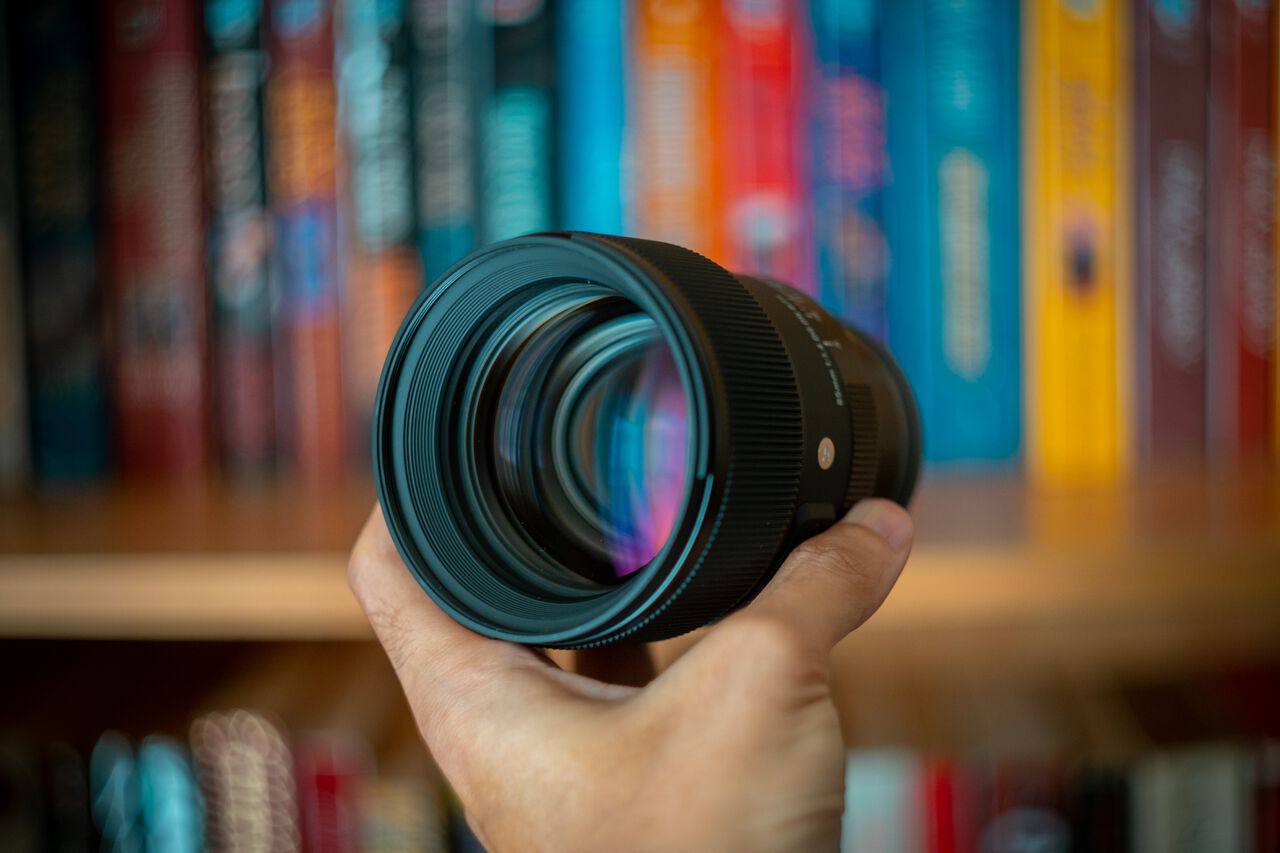
Sigma 85mm F1.4 DG DN Lens: I used to recommend the Sony FE 85mm f1.4 GM lens as it was the best portrait lens money can buy, but that lens weighs like a little planet in your backpack, which is not exactly a convenient lens to travel with. However, everything changes with the new Sigma 85mm F1.4 DG DN Lens.
The Sigma 85mm F1.4 DG DN remains impressively compact for an 85mm F1.4, weighing 625g (22 oz) in Sony E-mount. Sony has since released the FE 85mm F1.4 GM II at 642g, so the Sigma no longer has the huge weight advantage it once had over Sony's original 85mm F1.4 GM, but it is still an exceptionally portable F1.4 portrait lens.
This lens produces beautiful bokeh, as you can expect from a wide-aperture lens, and its optical performance remains excellent. Sony's newer 85mm F1.4 GM II has changed the competitive landscape considerably, though, so the Sigma's biggest advantage today is its combination of excellent image quality, compact size, and typically lower price rather than an overwhelming size advantage over Sony's current GM.
Of course, there are some drawbacks to having such a small and lightweight body, like pincushion distortion, but this can easily be fixed in Lightroom. Considering the size and weight you get, it is totally worth the sacrifice.
I do not know how Sigma did it, but they really knocked it out of the park with this lens. And if you are looking for the best portrait lens for travel, there is no better lens than the Sigma 85mm F1.4 DG DN lens.
This lens is recommended for all Sony Full-Frame cameras.
- ⚡ Pete's Take: "I’m honestly amazed that Sigma made an 85mm F1.4 this compact and light. Highly recommended if you are looking for a great and compact portrait lens."

😃 Best Budget Lens For Portraits

- Light & Compact
- Beautiful Bokeh
- Affordable
- Not the best build quality
- Strong Vignetting
Sony FE 85mm F1.8 Lens: If you are looking for a travel portrait lens that is significantly lighter and more affordable than Sony's premium FE 85mm F1.4 GM II while still being capable of producing beautiful bokeh, the Sony FE 85mm F1.8 remains an excellent option.
The Sony FE 85mm F1.8 lens weighs only 371 grams and costs around 550 USD retail. The lens produces sharp images, as you would expect from Sony native lenses. Even though the aperture is one stop less than the Sony 85mm F1.4 GM lens, the depth of field produced with this lens is still stunning. It allows you to capture a person in tack-sharp detail and blur the background, creating one of the most satisfying subject separations ever.
For such a compact size and an affordable price point, it is hard to beat the Sony FE 85mm F1.8 lens when it comes to the price-to-quality ratio. If I were you, I would get this lens instead of the Sony 85mm F1.4 GM lens, save more than half the money, and invest in adding other lenses to your arsenal.
This lens is recommended for all Sony Full-Frame cameras.
- ⚡ Pete's Take: "This is a great budget portrait lens; the bokeh is still really beautiful, even though it is one stop slower than the Sigma."

⭐️ Best Lens For Astrophotography

- Ultra-wide focal length
- Extremely fast aperture for such a wide focal length
- Extremely Sharp
- Quite heavy
- Expensive
Sony FE 14mm f1.8 GM Lens: When it comes to astrophotography, you are going to need an ultra-wide-angle lens that will allow you to capture the landscape together with the stars, giving your image a sense of scale. Additionally, you'll need a fast aperture to retain the sharpness of stars when shooting in pitch black.
The Sony 14mm F1.8 GM lens is designed to do just that. With its ultra-wide focal length of 14mm, you will be able to capture the stunning landscape in all its glory while retaining the night sky's expansiveness, all in one frame.
The 14mm F1.8 combination remains exceptionally wide and fast for a full-frame autofocus prime. So, if you are into astrophotography and looking for a compact prime to capture the Milky Way, this is one of the strongest options for Sony full-frame cameras.
This lens is probably the widest and fastest lens you can get for your Sony a7III. So, if you are into astrophotography and looking for the best lens to capture the Milky Way, this is the best one to get.
This lens is recommended for all Sony Full-Frame cameras.
- ⚡ Pete's Take: 14mm is such an awesome focal length for astrophotography. You can capture both the landscape and the expansive starry sky in one frame. Not many lenses can do that!
⭐️ Best Budget Astrophotography Lens
- All-new body design
- Wide angle with fast aperture
- Useful zoom range
- Heavy vignetting and field curvature at 20mm wide open
- Quite expensive
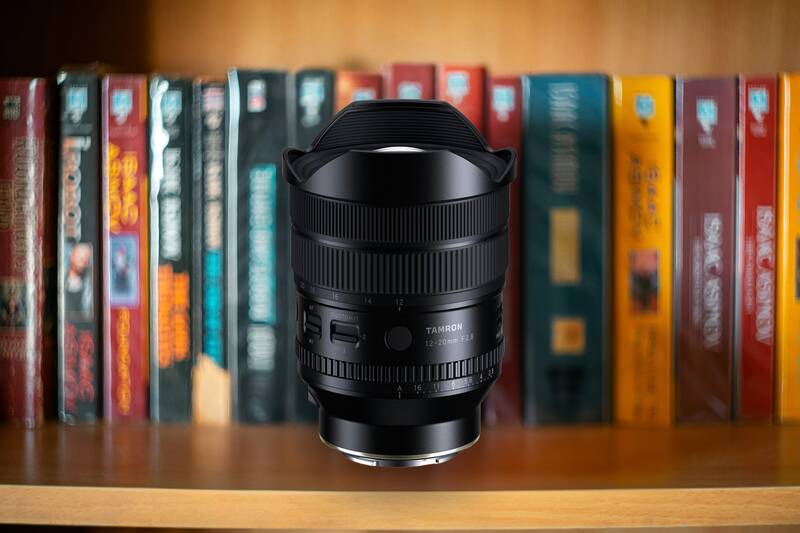
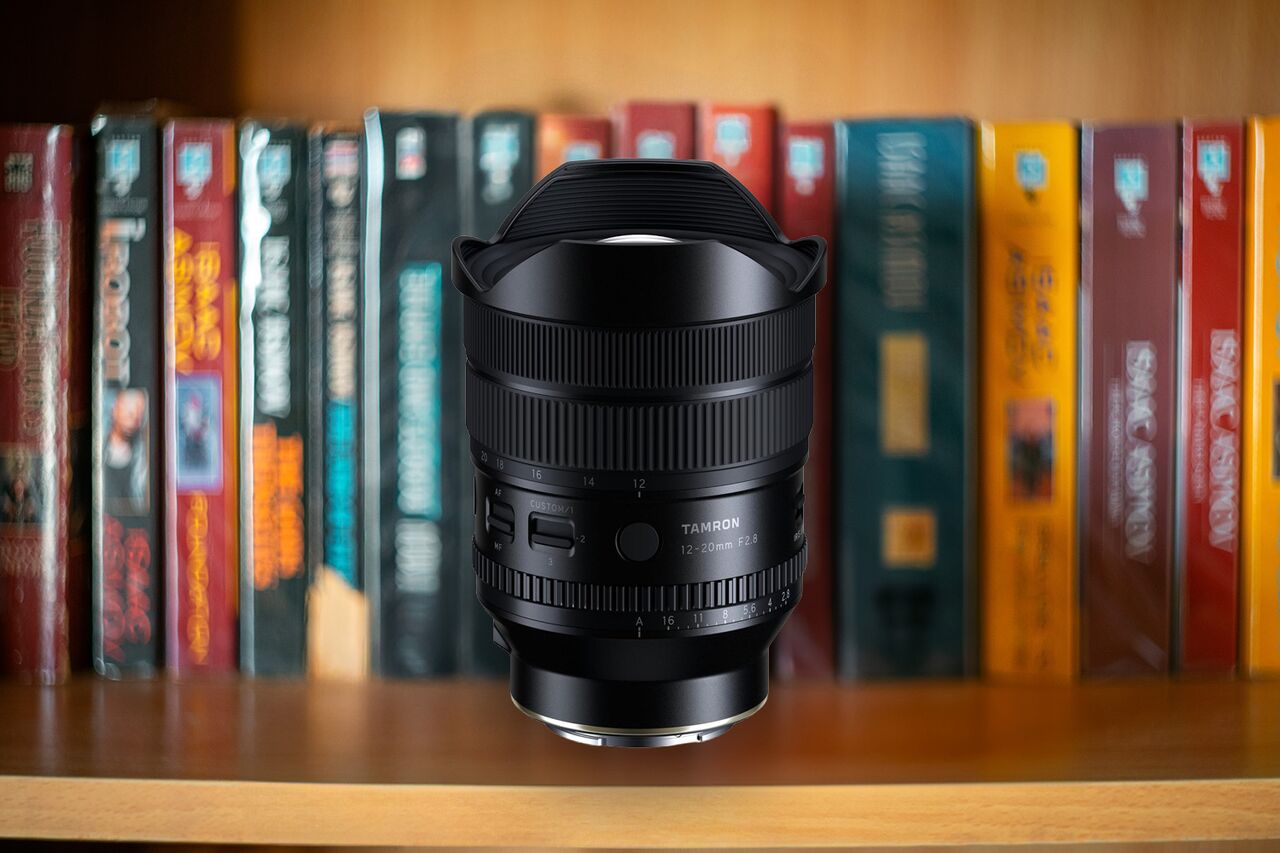
Tamron 12-20mm f/2.8 Lens: While the Sony 14mm f/1.8 remains one of the best astrophotography lenses money can buy, its premium price tag is definitely not for everyone. If you are looking for a more budget lens from astrophotography, the Tamron 12-20mm f/2.8 is what you are looking for.
Although the Tamron lens sacrifices about a stop and a third of light compared to the Sony prime, it costs significantly less while delivering excellent image quality, low coma, and an even wider 12mm focal length that's perfect for astrophotography. The wider field of view allows you to capture more of both the landscape and the night sky in a single frame, which is how I often like to photograph the Milky Way to better convey its immense scale.
Unlike the fixed 14mm field of view, the Tamron gives you a versatile 12-20mm zoom range, which is far more useful for other applications like landscape, architecture, and travel photography during the day. That way, you're not carrying an astrophotography lens that's only good for one purpose. Tamron has also completely redesigned the lens with a more premium body, adding customizable buttons and improved controls, which I really like. I hope this new design language carries over to their future lenses.
That said, such flexibility does come with a few compromises, including noticeable vignetting at f/2.8 and some field curvature at 20mm. It is also a premium-priced Tamron lens, so while its 12-20mm zoom range gives it much more flexibility than a fixed ultra-wide prime, it is worth checking the latest street price before deciding which route offers better value for you.
If you're looking for the best balance between price, performance, and versatility and you don't mind the price tag, the Tamron 12-20mm f/2.8 is one of the best budget-friendly astrophotography lenses you can buy today.
This lens is recommended for all Sony Full-Frame cameras.
- ⚡ Pete's Take: "Again, you just can't beat Tamron when it comes to price and its versatility. If you are new to astrophotography, this is the lens I recommend!"
🚶♂️ Best Lens For Street Photography

- Light & Compact
- Very fast aperture at F1.4
- Extremely Sharp
- Expensive
Sony FE 35mm f1.4 GM Lens: In street photography, you will be running around shooting moving subjects that often move spontaneously. You will need a lens with the most natural-looking focal length, unobtrusive, and extremely fast. That's why I recommend the Sony FE 35mm F1.4 lens.
The Sony FE 35mm F1.4 lens has a focal length of 35mm, closest to what our eyes see. Therefore, the photos you capture with this lens will have a more natural look and feel that will resonate more with human eyes.
With its compact size, lightweight, and unobtrusive profile, you can easily blend into the crowds and capture photos of spontaneous moments while traveling that you wouldn't be able to with other bulkier lenses.
The fast aperture also helps with the run-and-gun style of shooting that comes with street photography, which is why the Sony 35mm F1.4 lens is the best lens for street photography to get for your Sony full-frame cameras.
This lens is recommended for all Sony Full-Frame cameras.
- ⚡ Pete's Take: "It's big and expensive, but I do like how light and compact it is, as well as its fast aperture."
🚶♂️ Best Budget Lens For Street Photography

- Versatile focal range
- Fast fixed aperture
- Affordable
- Not the fastest autofocus
- Some distortion
Tamron 20-40mm F2.8 Lens: For the best value lens for street photography, I have to give it to the Tamron 20-40mm F2.8 lens. The lens has a unique focal range of 20-40mm, which covers the classic 35mm length and allows you to be more flexible and react to the fast-changing situations of street photography.
With its compact size, lightweight, and discreet body, you should be able to blend in with the crowd and take awesome street photos without sacrificing flexibility. Best of all, the lens is very affordable at the retail price of 680 USD. Given the flexibility you will get with this lens, you are definitely getting your money's worth here.
The lens also comes with an F2.8 aperture, which should be fast enough for the run-and-gun style of shooting that comes with street photography. With such a great price point, incredible flexibility, and the discreetness of its design, the Tamron 20-40mm lens is the best value street photography lens to get for your Sony full-frame camera.
This lens is recommended for all Sony Full-Frame cameras.
- ⚡ Pete's Take: For a more affordable street photography option, you can't beat this Tamron lens. Tamron always has your back!

🐯 Best Lens For Wildlife

- Very versatile range
- Compact size for the range
- Works with teleconverters
- Quite heavy
- Variable aperture
- Expensive
Sony FE 100-400mm f4.5-5.6 OSS G Master Lens: If you are looking for the very best telephoto lens to get for wildlife photography and money and weight are no objects, then the crown has to go to the Sony 100-400mm f4.5-5.6 G Master Lens. This lens has an incredible focal length of 100-400mm, which will allow you to bring your subject much closer than any other lens.
The Sony FE 100-400mm F4.5-5.6 GM OSS is not a small lens, weighing about 1,395g without the tripod mount, but its 100-400mm range, optical stabilization, and compatibility with Sony's 1.4x and 2x teleconverters make it a powerful option for wildlife and safari photography.
If you have enough space in your backpack and are willing to pay for a premium wildlife zoom, this is still a compelling option with excellent reach. Hit the link below to check its current price.
This lens is recommended for all Sony Full-Frame cameras.
- ⚡ Pete's Take: "I think the Sony 100-400mm is probably the best wildlife lens if money and weight are not concerns."
🐯 Best Budget Lens for Wildlife

- Amazing range
- Very lightweight and compact
- Affordable
- Optical stabilization
- Not compatible with teleconverters
- Slow aperture
Tamron 50-300mm F4.5-6.3 Lens: For those of you looking for a more compact and affordable wildlife lens, the Tamron 50-300mm F4.5-6.3 is exactly the lens you should consider. It is the successor to the Tamron 70-300mm F4.5-6.3, one of my favorite budget telephoto lenses, and improves upon the previous version in almost every way.
This new lens now starts at 50mm instead of 70mm, giving you much more flexibility when photographing wildlife. It also finally includes optical stabilization, something I always wished the previous version had. With the wider focal range, you can quickly zoom in to capture distant animals or zoom out to include more of the environment without having to switch lenses, which is incredibly useful for wildlife and safari photography.
The lens is slightly heavier than its predecessor, weighing around 665 g, and it also costs a bit more at around 700 USD. However, the added versatility on the wider end and the inclusion of optical stabilization easily justify the higher price, especially for travel and wildlife photography.
I brought the previous version with me on several safari trips across East Africa, and despite being a budget lens, it still allowed me to capture some incredible wildlife shots. With all the improvements Tamron made to this new version, it can only get better. If you are looking to get into wildlife photography without spending over 2,000 USD on a lens, the Tamron 50-300mm F4.5-6.3 lens is, hands down, one of the best options available.
- ⚡ Pete's Take: "I really liked the older Tamron 70-300mm, and this version goes even wider. When it comes to price versus reach, no lens can beat this!"

🛒 Which Sony Full-Frame Lenses Should You Pick?
Now that we have covered all the best travel lenses for all travel situations that the world might throw at you, it is time to ask the question: what type of traveler are you?
If you are like me, who likes to travel a lot in both nature and cities, I would get a combination of the Sony FE 24-70mm F2.8 lens as my main all-around lens, the Sony FE 16-35mm F2.8 lens for shooting landscapes and architecture, and the Sony FE 85mm F1.8 lens for incredible portraits of people around the world.
If you are going on a honeymoon trip or you would like to take photos of your partner while traveling, then the Sony FE 85mm F1.8 lens is also great for you. If you like going on a safari or bird-watching, the Tamron 70-300mm F4.5-6.3 lens is a no-brainer.
All in all, it will depend on what type of trips you are taking, and once you can define that, you should have no trouble picking the lens for the job.
Disclaimer: This post may contain affiliate links. See our disclosure policy.
First Published:
Last updated:


6 Comments
Thanks for the info.
But how come the Tamron 35-150mm lens was not mentioned?
Hey Doug, that lens is definitely versatile but the combination of weight, size, and flexible focal length made it way too impractical to be used as a travel lens. We often carry our camera around our neck when we are out and about traveling and with that weight on your neck all day is definitely not fun. You would be better off with a lighter all-purpose lens like 20-70 or 24-70 and only switch to telephoto lens when you need it.
Thanks Pete.
I just ordered the lens and know it is heavy, but I want to try and use it on a trip. Wish me luck...lol
Haha! Good luck! It's definitely one hell of a versatile lenses if you don't mind the weight! Enjoy shooting!
bought the 35-150, and have found it's going to be waaayy to bulky. tbh it's also not quite wide enough for landscape either imo. Fantastic lens, which i'll hang on to, but will definitely be picking up the 20-70 f4 for travel, along with the 20 1.8 for some travel astro :)
Hey Vin,
Yes, I totally agree. While 35-150 is extremely versatile, it is just not practical to have it on your camera all the time when traveling and I often find myself needing a wider range as many travel applications require it like architecture shots, landscapes, etc. I think with your new set up, you are all set for everything. :)