



For those of you who are just beginning your journey with the Sony full-frame mirrorless camera system and are eager to invest in a new budget-friendly lens that not only offers affordability but also capabilities that will help propel your photography game to the next level, you are in the right place.
With all the third-party lenses available on the Sony system, such as Tamron, Sigma, and even Sony's own budget line-up, it can be pretty overwhelming when it comes to picking the right lens.
Based solely on my personal experience shooting and traveling with Sony mirrorless cameras for more than a decade, I have decided to compile a complete list of the best Sony budget lenses that you can buy for your cameras, all under 1,200 USD (ish). Without further ado, here are the 10 best Sony budget lenses to buy:

📸 Quick Summary: The best Sony budget lenses to buy


👍 What Makes for a Good Budget Lens for Sony Cameras?
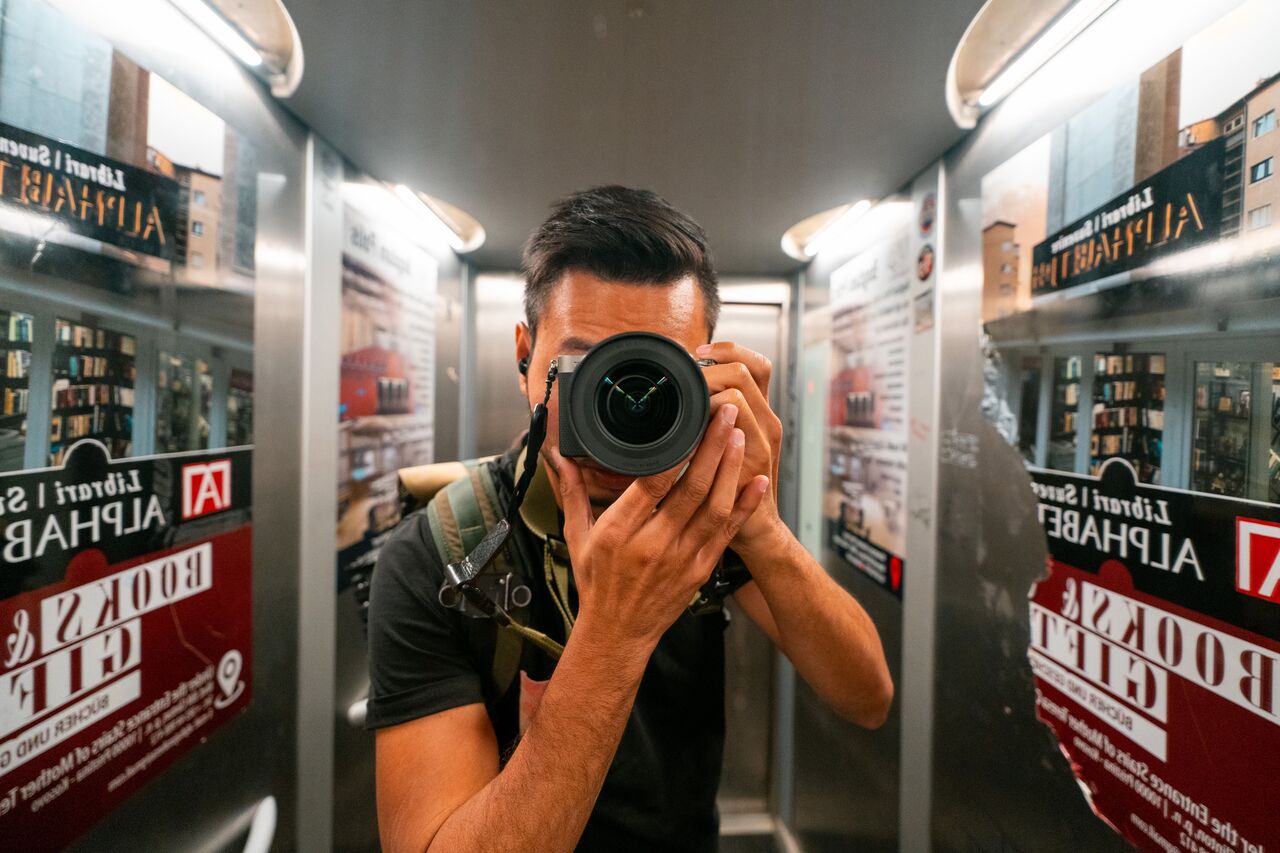
For me, what makes a good budget zoom lens is the perfect balance between delivering high-quality optics and affordability while incorporating other crucial factors like size, weight, and an array of valuable features. These elements collectively contribute to the hallmark of an ideal budget-friendly lens.
Since I specialize in travel photography, I'll be including lenses for different travel situations and shooting styles that reflect the type of traveler you are, such as street photography, wildlife, and general purpose, while keeping the focus on relatively affordable options for the Sony full-frame system.
Of course, feel free to mix and match and see which travel lenses fit your needs the most. Let's begin with the most essential travel lens of all: the best budget all-around general-purpose lens that every travel photographer should have in their kit.
🌎 The Best Value All-Purpose Lens

- Versatile range
- Affordable
- Fast aperture
- Lighter than its precessor
- A little soft wide open
- Some reported dust issue
Sigma 24-70mm F2.8 DG DN Art II: If you are looking for an all-purpose zoom lens with a range of 24-70mm for your Sony cameras but the Sony GM lens is a little out of your budget range, the next best option is the Sigma 24-70mm F2.8 DG DN Art II lens, the second version of Sigma's popular Mark 1.
This lens covers the versatile 24-70mm range, and it comes with a fast F2.8 aperture and excellent optical performance that gives Sony's own 24-70mm F2.8 GM II serious competition. It is also noticeably smaller and lighter than Sigma's first-generation version, weighing only 745 grams for Sony E-mount.
It is more expensive than Sigma's first-generation version, but it remains considerably cheaper than Sony's 24-70mm F2.8 GM II while offering a smaller and lighter design than its predecessor. If you want a professional-grade F2.8 standard zoom without paying Sony GM prices, the Sigma 24-70mm F2.8 DG DN II Art lens remains one of the strongest value options in the system.
- ⚡ Pete's Take: "It's a great alternative to the Sony and Tamron lenses. It basically sits between the two when it comes to price and image quality."
🌎 The Best Budget All-Purpose Lens

- Extremely lightweight
- Very affordable
- Fast aperture
- Not the sharpest
- 28mm might not be wide enough for some
Sigma 28-70mm F2.8 DG DN Lens: Now, if you are not a fan of heavy lenses (and trust me, I know how you feel as I travel with big lenses all the time), one of the lightest all-purpose zoom lenses with a fast aperture you can get is the Sigma 28-70mm F2.8 DG DN lens.
This is an exceptionally small and lightweight 28-70mm F2.8 lens for Sony cameras, with the E-mount version weighing only 470 grams (1.04 lbs), which is very impressive for such a versatile range.
The quality is almost as good as the Sigma 24-70mm F2.8 DG DN lens, but it comes in a much smaller and lighter form factor, making it great for those who are looking to travel light and do not mind the absence of the 24mm wide focal length.
If you are weight-watching and looking for the lightest all-purpose zoom lens you can get for Sony cameras, the Sigma 28-70mm F2.8 DG DN lens is the one for you.
- ⚡ Pete's Take: "This is probably the lightest versatile lens you will find for a full-frame camera, and it is hella cheap! Recommended if you want a light-weight setup."
🏔️ The Best Budget Landscape & Architecture Lens

- Light & Compact
- Affordable
- Fast Aperture
- Not the fastest autofocus
- Distortion
- Doesn't zoom to 35mm
Sigma 16-28mm F2.8 DG DN Lens: For those of you who are looking for an excellent yet affordable architecture/landscape wide-angle lens for your travels, I highly recommend taking a look at the Sigma 16-28mm F2.8 DG DN lens.
The Sigma 16-28mm F2.8 DG DN lens stands out as one of the best budget options for wide-angle lenses due to its more budget-friendly price point, fast aperture of F2.8, and extremely light and compact form factor. It is probably the most lightweight wide-angle zoom lens out there for Sony, making it perfect for travel.
Unlike the Tamron 17-28mm F2.8 lens that I used to recommend, the Sigma lens goes all the way to 16mm, making it great for many travel applications. The lens doesn't go as tight as the Sony 16-35mm F2.8 GM lens, but I am happy to sacrifice the tight focal range for a more compact and lightweight lens.
Best of all, the Sigma is considerably less expensive than Sony's premium 16-35mm F2.8 GM II while still giving you a constant F2.8 aperture, a compact 450-gram body, and an internal zoom design. Even as an avid Sony fan, the combination of price, size, and performance makes the Sigma difficult to ignore. If you are looking for an affordable landscape or architecture lens for your Sony camera, this lens is a great option.
- ⚡ Pete's Take: "I’d happily give up a bit of zoom range for a lens that’s smaller, lighter, and easier to pack."

🎥 The Best Video/Vlogging Lens

- Light & Compact
- Power-Zoom
- Quite Sharp
- F4 Aperture might be too slow for some
Sony PZ 16-35mm F4 G Lens: If you are primarily a video shooter and you are looking for a budget zoom lens that is versatile and wide enough to vlog with, the Sony PZ 16-35mm F4 G Lens is definitely worth your consideration.
The Sony PZ 16-35mm F4 G Lens uses an electronic power-zoom system that allows you to control the zoom smoothly rather than relying solely on a conventional mechanical zoom ring. This is a valuable feature for video shooters.
The lens also has an internal zoom barrel that does not extend or collapse while zooming, allowing you to utilize the zoom feature on a gimbal without rebalancing it every time you zoom.
With the power zoom feature and its versatile focal range, you can perform some really cool video tricks with it as well, such as the cinematic dolly zoom technique that is often used in Hollywood films by famous directors like Alfred Hitchcock, etc.
With such a lightweight form factor, this lens is also great for gimbal use as it is light enough for most gimbals, and the internal zoom allows you to zoom in and out without significantly shifting the lens balance. For travelers who prioritize video, its combination of 16mm coverage, power zoom, internal zoom, and compact size makes it particularly useful.
- ⚡ Pete's Take: If video is your priority, this lens and its power zoom capability is a great choice.
🚶♂️ Best Budget Street Photography Lens

- Versatile focal range
- Fast fixed aperture
- Affordable
- Not the fastest autofocus
- Some distortion
Tamron 20-40mm F2.8 Lens: For the best budget lens for street photography, I have to give it to the Tamron 20-40mm F2.8 lens. The lens has a unique focal range of 20-40mm, which covers the classic 35mm length while allowing you to be more flexible and react to the fast-changing situations of street photography.
With its compact size, 365-gram weight, and discreet body, you should be able to blend in with the crowd and take awesome street photos without sacrificing flexibility. Its combination of a constant F2.8 aperture and an unusually wide 20-40mm range also makes it a compelling value for street and everyday photography.
The lens also comes with an F2.8 aperture, which should be fast enough for the run-and-gun style of shooting that comes with street photography. With such a great price point, incredible flexibility, and the discreetness of its design, the Tamron 20-40mm lens is the best value street photography lens to get for your Sony full-frame camera.
- ⚡ Pete's Take: For a more affordable street photography option, you can't beat this Tamron lens. Tamron always has your back!
😃 Best Budget Portrait Lens

- Light & Compact
- Beautiful Bokeh
- Affordable
- Not the best build quality
- Strong Vignetting
Sony FE 85mm F1.8 Lens: If you are looking for a travel portrait lens that is compact, lightweight, and capable of producing stunning bokeh, the Sony FE 85mm F1.8 is also an excellent option for you.
The Sony FE 85mm F1.8 lens weighs only 371 grams, making it a great match for the compact bodies of most Sony cameras. Despite being an older design, it remains a relatively affordable way (550 USD, last I checked) to add a bright native 85mm prime to your Sony kit.
It can also produce sharp images, as you can expect from Sony's native lenses. And even though the aperture is one stop less than the Sony 85mm F1.4 GM lens, the depth of field produced with this lens is still stunning. It lets you capture a person in tack-sharp detail and throw the rest of the background out, creating one of the most satisfying subject separations ever.
For such a compact size and an affordable price point, it is hard to beat the Sony FE 85mm F1.8 lens when it comes to the price-to-quality ratio. If you want to save some money, I highly recommend you go for the Sony 85mm F1.8 lens and use the money you saved to invest in other lenses instead.
- ⚡ Pete's Take: "This is a great budget portrait lens; the bokeh is still really beautiful, even though it is one stop slower than the Sigma."
⭐️ Best Budget Astrophotography Lens

- Wide focal length
- Fast aperture for such a wide focal length
- Compact and Lightweight
- Affordable
- Corner Sharpness at Wide Apertures could be better
Sony FE 16mm f/1.8 G Lens: For the longest time, I’ve always recommended the Sony 14mm f/1.8 GM, arguably one of the best astrophotography lenses available. However, with its higher price tag, it might not appeal to everyone, especially travelers who want to keep their kit small and light. The 16mm f/1.8 G gives us a more affordable alternative that is still extremely wide, fast at f/1.8, and remarkably compact and lightweight.
Even better, the price point has come down significantly, making it much more accessible for beginner astrophotographers starting their stargazing journey. Of course, there are some compromises, such as reduced corner sharpness at wider apertures, which may not satisfy professionals, but for amateurs like myself, it's more than enough. If you're looking for a budget-friendly lens to take your astrophotography to the next level, this is the one to get.
- ⚡ Pete's Take: "The Sony 14mm F1.8 GM is better, but it is hella expensive. If that is out of your budget, this is the one I'd get. It's wide, fast, compact, and affordable, making it a great astrophotography lens for beginners like myself."
🔎 The Best Value Telephoto Lens

- Affordable
- Compact and Lightweight
- Optical Stabilization
- Not the fastest autofocus
- No teleconverter support
Tamron 70-180mm F2.8 G2 Lens: For those of you who are looking for a budget-friendly telephoto lens, the Tamron 70-180mm F2.8 G2 lens is the best option if your budget is around 1,300 USD.
This is the second-generation version of Tamron's popular 70-180mm lens, and it remains remarkably compact for a constant-F2.8 telephoto zoom. The Sony E-mount version weighs 855 grams (1.89 lbs), and the G2 adds Tamron's VC optical stabilization while retaining the travel-friendly 70-180mm range. That stabilization is especially useful toward the 180mm end and when shooting in lower light.
It is a lens designed specifically for those looking for a fast telephoto zoom that is travel-friendly and capable of handling action and low-light shooting without the size and cost of a traditional 70-200mm F2.8. If you do not mind giving up the final 20mm of reach, the Tamron 70-180mm F2.8 G2 lens is a compelling alternative to Sony's 70-200mm F2.8 GM lenses. Hit the link below to check out the current price:
- ⚡ Pete's Take: "If you are looking for a more affordable telephoto lens with a fast aperture, this is the one to get. You lose 20mm at the far end and a bit of image quality, but you save a ton by going with this lens over Sony's."

🐯 The Best Budget Wildlife Lens

- Amazing range
- Very lightweight and compact
- Affordable
- Optical stabilization
- Not compatible with teleconverters
- Slow aperture
Tamron 50-300mm F4.5-6.3 Lens: For those of you who are looking for a compact and affordable wildlife lens, the Tamron 50-300mm F4.5-6.3 is an excellent option. It expands on the idea behind Tamron's older 70-300mm F4.5-6.3, one of my favorite budget telephoto lenses, by starting at a much more flexible 50mm and adding VC image stabilization.
Compared with Tamron's 70-300mm, it gives you a wider minimum focal length of 50mm for more flexibility and adds VC optical stabilization, something I wish the 70-300mm had. With this broader 50-300mm range, you can easily zoom in on wildlife or zoom out to capture more of the environment without having to switch lenses, which is extremely convenient for travel and wildlife photography.
The lens weighs 665 grams, which is impressively light for a stabilized full-frame 50-300mm zoom. You also get a 1:2 maximum magnification ratio at 50mm and Tamron's VC stabilization, making it much more versatile than its modest size suggests.
I brought the 70-300mm with me on my safari trips around East Africa, and I was able to capture some incredible wildlife shots despite it being a budget option. The 50-300mm keeps the 300mm reach while giving you a wider starting point and stabilization, so it is an even more flexible option for travel. If you are looking to get into wildlife photography without carrying a large, expensive super-telephoto lens, the Tamron 50-300mm F4.5-6.3 lens is an excellent choice.
- ⚡ Pete's Take: "I really liked the older Tamron 70-300mm, and this version goes even wider. When it comes to price versus reach, no lens can beat this!"

🦅 The Best Budget Bird Photography Lens

- Very versatile range
- Well-built
- Quite heavy
- Slow vaariable aperture
- Doesn't work with teleconverters
Sigma 100-400mm f5-6.3 DG DN Lens: For those who are looking for a super-telephoto lens with a focal range of 100-400mm for birds and other smaller wildlife but do not want to spend more than 1,000 USD, you might want to check out the Sigma 100-400mm F5-6.3 DG DN lens.
The lens is designed as an entry-level super-telephoto lens, and it comes in this handheld-friendly form factor that weighs only 1,100 g (2.43 lbs), a benefit you usually don't get from a lens with this much reach.
The lens performs really well for its price. It comes equipped with optical stabilization, essential when shooting at this range, and a fast and quiet autofocus mechanism that will help you get those sharp wildlife shots you have always wanted to capture. However, the aperture is relatively slow, so be sure to use this lens when the light condition is good enough.
Despite its downsides, at only 899 USD retail, this Sigma lens is a steal, especially for its surprisingly excellent performance, lightweight and compact form factor, and the super-telephoto reach you can get from it. If you are looking for an affordable super-telephoto lens, the Sigma 100-400mm F5-6.3 DG DN is the one to get.
- ⚡ Pete's Take: If you want to reach 400mm without paying Sony GM prices, this is a great option. It's relatively compact, has built-in stabilization, and performs really well for the price. A bit heavier than the Sony's lens though.
Disclaimer: This post may contain affiliate links. See our disclosure policy.
First Published:
Last updated:


