


You know how much I love travel photography. I started taking photos seriously when I first stepped foot on the solo traveling world way back in 2013, and now, after more than a decade of trying MANY types of cameras, I still have a thing for the compact and full-functionalities of an APS-C camera.
When I started out, I used to use the Sony a6500, one of the most popular Sony APS-C cameras at the time, and I still remember how overwhelming it was to find the right lens that fits my needs, which is the reason why I decided to write this article.
Camera lenses aren't cheap, so it can be an expensive lesson if you pick the wrong lens for the job. This article will help you decide which lens best fits your needs. These recommendations work with current Sony APS-C E-mount cameras such as the Sony a6700, ZV-E10 II, and ZV-E10, as well as older models including the a6600, a6500, a6400, a6300, a6100, and a6000.
I will divide them into travel use cases so you can pick the one that fits your needs. Without further ado, here are the best Sony APS-C lenses you should check out.

📸 Quick Summary: Best Sony APS-C lenses for travel
| Product | |||
|---|---|---|---|
|
🏅 Editor's Choice
Best All-Around Lens
Sony 16-55mm f2.8 lens
|
Features
|
Check PriceRead Our Review |
|
💰 Great Value
Best Value All-Around Lens
Tamron 17-70mm f2.8 lens
|
Features
|
Check PriceLearn More |
|
Best Video Lens
Sony 18-105 mm f4 lens
|
Features
|
Check PriceLearn More |
|
Best Landscape/Architecture Lens
Tamron 11-20 mm f2.8 lens
|
Features
|
Check PriceLearn More |
|
|
Best Lens for Gimbal
Tamron 11-20 mm f2.8 lens
|
Features
|
Check PriceLearn More |
|
🏅 Editor's Choice
Best Vlogging Lens
Sony 10-18 mm f4 lens
|
Features
|
Check PriceRead Our Review |
|
Best Astro Lens
Sony E 11mm F1.8
|
Features
|
Check PriceLearn More |
|
🏅 Editor's Choice
Best Portrait Lens
Sigma 56mm f1.4
|
Features
|
Check PriceRead Our Review |
|
Best Street Lens
Sony 35mm f1.8
|
Features
|
Check PriceLearn More |
|
🏅 Editor's Choice
Best Wildlife Lens
Sony 70-350mm F4.5-6.3 lens
|
Features
|
Check PriceRead Our Review |
Basic Camera Lens Knowledge
There are two main things you need to learn about camera lens specifications that will help you pick the right lens for you: focal length and aperture.
Focal Length
1. Focal length, usually represented in millimeters (mm), determines the lens's angle of view and how large distant subjects appear in the frame. Lower focal lengths give you a wider field of view, while higher focal lengths give you a narrower field of view and make distant subjects appear larger. Portrait and macro suitability depends on more than focal length alone, including working distance, maximum magnification, and aperture.
To give you a point of scale, for a cropped sensor camera like the Sony a6700/a6600/a6400/a6100, 12mm will give you a super wide-angle shot, and 105mm will give you a very close-up shot from afar.
Sometimes, a lens may have a variable focal length, such as 16-70mm, which means that it is a zoom lens. You can adjust the focal length from 16mm (wide) to 70mm (narrow), giving you the flexibility you need.
Aperture
2. Aperture, usually represented by the f-number, determines how much light the lens can let in. A lower f-number lets in more light and can produce a shallower depth of field, although background blur also depends on focal length, focusing distance, subject-to-background distance, and sensor size.
To give you a point of scale, on a cropped sensor camera like the Sony a6700/a6600/a6400/a6100, the f/1.4 lens, which often comes with a higher focal length (35mm, etc.), will perform very well under low-light conditions. It will also have a shallow depth of field (more bokeh effect), which is great for portraits.
Combining these 2 pieces of information, you should now be able to read the specification of a lens and know what it is for. For example, the 16-70mm f4 is a zoom lens that covers angles from wide to close-up, but it is not the best in low light. On the other hand, the 35mm f1.8 is a prime lens (a lens with a fixed focal length) that will give you a medium shot with a stunning bokeh effect and is excellent in low light.
Now that we have covered the basics, let's dive into the best lenses for Sony APS-C E-mount cameras, including the a6700, ZV-E10 II, ZV-E10, a6600, a6500, a6400, a6300, a6100, and a6000.

📸 Best Lenses for Sony APS-C cameras
🌎 All-Around Best Lens for Everything
- Light & Compact
- Excellent sharpness
- Fast autofocus
- Expensive
- No stablization
- Bad Barrel Distortion at 16mm
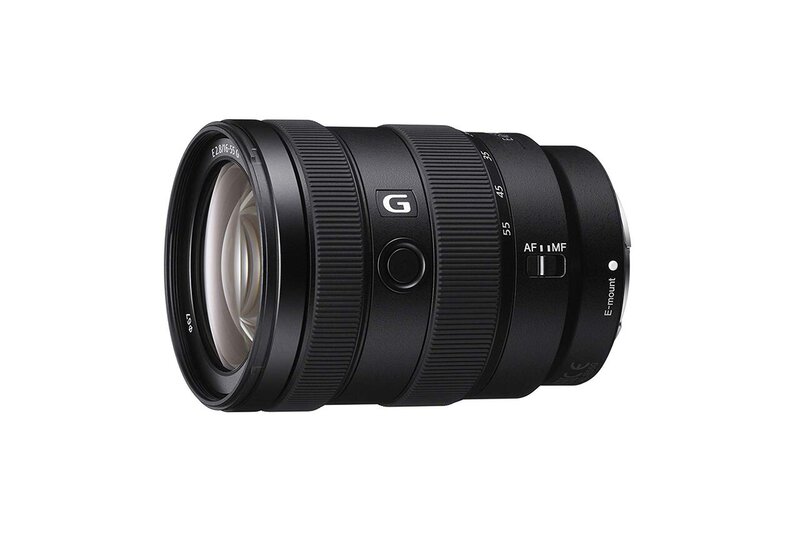
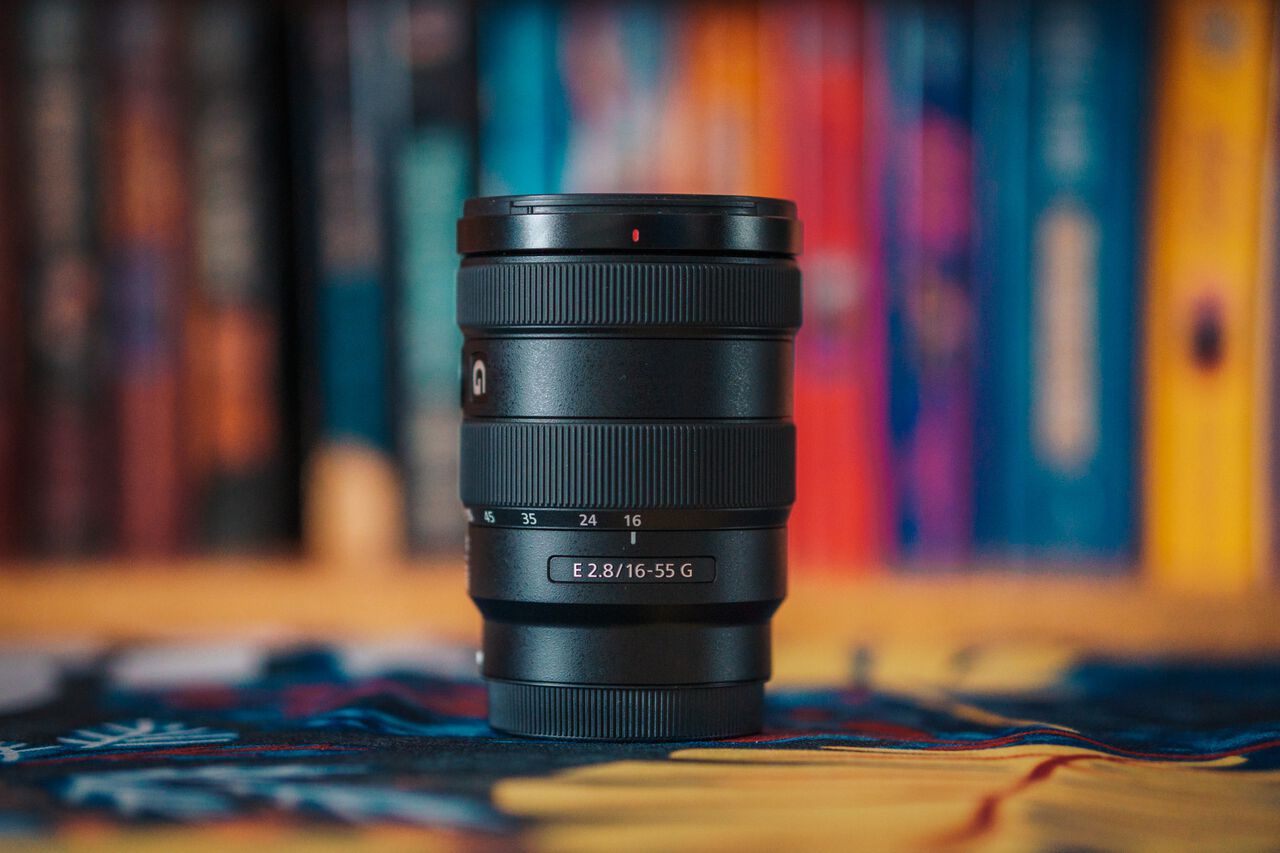
Sony 16-55mm f2.8 lens: I used to recommend the Sony 16-70mm F4 Zeiss Lens, but the Sony 16-55mm F2.8 G is a much stronger choice if image quality and low-light performance are your priorities. Its constant F2.8 aperture is one stop faster than F4, giving you more light and greater control over depth of field while retaining a relatively compact 494g body.
This remains my premium all-around pick for Sony APS-C cameras, especially if you want a native Sony lens with a 24-82.5mm full-frame-equivalent range and constant F2.8 aperture. It is one of the more expensive APS-C standard zooms, so check the current price against alternatives such as the Tamron 17-70mm F2.8 and Sigma 18-50mm F2.8 before buying.
I especially recommend this lens for the Sony a6700, a6600, and a6500, which have in-body image stabilization. The lens itself does not include Optical SteadyShot. It will still work normally on unstabilized bodies such as the ZV-E10 series, a6000, a6100, a6300, and a6400, but handheld video and slower-shutter-speed shooting will benefit less from stabilization.
- ⚡ Pete's Take: "This is my premium all-around pick for Sony APS-C cameras. It's compact, sharp, and the constant F2.8 aperture makes it great for both travel and low-light photography."

🌎 All-Around Best Budget Lens for Everything
- Great range
- Fixed and fast aperture
- Affordable
- Not the most compact and light lens
- Not the sharpest
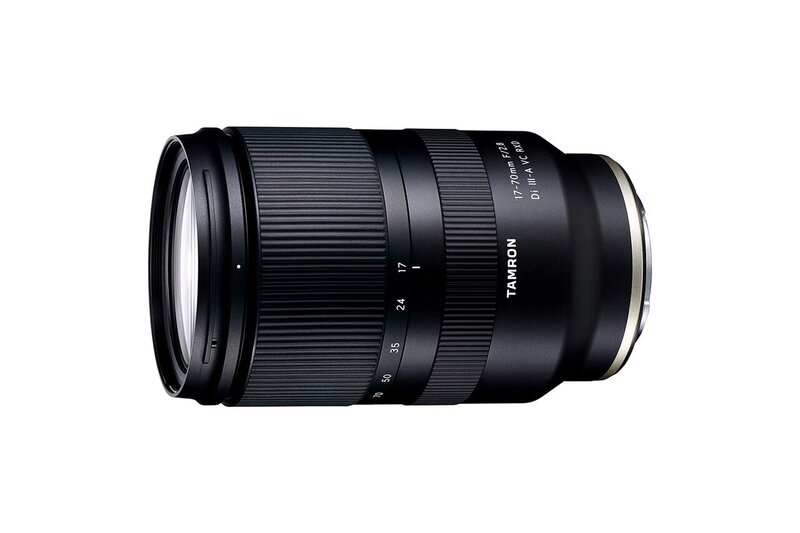
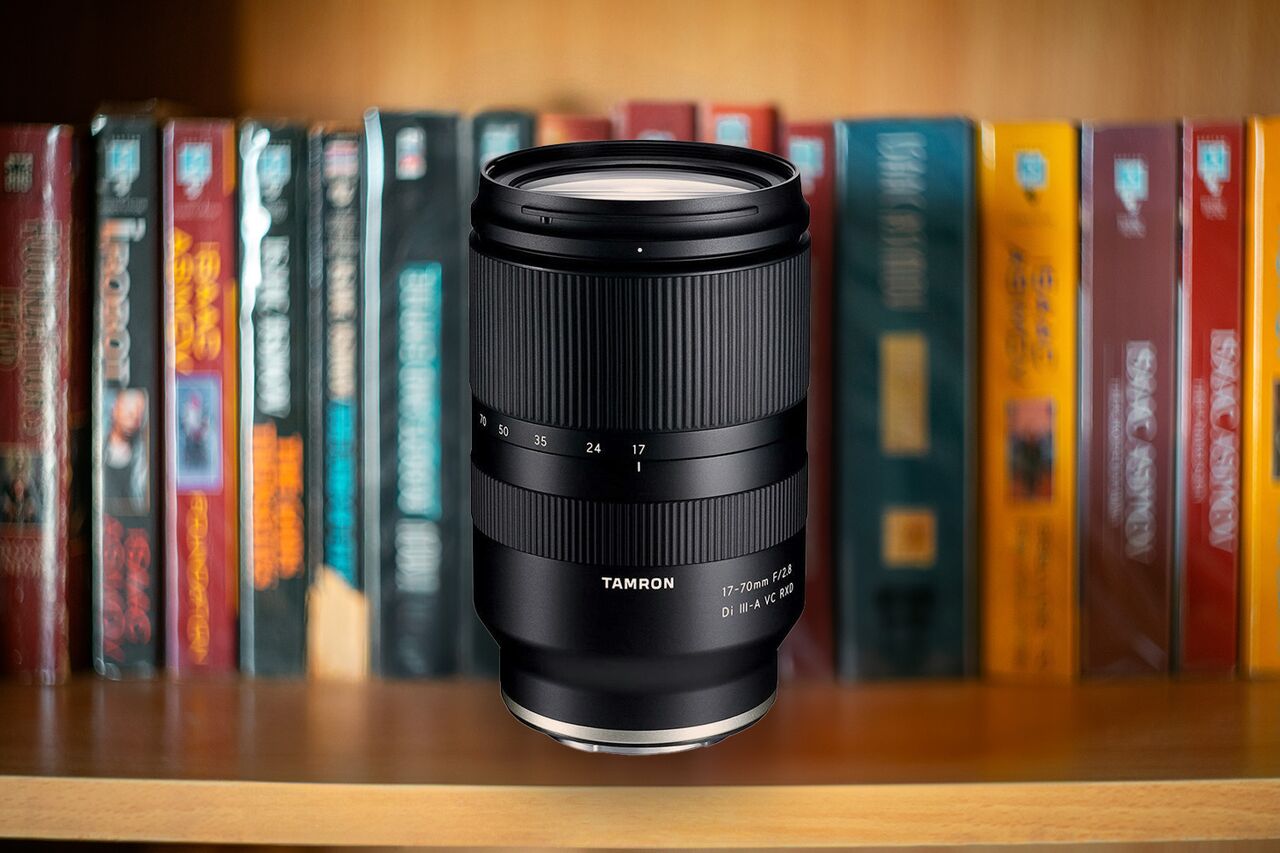
Tamron 17-70mm f2.8 lens: This is the next best lens to get if you are looking for an all-around travel lens that can produce high-quality images and has internal optical stabilization, which is perfect for those with the Sony a6000, a6100, a6300, and a6400, which lack in-body image stabilization.
It is generally less expensive than the Sony 16-55mm F2.8 G while giving you a longer 17-70mm range and built-in VC stabilization. The Sony is smaller and lighter, while the Tamron weighs 525g and reaches farther at the telephoto end. If you want a more affordable all-around travel zoom with stabilization, the Tamron remains a strong alternative. Compare current prices before buying, since the gap changes with promotions.
This lens is recommended for the Sony ZV-E10 II, ZV-E10, a6000, a6100, a6300, a6400, a6500, a6600, and a6700. With its internal optical stabilization, this is the best all-around lens to get if you are using the Sony a6000, a6100, a6300, and a6400 cameras.
- ⚡ Pete's Take: "If the Sony 16-55mm F2.8 is too expensive, this is the one I'd get. You get more reach, a constant F2.8 aperture, and built-in stabilization for less."
🎥 All-Around Best Lens for Videos
- Great range
- Power-zoom
- Affordable
- Quite old
- Bulky and heavy
- Not the sharpest
- F4 aperture might not be enough for some
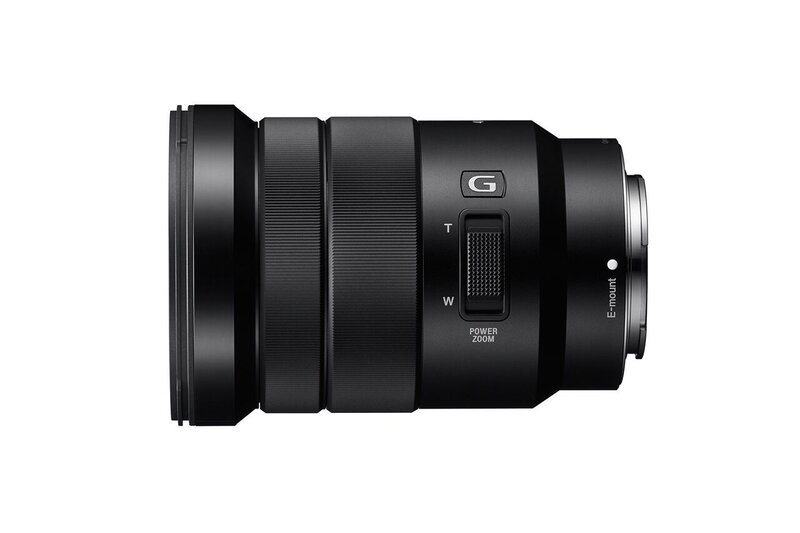
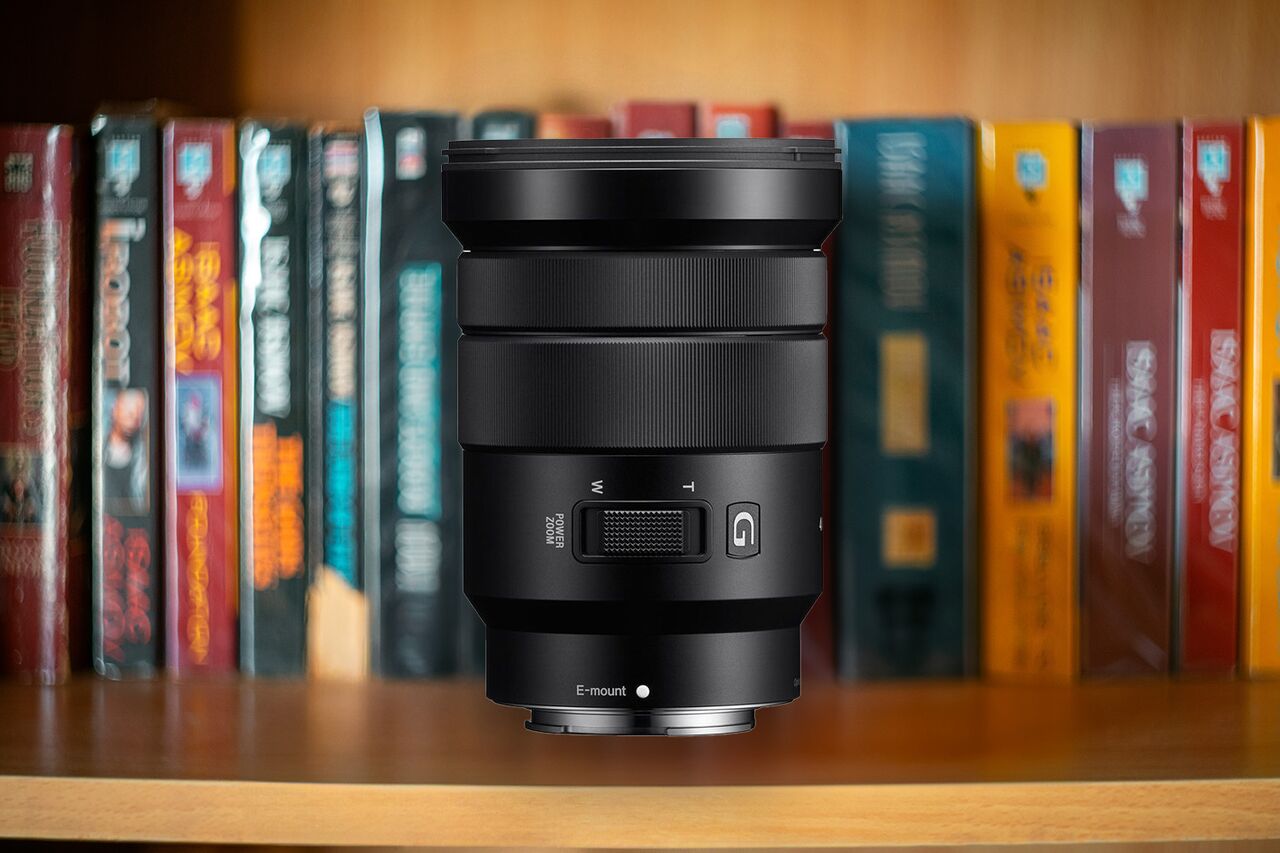
Sony 18-105mm f4 lens: This older lens is still useful for video because it combines a constant F4 aperture, internal power zoom, Optical SteadyShot, and a broad 27-157.5mm full-frame-equivalent range. Those features make it particularly practical for tripod, gimbal, and controlled video work.
Its 427g body is larger than newer compact APS-C lenses, and F4 is not ideal for low light, but the internal power zoom means the lens does not change length while zooming. That can make balancing it on a gimbal easier than an externally extending zoom.
This lens is recommended for the Sony ZV-E10 II, ZV-E10, a6700, a6600, a6500, a6400, a6300, a6100, and a6000.
- ⚡ Pete's Take: "This lens is showing its age, but I still really like it for video. The huge zoom range, stabilization, and internal power zoom make it especially useful on a gimbal."
🏔️ Best Lens for Landscape & Architecture
- Light & Compact
- Fast aperture
- Ultra-wide field of view
- Not the sharpest
- Not the fastest autofocus
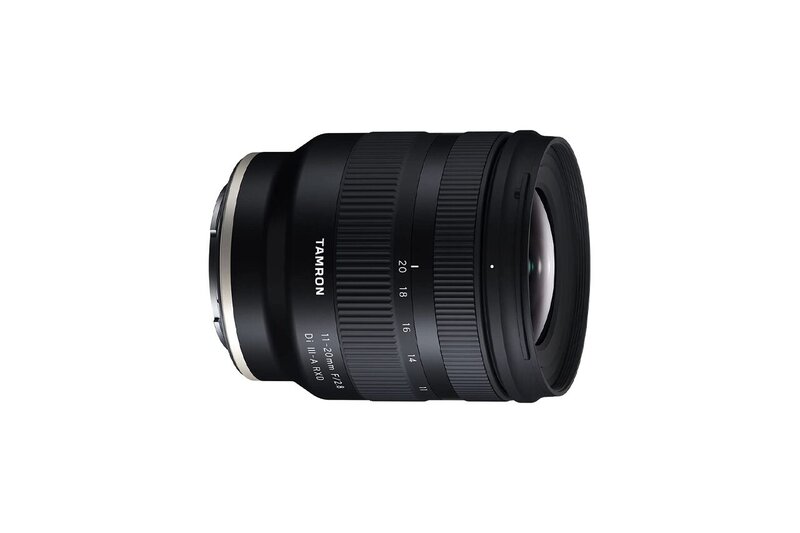
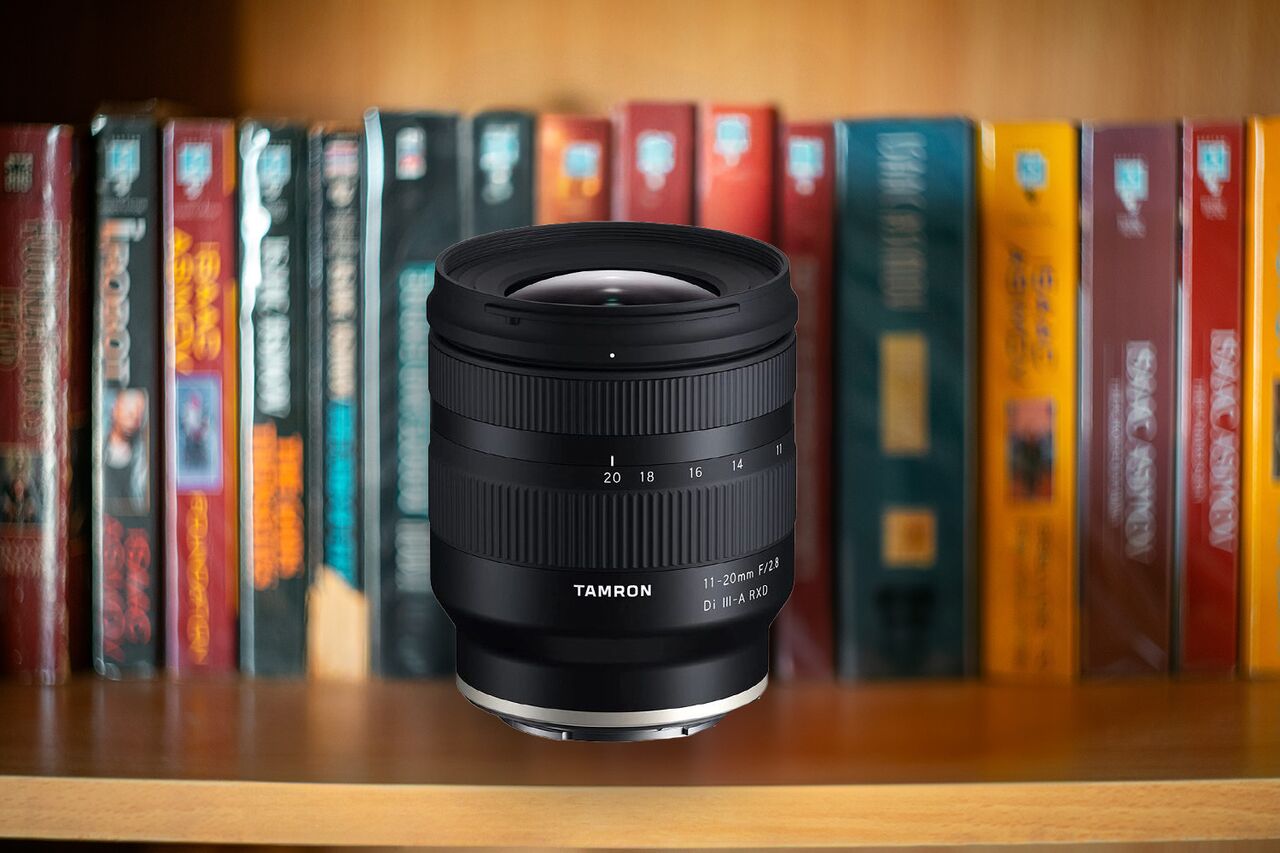
Tamron 11-20mm f2.8 lens: For landscape and architecture photography, the Tamron 11-20mm F2.8 remains one of my favorite Sony APS-C options. The Sony E-mount version was released in 2021, so it is no longer a new lens, but its combination of an ultra-wide 16.5-30mm full-frame-equivalent range and constant F2.8 aperture is still compelling.
Its constant F2.8 aperture is particularly useful for low-light situations such as indoor architectural photography and sunrise or sunset landscapes. Tamron originally introduced it as the world's first F2.8 ultra-wide zoom for Sony E-mount APS-C cameras, but I would no longer describe it as the only fast ultra-wide APS-C option on the market.
With a focal range of 11-20mm, you have super wide focal lengths that are missing from the other lenses mentioned here. The super wide-angle field of view allows you to truly capture all the beautiful details of architecture or expansive landscapes, all in one frame.
I also like how compact it is for an F2.8 ultra-wide zoom. The Sony E-mount version weighs 335g, and Tamron describes the body as having moisture-resistant construction plus a fluorine coating rather than being fully weather-sealed. Its RXD stepping-motor autofocus is also designed for quiet operation, which is useful for both stills and video.
This lens is recommended for the Sony ZV-E10 II, ZV-E10, a6700, a6600, a6500, a6400, a6300, a6100, and a6000. The lens lacks image stabilization, but with such a wide-angle field of view, you should have no trouble getting sharp images even on a camera body that lacks image stabilization.
- ⚡ Pete's Take: "This is still one of my favorite ultra-wide lenses for Sony APS-C. It's compact, lightweight, and the constant F2.8 aperture is great for landscapes, architecture, and gimbal work."
⚖️ Best Lens for Gimbal Use
- Light & Compact
- Fast aperture
- Ultra-wide field of view
- Not the sharpest
- Not the fastest autofocus
Tamron 11-20mm f2.8 lens: Again, I have to give it to the Tamron 11-20mm F2.8 lens when it comes to gimbal use. They really knocked it out of the park here with the compact size, lightweight body, and ultra-wide field of view that works well with any gimbal you throw this camera on. Highly recommended.
This lens is recommended for the Sony ZV-E10 II, ZV-E10, a6700, a6600, a6500, a6400, a6300, a6100, and a6000.
- ⚡ Pete's Take: "Again, its compactness, and lightweight-ness of this lens makes for great gimbal workhorse."
🤳 Best Lens for Vlogging
- Light & Compact
- Optical stabilization
- Ultra-wide field of view
- Not the sharpest
- F4 aperture might be limited to some.
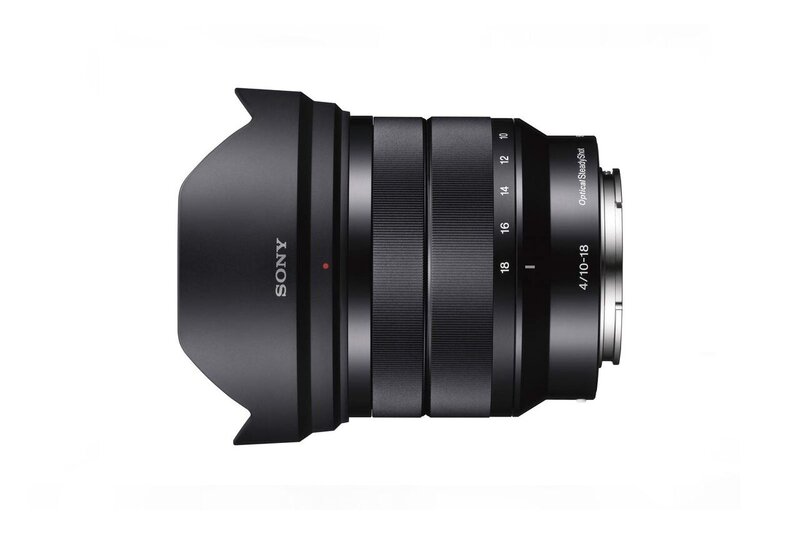
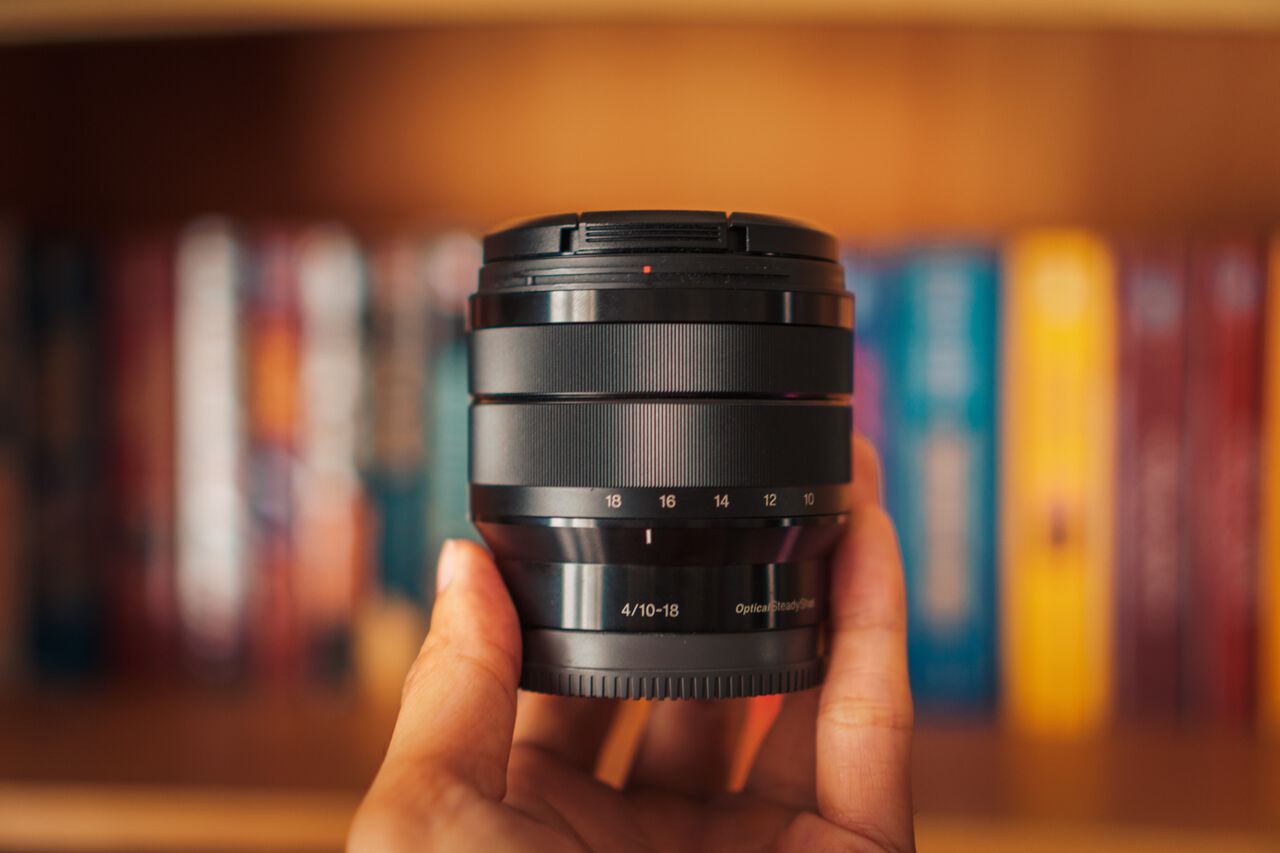
Sony 10-18 mm f4 lens: The Sony 10-18mm F4 OSS is still a usable compact vlogging lens, especially if you already own one, and its built-in Optical SteadyShot remains useful on bodies without IBIS.
However, I would no longer buy it as my default new vlogging lens. Sony now has the much newer E PZ 10-20mm F4 G, which weighs only 178g and adds internal power zoom, faster modern autofocus, and a 15-30mm full-frame-equivalent range. It does not have in-lens Optical SteadyShot, so stabilization still depends on the camera body and its electronic/Active stabilization options.
If built-in lens stabilization is your priority on an older unstabilized body, the 10-18mm F4 OSS still has an advantage. For newer Sony APS-C bodies and video-focused shooting, though, I would compare it directly with the 10-20mm F4 PZ G before buying.
This lens is recommended for the Sony ZV-E10 II, ZV-E10, a6700, a6600, a6500, a6400, a6300, a6100, and a6000.
- ⚡ Pete's Take: "I still like this lens for vlogging, especially on older Sony cameras without IBIS, but I wouldn't buy it new today unless you really need its built-in stabilization."
⭐️ Best Lens for Astrophotography
- Small & Compact
- Fast aperture
- Ultra-wide field of view
- Affordable
- Lacks manual controls
- Distortions
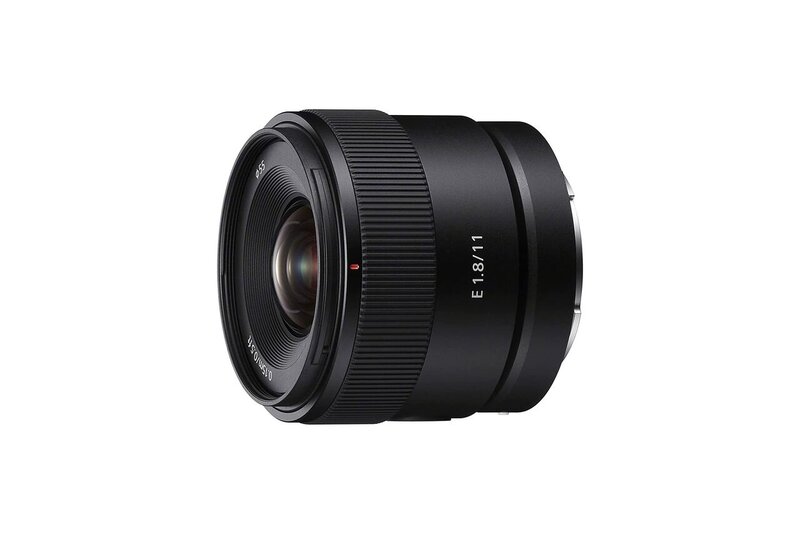
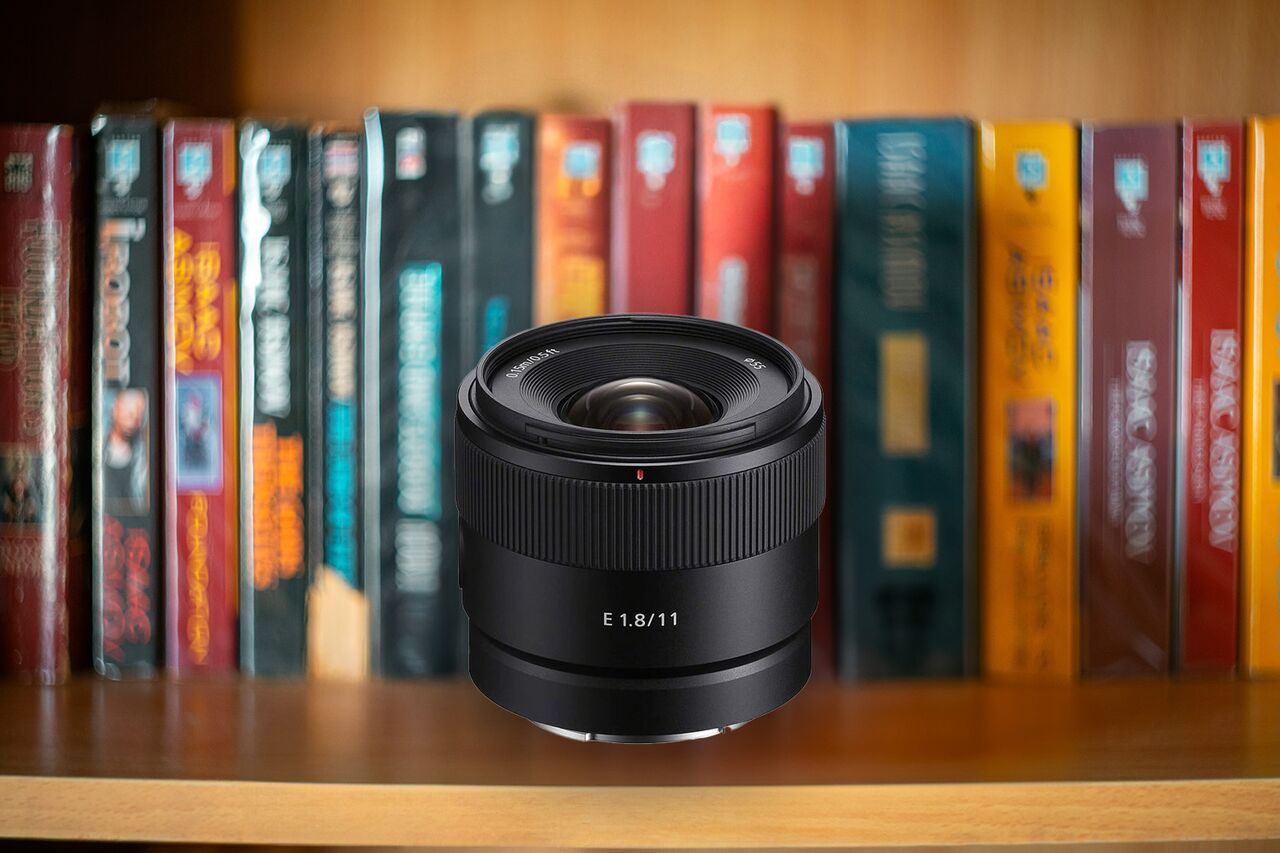
Sony E 11mm F1.8: For astrophotography, the Sony E 11mm F1.8 remains a strong native Sony option. Its 11mm focal length gives you a 16.5mm full-frame-equivalent field of view, while the bright F1.8 aperture and compact 181g design make it well suited to travel and night-sky photography.
With the 11mm focal length, you will be able to capture the expansiveness of the night sky, as well as allowing you to use the landscape as a foreground subject to give your night sky photo an epic scale.
The fast F1.8 aperture will also allow you to let in more light, which in turn lowers your ISO and ultimately produces sharper images. If you are looking for a great astrophotography lens that isn't too expensive, you can't go wrong with the Sony E 11mm F1.8 lens.
This lens works with Sony APS-C E-mount bodies including the ZV-E10 II, ZV-E10, a6700, a6600, a6500, a6400, a6300, a6100, and a6000. The lens itself has no optical stabilization, but that is not a major disadvantage for traditional astrophotography because you will normally be shooting from a tripod with stabilization disabled.
- ⚡ Pete's Take: "This is my pick for astrophotography on Sony APS-C. It's tiny, affordable, extremely wide, and the fast F1.8 aperture lets in plenty of light for shooting the night sky."
😃 Best Lens for Portrait
- Small & Compact
- Beautiful Bokeh
- Great image quality
- No stabilization
- Lack manual controls
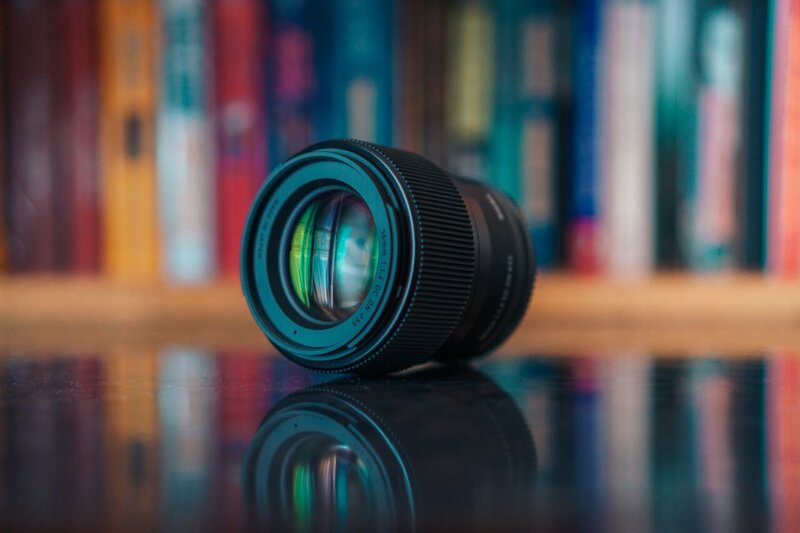
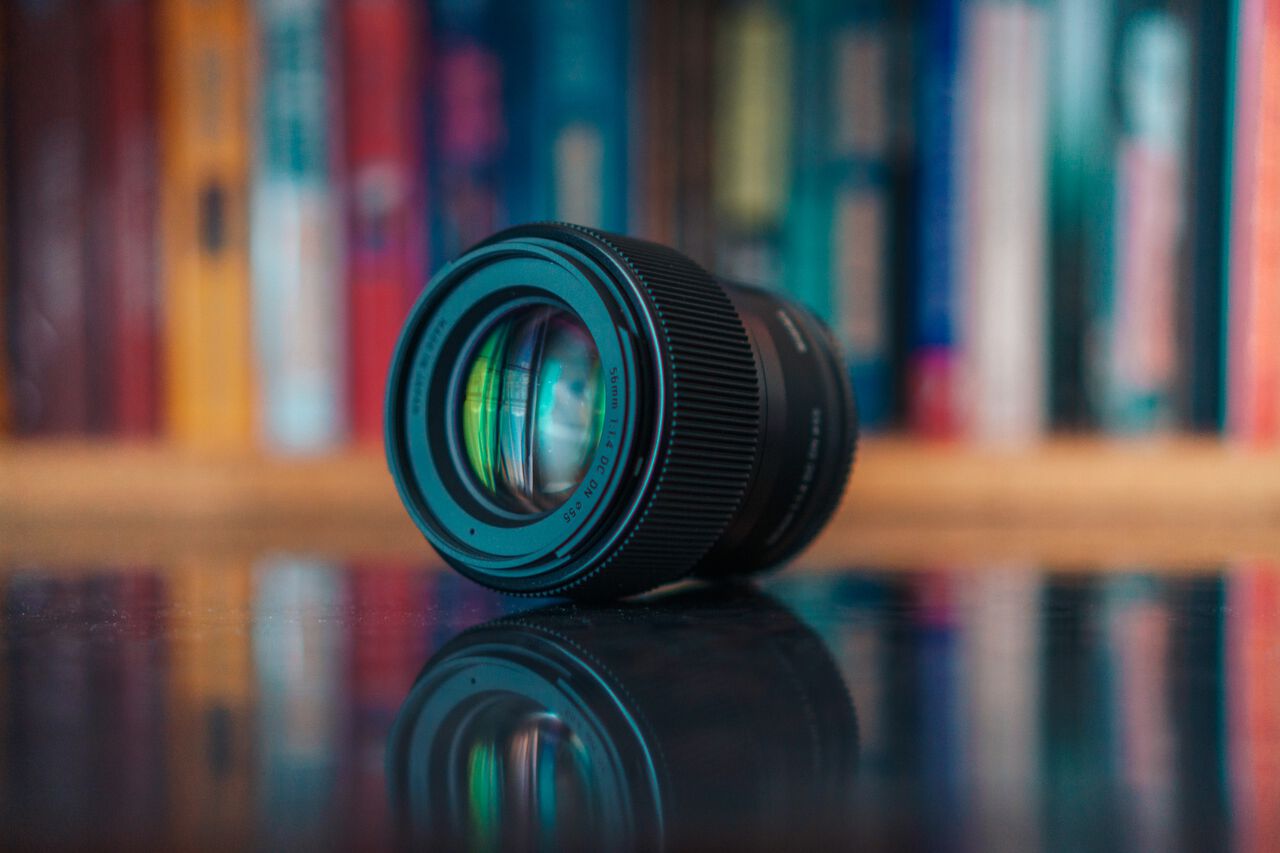
Sigma 56mm f1.4: I used to recommend the Sony 50mm f1.8, but that lens is as old as time. With more competition from third-party manufacturers like Sigma, the company has really given Sony a run for its money.
The Sigma 56mm f1.4 has a tighter focal length, and a much faster aperture than the Sony equivalent, and it supports autofocus with its electronic connection. The result even surpasses what is on paper.
It is great in low light, produces great colors, is extremely sharp from corner to corner, and with its compact size and reasonable price range, the Sigma 56mm f1.4 is the best lens you can get for your Sony APS-C camera.
Plus, this lens produces one of the prettiest bokeh effects I have ever seen on an APS-C camera, and if you are looking for that kind of blurry background effect, this lens won't disappoint.
This lens is recommended for the Sony ZV-E10 II, ZV-E10, a6700, a6600, a6500, a6400, a6300, a6100, and a6000.
- ⚡ Pete's Take: "This is one of my favorite portrait lenses for Sony APS-C. It's incredibly sharp, compact, affordable, and produces some of the prettiest bokeh I've seen from an APS-C lens."

🚶♂️ Best Lens for Street Photography
- Light & Compact
- Nice Bokeh
- Affordable
- No stabilization
- No weather protection
- Could be sharper
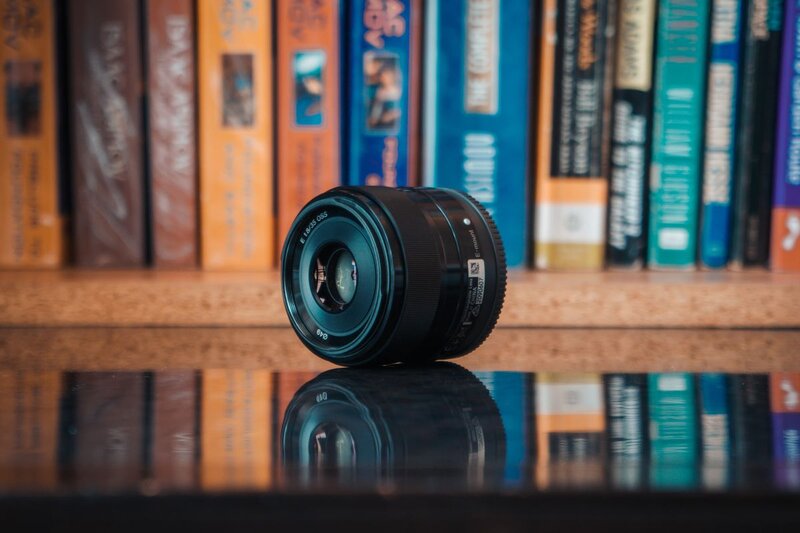
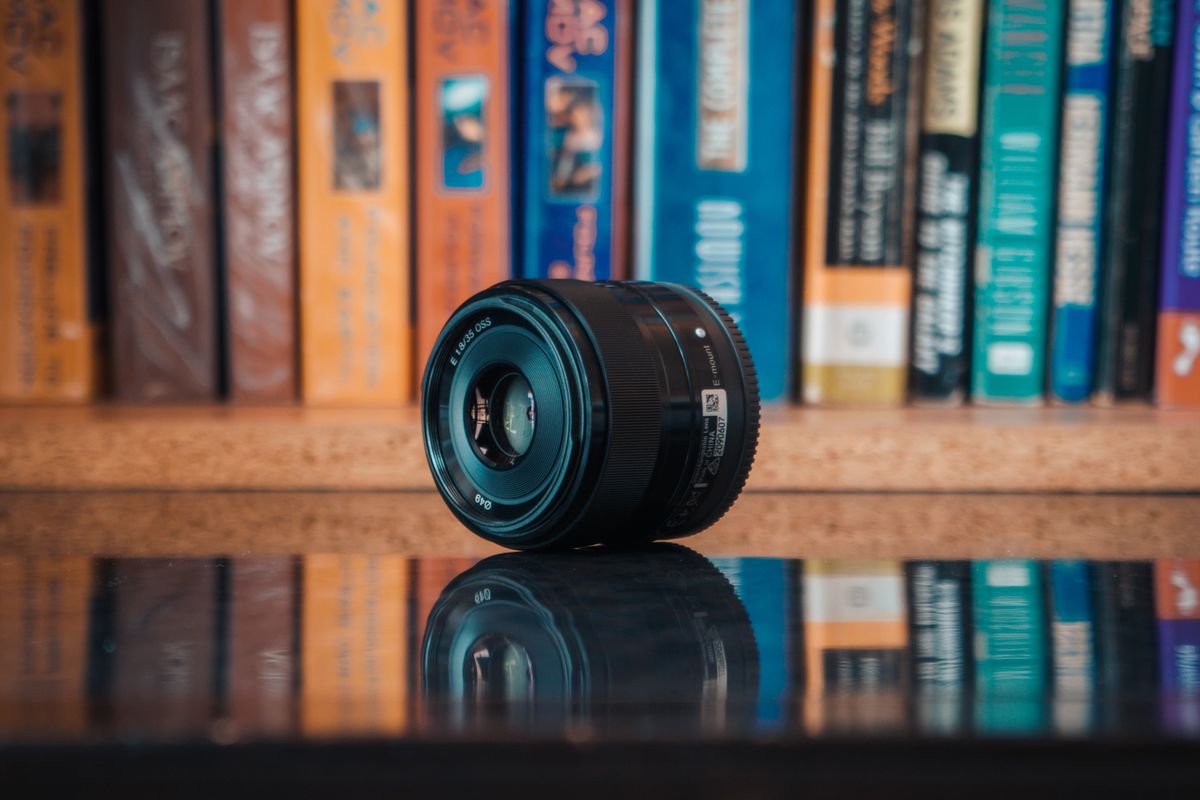
Sony 35mm f1.8: If you want to shoot street photography while you are traveling, the Sony 35mm f1.8 will give you the most natural look since the 35mm focal length is what the human eyes see. With an f1.8 aperture, you will be able to get great subject separation and a stunning bokeh effect too.
Also, since the lens is so small and lightweight, this is the kind of lens you don't mind carrying as your second lens while traveling.
This lens is recommended for the Sony ZV-E10 II, ZV-E10, a6700, a6600, a6500, a6400, a6300, a6100, and a6000.
- ⚡ Pete's Take: "This is a great little street photography lens. It's small and lightweight enough to carry everywhere, while the F1.8 aperture gives you great subject separation and beautiful bokeh."
🐯 Best Lens for Wildlife (Telephoto)
- Amazing range
- Relatively compact
- Optical stabilization
- Variable slow aperture
- Not compatible with teleconverters
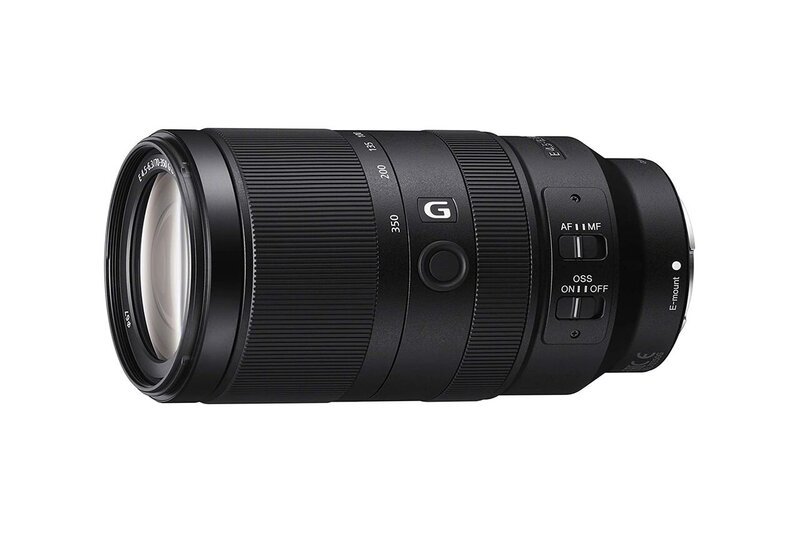
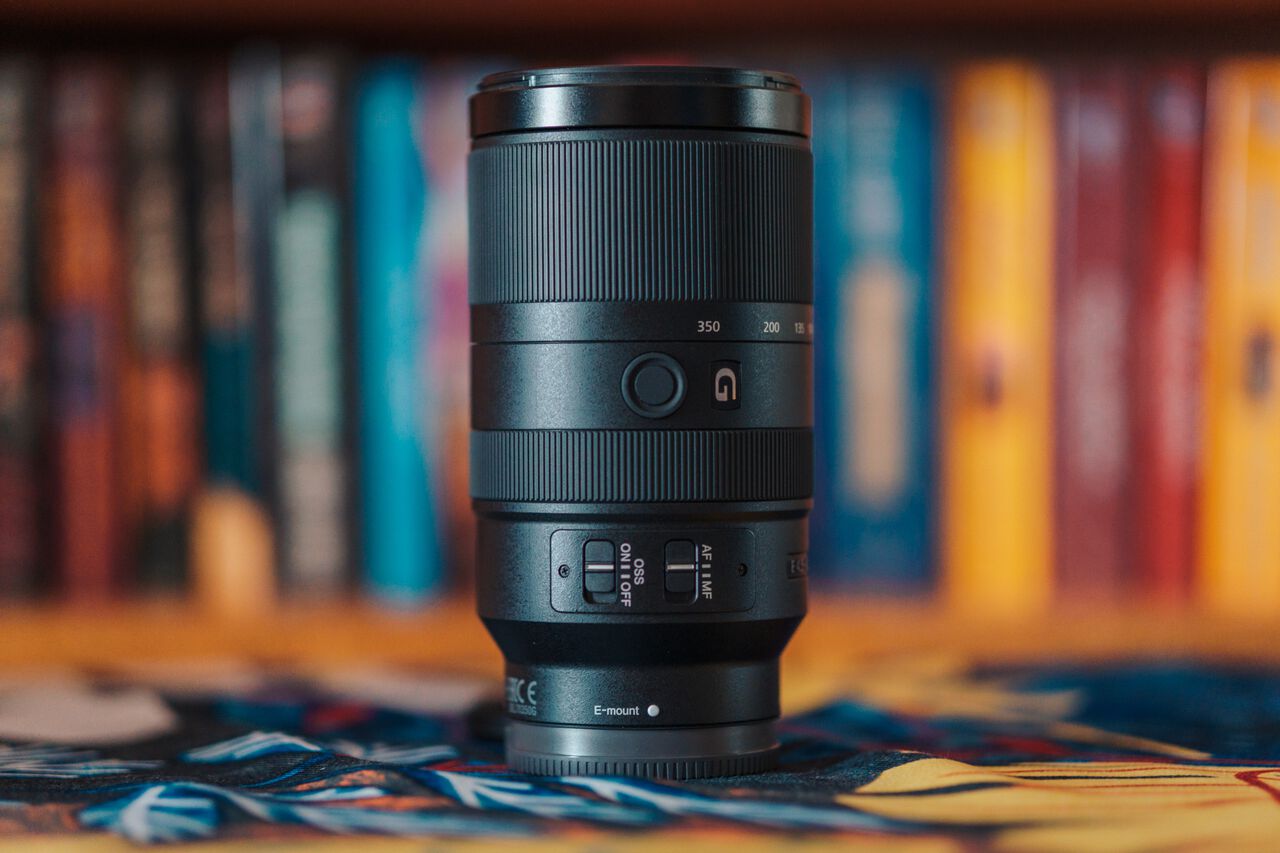
Sony 70-350mm F4.5-6.3 Super telephoto lens: If you enjoy observing wildlife, such as bird-watching and safaris while traveling, I highly recommend getting the new Sony 70-350mm super-telephoto lens. It covers telephoto focal lengths that aren't covered by any of the lenses mentioned above.
With its extremely compact size (relative to the other telephoto lenses in this range) and its incredible reach of 350mm or a whopping 525mm equivalent on a full-frame format, this lens will allow you to reach your subject without requiring you to be close, which is perfect for wildlife or a safari trip where you are unable to move closer to your subject.
Not to mention, it also comes with optical image stabilization, which is extremely useful for keeping your shot stabilized while in the 350mm range.
This lens is recommended for the Sony ZV-E10 II, ZV-E10, a6700, a6600, a6500, a6400, a6300, a6100, and a6000.
- ⚡ Pete's Take: "For wildlife and safaris, this is the telephoto lens I'd recommend for Sony APS-C. You get an incredible 525mm-equivalent reach in a surprisingly compact package with built-in stabilization."

🛒 Which Camera Lens Should You Pick?

Now that you have all of the information, which one should you pick? Well, that will depend on the type of travelers you are.
If you are a photographer, videographer, or both, pick any of the all-around lenses as your main lens. If you are more into nature than cities, go with a wide-angle lens. If not, go with a street photography lens as your second lens. Do you like camping and hiking? If you do, go with an astrophotography lens as your third lens.
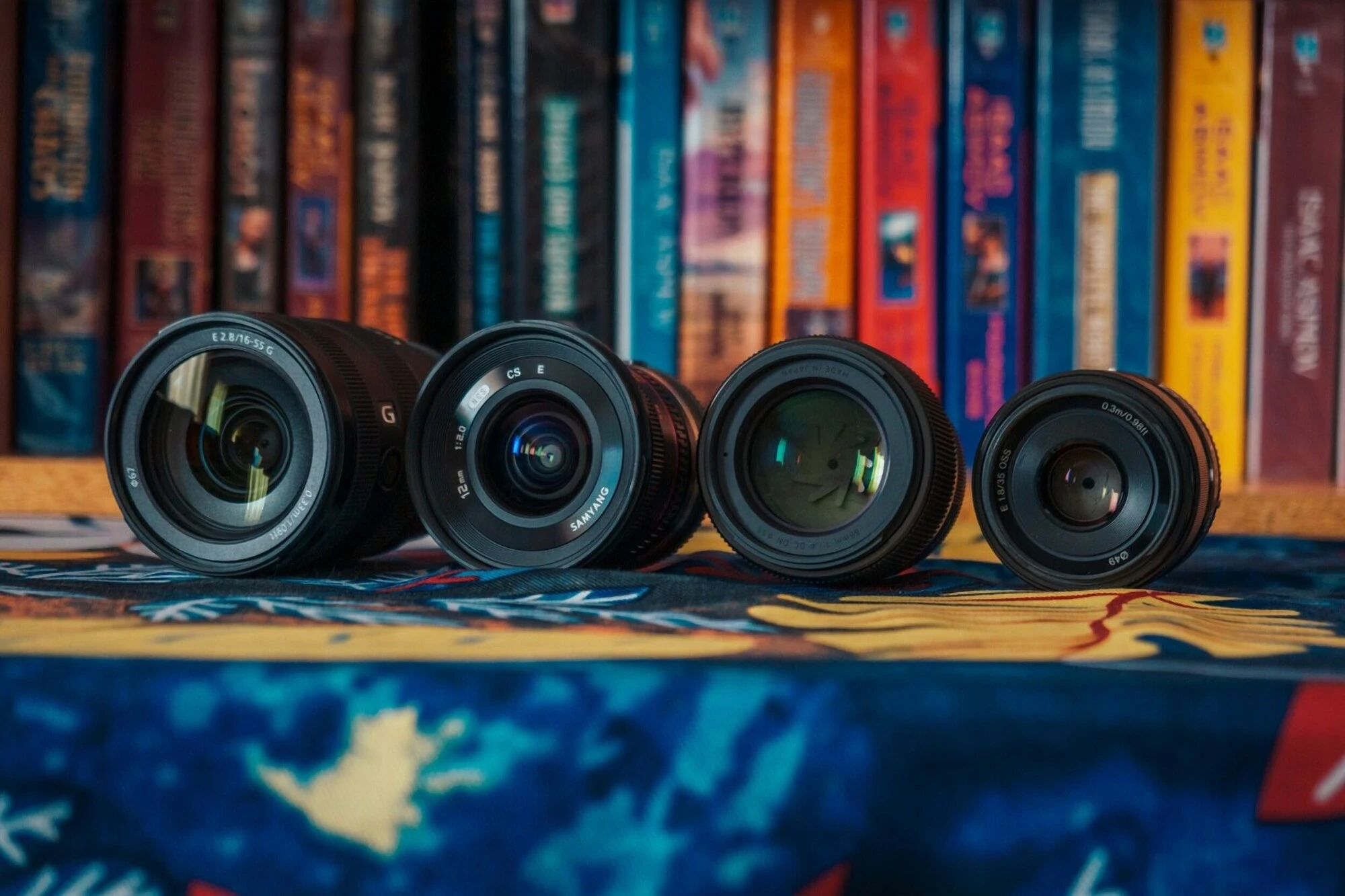
The combination I am using now is the Sony 16-55mm F2.8 lens as my main lens since I am into both photography and videography and I want to travel as light as possible. Additionally, I use the Sony 35mm f1.8 lens as my second lens for street photography, the Sigma 56mm f1.4 lens as my portrait lens due to its incredible bokeh, and the Rokinon 12mm f2 lens for astrophotography, landscape, and architecture. I find this combination to be the most flexible for the type of traveler I am while keeping the setup light and portable.
Disclaimer: This post may contain affiliate links. See our disclosure policy.
First Published:
Last updated:


17 Comments
Thanks for the comprehensive guide! I was wondering which lens would be best to bring because we usually go stargazing so the astrophotography lens should be neat.
Hey Jearlene,
Thank you for the comment! I would recommend getting a wide angle lenses with fast aperture so you can capture the stars and landscape in one frame while letting the faster aperture do all the work instead of relying on ISO. The Rokinon 12mm f2 (For APS-C Cropped Camera) is a great example of if you can find anything that is that wide with aperture less than that, that would be perfect.
I hope this helps!
Think this list misses a few heavy hitters. Struggling to tell when you wrote this, but as it says 'updated 3 months ago' I'm going to take it as relevant as at Dec 2019. Two key lenses missing;
Sigma 56mm f1.4 is a far better portrait lens than the Sony 50mm f1.8. Way better.
Sony 16-55 f2.8 is the workhorse professional lens on the range and should replace any need for the Zeiss 16-70. In fact, the 16-105 replaced any need for the Zeiss already.
Also your comments on stabilisation seem misinformed. We all shot would stabilisation for a long time before it came along. It's a nice feature in low light with long shutter speeds, but the idea of not being able to use non-stabilised glass handheld on a camera without IBIS is just a bit silly. Practically everyone does exactly that...
Hey Mike,
Thanks for the heads up! Someone told me the same about the outdated list a while ago. I finally have the time to do my own research and update the article today and you are right on both fronts, these new lenses you recommended are way better than the ones I previously recommended.
Thanks again for the reminder!
Great - just read the updated list and I think your revisions are spot on.
Sigma 16mm f1.4 is clearly the best for any situation, you don't have a zoom but you can shoot in any weather, in narrow places and almost macro. The only downside is you have to go closer instead of zooming what's not always possible.
You get low noise, no blur, great colors instead.
Hi why would you not use sony 16-55mm for portraits and wide angles as well when it covers the focal length of the sony 35mm and the sigma 56mm in your final recommendation?
Hey Vik,
The 16-55mm is definitely a great all around lens and it can easily handle portrait but if you are looking for the best portrait lens with better subject separation, F2.8 on the 16-55mm isn't enough to create a creamy bokeh hence why I recommend lenses that have F1.8 or less.
With the Sigma 56mm F1.4, you will get the best subject separation and creamy bokeh out of all the other lens. :)
You can read my reviews on both lenses with some sample portrait shots so you can see the difference:
16-55mm F2.8 Review
56mm F1.4 Review
Enjoy
Thanks for putting this update together. There are a ton of similar guides out there that are years outdated and don't have Sigma, Tamron, Samyang, etc lenses included. Also, differentiating between with and without ibis is so important. I have an a6100 so the Sony G lenses without OSS don't really make sense.
Hey Jeff,
Thank you for the comments. Yup, I am still using my Sony a6500 as a back up camera and I love the fact they there are so many awesome third party lenses out there, keeping the APS-C ecosystem alive. :) I wait for the day when all Sony APS-C cameras finally have IBIS like its full-frame counterparts!