

Guatemala is, in my opinion, one of the most beautiful countries in Central America. It has everything a traveler could ask for, from colorful colonial towns and a stunning lake so beautiful that I dubbed it the Lake Como of Central America, to volcanoes that erupt every 20 minutes that you can hike and massive Mayan ruins hidden deep in the jungle.
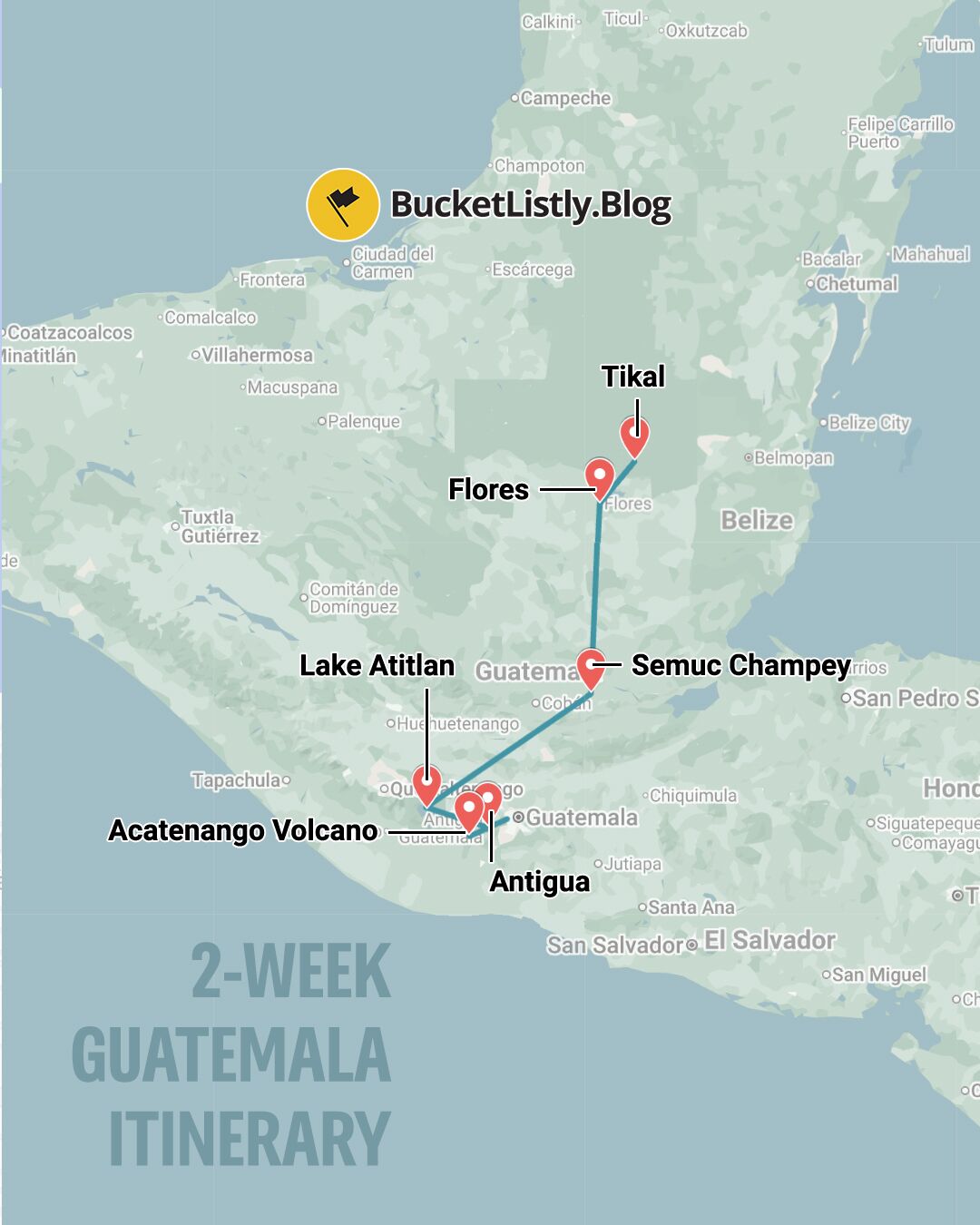
This 2-week Guatemala itinerary is designed to take you through some of the country's absolute highlights, including Antigua, Acatenango Volcano, Lake Atitlán, Semuc Champey, and Flores, with a visit to the legendary Tikal National Park. This is the exact route I took, so you will be getting firsthand information, down to the smallest details, from my own experience traveling through Guatemala.
Whether you are a first-time visitor or an independent traveler looking to explore one of the most beautiful countries in the region, this itinerary covers everything you need to plan your trip, including where to go, how long to stay, how to get around, and all the tips I learned from my very own journey through Guatemala.

Map of this 2-week Guatemala Itinerary
Quick Summary
| ☀️ Day 1-3: | Antigua (3 nights) |
| ☀️ Day 4: | Hiking Acatenango (1 night) |
| ☀️ Day 5-6: | Hiking Down from Acatenango & Rest Day in Antigua (2 nights) |
| ☀️ Day 7-10: | Lake Atitlán (3 nights + 1 night on the bus) |
| ☀️ Day 11-12: | Semuc Champey (2 nights) |
| ☀️ Day 13-15: | Flores & Tikal (3 nights) |
2 Weeks Itinerary for Guatemala: Day-to Day Breakdown
Day 1 - 3: Antigua (3 nights)
- 📍 Stay: Casa del Sol
- 🕐 Time: 3 nights
- 📖 Full Guide: Antigua, Guatemala Travel Guide: Things to Do, Itinerary & More
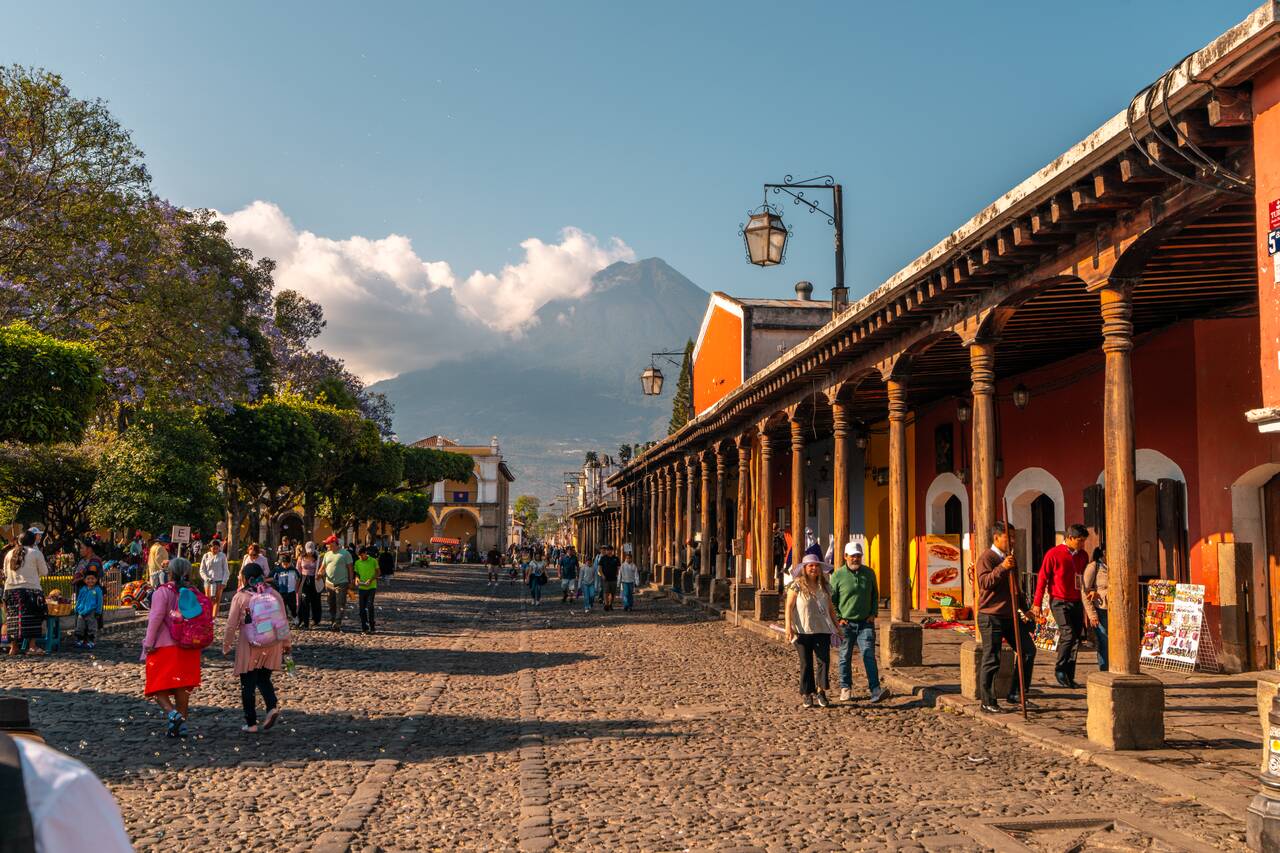
This itinerary technically begins in Guatemala City, where La Aurora International Airport, the country's main international gateway, is located and where you will likely arrive. However, like many capital cities in Central America, we can skip spending time in the city and head straight into the action by traveling to Antigua, which is located only about an hour away from the airport.
There is a shared shuttle operated by GuateGO that runs between La Aurora International Airport and Antigua up to 6 times a day, from 6 AM to 7:30 PM, costing around 22 USD per person. It is one of the easiest ways to get straight from the airport to Antigua without any hassle. You can check the latest schedule and book your shuttle here.
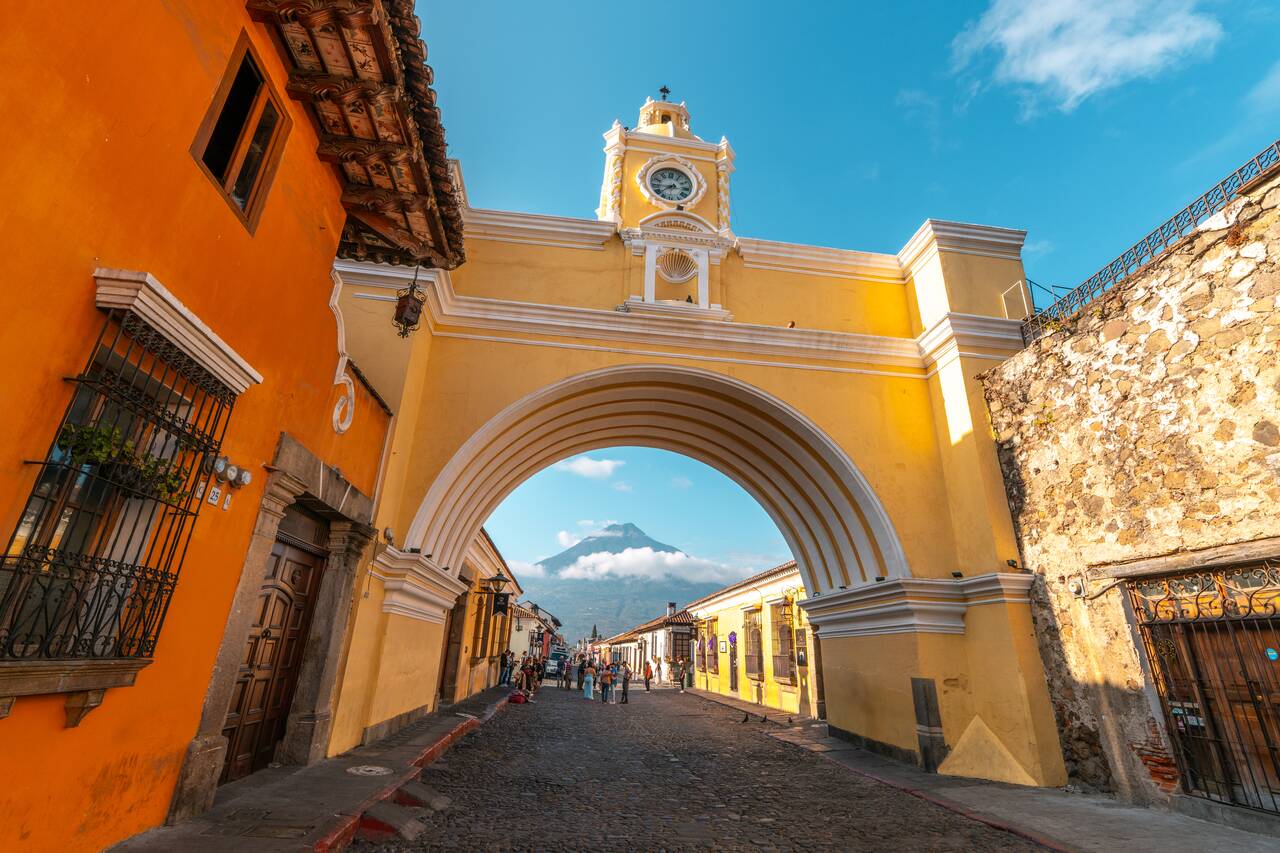
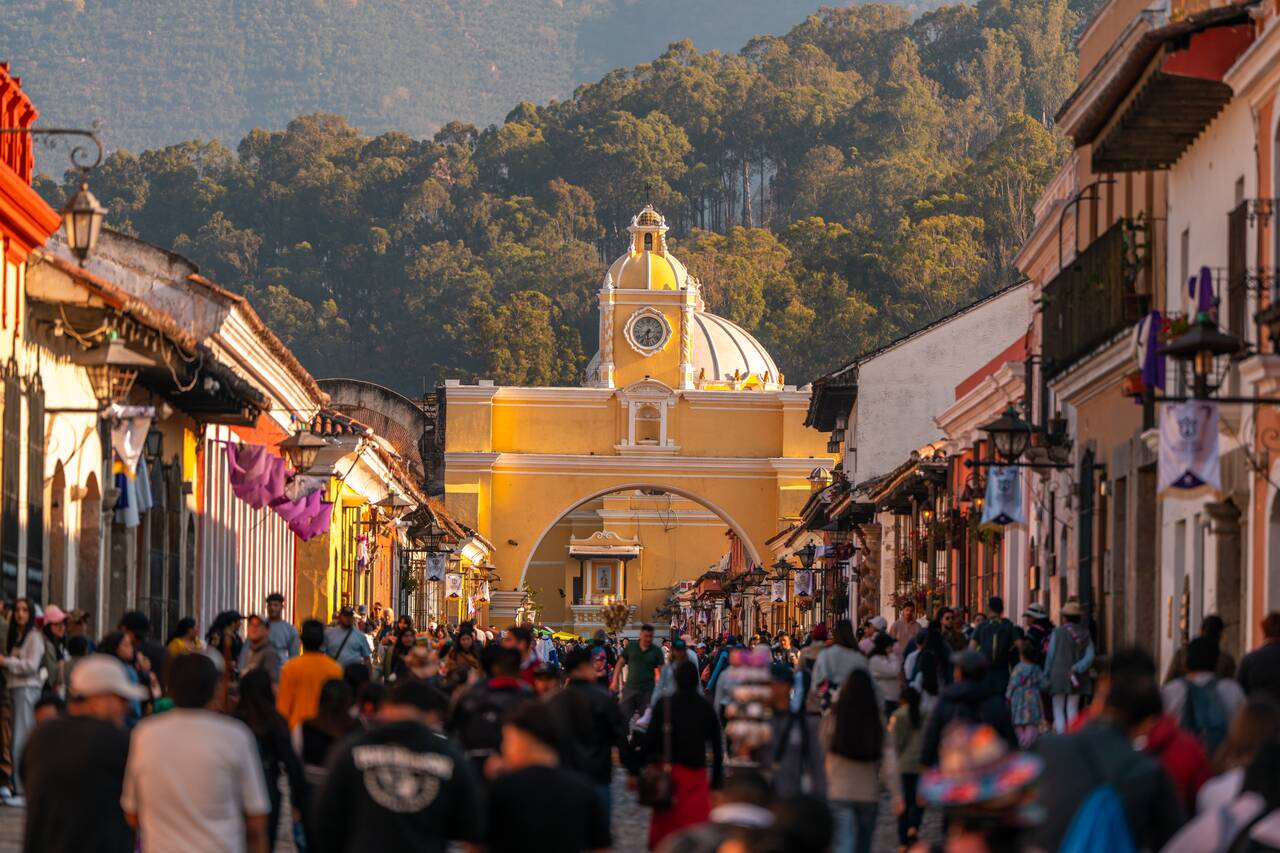
Antigua is one of my favorite cities in Central America, with its colorful colonial streets, beautiful historic architecture, excellent cafés, and incredible views of the surrounding volcanoes. It is the perfect place to ease into your trip, get your bearings, and prepare yourself before exploring the rest of Guatemala.
- Highlights of Guatemala (9 days)
- Solo-ish Guatemala (9 days)
- Basic Central America: Guatemala to Costa Rica (17 days)
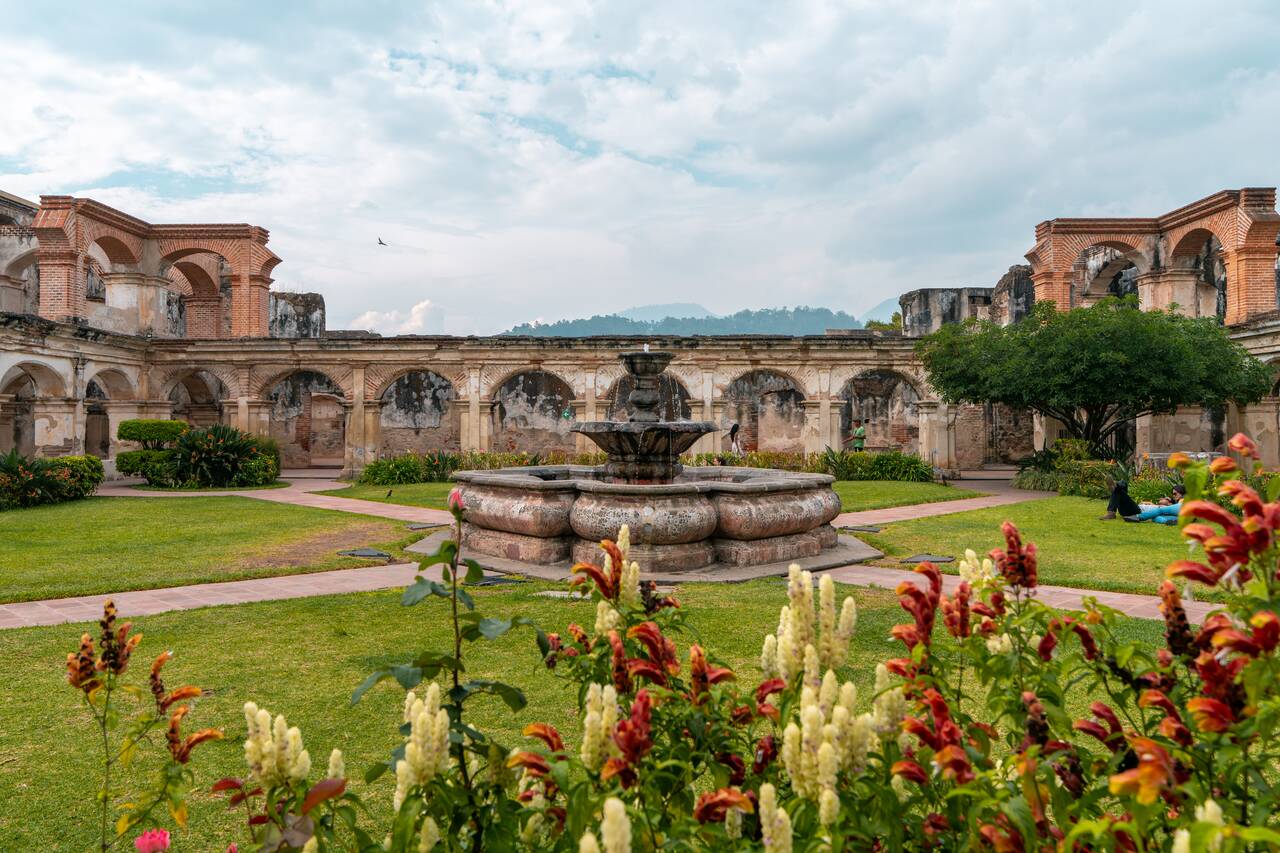
Spend your first day exploring the historic center of Antigua at a relaxed pace. Visit some of the city's most iconic landmarks, including the Santa Catalina Arch, Parque Central, and the many beautiful colonial churches and ruins scattered throughout the city like the Ruins of Antigua Cathedral and Convento Santa Clara.
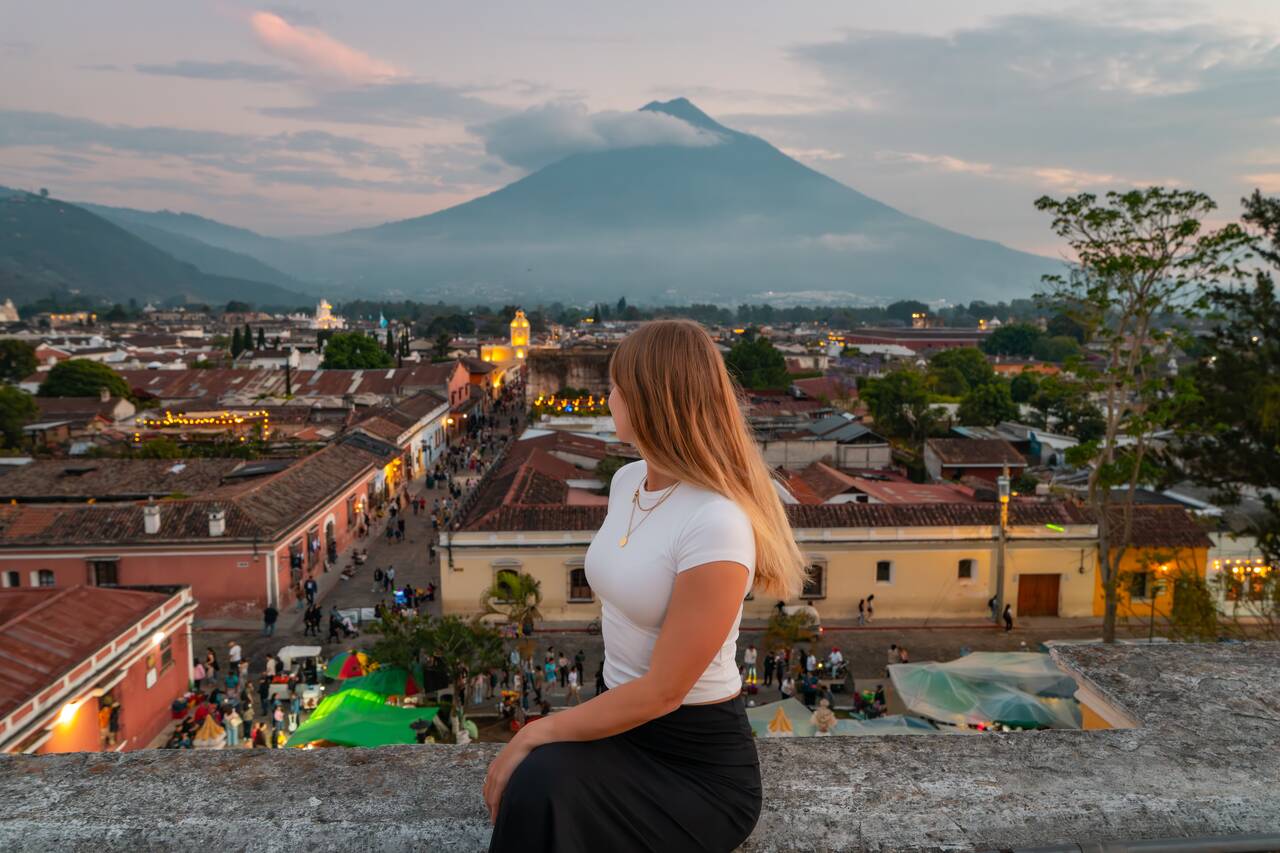
That should occupy you the entire day. For sunset, I highly recommend you go up to the rooftop of Iglesia de la Merced, which is one of the most beautiful churches in the city and has a great view over the main street of Antigua with the Agua volcano in the backdrop.
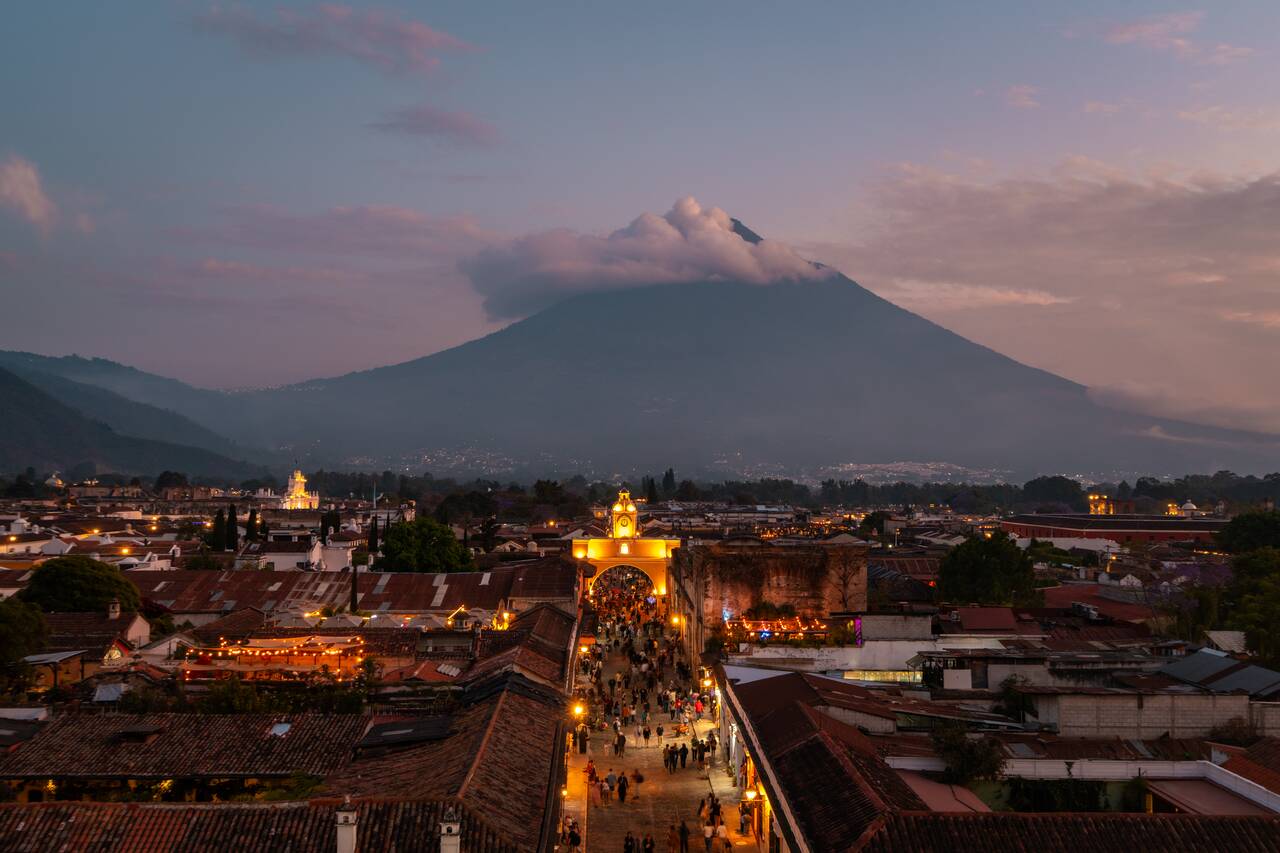
I highly recommend coming around sunset, as the view is best during the blue hour after sunset, when the sky is painted purple, the streets of Antigua are illuminated by artificial lights, and, if the weather permits, you might even be able to see eruptions from Fuego Volcano in the distance once it gets dark enough but not too dark.
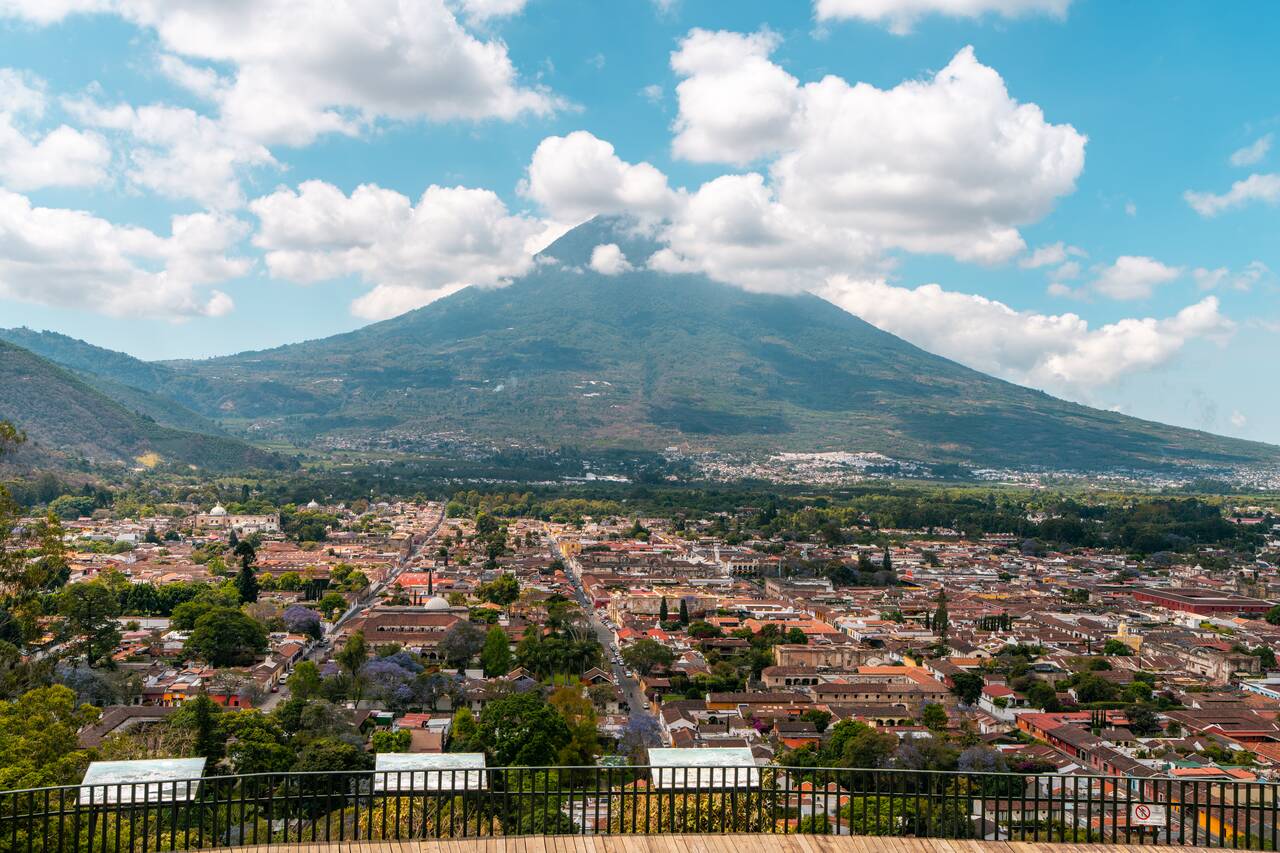
With another two days in Antigua, you can take your time experiencing more of what the city has to offer. In the morning, go and hike up Cerro de la Cruz, one of the best viewpoints in Antigua. From up there, you will have a stunning panoramic view over the entire city with the towering Volcán de Agua perfectly framed in the background.
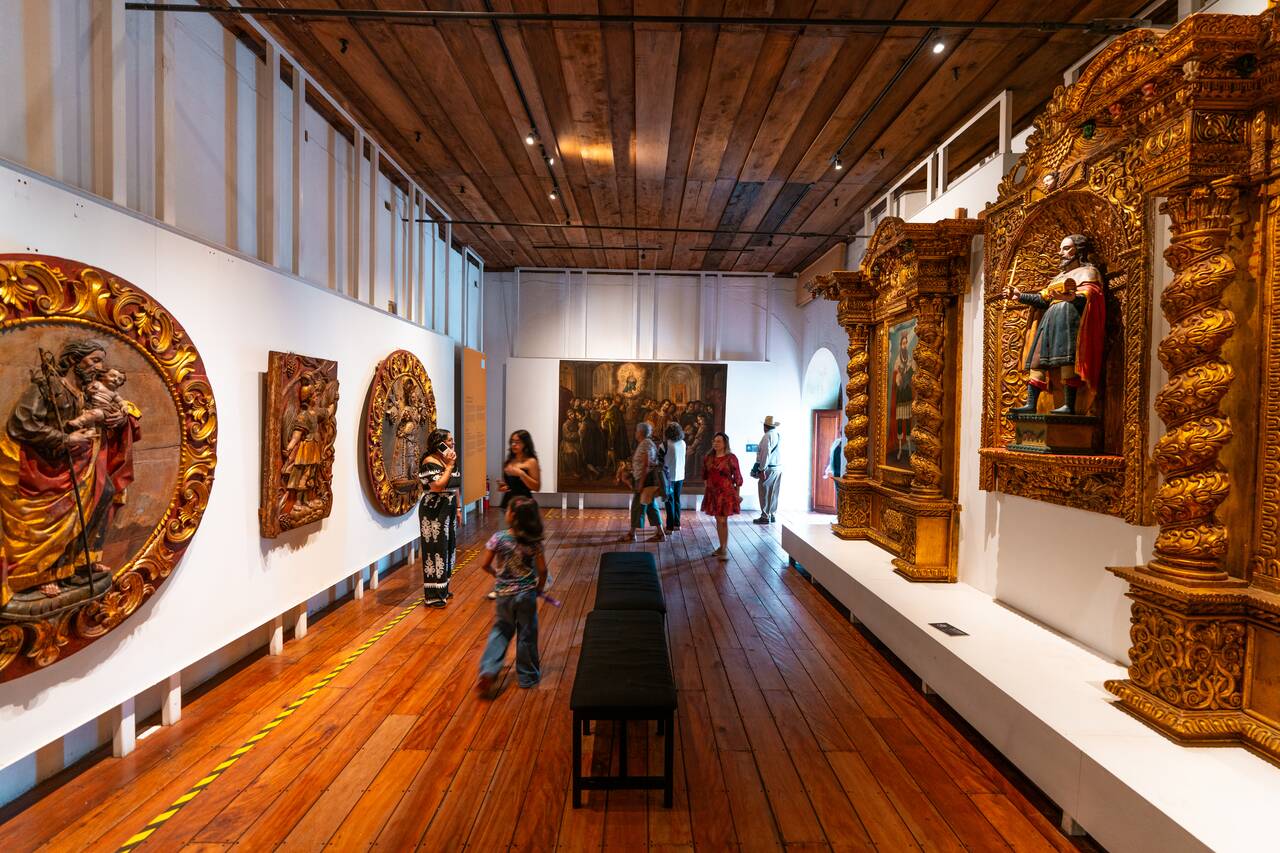
You can also visit museums, like Museo Nacional de Arte de Guatemala which is my favorite as it held a great collection of local artworks inside this beautiful colonial building with a great courtyard set against the backdrop of Agua volcano, and best of all, it is free to enter.
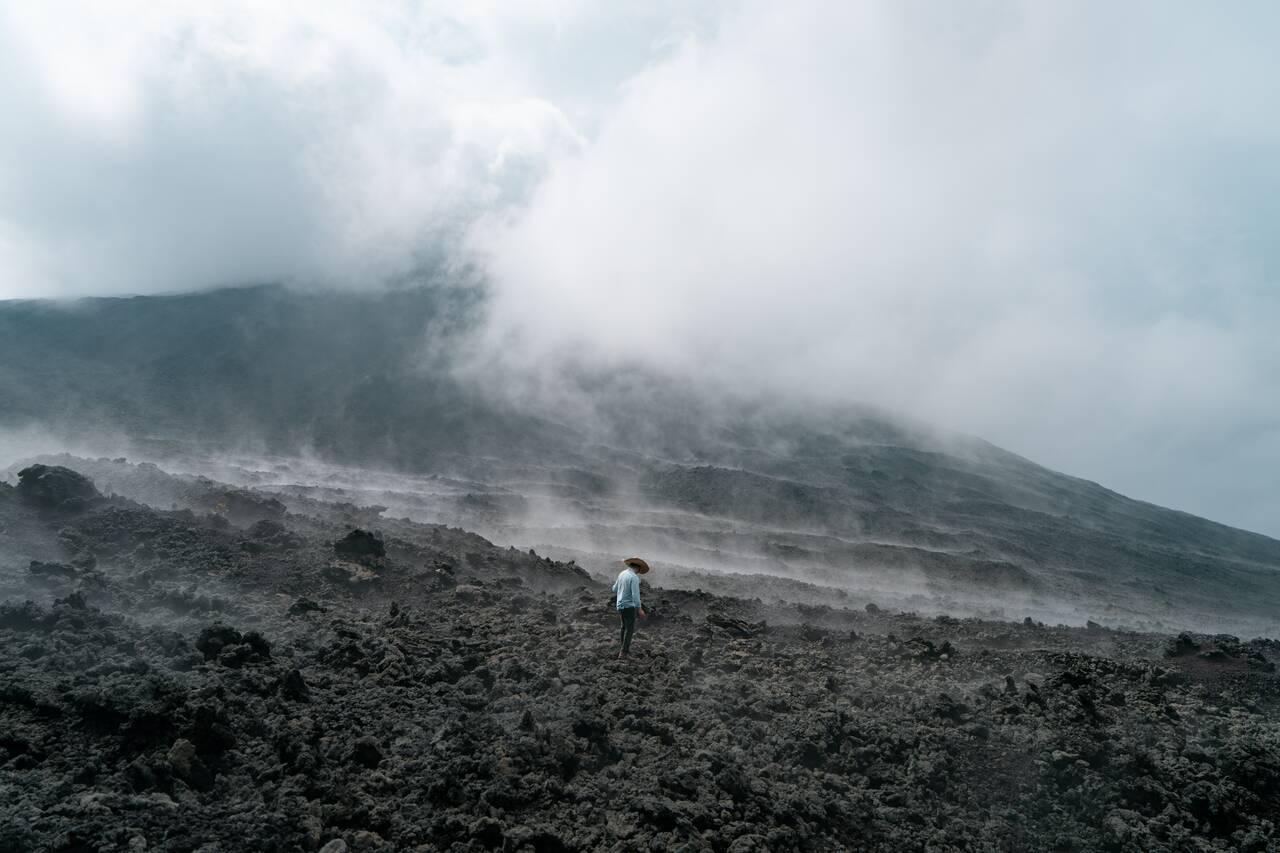
You can also take a day trip to Pacaya Volcano to prepare for the Acatenango hike that we will tackle the next day. Located about an hour from Antigua, Pacaya is one of Guatemala's easiest and most accessible active volcanoes, which makes for an easy half-day trip from the city.
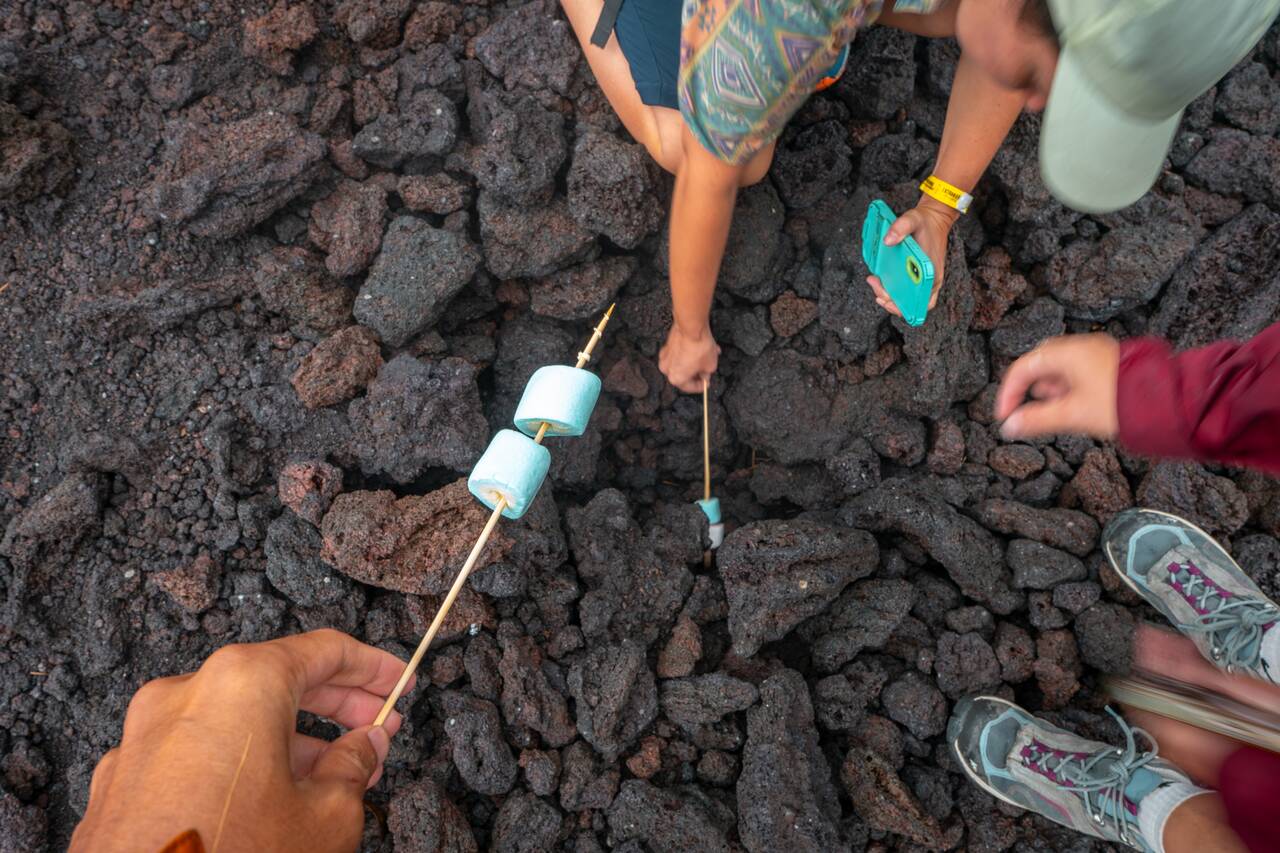
Standing at 2,552 m (8,373 ft), Pacaya is much lower and less demanding than Acatenango, but it still offers an incredible volcanic landscape. The hike takes around 2–3 hours round trip along a very easy trail that gradually descends into pine forests, volcanic rocks, and as the trails gets flatter, you have arrive at the lava fields, where you can see nearby volcanoes like Agua, Fuego, and Acatenango on clear days.
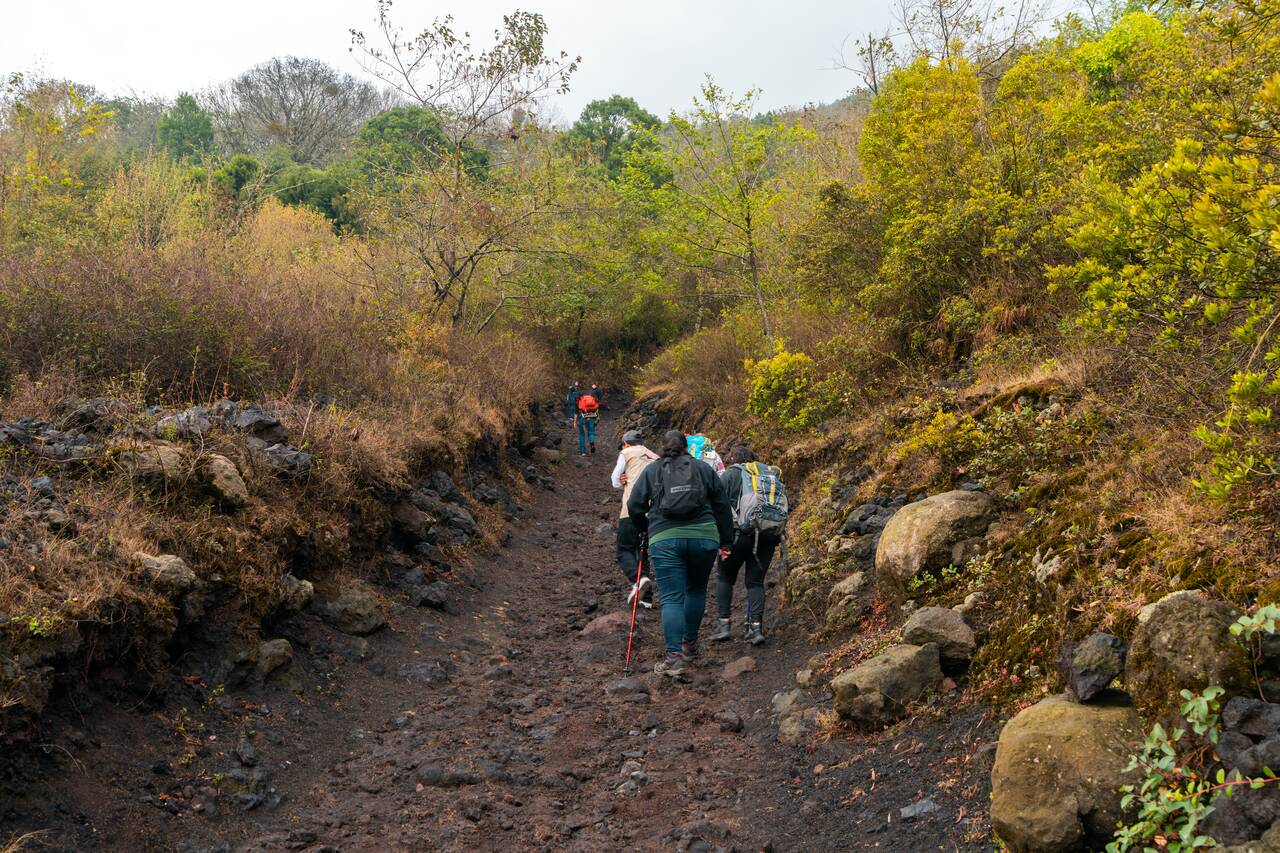
To hike Pacaya, you will have to join a guided tour, which includes round-trip transportation from Antigua and takes around half a day, usually leaving at 6 AM and returning around 2 PM. The hike is very easy, and almost anyone can do it. I hiked Pacaya hoping it would prepare me for Acatenango, which it was a nice introduction to, but honestly, it was far too easy to prepare my knees for the onslaught that was the Acatenango hike 🤣.

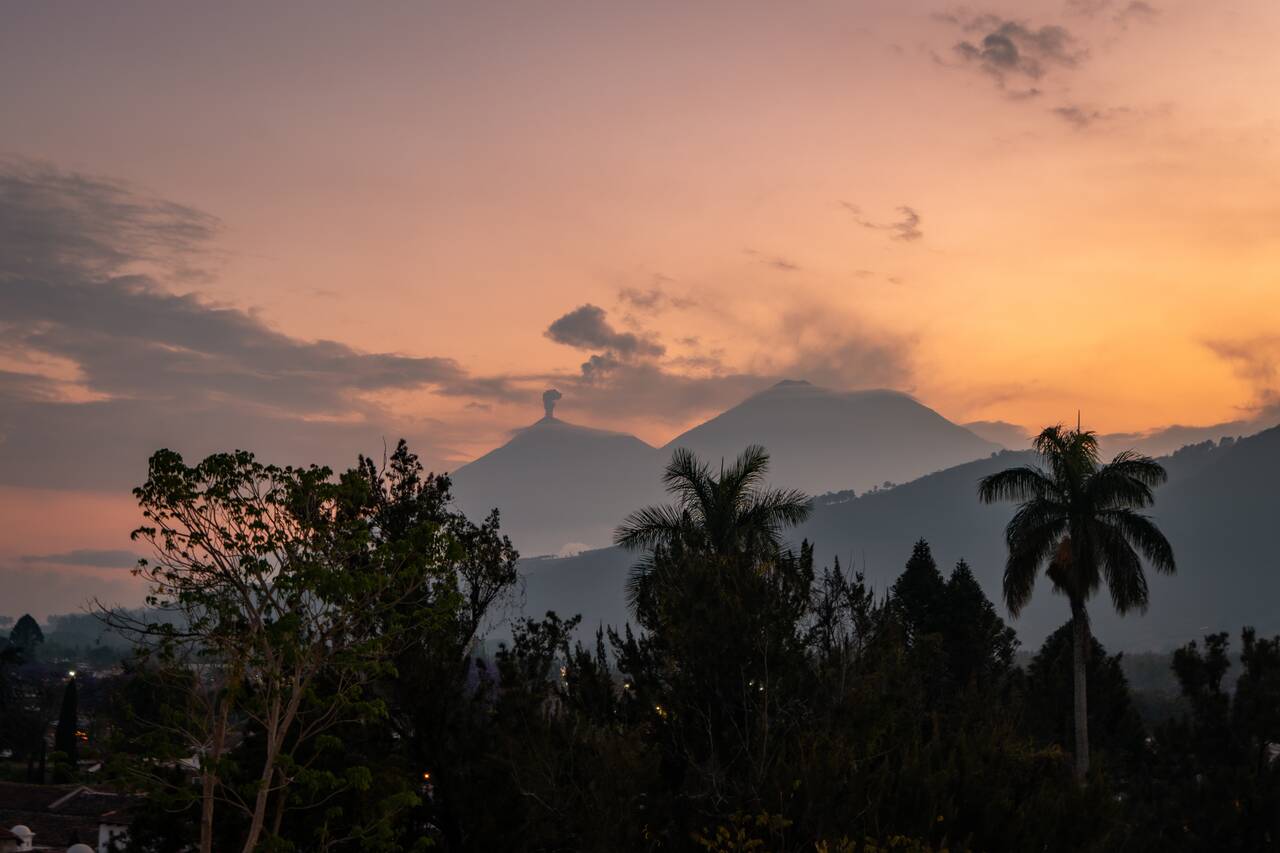
Before ending your second day in Antigua, make sure you spend some time preparing for your upcoming Acatenango Volcano hike. This is one of the most demanding hikes you will ever do, and even after hiking extensively around the world, I still found it pushed me to my limits. You should also book your tour well in advance, as this is an extremely popular hike and the best tour companies often get fully booked weeks ahead. Don't leave it until the last minute!
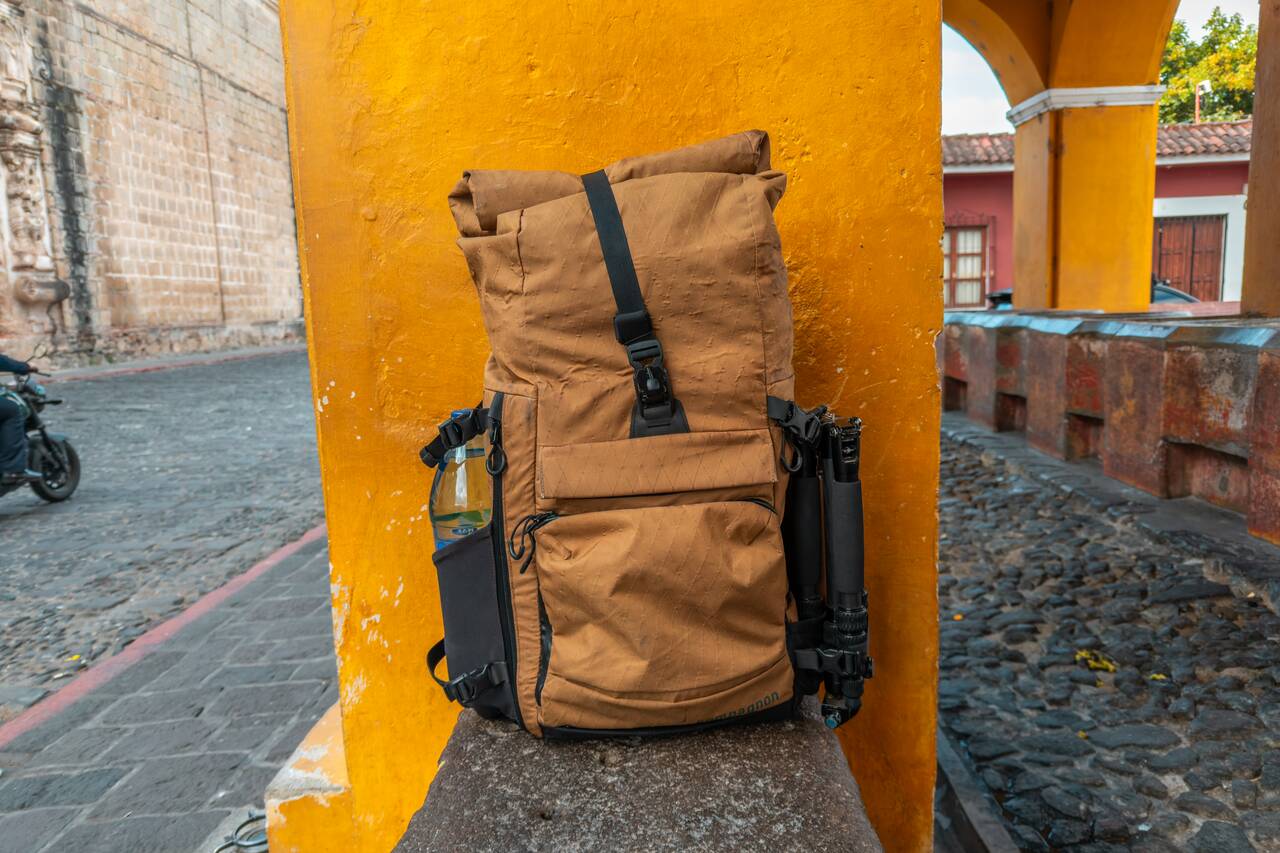
Make sure you have warm clothing (you can also rent gear through your tour company), snacks, at least 2 liters of water, and all the essentials ready, as the temperature at the campsite can drop significantly at night. Get an early rest, because you are going to need all the energy you can get, and trust me, sleeping at altitude is not easy.


Getting from Antigua to Acatenango
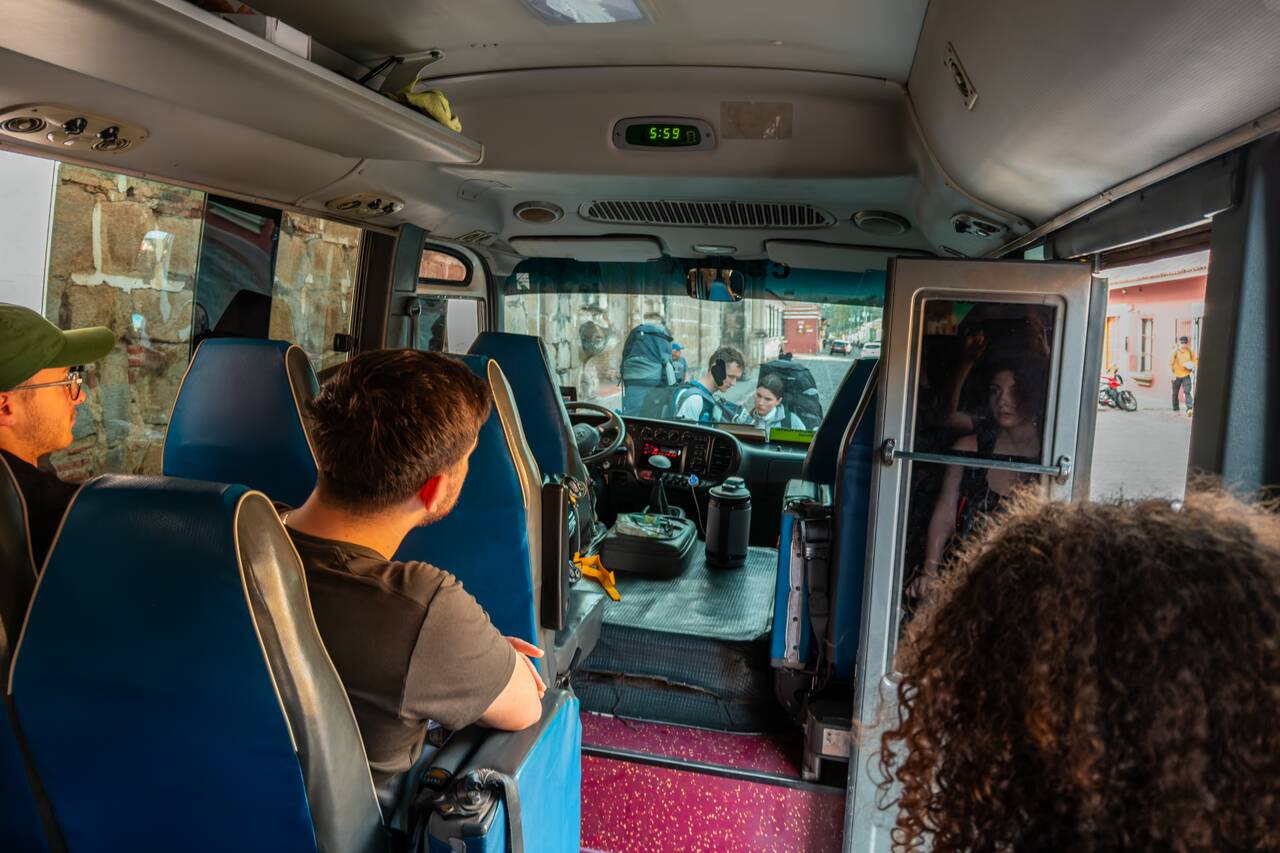
The best way to get from Antigua to Acatenango is by booking an Acatenango hiking tour. I went with this tour, and they were great. The campsite faced directly toward Volcán de Fuego, giving us incredible views of its eruptions throughout the evening. The guides were friendly and professional, and my group had only around 18 people, which made it easy to get to know everyone along the hike. In contrast, some of the more well-known companies I saw were leading groups of over 40 people, which is an insane amount of people 😬!
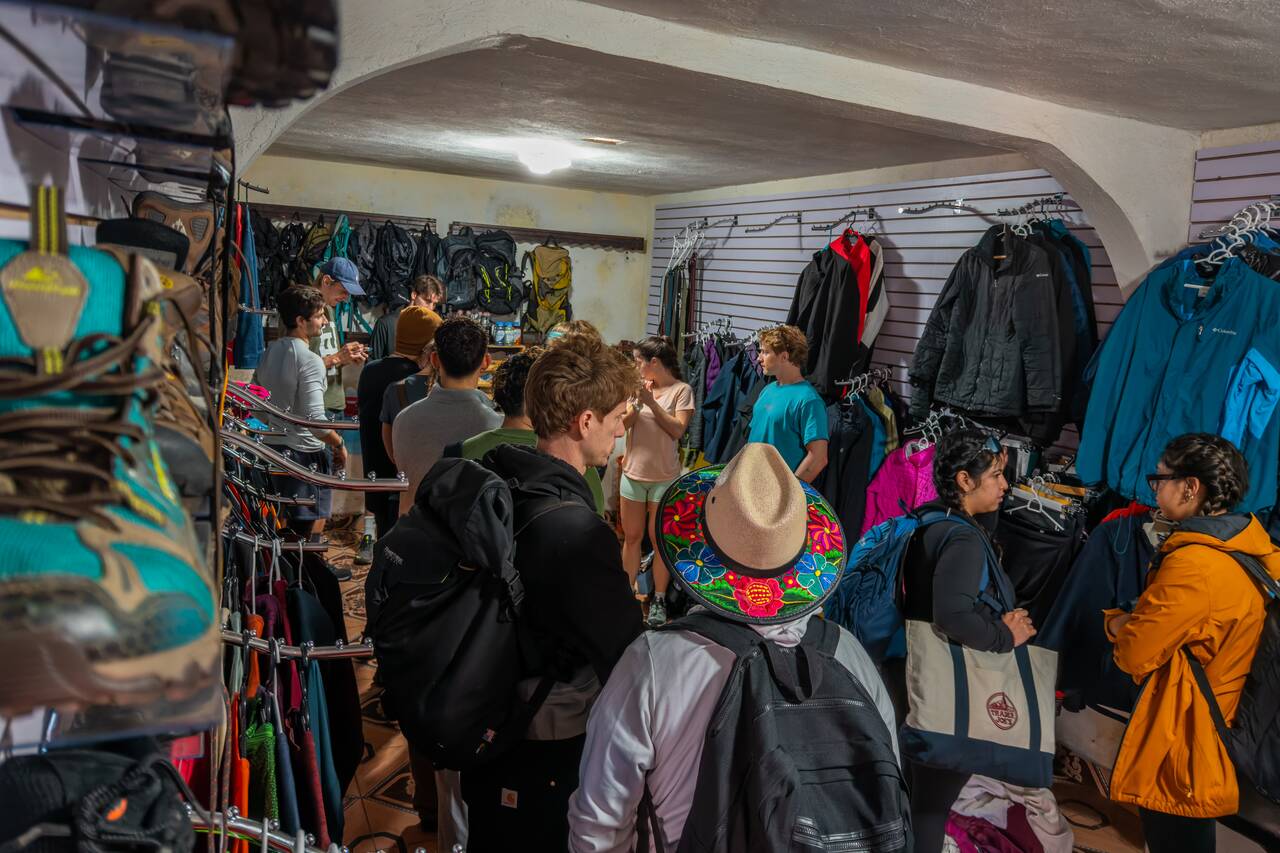
Most tours include hotel pickup in Antigua between 7 AM and 8 AM, round-trip transportation between Antigua and the Acatenango trailhead, the option to rent hiking gear (which I highly recommend, as it gets extremely cold at the summit), a guided hike, basic accommodation at the campsite, and transportation back to Antigua the following day. If you want to hike Volcán de Fuego from the campsite, expect to pay an additional fee of around 250 GTQ (30 USD).
Day 4: Hiking Acatenango (1 night)
- 📍 Stay: Acatenango Campsite
- 🕐 Time: 1 night
- 📖 Full Guide: Hiking Acatenango & Fuego Volcanoes in 2026
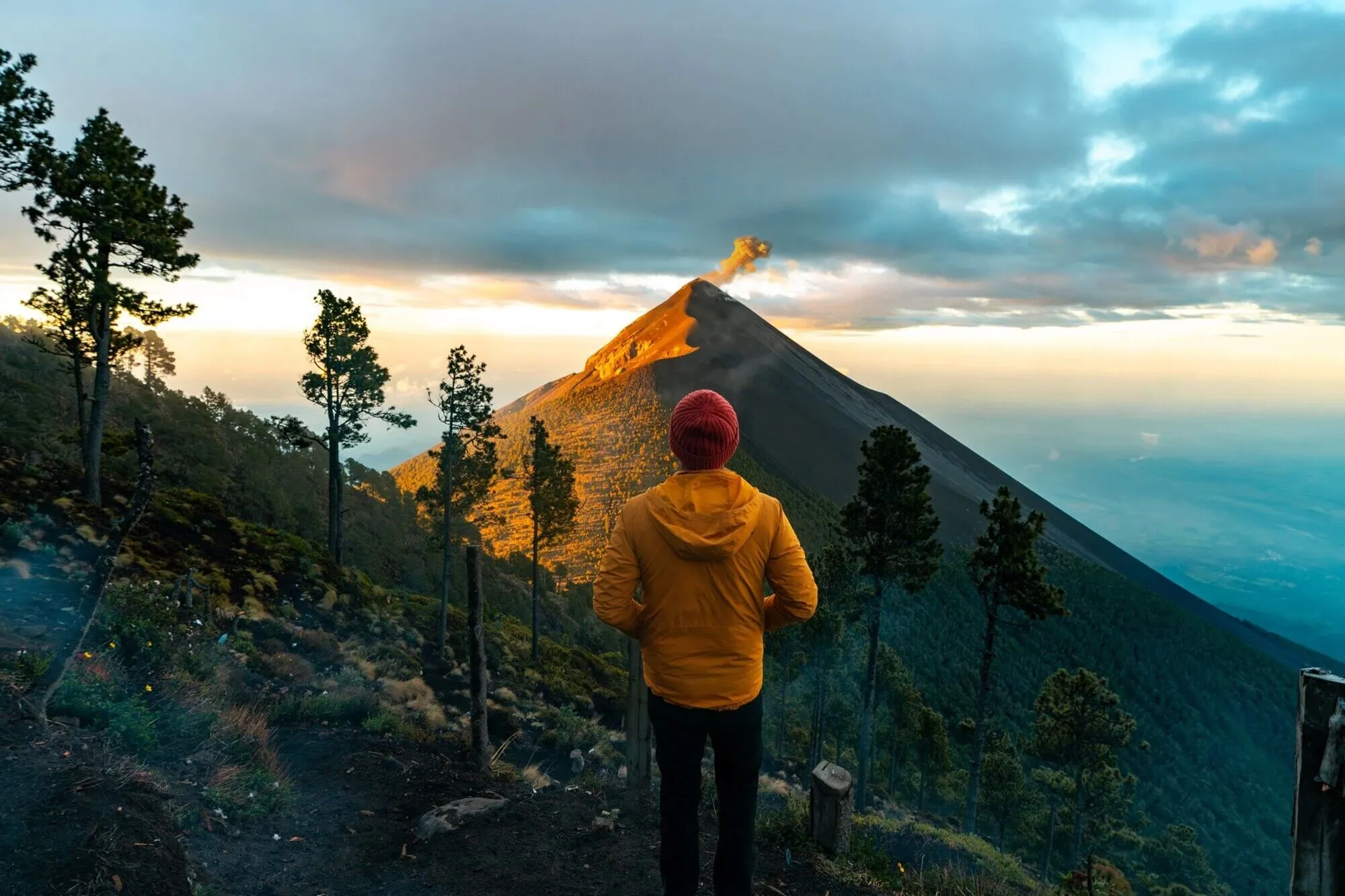
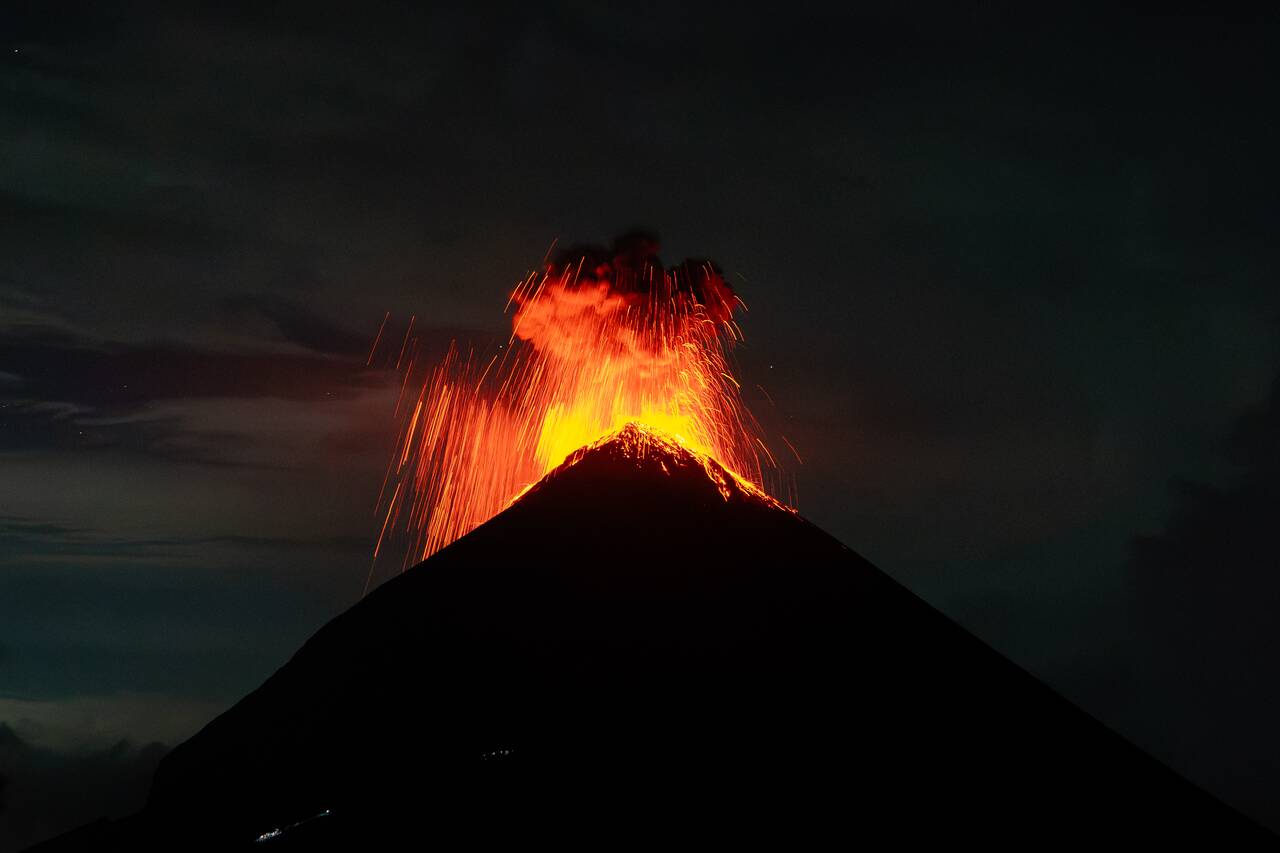
Hiking Acatenango and Fuego Volcanoes is, hands down one of the most epic hikes you can do, not just in Guatemala, but in Central America! This multi-day hike will take you all the way up to 3,976 m (13,045 ft) at the top of Acatenango Volcano, where you get a clear view of the active Fuego Volcano, which regularly erupts throughout the day and night, sending plumes of smoke and lava into the sky. You can hike Acatenango with this tour.
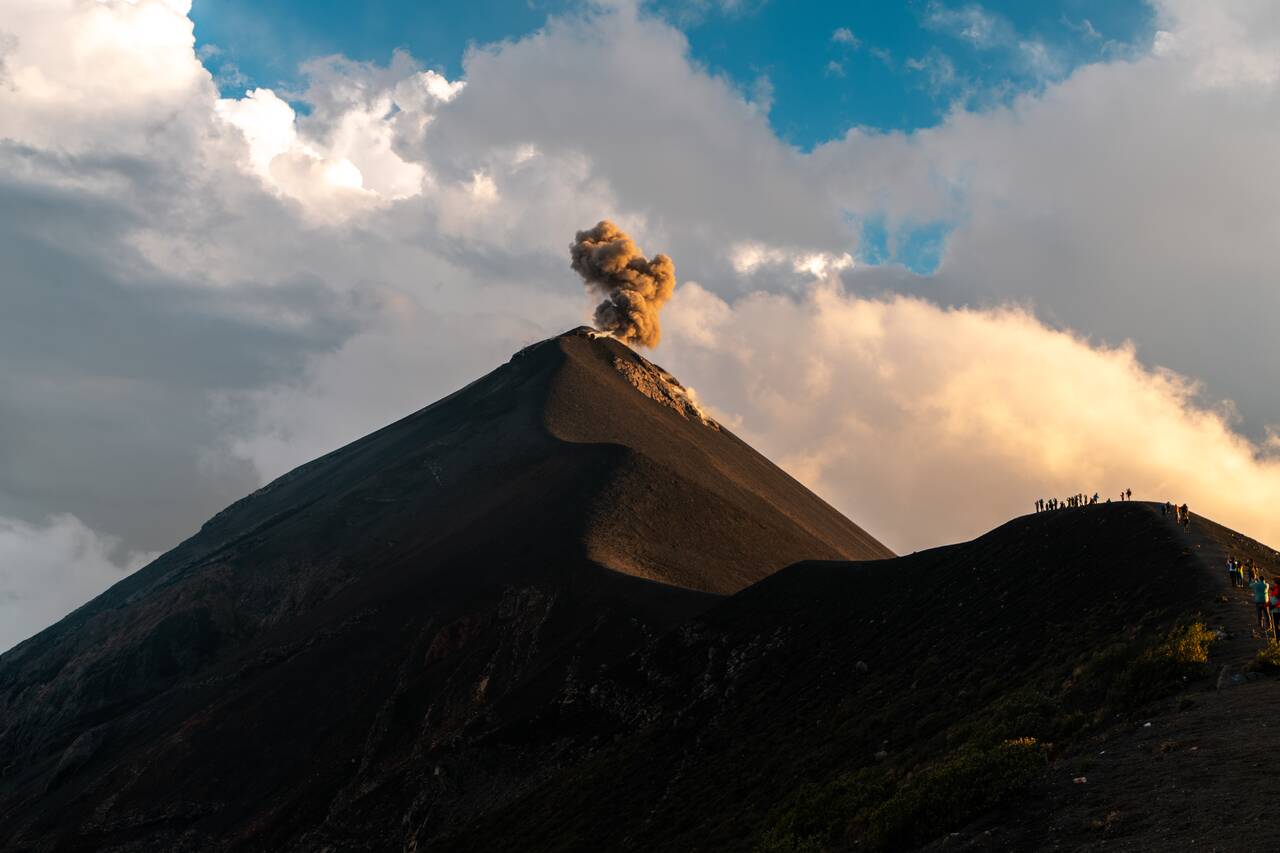
The hike is definitely challenging, not because of the technical difficulty of the trail, but because, to experience it fully, you'll need to complete two long hikes of around 4–5 hours each in a single day. The best time to witness Fuego's eruptions is at night, as the lava's orange glow is much harder to see during the day.
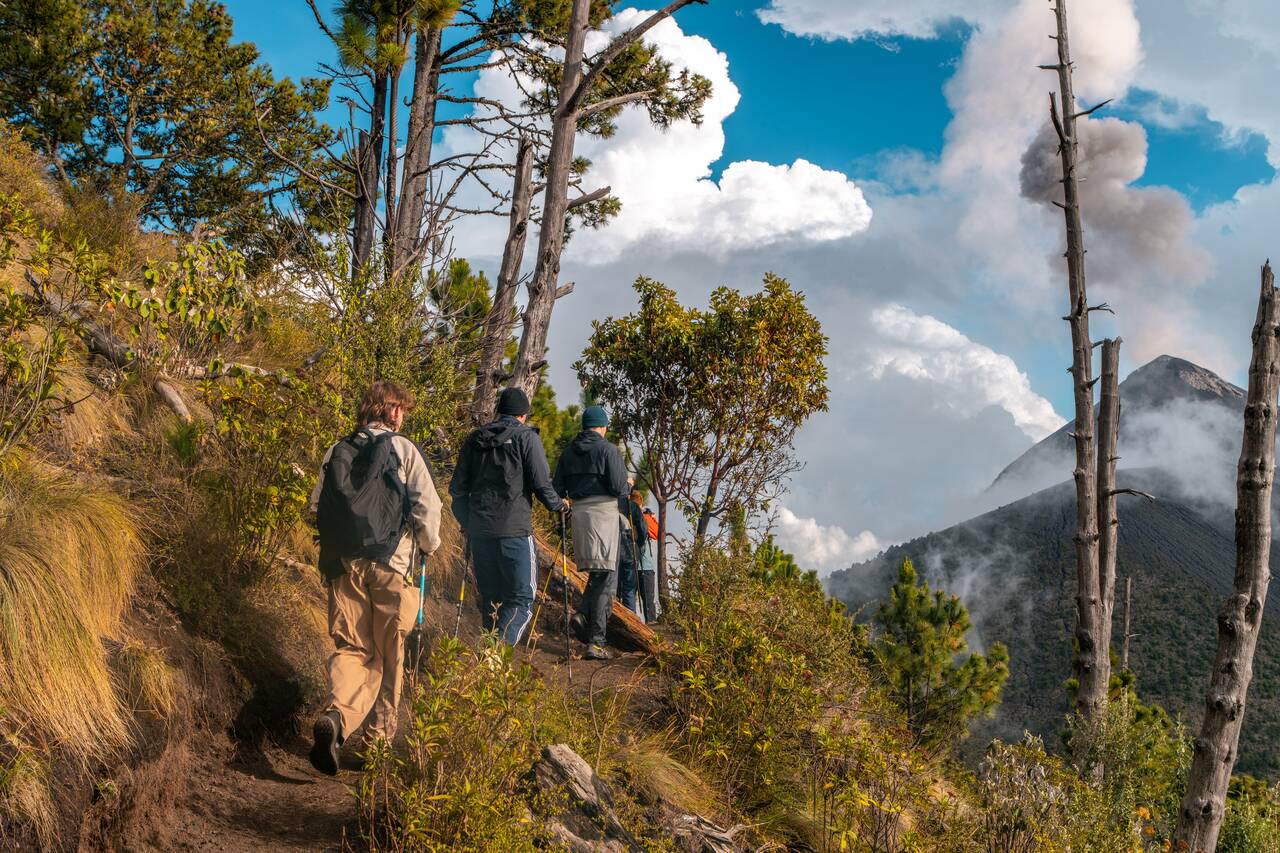
This means you'll have to push through the long climb to base camp, where you'll then have around an hour rest before you have to descend Acatenango and hike up to the Fuego ridge for a closer view of the eruptions. After waiting until sunset to see the volcano light up, you'll make the climb back down at night, and up Acatenango again to spend the night at camp.
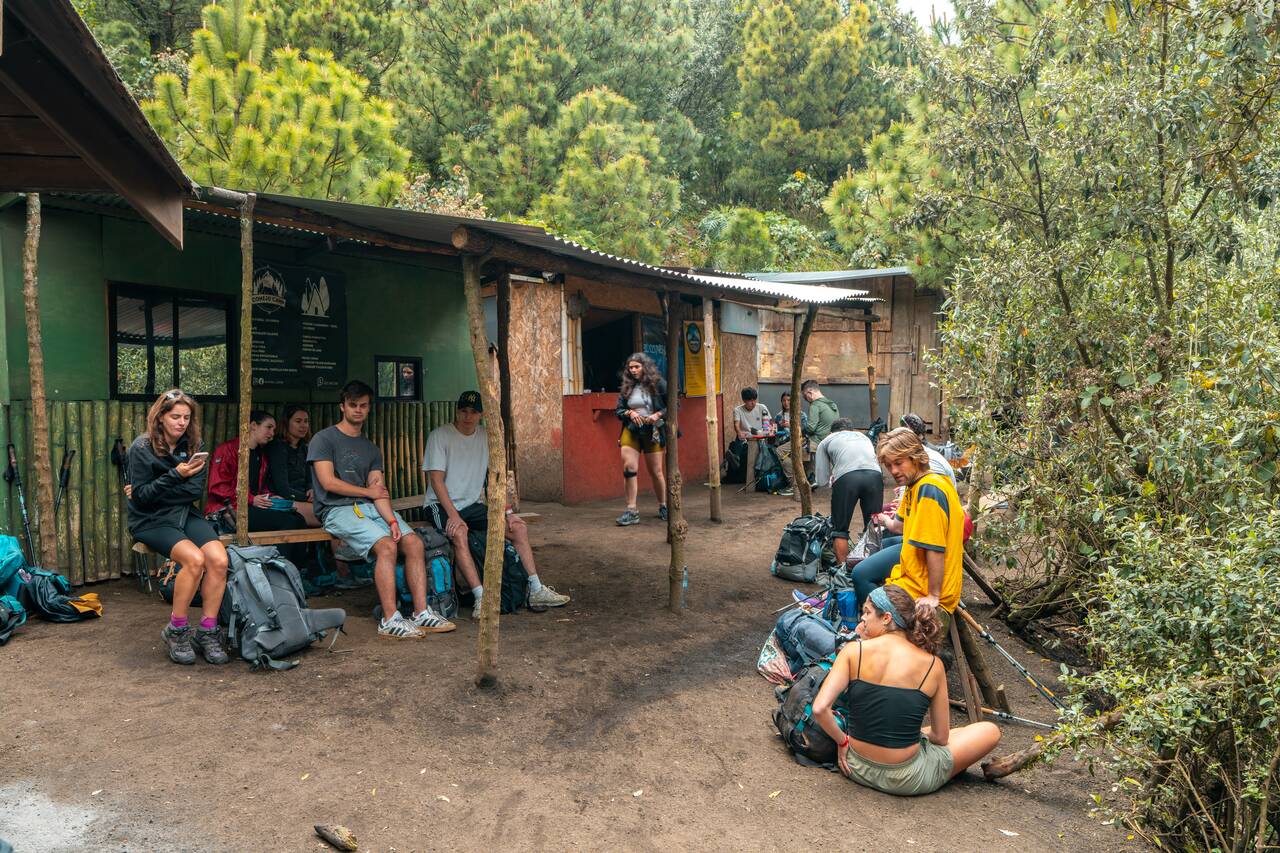
I did the whole thing, and here's how it went: We started the hike around 10:30 AM at the trailhead, arrived at the base camp around 3 PM, taking about 5 hours, with around 4 - 5 rest stops, which is plenty. The trail to the base camp was steep from start to almost finish when the trails even out towards the end as you go around the crater to your campsite.
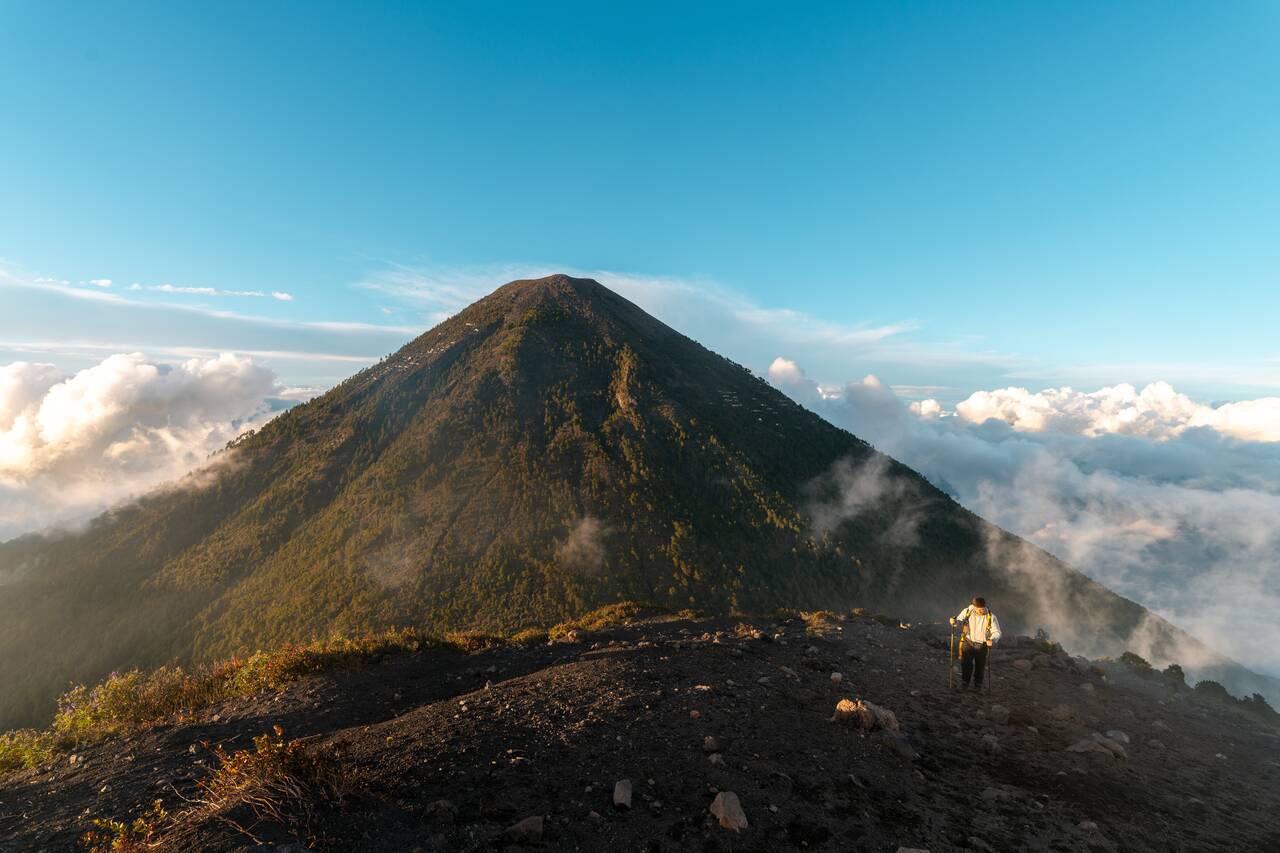
Once we arrived at the campsite, we rested for about an hour before starting the hike to Fuego again at 4 PM. The trail begins with a steep and slippery descent for about an hour before climbing uphill for another hour toward the Fuego ridge. We arrived at the viewpoint around 6 PM, after a 2-hour hike, just in time to watch the sunset over the volcano.
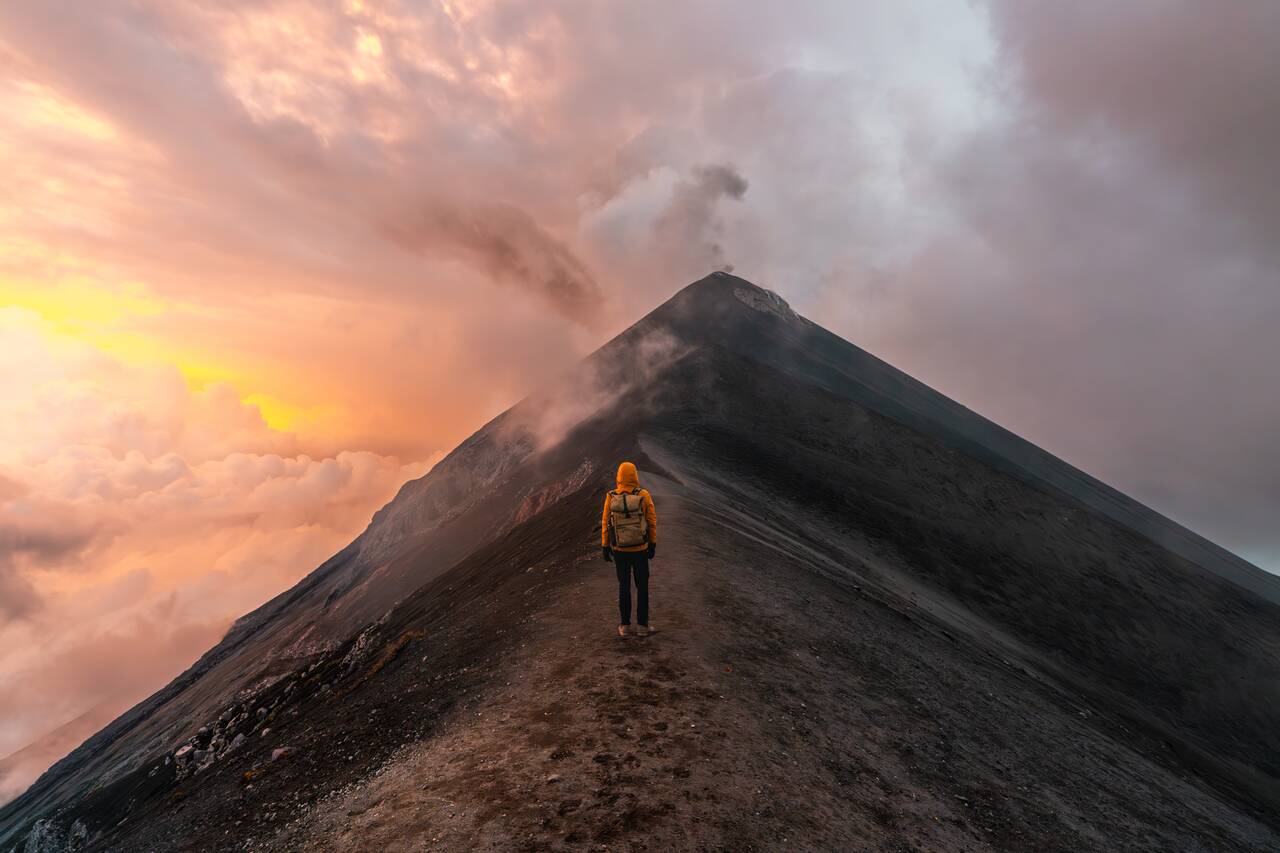
We waited and watched the sunset and the eruptions, which happened every 15–20 minutes and were incredible! Some of them were massive, and we were all cheering while hoping the debris wouldn't fall on us 😬. At around 7 PM, we put on our headlamps and headed back to base camp.
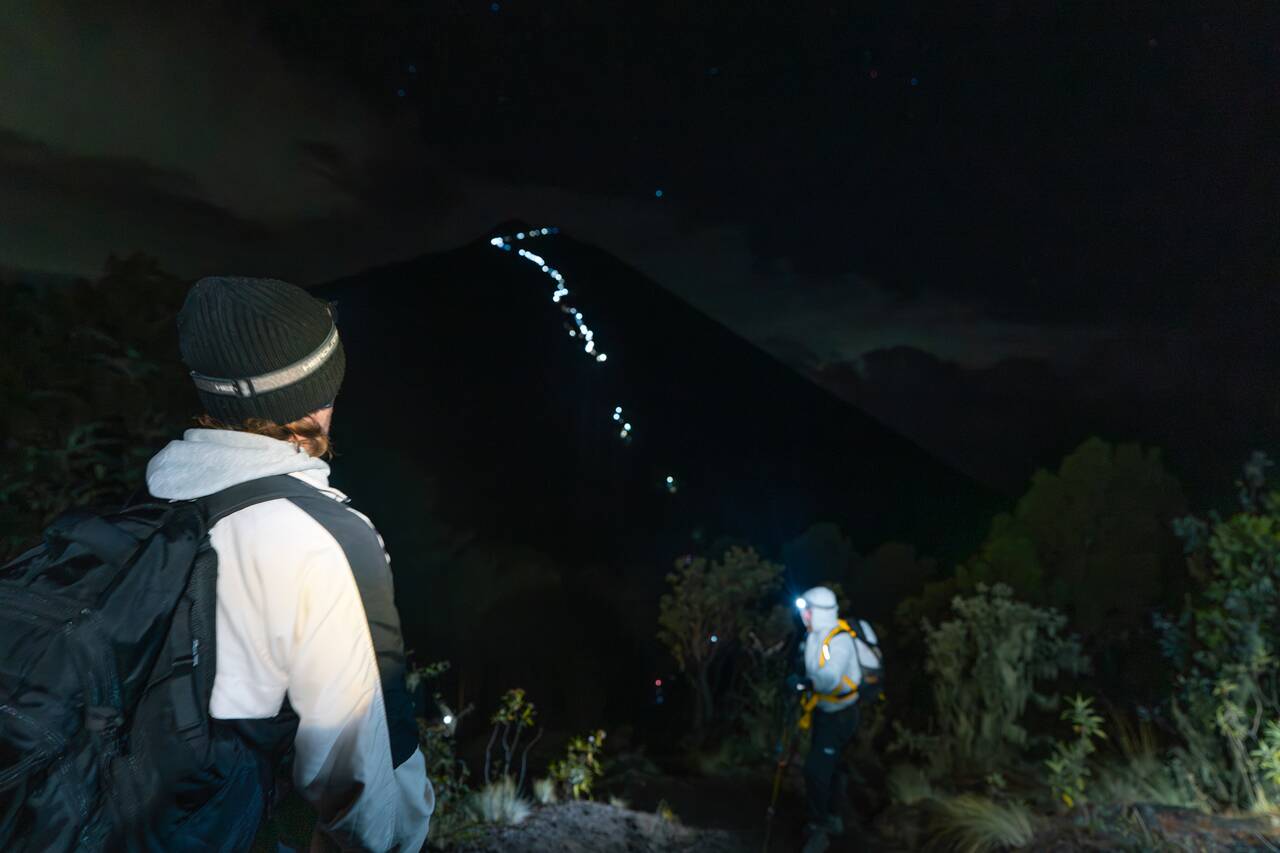
It took us another 2 hours to complete the trek back, which was the toughest part, as the hike back up was extremely steep. Combined with the exhaustion and having to navigate the trail at night, it was hell on earth, to be honest. We got back at the camp at 9 PM, where we had our late dinner and hot cocoa, thank god, and we retreated for bed immediately.
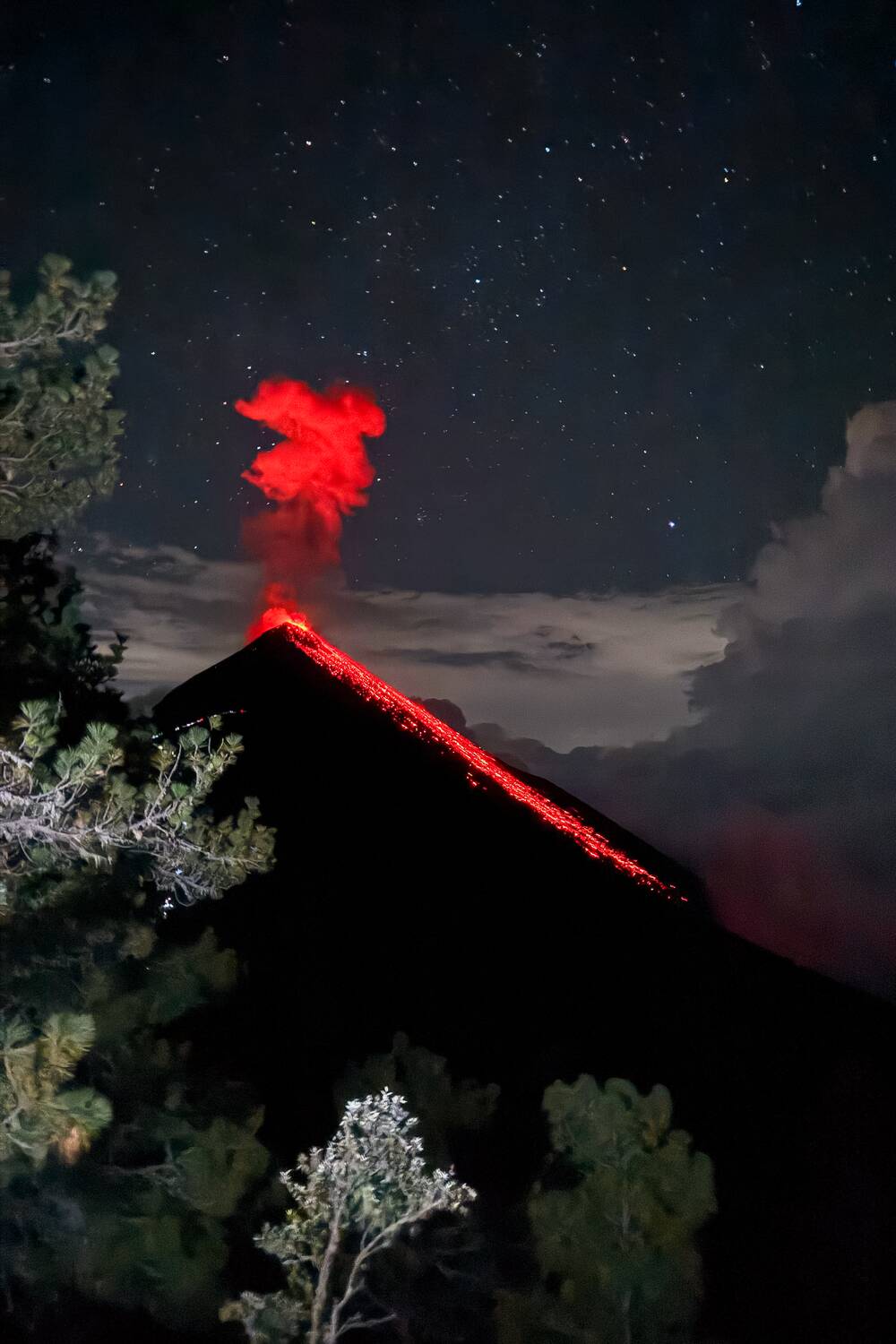
It was a long 11-hour hiking day, and it was one of the toughest hikes I have ever done, despite having completed many challenging hikes around the world. Sleeping up here was also not easy, thanks to the perfect storm of conditions: the extreme altitude of almost 4,000 meters, freezing temperatures, howling winds that drowned out almost everything, and the occasional explosion and ground shaking every time Fuego erupted. Don't expect a good night's sleep, but try to rest as much as you can, as you will still have the option to wake up early, hike up Acatenango for sunrise, and make your way back down afterward.

Day 5 - 6: Hiking Down from Acatenango & Rest Day in Antigua (2 nights)
- 📍 Stay: Casa del Sol
- 🕐 Time: 2 nights
- 📖 Full Guide: Where to Eat and Drink in Antigua: My 7 Top-Picks
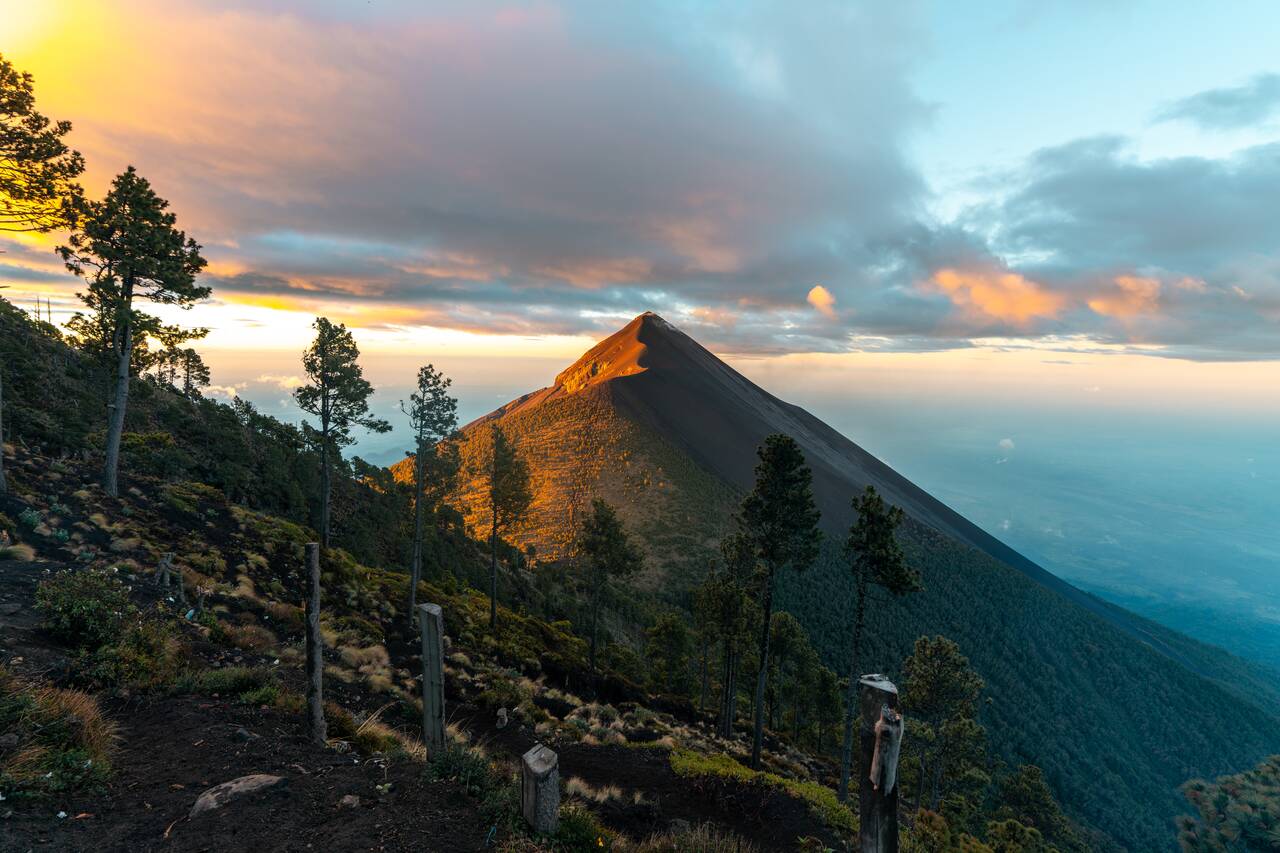
On this day, you have the option to hike up Acatenango for sunrise or skip it, as I did, since hiking Fuego was already challenging enough. I heard that although the hike to the summit of Acatenango is shorter, it is actually steeper and follows a loose rocky trail, making it even more difficult. The fact that it starts at around 3 AM does not make it any easier either.
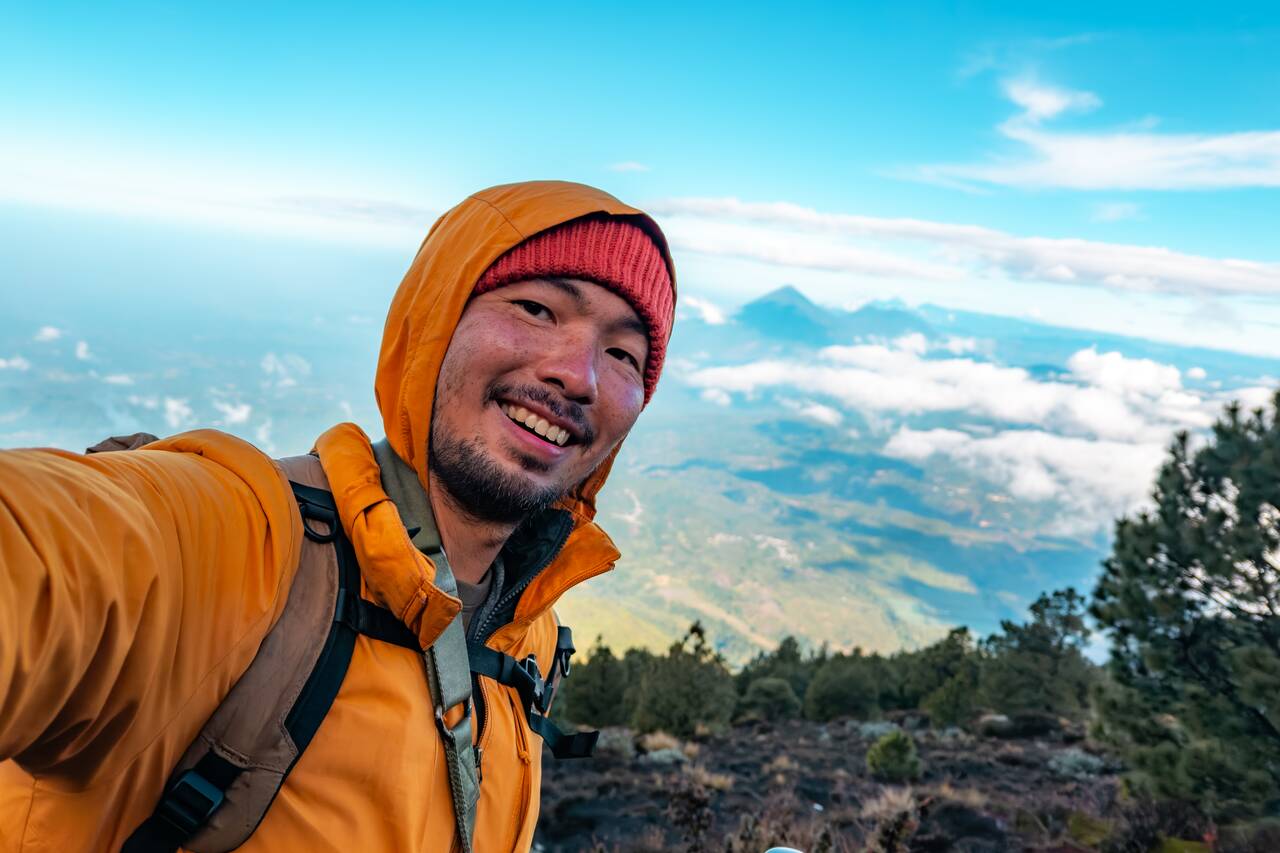
Nevertheless, you should still wake up early to watch the sunrise from the campsite. The view is truly a sight to behold, with the surrounding volcanoes and clouds slowly glowing under the morning light. After breakfast, you should start making your way down around 7 AM, reaching the trailhead by around 10–11 AM and returning to Antigua by approximately 1 PM.
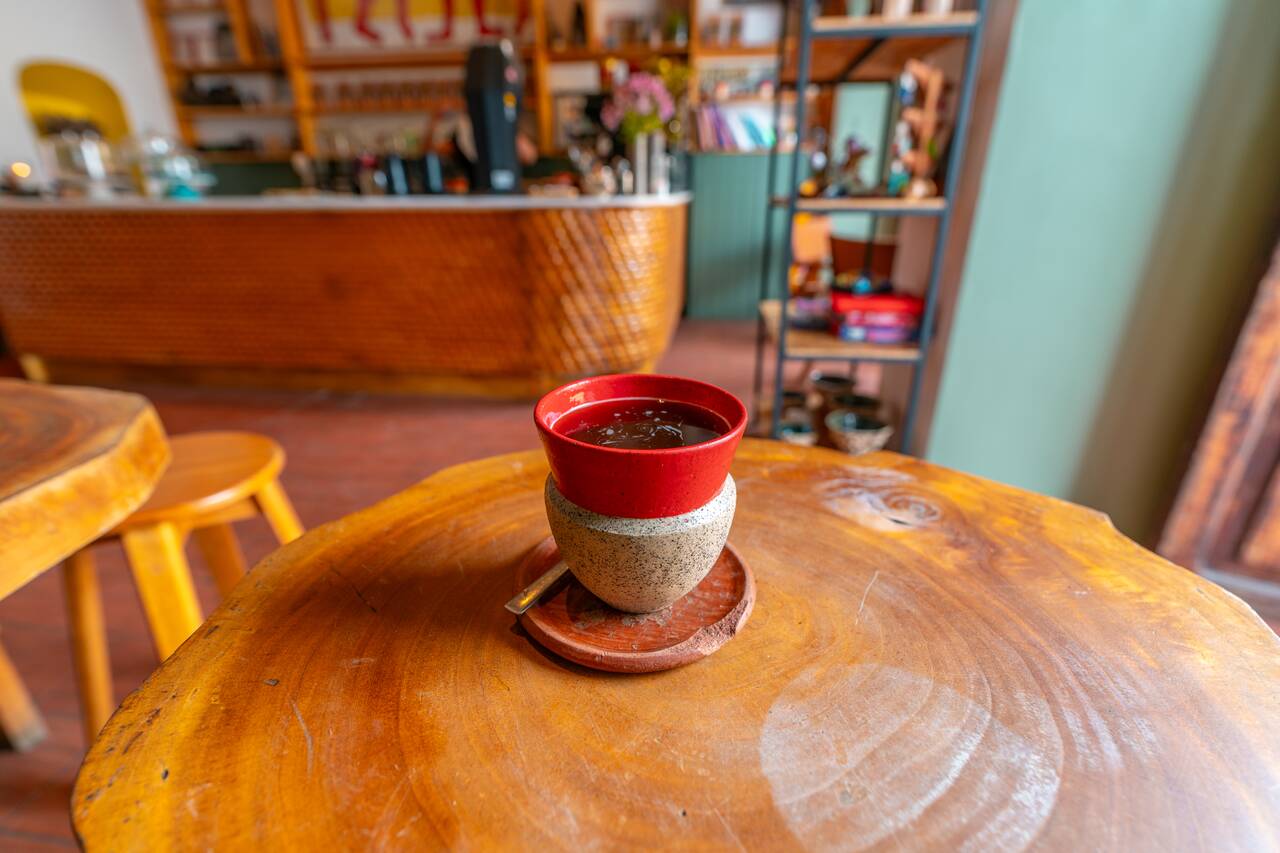
We will have 2 more nights in Antigua so you can rest up and recover before moving on to the next destination. Trust me, you are going to need this rest day 😉! You can spend the day doing absolutely nothing, revisiting some of the places you may have missed in Antigua, exploring more of the city's charming streets, or simply go cafe-hopping as there are tons of great cafes here.
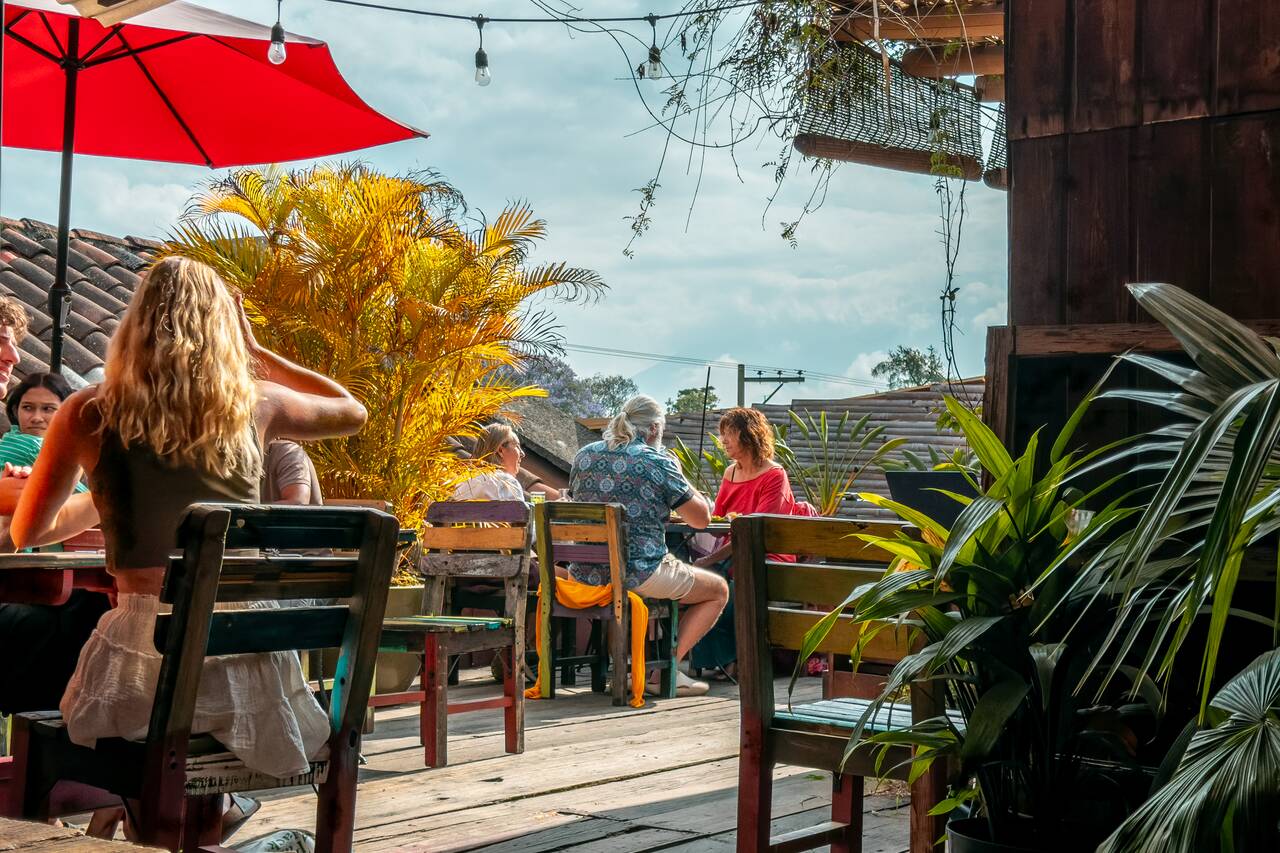
Thanks to its cool climate, charming colonial architecture, and relaxed atmosphere, Antigua has developed an incredible café culture, with countless coffee shops hidden inside beautiful courtyards, historic buildings, and colorful streets.
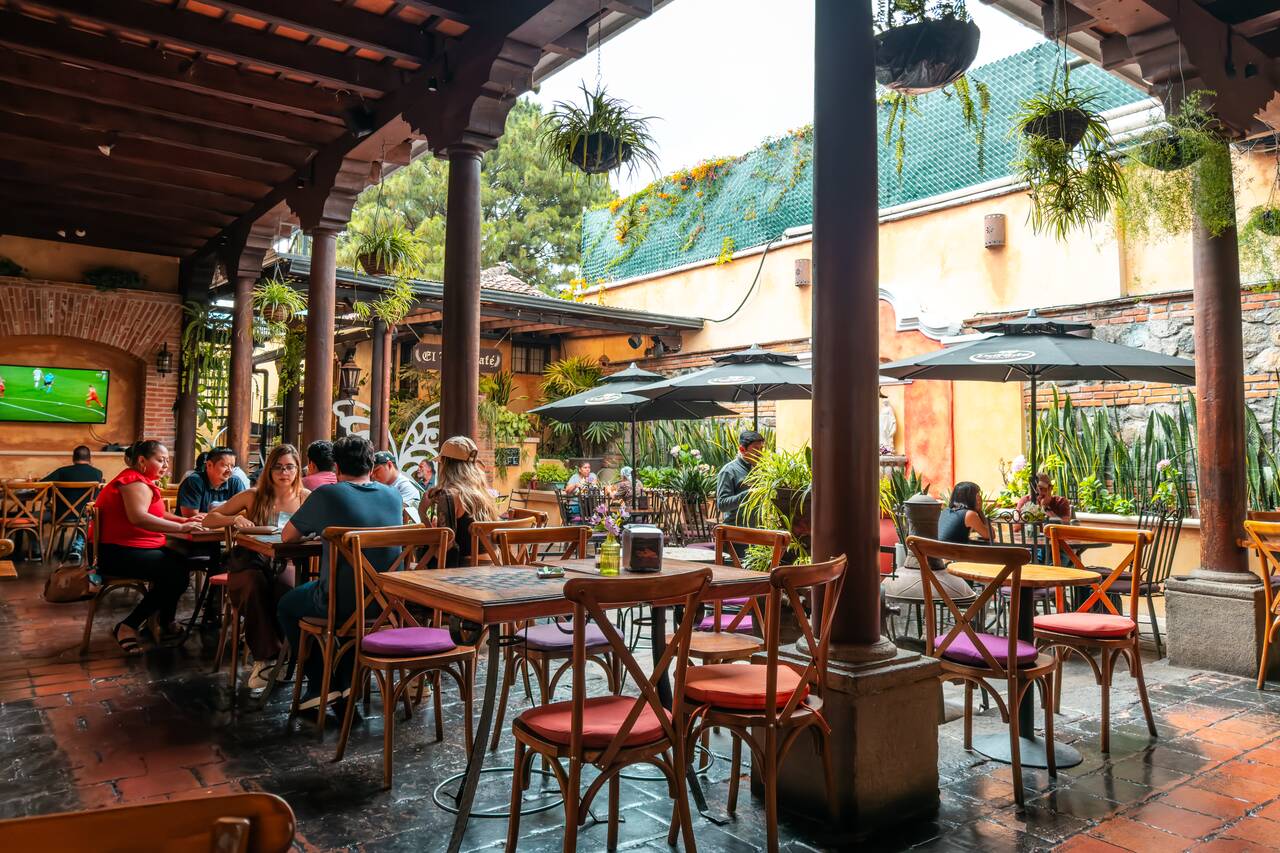
Some of my favorite cafés in Antigua include Alegría Café, Cafe Boheme, and El Viejo Café, but honestly, you can hardly go wrong with whichever café you stumble upon while wandering the city streets. Go out and explore to your heart's content! Relax for the rest of the day before retreating for the night and preparing for your trip to Lake Atitlán the following day.

Getting from Antigua to Lake Atitlan
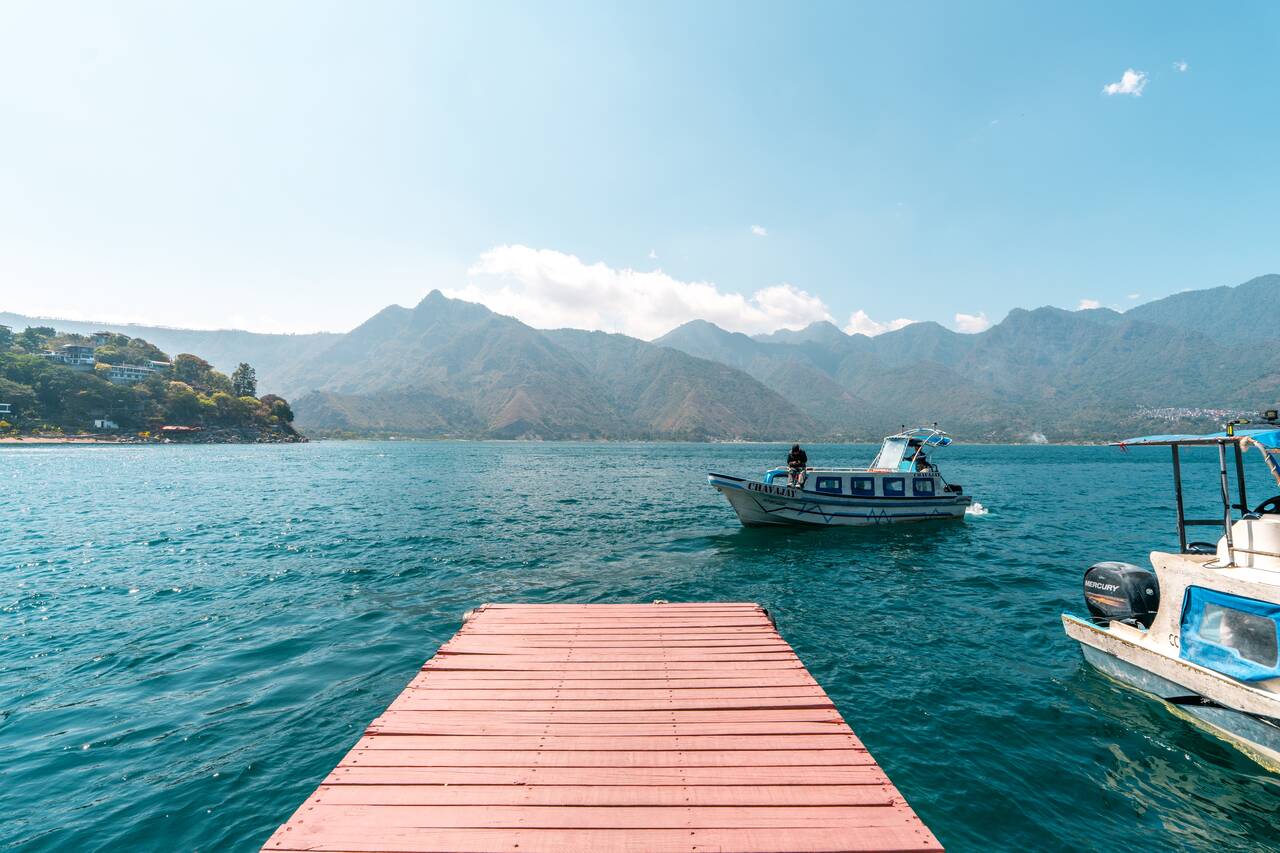
From Antigua, shared tourist shuttles depart daily from hotels and travel agencies throughout the city. I traveled with Gekko Trail Explorer, and they were reliable throughout my travels in Central America, so I highly recommend them. Before booking your shuttle, though, you should first decide which town you want to use as your base around Lake Atitlán.
The lake is surrounded by several villages, each with its own personality, atmosphere, and attractions. Here are some choices for you to consider:
- San Pedro La Laguna (for a lively atmosphere, budget-friendly accommodation, and a great backpacker scene)
- San Juan La Laguna (for a more relaxed atmosphere and slower pace of life)
- San Marcos La Laguna (for a hippie, spiritual, and bohemian vibe)
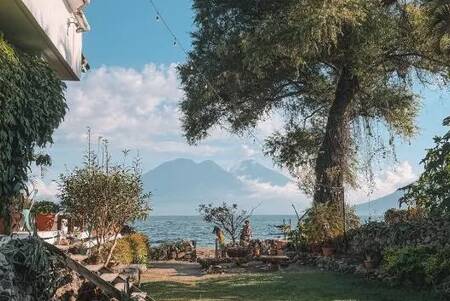
- Santa Cruz La Laguna (for the best volcano view)
The journey usually takes around 3 to 4 hours, depending on traffic. Most shared shuttles drop passengers off in Panajachel, the main gateway to Lake Atitlán, where you can catch a shared boat to your town of choice.
However, Gekko also offers direct shuttle services to San Juan La Laguna and San Pedro La Laguna, allowing you to skip the boat ride altogether. Tickets usually cost between 100 and 150 GTQ (13–20 USD).
If you are staying in San Marcos La Laguna or Santa Cruz La Laguna, you can take any shuttle bus to Panajachel or the same Gekko shuttle to San Juan La Laguna or San Pedro La Laguna. From there, simply catch the next public boat, which operate in a loop between the lakeside villages throughout the day, and a one-way ticket typically costs around 25 GTQ (3 USD).
Day 7-10: Lake Atitlan (3 nights + 1 night on the bus)
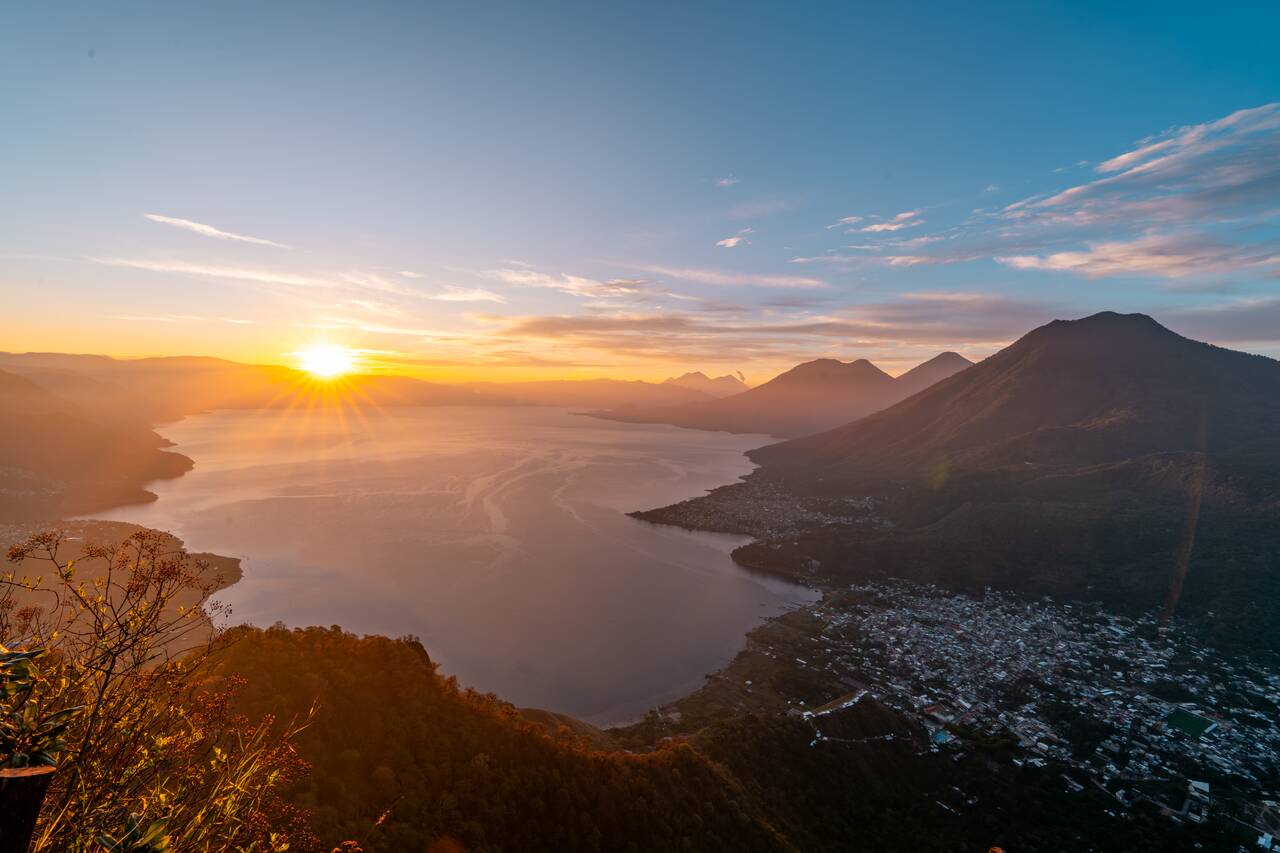
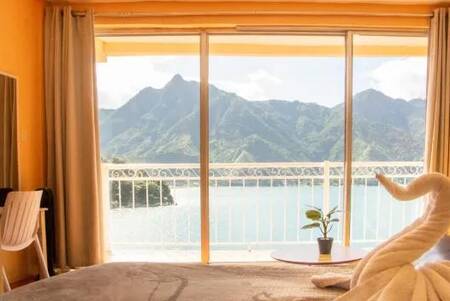
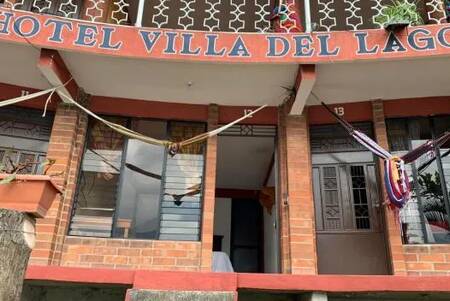
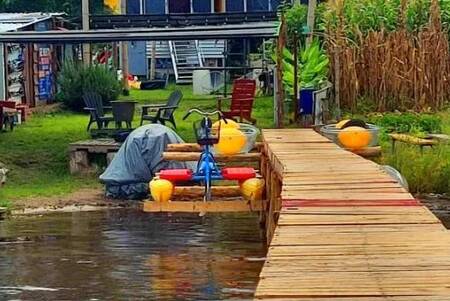
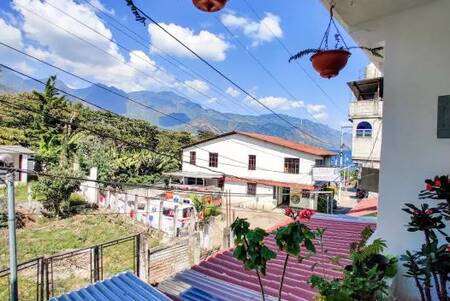
- 📍 Stay: Hotel Villa del Lago, Gladys
- 🕐 Time: 3 nights + 1 night on the bus
- 📖 Full Guide: Explore Lake Atitlan: Things to Do, Towns to Visit, Itinerary & More
If there is one thing I recommend you do at Lake Atitlán, it is waking up early and hiking Indian Nose for sunrise. This is easily one of the most beautiful viewpoints around the lake with a breathtaking panoramic view of the surrounding volcanoes, villages, and the lake below.
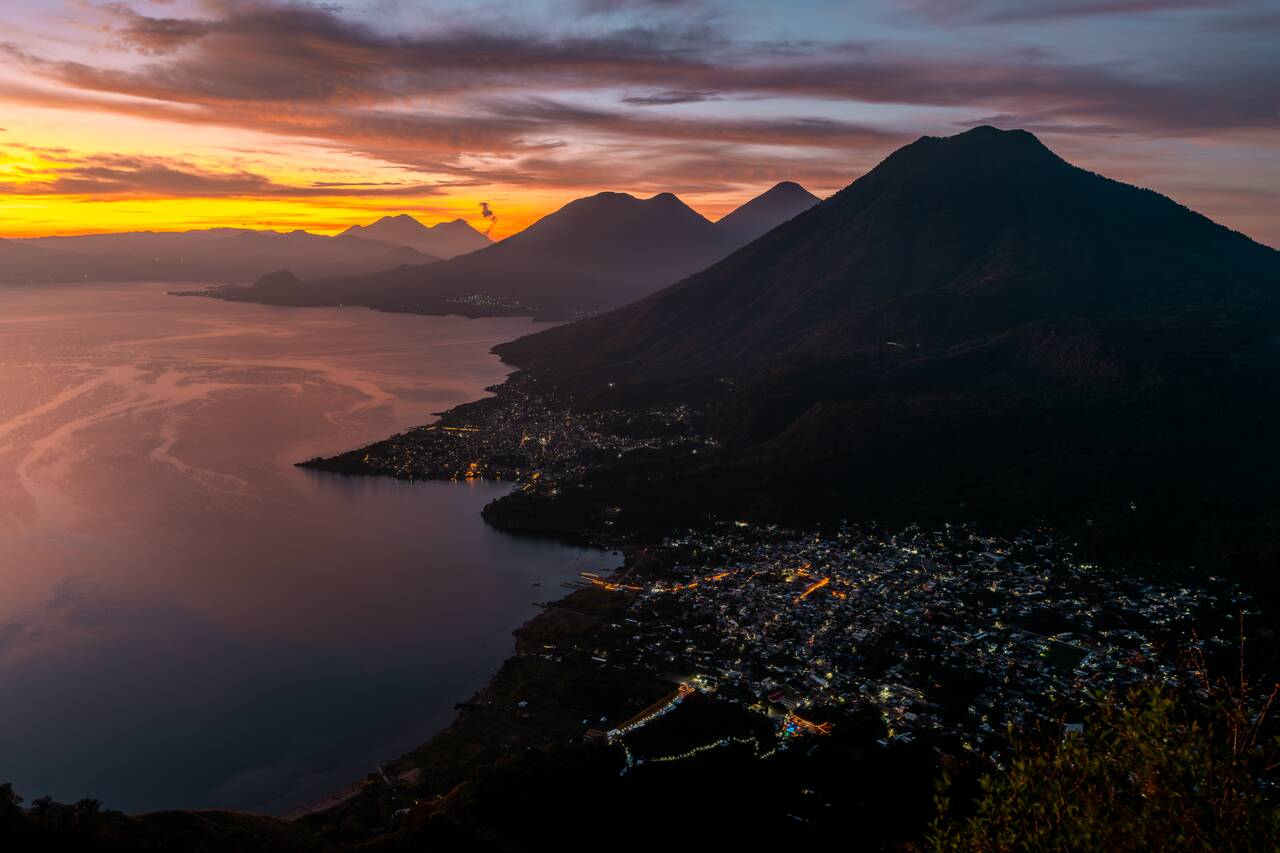
On a clear morning, you can even see Acatenango and Fuego Volcano erupting in the distance. The fact that I had just hiked these two volcanoes two days before made me appreciate their true scale even more. I recommend checking the weather forecast before your hike to choose a morning with clear skies, as clouds can completely cover the views from the viewpoint.
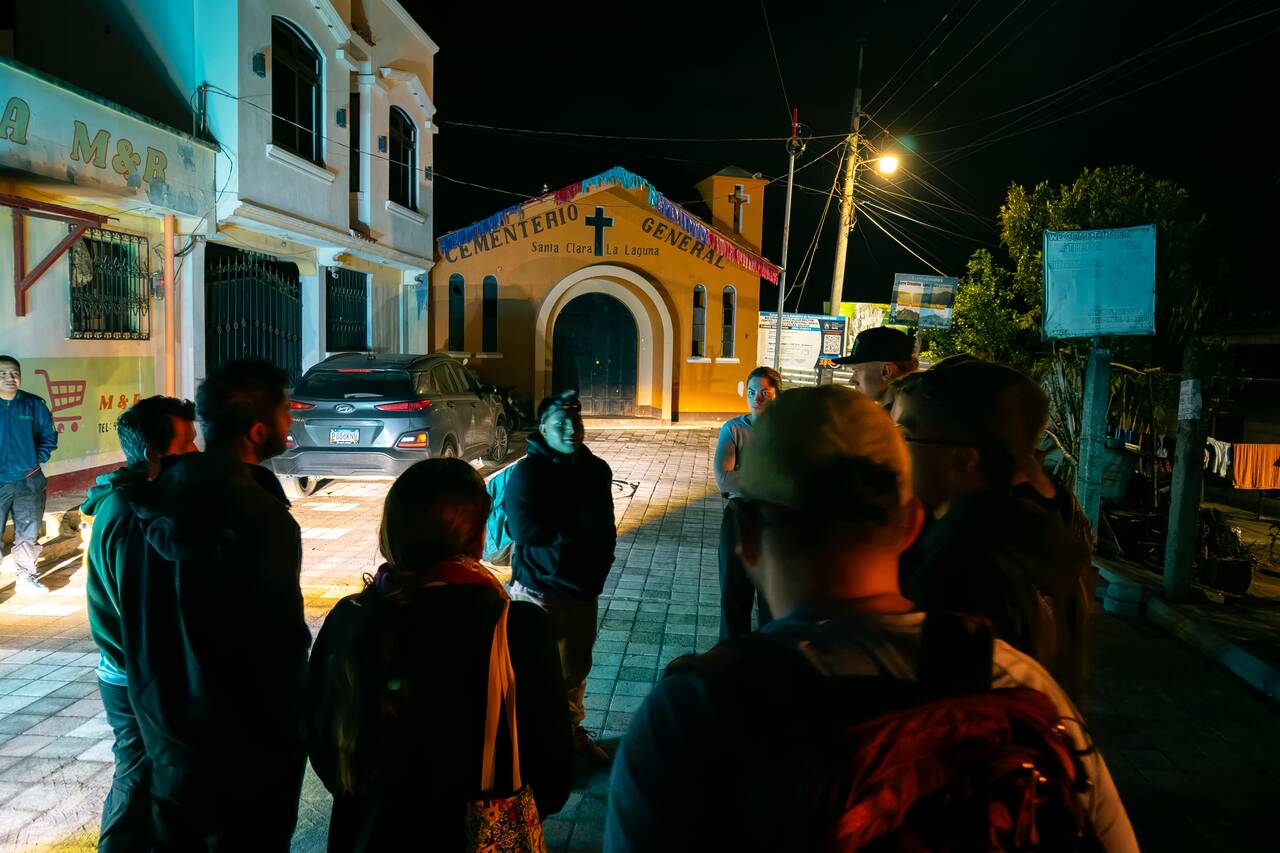
You can sign up for this Indian Nose sunrise hike on your first morning at Lake Atitlán, and the whole trip should take around 4 hours from start to finish. Depending on where you are staying, whether it is San Pedro or San Juan, the tour should pick you up somewhere in town. From there, you will be driven to the trailhead and begin the hike, which takes around 45 minutes of steady uphill walking to reach the viewpoint.
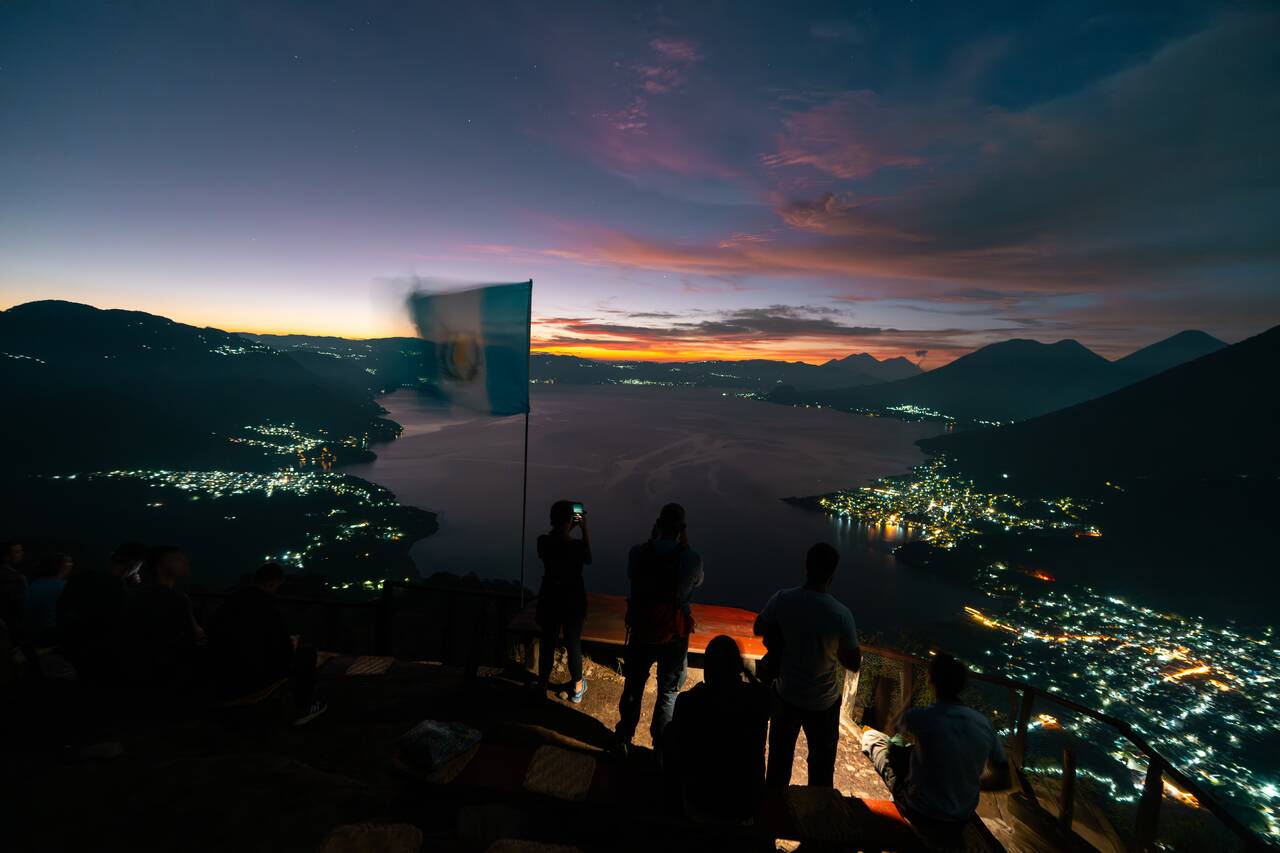
The hike itself was not too difficult, I'd say moderate mostly because it is a continuous uphill climb, although since I just hiked Acatenango 2 days prior, my knees were definitely every step of it 🤣. That said, it should be manageable for most people with a decent level of fitness as the hike doesn't drag on for too long.
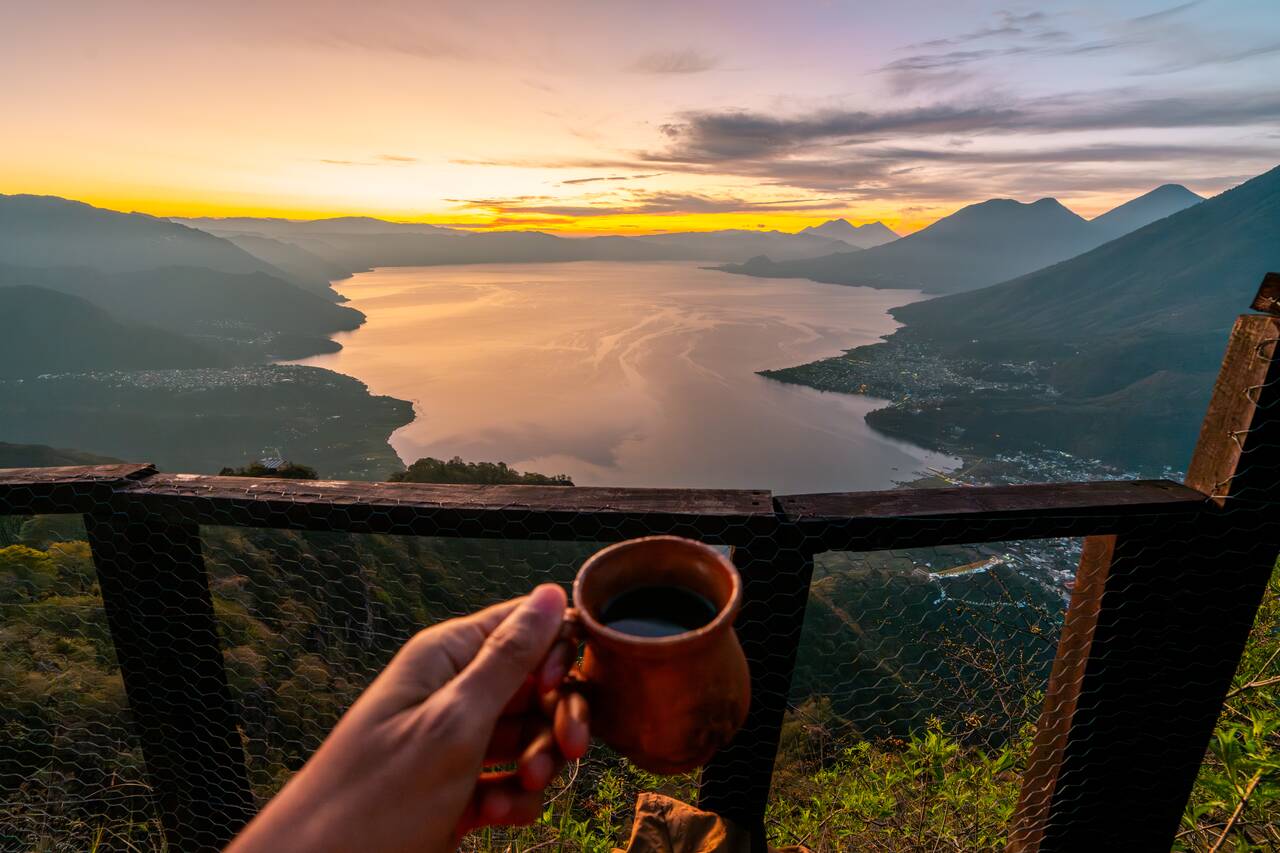
If you haven't had breakfast yet, don't worry. When you reach the viewpoint, there will be locals offering you a free cup of hot coffee and a piece of bread while you wait for the sunrise. I think this is because there is a fee to hike the trail, but our tour took care of everything for us, so we simply got to enjoy the free breakfast with the view. I thought it was a lovely touch, especially on such an early morning hike.
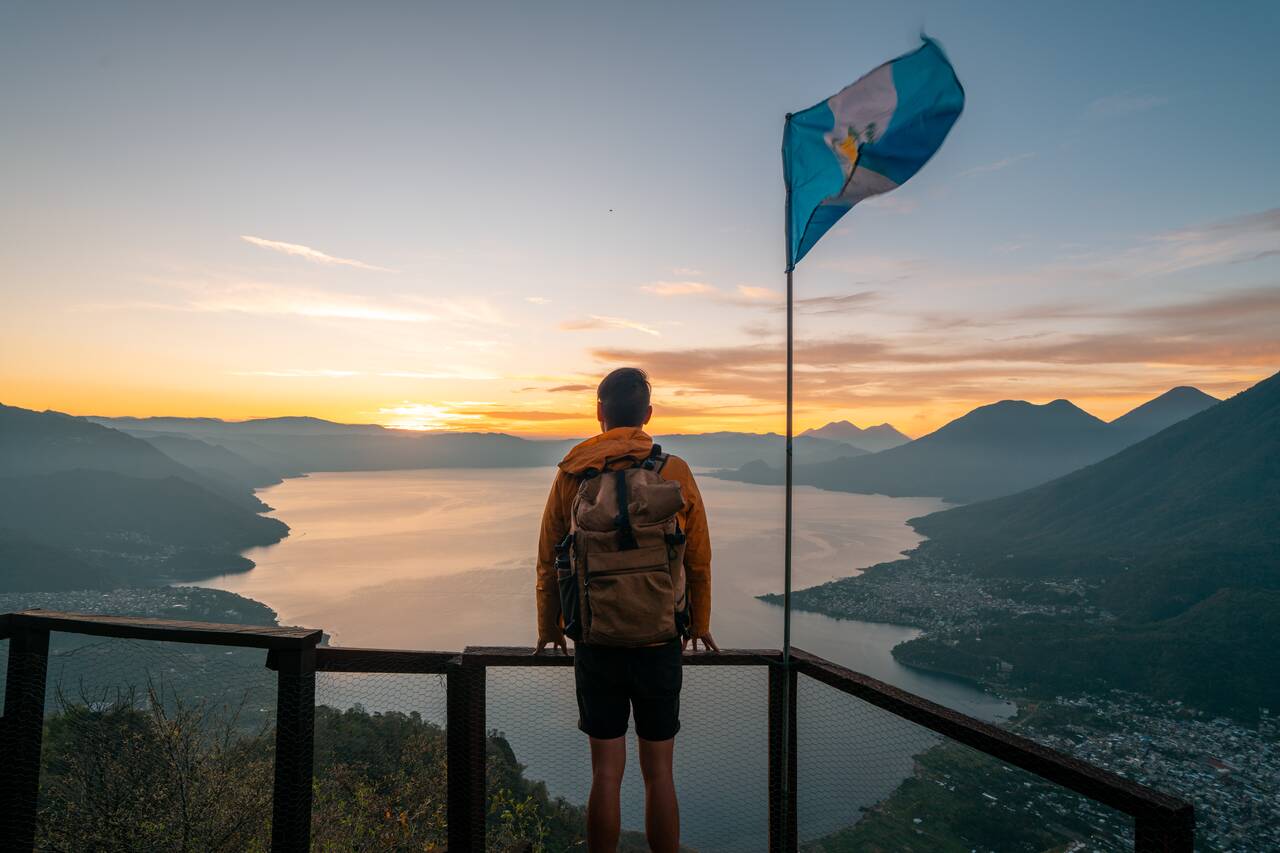
You will have about 1.5 hours to enjoy the views before making your way back down at around 6:30 AM. The descent will be much easier, and you should be back in town around 7:30 AM, just in time for the second breakfast at your accommodation.
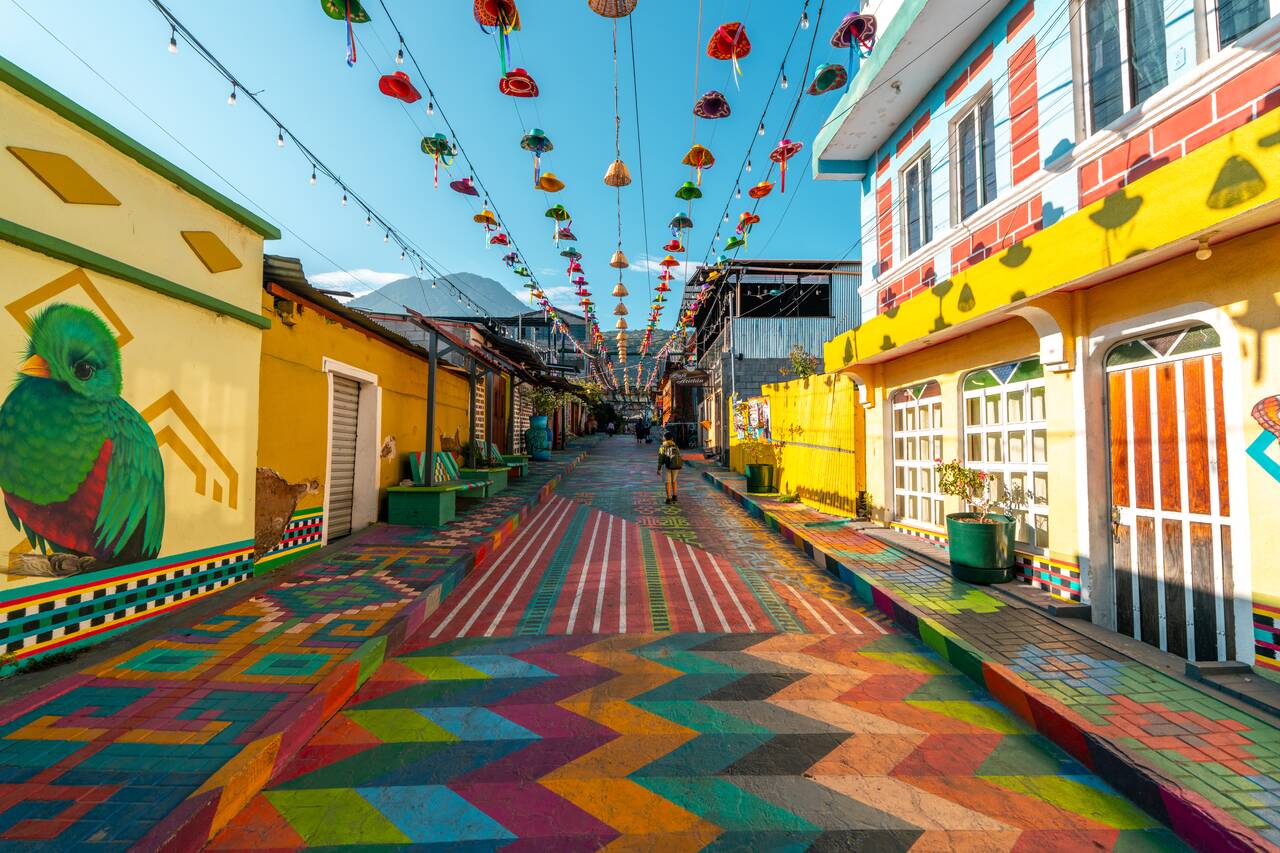
You can spend the rest of the day relaxing and exploring the town you are based in. San Juan La Laguna was my personal favorite. Unlike some of the more touristy towns around the lake, San Juan still feels connected to its local culture, with locals still living among the colorful streets filled with traditional Mayan art.
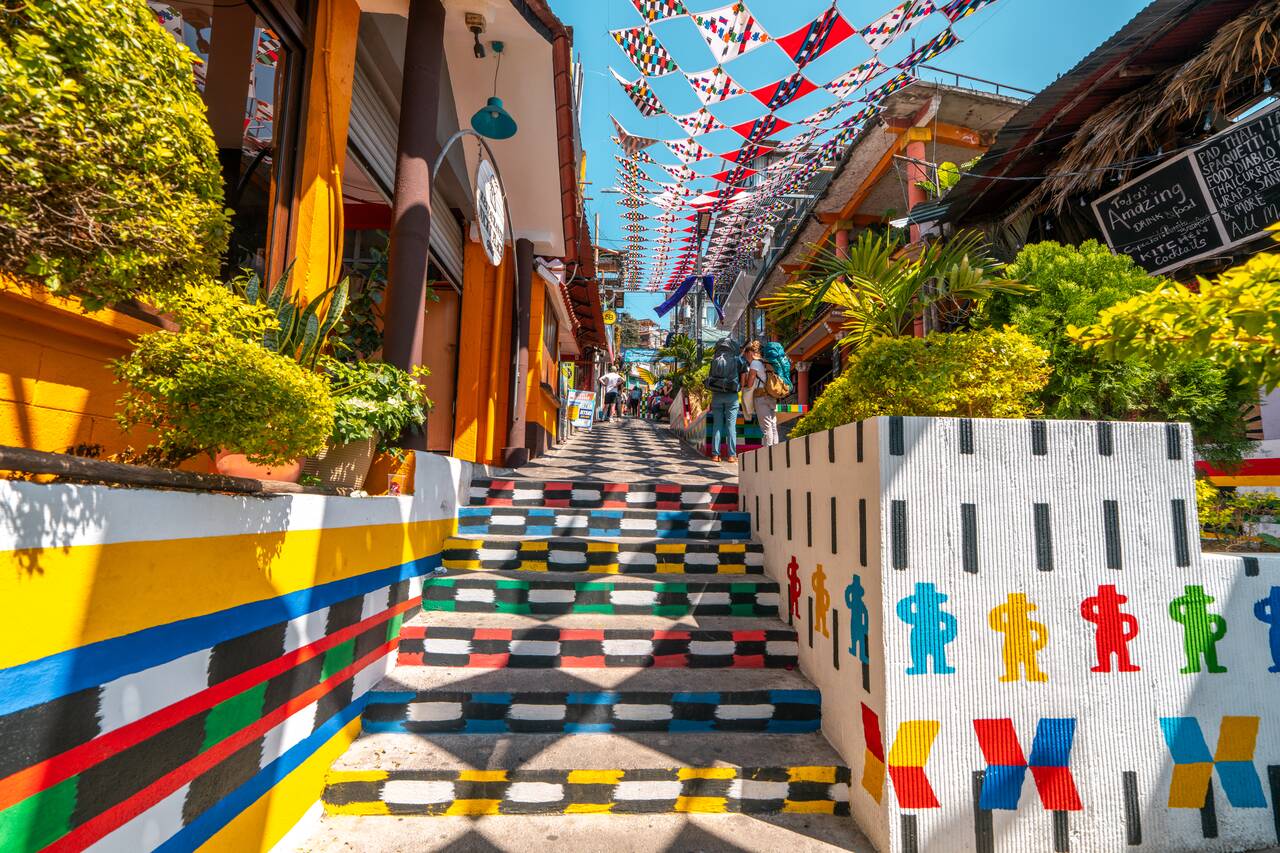
If you are staying in San Pedro La Laguna, you can also spend the day exploring the town. It is the liveliest village around Lake Atitlán and has long been a favorite among backpackers and Spanish students. The town is packed with restaurants, cafés, bars, hostels, and travel agencies, giving it a much more energetic atmosphere compared to the quieter villages around the lake.
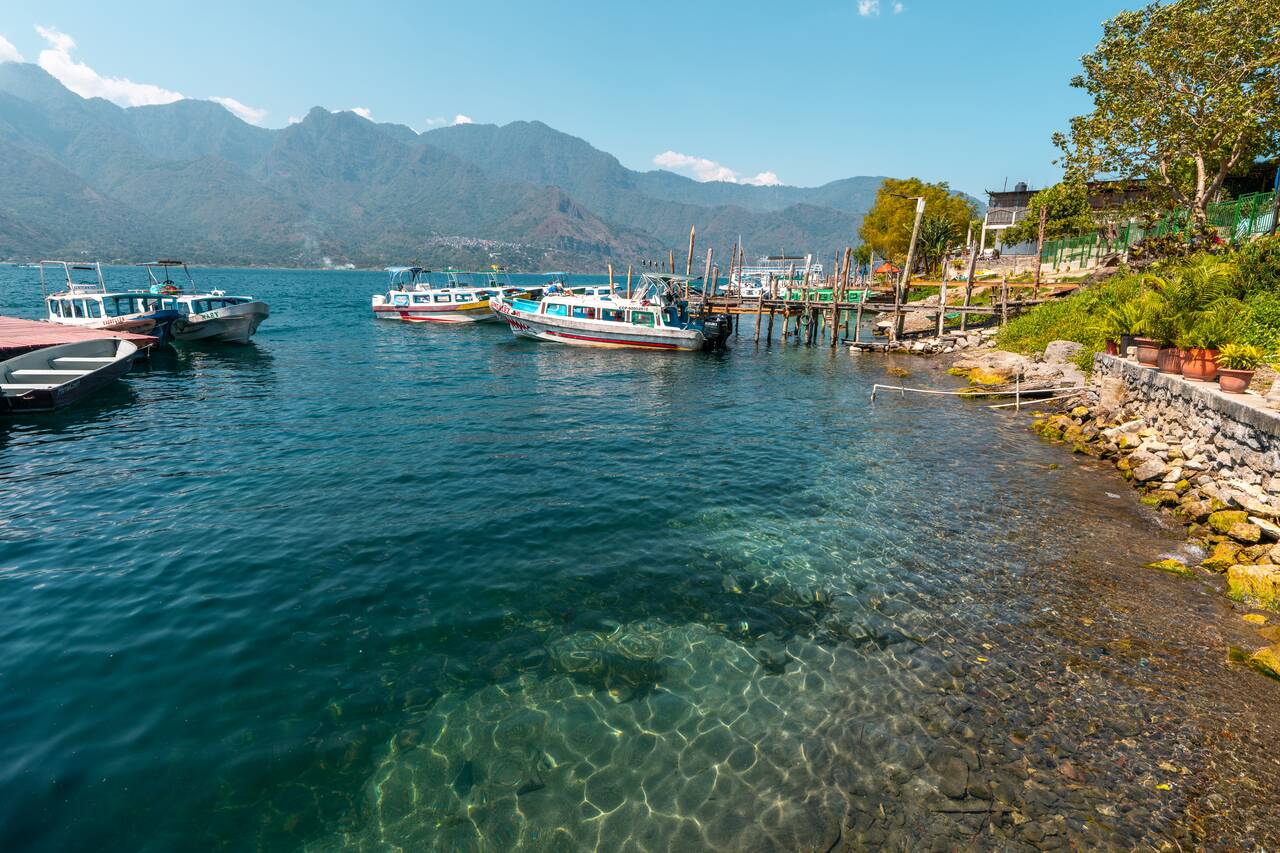
San Juan and San Pedro are right next to each other, so you can easily spend the day exploring both towns. You can spend the late morning and midday in San Juan to chill and relax, then head to San Pedro in the afternoon and evening to experience its parties and lively atmosphere before ending your first day here.
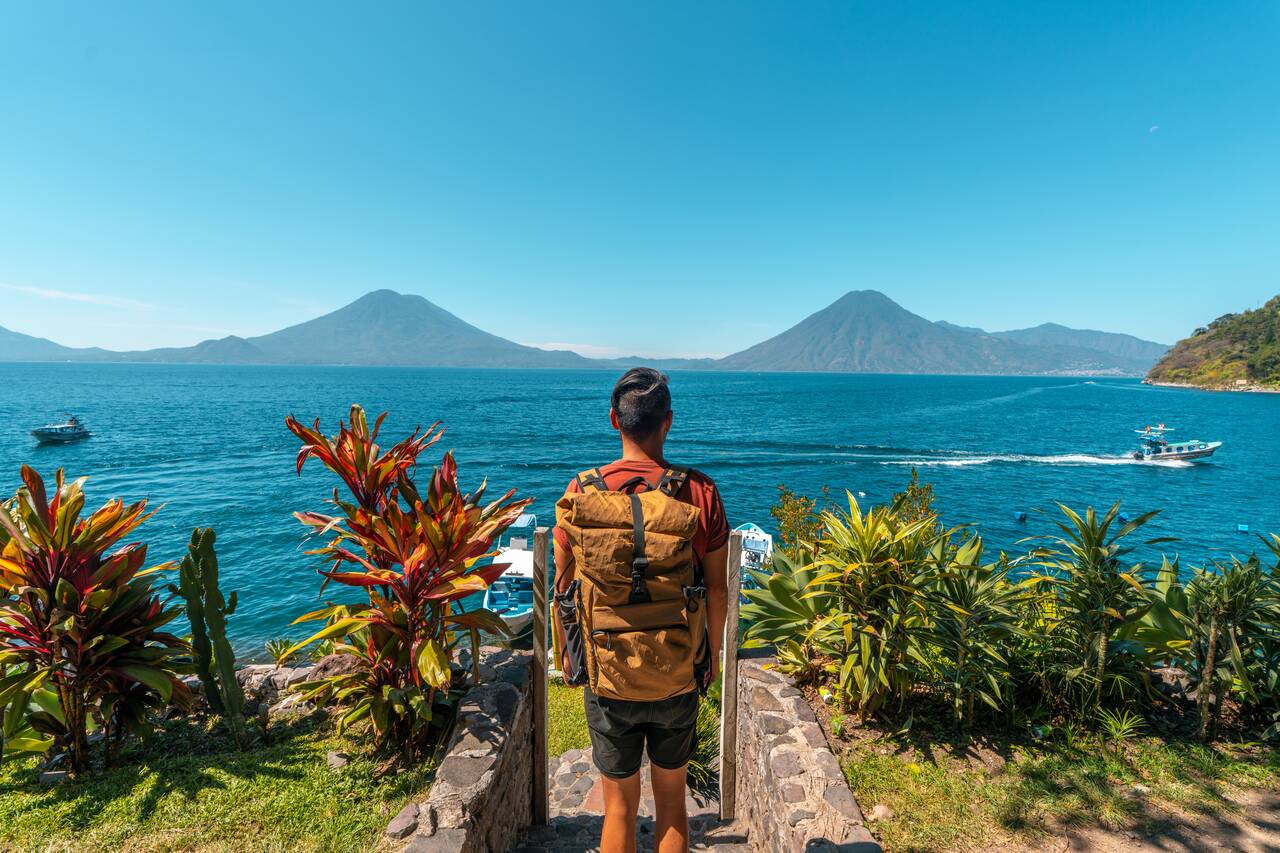
The next day you can spend the day exploring some other towns around Lake Atitlan. For a good itinerary, I recommend taking an early morning boat across the lake to Santa Cruz La Laguna, which has the best view of all, as the town is located right by the lake side and it faces directly towards 3 volcanoes, San Pedro, Tolimán, and Atilan Volcanoes, without any obstruction!
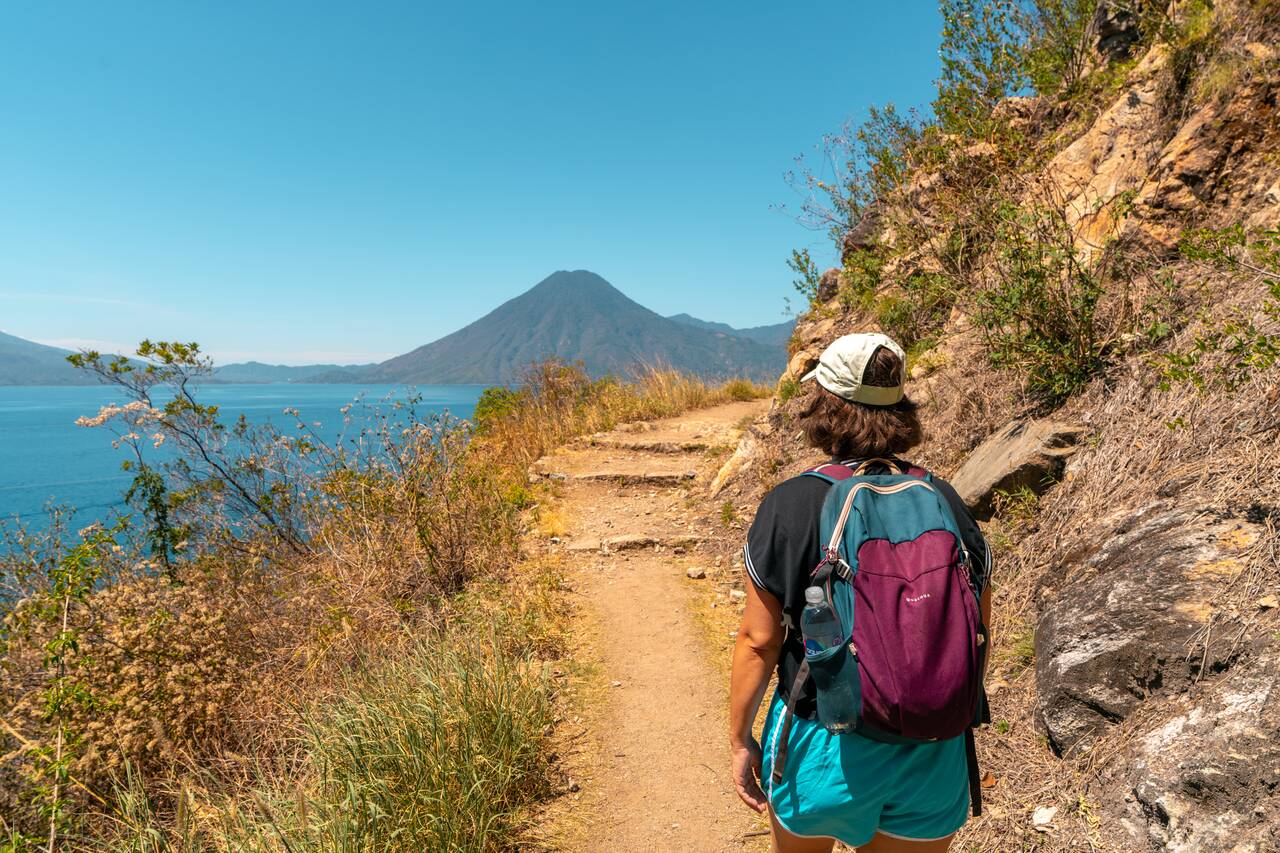
From there, you can hike the Lower Mayan Trail, a lakeside trail connecting Santa Cruz La Laguna and San Marcos La Laguna. The trail hugs the shoreline for much of the hike, taking you through forests, rocky paths, quiet bays, and a few secluded properties with spectacular views of the lake and the surrounding volcanoes. It is a fantastic way to experience a quieter side of Lake Atitlán that most people miss.
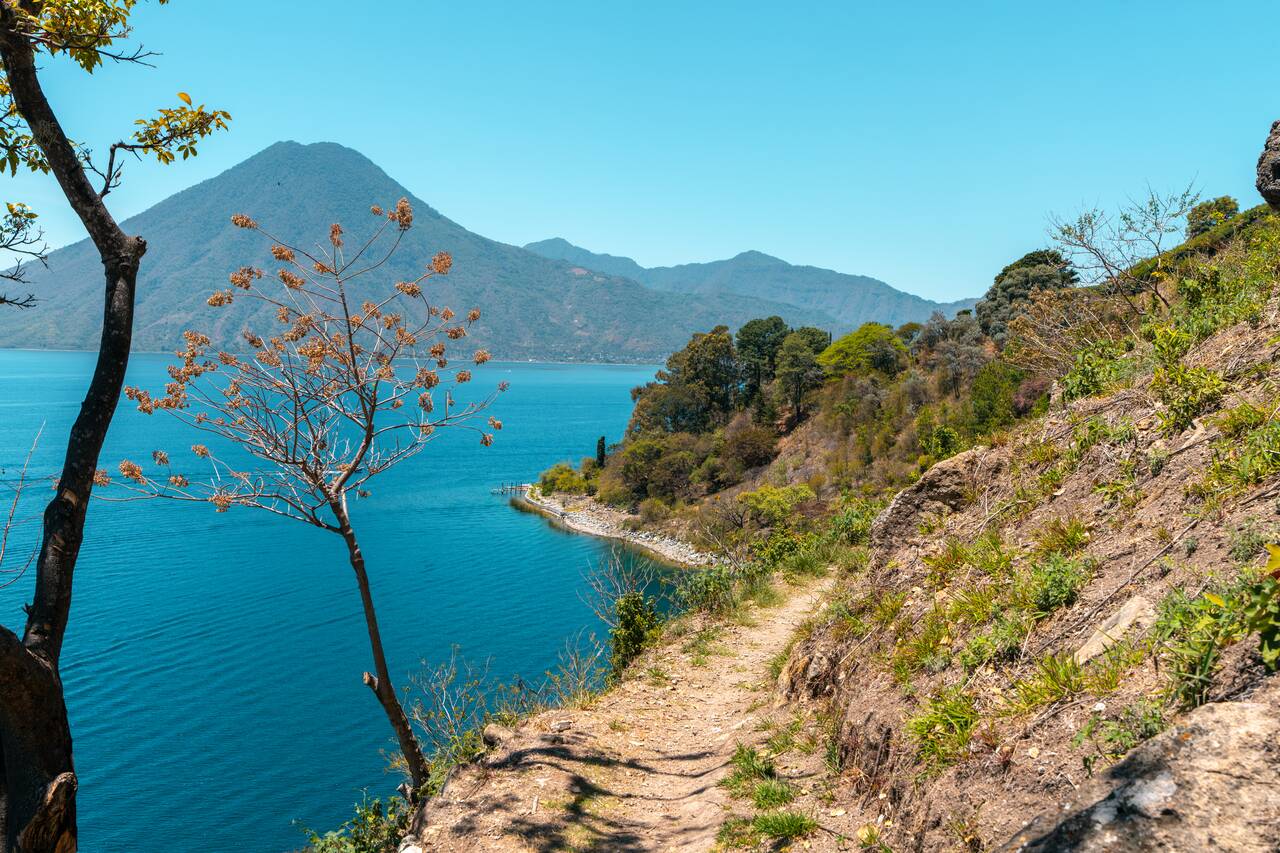
The hike is around 5 km (3.1 miles) long and takes roughly 2.5 to 3 hours, depending on how often you stop for photos or to enjoy the scenery. The route is generally considered easy to moderate, with short bursts of ups and downs rather than one long climb. Along the way, you'll pass hidden beaches, lakeside hotels, and several incredible viewpoints overlooking the lake.
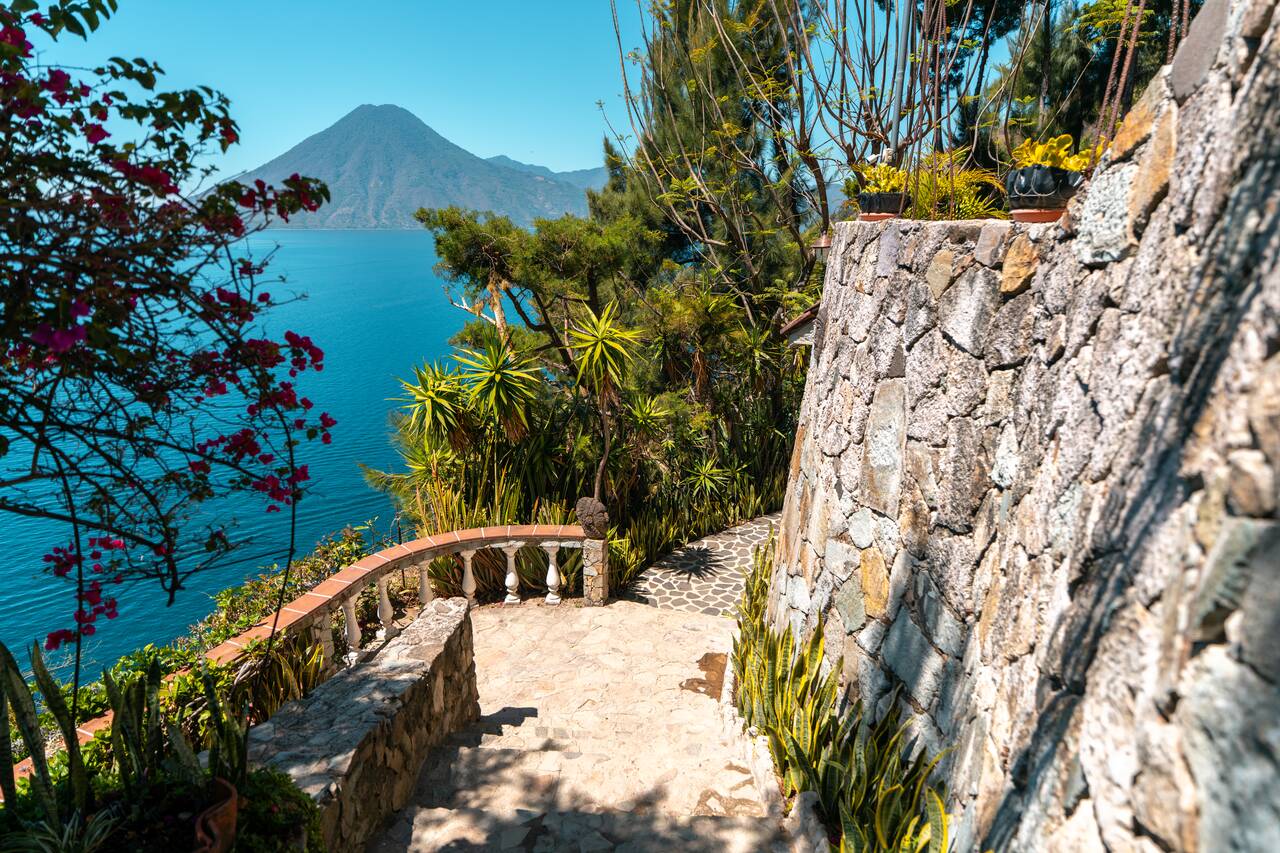
Also located along the trail is La Casa del Mundo, a beautiful lakeside hotel tucked away among rocky cliffs and forested hillsides. Even if you are not staying there, it is well worth stopping for a drink, a meal, or simply to jump straight into the lake. We will discuss more on this place later in the guide.
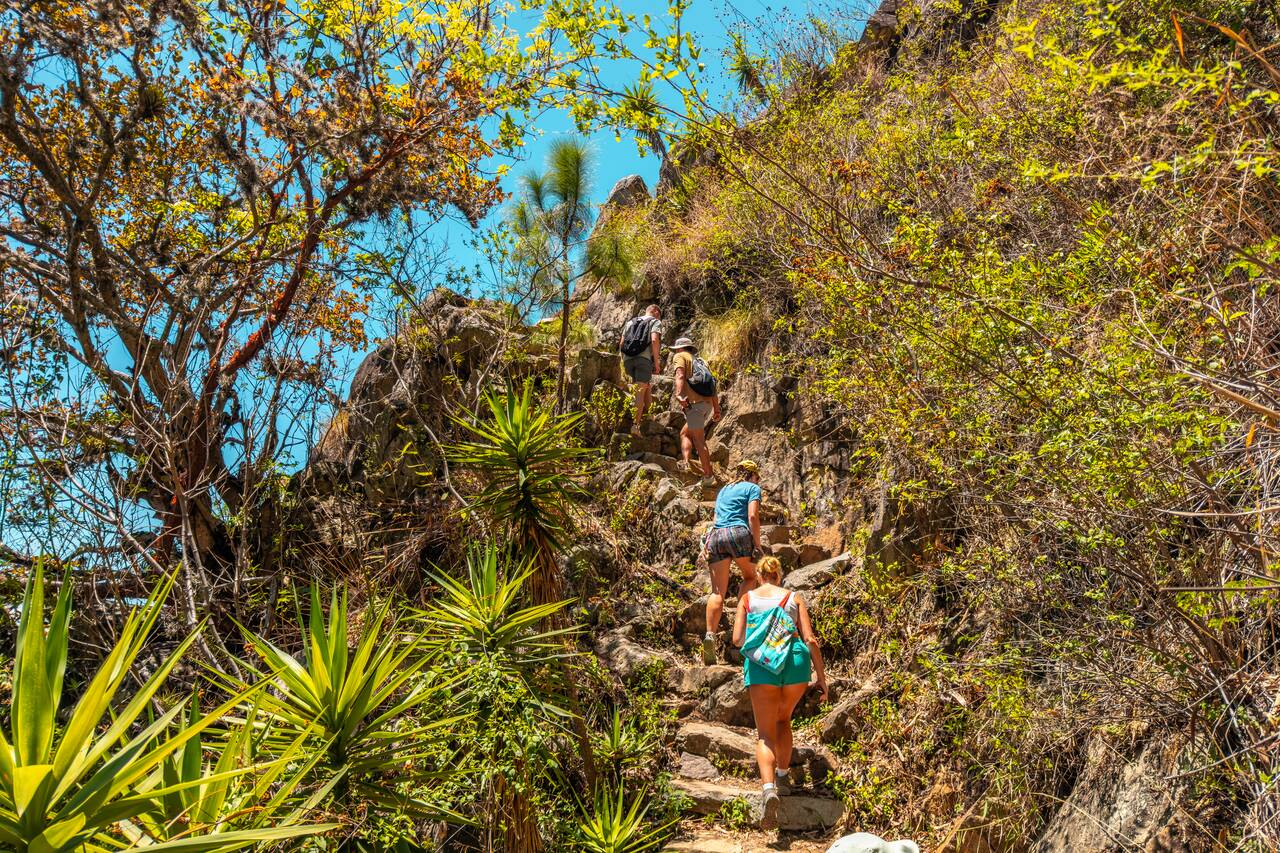
Unfortunately, despite its beauty, the Lower Mayan Trail also has a reputation for robberies, and I experienced just how real that risk is. While my friend and I were hiking the trail in broad daylight, we met a group of hikers who warned us that they had seen a masked man carrying a machete further along the trail. A few minutes later, we met two female hikers coming from the opposite direction, and they confirmed that the man had stopped them and demanded 100 GTQ per person before allowing them to continue.
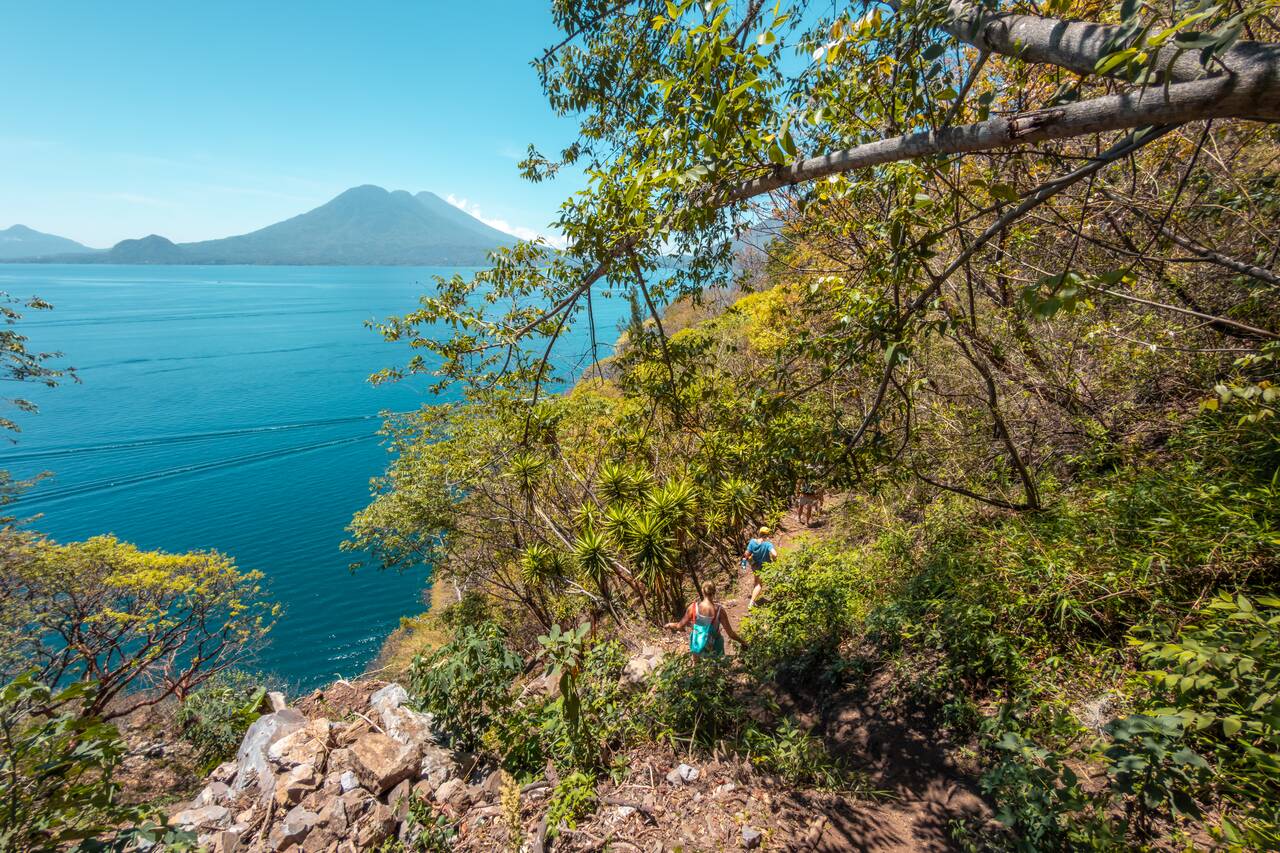
After hearing what had happened, everyone on the trail decided it would be safer to stick together. We waited for more hikers to arrive before continuing as one large group, with several people carrying rocks in their hands just in case things escalated 😬. One of the hikers even called the tourist police while we made as much noise as possible walking through the area. Thankfully, we never encountered the man. My guess is that he disappeared once he realized a large group was coming.
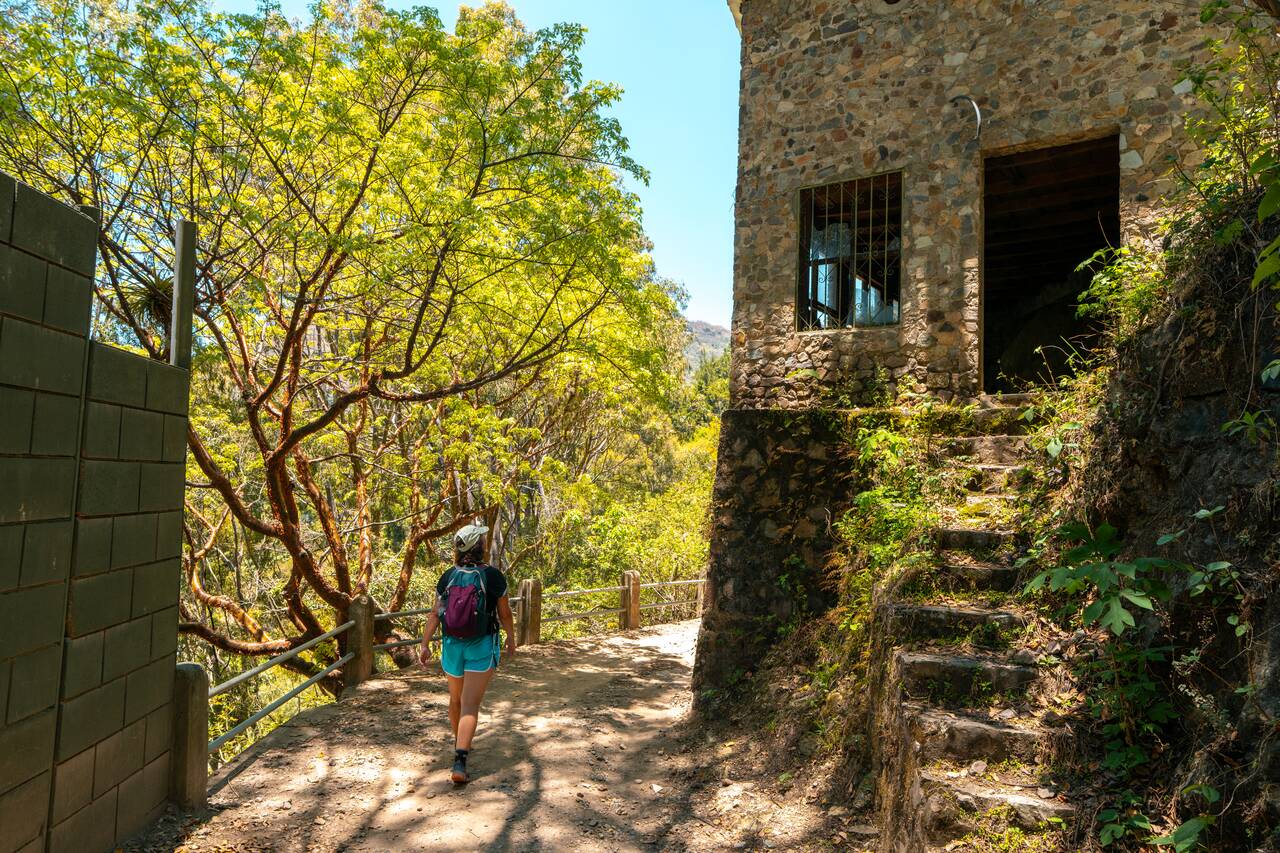
What shocked me the most was that this happened in the middle of the day on one of the most popular hiking trails around Lake Atitlán. That said, despite its popularity, much of the trail is actually quite quiet, and there were long stretches where we didn't see anyone at all, which is probably why it attracted opportunists like the machete guy we saw lurking around.
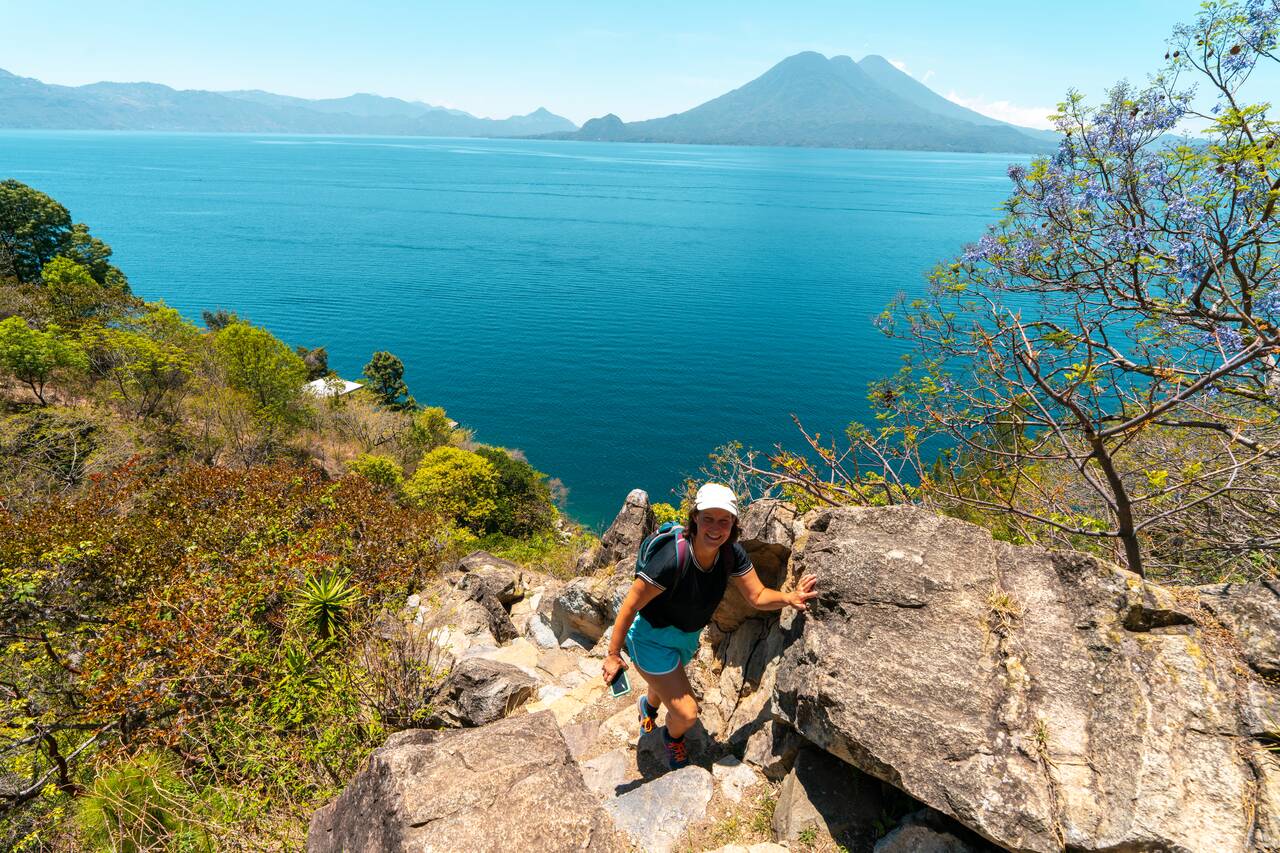
Would I still recommend the hike? Yes, but only if you take the proper precautions. Avoid hiking the trail alone or in pairs if possible. Instead, go with a guide or join a larger group of hikers, ideally four or more people. Before setting off, ask your hotel or local guides about the current safety situation, as conditions can change over time. The scenery is absolutely worth seeing, but it is one place around Lake Atitlán where it pays to be extra cautious.
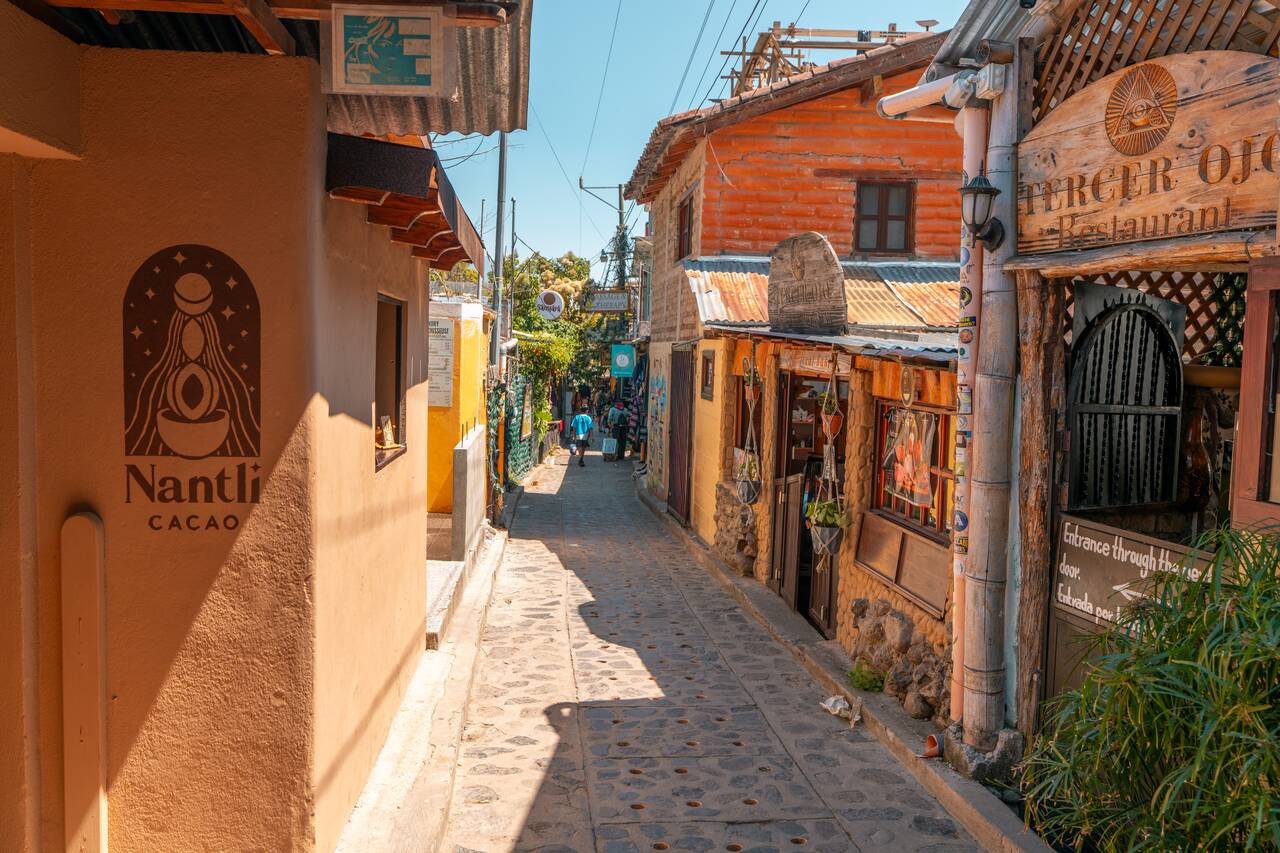
Once you reach the end of the Lower Mayan Trail, you'll arrive in San Marcos La Laguna, another cool village with its unique atmosphere unlike other towns here. Known for its laid-back, bohemian atmosphere, the town has become a popular destination for yoga retreats, meditation centers, wellness workshops, and healthy cafes.
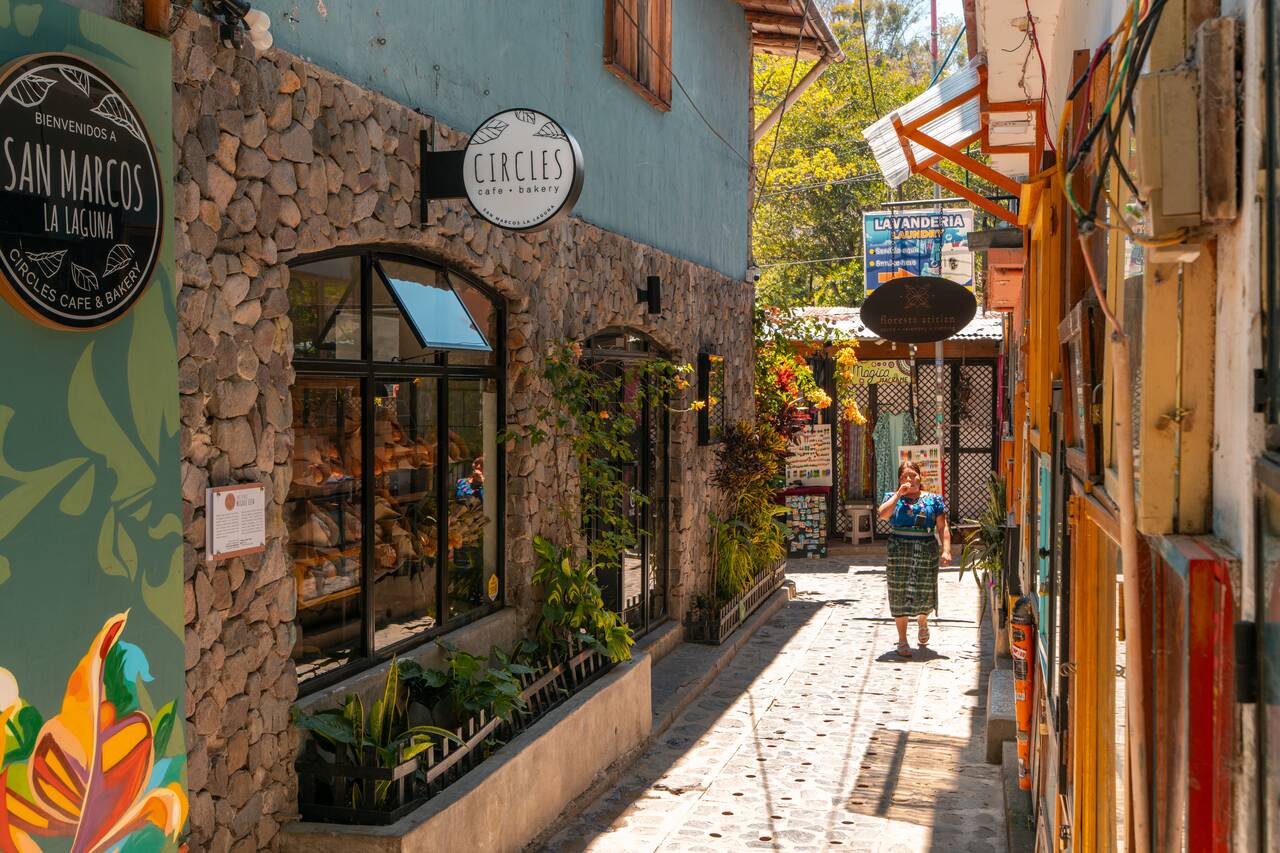
While the whole hippie and spiritual scene wasn't really my thing, I still enjoyed wandering around San Marcos. The village has a relaxed vibe, plenty of cozy cafes, like Circle Cafe & Bakery and some beautiful lakeside spots where you can sit back and enjoy the view after finishing the hike.
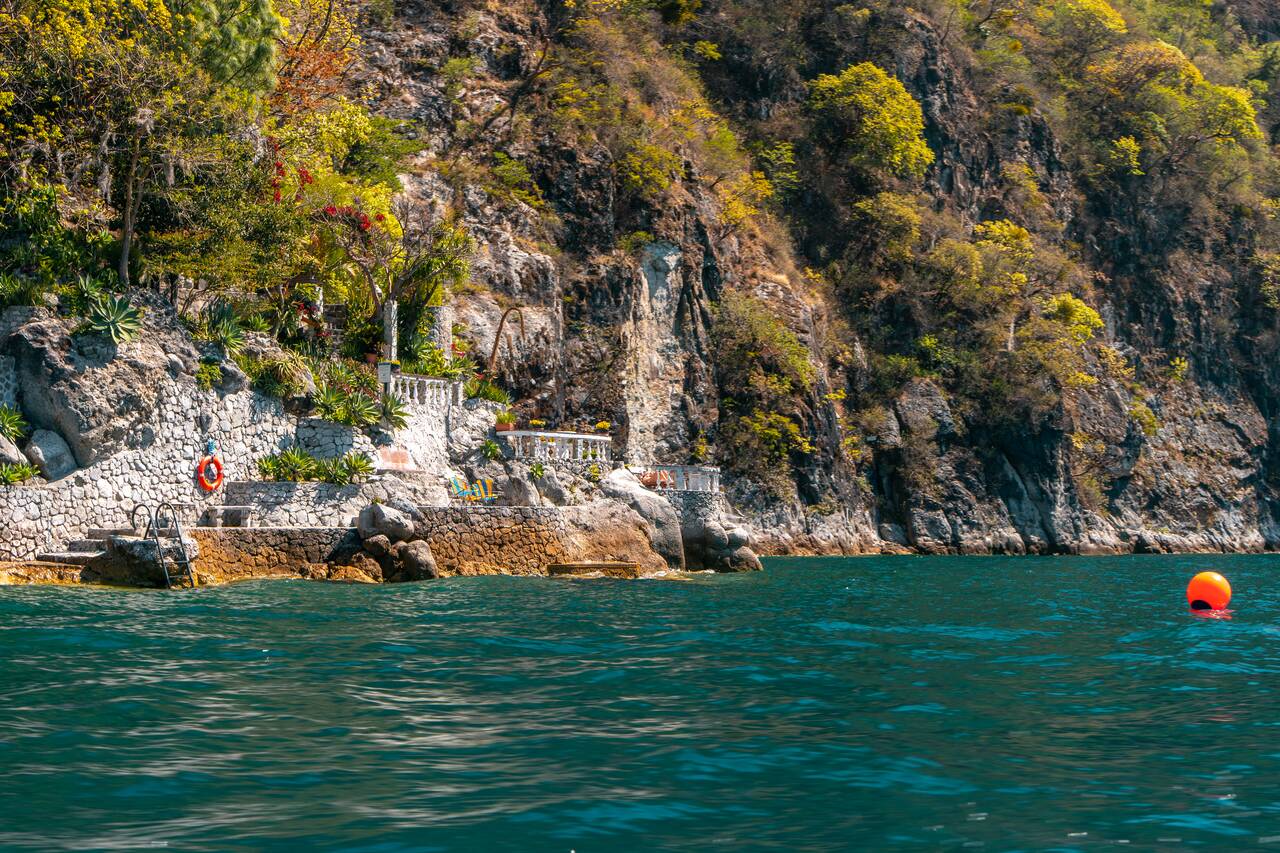
If you do not want to hike the Lower Mayan Trail, you can also opt for spending a day at La Casa del Mundo, one of the most beautiful spots to relax around Lake Atitlán. I actually discovered this place by accident while traveling by boat from San Juan to Santa Cruz, and its lakeside setting immediately reminded me of Lake Como, with its stunning villas built along the cliffs.
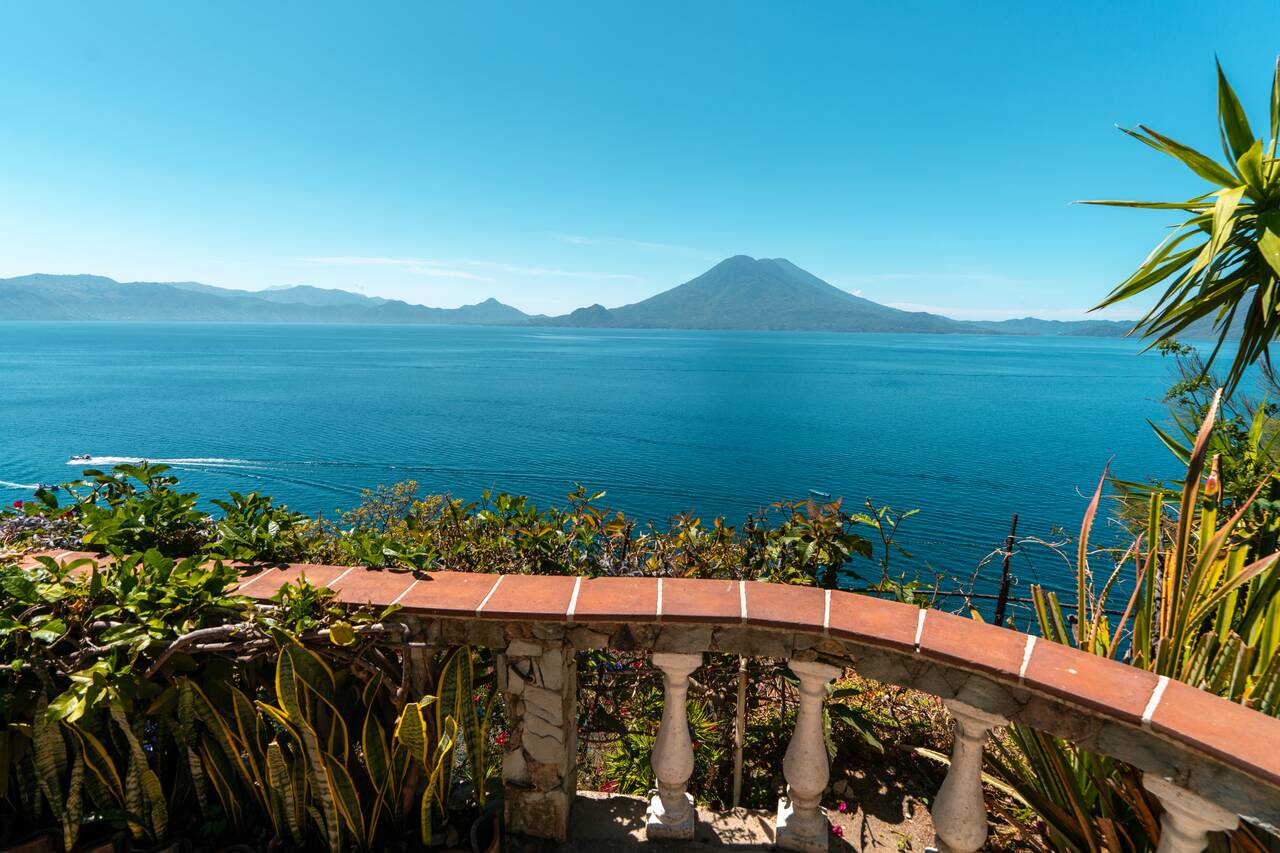
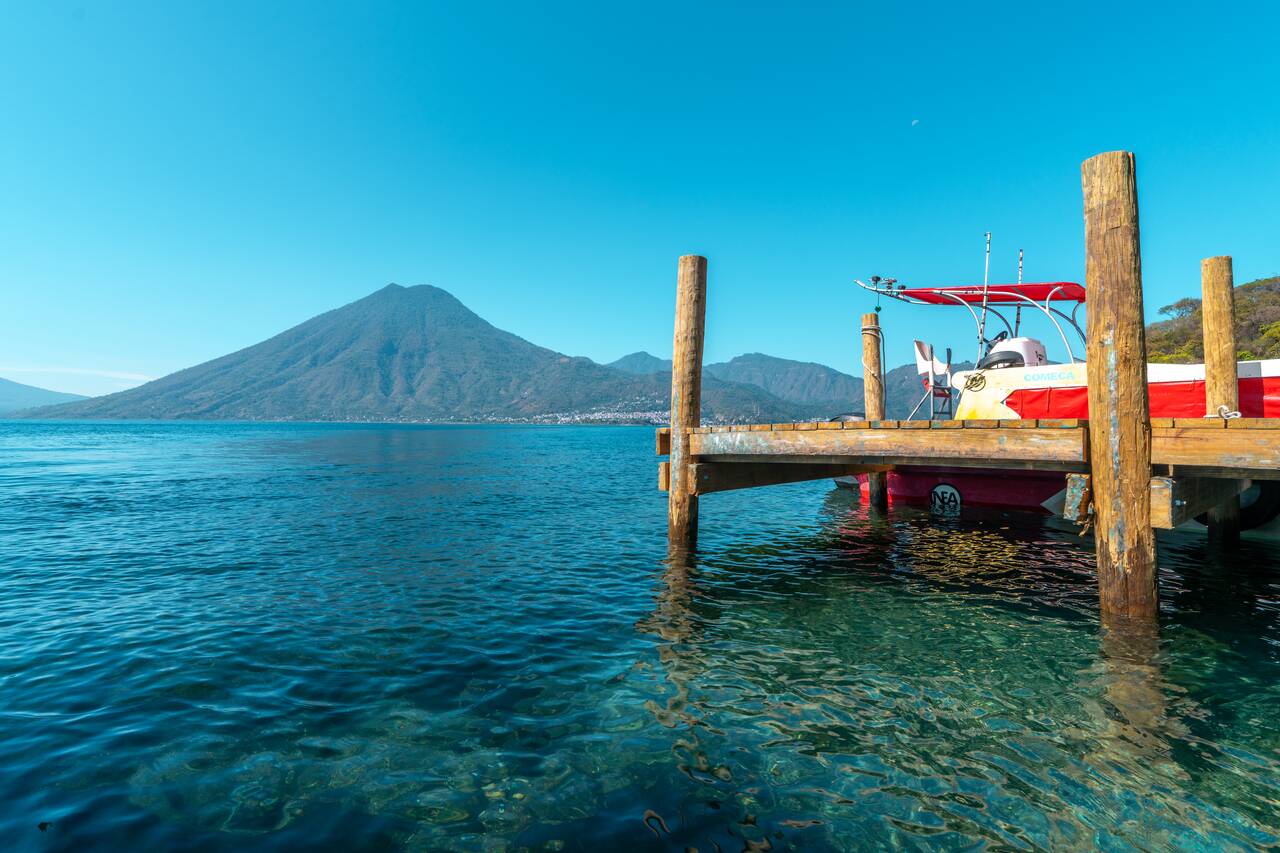
Unlike many lakeside spots around Lake Atitlán, La Casa del Mundo gives you direct access to the water, with several wooden platforms built into the cliffs where you can sit, sunbathe, or jump straight into the crystal-clear lake. The swimming area here is incredible, with calm turquoise water and uninterrupted views of the surrounding volcanoes.
This should keep you occupied for the rest of your second day here. On your third day, you can take it slow and enjoy a relaxing day at your accommodation and your base town, or you can take a boat to other faraway towns like Santa Catarina Palopó and explore more of the lake. Since you will be taking an overnight bus to Semuc Champey at 8 PM, you can either leave your backpack with your accommodation for the day and continue exploring, or book an extra night so you have a room to relax until your bus leaves. It is going to be a long ride, so be prepared!

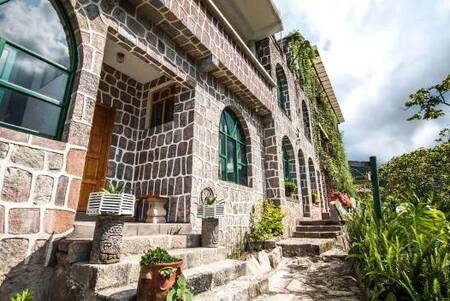
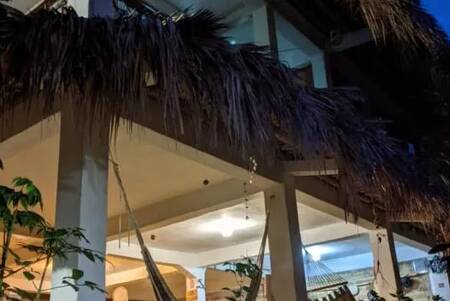
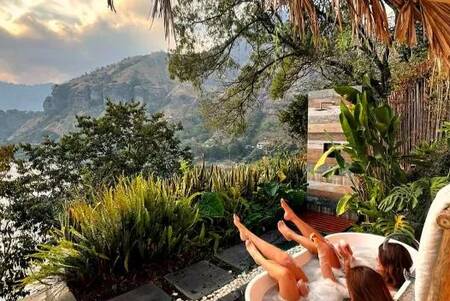
Where to Stay at Lake Atitlan?
One of the first things you'll notice when planning a trip to Lake Atitlán is that there isn't a single town called "Lake Atitlán". Instead, the lake is surrounded by several villages, each with its own personality, atmosphere, and attractions. Choosing the right place to stay can make a big difference in your experience, so it is worth considering what kind of trip you are looking for before booking your accommodation.

Getting from Lake Atitlan to Semuc Champey
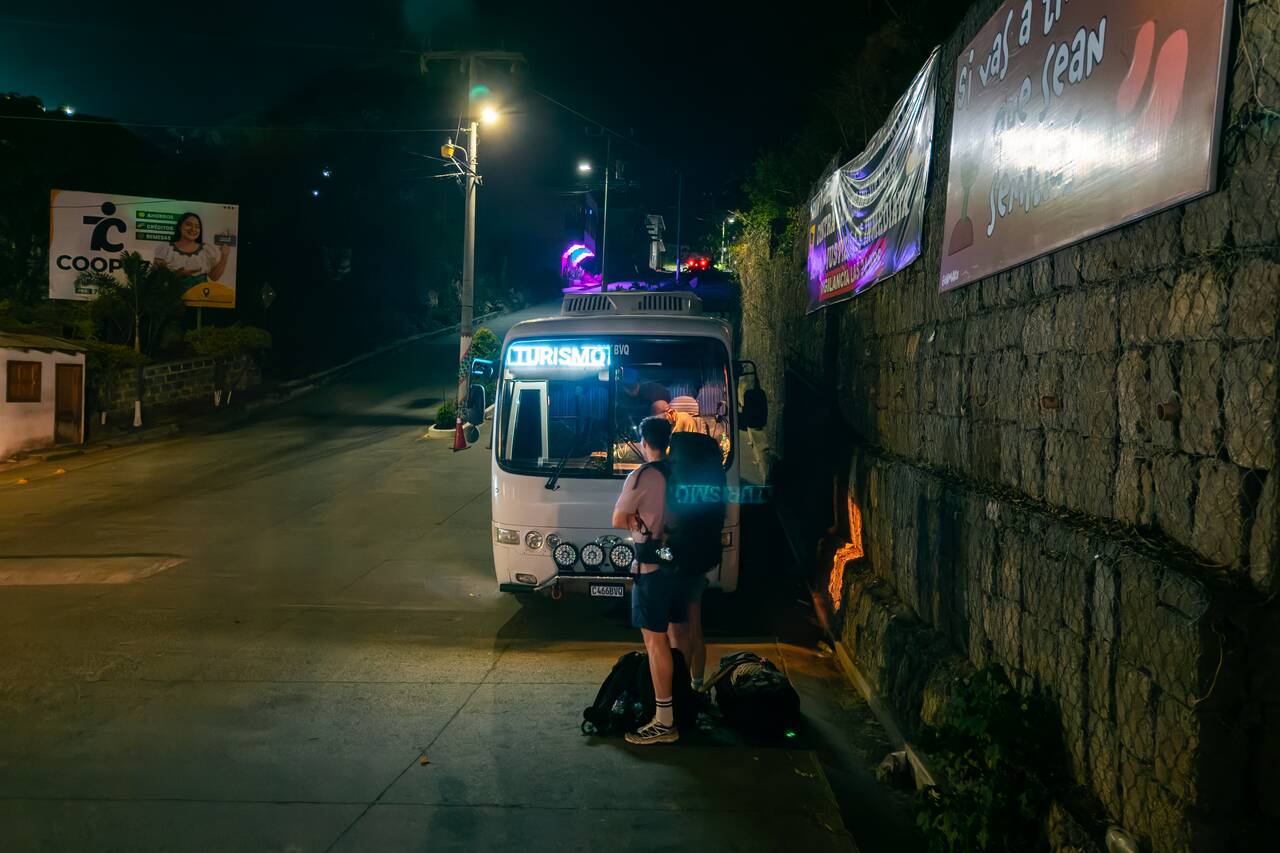
From Lake Atitlán, you can catch an overnight shuttle bus, which can be booked here. It departs from this intersection at 8 PM and takes around 10 hours, arriving in Lanquín at around 6 AM the following morning. The shuttle first travels to Guatemala City to pick up more passengers before continuing to Lanquín.
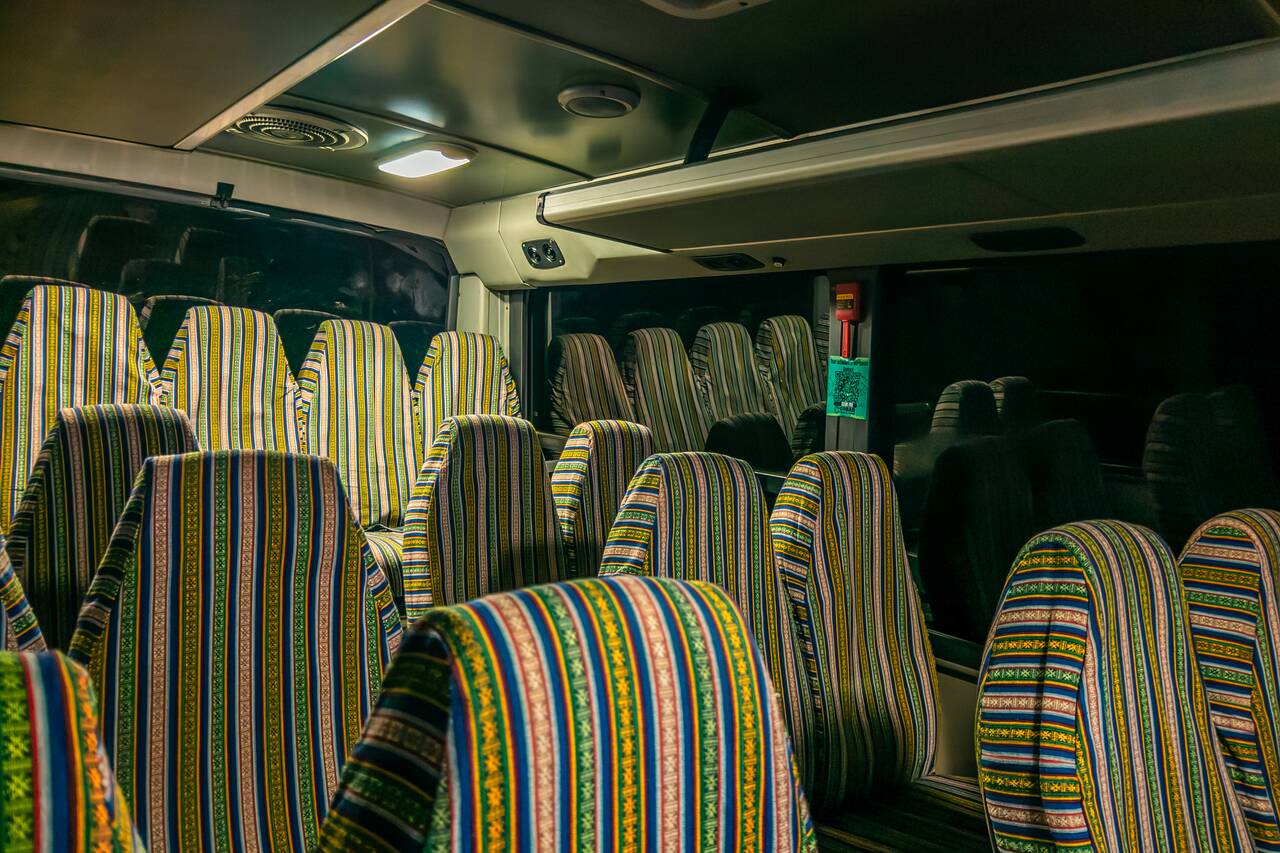
I took this shuttle myself, and it was decent. It wasn't the most comfortable bus I rode in Central America, but it certainly wasn't the worst either. The bus stops for bathroom breaks two or three times along the way, and every seat was occupied during my journey, so be prepared for a long and crowded ride. The air conditioning also gets quite cold, so make sure you bring a jacket. The shuttle drops passengers off at the bus terminal in Lanquín.
Day 11-12: Semuc Champey (2 nights)
- 📍 Stay: Hotel Rabin Itzam
- 🕐 Time: 2 nights
- 📖 Full Guide: Semuc Champey Travel Guide: Things to Do, How to Get There & More
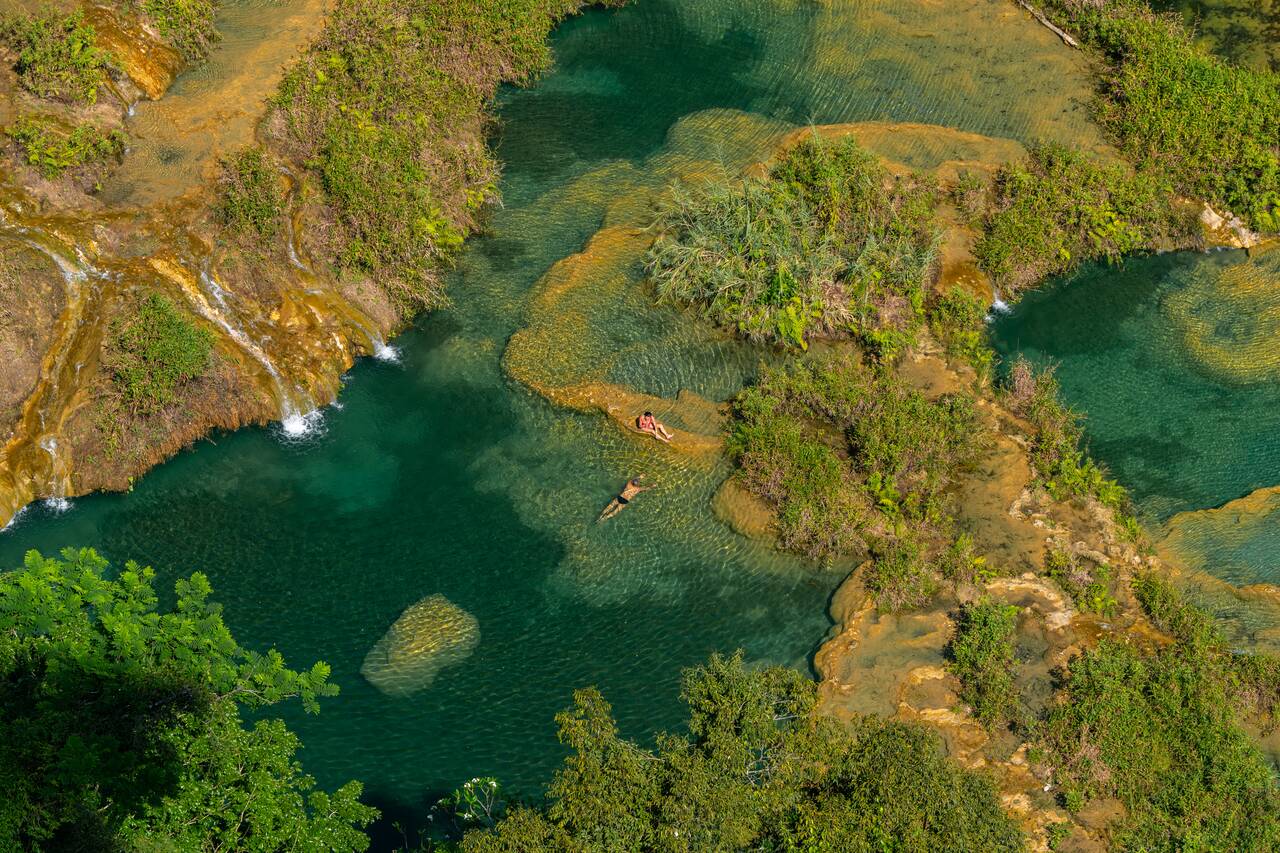
Tucked away deep in the lush jungles of Central Guatemala, Semuc Champey is one of the country's most breathtaking natural wonders. The place is famous for its turquoise limestone pools cascading over the Cahabón River, where you can swim, relax, and cool down in the crystal-clear water, or hike to its stunning viewpoint to fully appreciate this incredible landscape from above.
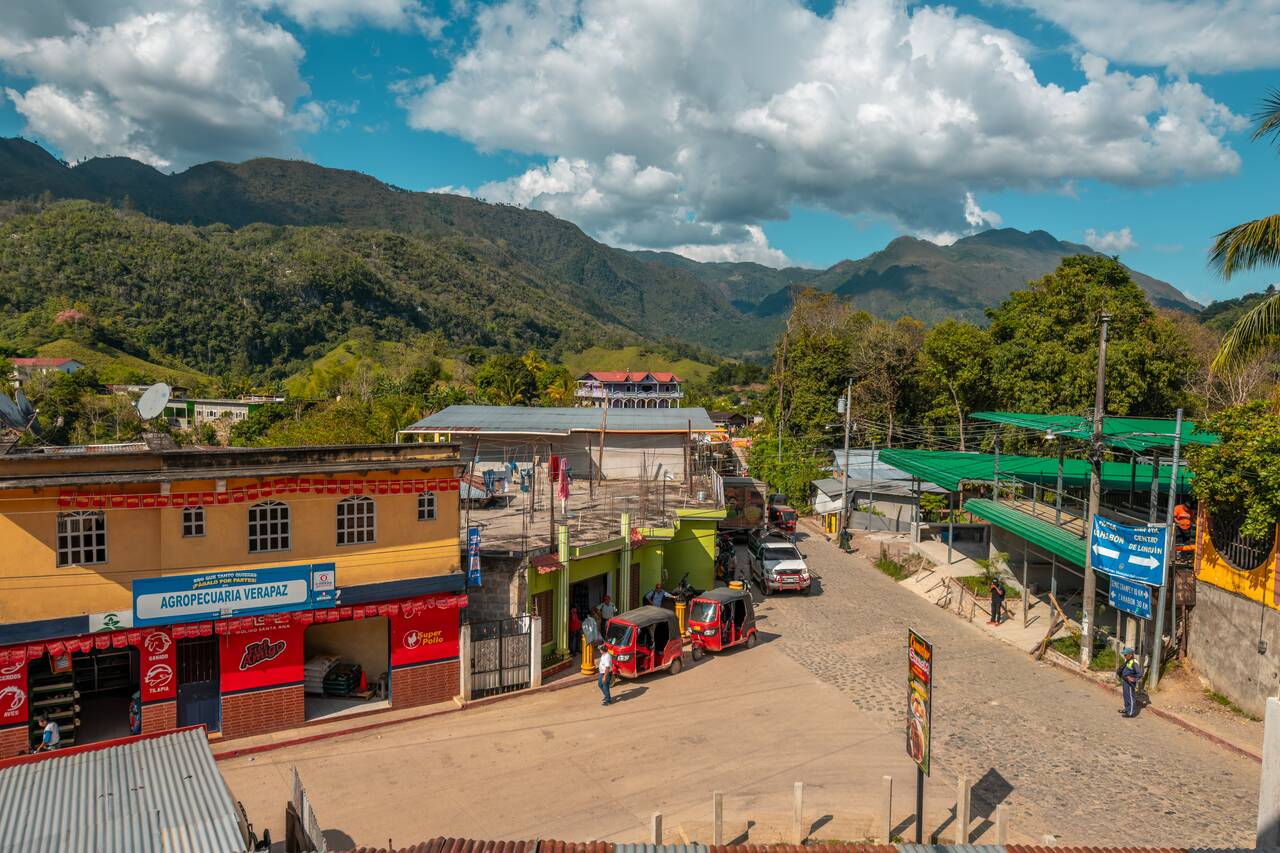
With the overnight bus from Lake Atitlan, you should arrive in Lanquin around 6 AM, maybe a little too early to check-in as most hotels check-in time here is around 2 PM, so you can spend the morning resting at the hotel or go explore the town a bit.
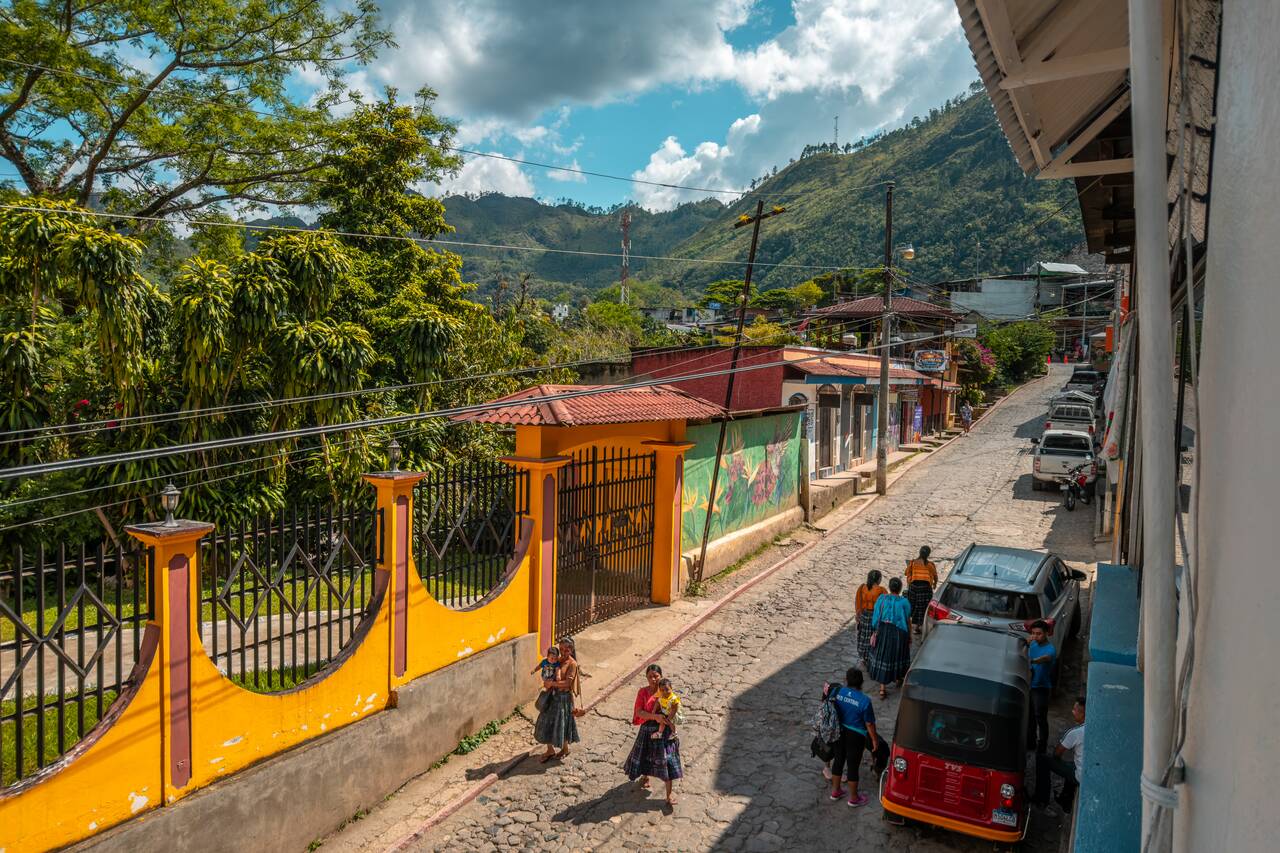
The town itself is quite small and can be explored on foot in a short amount of time. Take a walk around the central area, visit the local market that often pops up around Lanquín Central Park, grab some food from a small family-run restaurant, and enjoy the slower pace of life here.
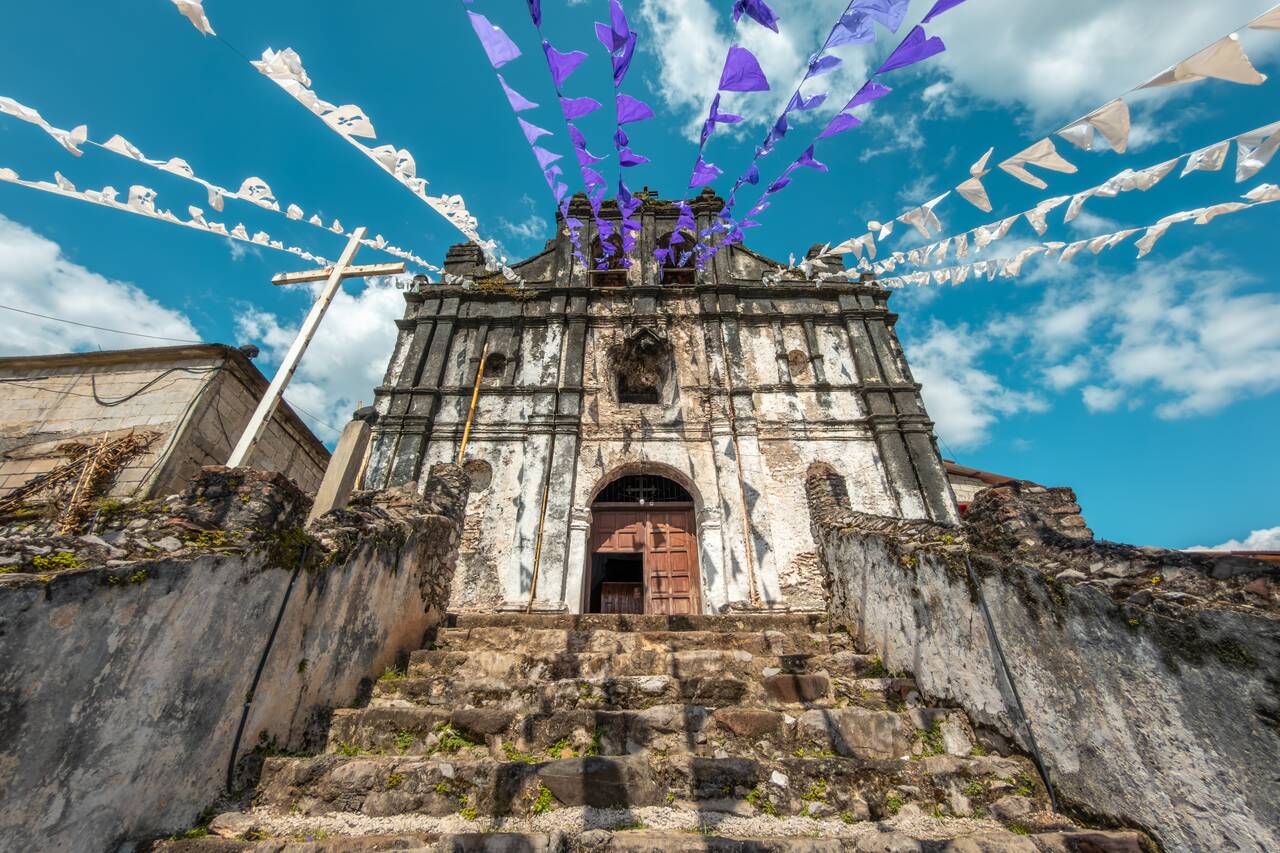
While exploring Lanquín Town, be sure to stop by Catedral de Lanquín, a small but charming church located right in the heart of town on top of a hill overlooking the valley. It might not be the grandest cathedral you will see in Guatemala, but its simple rustic design, white-washed facade, and quite peaceful vibe sure make it a wonderful place to drop by.
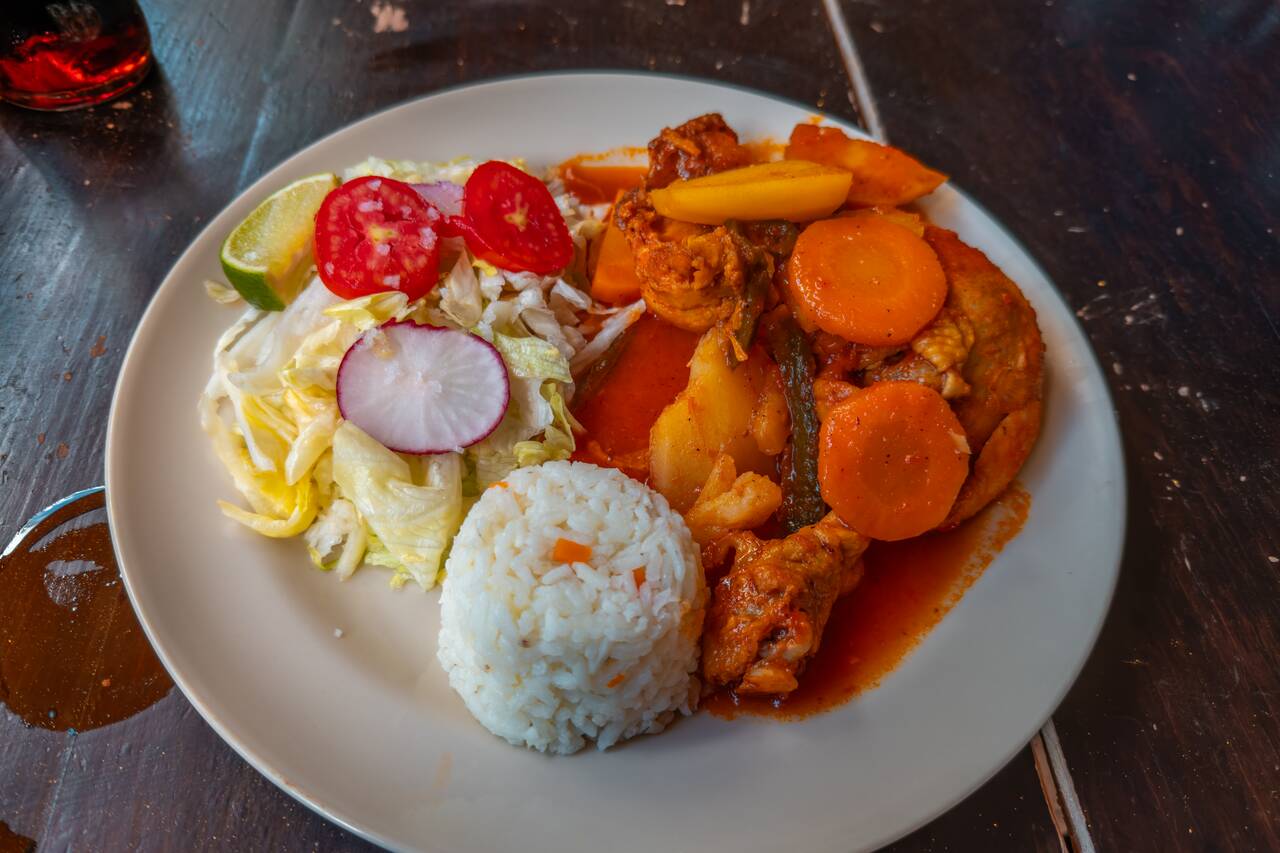
If you are looking for a small family-run local restaurant in Lanquín to try, I highly recommend Comedor La Bendición. They serve authentic local dishes where you can choose your preferred type of meat, which is freshly cooked on the grill and served with a variety of sides such as salad, rice, macaroni, vegetables, frijoles, and tortillas.
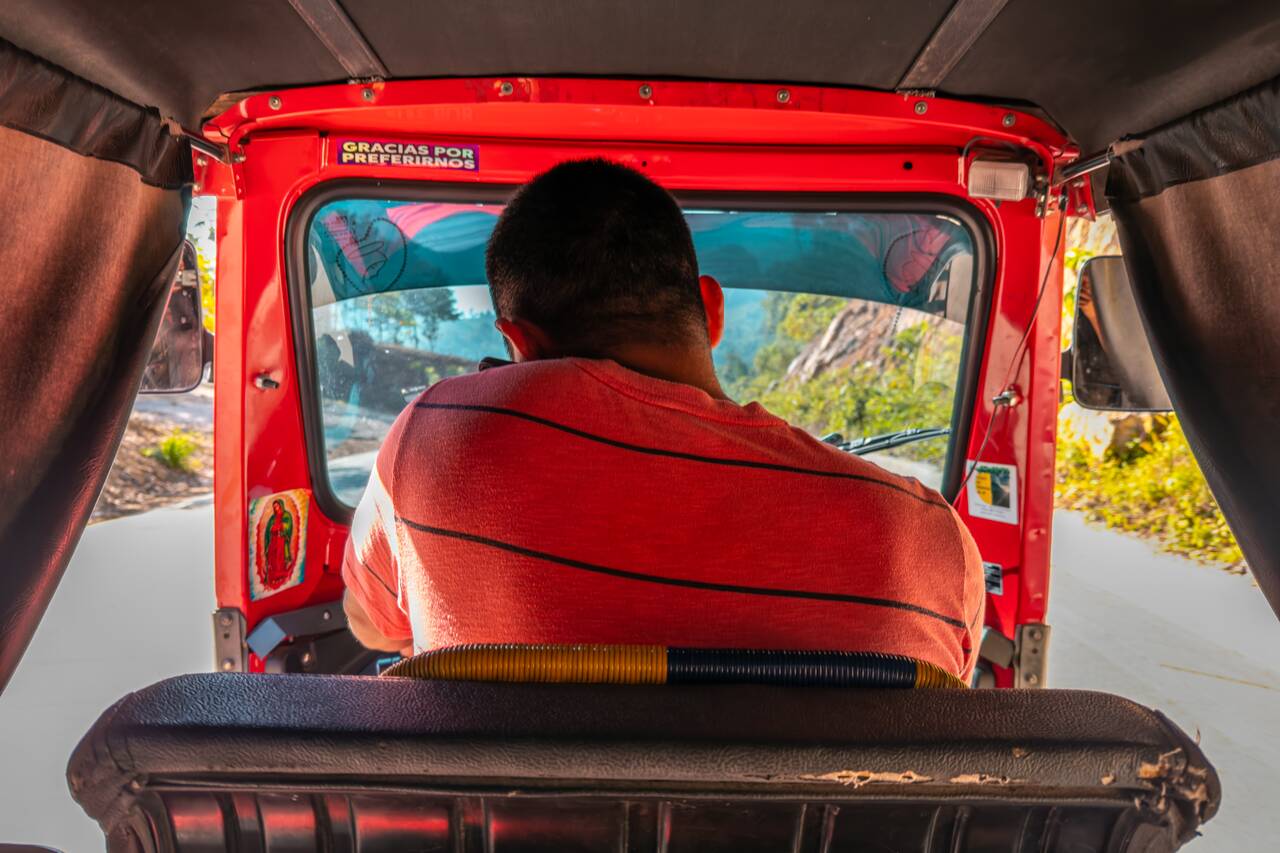
Once you can check in to your accommodation, you can spend the rest of the day resting and preparing for your visit to Semuc Champey the next day. I highly recommend starting early in the morning by either taking a shared pickup truck or a tuk-tuk, which should cost around 25 GTQ one way. You can ask your accommodation to arrange transportation for you.
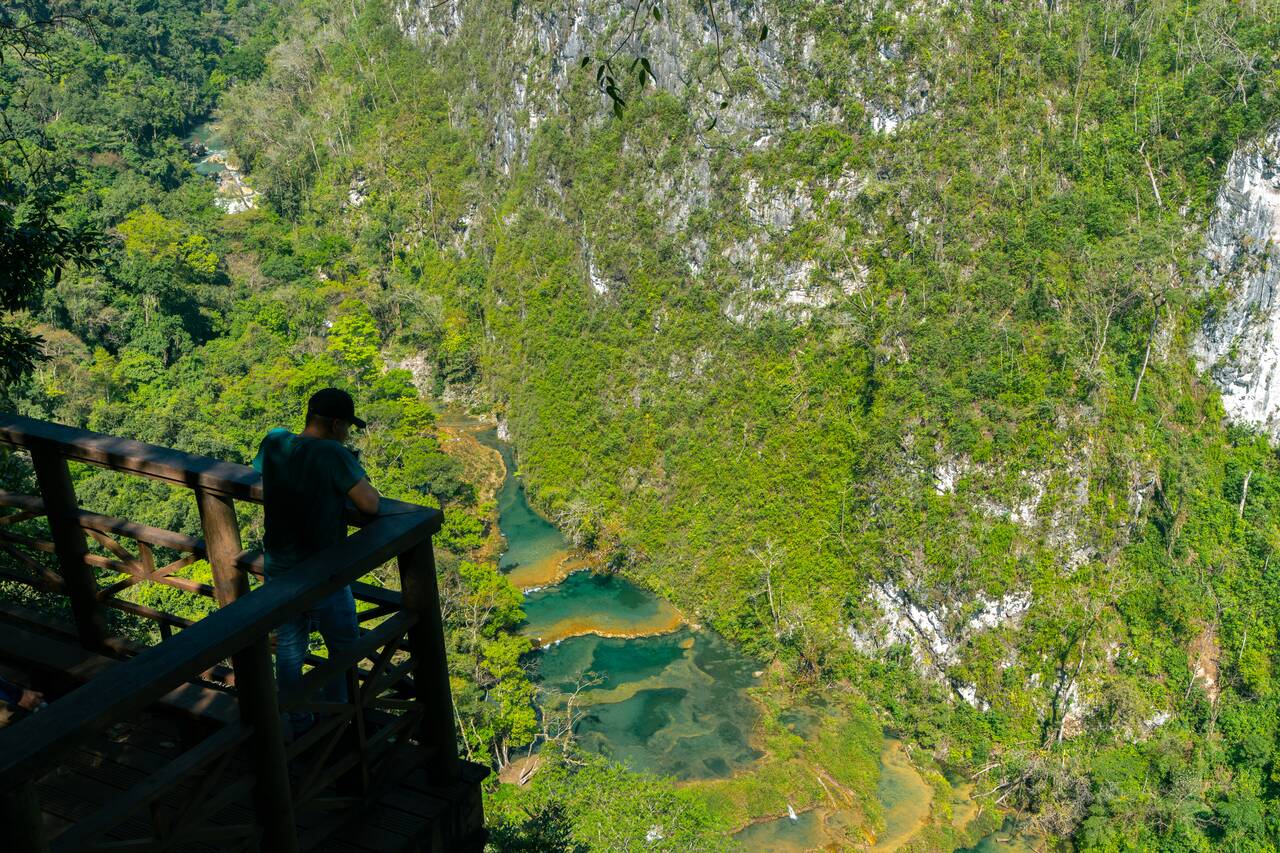
By far one of the most popular things to do, and probably the reason that got me interested in visiting Semuc Champey in the first place, is seeing the stunning landscape from above at El Mirador, a short but rewarding hiking trail inside the park. From here, you'll get the iconic panoramic view of the turquoise limestone pools winding through the dense Guatemalan jungle, easily one of the most breathtaking views in the country.
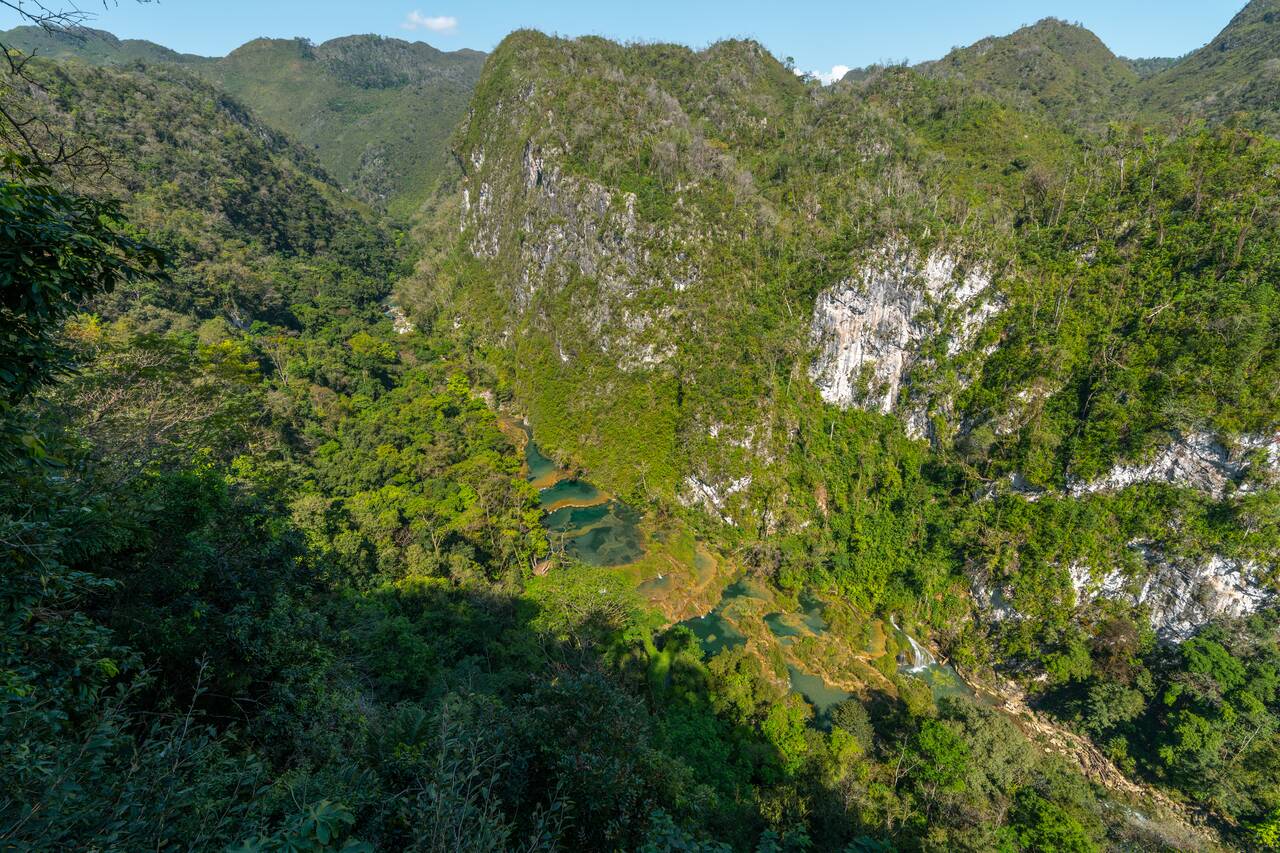
The hike begins just inside the park entrance and takes around 30 to 45 minutes each way, depending on your fitness level. Although the trail is relatively short, don't underestimate it. It is steep almost the entire way, with plenty of stairs, exposed tree roots, and muddy sections, but once you reach the viewpoint, you'll be rewarded with a spectacular bird's-eye view of Semuc Champey.
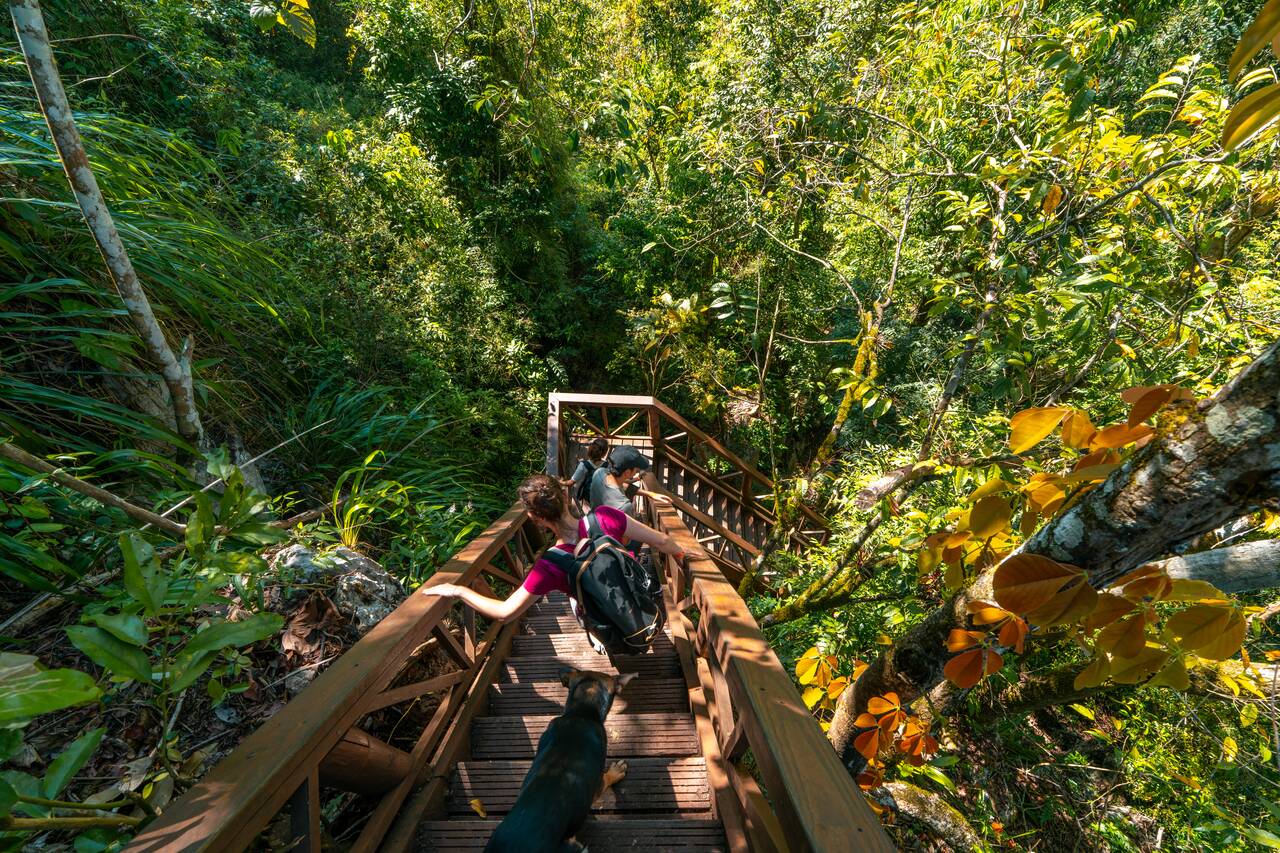
After enjoying the view and taking plenty of photos, you can continue along the trail to descend on the other side, which will bring you directly to the Turquoise Limestone Pools where you can go for a swim. You can also return the same way and take the easier, more direct route to the pools, but where's the fun in that, right?
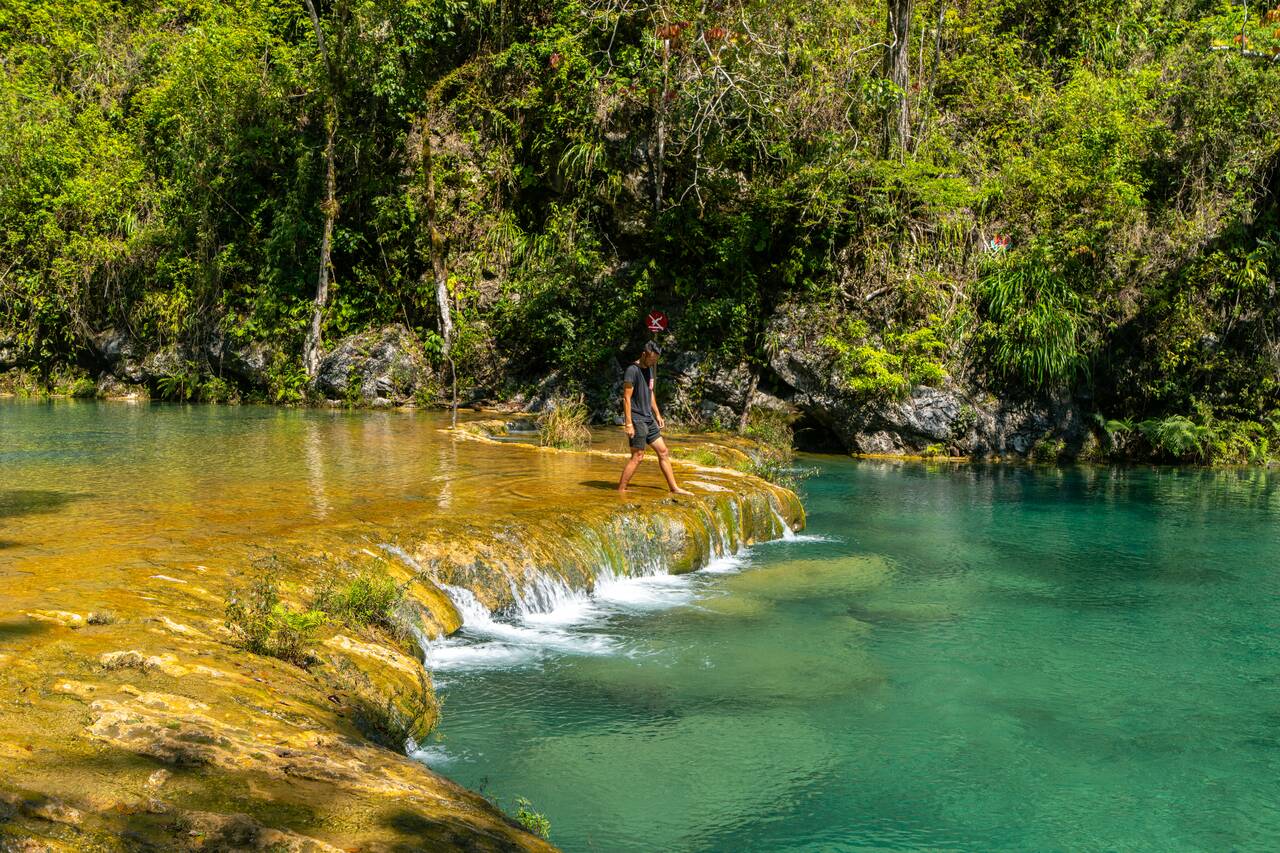
There is no better way to cool down from the hike you just did than by jumping into the famous turquoise limestone pools of Semuc Champey. These natural pools are the main attraction of the park, and once you see them from above, you'll understand why they are considered one of Guatemala's most beautiful natural wonders.
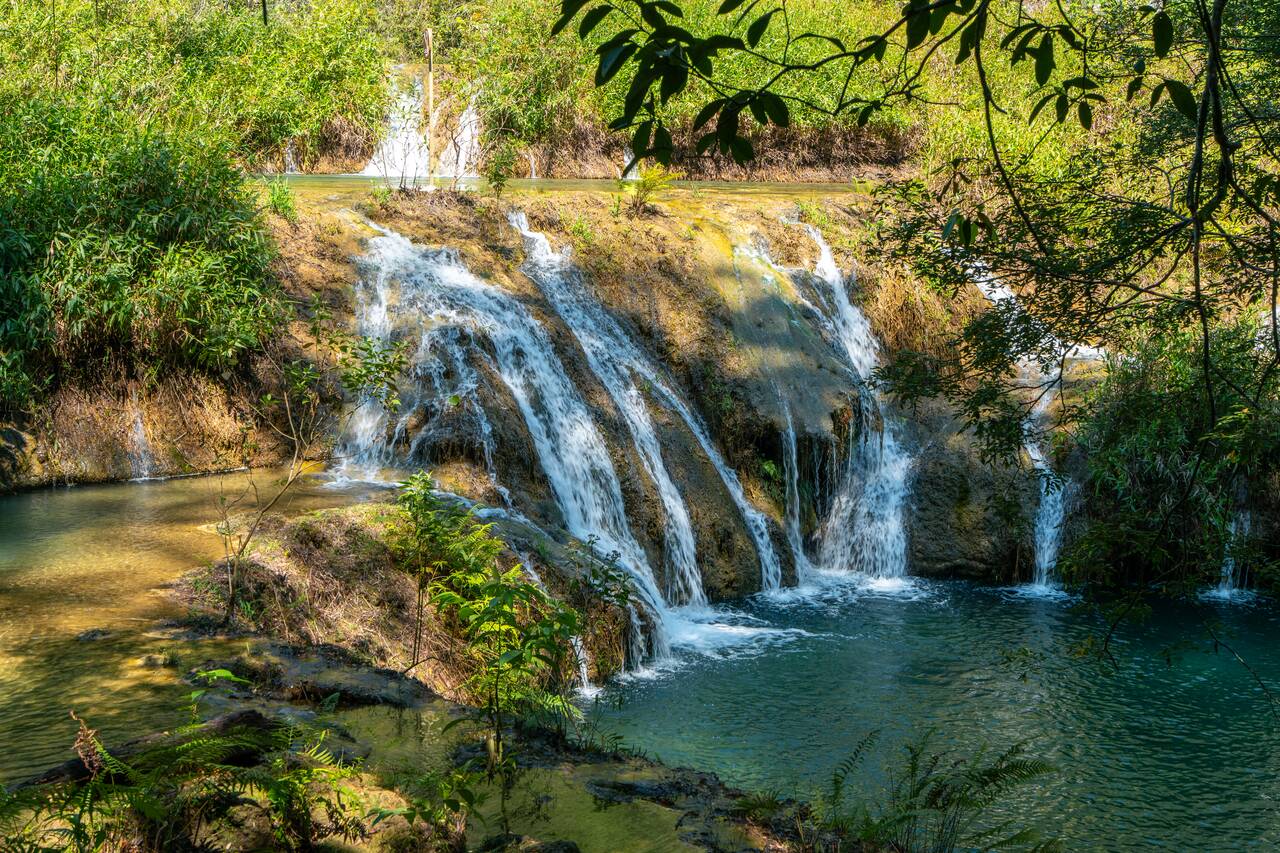
After you are done swimming and relaxing by the pool, make sure you spend some time and explore the trail the runs along Cahabón River. As you walk along the wooden pathways and rocky trails around the pools, you'll discover a series of small waterfalls, natural cascades, and hidden corners surrounded by lush jungle.
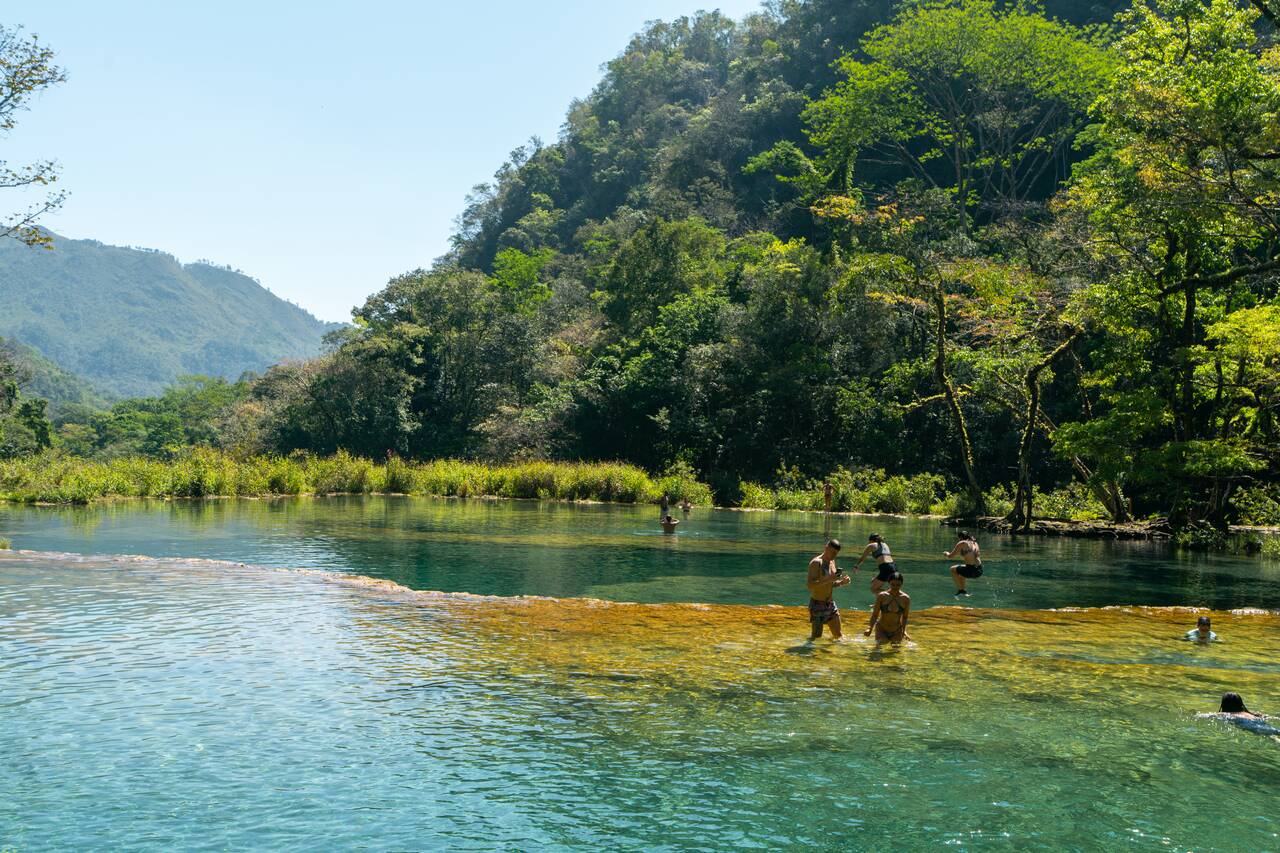
You can spend about half a day here before heading back to relax at your accommodation in town, or you can stay inside the park and enjoy the pools until closing time. For me, half a day was enough, as I was looking forward to doing nothing afterward and recovering from the long journey. The trip from here to Flores the next day will be another long 10-hour ride during the day, so make sure you leave enough time to rest and recharge.


Getting from Semuc Champey to Flores
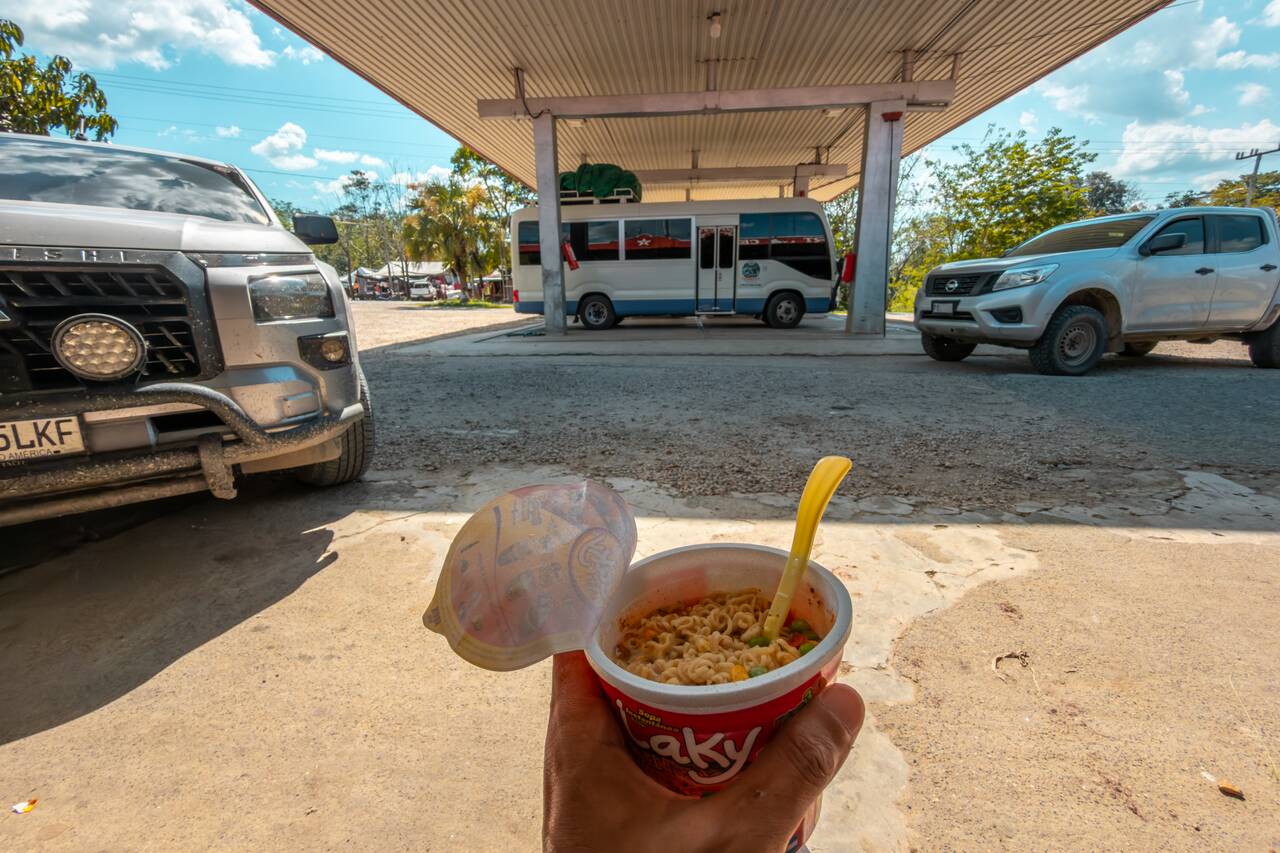
From Semuc Champey (Lanquín), there is one shared tourist shuttle running daily, taking around 7 to 8 hours, depending on road conditions. It departs at 8 AM from the Lanquín Bus Terminal and usually arrives in Flores at around 6 PM dropping you off at the entrance of Flores island.
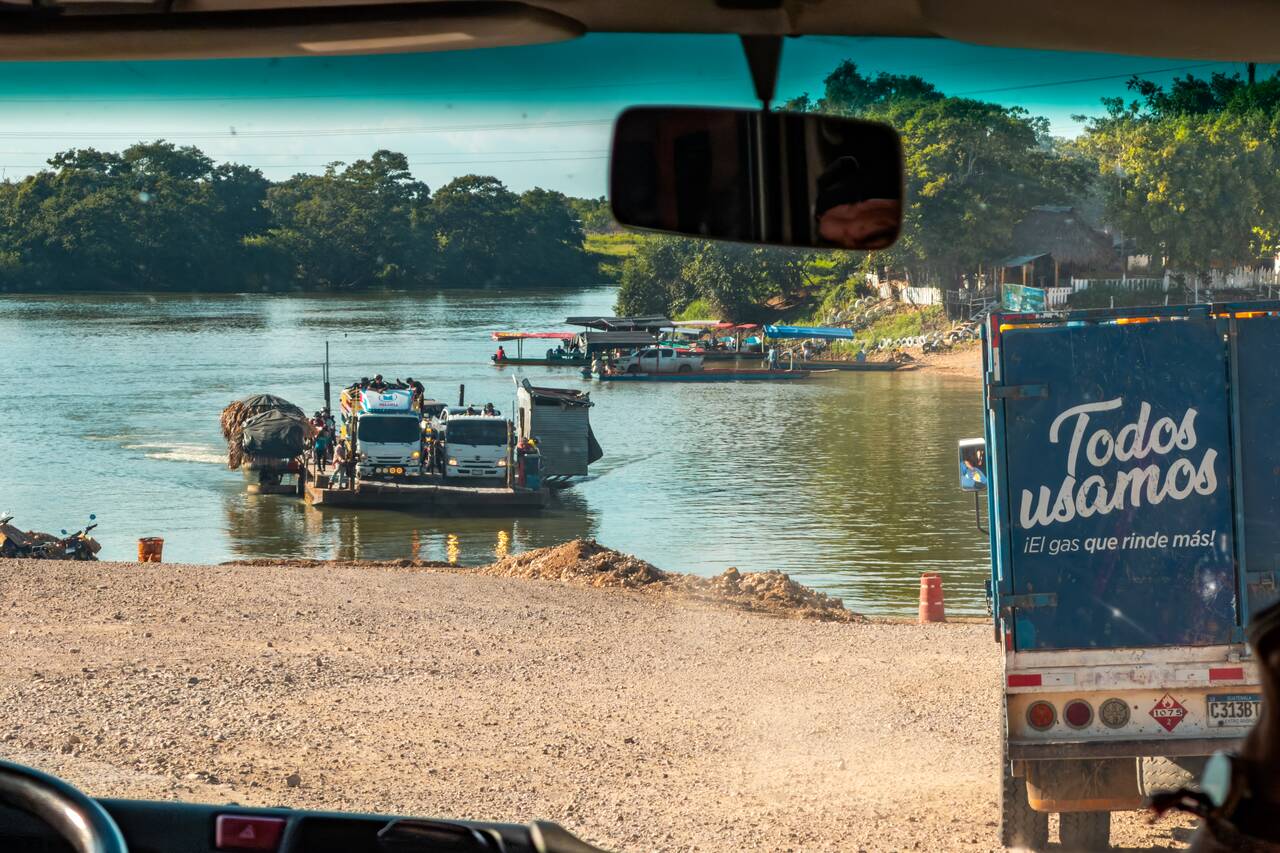
This is the shuttle I took, and although things were a little disorganized in Lanquín that morning, everything worked out fine in the end. Most accommodations in Lanquín can arrange the shuttle for you, or you can book it online in advance here.
Day 13-15: Flores & Tikal (3 nights)
- 📍 Stay: Casa Maya Itza
- 🕐 Time: 3 nights
- 📖 Full Guide: Flores Guatemala Travel Guide & Tikal Travel Guide
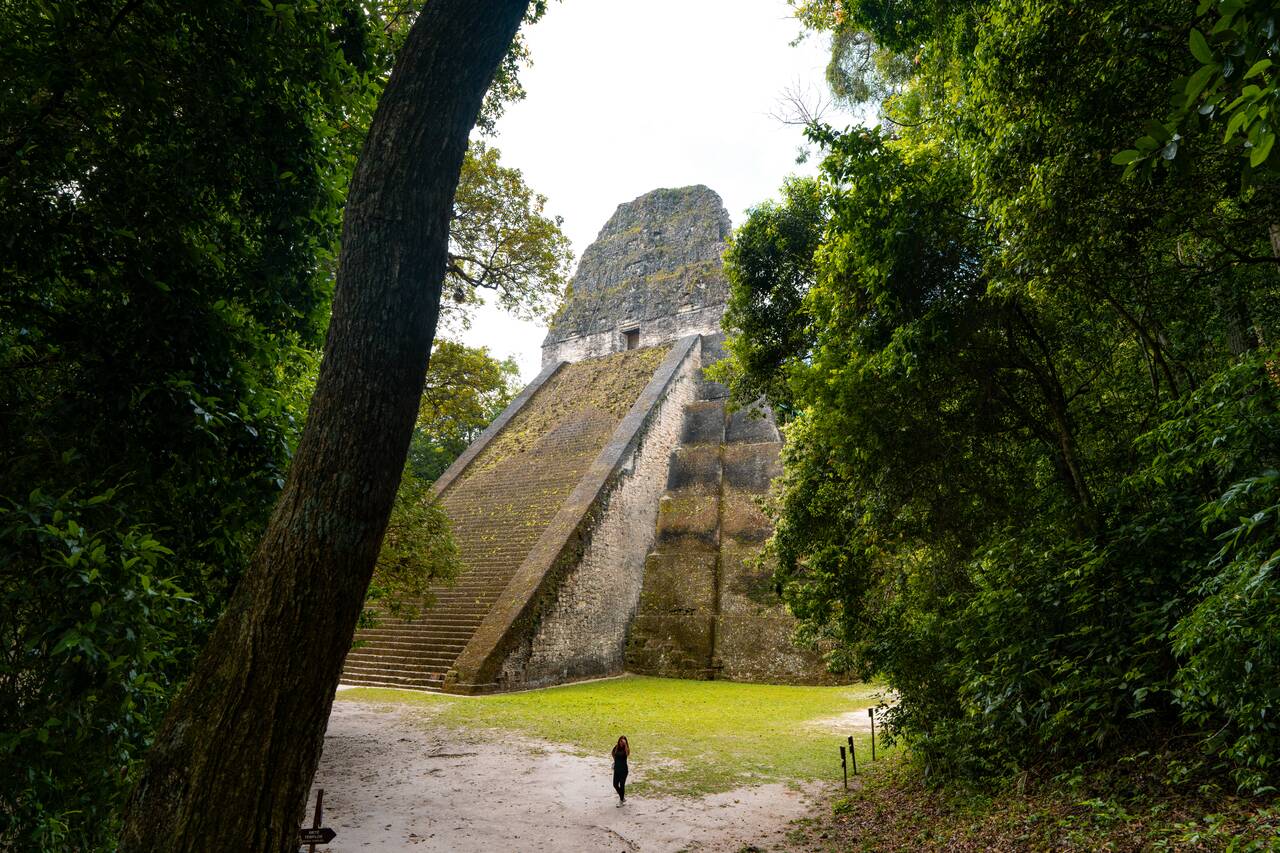
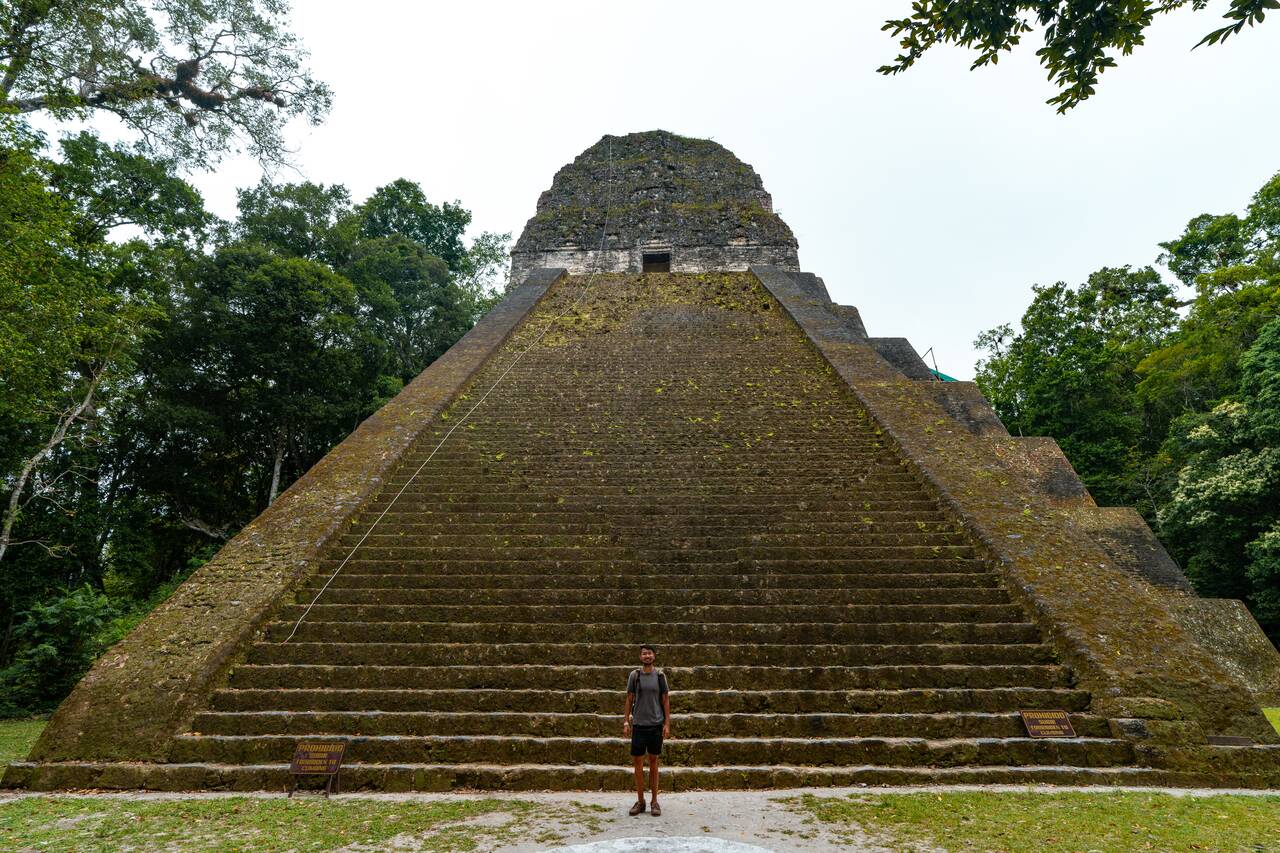
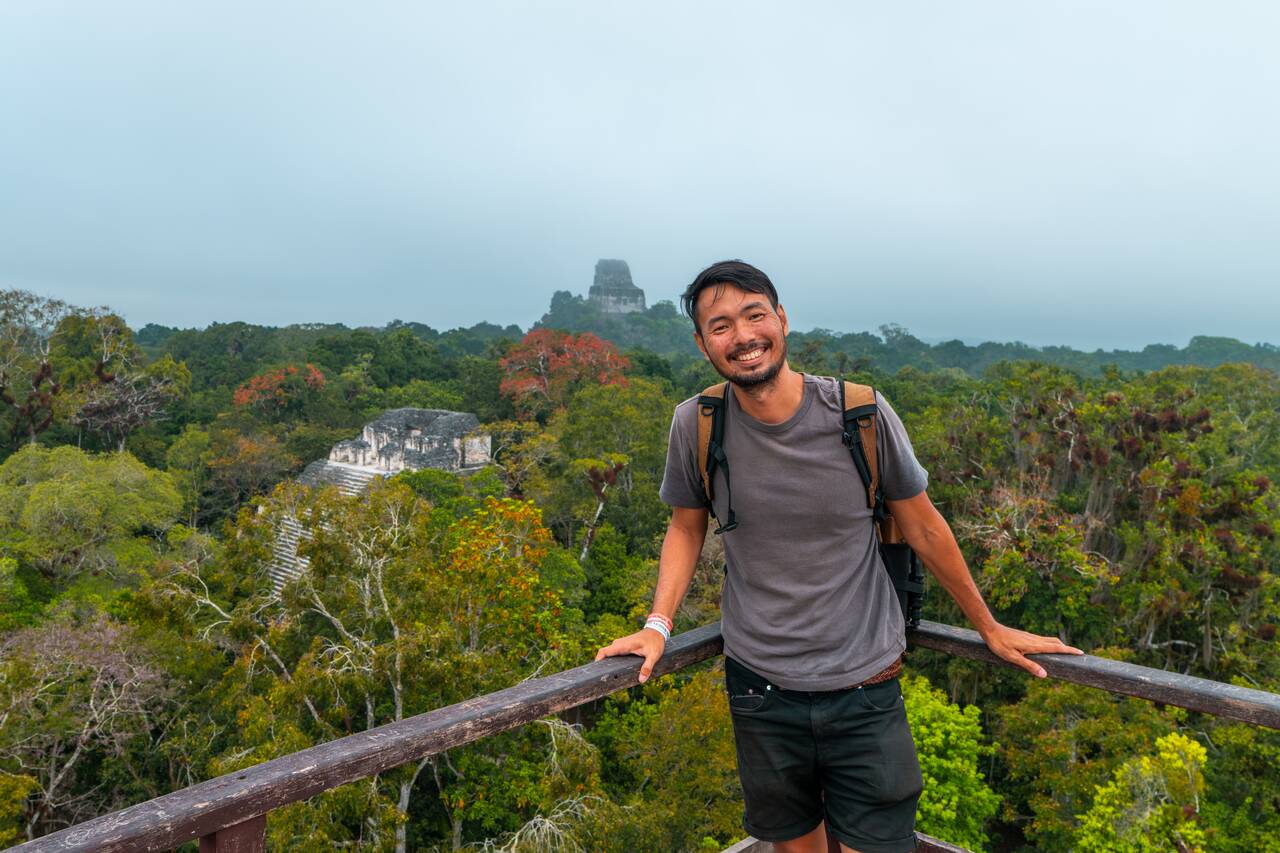
Without a doubt, the main reason most travelers visit Flores is to explore the incredible Tikal National Park, one of the largest and most important ancient Mayan cities ever discovered, and that is what you are going to do on your first day in Flores. I've visited quite a few Mayan ruins around Mexico and Belize, and Tikal is by far my favorite.
Flores is the perfect base for visiting Tikal, as the park is located only about 1.5 to 2 hours away by road. Most hotels and tour agencies offer daily shuttle services, and you can choose between a regular day tour, which usually departs around 4:30 AM and returns to Flores around 3–4 PM, a sunset tour, or a sunrise tour if you want to experience the jungle waking up around the ancient ruins.
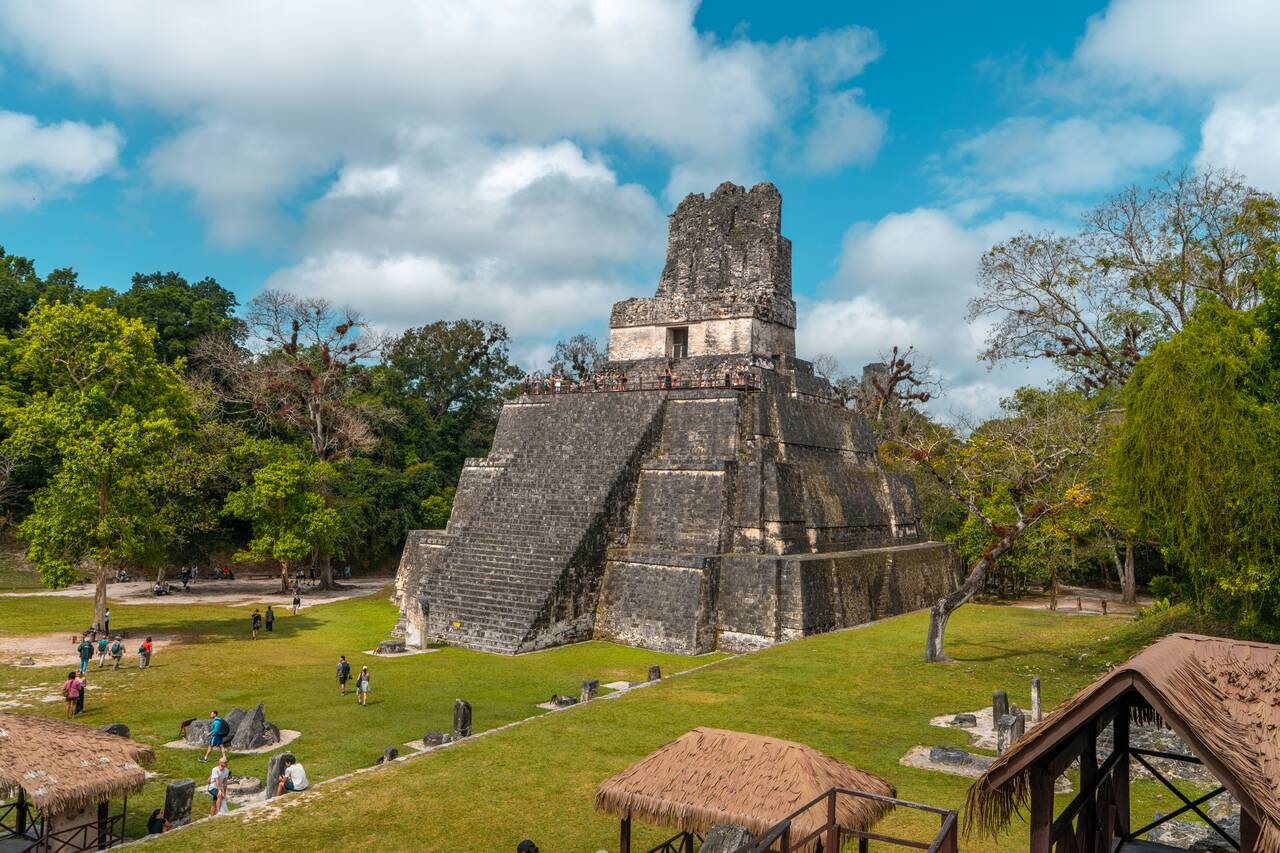
Personally, I recommend arriving as early as possible to enjoy the cooler temperatures, hear the jungle come alive with the sounds of howler monkeys and tropical birds, and explore the ruins before the larger tour groups arrive. I went with the sunrise tour which leaves from Flores at 3 AM and arrives at Tikal around 4:30 AM.
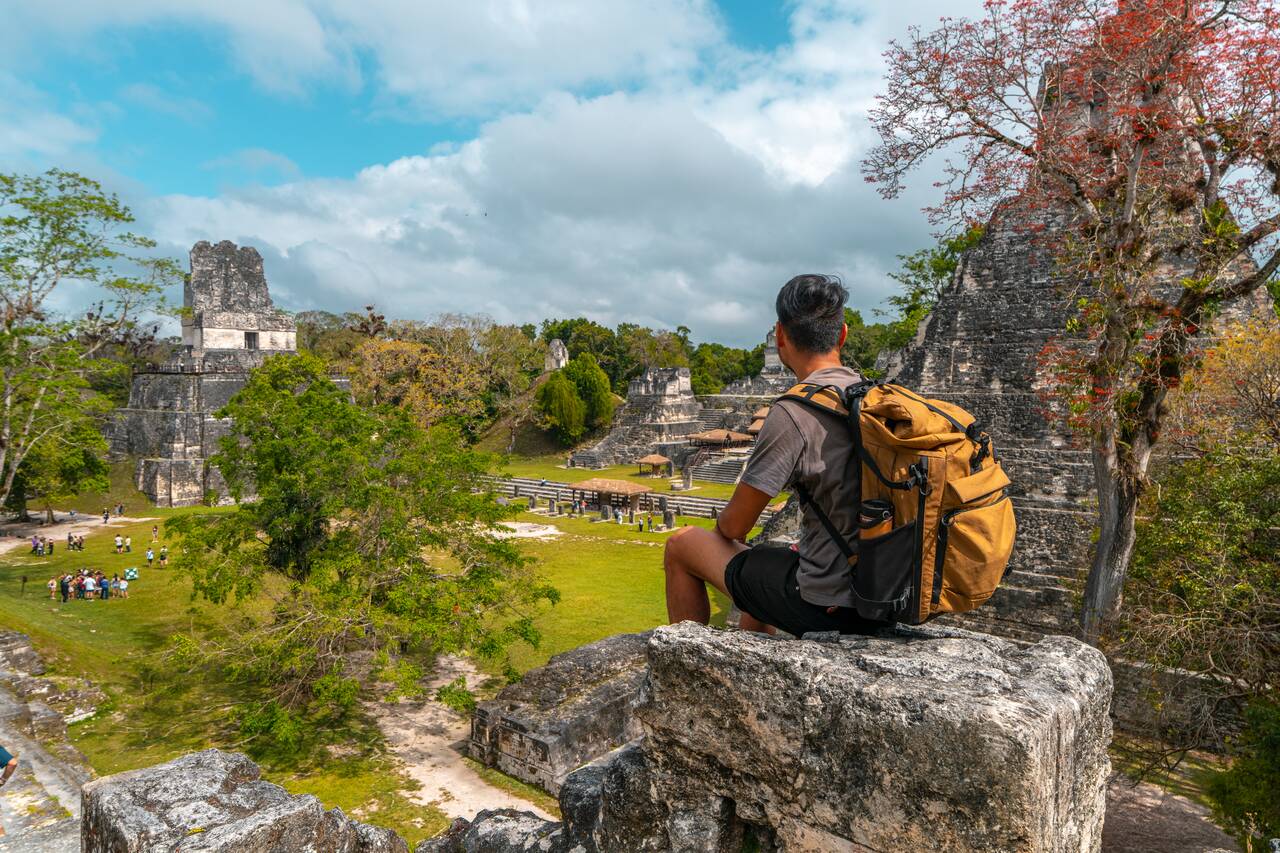
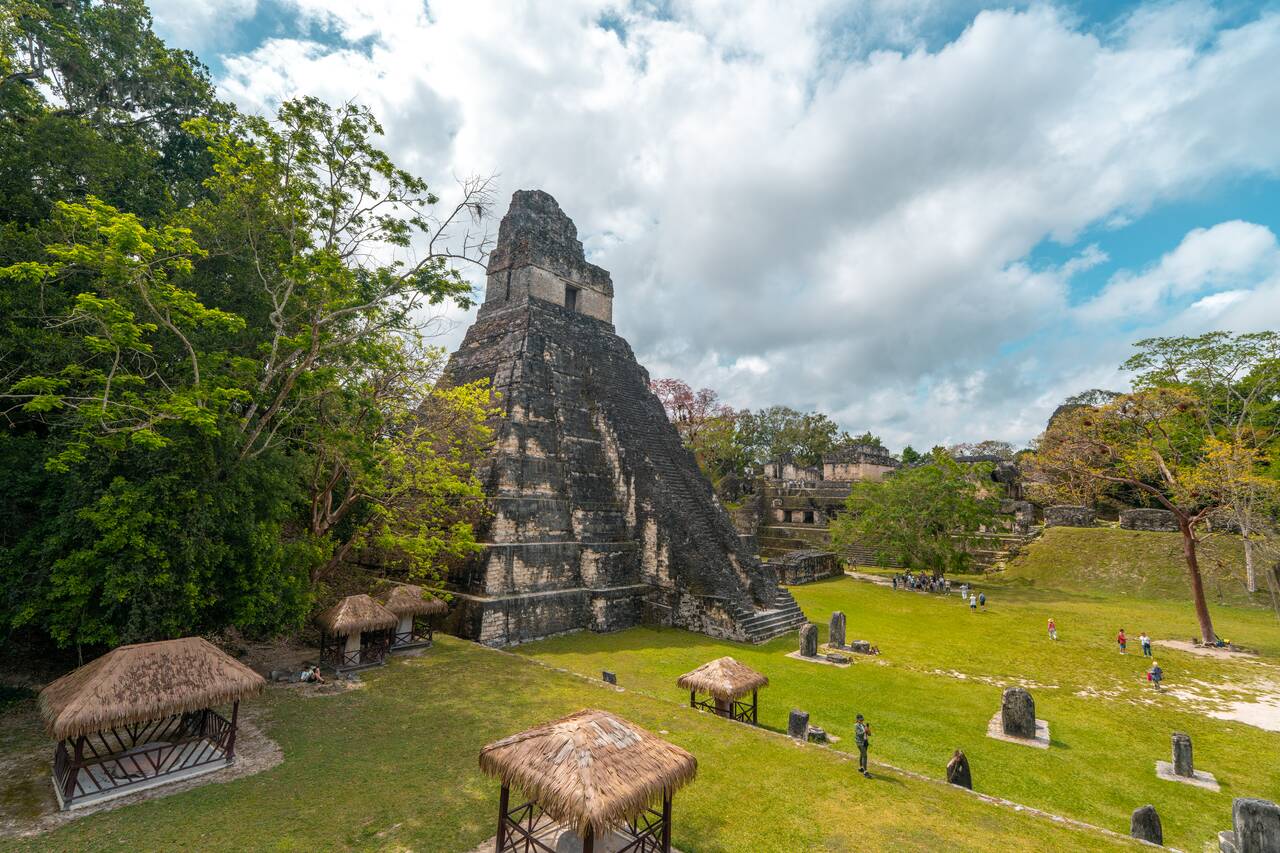
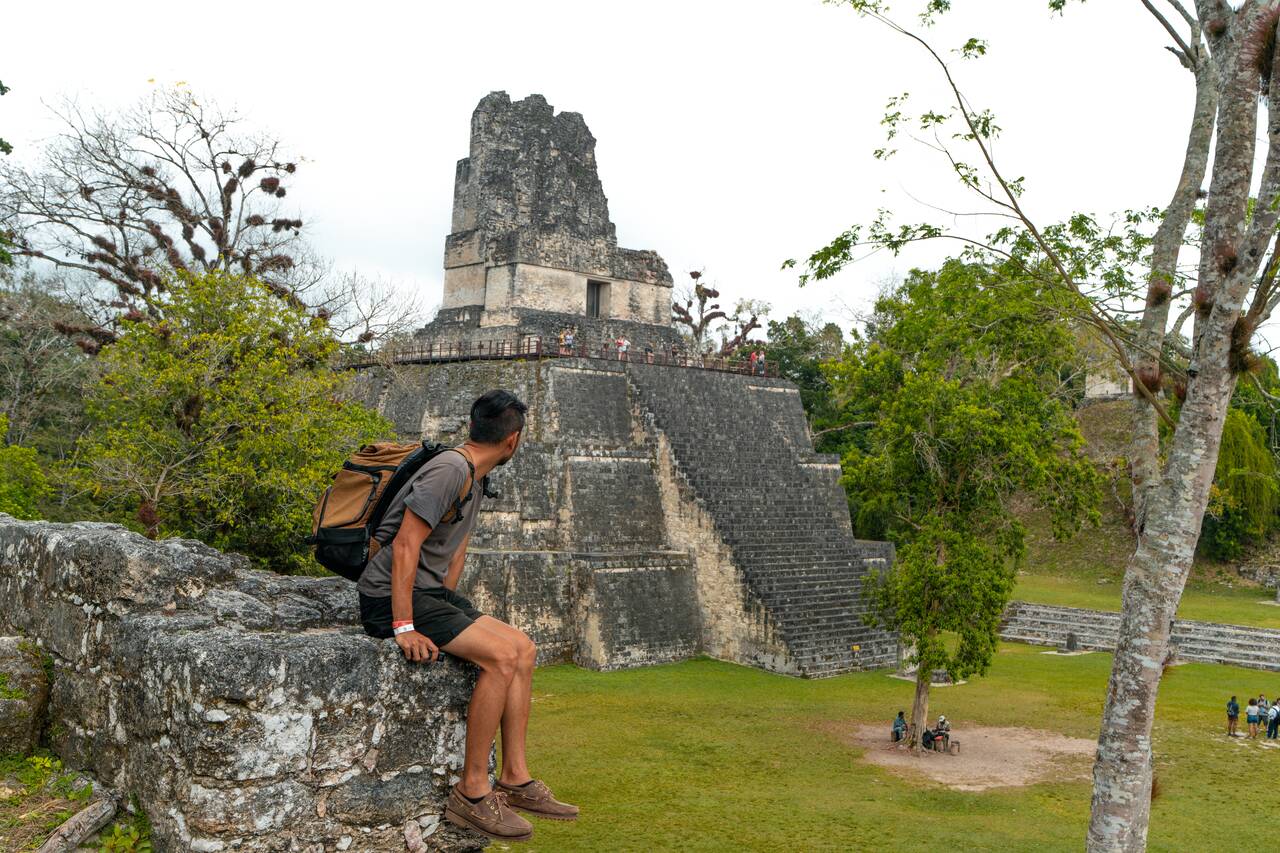
The archaeological site is enormous, so plan to spend at least half a day exploring. Some of the highlights include Temple I (Temple of the Great Jaguar), Temple II, the Great Plaza, and, of course, the towering Temple IV, the tallest temple in Tikal and the best place to watch the sunrise over the jungle canopy.
If you're planning to visit Tikal, make sure you book your entrance ticket and the correct time slot from the official website the day before, as most tours do not include the entrance ticket. For visitors over 12 years old, the regular entrance ticket costs around 150 GTQ (20 USD) per person, and the park is open daily from 6 AM to 5 PM.
If you are visiting for sunrise or sunset, which allows entry outside the regular opening hours, you will need to purchase an additional sunrise/sunset ticket on top of the regular entrance fee. This costs another 100 GTQ (13 USD), bringing the total to around 250 GTQ (33 USD) per person. Make sure you select the correct ticket type when booking, as my friend accidentally booked a sunset ticket for a sunrise visit, and it took some time to get it changed.
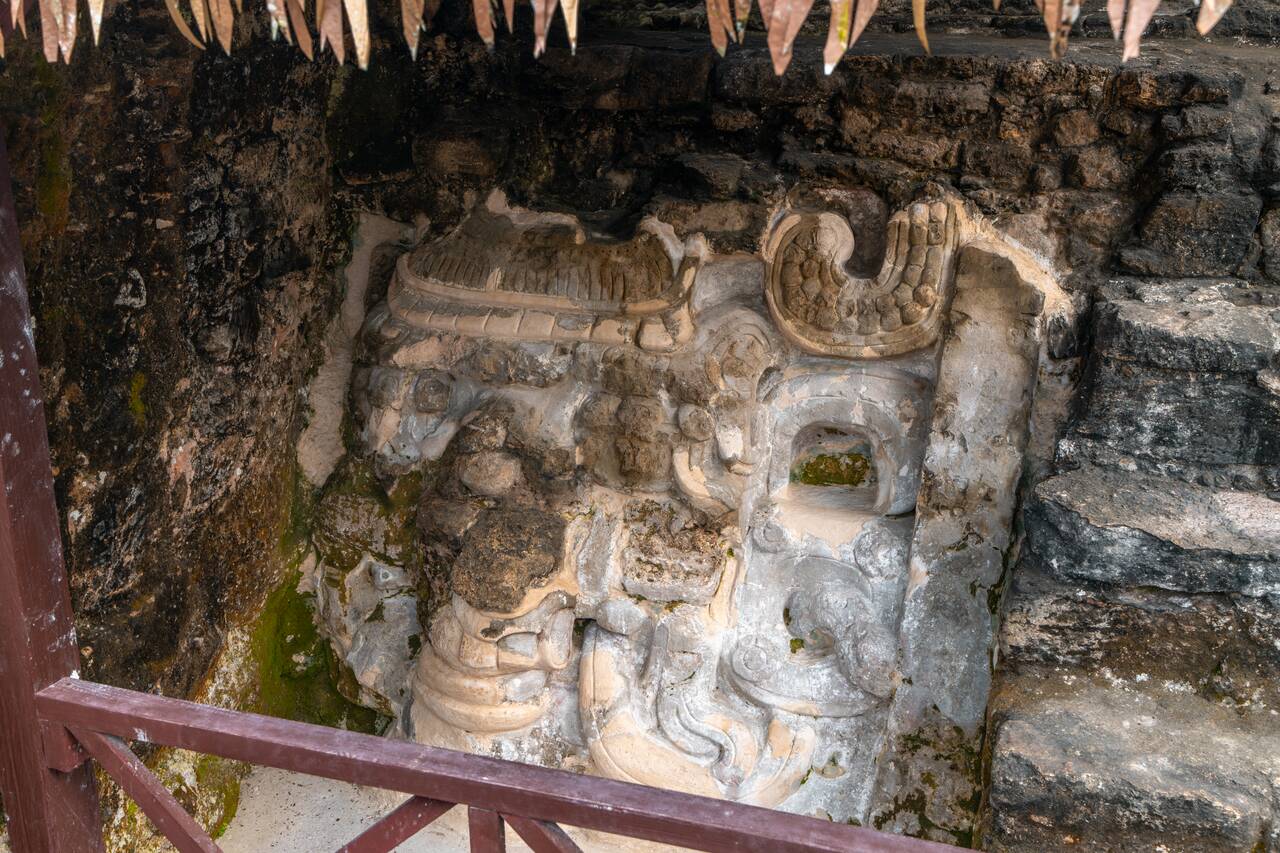
For tours, you can either book through your accommodation or browse available options here. These are my recommended tours: sunrise tour, sunset tour, and regular daytime visit.

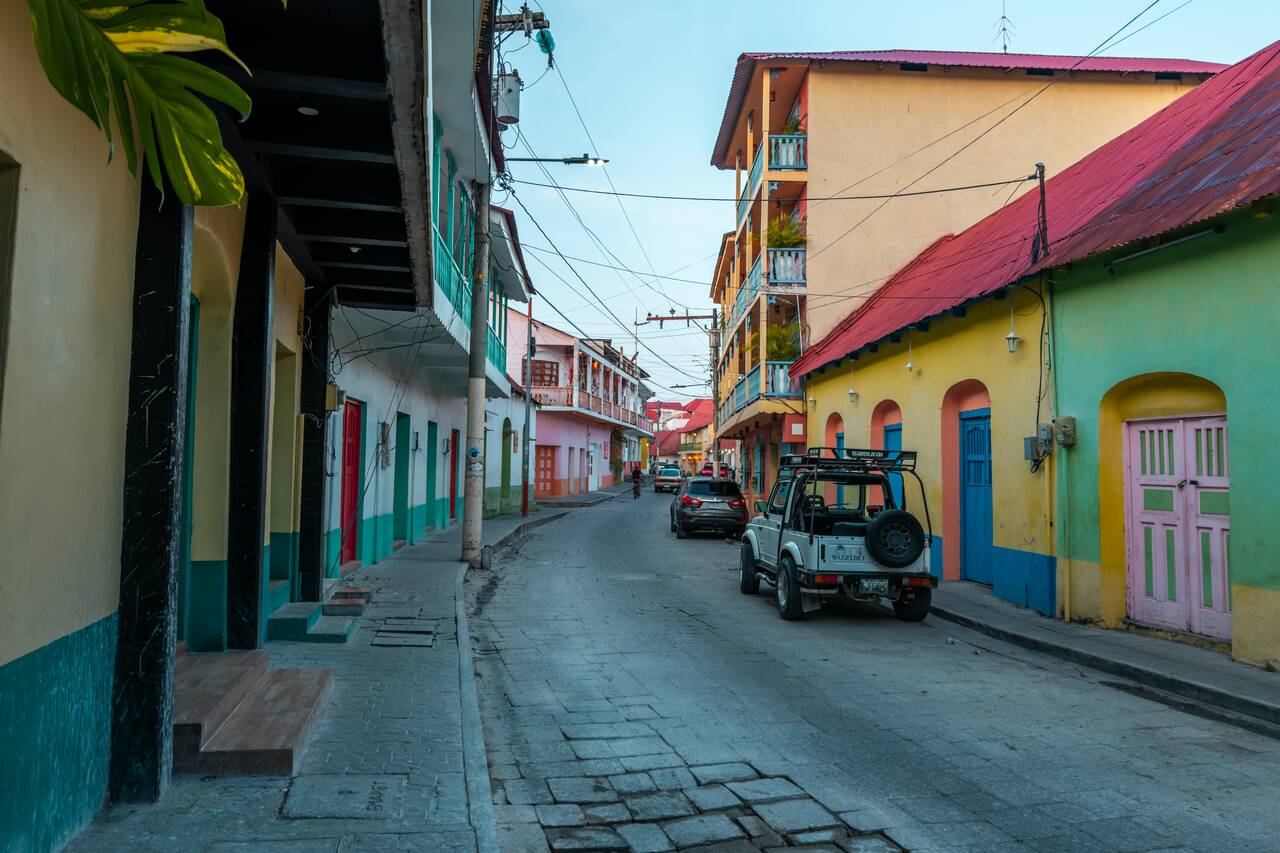
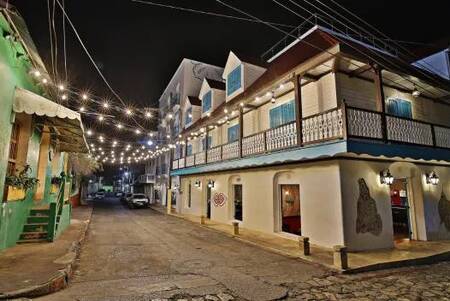
After spending the day in Tikal, you can come back and spend the rest of the day exploring Flores Island and wandering around its colorful streets. Connected to the mainland by a short causeway, this tiny island is filled with colorful colonial buildings, cobblestone streets, local shops, and beautiful views of Lake Petén Itzá all around it.
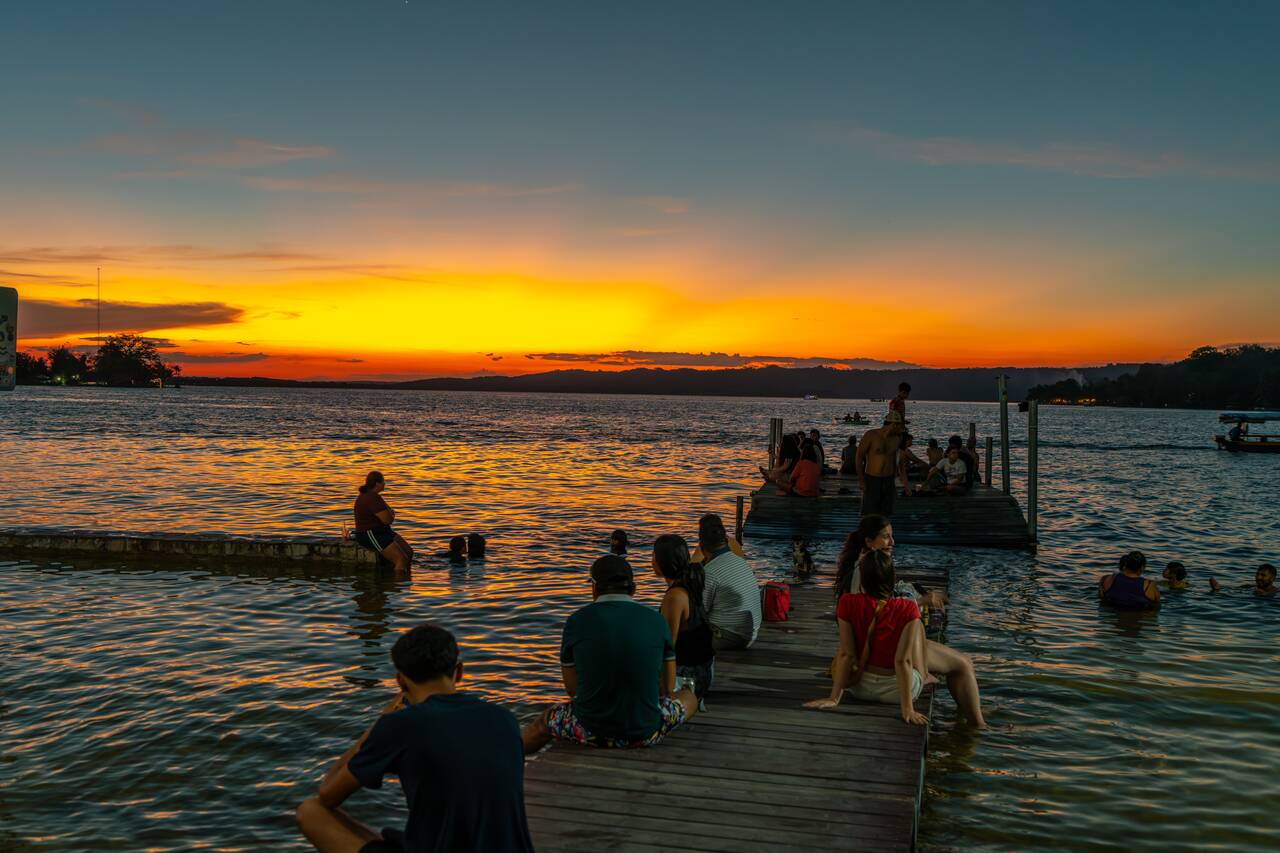
One of the best places to watch the sunset in Flores is along the Malecón, the waterfront promenade that wraps around Flores Island. This is where locals and travelers gather in the evening to enjoy the cooler breeze, watch boats passing by, and take in the beautiful views across Lake Petén Itzá as the sun slowly disappears behind the horizon.
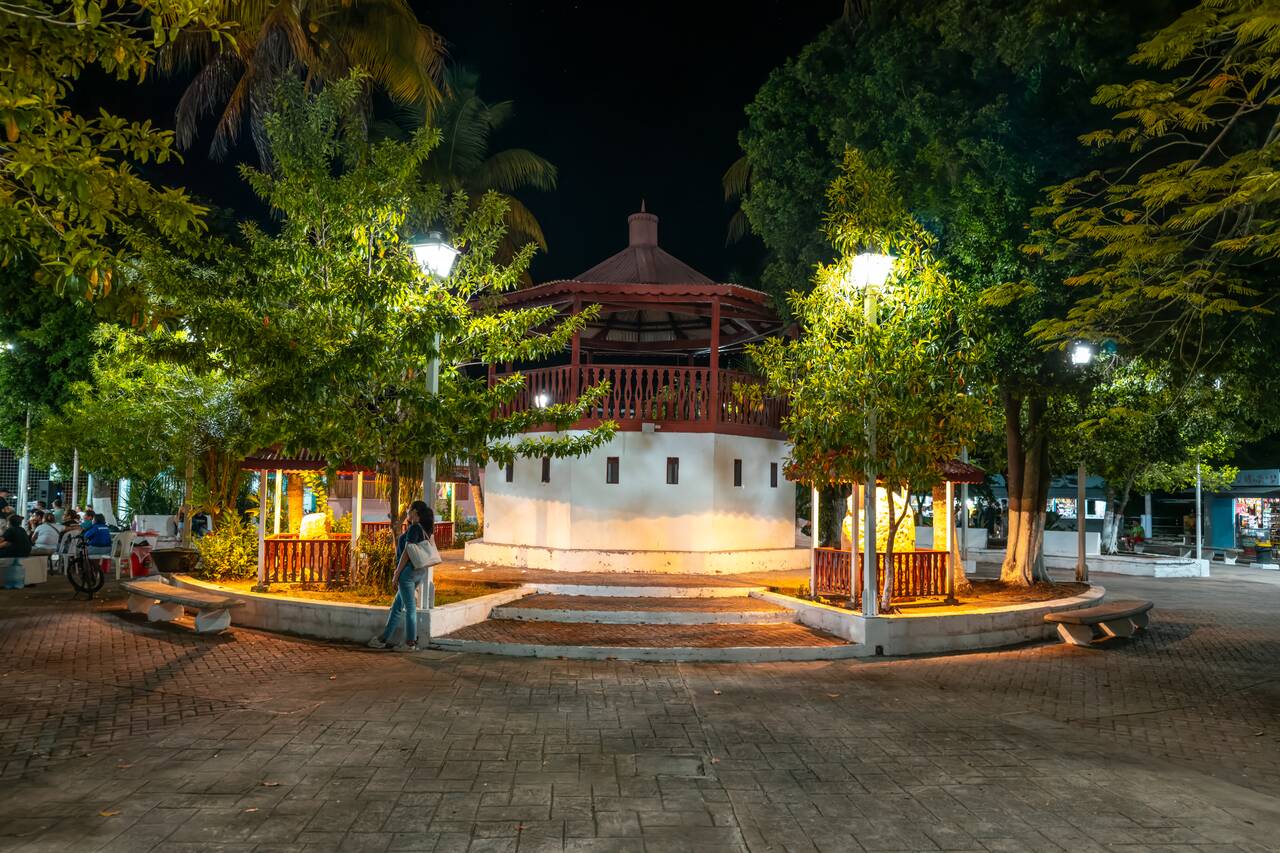
After sundown, be sure to come check out Flores Petén Park, a small local park surrounded by beautiful colonial houses and a stunning white-washed cathedral. With a pavilion in the center and plenty of benches to sit and enjoy the lively atmosphere, I often found myself here, sitting, and relaxing after a day of exploration, watching whatever local events were taking place.

The first night I was there, the park was especially lively, with a local student volleyball competition taking place on the basketball court. Many people, both locals and tourists, gathered around the court to cheer for their family and friends, catch up with one another, and enjoy the lively atmosphere.
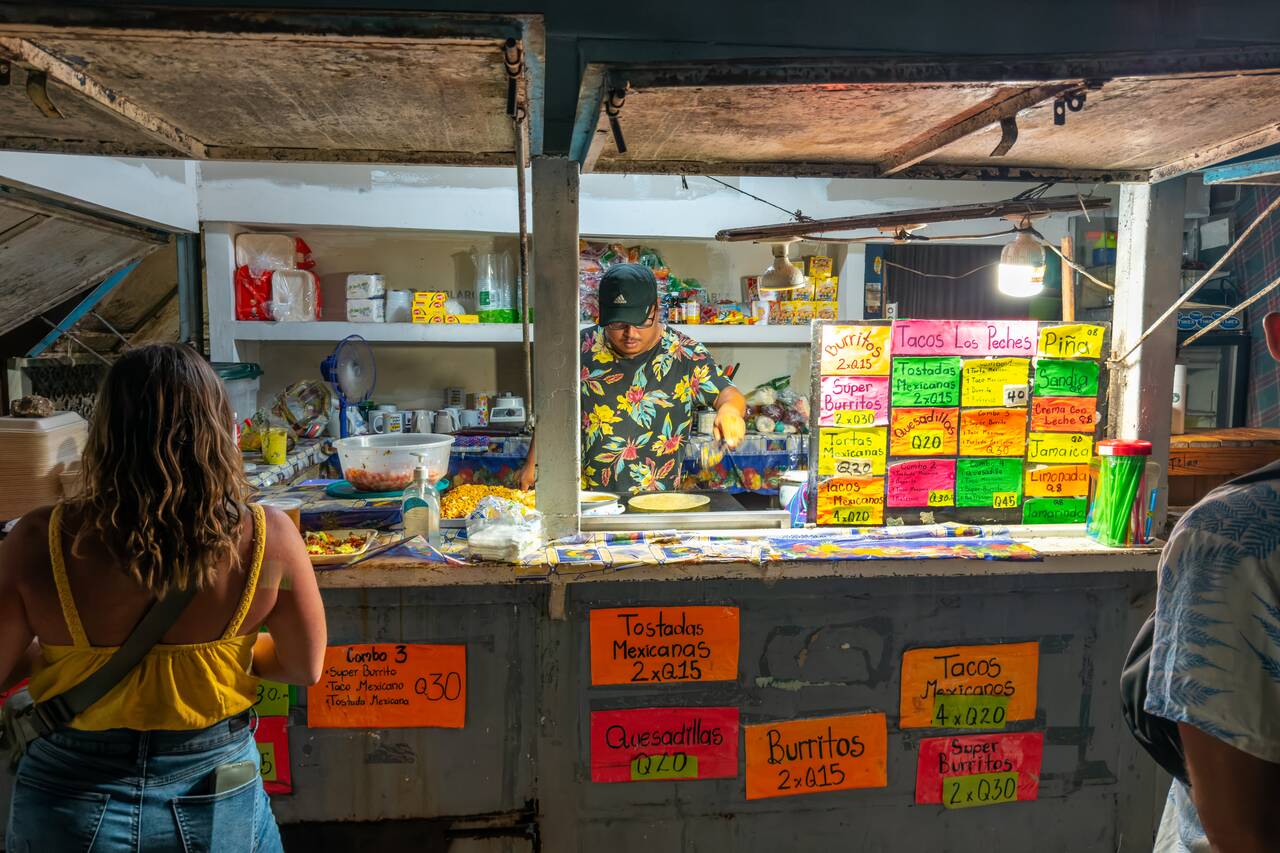
I recommend you grab a few tacos from Tacos Los Peches, and sit down somewhere in the park and enjoy the vibe. The atmosphere here felt a little more Caribbean, perhaps due to its proximity to the Caribbean coast, with a slower pace of life and a more relaxed island vibe compared to places like Antigua. After you are done, you can retreat for the night and get ready for adventure the next day.
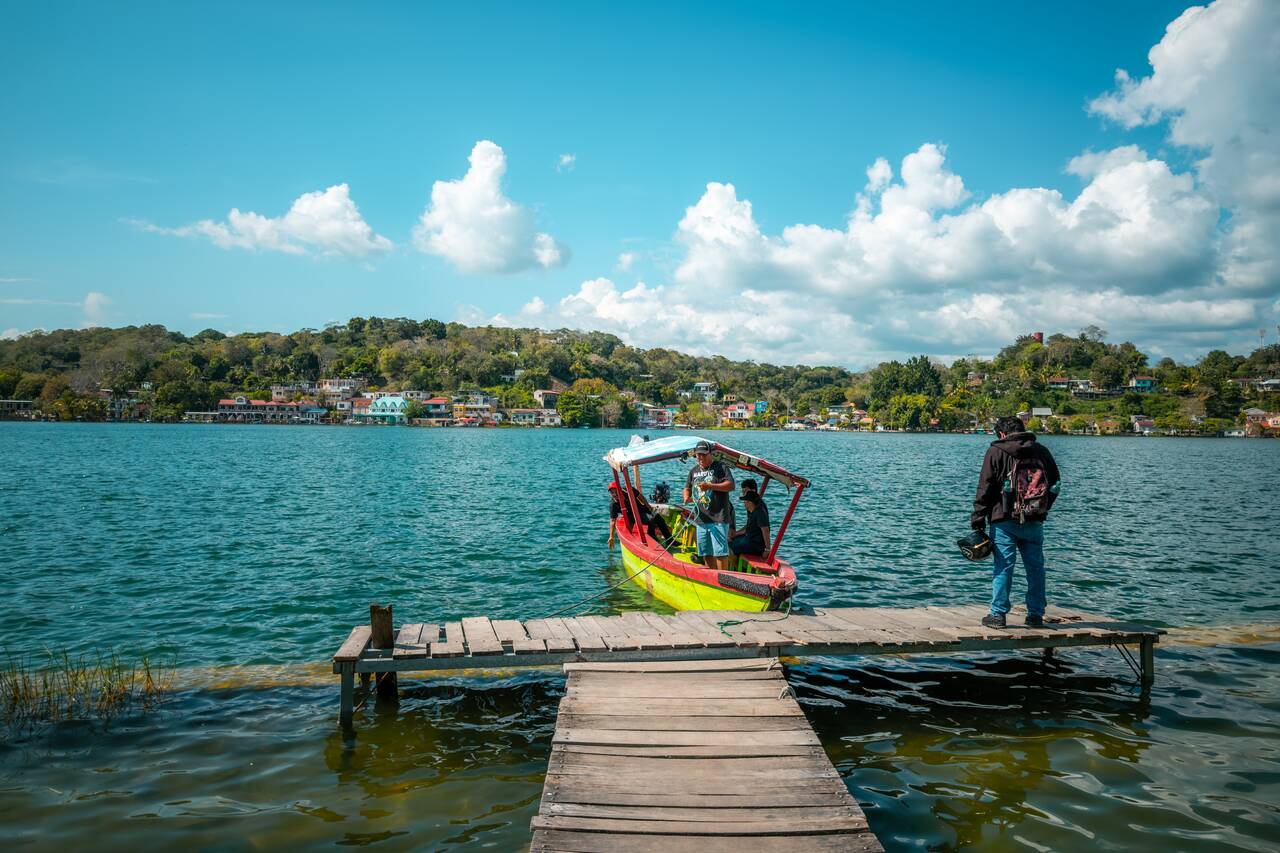
On this day, you can start the day late and enjoy a lovely breakfast at Maple & Tocino by the lake, before spend the rest of the day at Jorge's Rope Swing, a fun lakeside recreational spot where you can swim, relax, and enjoy the beautiful scenery away from the busy streets of Flores. It is a great half-day escape if you want to experience more of the lake beyond Flores Island.
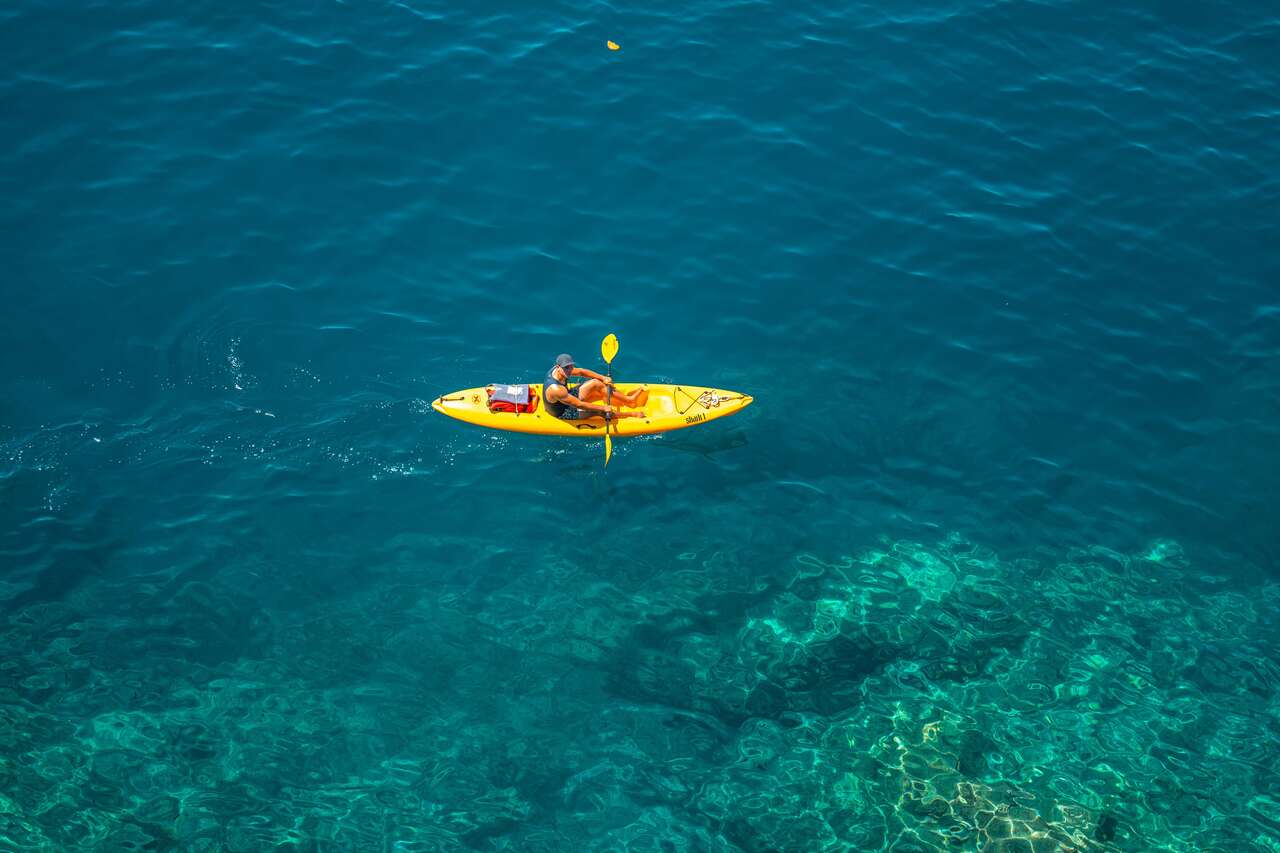
If you prefer exploring the lake at your own pace, renting a kayak and explore by yourself a great way to enjoy the lake up close and experience a quieter side of Flores. You can rent the kayak from this Kayak Rental Place which should cost around 45 GTQ/hr for a kayak and 75 GTQ per 2 hours for a paddleboard. You can also do the full day for 200 GTQ total.
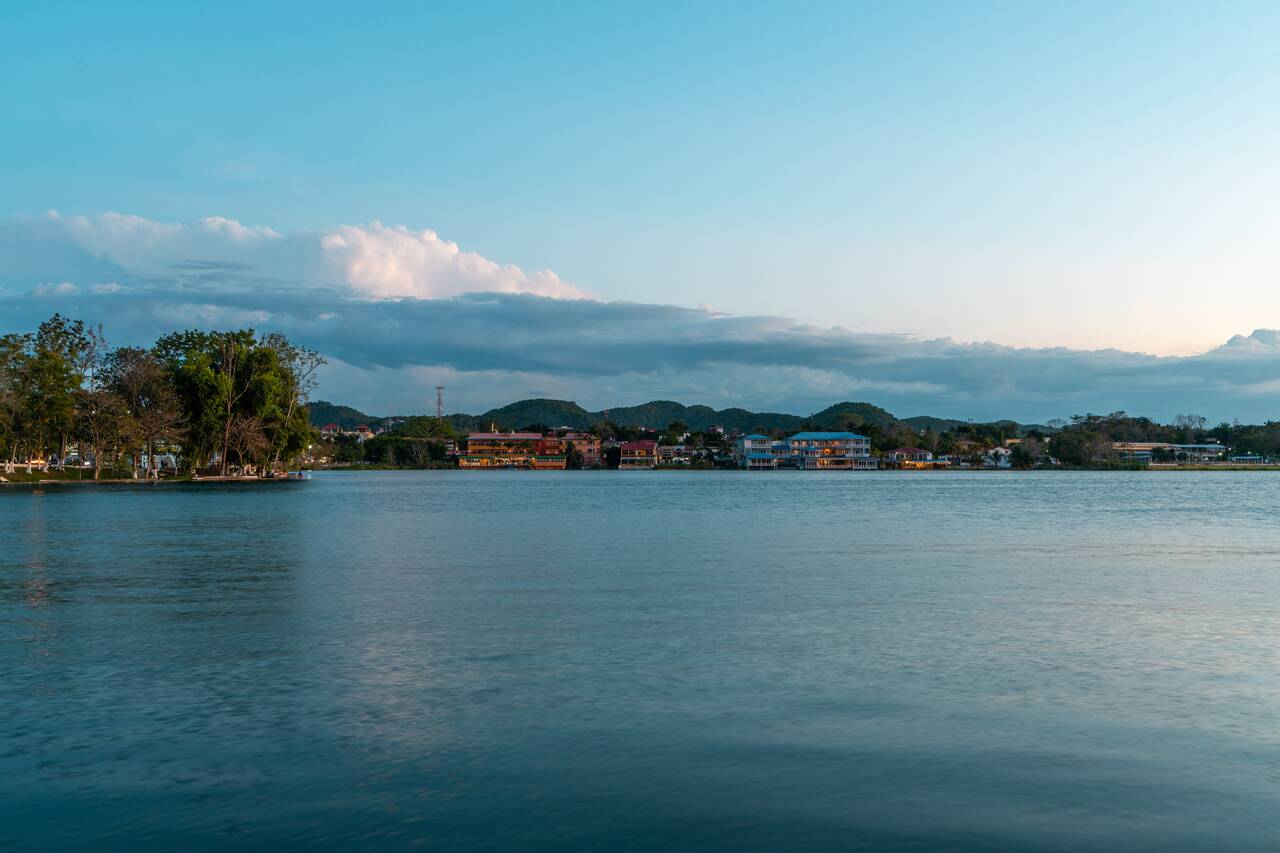
You can spend the entire day kayaking around the lake, and even paddle all the way to Jorge's Rope Swing by yourself without having to pay for the boat ride, which can get quite expensive, especially if you are traveling solo like I was.
This should keep you occupied for the rest of the day. Once you are done, you can head back to Petén Park to enjoy your last night in Guatemala before ending your trip and completing this itinerary. Congratulations! From Flores, you can either fly back to Guatemala City to catch your flight home, or continue your journey to Belize via this shuttle service.

When to Visit Guatemala?
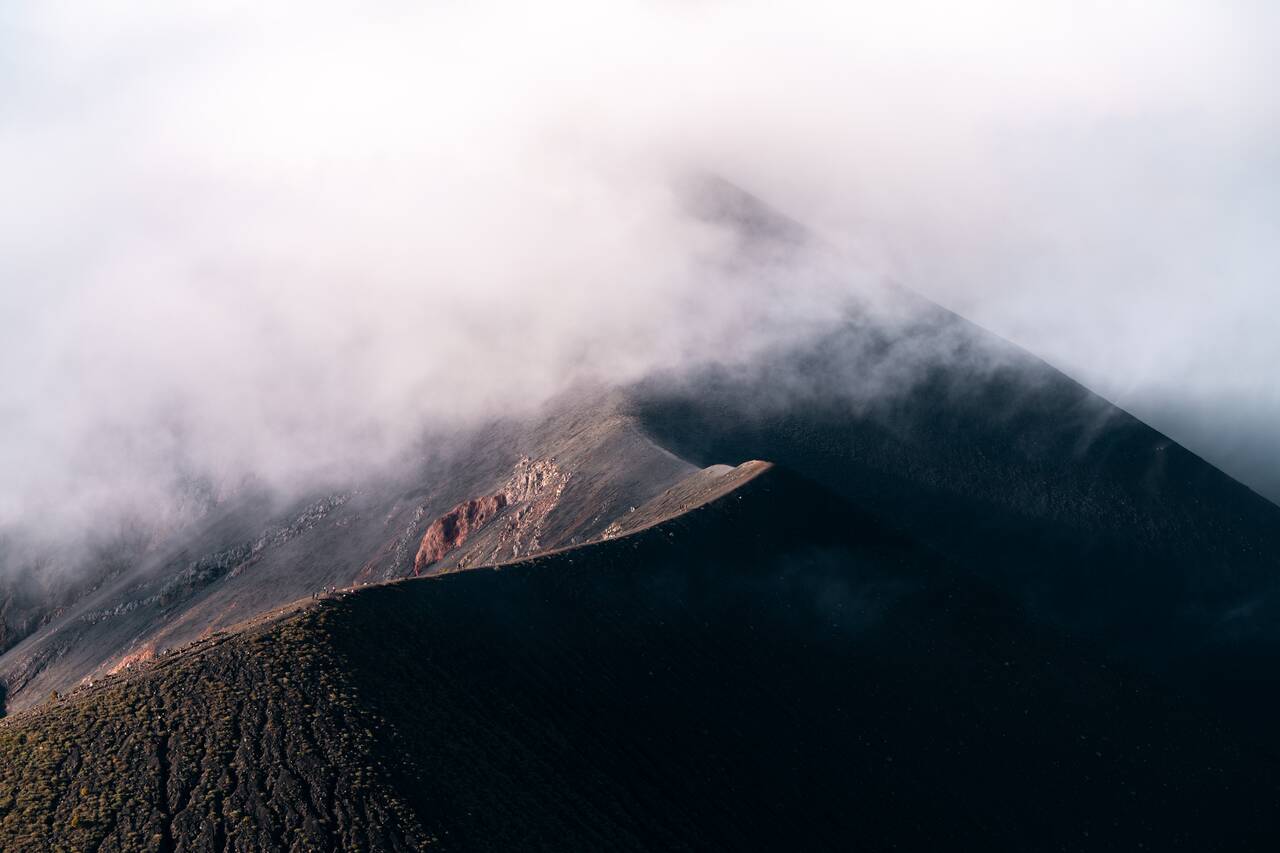
The best time to visit Guatemala is during the dry season, from November to April, when you can expect sunny days, lower humidity, and the best conditions for hiking volcanoes, exploring Mayan ruins like Tikal, and visiting beautiful destinations such as Lake Atitlán and Semuc Champey, both of which are at their best when the weather is clear.
The rainy season, from May to October, brings lush green landscapes and fewer tourists, but afternoon showers are common, especially in the highlands and rainforest regions. While rain rarely lasts all day, it can make hiking trails muddier and cause occasional transportation delays.
That said, Guatemala is a fantastic destination year-round, and even during the rainy season, mornings are often sunny enough for sightseeing before the afternoon showers roll in.
If you are planning to visit around Semana Santa (Holy Week), especially in Antigua, expect one of the country's biggest and most spectacular celebrations. The city comes alive with colorful flower carpets (alfombras), elaborate religious processions, and thousands of visitors from around the world.
I visited during Holy Week, and I had an absolute blast! The streets were alive throughout the week with processions, parades, bustling markets, and celebrations around every corner. It was one of the most memorable experiences I had in Guatemala and a fantastic opportunity to witness the country's rich culture and traditions firsthand. That said, it is also the busiest week of the year, so be sure to book your accommodation, tours, and transportation well in advance.
How to get to Guatemala?
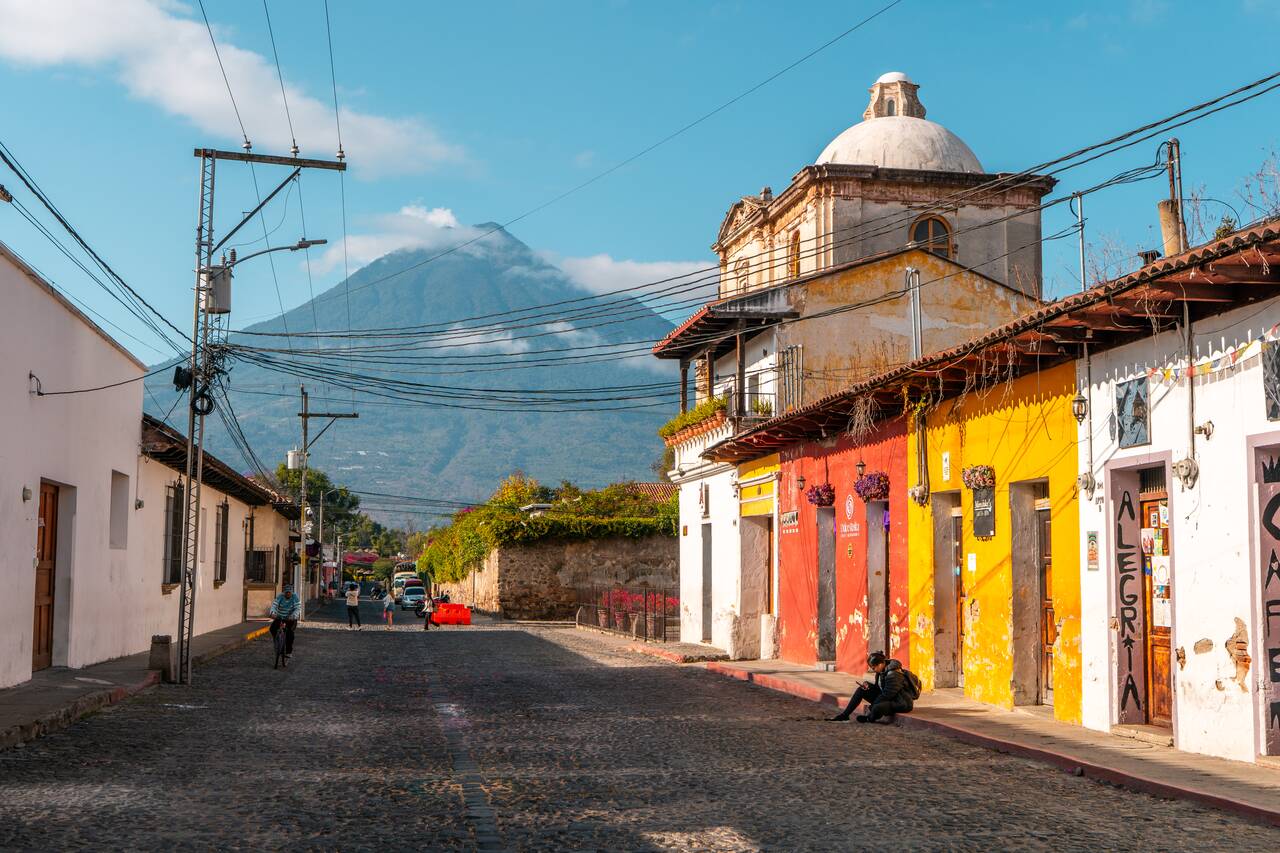
For this itinerary, we are going to start in Antigua, which is located only about an hour's drive from Guatemala City, the capital and the main gateway of Guatemala. You should be able to easily fly into La Aurora International Airport (GUA) in Guatemala City, which is well connected with direct flights from major cities across North America, Central America, Mexico, and a few destinations in Europe, and from there, you can catch a shuttle service or an Uber to Antigua to start this itinerary.
There is a shared shuttle operated by GuateGO that runs between La Aurora International Airport and Antigua up to 6 times a day, from 6 AM to 7:30 PM, costing around 22 USD per person. It is one of the easiest ways to get straight from the airport to Antigua without any hassle. You can check the latest schedule and book your shuttle here.
If you are already traveling in Central America, Guatemala is also easy to reach overland. Shared tourist shuttles and international buses connect the country with neighboring Mexico, Belize, Honduras, and El Salvador.
Tourist shuttle companies like Gekko Trail Explorer, which I used throughout my travels in Central America, are the most convenient option, as they usually include hotel pickup and assistance with the border crossing. I found this especially helpful since I always seem to be the slowest one at immigration with my weak passport 😅.
How to Get Around Guatemala?
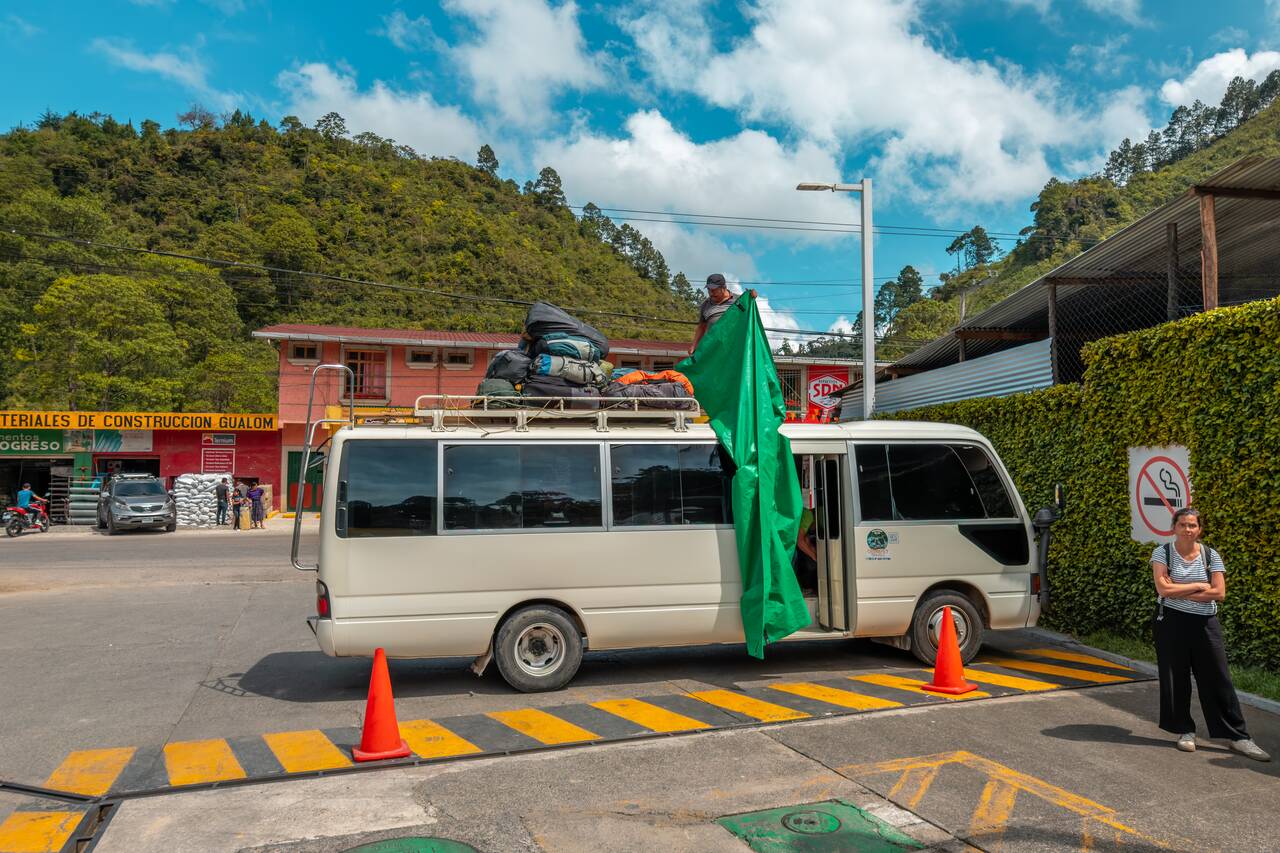
Getting around Guatemala is relatively easy thanks to its extensive network of tourist shuttles, local buses, domestic flights, and ride-hailing services. For this itinerary, though, you can rely almost entirely on tourist shuttles, just as I did, and you will have no trouble getting between destinations.
By Tourist Shuttle, this is by far the easiest way to travel between popular destinations like Antigua, Lake Atitlán, Semuc Champey, and Flores, all of which are included in this itinerary. Shared tourist shuttles are comfortable, affordable, and often include hotel pickup and drop-off. Companies like Gekko Trail Explorer and GuateGO operate many of these routes, and they were my preferred way of getting around Guatemala.
By Chicken Bus, if you are traveling on a tight budget, Guatemala's colorful converted school buses are the cheapest way to get around. They connect even the smallest towns across the country, but they can be crowded, slower than tourist shuttles, and require multiple transfers. They are an adventure in themselves if you don't mind sacrificing a little comfort.
By Domestic Flight, if you would rather skip Semuc Champey or are not keen on taking an overnight bus, flying is a great way to save time. Flights between Guatemala City and Flores take only about 1 hour, compared to the 8–10 hour overnight bus journey. You can browse available flights here.
By Rental Car, renting a car gives you the most flexibility, especially if you want to explore lesser-visited regions at your own pace. However, road conditions can vary, mountain roads are often winding, and driving in Guatemala City can be hectic, so I generally recommend sticking with tourist shuttles unless you are comfortable driving abroad. You can rent the car here.
How Much Money Do I Need for Guatemala?
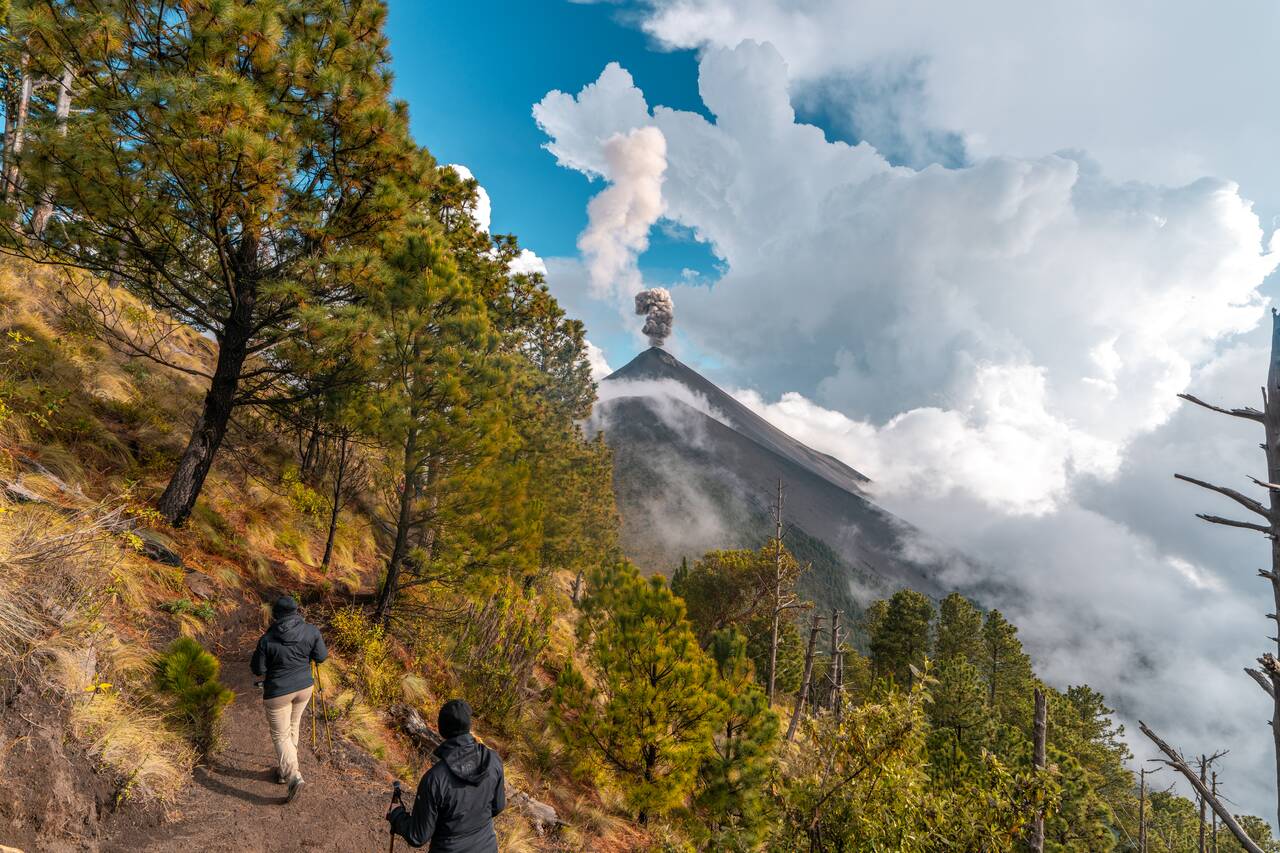
From this 2-week itinerary, we can calculate approximately how much money you will be spending here (average) as follows:
| 🛌 Lodging: | 225 USD (15 USD/Day) |
| 🥘 Food: | 270 USD (18 USD/Day) |
| 🚗 Transportation: | 121 USD (8.06 USD/Day) |
| 🧗 Activities: | 243 USD (16.2 USD/Day) |
| 💰 Total Budget: | 859 USD (57.27 USD/Day) |
Is it Safe in Guatemala?
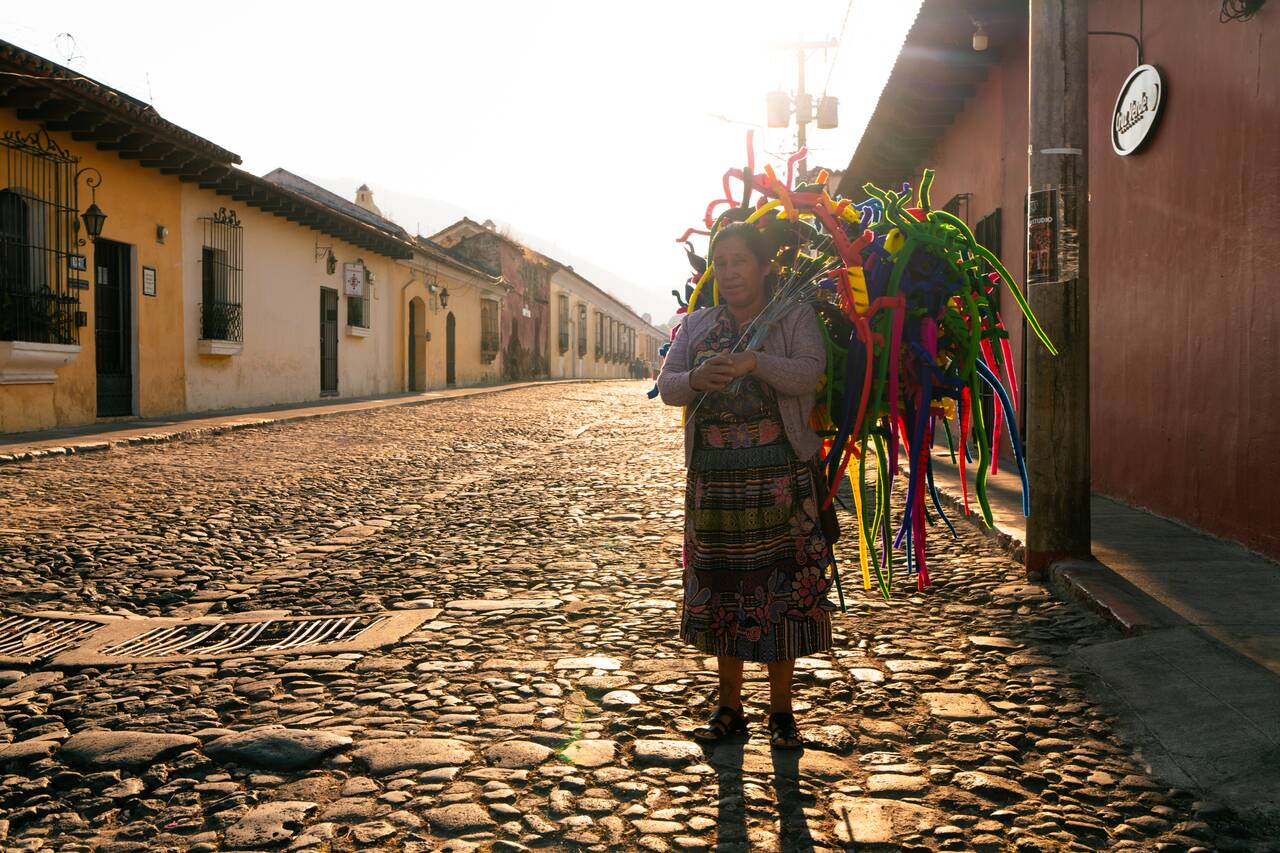
Overall, I found Guatemala to be a safe and rewarding country to travel through, and I spent several weeks traveling independently without encountering any major issues. Like anywhere else, staying safe mostly comes down to using common sense, being aware of your surroundings, and avoiding unnecessary risks.
The main tourist destinations, such as Antigua, Lake Atitlán, Semuc Champey, and Flores, are generally safe for travelers. During my trip, I found the locals to be incredibly friendly and welcoming, and I rarely felt uncomfortable while exploring these places, even when traveling solo.
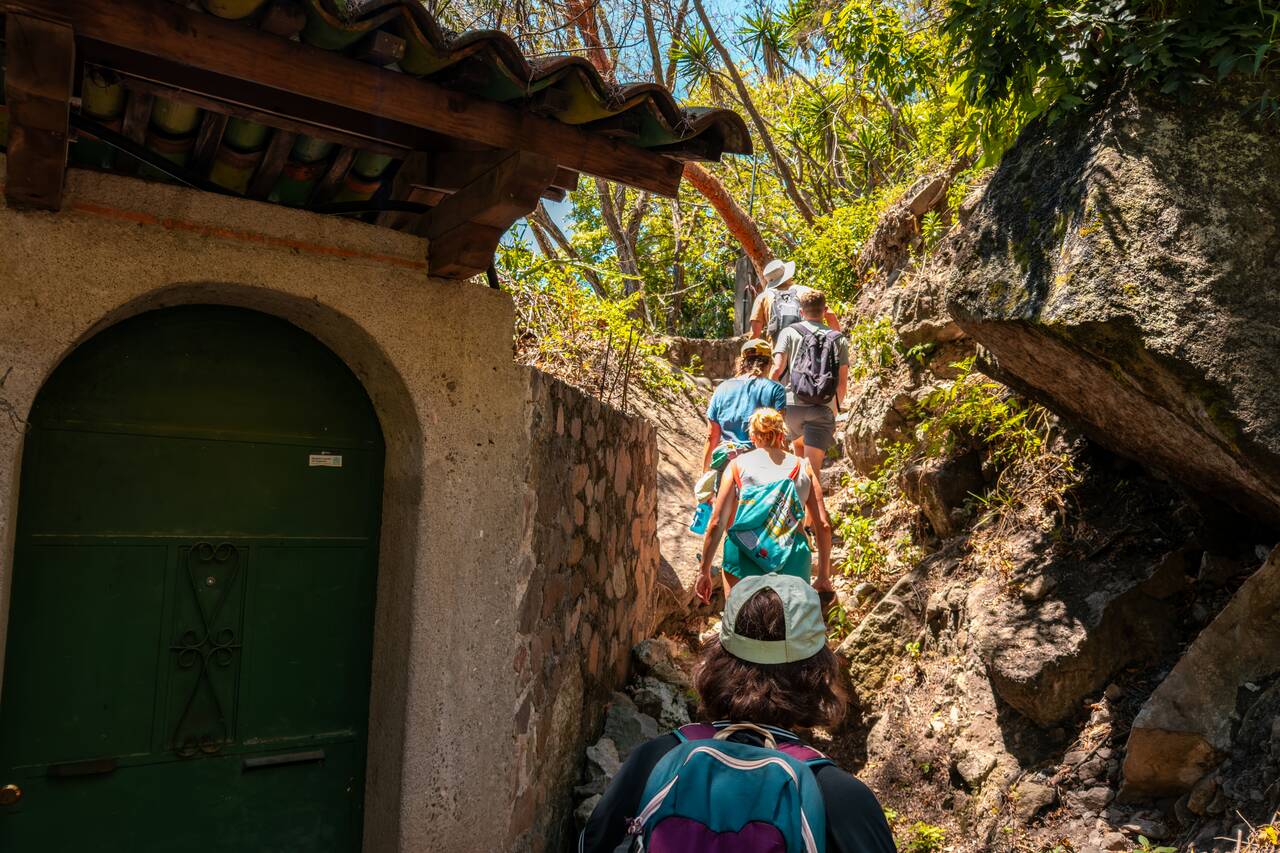
The one place where I would exercise extra caution is the Lower Mayan Trail, the popular hiking route that connects Santa Cruz La Laguna and San Marcos La Laguna around Lake Atitlán. Unfortunately, there have been reports of robberies along this trail, and I experienced this firsthand during my hike.
While my friend and I were hiking the trail in broad daylight, we encountered a group of people who told us they had seen a suspicious masked man carrying a machete further ahead. Shortly after, we met two female hikers coming from the opposite direction, so we asked whether they had encountered him. They told us they had to pay 100 GTQ (15 USD) per person to get past him, confirming our suspicion that something was wrong.
We decided to wait and join up with more hikers before continuing as a larger group. Some of us even carried rocks in our hands just in case things escalated 😬. As we approached the area, we made plenty of noise, and one of the girls in our group loudly called the tourist police to report the incident. Luckily, we never encountered the man, and I assume he left once he realized a larger group was coming through.
What surprised me the most was that this happened in broad daylight, on what is considered one of the most popular hiking trails around the lake. It was also the only sketchy encounter I had during my entire trip through South and Central America, including countries with much worse reputations.
I strongly recommend avoiding hiking the Lower Mayan Trail alone. Go with a guide or join other travelers, ideally in a group of more than three people, as these opportunistic robberies appear to target solo hikers and smaller groups. Beyond that, the usual travel precautions apply: avoid walking alone on empty streets at night, keep your valuables secure, and stay aware of your surroundings.
With a bit of preparation and common sense, I believe you can safely enjoy everything Lake Atitlán and Guatemala have to offer. This is a beautiful country filled with incredible landscapes and welcoming people. That one incident was just a little bad apple in a basket full of good ones.
Which Tourist SIM card is Best for Guatemala?
For most travelers visiting Guatemala, I recommend getting an eSIM before you arrive, as it is by far the easiest way to stay connected without having to deal with local SIM card operators. You can set it up before your trip so you will have a connection immediately after landing and can easily book an Uber to your accommodation in Antigua.
If your phone supports eSIMs, providers such as Airalo or Trip.com offer data plans that work throughout Guatemala and can be activated within minutes. I personally find eSIMs to be the most convenient option, especially if you are visiting multiple countries during the same trip.
If you prefer getting a local SIM card, I recommend getting a local SIM card from Tigo or Claro, the country's two largest mobile providers. Both offer good coverage in major cities, as well as along most major highways. You can buy a prepaid SIM card at the airport or official mobile stores across the country.
For more information about Guatemala's local SIM card: Guatemala's Prepaid Data SIM Card.
Disclaimer: This post may contain affiliate links. See our disclosure policy.
First Published: