



If Auckland and Wellington are considered the two main centers of the North Island, then Christchurch and Dunedin are the two main centers of the South Island of New Zealand.
Due to its historical, cultural, and geographical significance, Dunedin is a place where you will find an abundance of beautiful beaches and hills, as well as interesting culture, unlike any other city you have been to in New Zealand.
From the stunning Tunnel Beach to Larnach Castle, often described as New Zealand's only castle, here is a complete travel guide and the 10 best things to do in Dunedin for solo travelers. Let's first take a look at where all the best things to do in Dunedin are located on a map.

Dunedin Things to Do Itinerary Map

Quick Summary
| ♥️ Must Visit: | Signal Hill |
|---|---|
| 🏛️ Best Museum: | Learn more about Dunedin at Otago Museum |
| ☀️ Great Day Trip: | The Tunnel Beach |
| 🛌 Place to Stay: | Dunedin Motel and Villas |
10 Things to Do in Dunedin
1. Admire the Beauty of Dunedin Railway Station

- 📍 Location: Dunedin Railway Station [Map Link]
- ⚡ Pete's Take: "One of the most iconic railway stations you will see in New Zealand."
One of the first things you should do when you arrive in Dunedin is to check out the stunning Dunedin Railway Station. Its revived Flemish Renaissance architectural style, constructed with distinctive light and dark rocks, is unlike anything you have seen in New Zealand.

Dunedin Railway Station also has a rich history. Constructed in the early 20th century, the railway station used to be one of the country's busiest train stations, handling around 100 trains a day during the gold rush when Dunedin was the commercial and industrial center of the country.

Nowadays, the train station is mostly used for tourist trains, while much of the ground floor has been turned into restaurants and the upper floor is used by various national organizations. It is one of the prettiest buildings in the city, so make sure to go inside and see the beautiful mosaic floor and the stunning Gothic decor.
- On Top Backpackers (Budget)
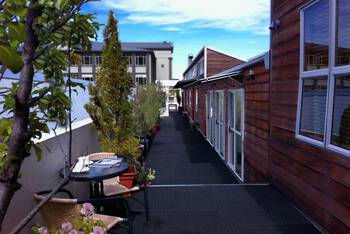
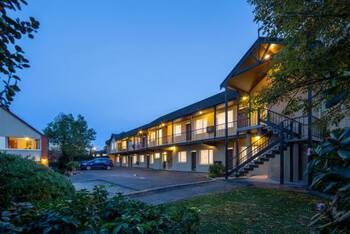
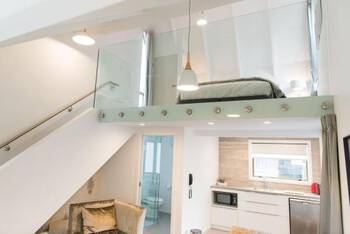
- Dunedin Motel and Villas (Mid-Range) 👍 Top Pick
- Aria on Bank (High-End)
- Cruise Milford NZ Small Boutique Cruise Experience (1 hour 45 minutes) 🏅 Top Pick
- Milford Sound Scenic Fly-Cruise-Fly departing Queenstown (4 hours 30 minutes)
- Milford Sound Coach & Cruise tour from Queenstown (12 hours)
Where to Stay in Dunedin?
2. Stroll Around the Royal Botanic Garden

- 📍 Location: Royal Botanic Garden [Map Link]
- 🕐 Opening Hours: 7 AM - 7 PM
- 💰 Entry Fees: Free
- ⚡ Pete's Take: "I loved how huge the Royal Botanic Garden felt. I ended up walking for over an hour without even noticing."
Established in 1863, the Royal Botanic Garden in Dunedin is considered the oldest botanical garden in New Zealand. Covering over 28 hectares, the garden is so big that it almost seems to go on forever when you walk around it.

Within the botanical garden, you will find all kinds of flora and fauna, with walkways crisscrossing around this green part of the city for you to stroll around. It sure was one great place to stroll around, as I found myself walking for more than an hour without realizing it.

There is a ton to see here, and I highly recommend you spare an hour or two to walk around and escape from the bustling city of Dunedin. The Royal Botanic Garden opens from 7 AM to 7 PM every day, and it is free to enter.
3. Run Up The Steepest Street In The World (Baldwin Street)

- 📍 Location: Baldwin Street [Map Link]
- ⚡ Pete's Take: "My friend and I had a running competition here. Let's just say we all underestimated how steep it actually is. 😅"
Did you know that the world's steepest residential street is located right here in Dunedin? Baldwin Street is a residential street just northeast of the city center and is officially recognized by Guinness World Records for its gradient.

Baldwin Street rises from 30m above sea level to over 100m above sea level in just 350m of length. The lower slope is moderately steep, whereas the middle to upper slope of 161m in length climbs over 47 meters vertically, creating a gradient of 35%! To put that into perspective, the average gradient of roads going up a mountain is only around 5-10%.

Although it may not look steep from the photo here, trust me, when you try to compete with your friends and run up the street as I did, you will know right away why the street is the steepest in the world.
4. Learn more about Dunedin at Otago Museum
- 📍 Location: Otago Museum [Map Link]
- 🕐 Opening Hours: 10 AM - 5 PM
- 💰 Entry Fees: 20 NZD (~11 USD)
If you are interested in learning more about Dunedin, Māori and Pacific cultures, natural history, and the wider region, Tūhura Otago Museum is a great place to start.
The museum is home to several rare collections of natural specimens, such as the rare fin whale skeleton, and human artifacts from all over Micronesia, Melanesia, Polynesia, and Australia.
You will find several permanent galleries covering natural history, science, and cultures from Aotearoa and across the Pacific. The former Tangata Whenua gallery closed in early 2026 for repatriation work and redevelopment ahead of a new exhibition planned for 2027, so the museum layout is different from when I visited.
Tūhura Otago Museum opens from 10 AM to 5 PM. New Zealand residents can visit the permanent galleries for free, while international adults currently pay 20 NZD for a gallery pass. The Science Centre, Tropical Forest, and Planetarium have separate ticket options.
5. Go Up the Signal Hill

- 📍 Location: Signal Hill [Map Link]
- ⚡ Pete's Take: "This has one of the best views over the city, IMO. Be sure to come here for sunset!"
If you are looking for a viewpoint that will give you a panoramic view of the Dunedin skyline and its coastline, there is no better place to be than at the top of Signal Hill, located not too far from Balwin Street.
There are two ways you can get to the top of Signal Hill. You can either hike the 2-hour trail through Logan Park to reach the top of Signal Hill, which shouldn't be too difficult, or you can drive up the road, which will take about 15 minutes.

Once you arrive at the top of Signal Hill, you will be rewarded with a stunning panoramic view of Dunedin and its coastline. You will also find a nice platform where you can sit and watch the sunset.
6. Visit Aramoana Beach

- 📍 Location: Aramoana Beach [Map Link]
- ⚡ Pete's Take: "Such a beautiful, quiet beach. We even saw a lone seal here. Too bad the weather was not cooperating."
If you are looking for a nice place to walk around and be with nature, Aramoana Beach offers you a tranquil and relaxing walking path along its wide, white sand beach where you will be able to see stunning cliffsides and even wild animals.

Aramoana Beach is part of Dunedin's wildlife-rich coastline, where you may encounter marine mammals and seabirds. Wildlife sightings are never guaranteed, so give any animals plenty of space and let them move between the beach and sea without blocking their path.

I stumbled upon a really cute sea lion trying to run into the sea as we were walking up and down the beach. It sure was surprised to see us, as much as we were to see them.

If you decide to visit Aramoana Beach, follow Dunedin's Wildlife Care Code: stay at least 20 m from seals and sea lions and at least 50 m from penguins. Never approach, feed, or touch them, do not block penguins entering or leaving the water, and avoid flash photography around penguins.

Aramoana is beyond the regular Dunedin urban bus network, so the simplest option is to drive along SH88 through Port Chalmers. When I visited, I combined local transport with hitchhiking for some of the harder-to-reach coastal spots, but if you want a predictable schedule, having your own vehicle is much easier.
7. Stroll Along St. Clair Beach

- 📍 Location: St. Clair Beach [Map Link]
- ⚡ Pete's Take: "From the city center, take bus number 8 from the Octagon to St. Clair Beach. The bus ride takes about 17 minutes, so St. Clair is an easy stop to add to your Dunedin plans."
Another beautiful, charming beach in Dunedin that you should visit is St. Clair Beach, located just south of the city center. St. Clair Beach is a beautiful sandy beach with a promenade lined with seafood restaurants and bars for you to indulge yourself in.

For photographers out there, at St. Clair Beach, there is this old remnant of a wooden pier where you will find these wooden poles left on the beach that align perfectly well with an island in the sea, creating a great composition for photos. So be sure to drop by there and snap some.
Even if you are not a photographer, the promenade is a nice place to stroll around in the morning and in the evening. To get to St. Clair Beach from the city center, you can take bus #8 from Octagon Dunedin to St. Clair Beach, which should take around 17 minutes.
8. Visit the Tunnel Beach

- 📍 Location: The Tunnel Beach [Map Link]
- 🥾 Walking Time: About 1 hour return
- ⚡ Pete's Take: "Be sure to walk down to the beach through the tunnel that goes through the sandstone cliffs. The entrance is easy to miss."
The Tunnel Beach is a collection of beautiful sea-carved sandstone cliffs, rock arches, and caves that will take you to a stunning white sand beach along the coastline of Otago Bay.

The Tunnel Beach got its name from the tunnel that was dug by hand through these epic sandstone cliffs to allow access to the beach below. Once you arrive, the Tunnel Beach Walkway will take you down a slope where you will be able to see Tunnel Beach and all its stunning cliffs from above.

As you continue down the trail, you will reach the edge of a cliff where you will be able to see the hidden beach below. Now, it is time for you to find that hand-carved tunnel.

It might not be apparent at first where the tunnel is, but it should not take you long to find a small crack in a rock where you will see a straight hand-carved tunnel that takes you to the beach.

At the beach, you will finally see the true scale of these cliffs that were sculpted by the Southern Ocean for centuries. These magnificent high cliffs, arches, and headlands are indeed quite a sight to behold.

Allow around 1 hour for the return Tunnel Beach Walk. The official track is about 1 km each way and the climb back to the car park is steep. Access to the beach itself is best within about 2 hours either side of low tide. The car park is locked overnight, with seasonal closing times, although the walking track can still be accessed outside those hours from limited nearby parking.
9. Visit Larnach Castle

- 📍 Location: Larnach Castle [Map Link]
- 🕐 Opening Hours: Generally 9 AM - 5 PM
- 💰 Entry Fees: Around 45 NZD adult for Castle & Gardens
- ⚡ Pete's Take: "This is easiest with a car or organized tour, as there is no regular public bus directly to the castle."
Across Otago Harbour on the ridge of the Otago Peninsula, you will find Larnach Castle, often described as New Zealand's only castle. William Larnach commissioned the grand Victorian residence in 1871, and today the restored property and gardens are open to visitors.
The castle itself is pretty impressive, but what draws the most attention is its beautiful garden, which covers over 7 acres of land with specialized sections ranging from the South Seas Garden to the Serpentine Walk.
There is no regular public bus directly to Larnach Castle, so the easiest options are to drive, take a taxi, or join an organized tour. Castle and Gardens admission is currently around 45 NZD per adult, while a gardens-only ticket is cheaper.
10. See the Albatross and Penguins at the Royal Albatross Centre

- 📍 Location: Royal Albatross Centre [Map Link]
- 🕐 Opening Hours: Tour times vary by date and season
- 💰 Entry Fees: Albatross Classic from 68.39 NZD per adult
- ⚡ Pete's Take: "Check the tour schedule if you want to see the blue penguins too."
Another attraction located at Taiaroa Head on the northern tip of the Otago Peninsula is the Royal Albatross Centre, home to the world's only mainland breeding colony of northern royal albatross. Penguin viewing is a separate wildlife experience in the wider peninsula area, so do not assume it is included with a standard albatross ticket.

The Royal Albatross Centre provides guided access to the northern royal albatross colony at Pukekura/Taiaroa Head. The one-hour Albatross Classic includes an introduction and film followed by viewing from the centre's glassed observatory.

Depending on the season and conditions, you may see these enormous seabirds flying around Taiaroa Head or from the observatory. If you also want to see little blue penguins, plan that as a separate evening wildlife experience and check the current operator schedule before you go.

To access the observatory and nesting-colony viewing area, you need to join a guided tour. As of 2026, the one-hour Albatross Classic starts from 68.39 NZD per adult, while longer tours and combination experiences cost more. Tour times vary by season and wildlife conditions, so check the current schedule when booking.
When to Visit Dunedin?

The best time to visit Dunedin is during the shoulder seasons between September to November and March to May, when there will be considerably fewer travelers. During this time, most accommodation will offer discounted prices, making your trip way more cost-effective than the peak season (November to March).
How to Get to Dunedin?

Dunedin Airport is primarily served by domestic flights, with Air New Zealand operating nonstop services from Auckland, Wellington, and Christchurch. For most international travelers, the simplest route is to enter New Zealand through a major gateway such as Auckland or Christchurch and connect onward to Dunedin.
From the US: Auckland has nonstop links with several US cities, after which you can connect to Dunedin on a domestic flight.
From Europe: There are no nonstop flights from Europe to New Zealand, so expect at least one connection before reaching Auckland or Christchurch and continuing to Dunedin.
From Asia: Auckland and Christchurch have direct connections from selected Asian hubs. Which gateway is best depends on your origin and travel dates, so compare the current routes before booking.
To find a cheap flight to New Zealand, I would recommend you use Skyscanner or Expedia to look for the cheapest route and schedule so you can compare and choose the best one.
Getting from Auckland to Dunedin
By Air: Air New Zealand operates nonstop flights from Auckland to Dunedin. The flight takes about 1 hour 55 minutes, with multiple services on most days. Fares vary by date and demand, so compare the current price for your travel dates.
You can book your flight here.
Getting from Christchurch to Dunedin
By Air: Air New Zealand operates nonstop flights from Christchurch to Dunedin every day. The flight itself is around an hour, while fares and frequencies vary by date. You can compare flights here.
By Bus: InterCity currently operates at least two daily services from Christchurch to Dunedin. Buses leave from outside the Bus Exchange on Lichfield Street and arrive at 331 Moray Place in Dunedin.
The journey takes approximately 6 hours. When I traveled this route, I paid 47 NZD per person. Fares may have changed since then, so check the current price when booking.
If you are planning to travel longer in New Zealand via buses, I recommend that you get the Flexipass where you buy hours, and you can travel any route in the country depending on how long the bus is. It is a great way to hop around the country without having to pay a ton of money.
As of 2026, InterCity FlexiPass starts at 199 NZD for 15 hours of travel, with larger passes available. For more information, visit the official InterCity FlexiPass page here.
Getting from Queenstown to Dunedin
By Air: There is no regular nonstop Air New Zealand service between Queenstown and Dunedin, so flying generally requires a connection. For this relatively short overland route, the direct bus or driving is usually more practical.
Air New Zealand flies this route 7+ times a day, and the flight should cost around 82 - 138 USD. You can book your flight here.
By Bus: InterCity operates a daily direct service from Queenstown to Dunedin. The journey takes approximately 4 hours 30 minutes, leaving from Athol Street in Queenstown and arriving at 331 Moray Place in Dunedin. When I traveled this route, I paid around 45 NZD. Fares and departure times may have changed since then, so check the current timetable when booking.
Again, I highly recommend you get Intercity Flexipass if you are planning to travel around New Zealand for a longer duration with buses. They are cheaper than buying separately and are quite handy for spontaneous trips.

How to Get Around Dunedin?

By Foot: Some attractions around the city center can be reached on foot, but for attractions that are further away, you are going to need to rent a car or take the bus instead.
By Bus: Dunedin's Orbus network is useful for getting around the city and nearby suburbs. As of September 2026, an adult trip costs 2.50 NZD with a Bee Card or 3 NZD in cash, and Bee Card users receive a free transfer within 45 minutes. You can plan your journey here. Larnach Castle and Taiaroa Head are not directly served by the regular urban network, so a car or organized tour is much easier for those attractions.
By Hitchhiking: Kiwis are some of the coolest and most laid-back people you will ever meet, and hitchhiking in Dunedin is another great way to get around without your own vehicle, as long as you stand on the road going towards where you want to go.
I hitchhiked from Dunedin to the Royal Albatross Center and back, and it took us the entire day. So, if you plan to hitchhike in Dunedin, be sure to spare a lot of time for travel.
By Car: The most flexible way to explore Dunedin is with a car, especially for the Otago Peninsula, Aramoana, Larnach Castle, and Taiaroa Head. Rental prices vary considerably by season and vehicle type, so compare current rates rather than planning around a fixed daily price.
By Tour: If you do not wish to drive, you can also go on a day trip to visit both Larnach Castle and the Royal Albatross Center in one go with an organized tour, which I highly recommend. The tour will often include the transfer as well as the admission fee for these places. You can browse for tours in Dunedin with the link below.
How Many Days Should I Spend In Dunedin?
For Dunedin, I would recommend that you spend at least 3 days (4 nights) to see all the tourist attractions I recommended here. Here is how you will spend each day in Dunedin:
Day 1: Explore the attractions around the city center, visit the Botanic Garden, the Railway Station, the Otago Museum, and hike up Baldwin Street and Signal Hill.
Day 2: Visit Aramoana Beach, Tunnel Beach, and St. Clair Beach.
Day 3: Visit Larnach Castle and see albatrosses and penguins at Otago Peninsula.
How Much Does It Cost To Visit Dunedin?

With the rough itinerary above, we can calculate approximately how much you will spend on this trip as follows:
Accommodation: For four nights in Dunedin, you will be spending around 84 USD on accommodation.
Food: For three days, budget roughly 90 - 150 NZD if you mix supermarket food with casual meals. Restaurants and drinks will push that higher.
Transportation: Local Orbus trips currently cost 2.50 NZD with a Bee Card or 3 NZD cash. Five city bus rides would therefore cost around 12.50 - 15 NZD, before any car rental, taxi, or peninsula tour.
Activities: Many city attractions are free. International adults currently pay 20 NZD for Tūhura Otago Museum's permanent galleries, Larnach Castle & Gardens is around 45 NZD per adult, and the Royal Albatross Centre's Albatross Classic starts from 68.39 NZD.
Total Budget for 3 days in Dunedin: 450 NZD (255 USD)

Disclaimer: This post may contain affiliate links. See our disclosure policy.
First Published:
Last updated:


1 Comments
Thank you for sharing your daily life and beautiful pictures of New Zealand ! It reminds me how lovely is this country !