



Torres del Paine is probably one of the most popular hikes you can do in Chile. When I first heard of Torres del Paine while researching places to hike in Patagonia, I always imagined that I would have to do a multi-day trek (W-Trek). However, when I arrived in Chile, the trek was already fully booked well before the hiking season began, which is a big problem for most Patagonia hikes because they are very crowded. If you want to do the full trek, you will have to book months in advance.
What if I told you that you don't really need to trek for multiple days to see Torres del Paine and its iconic Patagonian 3 Towers? That is exactly what I did. I hiked the Torres del Paine trail independently to this iconic location in one full day.
Here is a backpacking guide to hiking Torres del Paine in one day for those who want to see the three towers but are not as keen on fighting for a camping spot during the multi-day trek. Let's hike!
When I did the hike, I did not have to book anything in advance, but that has changed: you should now buy your national park entry online at least 24 hours before entering the park. The Base Torres day hike itself does not currently require a separate trail reservation during the normal hiking season.

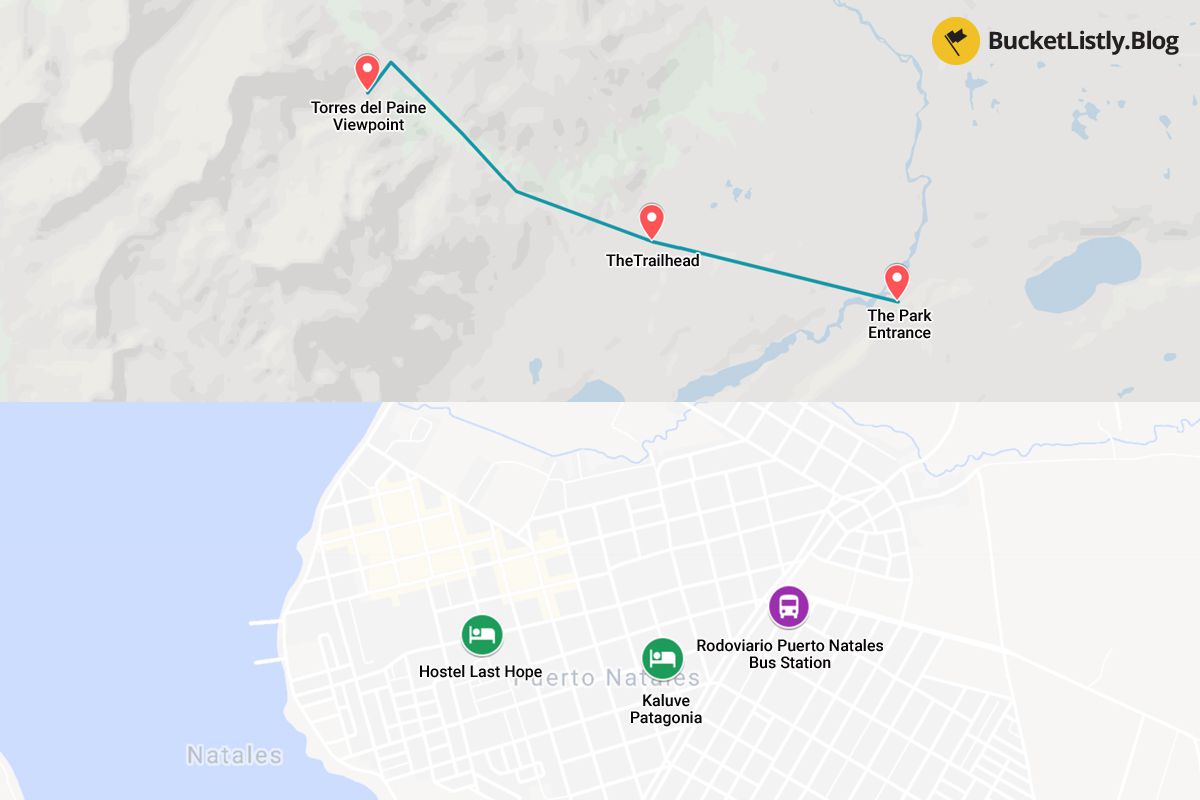
Torres del Paine Hiking Map
Quick Summary
| 🌤️ Best time: | September-November and March-April |
| 🚘 Get around: | Hiking |
| 🕓 Time to spend: | 1 day |
| 🏛️ Ticket: | 32,400 CLP for a foreign adult day pass |
One Day Hiking Itinerary for Torres del Paine, Chile
Puerto Natales to Laguna Amarga/Park Entrance (2 hrs)
- 🕐 Time: Day Trip
- 📖 Full Guide: 2 Weeks Itinerary For Patagonia
Prepare and pack everything you need the day before in Puerta Natales, such as snacks, water, and lunch. It's cheaper than buying them last minute at Estancia Cerro Paine.
Wake up early to catch the 7 AM bus leaving from Rodoviario Puerto Natales Bus Station. Bus-Sur's 2026/27 high-season schedule has this service arriving at Laguna Amarga at around 9 AM. Unless you organize a taxi through your hotel, do not rely on grabbing a taxi off the street that early because you may end up running to the terminal at the last minute like me and a few other people with poor planning skills 😅.
Once you get on the bus, it will take approximately 2 hours to reach Laguna Amarga. Do not rely on buying your park ticket after arriving like I did. The park now asks visitors to purchase their entry online at least 24 hours in advance. As of 2026, a foreign adult day pass costs 32,400 CLP. Keep the QR code for your ticket ready for validation when you enter.
- The Singing Lamb Backpackers (Budget)
- Hostal Andes Patagonicos (Mid-Range) 👍 Top Pick
- Hotel Vendaval (High-End)
- Full day tour Torres del Paine + Milodon cave (11 to 12 hours)
- Full-Day Tour to Torres del Paine National Park from Puerto Natales(First Class) (8 to 10 hours) 🏅 Top Pick
- Balmaceda and Serrano Glaciers Sightseeing Cruise from Puerto Natales (7 hours)

Park Entrance to Estancia Cerro Paine (10 mins)
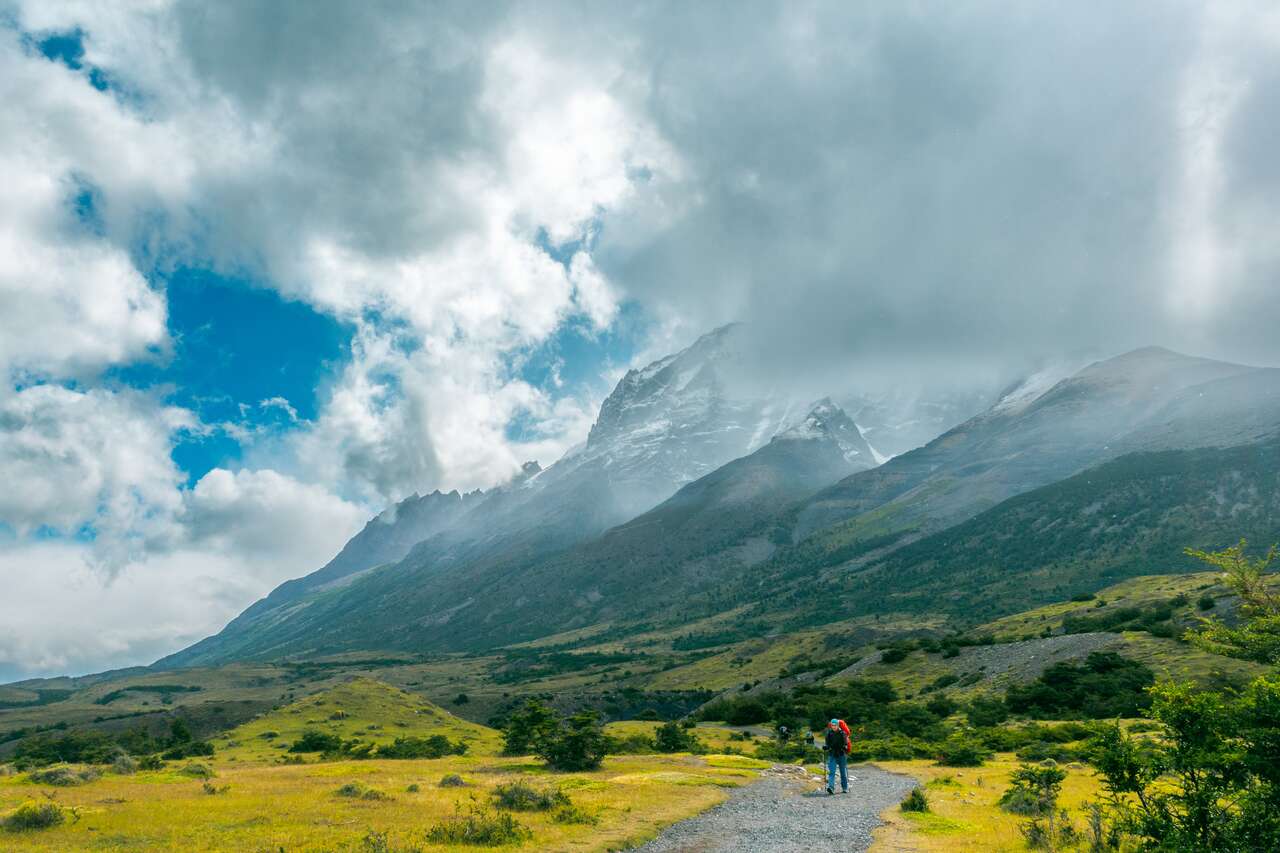
Once you are done, take the connecting shuttle from Laguna Amarga to the Welcome Center at Estancia Cerro Paine, the access point for the Base Torres hike. Bus-Sur currently lists this connection at 4,500 CLP one way and around 25 minutes. You can technically walk the road instead, but doing so adds considerable time to an already long day hike.
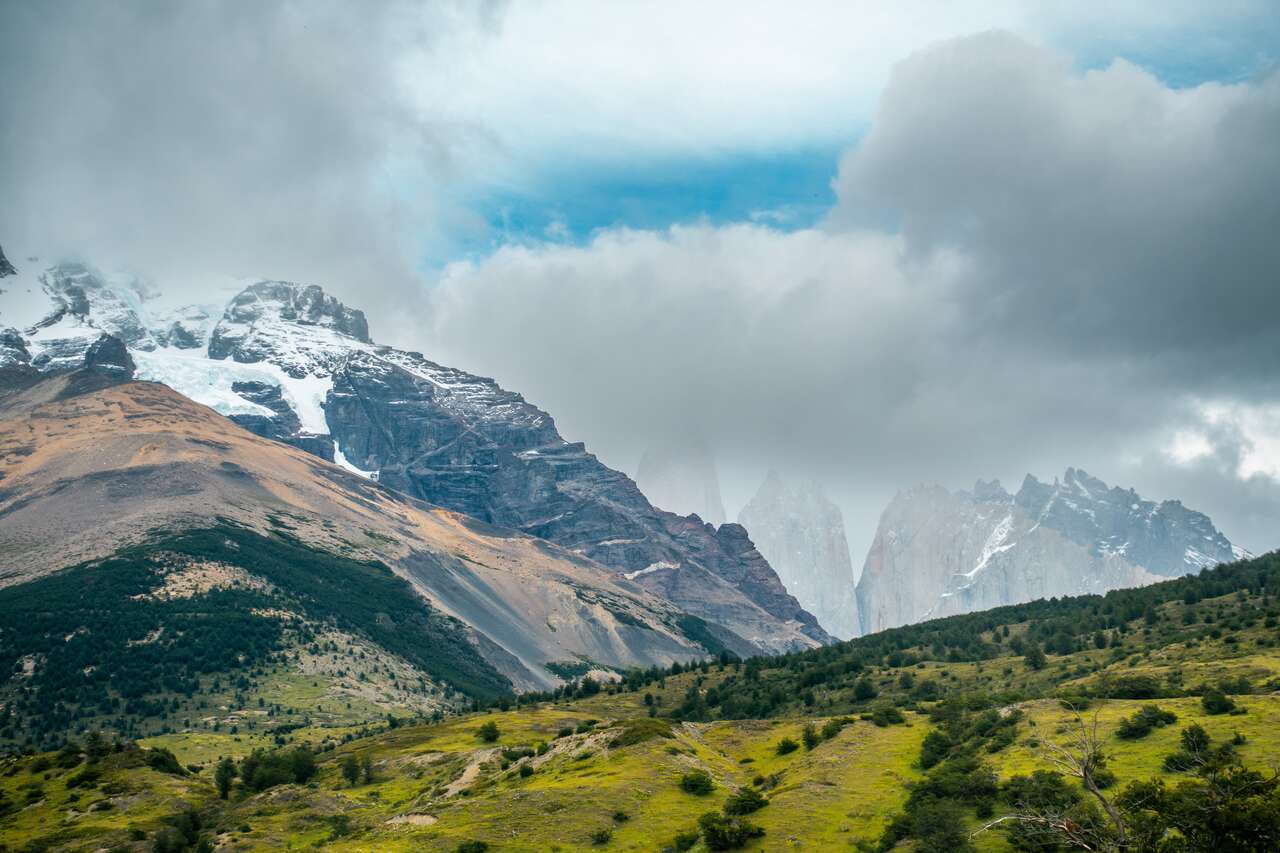
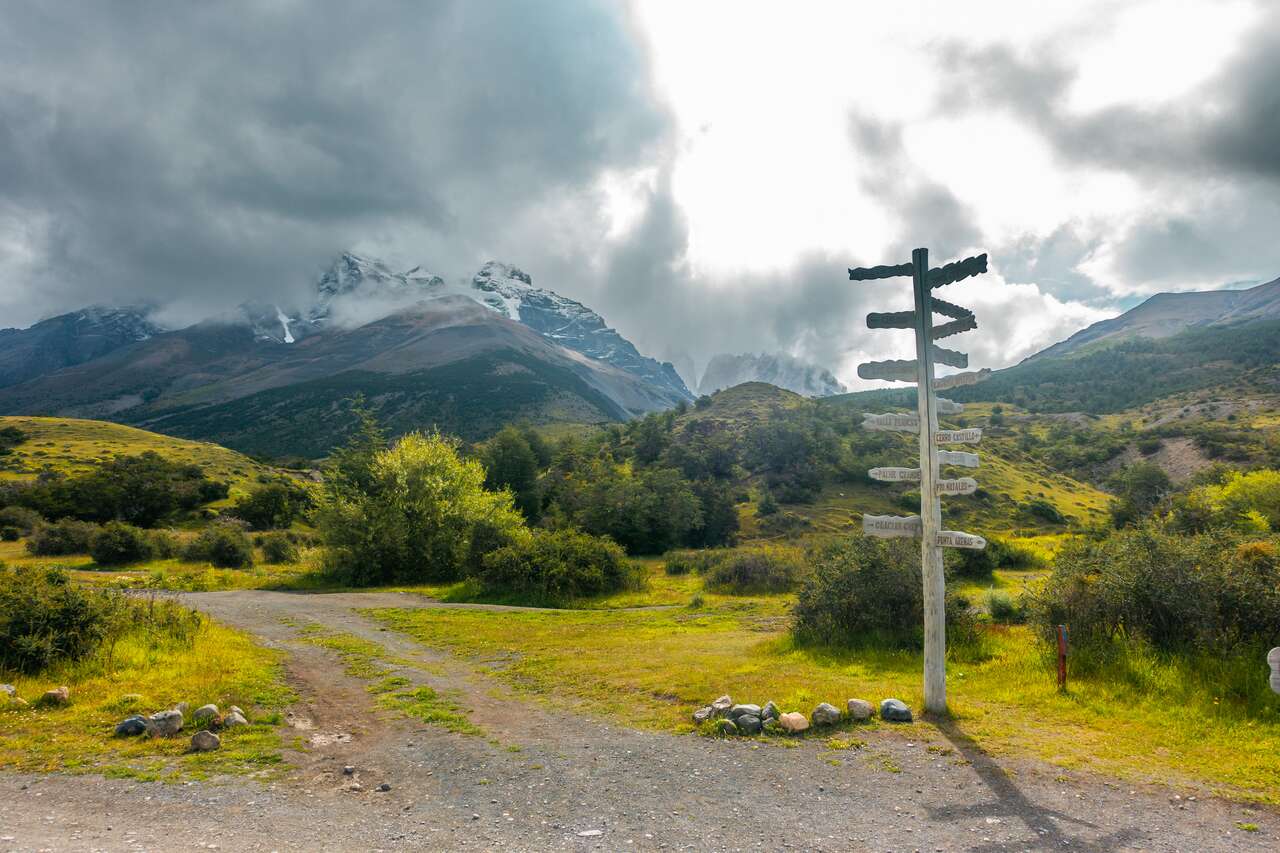
Once you are at the Welcome Center/Estancia Cerro Paine sector, this is your last convenient chance to sort out anything you need before hitting the trail. From here, follow the signs toward the Base Torres trail and Refugio Chileno. The park currently requires day hikers to begin the Base Torres trail by 9 AM, so taking the first bus from Puerto Natales is important.
Estancia Cerro Paine to Mirador Las Torres/The 3 Towers Viewpoint (3 - 4 hrs)
- 🕐 Time: Day Trip
- 📖 Full Guide: 20 Best Places to Visit in South America
The trail begins in a flat grassland by Hotel Las Torres, heading west for about 1 km until you start going uphill northward. You will be climbing for about 1 to 1.5 hours until it starts to peak, and then it is an easy stroll to the first refuge camp, Refugio Chileno.
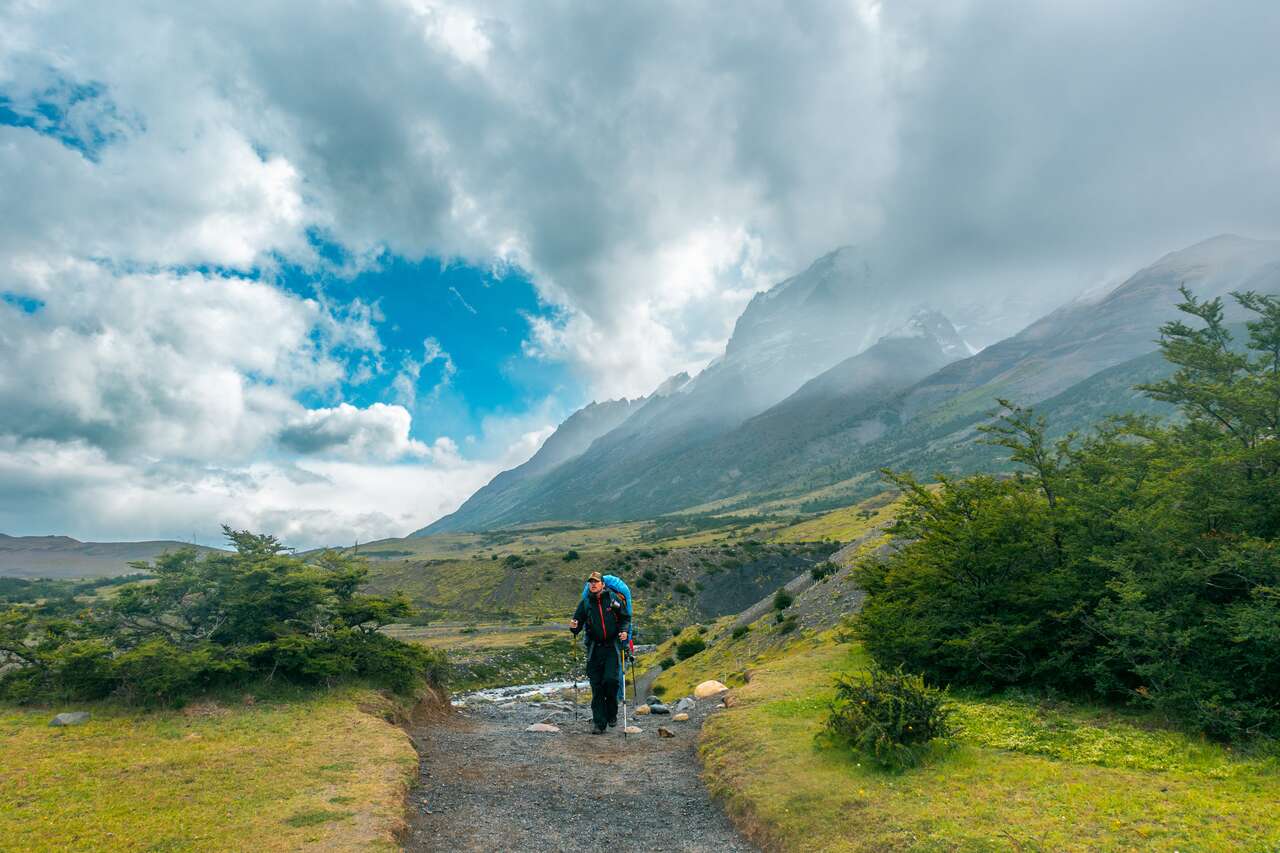
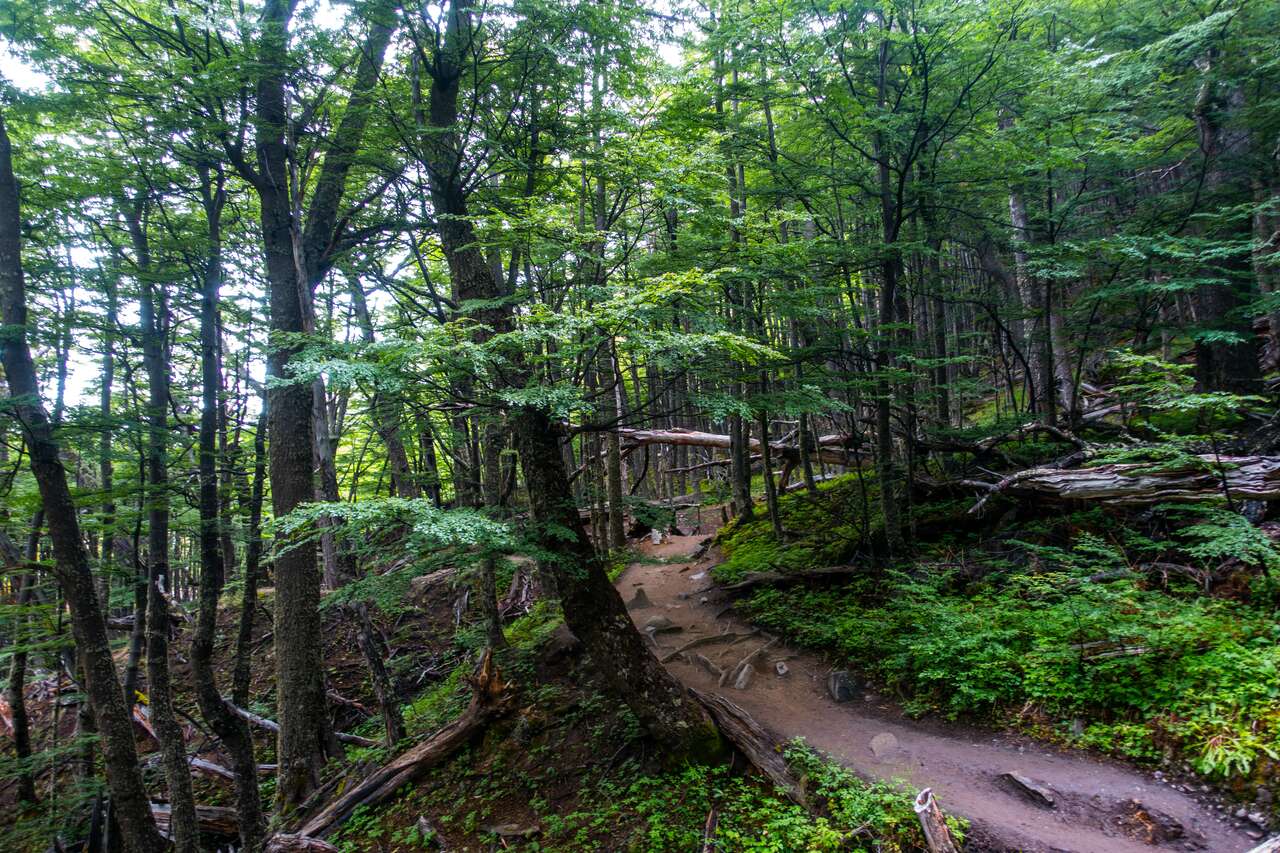
You can rest for a bit here or push on, heading north. From Refugio Chileno, the trail is pretty flat and mostly under the trees, which helps protect you from the strong wind coming from the valley.
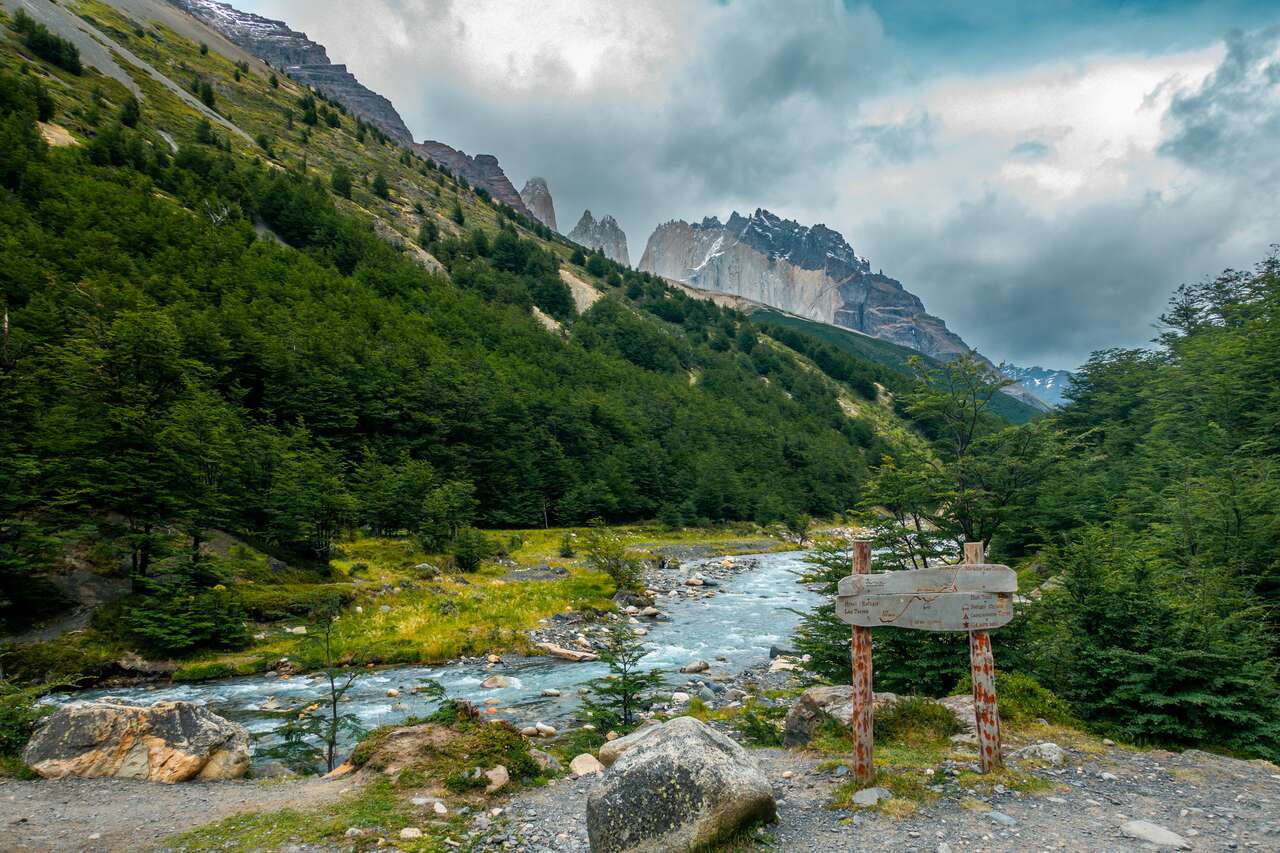
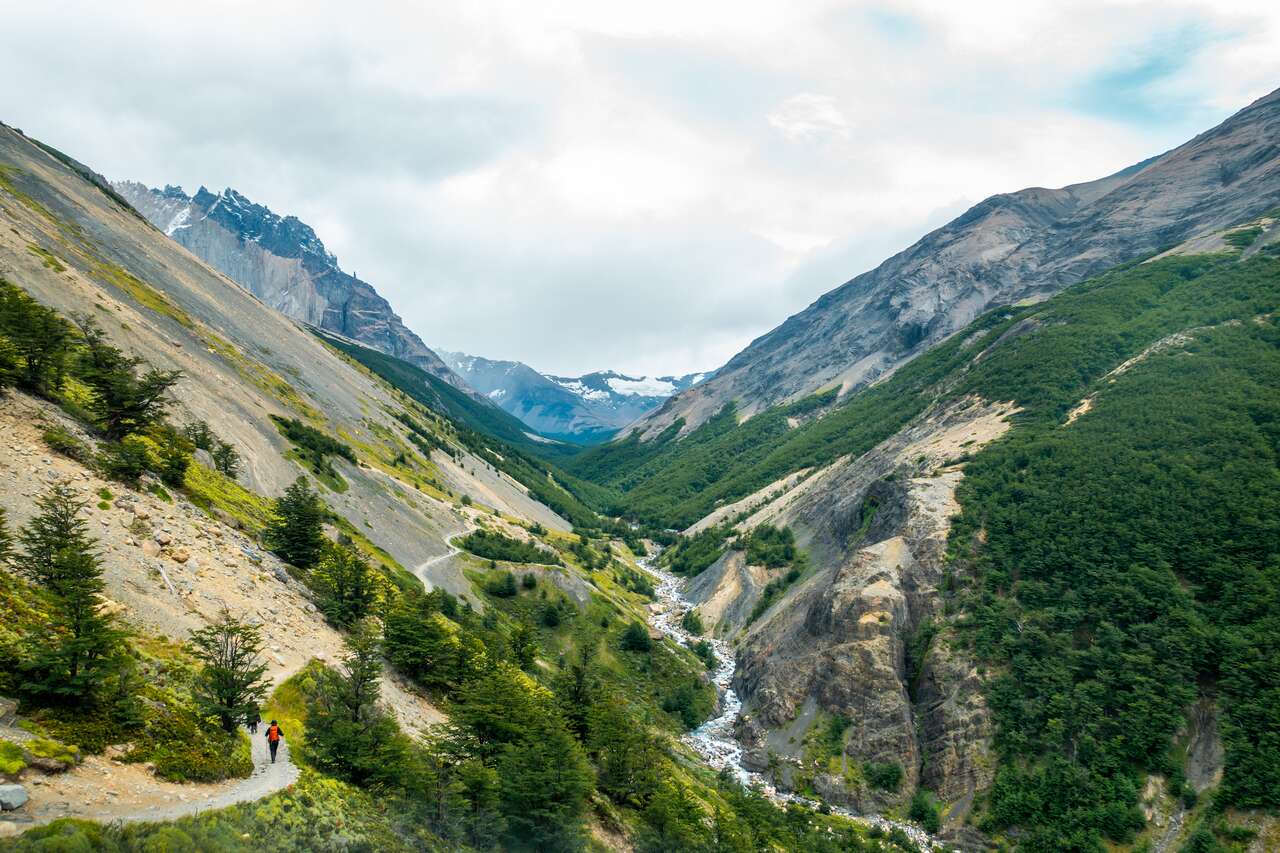
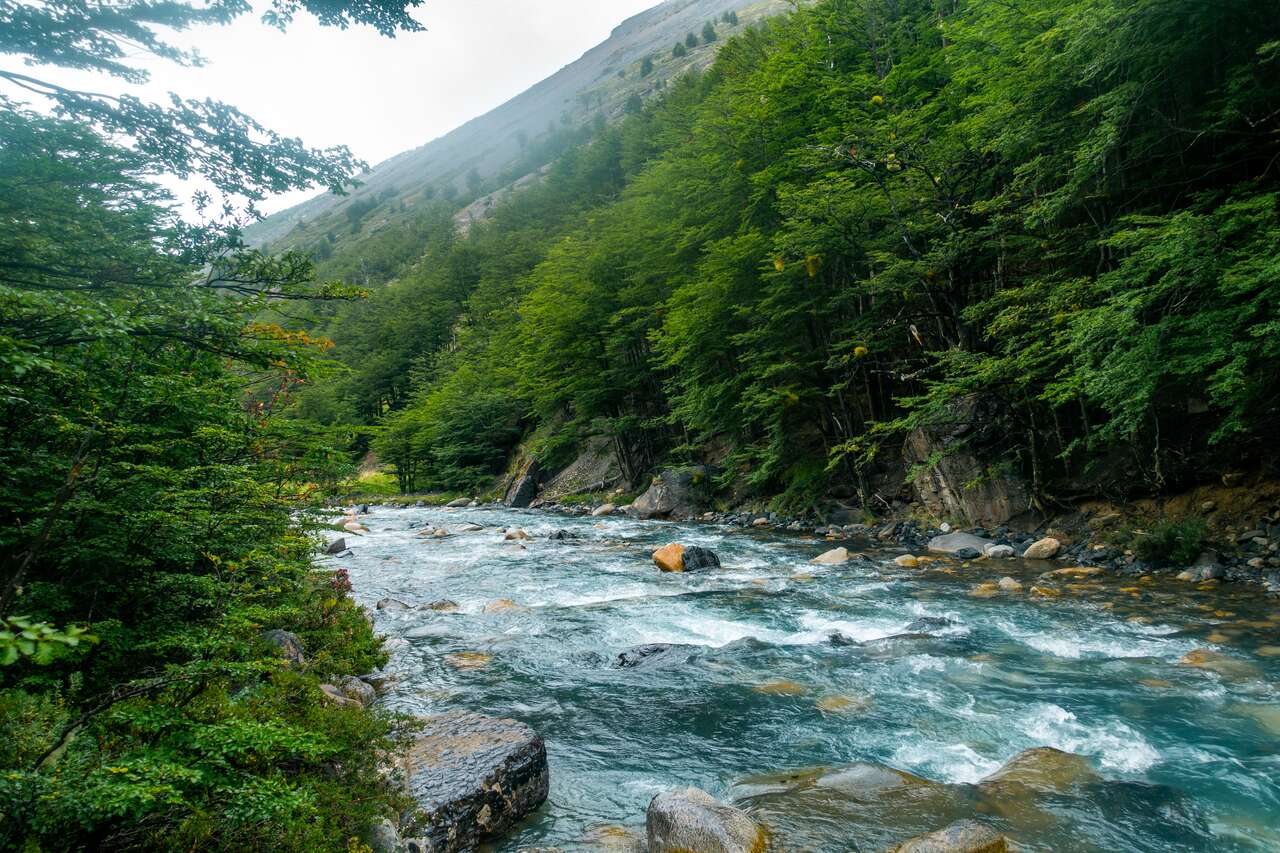
You will be walking along the river for about 2 hours, crossing a few bridges, gaining little elevation until the trail starts to go west again.
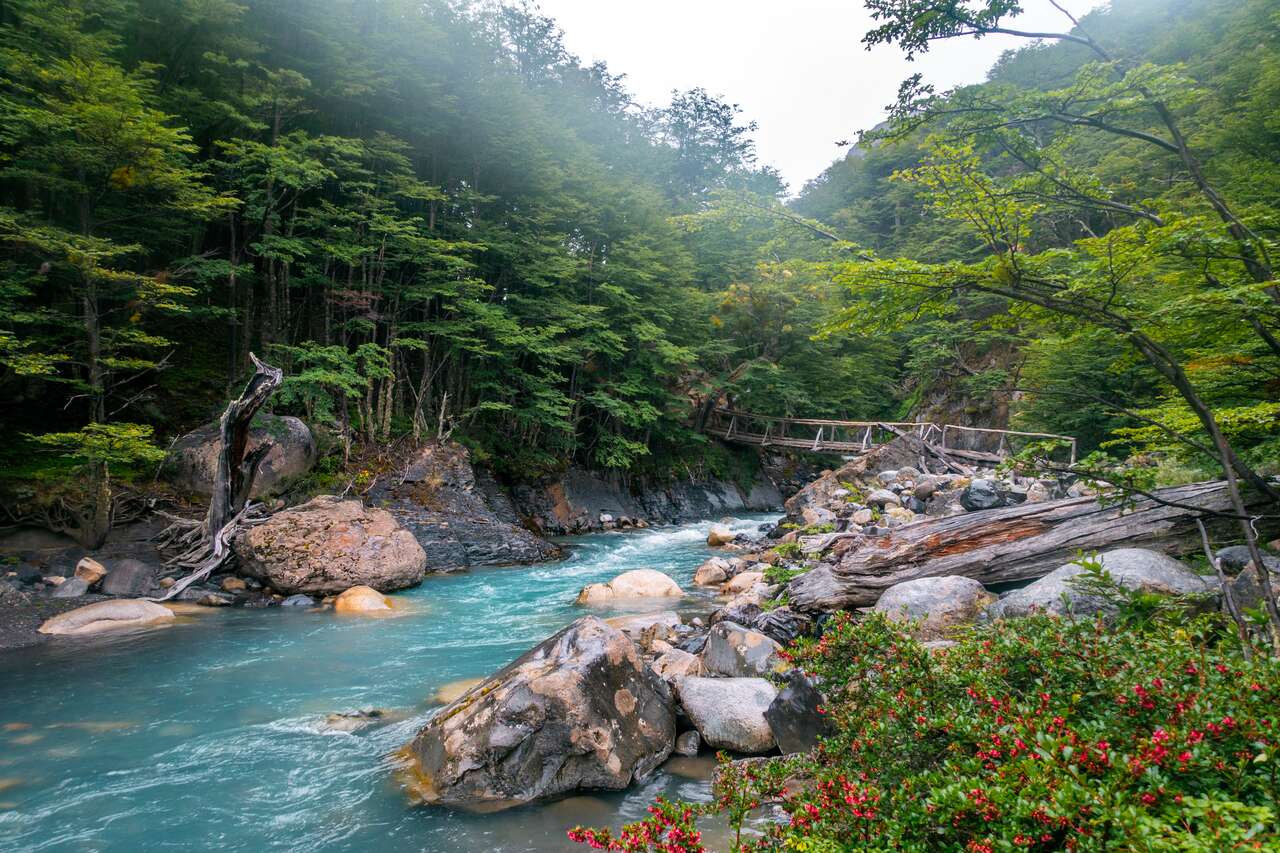
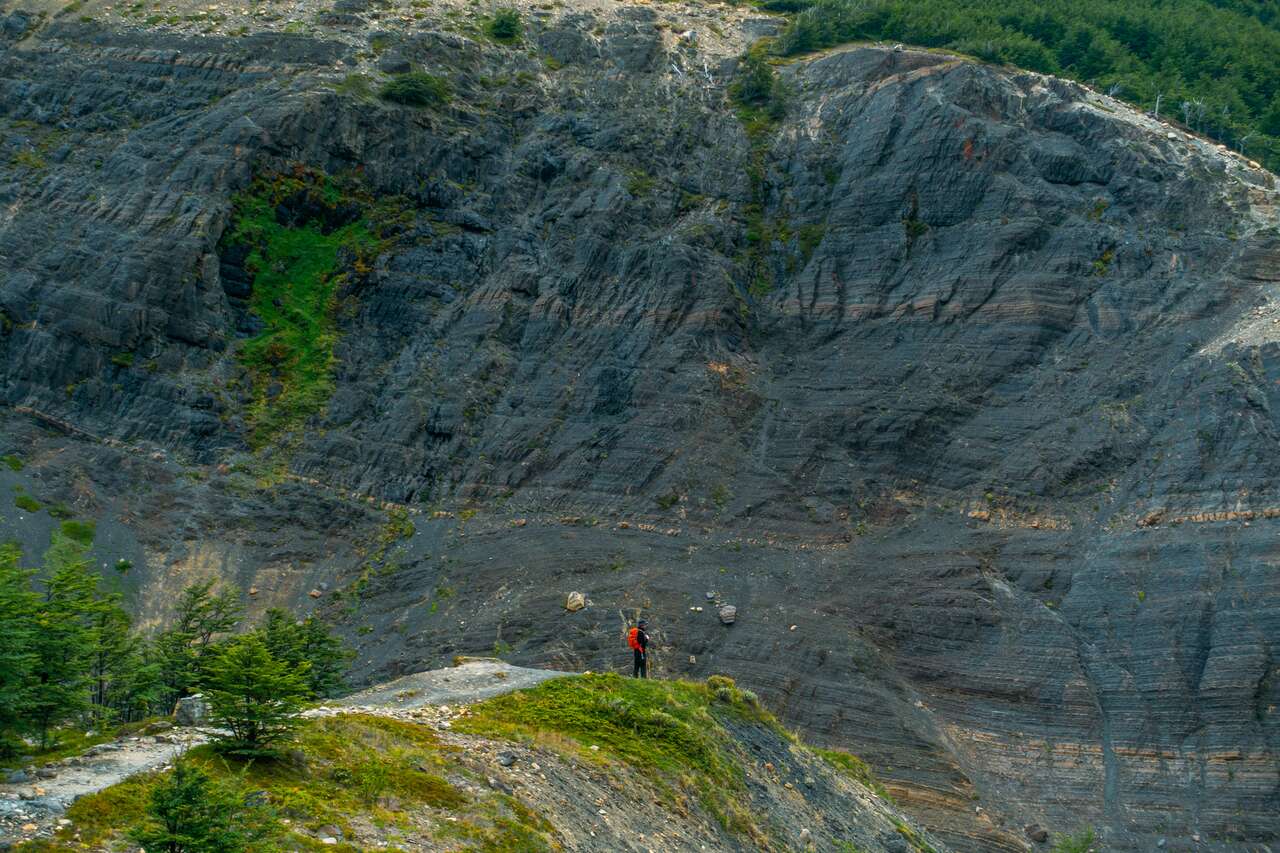
From here on out, it's an uphill battle to Mirador Las Torres, which will take you around an hour to reach the viewpoint. You will be hiking on a rocky trail, jumping from boulder to boulder, exposed to the Patagonian elements for the entire time, so be sure to prepare for the wind and rain.
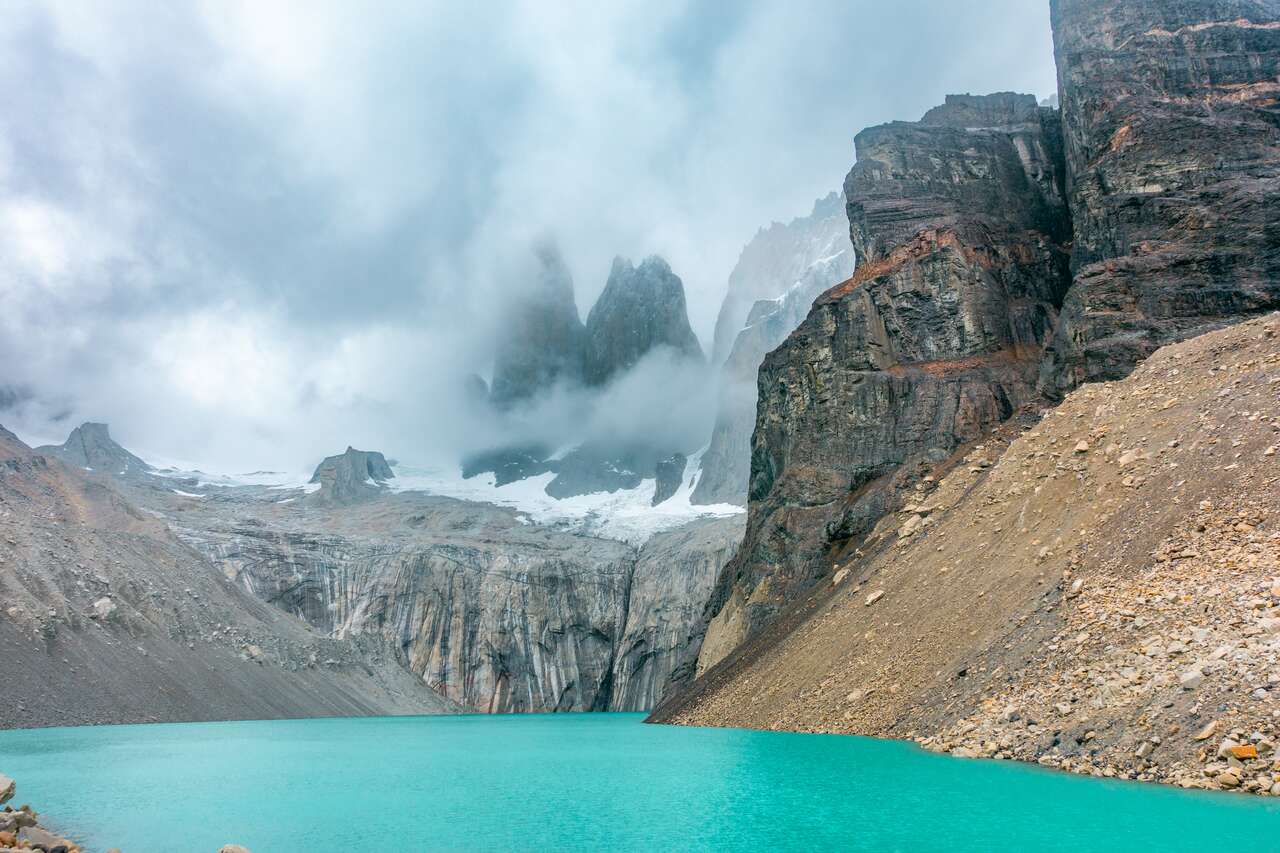
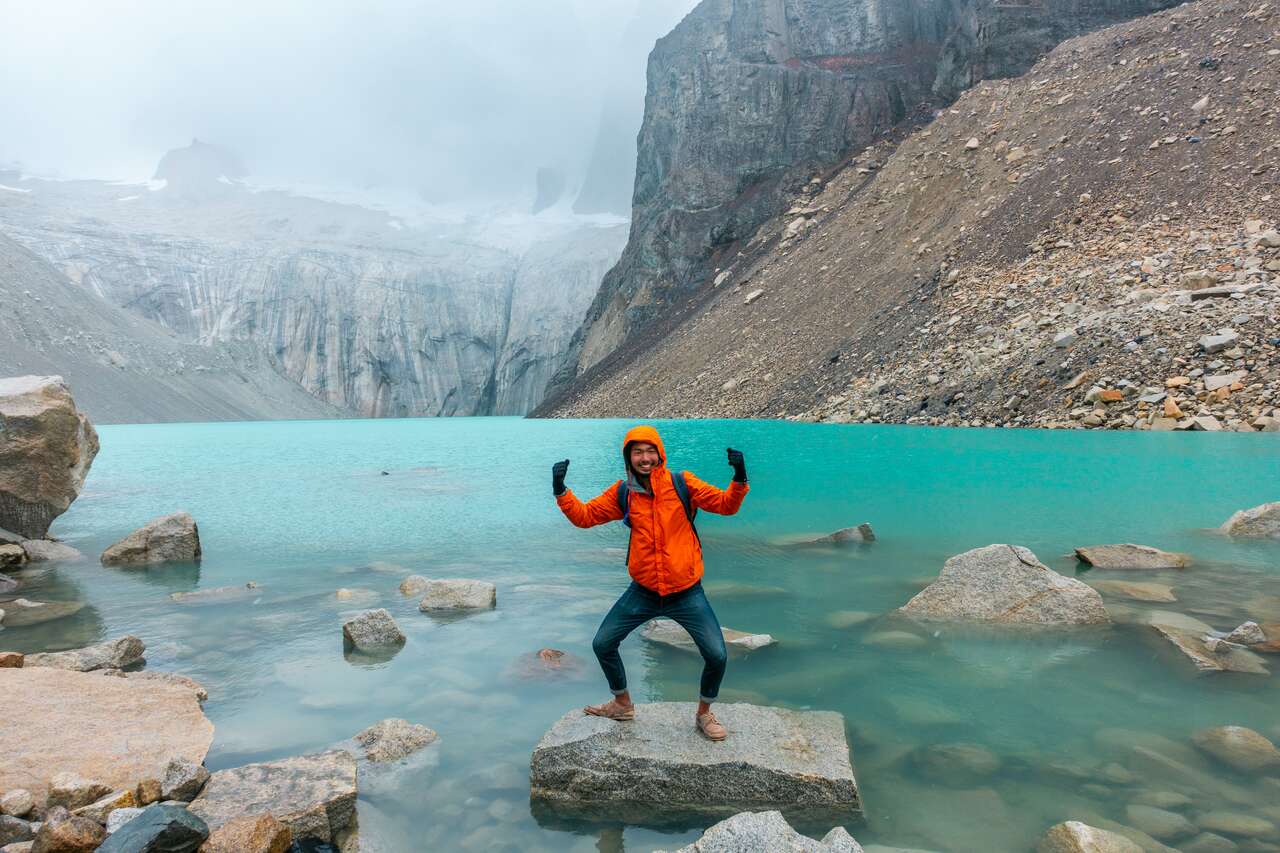
For about an hour, you should arrive at the lake with the iconic view of the 3 Towers (Las Torres) towering over you. I have seen all the photos of this place, but it is nothing like being there in person, looking up at the famous peaks with your own eyes.
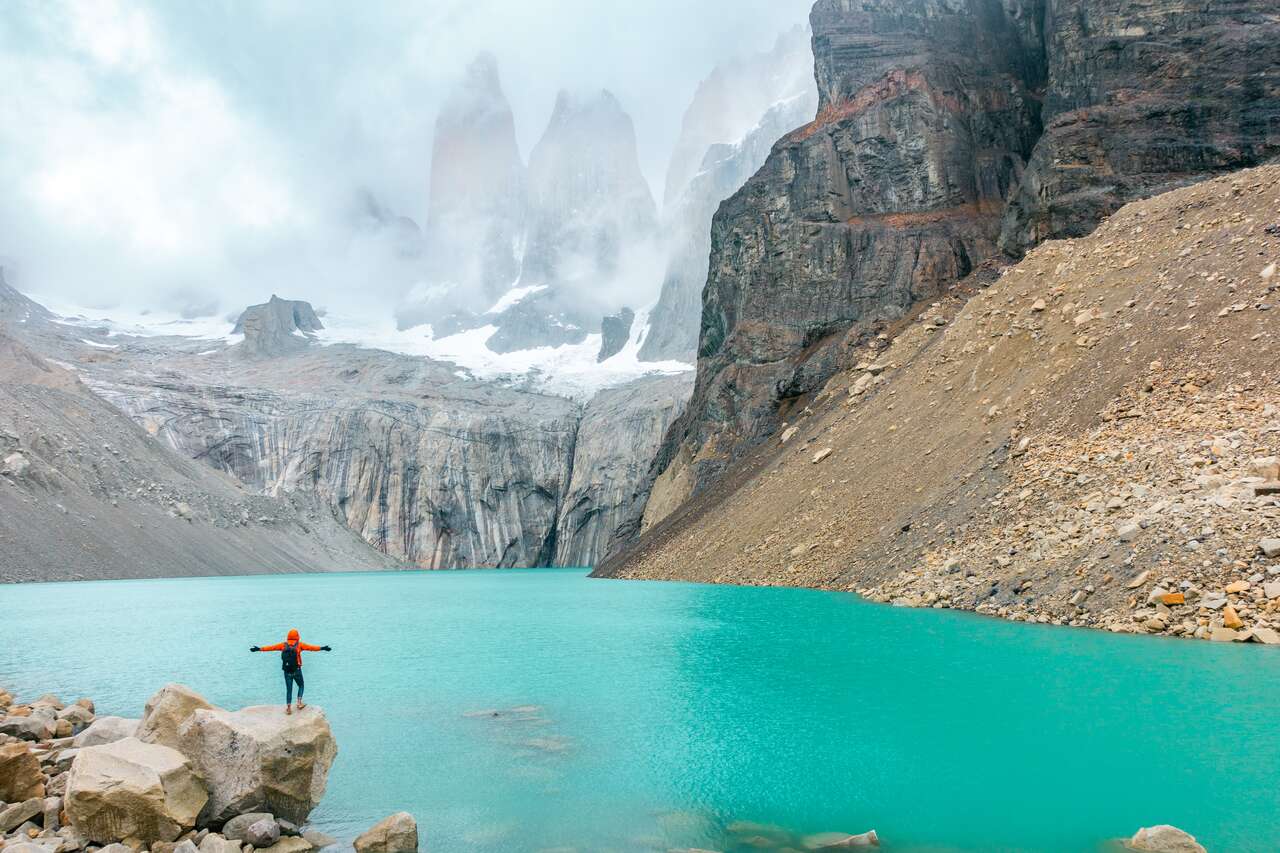
Spend about an hour up there, resting, eating lunch, and taking photos before heading back the same way. As with most mountains, the afternoon is when the clouds roll in. So, don't underestimate the difficulty of returning as the weather might worsen by the time you descend, which was the case for me.
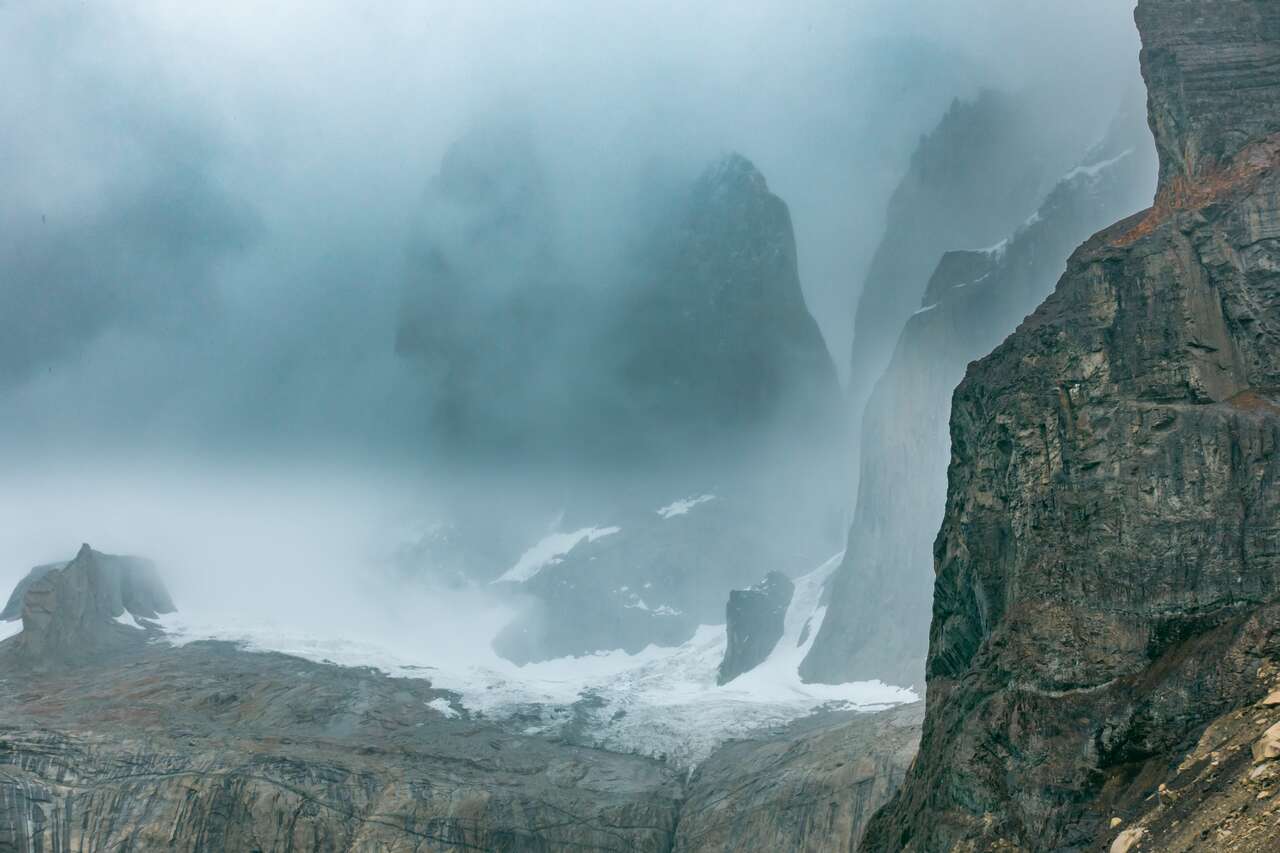
It should take you around 3-4 hours to get back to the Welcome Center/Estancia Cerro Paine sector. From there, take the connecting shuttle back to Laguna Amarga in time for your bus to Puerto Natales. Bus-Sur's current 2026/27 high-season schedule lists a 20:15 departure from Laguna Amarga, arriving in Puerto Natales at around 21:30. Schedules can change, so confirm both the shuttle connection and return bus before starting the hike.
If you are interested in hiking the full W-Trek in Patagonia, check out: A Complete Guide to the W-Trek in Torres del Paine, Patagonia.

Chile Travel Video
Where to Stay in Puerto Natales?
Always book accommodation in Patagonia at least one week in advance if you are planning to visit during the peak or even shoulder seasons. Everything gets booked annoyingly quickly everywhere in Patagonia!



When to Visit Torres del Paine?
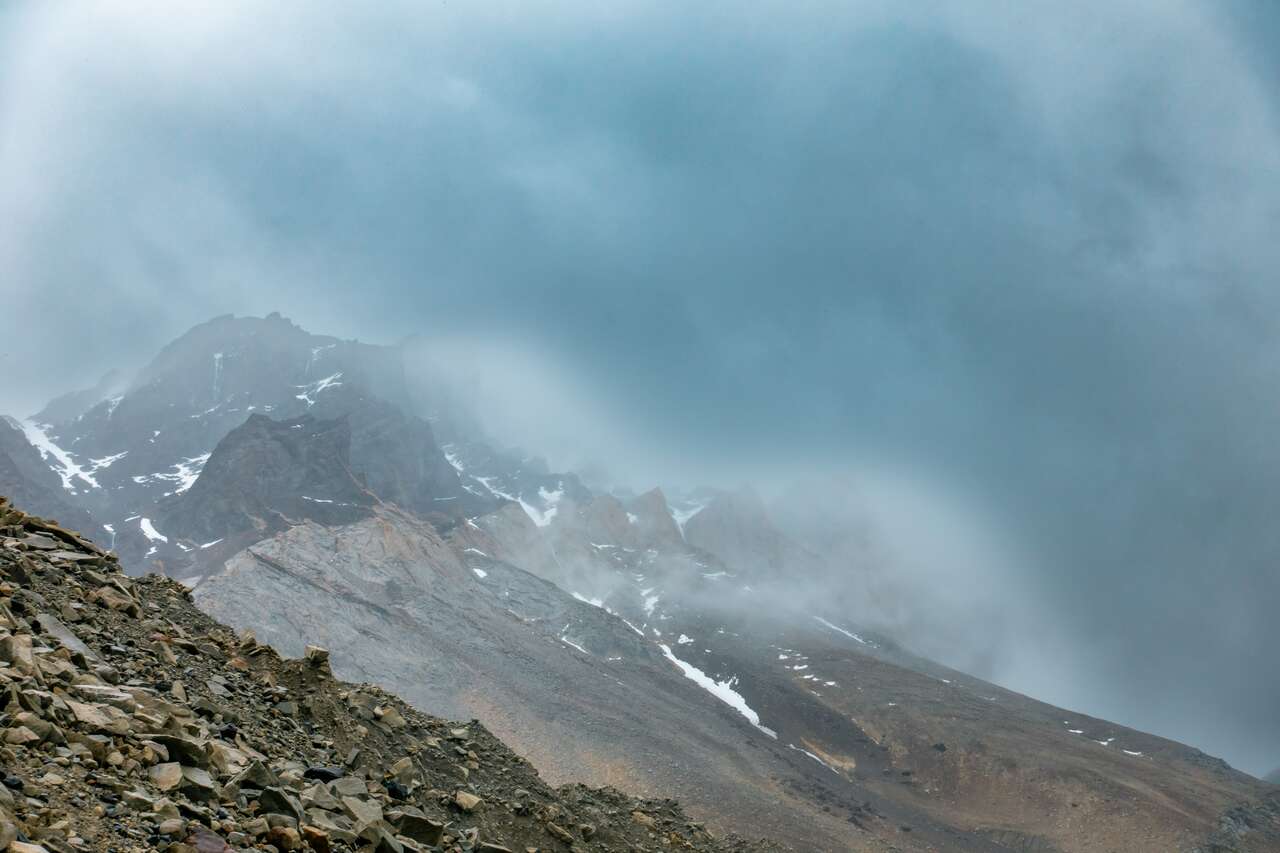
In my opinion, the best months to visit Torres del Paine are during the shoulder season, especially October to November and March to April. You will generally be competing with fewer visitors than in the middle of summer while still having relatively long daylight hours. Weather in Patagonia is extremely changeable, though, so do not rely on a specific temperature range even during these months.
Patagonia can get extremely busy during the main summer travel period, especially from December through February. If you want fewer people, I would favor the shoulder months, but always check current trail conditions before going. In winter conditions, Base Torres can require an accredited guide and additional equipment; in 2026, that guide requirement ran through September 15 before being lifted on September 16.
What to Pack for Torres del Paine Hike?
- Rain & Warm Jackets: The weather changes fast in Torres del Paine, and even in the summer, it could be raining all day. Therefore, it is advisable to have a nice warm waterproof jacket with you for the hike. Here is a jacket I recommend for the trip: the beautiful orange Columbia outer-shell jacket.
- Food, Snacks, and Water: The hike takes around 7-8 hours, so you will need to pack your own lunch and enough water for the entire hike. I would recommend buying everything in Puerto Natales supermarket before you start the trail because, trust me, you will not want to know how much food costs at the Patagonia entrance. I always carry my 2-liter hydration pack, which I recommend so you don't have to stop to stay hydrated.
- Good Sturdy Shoes: The trail is pretty easy and straightforward, but the weather can make it quite challenging at times, so good, comfortable, and sturdy shoes are recommended. These Timberland Shoes are my go-to hiking boots in most situations.
- Money: As of 2026, the national park charges foreign adults 32,400 CLP for a one-day pass. Buy the park pass online before your visit. You will also need money for transportation, including the bus between Puerto Natales and the park and the connecting shuttle between Laguna Amarga and the Welcome Center.
How to Get to Puerto Natales?
Puerto Natales is located in the deep south of Chile, which makes it a little difficult to travel to. First, you have to get yourself to Santiago, either via Emirates, KLM, or Air France if you are coming from Asia or Europe. For the US, you can fly via American, Delta, United, or LATAM airlines. Be sure to check out the prices on Skyscanner and Expedia for the best possible deal for your trip.
From Santiago, you can fly south to Punta Arenas and continue to Puerto Natales by bus. Puerto Natales also has its own airport with seasonal flight service, so it is worth comparing flights there as well when schedules line up with your trip.
From Punta Arenas, buses run to Puerto Natales daily from the city and with airport connections. For example, Bus-Sur currently lists the journey at around 3 hours 15 minutes, with fares starting from 11,000 CLP. Several operators serve this route, so compare the schedule that works best with your flight.
Again, to ensure that there will be space available on the bus, please book transportation in advance, especially during the peak season, as everything gets booked quickly.
How to Get to Torres del Paine?
Once you are in the Puerto Natales bus terminal, do not leave just yet. If you have not already booked your park transport, arrange it here or online. Bus-Sur's 2026/27 high-season timetable currently includes a 7:00 AM departure from Puerto Natales that reaches Laguna Amarga at around 9:00 AM, which is the useful service for the Base Torres day hike. The current general fare is 18,000 CLP one way.
I would recommend that you get the earliest one possible. The bus will leave from the terminal where you bought the ticket, and it will take around 2 hours to reach Torres del Paine National Park.
To get back from Torres del Paine to Puerto Natales, Bus-Sur's current 2026/27 high-season timetable lists departures from Laguna Amarga at 15:00 and 20:15, with the latter arriving in Puerto Natales at around 21:30. For a Base Torres day hike, the 20:15 service gives you the practical return connection. Be sure to allow enough time to descend and catch the shuttle from the Welcome Center back to Laguna Amarga.
Torres del Paine Entrance Fee
As of May 2026, Torres del Paine uses a new daily/multi-day pricing system. A foreign adult pays 32,400 CLP for a one-day pass. A pass for two or more consecutive days, valid for up to 10 days, costs 48,500 CLP for a foreign adult.
This is much better suited to this itinerary than the old system because you can now buy a dedicated one-day pass for the Base Torres day hike. Purchase your entry through the official park-pass system at least 24 hours before entering.
Which tourist SIM card is best for Chile?
Internet access in Puerto Natales is generally easy to find, with Wi-Fi available at most accommodations and modern 4G/5G mobile service in town depending on your carrier and location. Inside Torres del Paine, however, coverage is patchy to nonexistent in many areas, so download your tickets, maps, and anything else you need before leaving Puerto Natales.
If your phone supports eSIMs, you can set one up before arriving and have mobile data as soon as you land. You can browse through available eSIMs here.
Tips: To stay connected with people at home, be sure that you have a VPN, such as ProtonVPN, installed before traveling. It's FREE, and you can gain access to services that may be blocked in certain countries.
Disclaimer: This post may contain affiliate links. See our disclosure policy.
First Published:
Last updated:


4 Comments
He Pete, thanks for your nice post. I like the scenario of just doing one or two day hikes. To keep it more flexible. I also read a post from another hiker who just did the first part of the hike, until Grey, and the final part of the trek such as you described.
I do wonder how it works with being allowed entrance to do park since I read here and there that for the trekking you normally need to show all your 5day booking for the campgrounds to be allowed entrance. How do you prove the park officers your'e only there for a day hike?
Thanks for helping me out!
Hi Gerald,
I think they will ask you what trek you are planning to do when you enter the park and if you choose the long treks, you will have to show proof, otherwise, they will just let you in and expect you to sign your name out and leave at the end of the day.
A friend of mine did 2 days hikes separately each day and he had to go back and forth between the park and Puerto Natales as they don't allow you to stay overnight in the park unless you booked something.
Unfortunately, I do not have first-hand experience so I can't say for sure.
Hi Pete, thanks for this guide: very useful.
We are planning to visit Torres Del Paine from 29th September to 4th October, we know we are on the border between low and high season and we need some tips:
Do we strictly have to hike with a local guide on September or is it just a recommendation? For October we found it's free to hike alone if you have paid the entrance fee, but we got no clear information about September.
Thank you in advice.
Hey Andrea, are you referring to the day hike (that I did) or the W-Trek? If the former, you should be able to do it without a guide as I did. W-Trek on the other hand requires you to book a mountain hut as it is a multiple-day trek and you won't be allowed in if you do not have a mountain hut booked before your arrival. For guide, you don't really need it as most of the trails are well-marked.