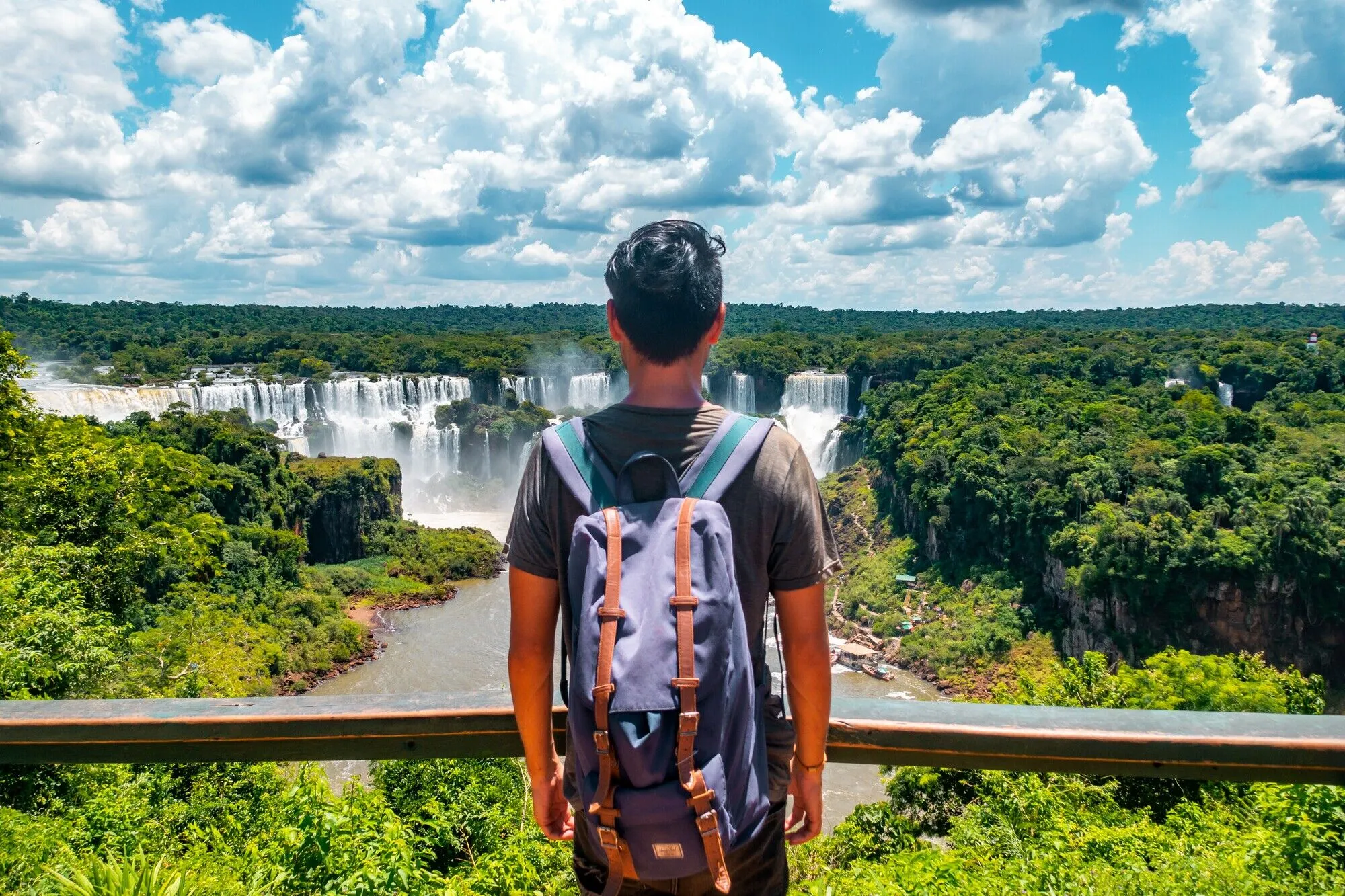



I thought I had seen the most epic waterfall in the world already when I was in Zambia, visiting Victoria Falls, and there was no way any waterfall could top that. However, when I arrived at Iguazu Falls, I was blown away by its sheer beauty.
While Victoria Falls has the title of the largest waterfall in the world based on its combined width, Iguazu Falls is in a league of its own, earning the title of the largest waterfall system in the world, with several massive waterfalls all concentrated in this one area.
To witness nature at its finest, seeing the Iguazu Falls for the first time is a must. No trip to South America would be complete without visiting the Iguazu Falls. To achieve this, here is a comprehensive backpacking guide that provides everything you need to know for visiting the falls from both the Argentinean and Brazilian sides.

Iguazu Falls Itinerary Map
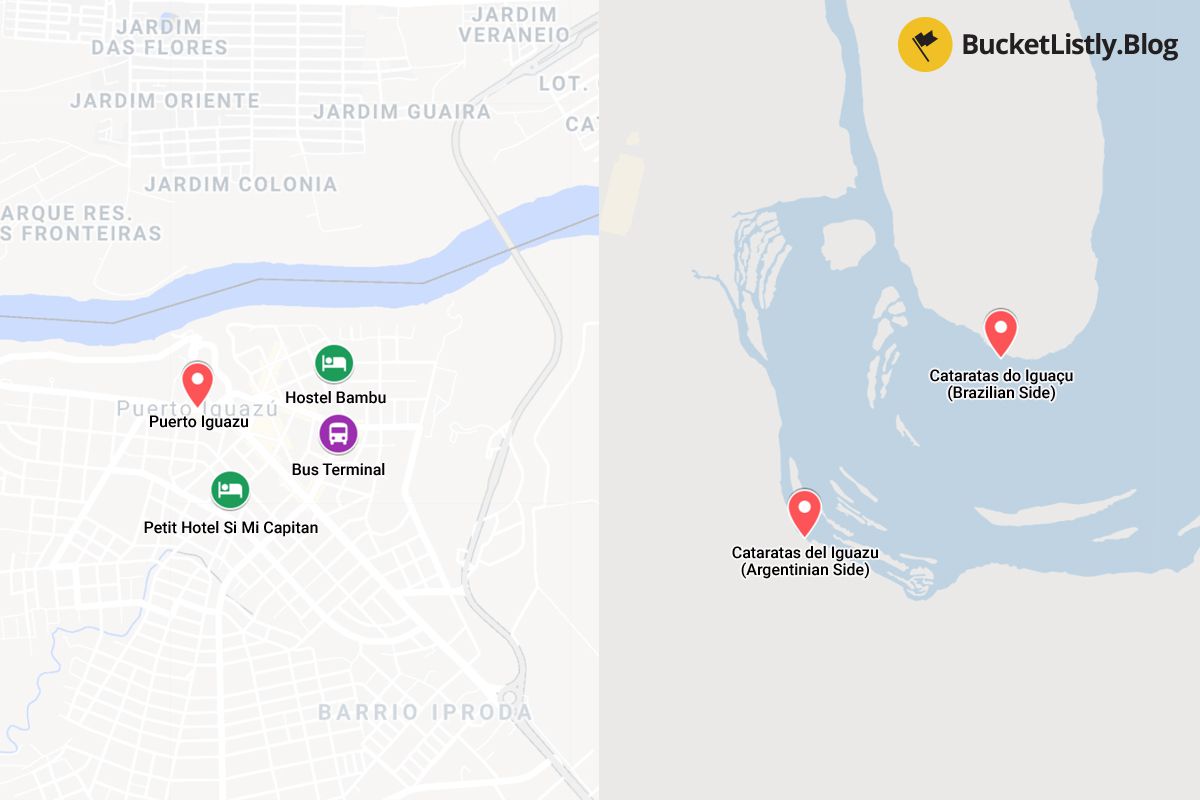
Quick Summary
| ☀️ Day 1: | Visit Cataratas del Iguazu |
|---|---|
| ☀️ Day 2: | Visit Cataratas do Iguaçu |
| ☀️ Day 3: | Relax or Go on a Helicopter Tour in Puerto Iguazu |
3 Days Iguazu Falls Itinerary
Day 1: Visit Cataratas del Iguazu (Argentinian Side)
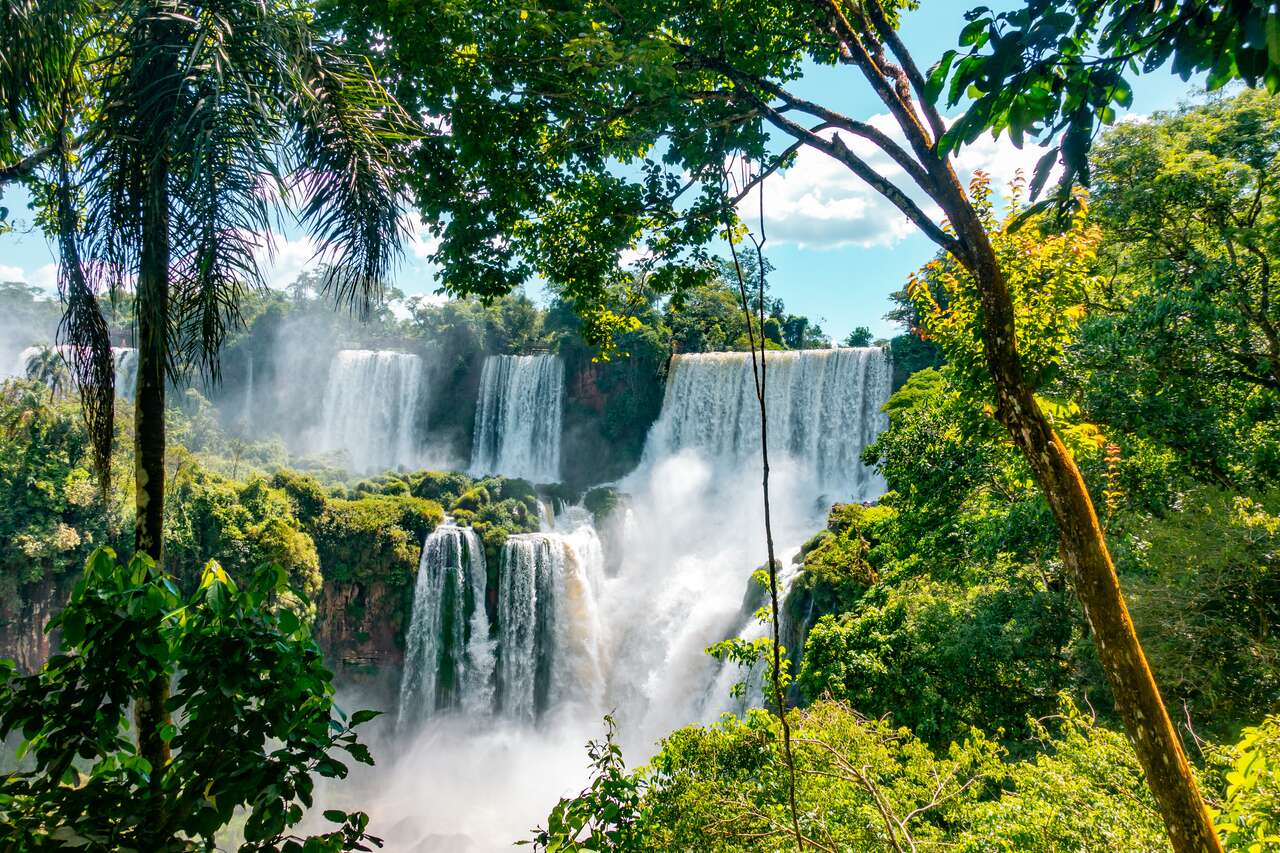
If you are wondering which side of the Iguazu Falls is better, Brazilian or Argentinian, I can tell you right now that the Argentinian side of the Iguazu Falls is the best one. And if you only have a day to explore, go with Argentina.

So on our first day at Iguazu Falls, start your day as early as you can (7 AM) and head over to the Puerto Iguazu bus terminal. Buy a ticket to Iguazu Falls from the many kiosks nearby, making sure that you are buying the one to "Cataratas del Iguazu" and not the one going to the Brazilian side (Foz do Iguaçu, etc.).

Depending on how crowded it is that morning, you might need to wait for 30 minutes or more to get on the bus. Once you are on the bus, it will take around 20 minutes to get to the Visitor's Center where you can buy the ticket and grab a free map for the park.
- Hostel Park Iguazu (Budget)
- Hotel Yvera Cataratas (Mid-Range) 👍 Top Pick
- O2 Hotel Iguazu (High-End)
- Full Day Iguassu Falls Both Sides - Brazil and Argentina (8 hours)
- Iguazu Falls Tour, Boat Ride, Train, Safari Truck (9 hours)
- Full-Day Tour to Iguazu Falls (10 hours)
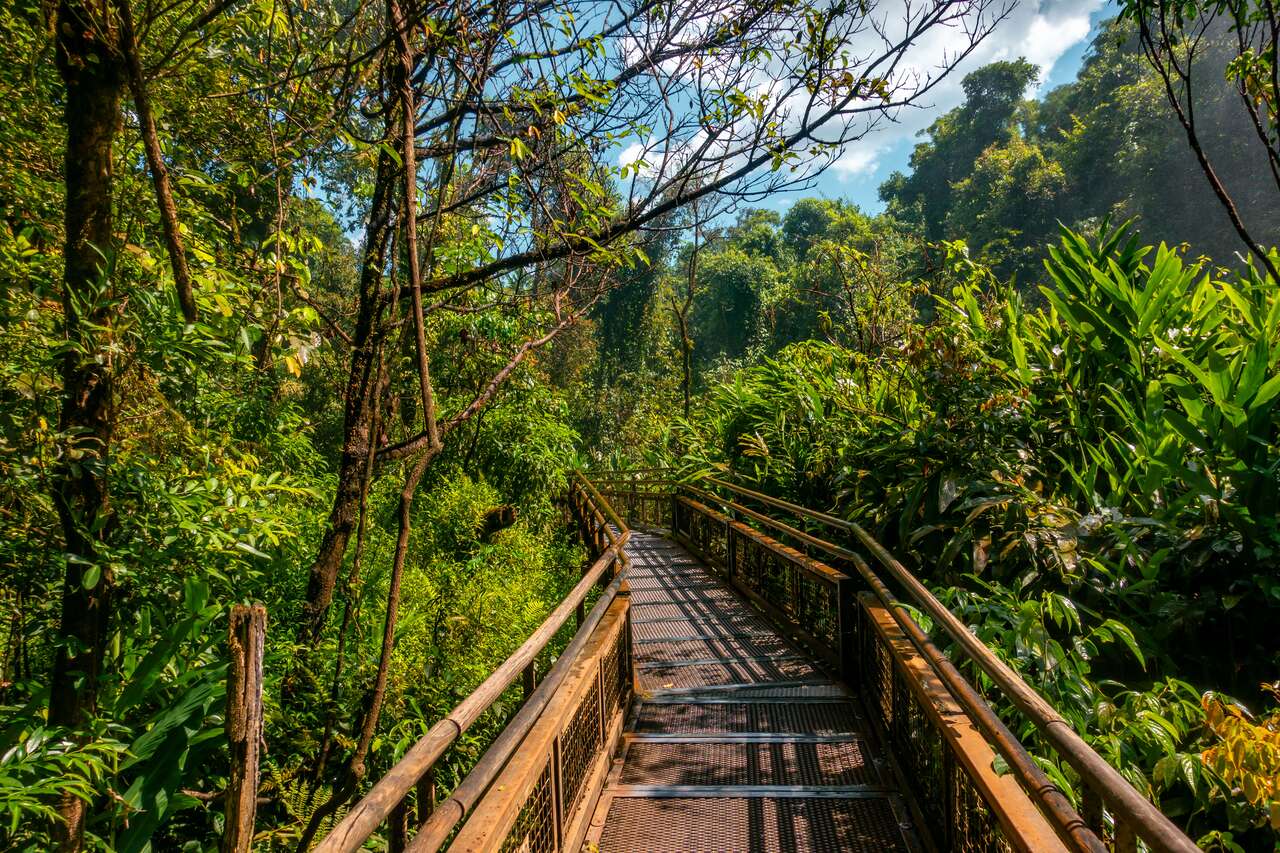
There are several trails you can walk, and since we have a full day here, I would recommend that you do them all.
Lower Circuit of Iguazu Falls

Right out of the gate, we go east following the Lower Circuit route (Circuito Inferior). As you walk down the stairs, you will get a glimpse of the Garganta del Diablo or Devil's Throat, a giant U-shaped cascade as powerful as its name that you will visit at the end.

The Lower Circuit (Circuito Inferior) is currently listed at 1.75 km. It follows a series of walkways and stairs below the upper level of the falls, giving you some of the closest views of the cascades on the Argentine side.

Halfway through the trail, you will find a long queue of people waiting to get on one of the boats that go along the river to the cascade. If you want to see the waterfall up close from the bottom, you can either buy a ticket and take this boat or do as I did and go on foot on the Brazilian side the next day.
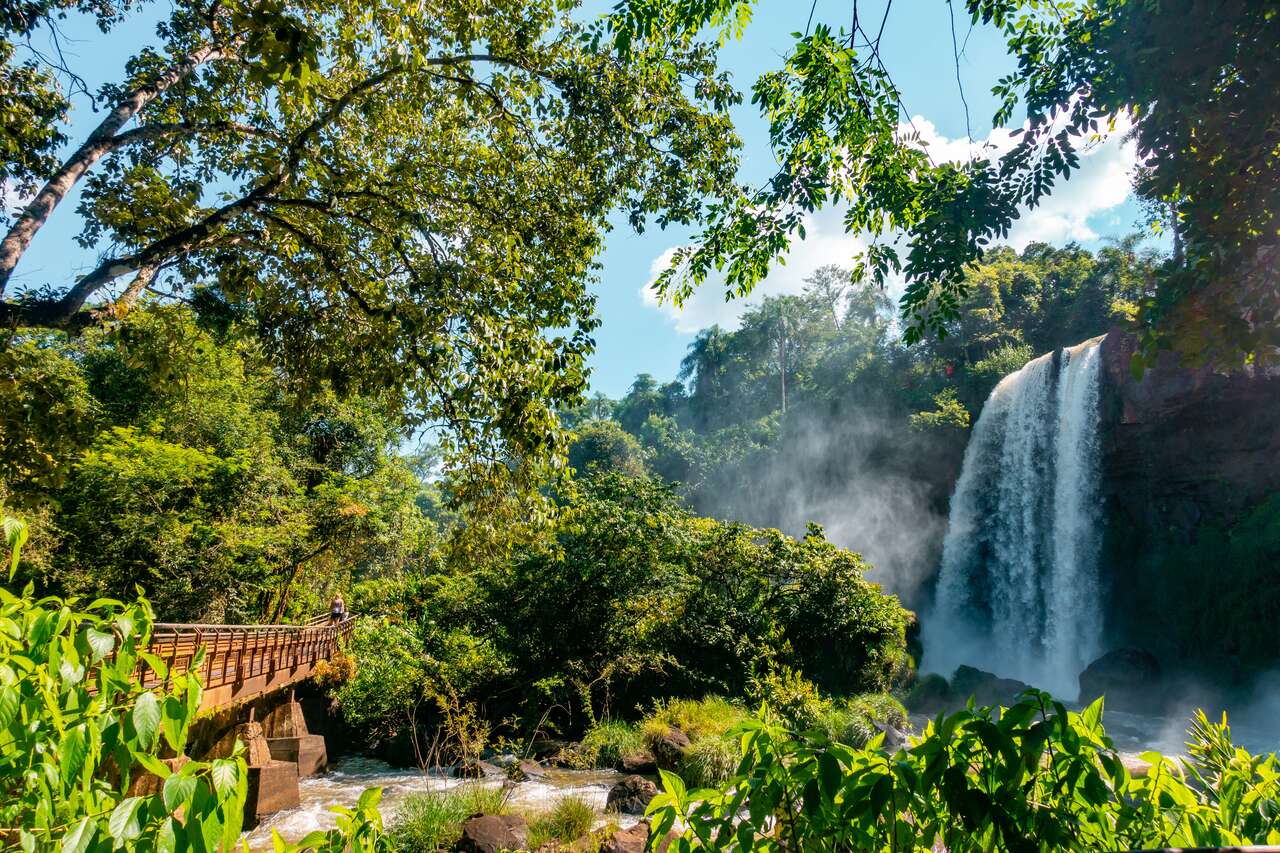
The trail should loop back north towards a lighthouse. Along the way, you will find a few other waterfalls amidst the rich, green tropical forest that are no less impressive than the main cascade.

Once you are at an intersection, instead of going back the same way, you can head west towards the lighthouse and start the next trail: the Upper Circuit.
Upper Circuit of Iguazu Falls

The Upper Circuit (Circuito Superior) is currently a 1.85-km one-way walking circuit that takes you across mostly flat walkways above the falls, providing some of the best panoramic views of the cascades from above.

At the lighthouse, continue west until reaching a T-intersection, then turn left on the walkway that goes above the river. Along the way, you might see some coatis out and about. Do not feed or pet them, as they will bite, and their sharp teeth are no joke.

Once you have reached the viewpoint, you can head back the same way to the T-intersection you previously passed. Instead of returning the way you came, continue toward Estación Cataratas, the ecological train station that connects this part of the park with the Devil's Throat area.
Devil's Throat Circuit
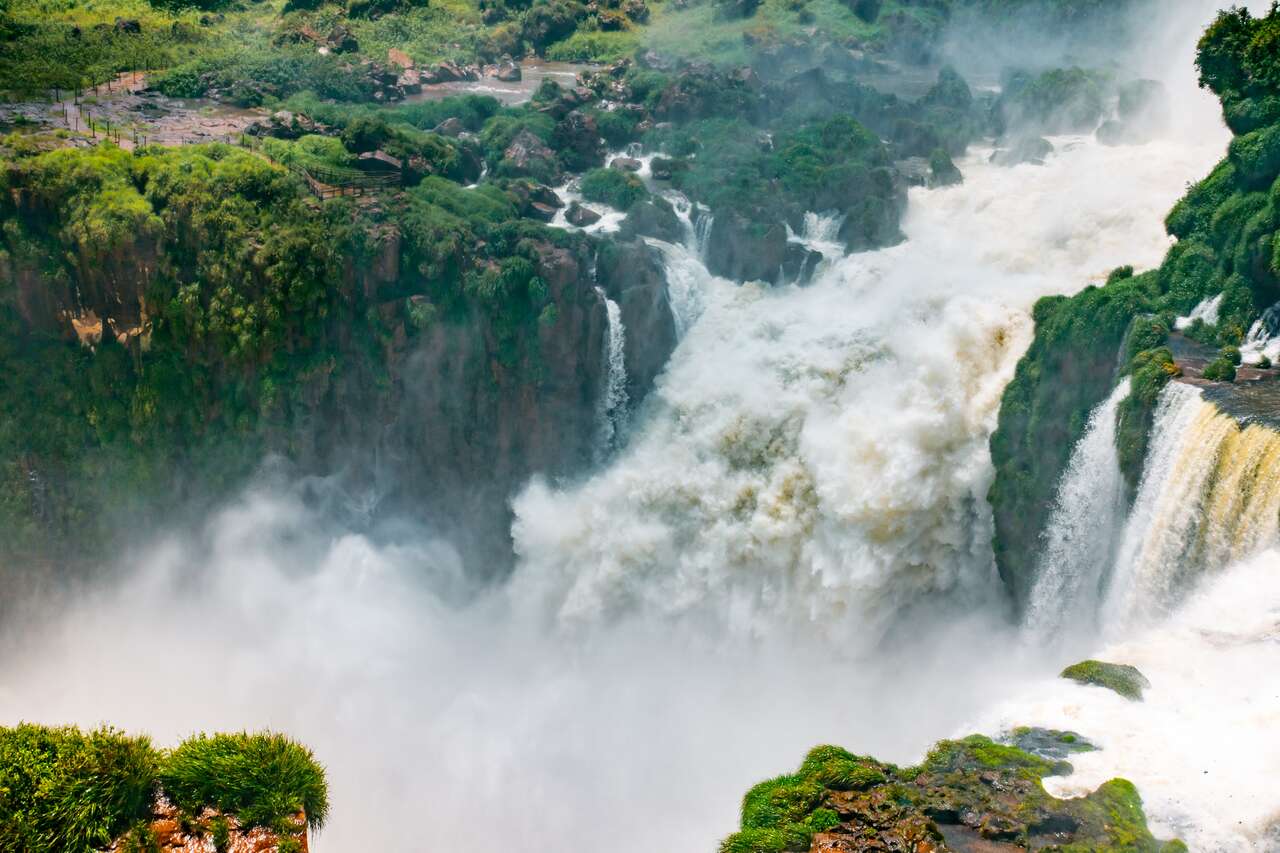
Important update for 2026: When I visited, I was able to follow the walkway all the way to the Devil's Throat viewpoint as described below. As of September 2026, however, the Argentine park has temporarily removed the Devil's Throat walkways as a preventive measure during the current high-water period, so this circuit is not accessible right now. The Upper and Lower Circuits remain open. Check the latest park status before your visit, as access to the Devil's Throat can change with river conditions.
When the Devil's Throat Circuit is open, the ecological train connects Estación Cataratas with Estación Garganta, from where the walkway continues toward the viewpoint. When I was there, I chose to walk alongside the railway instead, while the queue for the train was very long. The ecological train is now included with the national park entrance ticket, so there is no separate fare for the ride.
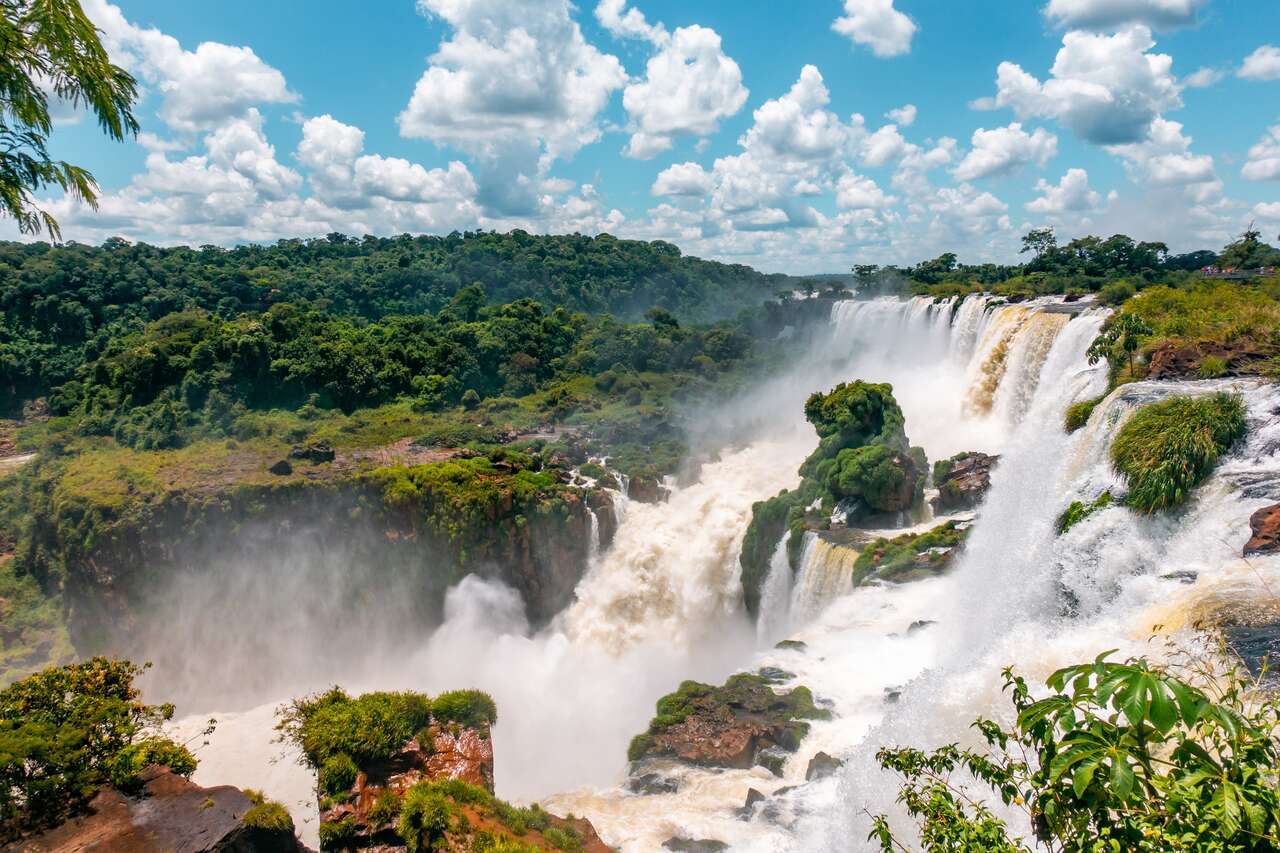
When I visited, it took me around 30-45 minutes to walk alongside the railway from Estación Cataratas to Estación Garganta. From there, the Devil's Throat walkway normally continues for about 1.1 km over the upper Iguazú River to the viewpoint. With the walkway currently unavailable as of September 2026, treat this section as a record of the route I followed and check the park's current access status before planning your day around it.
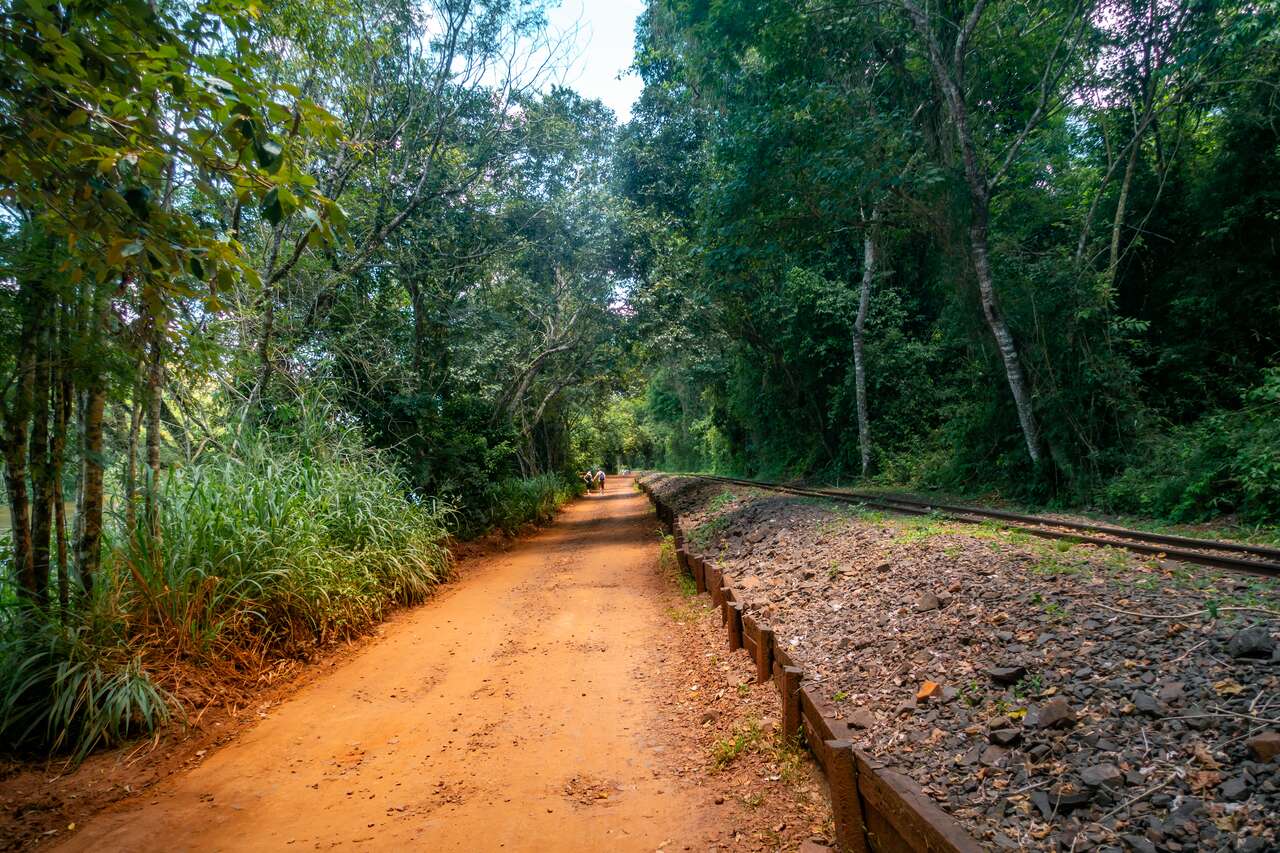
From the train station, continue on the over-water walkway to see the Devil's Throat in person. The amount of water that moves here is astounding; no wonder they call it the Devil's Throat.

One tip I have for you here, if you want to get a photo of the Devil's Throat without the people, is to visit the gated section where a commercial photographer is set up right on the walkway facing the Devil's Throat. They will take a photo of you, and you will have to pay them to obtain the photo.

Tell them that you want a photo, and once they have taken your photo with their cameras, ask them to take one with yours. Don't show up to get their photos. Now, you have a memorable photo of yourself and the falls without any people. Boom!

With all the walks you can do, it will probably take an entire day to see them all. Once you are done with the Argentinean side, it's time to explore what the Brazilian side has to offer.
Day 2: Visit Cataratas do Iguaçu (Brazilian Side)

Even though I said that the Argentinean side is better than the Brazilian side, there are still places the Brazilian side can offer that the Argentinean side cannot, such as an up-close experience with the waterfall.

The next day, you can take a bus from Puerto Iguazú toward Brazil and cross the border to visit the Brazilian side. Allow extra time for immigration, as the total journey can vary considerably depending on the queue. The Brazilian park now sells its regular admission tickets online with a reserved entry time, so I recommend booking before you go rather than relying on the old ticket machines I used during my trip. Once inside, the park ticket includes the panoramic bus between the Visitor Center and the Trilha das Cataratas.

There are several rest areas you can drop by, but the one that is right by the waterfall is the Trilha das Cataratas or the end of the line. I would recommend that you get off at Trilha das Cataratas and walk to the end.
Walk from Trilha das Cataratas to the Base of Devil's Throat
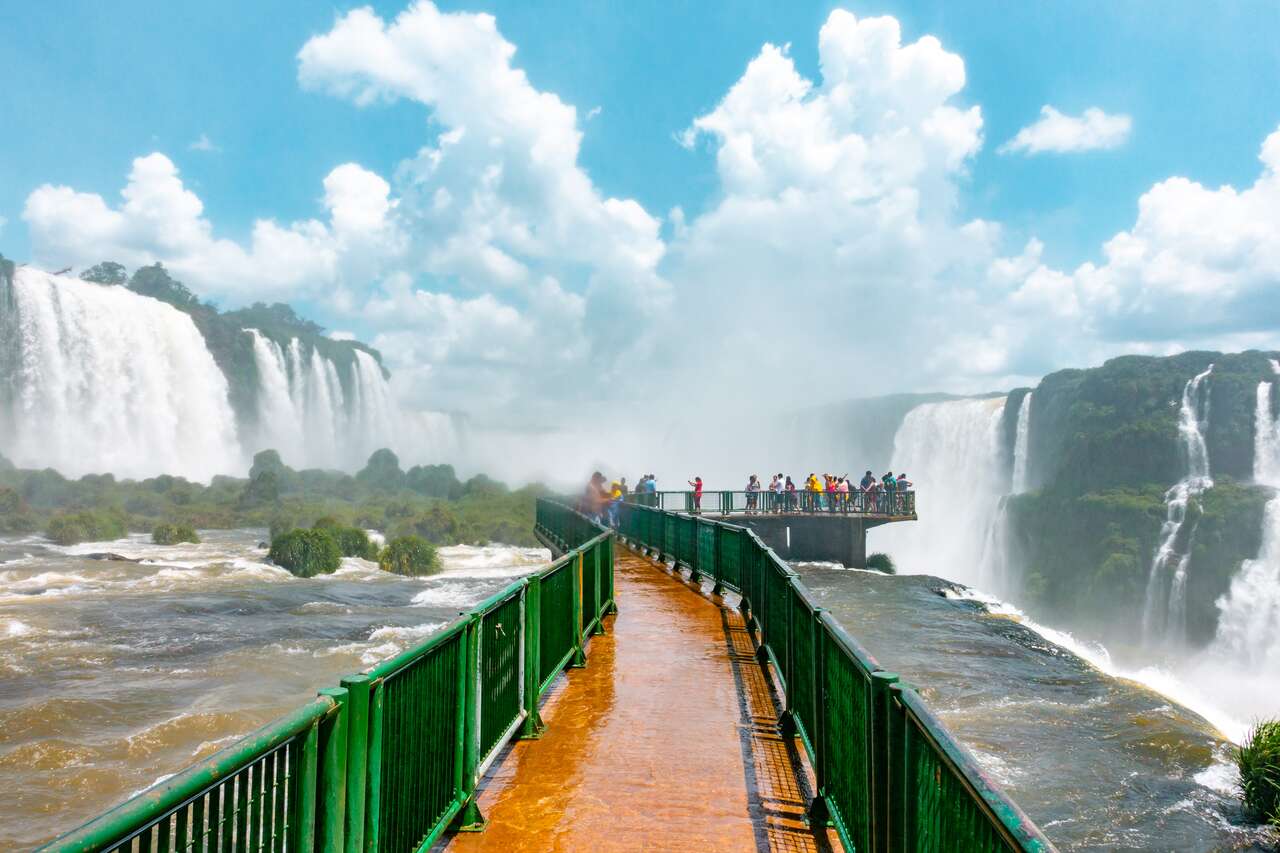
From the Trilha das Cataratas, you will get a glimpse of the cascade from the other side of the river. The view from here definitely has a more epic feel than on the Argentinian side.

On the Brazilian side, an elevated walkway has been built directly onto the river, which extends almost to the edge of the cascade. Prepare to get soaked as you will be walking near the Santa Maria waterfall, and the amount of water the waterfall creates when it splashes down gives a feeling as if it is raining.
Go up the Espaco Naipi (Naipi Space)

After you are done, you can walk up to the Espaço Naipi viewpoint to get the whole perspective of Iguazu Falls and the architectural wonder that is the walkway they have built.

From Espaço Naipi, you will also be able to experience the powerful Santa Maria Waterfall up close, from a different perspective, with three levels of viewing decks. From here, you can capture a beautiful panoramic view of the Brazilian side of the Iguazu Falls.
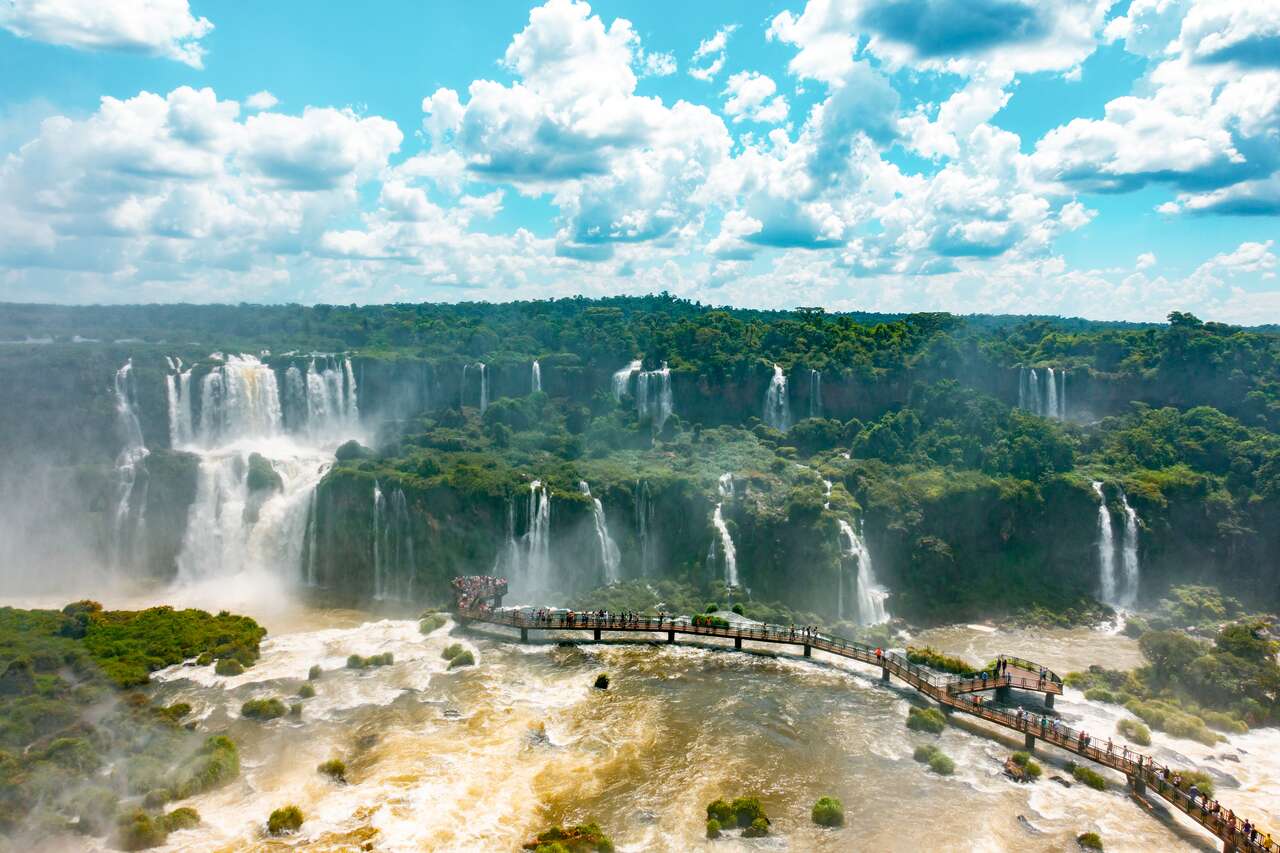
Once that is done, you can either spend some time exploring other bus stops (every bus stop has an attraction for you to kill time in the park) or take the bus back to the entrance and wait for the bus to return to Puerto Iguazu in Argentina.
Day 3: Relax or Go on a Helicopter Tour in Puerto Iguazu
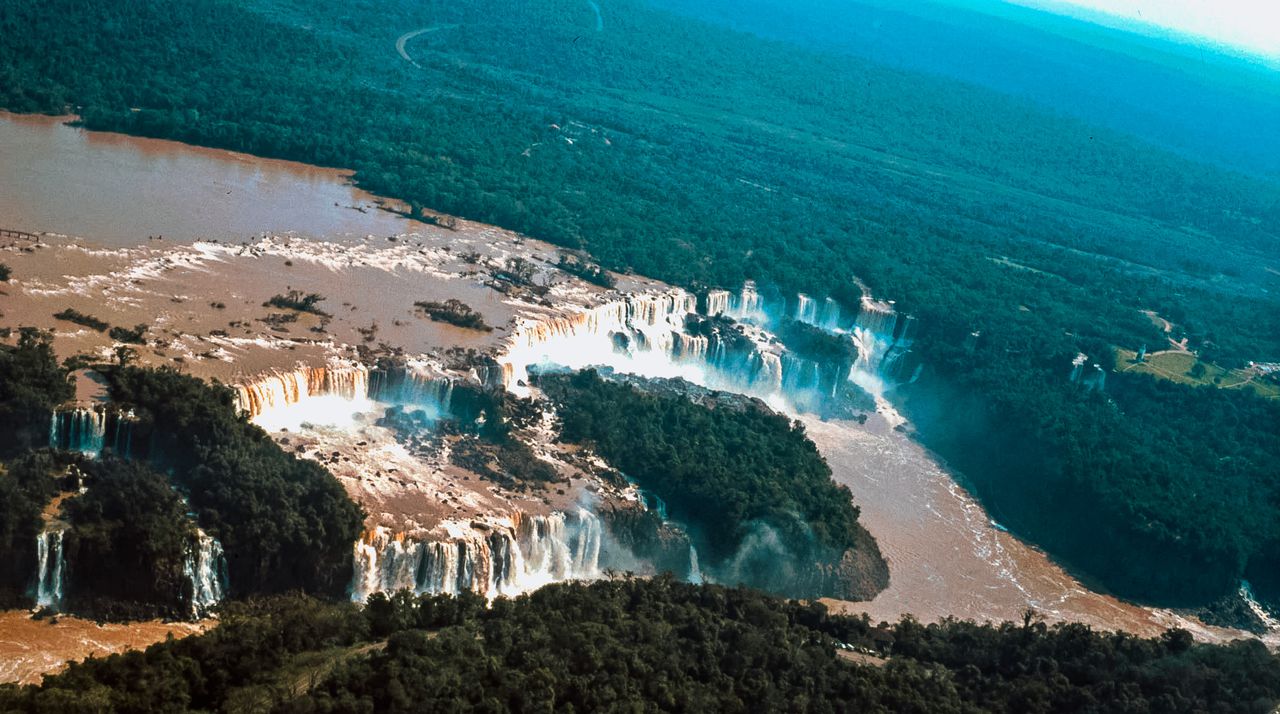
Photos by Qwesy Qwesy
On your last day in Puerto Iguazu, you can either relax in one of the many hotels equipped with a pool, as the humidity is probably getting to you by this point, or go on an epic helicopter tour to experience the Iguazu Falls from above.
For a 10-minute ride, it's approximately $275 USD per person. It may be expensive, but there is no better way to truly grasp the scale of Iguazu Falls than by looking at it from an aerial vantage point.
Looking for a helicopter tour from Puerto Iguazu? Take a helicopter ride over the Iguazu Falls tour.

Argentina Video
Where to Stay in Iguazu Falls?
Let's be real, the Argentinean side of Iguazu Falls is better than either Paraguay's or the Brazilian side, so I would recommend staying on the Argentinean side instead. Here are great recommendations for where to stay near Iguazu Falls on the Argentinean side:



When to Visit Iguazu Falls?
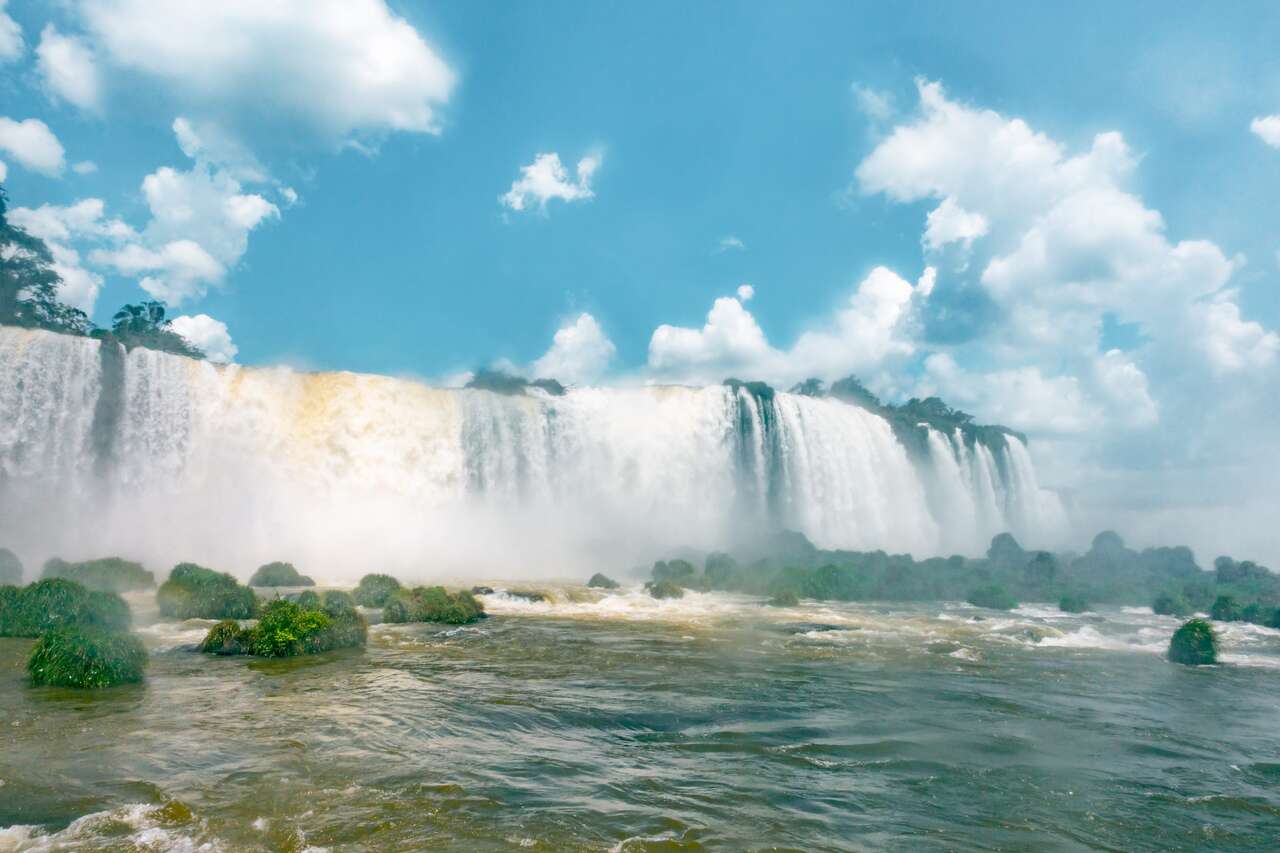
Visiting during February and March is recommended, with the water level still quite high and the sky clear. Be warned that it will be humid during this time, but you will cool off quickly from the spray of the waterfall when you are face-to-face with the falls.
How to Get to Iguazu Falls?

First, you will have to get yourself to Buenos Aires. There are several airlines that fly to Buenos Aires, such as American, United, and LATAM if you are coming from the US, and Turkish, Air France, or Lufthansa Airlines if you are coming from Europe or Asia.
The best way to find the cheapest flight is to use a combination of Skyscanner and Expedia to get the latest and cheapest deals that fit your itinerary.
The fastest way to get to Iguazu Falls from Buenos Aires is by flying into Cataratas del Iguazú International Airport via either Aerolineas Argentinas or LATAM Airlines Group.
You can also take an overnight bus to Puerto Iguazu from Buenos Aires if you want to save costs. There are several bus companies to choose from, such as Expreso Singer, Crucero del Norte, and Tiger Iguazu. Buses leave in the afternoon (1 PM - 3 PM) and often arrive in the morning. It's an 18-hour bus ride and should cost you around 70 USD per trip.
If you are taking the bus, you can browse through and buy the tickets online from BusBud.com.
Transportation Around Iguazu Falls
Puerto Iguazú is about 18-20 km from the entrance to Parque Nacional Iguazú. Río Uruguay continues to operate the regular bus service between town and the falls, with departures roughly every 20 minutes during the day. You can buy your ticket at the terminal or when boarding. As of July 2026, the tourist fare between Puerto Iguazú and Cataratas is 12,000 ARS per trip.
To get to the Brazilian side from Puerto Iguazú, you can still use international buses such as Crucero del Norte or Rio Uruguay. Rio Uruguay currently runs the international connection roughly hourly during the day, and recent 2026 fares are around 10-15 BRL per trip. Everyone has to complete border formalities, so bring your passport or other valid travel document and allow extra time for immigration. Keep your bus ticket when you get off at the border and confirm the onward procedure with the driver.
Iguazu Falls Entrance Tickets
For the Argentine side, the general entrance ticket to Parque Nacional Iguazú is 60,000 ARS per person as of June 2026. The ticket includes access to the Sendero Verde, ecological train, Upper Circuit, Lower Circuit and, whenever conditions allow it to operate, the Devil's Throat Circuit. Tickets can be purchased online or at the park, and the official park currently accepts cash as well as Visa and Mastercard credit/debit cards.
For the Brazilian side, admission for foreign visitors from outside the listed MERCOSUR countries currently starts at 131 BRL per person. Tickets are sold online through the Iguazu Official Website with a reserved date and entry time. The regular ticket includes the internal panoramic bus, Trilha das Cataratas, elevators, walkway, and viewpoints.
Tips: I recommend buying both park tickets directly through their official channels before your visit whenever possible. The Argentine park is currently open daily from 8 AM to 6 PM, with entry allowed until 4 PM, while the Brazilian park currently opens from 9 AM to 4 PM Monday-Friday and 8:30 AM to 4 PM on weekends. Hours and individual walkways can change because of river conditions, so check again shortly before visiting.
Daily Budget


Traveling here will typically cost you more than visiting most other countries. You can expect to spend around $45 - $65 USD per day per person, including food, accommodation, and transportation.
Please keep in mind that these are suggested daily budgets based on my own style of travel, which leans more towards the budget side of things. If you aim to stick to this budget, anticipate sleeping in dormitories, dining out only occasionally, and being comfortable with the cheapest and most convenient modes of transportation, which often involve a considerable amount of walking.
Which tourist SIM card is best for Argentina?
Update: If your phone supports eSIM, I highly recommend checking out Airalo, a global eSIM marketplace. It allows you to stay connected affordably while traveling in Iguazu Falls, Argentina without having to switch out your physical SIM card.
Gone are the days when you needed to scramble to find a local SIM card at an airport upon arrival. You can purchase an eSIM before your arrival, and you'll be good to go. If your phone doesn't support eSIM, here is how you can get a local SIM card in Iguazu Falls, Argentina:
Wifi is widely available around Puerto Iguazú, but having mobile data is useful for checking park updates, maps, and transport while you are out. You can pick up a prepaid SIM from one of Argentina's major mobile networks or use an eSIM if your phone supports it. If you are continuing south afterward, having mobile data is also useful when traveling around Patagonia.
Alternatively, if your phone supports eSIMs, you can set one up before arriving and have mobile data as soon as you land. You can browse through available eSIMs here.
Tips: To stay connected with people at home, be sure that you have a VPN, such as ProtonVPN, installed before traveling. It's FREE, and you can gain access to services that may be blocked in certain countries.
What to Pack for Iguazu Falls?
- Prepare Water and Lunch: If you want to avoid paying for an expensive lunch in the park, prepare your own lunch the day before. Also, be sure to carry enough water for the rest of the day, as Iguazu is very humid and you will be walking a lot. Some parts are not covered in shade, so stay hydrated! I always carry my 2-liter hydration pack, which I recommend so you don't have to stop to stay hydrated.
- Rain Cover for Your Bag: If you are carrying a daypack, make sure you have a rain cover with you, as you will get soaked every now and then by the spray from the waterfall, especially the one on the Brazilian side.
- Rain Jacket or Poncho: You will get wet. There's no avoiding it, so if you want to keep your clothes dry, be sure to bring a rain jacket with you for the trip. Here is a jacket I recommend for the trip: the beautiful orange Columbia outer-shell jacket.
- Waterproof Pack: For valuable items such as your phone, wallet, and passport (which you will need to cross the border), just in case the sprays get into your bag.
- Be careful with your camera: Most modern cameras are weatherproof to some extent, but the fine spray from the waterfall can mess up the electronics. So, be very careful when you want to take photos. Also, watch out for the wind as it might bring water from elsewhere to you.
Disclaimer: This post may contain affiliate links. See our disclosure policy.
First Published:
Last updated:



3 Comments
I have been told there are lots of butterflies around the falls, is there a good time to see them also?
Hey Colin,
I didn't see as many when I was there but maybe because it was in the afternoon and it was quite crowded for the butterflies. That said, after fewer tourist visits since COVID-19, they might be back and if you have the chance to visit sometime soon, you might see more of them along the walking trails. :)
Great article! Thanks for posting. Quick question, we are going soon and heard that you can't purchase tickets when you arrive at the falls on the Argentine side. Instead they have to be purchased online beforehand with a time slot, was this the case for you?
Thanks so much!