


The Gobi Desert is an immense, desolate region stretching from northern China into southern Mongolia. Its sheer vastness makes exploring the area and seeing all the incredible attractions quite challenging.
Visiting much of the land without joining a tour is nearly impossible. In this guide, you’ll find everything you need: how to pack for a Gobi trip, what to expect along the way, and all the must-see attractions. I can confidently say it will be one of the most unforgettable travel experiences of your life, so it’s essential to start planning the right way.
Mongolia Itinerary Map

Quick Summary
| ☀️ Day 1: | Ulaanbator |
|---|---|
| ☀️ Day 2: | Yol Valley |
| ☀️ Day 3: | Khongor Sand Dune |
| ☀️ Day 4: | Flaming Cliffs |
| ☀️ Day 5: | Saikhan Ruins |
| ☀️ Day 6: | Kharkorin |
| ☀️ Day 7: | Khogno Tarna National Park |
| ☀️ Day 8: | Terelj National Park |
Things to Know Before Planning a Trip to Mongolia
How to Pick a Tour Operator?
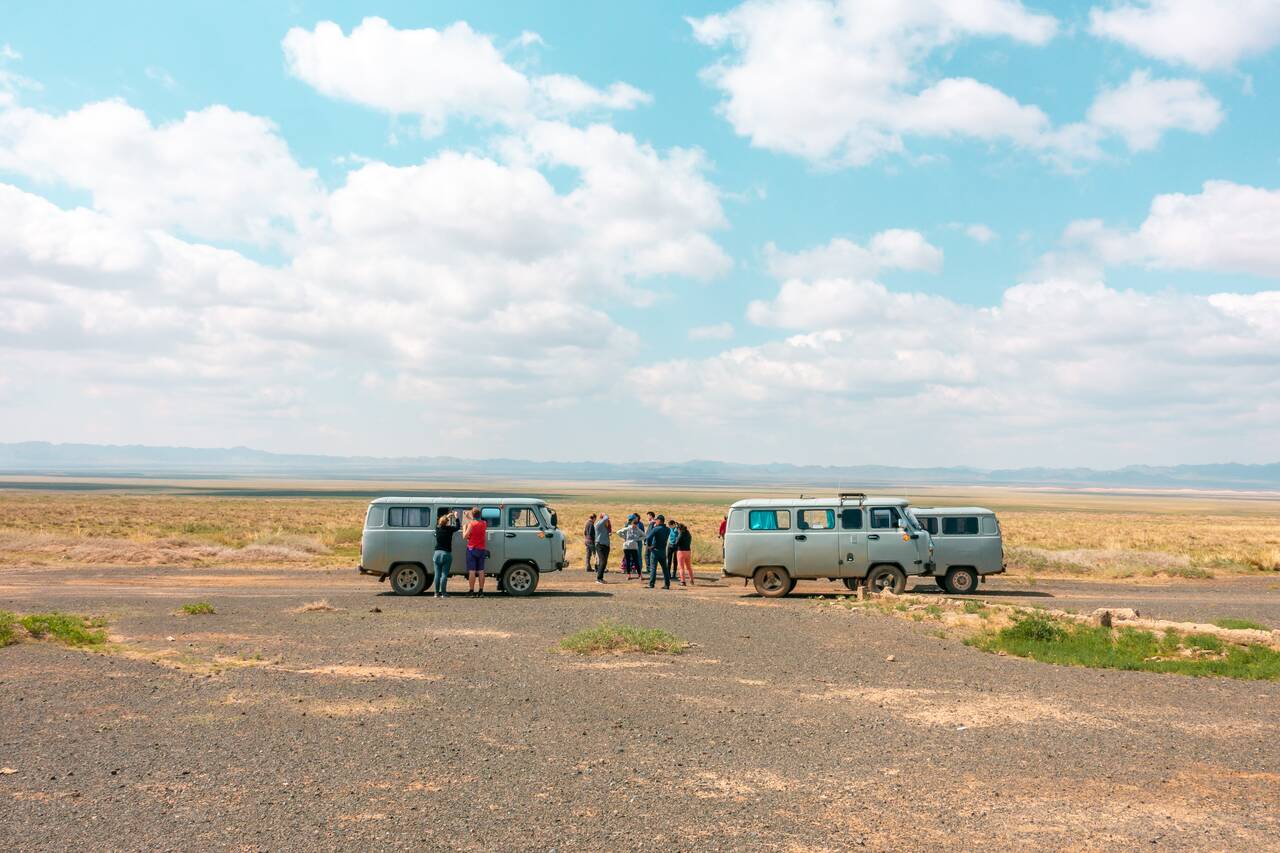
So, you want to start doing some research on the Gobi tour? If you are traveling on a budget, it is still worth contacting several Ulaanbaatar-based operators directly and comparing their group departures with tours sold through international booking platforms. Booking after you arrive can sometimes turn up a last-minute space, but I would not rely on that during the busy summer season. If your dates are fixed, contact operators ahead of time and compare exactly what is included, especially accommodation, meals, park fees, camel or horse rides, and the size of the group.
Since I was on a budget, I went with the tour organized by Sun Path Guesthouse. They were extremely reliable and professional. The guide was well-informed and spoke excellent English, while all the vehicles and gear they provided were reliable and sufficient to make my life quite comfortable.
Included in the price were unlimited drinking water, three meals per day, transportation, unlimited snacks, and sleeping bags.
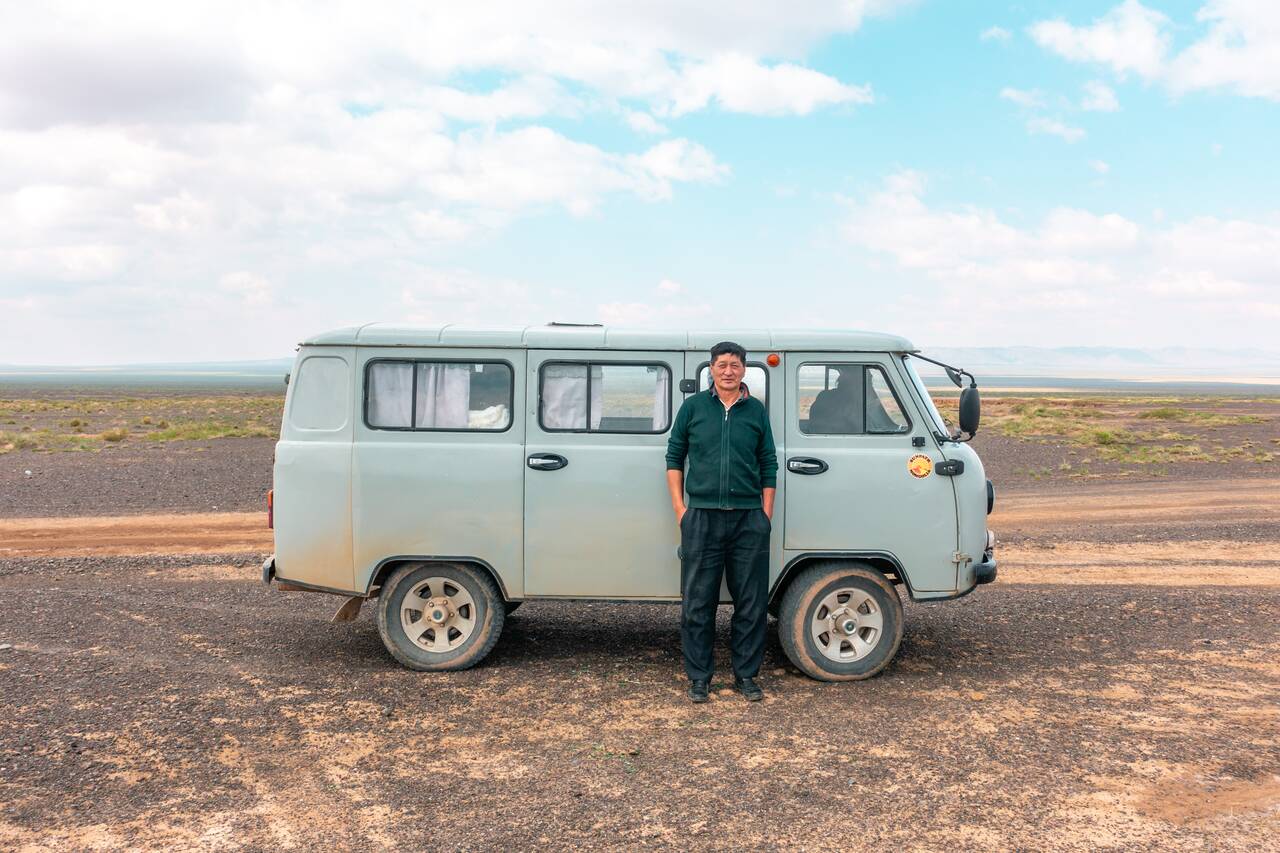
Doljmaa, the owner of the guesthouse, speaks perfect English and can provide you with any information you need about Mongolia. I booked the tour with her the day before, and she was able to put me on one of the ongoing tours the next day by having her husband drive me all the way to the meetup point, which was 4 hours away from Ulaanbaatar. I have no idea how she manages all the logistical nightmares while catering to all the customers' needs, but she is really good at it, and she will find a way for you to have the best trip of your life in Mongolia.
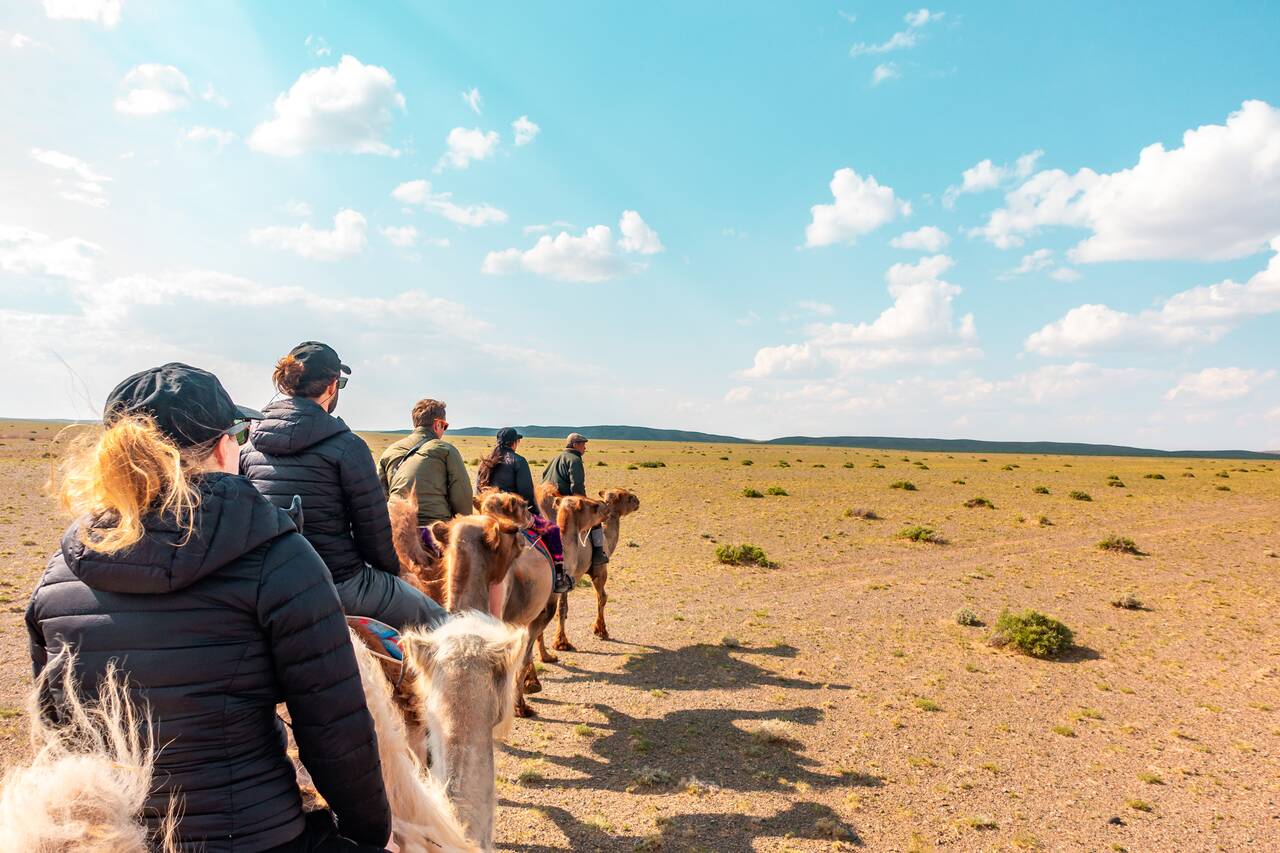
For a 7-day Gobi Desert tour visiting Yol Valley, Khongor Sand Dune, Flaming Cliffs, Bayanzag, horseback riding, staying with nomad families, the Terelj National Park, and visiting the Genghis Khan statue, I paid 420 USD.
Sunpath still operates Gobi tours, including a 7-day Gobi & Terelj itinerary, but they no longer publish a fixed price for tours on their website. Recent travelers continue to report group tours costing a little over 100 USD per day, all-inclusive, so expect to pay around 700 USD for a 7-day trip. Contact Sunpath directly for the current price for your dates, group size, and exact itinerary before booking.
If you want to email Doljmaa and ask her something, try going to her website or emailing her directly at info@sunpath-mongolia.com.
If you do not mind the price and are looking for a great and comfortable experience exploring the Gobi desert, I highly recommend you browse through some of the Gobi desert listings here.
If you prefer booking online beforehand, here are some other recommended Gobi Desert tours that you can do with different itineraries to fit your needs.
- 4-Day Mongolia Gobi Desert Tour (4 days)
- 4-Day Gobi Desert Dream Tour
- 8 Days Tour: Gobi Desert and Kharkhorin (8 Days)
- Nomadic Trails (13 days)
- 15-day Combination of Gobi and Central Mongolia (15 Days)
- Nomadic Trails (13 days)
What Can You Expect From the Tour?:
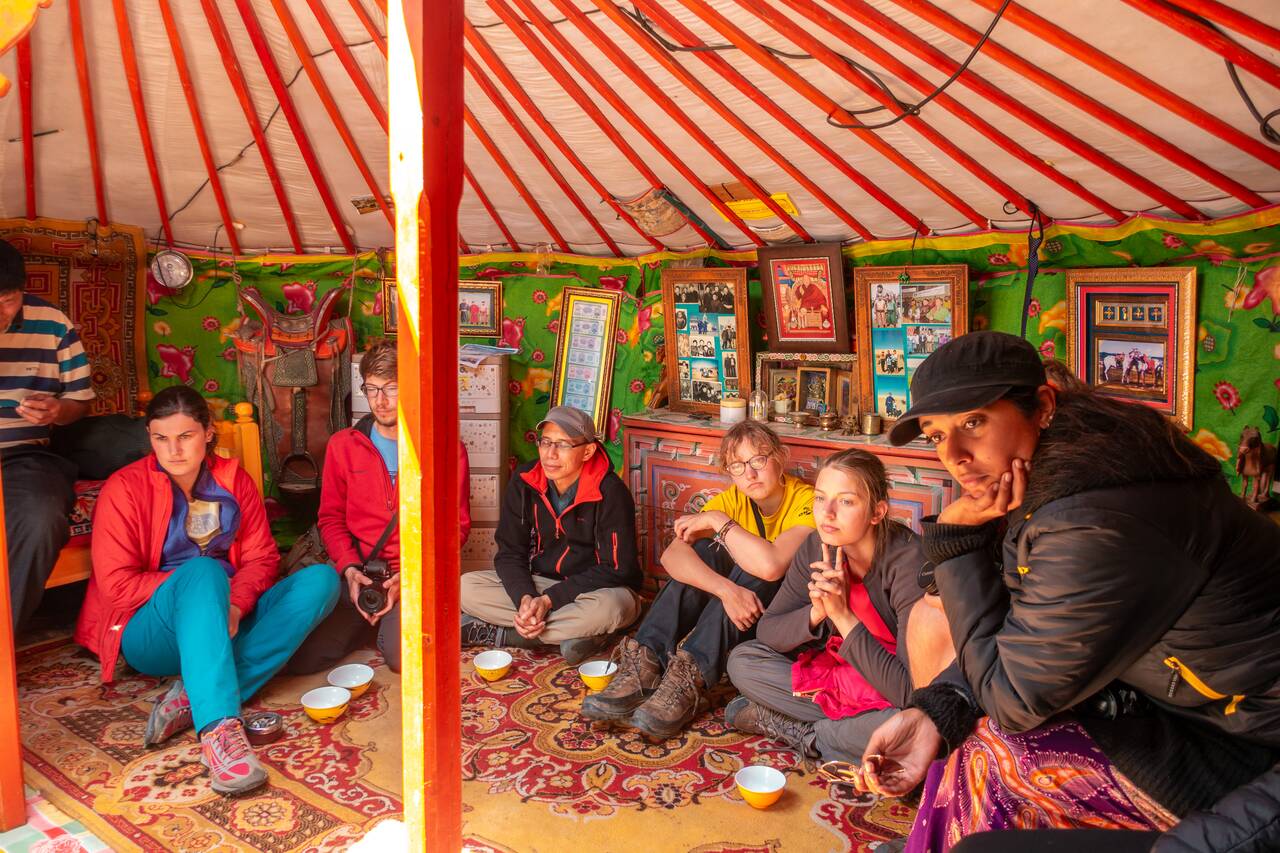
- You will be staying in a ger with the nomad families every day in the middle of nowhere, so don't expect to have access to power outlets, showers, and the internet.
- The tour I took stopped at a proper restaurant with power outlets every 2-3 days, so you can also charge your stuff there. However, don't rely on them too much.
- Seven days in the desert, we only had access to a warm shower once, so don't expect your hygiene to be at its best all the time. Plus, no one on the tour will care at that point.
One Week Itinerary in Mongolia
Day 1: Ulaanbator (1 night)
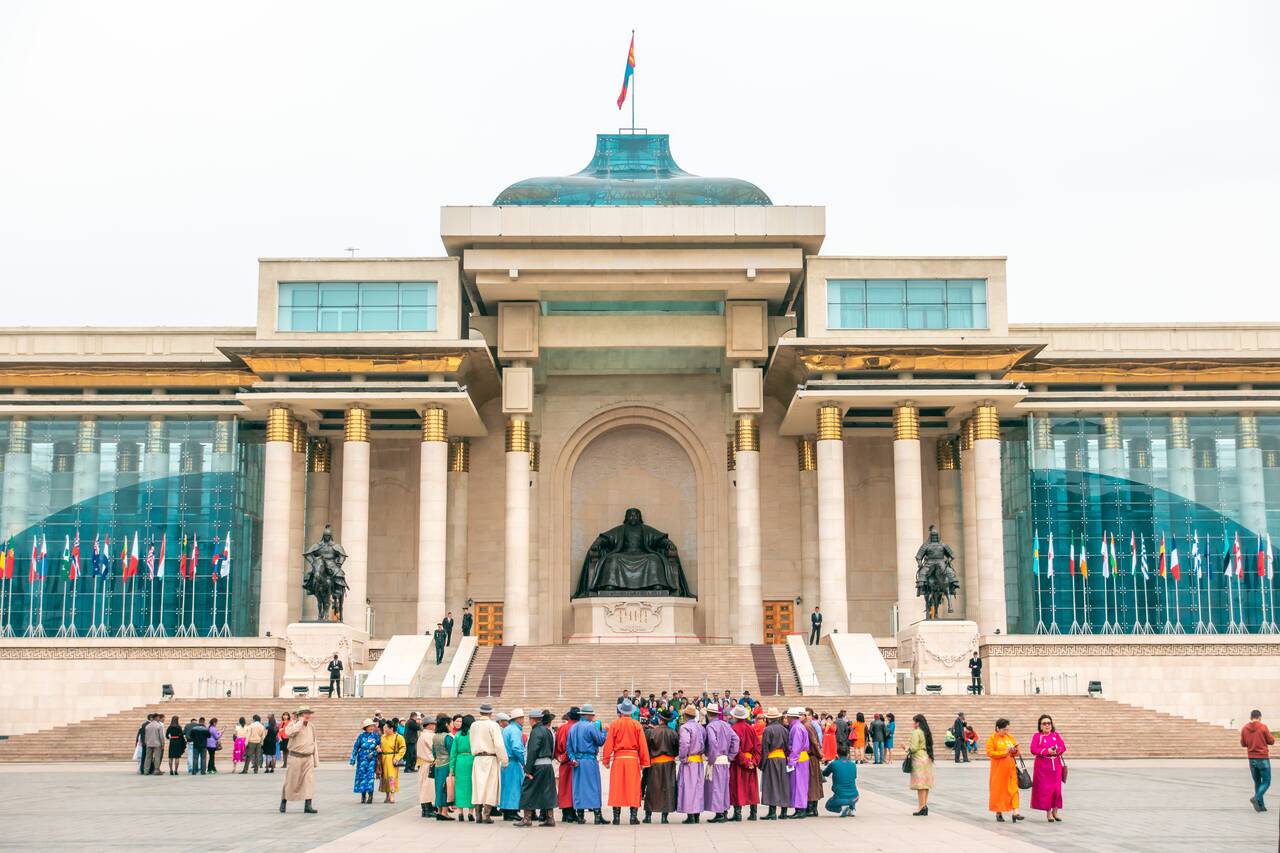
Ulaanbaatar is a great city to learn about modern Mongolian culture. First off, go check out Sukhbaatar Square and all the museums around the area to learn more about the country. On a Sunday evening, you may be able to see concerts or cultural events happening in the square. I was there when they held a breakdance battle. Who would have thought I would be seeing that in Mongolia!
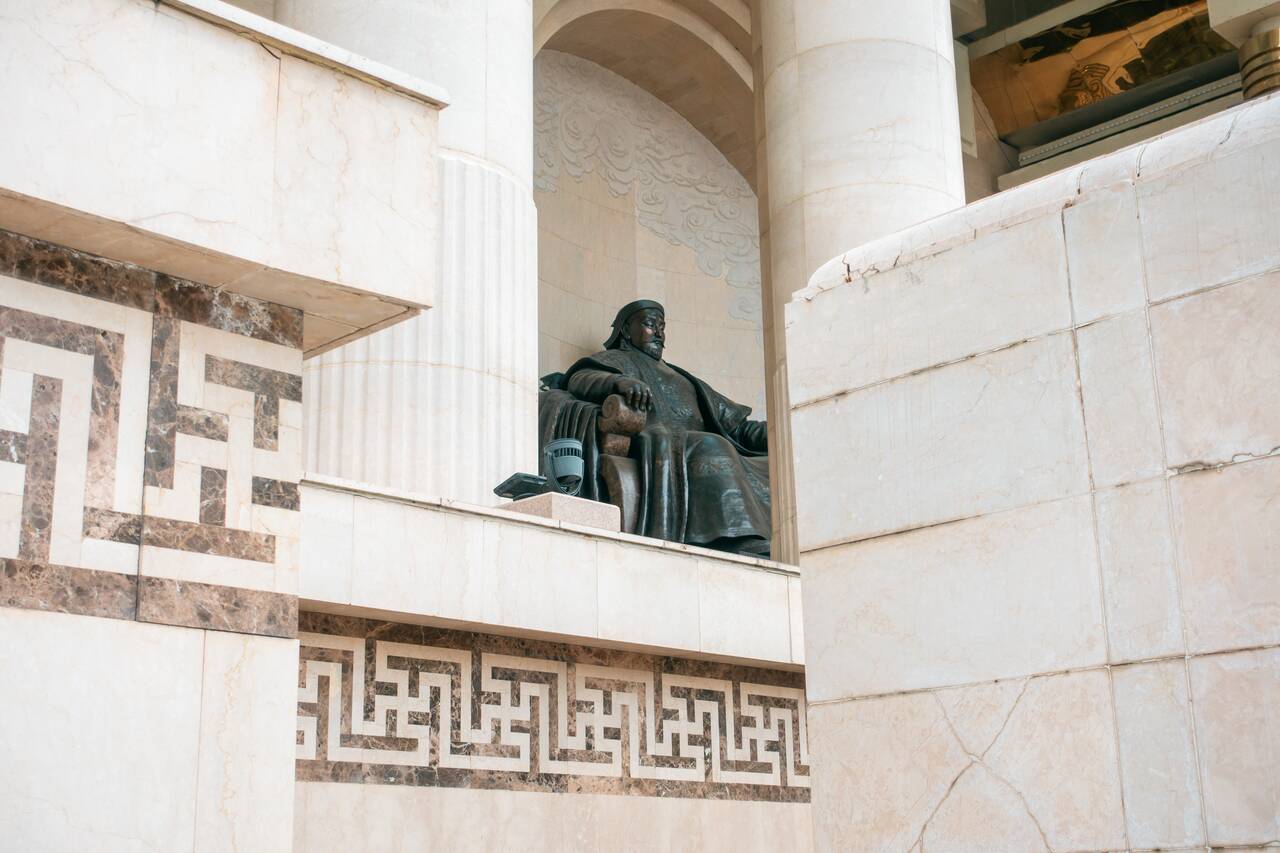
Go to the National Museum of Mongolia to learn more about the country’s history and traditional life. It is still open and, in summer, currently operates daily from 9 AM to 9 PM, with adult admission at 20,000 MNT. If you have more time, the newer Chinggis Khaan National Museum nearby is also excellent for diving deeper into the history of the Mongol Empire.
Once you are done with the museums, the easiest way to get around Ulaanbaatar is to use a registered taxi or a ride-hailing app such as UBCab, which lets you set the pickup point and request a driver through the app. Informal taxis still exist, but I would no longer recommend flagging down random private cars as the default option for travelers.
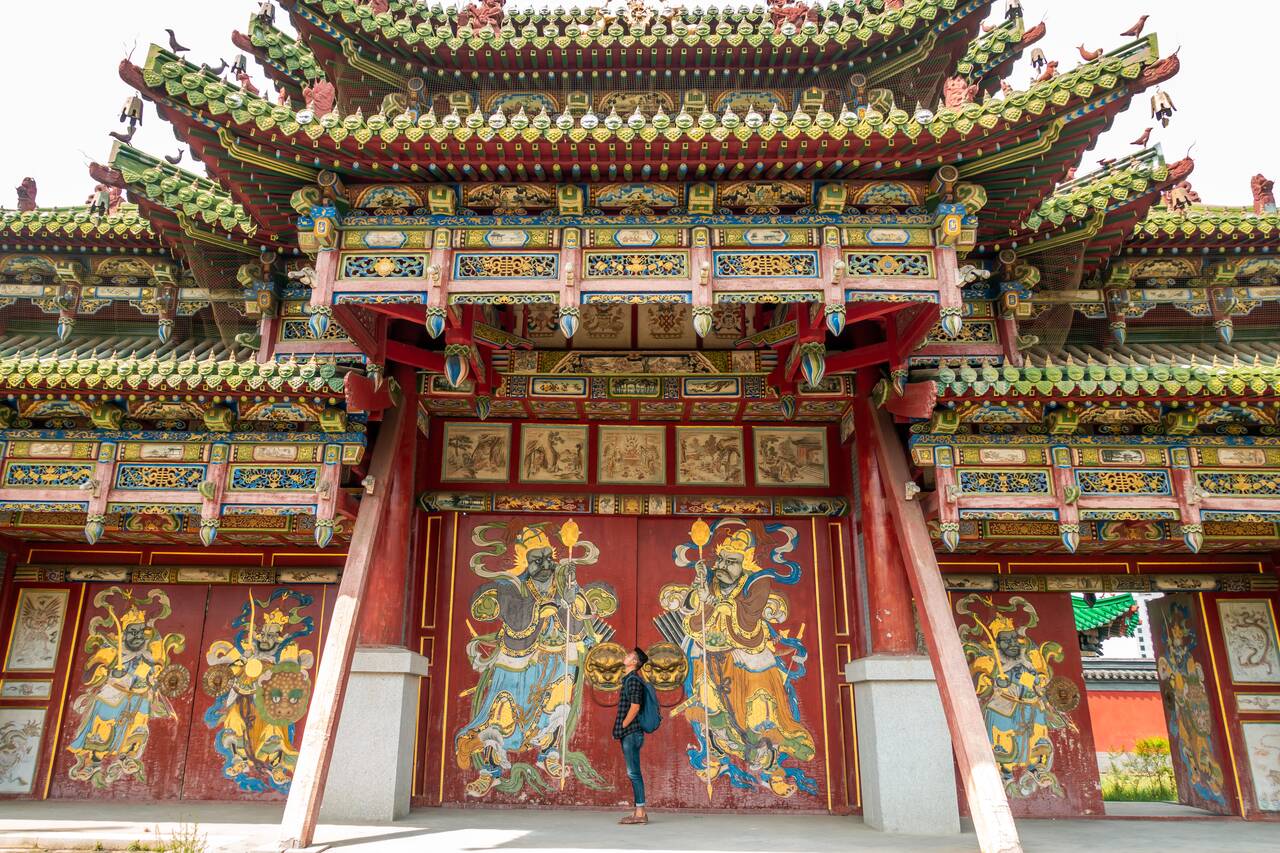
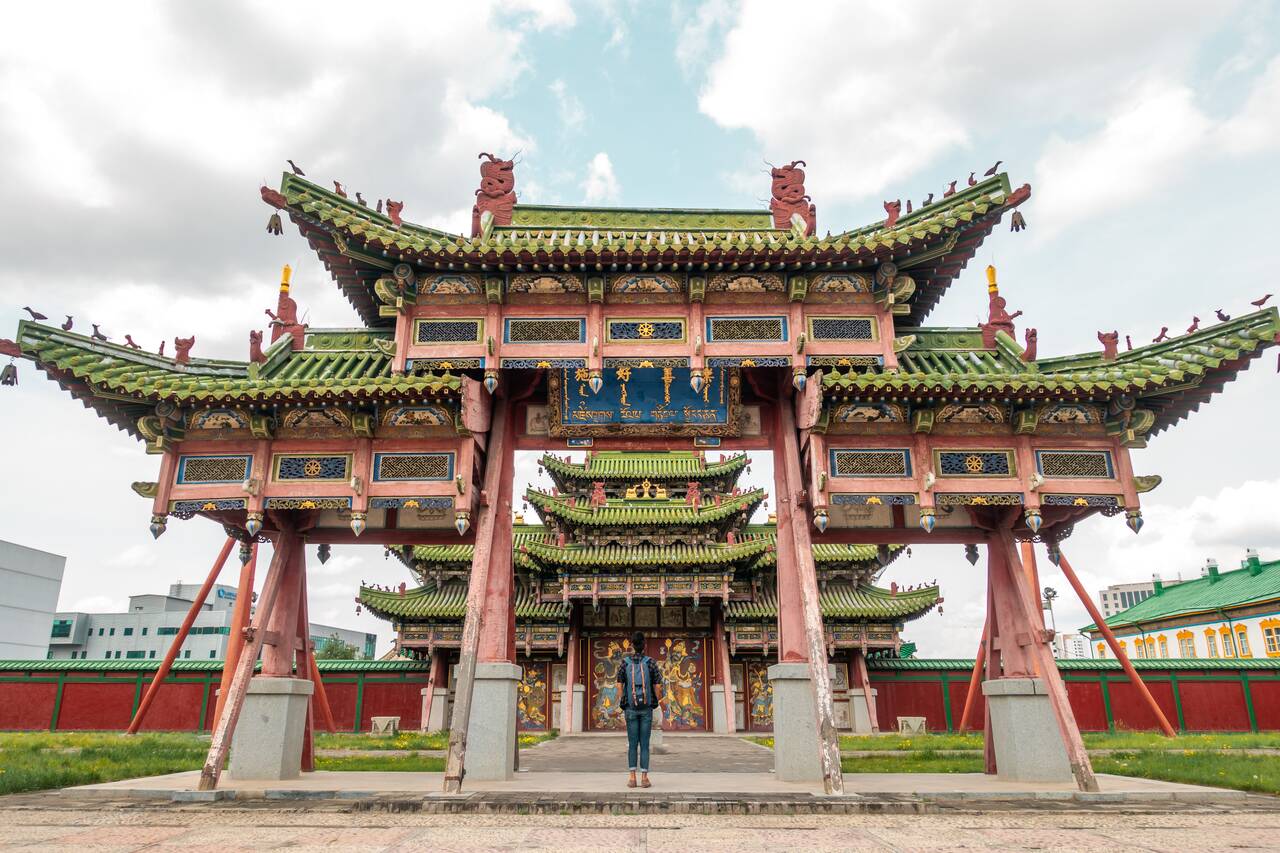
After you get a cab, head over to the Winter Palace of Bogd Khan in the south to get a glimpse of what the Tibetan religion is like.
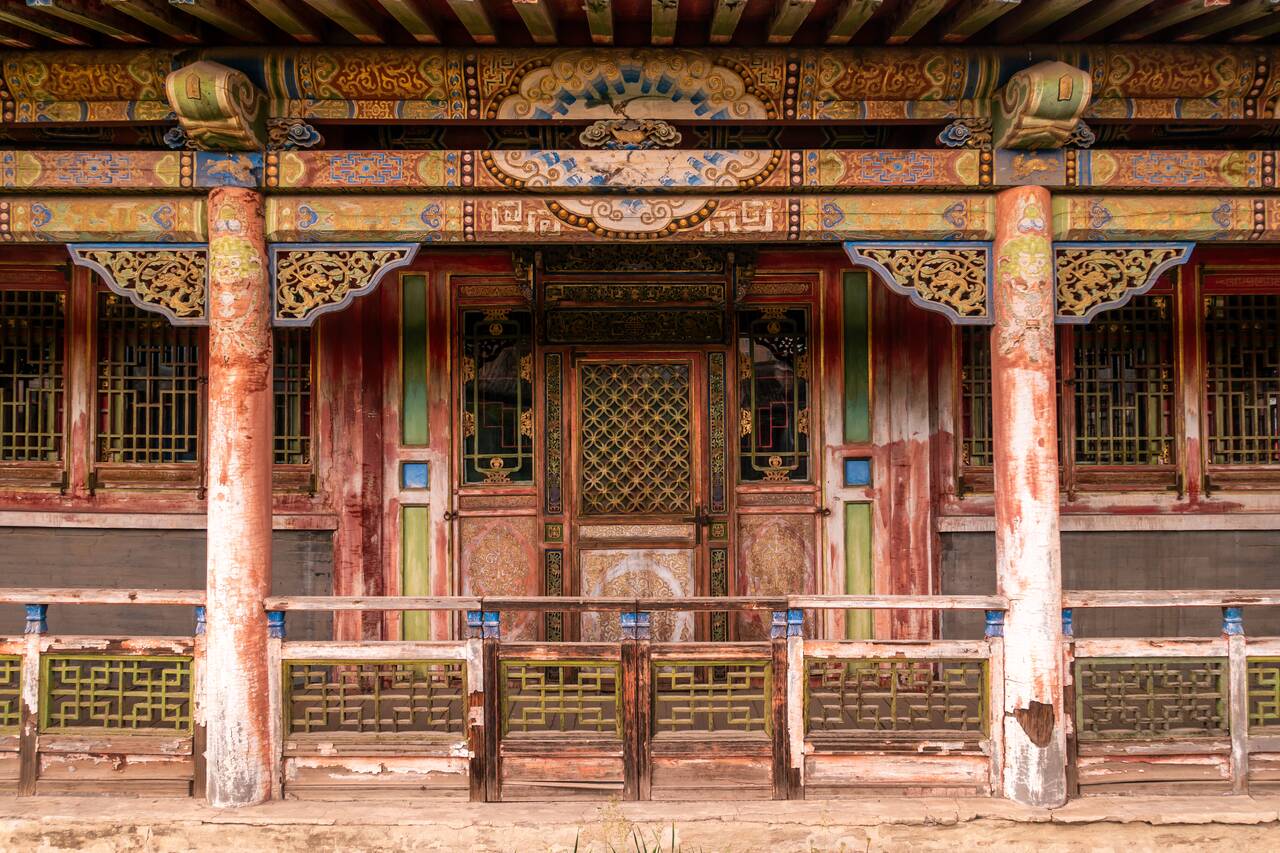
After you have walked around the palace, grab another taxi outside and head south to the Zaisan Monument. Then, climb to the top.
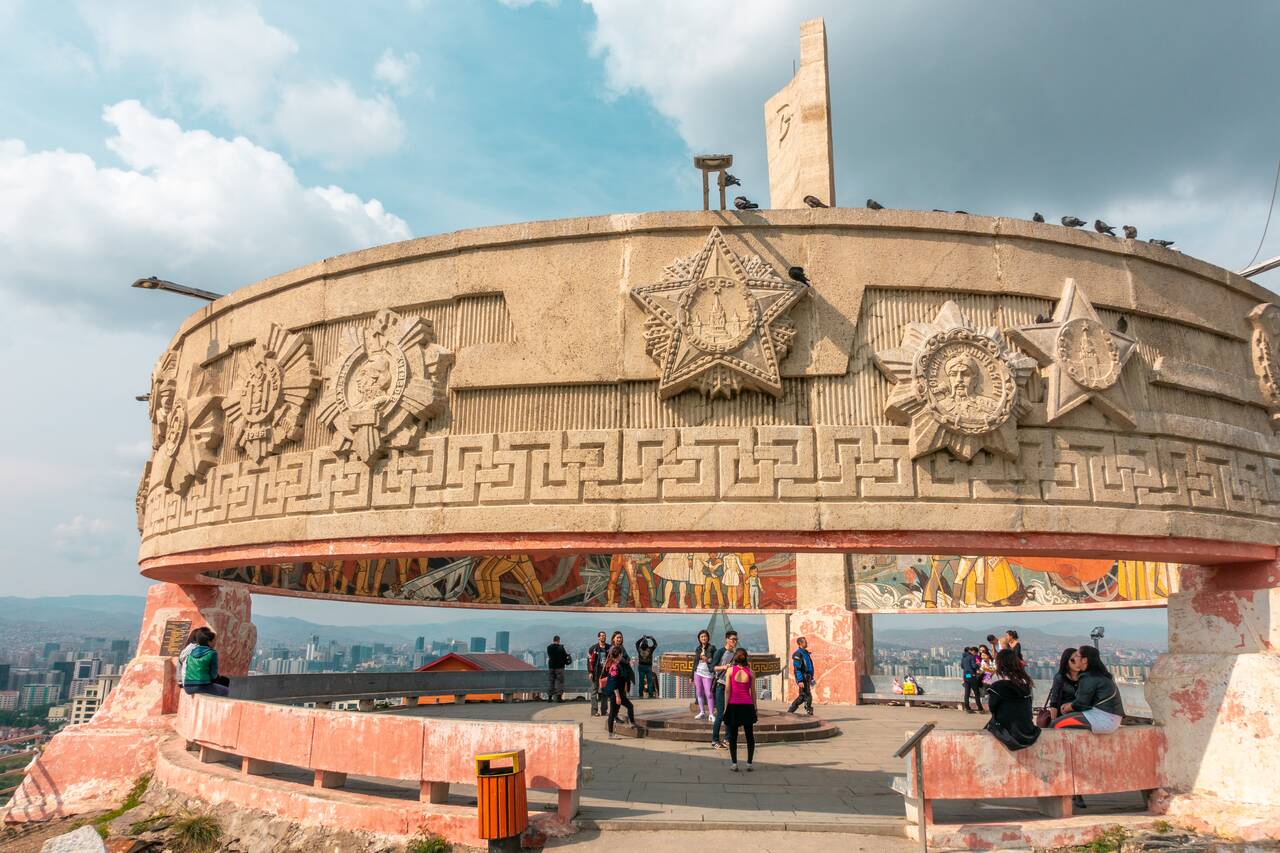
Zaisan Monument is my favorite spot in Ulaanbator. The Soviet-era monument depicts a beautiful illustration of the camaraderie between soldiers who fought in wars. The monument is located on top of a mountain, which gives you the best view of all Ulaanbator.
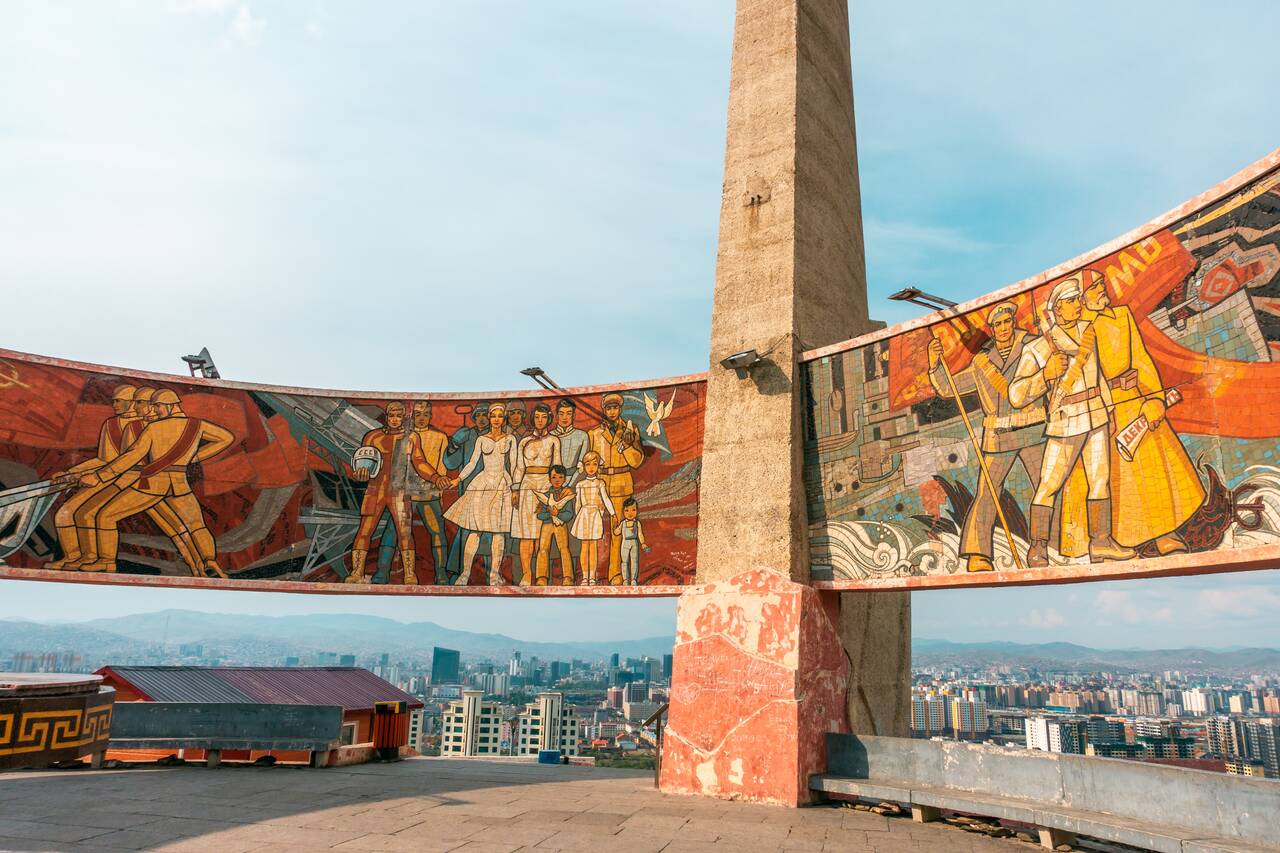
The colorful illustration and concrete structure really showcase the aesthetics of the people of Mongolia during the Soviet era.
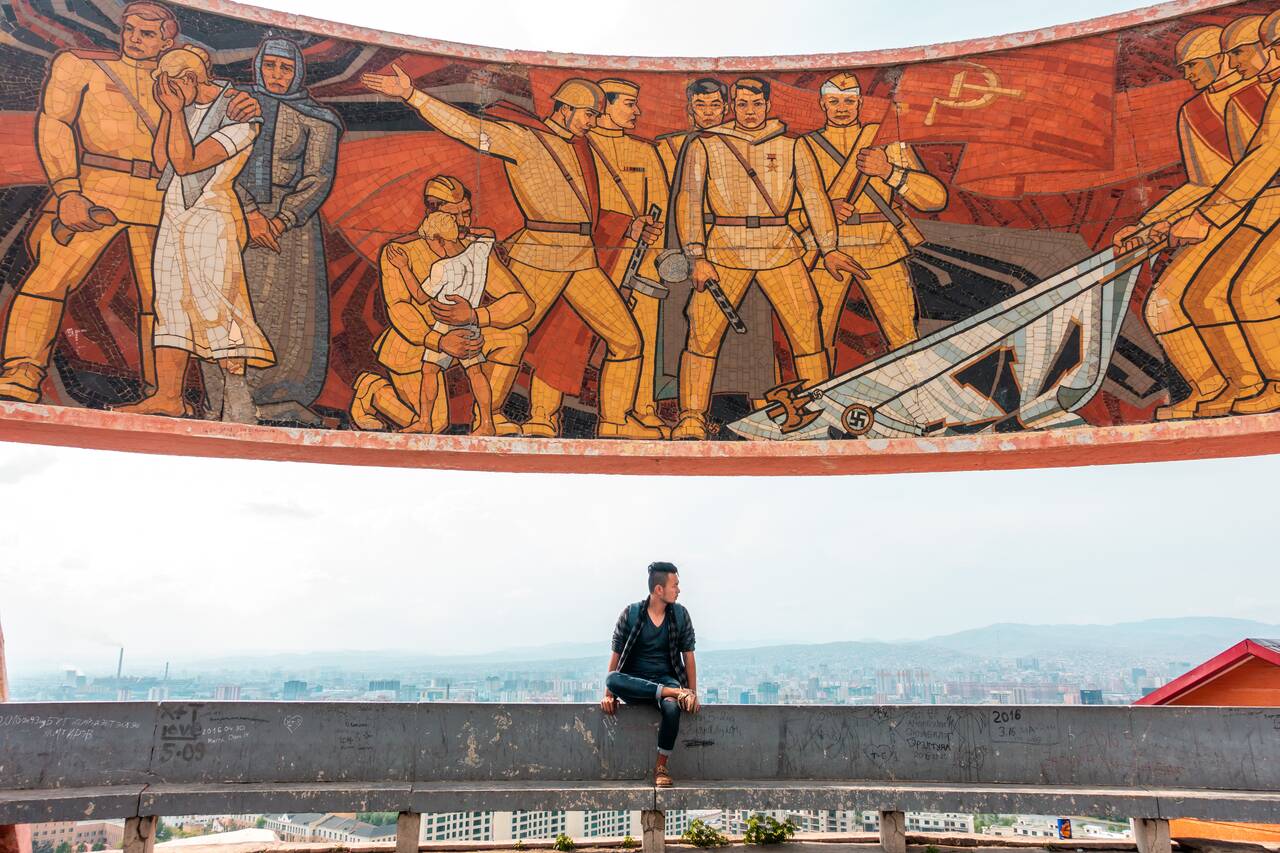
From behind the monument, you can also see the mountains that surround Ulaanbaatar, protecting it from invaders for many centuries.
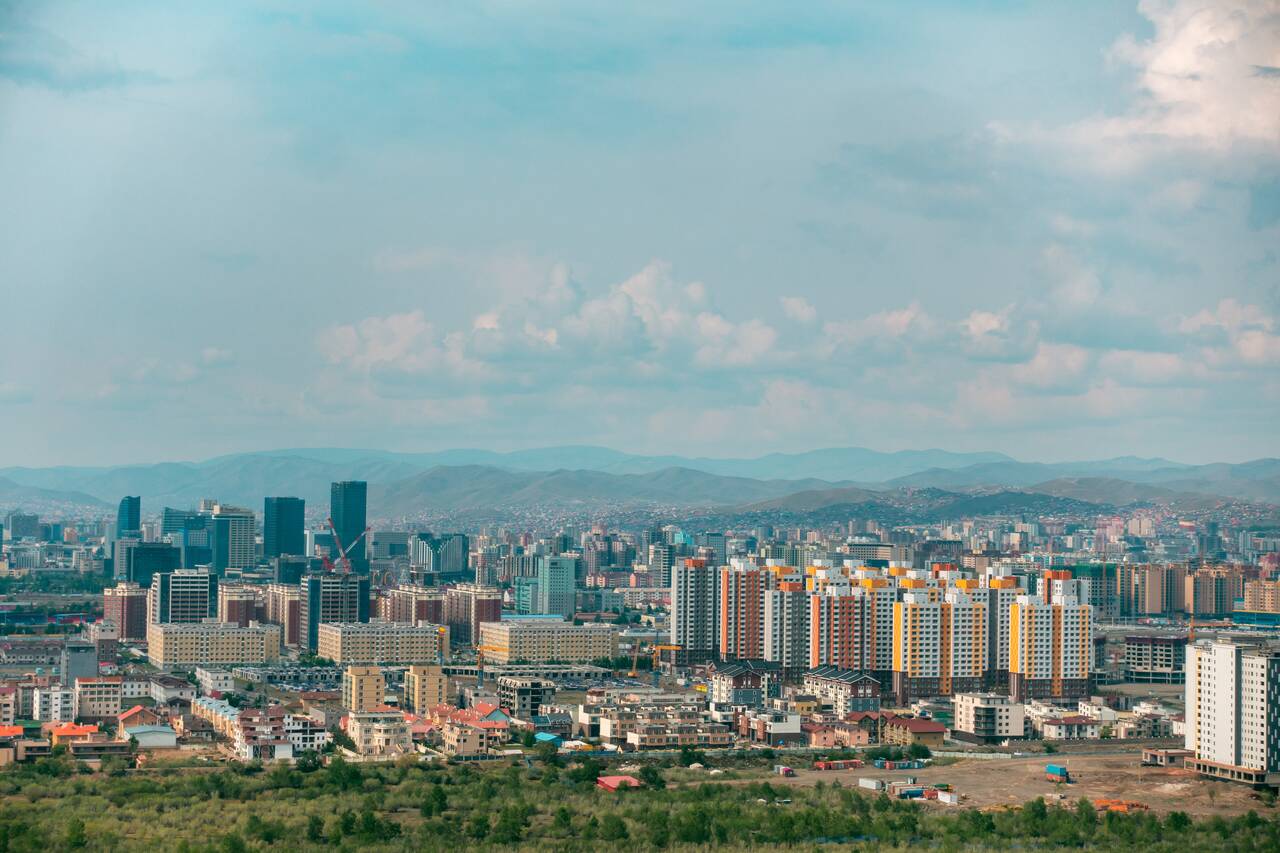
If you are looking for a great night out with the locals, head over to the LUX club around midnight and party your way through the city until morning.
Day 2: Yol Valley (1 night)
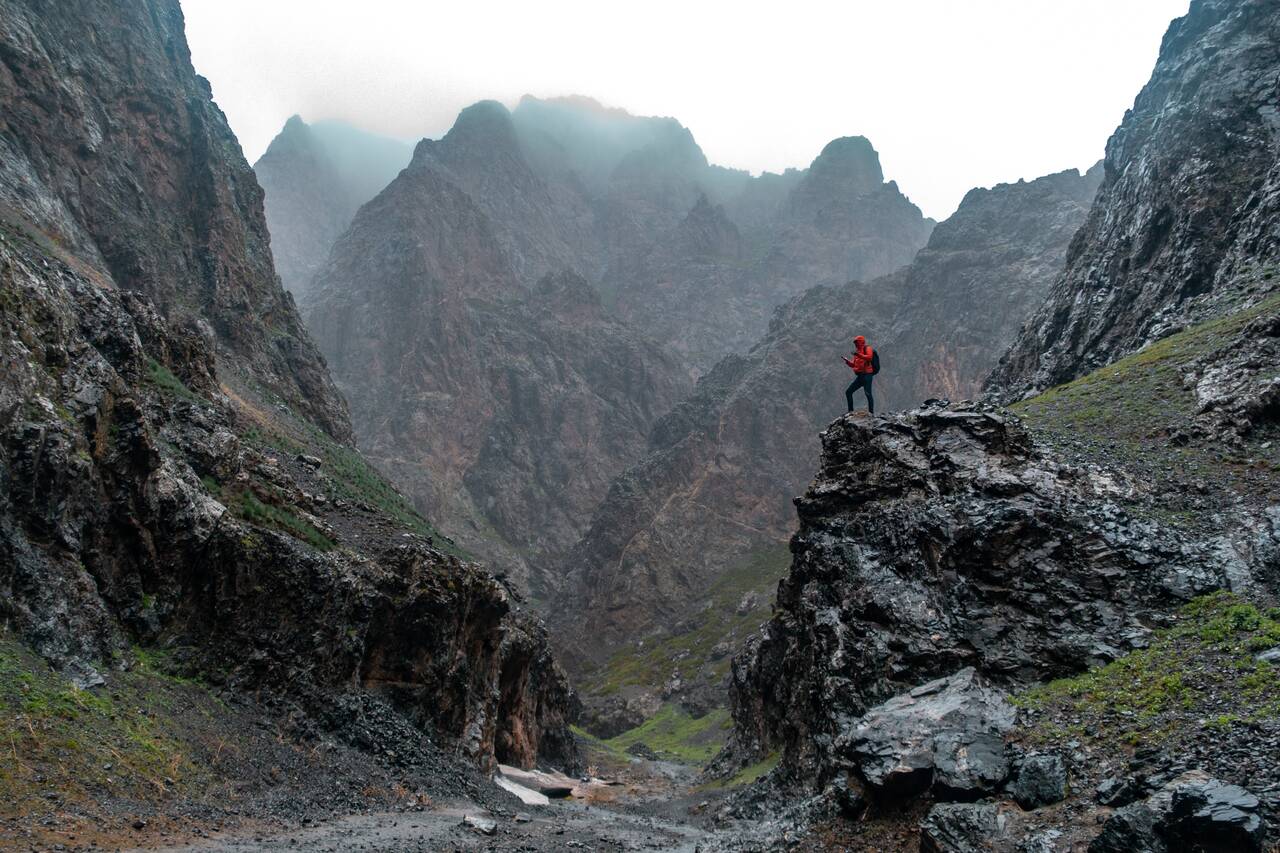
The first stop for the 7-day Gobi Desert tour is the Yol Valley. Prepare to get really cold and wet while hiking this bad boy.
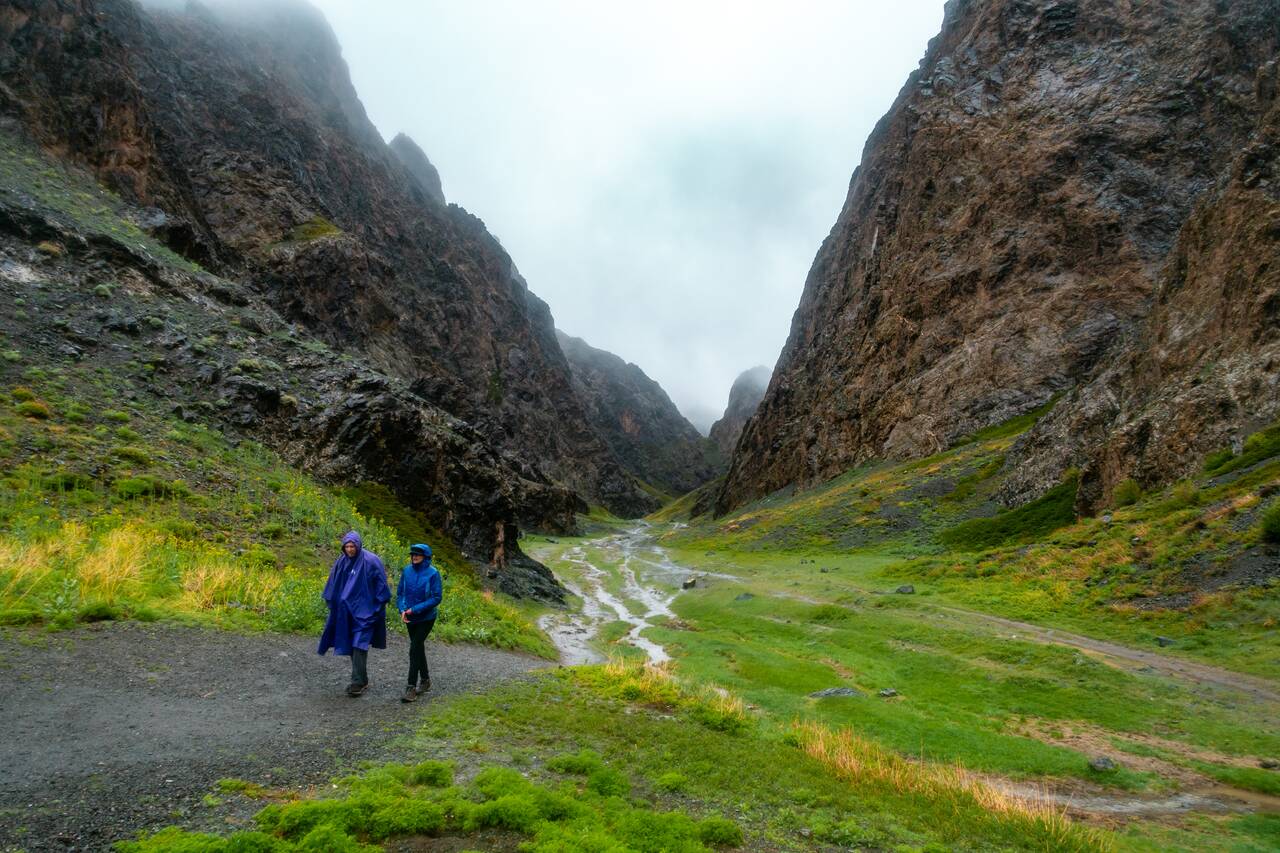
Yol Valley is famous for the stream and ice that can linger deep inside its narrow gorge, which is a surreal sight in the Gobi. Just do not count on seeing thick ice in the middle of summer: the seasonal ice can melt substantially or disappear by around July depending on the year. Even without the ice, the gorge itself is well worth the hike.
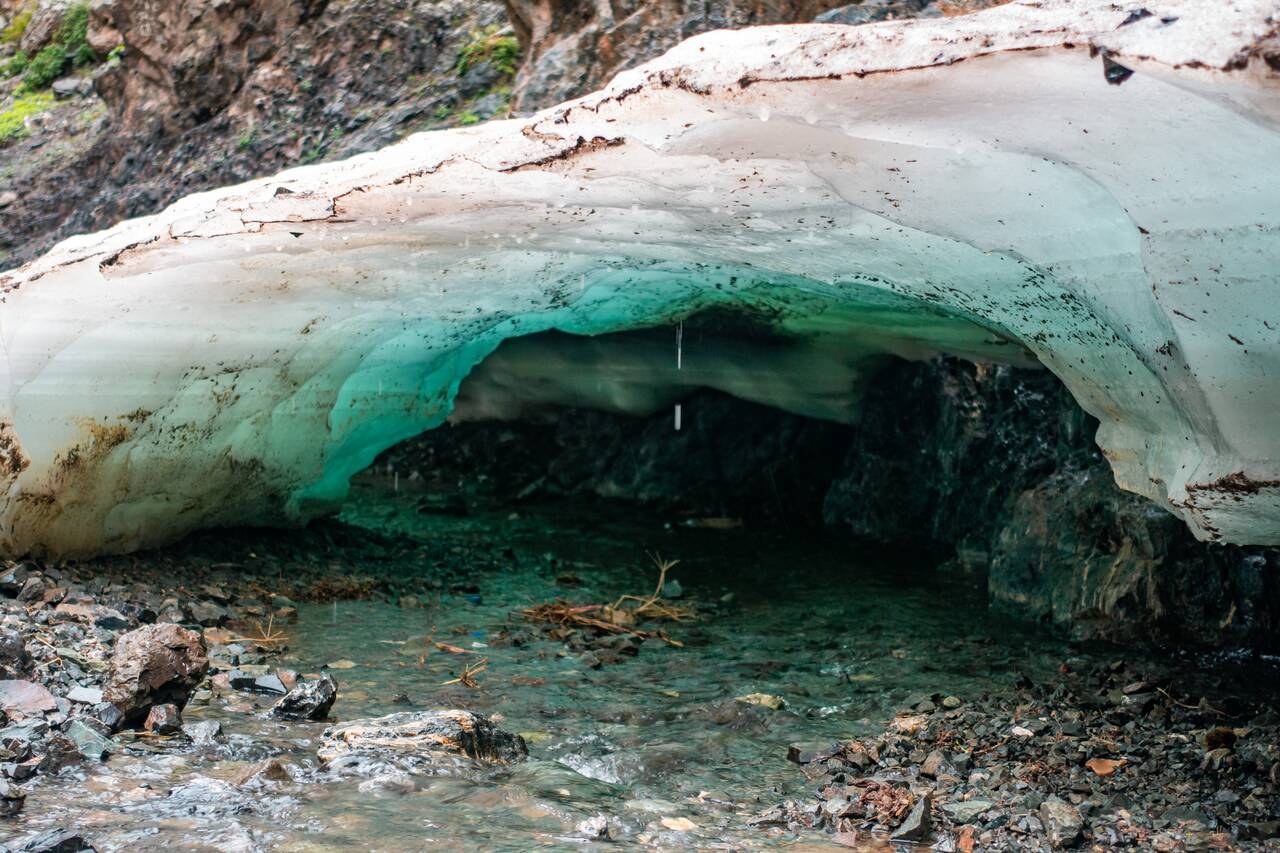
It should take you around an hour to walk through the beautiful green valley until you have to walk on ice, which allows you to explore all the ice tunnels and streams up close.
Day 3: Khongor Sand Dune (1 night)
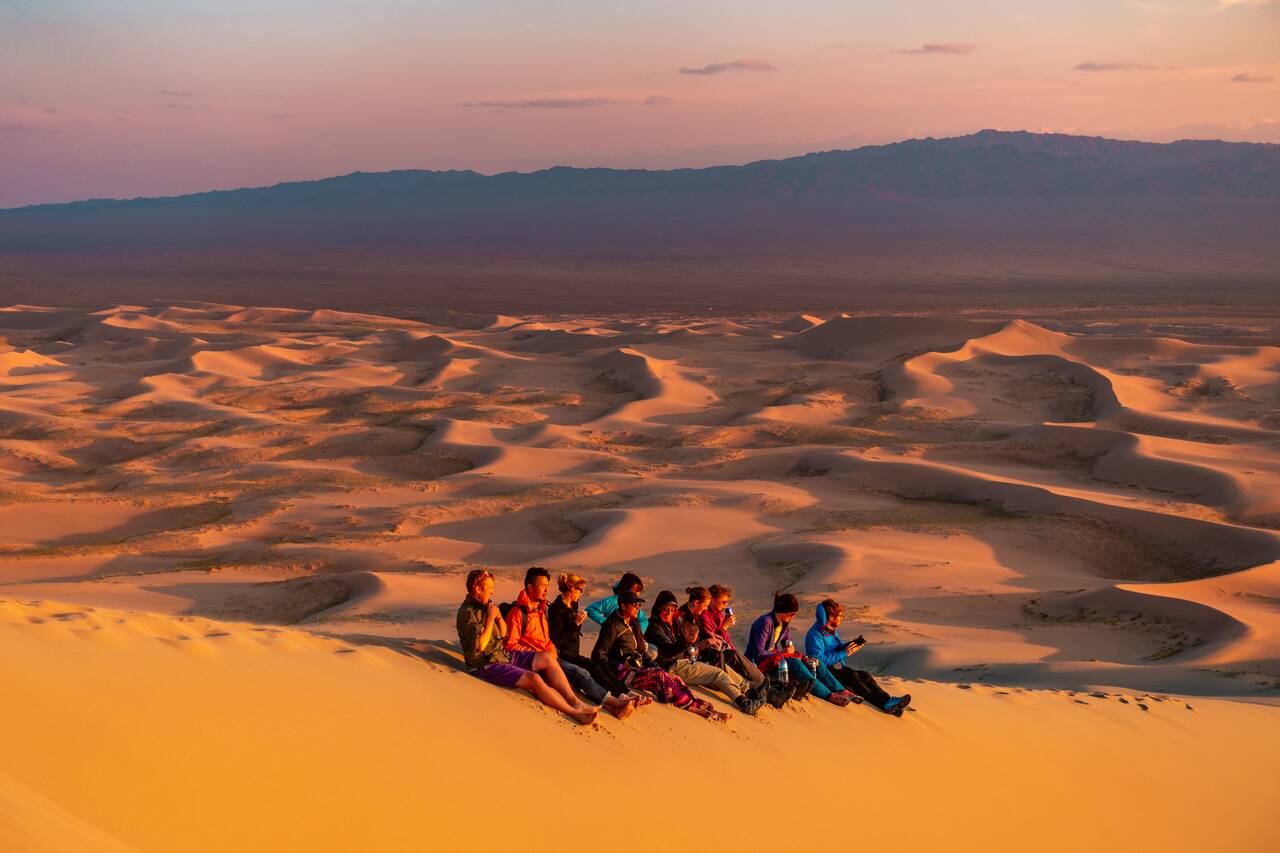
It takes around 8 hours to get from Yol Valley to Khongor Sand Dune, our next stop, so prepare yourself for the long drive. Once you arrive, you can take a camel ride around the desert and become familiar with the land.
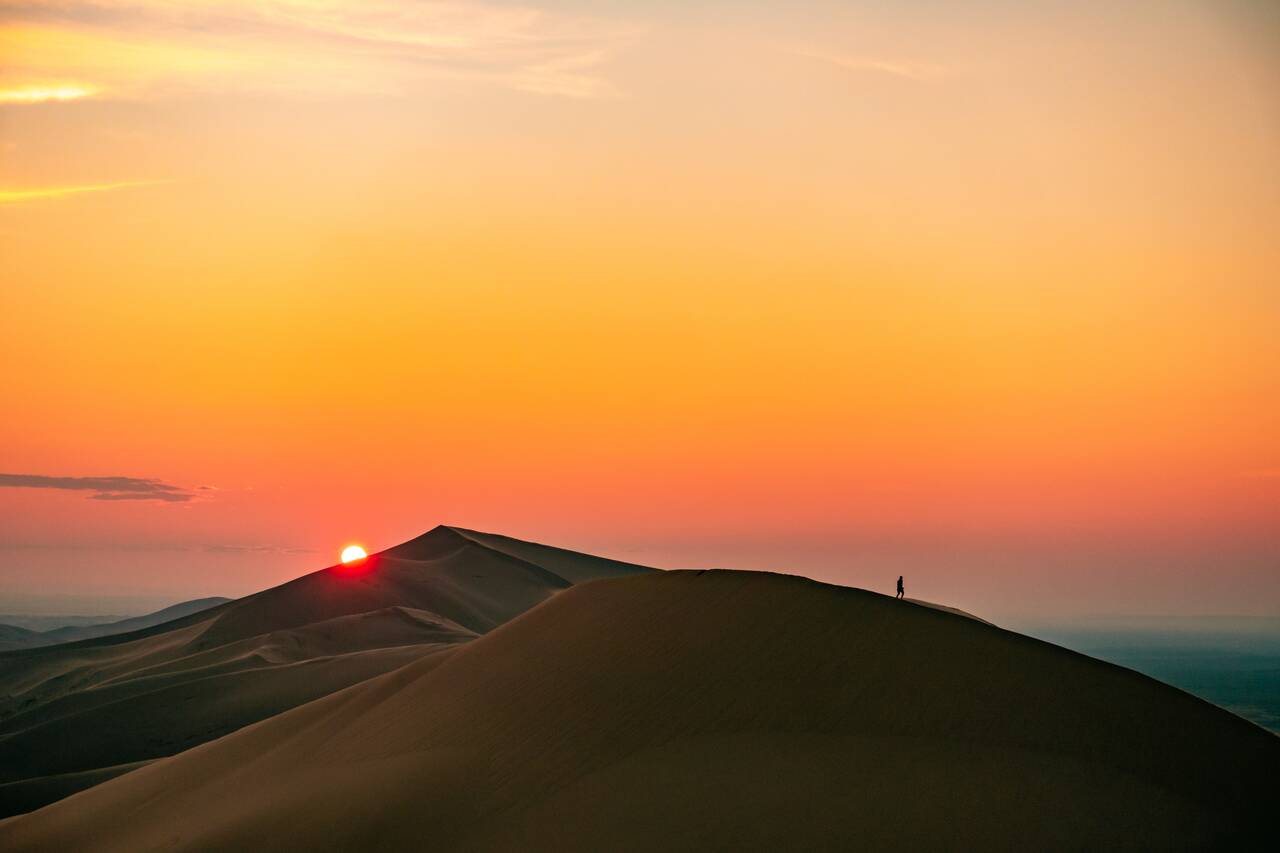
In the evening, right before sunset, head over to the sand dunes and hike up to the top to watch the sunset. This was one of the most surreal experiences of the entire trip, hands down.
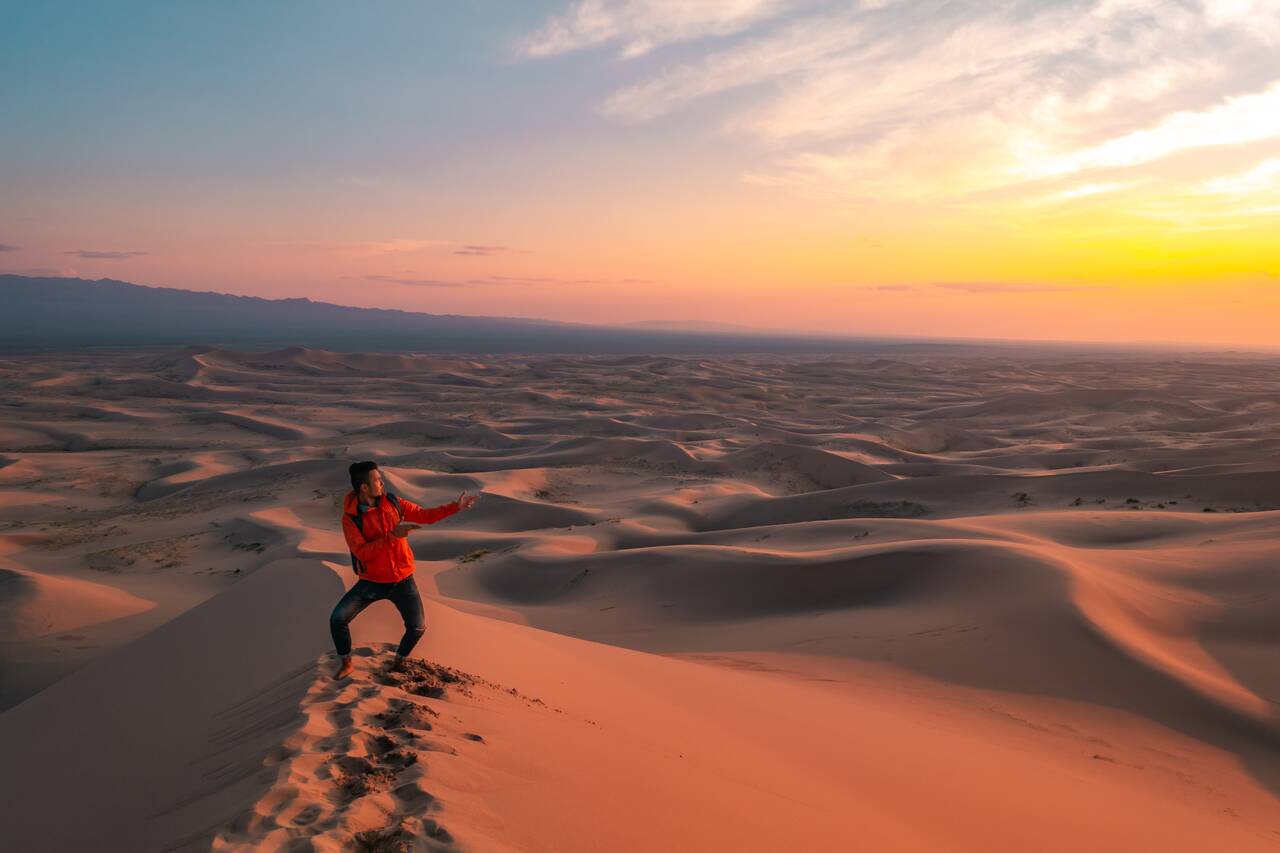
As the sun dipped further on the horizon, you would witness the sand dunes turning golden while the sky turned purple.
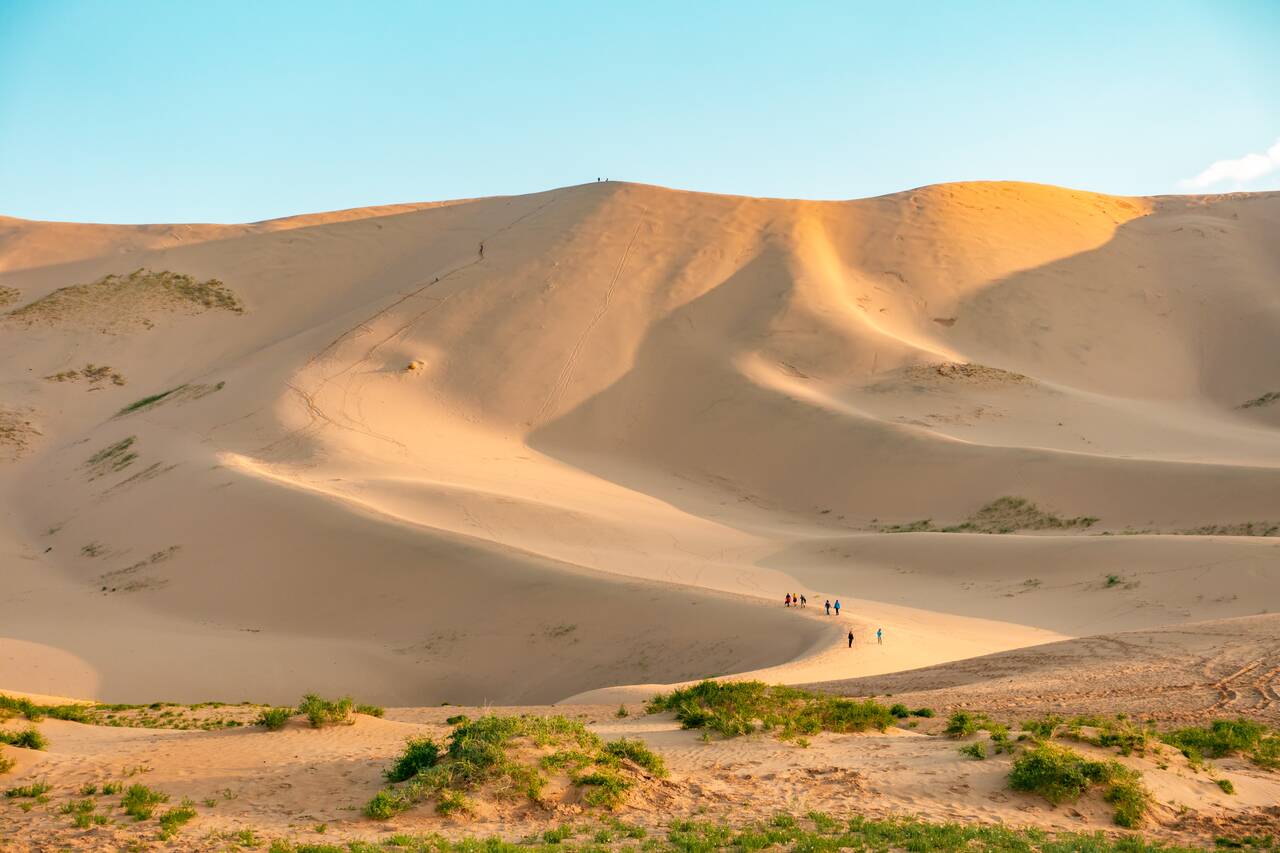
The sand dunes may seem small from afar, but trust me, it was a challenge to climb up them. Walking on the beach is difficult enough, but now imagine the beach on a freaking mountain, and you have to climb up the sand.
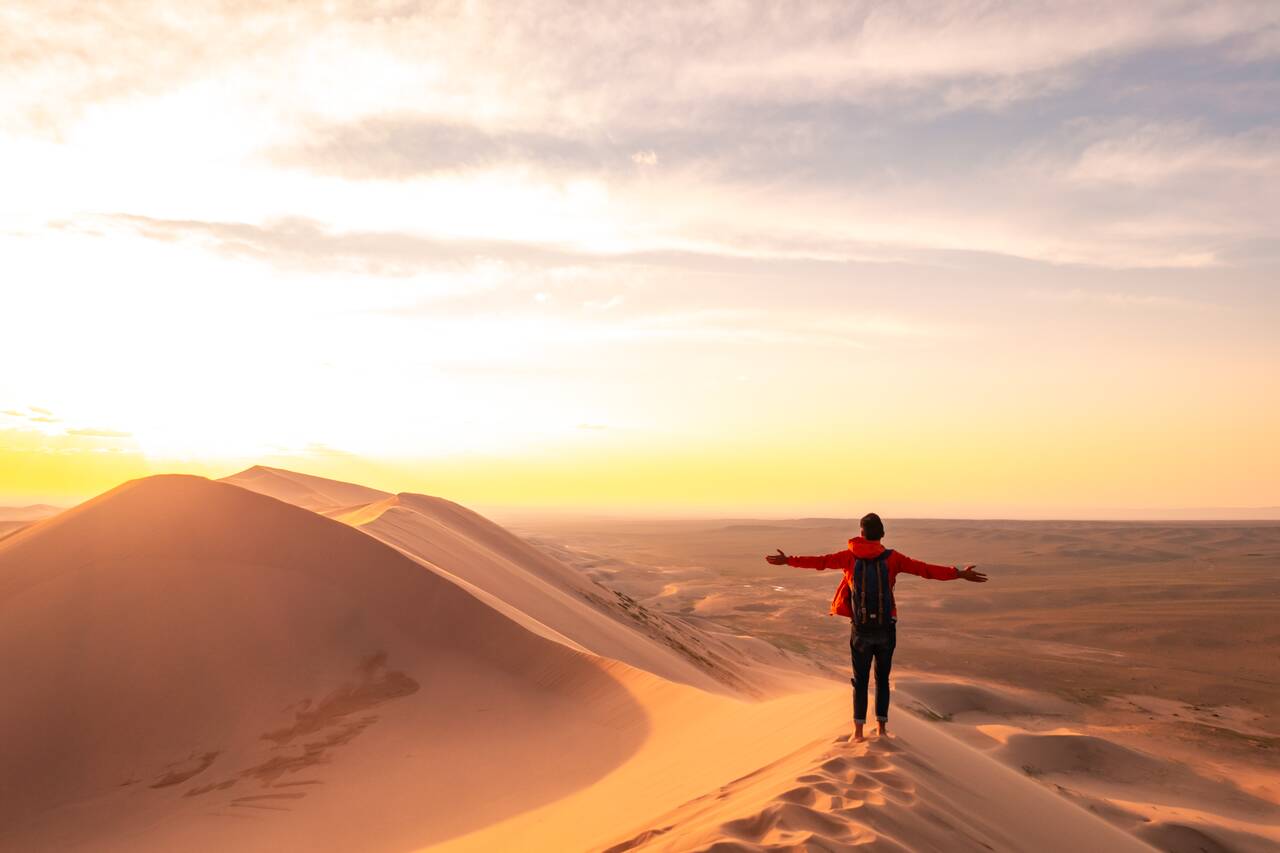
But the view was totally worth the sweat!
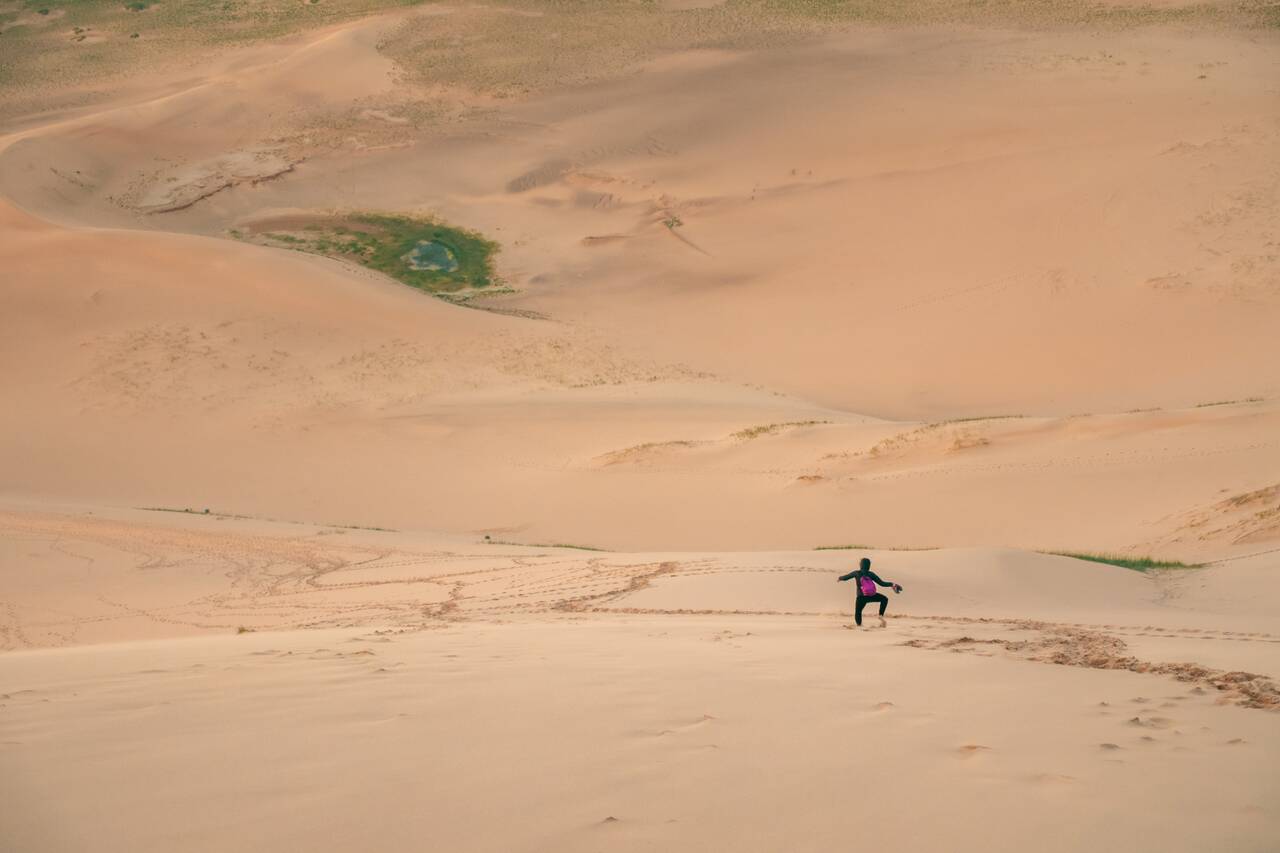
It is also quite rewarding to run down the sand dunes.
Day 4: Flaming Cliffs (1 night)
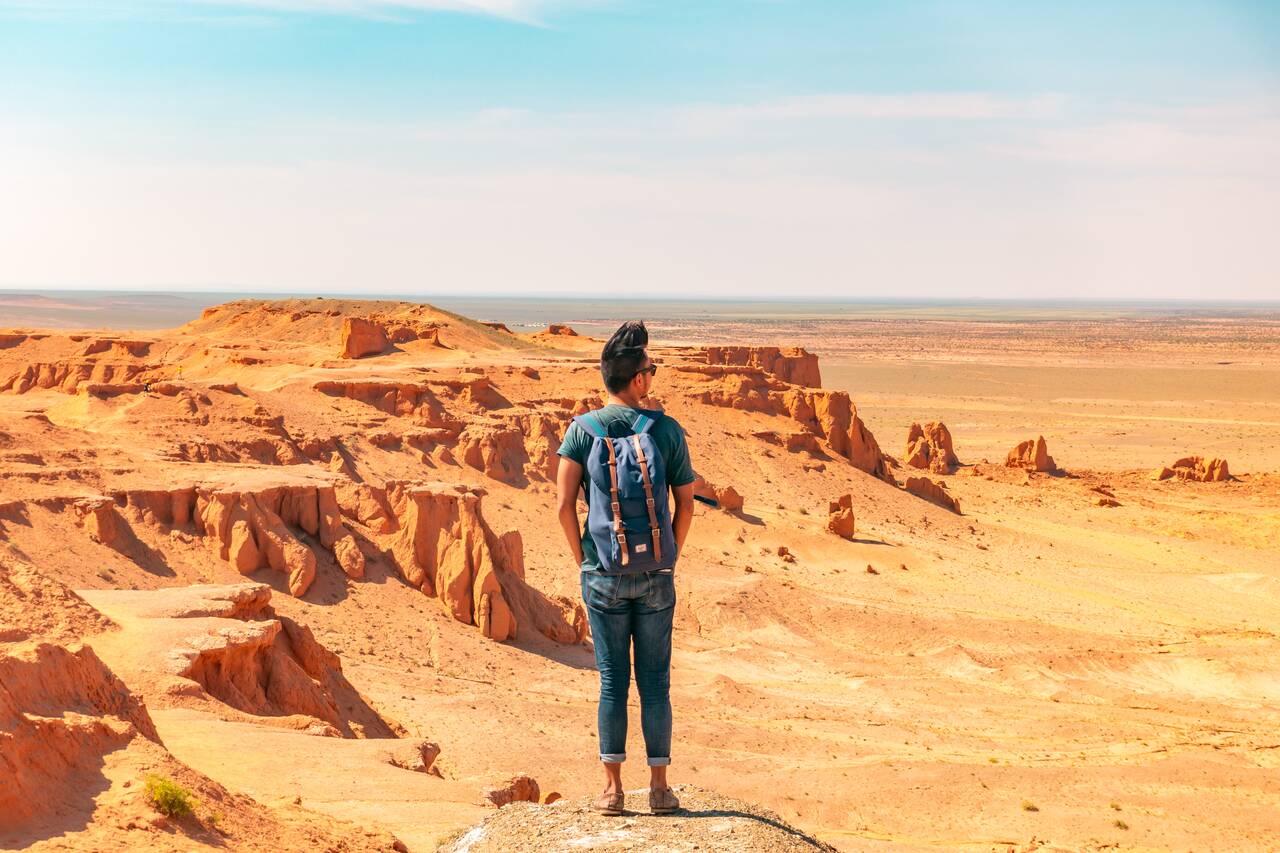
On this day, we are going to visit the Flaming Cliffs, also known as Bayanzag, a site famous for its extraordinary fossil discoveries. In 1923, a Central Asiatic Expeditions team from the American Museum of Natural History led by Roy Chapman Andrews discovered the first dinosaur eggs then recognized by science here, providing some of the earliest clear evidence of dinosaur reproduction.
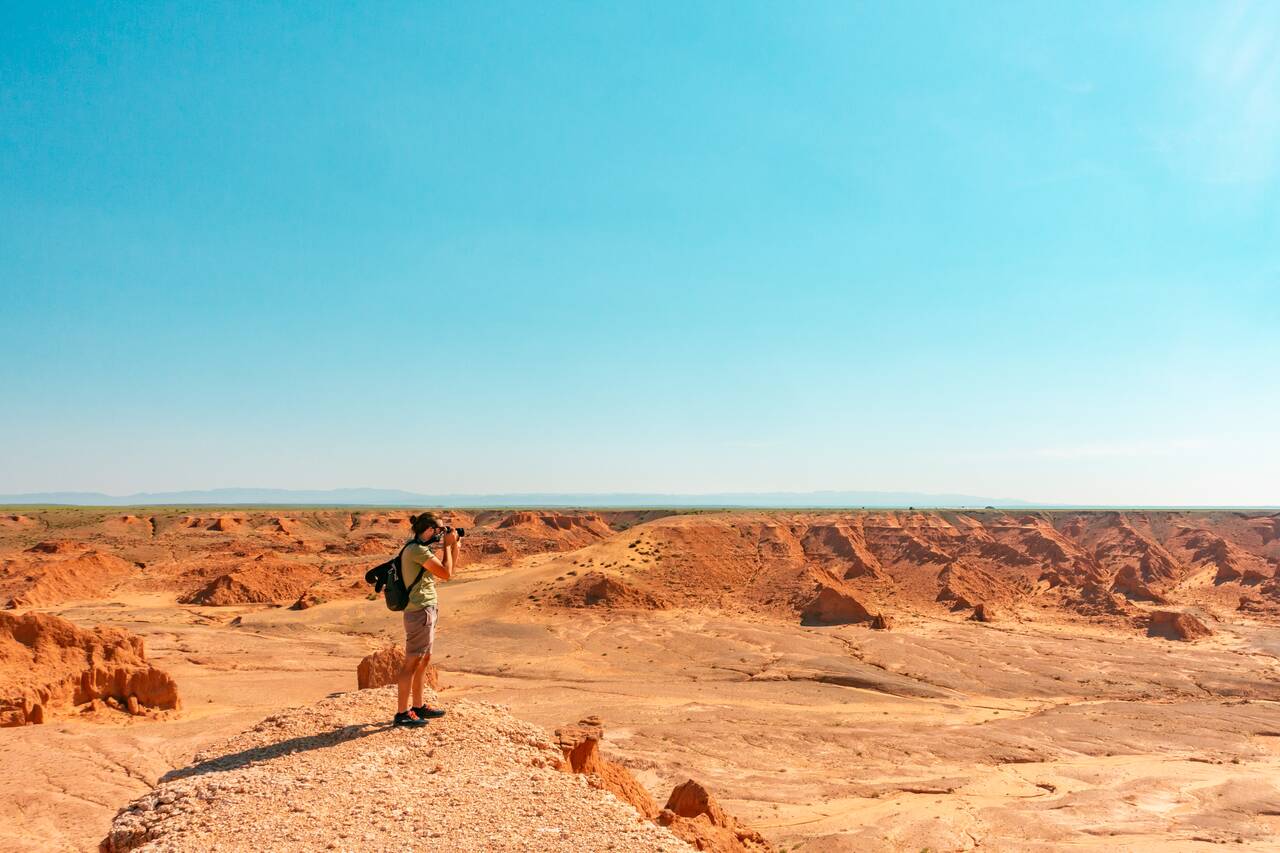
Other significant fossils have also been discovered here, including specimens of Velociraptor and early eutherian mammals. Unfortunately, you won't find any of them here now as they have all been moved into museums in the US.
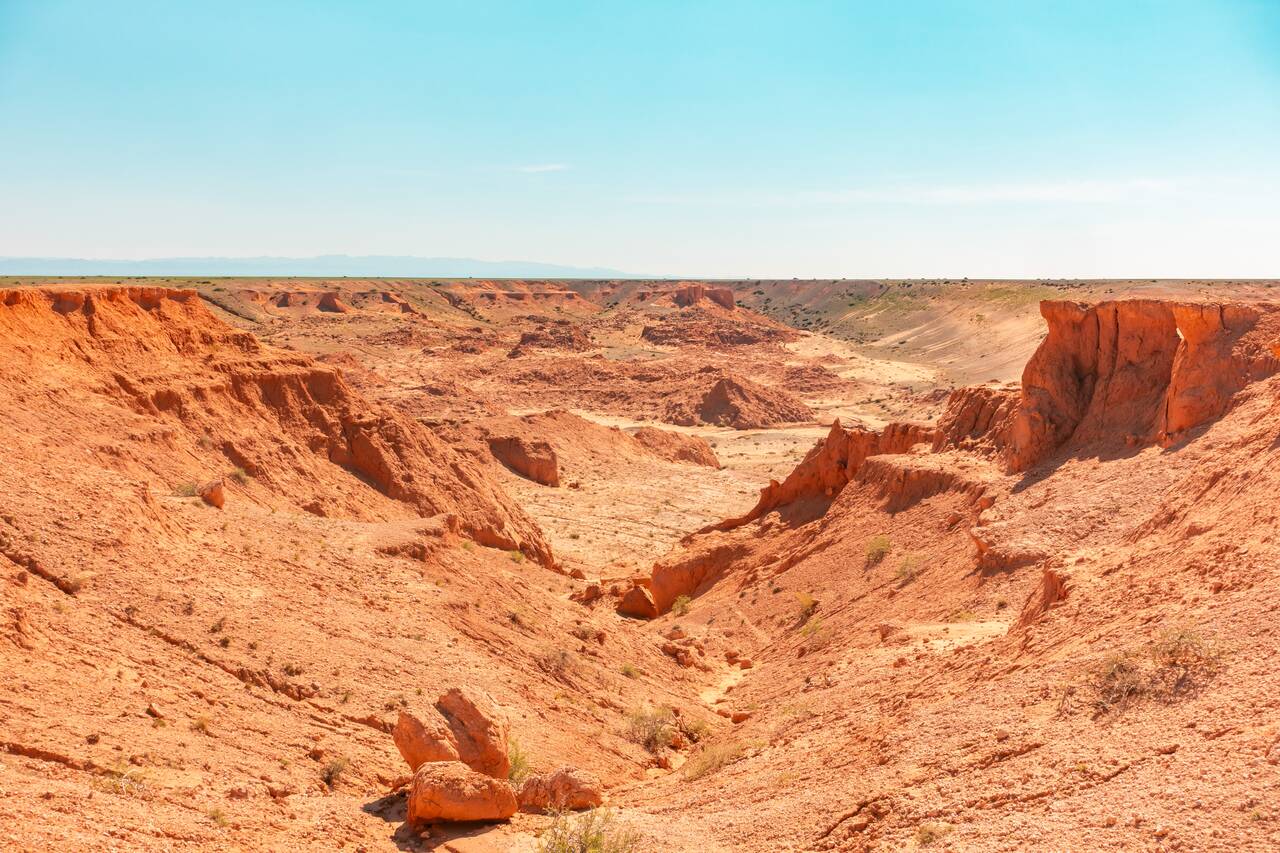
What’s cool about this place is that the sandstone cliffs glow a brilliant orange at sunset, which is how they earned the name "The Flaming Cliffs". It's definitely quite a sight to see.
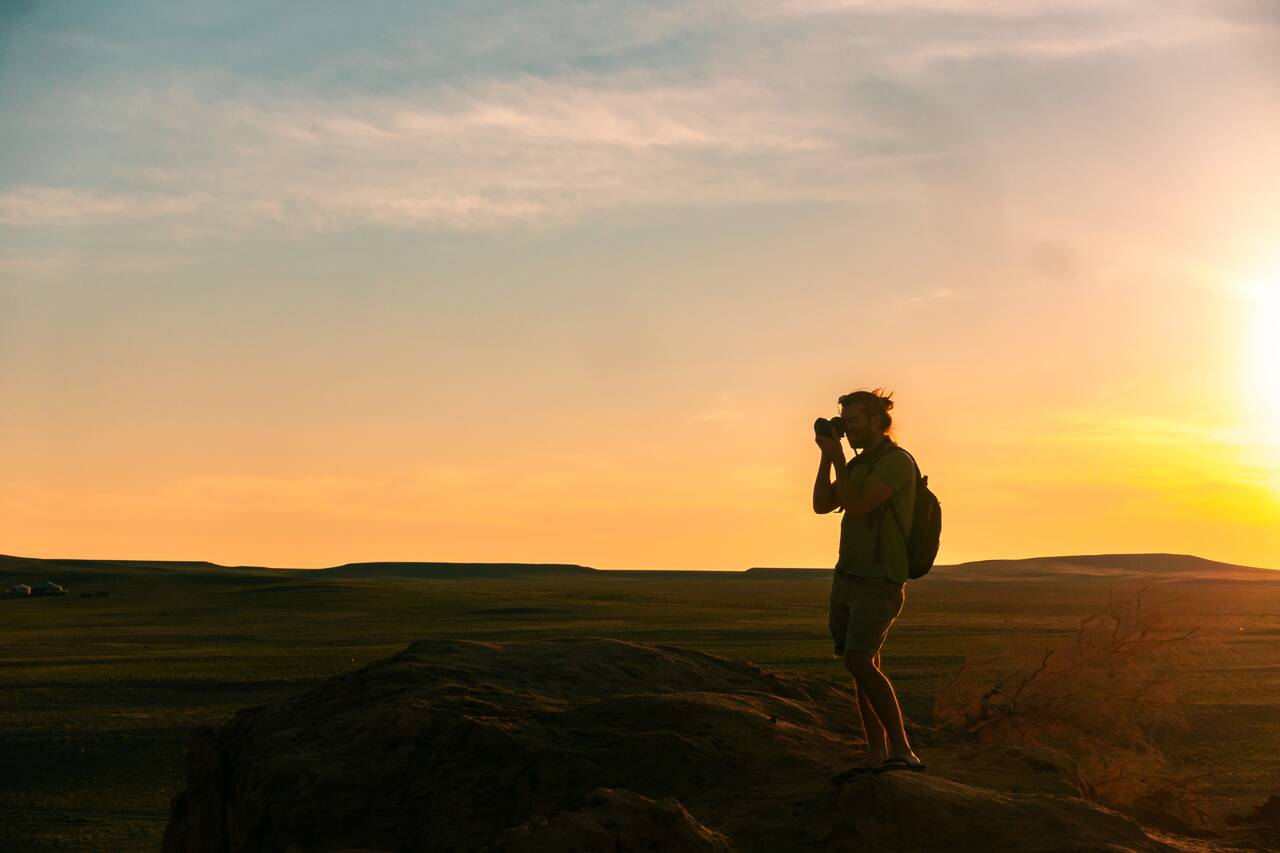
When you are back at the ger, go for a walk to one of the few green areas in the desert located on the cliff near the ger and enjoy the sunset from up there.
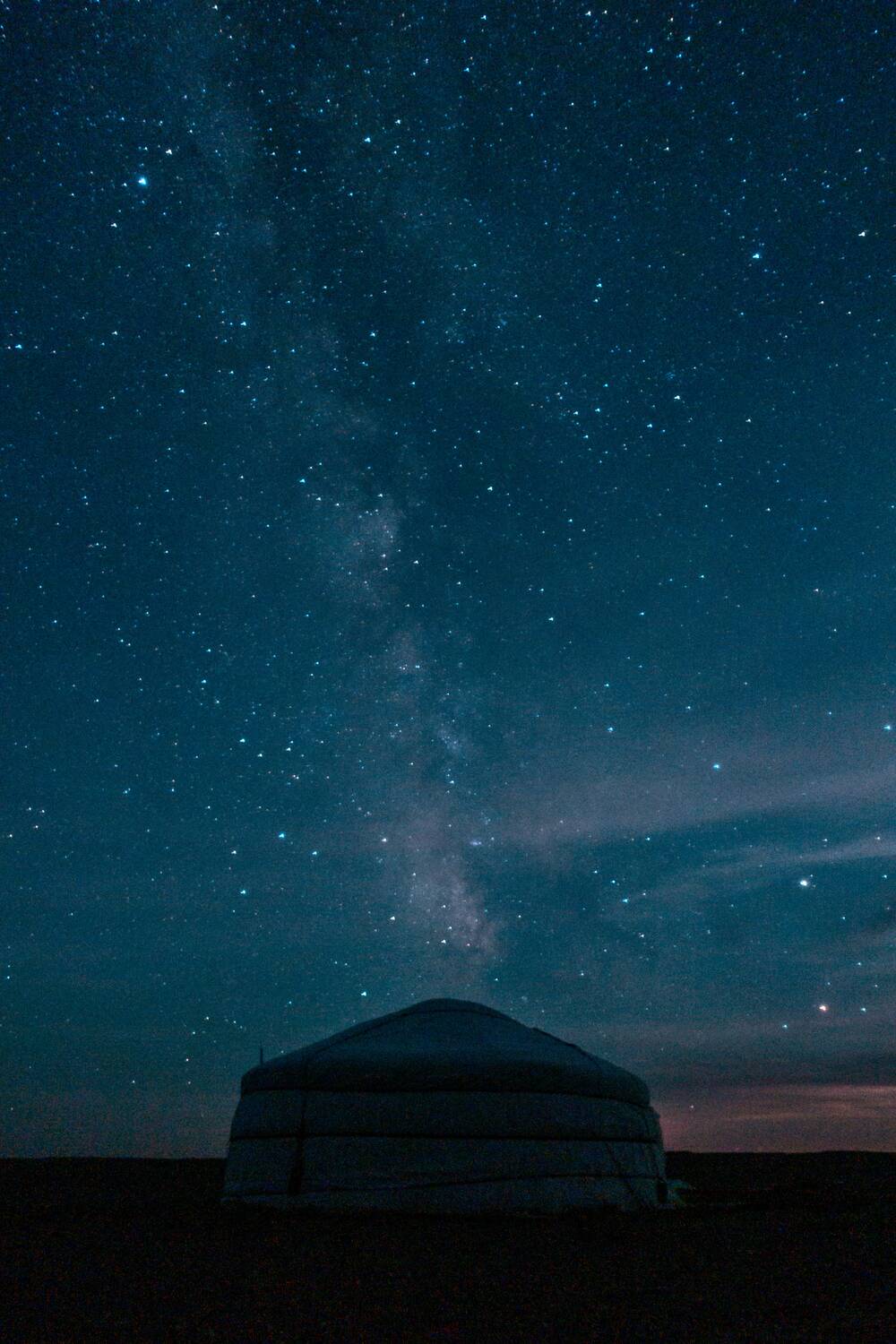
At night, wake up around 4 AM as the moon sets, and you might catch a brief glimpse of the Milky Way before the sun rises around 5 AM.
Day 5: Saikhan Ruins (1 night)
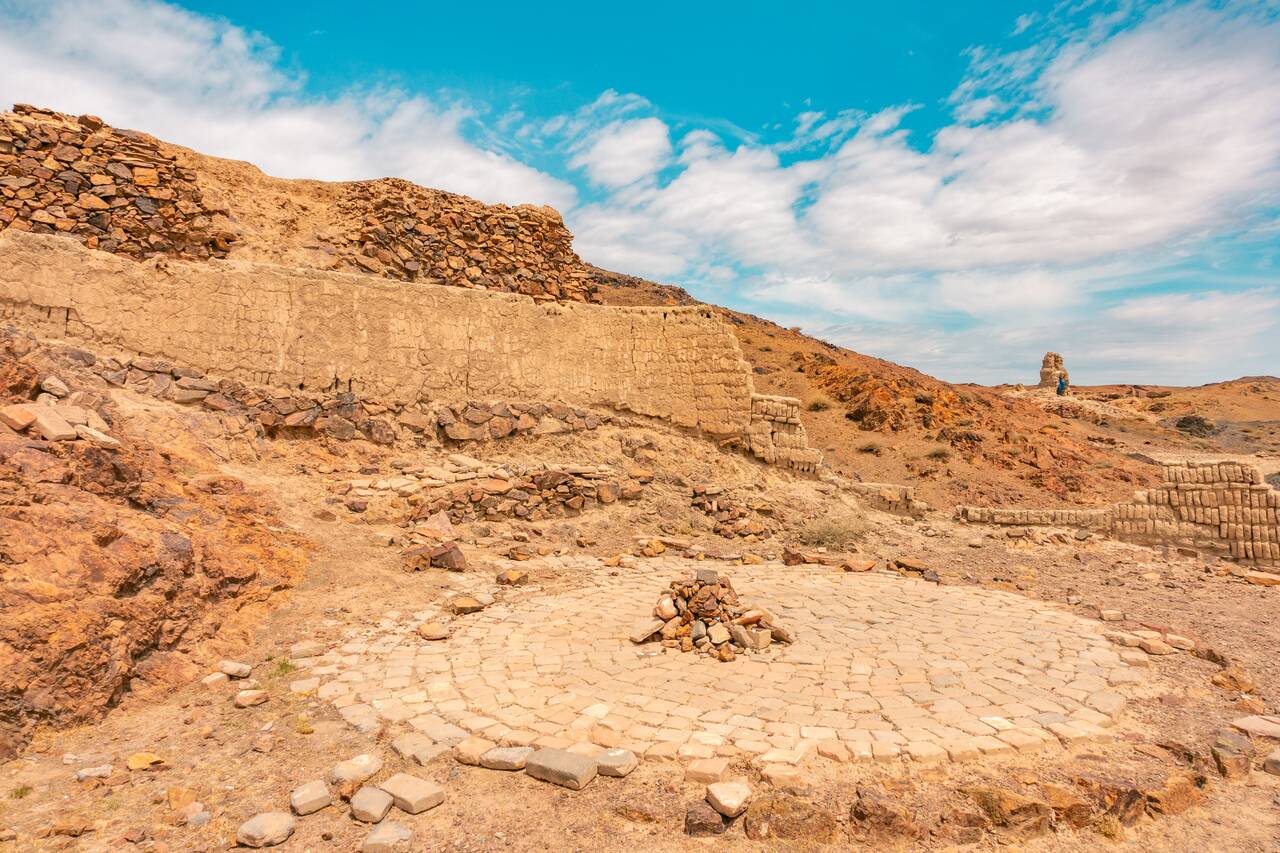
Today, we are going to explore Saikhan-Ovoo, where one of the most important sights in the Gobi Desert, Ongi Monastery is located. The ruins are the remains of two large Buddhist monastic complexes on opposite sides of the Ongi River. They once housed around 1,000 monks before being destroyed during Mongolia’s communist anti-religious purges in the late 1930s. A small monastery has since been rebuilt among the ruins, making this an especially interesting place to learn about this difficult period of Mongolian history.
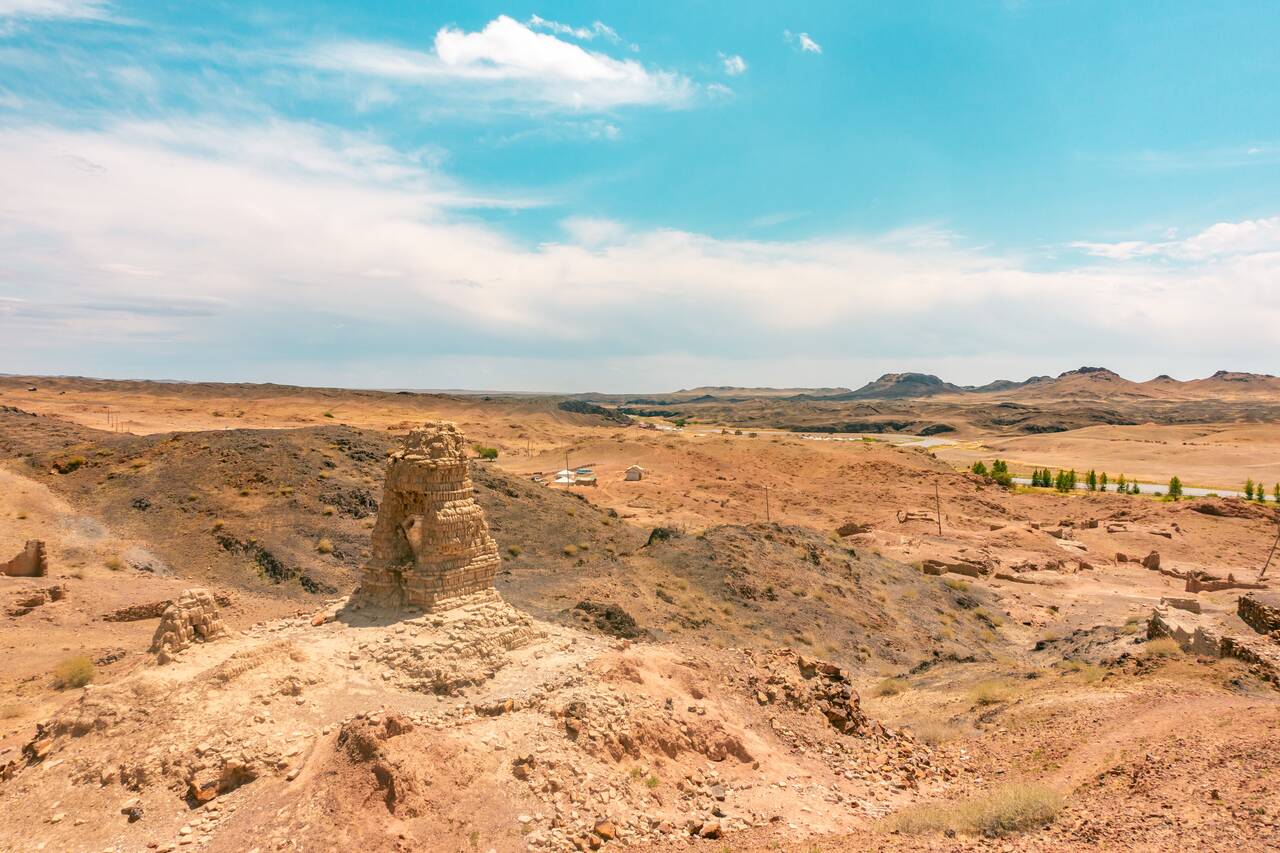
Behind the temple, there is a small hill that you can climb to get a view of the landscape surrounding the temple.
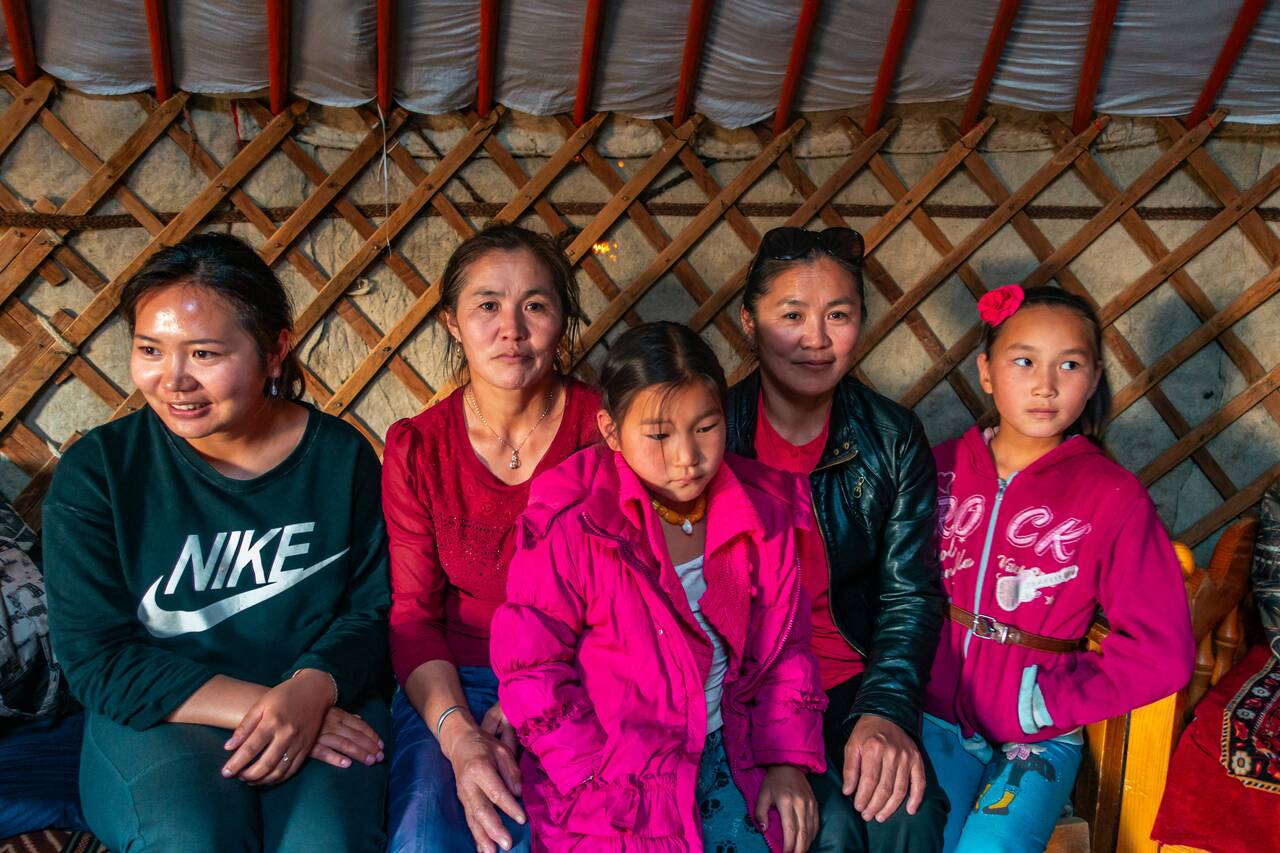
In the evening, return to the ger and join the nomad family in their daily activities, like helping milk the goats. The little girl you see with the family above was a total badass. Just before I took this photo, she was just wrestling the goats like a champ as she guided them into the pens after grazing.
Day 6: Kharkorin (1 night)
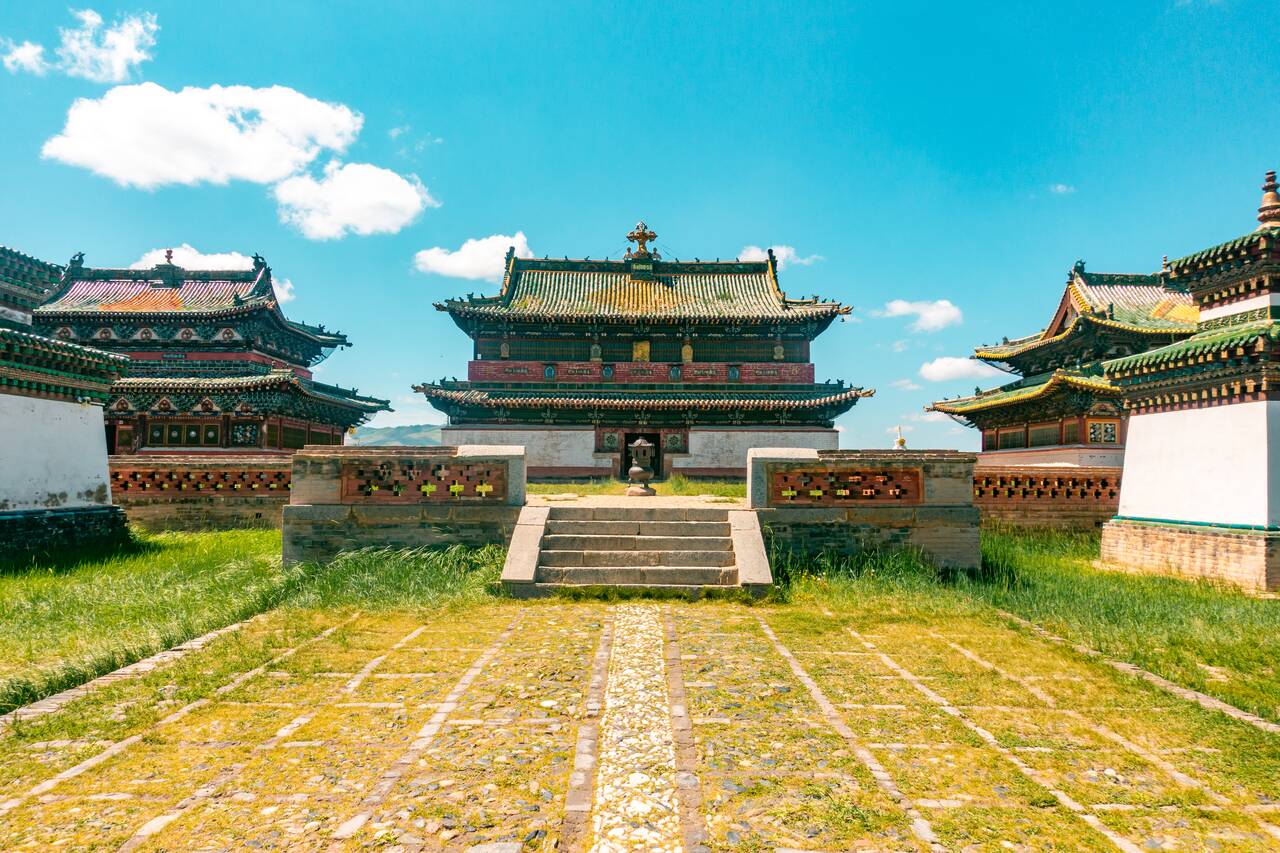
Kharkorin sits beside the archaeological remains of Karakorum, the 13th and 14th-century capital of the Mongol Empire. The beautiful walled complex you see today is not the old imperial city itself but Erdene Zuu, Mongolia’s earliest surviving Buddhist monastery, founded in the late 16th century using stone from the nearby ruins of Karakorum. Spend some time here with your guide, and if possible also visit the archaeological remains and museum to better understand how the imperial capital and monastery fit together.
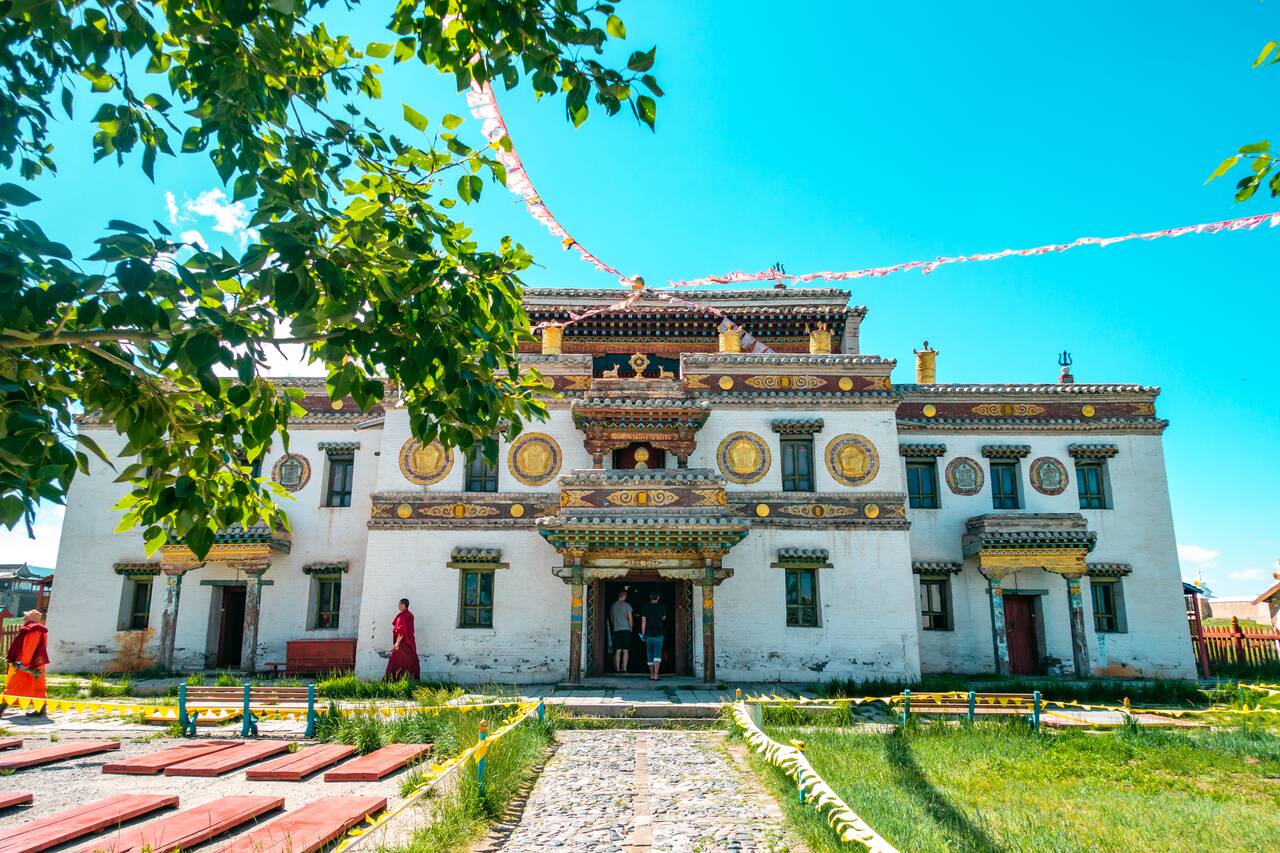
There was a glimpse of Tibetan-style architecture in some of the temple's buildings, such as the one shown above.
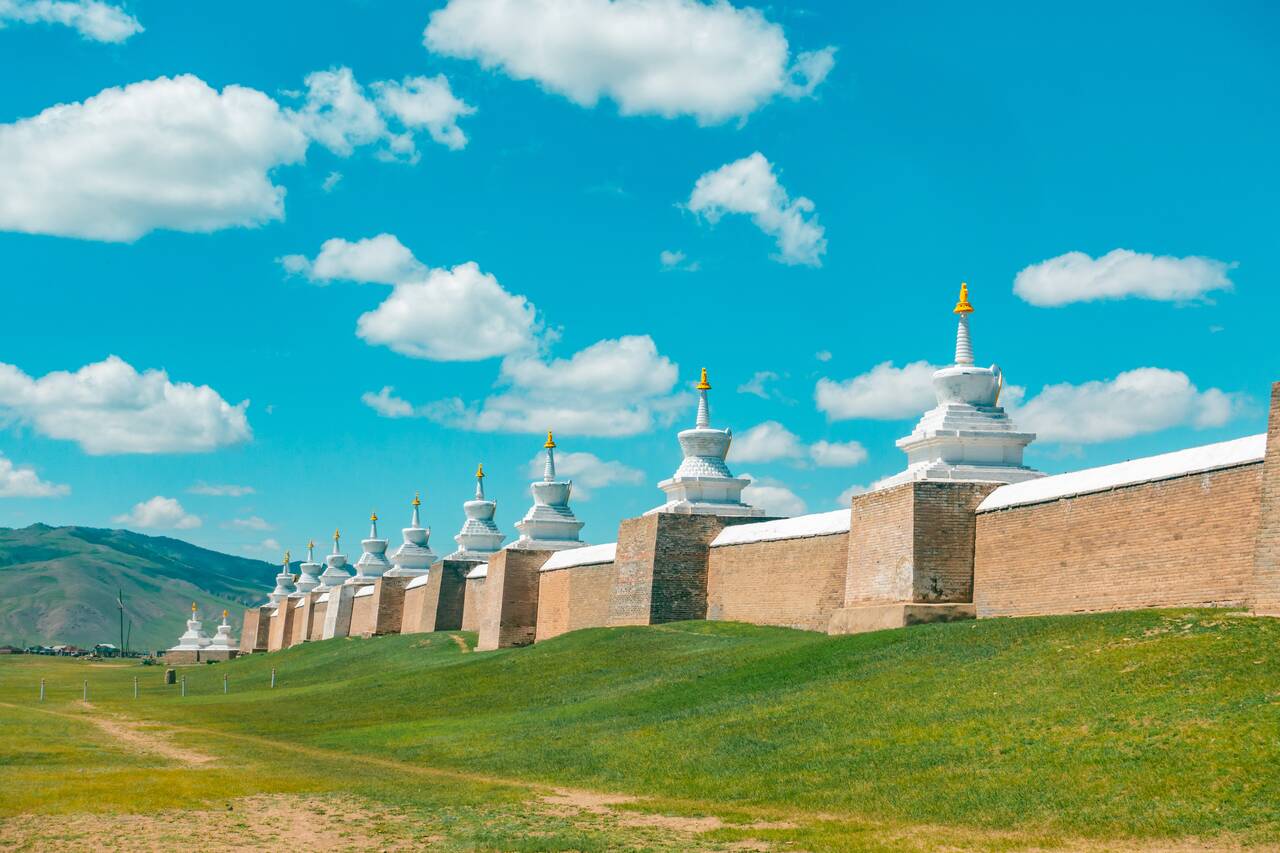
The iconic white wall lined with stupas belongs to Erdene Zuu Monastery, not to Genghis Khan’s old city defenses. The monastery was founded in 1585–1586, centuries after Chinggis Khaan, and its fortified outer wall and stupas were developed later. The ruins of ancient Karakorum lie nearby within the UNESCO-listed Orkhon Valley Cultural Landscape.
Day 7: Khogno Tarna National Park (1 night)
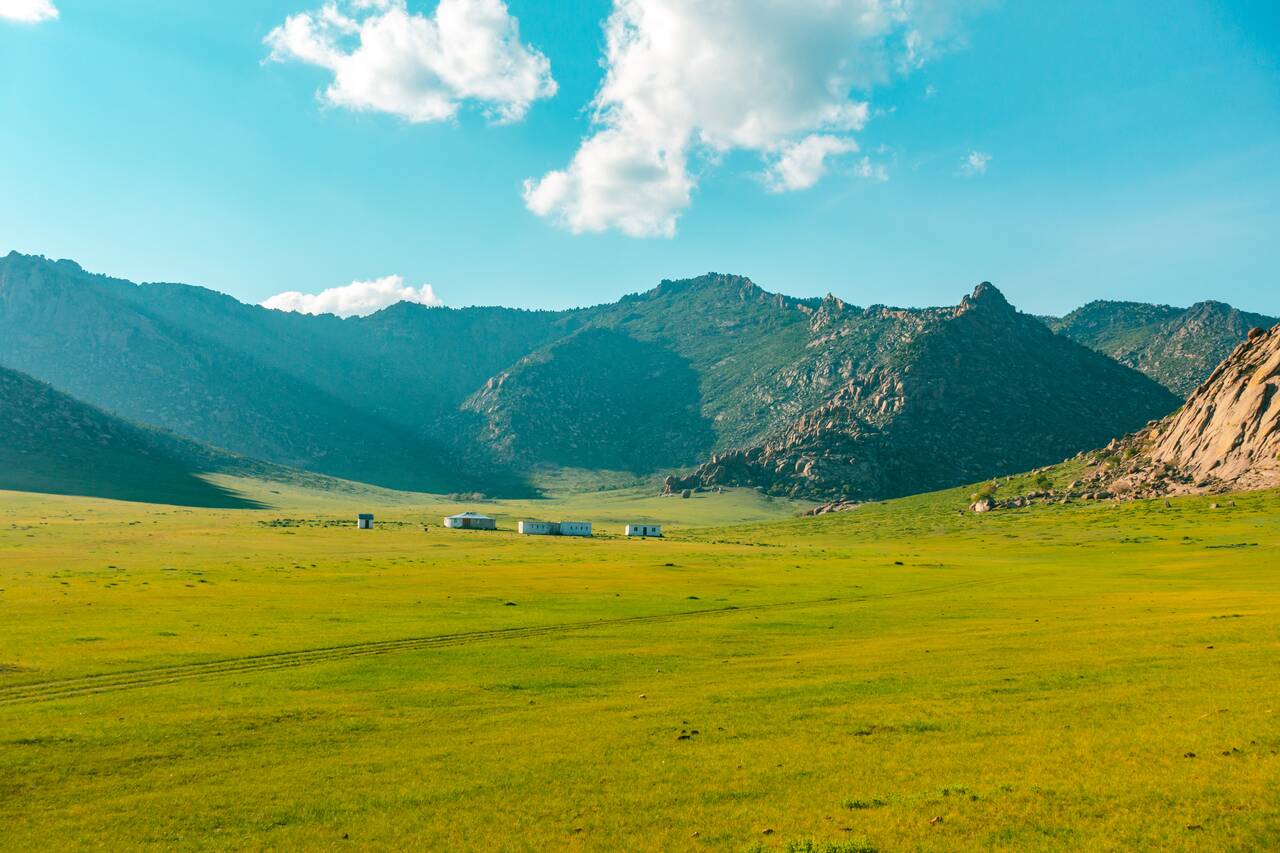
After traveling in the desolate desert of the Gobi for a few days, a little green hill and rocky mountains were a welcome change. Khogno Tarna National Park is filled with stunning rocky mountains that beg you to climb and green rolling hills as far as the eyes can see.
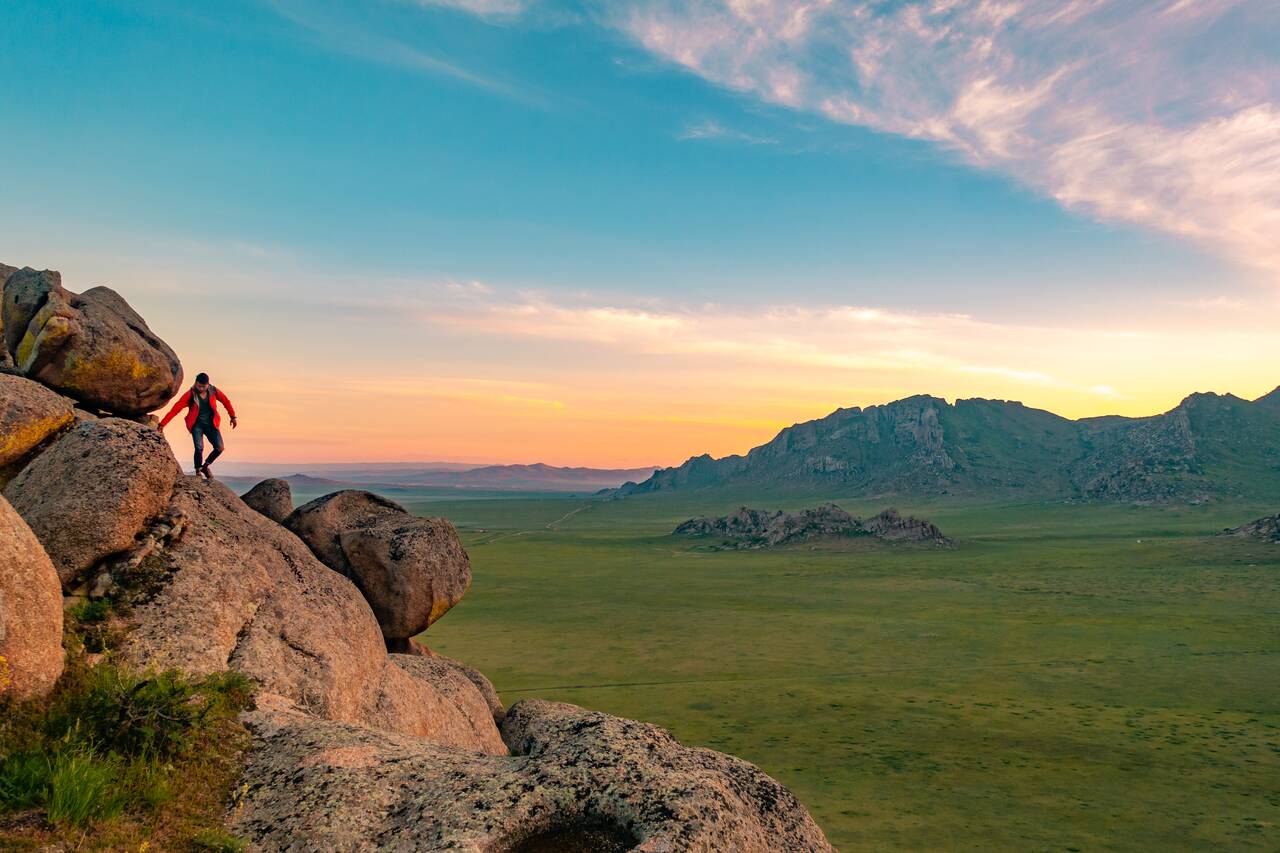
This is one of my favorite places in Mongolia. You can really see how vast Mongolia is from one of the mountain peaks here.
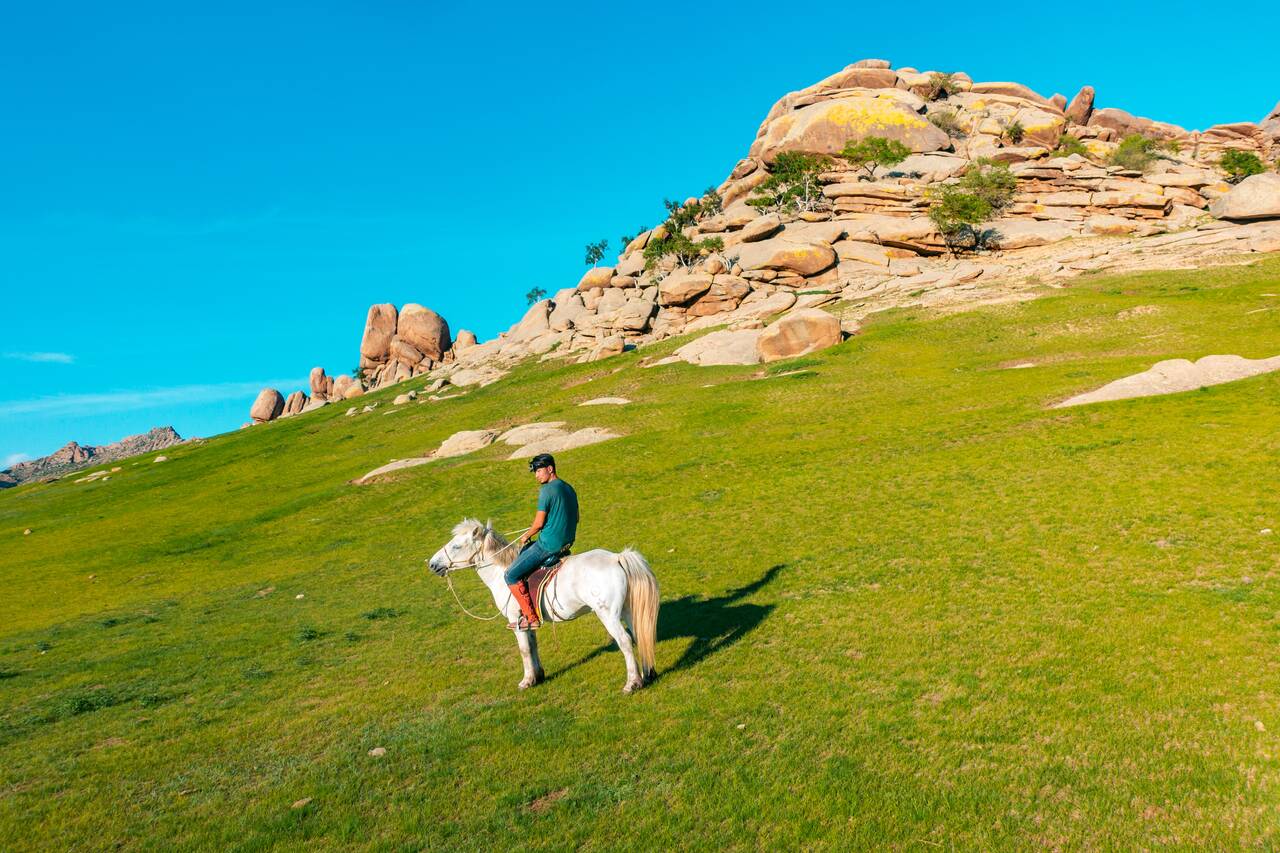
Go on a horse and ride around the park like Genghis Khan, enjoying the sunset while galloping into the Land of the Blue Sky. I actually imagined myself doing just that when I rode a horse in Mongolia.
Day 8: Terelj National Park (1 night)
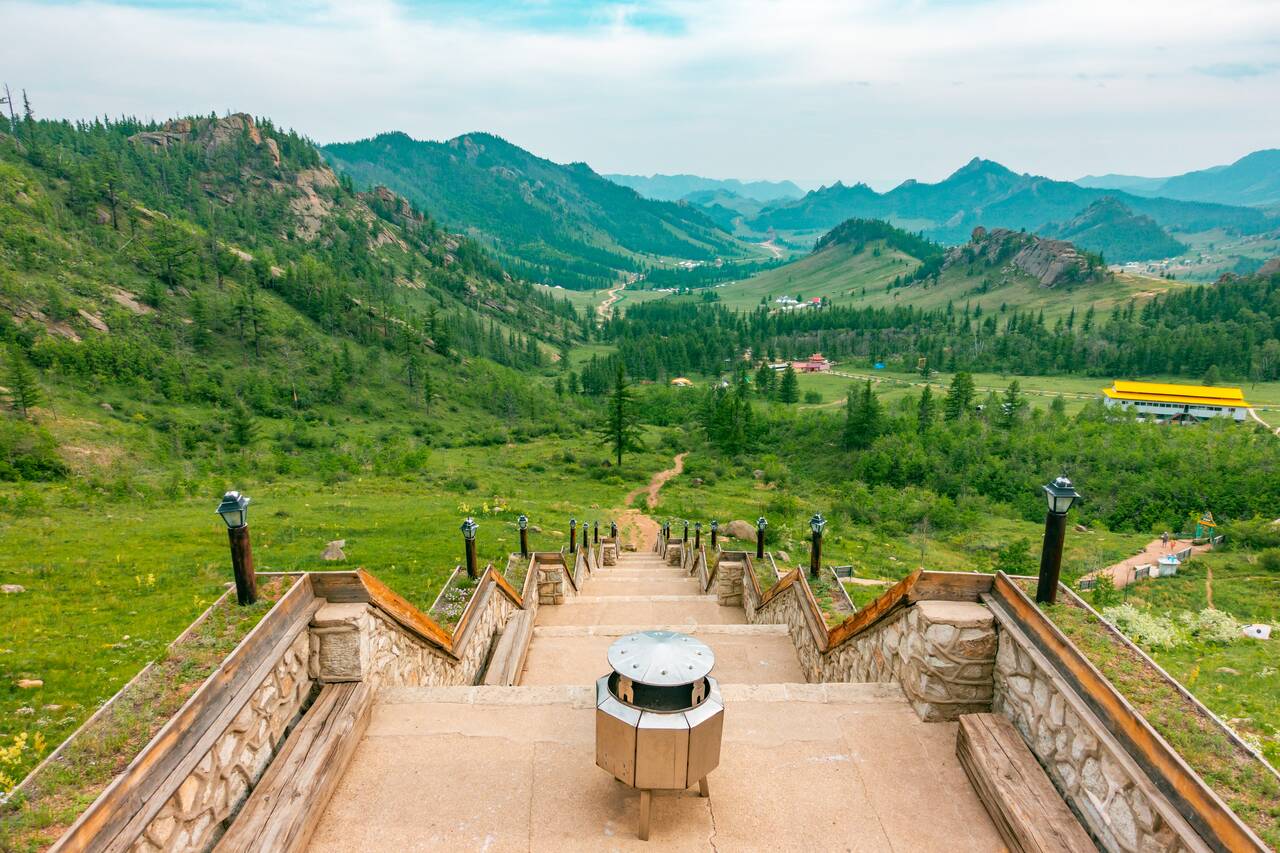
After several days sleeping in yurts in the middle of nowhere, the change in scenery and the comfort of your accommodation at Terelj National Park will feel like a welcome upgrade. Here, you'll stay in a ger that has been converted to offer hotel-level comfort, complete with all the facilities you would expect in a standard hotel room.
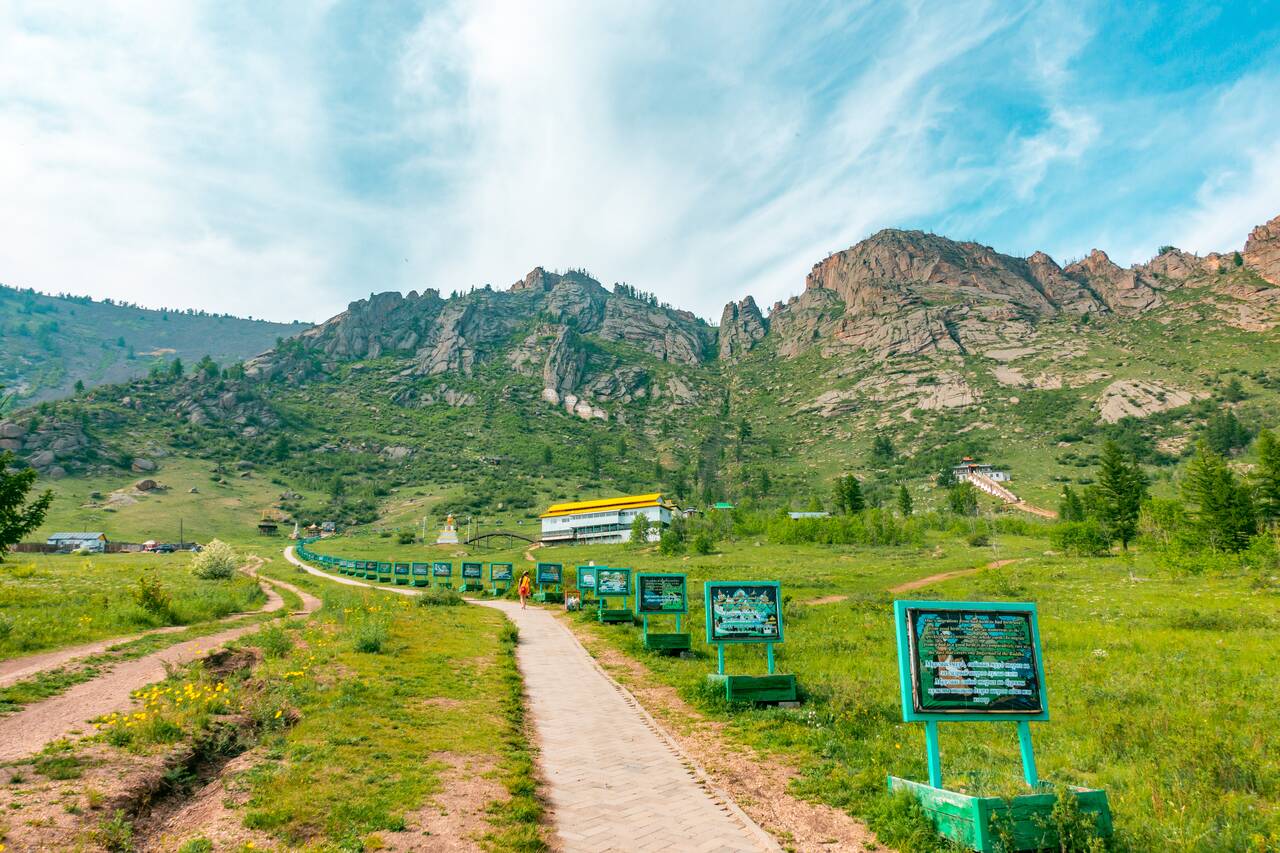
Not only that, but since the park is so close to Ulaanbaatar, it attracts far more local tourists than any other place on this itinerary, which can be quite a shock. That said, I personally enjoyed my time here, as after a week with minimal human contact, being surrounded by people and a bit of comfort was a welcome change.
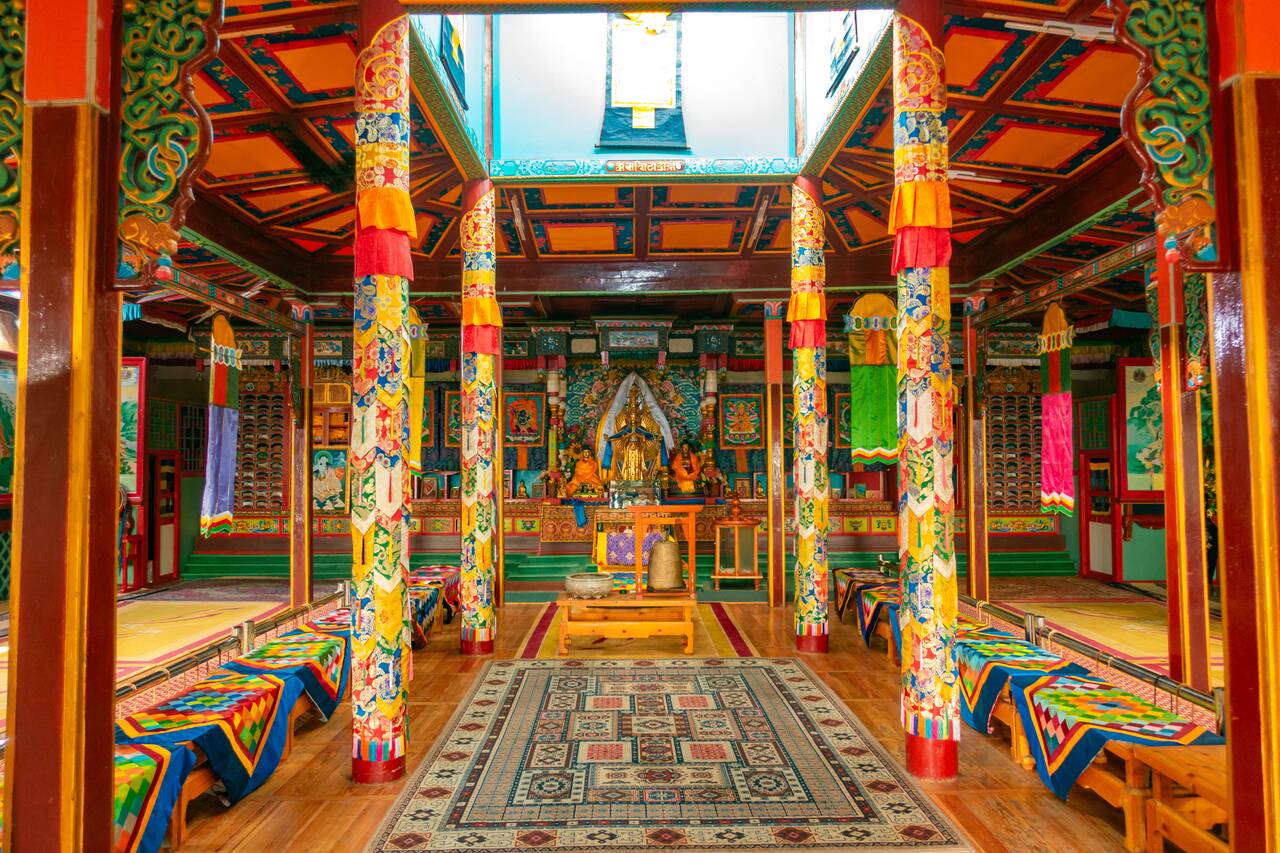
While you’re here, be sure to go and hike up to one of the temples perched on the cliffside to explore inside and enjoy a great view of the surrounding landscape.
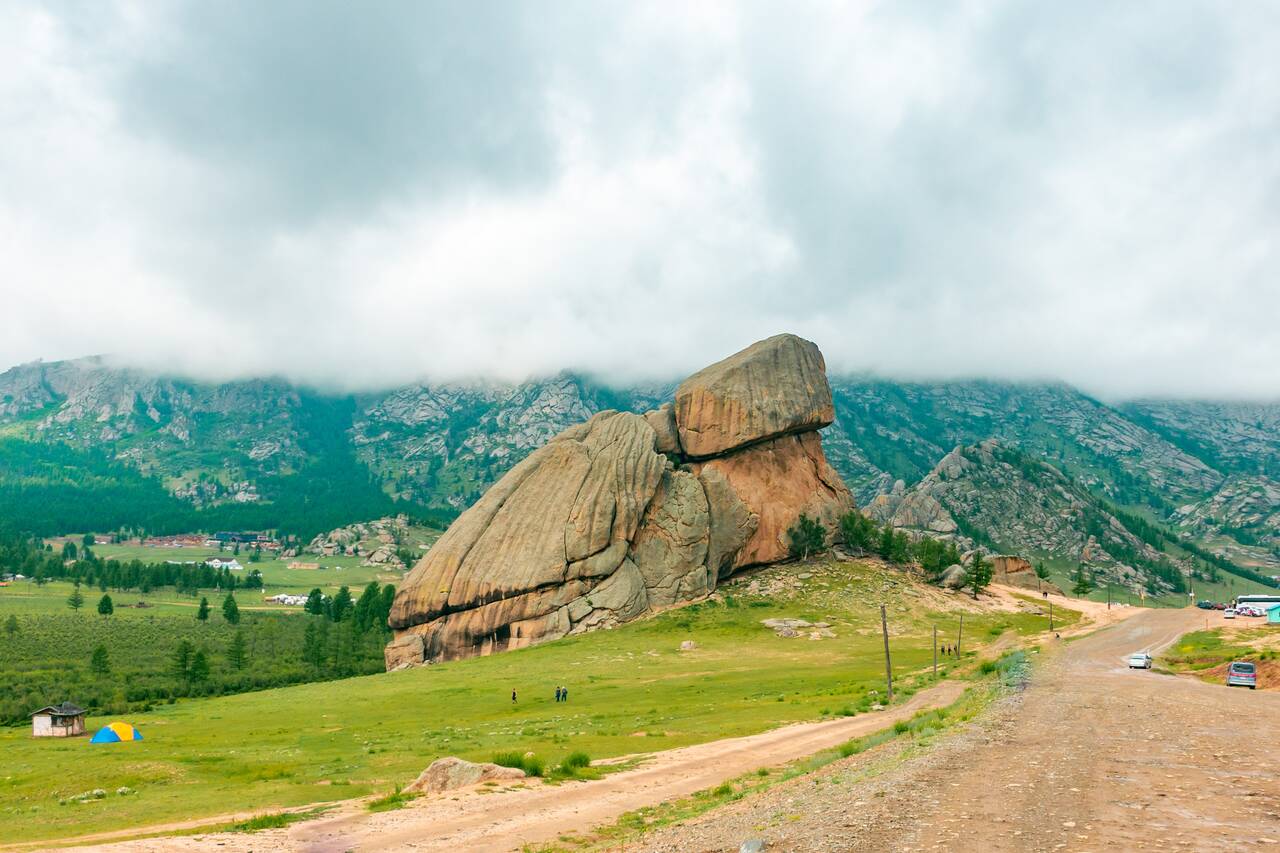
Also, if you enjoy rock climbing, be sure to try the iconic Turtle Rock. We didn’t get the chance, though, as it was pouring rain all day.
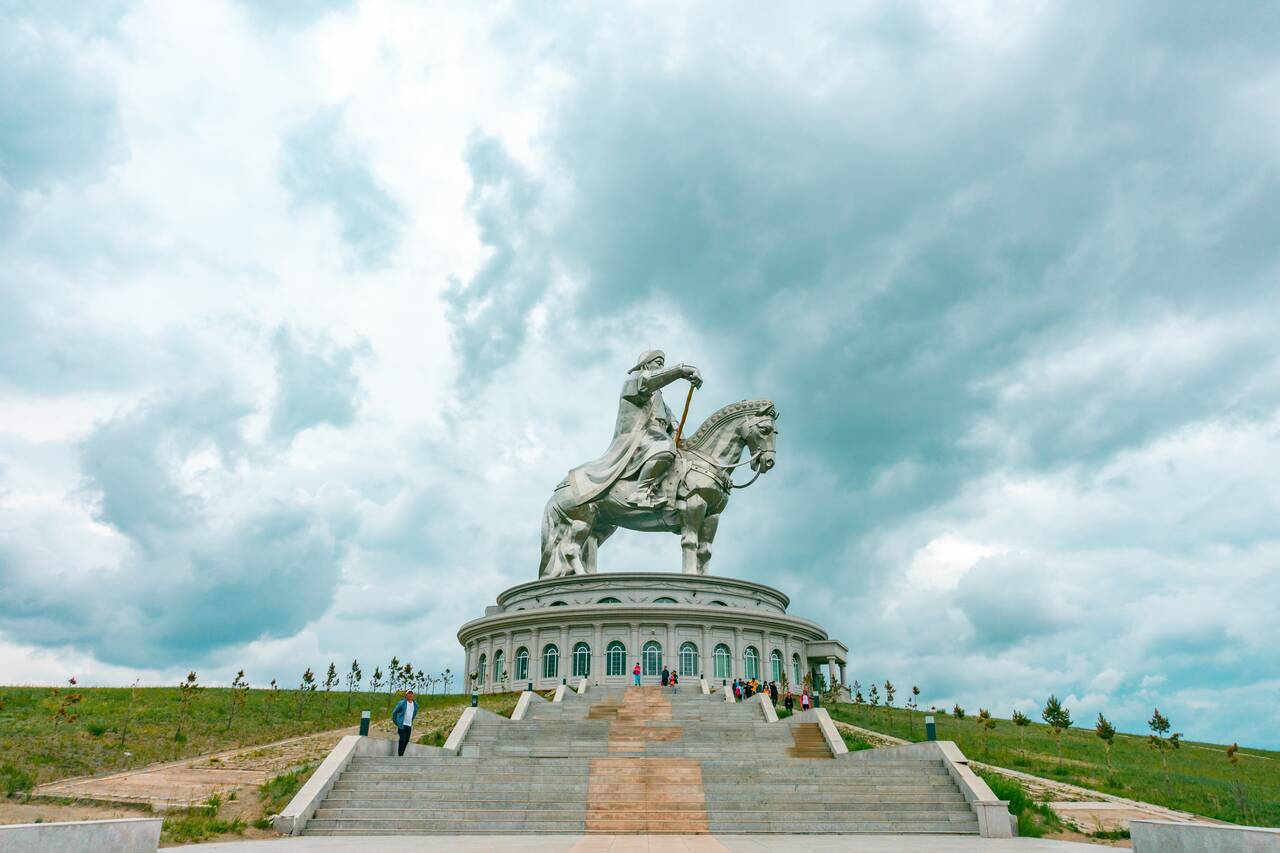
Last but not least, stop by the massive Genghis Khan statue and climb onto his horse to reach the lookout point, where you can take in the stunning Mongolian landscape before returning to Ulaanbaatar.
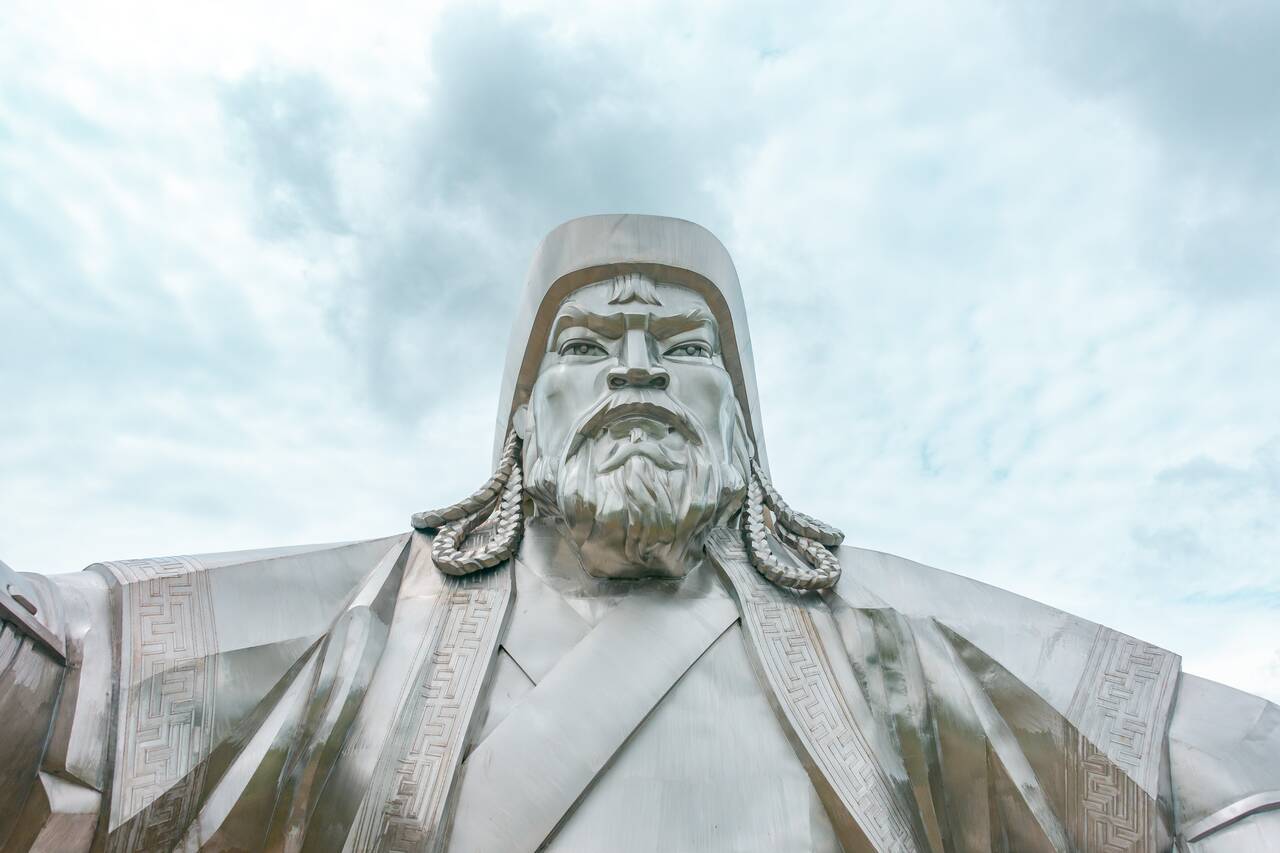
Fun fact: The Chinggis Khaan Equestrian Statue is recognized by Guinness World Records as the world’s largest equestrian statue. The stainless-steel horse-and-rider sculpture itself rises about 40 meters, with the complex reaching roughly 50 meters including its 10-meter base. You can go up through the structure to the observation deck in the horse’s head for a sweeping view of the surrounding steppe, making it a memorable final stop before returning to Ulaanbaatar.
Mongolia Travel Video
Where to Stay in Mongolia?
In Ulaanbator
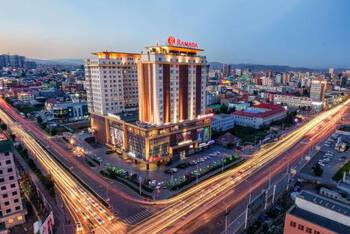
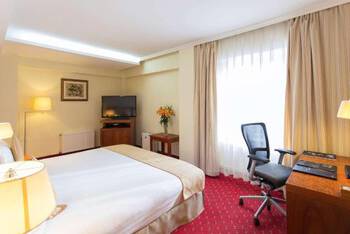
Gobi Desert
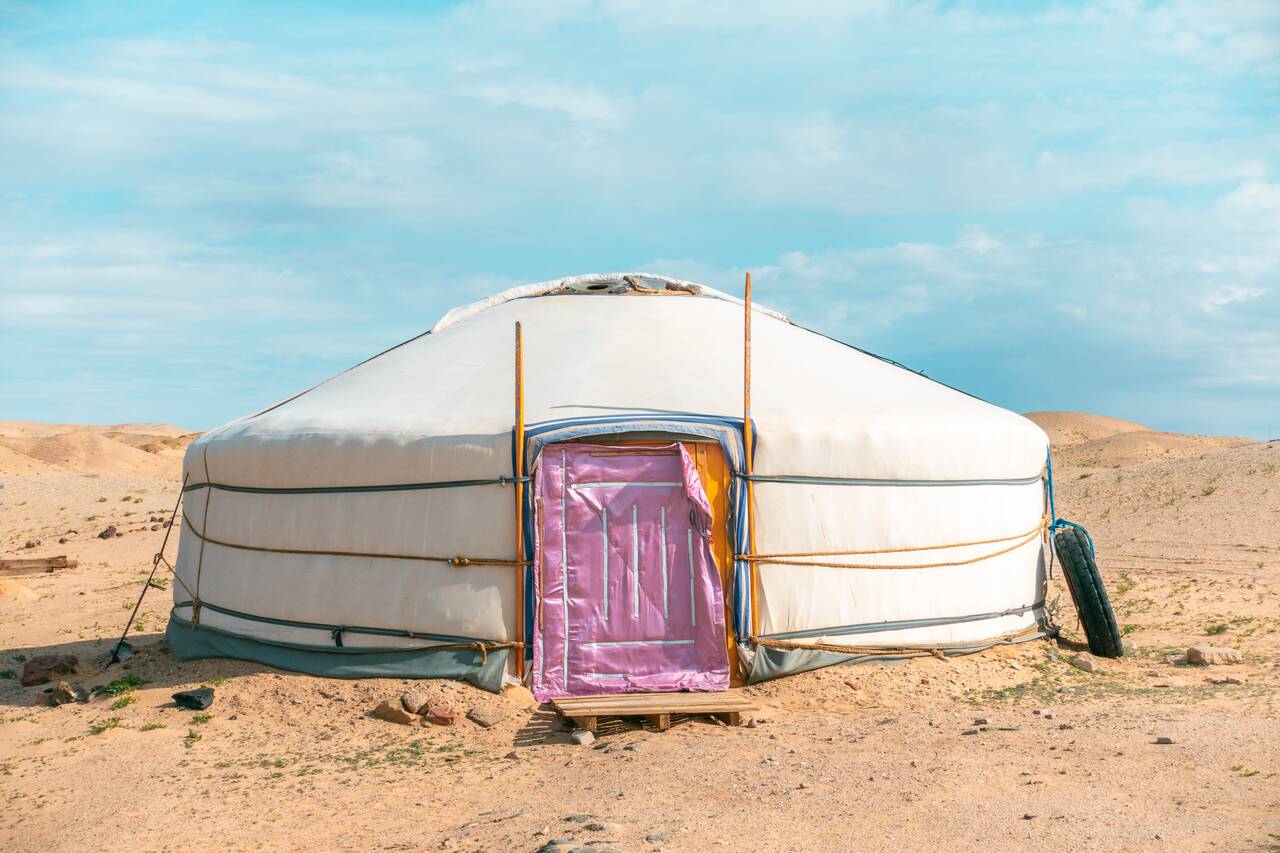
As mentioned before, you will be spending your time in a ger with the nomad families, so your version of basic needs and theirs may not coincide. That said, what they provide in the ger is more than enough to make your trip comfortable and fun.
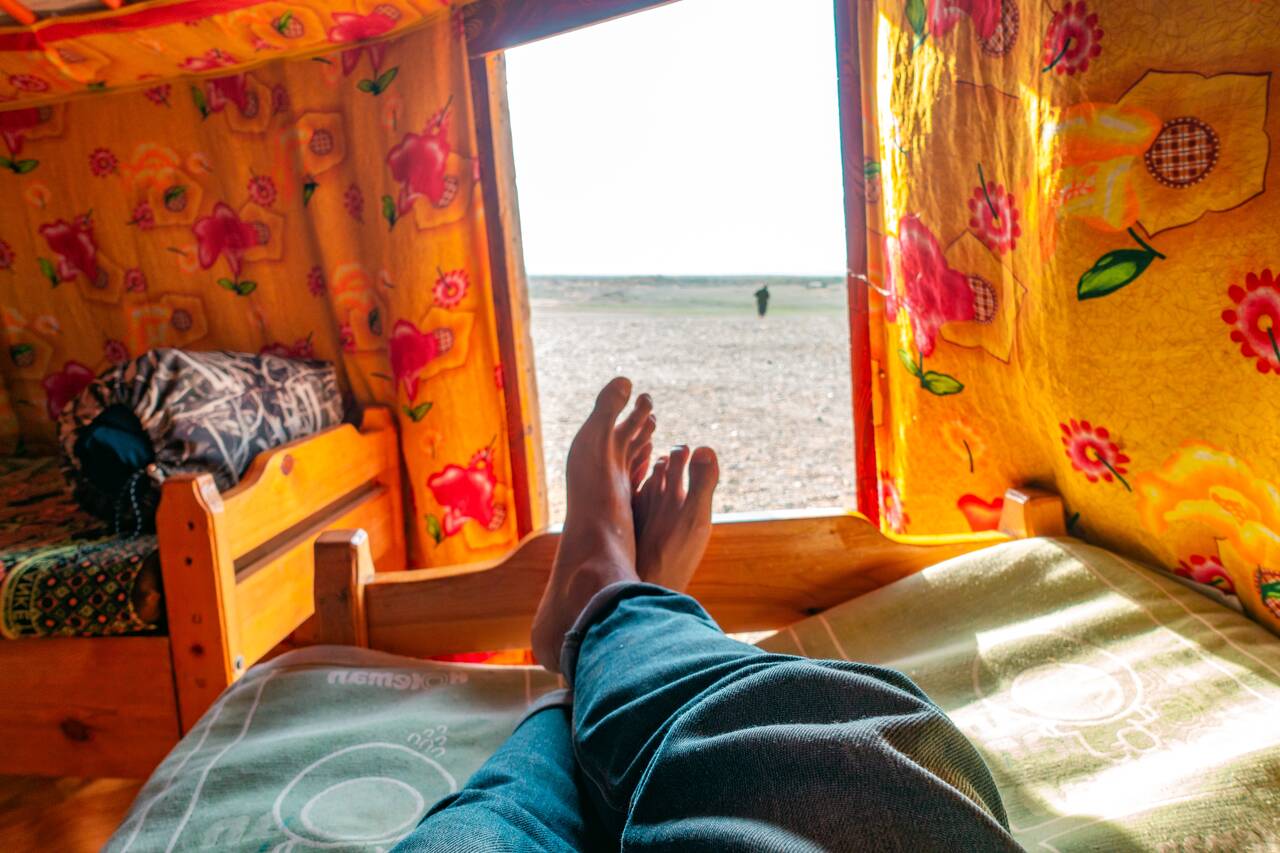
The sleeping bags are in good condition, and extra blankets are provided when required. However, there is no internet access and no power outlets whatsoever, so... talk to each other!
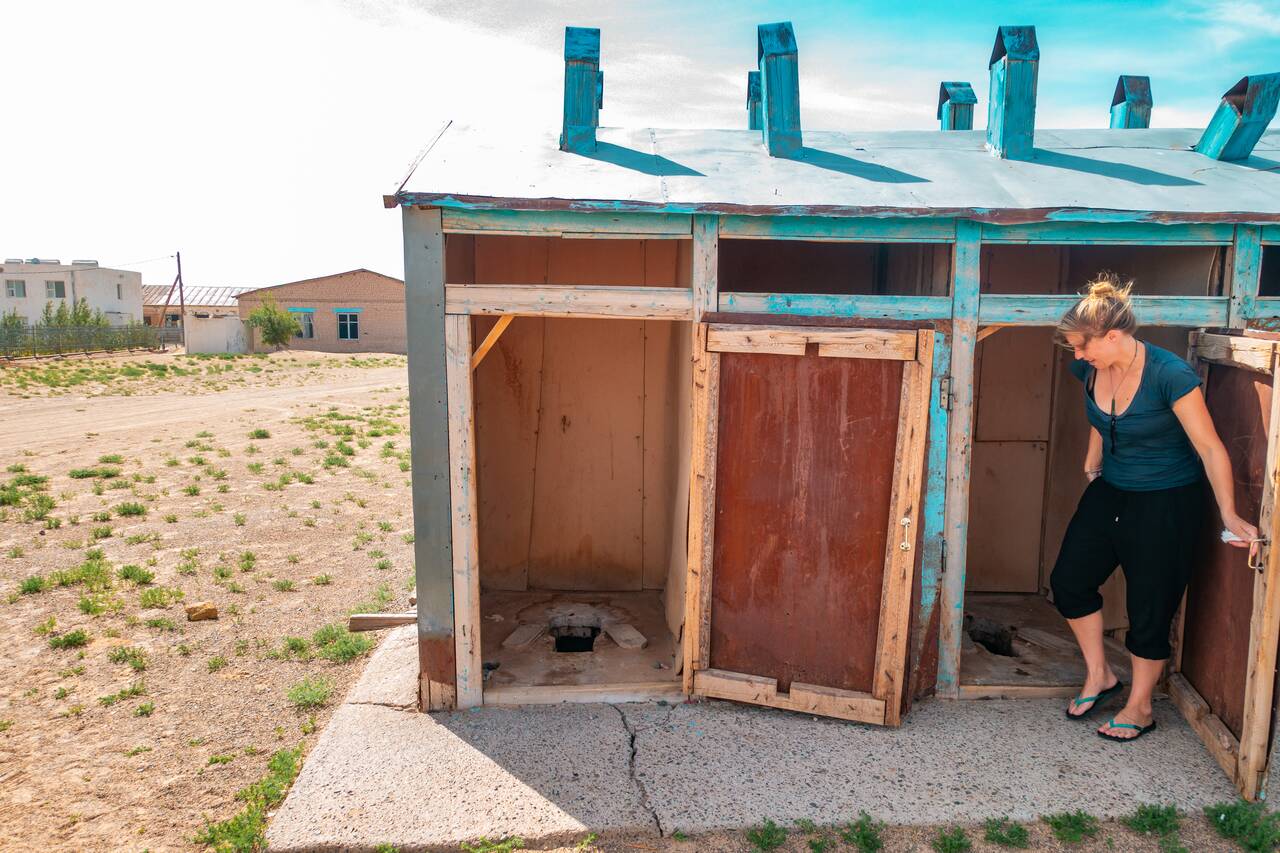
Also, brace yourself for the worst toilet you will ever see. Prepare for a long drop hole with broken wood between you and your demise, located a million miles away from your ger (not really, but it felt like it sometimes!). The plus side is that you are guaranteed to have the best view ever for a toilet!
- Sunpath Mongolia (Budget)
- Ramada Ulaanbaatar Citycenter (Mid-Range) 👍 Top Pick
- Kempinski Hotel Khan Palace (High-End)
- Nomadic Mongolia (14 days)
- Wild Mongolia (15 days)
- Essence of Mongolia - 5 Days (5 days)
Watch it on Youtube
Why Visit Mongolia?
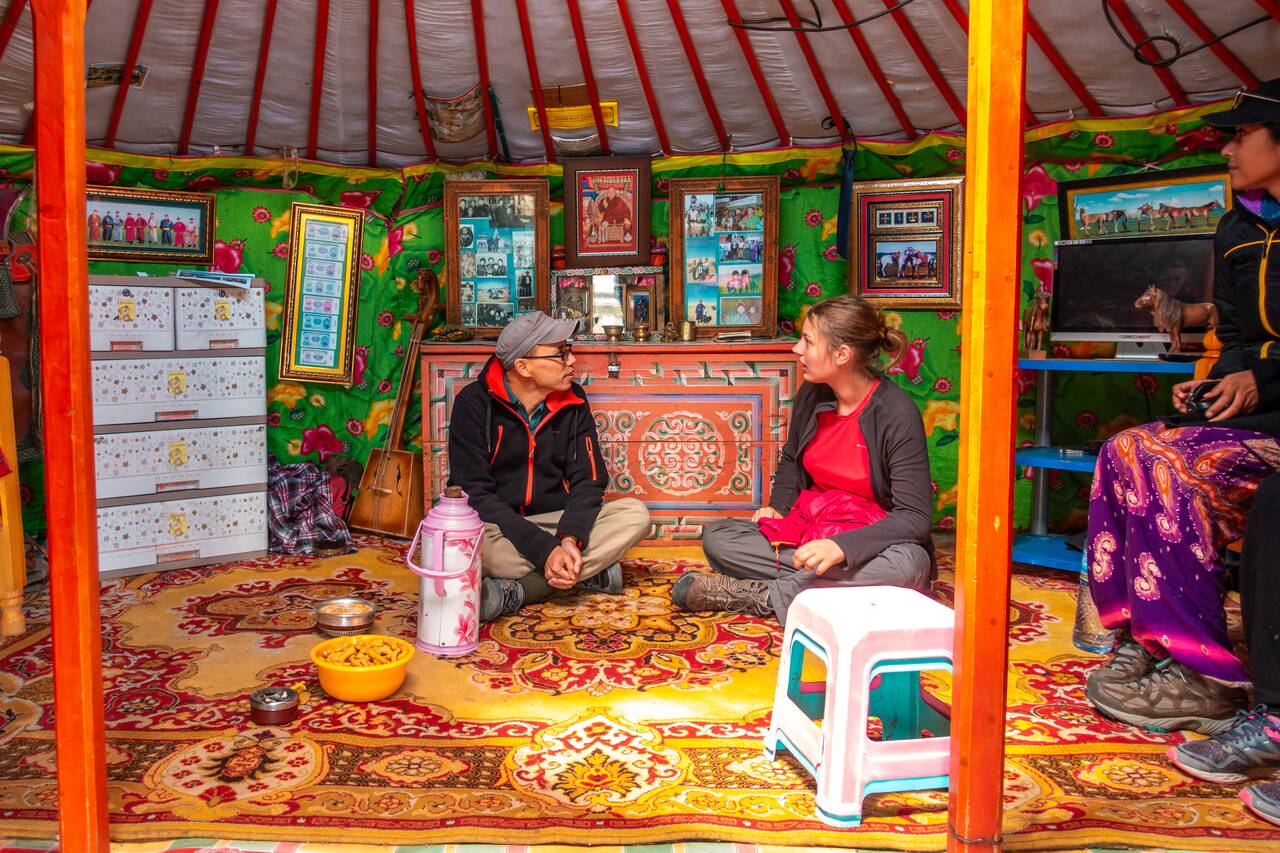
Mongolia is not a popular destination among backpackers compared to places like Thailand or Indonesia, primarily due to the expensive airfare and the fact that most backpackers prefer not to go out of their way.
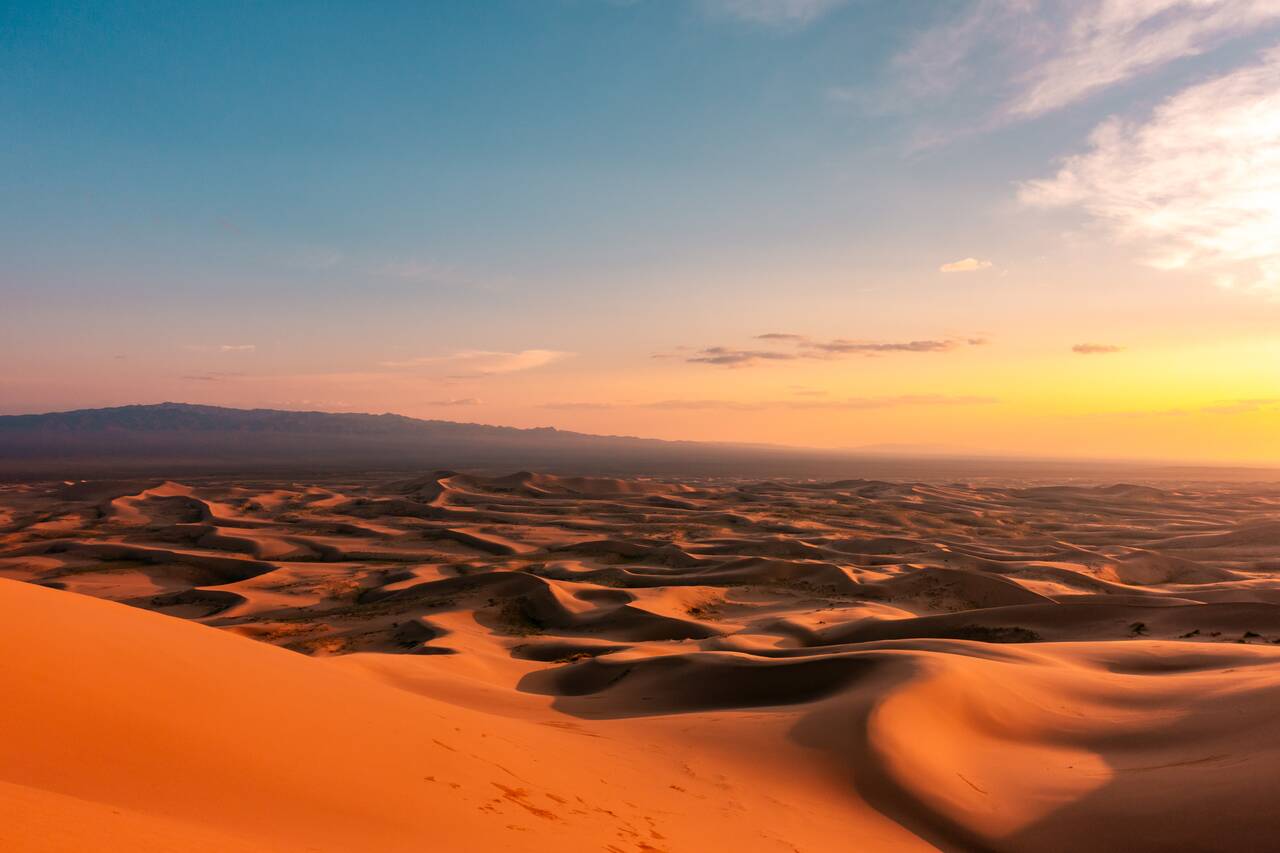
However, it is certainly not because of a shortage of beautiful places for them to explore. The advantage of this is that it preserves the country and its natural surroundings for the rest of us adventurers who enjoy deviating from the mainstream.
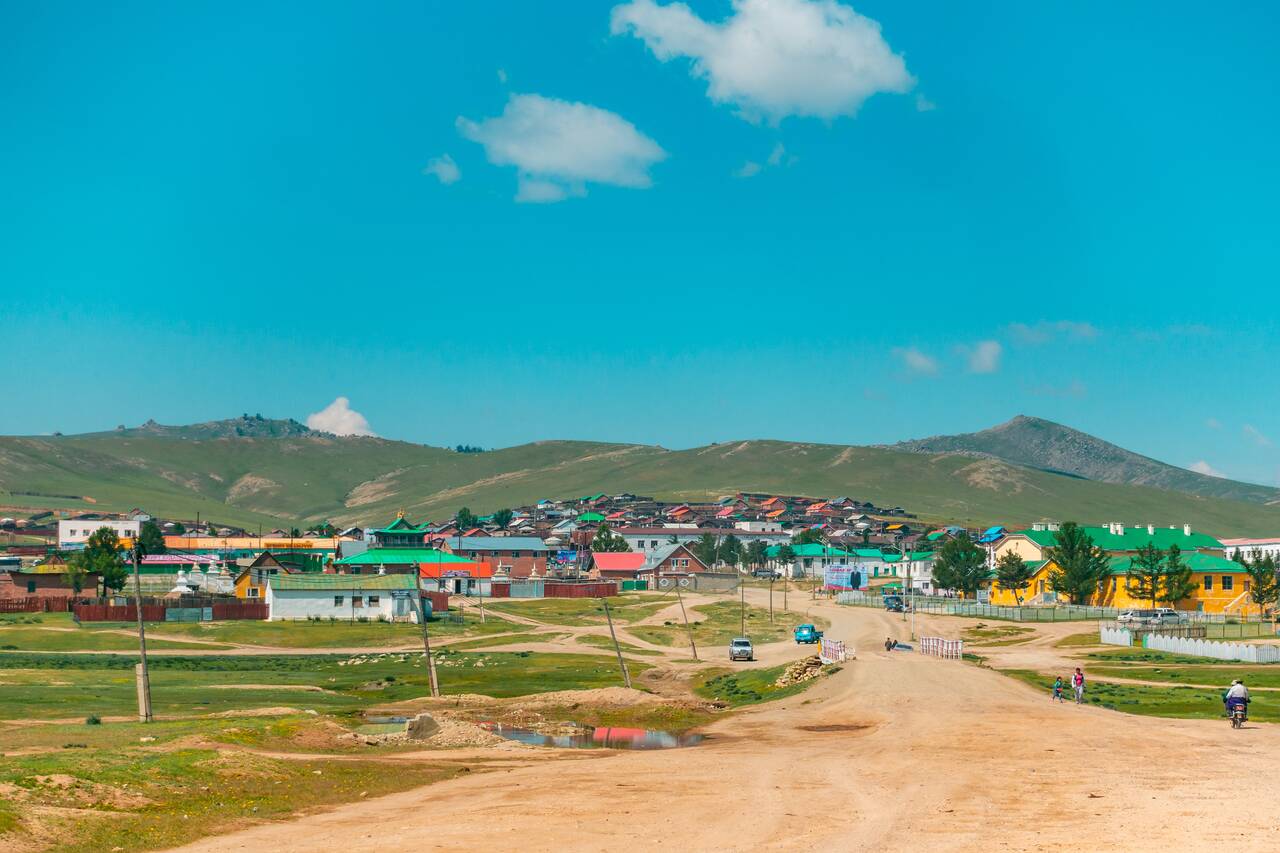
What Mongolia is well known for is its variety of landscapes, from steppes, valleys, and mountains, to deserts. In the Gobi desert, we were able to see a wide range of different landscapes, like the rainy valleys of Yol, the green rolling hills of Khogno Tarna, and the desolate rock formation of the Flaming Cliffs, all in one trip.
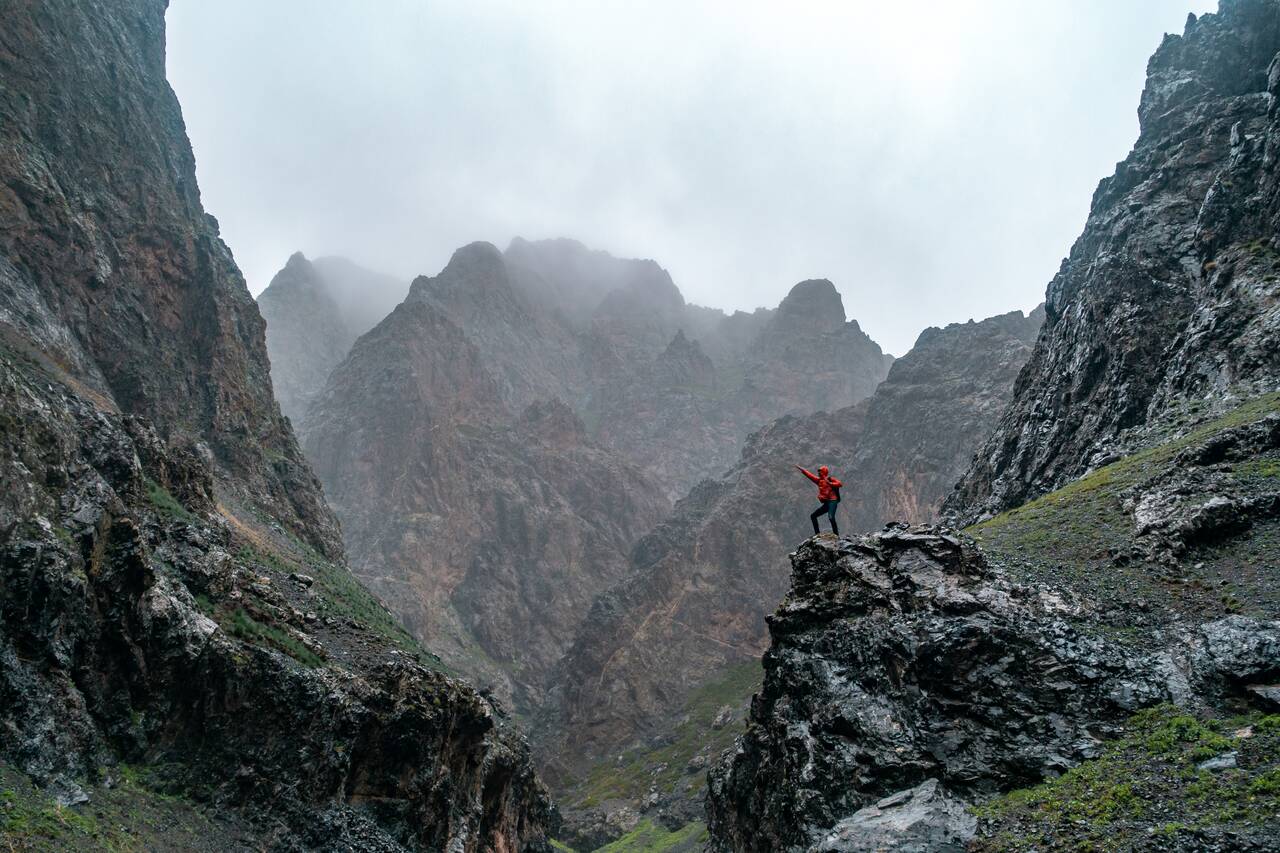
It was one of the most diverse deserts I have ever witnessed. Not to mention the century-old nomadic lifestyle they have perfected over the years, the mysterious culture of shamanism and Tibetan Buddhism, and you will get to experience all of that in the Gobi desert. Mongolia is truly one of a kind.
When to Visit Mongolia?
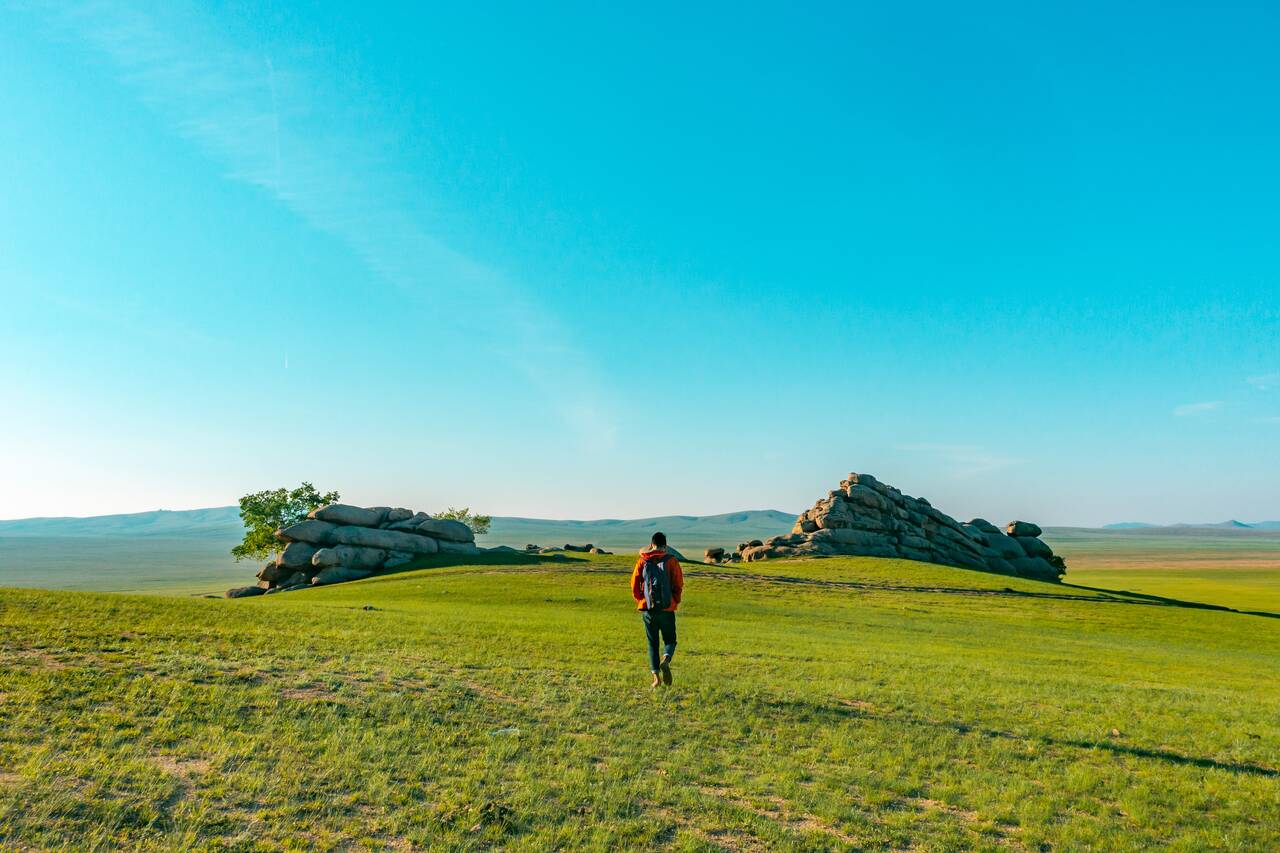
For this Gobi itinerary, June to September is generally the easiest time to travel, with warmer weather and the widest availability of tours and ger camps. July and August are the busiest months. If you can, time your trip around Naadam, Mongolia’s biggest national festival, whose main celebrations center on July 11 and feature wrestling, horse racing, and archery. Book accommodation and transport well ahead if you visit around the festival.
Winter is a completely different experience. Mongolia has an extreme continental climate, with long, intensely cold winters and temperatures well below freezing for months. Winter travel is possible and some operators run Gobi trips year-round, but it requires proper cold-weather gear and a very different itinerary, so I would stick to the warmer months for a first trip like this one.
How to Get to Mongolia?
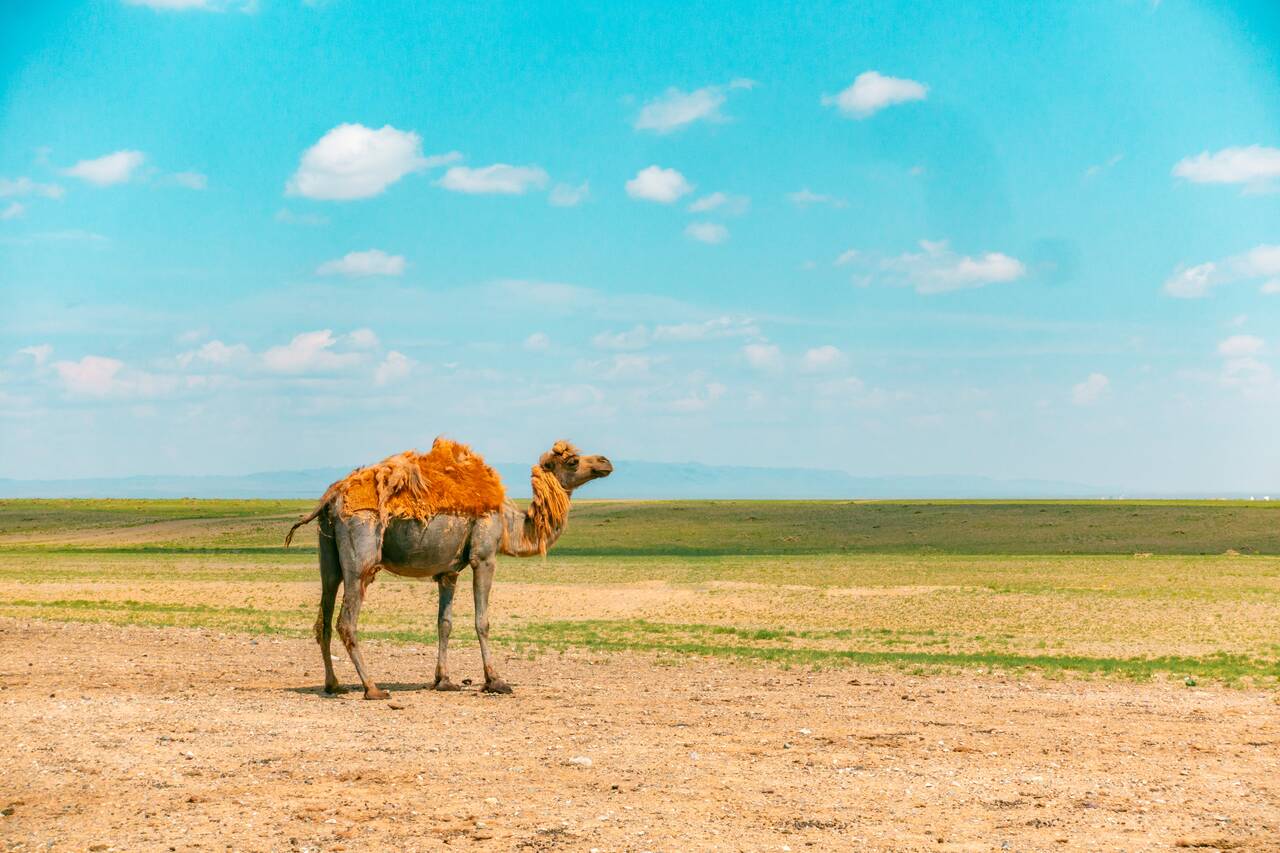
The easiest way to get here is to fly into Ulaanbaatar through Chinggis Khaan International Airport. Mongolia now has a much broader international network than it did when I first wrote this guide, with direct connections from countries including South Korea, China, Japan, Hong Kong, Turkey, and Germany, among others. I would recommend browsing through Skyscanner or Expedia for flight deals.
Before booking your flight, check the entry rules for your passport. Mongolia has its regular visa-exemption arrangements and has also extended a temporary 30-day tourist visa exemption for citizens of 34 additional countries through the end of 2026. Travelers who require a visa may be eligible to apply online for a 30-day K2 tourist e-visa. Mongolia’s official tourism site also advises that passports should be valid for at least six months from arrival.
Which tourist SIM card is best for Mongolia?
For mobile data, MobiCom currently offers tourist SIM and eSIM packages starting at 20,000 MNT for 15 GB valid for 7 days, with 15-day and 30-day options also available. Coverage can still disappear once you are deep in the Gobi, so download offline maps and anything else you need before leaving Ulaanbaatar.
Daily Budget


This location is less expensive than most countries, but it's not exceedingly cheap. Expect to spend around $30 - $50 USD per day per person, which includes both accommodation and meals.
Please keep in mind that these are suggested daily budgets based on my own style of travel, which leans more towards the budget side of things. If you aim to stick to this budget, anticipate sleeping in dormitories, dining out only occasionally, and being comfortable with the cheapest and most convenient modes of transportation, which often involve a considerable amount of walking.
What to Pack for Mongolia?
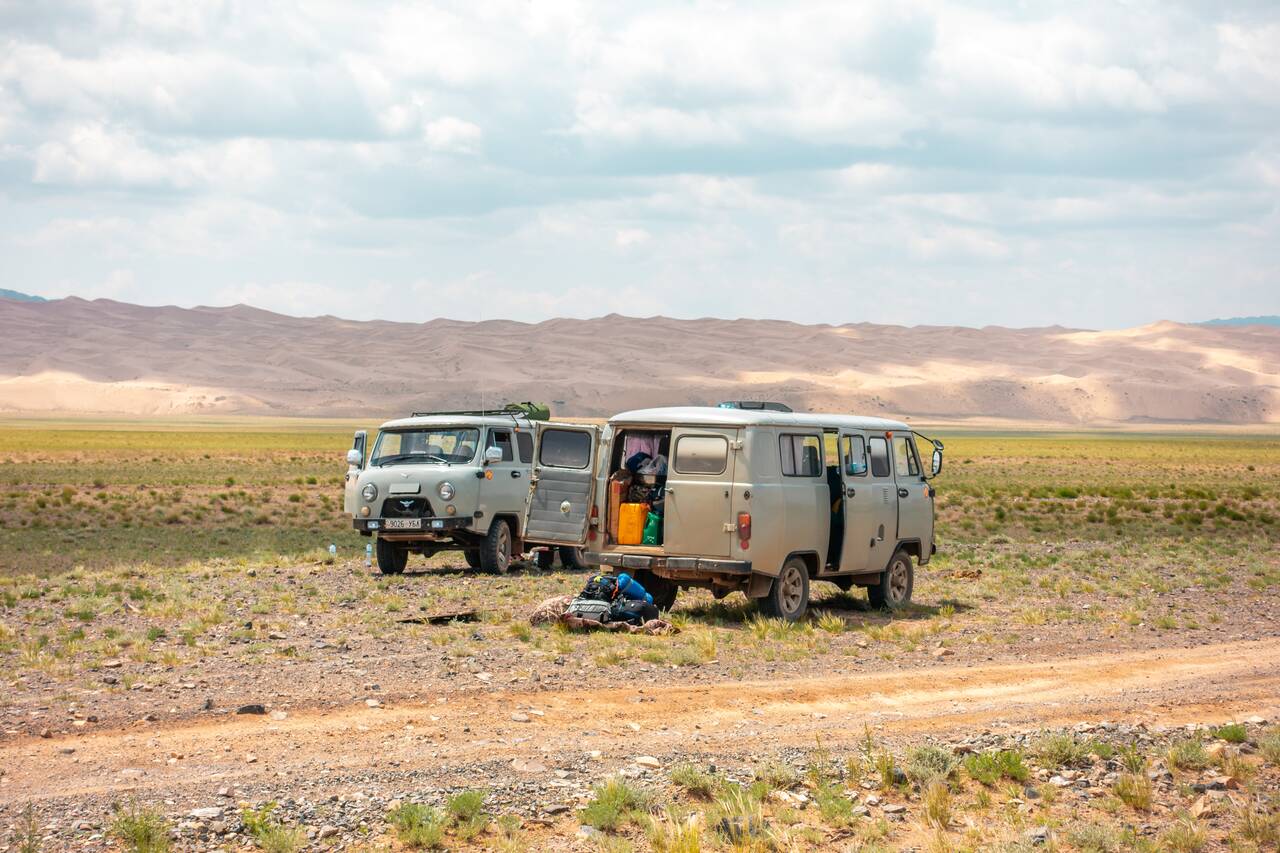
If you go with Sunpath Guesthouse's tours, your backpack will be much lighter because water, sleeping bags, and food are all provided. What you have to pack yourself is:
- Clothing for the whole trip: Pack some layers (1 fleece jacket and an outer shell jacket) as well since the desert can get really cold sometimes. Here are the jackets I recommend you get for the trip: fleece jacket and the beautiful orange Columbia outer-shell jacket.
- Snacks for the ride: Keep in mind that every day, you will be riding the jeep for at least 5 hours, so prepare your food intake accordingly.
- Toilet paper: This is very important because, in the Gobi desert, a proper toilet is a luxury, and you will most likely be shitting in holes for the rest of the trip. So, prepare your own toilet paper!
- Sunscreen: because you are in a goddamn desert!
- Headlamps: Because you do NOT want to tip a cow when you want to go to the outdoor toilet at night! I recommend you get the Cree LED headlamp.
- Power Bank: I have a 20,000 mAh power bank to keep all my electronics charged up and ready to go every morning. Even though they usually stop at a proper restaurant with power outlets every 2 days, you can bet there will be a lot of people trying to charge their stuff as well, so it's better to have a backup. I recommend you get the Anker PowerCore 20,000 mAh power bank, which should be enough for all your electronics for the entire duration of the trip.
- Camera: To capture the best landscape you will ever see! Looking for a great lightweight camera and lens for this trip? I recommend the Sony a6600 and pair it with either the 16-70mm f4 Zeiss lens or the best lens you can get for this camera, the 16 - 55mm f2.8.
- Wet wipes: because they are the next best thing to actually showering.
- Books and Music: Or any pastime activities you would like to do because you will be in the jeep most of your days.
- A Backpack: And you will need a backpack to carry everything with you for the entire duration of the trip. I highly recommend the 65L Osprey Atmos AG Backpack with its mesh grid back support that makes your backpack lighter, a good capacity to carry everything you need for your trip, and you can't beat the Osprey lifetime guarantee.
Disclaimer: This post may contain affiliate links. See our disclosure policy.
First Published:
Last updated:


30 Comments
it's an awesome review... any comments you would like to make for a family of 4 with two kids ages 10 and 5? Doable?
Yes doable. :) It depends on how you feel about sitting long hours everyday. That said, it's adventurous but not dangerous.
Photos and videos are amazing :( will I regret if I don’t bring my dslr along?
Thank you Joyce! I highly recommend you bring all the camera gear you need. It is definitely worth the extra weight. Plus, you won't see stars like in the Gobi desert so often :) Be sure to bring a big power bank though as you will only have access to electricity every 2 days or more. I had 20,000 mah and it was more than enough for my camera and phone.
Great post, so informative. Breathtaking pics. Looking forward to my trip but until then, I guess I'll have to make do with my playlist of Mongolian music: https://resfeberblog.tumblr.com/.../comongolia-mongolia...
Thanks,
Ian
Hey Ian, Thank you for the comment! :) Glad you like the post!
Hi Pete, I think your article is fantastic and you're also a really talented videomaker :)
It reminded me a lot of Stanislas Giroux's work (some examples here https://tinyurl.com/yb5n4fuf - sorry, couldn't find original source), which I'm sure you'll agree is a big compliment!
Thank you Lola! I try my best to convey my trip into the video. I hope you feel the energy too :)
Great photos! Really useful information as well. I'm going on the same tour in a month! What filter/photo editing app do you use for your photos? They look great! Cheers mate
Thank you! One of the best country i've been to so far! Very unique and refreshing! I edit them with Lightroom using the VSCO presets on my macbook but i think you can do on your mobile devices too.