


Angkor Wat has a special place in my heart. Siem Reap was the first place I traveled solo, kickstarting my entire life and career as a travel blogger of this blog, and it completely changed the way I travel forever.
Siem Reap is a small city surrounded by the remains of Angkor, the vast former capital region of the Khmer Empire, including Angkor Wat and hundreds of other temples and archaeological sites. The temples themselves were impressive, but what caught my attention was the sophisticated network of reservoirs, canals, and waterways that supported the enormous urban landscape around Angkor.
Angkor Wat is the largest religious monument in the world and the best-known monument within the UNESCO-listed Angkor Archaeological Park.
Years before my trip, I watched a documentary called "Angkor Wat: City Of The God Kings". As a history buff, I was so intrigued by what I learned from the documentary that I made a promise to myself that one day I'd see Angkor Wat with my own eyes.
Driven by my curiosity and determination, I chose Siem Reap as my first destination because of the sheer amount of history I can learn about, explore at my own pace, and see with my own eyes.
If you are interested in seeing Siem Reap, Angkor Wat, and all its stunning temples, I can assure you that you will find this travel guide particularly useful.
Within this guide, I will provide you with all the information you need to travel to Siem Reap and see all the cool temples, some even a little off-the-beaten-path. Without further ado, let's begin with a 3-day itinerary map for Siem Reap.

3 Days in Siem Reap Itinerary Map
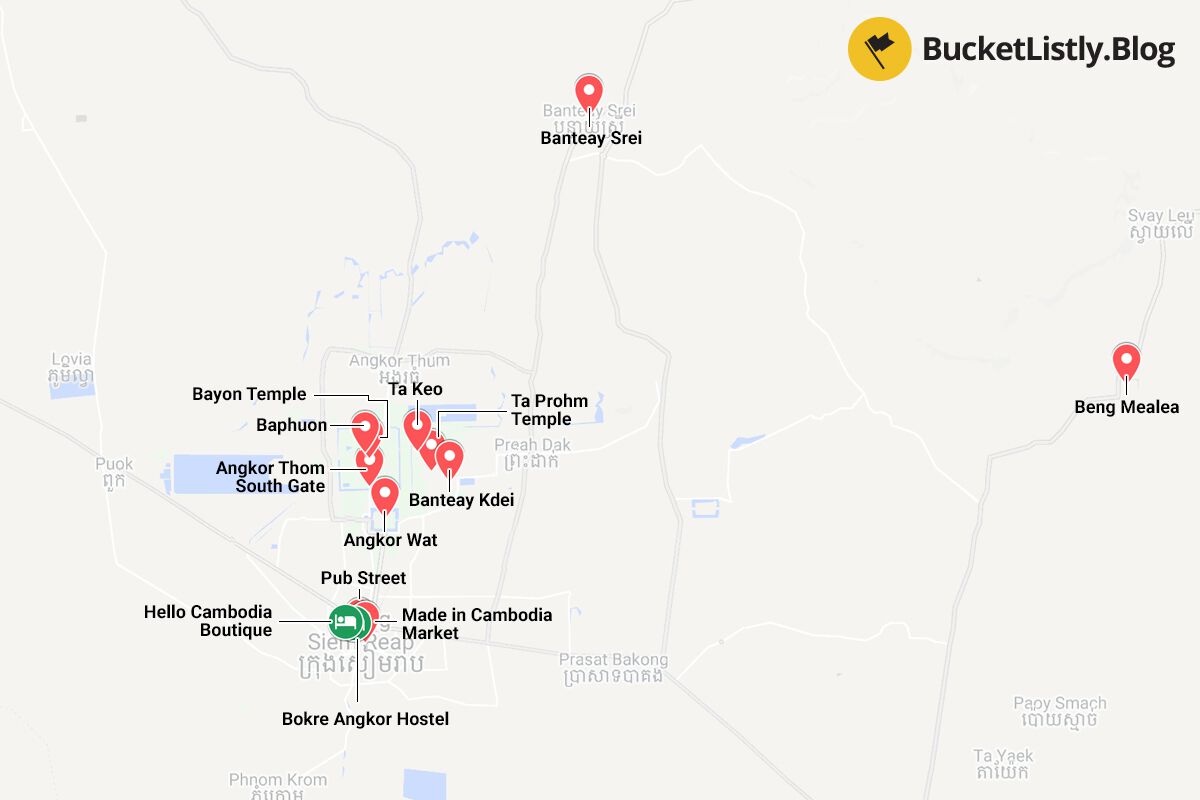
Quick Summary
| ☀️ Day 1: | Sunrise at the Angkor Wat |
|---|---|
| ☀️ Day 2: | Visit Beng Mealea |
| ☀️ Day 3: | Relax Day |
Tips: You can now buy the Angkor Wat Pass online prior to your trip. Be sure to get it before you begin your journey.
3 Days Siem Reap, Cambodia Itinerary
Day 1: Sunrise at the Angkor Wat
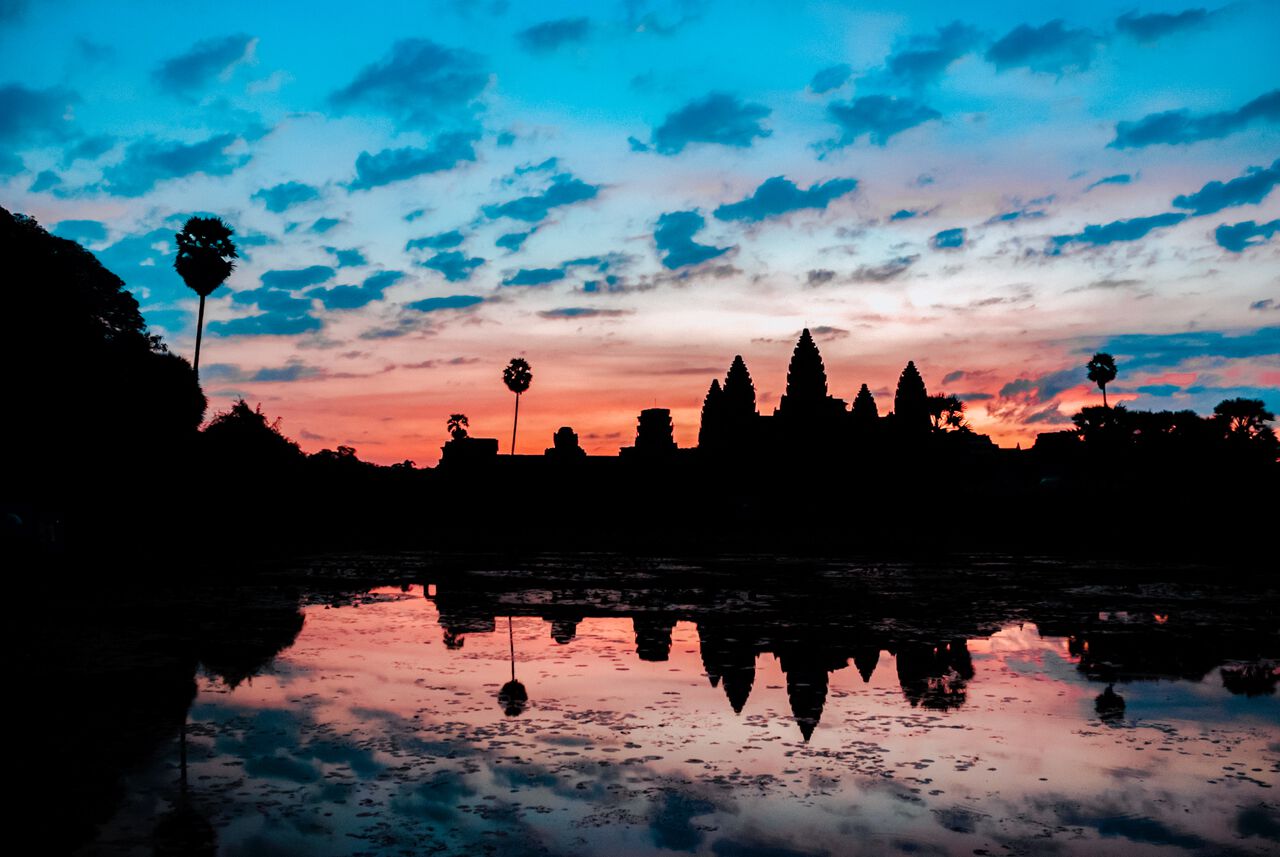
One of the most touristy things you can do in Siem Reap is to go watch the sunrise at Angkor Wat, and you will see a ton, and I mean a sh*t ton of tourists in front of a pond, trying to get that stunning sunrise photo.
It was definitely not my cup of tea to be around so many tourists, all eager to get that one magical shot, but I gotta admit, it's pretty damn stunning when the pond reflects the Angkor Wat, giving an image of a perfectly symmetrical structure. That is why I still recommend you to go see it for yourself.
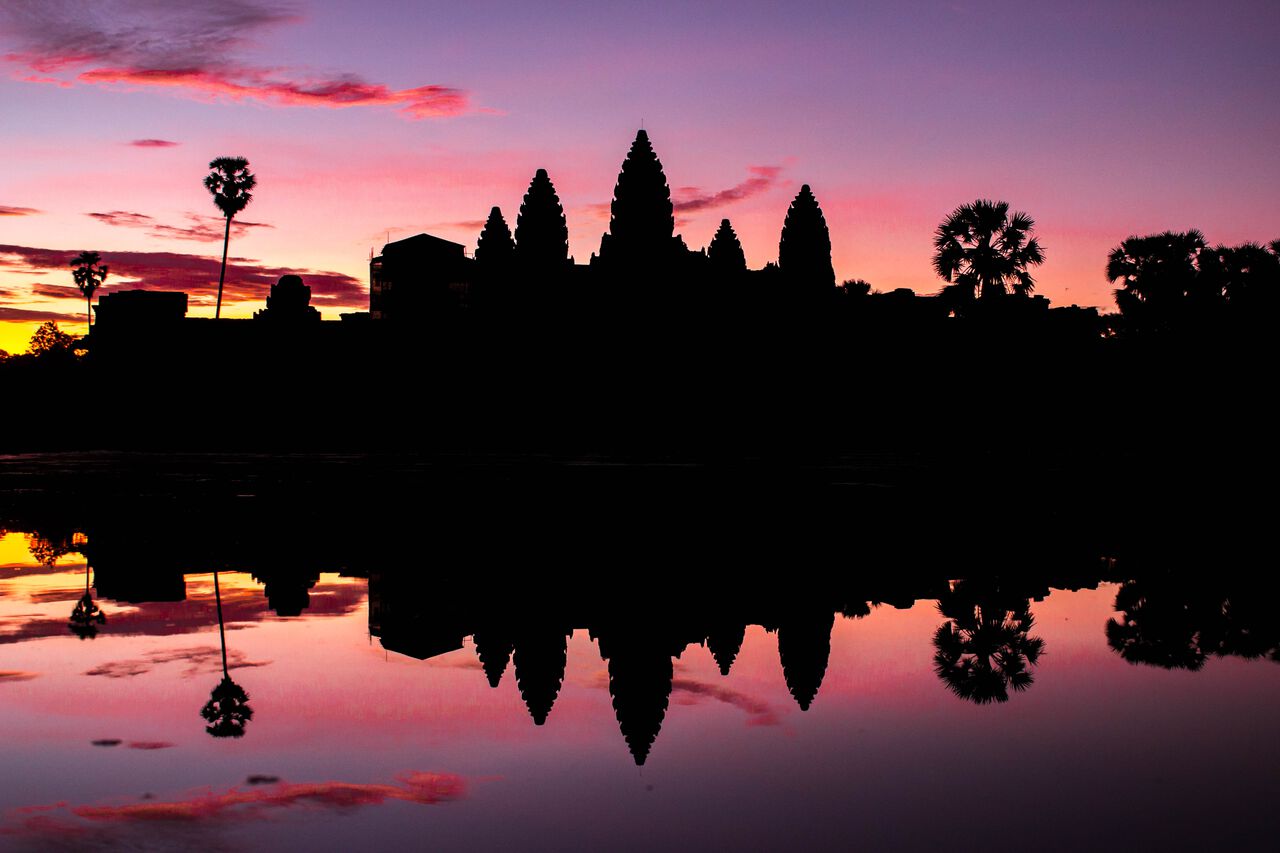
I often face the dilemma of whether to do or not to do touristy things, and I always tell myself this: "I got myself all the way here, so I might as well just do it." And this is definitely the case.
- Bokre Angkor Hostel (Budget)
- Central Indochine D'angkor Hotel (Mid-Range) 👍 Top Pick
- Golden Temple Boutique (High-End)
- Private 2-Day Tour Temples with Sunset and Sunrise (2 days)
- Small-Group Explore Angkor Wat Sunrise Tour with Guide from Siem Reap (8 hours)
- Sunset tour of Kampong Phluk stilts home village on the Tonle Sap (5 to 6 hours)
I know the number of tourists will annoy me to no end, but it is popular for a reason, and that reason transcended my petty hate for touristy things. Keep your mind open when visiting Angkor Wat and its sunrise; look away from the tourists and experience Angkor Wat at sunrise as it is. You will enjoy it more. 😉
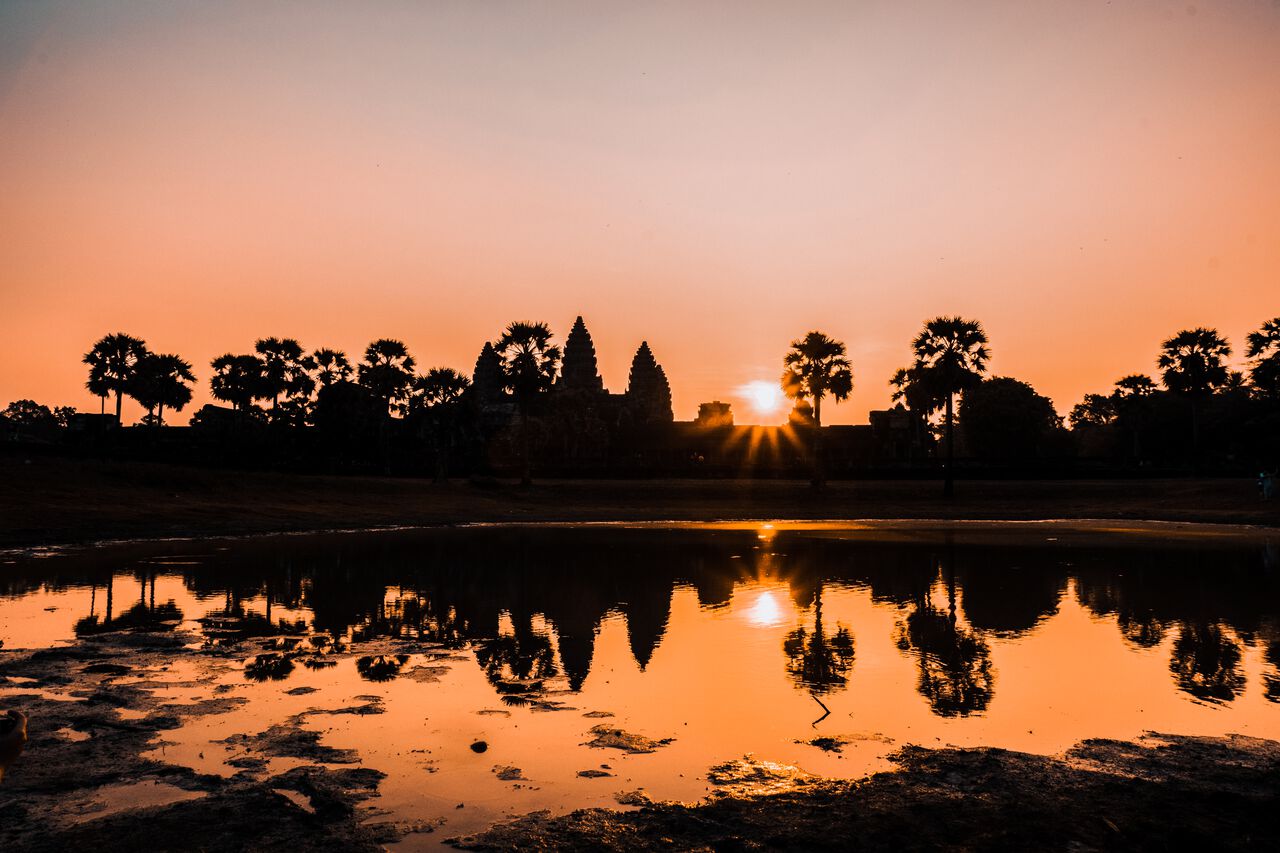
I also got tipped by a friend that there are actually 2 ponds: the left one where everyone goes by default, and the right one that may not be known by many. You can try your luck and go straight to the right pond, and maybe you might be able to see fewer tourists.
Day 1 (cont): Go for a morning stroll in Banteay Srei
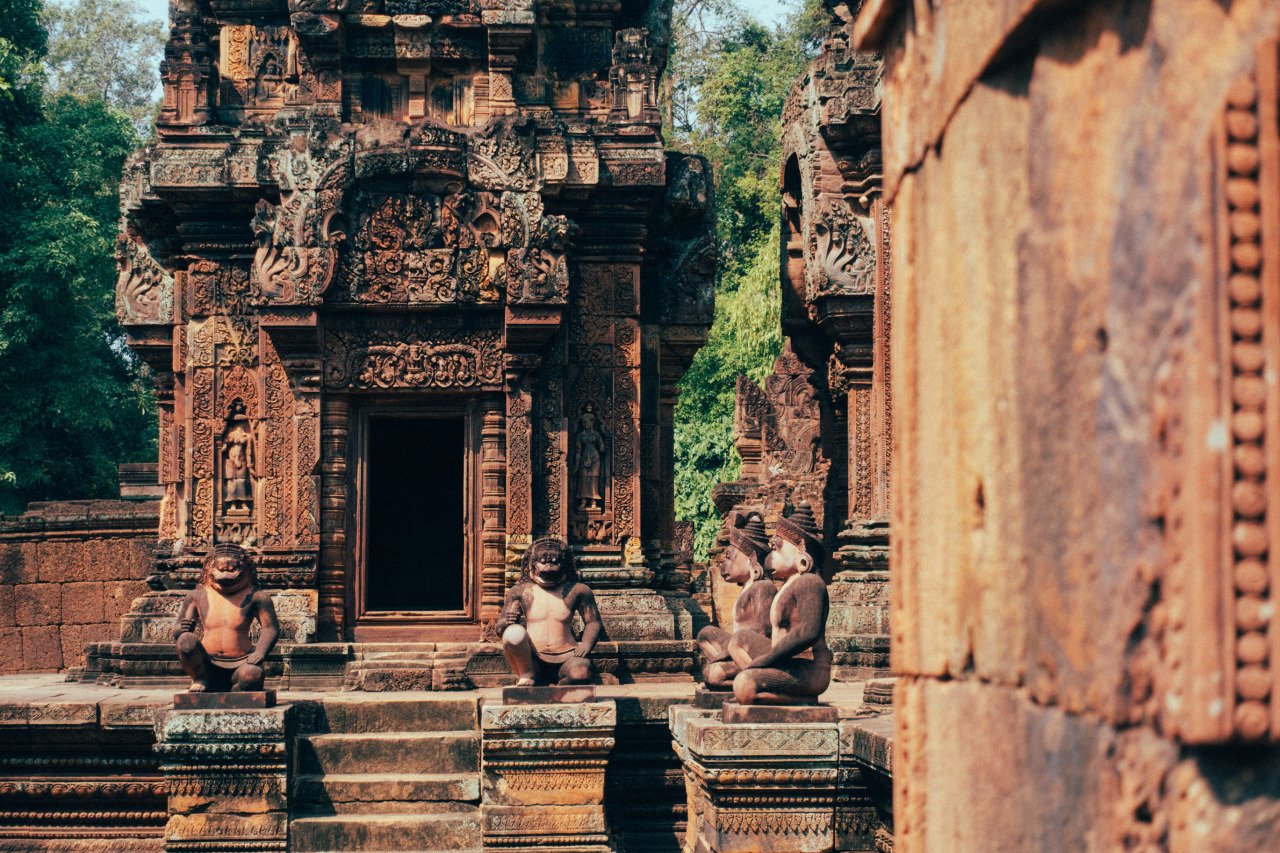
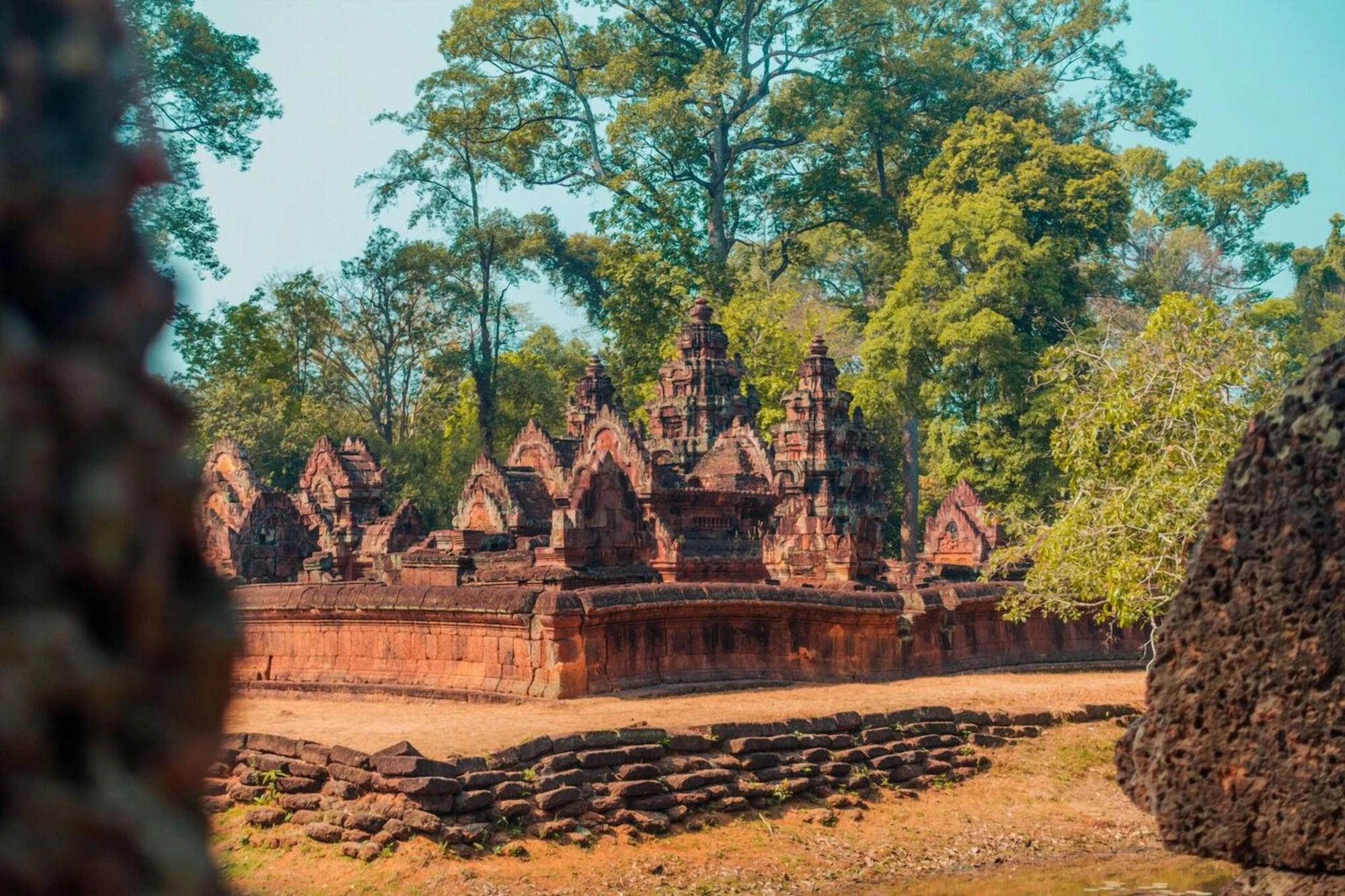
After watching Angkor Wat at sunrise, hop on the tuk-tuk and visit Banteay Srei, a stunning 10th-century Cambodian temple built with red sandstone, giving it a completely unique look compared to what you just saw at Angkor Wat.
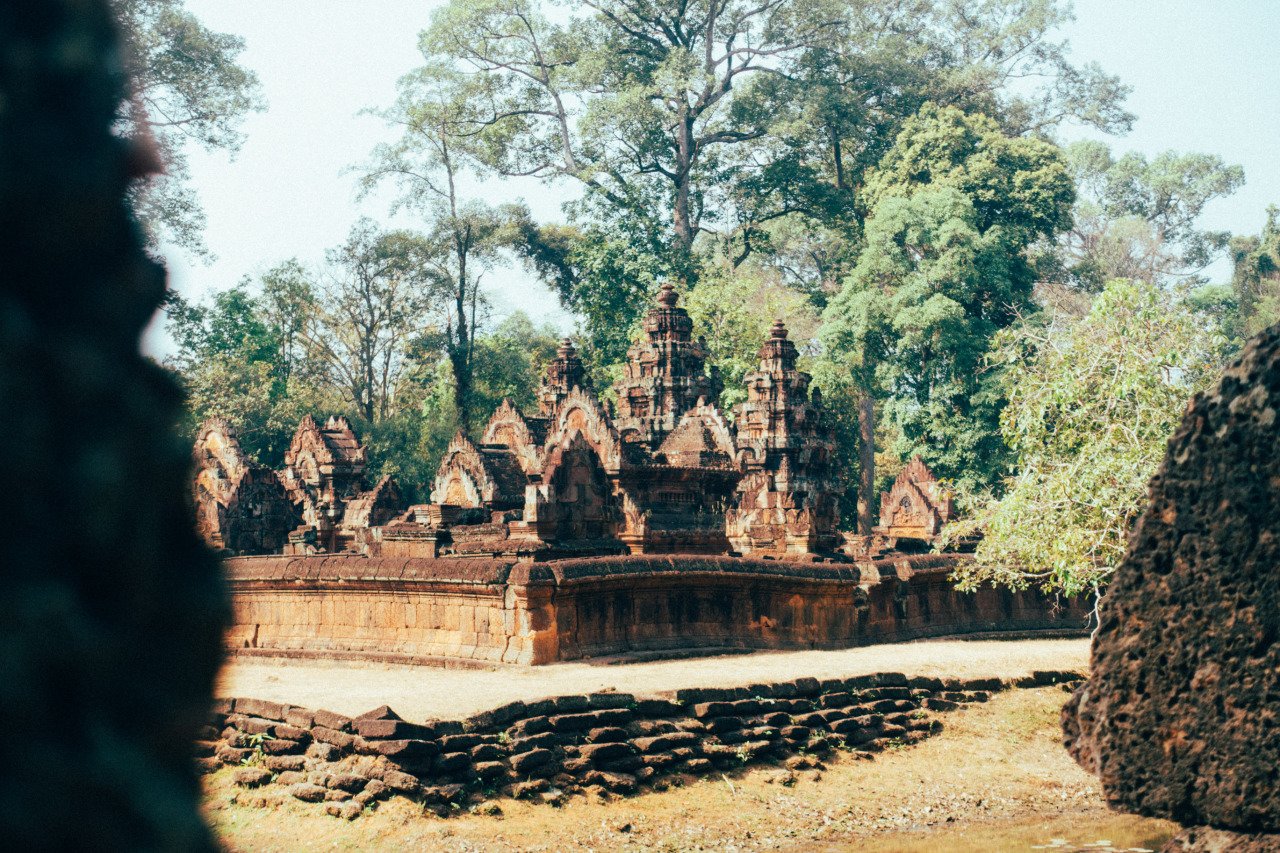
The reason why I would recommend you visit Banteay Srei early in the morning is that this place is mostly exposed, and you will enjoy strolling around the temple more when the sun is not completely up, and the weather is cooler.
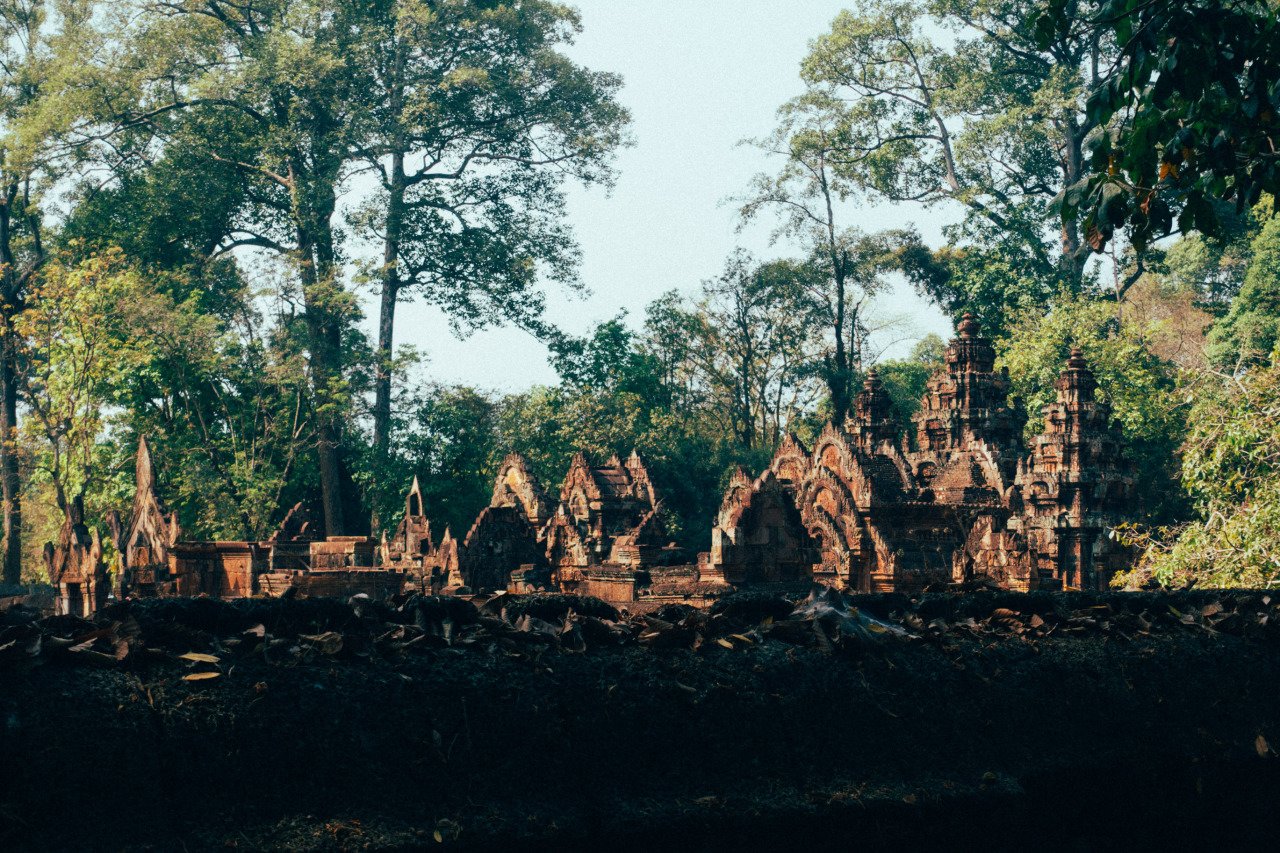
There will also be fewer tourists in the morning before 9 AM when the tour buses arrive, which should give you some time to enjoy the temple in peace at your own pace and explore all the intricate details of the temple.
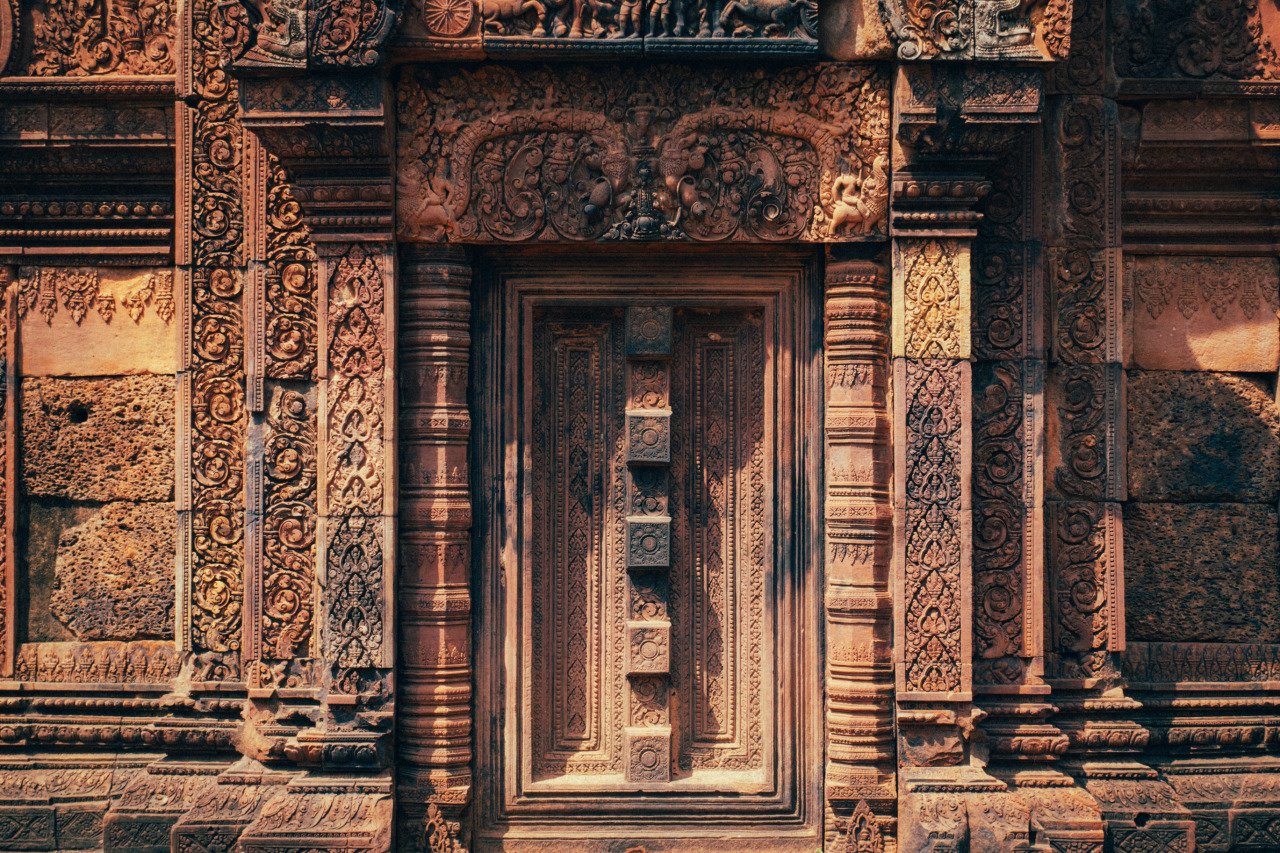
And boy, is it extremely detailed. The elaborate decorative wall carvings on the temple of Banteay Srei show just how much of an expert in carvings the Angkorians were. They were really at the top of their game.
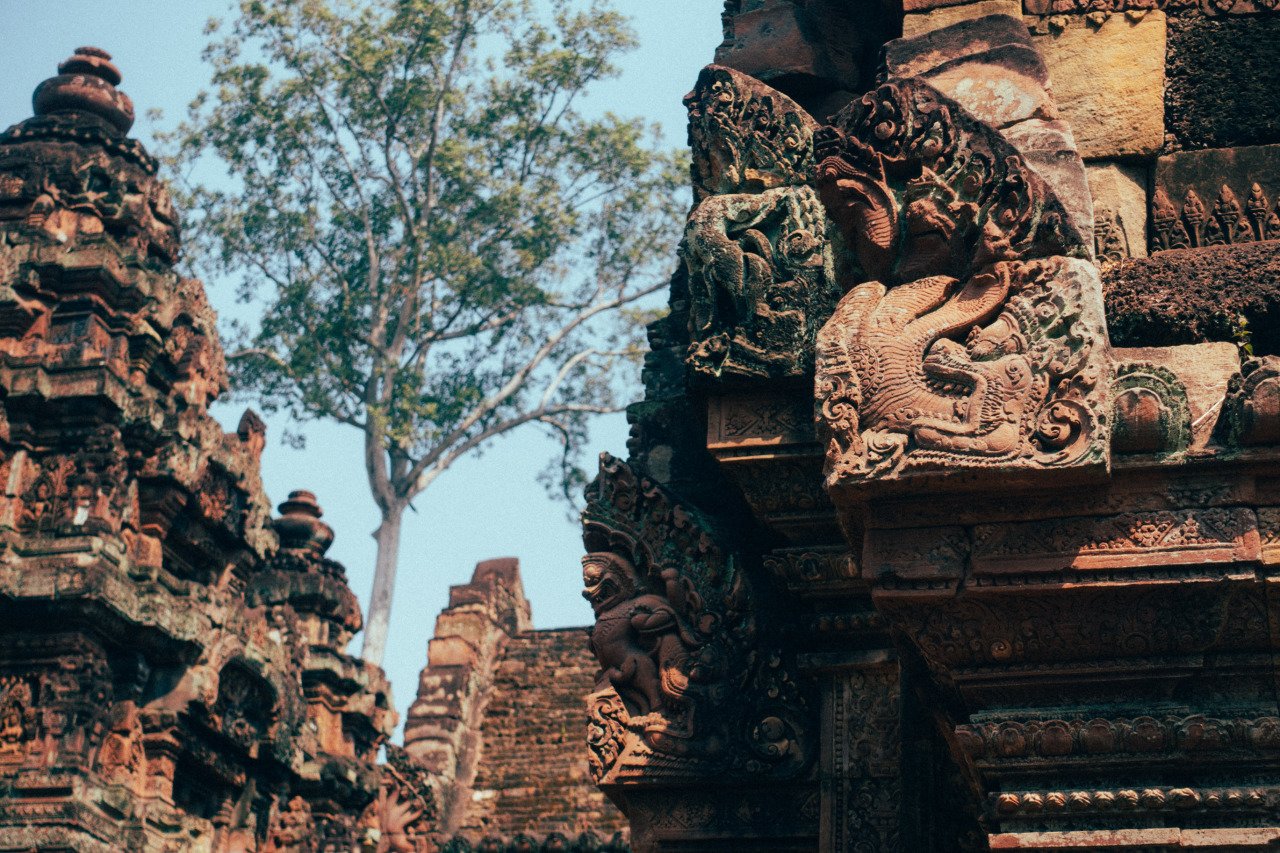
Almost all of the surfaces you find in Banteay Srei are covered in intricate carvings, which mostly depict mystical creatures, protectors, and Hindu gods and goddesses.
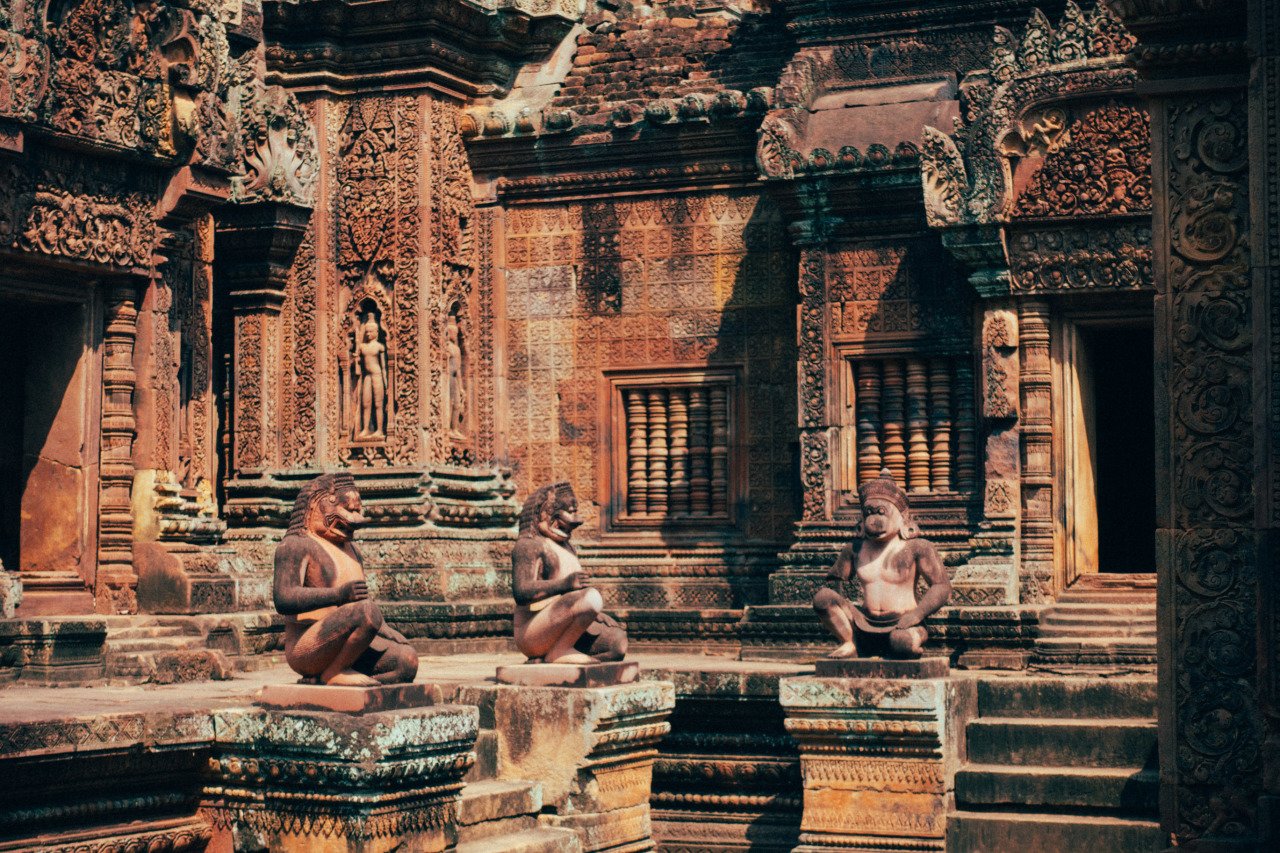
You can spend almost an hour or two walking around the temple, discovering all the details of the carvings on the walls and doors of Banteay Srei. You might also be there at the same time as a local band performing traditional music, adding even more immersion to your experience.
Day 1 (cont): Visit all the Temples in and around the Walled City of Angkor Thom
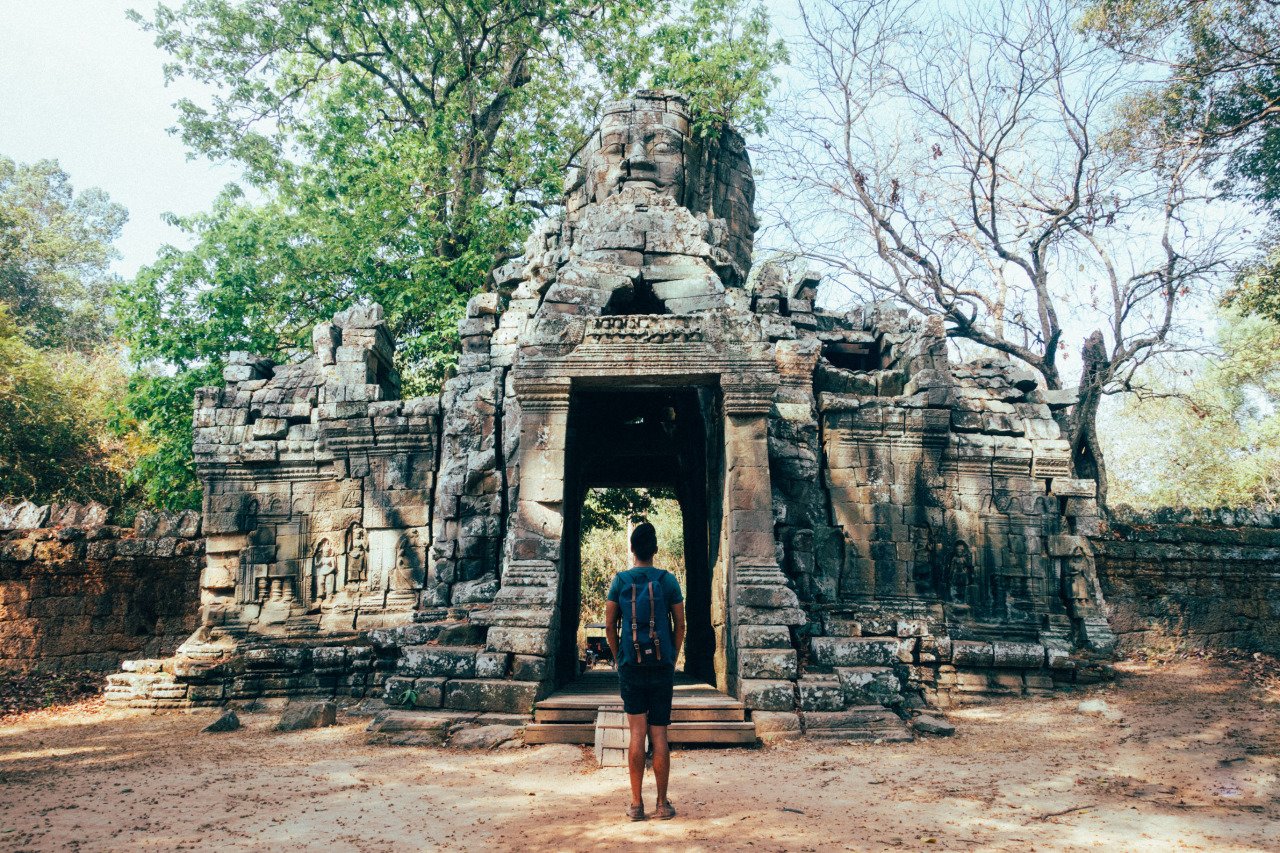
After visiting Banteay Srei, return to Siem Reap and begin exploring the numerous temples in the area. Start with Banteay Kdei, a temple built in the Bayon style architecture during the 12th - 13th century AD. It was originally constructed as a Buddhist temple.
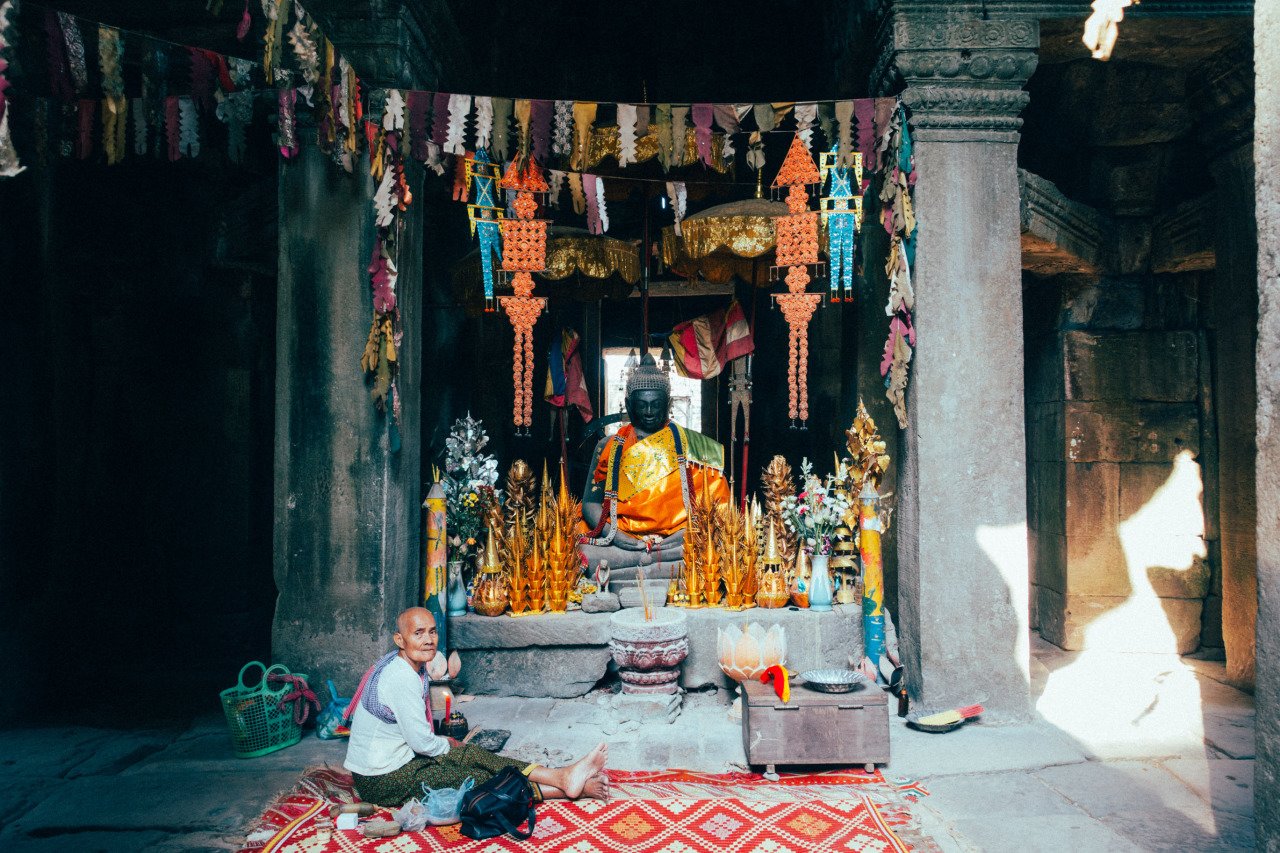
You may be wondering why this is a Buddhist temple whereas Angkor Wat nearby was originally built as a Hindu temple. The Khmer Empire ruled much of mainland Southeast Asia for centuries, and the Angkor region served as its capital for much of that period. Angkor Wat was built in the early 12th century under the Hindu king Suryavarman II, while later in the 12th century King Jayavarman VII embraced Mahayana Buddhism and commissioned major Buddhist monuments including Bayon, Ta Prohm, and Banteay Kdei.
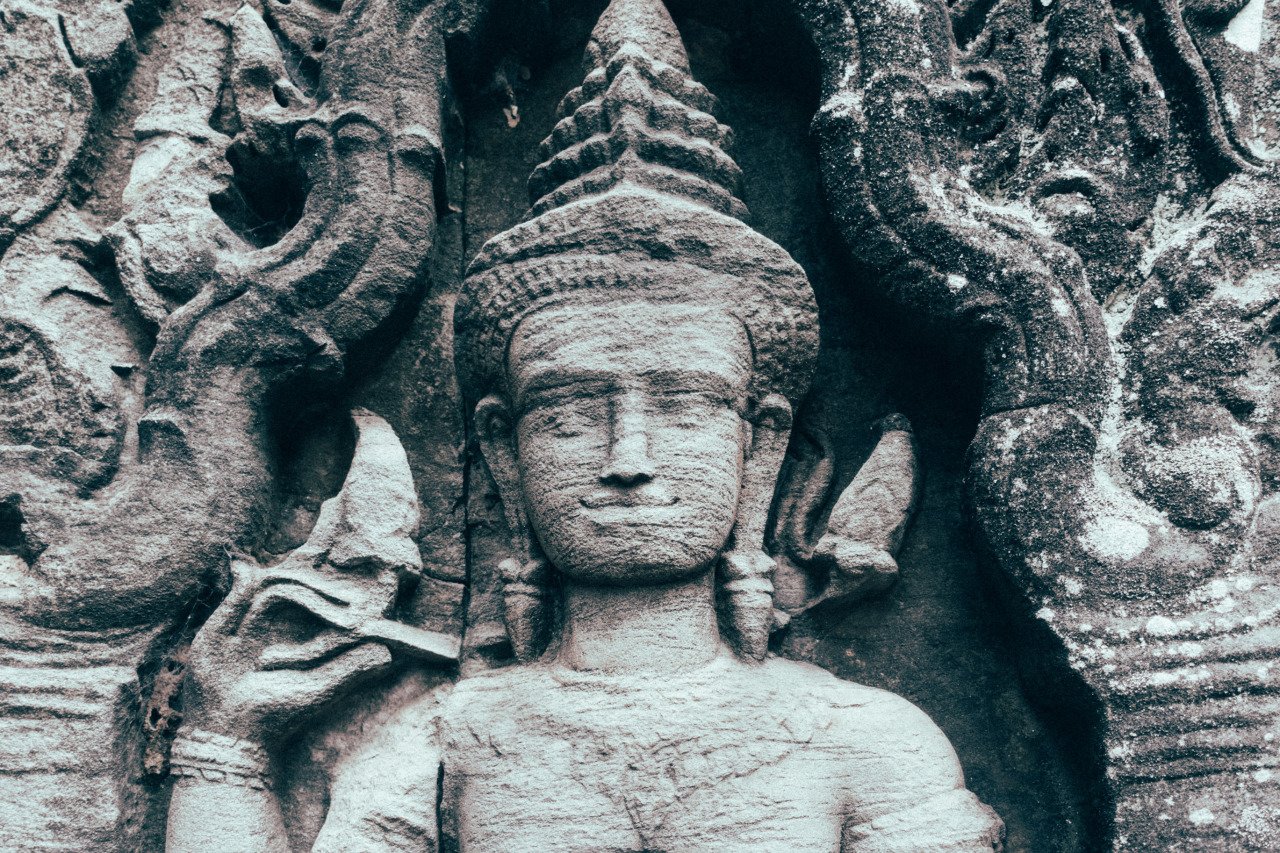
During that time, Buddhist temples were being built left and right by the ruler of the empire all over Siem Reap, and you will be able to see the remnants of these ambitious projects, all scattered around here.
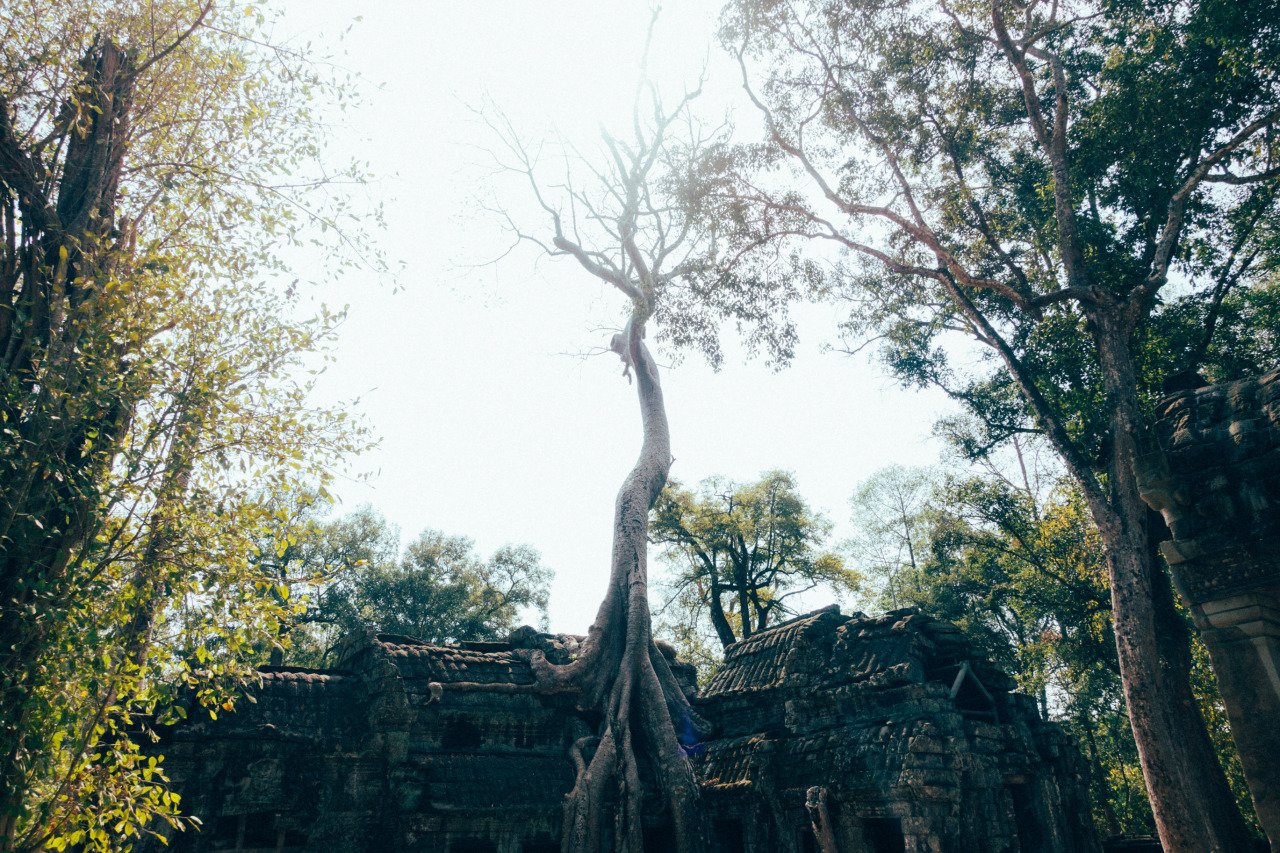
Just north of Banteay Kdei, there is also another Buddhist temple built around the same time in Bayon-style architecture that is even bigger and more impressive. It's the Ta Prohm temple, or as some of you may know, the Tomb Raider's tree.
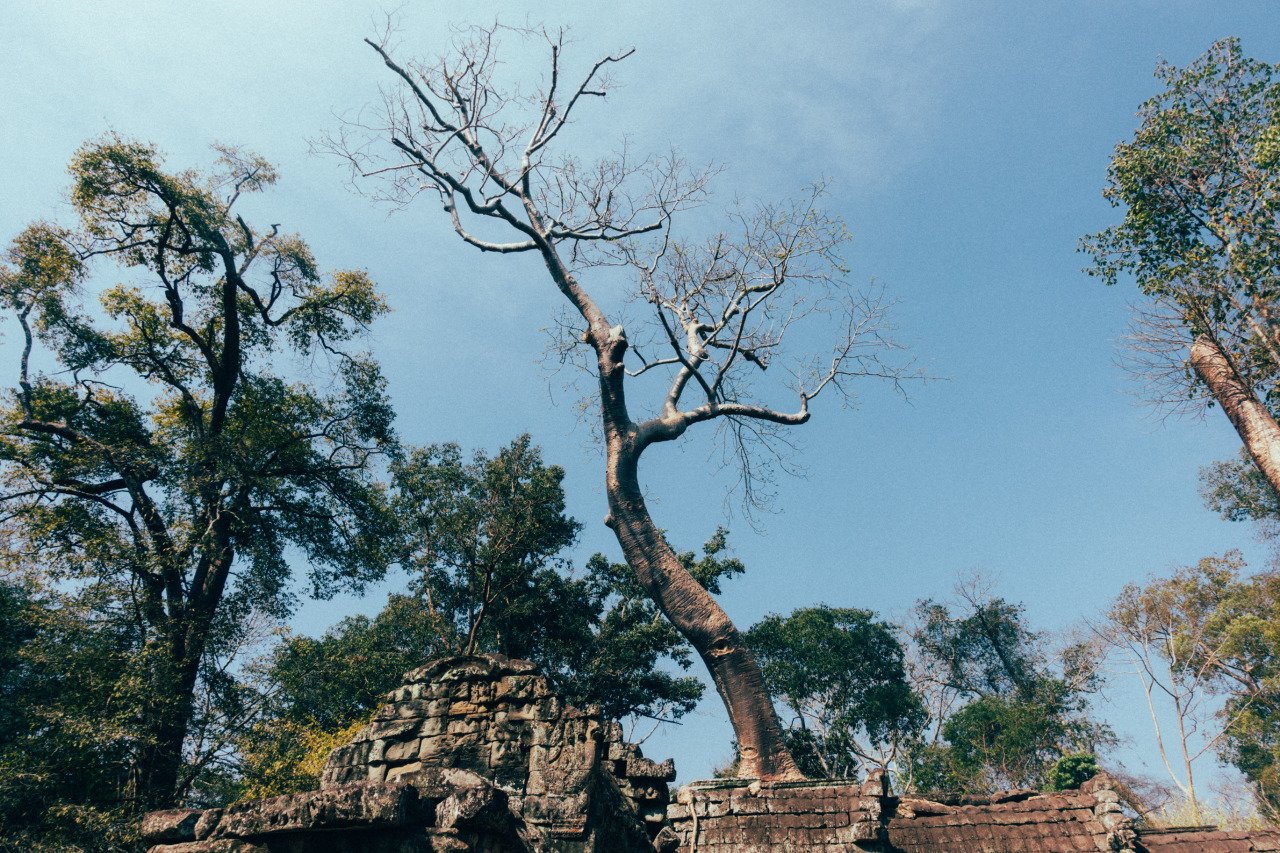
It's amazing how a movie one would consider mediocre, released in 2001, put Ta Prohm and Siem Reap on the map for so many people. Even years later, the temple is still strongly associated with Lara Croft: Tomb Raider.
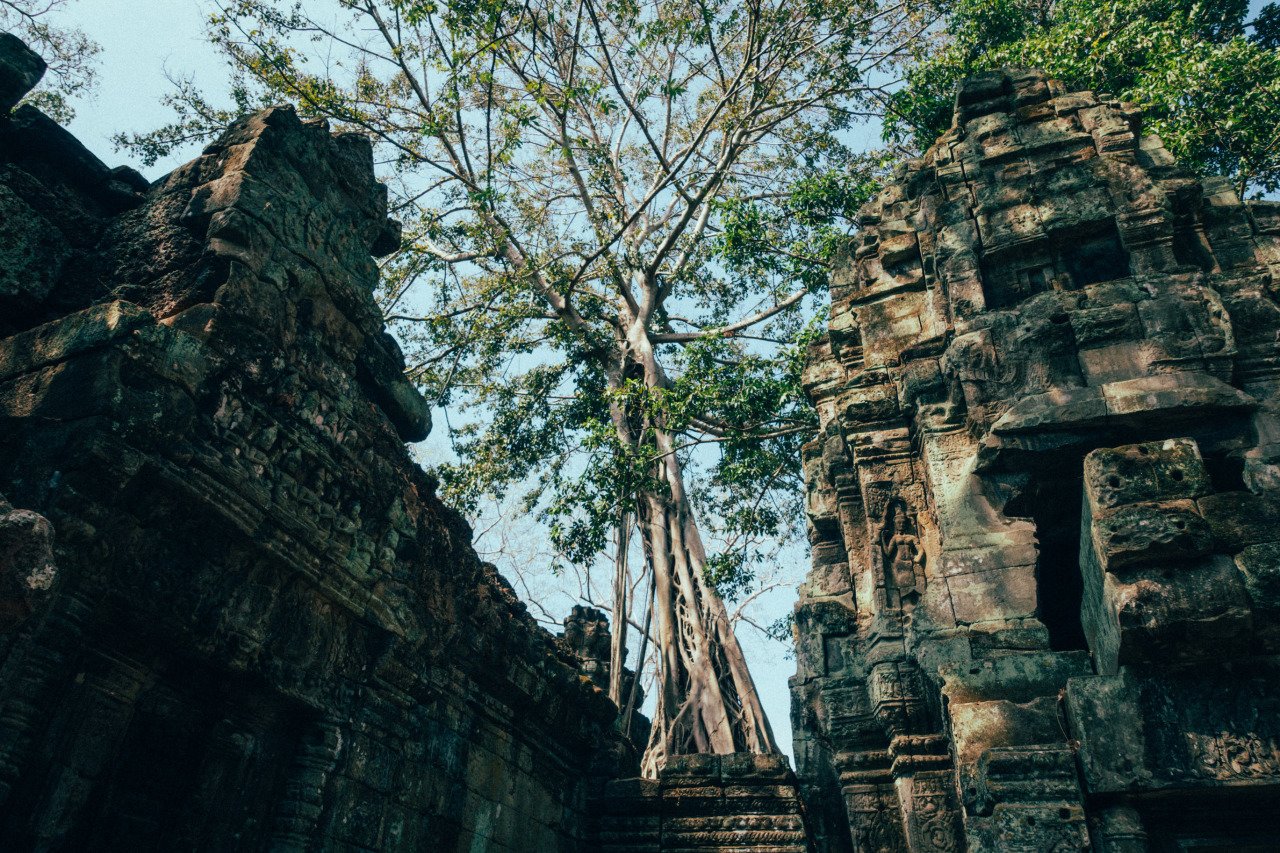
Unlike most Angkor temples in the area, the Ta Prohm temple is one of the few temples that was not renovated and is left as it had been found, allowing it to maintain its picturesque nature. Additionally, it is one of the few temples that has merged beautifully with nature, but has not yet become part of the jungle.
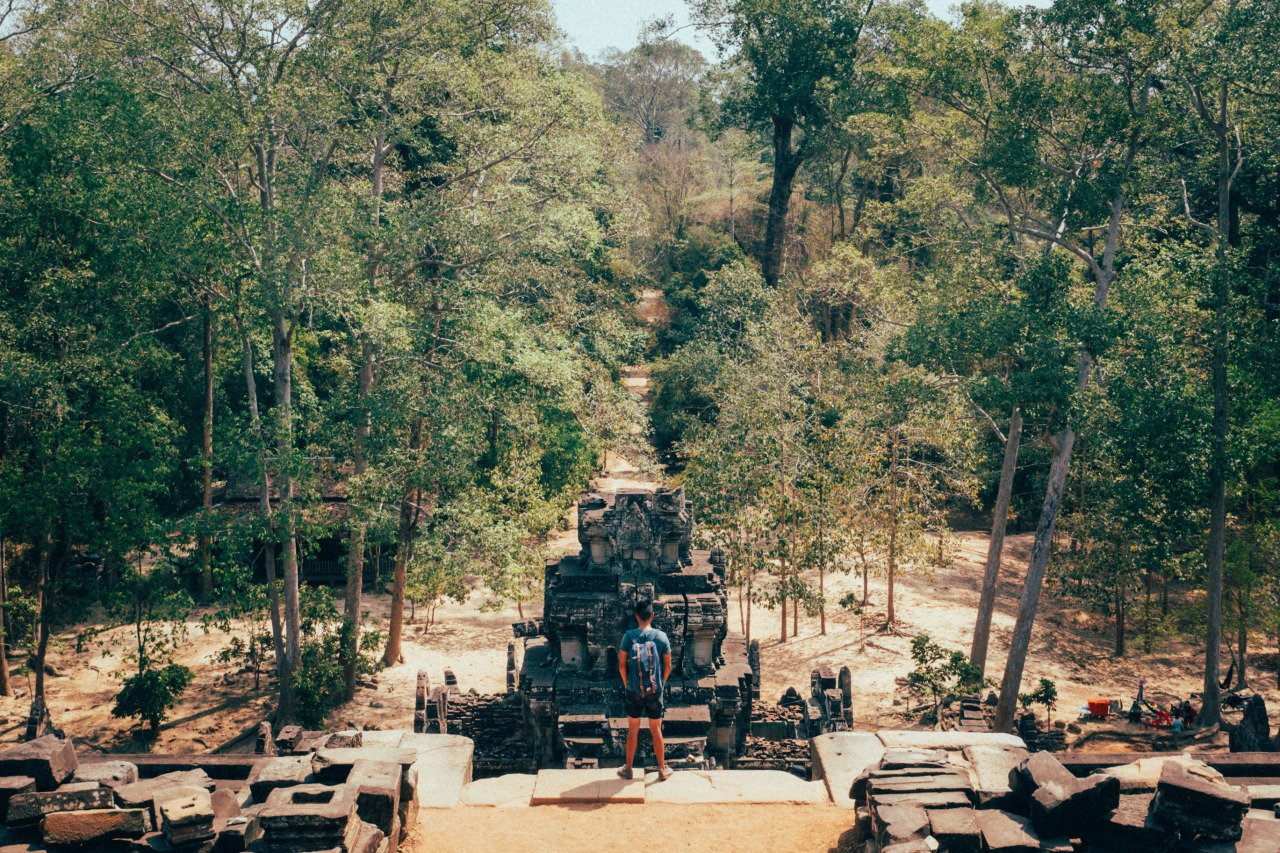
Once you are done with Ta Prohm temple, you can walk north towards a mountain-looking temple, the Ta Keo temple, one of the first temples that was built entirely of sandstone.
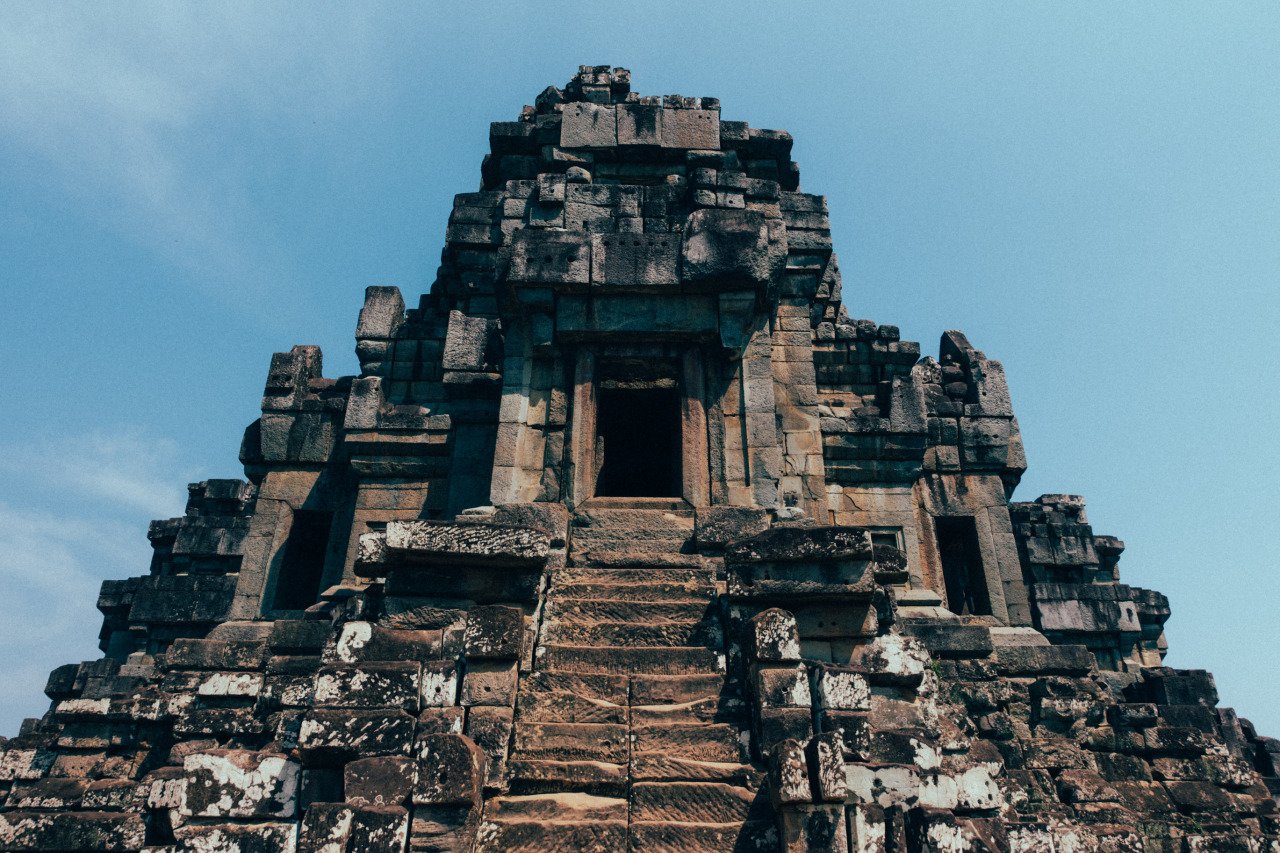
Its pyramid-like shape, five-tiered terraces, and steep stone stairs make Ta Keo a great viewpoint to climb up and see the landscape, or mostly jungles around the area.
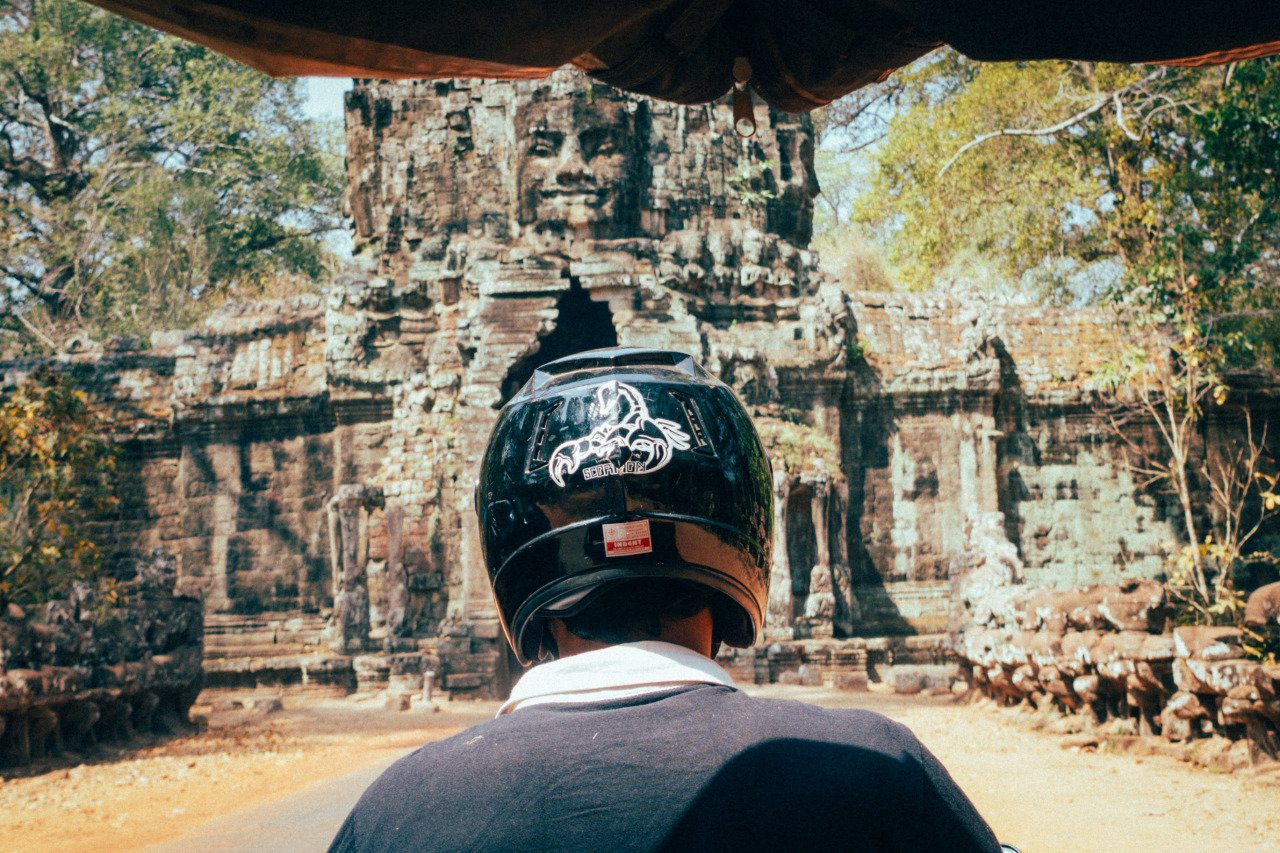
After you have visited Ta Keo temple, head west through the Victory Gate into the walled city of Angkor Thom, where you will explore the Bayon temple and Baphuon. You will exit through the photogenic south gate of Angkor Thom.
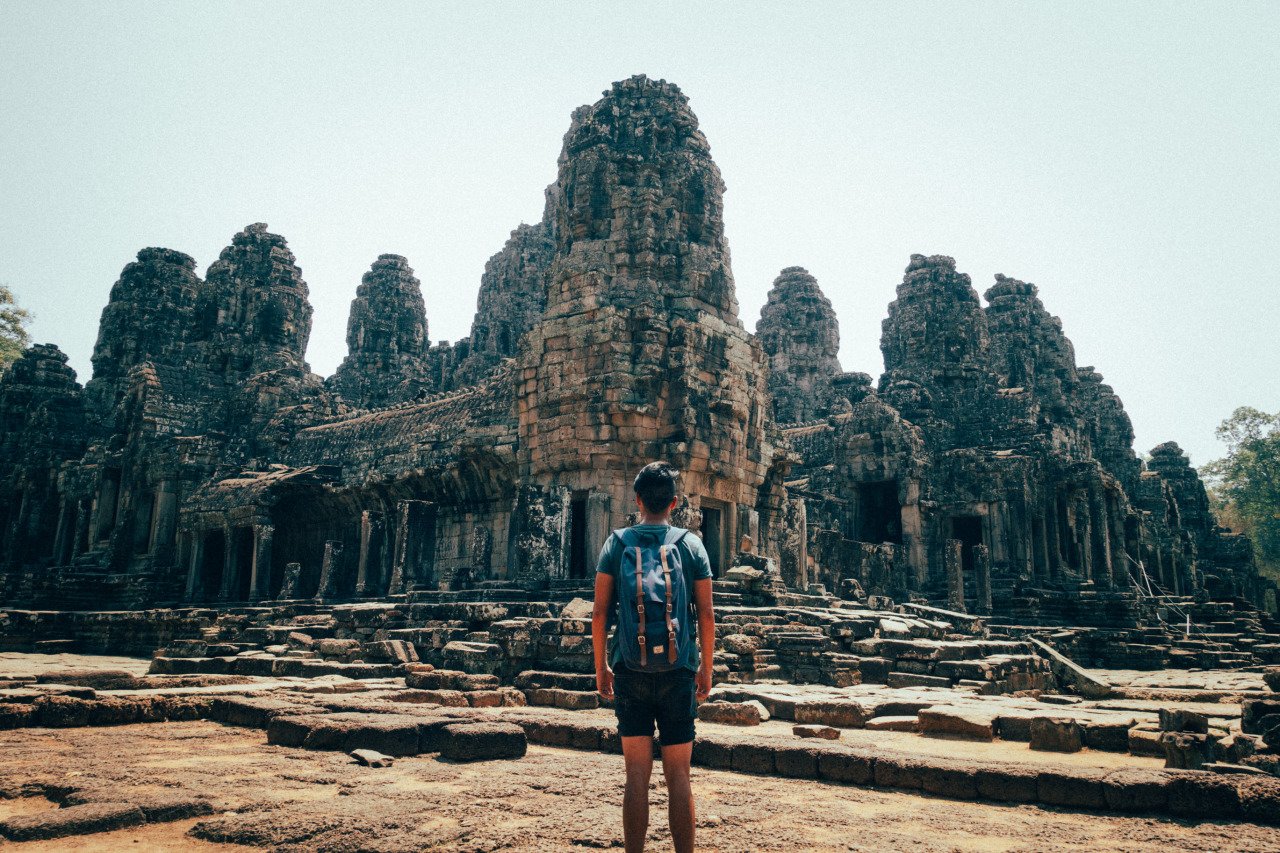
One of my favorite structures in Angkor Thom walled city is the Bayon temple, a 12th-century AD Buddhist temple that is known for its many serene and smiling stone faces scattered all over the towers of the temples.
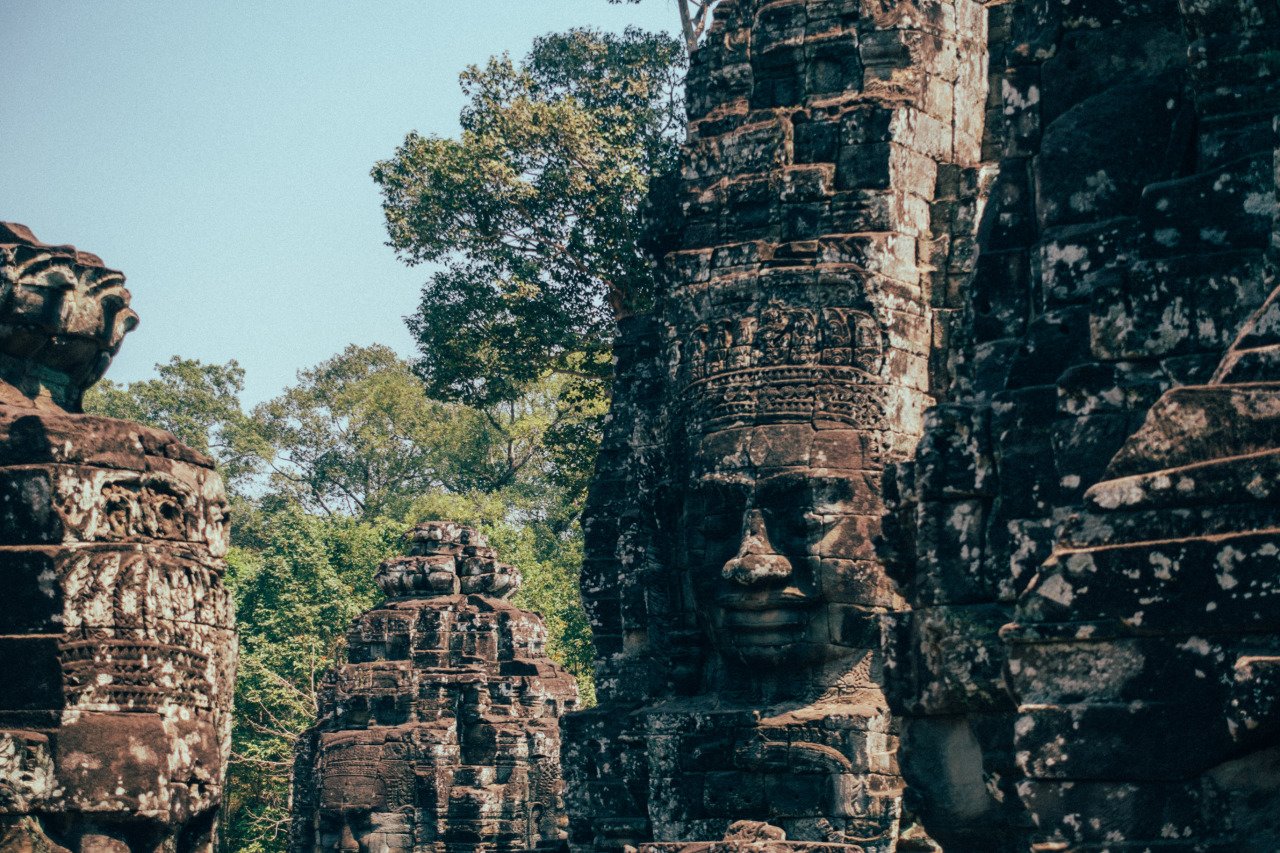
With over 216 smiling face stones, many have theorized that these stones depict the king, Jayavarman VII himself, which is quite common for a king to depict himself as a god-king during the time. However, some believe it's a depiction of Bodhisattva, a person on the path to Buddhahood.
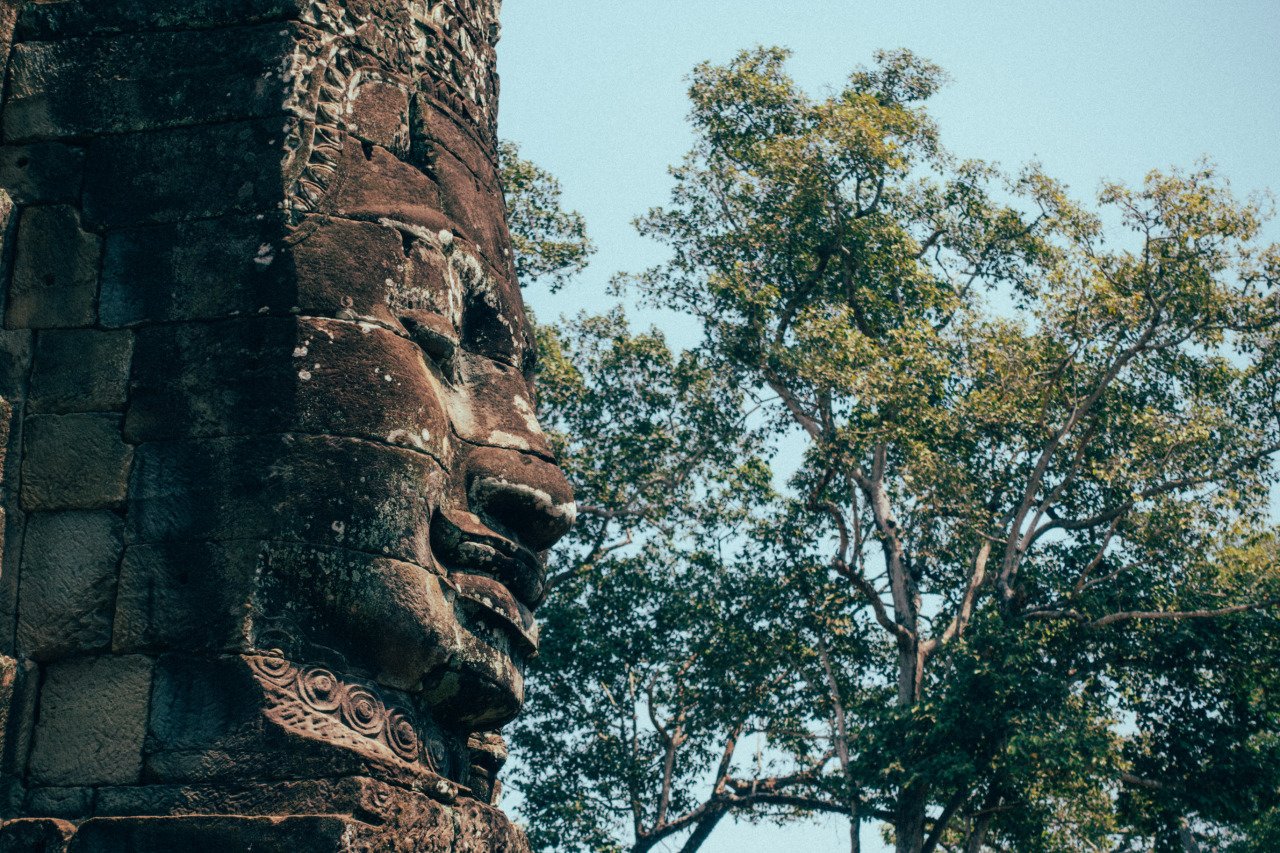
We can't know for sure, but it is always interesting to think of what it would be like to be at the Bayon temple when it was at its height.
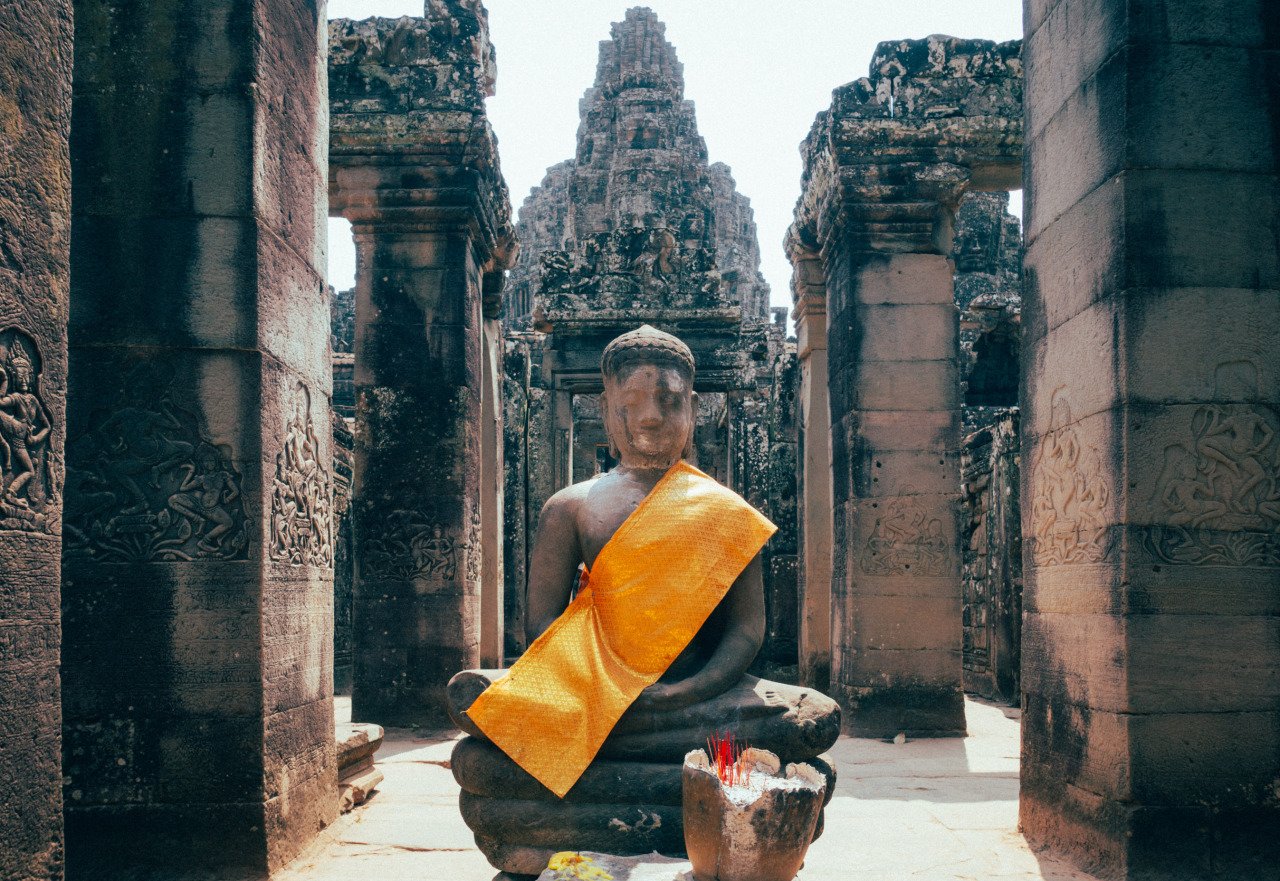
After you are done exploring the Bayon temple, ask your driver to drive you south through the photogenic South Gate of Angkor Thom where the 54 stone figures are lined up on both sides. Maybe ask your driver to stop and take a photo from the road.
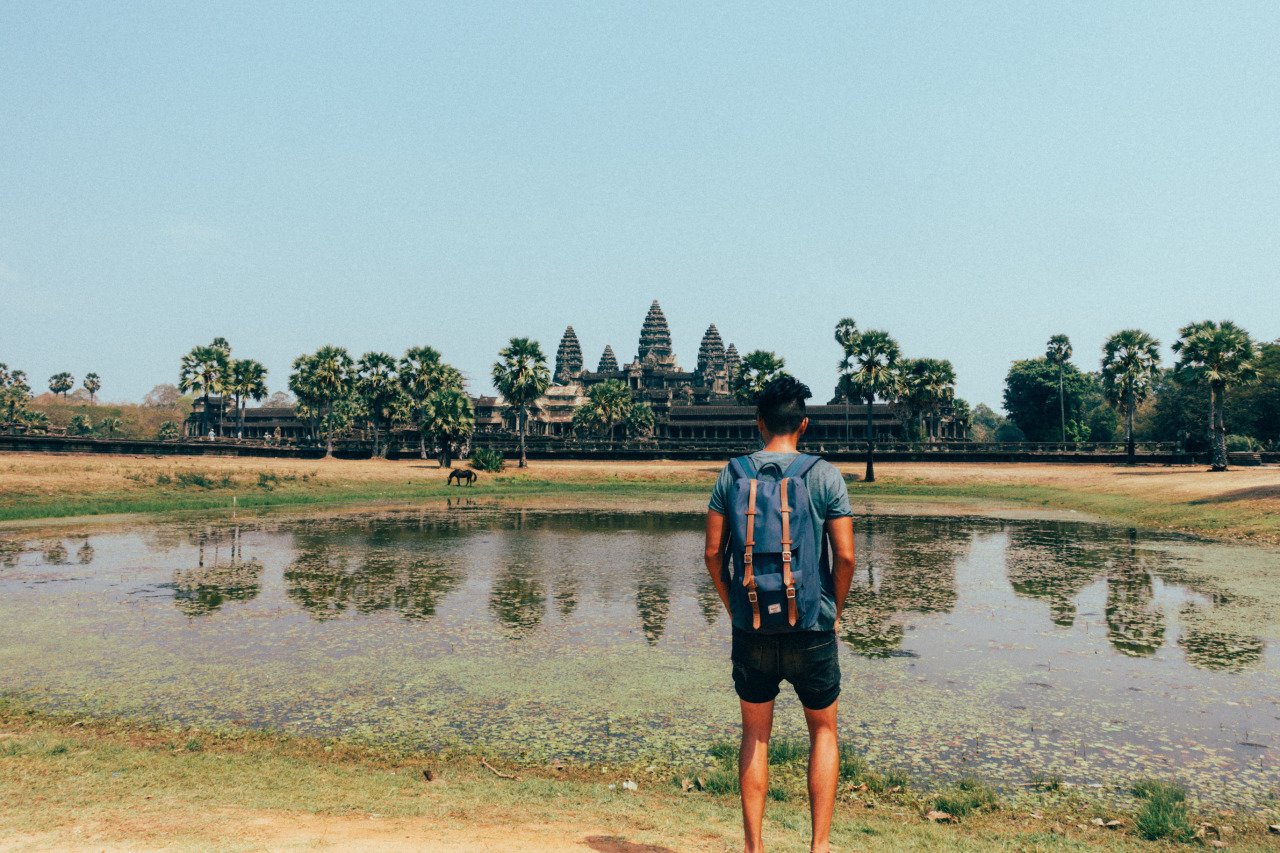
After the South Gate, go back to Angkor Wat and spend the rest of your day walking around the temple complex. There is a ton to see in Angkor Wat alone, and since we were only able to see parts of it during sunrise, it's time to thoroughly explore the complex at your own pace.
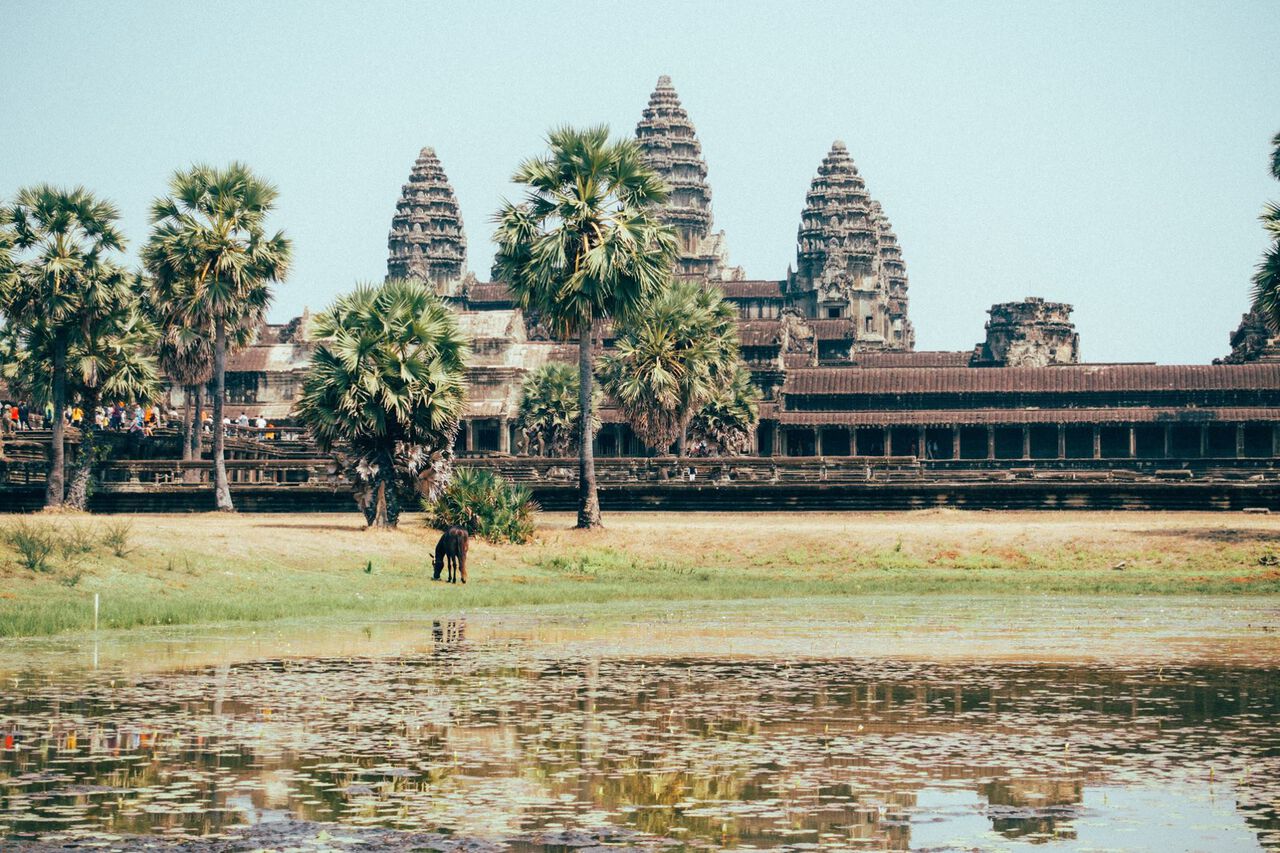
By now, the tourist crowds should finally be dispersed and scattered all around inside the temple complex, hiding from the sun. This is the perfect time to get a photo of the exterior of Angkor Wat without anyone in it.
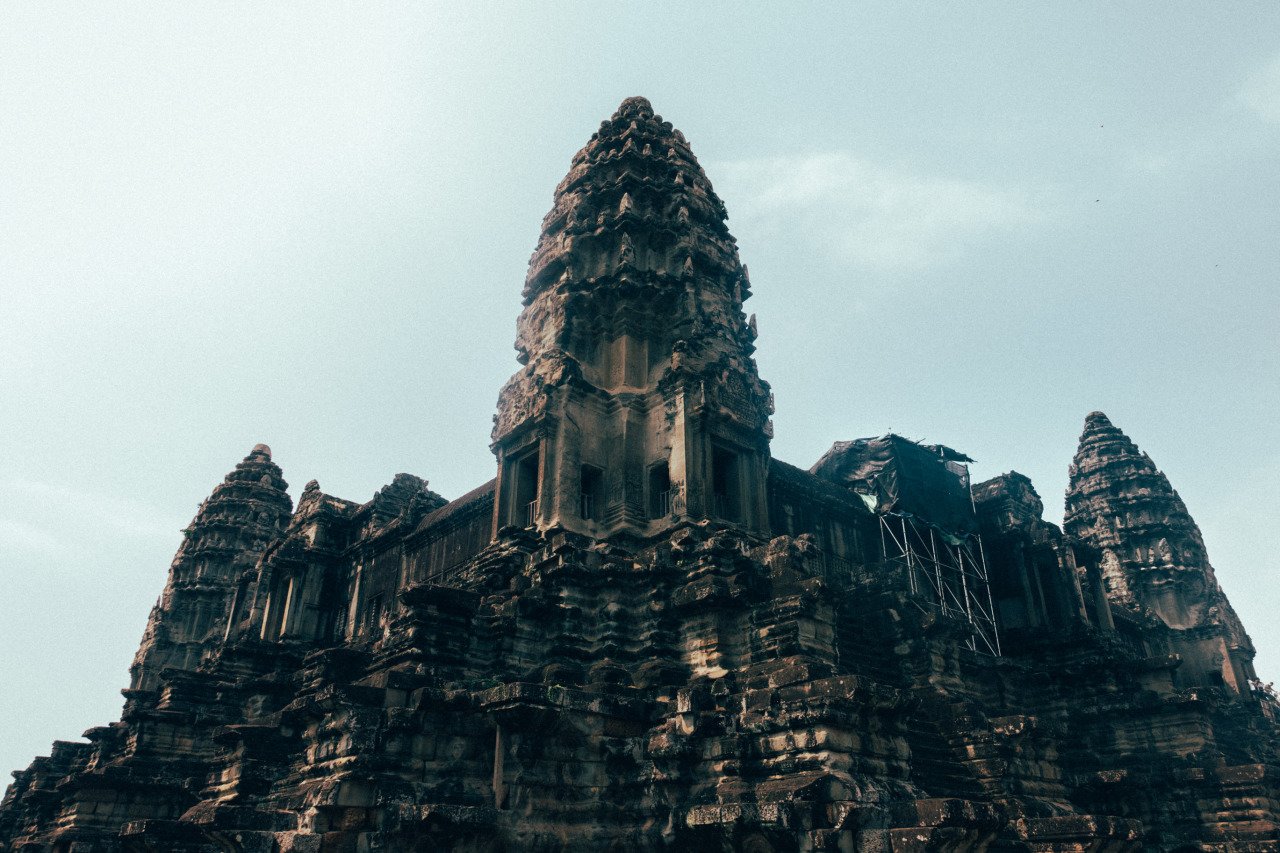
You can also climb up to the top part of Angkor Wat and sit there for a while, enjoying the breeze. You may have to line up to get to the top, though. However, if you are looking for a place to see Angkor Wat from above, it's definitely worth waiting in line.
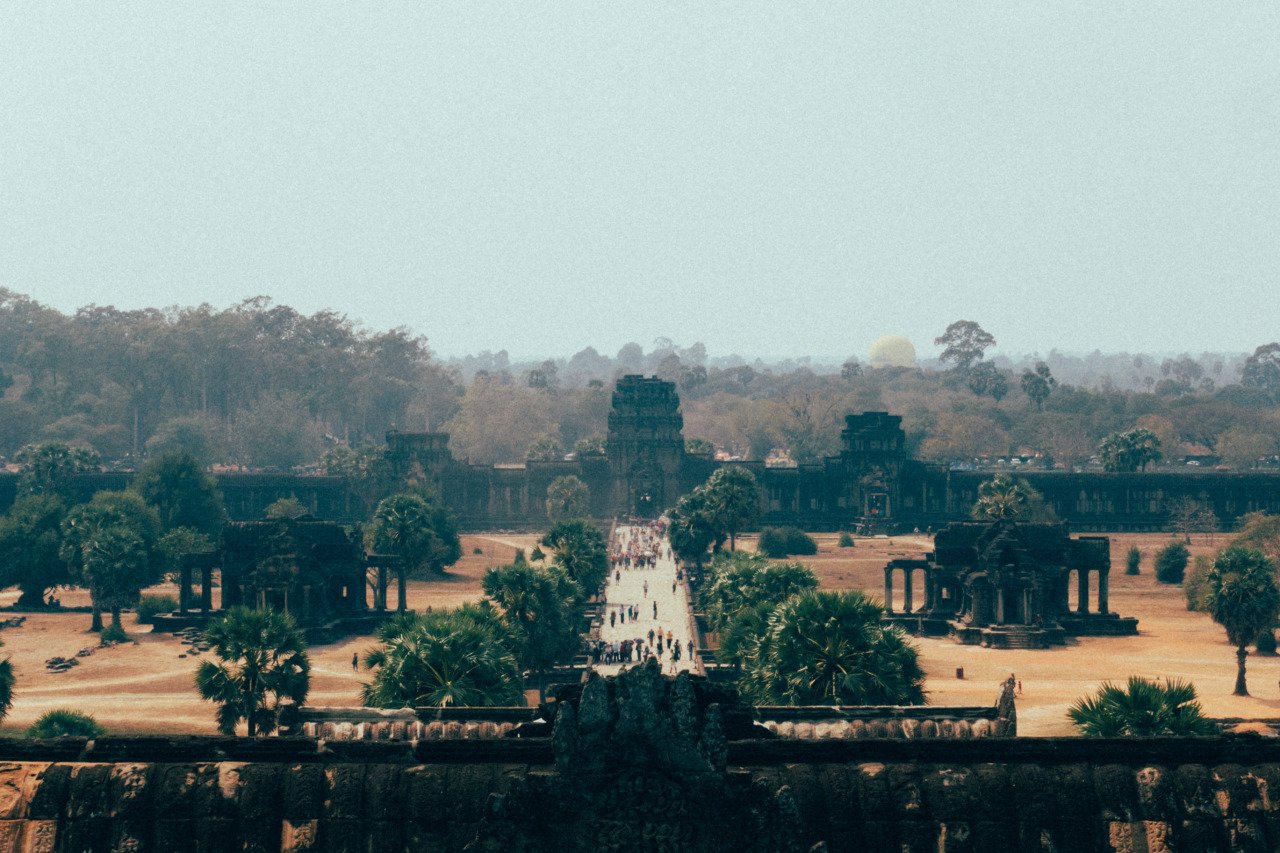
After a long, dusty day climbing temples, it's time to retreat to your hotel and spend your evening finding a taxi to drive you to Beng Mealea tomorrow. The price of a taxi to Beng Mealea is around 55-65 USD for a car and 30-40 USD for a tuk-tuk, so it would be ideal if you are traveling as a couple or if you can find someone to share the cost with. It should take around 1.5 hours to get to Beng Mealea.
Day 2: Visit Beng Mealea
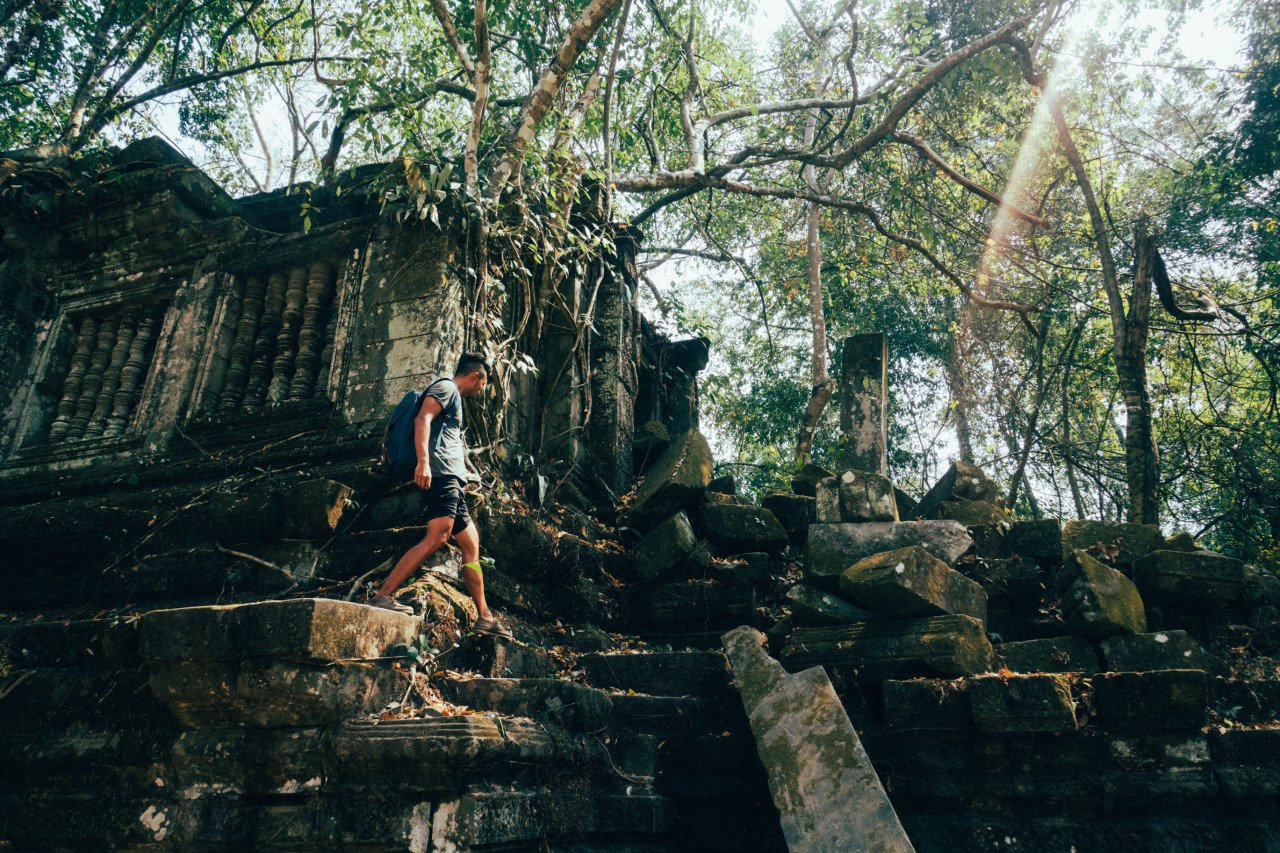
With a taxi driver whom you hired yesterday, you can start your second day a little bit later, since you woke up at 4 AM the day before. The trip will take around 1.5 hours on a dusty road to get to Beng Mealea from Siem Reap.
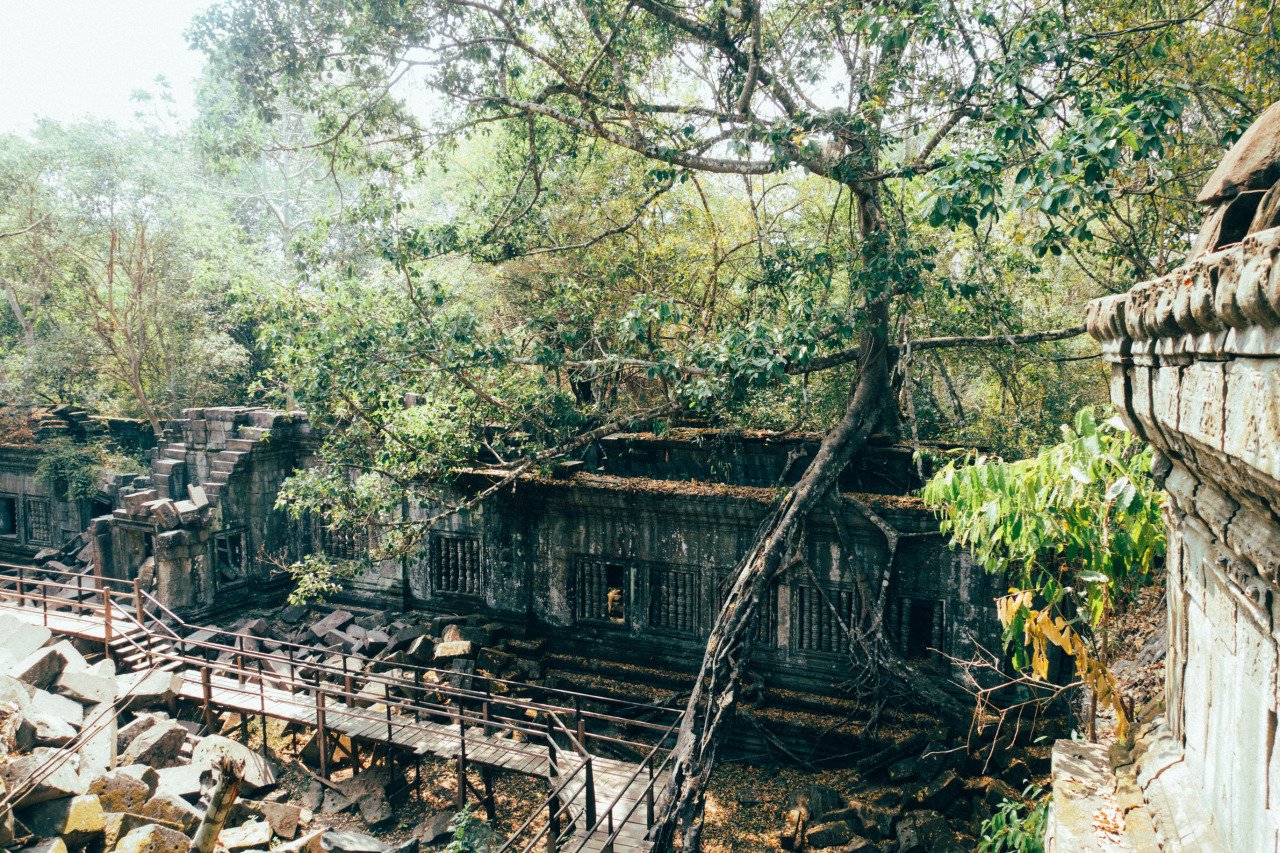
Once you arrive, the taxi will drop you off at the ticket office where you will have to buy an entrance ticket for 5 USD. That is why I recommend you visit all those temples on your first day so that you don't have to pay for a 3-day pass and then pay another 5 on top. It is cheaper this way 😉.
Unfortunately, the above statement is no longer the case as Beng Mealea has been folded under Angkor Wat management and you are no longer able to buy the ticket separately, so be sure to have the 3-day Angkor Wat Pass on hand when you arrive in Beng Mealea.
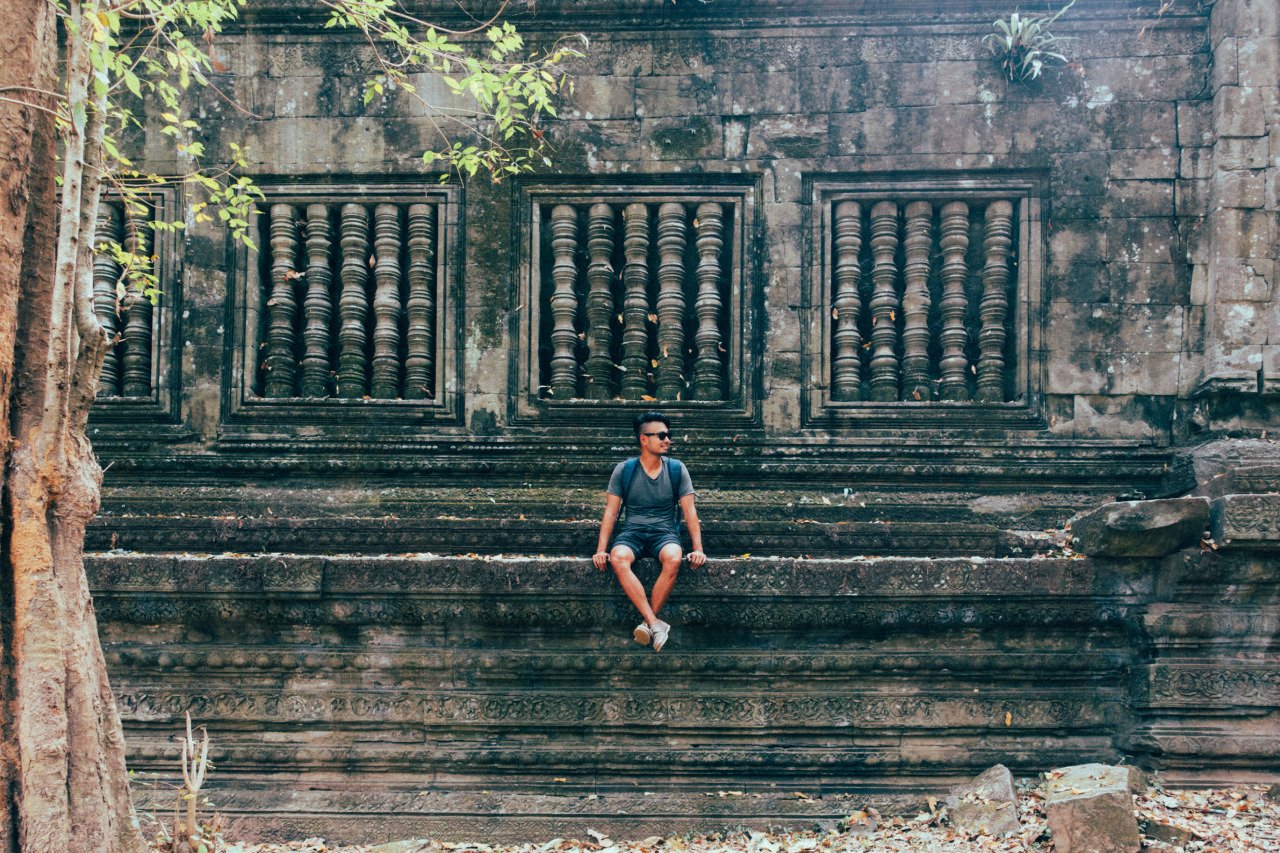
Beng Mealea is a large Hindu temple complex located 40 km away from Siem Reap. The place definitely sees fewer travelers than the main cluster of temples in Siem Reap and is left unrestored, giving you the feeling of actually being an explorer discovering this temple in the middle of a jungle for the first time.
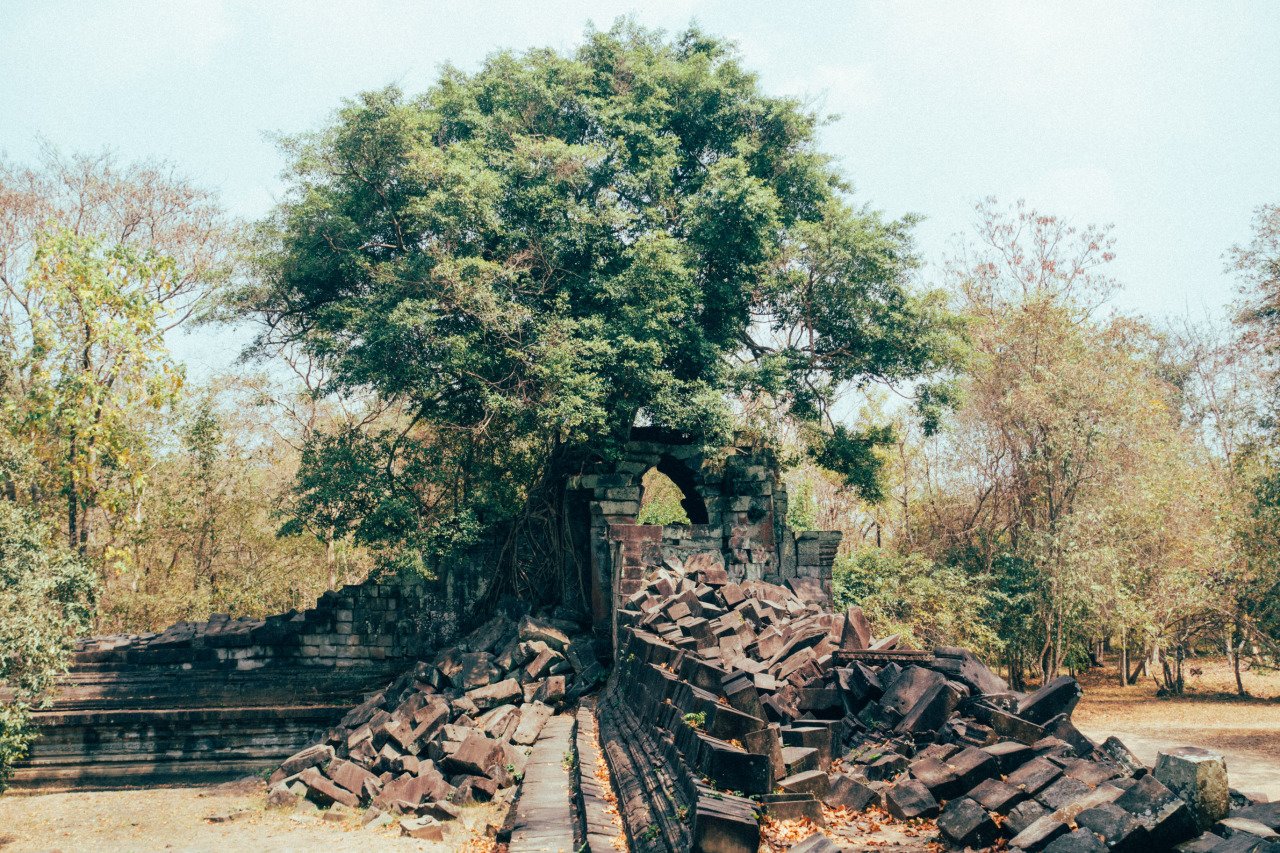
There are large trees overgrowing the structures, I dare say, even more impressive than what we saw at Ta Prohm, and a large pile of stones, almost as if someone knocked a structure down on purpose.
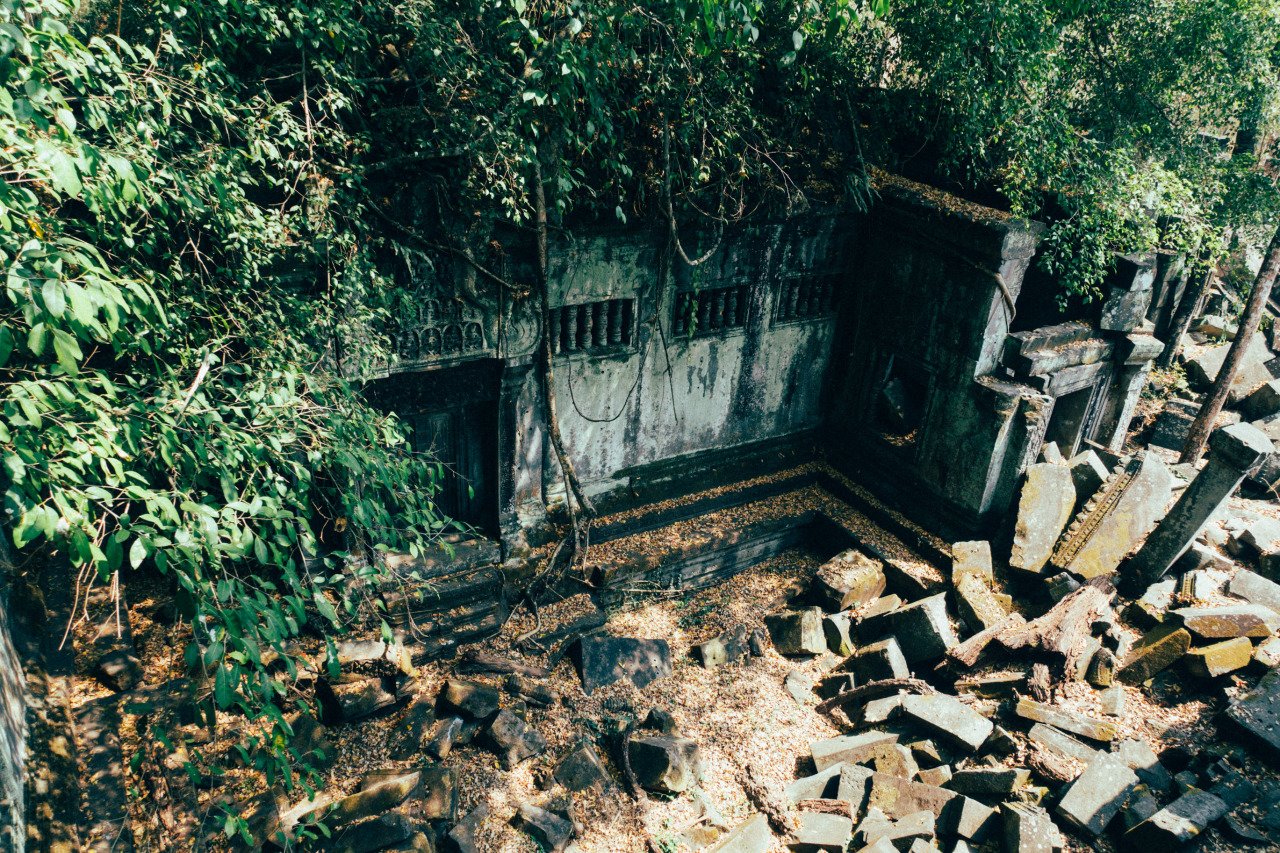
The history of Beng Mealea is a mystery, as nothing is known about the place except that it was built in a similar style to Angkor Wat and it is assumed that it was constructed around the 12th century AD.
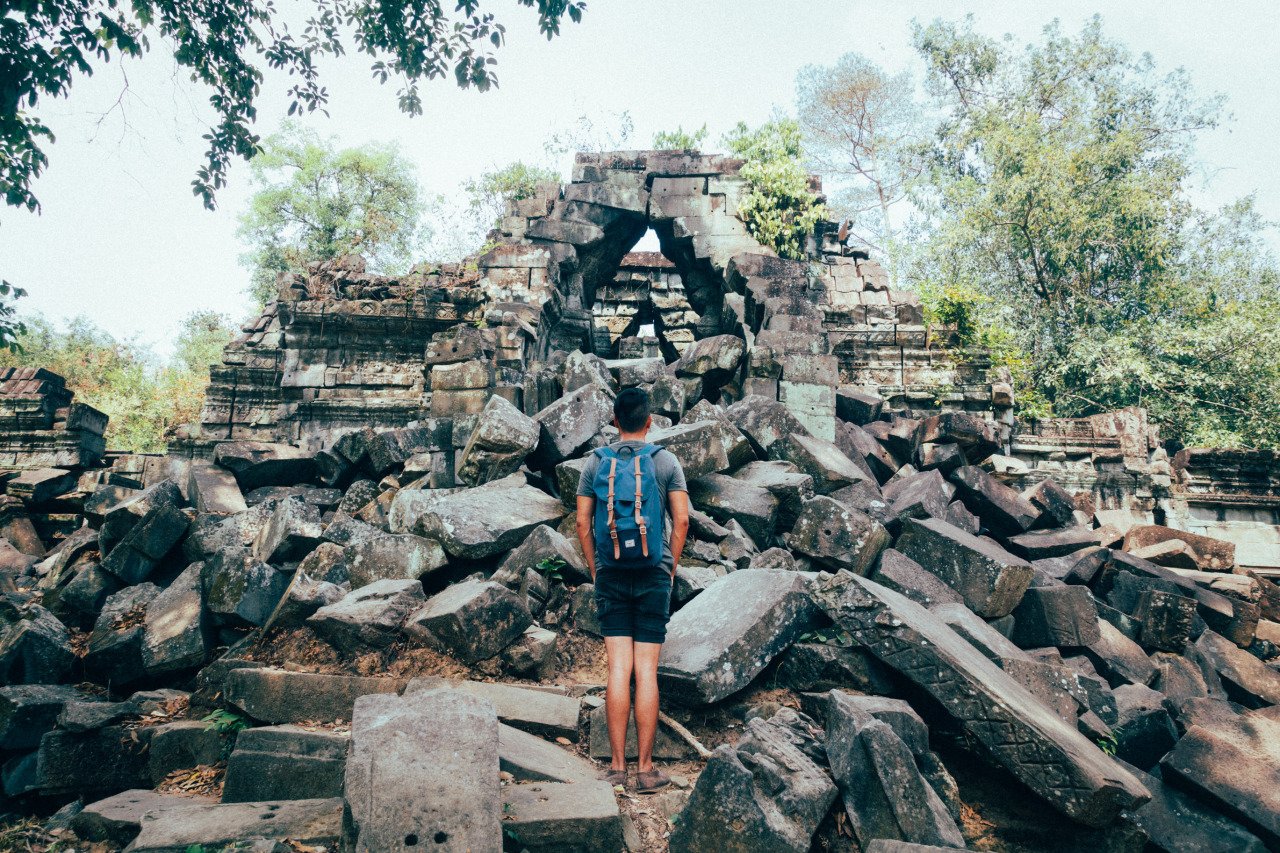
The temple itself was left abandoned and untouched for a long time due to the difficulty of accessing it. Thankfully, a road was built to the temple, allowing us travelers to catch a glimpse of the extensive reach of the Khmer Empire in those times.
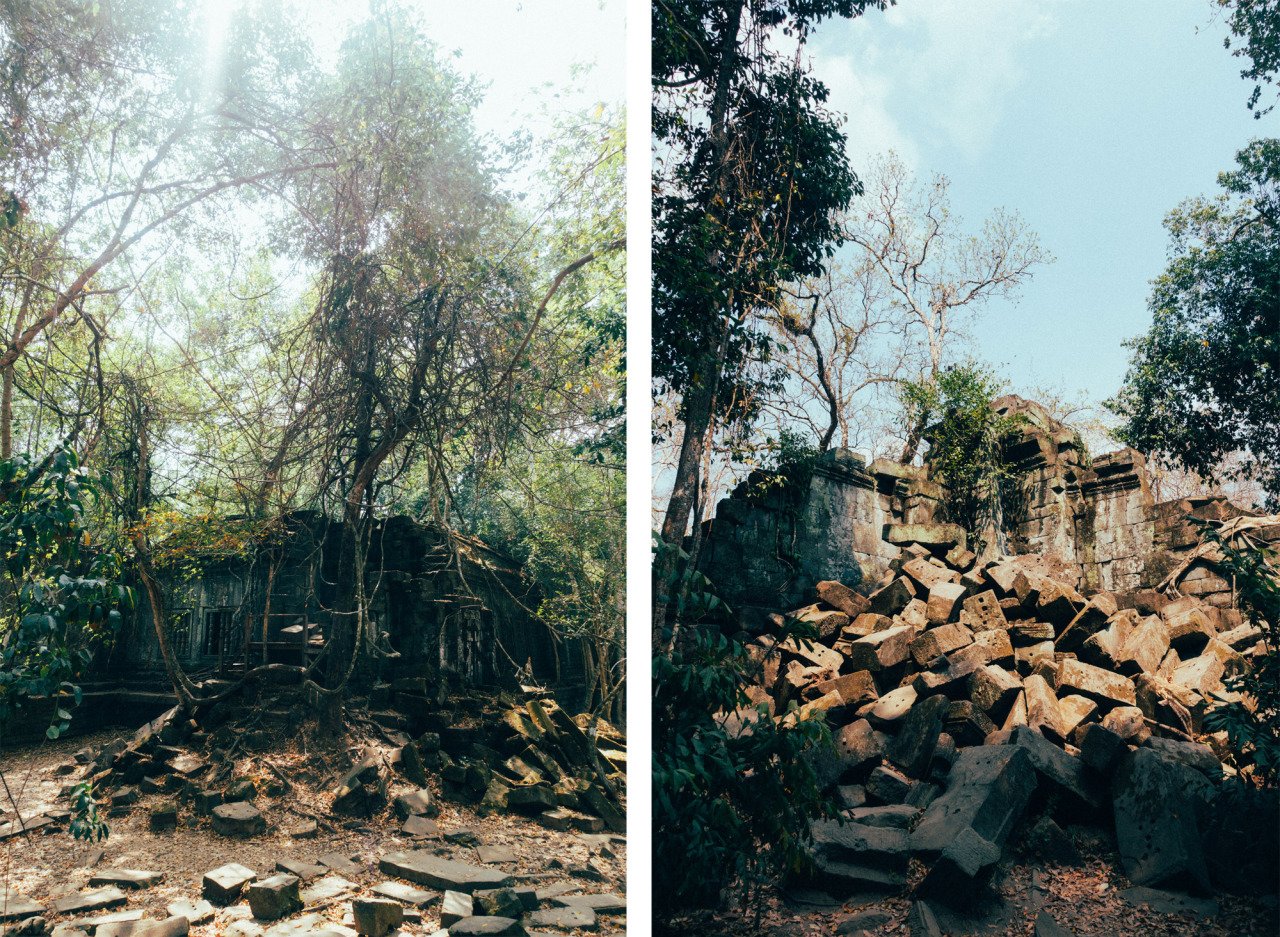
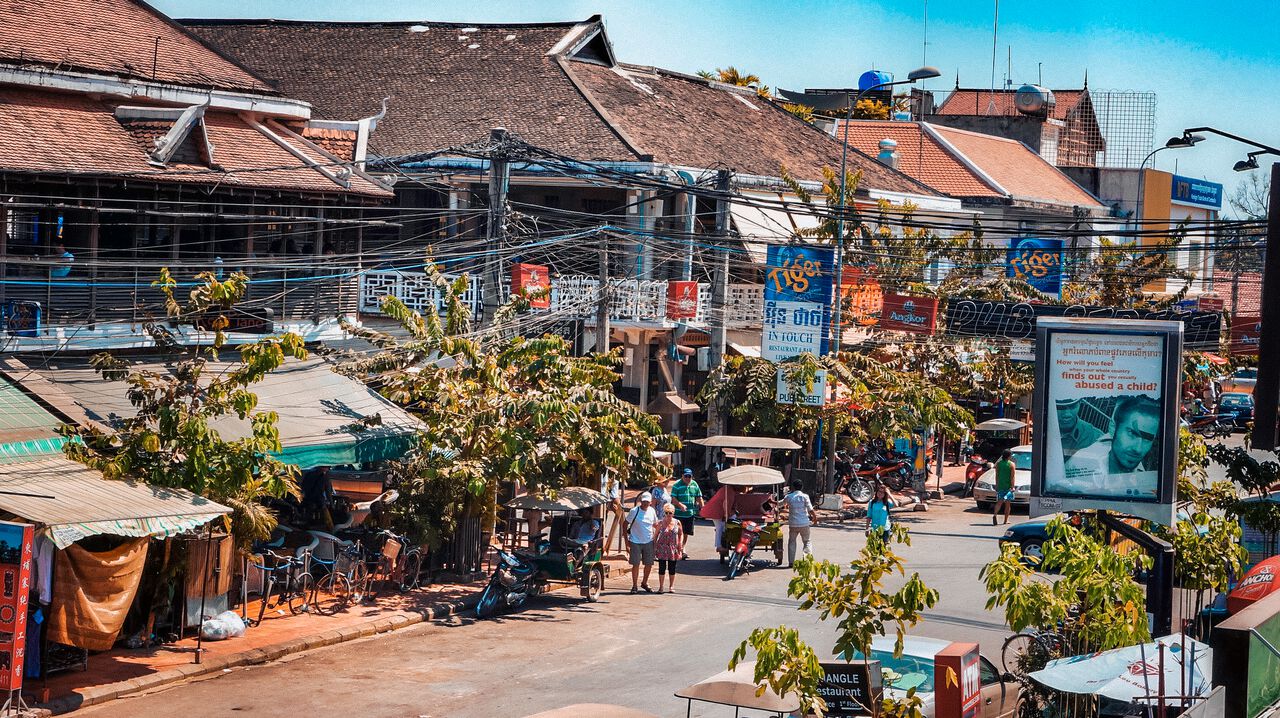
There is a lot to see in the temple, and the taxi to get here isn't cheap, so spend as long as you like here and explore all the rooms and corners of Beng Mealea at your leisure before heading back to Siem Reap and ending your day with a stroll around Pub Street.
Photos by ND Strupler
Pub Street is the main tourist street where you can find overpriced drinks and Western food in which you can indulge yourself. It's touristy, sure, but if you look around the area carefully, you will be able to find small pockets of interesting things to do, like the Made in Cambodia market where they sell locally-made handicrafts.
Even if you don't plan to buy anything, it is still quite interesting to walk around the market and Pub Street to find a nice, cool restaurant with a great view or a bar to enjoy the rest of your night.
Day 3: Relax Day
Last but not least, our third day in Siem Reap. After 2 days action-packed full of temple-hopping activities, I think it is best that we leave our third day to be a day to "treat yo self".
There are several things you can do in Siem Reap that don't include seeing temples, like going for a massage, which you can find a ton of places on Pub Street that will cost you from 1 - 5 USD.
If you are looking for something more interactive, you can also go to a cooking class and learn how to cook their Hor-Mok dish. You can book your cooking class activity here.
Maybe you want to learn more about the history of the Khmer Empire? You can visit the Angkor National Museum, an expansive museum full of artifacts and religious icons from the Khmer empire. It's a great way to gain insight into the history of all those temples you visited just a day ago.
Last but not least, if you want to see local art performers performing Cambodian-style theater, music, dance, and acrobatics, you will love the 1-hour Phare Circus Show where modern artists come together to perform a blend of all those things, and more. You can book your ticket to see the Phare Circus Show here.
Southeast Asia Travel Video
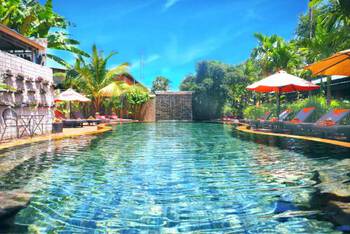
Where to Stay in Siem Reap?
When to Visit Siem Reap?
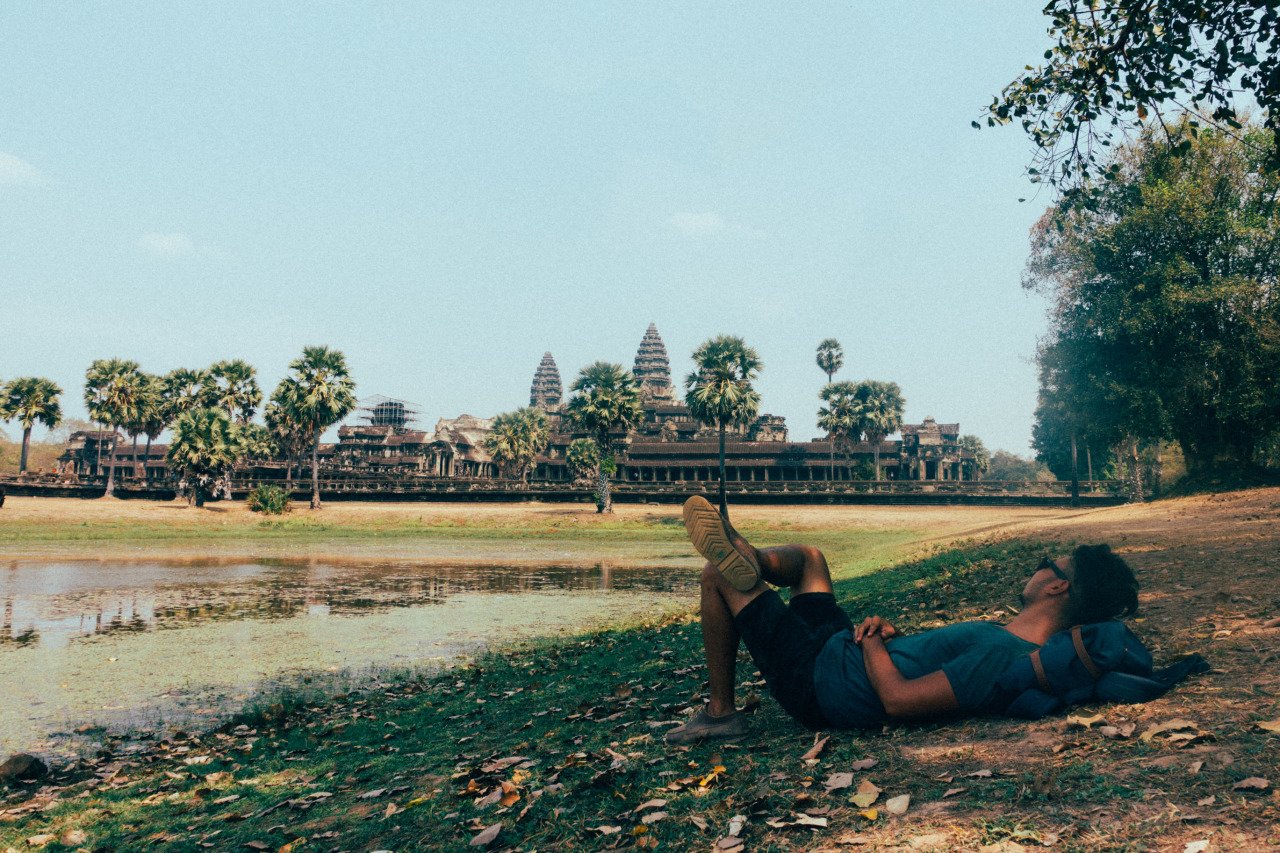
The best time to visit Siem Reap and the Angkor Wat is from November to March when the weather is cool and dry, unlike in April when the humidity can be unbearable or during the rainy and cloudy months of June to August.
That said, like in most of Southeast Asia's lowlands, rain often comes in small, short bursts that don't usually last long. So, if you cannot align your days to November - March, don't worry. You will enjoy Siem Reap just as much as during the recommended period.
How to Get to Siem Reap?
Cambodia may be a small country, and not exactly a travel hub. However, Siem Reap is still a popular travel destination, and there should be plenty of flights flying into the city from neighboring airport hubs such as Bangkok, Singapore, and Kuala Lumpur.
First and foremost, you will have to get yourself to these neighboring hubs, and then we can fly with a low-cost airline directly into Siem Reap.
From the US, you can fly to one of these cities via Japan on ANA Airways or via the Middle East with airlines like Emirates and Qatar, etc.
From Europe, you can fly with KLM, AirFrance, or Lufthansa to one of the popular Southeast Asian hubs and transit to Siem Reap via a low-cost airline.
From Asia, Siem Reap is connected with several regional hubs, including Bangkok and Kuala Lumpur. AirAsia is one of the low-cost airlines serving the city, but routes, frequencies, and fares change regularly, so compare the current schedule for your travel dates.
All commercial flights now use Siem Reap Angkor International Airport (SAI), which replaced the old Siem Reap airport (REP) in October 2023. SAI is much farther from the city than the old airport, so allow extra transfer time. Official airport buses, taxis, and other transfers are available between the airport and Siem Reap.
For more information on which flights to buy from your home country to these hubs, I would recommend that you browse through Skyscanner or Expedia to find the best affordable flight that fits your itinerary for Cambodia.
If you are already in Southeast Asia, you can book your bus and train ticket online here: Book a bus & train ticket for Siem Reap.
How to Get Around Siem Reap?
Tuk-tuk is the easiest way to explore all the temples nearby Siem Reap, such as Angkor Wat, Ta Prohm, and Bayon Temple. It will cost you 15 USD for half a day and 20 - 25 USD for a full day. For an additional 5 USD, the driver can pick you up at 4:30 AM to go see the majestic sunrise at Angkor Wat. This price may have changed a bit since I last visited. Grab and PassApp are also useful for shorter rides around Siem Reap, although hiring one driver for an entire temple circuit is usually more convenient.
You can often find tuk-tuk drivers near your hotel/hostel or in a touristy area like Pub Street, or you can ask your hotel, and they will find one for you. After you get your driver, negotiate the route you want to take and, finally, the price.
For places farther from Siem Reap, such as Beng Mealea, a car can be more comfortable, especially in hot or wet weather. Banteay Srei is much closer to Siem Reap than Beng Mealea, so it is commonly combined with an Angkor temple circuit by tuk-tuk or car rather than treated as a 1.5-hour remote trip.
What I would recommend is to hire a tuk-tuk for your first day to see the temples nearby and Banteay Srei temple, which is located 20 km away. For the second day, I suggest hiring a taxi to take you to Beng Mealea.
What to Wear at Angkor Wat?
Angkor is an active religious and cultural site, so visitors are expected to dress respectfully when visiting the temples. In practice, keep your shoulders and knees covered, especially when entering sacred areas and climbing to Angkor Wat's upper level.
- Long pants that cover your knees.
- Shirts that cover your shoulders.
- Shorts, tank tops, or revealing clothes of any kind are not allowed on the temple grounds.
What Currency Do They Use in Cambodia?
Cambodia's official currency is the Cambodian riel (KHR, ៛). US dollars are also widely accepted in Siem Reap, particularly for tourism-related purchases, but riel is used extensively for everyday transactions and change. You should not rely on traveling with USD alone.
ATMs and businesses commonly work with both currencies, and card or QR payments are increasingly common. If you pay in US dollars, make sure your notes are in good condition because damaged or heavily marked notes may be refused. Keeping some riel with you is especially useful for small purchases, markets, and local transport.
Angkor Wat Entrance Fee
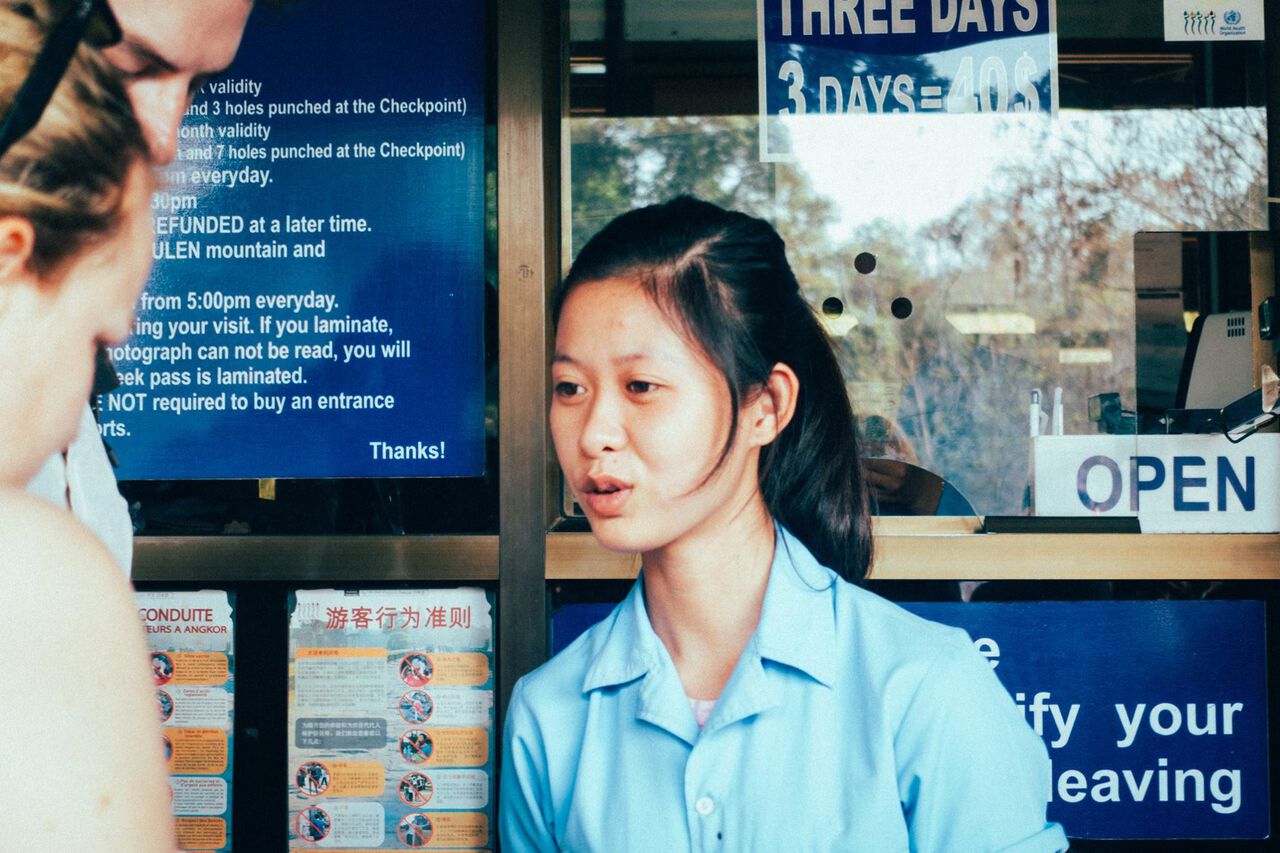
In order to see Angkor Wat, you will have to buy the Angkor Wat Pass, which will give you access to all the main temples and sites around Angkor Wat, including Angkor Wat itself, all the temples and ruins in and around Angkor Thom (Bayon Temple, Baphuon, etc.), and Banteay Srei, 20 km away from Angkor Wat.
As of 2026, the official Angkor Archaeological Park admission fees remain:
- 1-Day Pass: $37 USD.
- 3-Day Pass: $62 USD
- 7-Day Pass: $72 USD
The 3-day pass is valid for 7 days, while the 7-day pass is valid for 30 days, allowing you to spread your temple visits across those validity periods. You can buy the pass in person or digitally before your visit.
Beng Mealea currently requires a separate ticket from the standard Angkor Archaeological Park pass. Angkor Enterprise lists the Beng Mealea ticket at 10 USD. When I visited, I also paid separately to enter Beng Mealea, although the price and ticketing arrangements have changed since then.
Where to Buy Angkor Wat Entrance Ticket?
You can buy an Angkor Pass from Angkor Enterprise's official ticket office, through the official Angkor Enterprise website or mobile app, and at several authorized ticket counters. Digital tickets can be shown on your phone, so you no longer have to stop at the main ticket office before entering the park if you have already purchased one.
The main Angkor Enterprise ticket office currently operates from 5:30 AM to 5 PM daily. If you plan to watch sunrise, buying your pass online in advance is the easiest option.
Which Angkor Wat Tickets to Buy?
For this itinerary, the standard Angkor temples on Day 1 can be visited with an Angkor Pass, while Beng Mealea on Day 2 requires its own separate ticket. A 1-day Angkor Pass is enough for the Day 1 route described here, but a 3-day pass makes sense if you plan to use your third day for additional Angkor temples rather than taking the relaxation day in this itinerary.
Angkor Wat Opening Hours
Angkor Wat is open from 5 AM to 5:30 PM, allowing visitors to enter for sunrise. The Bakan, Angkor Wat's upper level, opens later, from around 7:40 AM to 5 PM.
Many other Angkor temples, including Banteay Srei, generally open from 7:30 AM to 5:30 PM, but hours are not identical across every site. Beng Mealea, for example, has its own visitor hours, so check the current schedule for remote temples when planning your day.
How Long to Stay in Siem Reap?
Since this is a 3-day itinerary, I would say 3 days is enough to see a good selection of temples while still leaving one day to relax. For the itinerary exactly as written, a 1-day Angkor Pass covers the main Angkor circuit on Day 1, while Beng Mealea on Day 2 has a separate ticket. Buy a 3-day Angkor Pass instead if you want to spend more of your stay exploring additional temples inside Angkor Archaeological Park.
On the other hand, if you are planning to explore Siem Reap thoroughly with your own vehicle, such as a motorcycle, you would need at least 5 days to a week to do this place justice. There are a ton of them that I was unable to fit into this 3-day itinerary, so if you can spare a few days, definitely go further and explore the temples like West and East Mebon, Preah Khan Temple, and many more.
How Much Money Do I Need in Siem Reap?
It's quite cheap to travel in Siem Reap, and on average, you can expect to spend around 25 - 50 USD per day, depending on your travel style. That said, there are certain things that you should keep in mind as it can get quite pricey if you are not careful, for example, the Angkor Wat Pass ticket and the taxis. Here's a breakdown of how much you would spend on this itinerary:
- Flight Ticket to Siem Reap: 36 USD (optional) x 1 ticket (low cost from within Southeast Asia)
- Accommodation: $5/night (Dorm) or $22/night (Double Room) x 3 nights.
- Ticket Entrance (Angkor Pass): 37 USD for a one-day pass for 1 person.
- Tuk-tuk Driver around Angkor Wat: $15 for one full day + $5 for sunrise.
- Driver to Beng Mealea: $30 - $40 for a tuk-tuk or $55 - $65 for a taxi.
- Food: $10 - $20 USD per day (3 meals)
-
Optional Activities:
- Massages: 1 - 5 USD x 1 person
- Angkor National Museum: 12 USD x 1 person
- Cooking Class: 50 USD x 1 person
- Phare Circus Show: 18 USD x person
- Phare Circus Show: 18 USD x person
Minimum Total (without optional activities): 128 USD (dorm room, Angkor Wat without sunrise, a tuk-tuk to Beng Mealea, and 10 USD per day for food)
Maximum Total (without optional activities): 284 USD (Double room, a flight to Siem Reap from cities like Bangkok, Angkor Wat + sunrise, a car to Beng Mealea, and 20 USD per day for food)
As you can see from the cost breakdown above, the cost of travel for 3 days in Siem Reap is around 132 - 289 USD, depending on how you want to travel. The majority of the cost goes to the Angkor Wat ticket and the taxis. You can save even more money in Siem Reap if you are willing to share a taxi or tuk-tuk with someone.
Is Siem Reap Safe?
Siem Reap is generally safe, but like most Southeast Asian countries, petty thefts can happen if you are not careful. Therefore, exercise common sense by not leaving your belongings unattended, avoiding placing your bags near a tuk-tuk window where they can be easily grabbed, and being mindful of what you eat. It's important to note that not all street food is clean, and not all water is drinkable.
Which tourist SIM card is best for Siem Reap?
WIFI availability is getting better every day, especially in places like Siem Reap, so you should have no trouble finding a hotel/hostel/restaurant that comes with free WIFI.
Reliable, fast internet? That's another story. If you need to be reliably connected most of the time, I would recommend getting a local SIM card instead. It's cheap, has good 4G coverage in cities (although maybe not in places like Beng Mealea temple), and is easily accessible through official phone shops at the airport and in the cities.
I personally used Smart by Axiata when I traveled here, and I had no problem with it. Today, Smart still offers a dedicated Traveller SIM; its current standard tourist package includes 30 GB for 15 days for 5 USD. Coverage can still be weaker once you get away from Siem Reap and the main populated areas.
Alternatively, if your phone supports eSIMs, you can set one up before arriving and have mobile data as soon as you land. You can browse through available eSIMs here.
Tips: To stay connected with people at home, be sure that you have a VPN, such as ProtonVPN, installed before traveling. It's FREE, and you can gain access to services that may be blocked in certain countries.
Disclaimer: This post may contain affiliate links. See our disclosure policy.
First Published:
Last updated:


11 Comments
Love this itinerary! Just a question though, how did you travel between the different temples. Did you use a specific tour in particular or did you use a single Tuk Tuk driver to drive you around? Love your blog so keep up the good work :D
Hey Ilona,
Thank you! I just hire a tuk tuk driver through the hotel I was staying the day before for about 25 USD and he took me to all the temples around Angkor Wat. They will wait for you in the tuk tuk and you can go out and explore at your own leisure before going to the next temple. I find this to be the best way to explore Siem Reap. :)
Thank you so much for your reply, this helps a lot planning my trip to Cambodia sometime in future!
No problem at all! Any time! :)
Love your blog! Its very clear and well structured, the perfect guidance! Just a small thing, Beng Melea is now part of the Angkor Wat ticket system. You can no longer get 5$ tickets anymore as far as I know.
Thank you for reporting back Marleen! That's great news! I have updated the article now. :) Much appreciated.
Your photography has awesome ! thank you.
With a 1 day pass you can't see beng melea on the 2nd day, as you already used it the previous day.
Tiktuk was $15usd through hotel for the day ti Angkor wat and surrounds.
To get to Beng melea it is very far away, tuktuk wants alot of money and you can't buy tickets there anymore, need Angkor pass which means going same day as Angkor wat or buying 3 day pass.
Hey Scott, thank you for the update! I have updated the article to reflect the change. The 3-day pass is definitely the way to go now for those who are looking to visit Beng Mealea. Appreciated!
come during rainy season you will see more beautiful